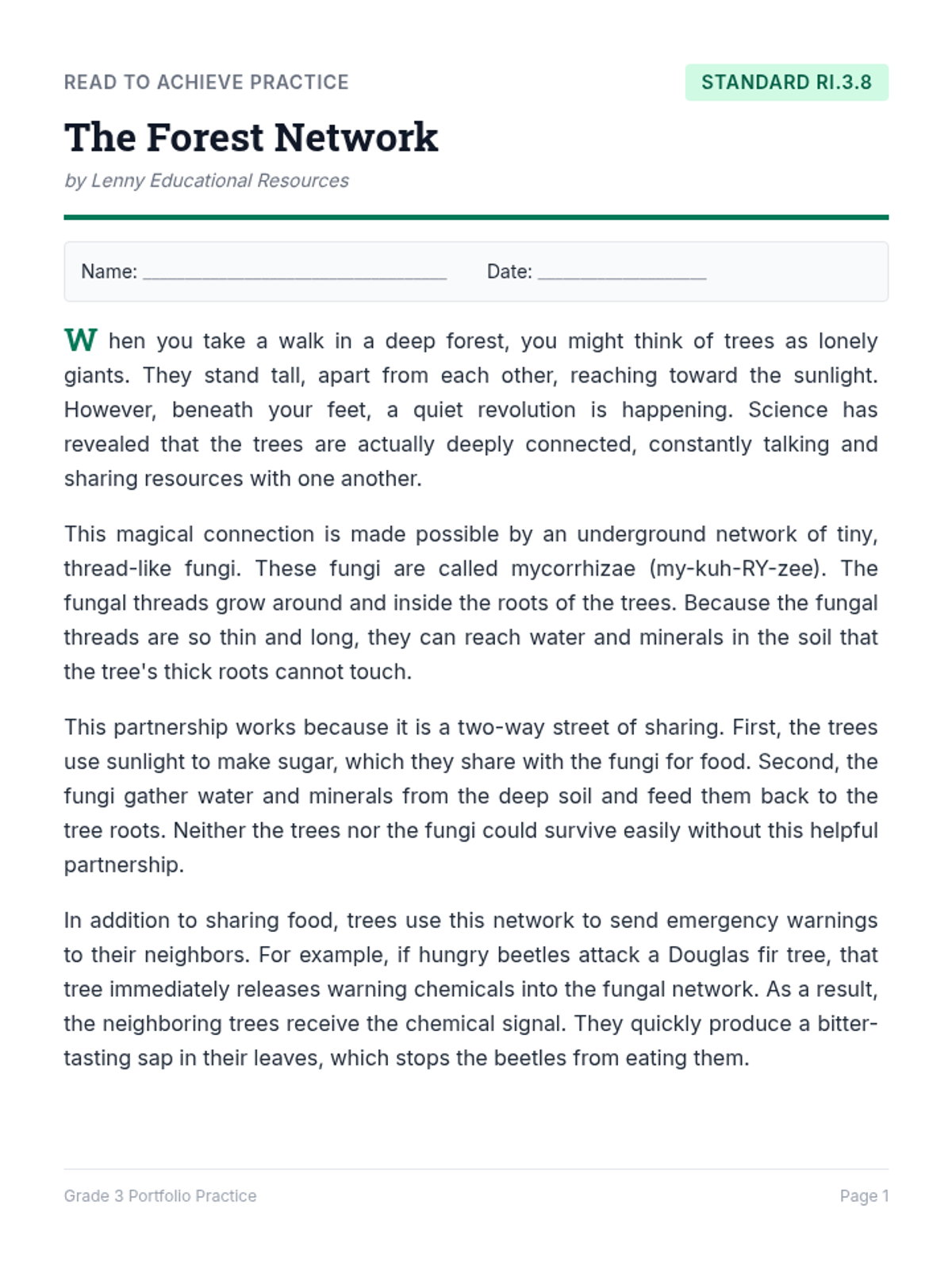
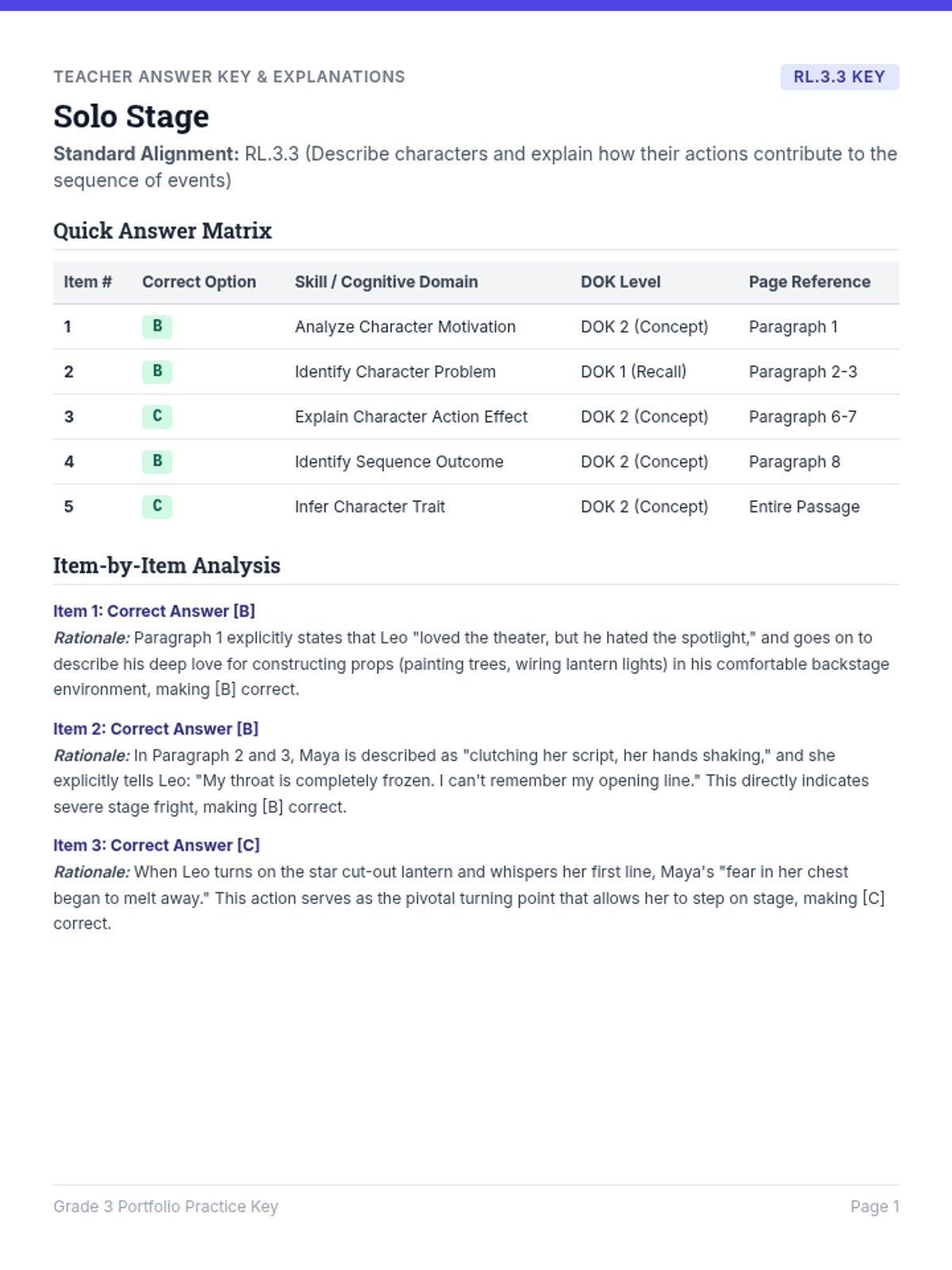
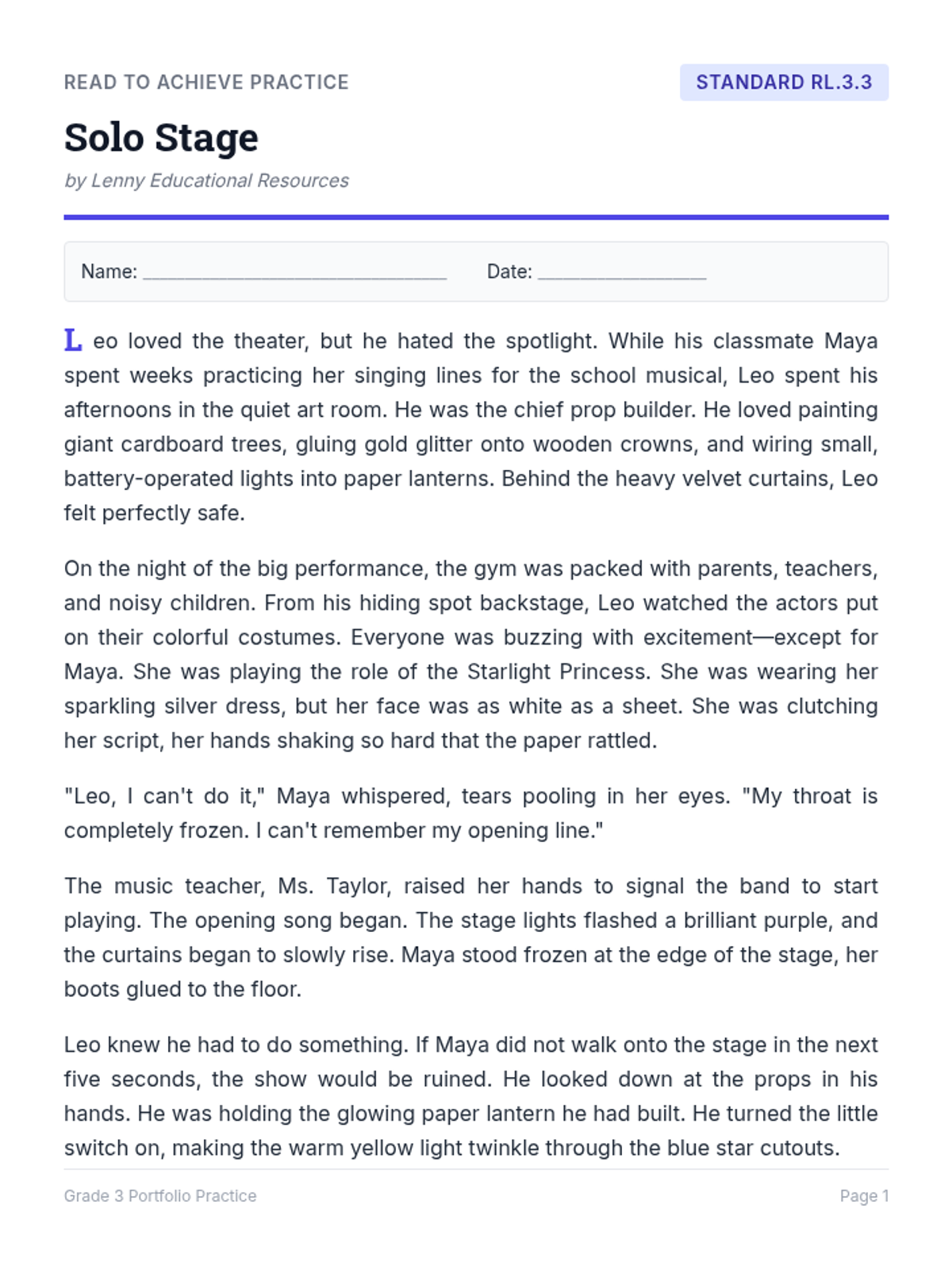
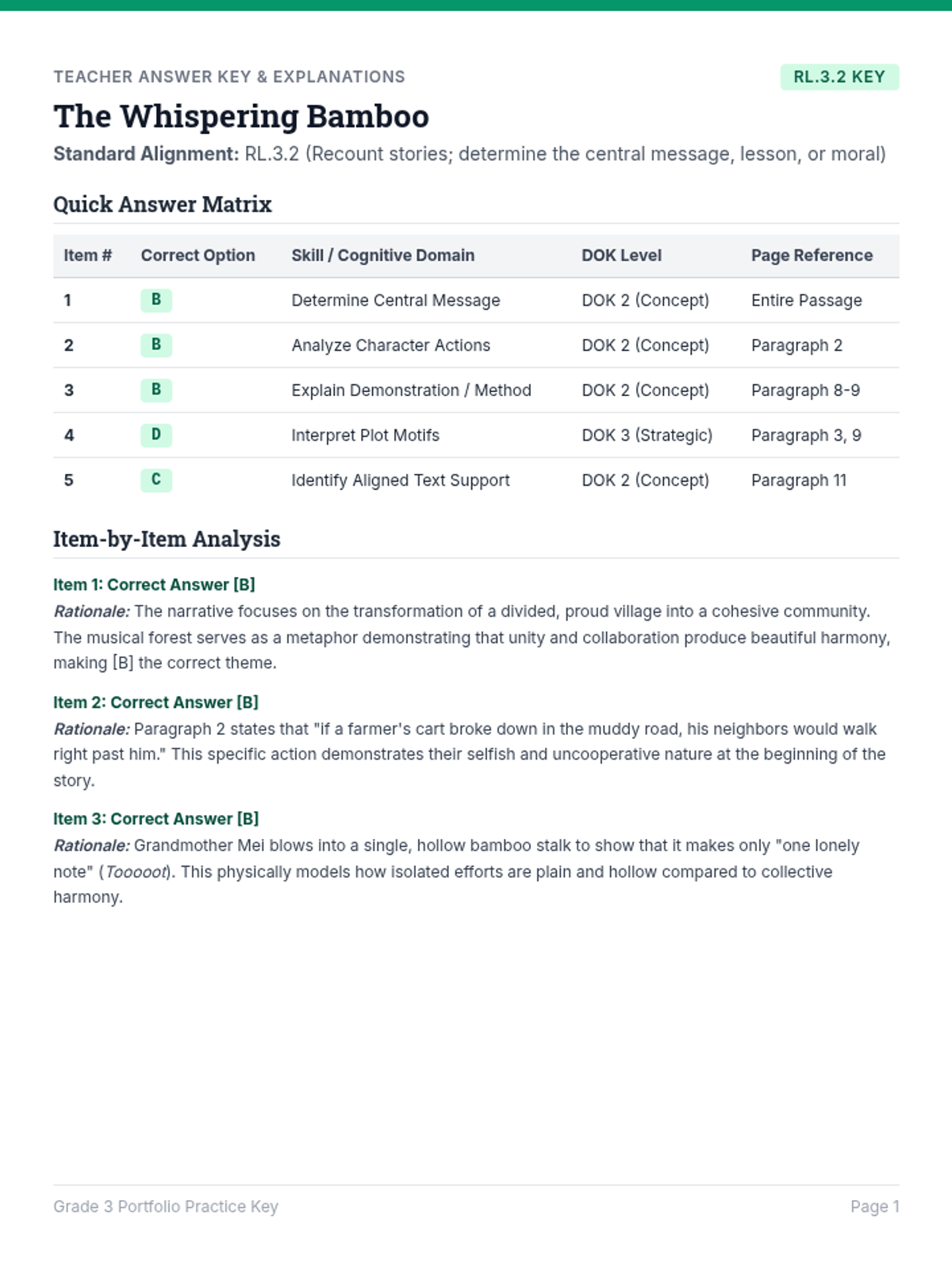
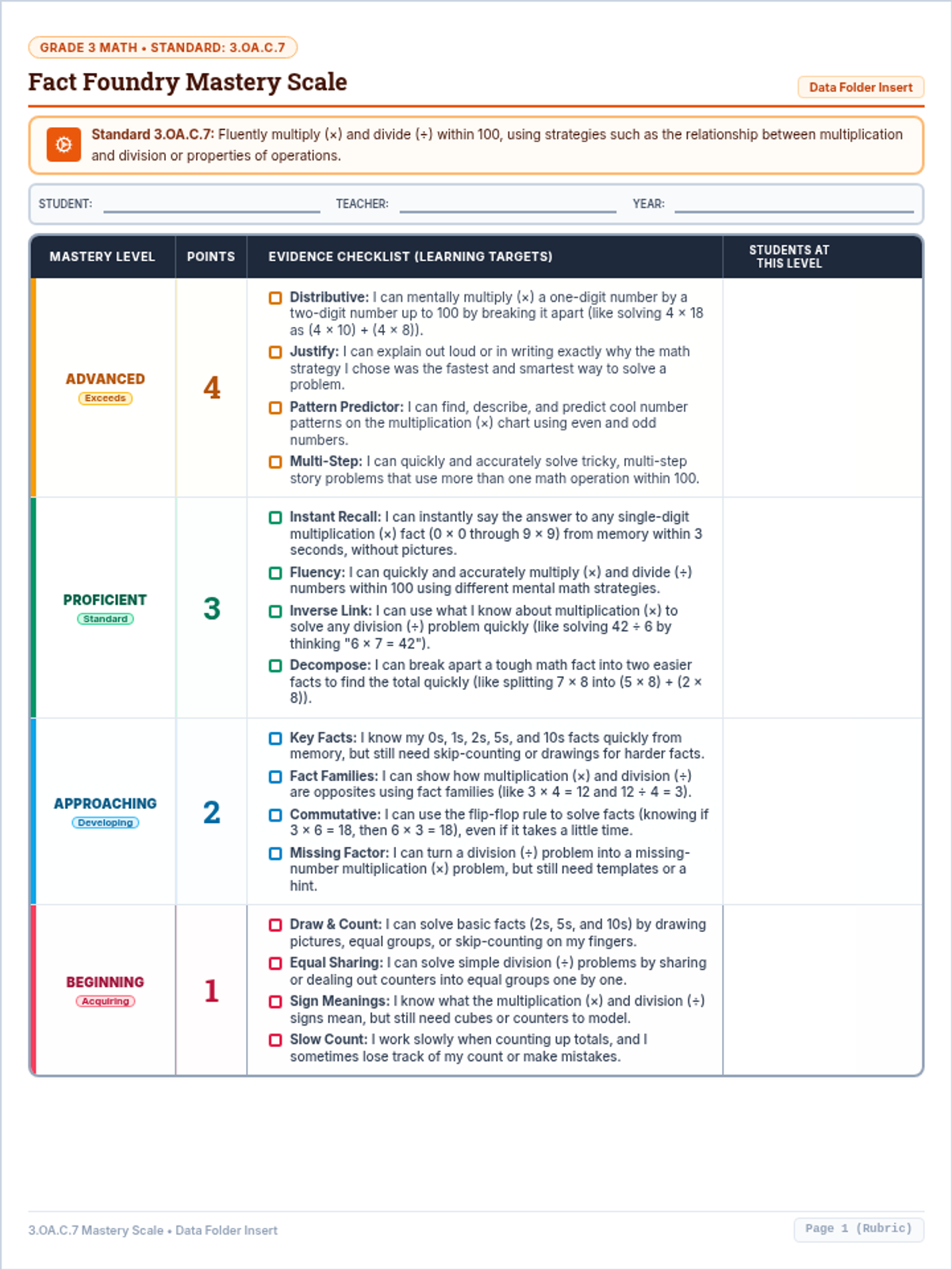
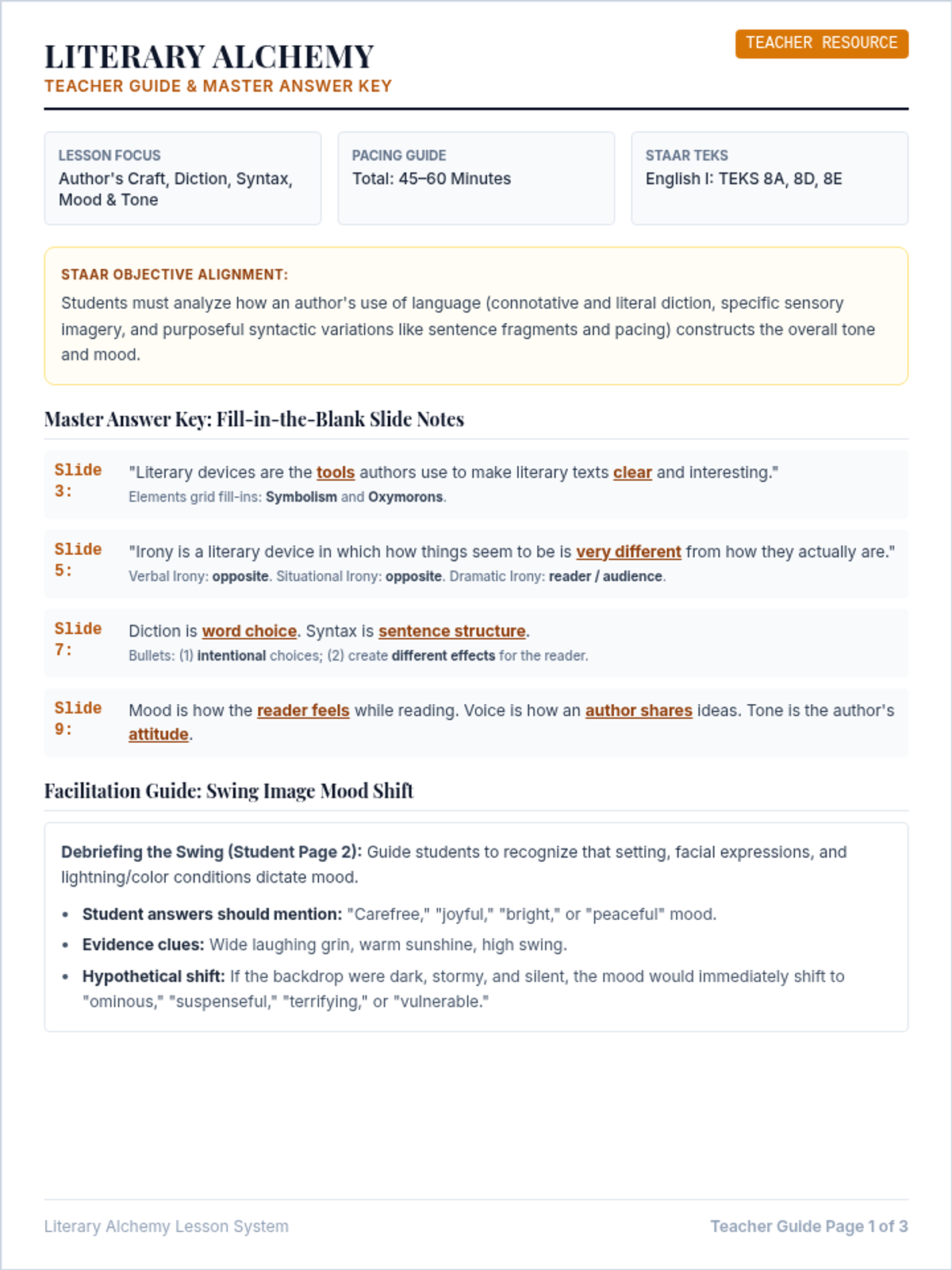
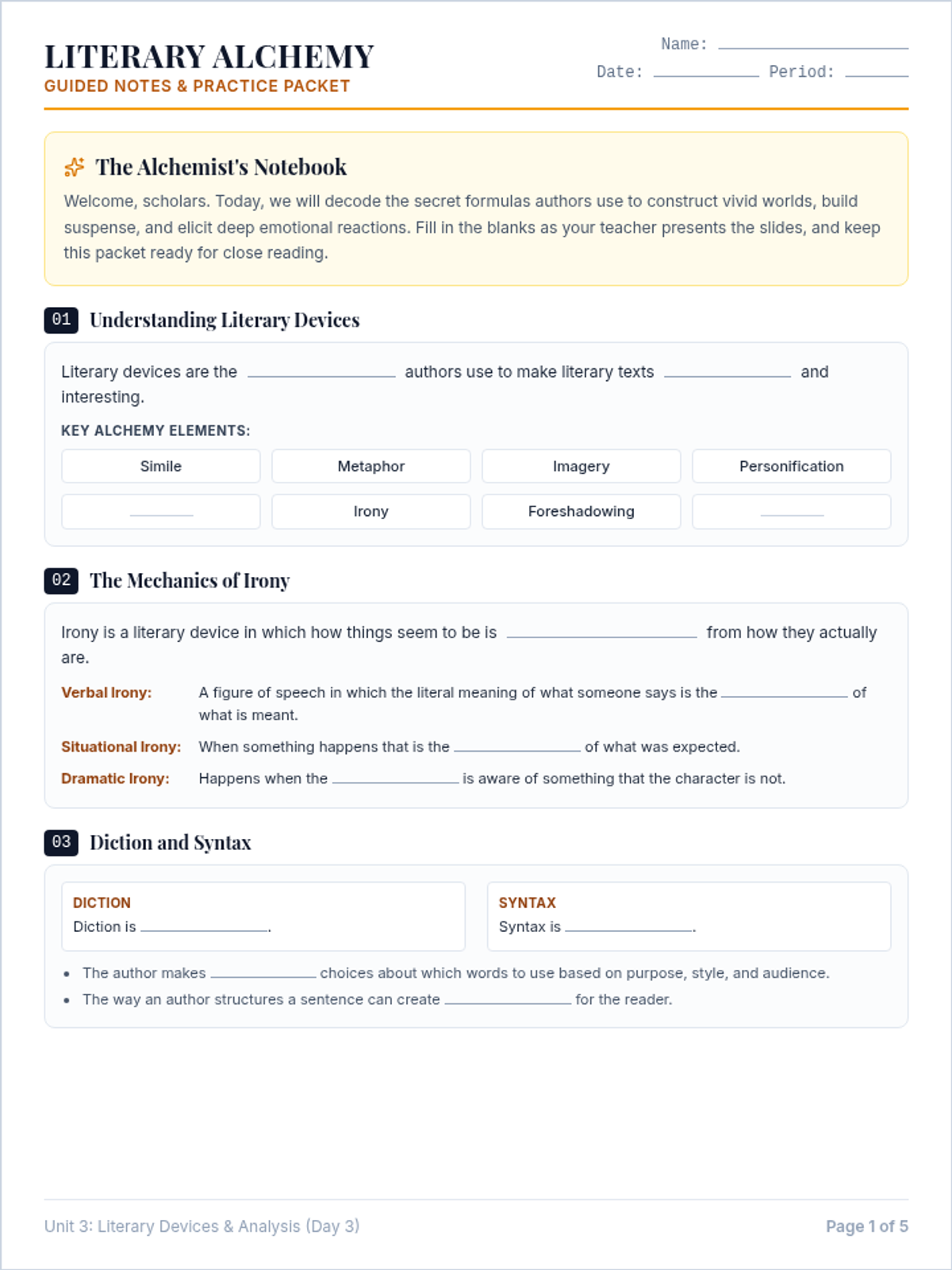
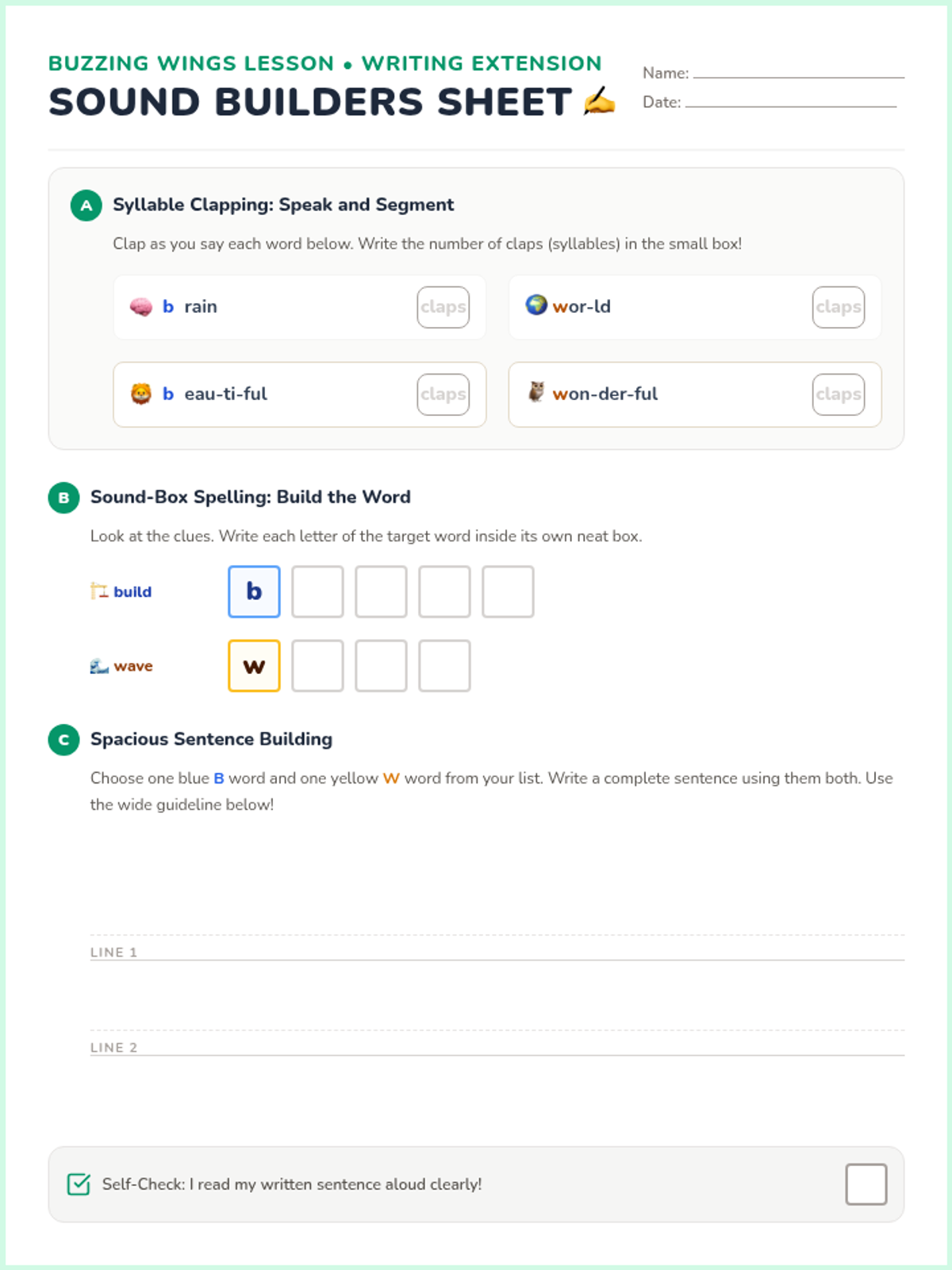
A skills-based worksheet for Lesson 2 that guides students through converting passive sentences to active ones using a step-by-step blueprint, including a section on creating subjects for 'ghost' passive sentences.
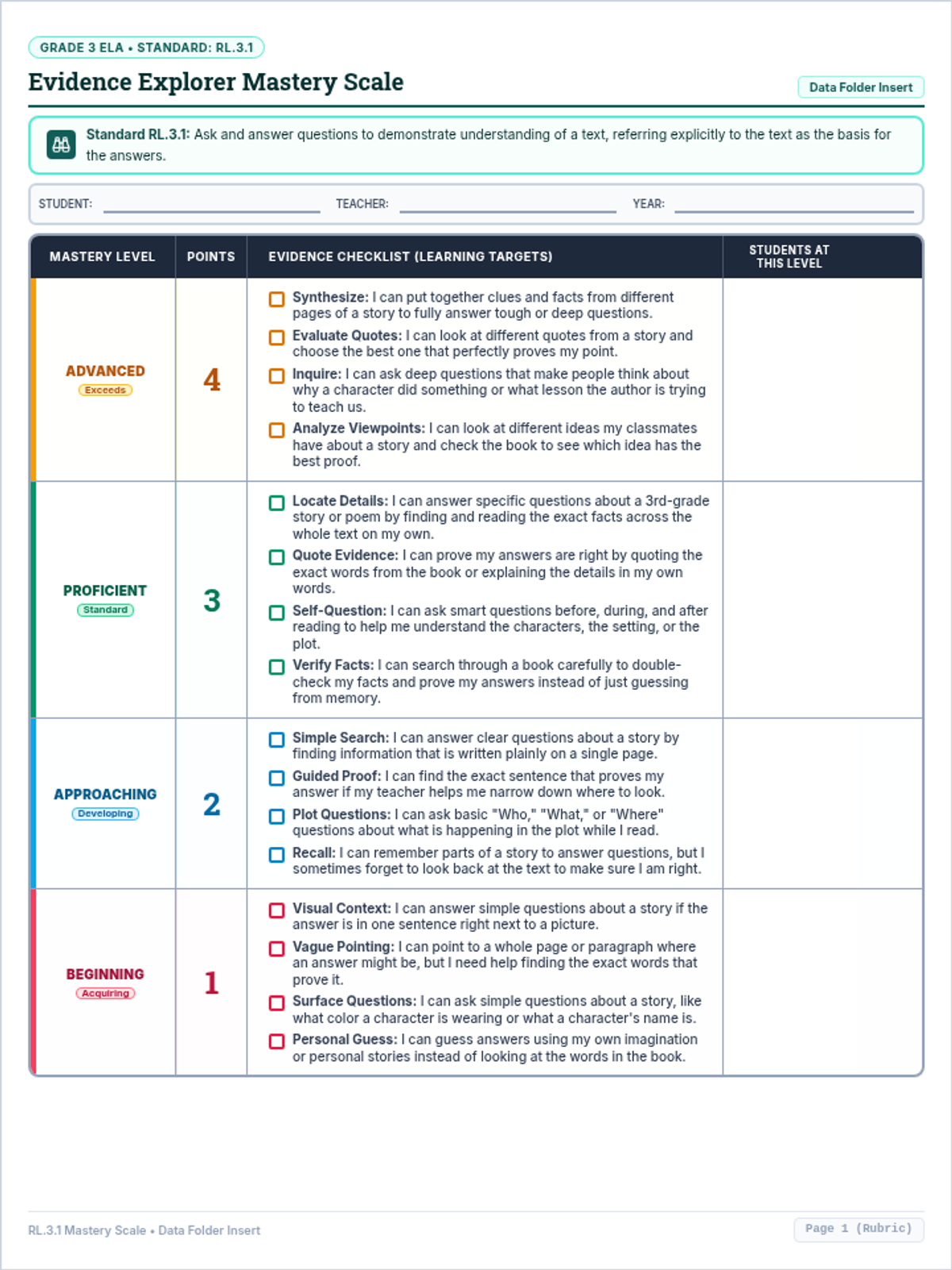
A comprehensive teacher guide for the Character Catalysts lesson. It includes a detailed scoring rubric aligned with Grade 5 ELA standards and high-quality exemplar responses for all three practice passages.
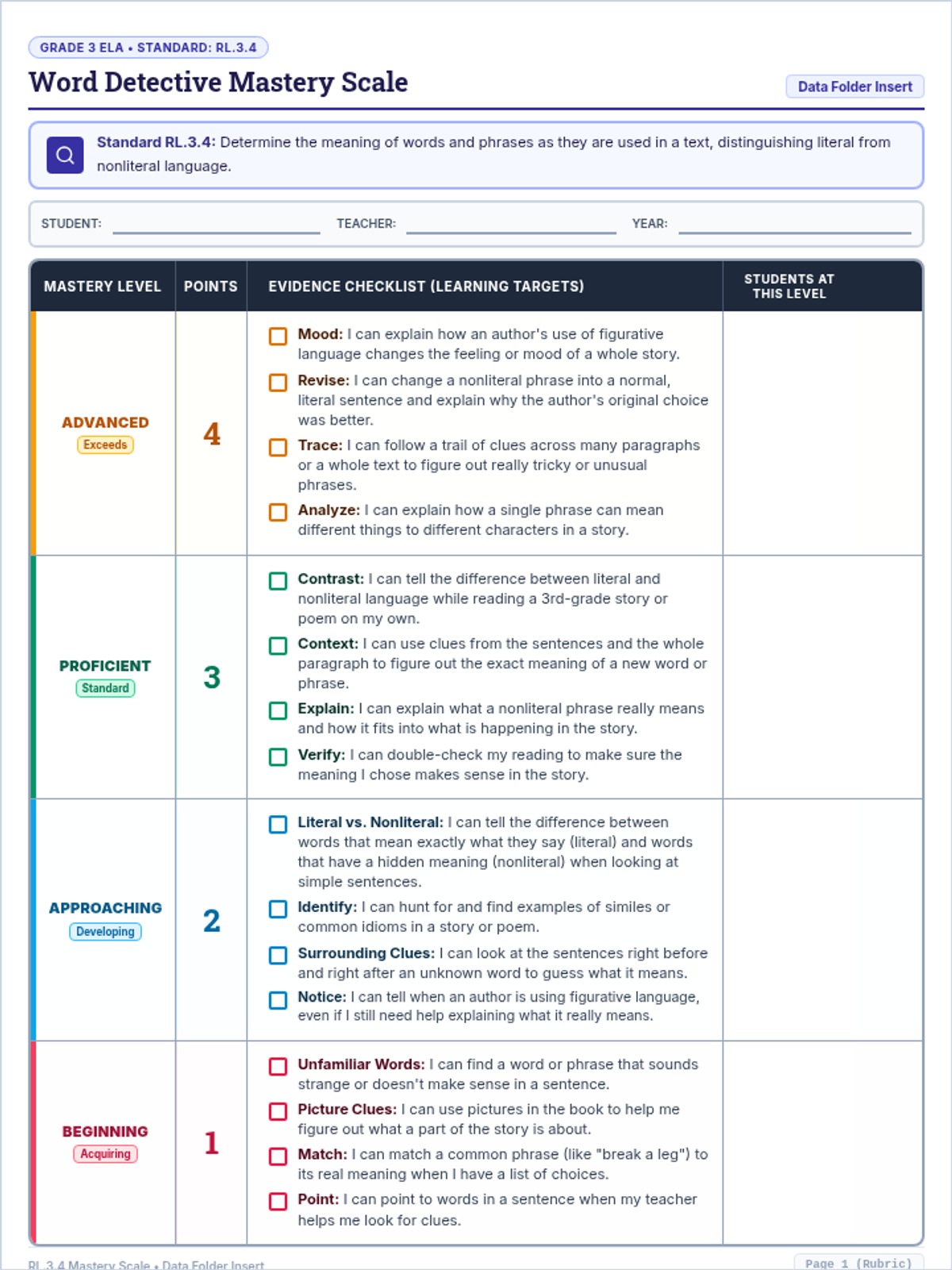
A student-facing worksheet containing three complex short stories for character analysis. The passages use elevated vocabulary and more intricate sentence structures suitable for advanced Grade 5 ELA review, focusing on character growth and evidence-based writing.
A set of instructional slides for Grade 5 MCAS ELA review focusing on character change. It introduces the prompt type, provides a response blueprint (Claim, Evidence, Impact), and lists character trait vocabulary for analysis.
Combined Teacher Answer Key and Grading Rubric for the 'A Long Walk to Water' summative assessment, covering the 35 multiple-choice questions, thematic short responses, and the comparison essay. includes thematic keys for Identity, Forgiveness, and Community.
Final Part 1 assessment for 'A Long Walk to Water', featuring 35 inferential multiple-choice questions in a space-saving quadrant layout and 5 thematic short-answer questions with a word bank. Covers Identity, Community, and Legacy. Updated with corrected labels.
Modified version of the 'A Long Walk to Water' assessment for struggling learners. Features simplified language, 3 answer choices per question, a friendly quadrant layout, larger font (Nunito), and sentence starters for short responses. Focuses on identity, legacy, and community.
Part 2 Essay assessment for 'A Long Walk to Water', featuring thematic comparison with 'The Boy Who Harnessed the Wind' and 'MAUS'. Includes reading excerpts and structured prompts focusing on resourcefulness, identity, and legacy. Updated with requested labeling.
Part 1 of the 'A Long Walk to Water' assessment, consisting of 35 inferential multiple-choice questions organized in a space-saving quadrant layout and a thematic short-answer section with a word bank. Focuses on identity, legacy, and community.
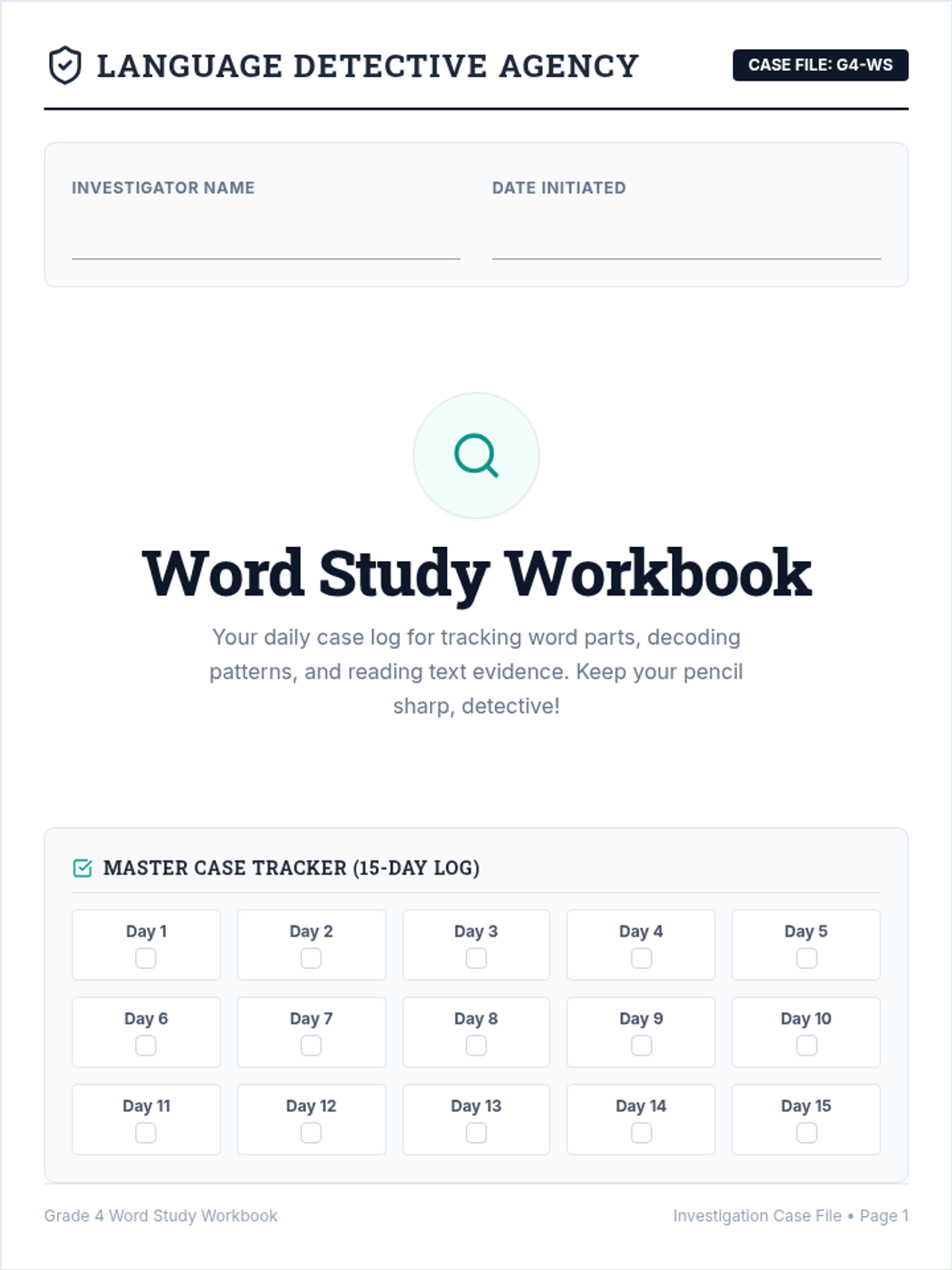
A slide deck introducing 18 suffix words with color-coding and picture cues, followed by a 6-paragraph reading passage about women's lacrosse with comprehension questions.
Combined Teacher Answer Key and Grading Rubric for the 'A Long Walk to Water' summative assessment, covering the 35 multiple-choice questions, thematic short responses, and the comparison essay.
Modified version of the 'A Long Walk to Water' assessment for struggling learners, featuring simplified language, fewer answer choices (3), and sentence starters for short responses. Focuses on the same core themes of identity and community.
Part 2 Essay assessment for 'A Long Walk to Water', featuring thematic comparison with 'The Boy Who Harnessed the Wind' and 'MAUS'. Includes reading excerpts and structured prompts focusing on resourcefulness, identity, and legacy.
Part 1 of the 'A Long Walk to Water' assessment, consisting of 35 inferential multiple-choice questions organized in a space-saving quadrant layout and a short-answer section with a thematic word bank. Focuses on identity, legacy, and community.
A guided notes worksheet for 6th-grade students to accompany the Evidence Analysis slides. It includes space for recording analysis sentence starters and a practice section for the "Detective's Challenge."
A 5-slide mini-lesson presentation for 6th-grade students on how to effectively explain and analyze evidence in an argument body paragraph. Using a "Detective" theme, it covers the connection between evidence and claims, analysis sentence starters, and comparing weak vs. strong explanations.
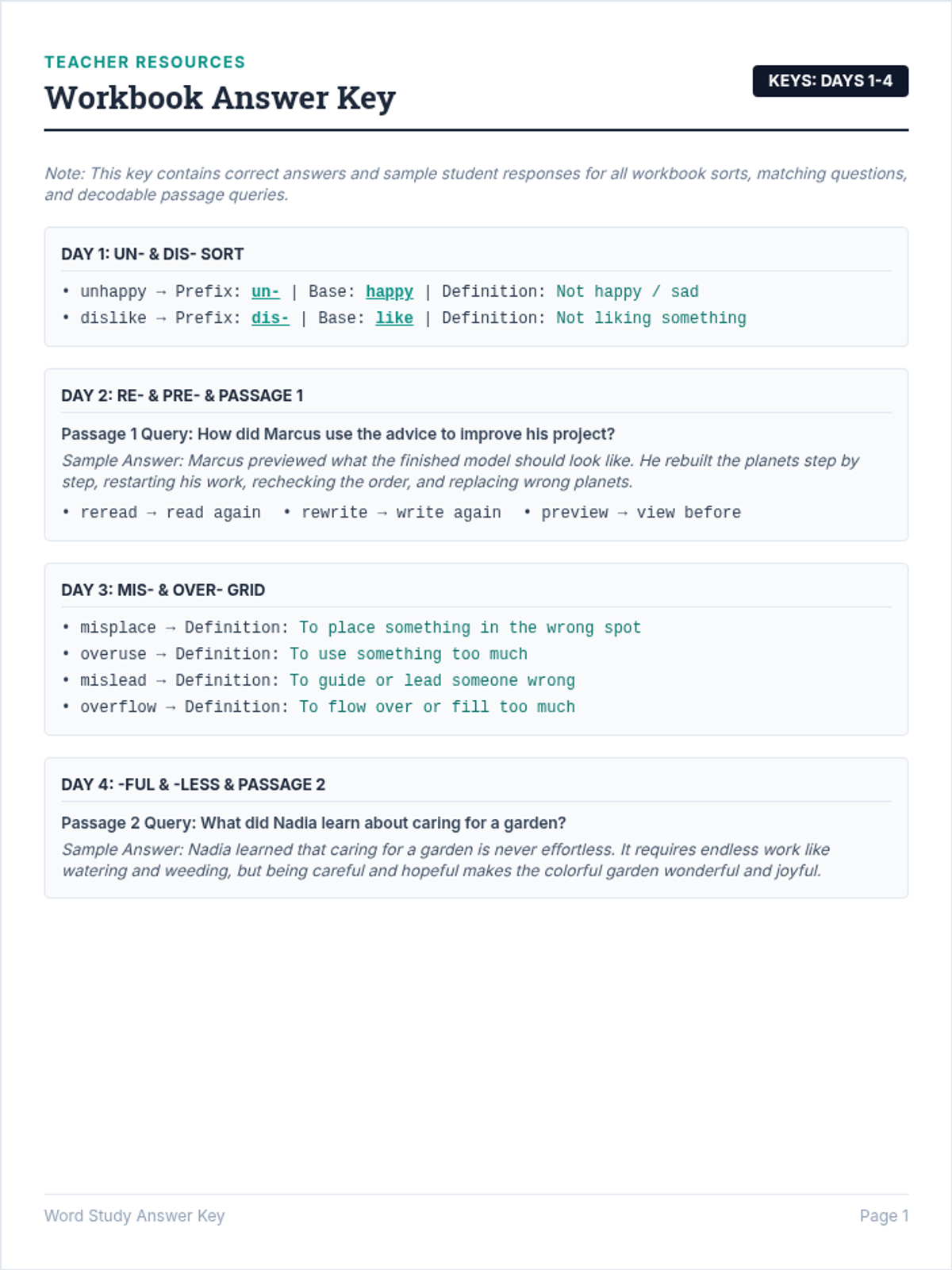
An answer key for the Symbol Detective Worksheet, including sample student responses and teacher discussion tips.
A student worksheet featuring scenarios for practice identifying symbols and their meanings, plus a creative section for students to develop their own symbols.
A visually engaging anchor chart featuring a T-chart that connects common everyday objects to their symbolic meanings in literature.
Answer key for the Nature Resilient Four Worksheet, providing sample responses, synonym identification, and context check answers for teacher reference. Updated to match the worksheet's final styling with the final task removed.
An introductory presentation for teachers to explain the purpose of nonsense words and model the decoding process (Look, Tap, Blend) with the class. Includes practice slides for CVC and initial blends.