A slide presentation for the 'Sense Seekers' game, featuring mystery location descriptions to help students practice identifying sensory language.
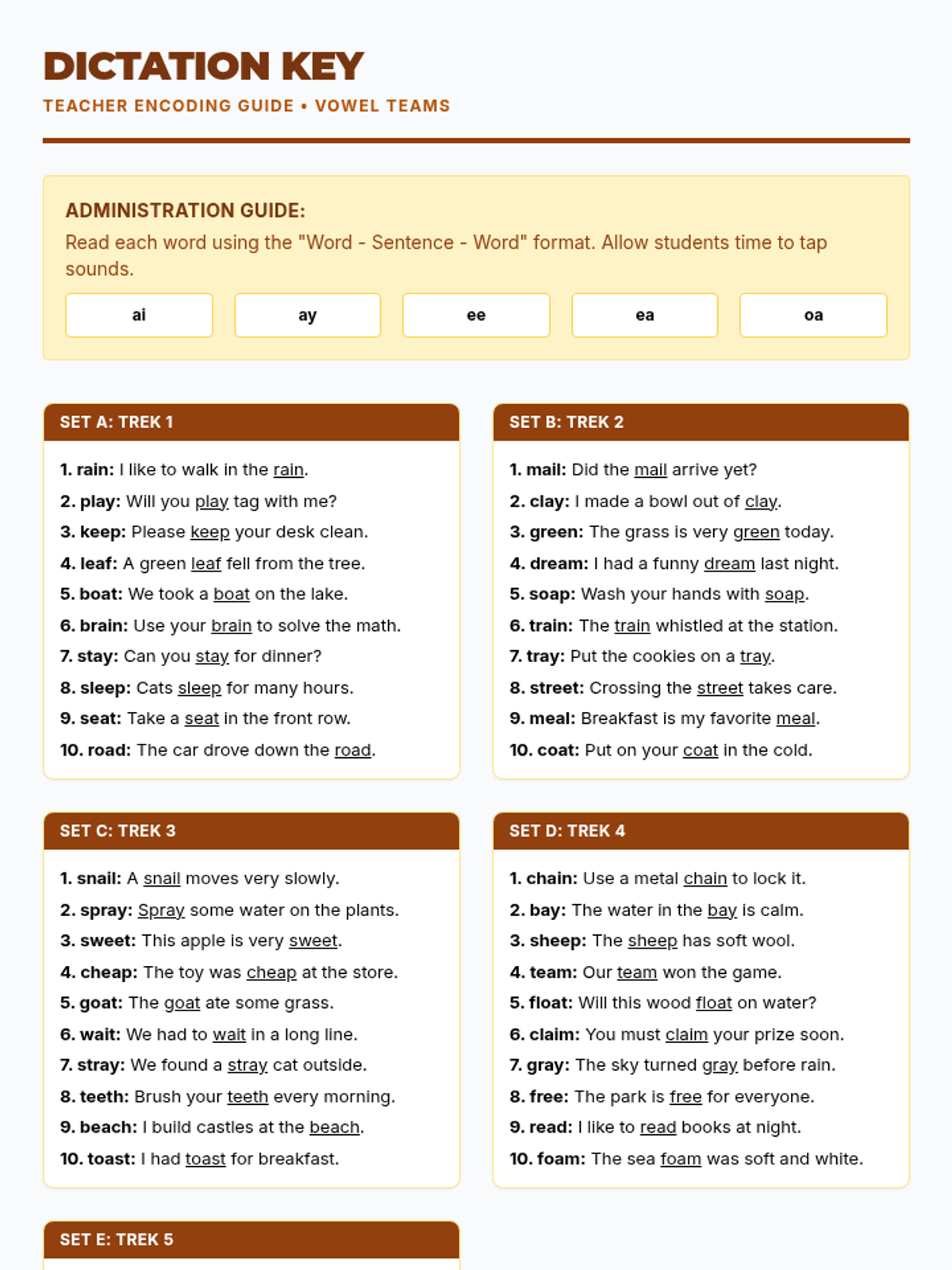
A teacher's guide for the encoding (spelling) assessment, providing word lists, example sentences, and administration instructions. Organized into distinct sets for recurring progress monitoring sessions.
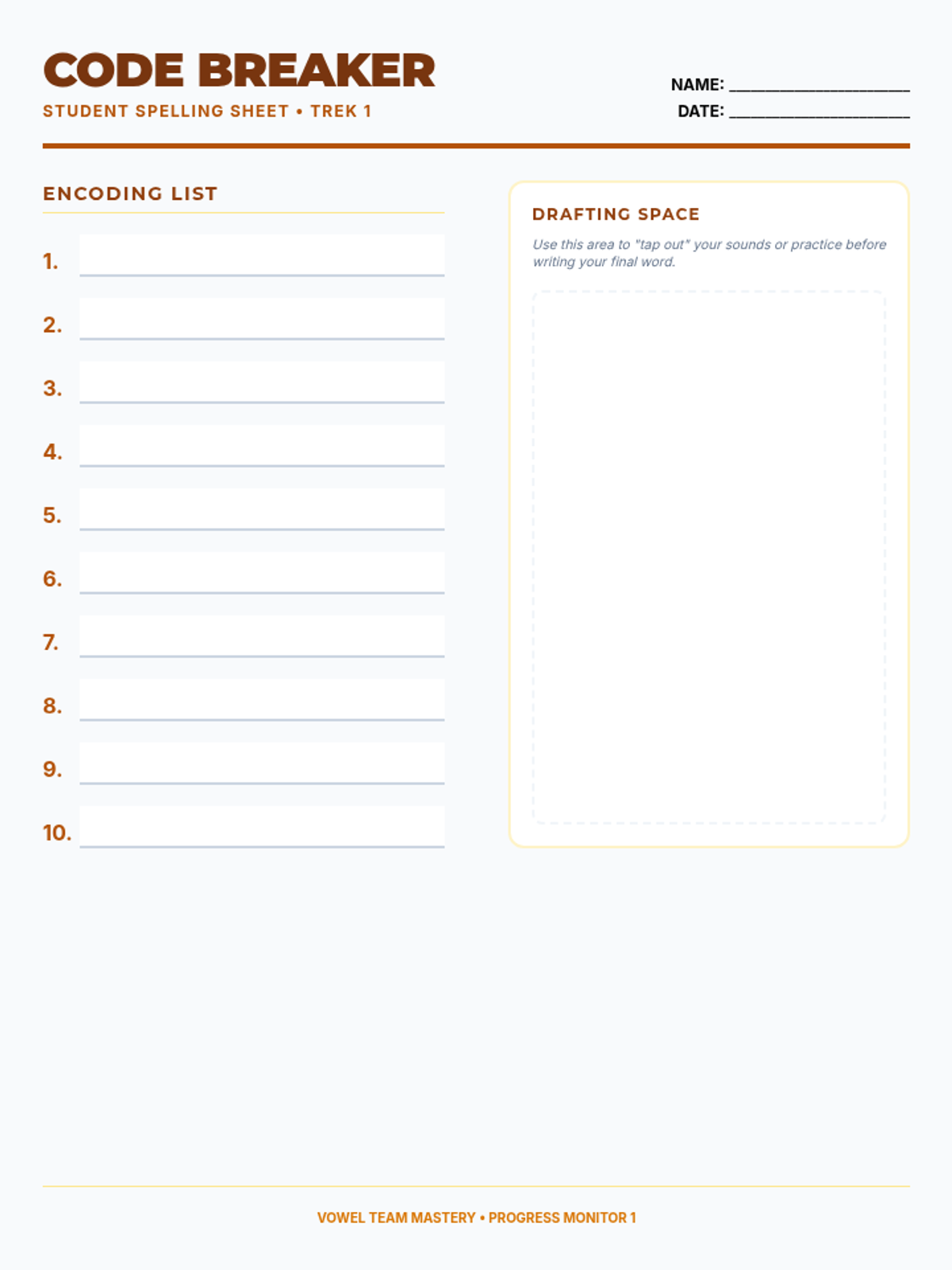
A student-facing spelling assessment sheet with numbered lines for encoding words. Includes a dedicated drafting space for students to "tap out" sounds or practice spelling before finalizing their answers.
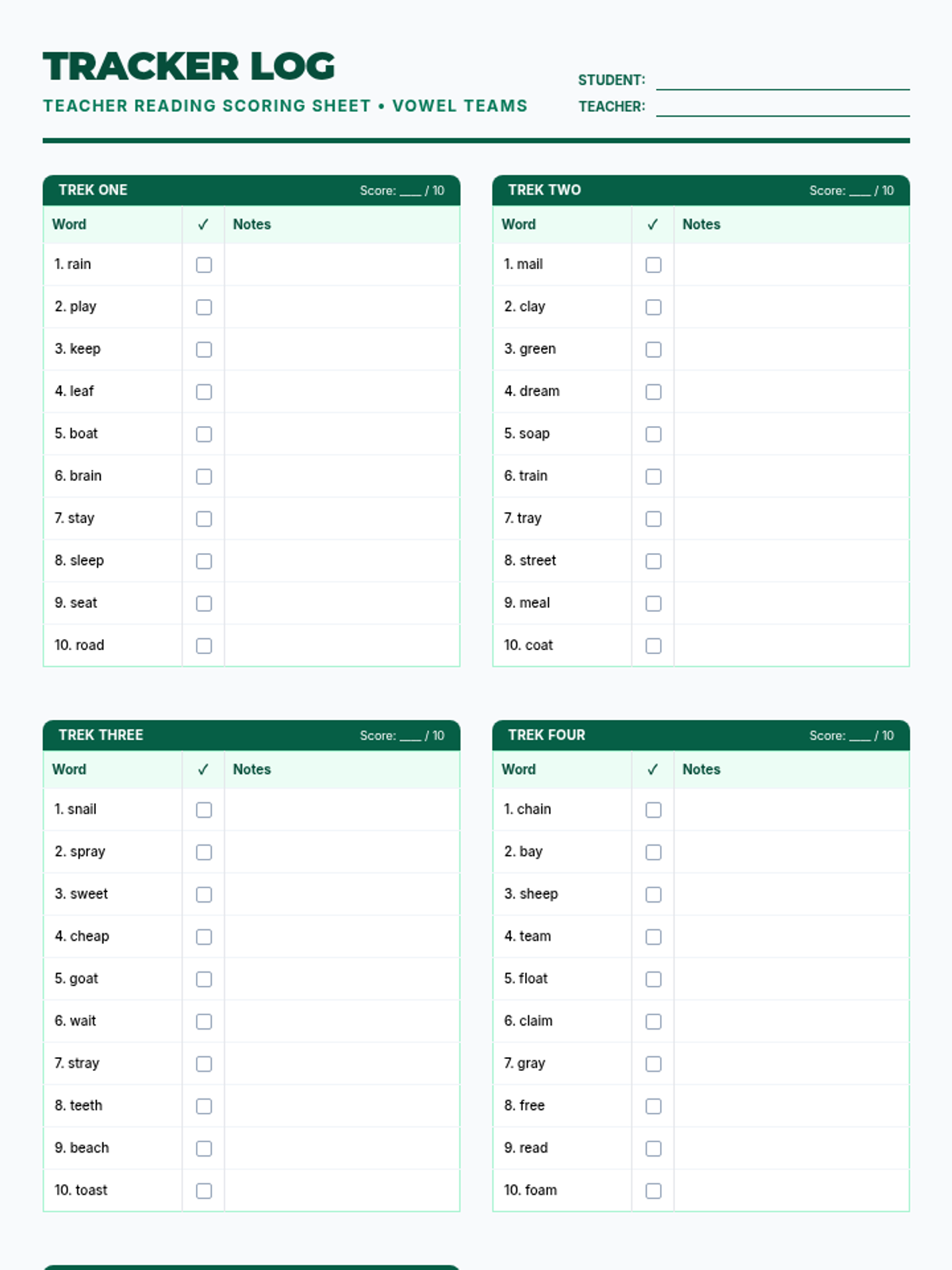
A teacher scoring sheet for tracking student decoding progress across 5 word lists. Includes space for marking correctness and recording qualitative notes on student errors or self-corrections.
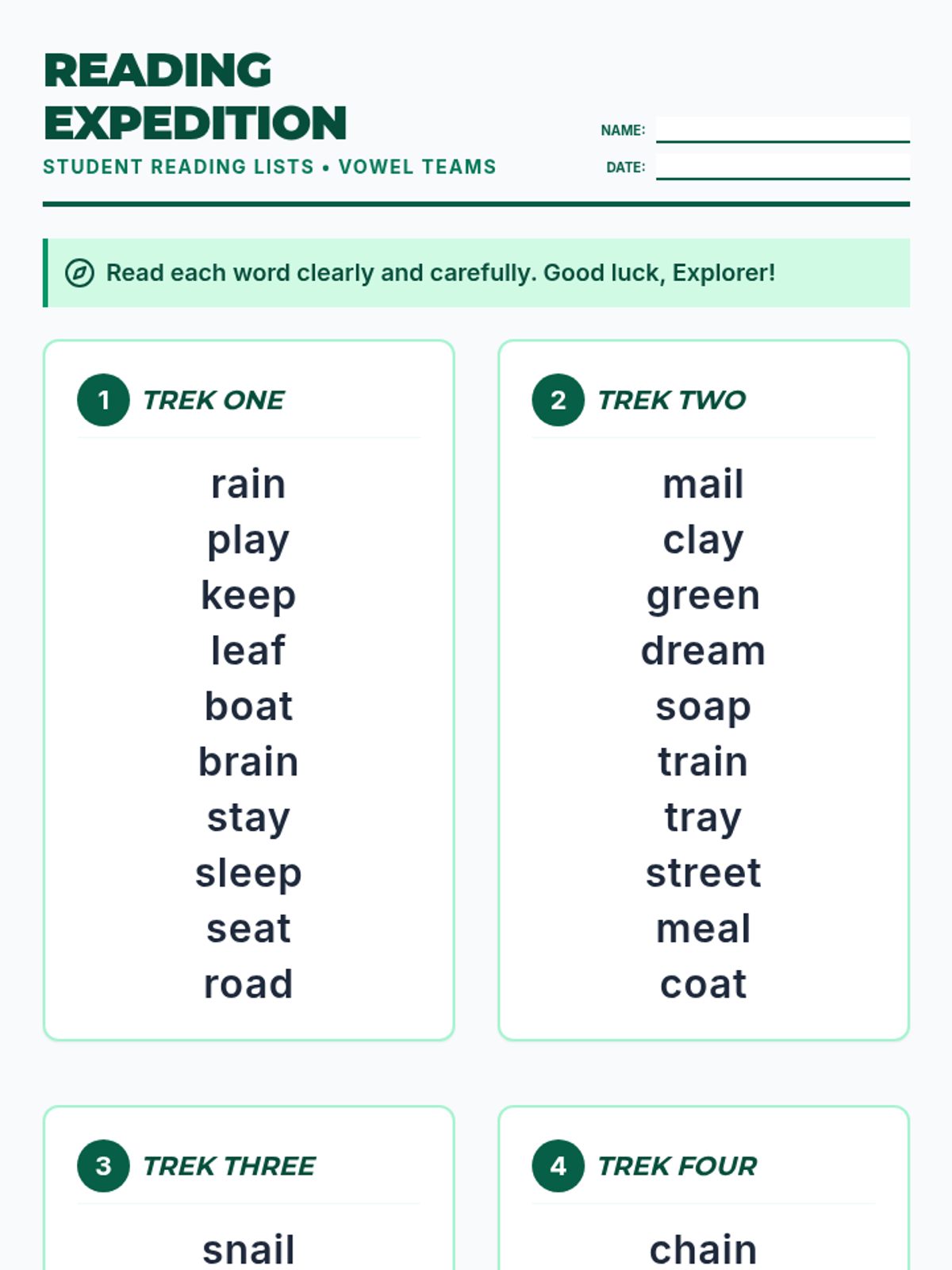
A student-facing document containing 5 lists of 10 words each, focusing on the vowel teams ai, ay, ee, ea, and oa. The large, clear text is designed for easy reading during decoding assessments.
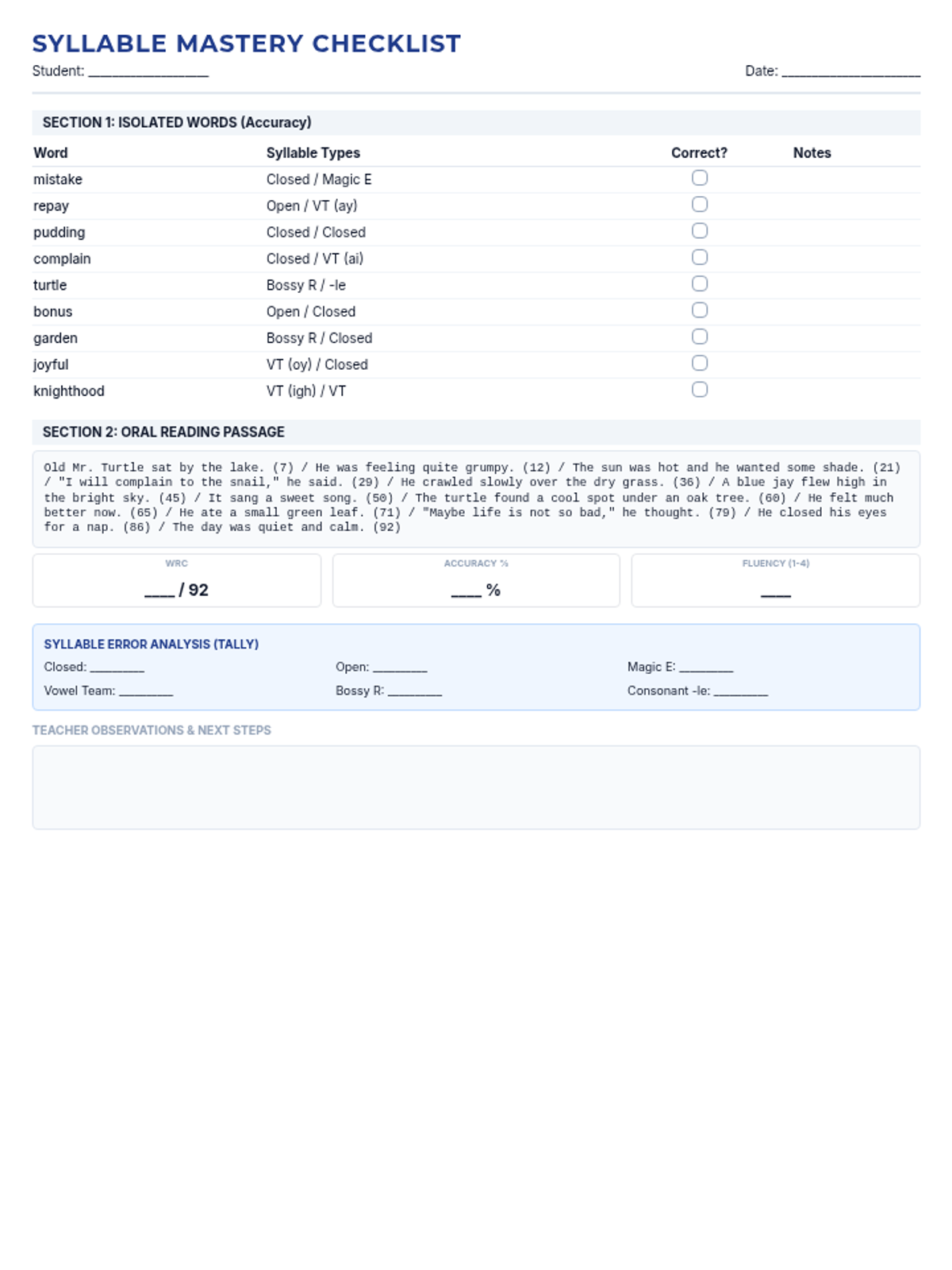
A teacher-facing assessment checklist for tracking student accuracy and fluency across the six syllable types, including a detailed error analysis section.
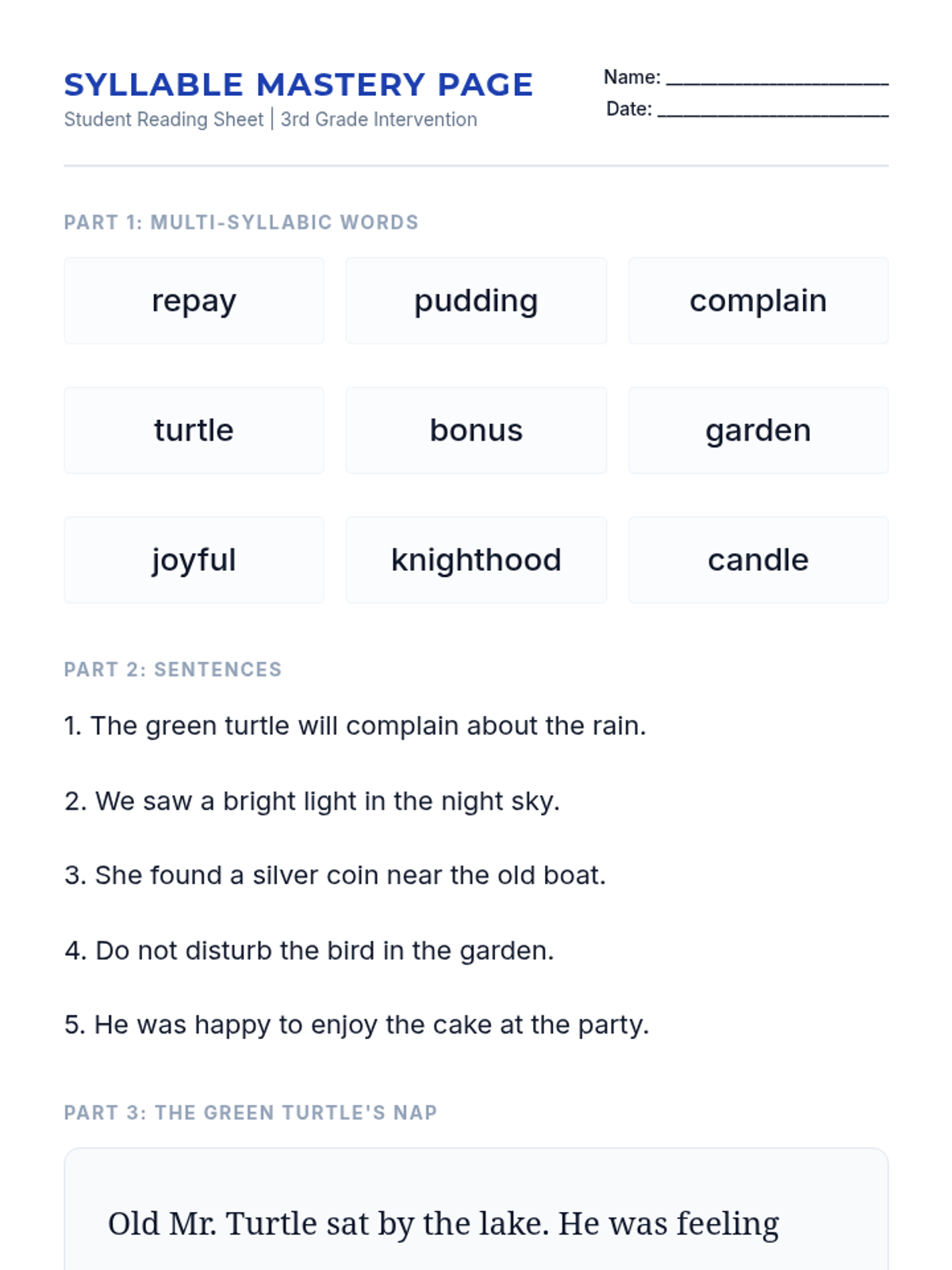
A clean, student-facing reading page featuring isolated multi-syllabic words, sentences, and a short passage for oral reading fluency assessment.
A minimalistic and visually engaging slide deck for direct instruction of the six syllable types, featuring clear visual coding and step-by-step division rules.
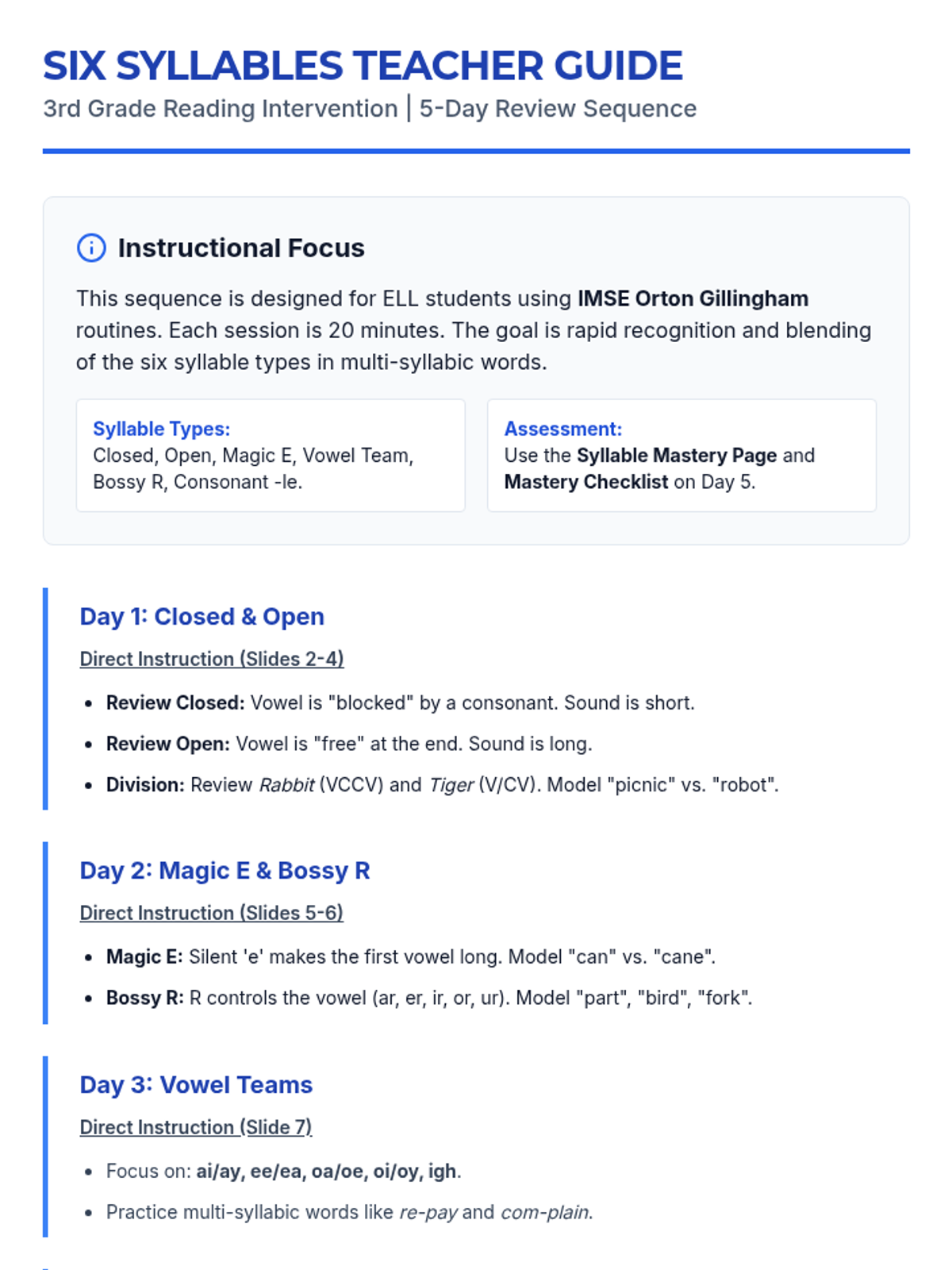
A comprehensive 5-day teacher guide outlining the instructional pacing, direct instruction focus, and Orton Gillingham routines for reviewing the six syllable types.
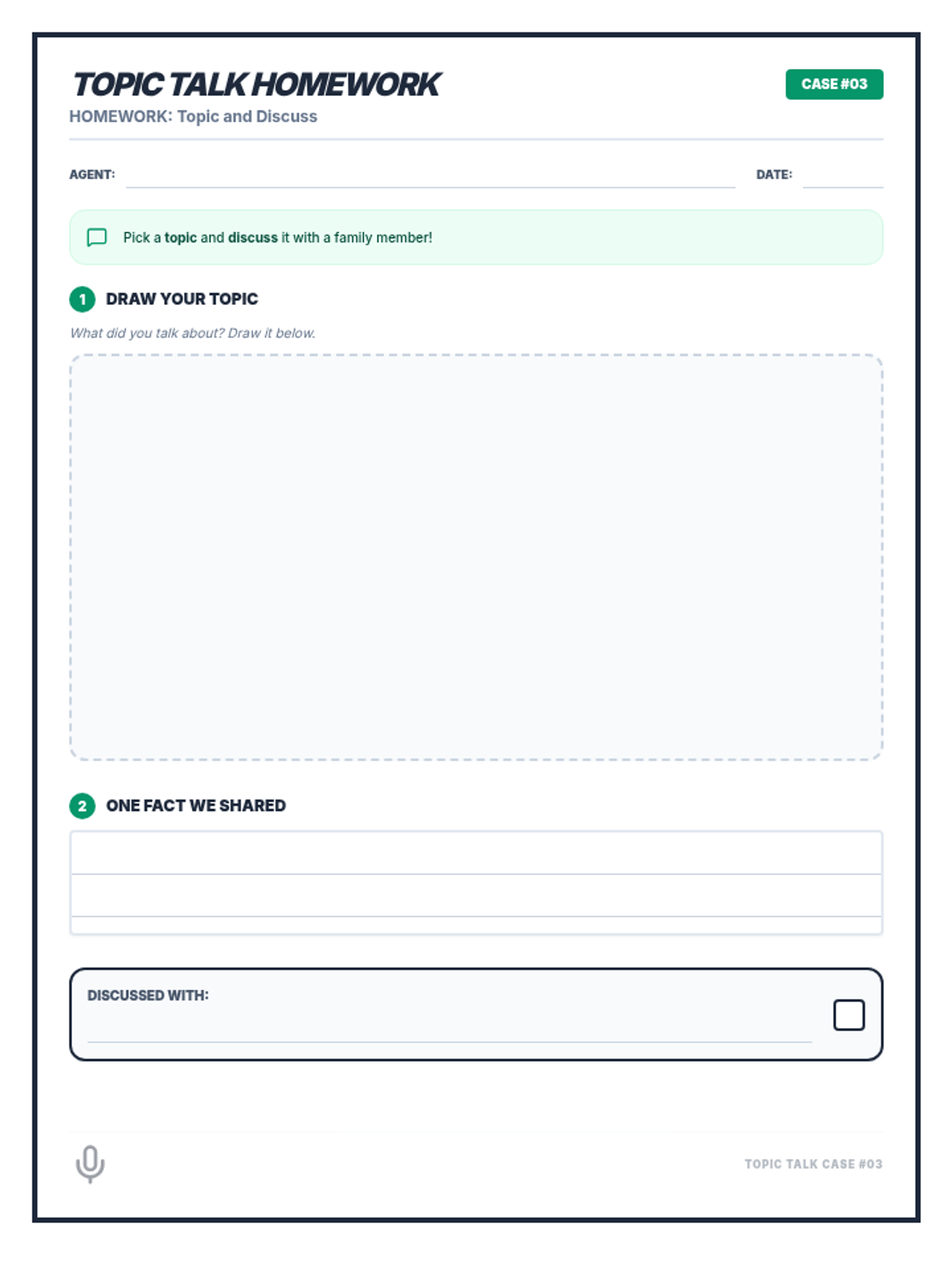
A home discussion log where students pick a topic, discuss it with a family member, and record a fact they shared. Focuses on reinforcing the definitions of 'topic' and 'discuss' in a real-world setting. Revised for 1-page layout and improved contrast.
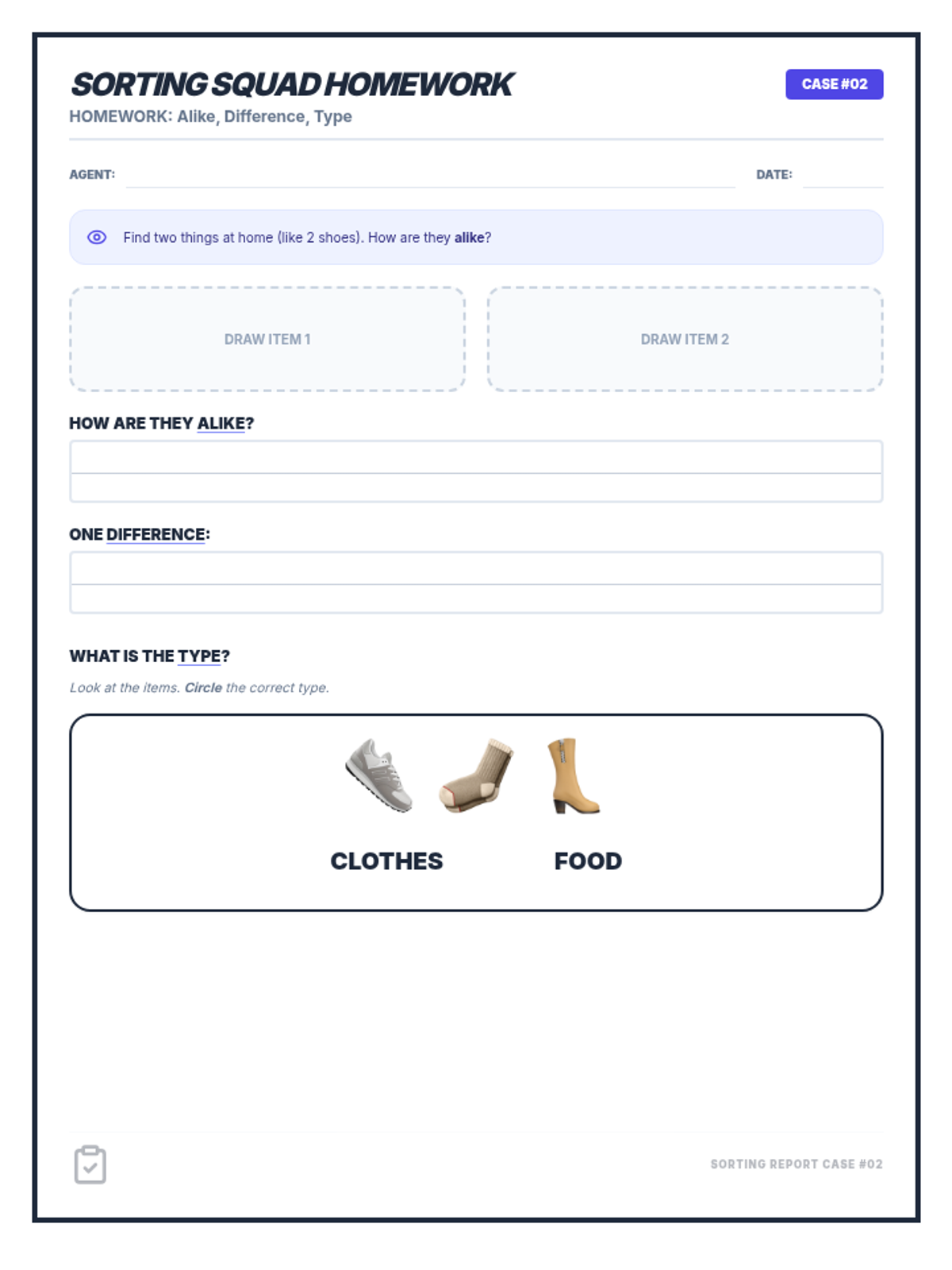
A comparison-focused homework sheet where students find and compare two household items, identifying how they are alike and different, and practicing the concept of 'type' with visual groups. Revised for 1-page layout and improved contrast for handwriting lines.
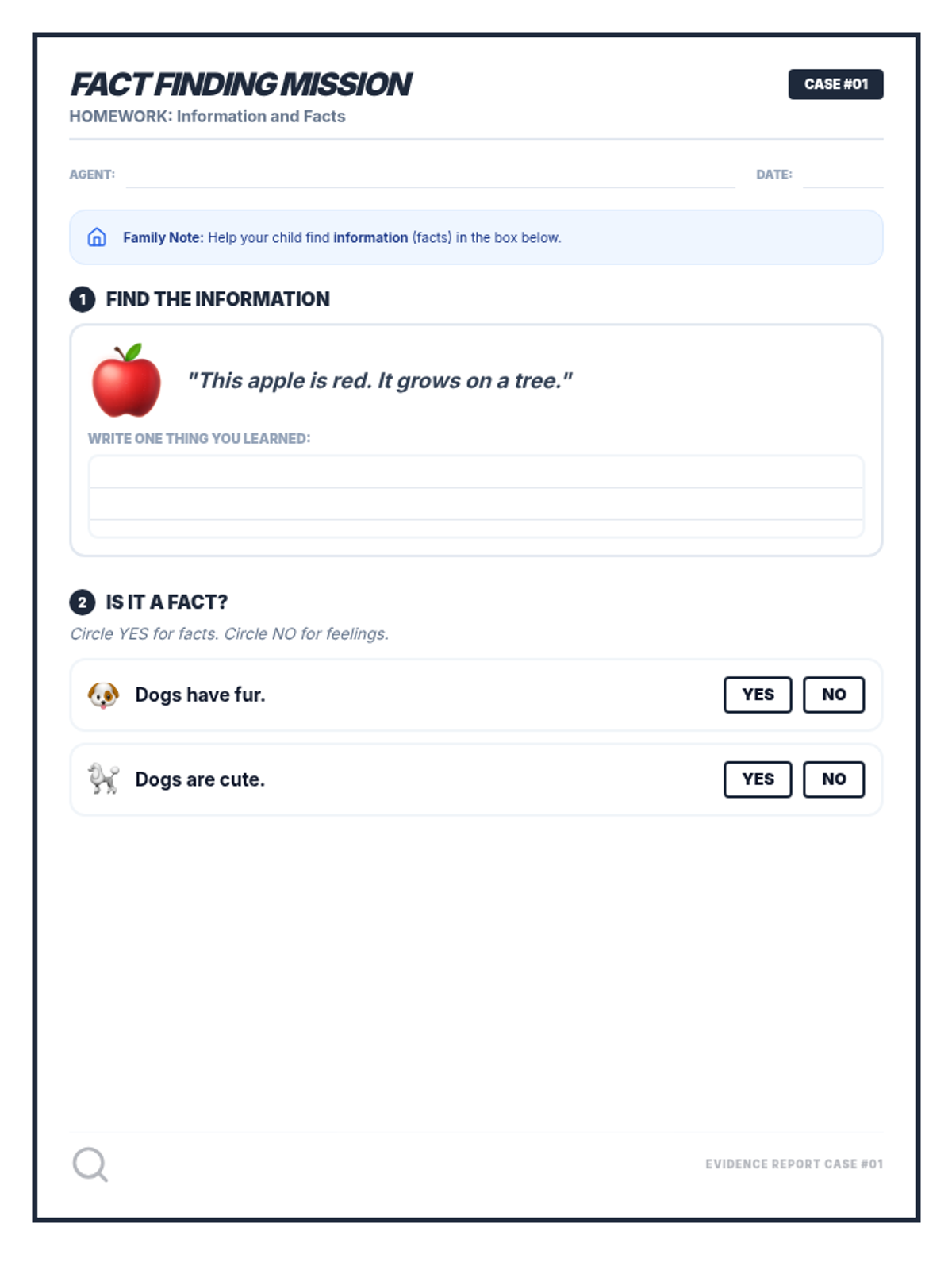
A homework sheet focused on 'information' and 'fact'. Students practice finding information in a simple context and distinguishing between facts and opinions with a family-friendly instruction note. Revised for 1-page layout and improved contrast.
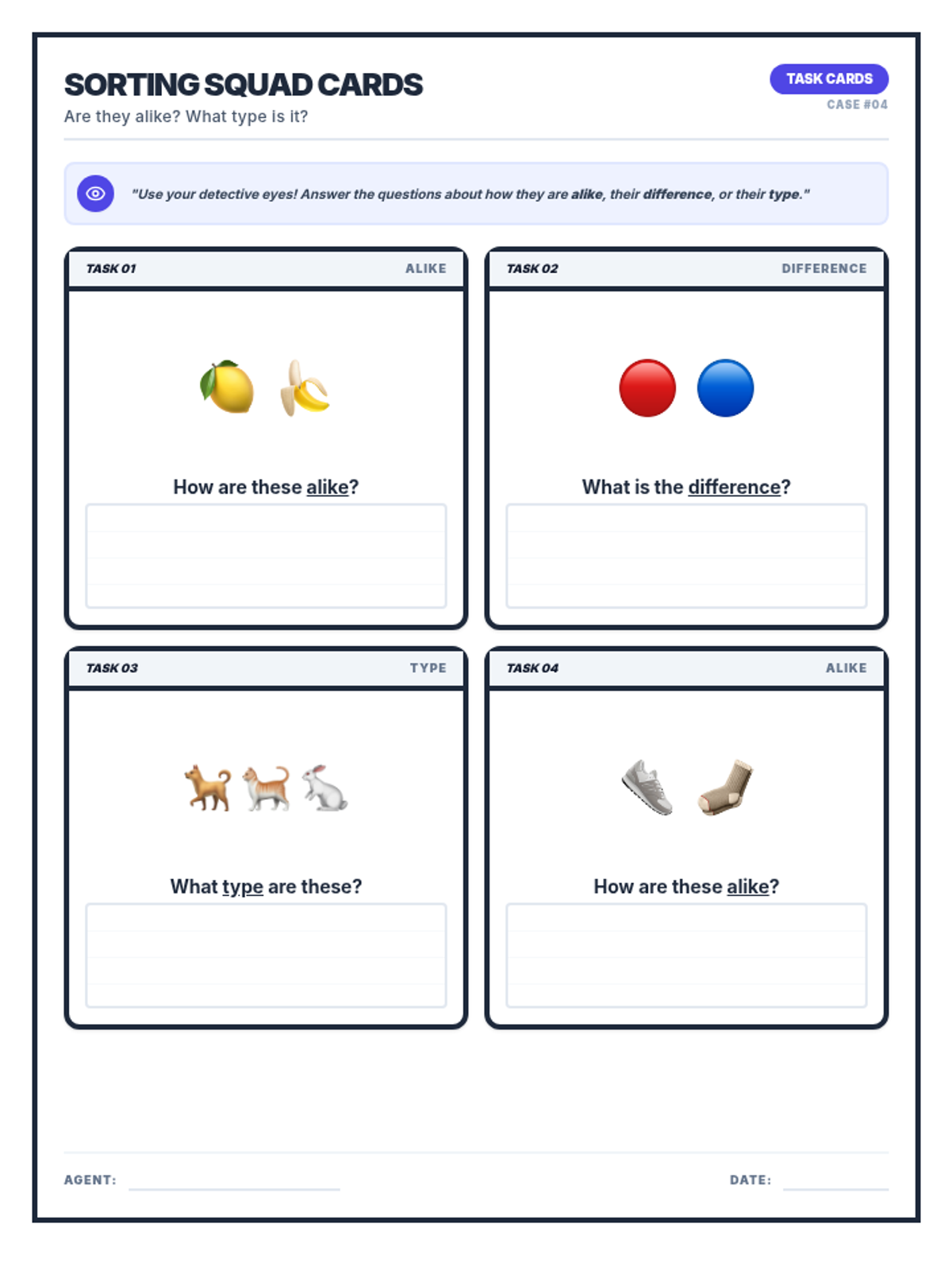
A set of task cards for comparing and categorizing items. Students analyze visual pairs and sets to identify how they are alike, their differences, or their shared 'type'. Revised for single-page layout with larger response areas and white backgrounds for legibility.
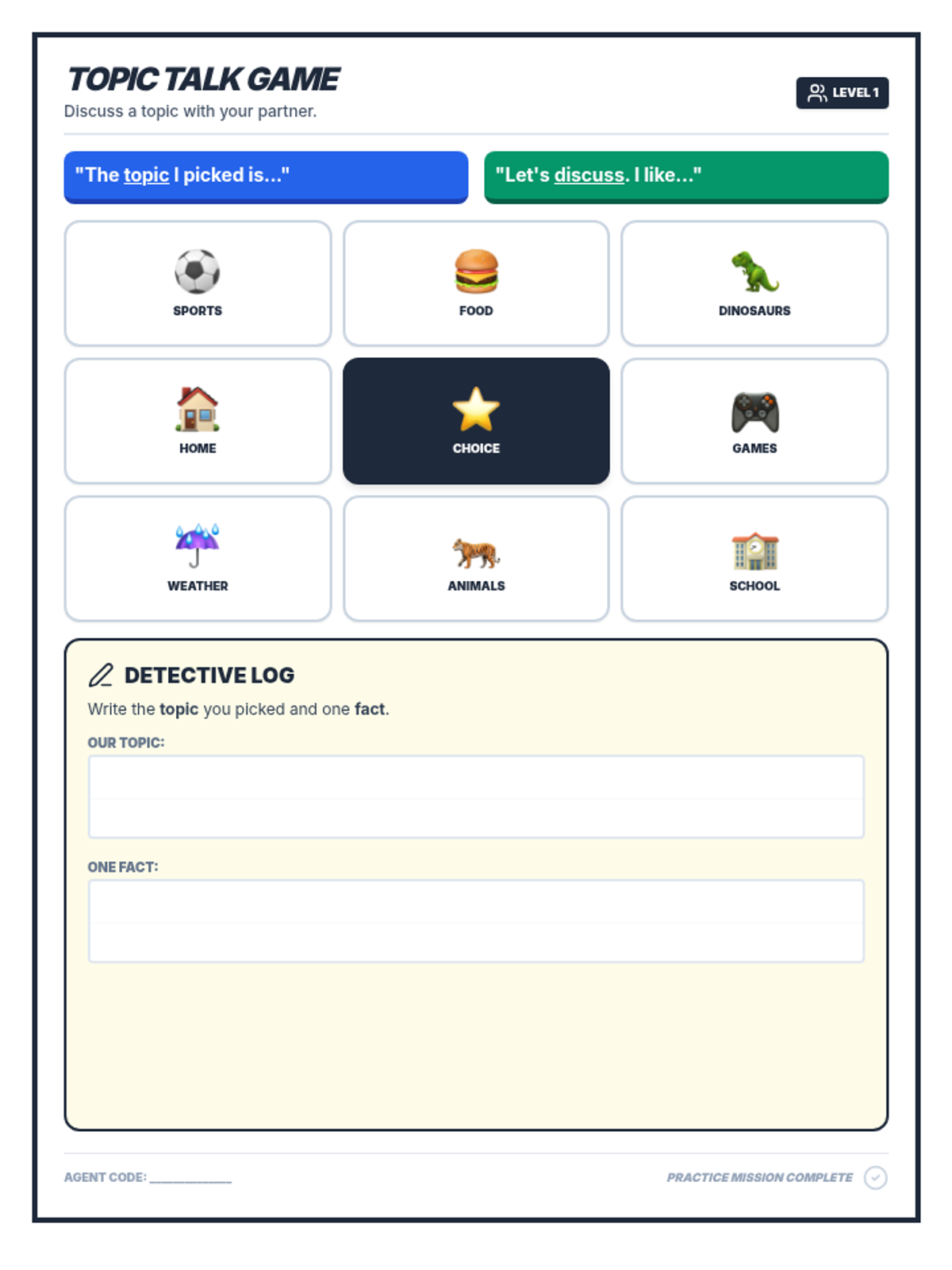
A partner-based discussion game featuring a choice board of visual topics. Students use sentence starters to practice identifying a topic and engaging in discussion with their peers. Revised to fit on a single page with a new 'Detective Log' for written practice. Grid heights and padding optimized for 1-page layout.
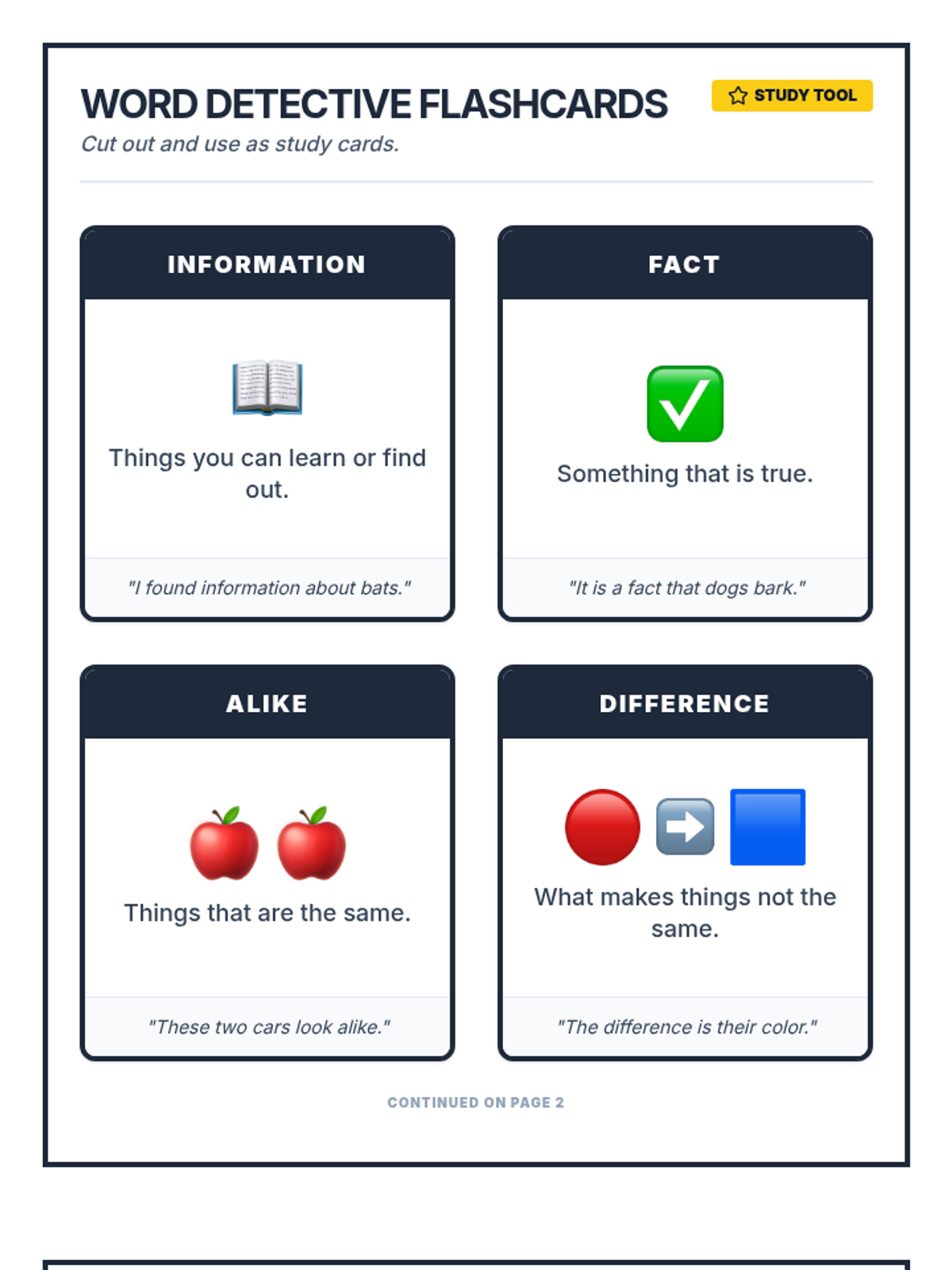
Visual vocabulary flashcards for the seven target academic words, featuring simple definitions, clear icons, and example sentences to support student mastery. Revised for consistent 2-page layout with borders and improved writing space for notes. Example sentences increased for better readability. Corrected arrow rendering and removed placeholder text.
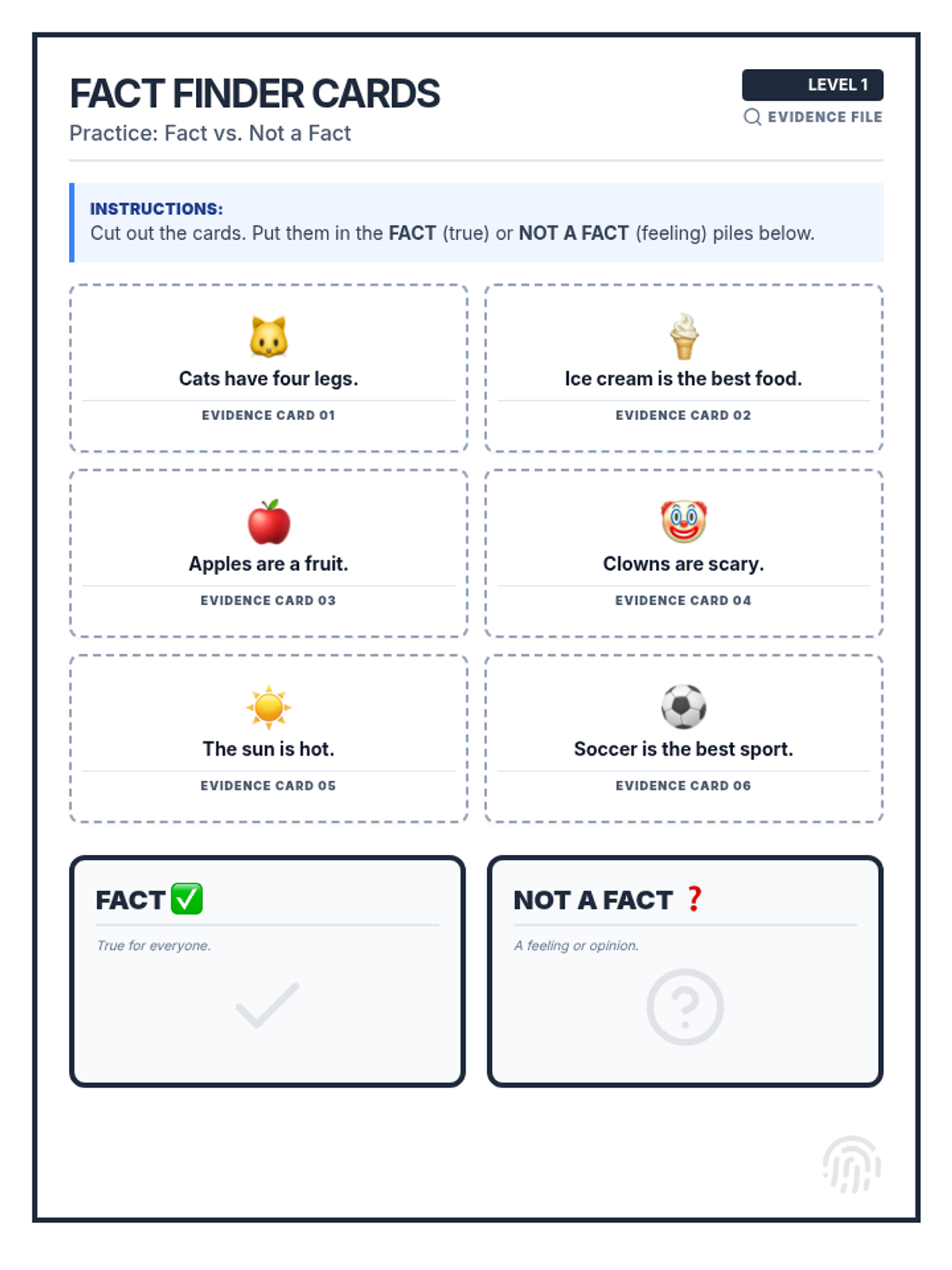
A hands-on sorting activity where students cut out cards and categorize statements as either 'Fact' or 'Not a Fact' to practice the concept of information versus opinion. Revised to fit on a single page with high-contrast text and larger sorting zones.
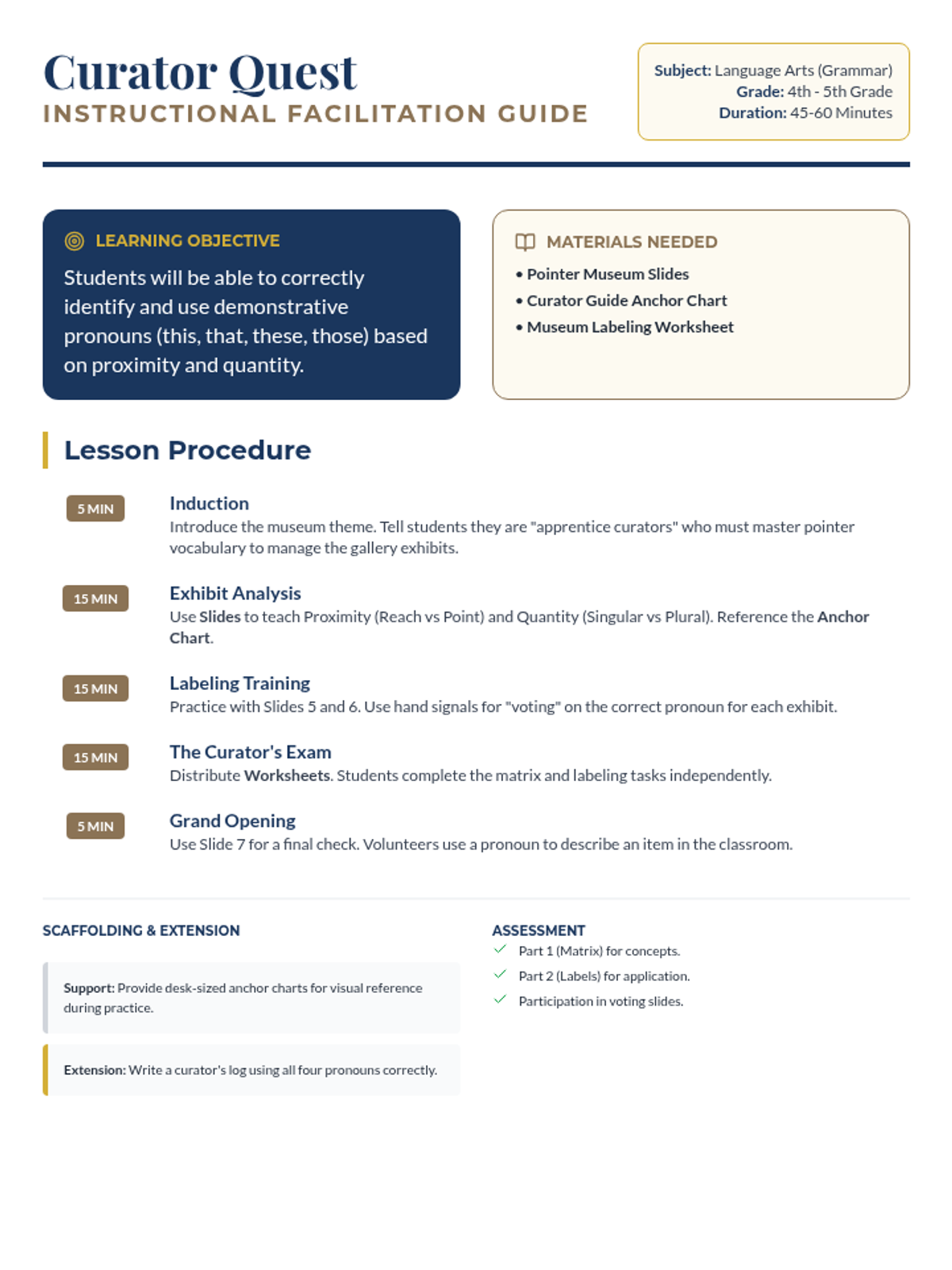
A detailed facilitation guide for teachers to deliver the Curator Quest lesson. It includes timing, step-by-step procedures, scaffolding suggestions, and assessment strategies aligned with the museum-themed materials.
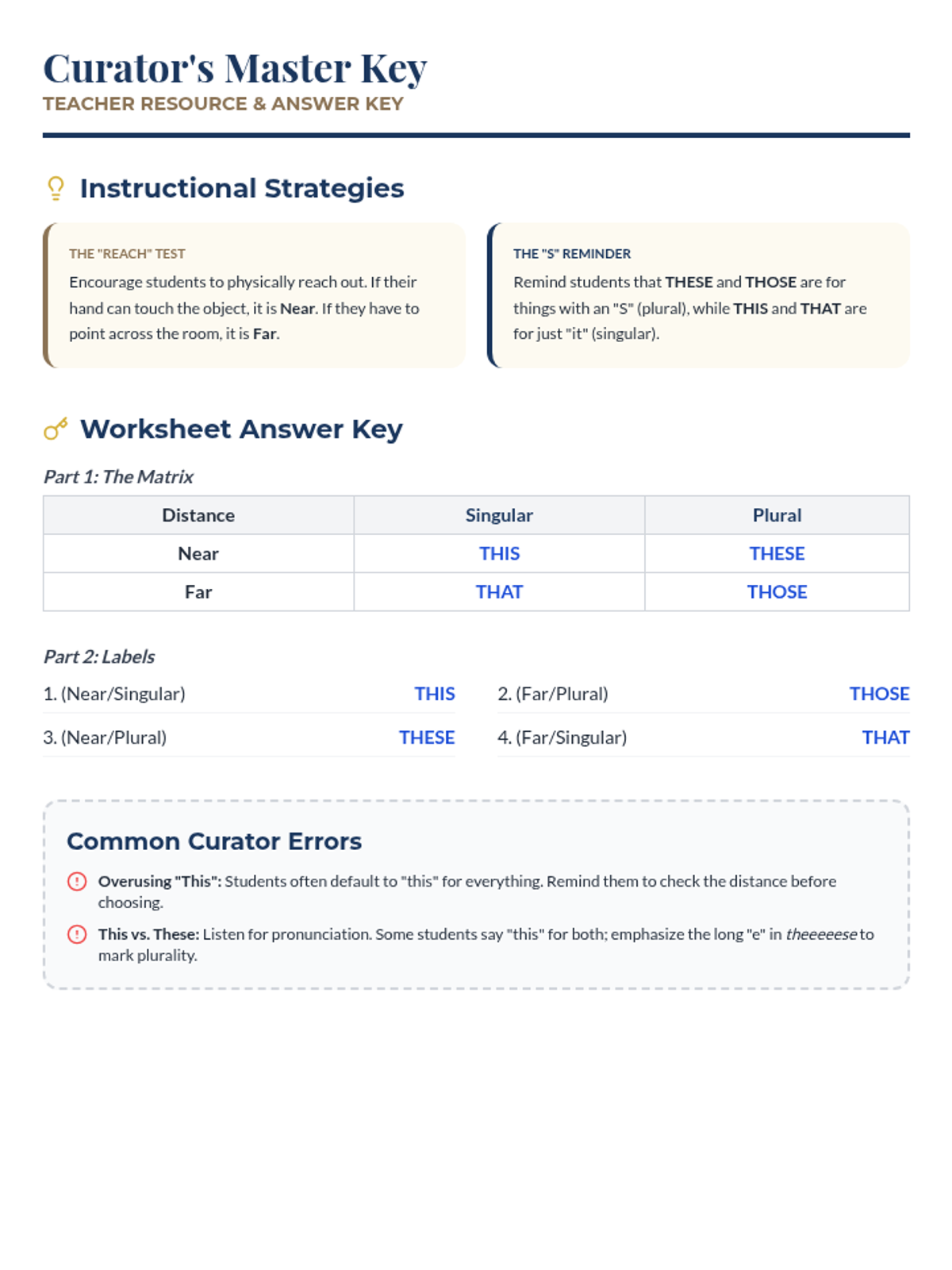
A teacher-facing resource providing the answer key for the museum worksheet along with teaching strategies and common student misconceptions regarding demonstrative pronouns.
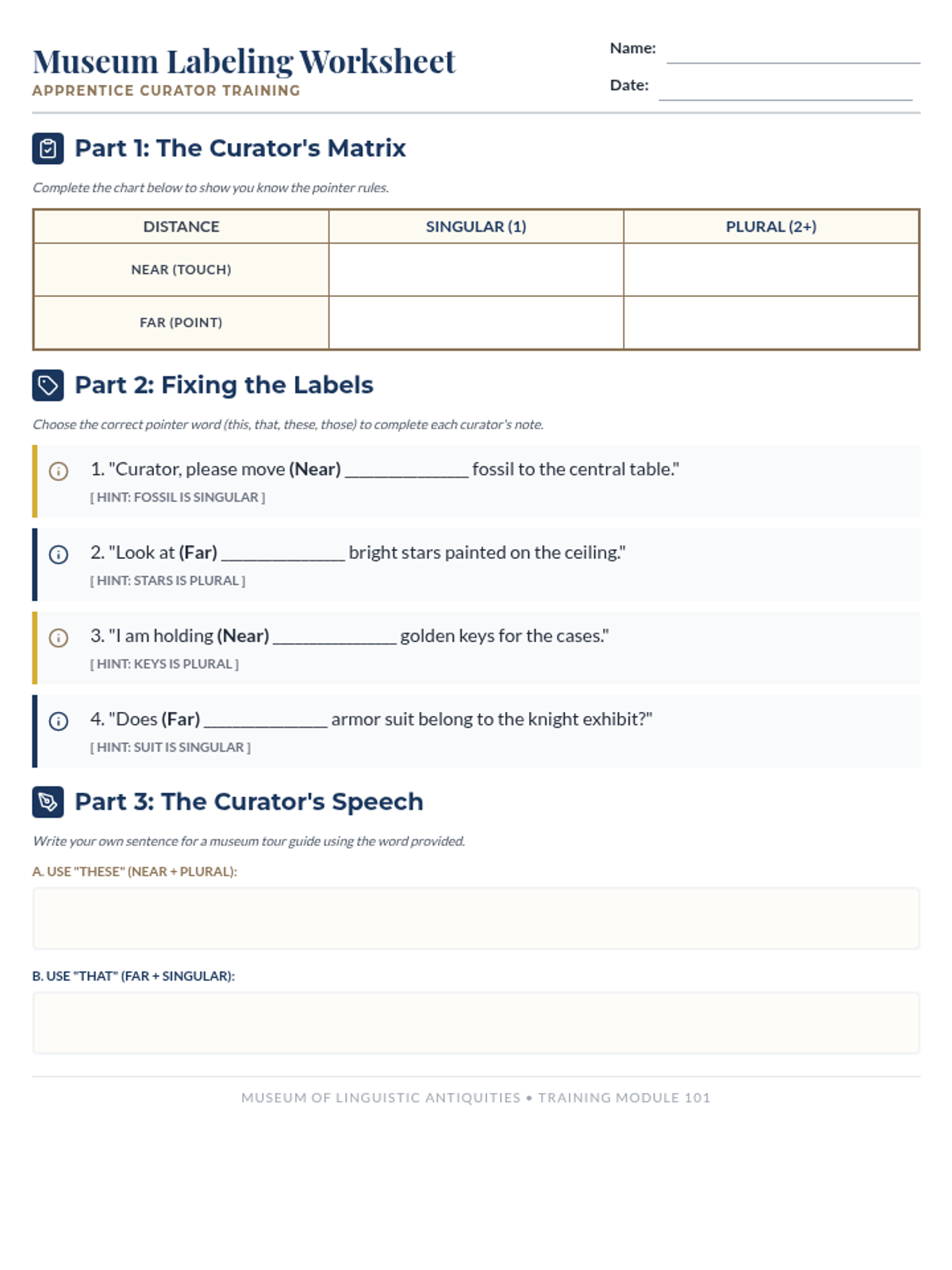
A practice worksheet where students apply their knowledge of pointer words in a museum curator context. It includes a recall chart, fill-in-the-blank sentences with proximity/quantity hints, and a sentence writing section.
A guided slide deck that introduces the concept of pointer words (demonstratives) using a museum curator theme. It breaks down the rules of proximity and quantity with clear visuals and guided practice slides.
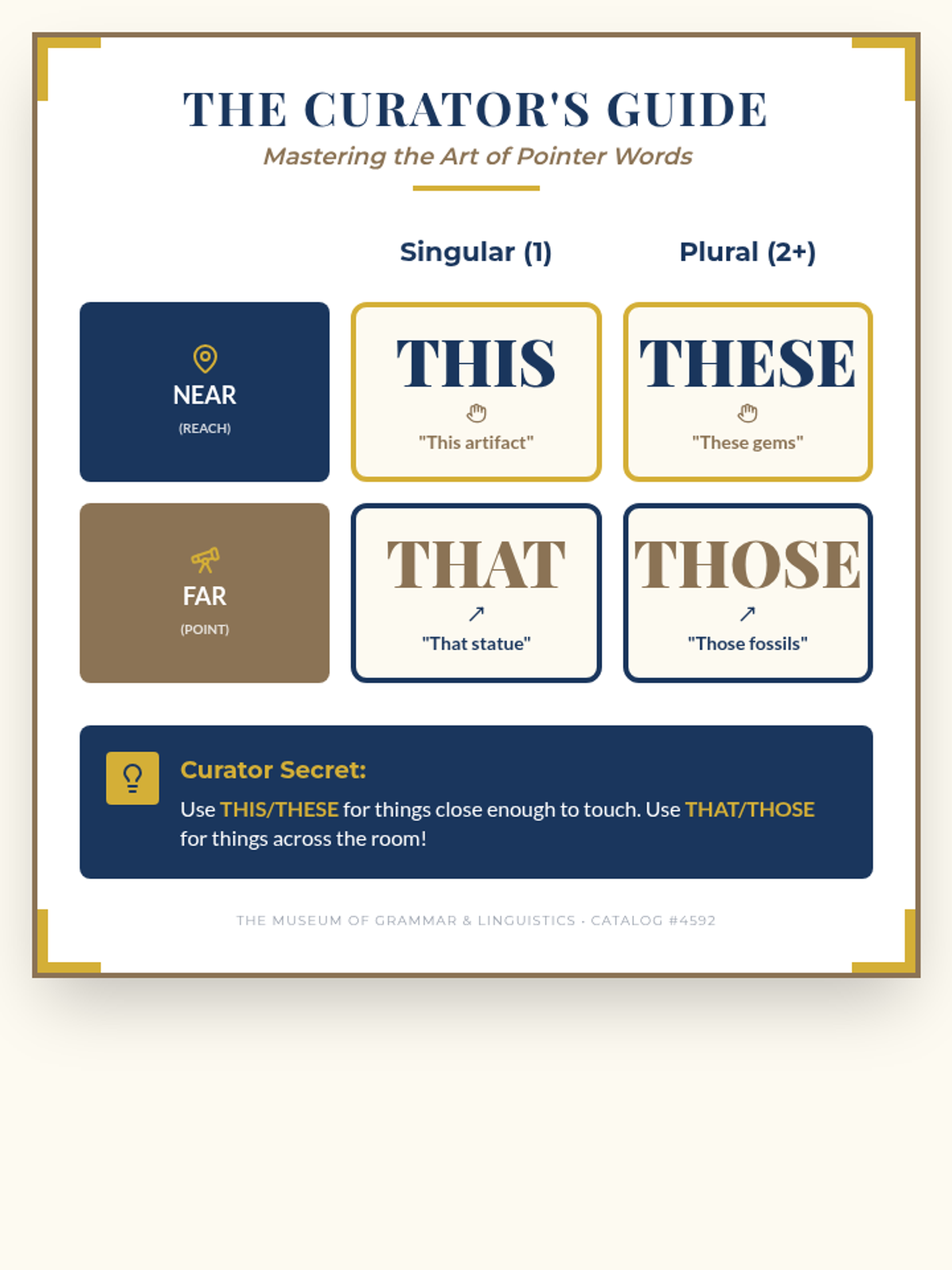
A visually striking anchor chart designed with a museum theme to teach the four demonstrative pronouns (this, that, these, those). It uses a 2x2 grid to clearly differentiate between number (singular/plural) and proximity (near/far).
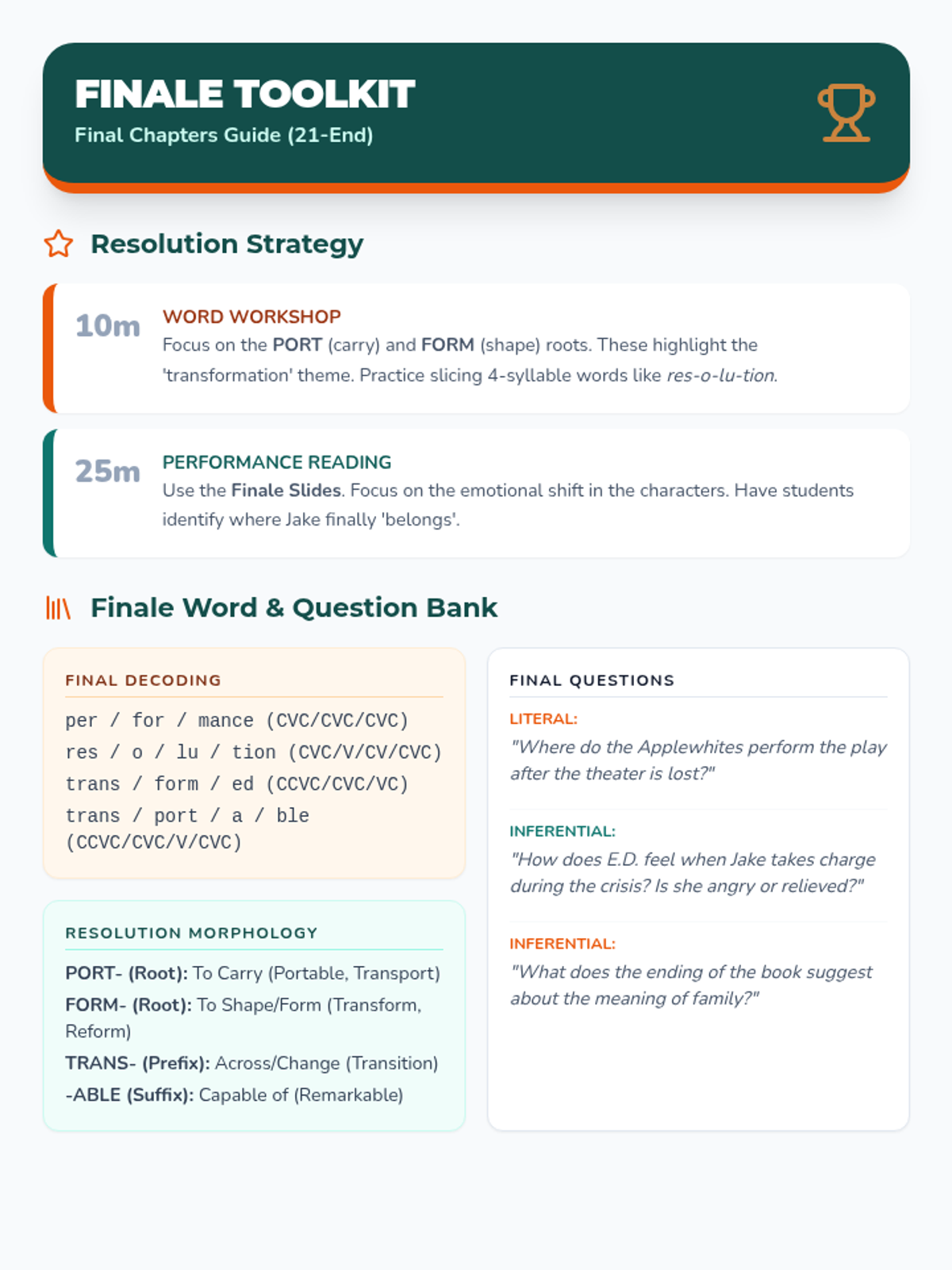
Teacher toolkit for the final chapters of 'Surviving the Applewhites,' featuring resolution-themed word banks and character transformation questions.
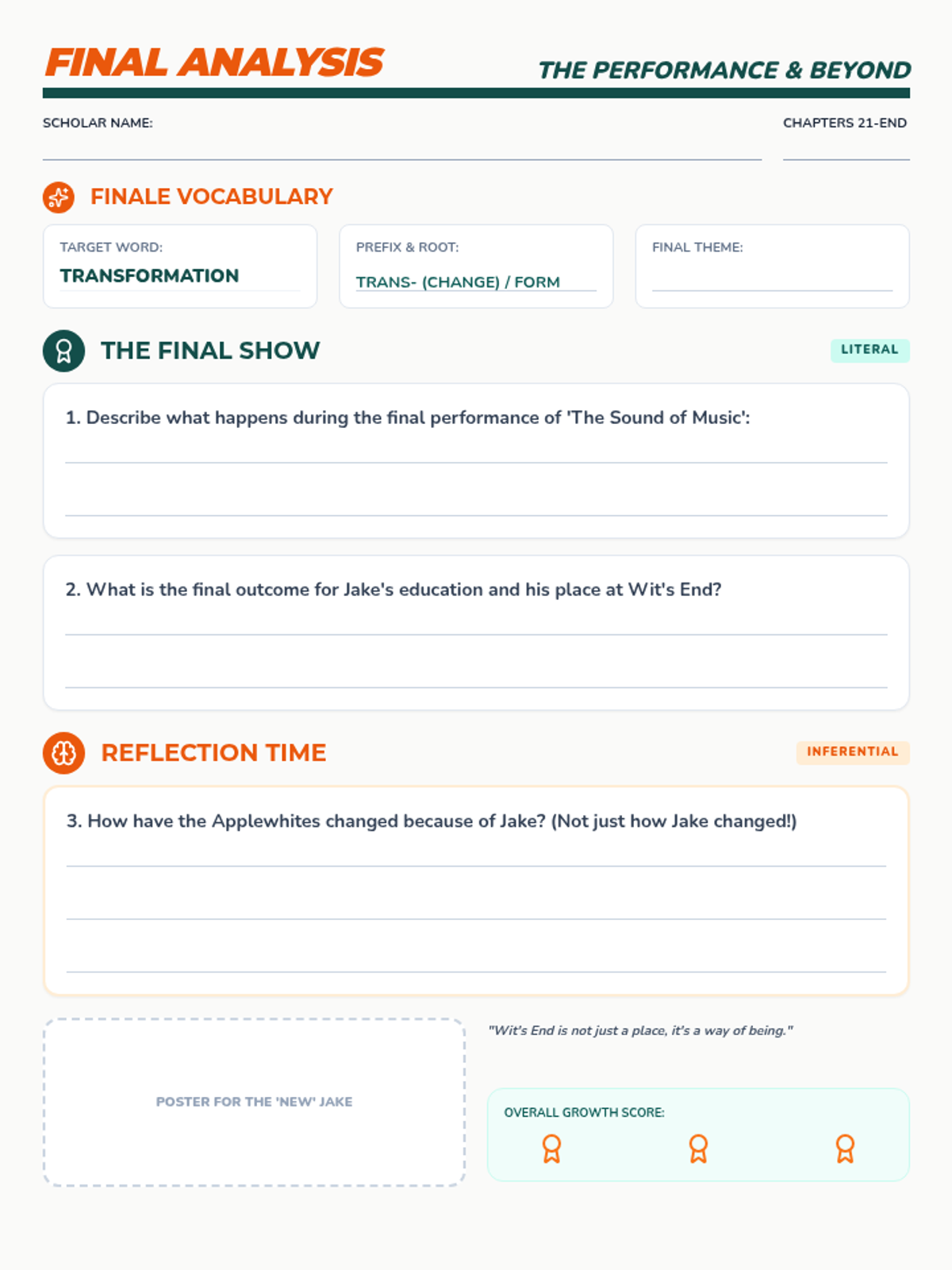
Final-chapter comprehension handout for 'Surviving the Applewhites,' focusing on the story's resolution and character growth.
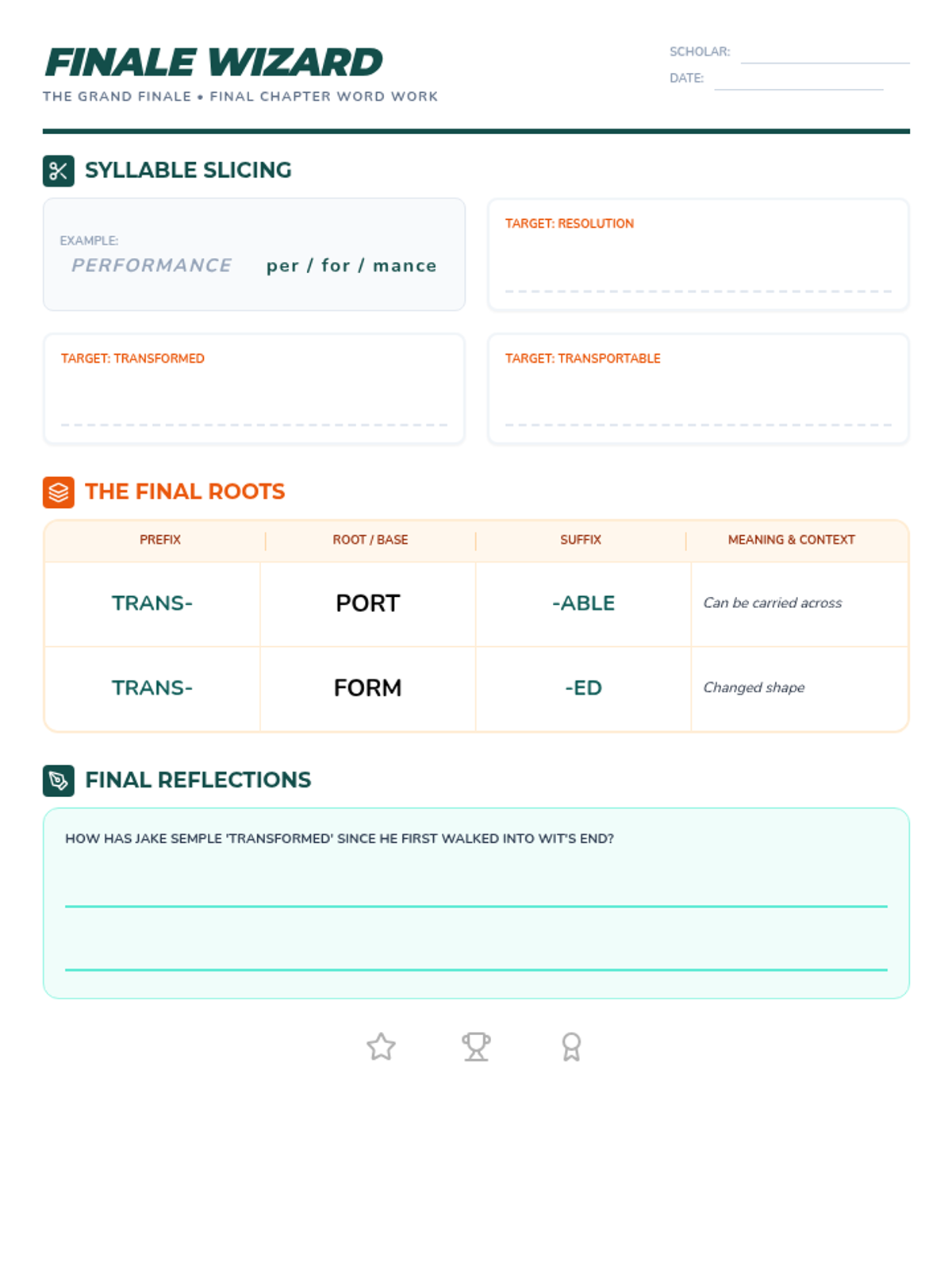
Final-chapter word work for 'Surviving the Applewhites' focusing on resolution, transformation, and roots like PORT and FORM.
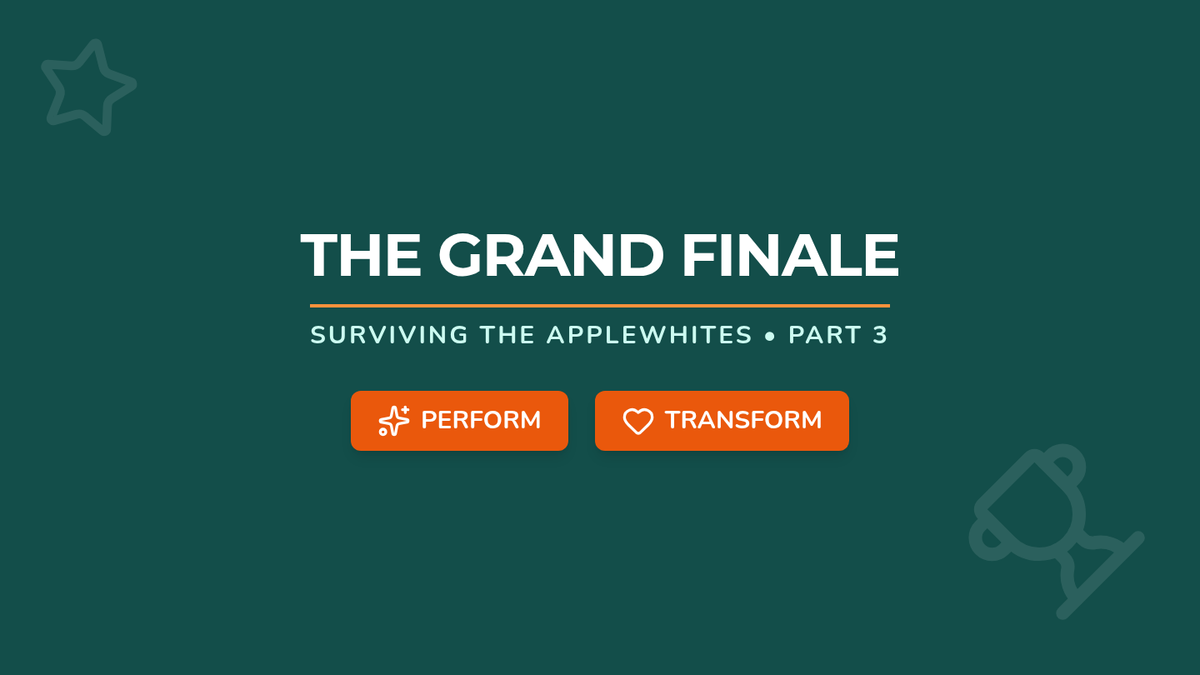
Daily routine slides for the final chapters of 'Surviving the Applewhites,' focusing on the theme of 'The Grand Finale' and character transformation.
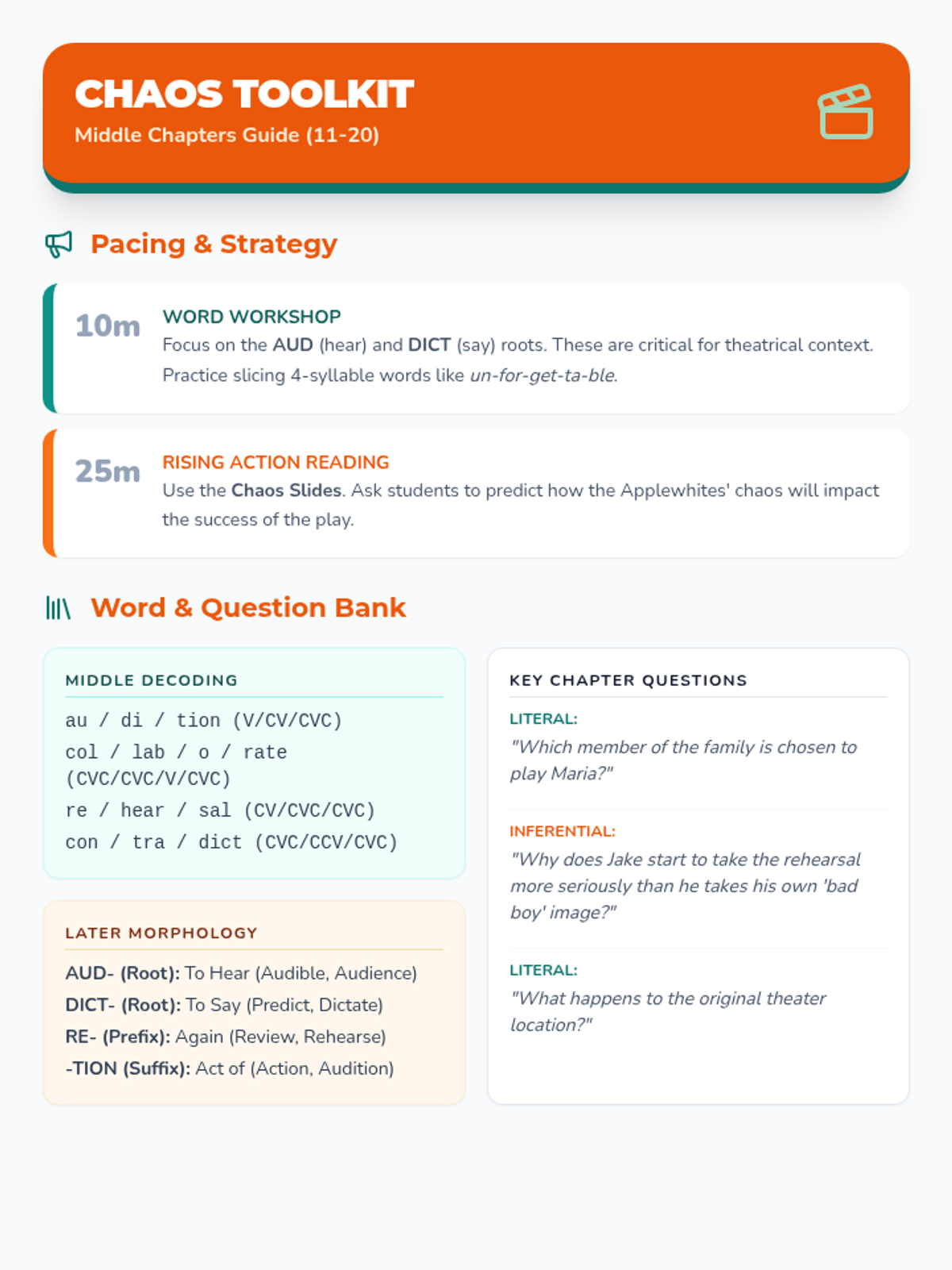
Teacher toolkit for the middle chapters of 'Surviving the Applewhites,' featuring theater-themed word banks and rising action questions.
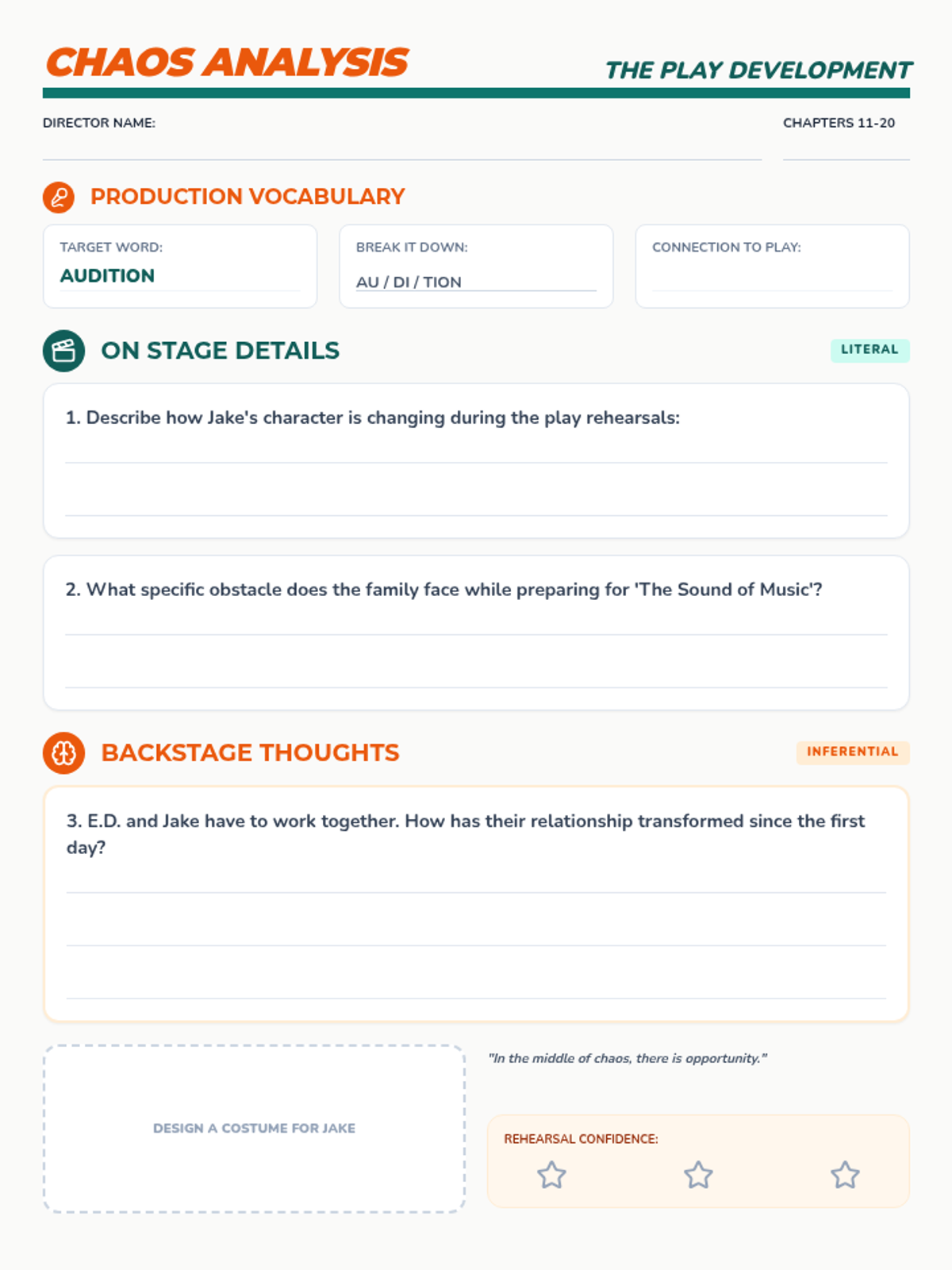
Middle-chapter comprehension handout for 'Surviving the Applewhites,' focusing on character development and the play's preparation.