A guided slide deck that introduces the concept of pointer words (demonstratives) using a museum curator theme. It breaks down the rules of proximity and quantity with clear visuals and guided practice slides.
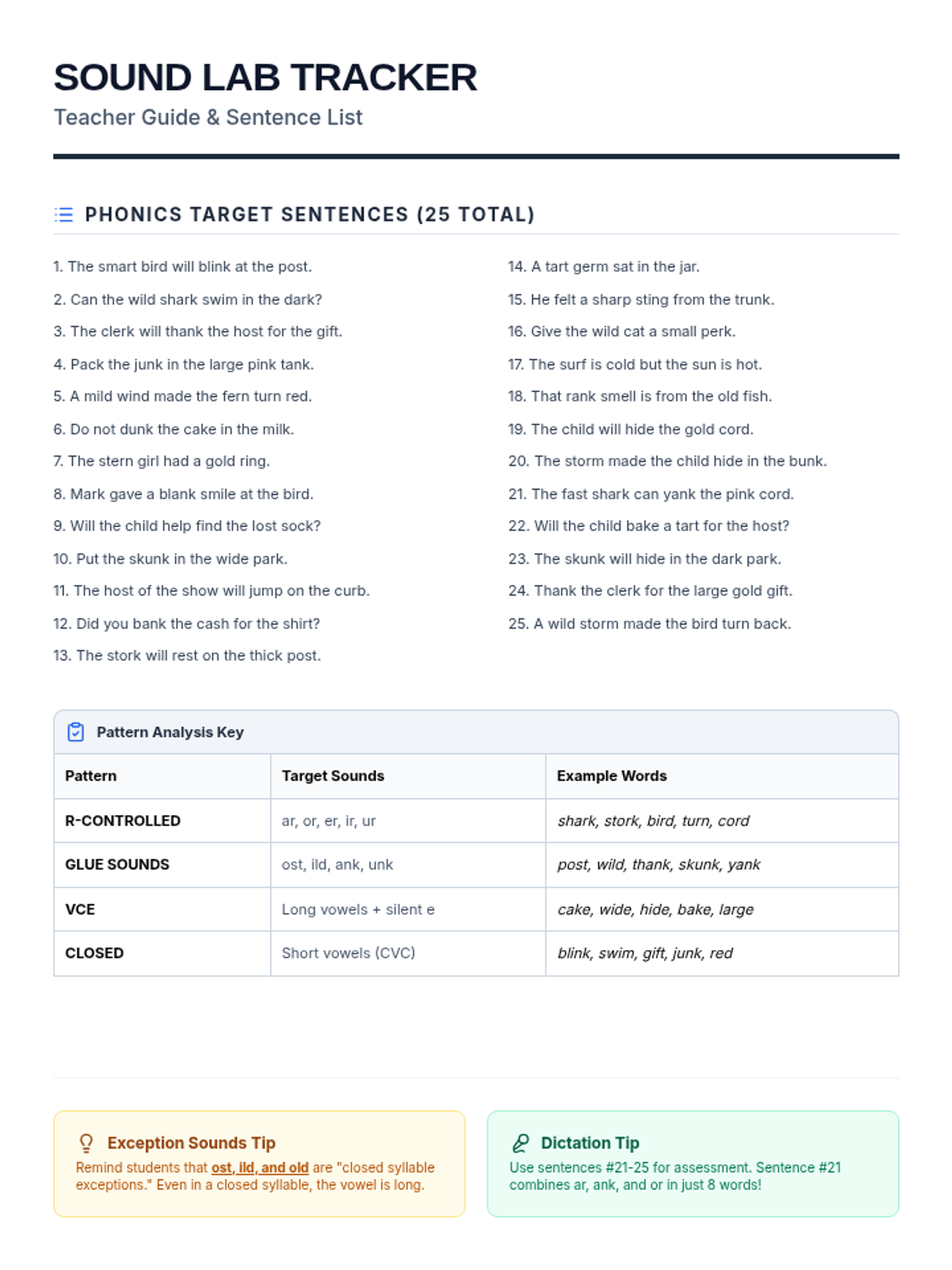
A teacher-facing tracking sheet and guide that lists the 25 decodable sentences by pattern, includes a mastery checklist for student assessments, and provides instructional tips for difficult glue sounds. Now includes the full list of 1-syllable sentences.
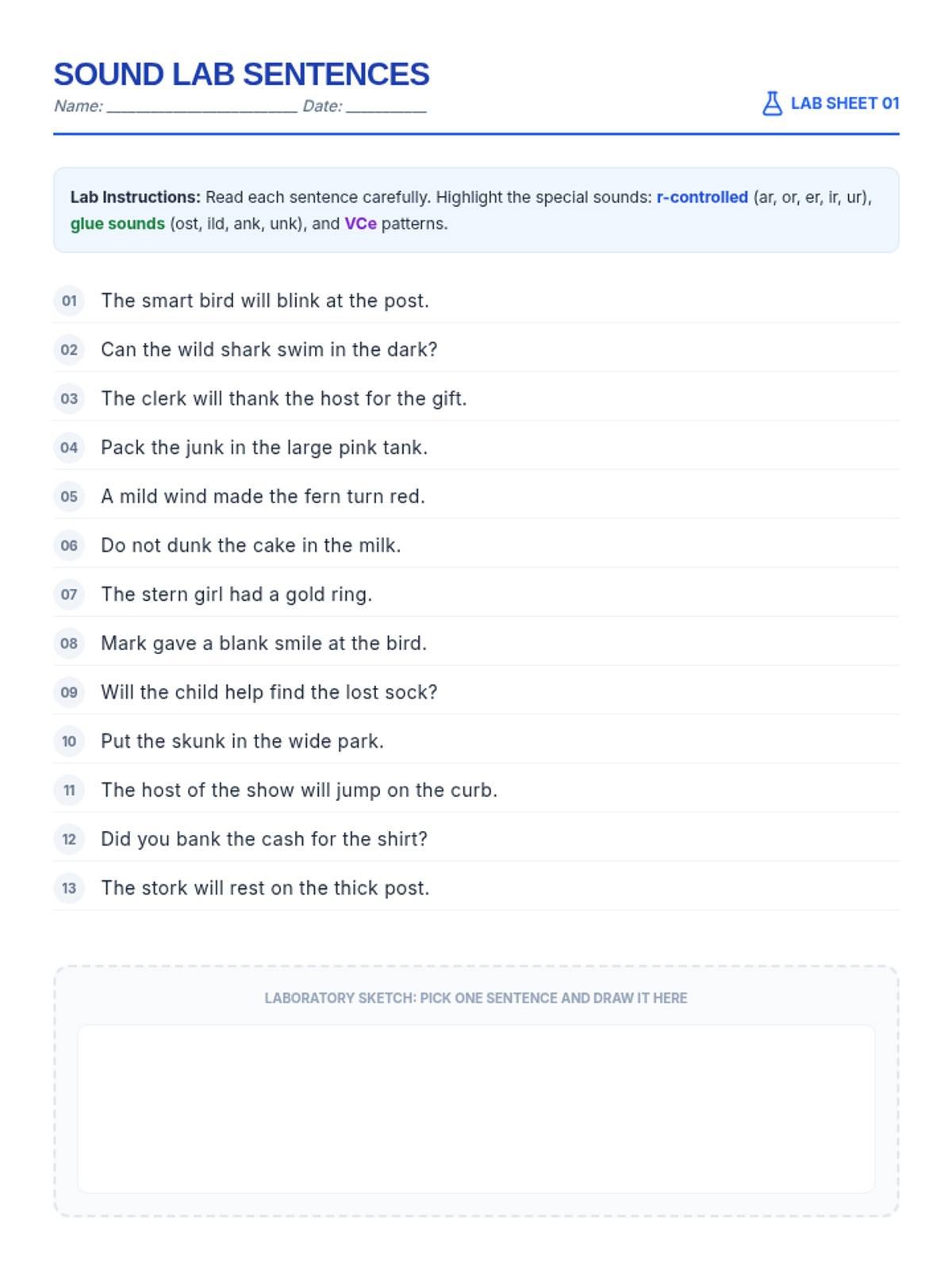
A 2-page worksheet containing 25 decodable sentences for students to read, mark up for phonics patterns, and illustrate. Includes a lab-themed design and space for dictation with dashed handwriting lines.
A slide deck featuring 25 decodable sentences (extended from 20) with mixed patterns (VCe, r-controlled, closed, and glue sounds). Each sentence strictly uses 1-syllable words and consistent color-coded highlighting.
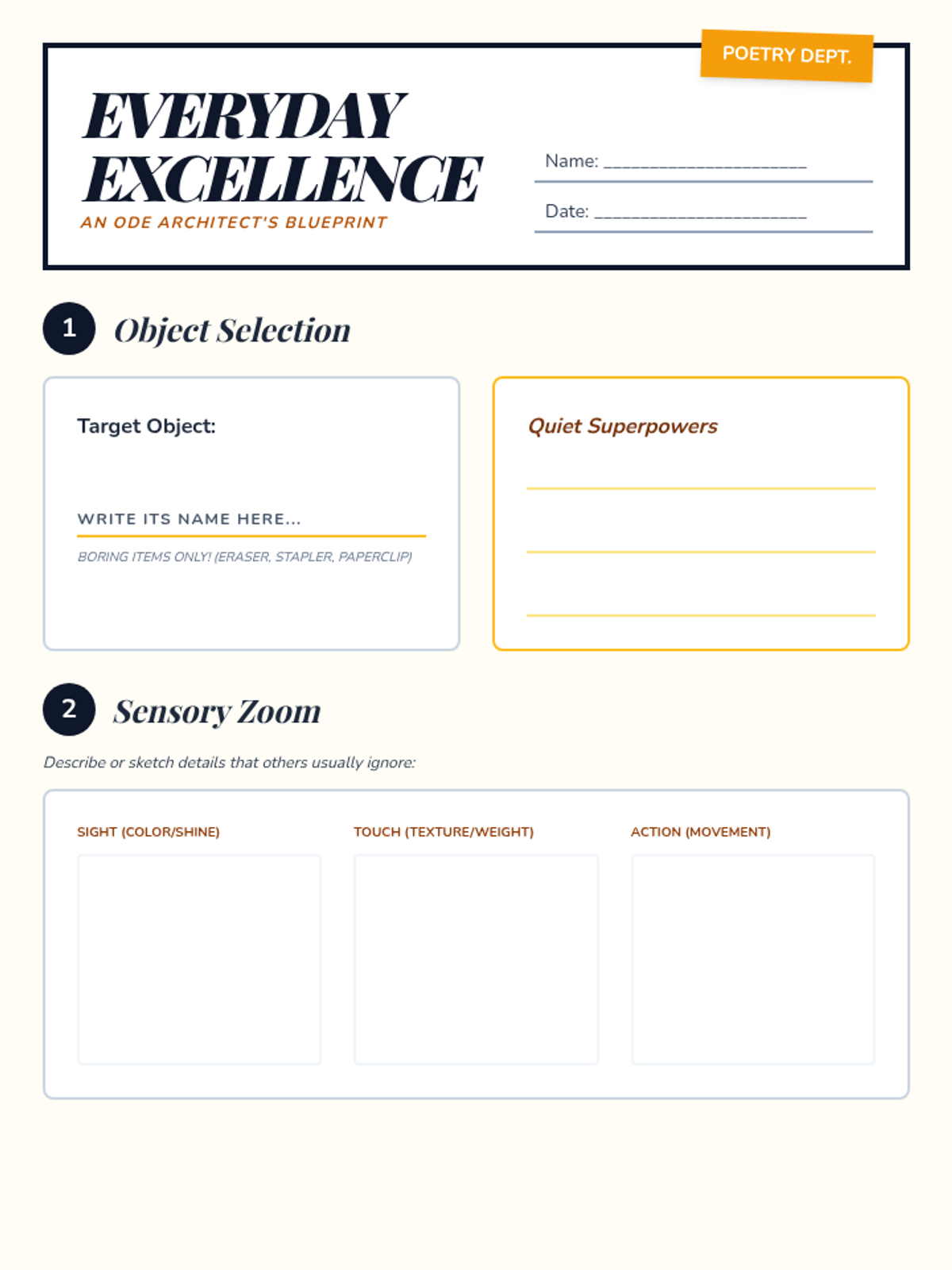
A writing worksheet for 5th graders to brainstorm and draft an ode to an everyday object, featuring structured steps for sensory details and exaggerated praise.
A slide deck for teaching odes, covering definitions, the concept of exaggeration, examples from Neruda, and a prompt for students to write their own.
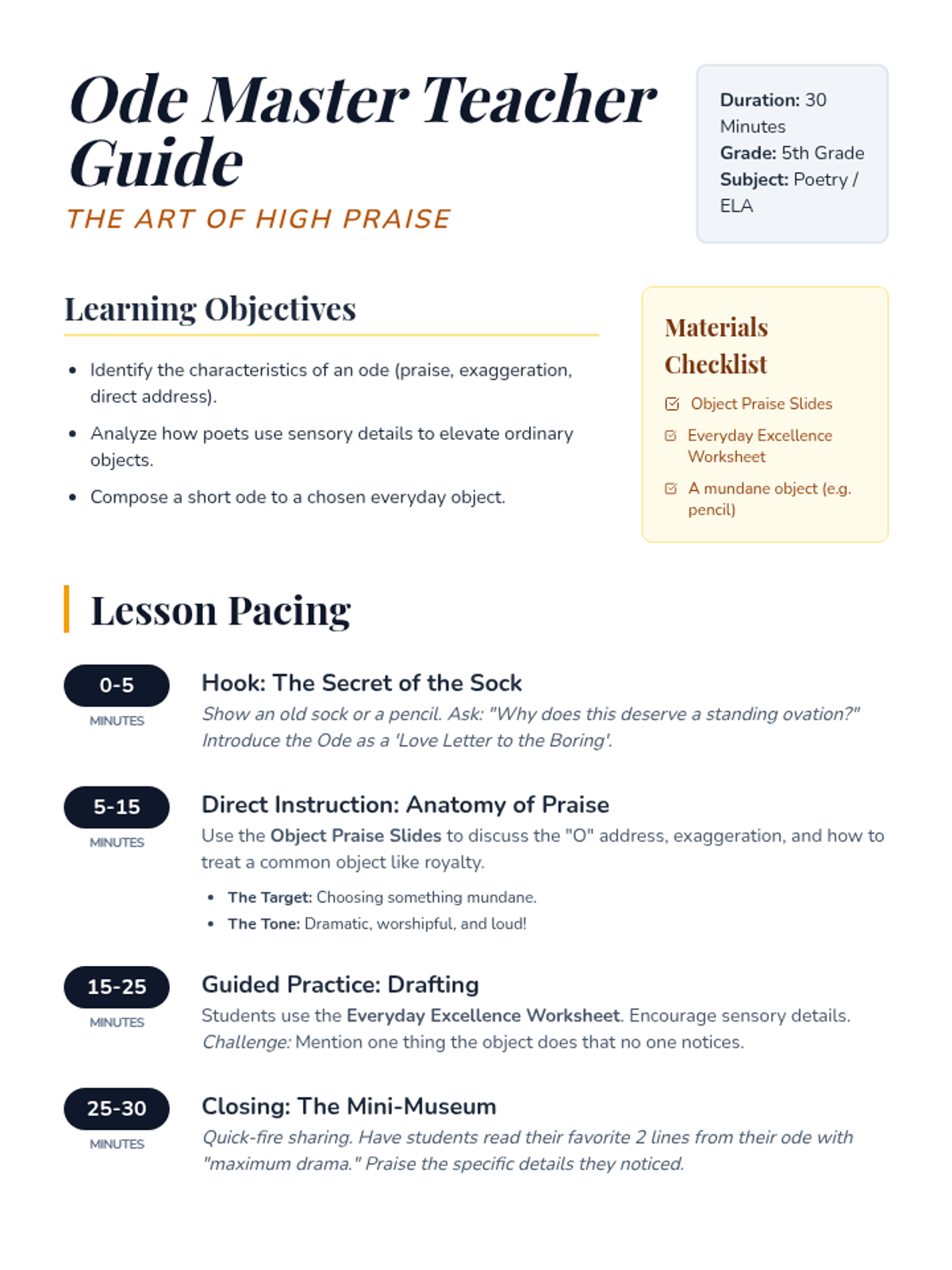
Teacher guide for a 30-minute 5th grade lesson on writing odes to everyday objects, featuring pacing, vocabulary, and differentiation strategies.
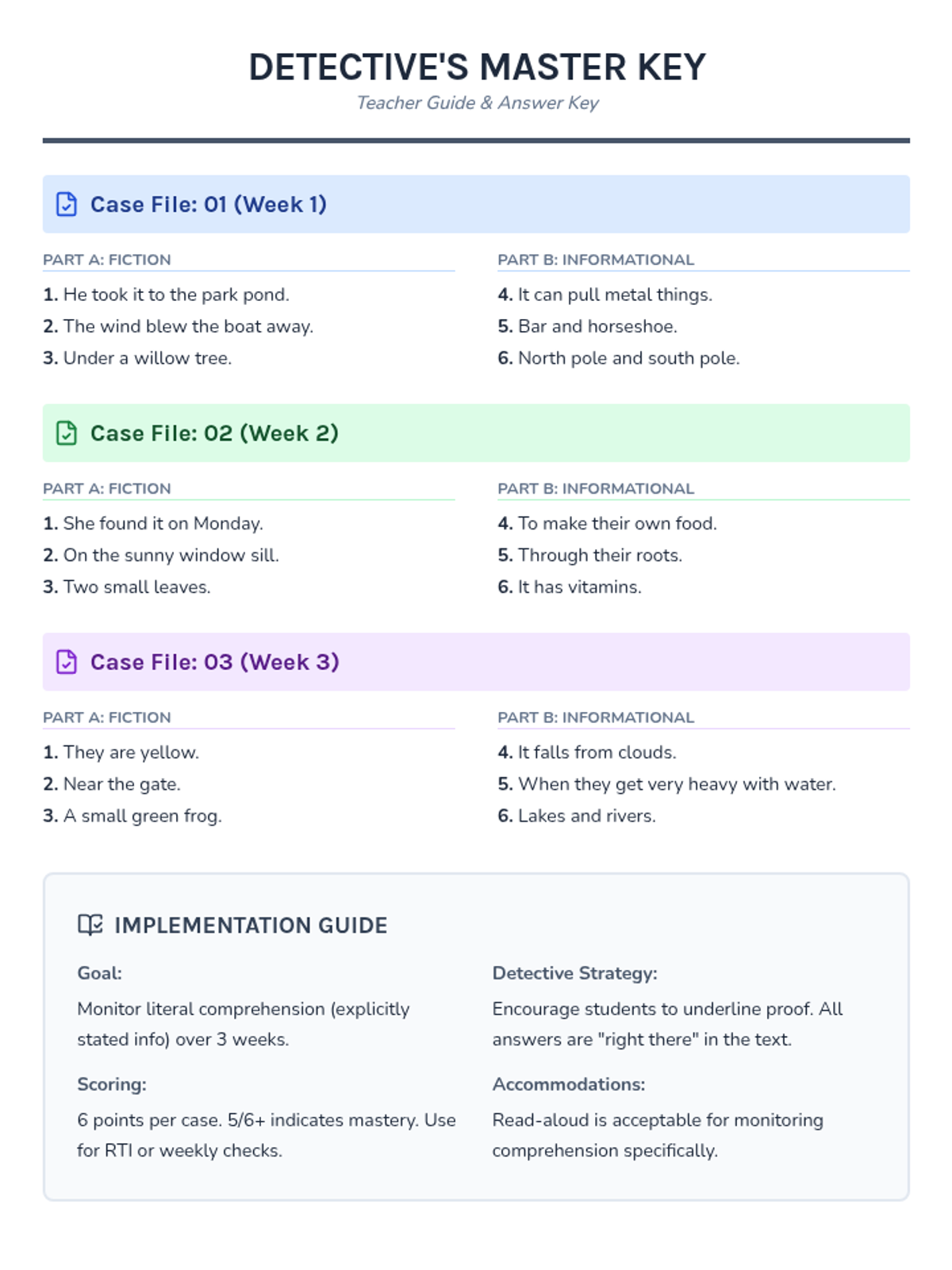
Teacher guide and answer key for the 3-week literal comprehension progress monitoring probes. Includes scores and instructional implementation notes.
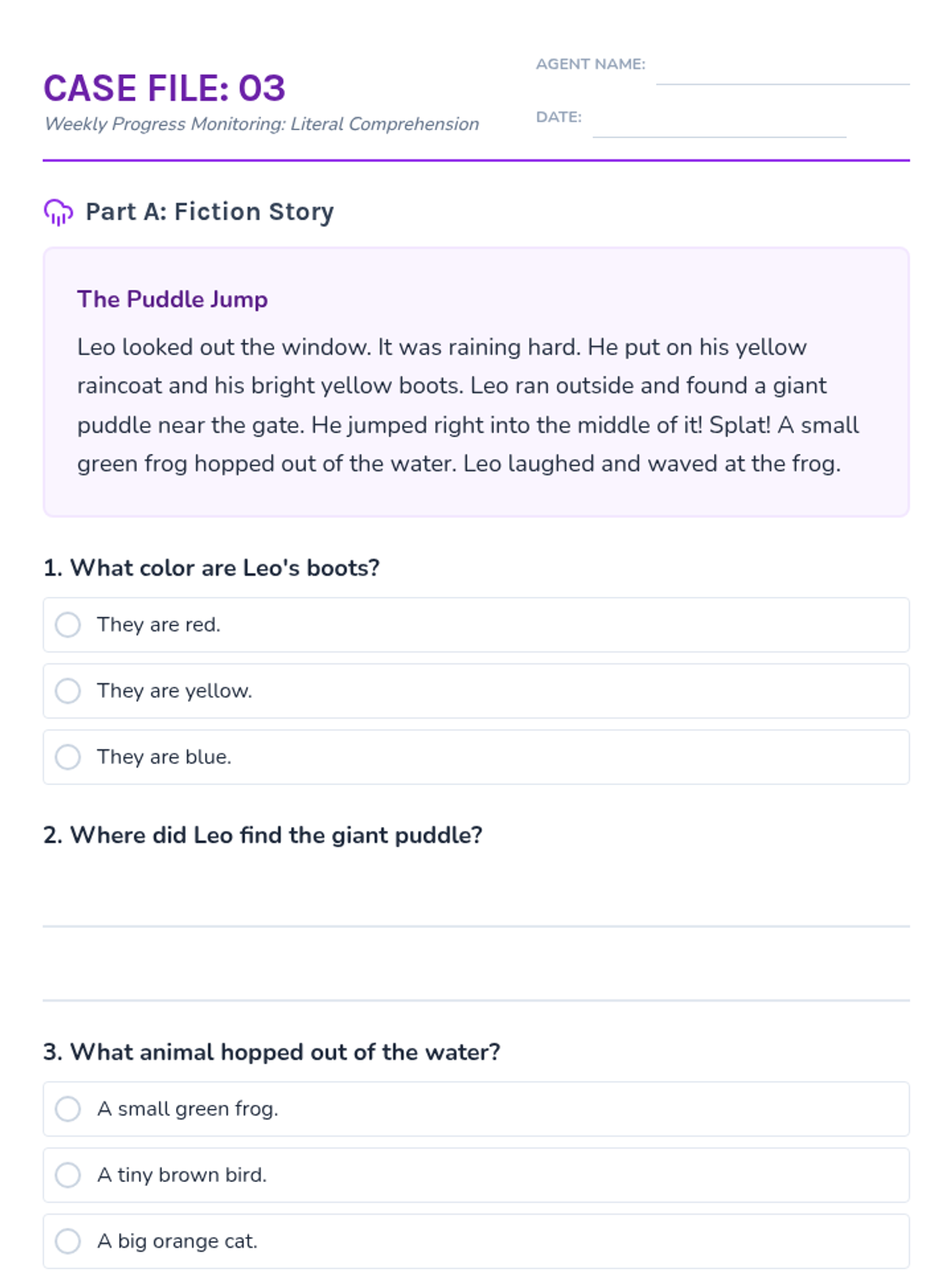
A 2nd-grade literal comprehension probe for Week 3, featuring a fiction story about a puddle and an informational text about rain. Includes multiple choice and short answer questions.
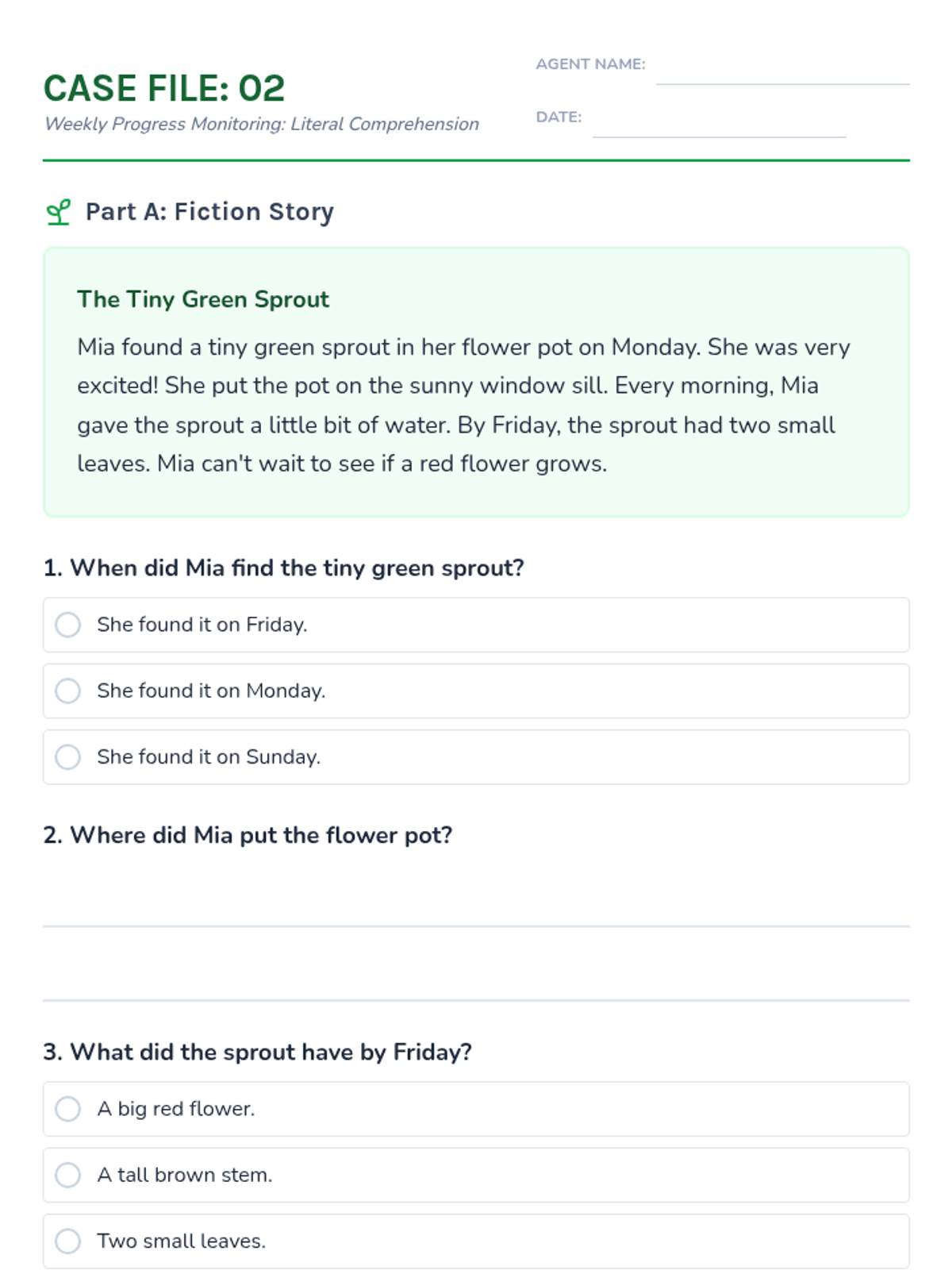
A 2nd-grade literal comprehension probe for Week 2, featuring a fiction story about a sprout and an informational text about how plants grow. Includes multiple choice and short answer questions.
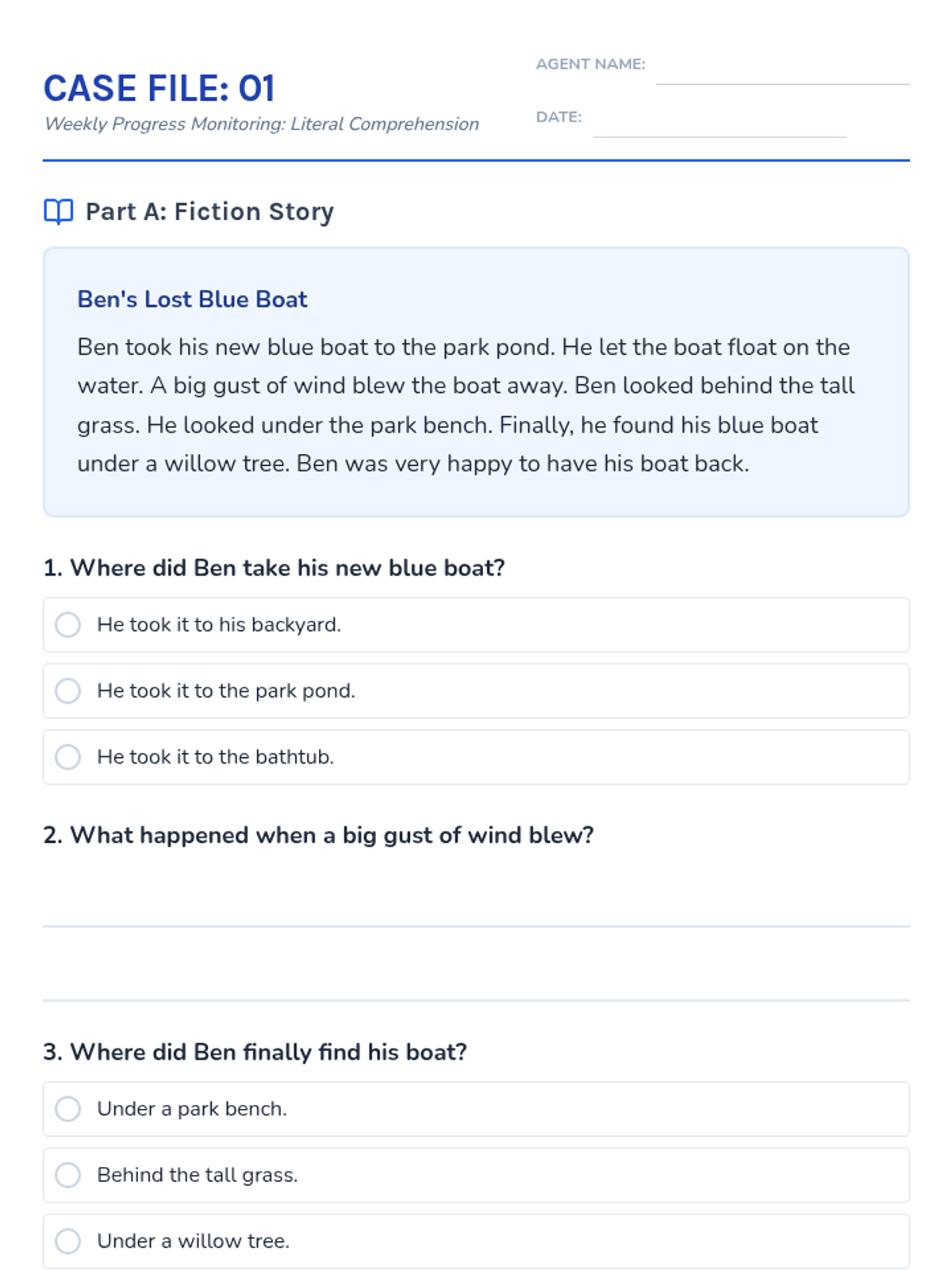
A 2nd-grade literal comprehension probe for Week 1, featuring a fiction story about a lost boat and an informational text about magnets. Includes multiple choice and short answer questions.
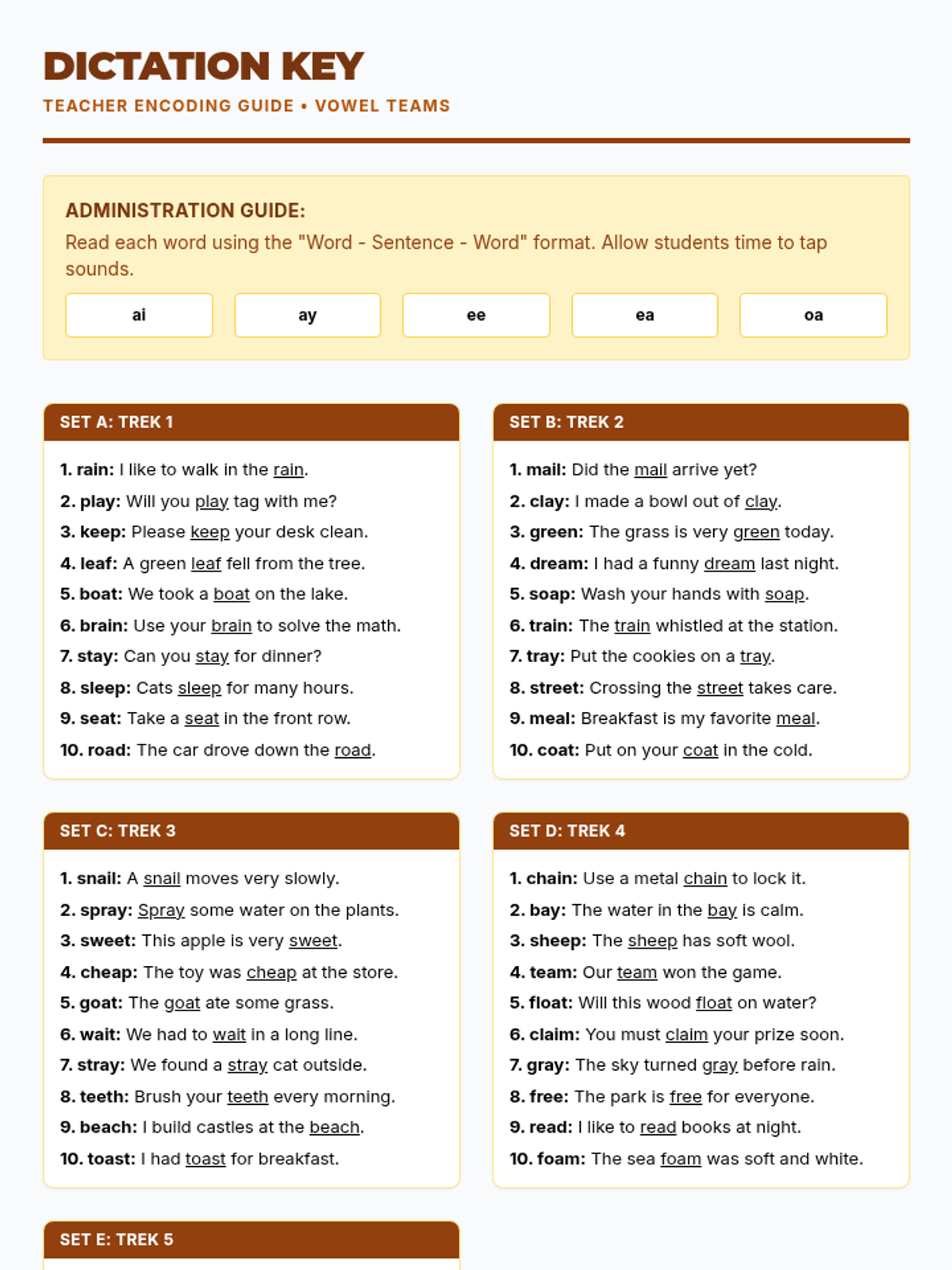
A teacher's guide for the encoding (spelling) assessment, providing word lists, example sentences, and administration instructions. Organized into distinct sets for recurring progress monitoring sessions.
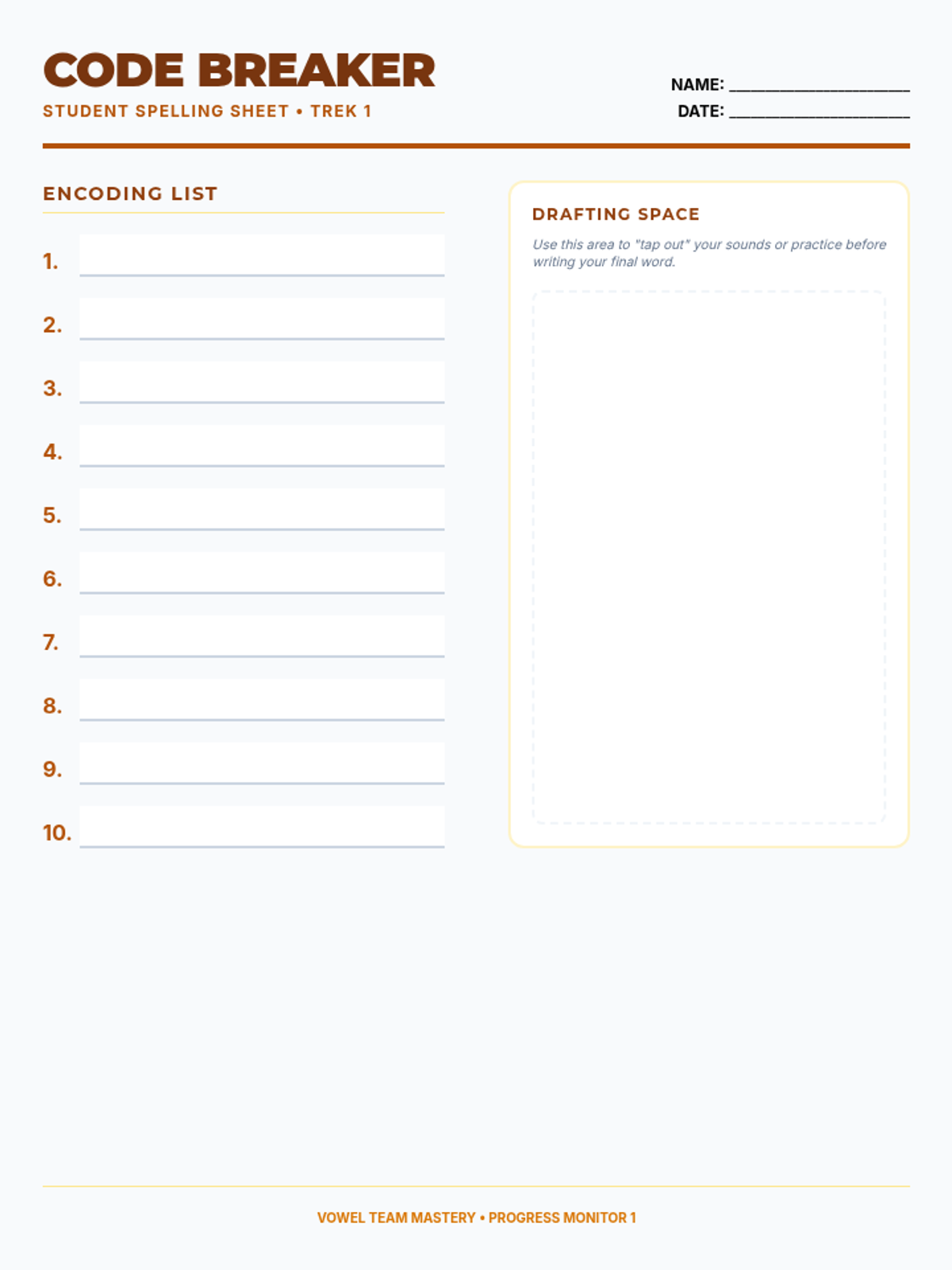
A student-facing spelling assessment sheet with numbered lines for encoding words. Includes a dedicated drafting space for students to "tap out" sounds or practice spelling before finalizing their answers.
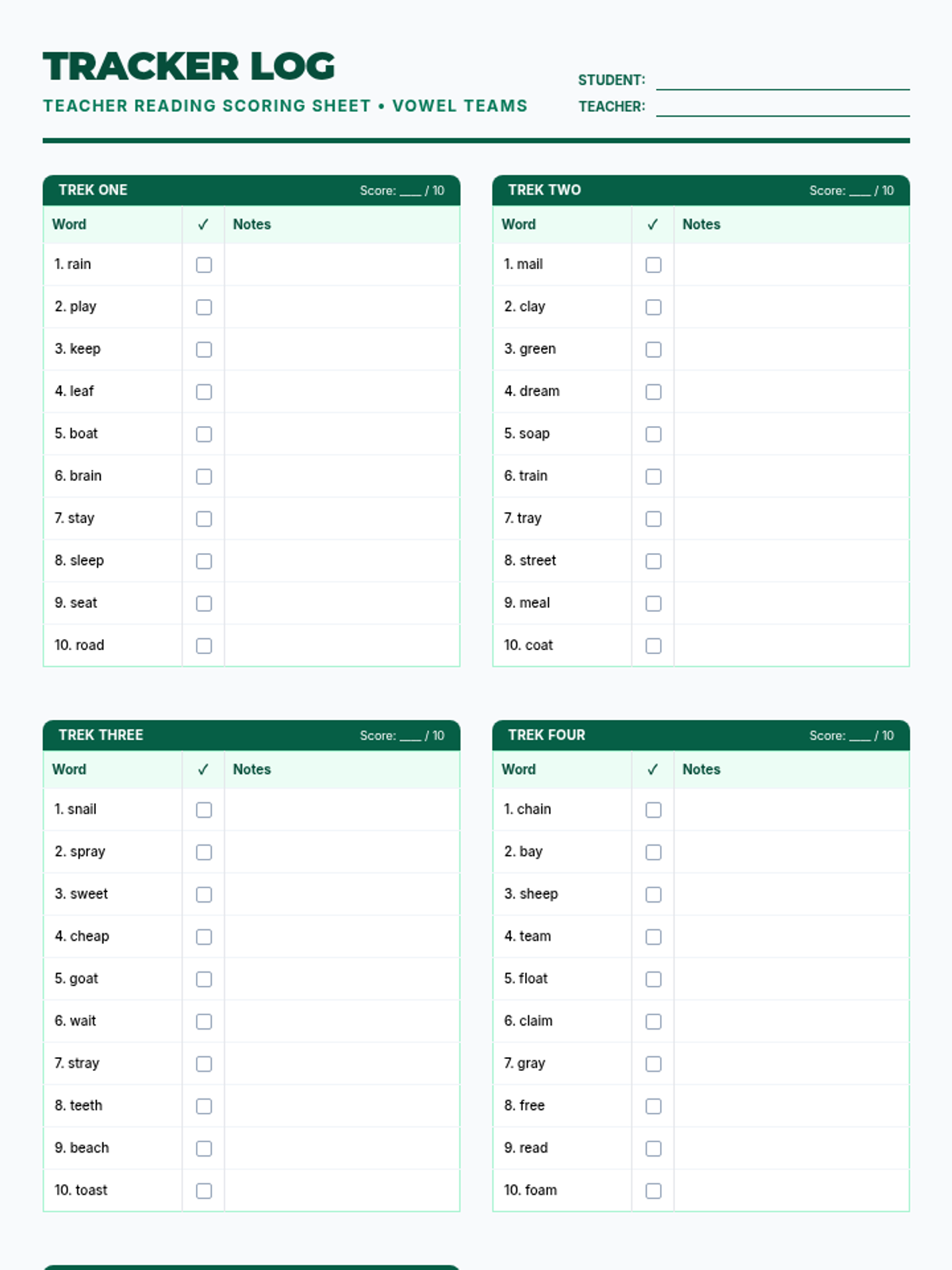
A teacher scoring sheet for tracking student decoding progress across 5 word lists. Includes space for marking correctness and recording qualitative notes on student errors or self-corrections.
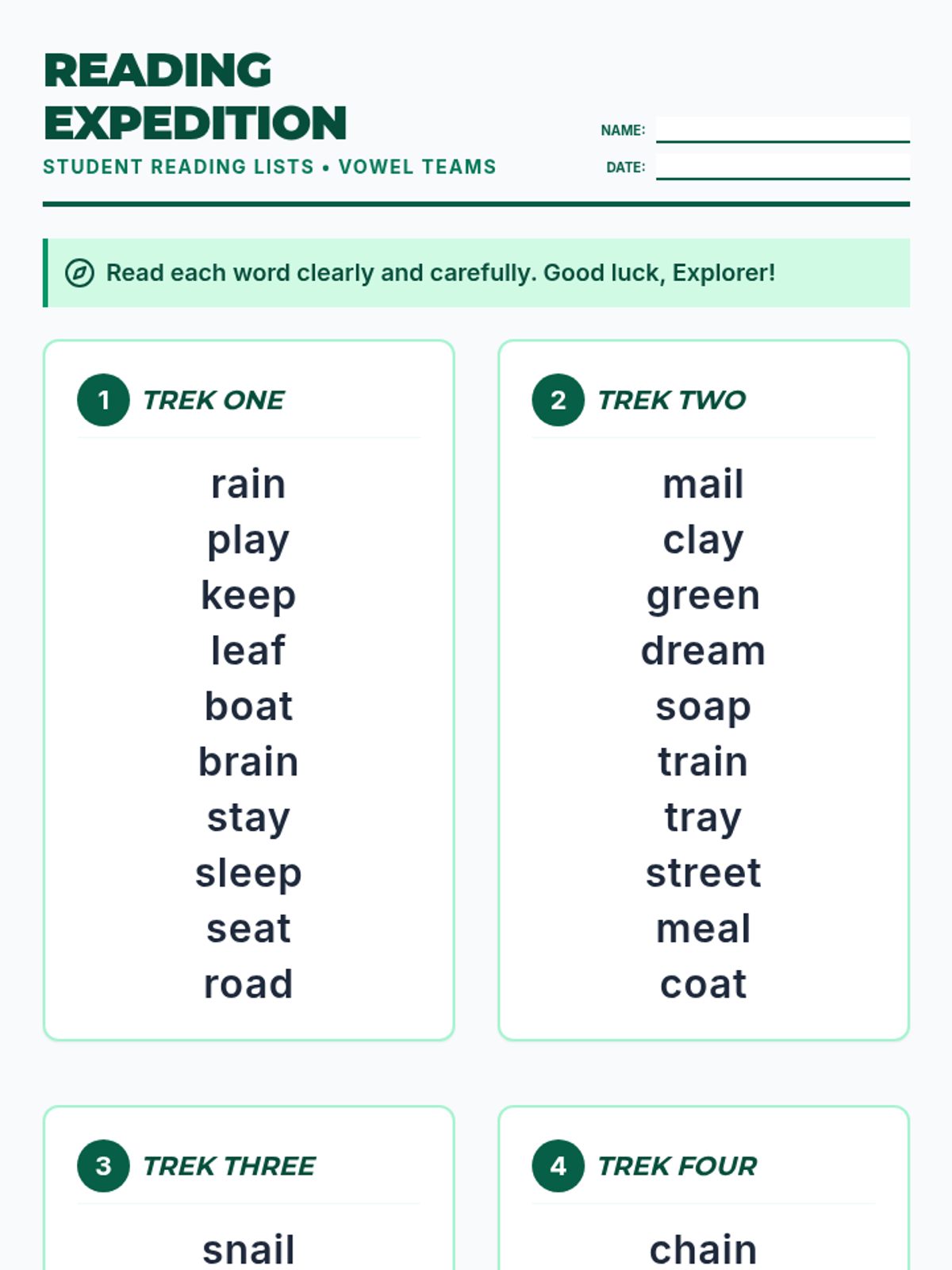
A student-facing document containing 5 lists of 10 words each, focusing on the vowel teams ai, ay, ee, ea, and oa. The large, clear text is designed for easy reading during decoding assessments.
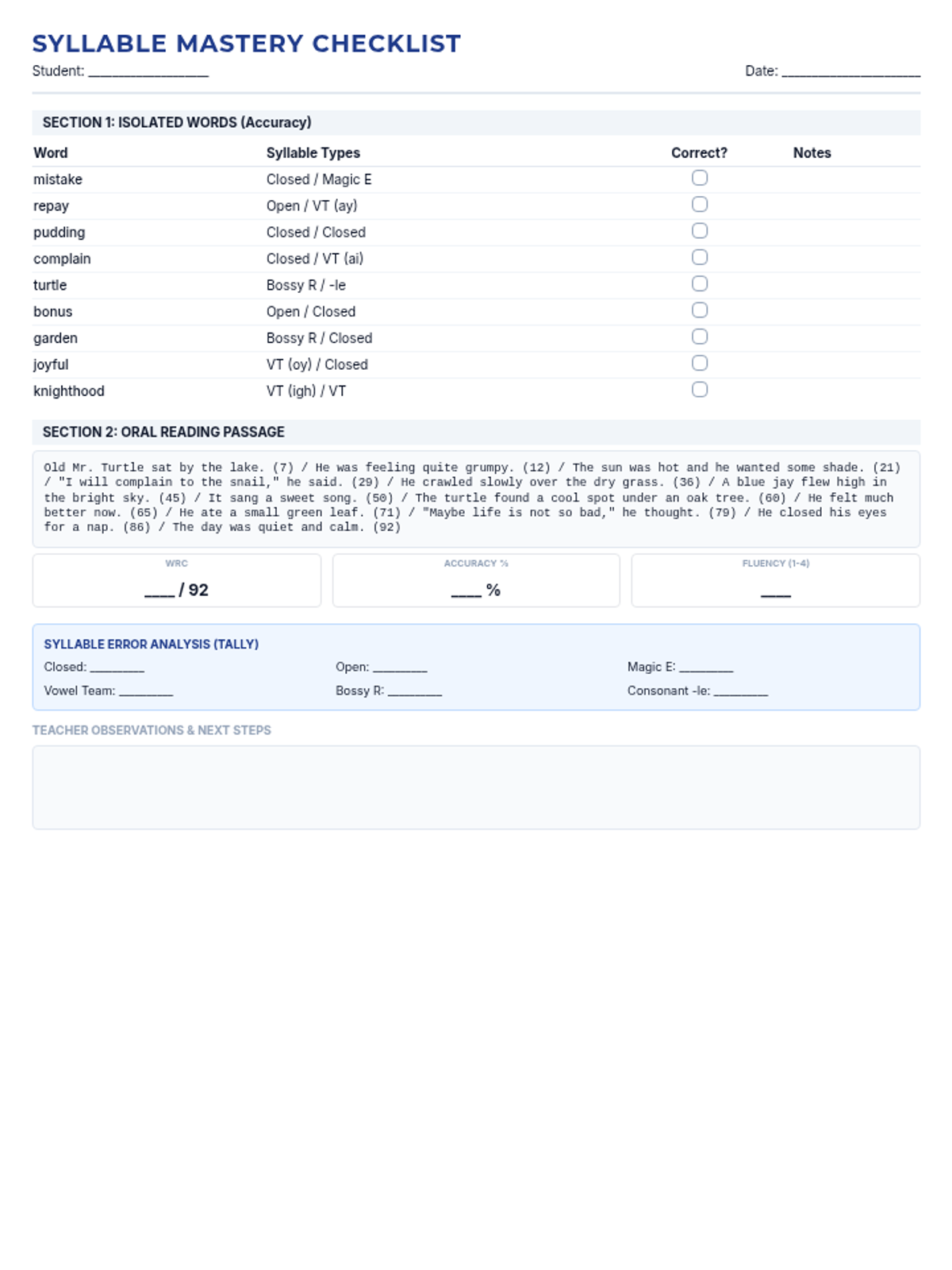
A teacher-facing assessment checklist for tracking student accuracy and fluency across the six syllable types, including a detailed error analysis section.
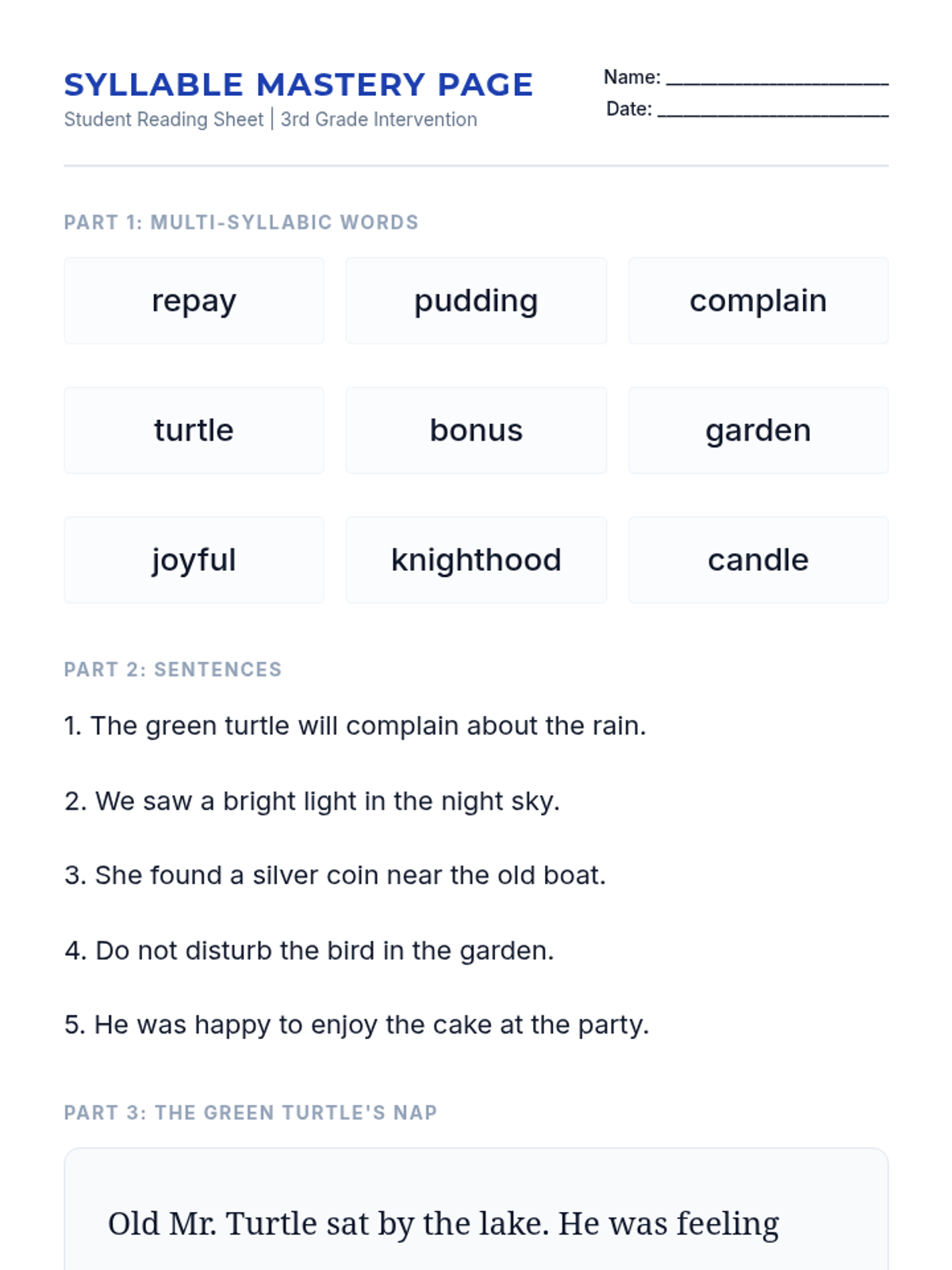
A clean, student-facing reading page featuring isolated multi-syllabic words, sentences, and a short passage for oral reading fluency assessment.
A minimalistic and visually engaging slide deck for direct instruction of the six syllable types, featuring clear visual coding and step-by-step division rules.
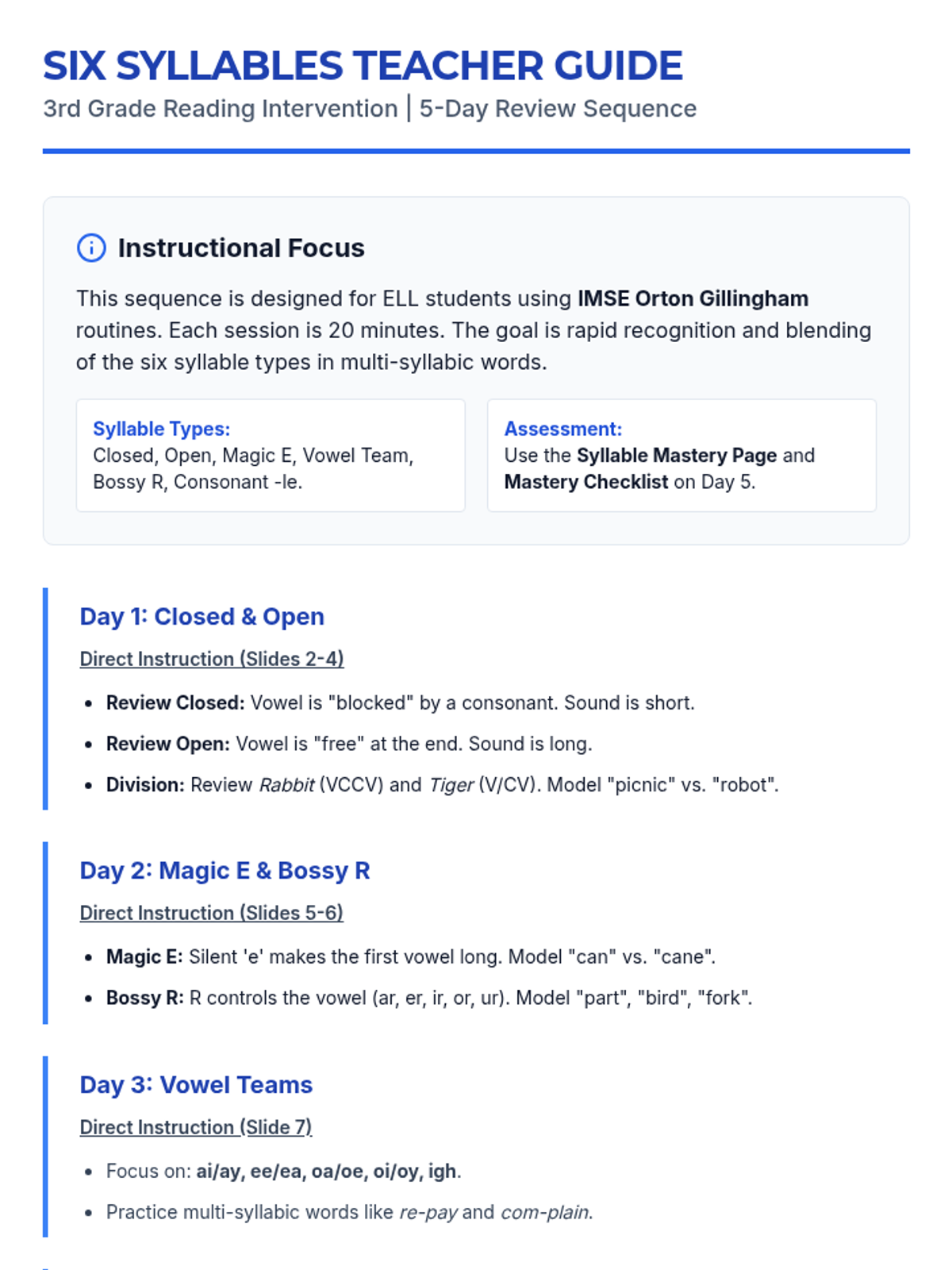
A comprehensive 5-day teacher guide outlining the instructional pacing, direct instruction focus, and Orton Gillingham routines for reviewing the six syllable types.
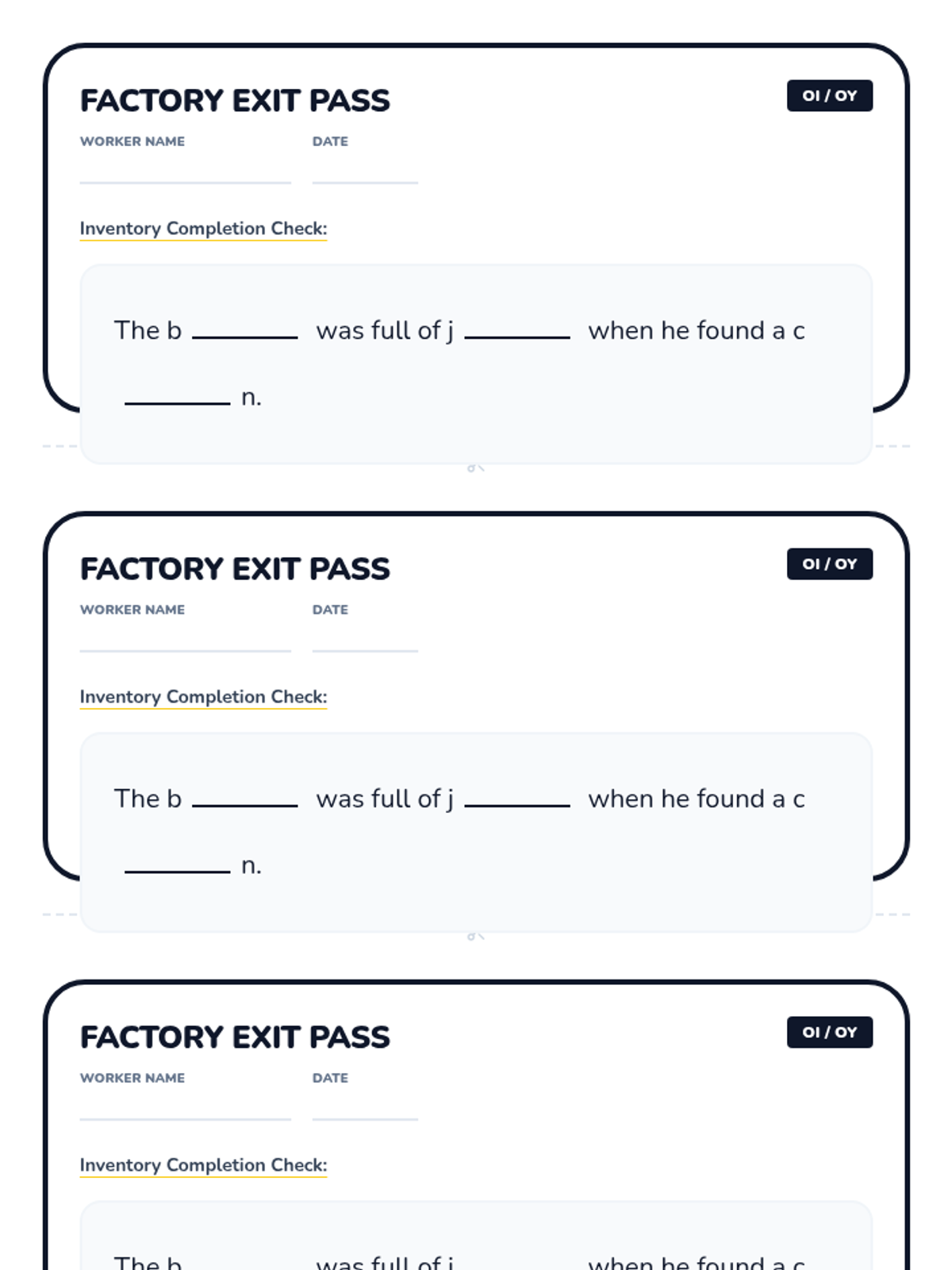
A quick assessment tool for the 'Noise Factory' lesson. This exit ticket asks students to apply 'oi' and 'oy' spelling rules within a contextual sentence. Designed with multiple tickets per page for efficient printing.
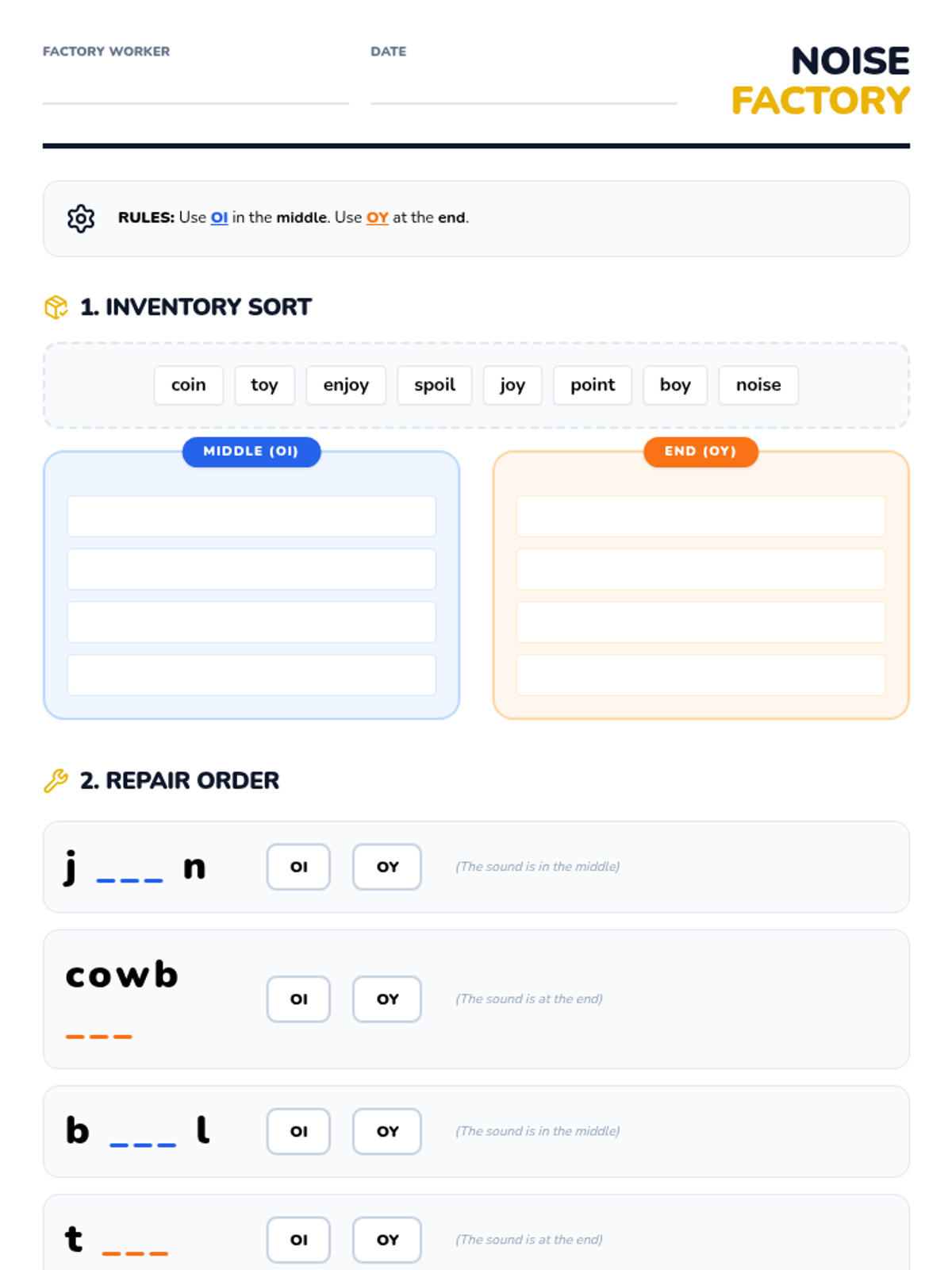
A factory-themed phonics worksheet for Grade 2 students to practice the diphthongs 'oi' and 'oy'. Includes a word sort activity and a fill-in-the-blank section to reinforce spelling rules based on word position.
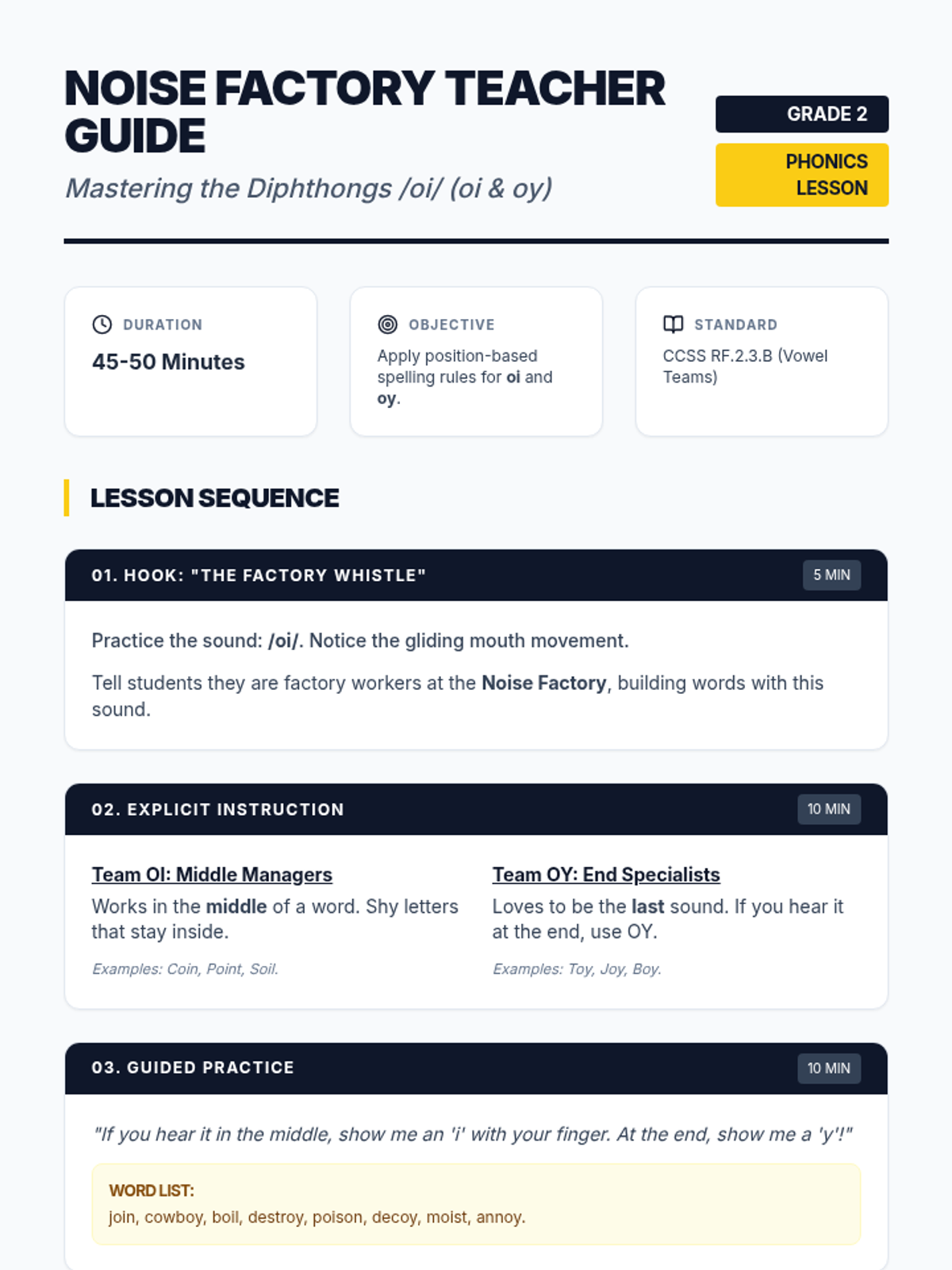
A detailed teacher guide for the 'Noise Factory' diphthong lesson. Includes pacing, explicit instruction scripts, standard alignment, and strategies for differentiation and troubleshooting common student misconceptions with 'oi' and 'oy'.
Engaging instructional slides for Grade 2 students to learn the diphthongs 'oi' and 'oy'. The presentation follows a 'Noise Factory' theme, teaching the specific spelling rules for when to use each pattern based on its position in a word.
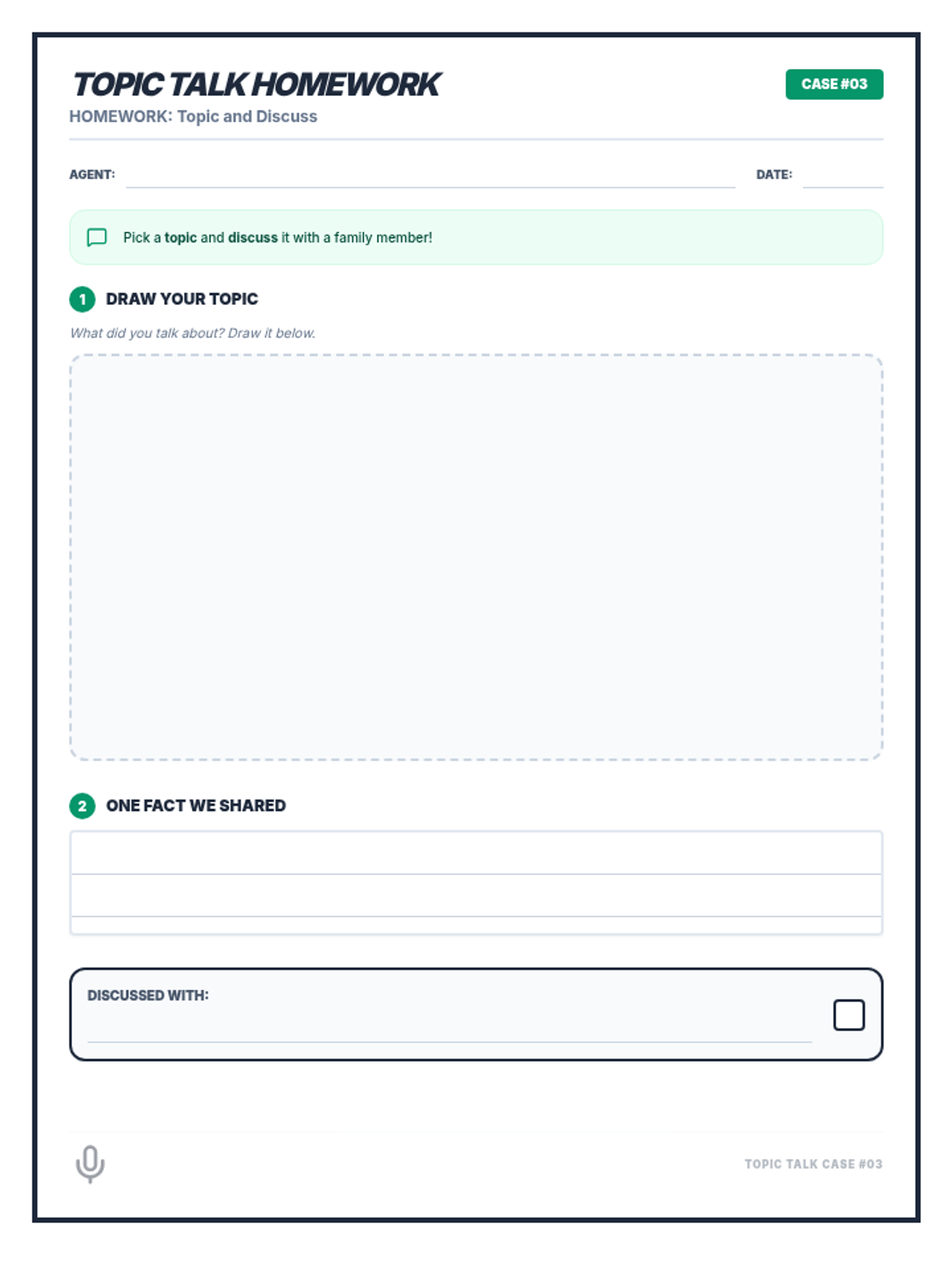
A home discussion log where students pick a topic, discuss it with a family member, and record a fact they shared. Focuses on reinforcing the definitions of 'topic' and 'discuss' in a real-world setting. Revised for 1-page layout and improved contrast.
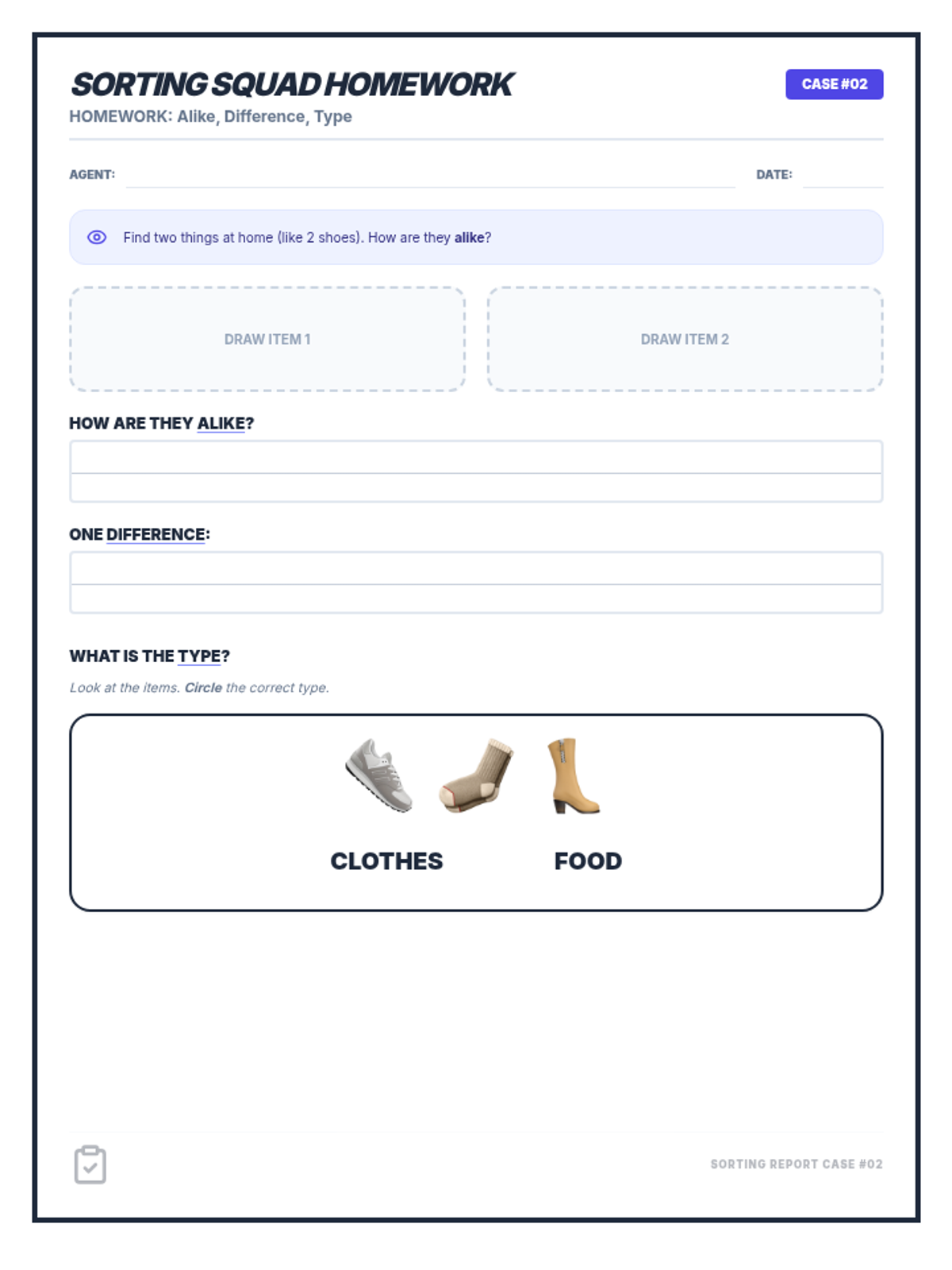
A comparison-focused homework sheet where students find and compare two household items, identifying how they are alike and different, and practicing the concept of 'type' with visual groups. Revised for 1-page layout and improved contrast for handwriting lines.
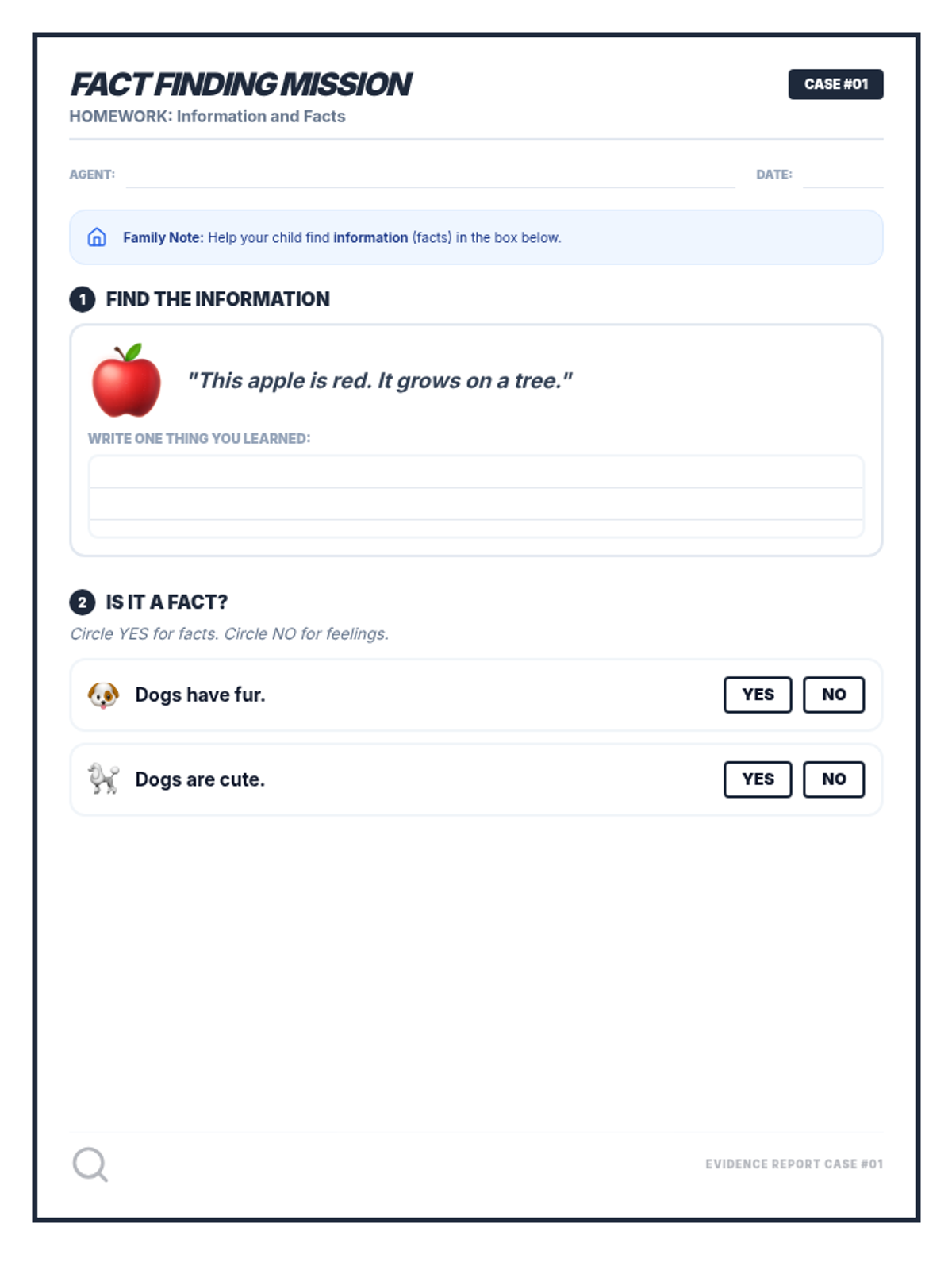
A homework sheet focused on 'information' and 'fact'. Students practice finding information in a simple context and distinguishing between facts and opinions with a family-friendly instruction note. Revised for 1-page layout and improved contrast.
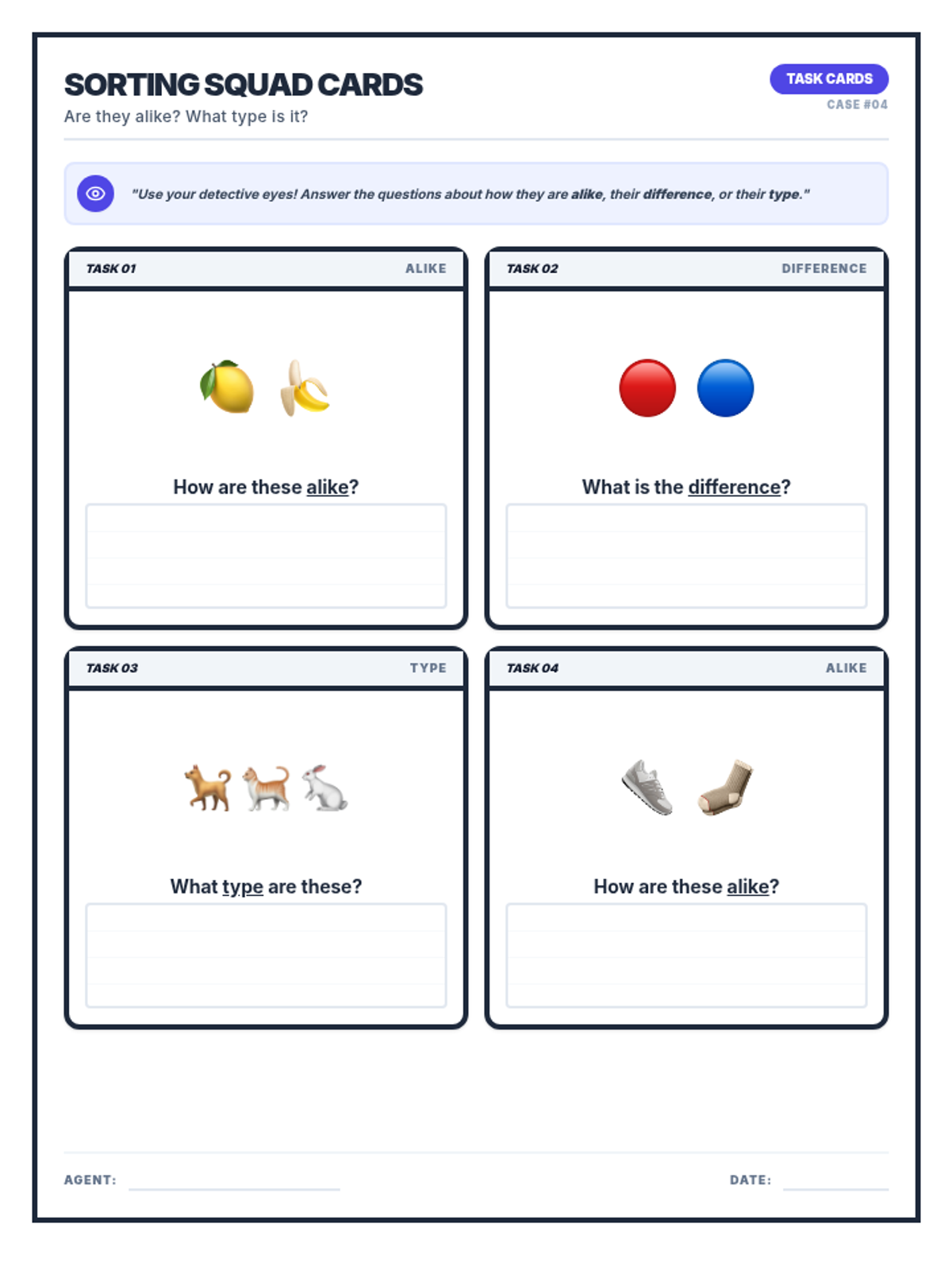
A set of task cards for comparing and categorizing items. Students analyze visual pairs and sets to identify how they are alike, their differences, or their shared 'type'. Revised for single-page layout with larger response areas and white backgrounds for legibility.
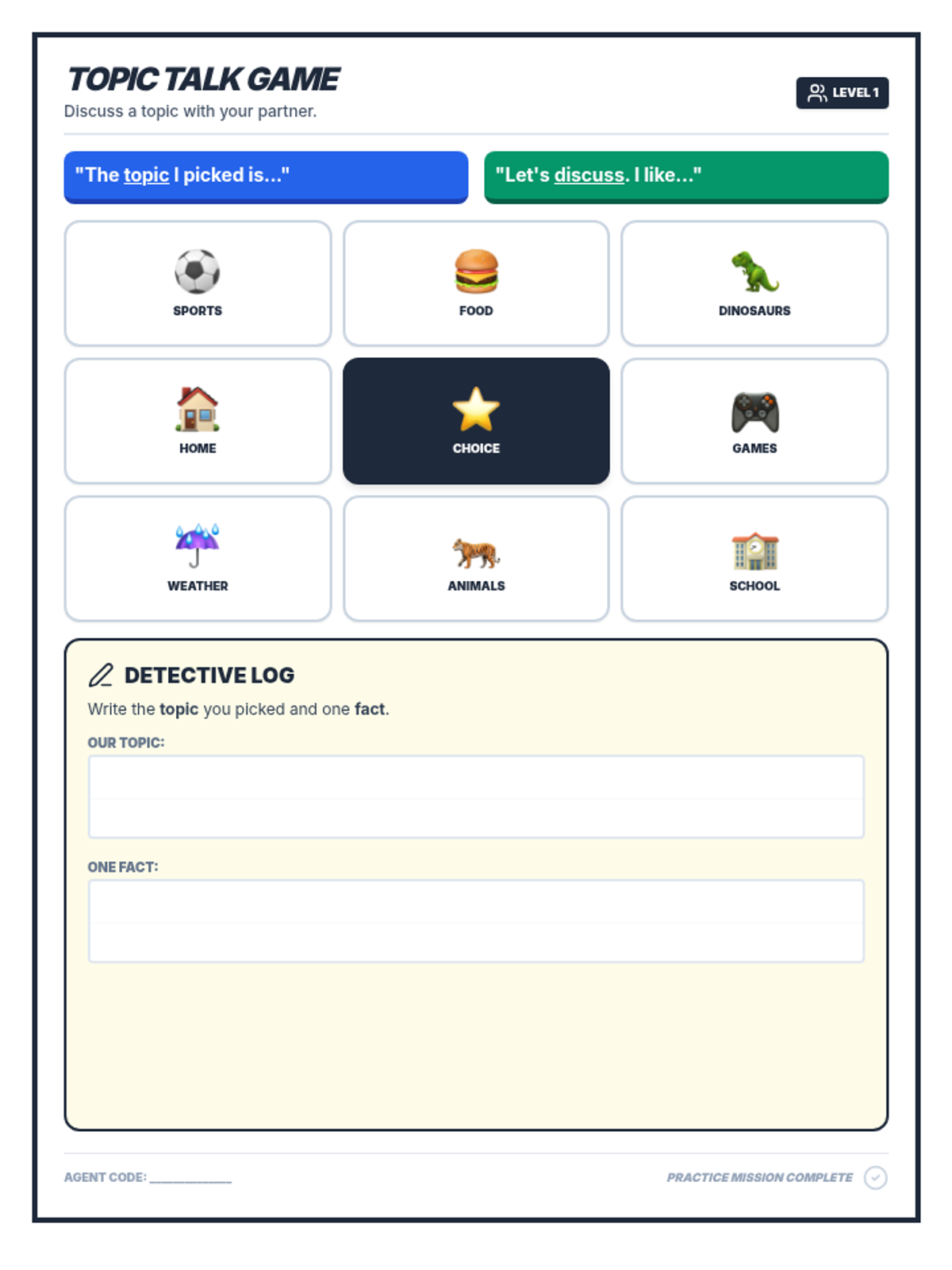
A partner-based discussion game featuring a choice board of visual topics. Students use sentence starters to practice identifying a topic and engaging in discussion with their peers. Revised to fit on a single page with a new 'Detective Log' for written practice. Grid heights and padding optimized for 1-page layout.
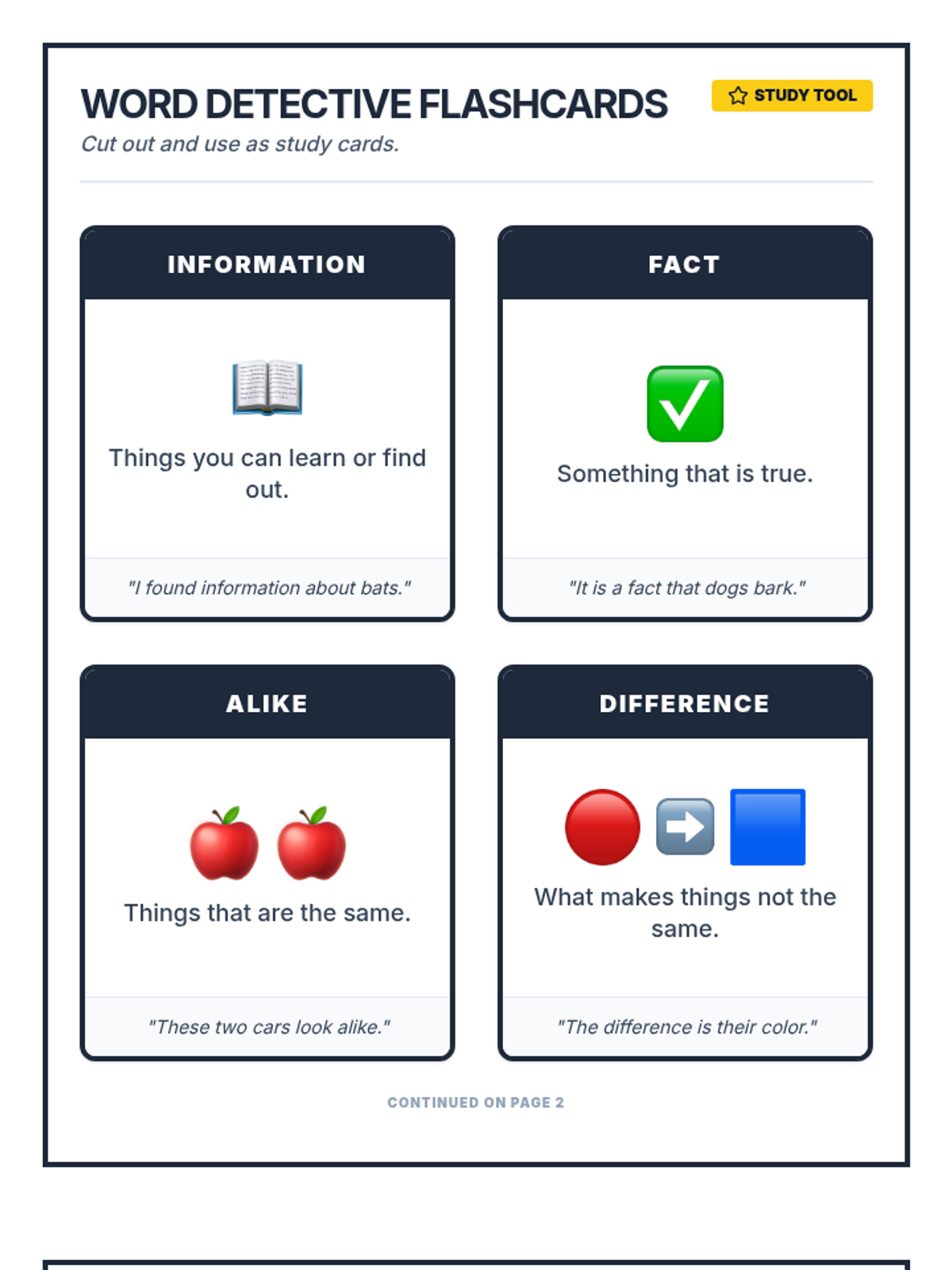
Visual vocabulary flashcards for the seven target academic words, featuring simple definitions, clear icons, and example sentences to support student mastery. Revised for consistent 2-page layout with borders and improved writing space for notes. Example sentences increased for better readability. Corrected arrow rendering and removed placeholder text.
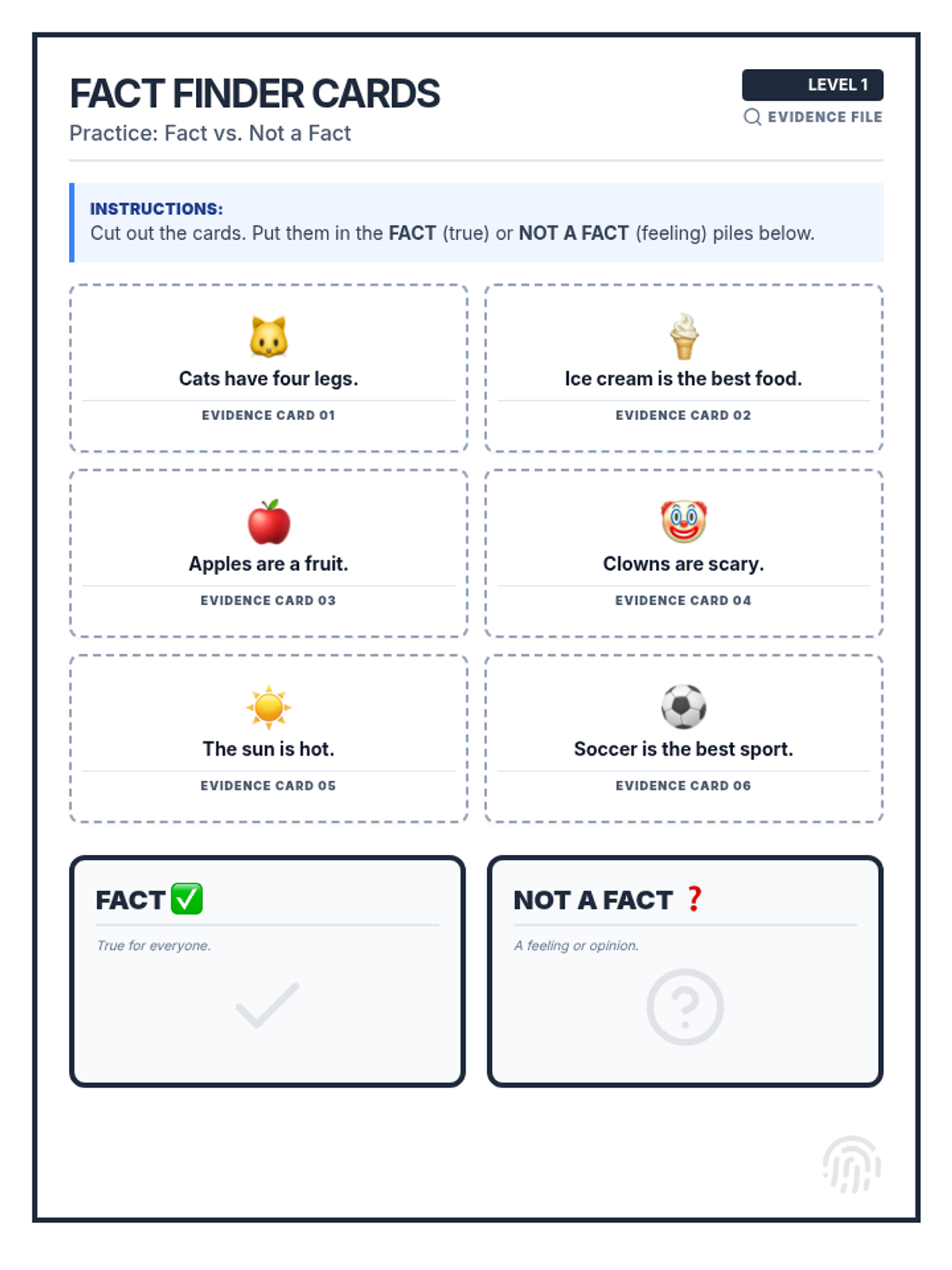
A hands-on sorting activity where students cut out cards and categorize statements as either 'Fact' or 'Not a Fact' to practice the concept of information versus opinion. Revised to fit on a single page with high-contrast text and larger sorting zones.
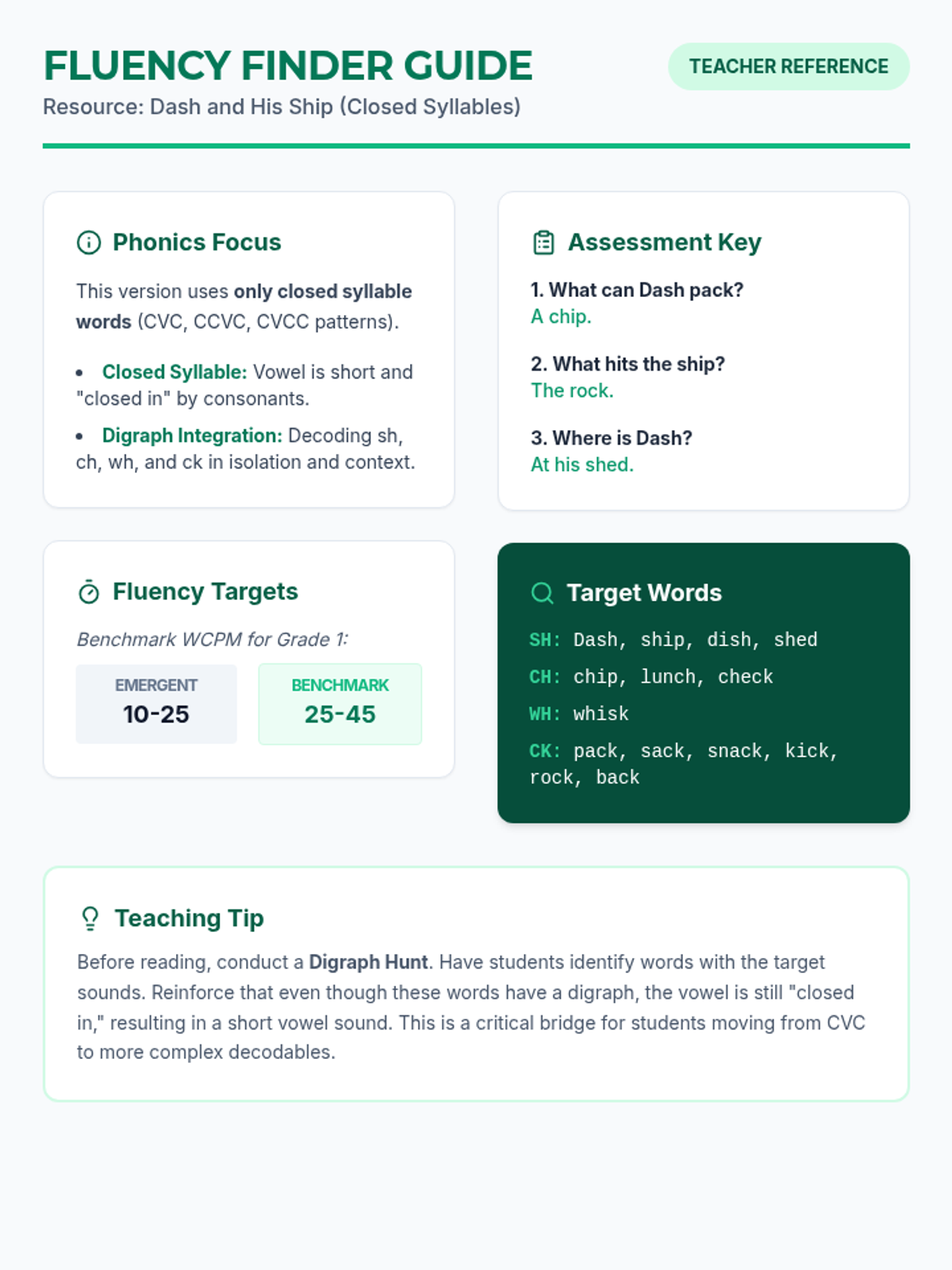
A teacher's reference guide for the closed-syllable "Dash and His Ship" passage. Includes an answer key, a specific breakdown of closed-syllable digraph words, and early grade 1 fluency targets. Revised for layout consistency.
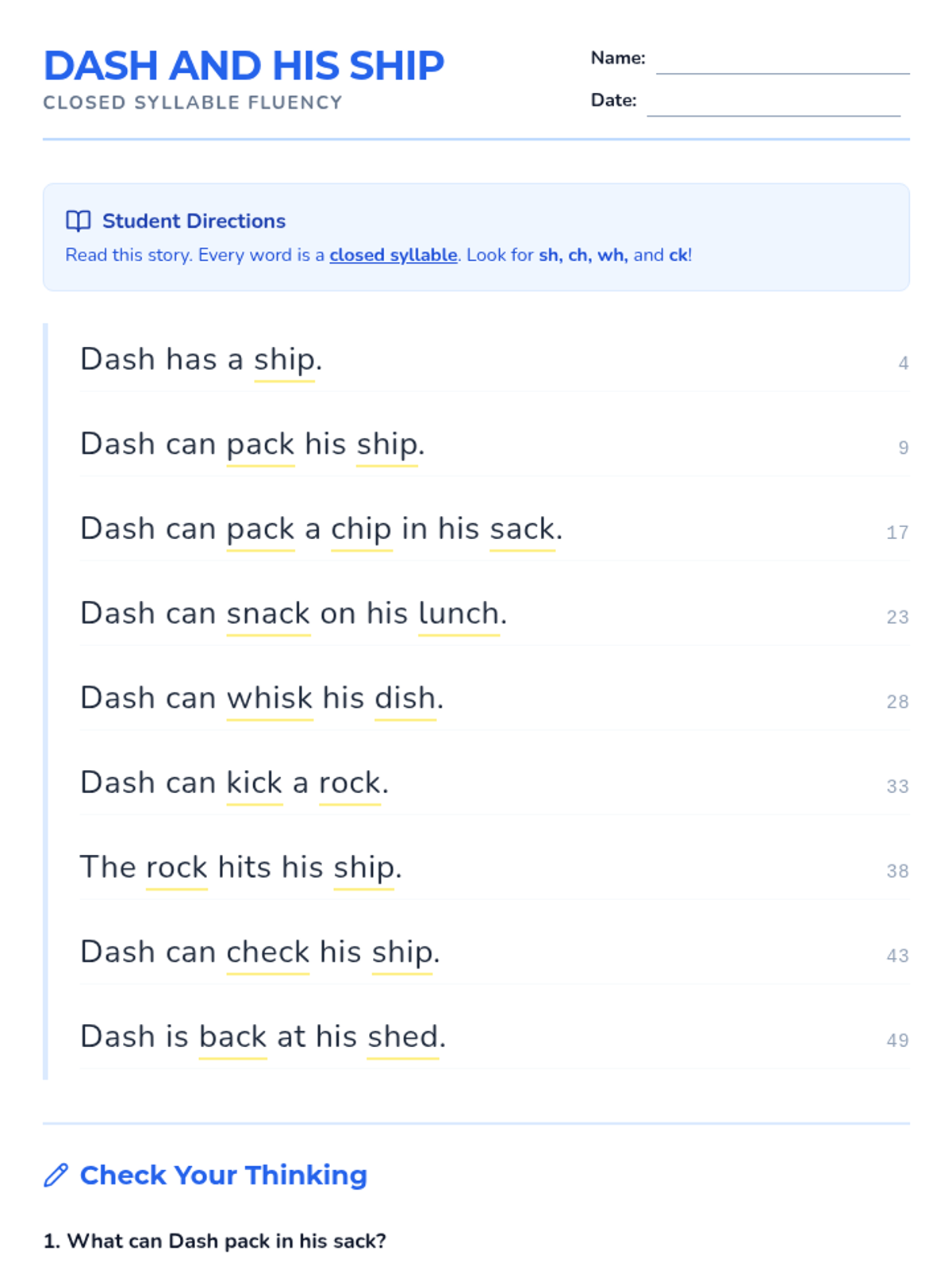
A highly decodable 1st-grade reading fluency passage using exclusively closed syllable words with the digraphs wh, sh, ch, and ck. Includes cumulative word counts and comprehension questions. Wrapped for clean page breaks.
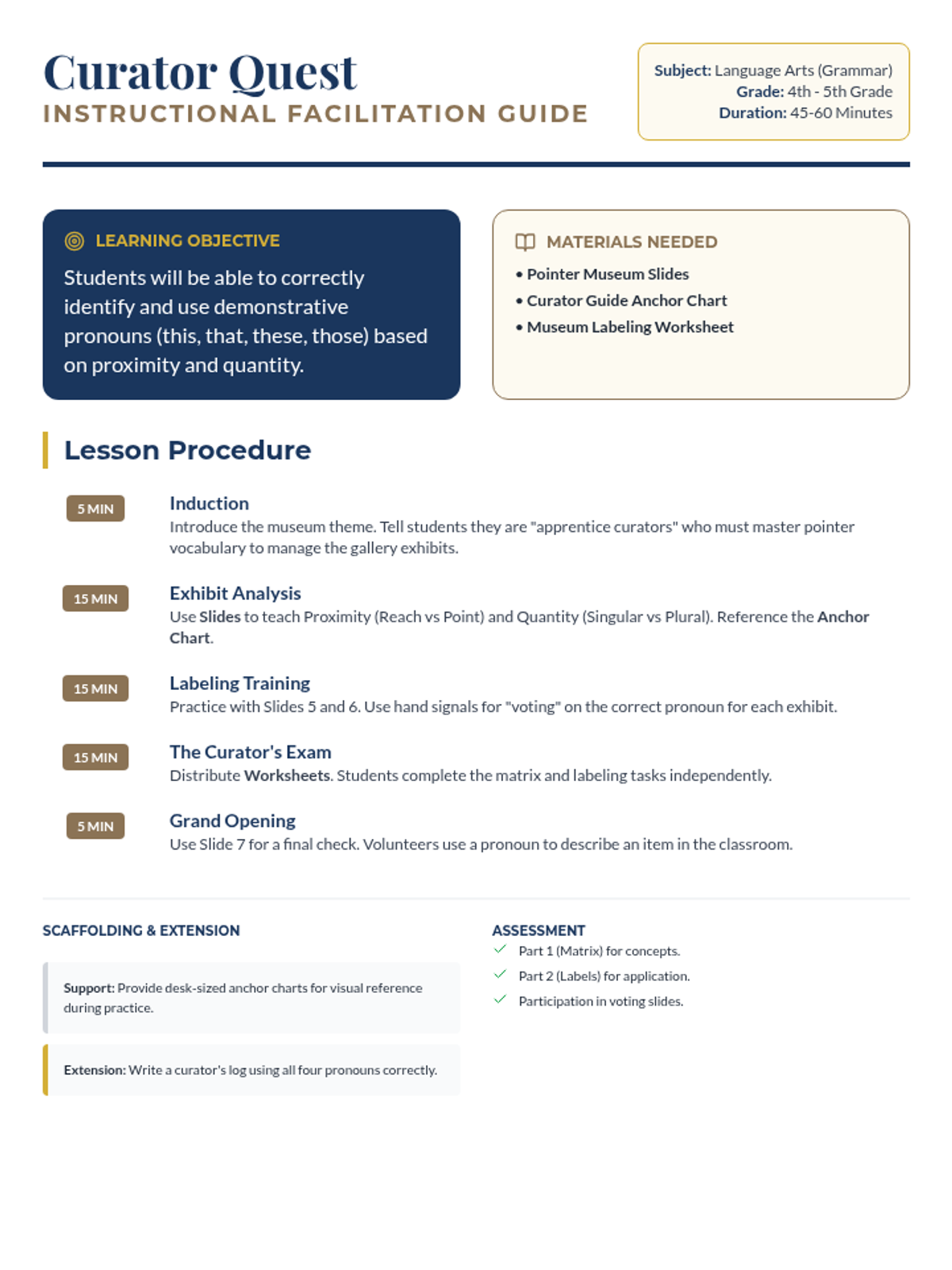
A detailed facilitation guide for teachers to deliver the Curator Quest lesson. It includes timing, step-by-step procedures, scaffolding suggestions, and assessment strategies aligned with the museum-themed materials.
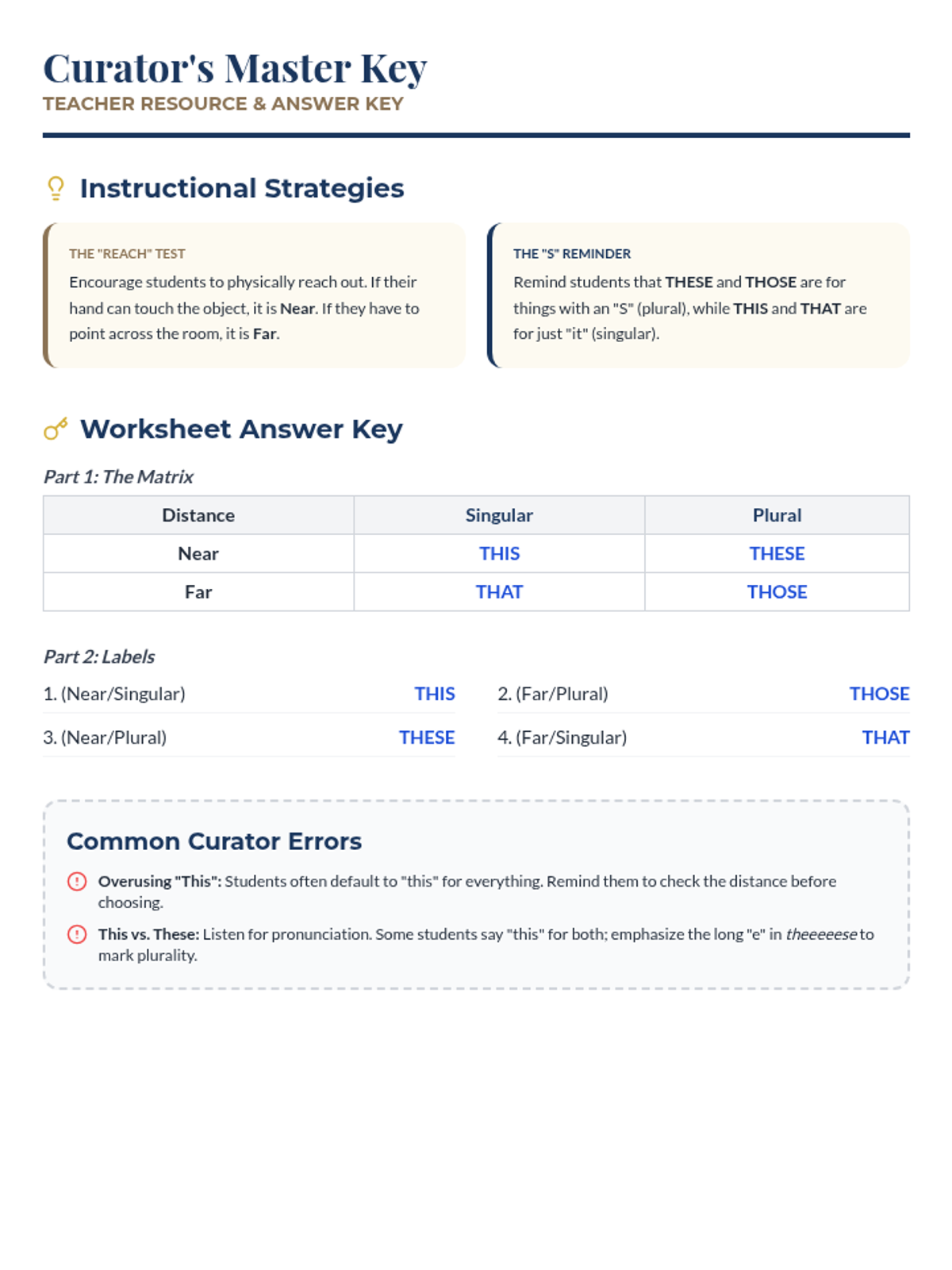
A teacher-facing resource providing the answer key for the museum worksheet along with teaching strategies and common student misconceptions regarding demonstrative pronouns.
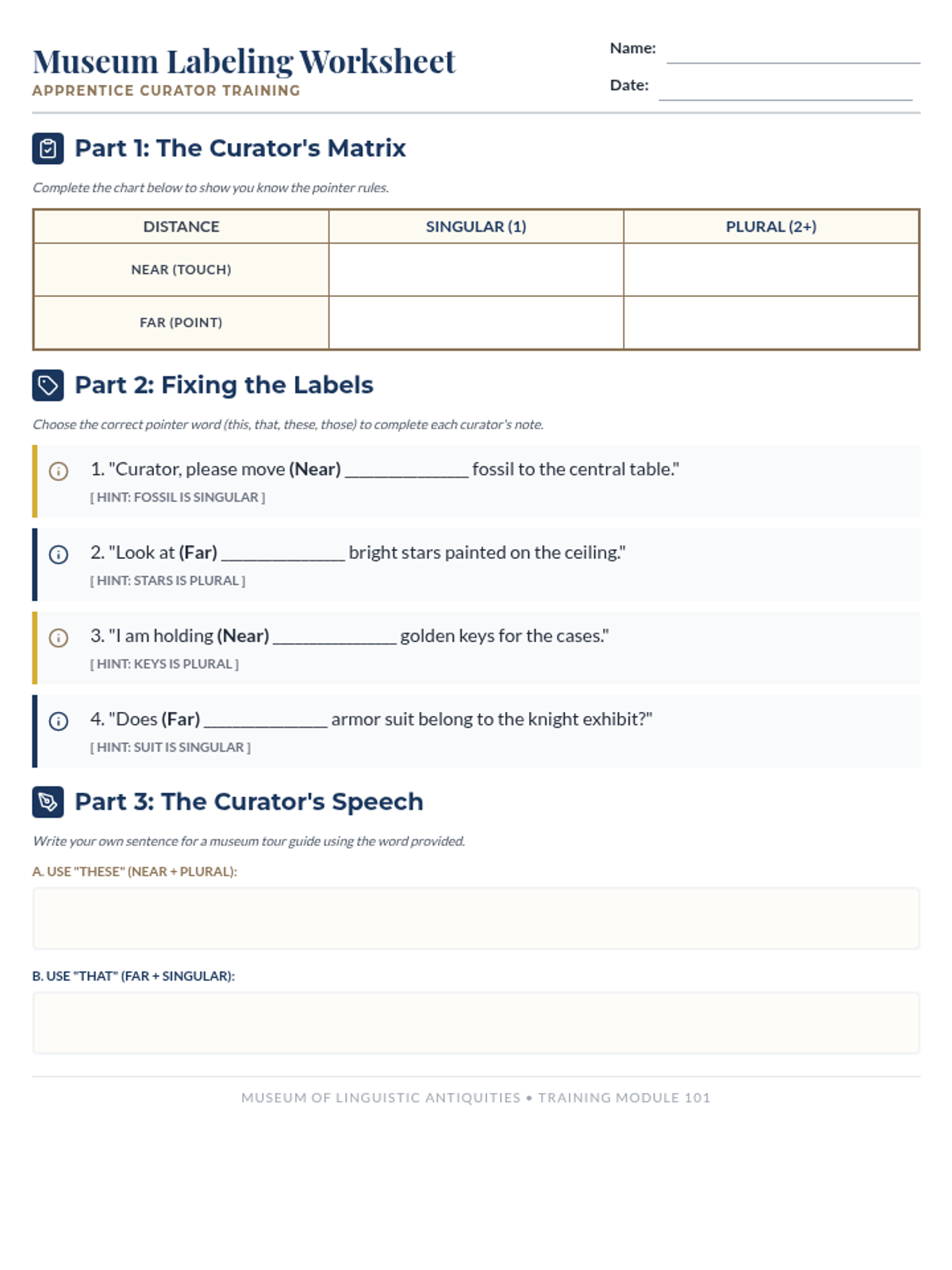
A practice worksheet where students apply their knowledge of pointer words in a museum curator context. It includes a recall chart, fill-in-the-blank sentences with proximity/quantity hints, and a sentence writing section.