A set of six discussion prompts exploring the themes of linguistic democracy, literary precedent, and the natural evolution of language. Designed to facilitate critical thinking after watching the singular they history video.
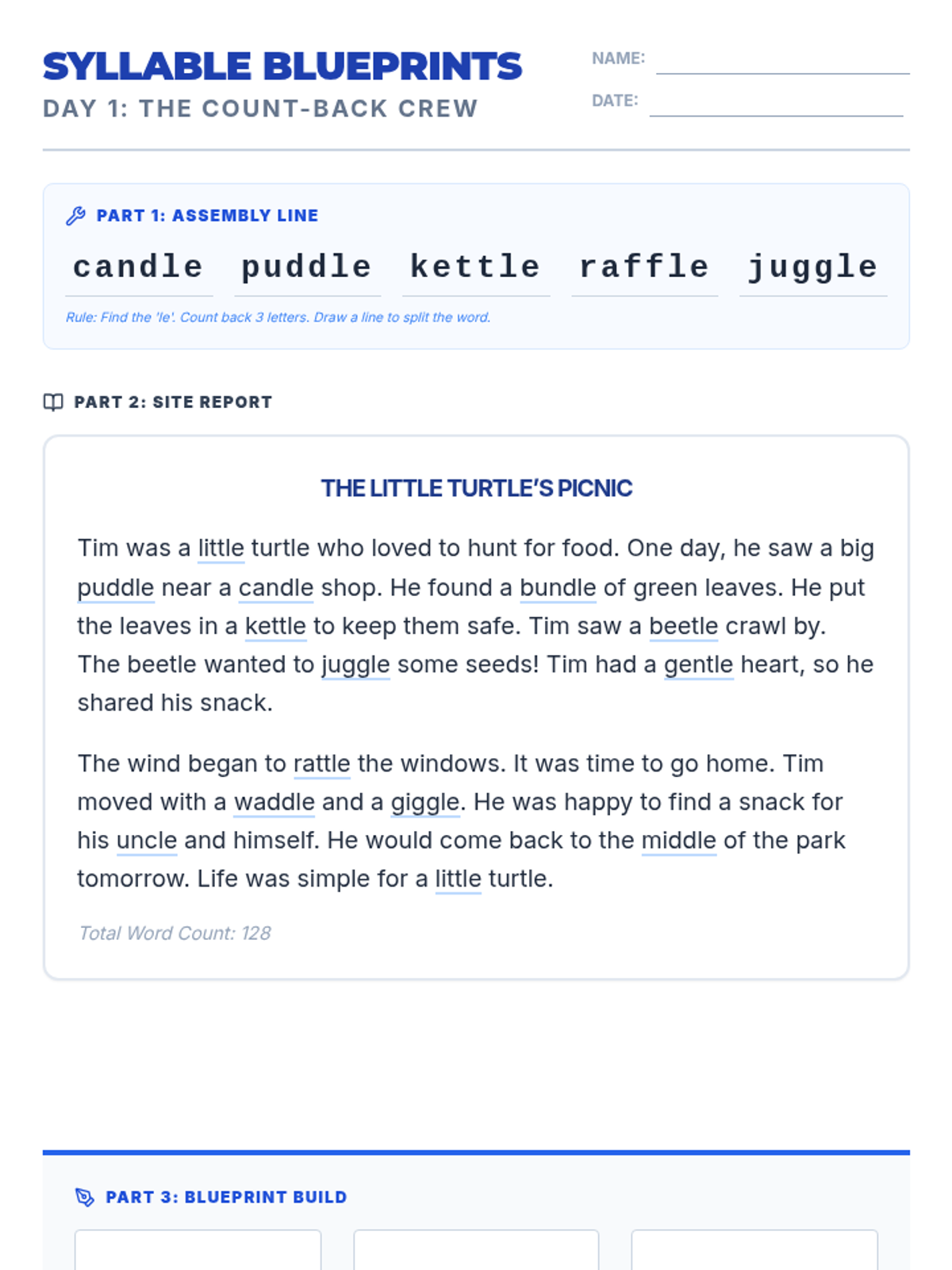
A 4-page student workbook containing daily decoding exercises, reading passages of approximately 125 words, and encoding practice areas, all themed around workshop blueprints.
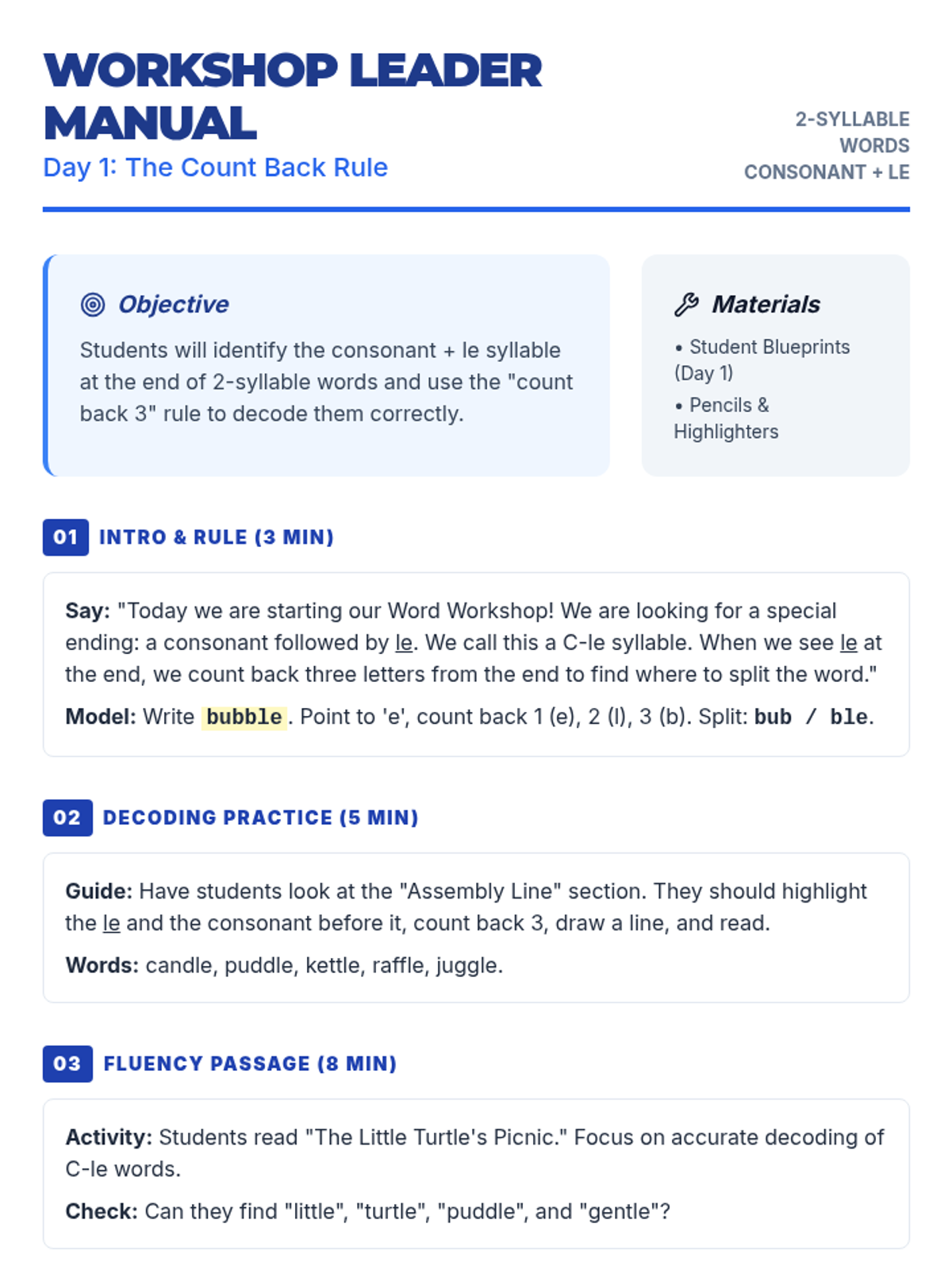
A comprehensive 4-page manual for teachers, providing structured 20-minute lesson plans for each day of the consonant-le intervention, including objectives, scripts, word lists, and encoding dictation.
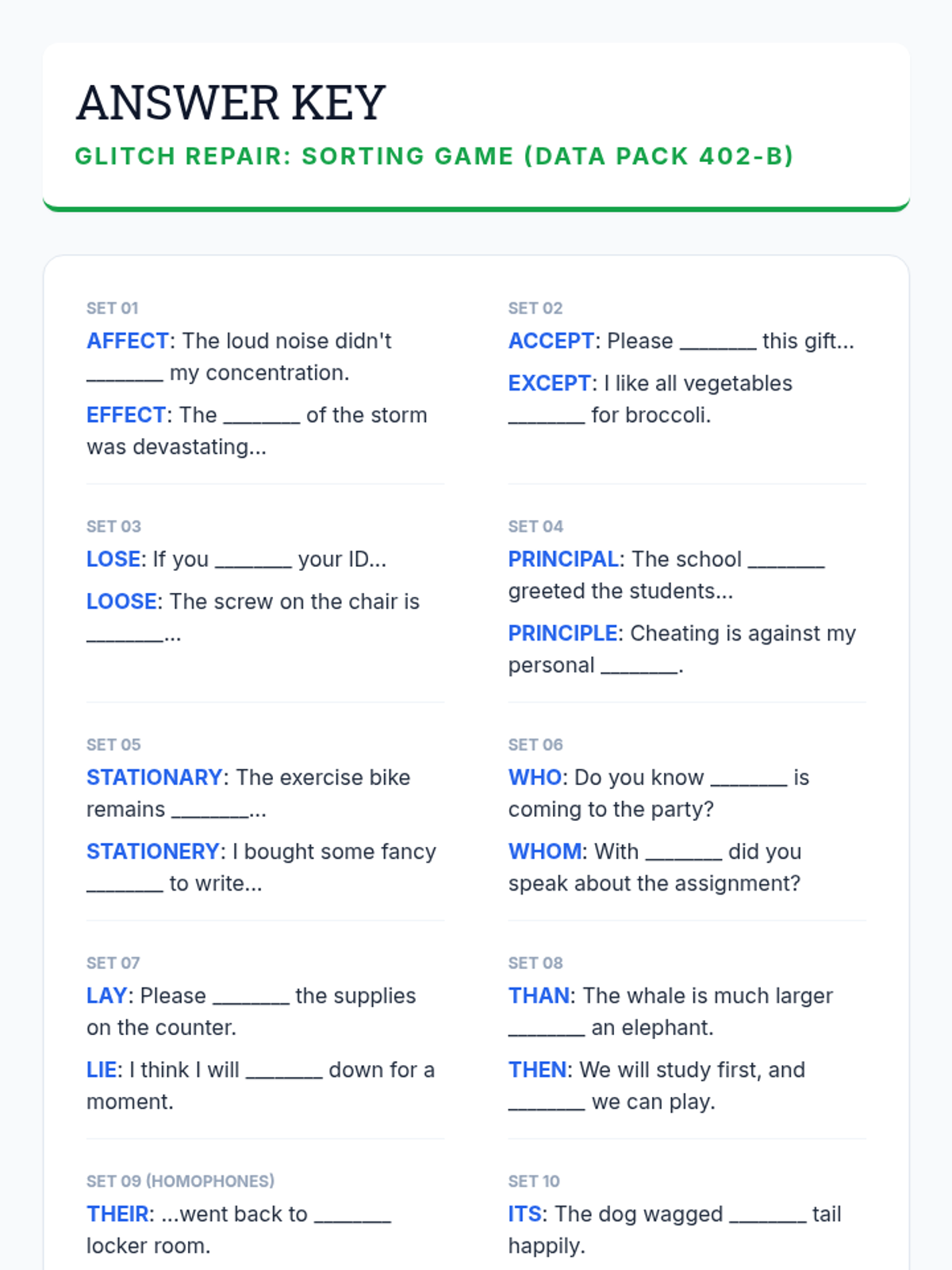
A teacher's answer key for the Glitch Repair sorting game, providing the correct matches for all word and sentence cards to facilitate quick grading and feedback.
A printable sorting mat for the Glitch Repair game, providing students with a structured workspace to organize and match word and sentence cards.
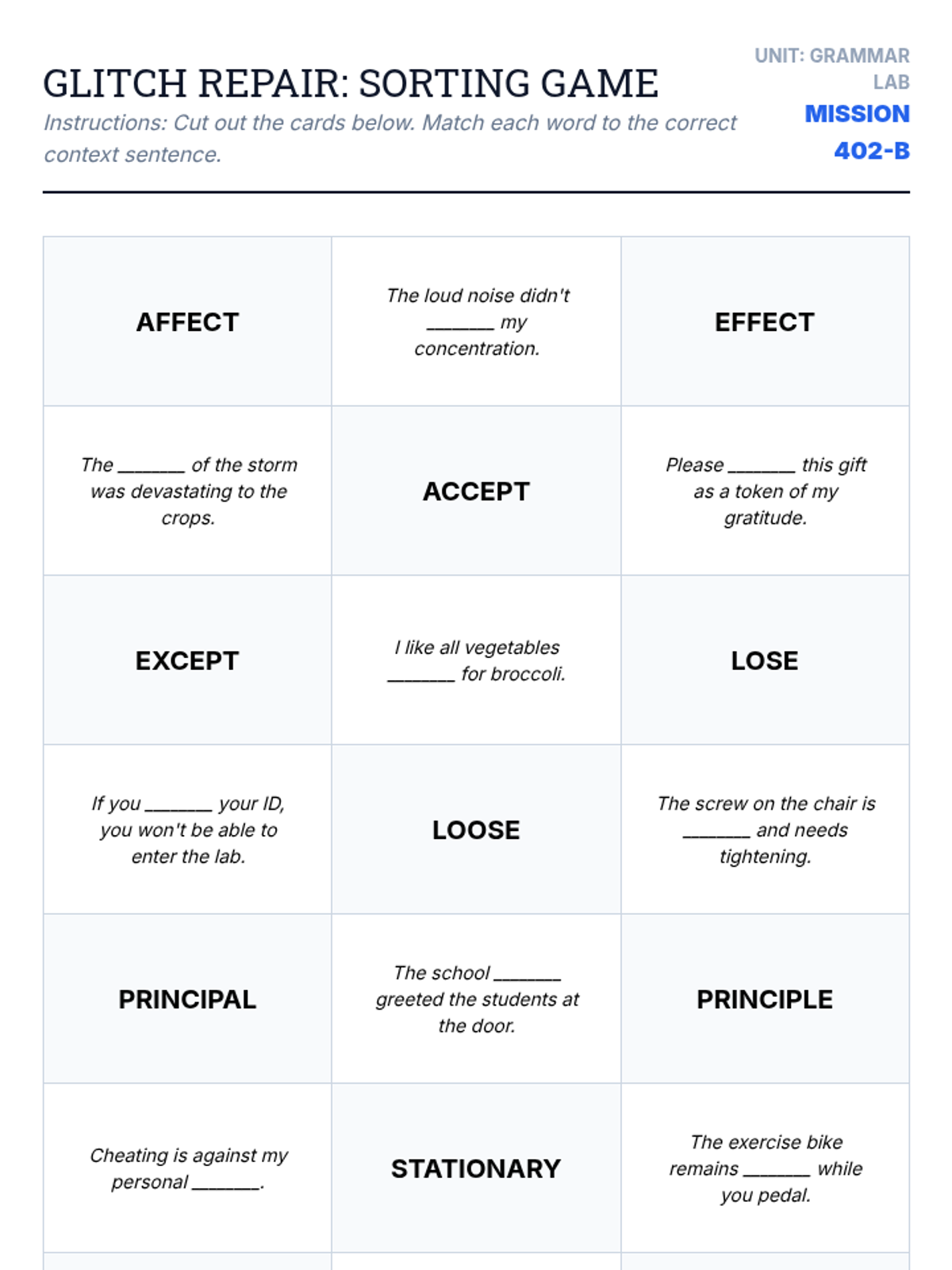
A set of 24 printable cards featuring words and context sentences for a sorting game. Students must match the correct commonly confused word with the sentence that fits its definition.
A visually striking slideshow designed for direct instruction on 12 pairs of commonly confused words. Includes memory triggers, definitions, visual hints, and interactive practice sentences for each word group.
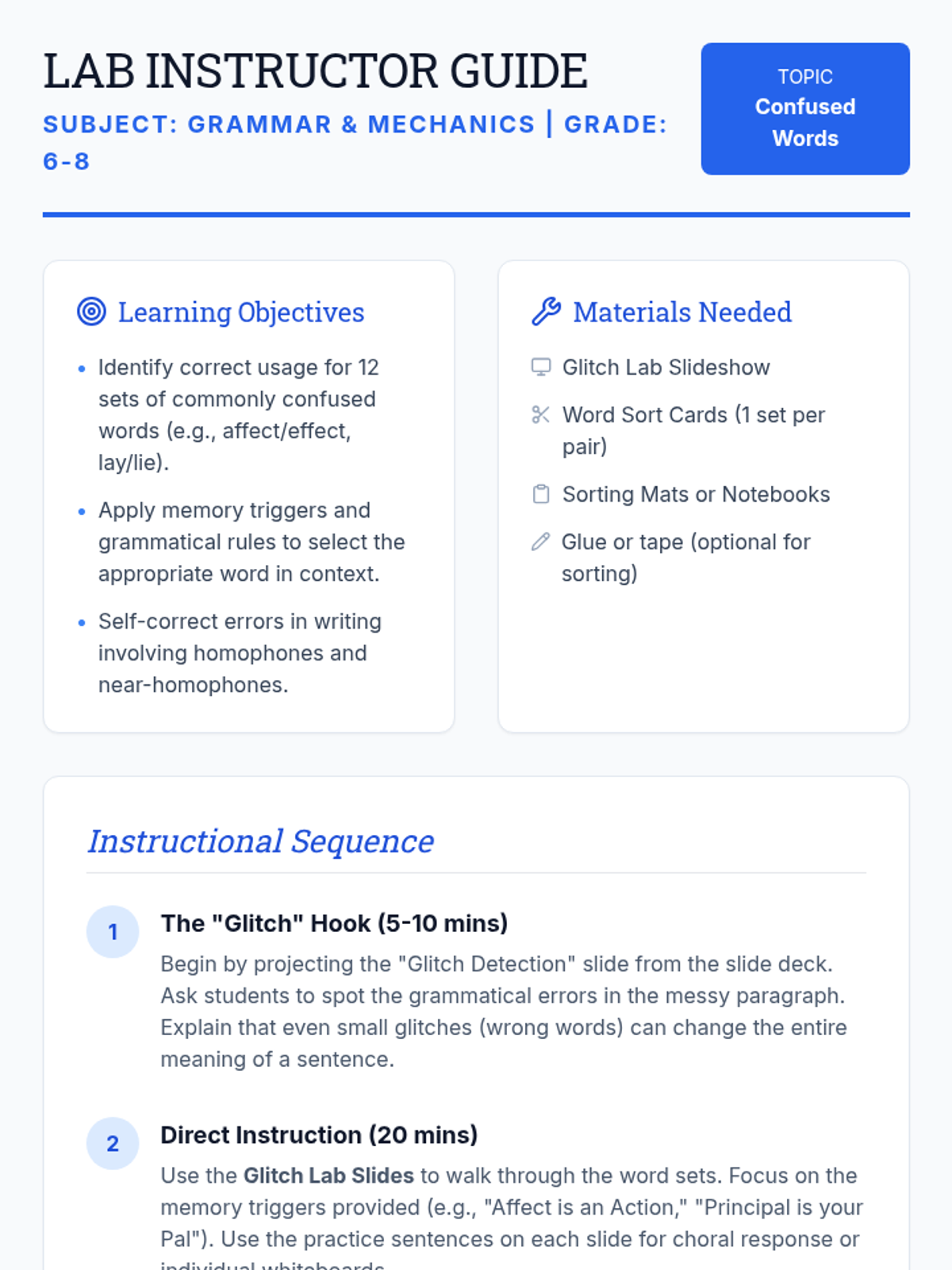
A detailed teacher's guide for the Grammar Lab lesson, including learning objectives, a list of required materials, a step-by-step instructional sequence, and practical teaching tips for middle school classrooms.
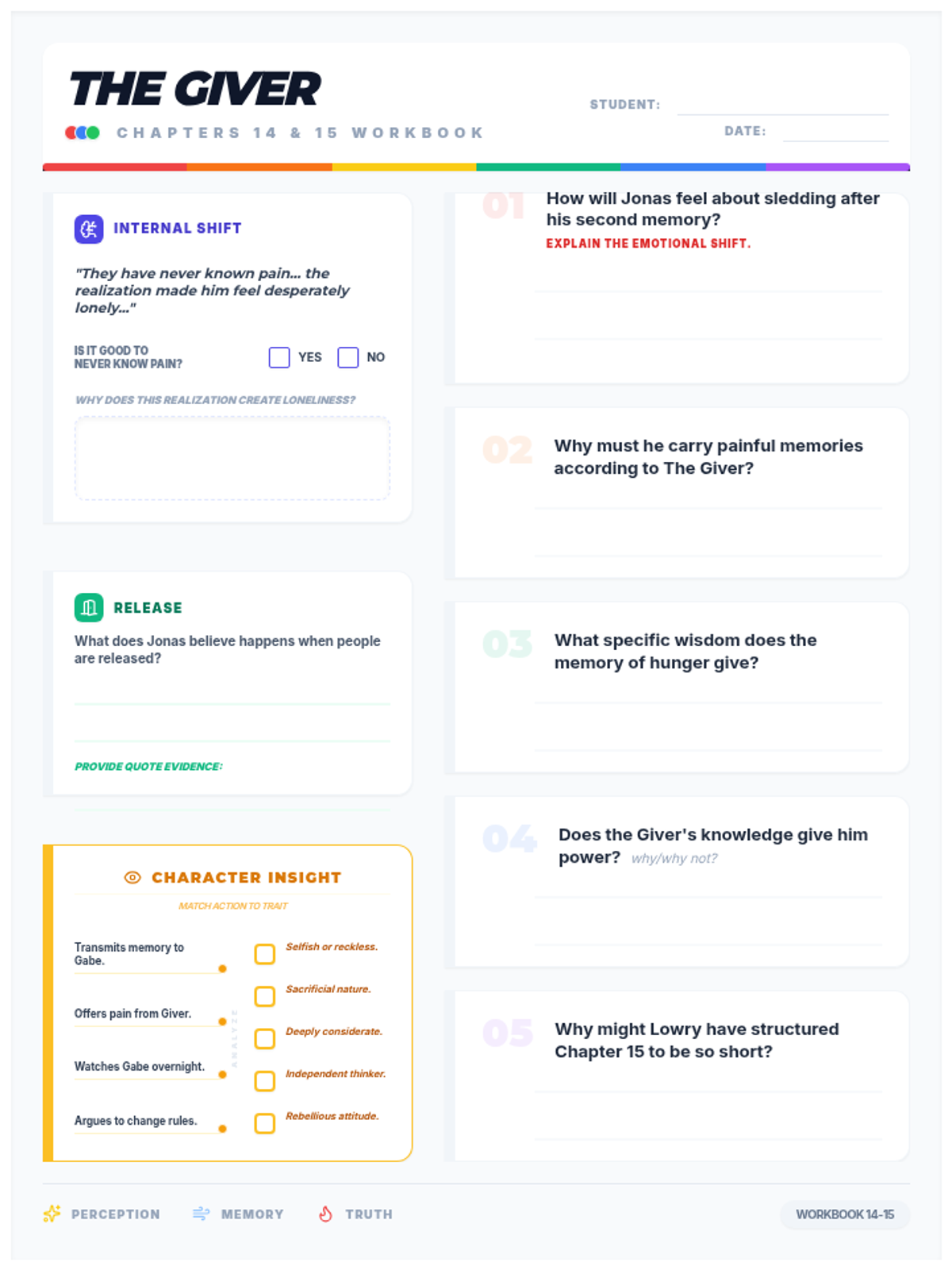
A final, refined one-page workbook for Chapters 14-15 of The Giver. This version has been strictly optimized for height by reducing margins and padding to ensure everything fits perfectly on a single page, while featuring a vibrant full-spectrum rainbow theme to represent Jonas's awakening to color and deep memory.
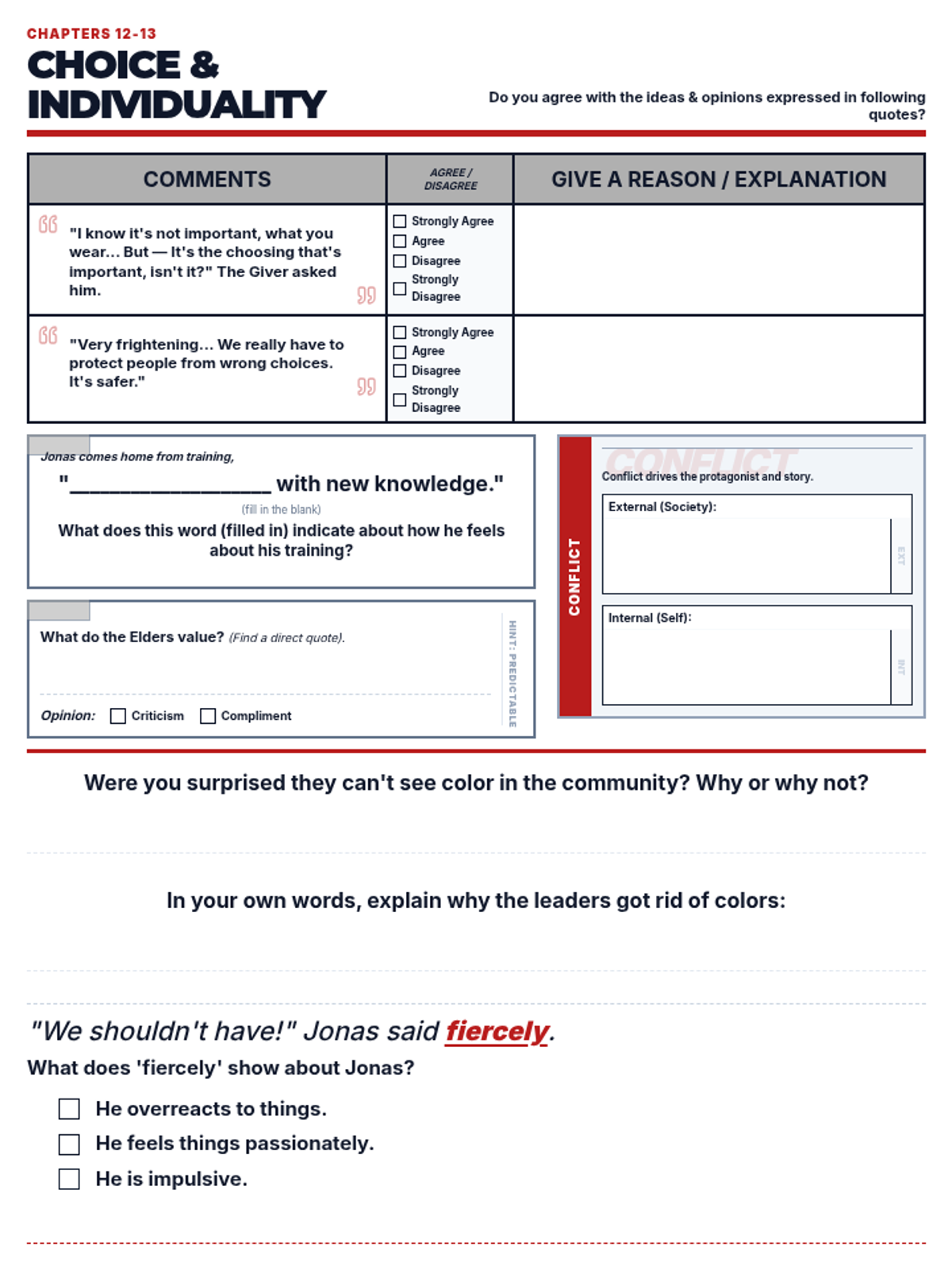
The finalized activity sheet for Chapters 12-13 of The Giver, featuring a red-accented theme, the chapter range prominently displayed in the header, and all previously requested reflection and analysis questions on a single, optimized page.
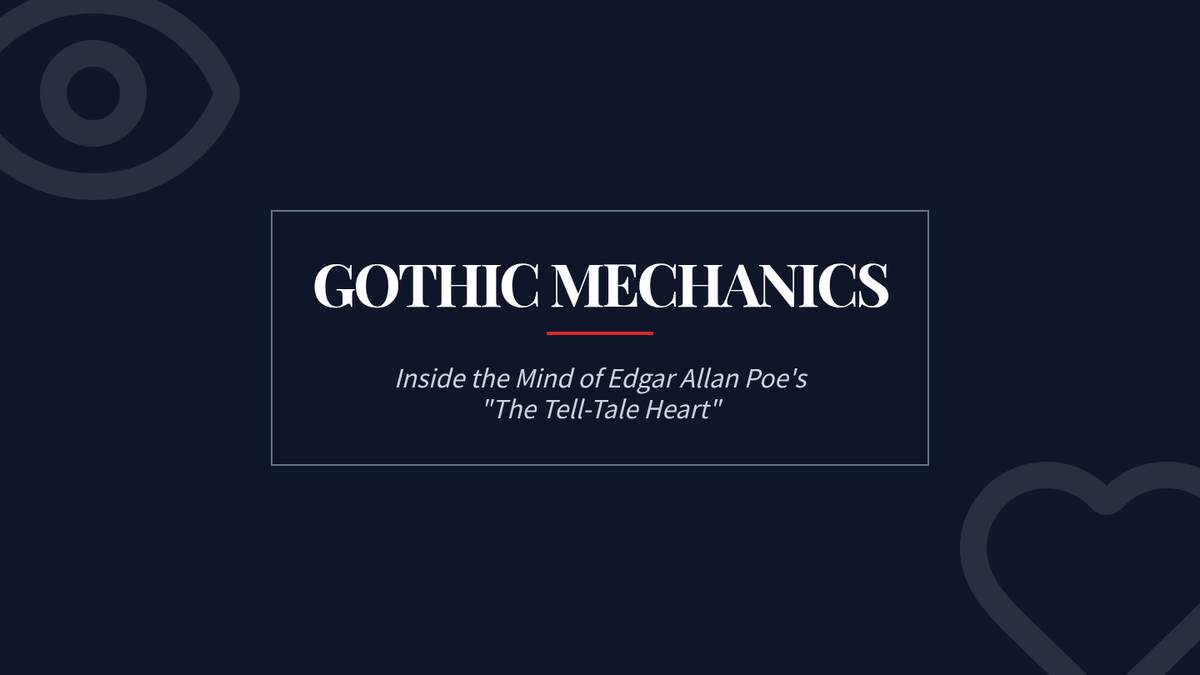
A presentation slide deck for teachers to introduce and discuss literary techniques in Poe's 'The Tell-Tale Heart'. Covers the unreliable narrator, pacing mechanics, and types of irony used in the story.
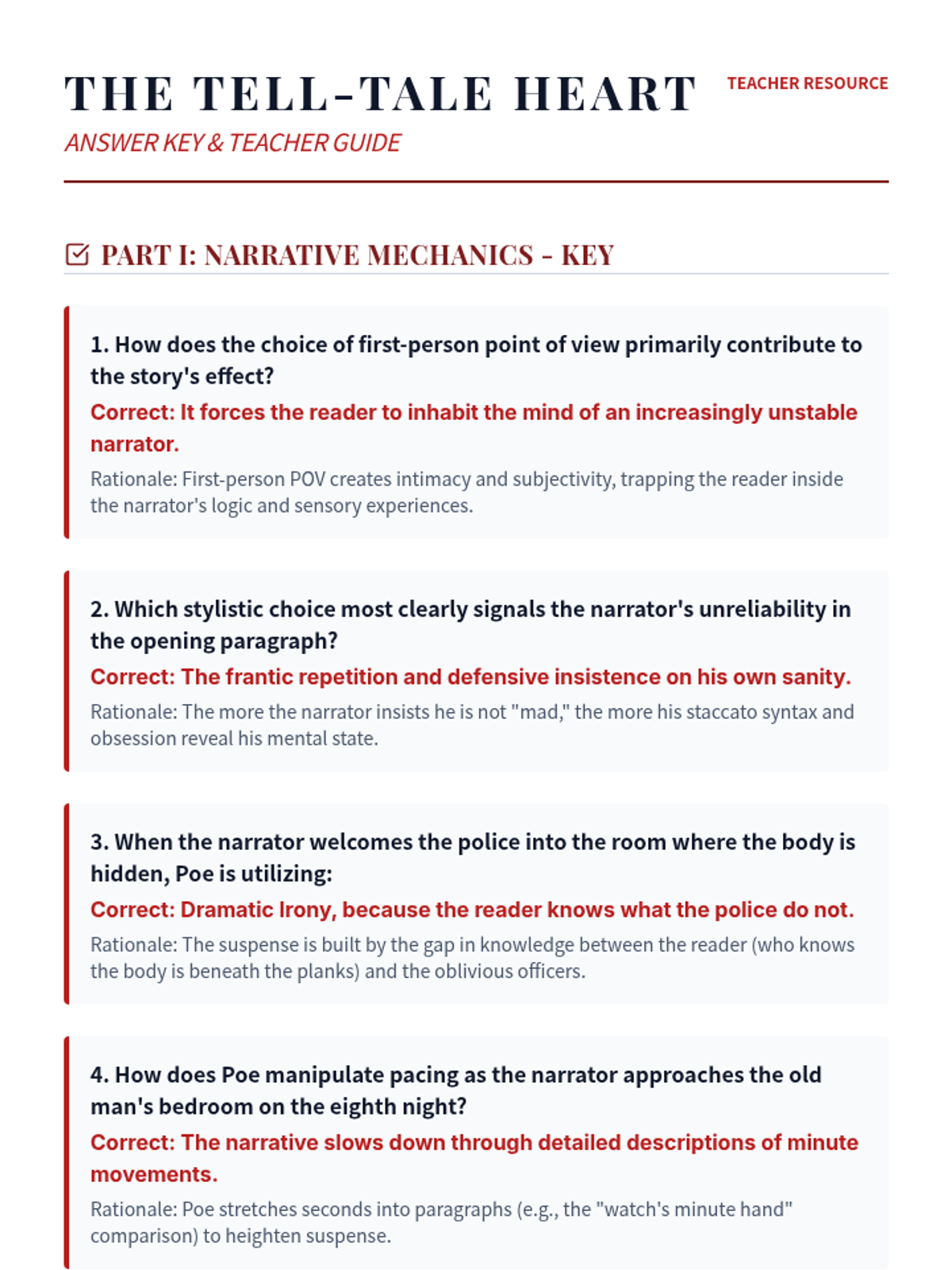
A comprehensive teacher-facing answer key and grading guide for the Heartbeat Haunting Quiz. Includes correct multiple-choice answers with rationales and sample high-quality responses for technical short-answer questions.
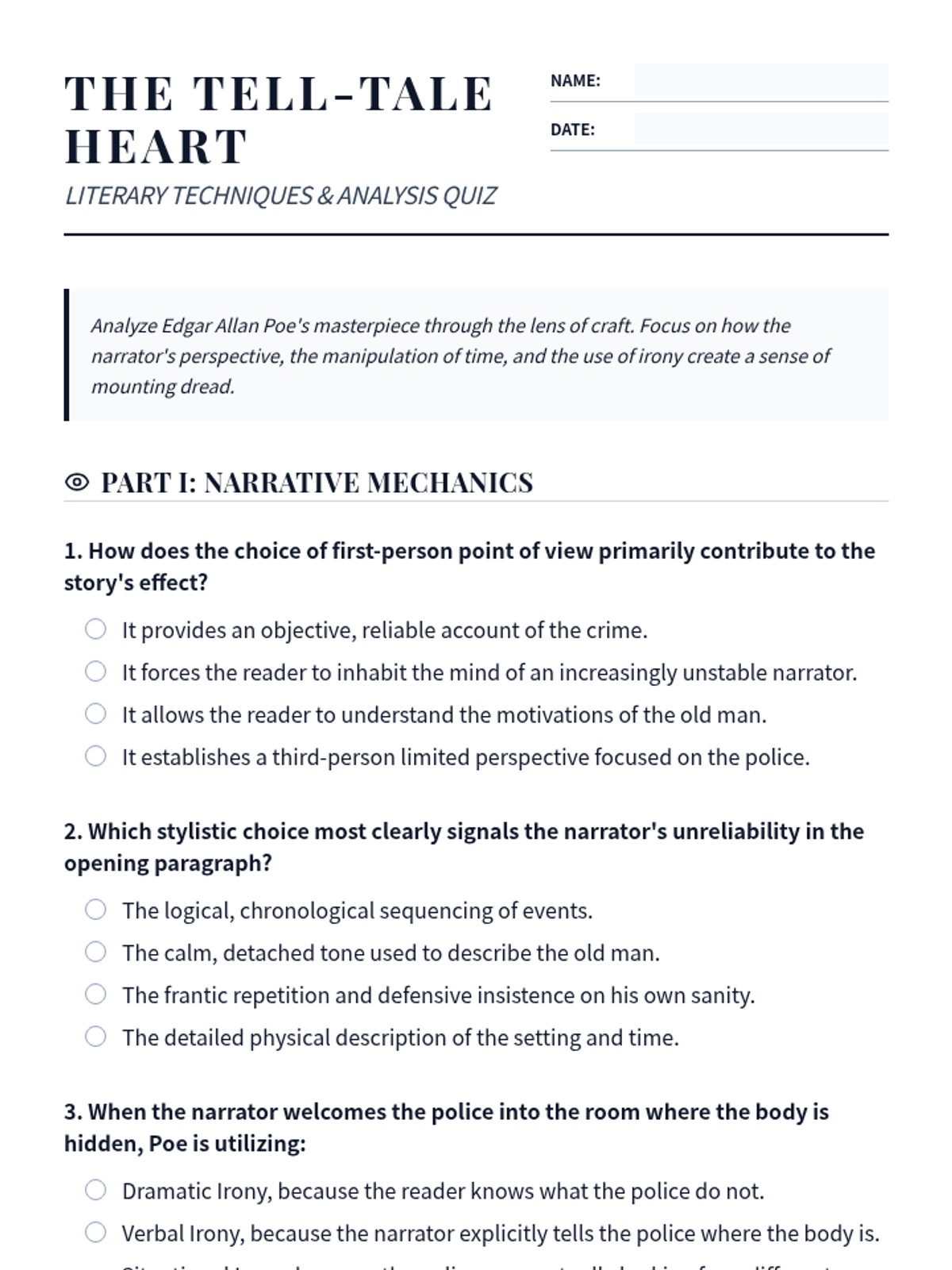
A student-facing quiz on Edgar Allan Poe's 'The Tell-Tale Heart' focusing on technical literary elements including unreliable narrator, pacing, point of view, and irony. The design features a Gothic aesthetic with structured question areas.
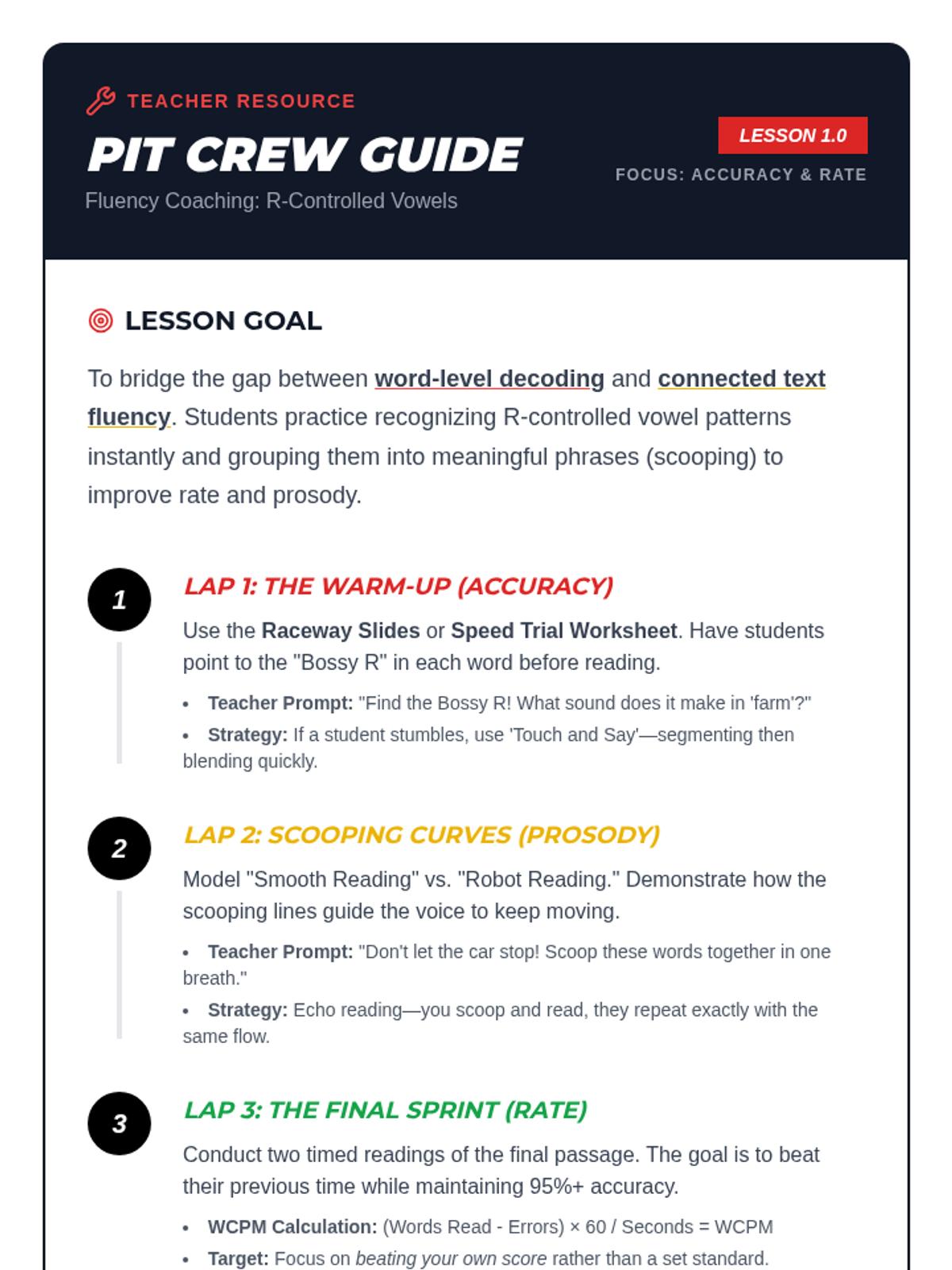
A comprehensive guide for teachers to facilitate R-controlled vowel fluency instruction. Includes step-by-step coaching strategies for accuracy, prosody, and rate, along with troubleshooting tips for common student errors.
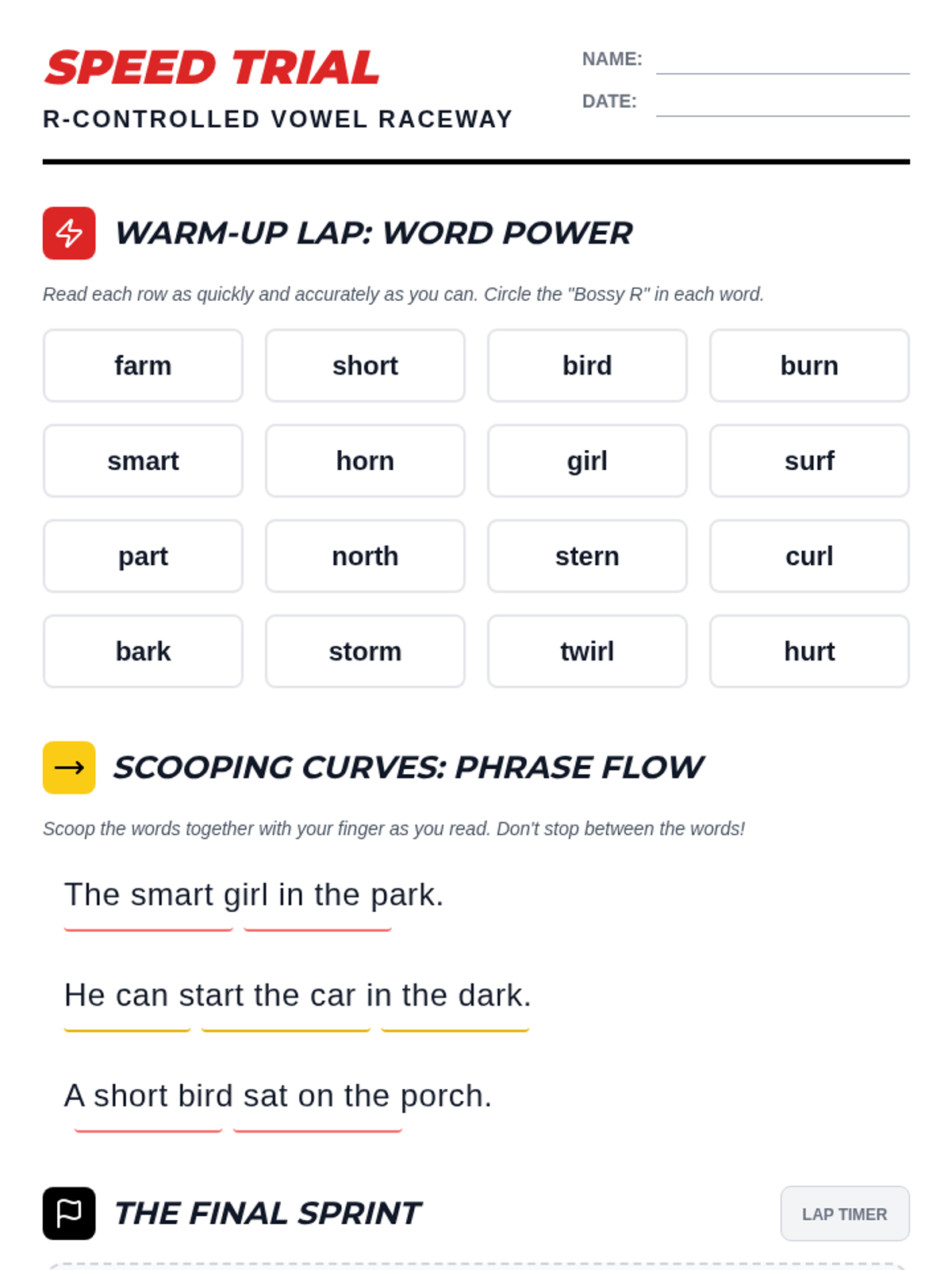
A racing-themed practice sheet for R-controlled vowels. Includes word-level speed drills, phrase scooping exercises to promote smooth reading, and a timed passage for tracking fluency progress.
Engaging, high-contrast slides designed for reading intervention. Features speed drills, phrase scooping visual aids, and a final reading challenge to help students transfer R-controlled vowel knowledge into fluent reading.
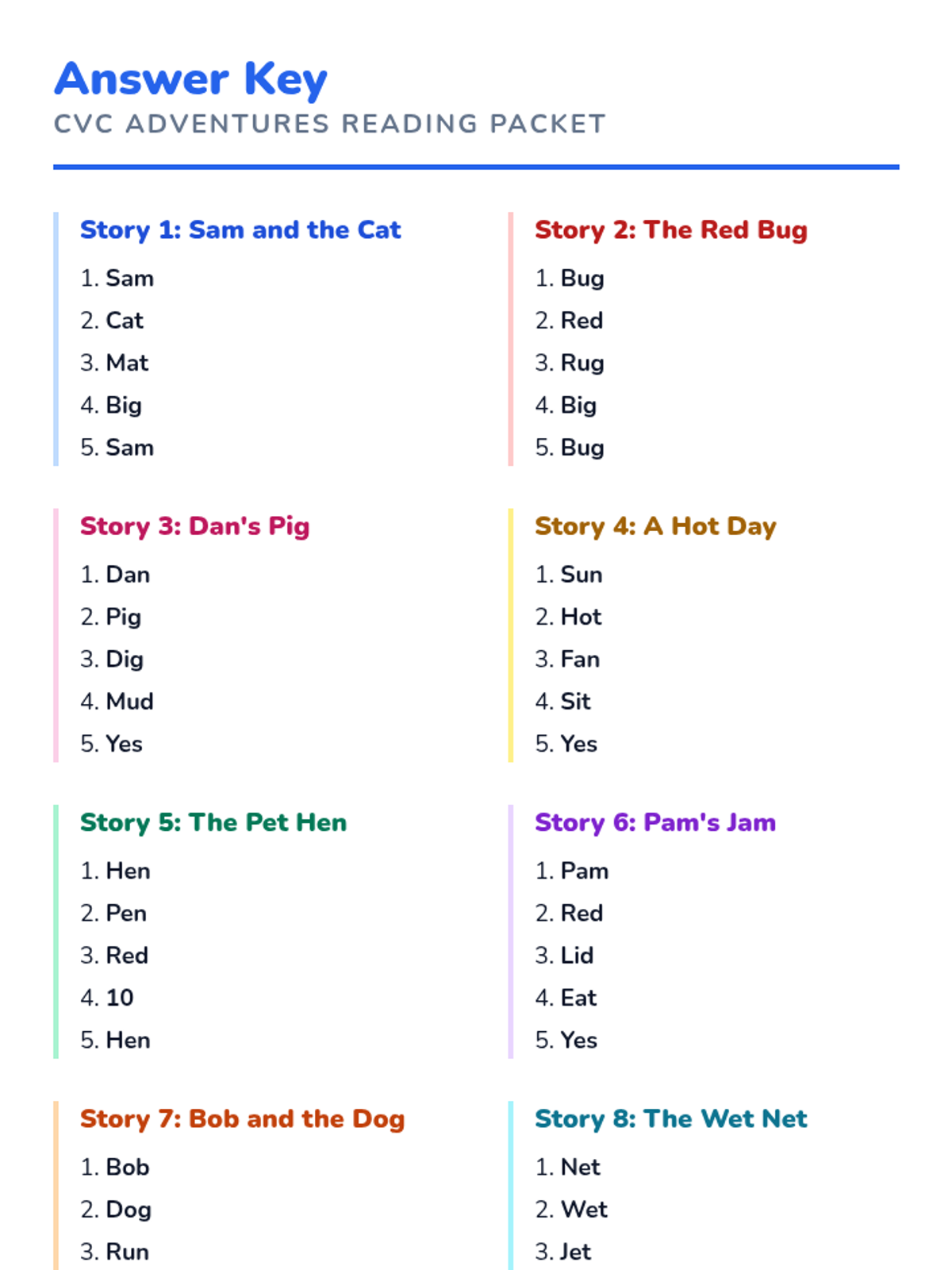
A teacher-facing answer key for the CVC Adventures Reading Packet, providing correct answers for all 10 stories.
A 10-story reading comprehension packet featuring CVC words and primary sight words. Each story includes a visual scene and 5 WH-style multiple-choice questions with icon-supported answer choices. Layout adjusted for one story per page.
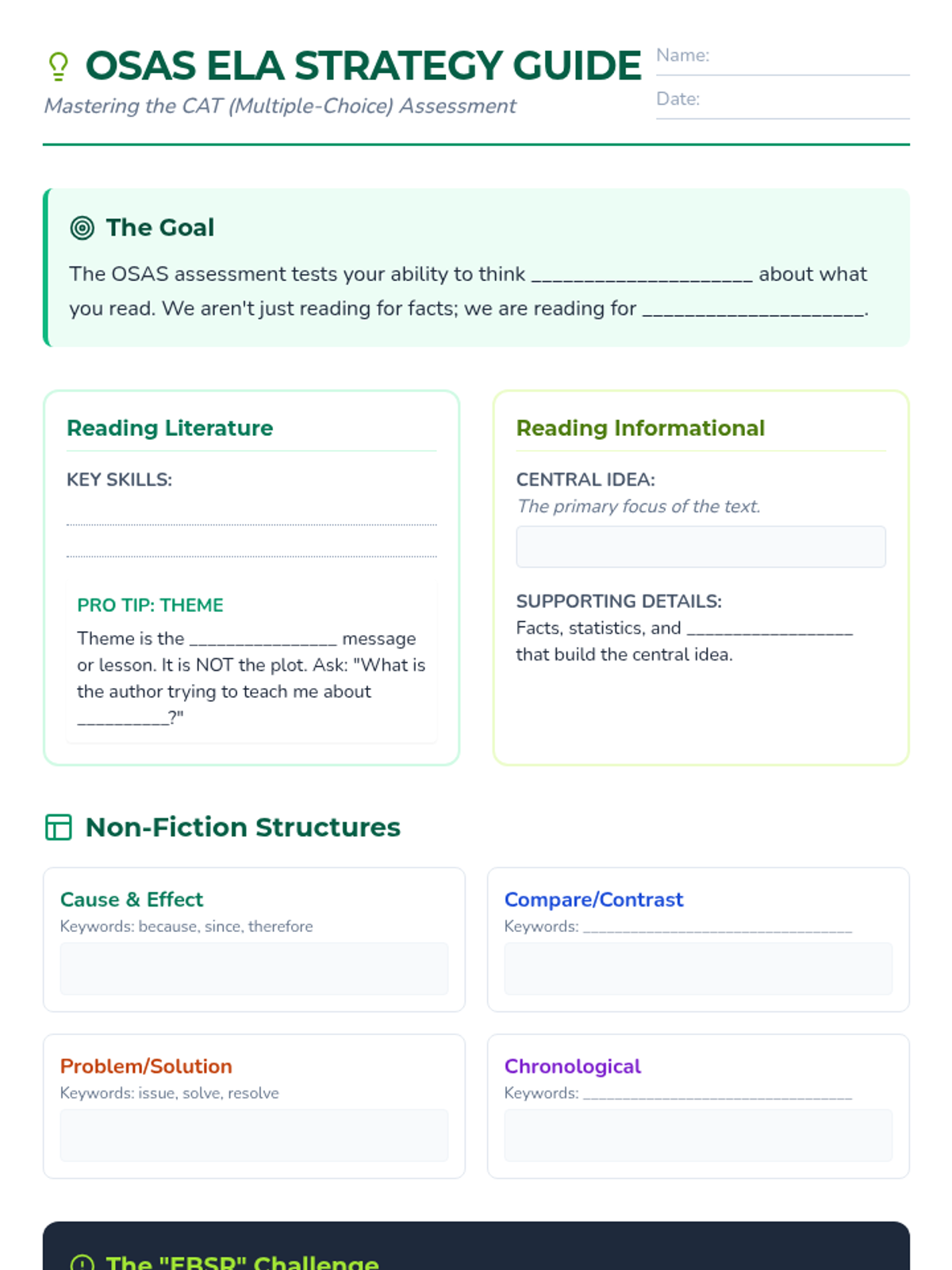
A comprehensive set of guided notes designed for students to follow along with the OSAS ELA Test Prep slides, specifically focusing on multiple-choice strategies. It includes fill-in-the-blank sections for key definitions, graphic organizers for text structures, and a practice checkpoint section.
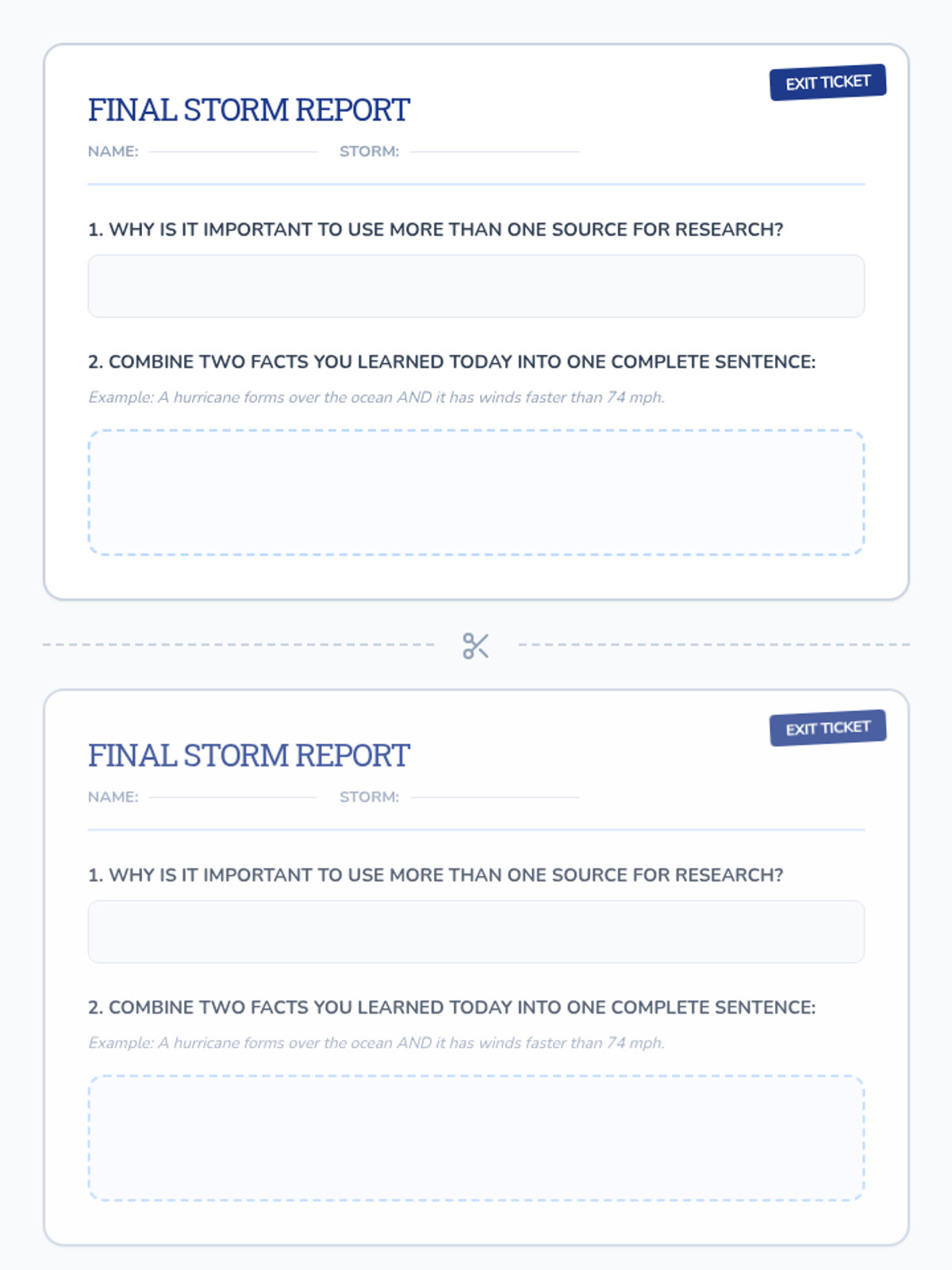
A quick assessment for students to reflect on the importance of using multiple sources and to practice synthesizing two facts into a single summary sentence about extreme weather.
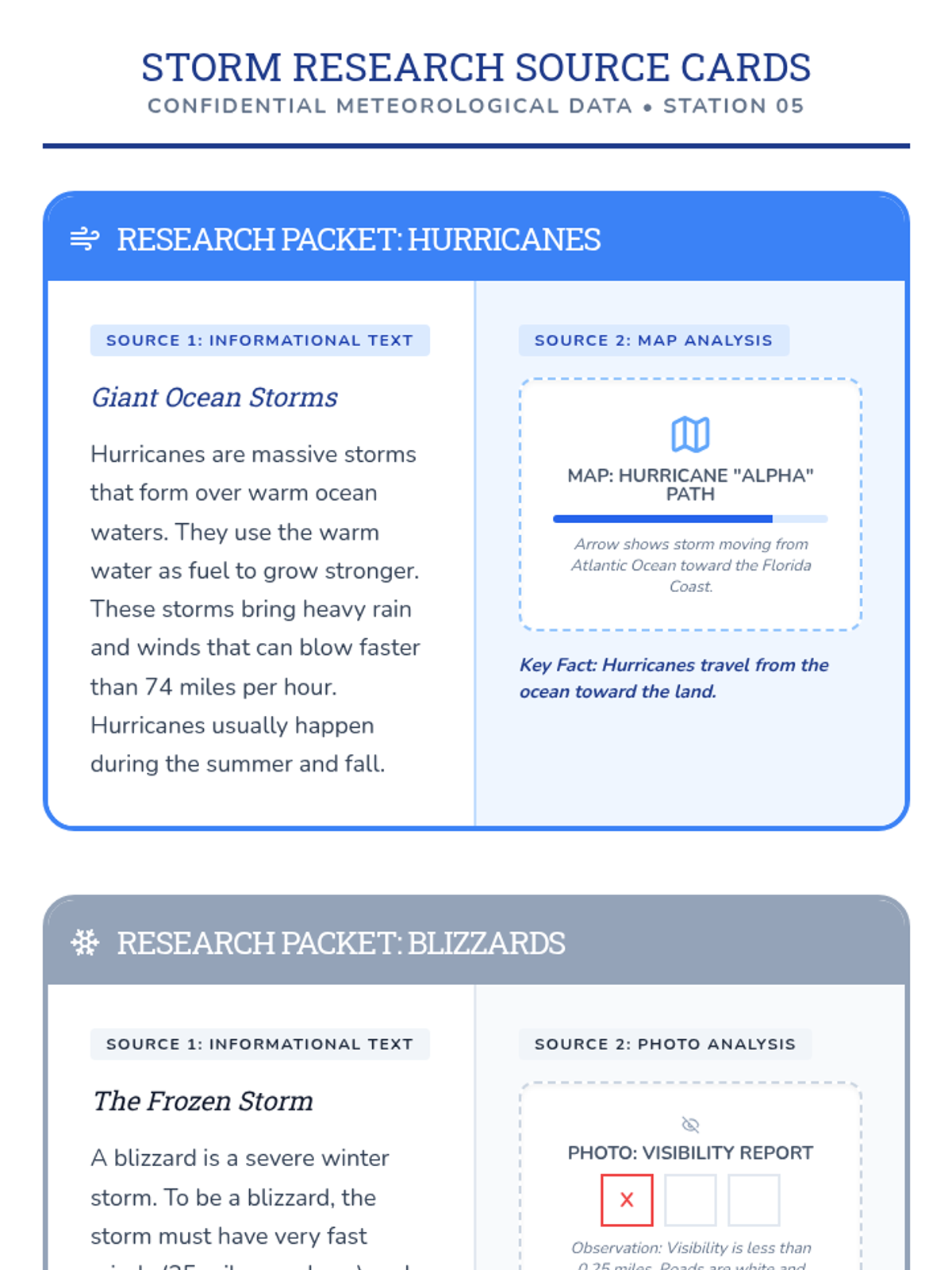
Research source cards for three types of extreme weather: Hurricanes, Blizzards, and Floods. Each card includes a simplified informational text and a description/description of a visual source (map, photo, or chart).
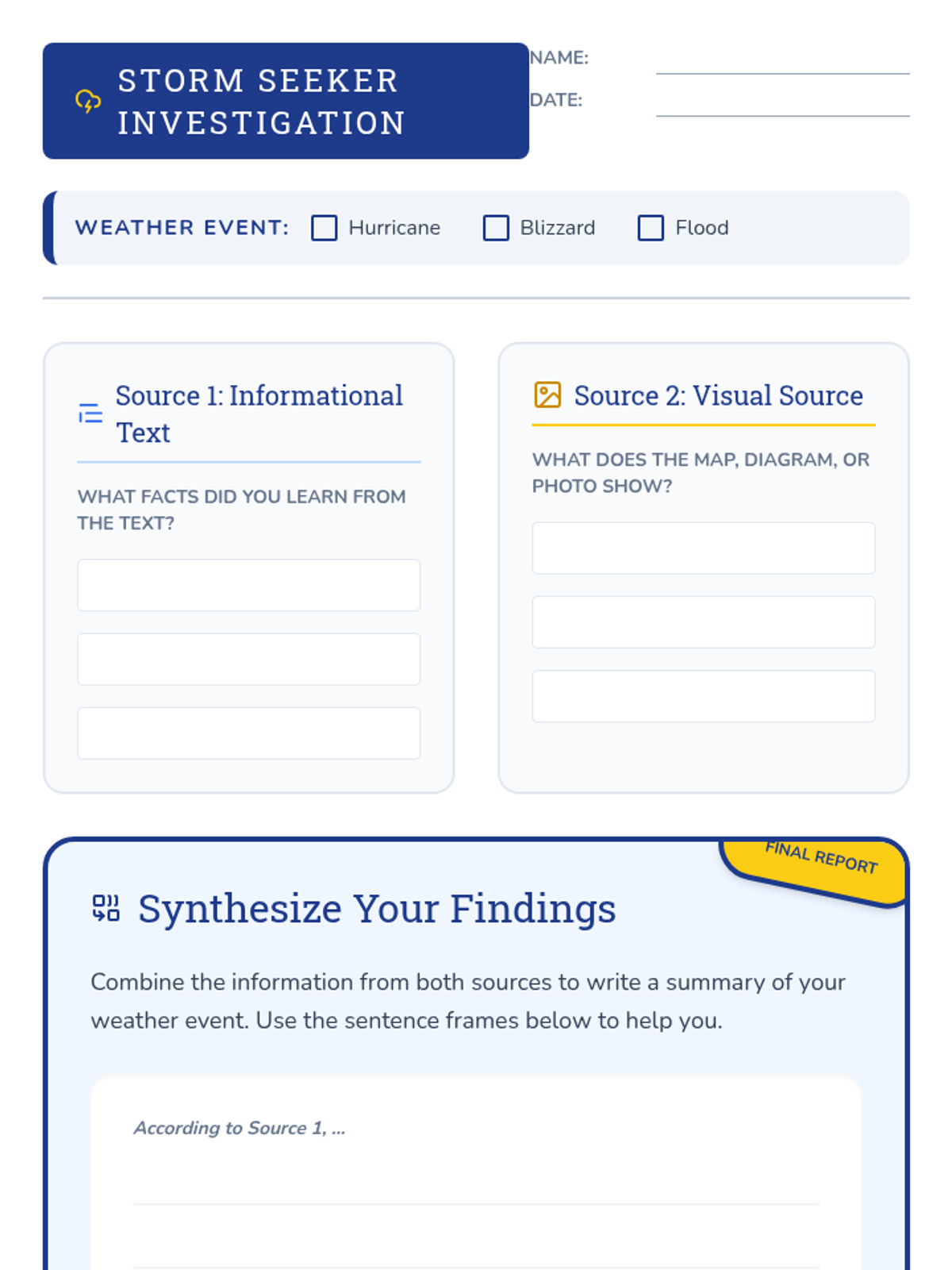
Investigation handout for students to record facts from multiple sources about hurricanes, blizzards, or floods. Includes structured areas for text analysis, visual analysis, and synthesis using sentence frames.
Instructional slides for a 5th grade ESL lesson on extreme weather research. Includes vocabulary, modeling of multiple sources (text and visual), and clear step-by-step activity instructions.
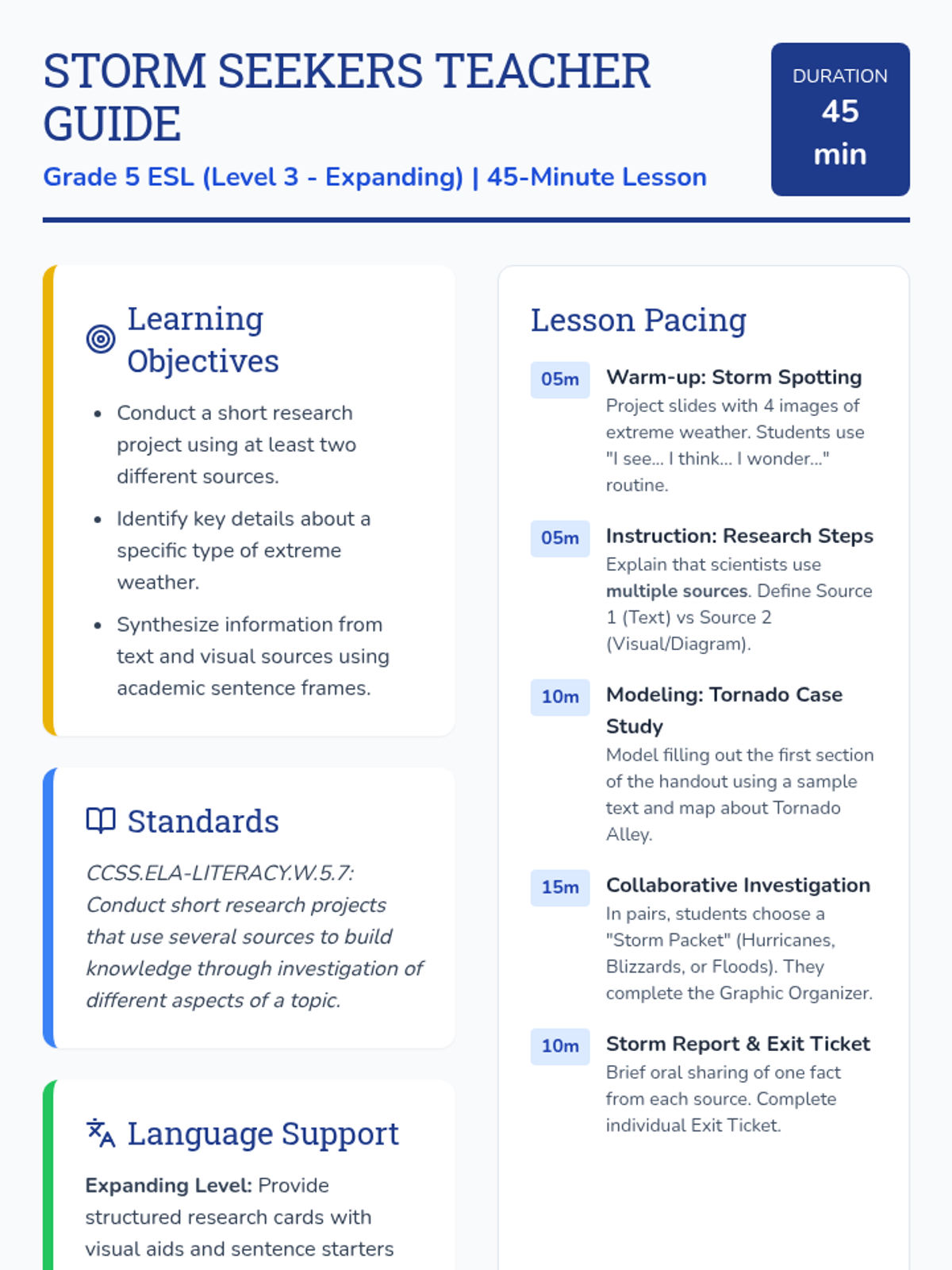
Teacher guide for a 45-minute Grade 5 ESL lesson on extreme weather research. Includes pacing, learning objectives, and language support strategies for Expanding level students.
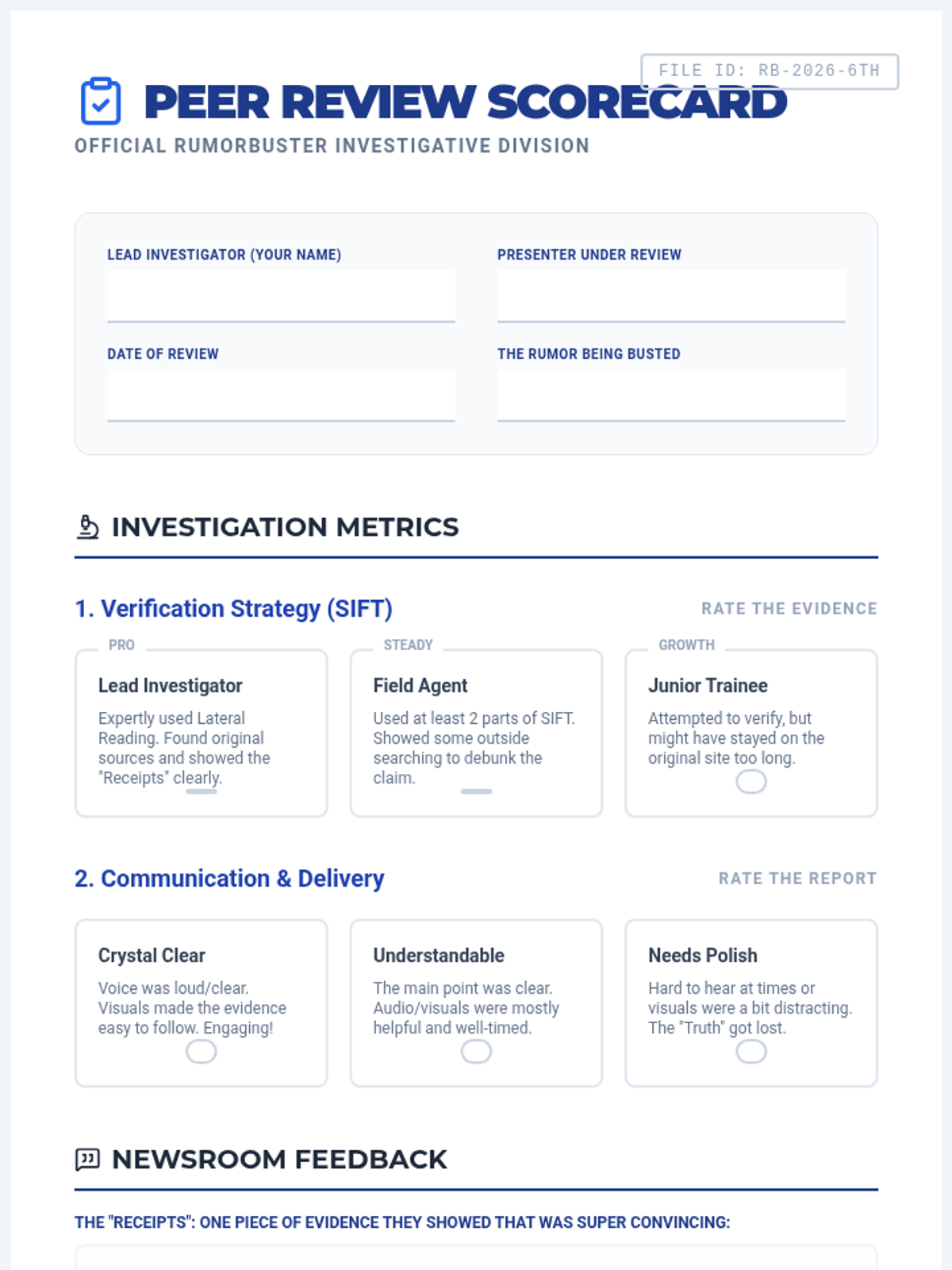
A professional newsroom-themed rubric for peer evaluation of screencasts, featuring SIFT-based scoring metrics and a final unit reflection page for students to synthesize their media literacy growth.
A visually engaging presentation deck for the RumorBuster showcase, featuring newsroom protocols, a SIFT review checklist, and reflection prompts to guide the viewing and peer feedback process.
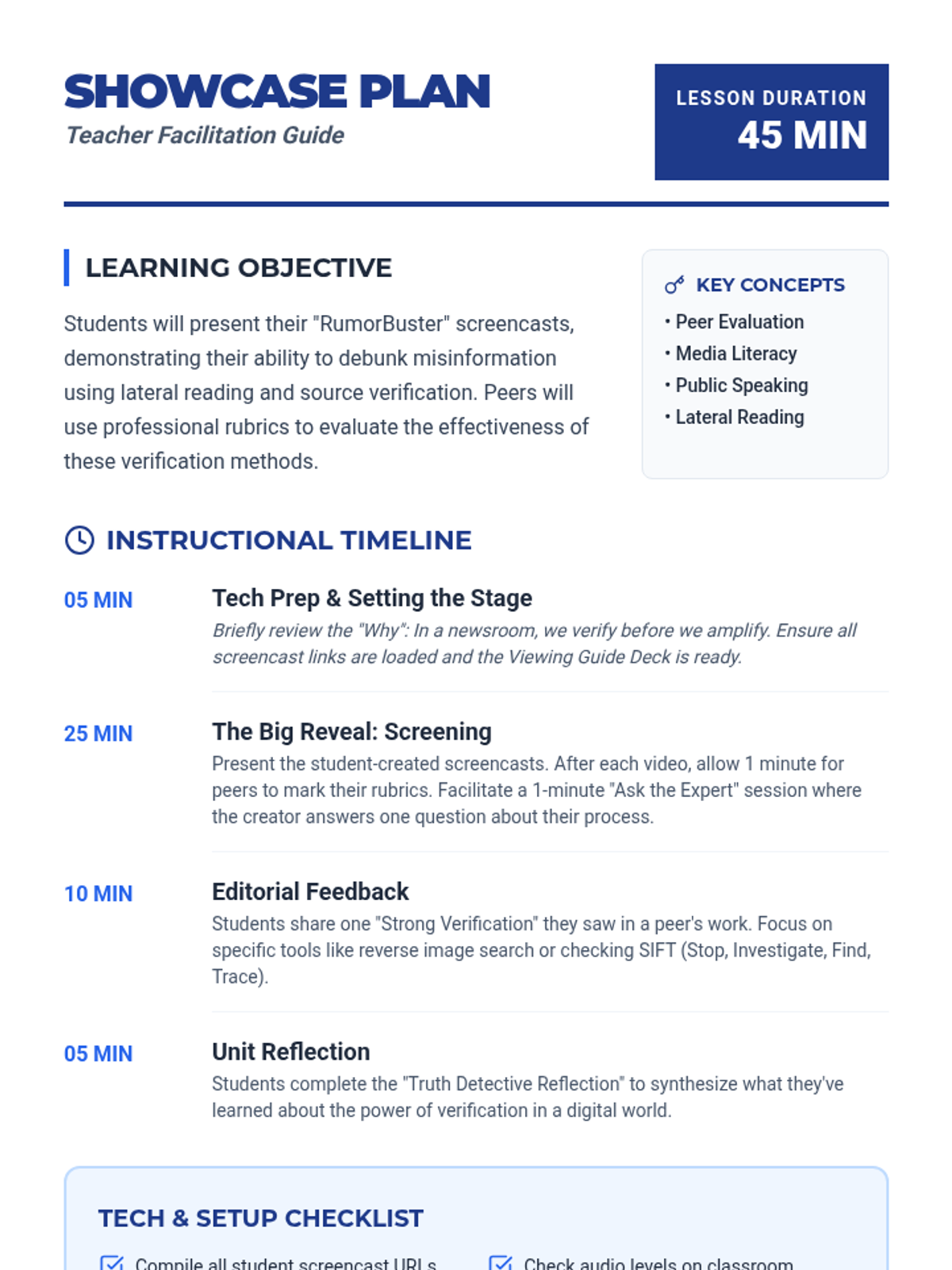
A comprehensive teacher facilitation guide for the RumorBuster presentation day, including a detailed instructional timeline, tech checklist, discussion prompts, and differentiation strategies to ensure a professional newsroom atmosphere.
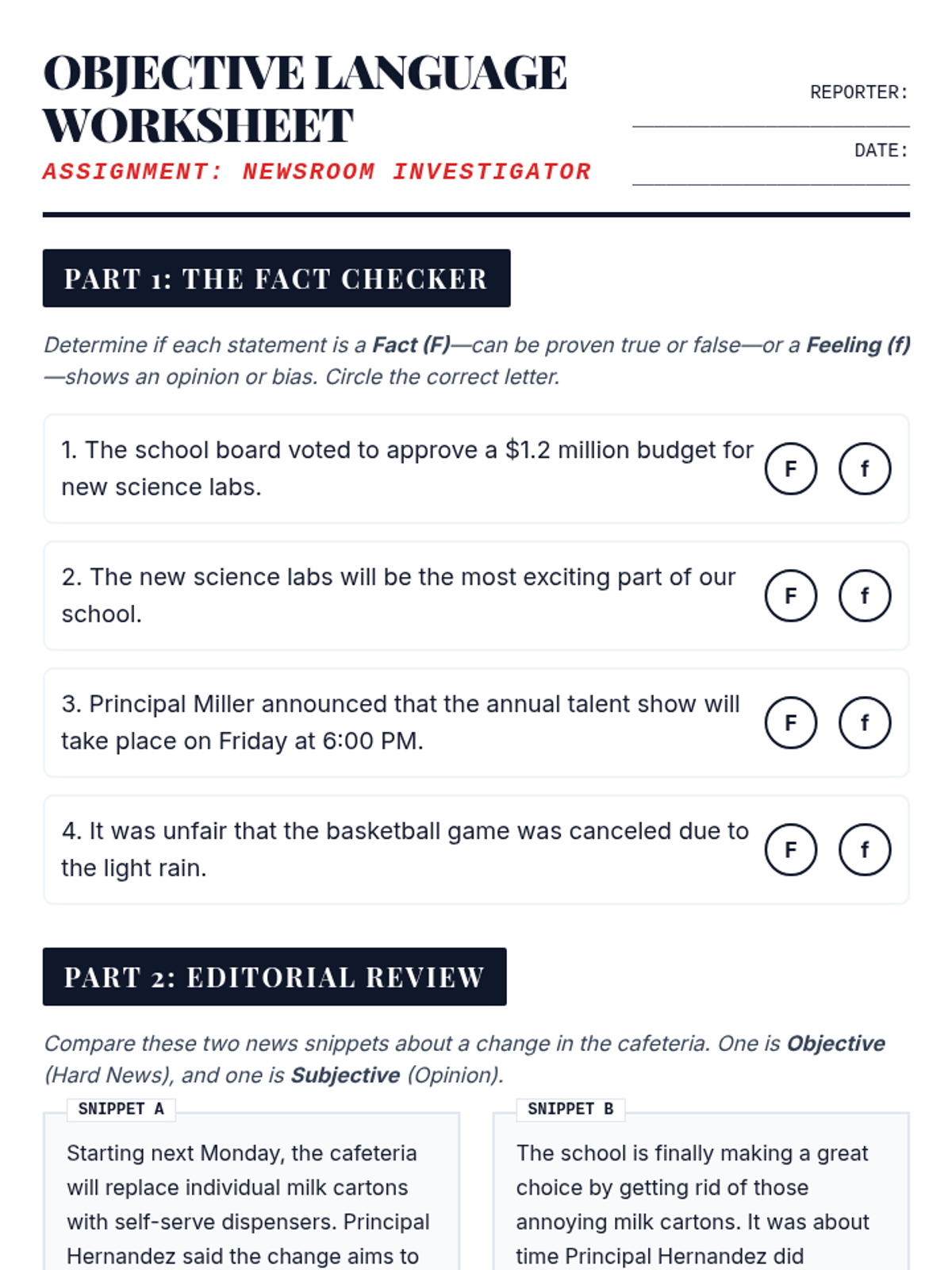
A student worksheet focused on identifying objective language, distinguishing between hard news and opinion snippets, and rewriting biased sentences for a newsroom context.
A high-impact slide presentation featuring newsroom aesthetics, explaining the differences between hard news and opinion, the 5 W's, and the inverted pyramid structure for reporting.
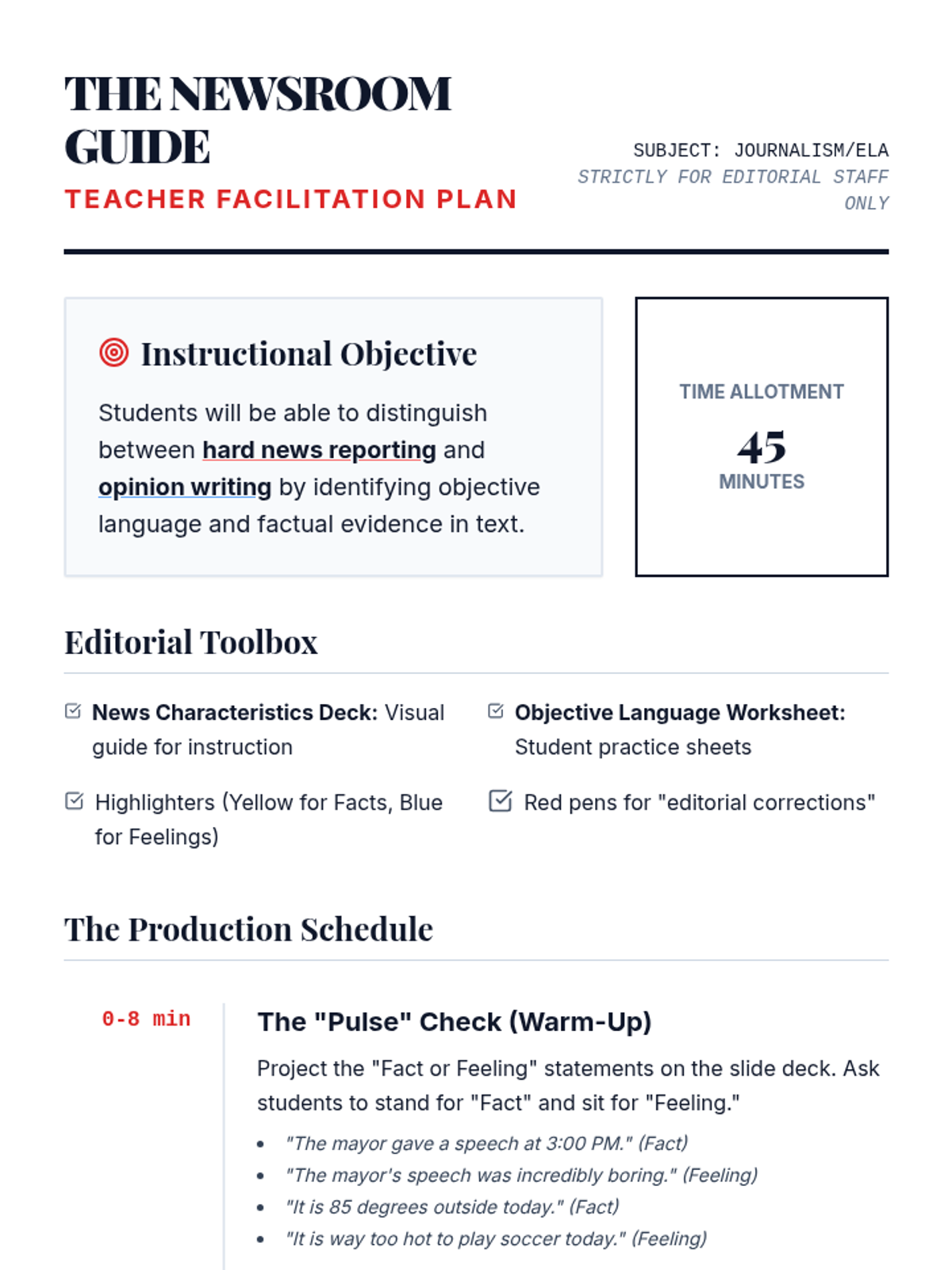
A comprehensive teacher facilitation guide for the 'Fact or Feeling in the Newsroom' lesson, featuring a detailed pacing guide, learning objectives, and pedagogical tips for teaching objectivity in journalism.
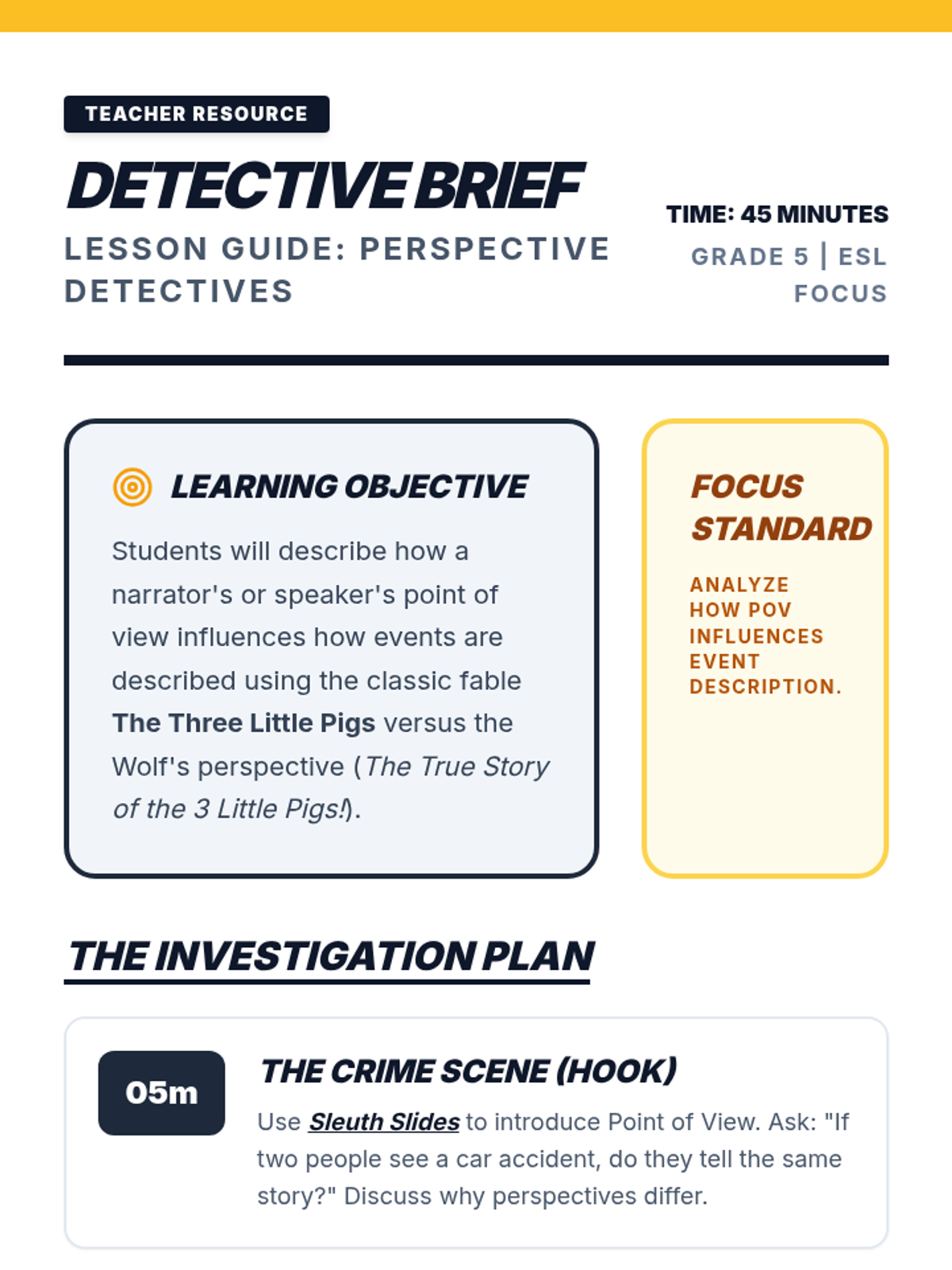
A teacher's facilitation guide for the 'Perspective Detectives' lesson, including pacing, ESL scaffolding, and discussion prompts.
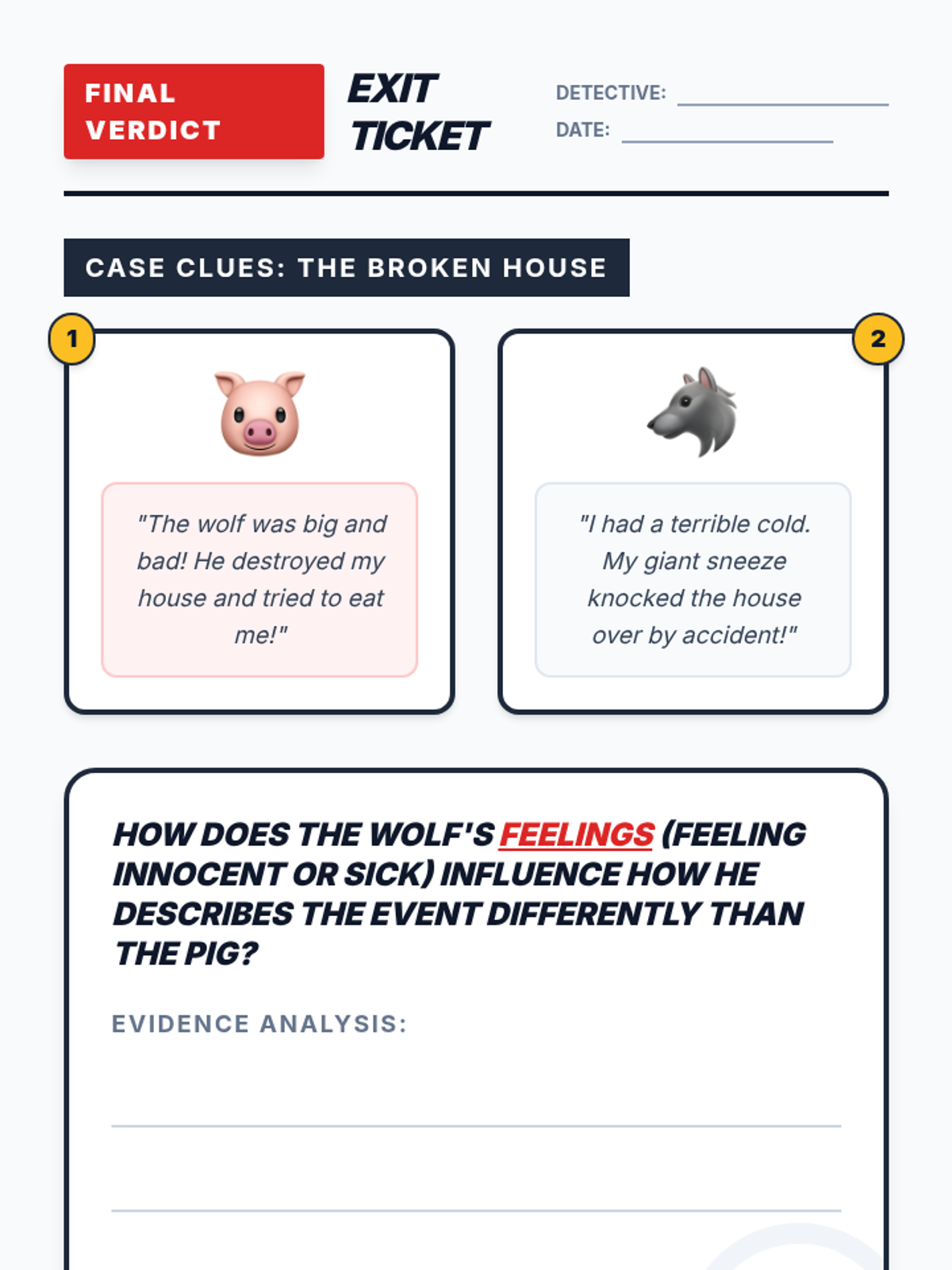
An exit ticket for students to analyze character perspectives with visual character prompts and space for reflection.