A high-school level research log for the post-WWII era designed with a declassified dossier aesthetic. It provides open-ended space for source analysis, evidence gathering, and thematic synthesis.
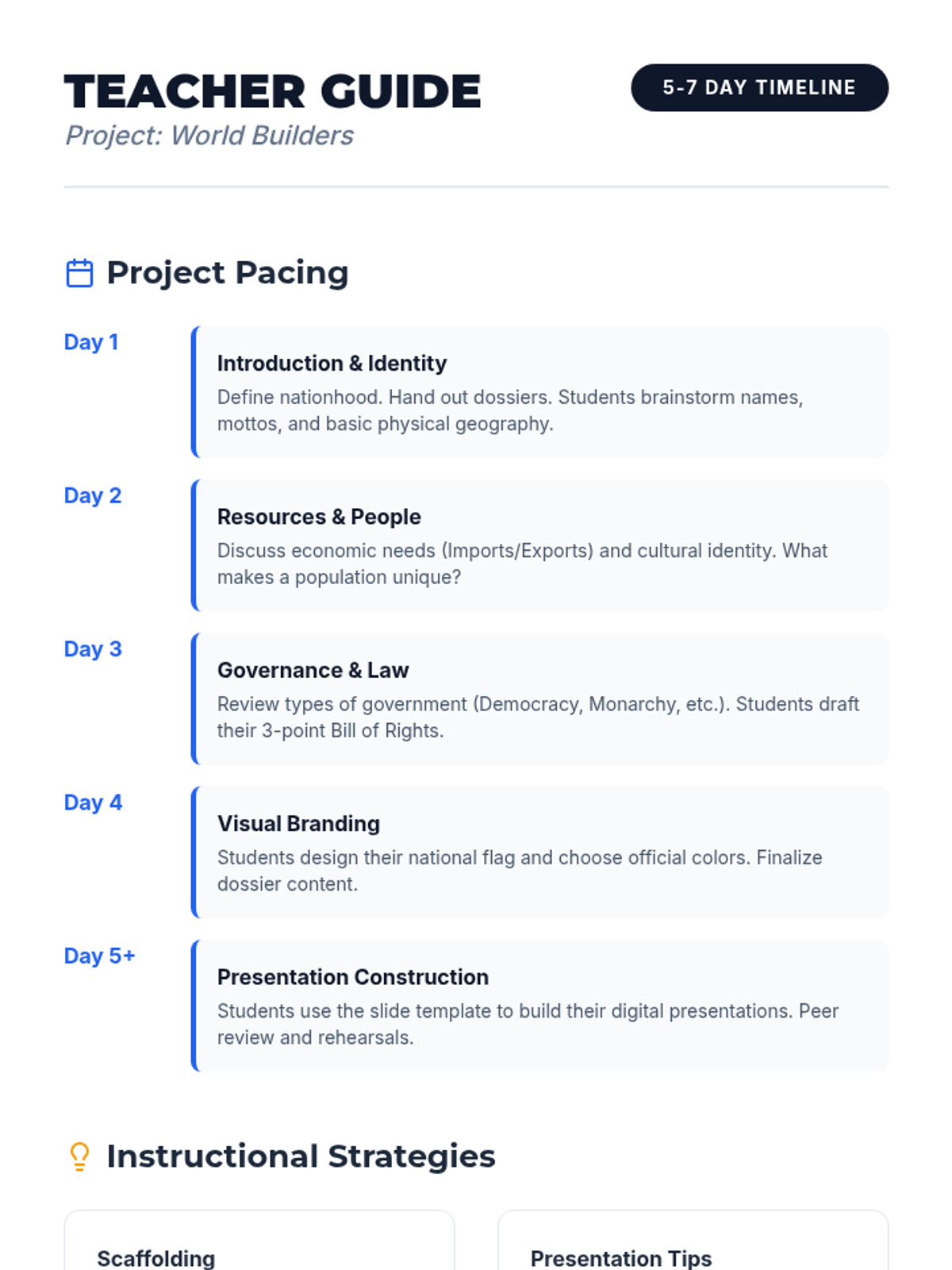
A comprehensive teacher resource including a multi-day pacing guide, instructional strategies, and a grading rubric for the World Builders project.
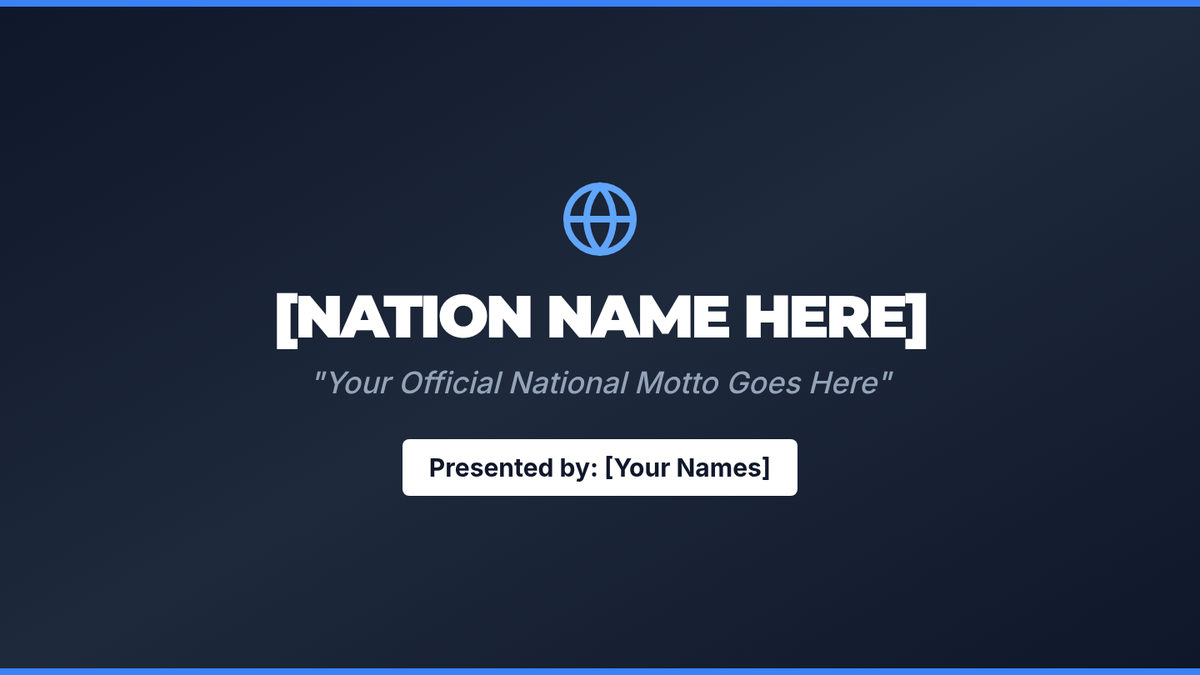
A visual presentation template that guides students on what information to include in their final country presentation, featuring slide layouts for geography, governance, and culture.
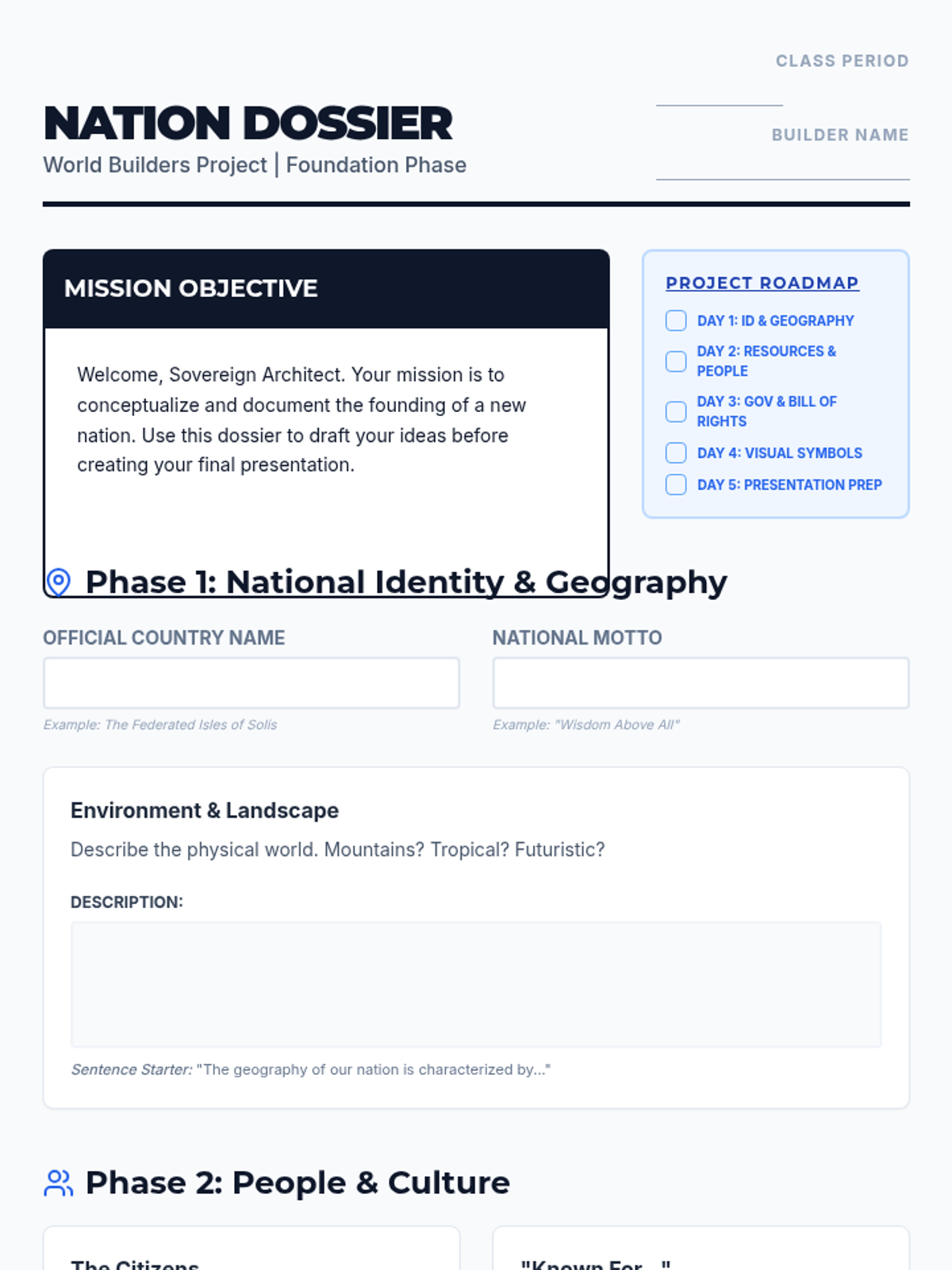
A multi-page project guide for students to brainstorm and document the foundational elements of their own country, including a project roadmap and sentence starters.
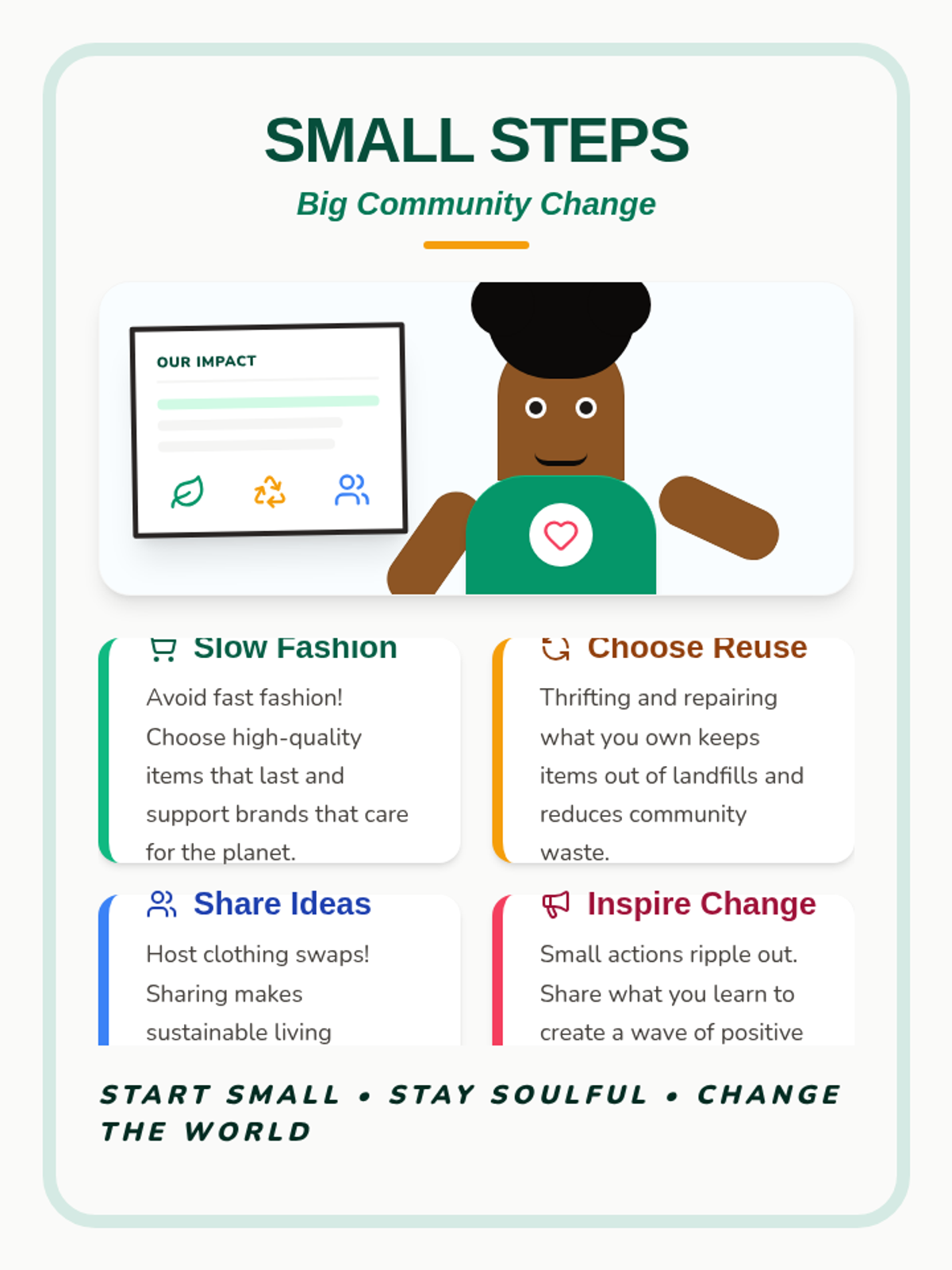
A classroom poster featuring a stylized graphic of a BIPOC student presenting on sustainable fashion and community impact. The poster includes educational tips on avoiding over-consumerism and the benefits of reusing items.
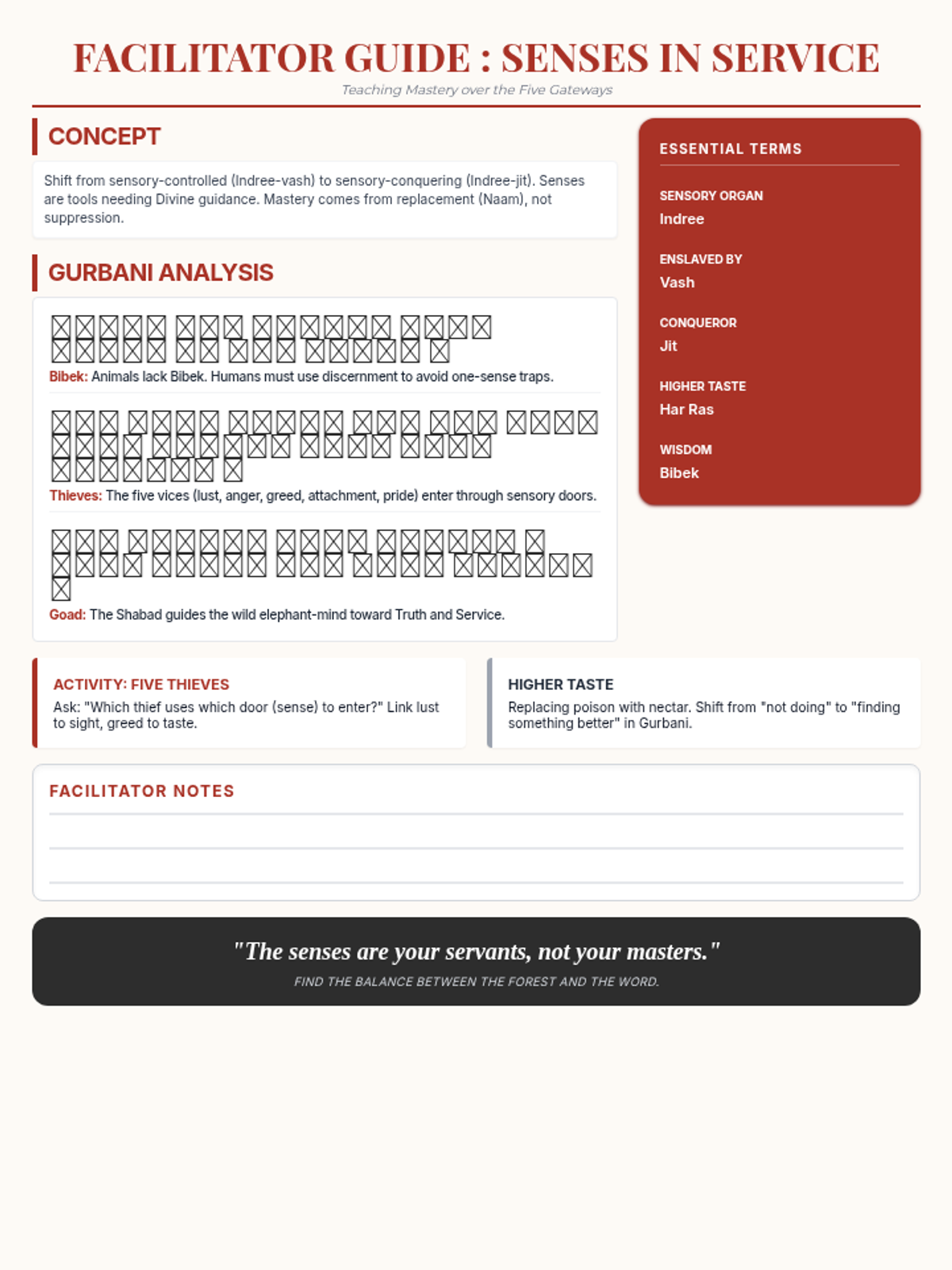
A facilitator guide for teachers or workshop leaders, significantly expanded with Gurbani Analysis of verses related to the 'Five Thieves' and the 'Elephant of the Mind' metaphors. Updated layout, improved font handling for Gurmukhi, and included a dedicated facilitator notes area. Consolidated to a single page. Font sizes increased for better legibility. Full Gurbani verses provided.
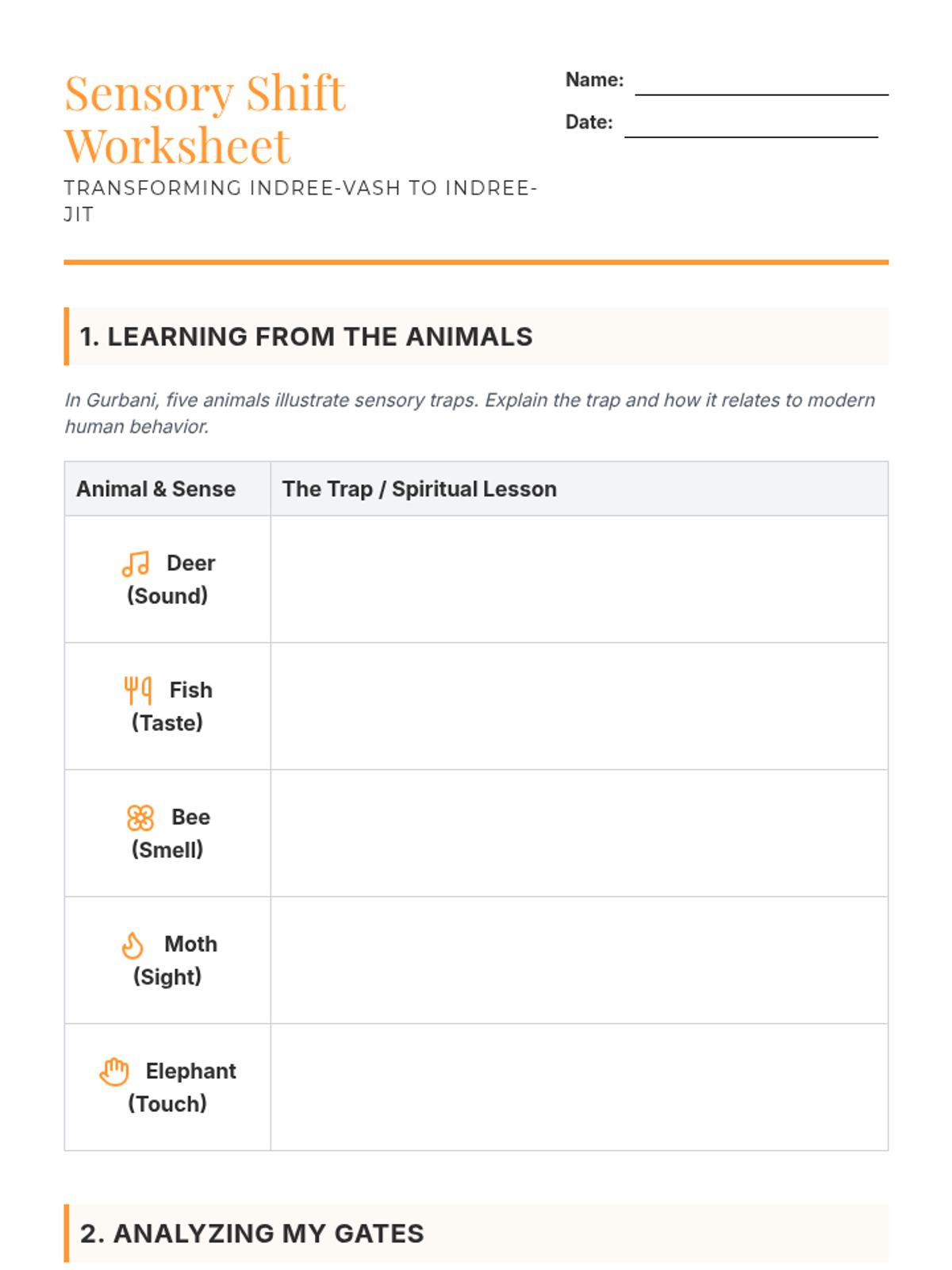
A student worksheet designed for reflection on sensory habits, identifying personal sensory traps based on the animal metaphors in Gurbani, and planning practical ways to redirect senses toward spiritual service.
A 10-slide presentation exploring the Gurmat perspective on the five senses, significantly expanded with Gurbani verses (Gurmukhi) from the Guru Granth Sahib to emphasize the concept of the 'Five Thieves' and the 'Guru's Goad' for sensory mastery. Updated font handling for Gurbani rendering. Citations and contrast improved. Background stability and layout bleed issues resolved. Centering and typography polished. Removed tracking on long strings to improve legibility.
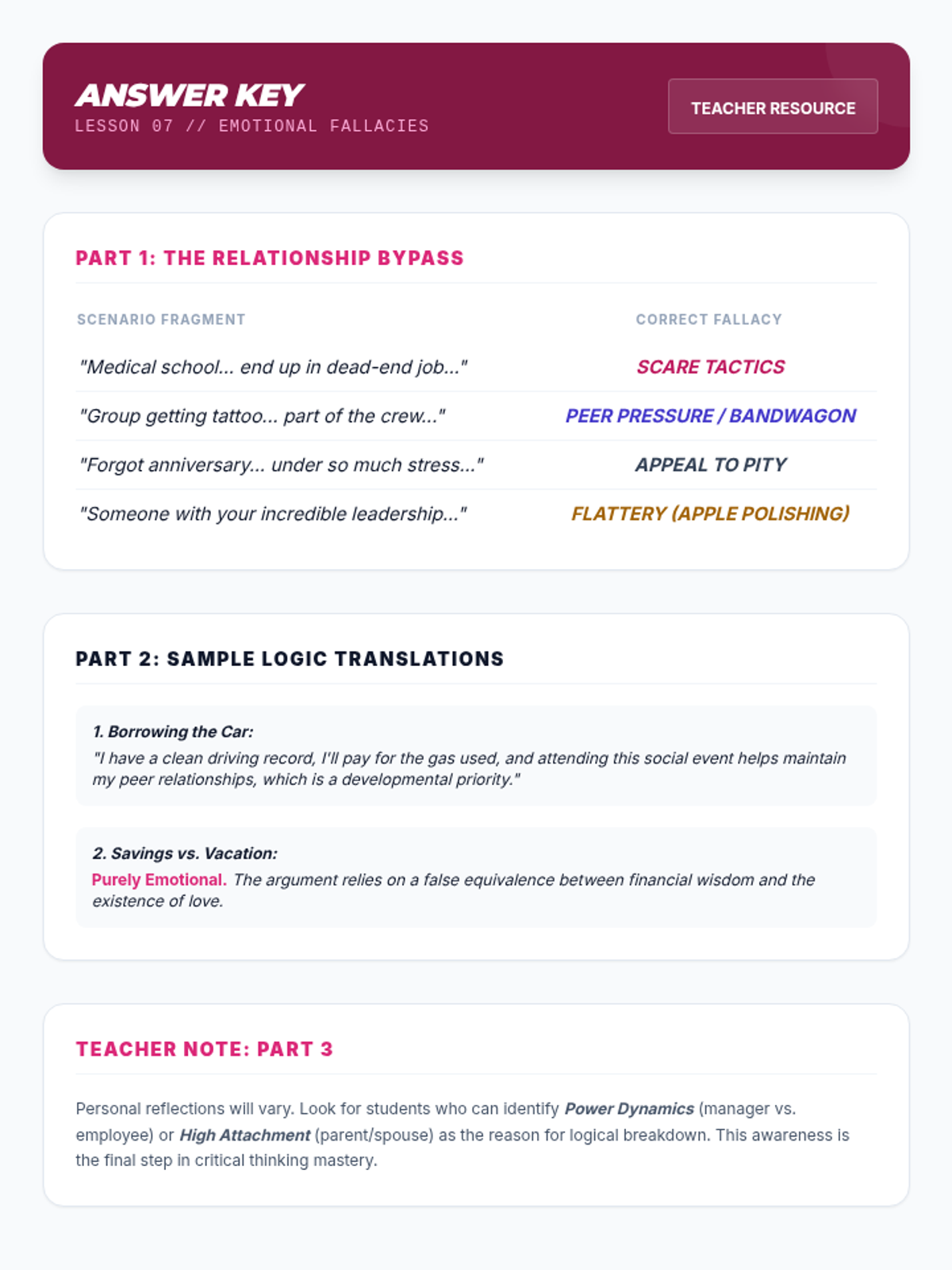
Complete answer key for the updated Lesson 7 worksheet, providing correct fallacy identifications and sample logic translations for emotional appeals in interpersonal contexts.
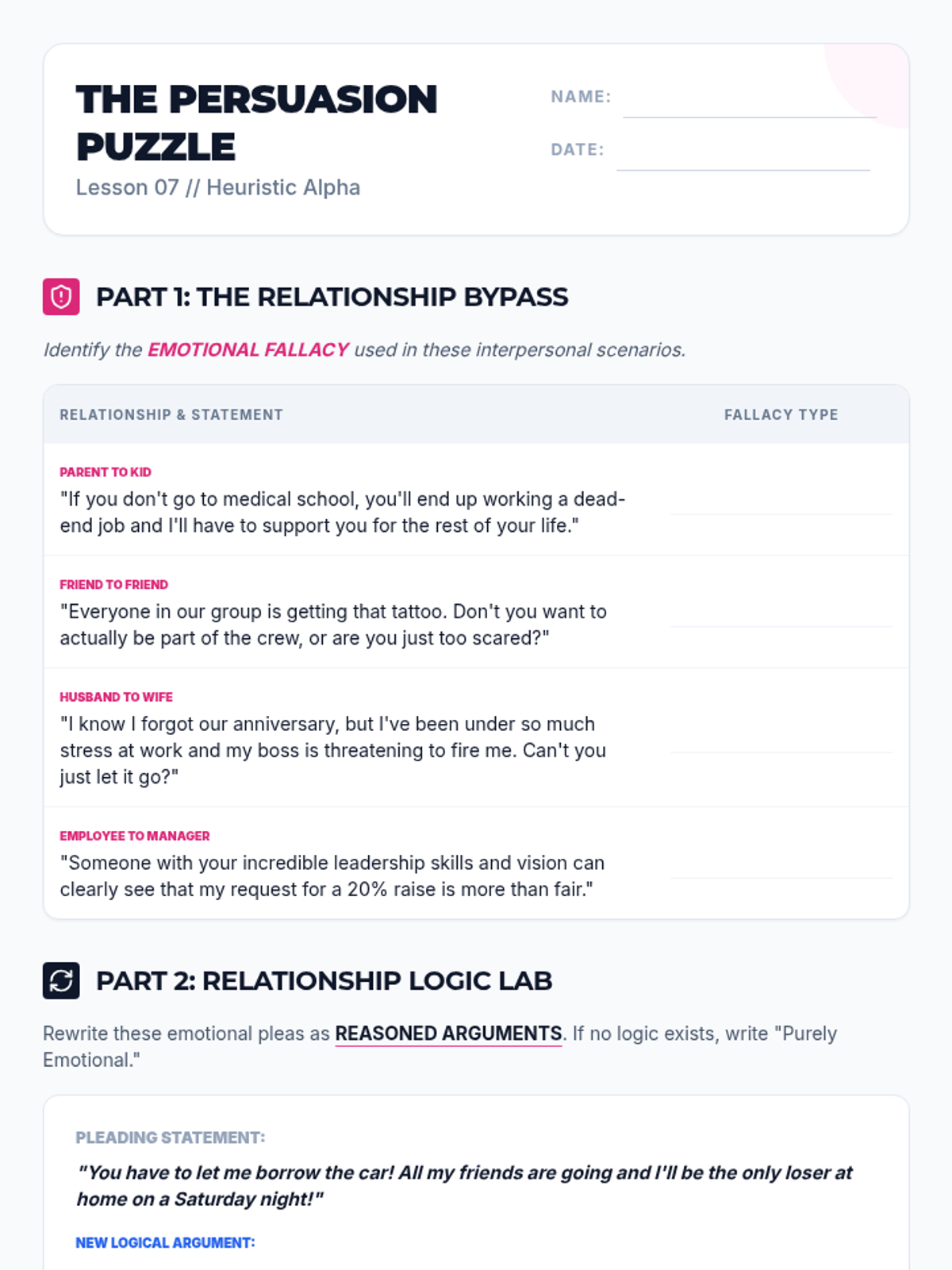
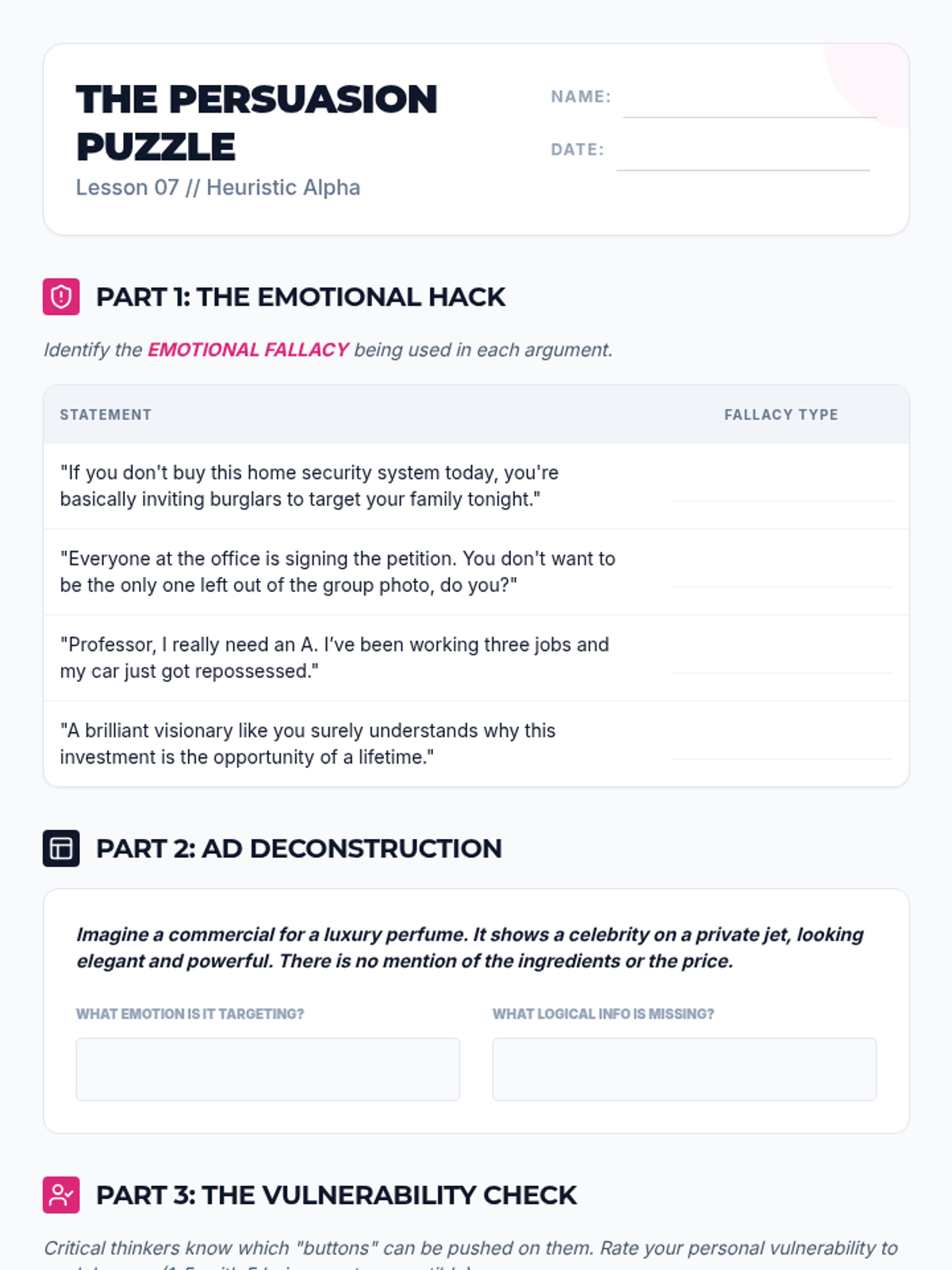
Student worksheet for Lesson 7 focusing on emotional fallacies within family, friendship, and work relationships. Includes logic translation exercises and personal reflection.
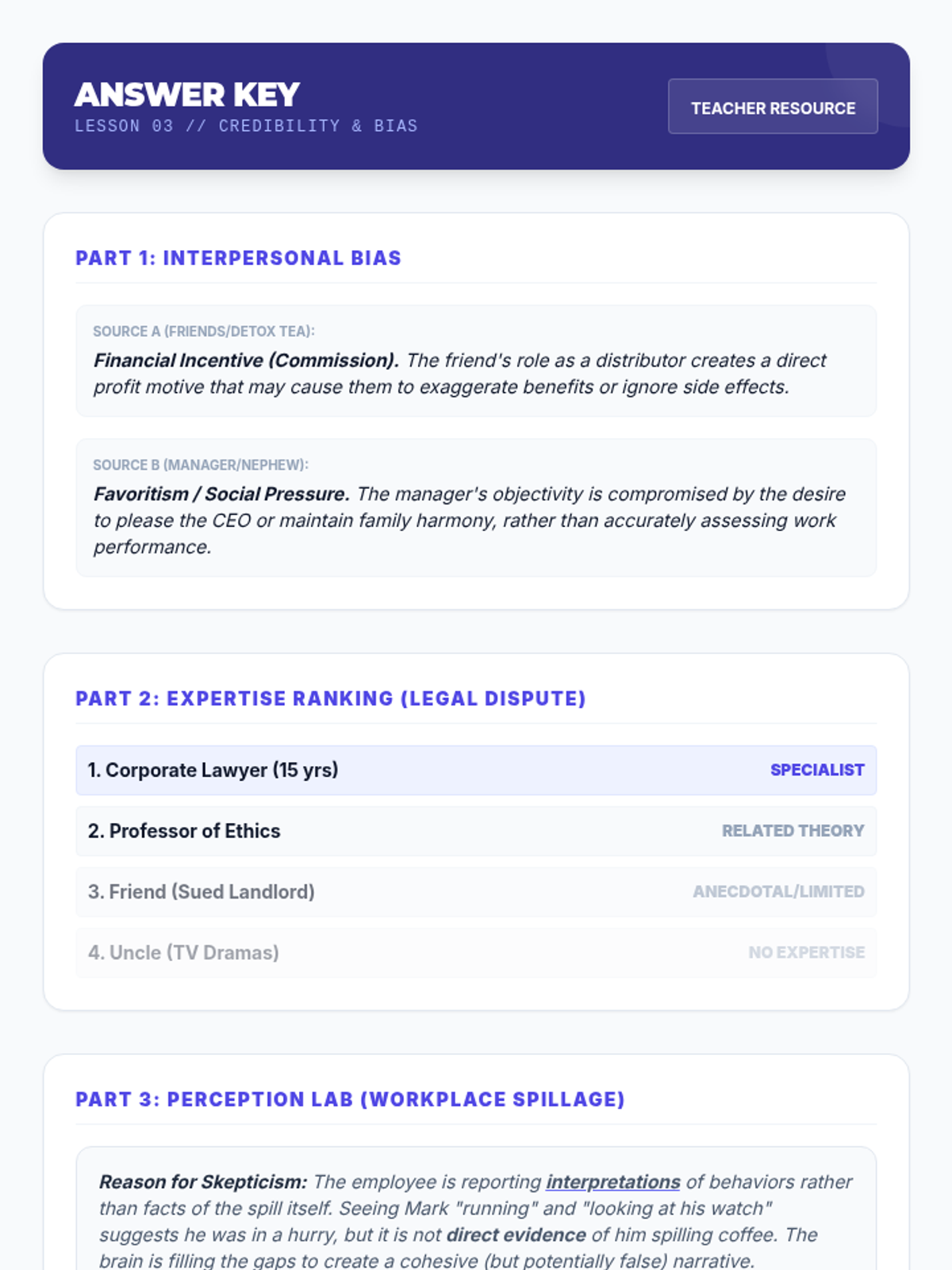
Complete answer key for the Lesson 3 worksheet, covering bias identification, expertise ranking, and analysis of eyewitness reliability factors in relationship and work contexts.
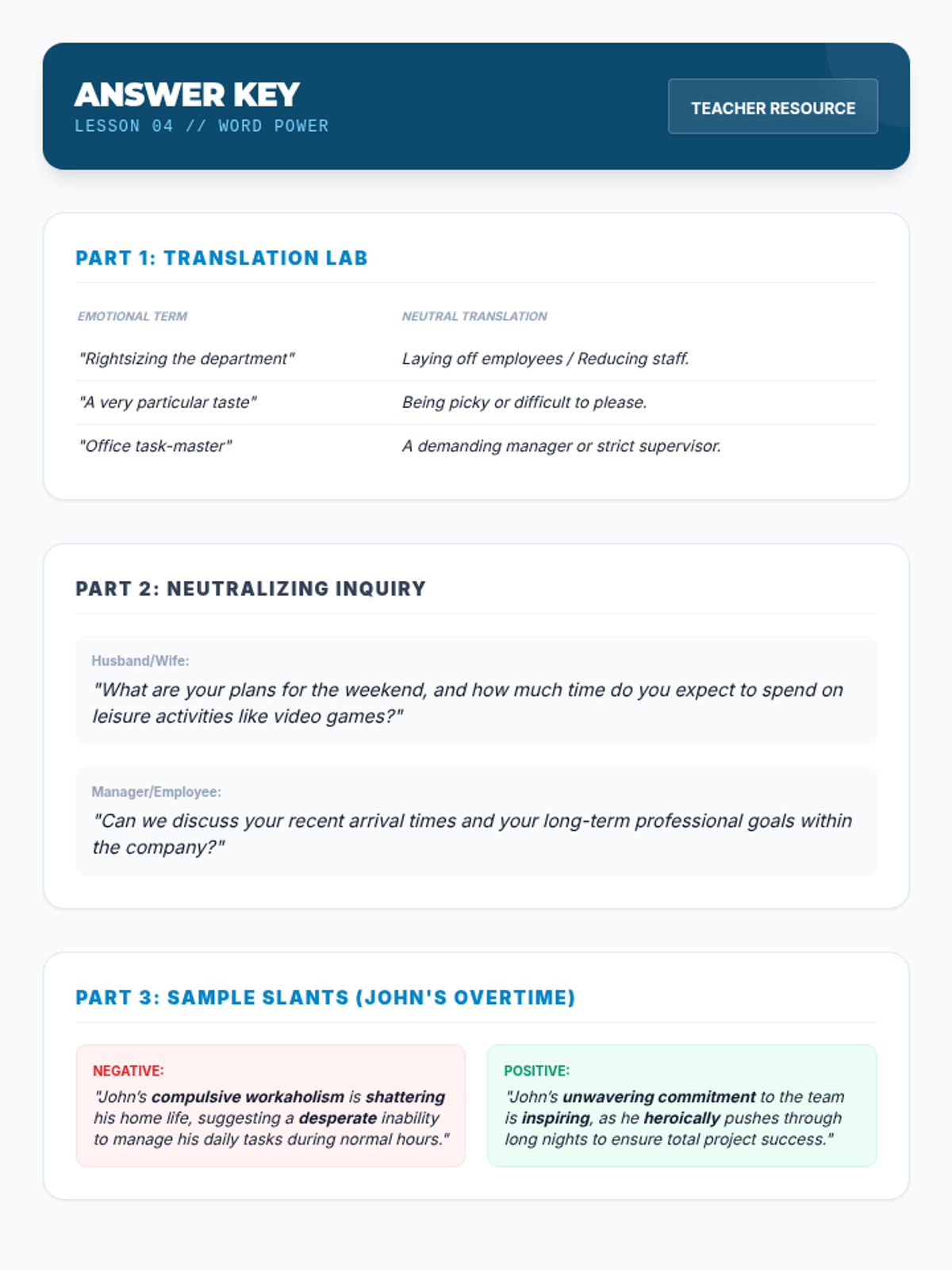
Complete answer key for the updated Lesson 4 worksheet, providing neutral translations and neutral inquiry rewrites for interpersonal scenarios.
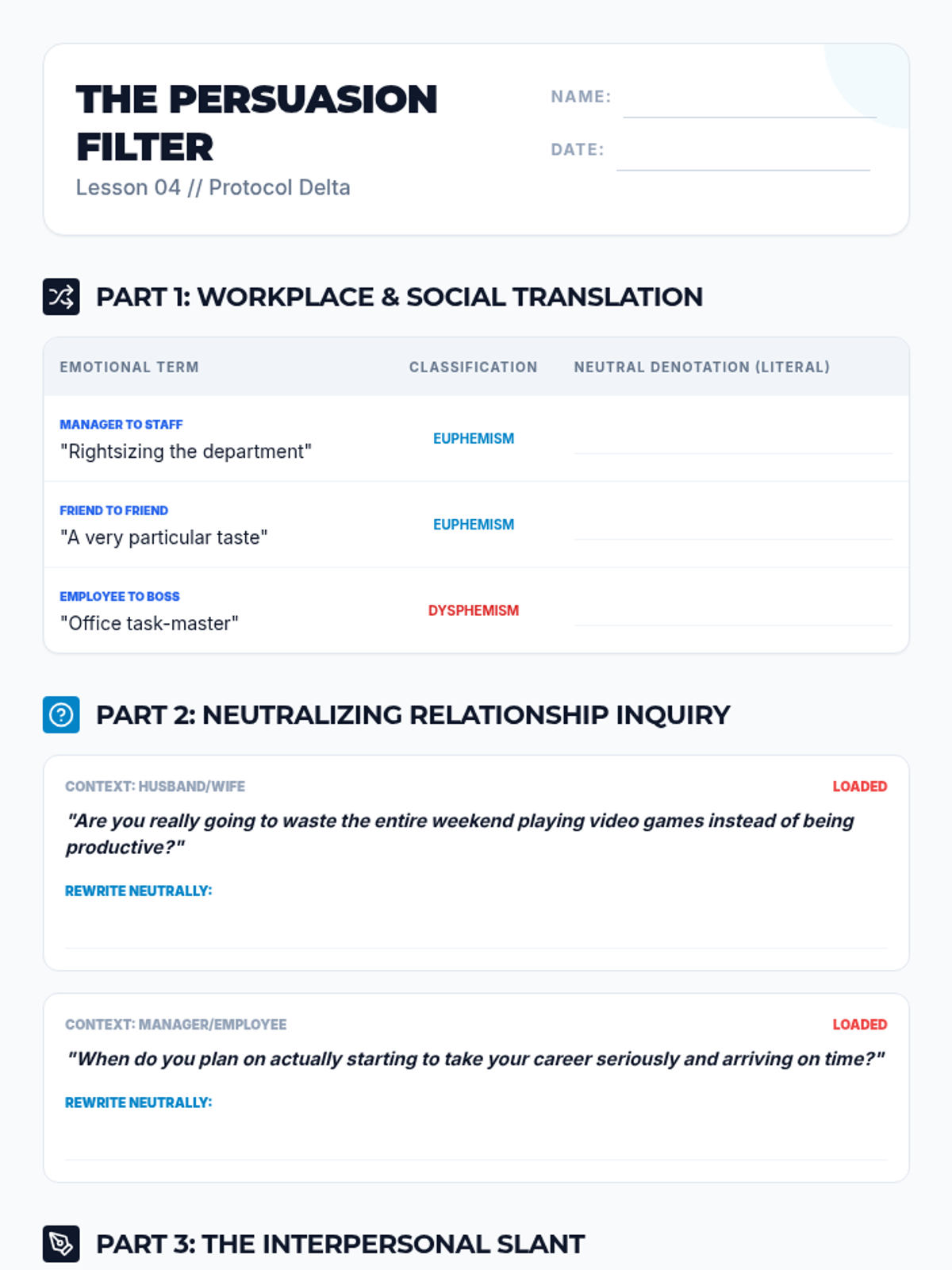
Student worksheet for Lesson 4 focusing on euphemisms and biased questioning within workplace, marriage, and friendship contexts.
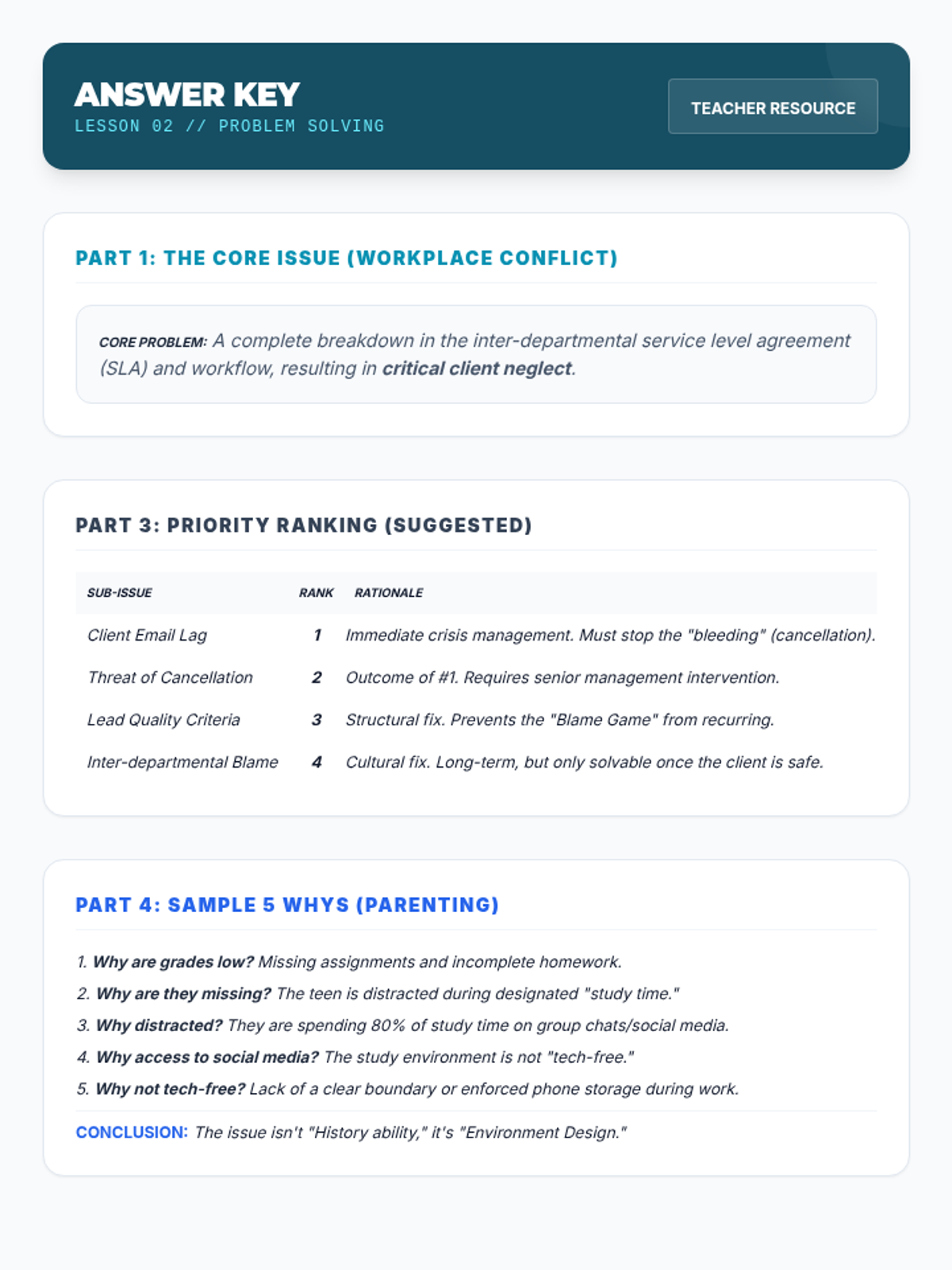
Complete answer key for the updated Lesson 2 worksheet, featuring problem decomposition and root cause analysis for workplace and parenting scenarios.
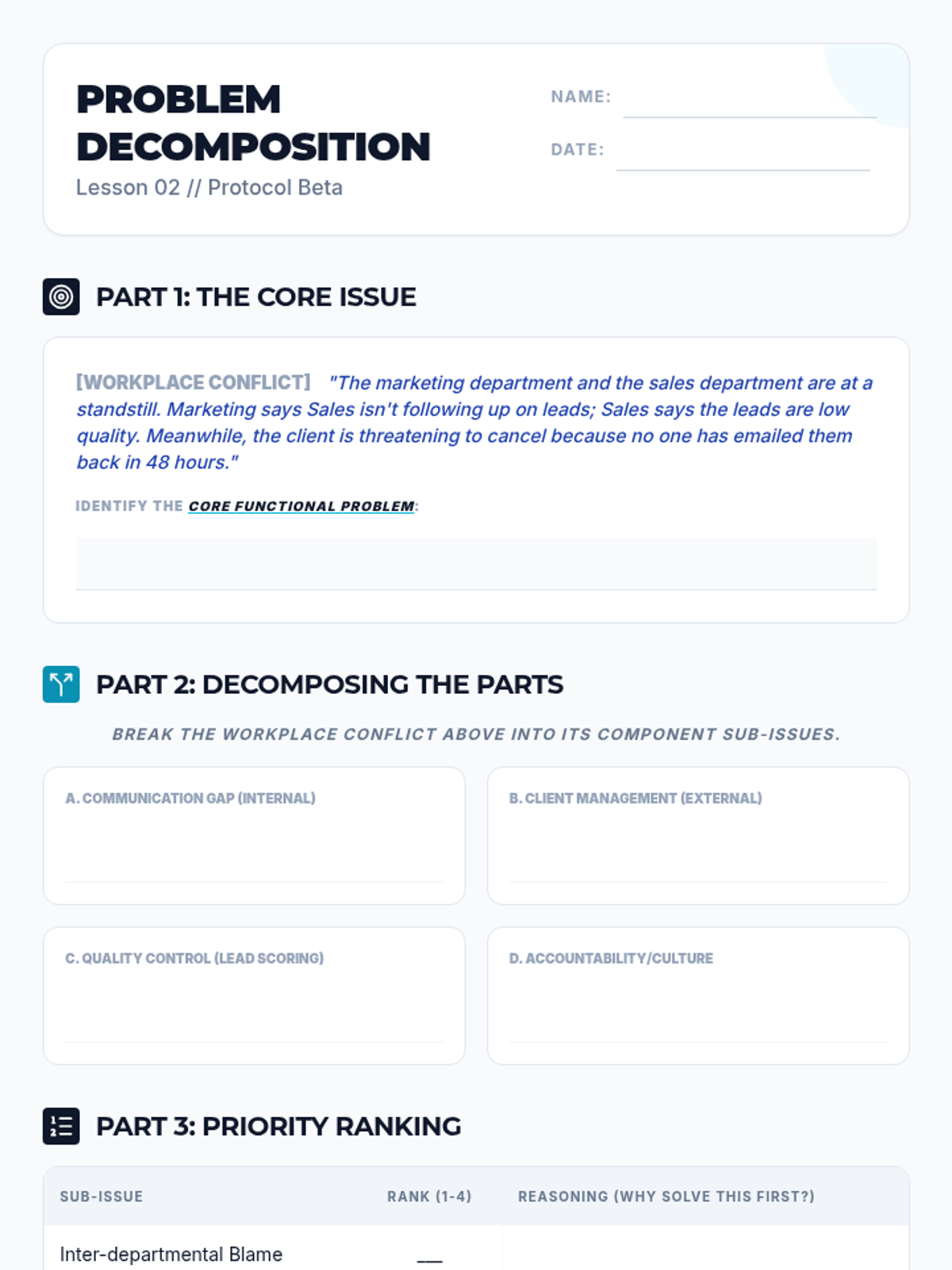
Student worksheet for Lesson 2 focusing on reframing problem statements and performing a '5 Whys' root cause analysis within workplace and parenting contexts.
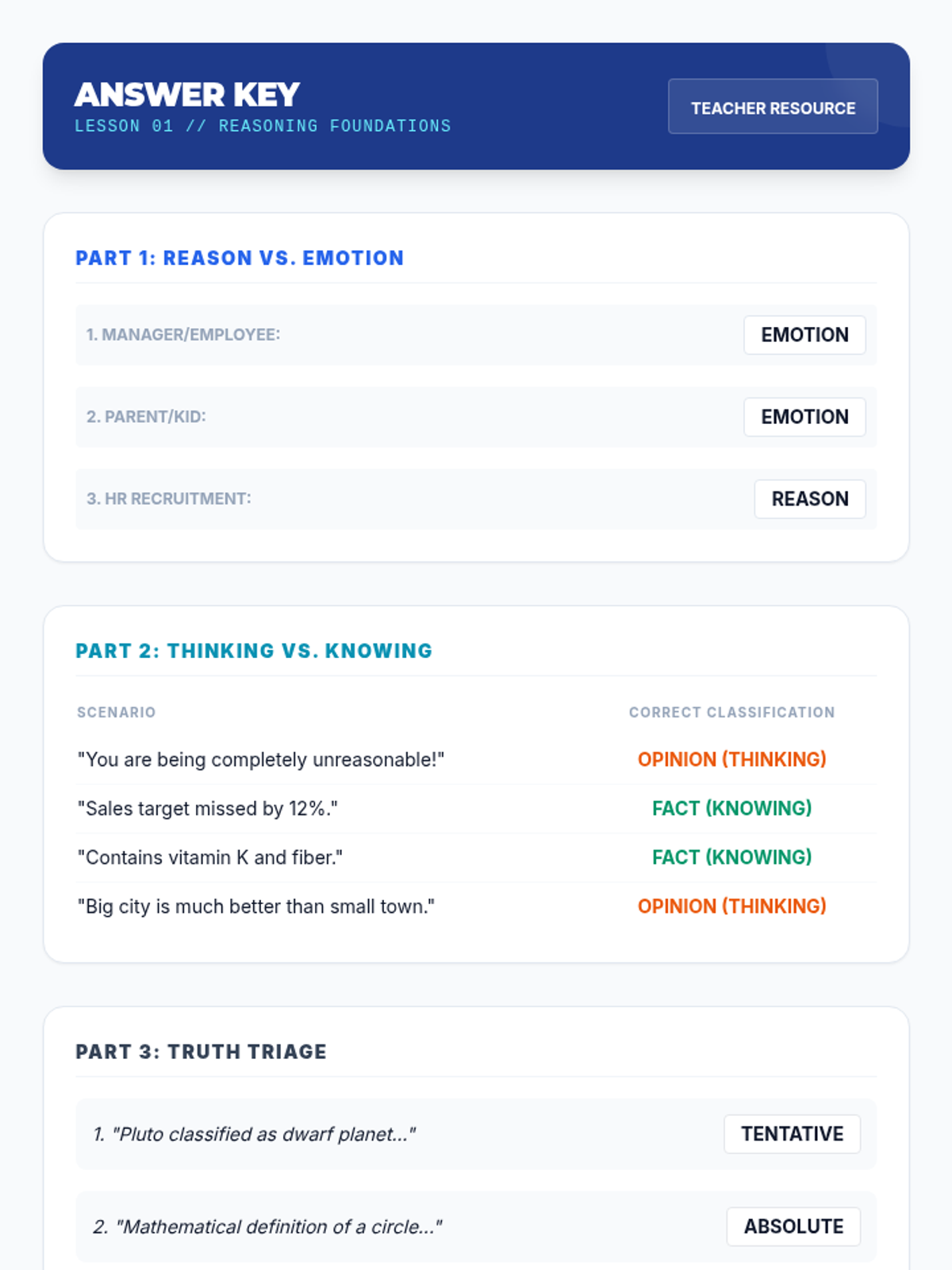
Complete answer key for the updated Lesson 1 worksheet, featuring classifications for relationship-based reason/emotion and fact/opinion scenarios.
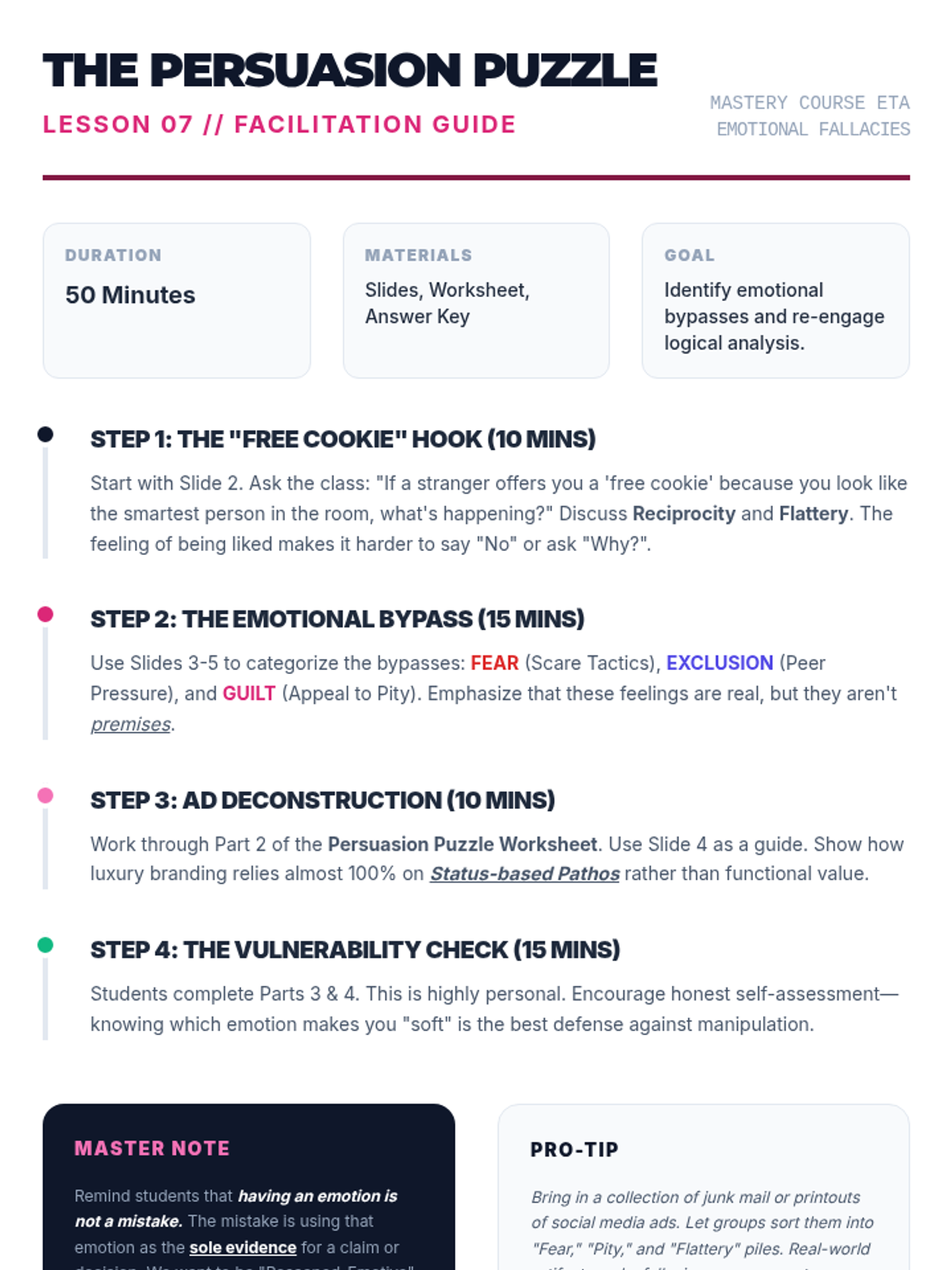
Facilitation guide for Lesson 10 on persuasion and rhetoric. Covers Aristotle's pillars, Cialdini's shortcuts, and the "Free Cookie" hook.
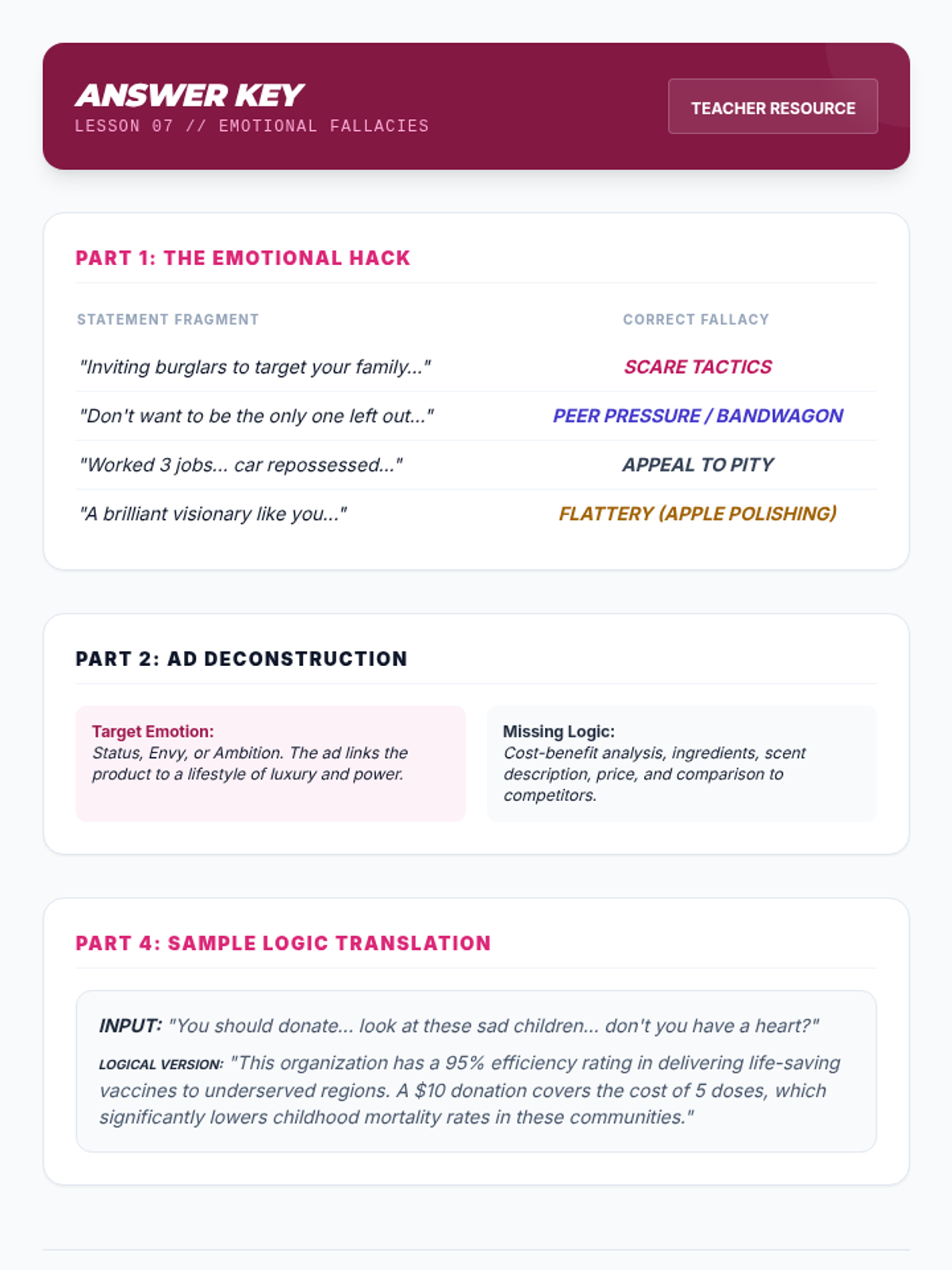
Complete answer key for the Lesson 7 worksheet, providing correct fallacy identifications and sample logic translations for emotional appeals.
Student worksheet for Lesson 10. Features identification of Ethos/Pathos/Logos, a deconstruction lab for analyzing real-world advertisements, and a reflection on personal psychological vulnerabilities to influence.
Slide deck for Lesson 10 on persuasion and rhetoric. Covers Aristotle's pillars (Ethos, Pathos, Logos), emotional appeals, propaganda techniques, and Cialdini's principles of influence.
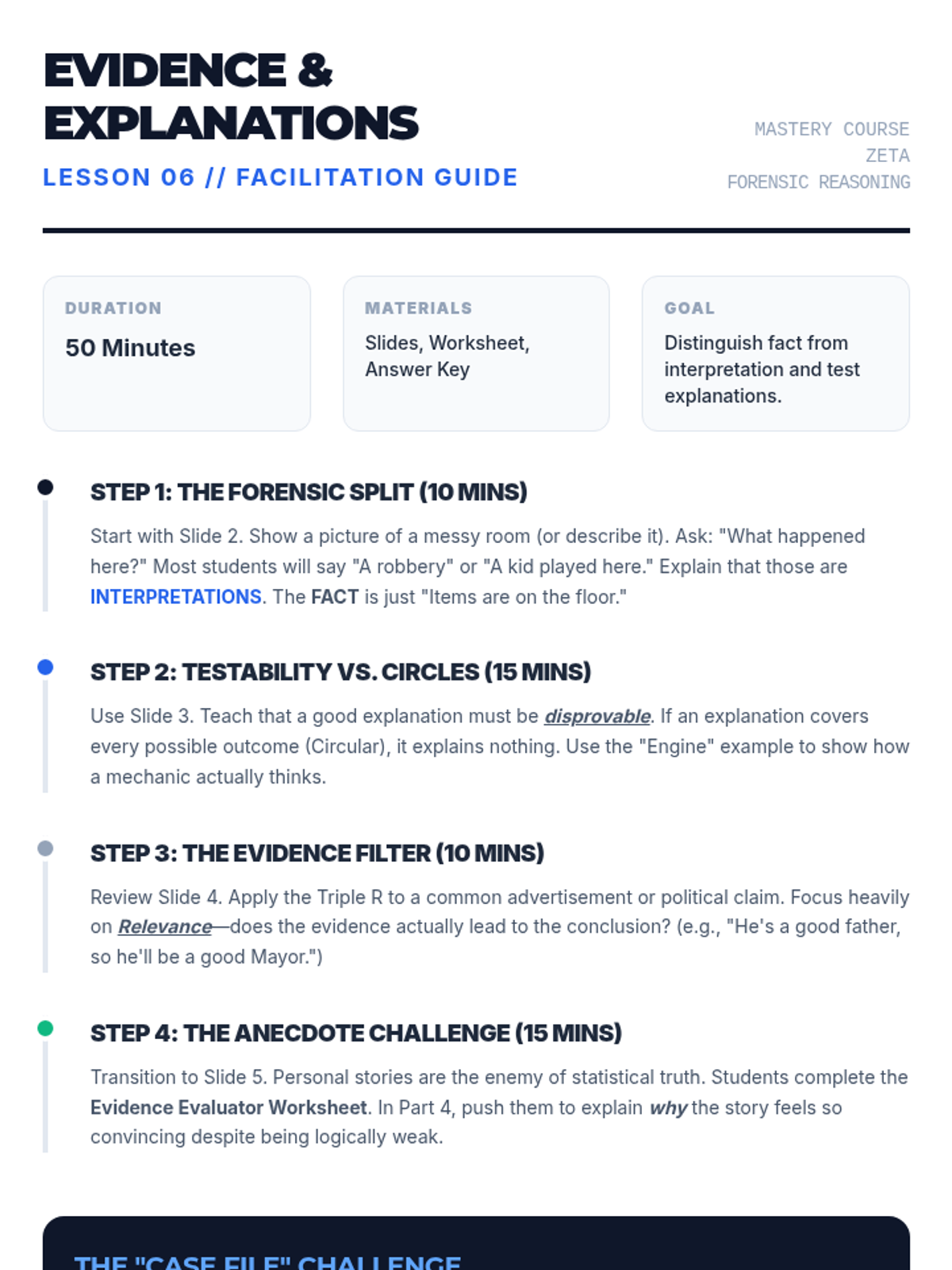
Facilitation guide for Lesson 9 on source credibility. Features the Anecdote Challenge and guidance for applying the CRAAP test to health claims.
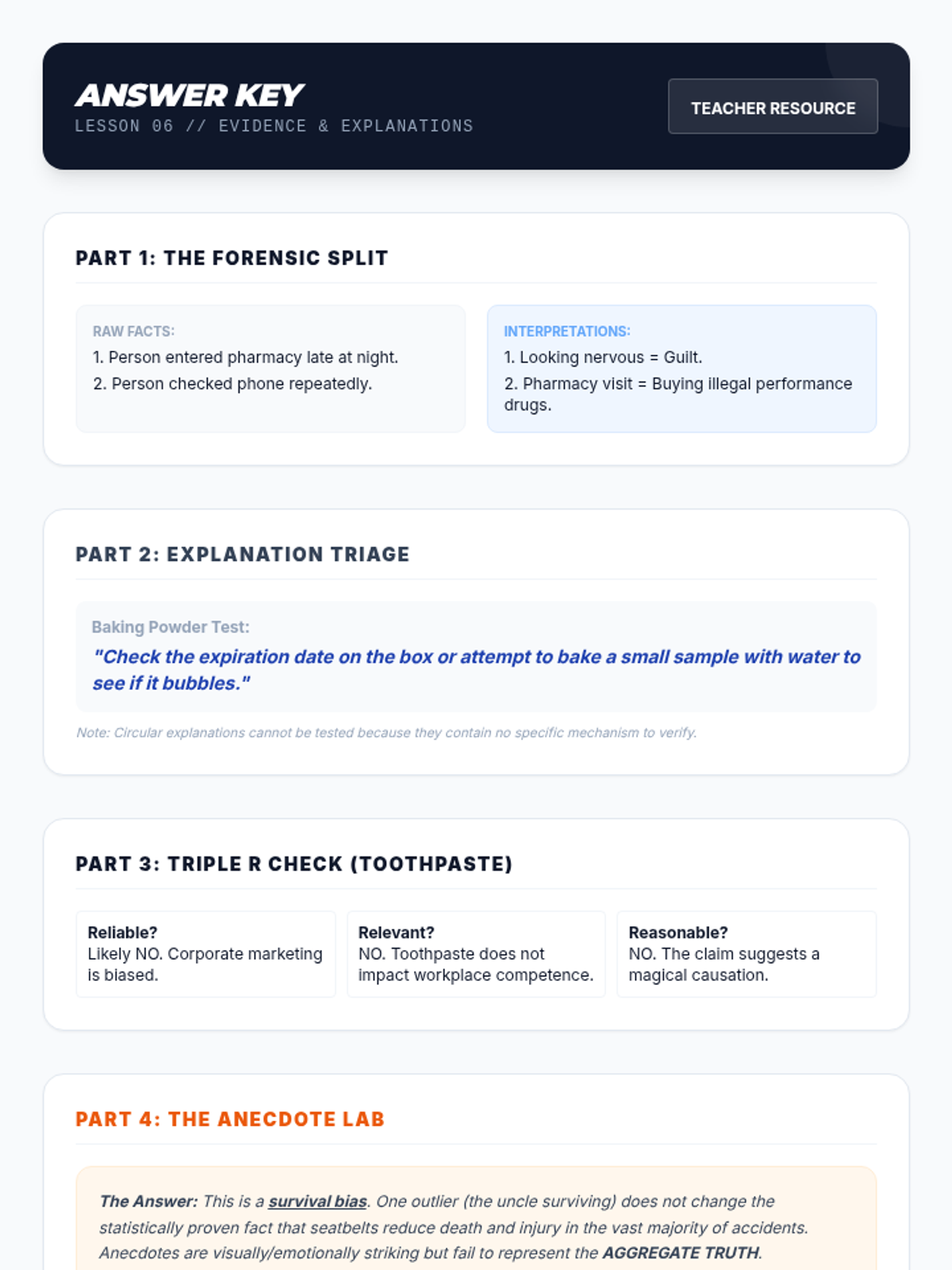
Complete answer key for the Lesson 6 worksheet, providing premises/conclusions for syllogisms and explanations for logical validity/invalidity.
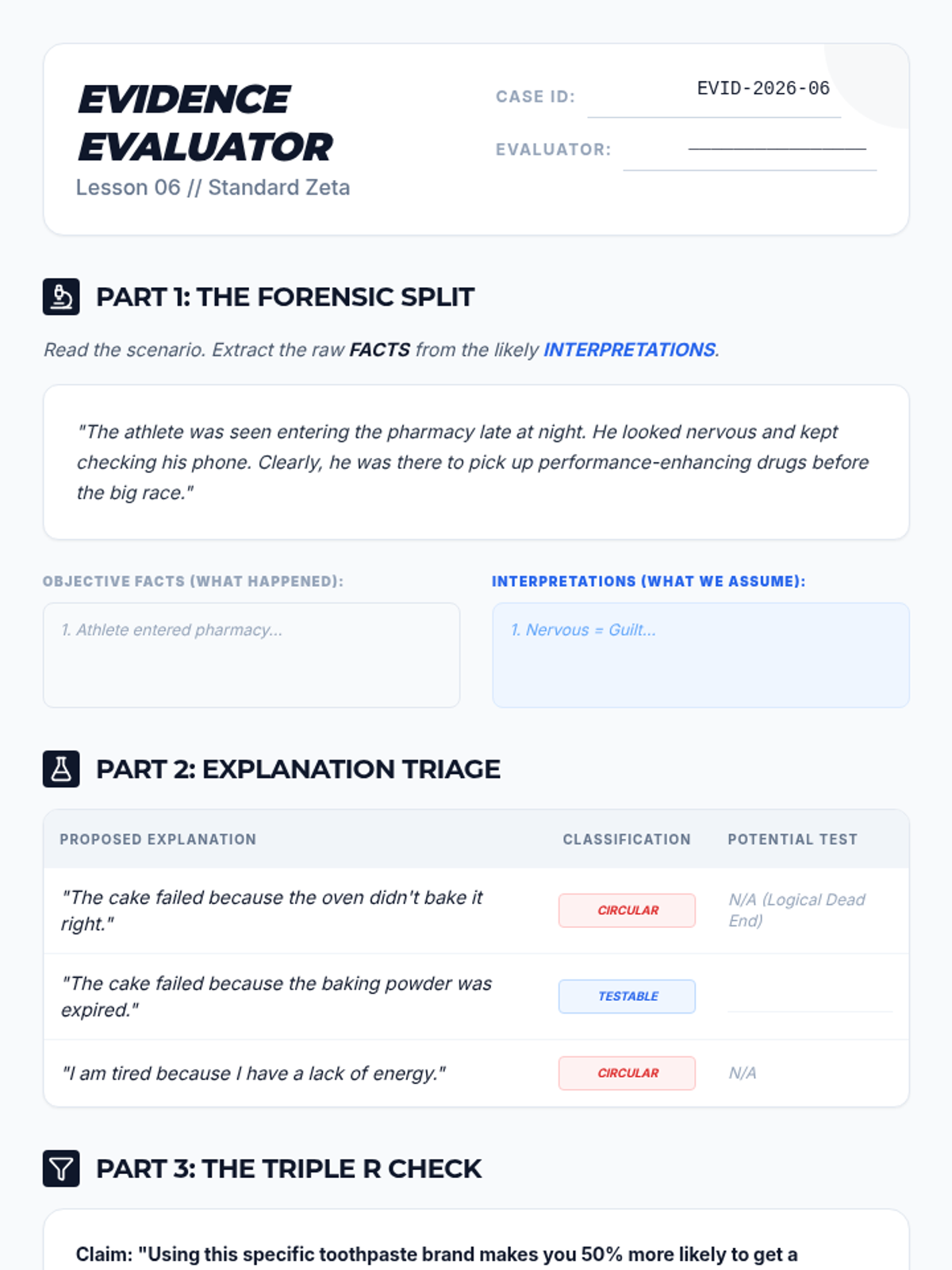
Student worksheet for Lesson 9 on evidence and credibility. Includes exercises for sorting facts from interpretations, applying the CRAAP test, and reflecting on domain-specific expertise.