A lesson focused on independent research techniques for investigating the complex geopolitical and social shifts following World War II. Students will learn to synthesize information from multiple sources into a coherent historical narrative.
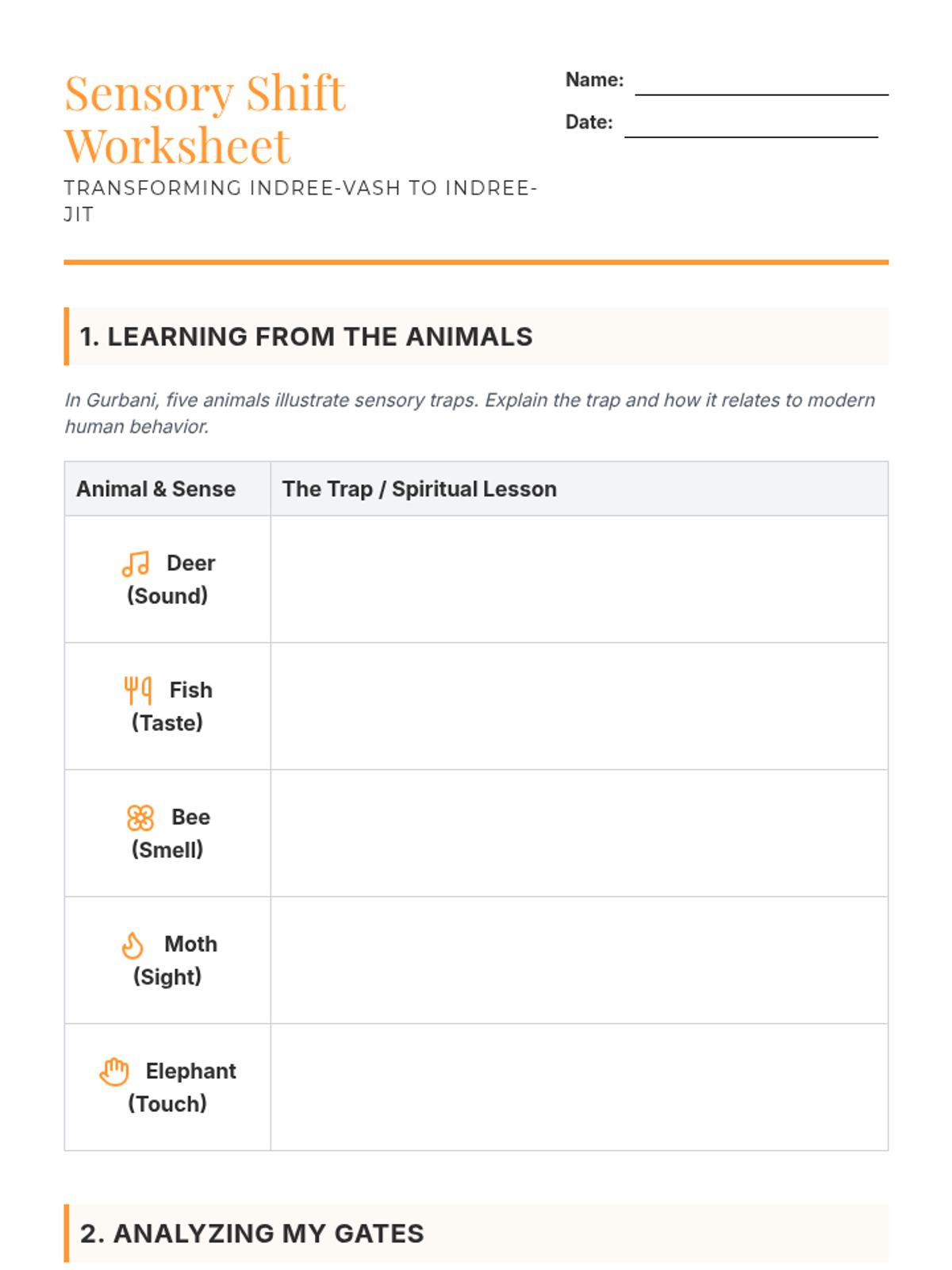
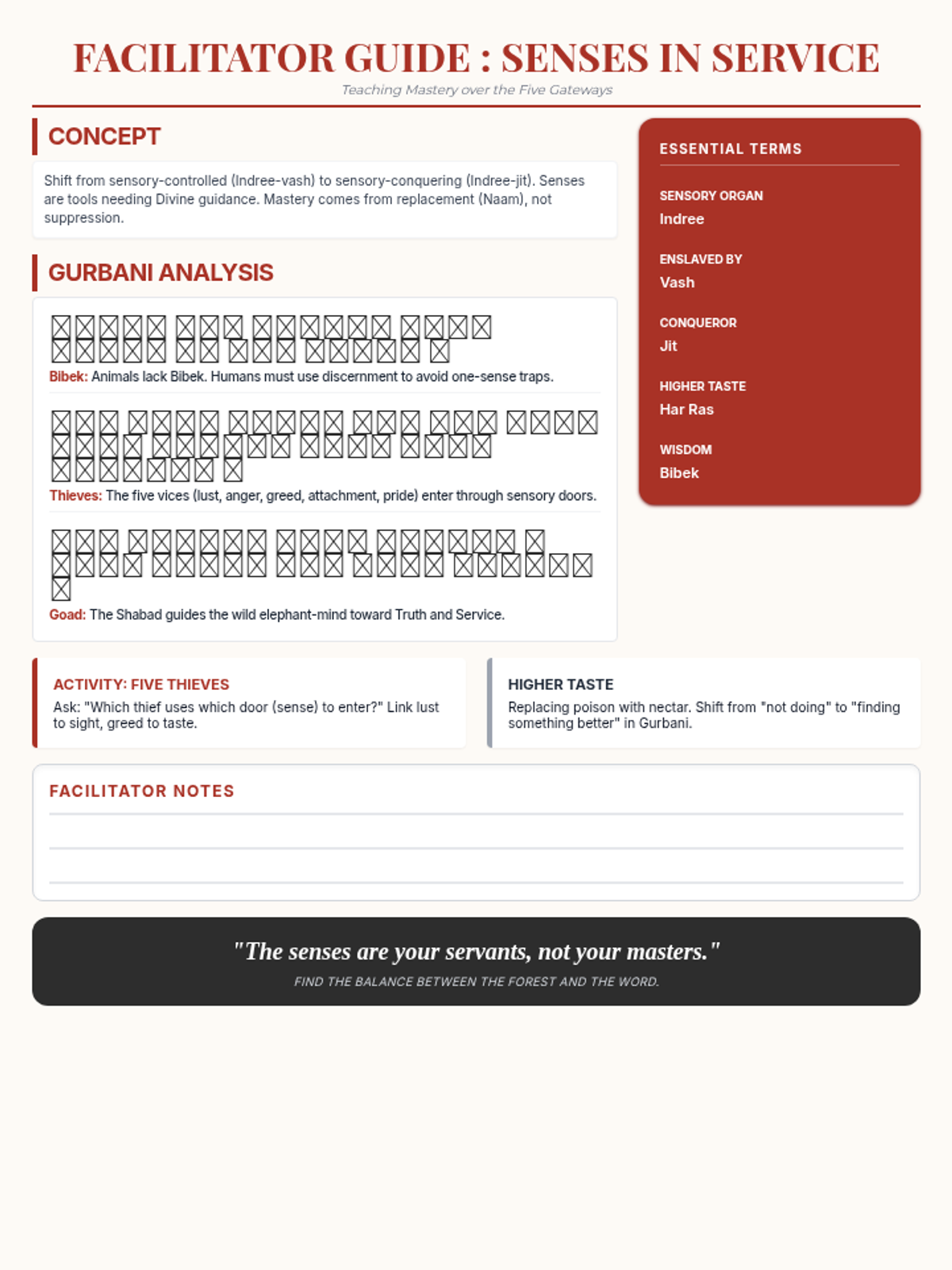
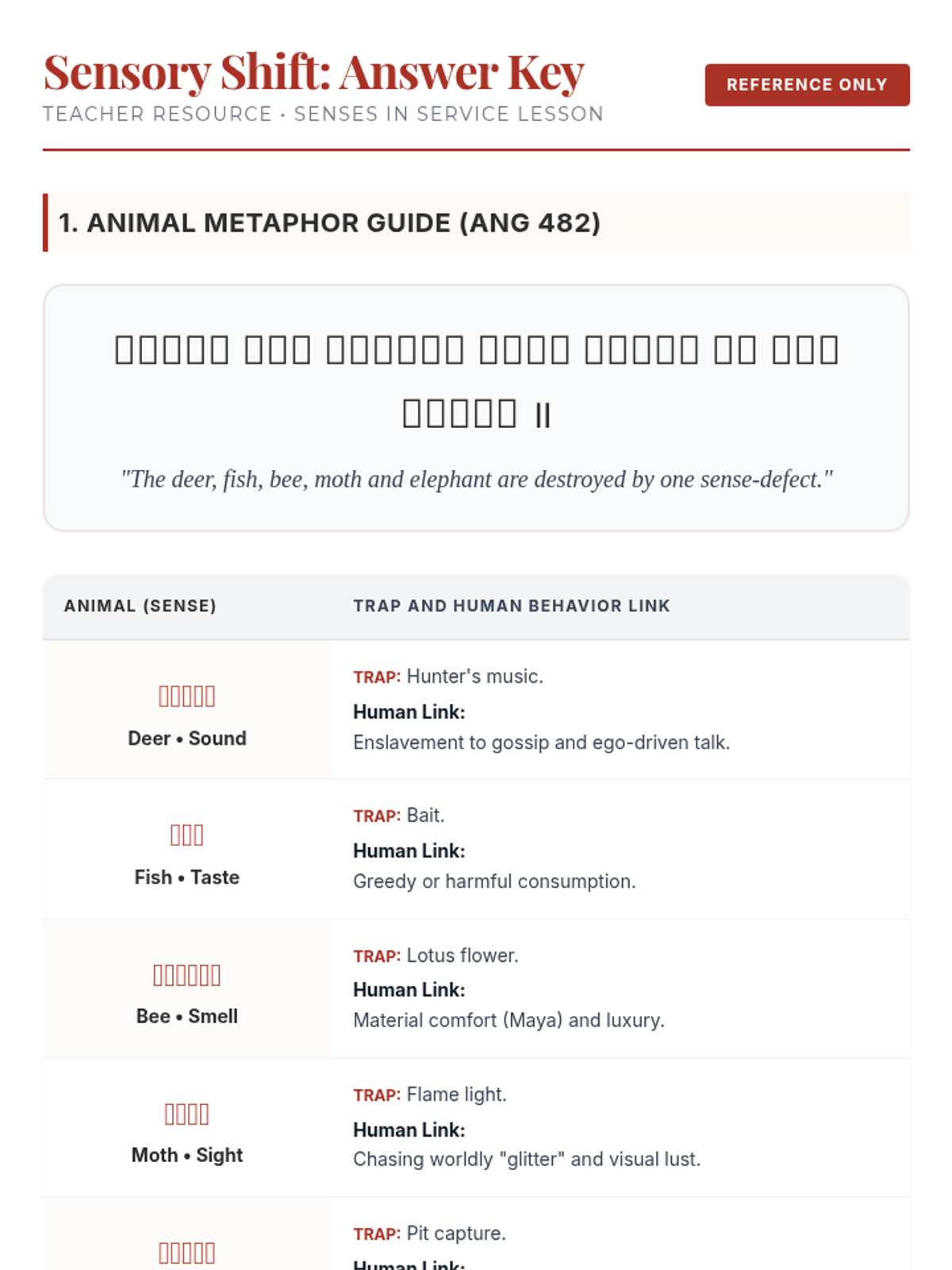
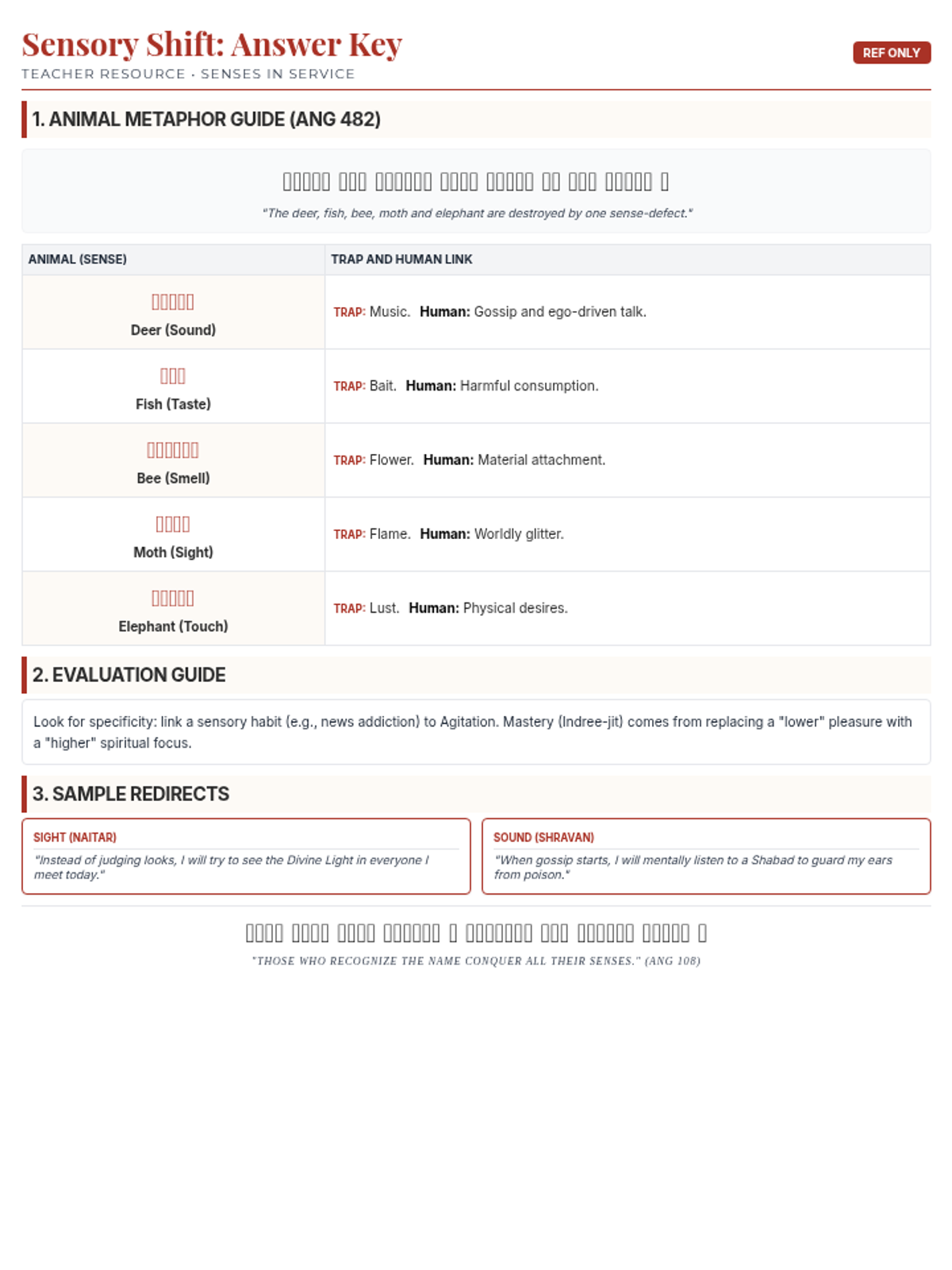
This lesson explores the Gurmat perspective on the five senses, moving from sensory bondage to spiritual mastery through the teachings found in the 'Slave to the Senses' discourse.
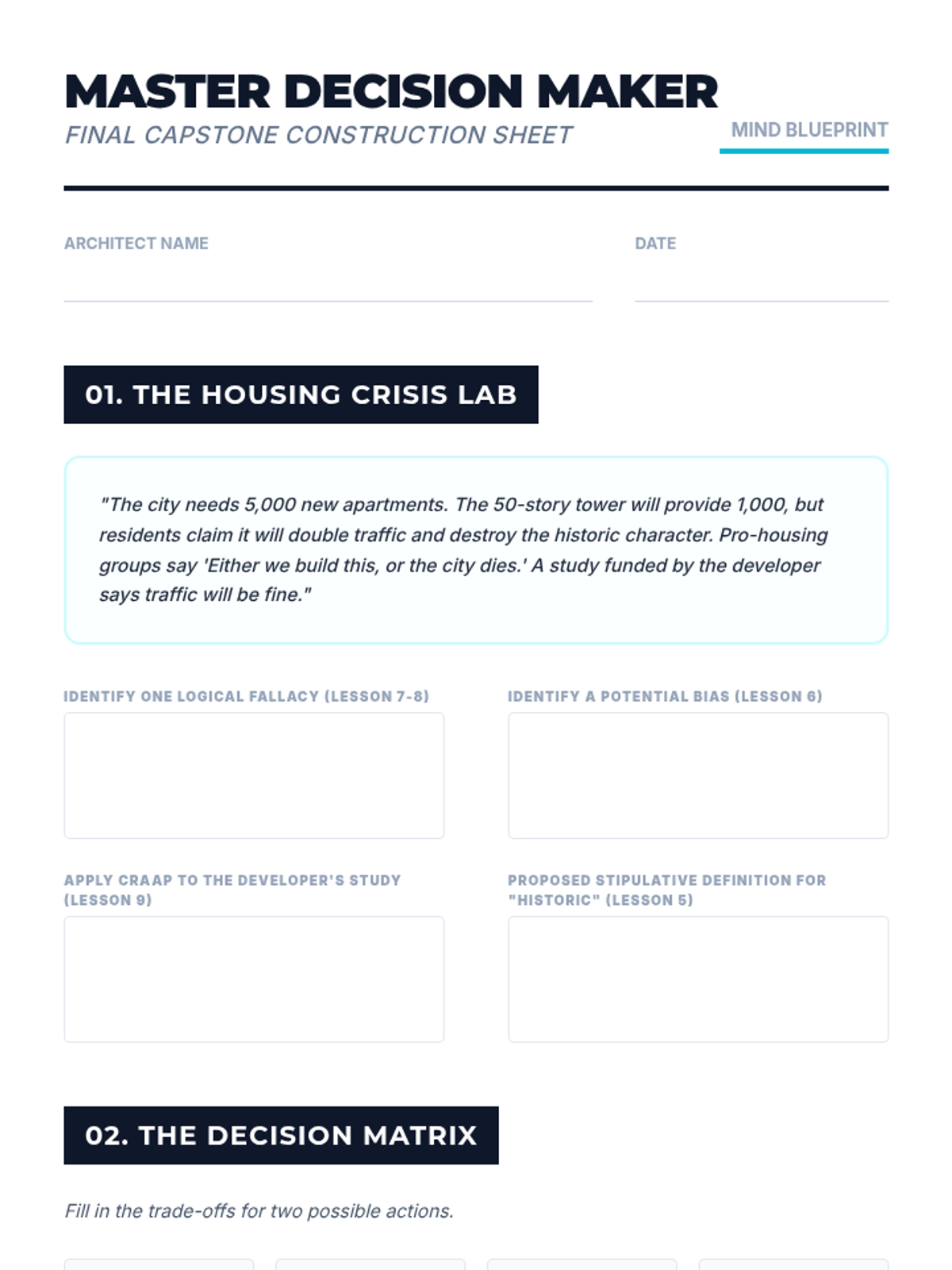
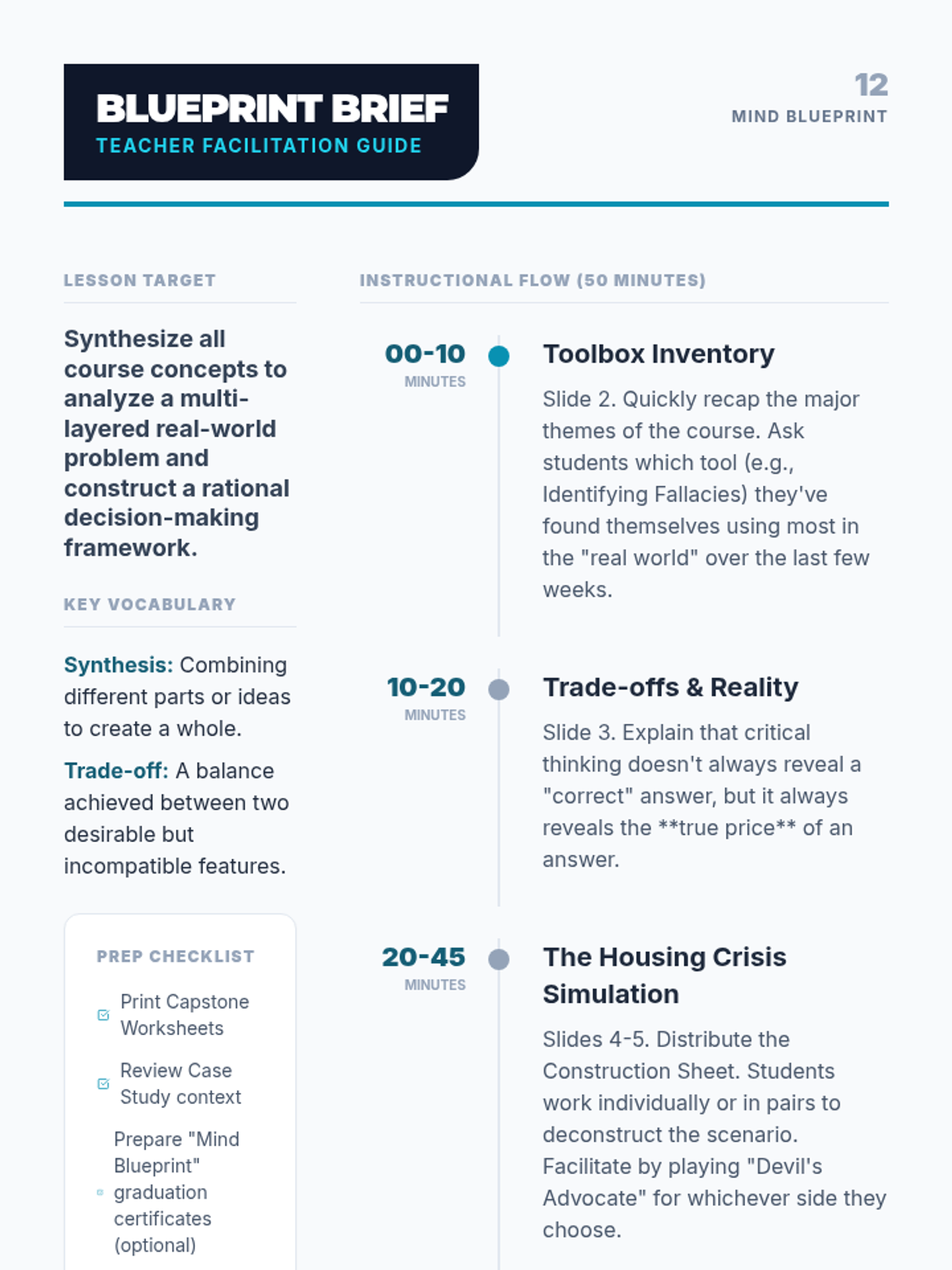
A comprehensive review of the course concepts applied to complex logic problems. Includes the course Posttest.
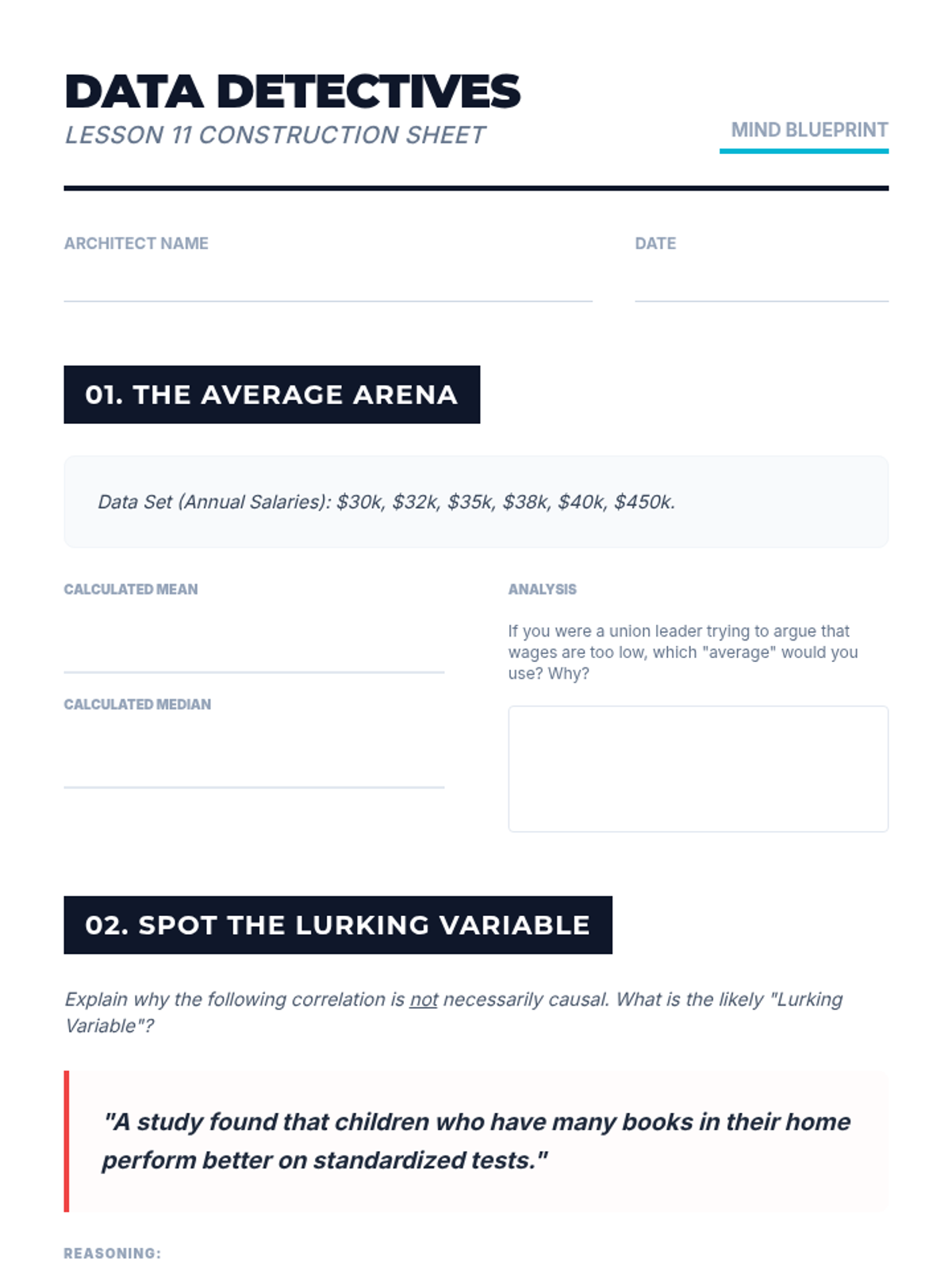
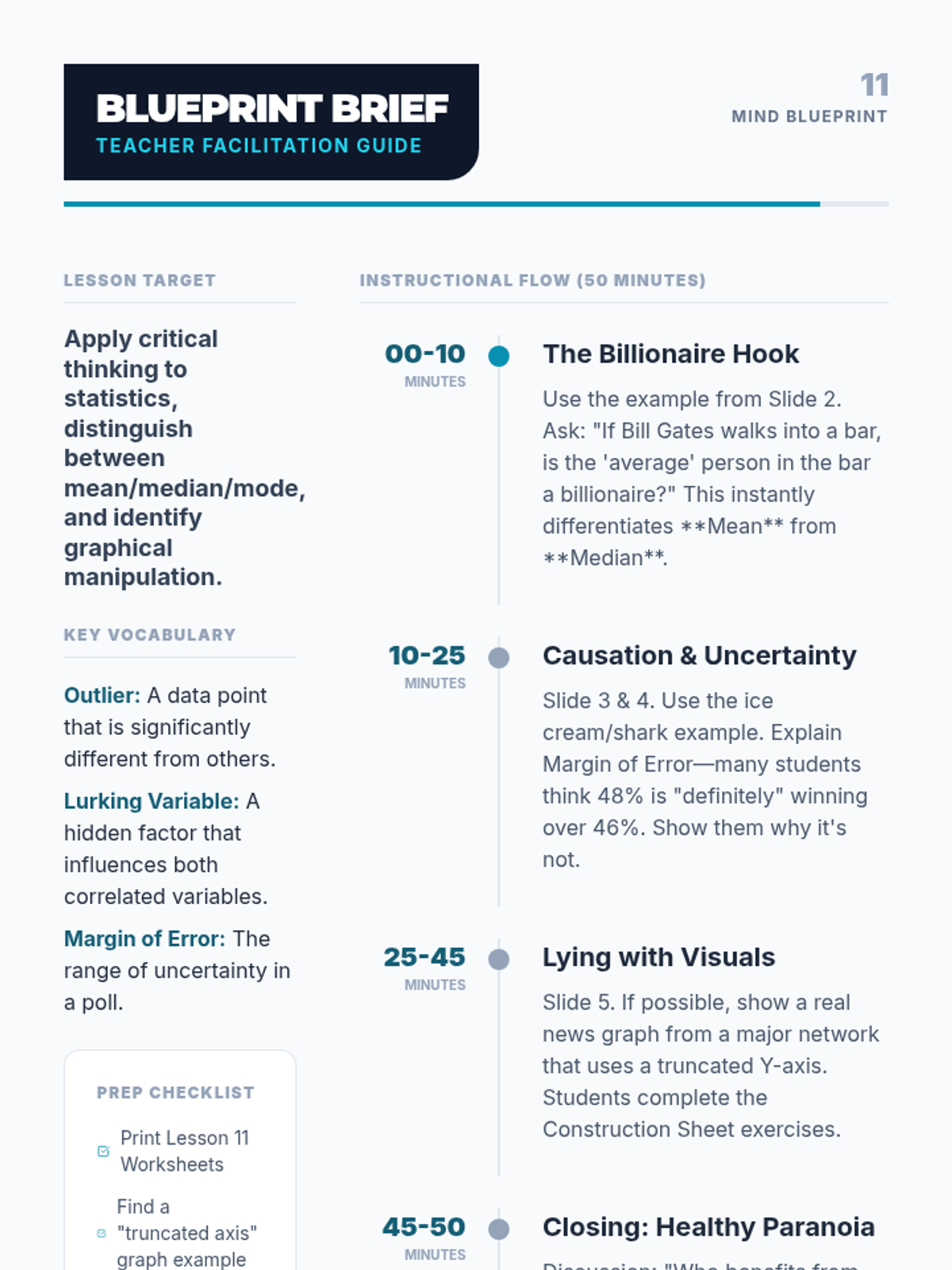
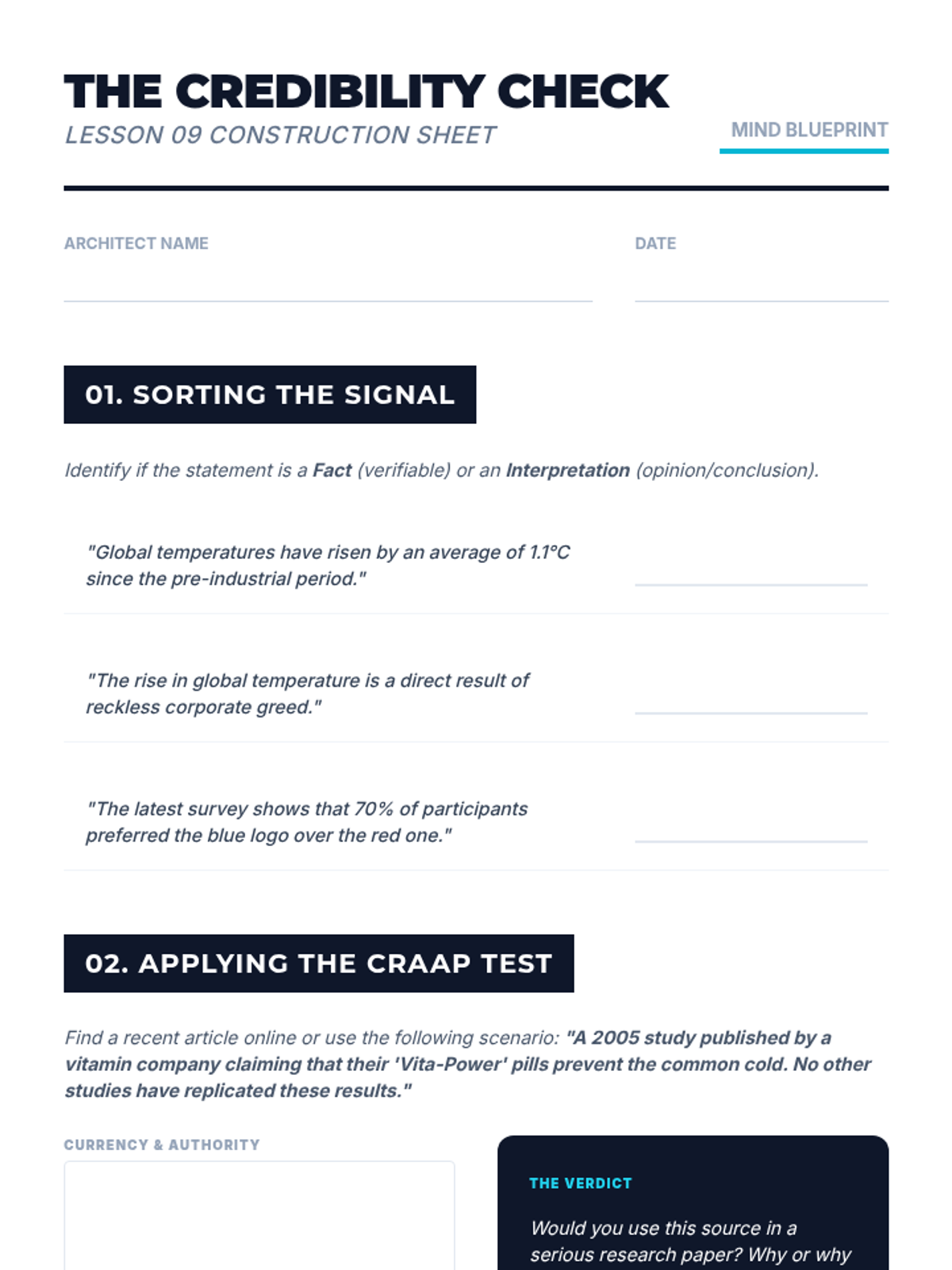
Analyzing statistics for reliability, sample size, and representative quality, while identifying the misuse of averages and partial claims.
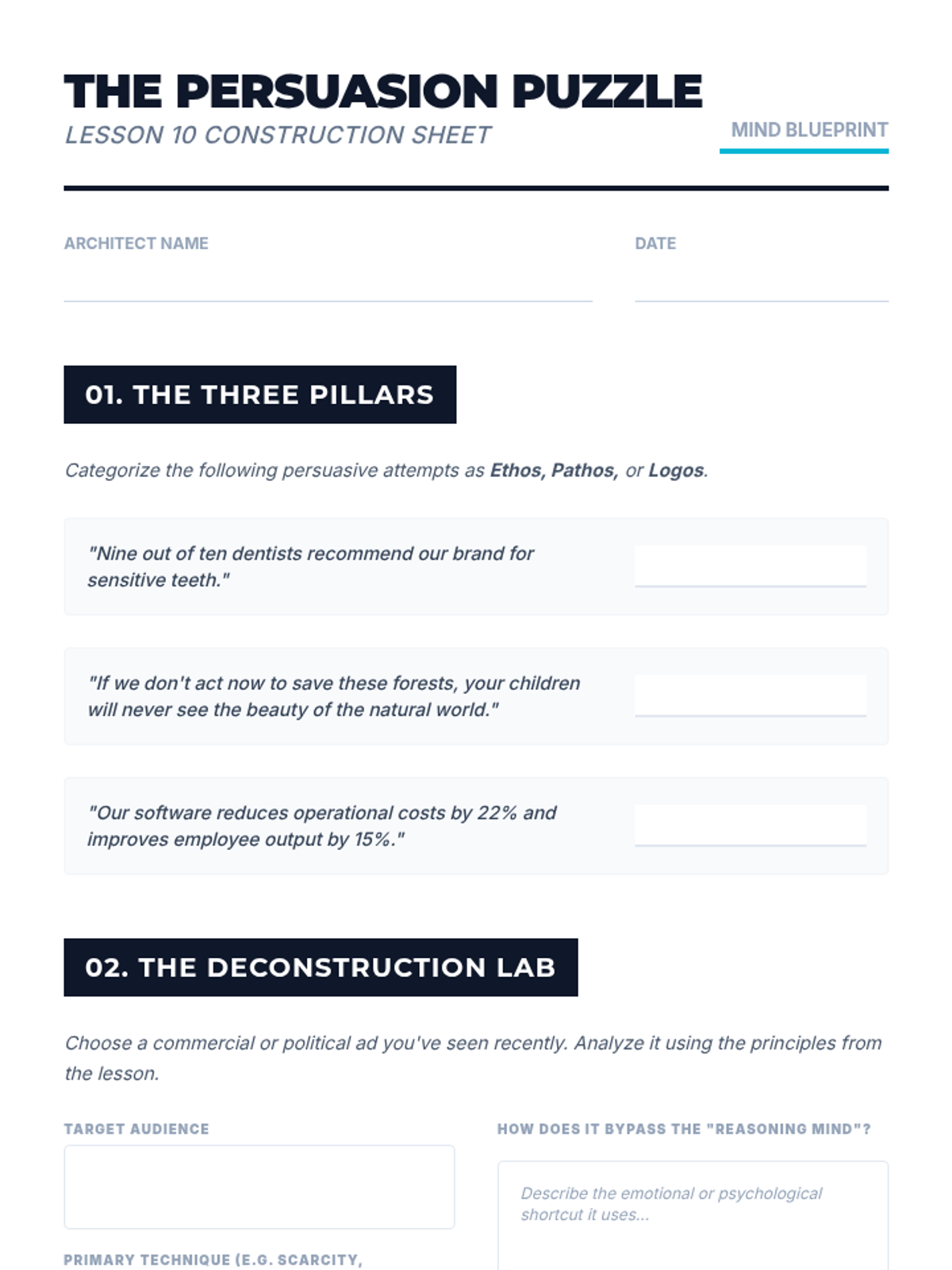
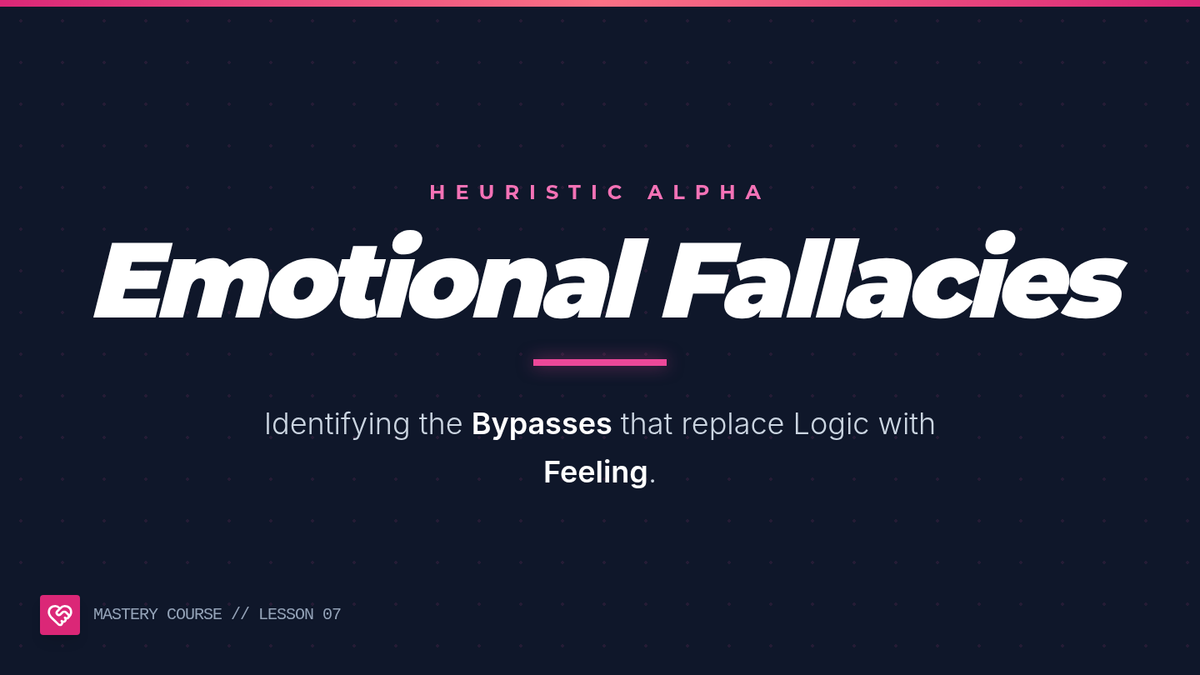
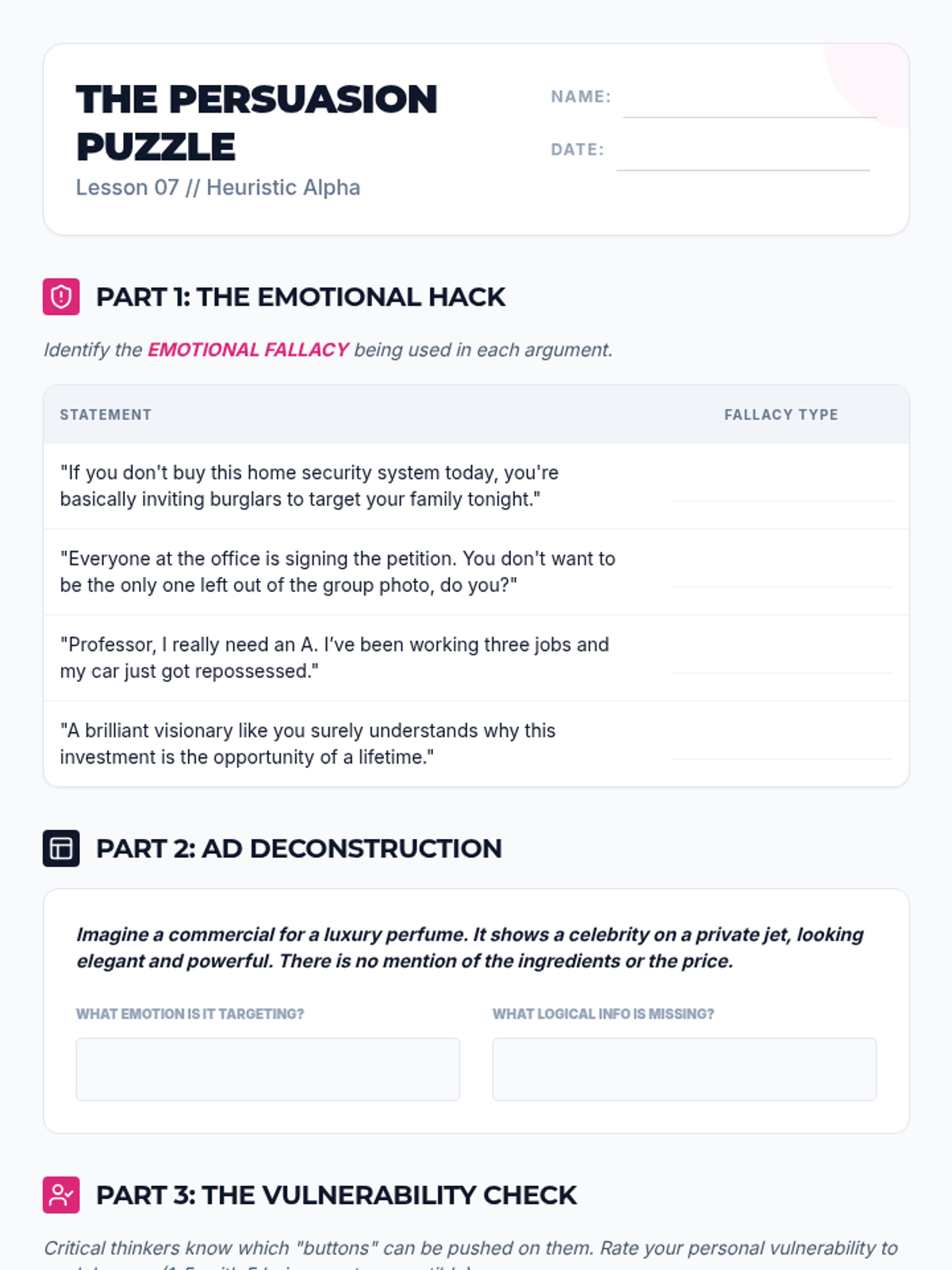
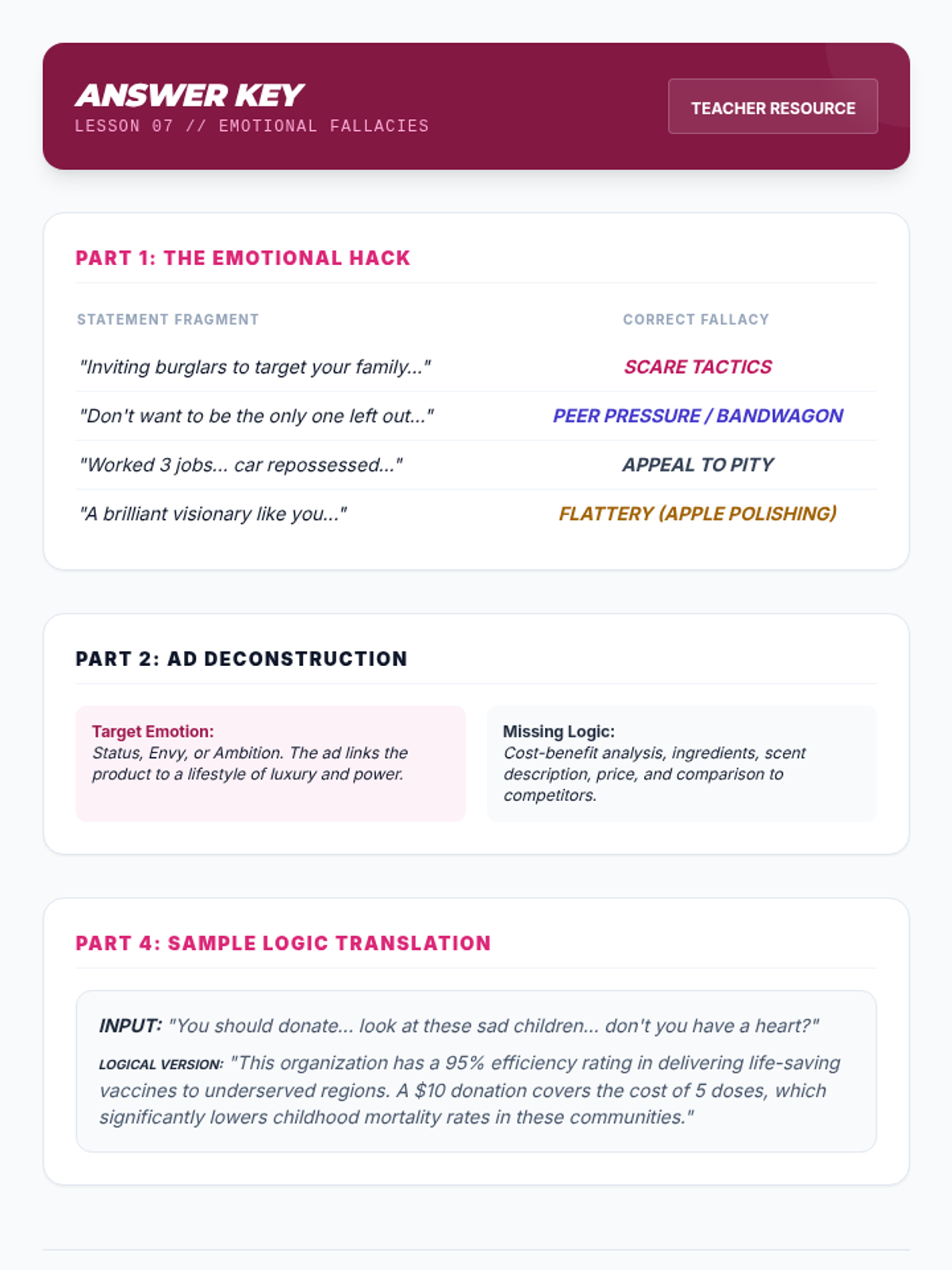
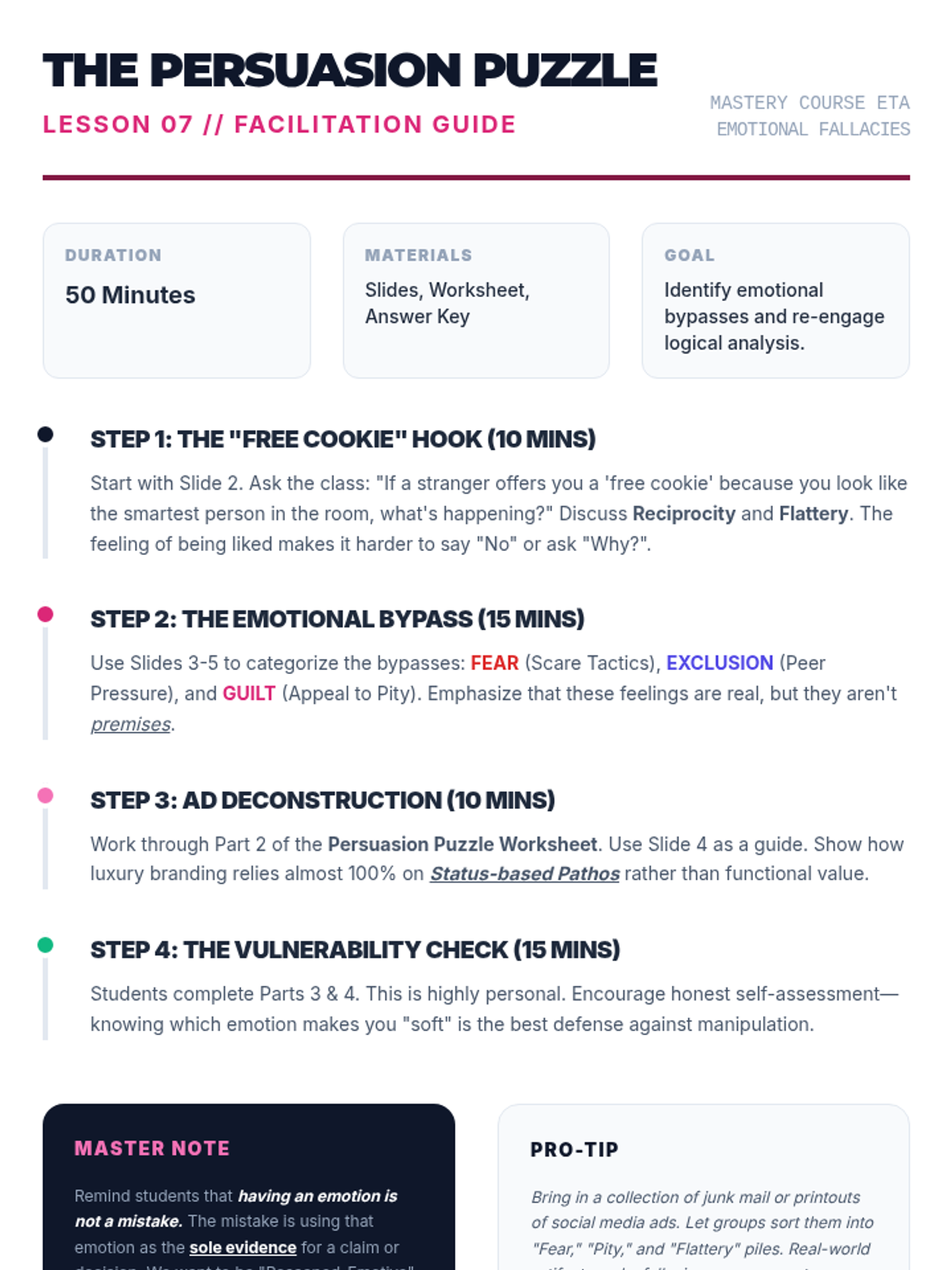
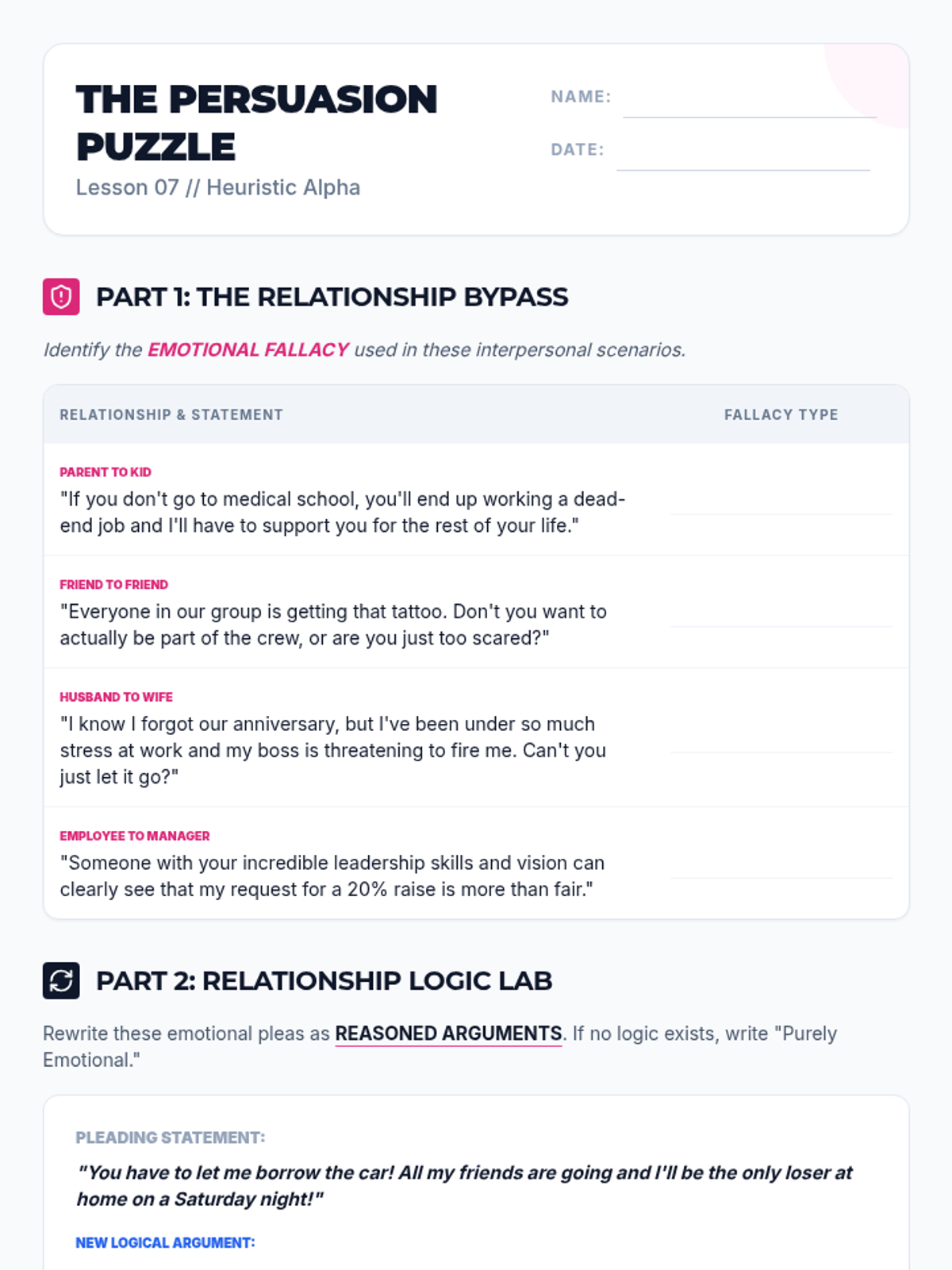
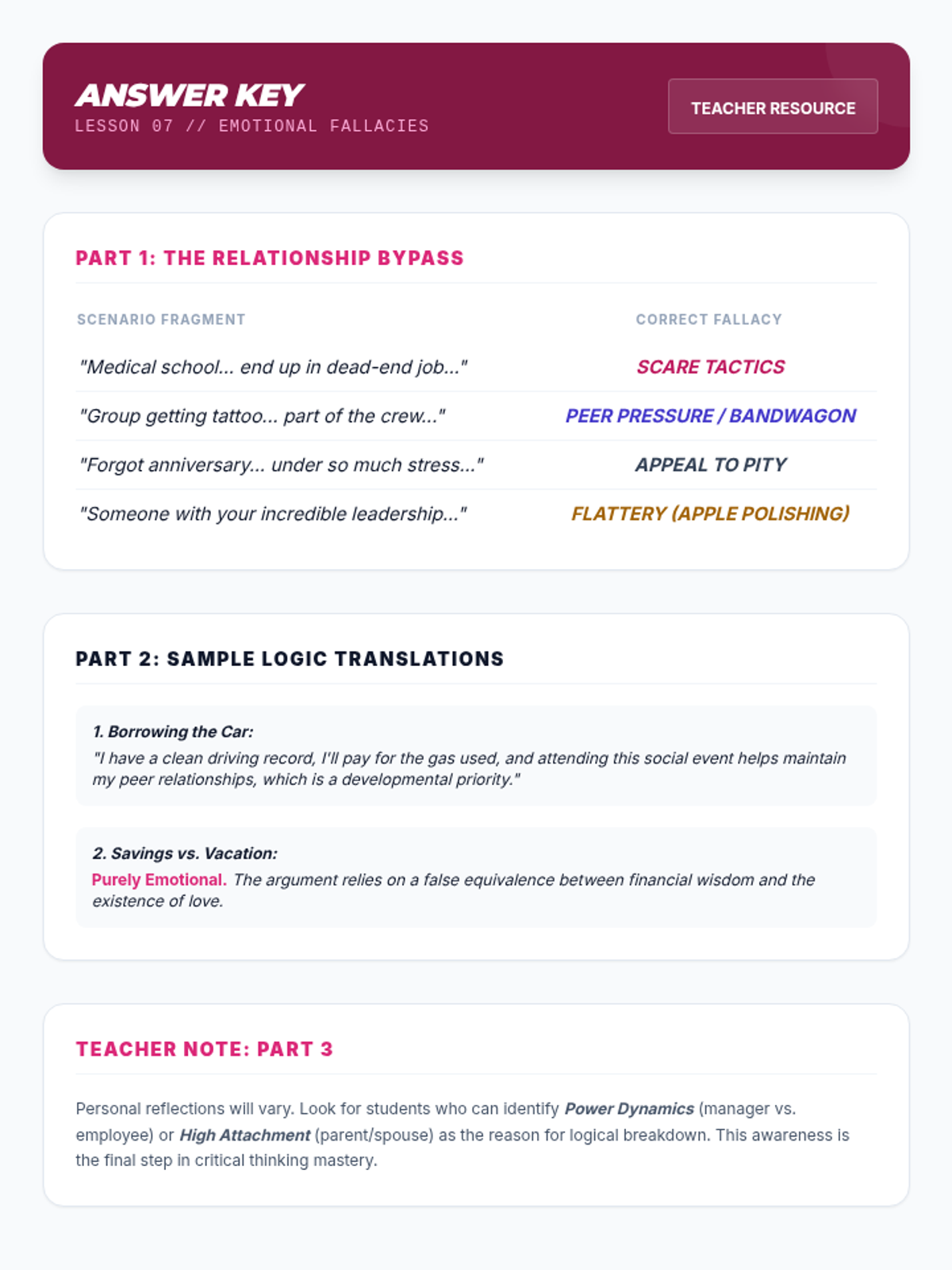
Identifying fallacies that bypass logic to target emotions: scare tactics, flattery, peer pressure, and appeals to pity.
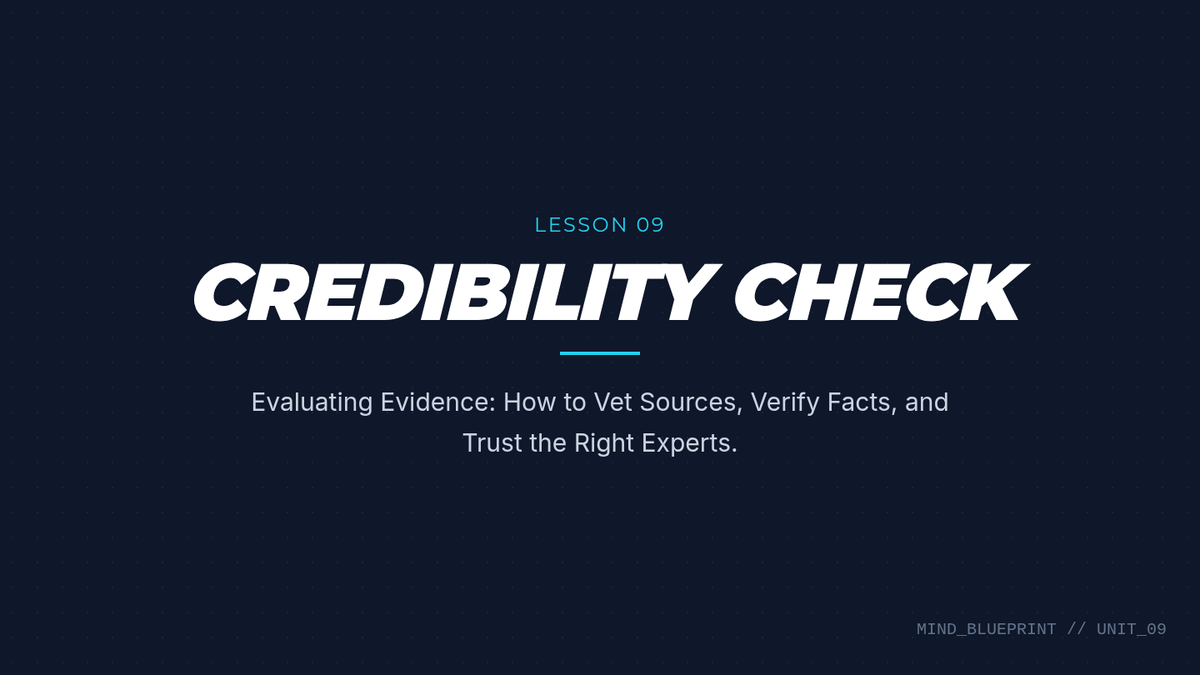
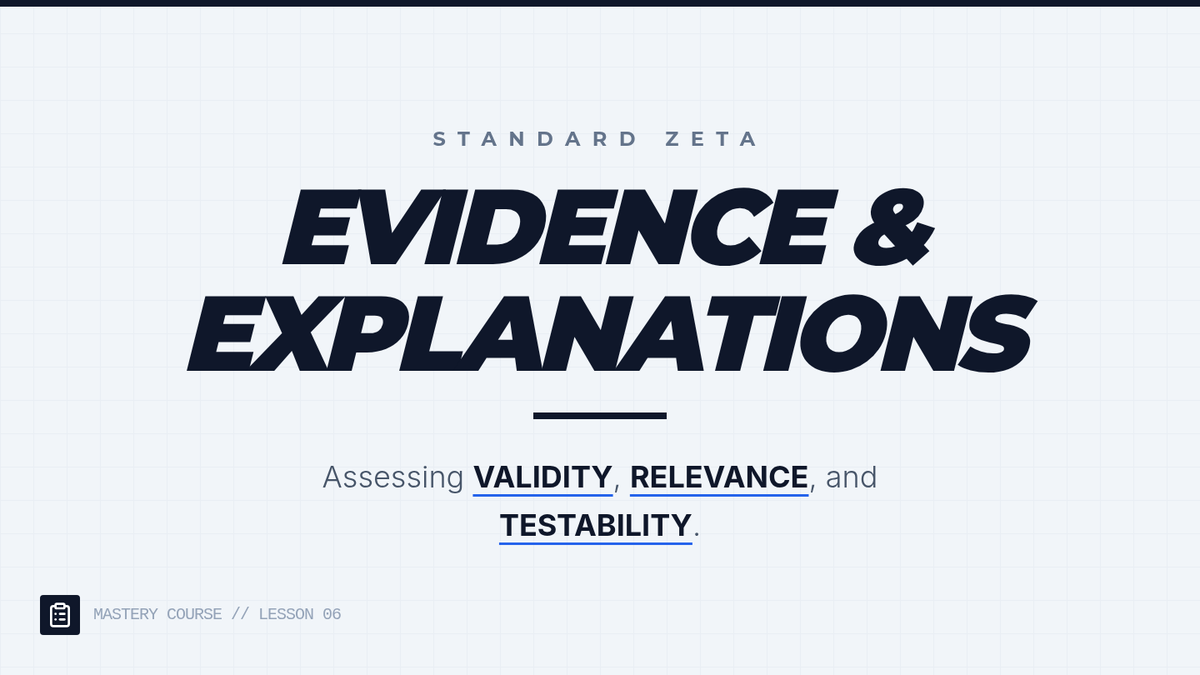
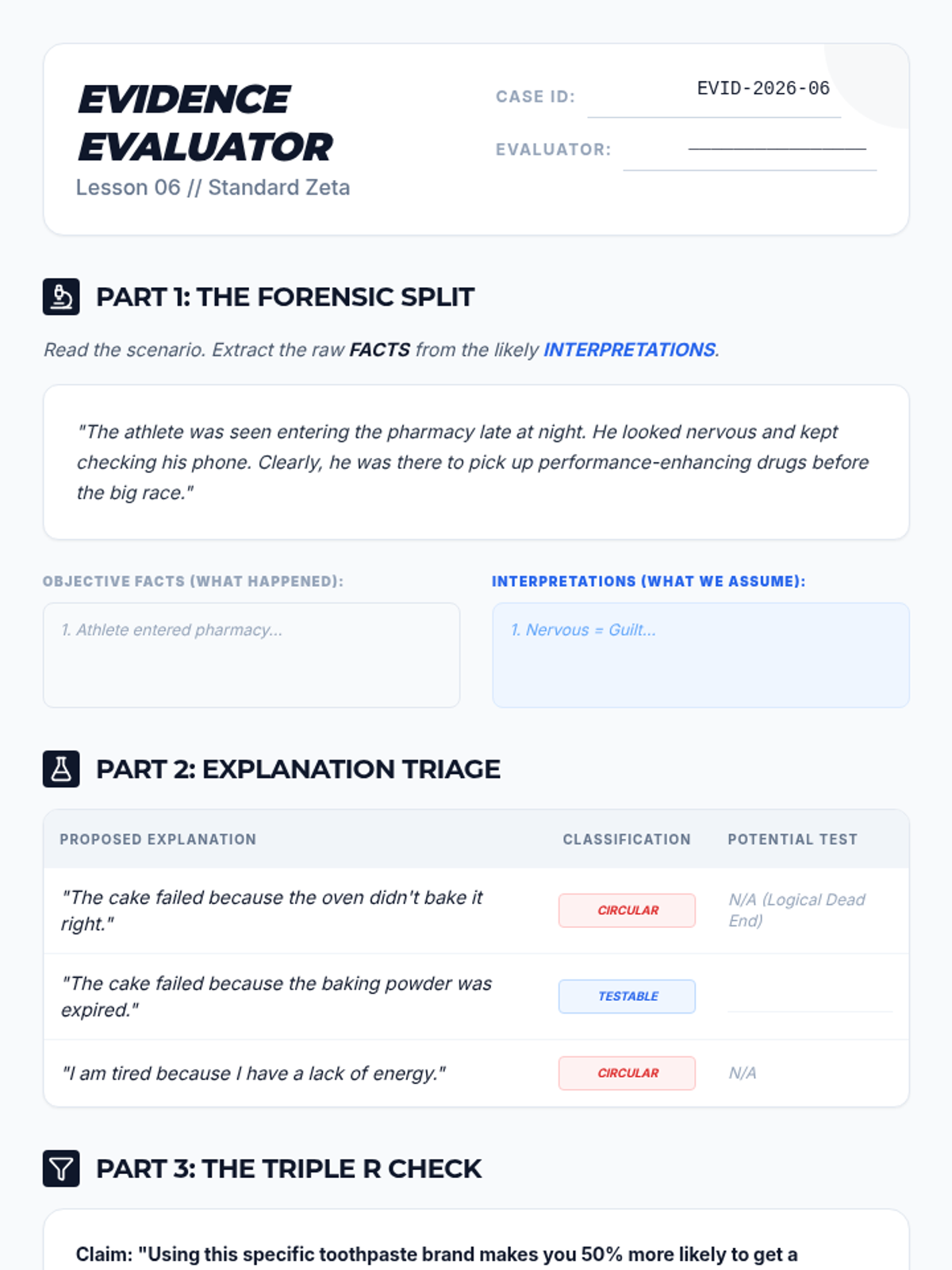
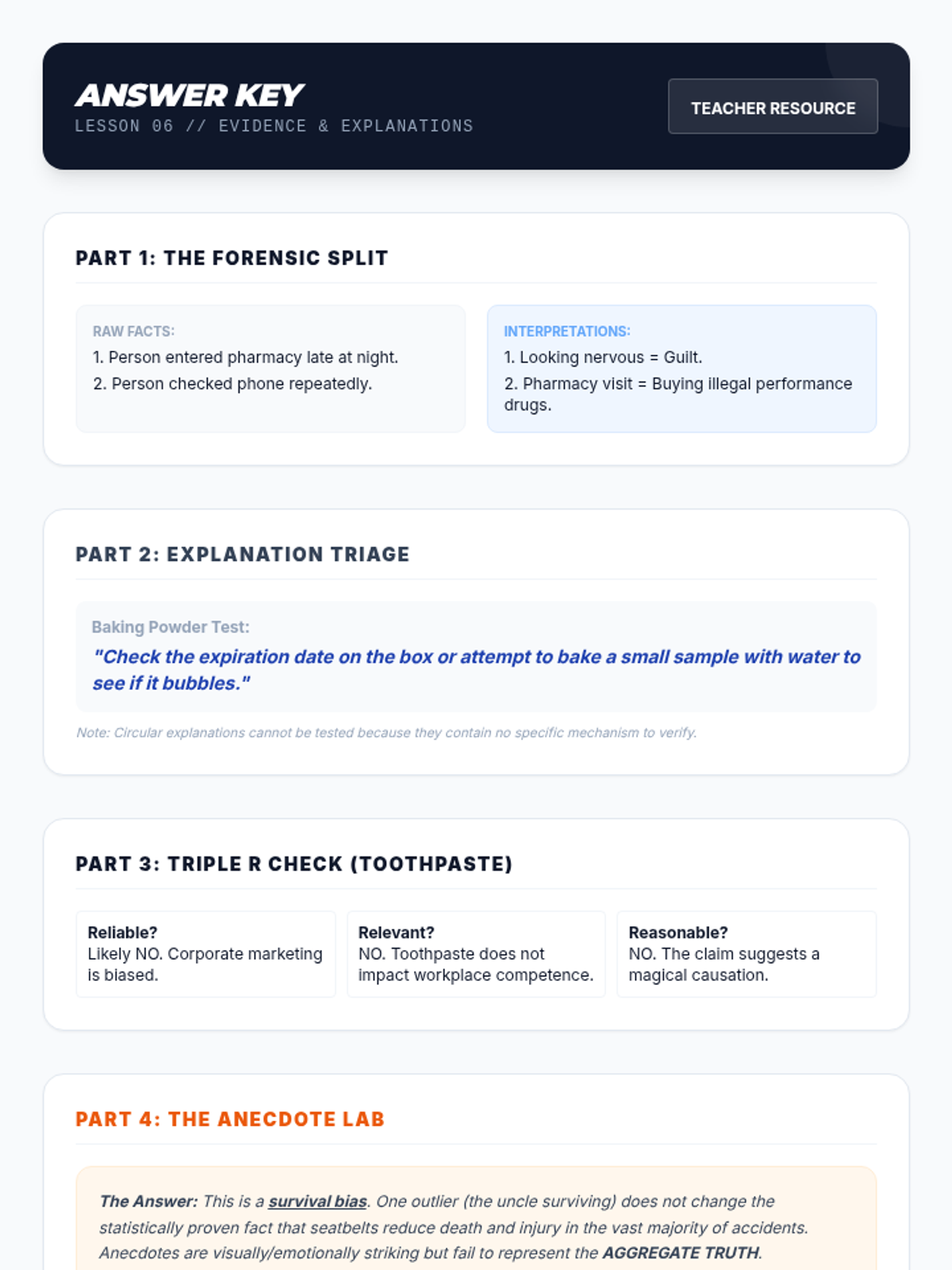
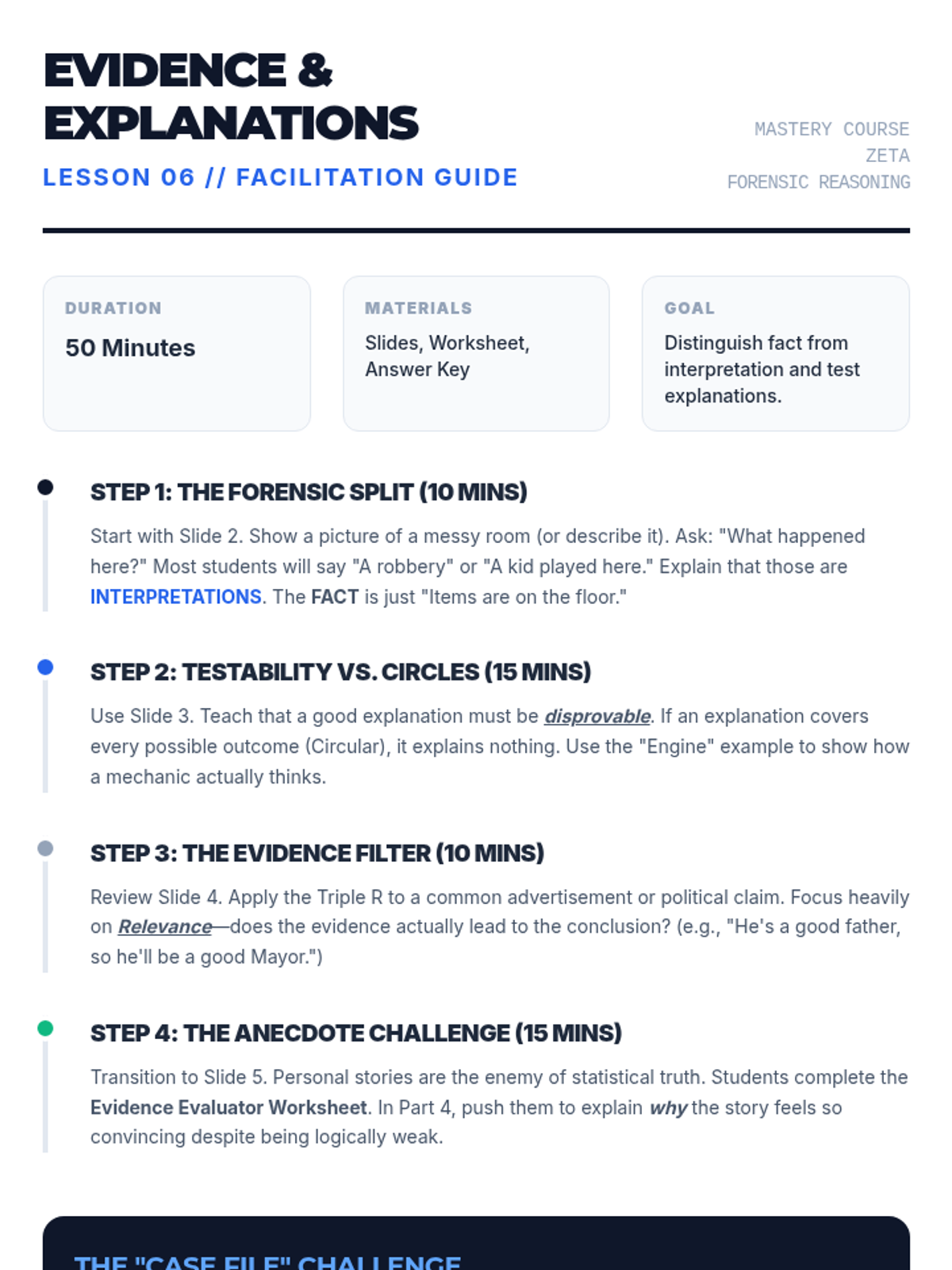
Developing the skills to assess the validity and reasonableness of evidence, and ensuring explanations are relevant and testable.
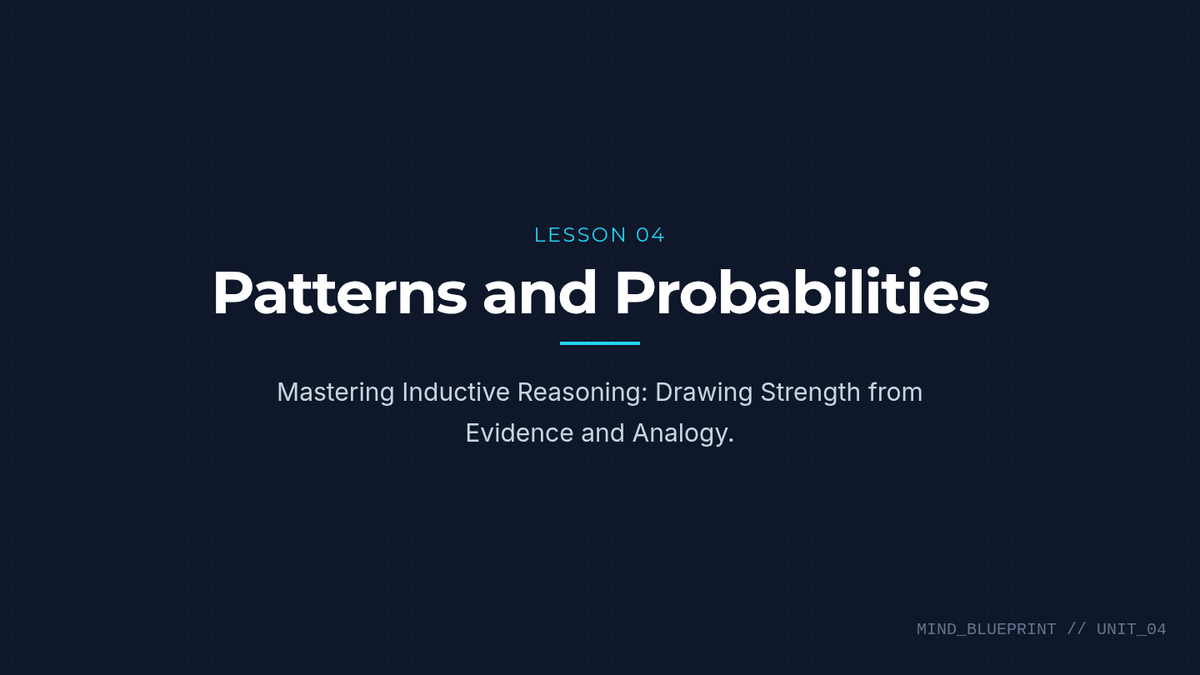
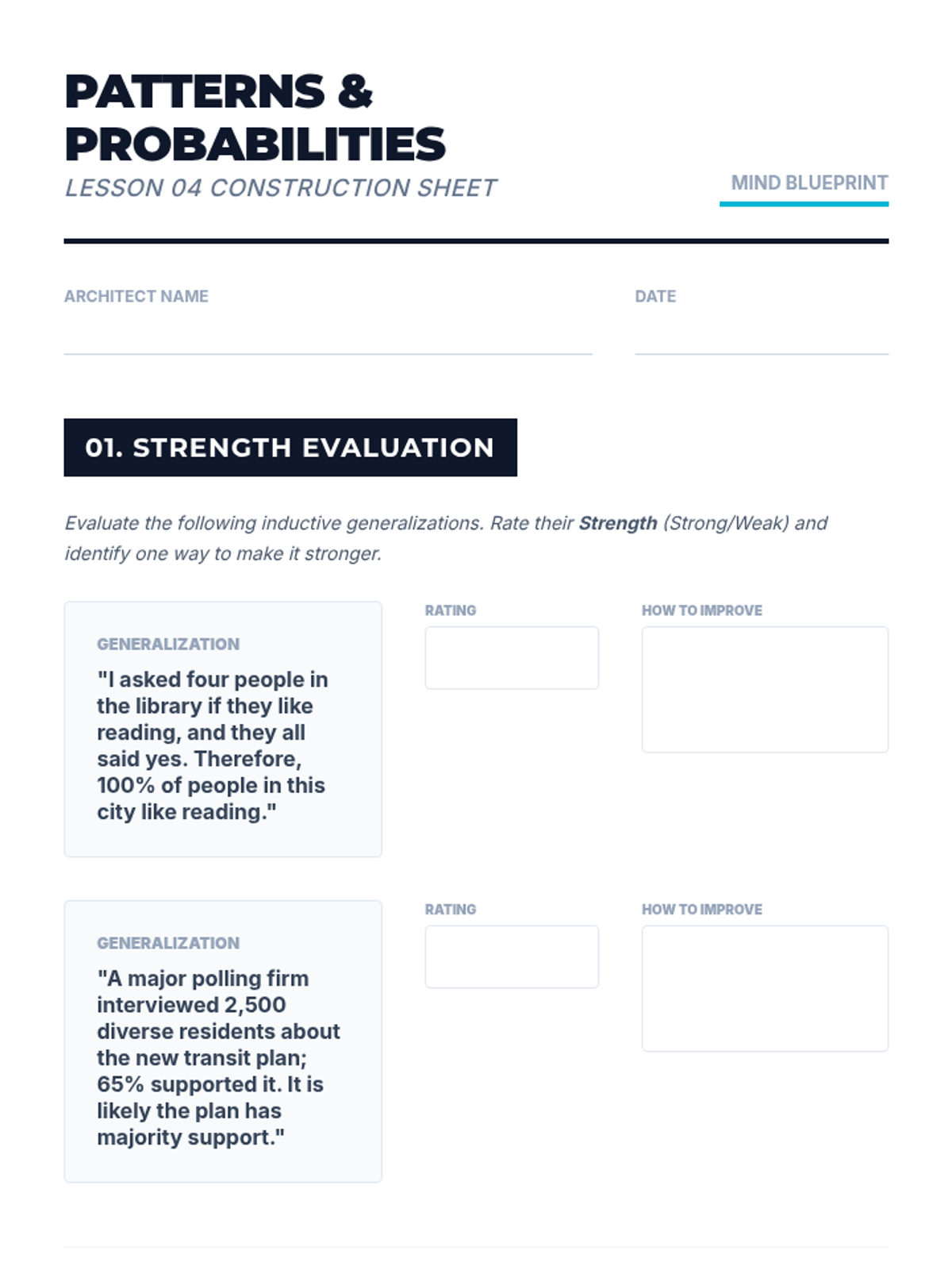
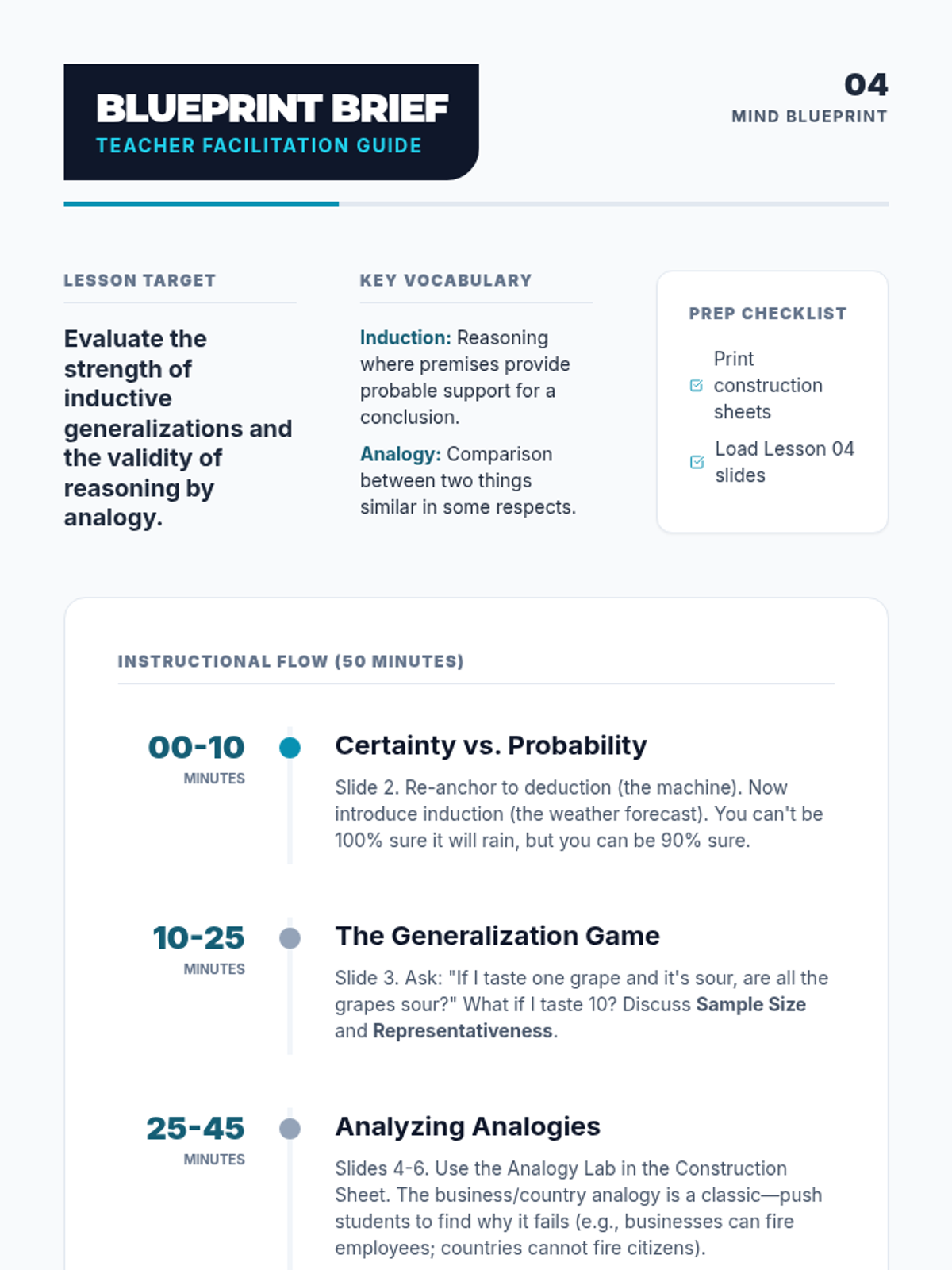
Recognizing errors in inductive logic: hasty generalizations, biased generalizations, and non sequiturs.
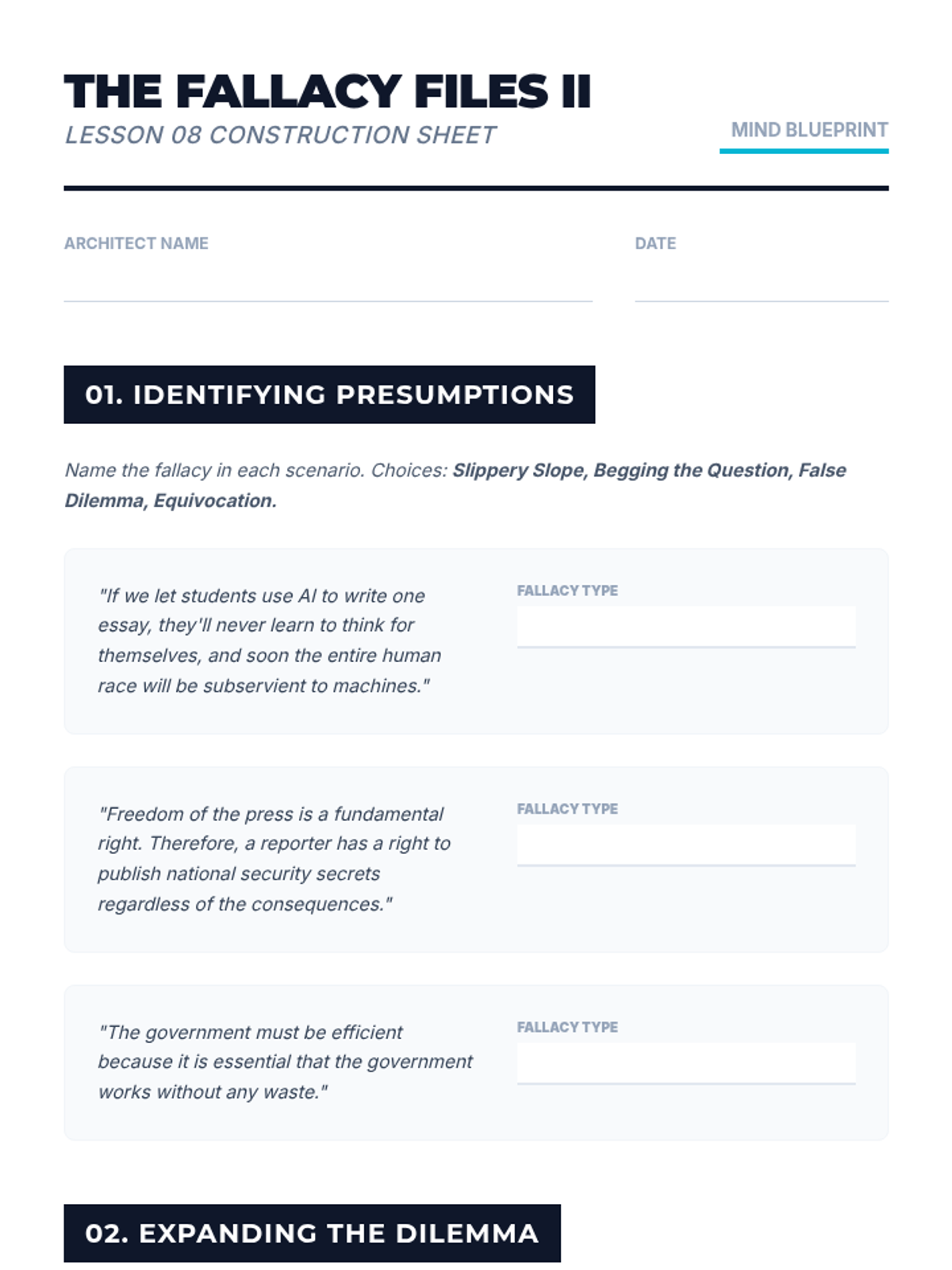
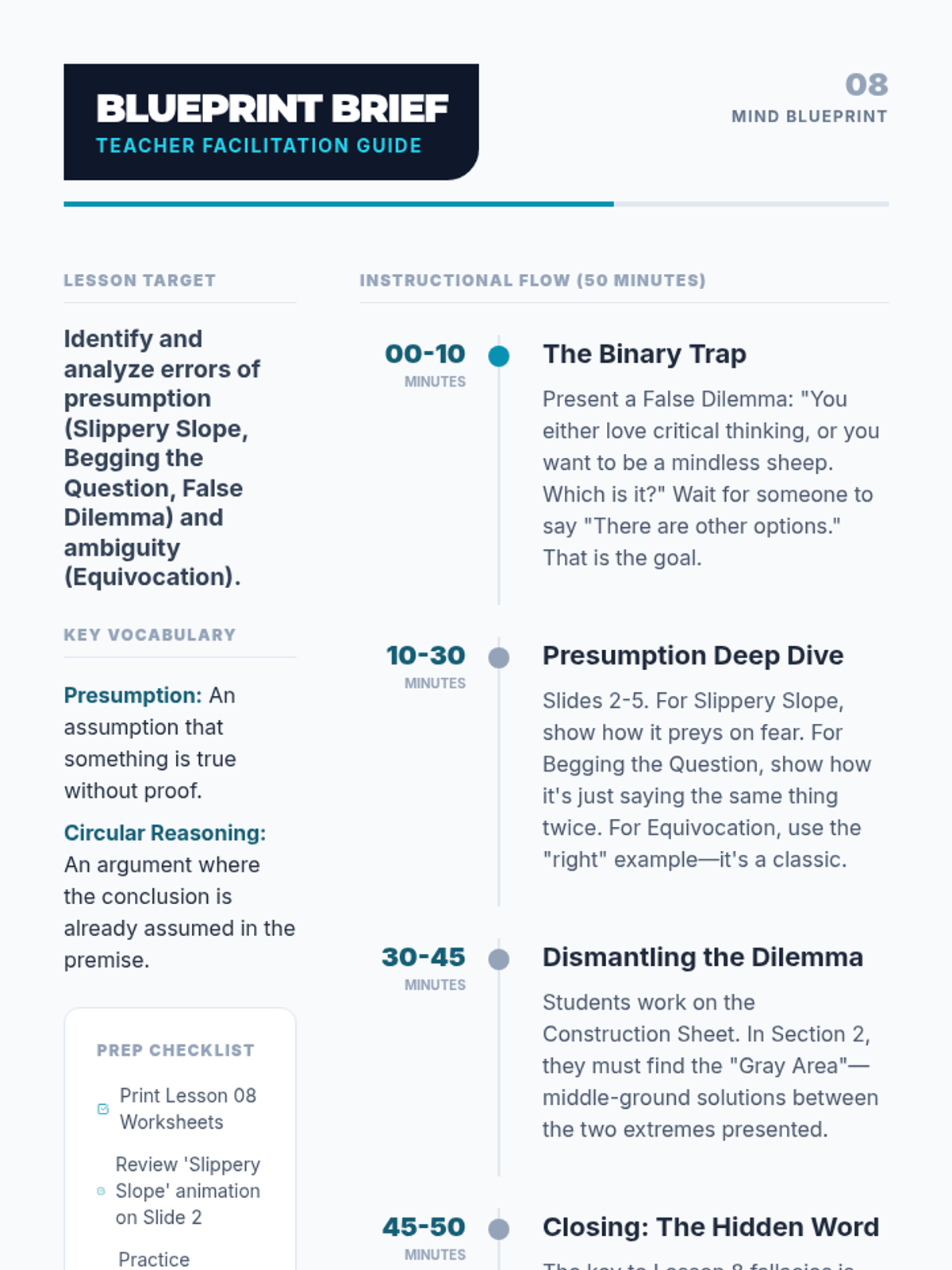
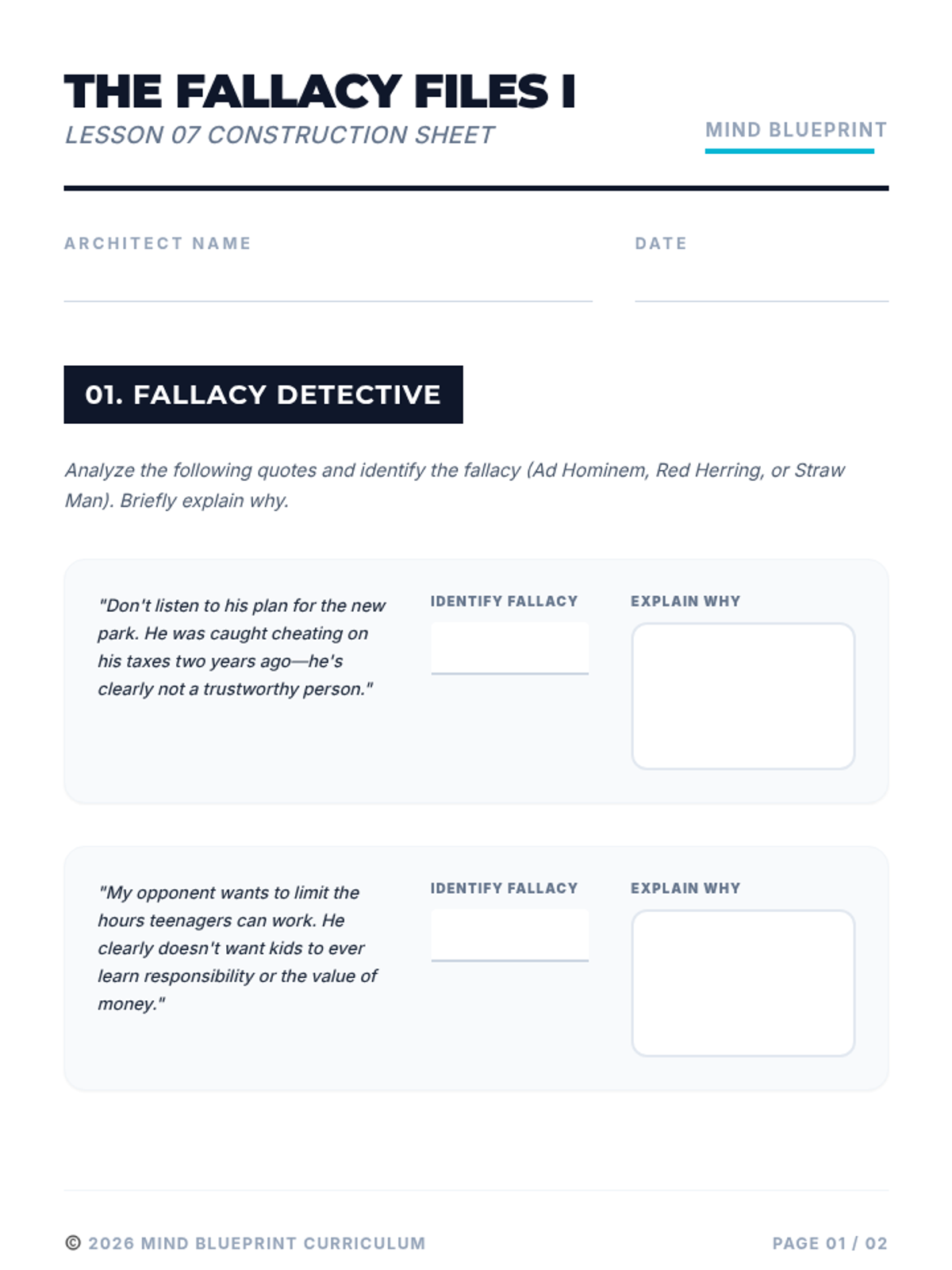
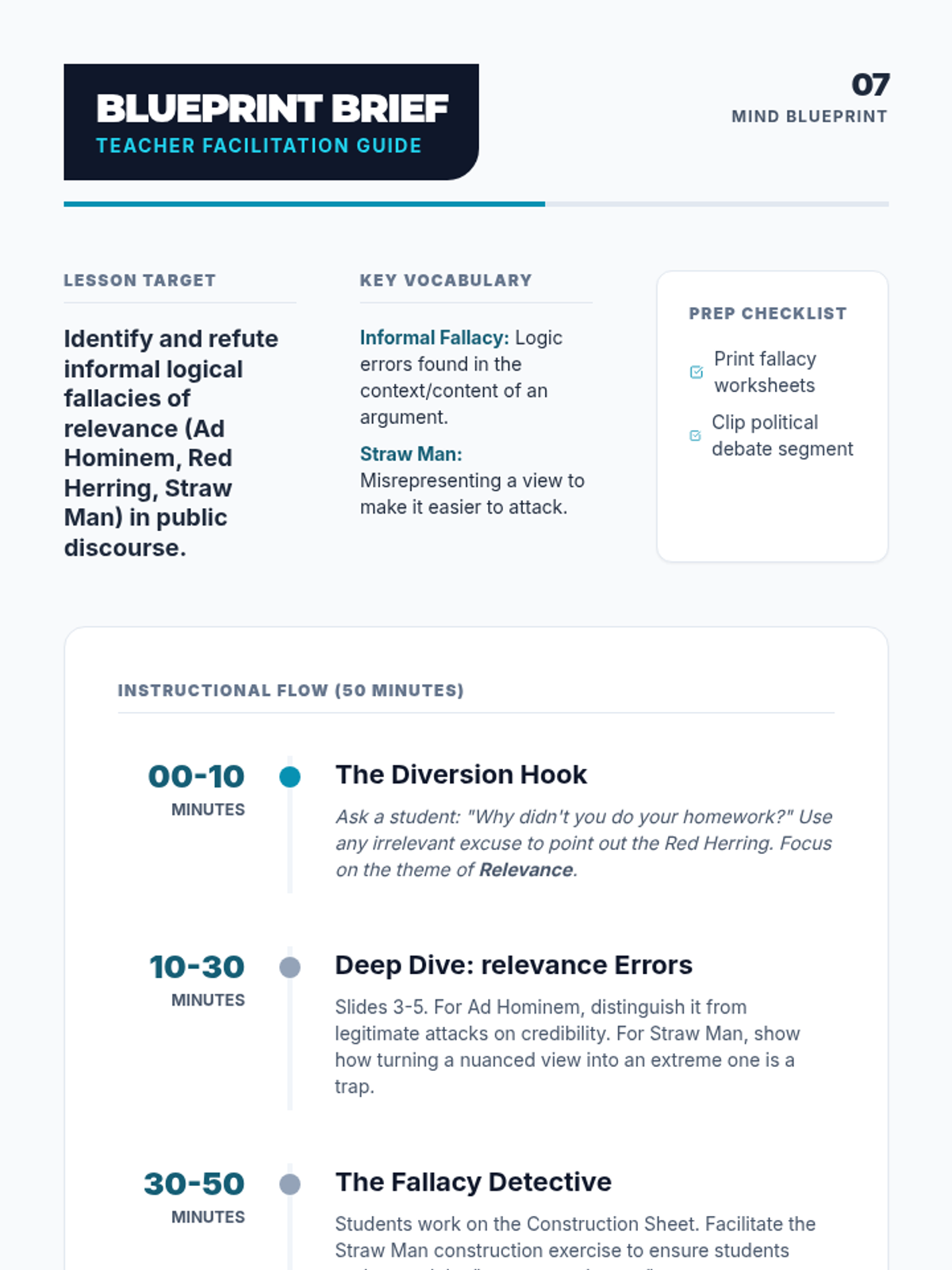
A deep dive into common logical errors: Slippery Slope, Circular Reasoning, Ad Hominem, Red Herring, and the Straw Man.
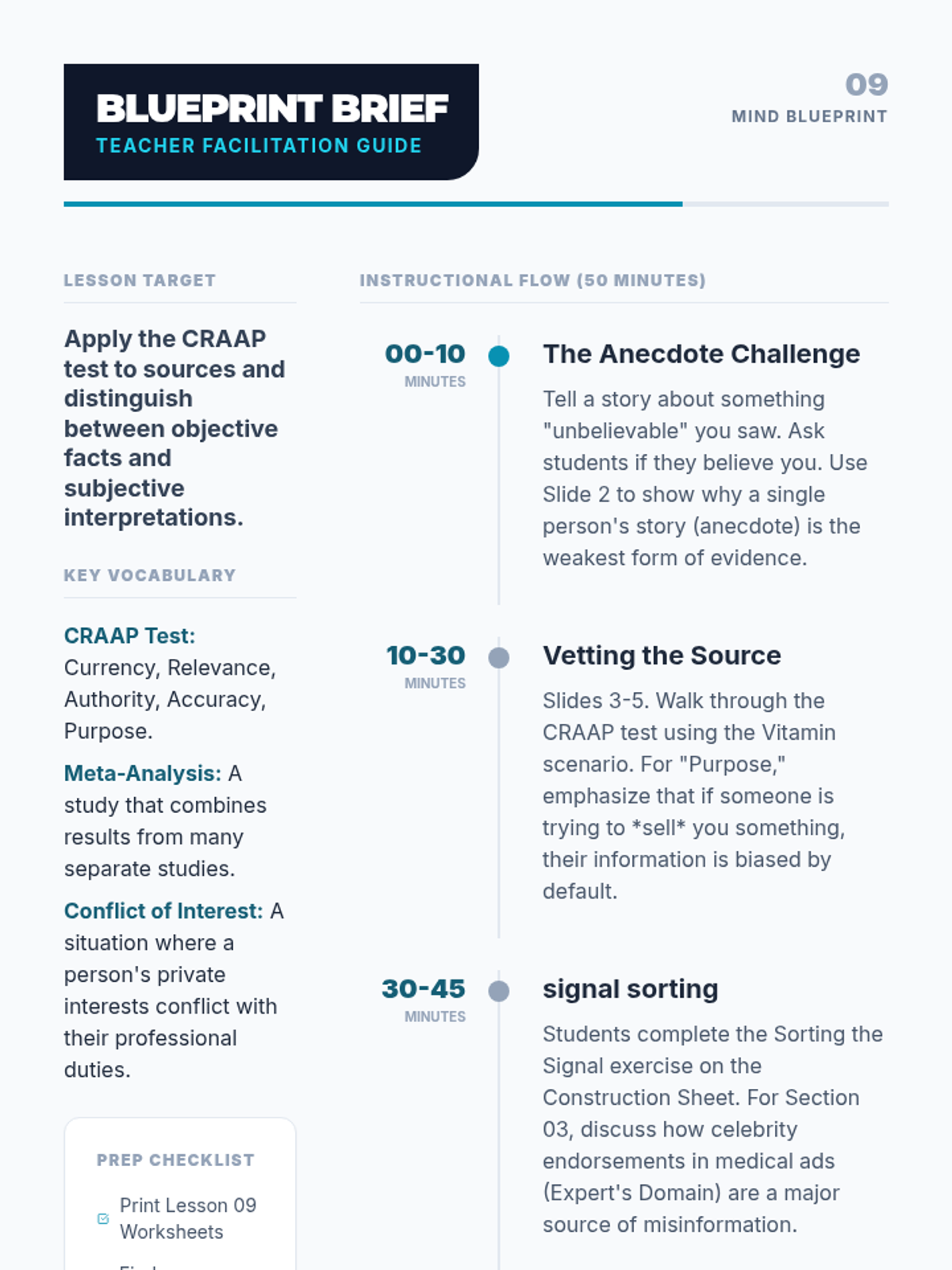
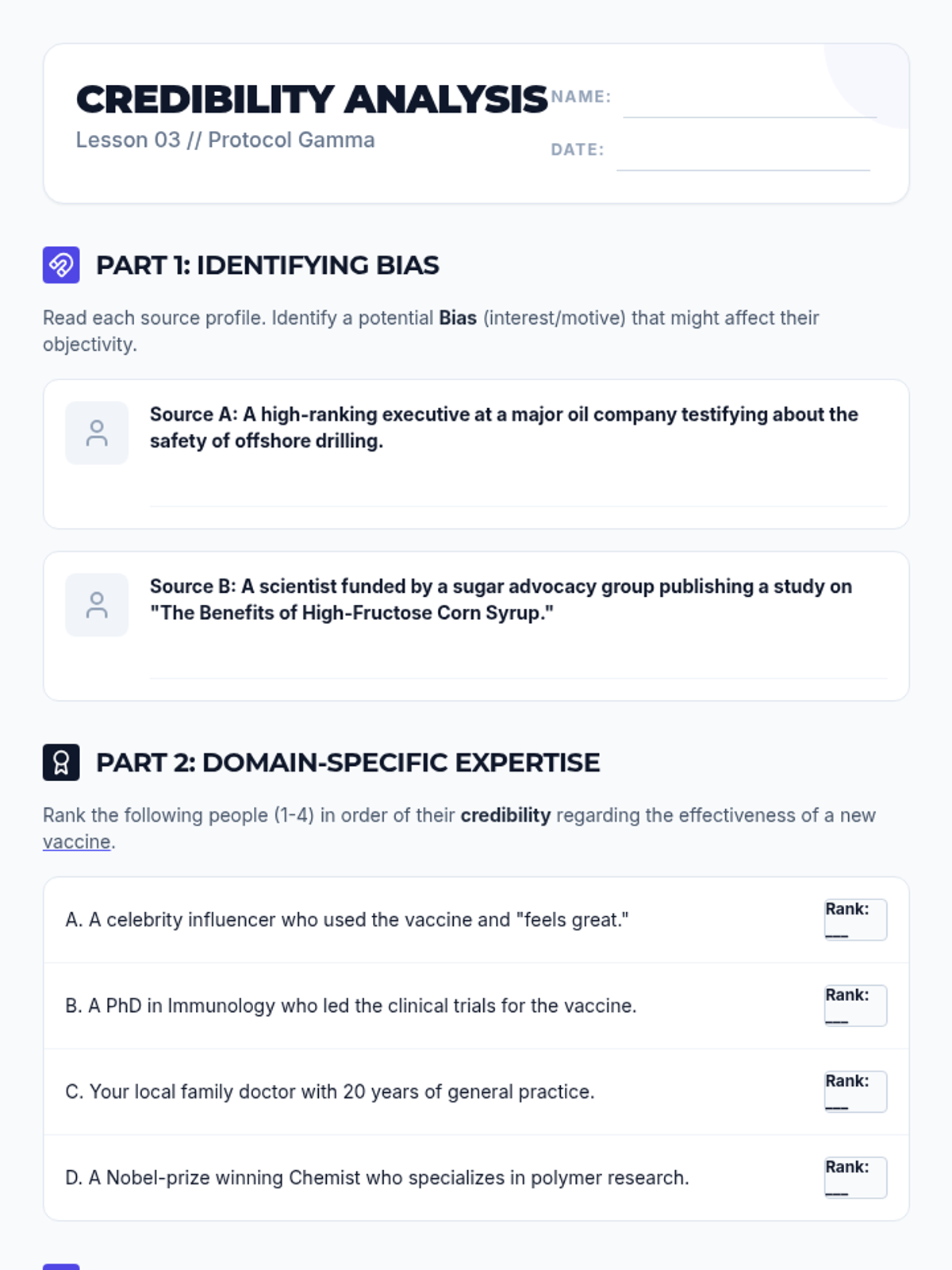
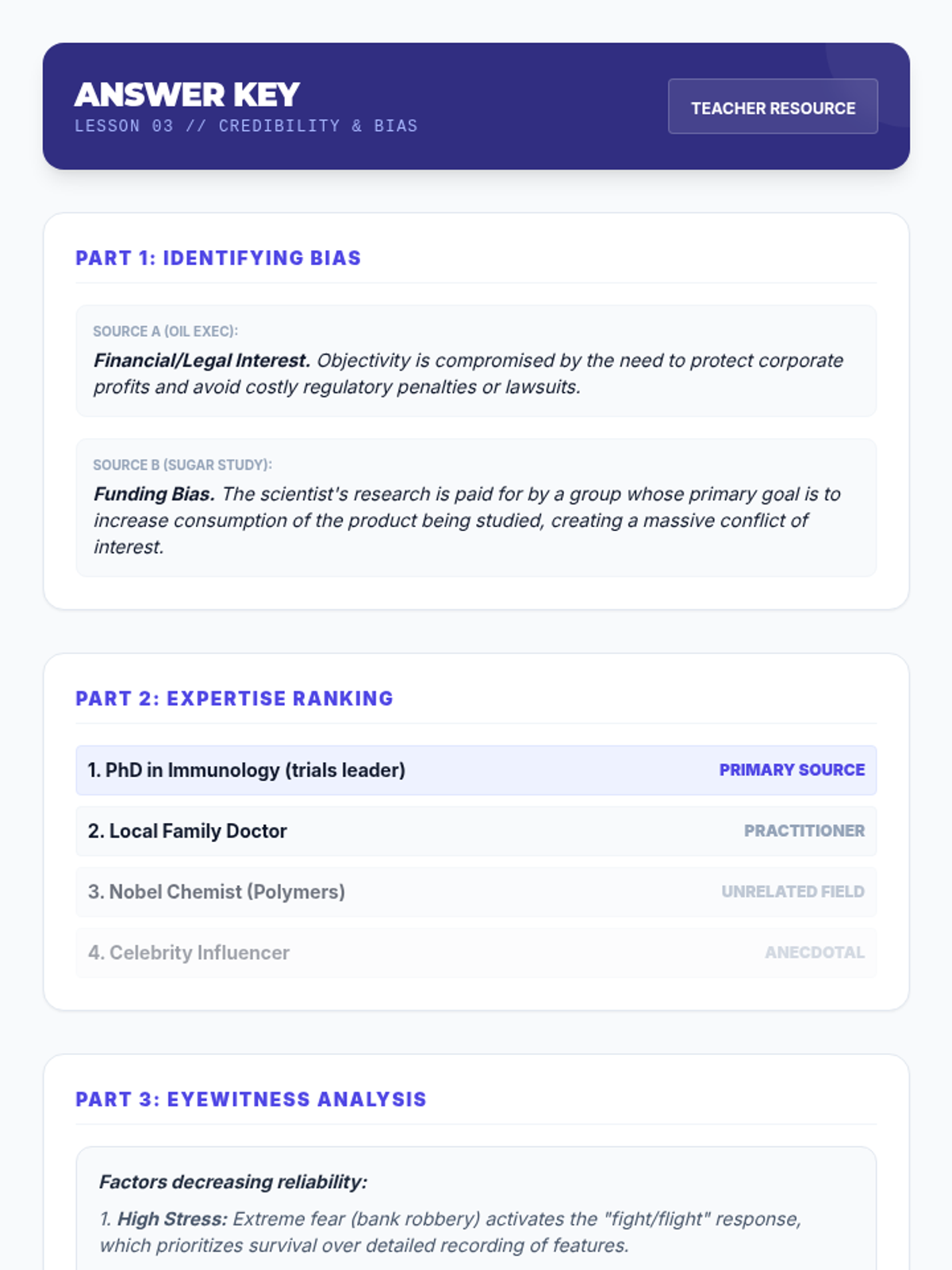
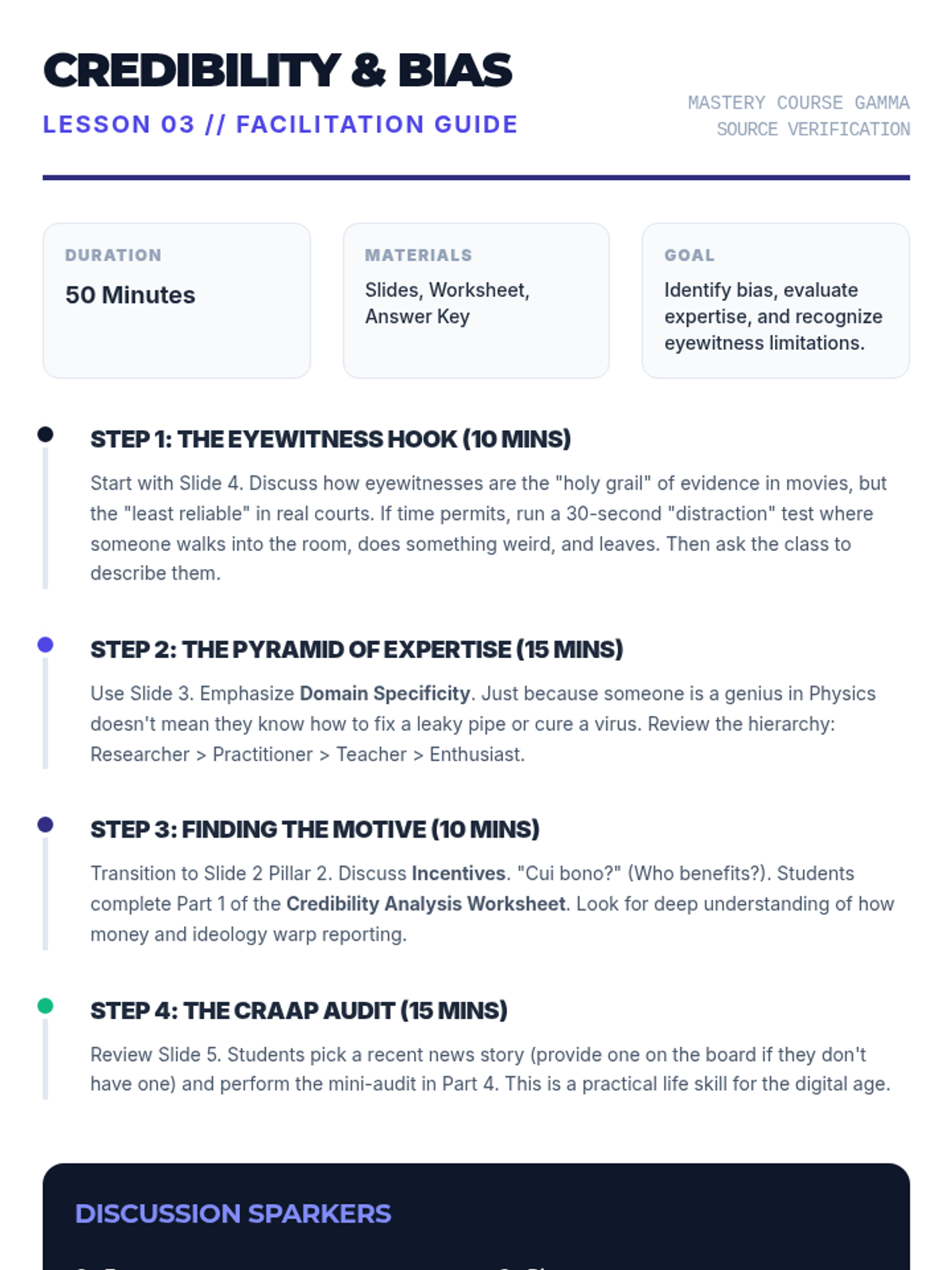
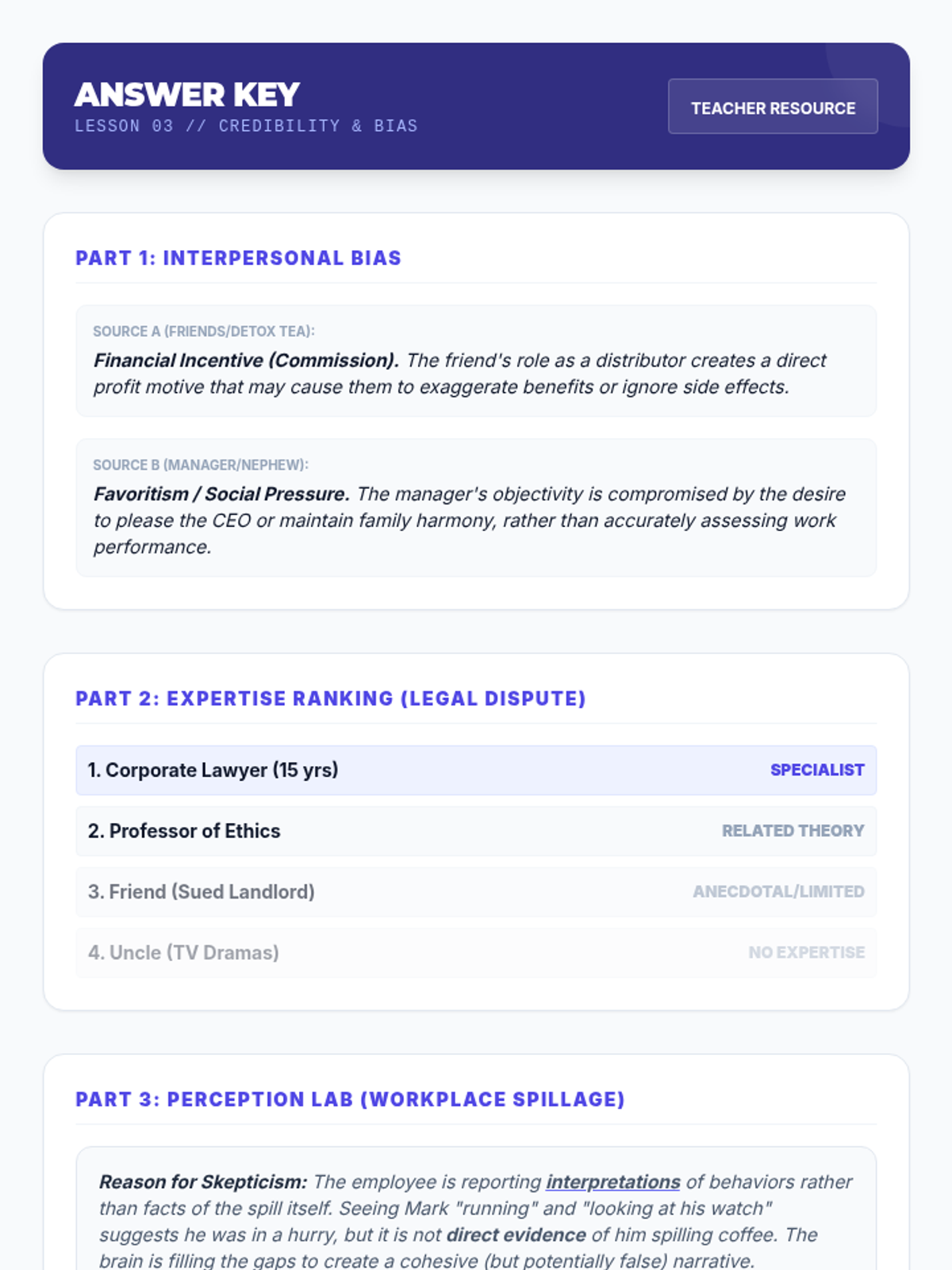
Evaluating source reliability by recognizing bias, determining levels of expertise, and understanding the specific challenges of eyewitness testimony.
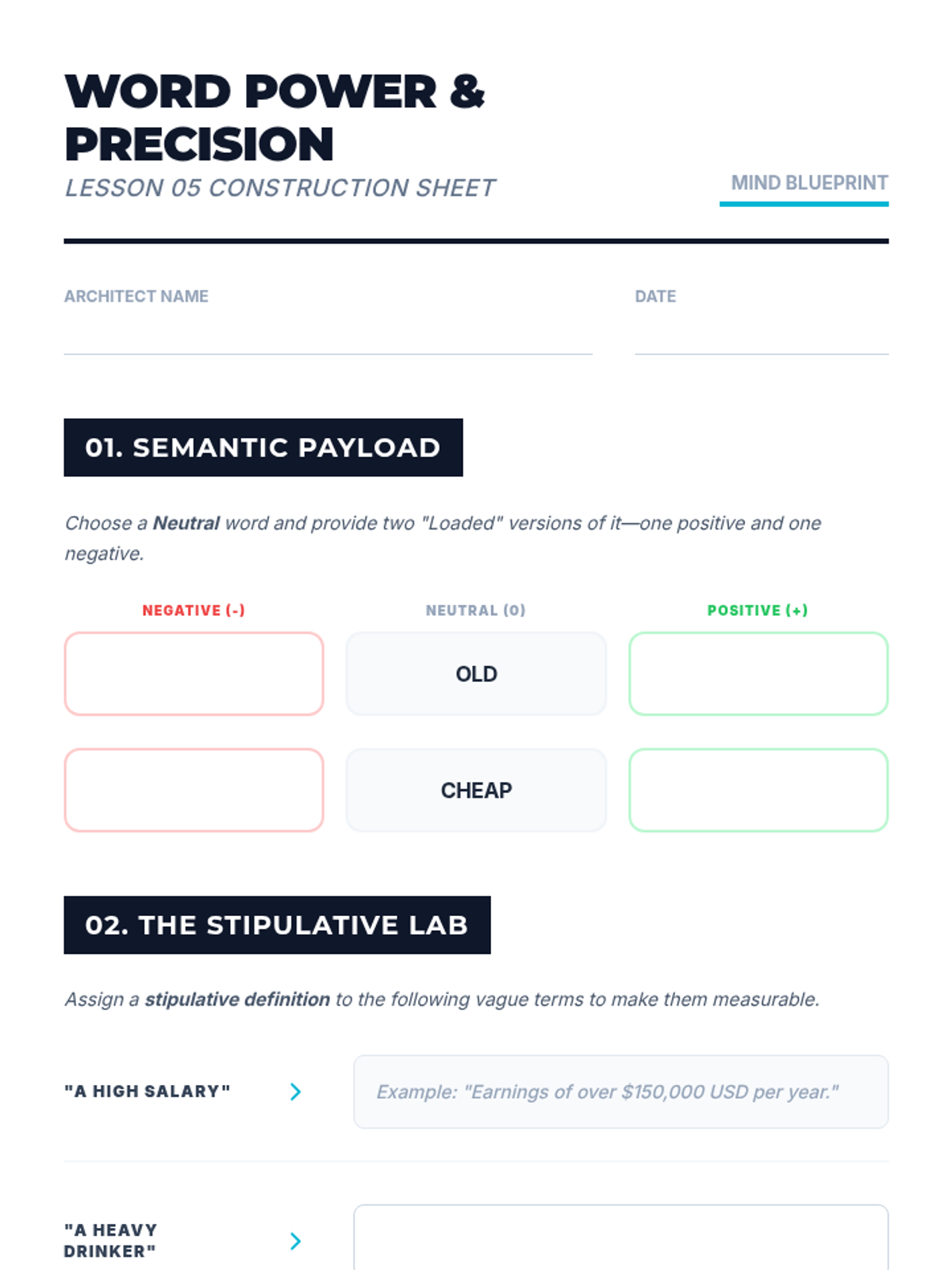
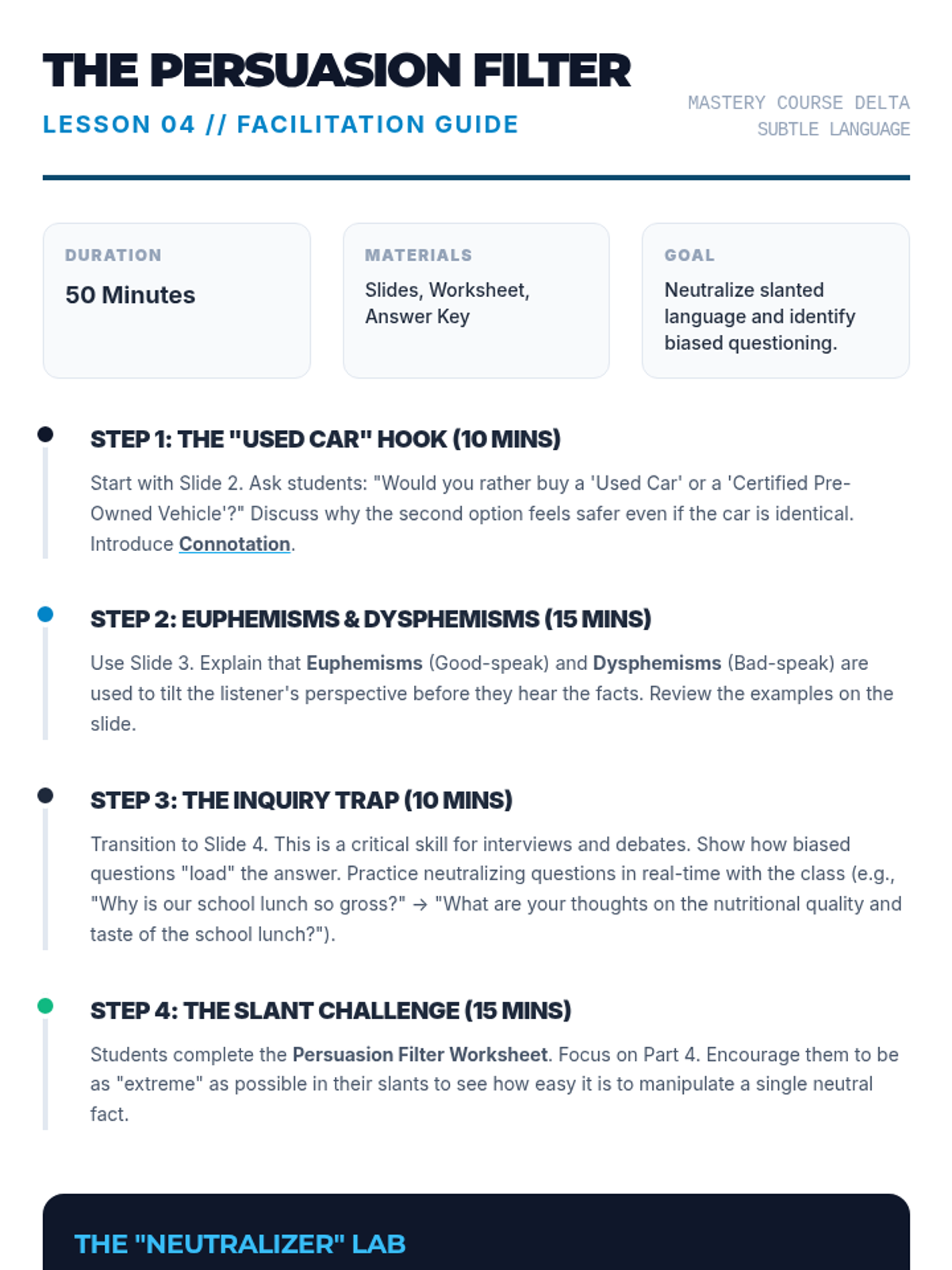
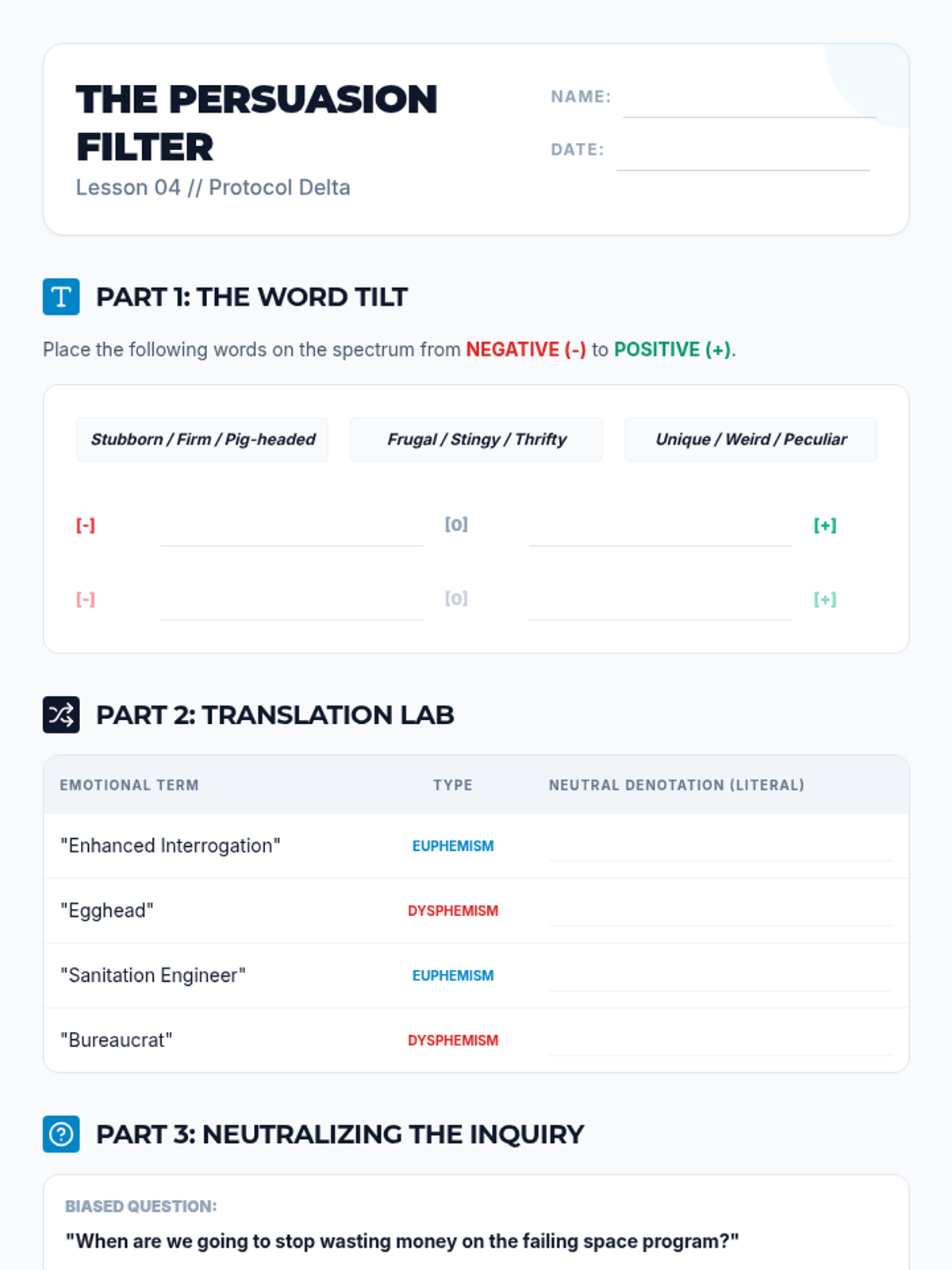
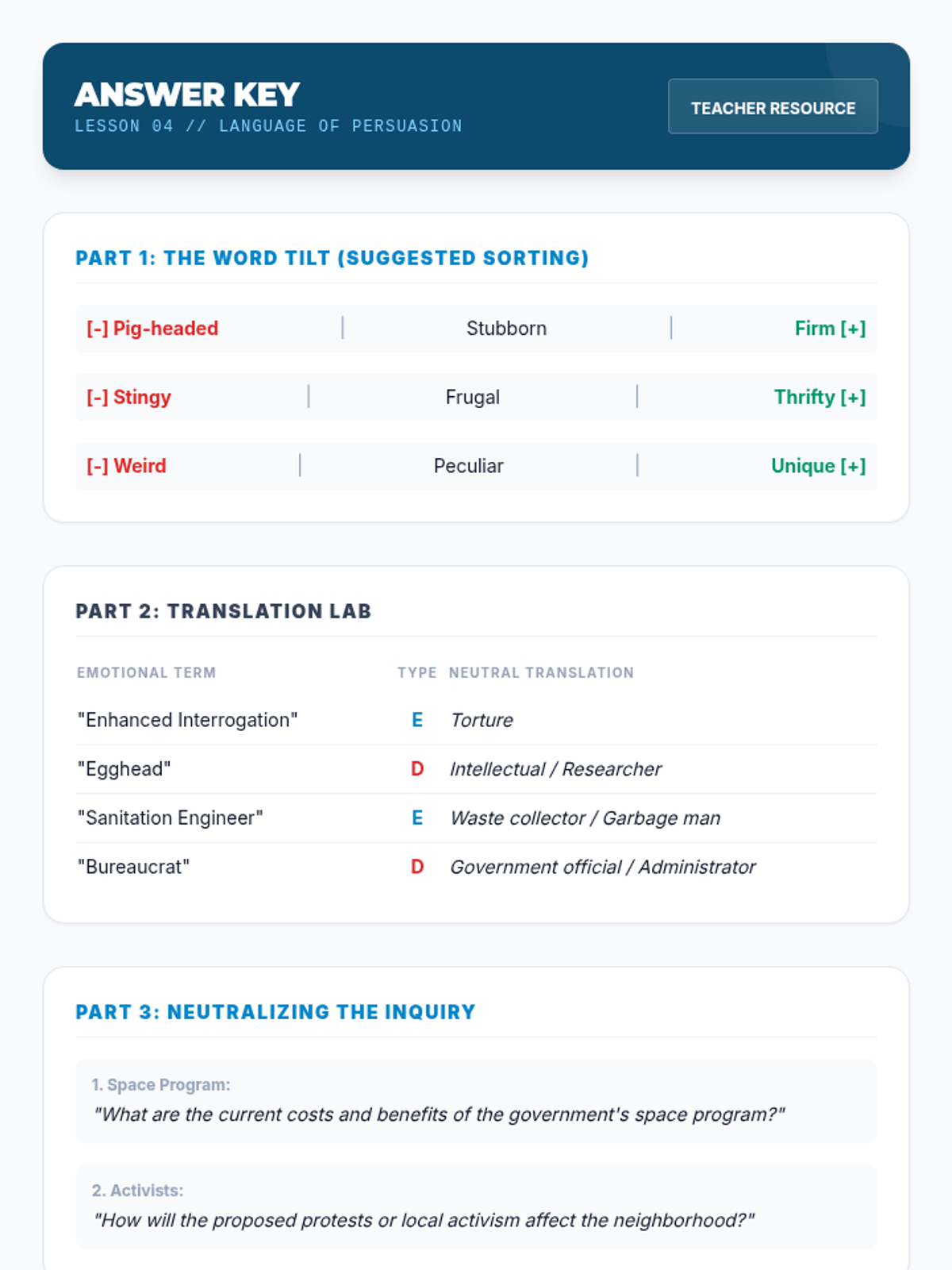
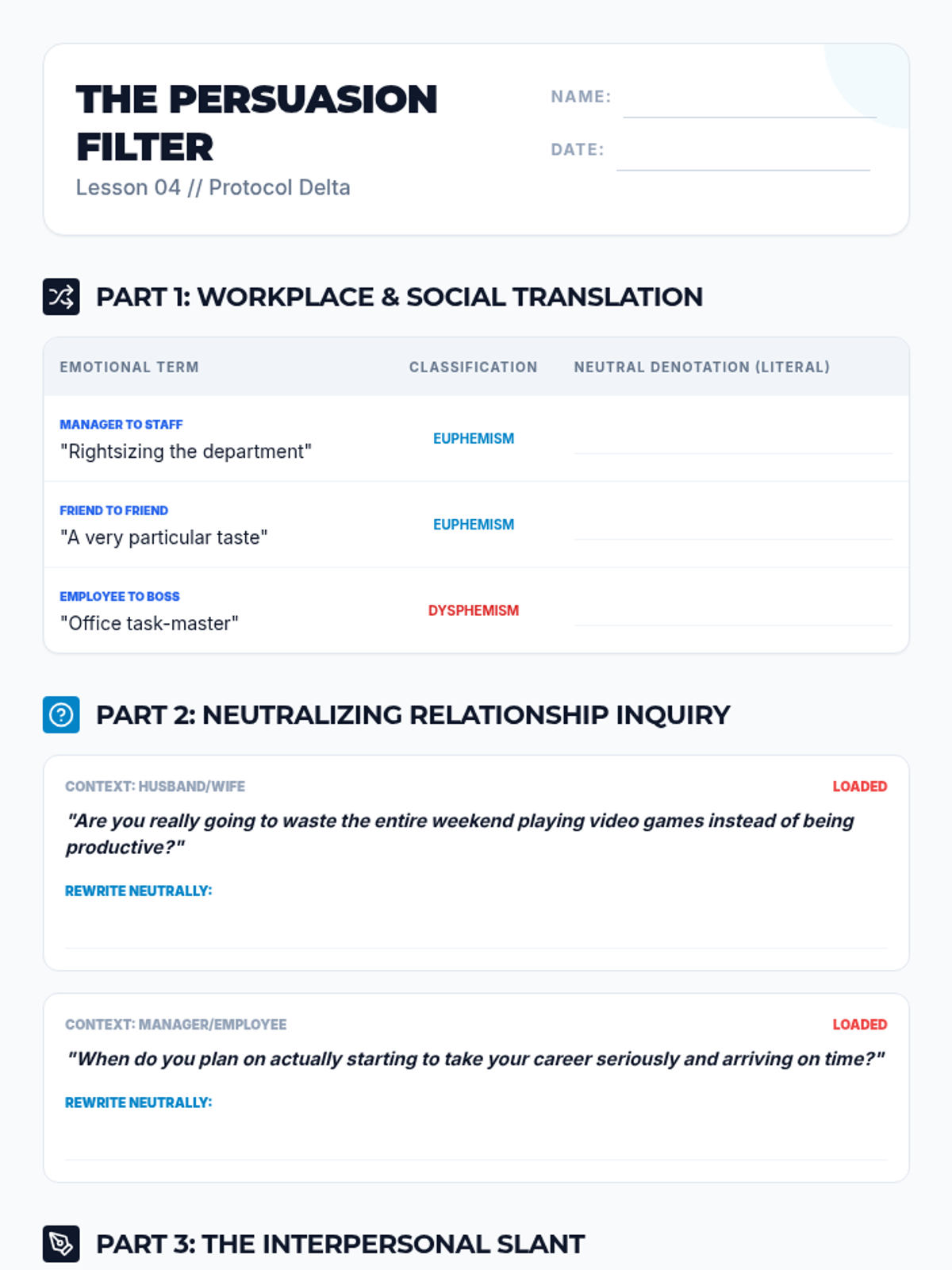
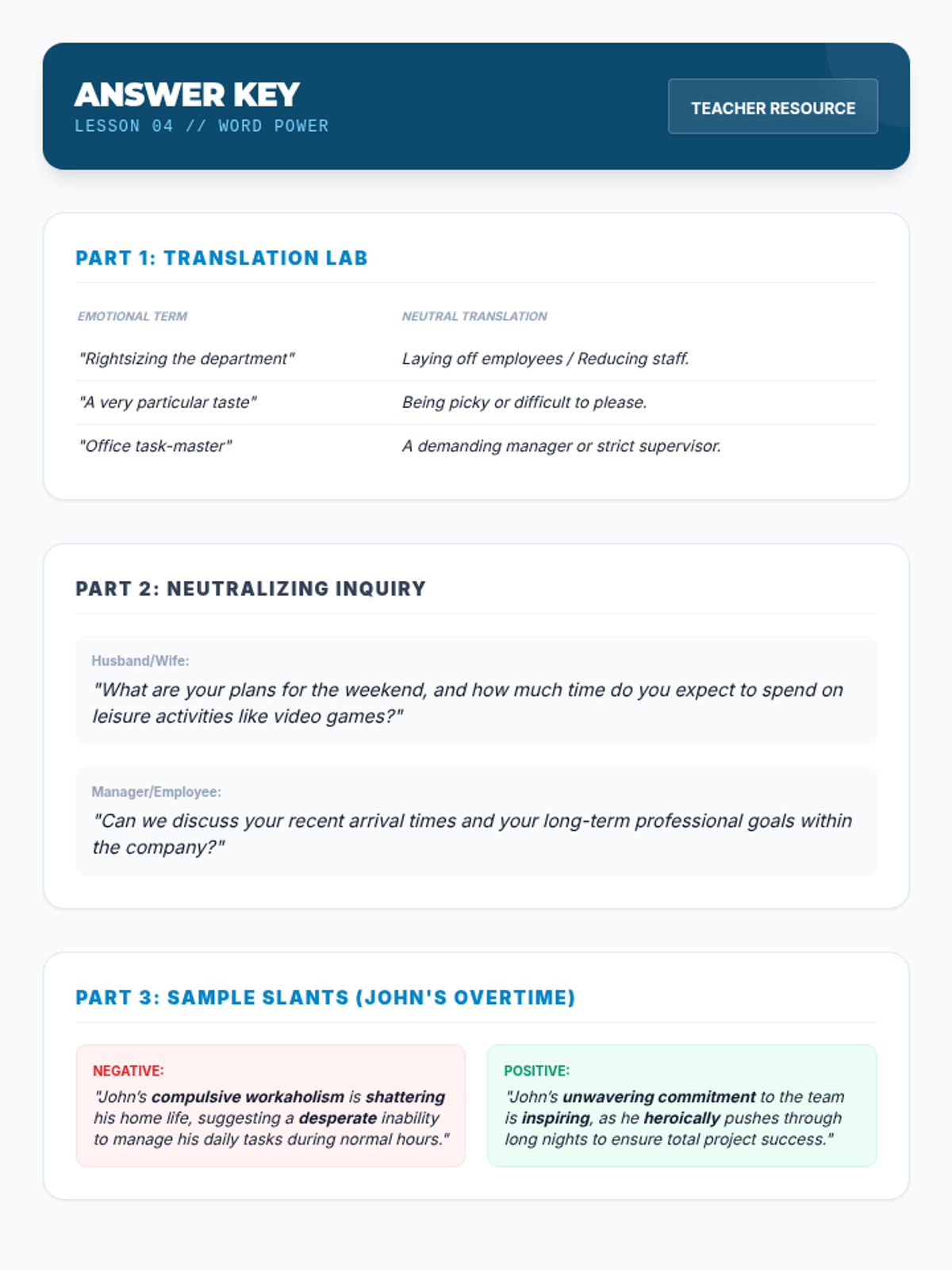
Analyzing how language is used to influence: euphemisms, dysphemisms, and the subtle power of biased questioning.
Building logical conclusions from evidence and identifying causal relationships, including 'post hoc' and 'chicken or the egg' errors.
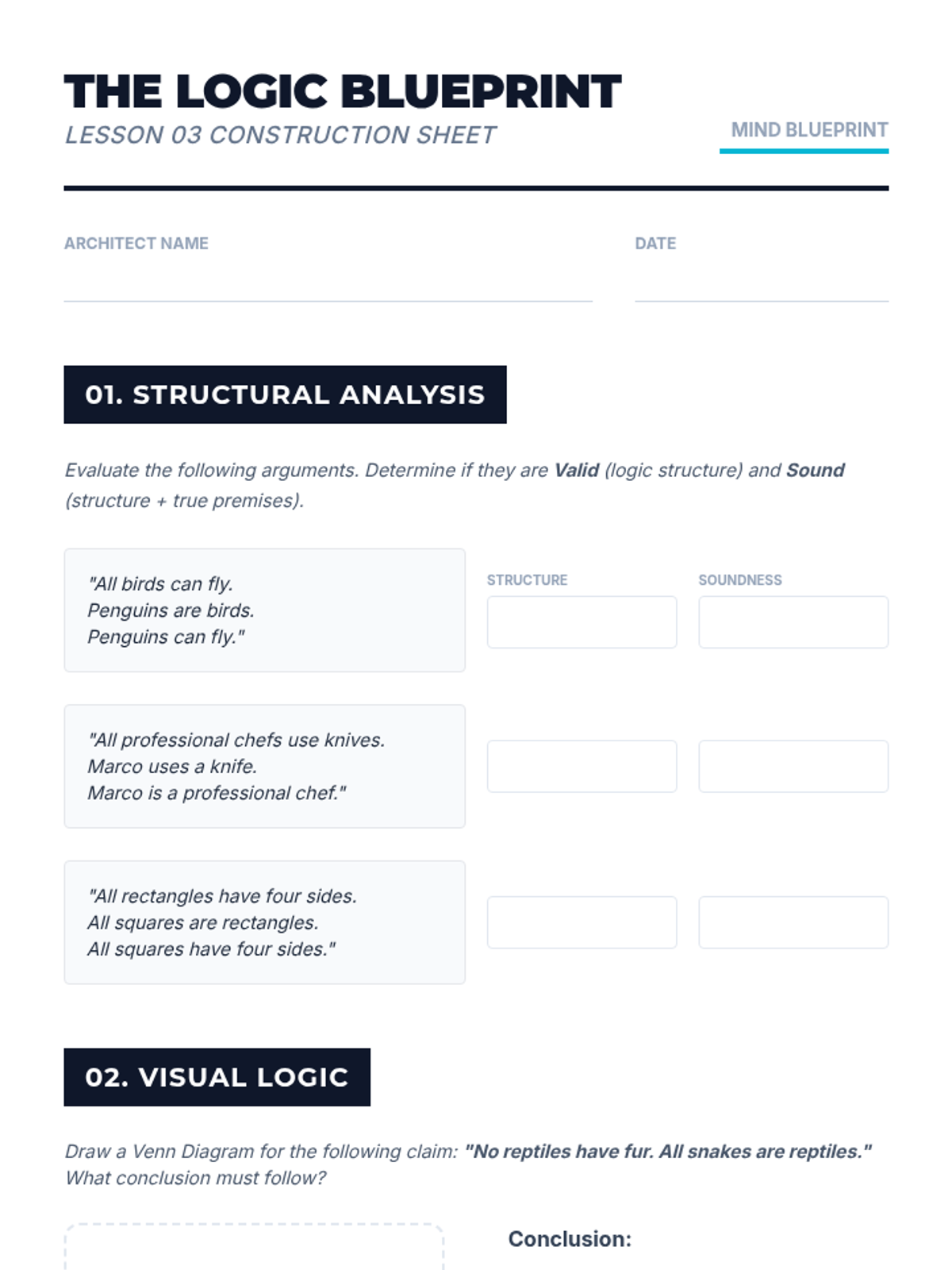
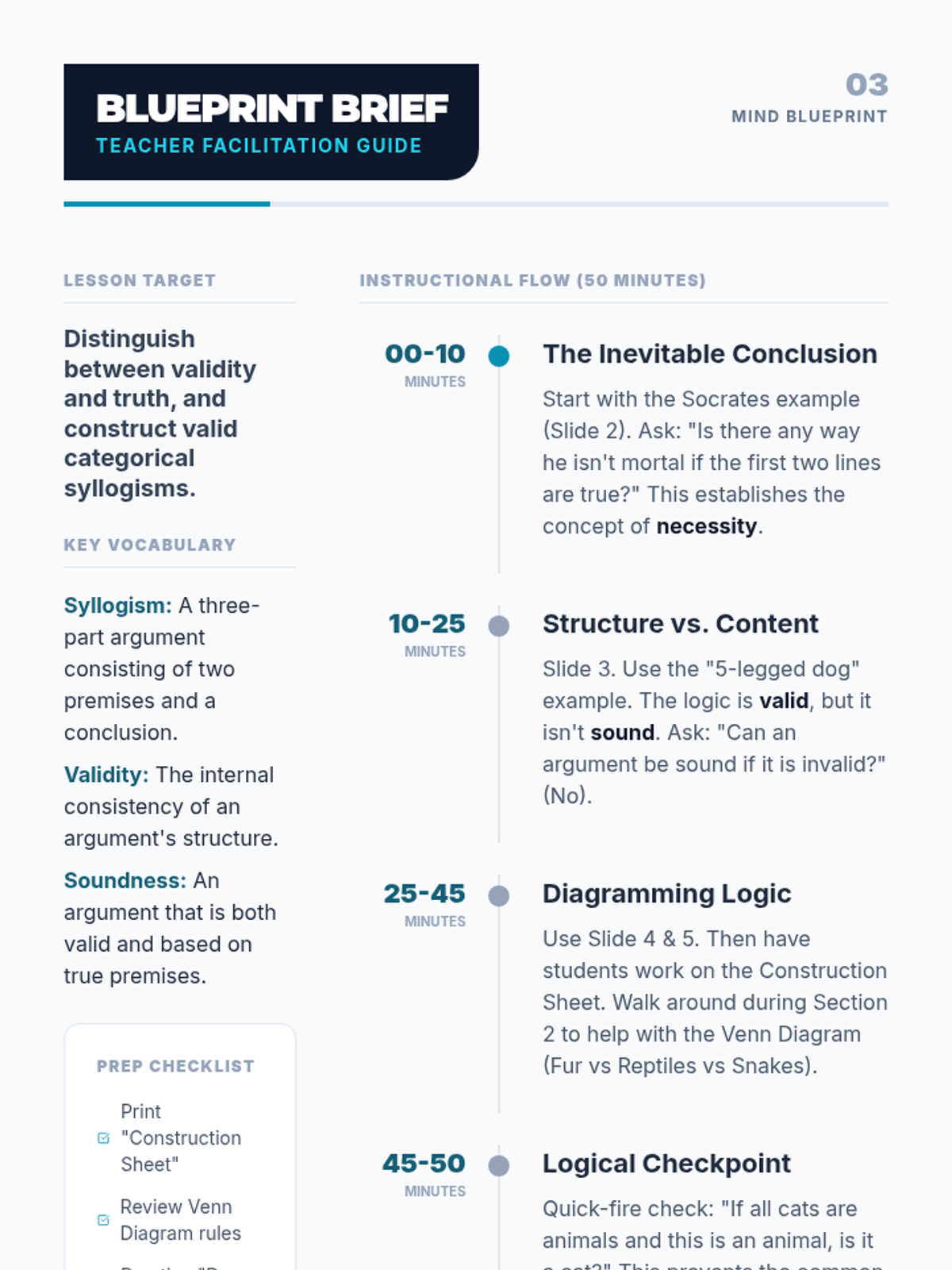
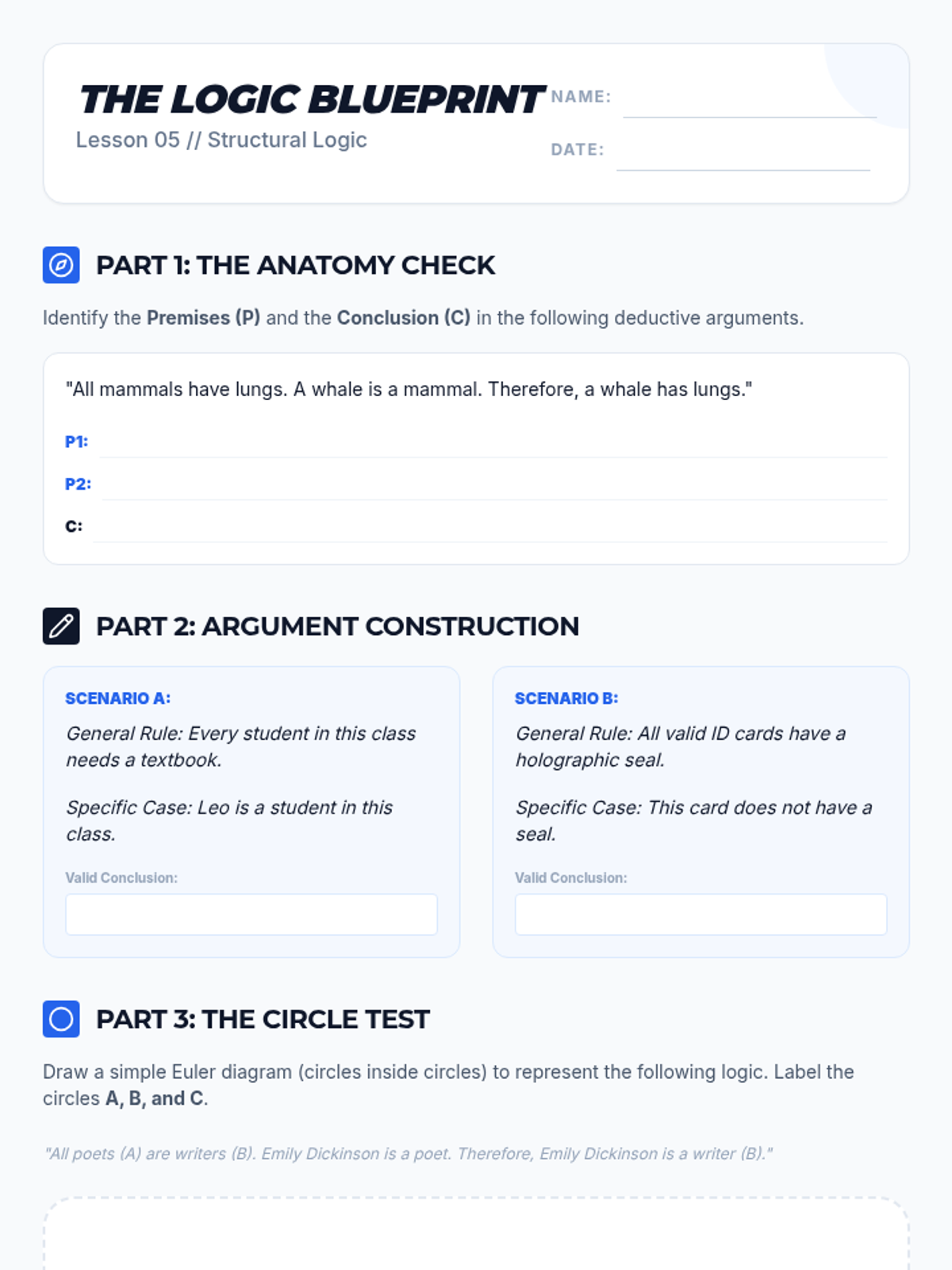
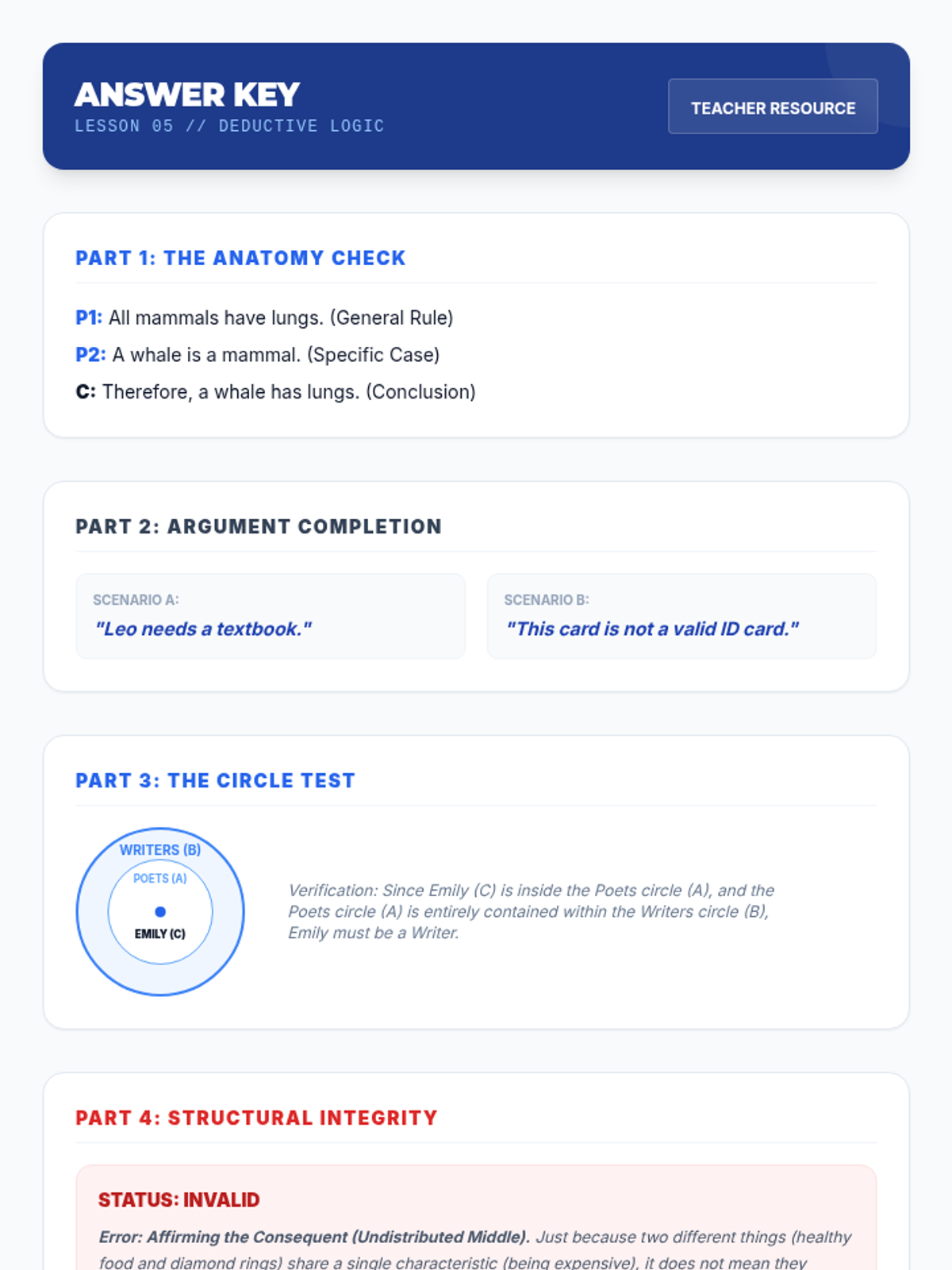
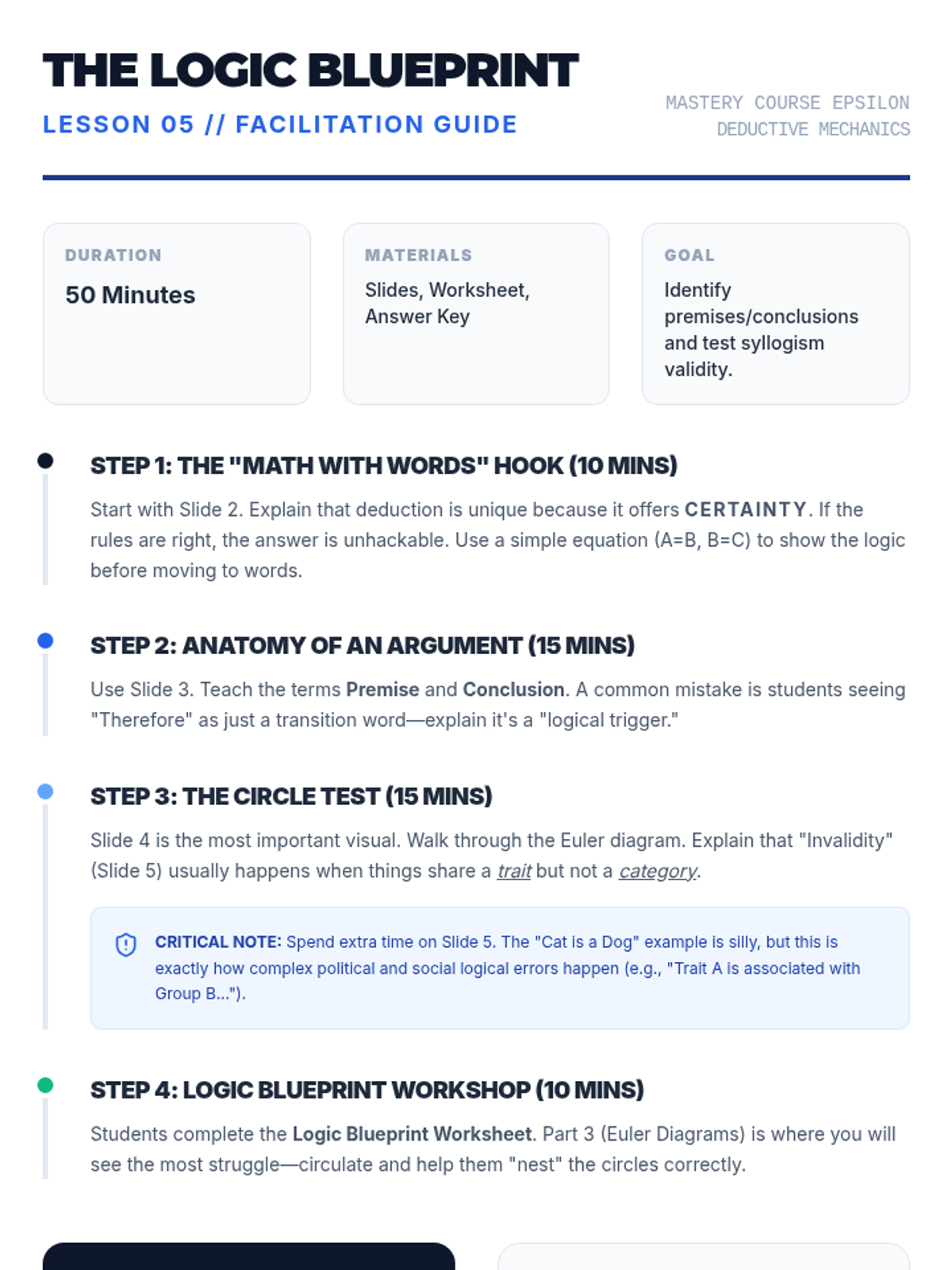
The mechanics of deductive reasoning: identifying premises and conclusions, and assessing the overall structure of a formal argument.
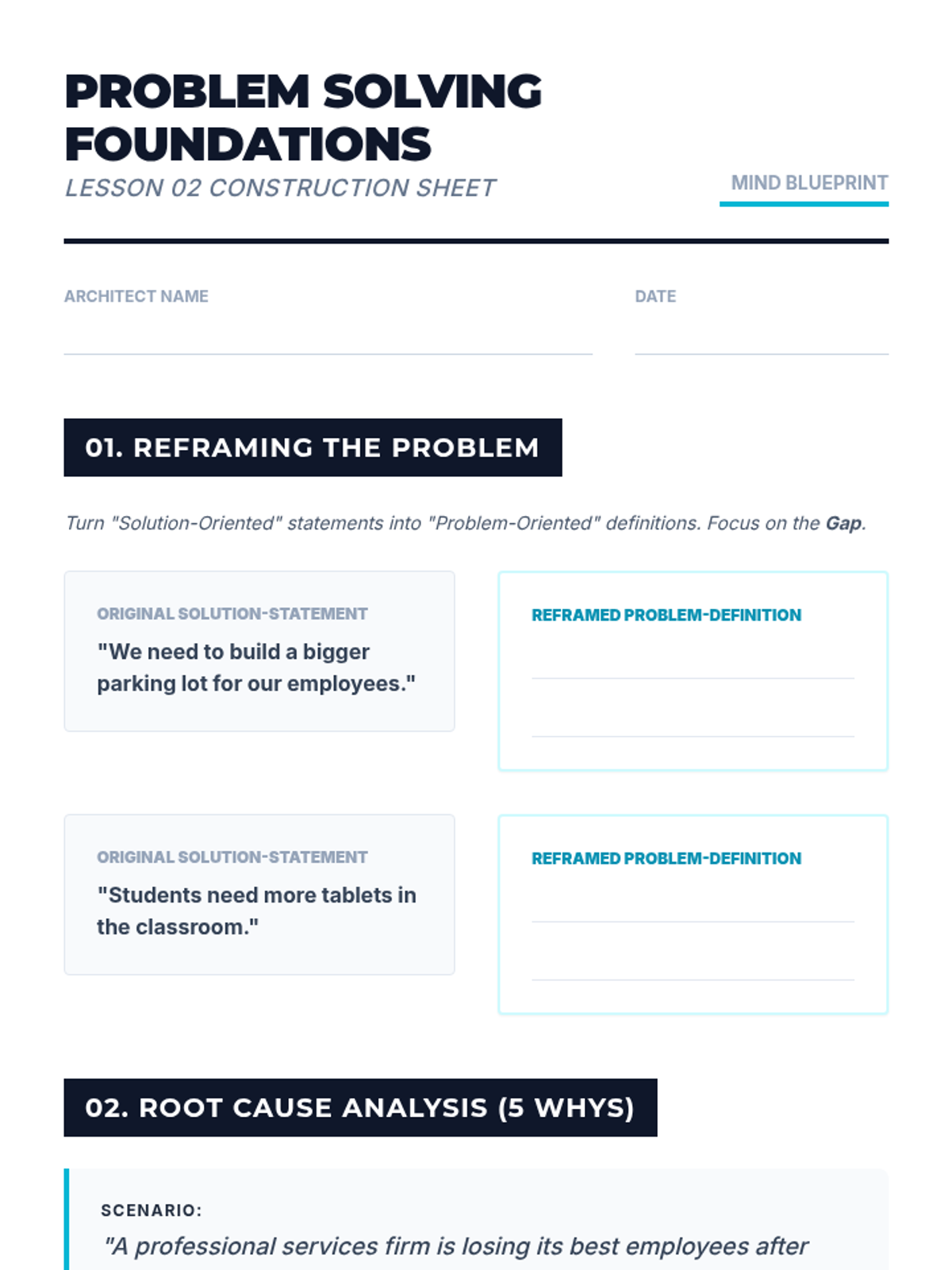
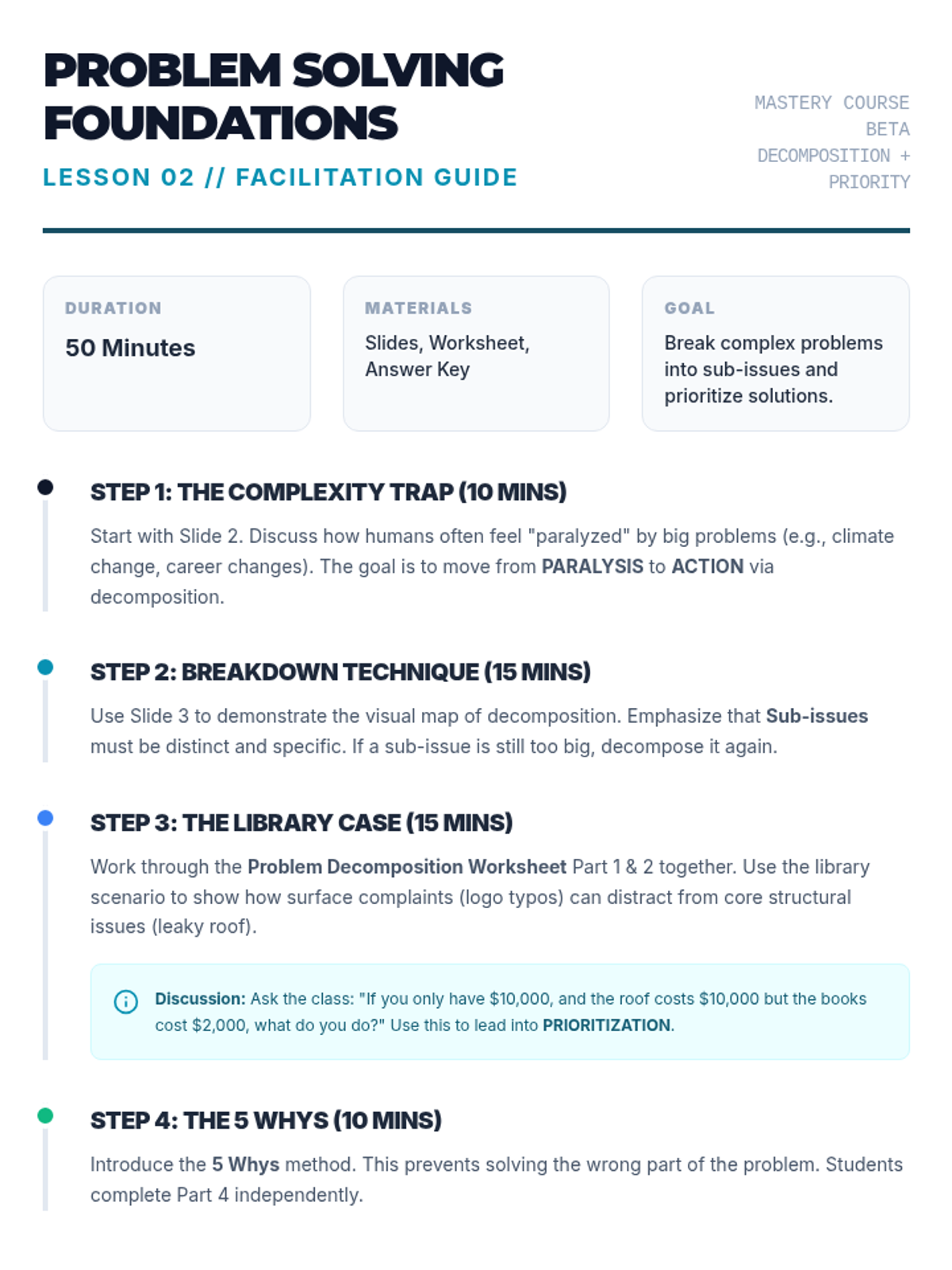
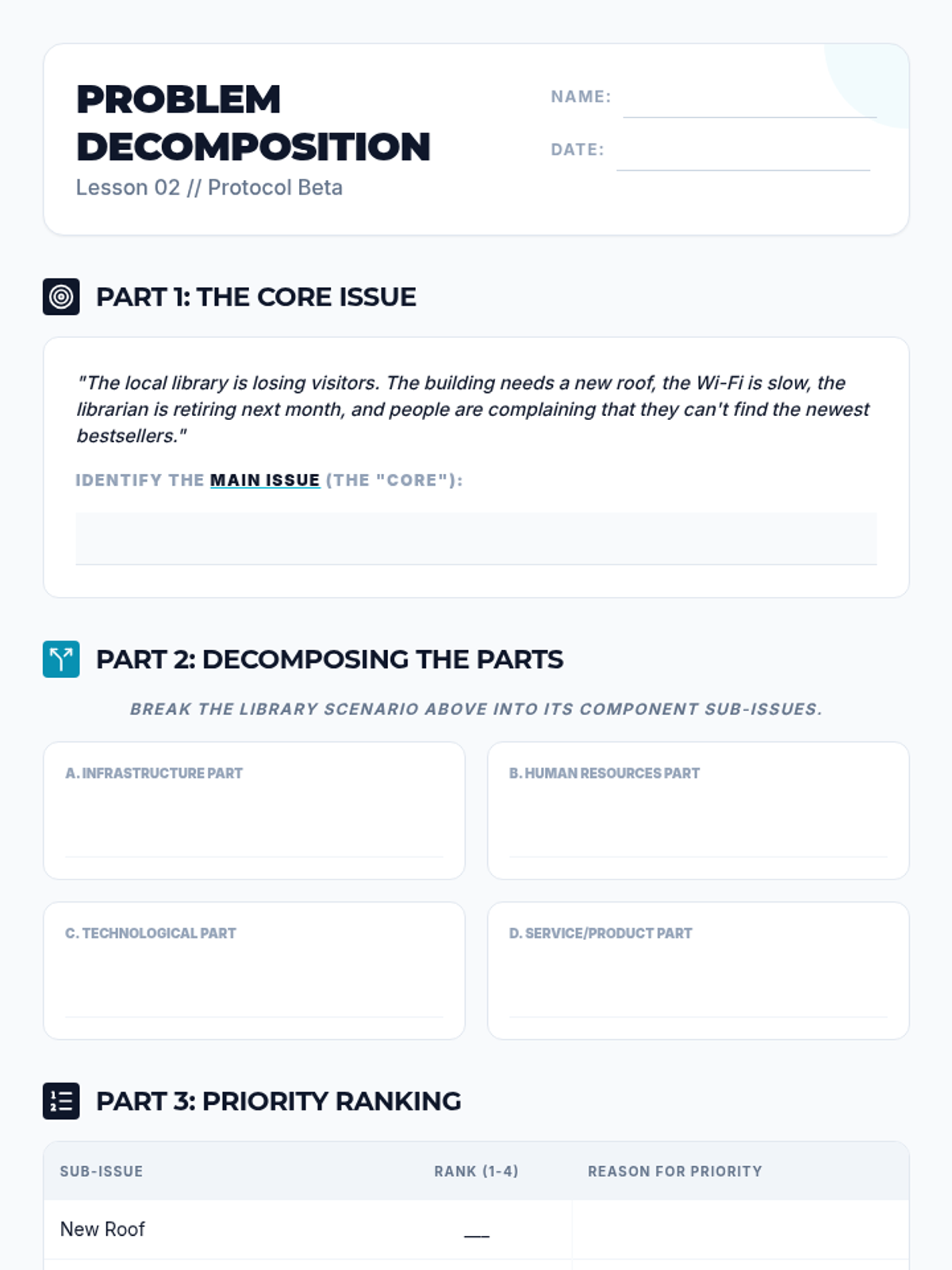
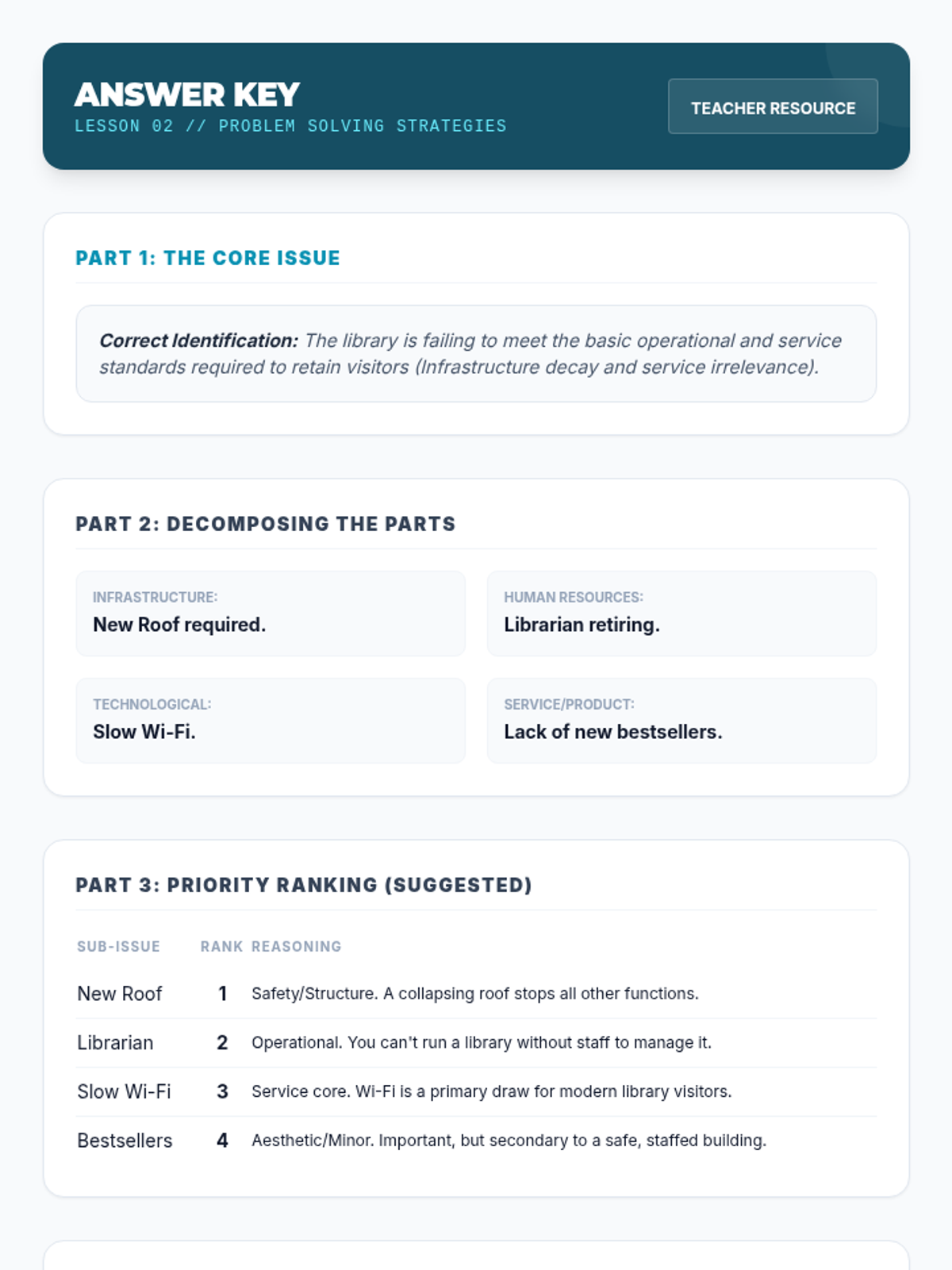
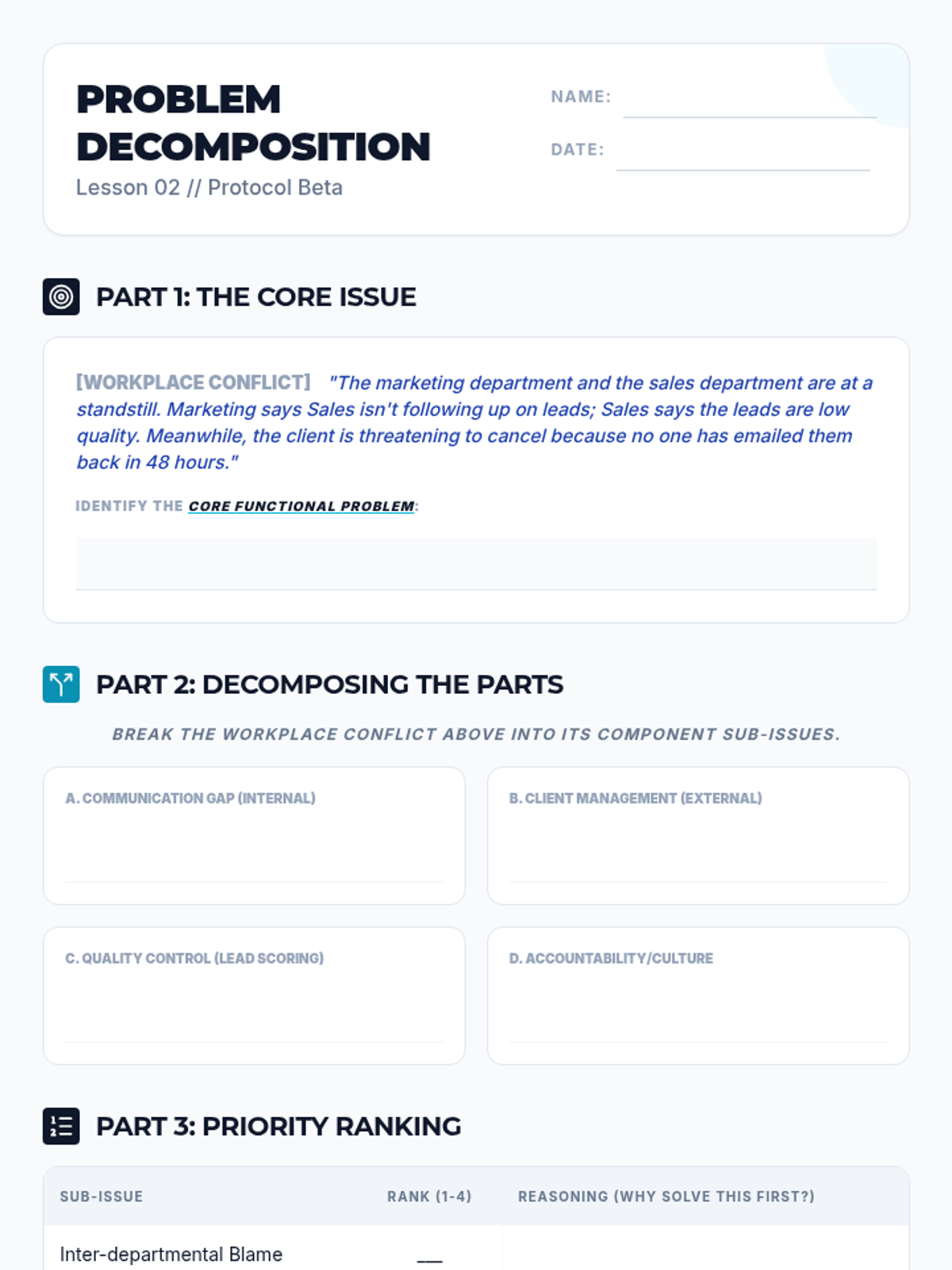
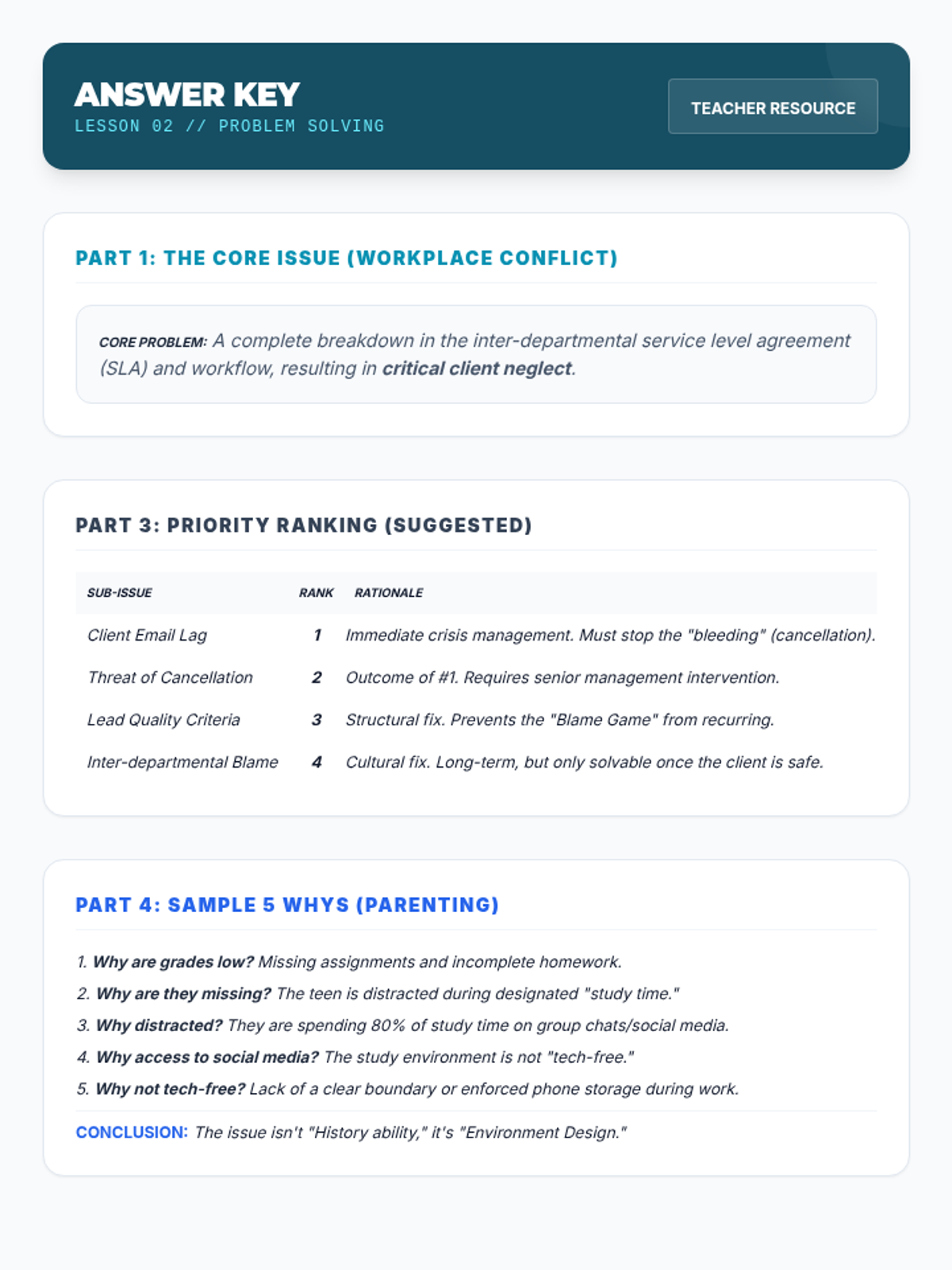
Focuses on identifying the core issues of complex problems, breaking them into manageable parts, and prioritizing components for effective resolution.
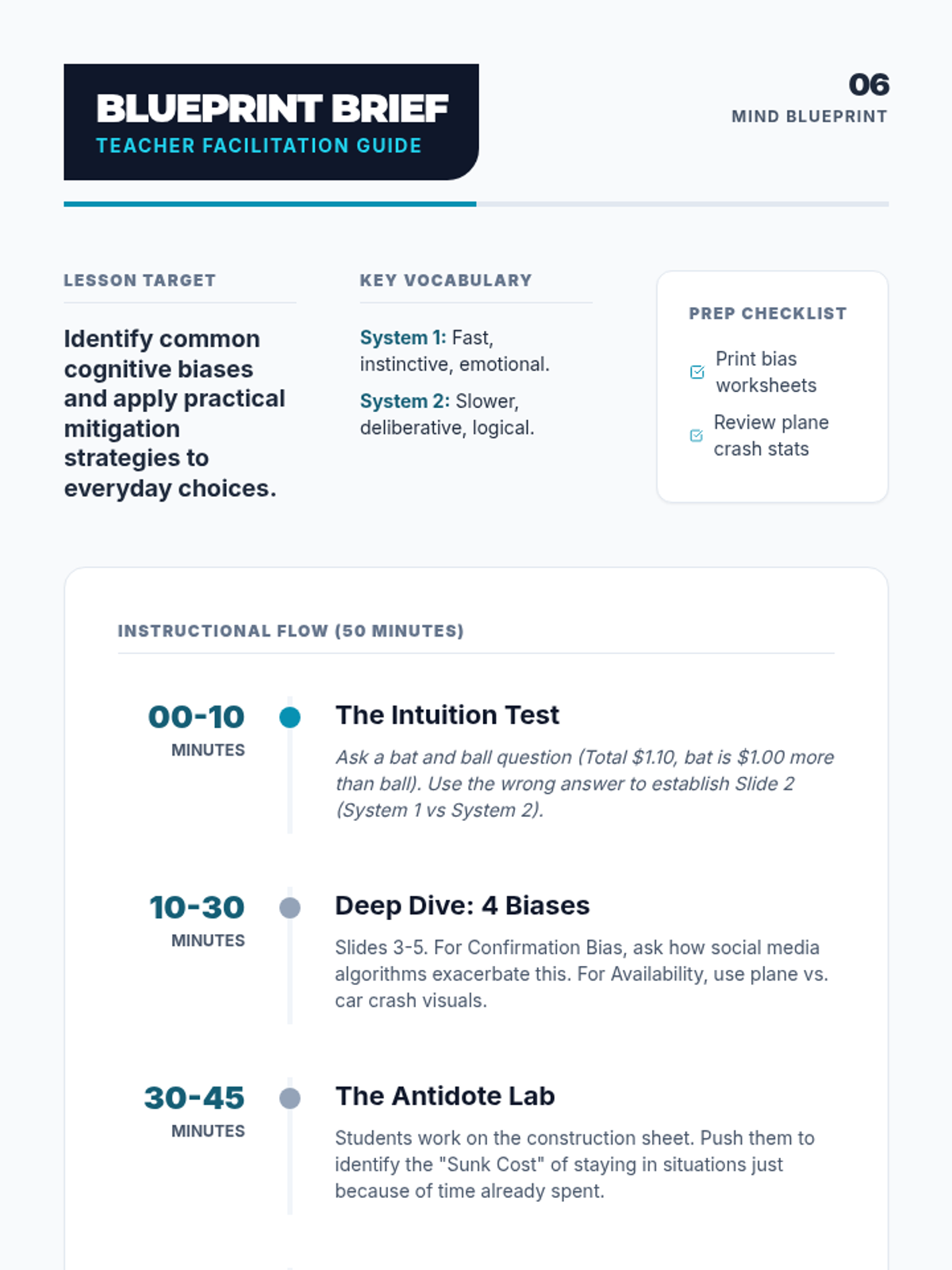
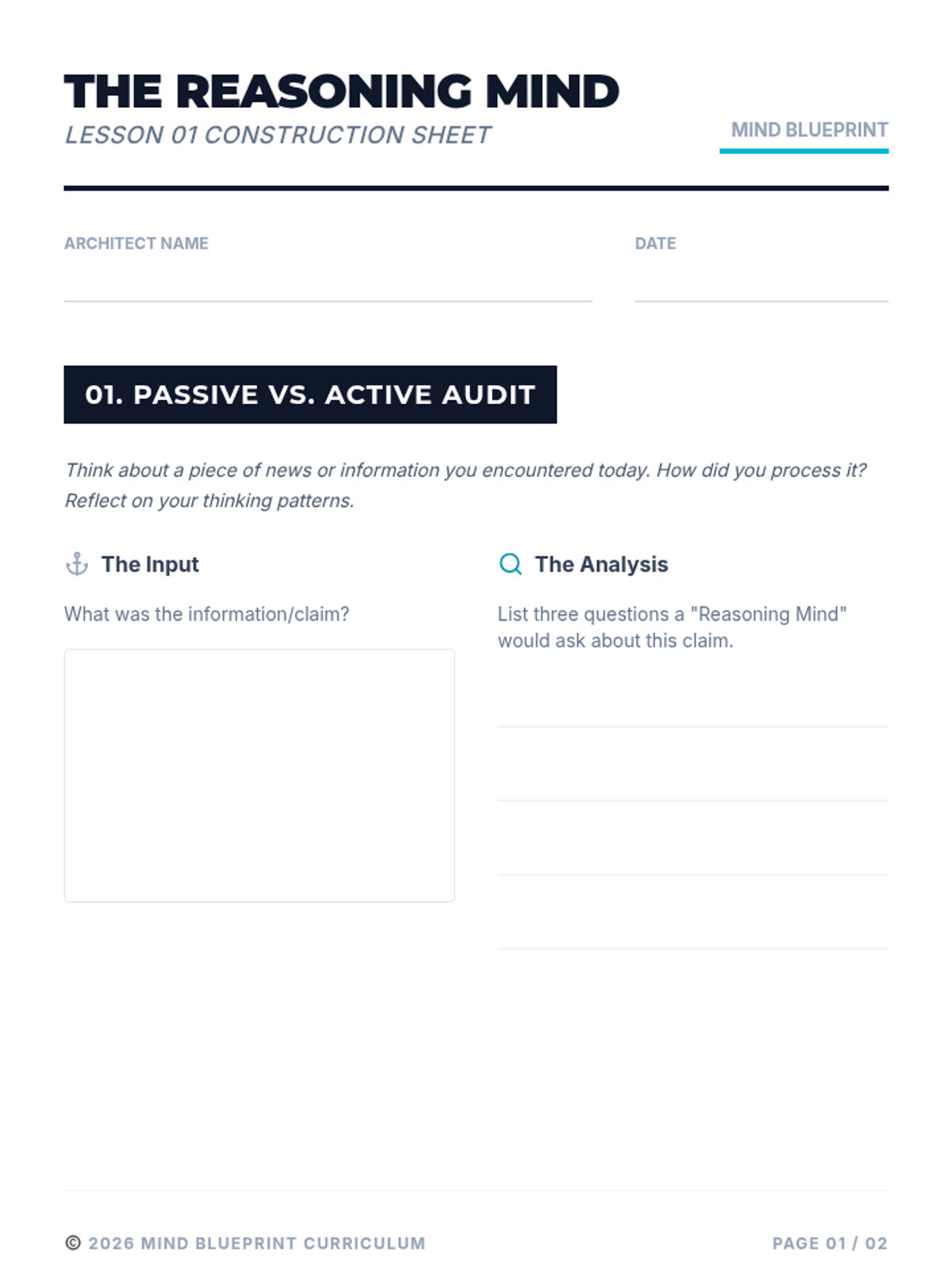
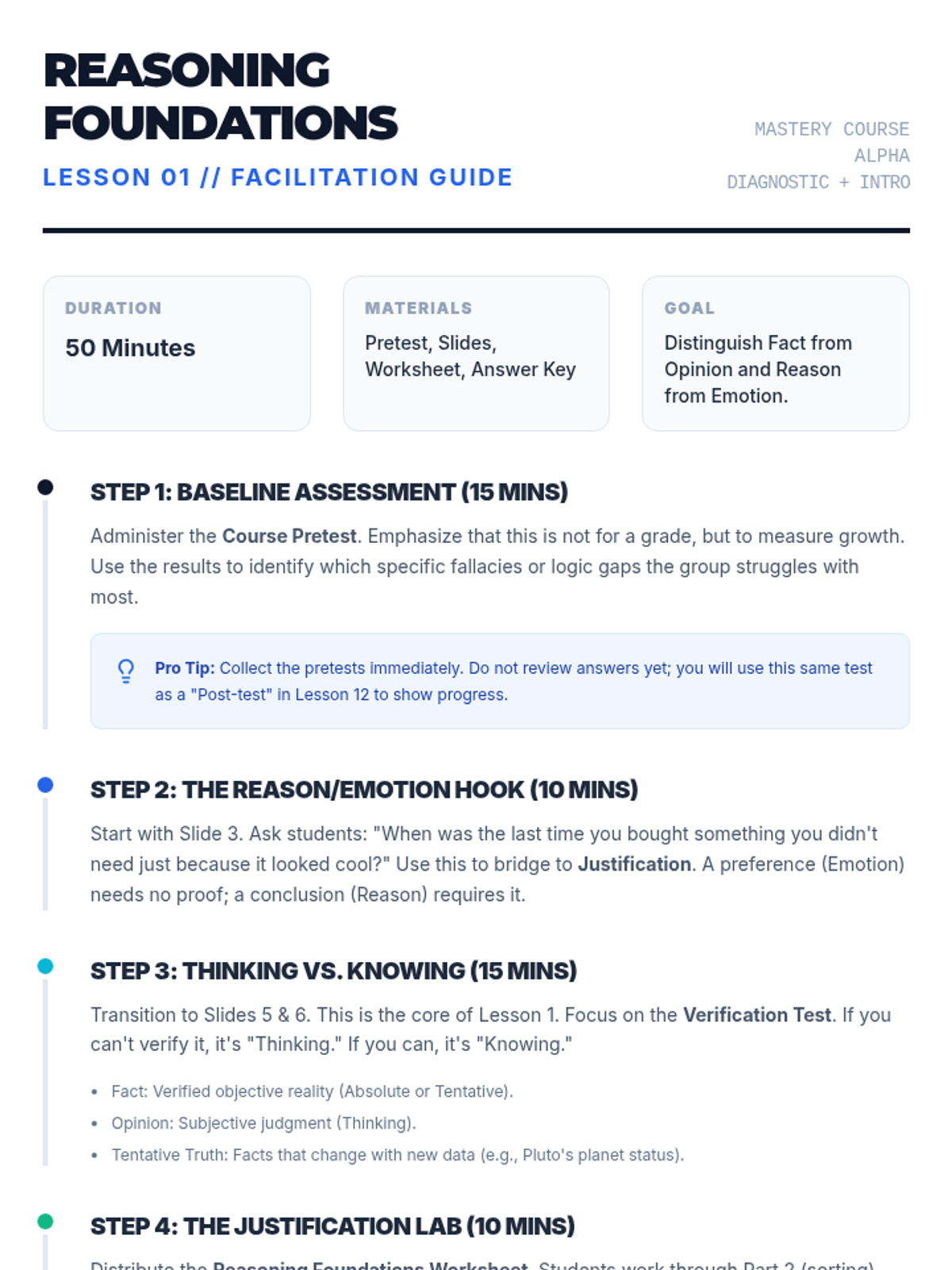
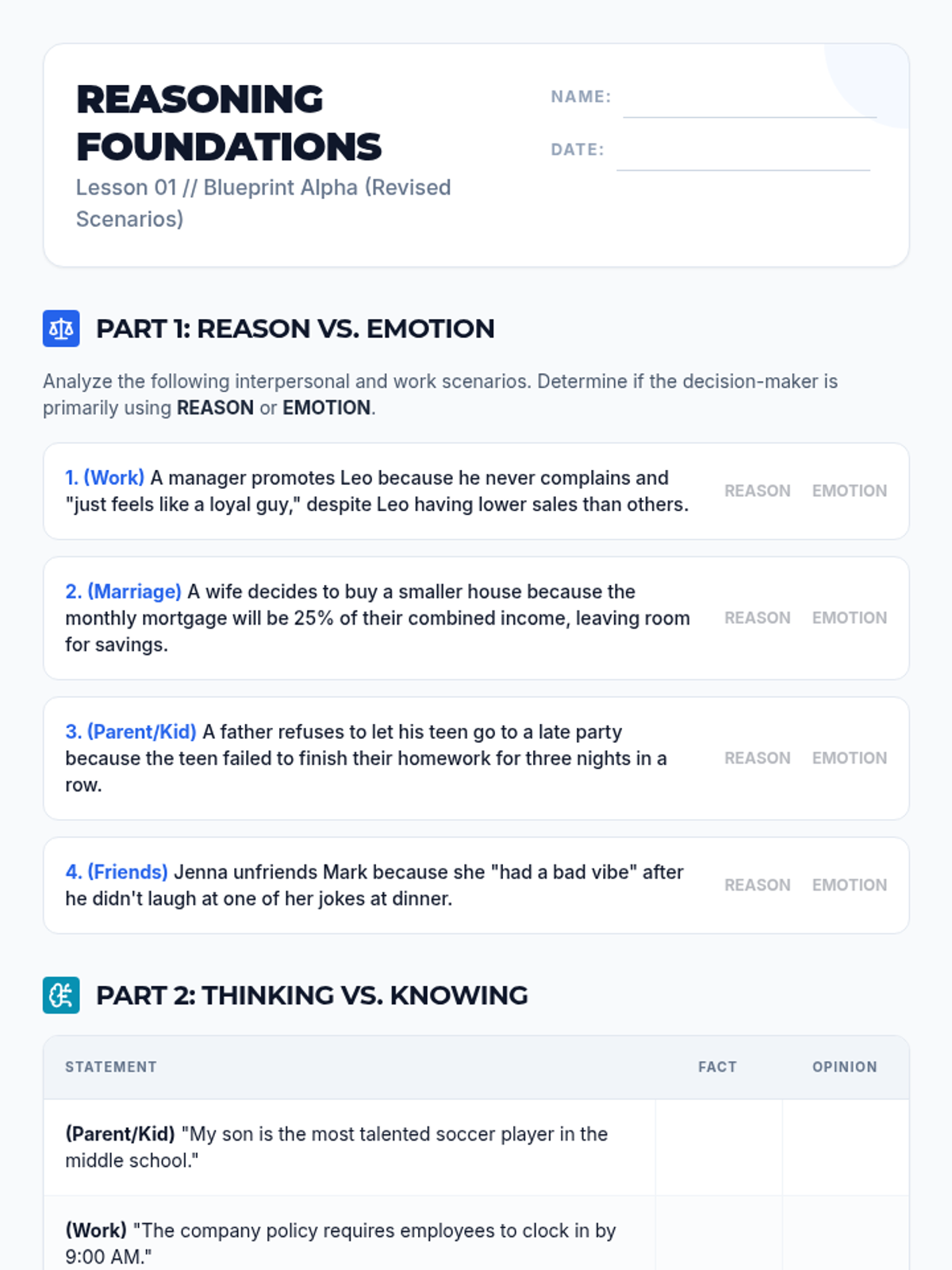
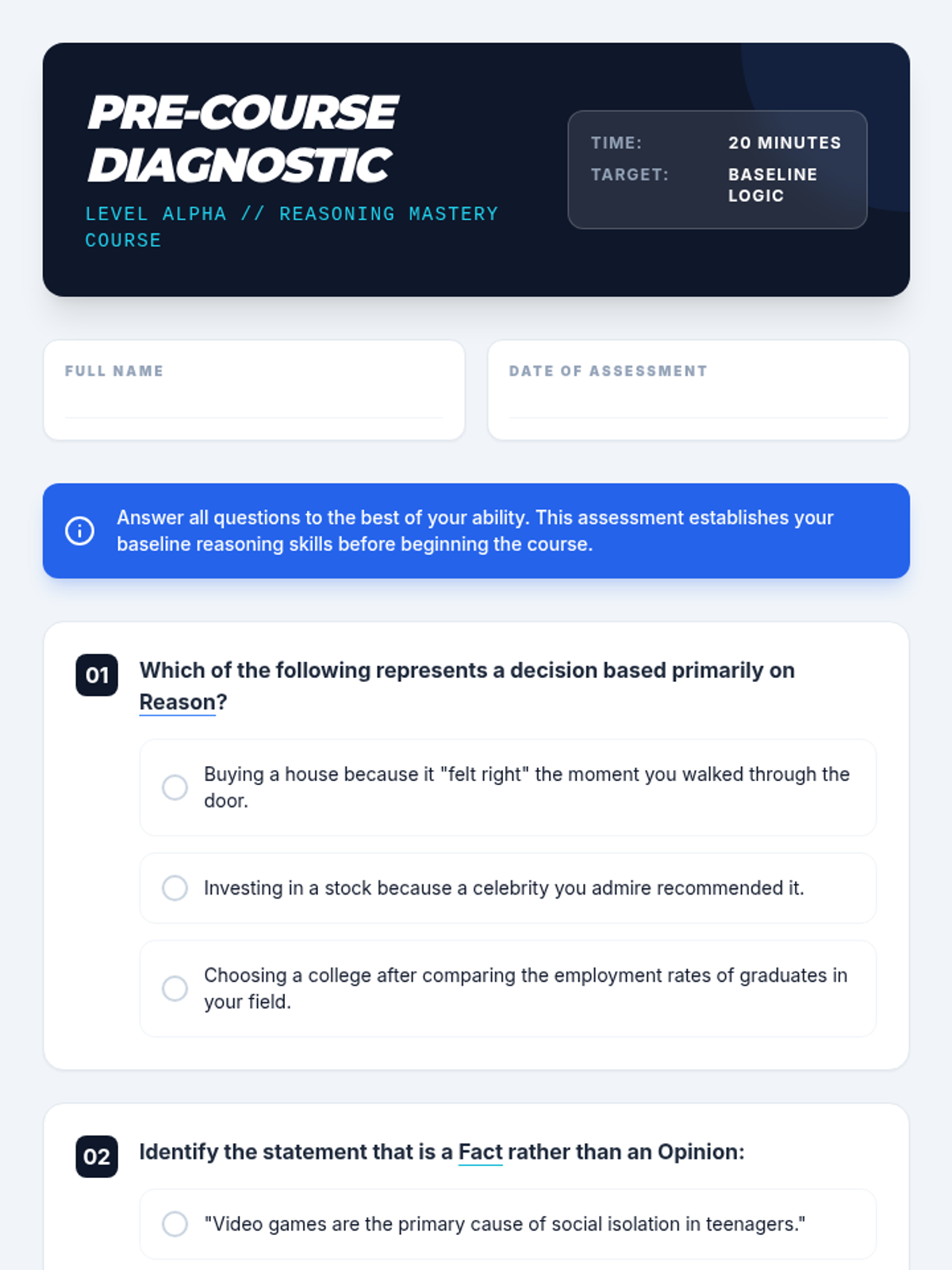
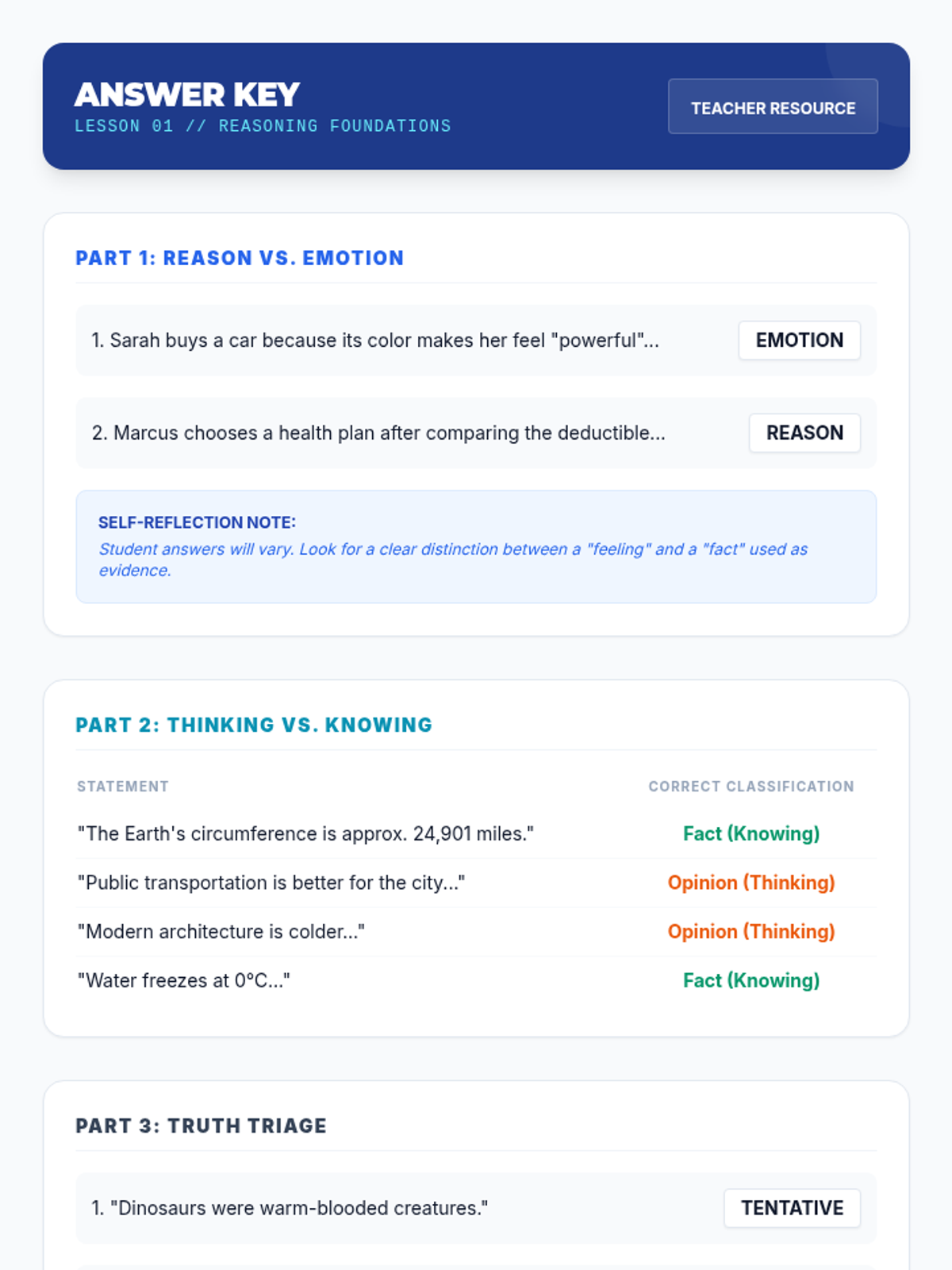
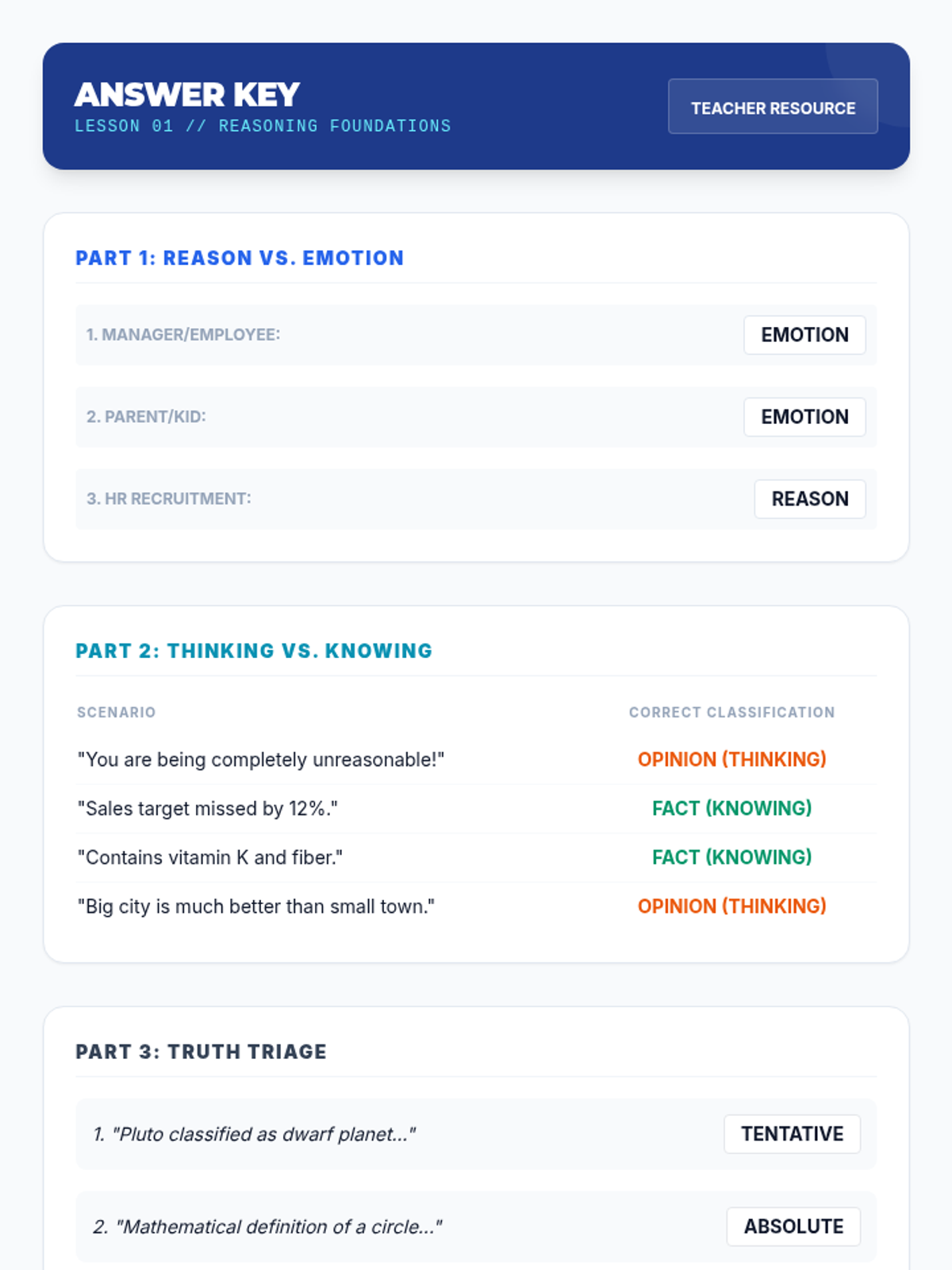
Establishes the foundation of critical thinking by distinguishing between reason and emotion, and fact versus opinion (thinking vs. knowing). Includes the course Pretest.
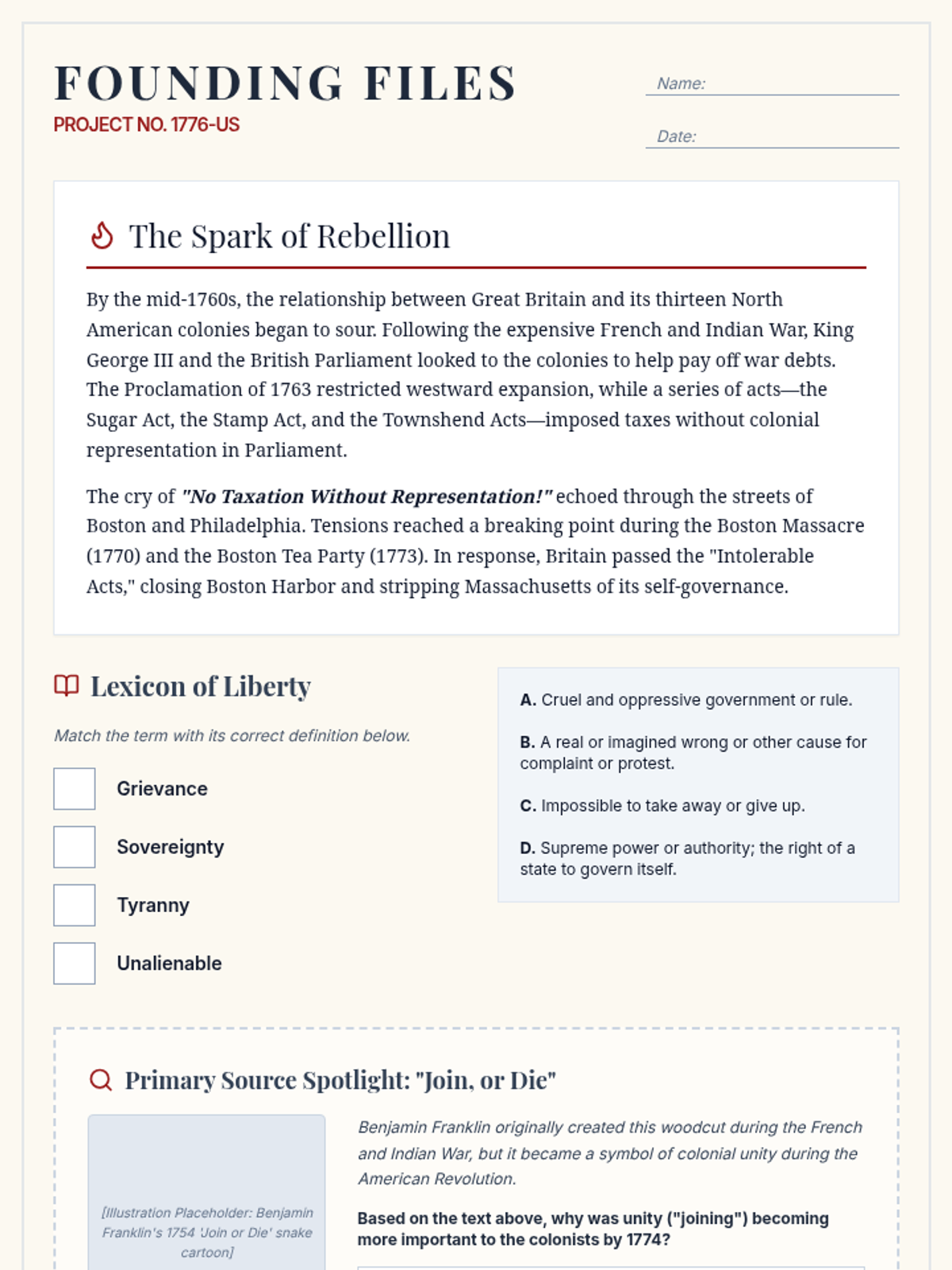
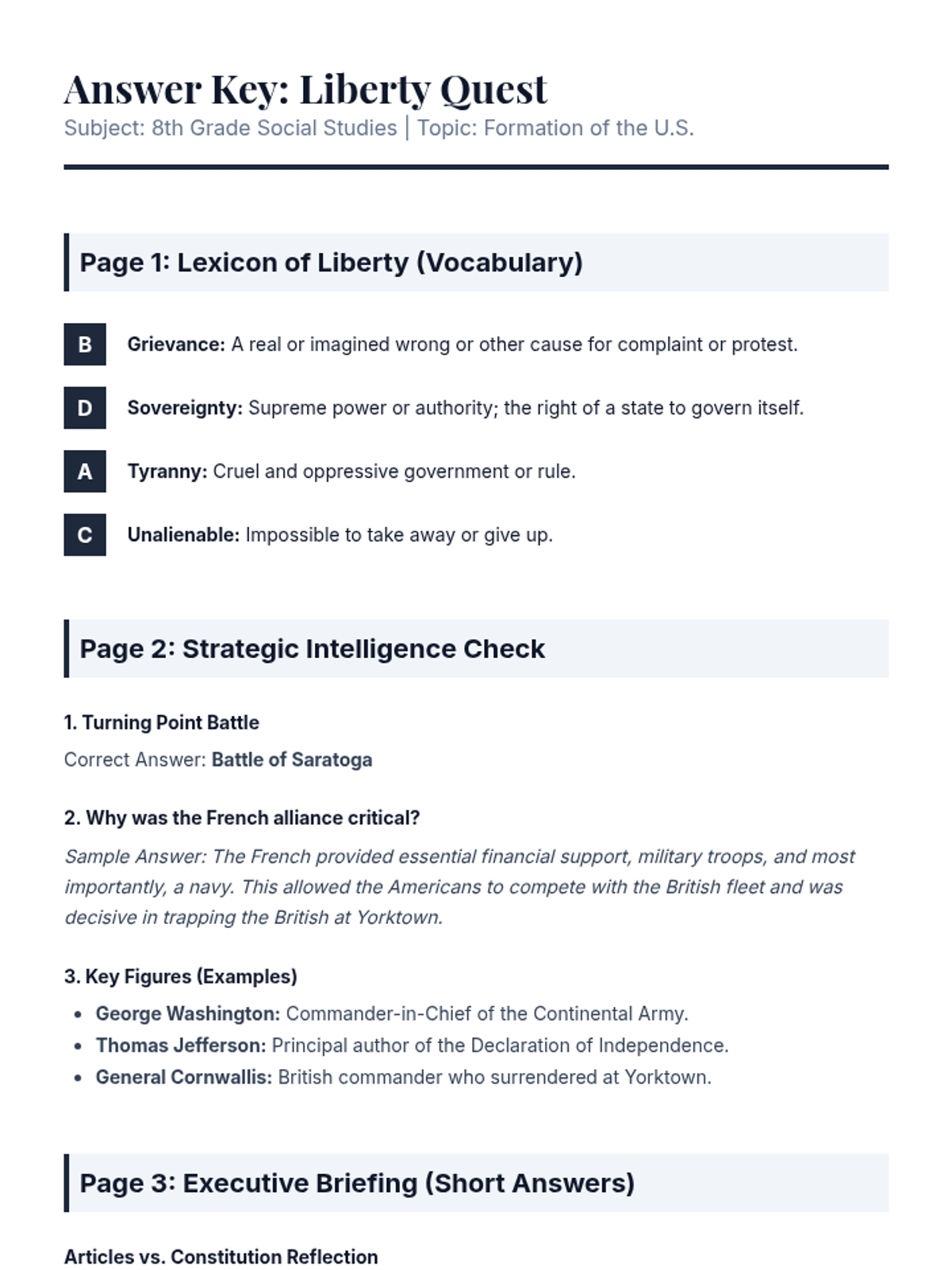
An in-depth exploration of the American Revolution and the formation of the United States, focusing on key events, influential figures, and the ideological foundations of the new republic.
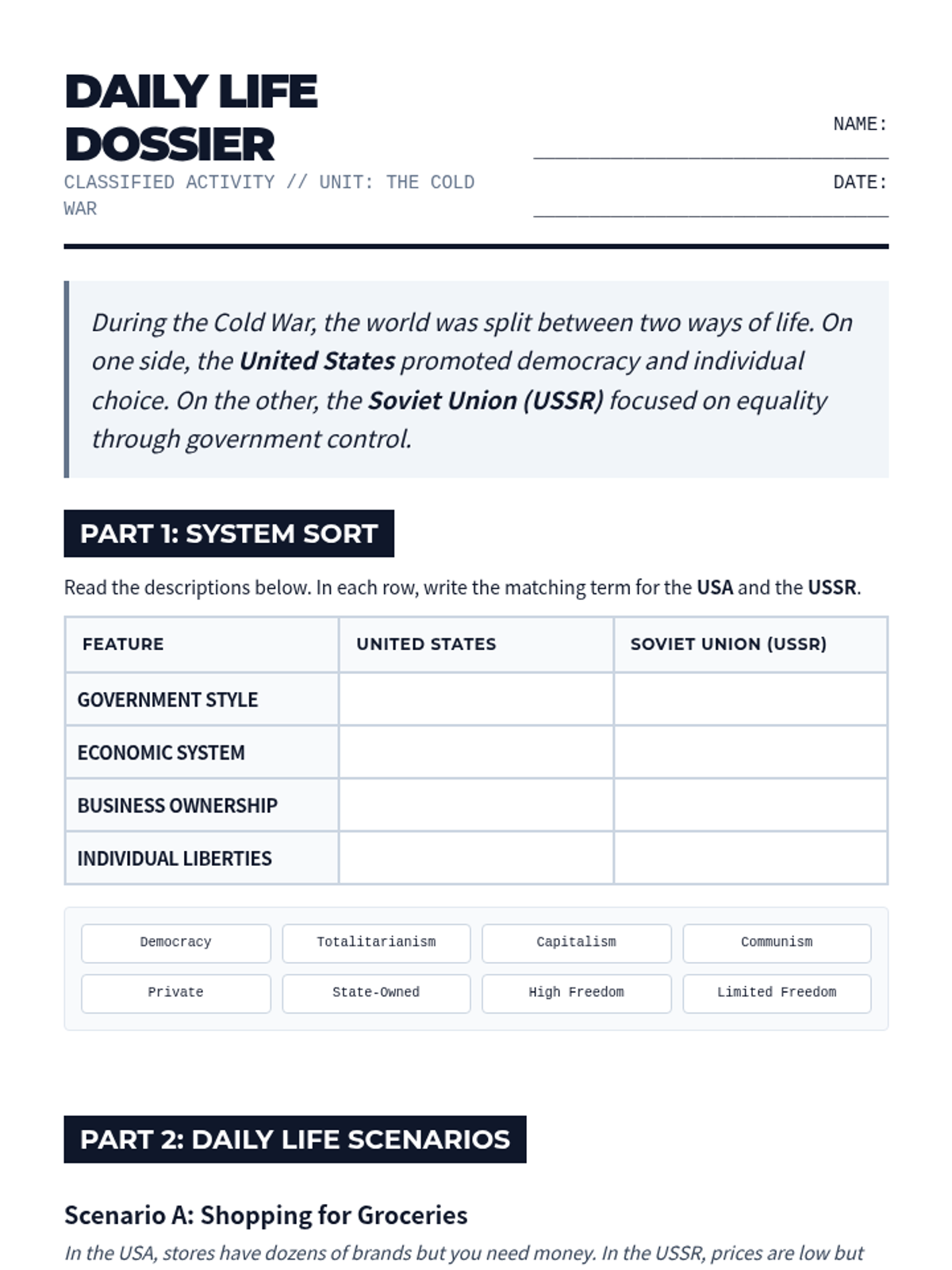
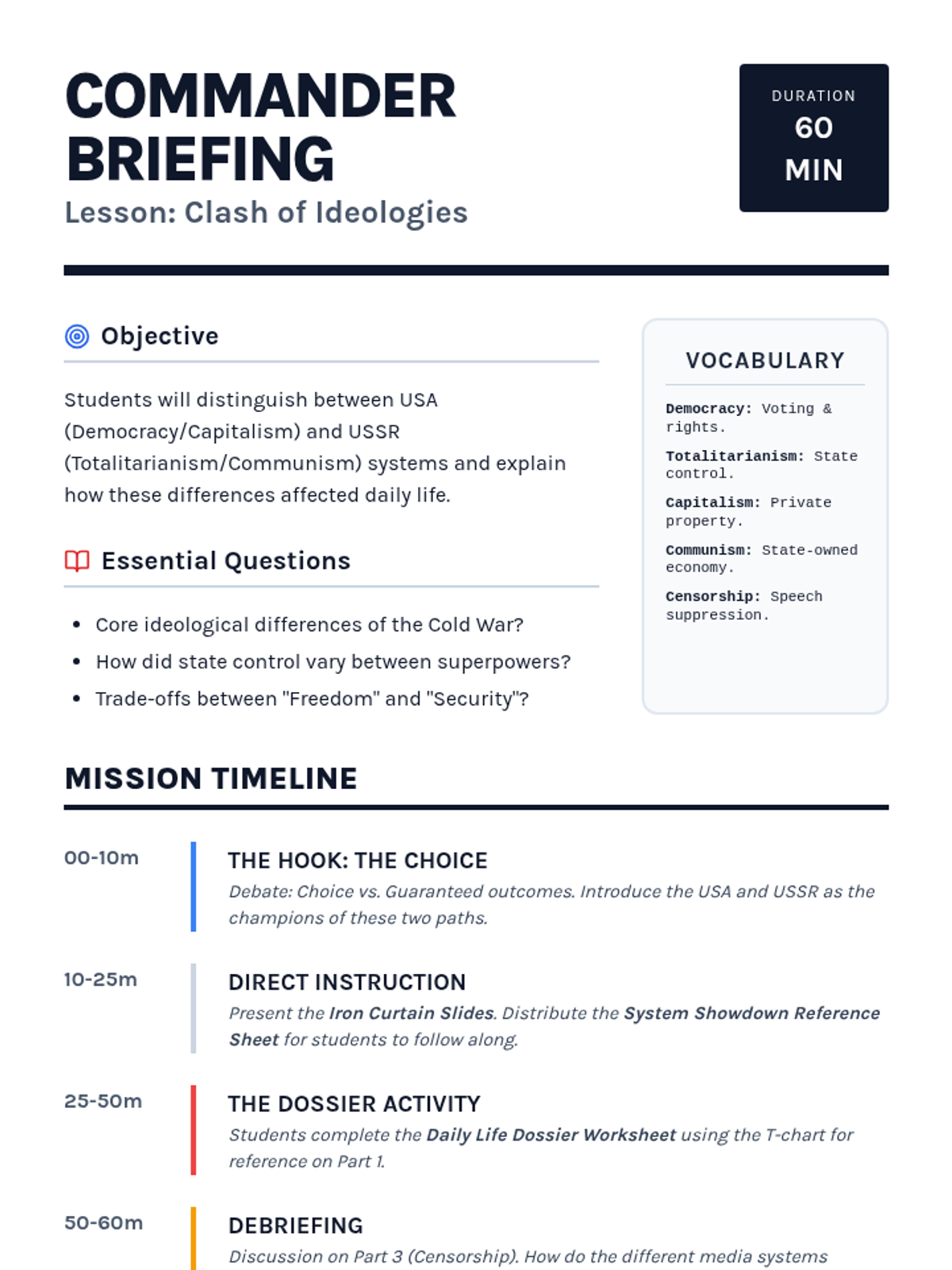
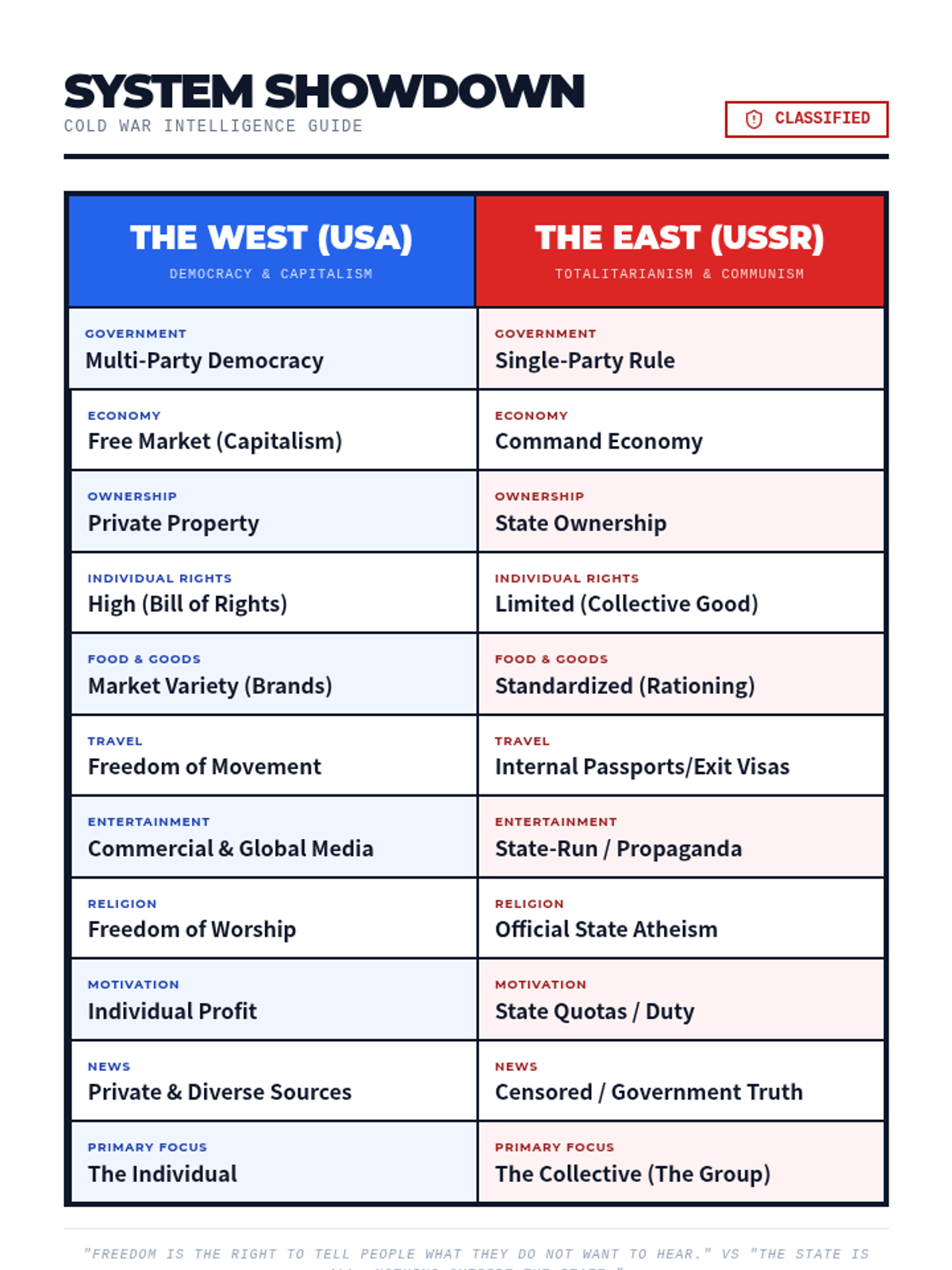
A comparative study of the government structures, economic systems, and daily life in the United States and the Soviet Union during the Cold War era. Students will analyze the fundamental differences between democracy/capitalism and communism/totalitarianism.
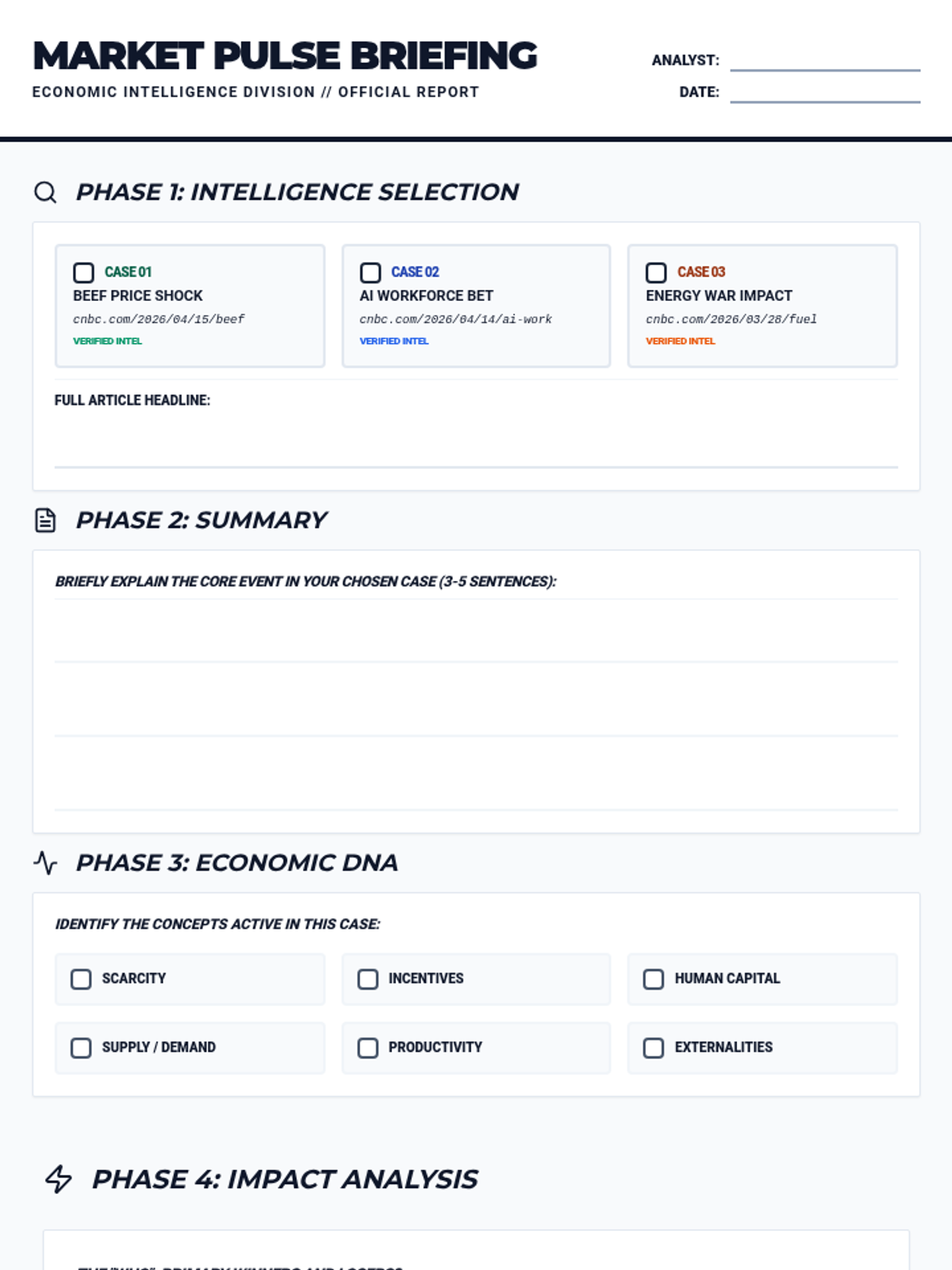
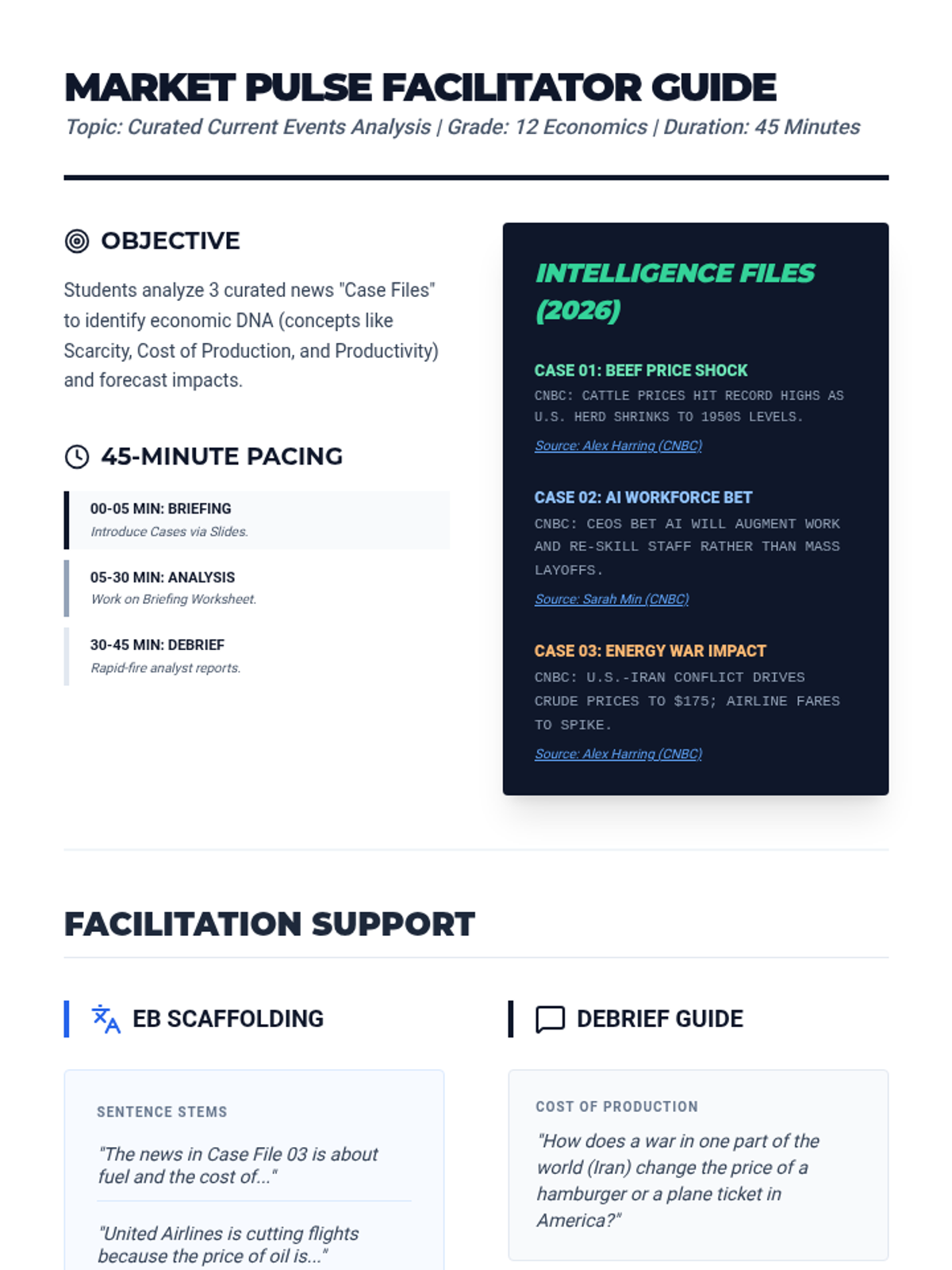
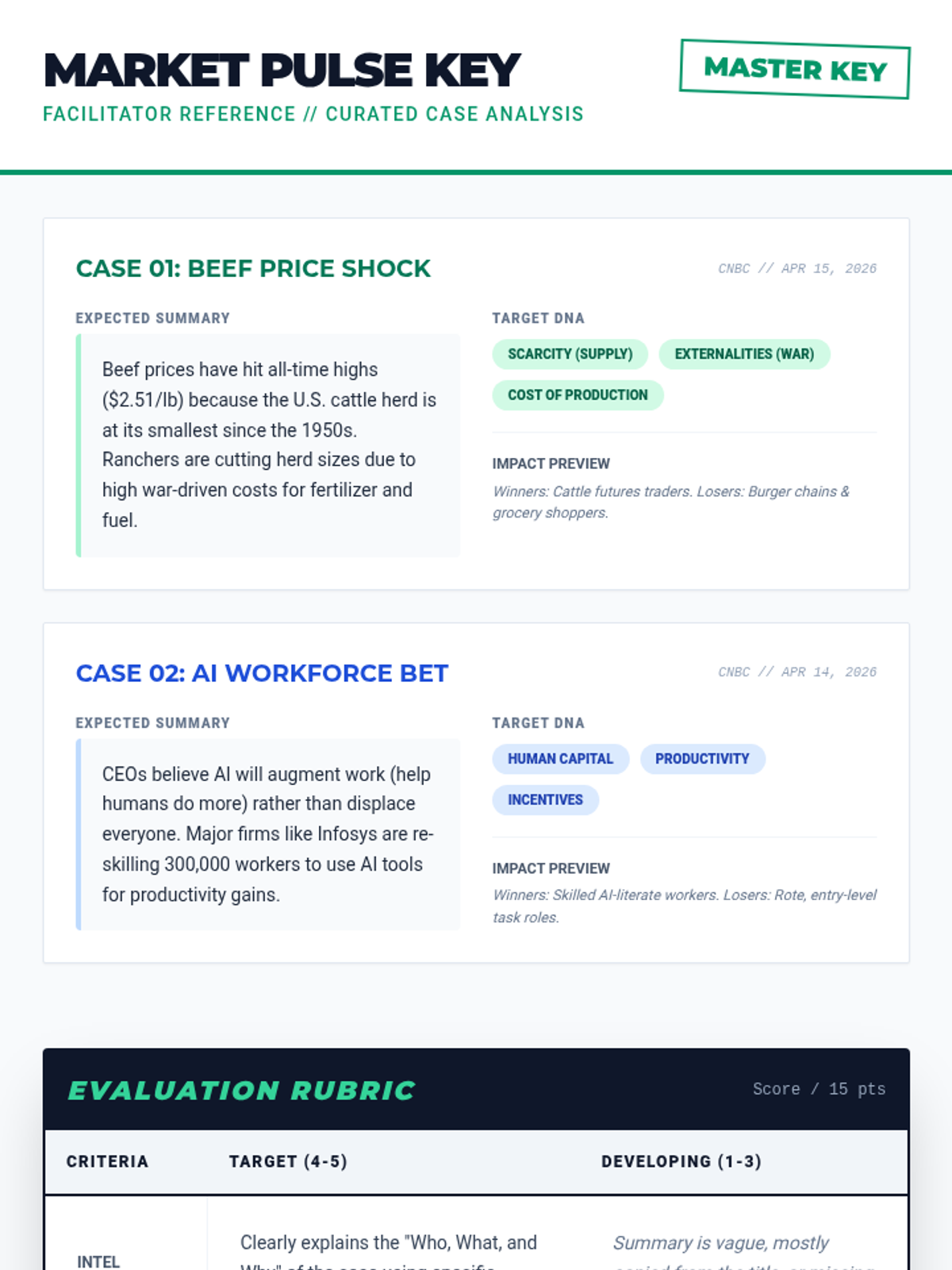
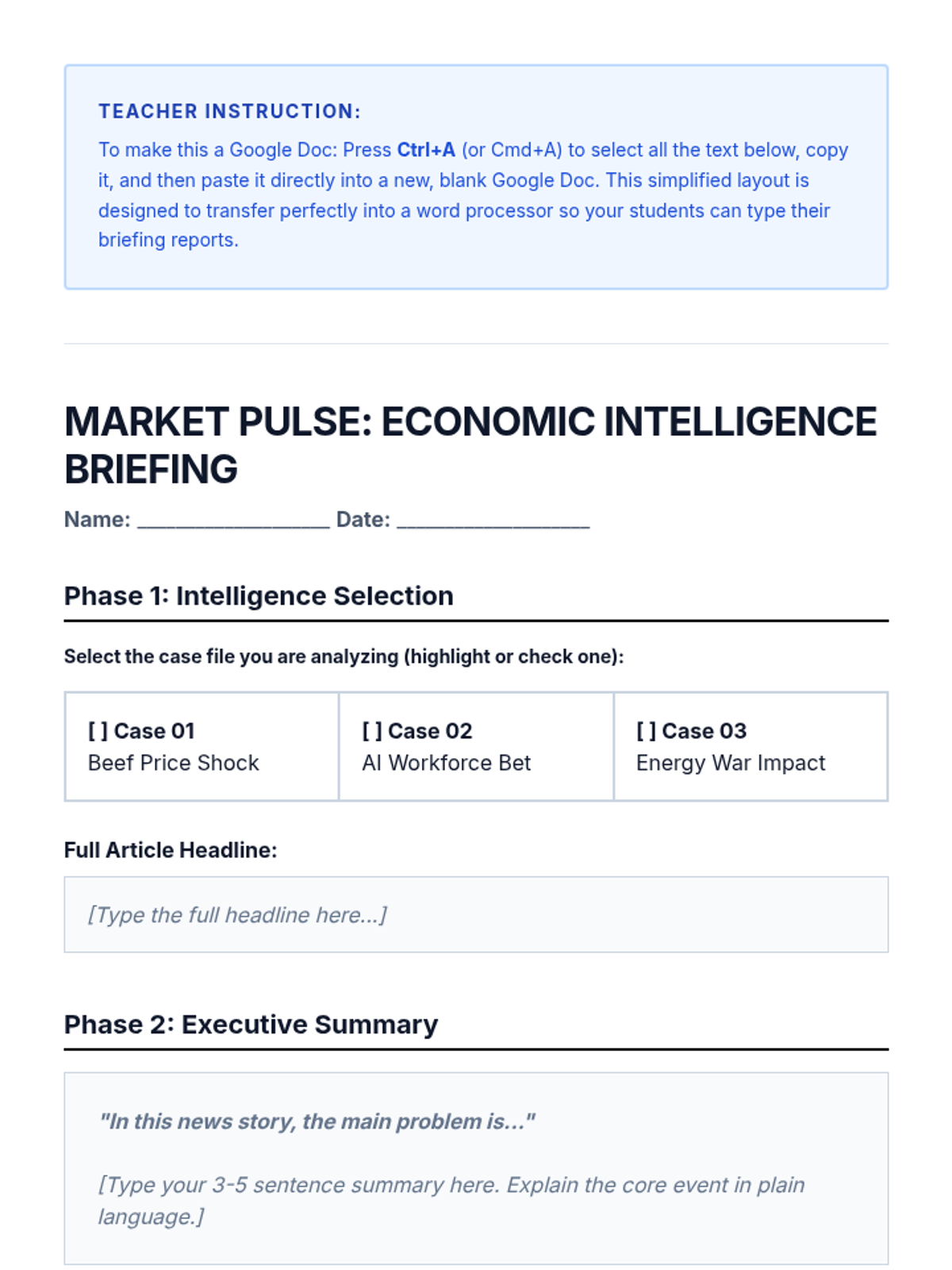
A fast-paced current events analysis lesson where students act as economic analysts to decode real-world news using core economic concepts. Designed for a single 45-minute period with heavy scaffolding for Emergent Bilingual learners.
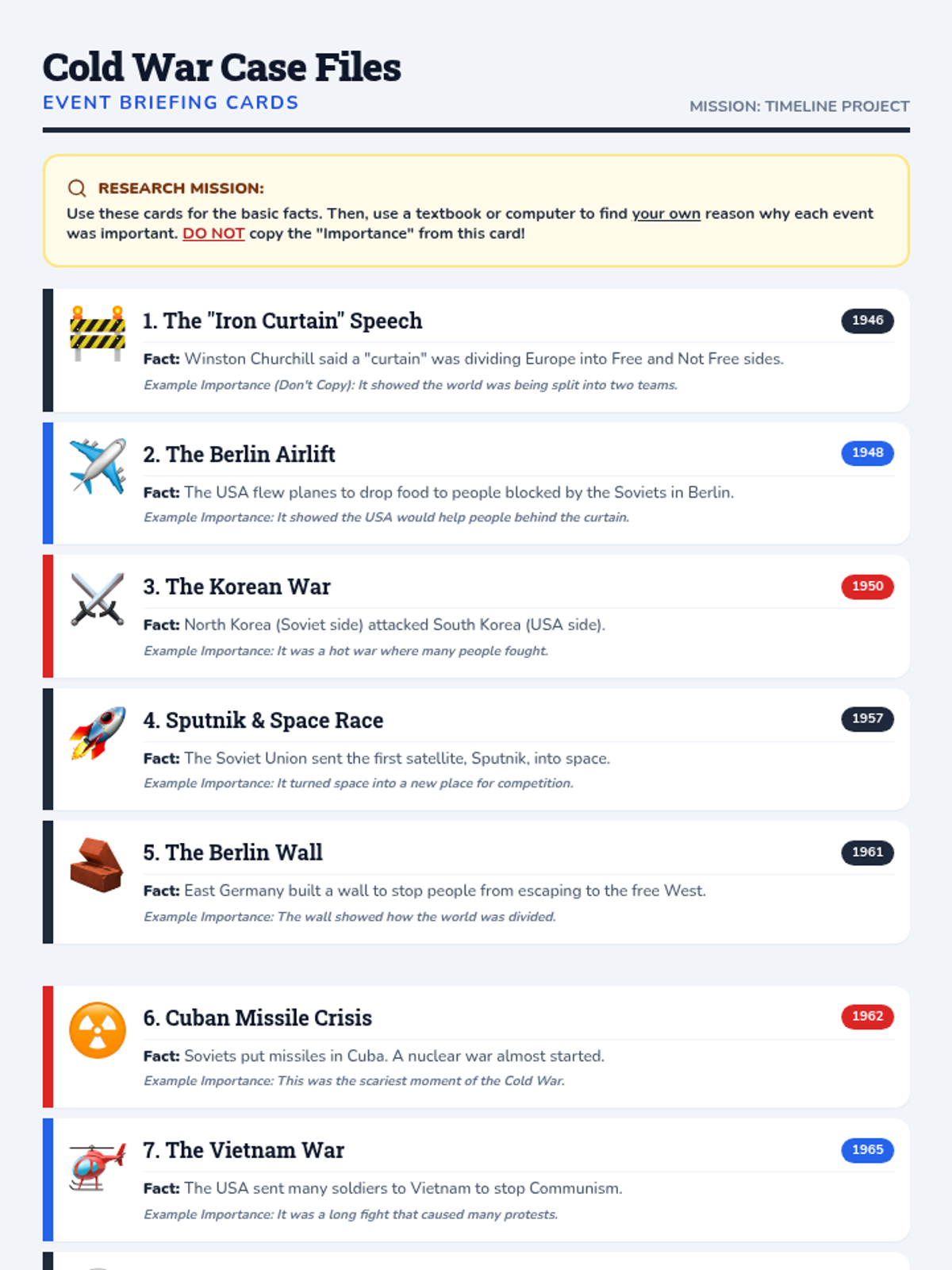
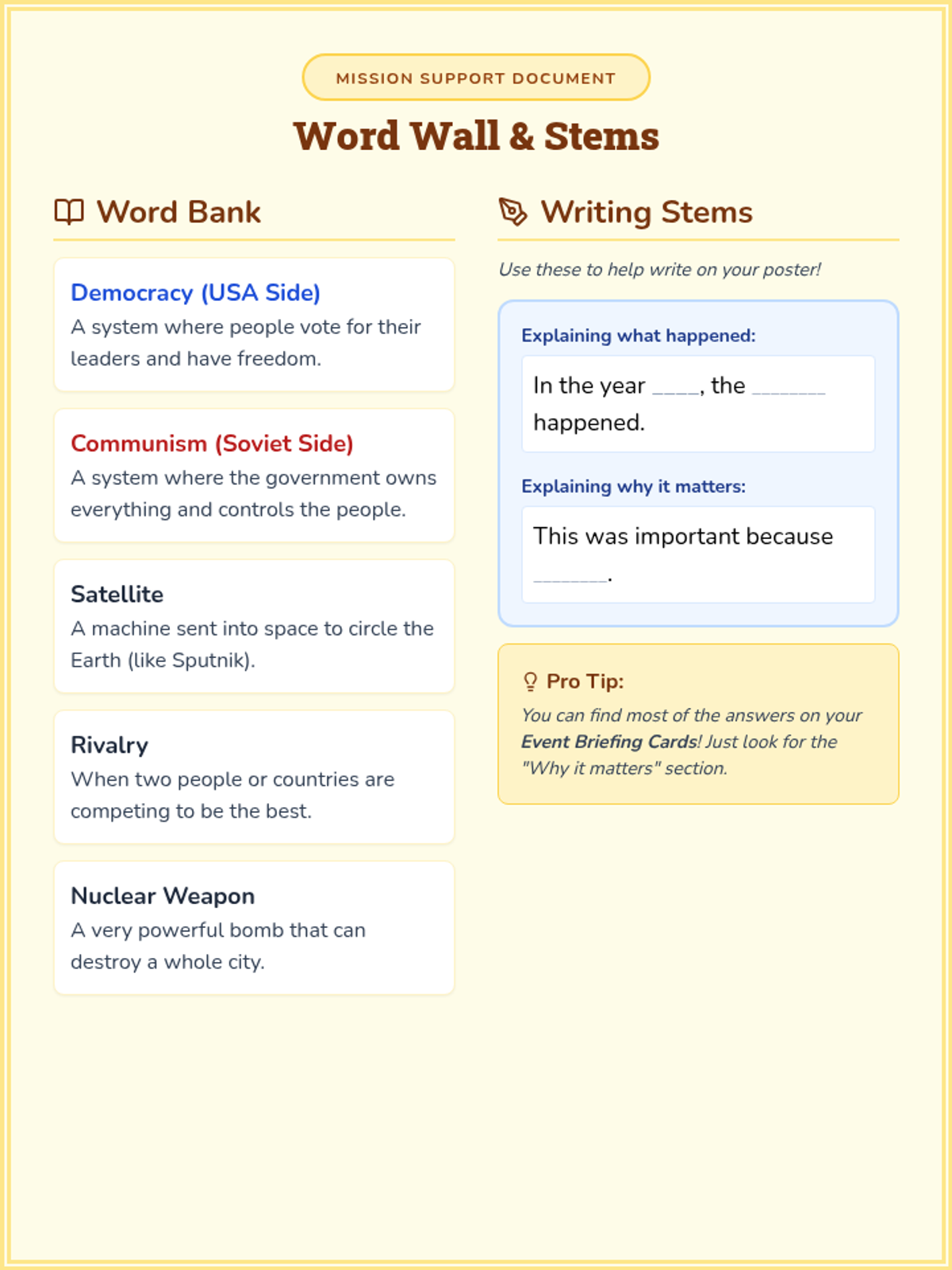
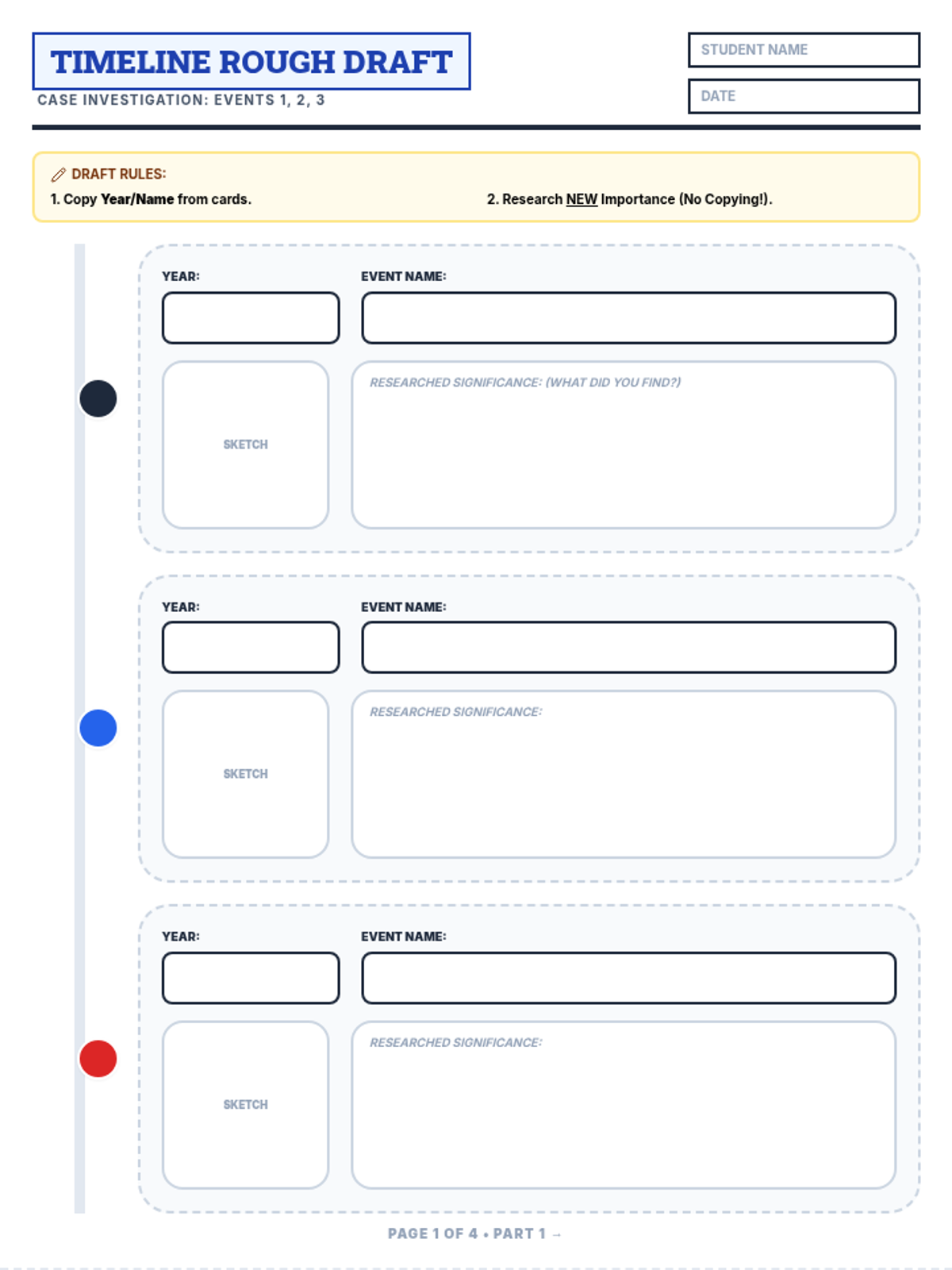
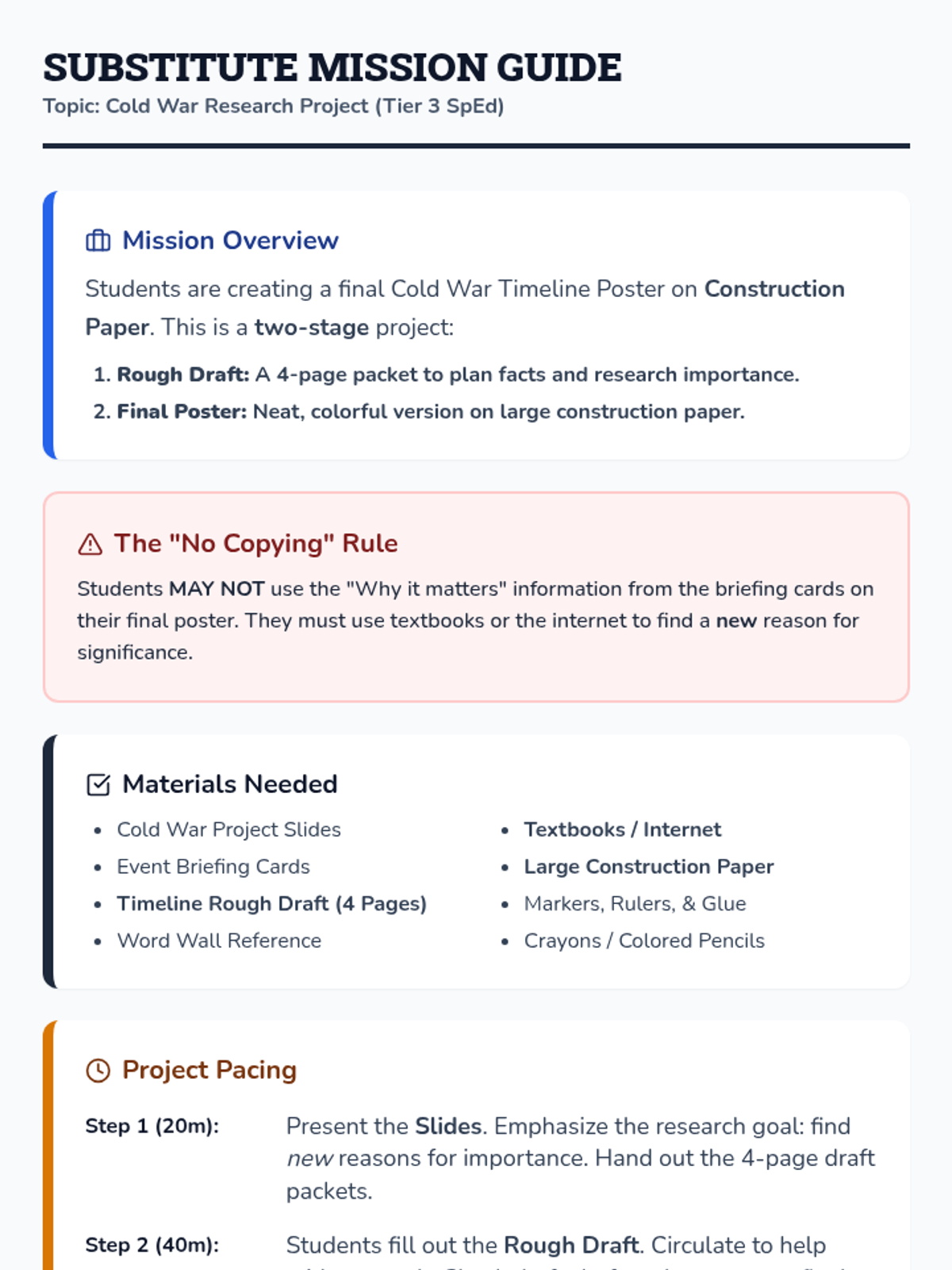
A simplified project-based lesson on the Cold War designed for Tier 3 Special Education students. Students use a 'Case File' approach to build a timeline of 10 major events with provided stems and visual supports.