Updated Persepolis identity presentation with a restructured Slide 2 for better visual organization and clarity. Corrected font sizes (minimum 24px) and improved hierarchy for classroom visibility.
A comprehensive assessment rubric for the Justice Journey Map project. It evaluates students on research depth, analysis of spatial impact, visual communication through cartography, and the quality of their personal reflection on activism.
A step-by-step activity guide that leads students through the physical or digital creation of their Justice Journey Map. It includes instructions for drafting the geographic base, creating descriptive milestone cards, and using visual 'threads' to represent the movement between locations.
A structured research organizer for students to document their chosen unsung hero. It features dedicated sections for identifying geographic milestones, tracking city/address details, summarizing historical significance, and analyzing the spatial impact of activism.
A visual presentation for students introducing the concept of 'unsung heroes' in social justice. It contrasts famous figures with lesser-known activists, explains the importance of geographic context in activism, and outlines the Justice Journey Map project mission.
A comprehensive teacher facilitation guide for the 'Justice Journey' lesson. It includes learning objectives, project pacing, instructional strategies for defining unsung heroes, and differentiation tips for various learner levels.
Combined assessment and exit ticket for Lesson 1, updated to ensure all student content fits on page one and all teacher content fits on page two. Features a print-friendly design and rubric.
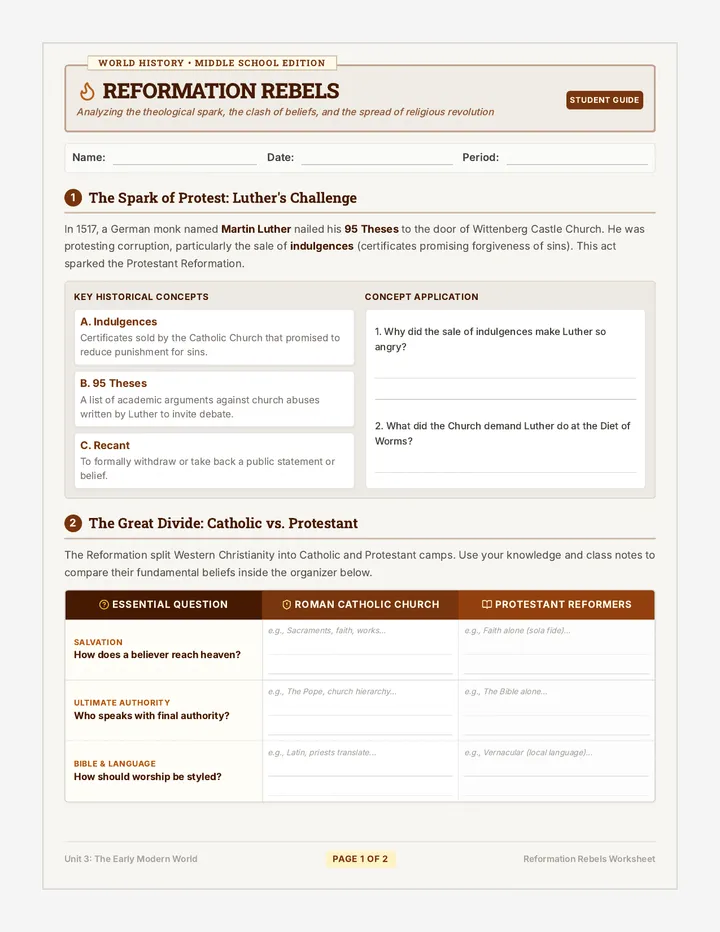
Student worksheet for Lesson 1, updated to ensure all content fits on a single page. Includes vocabulary, matching, and short response areas with optimized spacing. Character counts in fill-in-the-blanks corrected.
Comprehensive teacher guide and script for Lesson 1, updated to fix page breaks and ensure consistent facilitation labeling. Covers timing, alignment, and specific prompts.
Introductory slide deck for Grade 9 information literacy, focusing on distinguishing between different types of information resources within the ecosystem. Updated for better student prompts and visual clarity.
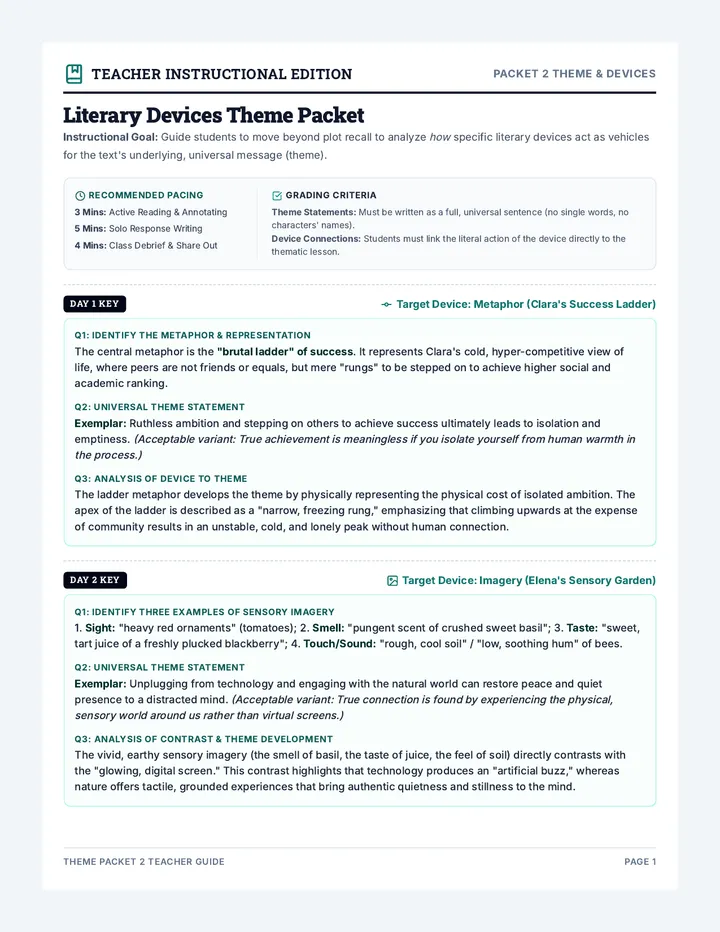
Teacher answer key for the Flapper Style Worksheet, including a breakdown of positive and negative diction, correct multiple choice responses, and a scoring guide for the inference question. Updated to match revised worksheet line numbering and layout.
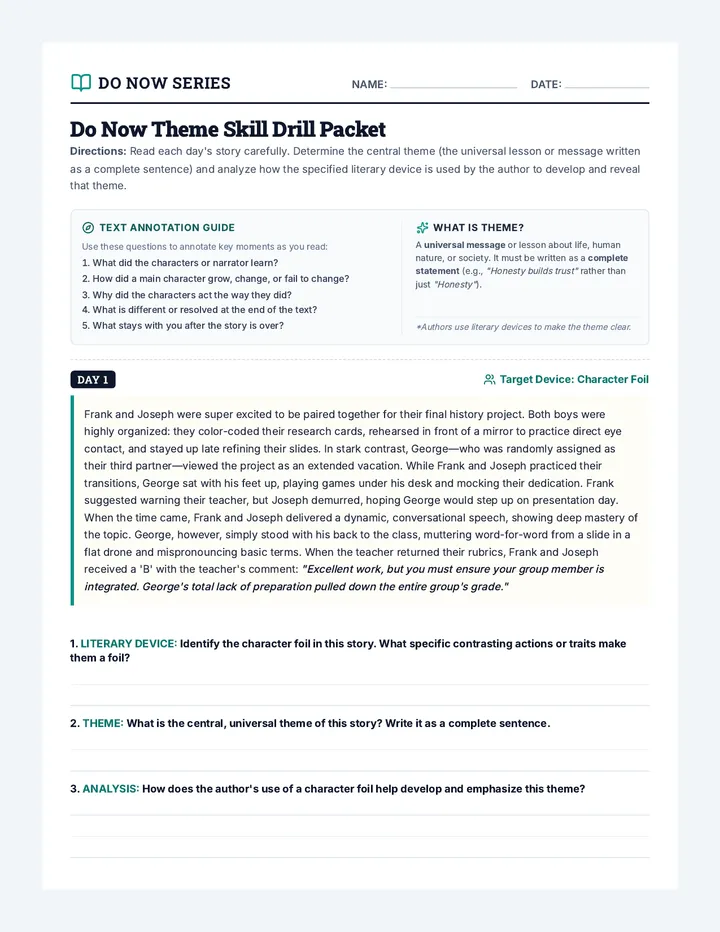
A 1st-grade reading level worksheet for middle schoolers about 1920s flapper culture. Students identify positive and negative diction in a numbered-line text and answer comprehension and inference questions. Revised for better line alignment and layout.
A neutral T-chart graphic organizer for analyzing cell phone policies, featuring a vocabulary bank and space for a proposed policy statement.
A neutral visual analysis worksheet with four cell phone scenarios to help students identify pros and cons based on icon-based prompts.
A neutral 4-slide presentation for introducing the cell phone policy analysis lesson, defining the policy spectrum and impact assessment goals.
A neutral teacher's guide for the cell phone policy analysis lesson, detailing instructional steps, objectives, and differentiation strategies.