Visual aids for the introductory activity where students model particle movement and temperature relationships. Includes visual representations of particles in different energy states and game rules for the role-play activity.

A 6-slide design challenge deck designed to guide students visually through the concepts of magnetism, non-contact forces, material testing, and iterative maze engineering.
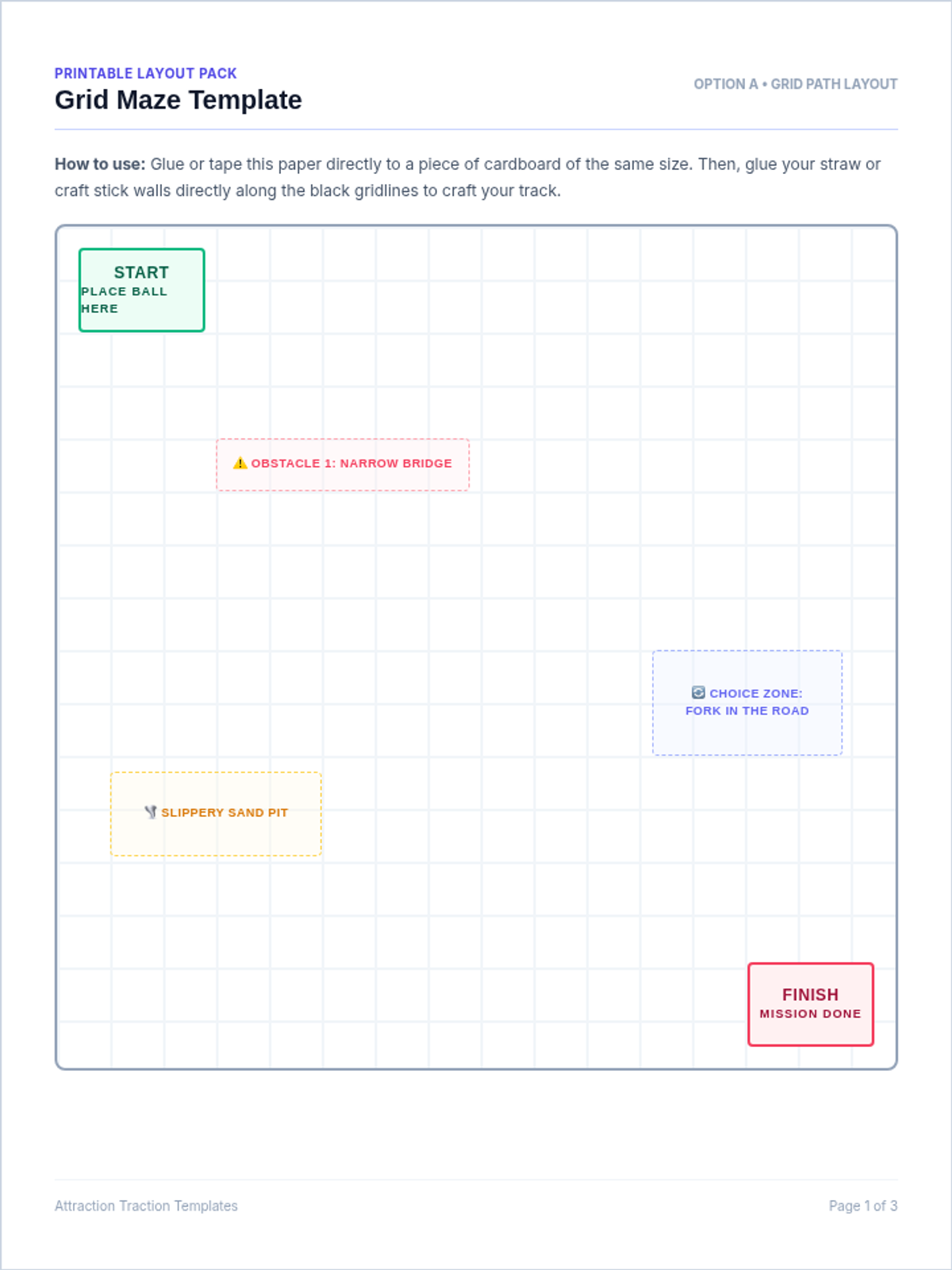
A 3-page printable pack featuring two complete pathing templates (orthogonal grid and concentric radial maze designs) and a hands-on material testing log sheet.
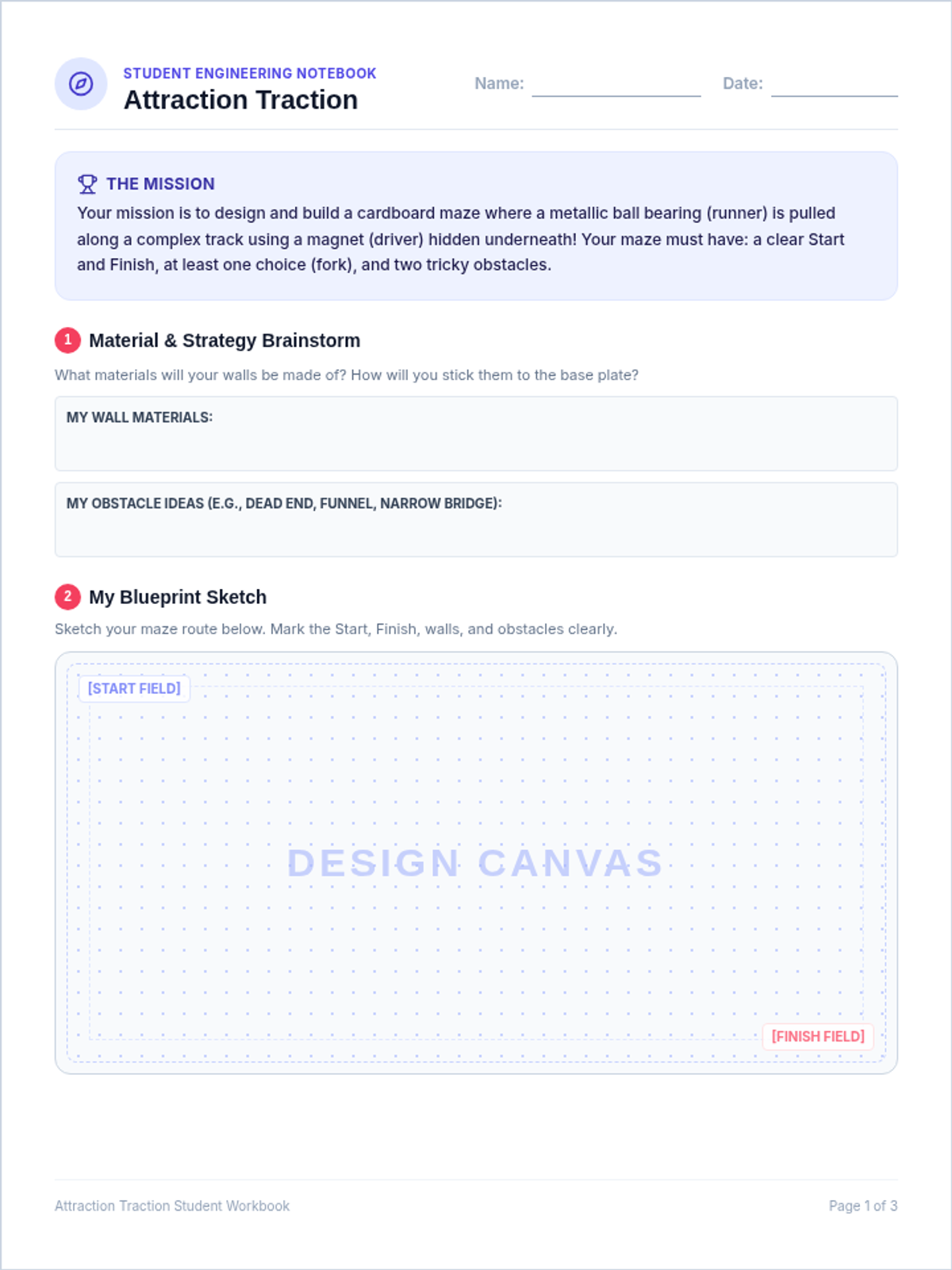
A 3-page student-facing STEM workbook containing a blueprint planning sheet, testing/iteration log, and a high-retention exit ticket with reflective writing prompts about magnetism and force vectors.
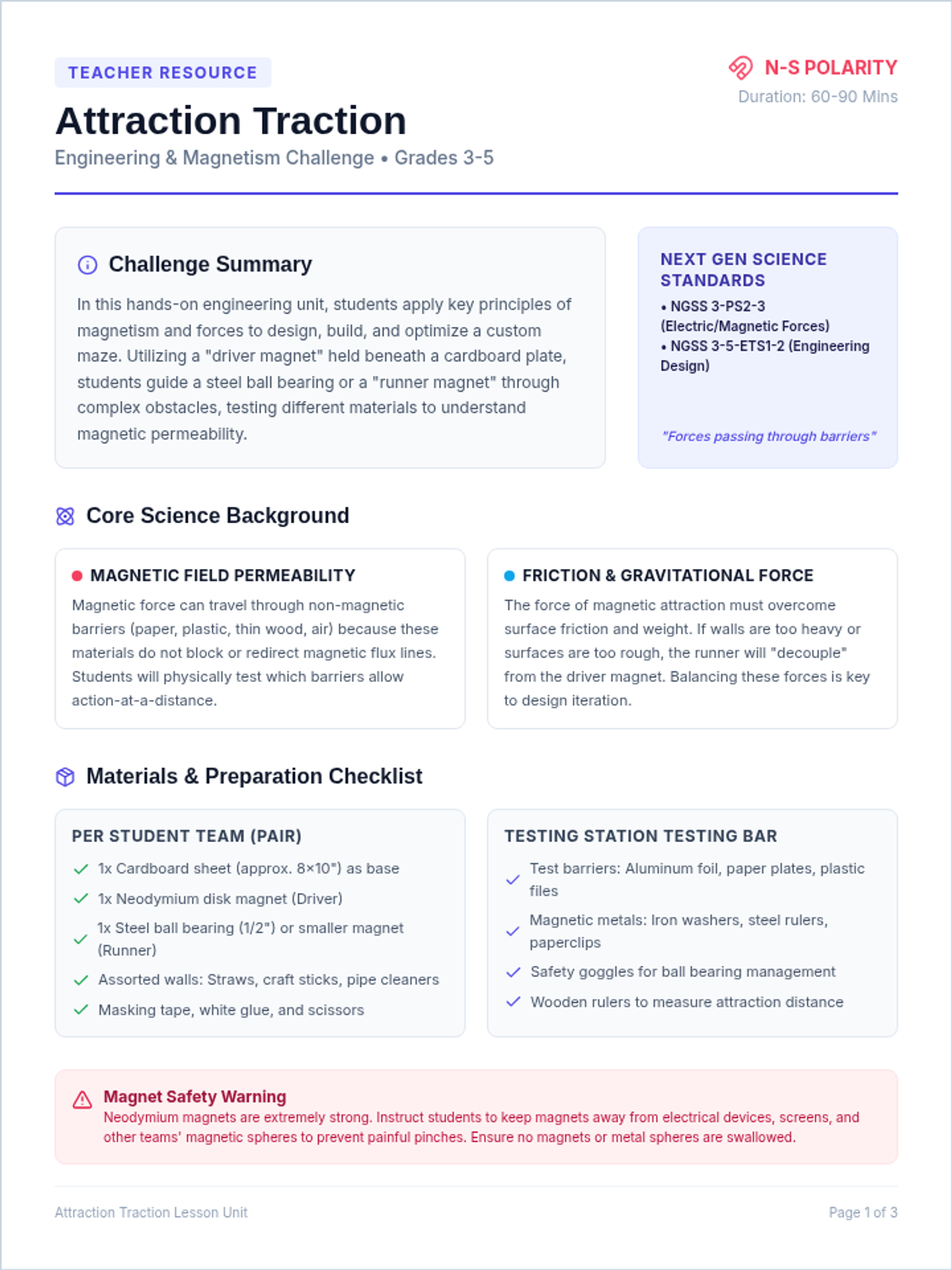
A 3-page printable guide for teachers featuring background science, step-by-step facilitation prompts, material checklists, lesson timeline, and a rubric for the Attraction Traction magnetic maze design challenge.
A 2-page print-ready teacher instructional plan and facilitation guide for running the Force Field Engineers magnet maze lab. Includes NGSS standards, a materials checklist, lesson pacing, inquiry prompts, a 3-tier grading rubric, and classroom troubleshooting tips.
A 2-page collection of printable layout templates, assembly components, and cutouts for building custom student magnet mazes. Includes a 1-inch printable grid board and a materials folding lab sheet.
A 2-page print-ready student lab handbook for the Magnet Maze engineering challenge. It includes a material testing matrix, maze blueprinting grid, testing logs, and reflective engineering prompts.
A 2-page teacher facilitation guide containing next-generation science standards (NGSS) alignments, a detailed 60-minute pacing guide, visual setup directions, a structured engineering design rubric, and a guide to solving common student misconceptions.
A 5-slide visual presentation for teachers to introduce non-contact forces, magnetic fields, attraction/repulsion, and the step-by-step engineering constraints of the Magnet Maze challenge.
A 3-page student activity guide and engineering worksheet for the magnet maze challenge. Includes design constraints, a layout sketching grid, material testing logs, and conceptual reflection questions on non-contact forces and poles.
A single-page formative assessment exit ticket where students analyze vague steps for logical loopholes, practice writing highly precise instructions, and explain why exact detail is crucial for programming.
A highly-structured 2-page student worksheet that helps kids brainstorm, sketch, and systematically draft chronological, step-by-step algorithms for building a marshmallow fluff and jelly sandwich.
A comprehensive, step-by-step facilitation guide for teachers on how to execute the literal-interpretation marshmallow fluff and jelly demo, complete with loophole guides, common student instruction errors, and reflection prompts.
A vibrant, projection-ready slide presentation that guides students through the 'Exact Instructions Challenge'. It establishes the rules of the robot-teacher demo, showcases ingredients, sets up the writing activity, and leads the class debrief on the importance of clarity.
A high-impact, beautifully animated instruction slide deck utilizing a mysterious deep ocean theme. Includes core slide designs illustrating Physical and Chemical weathering concepts with rich visuals and pirate expedition tie-ins.
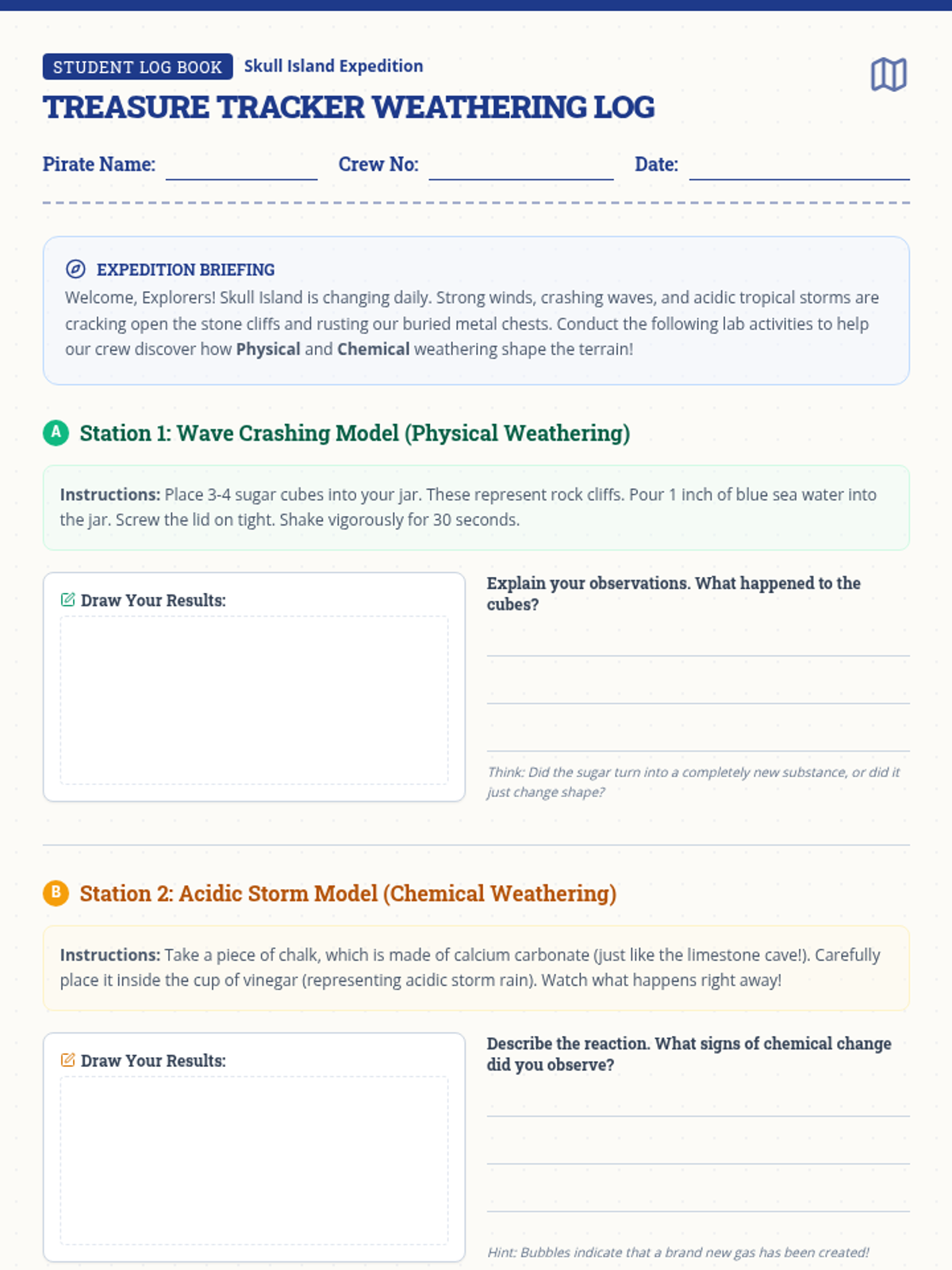
A student-facing laboratory recording sheet and assessment. Features beautifully framed blank visual recording areas, handwriting-spaced prompt lines, and scenarios to test students' mastery of chemical versus physical weathering in a high-seas context.
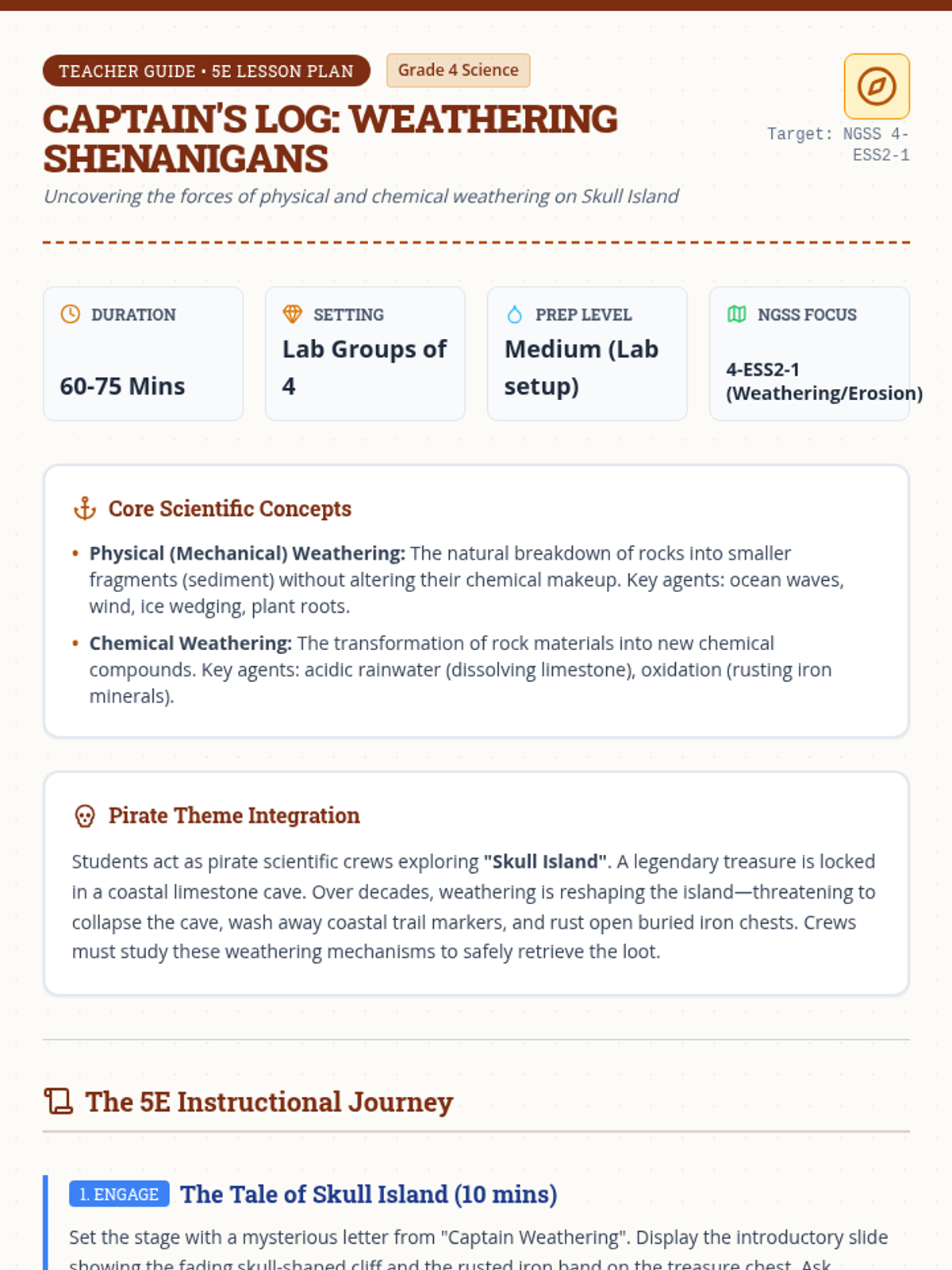
A comprehensive 5E Teacher Guide structured around the NGSS 4-ESS2-1 standard. Uses a pirate theme of Skull Island to guide teachers through facilitating lessons on physical and chemical weathering, complete with laboratory station instructions and master answer keys.
A 2-page complete teacher facilitation guide and answer key for the Microbot Mission viewing unit. It provides lesson timelines, pre- and during-viewing classroom discussion prompts, and fully explained numerical solutions for all math and geometry challenges.
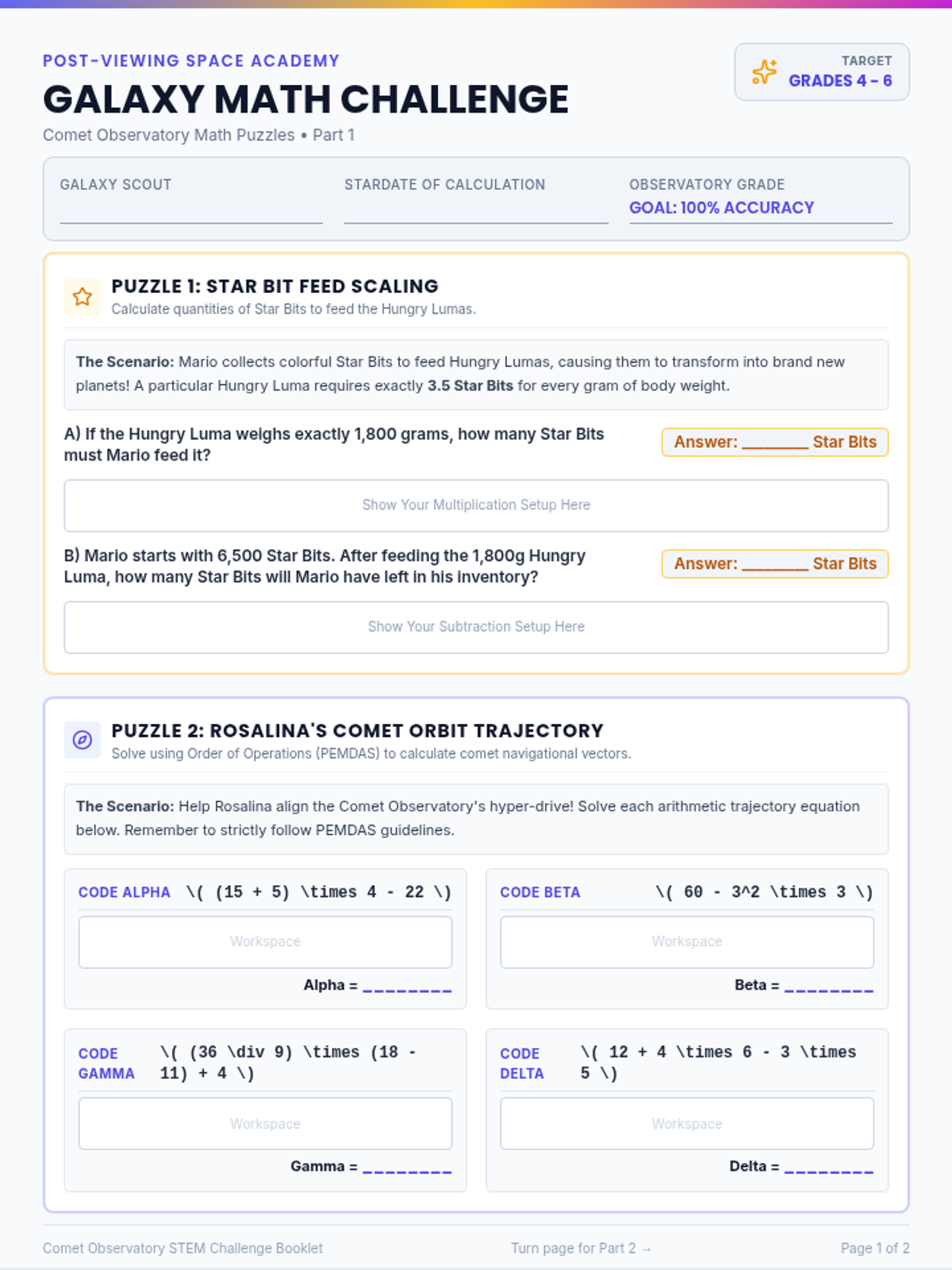
A high-energy 2-page math challenge booklet based on the physics, orbits, and story of Super Mario Galaxy. It presents Grade 4-6 aligned puzzles covering Star Bit scaling, PEMDAS navigational vectors, distance word problems, and orbital geometry.
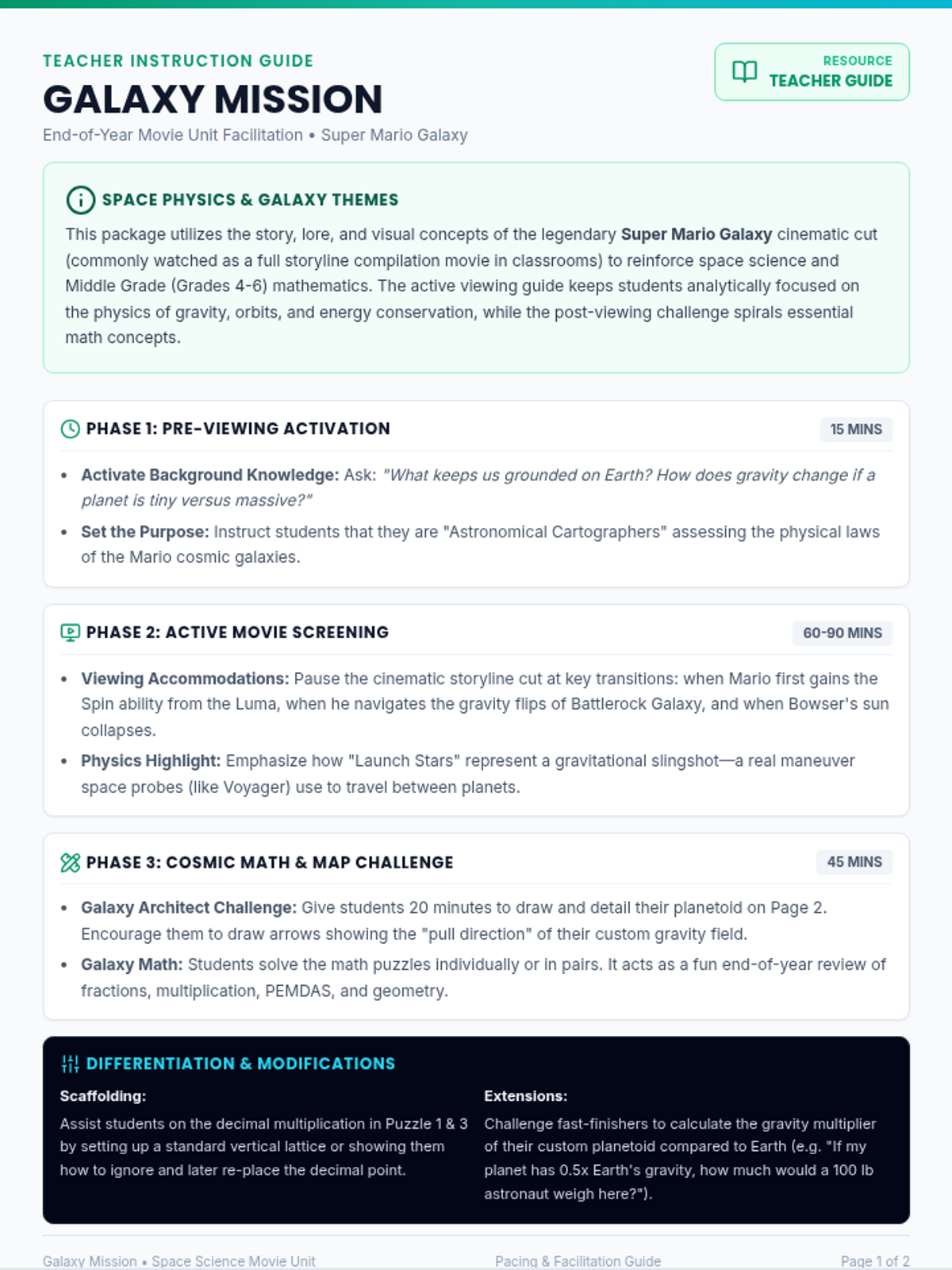
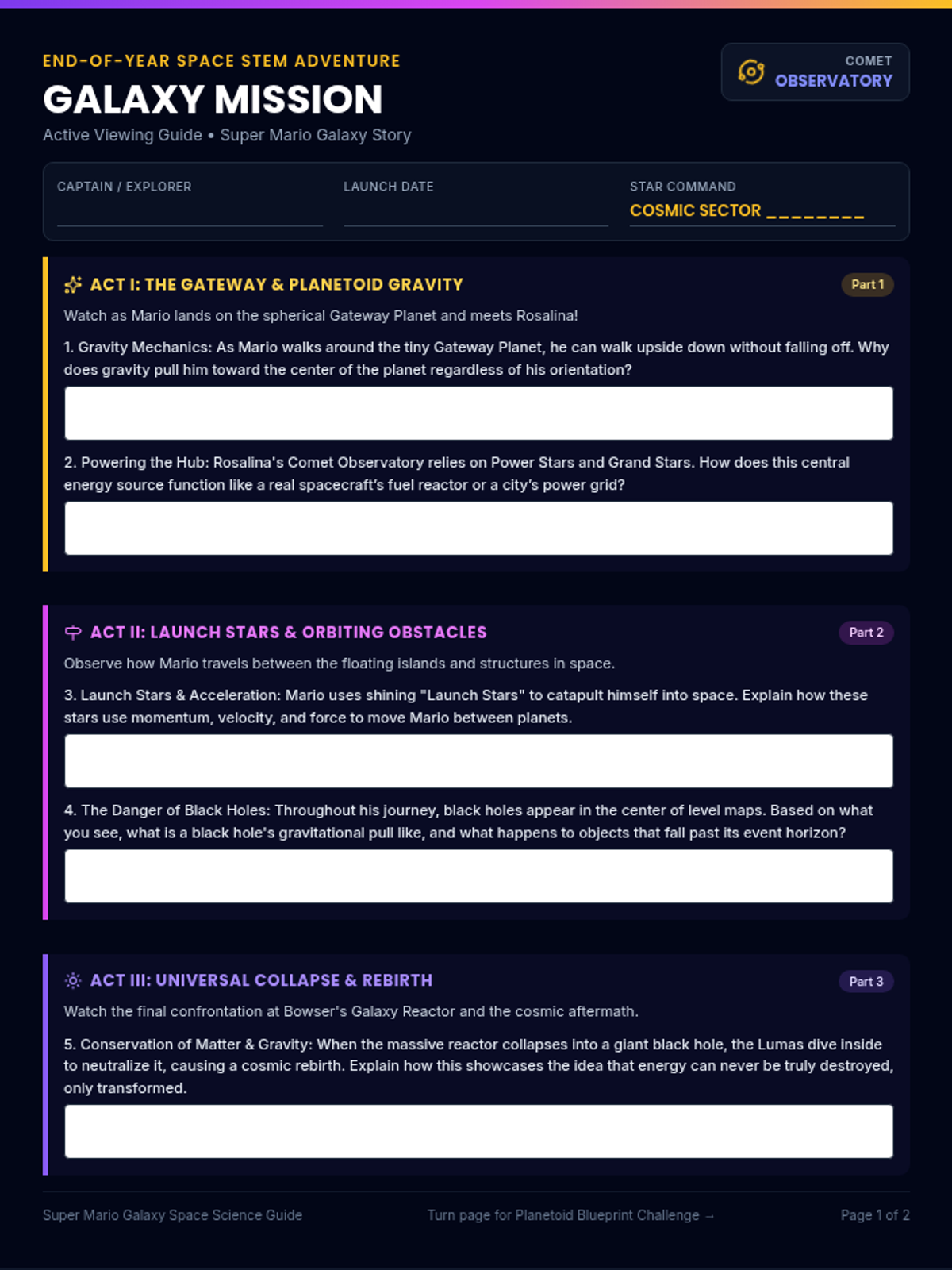
A 2-page active viewing and creative space-science guide based on the story of Super Mario Galaxy. Students explore gravity, orbits, energy transfer, and black holes, followed by designing and mapping their own gravitational planetoid.
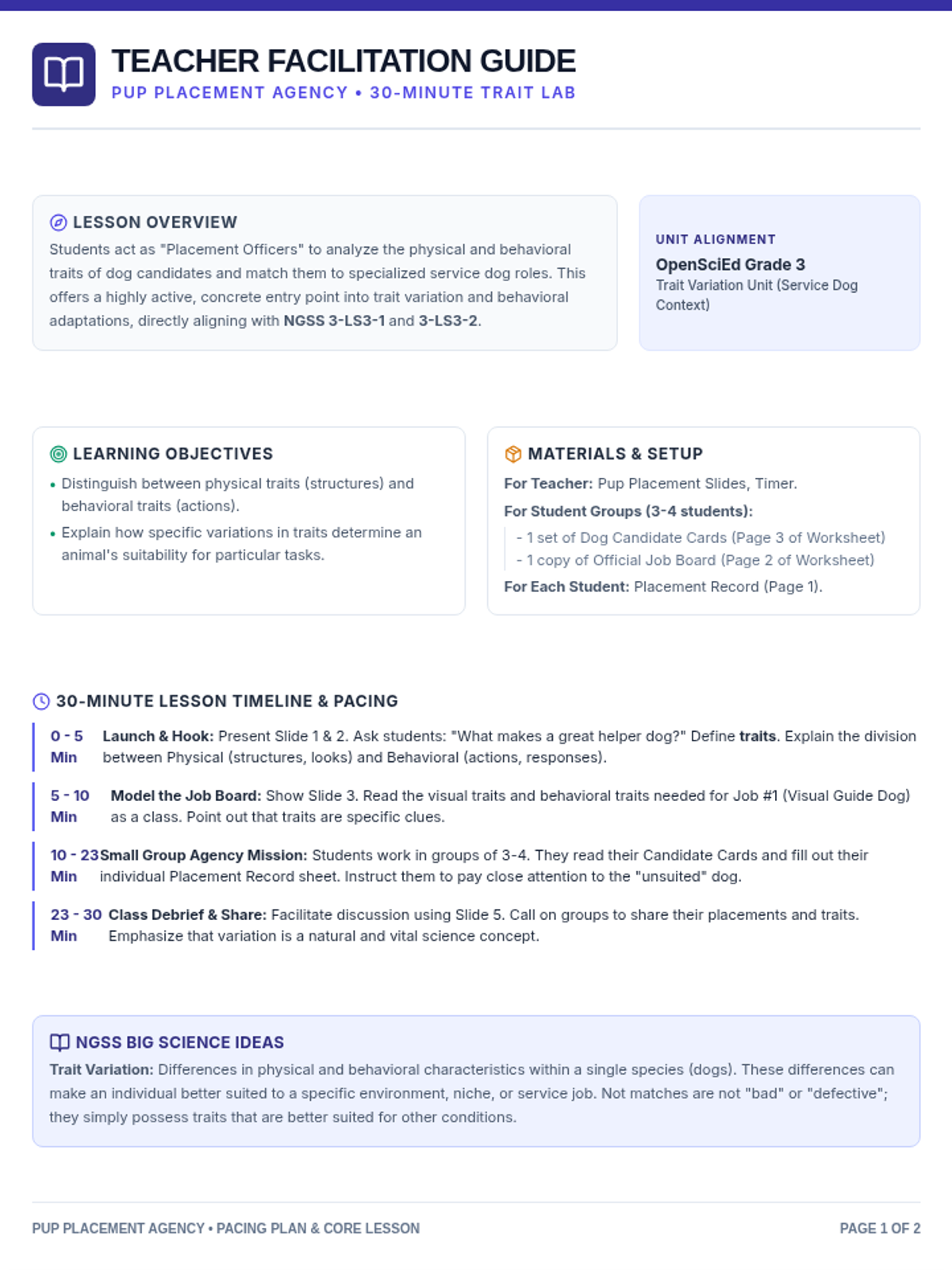
A comprehensive 2-page print-ready Teacher Guide for the 30-minute Pup Placement Agency lesson. It features a minute-by-minute timeline, multi-tier differentiated instruction strategies matching 1st to 4th grade reading levels, lists of common student misconceptions, official solution keys, and detailed scripted discussion prompts to reinforce core OpenSciEd and NGSS third-grade trait variation standards.
An engaging, professional slide deck with 5 slides designed for classroom presentation. Guides students through the lesson starting from 'What is a Trait' with visual explanations, through 'K-9 Jobs on the Board', instructions for their 'Placement Officer Mission', and finishes with structured 'Debrief & Share' discussion prompts. Fully compliant with a strict minimum 24px text size limit for high readability.
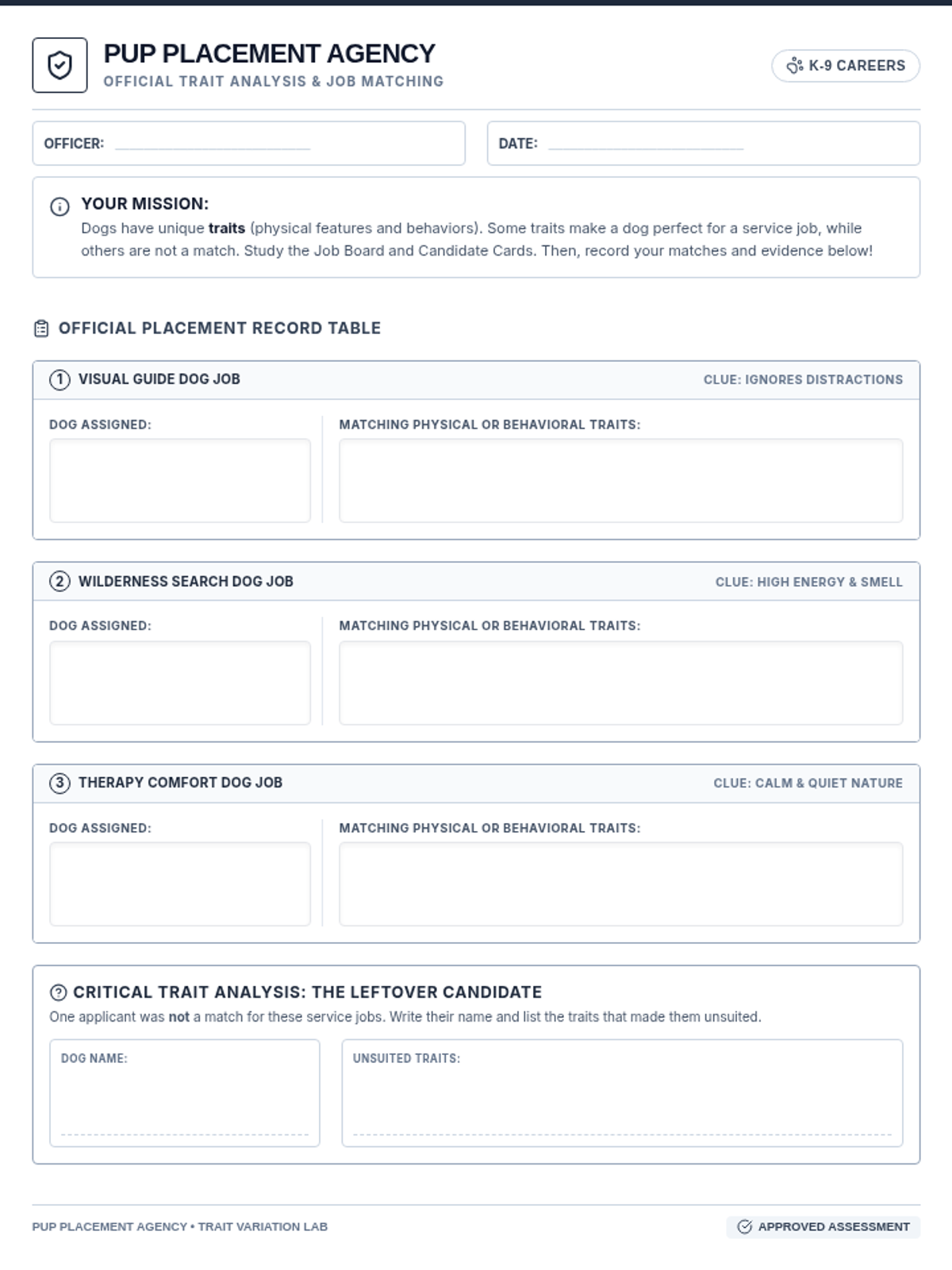
A beautifully styled, printer-friendly 3-page student sorting activity and matching worksheet. Features minimal ink usage, solid high-contrast borders, clean layout spaces with zero heavy ink blocks, beautiful polaroid-style dog snapshot images, and clear scaffolding for readers at 1st to 4th grade levels.
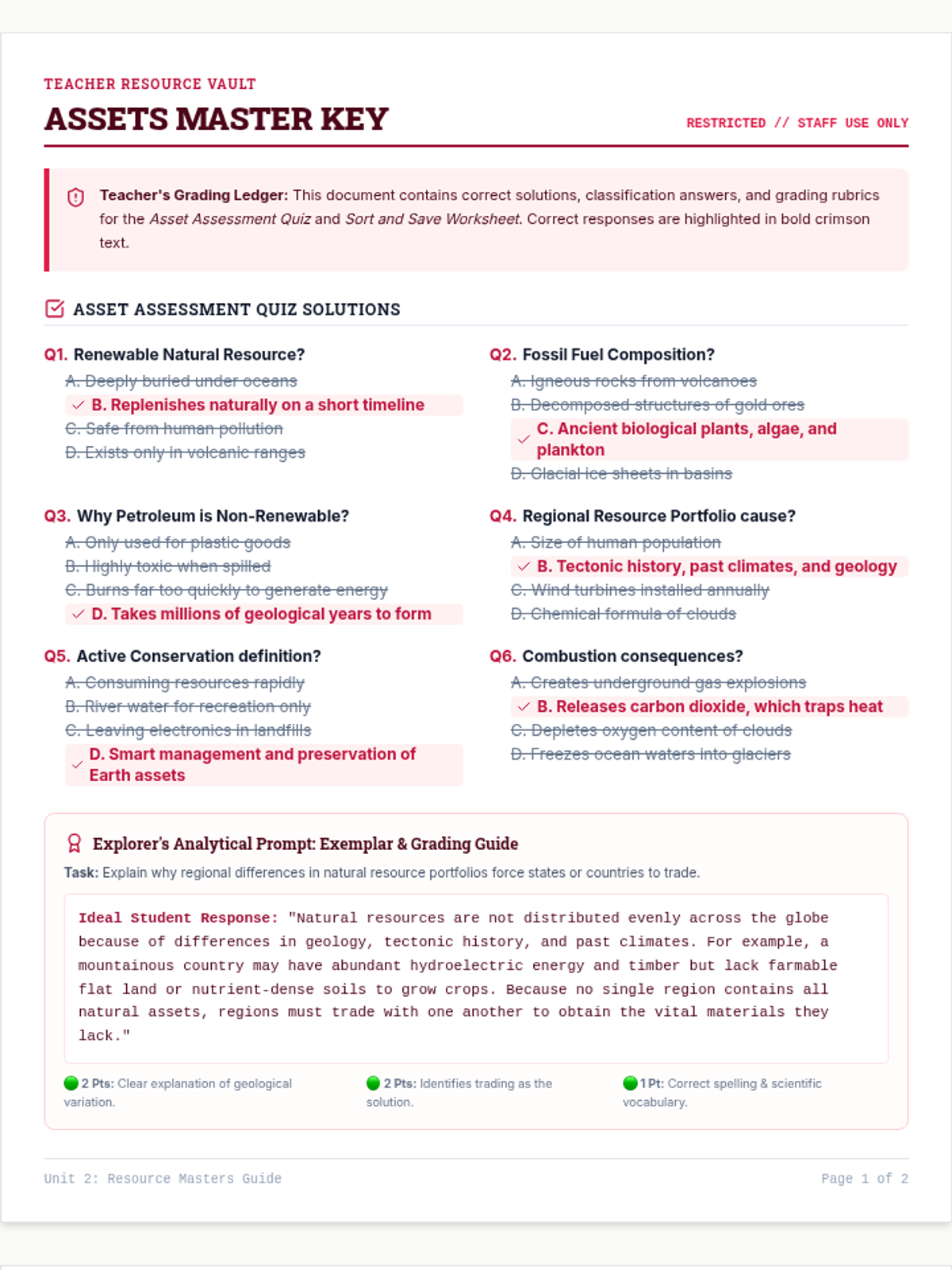
A comprehensive, 2-page teacher answer key matching the unit's quiz and worksheets. It includes answers to all multiple-choice questions, sorting tables, matching layouts, and evaluation rubrics.
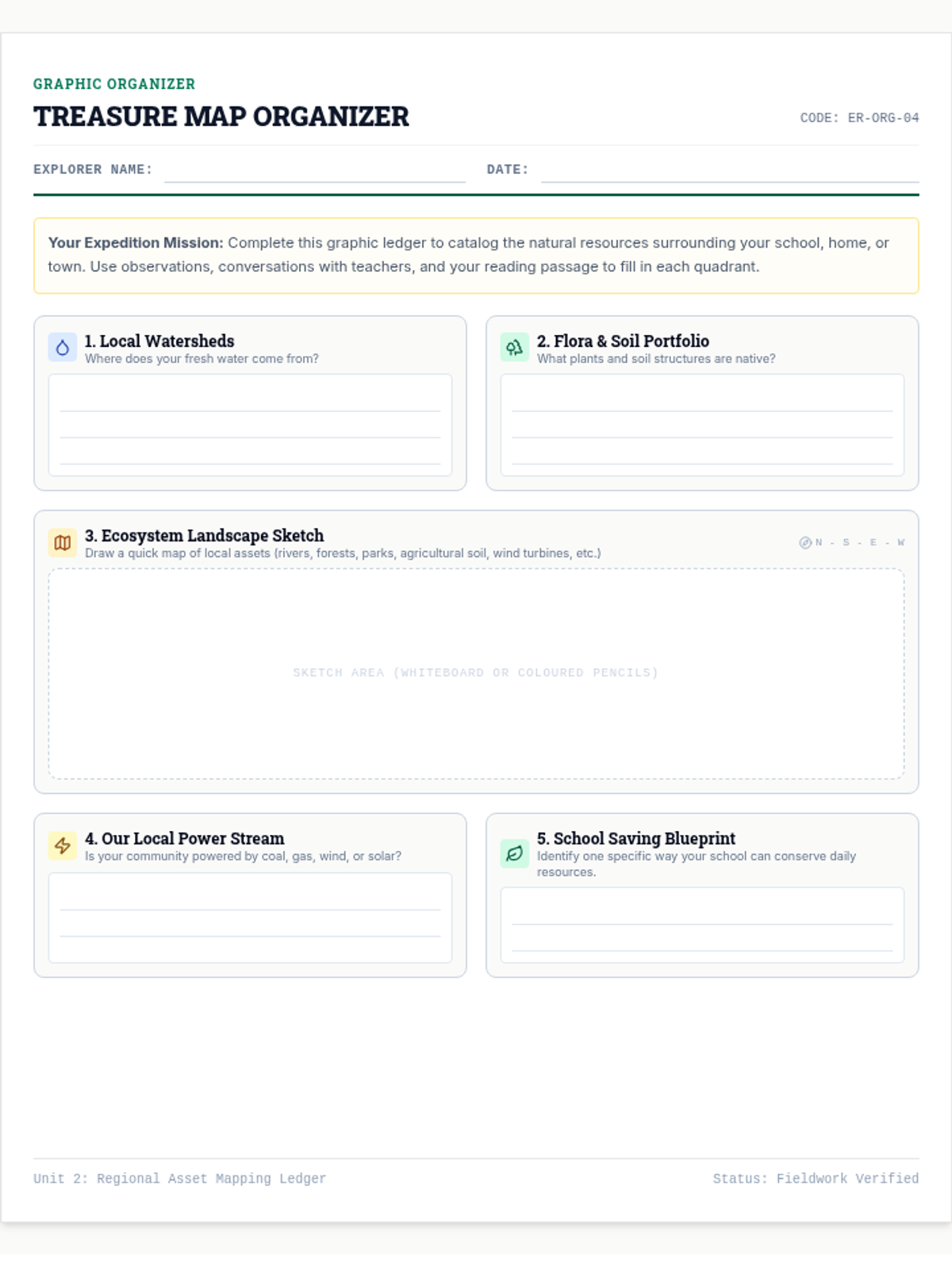
A visually striking graphic organizer that guides students in mapping out local resources, renewable flows, and non-renewable energy deposits.
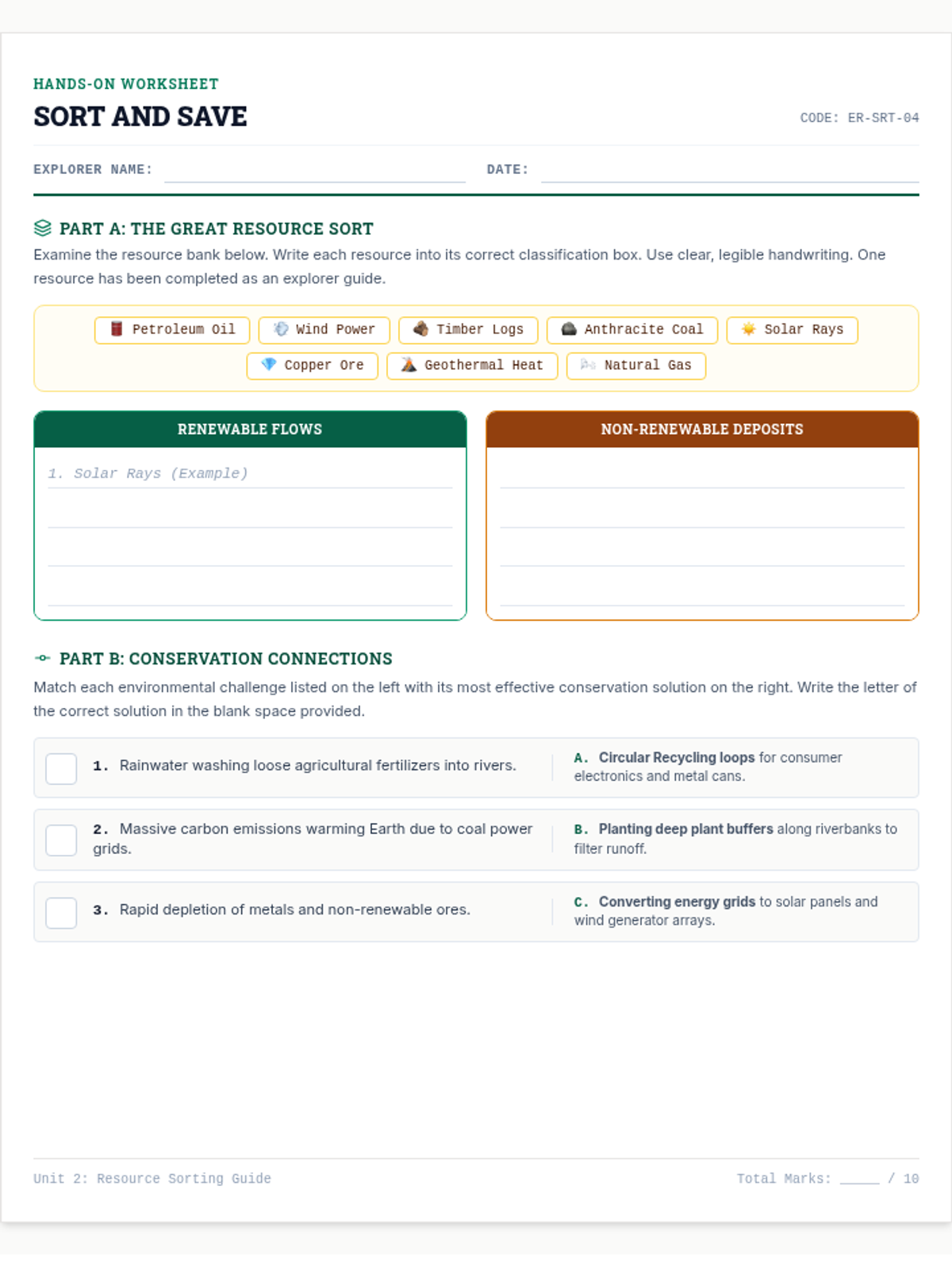
A matching and sorting worksheet where students categorize resources and align conservation actions with ecological benefits.
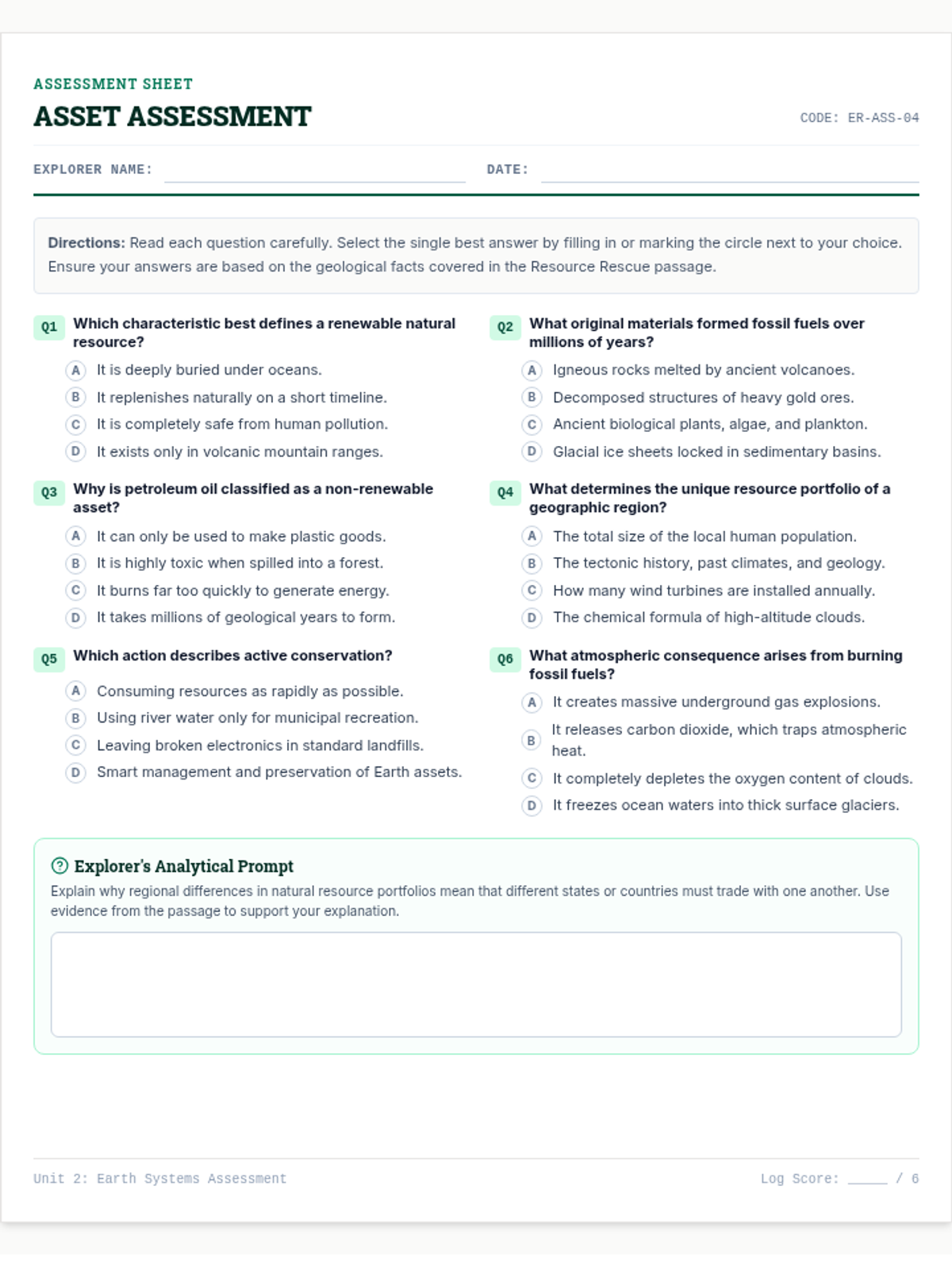
A student-facing quiz sheet containing six carefully aligned multiple-choice questions and one critical thinking short-response prompt on natural resources. All multiple-choice answer elements follow uniform design principles.
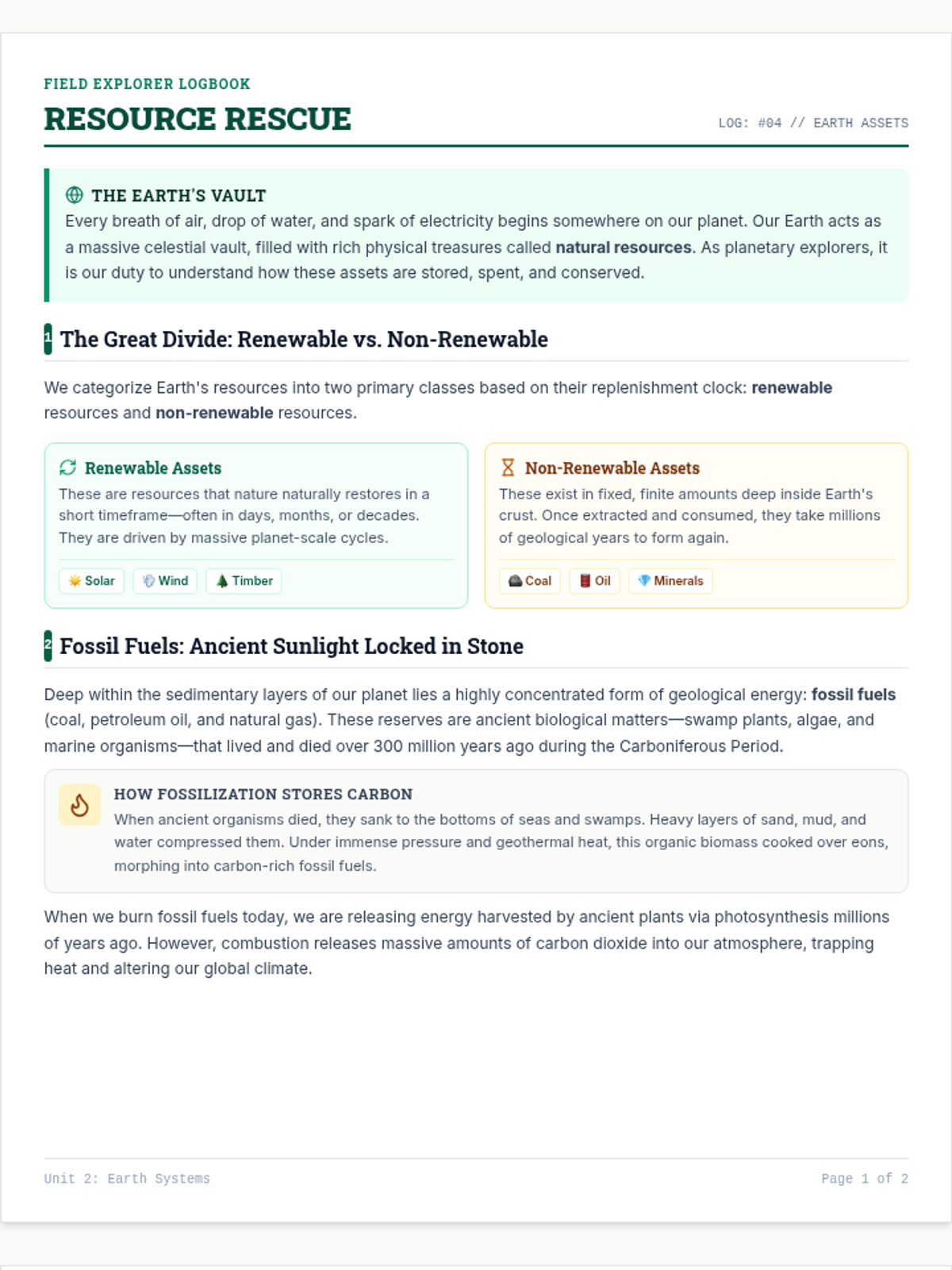
A beautifully formatted, 2-page reading passage styled as an explorer's field journal. It covers renewable vs non-renewable resources, fossil fuel formation, geographic distribution variations, and active conservation frameworks.
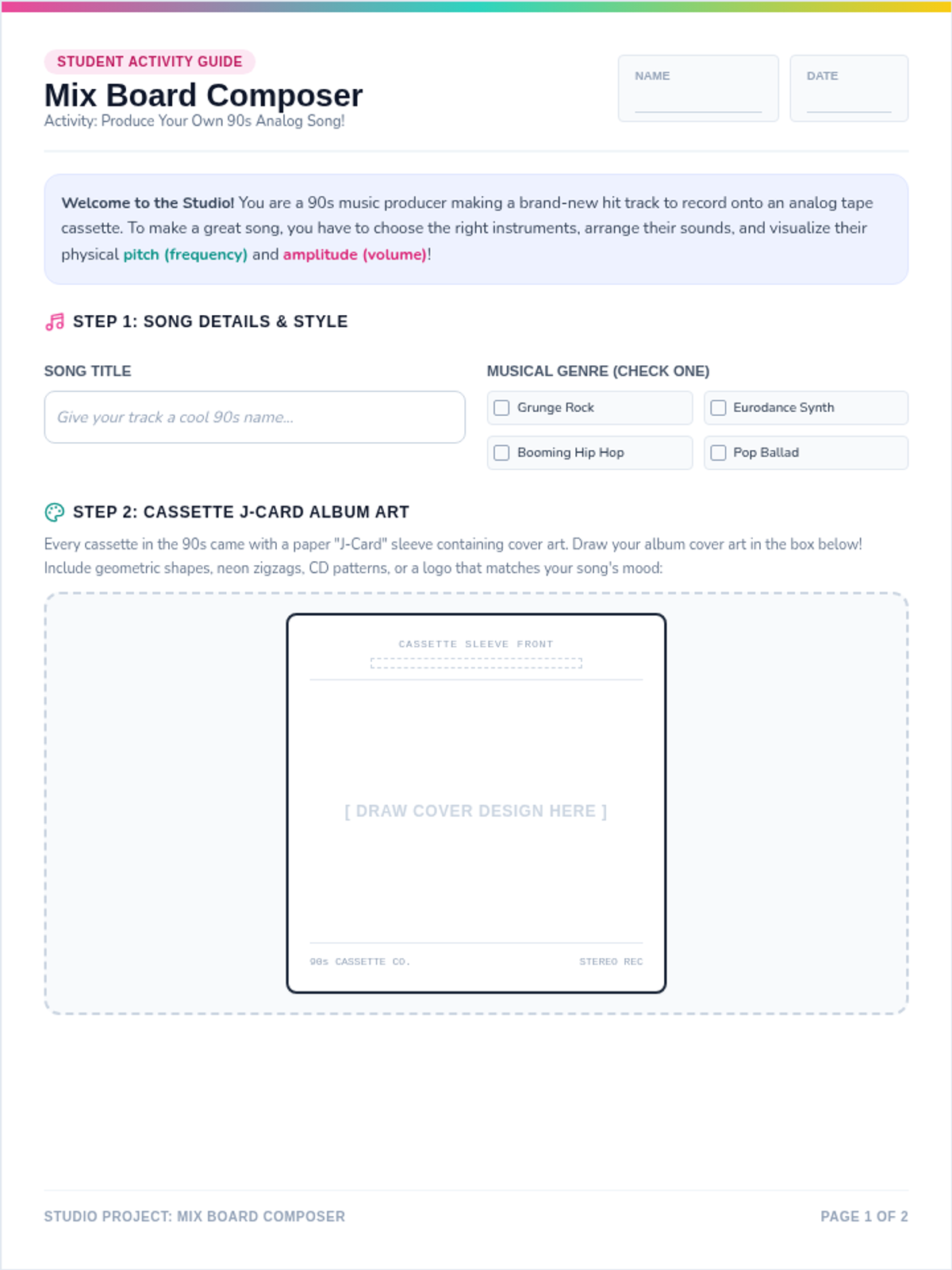
A student-facing activity sheet where students act as song producers to design their own 4-track EP. They compose songs by drawing physical wave representations of different instruments and vocals, manipulating pitch and amplitude.
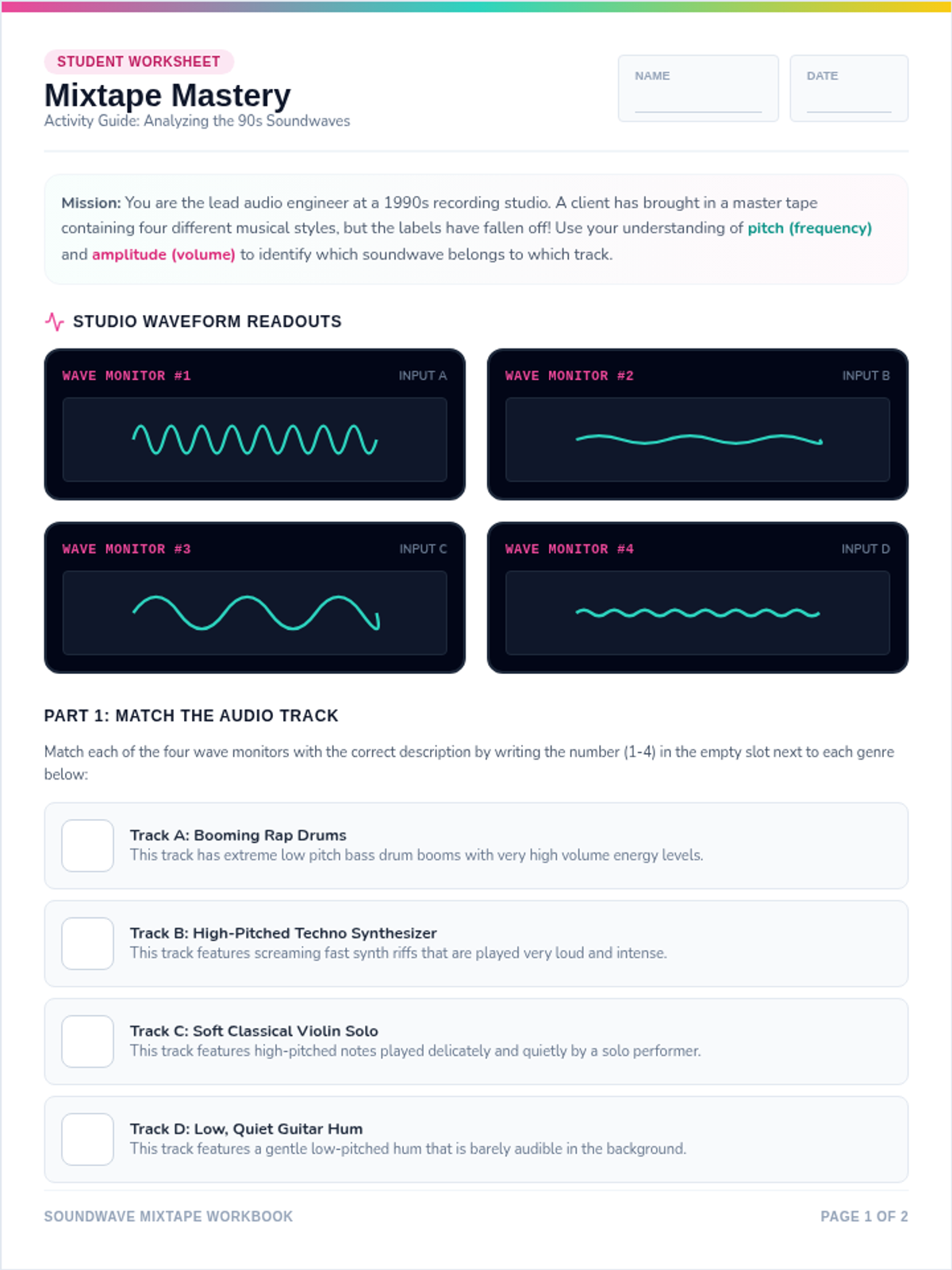
A quiet, technology-free activity sheet and worksheet where students analyze sound wave diagrams of different 90s music genres, matching tape speed and sound levels to pitch and amplitude. It includes a wave-drawing lab and realistic analog scenarios for assessing conceptual understanding.
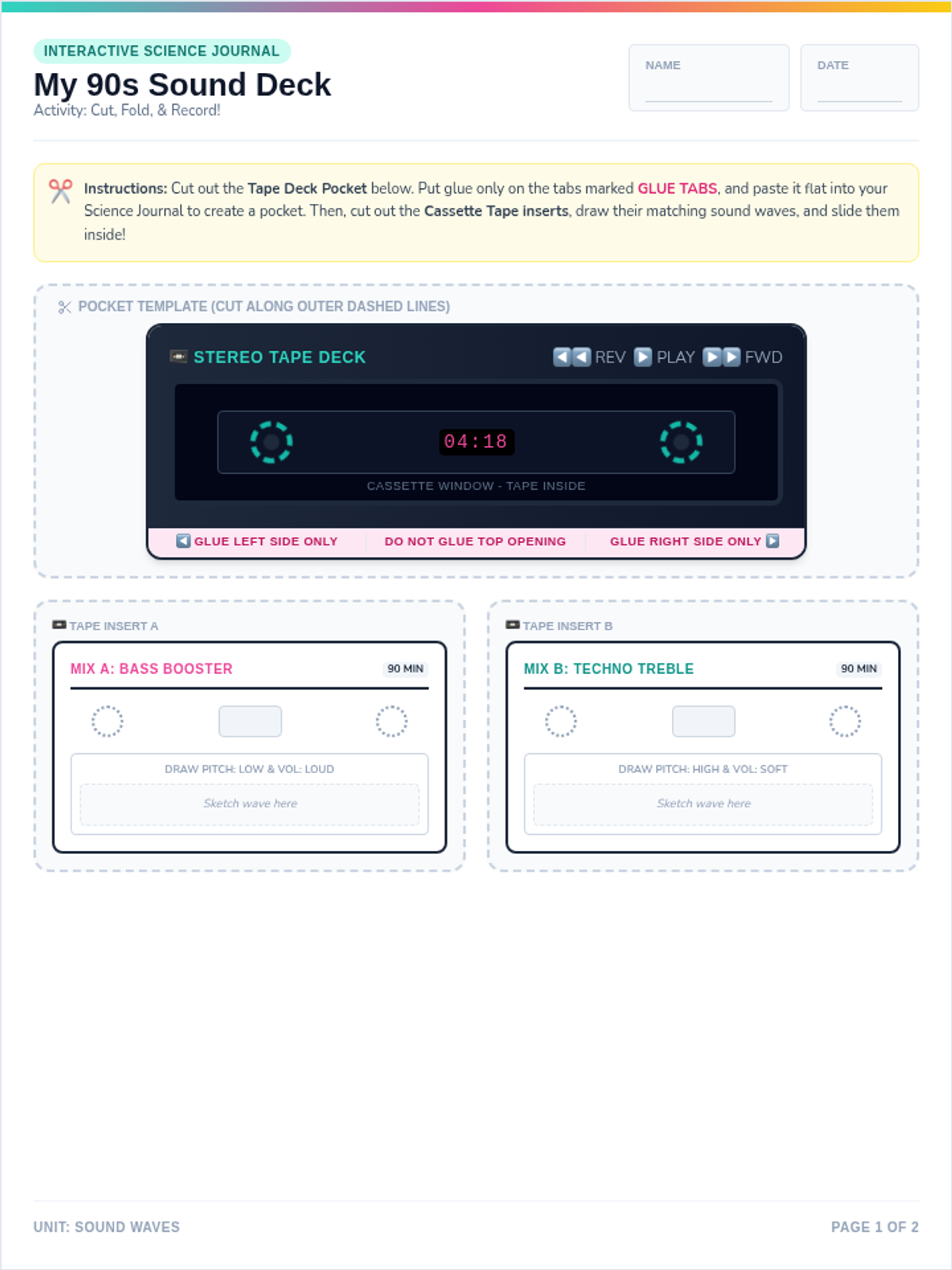
Interactive science journal inserts where students design their own cassette tape labels and chart the physical representation of high/low pitch and loud/soft amplitude as wave diagrams.
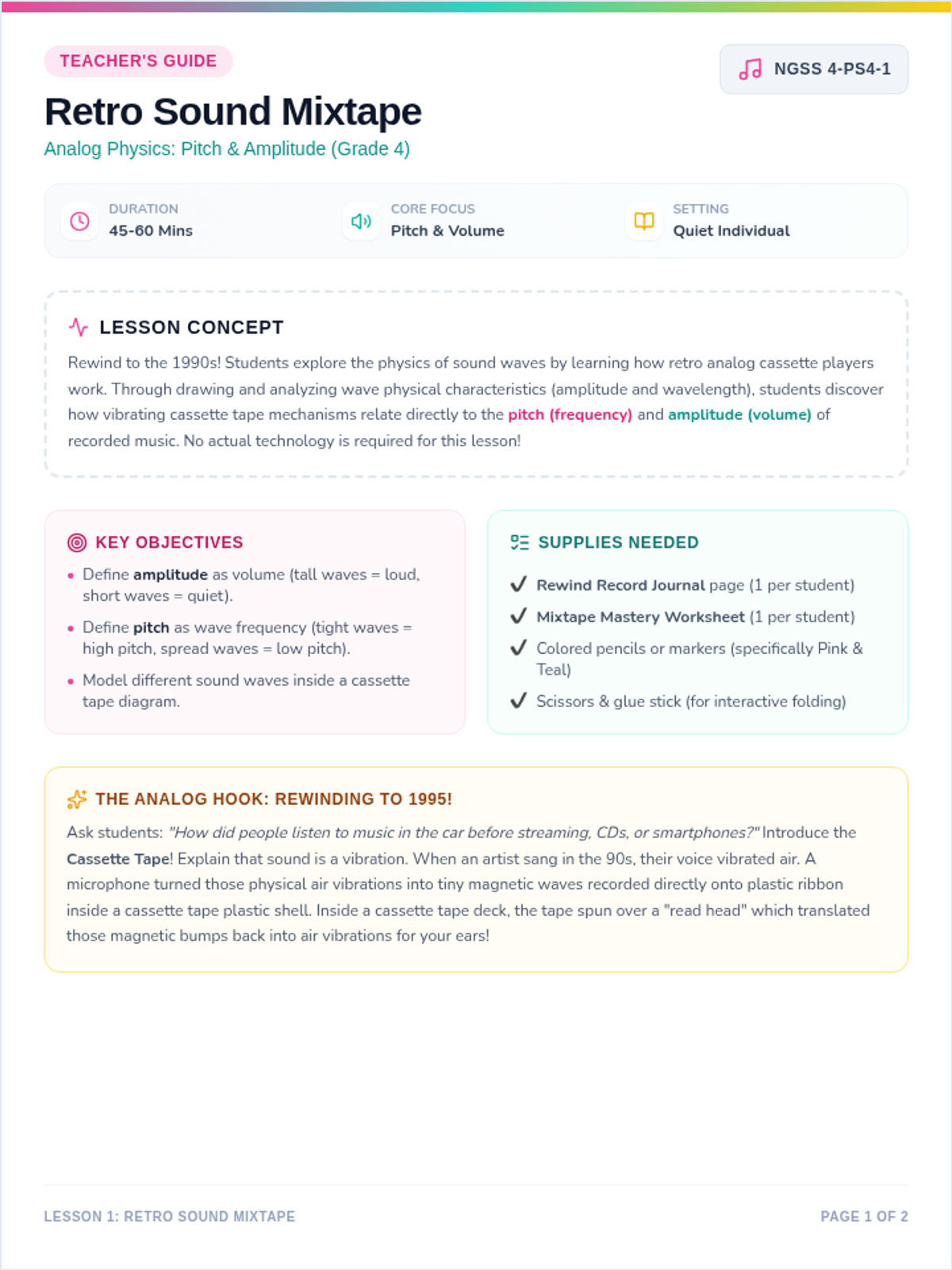
A teacher-facing step-by-step lesson plan designed for teaching 4th grade students sound wave properties (pitch and amplitude) using a retro 90s cassette mixtape hook. It includes duration, objectives, a class hook, step-by-step procedure, discussion prompts, common misconceptions, and differentiation strategies.
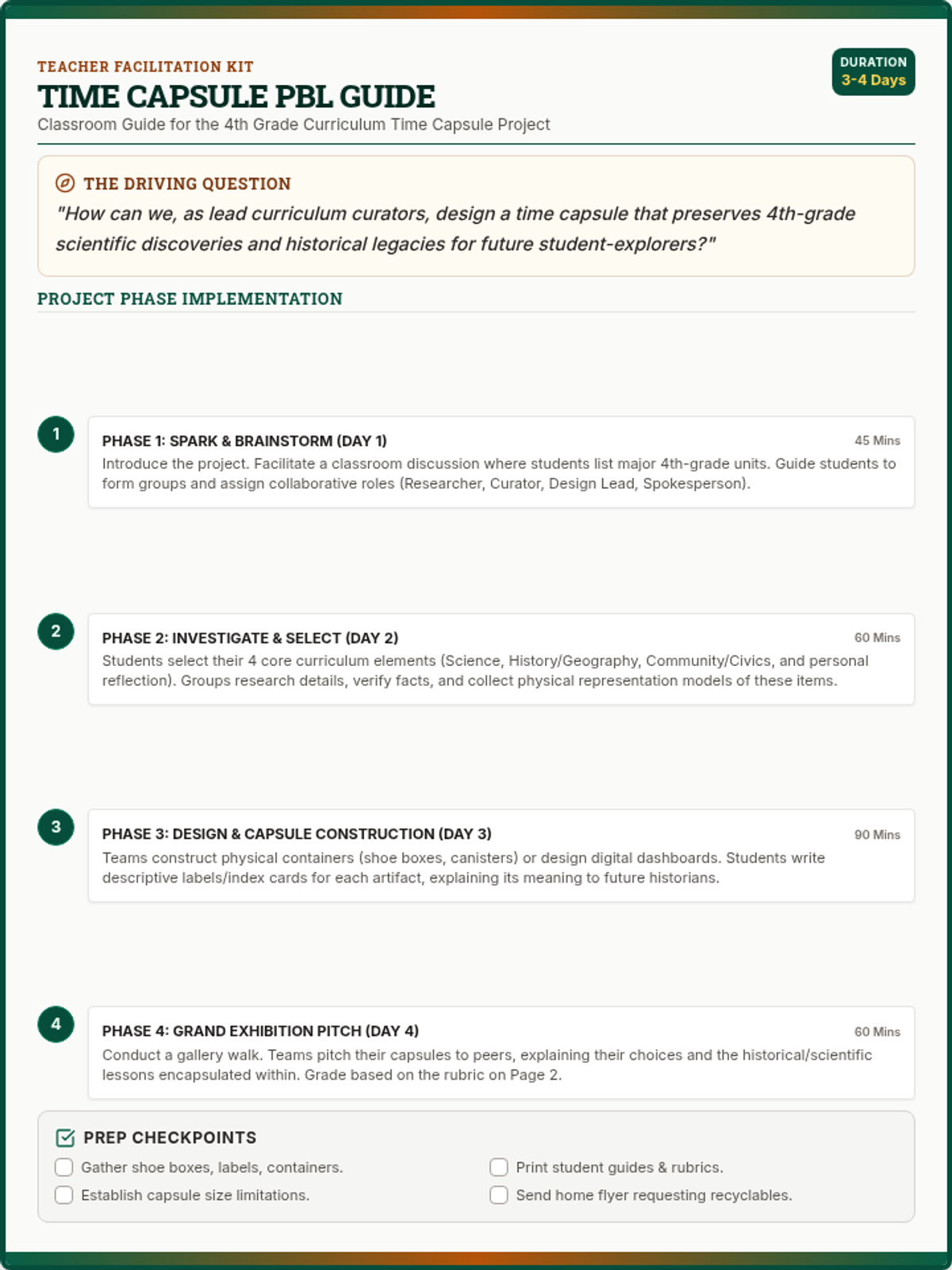
A beautifully styled, 2-page curriculum time capsule project-based learning guide designed for teachers and students. Page 1 contains a comprehensive 4-phase pedagogical facilitation roadmap with timelines. Page 2 features an artifact collection checklist, an exhibition scoring rubric, and a dedicated team drafting space.
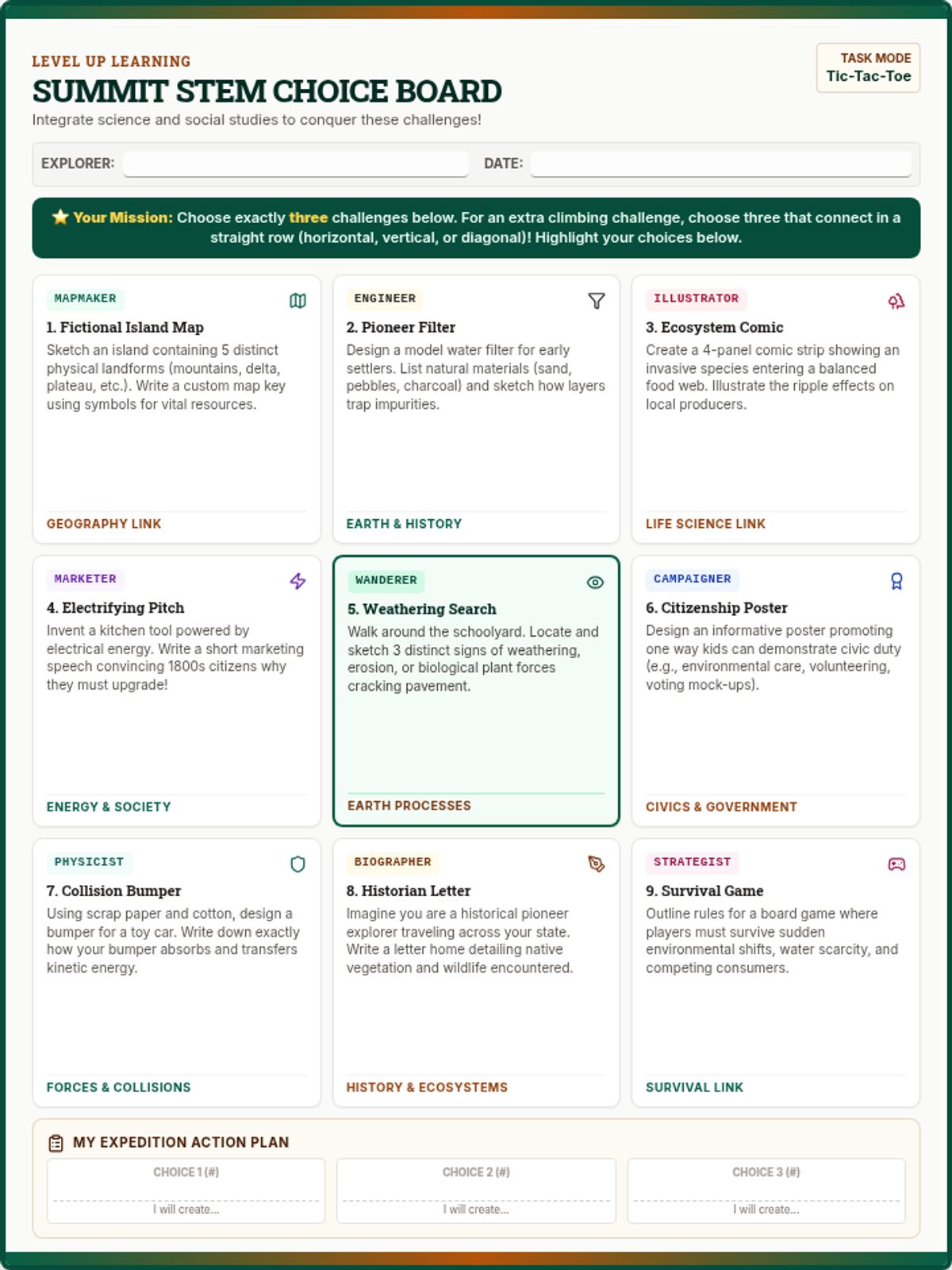
A gorgeous, grid-structured 1-page STEM Choice Board that challenges students to integrate 4th-grade science and social studies in customizable projects. Organizes 9 highly specific tasks—including mapping, water filtration modeling, cartoon creation, and electrical advertising—in a fun Tic-Tac-Toe layout, complete with an explorer planning section at the bottom.