A 3-page printable guide for teachers featuring background science, step-by-step facilitation prompts, material checklists, lesson timeline, and a rubric for the Attraction Traction magnetic maze design challenge.

A 6-slide design challenge deck designed to guide students visually through the concepts of magnetism, non-contact forces, material testing, and iterative maze engineering.
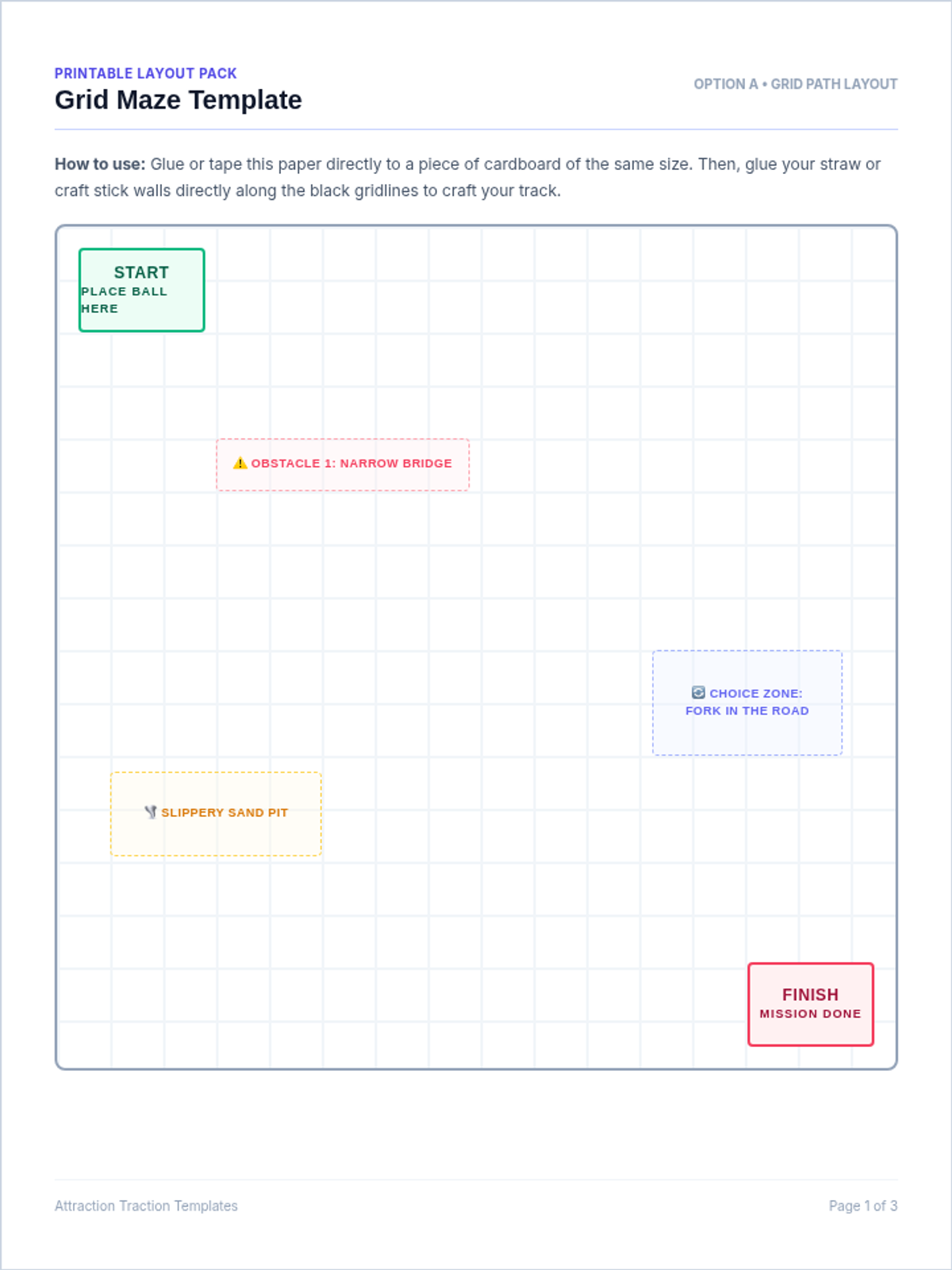
A 3-page printable pack featuring two complete pathing templates (orthogonal grid and concentric radial maze designs) and a hands-on material testing log sheet.
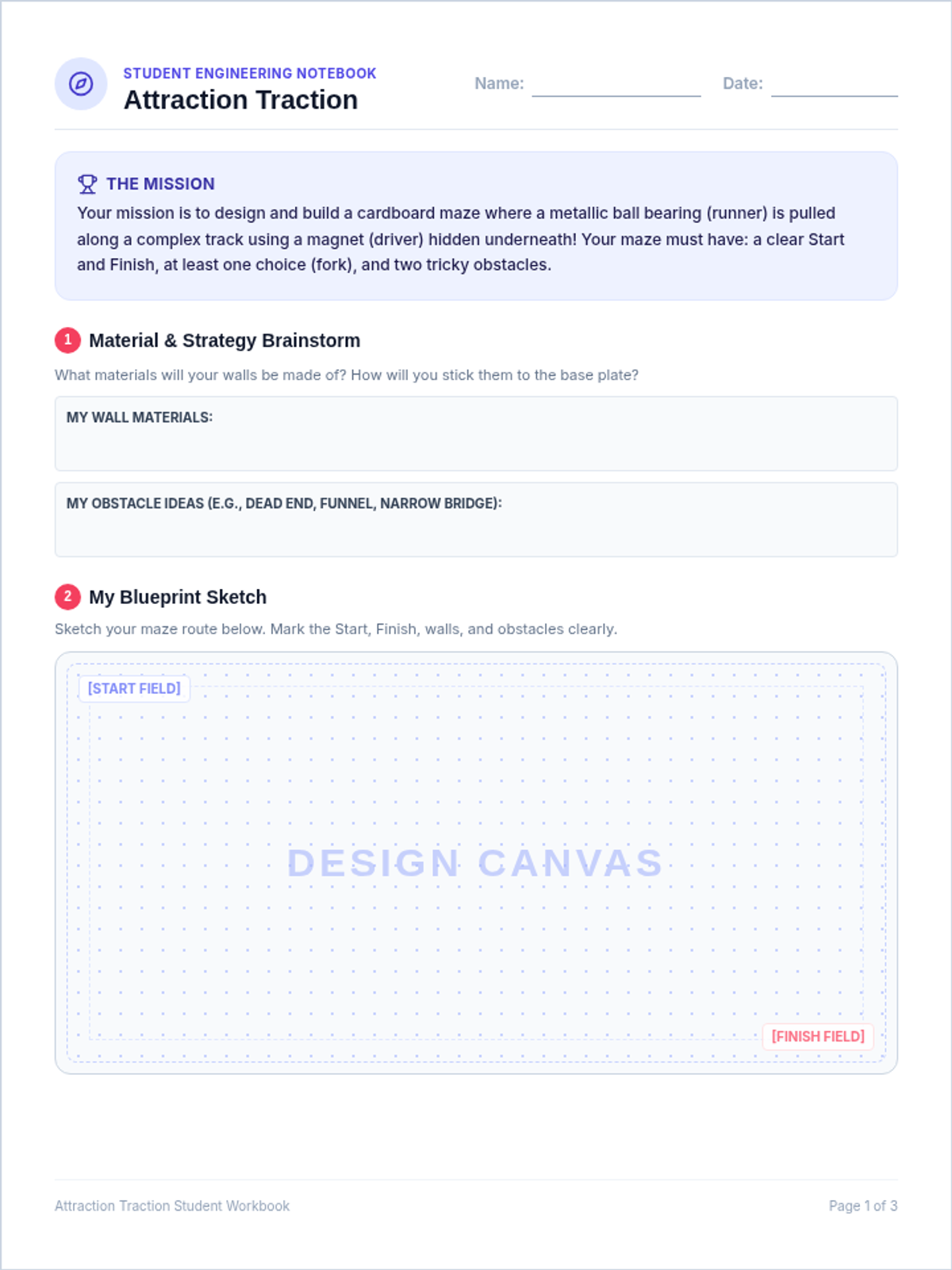
A 3-page student-facing STEM workbook containing a blueprint planning sheet, testing/iteration log, and a high-retention exit ticket with reflective writing prompts about magnetism and force vectors.
A 2-page print-ready teacher instructional plan and facilitation guide for running the Force Field Engineers magnet maze lab. Includes NGSS standards, a materials checklist, lesson pacing, inquiry prompts, a 3-tier grading rubric, and classroom troubleshooting tips.
A 2-page collection of printable layout templates, assembly components, and cutouts for building custom student magnet mazes. Includes a 1-inch printable grid board and a materials folding lab sheet.
A 2-page print-ready student lab handbook for the Magnet Maze engineering challenge. It includes a material testing matrix, maze blueprinting grid, testing logs, and reflective engineering prompts.
A 2-page teacher facilitation guide containing next-generation science standards (NGSS) alignments, a detailed 60-minute pacing guide, visual setup directions, a structured engineering design rubric, and a guide to solving common student misconceptions.
A 5-slide visual presentation for teachers to introduce non-contact forces, magnetic fields, attraction/repulsion, and the step-by-step engineering constraints of the Magnet Maze challenge.
A 3-page student activity guide and engineering worksheet for the magnet maze challenge. Includes design constraints, a layout sketching grid, material testing logs, and conceptual reflection questions on non-contact forces and poles.
A single-page formative assessment exit ticket where students analyze vague steps for logical loopholes, practice writing highly precise instructions, and explain why exact detail is crucial for programming.
A highly-structured 2-page student worksheet that helps kids brainstorm, sketch, and systematically draft chronological, step-by-step algorithms for building a marshmallow fluff and jelly sandwich.