A teacher answer key and pedagogical guide for the Optical Artifacts Sort activity. Provides the correctly completed classification matrix for lenses and mirrors, along with guiding questions and common misconception alerts.
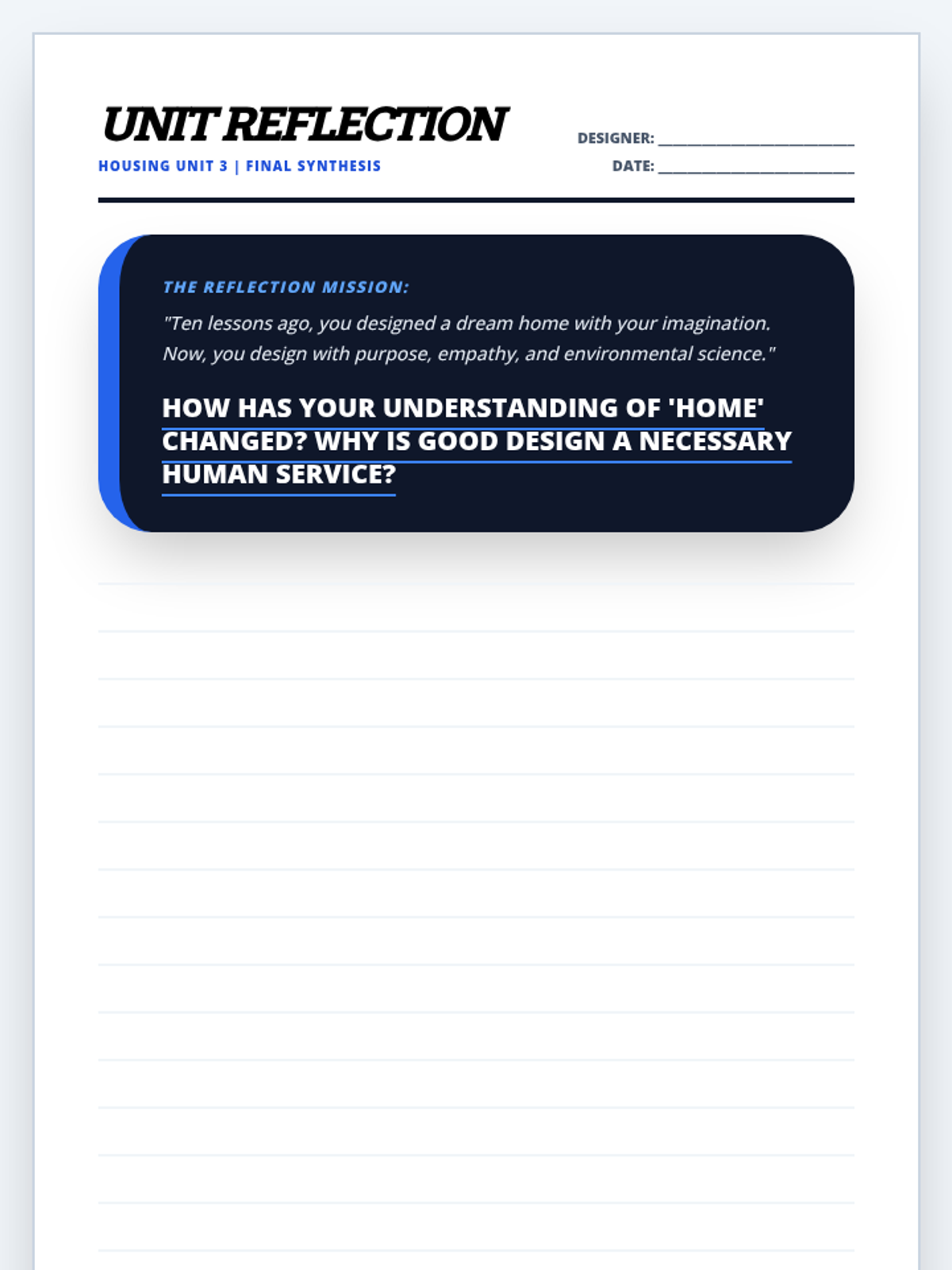
The final reflective essay prompt for the unit, asking students to synthesize their learning and explain the importance of intentional housing design in the human services field.
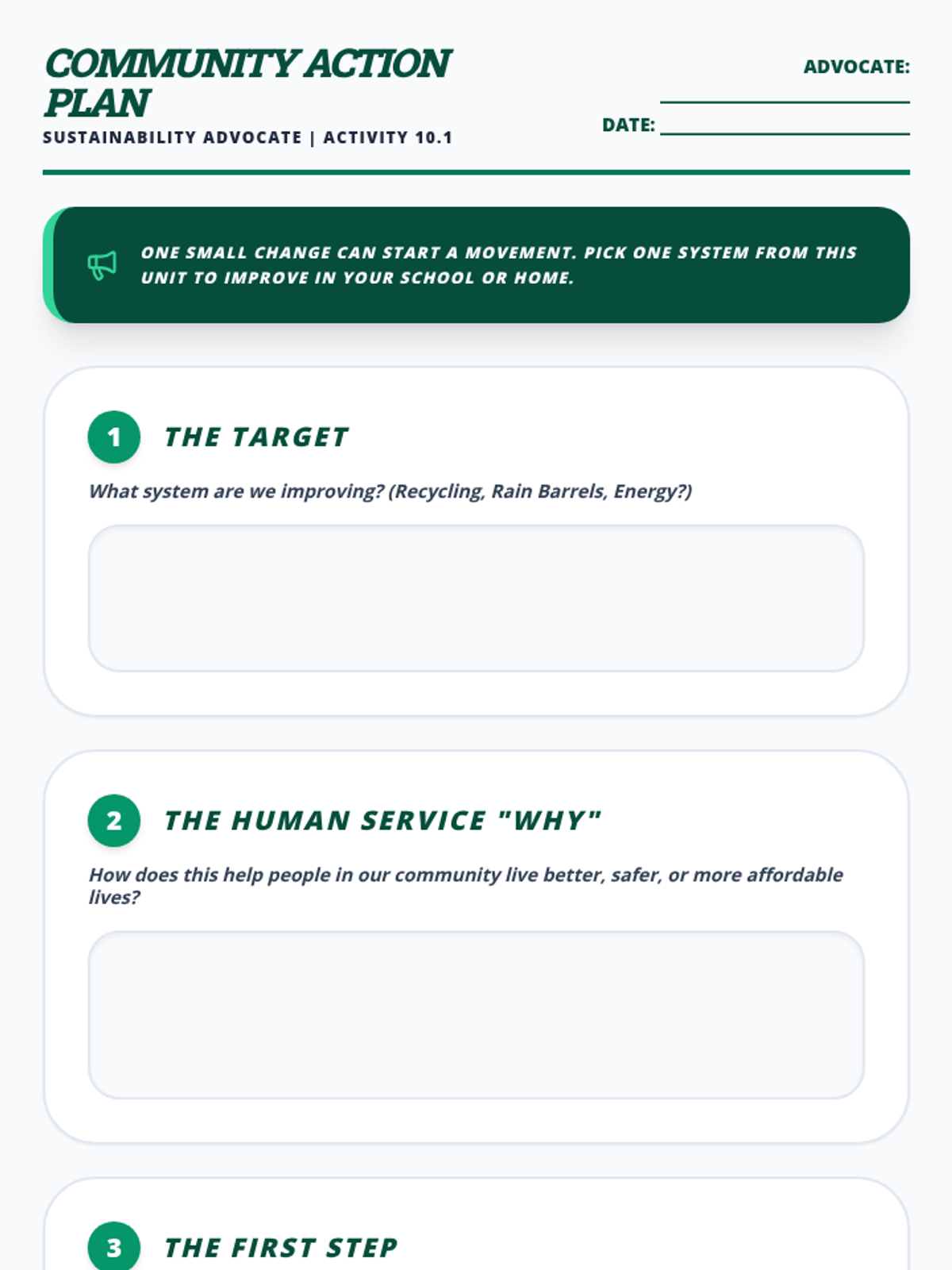
A student advocacy worksheet for creating a community action plan, encouraging students to apply their housing design knowledge to real-world school or home sustainability changes.
Slides for the Reflection and Connections lesson, focusing on local green building examples and guiding students toward community advocacy and final reflection.
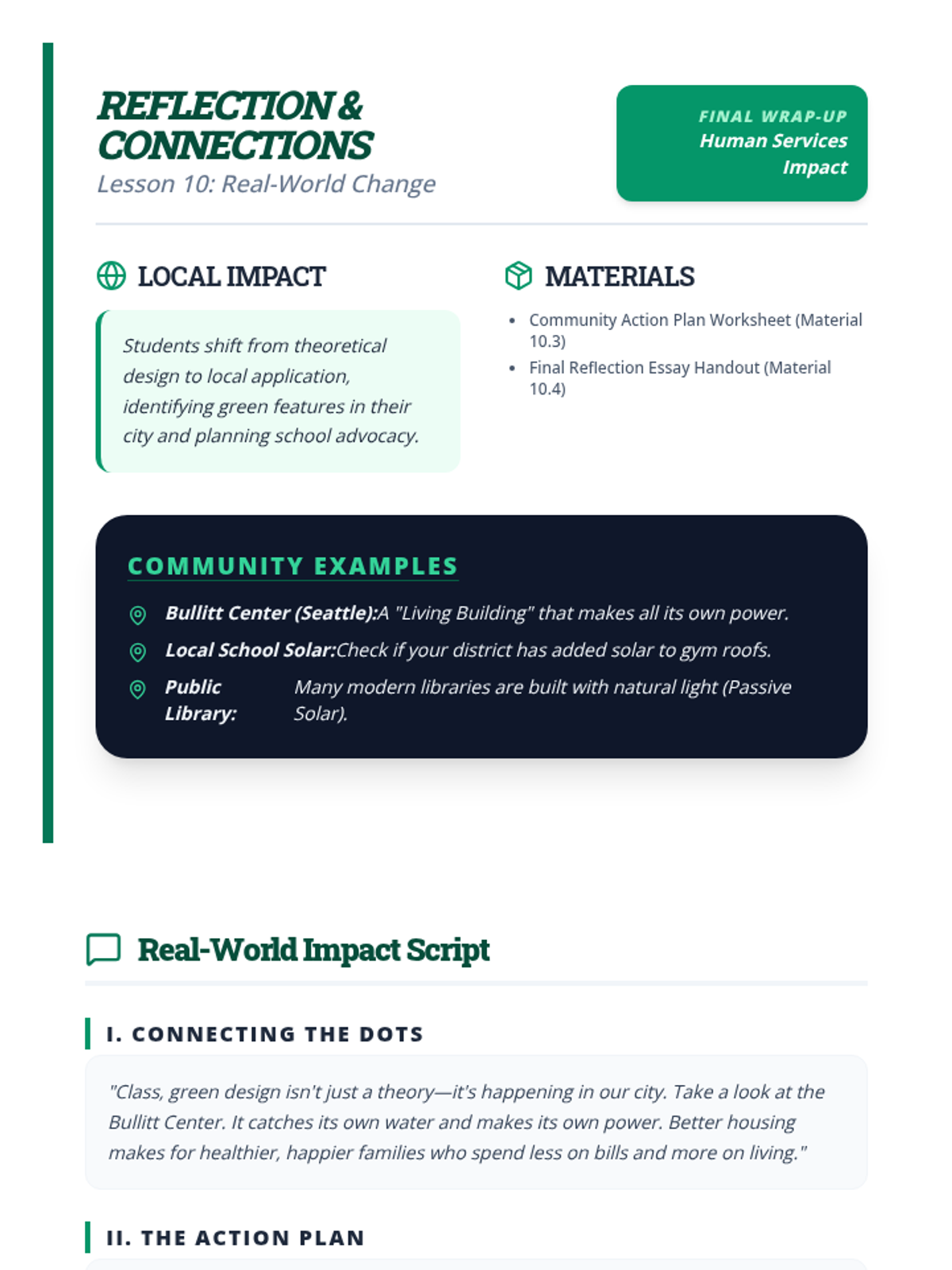
A teacher guide for the final lesson of the Housing and Interior Design unit, focusing on real-world local applications, student advocacy, and final reflective synthesis.
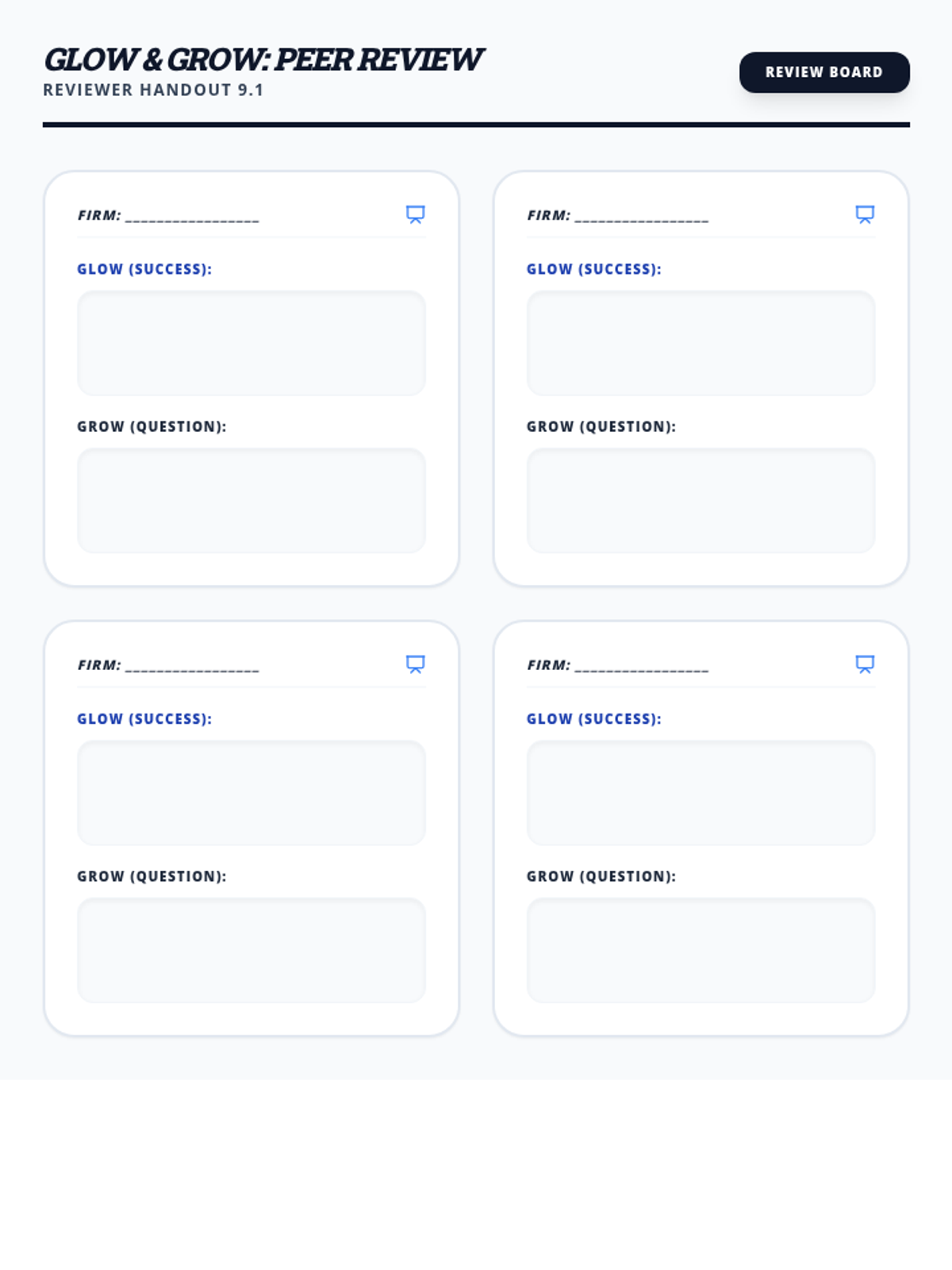
A peer feedback sheet for the Design Challenge presentations, using the 'Glow and Grow' format to encourage constructive evaluation among student firms.
Slides for the Design Challenge Presentations lesson, providing structure for student pitches, timing guidelines, and instructions for peer feedback.
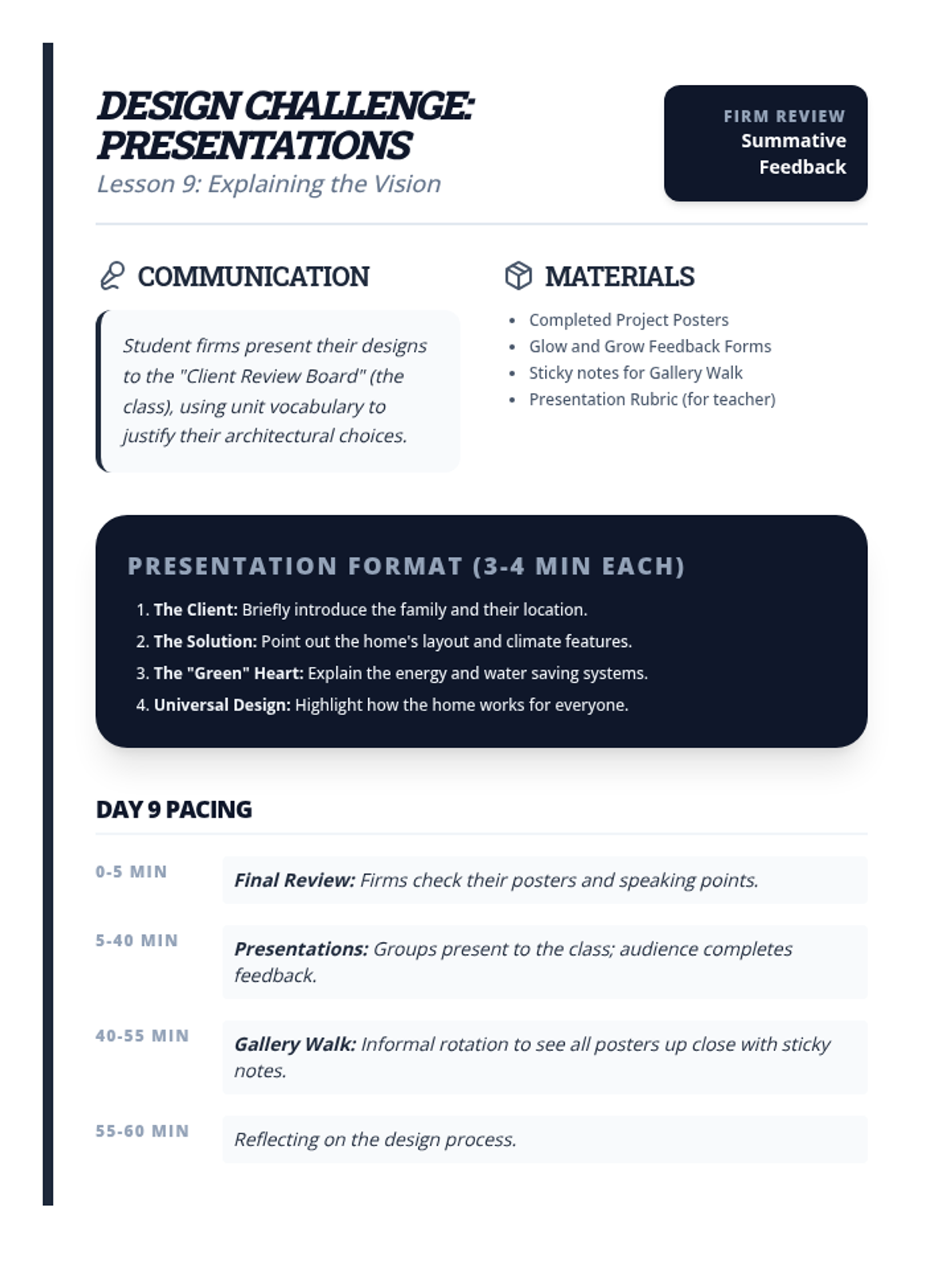
A teacher guide for the Design Challenge Presentations lesson, providing structure for student pitches, evaluation guidelines, and tips for facilitating constructive peer feedback.
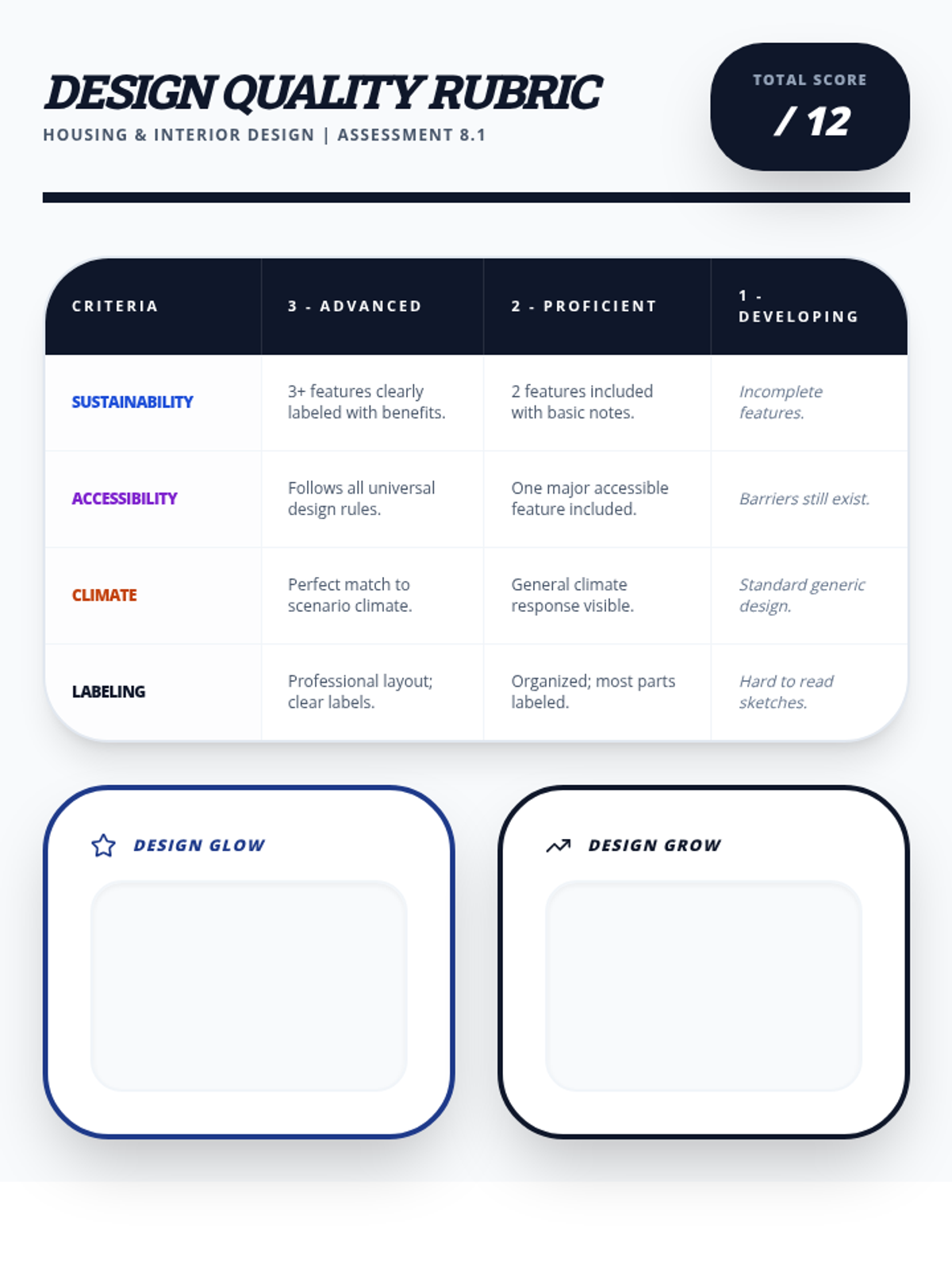
A professional rubric and feedback sheet for the Housing Design Challenge, evaluating student work on sustainability, accessibility, climate response, and technical drafting.
Slides for the Design Challenge Building lesson, outlining poster specifications and the essential criteria checklist for the final project.
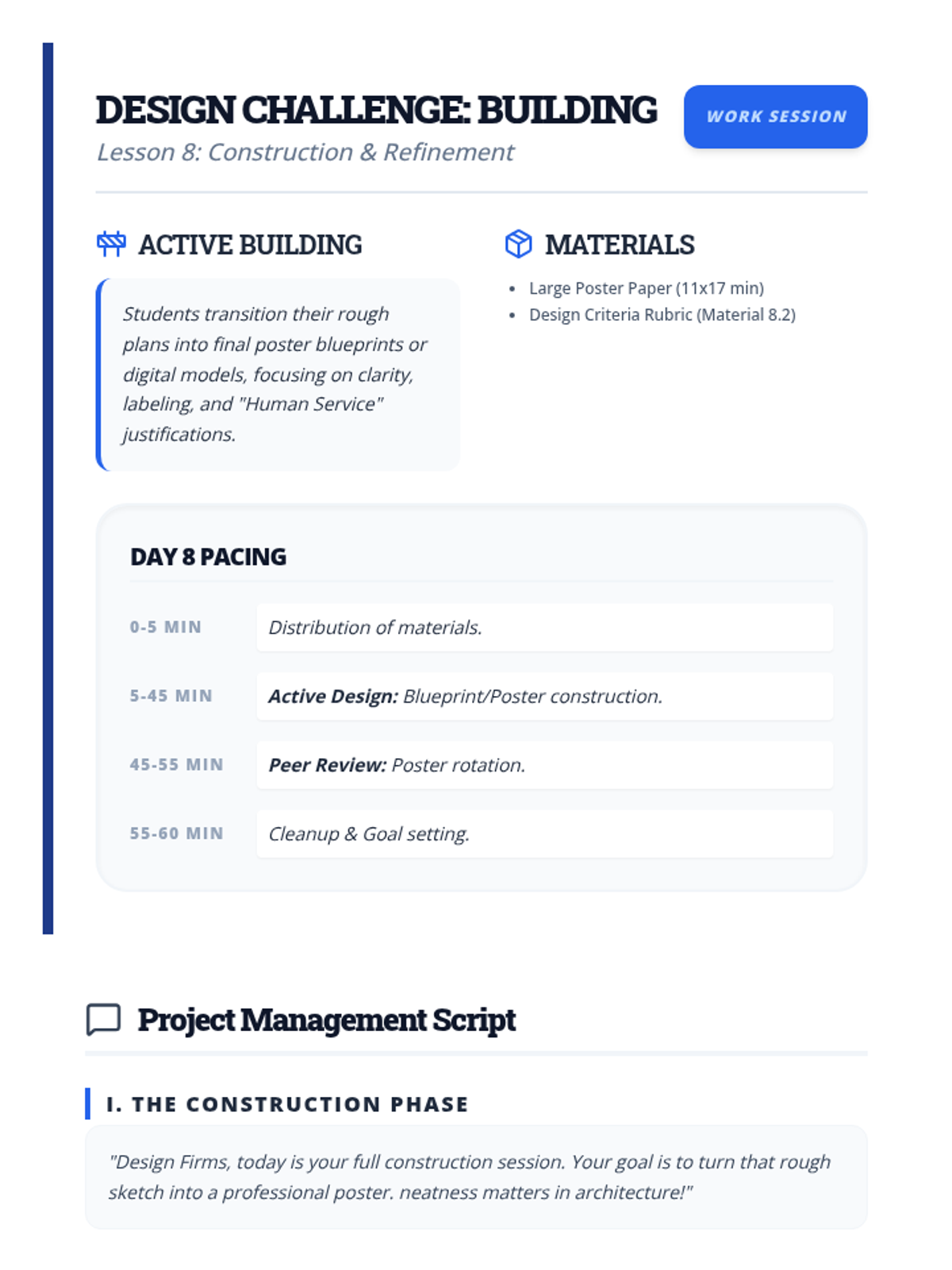
A teacher guide for the Design Challenge Building lesson, providing instructions for facilitating the hands-on creation phase and offering project management tips for educators.
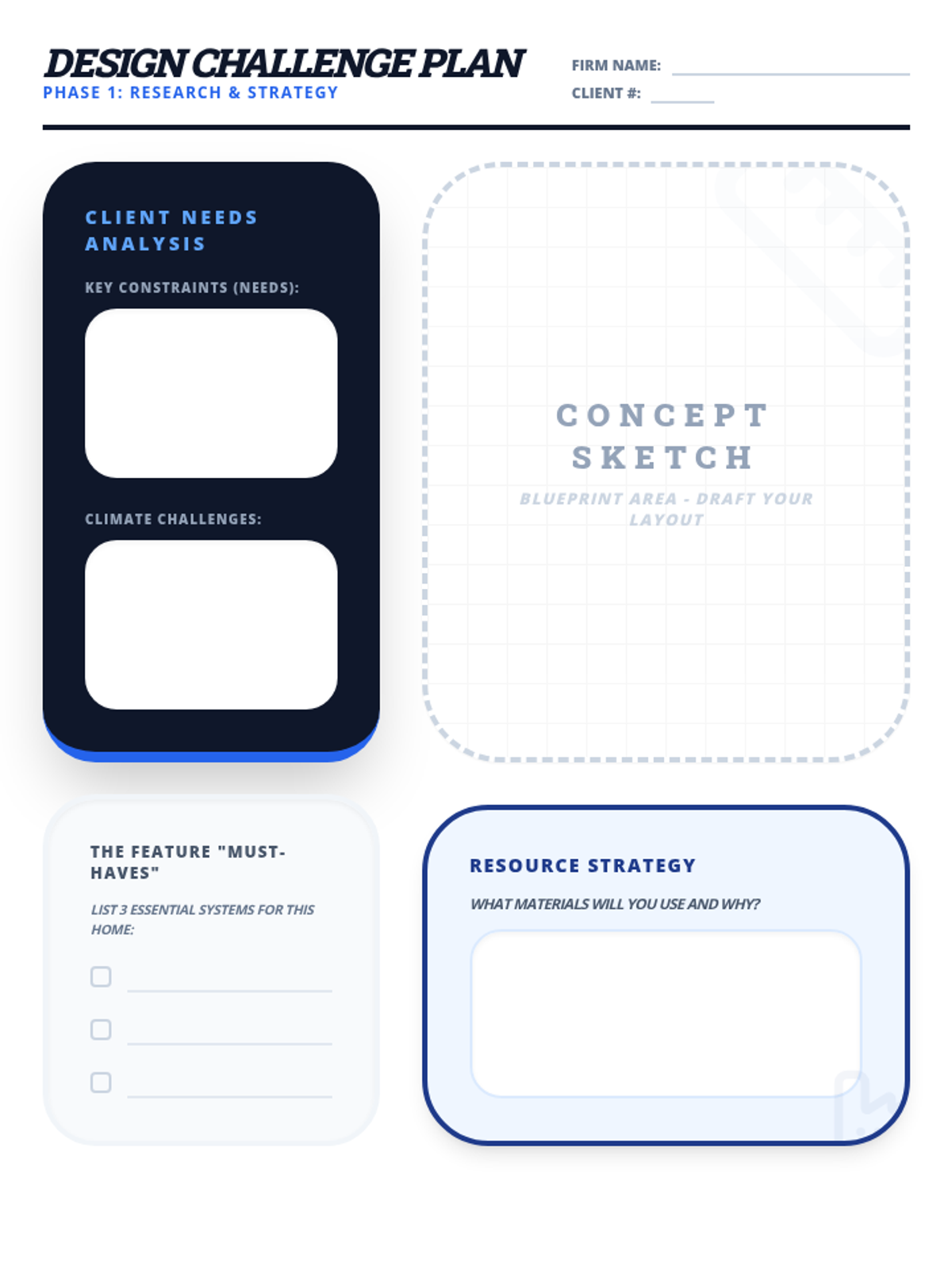
A structured planning worksheet for the Design Challenge, guiding student firms through client analysis, constraint mapping, and initial conceptual sketching.
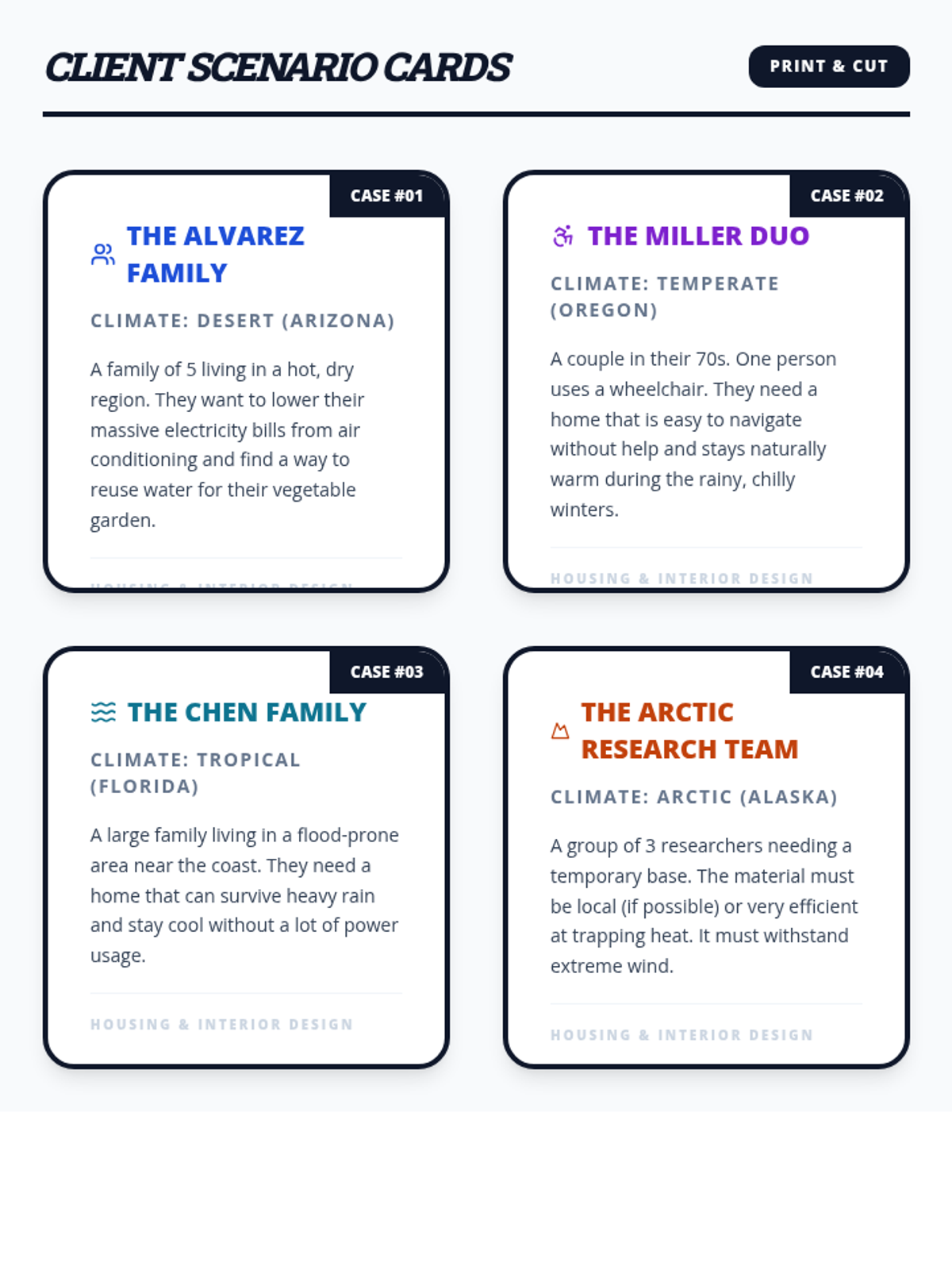
Family scenario cards for the final Design Challenge, providing specific client needs, climate constraints, and design priorities for student groups.
Presentation slides for the Design Challenge Planning lesson, introducing the mission, client analysis steps, and strategic feature selection.
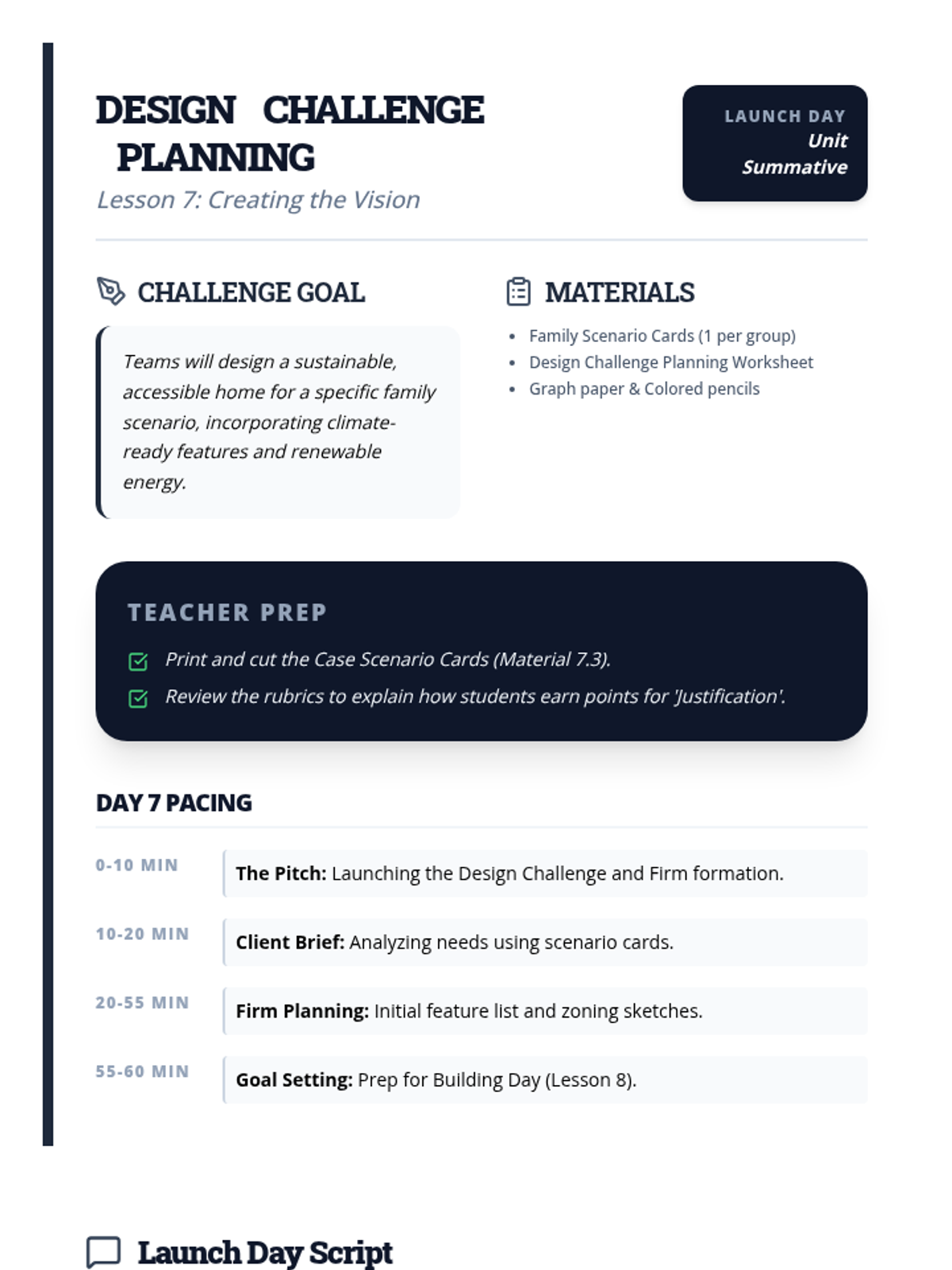
A teacher guide for the Design Challenge Planning lesson, focusing on launching the unit's final project and guiding students through client analysis and strategic design planning.
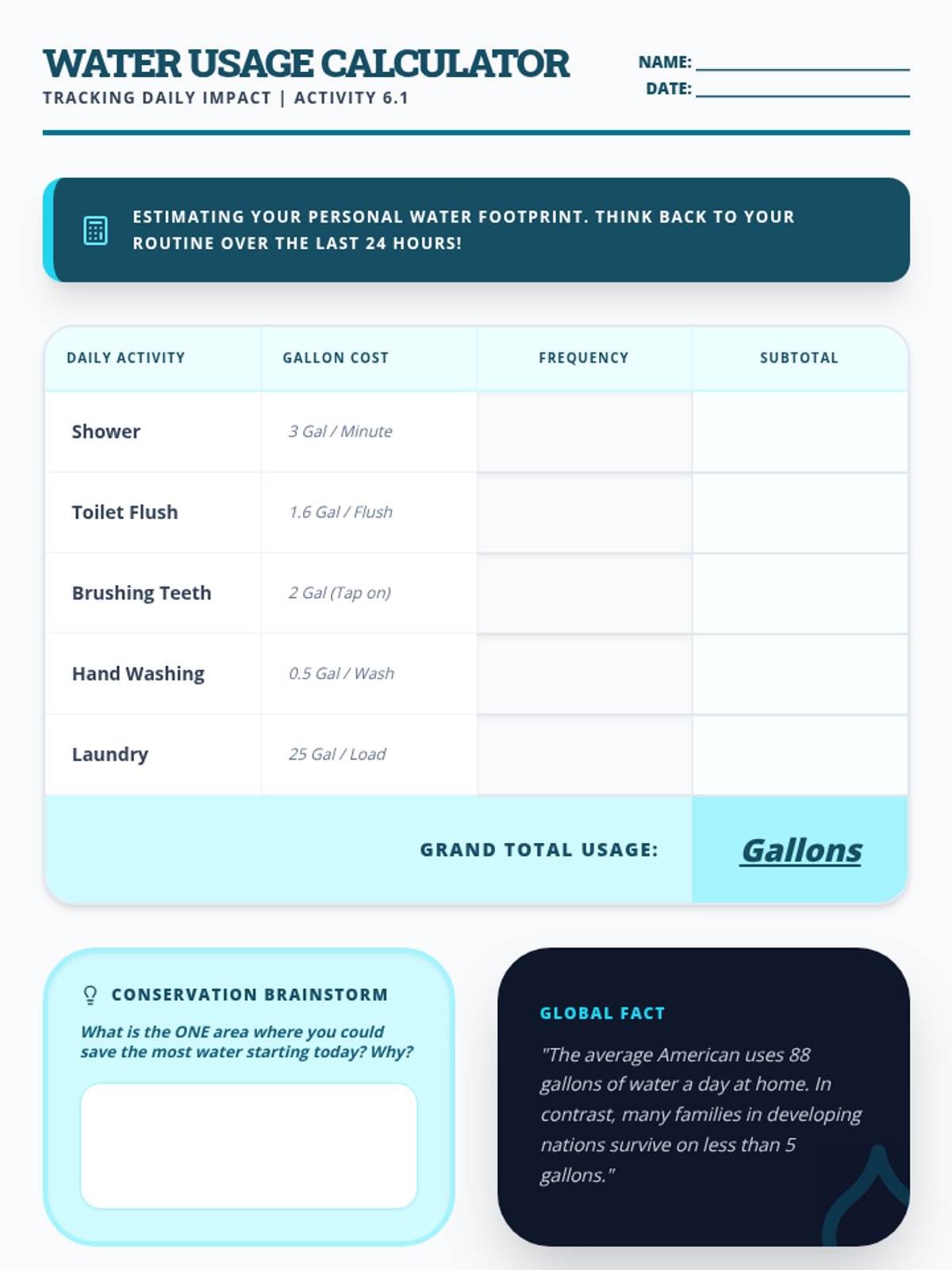
A student worksheet for calculating daily water usage and identifying potential areas for conservation in the home.
Slides for the Water and Waste Solutions lesson, focusing on water usage statistics, greywater recycling systems, and composting basics.
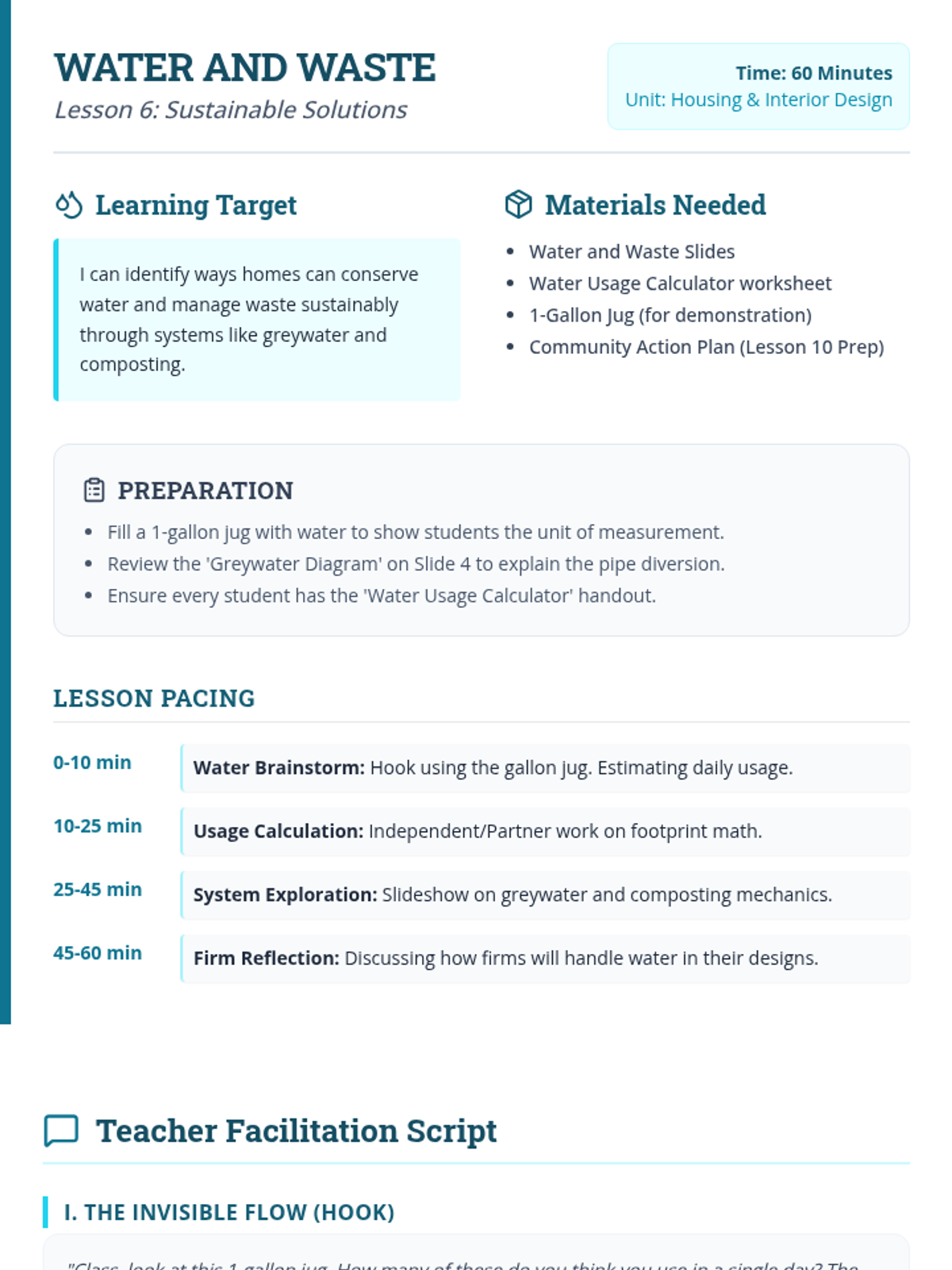
A teacher guide for the Water and Waste Solutions lesson, providing a pacing guide and script for teaching water conservation, greywater systems, and waste management.
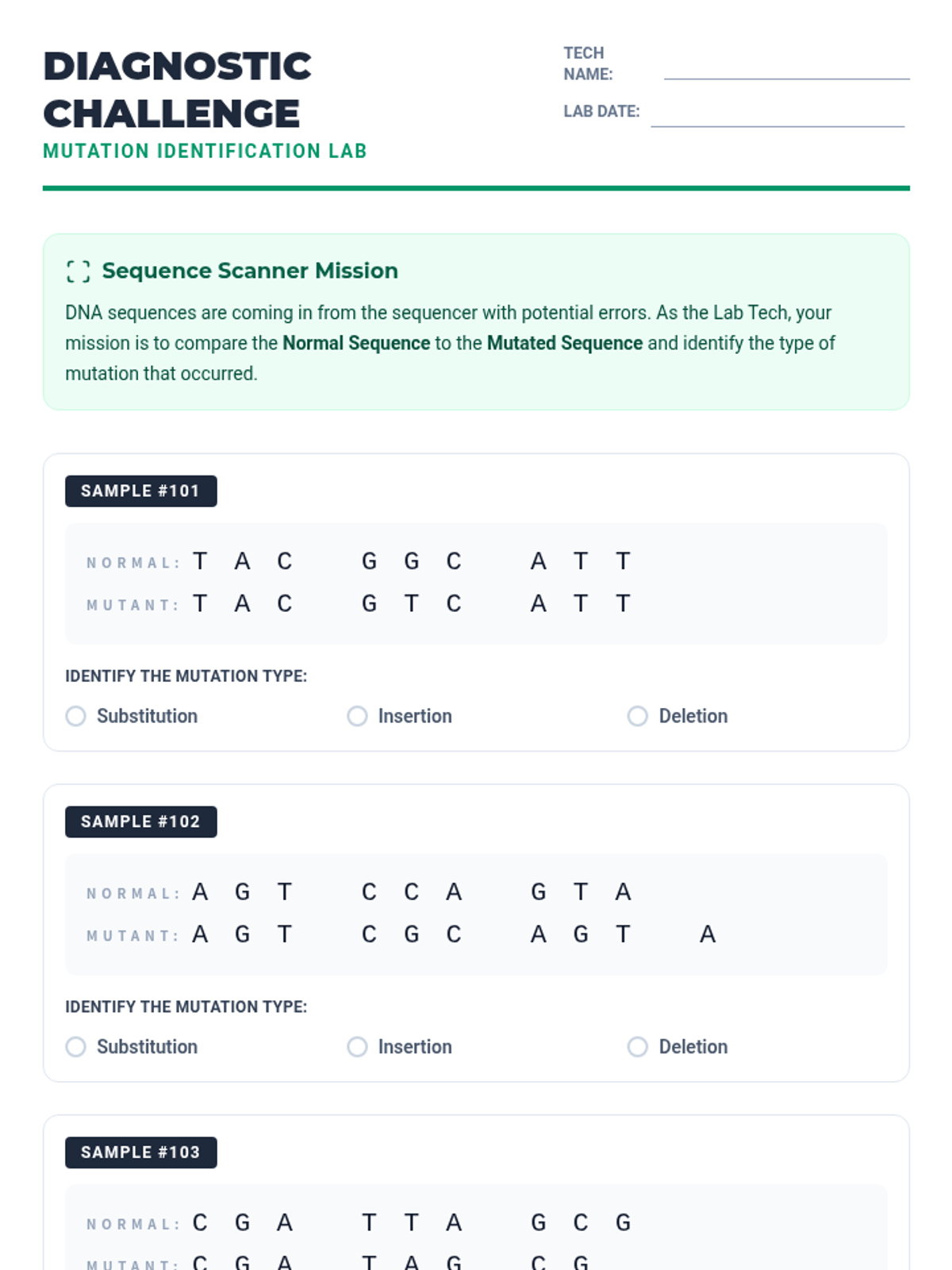
A multiple-choice activity where students act as laboratory technicians to identify substitution, insertion, and deletion mutations in genetic sequences.
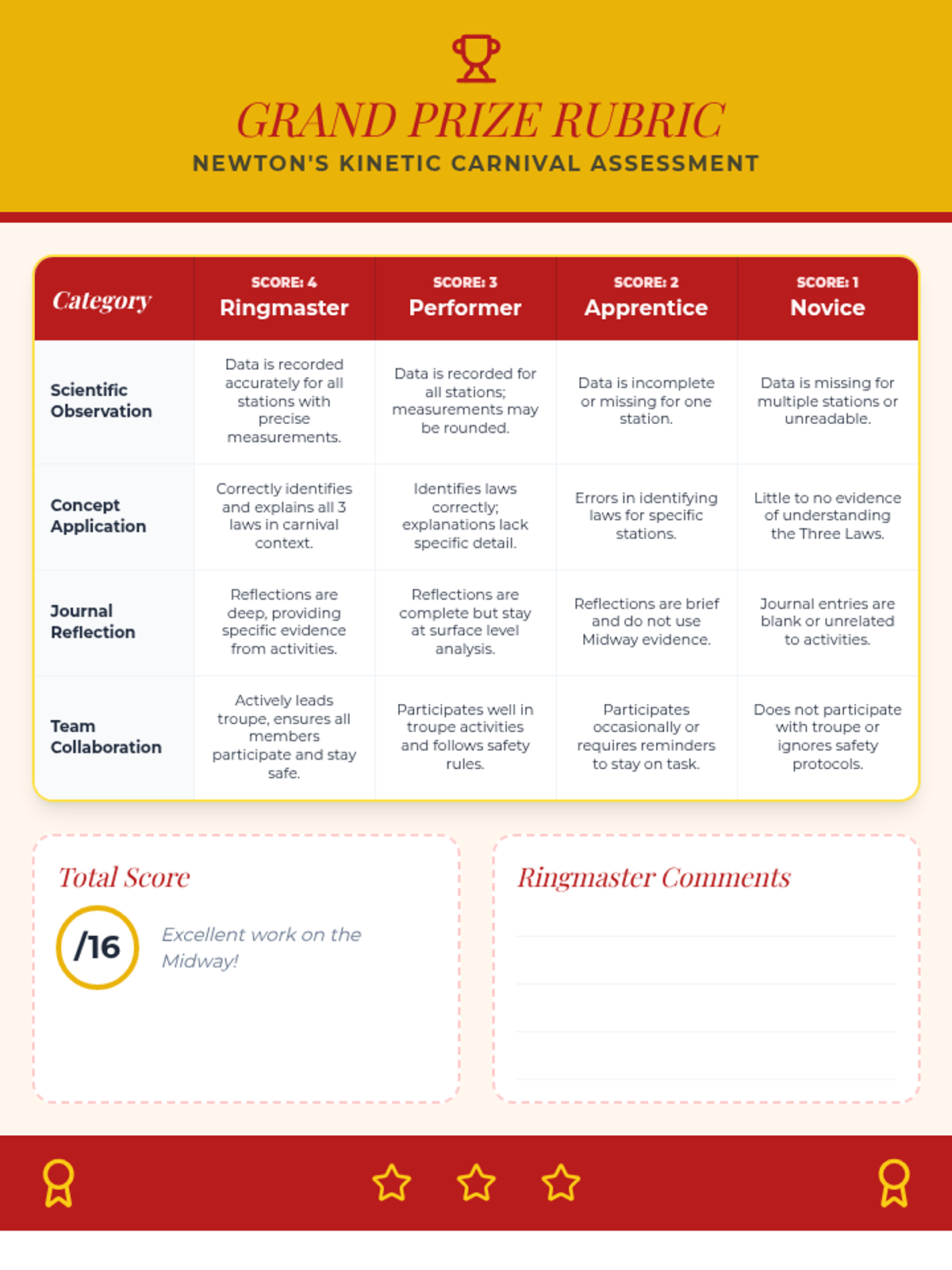
A clear, carnival-themed rubric for assessing student performance in Newton's Kinetic Carnival, covering data recording, concept application, and reflection.
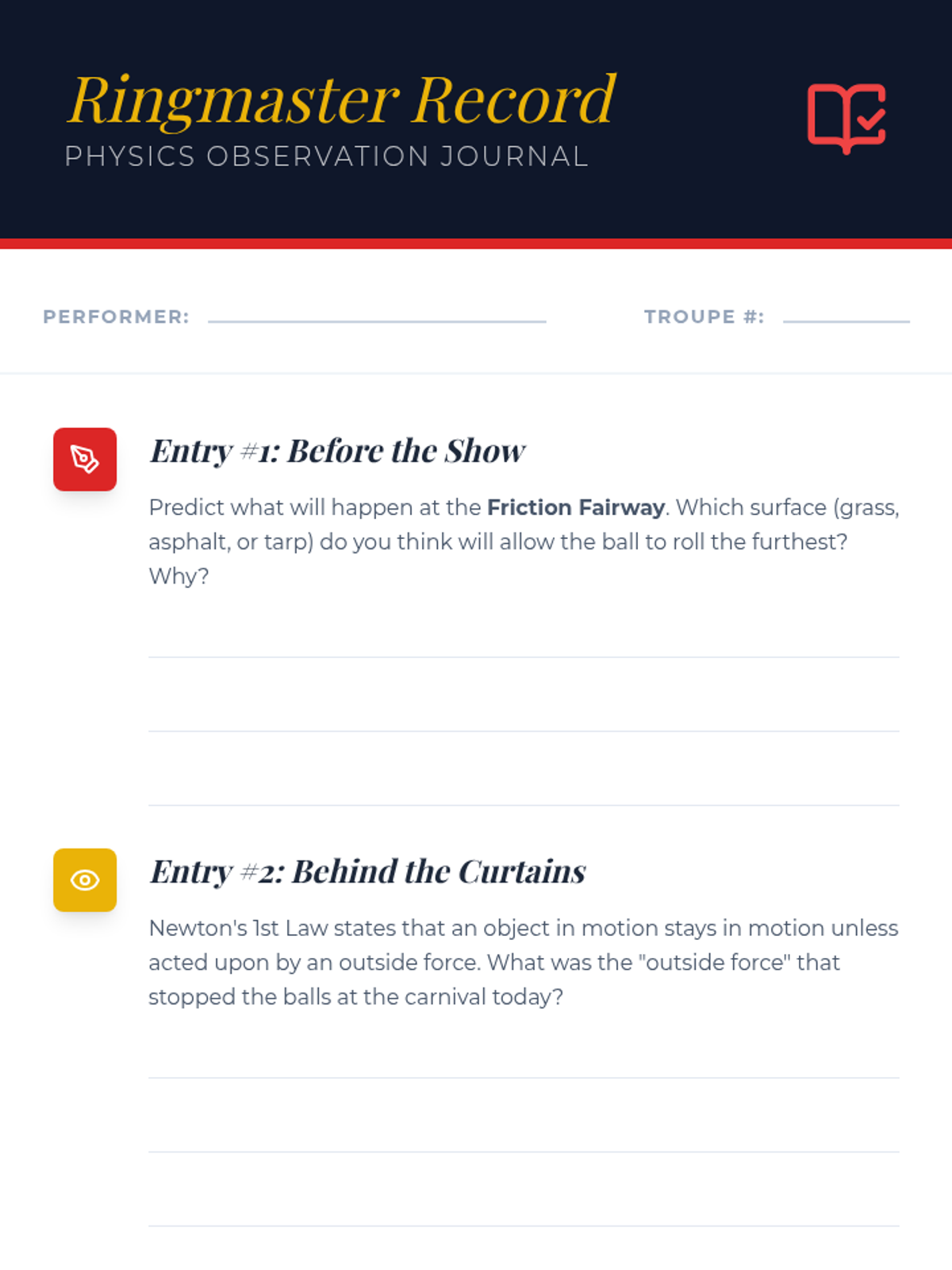
A structured student journal for recording hypotheses, observations, and deep reflections on the physics principles encountered during the carnival.
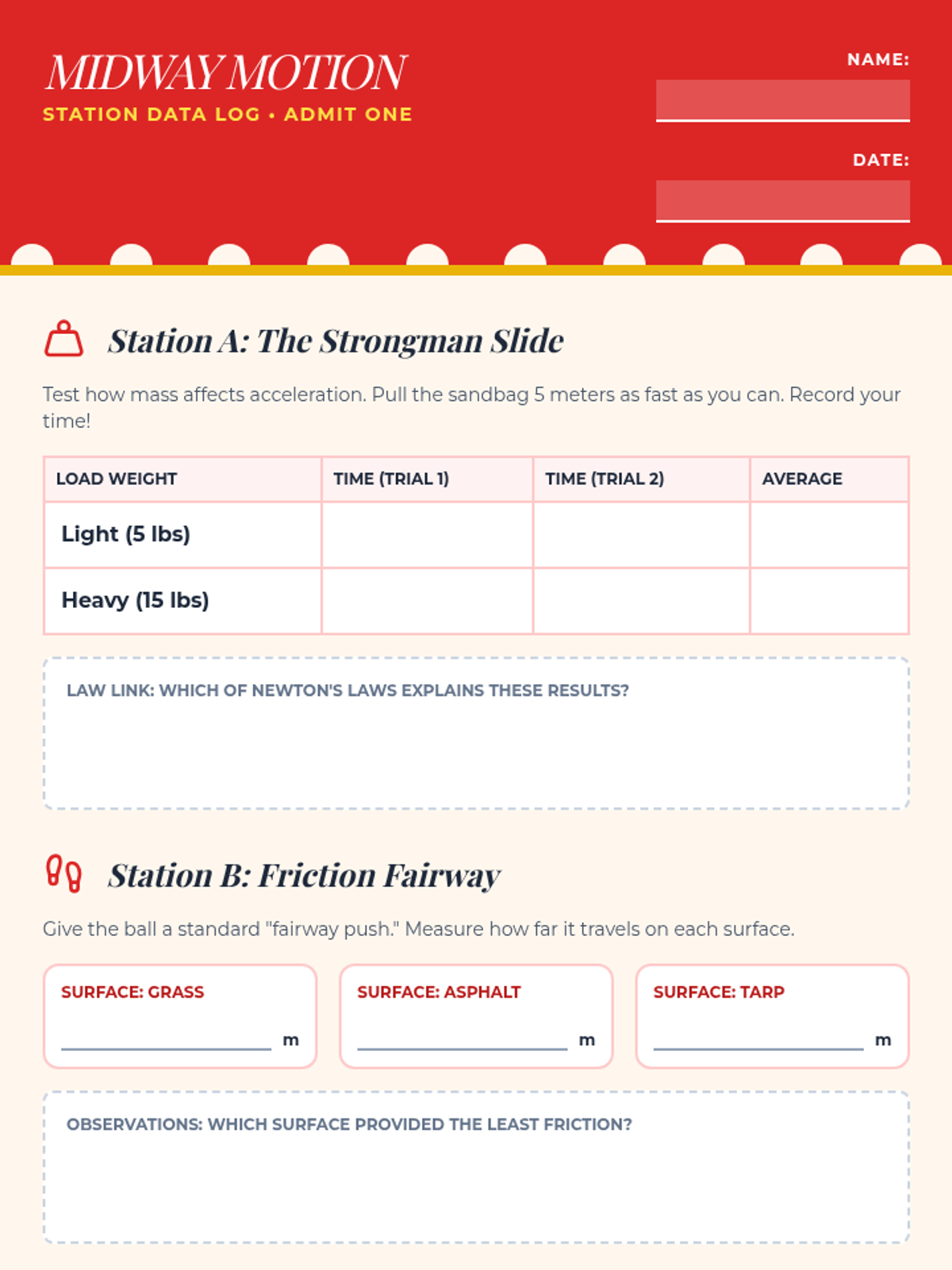
A student-facing activity sheet for recording experimental data and observations from the physical motion stations.
A visually engaging slide deck that introduces Newton's Laws of Motion, friction, and mass using carnival-themed analogies and clear instructions for the outdoor activities.
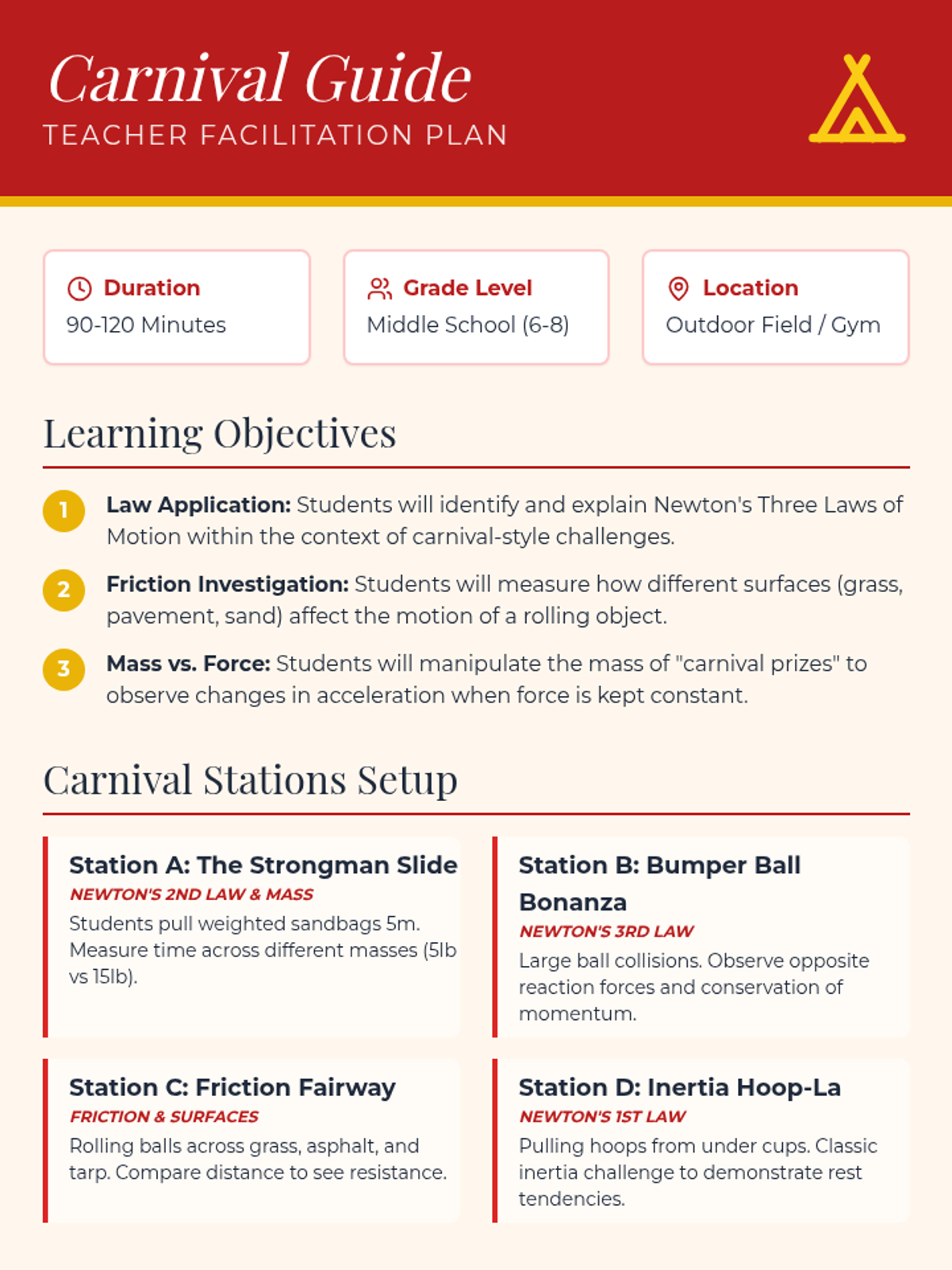
A comprehensive teacher facilitation guide for Newton's Kinetic Carnival, including learning objectives, station setup instructions, and a timed instructional flow.
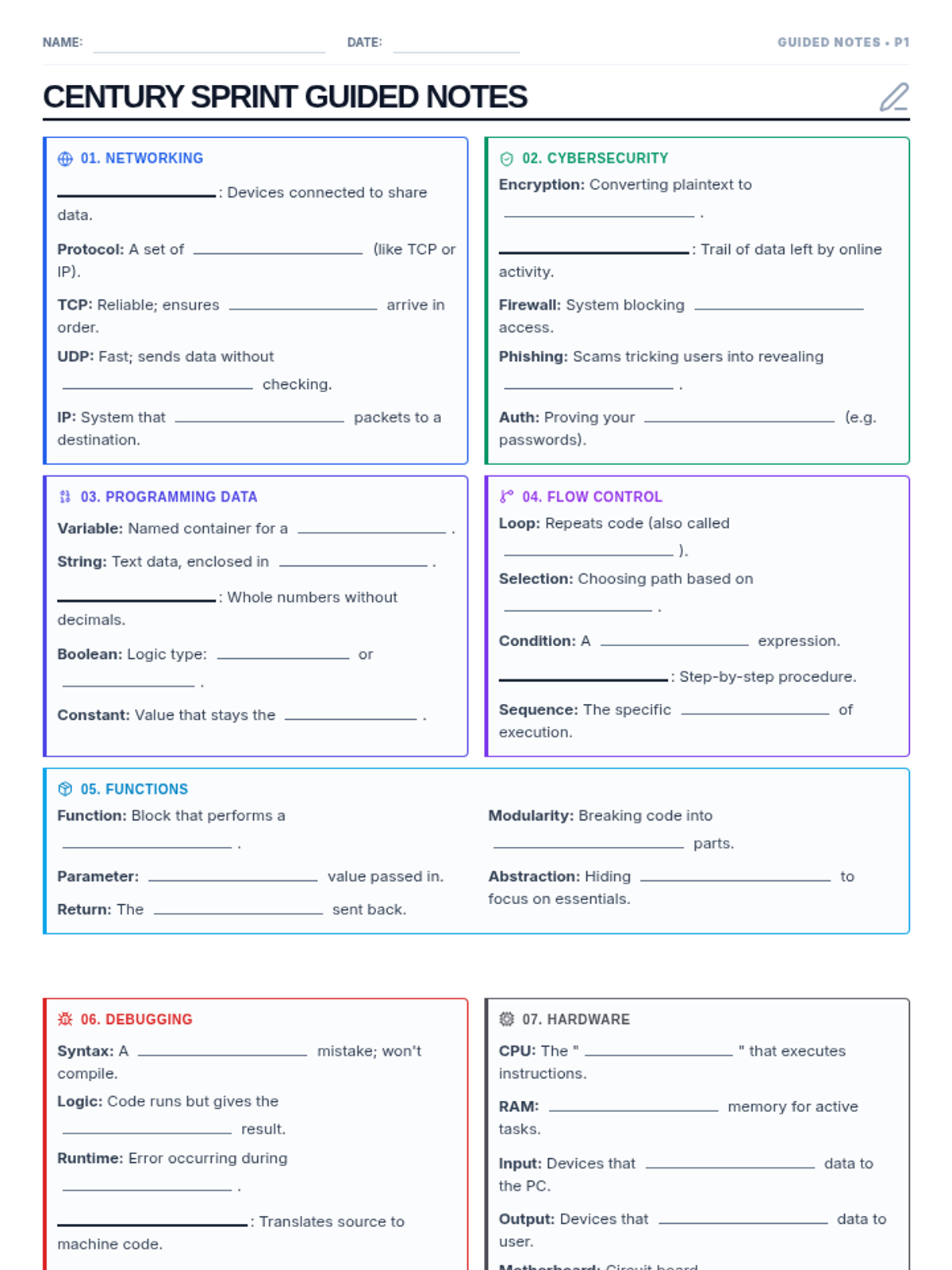
A 2-page guided notes document designed for active recall during the final exam review. It features fill-in-the-blank vocabulary terms and conceptual definitions across 10 CS domains, including a self-reflection section for identifying focus areas. Body text size adjusted to 11.5px with optimized spacing and widened blanks to ensure it is classroom-ready.
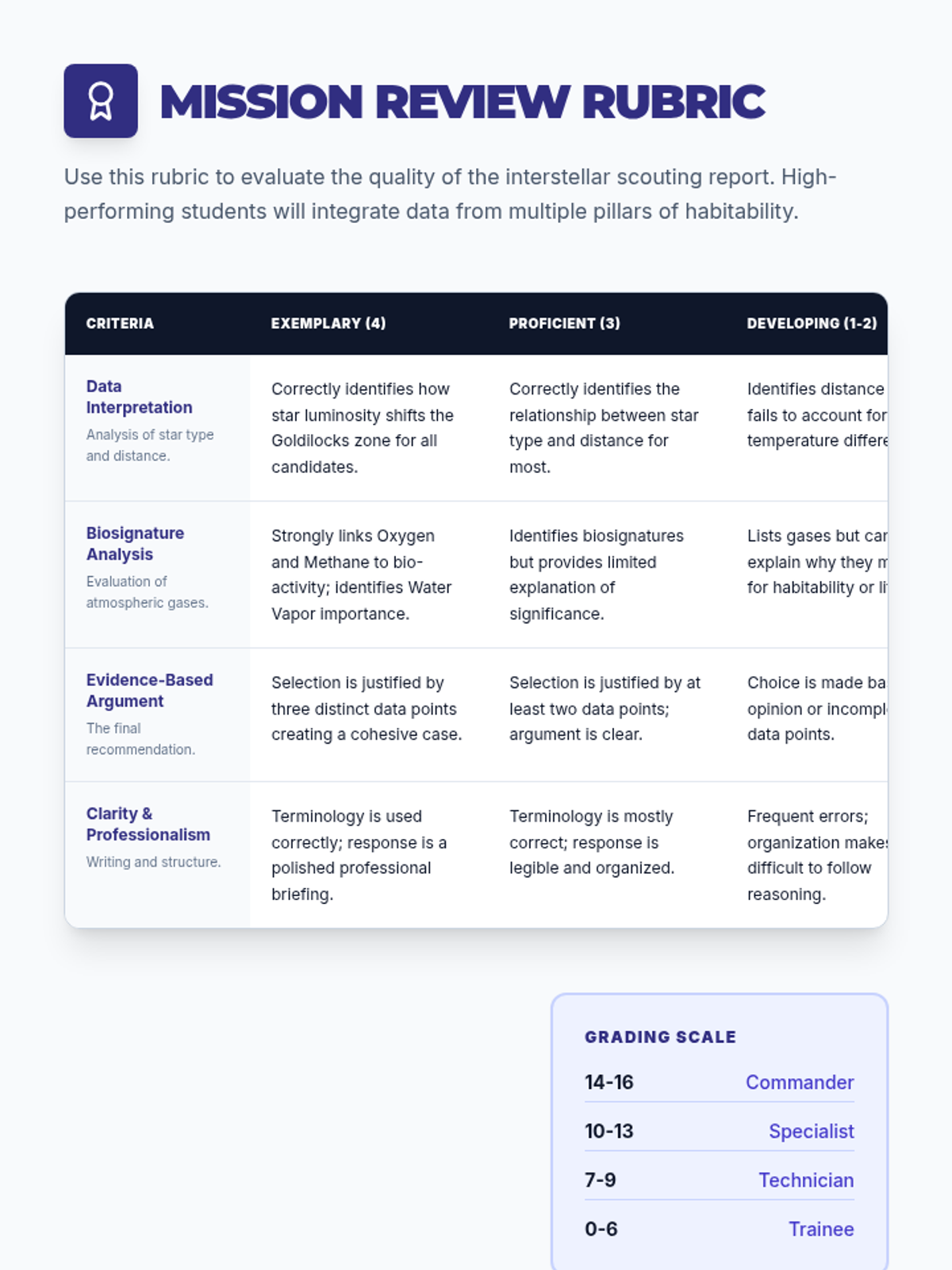
A professional assessment tool for evaluating student planetary scouting reports, with criteria for data analysis, evidence use, and communication.
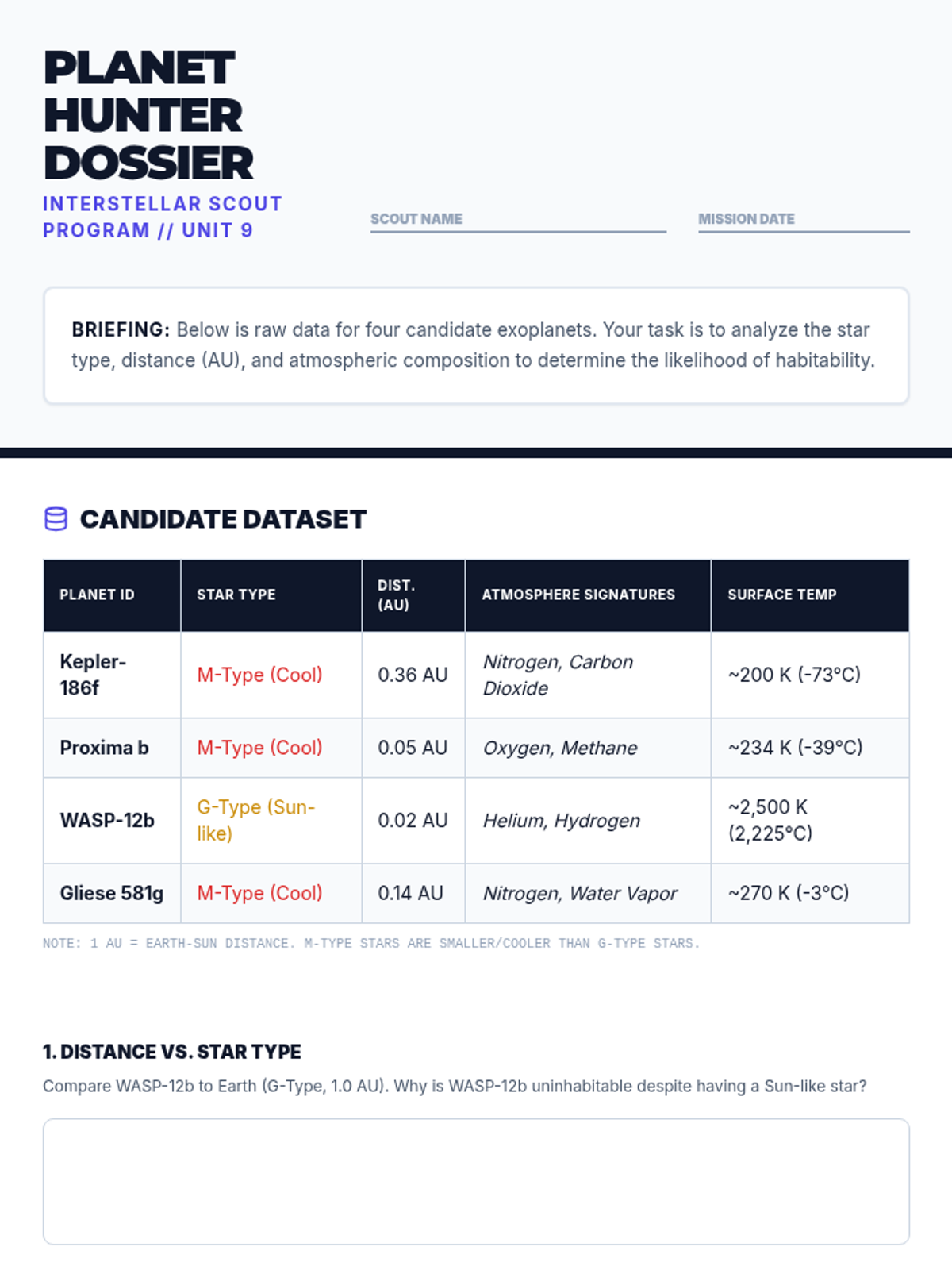
A data-rich analysis dossier where students evaluate four candidate planets, analyze their spectral signatures, and write a final recommendation for a scout mission.
A high-impact slide deck for direct instruction, covering the Goldilocks zone, atmospheric biosignatures, and the mission instructions.
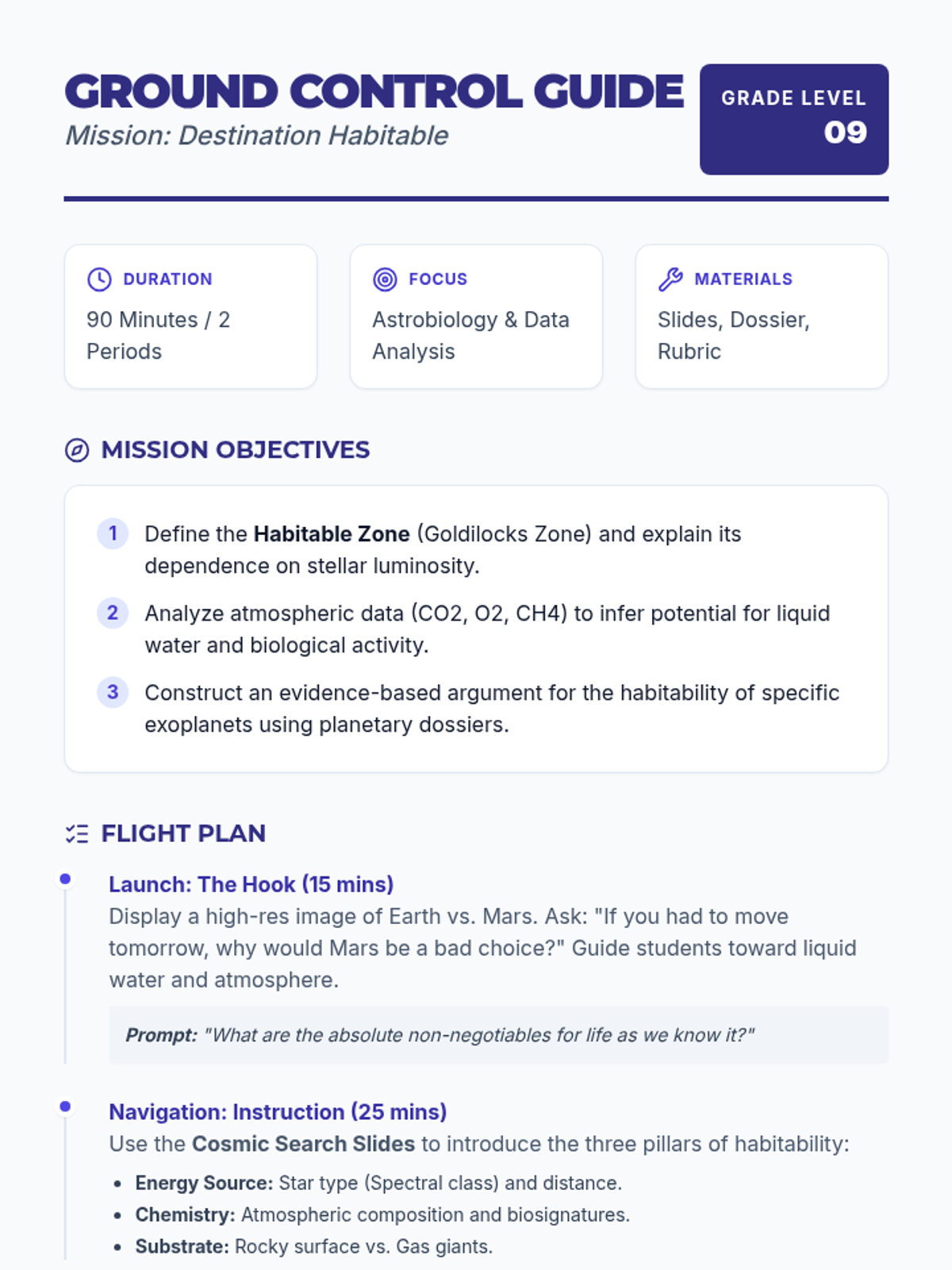
A comprehensive lesson plan for teachers, outlining objectives, a detailed 90-minute procedure, and key vocabulary for the habitability mission.