A comprehensive lesson plan for teachers, outlining objectives, a detailed 90-minute procedure, and key vocabulary for the habitability mission.
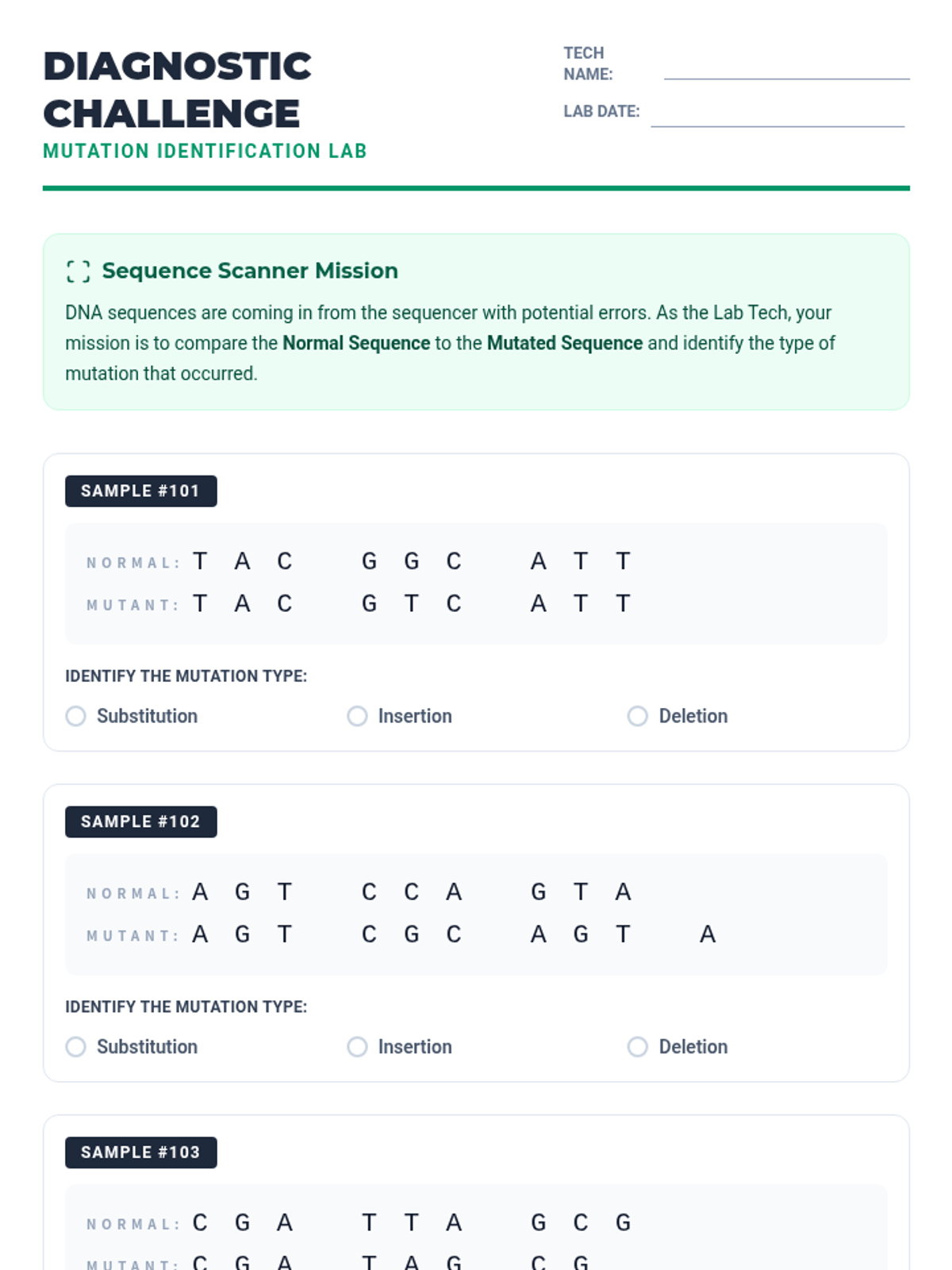
A multiple-choice activity where students act as laboratory technicians to identify substitution, insertion, and deletion mutations in genetic sequences.
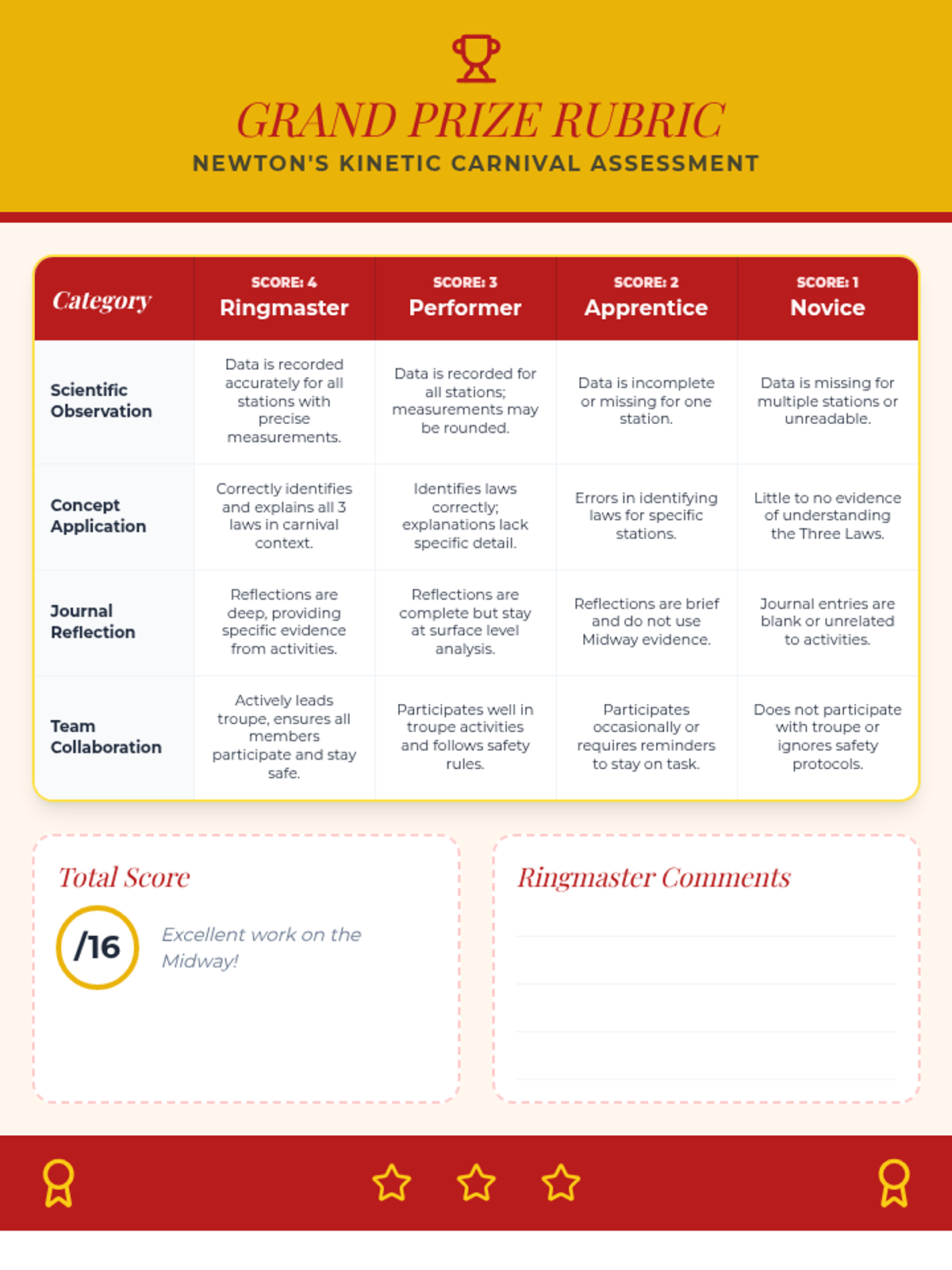
A clear, carnival-themed rubric for assessing student performance in Newton's Kinetic Carnival, covering data recording, concept application, and reflection.
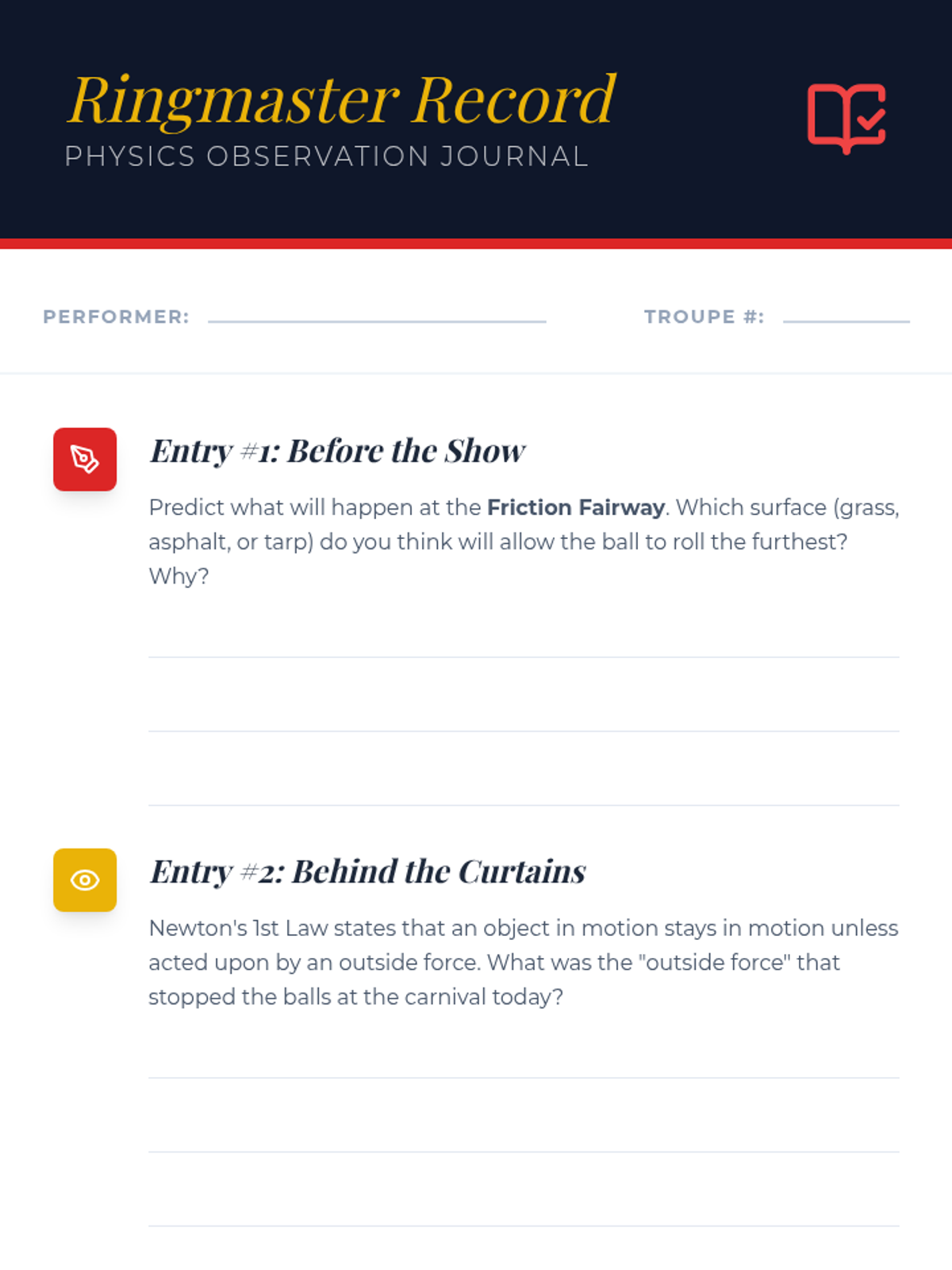
A structured student journal for recording hypotheses, observations, and deep reflections on the physics principles encountered during the carnival.
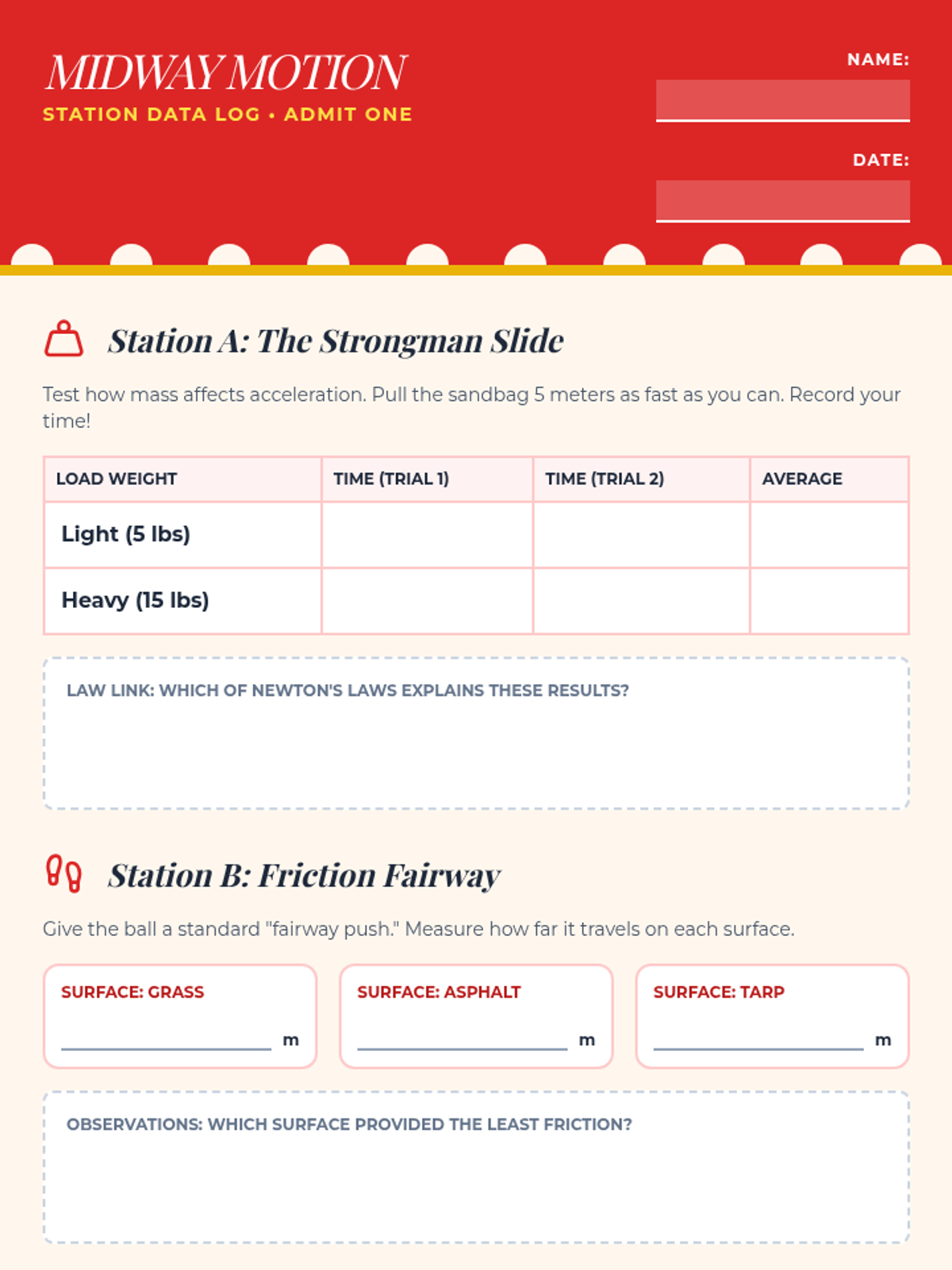
A student-facing activity sheet for recording experimental data and observations from the physical motion stations.
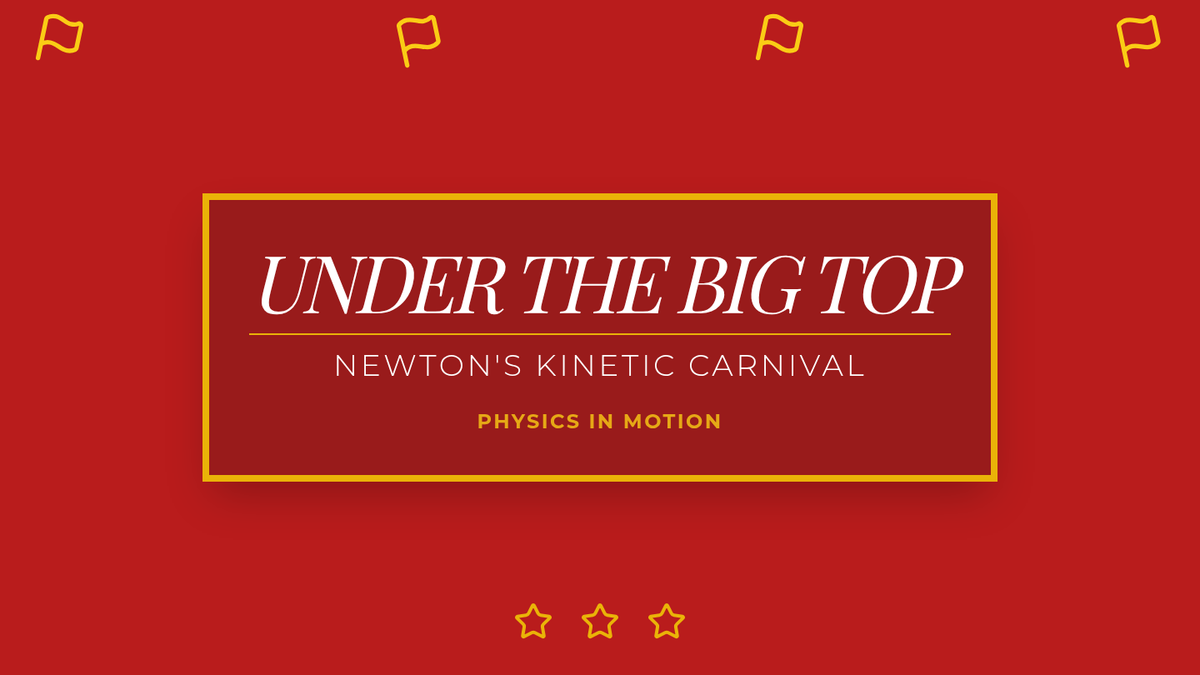
A visually engaging slide deck that introduces Newton's Laws of Motion, friction, and mass using carnival-themed analogies and clear instructions for the outdoor activities.
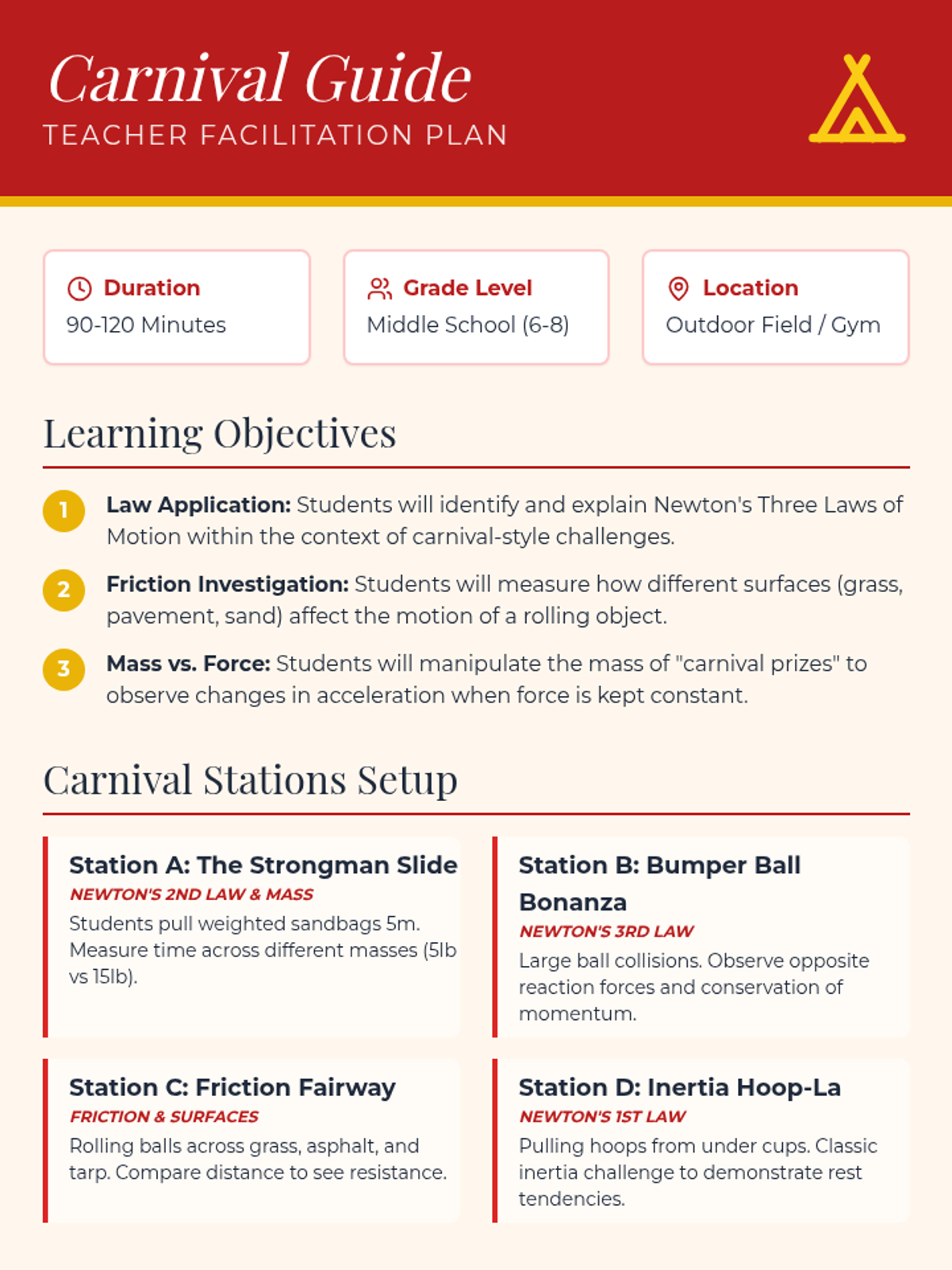
A comprehensive teacher facilitation guide for Newton's Kinetic Carnival, including learning objectives, station setup instructions, and a timed instructional flow.
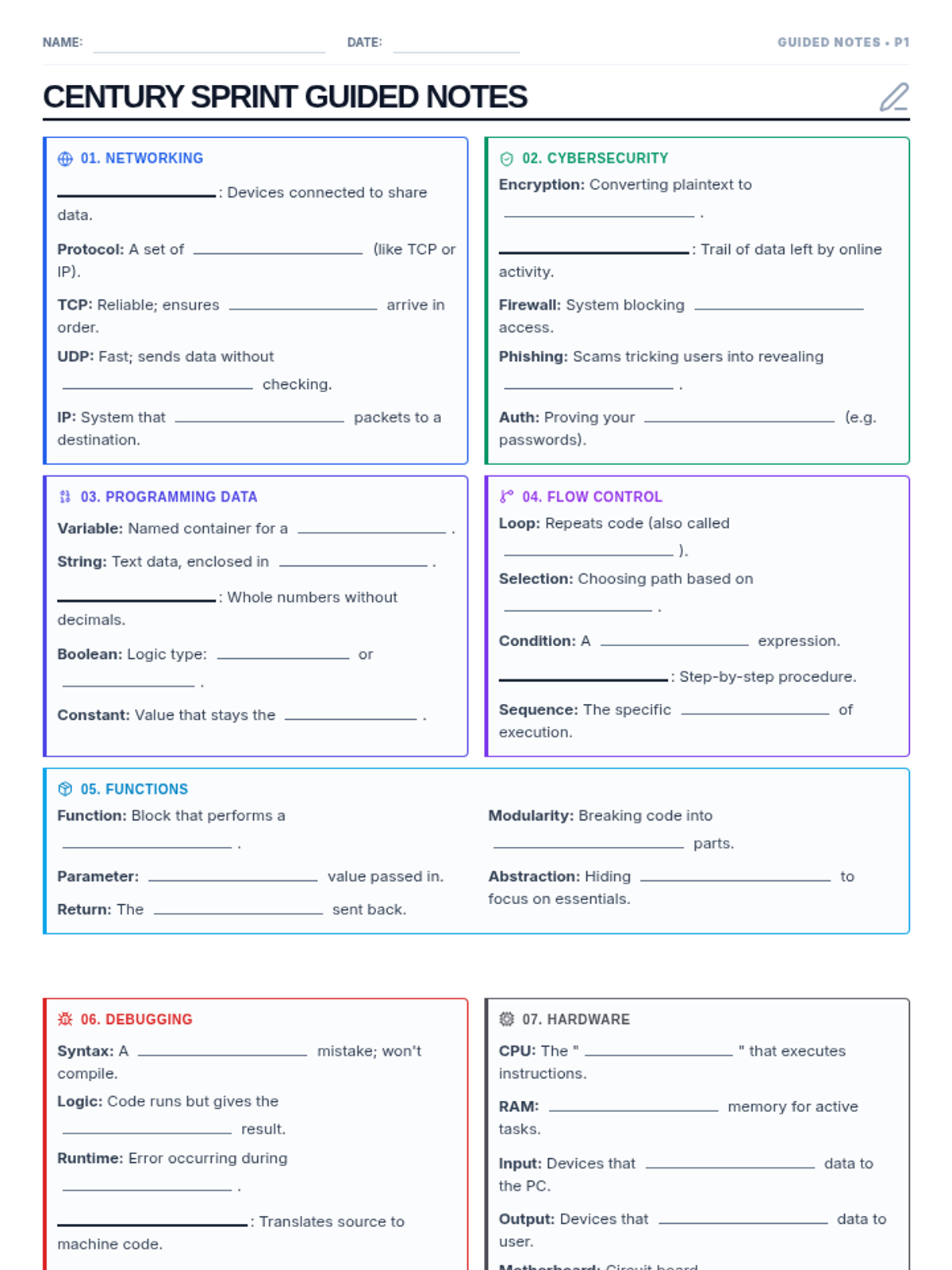
A 2-page guided notes document designed for active recall during the final exam review. It features fill-in-the-blank vocabulary terms and conceptual definitions across 10 CS domains, including a self-reflection section for identifying focus areas. Body text size adjusted to 11.5px with optimized spacing and widened blanks to ensure it is classroom-ready.
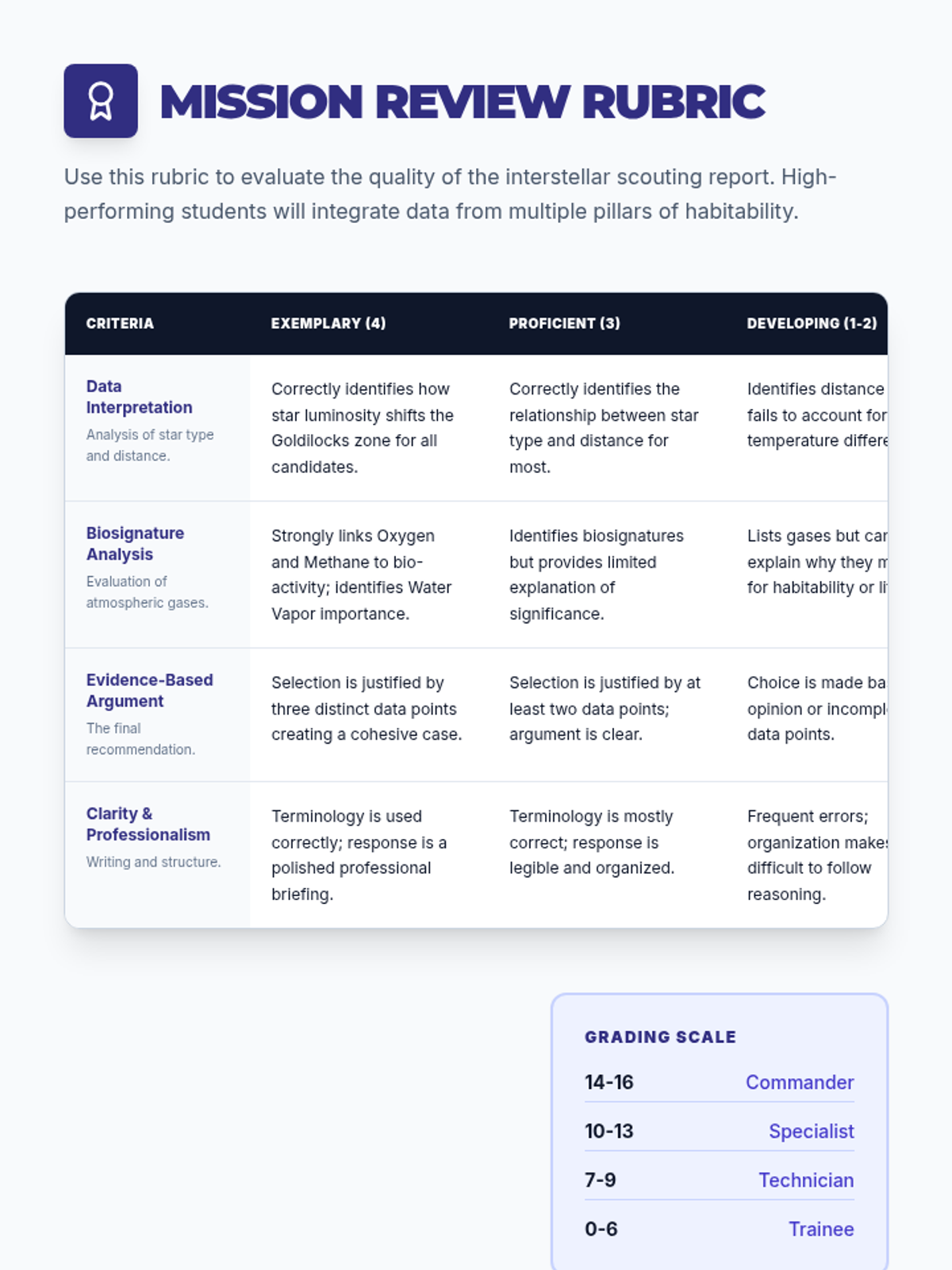
A professional assessment tool for evaluating student planetary scouting reports, with criteria for data analysis, evidence use, and communication.
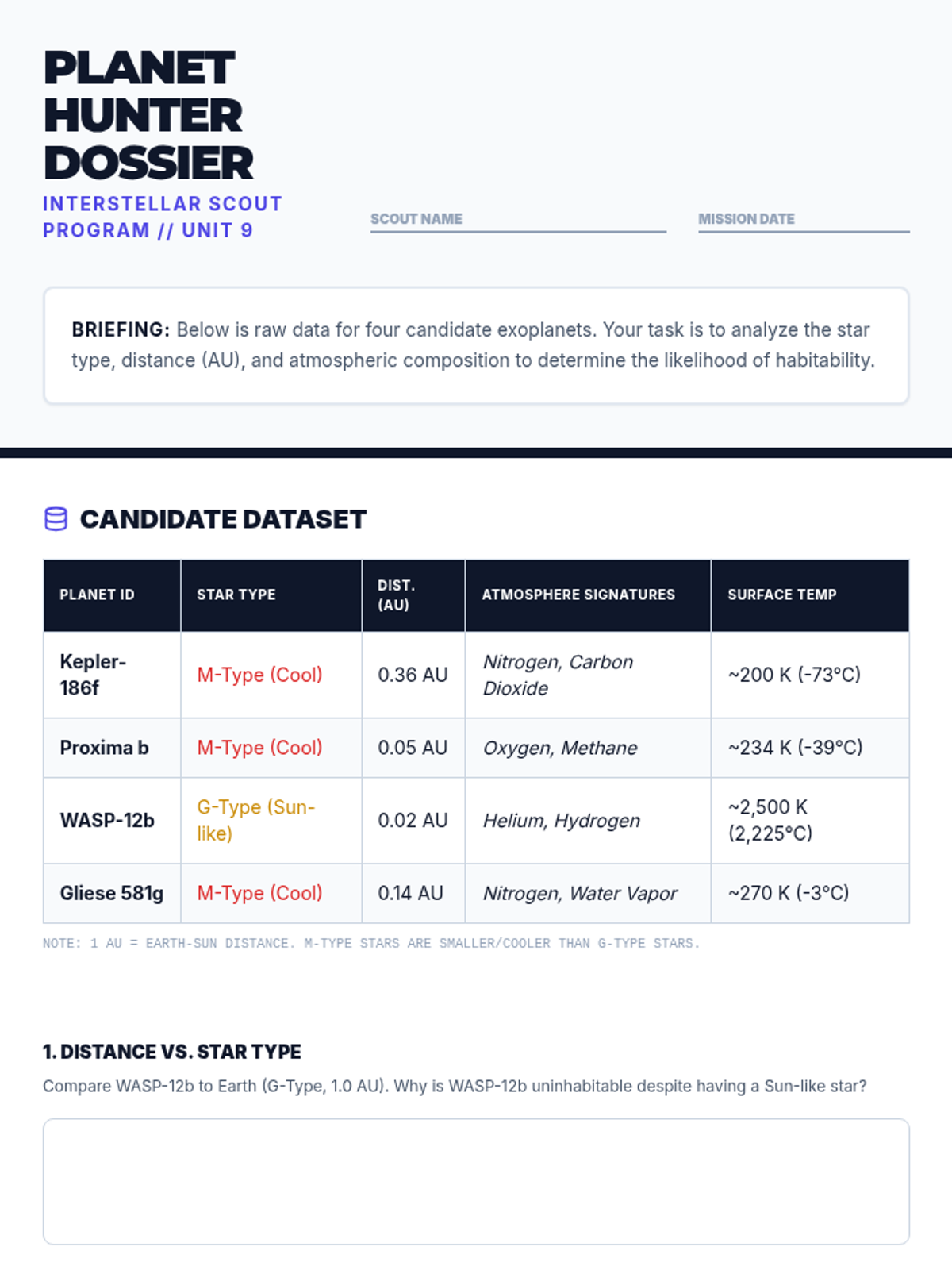
A data-rich analysis dossier where students evaluate four candidate planets, analyze their spectral signatures, and write a final recommendation for a scout mission.
A high-impact slide deck for direct instruction, covering the Goldilocks zone, atmospheric biosignatures, and the mission instructions.
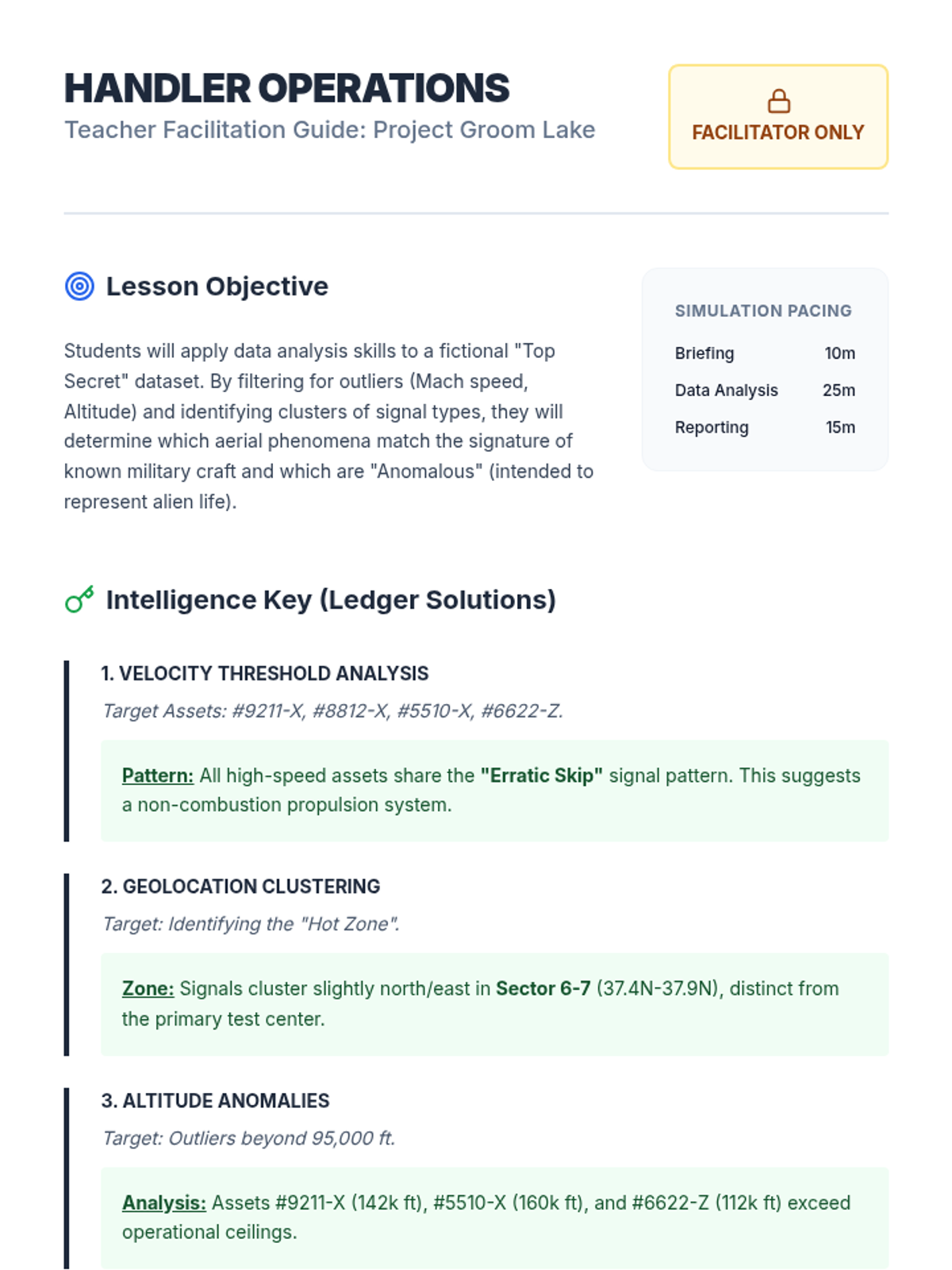
A teacher facilitation guide for Project Groom Lake, including an answer key for the data ledger, instructional pacing tips, and strategies for maintaining the classroom simulation.
A high-tech intelligence briefing slide deck introducing Area 51 and providing students with the criteria needed to distinguish between experimental military aircraft and unidentified aerial phenomena.
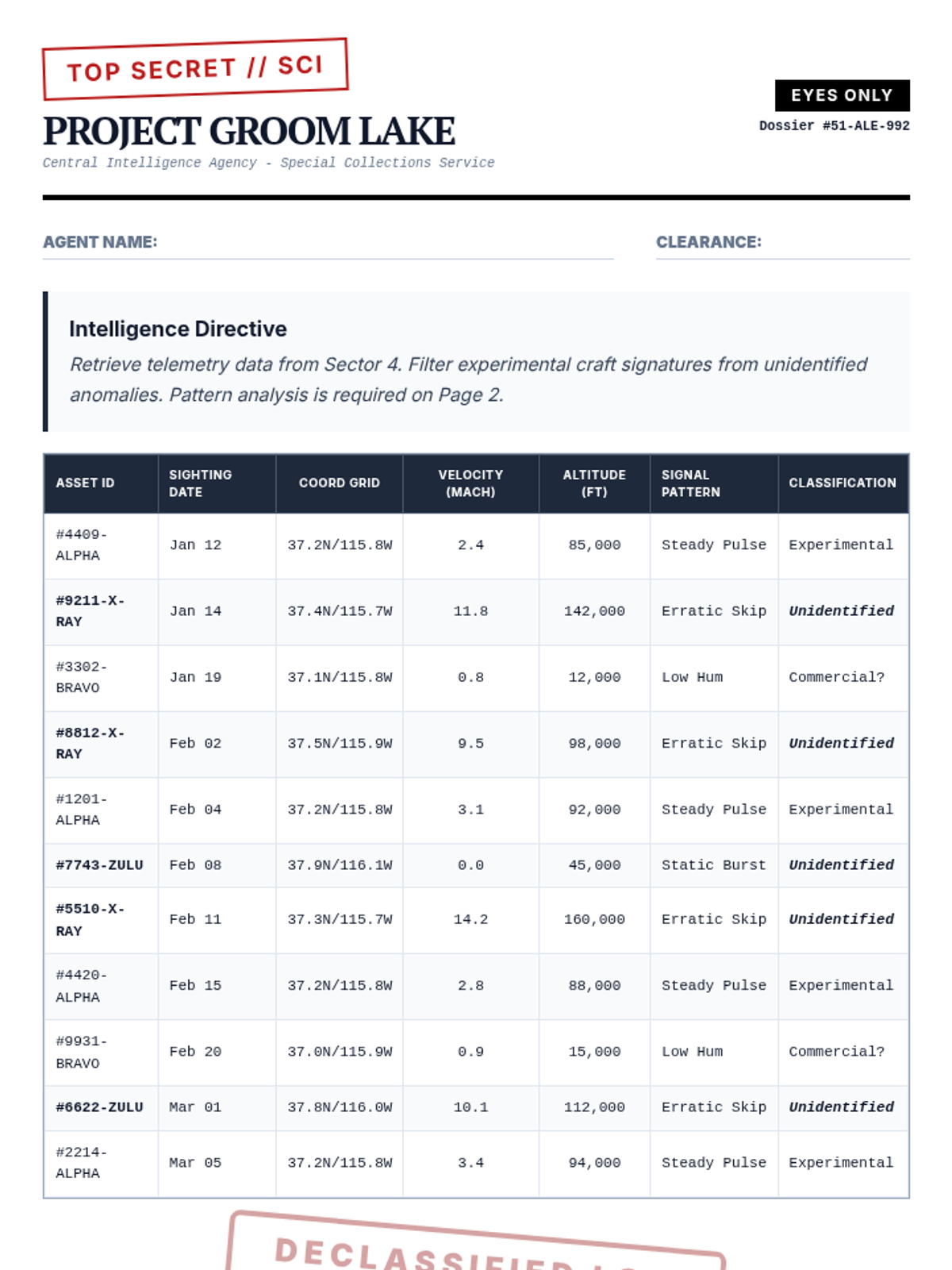
A classified data log worksheet designed to look like a CIA spreadsheet. Students analyze Mach speeds, altitudes, and signal patterns of 'Unidentified Aerial Phenomena' to identify extraterrestrial signatures.
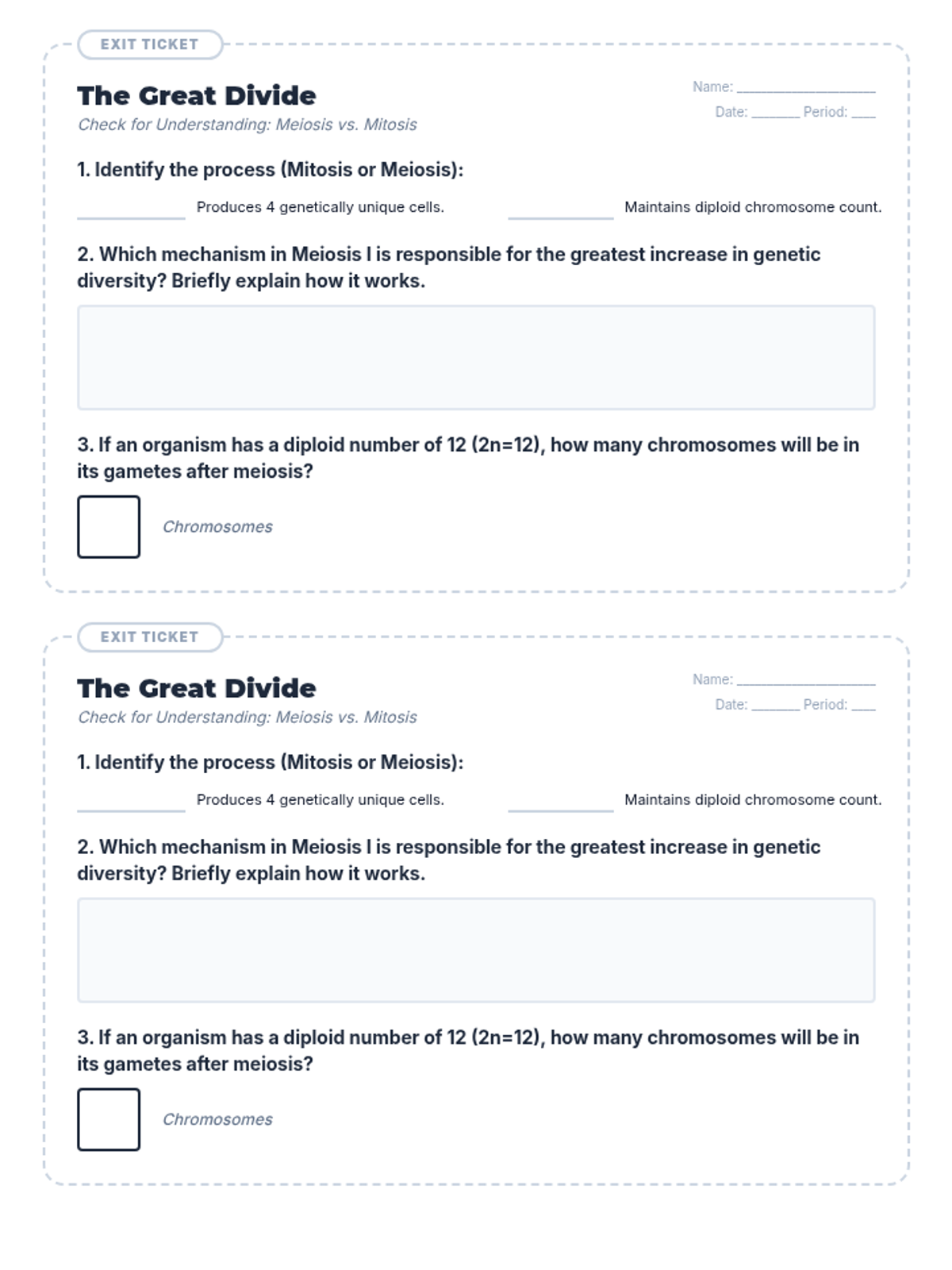
Quick assessment tool designed to check student understanding of the key differences between mitosis and meiosis. Revised to fit two tickets on a single page for printing.
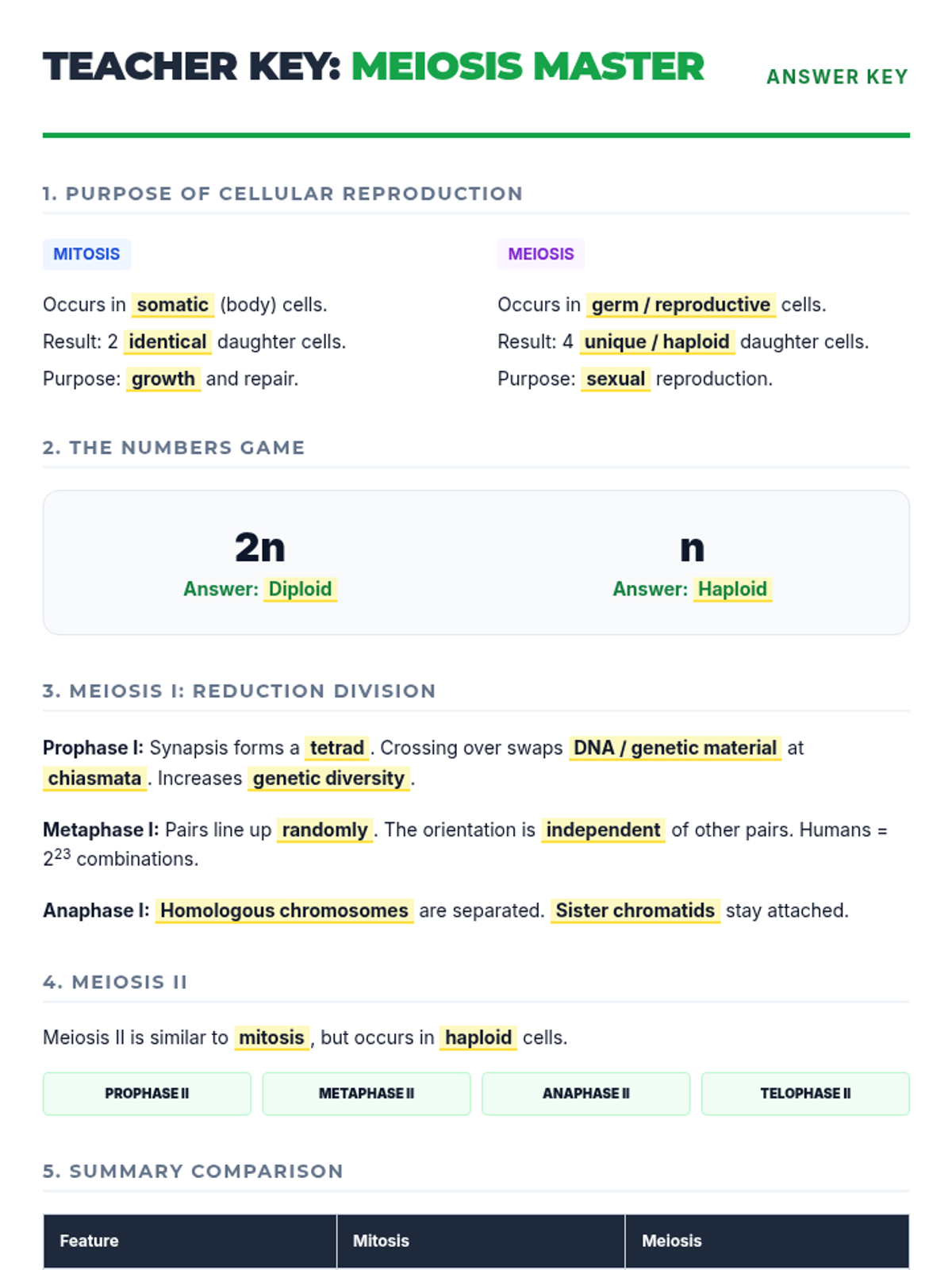
Teacher answer key for the Meiosis Master Guided Notes. Revised for better page breaks and formatting.
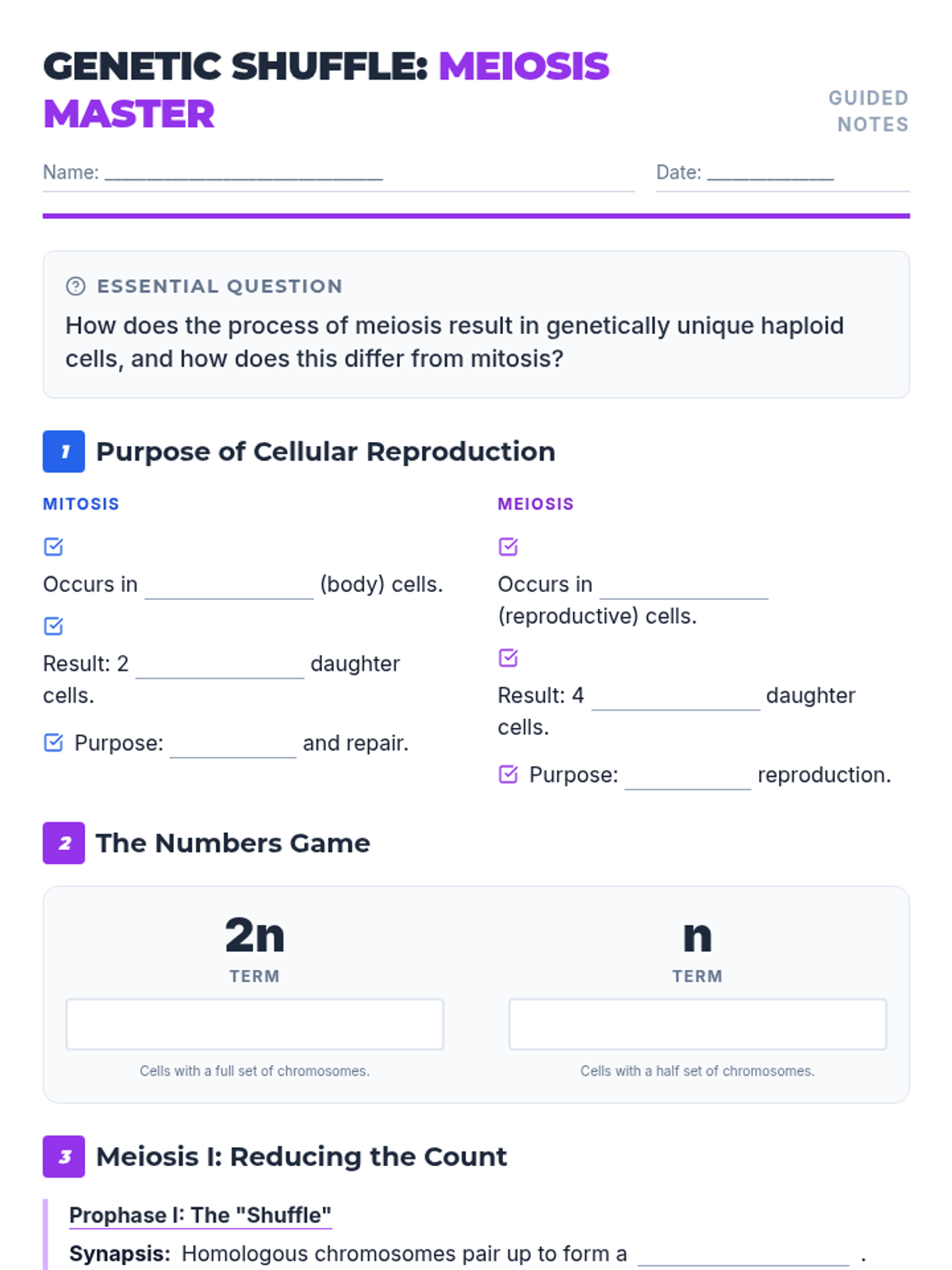
Comprehensive guided notes document for students to complete while following the mitosis vs. meiosis presentation. Revised for better layout, superscript rendering, and printing.
Visual presentation for teaching the differences between mitosis and meiosis, with a detailed focus on the stages of meiosis and mechanisms of genetic variation. Revised with improved rendering and contrast.
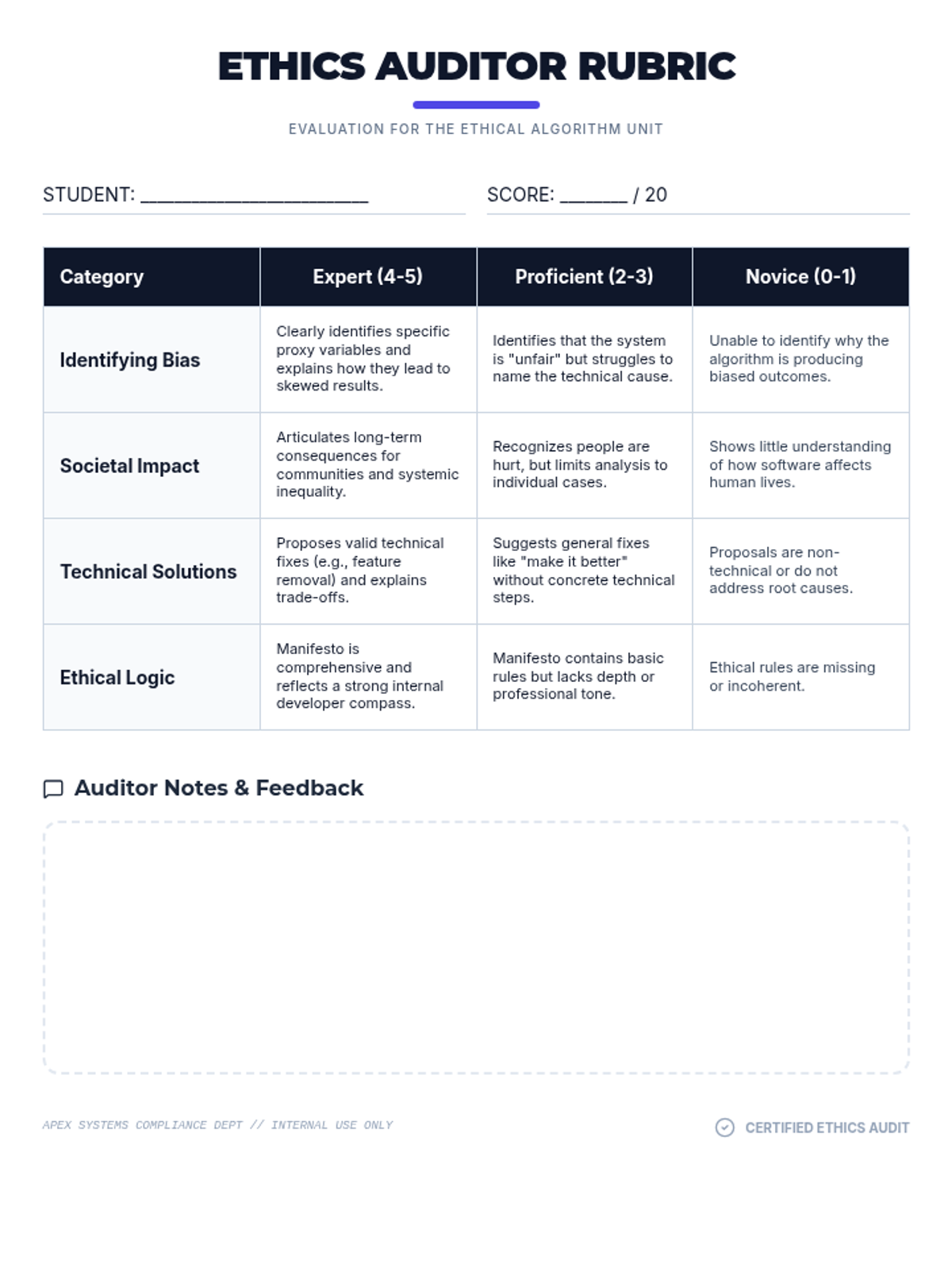
A comprehensive rubric for assessing student understanding of algorithmic bias, societal impact, and technical solutions. Features a professional "compliance audit" aesthetic.
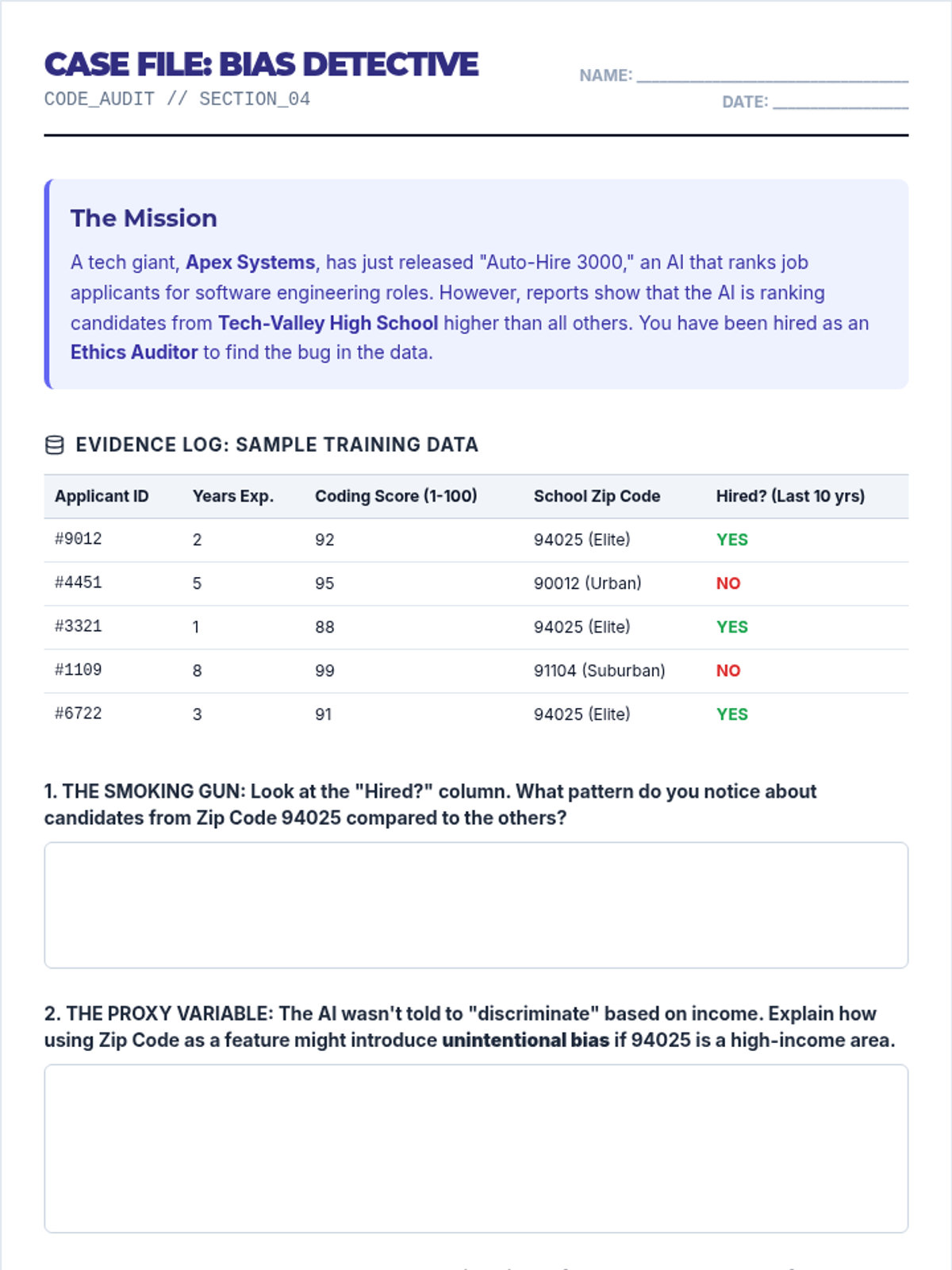
A critical thinking activity where students act as ethics auditors to identify bias in a fictional hiring algorithm's training data. Includes a sample data log and structured analysis questions.
A high-impact slide deck for teaching machine learning ethics, featuring visual explanations of algorithmic feedback loops and real-world case studies on facial recognition bias.
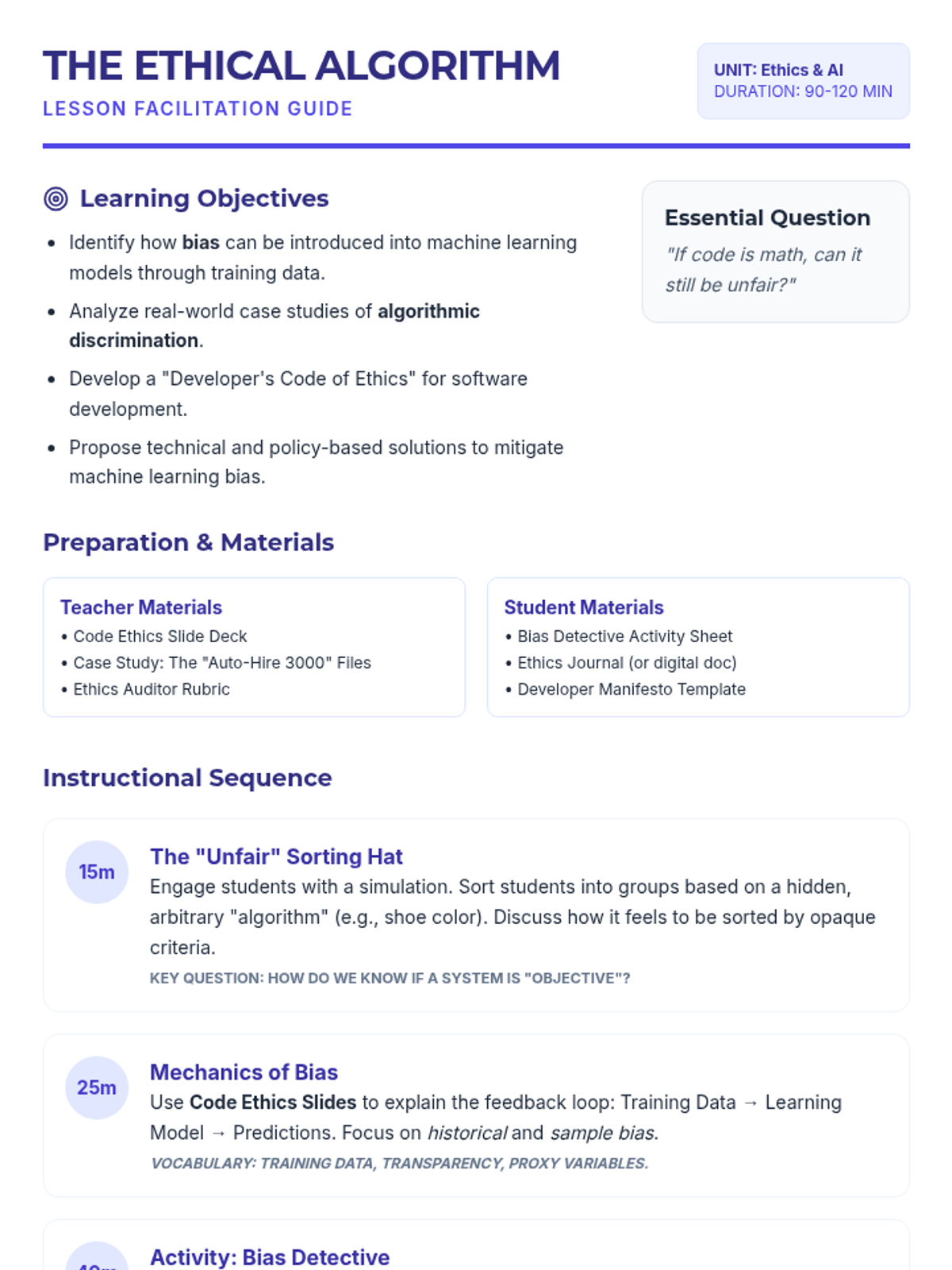
A detailed teacher's guide for the Ethical Algorithm lesson, including learning objectives, a timed instructional sequence, and differentiation strategies for teaching machine learning ethics.
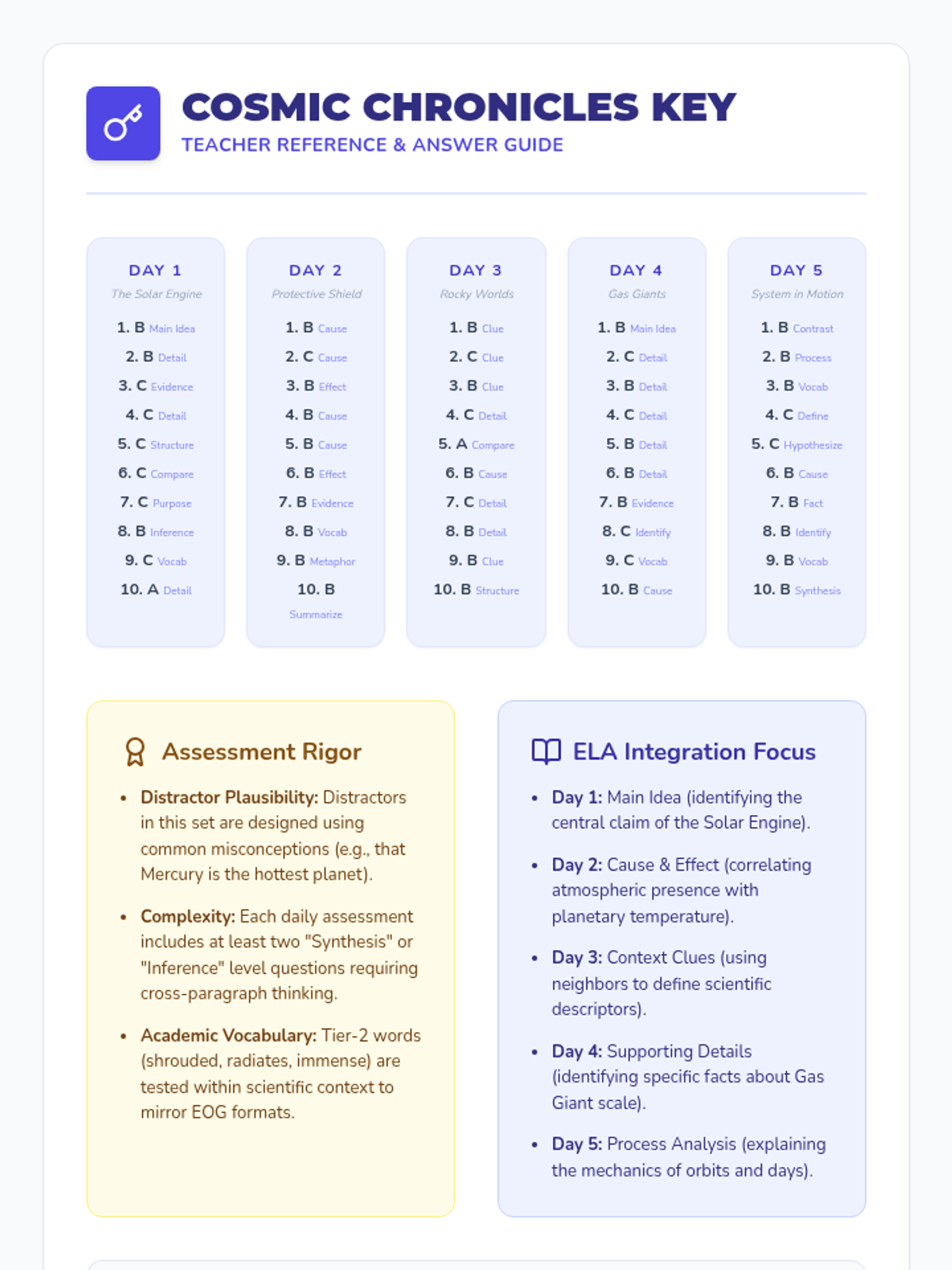
Teacher answer key for the Cosmic Chronicles Packet V3. Features a detailed quick-reference grid with ELA skill mapping (Main Idea, Cause/Effect, etc.), instructional tips for EOG-level assessment, and a dedicated space for teacher observation and differentiation notes. Optimized for a single-page layout with improved contrast and tag formatting.
A comprehensive 11-page daily reading and assessment packet for 3rd grade. Includes 6-paragraph reading passages for each day and 10 EOG-style questions per passage, covering NC Science Standard 3.E.2 and integrated ELA standards. Answer choices now feature the letters A-D with consistent checkbox styling. Restructured for a 1-5 and 6-10 column flow.
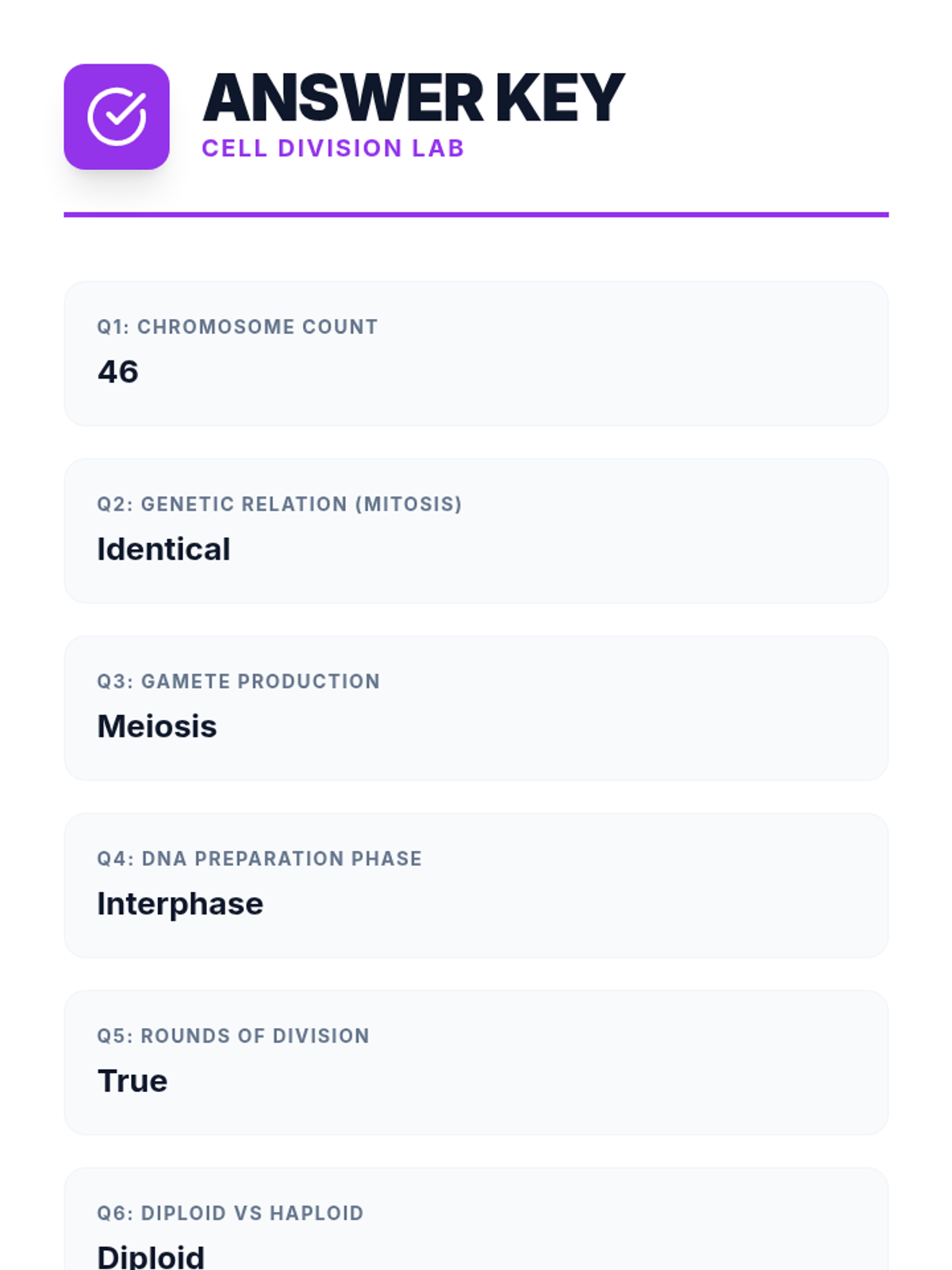
A detailed answer key for the Cell Division Lab worksheet, providing correct answers and context for mitosis and meiosis questions.
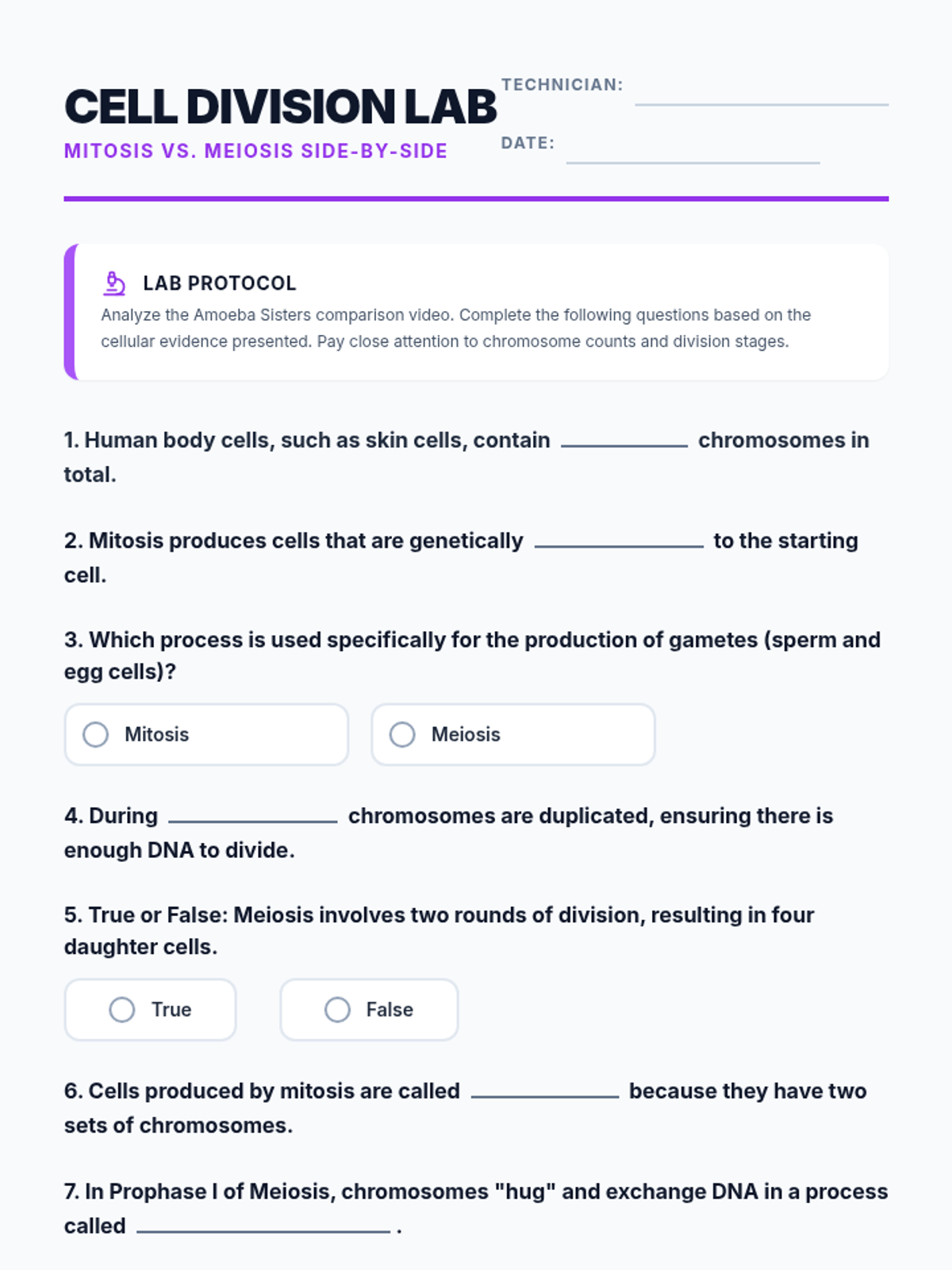
A 10-question student worksheet comparing mitosis and meiosis based on the Amoeba Sisters video, optimized for two-page layout.
A slide deck comparing mitosis and meiosis, featuring the Amoeba Sisters video, outcome comparisons, and 10 review questions.
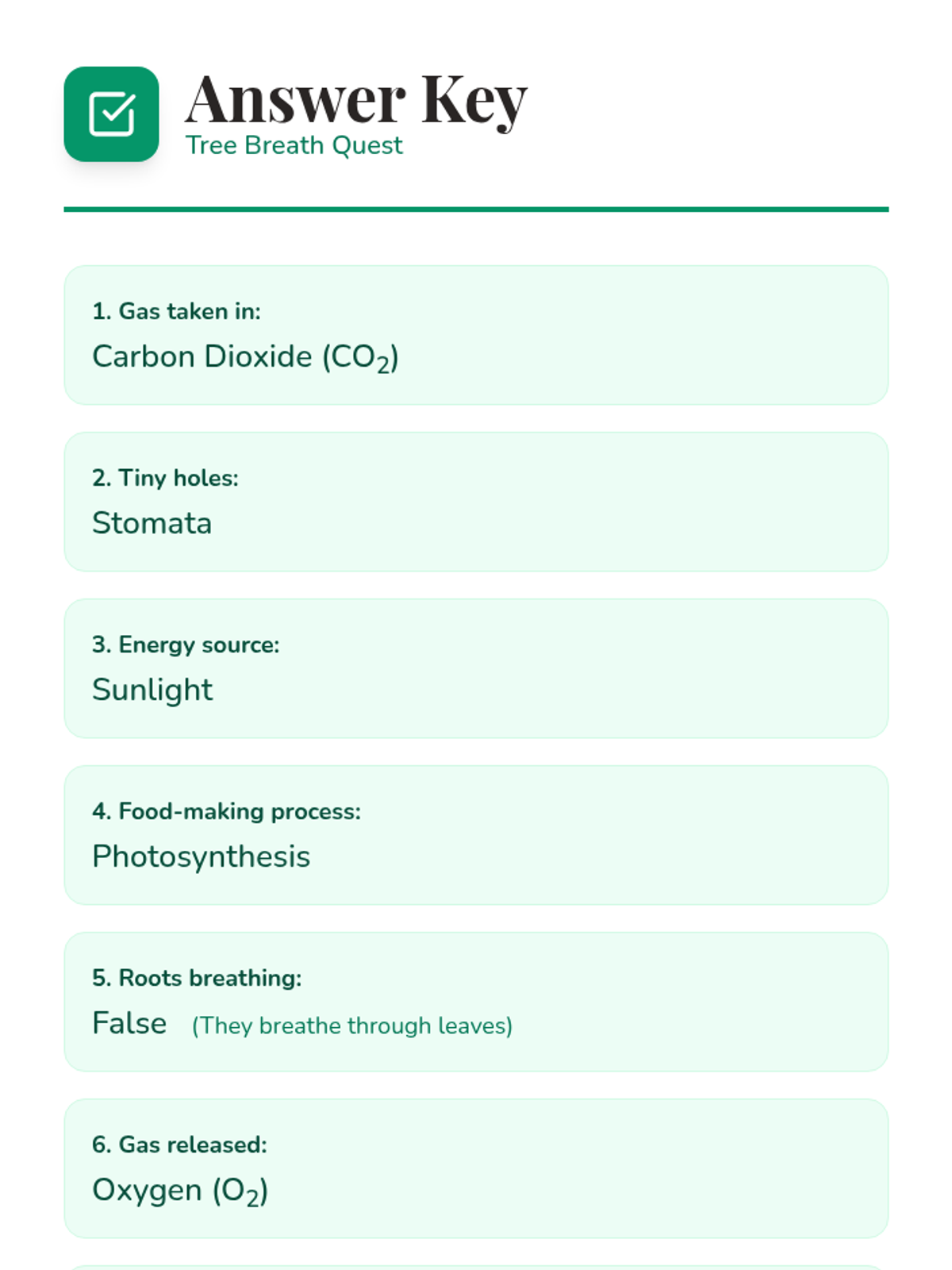
An answer key for the Tree Breath Worksheet, revised with proper math formatting for chemical symbols and improved layout to prevent awkward page breaks.
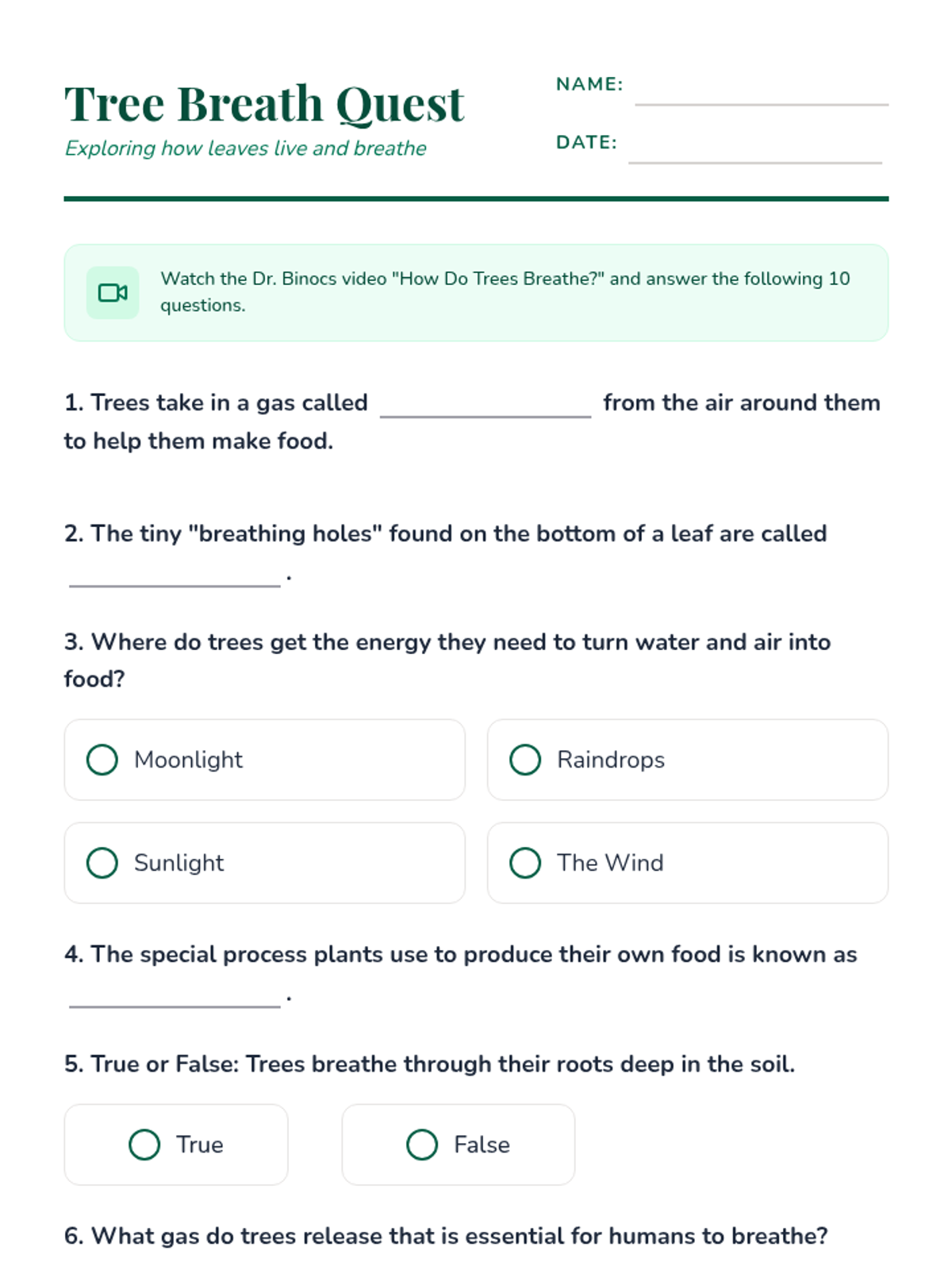
A student worksheet with 10 questions about how trees breathe, revised for better layout and student work space.
A slide deck introducing the concept of how trees breathe, featuring the specific YouTube video, key vocabulary definitions, and expanded content on photosynthesis and transpiration.
A 4-slide introductory presentation for teachers to launch the Solar System Secrets lesson. Covers basic components of the solar system, inner vs. outer planet characteristics, and the difference between rotation and revolution.