A structured student journal for recording hypotheses, observations, and deep reflections on the physics principles encountered during the carnival.
Daily Sound Sliders drills for Week 4, featuring 12 words per day focusing on Open Syllables and comprehensive Blend review. Full 5-day instructional set.
Daily Sound Sliders drills for Week 3, featuring 12 words per day focusing on Mixed Blends and Glued Sounds.
Daily Sound Sliders drills for Week 2, featuring 12 words per day focusing on S-Blends and Ending Blends. Full 5-day instructional set.
Daily Sound Sliders drills for Week 1, featuring 12 words per day focusing on L-Blends and R-Blends. Full 5-day instructional set.
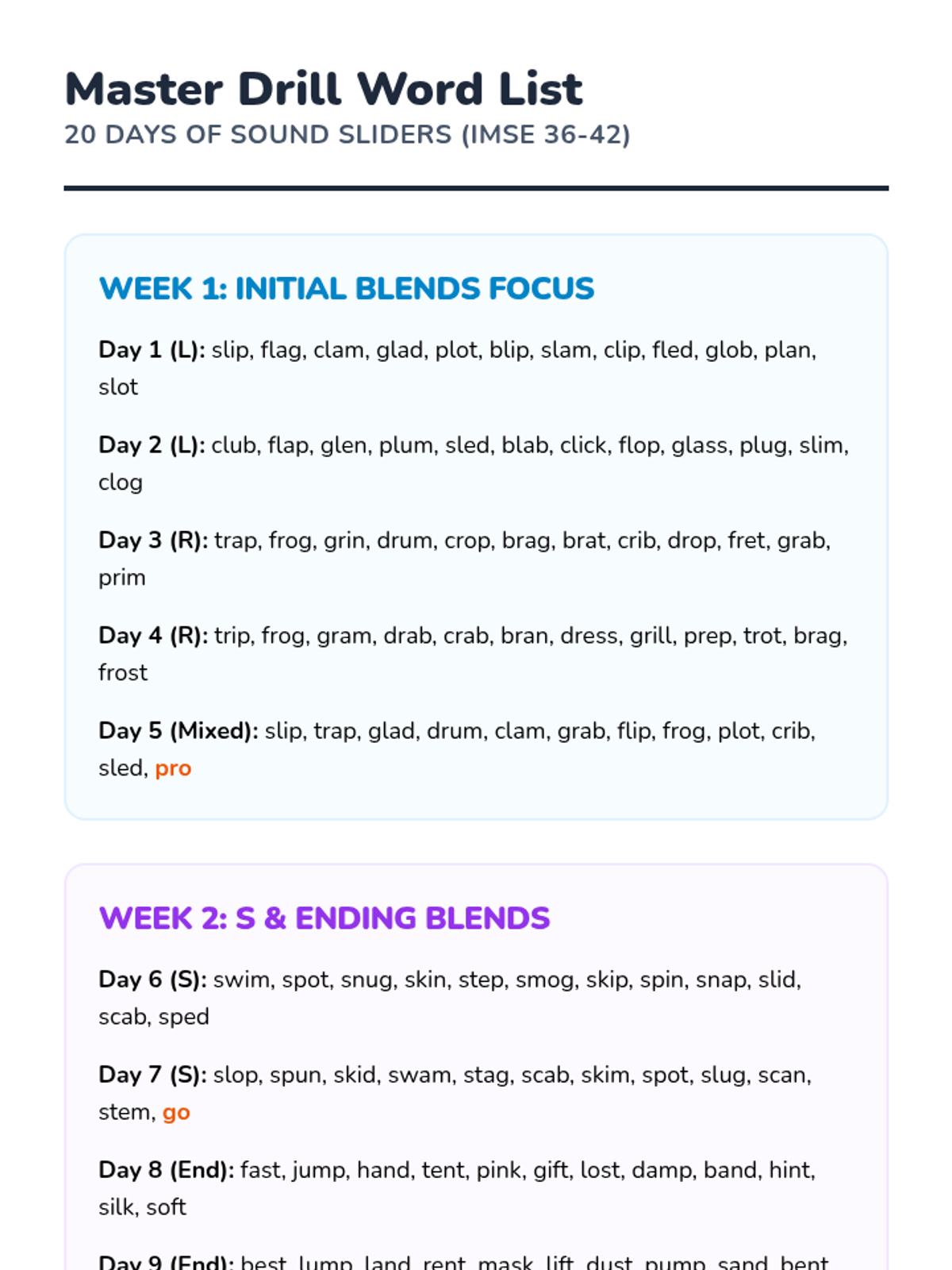
A master list of 240 words organized by day and week for the 20-day Sound Sliders drill program, including blends, glued sounds, and open syllables.
An 11-day series of class starters focused on forensic reasoning, case synthesis, and professional communication of findings.
A 10-day series of class starters covering biological evidence, blood patterns, DNA analysis, and ethics in genetics.
An 11-day slide deck of class starters for the Physical & Trace Evidence unit, focusing on fingerprints, soil, hair, fibers, and tool marks.
A collection of 10 daily class starters for the Foundations of Forensic Science unit, featuring a mix of trivia, discussion prompts, and observation challenges.
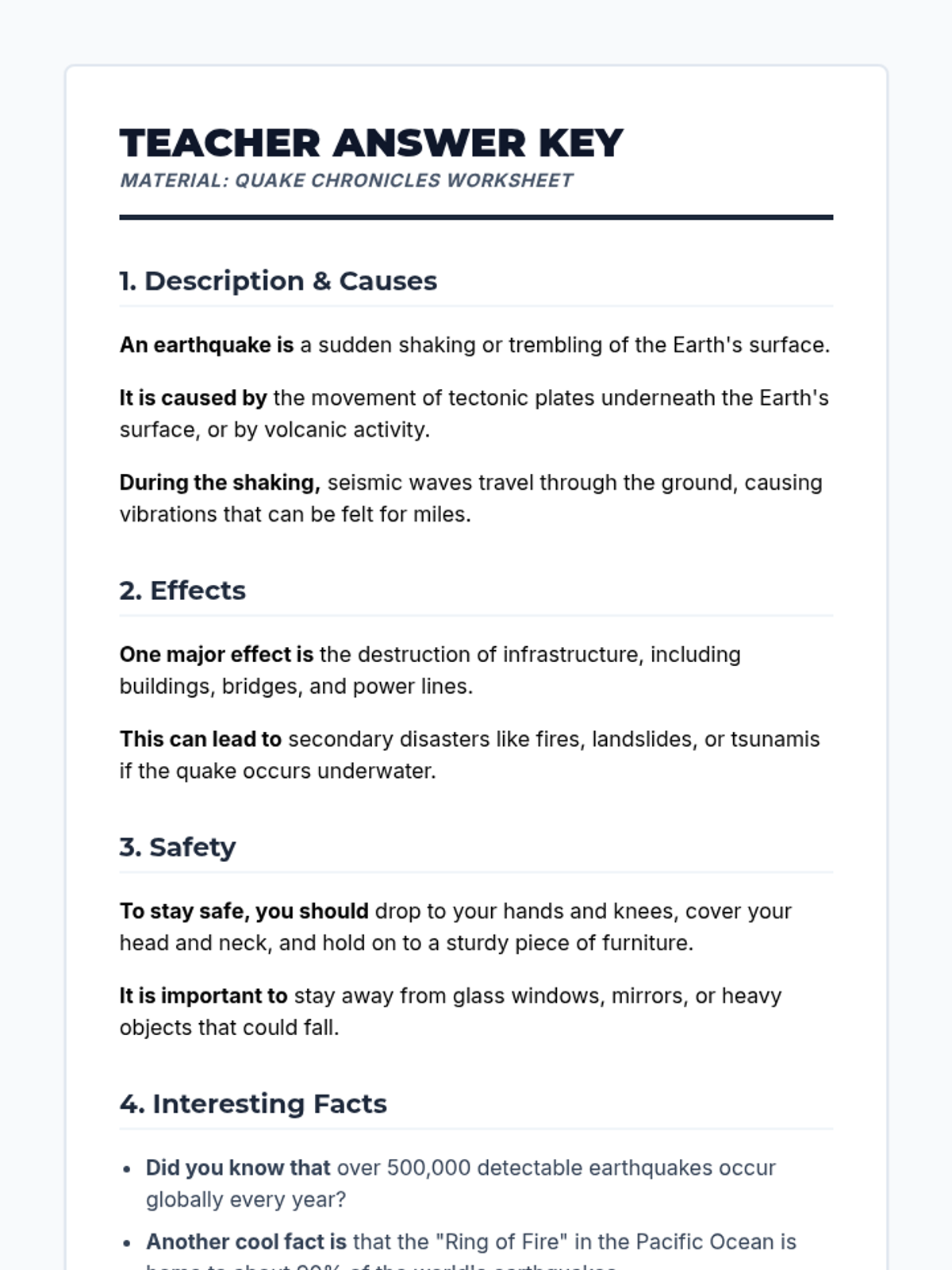
A comprehensive teacher's answer key for the Quake Chronicles worksheet, providing sample student responses and instructional tips.
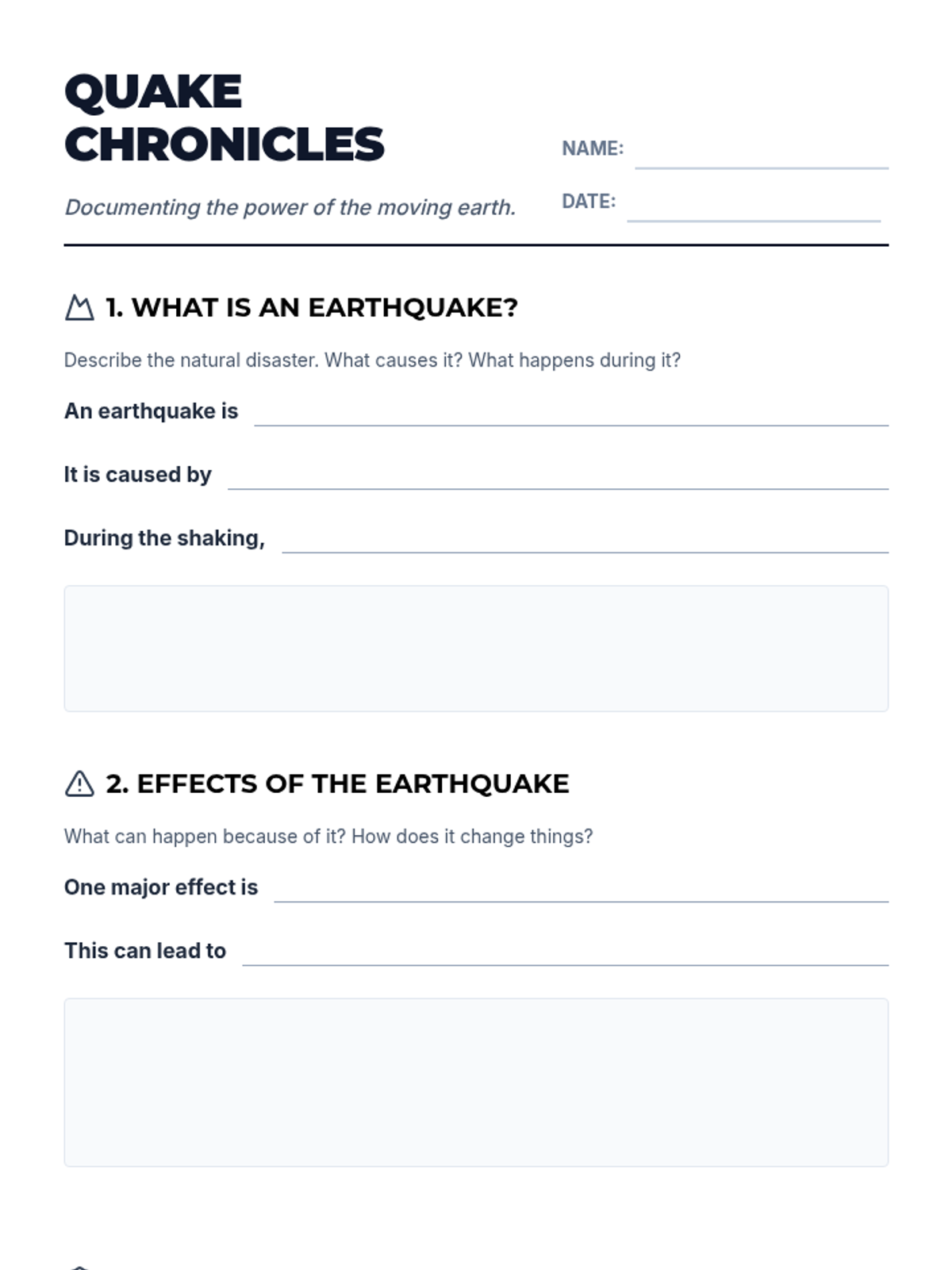
A structured student worksheet for writing about earthquakes using specific sentence starters, with sections for causes, effects, safety, and fun facts.
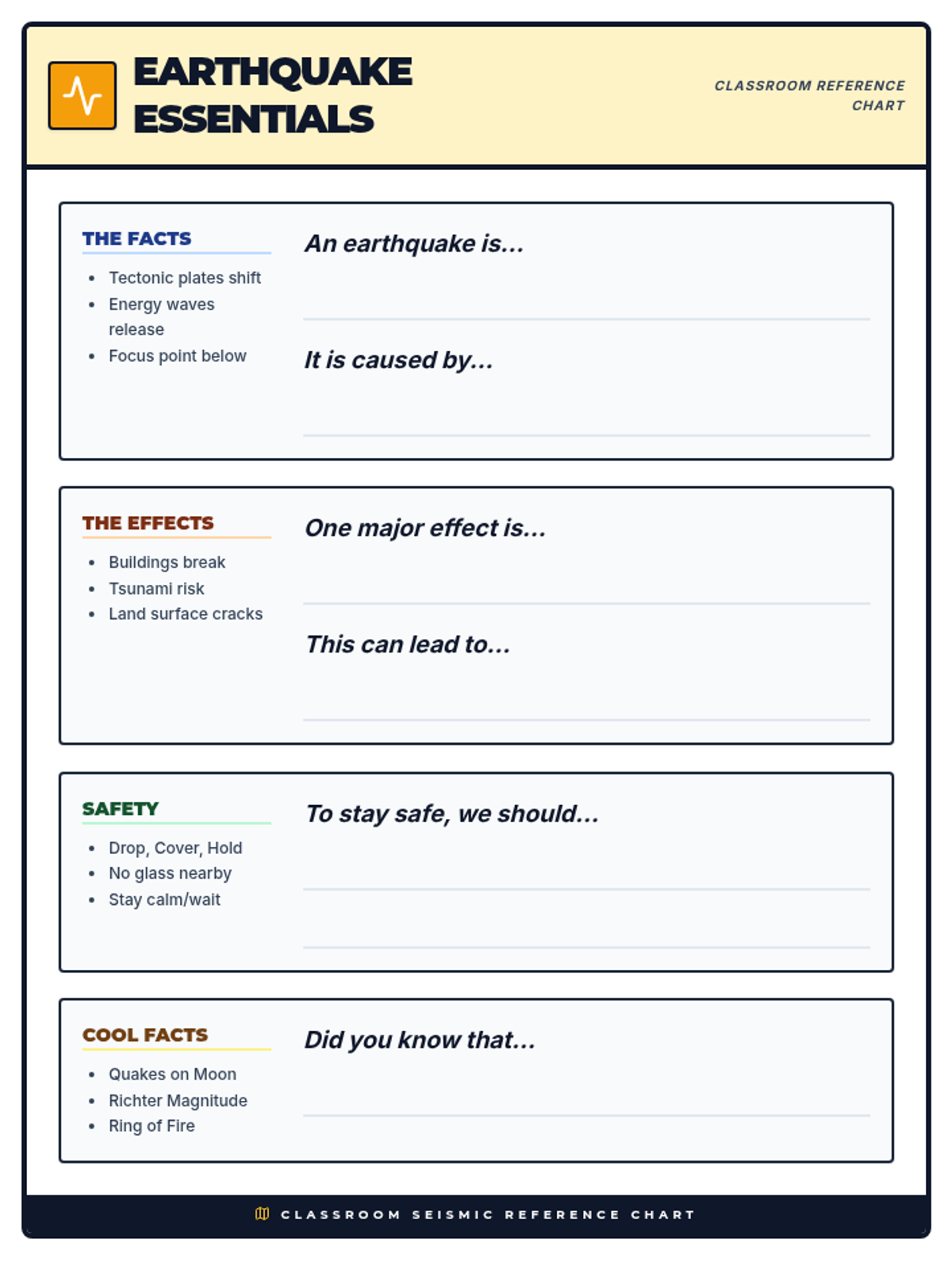
A vibrant, visually engaging anchor chart providing sentence starters and simple facts about earthquakes, organized by cause, effect, safety, and trivia.
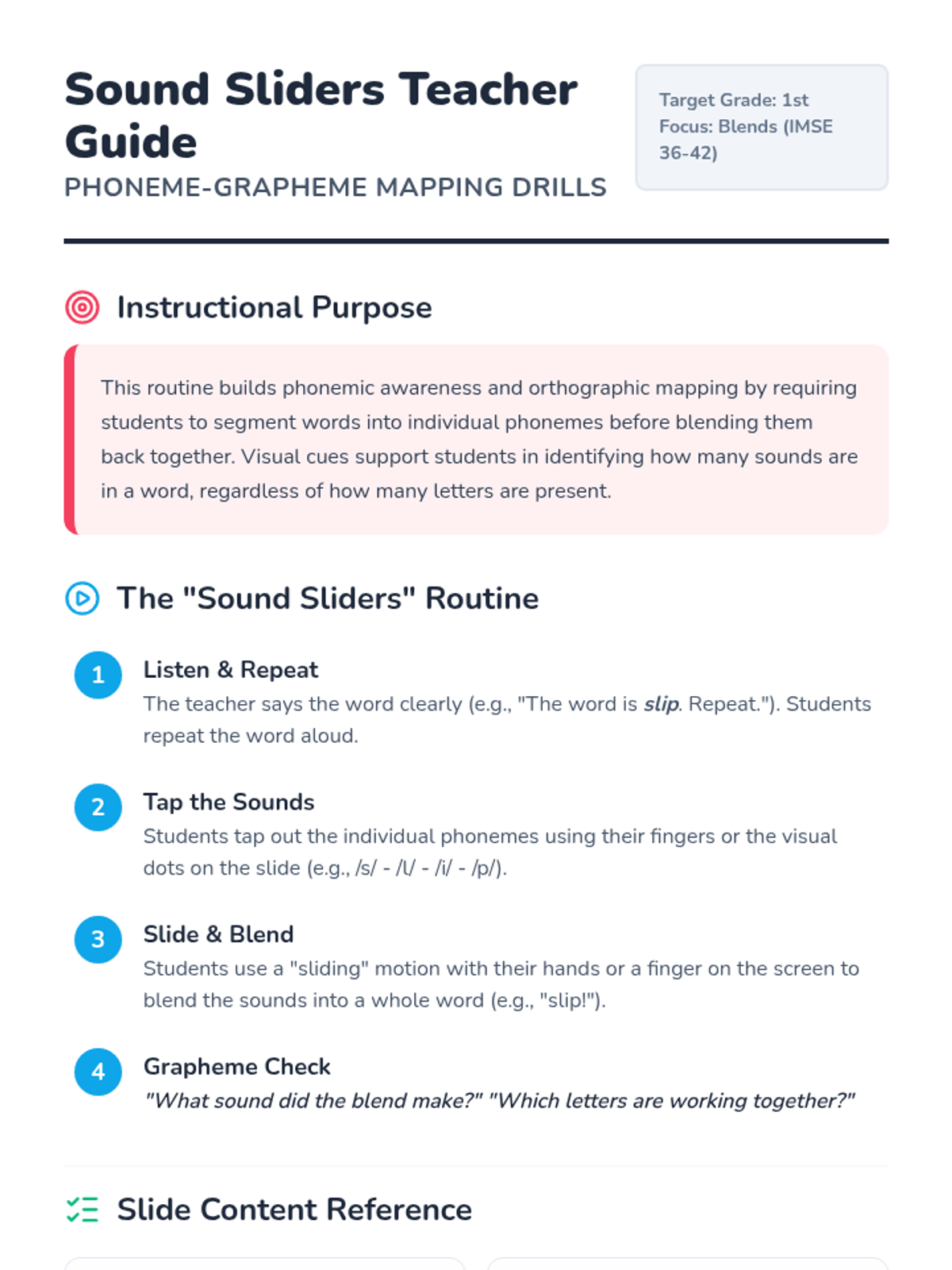
A detailed teacher guide explaining the Sound Sliders routine, including word lists and instructional strategies for teaching blends and open syllables.
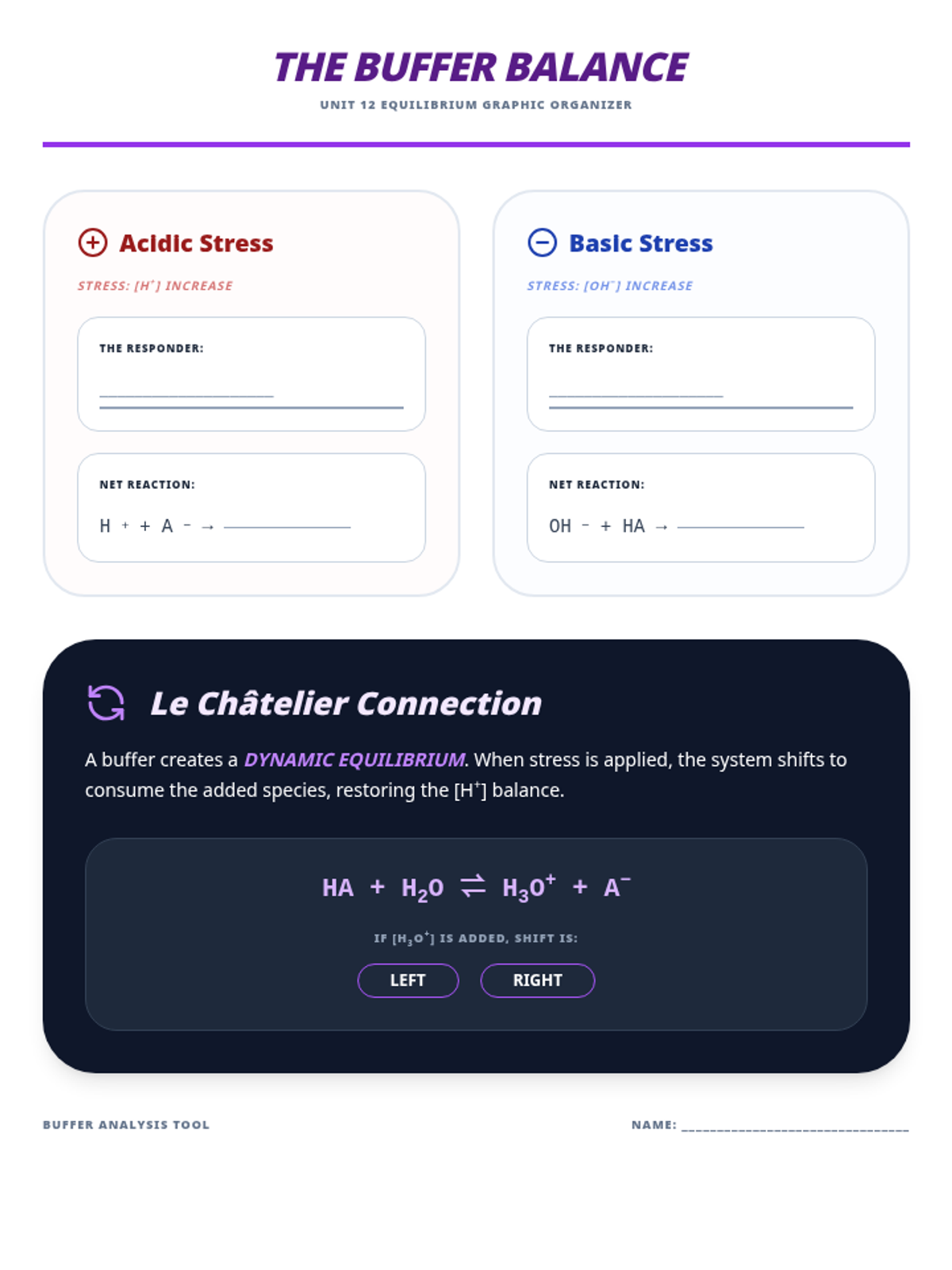
A visual graphic organizer designed as a manipulative for students to model how buffer systems respond to acidic or basic stress using equilibrium principles.
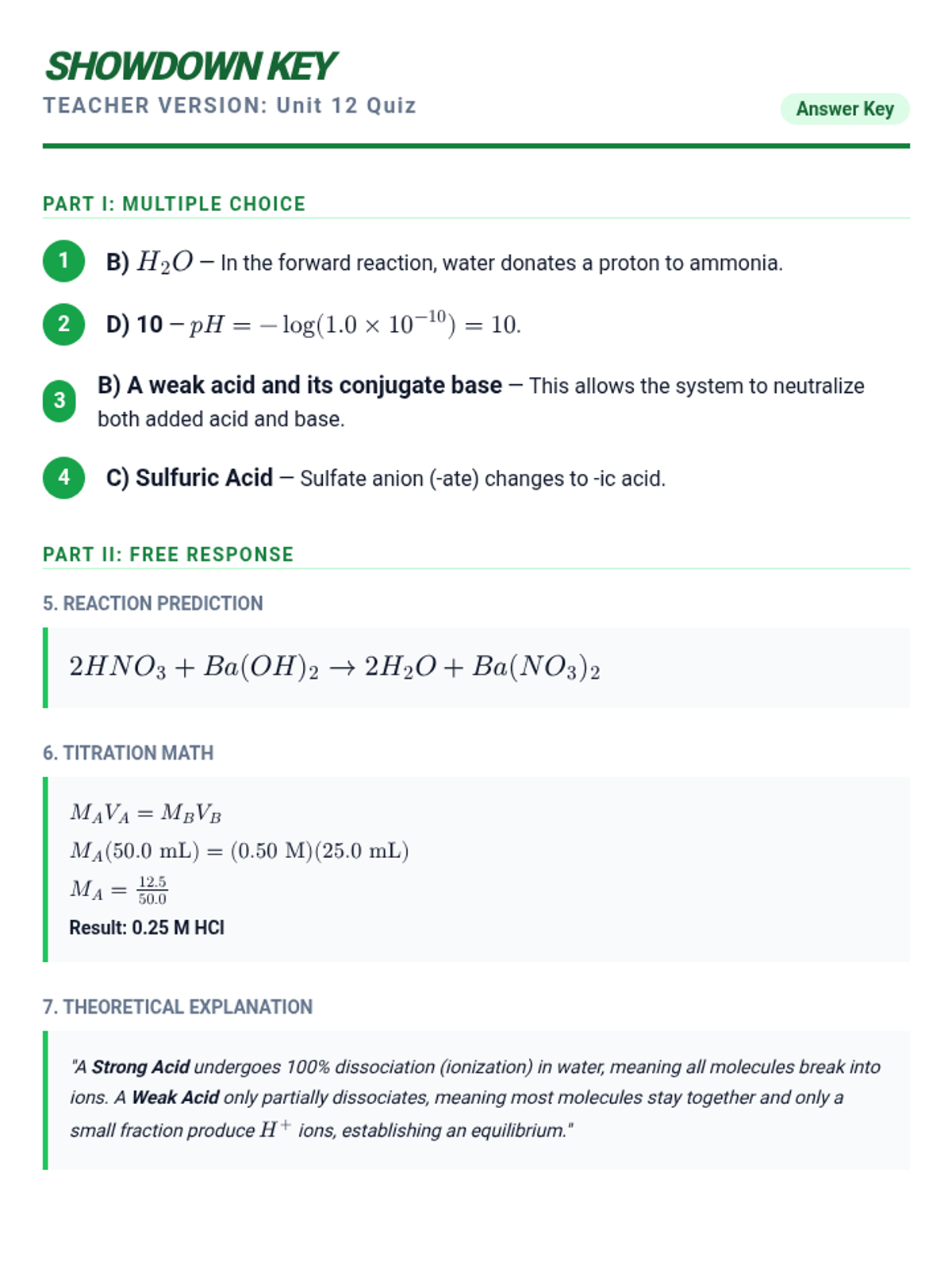
Answer key for the 'Acid Base Showdown' quiz, providing correct selections, worked mathematical solutions, and model theoretical explanations for grading.
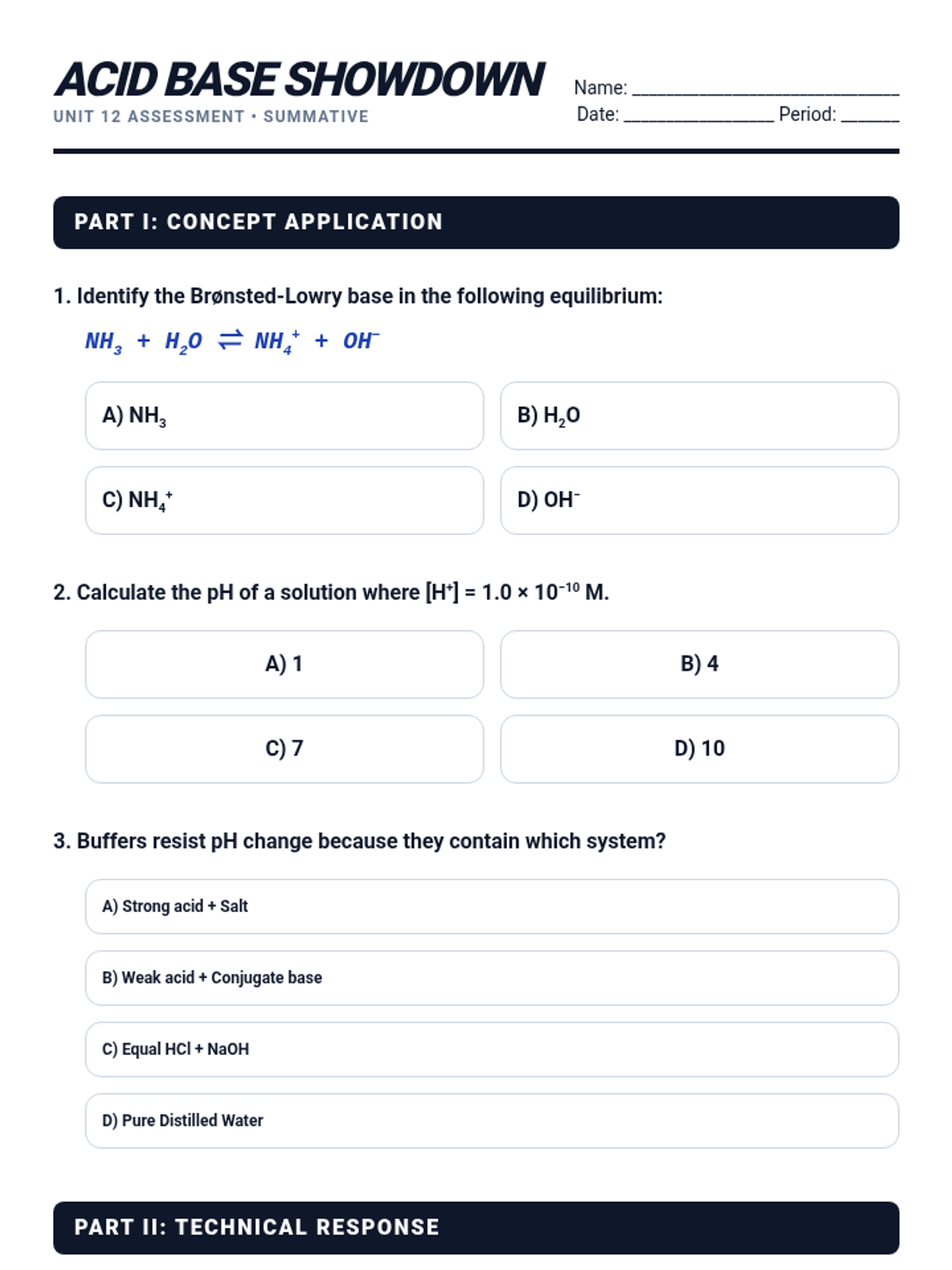
A comprehensive unit assessment featuring multiple choice questions on definitions and pH, and free-response questions on reaction prediction, titration math, and acid strength theory. Includes teacher answer key.
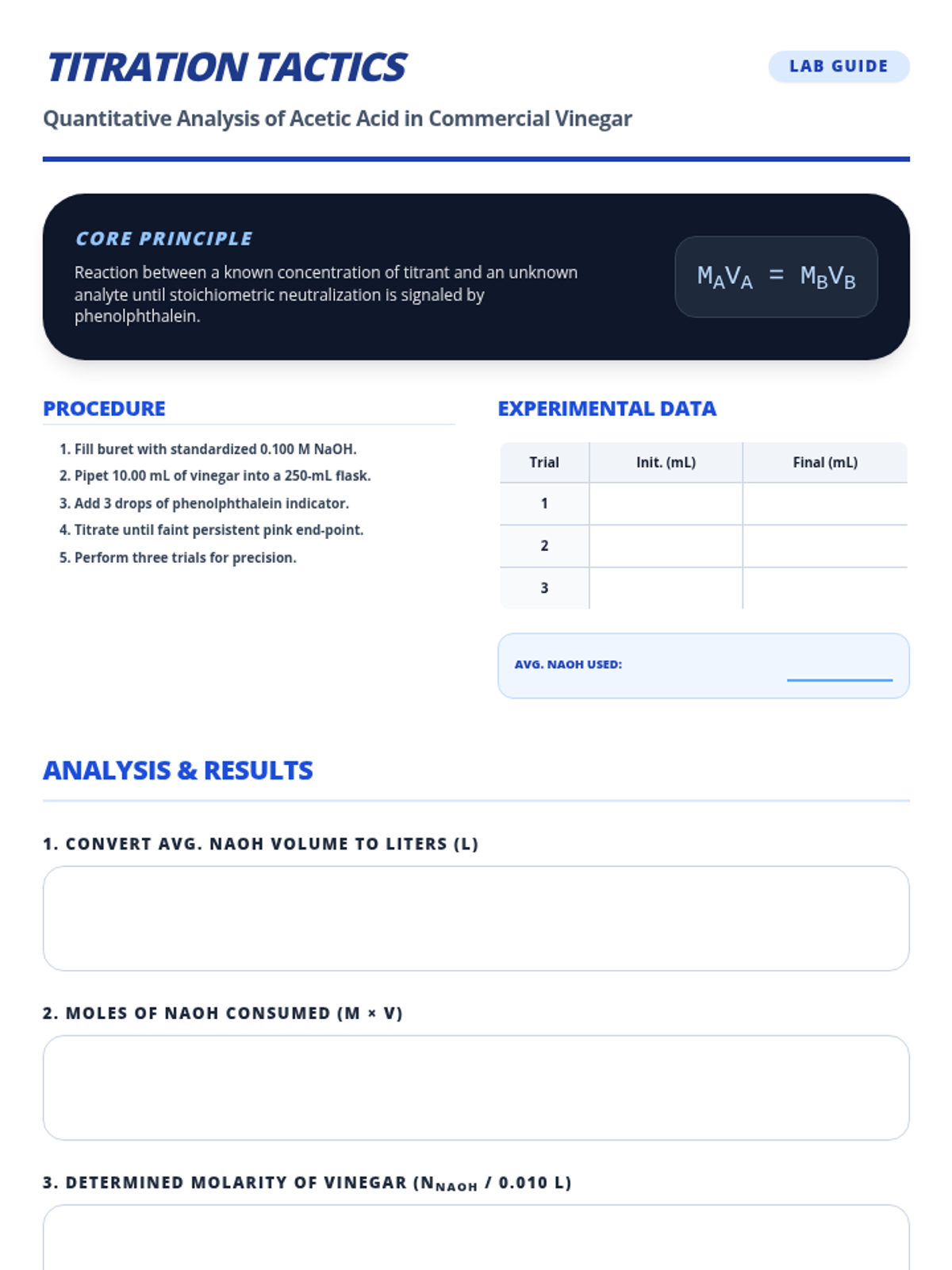
A student laboratory guide for performing a titration experiment to determine the acetic acid concentration in commercial vinegar, including data tables and post-lab calculation areas.
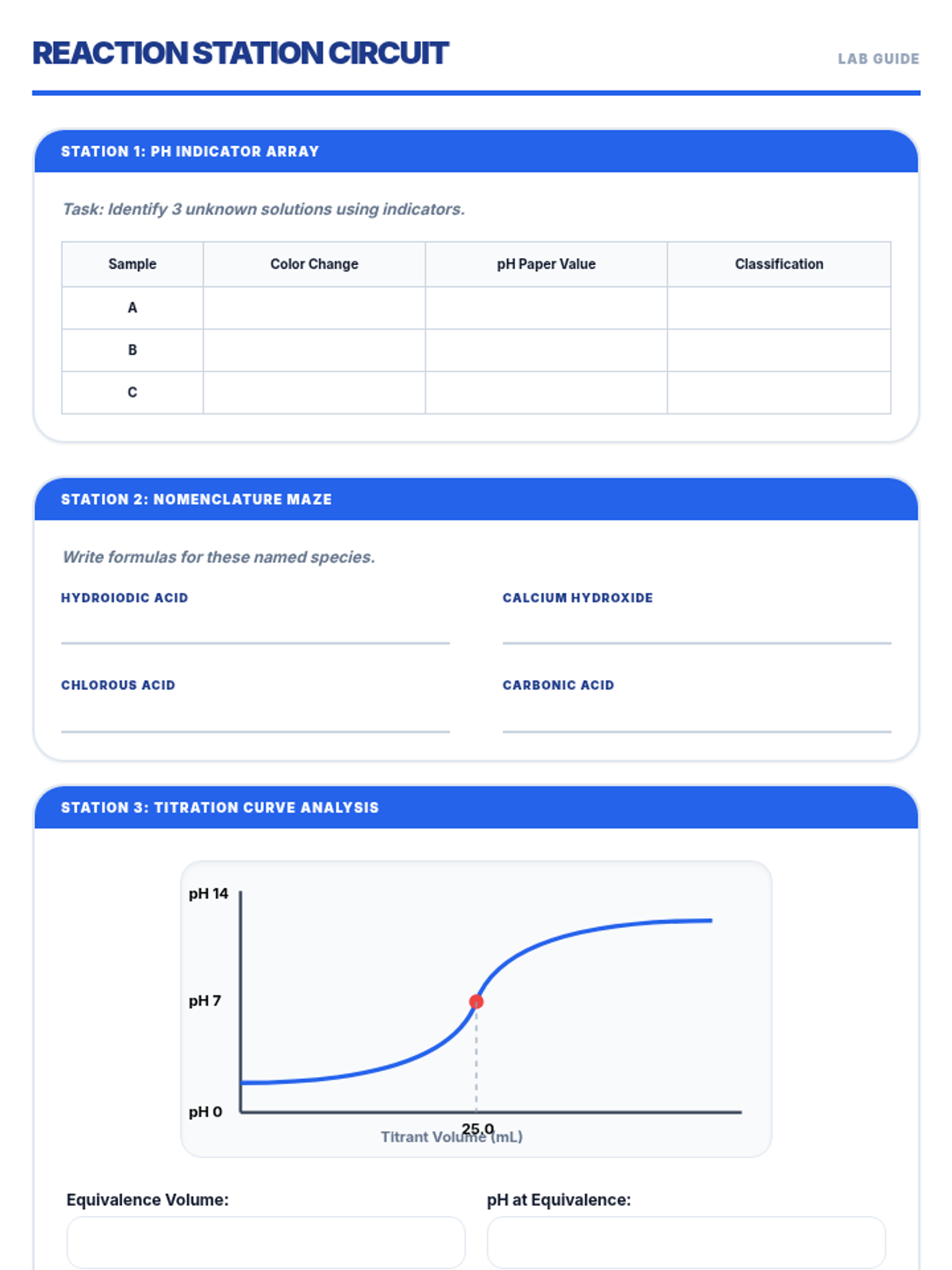
A station-based laboratory activity where students move through centers to test pH, practice nomenclature, analyze titration curves, and witness buffer stabilization.
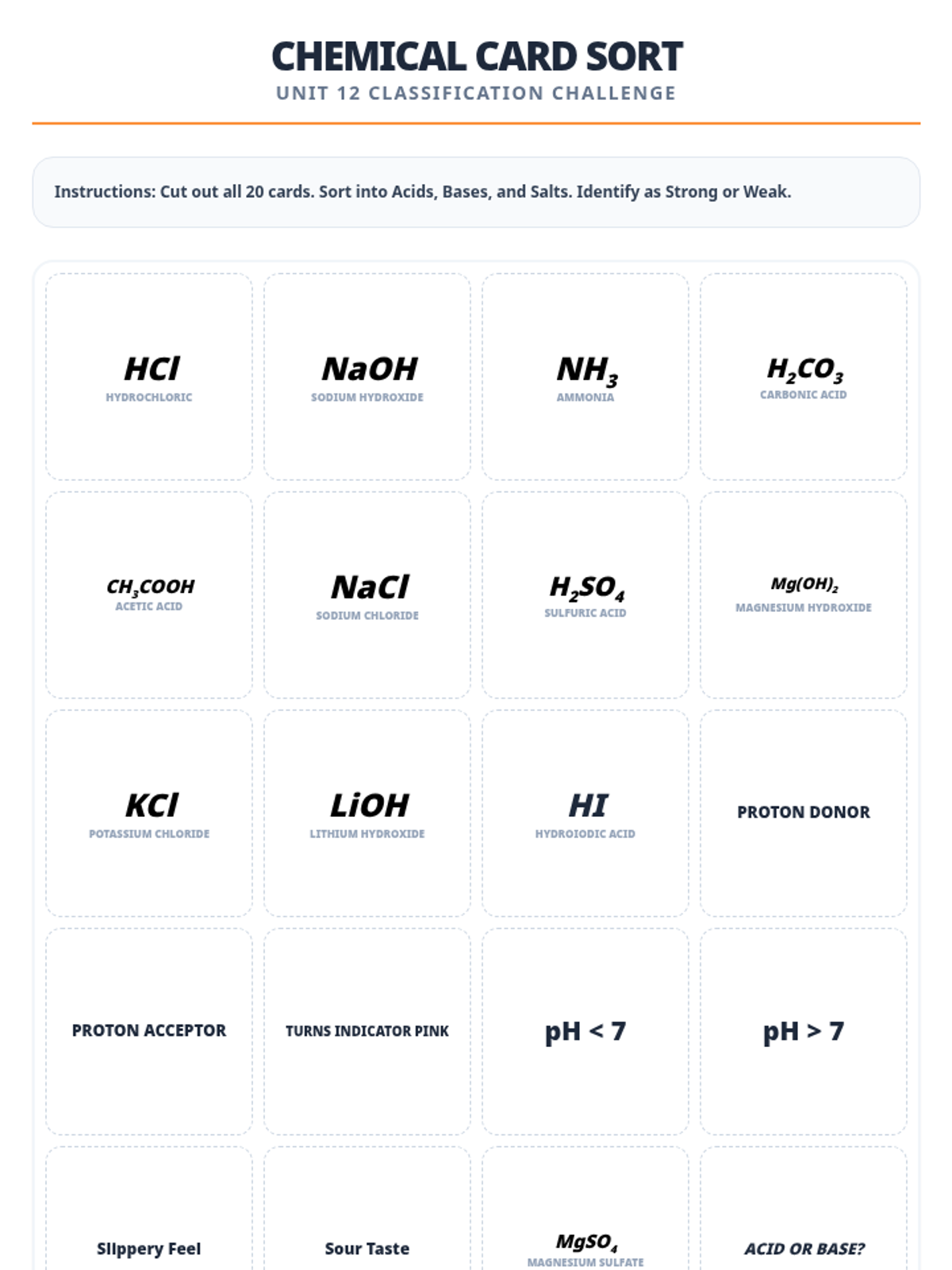
A manipulative card sort activity where students classify chemicals by name, formula, and physical/chemical properties as acids, bases, or salts.
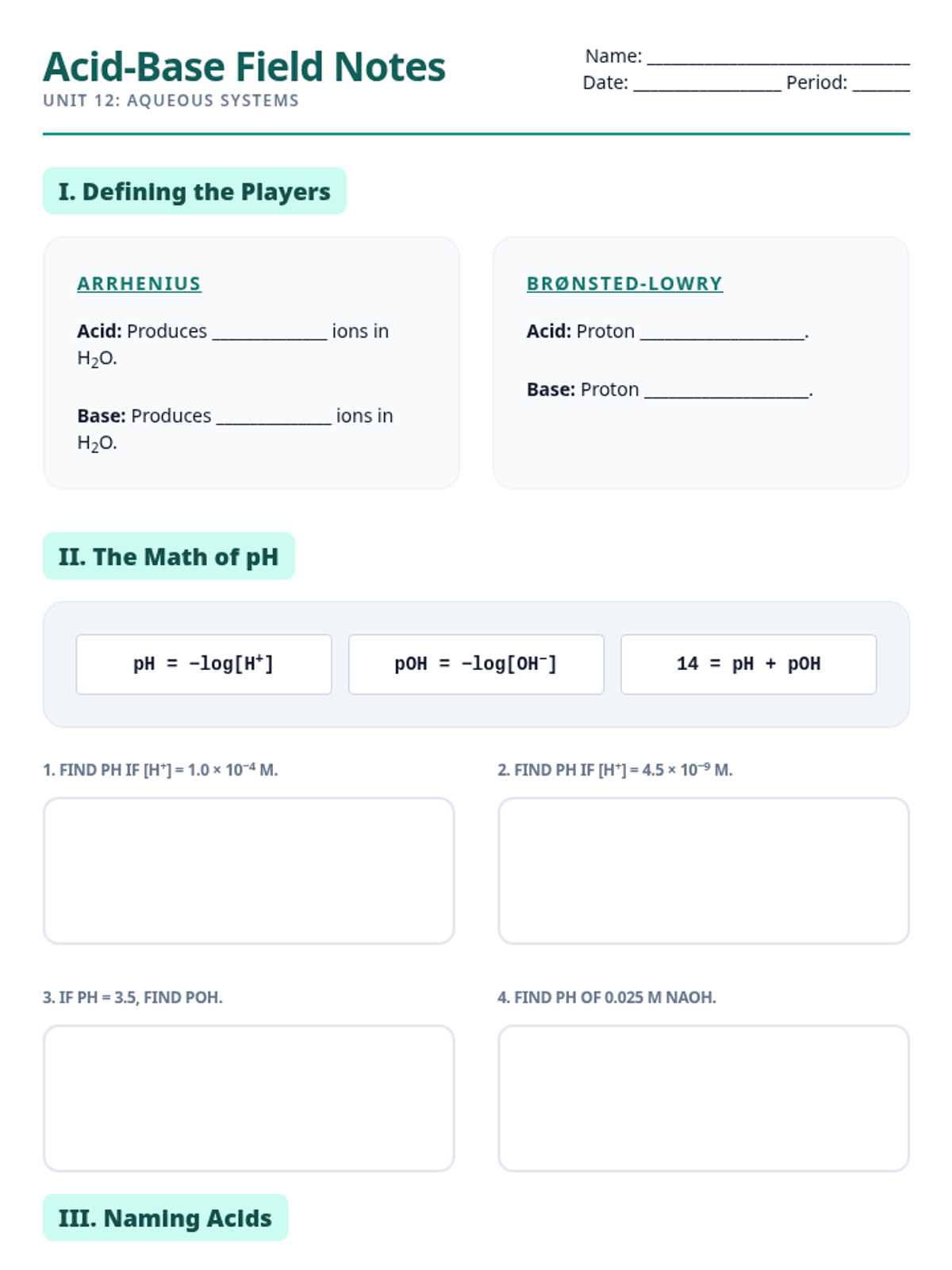
A double-sided student resource containing guided notes for instruction and practice problems for pH math, naming acids, and neutralization reactions.
Visual presentation slides for the 'Molecular Mechanics' unit, covering definitions, pH mathematics, neutralization reactions, and the anchoring phenomenon of ocean acidification.
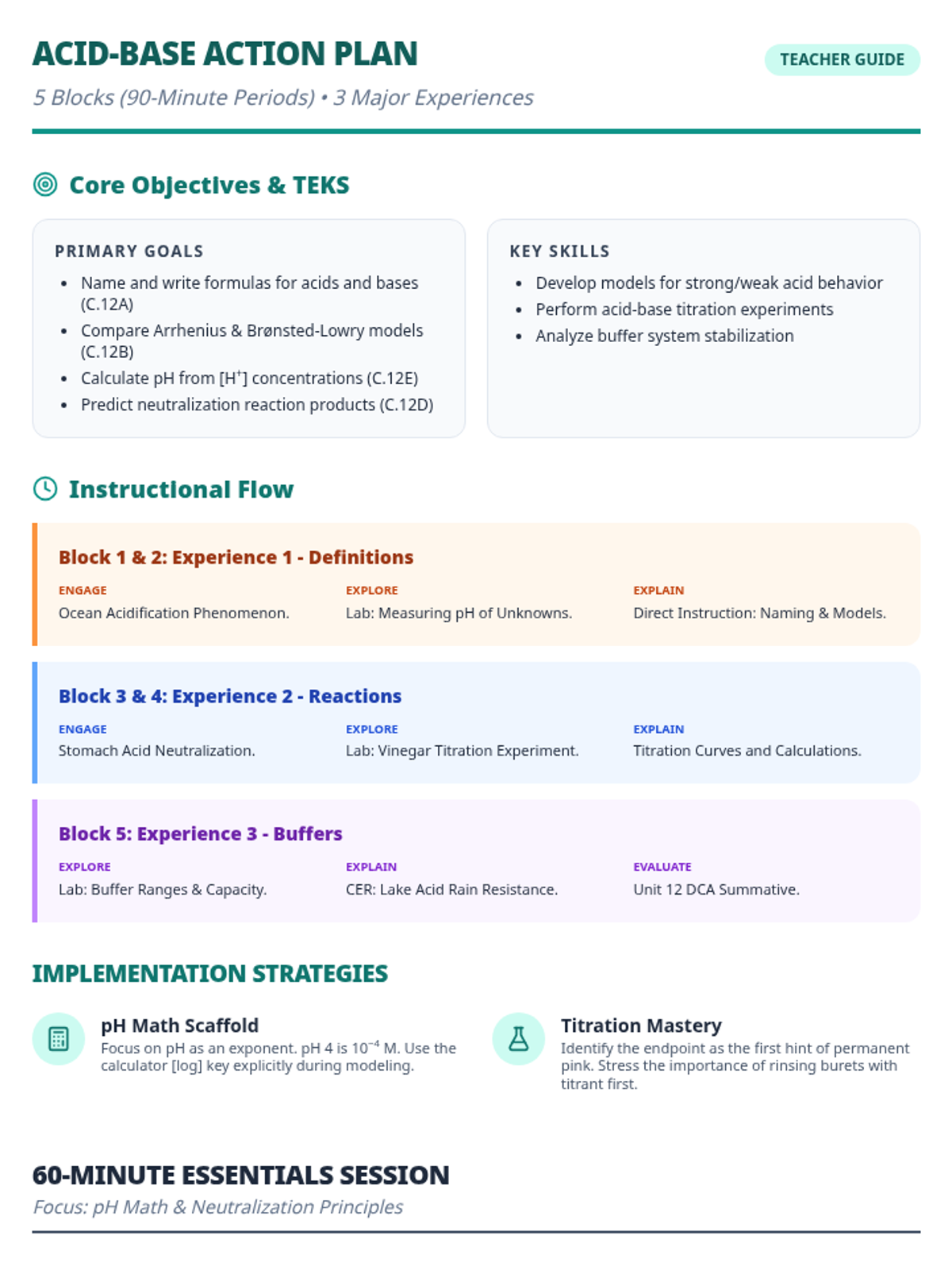
A comprehensive teacher's guide outlining the 5-block investigation structure, key TEKS, and a detailed 60-minute 'Essentials' lesson plan for daily instruction.
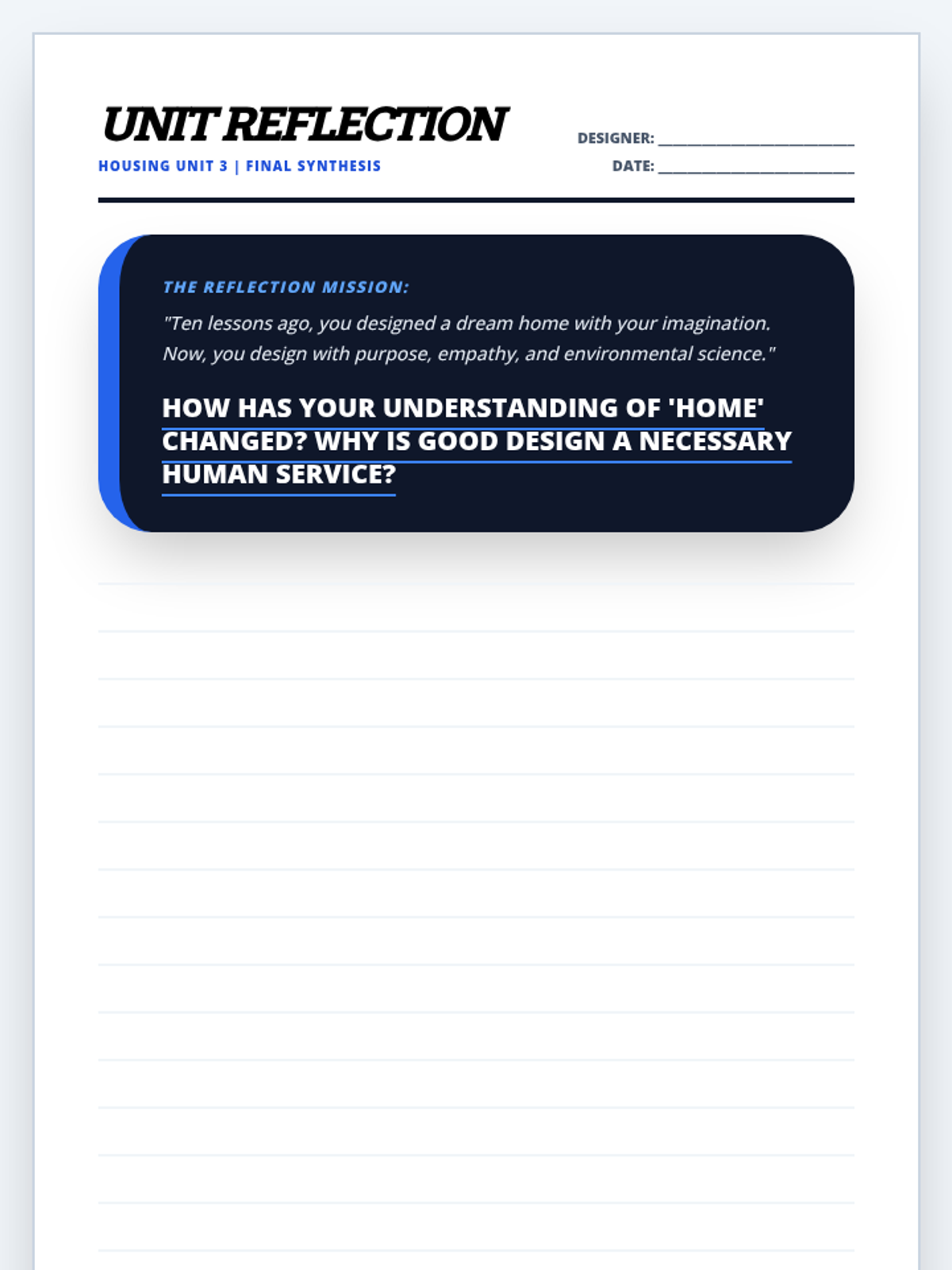
The final reflective essay prompt for the unit, asking students to synthesize their learning and explain the importance of intentional housing design in the human services field.
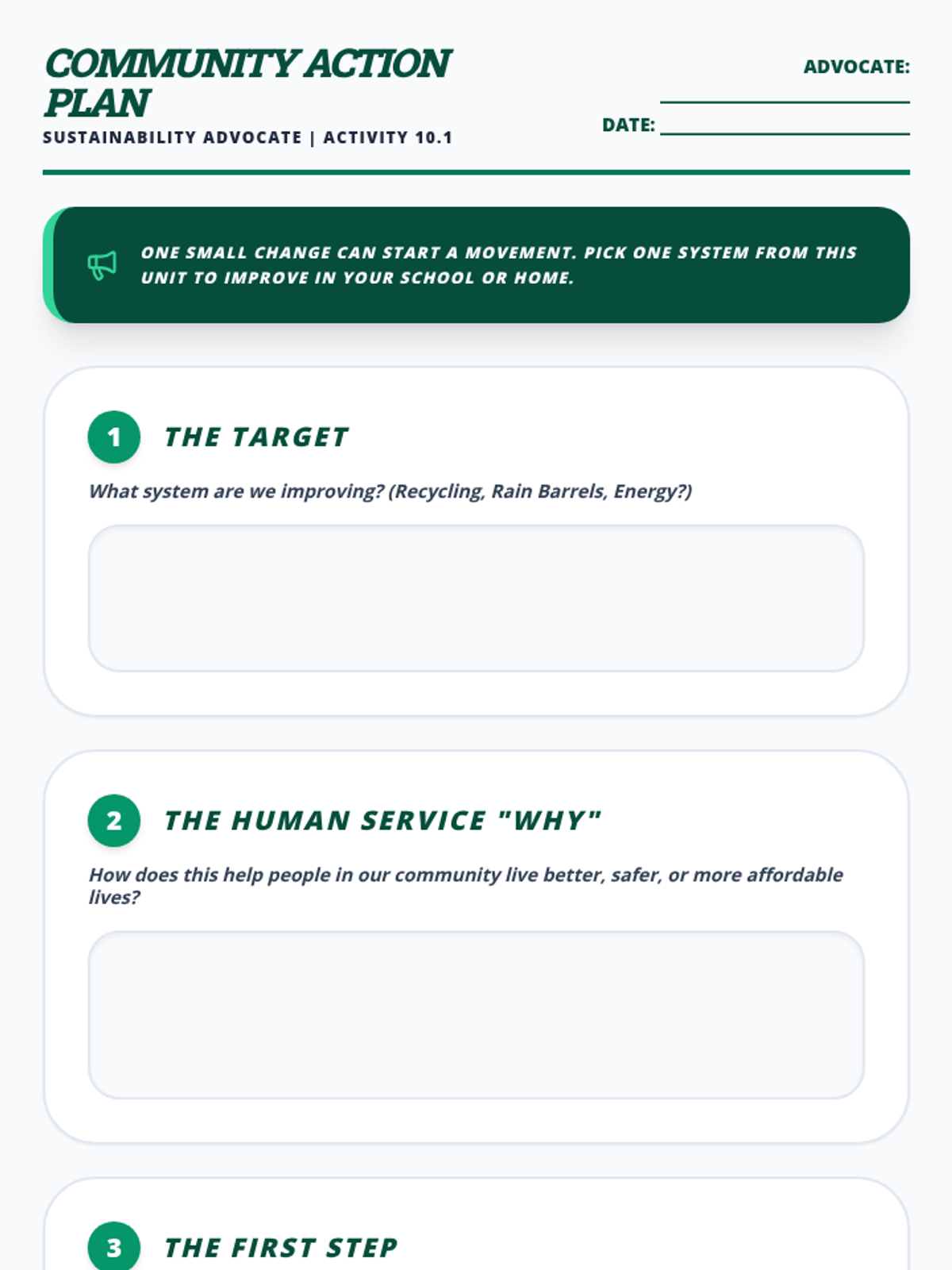
A student advocacy worksheet for creating a community action plan, encouraging students to apply their housing design knowledge to real-world school or home sustainability changes.
Slides for the Reflection and Connections lesson, focusing on local green building examples and guiding students toward community advocacy and final reflection.
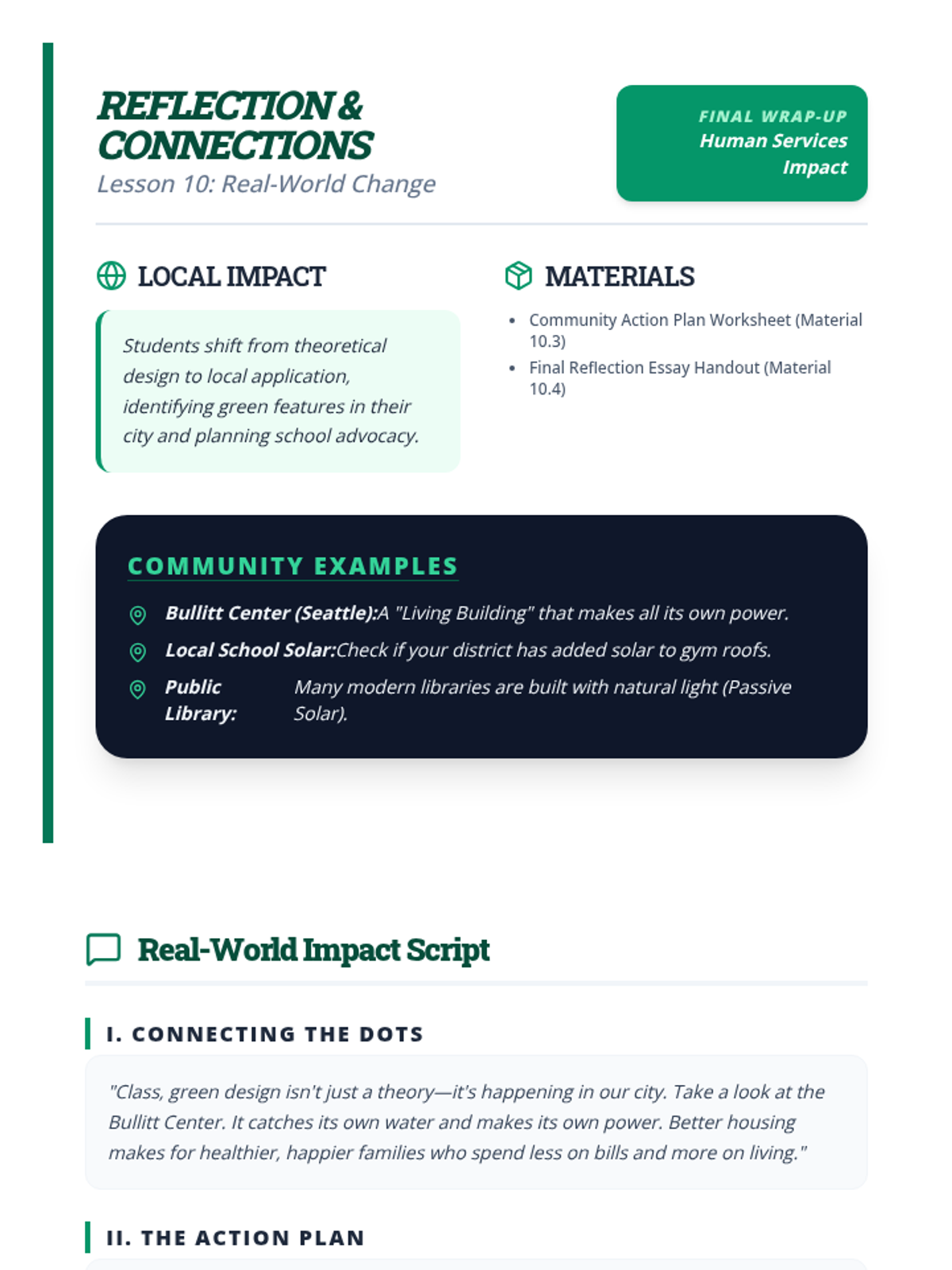
A teacher guide for the final lesson of the Housing and Interior Design unit, focusing on real-world local applications, student advocacy, and final reflective synthesis.
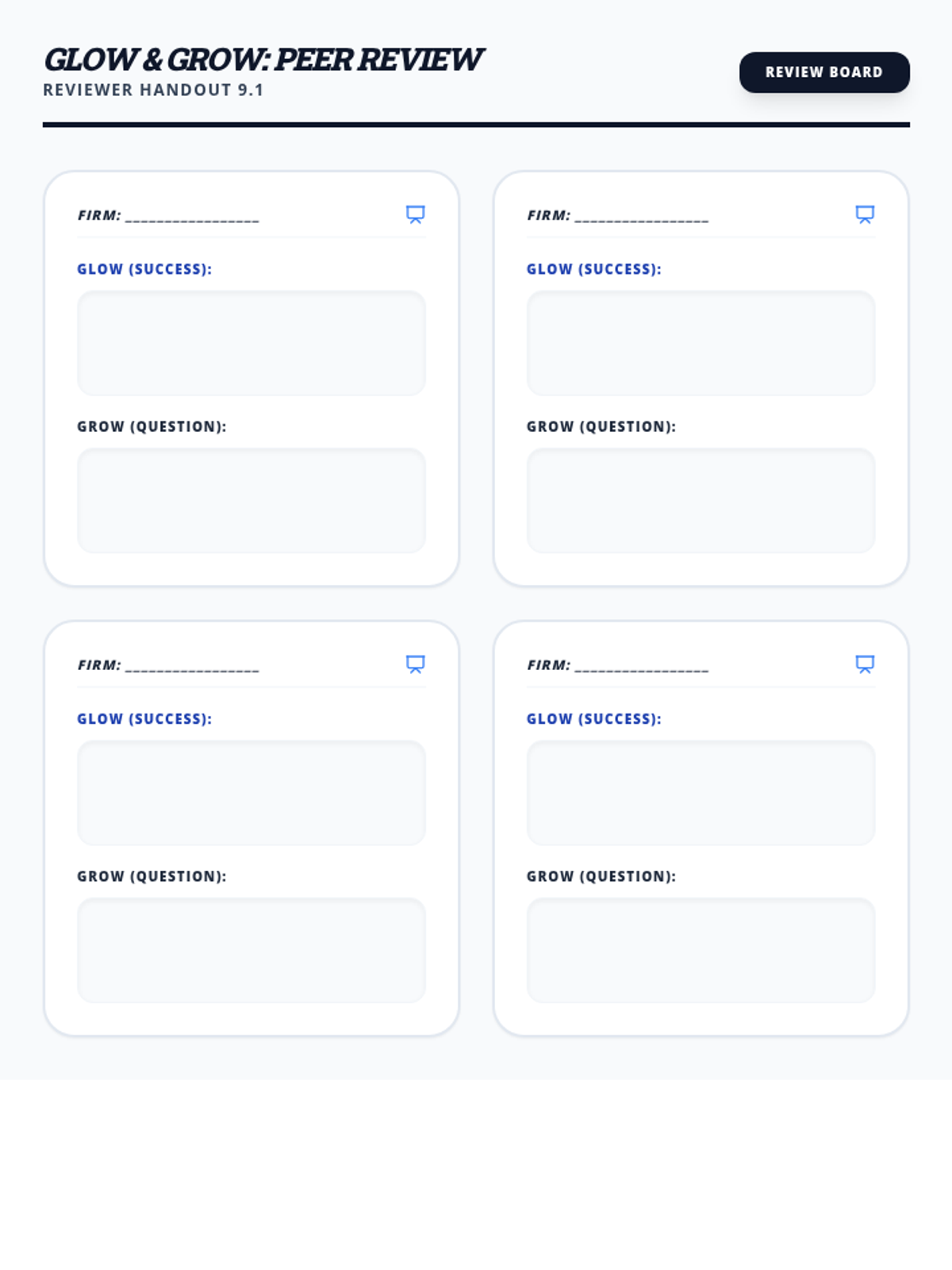
A peer feedback sheet for the Design Challenge presentations, using the 'Glow and Grow' format to encourage constructive evaluation among student firms.
Slides for the Design Challenge Presentations lesson, providing structure for student pitches, timing guidelines, and instructions for peer feedback.
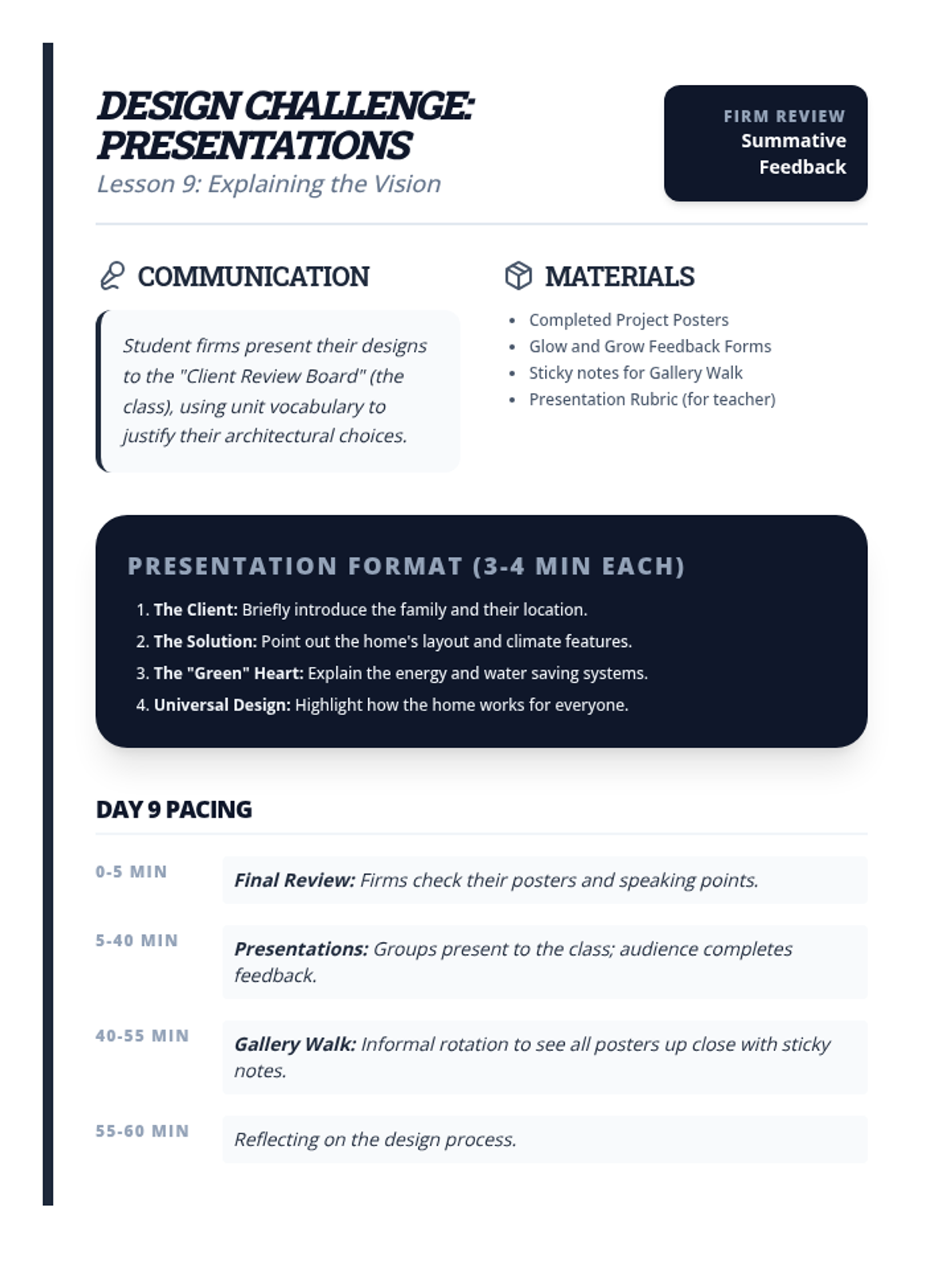
A teacher guide for the Design Challenge Presentations lesson, providing structure for student pitches, evaluation guidelines, and tips for facilitating constructive peer feedback.
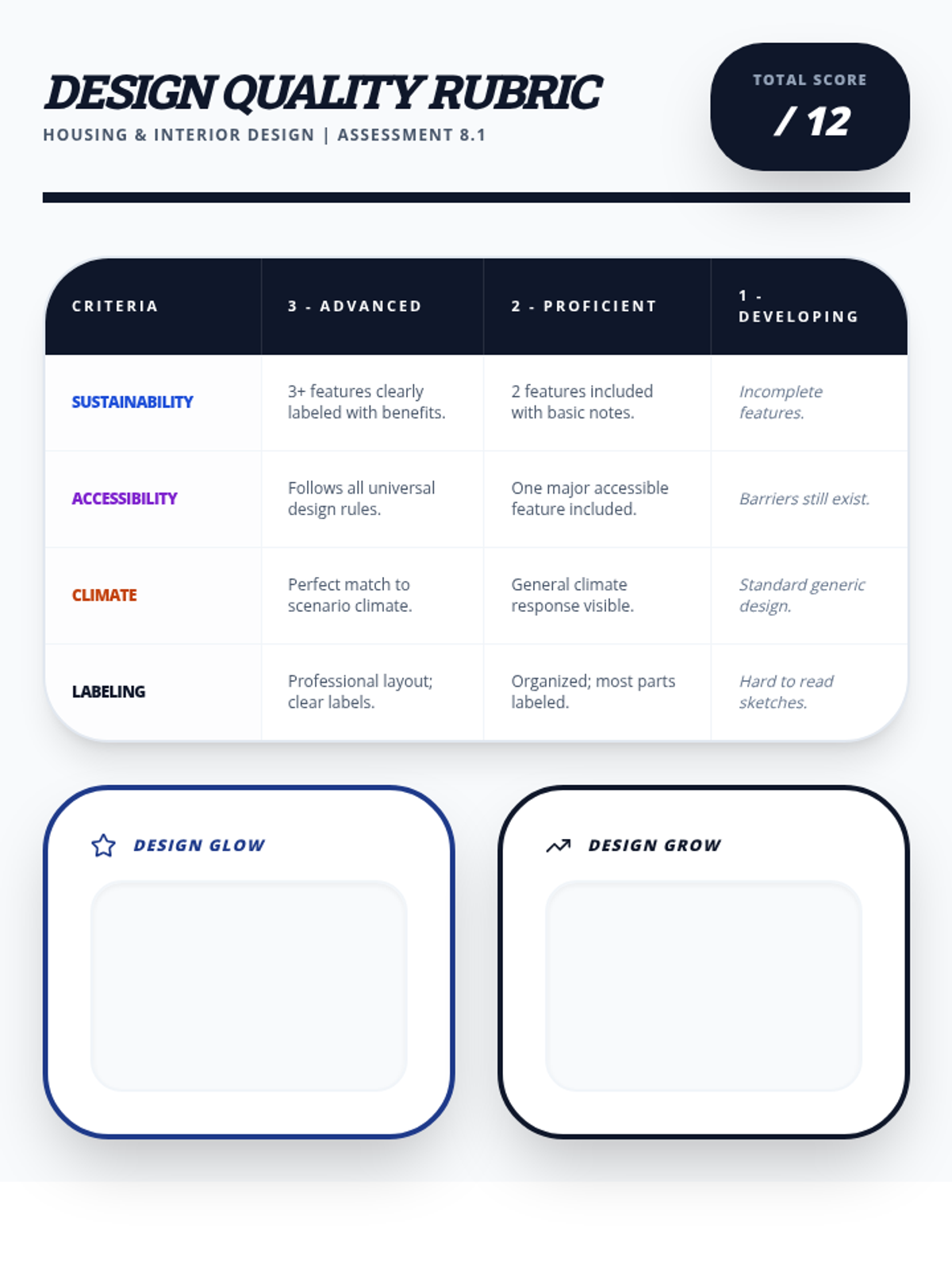
A professional rubric and feedback sheet for the Housing Design Challenge, evaluating student work on sustainability, accessibility, climate response, and technical drafting.
Slides for the Design Challenge Building lesson, outlining poster specifications and the essential criteria checklist for the final project.
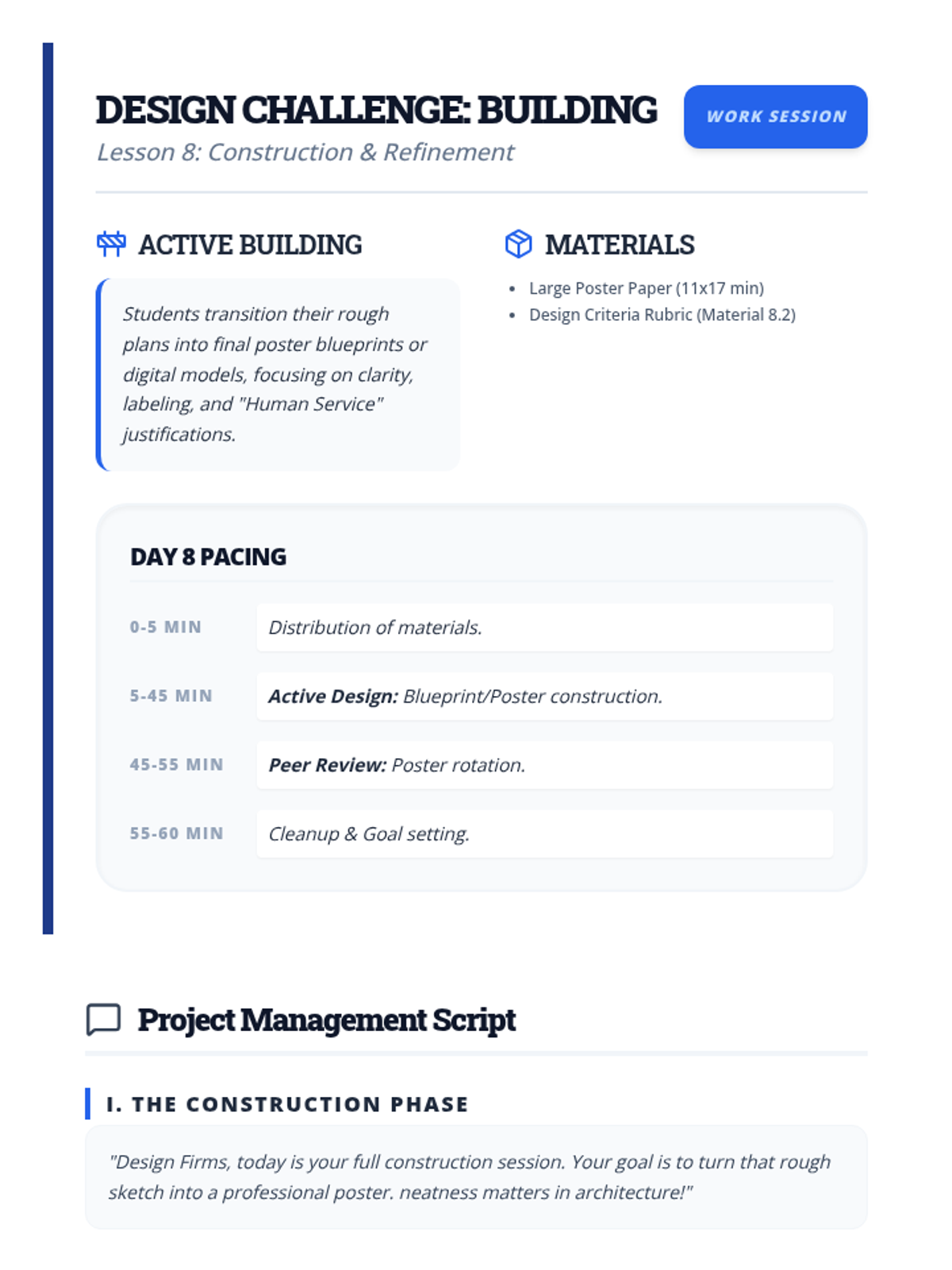
A teacher guide for the Design Challenge Building lesson, providing instructions for facilitating the hands-on creation phase and offering project management tips for educators.
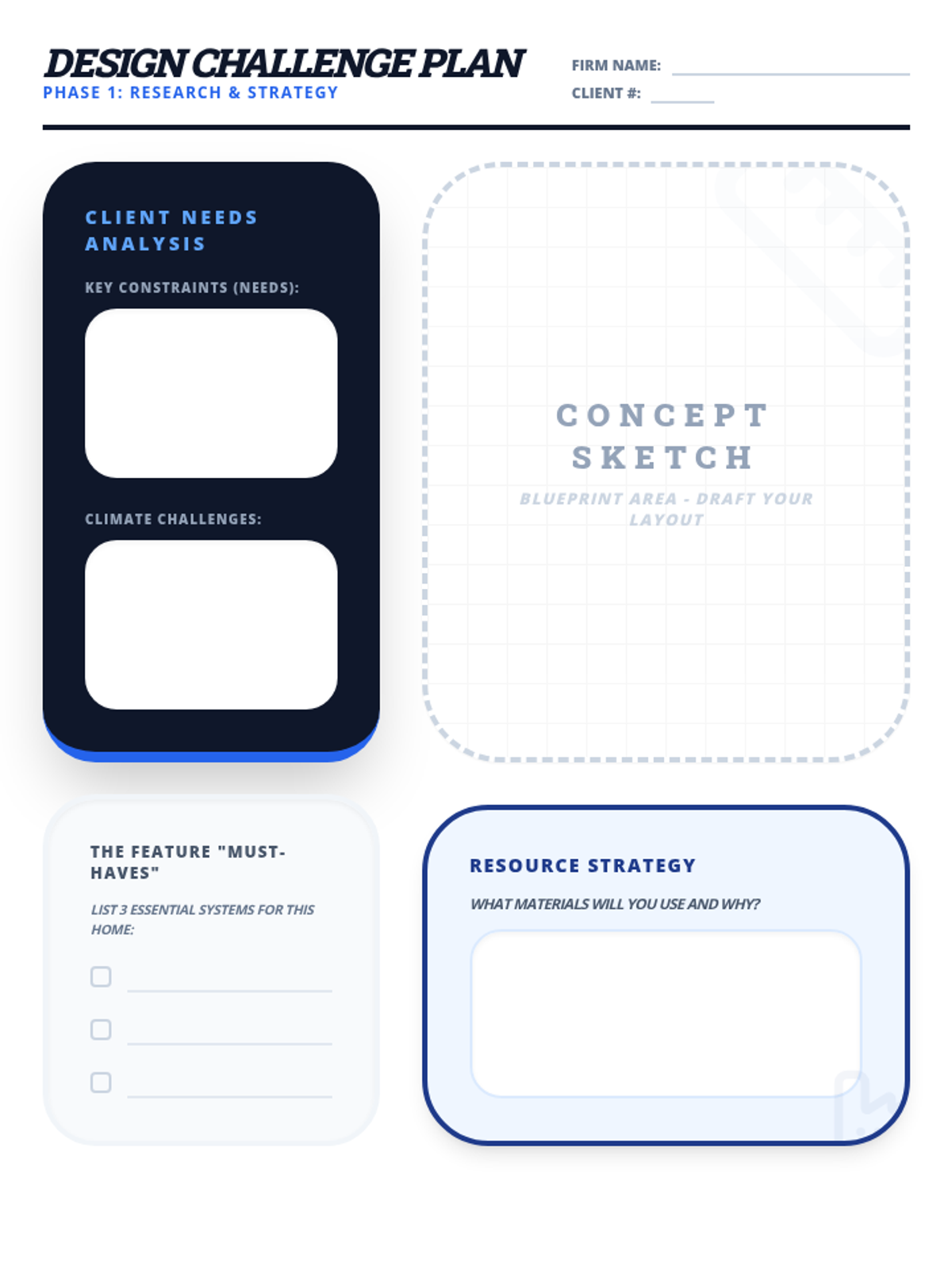
A structured planning worksheet for the Design Challenge, guiding student firms through client analysis, constraint mapping, and initial conceptual sketching.
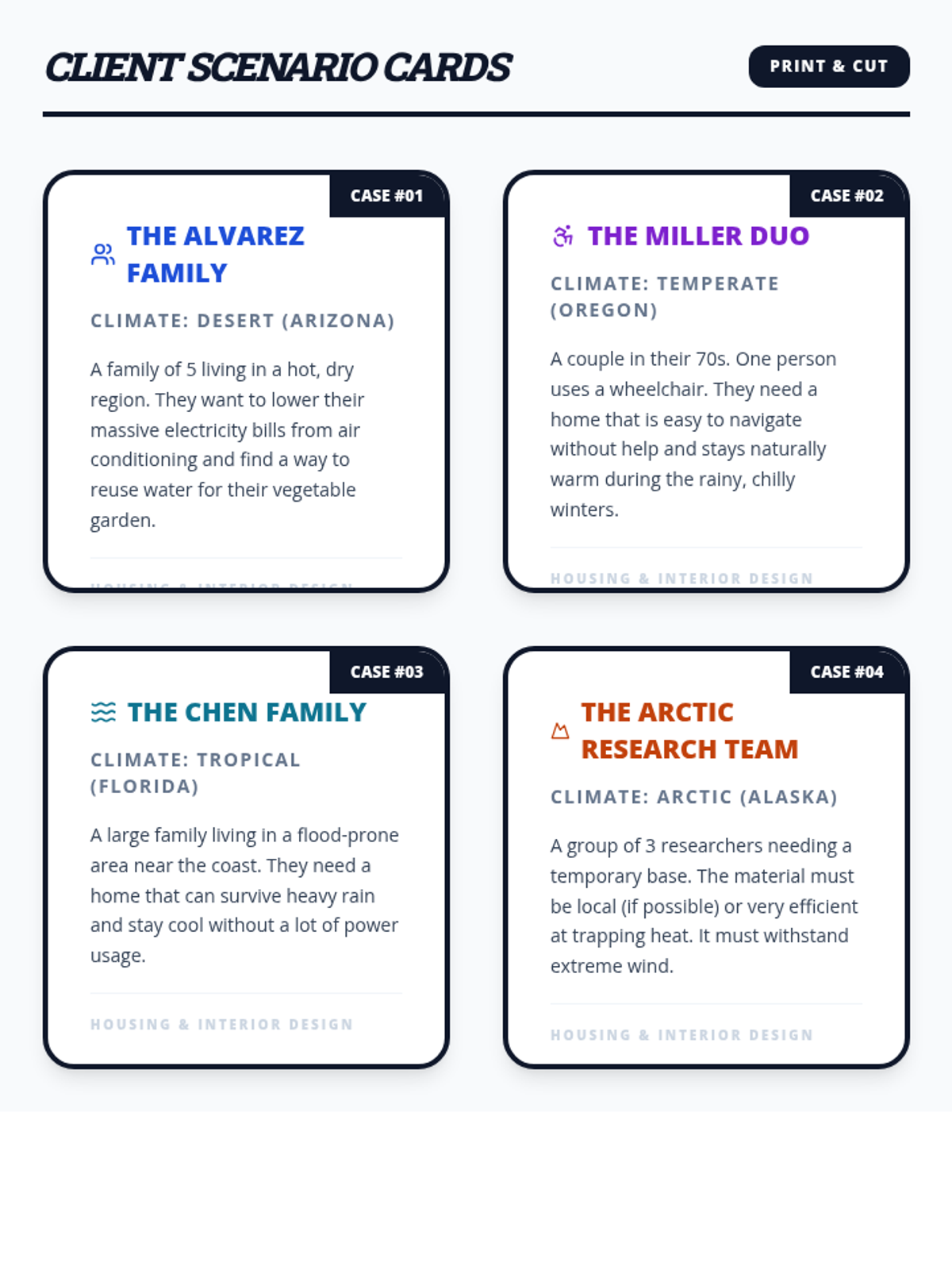
Family scenario cards for the final Design Challenge, providing specific client needs, climate constraints, and design priorities for student groups.