Introductory slide deck for Newton's Three Laws of Motion, featuring technical design elements and a clear breakdown of each law followed by a project mission overview. Revised for improved formula rendering and color contrast.
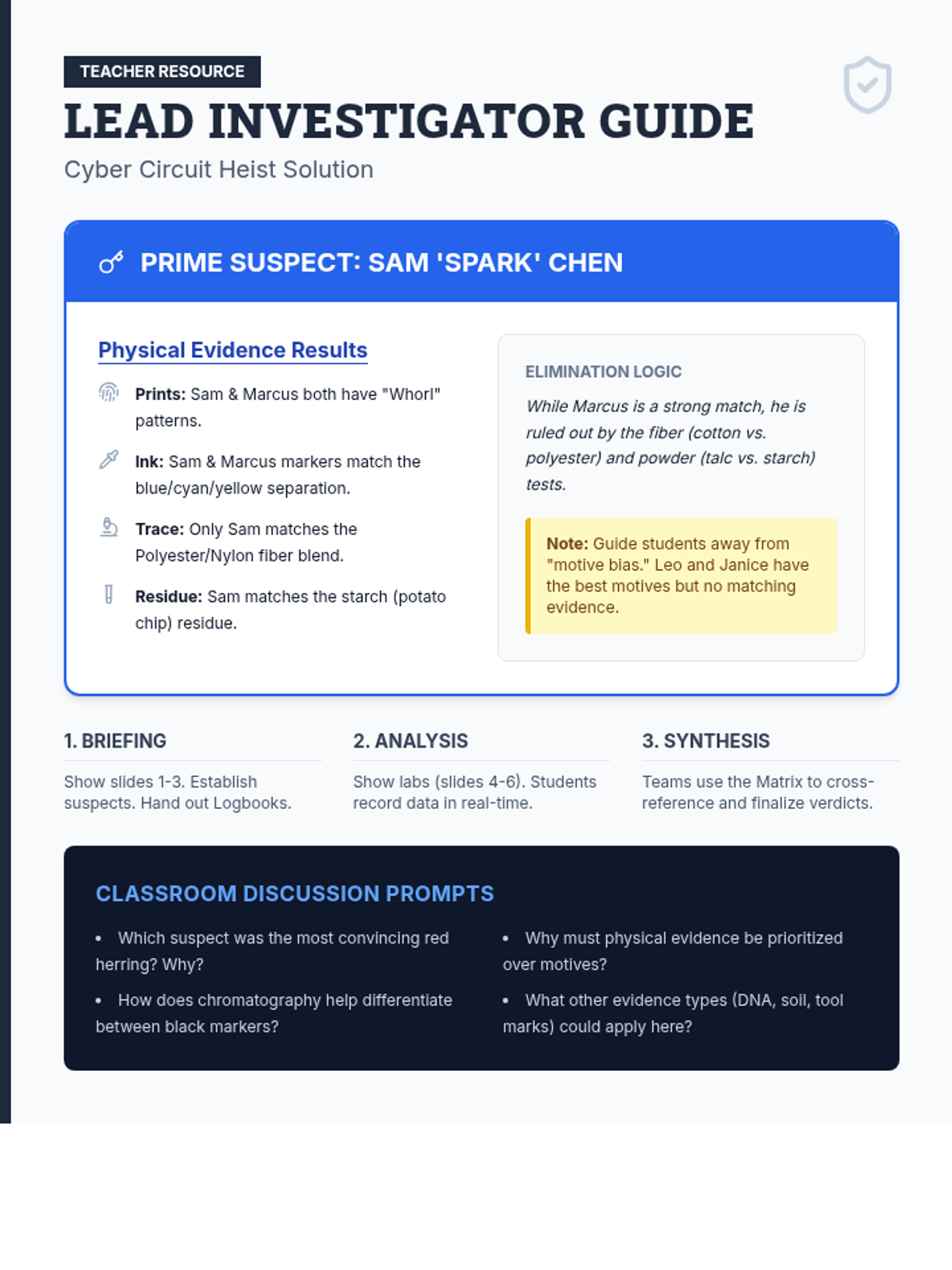
A comprehensive teacher's guide and answer key for the Cyber Circuit Heist. It provides the solution (Sam Chen), identifies the red herrings, and offers pedagogical strategies for facilitating the forensic investigation.
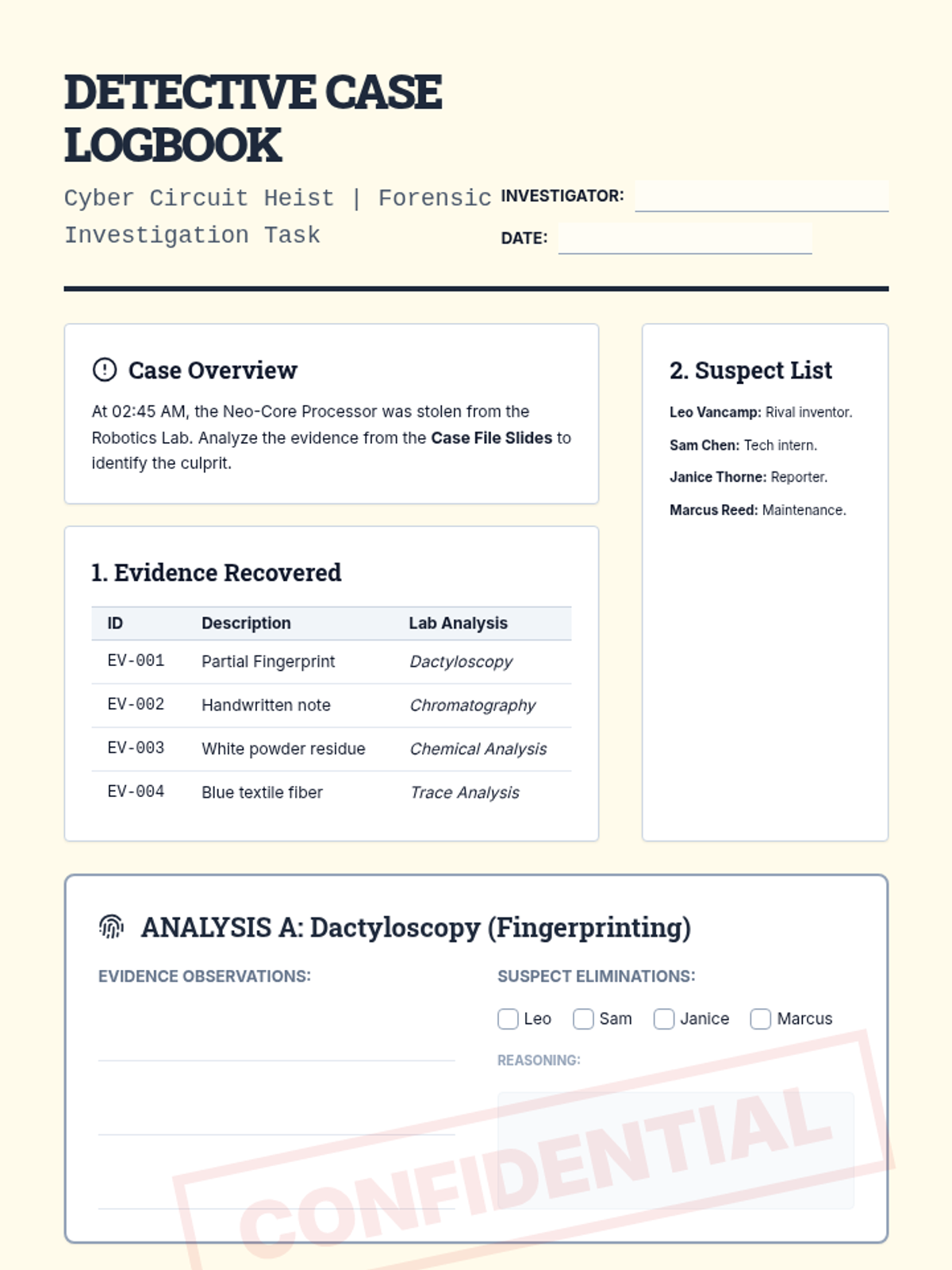
A structured detective logbook for students to document their forensic analysis. It includes sections for fingerprinting, chromatography, trace evidence, and a final synthesis matrix to identify the prime suspect.
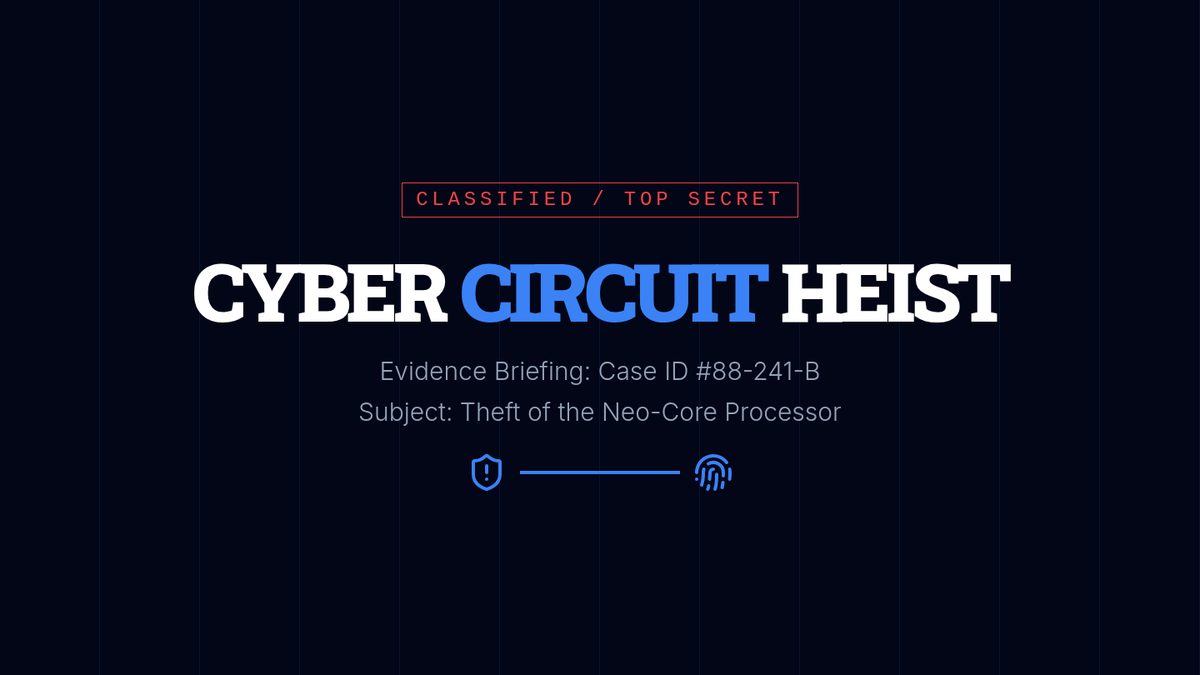
A high-tech digital evidence presentation for a forensic science investigation. It includes crime scene details, suspect profiles, and laboratory results for fingerprinting, chromatography, and trace evidence analysis.
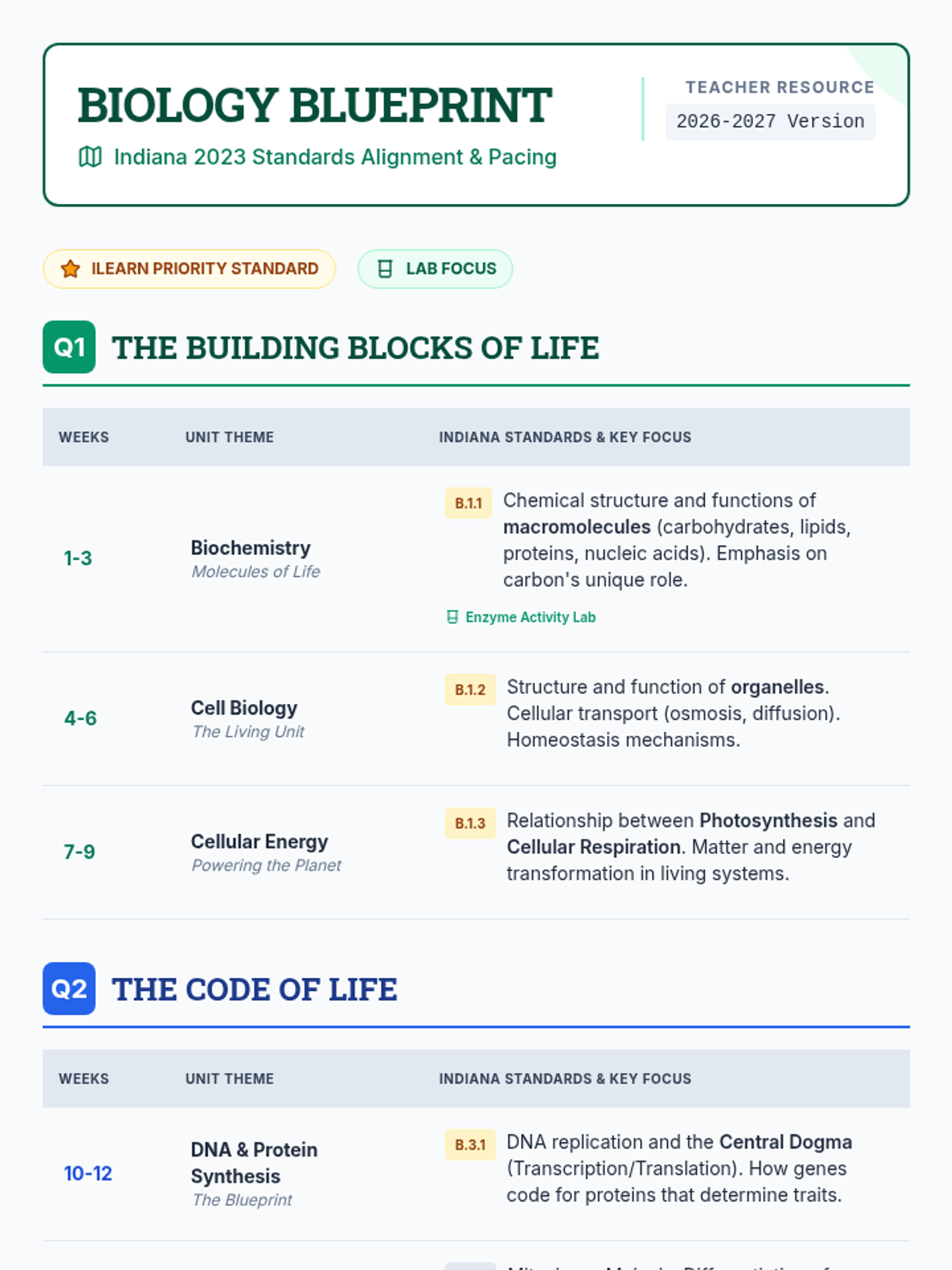
A comprehensive year-long pacing guide for Indiana High School Biology teachers, highlighting priority standards for the ILEARN assessment and organizing content into four logical quarters.
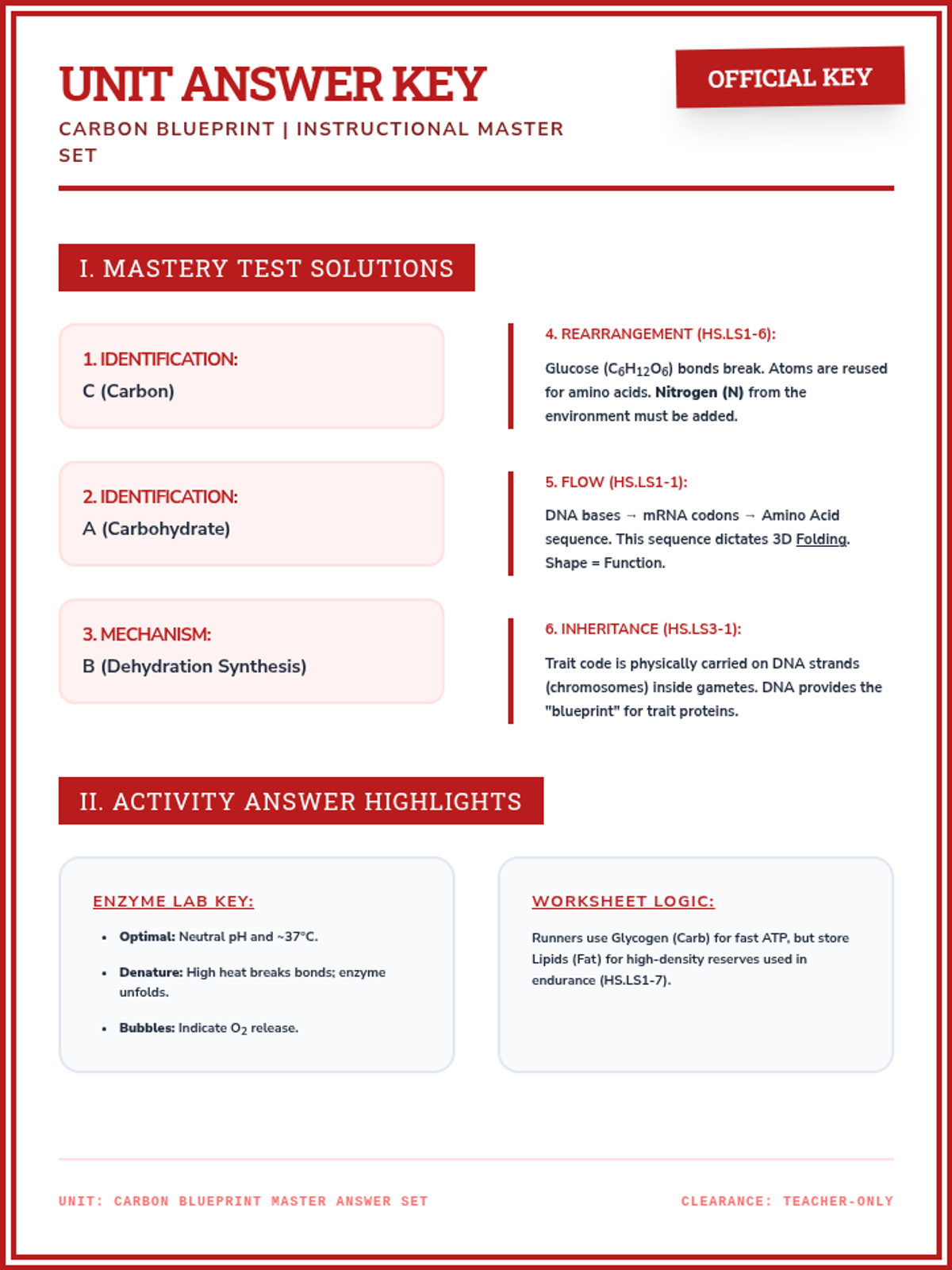
Teacher-facing answer key for all unit materials, including the Mastery Test, worksheets, and lab analysis. Includes specific grading guidance for the culminating project.
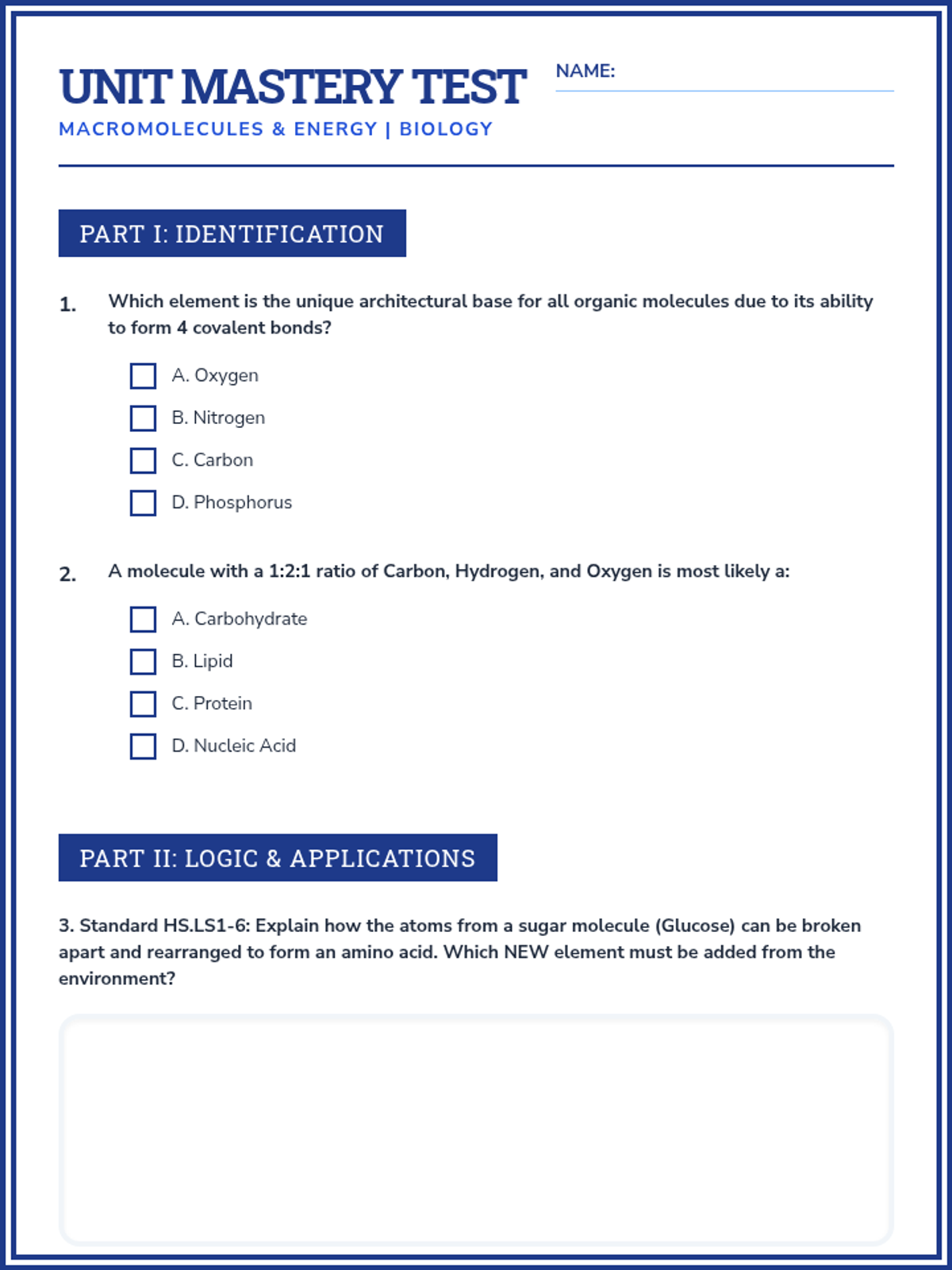
The final unit assessment for the Macromolecules unit, containing multiple choice and free-response questions aligned with Indiana state standards HS.LS1-1, HS.LS1-6, HS.LS1-7, and HS.LS3-1.
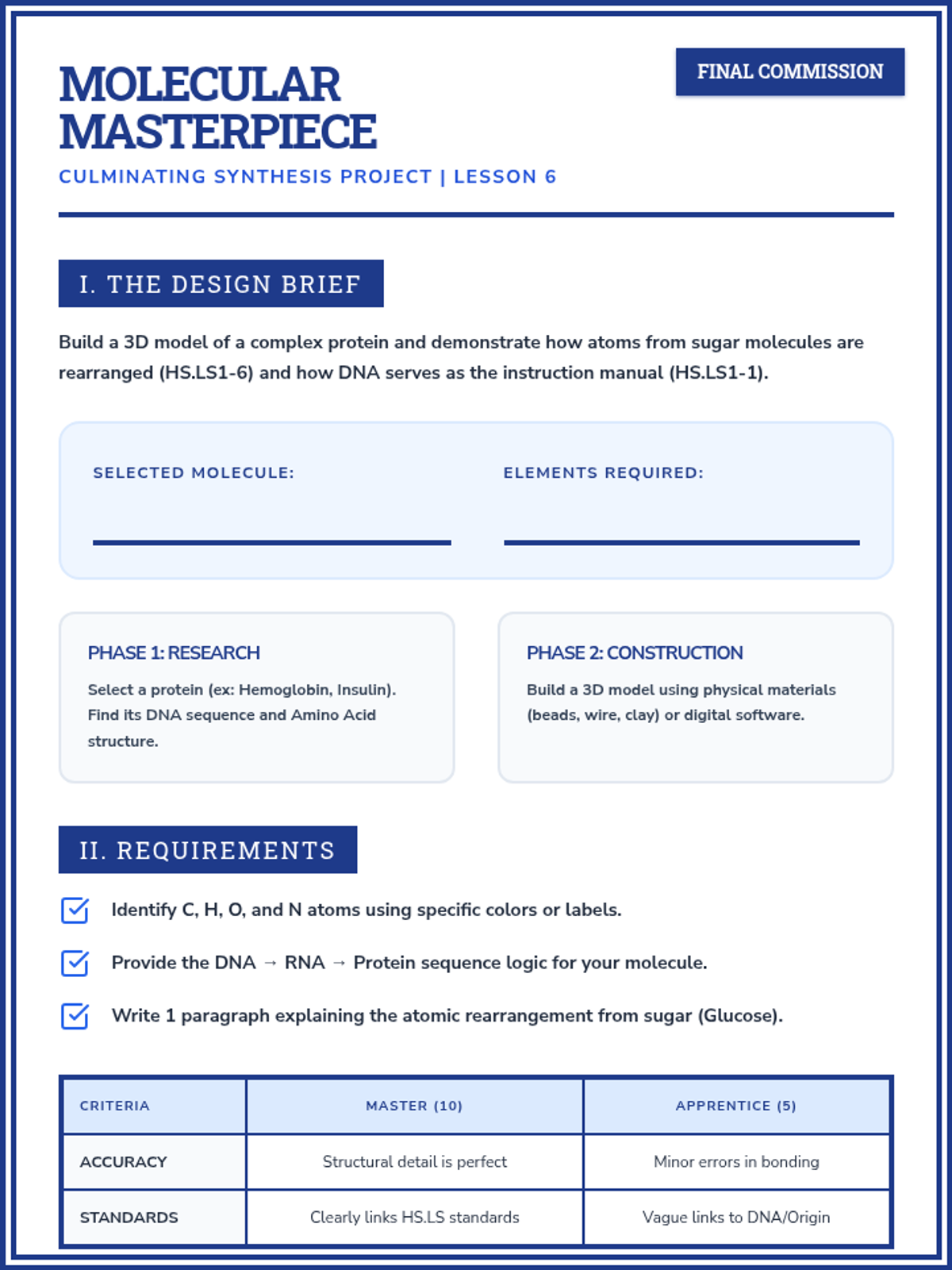
A guide for a culminating unit project where students design and build a 3D model of a macromolecule, specifically focusing on the scientific standards regarding DNA-protein links and atomic rearrangement.
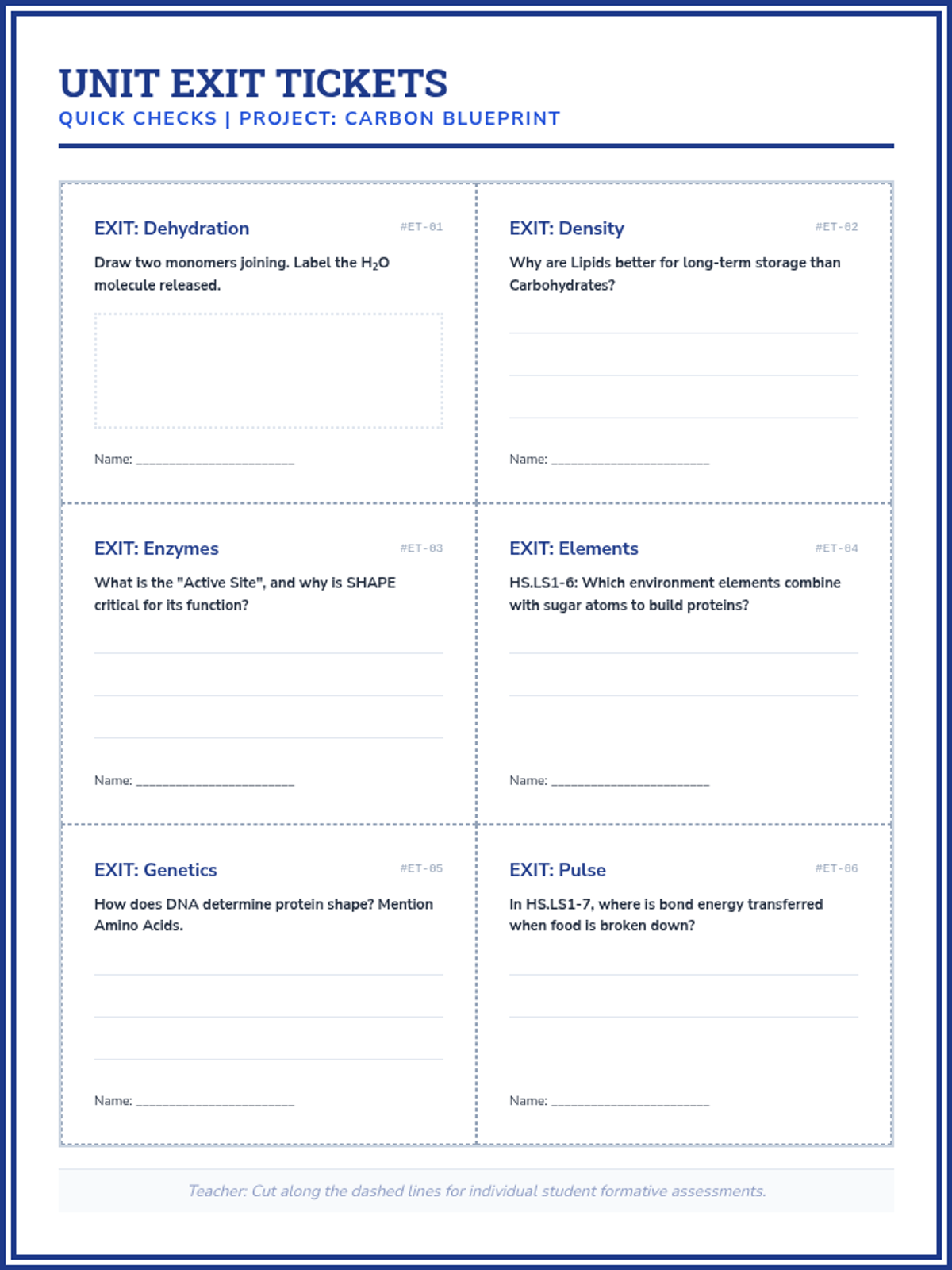
A comprehensive set of six exit tickets for the unit, designed to be cut and distributed to students for quick formative assessment on key macromolecule concepts and state standards.
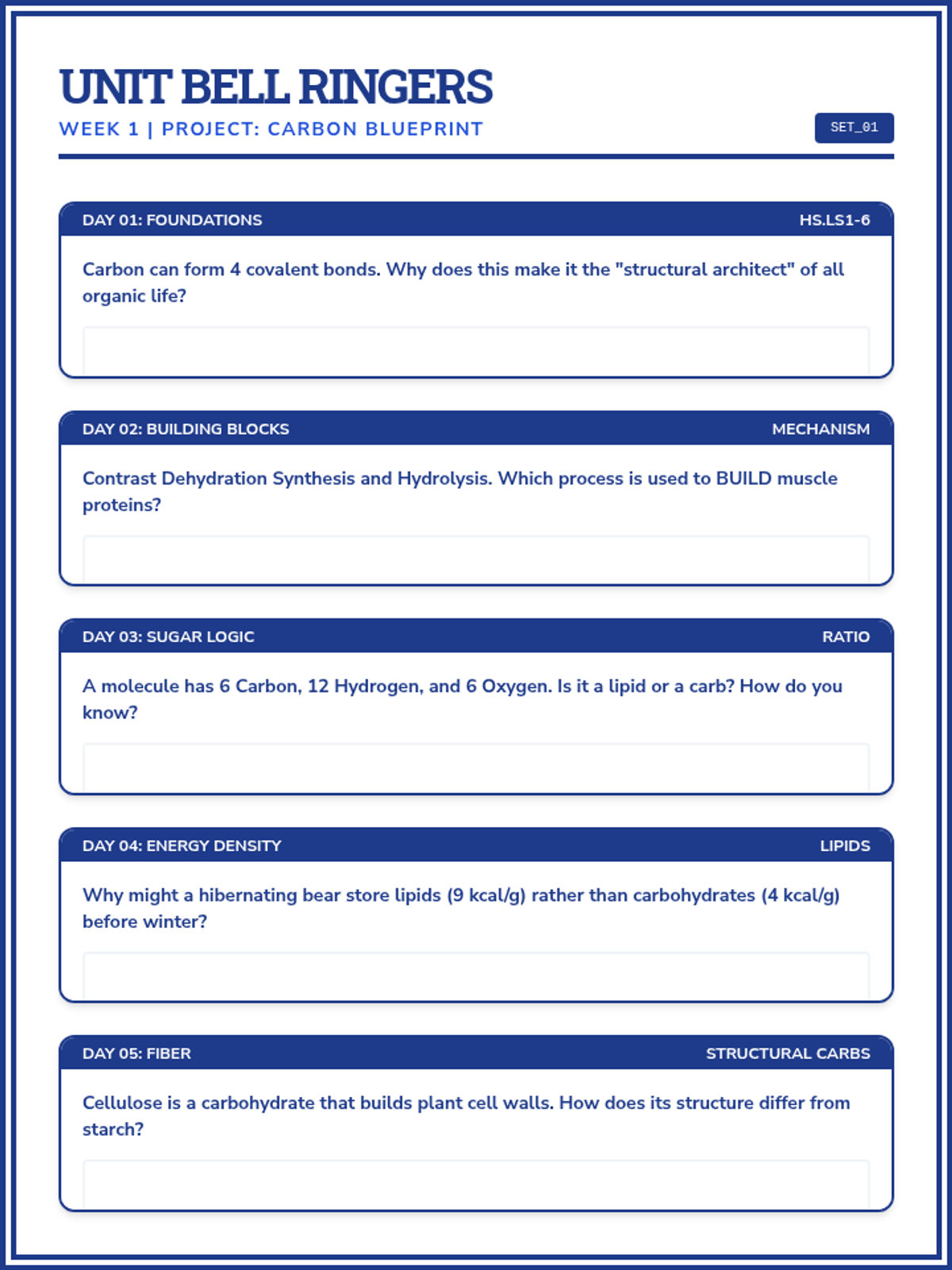
A collection of daily bell ringers for the entire 3-week unit, organized by topic and aligned with Indiana state standards for macromolecules and energy transfer.
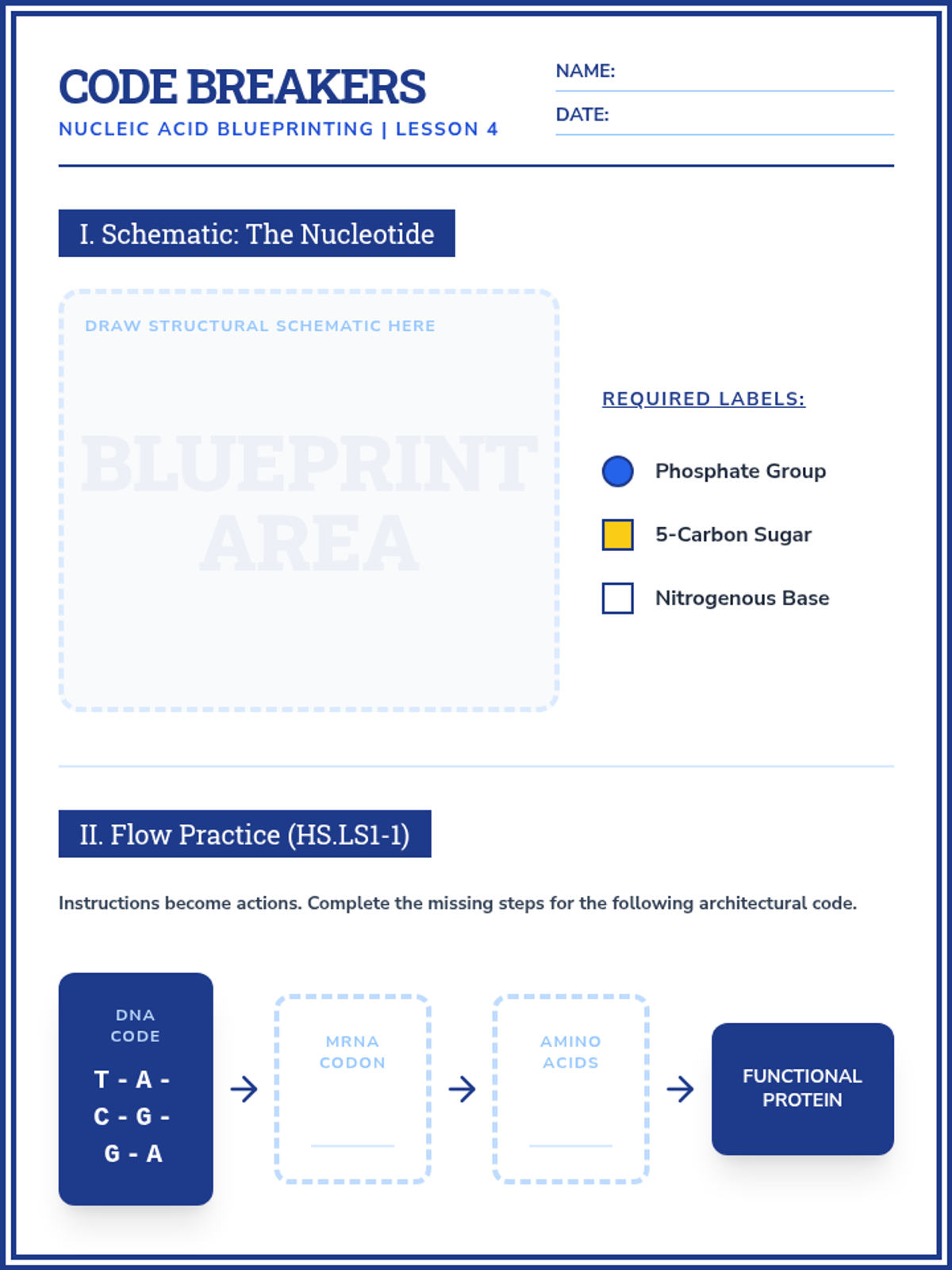
Worksheet exploring DNA structure (nucleotides) and the functional link between genetic coding and protein synthesis, covering Indiana state standards for information flow and trait coding.
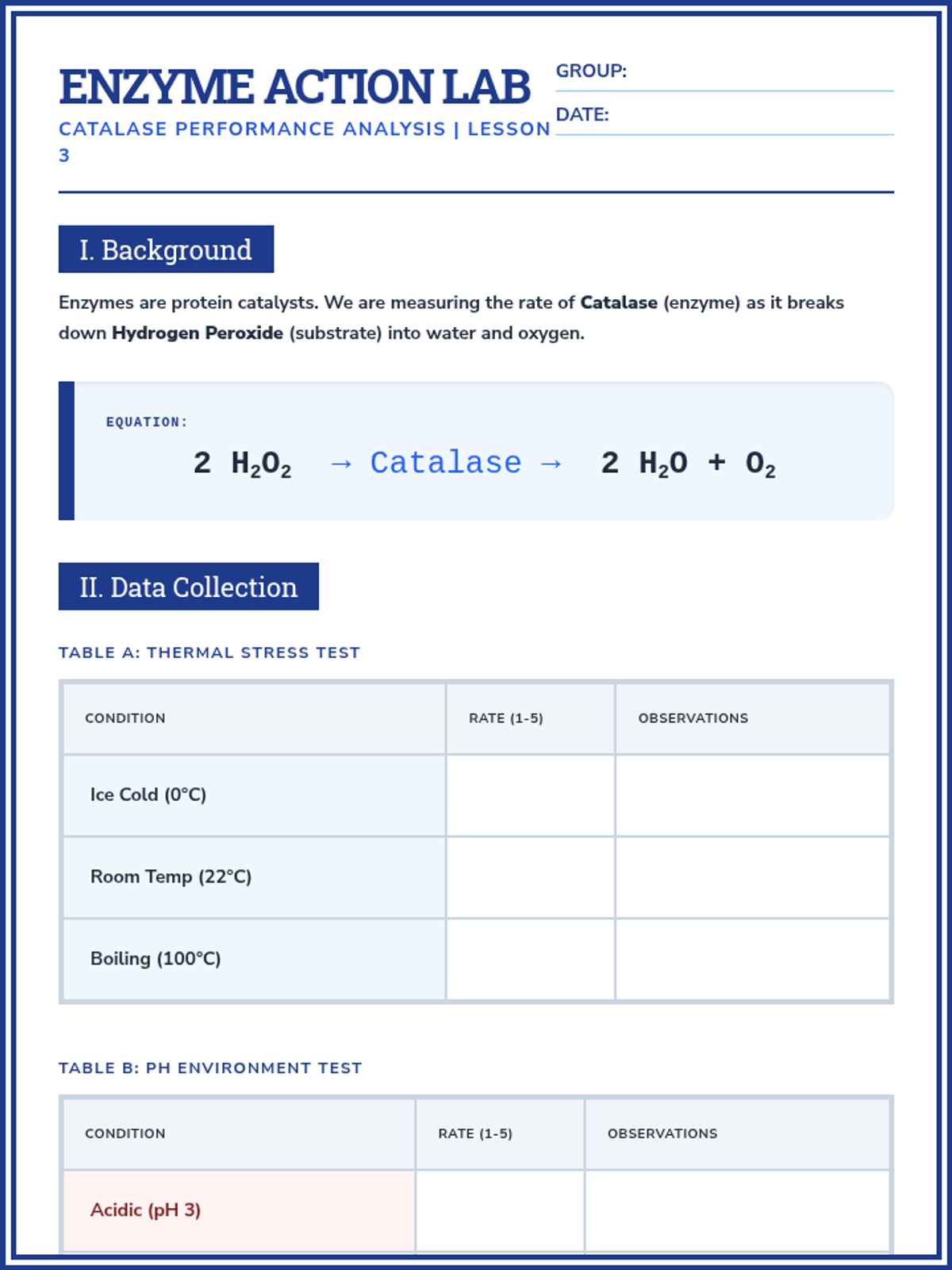
Laboratory activity exploring enzyme (catalase) function under varying temperature and pH conditions. Includes data tables, graphing areas, and analysis questions centered on protein denaturation.
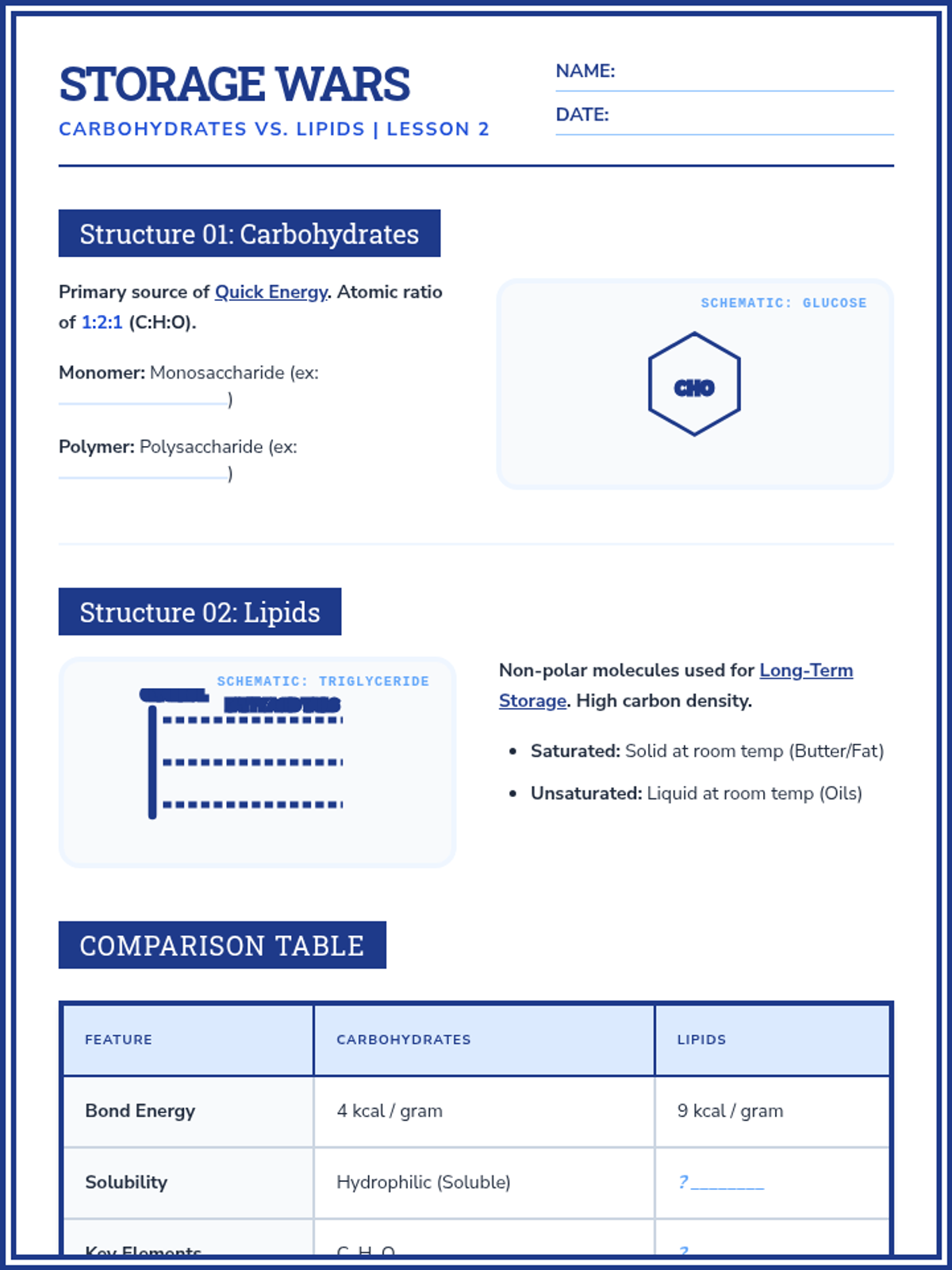
Worksheet comparing carbohydrates and lipids, focusing on structure, energy storage capacity, and biological functions. Includes a comparative table and analysis prompt.
Presentation slides for Lesson 1 introducing carbon chemistry, monomers/polymers, dehydration synthesis, and the standard alignment for macromolecule synthesis.
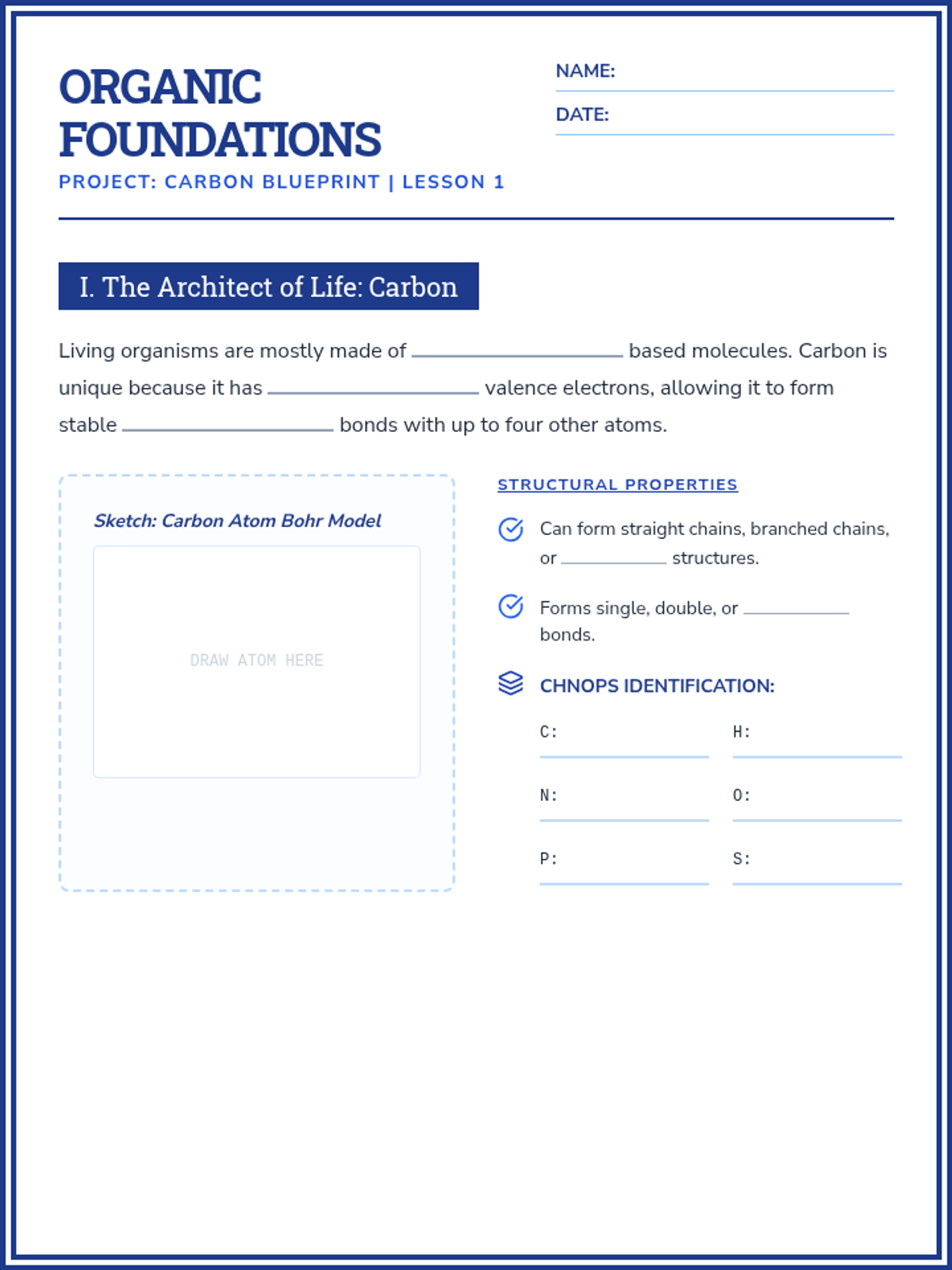
Guided notes for Lesson 1 covering the properties of carbon, dehydration synthesis, hydrolysis, and an overview of the four macromolecules. Designed with a clean architectural blueprint theme.
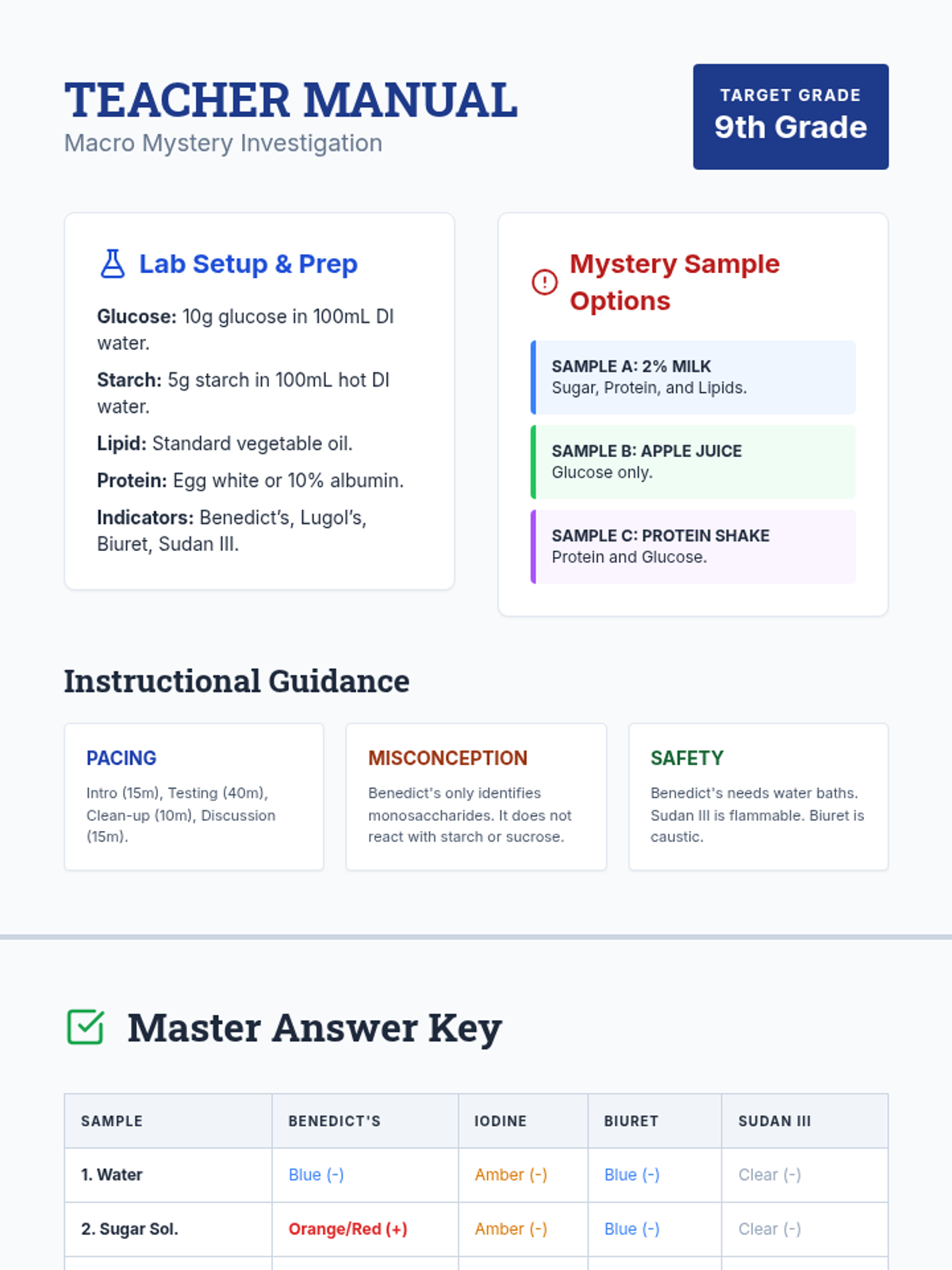
A comprehensive teacher's guide for the Macro Mystery lab, including setup instructions, indicator preparation, potential unknown sample choices, and a full answer key.
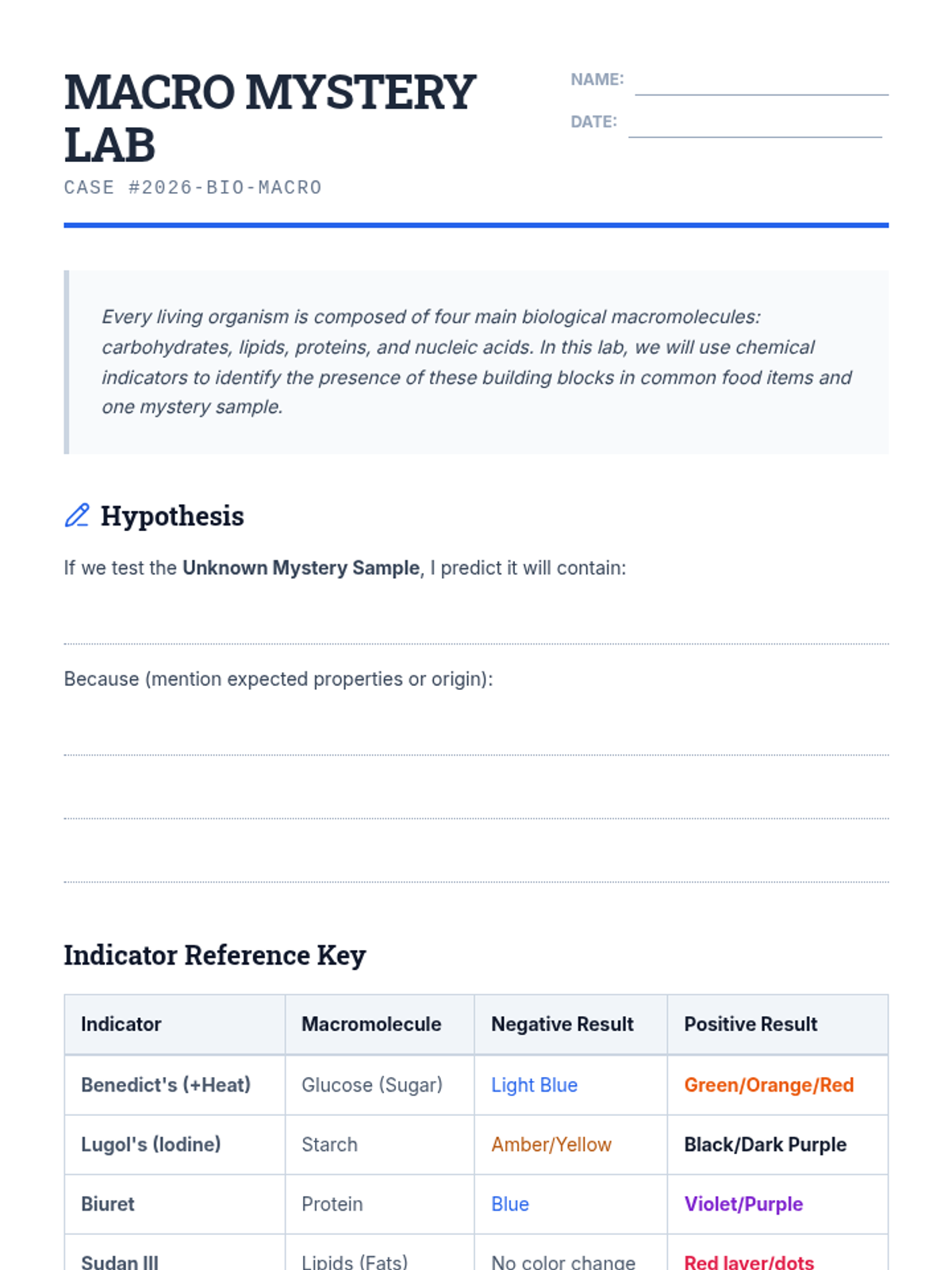
A comprehensive student lab manual for investigating biological macromolecules using chemical indicators, featuring data tables, procedures, and standards-aligned analysis questions.
A visual slide deck introducing biological macromolecules, chemical indicators, and the 'Macro Mystery' case study for a high school biology lab.
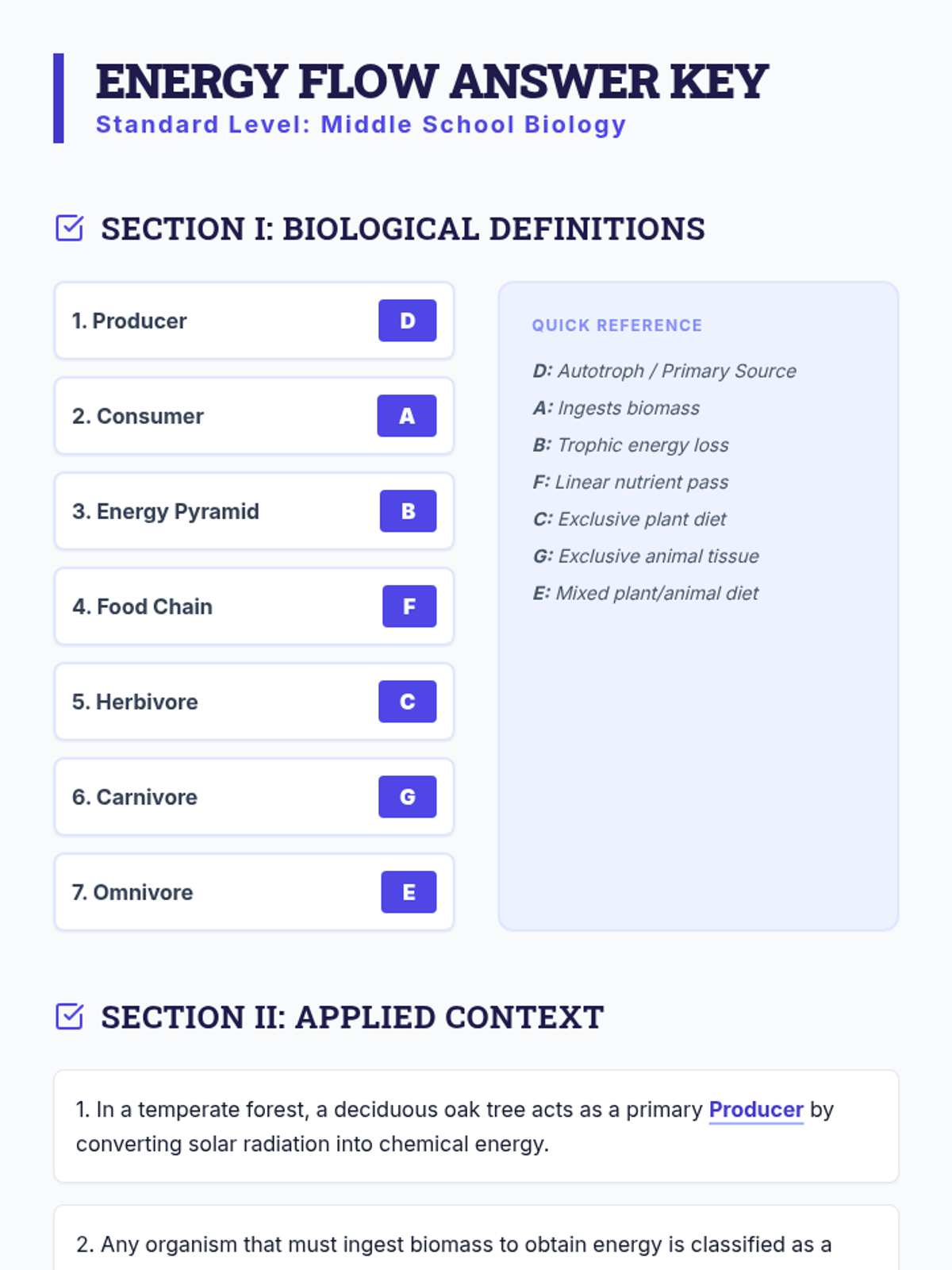
An answer key for the middle school energy flow worksheet with correct biological matching and sentence completion answers.
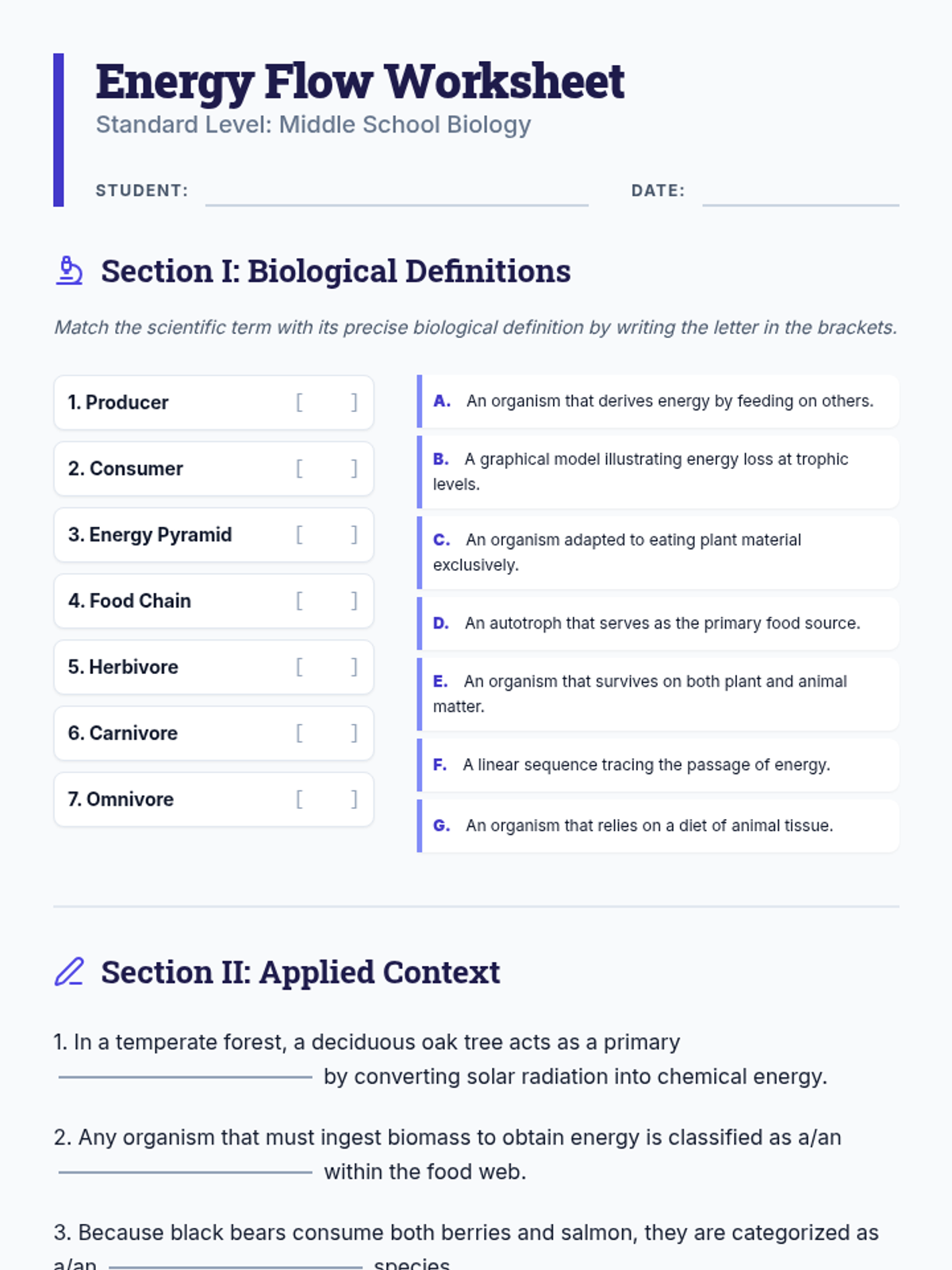
A middle school matching worksheet with advanced biological definitions and context-based sentence completion for ecosystem terminology.
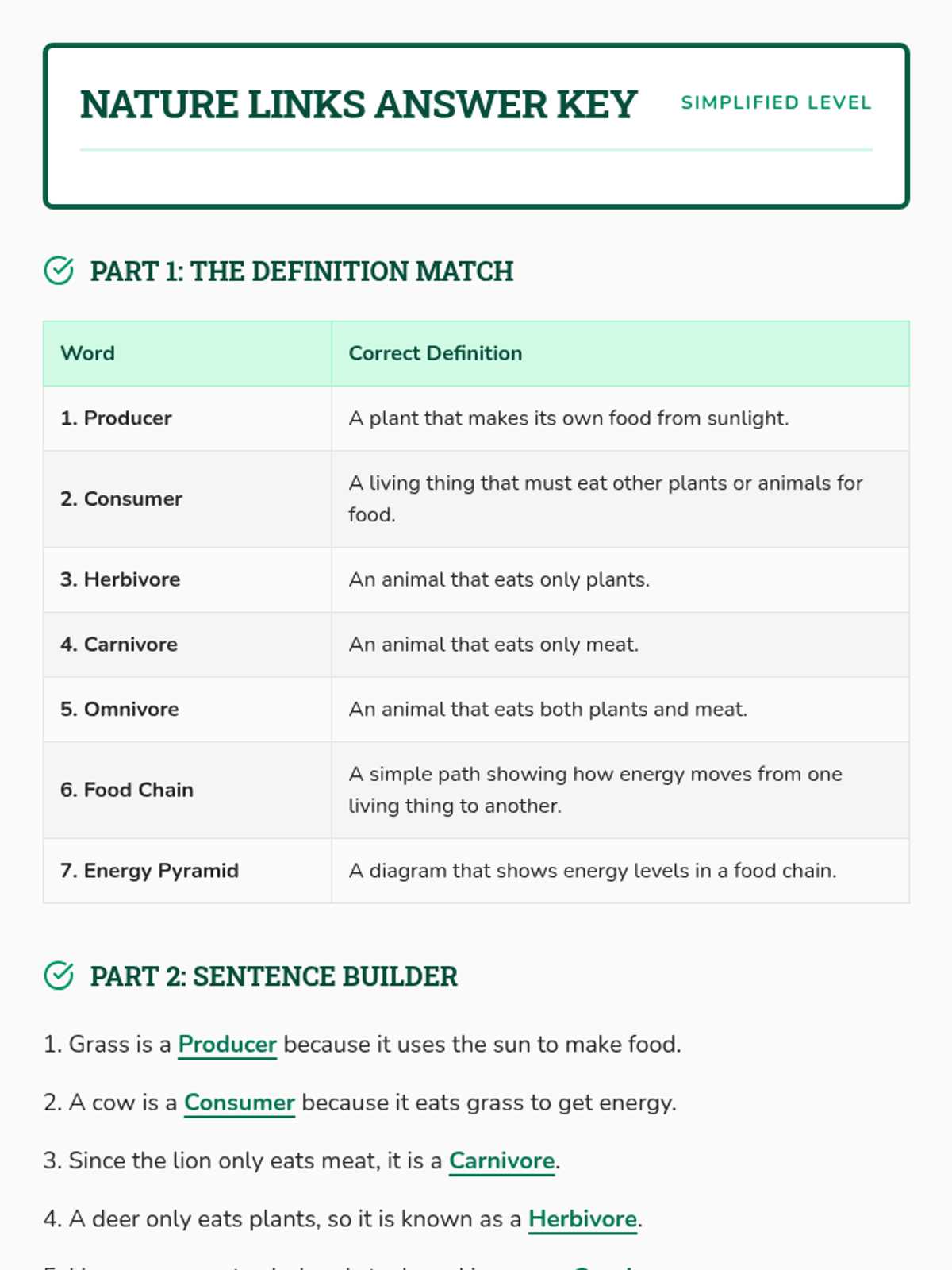
An answer key for the elementary matching worksheet with correct definition pairings and completed sentences.
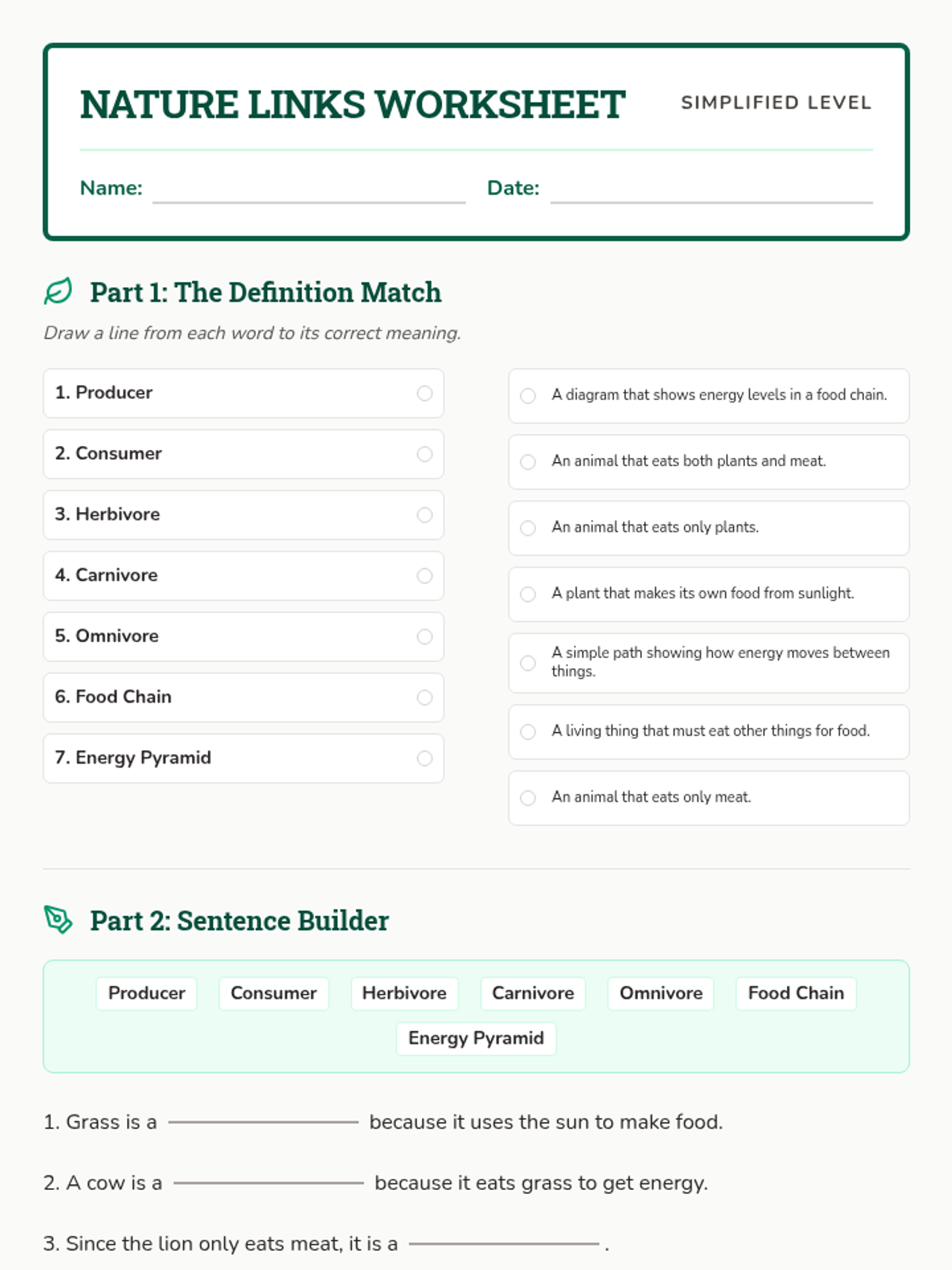
A matching worksheet for elementary students focusing on basic ecosystem vocabulary with simple definitions and fill-in-the-blank sentences.
A 4-page comprehensive study practice packet focused on ecology populations. It includes visual matching for levels of organization, a categorization sort for biotic/abiotic factors, cloze passages for key vocabulary, and a graph labeling activity for carrying capacity, all designed with scaffolds for students with decoding and executive function challenges.
A slide deck for instructing the "Motion Matrix" lesson, focusing on the visual relationships between velocity, acceleration, force, and momentum with a guided example.
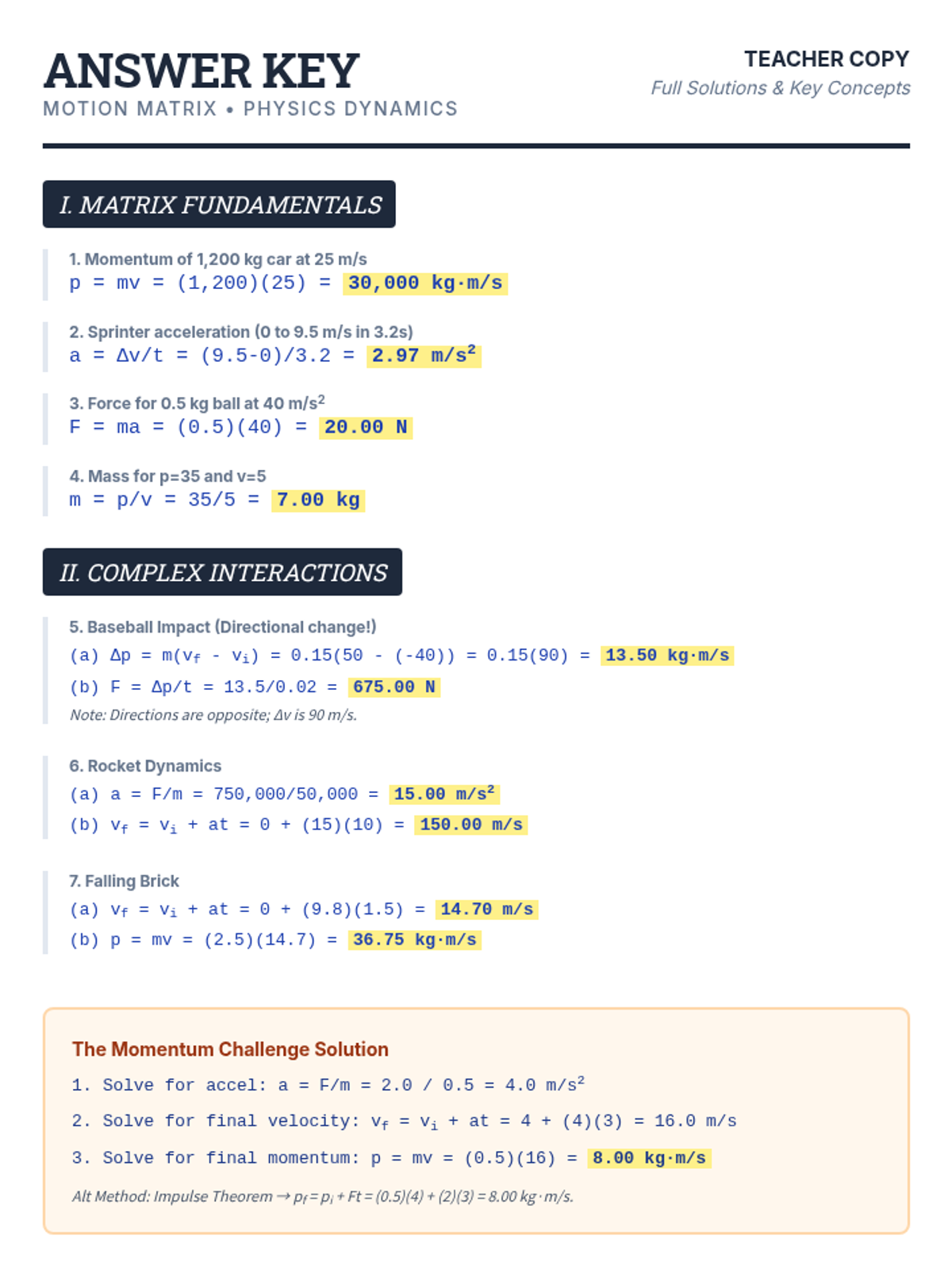
The complete answer key for the "Motion Matrix" worksheet, including step-by-step solutions for multi-step problems and alternative solving methods for the challenge question.
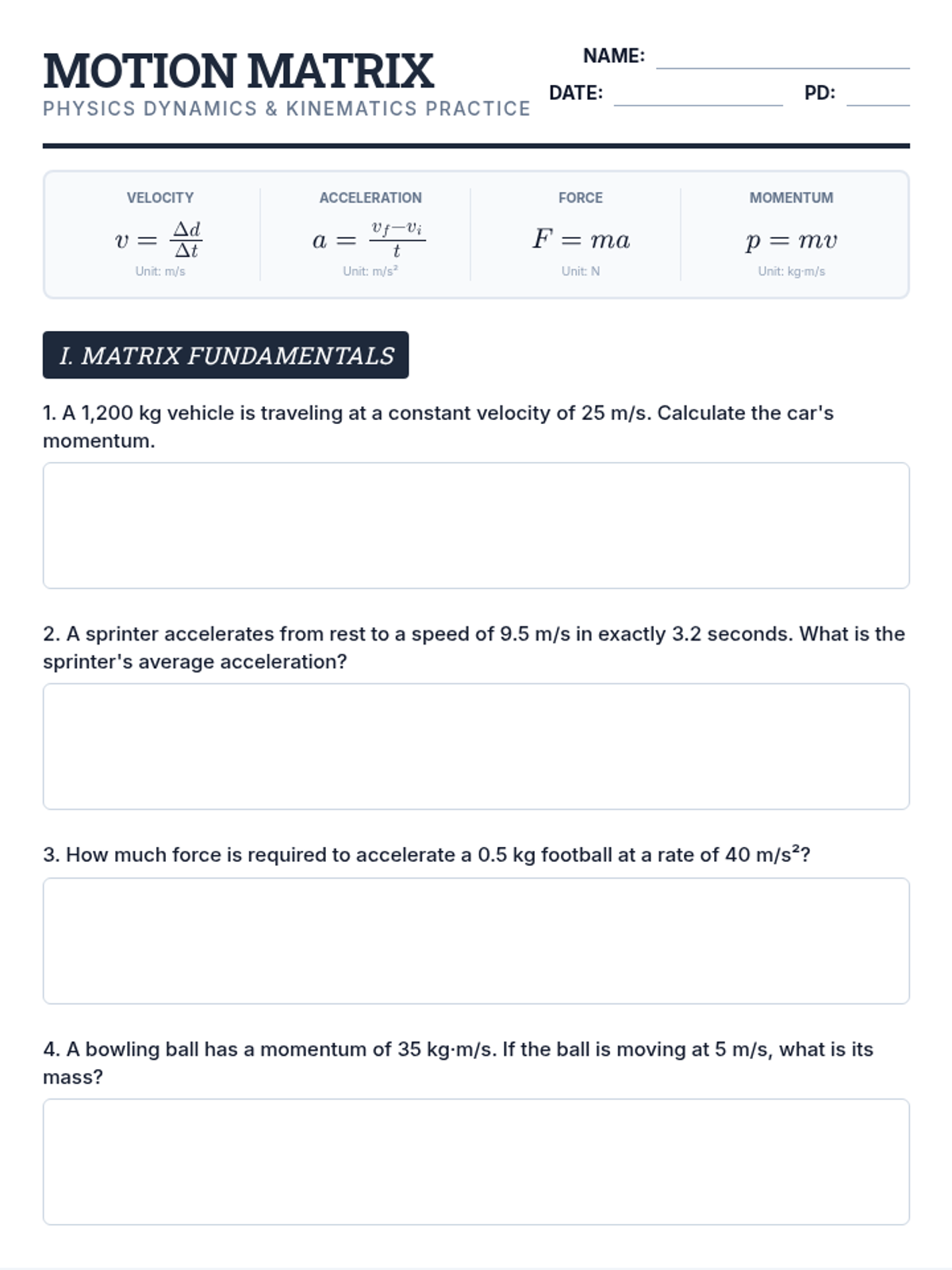
A high-school physics worksheet featuring a "Motion Matrix" theme, covering mixed calculations for force, momentum, acceleration, and velocity with a formula reference and multi-step problems.
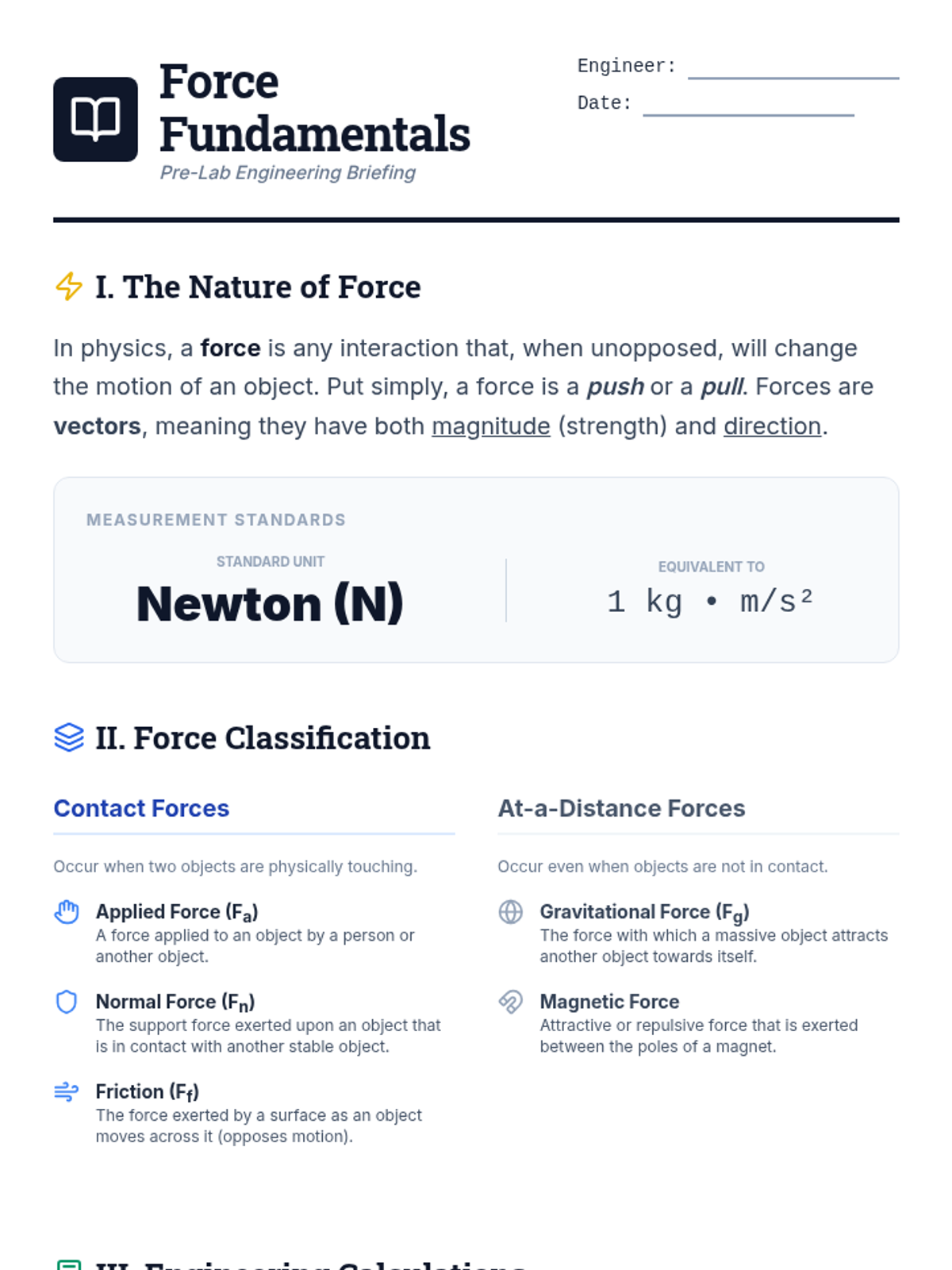
A pre-lab reading for students covering the fundamentals of force, including classification of contact and non-contact forces and calculations for Newton's Second Law and weight. Includes a comprehension check. Revised for better formatting, page breaks, and print-friendly student work areas.