A matching worksheet for elementary students focusing on basic ecosystem vocabulary with simple definitions and fill-in-the-blank sentences.
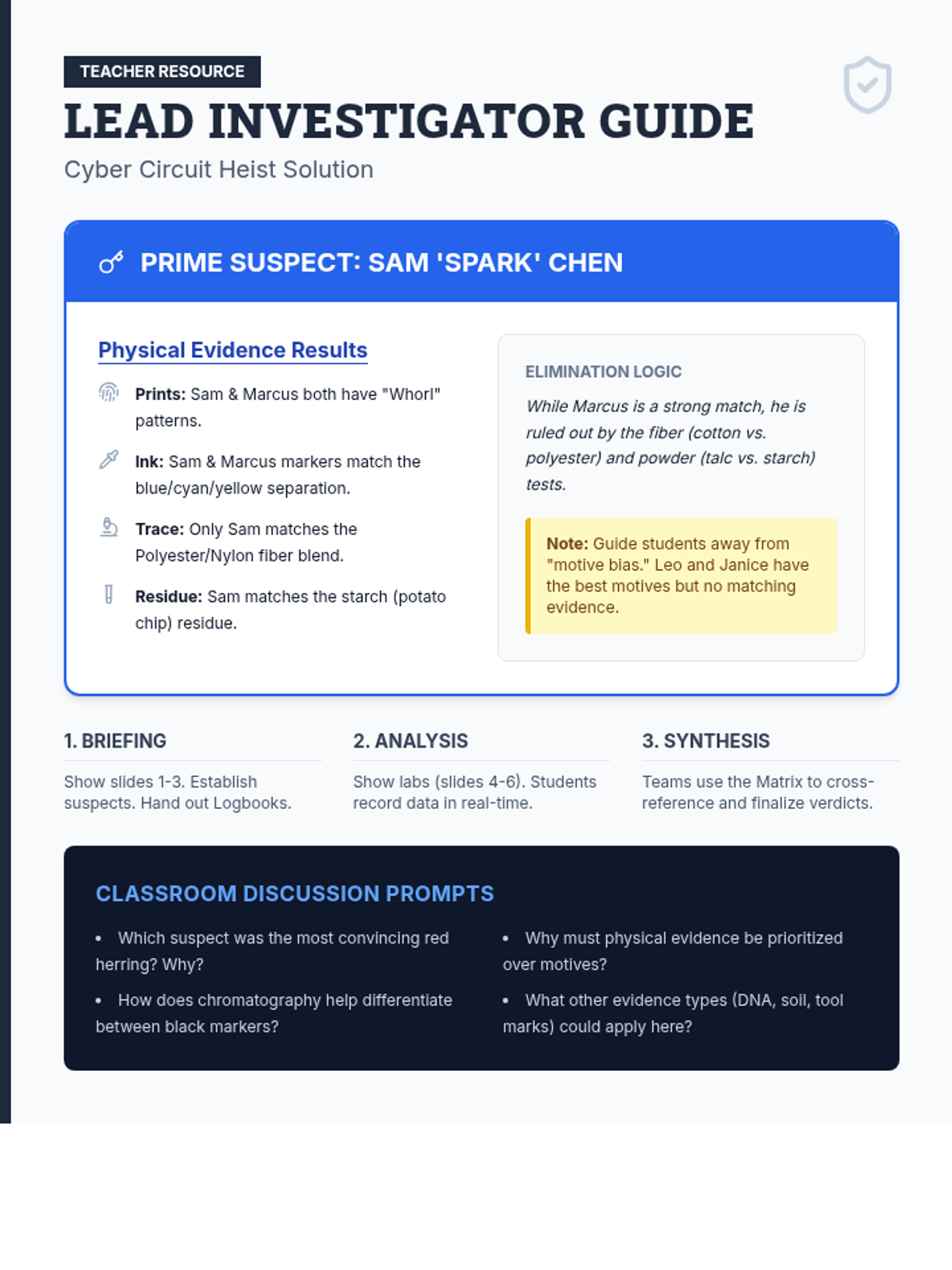
A comprehensive teacher's guide and answer key for the Cyber Circuit Heist. It provides the solution (Sam Chen), identifies the red herrings, and offers pedagogical strategies for facilitating the forensic investigation.
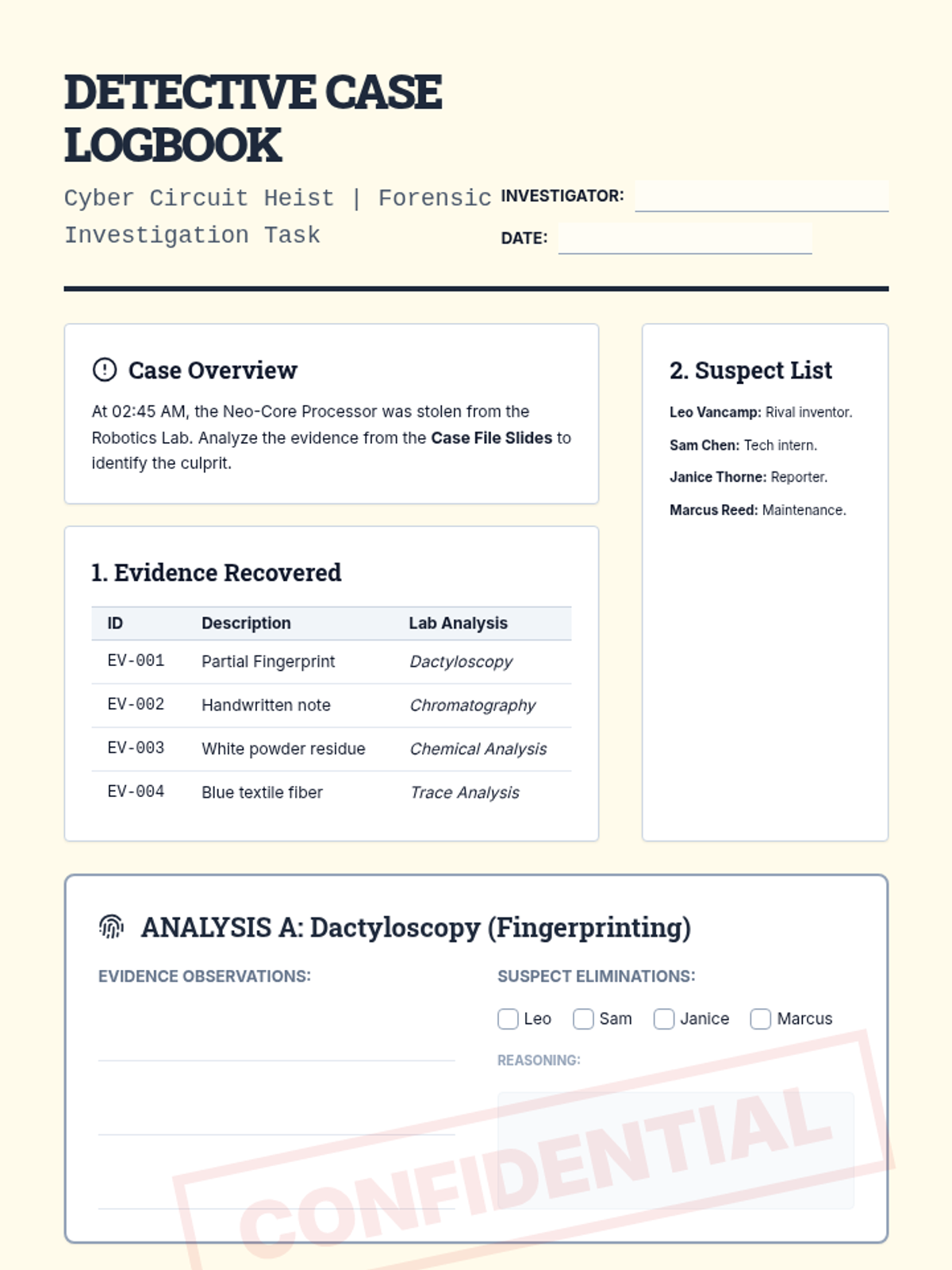
A structured detective logbook for students to document their forensic analysis. It includes sections for fingerprinting, chromatography, trace evidence, and a final synthesis matrix to identify the prime suspect.
A high-tech digital evidence presentation for a forensic science investigation. It includes crime scene details, suspect profiles, and laboratory results for fingerprinting, chromatography, and trace evidence analysis.
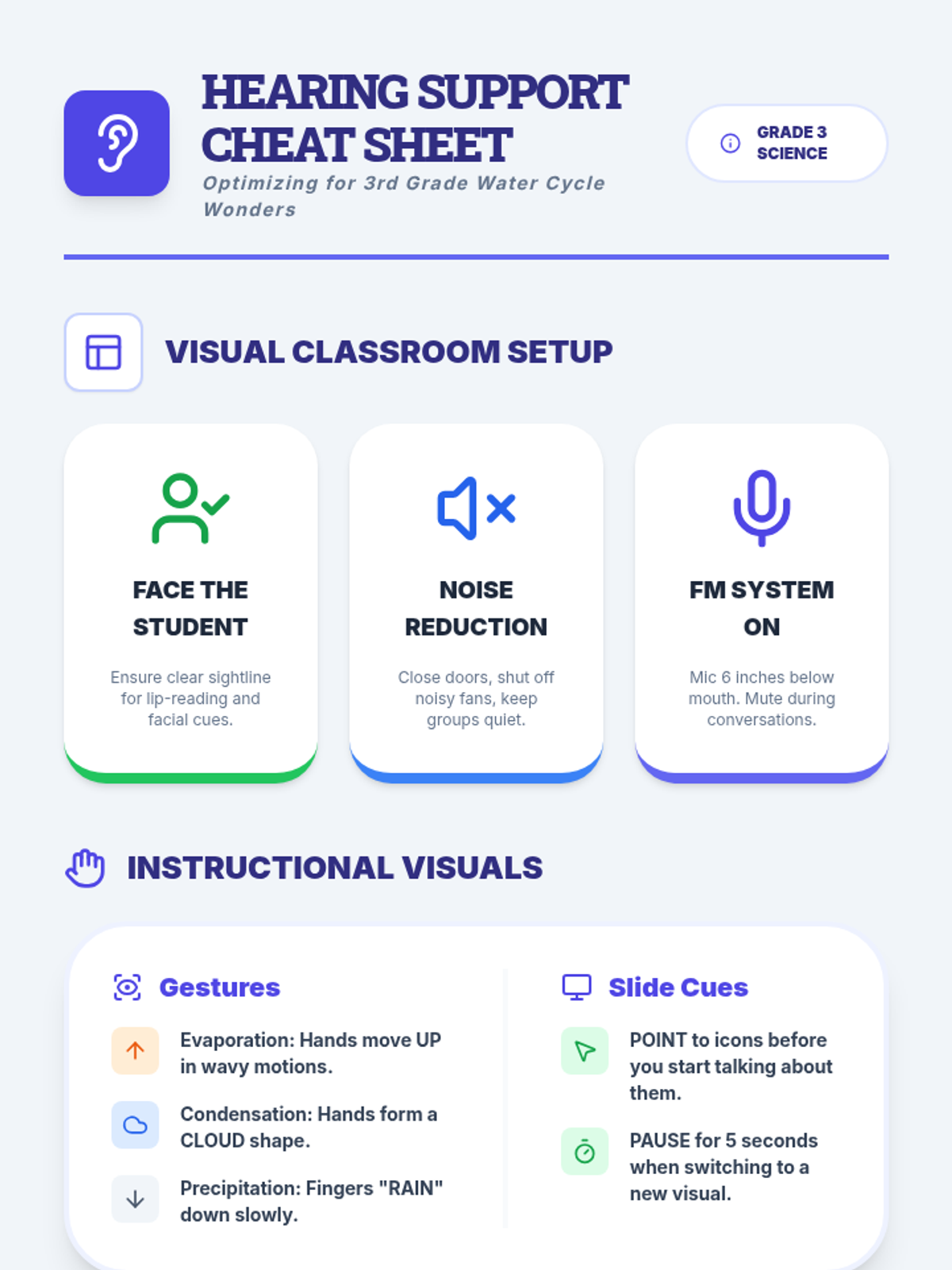
A highly visual cheat sheet for teachers to optimize support for students with hearing loss. Features icon-based checklists, visual gesture guides, and scannable environment tips. Revised for better spacing and readability.
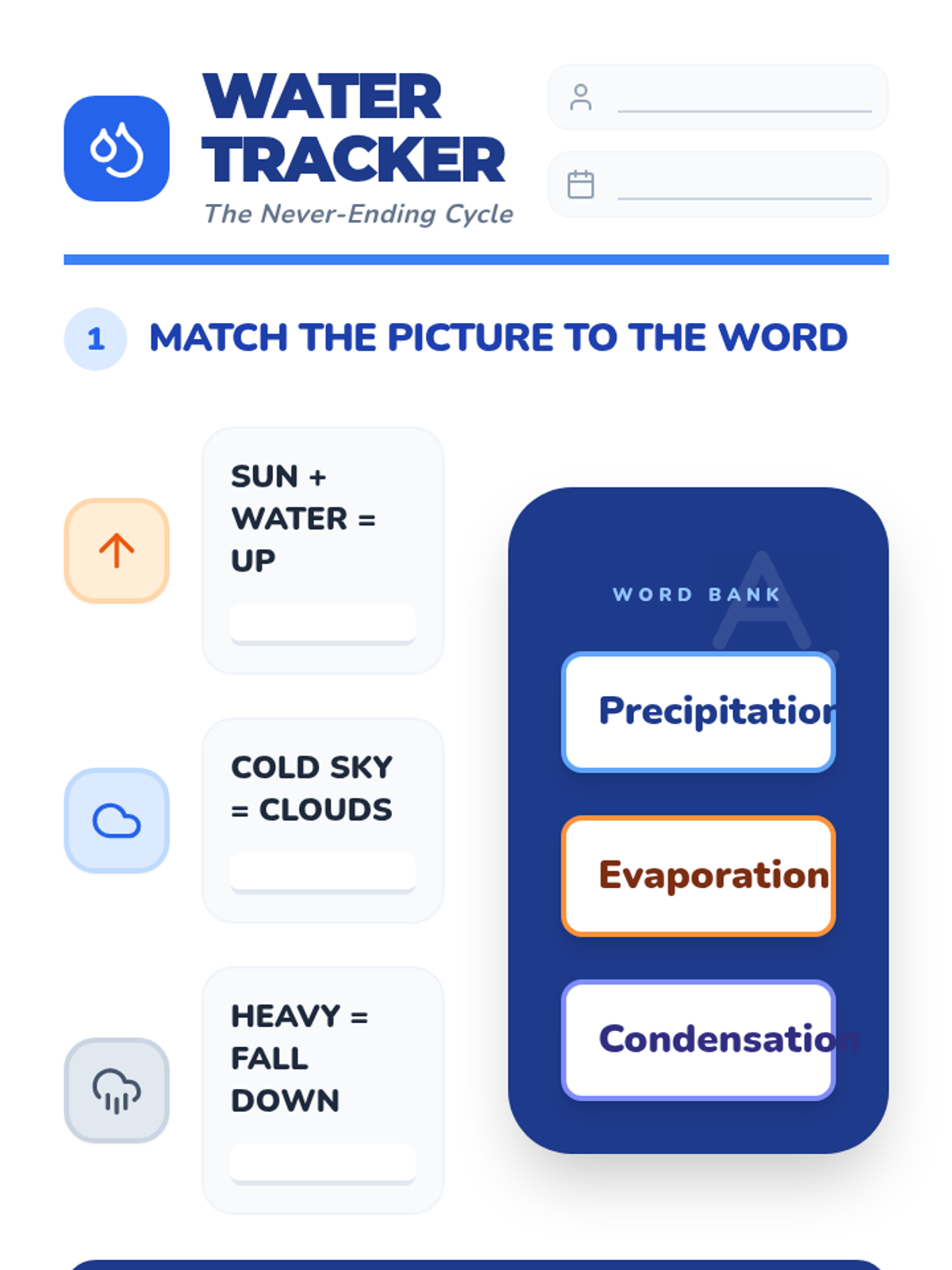
A visual matching and labeling activity to reinforce the stages of the water cycle. Revised with much larger handwriting areas, higher contrast instructions, and fixed diagram spacing.
A visual-heavy presentation explaining the water cycle stages with large graphics, simple text, and high-contrast visuals designed for students with hearing loss. Revised for maximum readability and corrected visual clipping issues.
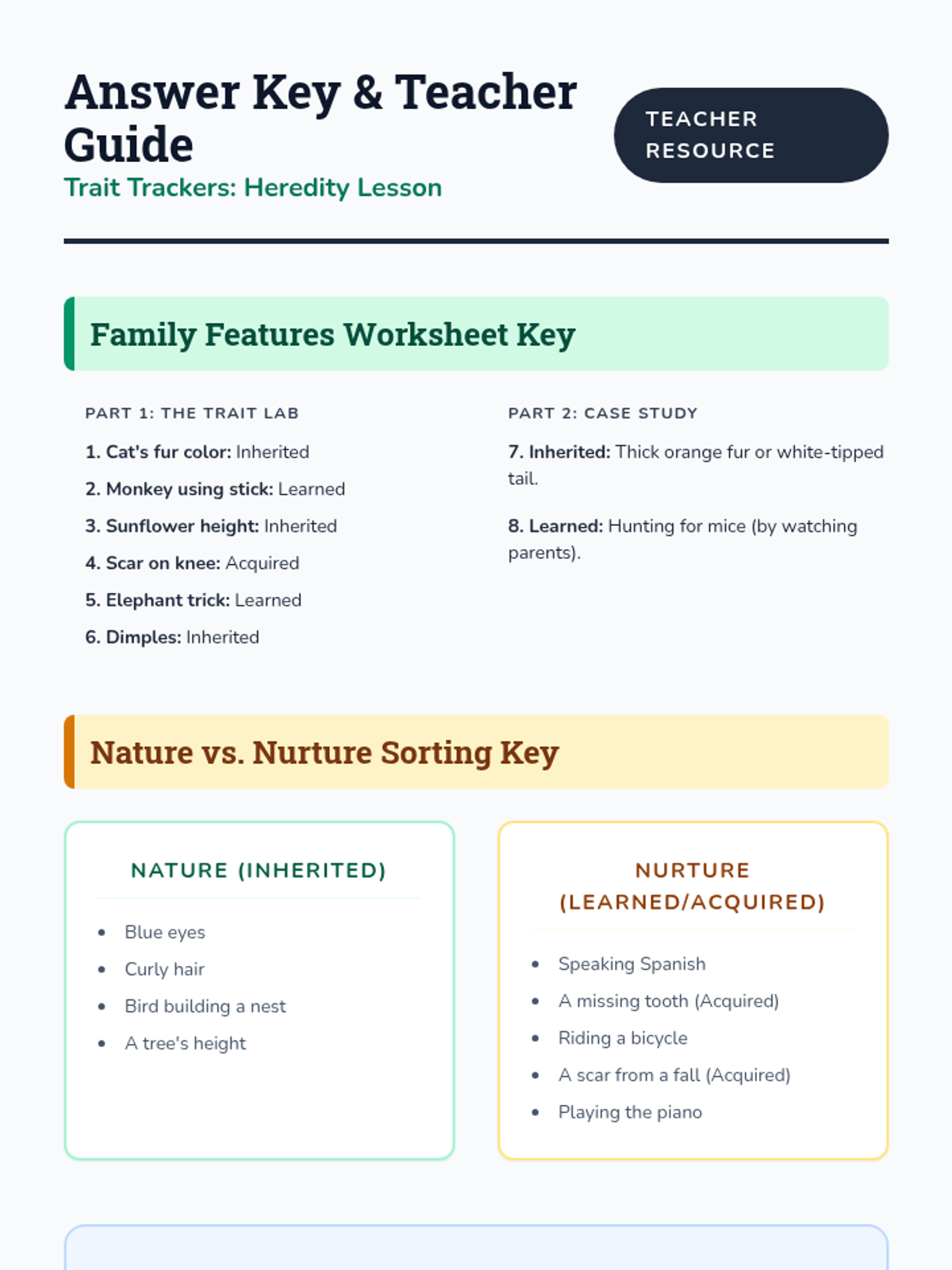
A teacher's answer key and instructional guide for the Heredity lesson, including solutions for all worksheets and tips for addressing common student misconceptions.
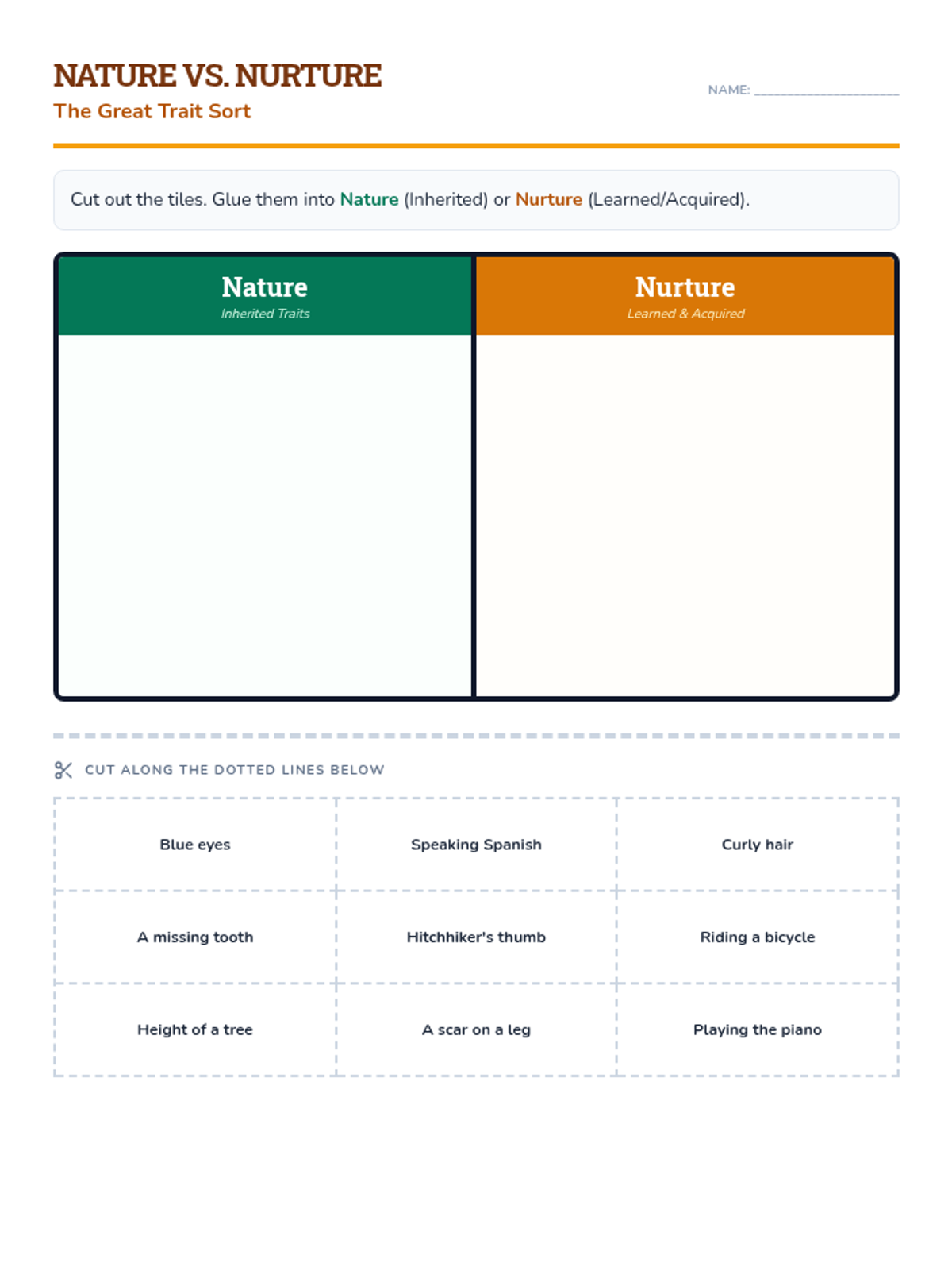
A hands-on sorting activity where students classify various traits into 'Inherited' or 'Learned/Acquired' categories. Perfect for kinesthetic learners.
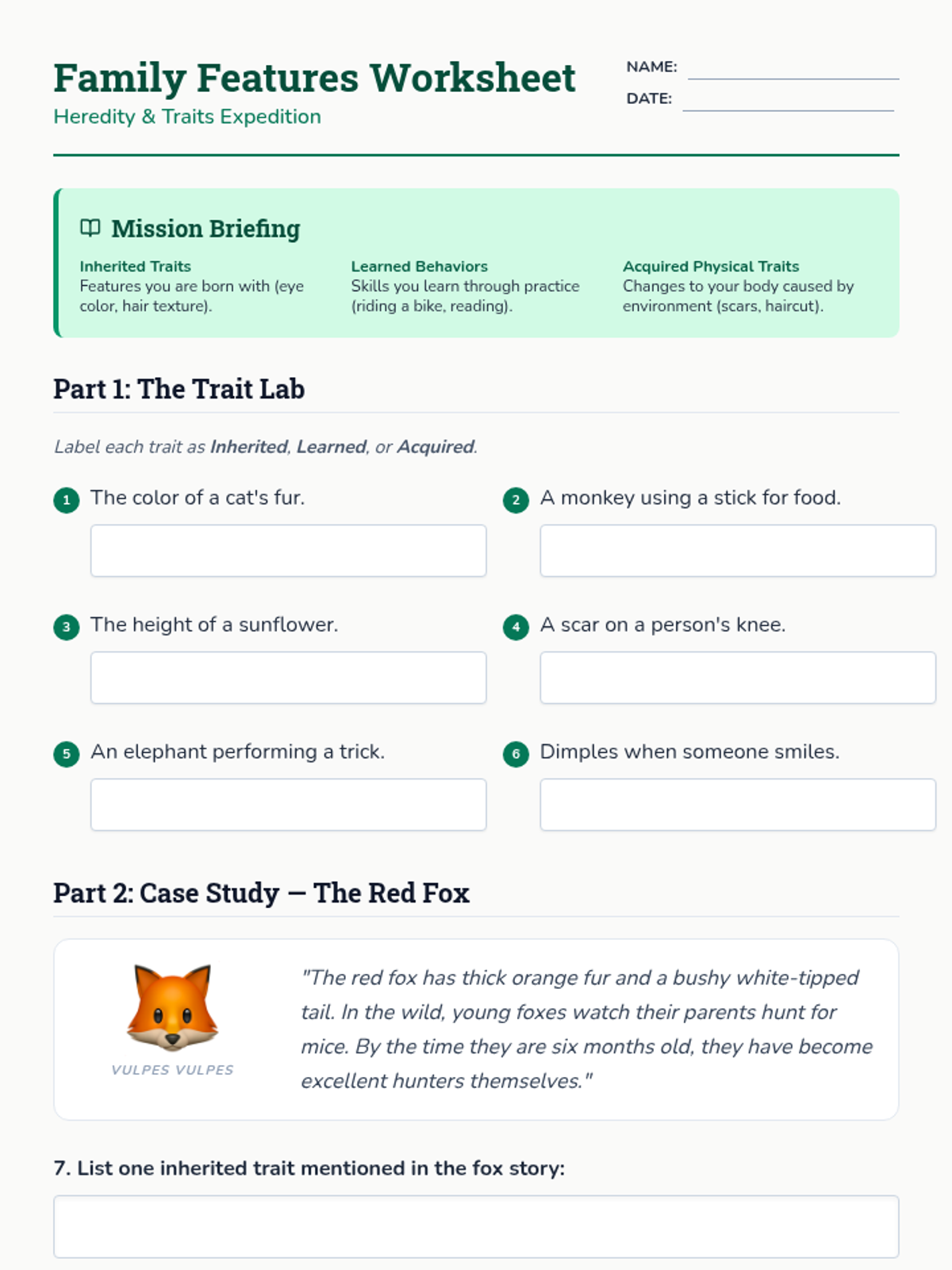
A comprehensive practice worksheet for 4th-grade students to identify and classify inherited traits, learned behaviors, and acquired traits using real-world examples and personal reflection.
A visual presentation exploring inherited traits, learned behaviors, and acquired physical characteristics with clear examples and a quick check activity.
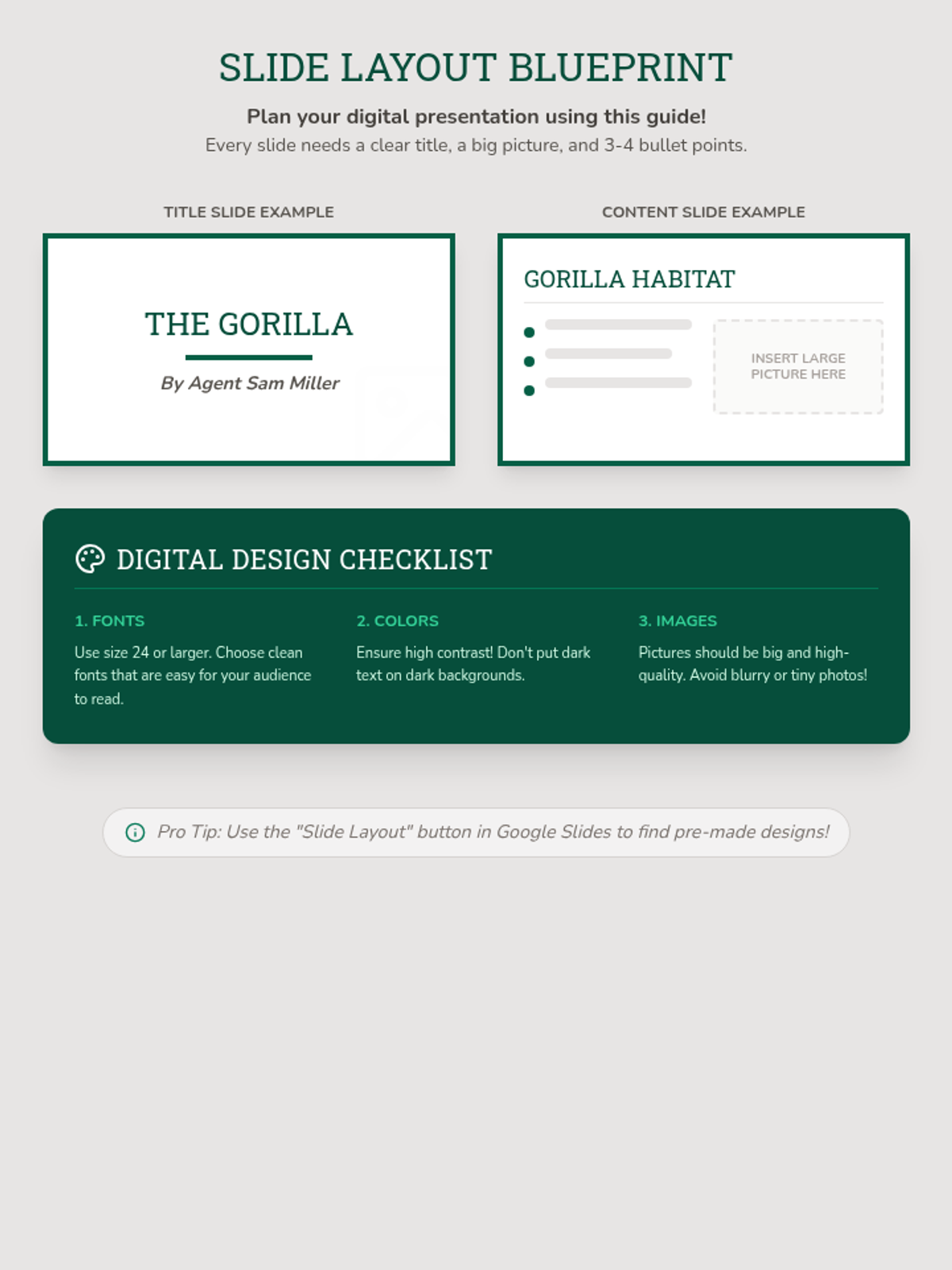
A visual blueprint and design guide for students to help them plan the layout of their digital slide presentation, including examples of title and content slides.
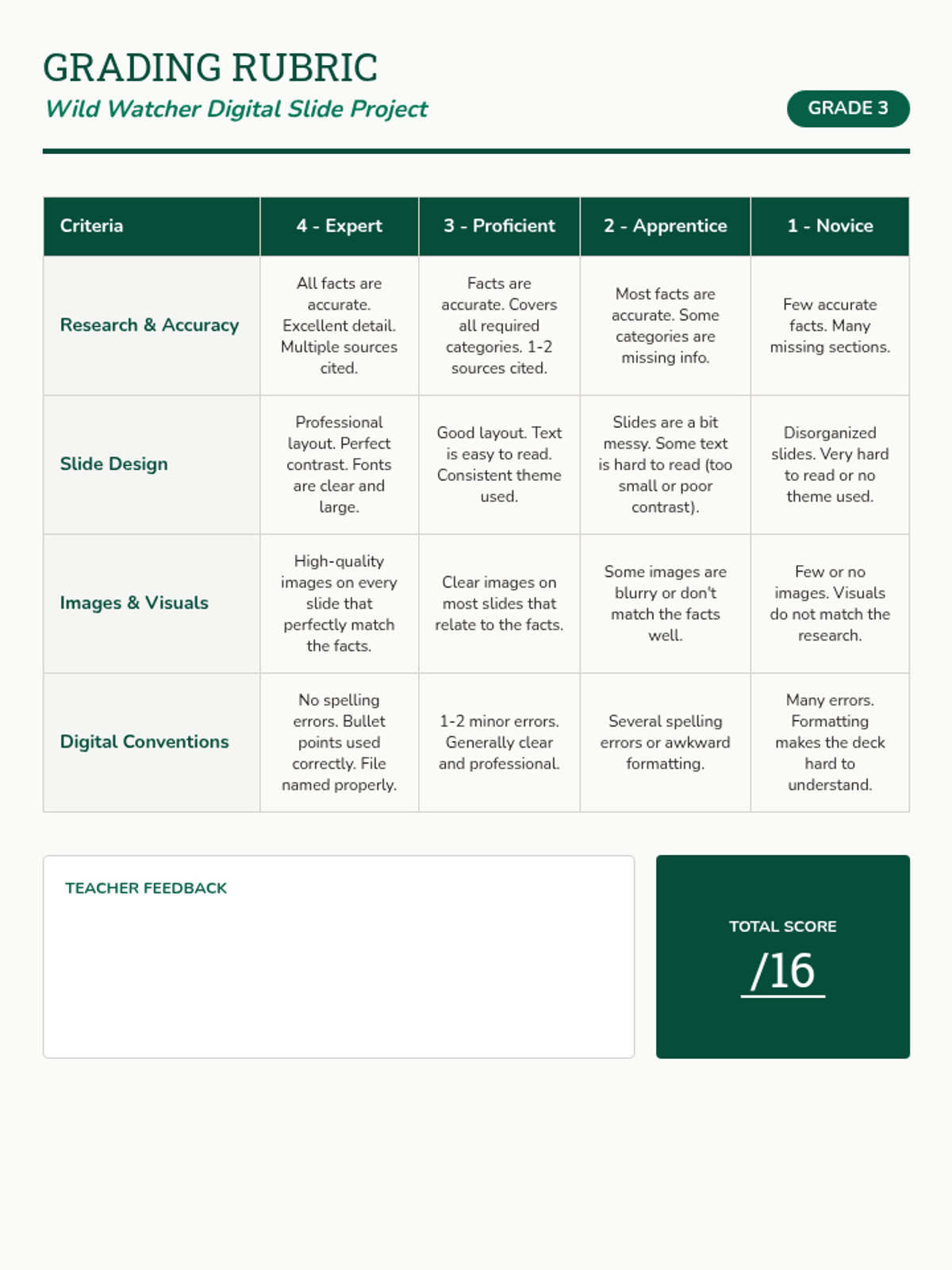
A scoring rubric for the Wild Watcher digital slide project, updated to reflect a 5-slide requirement without source citation criteria.
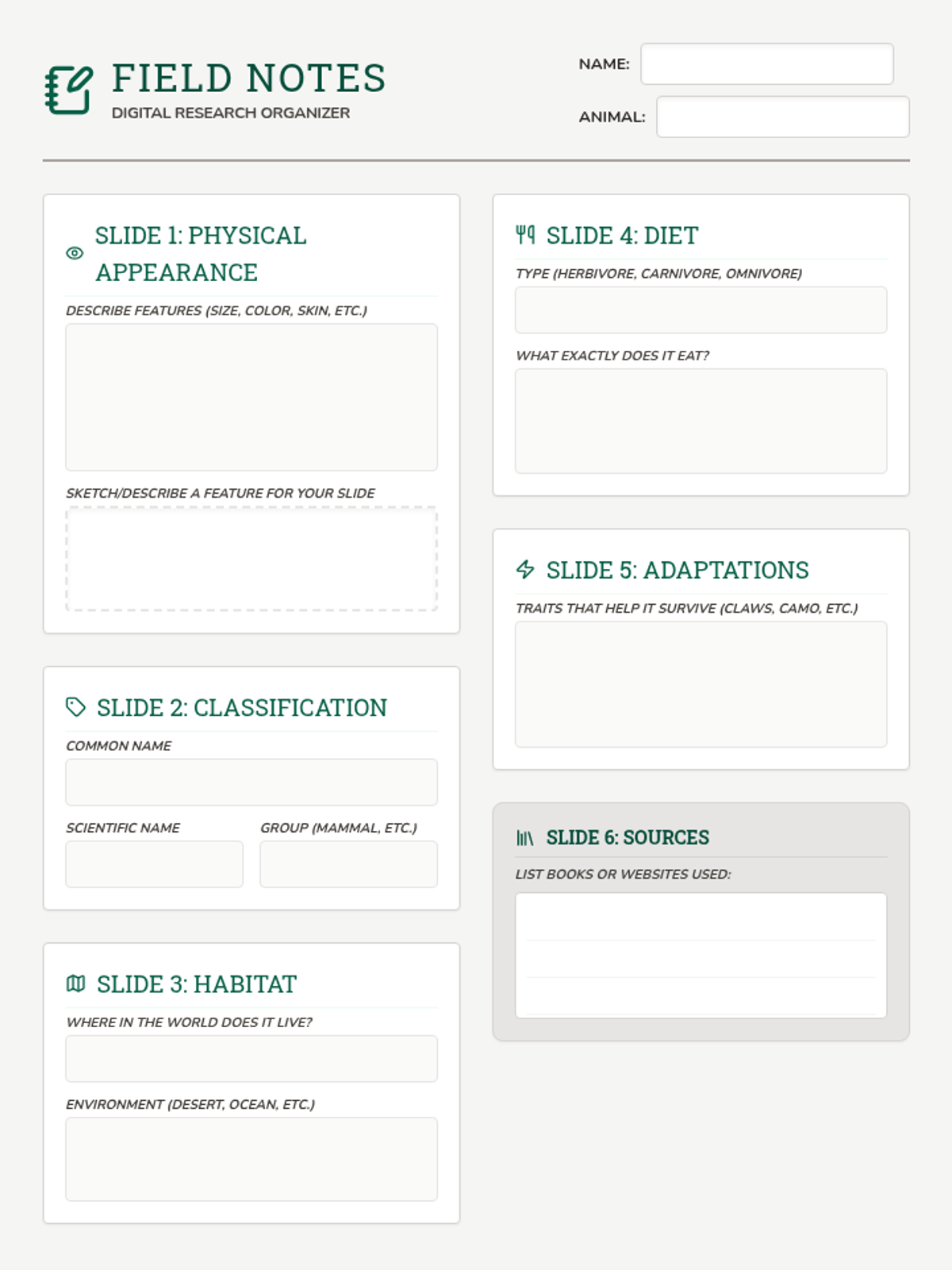
A research graphic organizer titled 'Field Notes' for students, updated to remove sketches, expand writing space, and include explicit instructions for note-taking instead of full sentences.
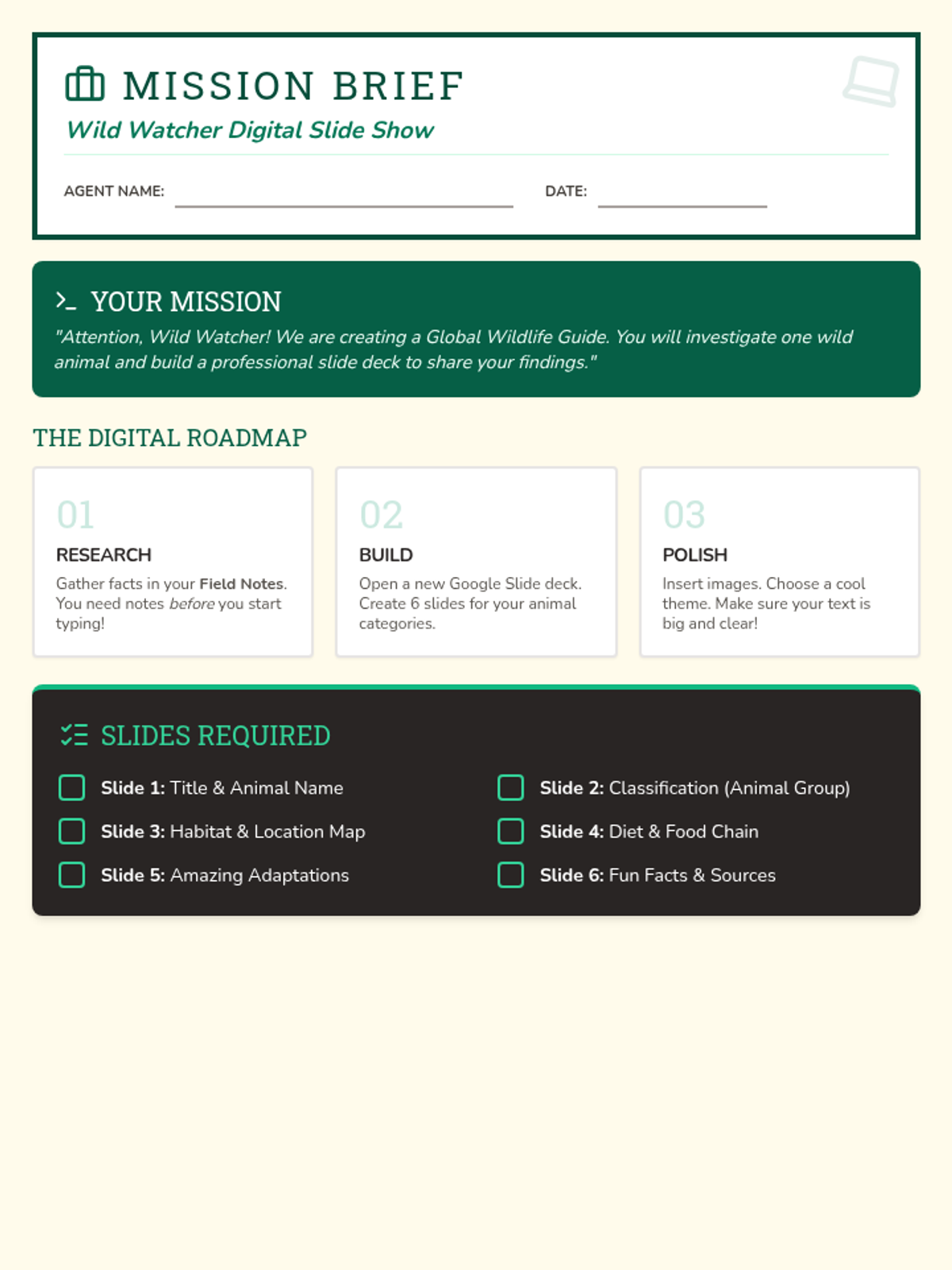
A student-facing instruction sheet for the digital Wild Watcher project, updated to emphasize note-taking over full sentences and a 5-slide requirement.
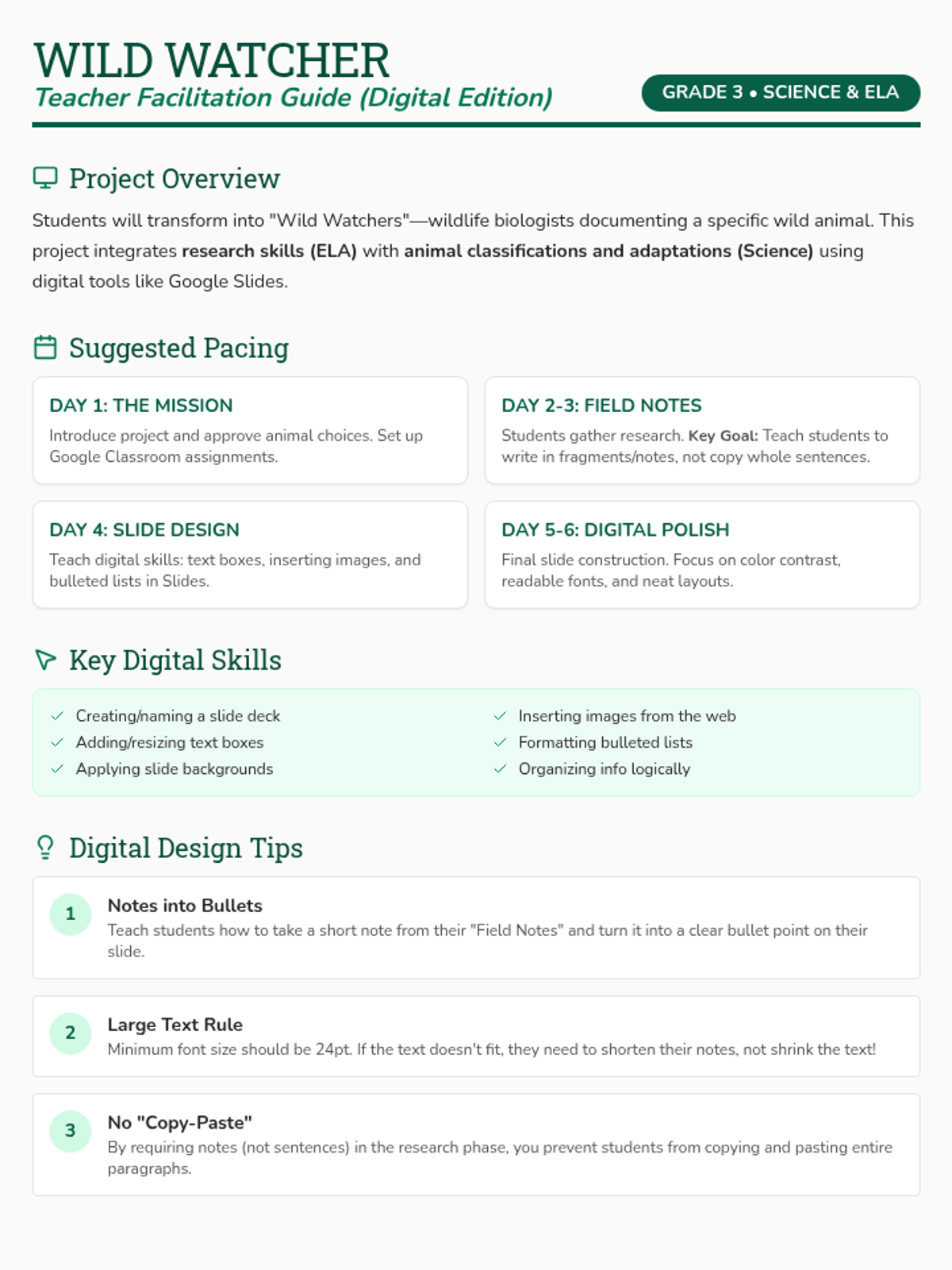
A guide for teachers on how to facilitate the digital Wild Watcher project, updated to emphasize teaching students to take notes instead of copying full sentences.