Teacher facilitation guide for the Number Line Navigator lesson. Includes pacing, key vocabulary definitions, scripting for addressing misconceptions, and differentiation strategies for support and extension.
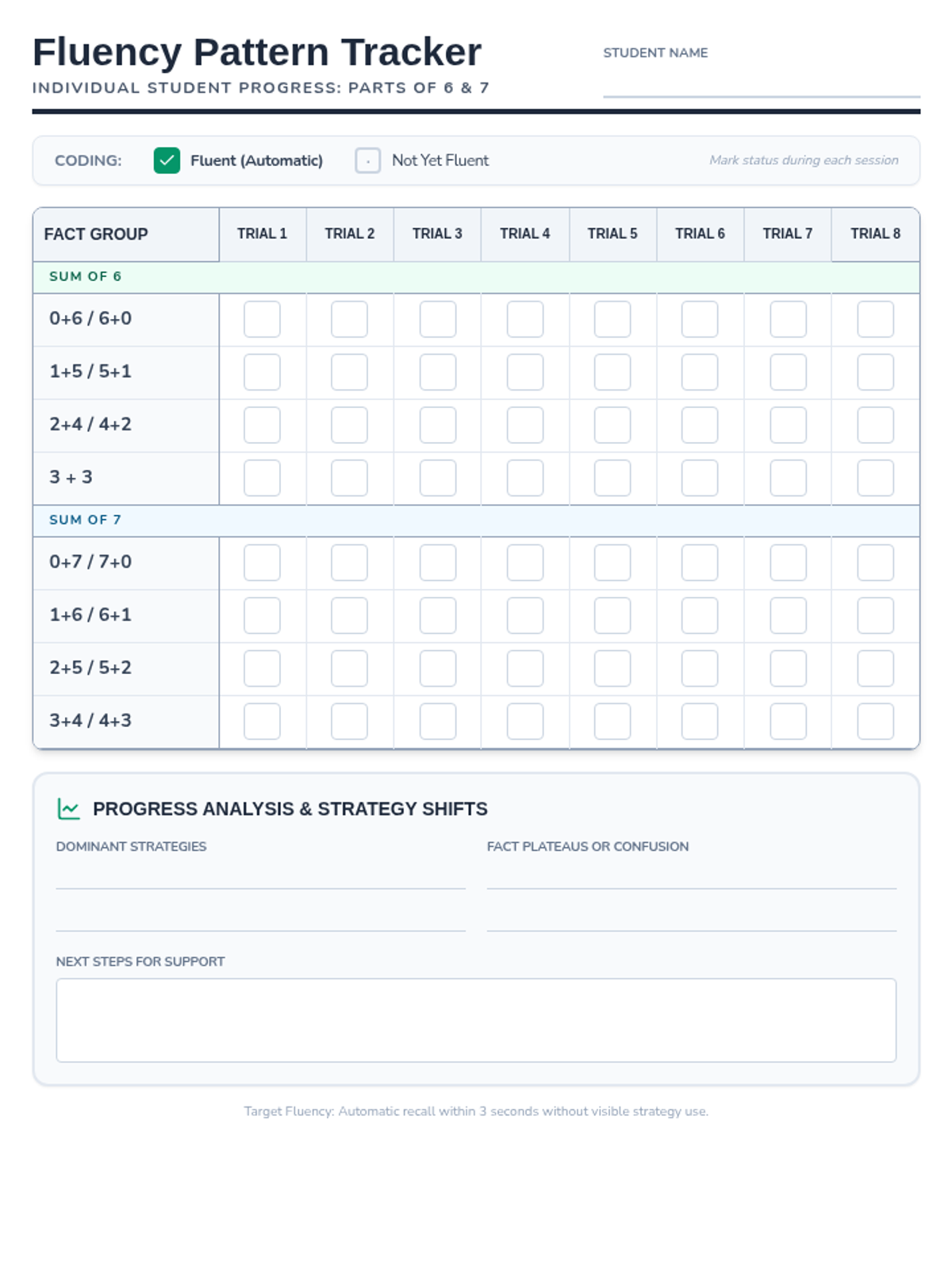
A single-student data tracker for monitoring longitudinal progress in mastering number decompositions for 6 and 7. Allows teachers to track fluency across multiple dates or trials to identify specific patterns and strategy shifts over time.
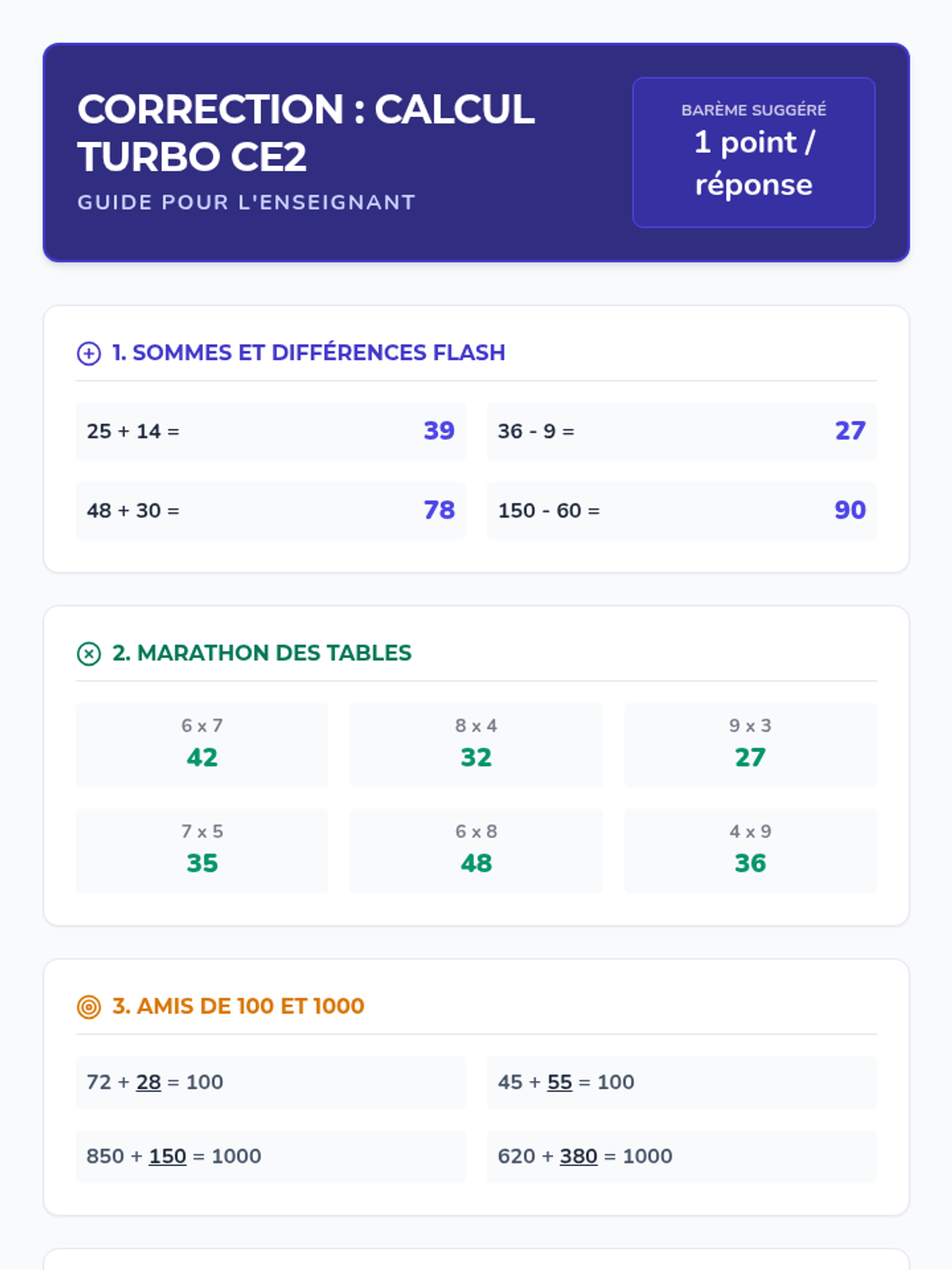
Le corrigé détaillé pour l'enseignant de l'évaluation Calcul Turbo CE2. Comprend les réponses attendues et une suggestion de barème pour une correction rapide et efficace. Comprend également des classes de rupture de page pour une impression optimale.
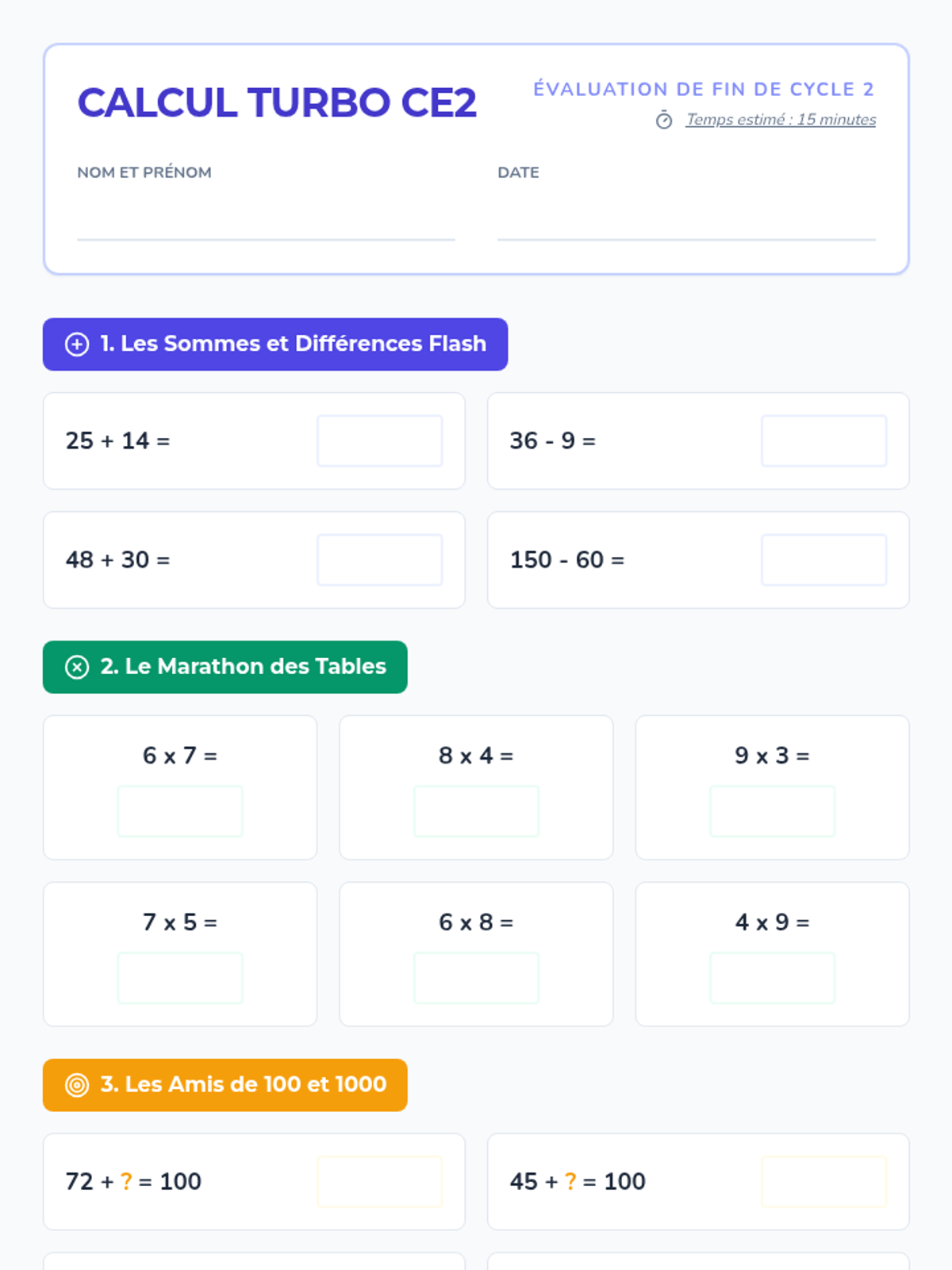
Une évaluation complète de calcul mental pour le niveau CE2 (fin de cycle 2) couvrant les additions, soustractions, tables de multiplication, compléments, doubles/moitiés et multiplications par 10/100. Format quiz rapide avec zones de réponse claires. Mise à jour avec corrections de mise en page.
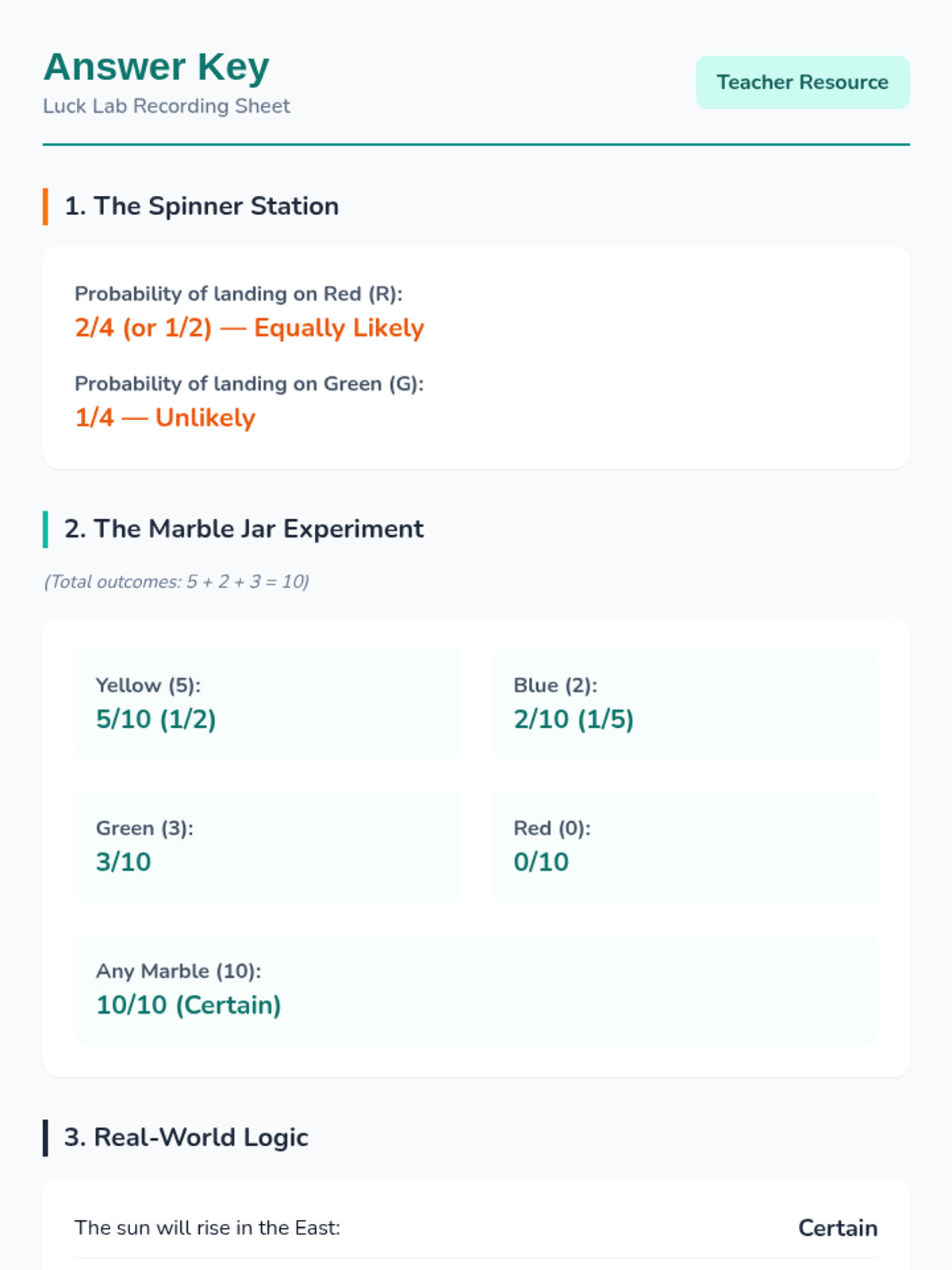
An answer key for the Luck Lab Recording Sheet, providing correct fractional representations and vocabulary descriptors. Corrected scenarios for absolute certainty and added missing data points for full completeness.
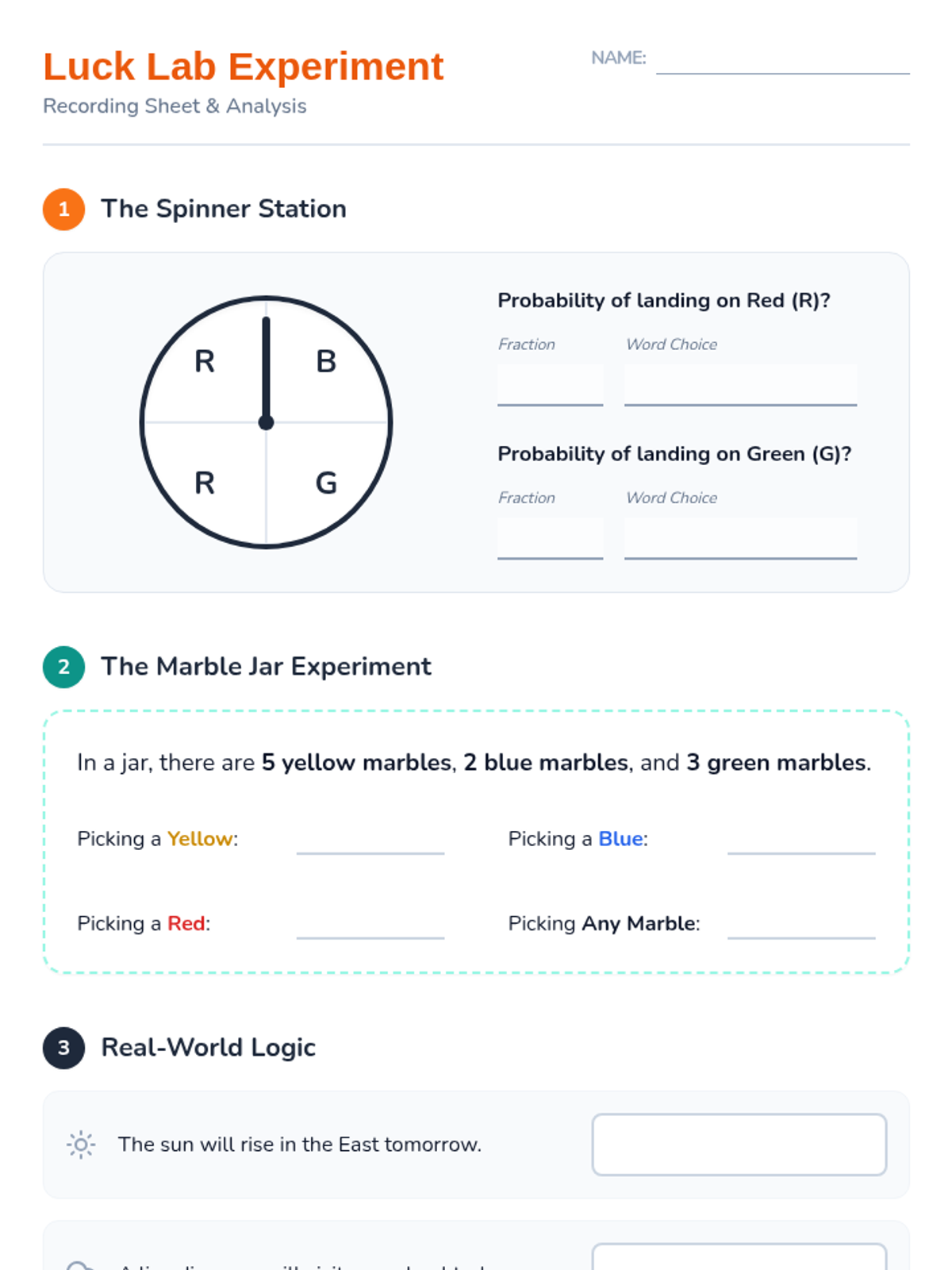
An activity recording sheet for students to practice calculating probability as fractions and describing events. Improved layout with avoided page breaks, larger reflection areas, and clearer response lines without placeholder text. Corrected alignment in Part 2 for perfect consistency.
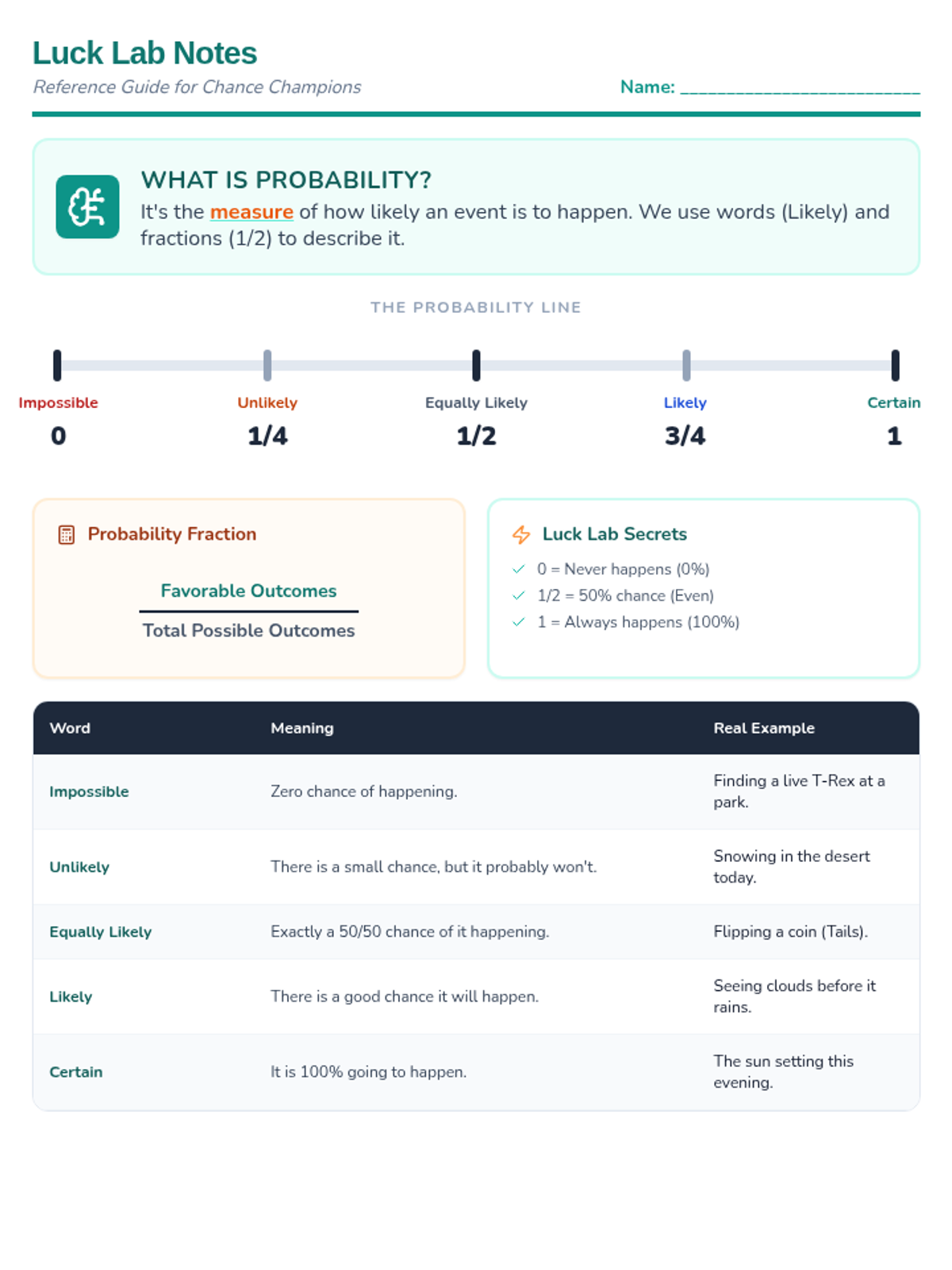
A student-friendly reference sheet for probability, including a visual probability line with benchmarks (1/4, 3/4), the fraction formula, and a vocabulary table. Condensed to a single-page layout for easier reference. High-contrast version with precise visual alignment.
Instructional slides for a 4th-grade probability lesson, featuring 'The Luck Lab' theme. Includes vocabulary definitions, the probability scale (0 to 1), and practice scenarios with fractional representations. Corrected spinner visuals and consistent numerical labeling. High-contrast version with improved visual alignment.
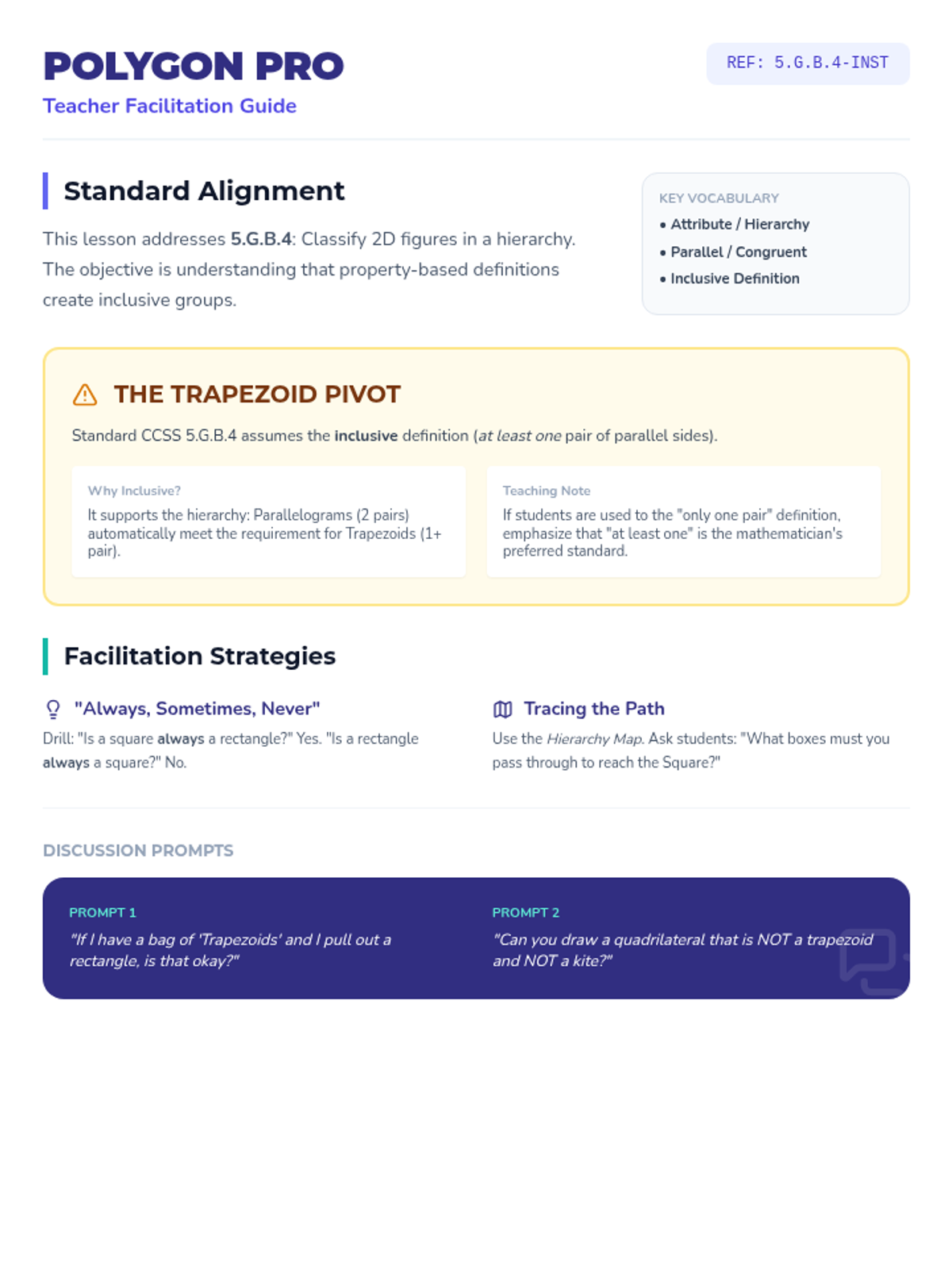
A teacher's guide for facilitating the quadrilateral properties lesson, focusing on instructional strategies, standard alignment, and the inclusive trapezoid definition.
An instructional slide deck that introduces quadrilaterals, focuses on the inclusive definition of trapezoids, and visually explains the shape hierarchy.
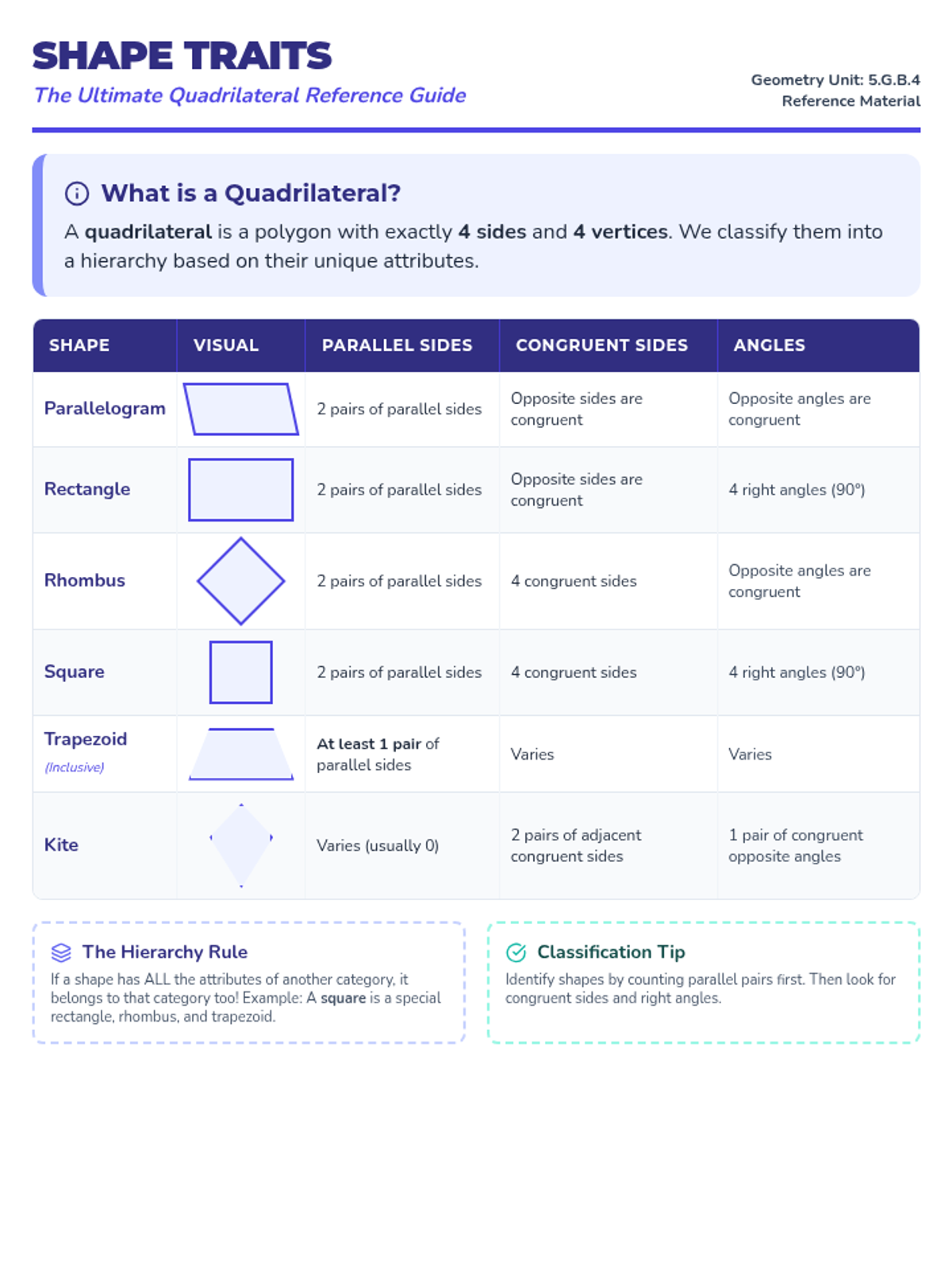
A comprehensive reference chart for 5th-grade students detailing the attributes of various quadrilaterals, including the inclusive definition of trapezoids.
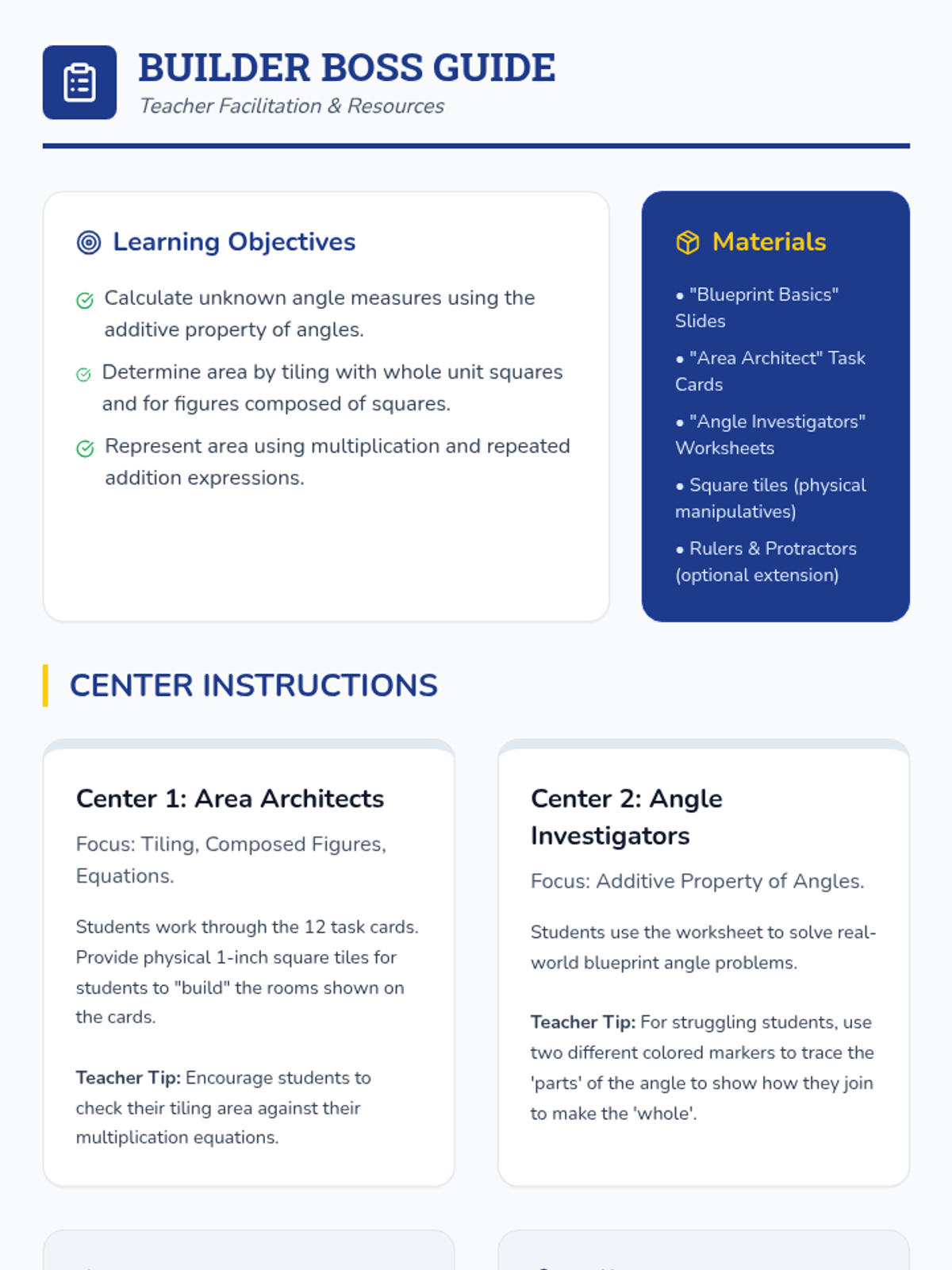
A teacher's facilitation guide for the Blueprint Builders math unit. Includes learning objectives, materials lists, center setup instructions, differentiation strategies, and complete answer keys.
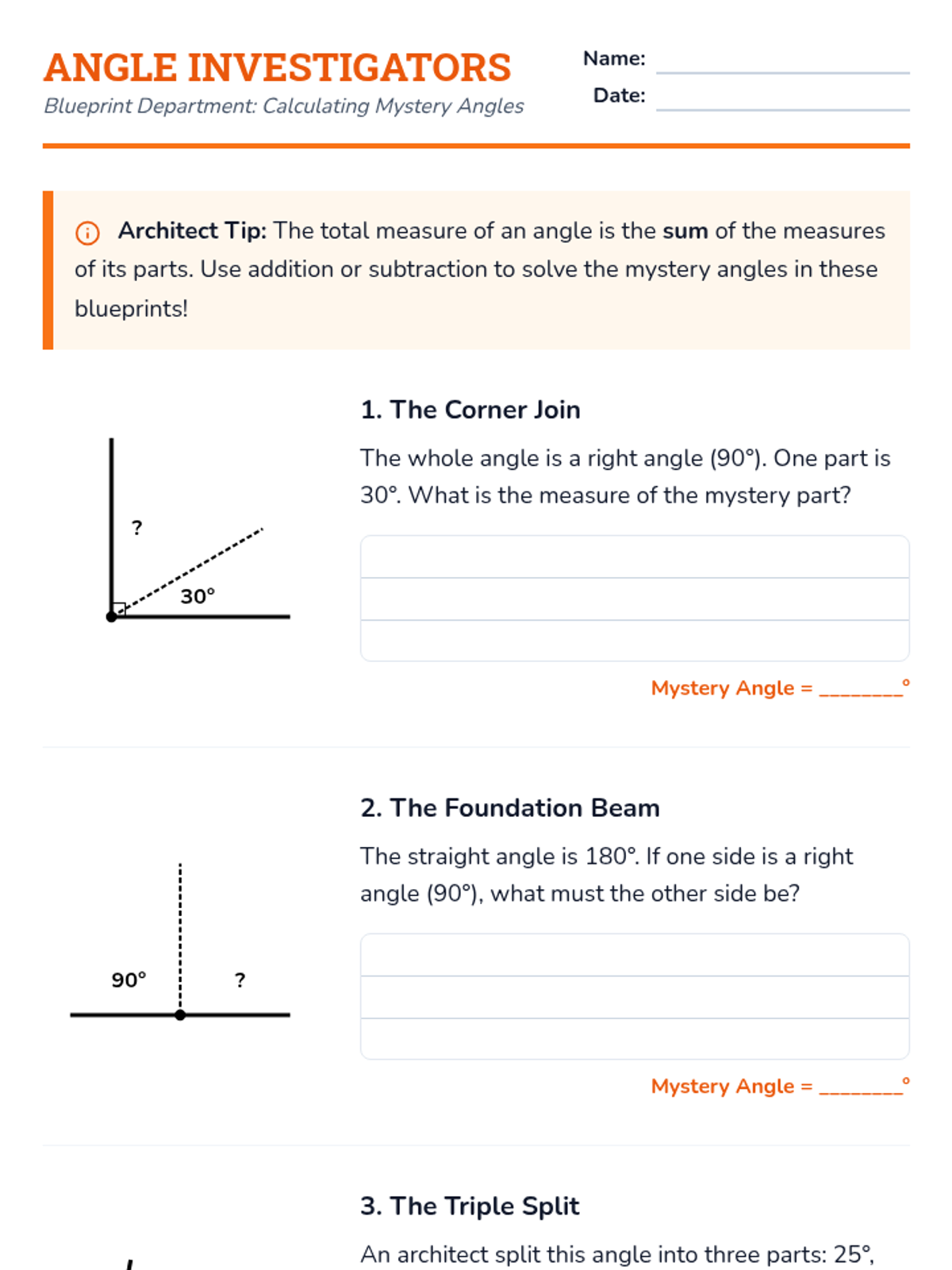
A 3rd-grade math worksheet for investigating unknown angle measures using the additive property. Features visual blueprint-themed problems and "show your work" areas.
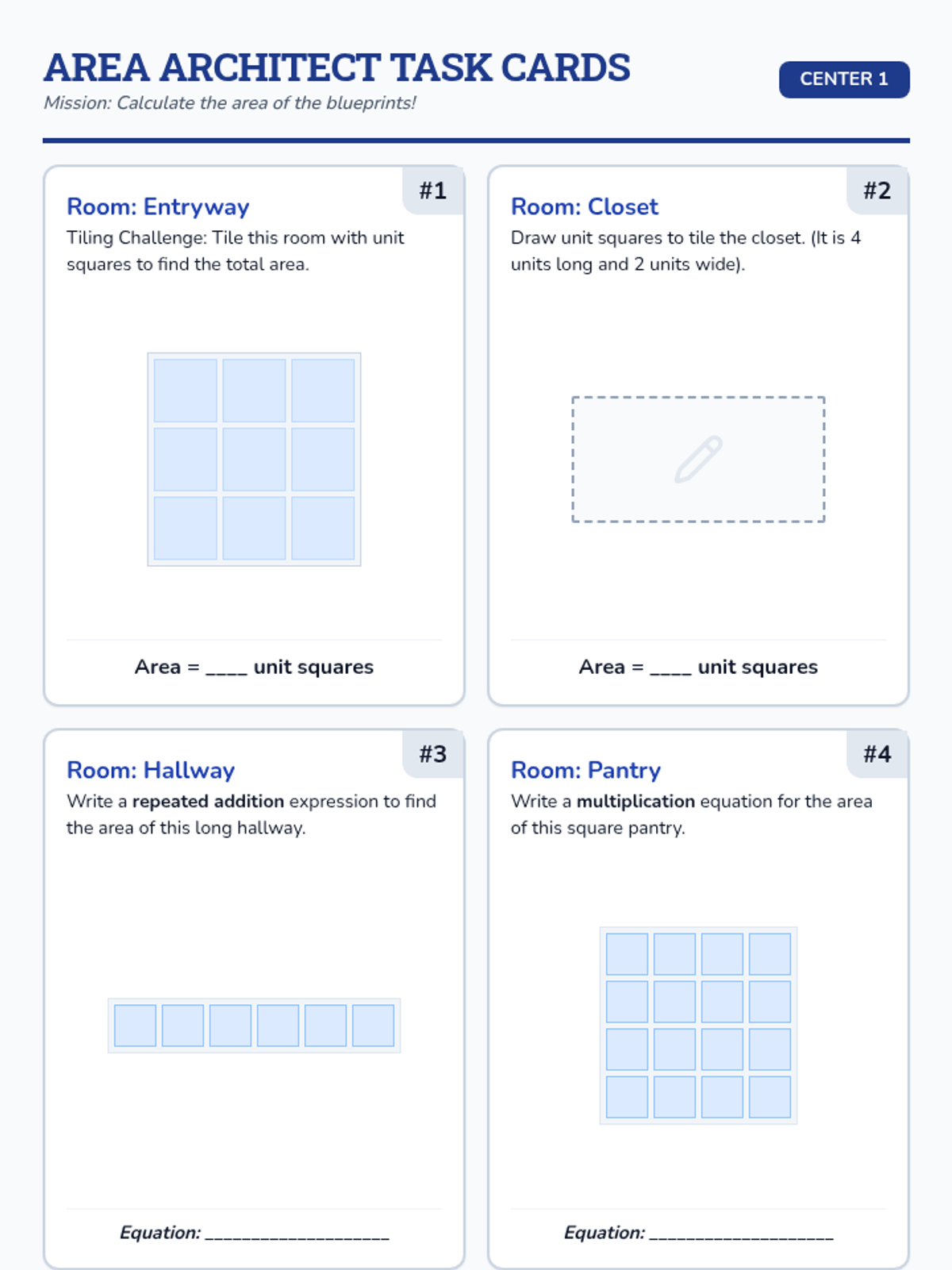
A set of 12 task cards for 3rd-grade math centers focused on determining area. Includes tasks for tiling with unit squares, calculating area of composed figures, and writing multiplication/repeated addition equations.
A visual slide deck introducing 3rd-grade area and angle measurement concepts through a 'Blueprint Builders' construction theme. Includes tiling methods, area equations, composed figures, and the additive property of angles.
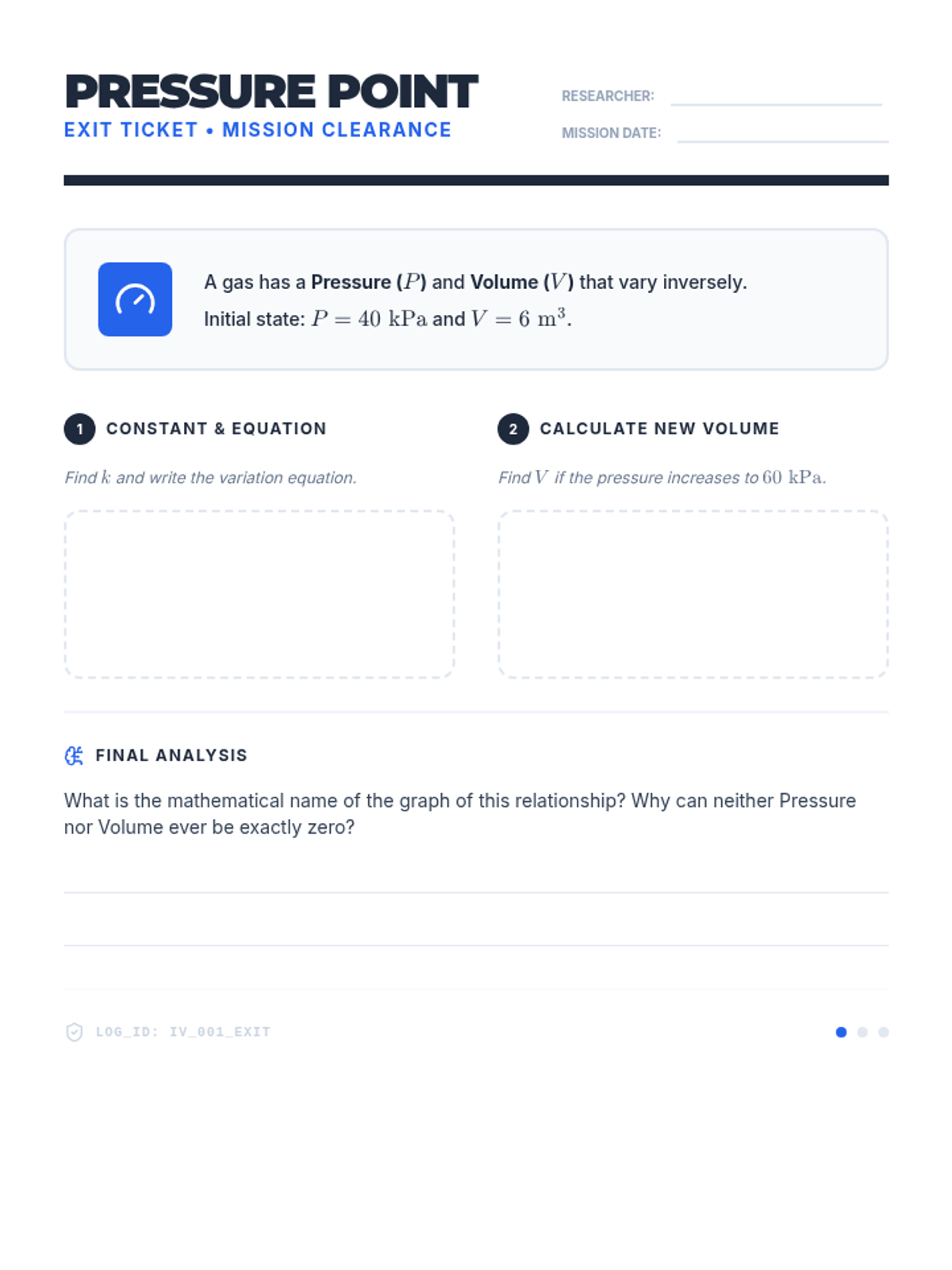
A formal exit ticket for inverse variation. Revised for single-page layout, better math rendering, and balanced work areas.
A sleek, high-contrast slide deck for inverse variation. Revised to fix math rendering, adjust viewport overflow, and correct the hyperbola graphic.
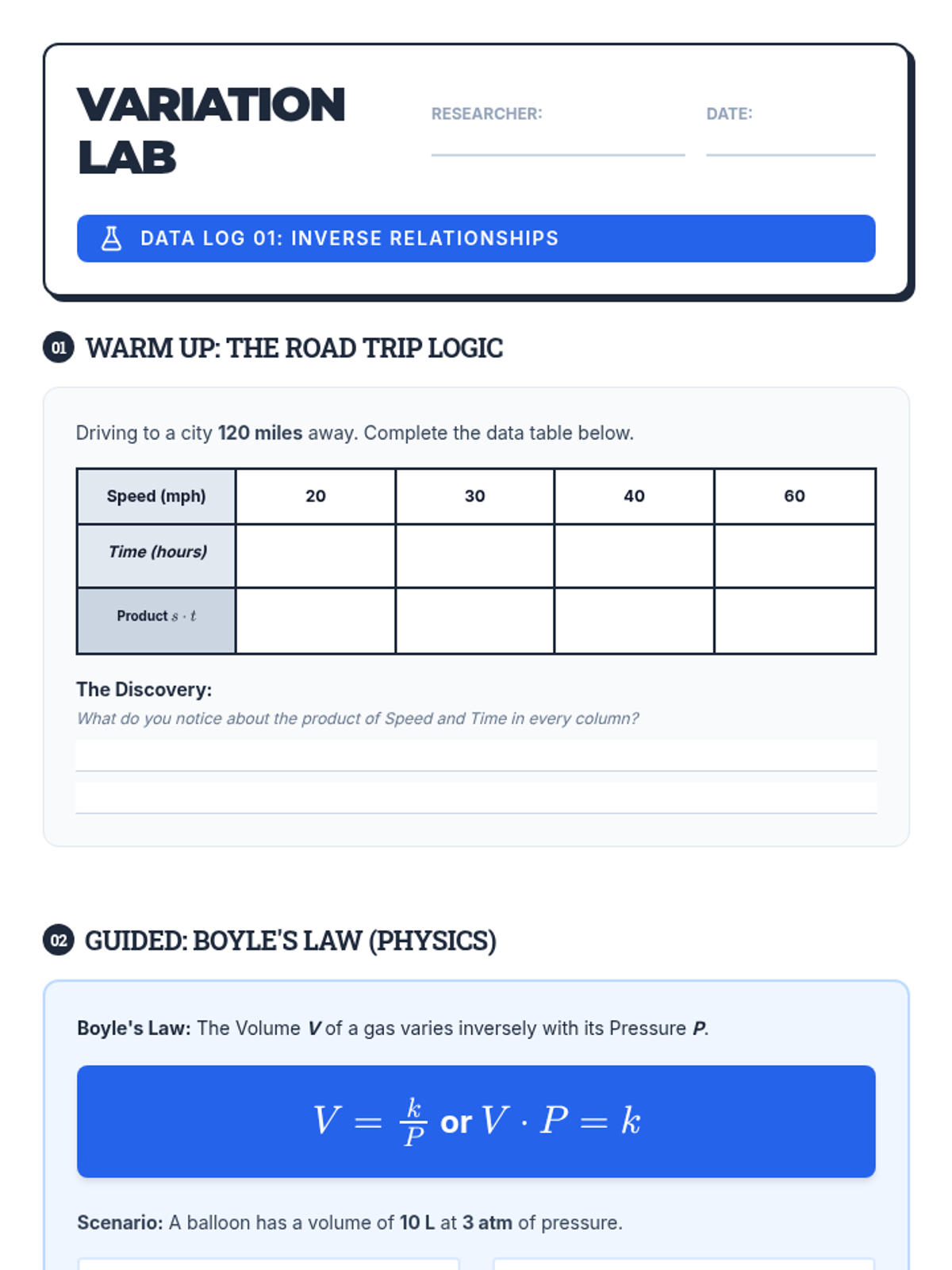
A student-facing handout containing the Warm Up, Guided Instruction, and Independent Practice for inverse variation. Revised for better page breaks, increased contrast, and added pedagogical scaffolding. Fixed math rendering and work areas.
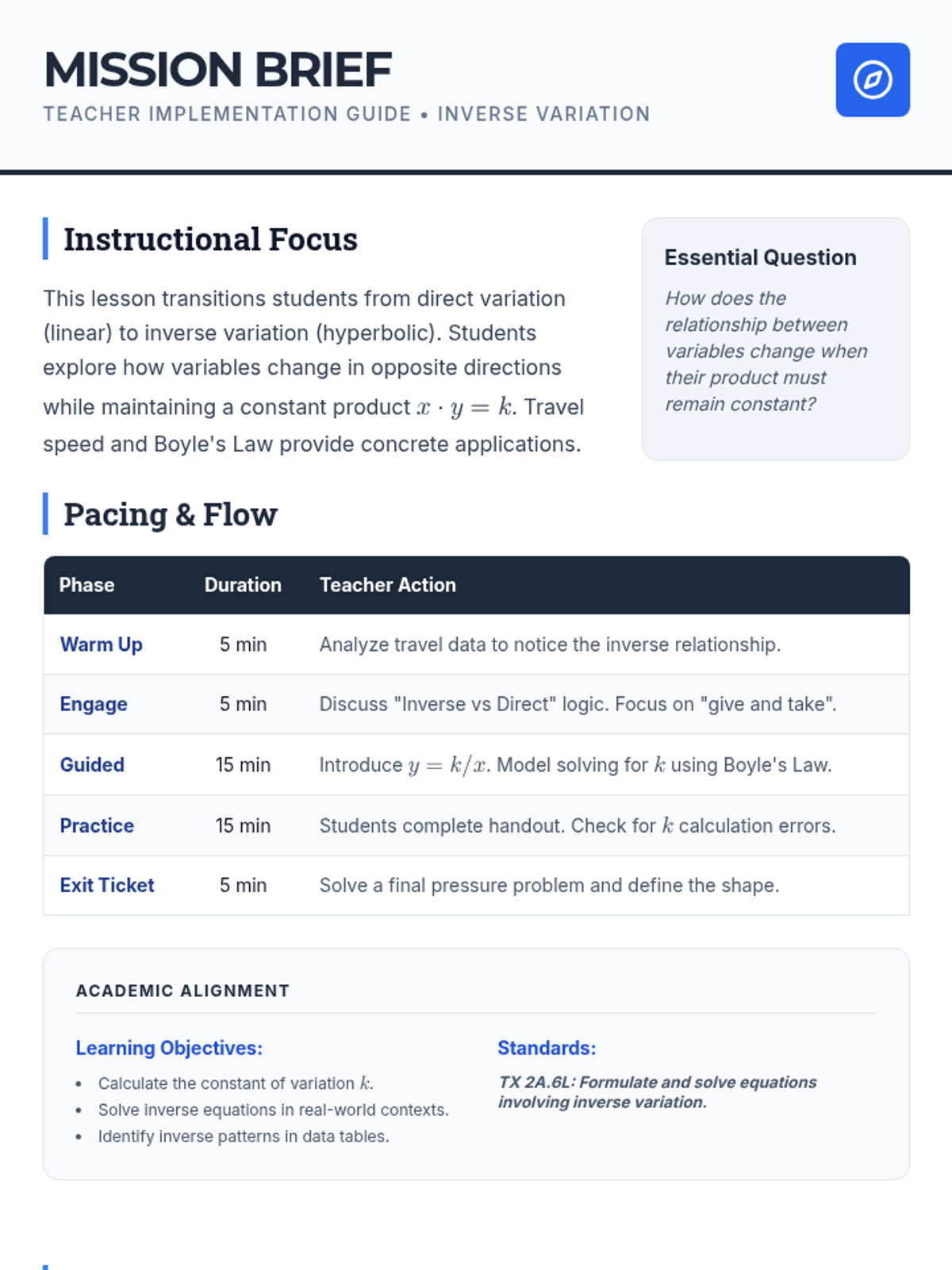
A comprehensive teacher implementation guide for the Inverse Investigators lesson, including pacing, standards alignment, answer keys, and pedagogical tips. Revised for better page breaks and math rendering.
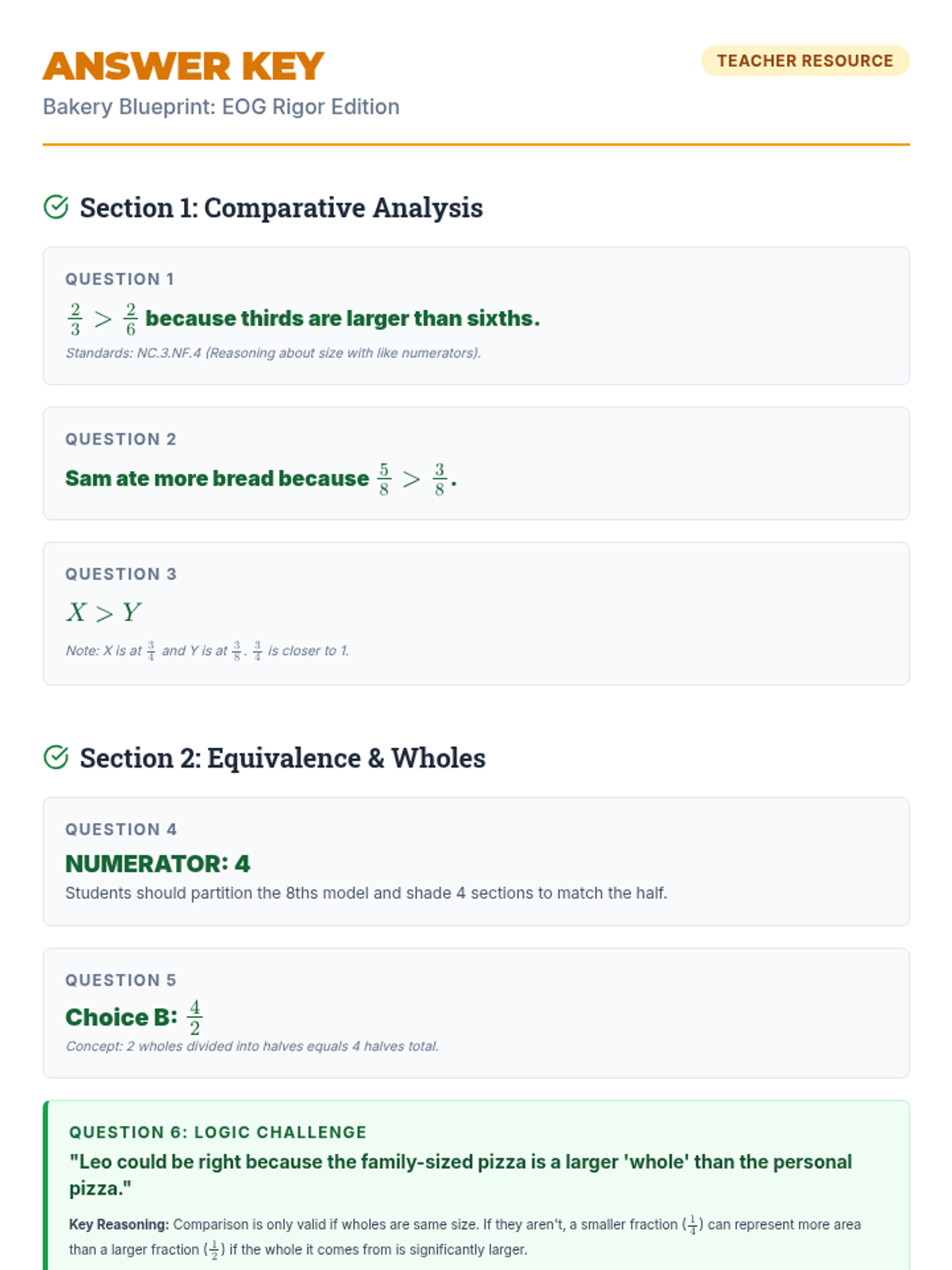
An answer key for the EOG-rigorous Bakery Blueprint Worksheet, providing correct answers for the comparison, equivalence, and whole number questions.
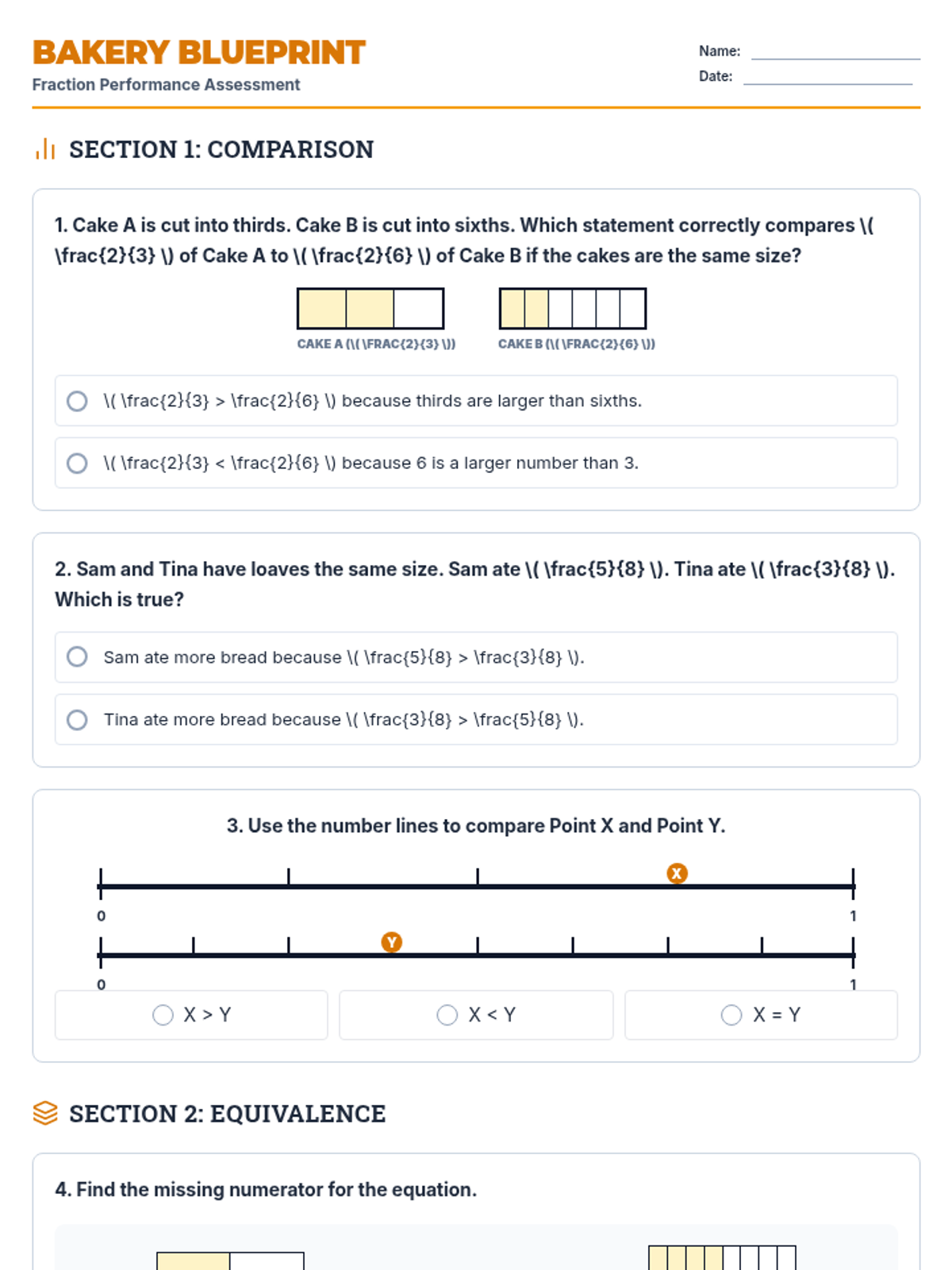
An EOG-rigorous bakery-themed worksheet featuring multiple-choice and work-out questions on fraction comparison using symbols, equivalence, and whole number representation. Optimized for 2-page printing.
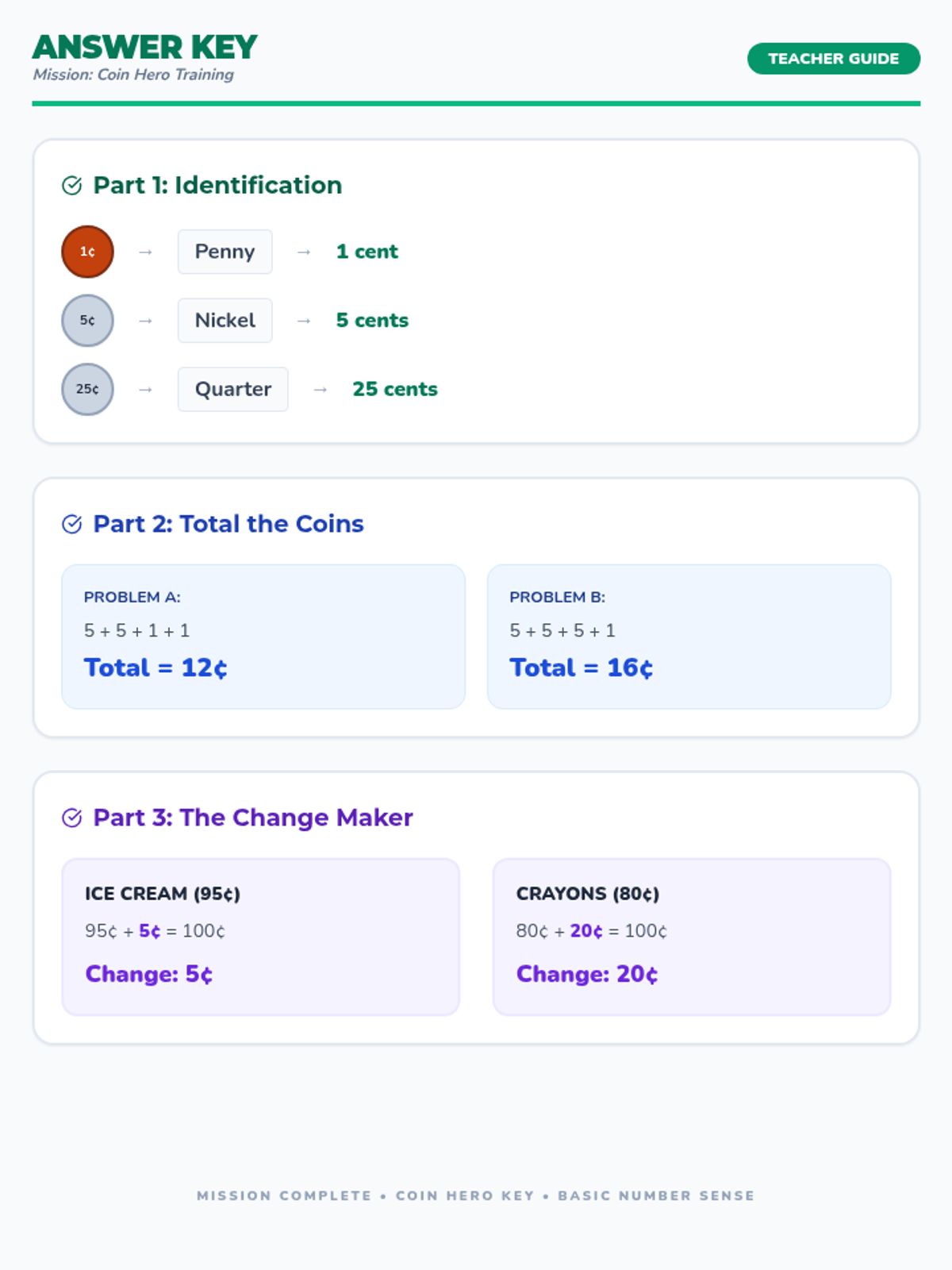
A clear answer key for the Coin Hero Mission practice worksheet. Provides step-by-step counting breakdowns and final answers for identification, total counting, and making change sections.
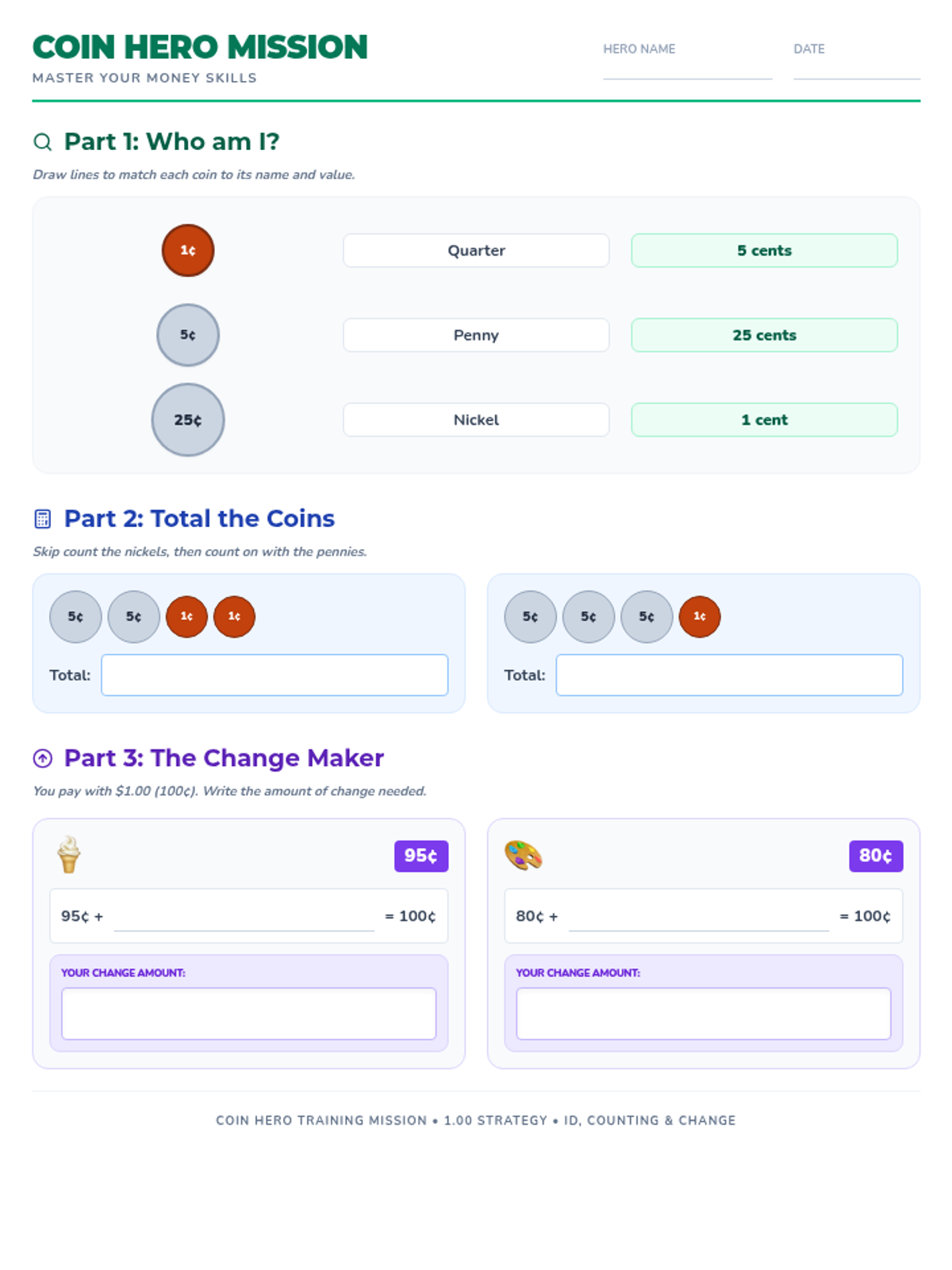
A skill-building worksheet for students to practice coin identification, skip counting with nickels and pennies, and calculating change from a dollar using the 'Counting Up' strategy. Includes visual coin representations and clear work areas.
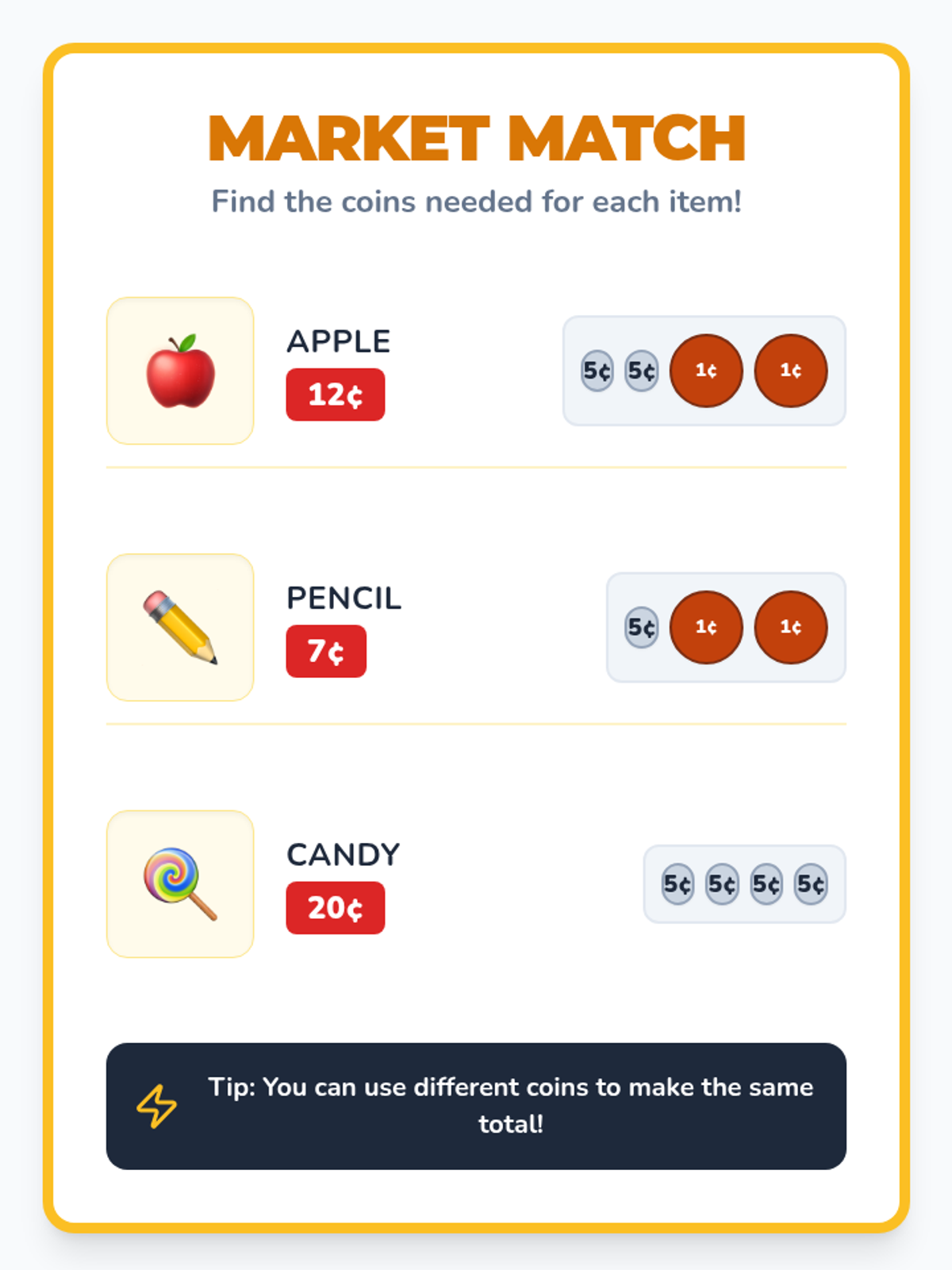
Two large visual anchor charts for classroom display. The first chart, 'Market Match', shows real-world items with price tags and the exact coin combinations needed. The second chart, 'The Change Maker', illustrates the 'Counting Up' strategy for finding change from one dollar using a visual number line and clear steps.
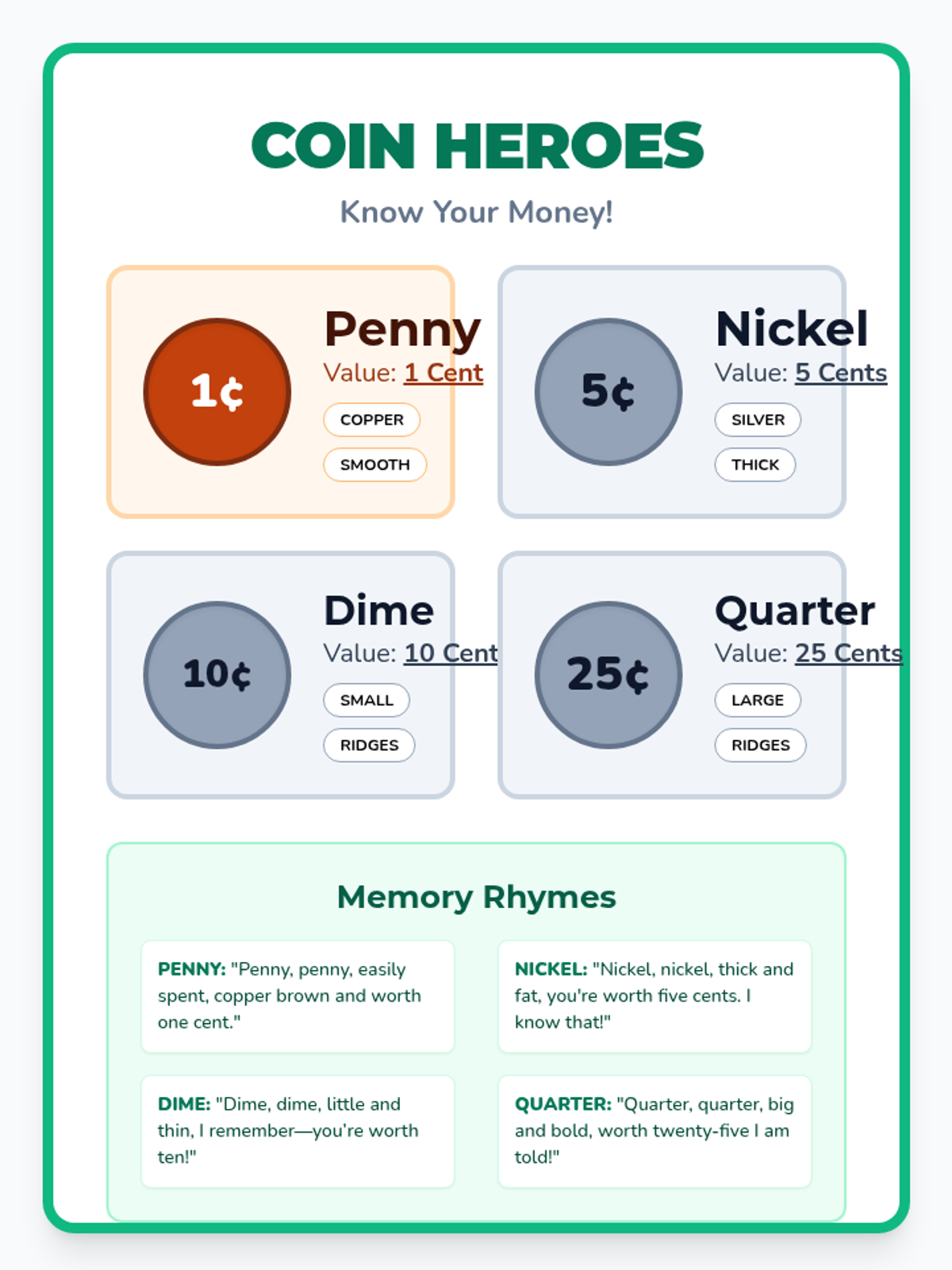
A set of two large visual anchor charts for classroom display. The first chart focuses on identifying coins (Penny, Nickel, Dime, Quarter) with names, values, and memory rhymes. The second chart provides a visual step-by-step guide for skip counting nickels and pennies to find a total value.
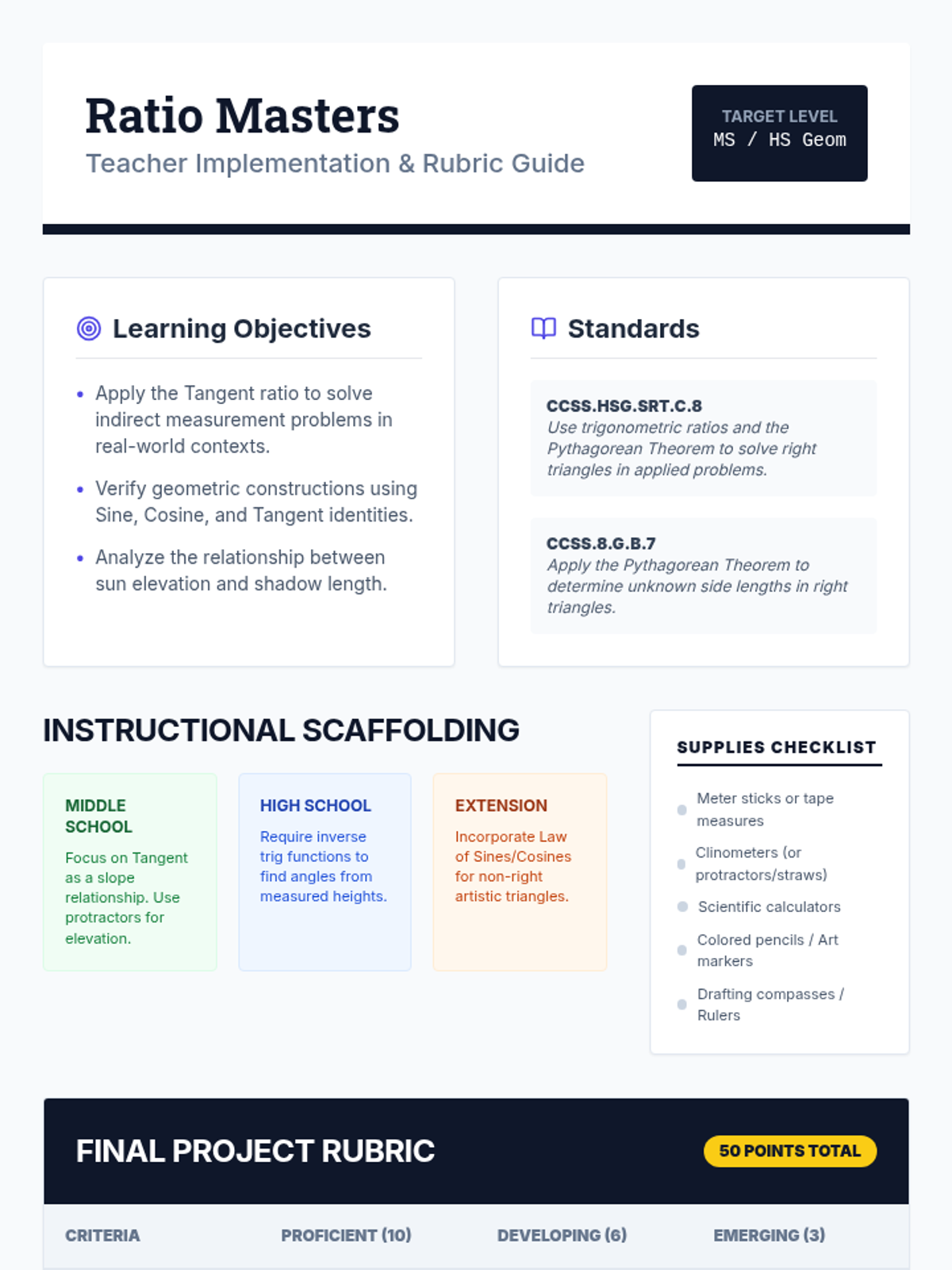
A teacher guide containing learning objectives, standards alignment, differentiation strategies for middle and high school, and a comprehensive grading rubric.
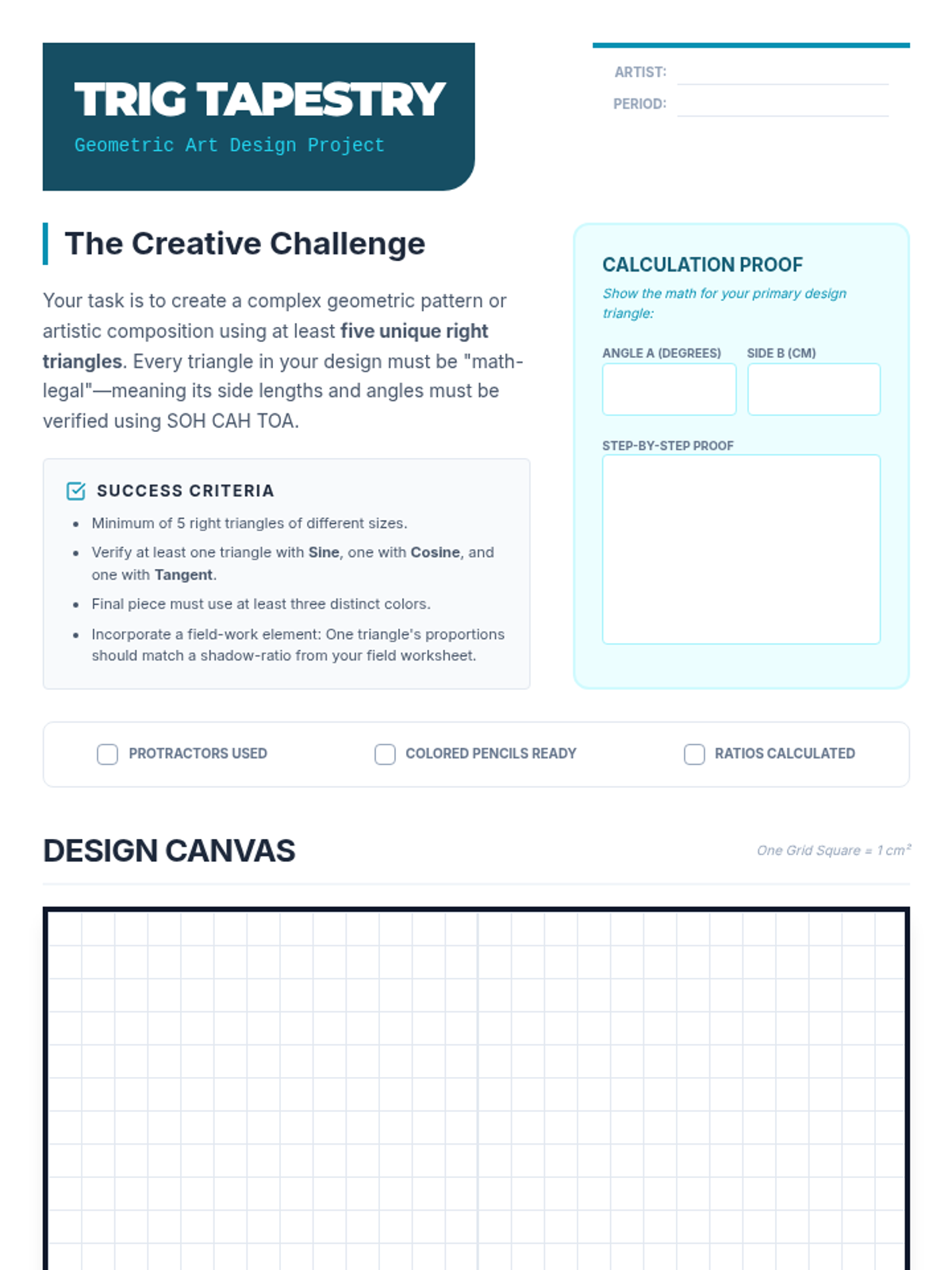
A project guide for the geometric art portion of the lesson. Students design a pattern using right triangles and prove their proportions using trigonometric ratios.
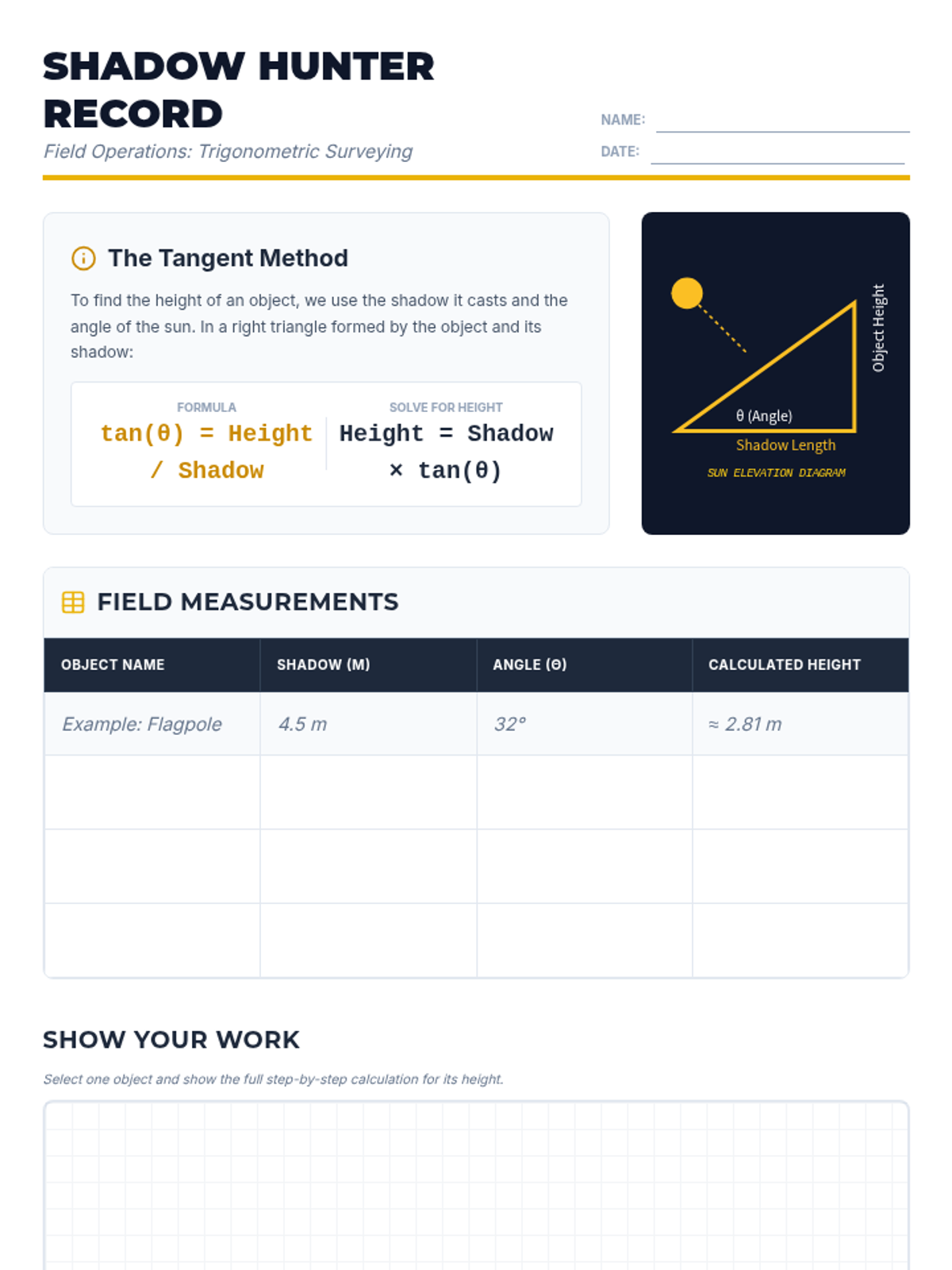
A field data collection sheet for students to record shadow lengths and calculate object heights using the tangent ratio. Includes space for work and reflection questions.
An introductory slide deck for the Shadows and Shapes project, covering trigonometric ratios, the two main project components (Shadow Hunters and Trig Tapestry), and the project timeline.
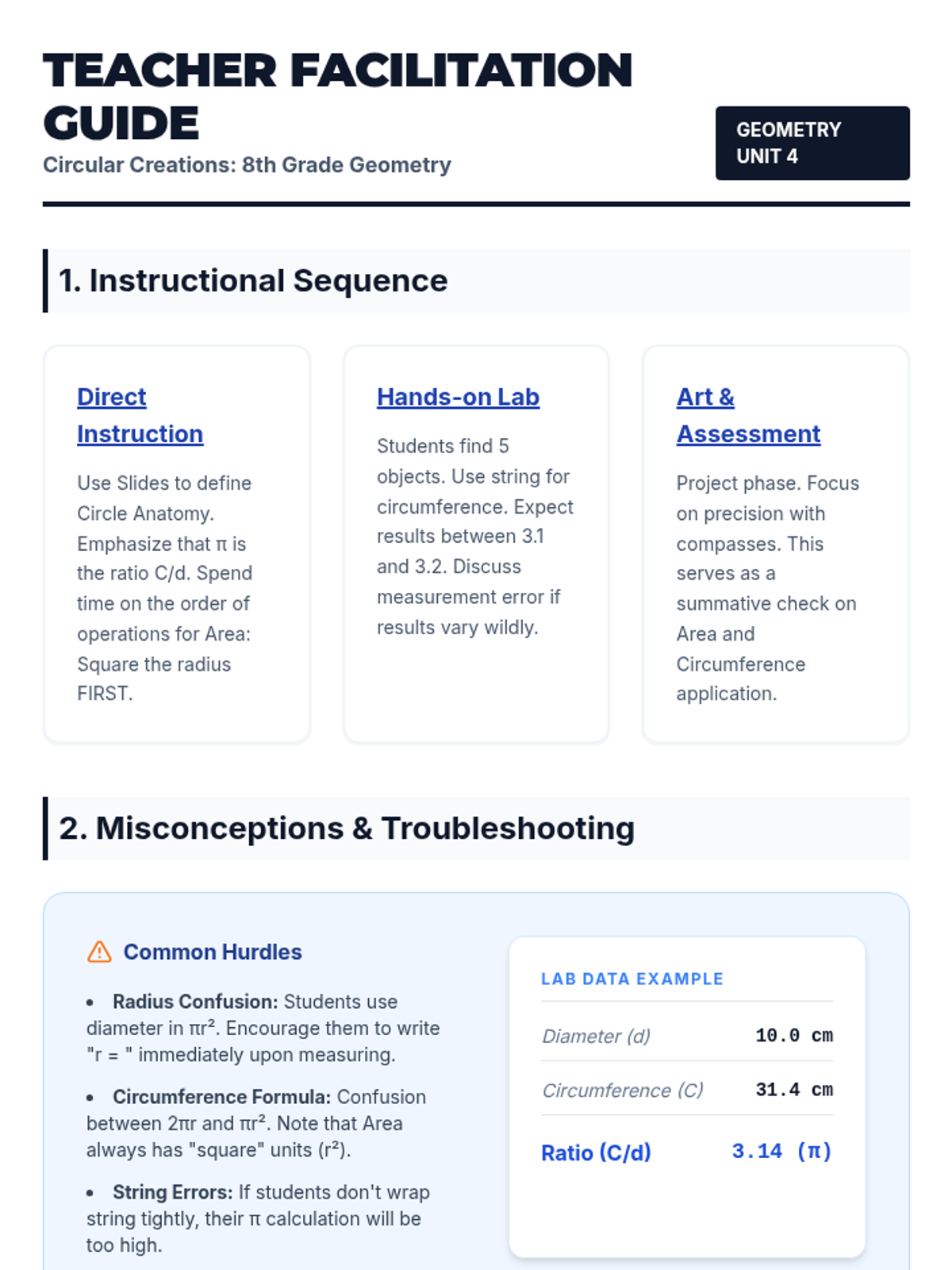
A facilitator guide for teachers including lesson pacing, common student misconceptions regarding circle formulas, a sample lab calculation, and a grading rubric for the art project.
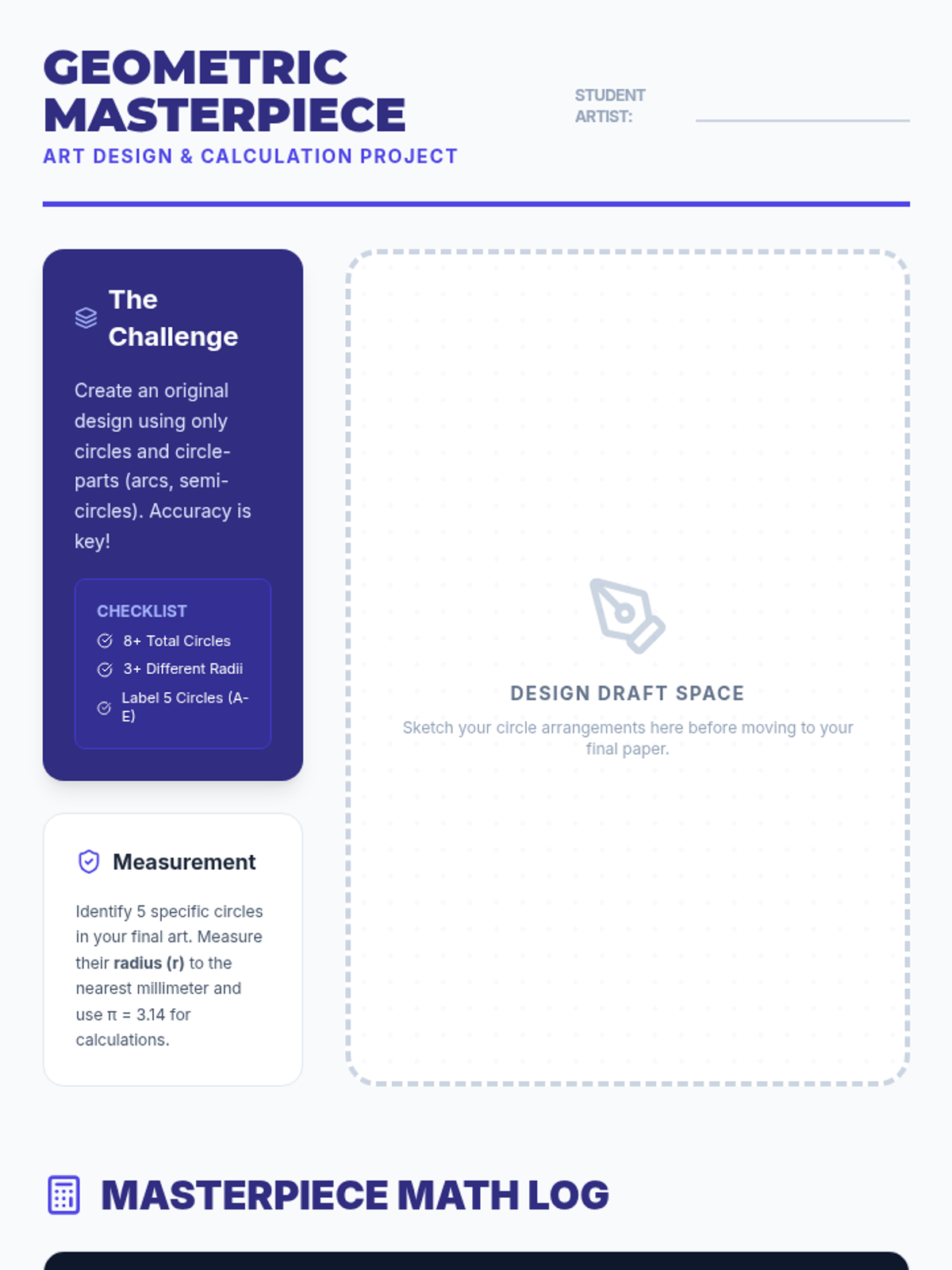
A creative project guide that tasks students with designing geometric art using circles, requiring them to measure radii and calculate circumference/area for various elements of their design.
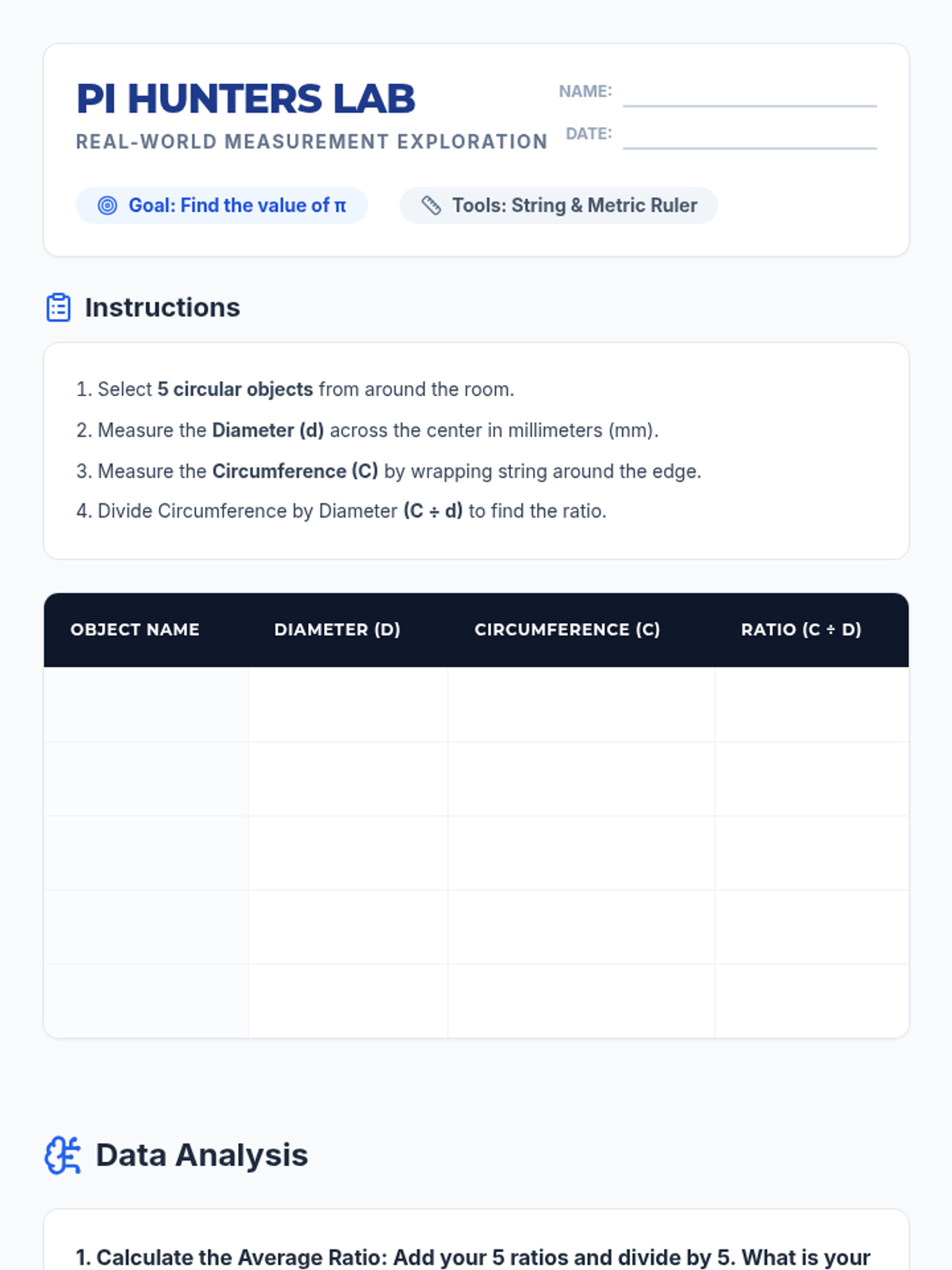
A measurement lab worksheet for students to record data from real-world circular objects, calculating the ratio of circumference to diameter to discover pi and practicing area/circumference predictions.
Visual slide deck for Grade 8 Geometry covering circle vocabulary, the relationship between circumference and diameter (pi), area formulas, and instructions for the Pi Hunters Lab and Geometric Masterpiece project.