A teacher's guide for facilitating the quadrilateral properties lesson, focusing on instructional strategies, standard alignment, and the inclusive trapezoid definition.
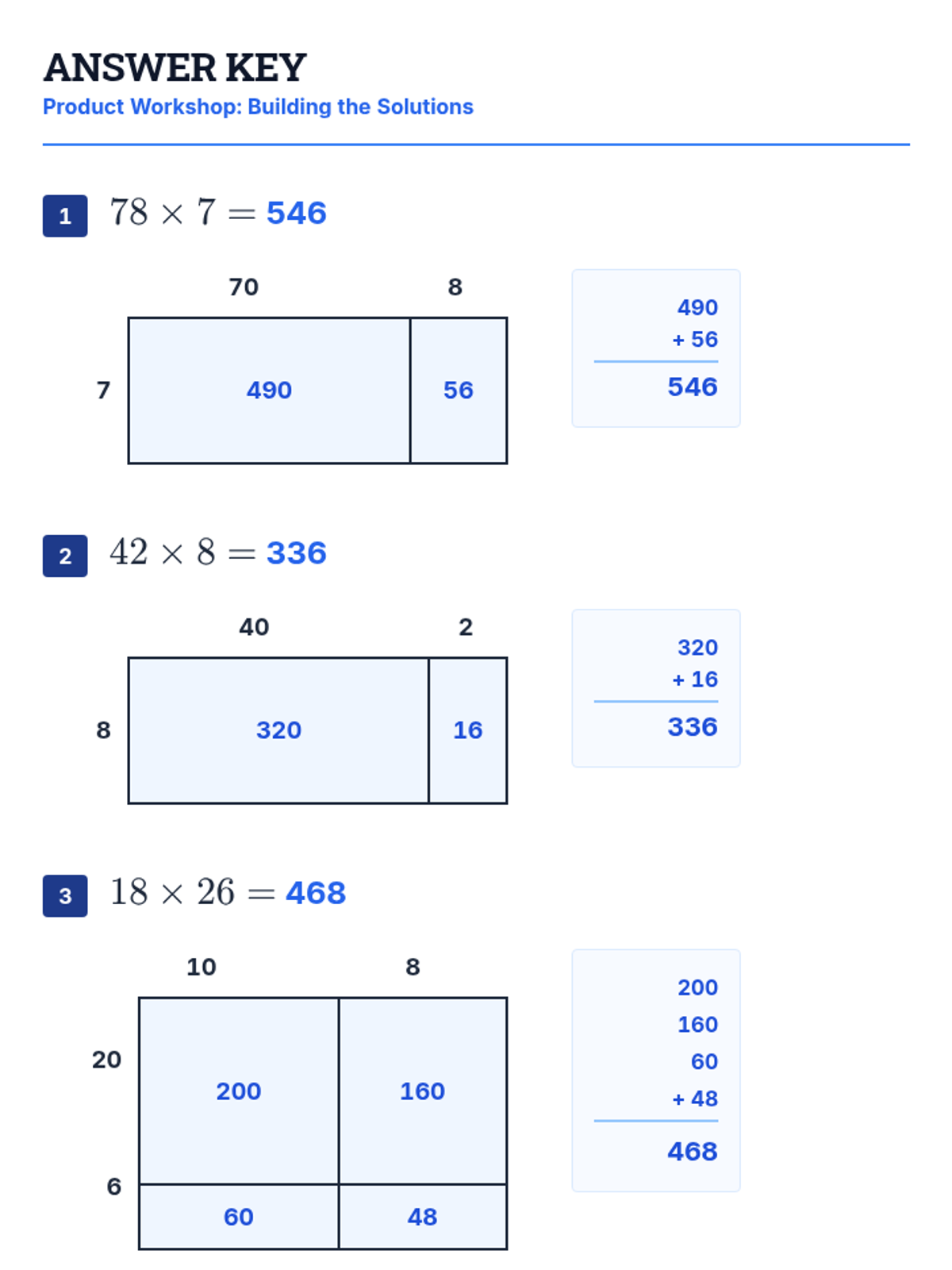
Complete answer key for the Product Workshop Worksheet, showing detailed area model solutions with proportional scaling and partial product sums.
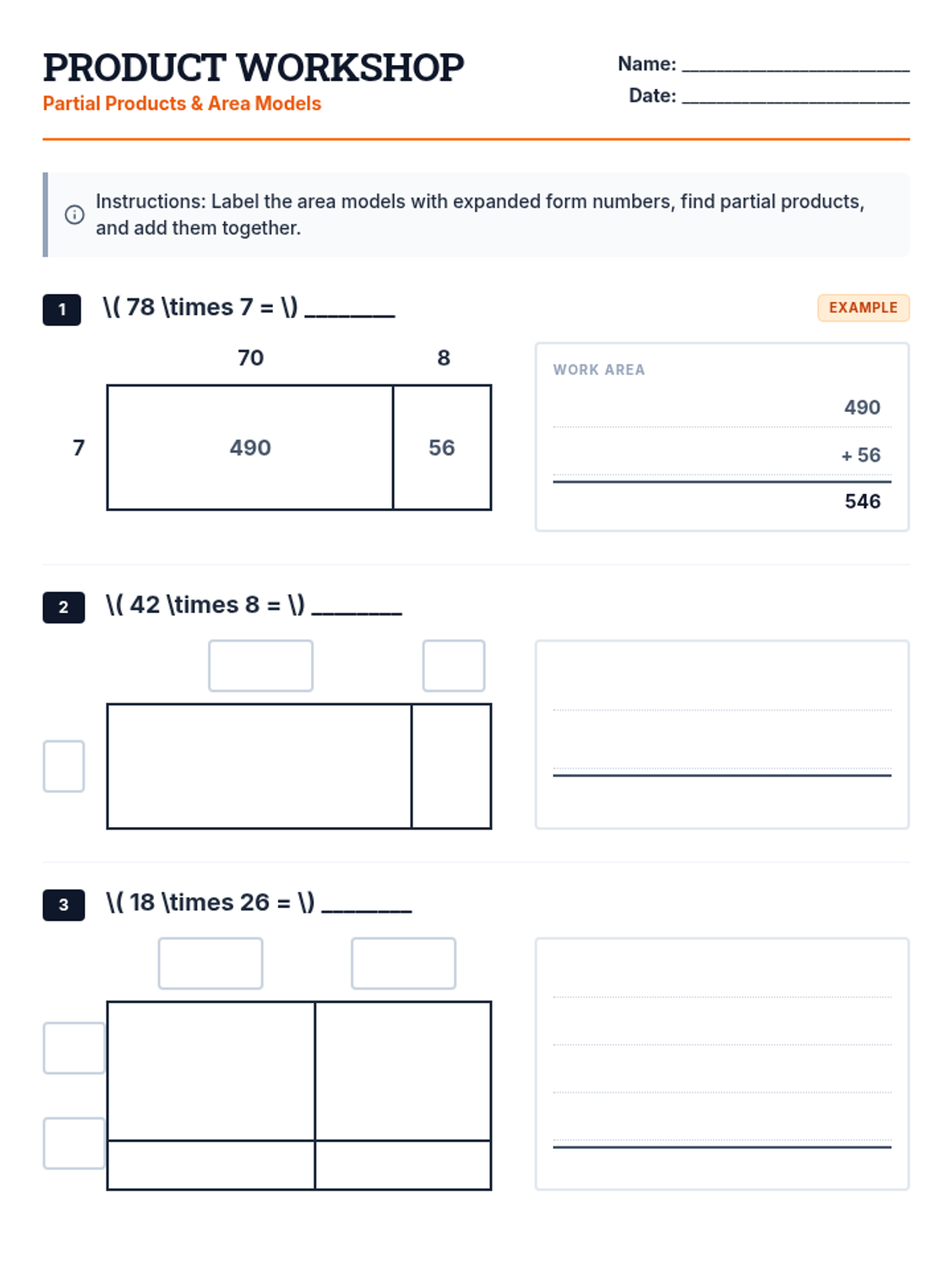
A multi-digit multiplication worksheet using the partial products method and pre-drawn area models with representative scaling for relative values.
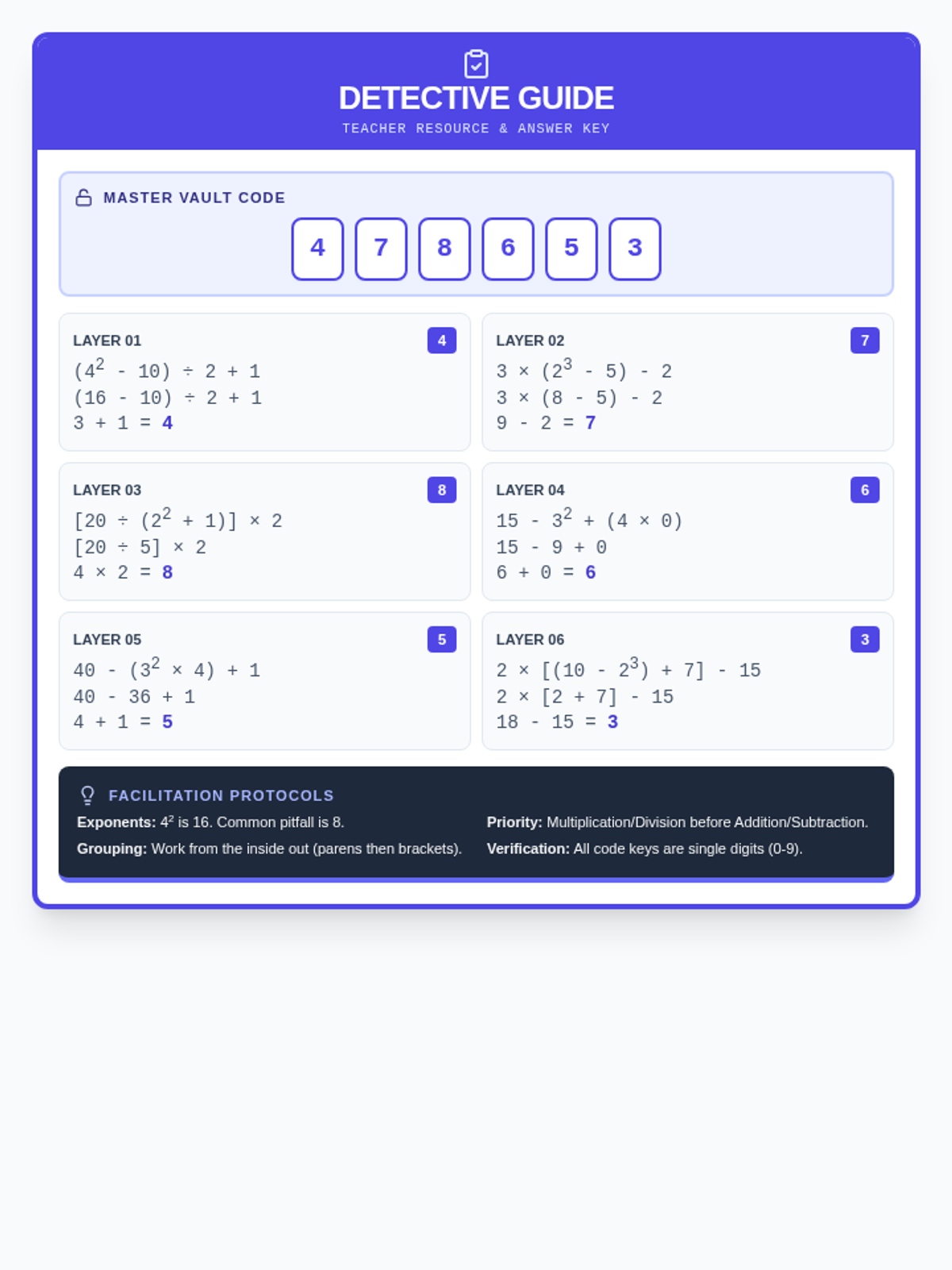
A complete teacher answer key and guide for "The Calculation Caper." This one-page reference provides the 6-digit master code (4-7-8-6-5-3), detailed step-by-step solutions for every layer, and key facilitation tips. HTML spans with custom positioning are used for reliable exponent rendering.
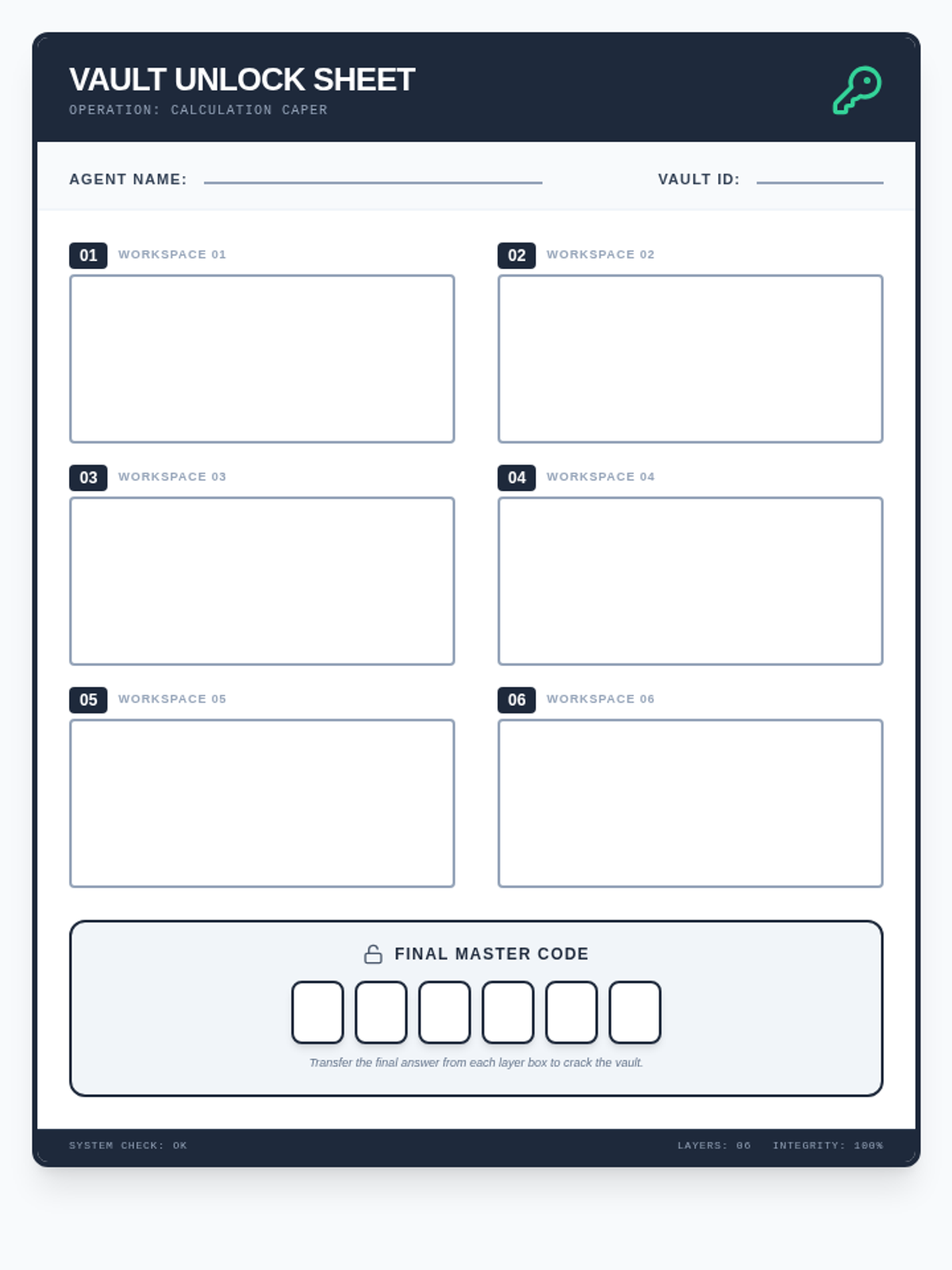
A refined vault unlock sheet featuring a 2-column workspace layout that provides ample room for step-by-step PEMDAS calculations for all 6 security layers. Workspace boxes use a clear white background.
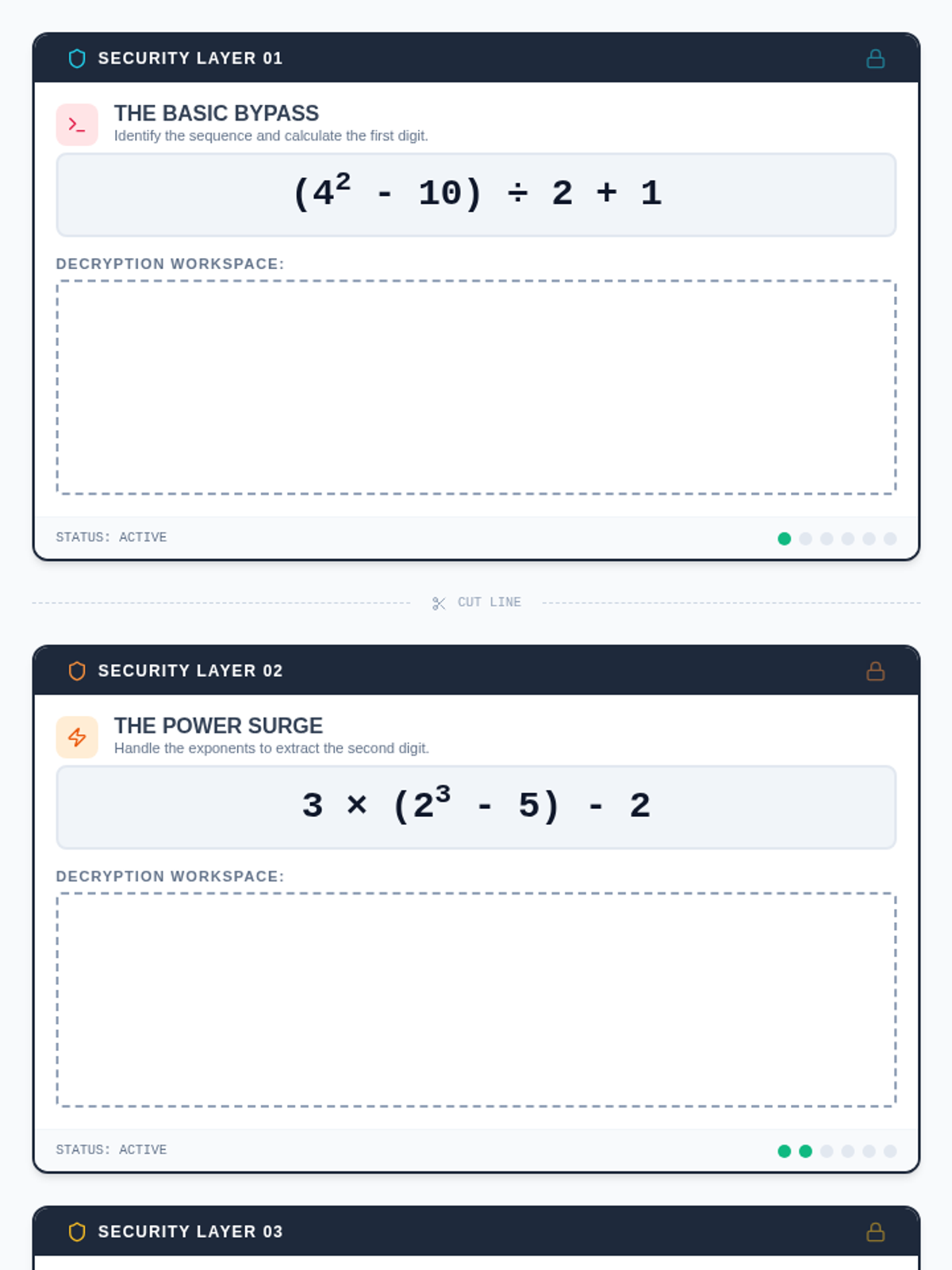
Six printable challenge cards for the escape room, each containing an Order of Operations problem with exponents that yields a single digit of the master vault code. Each card includes a dedicated workspace for student calculations. Standard HTML tags are used for exponent rendering. Card layout optimized for 2 per page with cut guides.
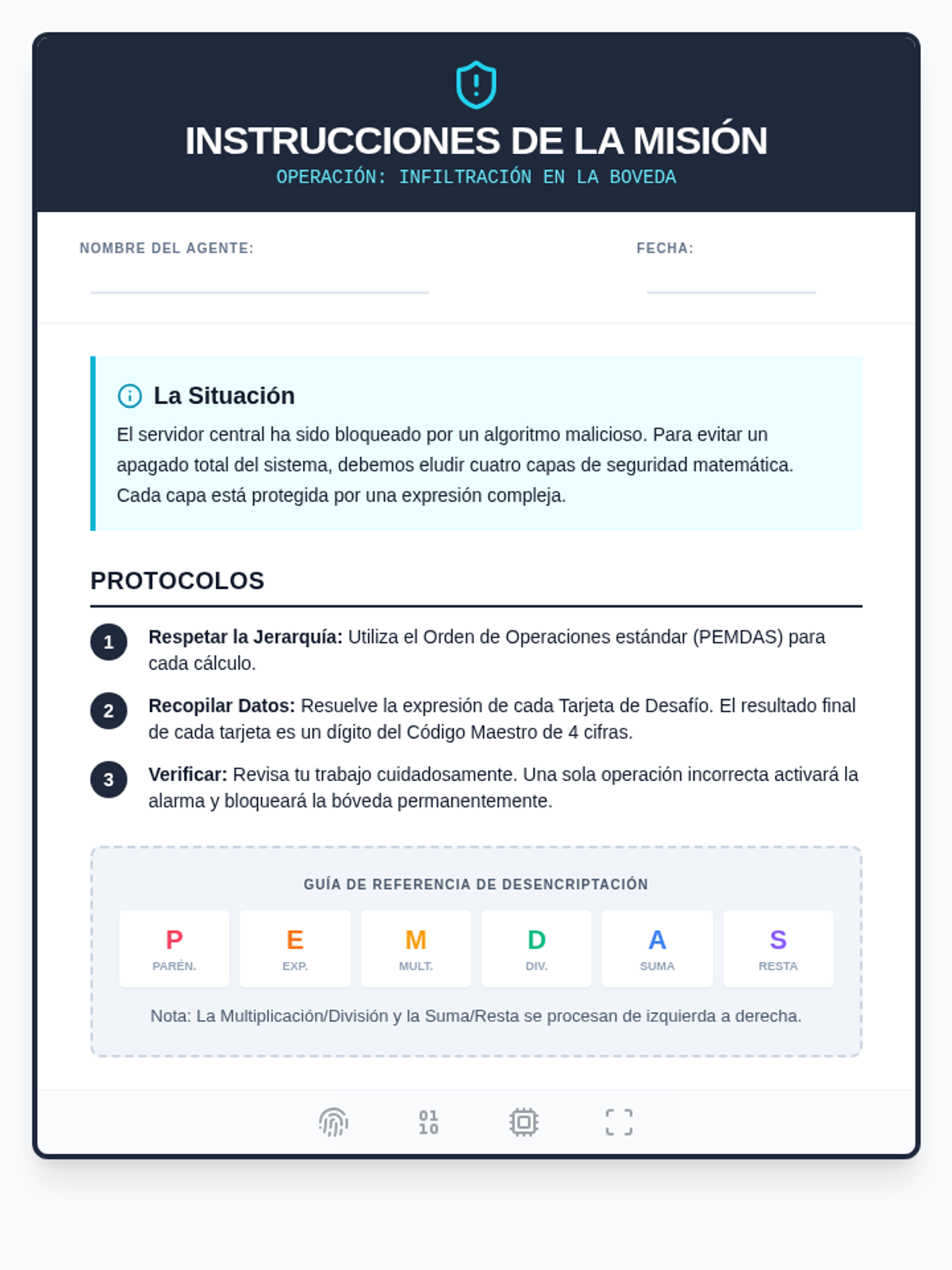
Introduction document for the escape room activity, setting the scene for "The Calculation Caper" and providing a PEMDAS reference guide for students.
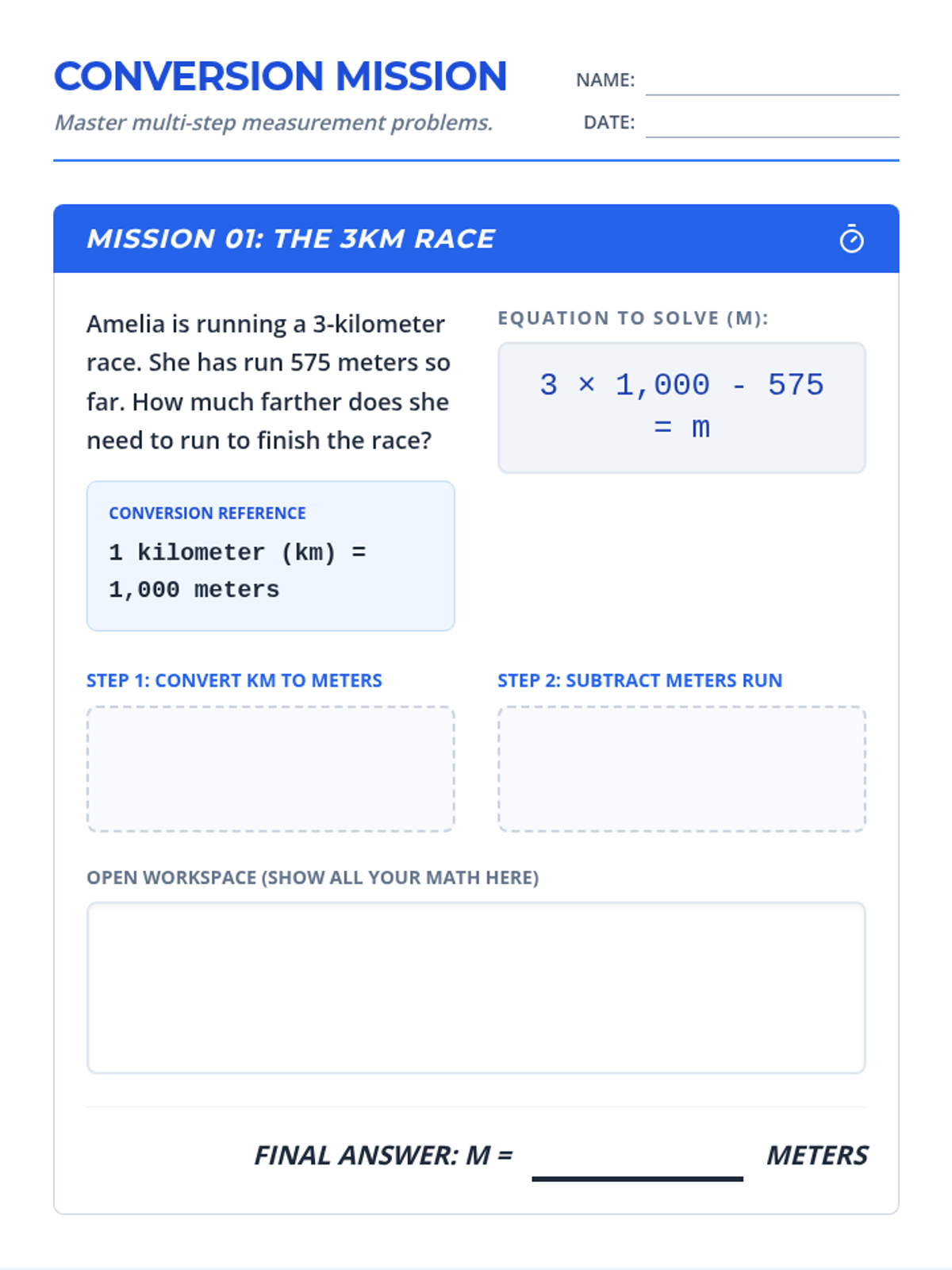
A roomy, two-page measurement conversion worksheet with three multi-step word problems. Provides extensive workspace, guided steps, and conversion charts for length, time, and volume.
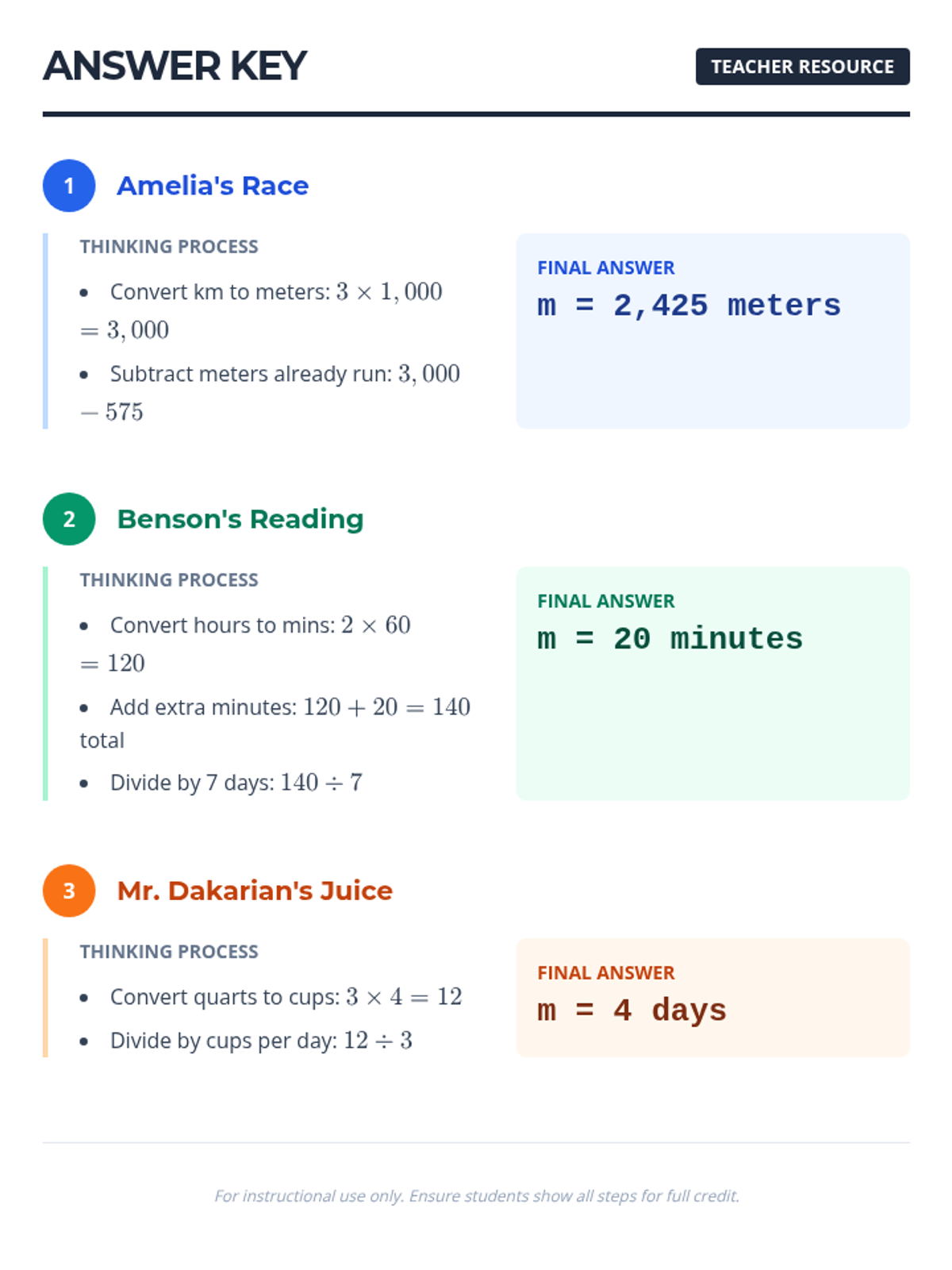
An answer key for the Conversion Mission Worksheet, providing the step-by-step thinking process and final numeric solutions for each measurement word problem.
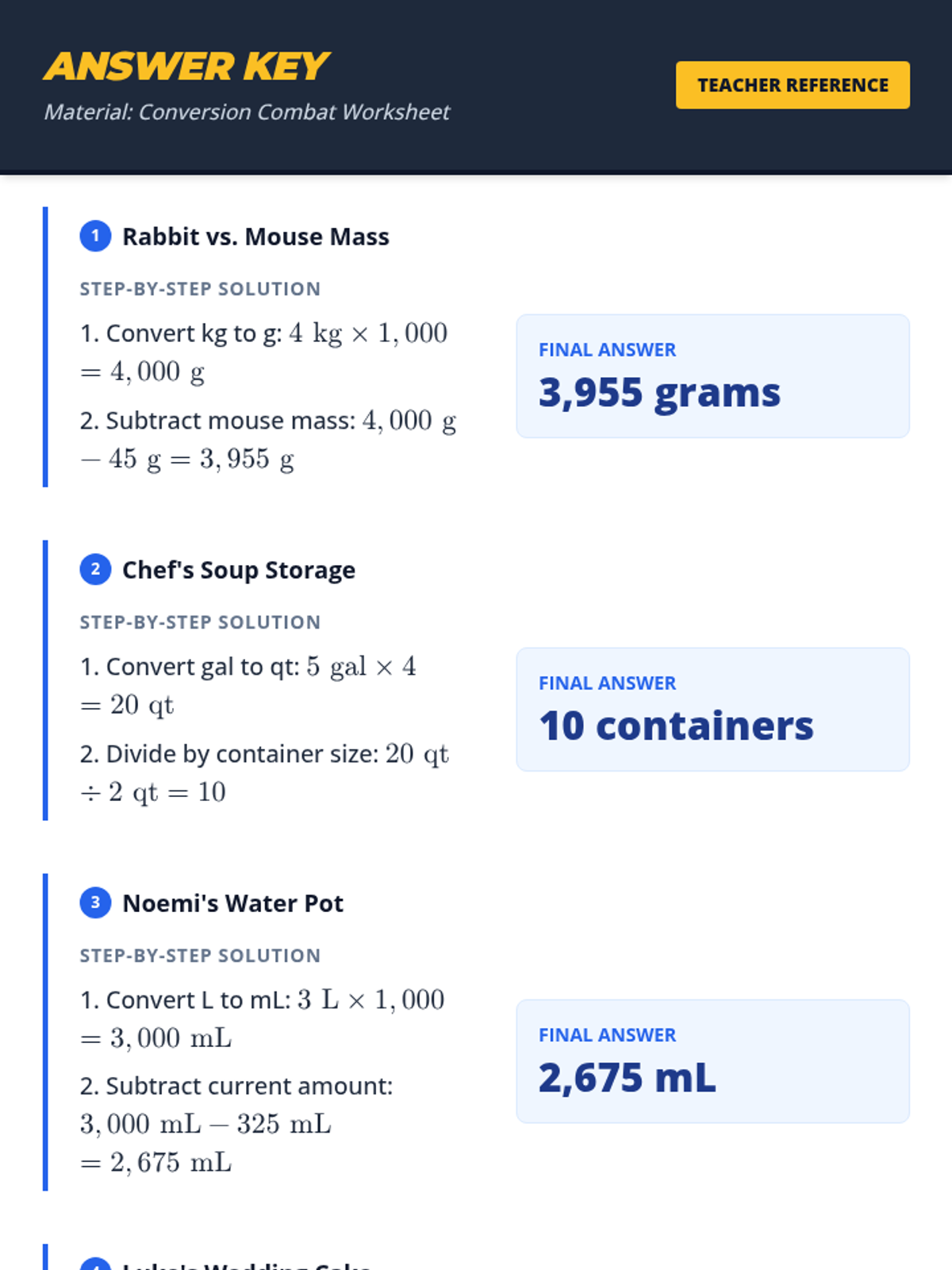
A comprehensive answer key for the Conversion Combat Worksheet, providing step-by-step solutions, final answers in large bold text, and grading guidance for teachers.
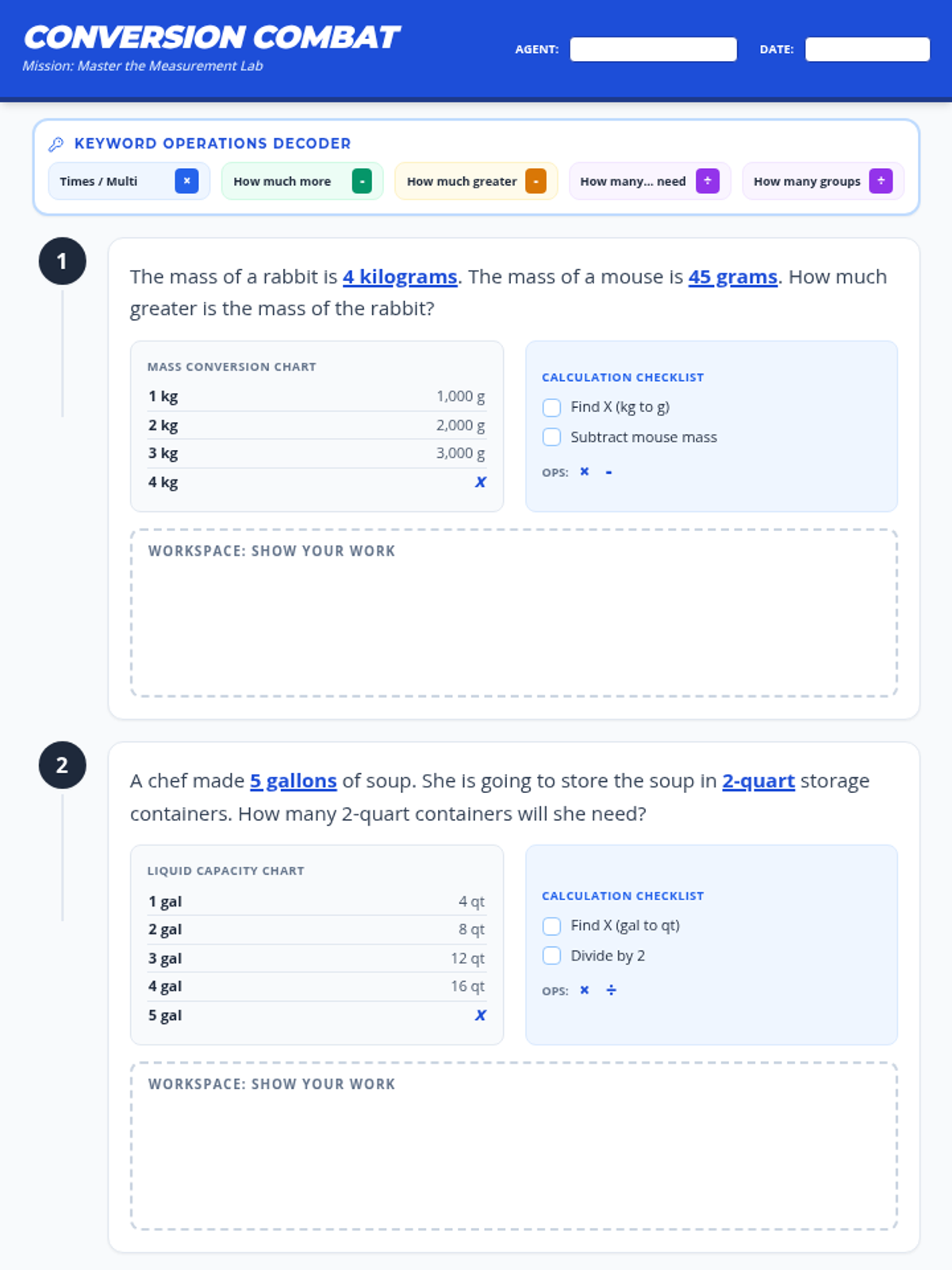
A 4-problem word problem worksheet focusing on unit conversions for mass, volume, and capacity. It includes individualized conversion charts for each problem, keyword operation cues, and designated workspaces with calculation checklists.
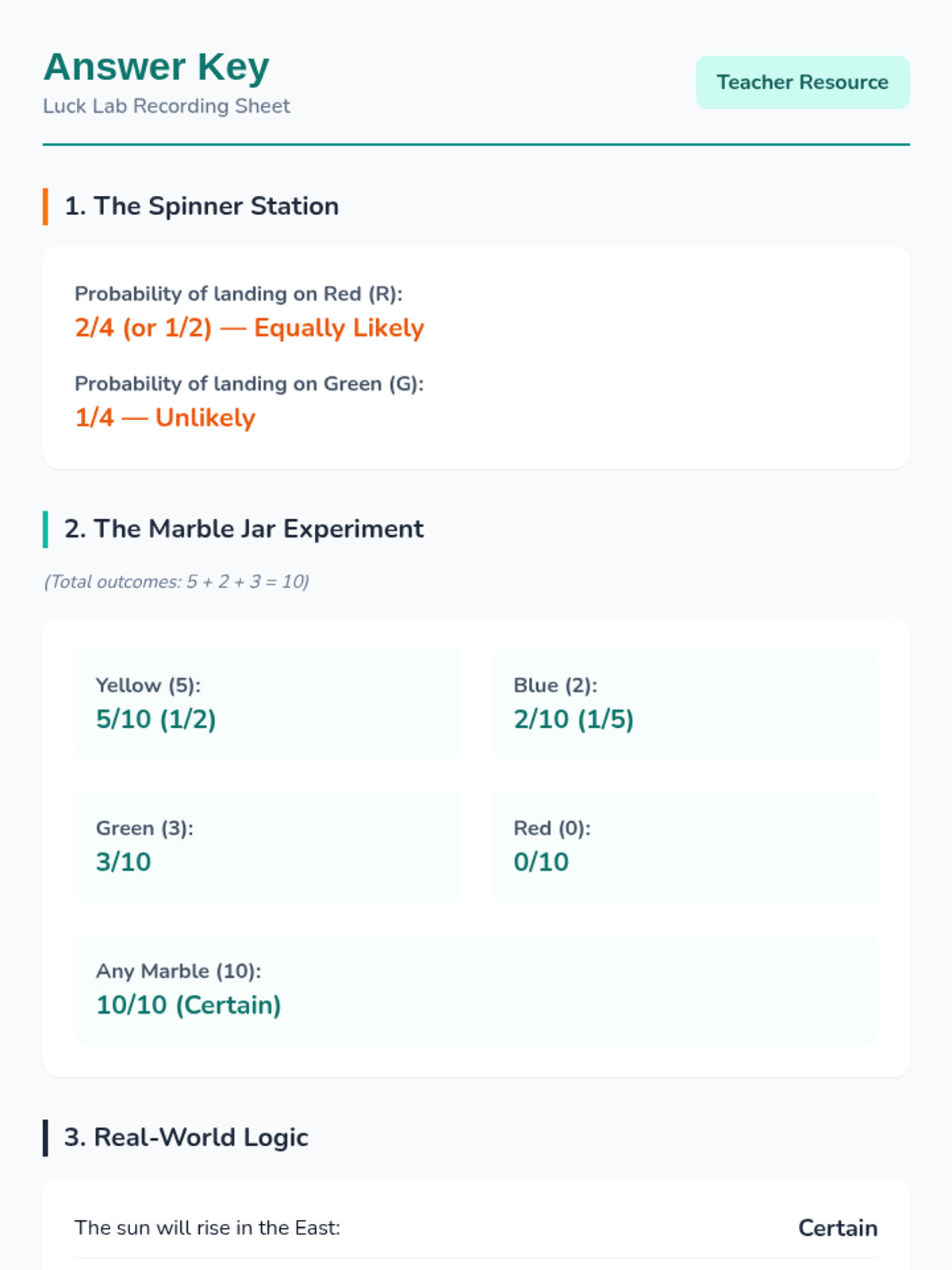
An answer key for the Luck Lab Recording Sheet, providing correct fractional representations and vocabulary descriptors. Corrected scenarios for absolute certainty and added missing data points for full completeness.
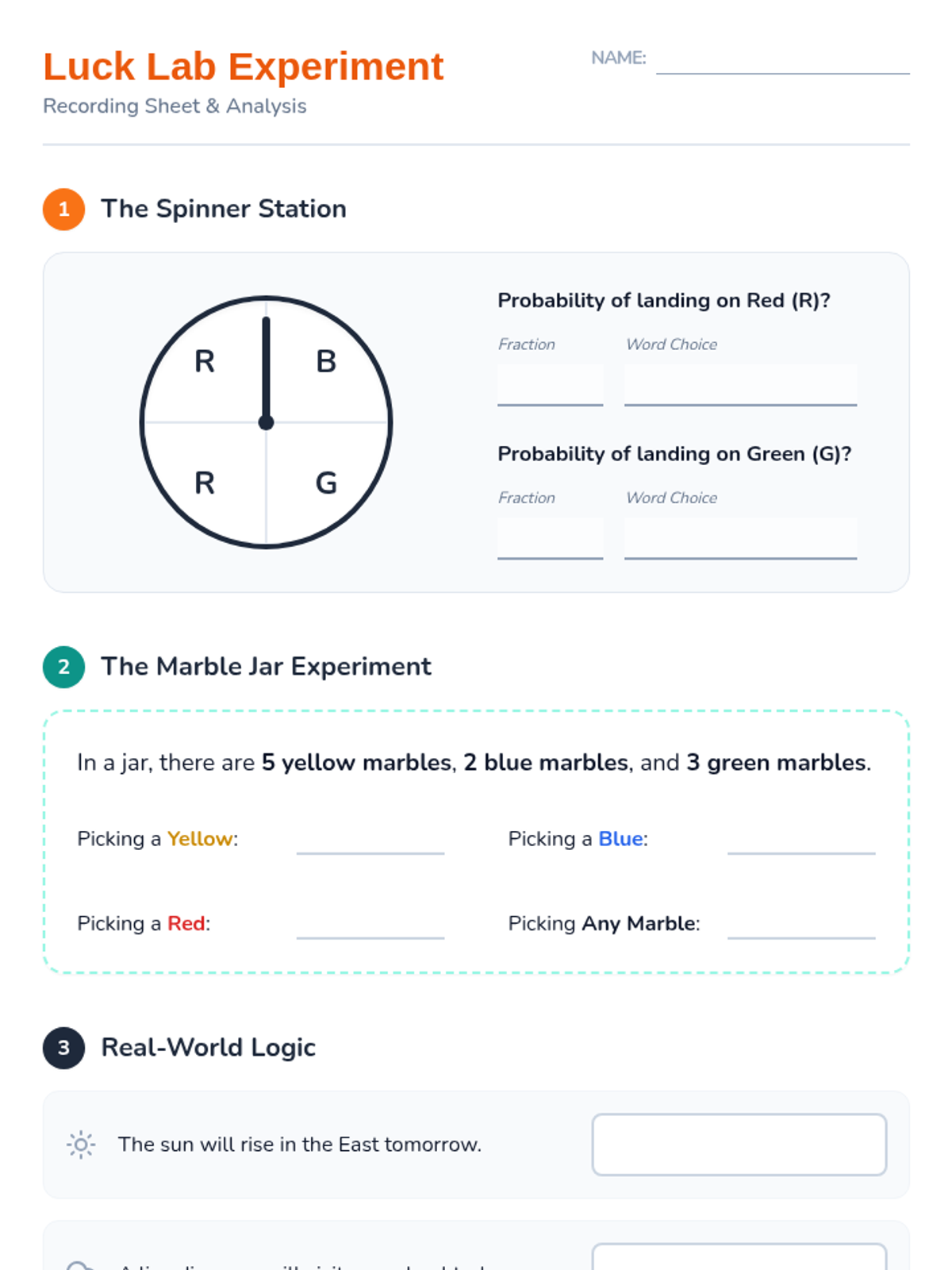
An activity recording sheet for students to practice calculating probability as fractions and describing events. Improved layout with avoided page breaks, larger reflection areas, and clearer response lines without placeholder text. Corrected alignment in Part 2 for perfect consistency.
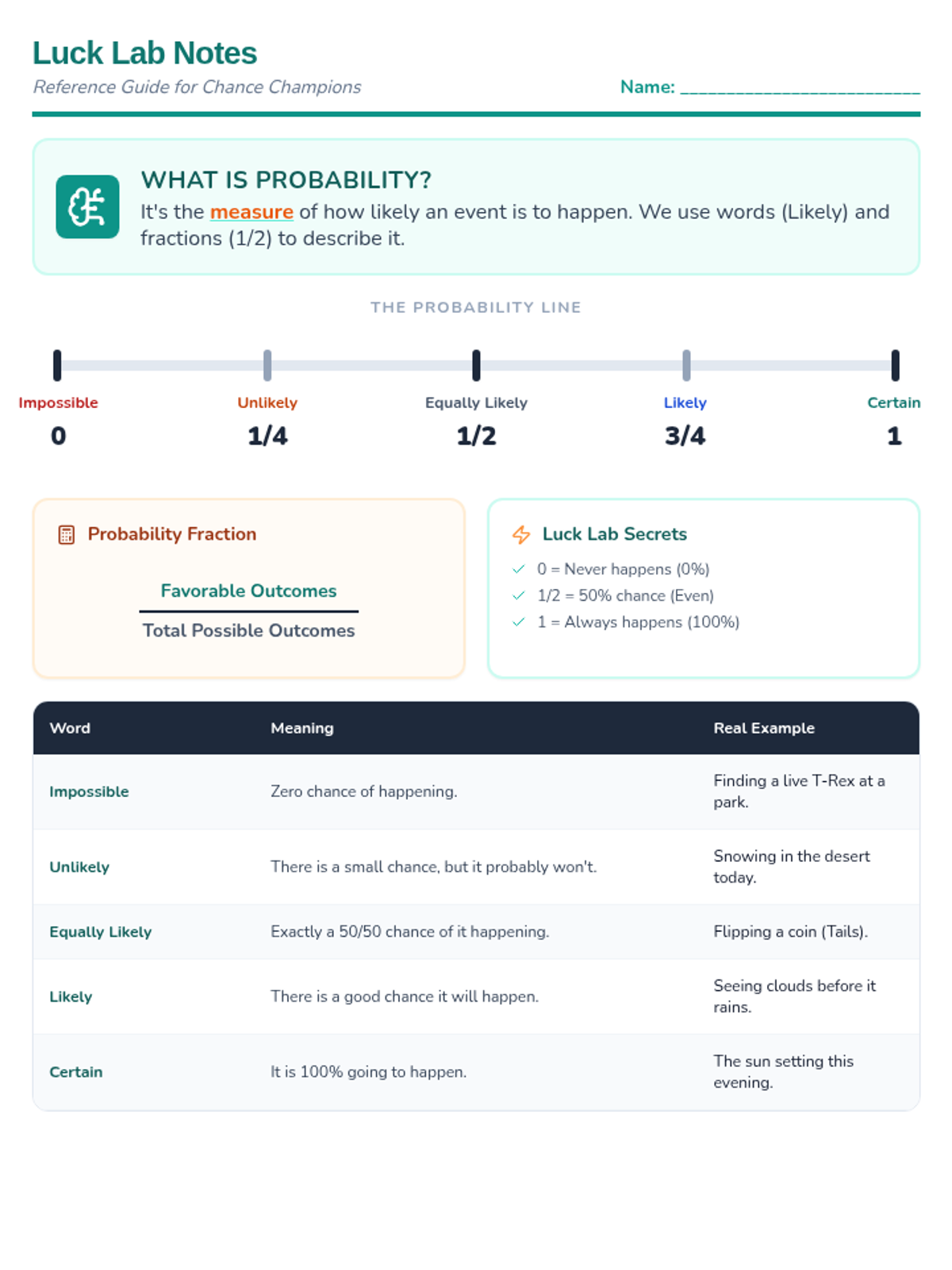
A student-friendly reference sheet for probability, including a visual probability line with benchmarks (1/4, 3/4), the fraction formula, and a vocabulary table. Condensed to a single-page layout for easier reference. High-contrast version with precise visual alignment.
Instructional slides for a 4th-grade probability lesson, featuring 'The Luck Lab' theme. Includes vocabulary definitions, the probability scale (0 to 1), and practice scenarios with fractional representations. Corrected spinner visuals and consistent numerical labeling. High-contrast version with improved visual alignment.
An instructional slide deck that introduces quadrilaterals, focuses on the inclusive definition of trapezoids, and visually explains the shape hierarchy.
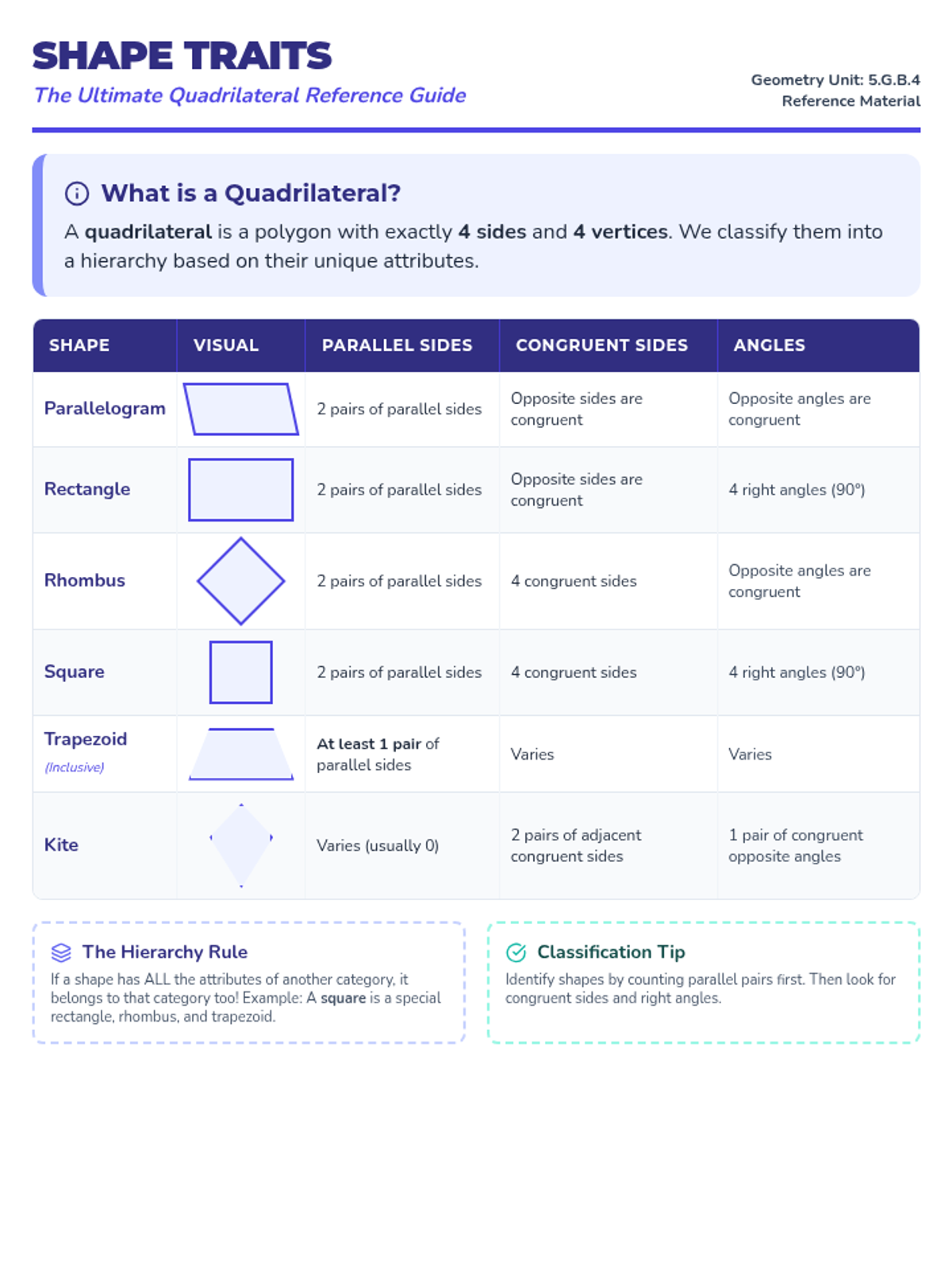
A comprehensive reference chart for 5th-grade students detailing the attributes of various quadrilaterals, including the inclusive definition of trapezoids.
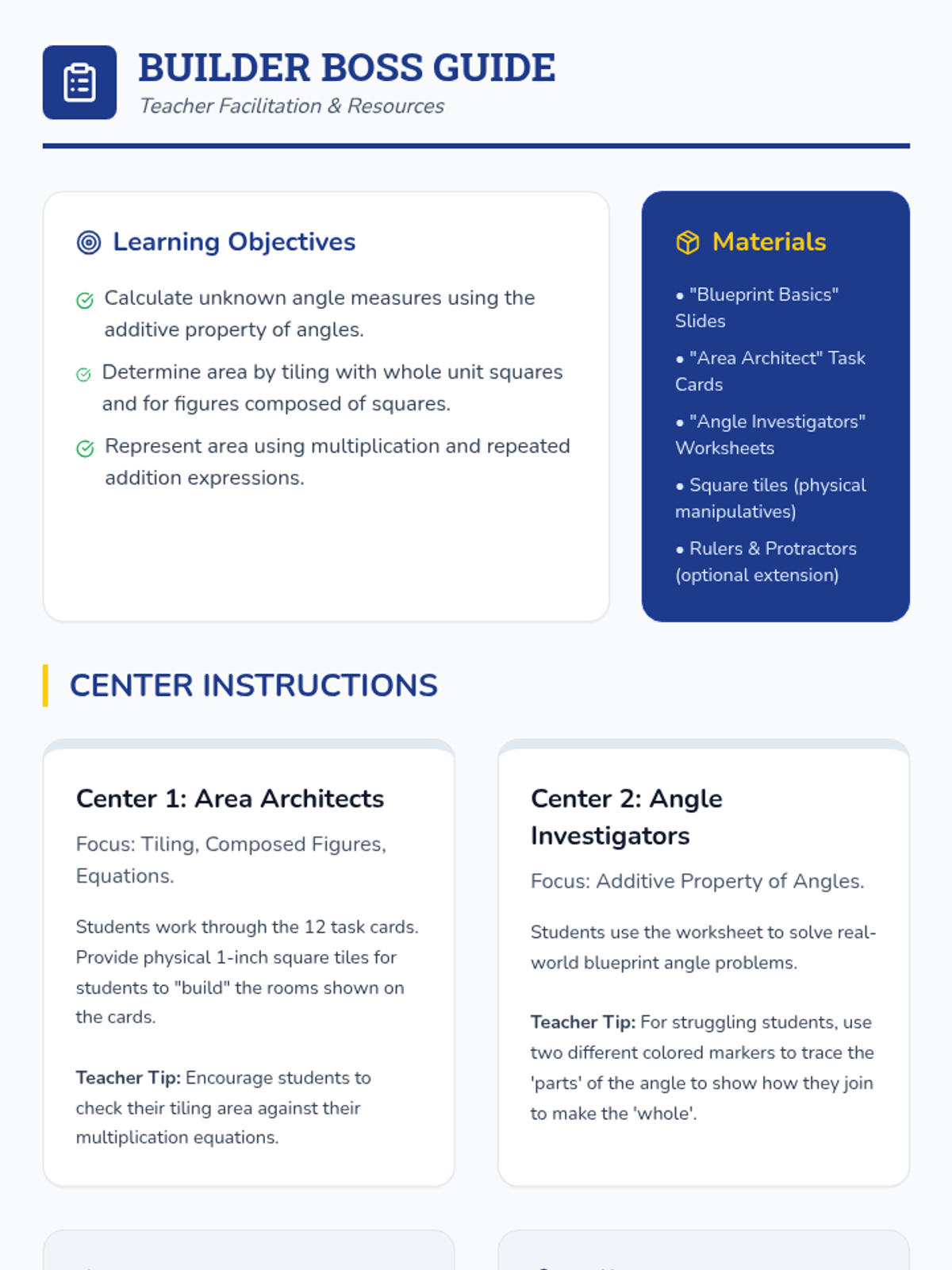
A teacher's facilitation guide for the Blueprint Builders math unit. Includes learning objectives, materials lists, center setup instructions, differentiation strategies, and complete answer keys.
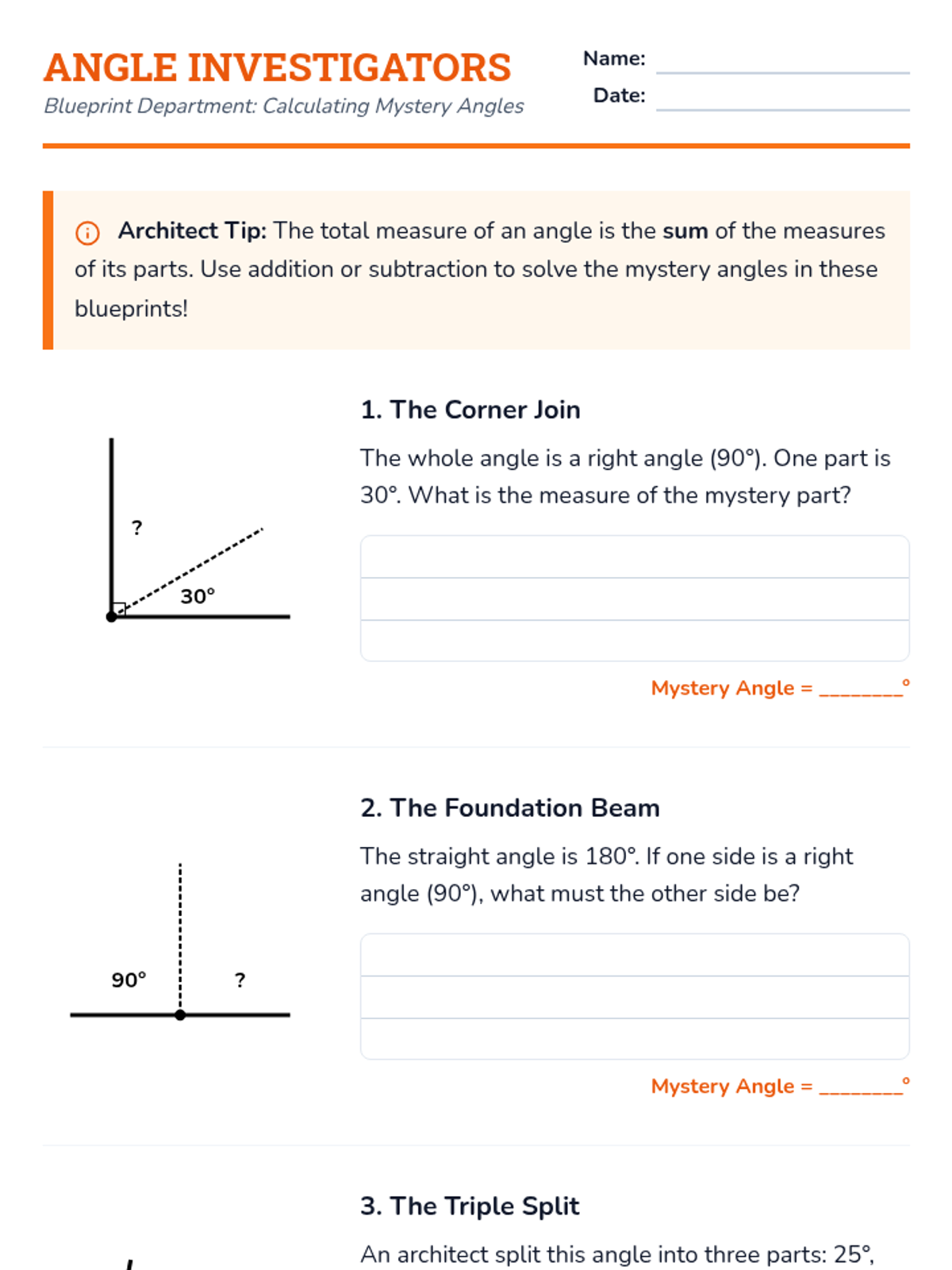
A 3rd-grade math worksheet for investigating unknown angle measures using the additive property. Features visual blueprint-themed problems and "show your work" areas.
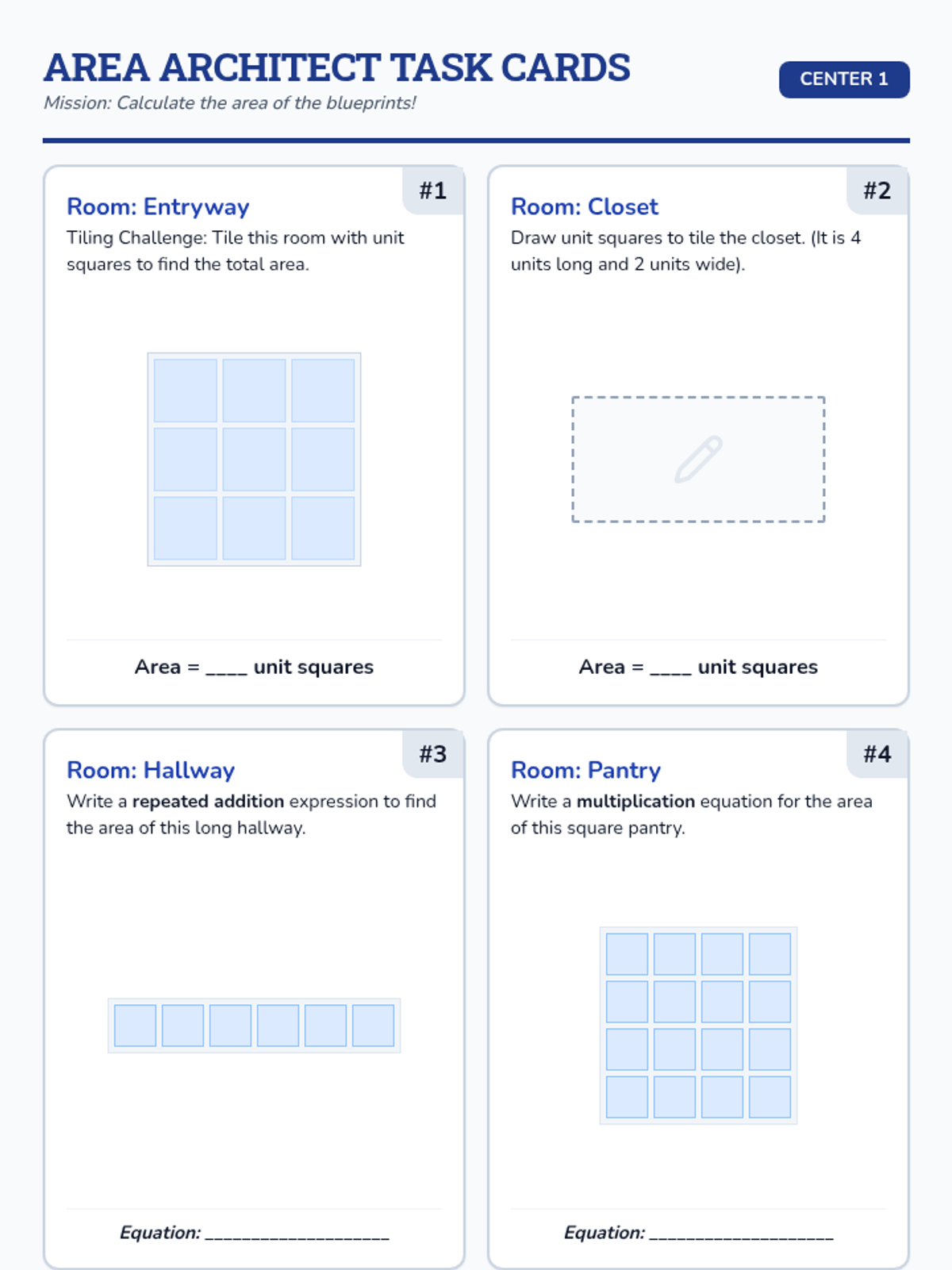
A set of 12 task cards for 3rd-grade math centers focused on determining area. Includes tasks for tiling with unit squares, calculating area of composed figures, and writing multiplication/repeated addition equations.
A visual slide deck introducing 3rd-grade area and angle measurement concepts through a 'Blueprint Builders' construction theme. Includes tiling methods, area equations, composed figures, and the additive property of angles.
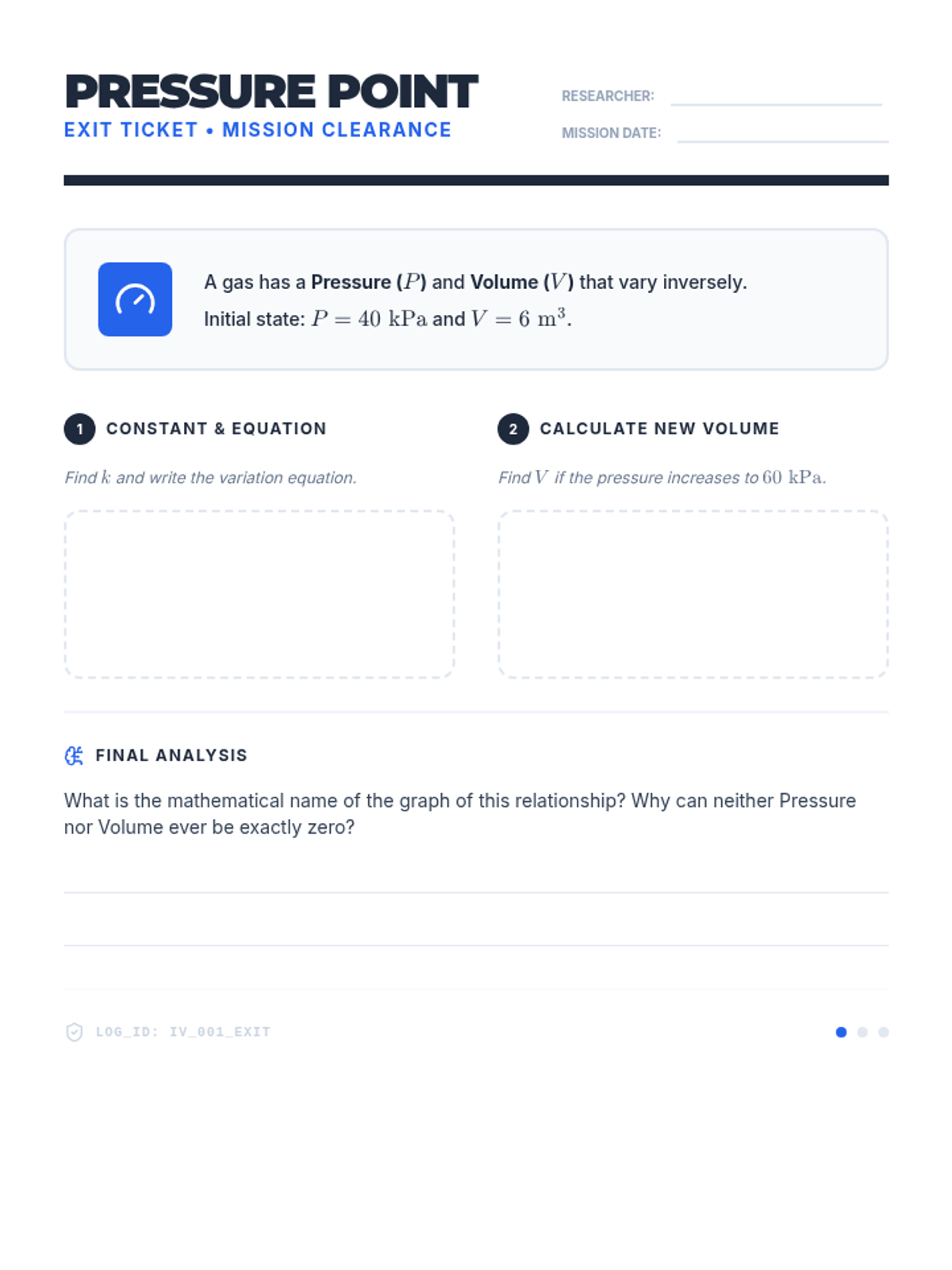
A formal exit ticket for inverse variation. Revised for single-page layout, better math rendering, and balanced work areas.
A sleek, high-contrast slide deck for inverse variation. Revised to fix math rendering, adjust viewport overflow, and correct the hyperbola graphic.
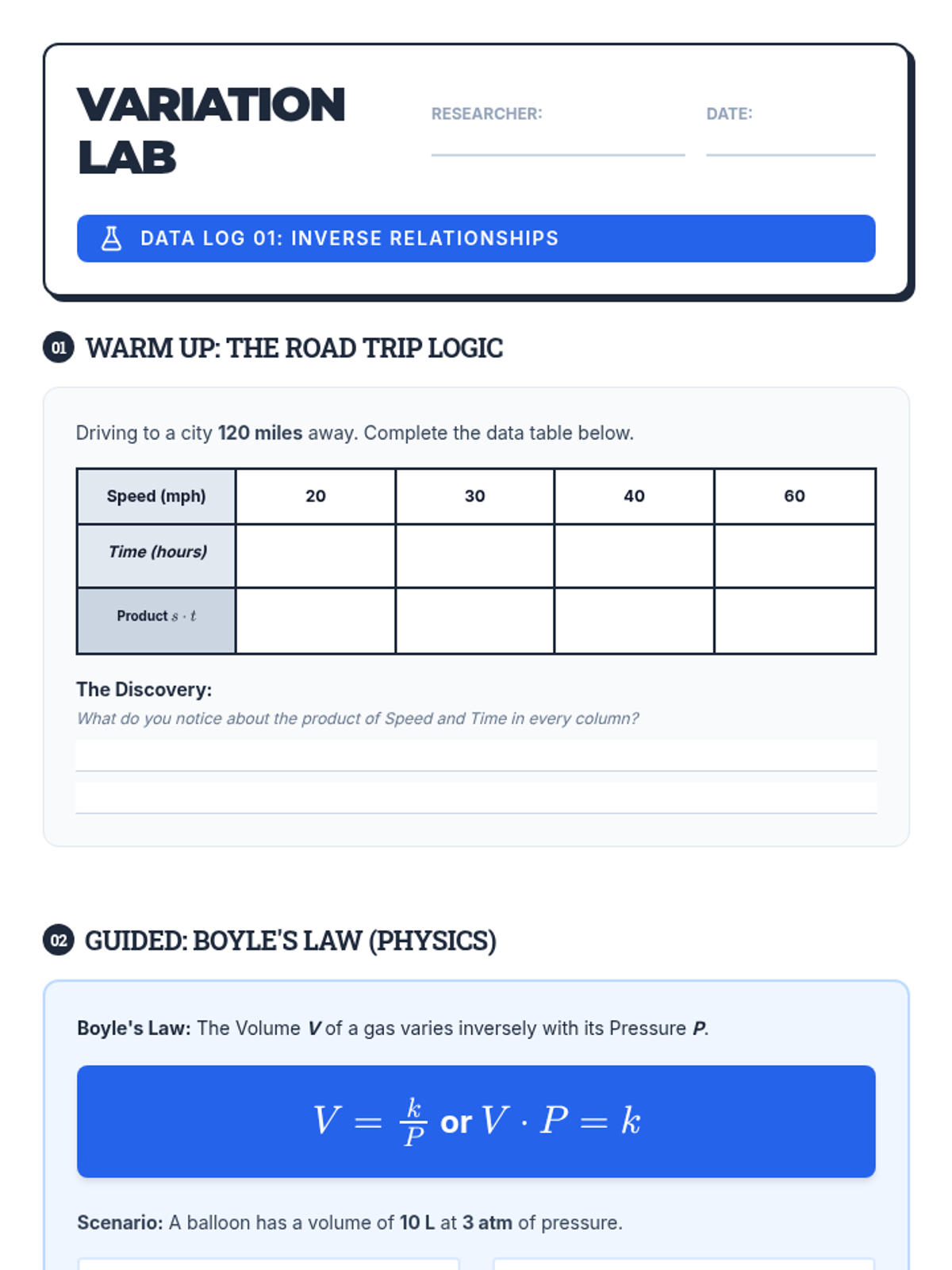
A student-facing handout containing the Warm Up, Guided Instruction, and Independent Practice for inverse variation. Revised for better page breaks, increased contrast, and added pedagogical scaffolding. Fixed math rendering and work areas.
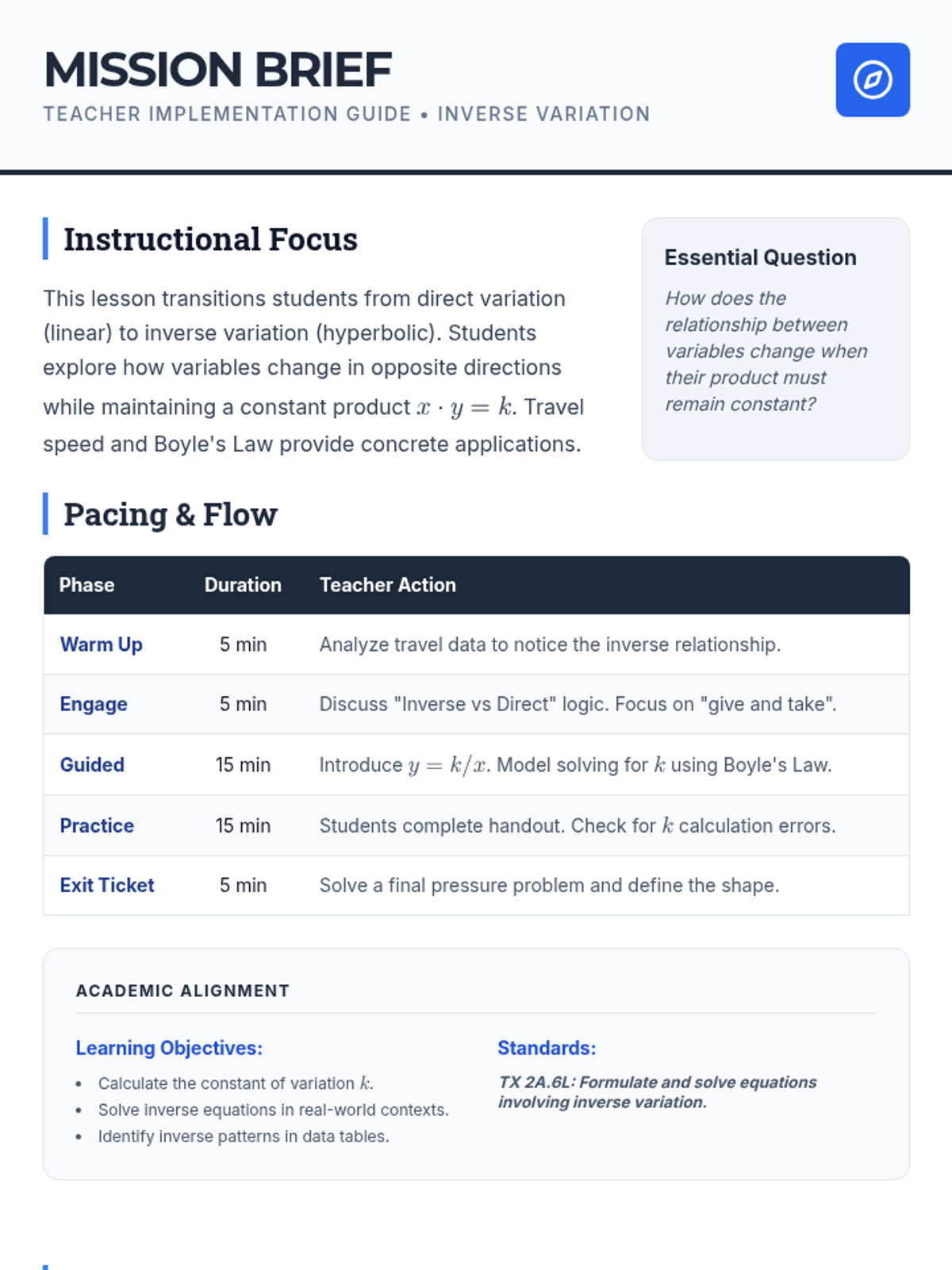
A comprehensive teacher implementation guide for the Inverse Investigators lesson, including pacing, standards alignment, answer keys, and pedagogical tips. Revised for better page breaks and math rendering.
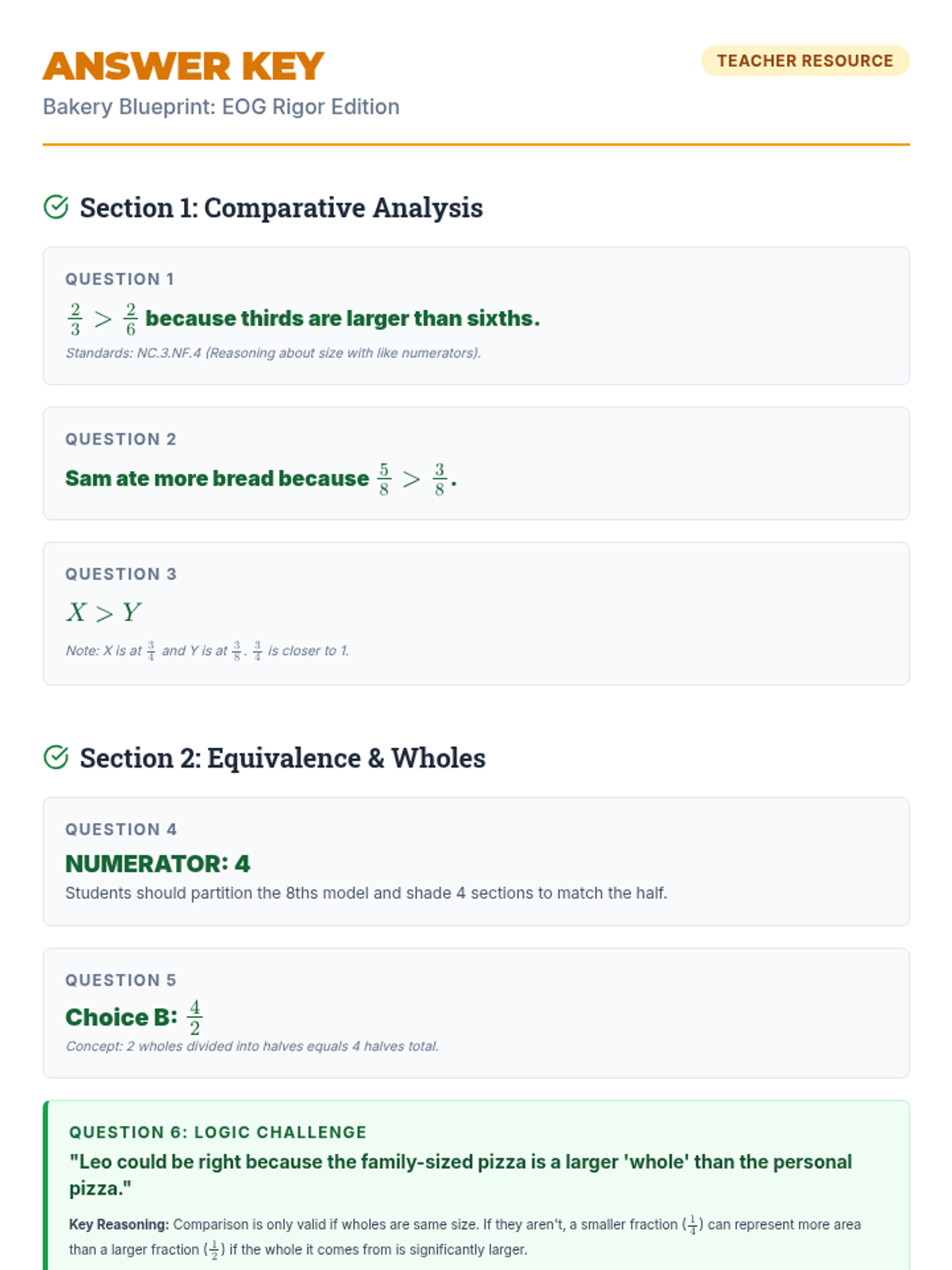
An answer key for the EOG-rigorous Bakery Blueprint Worksheet, providing correct answers for the comparison, equivalence, and whole number questions.
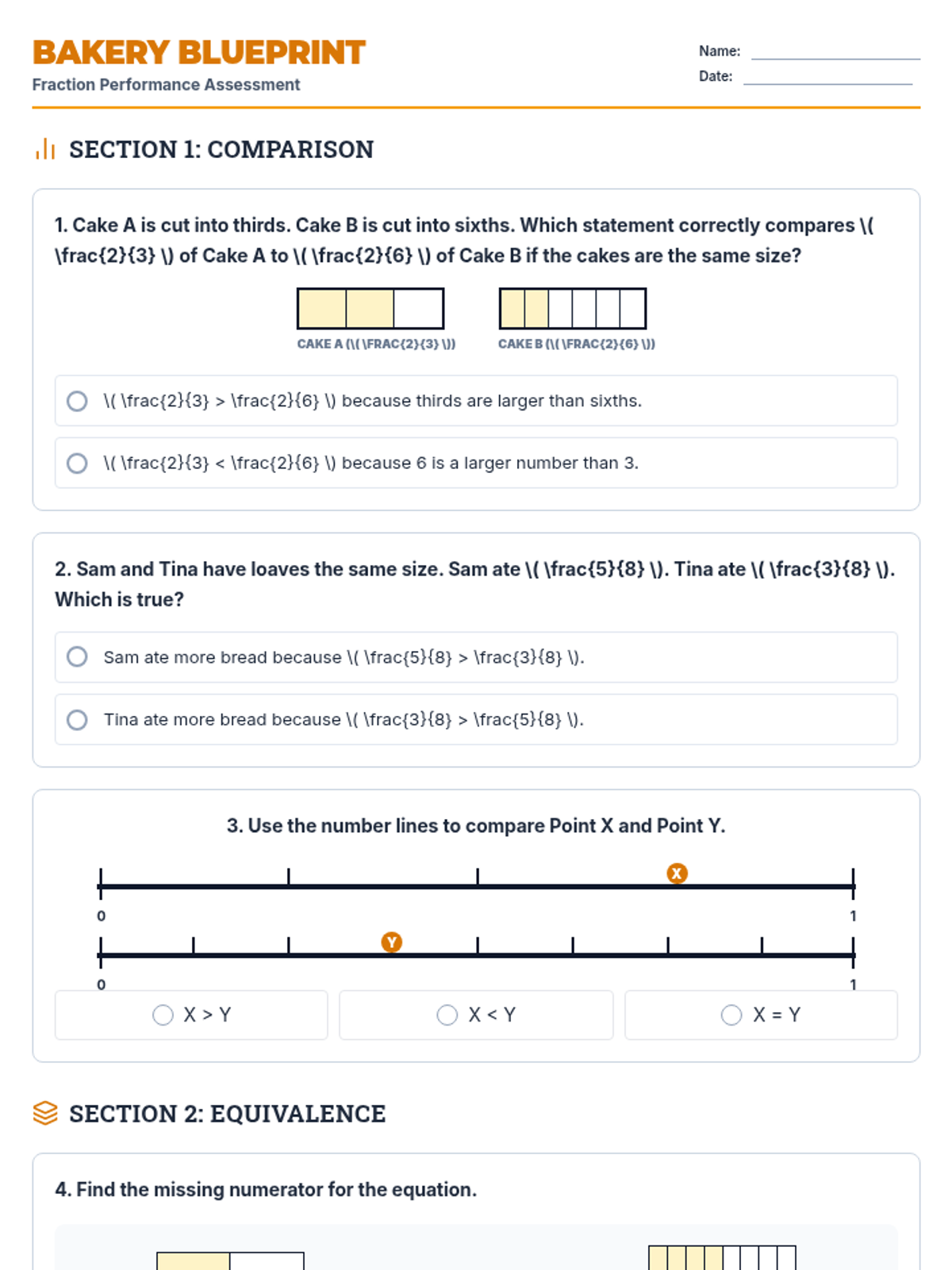
An EOG-rigorous bakery-themed worksheet featuring multiple-choice and work-out questions on fraction comparison using symbols, equivalence, and whole number representation. Optimized for 2-page printing.
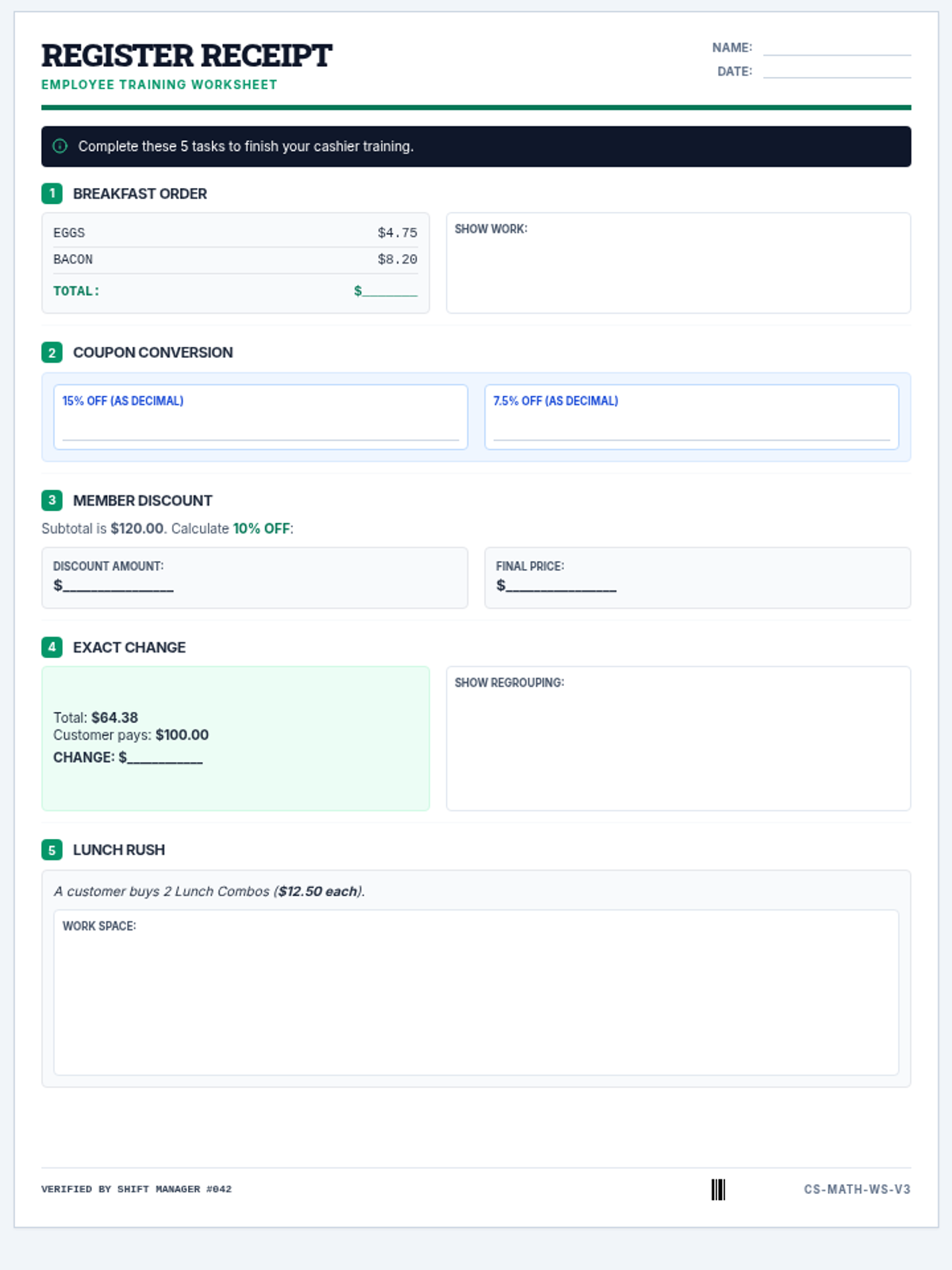
A student-facing worksheet for practicing retail arithmetic, including multi-item totals, percentage discounts, and complex change-making with regrouping. Updated to fit all 5 problems on one page with high-contrast footer.
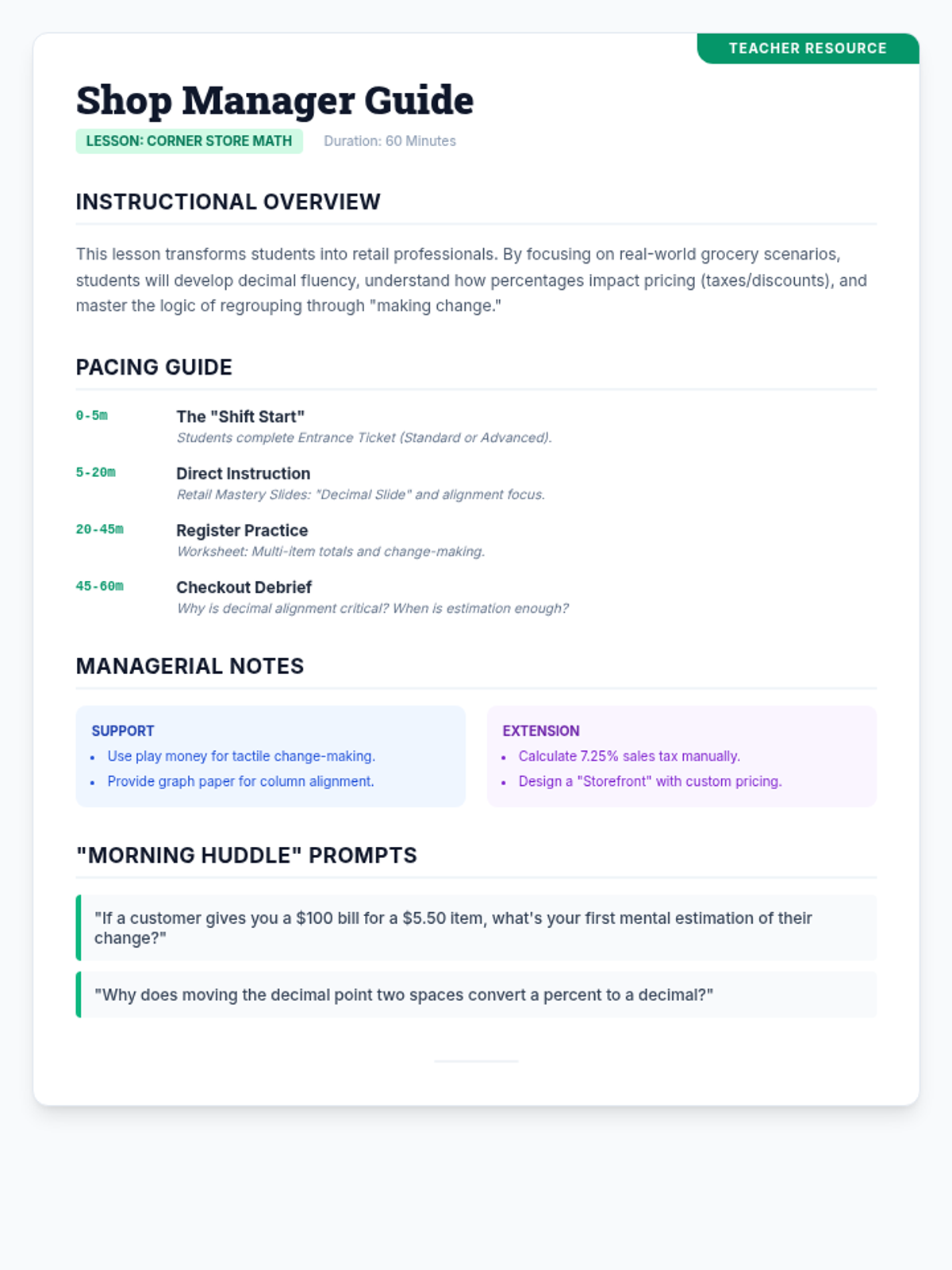
A teacher's facilitation guide for the Corner Store Math lesson, including pacing, differentiation strategies, and discussion prompts. Updated for better page fit.
An instructional presentation for teaching retail math, covering decimal alignment, percentage conversions, and mental math strategies for checkout scenarios. Updated with 5 problems.
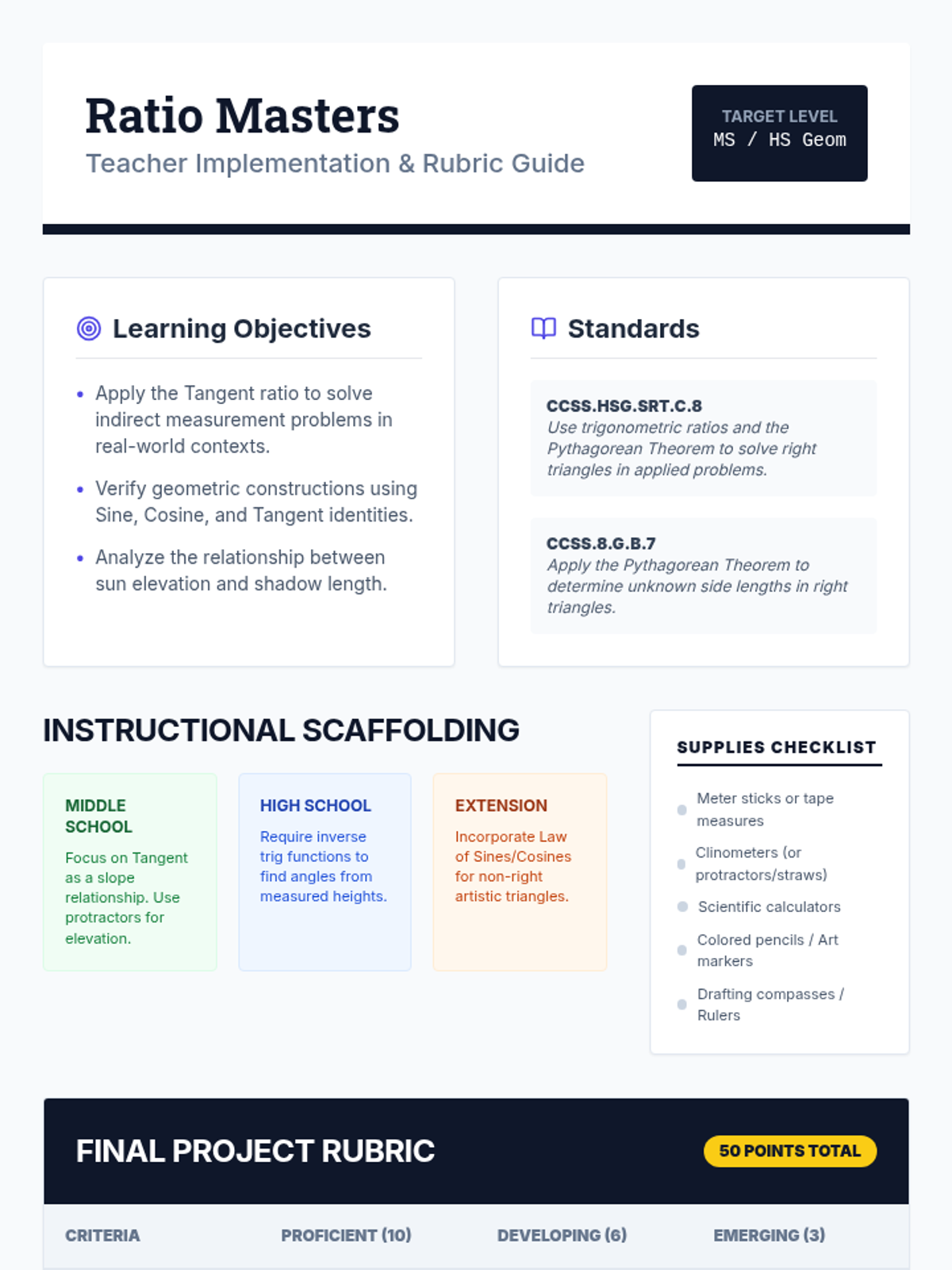
A teacher guide containing learning objectives, standards alignment, differentiation strategies for middle and high school, and a comprehensive grading rubric.
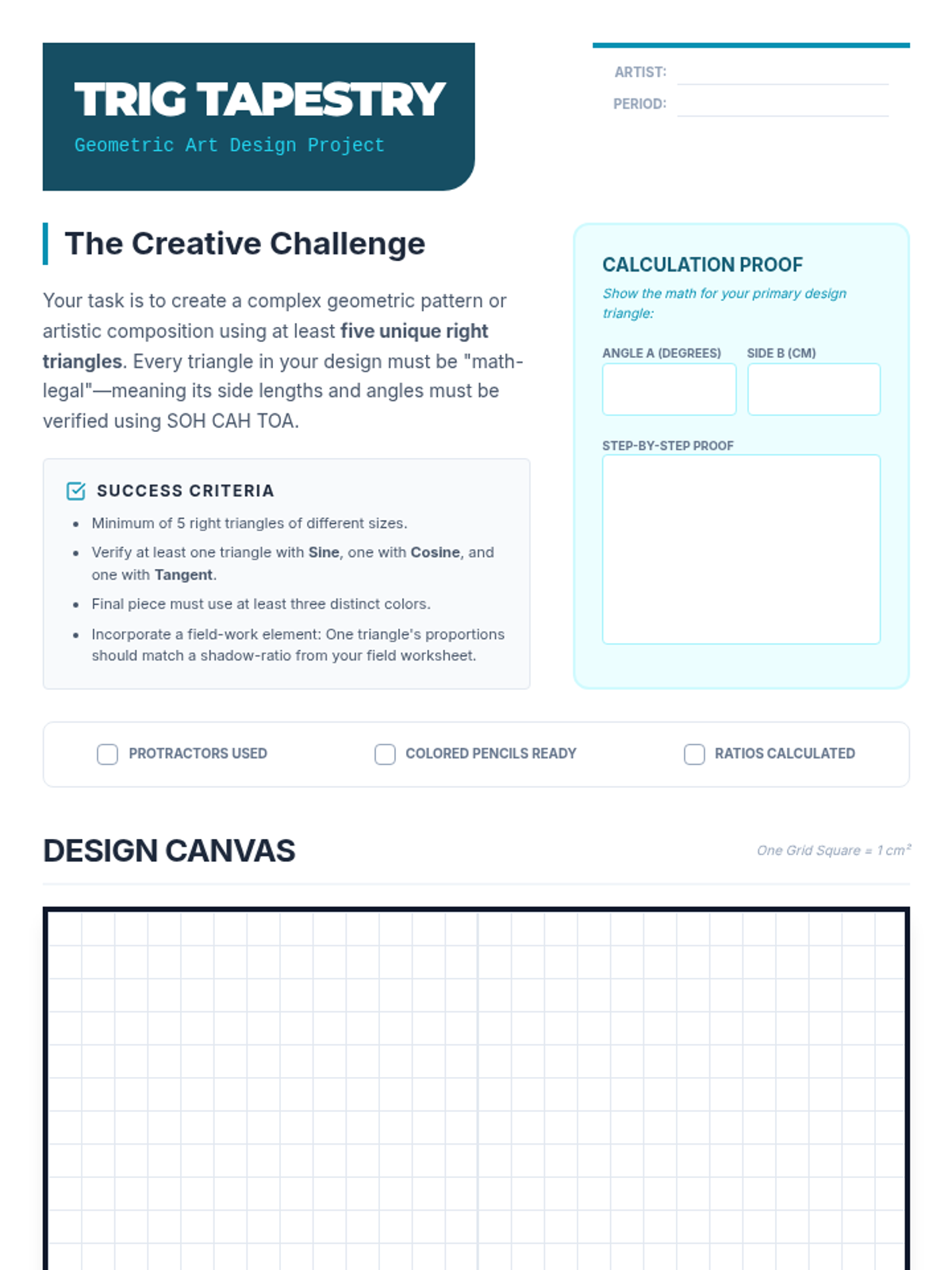
A project guide for the geometric art portion of the lesson. Students design a pattern using right triangles and prove their proportions using trigonometric ratios.
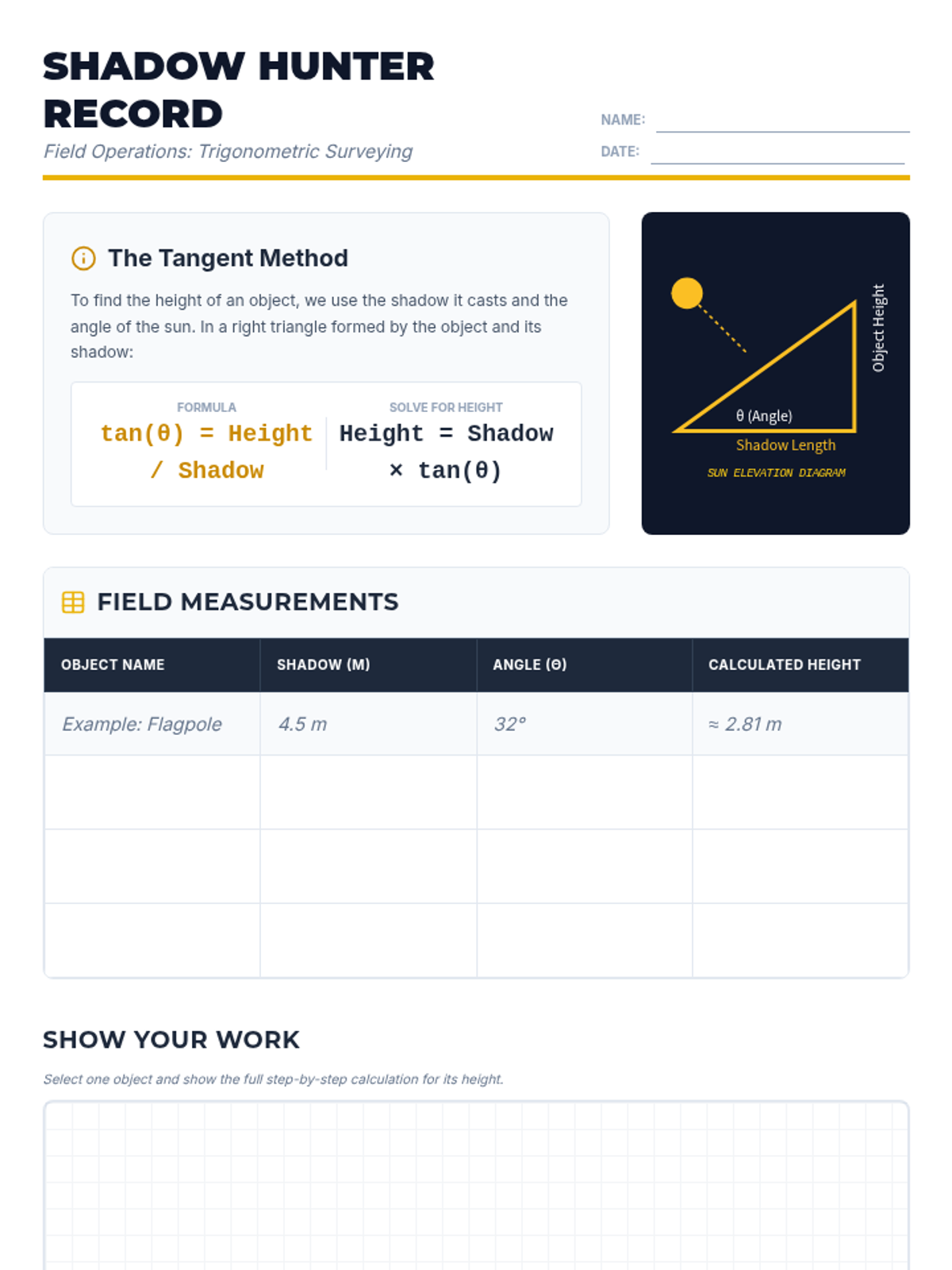
A field data collection sheet for students to record shadow lengths and calculate object heights using the tangent ratio. Includes space for work and reflection questions.
An introductory slide deck for the Shadows and Shapes project, covering trigonometric ratios, the two main project components (Shadow Hunters and Trig Tapestry), and the project timeline.