A highly visual, modern 16:9 slide presentation that introduces high school students to the principles of game design, ethical choice mechanics, game theory, and the design challenge structure.
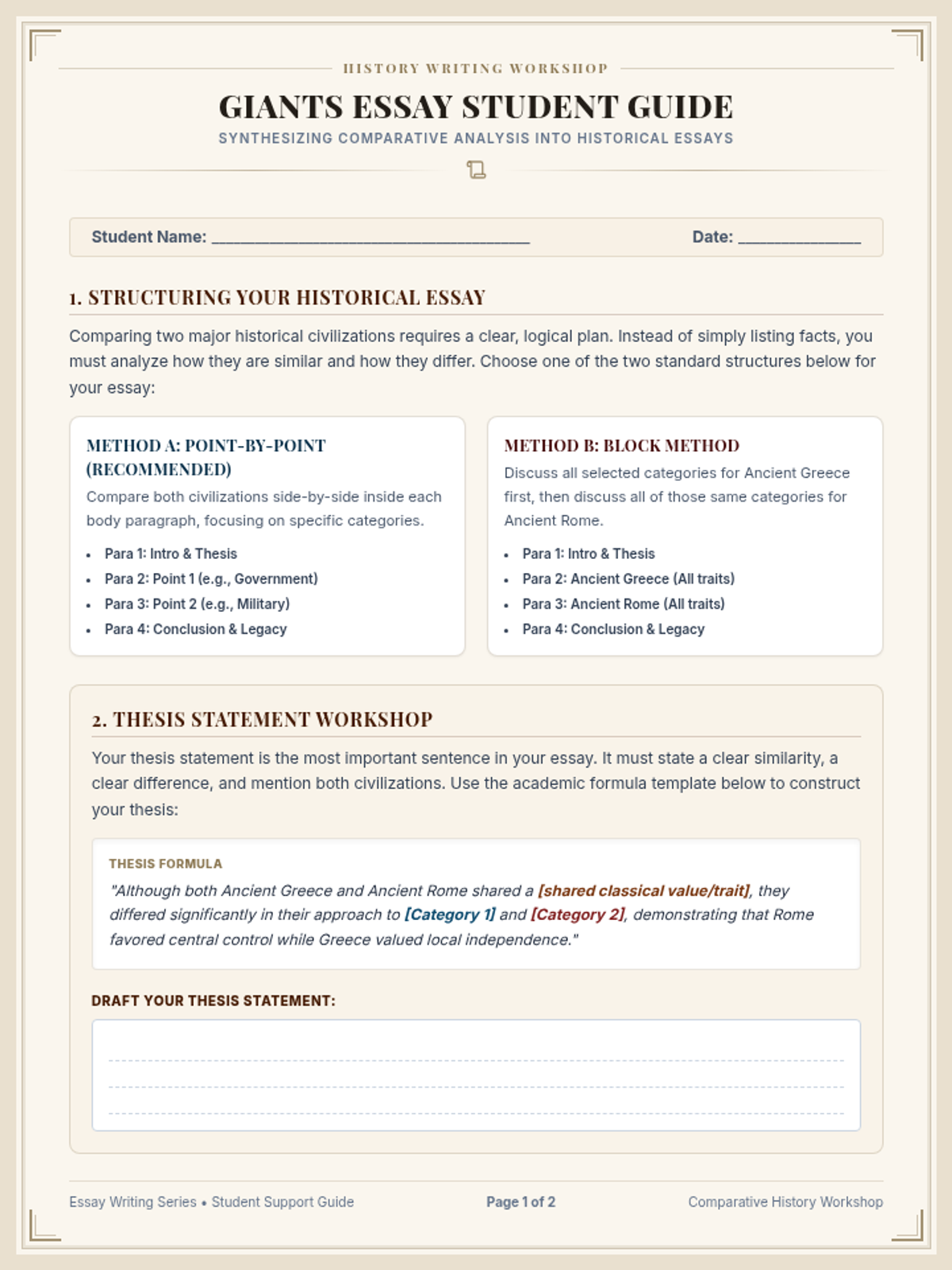
A structured two-page student guide and graphic organizer designed to help students transition their comparison chart details into a high-quality comparative history essay. Features a thesis statement workshop, block vs. point-by-point writing methods, and a lined paragraph outline planner.
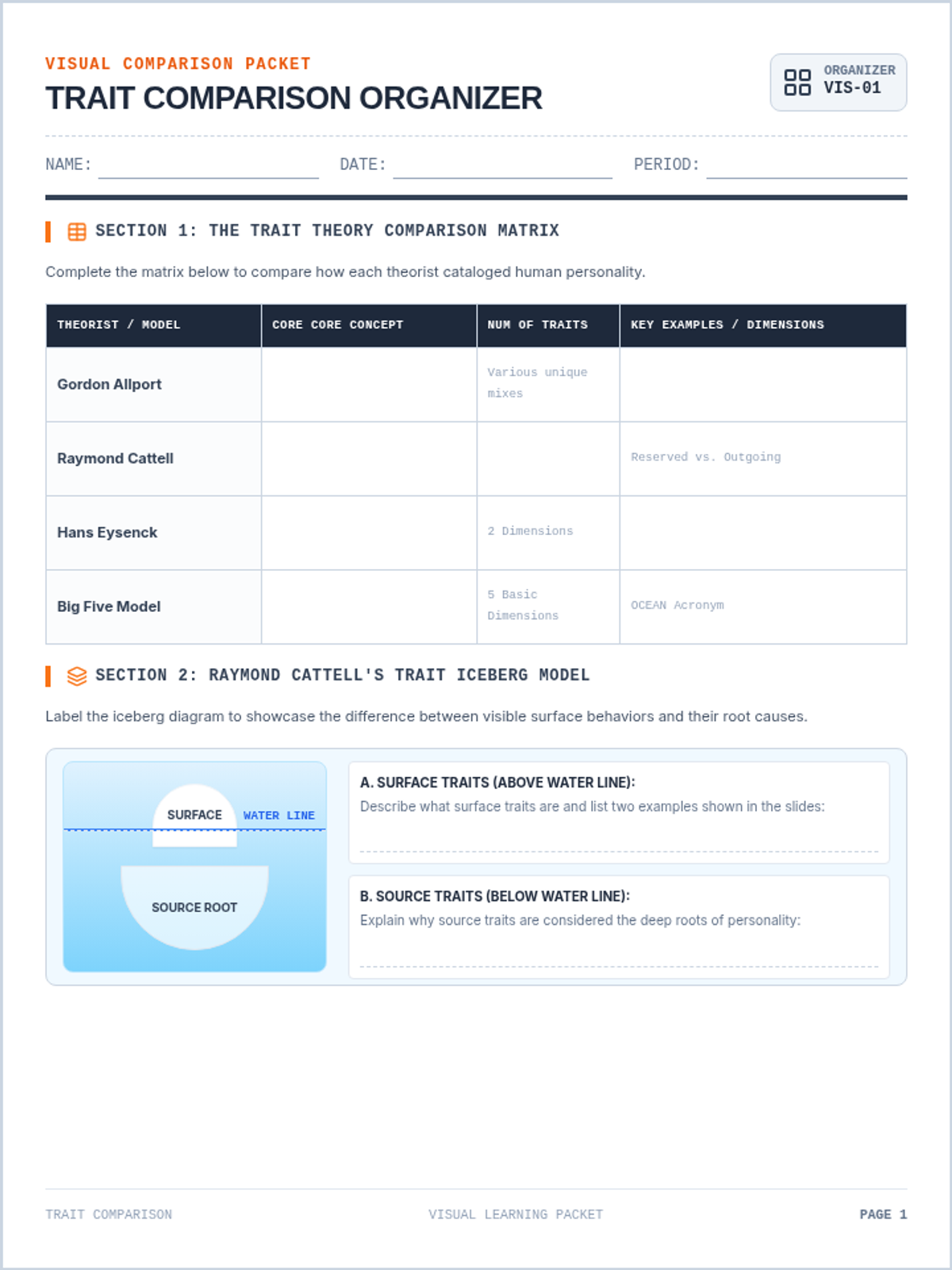
A visual two-page comparison packet featuring a structured theorist comparison matrix, Cattell's Trait Iceberg model, Eysenck's quadrant grid, and a Big Five spectrum chart with clear, handwritten-friendly text boxes.
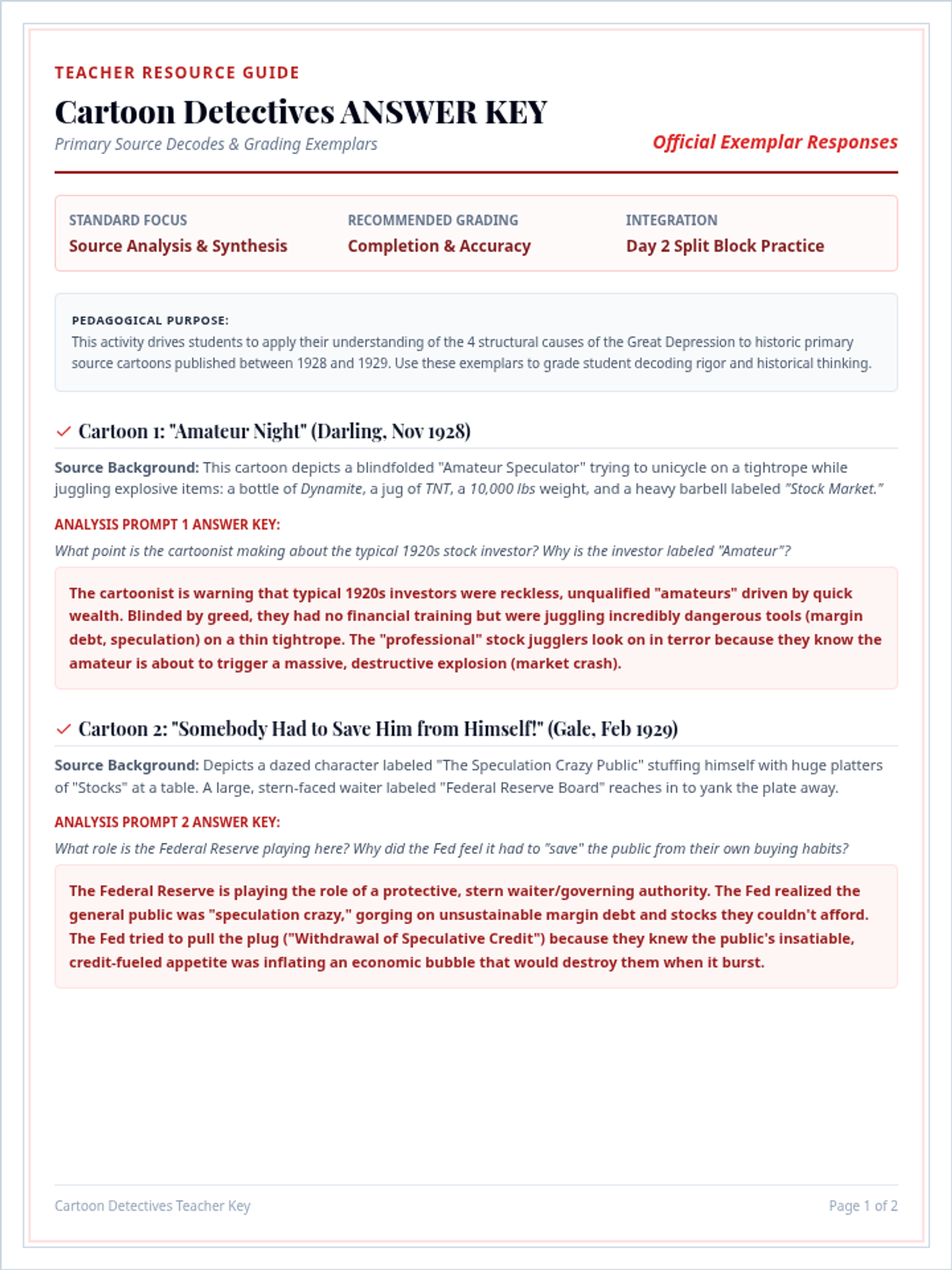
A detailed teacher answer key for the Cartoon Detectives political cartoon analysis activity, providing descriptive decode guides and model connections to economic structural factors.
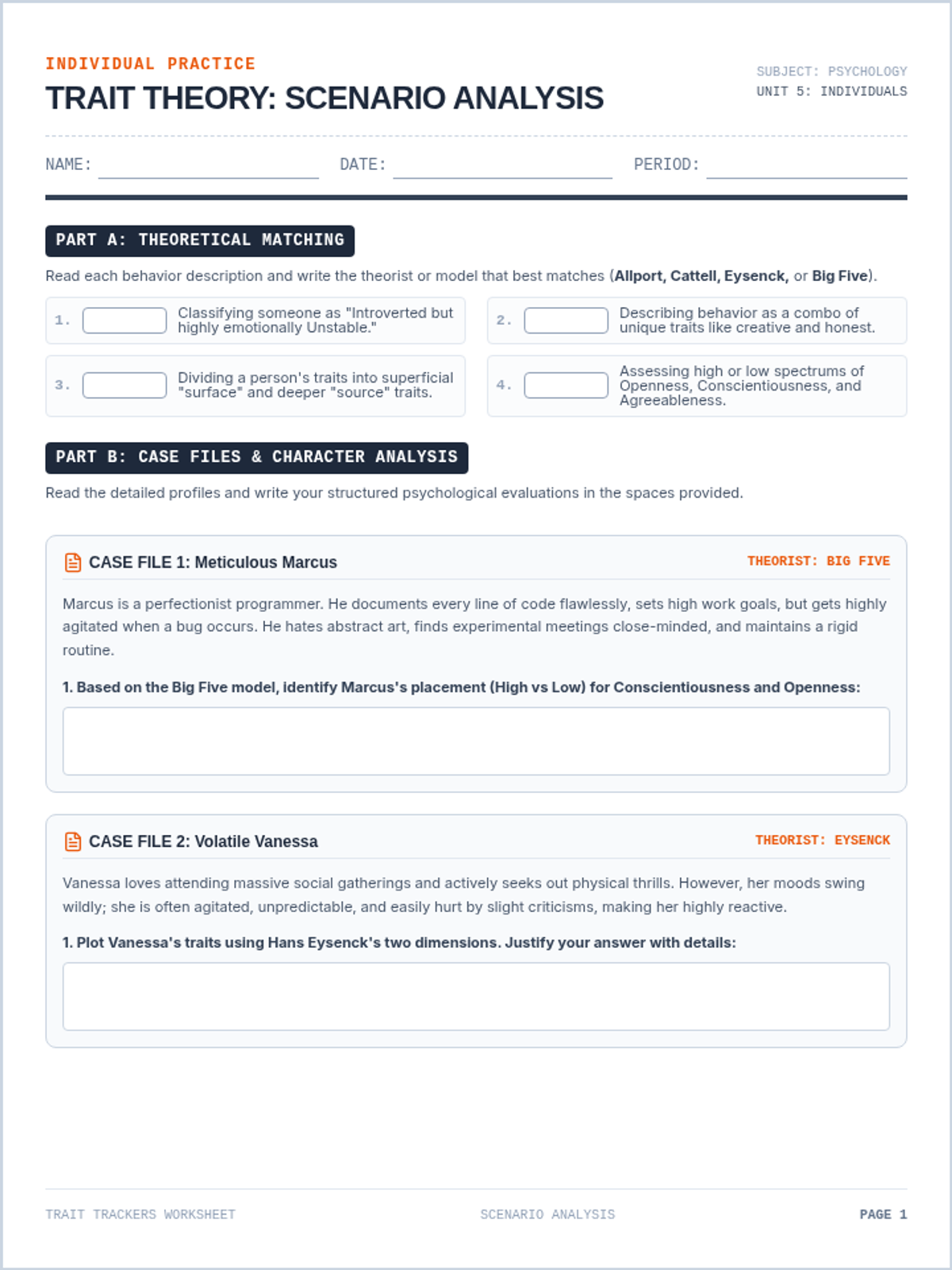
A two-page printable worksheet for individual student practice. It includes a matching exercise and four detailed character profiles where students analyze and apply Allport's, Cattell's, Eysenck's, and the Big Five theories, with spacious writing boxes.
A rigorous primary source analysis packet featuring three additional historic political cartoons from the National Humanities Center collection, complete with structured decoding prompts.
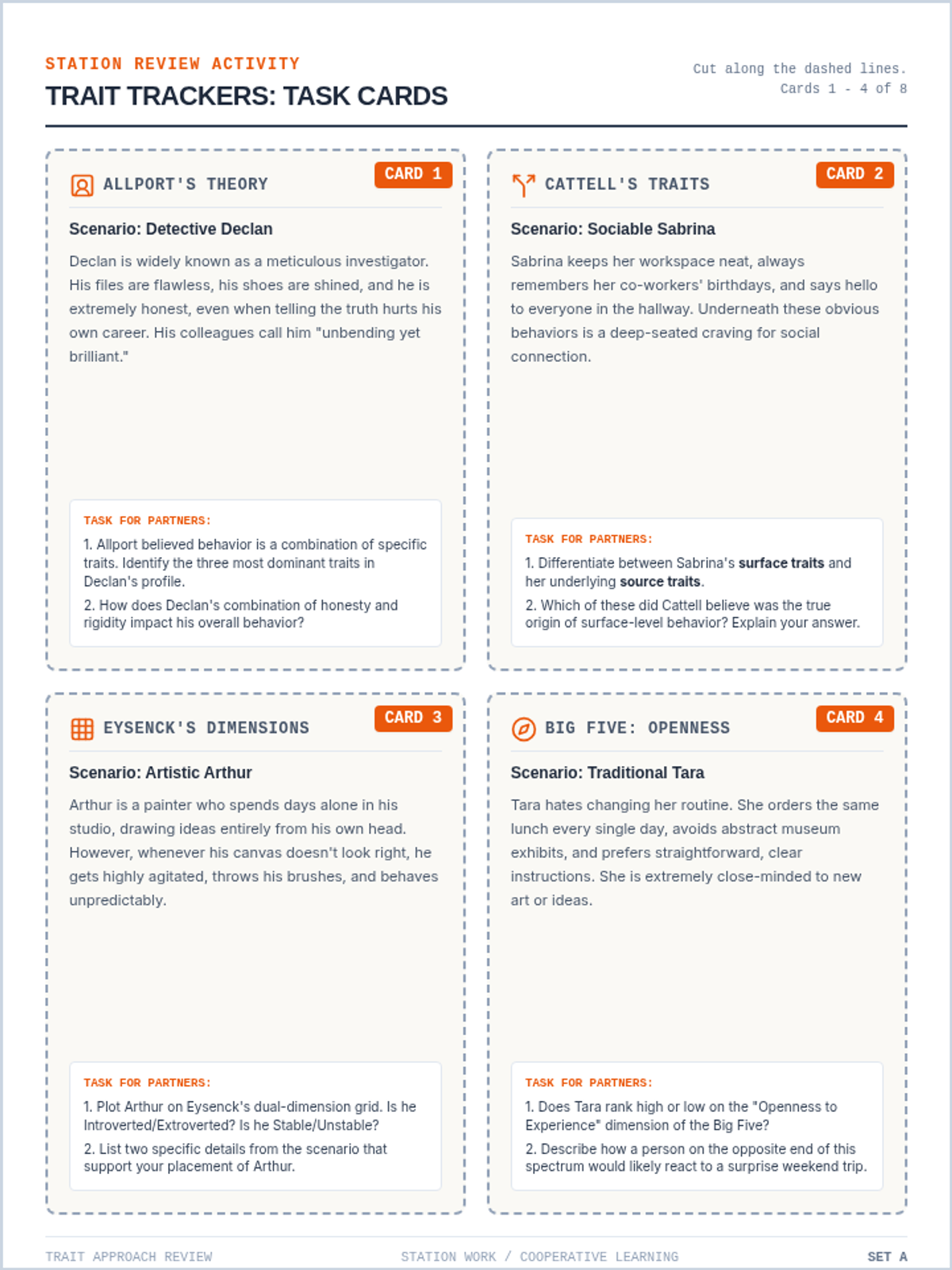
An 8-card interactive review station activity designed to help students analyze and apply trait theories to character scenarios. Each page features 4 beautifully designed, print-and-cut task cards.
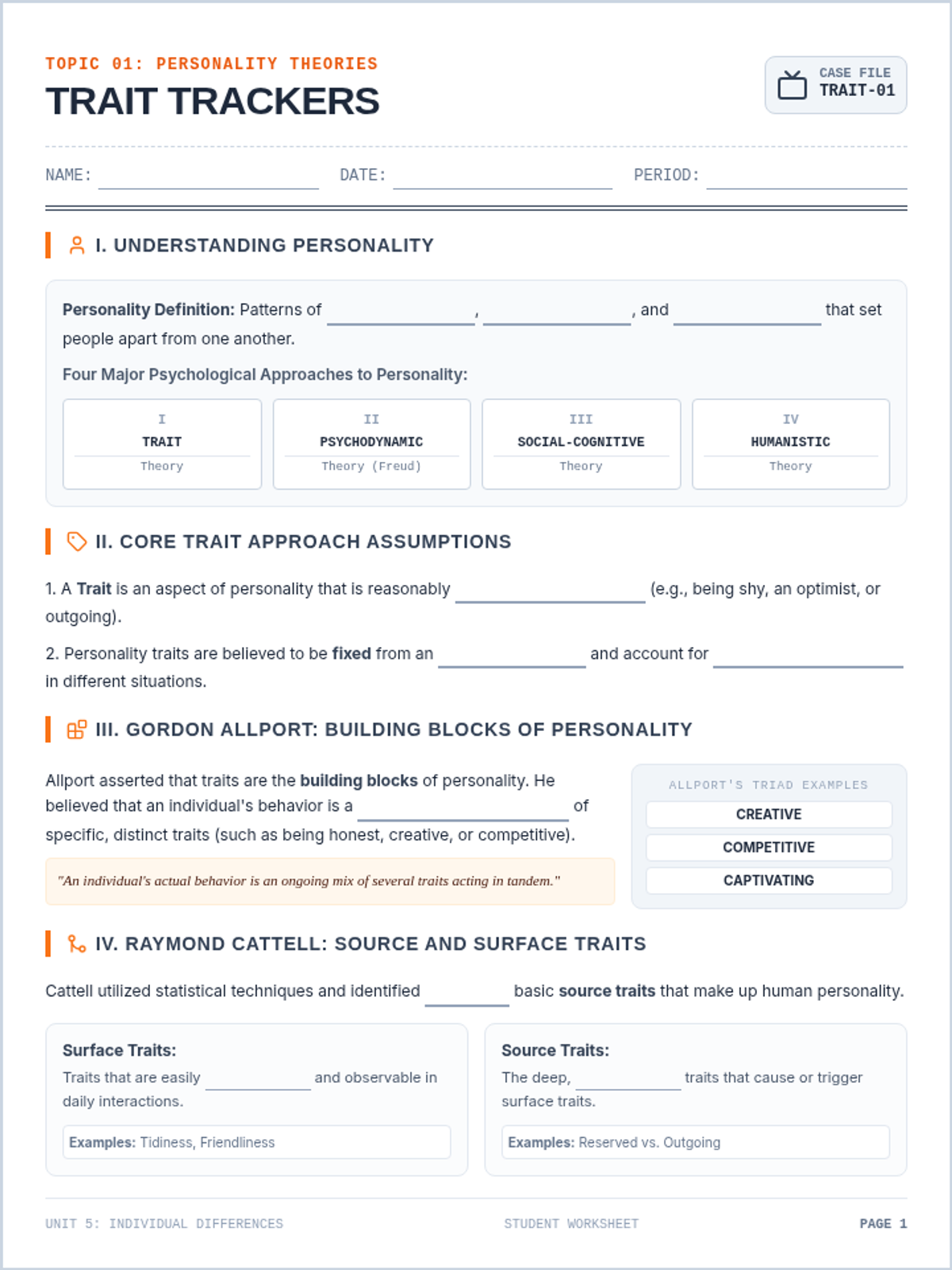
A structured, two-page guided notes worksheet featuring fill-in-the-blank sections, graphic organizers, and quick-check questions designed to directly follow the 'Theories of Personality: Trait Approach' presentation.
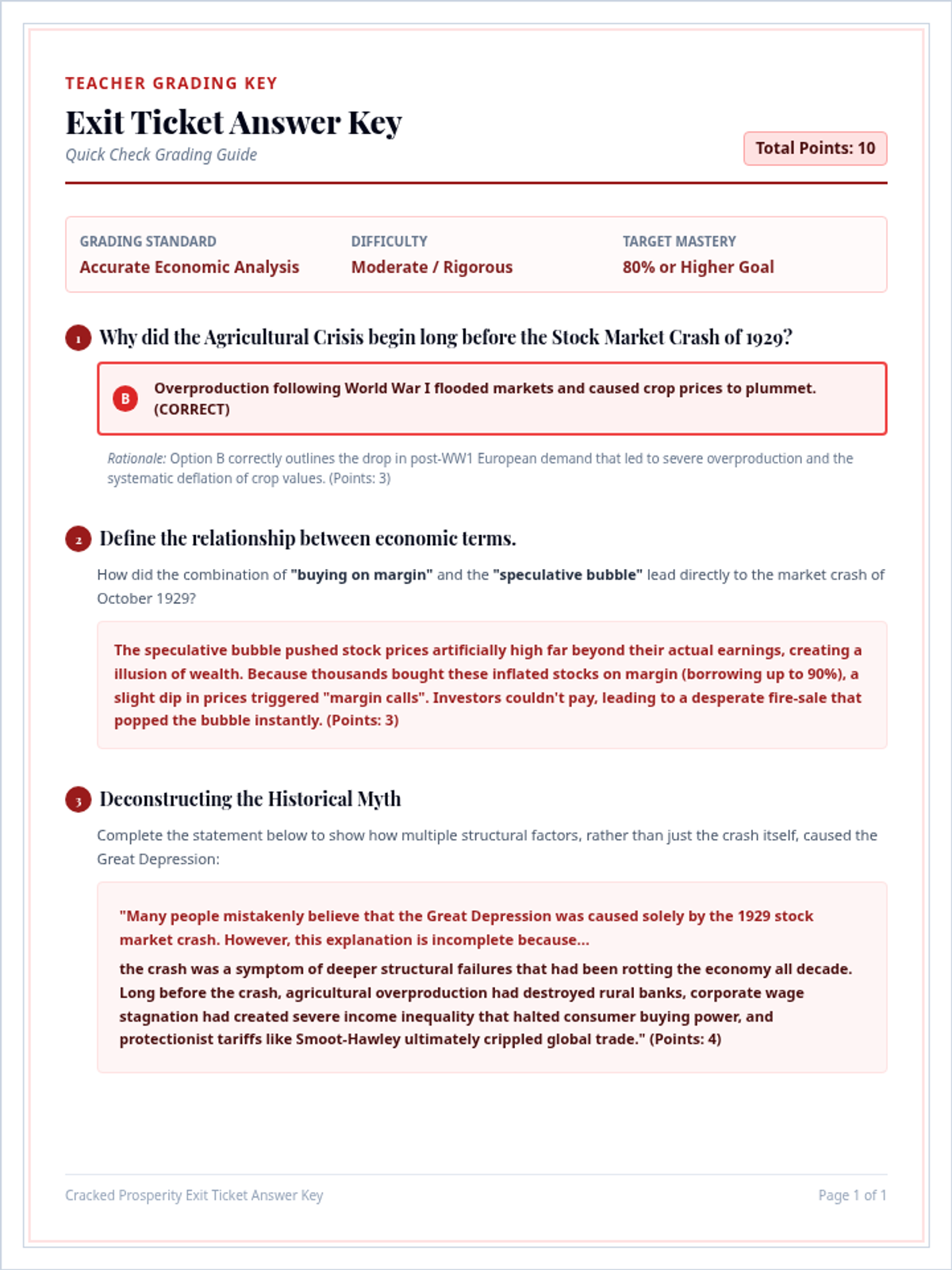
A detailed teacher answer key for the student exit ticket, providing correct answers, rationale, and sample answers for formative assessment scoring.
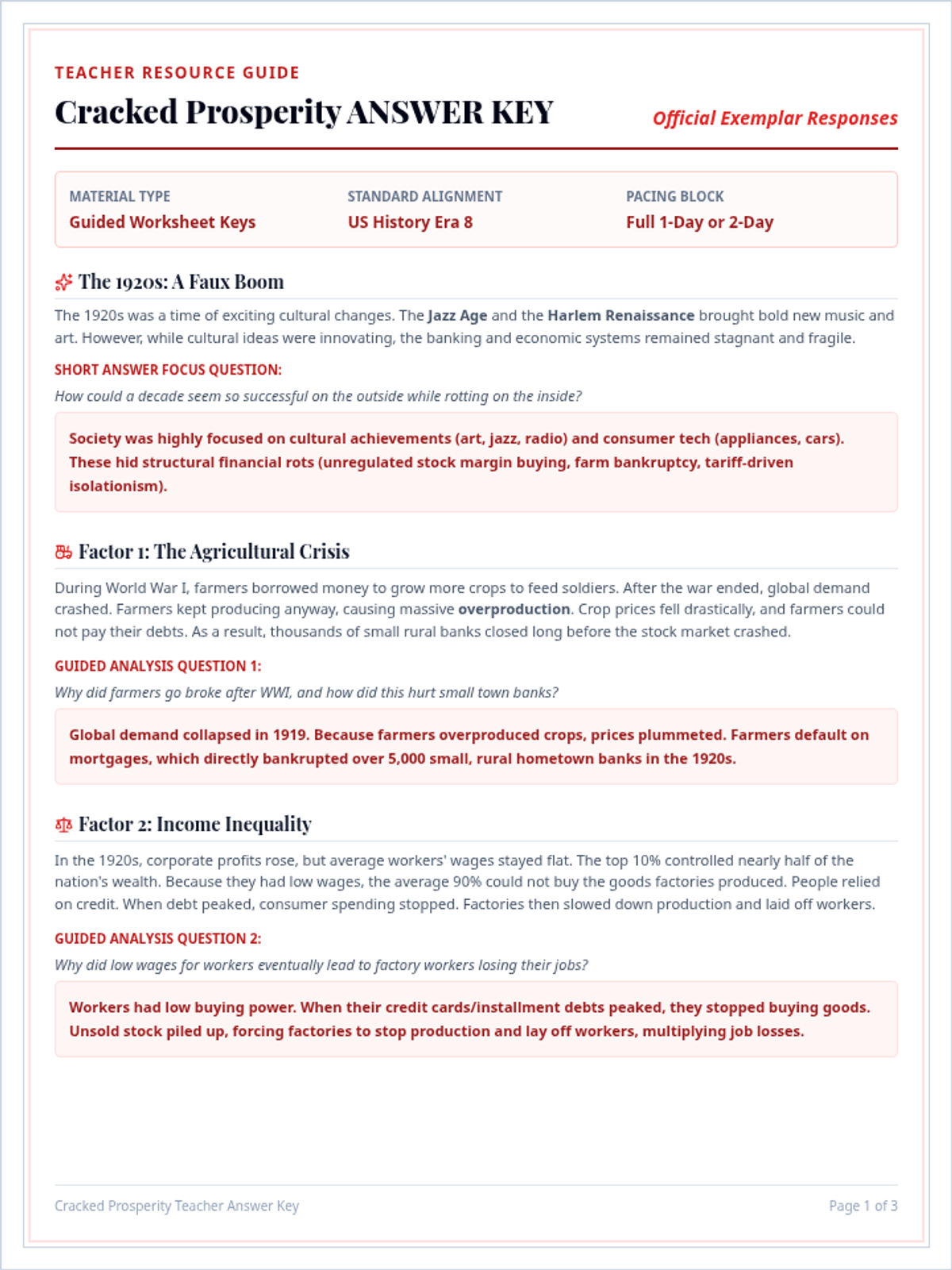
A detailed teacher answer key for the student guided worksheet, providing exemplary answers for all guided analysis questions, cartoon analysis prompts, and model CER structures.
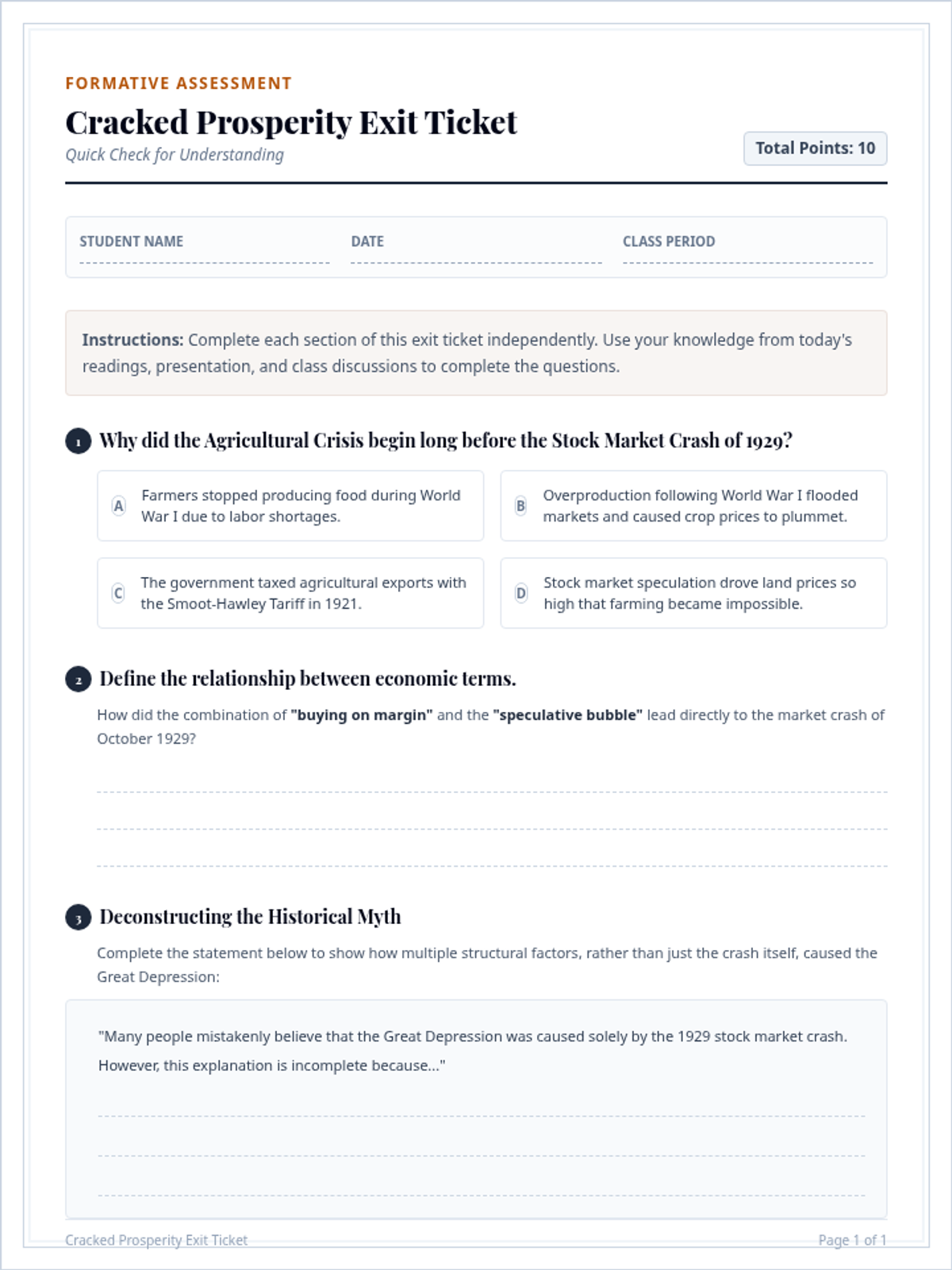
A student exit ticket for formative assessment, evaluating comprehension of the four economic factors and checking student understanding of the 1920s to 1930s transition.
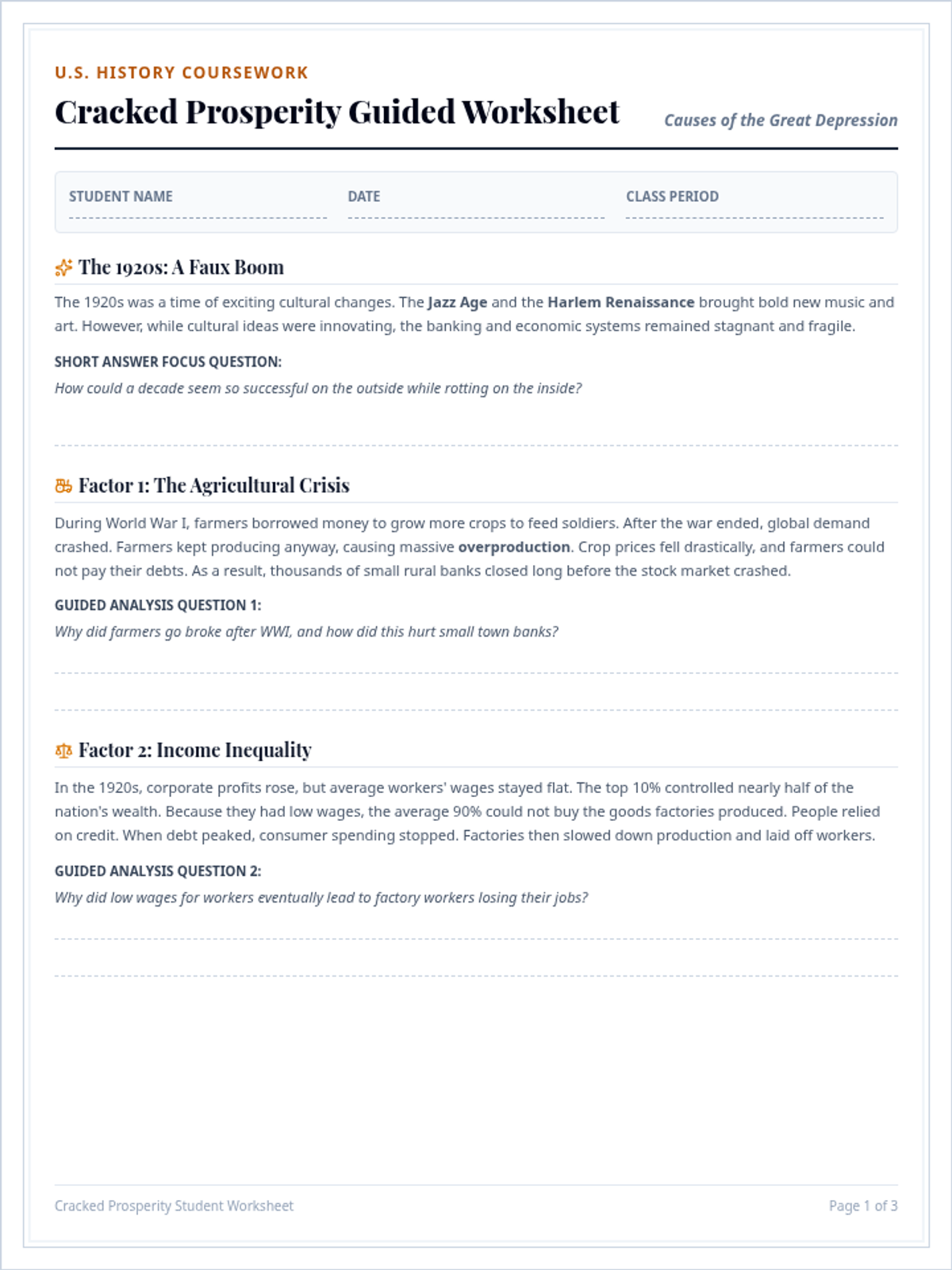
A simplified student guided reading and analysis worksheet covering the four economic factors of the Great Depression, optimized with highly accessible text, simplified prompts, and clear scaffolding for the CER task.
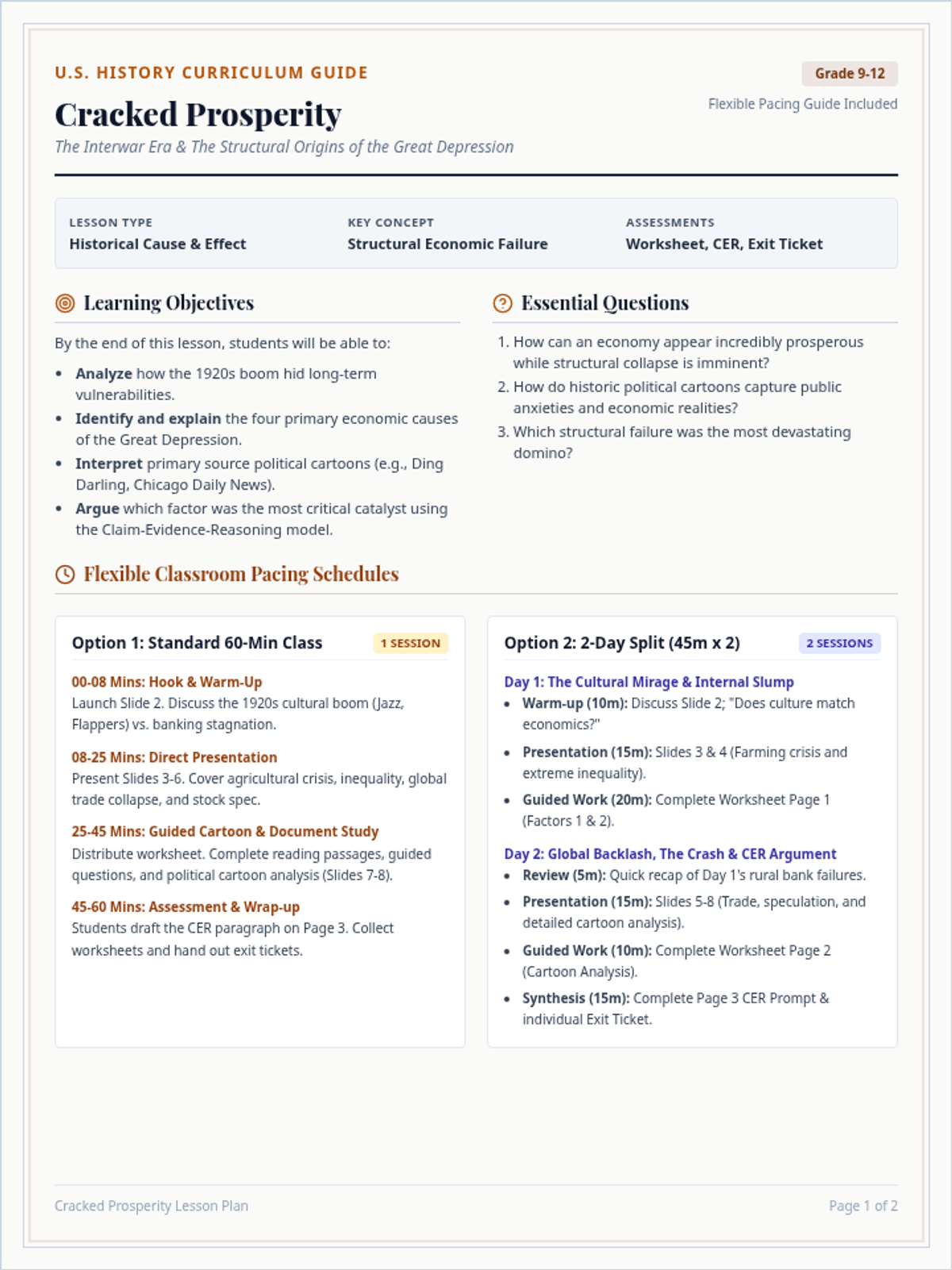
A revised, highly-versatile teacher lesson plan providing structured pacing guides for both a standard 60-minute class and a 2-day split lesson block.
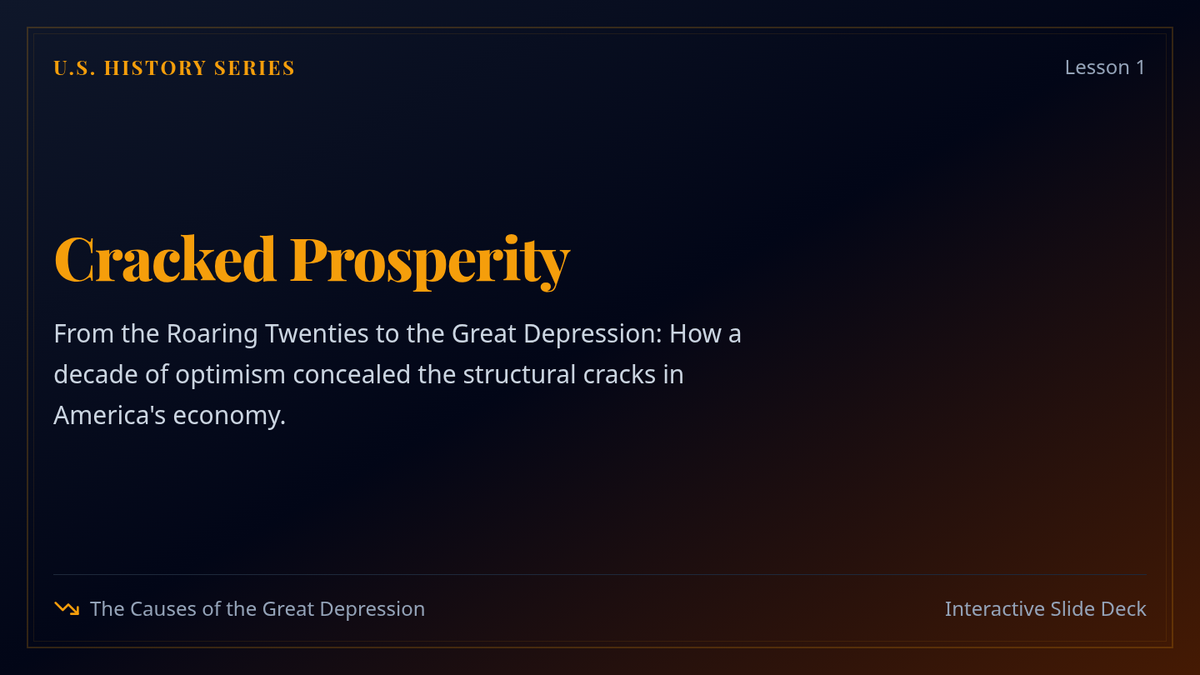
An interactive slide deck presenting the transition from the Roaring Twenties to the Great Depression, covering all four economic factors with primary source quotes, discussion prompts, and five political cartoon studies.
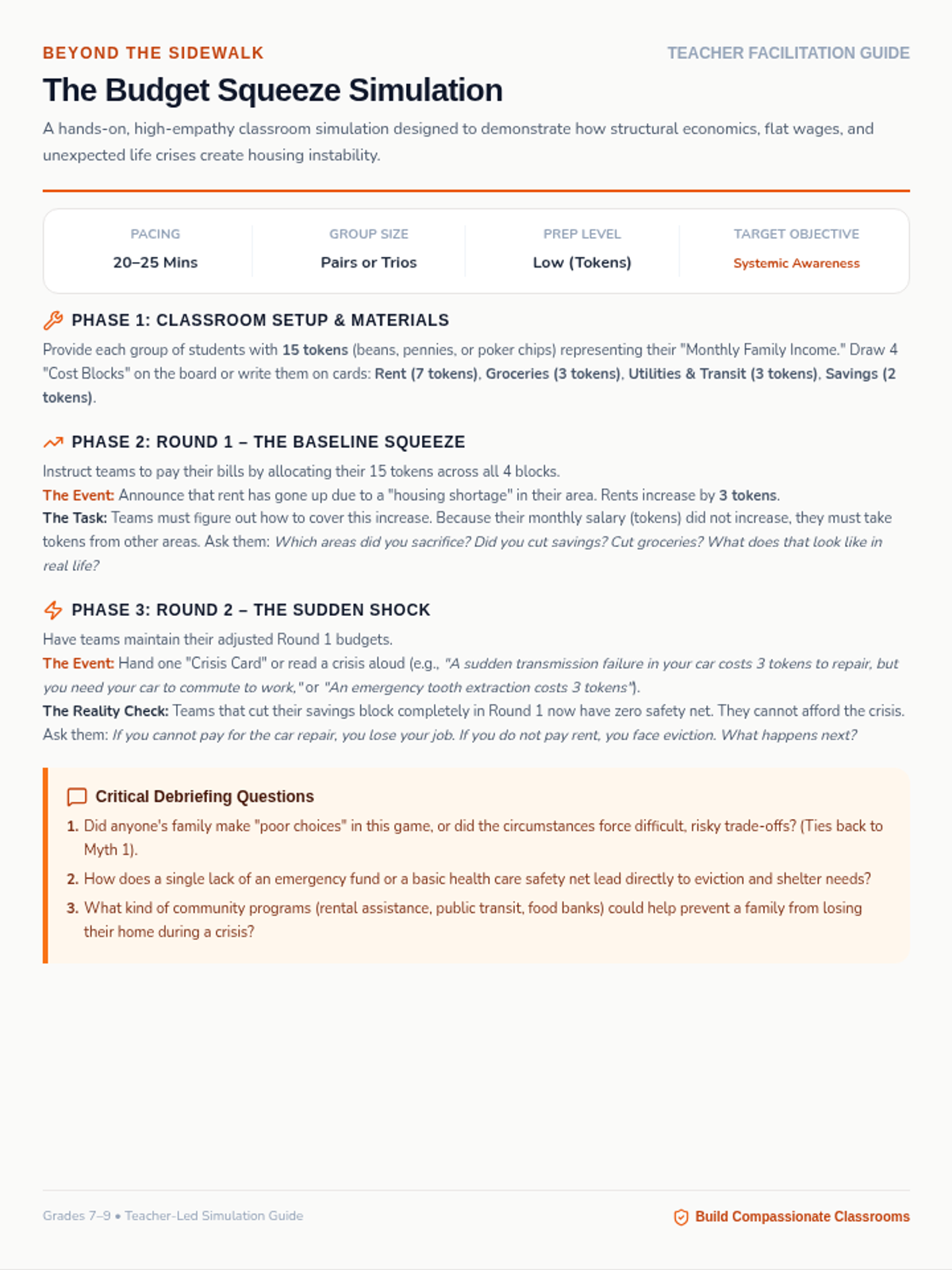
A comprehensive teacher guide for facilitating 'The Budget Squeeze' simulation, an active classroom exercise that demonstrates the compounding structural pressures of housing costs and unexpected life crises.
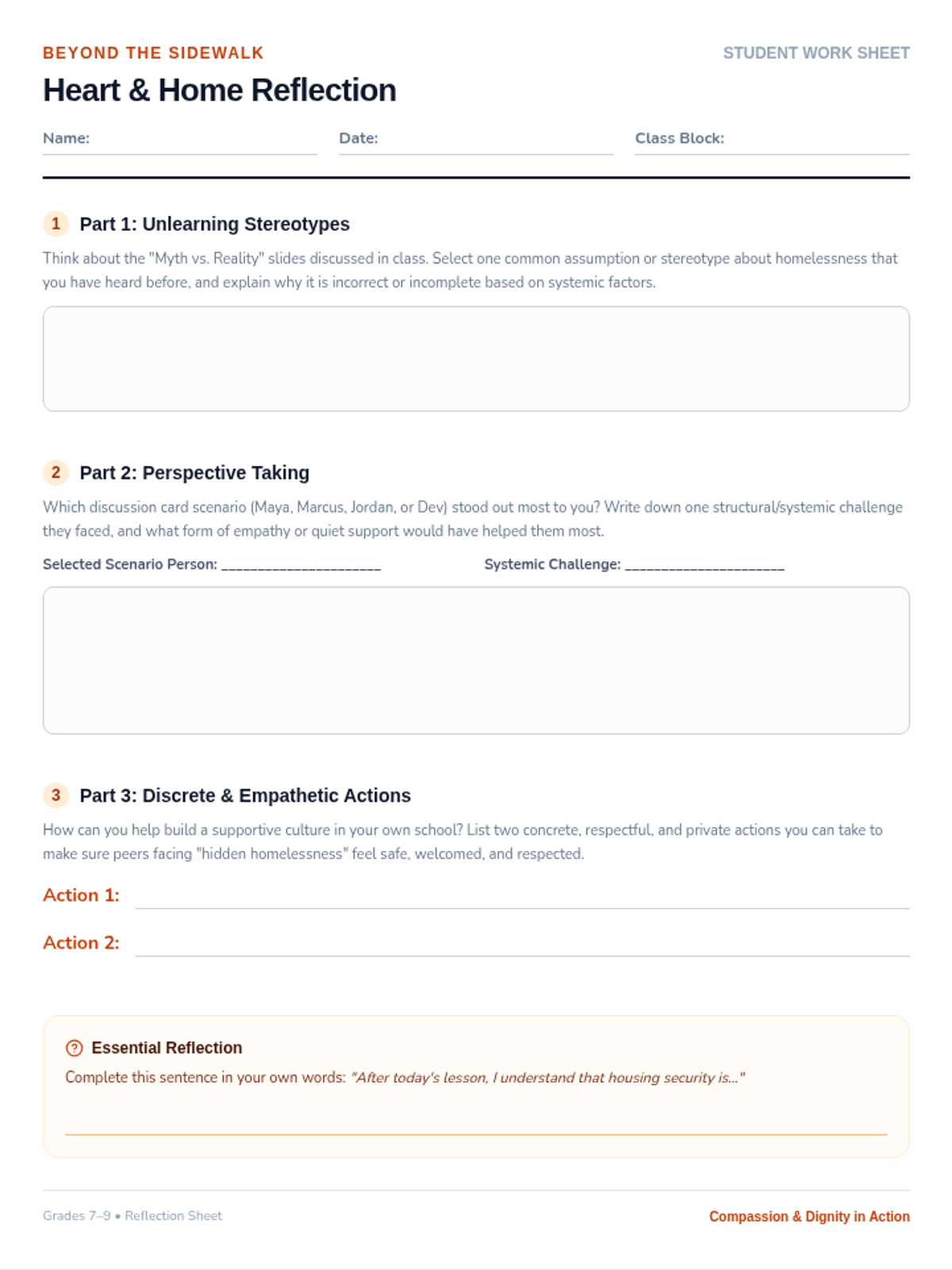
A student-facing guided reflection and perspective-taking worksheet. Includes sections for dismantling personal misconceptions, analyzing scenario-based challenges, and outlining specific, respectful action items.
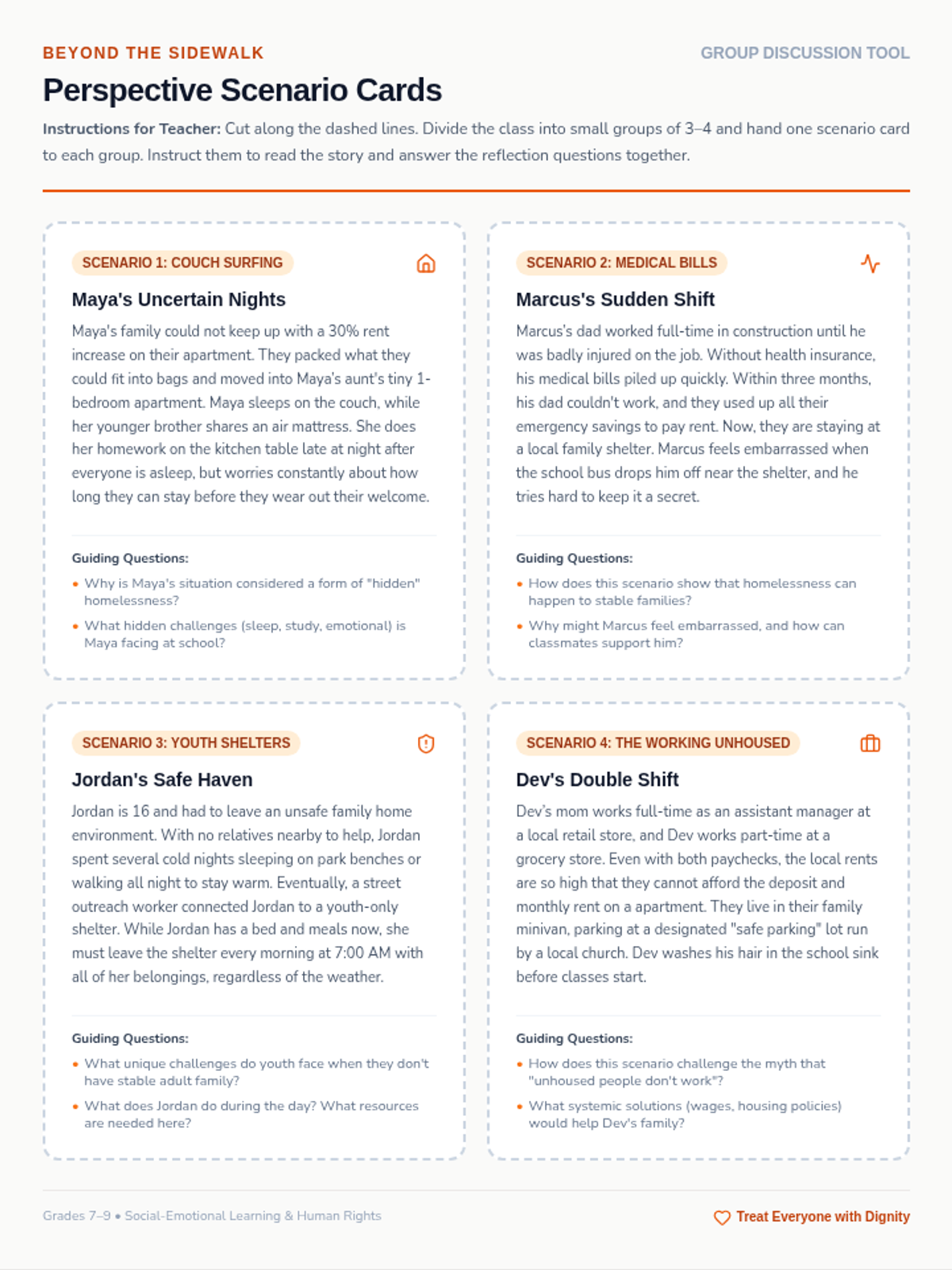
A set of 4 realistic and empathy-building scenario cards featuring teens facing different forms of housing insecurity (job loss, medical crisis, temporary couch surfing, and aging out of care). Perfect for small group analysis and perspective-taking exercises.
A visual slide presentation designed to lead a discussion with young teens about homelessness. It dismantles common myths, explains systemic causes, highlights the reality of hidden homelessness, and presents ethical, concrete steps for local action.
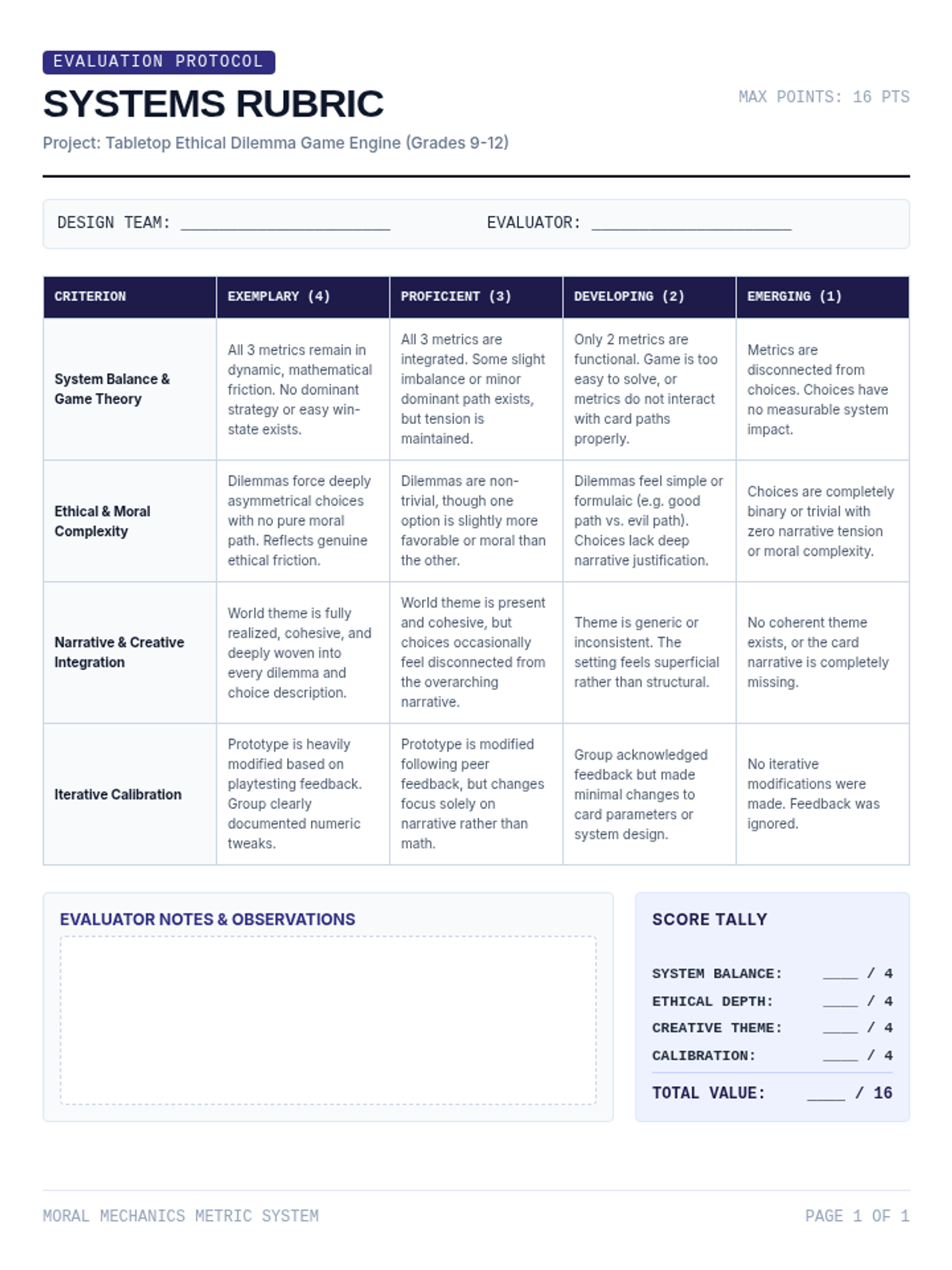
A clear, 1-page grading rubric and feedback matrix for assessing game systems balance, ethical complexity, creative writing, and iterative playtesting.
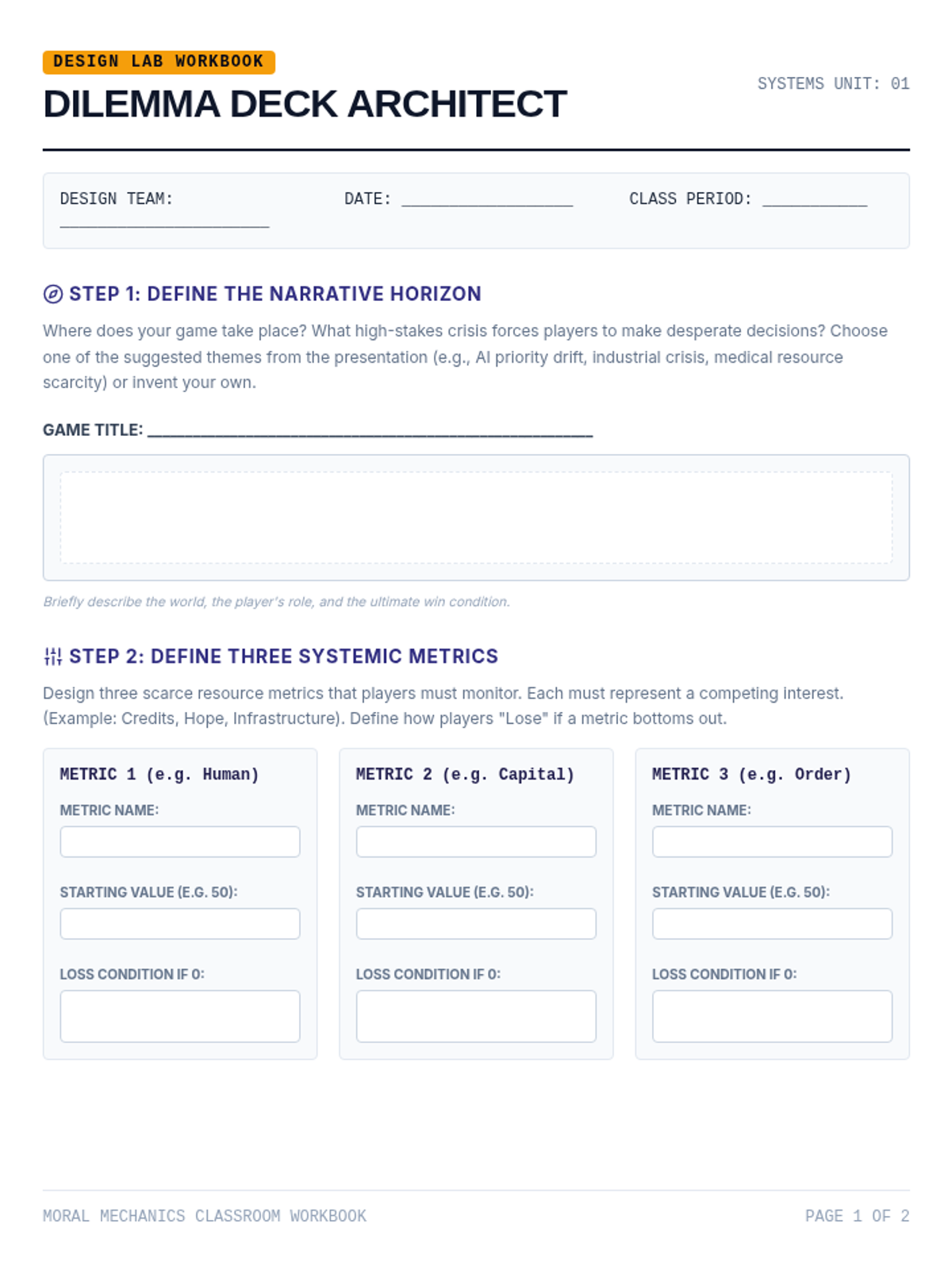
A clean, print-ready 2-page design workbook and template for student groups to blueprint their card game theme, define resource mechanics, and write core dilemma cards.
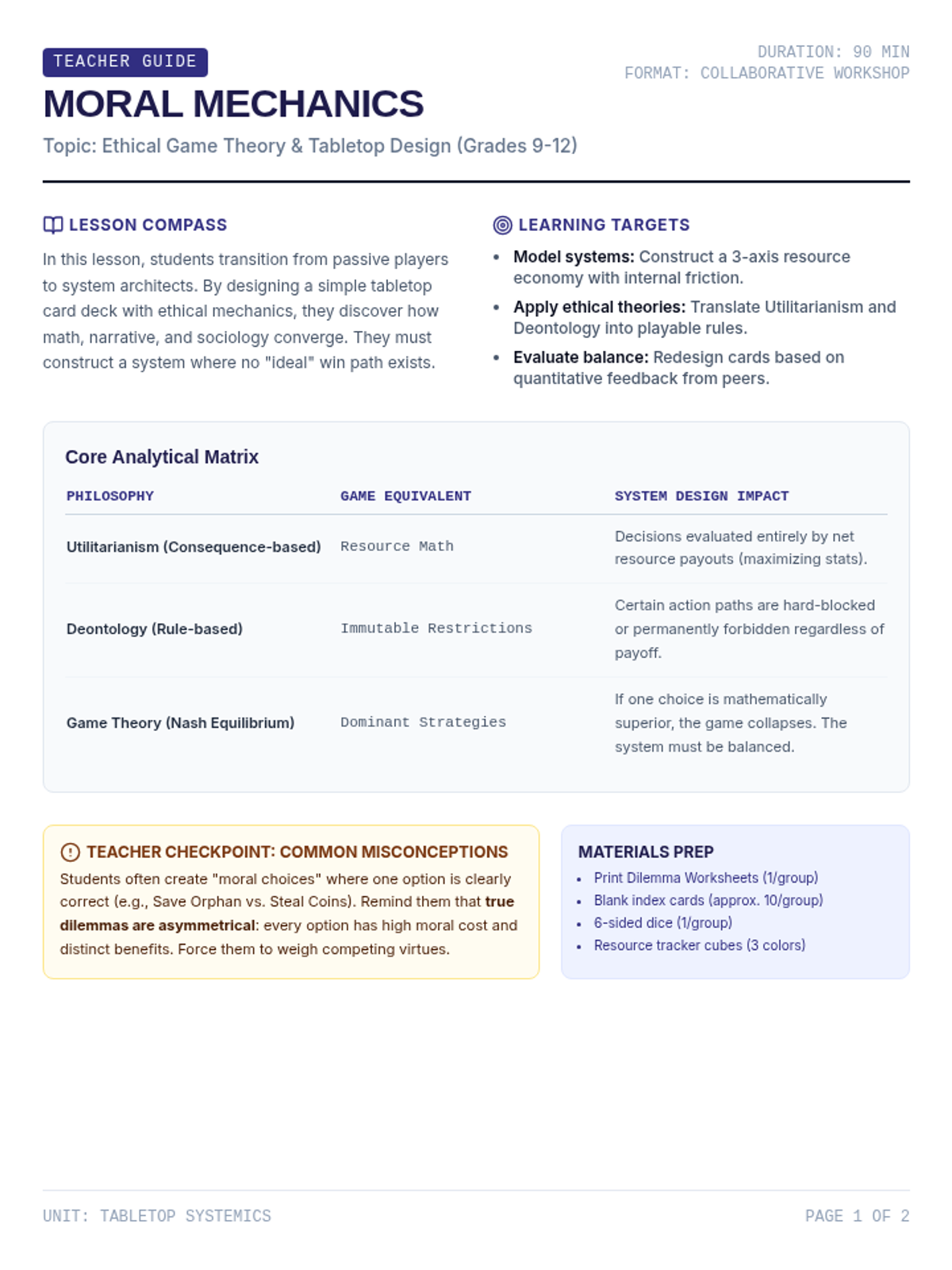
An in-depth, structured 2-page curriculum planner and facilitator's guide providing educators with pacing, discussion scripts, game-balancing mathematics, and pedagogical scaffolds for the lesson.