Visual presentation for the Measure Missions lesson, featuring the Jessi and Squipe video, warm-up activities, and key conceptual comparisons between measurement systems.
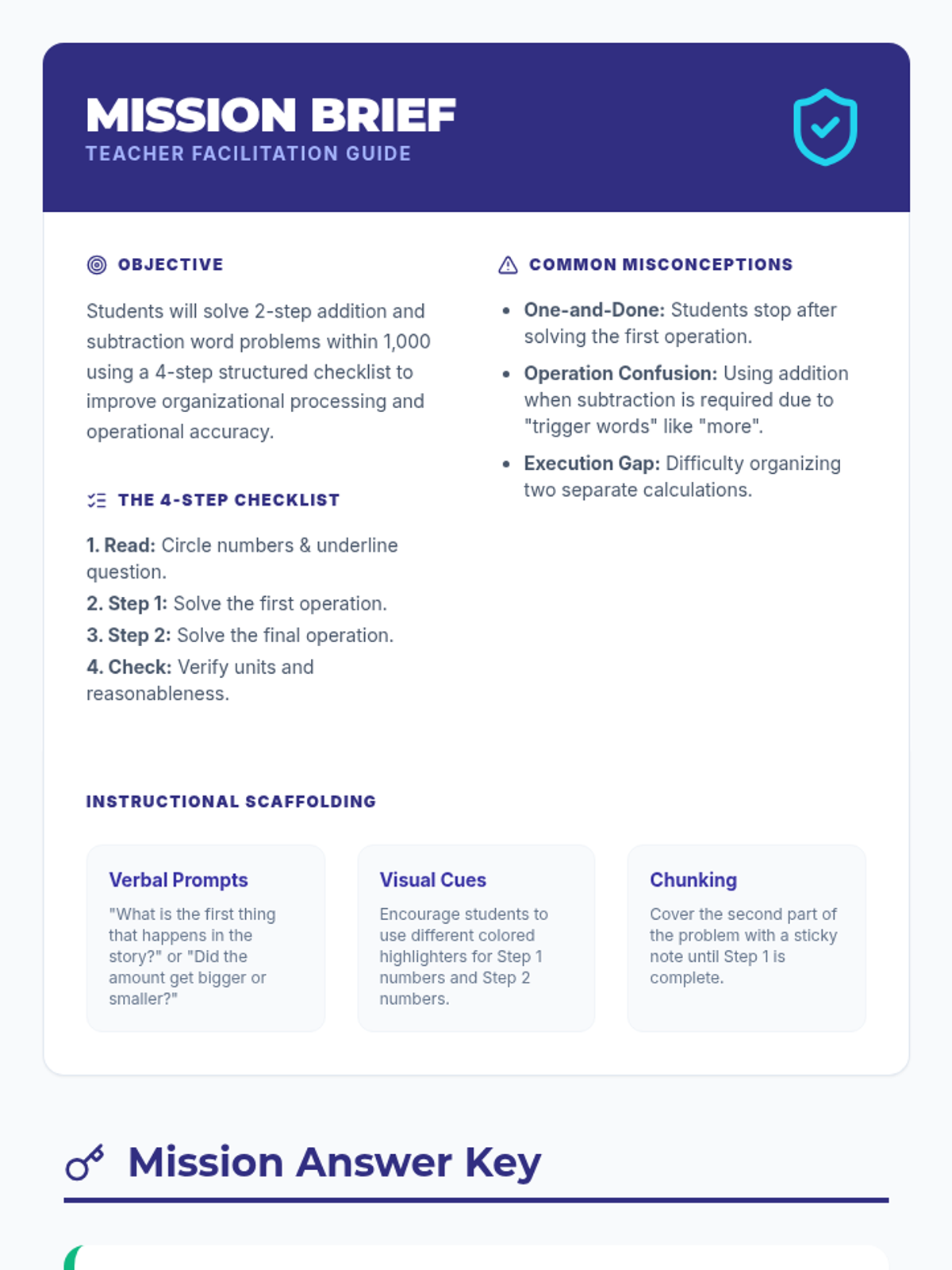
A teacher-facing facilitation guide and answer key for the Math Mission Rescue lesson. Includes instructional objectives, common misconceptions for IEP students, scaffolding strategies, and step-by-step solutions for all worksheet problems.
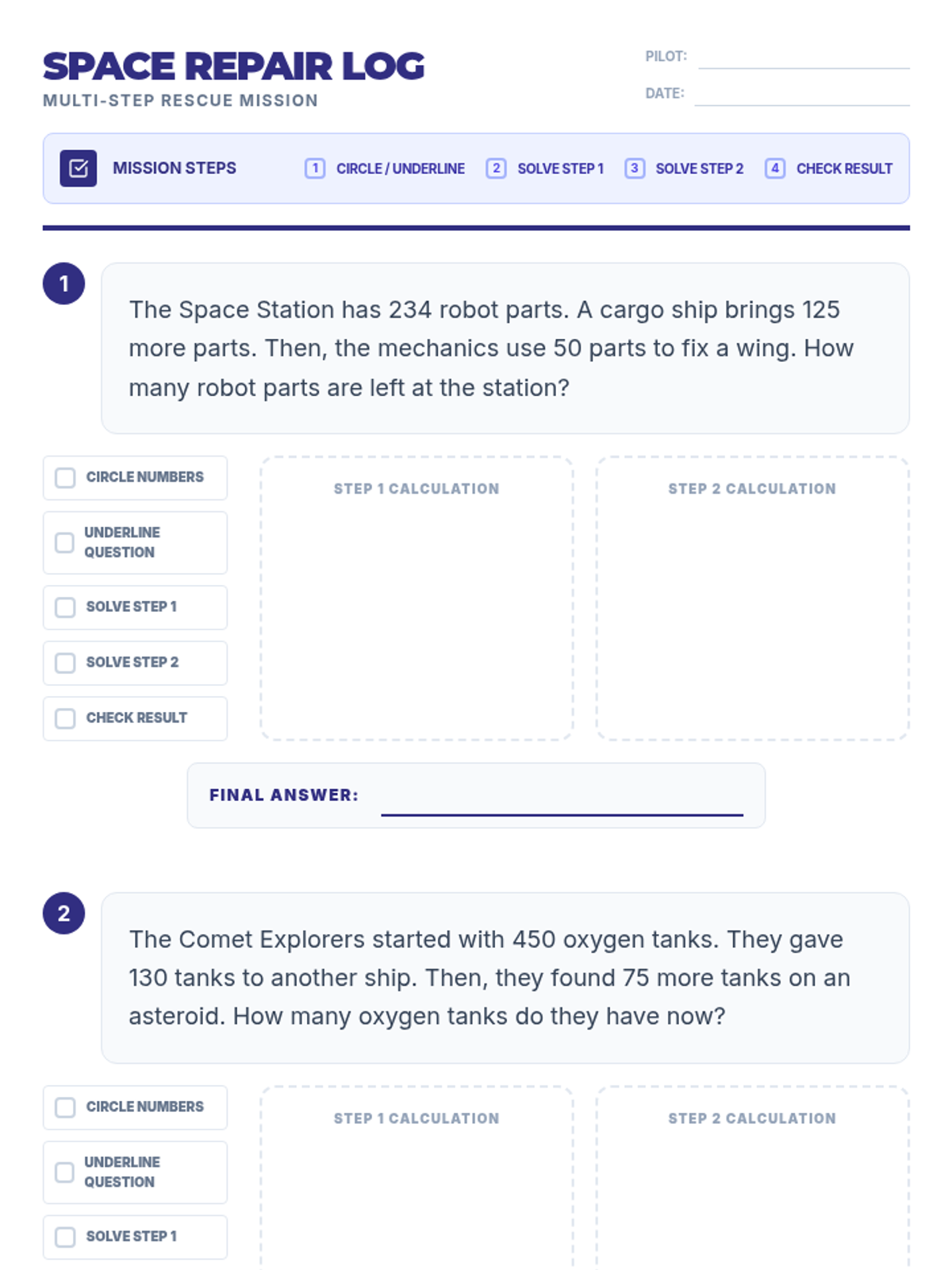
A scaffolded 3rd-grade math worksheet featuring 2-step addition and subtraction word problems with a 'Space Repair' theme. Includes a 4-step checklist for each problem and separate workspaces for each step to support students with IEPs.
A visual slide deck designed for 3rd-grade students with IEPs, introducing a structured 4-step checklist (Read, Plan, Solve, Check) for solving multi-step addition and subtraction word problems within a space-themed 'Mission Control' context.
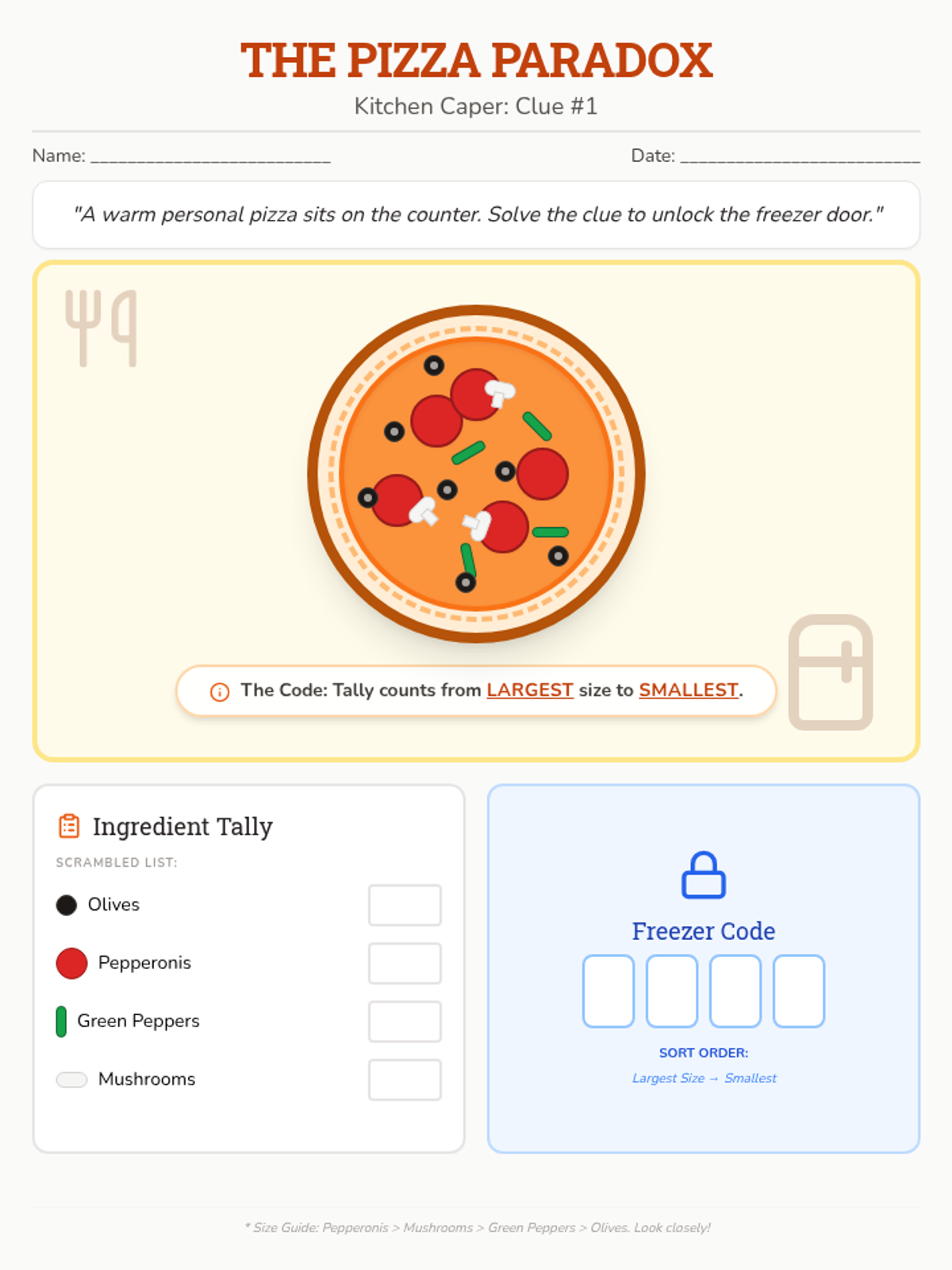
A visual observation puzzle where students tally pizza toppings to solve a freezer unlock code. Scrambled tally list and clarified size-based sorting logic. Fixed page break and opacity.
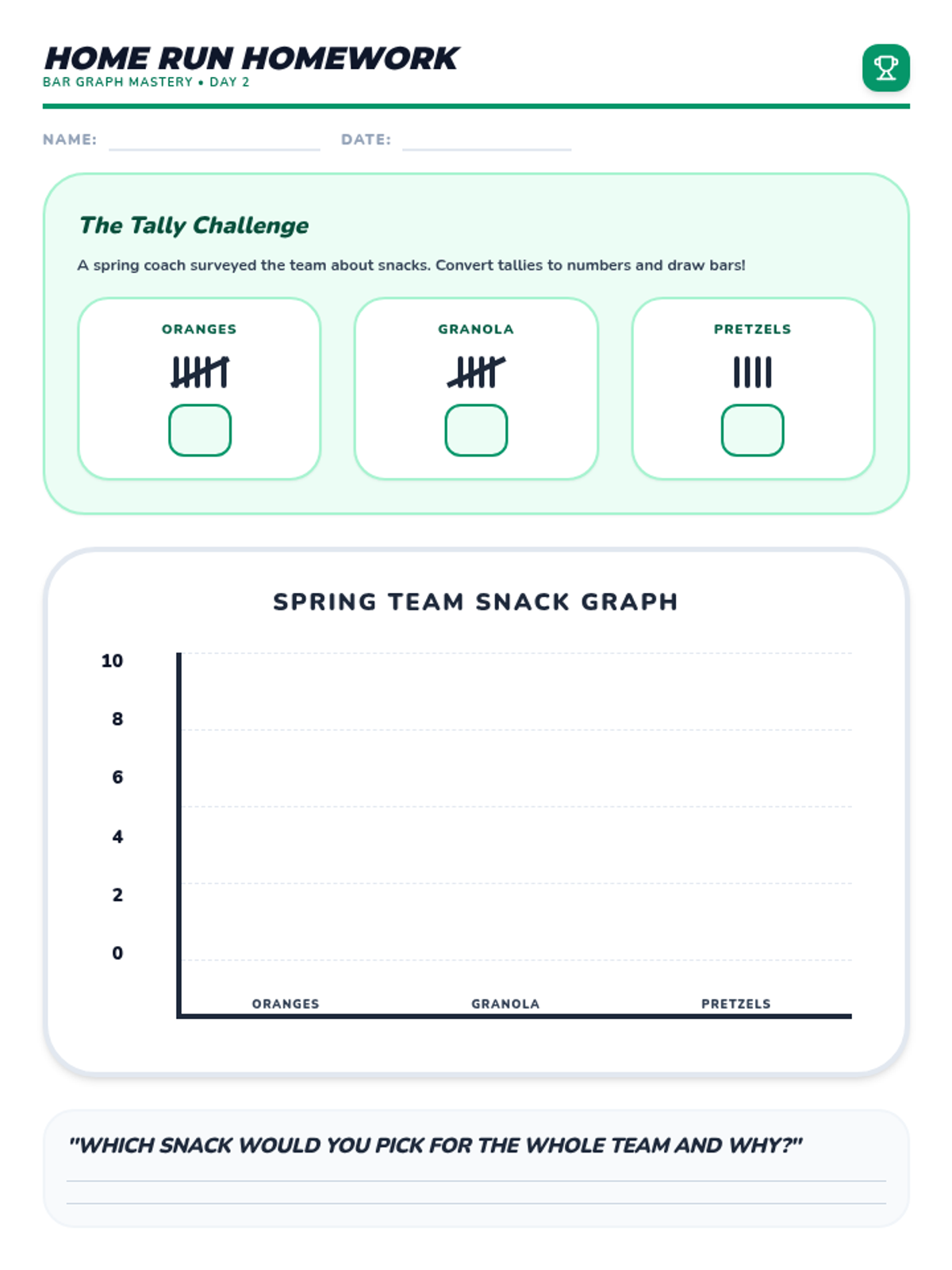
Day 2 homework assignment where students convert tally marks into numerical data and complete a partially constructed bar graph. Includes a reflection question on data-driven decision making.
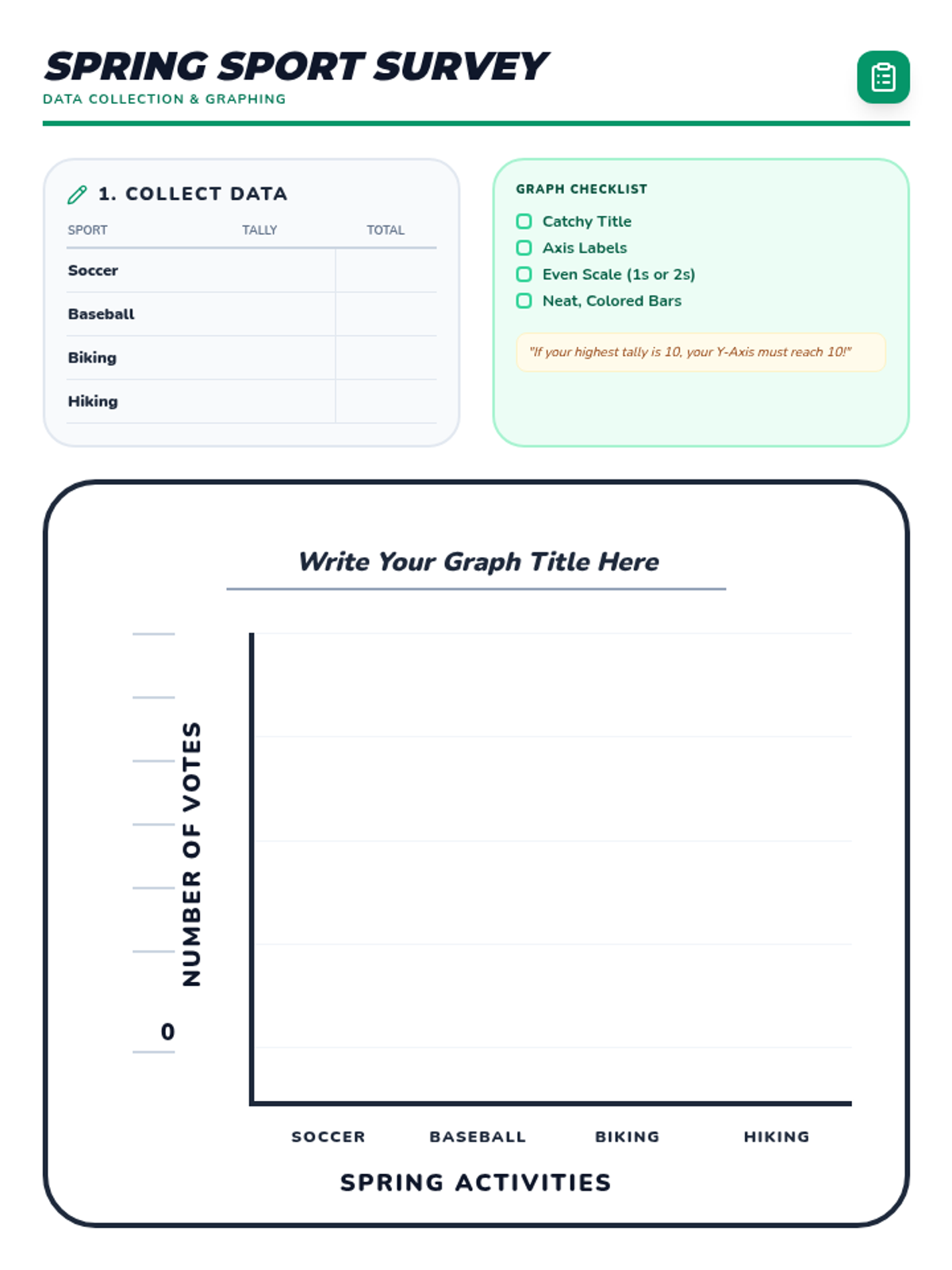
A worksheet for Day 2 where students conduct a class survey, tally the results, and construct their own bar graph from scratch. Includes a checklist for essential graph components.
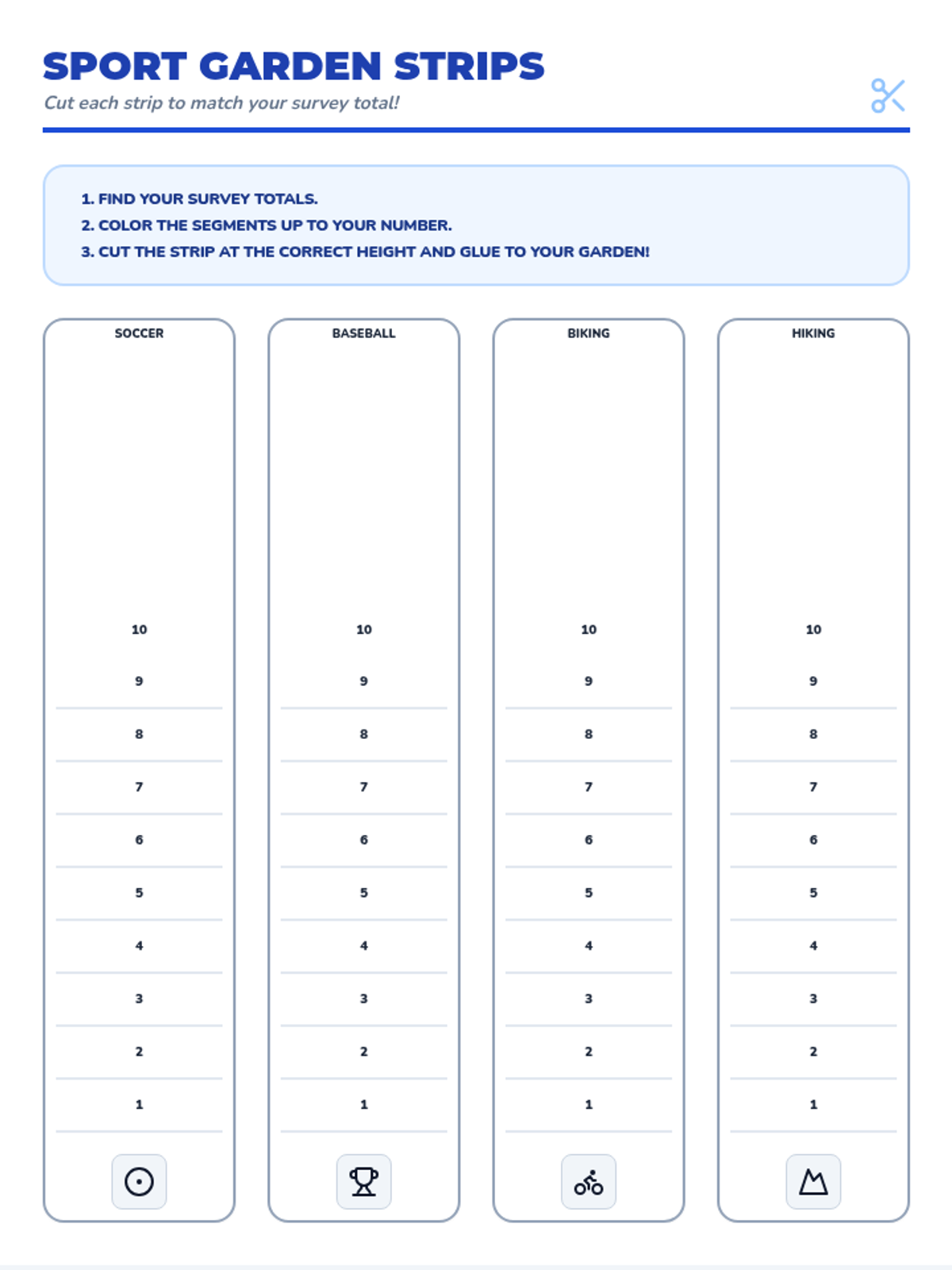
A creative spring-themed foldable craft for the interactive notebook. Includes pop-up bar graph elements stylized as sports equipment and a garden-themed background for mounting.
Instructional slides for Day 2: Building the Box Score. Guides students through the process of surveying classmates, tallying data, and constructing their own bar graphs, ending with instructions for a spring-themed craft.
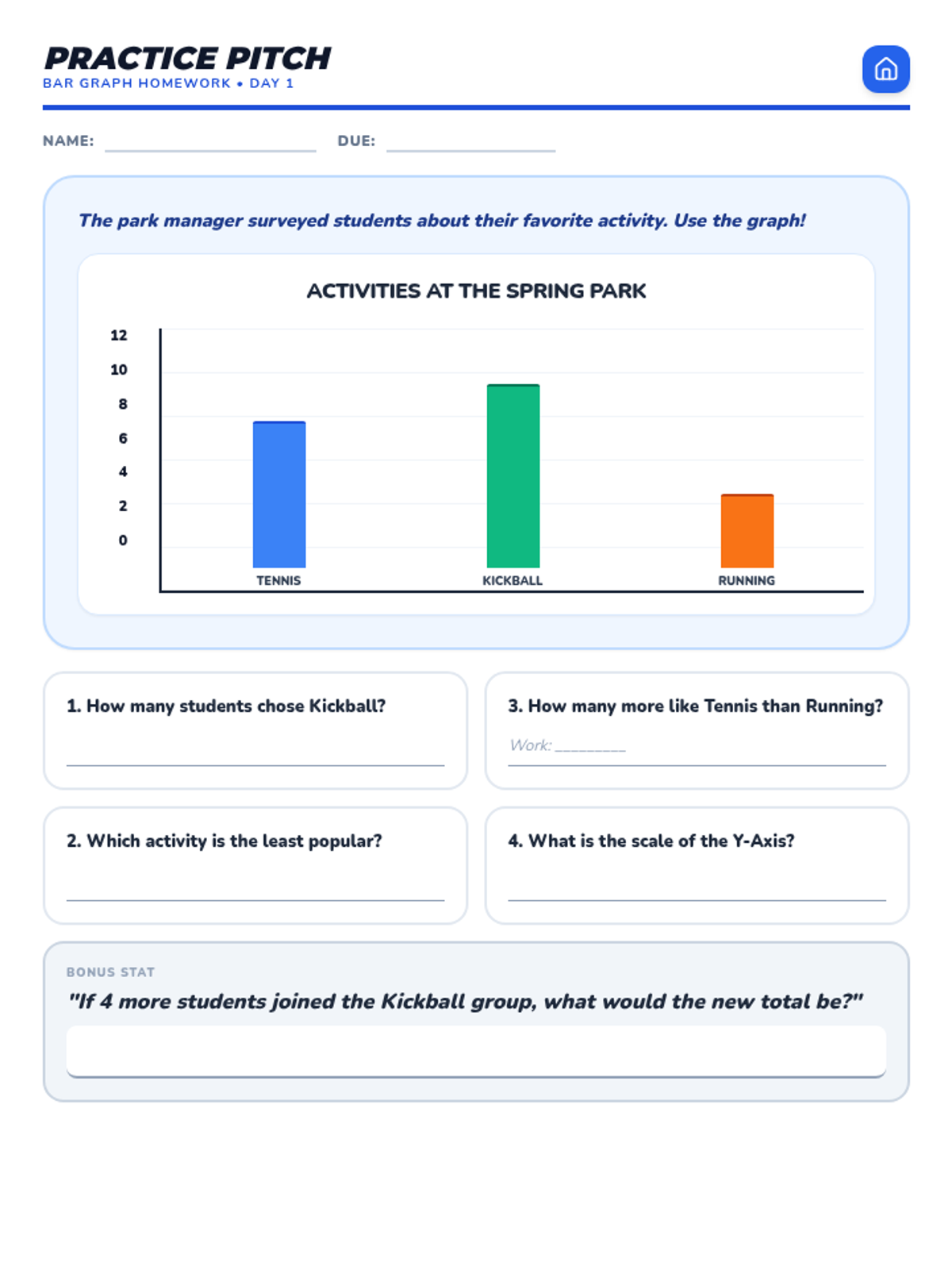
Day 1 homework assignment featuring a bar graph analysis task with a scale of 2. Includes questions on data interpretation, comparison, and a challenge problem.
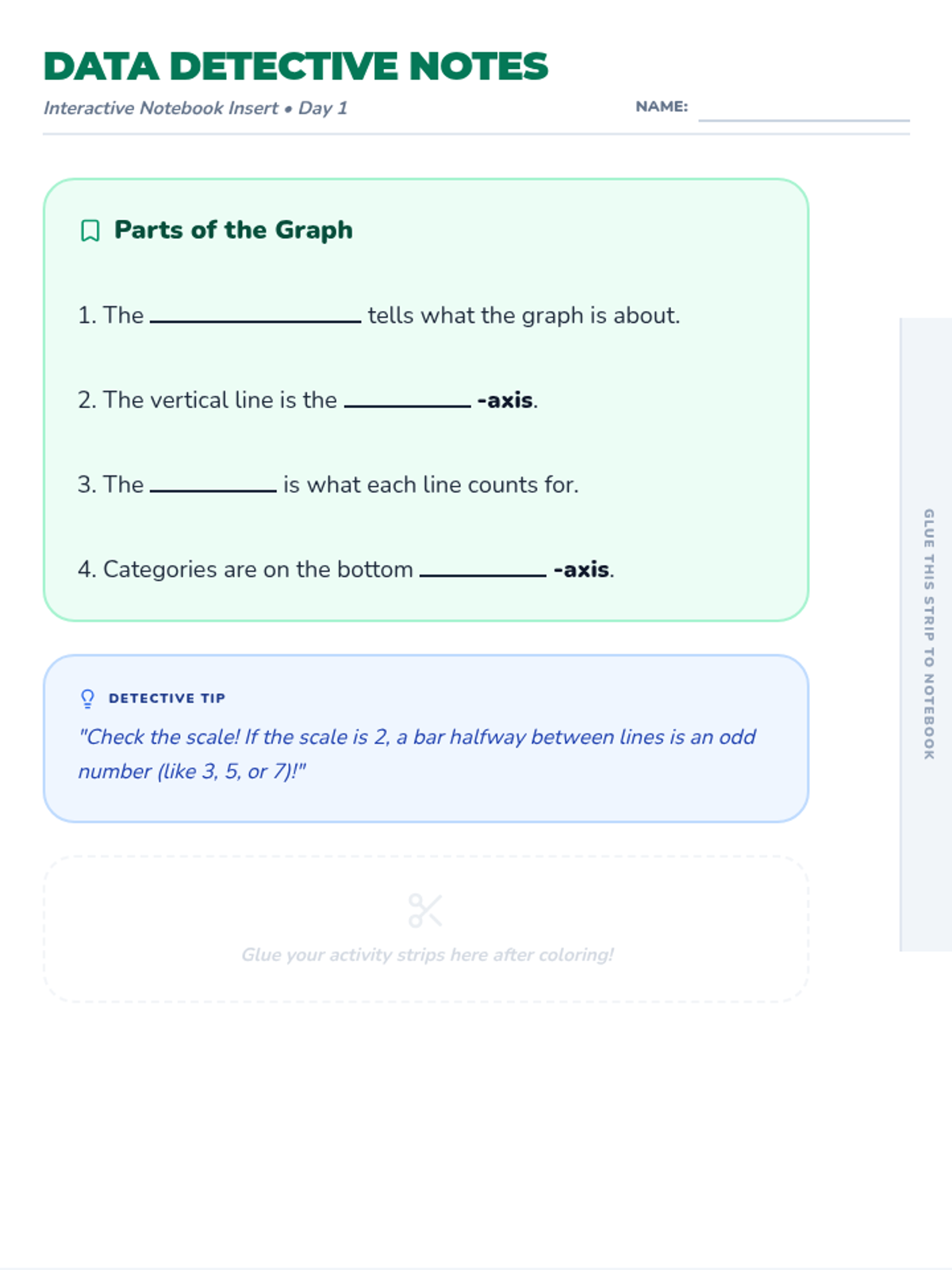
Interactive notebook guided notes and a data analysis worksheet focused on interpreting a spring-themed bar graph. Includes fill-in-the-blank terminology and comparative questions.
Instructional slides for Day 1: Analyzing Action. Covers the anatomy of a bar graph, understanding scales and intervals, and comparative data analysis.
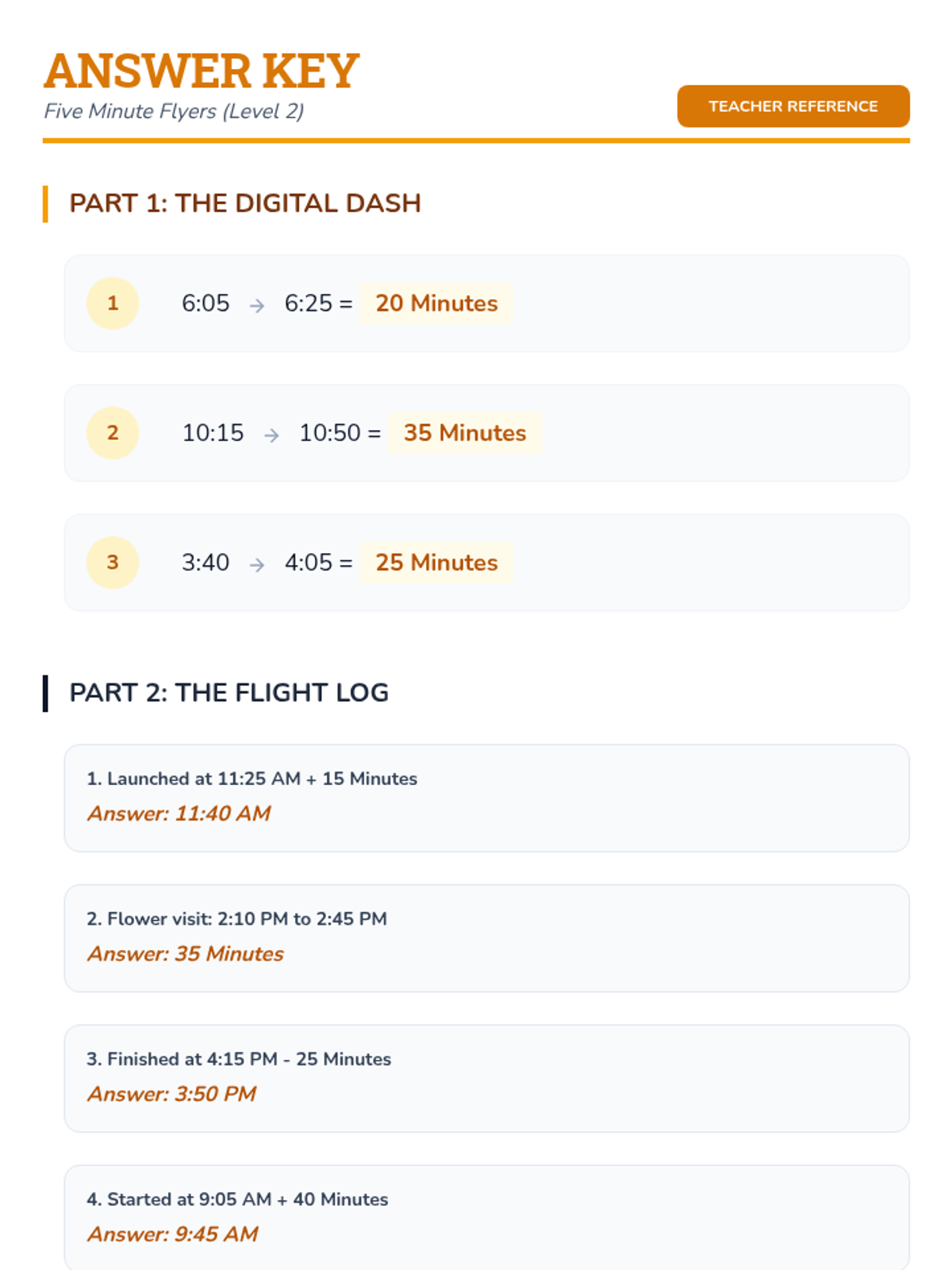
An answer key for the Five Minute Flyers worksheet, providing solutions for elapsed time problems in 5-minute increments.
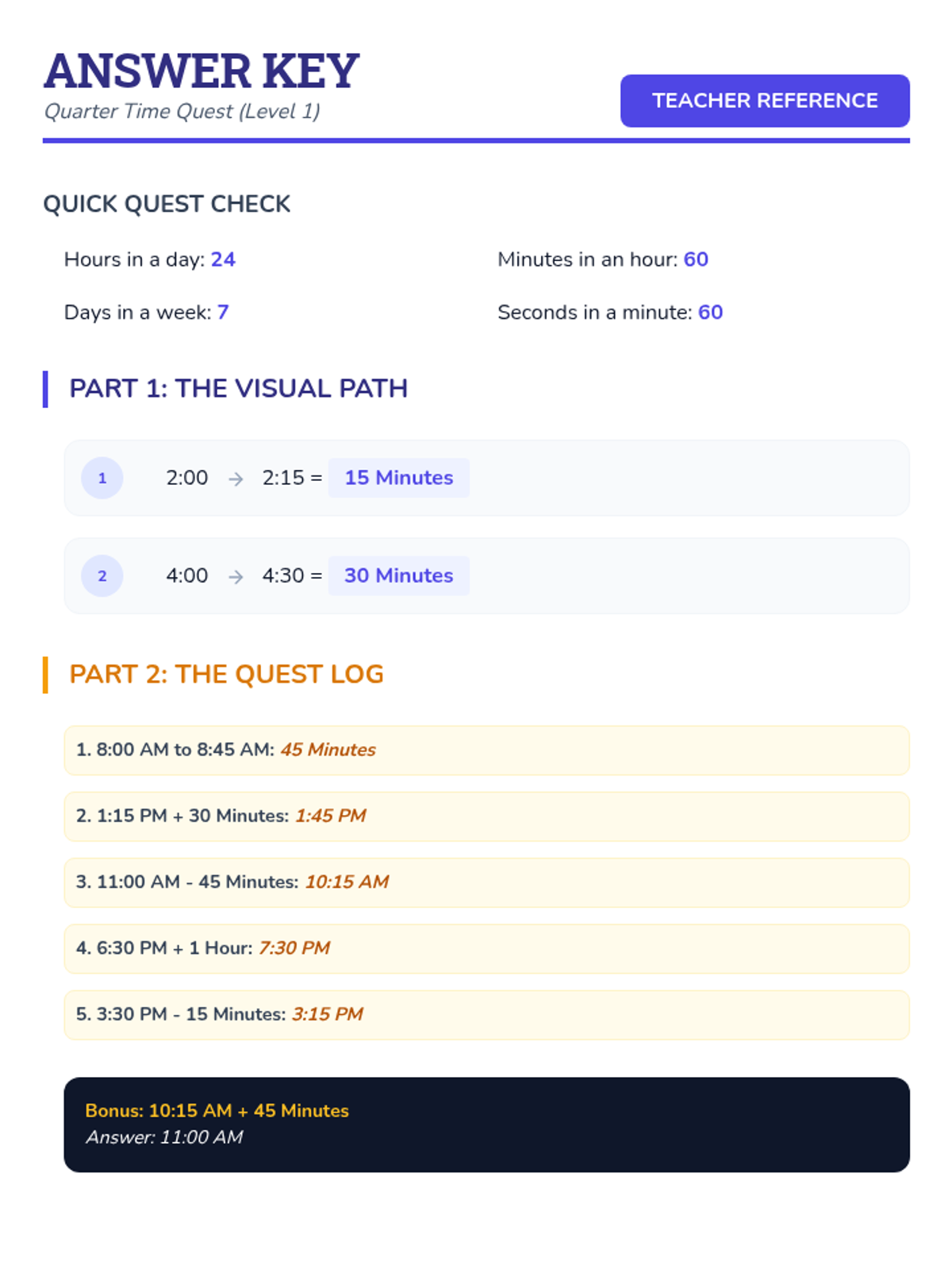
An answer key for the Quarter Time Quest worksheet, providing solutions for elapsed time problems in 15-minute increments.
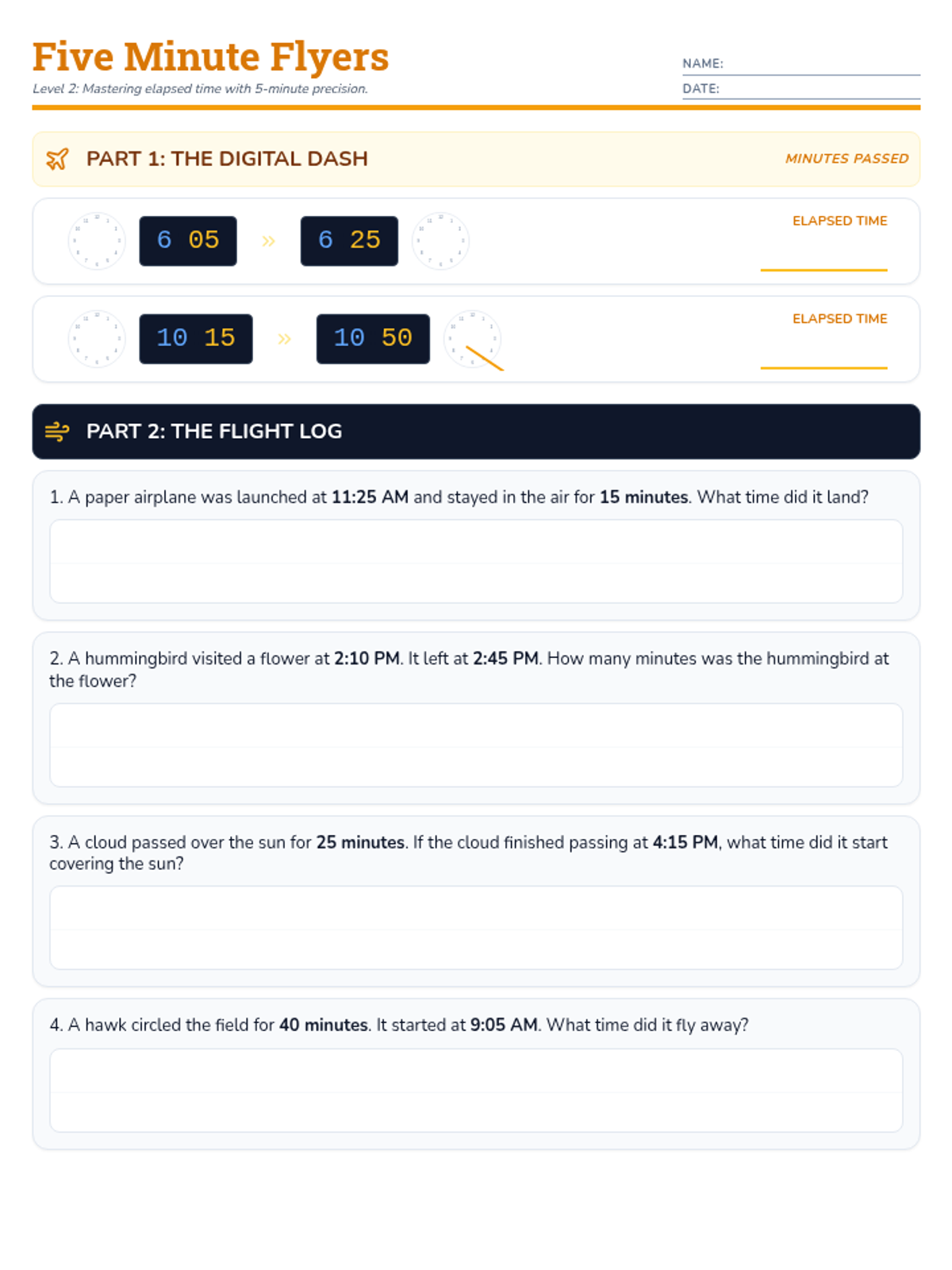
A Level 2 worksheet centered on calculating elapsed time in 5-minute increments. Features visual clock support with all 12 numbers and flight-themed word problems.
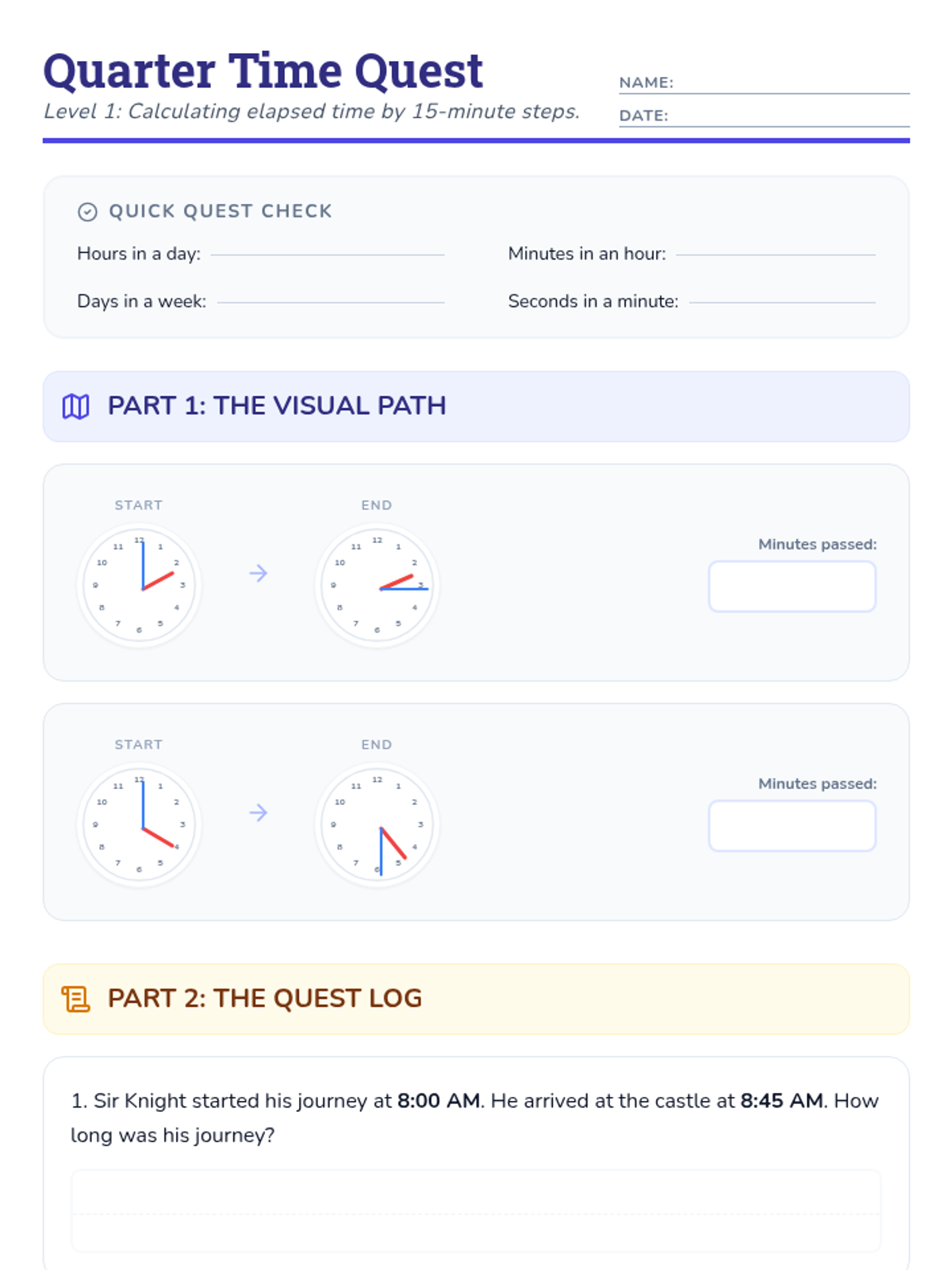
A Level 1 worksheet focused on calculating elapsed time in 15-minute increments. Includes visual clock comparisons with all numbers 1-12 and thematic word problems.
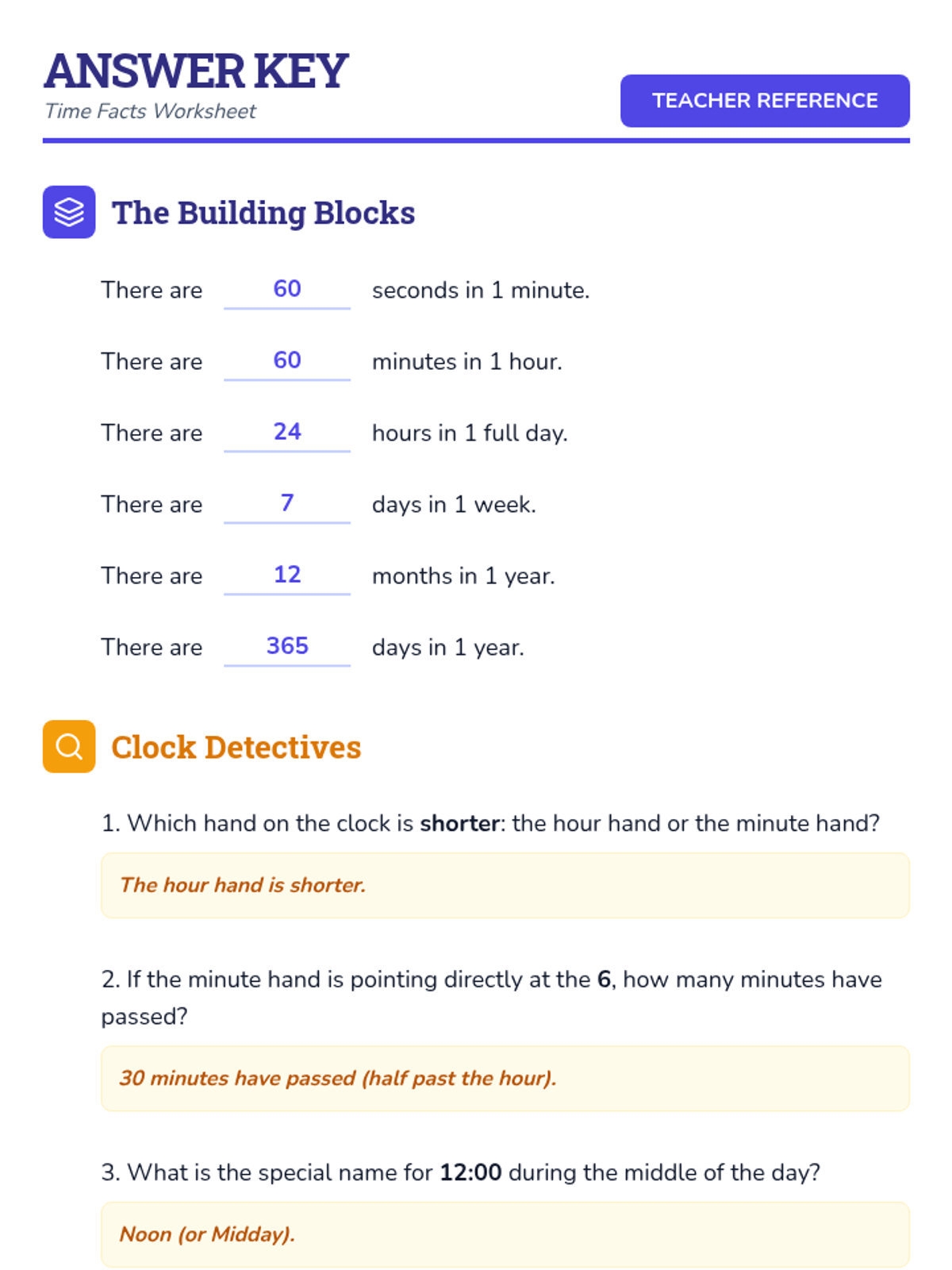
An answer key for the Time Facts Worksheet, providing correct answers for basic time units, clock anatomy, and the conceptual time challenge.
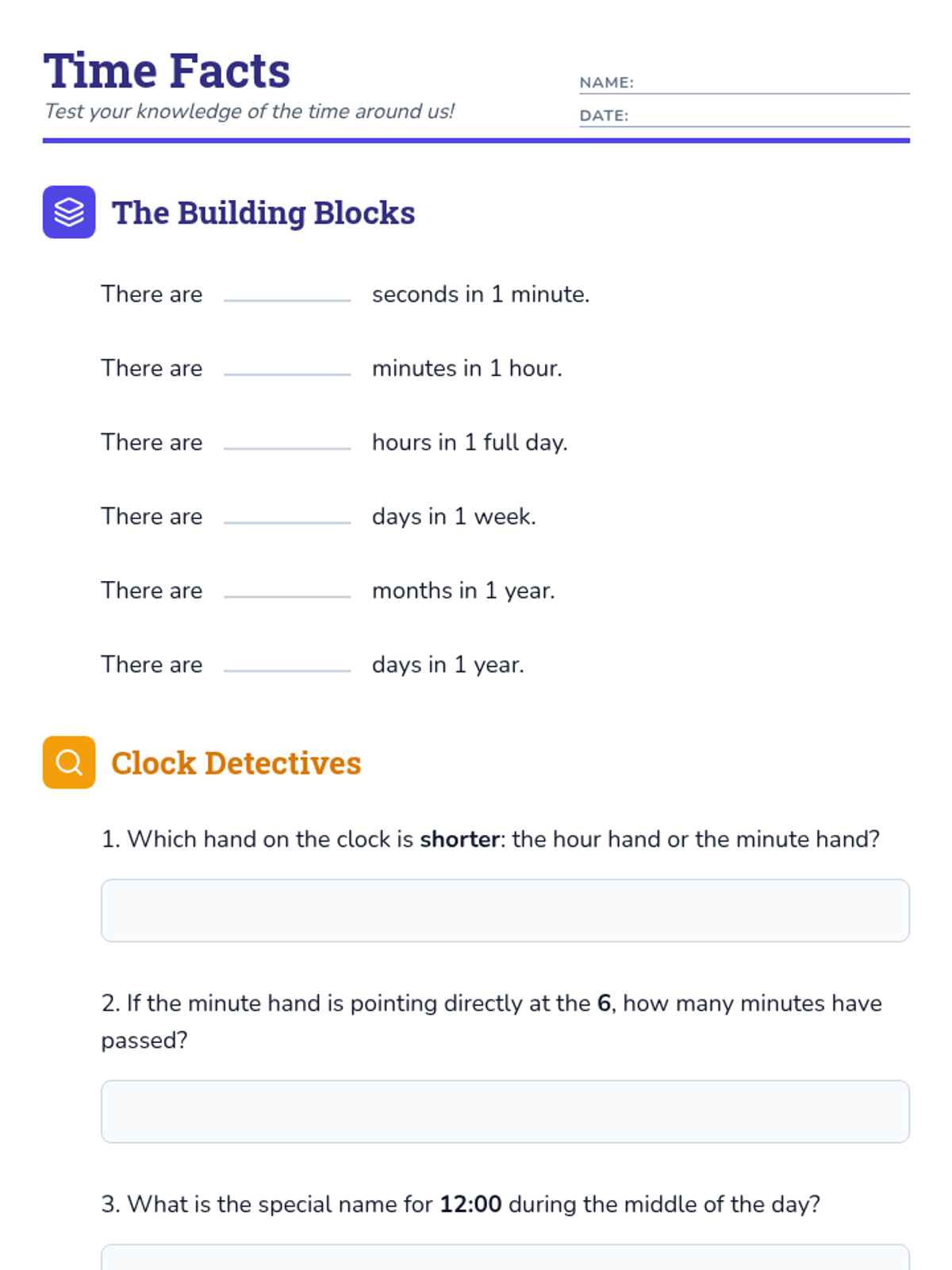
A conceptual worksheet covering basic time facts, including units of time (seconds, minutes, hours, days, weeks, years) and functional clock knowledge. Includes fill-in-the-blank and short explanation questions.
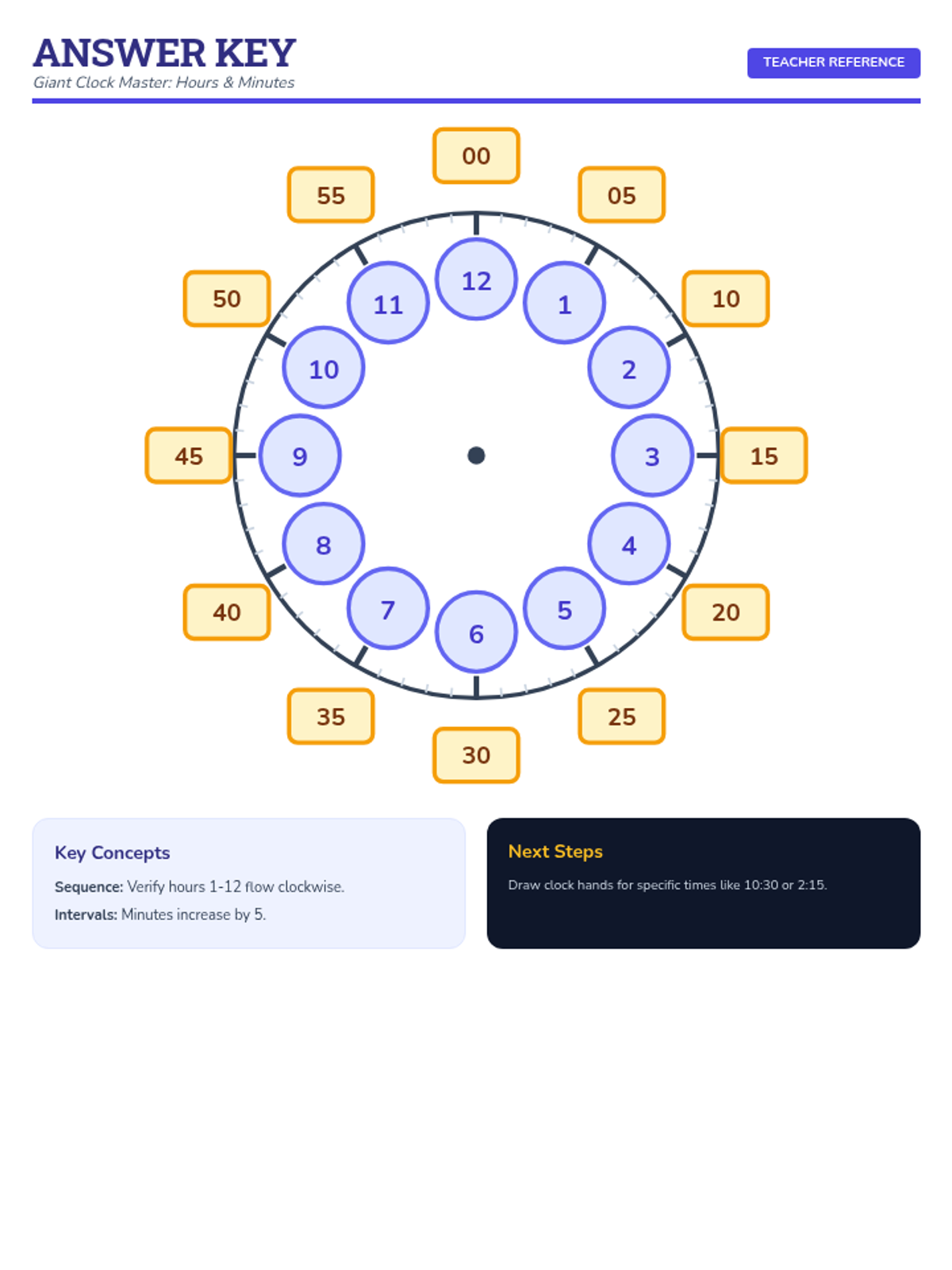
An answer key for the Giant Clock Worksheet, providing a clearly labeled example of all hour and minute positions. Includes key concepts and next step suggestions for teachers.
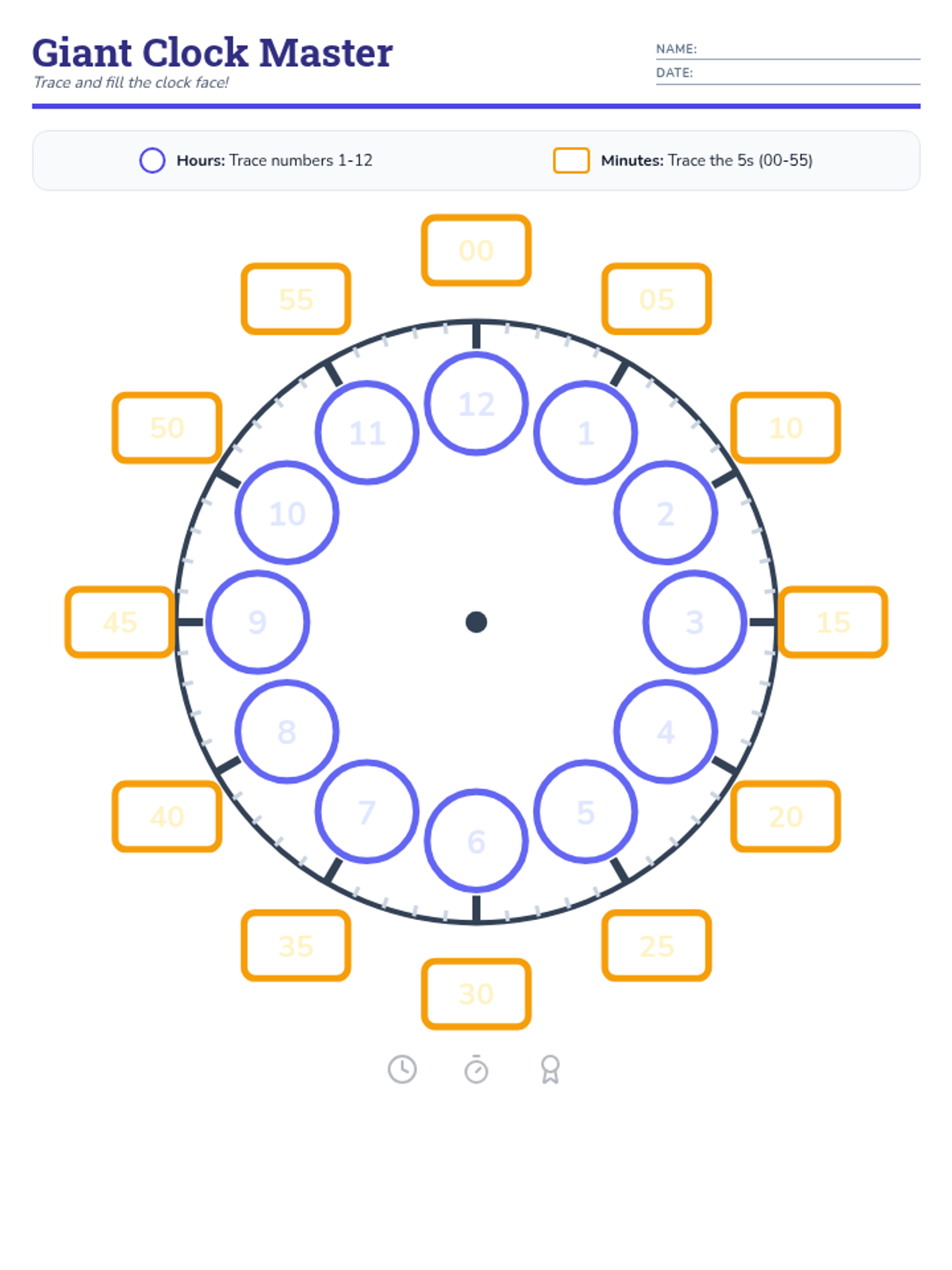
A full-page clock worksheet featuring one large clock face. Students fill in the 12 hour circles and 12 five-minute increment boxes, perfect for initial instruction or detailed practice.
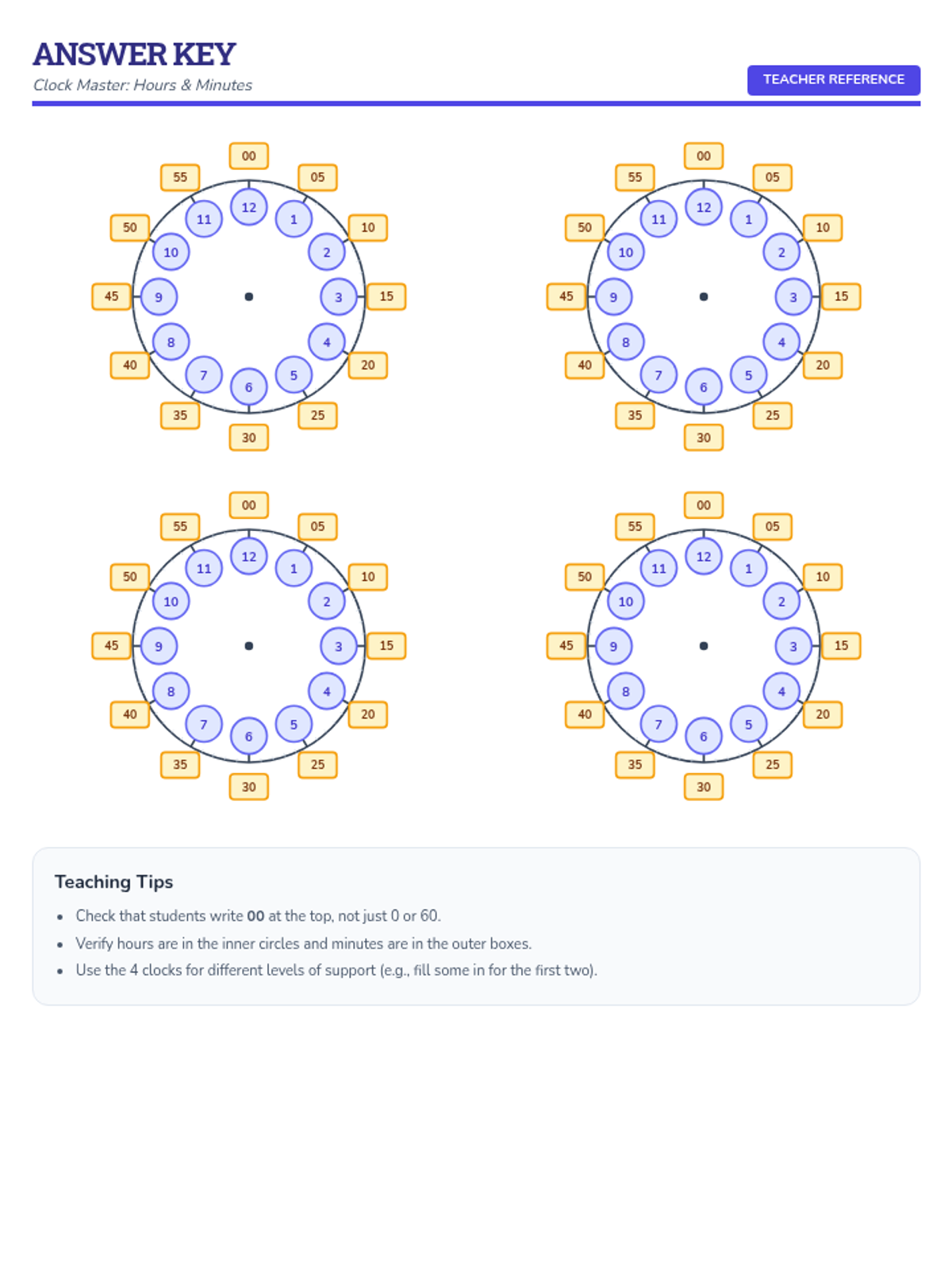
An answer key for the Clock Master Worksheet, displaying the correct placement of all 12 hours and 5-minute increments. Includes teaching tips for instruction.
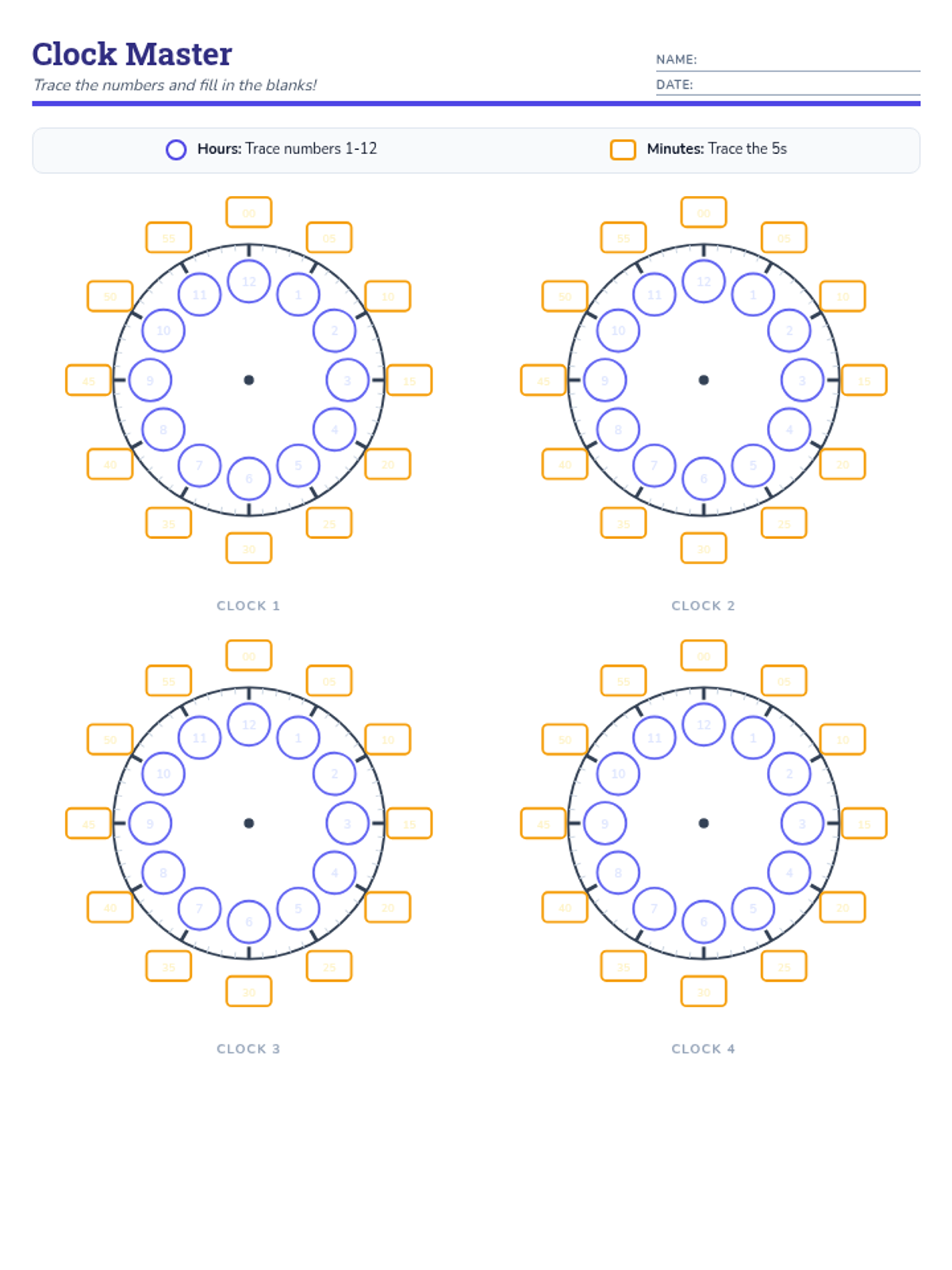
A practice worksheet with four clock faces on a single page. Students fill in color-coded hour circles and enlarged minute boxes to learn clock anatomy and five-minute intervals.
A presentation introducing clock anatomy, hour placement, and minute tracking by fives. Includes visual diagrams with all 12 numbers and step-by-step instructions.