A hands-on worksheet for students to label flowering plant and tree lifecycles, understand the role of producers, and explore the growth of fruits and vegetables.
An answer key and pedagogical guide for the Light Waves Practice Challenge, providing detailed scientific explanations for each concept to help students and teachers understand the "why" behind light interactions.
A 2-page practice worksheet for middle school students featuring 5 complex scenario-based questions that mirror the concepts found in the Light Waves Unit 4 test, including wave properties and light-matter interactions.
A comprehensive 2-page study guide for middle school science students on light waves, covering wave anatomy, the golden rule of absorption, the electromagnetic spectrum, and key vocabulary for unit review.
Introductory slide deck for Sphero indi, explaining the color-coding system and how to use mission cards for grades 1-3.
A student tracking sheet to log progress through all 64 task cards. Organized by robot type and difficulty level, allowing students to check off missions as they complete them.
An advanced set of 8 task cards for Marty the Robot (Level 2) using block coding, covering nested loops, distance sensors, power kicks, and musical notes. Designed for grades 1-3.
An advanced set of 8 task cards for Marty the Robot (Level 2), focusing on complex sequences, figure-eight patterns, and soccer missions using screenless color-coding. Removed brown tiles.
An advanced set of 8 task cards for Sphero Mini (Level 2), expanding on block coding concepts with sensors, collision events, forever loops, and complex movement.
An advanced set of 8 task cards for Sphero indi (Level 2), focusing on complex sequences, square patterns, and multi-tile missions for grades 1-3. Removed brown tiles.
A set of 8 progressive task cards for Marty the Robot using block-based coding (Scratch-like). Concepts include eyes, movement, gestures, sounds, loops, and obstacle sensing.
A set of 8 progressive task cards for Marty the Robot using screenless color-based coding. Students learn to use color sensors to trigger movements, turns, and dances.
A set of 8 progressive task cards for Sphero Mini, introducing block coding concepts like LEDs, movement, headings, loops, and sounds. Designed for 1st-3rd grade.
A set of 8 progressive task cards for Sphero indi, designed for 1st-3rd grade students to learn color-based sequencing and basic movement commands through hands-on missions. Updated mission 8 to include masking tape mazes and removed brown tiles.
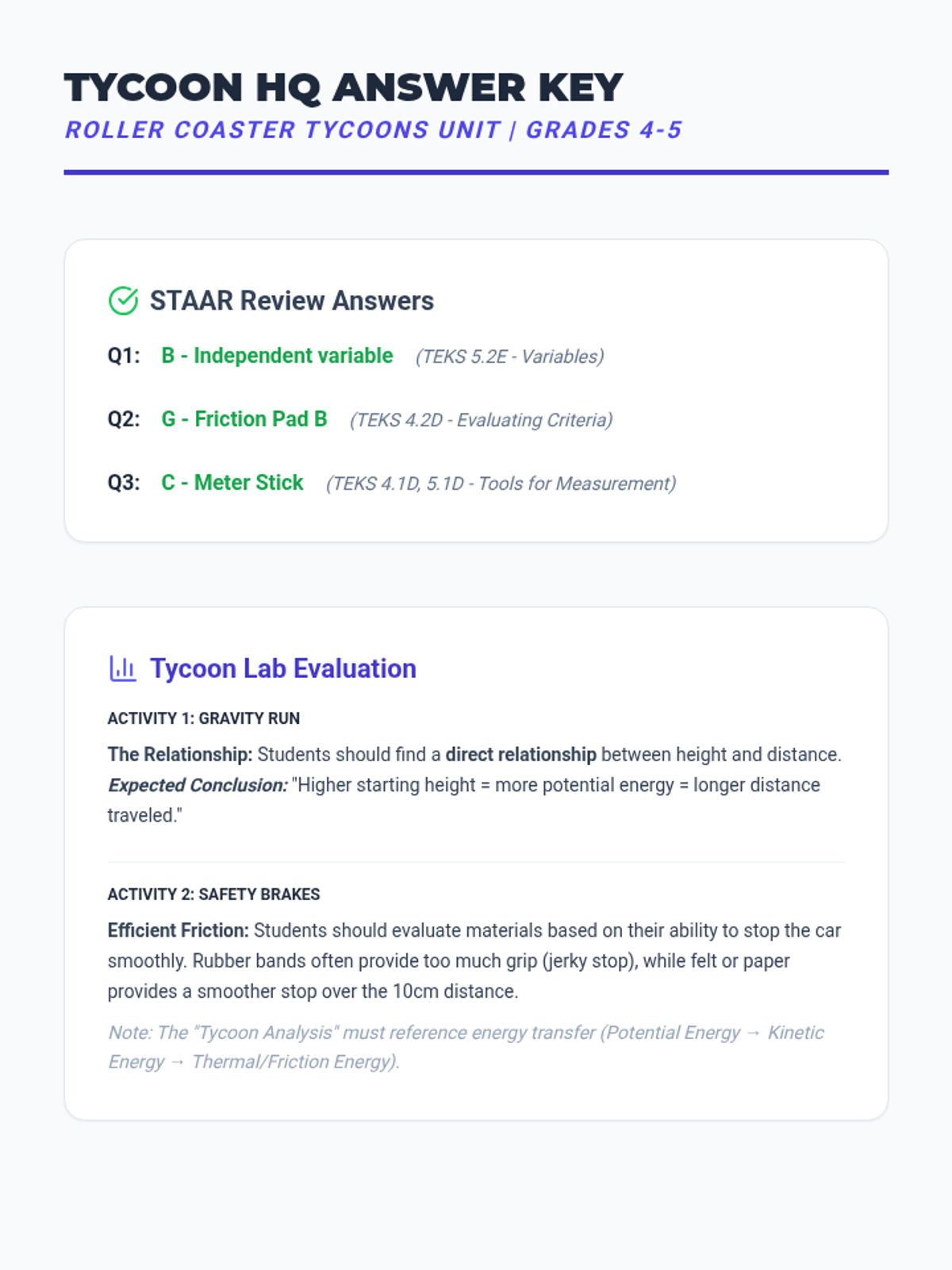
Answer key for the Roller Coaster Tycoons lesson, providing correct answers for the STAAR-style review and grading guidance for the student lab report.
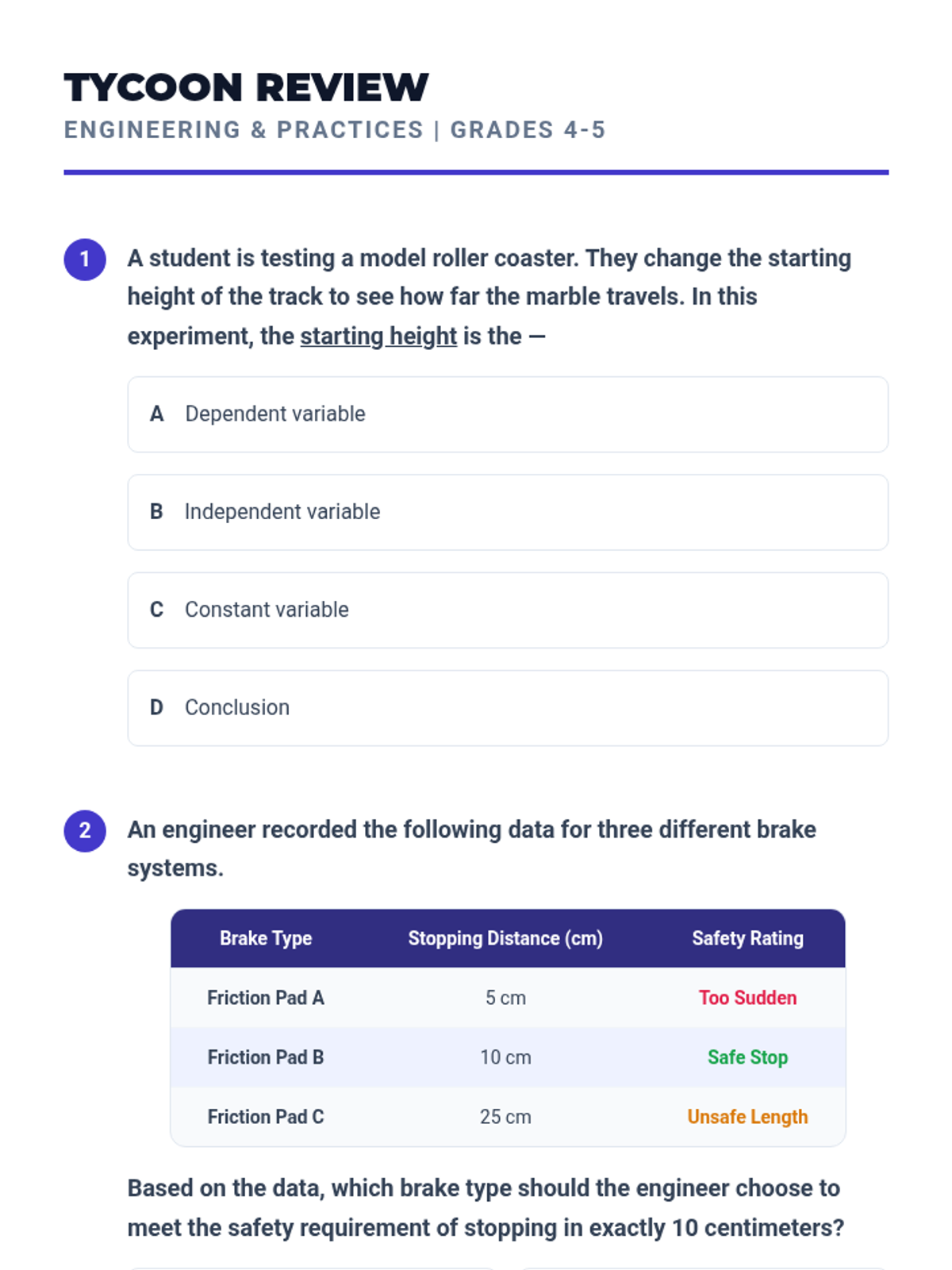
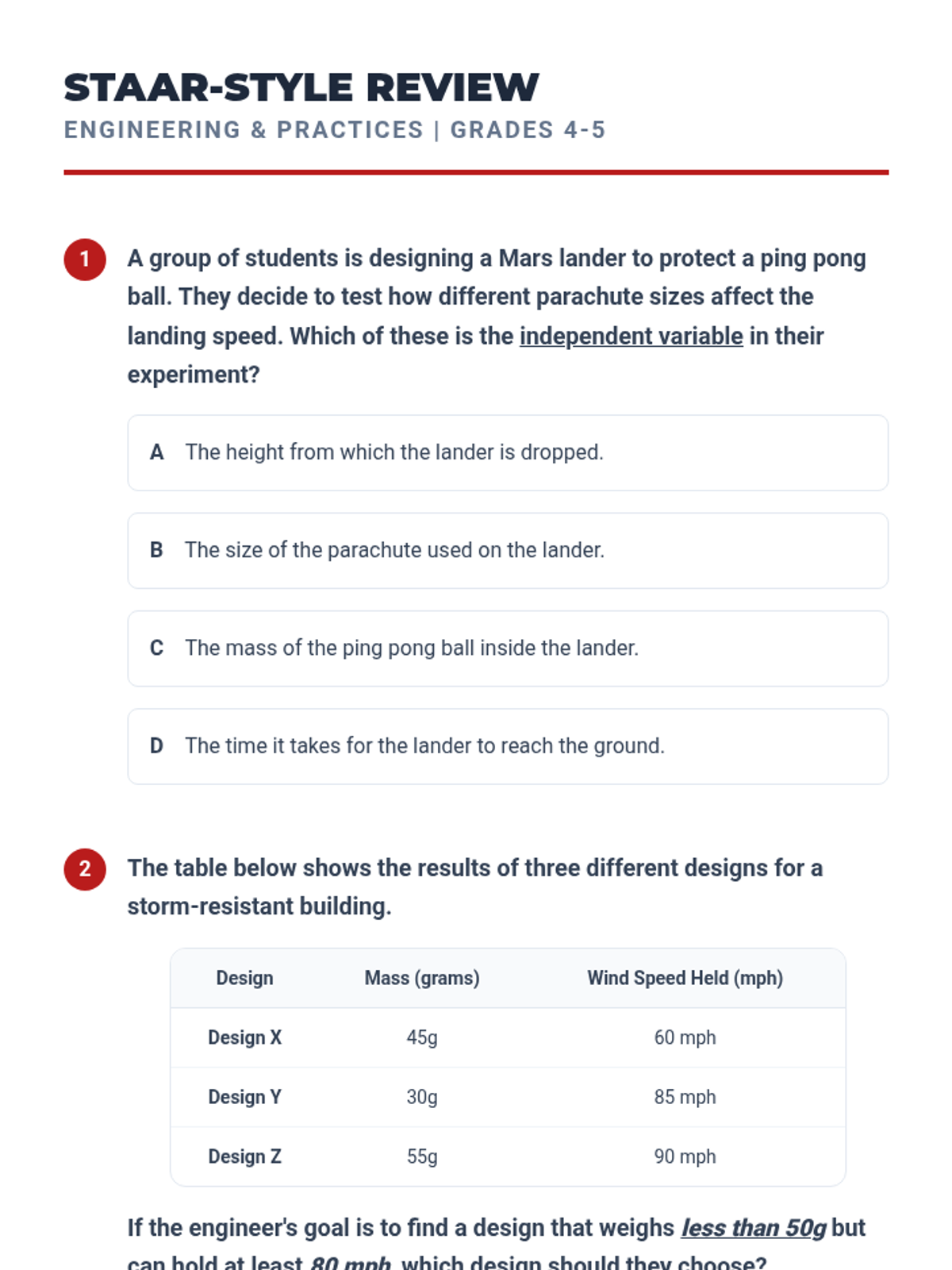
Advanced STAAR-style science review for grades 4-5, focusing on experimental variables (IV/DV), data table analysis against engineering criteria, and scientific tool selection.
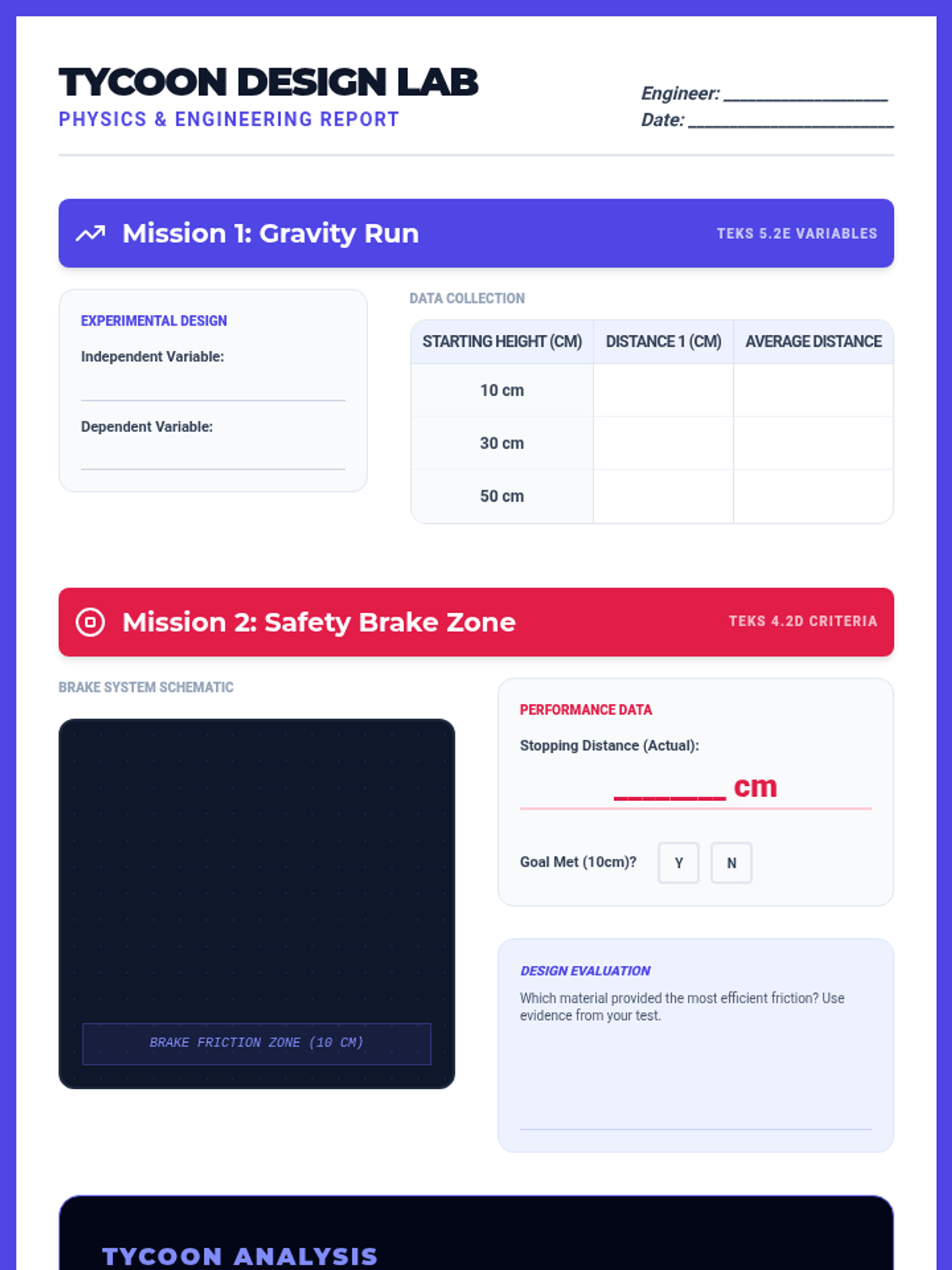
A student activity sheet for the Roller Coaster Tycoons STEM challenge, featuring space for energy transfer analysis and brake system design. Includes data tables for height vs. distance trials.
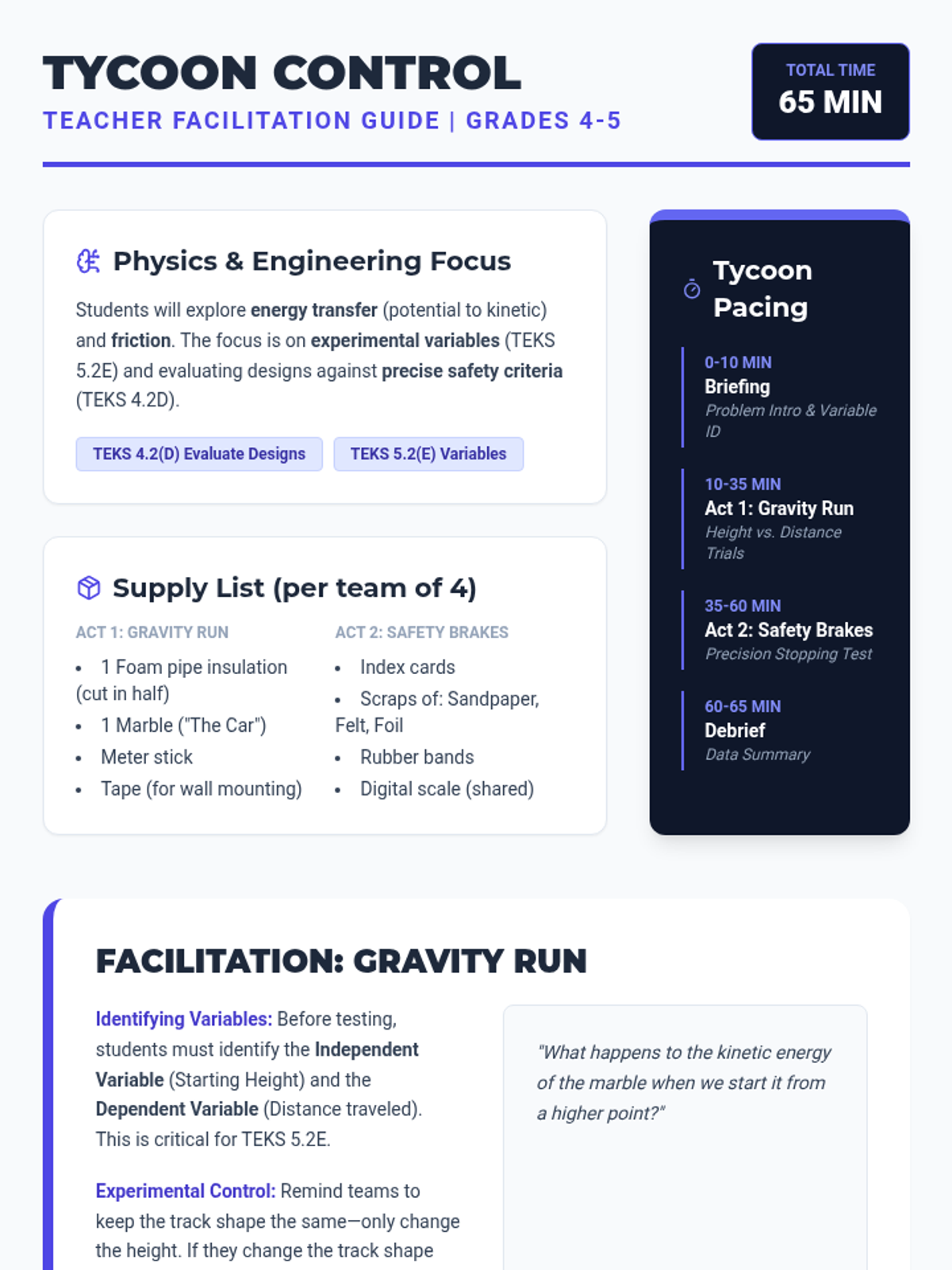
Detailed teacher guide for the Roller Coaster Tycoons STEM lesson (Grades 4-5). Includes supply lists, pacing for a 65-minute session, and facilitation tips for testing energy transfer and braking systems.
A high-tech slide deck for grades 4-5 focused on the 'Roller Coaster Tycoons' physics engineering challenge. Features blueprints, energy transfer diagrams, and braking system instructions.
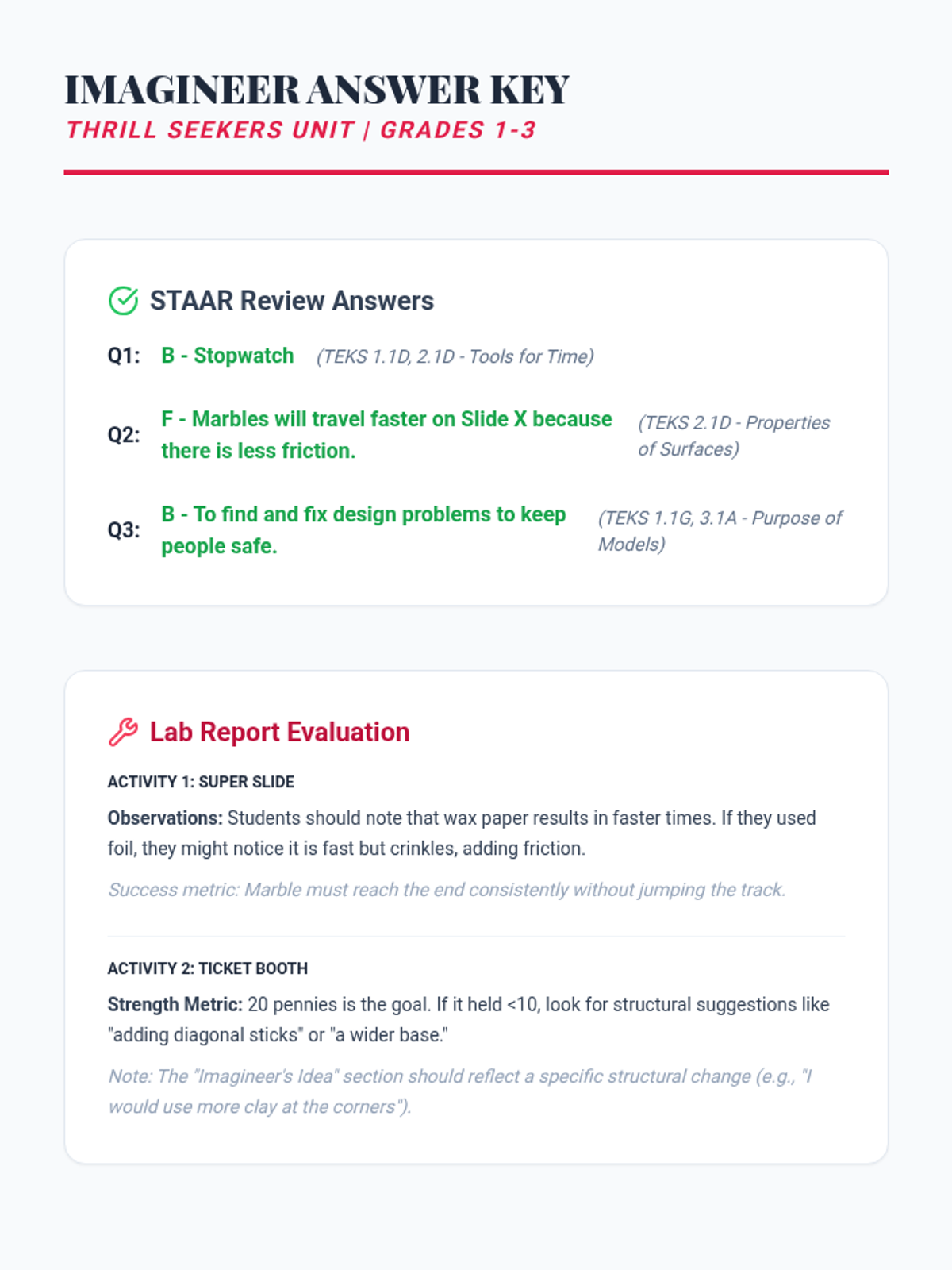
Answer key for the Thrill Seekers lesson, providing correct answers for the STAAR-style review and grading guidance for the student lab report.
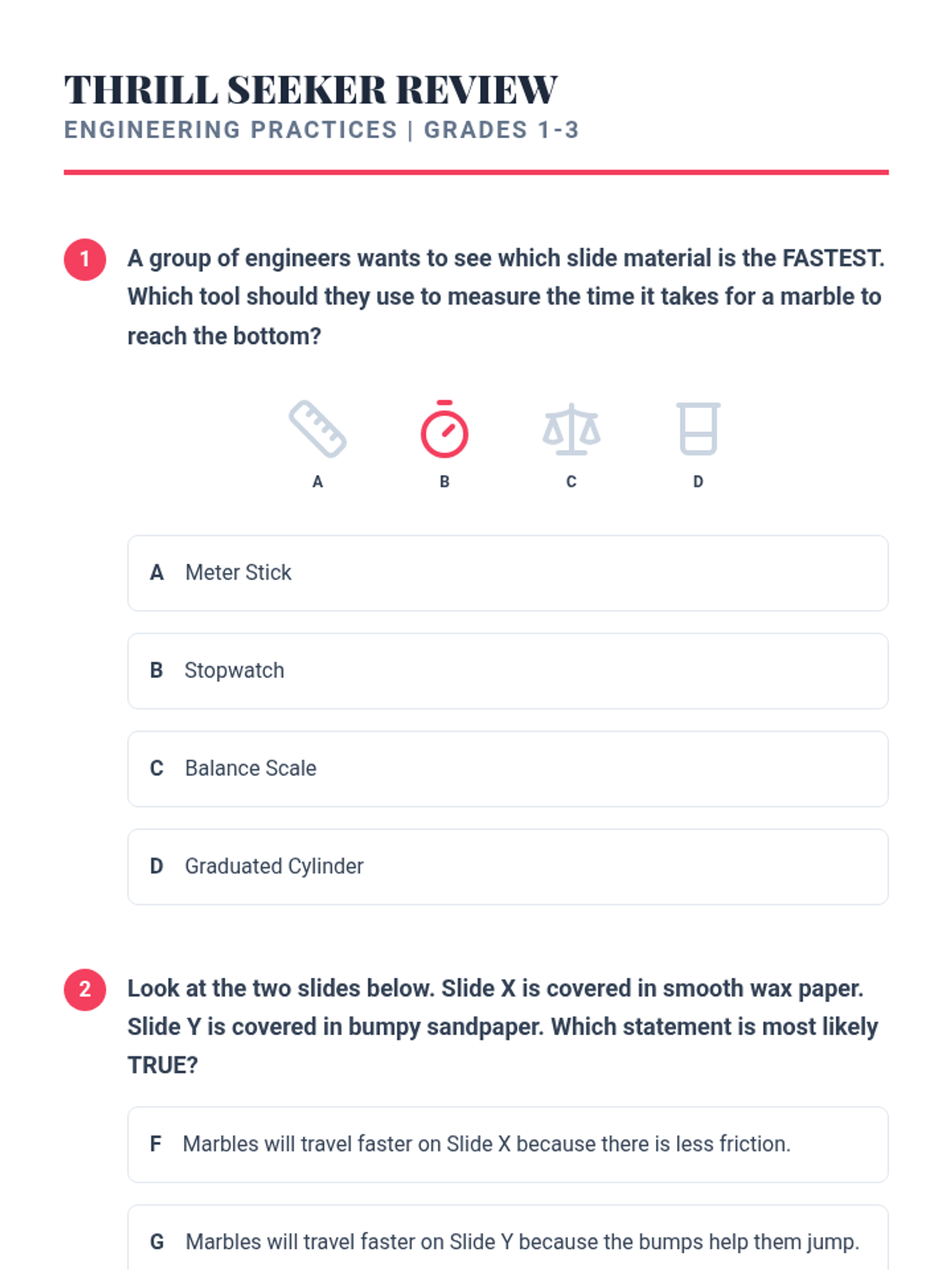
STAAR-style review questions for grades 1-3 focusing on tool selection, the purpose of scientific models, and the effects of surface friction in an amusement park context.
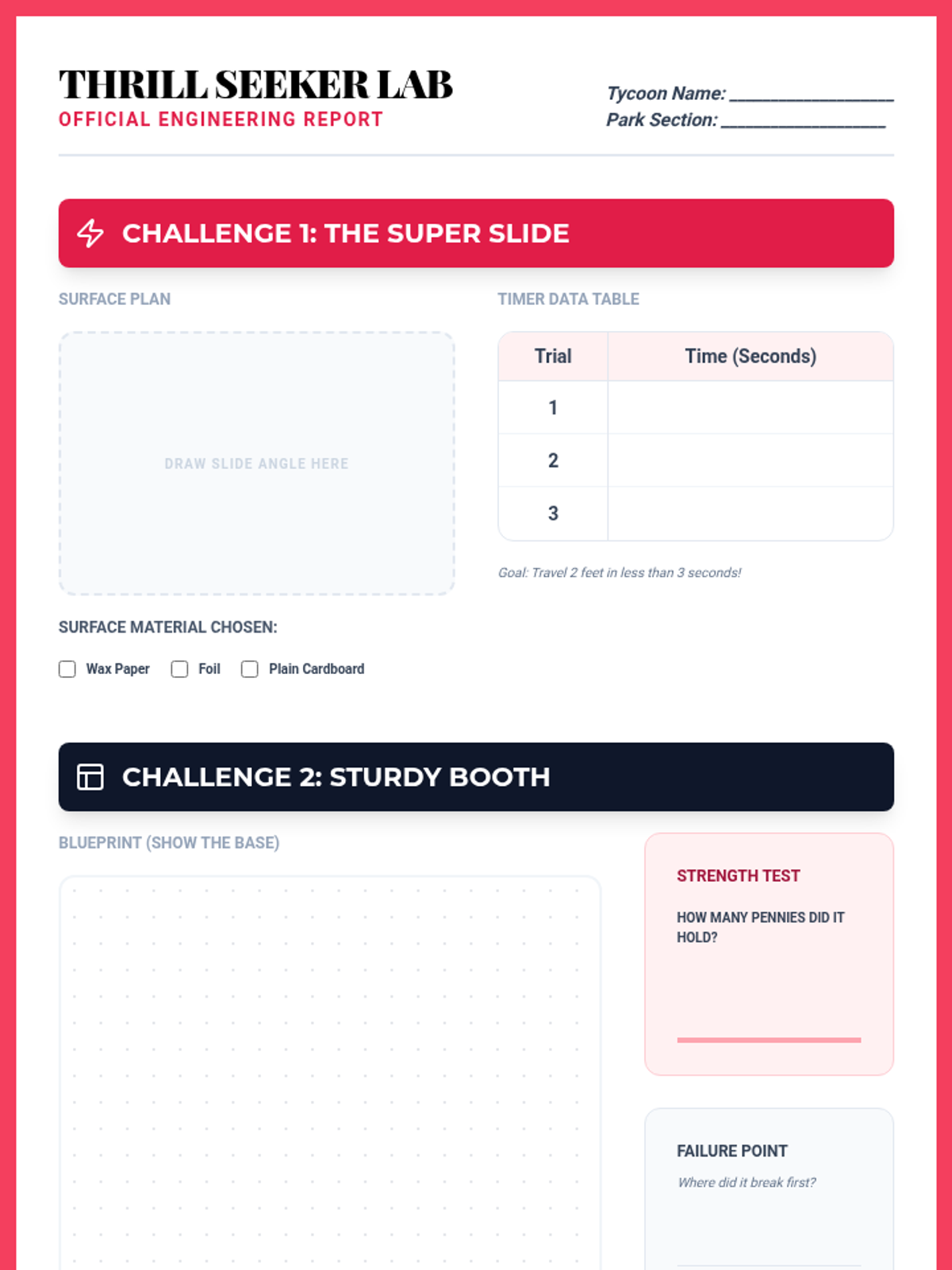
A student activity sheet for the Thrill Seekers STEM challenge, where students design slides and ticket booths. Includes space for timers, sketches, and weight tests.
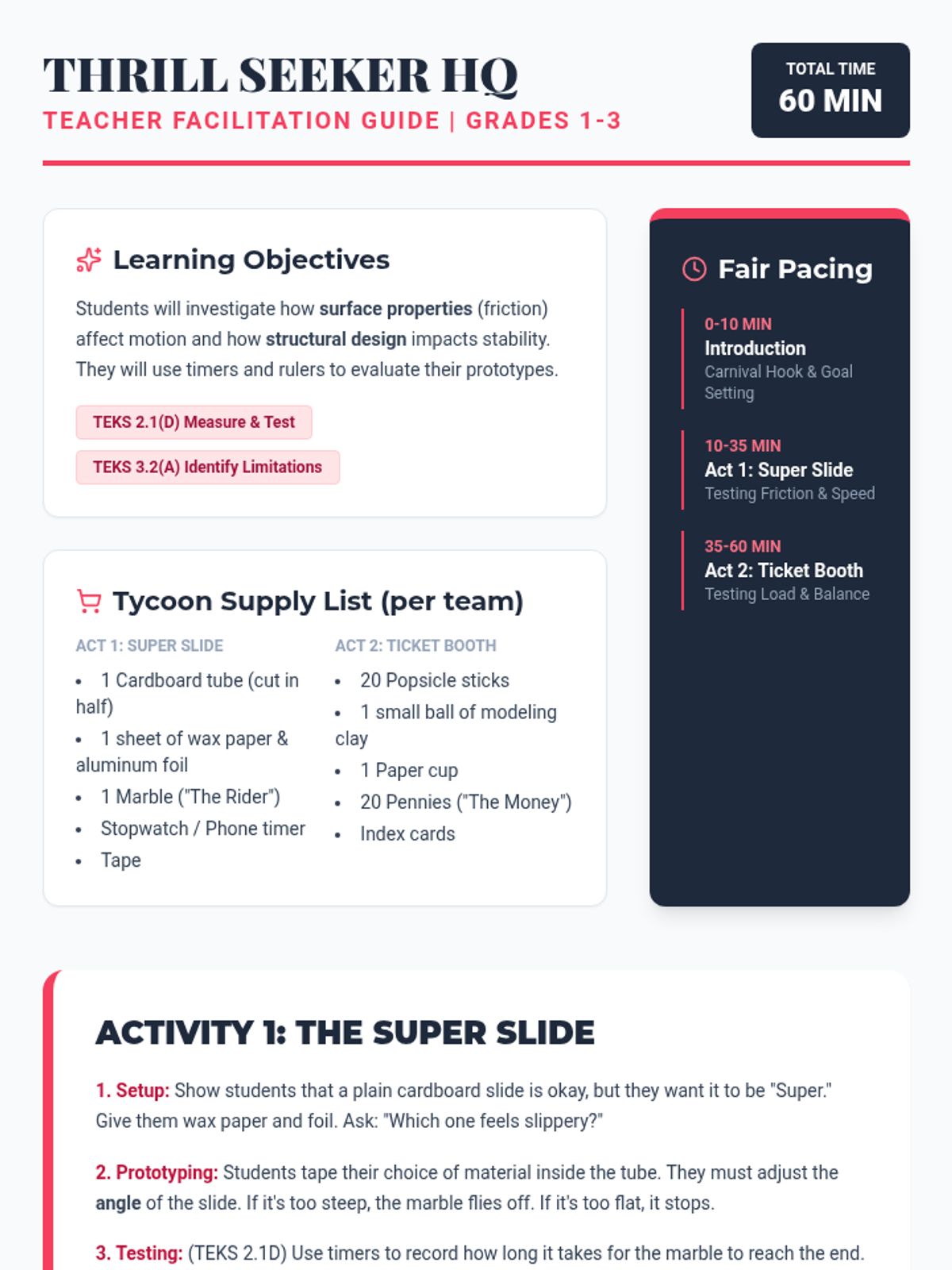
Detailed teacher guide for the Thrill Seekers STEM lesson (Grades 1-3). Includes supply lists, pacing, and facilitation tips for testing friction, speed, and structural stability.
A fun-filled junior engineering slide deck for grades 1-3. Students act as 'Thrill Seekers' to design steep, safe slides and sturdy ticket booths for a new amusement park, focusing on surface properties and structural stability.
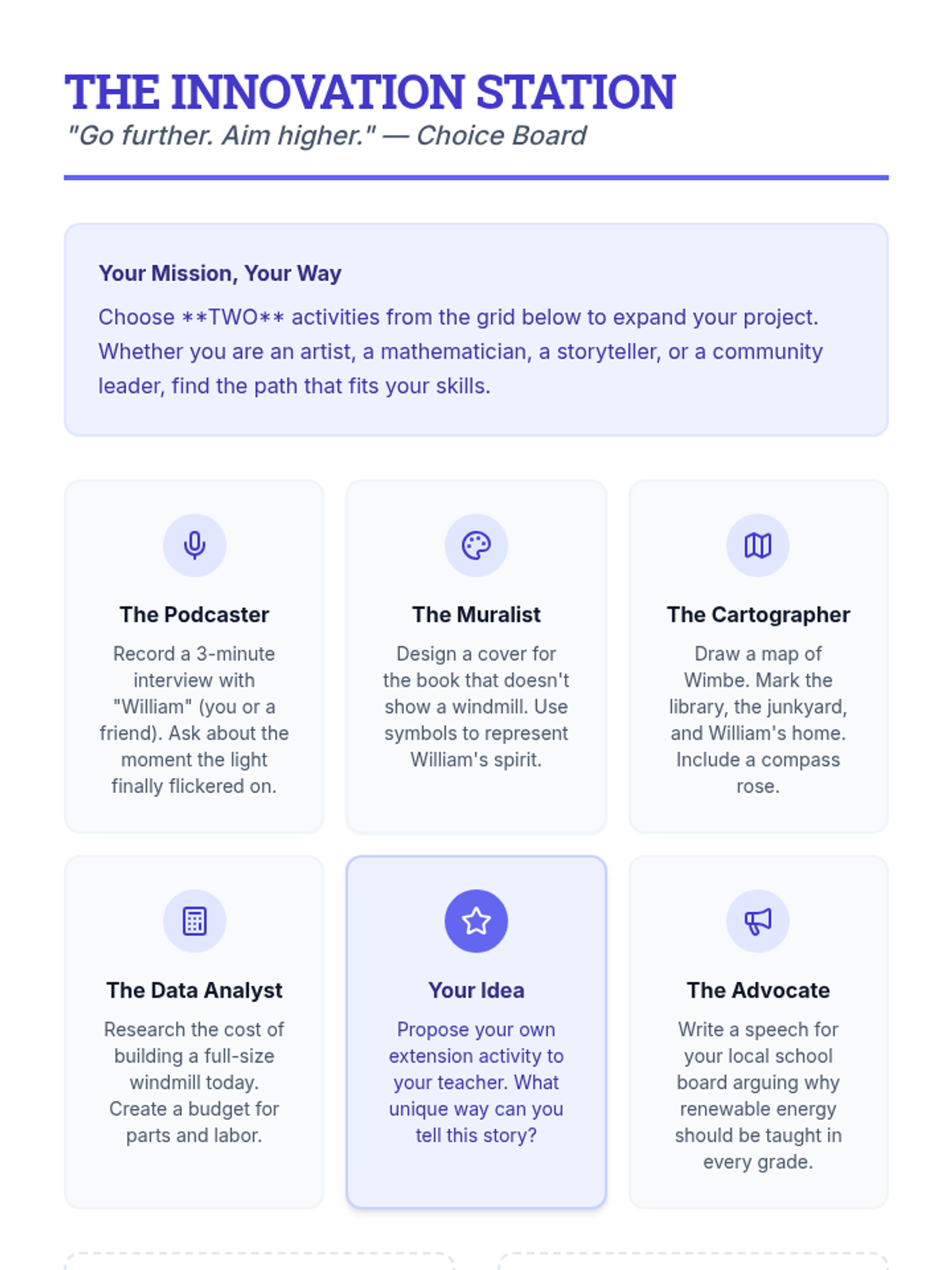
A student-led choice board offering six diverse activities for students to deepen their exploration of the book's themes through art, data, podcasting, or advocacy.
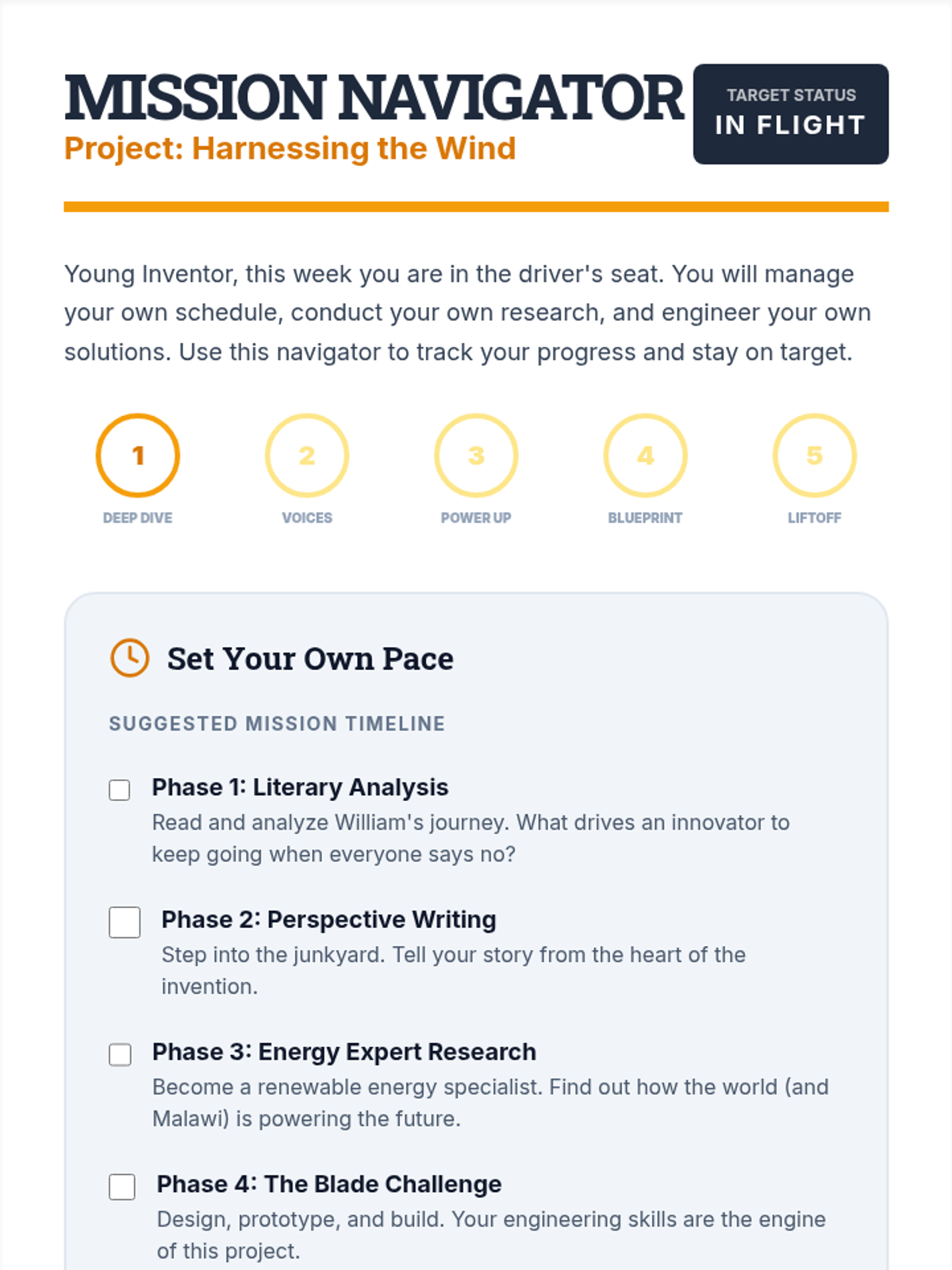
A student-facing mission navigator that replaces the teacher guide, empowering students to manage their own pacing, set goals, and reflect on their independent learning journey.
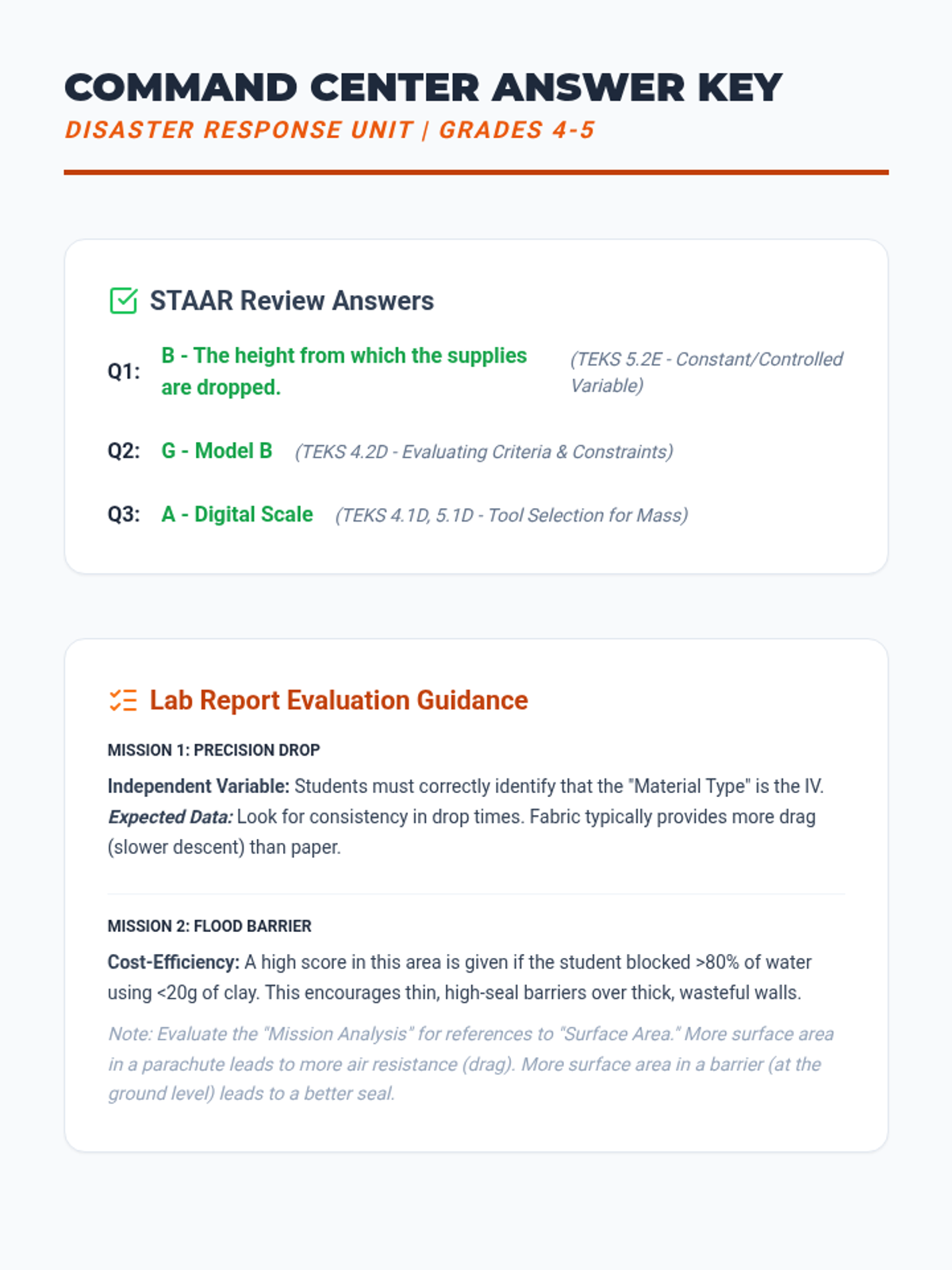
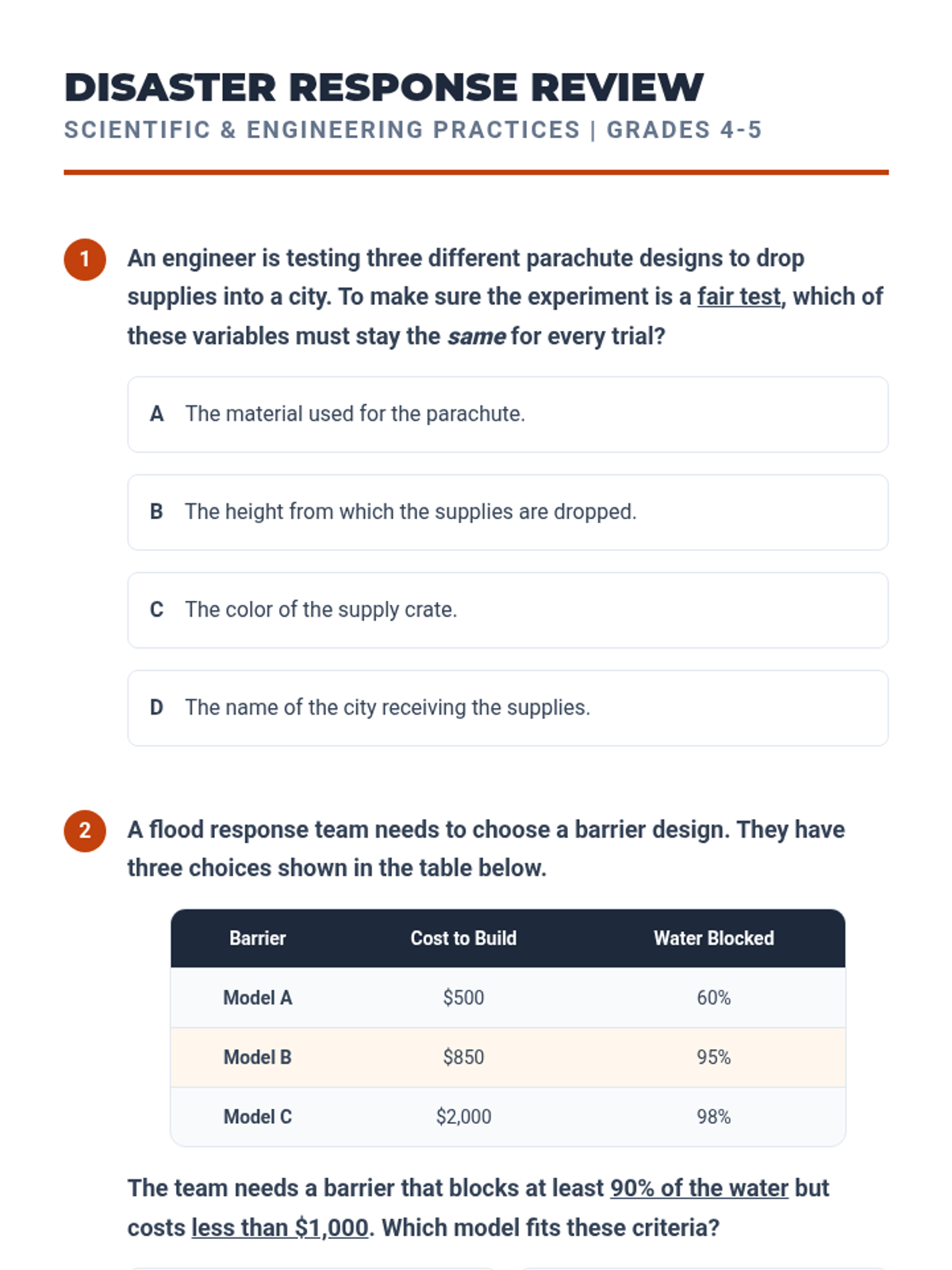
Answer key for the Disaster Response lesson, providing correct answers for the STAAR-style review and grading guidance for the student lab report.
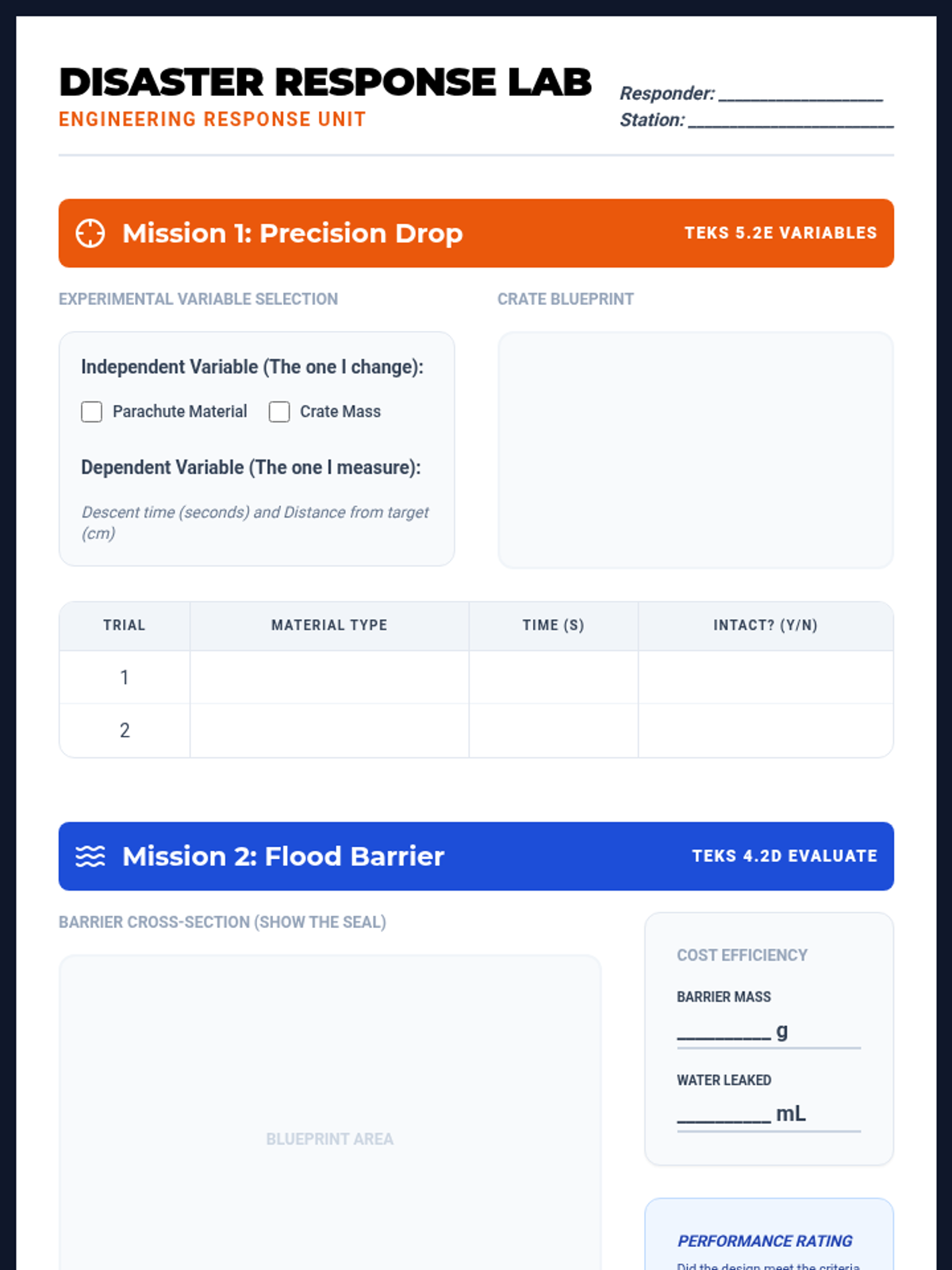
A student activity sheet for the Disaster Response Team STEM challenge, where students design rafts and tornado-resistant shelters. Includes space for sketches, penny-load data, and wind-test observations.
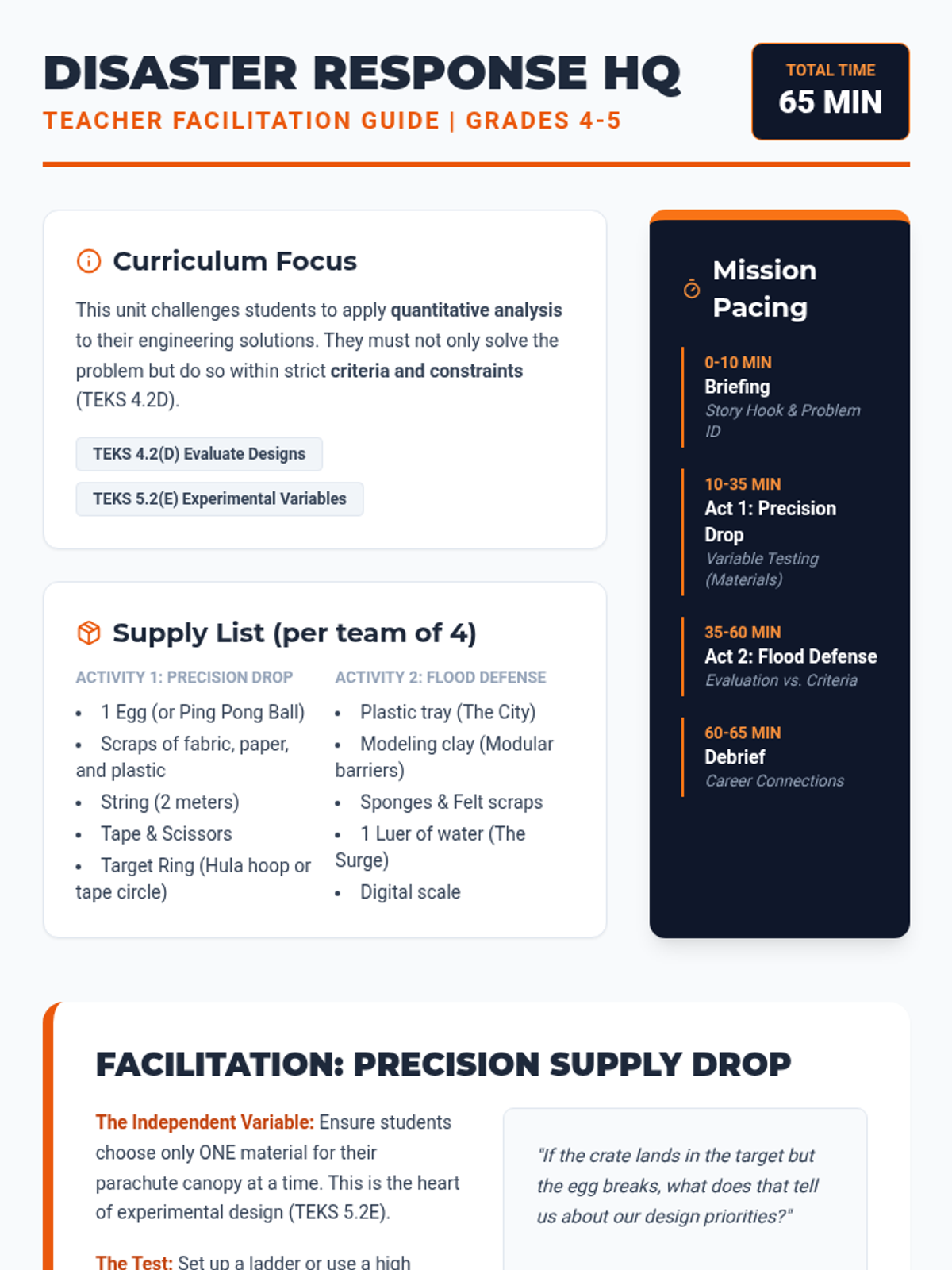
Detailed teacher guide for the Disaster Response STEM lesson (Grades 4-5). Includes supply lists, pacing for a 65-minute session, and facilitation tips for experimental design and efficiency testing.
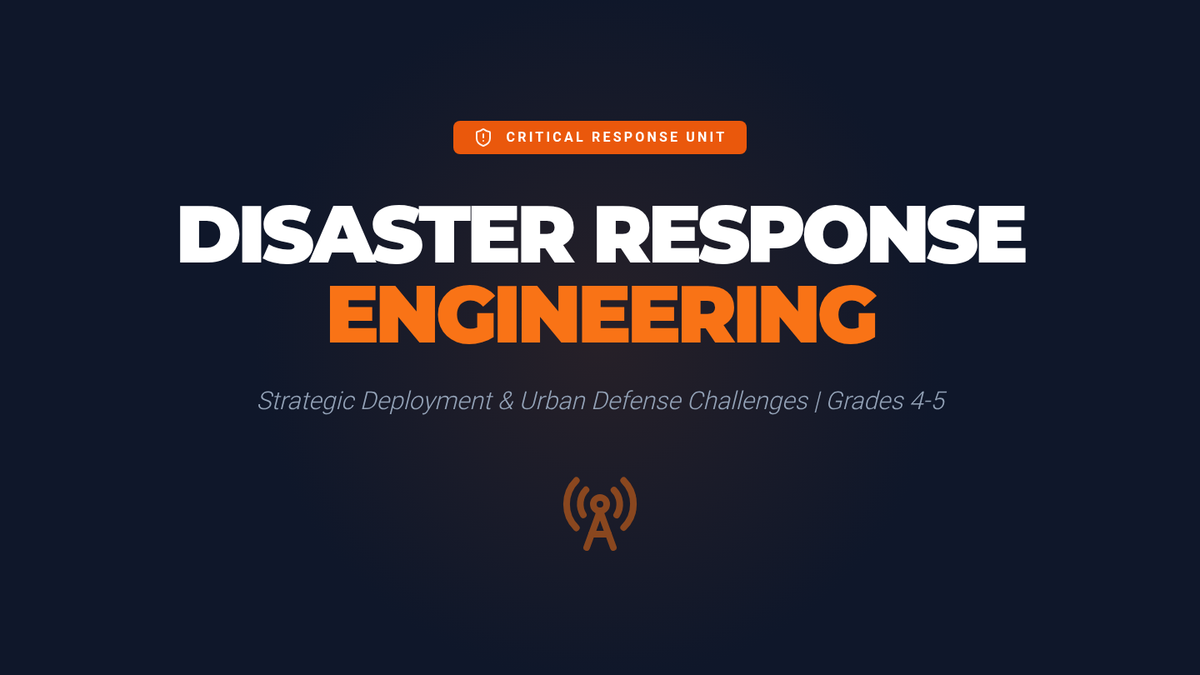
A high-energy junior engineering slide deck for grades 4-5. Students join the 'Disaster Response Team' to design precision supply drop crates and modular flood barrier systems, featuring command-center visuals and career highlights.
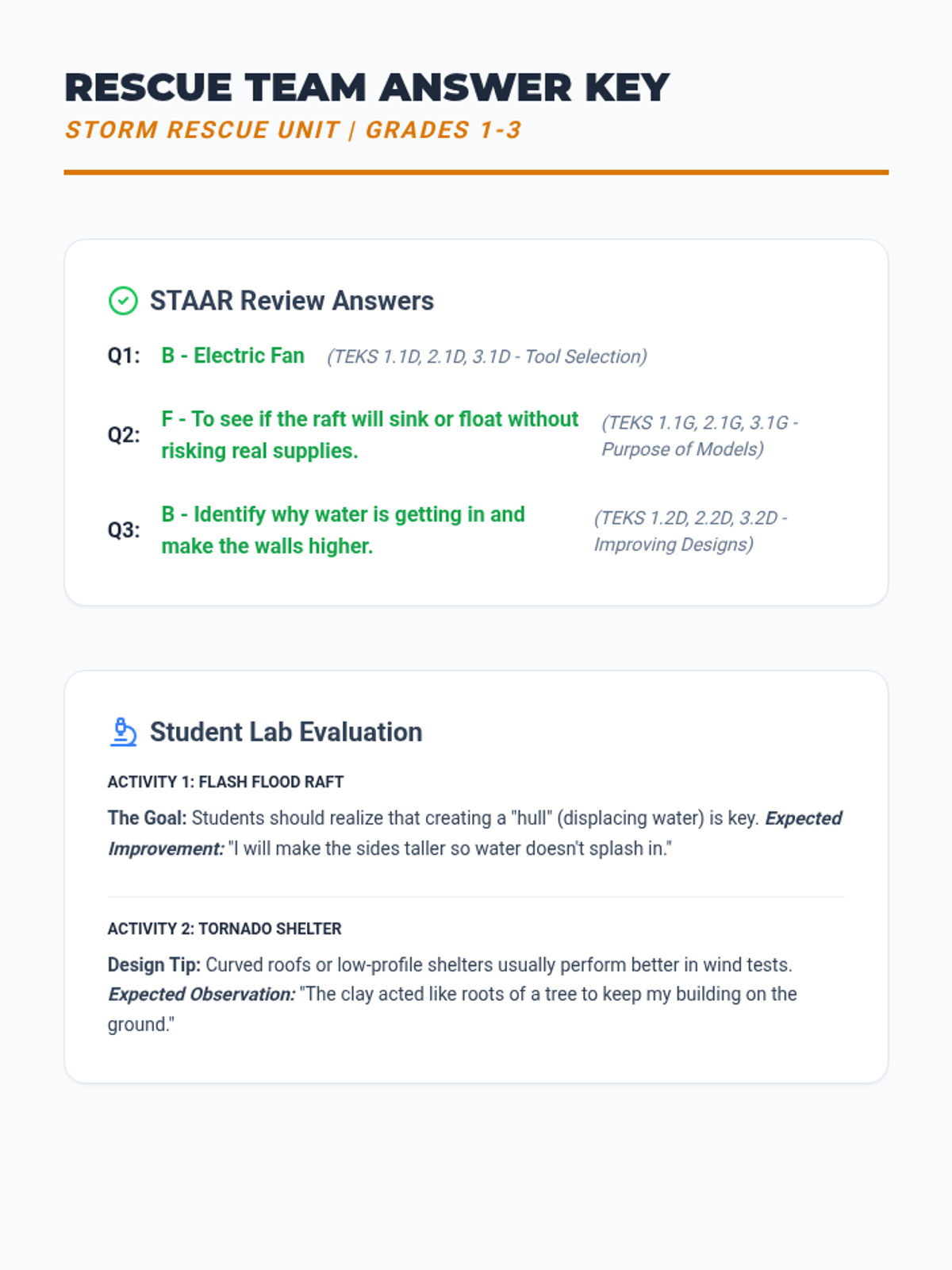
Answer key for the Storm Rescue lesson, providing correct answers for the STAAR-style review and grading guidance for the student lab report.
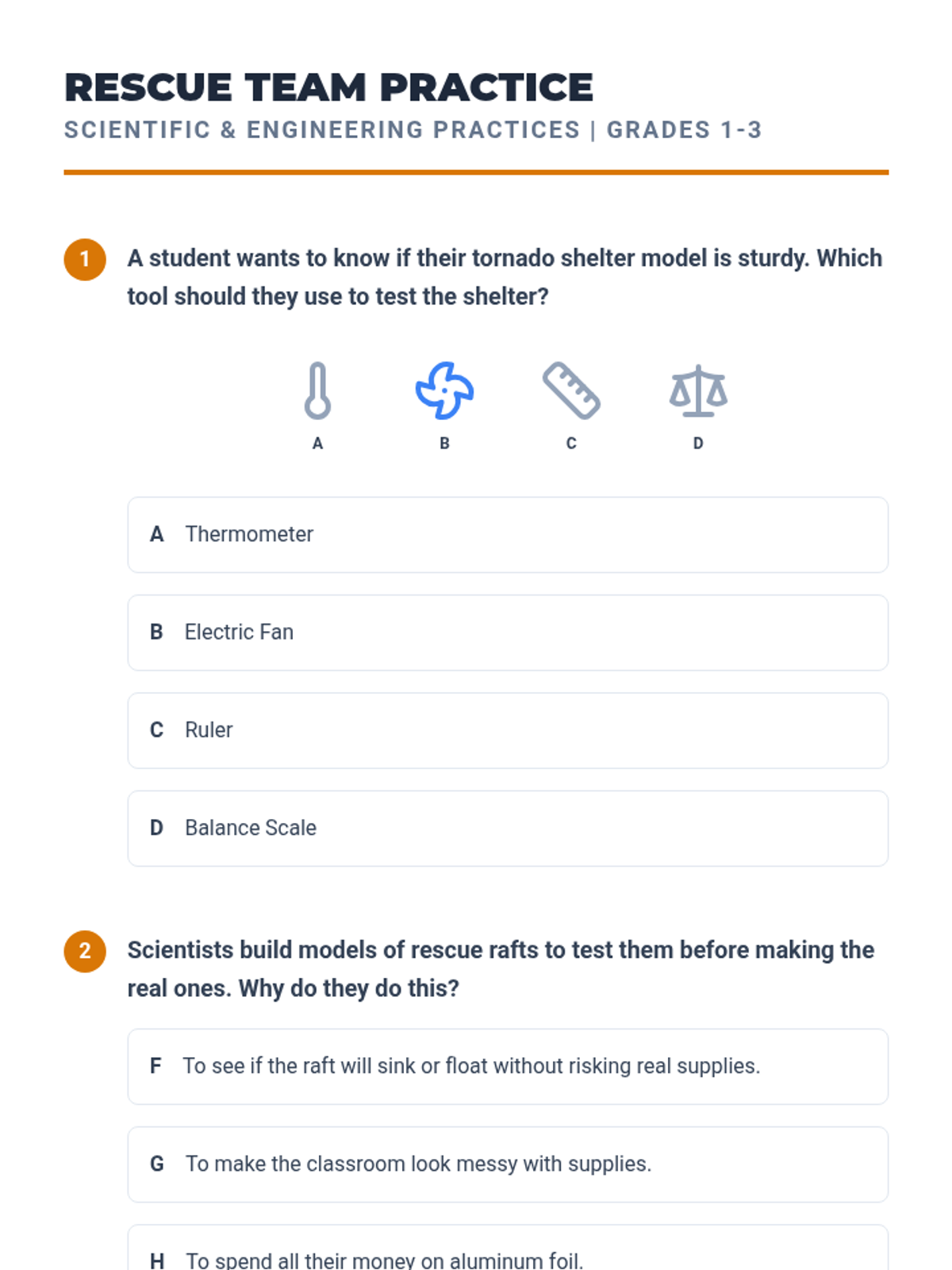
STAAR-style review questions for grades 1-3 focusing on tool selection, the purpose of scientific models, and the iterative design process in a storm rescue context.
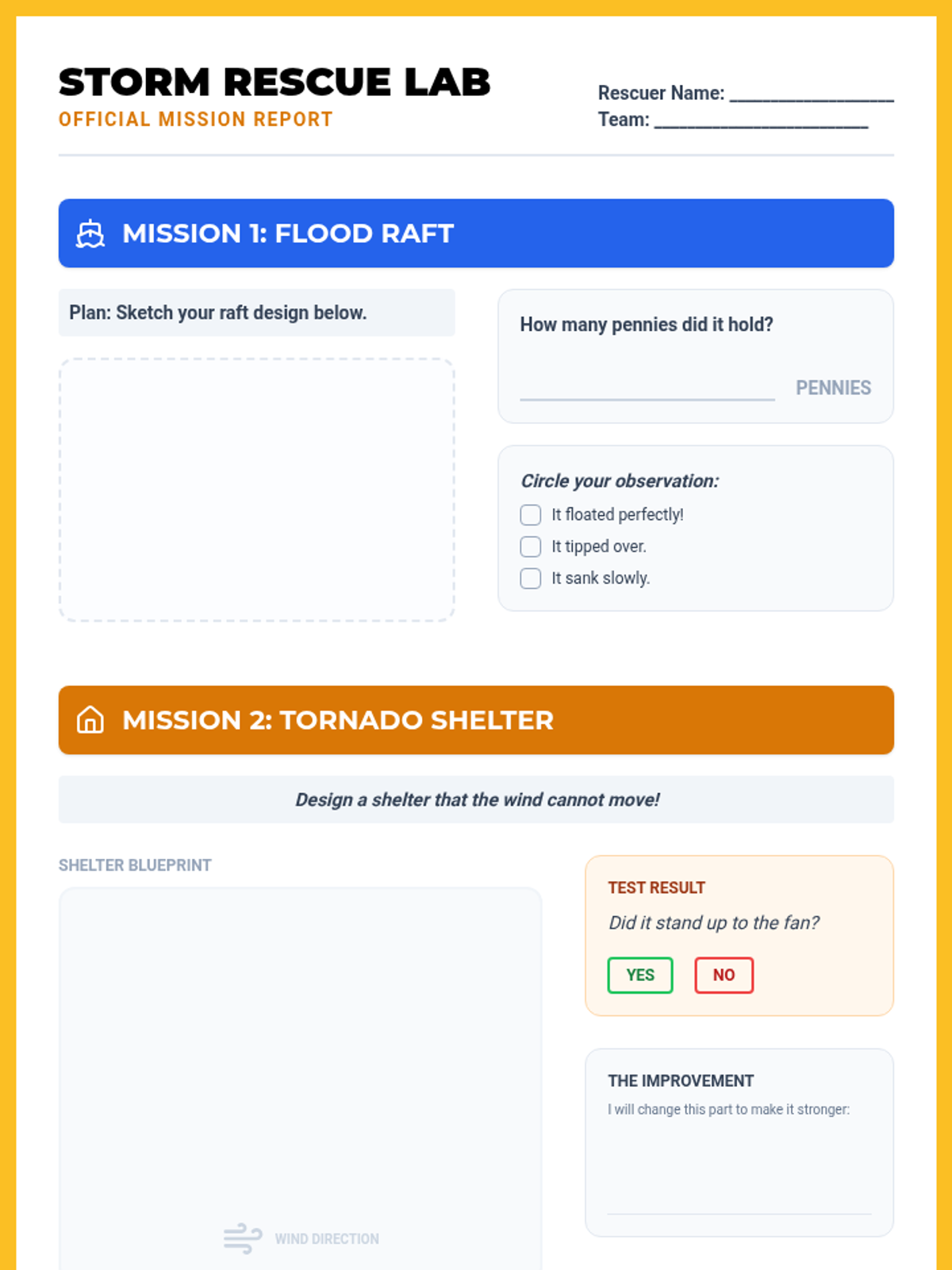
A student activity sheet for the Storm Rescue Team STEM challenge, where students design rafts and tornado-resistant shelters. Includes space for sketches, penny-load data, and wind-test observations.
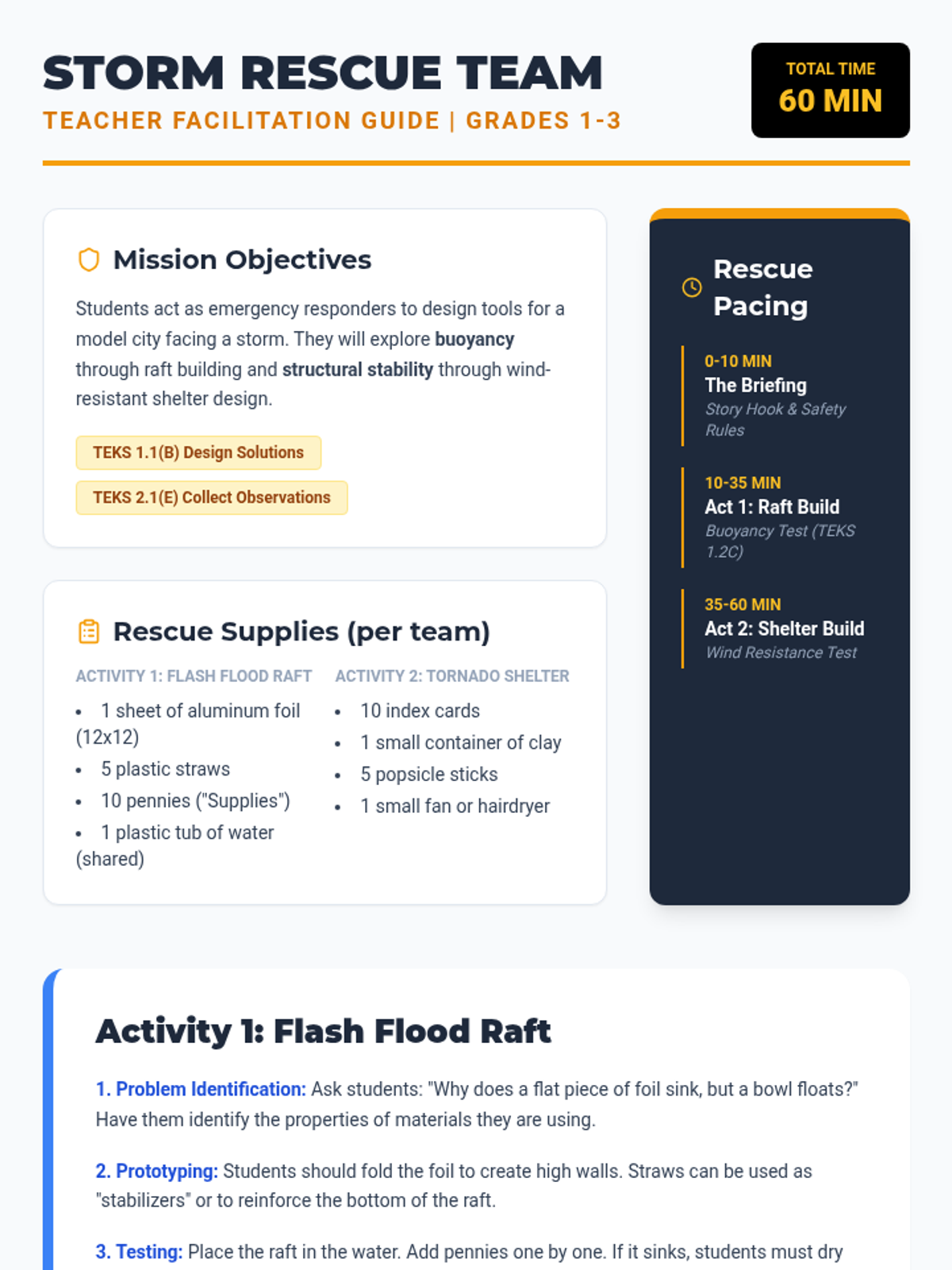
A detailed teacher guide for the Storm Rescue Team STEM lesson (Grades 1-3). Includes pacing, supply lists for raft and shelter building, and instructional strategies for teaching buoyancy and structural stability.
A high-energy junior engineering slide deck for grades 1-3. Students join the 'Storm Rescue Team' to design unsinkable rafts for flood rescues and wind-resistant shelters, featuring safety-themed visuals and real-world science roles.
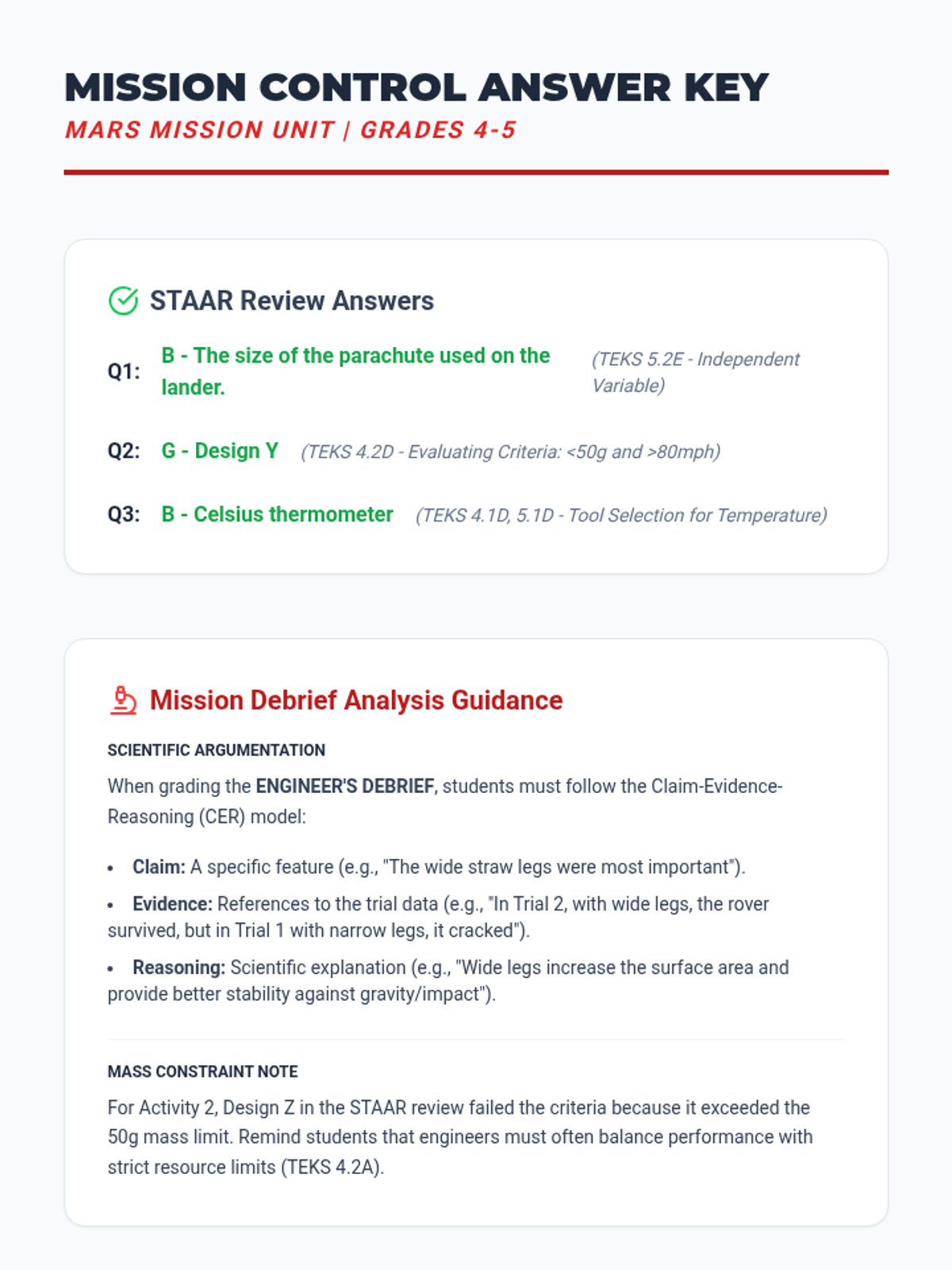
Answer key for the Mars Mission lesson, providing correct answers for the STAAR-style review and grading guidance for the student lab report.
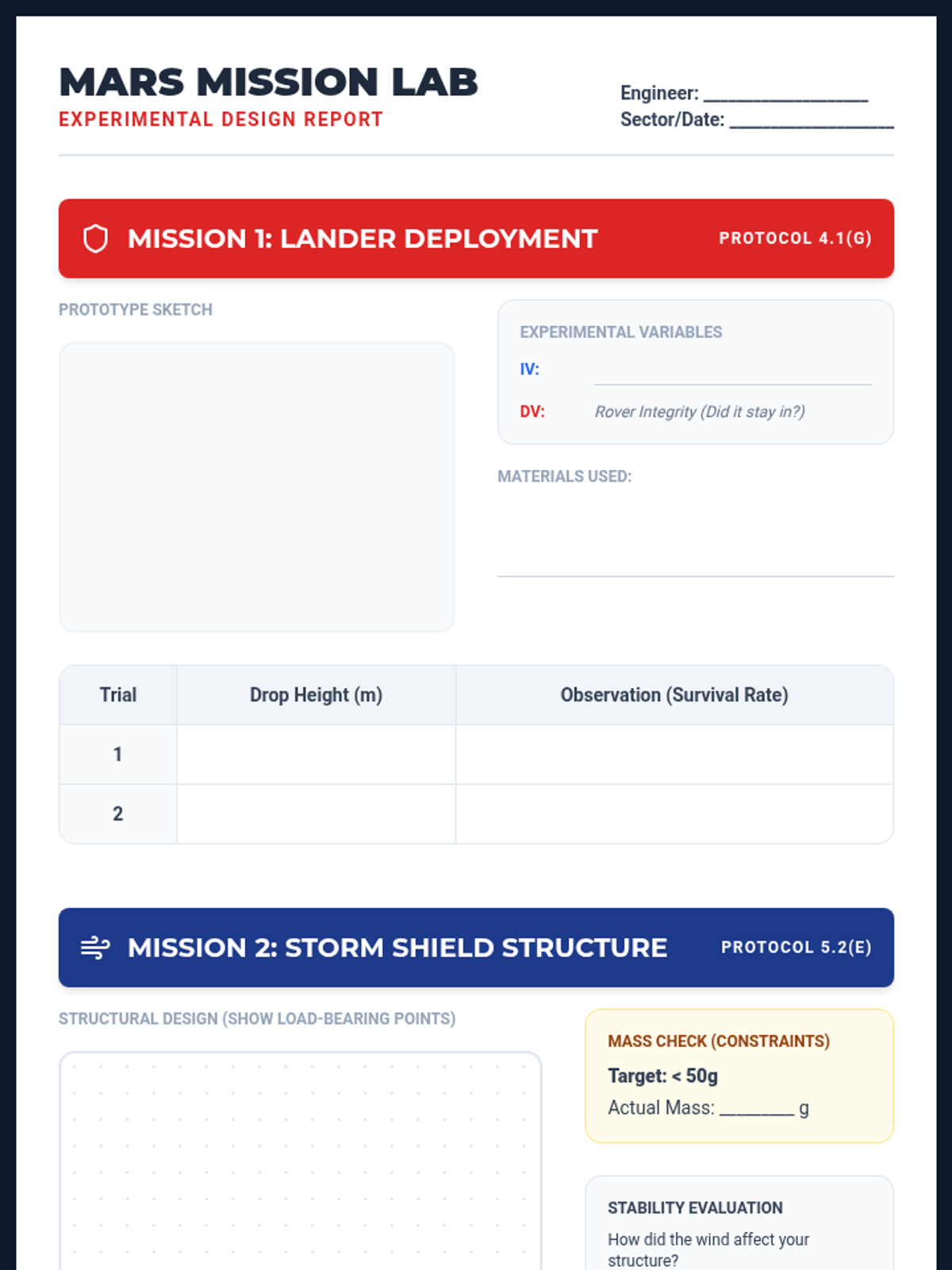
A student lab report for the Mars Mission STEM challenge, featuring space for designing a lander and a storm shield, a data table for recording test results, and a debrief section for scientific analysis.
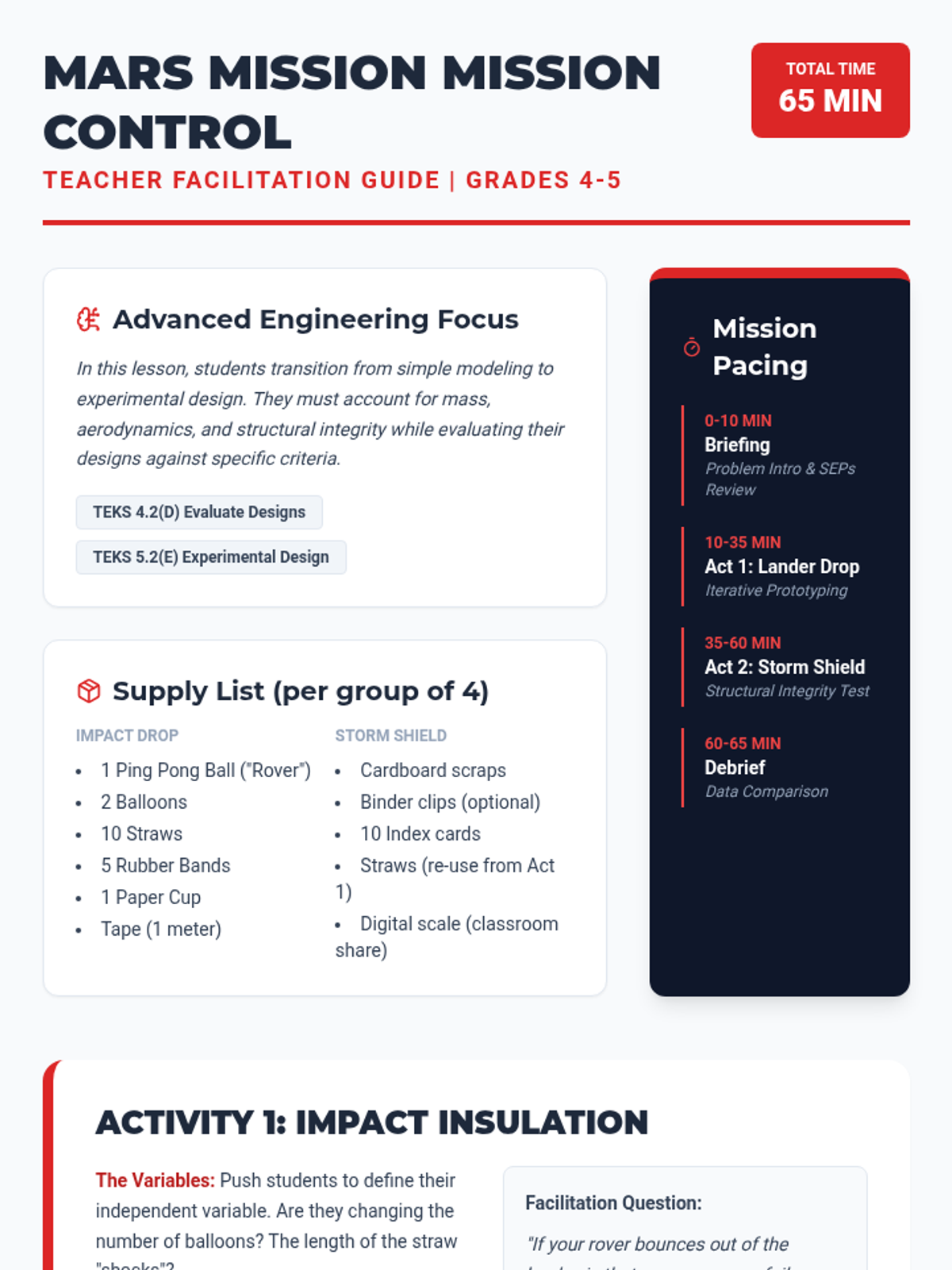
Detailed teacher guide for the Mars Mission STEM lesson, covering grades 4-5. Includes supply lists, pacing for a 65-minute session, and specific guidance on experimental design and testing protocols.
A high-tech slide deck for grades 4-5 focused on the 'Mars Mission' engineering challenge. Features mission-briefing style visuals, instructions for lander and storm-shield challenges, and highlights engineer Ellen Ochoa.
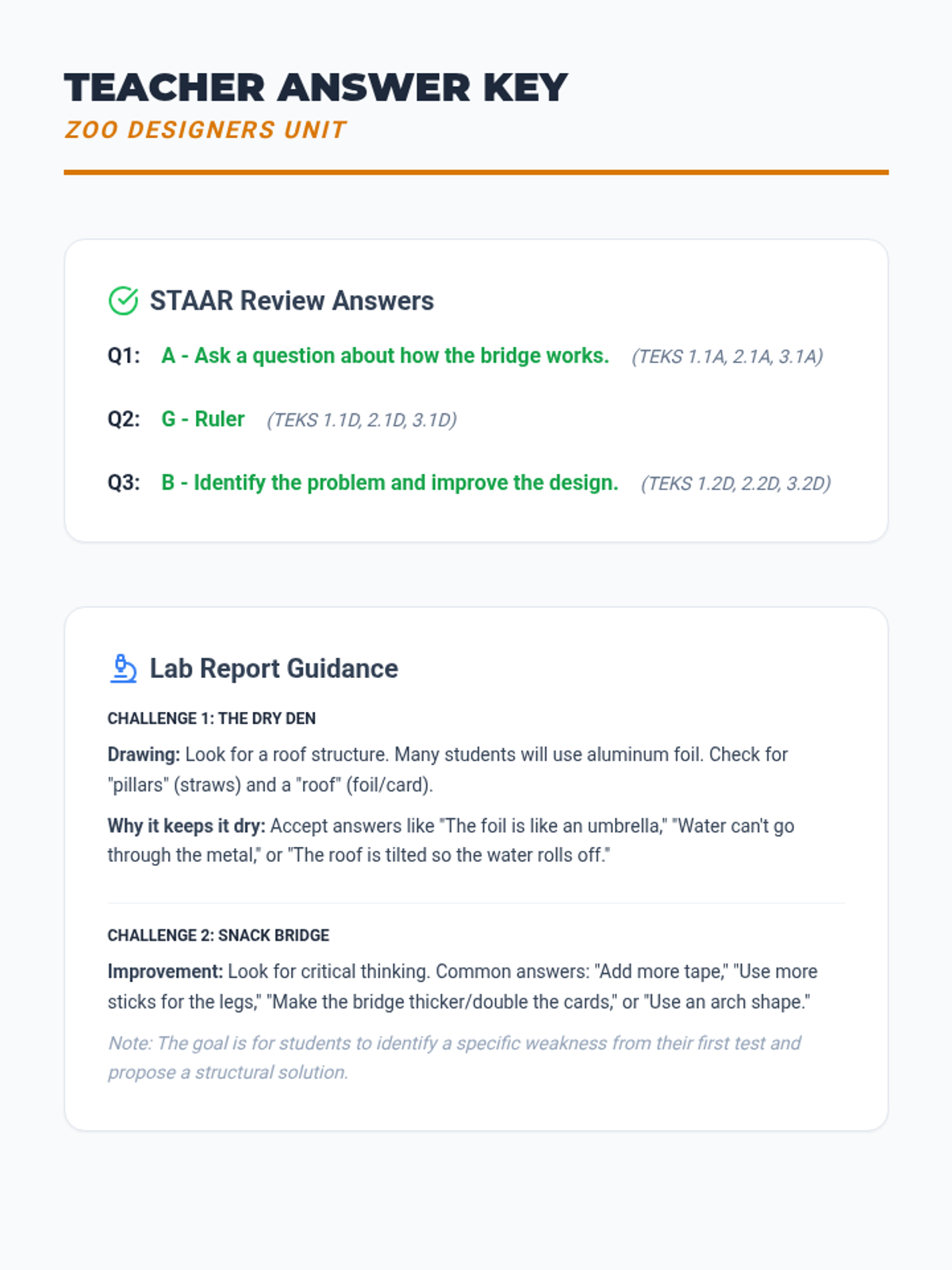
Answer key for the Zoo Designers lesson, providing correct answers for the STAAR-style review and grading guidance for the student lab report.
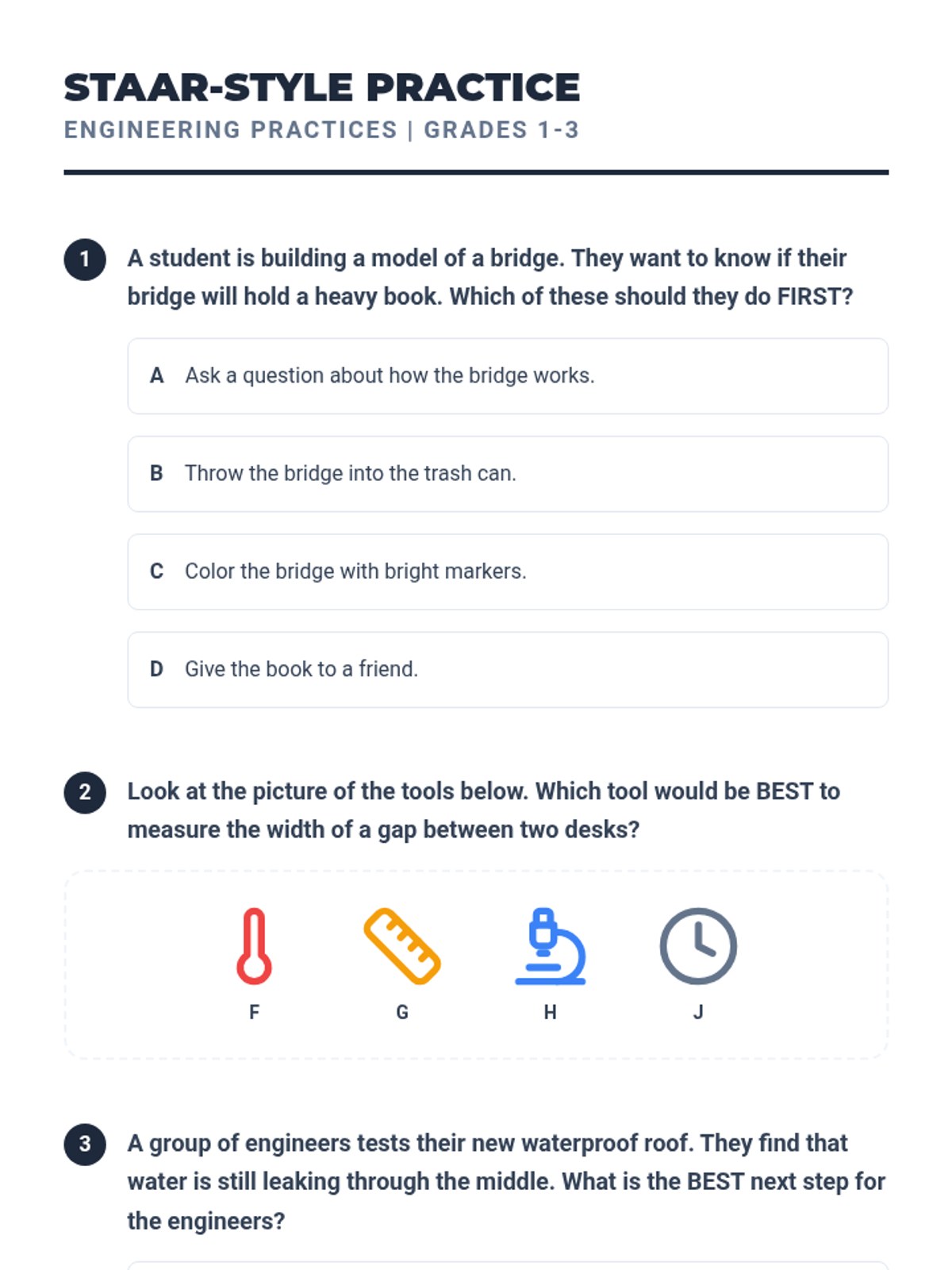
STAAR-style review questions for grades 1-3 focusing on scientific and engineering practices, including problem identification, tool selection, and the engineering design process.
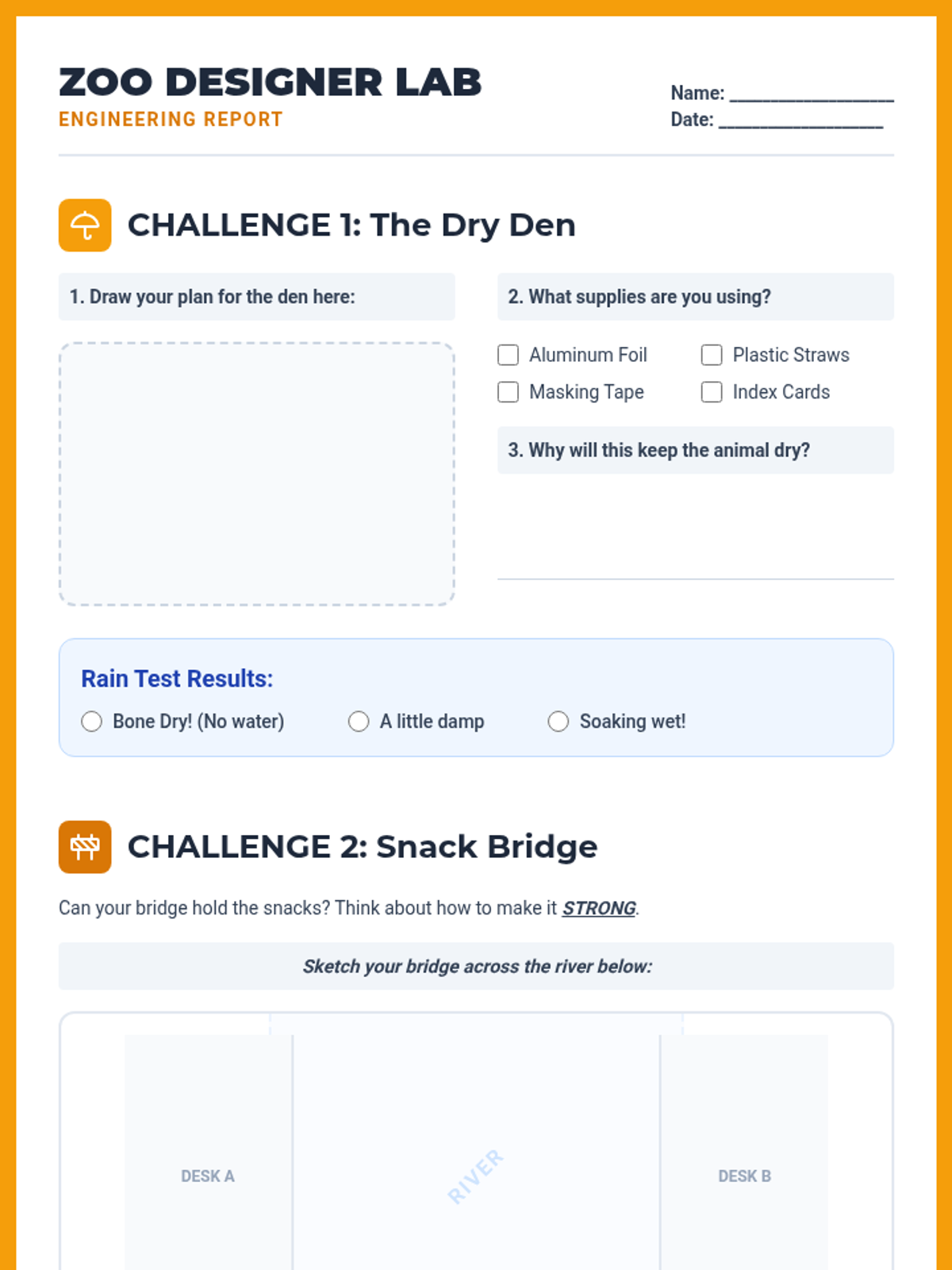
A student activity sheet for the Zoo Designers STEM challenge, featuring space for designing a waterproof den and a bridge, along with areas to record test results and reflect on improvements.
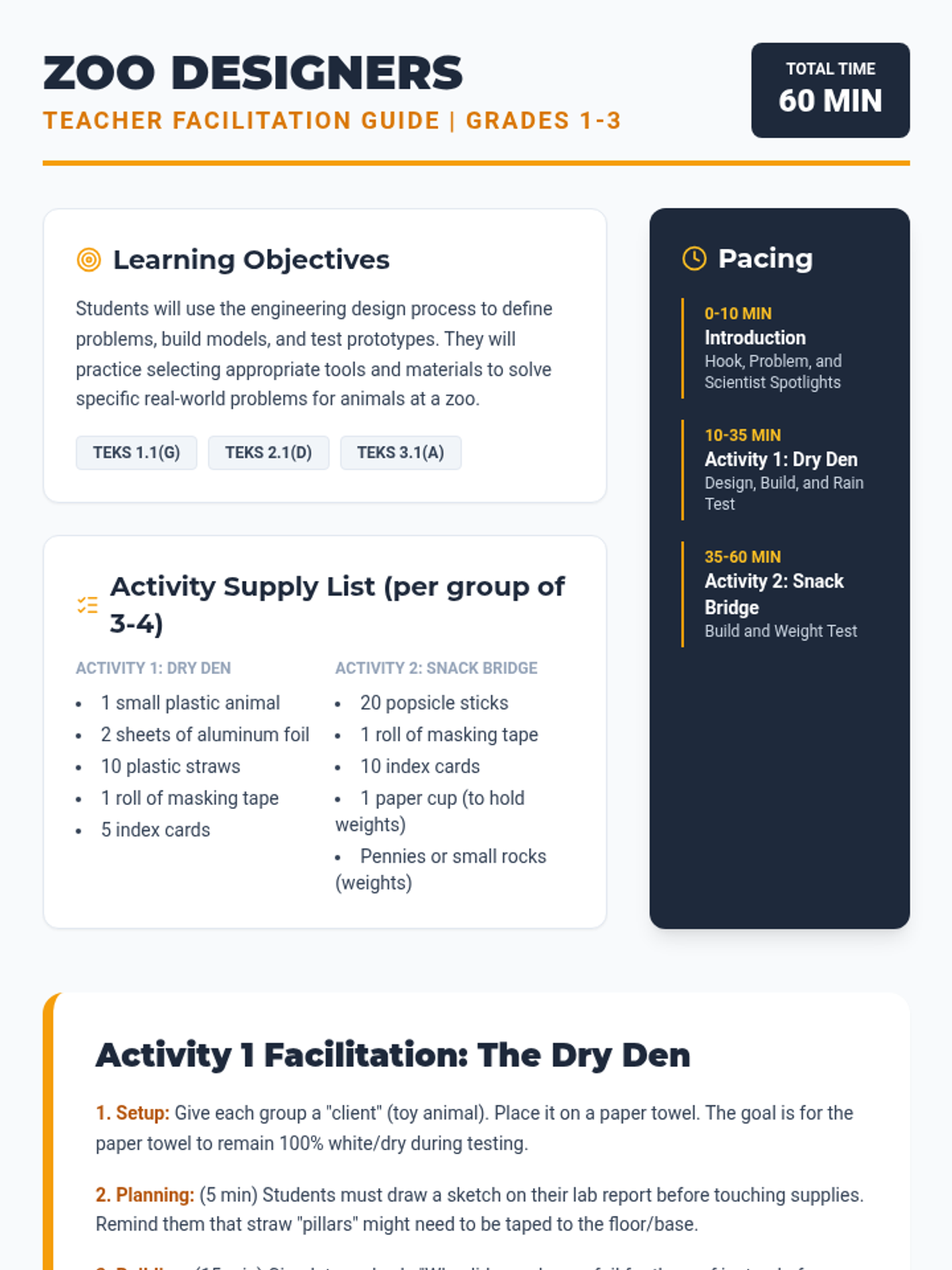
A detailed teacher facilitation guide for the Zoo Designers STEM lesson, including supply lists for grades 1-3, pacing, TEKS alignment, and step-by-step activity instructions.
A visually engaging slide deck for grades 1-3 focused on the 'Zoo Designers' STEM challenge. It includes real-world problem scenarios, two engineering challenges (waterproof den and bridge building), and highlights the contributions of architects.
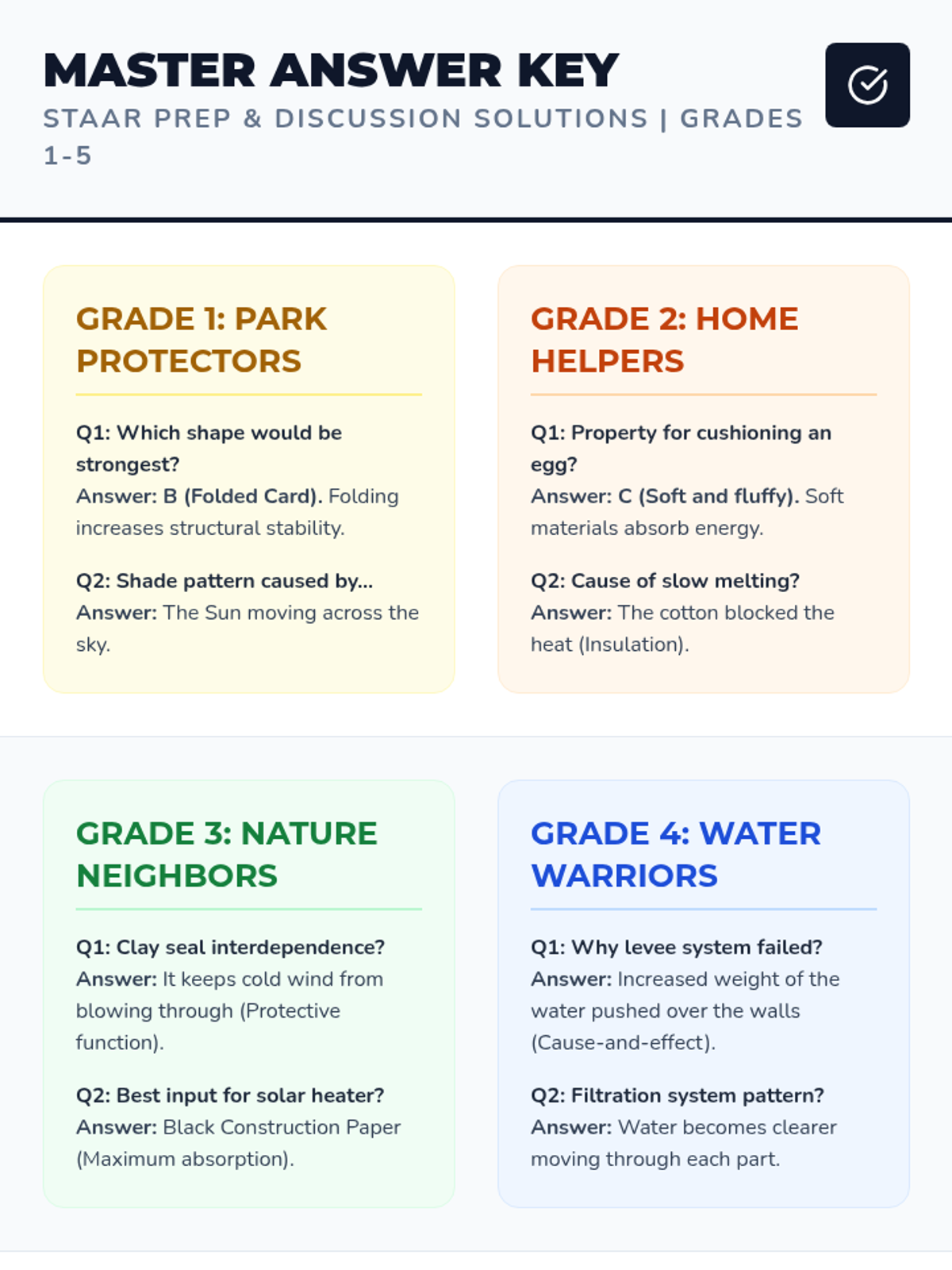
A comprehensive answer key for all STAAR-style prep questions and challenge discussions across Grades 1-5 in the City Solvers curriculum.
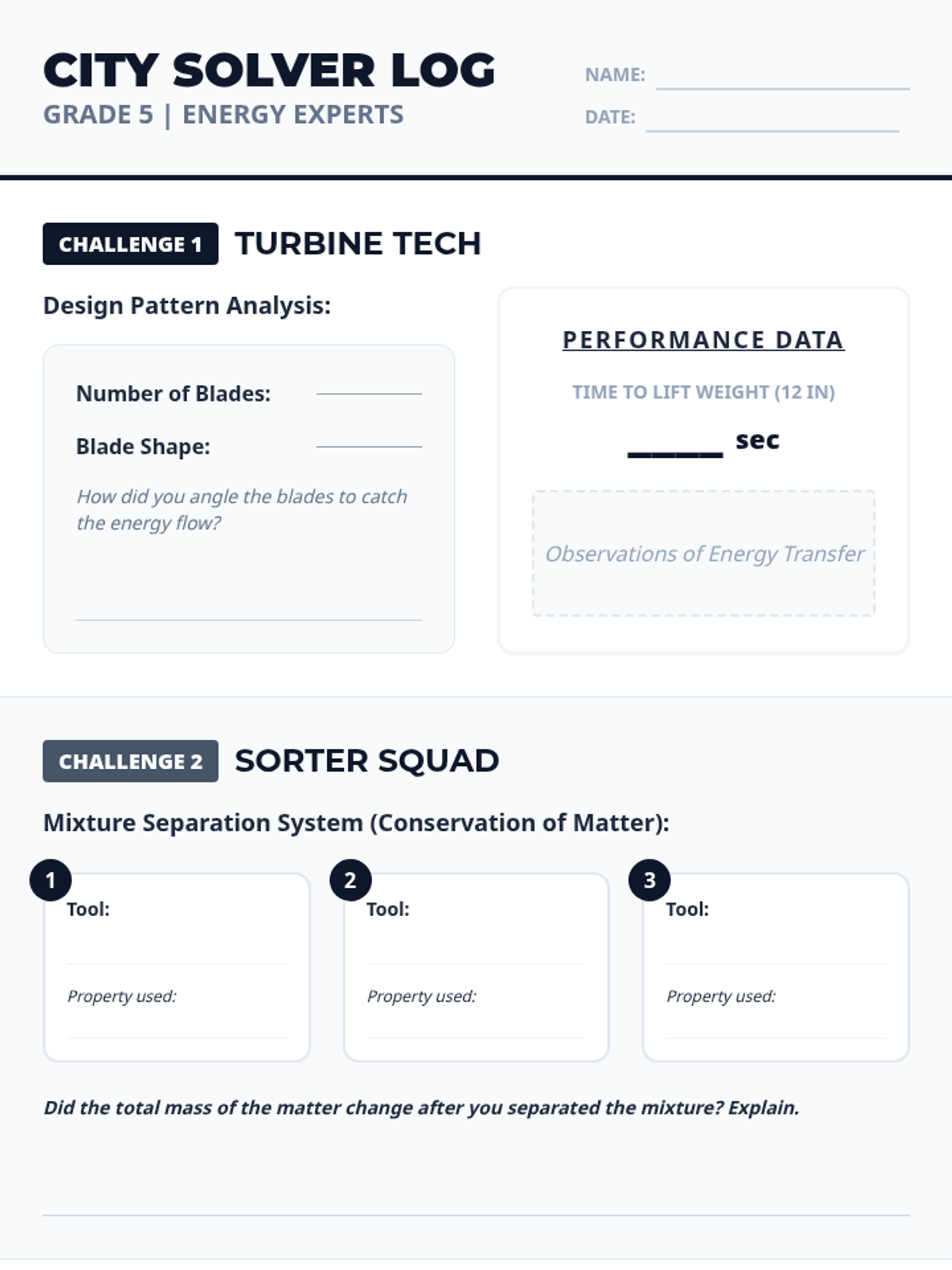
A student activity log for Grade 5 STEM challenges featuring energy flow data, mixture separation plans, and STAAR-style prep questions.