A student activity sheet for the Roller Coaster Tycoons STEM challenge, featuring space for energy transfer analysis and brake system design. Includes data tables for height vs. distance trials.
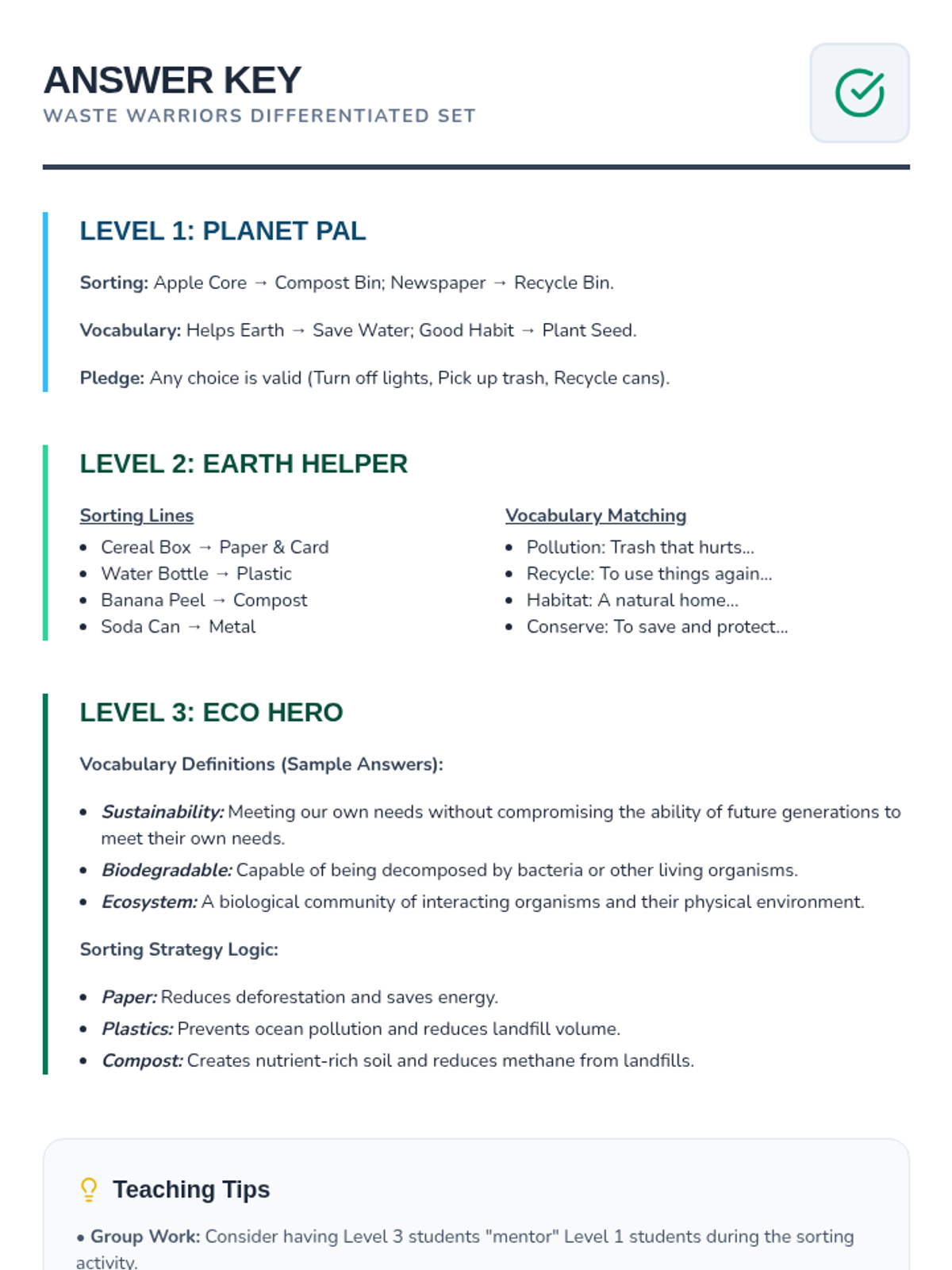
A comprehensive answer key and teacher guide for the Waste Warriors differentiated worksheet set.
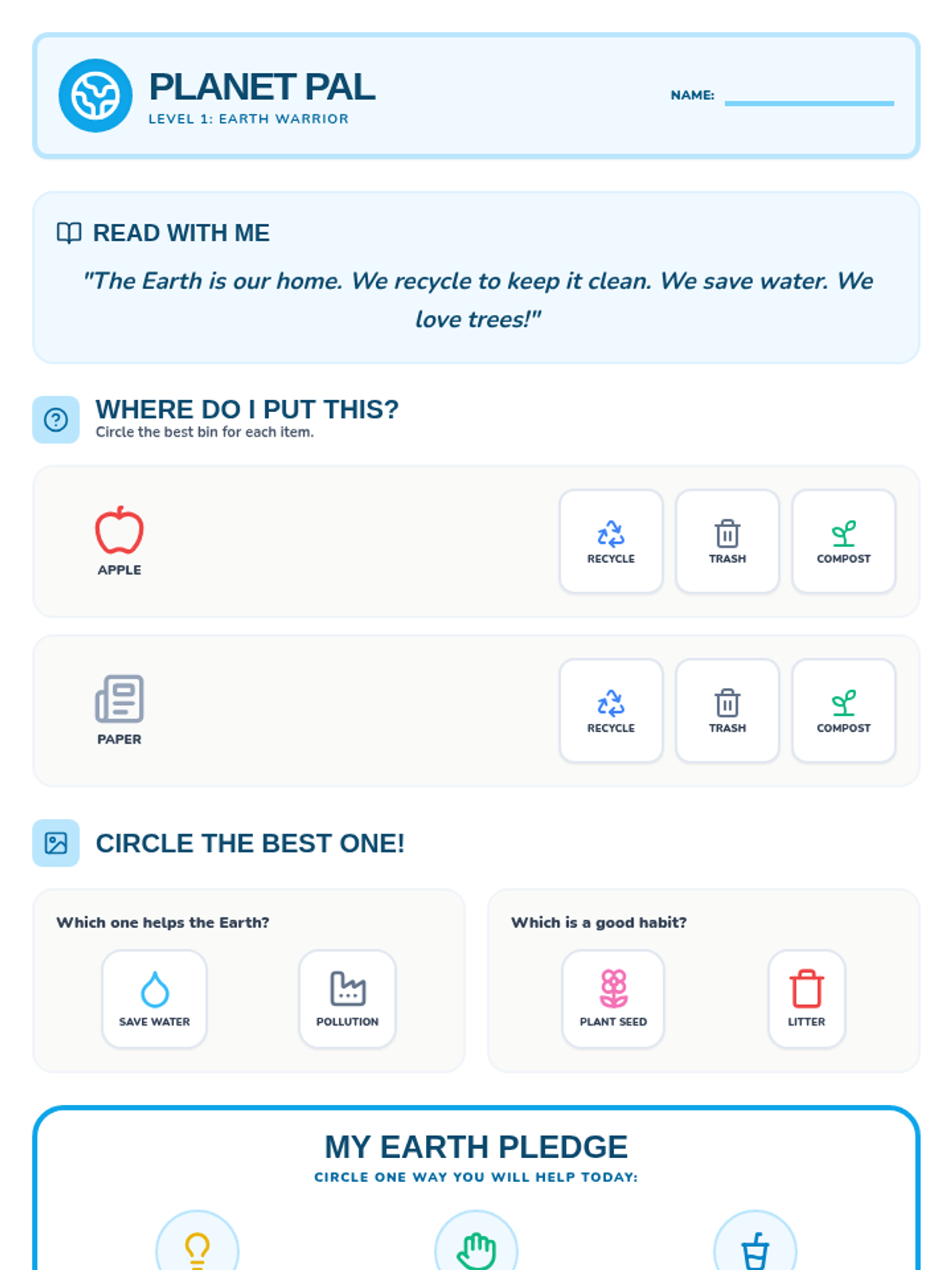
A beginner-level Earth Day worksheet using pictures and icons for multiple-choice sorting and vocabulary recognition.
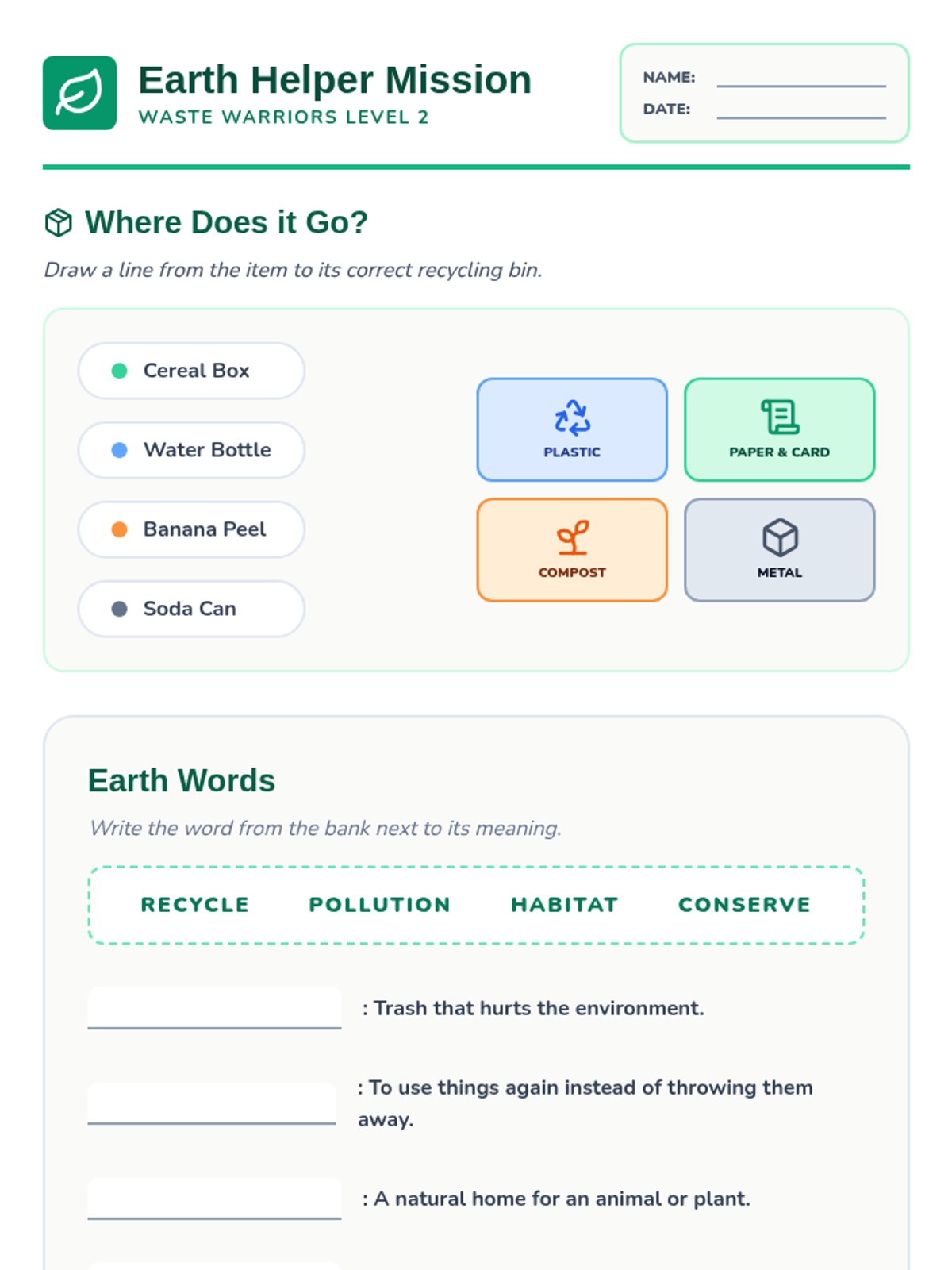
A mid-level Earth Day worksheet featuring a matching activity with a word bank, simple sorting lines, and cloze sentences for structured student responses.
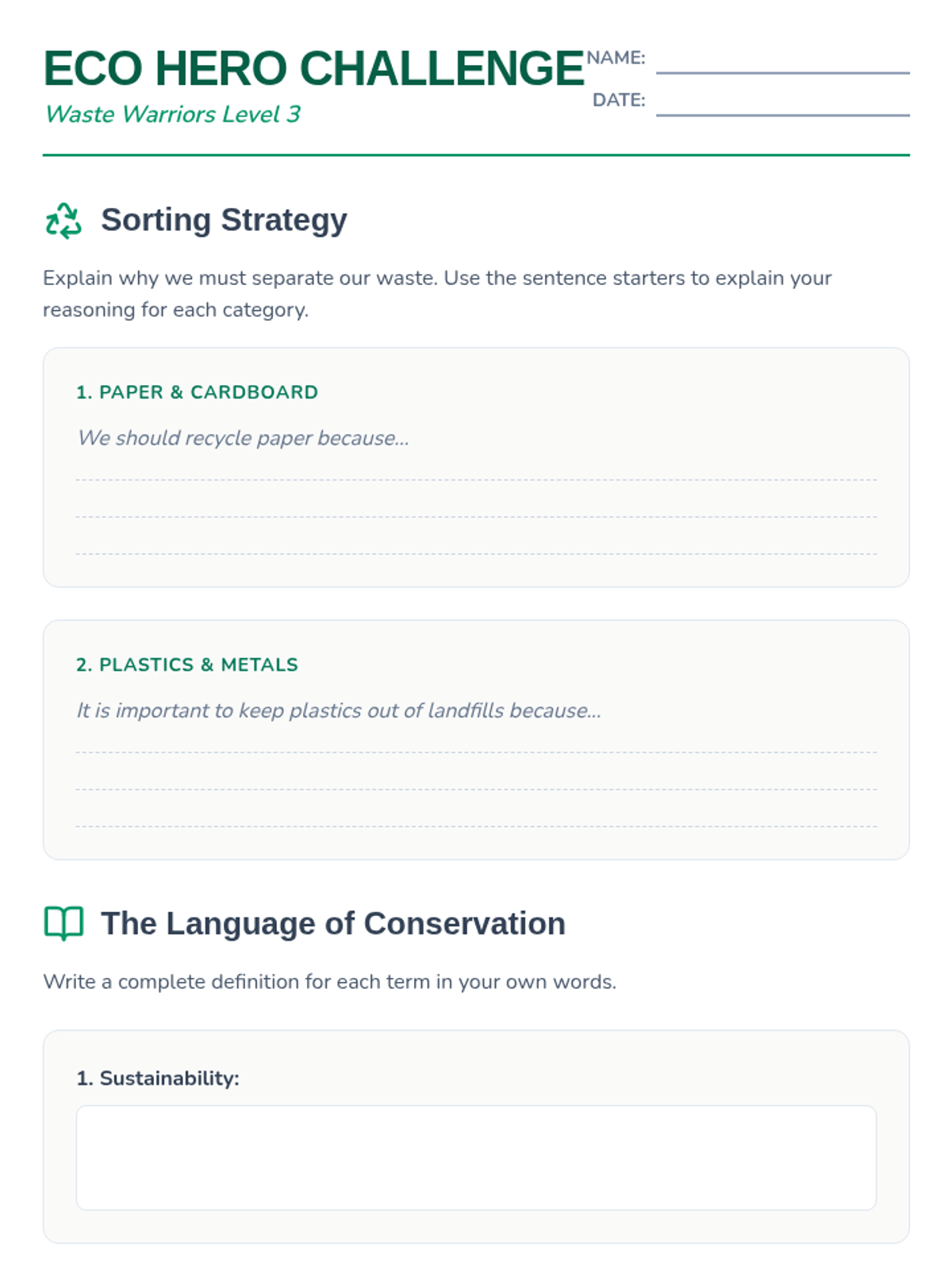
An advanced-level Earth Day worksheet featuring sentence starters and open-ended vocabulary definitions for students to demonstrate deep understanding of waste management.
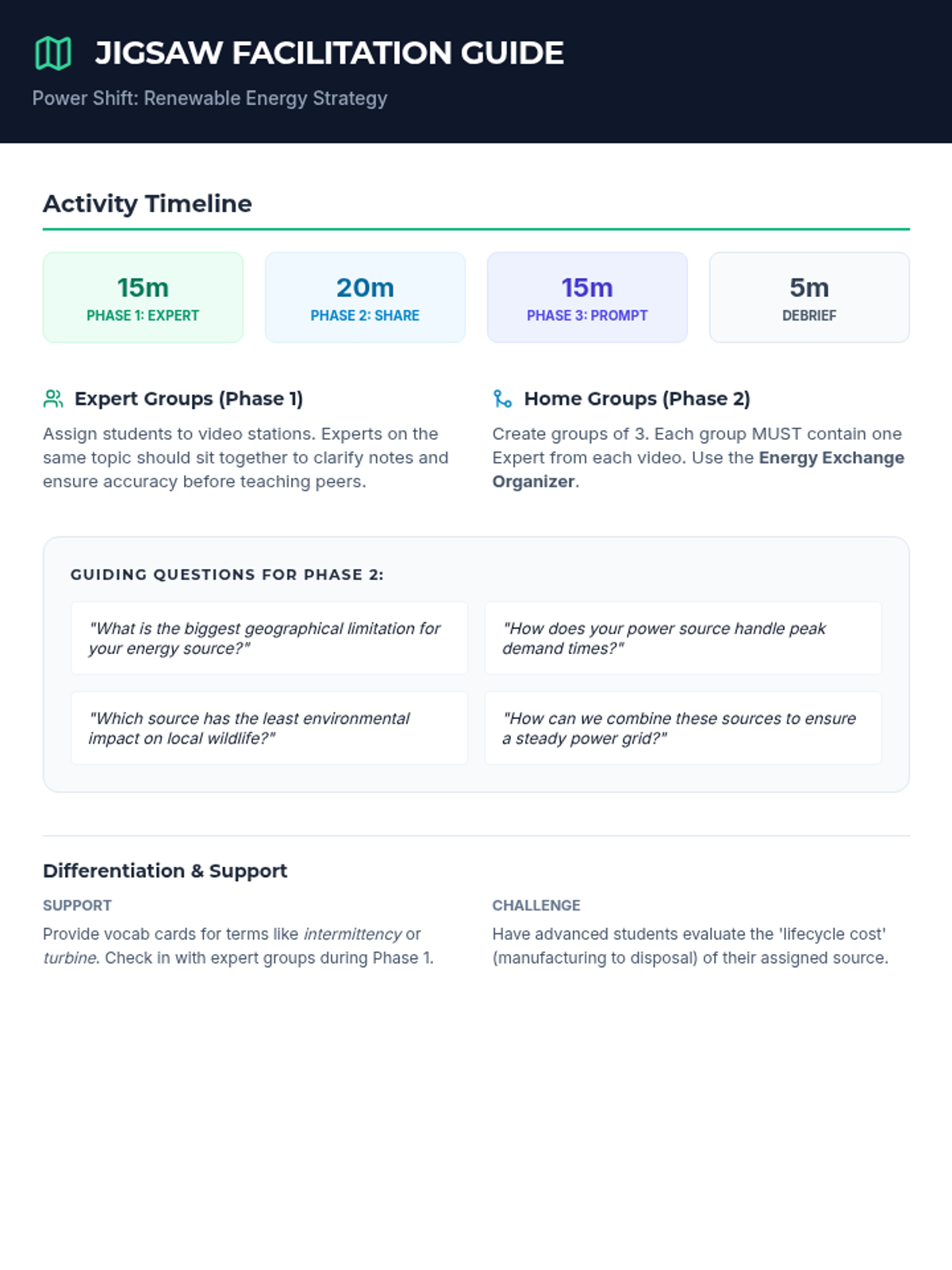
A facilitation guide for teachers to manage the three phases of the jigsaw activity, including timing, grouping strategies, and discussion prompts.
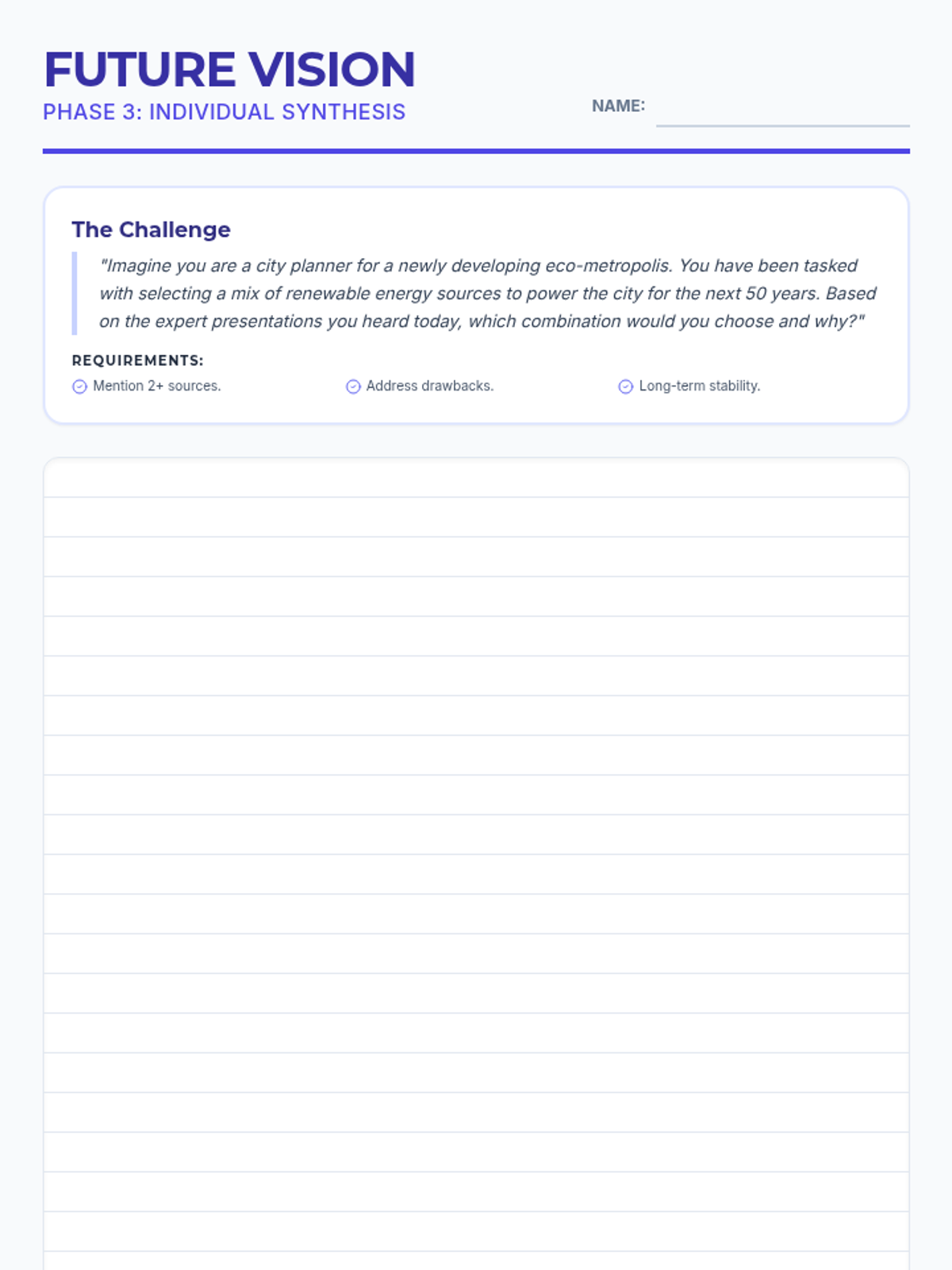
An individual writing prompt handout for the final phase of a jigsaw activity, asking students to synthesize information from all three video sources. Improved line height and layout.
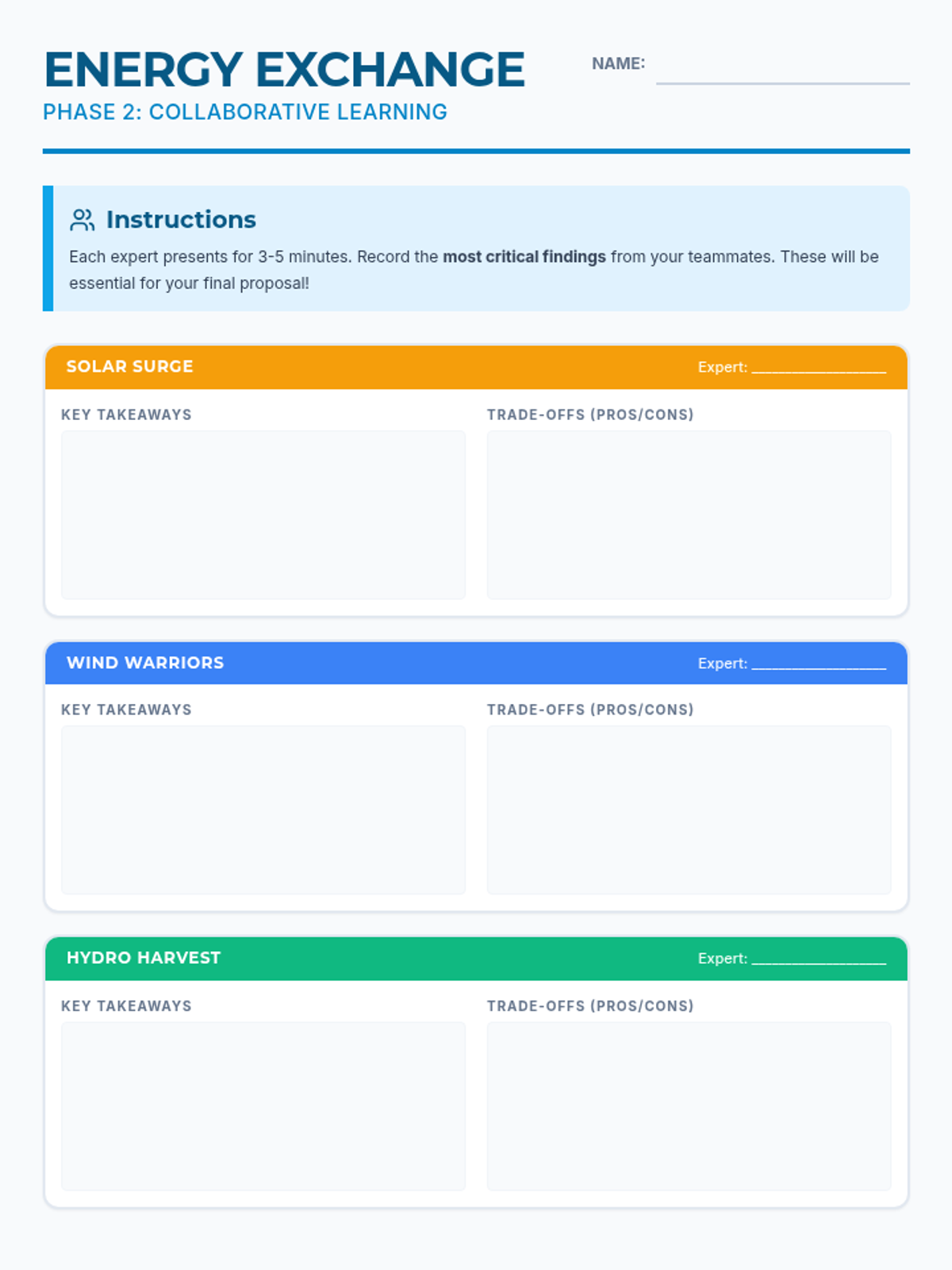
A peer-sharing organizer for the second phase of a jigsaw activity, designed for students to record key information while listening to their teammates' presentations. Page-optimized version.
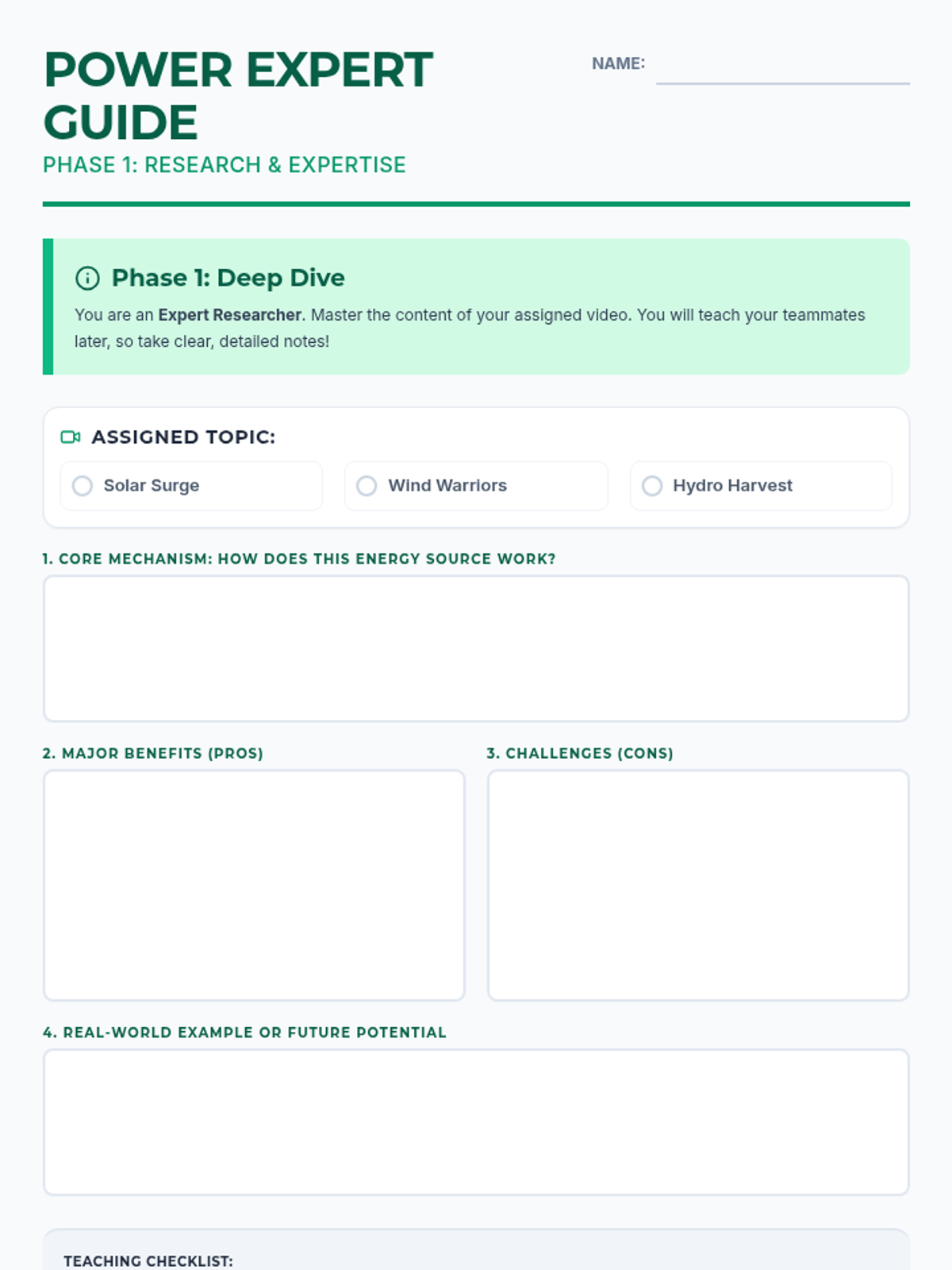
A student-facing expert guide for the first phase of a jigsaw activity, providing space for detailed notes on a specific video source. Final page-optimized version.
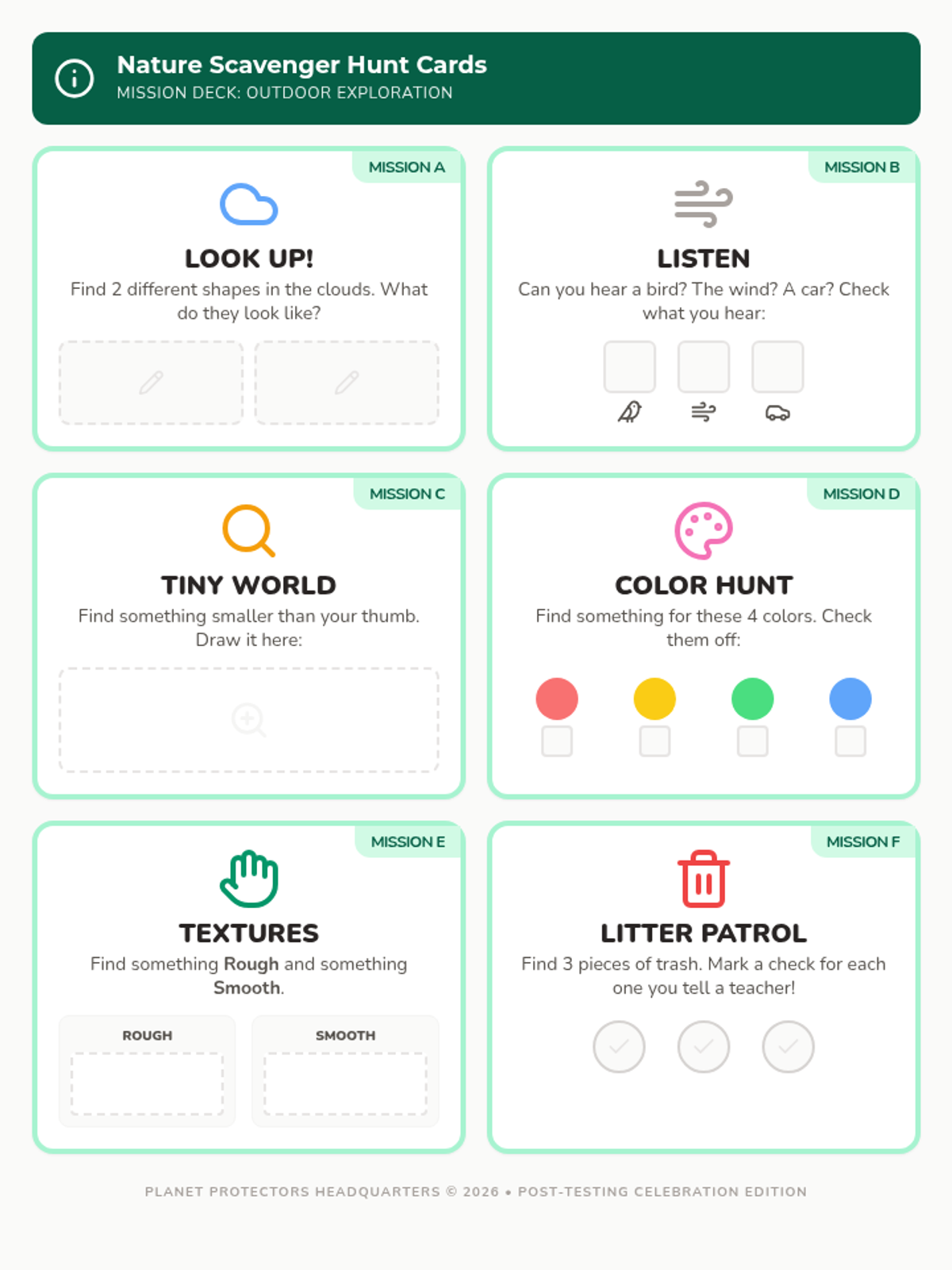
Printable scavenger hunt cards designed for outdoor or indoor exploration. Features heavy visual cues and sensory-based missions accessible for life skills and primary students.
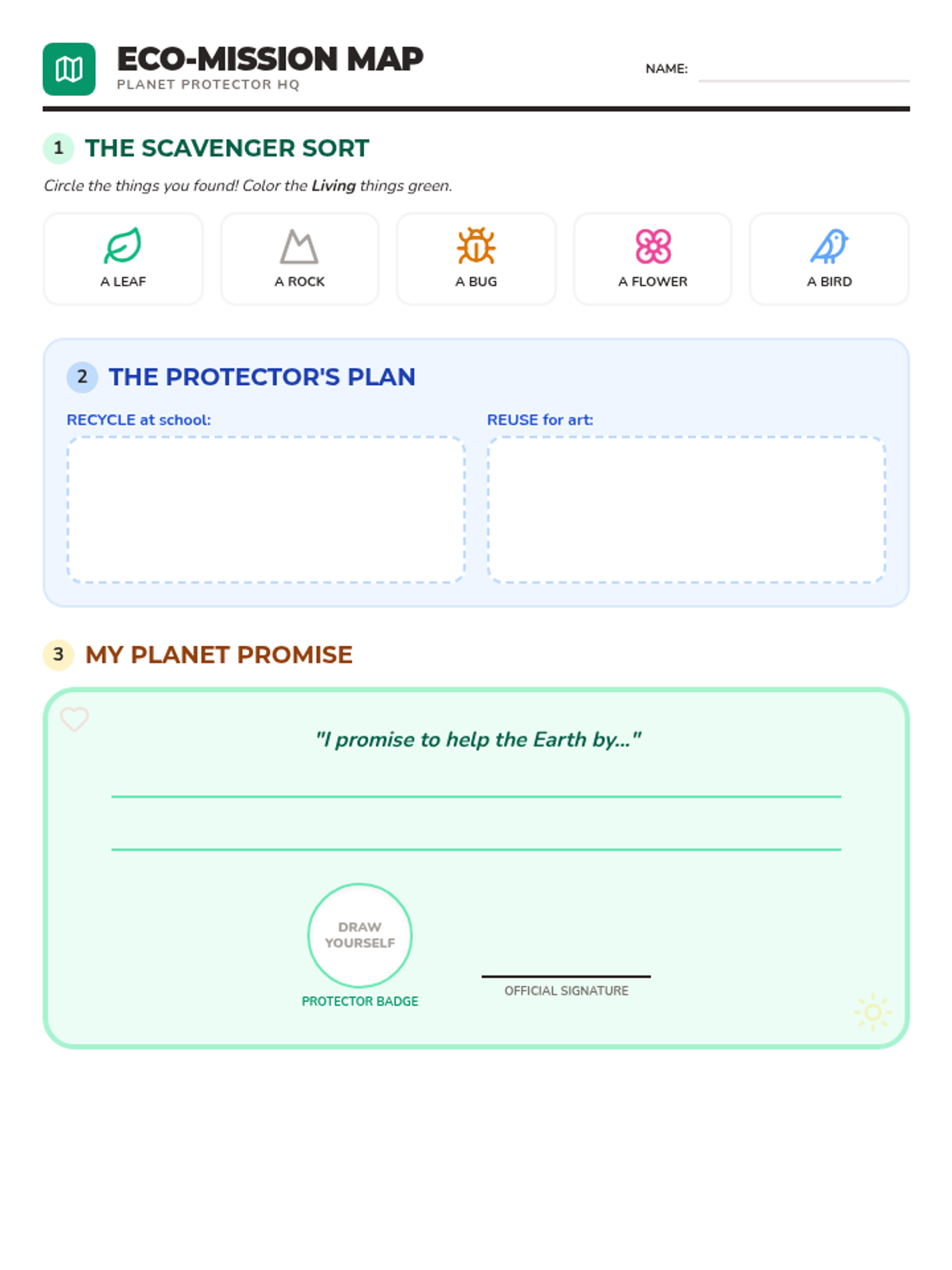
A highly visual and differentiated worksheet for multi-grade students to document their Earth Day missions, including a scavenger hunt checklist, a 'Reduce/Reuse' brainstorm area, and a formal Earth Pledge.
Engaging, high-contrast visual slides to introduce Earth Day activities to a diverse classroom. Focuses on celebration after testing and the 'Planet Protector' theme, now including an embedded mission video.
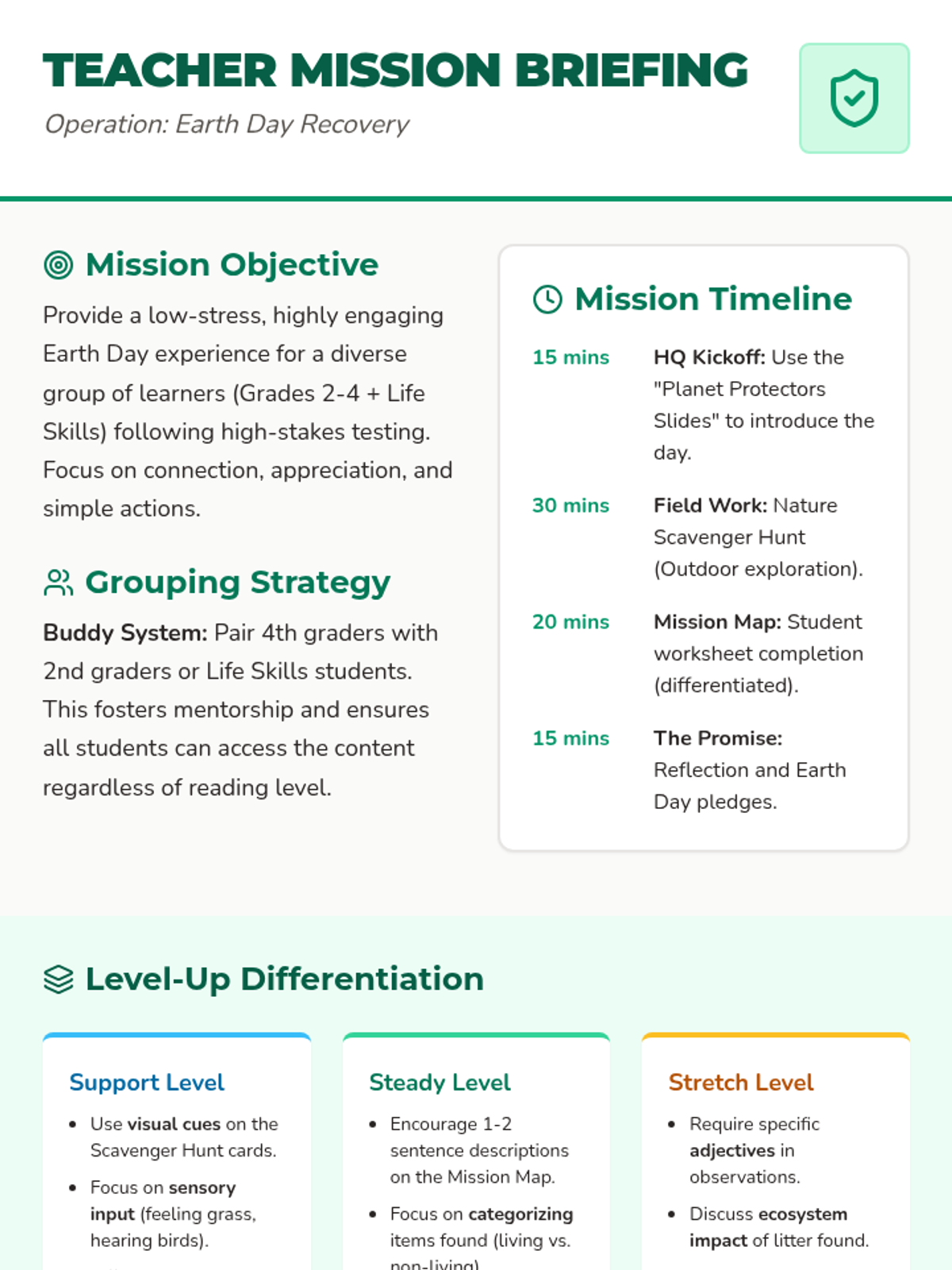
A comprehensive facilitation guide for teachers to manage a differentiated Earth Day activity day, including grouping strategies, timelines, and specific tips for supporting life skills and multi-grade students.
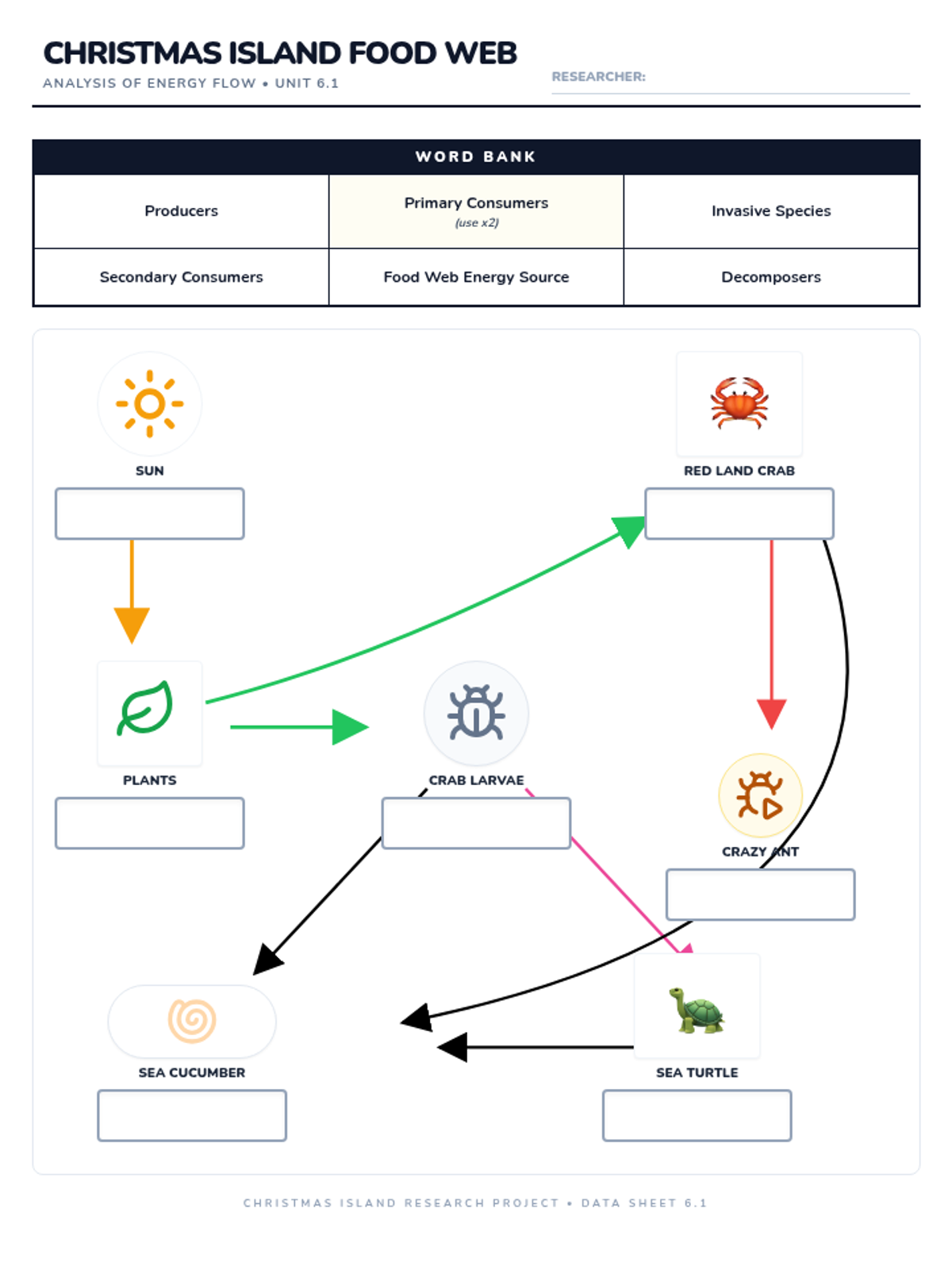
A highly realistic and visually refined food web worksheet for Christmas Island. It features custom visuals for crab larvae, sea cucumbers, and sea turtles, a distinctly yellow theme for the crazy ant, and accurate energy flow arrows. The layout is optimized for clarity and high-contrast printing on a single page with zero element overlap.
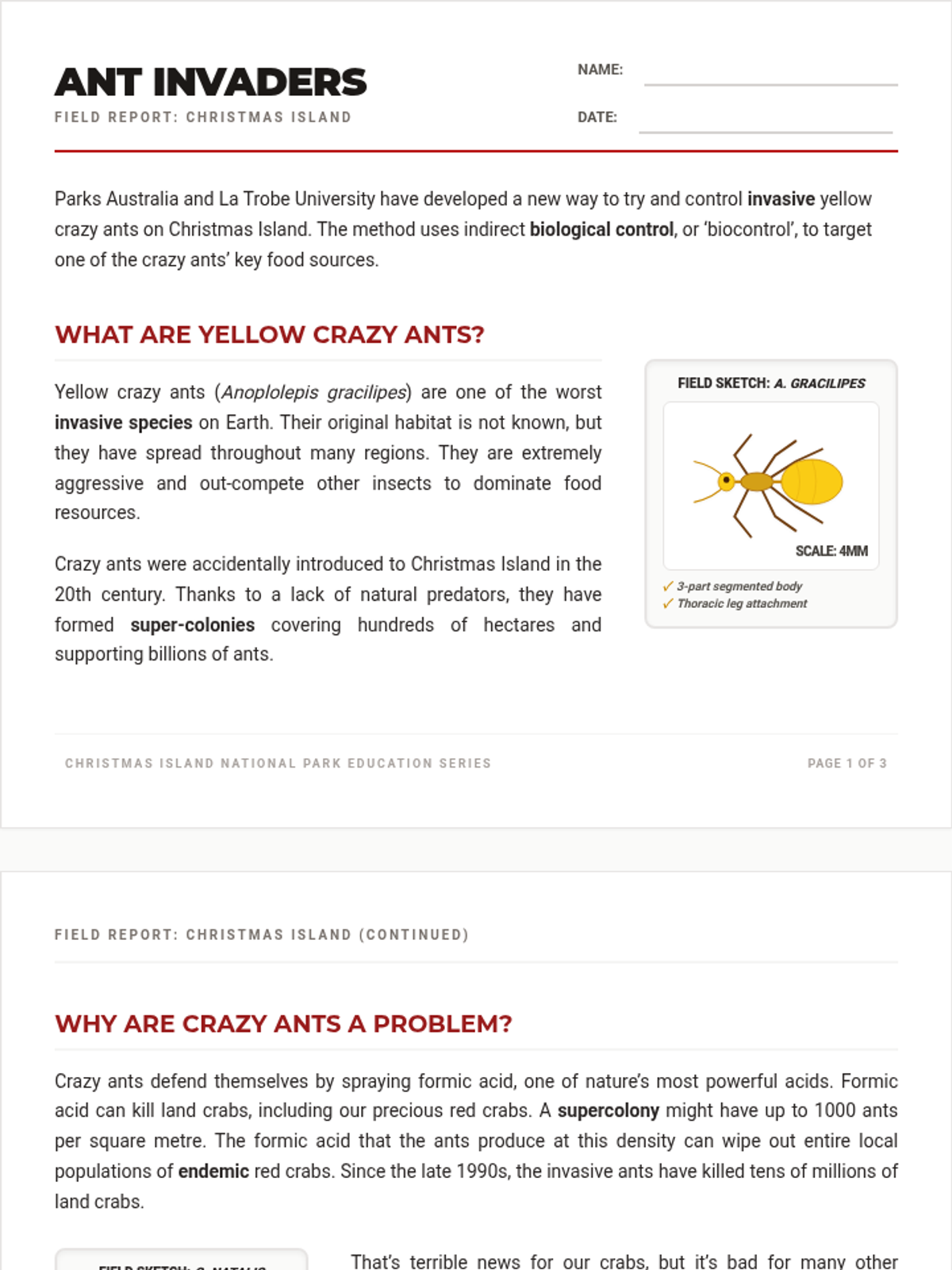
An updated three-page reading passage about yellow crazy ants on Christmas Island, now featuring realistic, anatomically accurate SVG "Field Sketch" illustrations of the ants, red crabs, lac scale insects, and honeydew. Formatted for consistent alignment and perfect page flow.
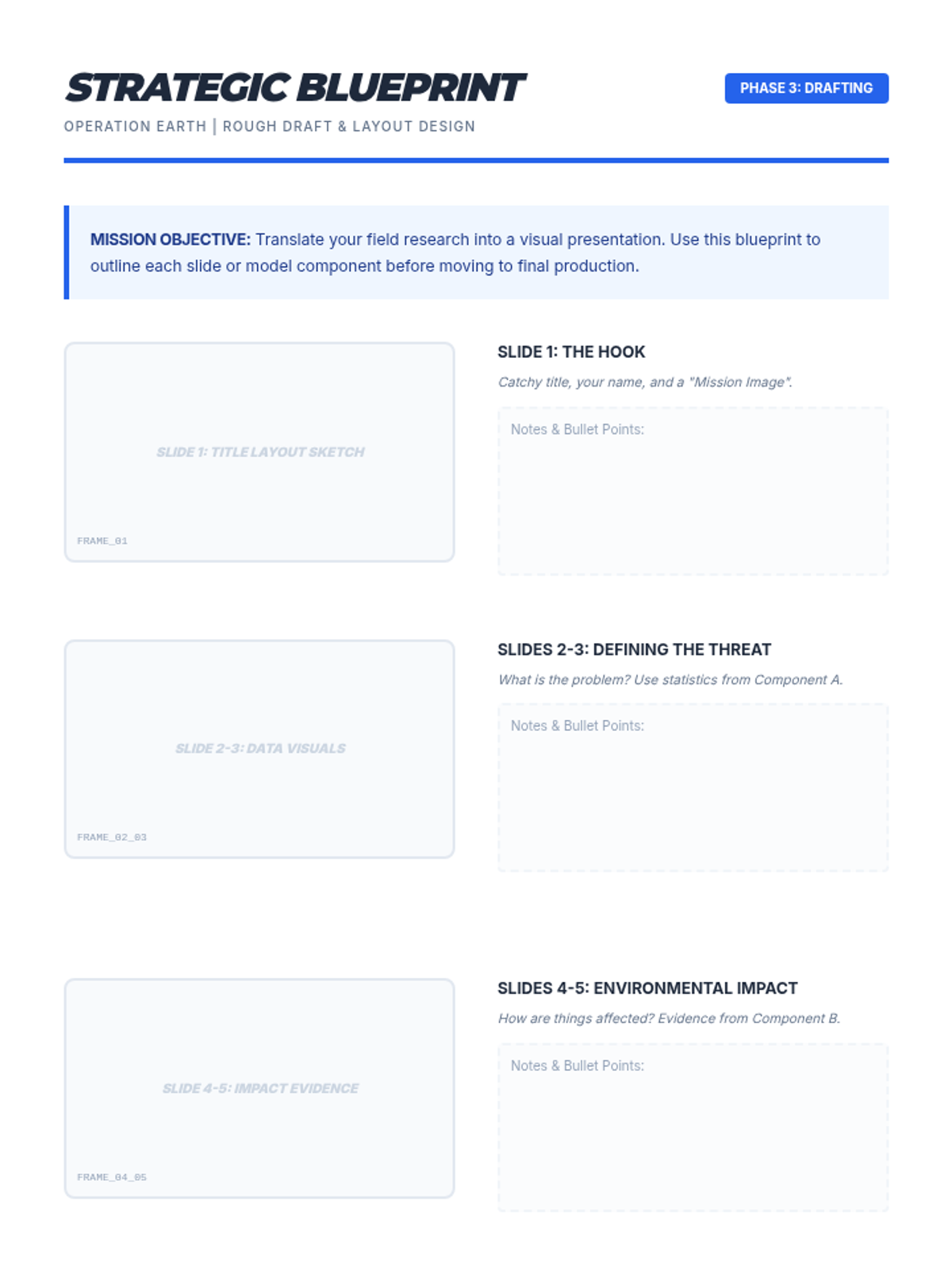
A "rough draft" planning document for Operation Earth. It helps students map their research findings into a logical slide-by-slide sequence, including spaces for layout sketches and peer feedback.
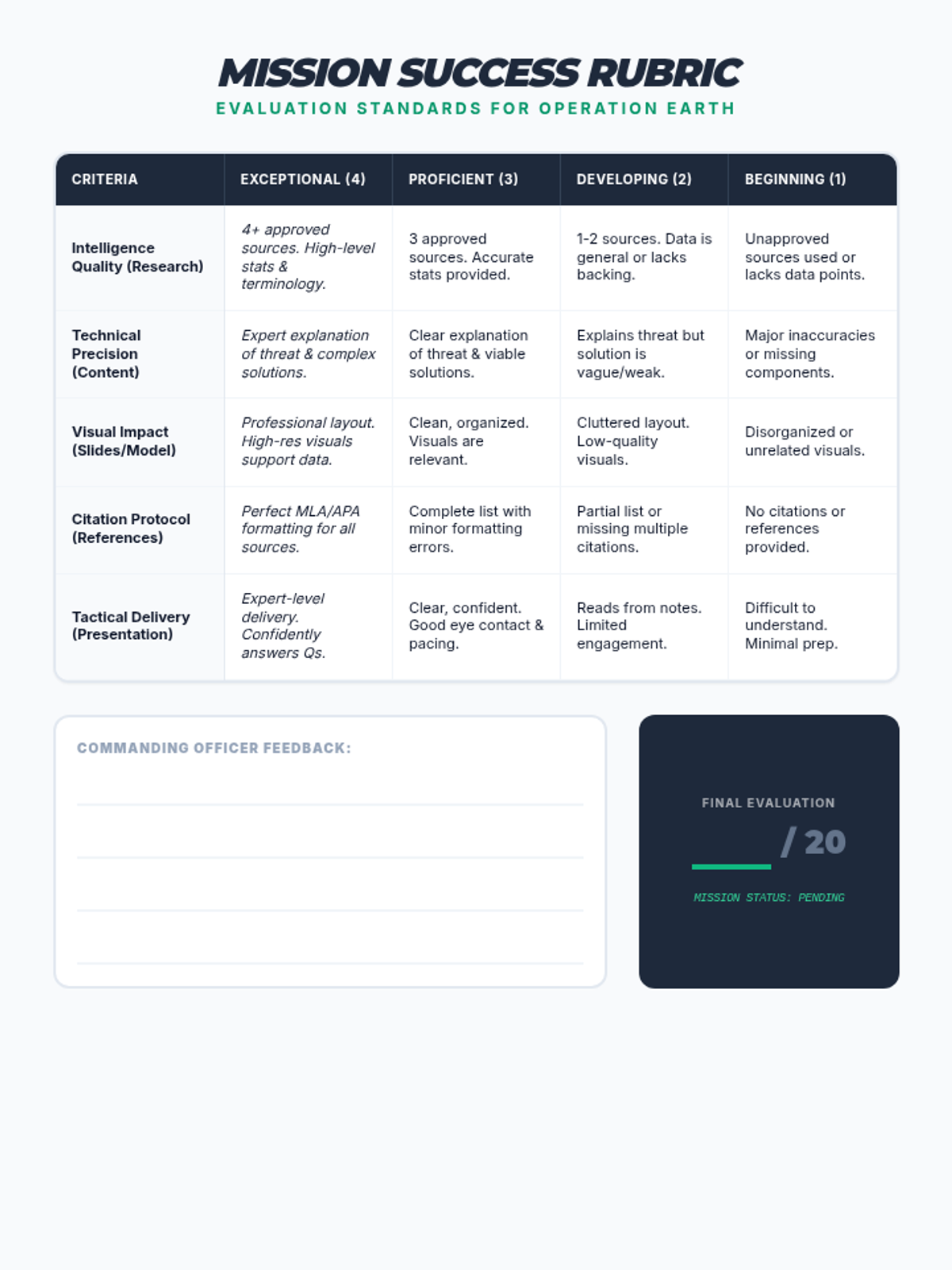
A project-specific rubric for Operation Earth, evaluating research quality, content accuracy, visual presentation, and citations. Uses a 'Mission Success' theme to maintain project immersion.
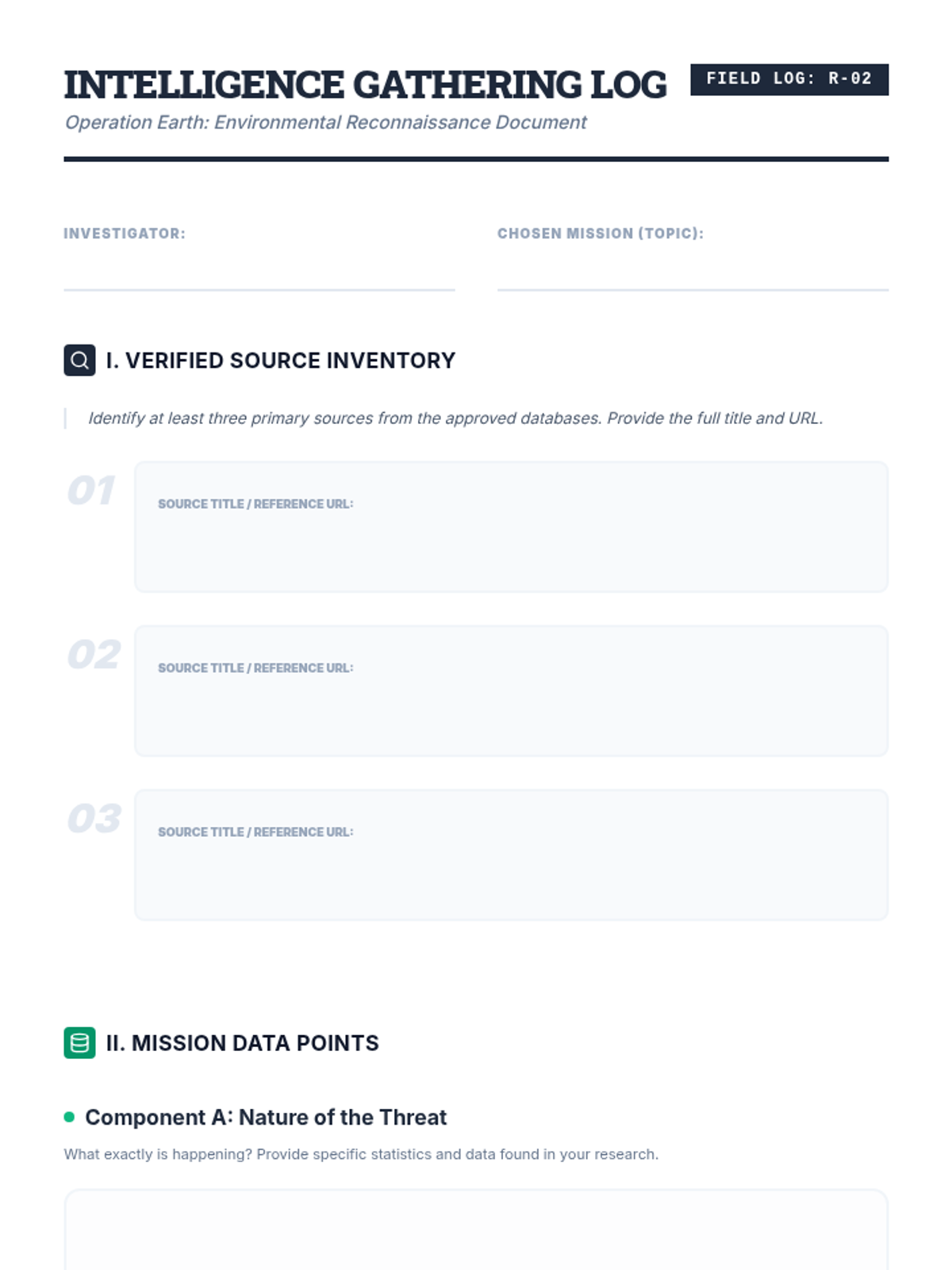
A formal research document for Operation Earth, structured as a field log. It provides guided sections for source validation, data collection (Problem, Impact, Solutions), and a final reference list.
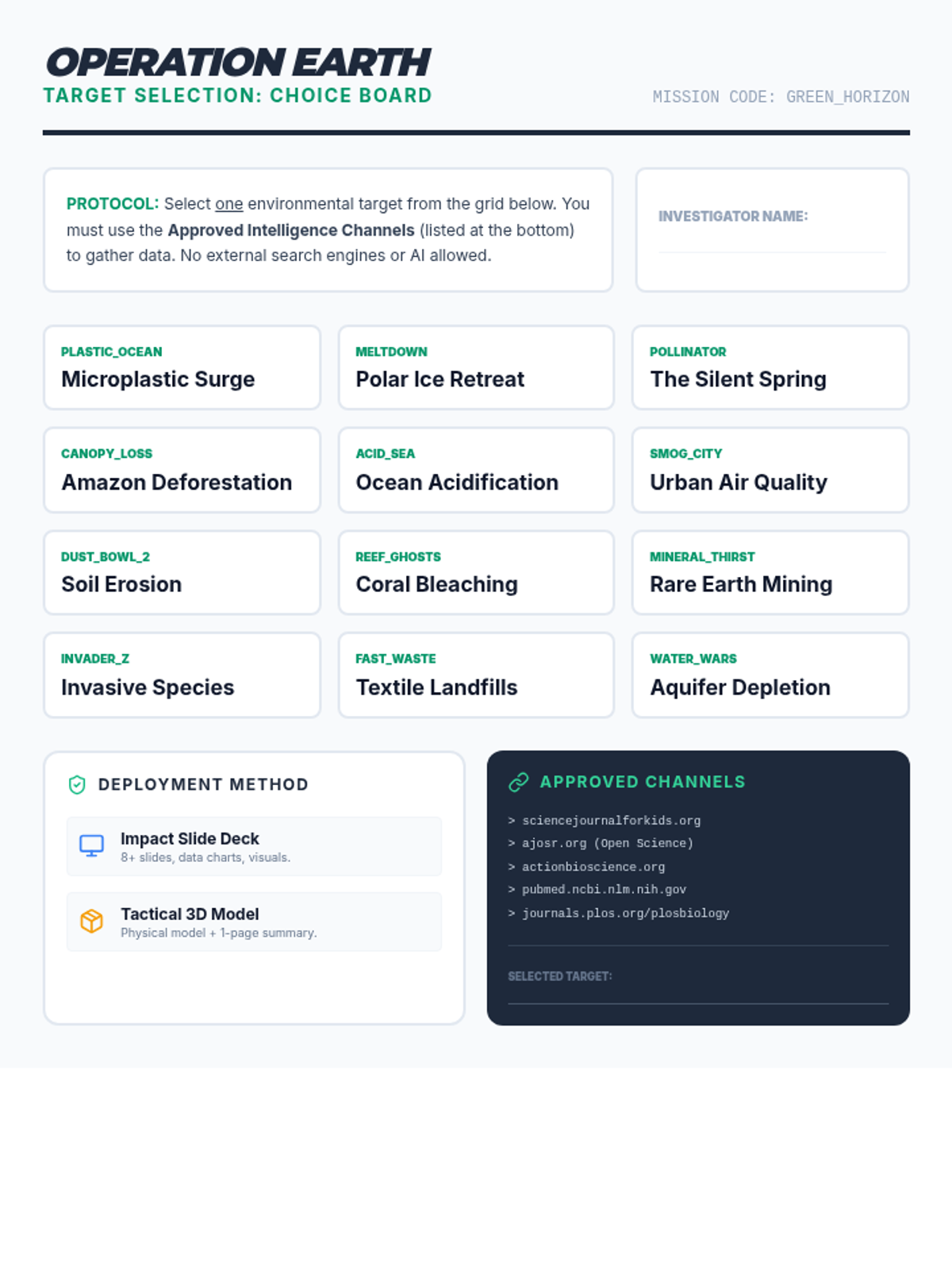
A mission-style choice board for Operation Earth featuring 12 environmental challenges and two project delivery options. Designed with a high-tech tactical aesthetic to engage students in their 'mission selection'.
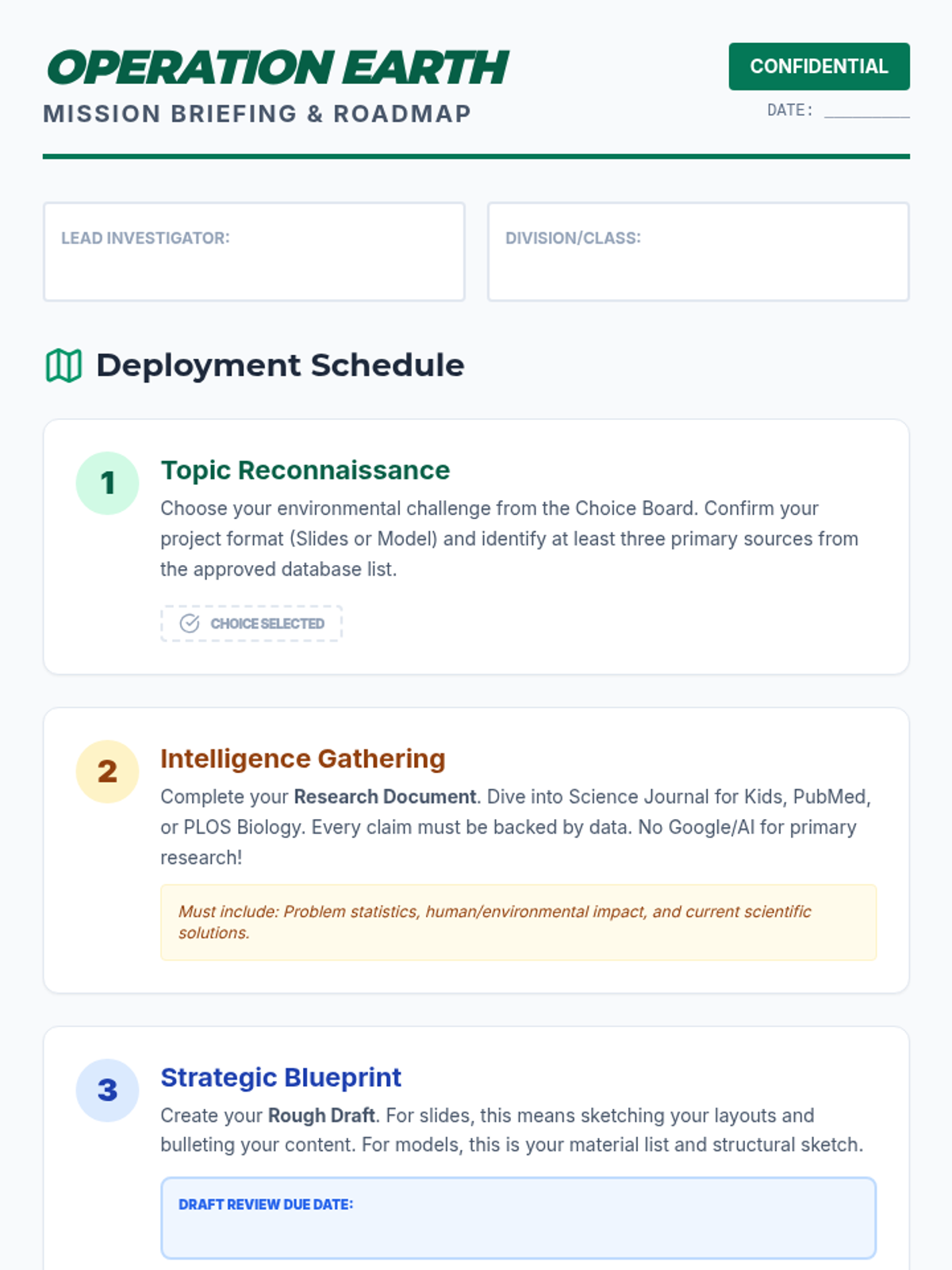
A student-facing project roadmap and timeline for Operation Earth. It breaks the project into four distinct phases: Topic Reconnaissance, Intelligence Gathering, Strategic Blueprint, and Final Deployment.
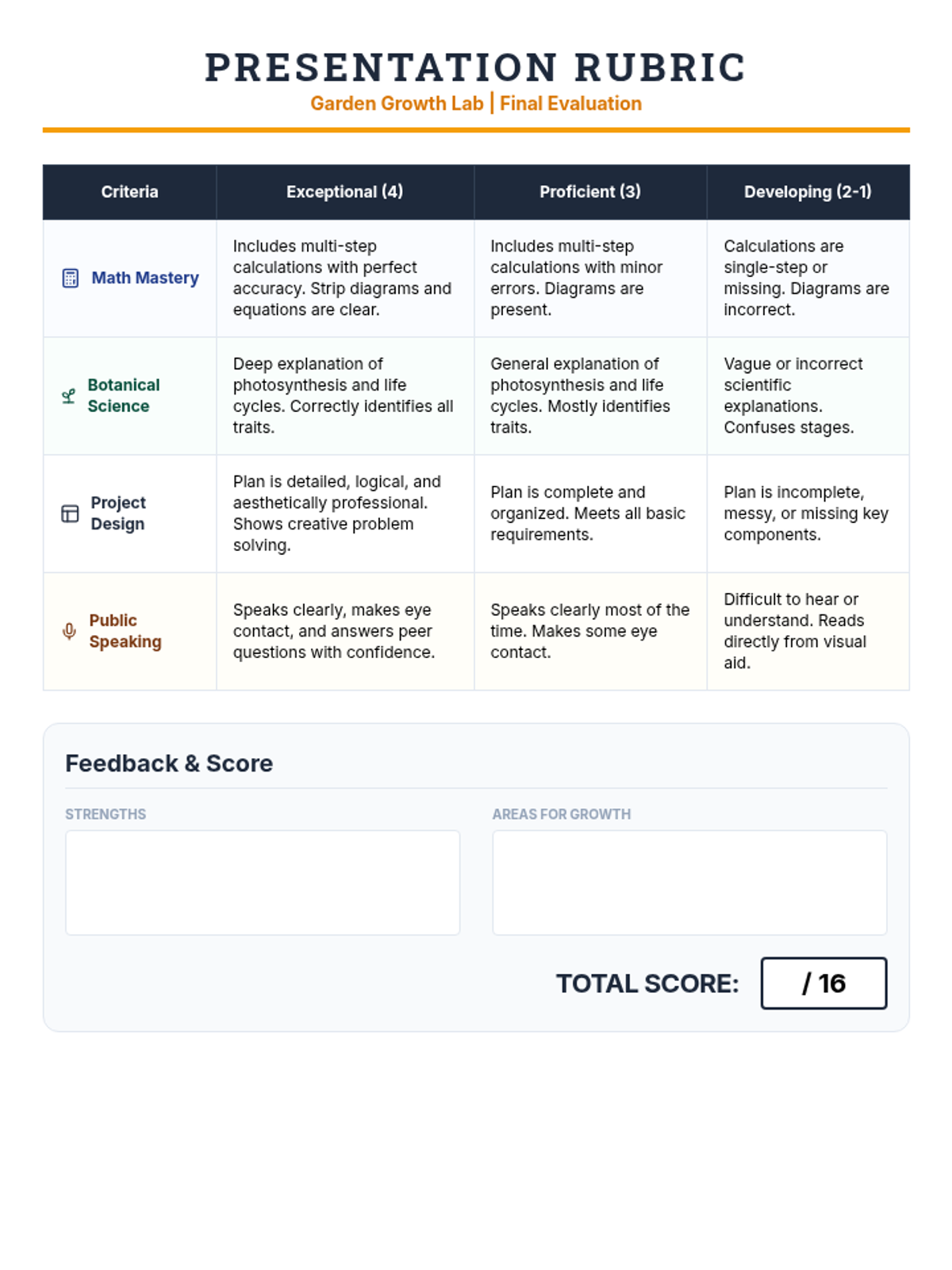
A rubric for grading the final PBL presentation. Revised to fit on a single page and ensure better readability.
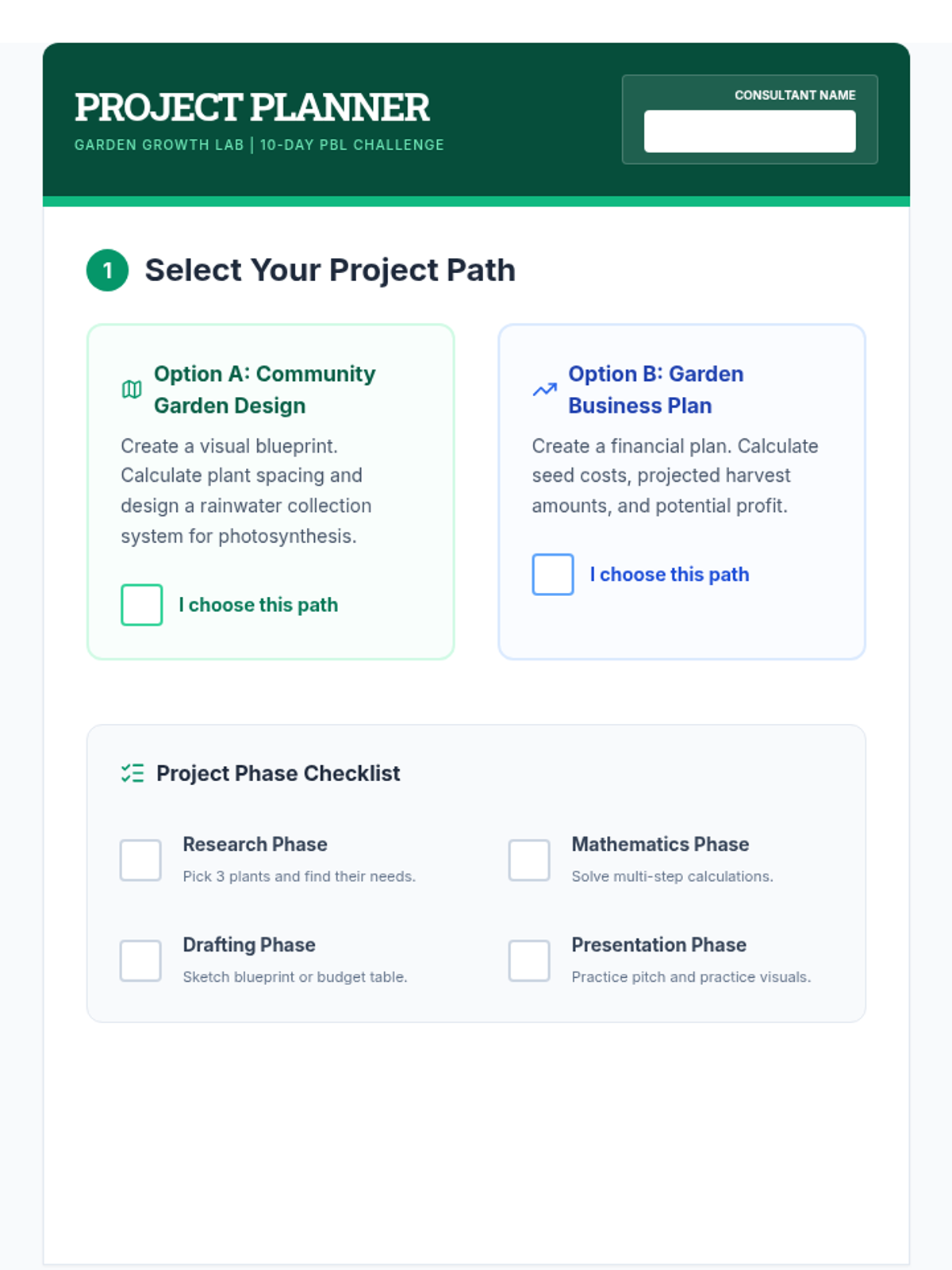
A project planning guide for students. Revised with optimized work area heights across three pages, white name entry box, and consistent page styling. fixed page breaks to keep Step 3 together. Added Step 4 Drafting Phase for a complete 4-page workbook.
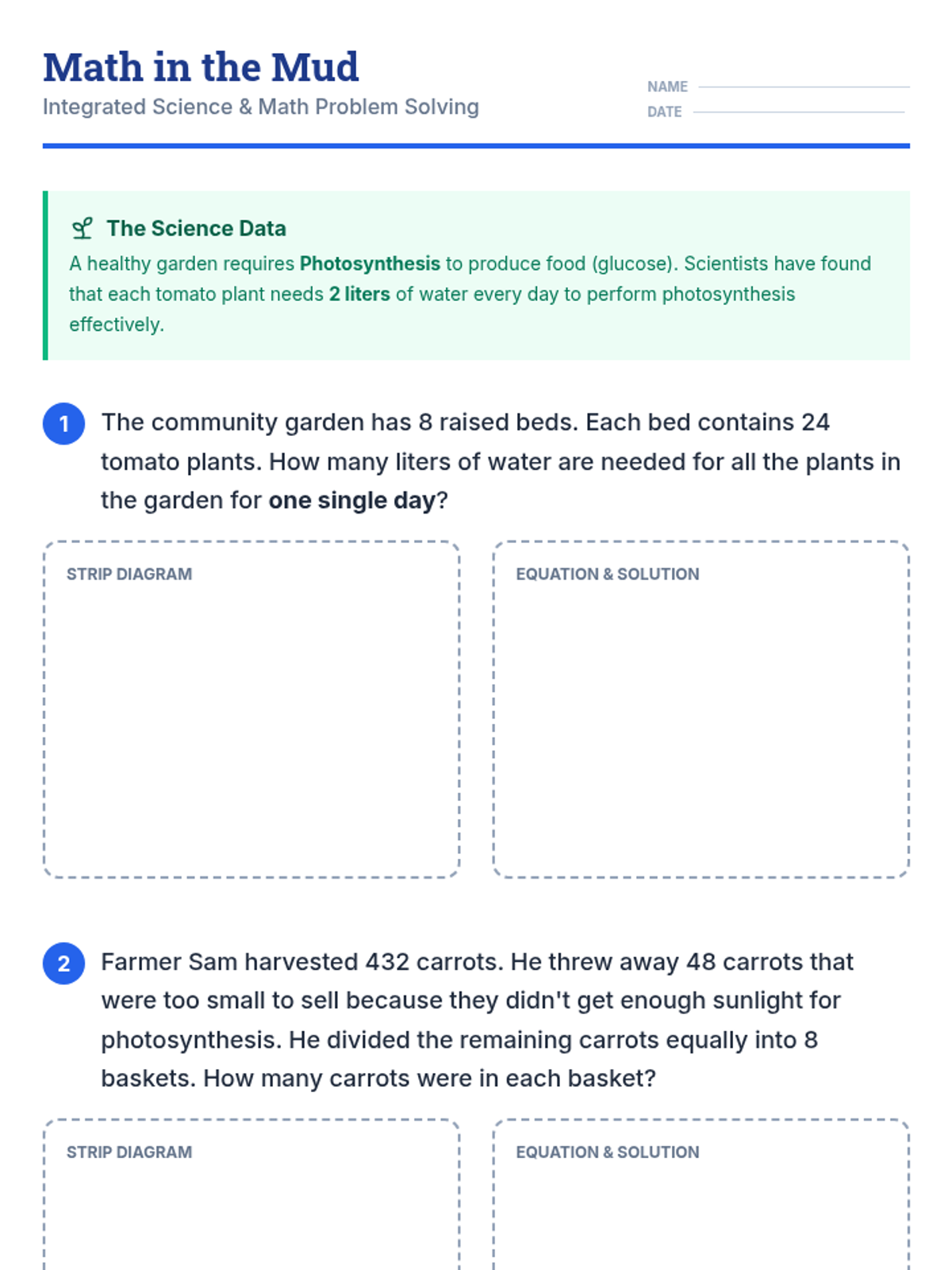
A math worksheet featuring multi-step problems integrated with science concepts (photosynthesis). Revised to keep work areas together and enhance science connections.
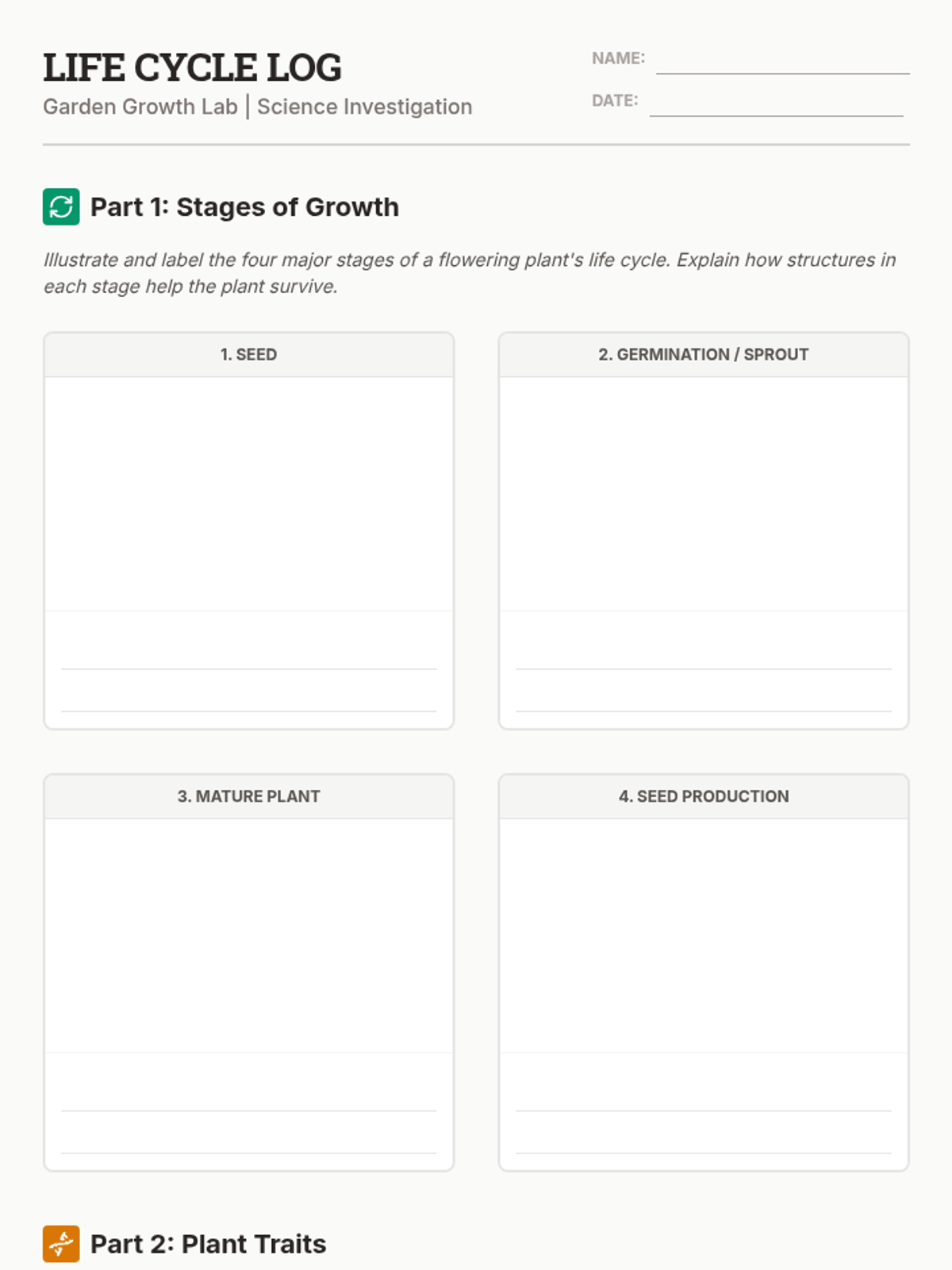
A science-focused worksheet where students diagram plant life cycles and differentiate traits. Revised with larger work areas and improved layout to prevent orphans.
Introductory slide deck for the Garden Growth Lab. Revised for better contrast and grade-appropriate mathematical symbols.
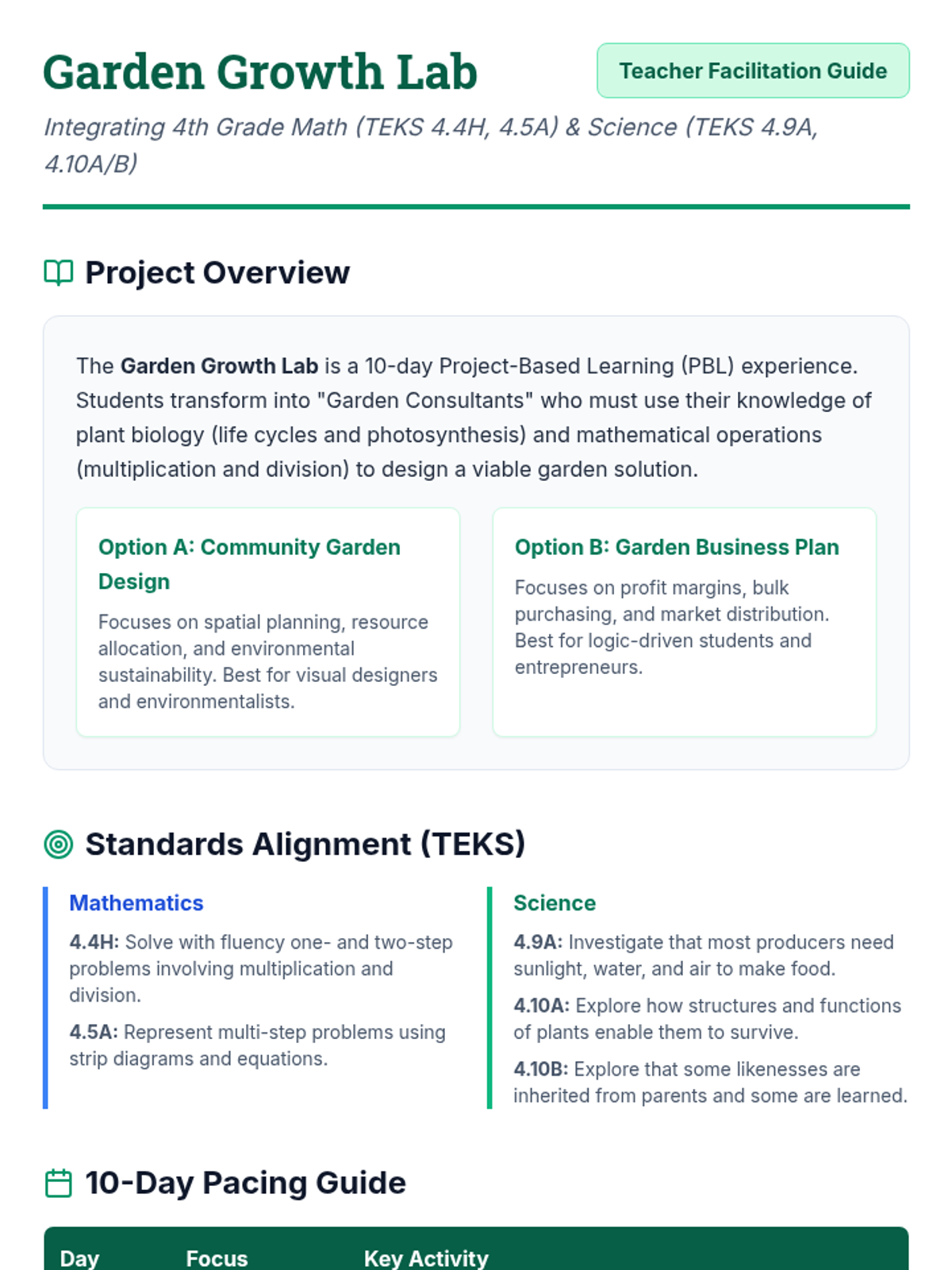
A comprehensive teacher's guide for the 10-day Garden Growth Lab PBL, including TEKS alignment, daily pacing, and project overview. Revised for better layout and orphans.
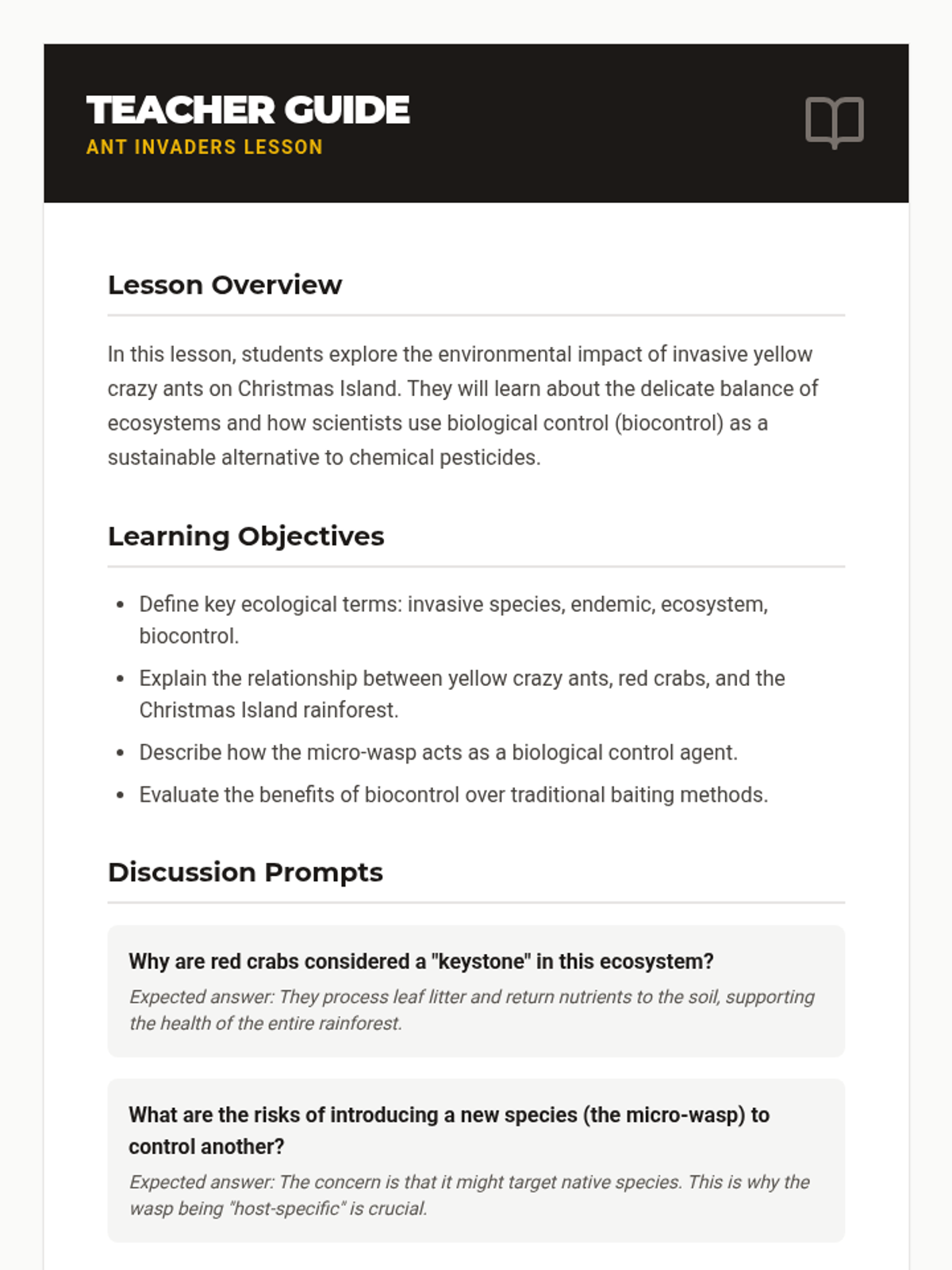
Instructional support for the Ant Invaders lesson, including learning objectives, discussion prompts, and an answer key for vocabulary. Updated to remove references to the graphic organizer.
Visual slides for instruction. Added vocabulary slide, improved text contrast, fixed text sizing, and removed overflow issues.
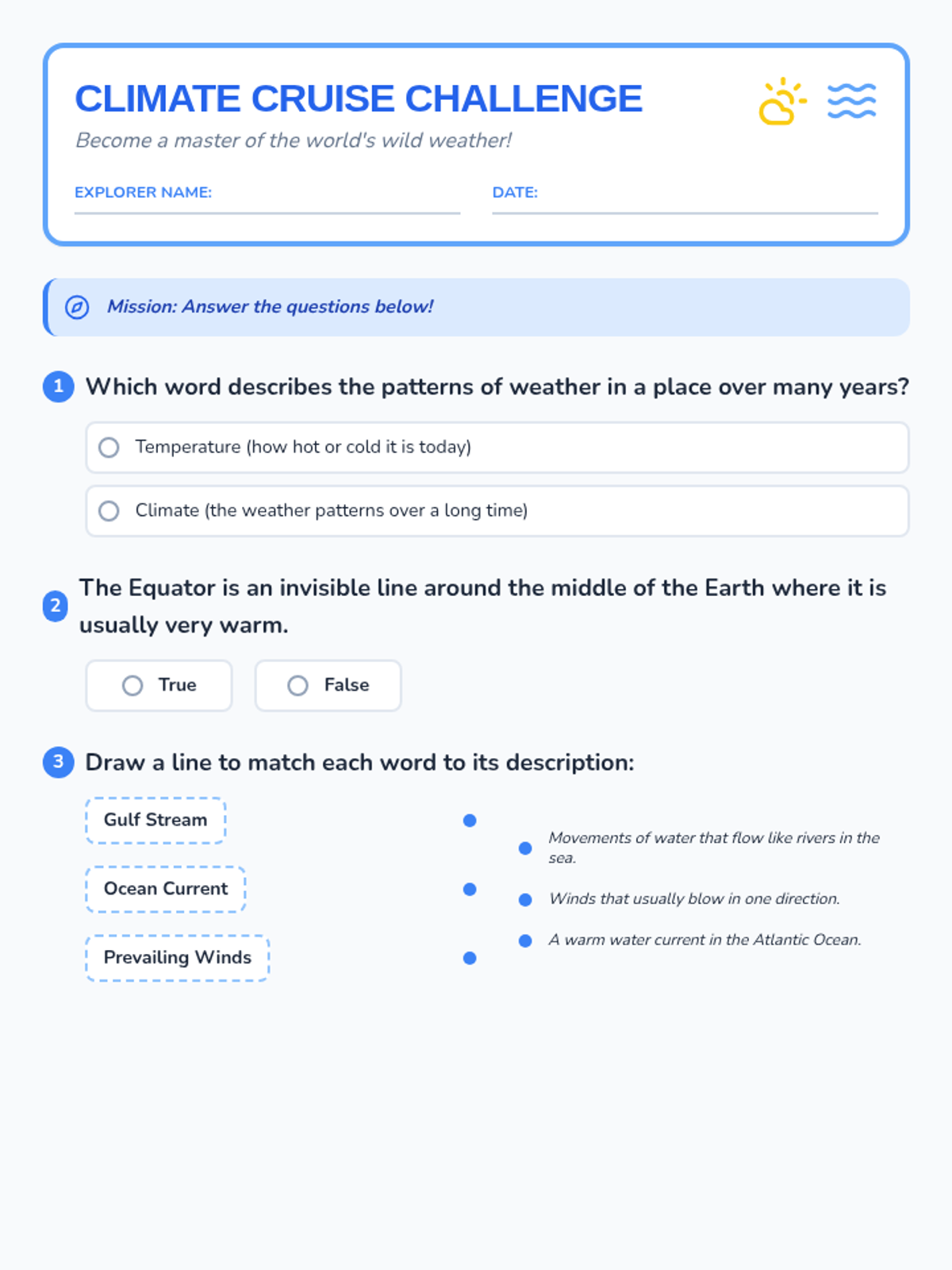
A colorful and engaging 2nd-grade worksheet about climate, weather, and ocean currents. It includes multiple choice, matching, and short answer questions specifically covering the equator, Gulf Stream, and El Niño with a clear page break.
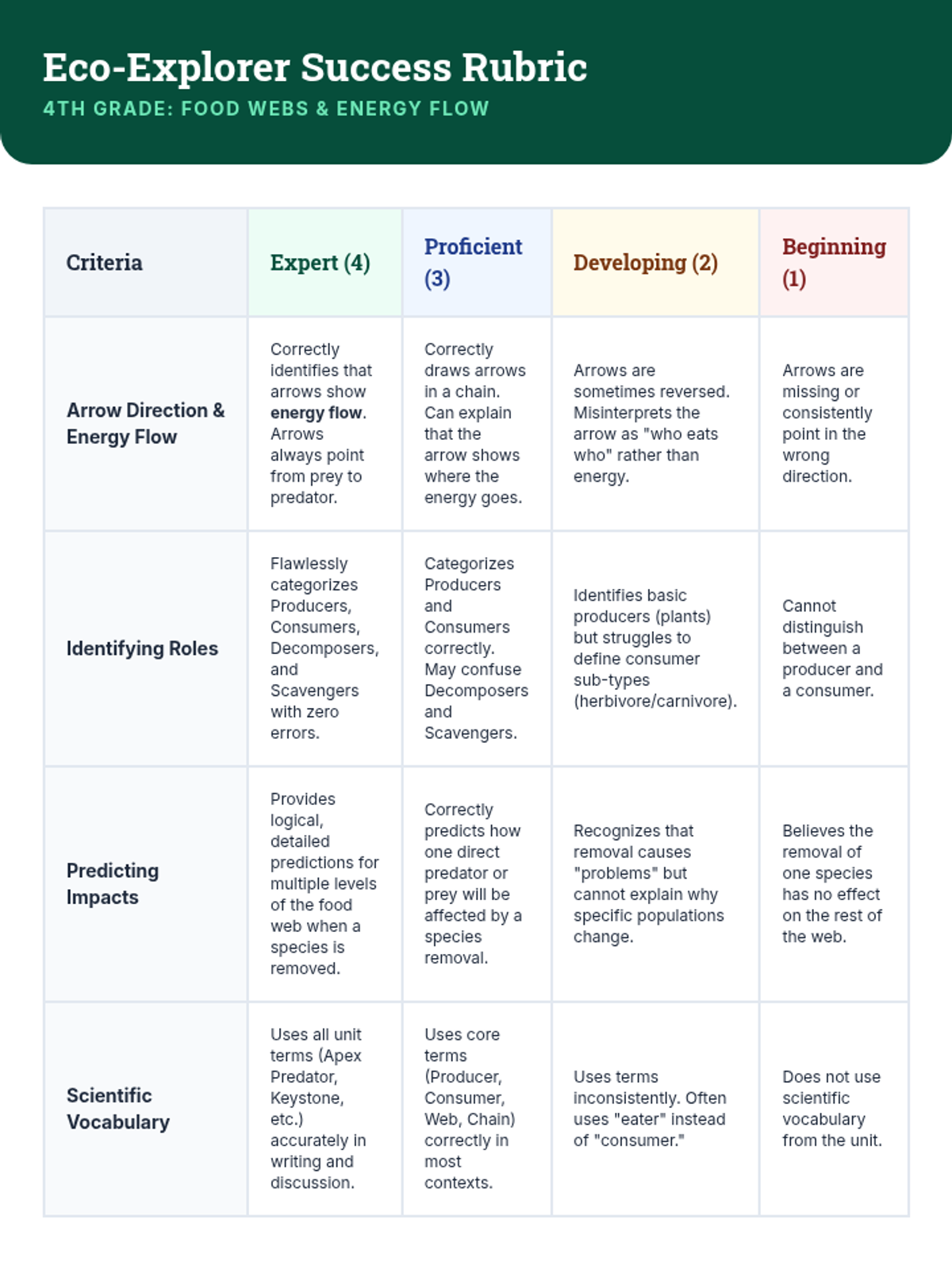
A detailed grading rubric for teachers to assess 4th-grade students on their understanding of food webs, energy flow, organism roles, and ecosystem impacts.
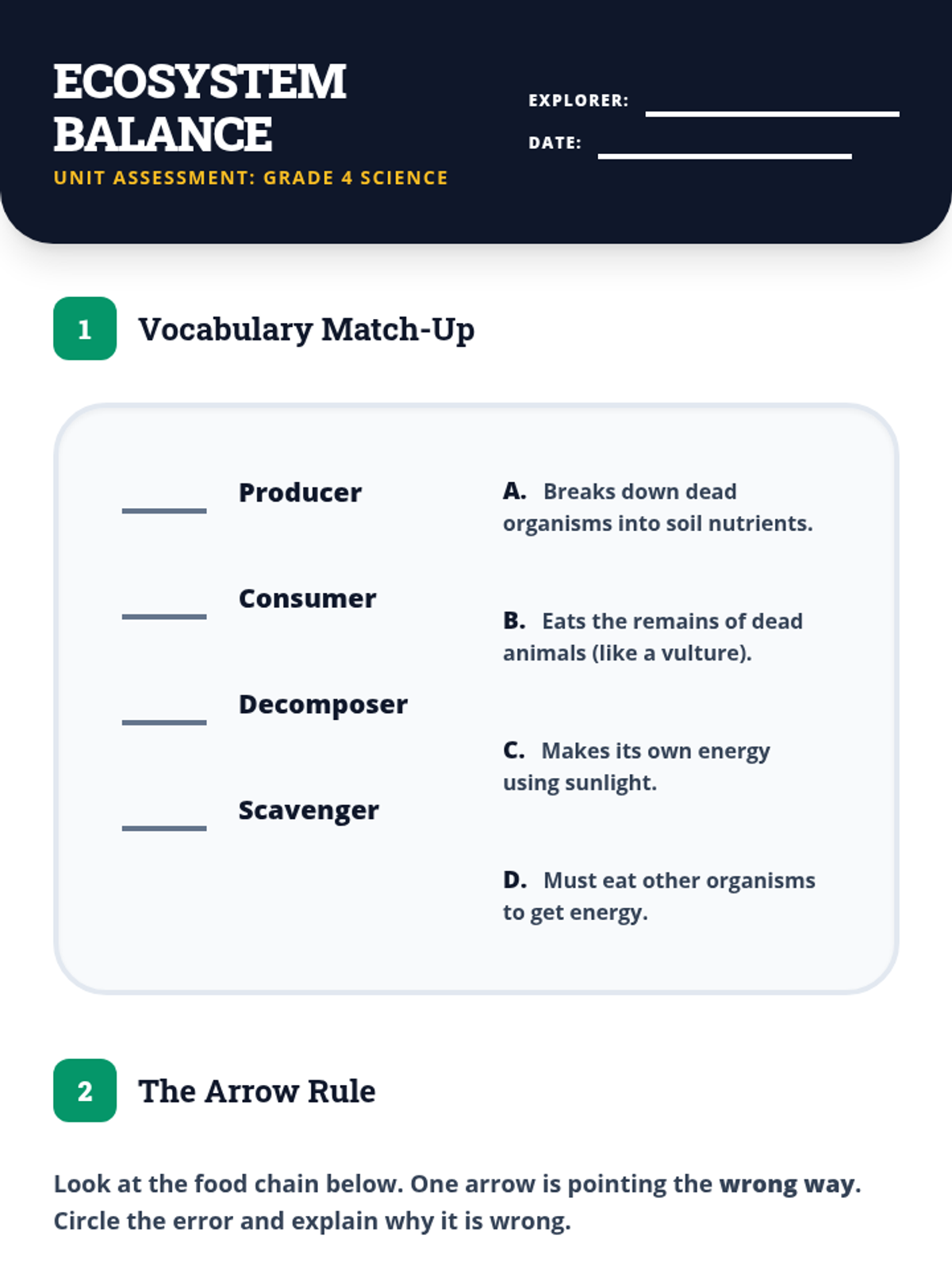
A unit assessment for 4th-grade science covering producer/consumer roles, arrow directionality in food chains, web analysis, and predictive thinking regarding ecosystem changes. Features high-contrast handwriting guides and improved logical grouping.
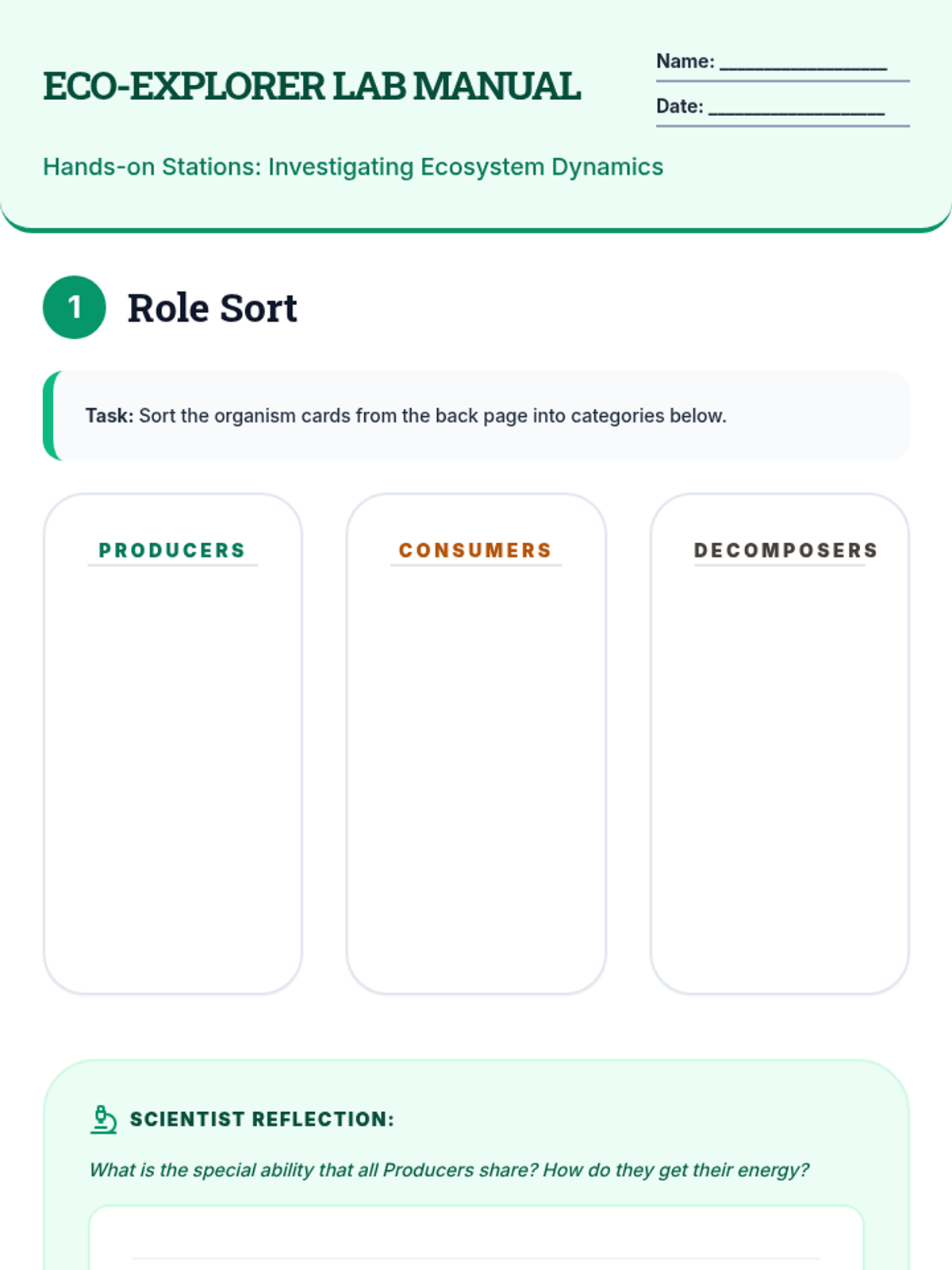
A four-station hands-on activity manual for 4th-grade students to explore organism roles, arrow direction, food web construction, and the impact of species removal. Now with writing guides and improved card layout.
A visually engaging slide deck for 4th-grade science, teaching the concepts of producers, consumers, decomposers, and the 'Arrow Rule' of energy flow in food webs. Now with improved diagram clarity and viewport containment.
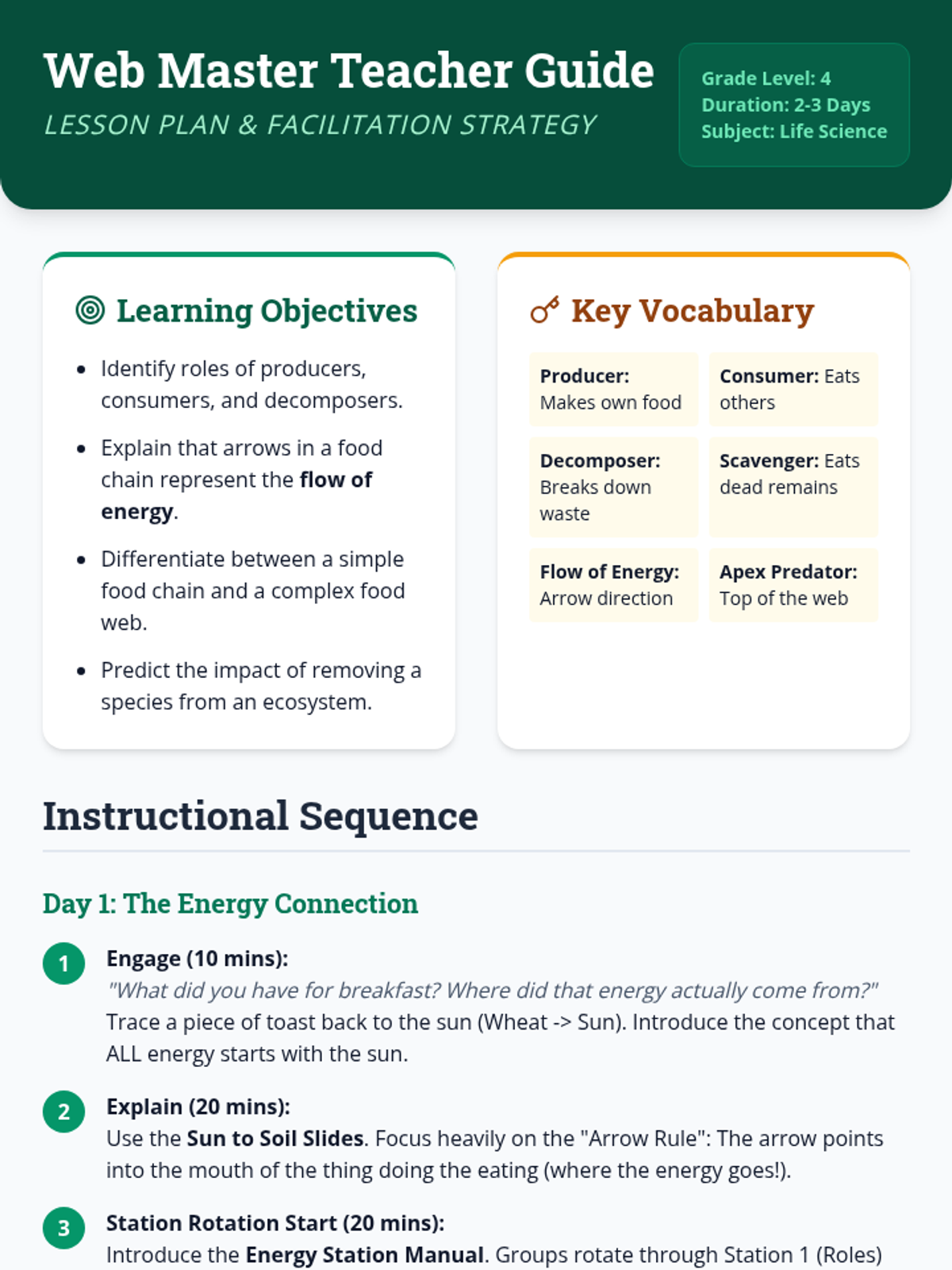
A comprehensive teacher's guide and lesson plan for a 4th-grade unit on food webs, including learning objectives, daily instructional sequences, common misconceptions, and differentiation strategies.
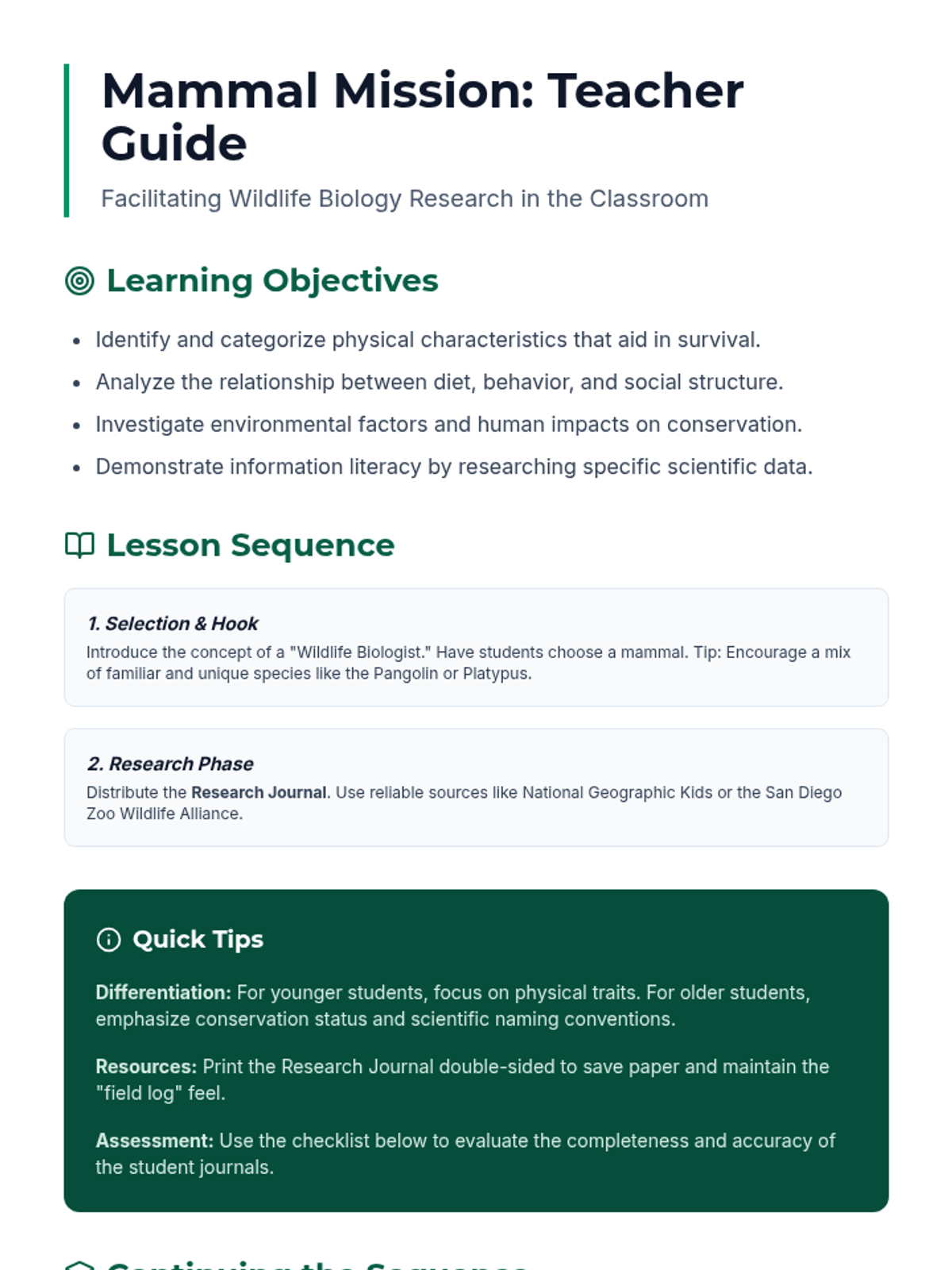
A facilitation guide for teachers including learning objectives, a lesson sequence, guiding questions, and an assessment checklist for the mammal research project.