A student-facing checklist for a formal lab report. It helps middle schoolers self-assess their work, specifically highlighting the high-priority scientific theory and conclusion sections. Phraseology updated to model objective scientific writing.
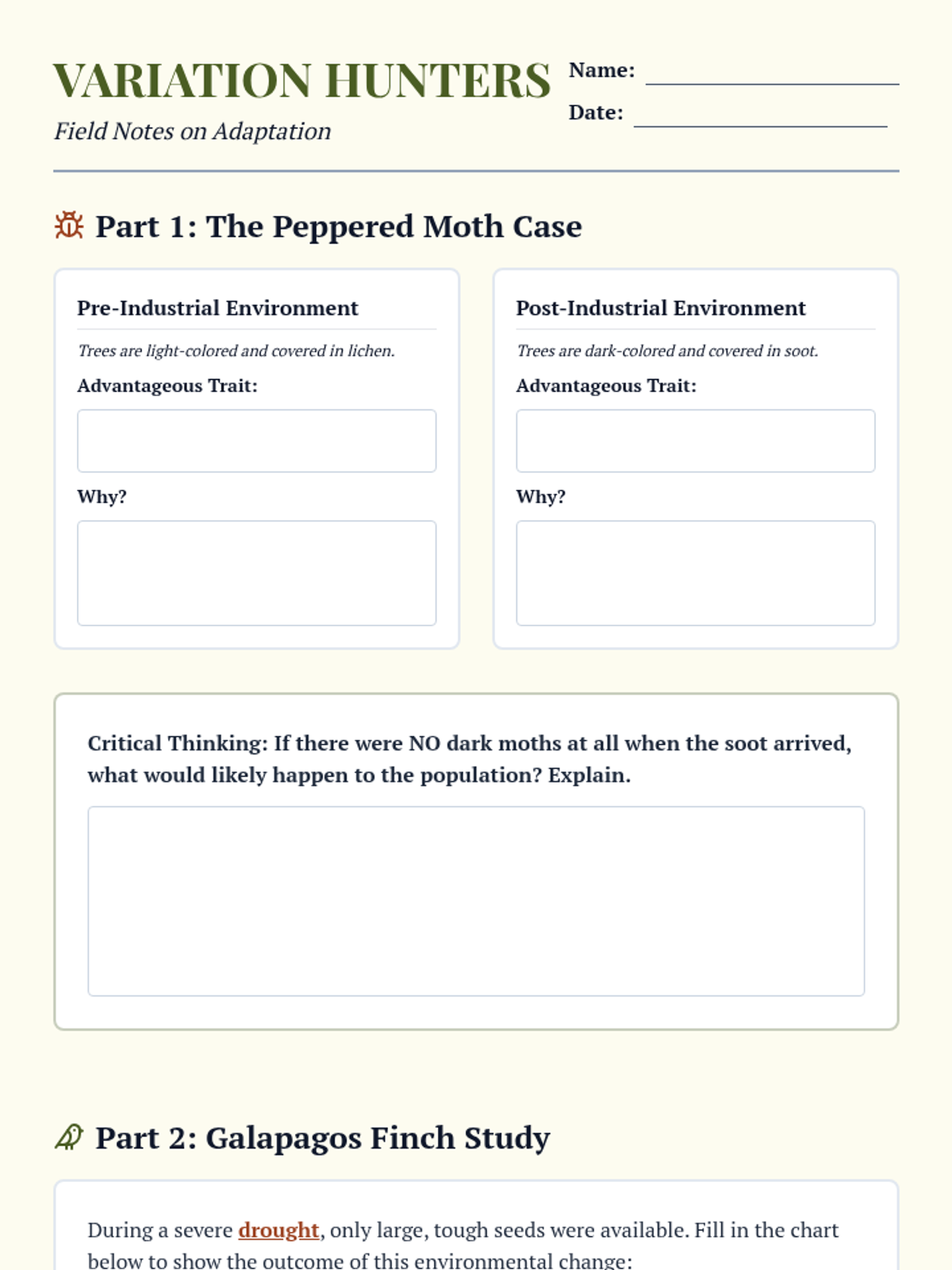
A student worksheet for tracking variations in peppered moths and Galapagos finches. Includes sections for recording advantageous traits and a long-form reflection on why variation prevents extinction.
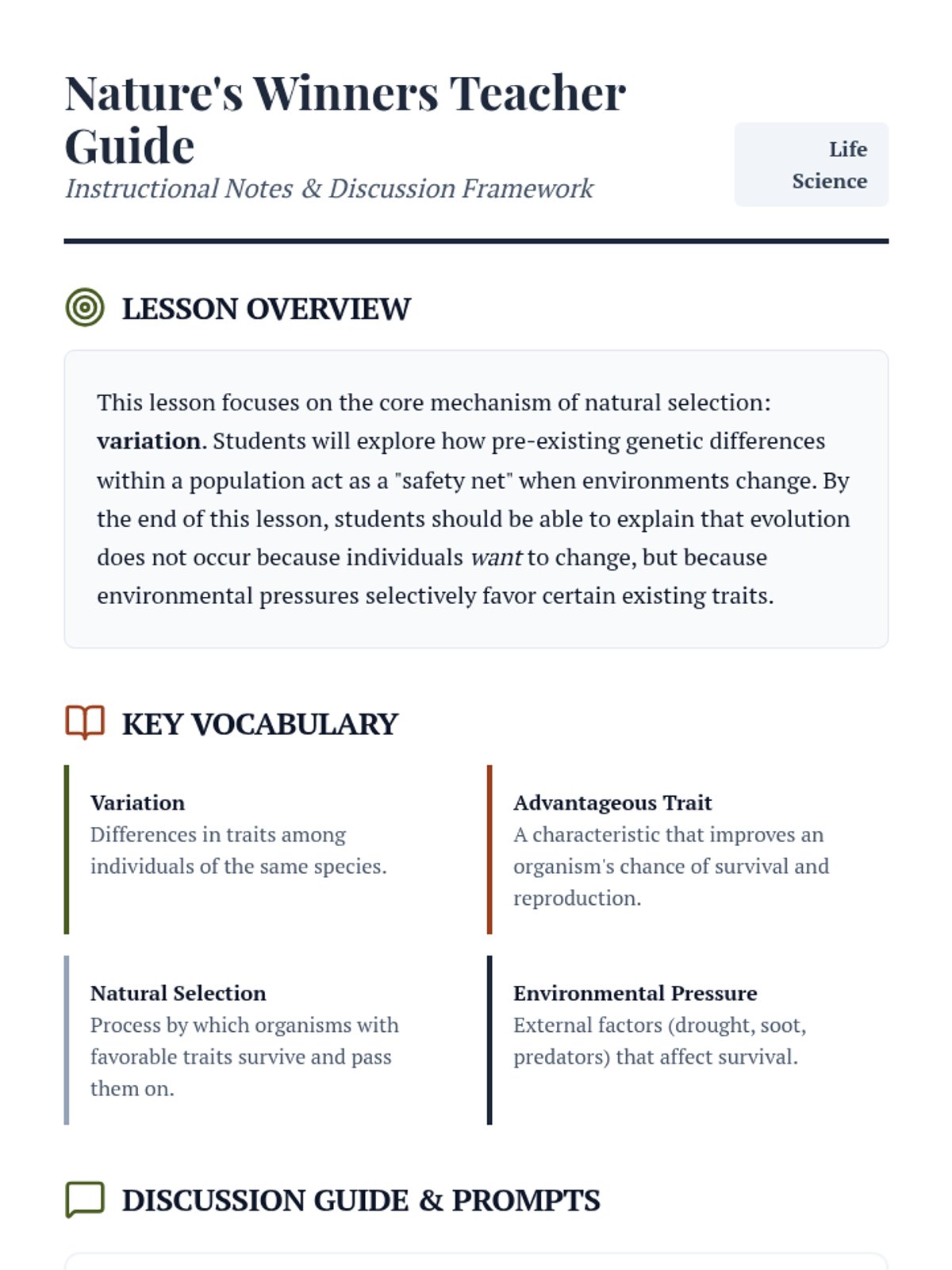
A comprehensive teacher guide for the 'Adapt or Fade' lesson, including instructional goals, discussion prompts for moth and finch case studies, clarification of common misconceptions, and an extension activity.
A 10-slide presentation exploring how genetic variation within a population provides advantages or disadvantages during environmental changes, featuring peppered moths and bird beak case studies. Includes speaker notes and an explorer's sketchbook aesthetic.
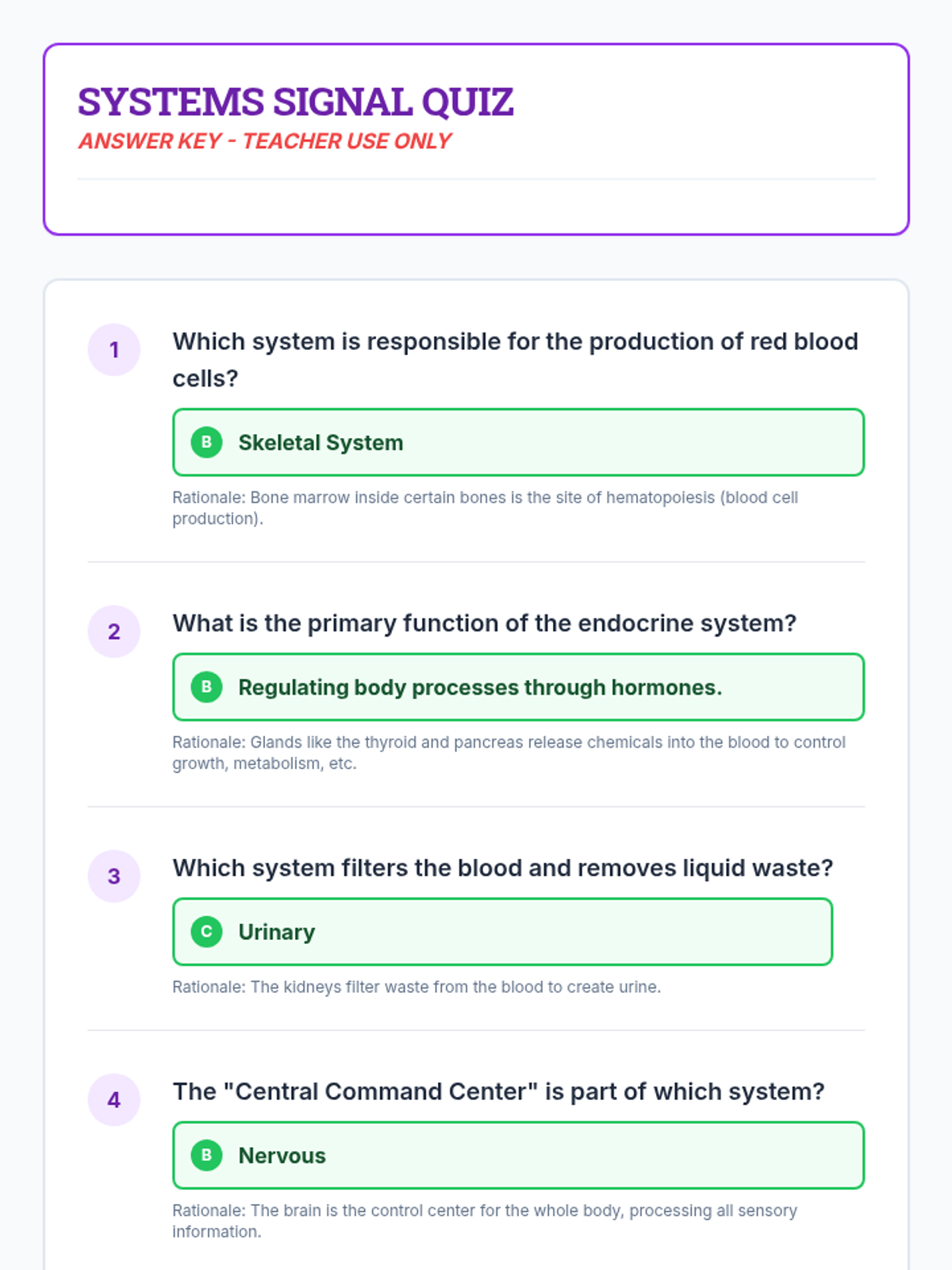
The answer key for the Systems Signal quiz, providing correct answers and rationales for all questions. Revised for consistent teacher guidance and better page flow.
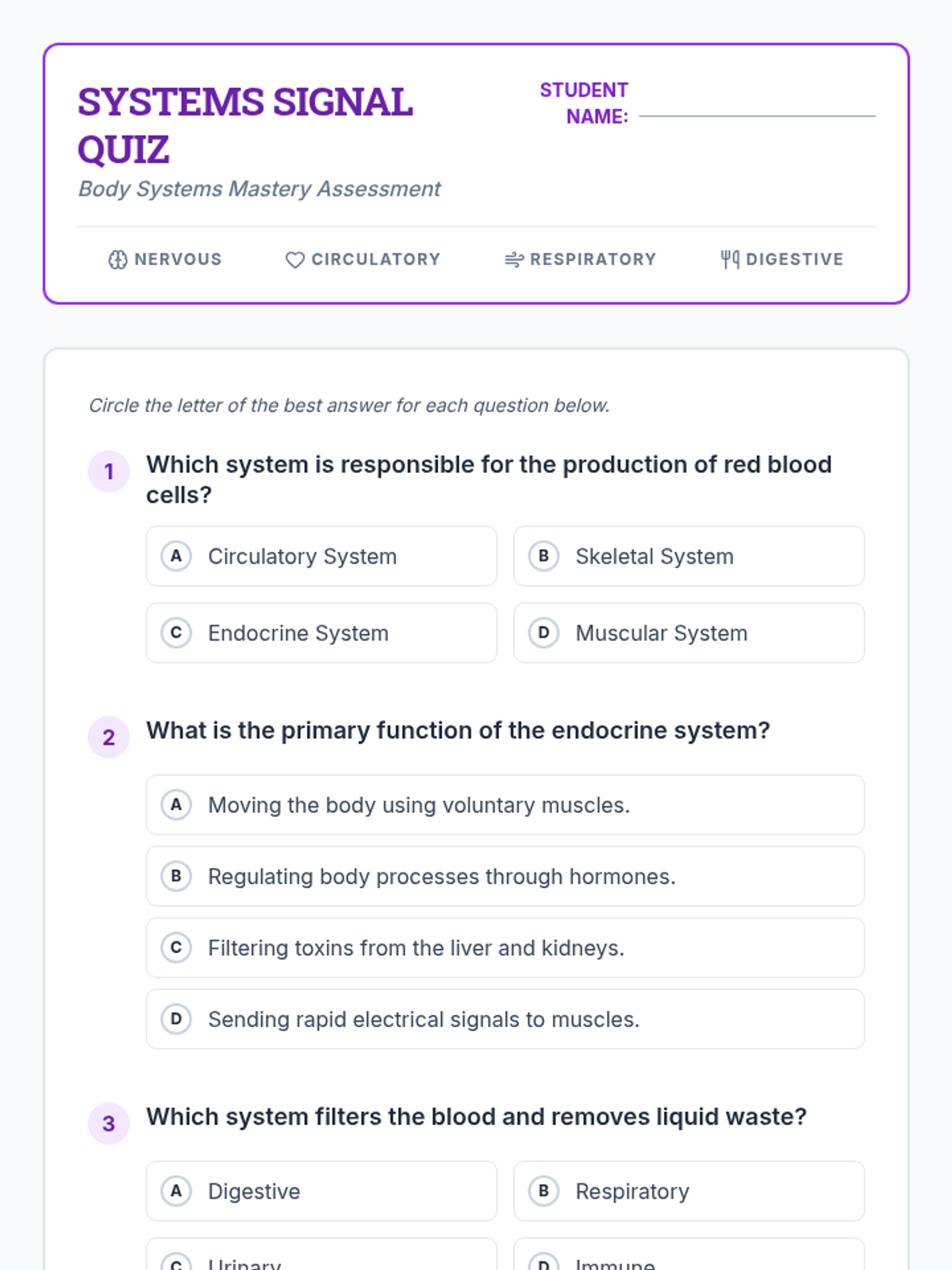
A multiple-choice quiz covering key concepts, organs, and system interactions within the human body. Revised for better page flow and work areas.
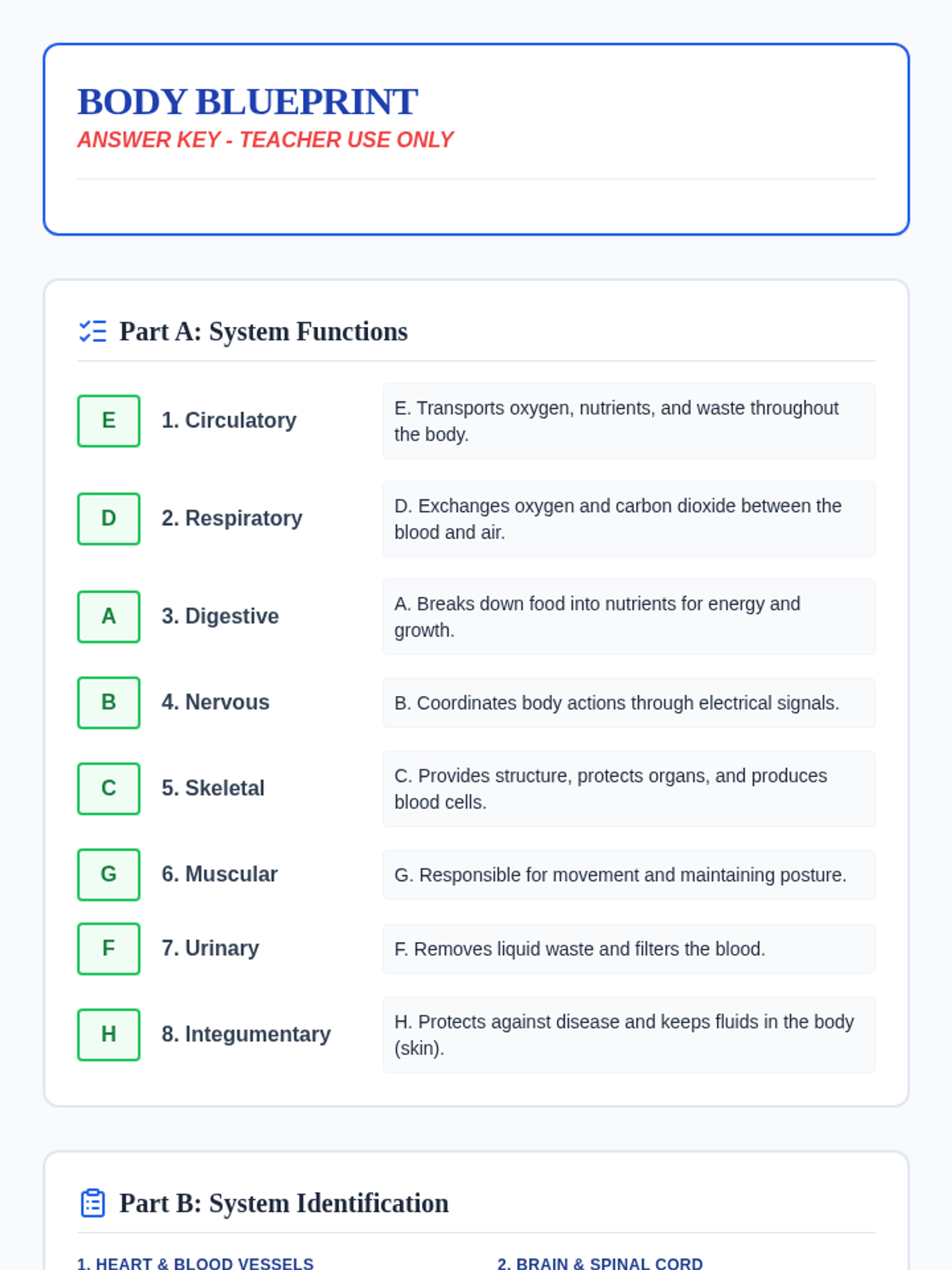
The answer key for the Body Blueprint worksheet, providing correct matches and identification for teacher use.
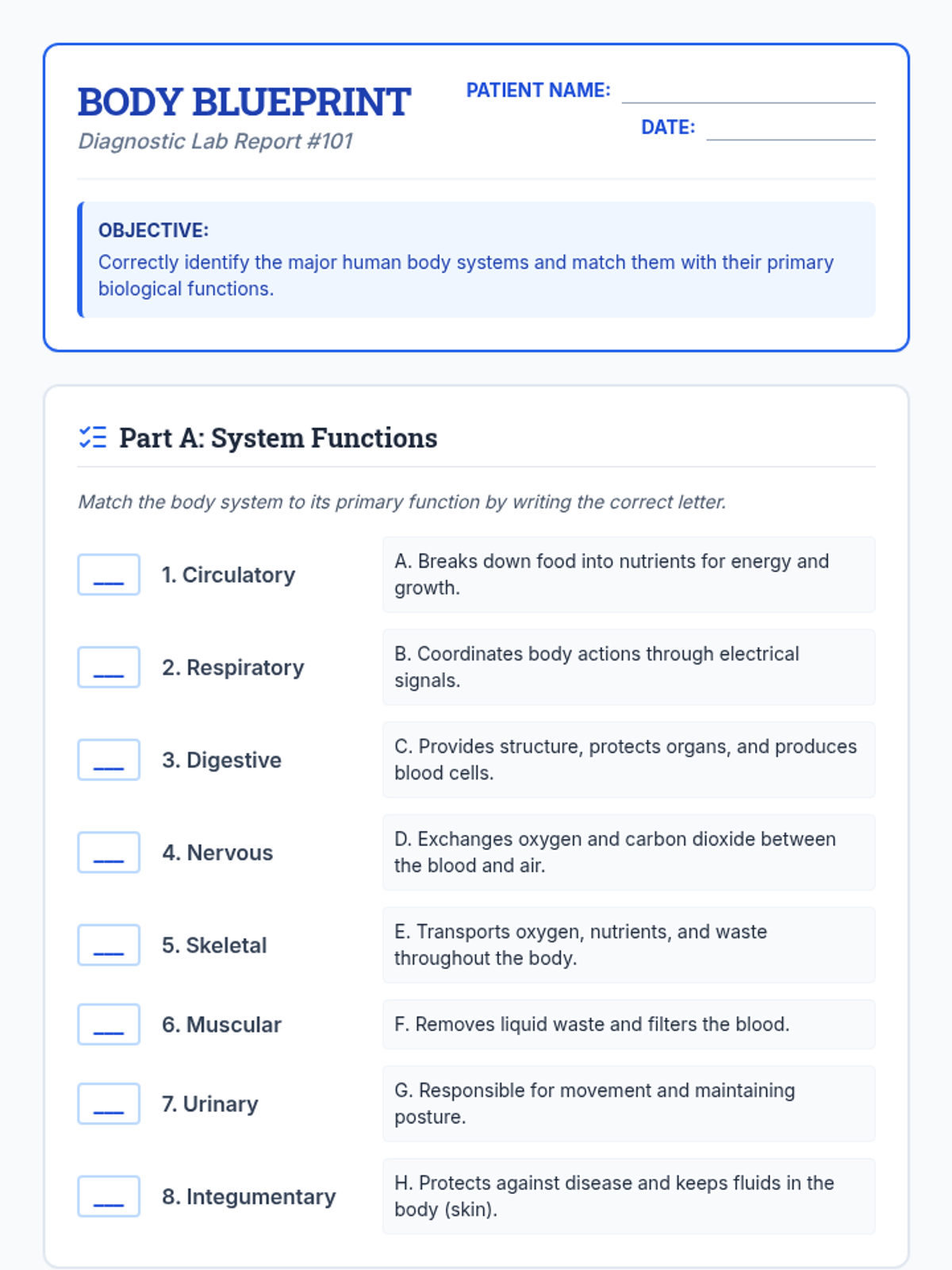
A labeling and matching worksheet for students to identify the functions and organs of major body systems. Revised for better page breaks and legible student work areas.
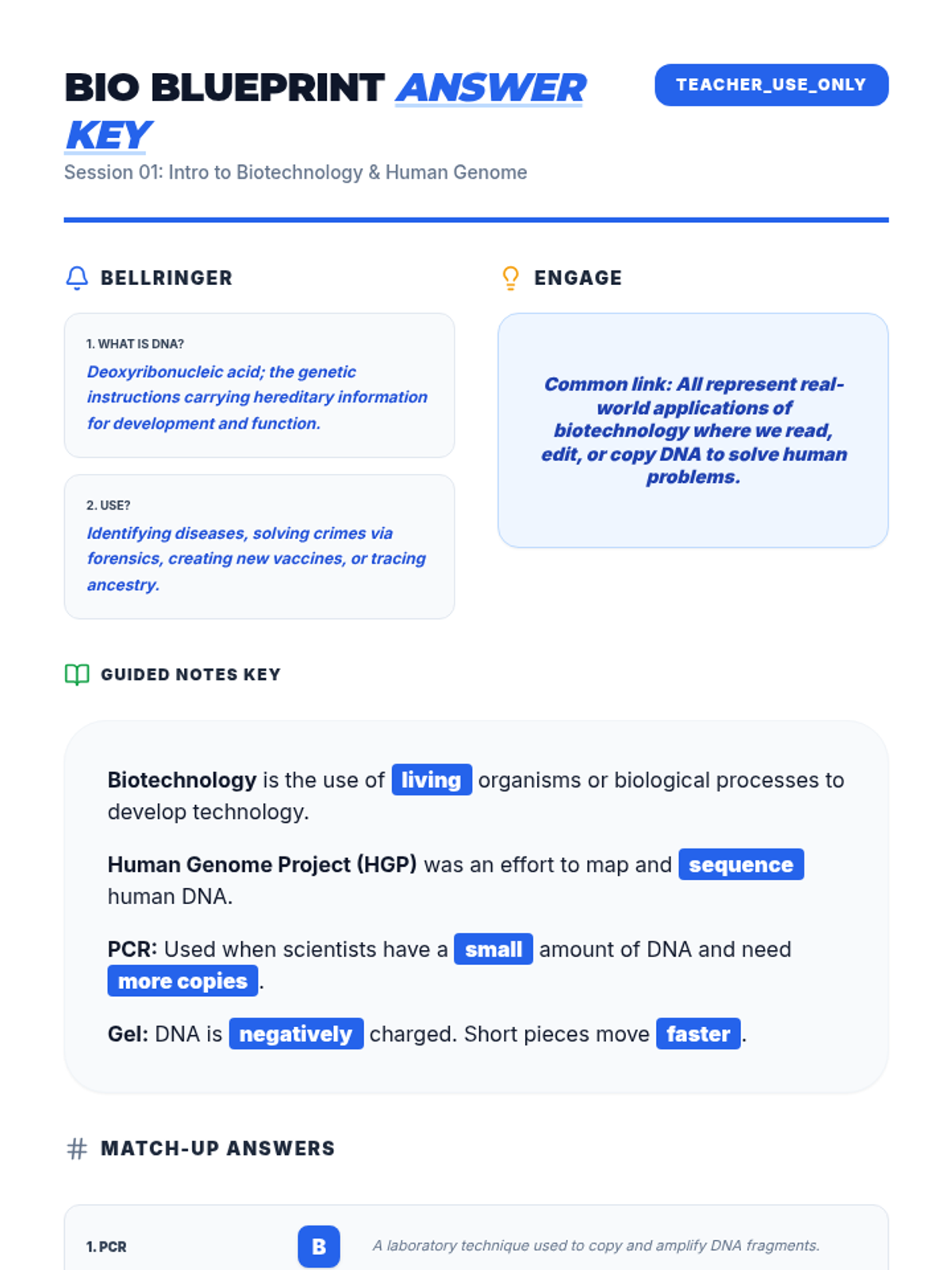
A comprehensive answer key for the Bio Blueprint worksheet, featuring filled-in guided notes, correct vocabulary matches, a completed timeline, and exemplar responses, now with a light-themed exit ticket for consistency. Vertical alignment and page utilization improved.
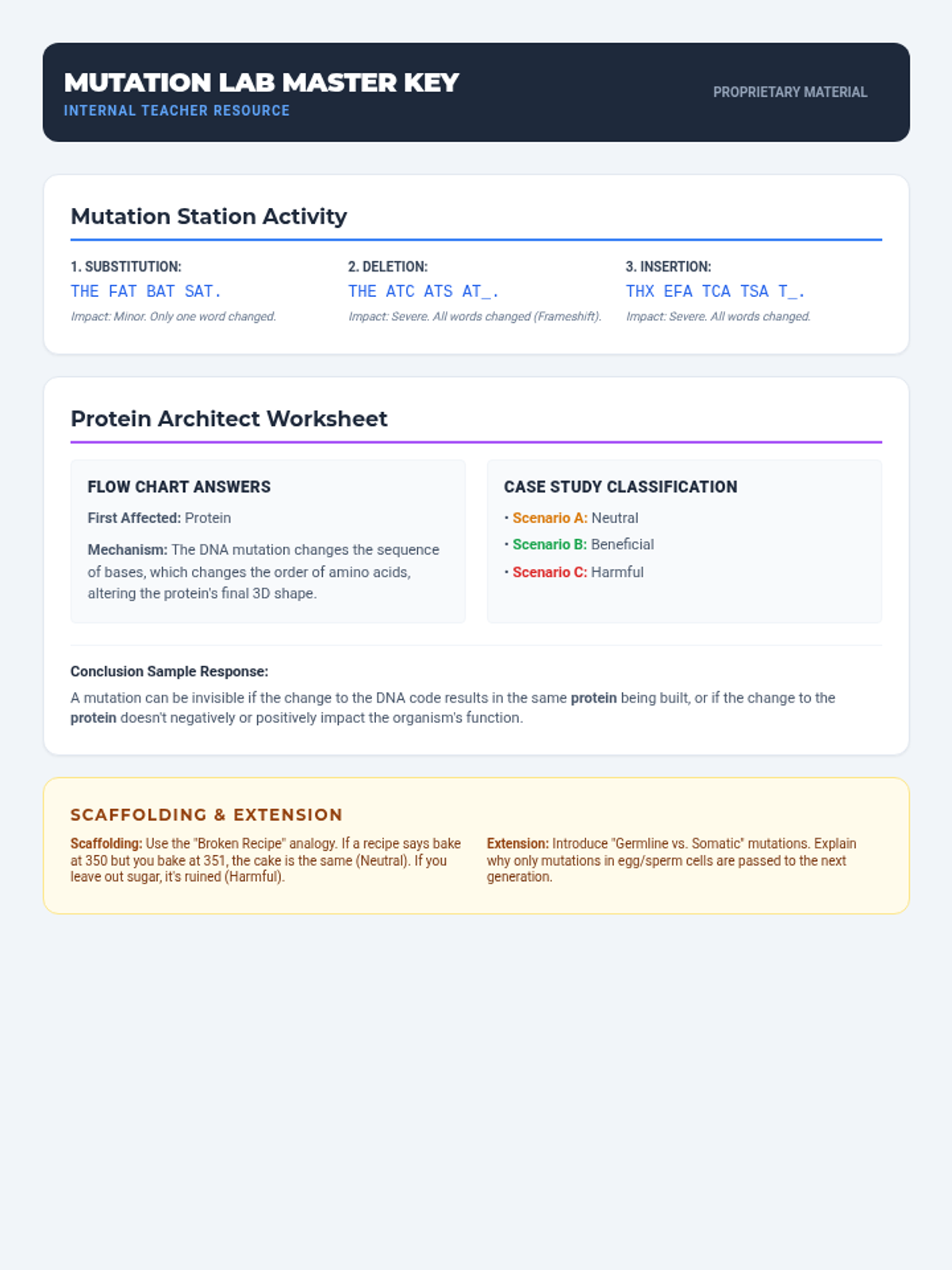
A teacher's answer key and grading guide for all materials in the Mutation Lab lesson, including specific student response examples and scaffolding tips.
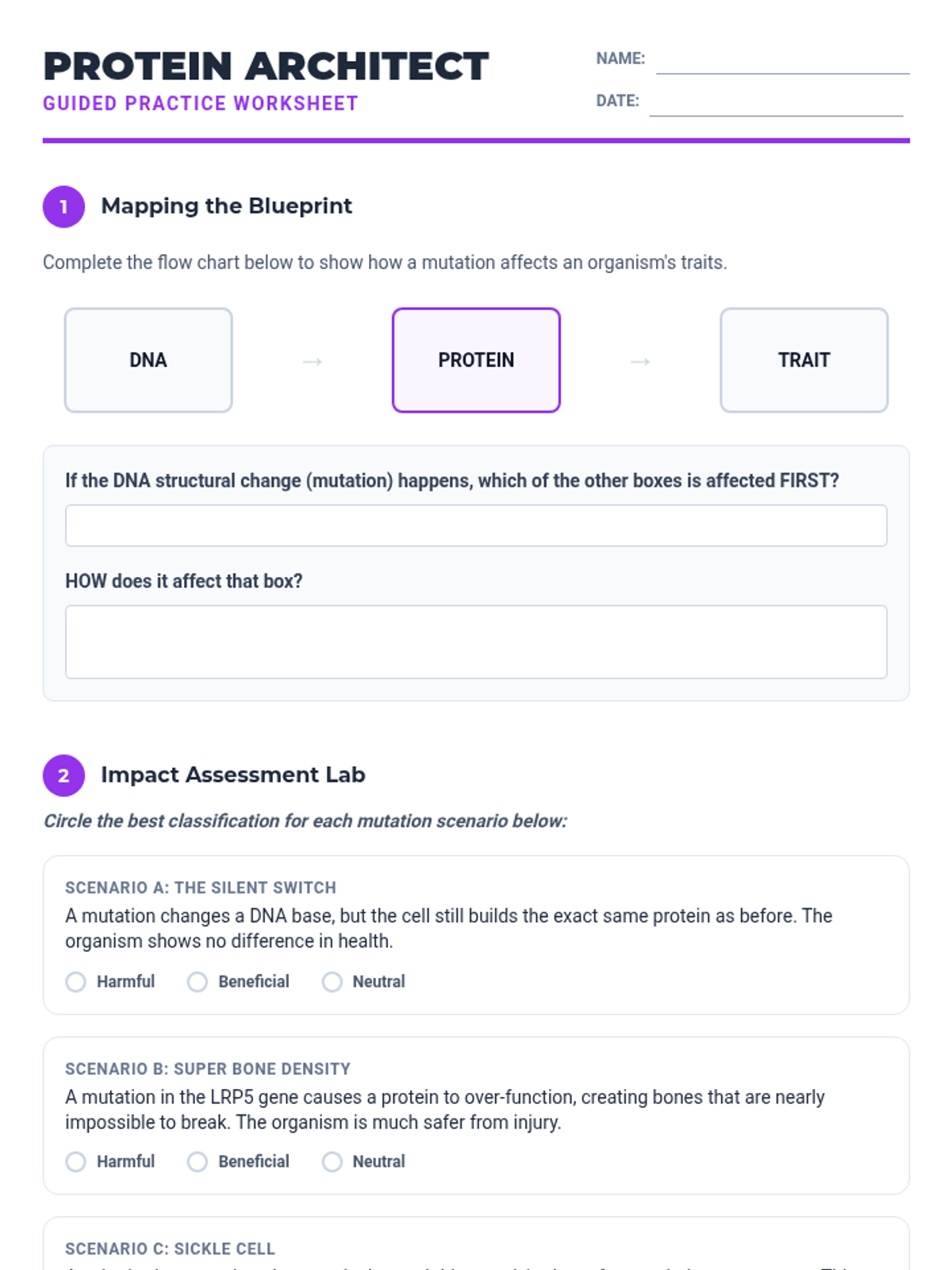
A guided practice worksheet focusing on modeling the flow of genetic information and categorizing real-world mutation examples as harmful, beneficial, or neutral.
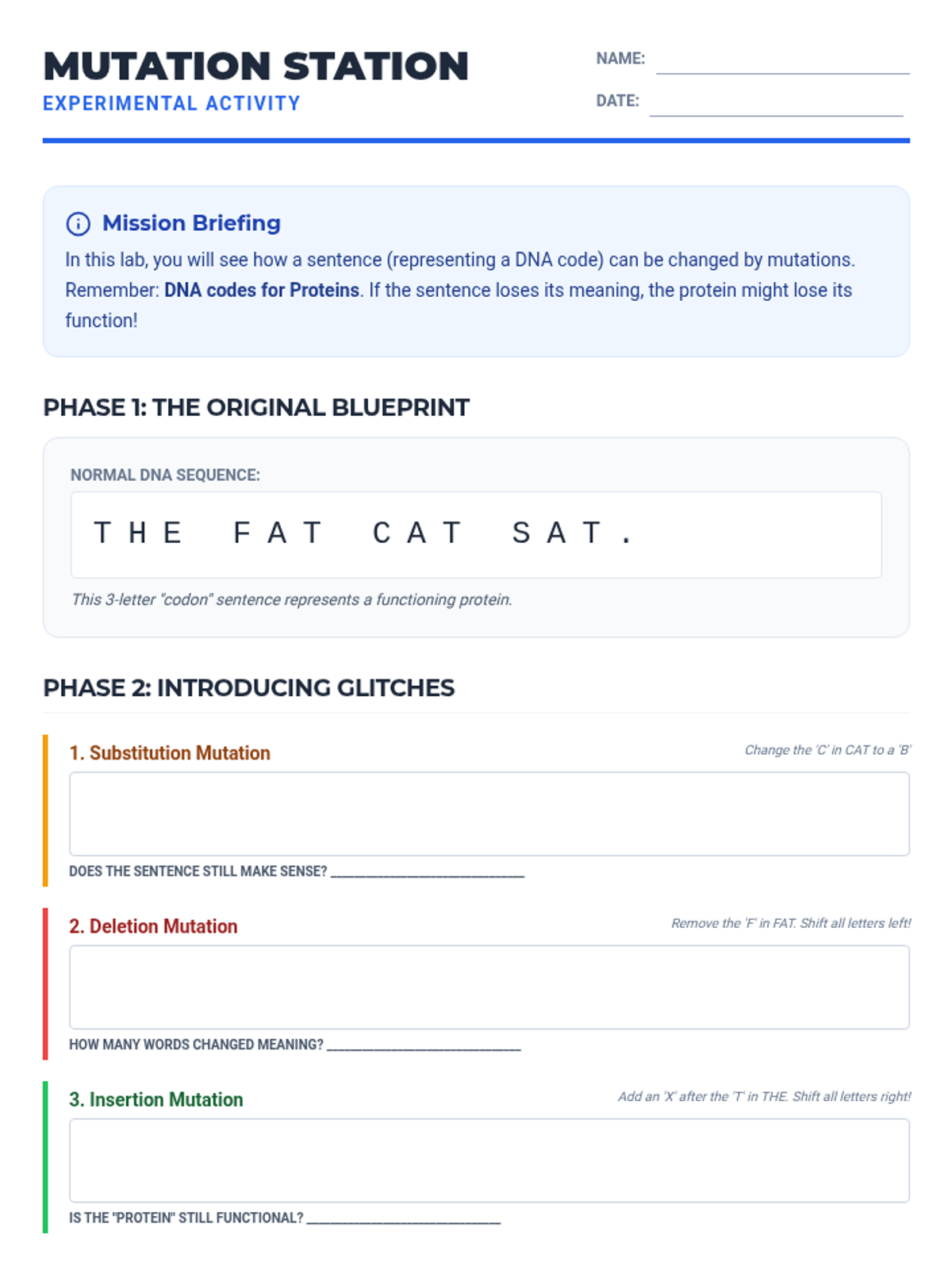
A hands-on student activity worksheet using sentence analogies to model substitution, deletion, and insertion mutations and their effects on protein "meaning."
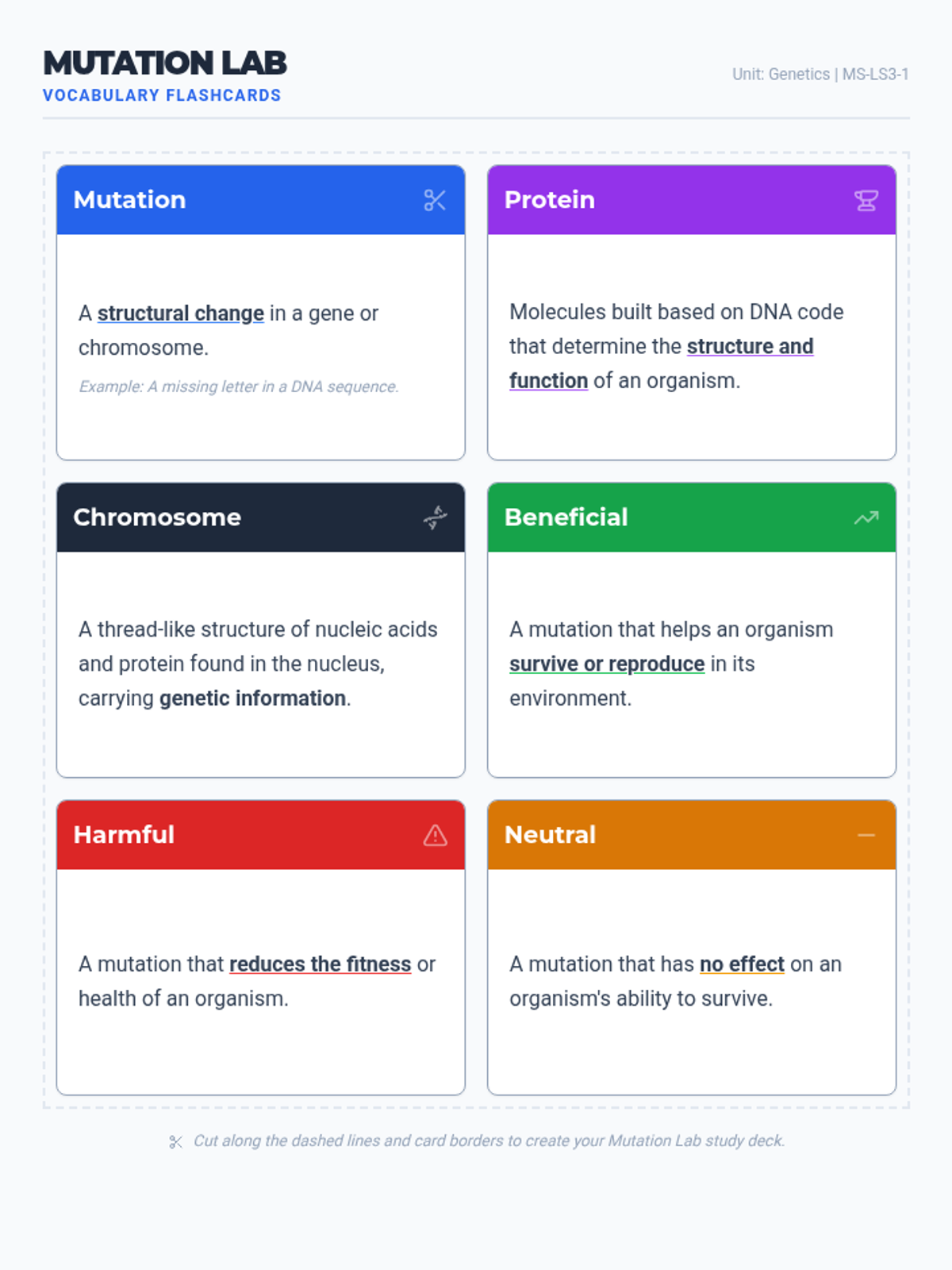
A set of six essential vocabulary cards for the Mutation Lab lesson, featuring clear definitions and visual icons for key genetic terms.
A visually engaging slide deck for 8th-grade science, explaining the relationship between DNA, proteins, and traits, and how mutations impact organism structure and function.
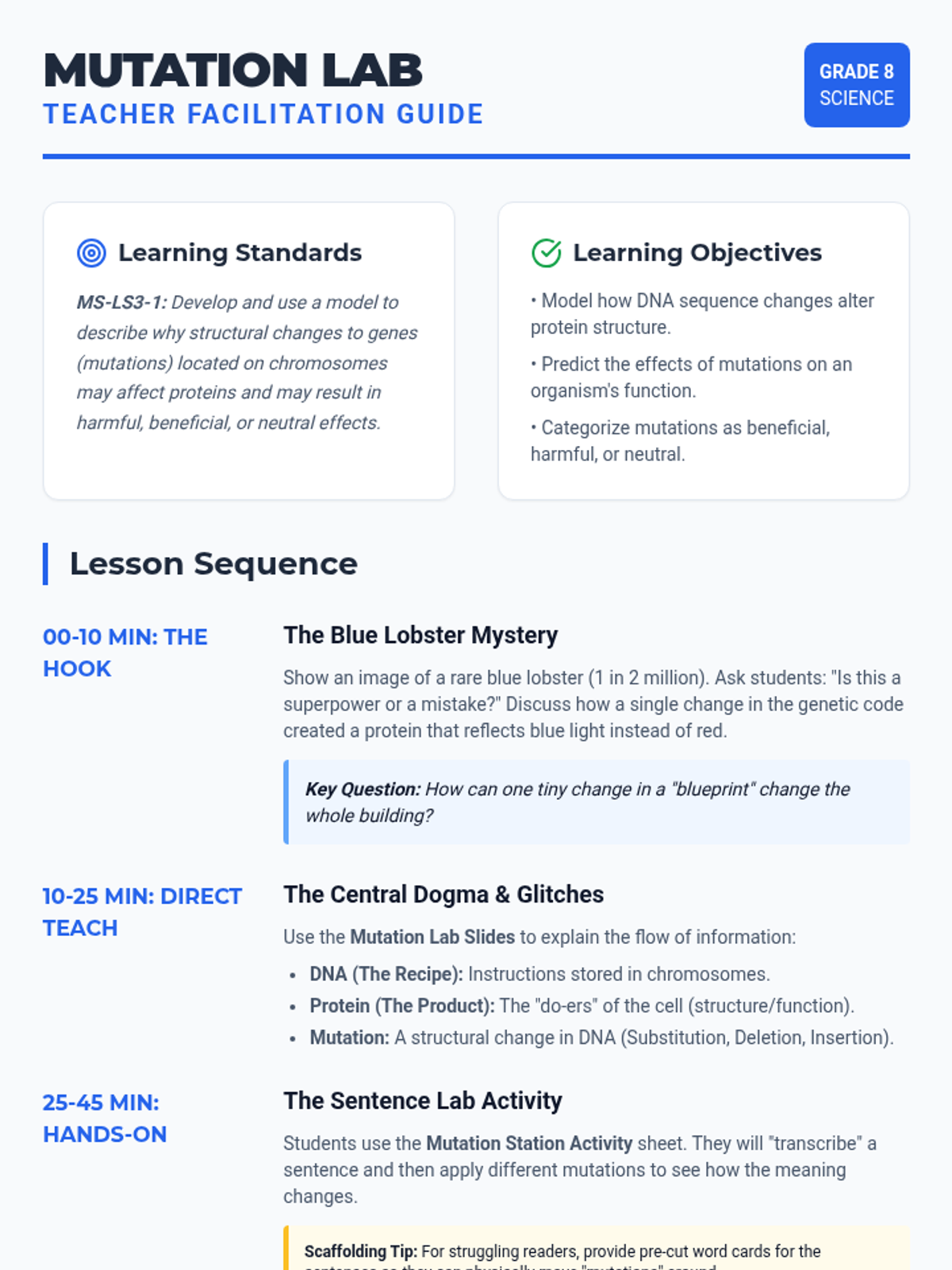
A detailed teacher facilitation guide for the Mutation Lab lesson, outlining standards, objectives, and a step-by-step 60-minute instructional sequence.
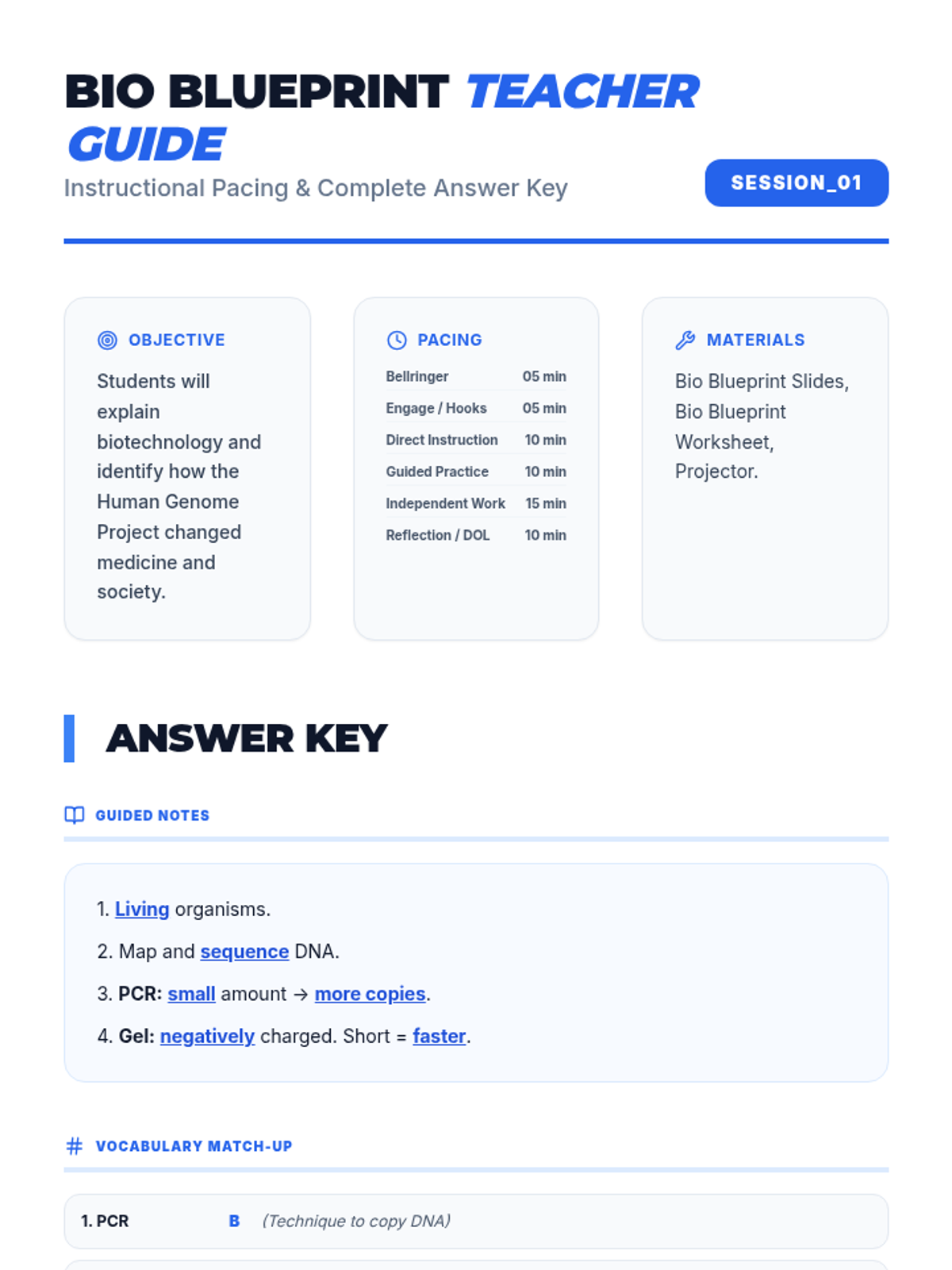
A teacher resource providing instructional pacing, facilitation tips, and a complete answer key for the Bio Blueprint lesson.
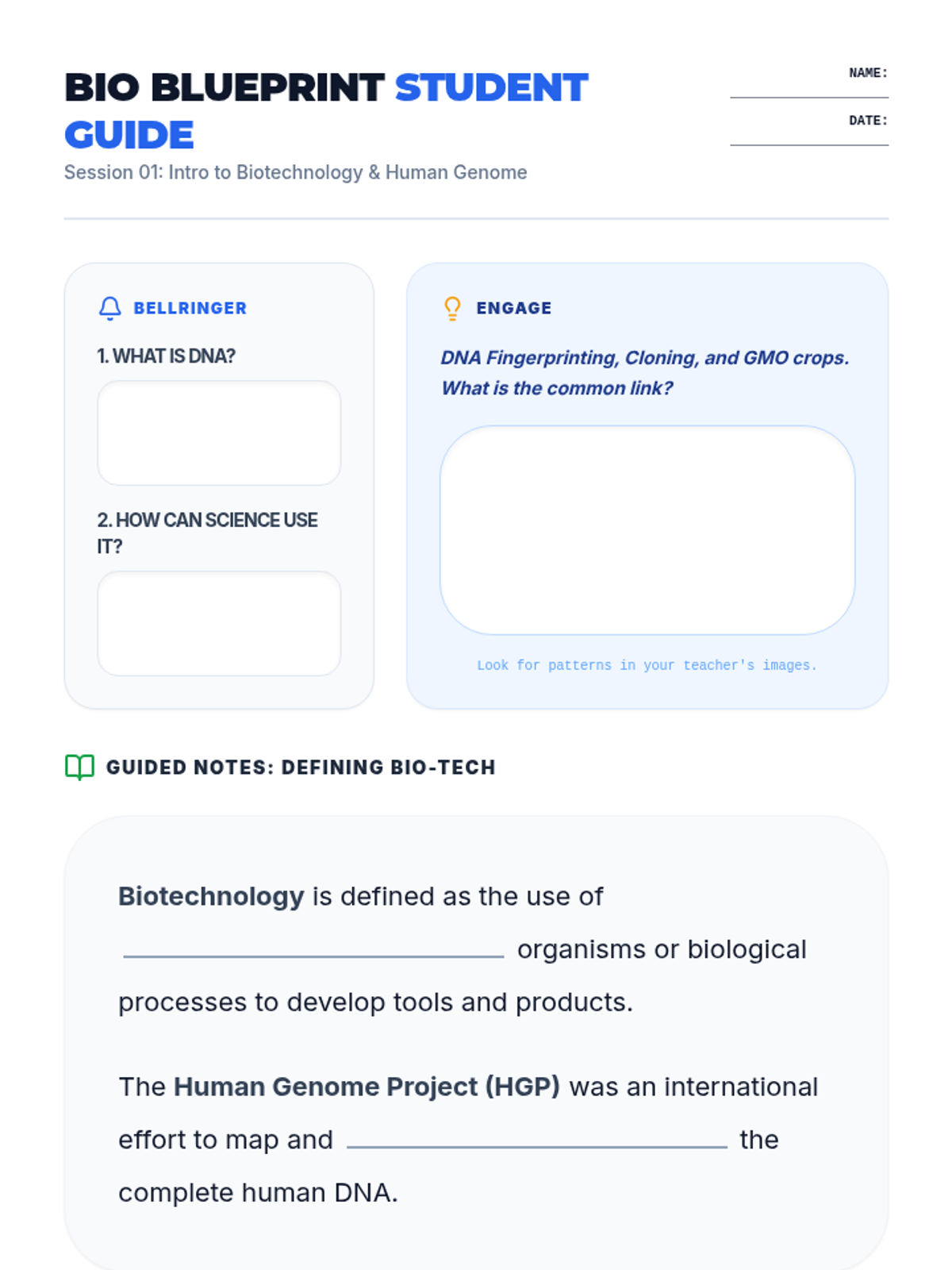
A comprehensive student worksheet featuring guided notes with diagrams, a vocabulary match-up activity, a biotechnology timeline, and a light-themed exit ticket for improved legibility. Includes enlarged work areas and better page utilization. Base font size increased for accessibility.
A revised light-themed slide deck introducing biotechnology concepts, the Human Genome Project, and key laboratory tools like PCR and gel electrophoresis. Replaced all dark backgrounds with clear, bright alternatives for better classroom visibility and adjusted layout to prevent element overlap. Added session clarity notes for worksheet pairing.

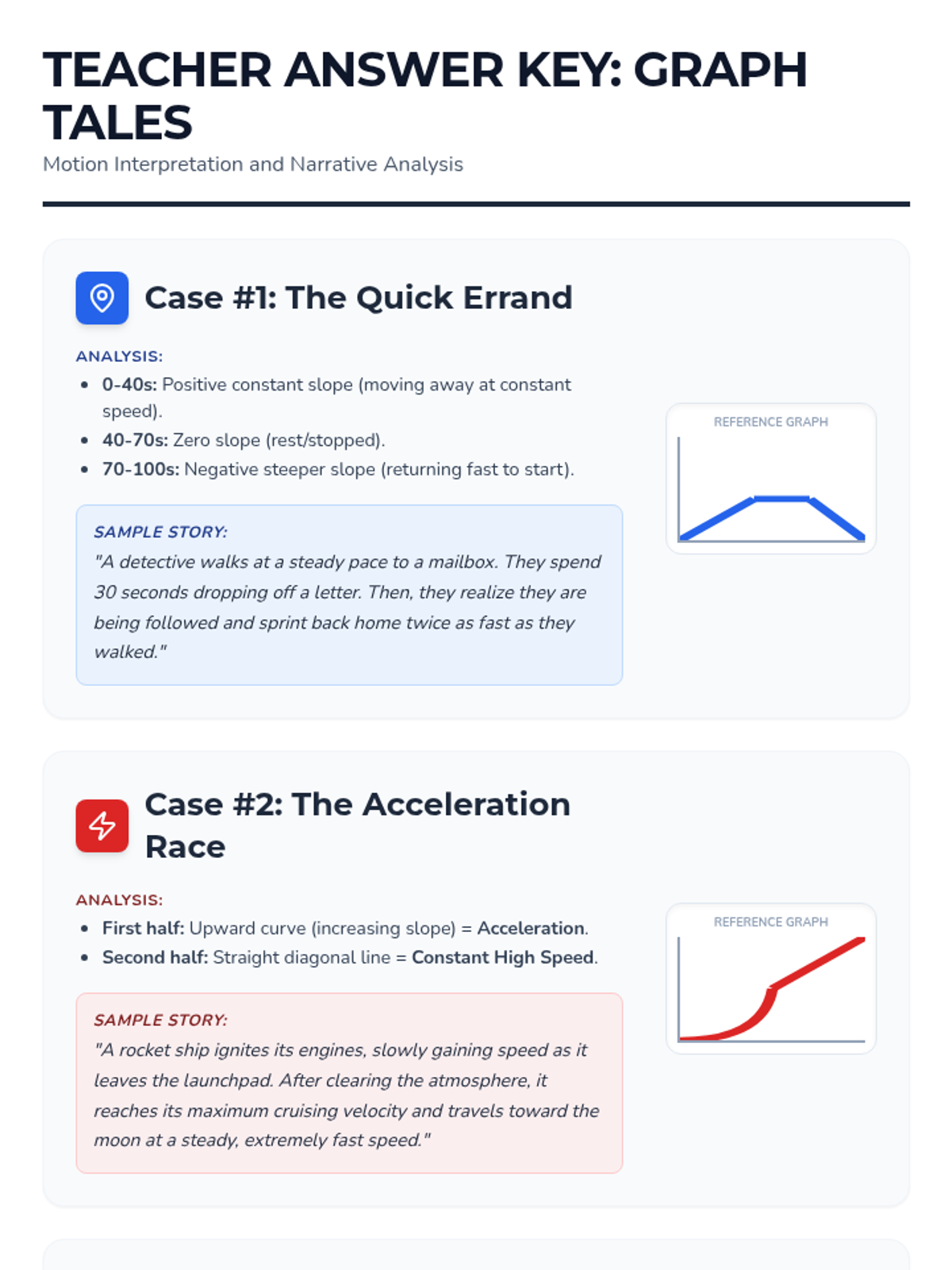
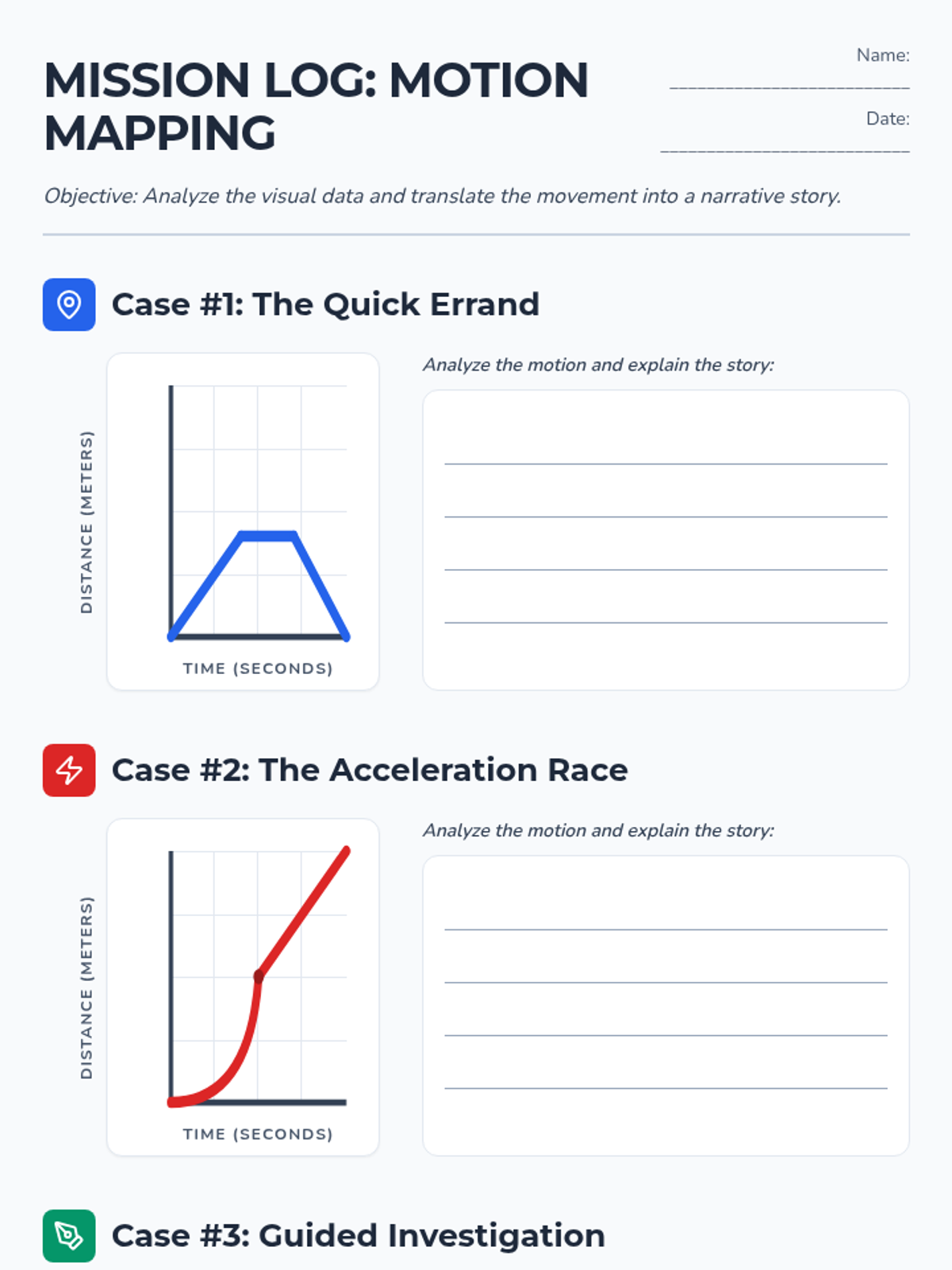
A comprehensive teacher answer key for the Graph Tales worksheet. Includes visual graph thumbnails for quick reference, analysis of motion segments, sample creative stories, and completed fill-in-the-blank text. Revised with better page break management.
A student worksheet featuring three motion graph scenarios (The Quick Errand, The Acceleration Race, and Guided Investigation) where students interpret distance-time graphs through creative writing and guided analysis. Revised with improved labels, darker writing lines, and better spacing.
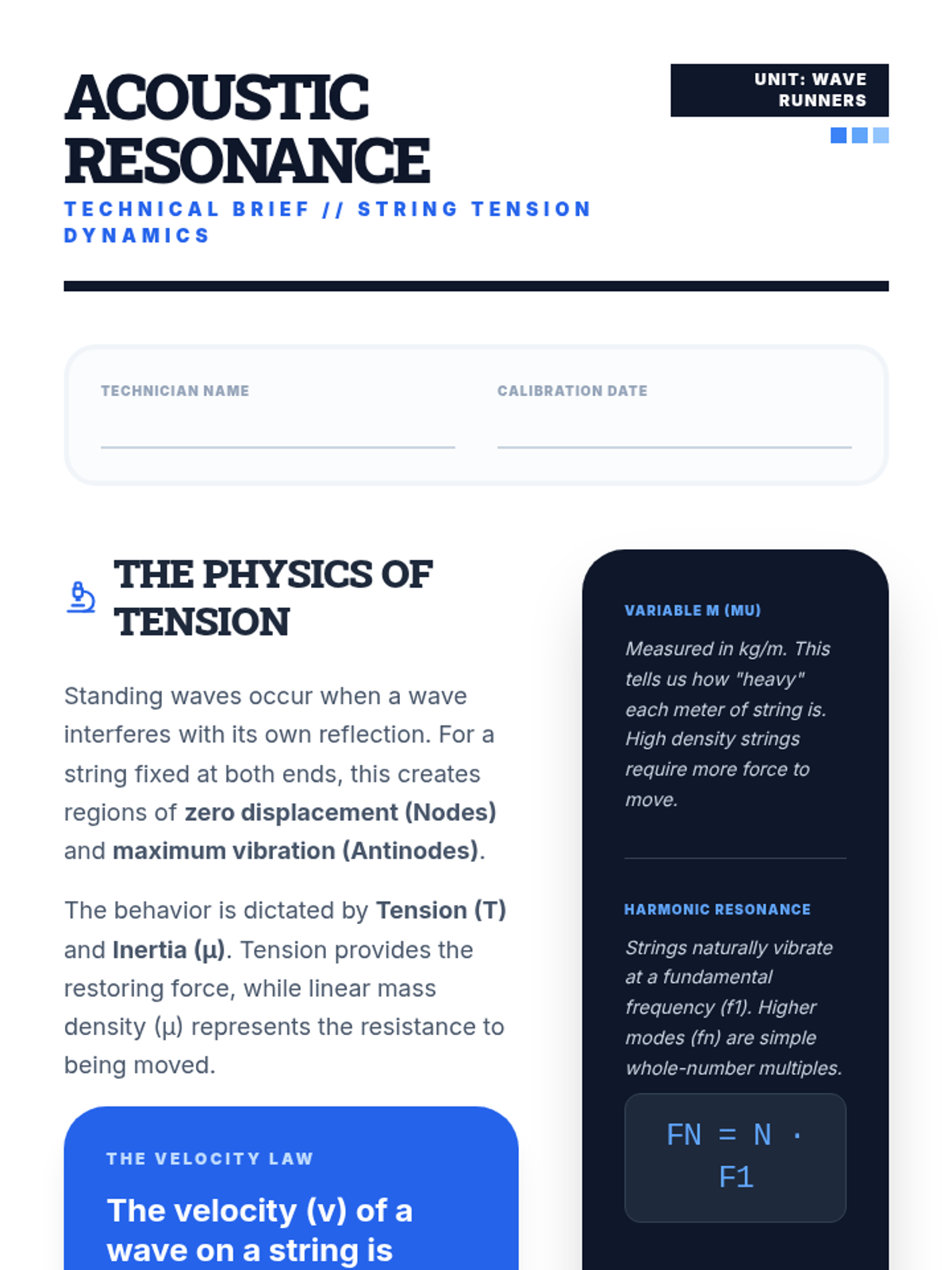
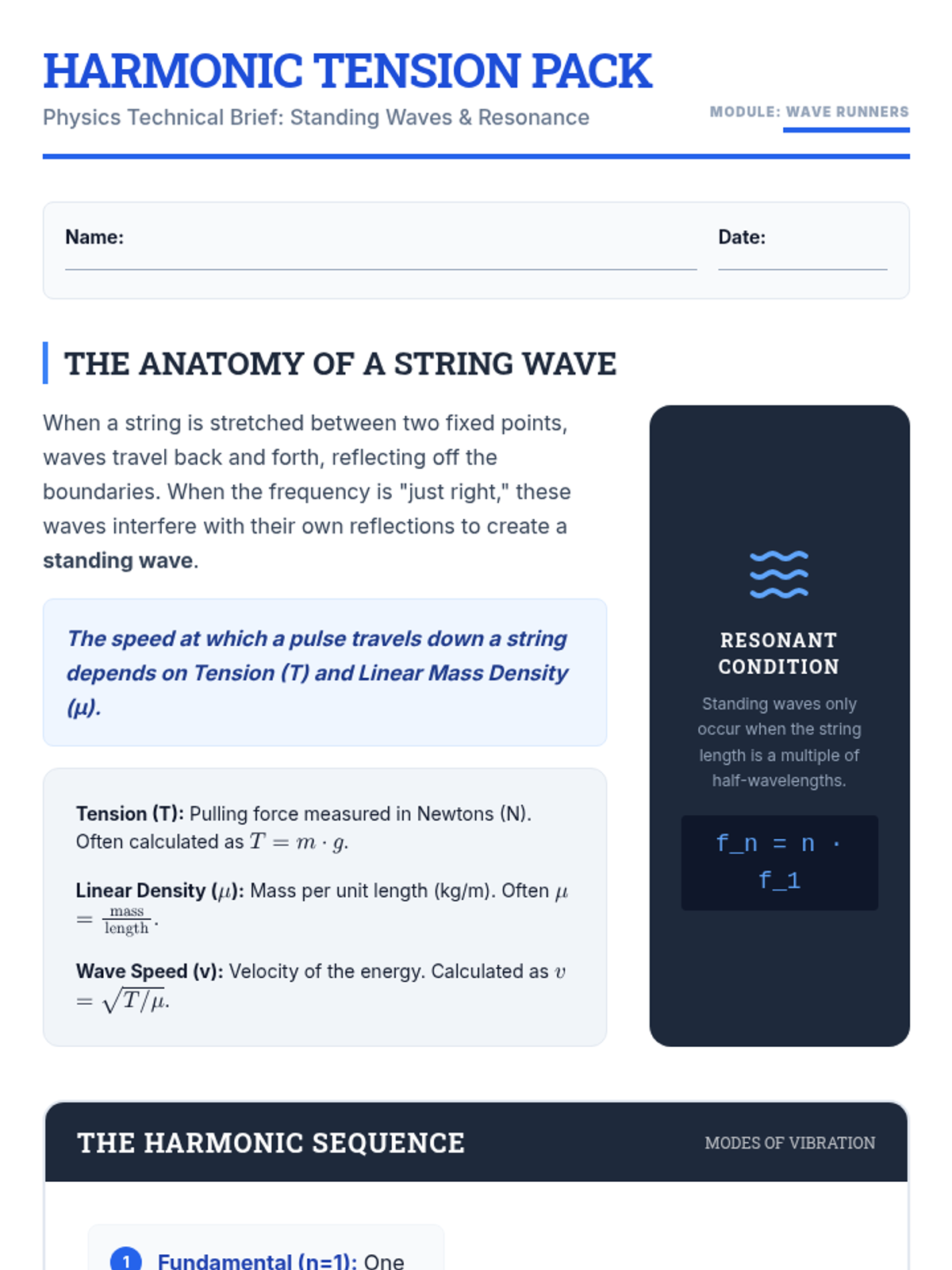
A comprehensive student learning packet for standing waves, featuring a redesigned background reading section styled as a technical field guide. It explains tension, linear density, and harmonic resonance using clear visual hierarchy and absolutely no unrendered LaTeX code. Includes scaffolded lab missions and a deep-dive engineering challenge. Fully cleaned of all math code fragments for perfect print rendering.
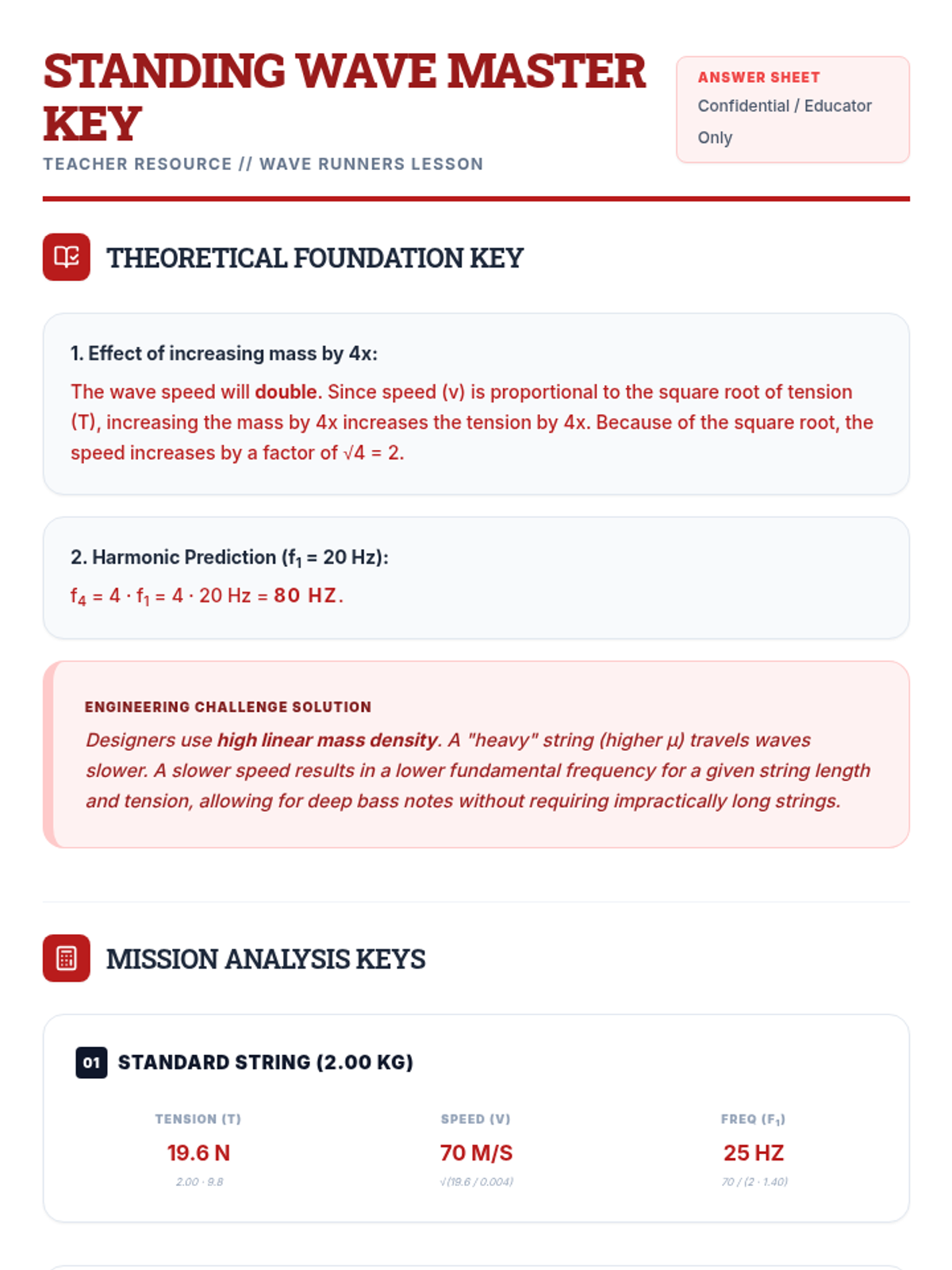
A comprehensive teacher answer key for the Harmonic Tension Reading and the Standing Wave Scaffolds Activity. Includes step-by-step mathematical solutions, conceptual explanations for tension and inertia, and pedagogical tips for addressing student misconceptions. Updated with Unicode characters and pure HTML formatting for perfect print rendering without unrendered code blocks.
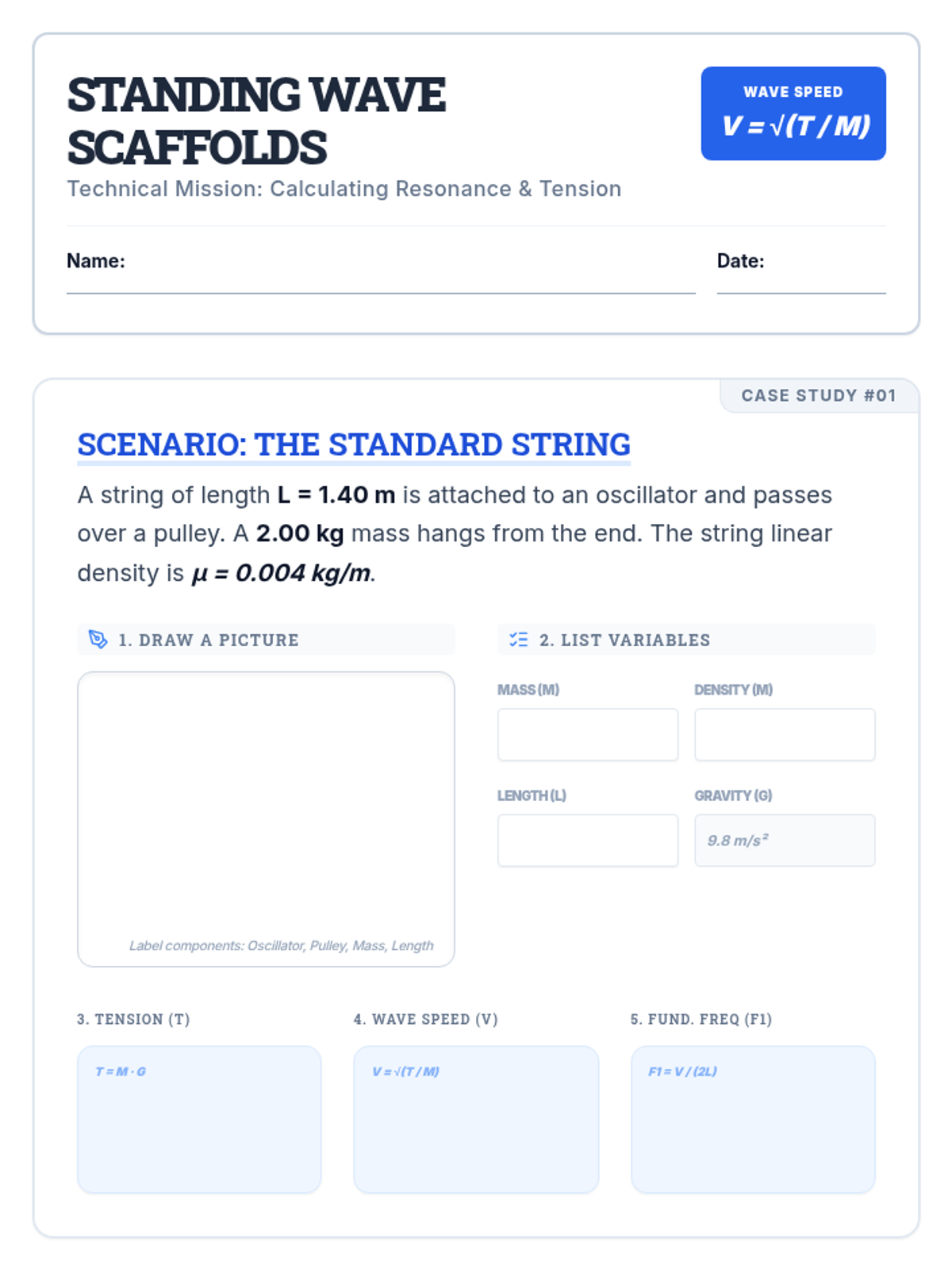
A student-facing worksheet containing three scaffolded physics problems focused on standing waves on strings. Each problem includes dedicated workspaces for drawing diagrams, listing variables, and performing step-by-step calculations for tension, wave speed, and frequency. Fully cleaned of all LaTeX code fragments using Unicode characters for perfect print rendering.
A comprehensive student learning packet combining background reading on harmonic tension, comprehension questions, and scaffolded physics problems focused on calculating standing wave properties on strings. Includes visual diagrams of wave modes and step-by-step math guides.
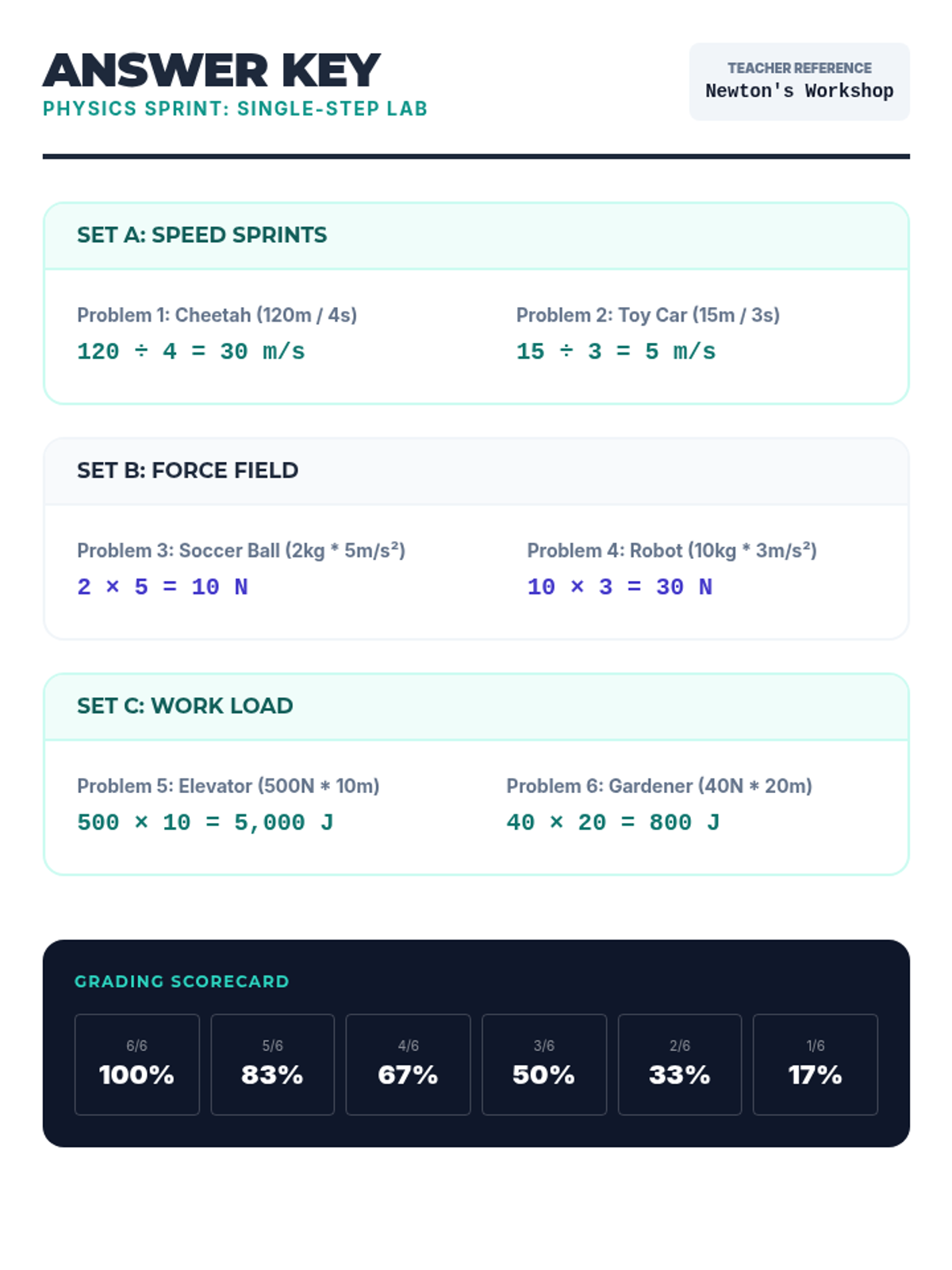
A teacher's answer key for the Physics Sprint Worksheet, providing clear solutions for speed, force, and work problems along with a quick-reference grading scorecard.
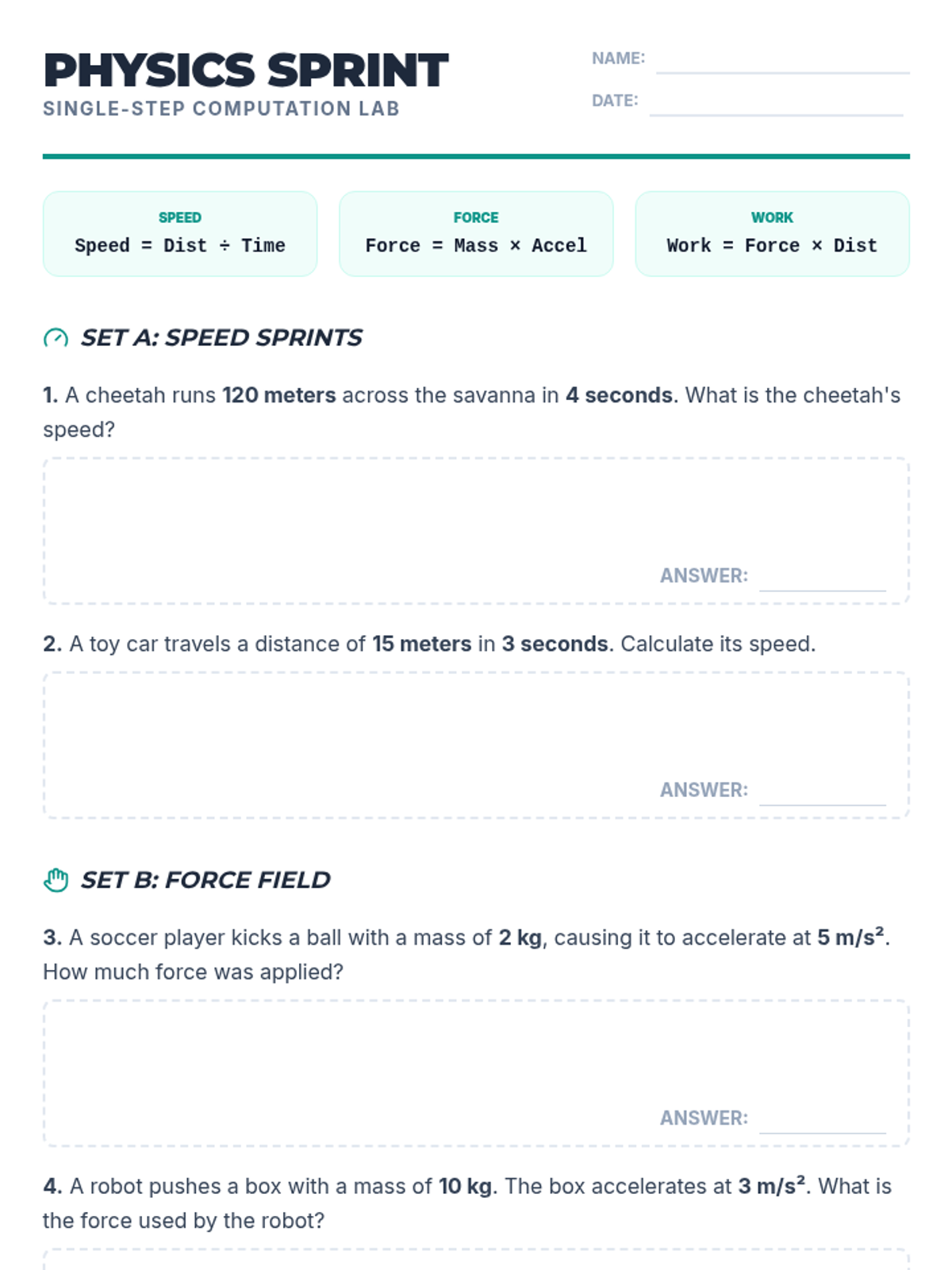
A student worksheet featuring single-step physics word problems for speed, force, and work. Includes a formula reference bar and large dedicated work areas for student calculations.
A clear and visual slide deck introducing basic single-step physics formulas for speed, force, and work. Includes formulas, unit guides, and a step-by-step example.
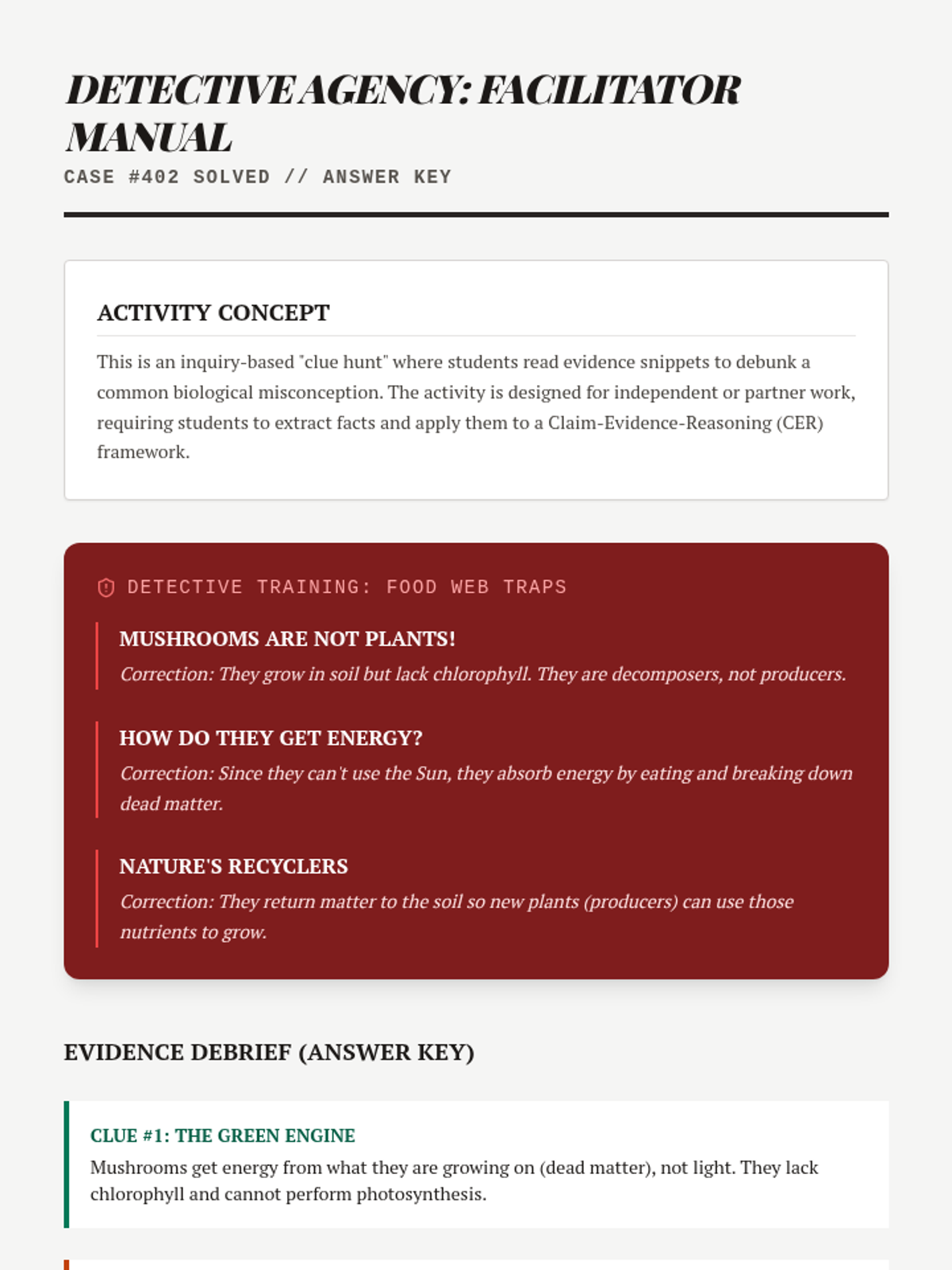
Updated teacher guide for the "Hidden Kingdom Mystery." Now includes specific facilitation notes on "Nature's Recyclers" and common food web traps. Revised for better page flow and legibility.
Updated intro slides for the Kingdom Detective investigation. Now includes explicit slides addressing "Nature's Recyclers" and common food web traps. Revised for better text contrast and layout polish.
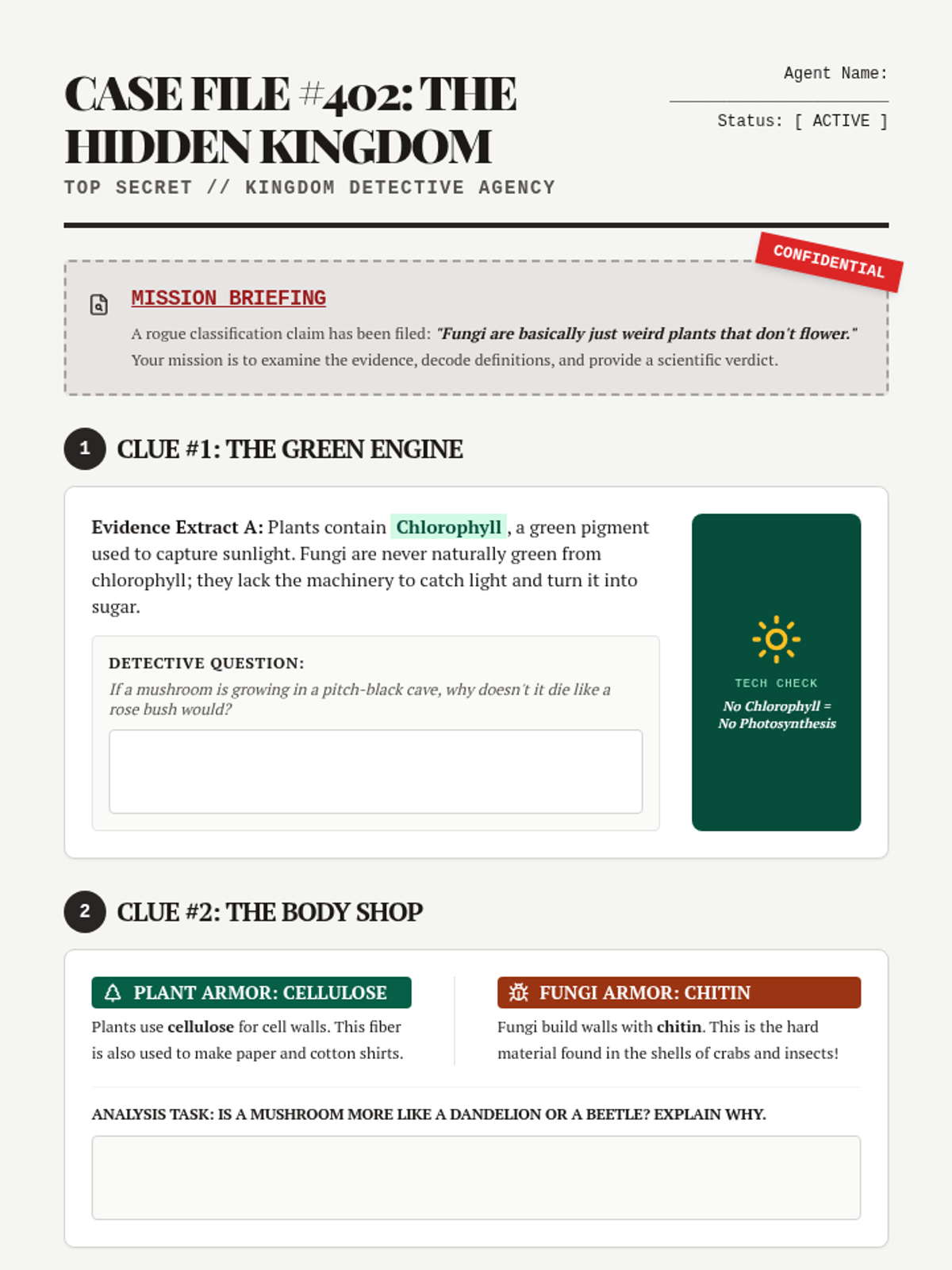
A mystery-themed clue hunt where students act as "Kingdom Detectives." Updated with explicit sections on "Nature's Recyclers" and "Common Food Web Traps" to address key misconceptions about fungi and energy roles. Revised for better terminology consistency and page flow.
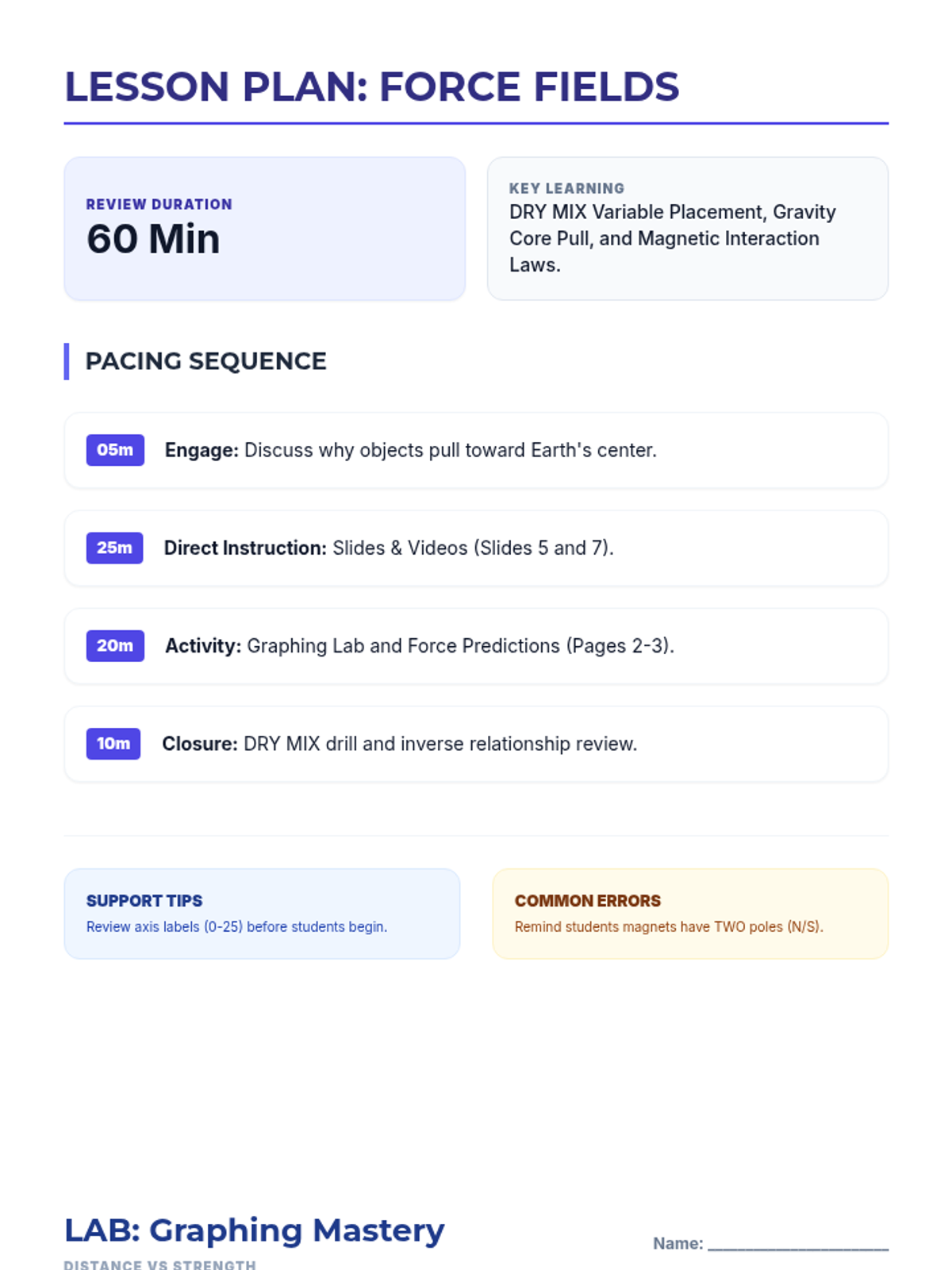
A comprehensive 5-page teacher packet combining the lesson plan, student lab worksheet, answer key, and DRY MIX anchor chart into a single printable document.
A visual review slide deck covering graphing rules (DRY MIX), gravity basics, and the laws of magnetism for 7th grade science, including embedded videos on gravity and magnetism.
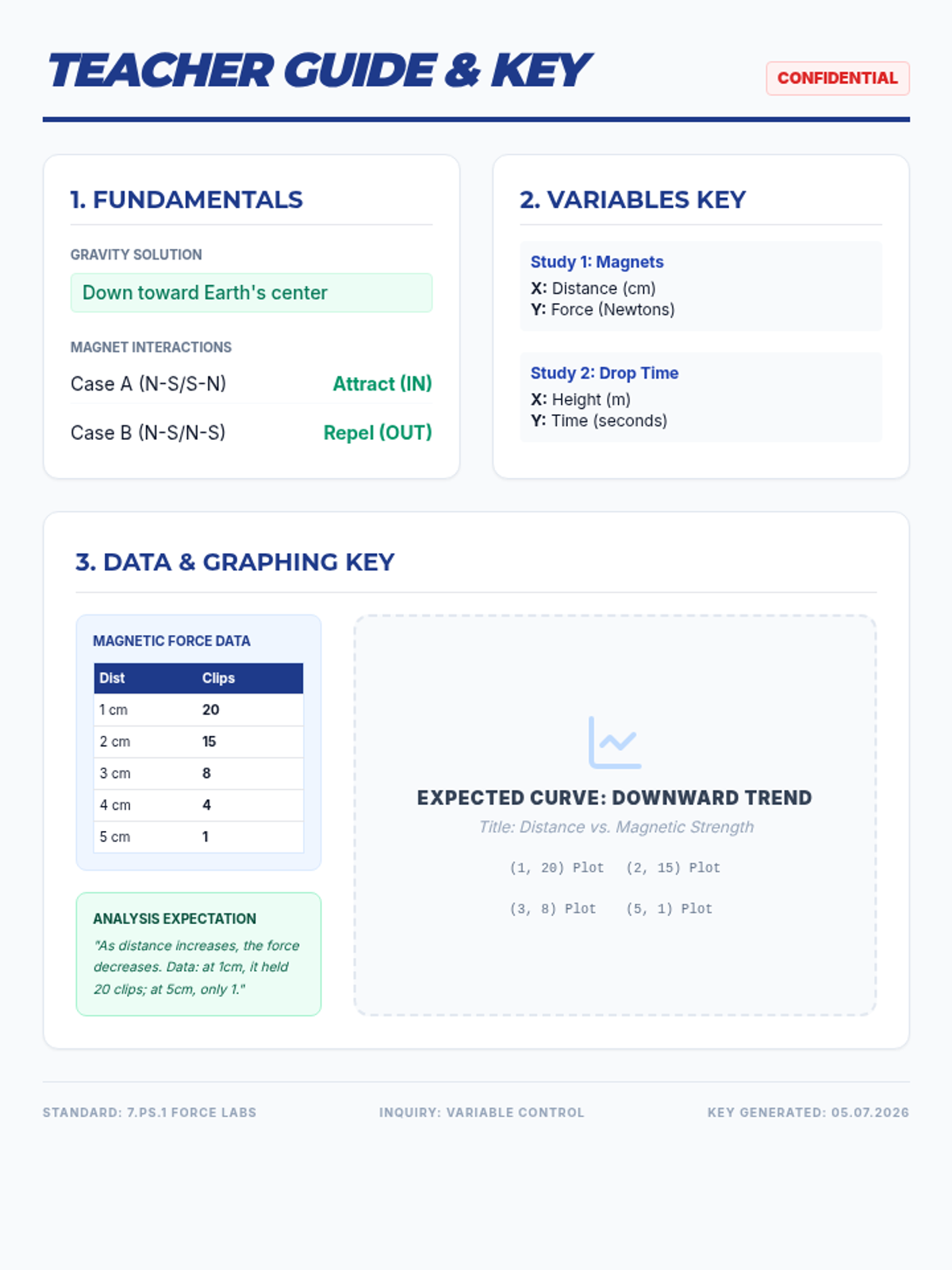
Teacher reference guide and answer key for the Force & Data Lab. Revised for better alignment, page break management, and explicit data sets for the experiments.
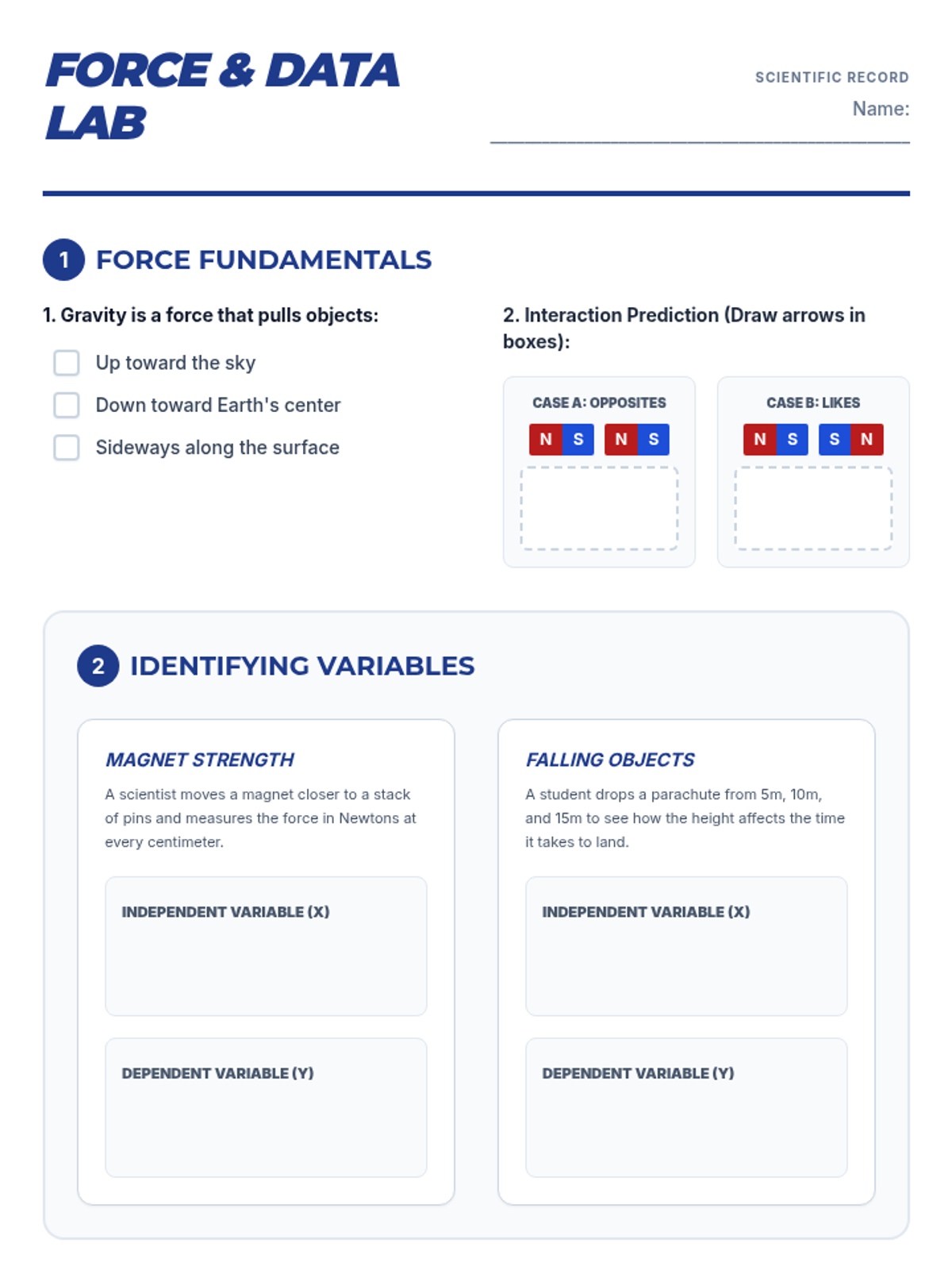
A student worksheet featuring multiple-choice questions on forces, variable identification exercises, and a graphing challenge using a provided data set on magnetism. Revised for better layout and alignment. Now includes improved spacing for work and forces graphing to start on a new page.
A visual presentation introducing gravity, magnetism, and the fundamentals of graphing data including variables and axis placement. Now includes a practice data set slide. Revised to ensure all content fits and labels are visible.
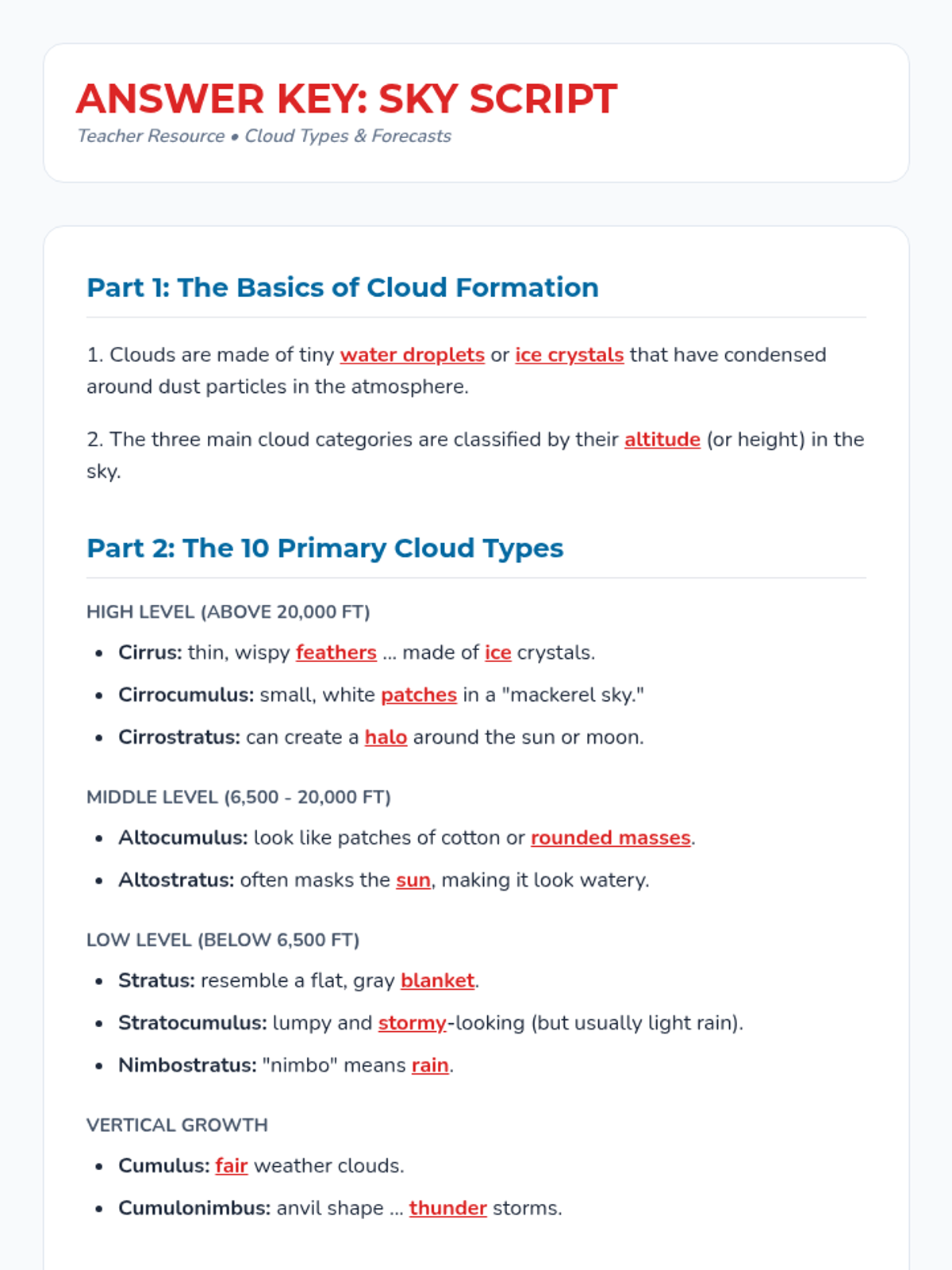
A teacher's answer key for the Sky Script Guided Notes, including suggested answers for fill-in-the-blank sections and the reflection question.
A visual presentation introducing the ten primary cloud types with a focus on their classification by altitude and weather effects. Includes a National Geographic video embed and improved slide contrast.
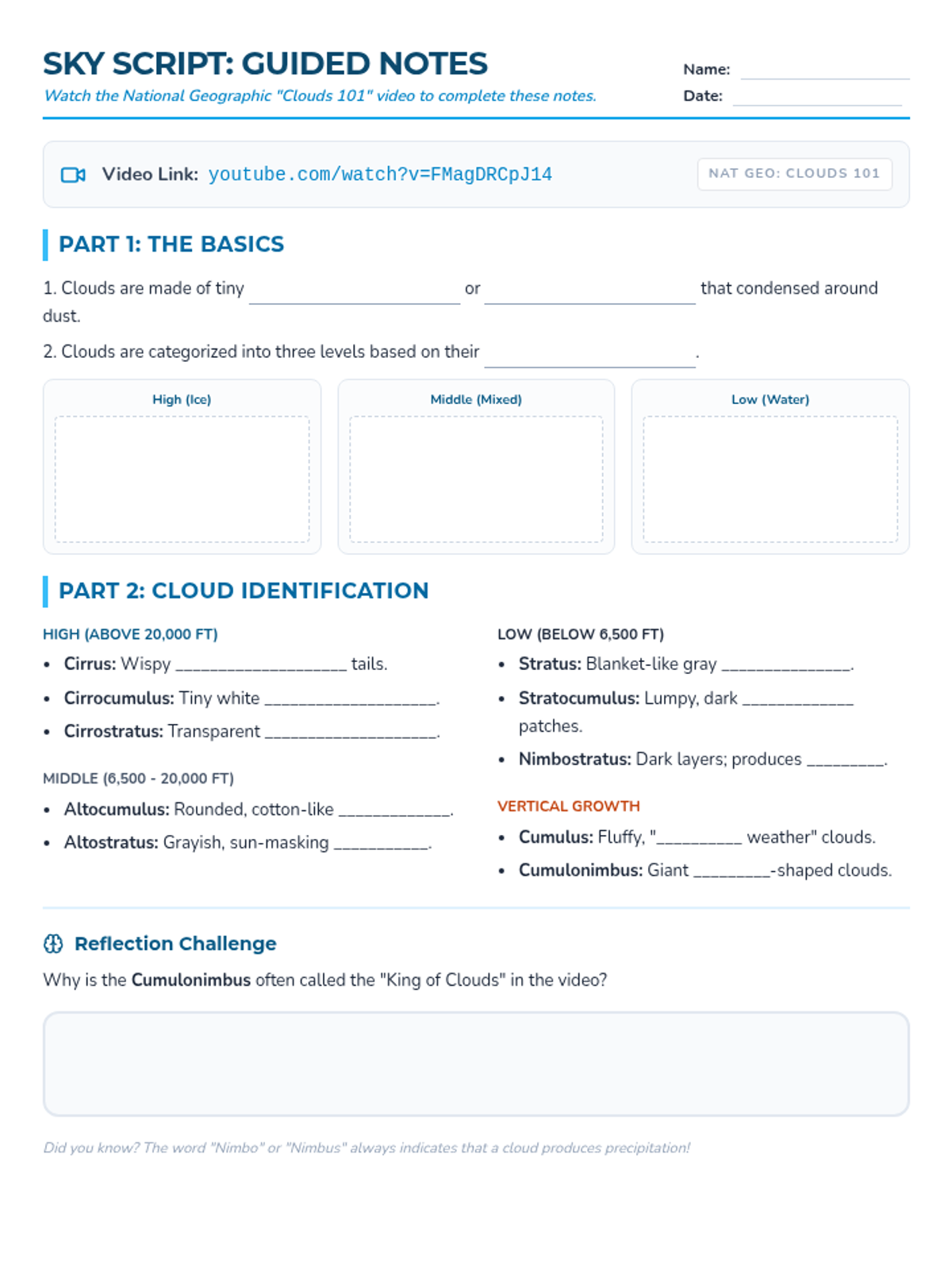
A student worksheet with fill-in-the-blank notes designed to be completed while watching the National Geographic "Clouds 101" video. Includes larger drawing areas and clear video references. Condensed to fit on a single page.
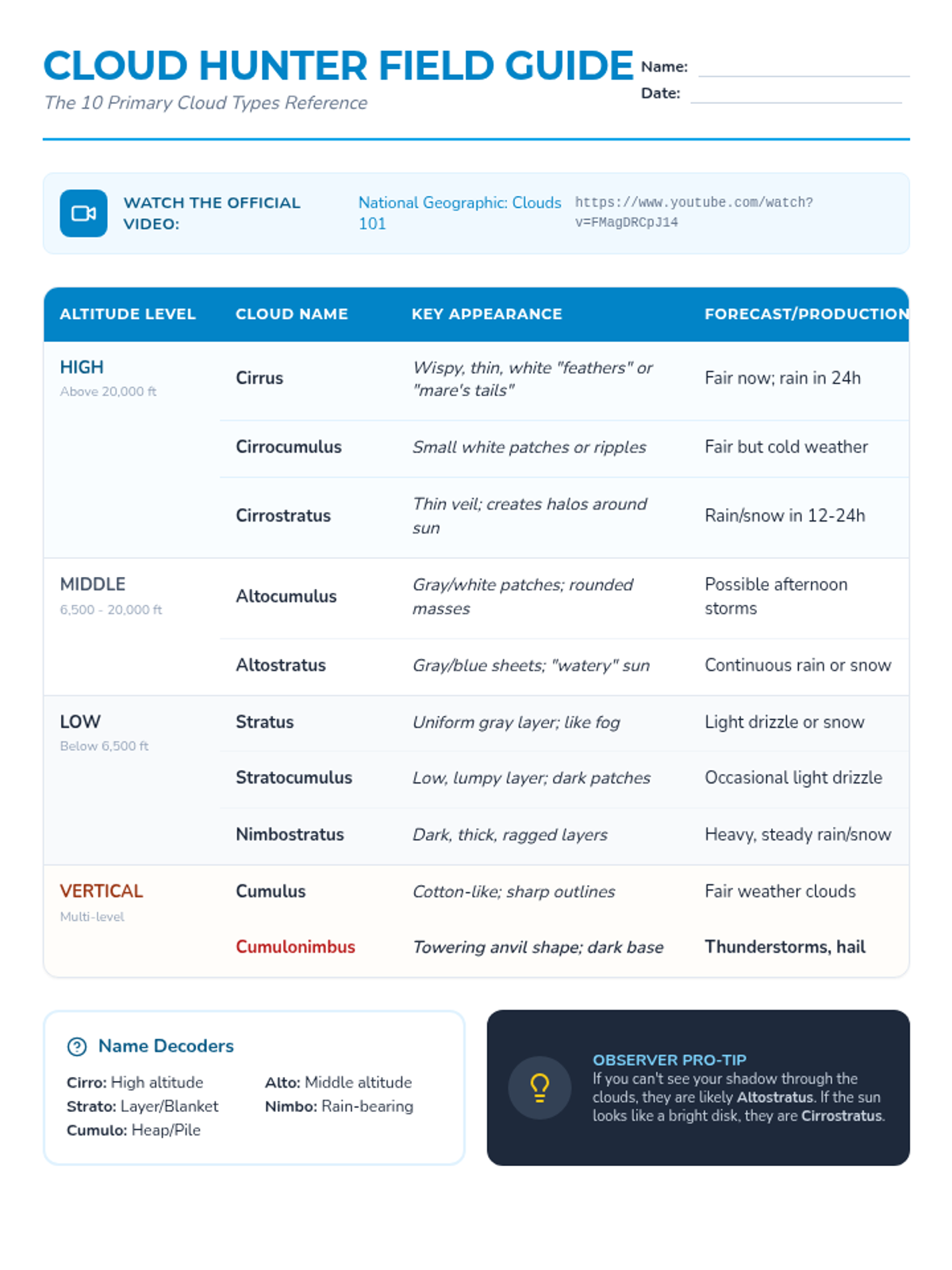
A visually organized reference sheet for students detailing the 10 primary cloud types, their appearances, altitudes, and weather predictions. Condened to fit on a single page for quick reference.
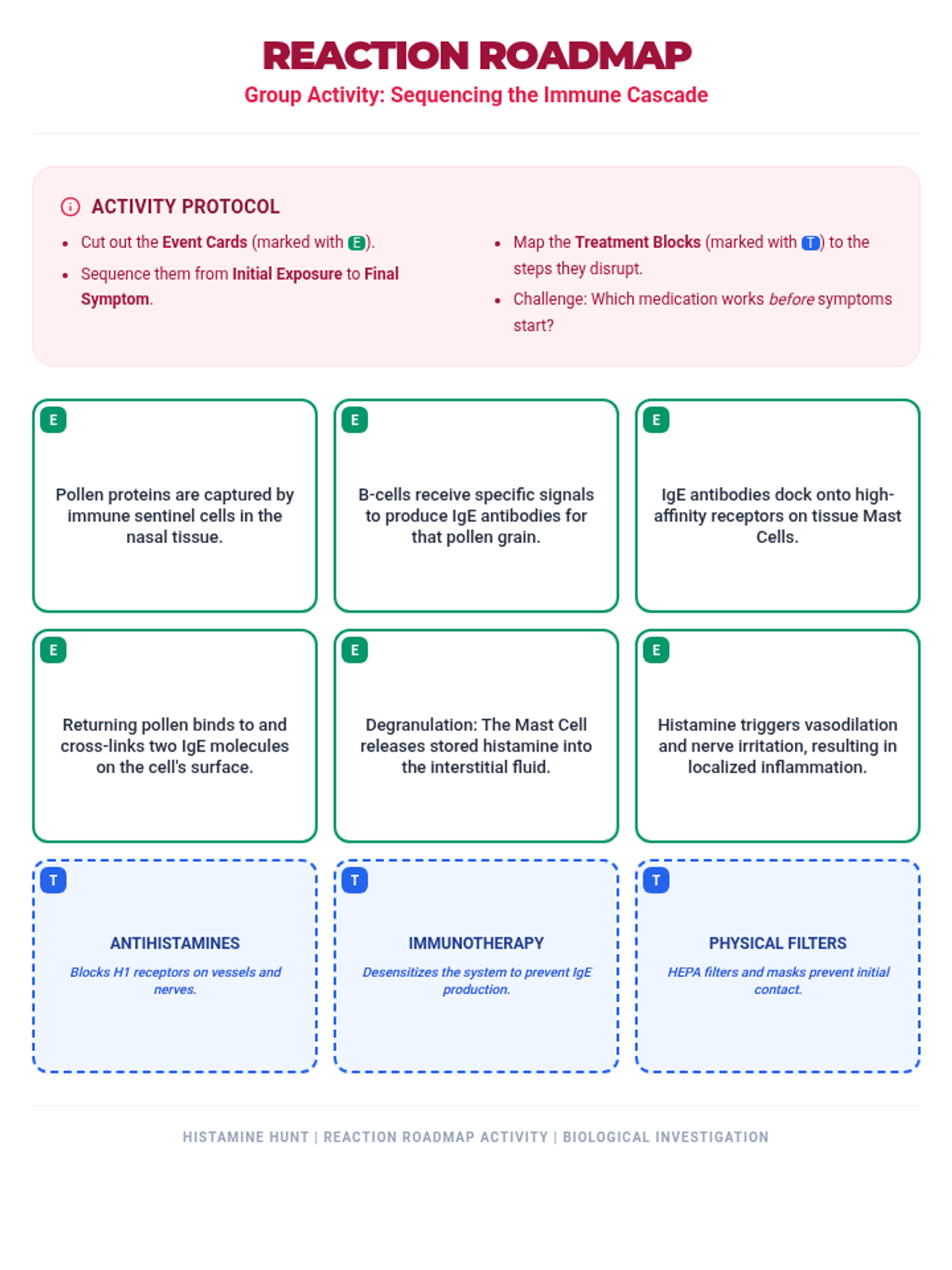
An interactive card-sorting activity where students sequence the stages of an allergic reaction and apply pharmacological treatments. Revised to fit on a single page with improved badge alignment and text wrapping.
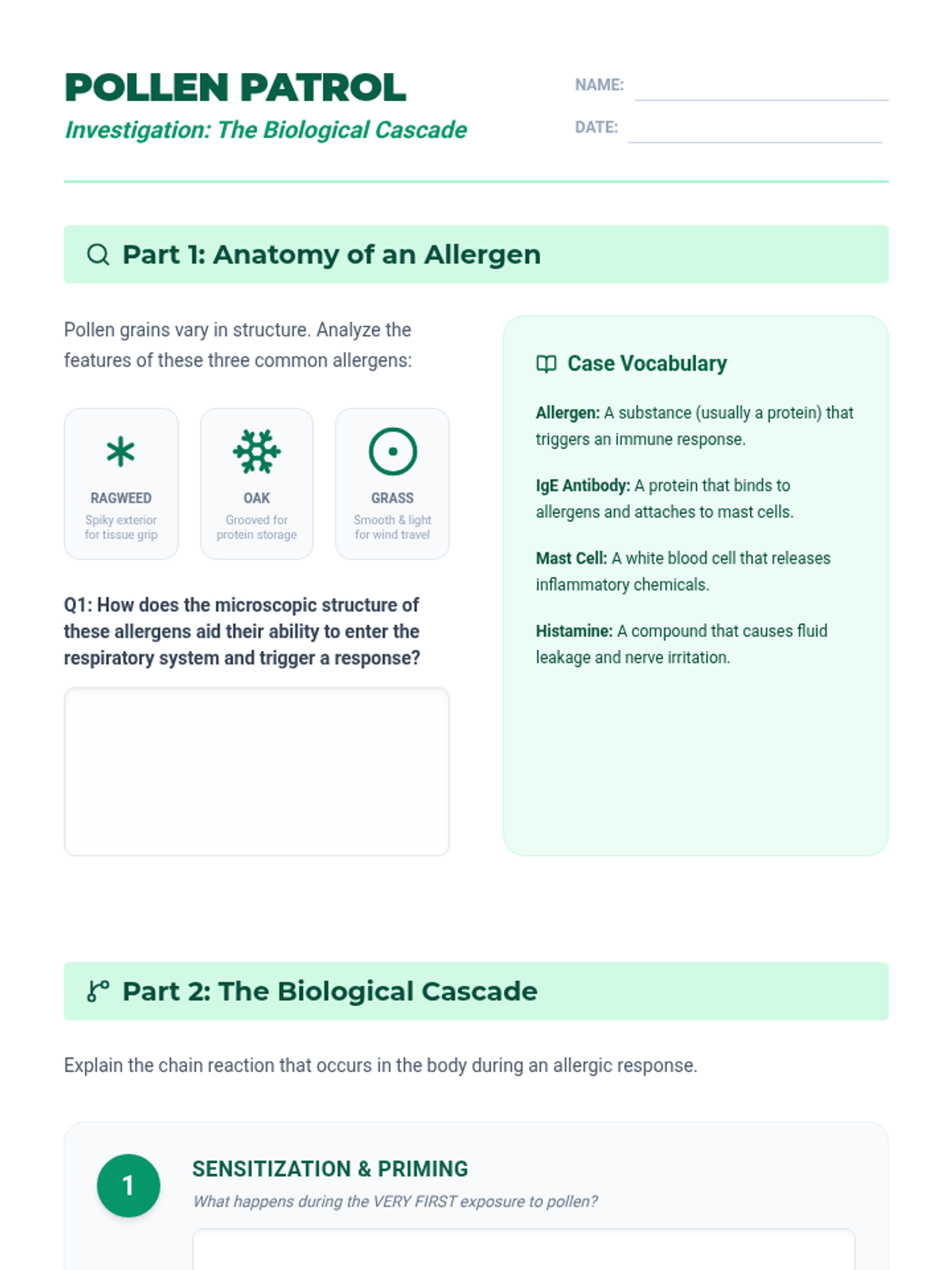
A student worksheet focusing on the anatomical structure of pollen, the flowchart of the allergic response, and the physiological mechanisms of histamine. Revised for better page breaks and larger work areas.
A high-impact slide deck for classroom instruction, covering the stages of an allergic reaction from sensitization to degranulation and management strategies. Revised with improved visuals and slide balance.
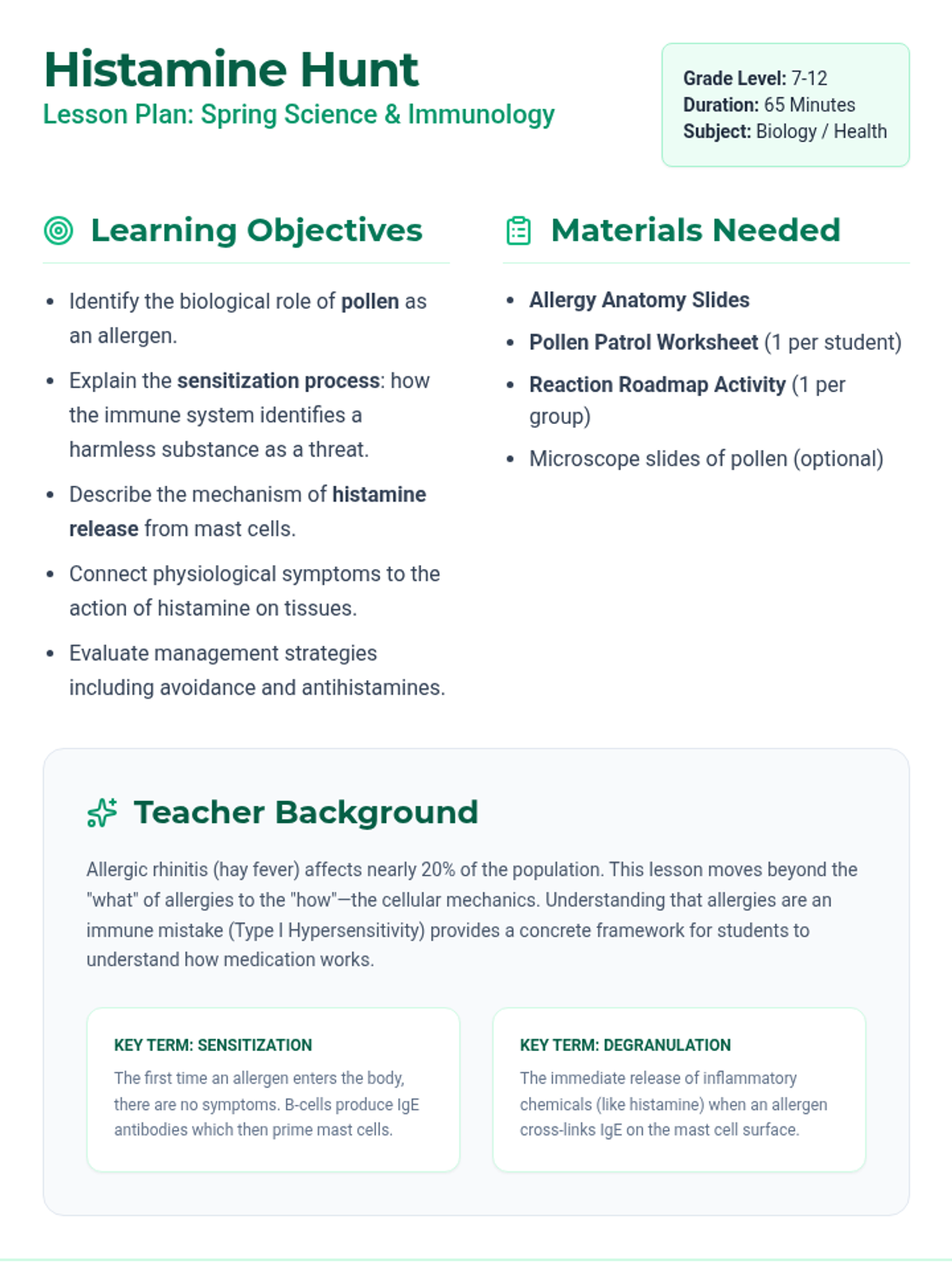
A detailed lesson plan for teachers, outlining the instructional sequence, learning objectives, and common student misconceptions regarding the biology of allergies. Revised for improved layout and content flow.
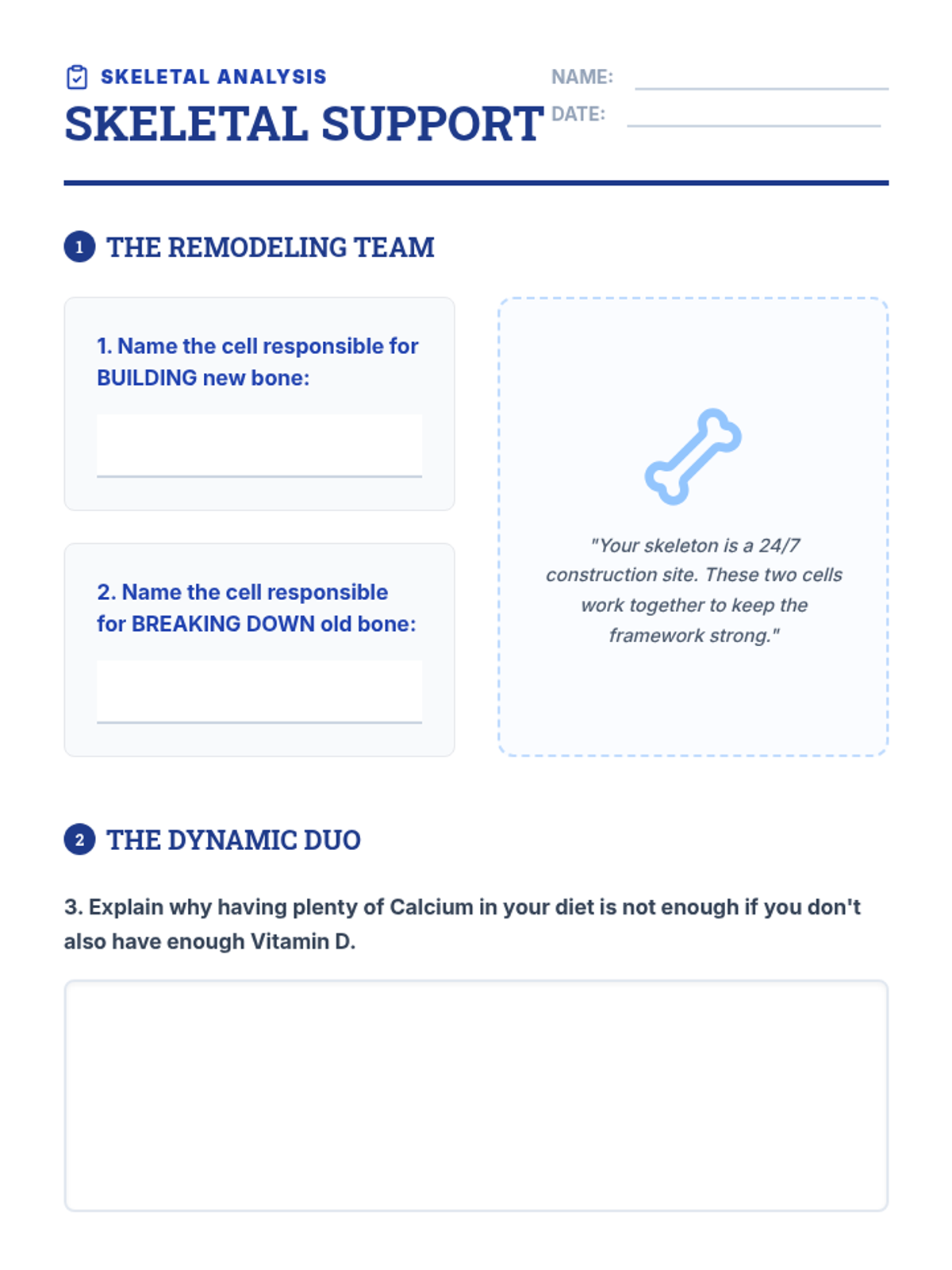
A assessment worksheet for students to demonstrate their understanding of bone remodeling cells, the importance of minerals, and the benefits of weight-bearing exercise.
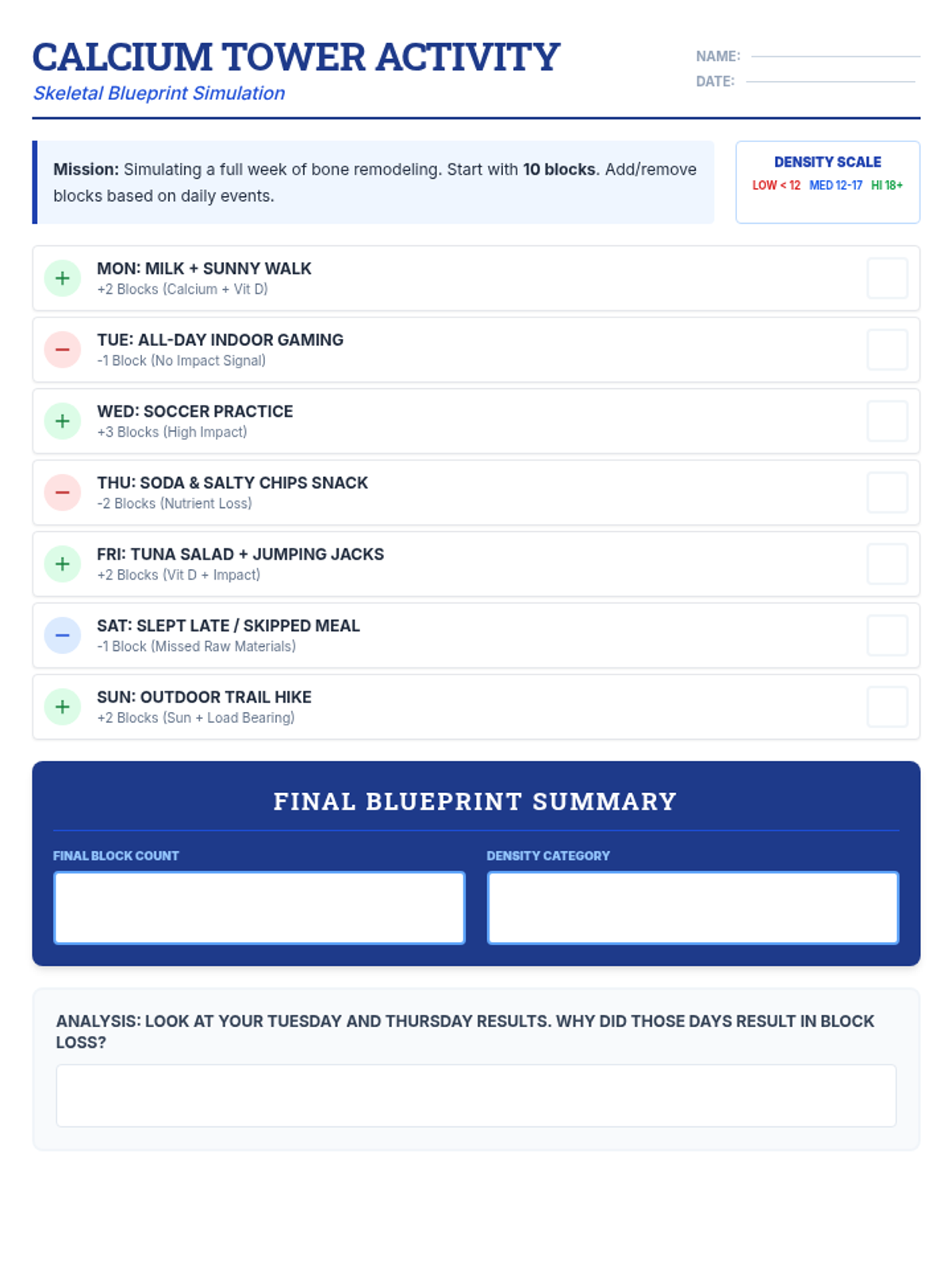
A hands-on activity where students use blocks to model bone growth and mineral loss based on lifestyle choices, simulating the building of peak bone mass.
Visual presentation for the Bone Base Blueprint lesson, covering the biological construction crew (osteoblasts and osteoclasts), the role of minerals, and the concept of peak bone mass.
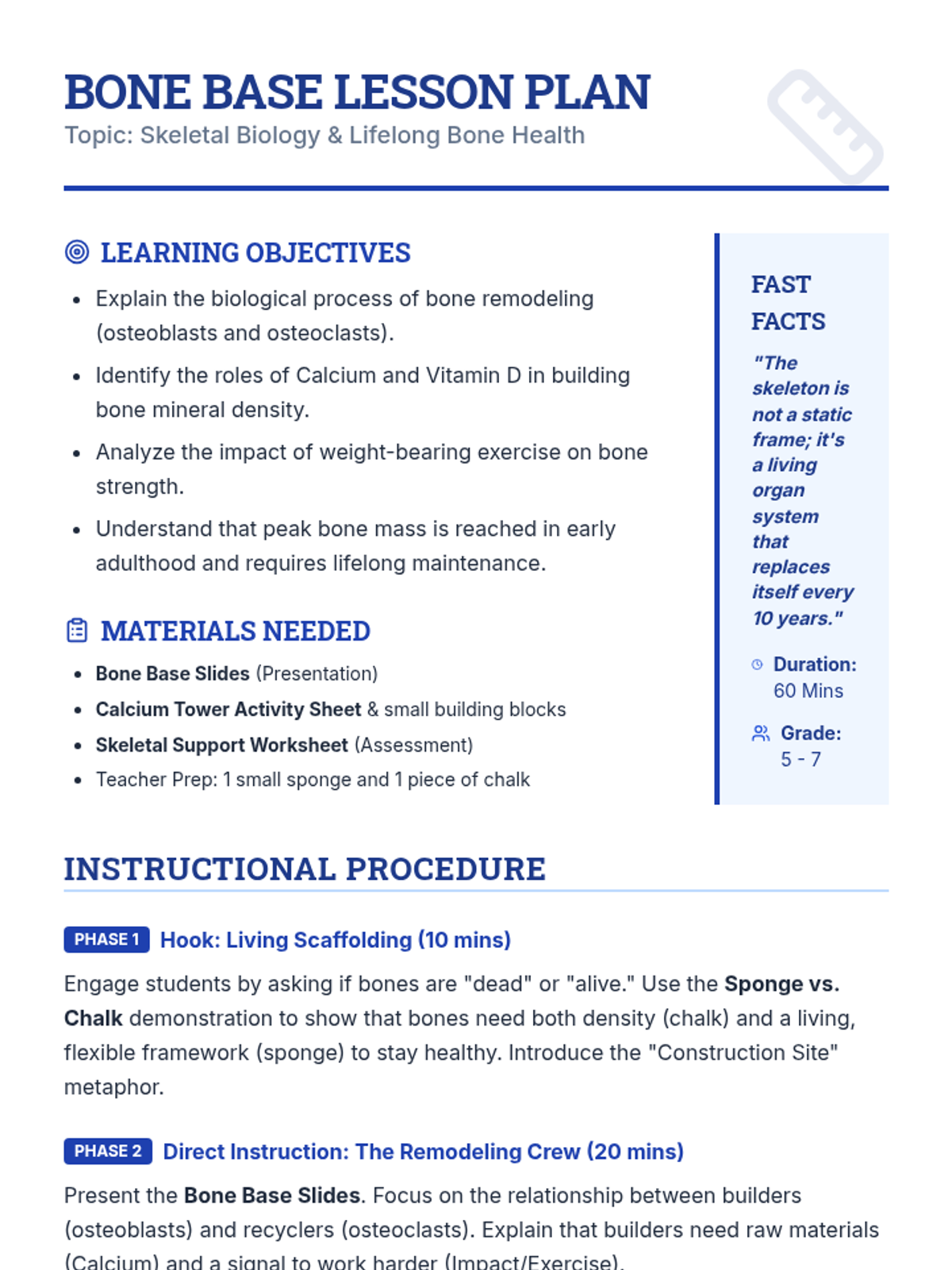
A comprehensive teacher's guide for the Bone Base Blueprint lesson, including learning objectives, a step-by-step instructional sequence, and differentiation strategies.
A 5-slide visual presentation introducing energy categories and the science behind solar and wind power, featuring a summary slide and improved contrast.
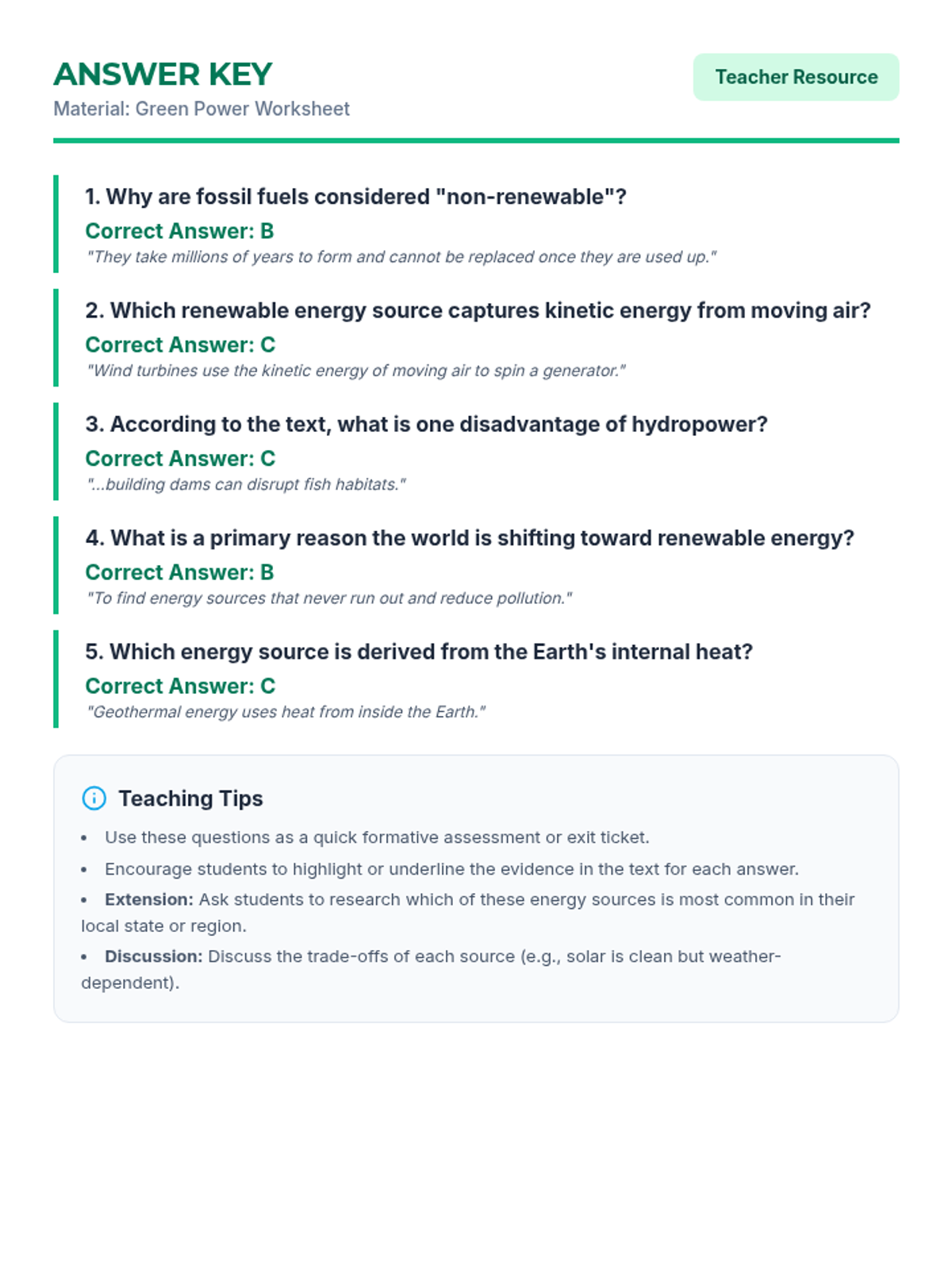
Teacher answer key for the Green Power Worksheet, updated to include letter choices and improved layout consistency.
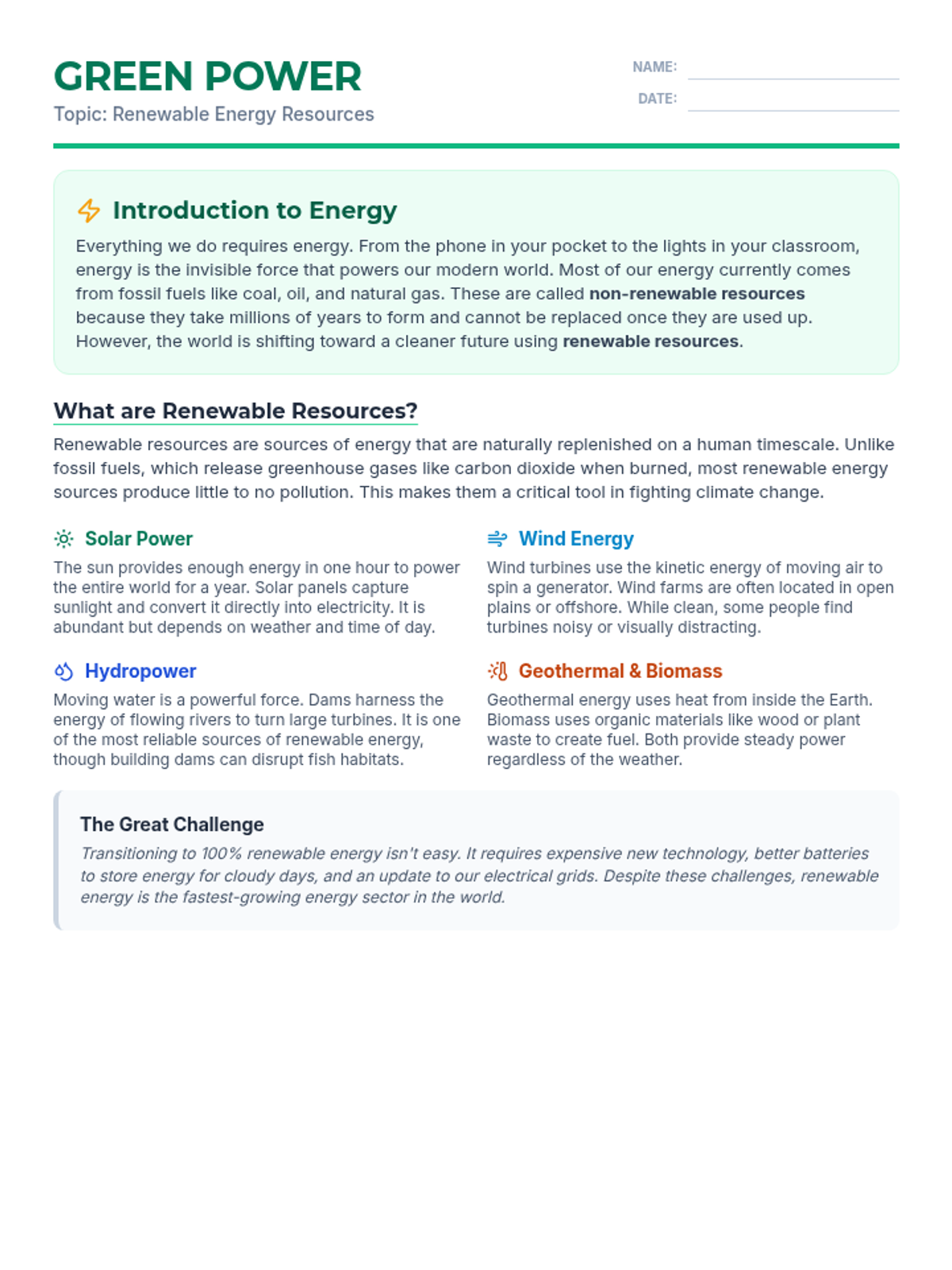
A two-page reading comprehension worksheet for 7th-grade students introducing renewable and non-renewable energy sources with multiple-choice assessment. Tightened layout to prevent orphaned text.
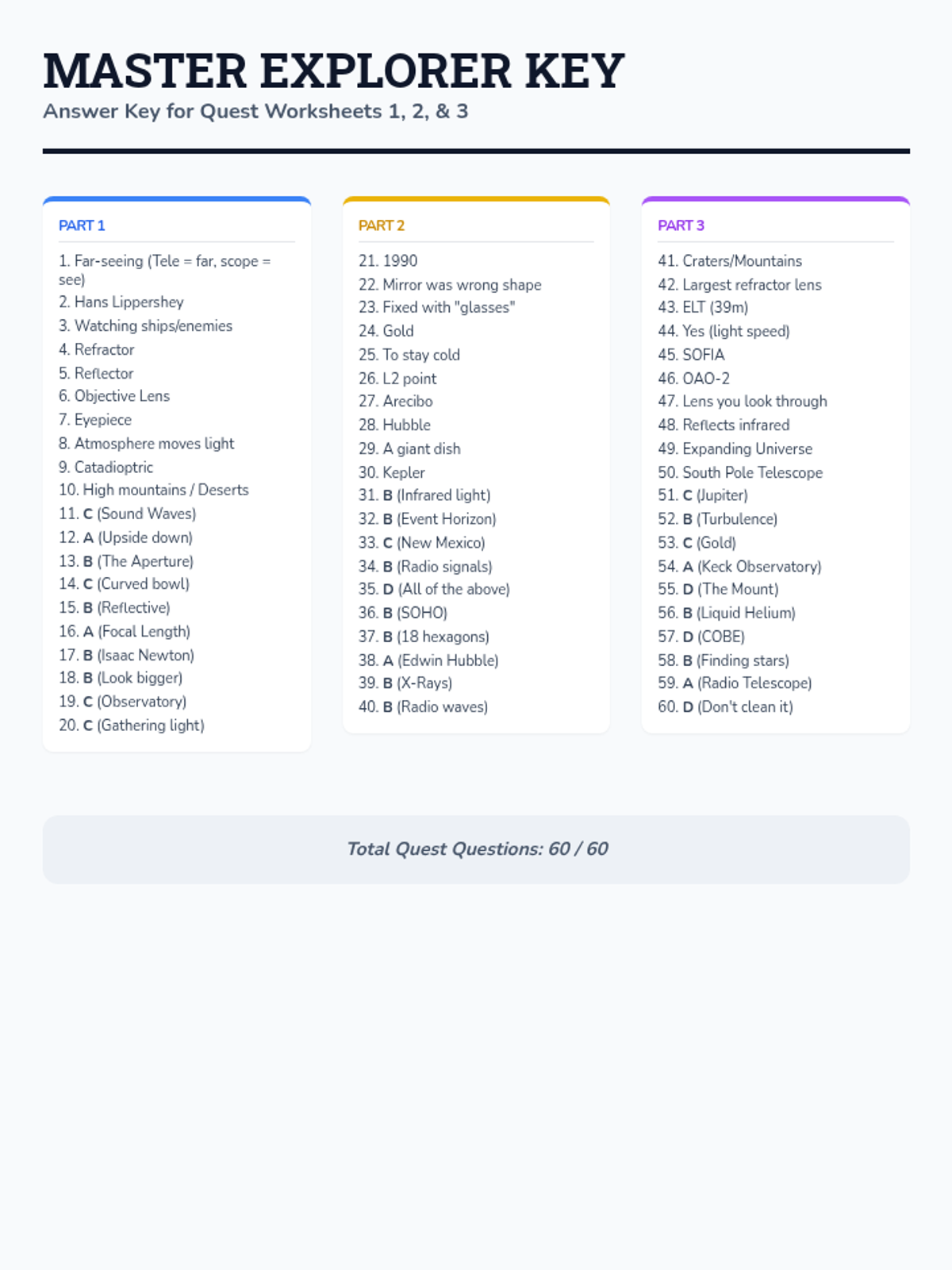
Full answer key for all 60 quest questions across all three worksheets. Revised to fit onto a single page and improve layout for better organization.