A visual presentation introducing the ten primary cloud types with a focus on their classification by altitude and weather effects. Includes a National Geographic video embed and improved slide contrast.
A high-impact classroom poster explaining the DRY MIX mnemonic for graphing variables, perfect for 7th grade science anchor charts.
A comprehensive teacher lesson plan for Force Field Fundamentals, including learning objectives, a detailed pacing guide, and differentiation strategies.
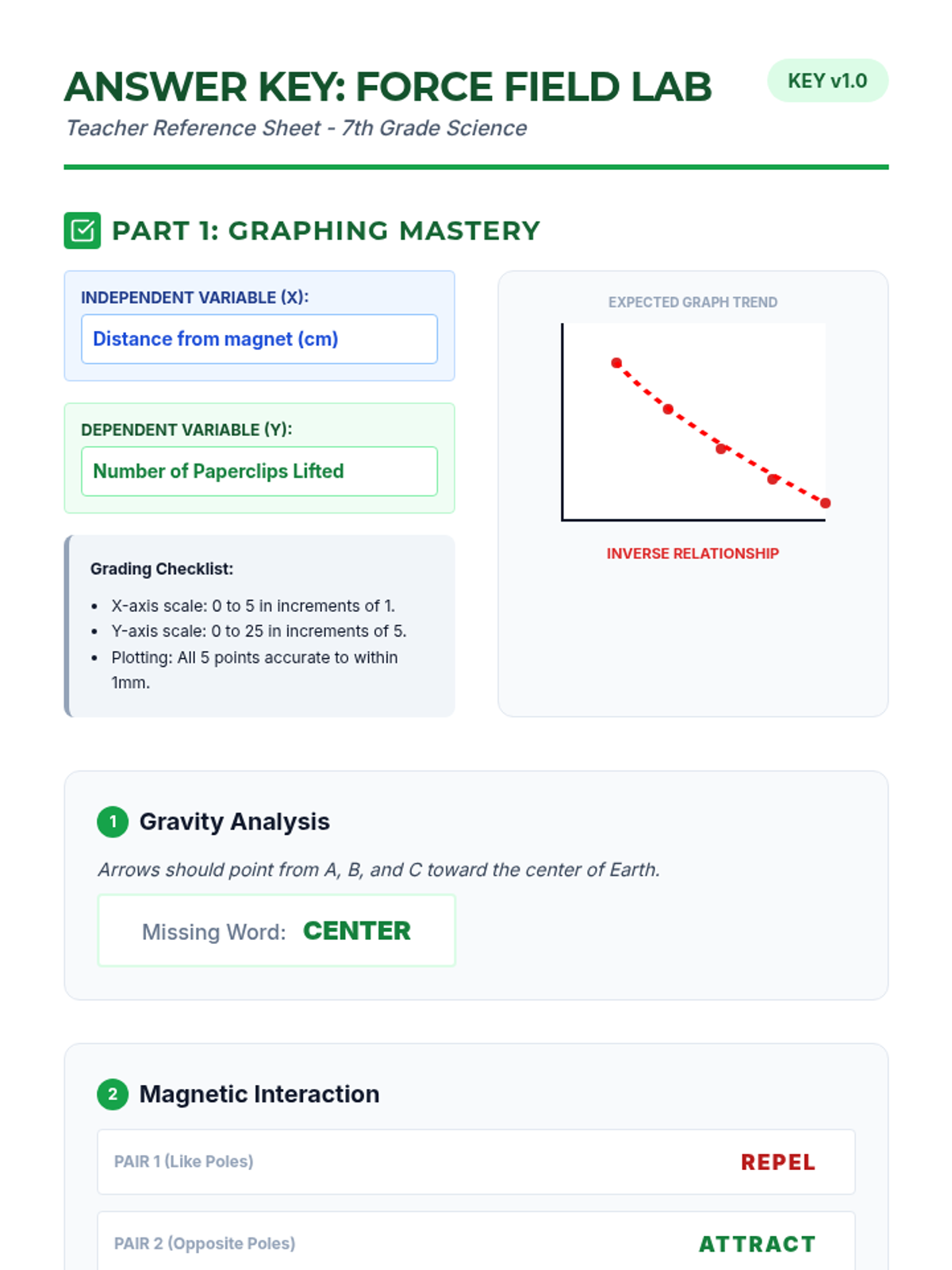
The teacher answer key for the Force Field Lab Worksheet, providing correct variables, graph trends, and interaction results.
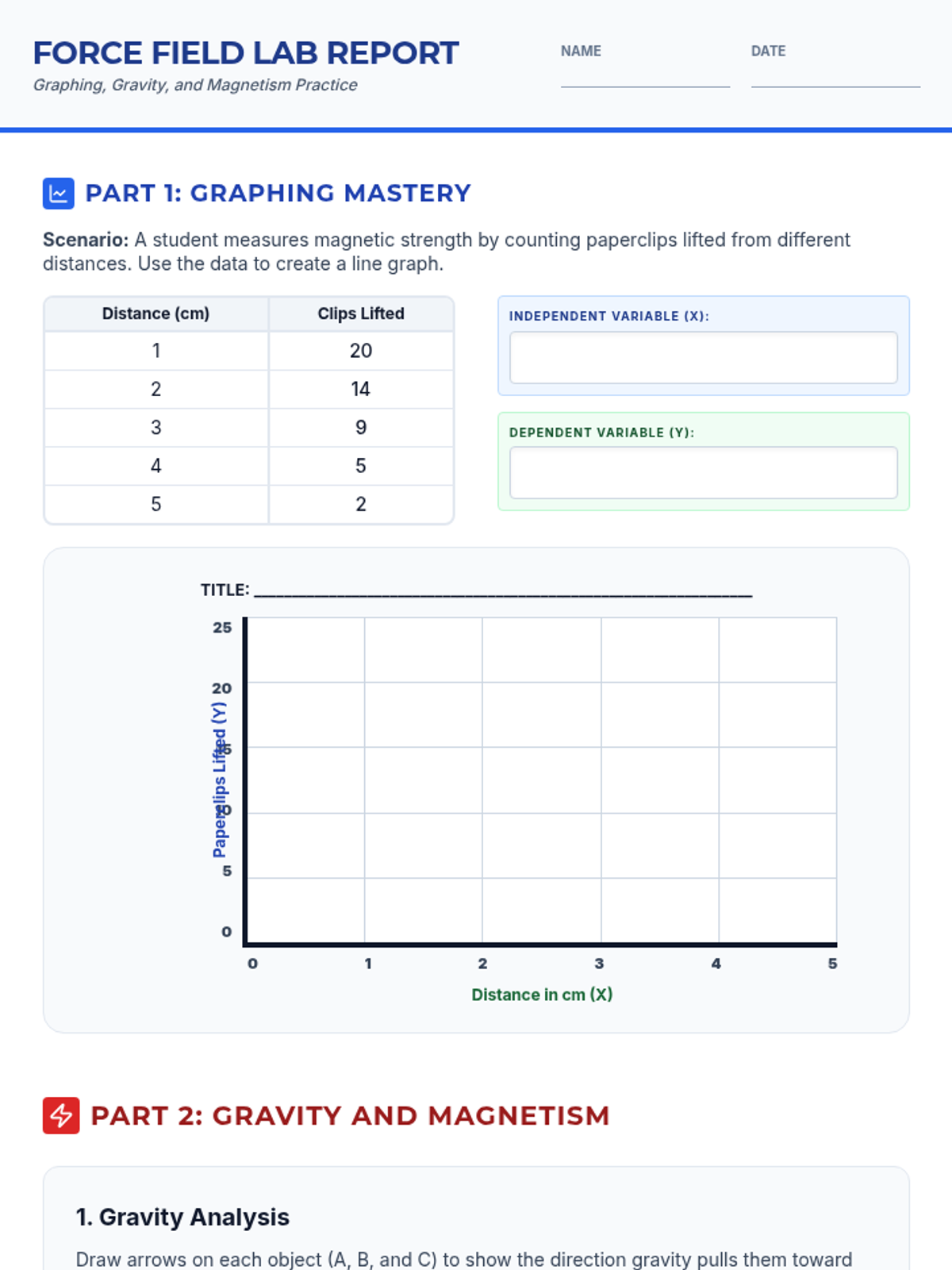
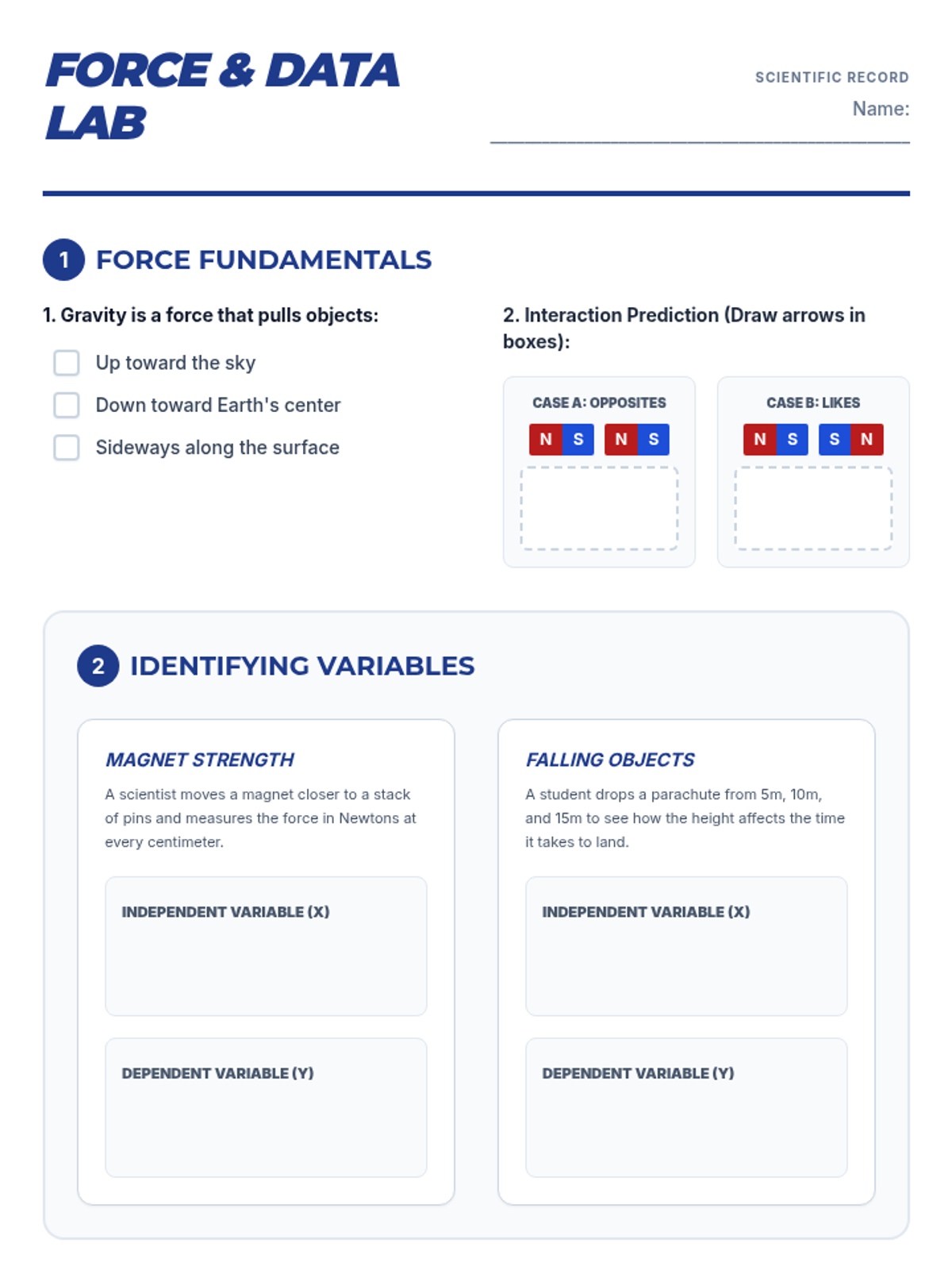
A student practice worksheet featuring a magnetism graphing activity, gravity directional analysis, and magnet interaction identification.
A visual review slide deck covering graphing rules (DRY MIX), gravity basics, and the laws of magnetism for 7th grade science.
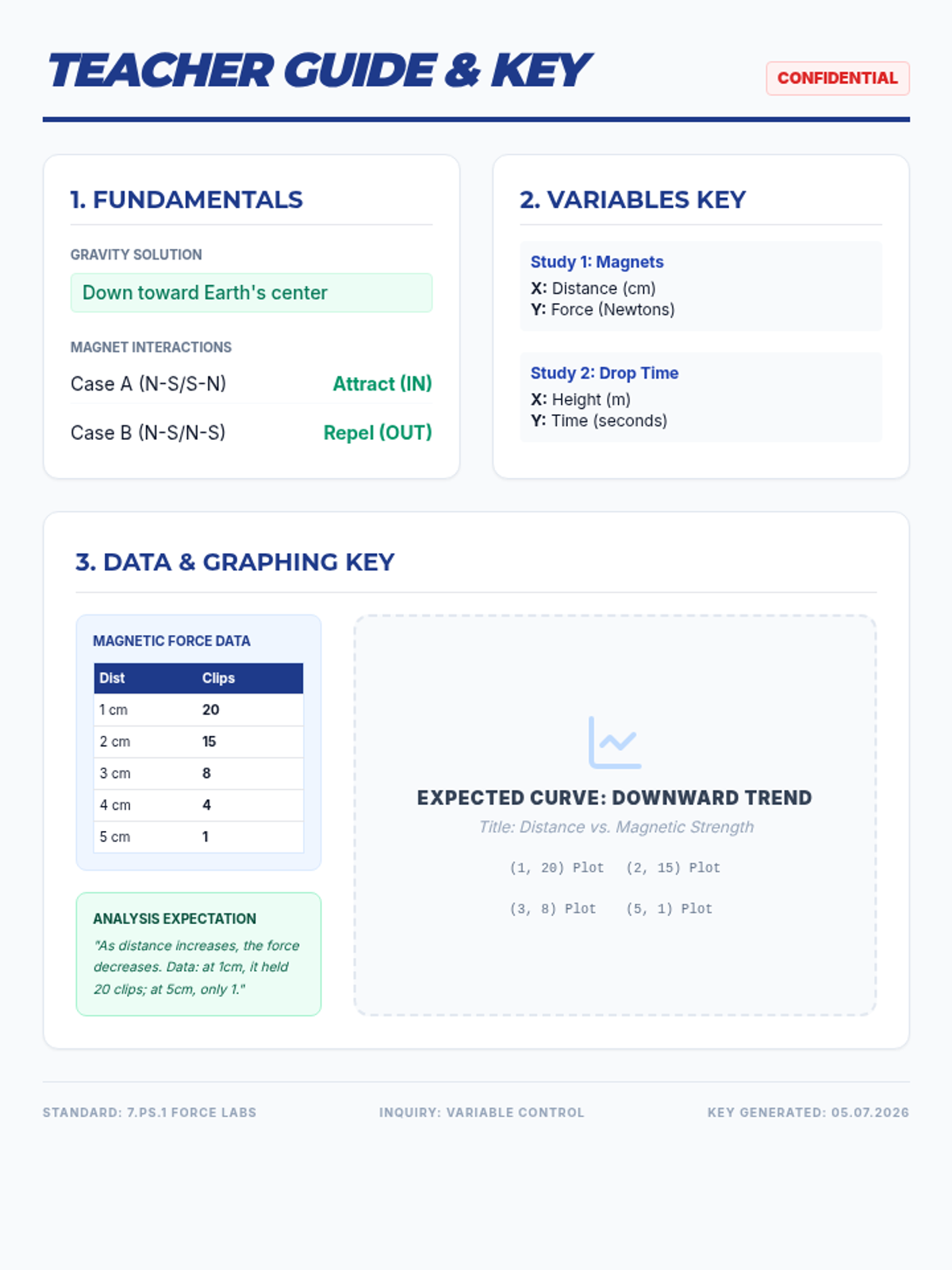
Teacher reference guide and answer key for the Force & Data Lab. Revised for better alignment, page break management, and explicit data sets for the experiments.
A student worksheet featuring multiple-choice questions on forces, variable identification exercises, and a graphing challenge using a provided data set on magnetism. Revised for better layout and alignment. Now includes improved spacing for work and forces graphing to start on a new page.
A visual presentation introducing gravity, magnetism, and the fundamentals of graphing data including variables and axis placement. Now includes a practice data set slide. Revised to ensure all content fits and labels are visible.
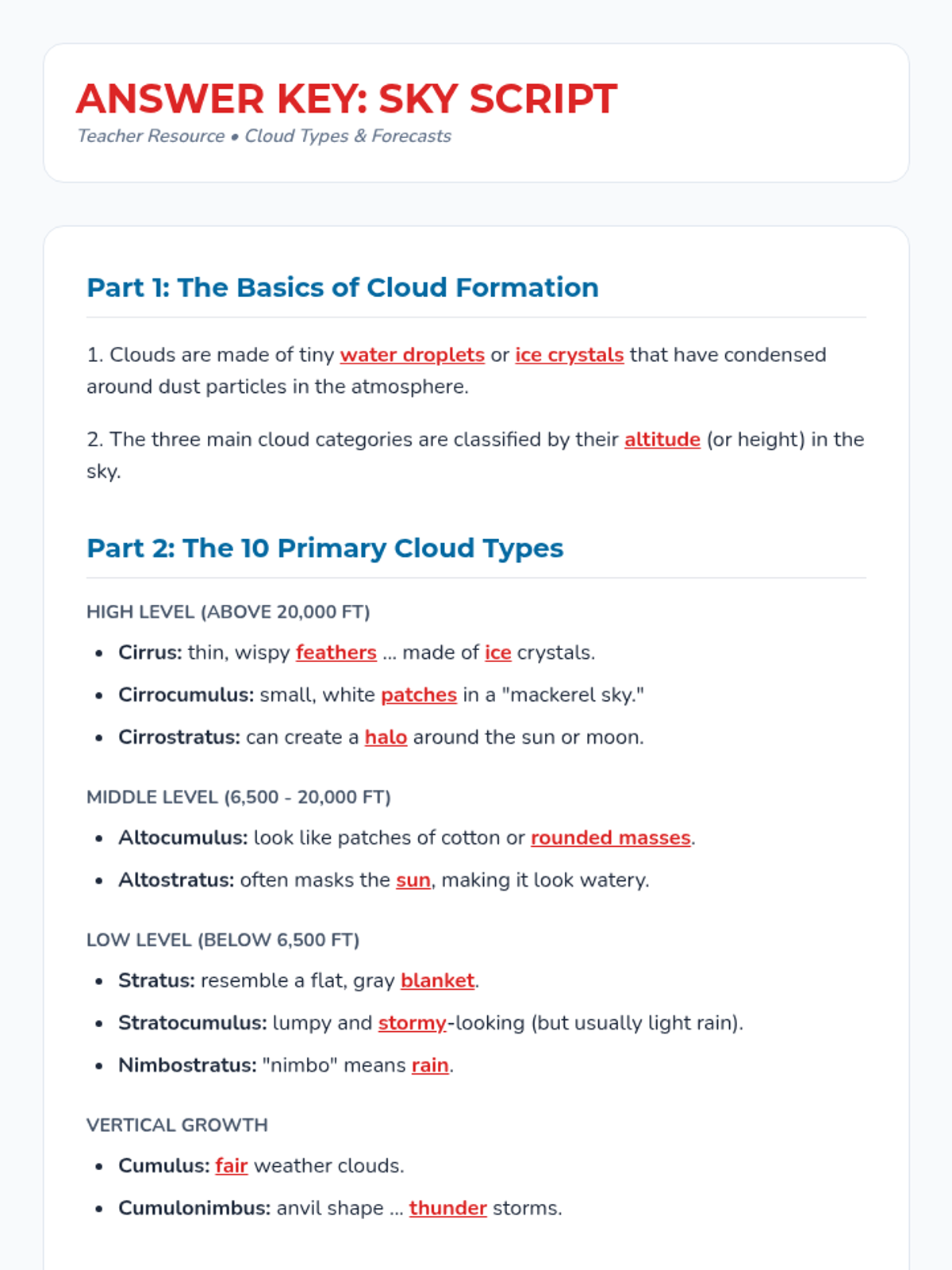
A teacher's answer key for the Sky Script Guided Notes, including suggested answers for fill-in-the-blank sections and the reflection question.
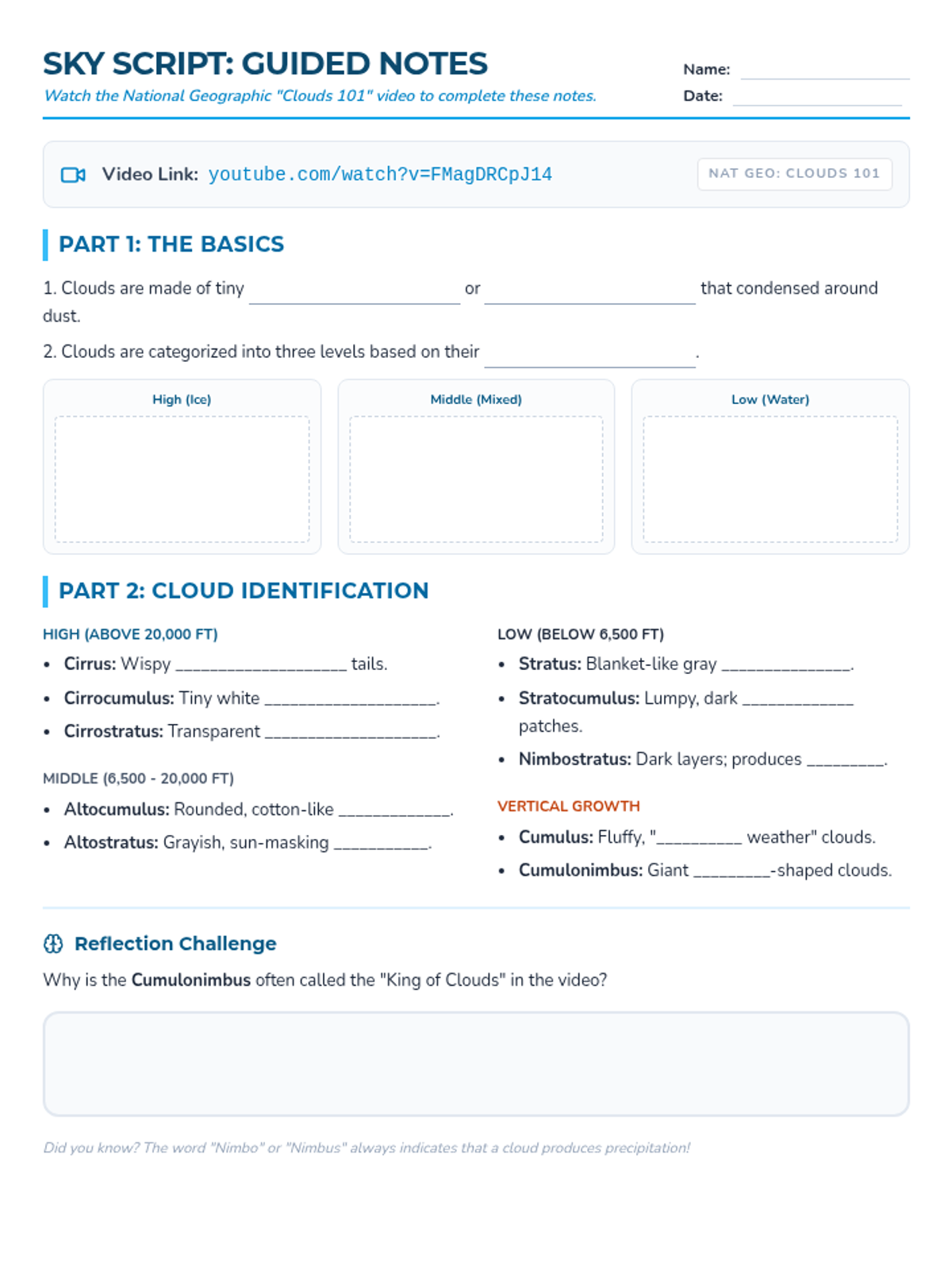
A student worksheet with fill-in-the-blank notes designed to be completed while watching the National Geographic "Clouds 101" video. Includes larger drawing areas and clear video references. Condensed to fit on a single page.
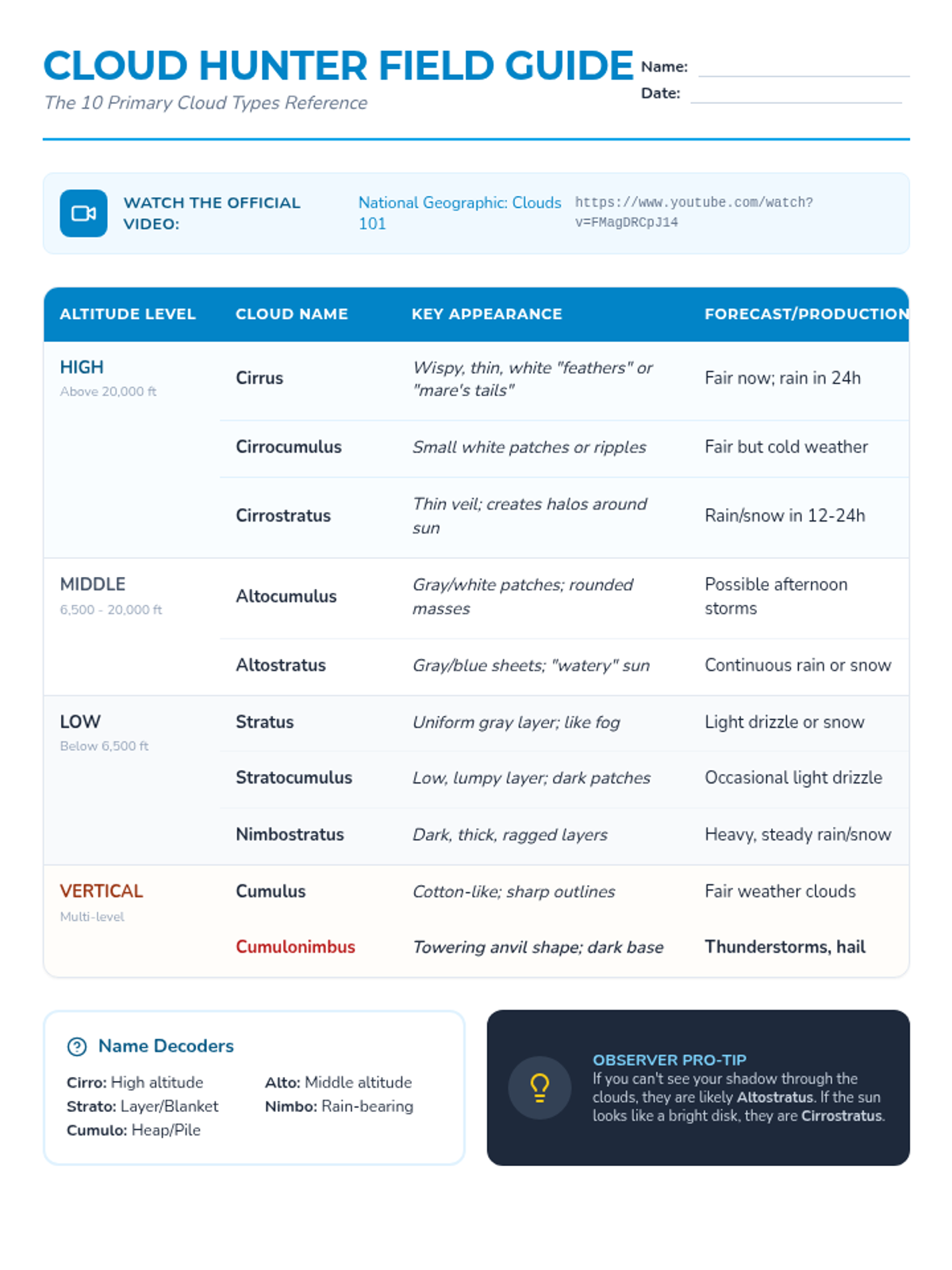
A visually organized reference sheet for students detailing the 10 primary cloud types, their appearances, altitudes, and weather predictions. Condened to fit on a single page for quick reference.
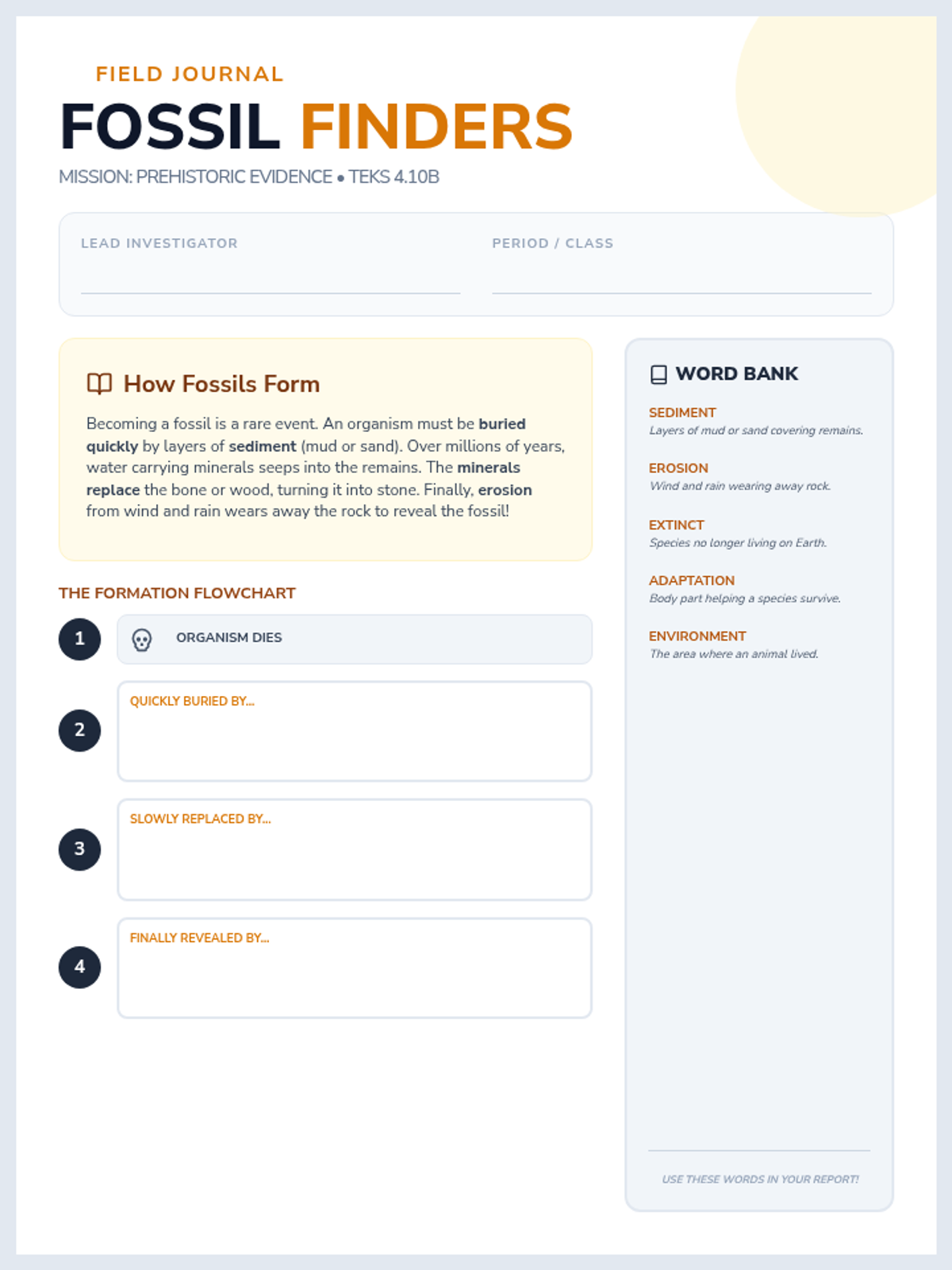
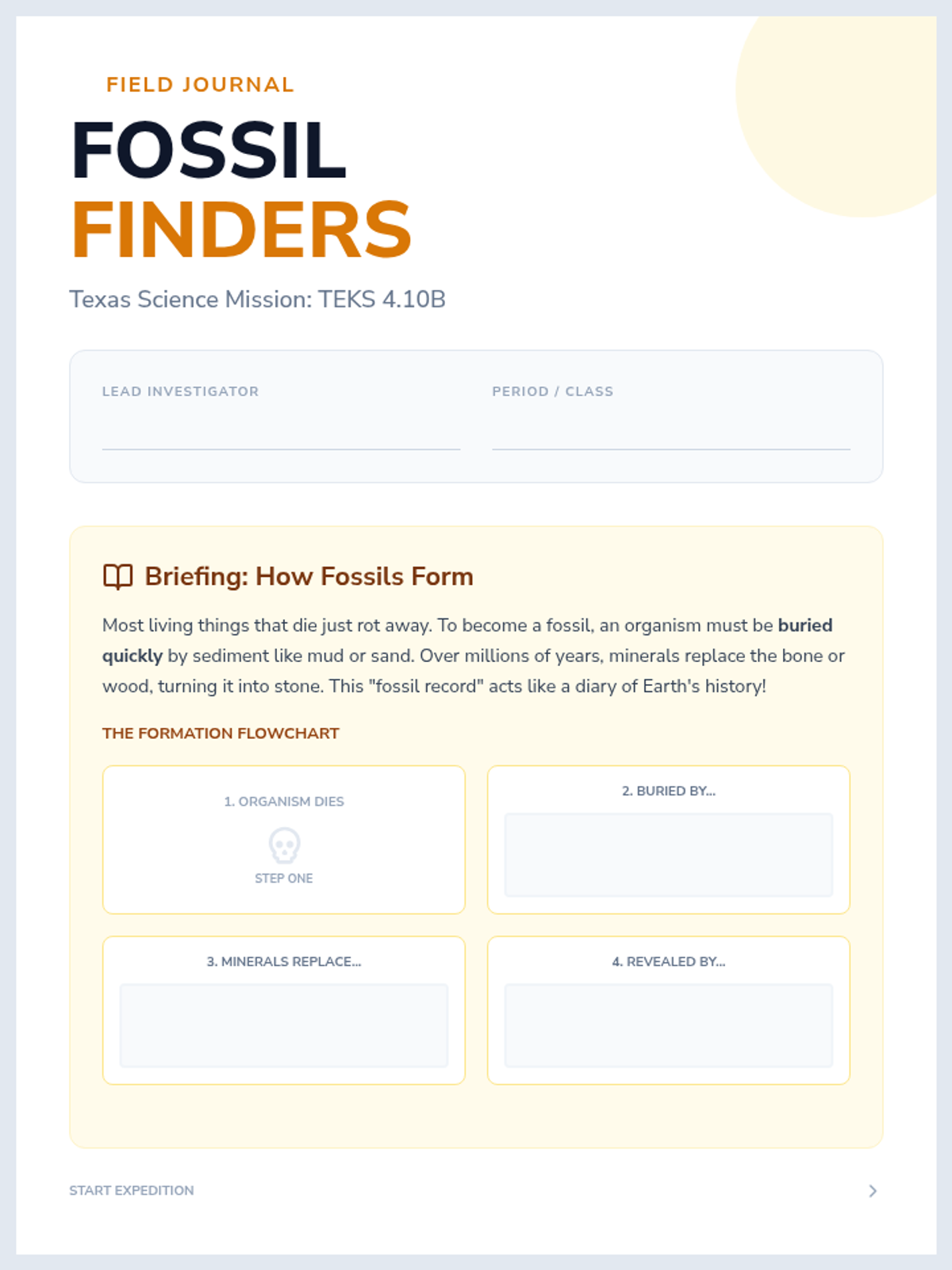
A revised 3-page student field journal for 4th-grade science, focusing on fossil formation, environmental evidence, and extinct species (TEKS 4.10B). Designed to be completed in one 60-minute period. Features enlarged student work areas, a built-in word bank, and more detailed reading passages to support independent work. Layout adjusted to ensure all content fits on 3 pages.
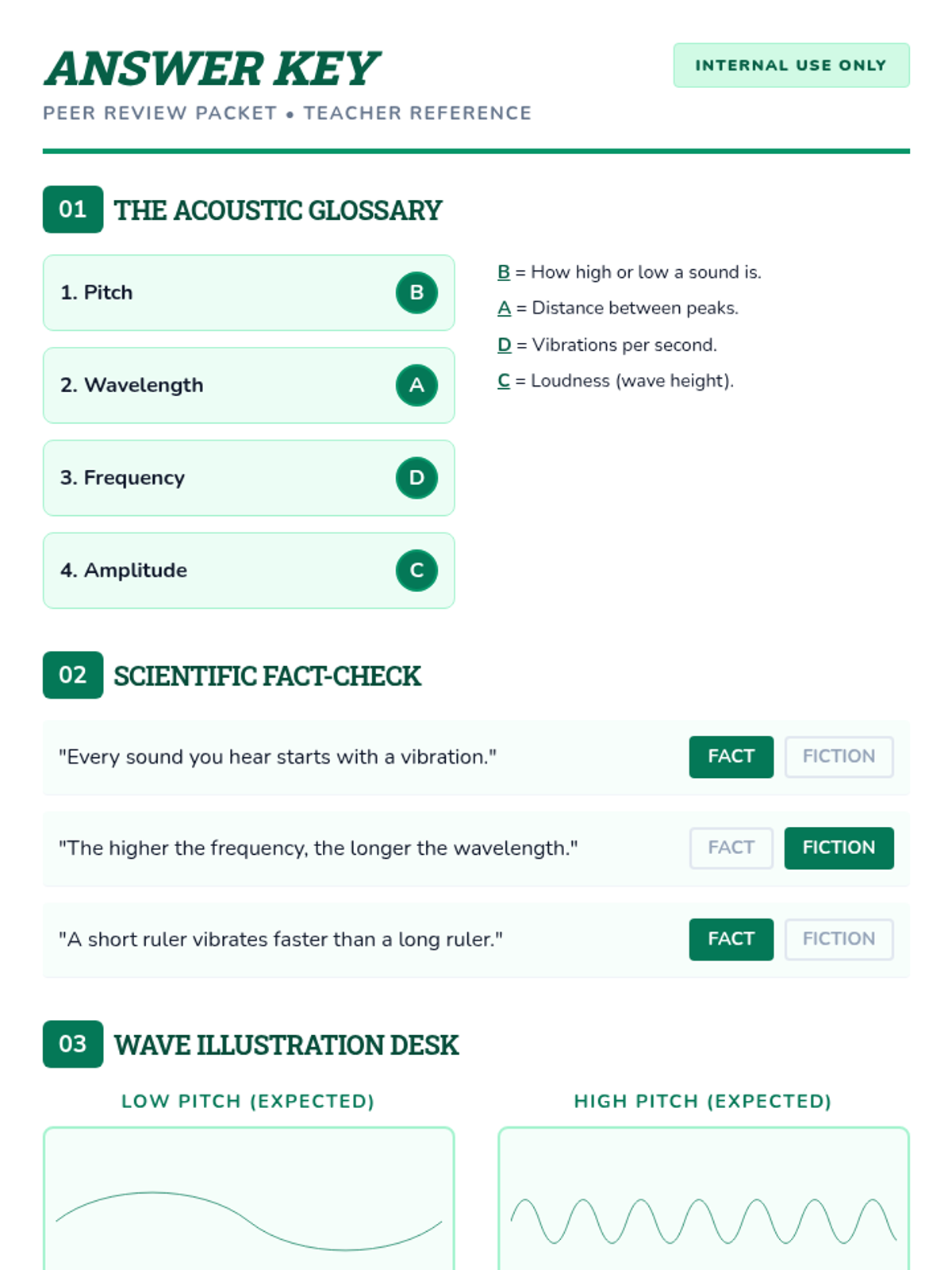
An answer key for the Peer Review Packet Worksheet, providing correct matches for vocabulary, fact-check responses, exemplar wave drawings, and a model explanation for the ruler experiment analysis.
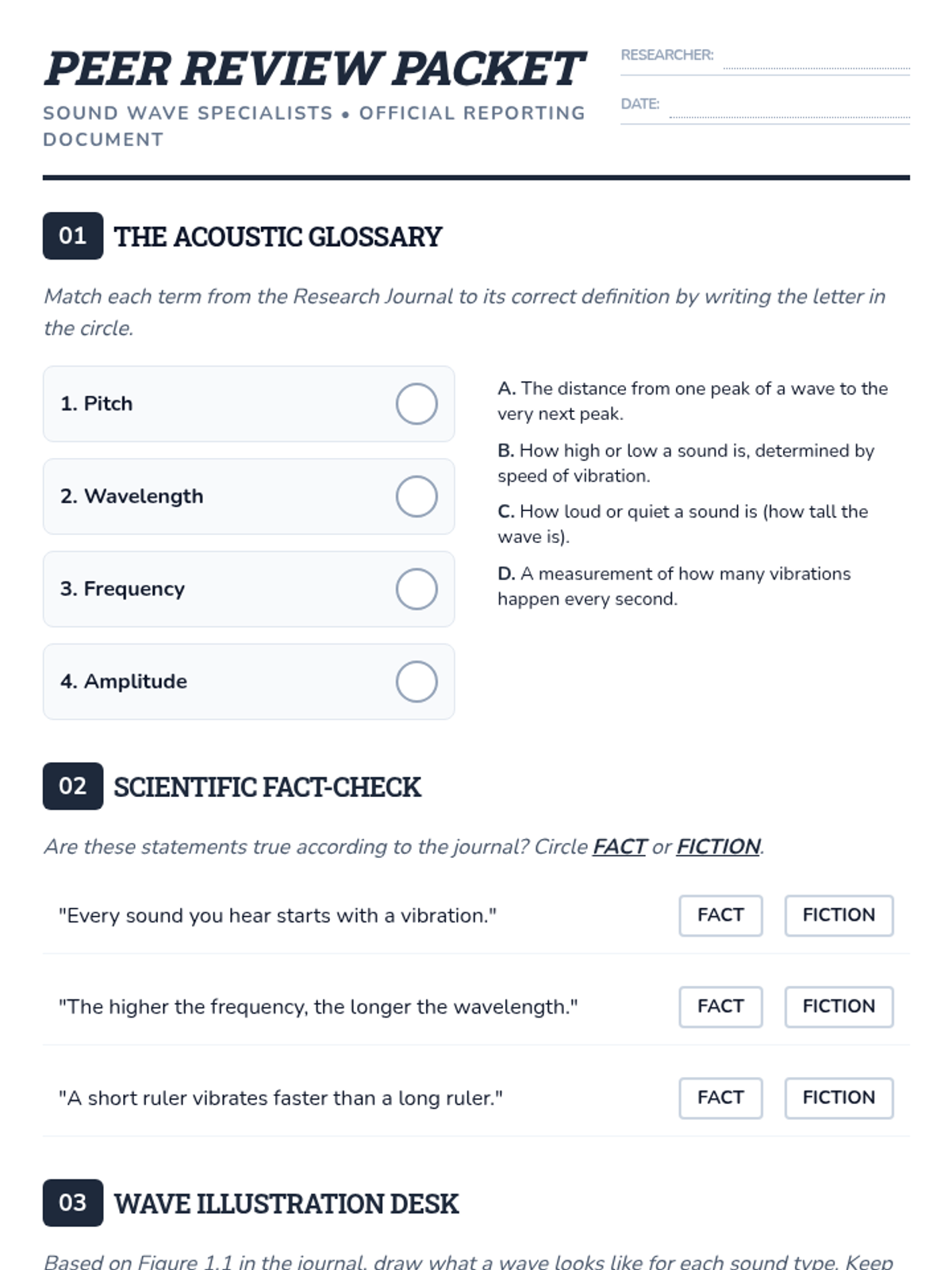
A comprehensive student worksheet based on the Acoustic Research Journal. Includes vocabulary matching, fact-checking, wave diagram drawing, and a critical thinking lab analysis section, all designed with a professional peer-review aesthetic.
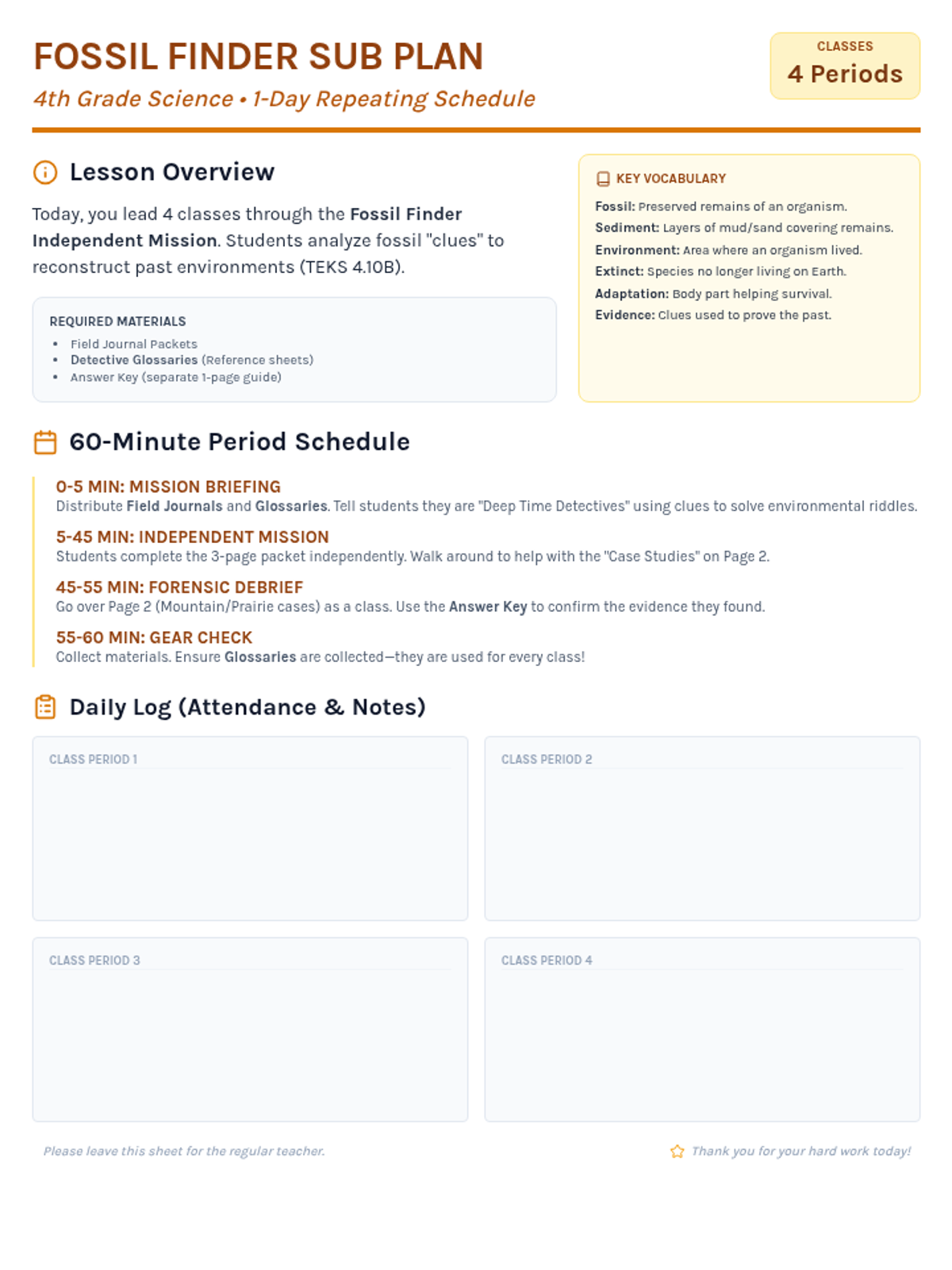
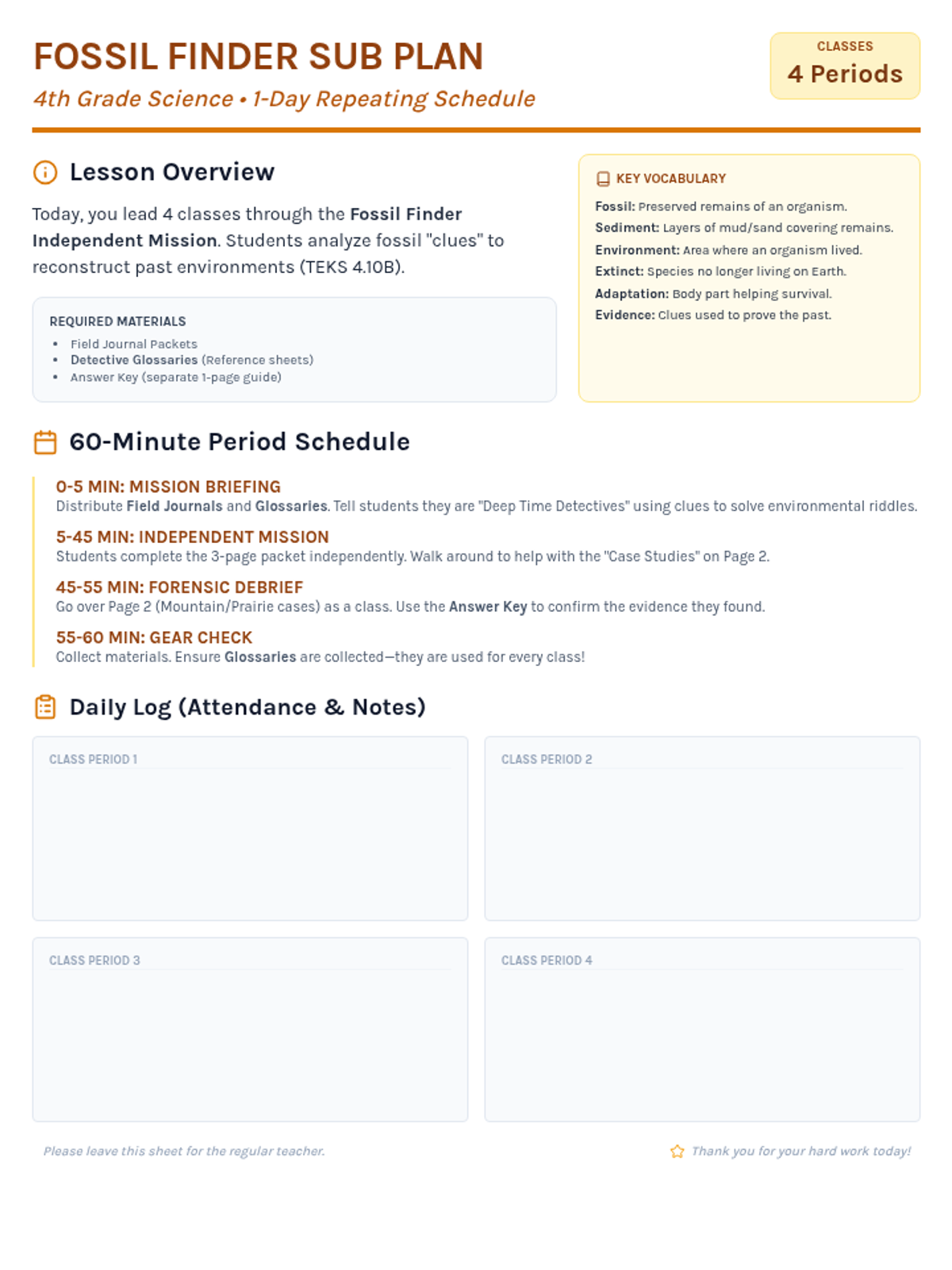
A comprehensive 1-page instructional guide for a substitute teacher, outlining a repeating 1-hour schedule for 4 different 4th-grade science classes in Texas, now including a vocabulary reference and larger classroom note areas.
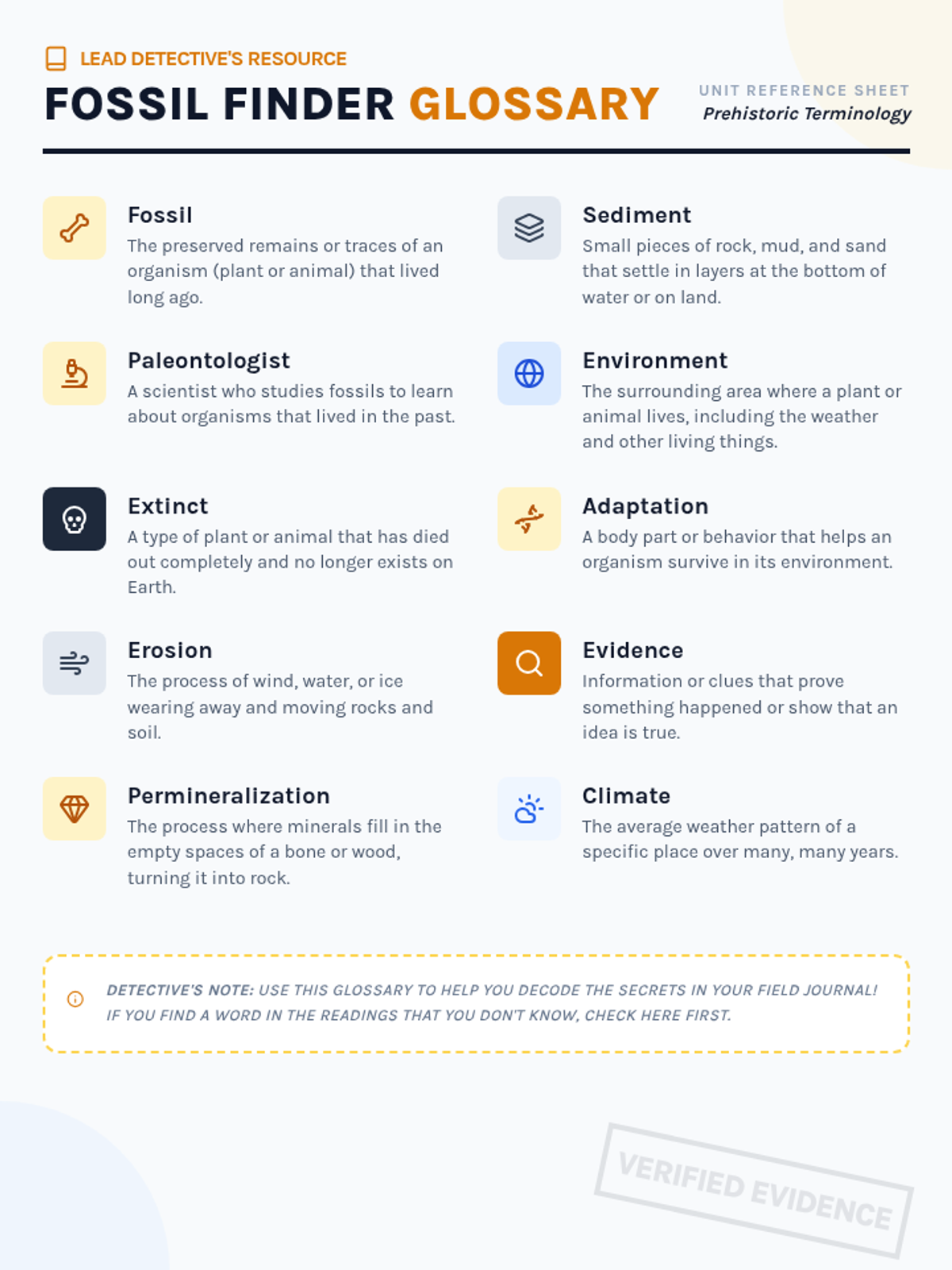
A clear and engaging vocabulary reference sheet for 4th-grade students, featuring key terms related to fossils, past environments, and geological processes.
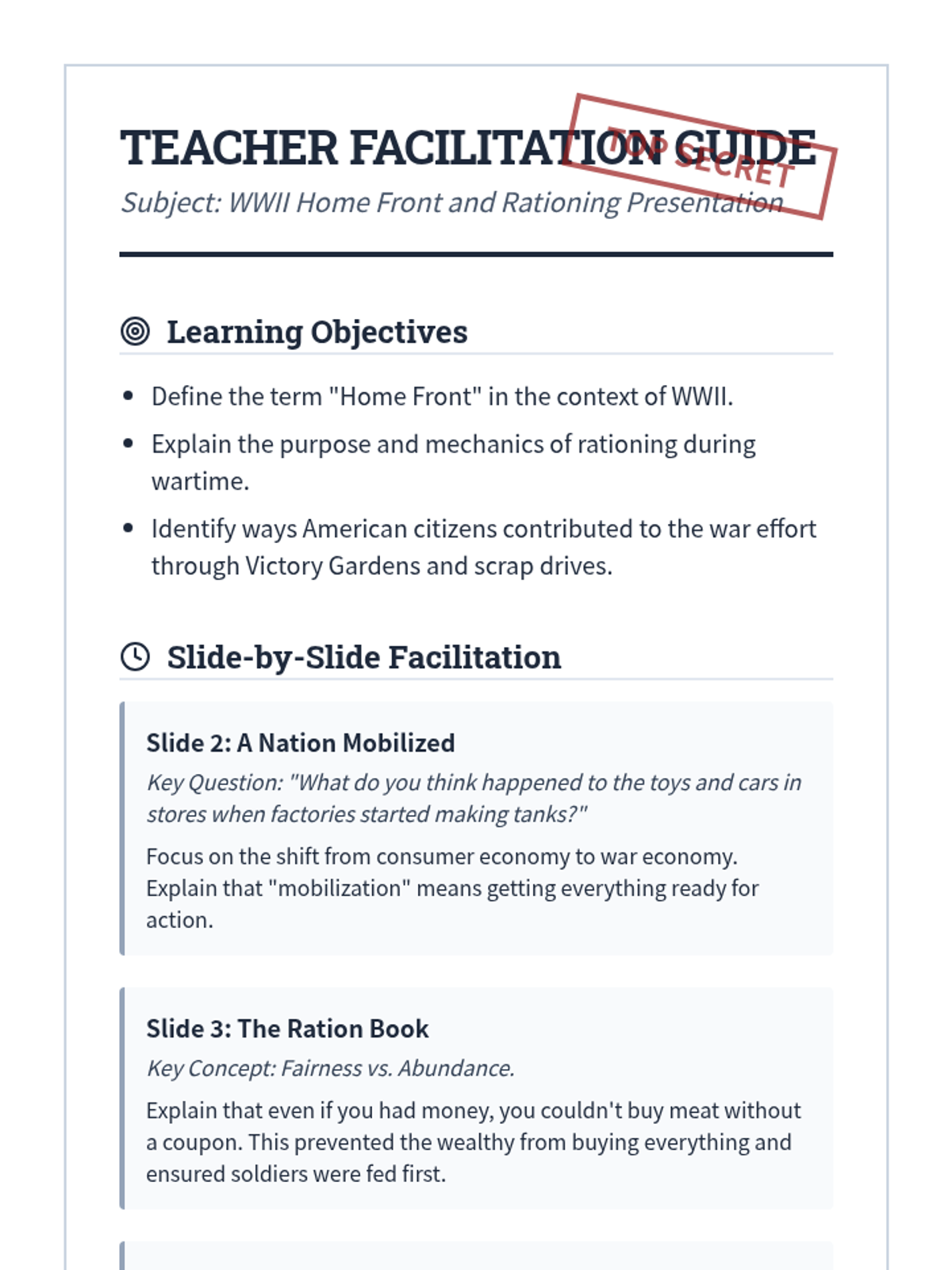
A teacher facilitation guide for the WWII Home Front slides, providing pacing notes, discussion prompts, and historical background information on rationing and mobilization.
A slide presentation layout for WWII Home Front and Rationing, featuring a vintage newspaper aesthetic, key concepts of mobilization, rationing mechanics, and community efforts like Victory Gardens.
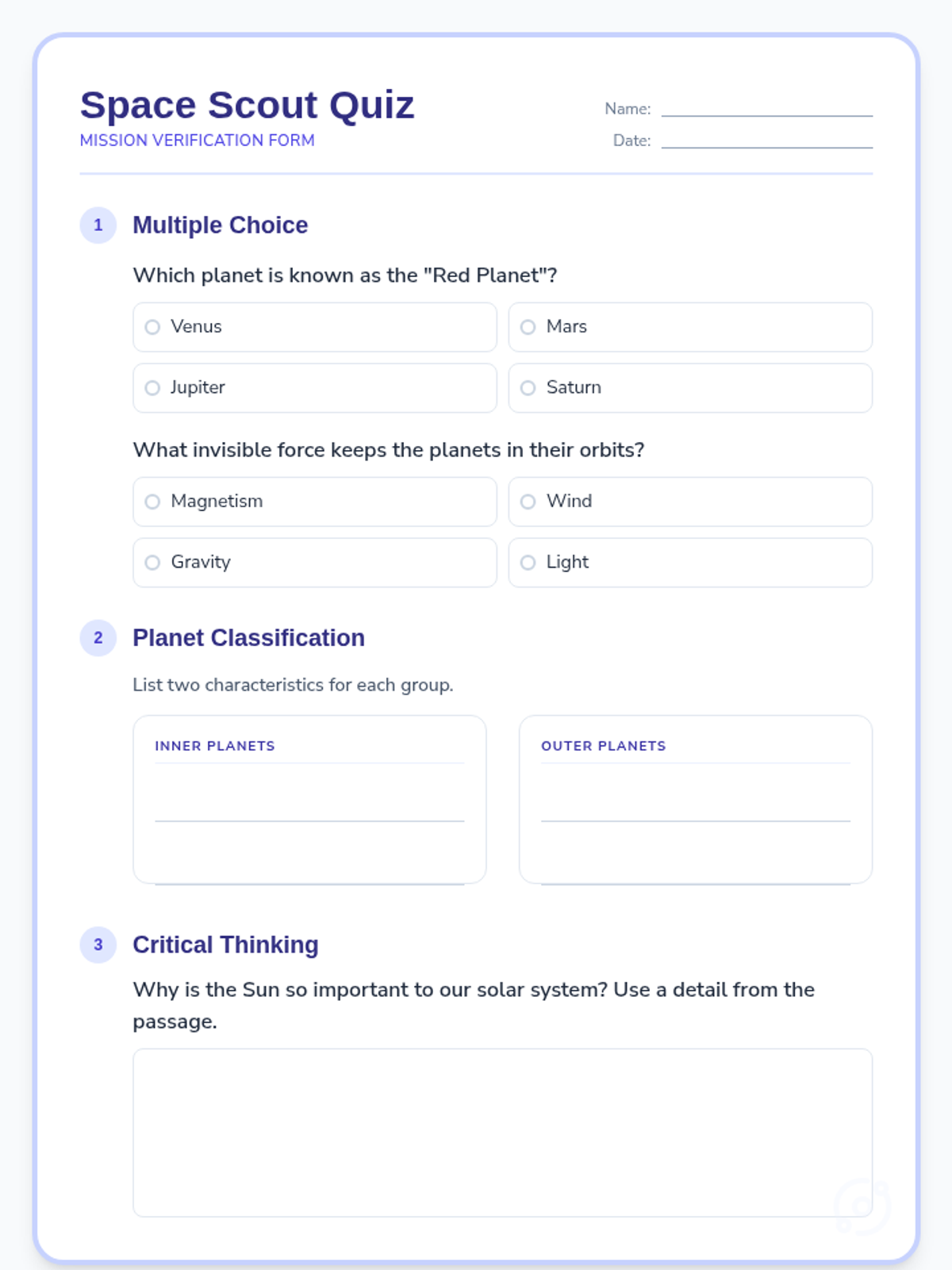
A comprehension worksheet for the Planet Scout passage, including multiple-choice questions, a comparison grid for inner and outer planets, and a short-answer reflection.
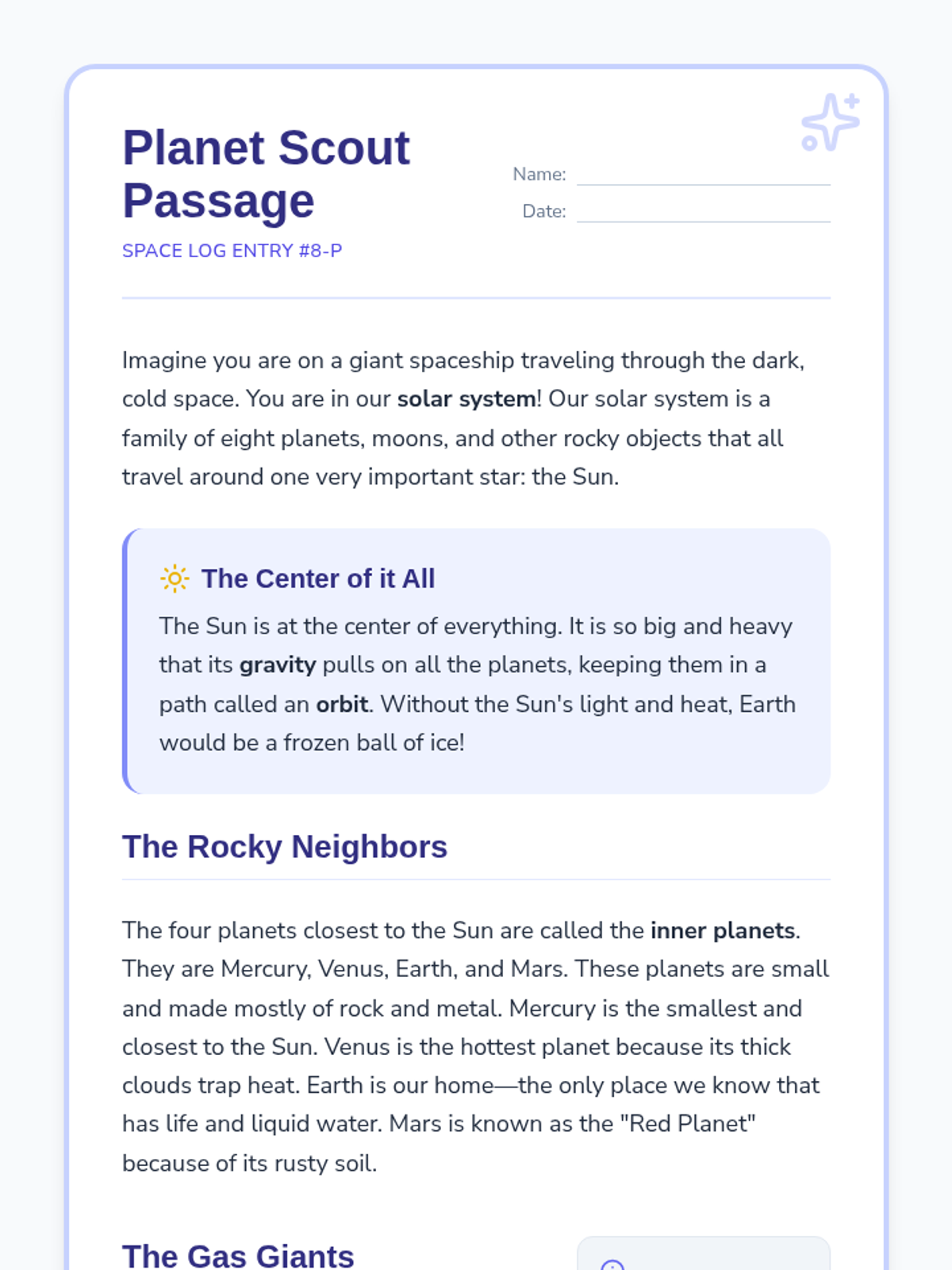
A 3rd-grade reading passage introducing the solar system, featuring descriptions of the Sun, inner rocky planets, and outer gas giants with a clean, space-themed design.
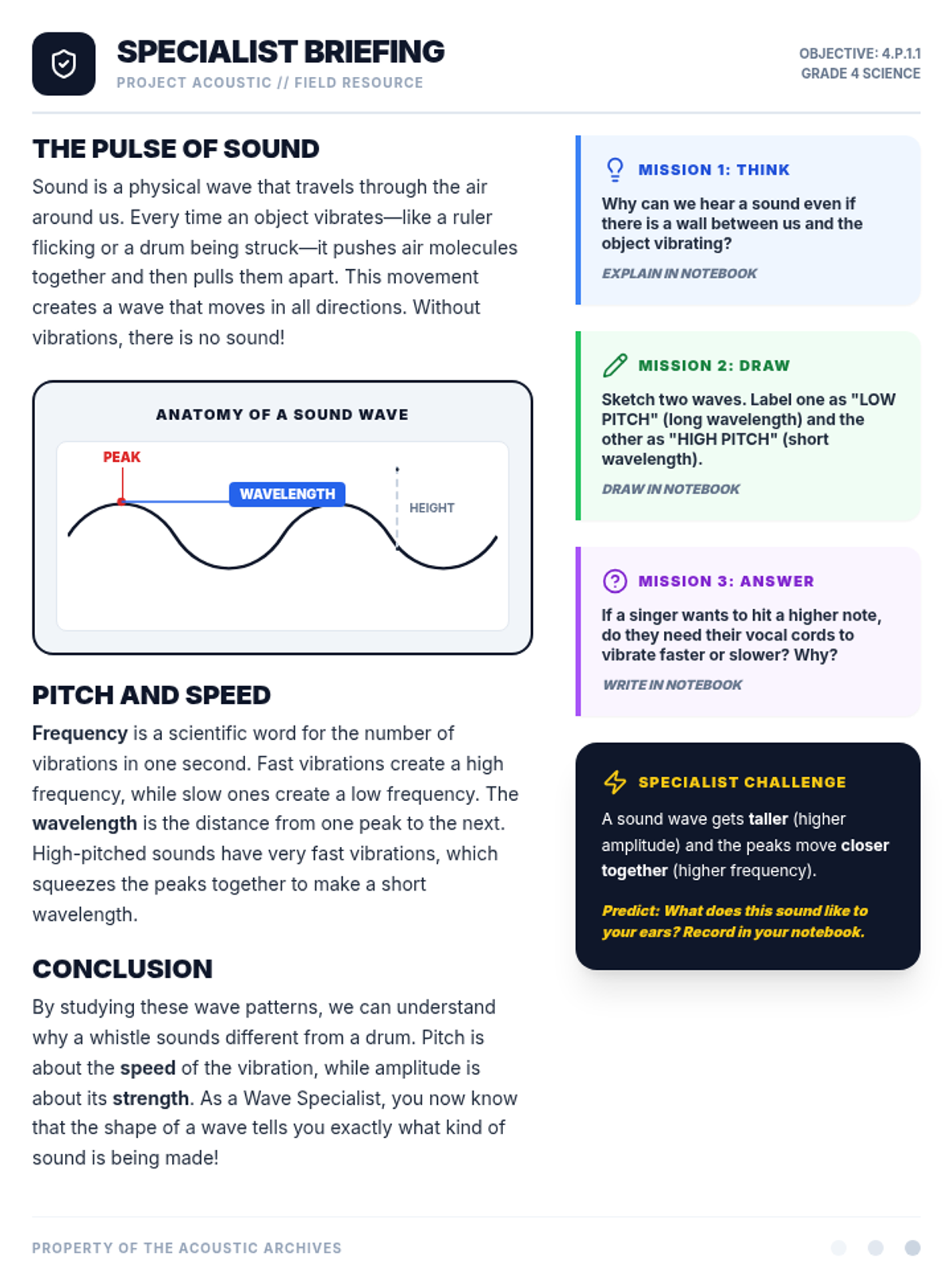
A student-friendly instructional article about pitch, wavelength, and frequency. Features "Notebook Missions" interspersed throughout the text, prompting students to think, draw, and answer questions directly in their science notebooks. Includes a clear, improved wave anatomy diagram.
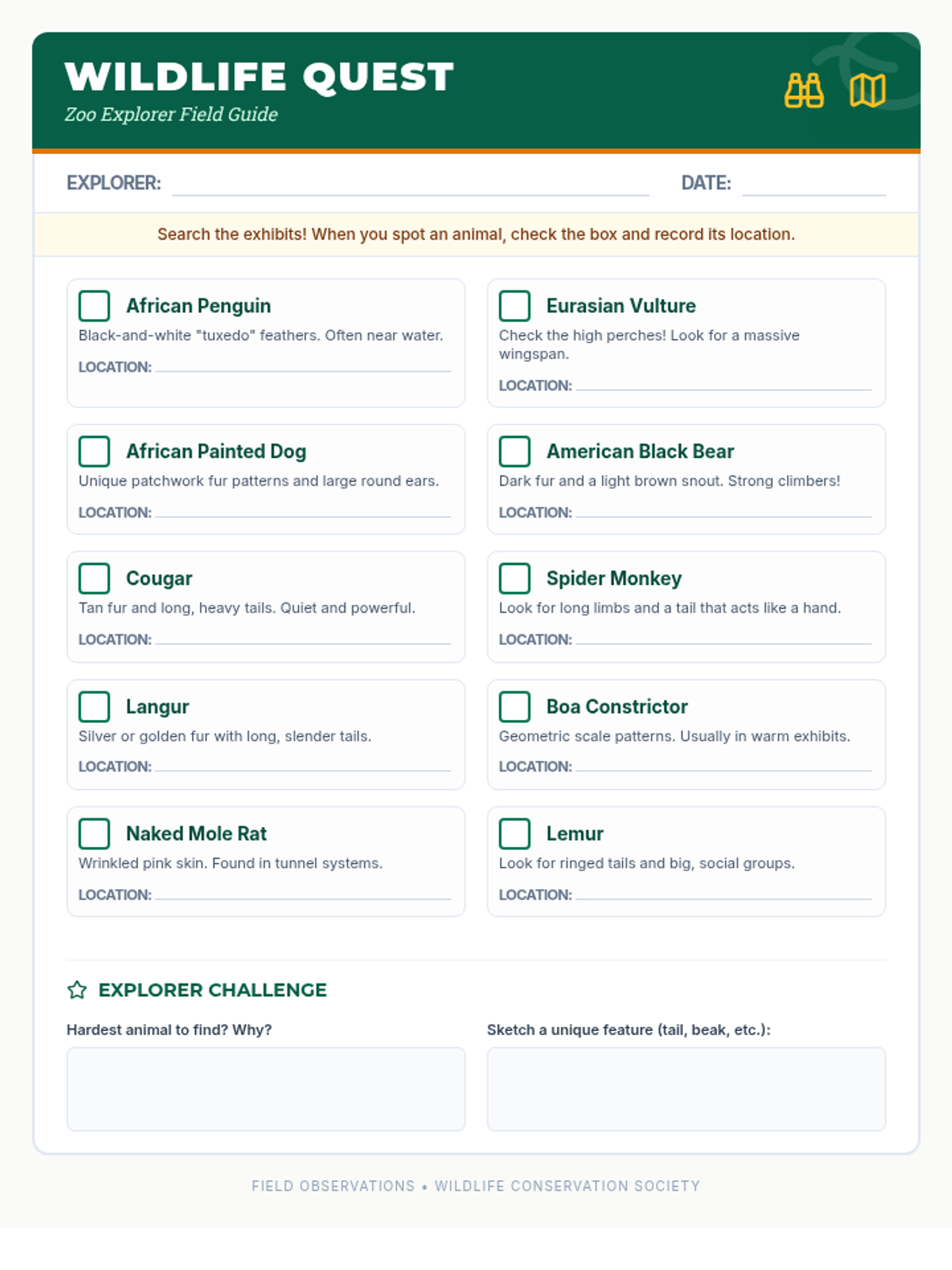
A compact, single-page wildlife scavenger hunt checklist featuring 10 specific animals. Each entry includes a checkbox, a short identification clue, and a dedicated location line. The bottom includes an 'Explorer Challenge' for reflection and sketching.
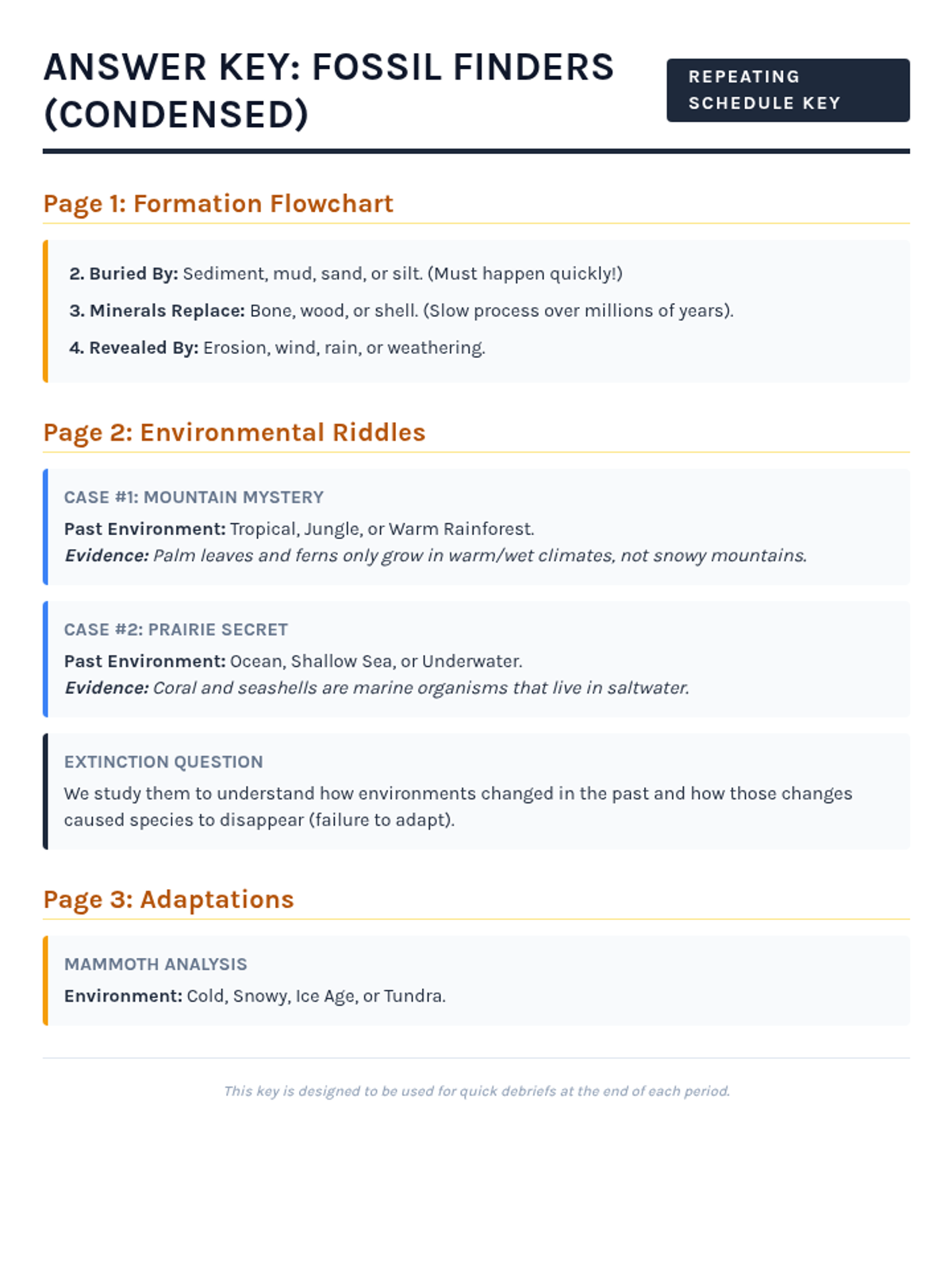
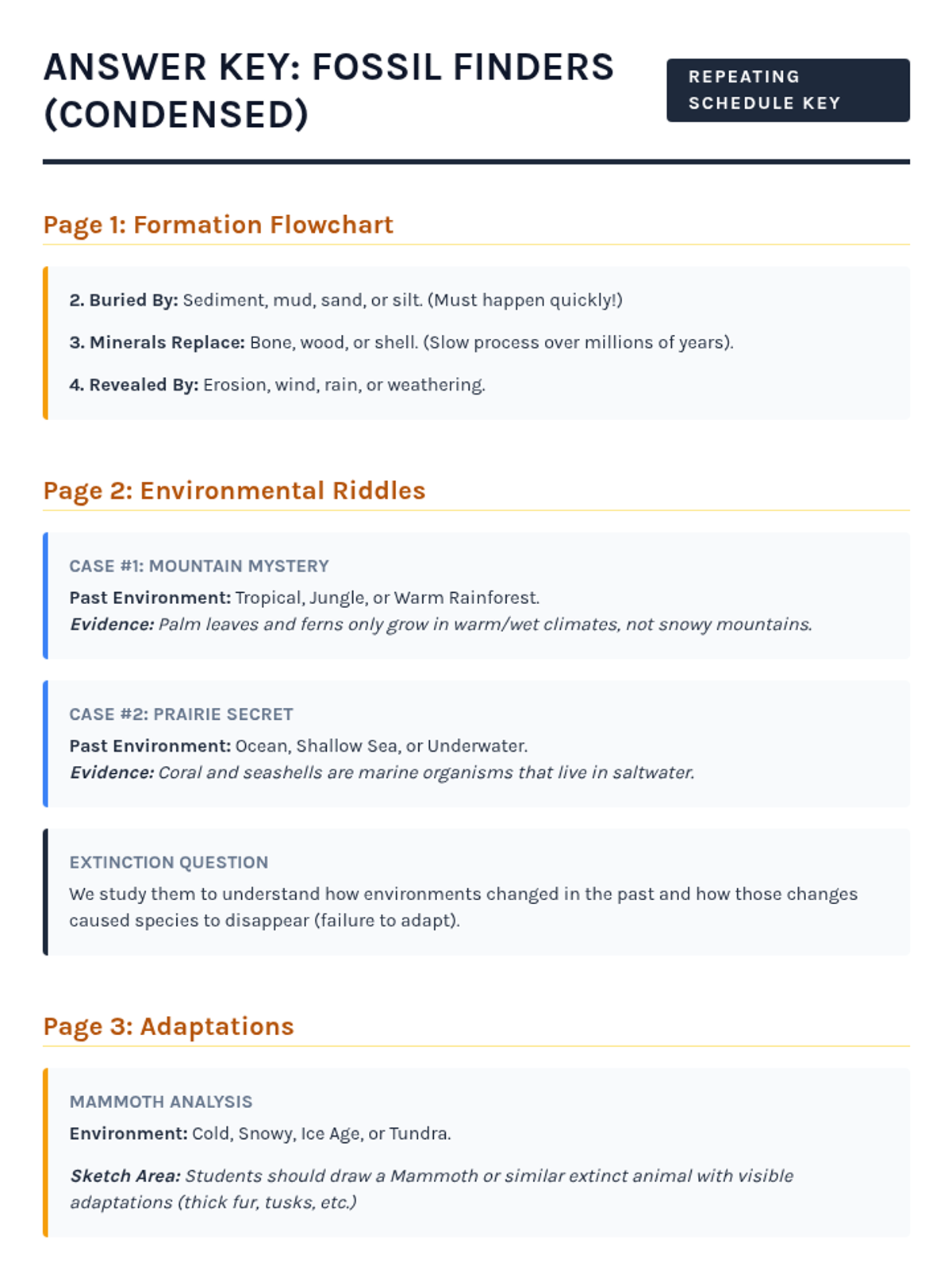
A concise 1-page answer key for the condensed Fossil Finder Student Packet, designed for quick teacher reference across multiple class periods. Ensured to fit on a single page.
A condensed 3-page student field journal for 4th-grade science, focusing on fossil formation, environmental evidence, and extinct species (TEKS 4.10B). Designed to be completed in one 60-minute period. Features enlarged student work areas and lightened backgrounds for maximum handwriting legibility.
A revised answer key for the condensed 1-hour Fossil Finder Student Packet, supporting a repeating 4-period daily schedule.
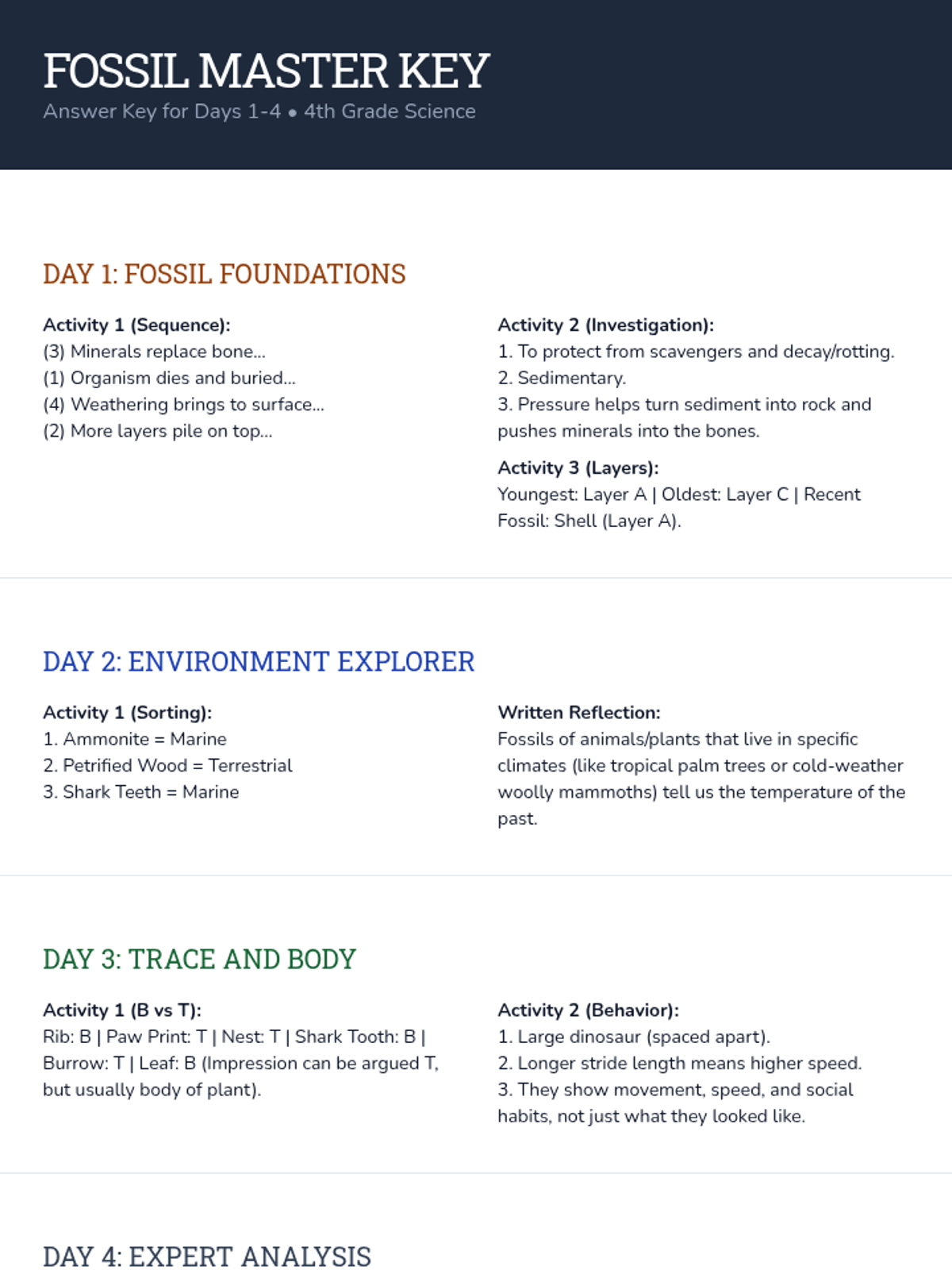
Complete answer key for all four days of the fossils and past environments unit, covering formation, environmental indicators, fossil types, and final analysis.
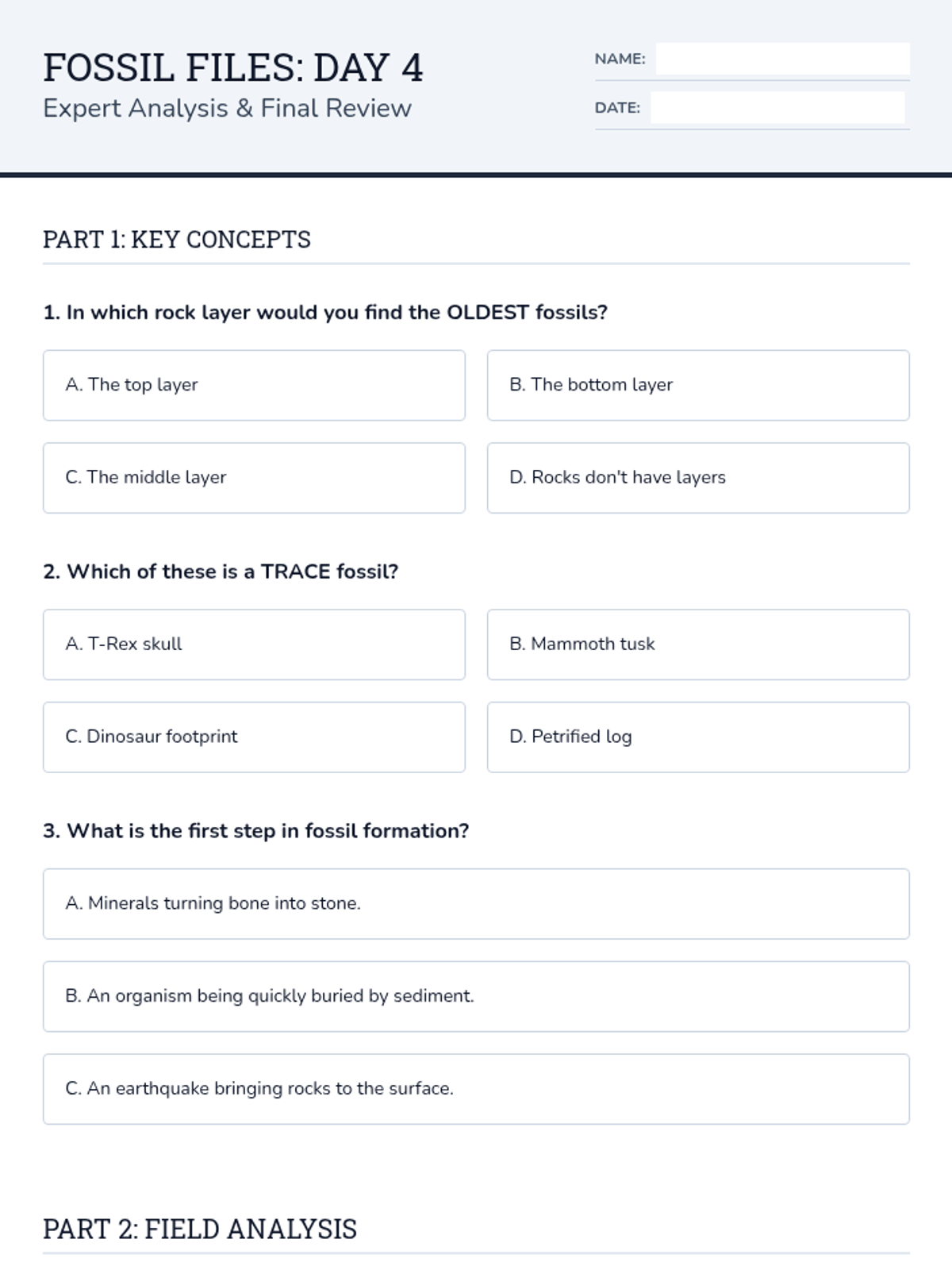
Day 4 final assessment packet for the fossils unit. Includes multiple-choice questions, evidence-based environmental analysis, and a creative "new fossil" synthesis activity.