A comprehensive facilitator guide for the "Fairness in Flux" lesson. Includes a 69-minute pacing breakdown, key vocabulary definitions (Equity vs. Equality), common misconceptions, and strategic questioning prompts to deepen student engagement.
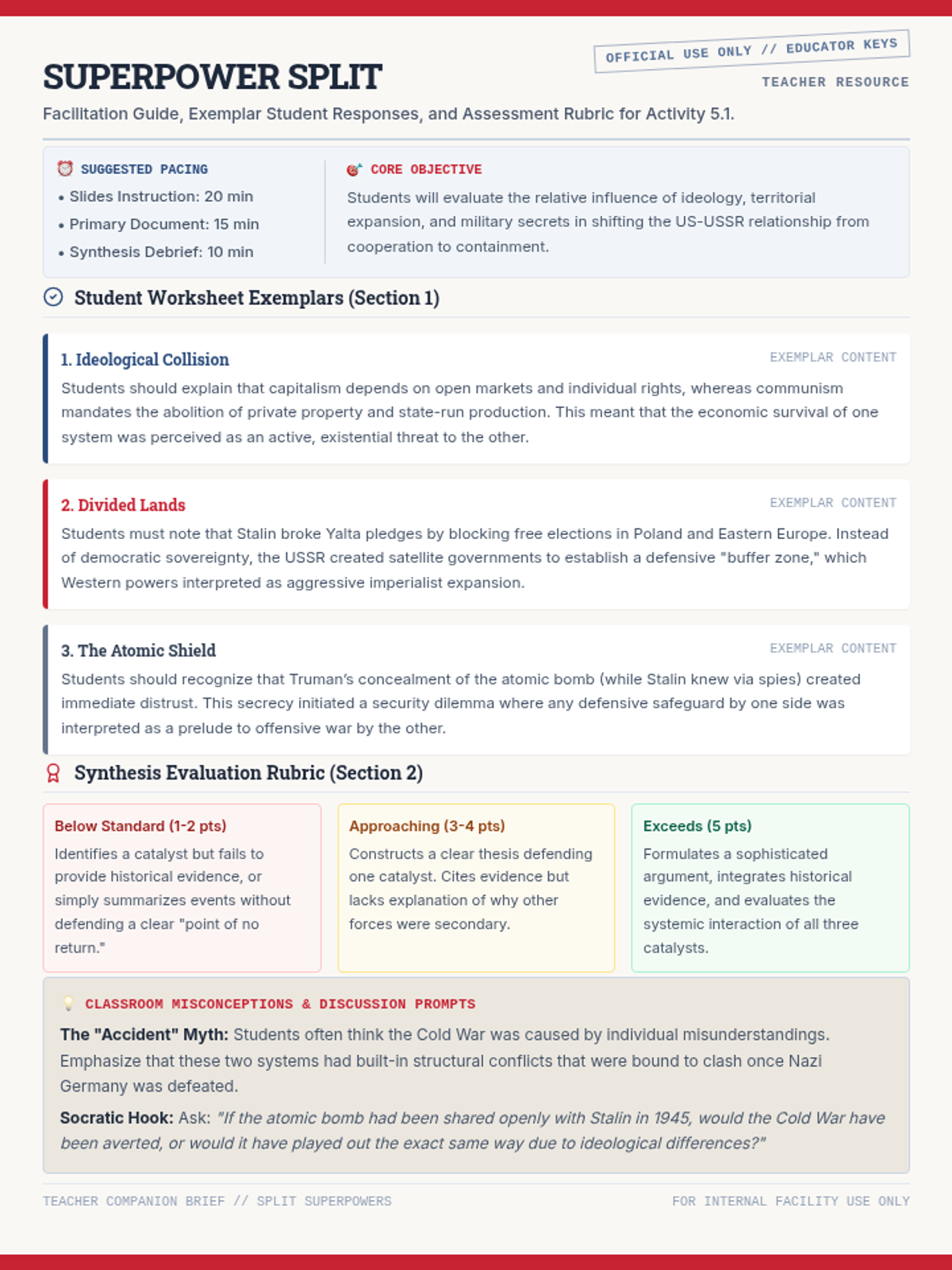
A comprehensive teacher guide and answer key for the 'Split Superpowers' lesson. Designed with a matching intelligence brief aesthetic, it provides specific exemplar student responses, historical talking points, common misconceptions, and an evaluation rubric for the synthesis prompt.
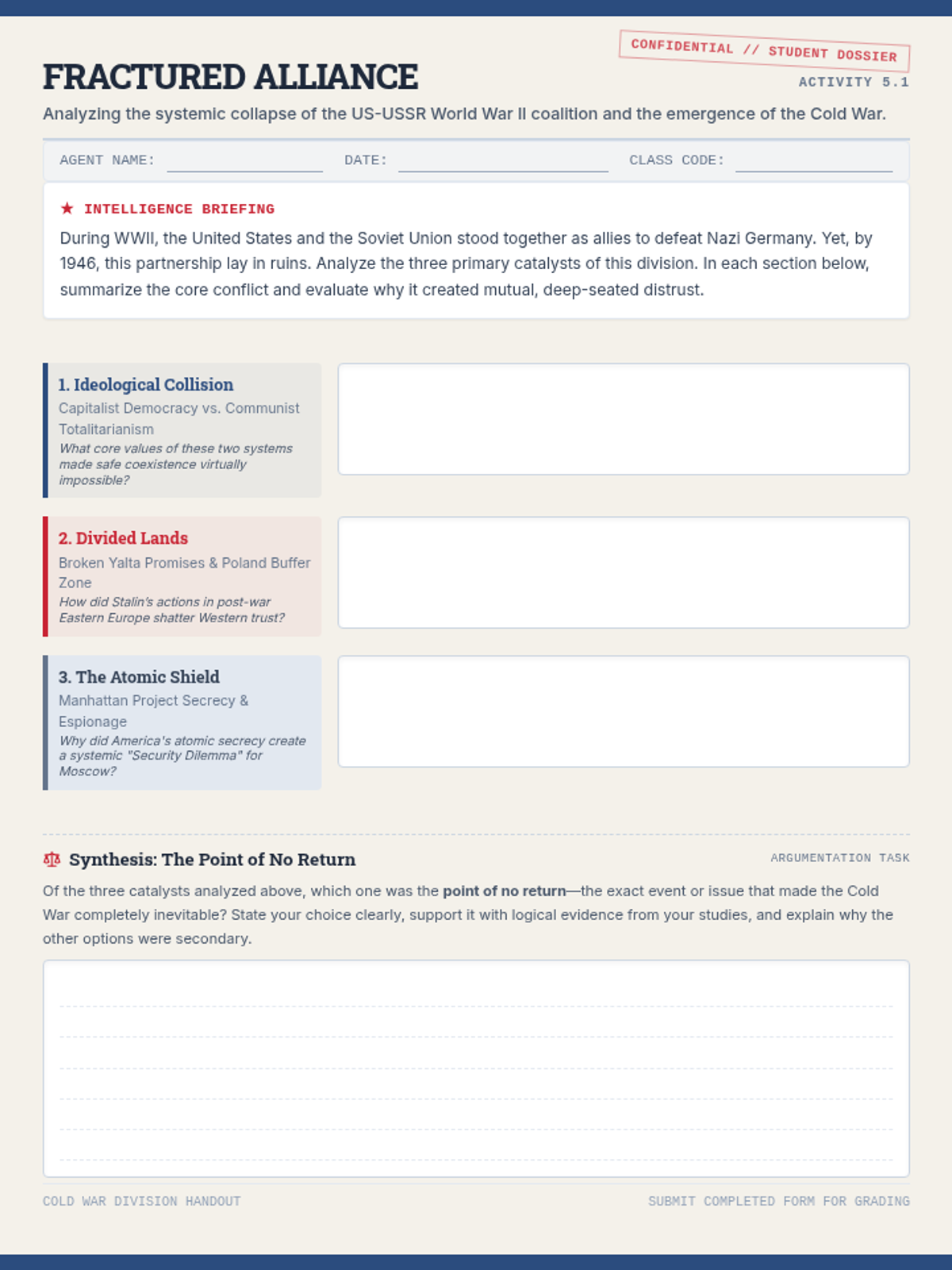
A highly structured, thematic student analysis worksheet. Following a classified intelligence brief aesthetic, it guides students to unpack and analyze the three main reasons why the US-USSR alliance collapsed post-WWII, culminating in an argumentative 'Point of No Return' synthesis response.
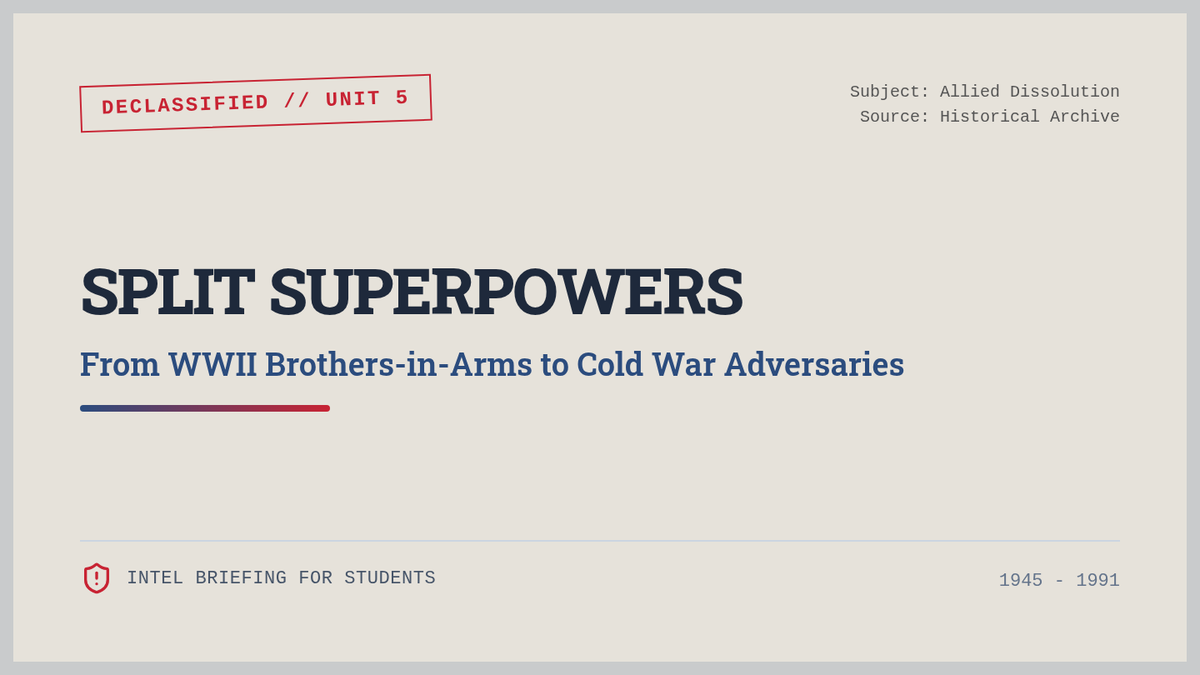
A visually stunning, thematic 16:9 slide presentation tracing the transition of the US and USSR from WWII allies to Cold War enemies. Includes structured slides outlining the three major pillars of their divergence: ideological clash, geopolitical posturing, and atomic-fueled distrust.
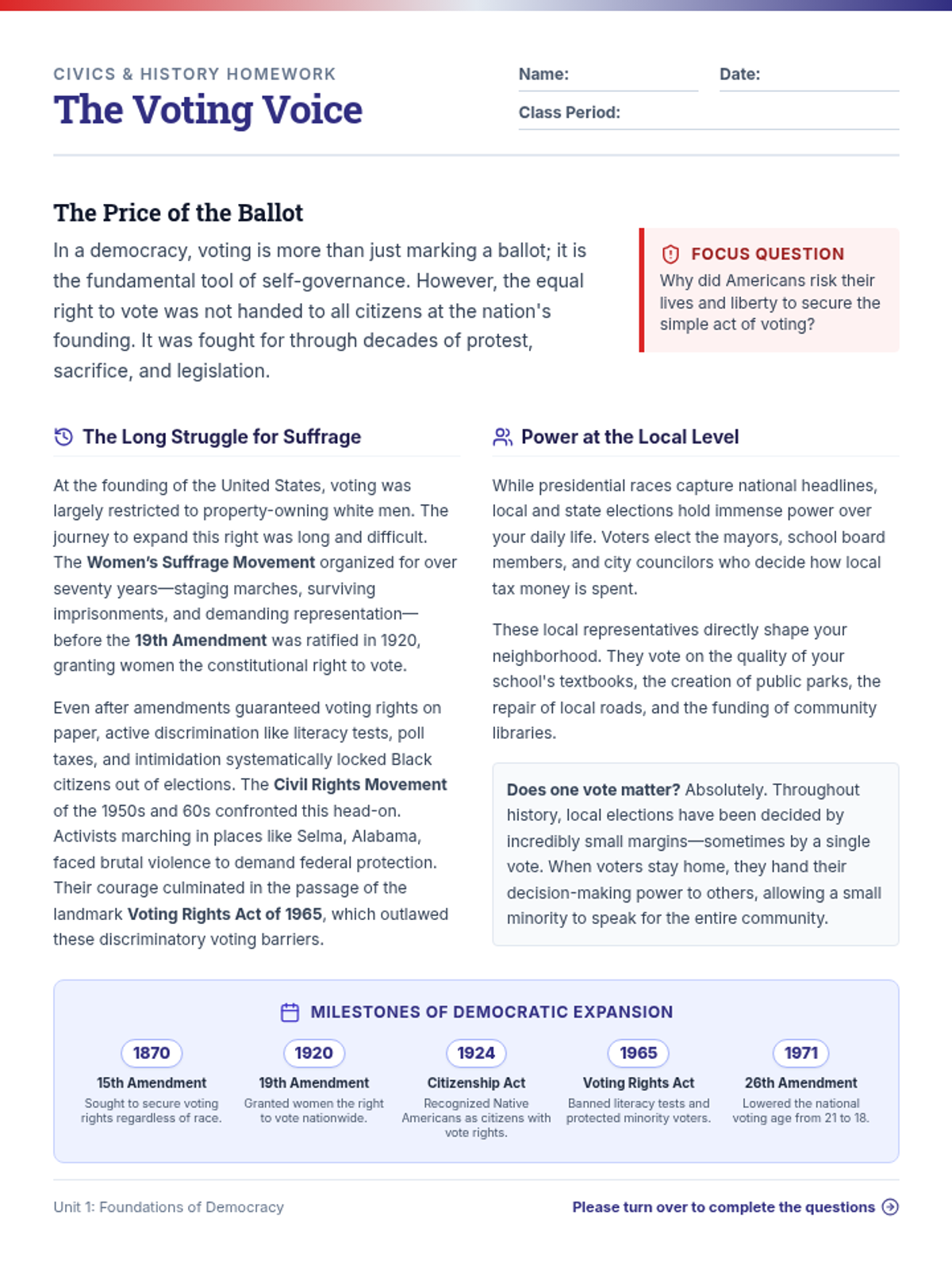
A two-page reading comprehension homework assignment exploring the history of voting rights (women's suffrage, Voting Rights Act of 1965) and the local impact of active citizenship. Includes text-dependent multiple choice questions, short-answer reflection fields, and a creative civic slogan activity.
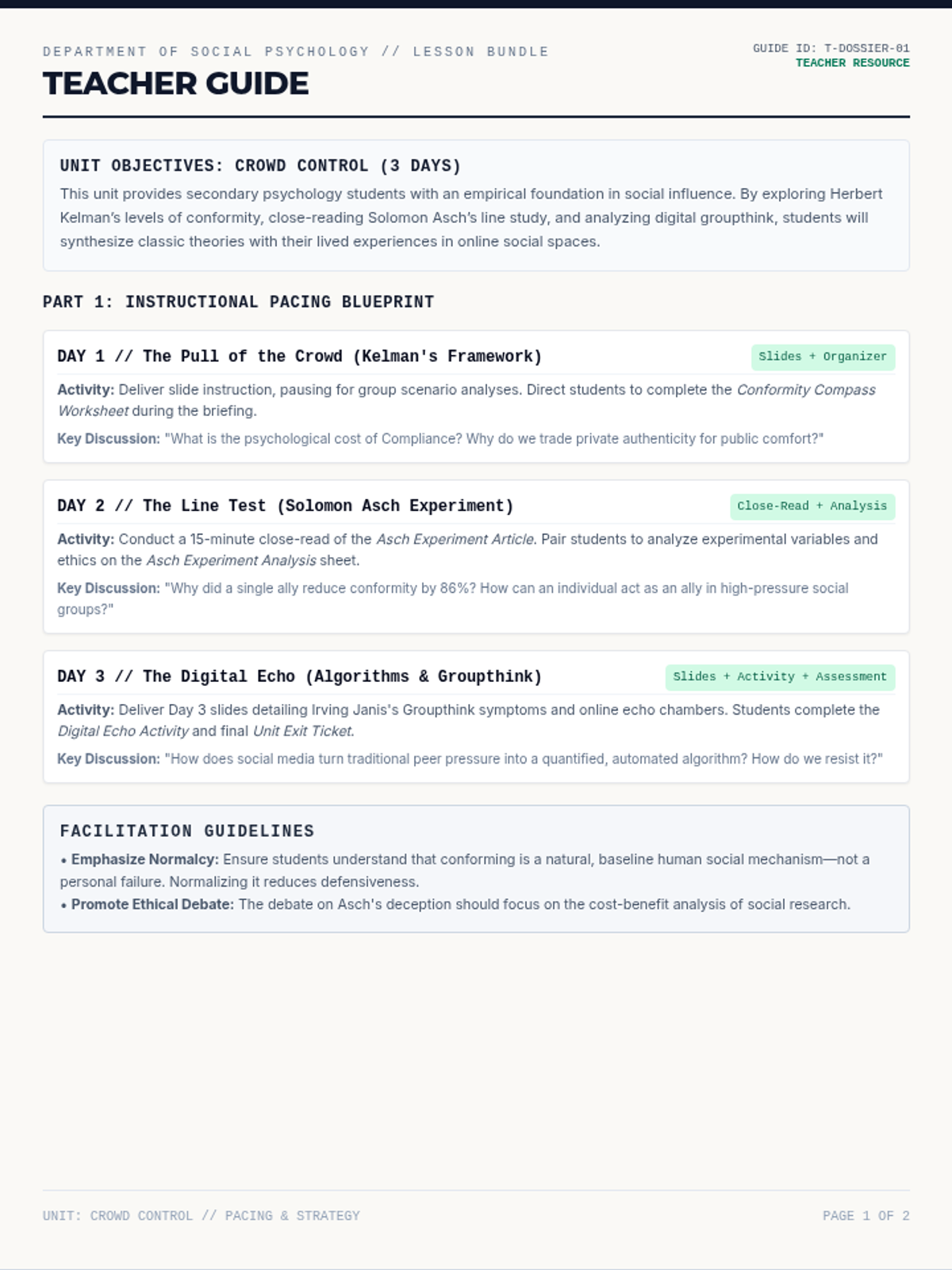
A 2-page master instructional guide and complete answer key for teachers. Contains pacing schedules, discussion prompt blueprints, and solutions for all student worksheets across the three lessons.
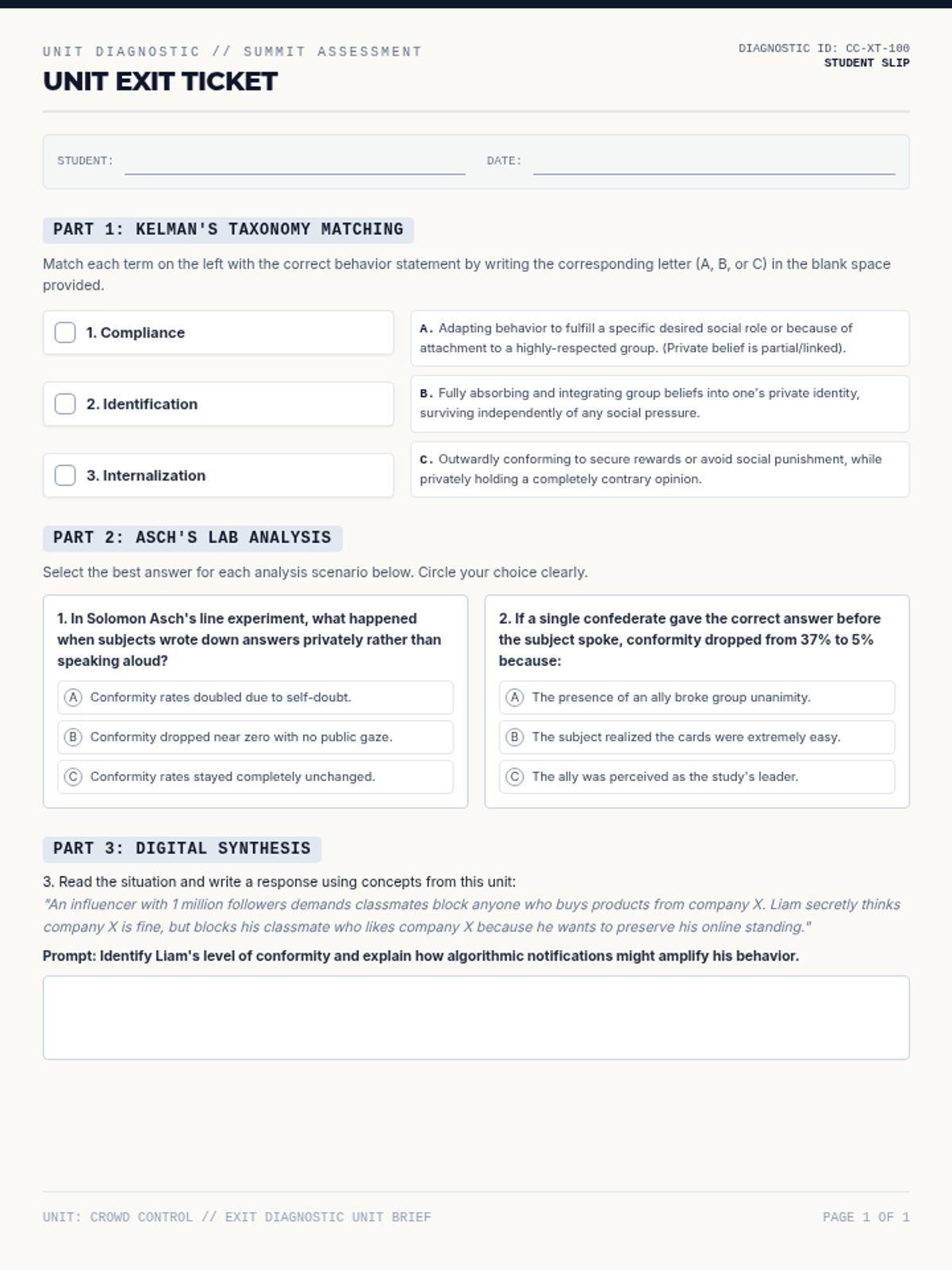
A 1-page student unit diagnostic exit ticket combining concept matching, multiple-choice questions, and short-answer prompts on conformity and groupthink. Features clean, balanced, high-contrast print layouts.
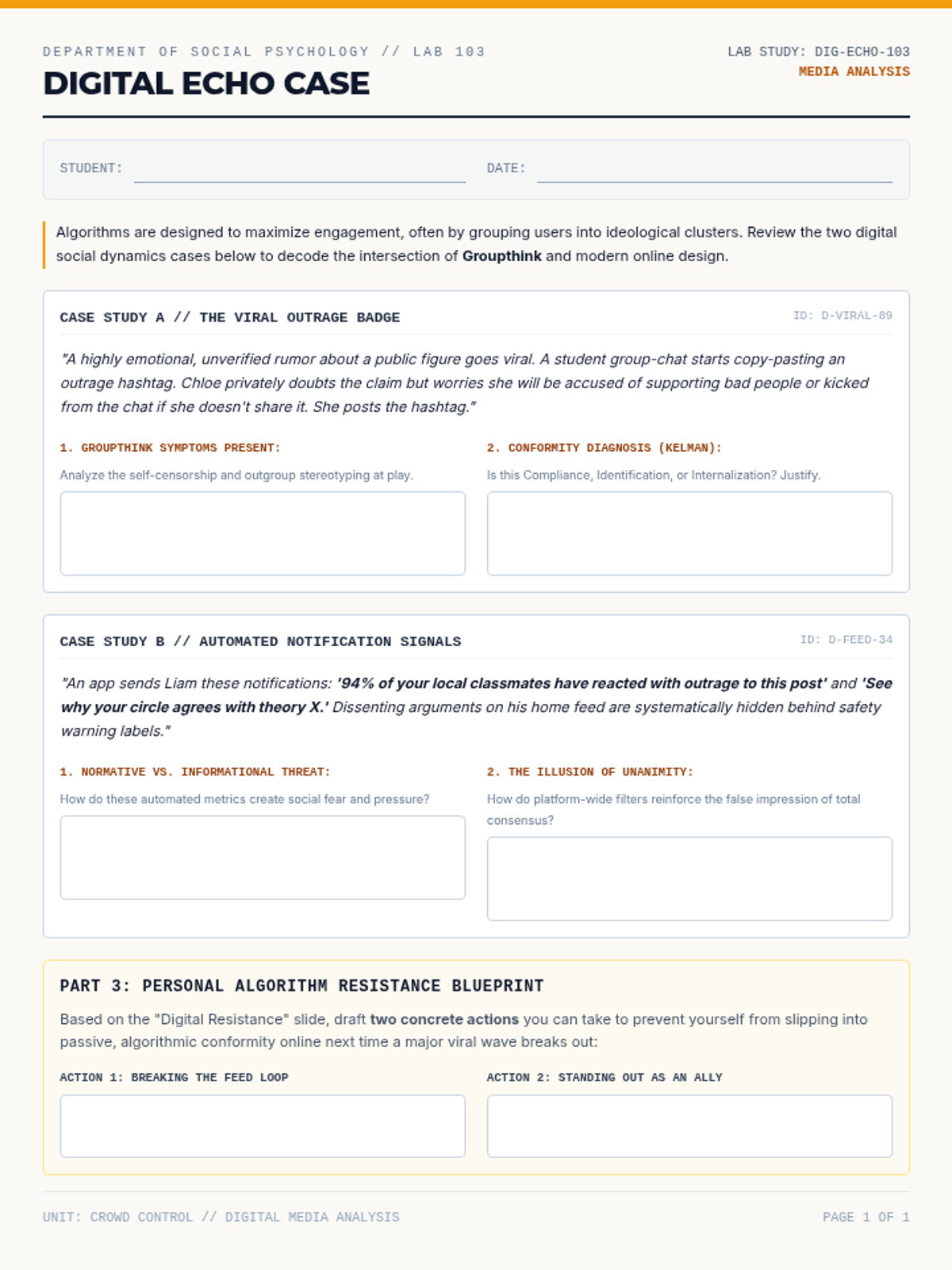
A 1-page student media analysis worksheet analyzing modern digital conformity, algorithm notification patterns, and viral peer pressure. Features structured feedback boxes for interactive classroom diagnostics.
A 6-slide presentation deck exploring Groupthink, social media algorithms, and digital echo chambers. Features high-contrast designs, minimum 24px font sizes, and structured classroom discussion prompts.
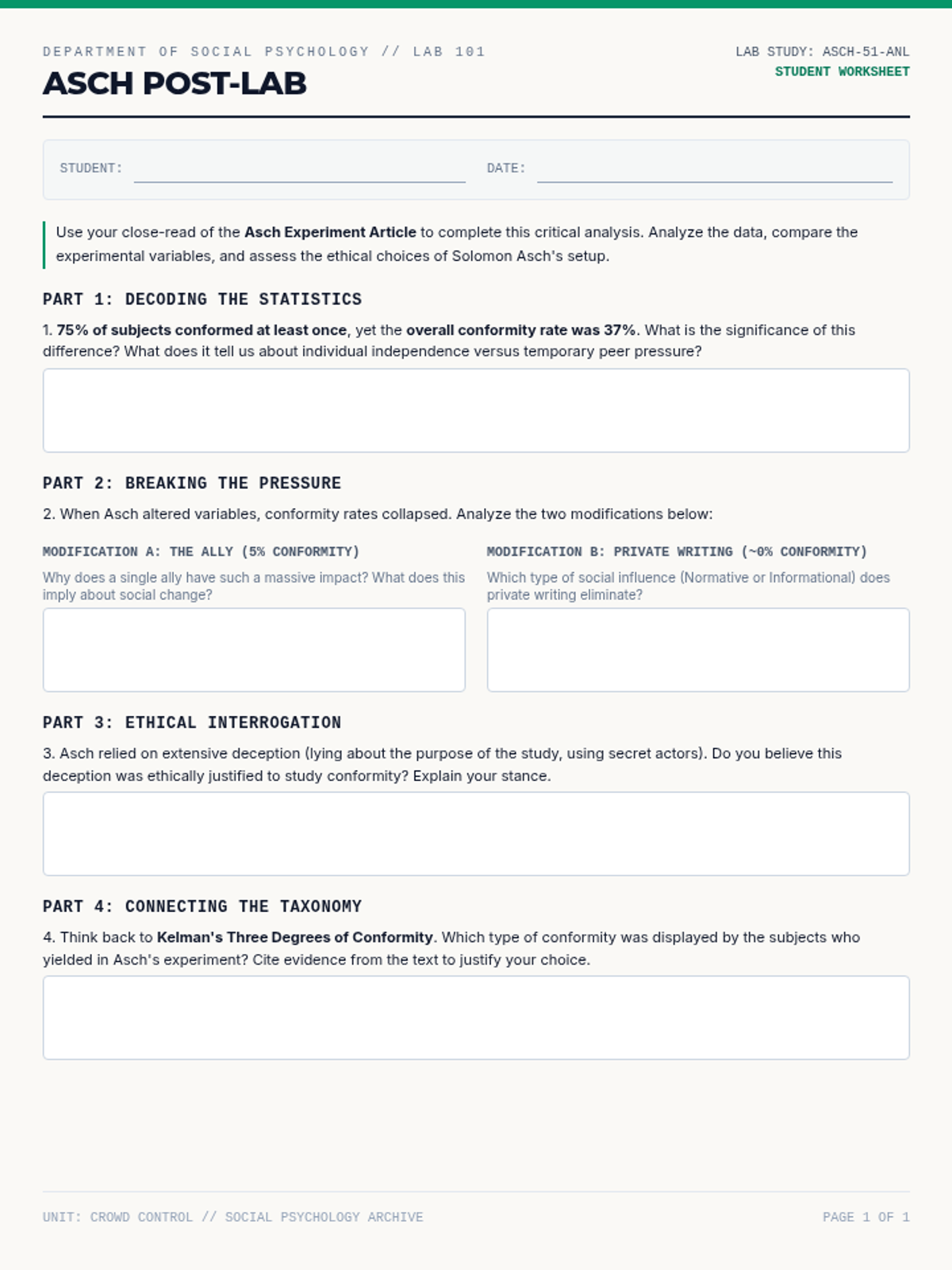
A 1-page student critical thinking worksheet to accompany the Asch Experiment reading passage. Features structured analysis grids and response boxes for data interpretation, variable comparison, and ethics.
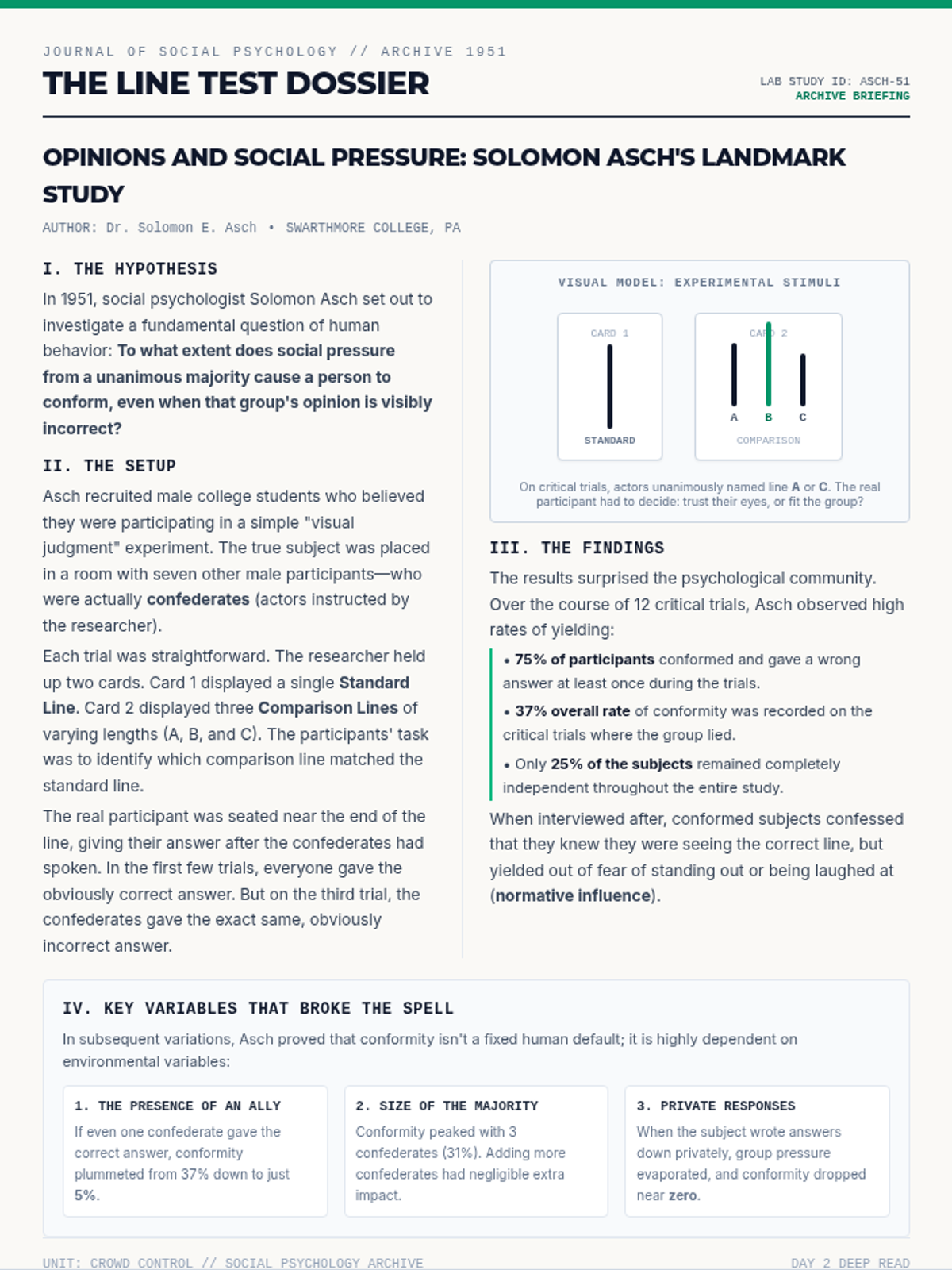
An elegant 1-page vintage academic-style reading passage about Solomon Asch's landmark 1951 line study. Features visual CSS reconstructions of the experimental cards and clear statistical summaries.
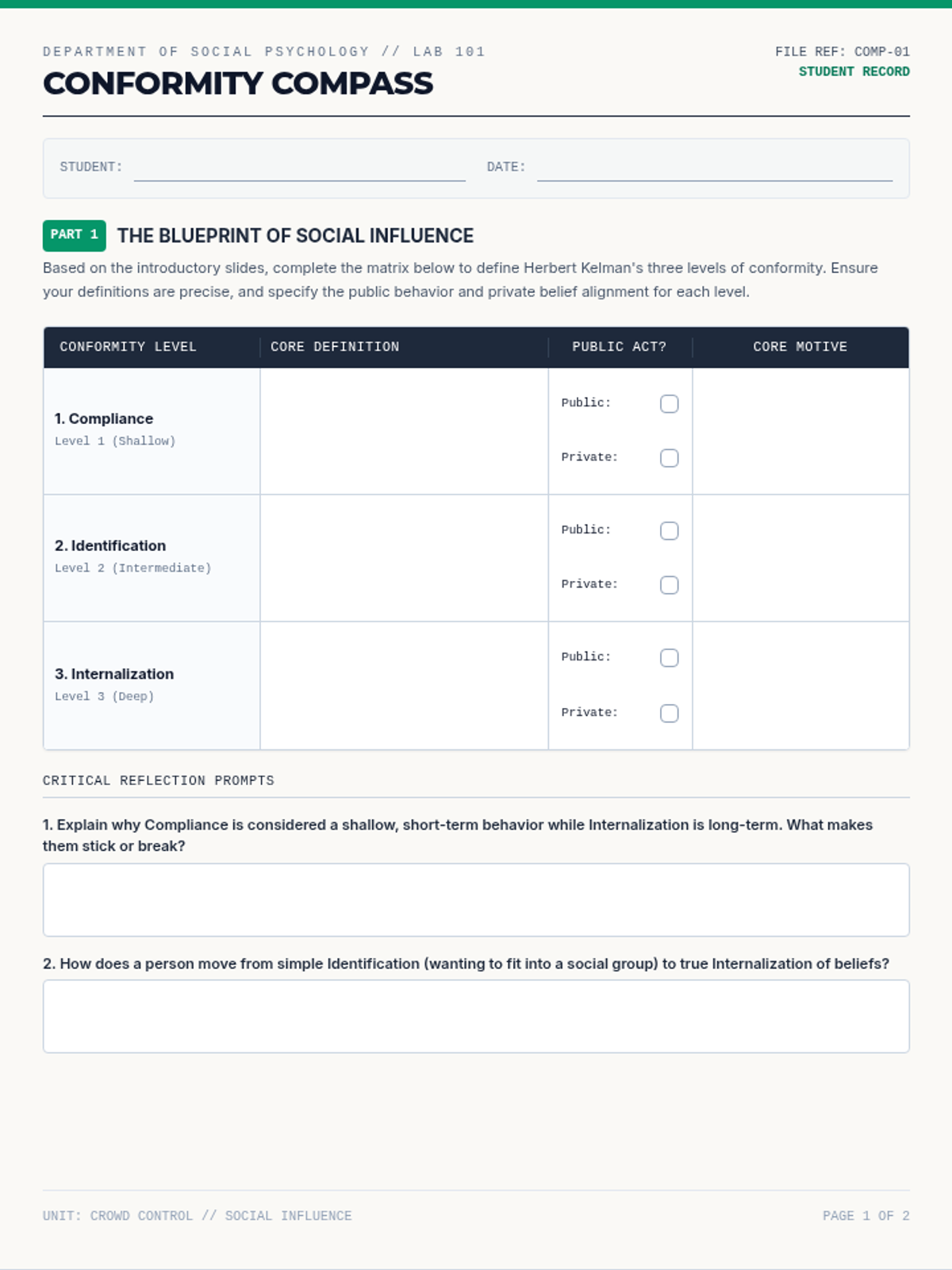
A 2-page graphic organizer and scenario-analysis worksheet for students to define and distinguish compliance, identification, and internalization. Features a retro dossier design and ample writing space.
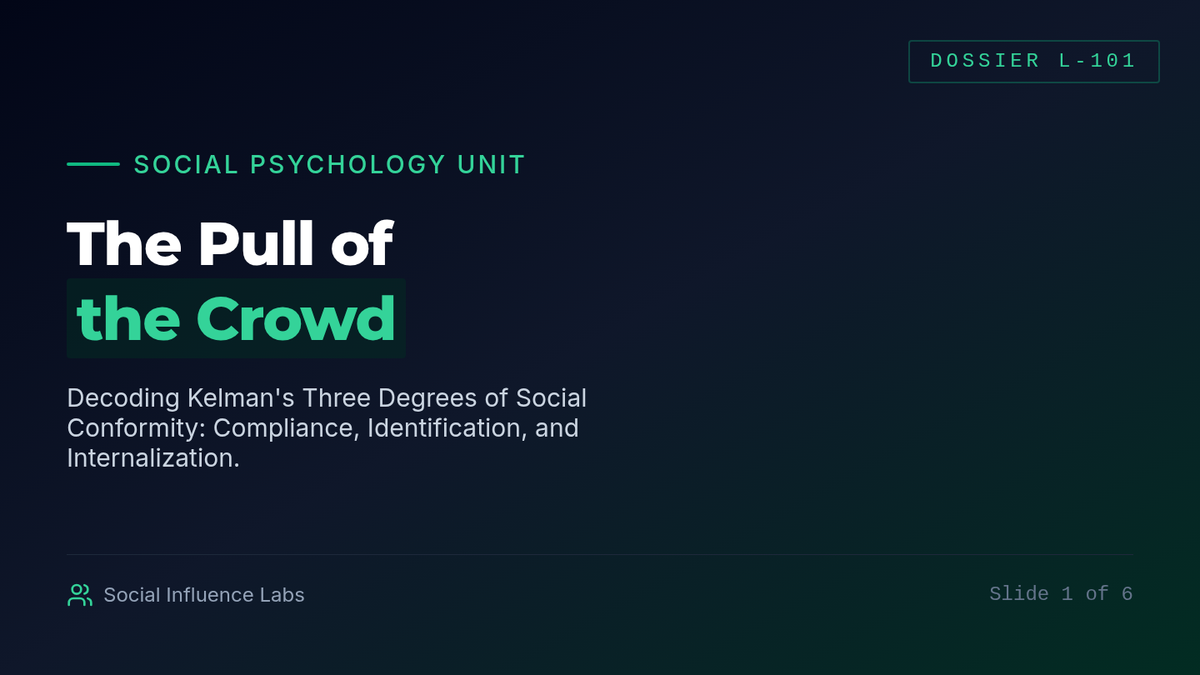
A 6-slide presentation deck exploring Herbert Kelman's three types of conformity: compliance, identification, and internalization. Designed for secondary psychology classrooms with high-contrast text and discussion prompts.
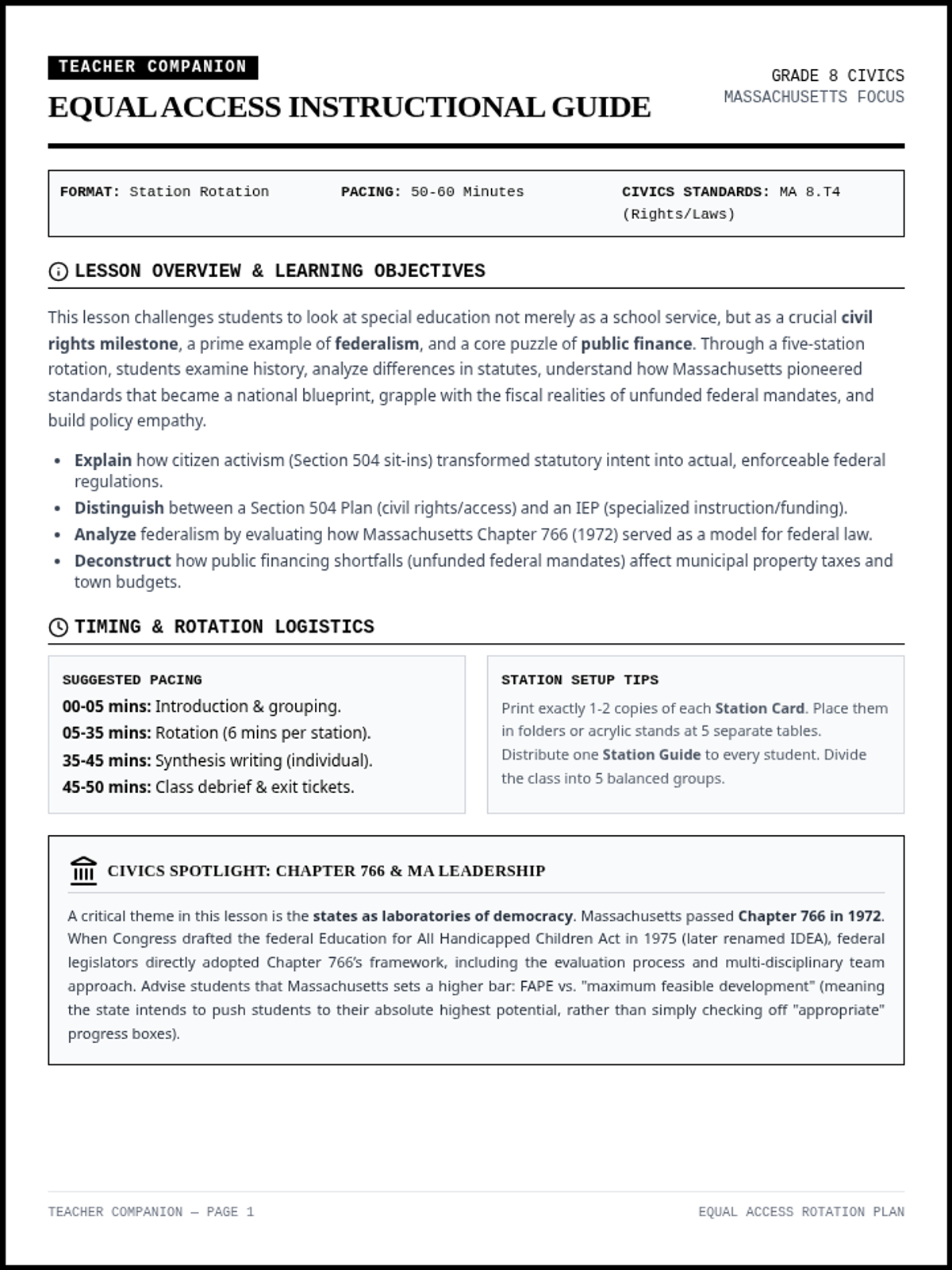
A 2-page print-ready teacher resource in high-contrast black and white. It contains complete pacing, station setup guidelines, Massachusetts-specific historical context (Chapter 766), small-group discussion questions, and an exemplar answer key for the Student Guide.
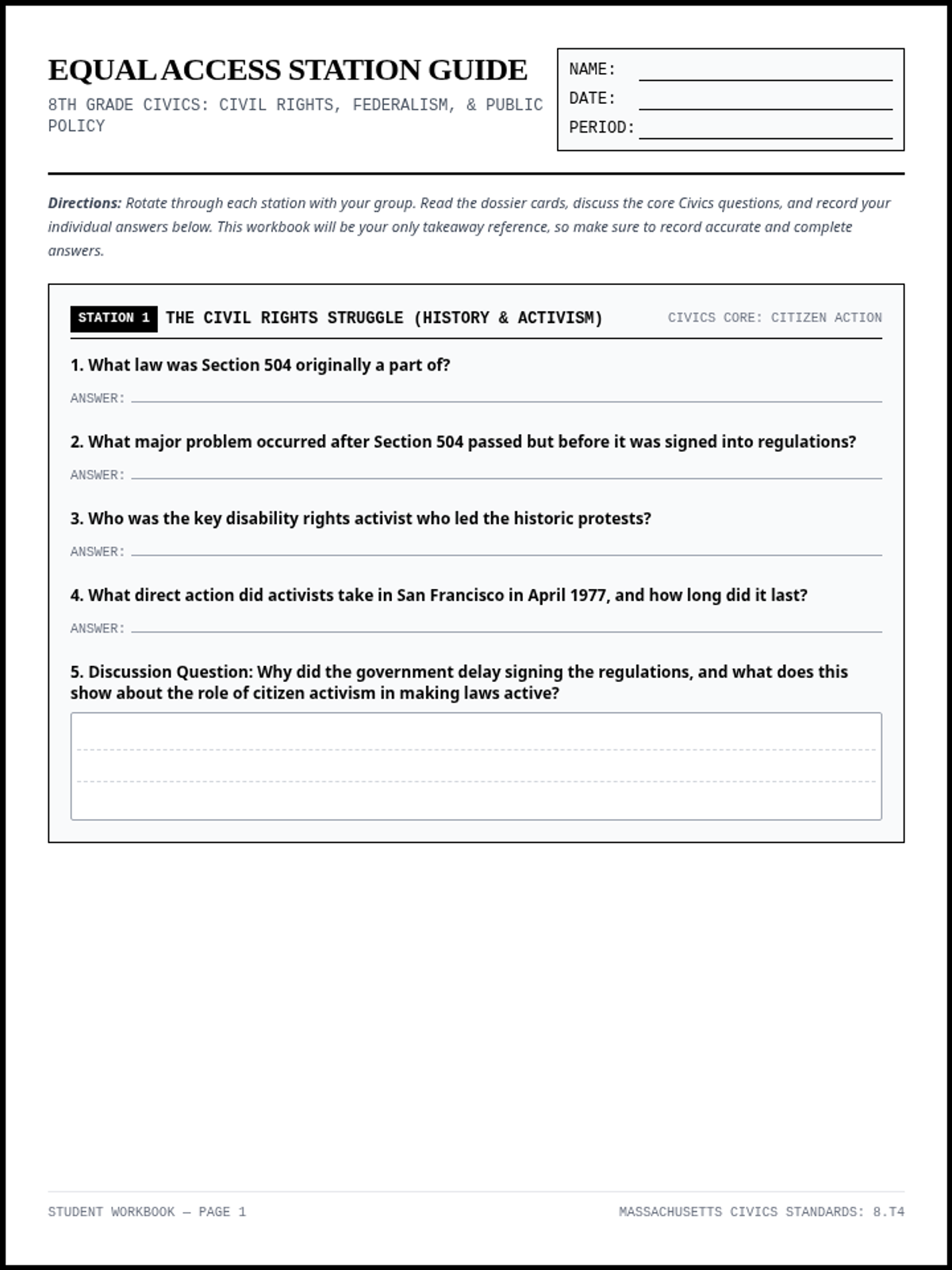
A 4-page print-ready student worksheet in high-contrast black and white. Each of the five stations contains exactly five questions (four core factual review questions and one deep-dive conceptual/empathy question) with dedicated handwriting lines, structured to fit exactly four printable pages. Updated to remove grey printing borders and backgrounds.
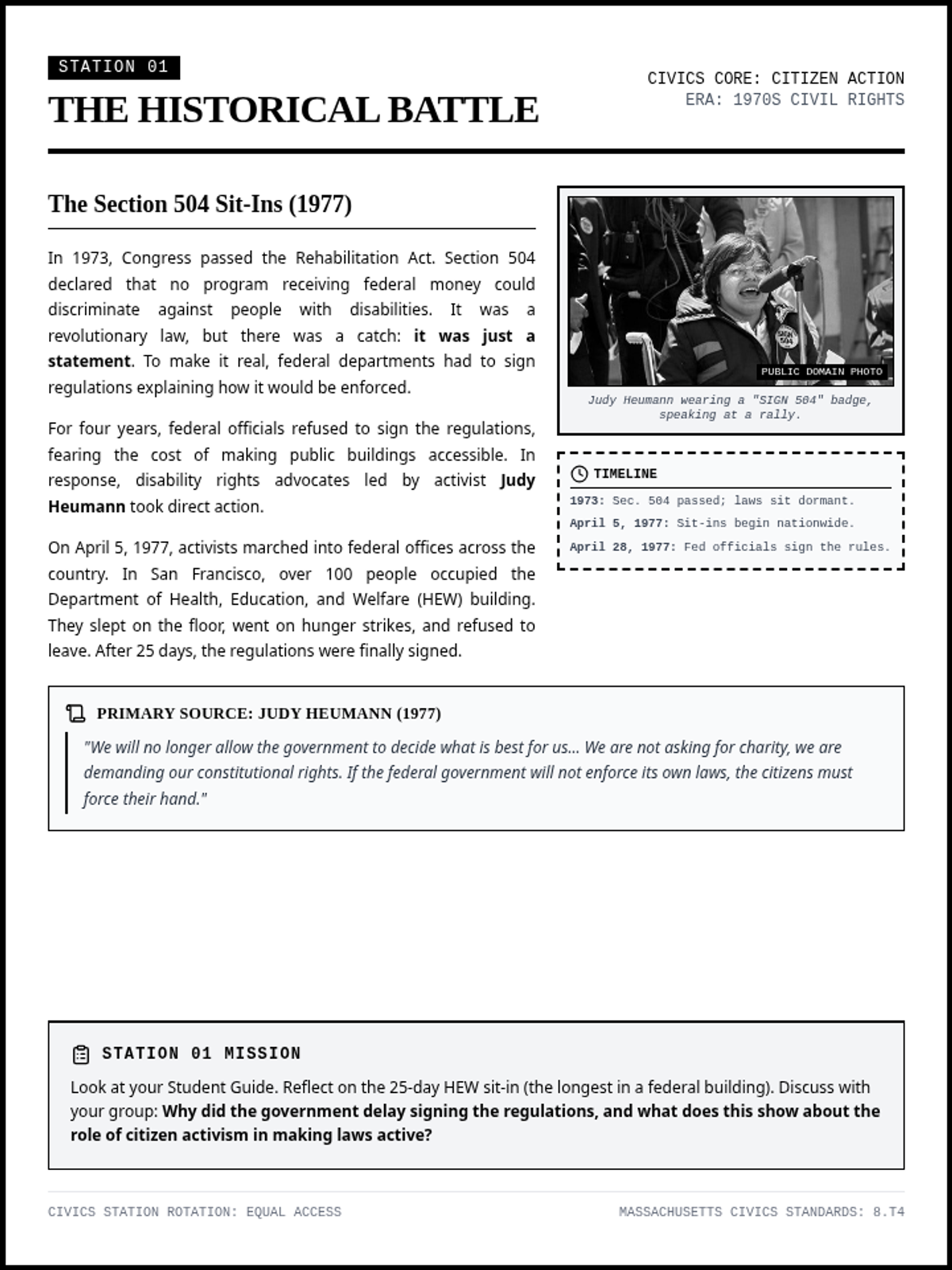
Print-ready, high-contrast black-and-white station cards for an 8th-grade Civics activity. Five stations cover the history (Judy Heumann and the Section 504 sit-in), legal differences (504 vs. IEP), federalism (MA Chapter 766 vs. Federal IDEA), funding (unfunded mandates and local taxation), and empathy (student scenarios and policy decisions). Updated to remove grey printing borders and backgrounds.
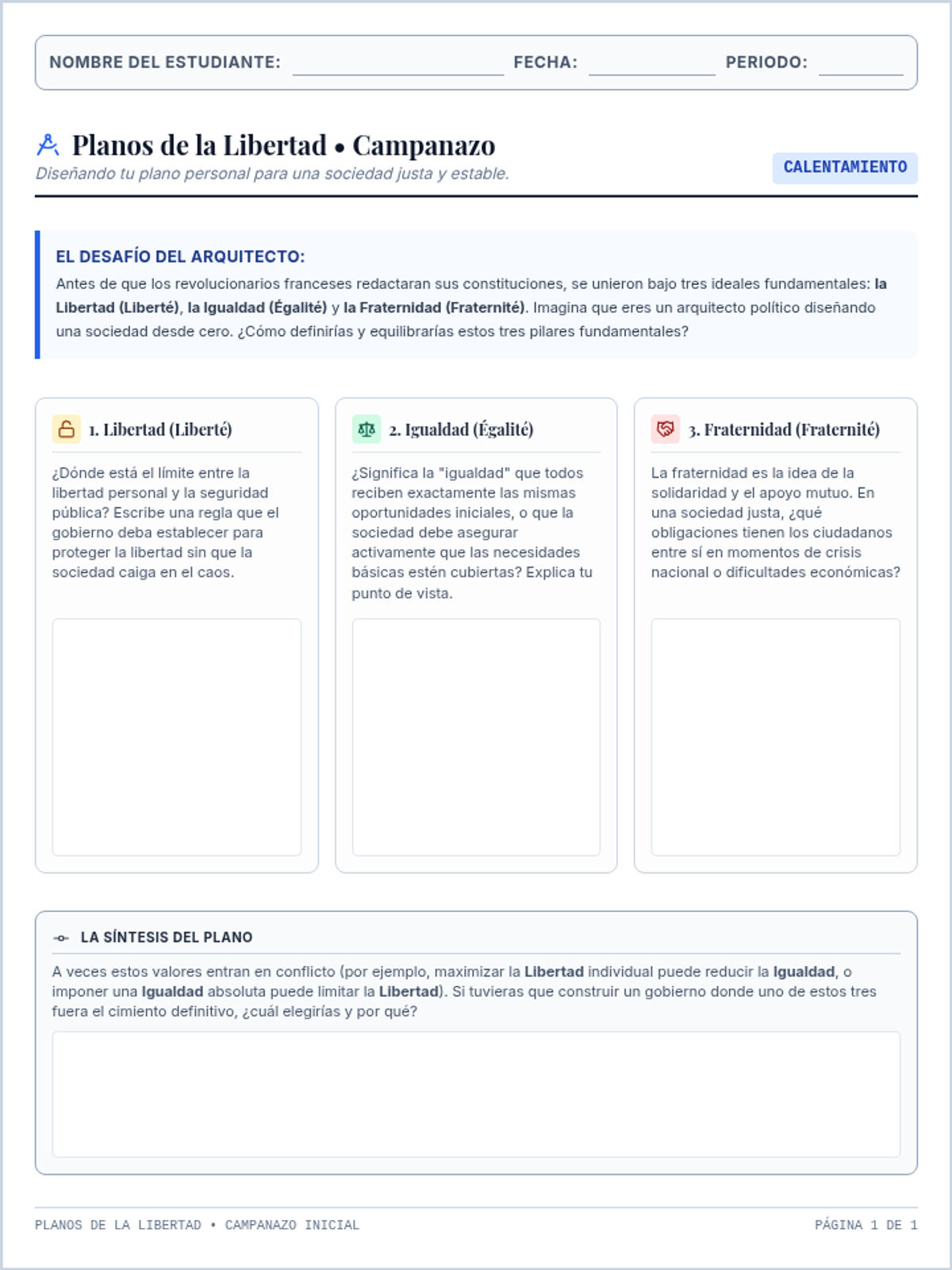
Un folleto de campanazo inicial (bell ringer) de 1 página en español para que los estudiantes reflexionen sobre los valores fundamentales de Libertad, Igualdad y Fraternidad antes de analizar las constituciones históricas.
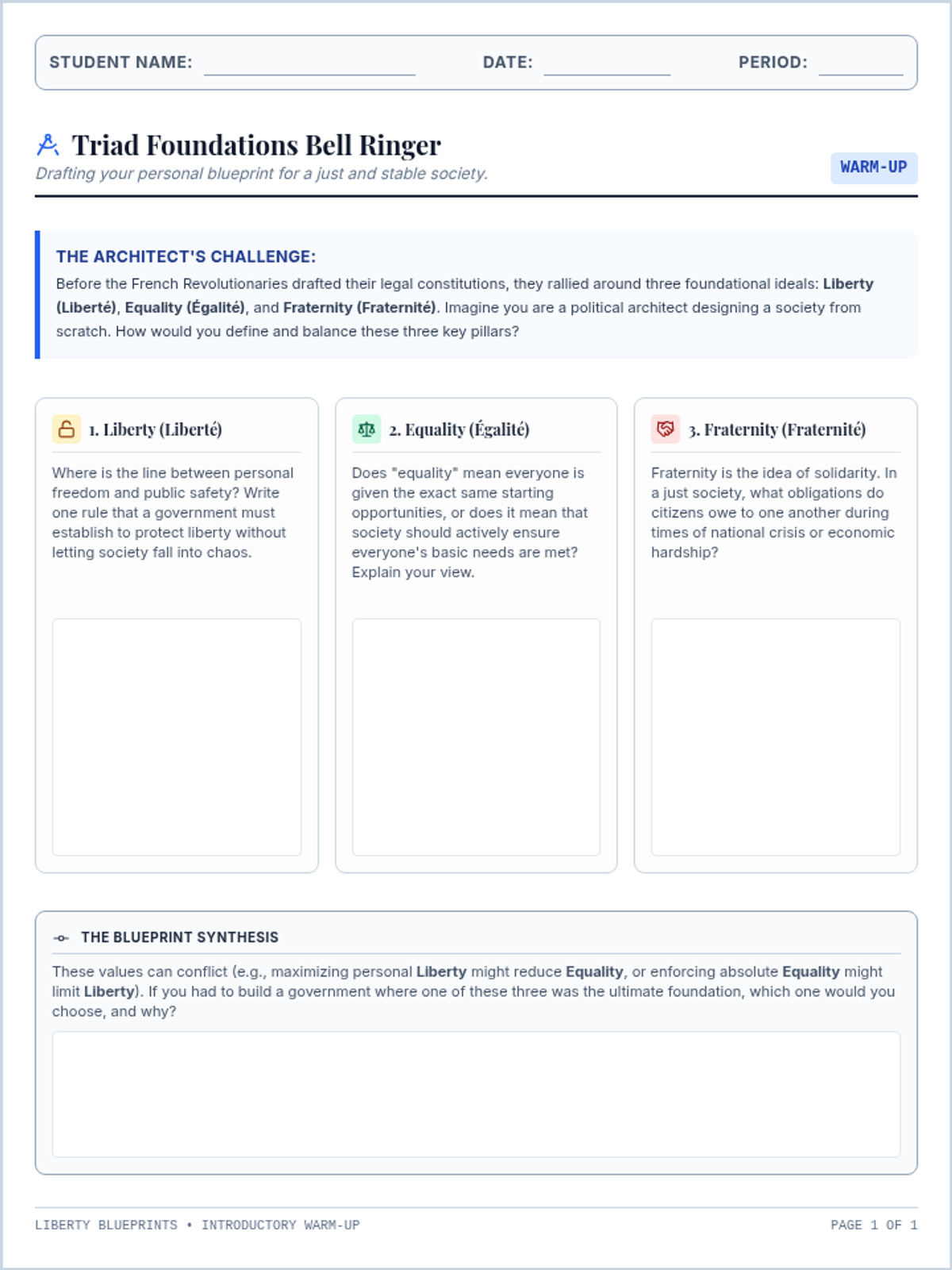
A highly visual, 1-page student bell ringer handout in English. It previews the lesson by prompting students to reflect on the core revolutionary values of Liberty, Equality, and Fraternity, establishing a personal 'societal blueprint' before analyzing the historical constitutions.
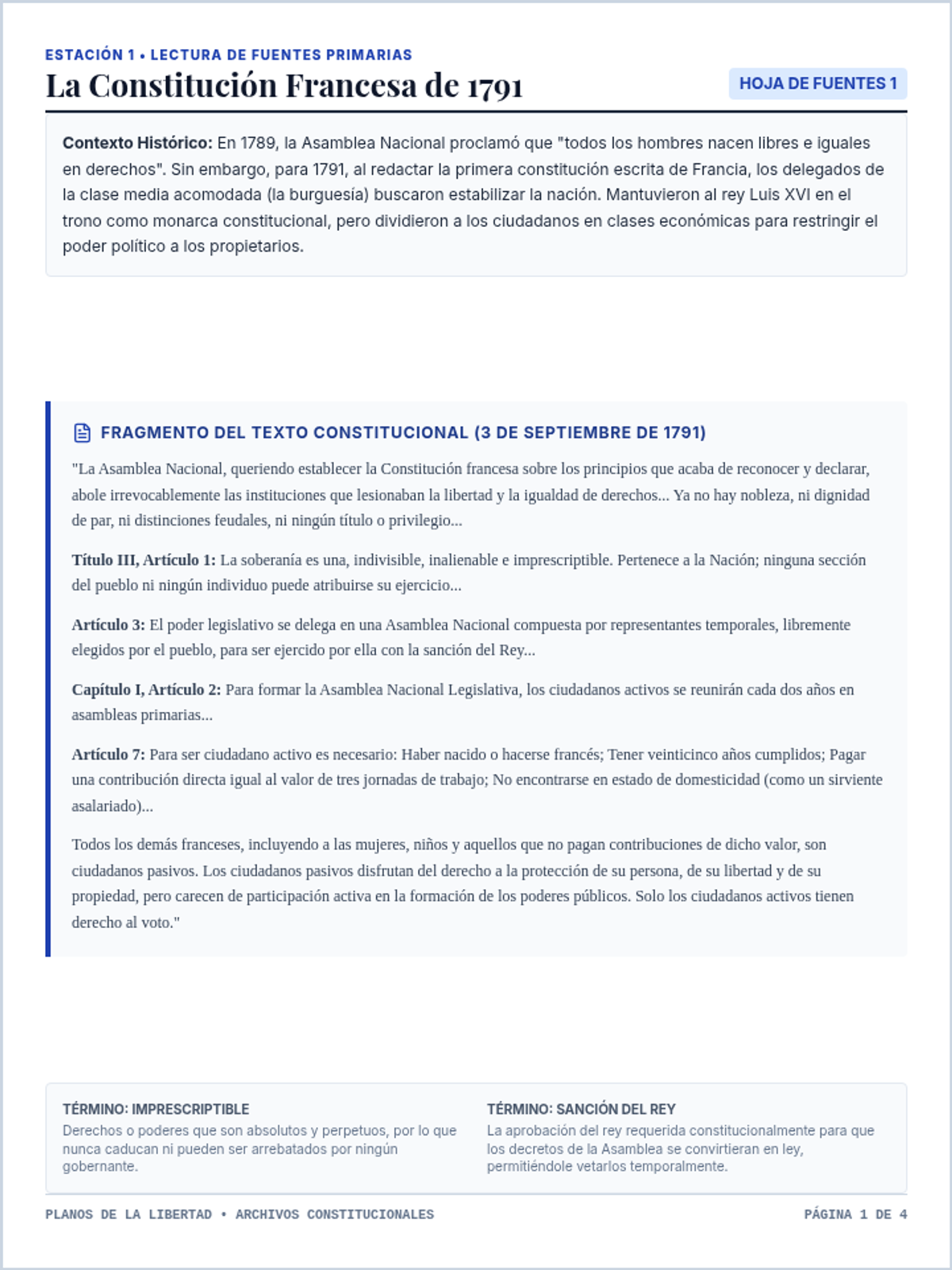
Cuatro folletos de fuentes primarias en español para colocar en las estaciones (1791, 1793, 1795 y Facciones) con fragmentos extensos, explicaciones y glosarios de términos clave.
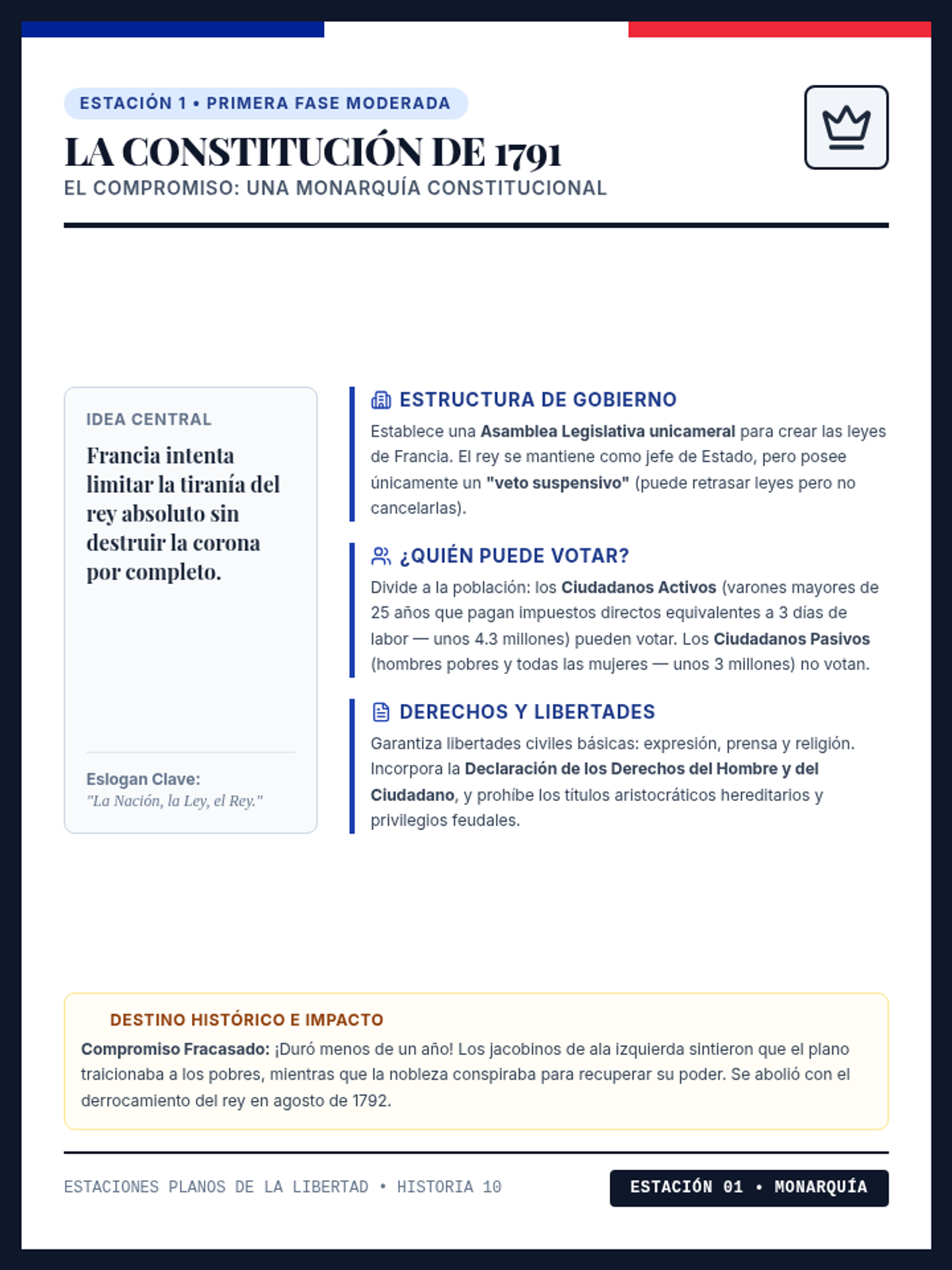
Cuatro carteles en español para colocar en las estaciones (1791, 1793, 1795 y Facciones) con explicaciones breves, visuales y estructuradas sobre cada constitución revolucionaria.
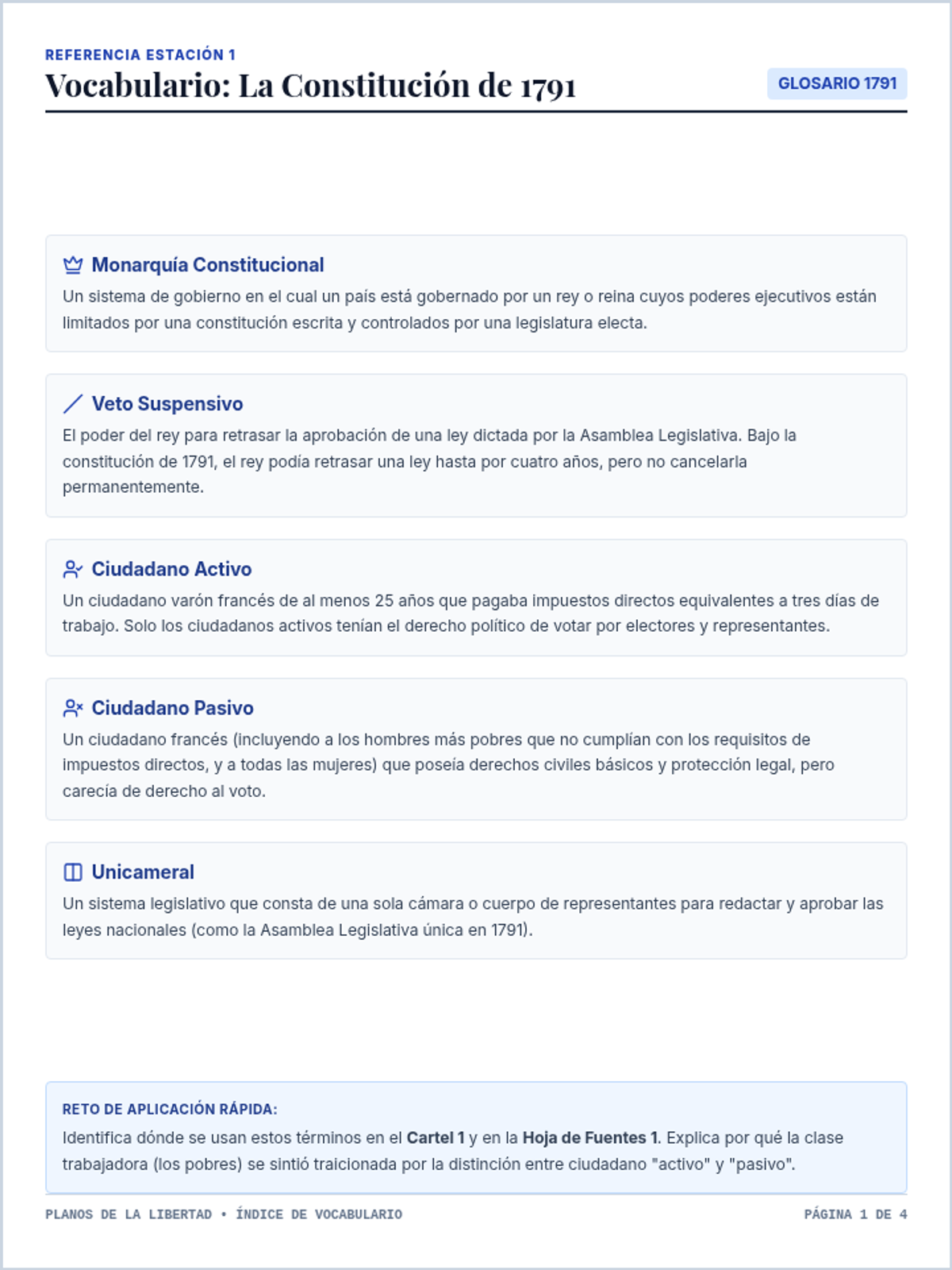
Un documento de referencia de vocabulario de 4 páginas en español con definiciones clave de los términos de cada estación y un reto de aplicación rápida.
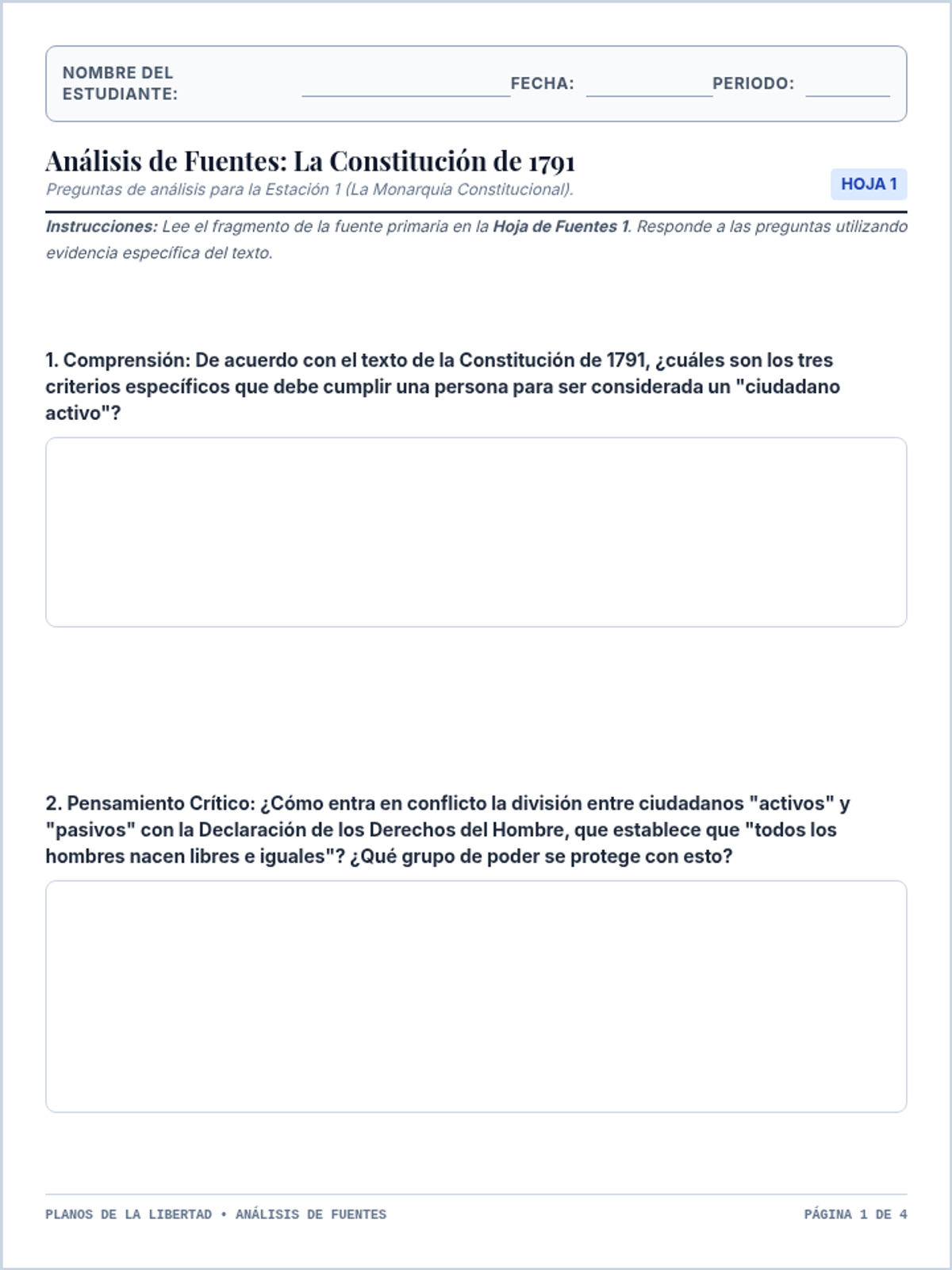
Un folleto de preguntas de 4 páginas en español para que los estudiantes respondan preguntas de análisis basadas en las fuentes de cada estación.
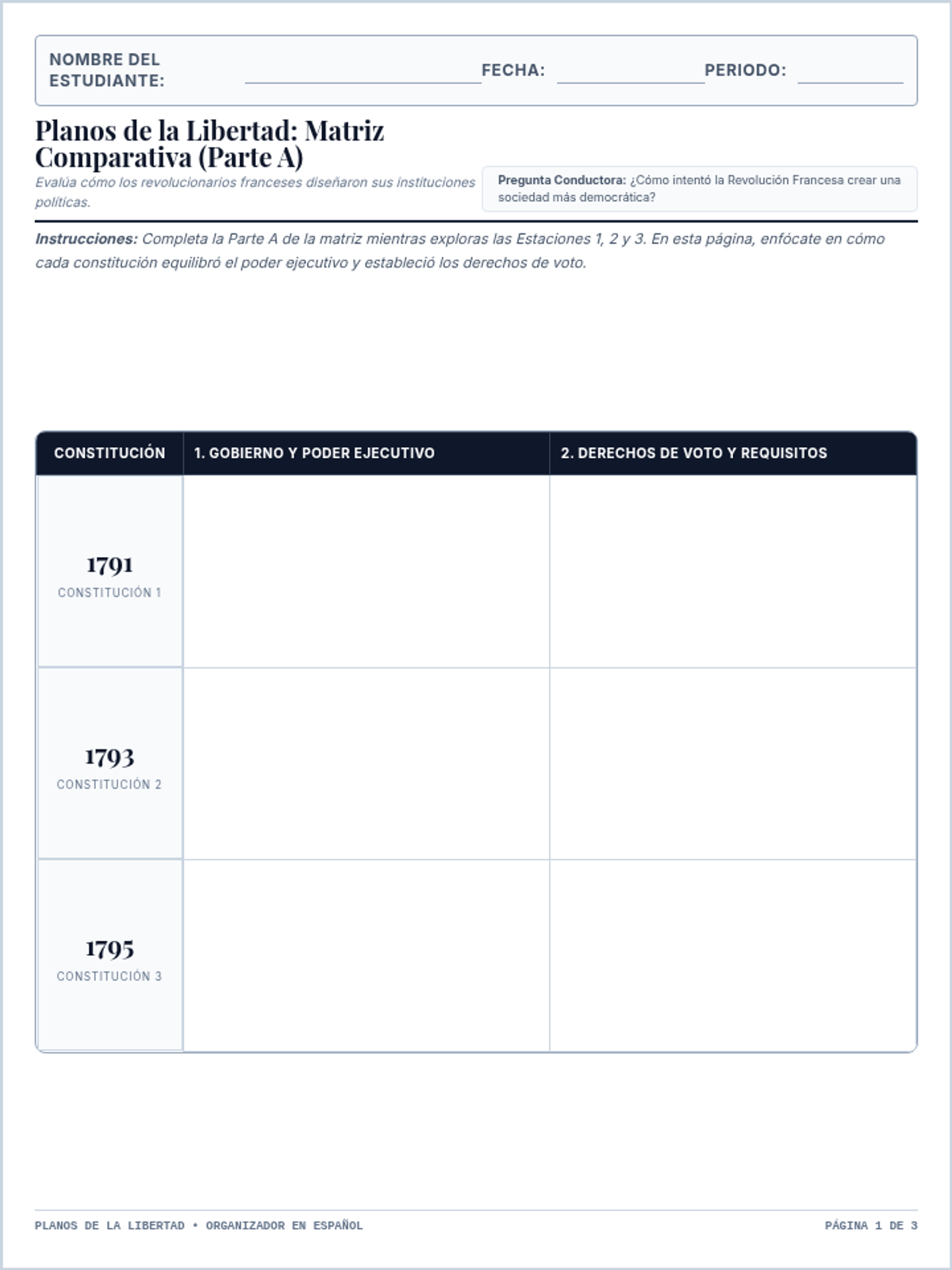
Un organizador gráfico horizontal de 3 páginas para estudiantes en español. Las páginas 1 y 2 contienen la matriz comparativa de las tres constituciones, y la página 3 presenta la actividad de clasificación del espectro político.