An enhanced 9-slide presentation for Grade 2 detailing the stages of human evolution with extensive visual aids, fact files for each ancestor, and a section on how archaeologists discover the past. All text is sized for classroom visibility.
A 2-page print-ready teacher instructional plan and facilitation guide for running the Force Field Engineers magnet maze lab. Includes NGSS standards, a materials checklist, lesson pacing, inquiry prompts, a 3-tier grading rubric, and classroom troubleshooting tips.
A 2-page collection of printable layout templates, assembly components, and cutouts for building custom student magnet mazes. Includes a 1-inch printable grid board and a materials folding lab sheet.
A 2-page print-ready student lab handbook for the Magnet Maze engineering challenge. It includes a material testing matrix, maze blueprinting grid, testing logs, and reflective engineering prompts.
A 2-page teacher facilitation guide containing next-generation science standards (NGSS) alignments, a detailed 60-minute pacing guide, visual setup directions, a structured engineering design rubric, and a guide to solving common student misconceptions.
A 5-slide visual presentation for teachers to introduce non-contact forces, magnetic fields, attraction/repulsion, and the step-by-step engineering constraints of the Magnet Maze challenge.
A 3-page student activity guide and engineering worksheet for the magnet maze challenge. Includes design constraints, a layout sketching grid, material testing logs, and conceptual reflection questions on non-contact forces and poles.
A single-page formative assessment exit ticket where students analyze vague steps for logical loopholes, practice writing highly precise instructions, and explain why exact detail is crucial for programming.
A highly-structured 2-page student worksheet that helps kids brainstorm, sketch, and systematically draft chronological, step-by-step algorithms for building a marshmallow fluff and jelly sandwich.
A comprehensive, step-by-step facilitation guide for teachers on how to execute the literal-interpretation marshmallow fluff and jelly demo, complete with loophole guides, common student instruction errors, and reflection prompts.
A vibrant, projection-ready slide presentation that guides students through the 'Exact Instructions Challenge'. It establishes the rules of the robot-teacher demo, showcases ingredients, sets up the writing activity, and leads the class debrief on the importance of clarity.
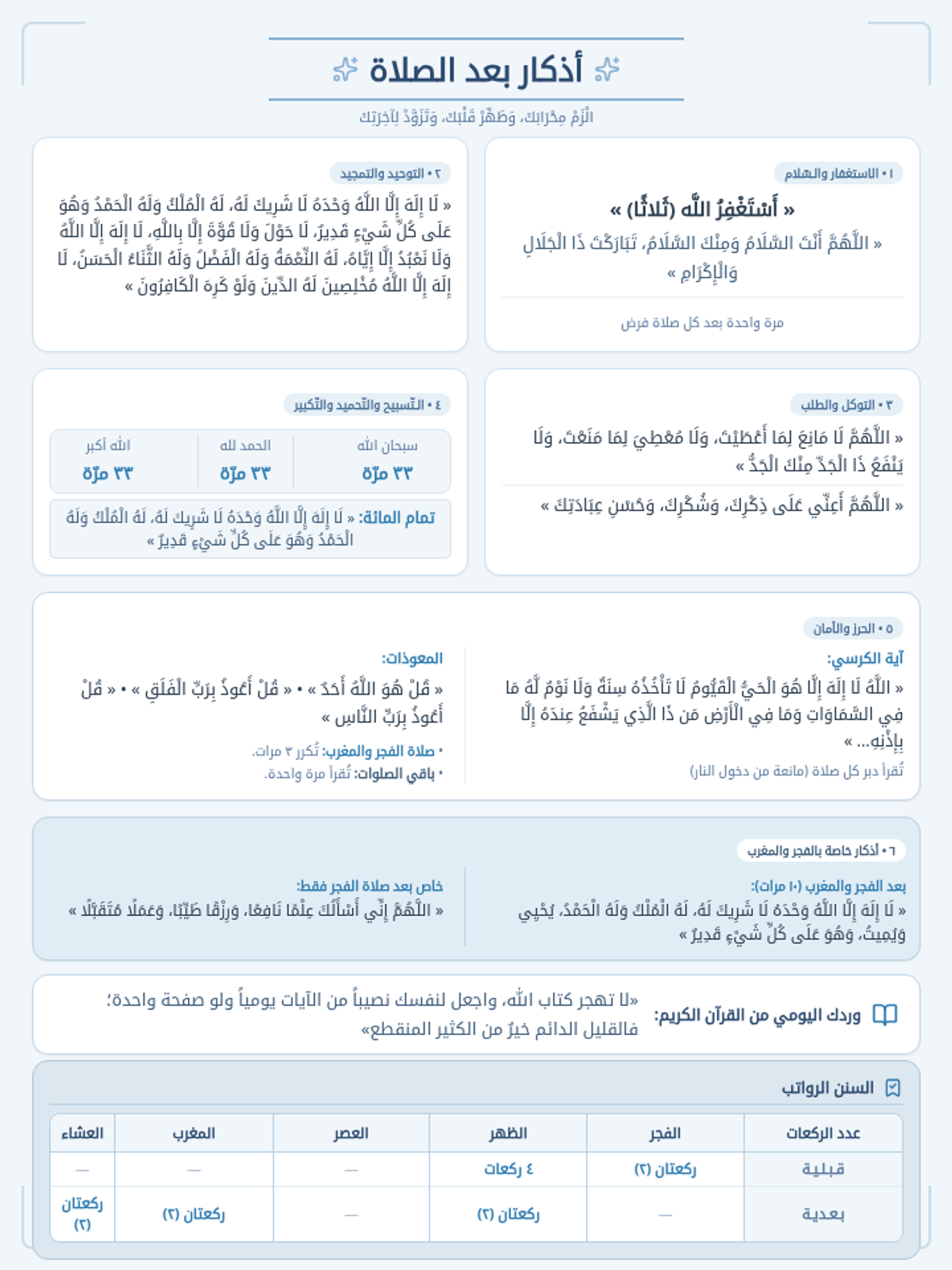
An elegantly redesigned single-page poster of the remembrances after prayer and Sunan Al-Rawatib with an added premium daily Quran reading reminder banner. Styled in a soothing Sky Blue (#F0F6FA) color palette.
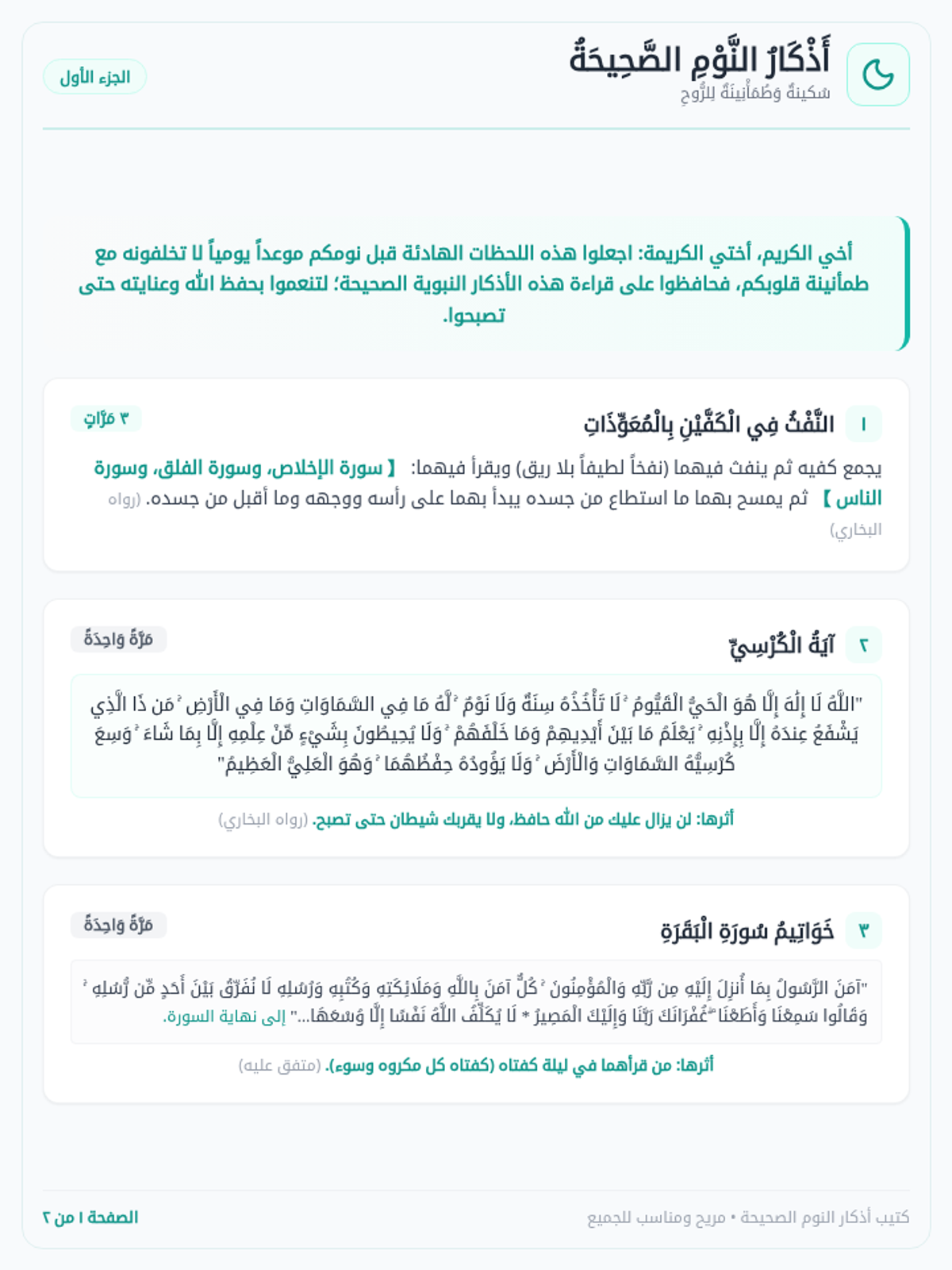
كتيب أذكار النوم الصحيحة من السنة النبوية الشريفة منسق باللونين الرمادي والتركواز الفاتح، ومصمم كملف PDF جاهز للطباعة والقراءة المريحة.
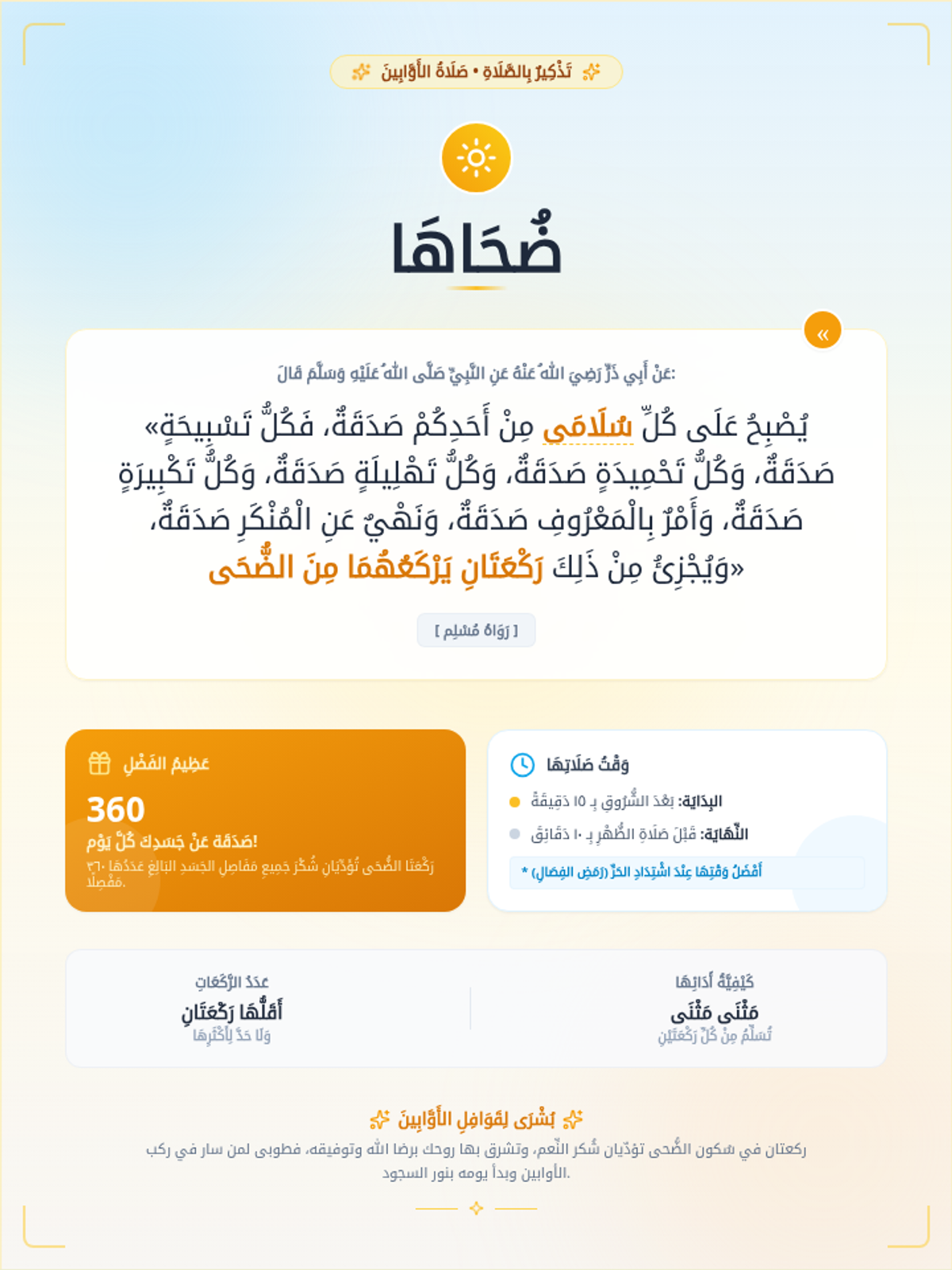
An elegant, gender-neutral reminder card for Duha prayer (صلاة الضحى) featuring the Hadith, its incredible virtues, timing details, and a spiritual morning reflection. Beautifully designed with soft morning-sky gradients, golden accents, and premium typography for print and digital sharing.
A vibrant, colorful, and highly cheerful 2-page Arabic weekly worship tracker for kids. It features bright playful pastel colors, friendly mascots, beautiful cloud borders, and interactive badges designed to excite and motivate children.
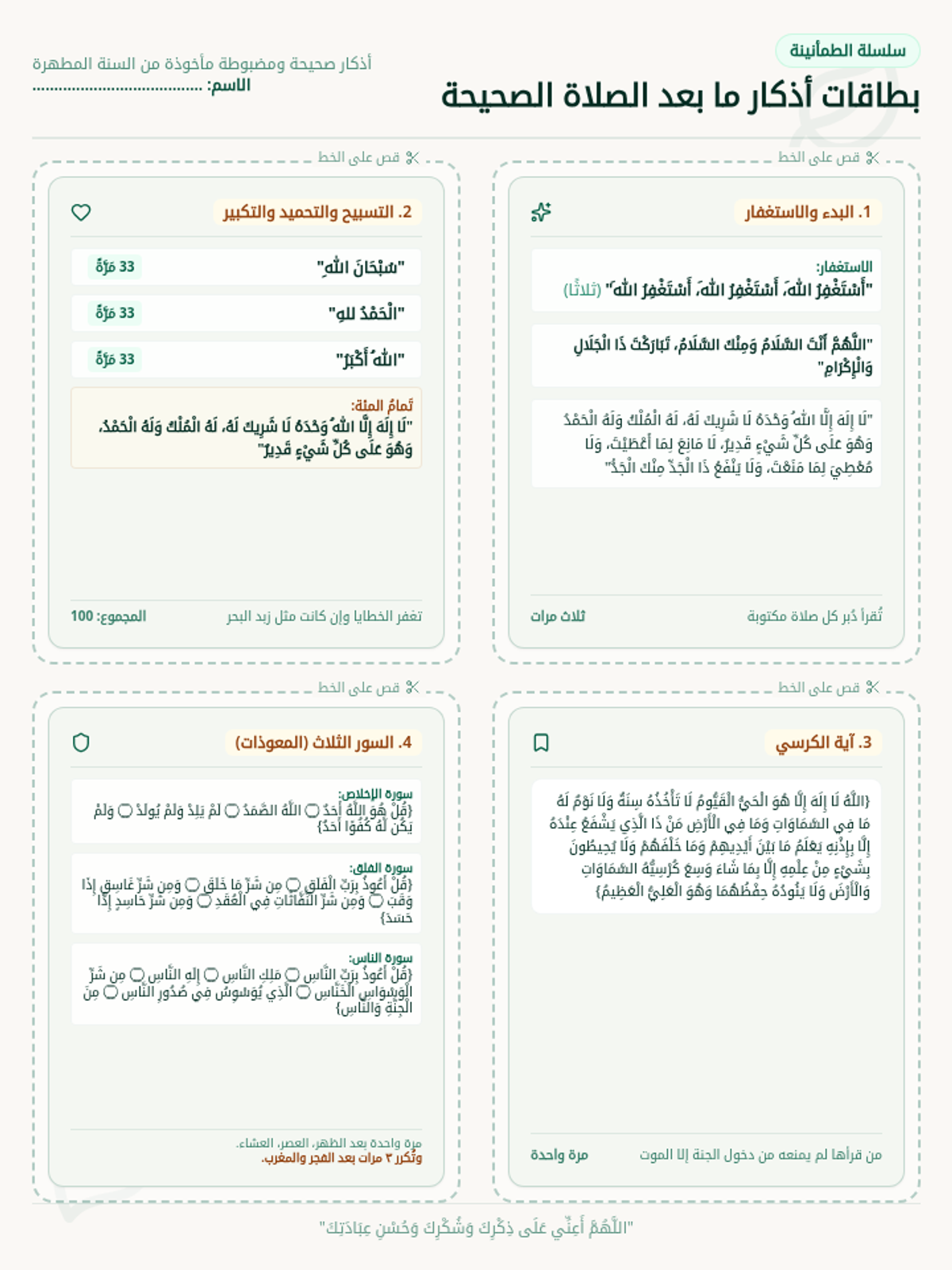
بطاقات جيب قابلة للقص والتوزيع تحتوي على أذكار ما بعد الصلاة اليومية مأخوذة ومصححة بدقة من التطبيقات المعتمدة والأحاديث الصحيحة مع التشكيل الكامل وضبط دقيق للنصوص.
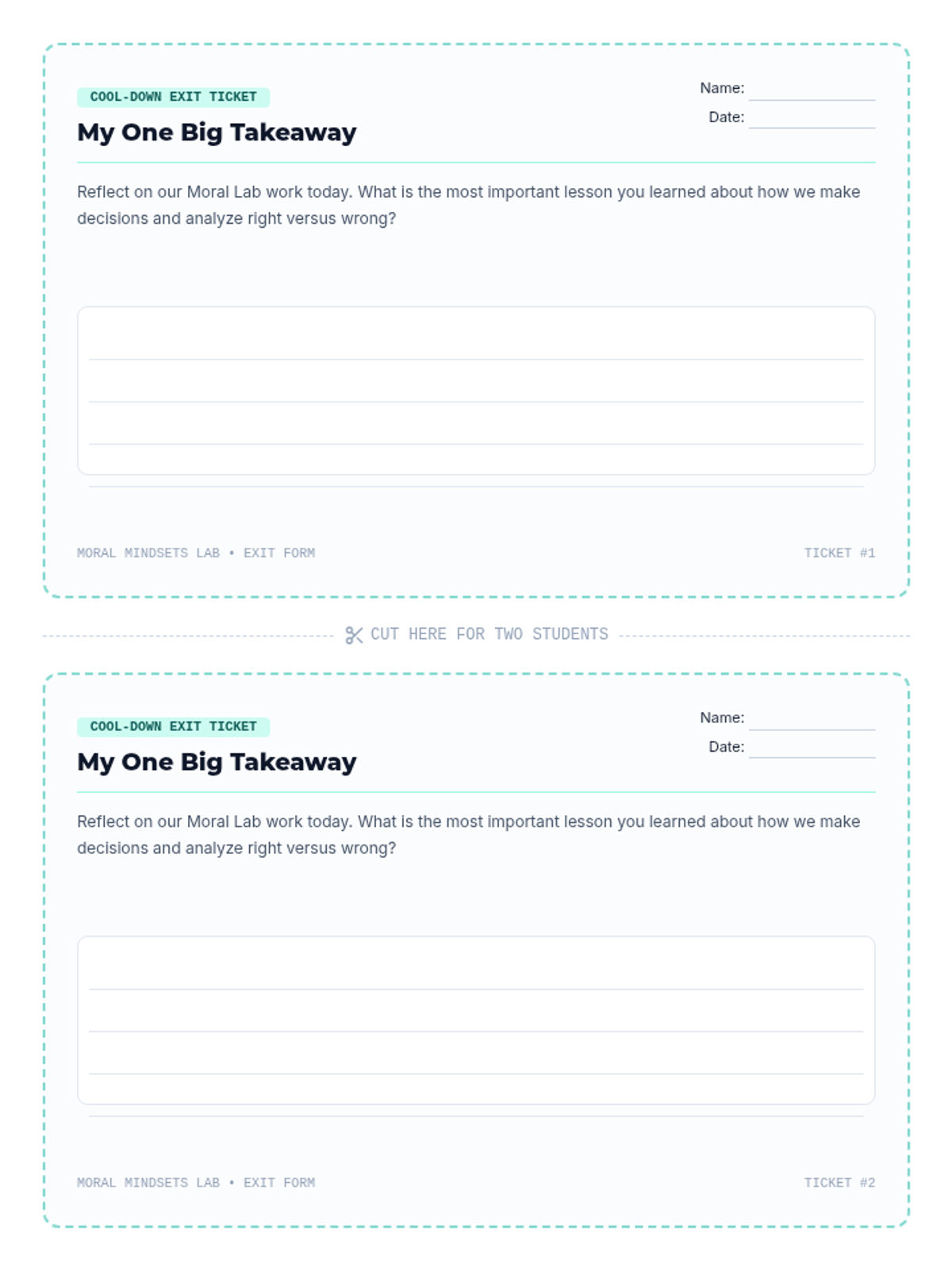
A printable, cut-out 2-per-page exit ticket (cool-down activity) where students write down their biggest takeaway from the moral reasoning lesson.
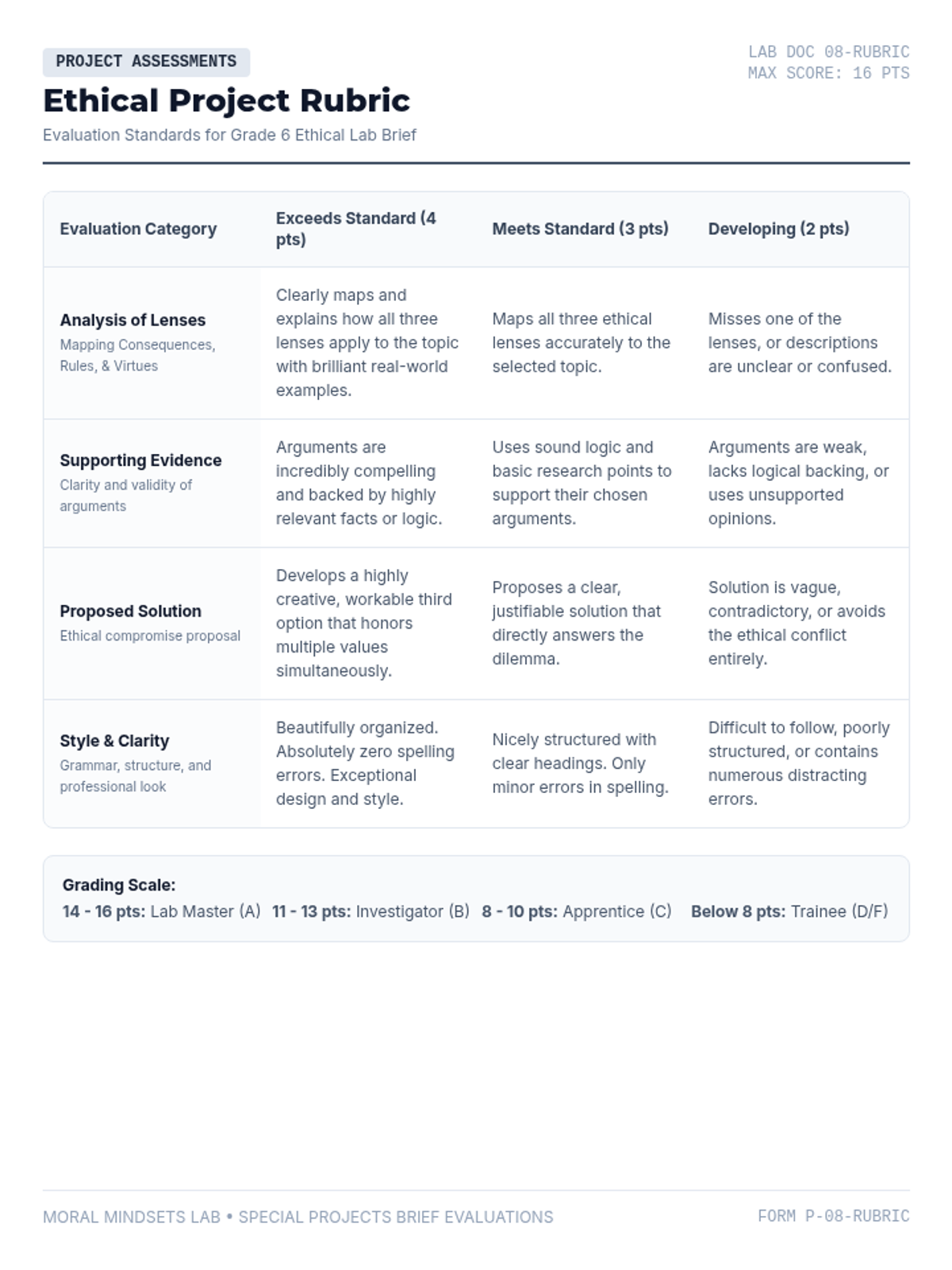
A clear, detailed 1-page assessment rubric outlining evaluation criteria and performance levels for the Grade 6 Ethical Lab Brief project.
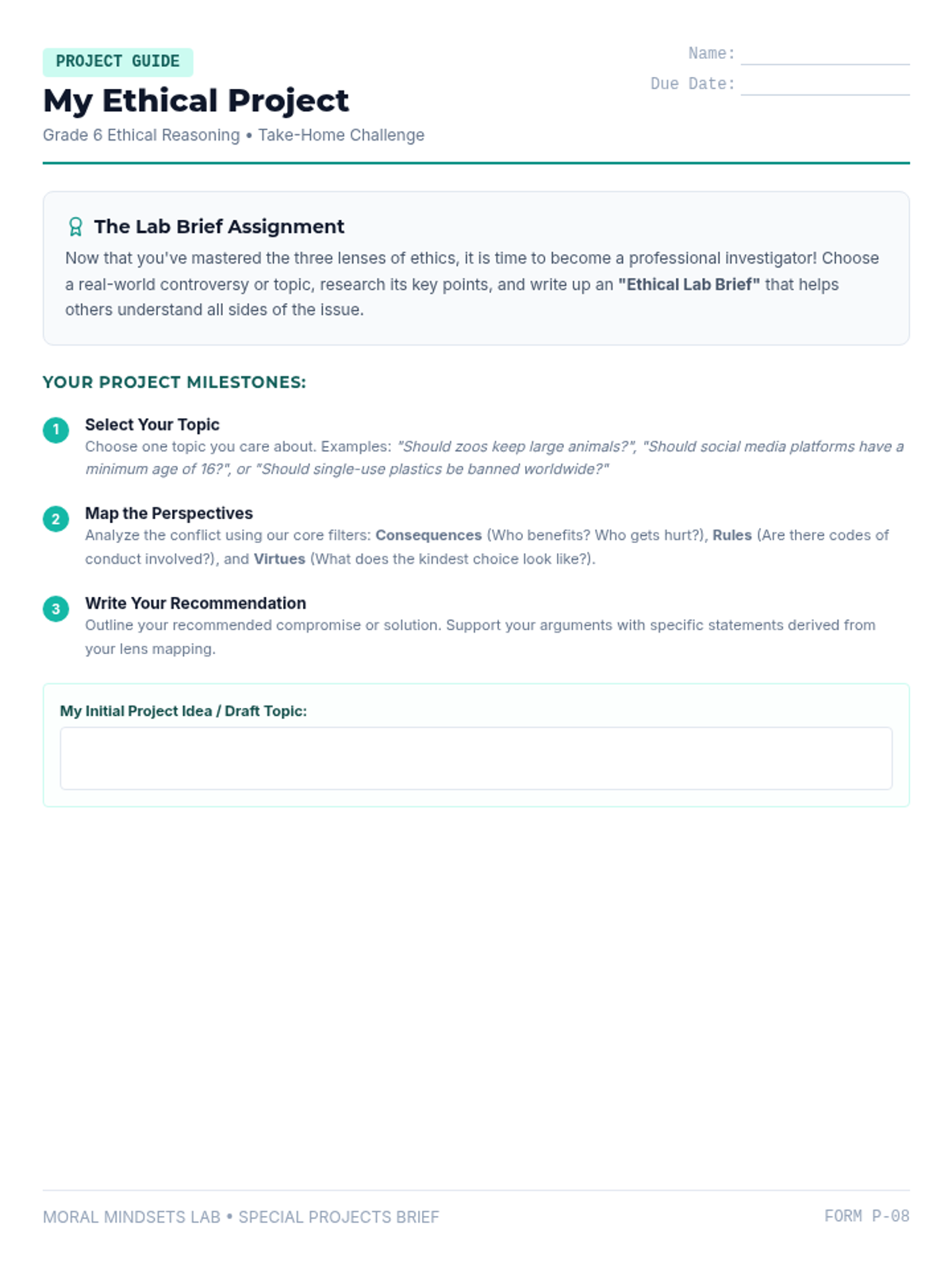
A structured homework or long-term assignment guide directing 6th-grade students to research and map a real-world ethical issue of their choice.
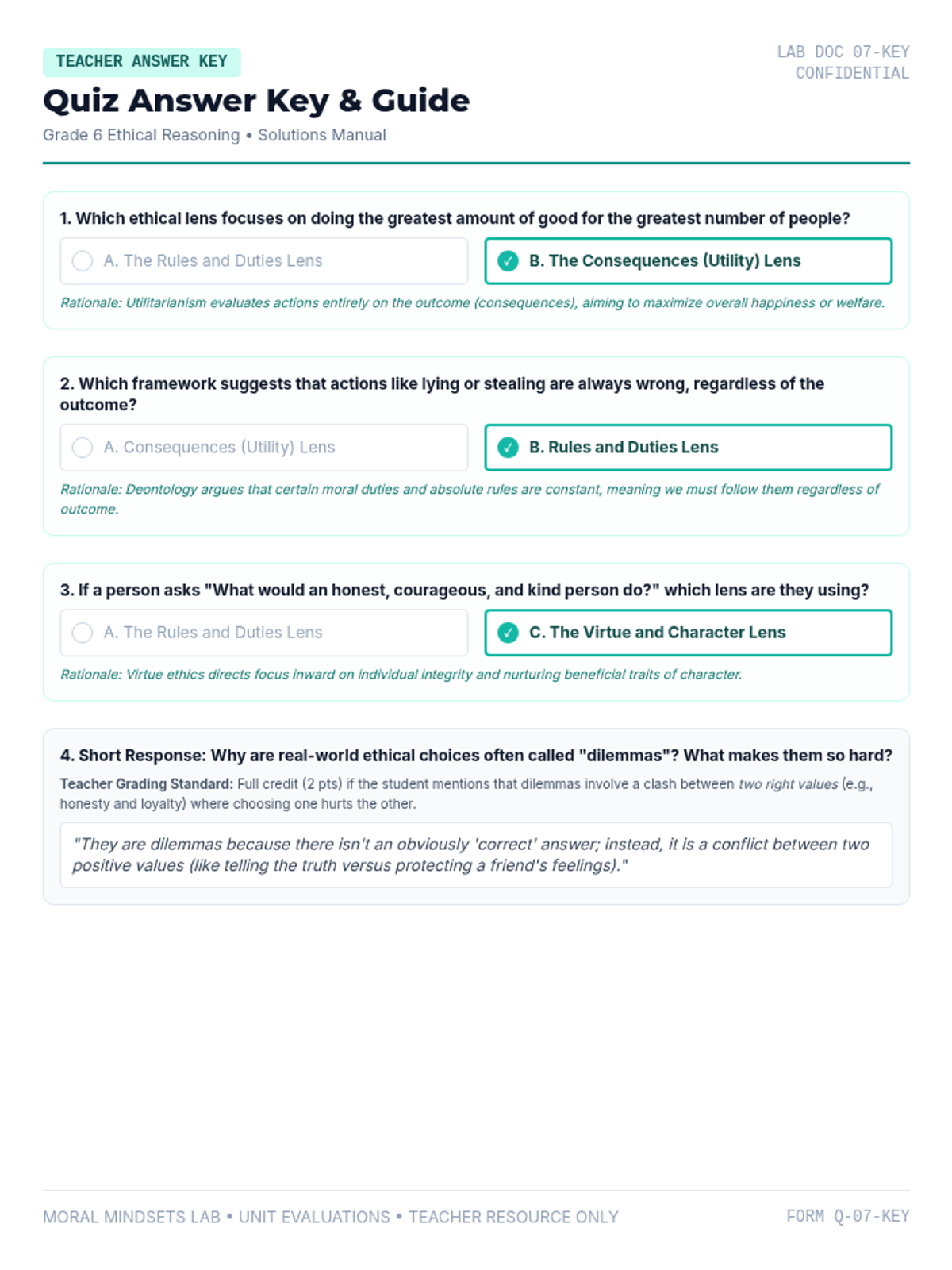
A comprehensive answer key and grading guide for the Ethical Reasoning Quiz, complete with correct options and evaluation tips.
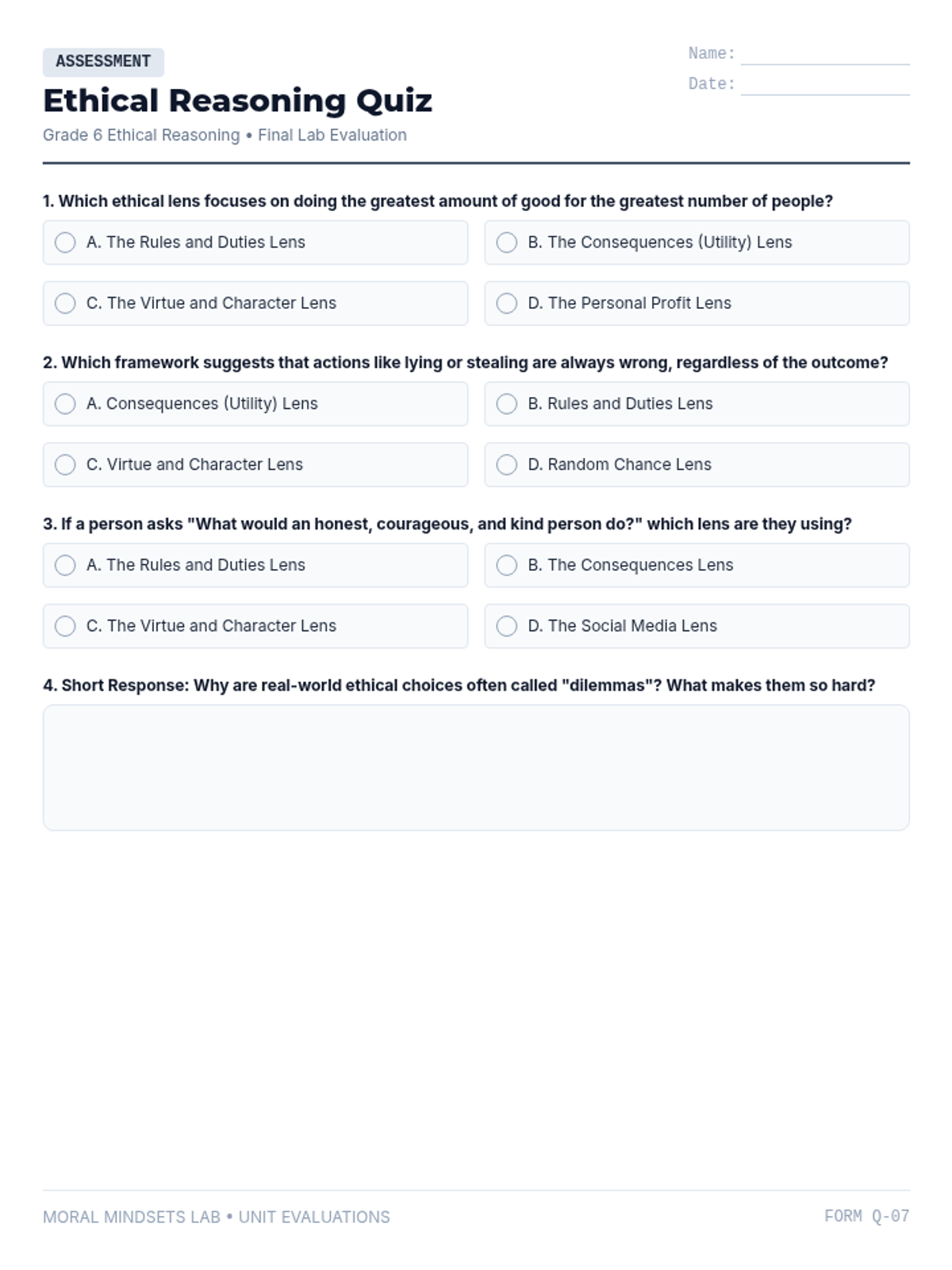
A printable 5-question multiple choice and matching assessment designed to evaluate students' grasp of ethical lenses and moral reasoning frameworks.
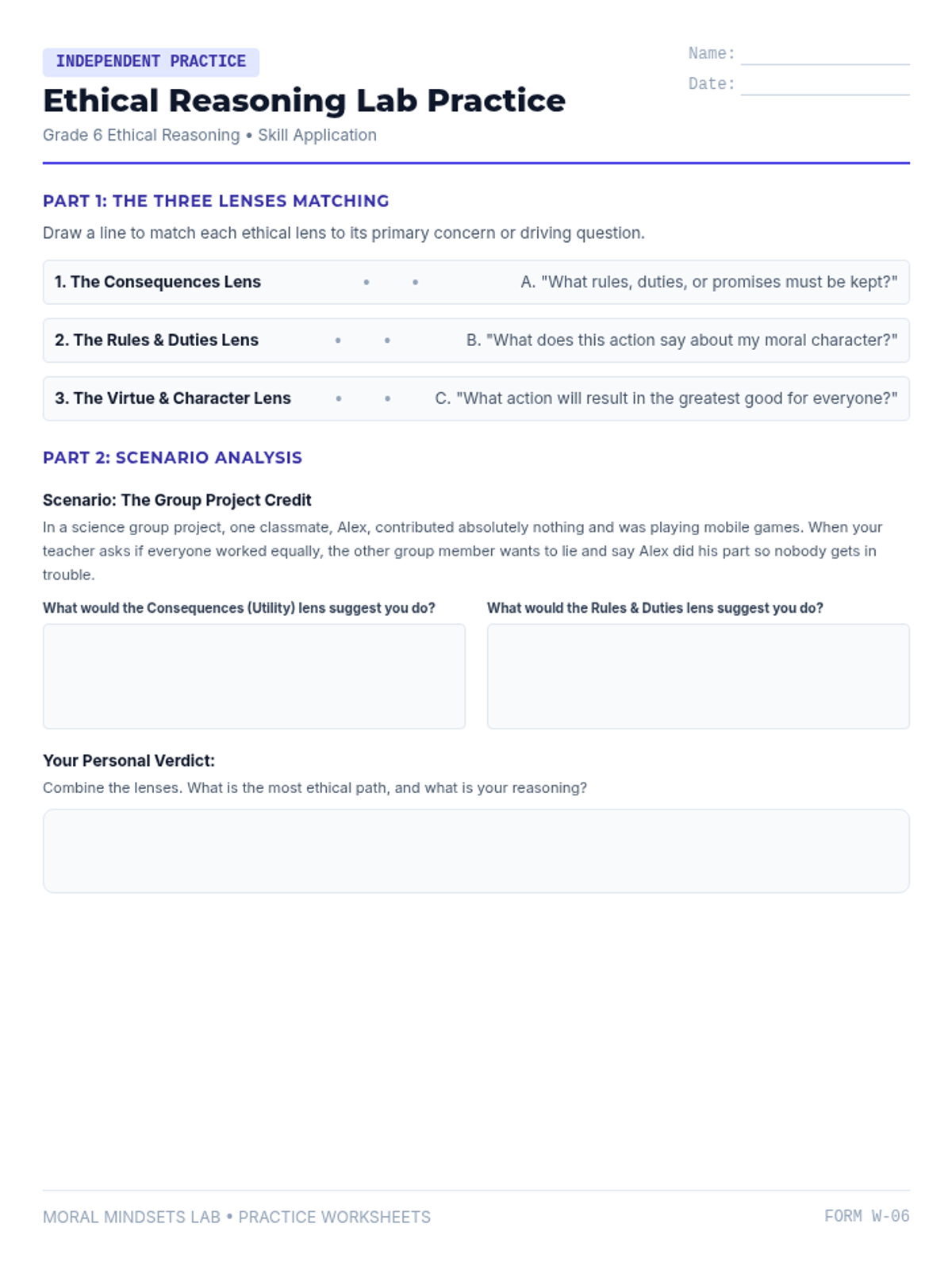
An independent student worksheet designed to reinforce ethical reasoning concepts through matching, vocabulary terms, and scenario applications.
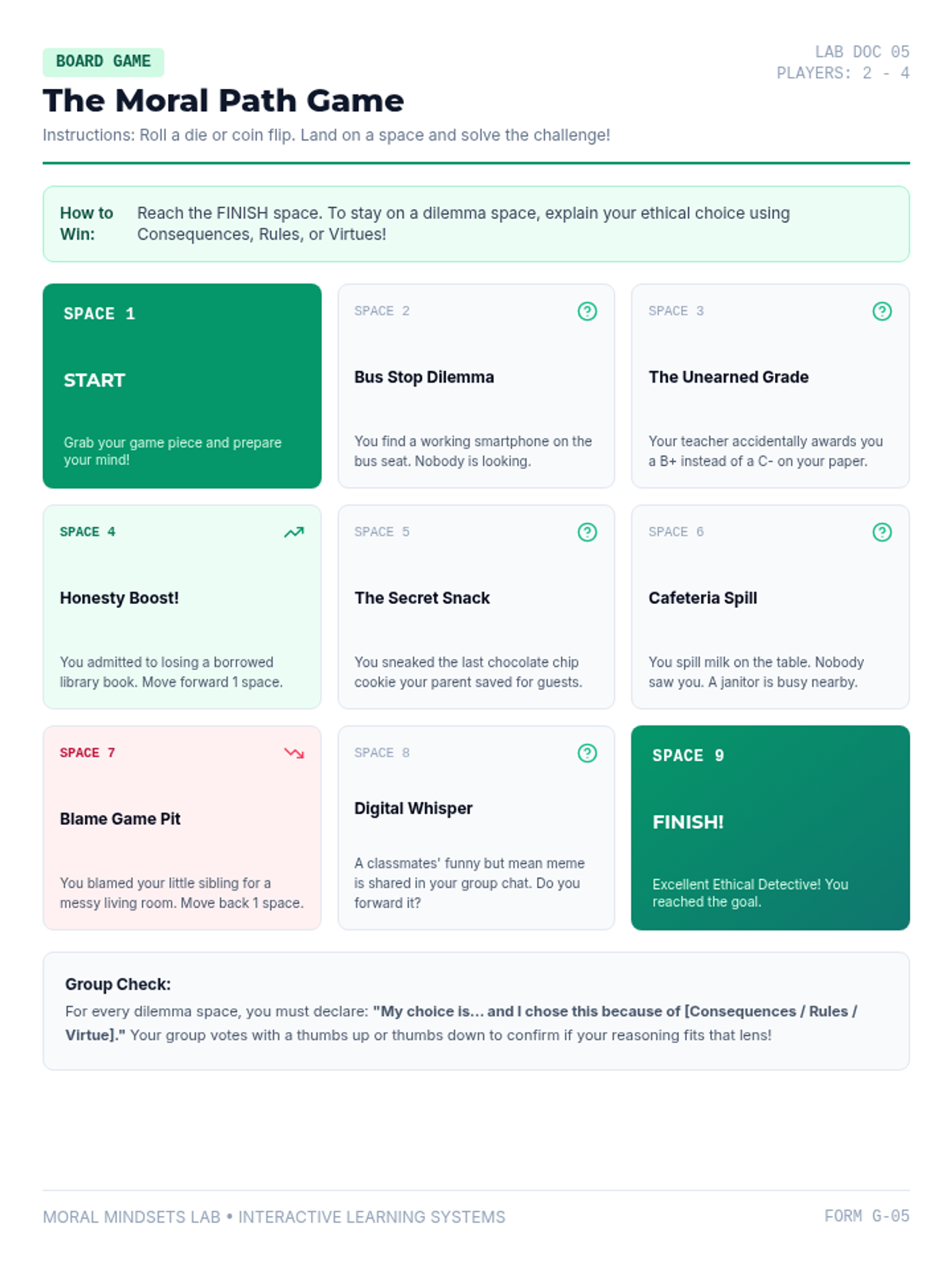
A beautifully designed printable board game layout featuring an ethical decision-making path, dilemma squares, and action instructions for small groups.
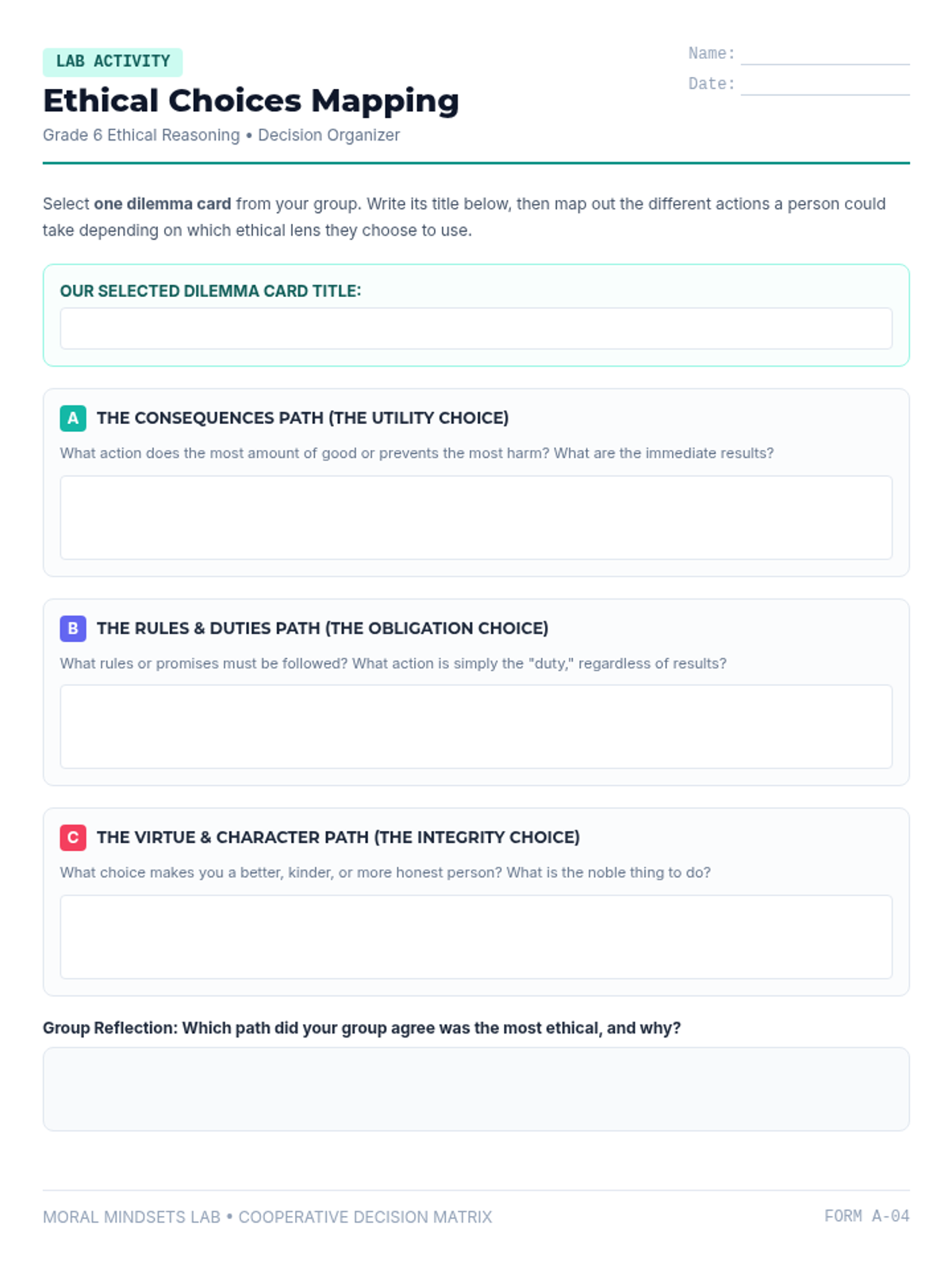
An interactive graphic organizer worksheet that guides students in breaking down a selected ethical dilemma into choices based on consequences, rules, and virtue.
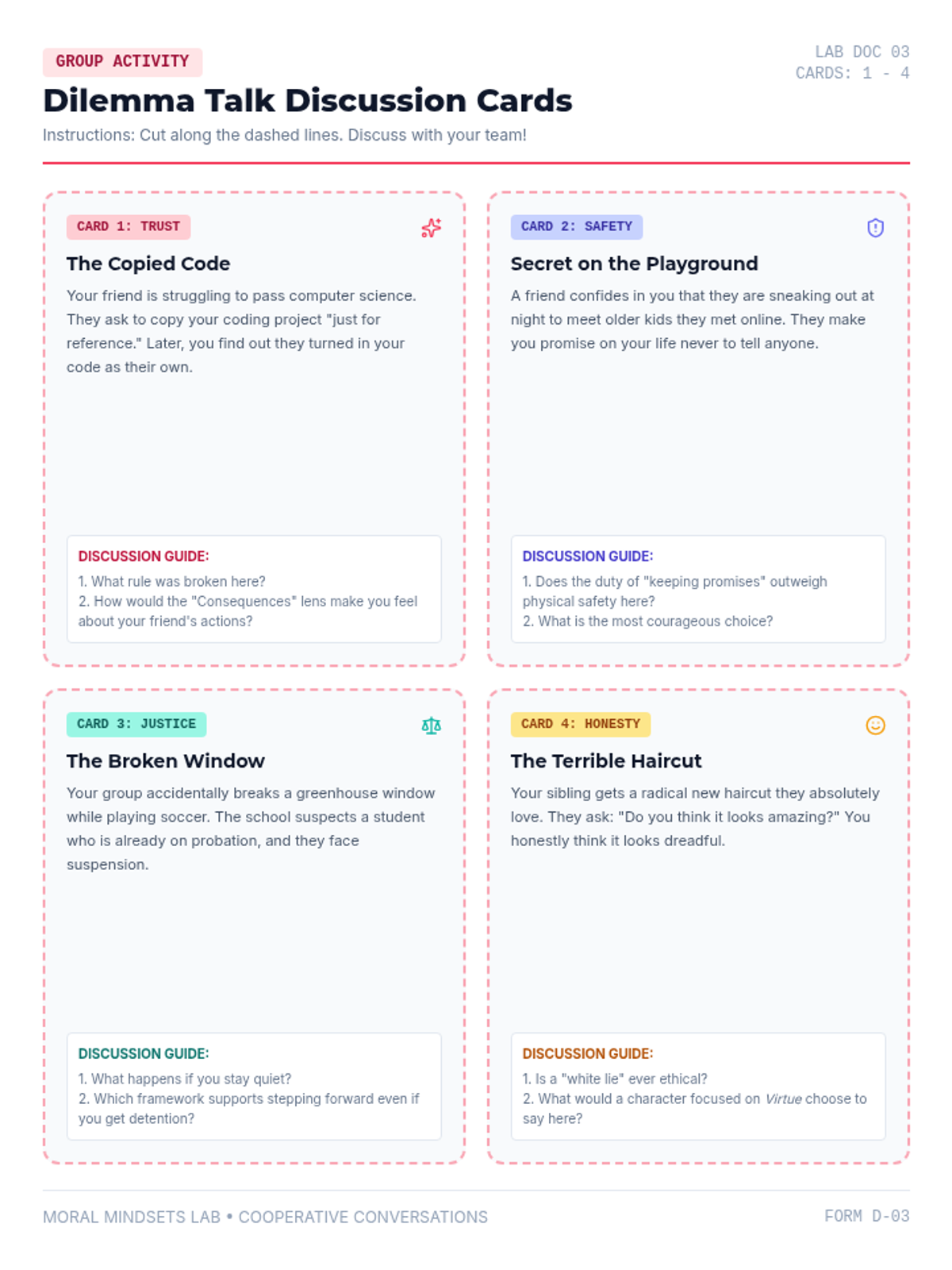
A set of 4 printable, cut-out discussion cards containing real-world ethical dilemmas and structured guided discussion questions for sixth-grade student groups.
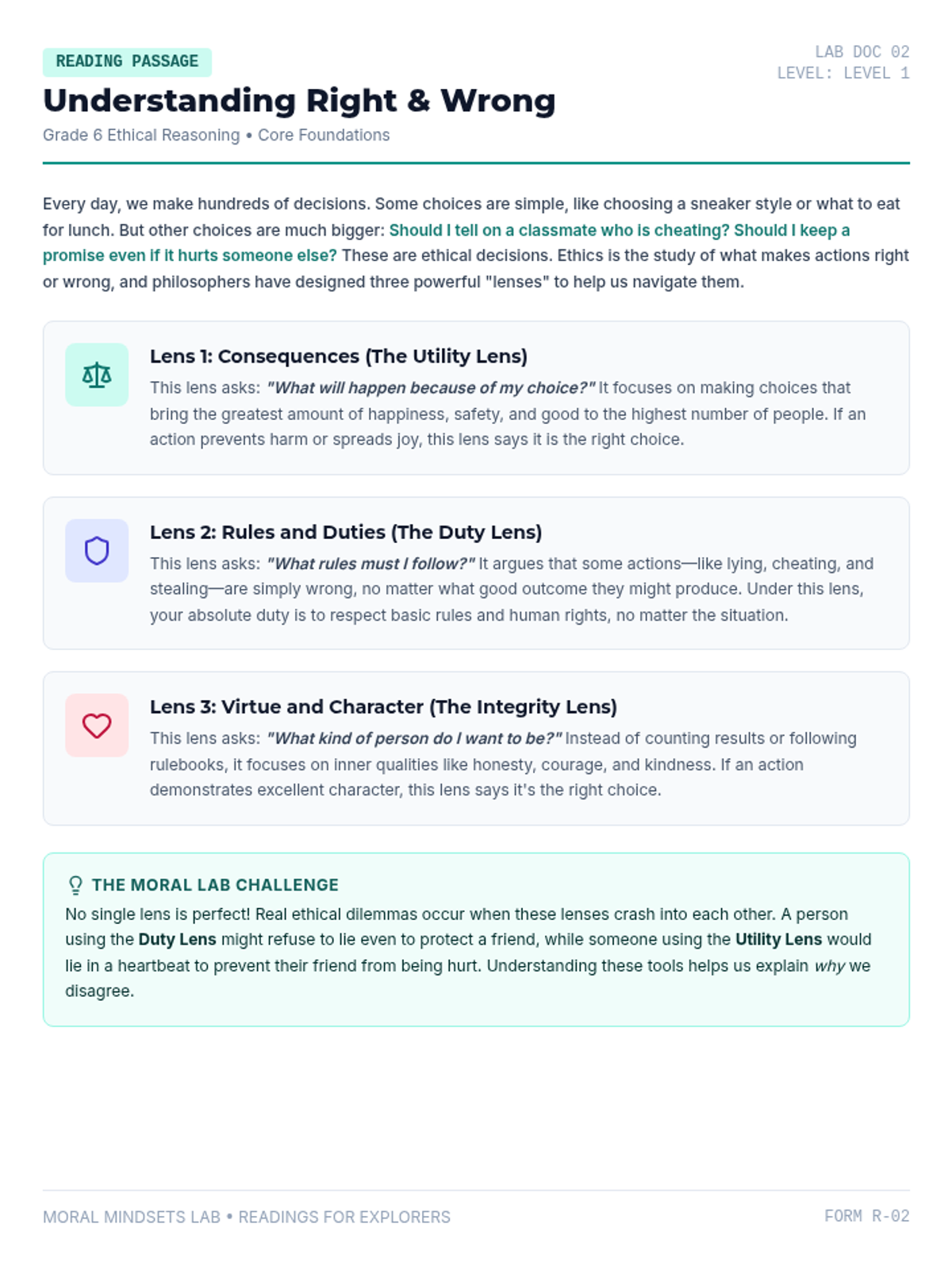
An engaging 1-page reading passage tailored for 6th-grade students, explaining the three fundamental frameworks of ethics: Consequences, Rules, and Virtues.
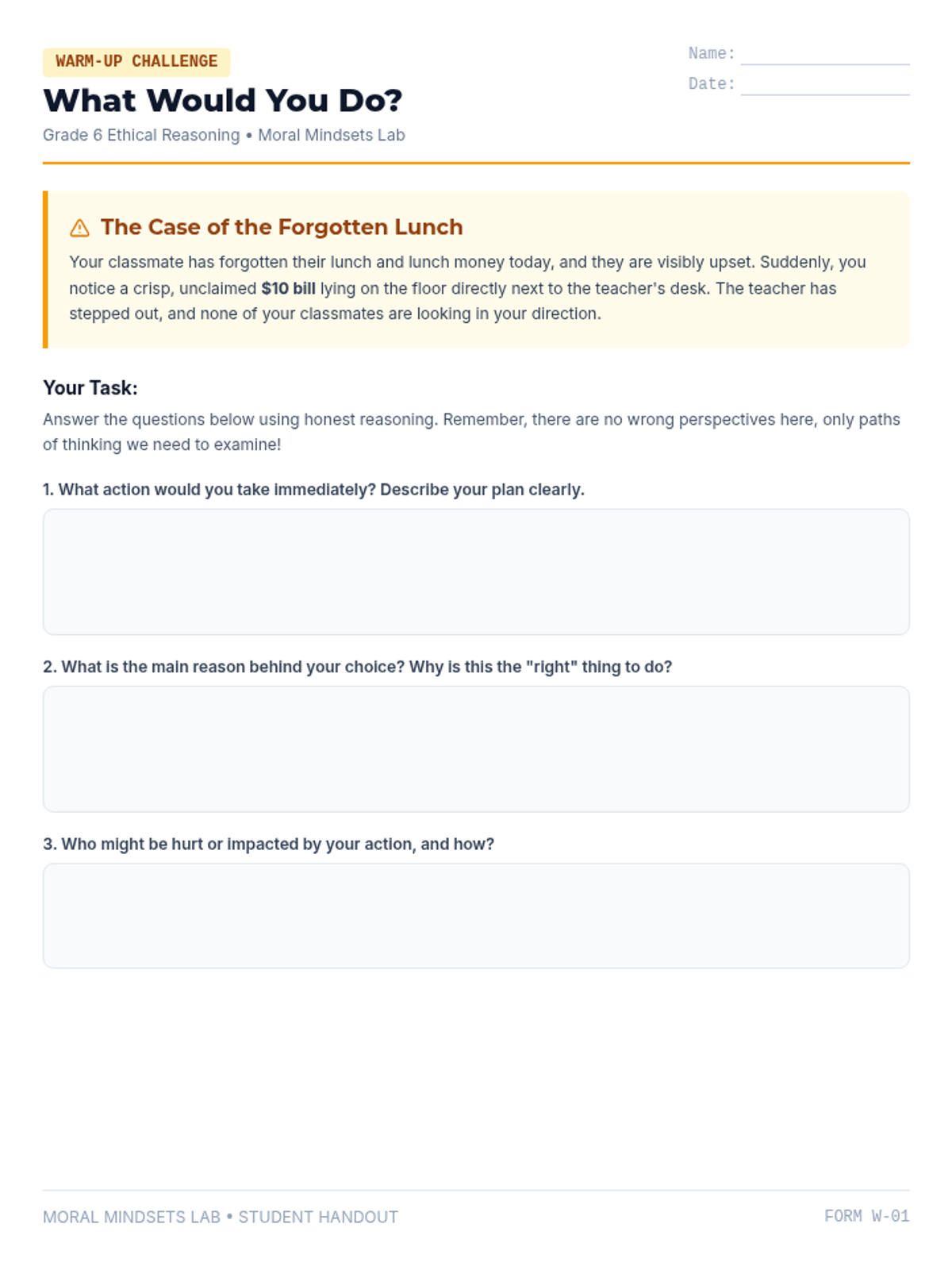
A printable student warm-up worksheet titled 'What Would You Do?' with fields for name, date, a structured moral dilemma scenario, and clear writing boxes for student responses.
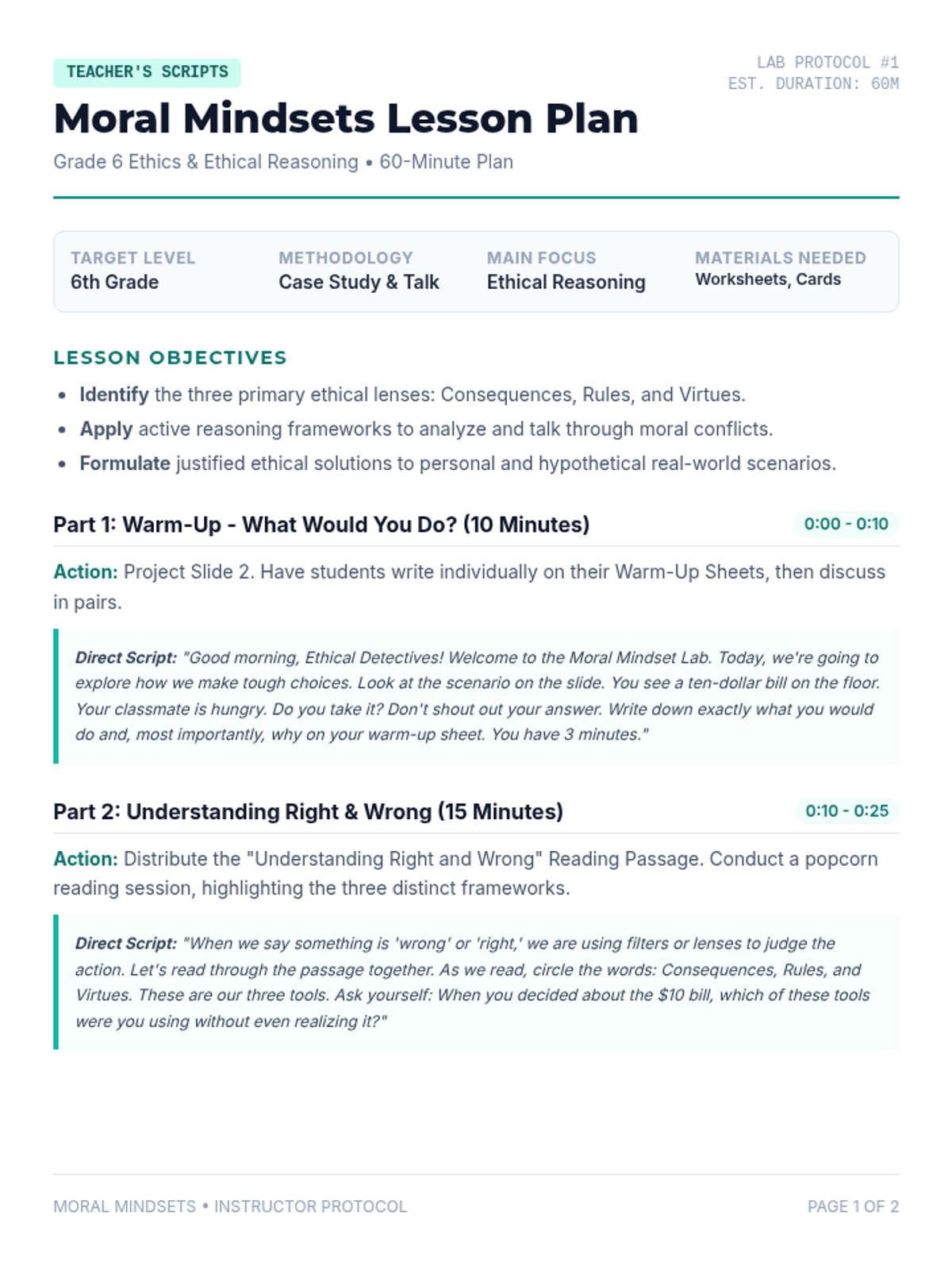
A detailed 2-page teacher's guide and script detailing classroom orchestration, precise pacing, questioning prompts, and direct script for each segment of the Moral Mindsets lesson.
A highly visual, modern 16:9 presentation guiding 6th-grade students through ethical reasoning concepts, interactive dilemmas, and class discussion prompts. Includes specific placeholder prompts for external video integration.
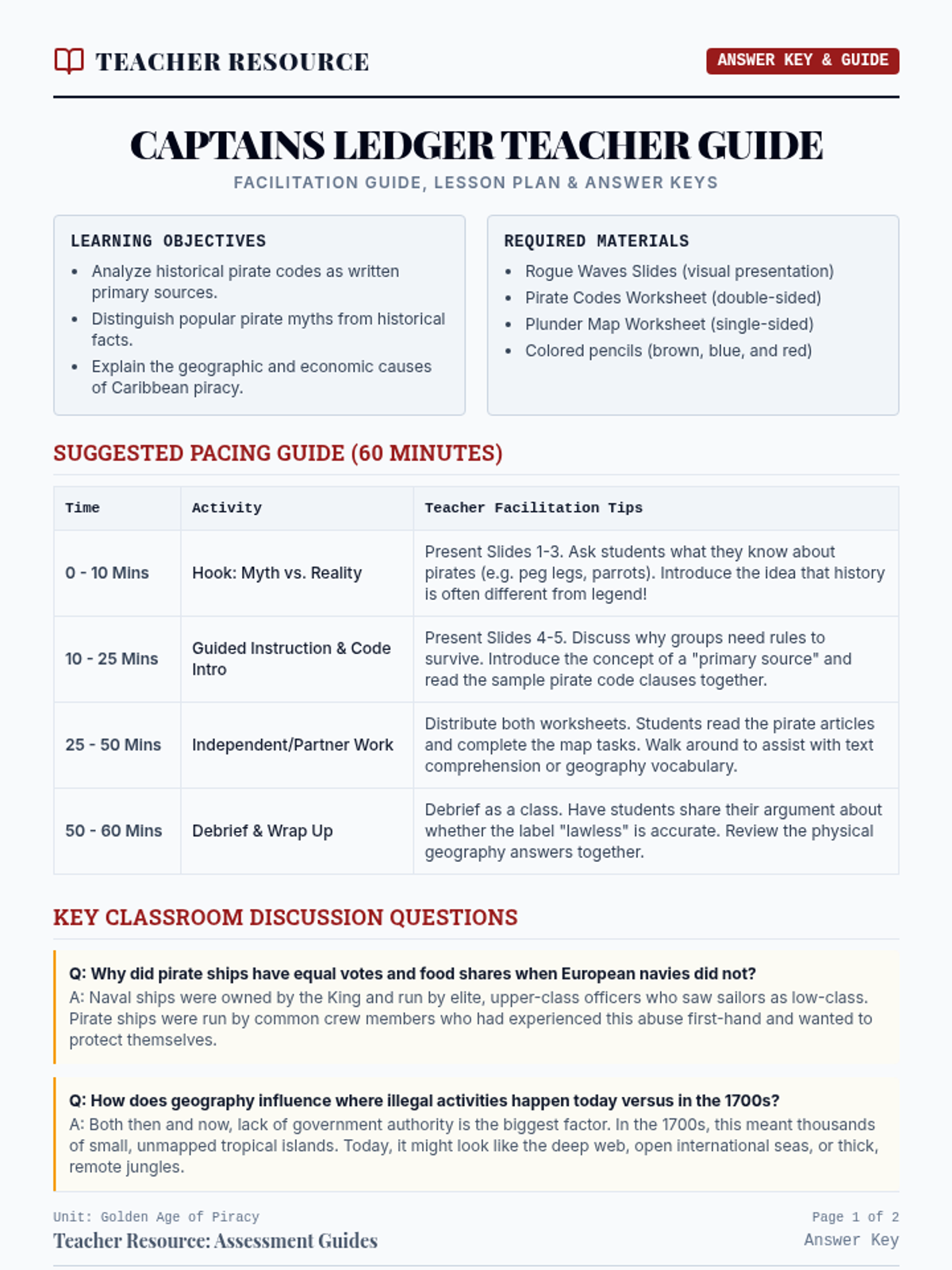
A comprehensive 2-page teacher facilitation guide containing lesson objectives, required materials, a suggested 60-minute pacing timeline, guiding class discussion prompts, and detailed answer keys for both student worksheets.
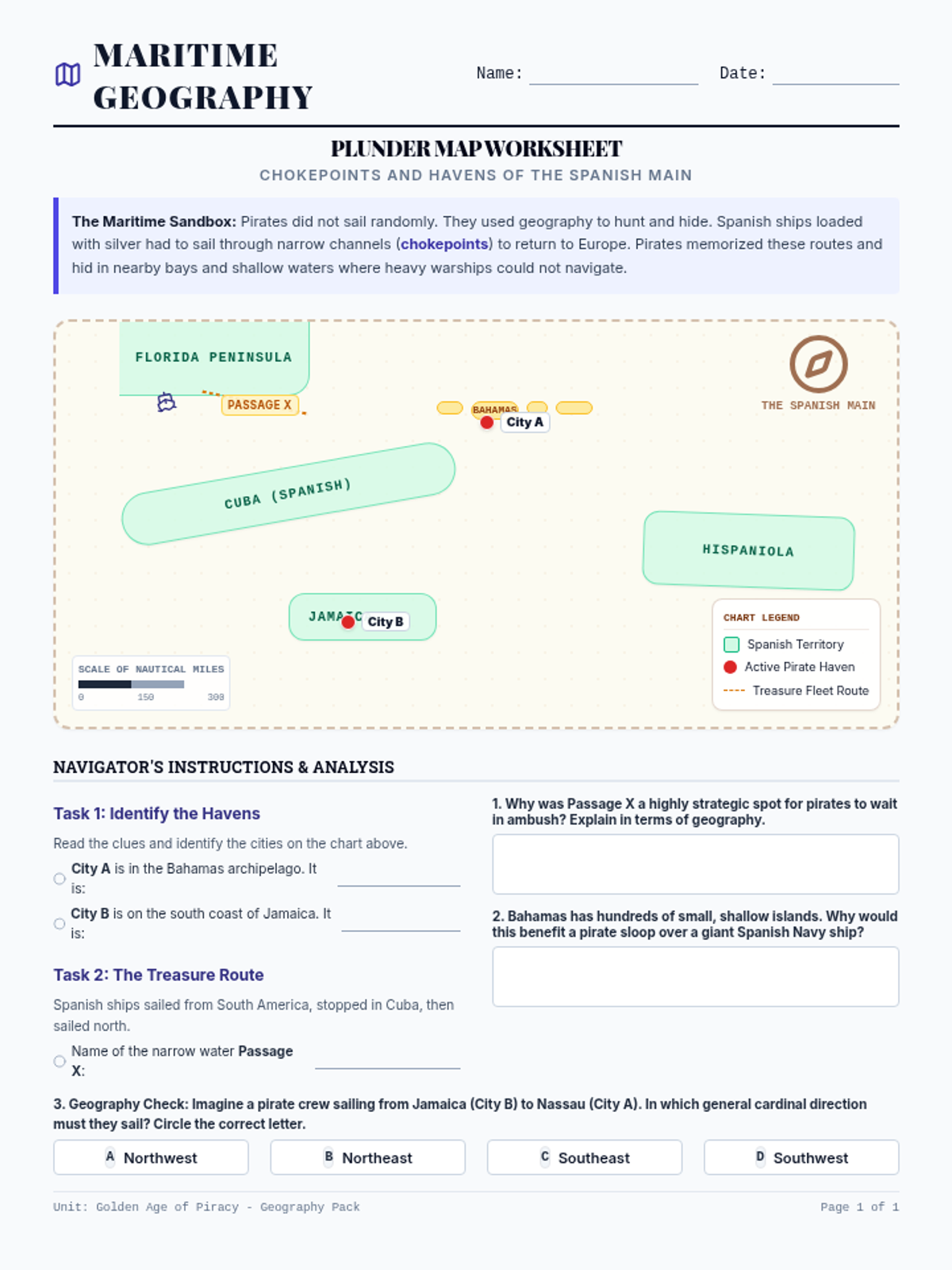
A student-facing guided map worksheet where they trace Spanish treasure fleets, identify major pirate havens (Nassau, Port Royal), and complete geographical analysis questions about maritime chokepoints and island geography.
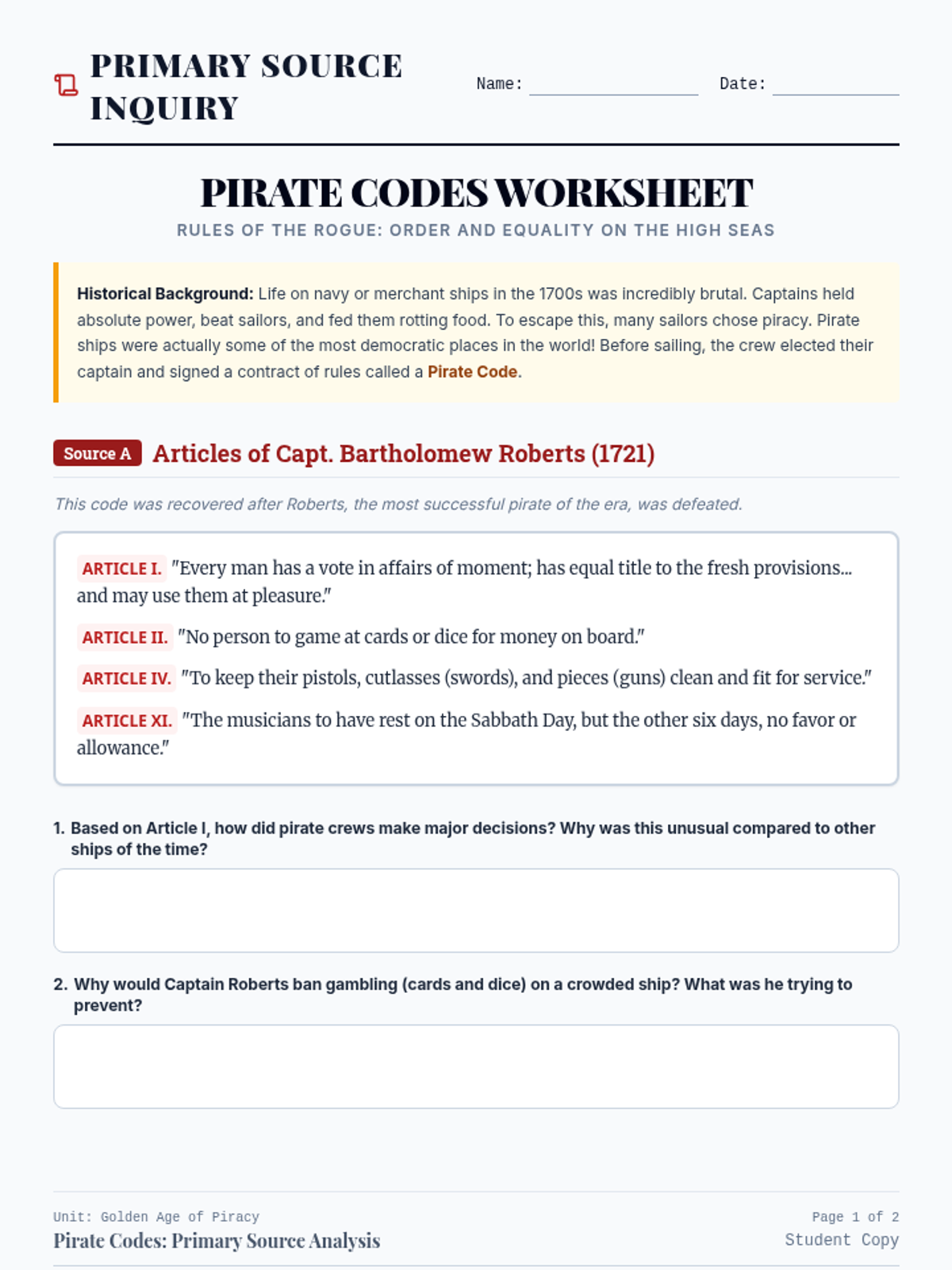
A comprehensive 2-page primary source analysis worksheet where students analyze real pirate codes (Bartholomew Roberts and John Phillips) and answer text-dependent historical inquiry questions about pirate democracy and shipboard rules.
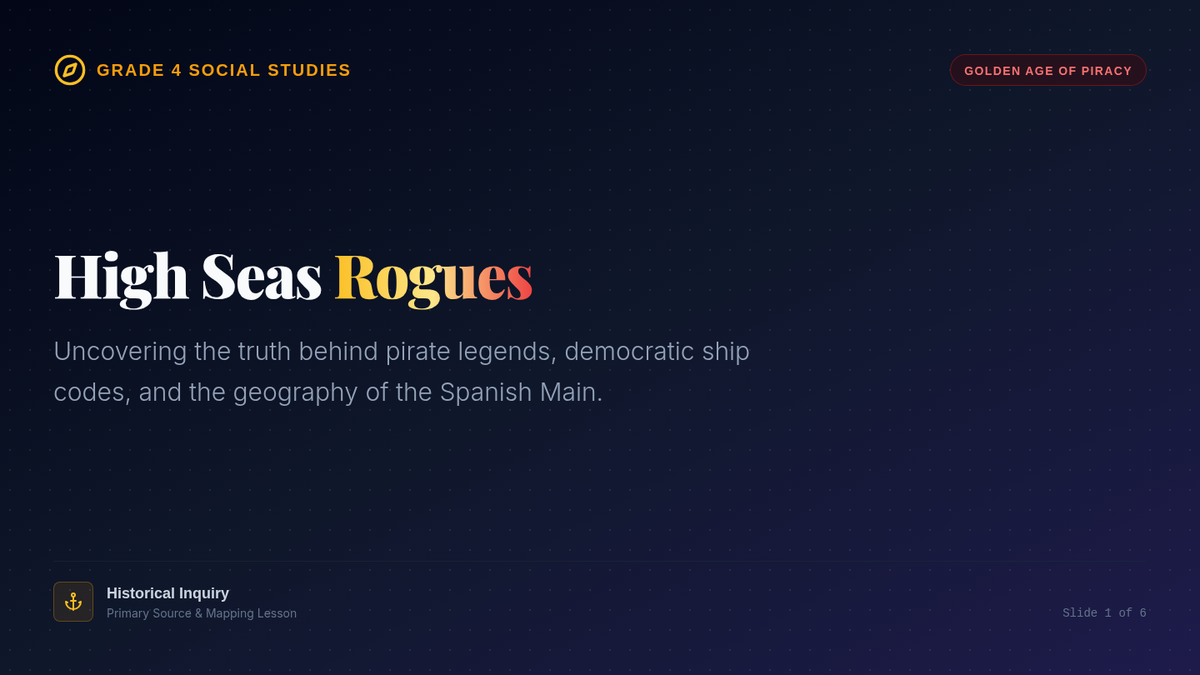
A highly visual, engaging 6-slide presentation that introduces the Golden Age of Piracy, explores pirate myths vs. historical reality, discusses shipboard democracy and pirate codes, introduces Caribbean geography, and briefs students on their work.
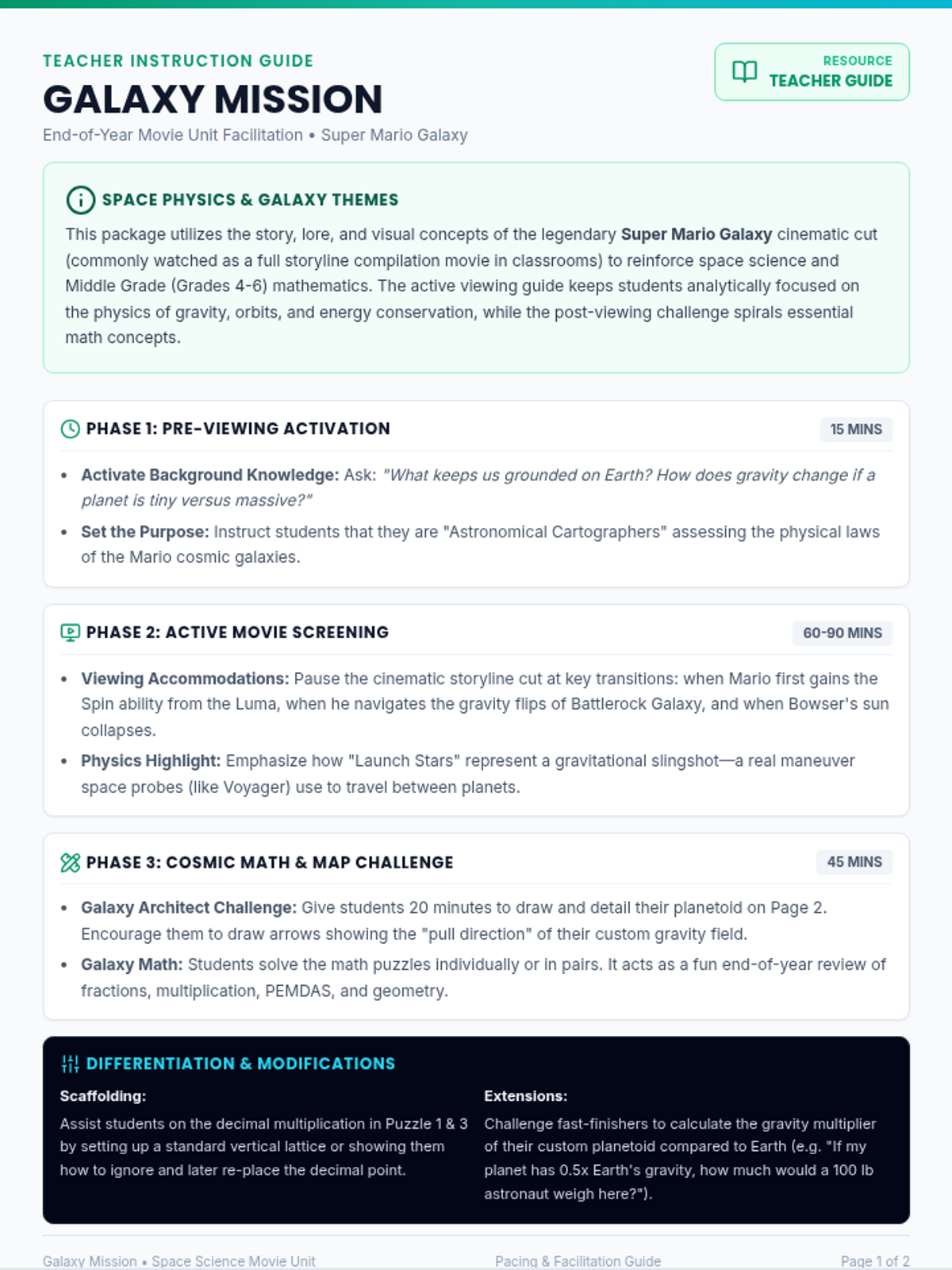
A 2-page complete teacher facilitation guide and answer key for the Microbot Mission viewing unit. It provides lesson timelines, pre- and during-viewing classroom discussion prompts, and fully explained numerical solutions for all math and geometry challenges.
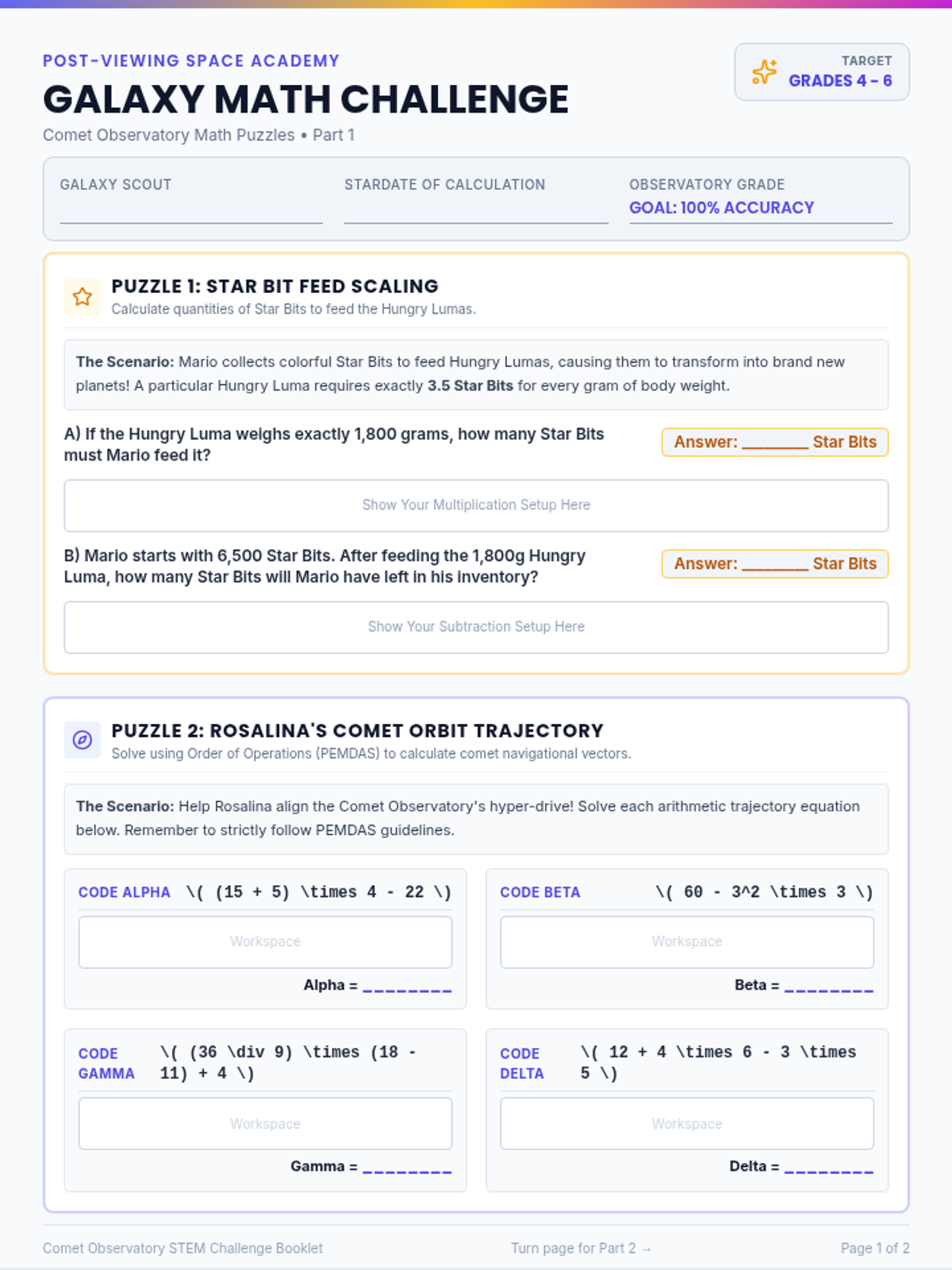
A high-energy 2-page math challenge booklet based on the physics, orbits, and story of Super Mario Galaxy. It presents Grade 4-6 aligned puzzles covering Star Bit scaling, PEMDAS navigational vectors, distance word problems, and orbital geometry.
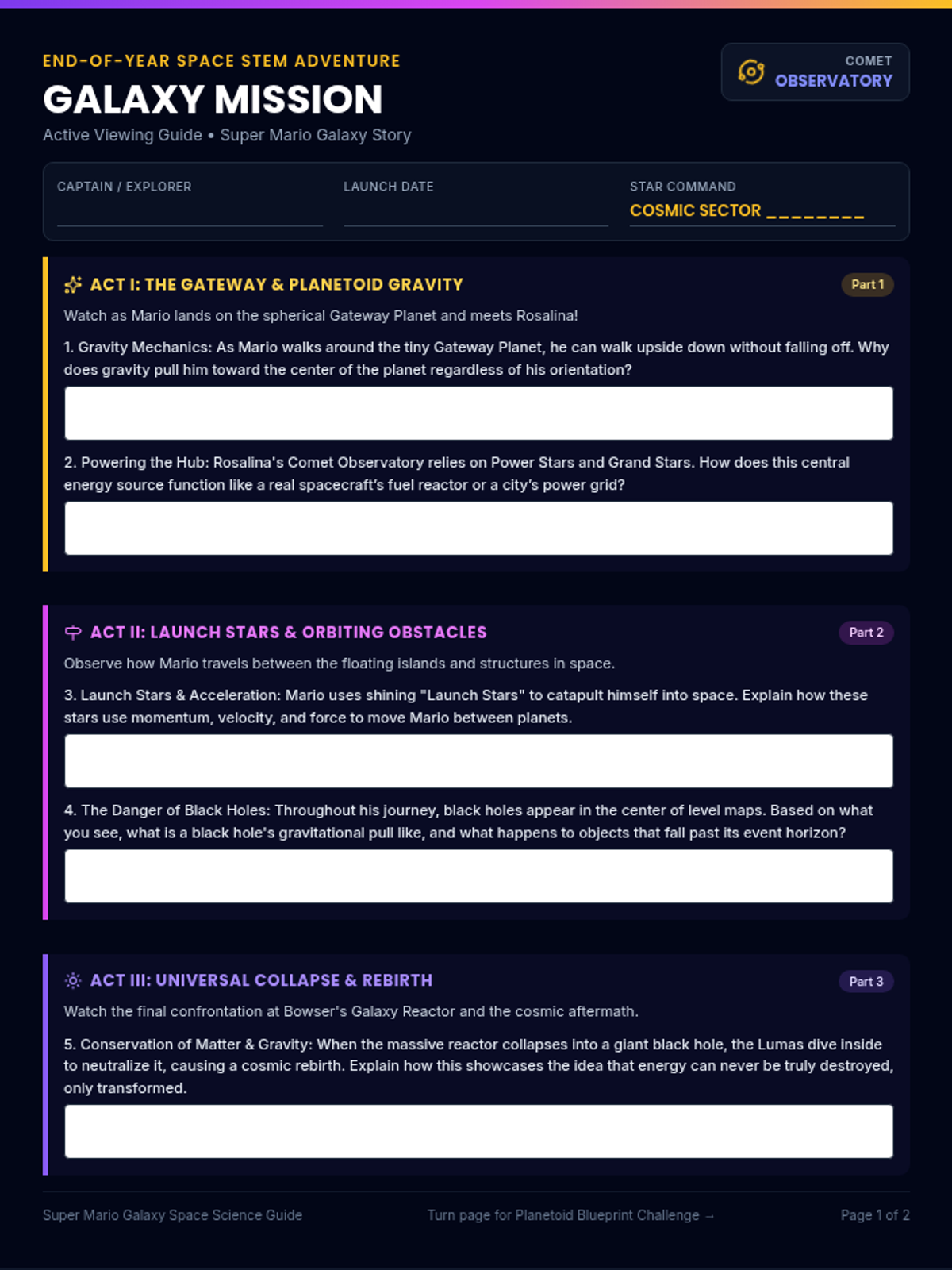
A 2-page active viewing and creative space-science guide based on the story of Super Mario Galaxy. Students explore gravity, orbits, energy transfer, and black holes, followed by designing and mapping their own gravitational planetoid.
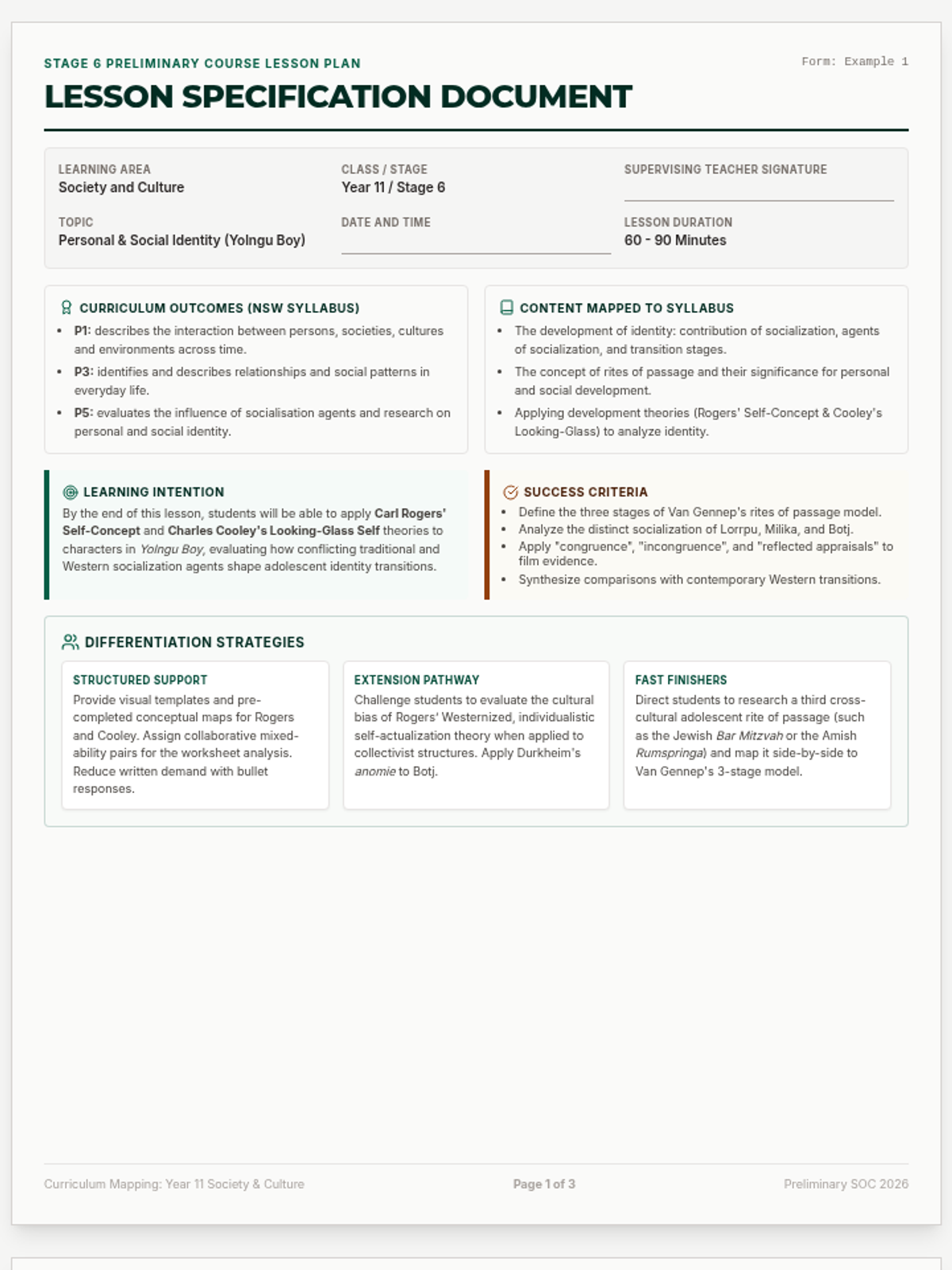
A structured Year 11 Society and Culture lesson plan mapped directly to the NSW Stage 6 syllabus template, detailing outcomes, content, learning intentions, success criteria, and differentiation strategies for the Yolngu Boy lesson.
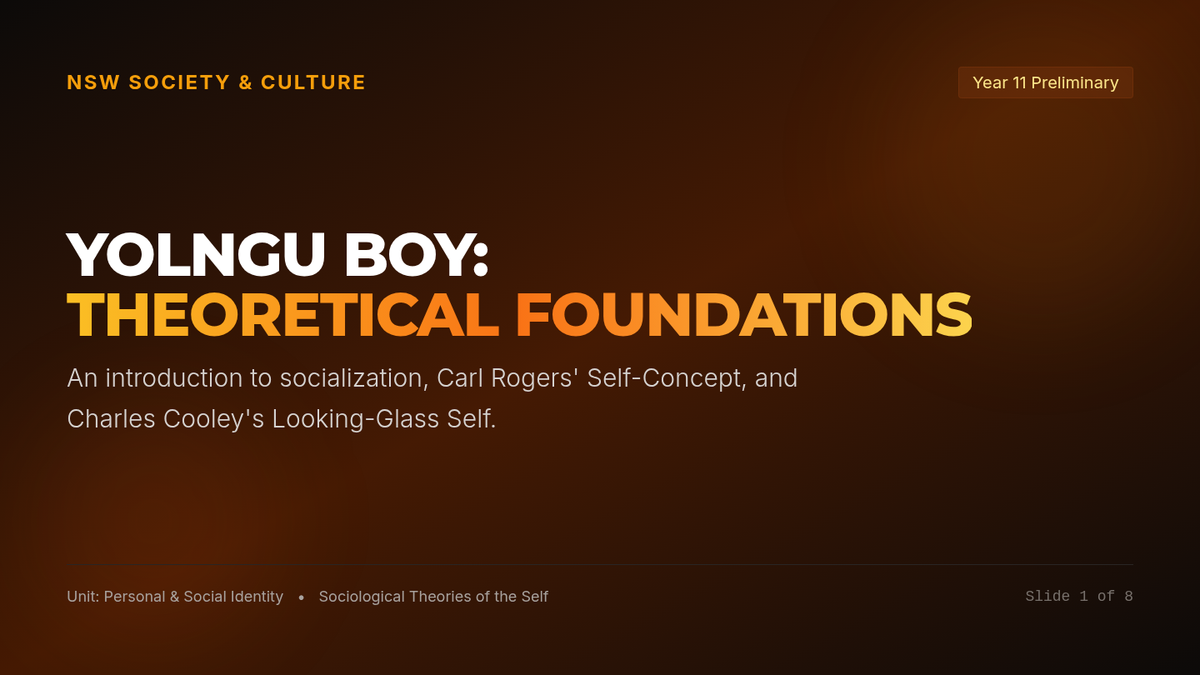
An expanded 16:9 8-slide presentation deck introducing students to Carl Rogers' Self-Concept theory and Charles Cooley's Looking-Glass Self theory, detailing their fundamental pillars and stepping through clear, visual character applications for the film Yolngu Boy.