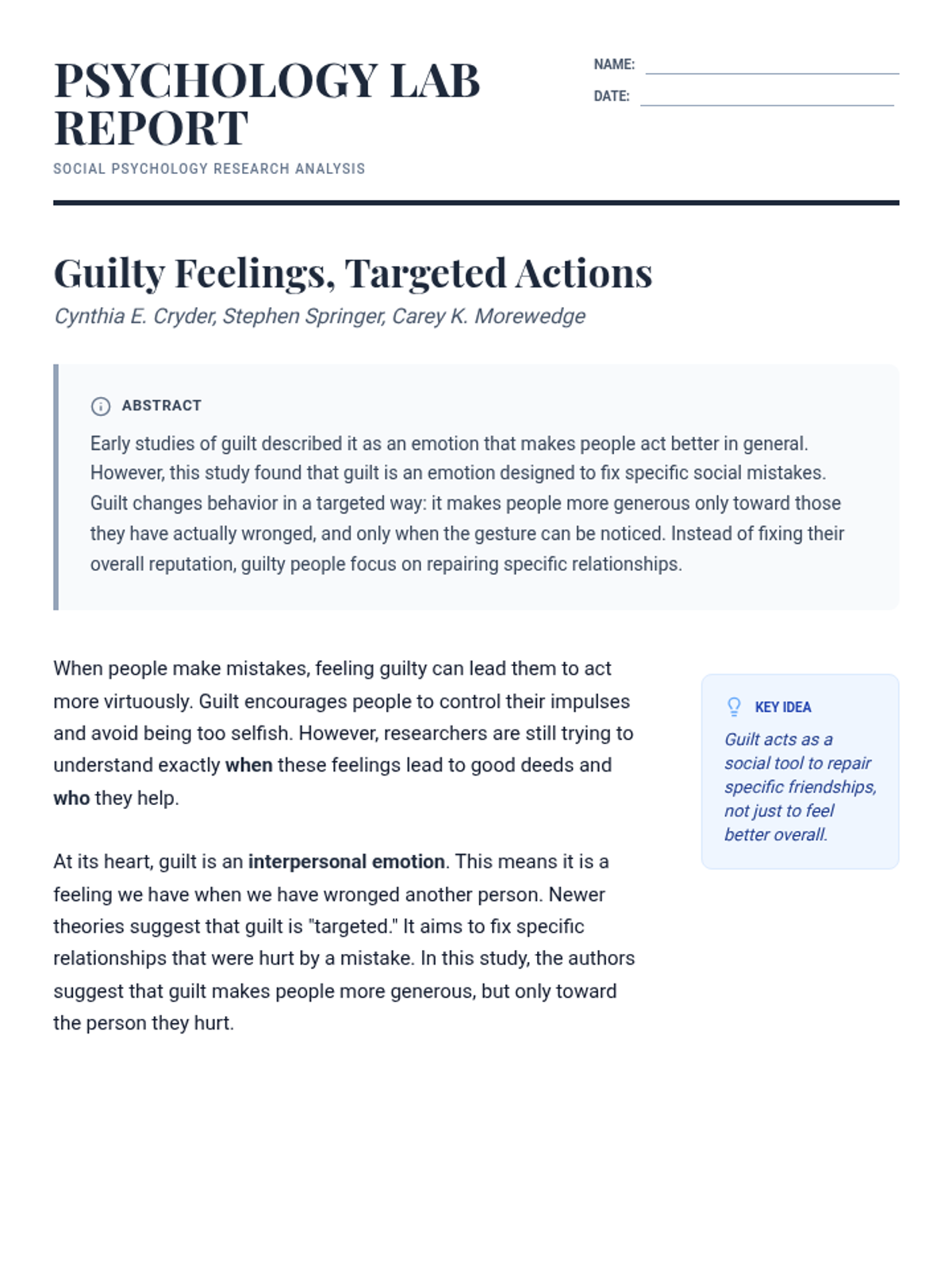
Teacher answer key for the Guilt Research Reading Passage, providing correct multiple-choice answers and suggested short-answer responses based on the 1000L adapted text.
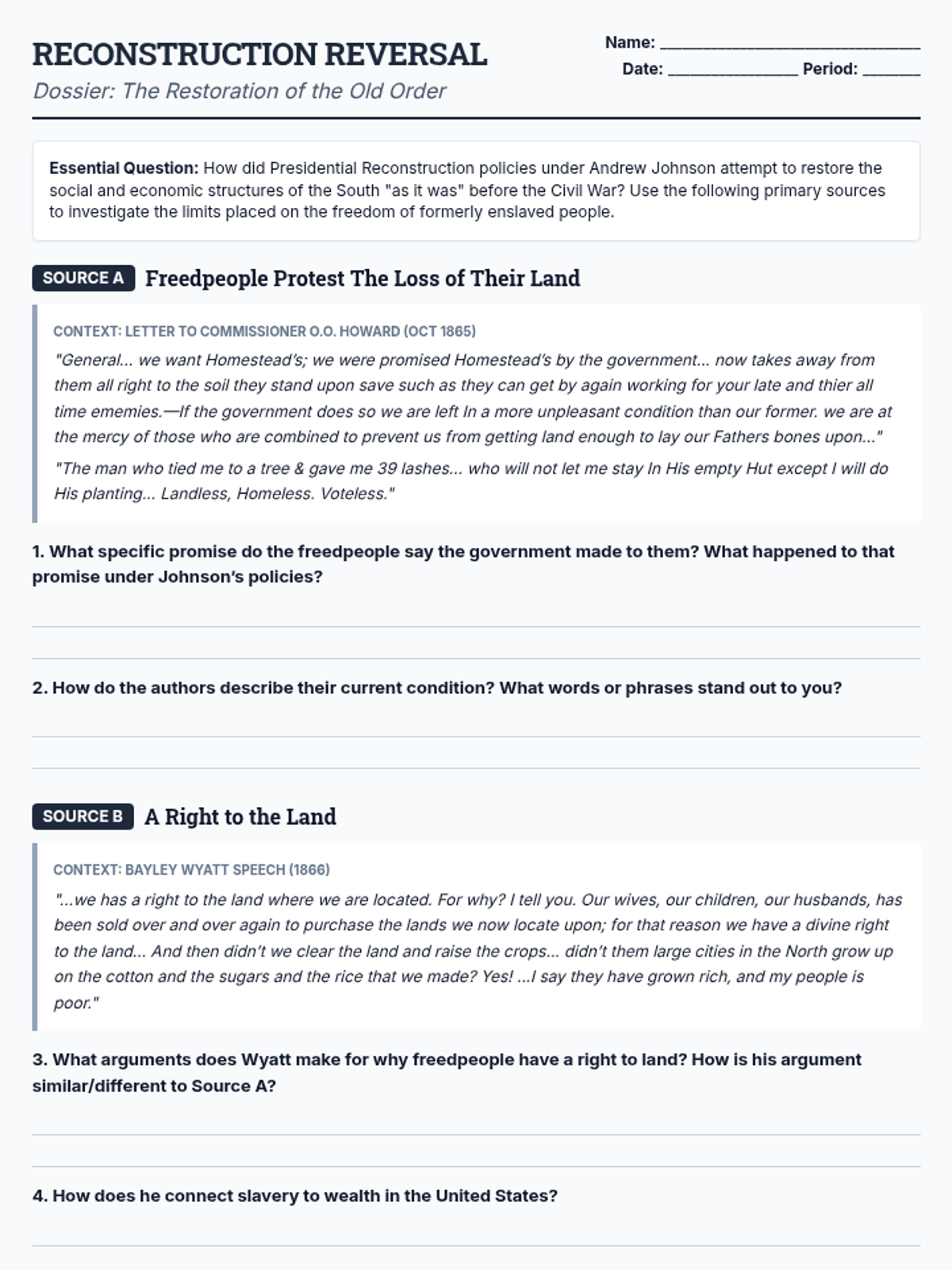
A primary source analysis worksheet for tenth-grade history students exploring how Presidential Reconstruction policies limited the freedom of formerly enslaved people through land seizure, sharecropping, and Black Codes.
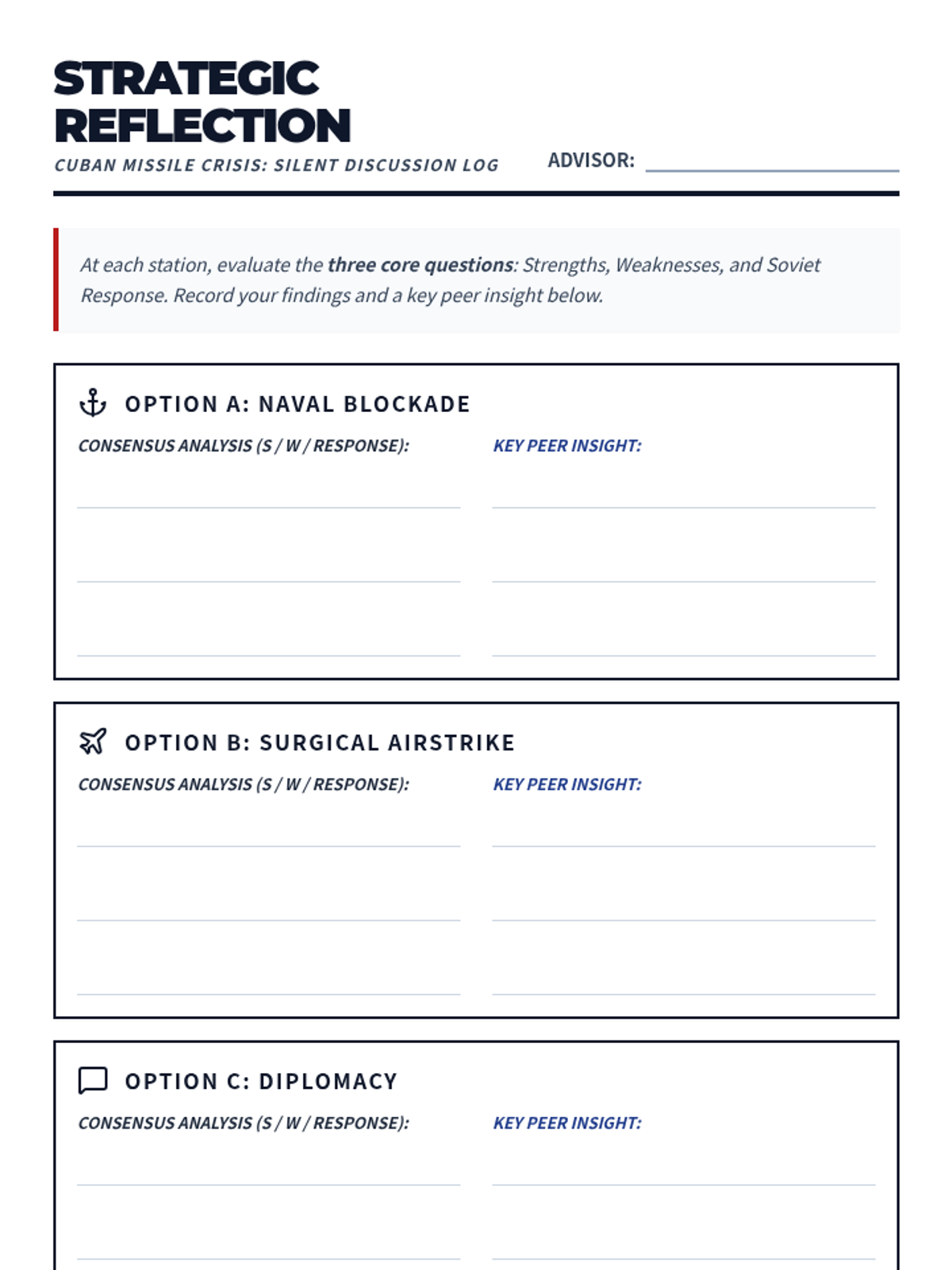
A specialized student worksheet for a silent discussion activity. It includes space for students to record their own analysis of the four policy options and, crucially, a dedicated area to capture compelling peer insights or counter-points encountered during the rotation.
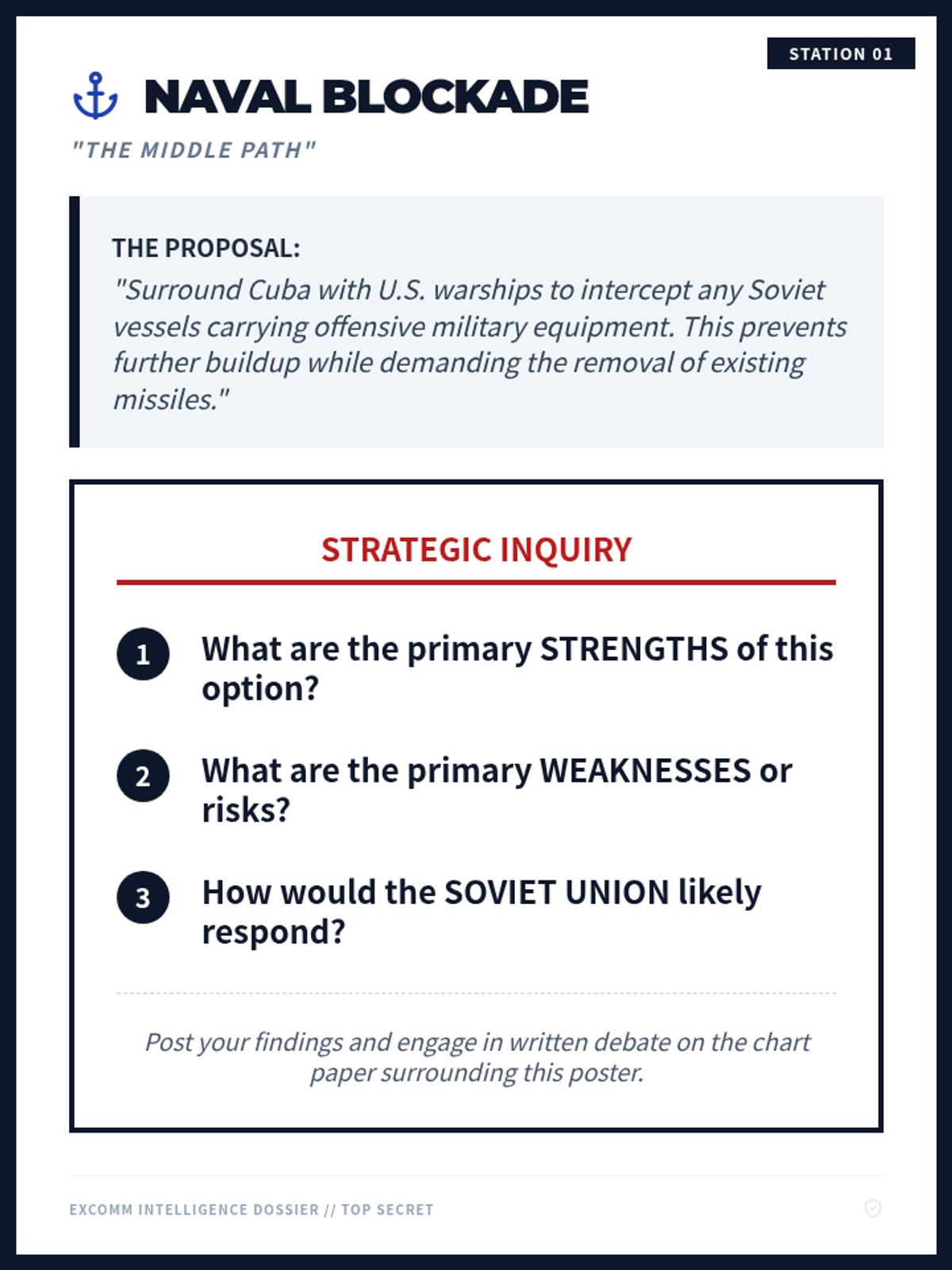
Four high-impact printable posters to be used as central prompts for a silent discussion activity. Each poster outlines a primary policy option JFK faced during the Cuban Missile Crisis, serving as the starting point for students to add their analysis and peer responses on larger chart paper.
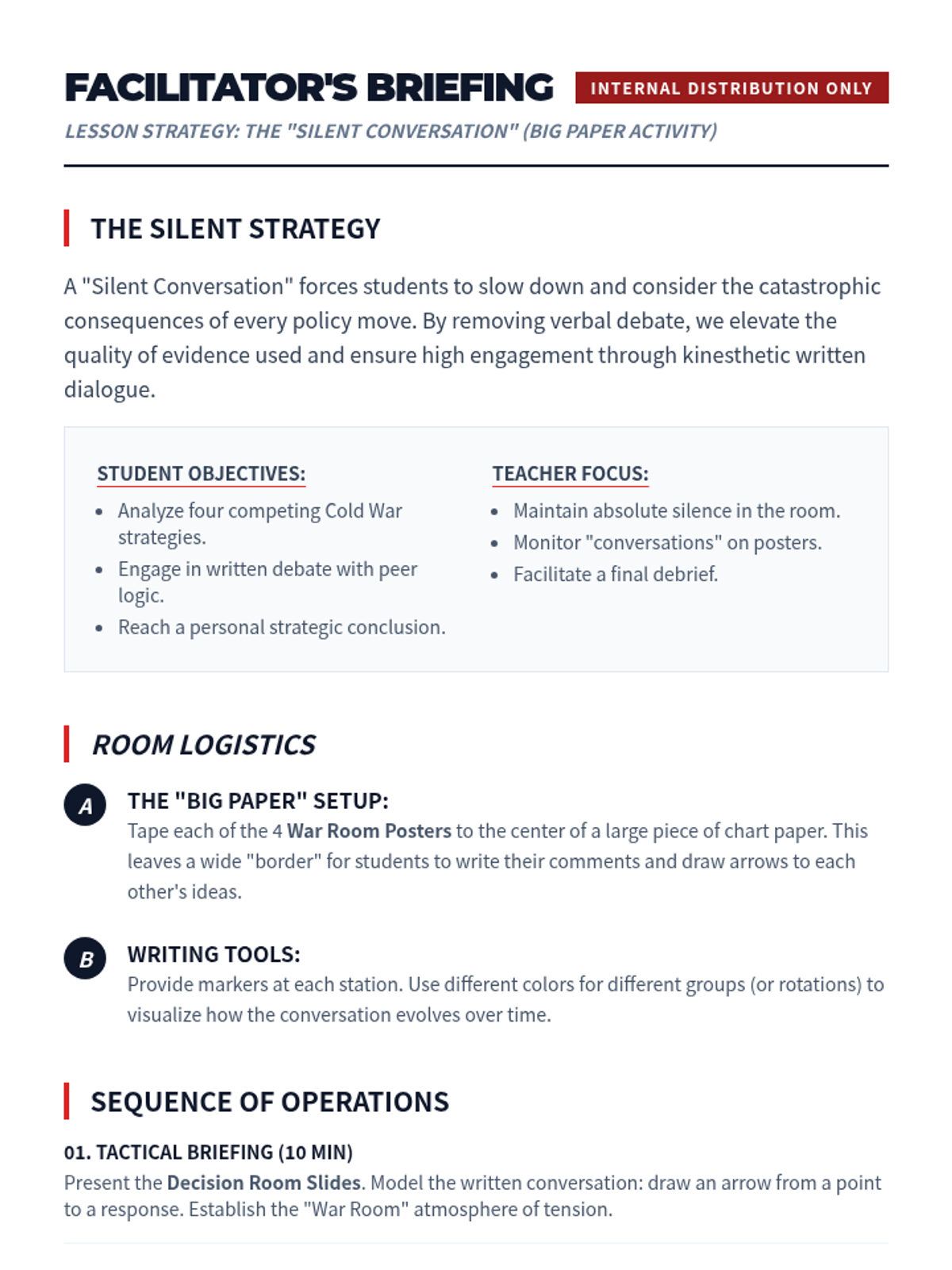
A comprehensive facilitator's guide updated to support a 'Silent Conversation' (Big Paper) activity. It provides instructions for setting up station posters, managing a silent classroom through 'Security Violations,' and guiding students in written debate.
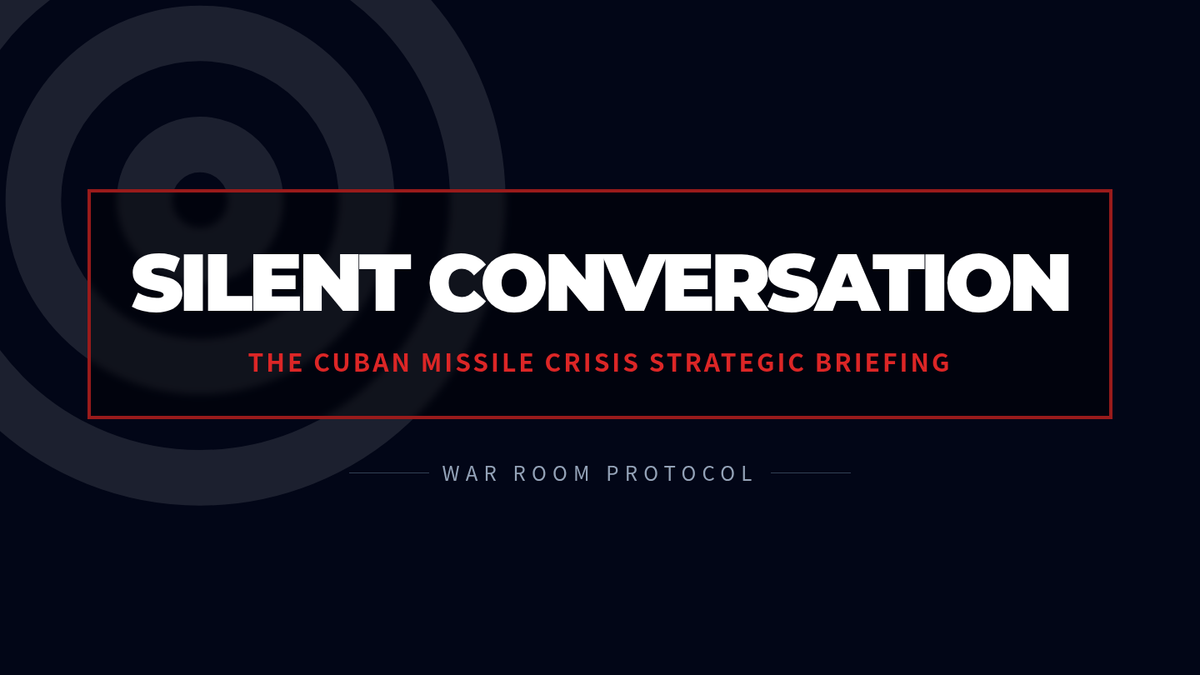
A 16:9 slide deck tailored for a silent discussion activity. It clearly explains the 'Silent Conversation' technique, showing students how to engage through writing, arrows, and peer responses to simulate the high-stakes atmosphere of the Kennedy administration's EXCOMM meetings.
Expanded introductory slides for Lesson 1 covering the full range of landforms and bodies of water with a global focus, featuring comparative visuals and global examples like the Andes and Italy.
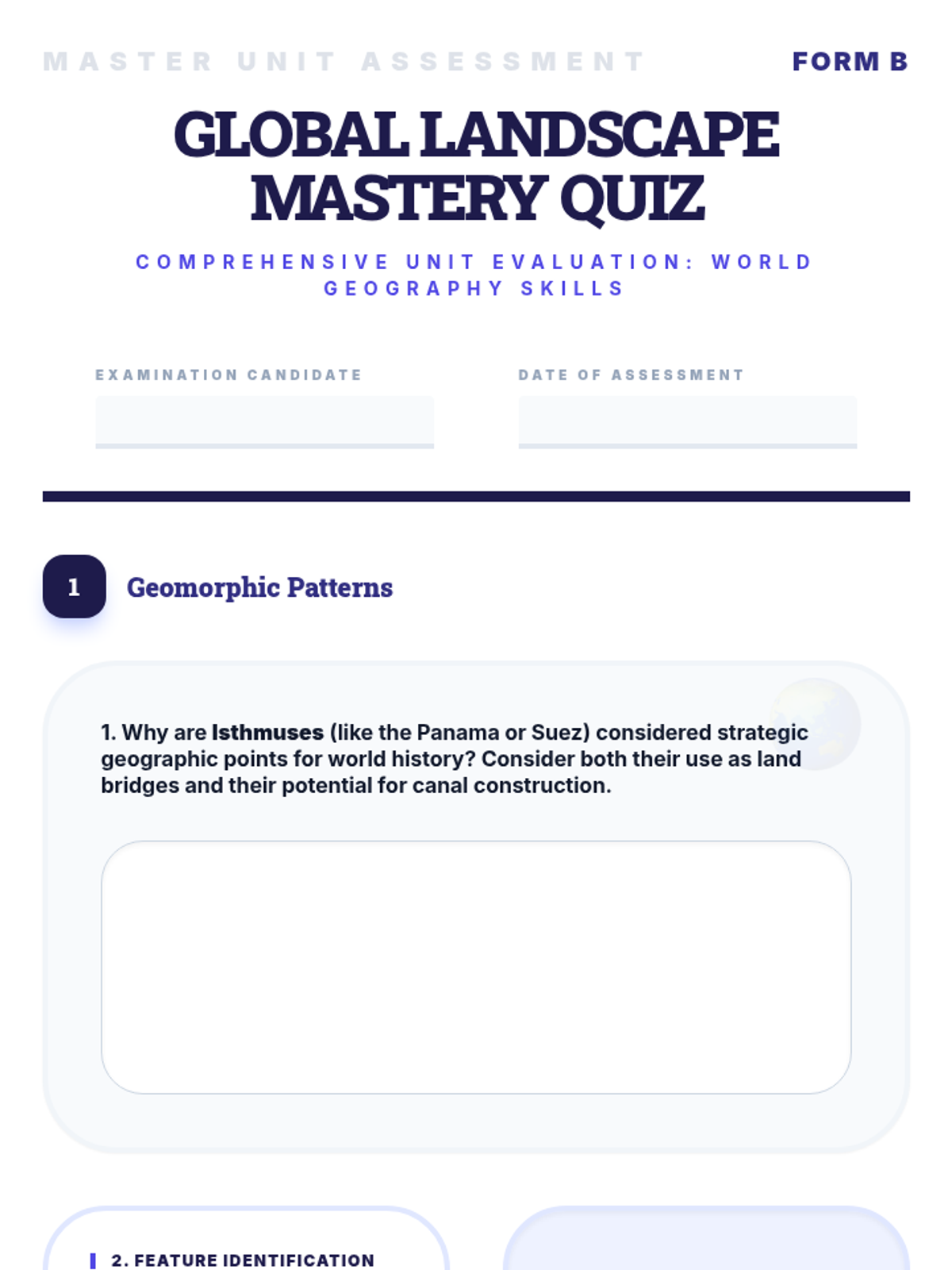
Global-focused final mastery quiz (Form B) featuring questions on isthmuses, world elevation averages, and regional economic advantages. Part of a secondary assessment set.
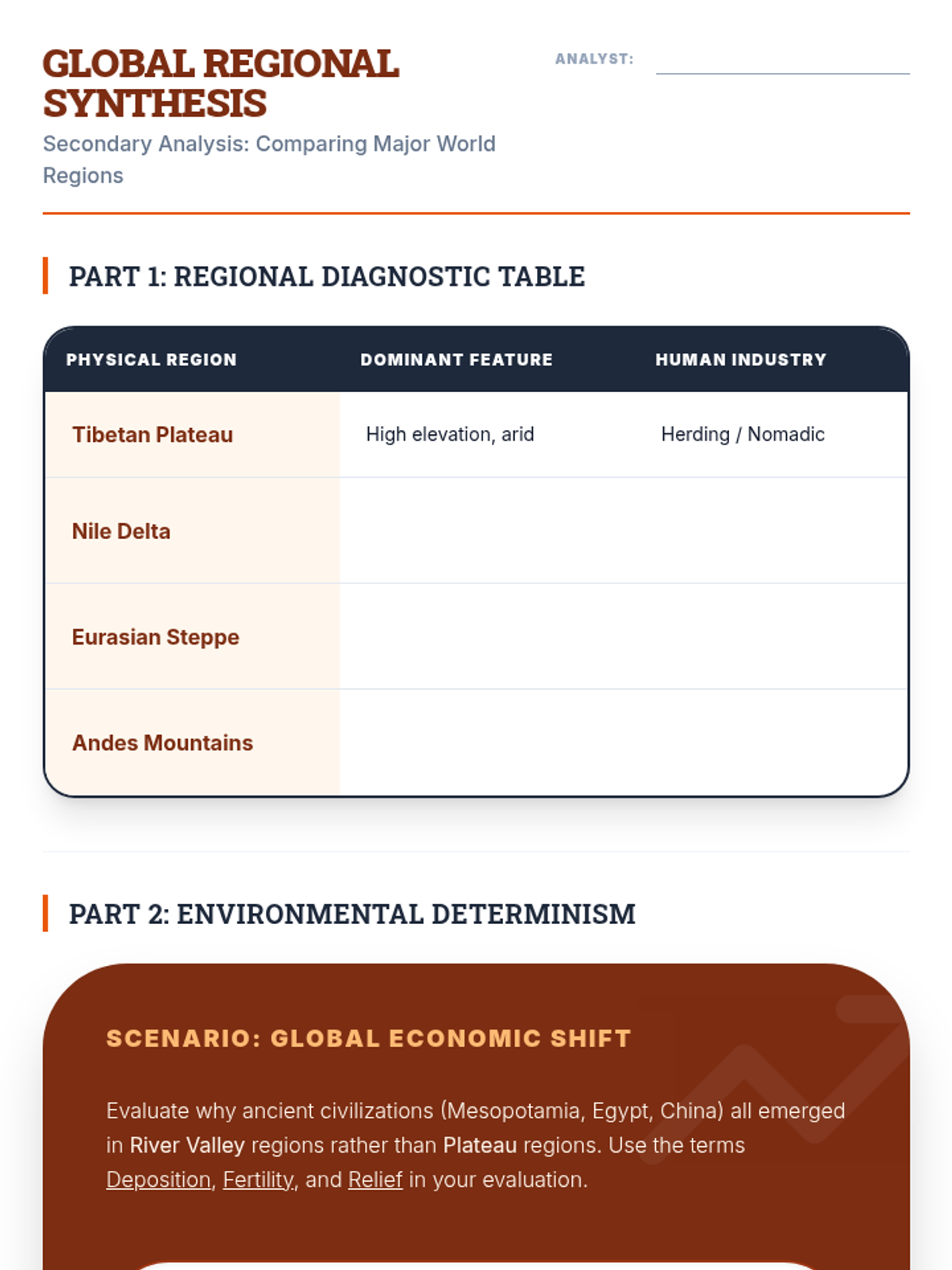
Secondary worksheet for Lesson 4 focusing on global regional diagnostics and the socio-economic analysis of river valleys vs. plateaus.
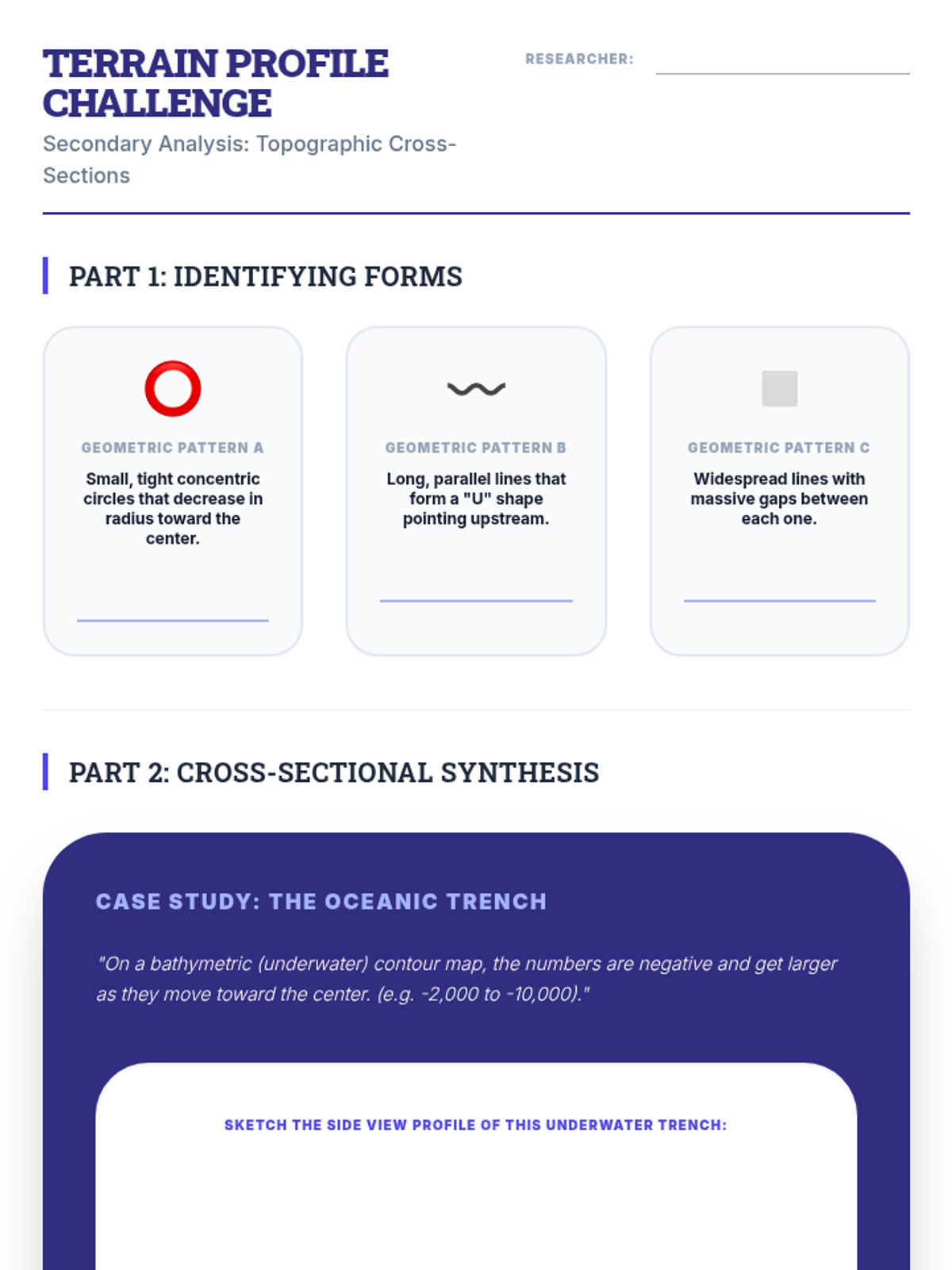
Secondary worksheet for Lesson 3 focusing on topographic pattern recognition and the construction of vertical profiles from contour data.
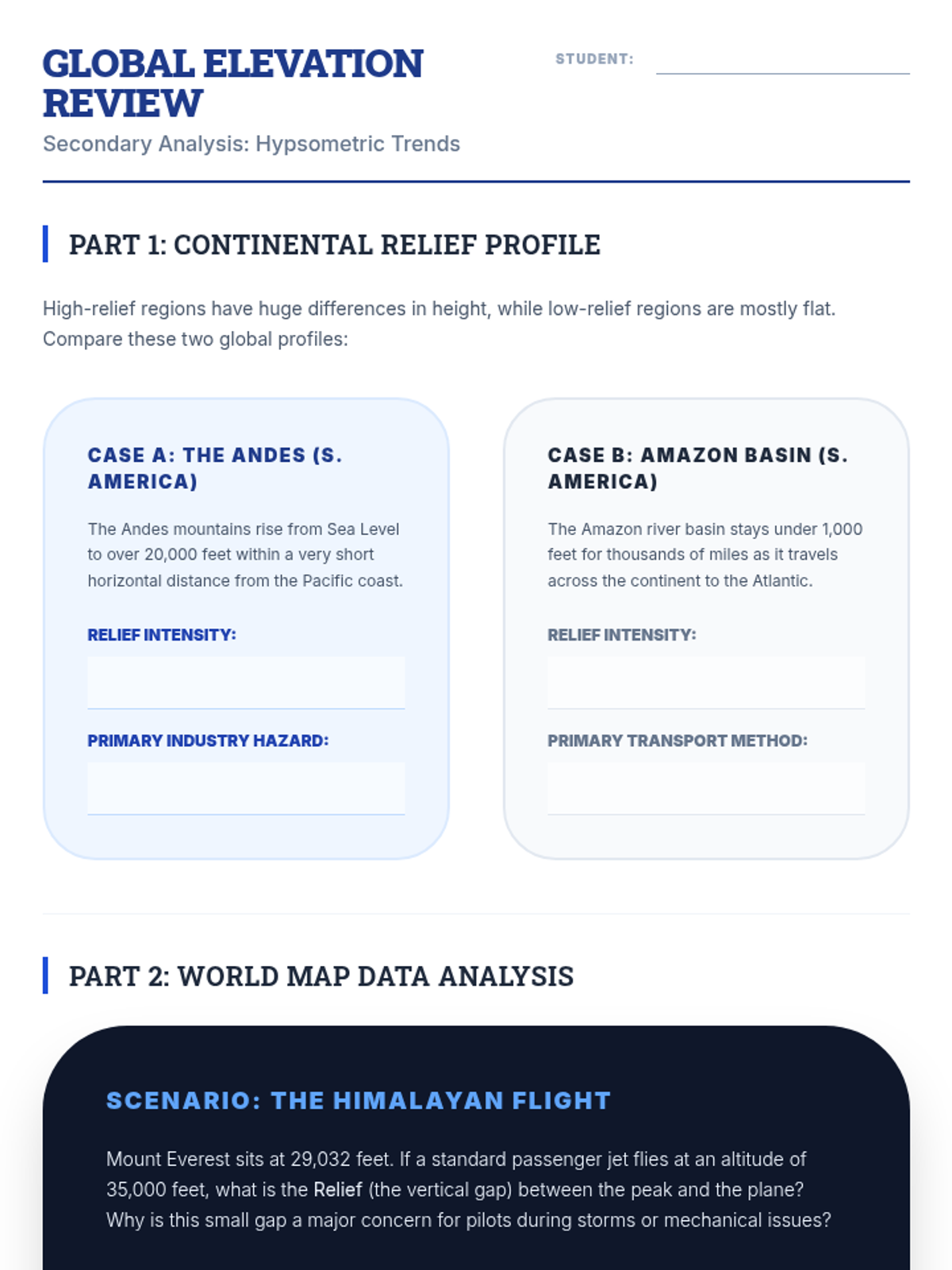
Secondary worksheet for Lesson 2 focusing on global relief comparisons, continental elevation profiles, and mathematical synthesis of flight data relative to world peaks.
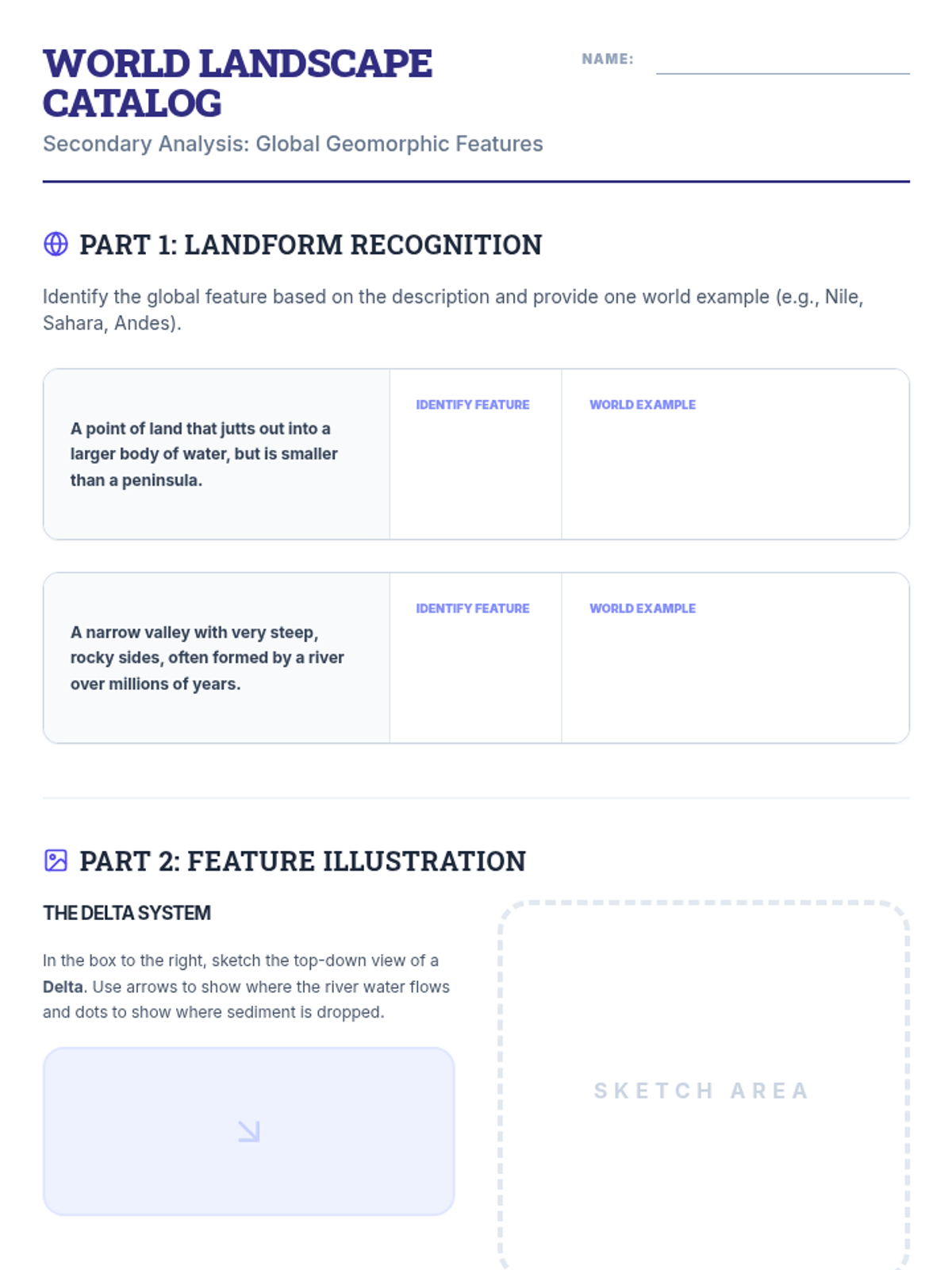
Secondary worksheet for Lesson 1 focusing on global landform identification and visual representation of geomorphic systems.
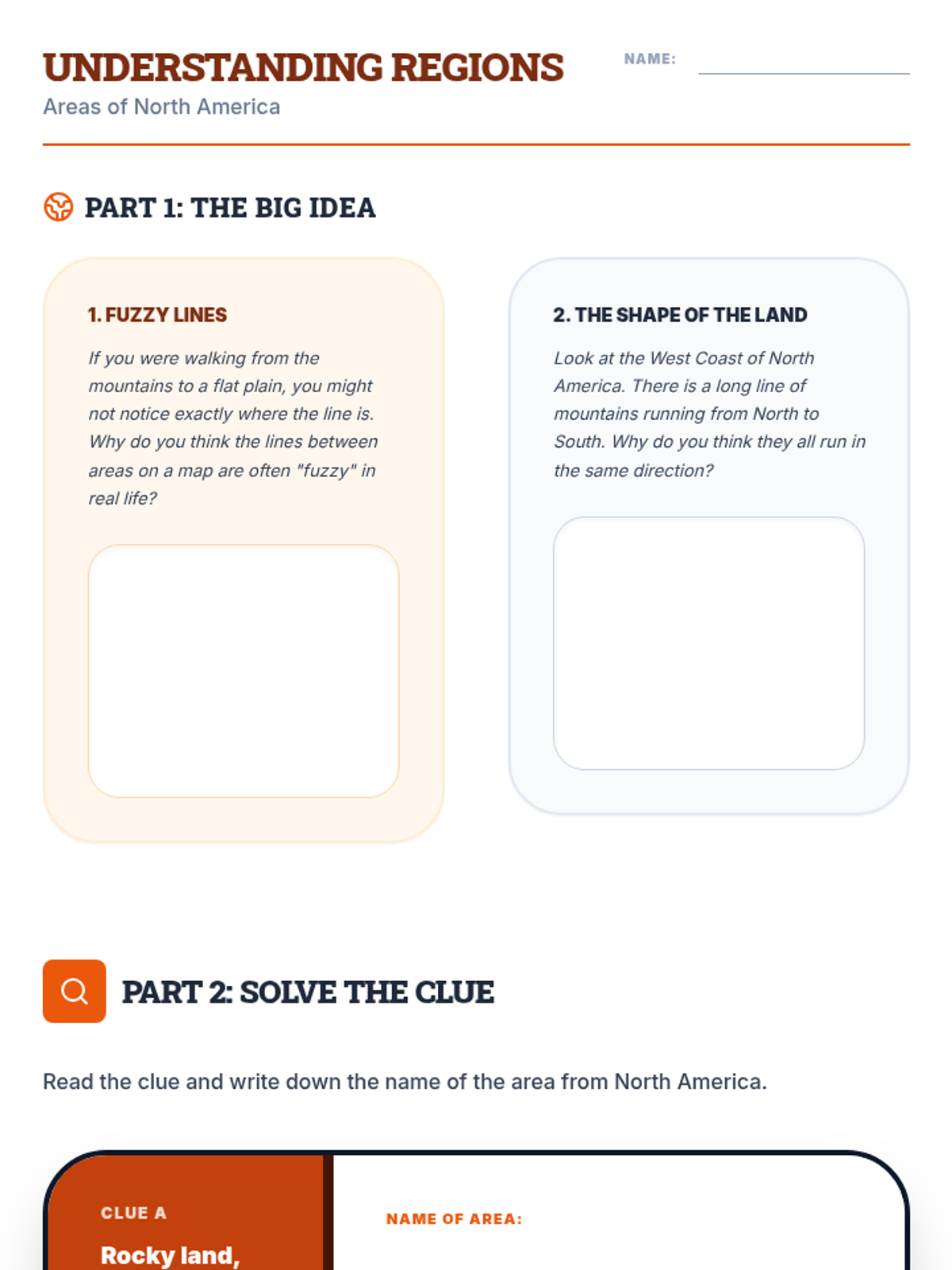
Worksheet for understanding the physical regions of North America and how they affect where people work and live, using simple language.
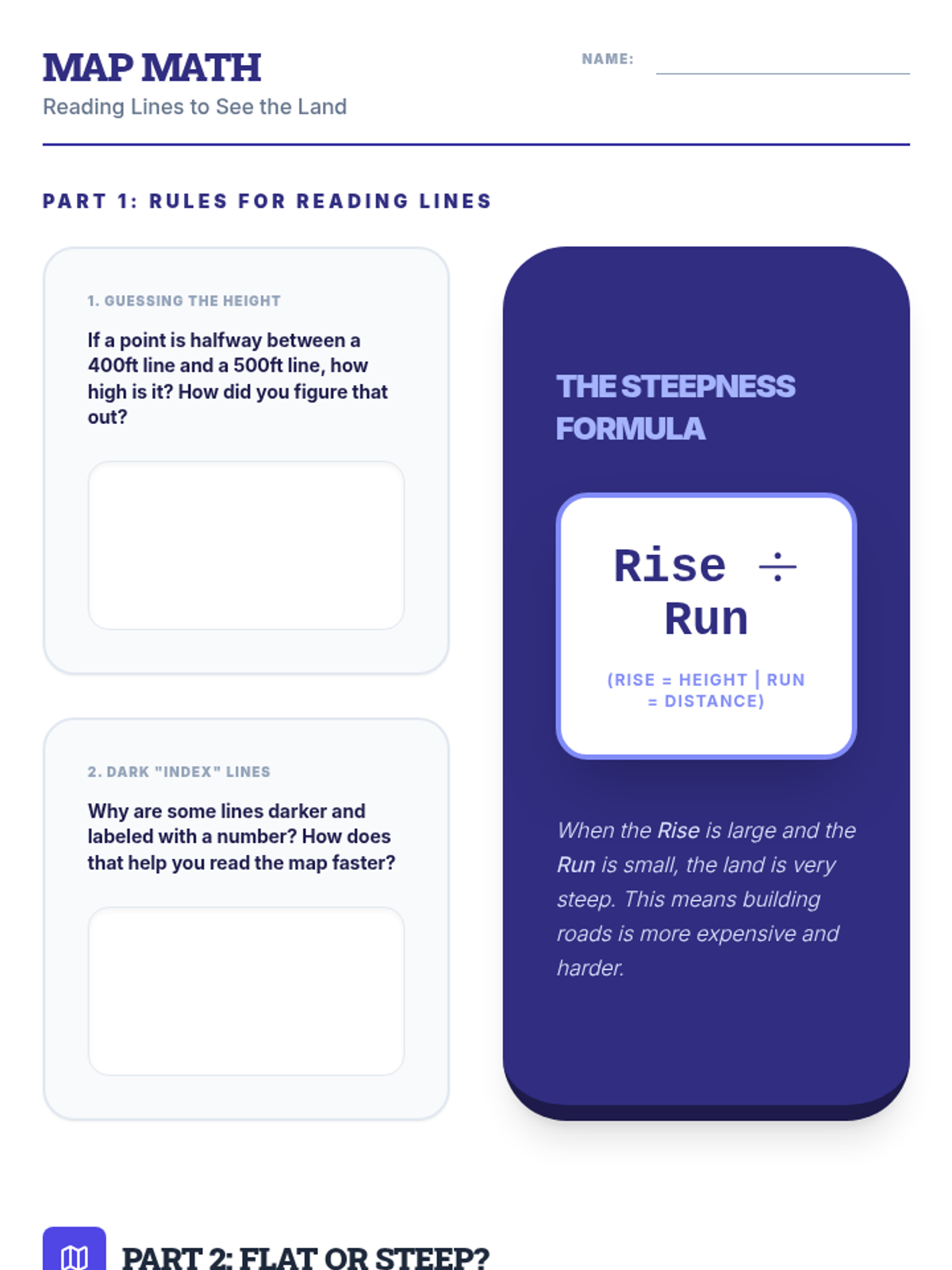
Worksheet for understanding contour lines, intervals, and terrain steepness using simple, easy-to-follow language.
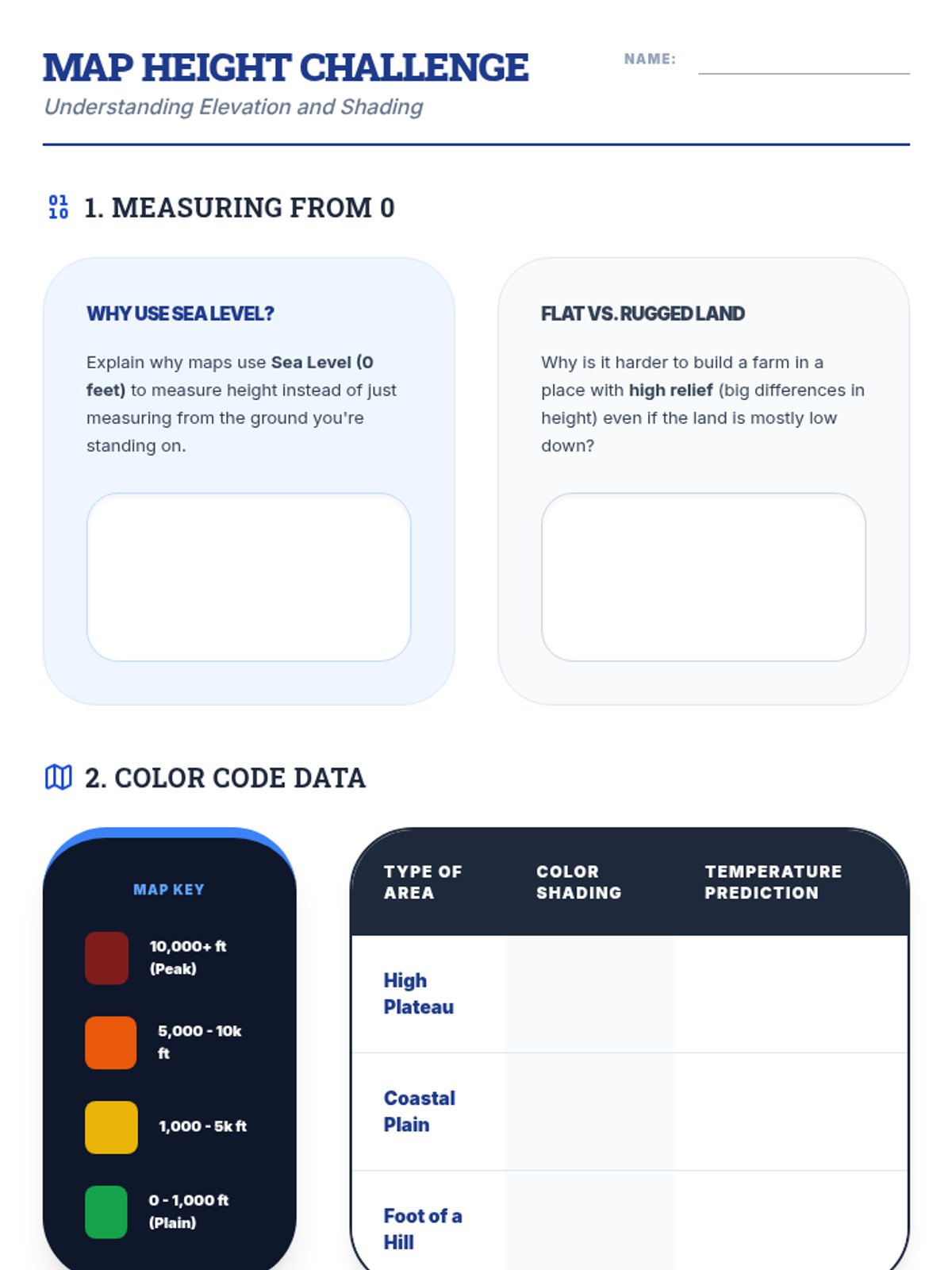
Worksheet for understanding elevation maps, legends, and temperature changes with height, using simple language.
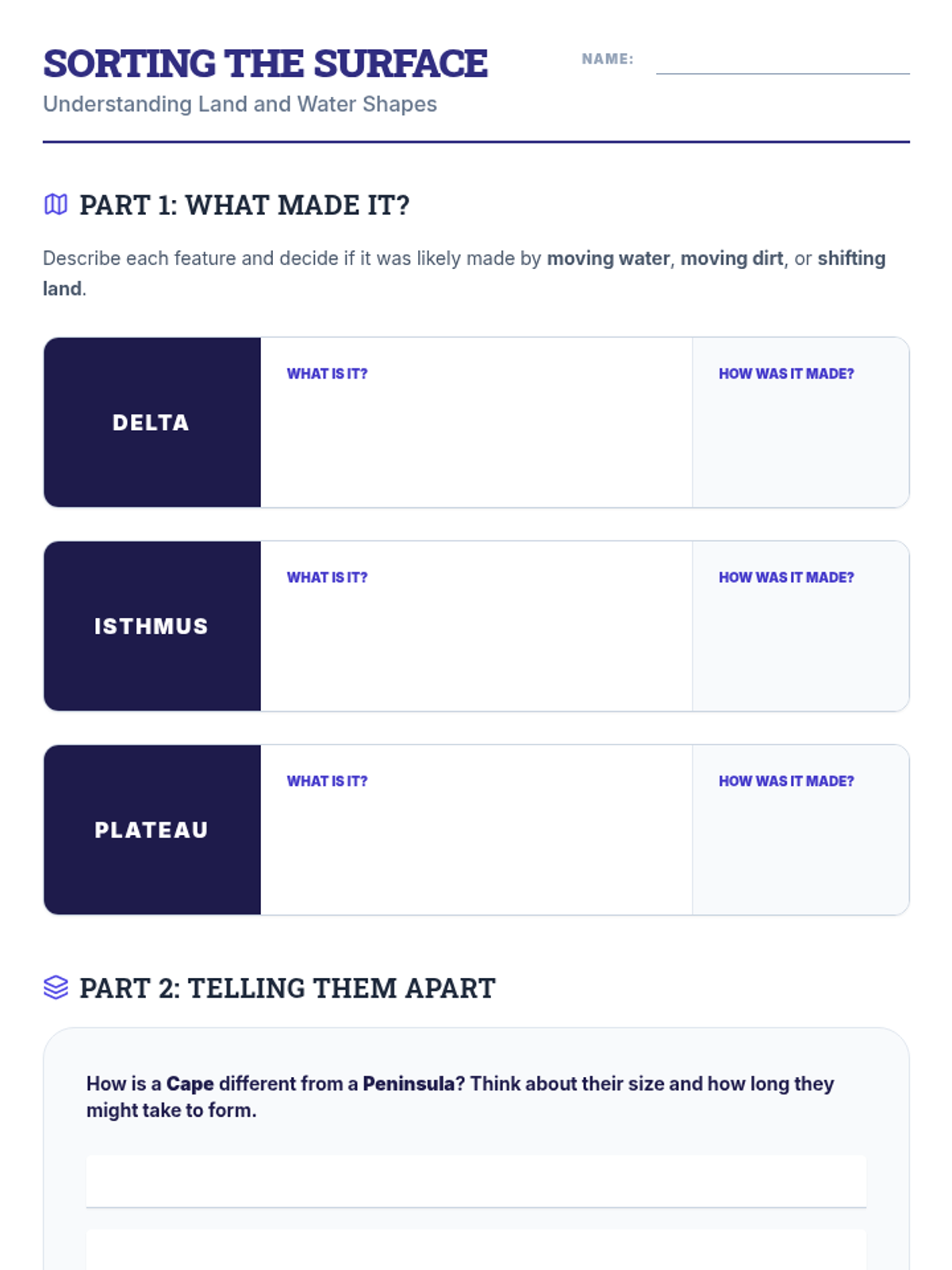
Worksheet focusing on landform shapes and how they affect human life, using clear and accessible language.
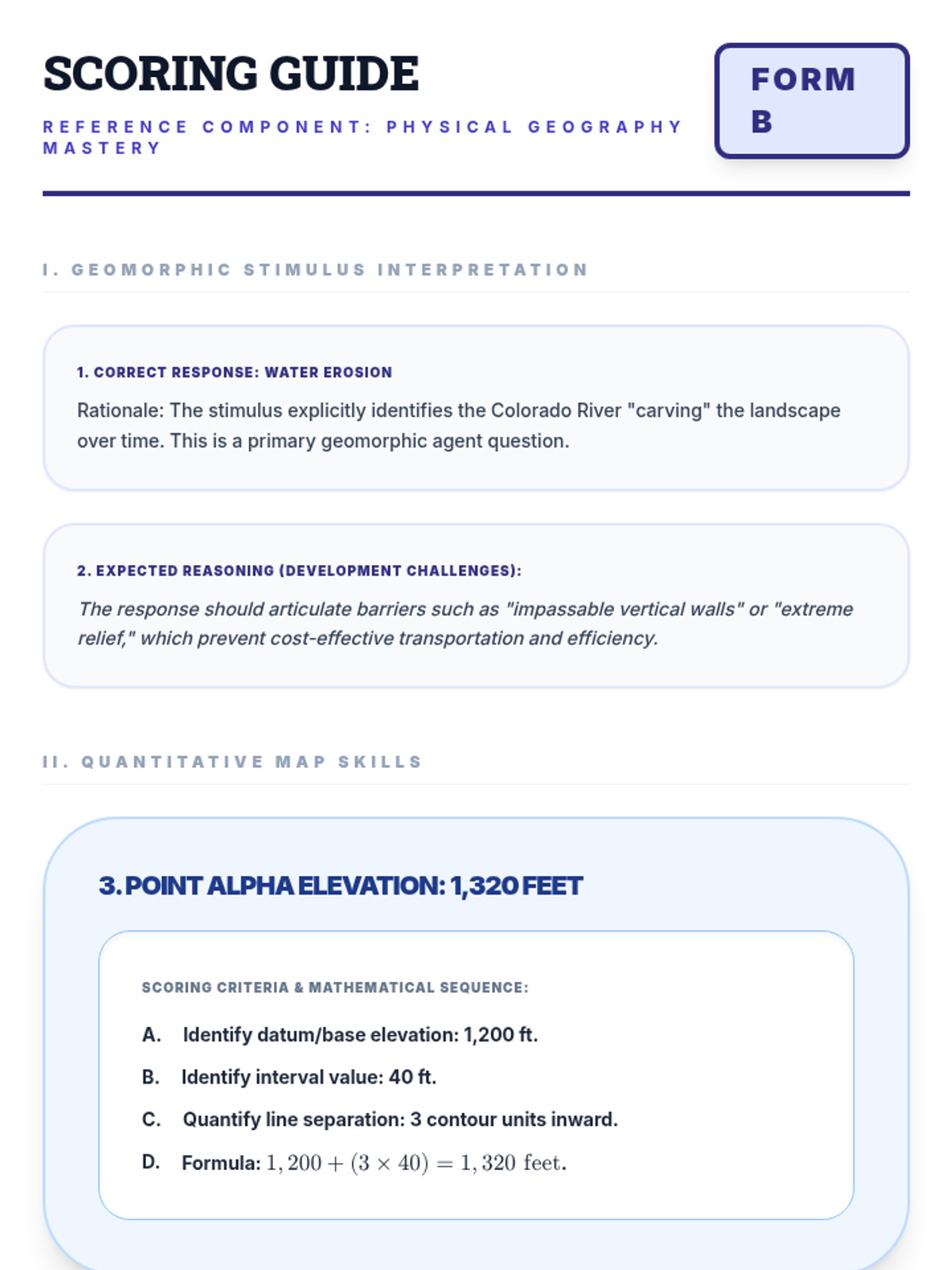
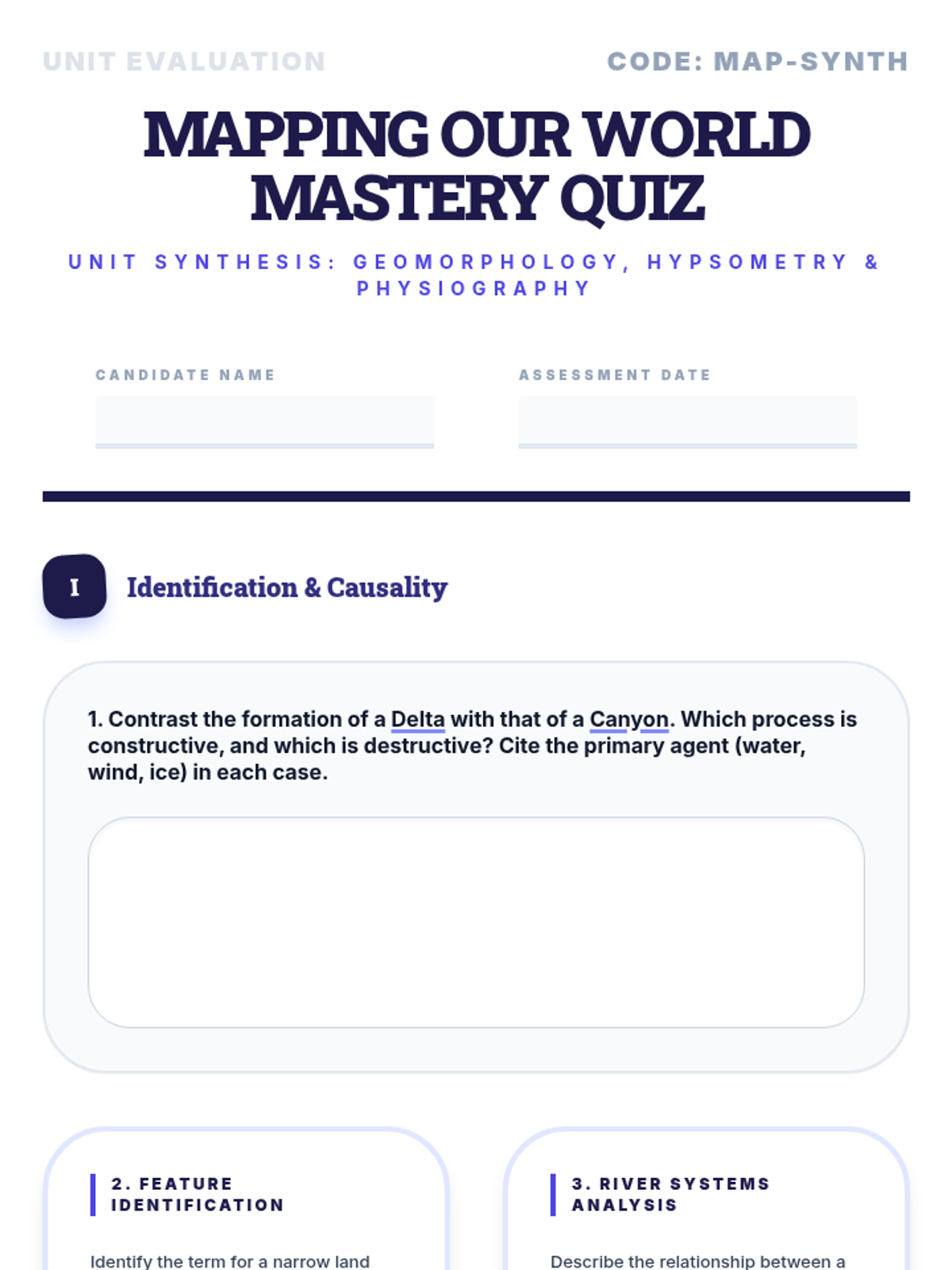
Scoring key for the Mapping Mastery Quiz, providing detailed rationales and evaluation criteria for text interpretation and quantitative map skills. All level labels removed for general use.
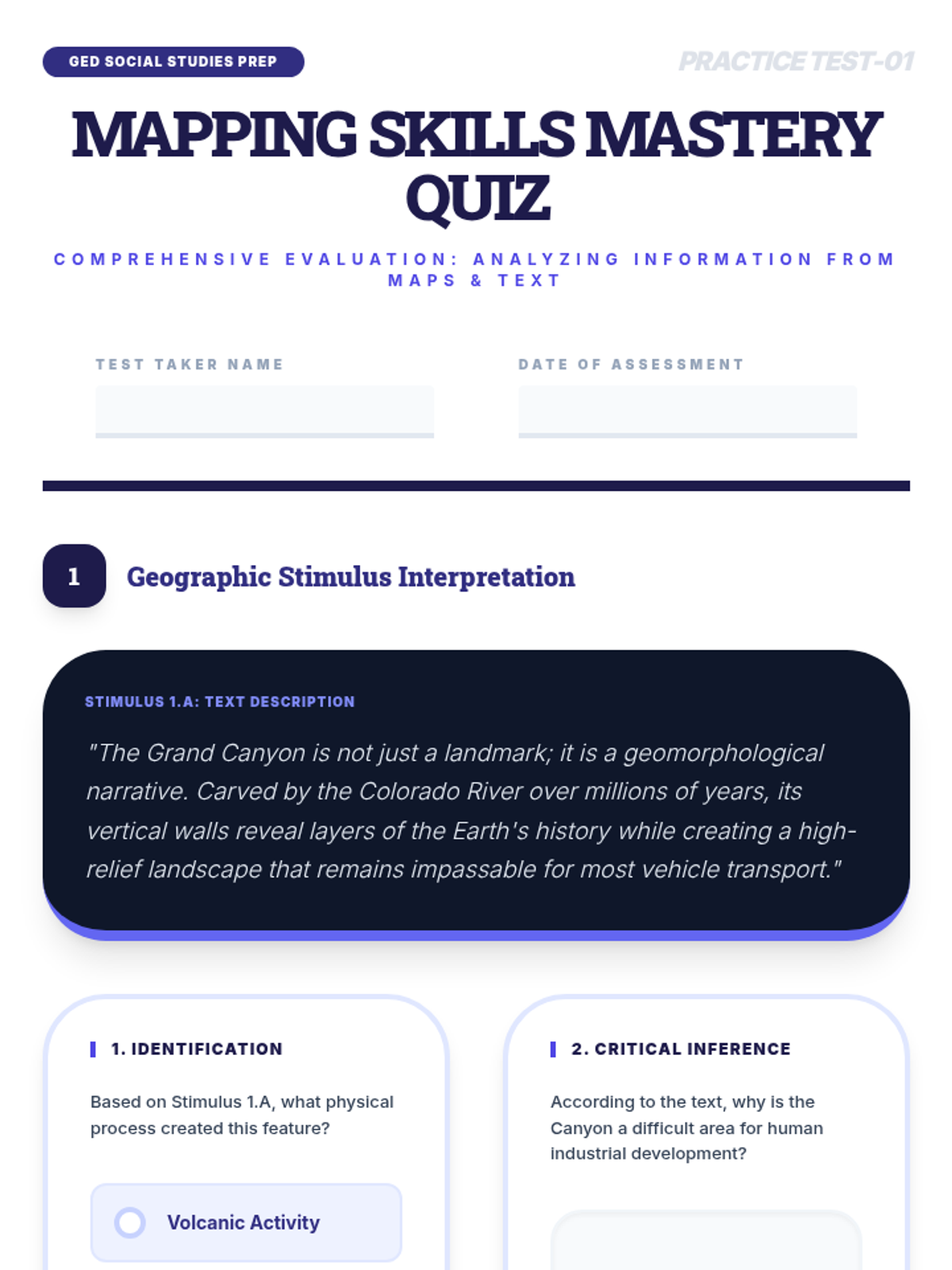
GED-formatted final mastery quiz focusing on interpreting informational text stimulus, quantitative contour calculations, and synthesizing geographic data for economic analysis.
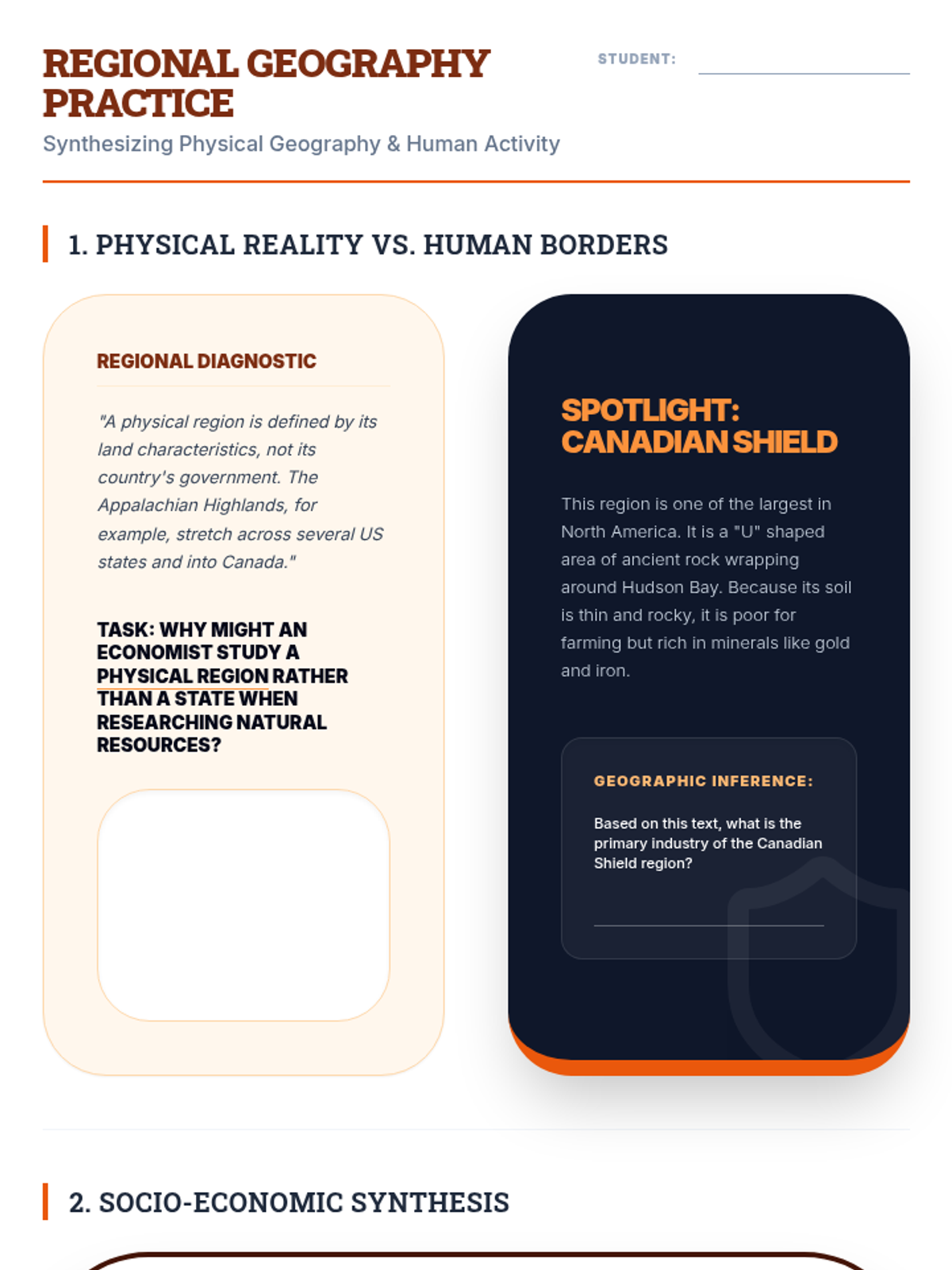
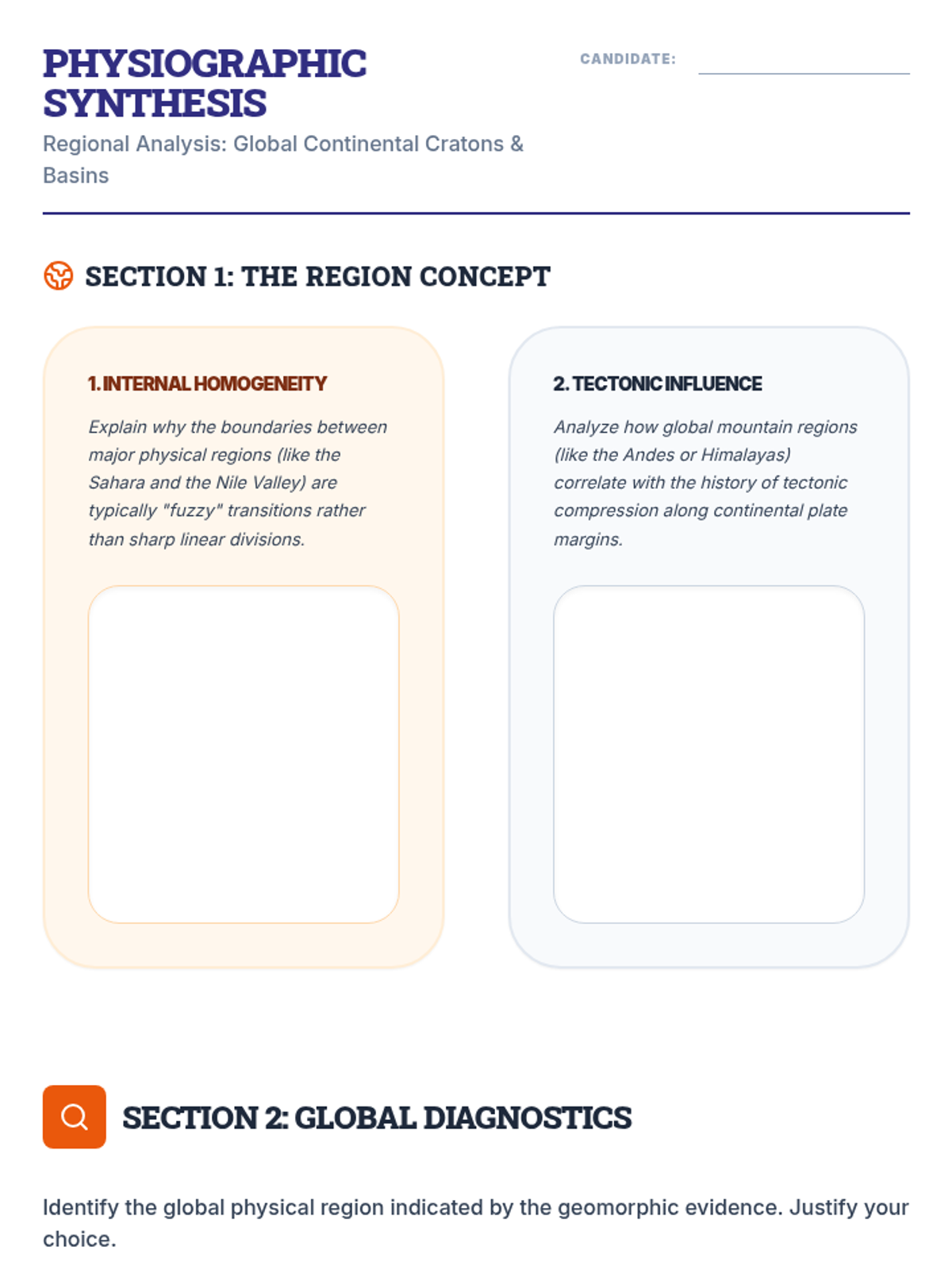
Worksheet for physiographic regions, focusing on interpreting regional text descriptions and analyzing how physical terrain dictates regional economies and industry. Level labels removed for general use.
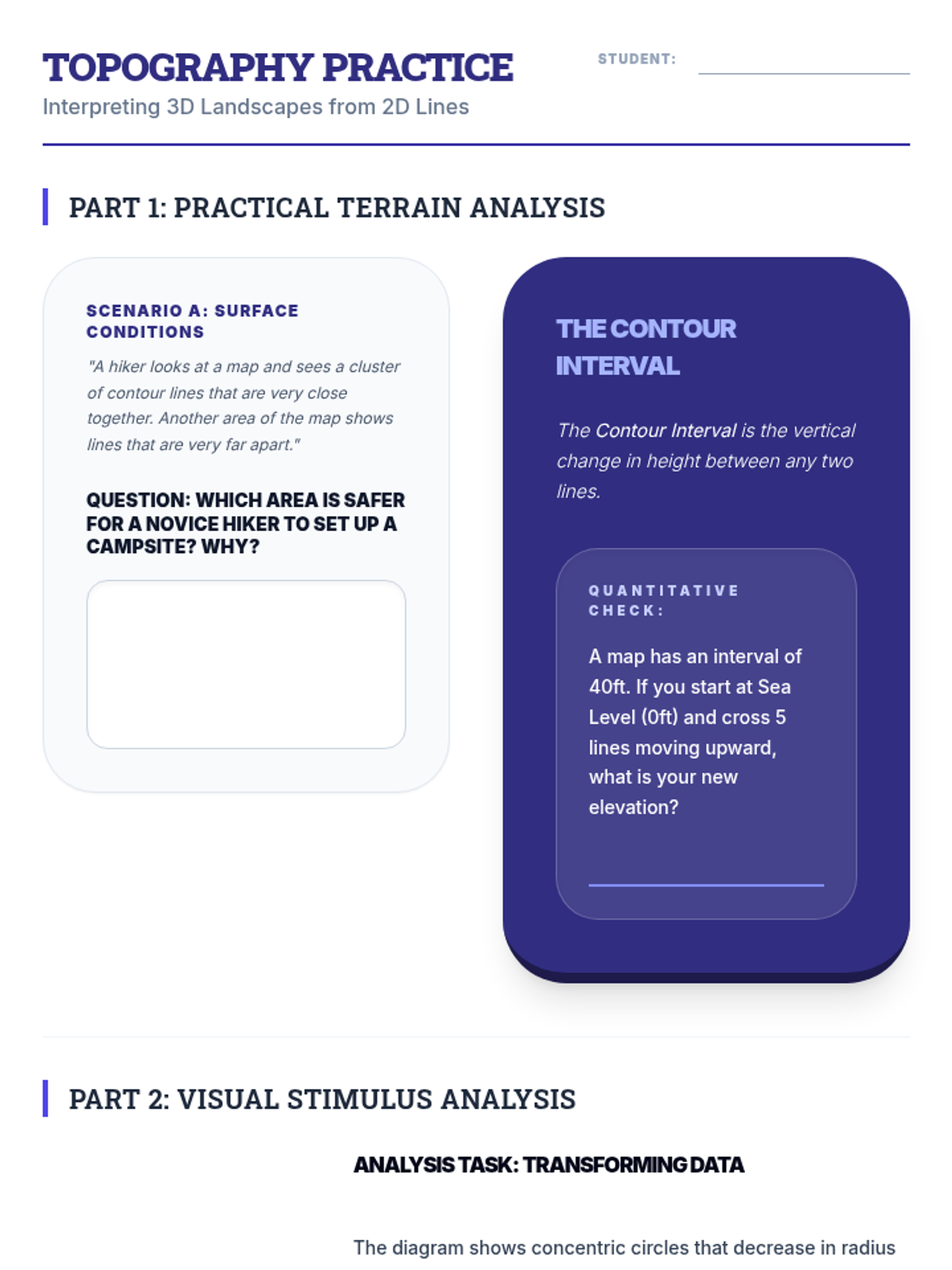
Worksheet for topographic maps, focusing on practical terrain application, contour interval math, and visualizing 3D landforms from 2D diagrams. Level labels removed for general use.
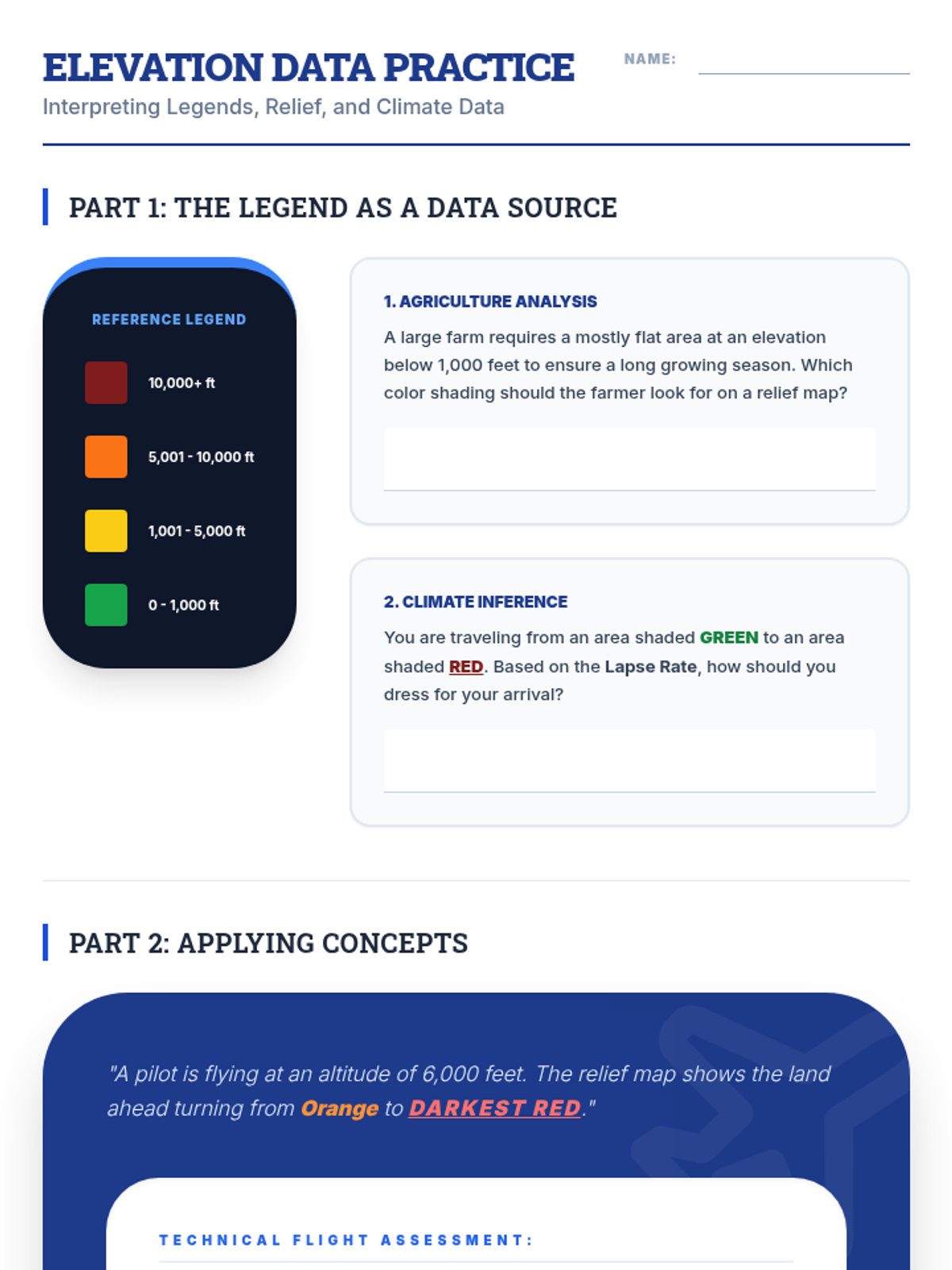
Worksheet for elevation maps, focusing on using legends to make inferences about agricultural suitability, climate shifts, and aviation safety. Level labels removed for general use.
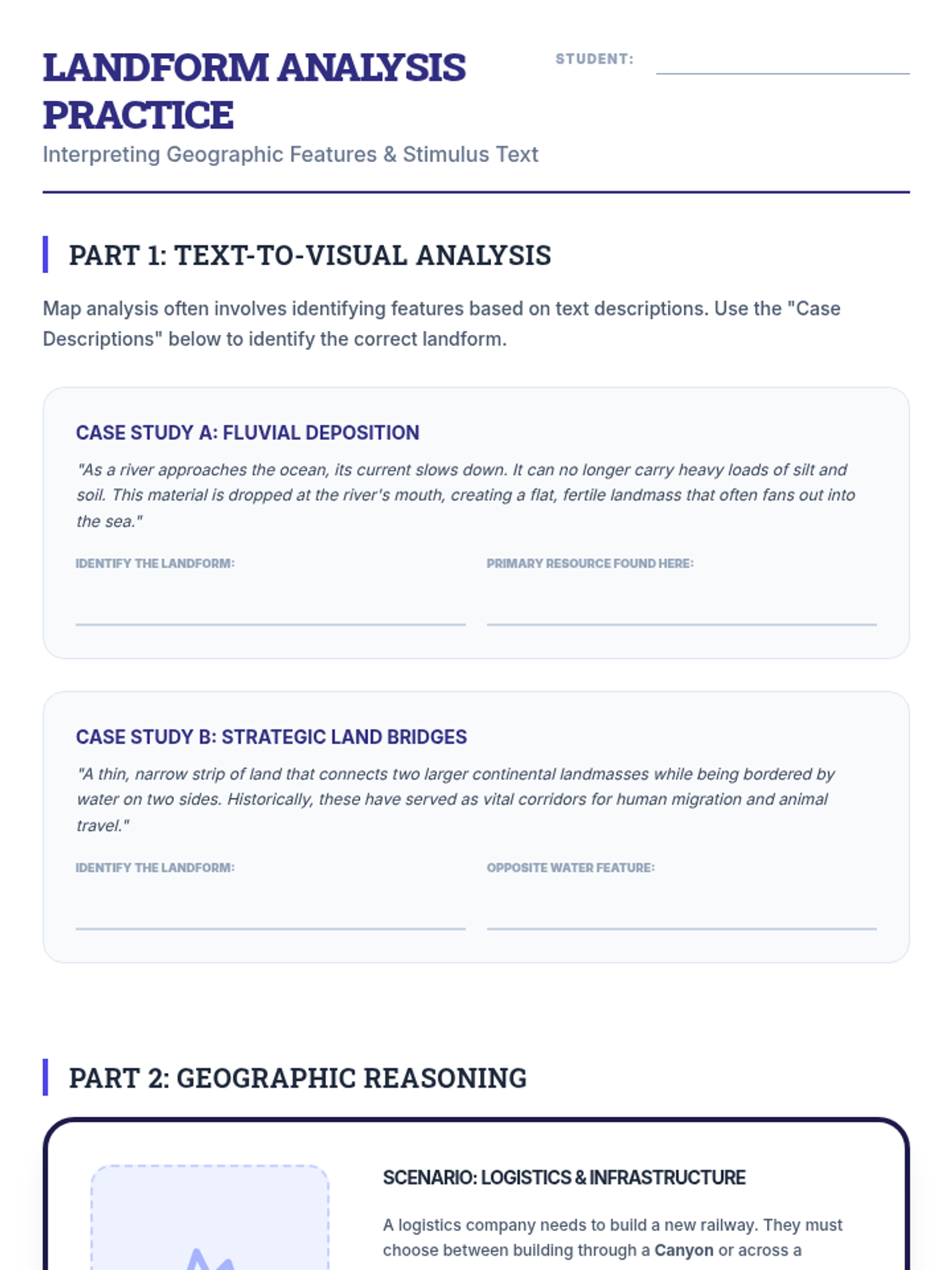
Worksheet focusing on identifying landforms from text-based stimulus and applying geographic reasoning to transportation and resource scenarios. Level labels removed for general use.
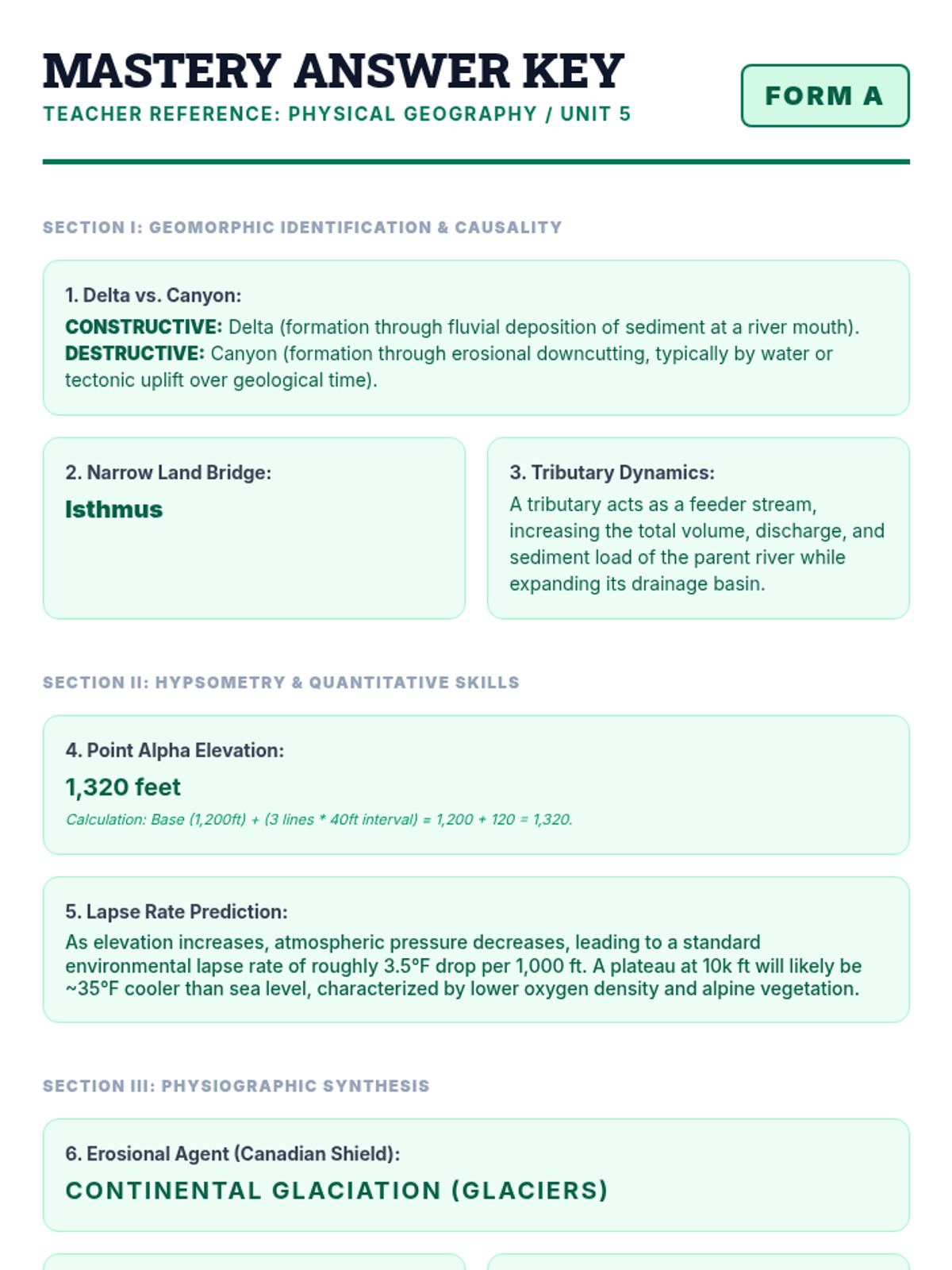
Teacher-facing answer key for the Mapping Mastery Quiz, providing technical geological explanations and mathematical solutions for high-school level analysis. All level labels removed for general use.
Mastery quiz covering landforms, elevation, and North American regions. All level labels removed for a general assessment experience.
High-school level worksheet for Lesson 4 focusing on physiographic analysis, tectonic influences on regional formation, and the synthesis of physical geography with economic industrialization patterns. Fixed page breaks and contrast.
Exploration of global physical regions, their characteristics, and their impact on human development. Updated to a world-wide focus with visual context.
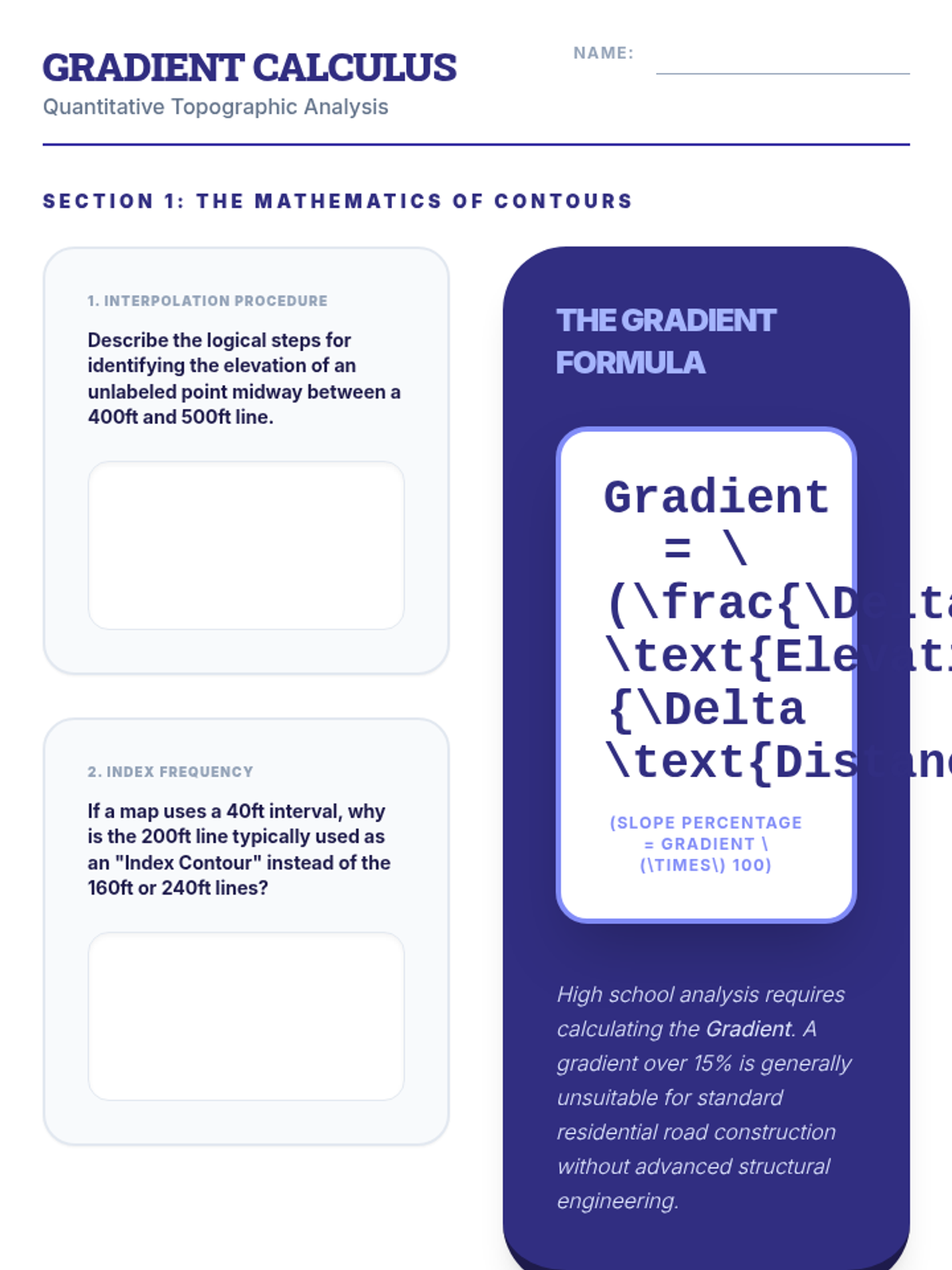
High-school level worksheet focusing on gradient calculation, quantitative interpretation of topographic maps, and geomorphological cross-sectioning using the Ithaca, NY case study. Fixed page breaks and MathJax rendering.
Expanded "Contour Secrets" slides with in-depth explanations of index contours, contour interval calculation, and below-sea-level elevation.
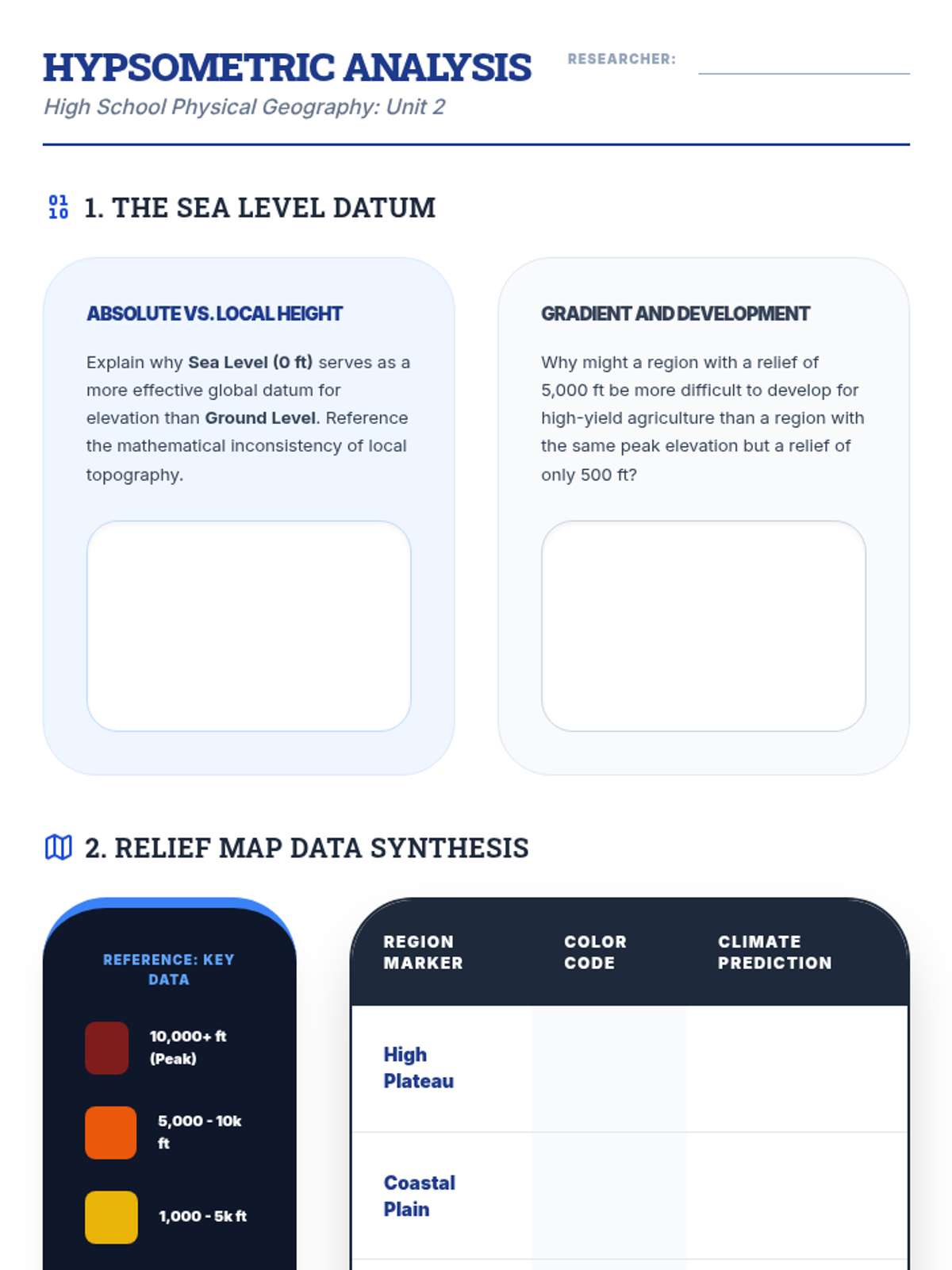
High-school level worksheet for Lesson 2 focusing on hypsometric analysis, climate implications of elevation (lapse rate), and technical interpretation of relief maps. Improved contrast and page utilization.
Presentation slides for Lesson 2 covering elevation, sea level, and relief shading on maps, with added sections on climate impact and water flow.
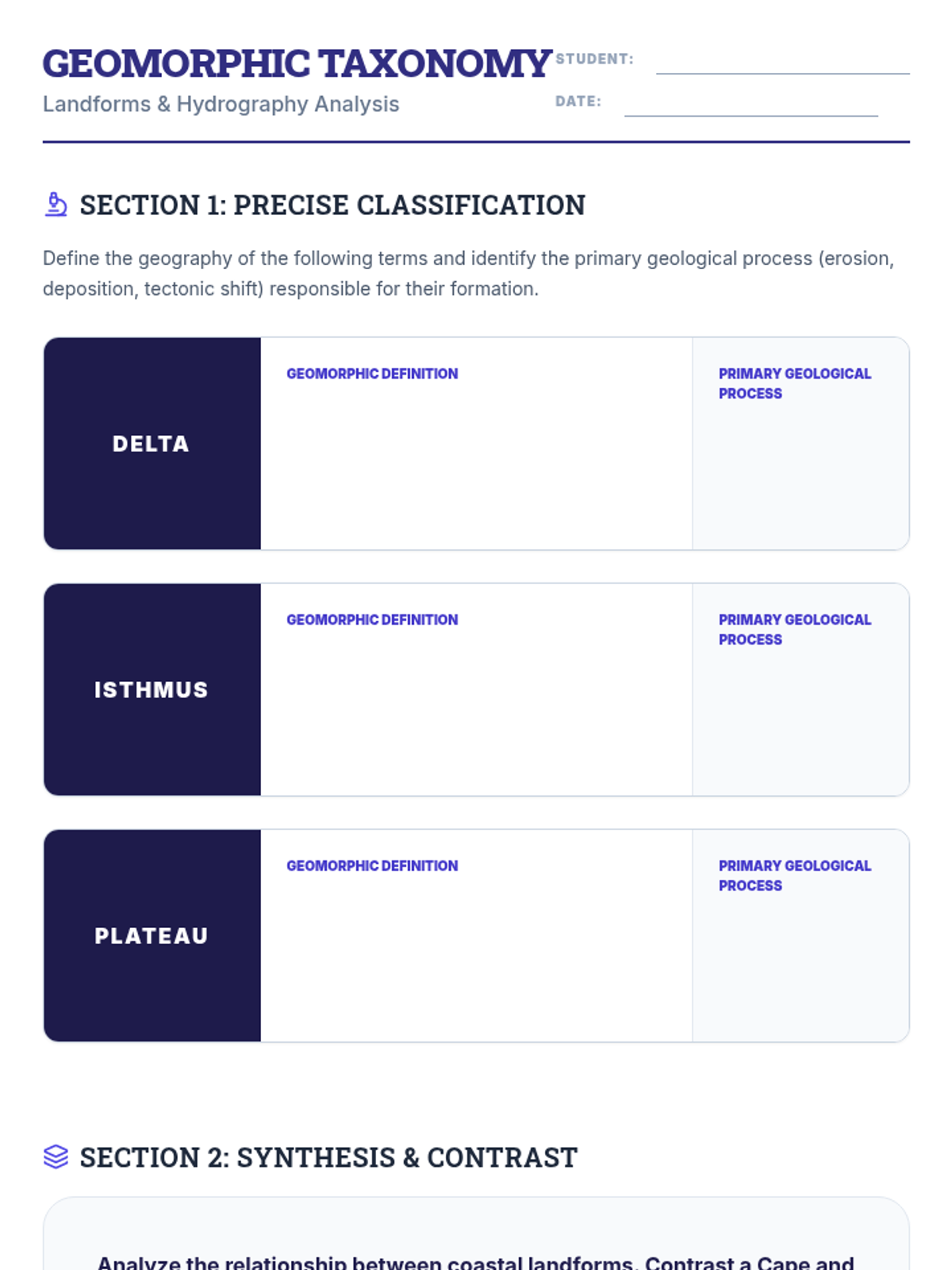
Geomorphic processes worksheet focusing on landforms and human development. Level labels removed for general use.
Expanded introductory slides for Lesson 1 covering the full range of landforms and bodies of water from the source material, featuring comparative visuals and a deductive challenge. Added emojis for visual context.
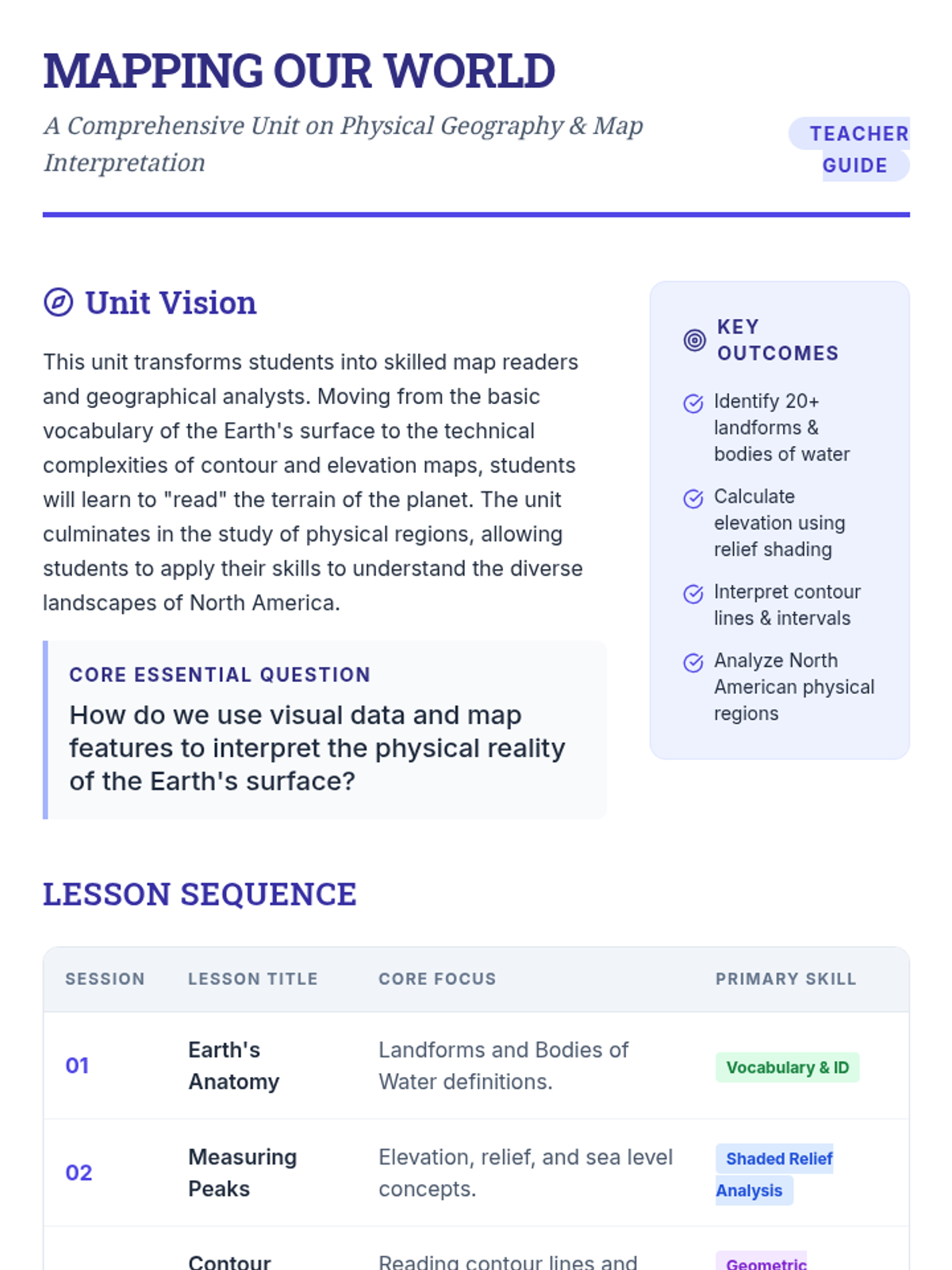
A teacher-facing unit overview that outlines the lesson sequence, core focus, and essential questions for the Mapping Our World geography unit.
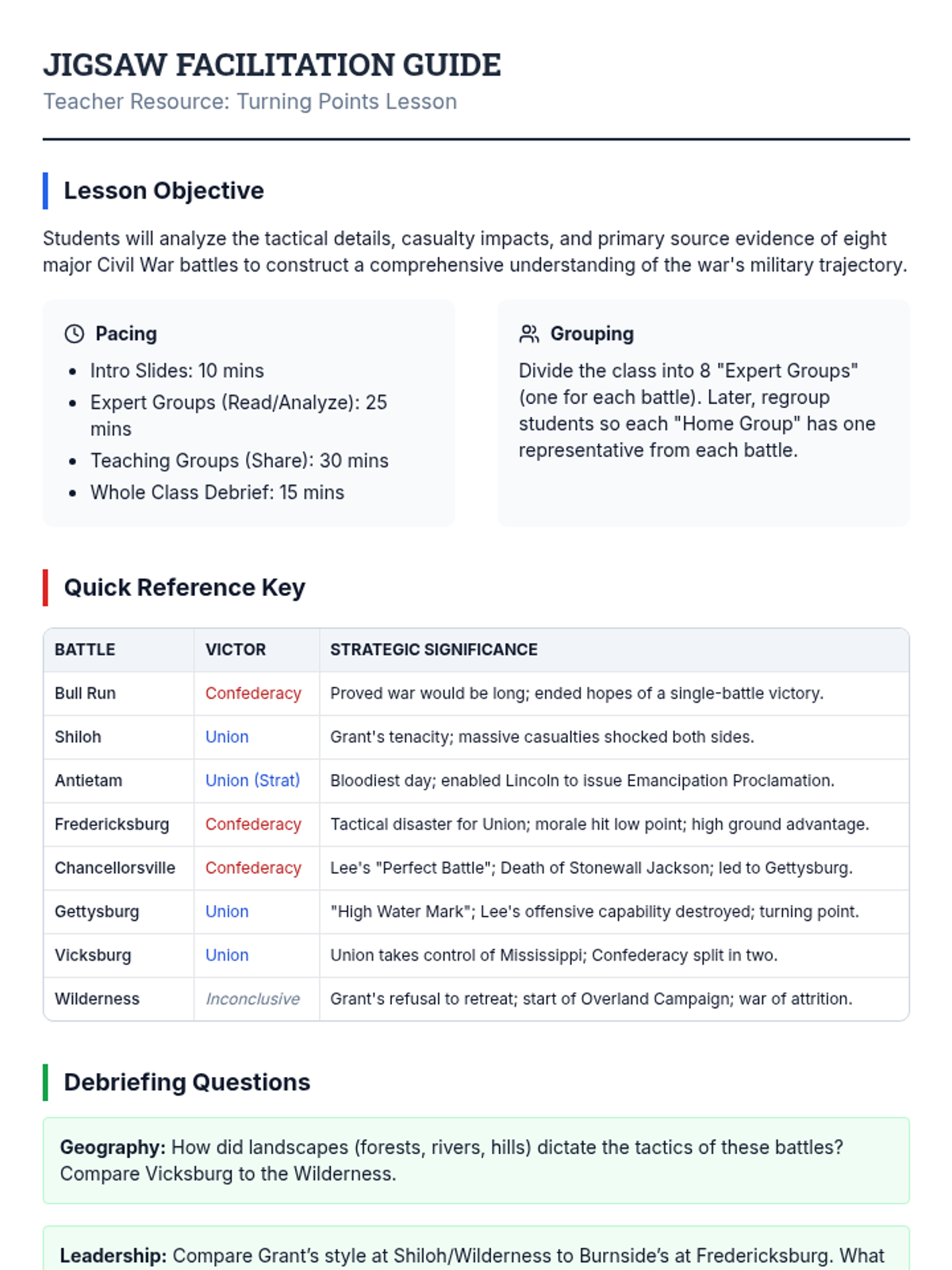
A teacher's guide for facilitating the Civil War Jigsaw activity, including pacing, grouping strategies, a quick-reference answer key, and discussion prompts.
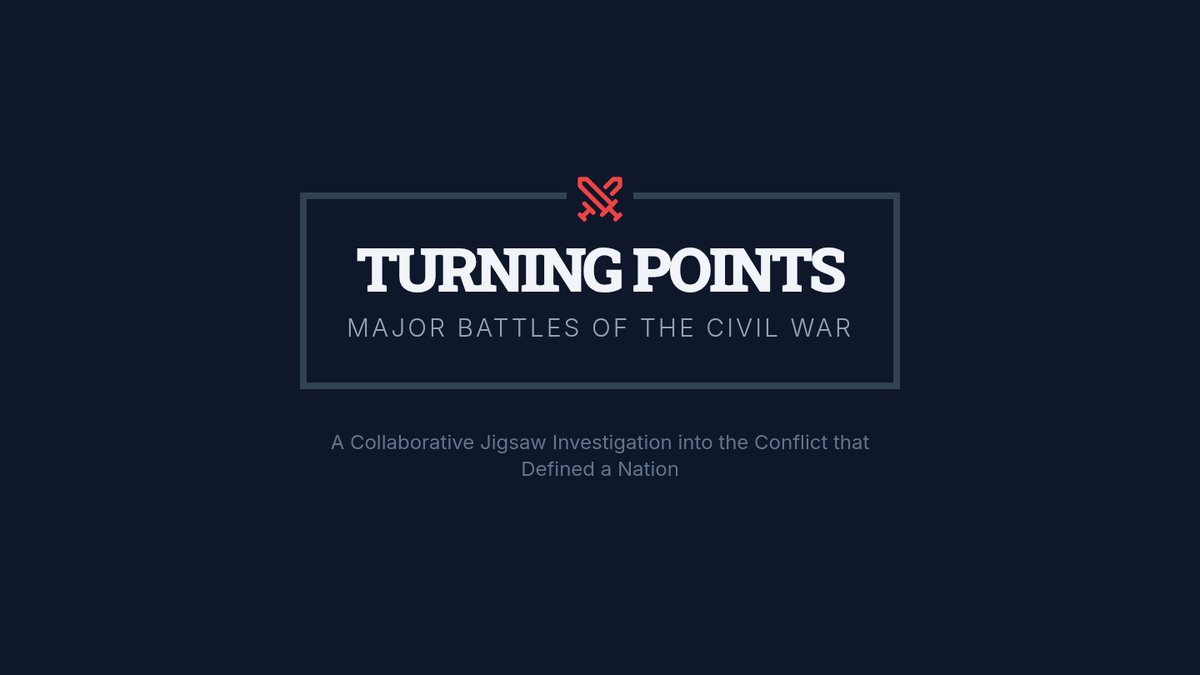
Introductory slides for the Civil War Battles Jigsaw lesson, explaining the jigsaw method and providing an overview of the battles to be studied.
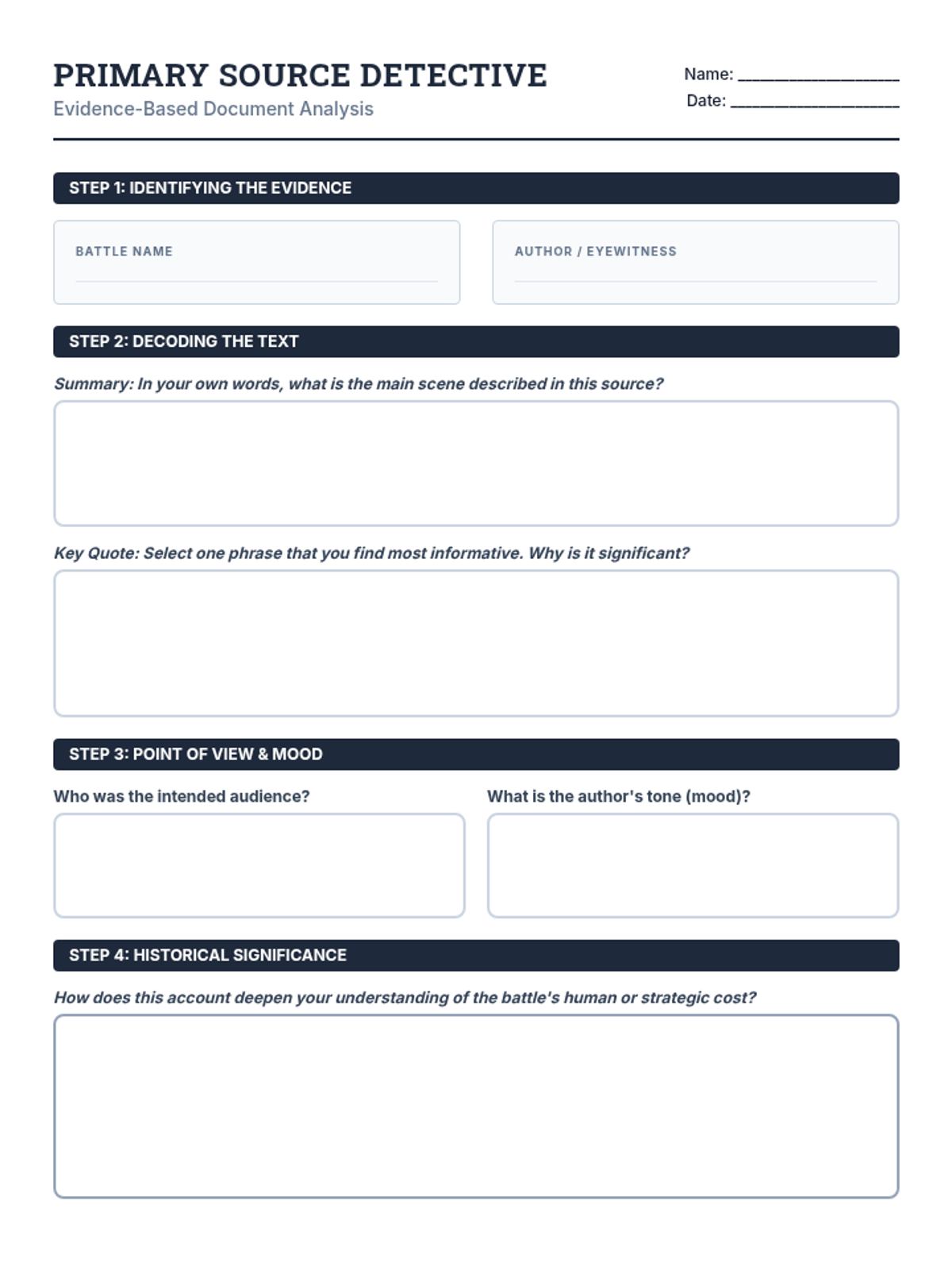
An analysis worksheet for students to examine the primary sources embedded in their battle readings, focusing on evidence identification, decoding, perspective, and historical significance.
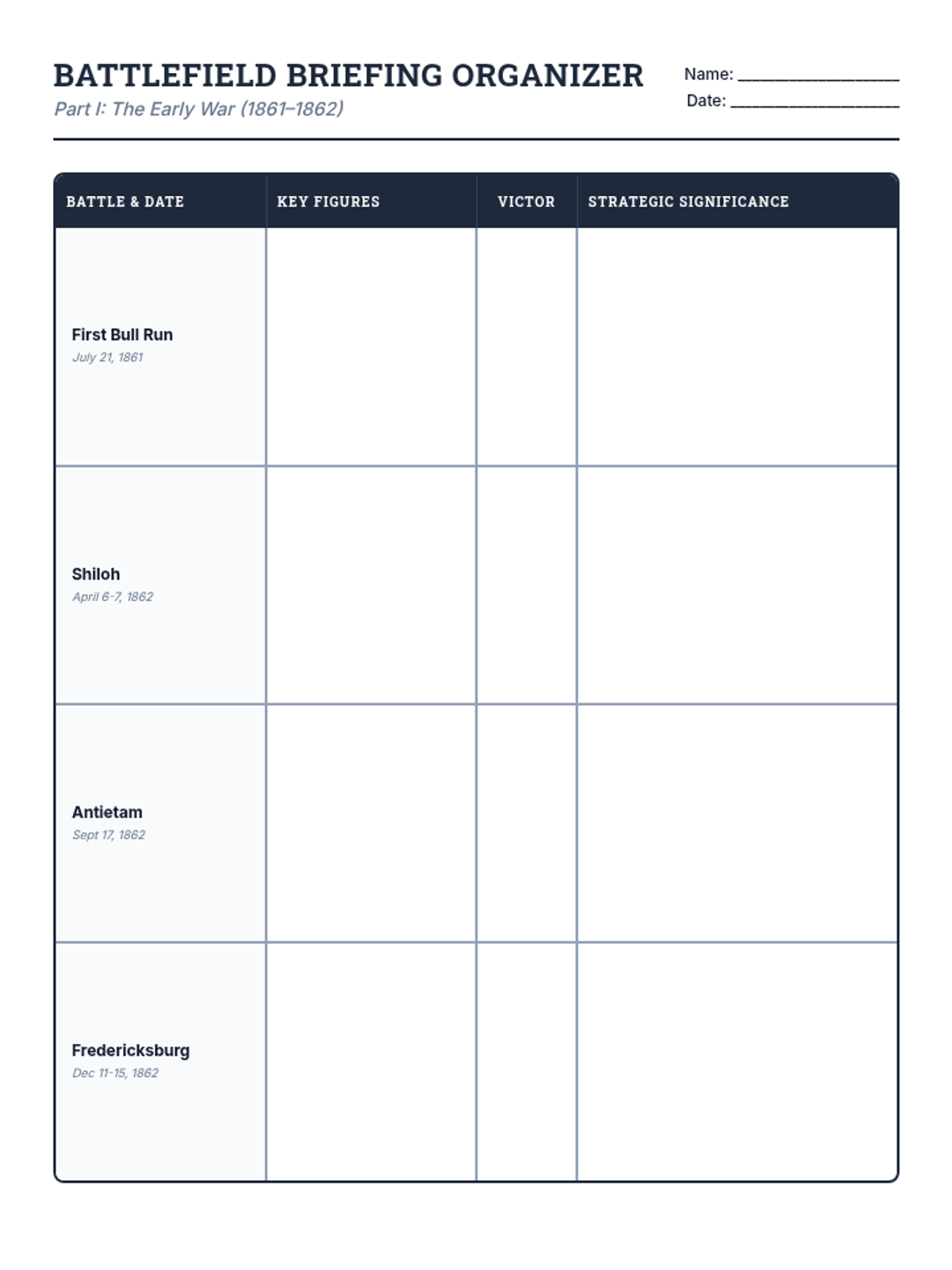
A graphic organizer for students to summarize key figures, victors, and strategic significance for all eight Civil War battles discussed in the jigsaw activity.
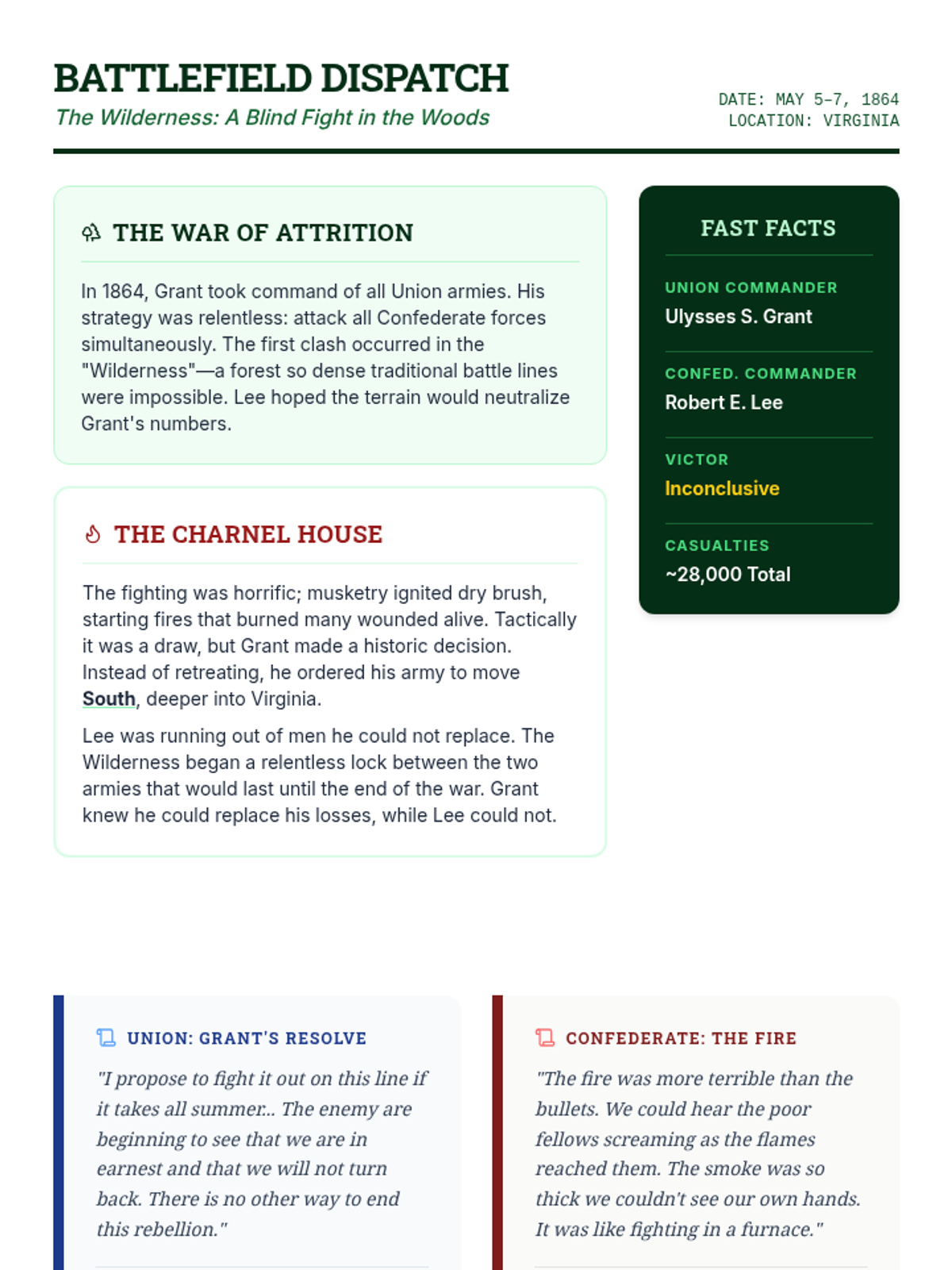
A reading material on the Battle of the Wilderness, featuring primary source excerpts from both General Grant and a Confederate private to highlight the brutal nature of forest combat.
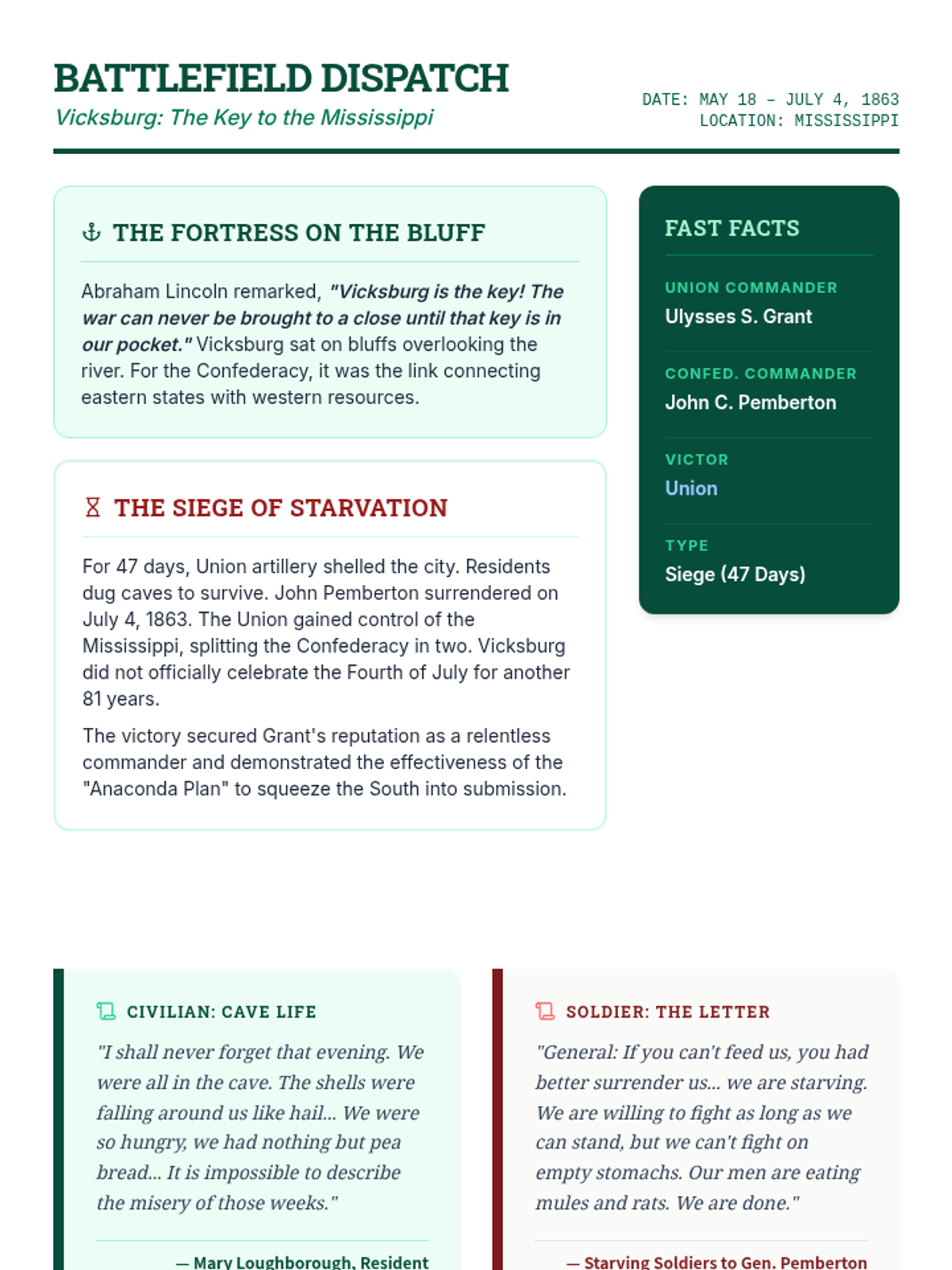
A reading material on the Siege of Vicksburg, featuring primary source excerpts from a resident living in a cave and starving soldiers to illustrate the human cost of the siege.
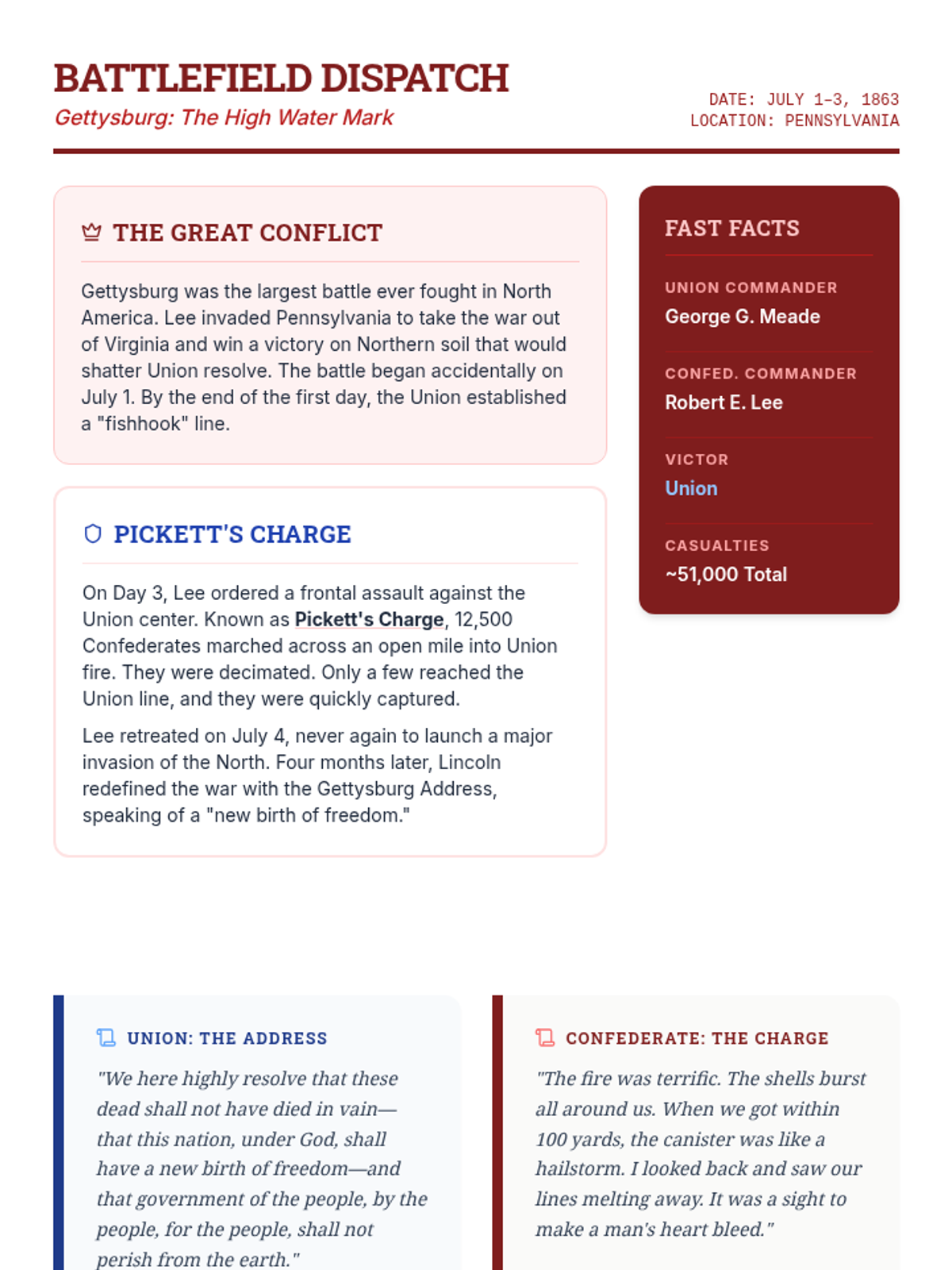
A comprehensive reading material on the Battle of Gettysburg, featuring primary source excerpts from both Abraham Lincoln and a Confederate captain to illustrate the scale and significance of the conflict.
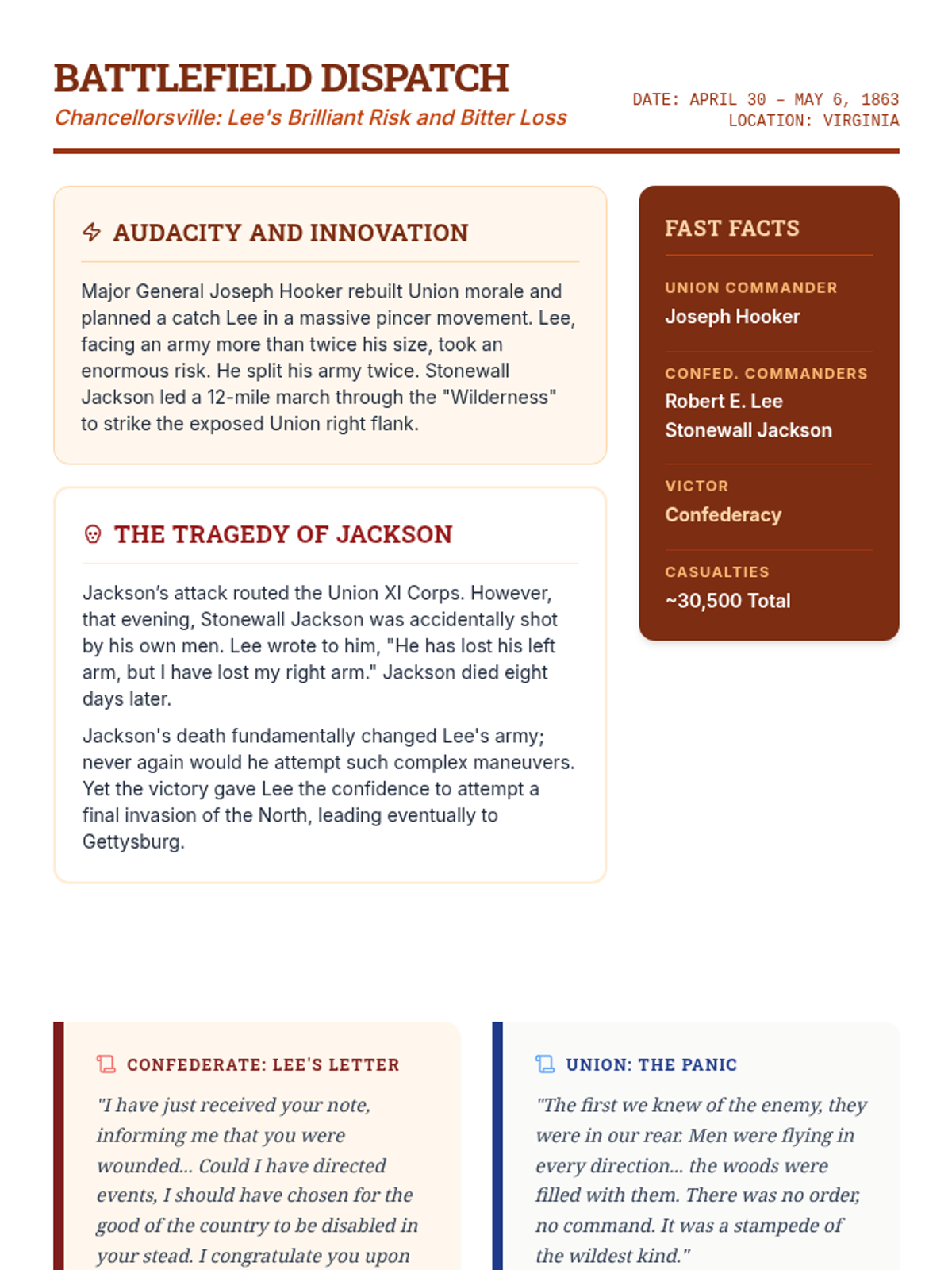
A reading passage on the Battle of Chancellorsville, featuring primary source excerpts from both General Lee and a Union soldier to illustrate the brilliant but chaotic flank attack.
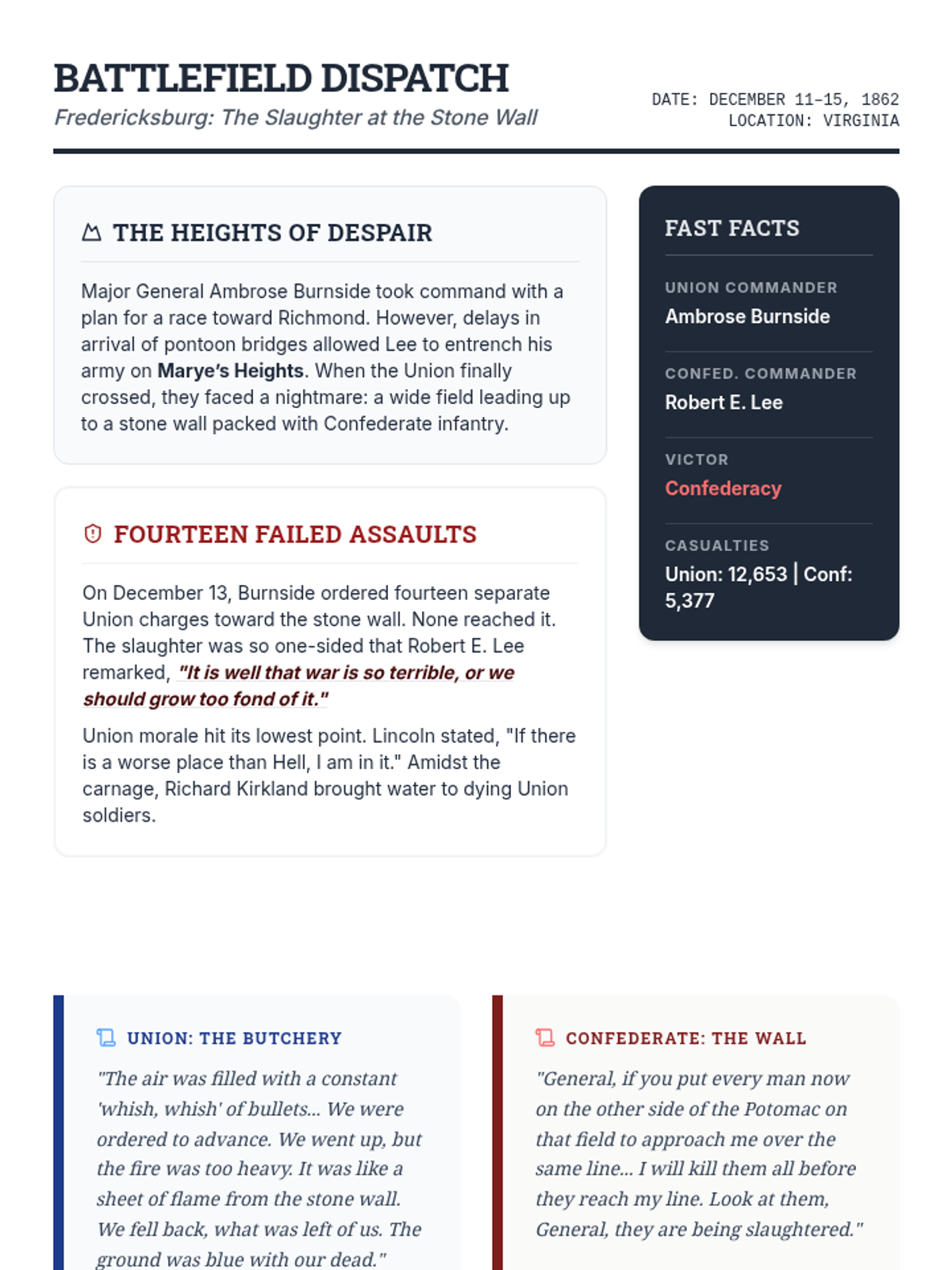
A reading passage on the Battle of Fredericksburg, featuring primary source excerpts from both a Union sergeant and Confederate General James Longstreet to highlight the defensive slaughter at Marye's Heights.
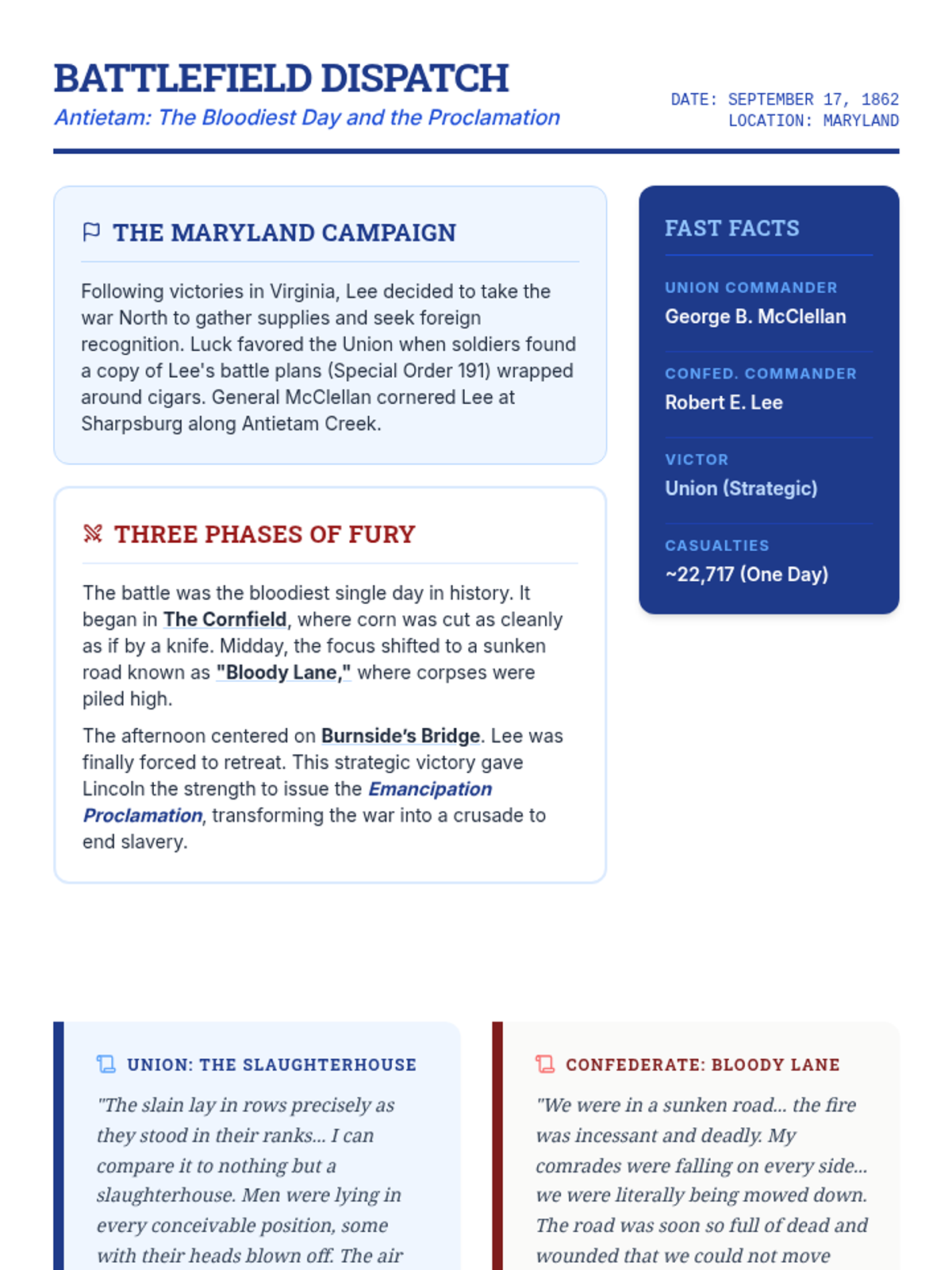
A reading passage on the Battle of Antietam, highlighting Lee's Maryland Campaign and featuring two primary source excerpts from soldiers on both sides of the "Bloody Lane."
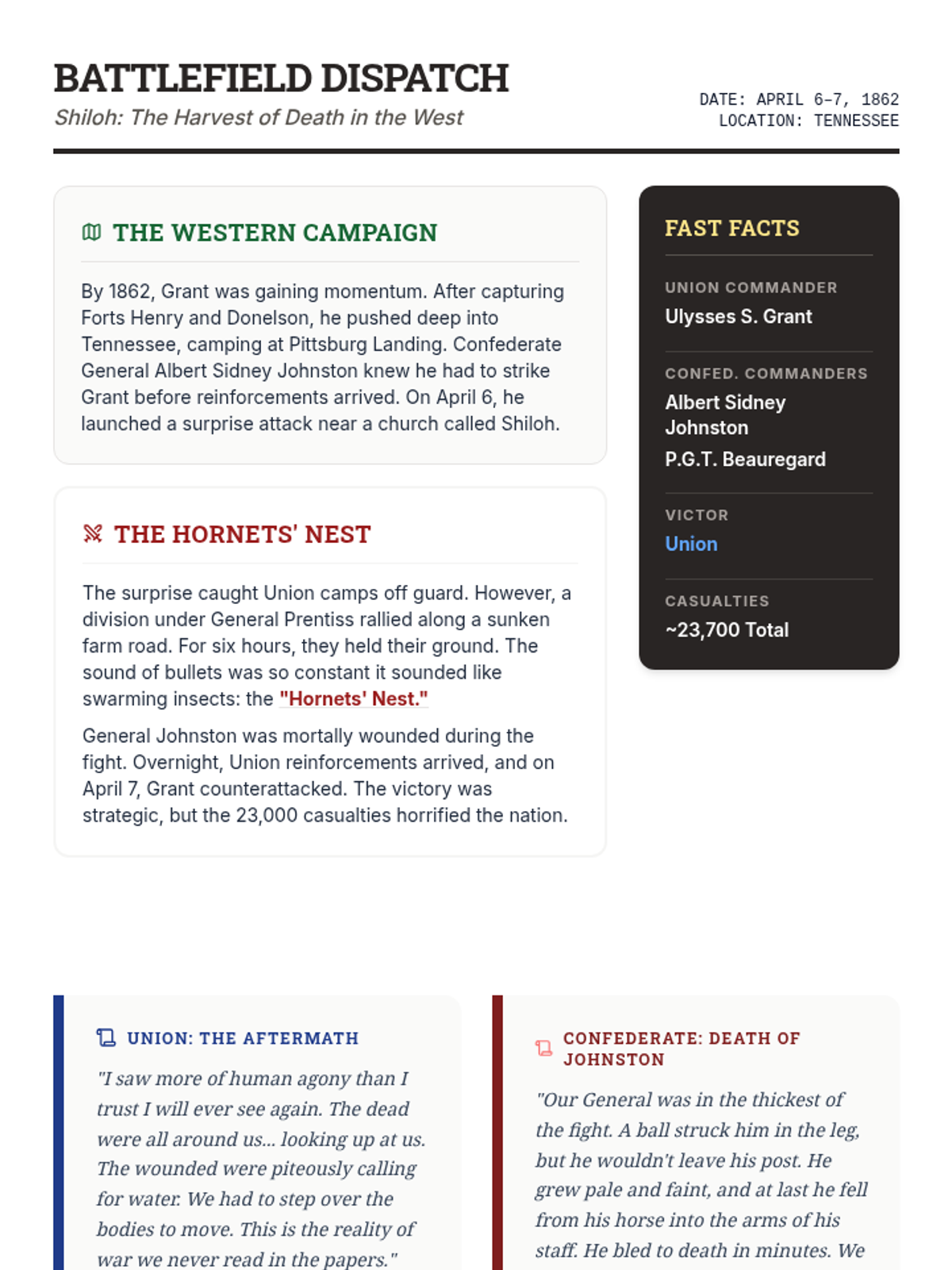
A reading material focused on the Battle of Shiloh, detailing the Western Theater strategy, the 'Hornets' Nest' engagement, and featuring two primary source excerpts from both sides of the conflict.
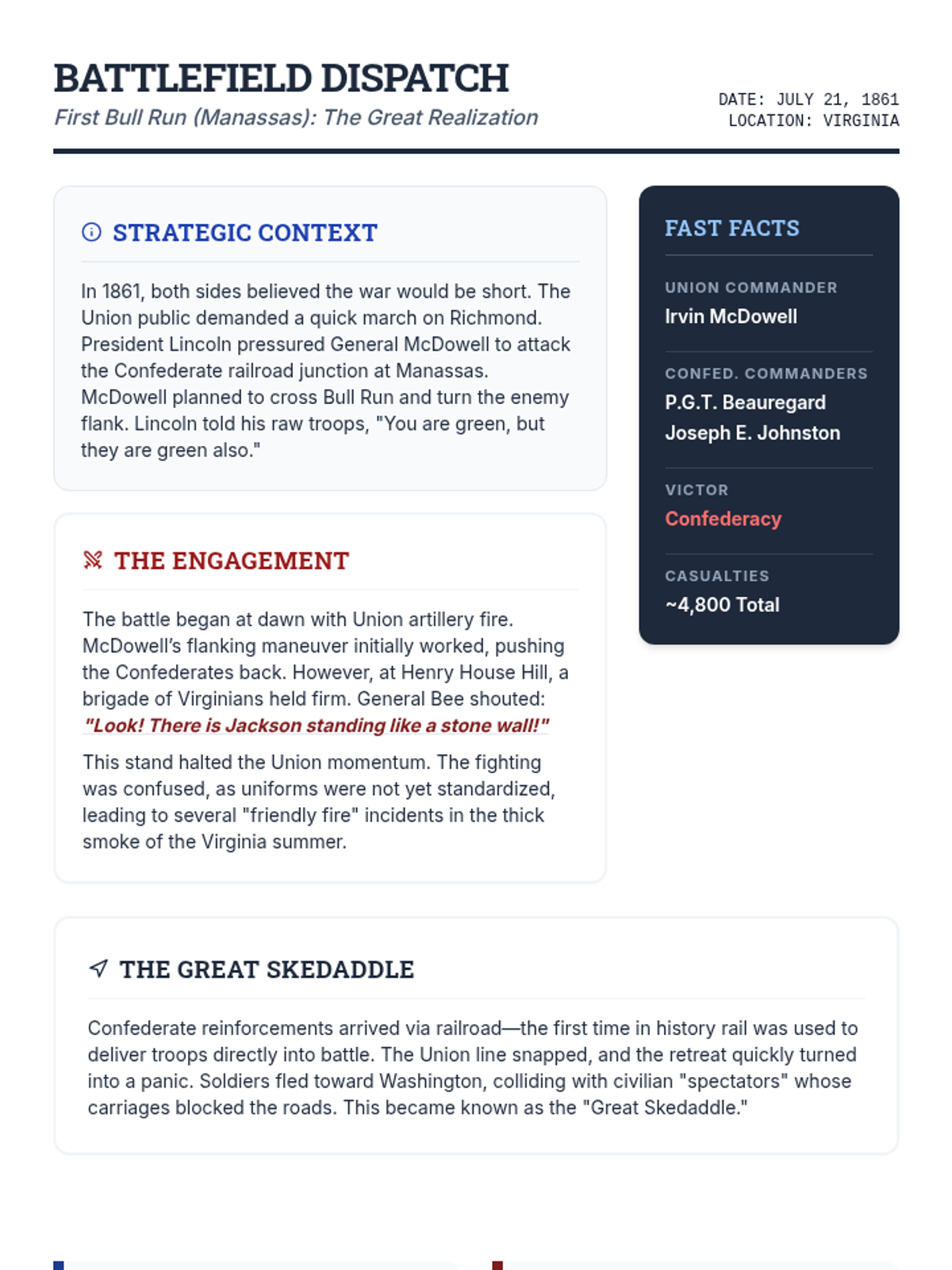
A detailed reading passage about the First Battle of Bull Run (Manassas), including strategic context, battle details, and two primary source excerpts offering both Union and Confederate perspectives.
A reading comprehension document adapted to a 1000L Lexile level, exploring the psychological nature of guilt through behavioral research. Includes margin notes, a vocabulary bank, and assessment questions.
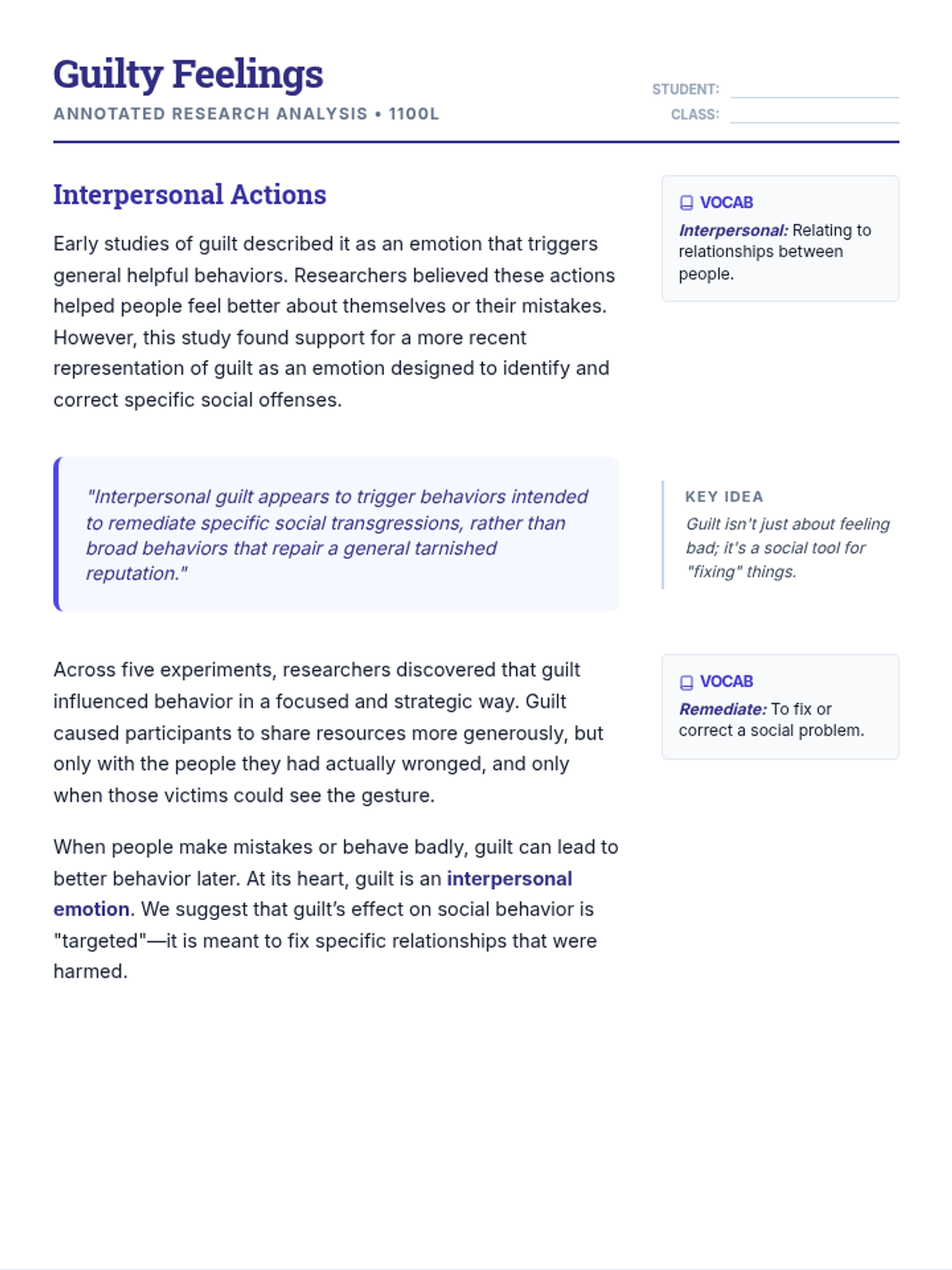
A differentiated version of the 'Guilty Feelings' handout leveled to 1100L. This version includes margin notes for vocabulary and key concepts, designed to help students track complex social psychology research findings.