A comprehensive quiz assessing student understanding of food chains, producers, consumers, and decomposers, featuring multiple-choice, matching, and short-answer questions.
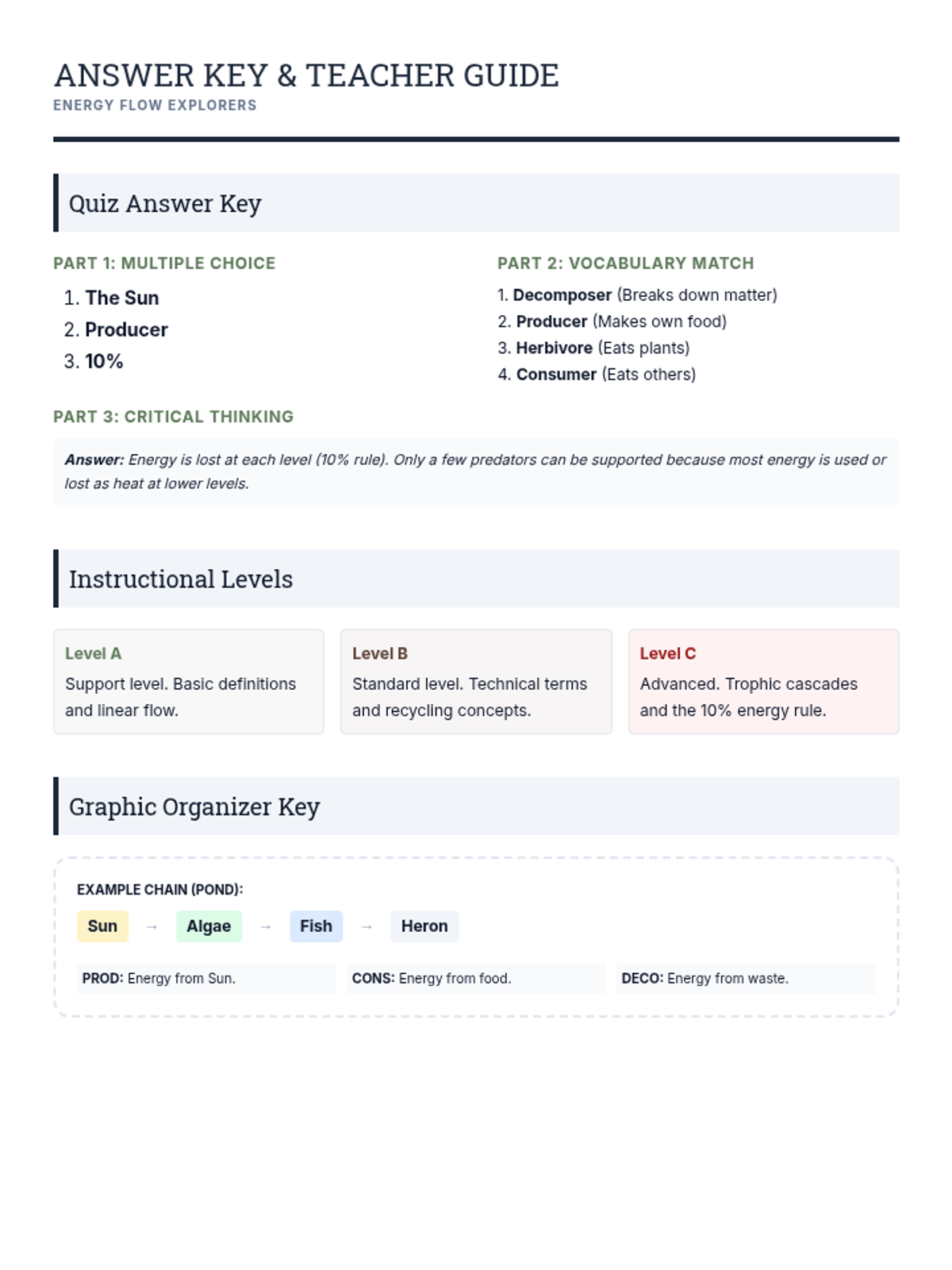
An answer key and teacher guide for the Energy Flow Explorers lesson, providing quiz answers, differentiation notes, and examples for the graphic organizer.
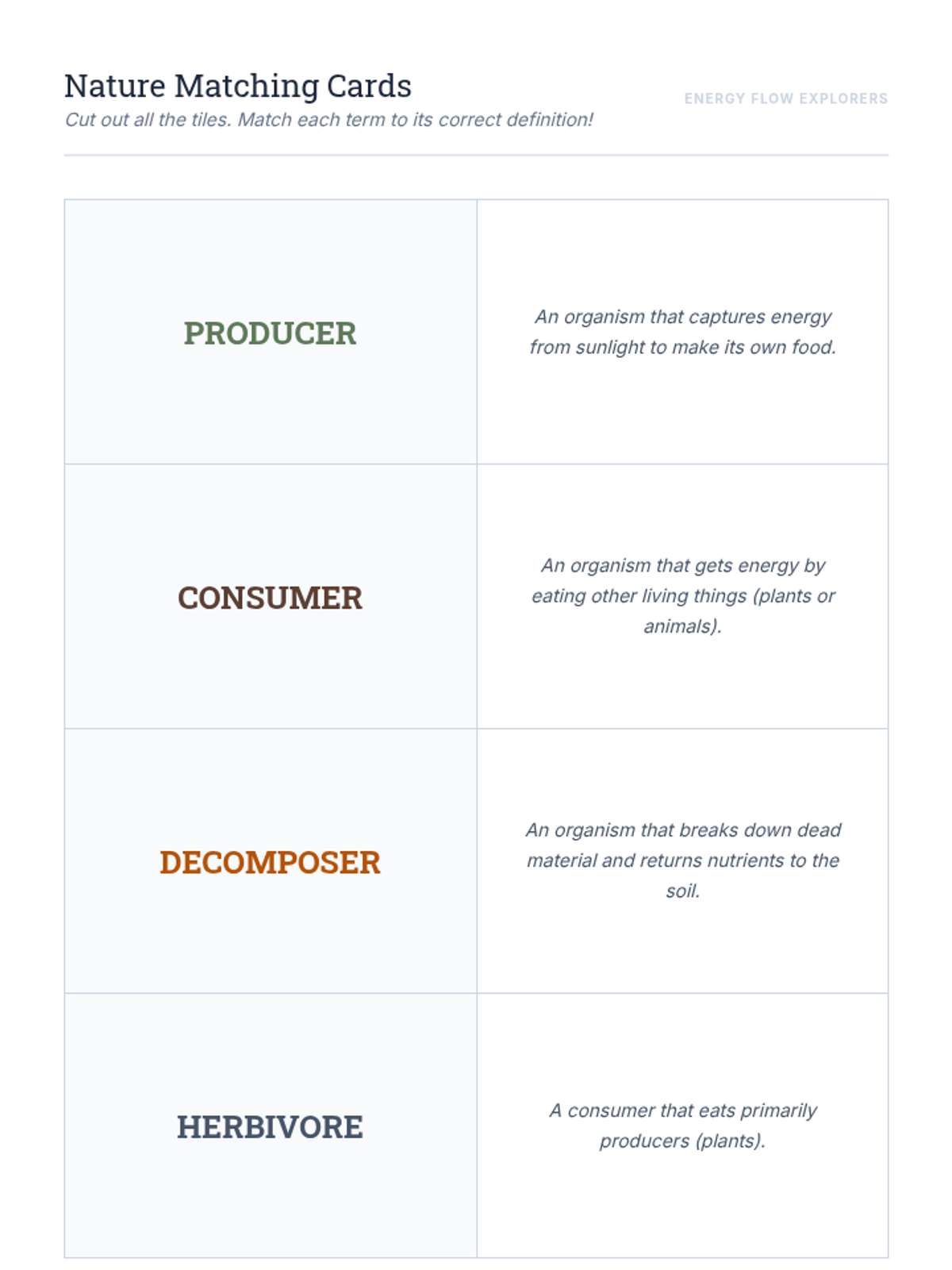
Vocabulary matching tiles for key ecosystem terms including producer, consumer, decomposer, and herbivore, designed for active learning.
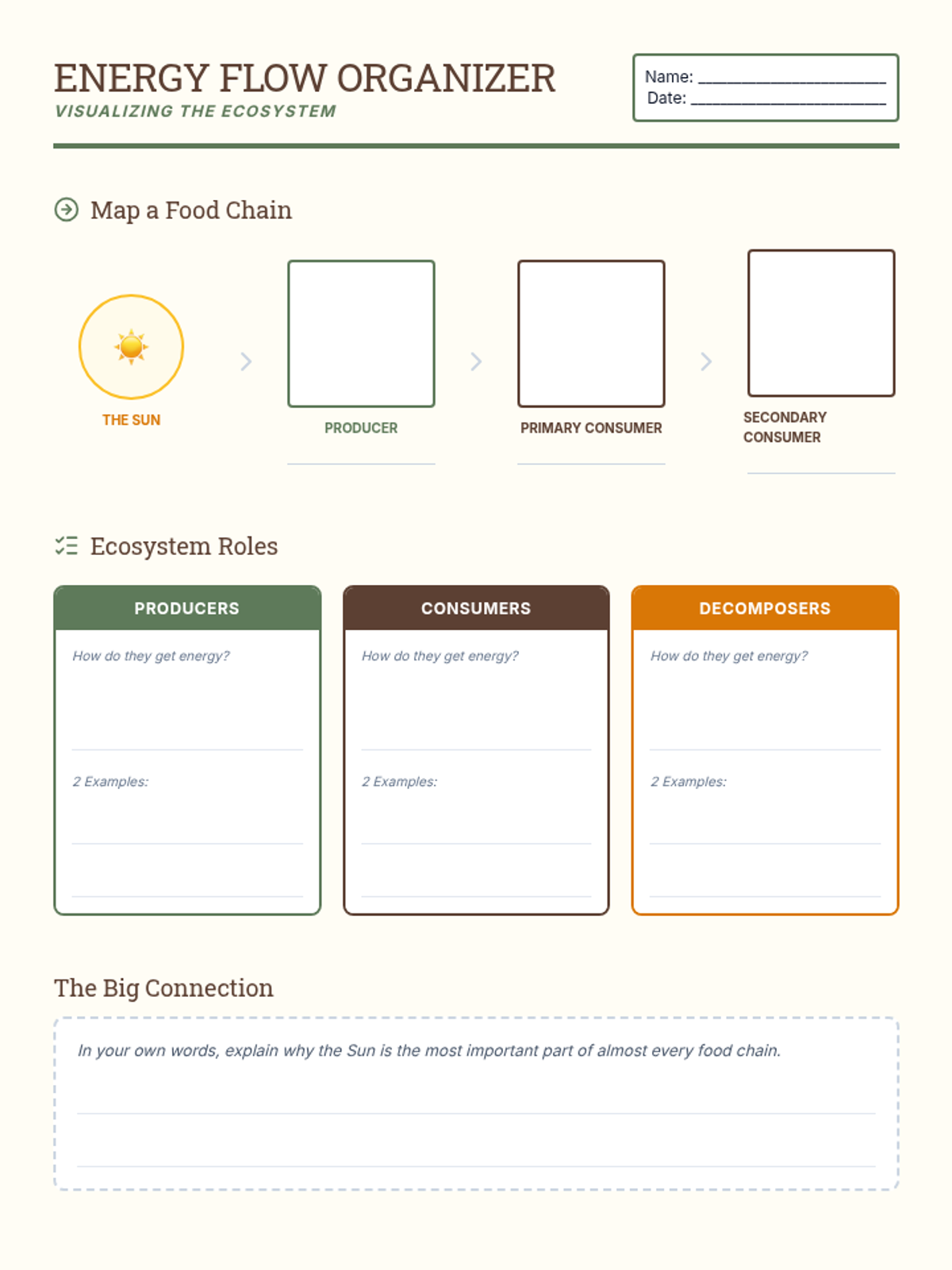
A graphic organizer that allows students to map a food chain and categorize the roles of producers, consumers, and decomposers.
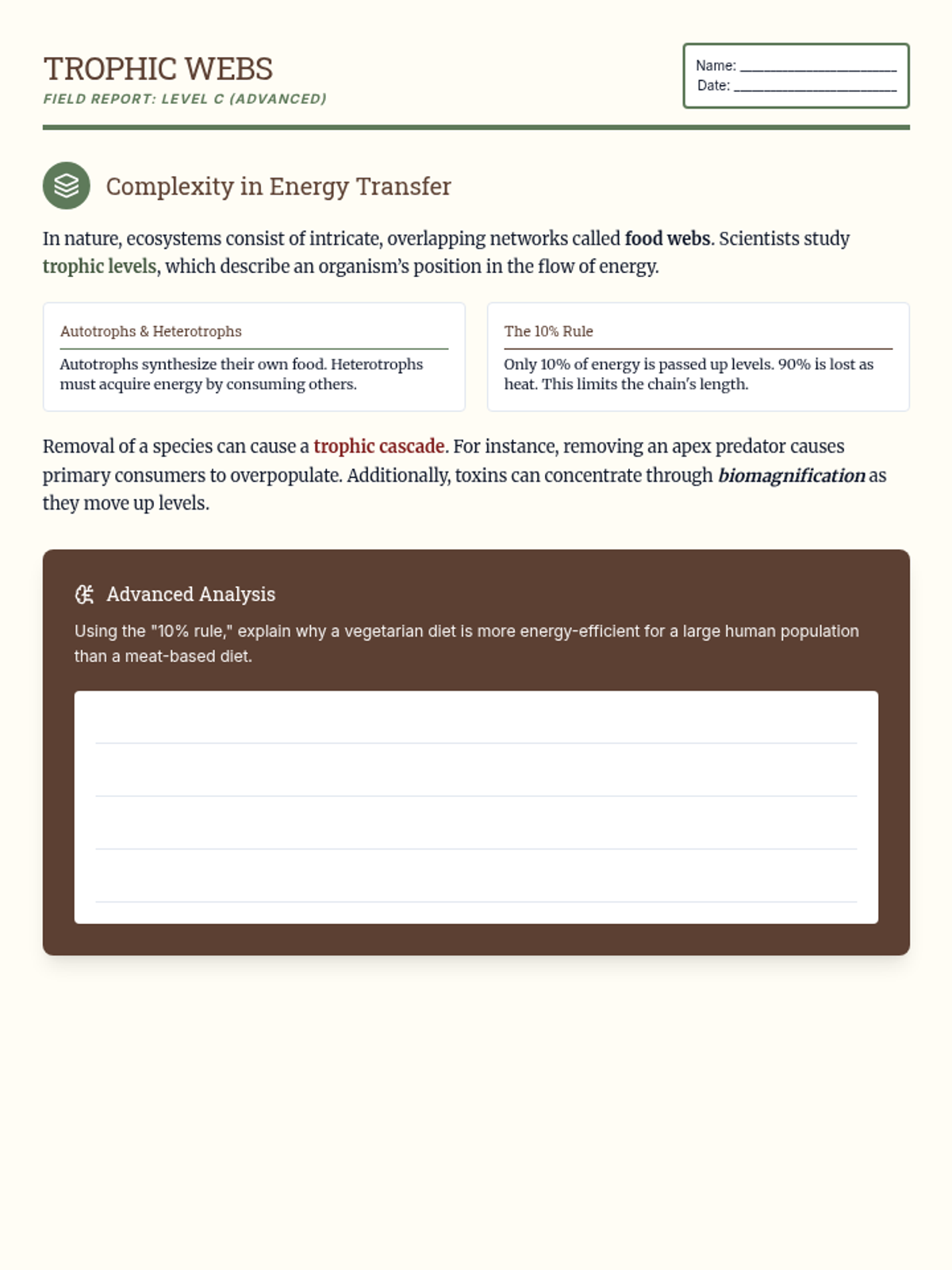
An above-grade level reading passage for 5th grade about trophic levels, the 10% rule, and trophic cascades, using advanced ecological terminology.
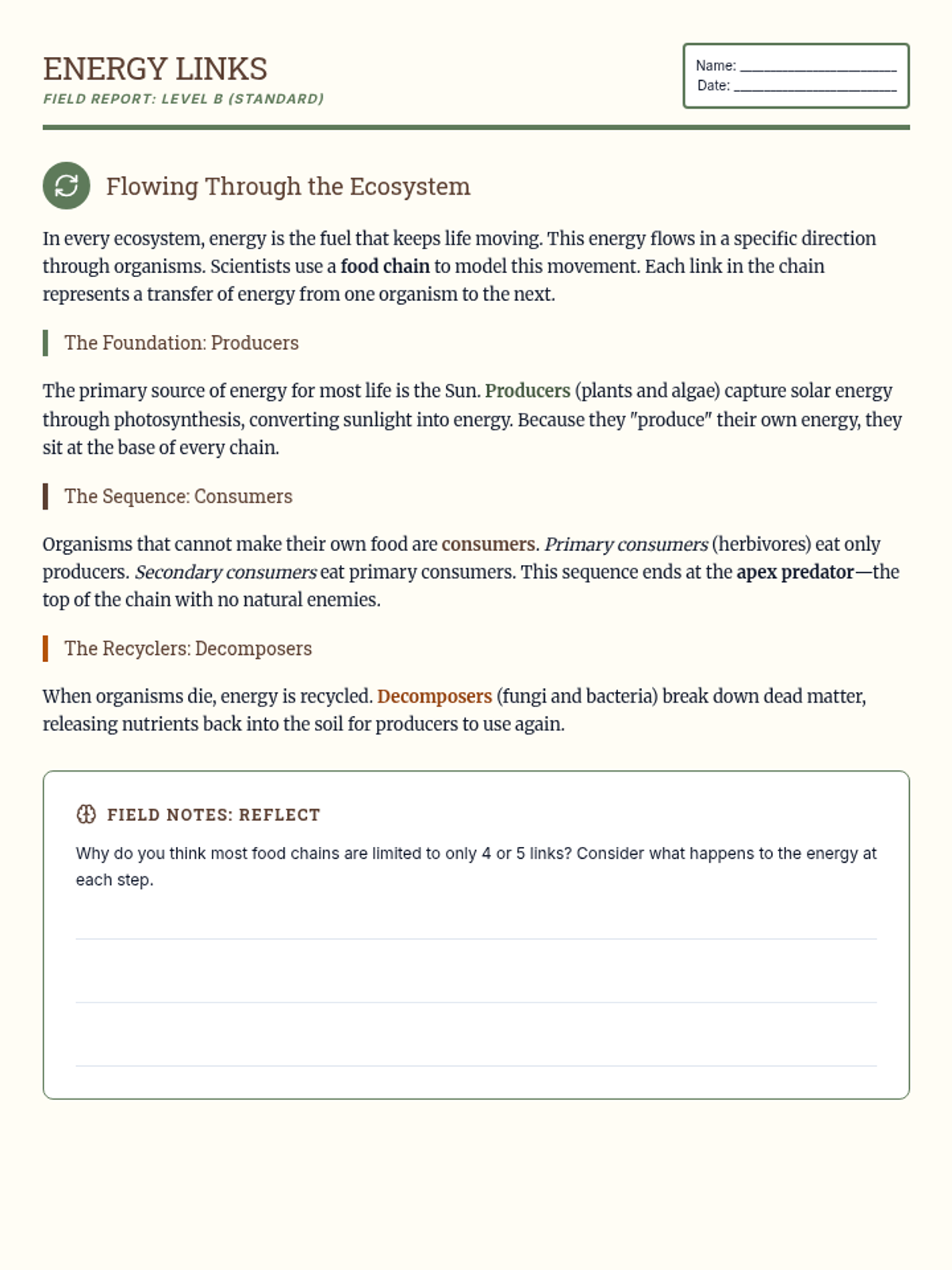
An on-grade level reading passage for 5th grade about food chains, including more technical vocabulary like primary/secondary consumers and apex predators.
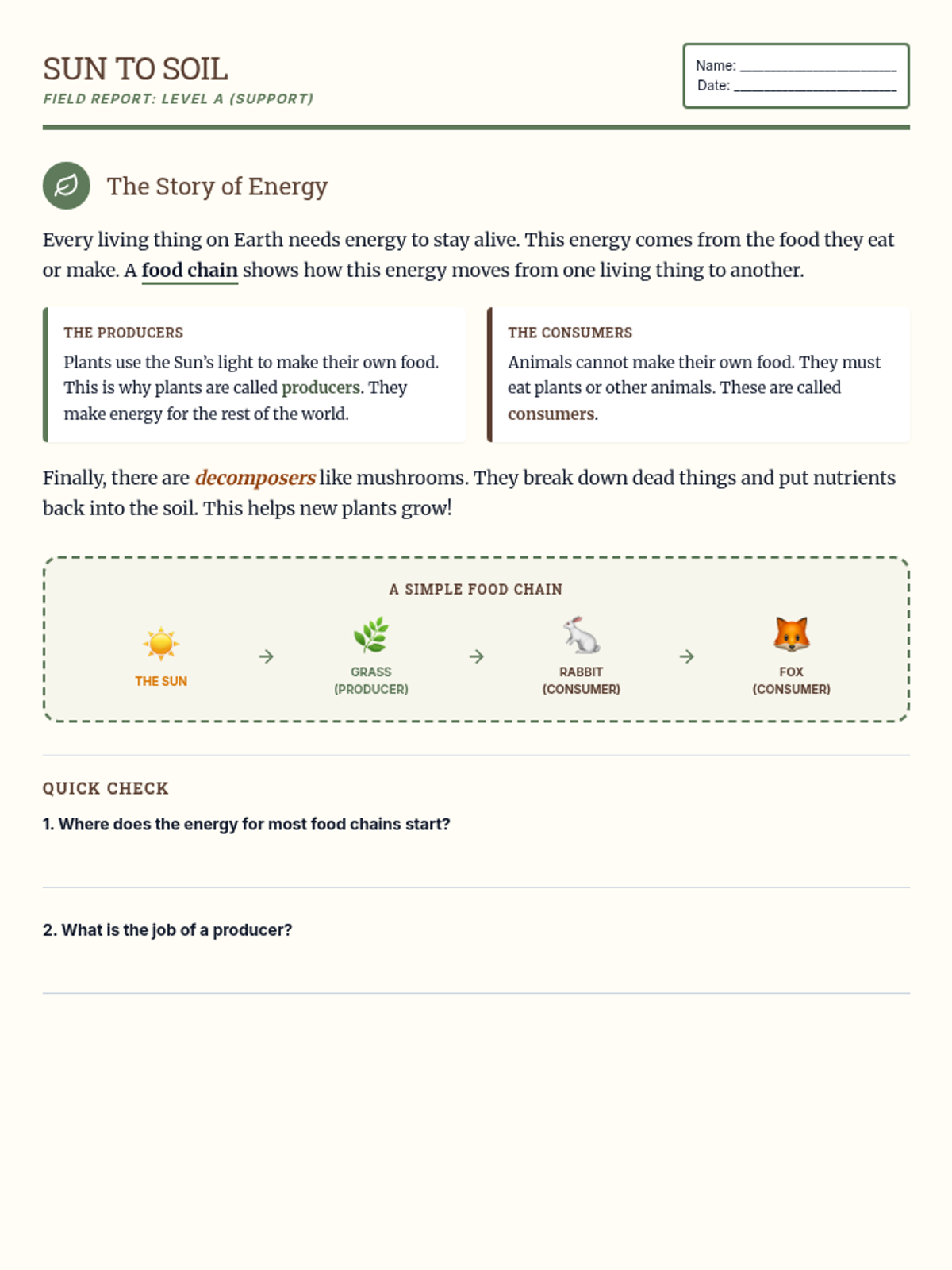
A below-grade level reading passage about food chains, producers, and consumers, featuring simplified language and clear visual aids for 5th-grade students requiring extra support.
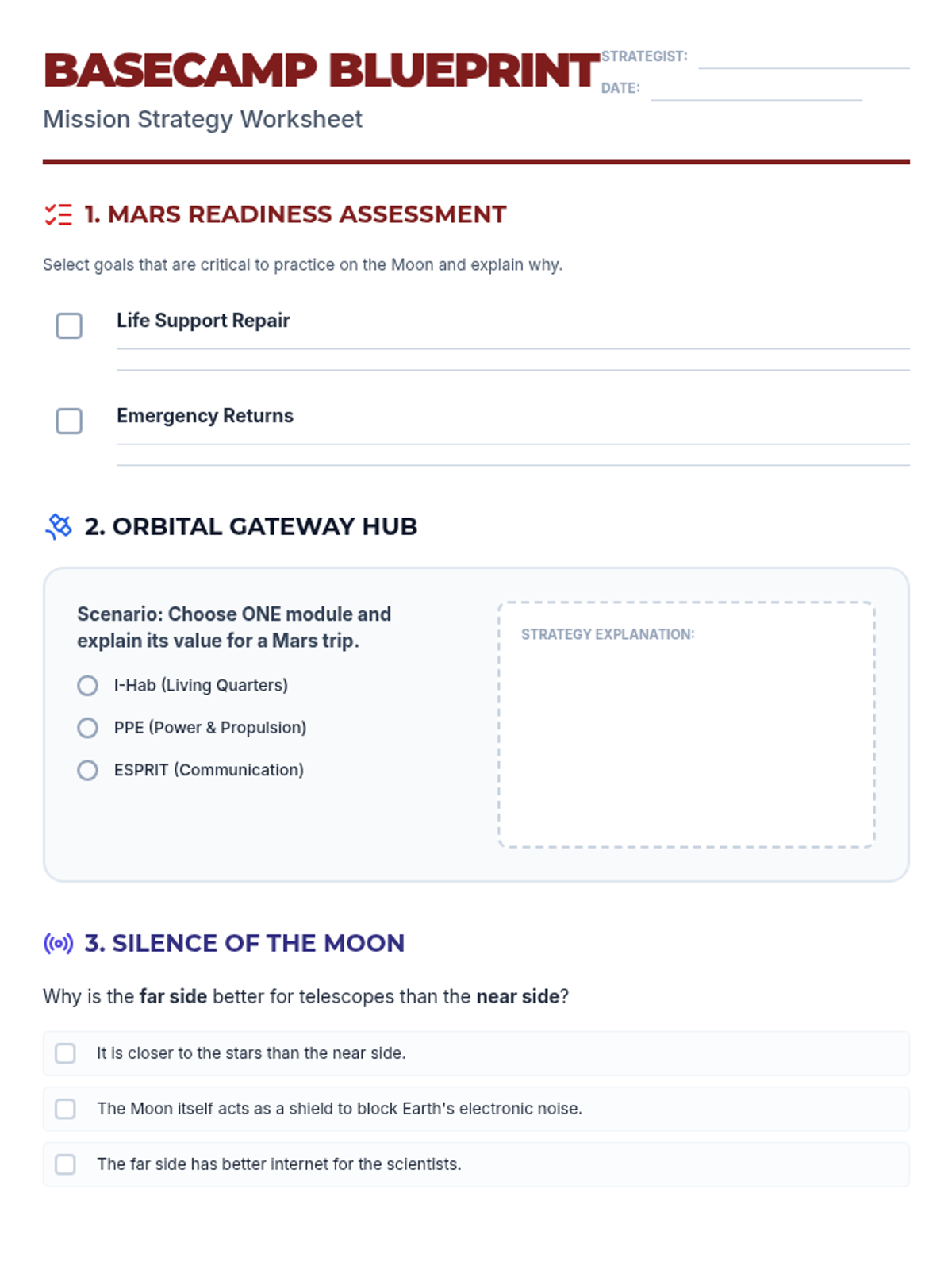
A student worksheet evaluating mission readiness for Mars, analyzing the modules of the Lunar Gateway, and understanding the scientific value of radio silence on the far side.
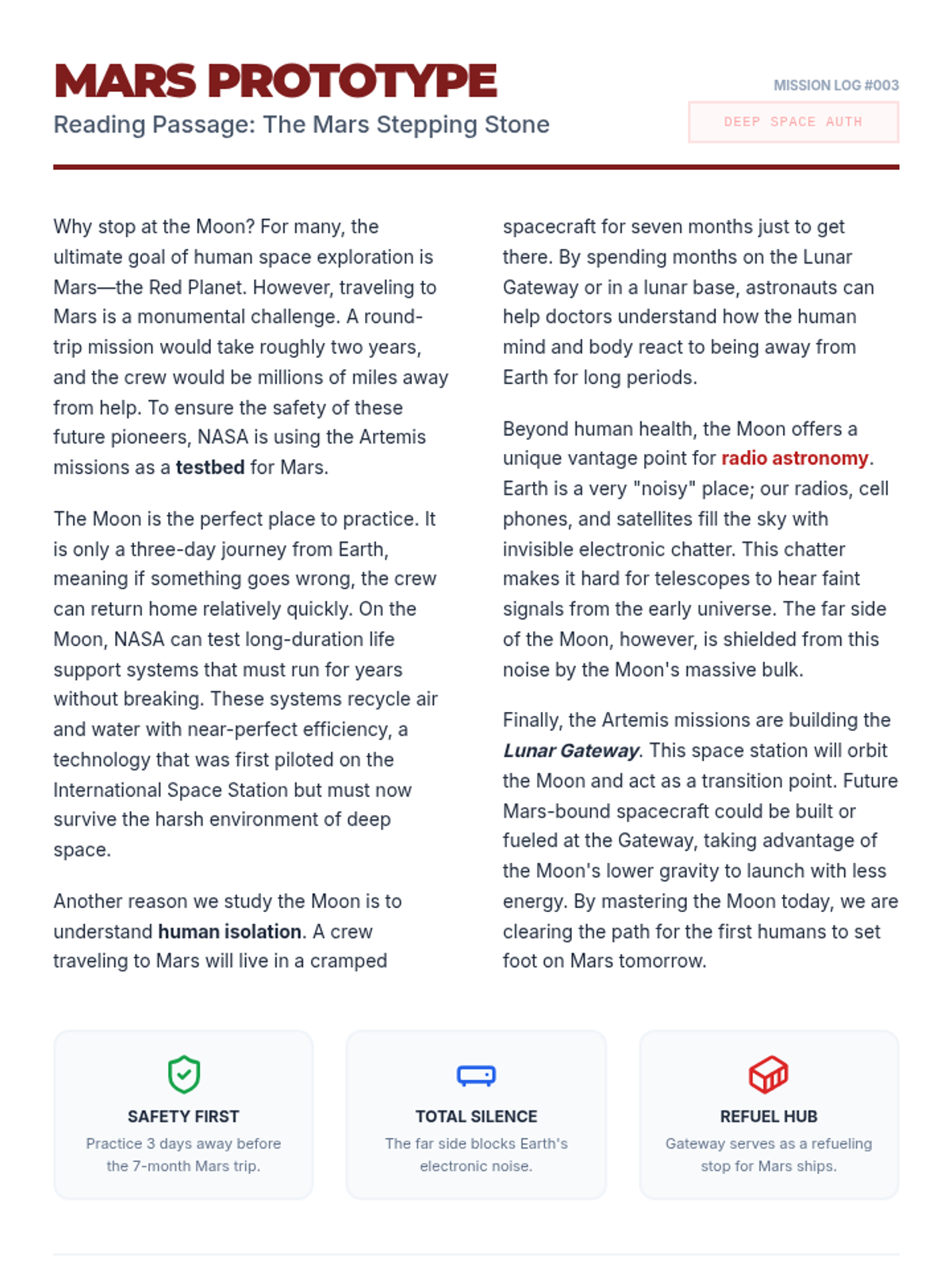
A reading passage explaining the Moon's role as a testbed for Mars, the purpose of the Lunar Gateway, and the unique advantages of radio astronomy on the lunar far side.
A presentation on the Lunar Gateway, the Moon's role as a testbed for Mars missions, and the unique potential for radio astronomy on the lunar far side.
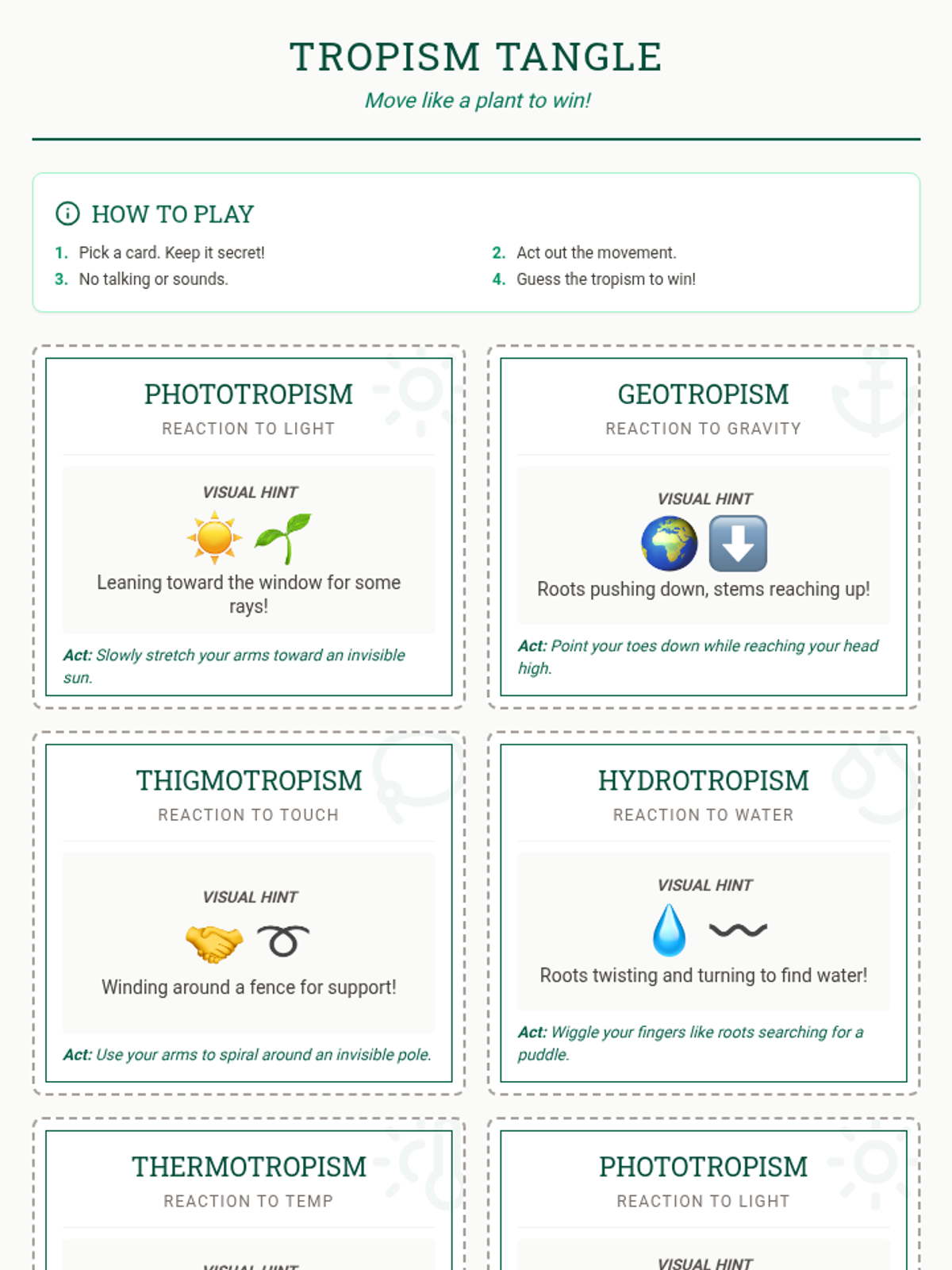
A set of 10 printable charades cards for teaching plant tropisms. Each card includes a visual hint, acting tips, and clear biological labels designed in a vintage botanical style. Revised to fix page break issues and improve visual clarity.
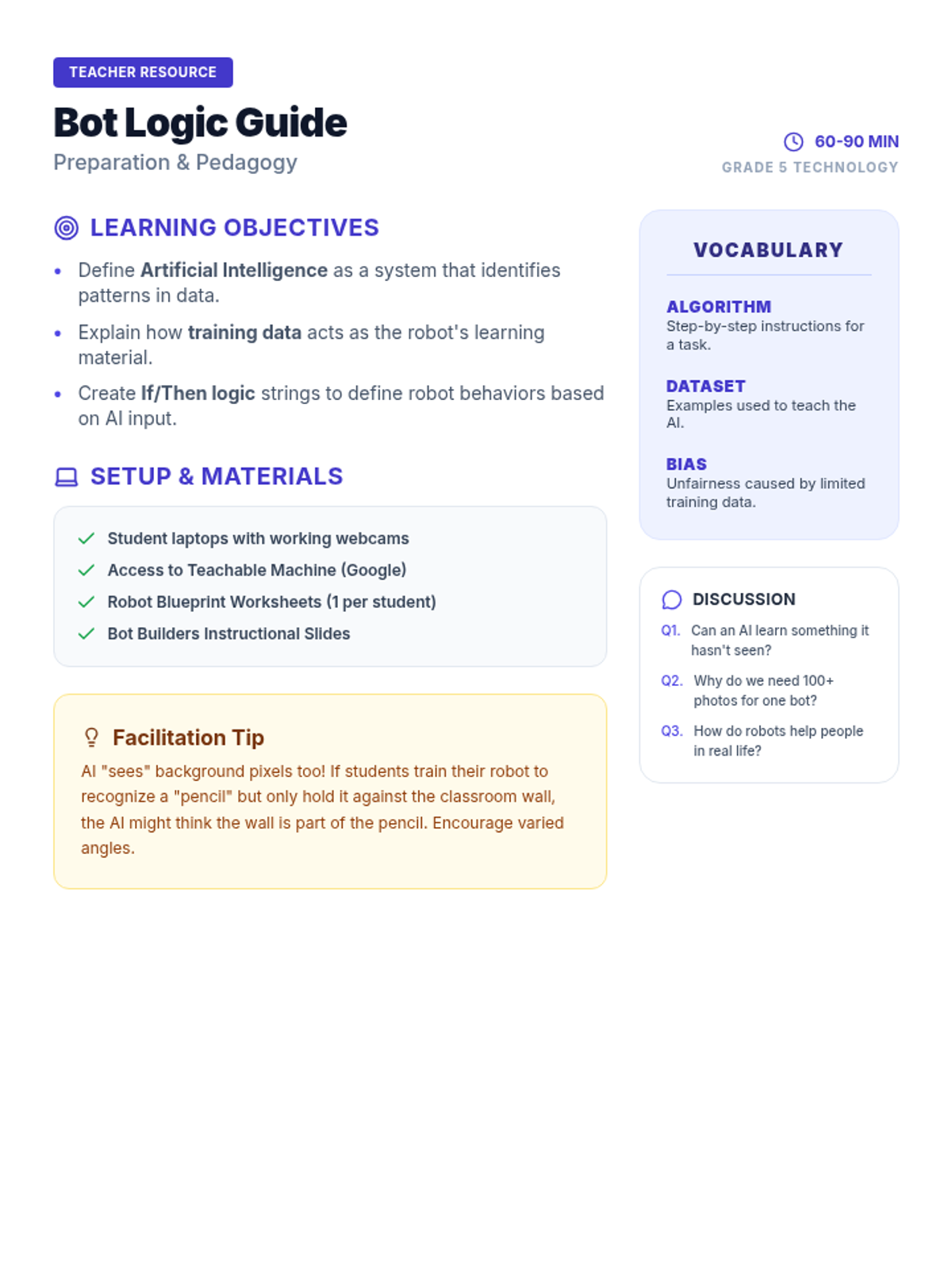
A facilitation guide for teachers including learning objectives, vocabulary, a detailed pacing guide, and technical tips for leading an AI training activity.
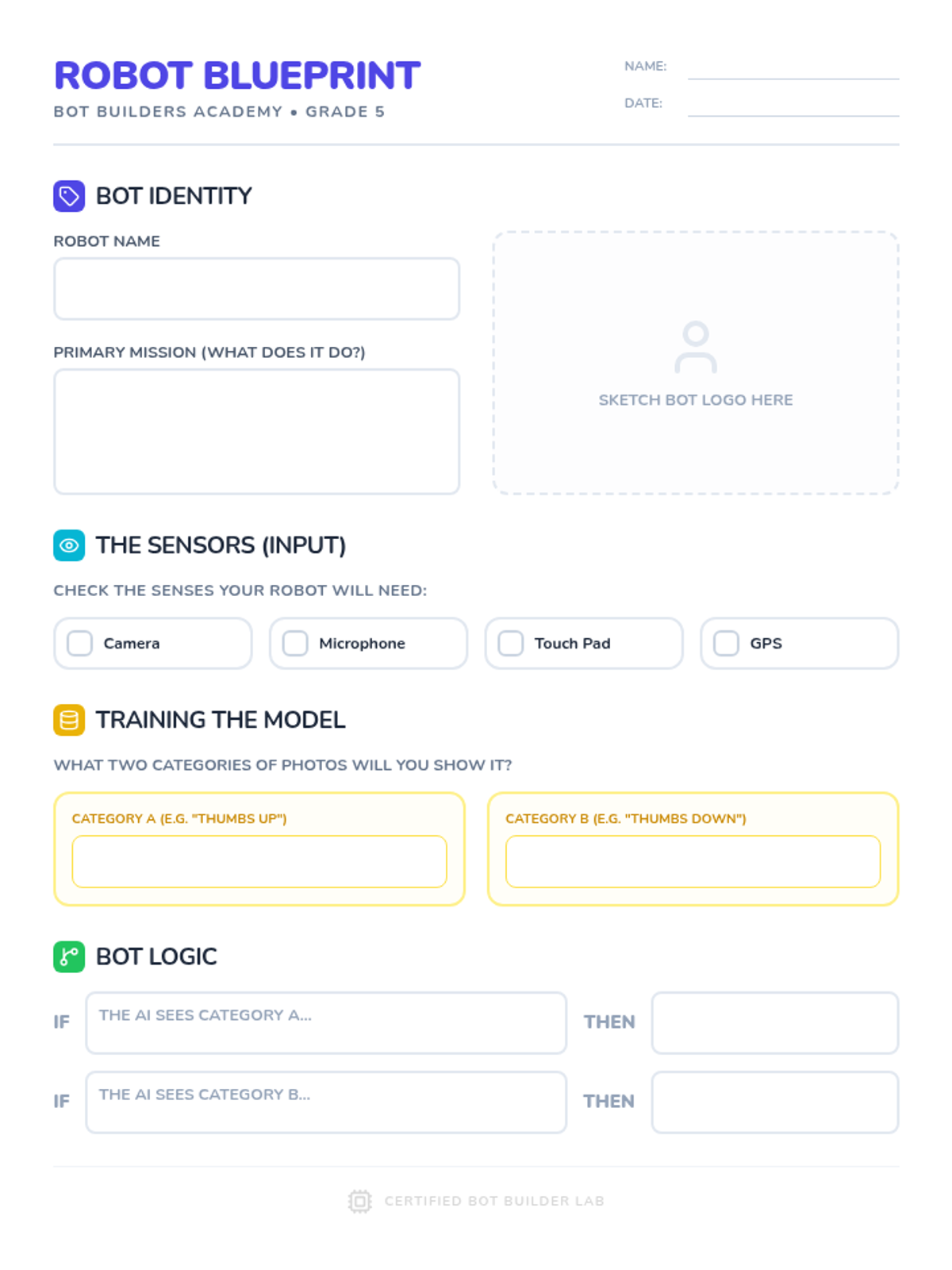
A planning worksheet for students to design their AI robot, including its mission, necessary sensors, training data categories, and basic logic (If/Then statements).
A visual slide presentation for 5th graders explaining Artificial Intelligence, the difference between hardware and software, and the three-step process of training an AI model online using data.
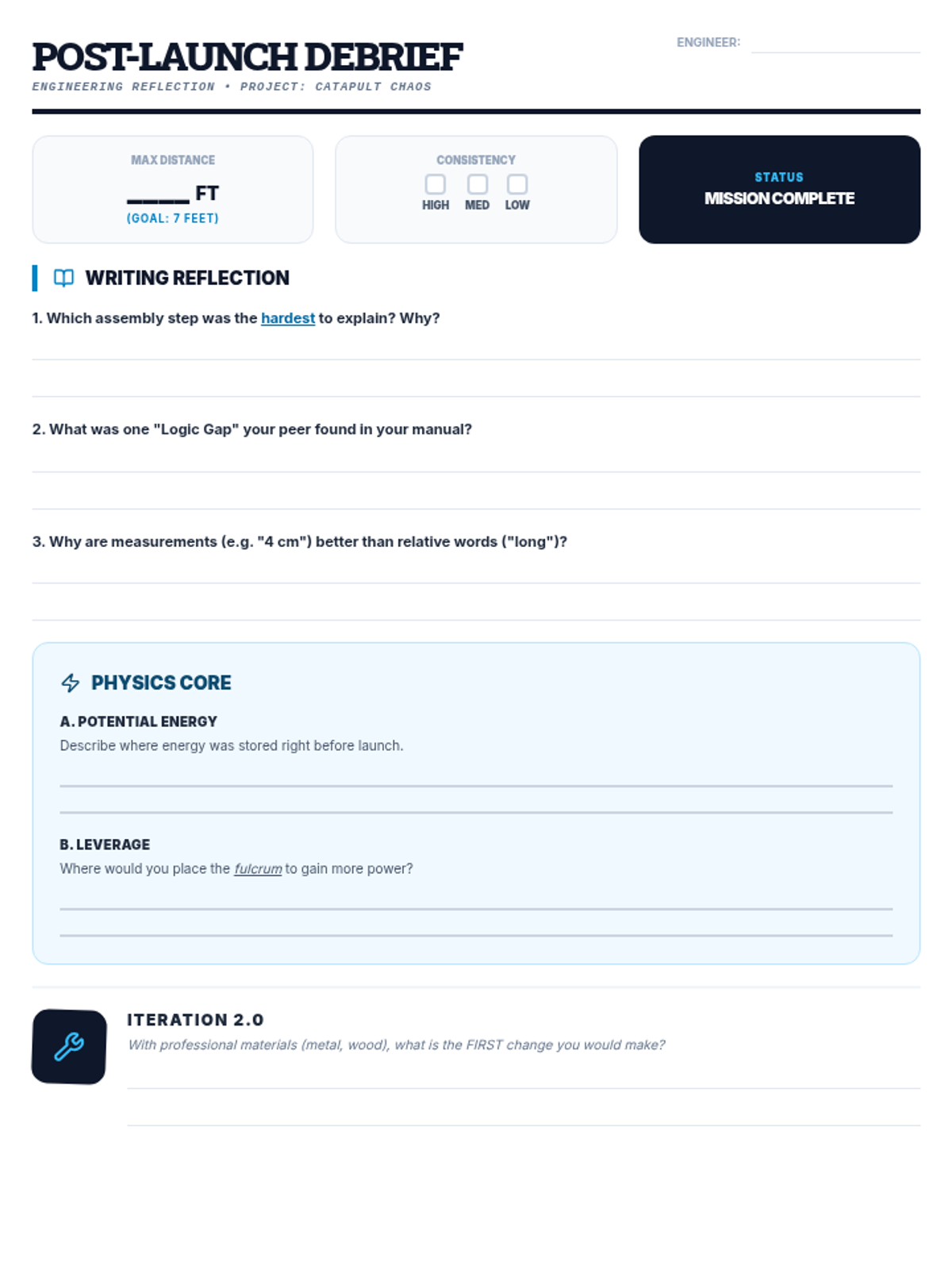
A post-project student reflection document focused on technical writing precision, peer review analysis, and application of physics concepts. Includes space for performance data and engineering iteration ideas. Updated project goal to 7 feet. Optimized for single-page layout.
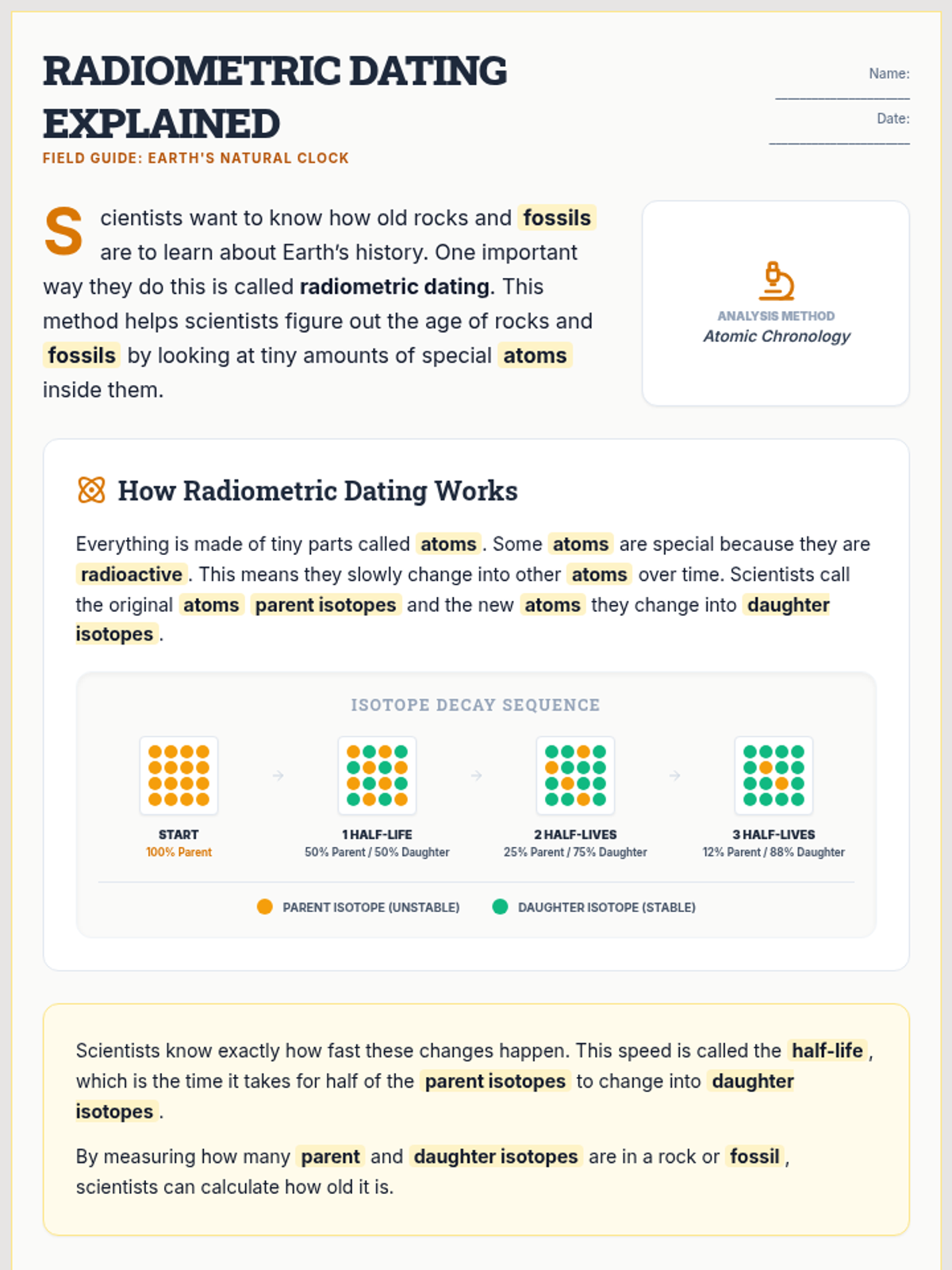
A complete, illustrated field-guide style article incorporating all text from the original PDF source. Explains radiometric dating, half-lives, and age comparisons with a detailed visual graphic showing isotope decay over multiple half-lives.
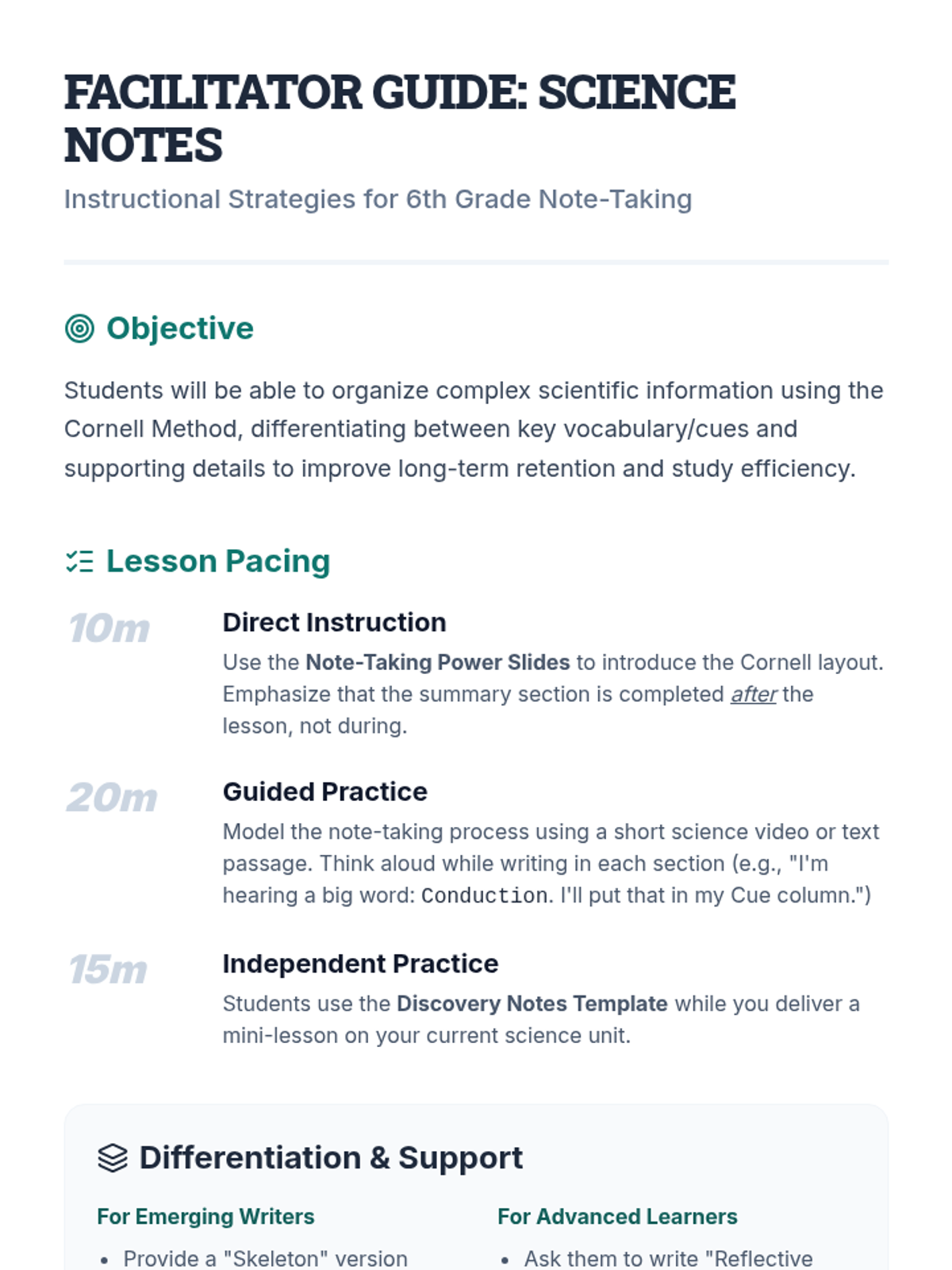
A teacher-facing facilitation guide providing instructional strategies, pacing suggestions, and differentiation tips for teaching the Cornell note-taking method in a 6th-grade science classroom.
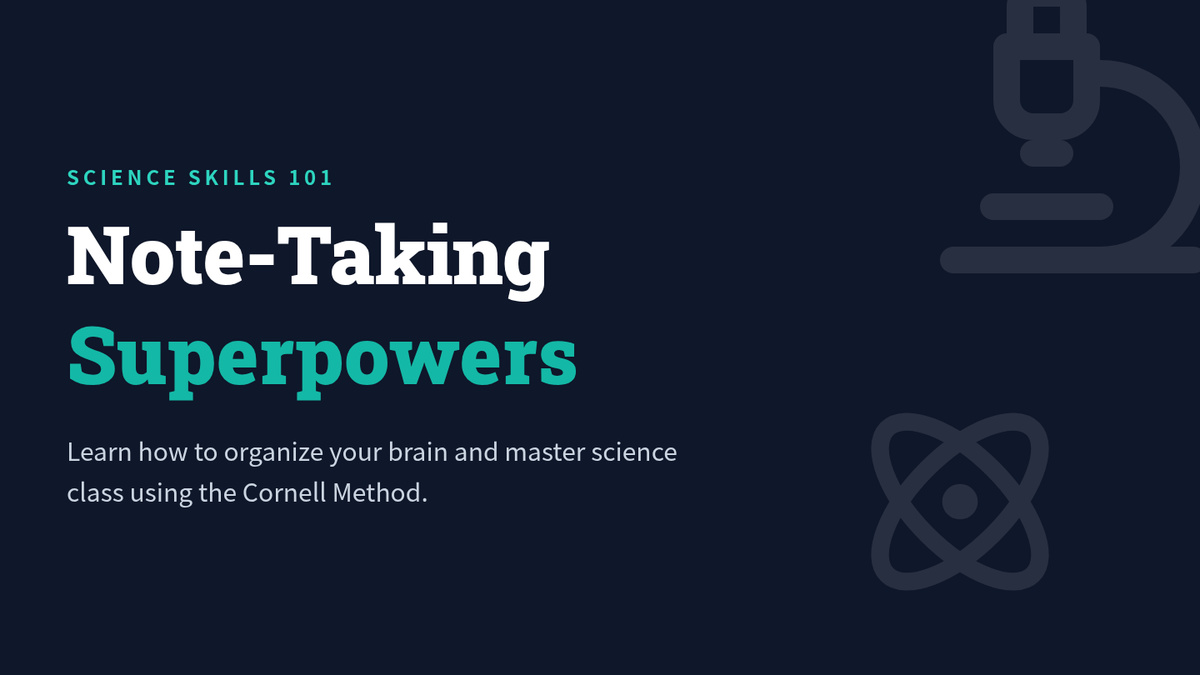
A colorful and informative slide deck that introduces 6th-grade students to the Cornell note-taking method, updated to show the 4-point summary layout and Sketch Zone.
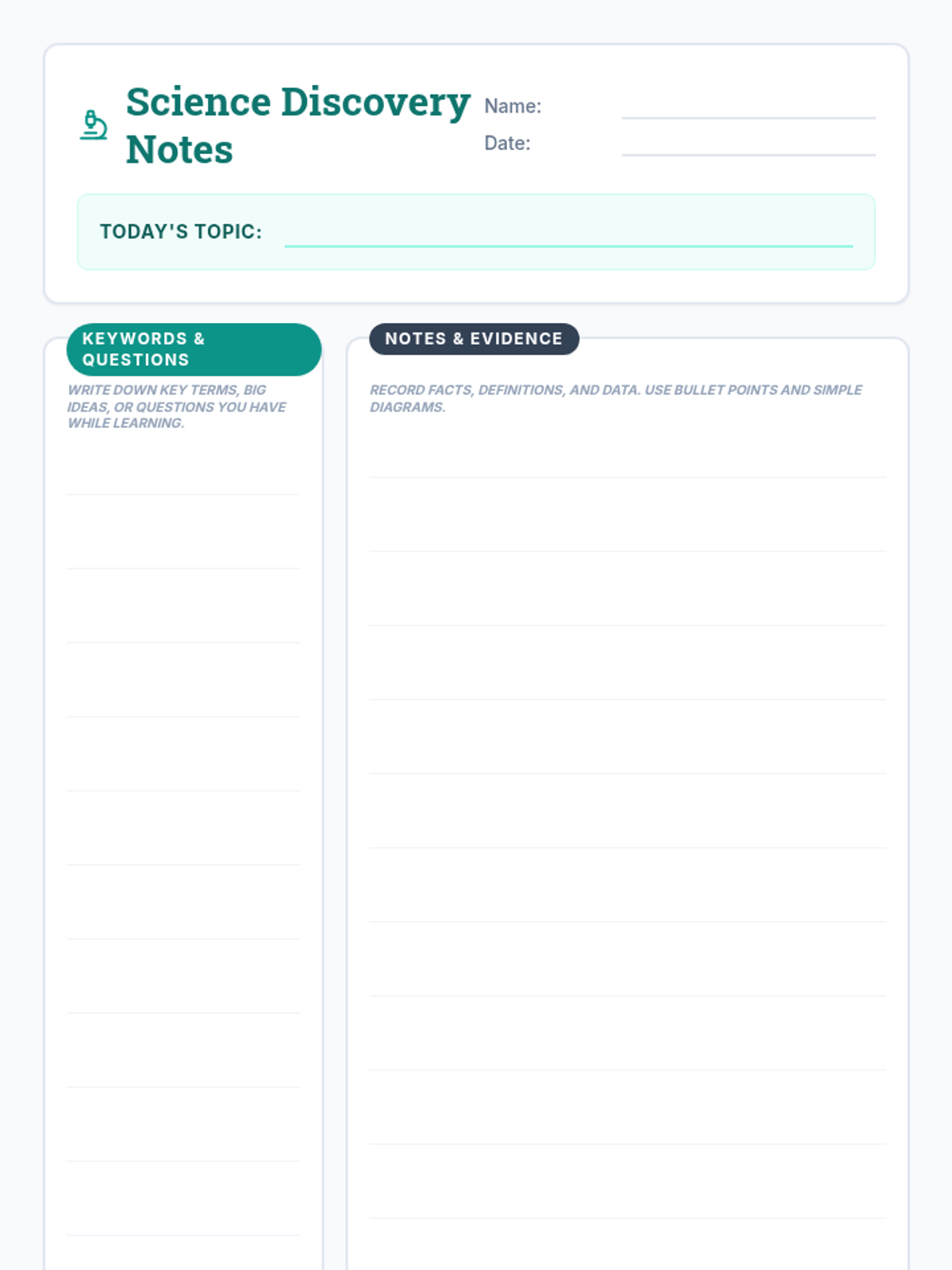
A visually engaging Cornell Notes template specifically designed for 6th-grade science students, featuring an enlarged Vocabulary section, Questions and Notes sections, a Sketch Zone, and a Summary area with 4 bullet points and a "3-4 sentences" prompt.