Slide deck for Lesson 4 covering the neutron chain reaction, moderation, and control rods.
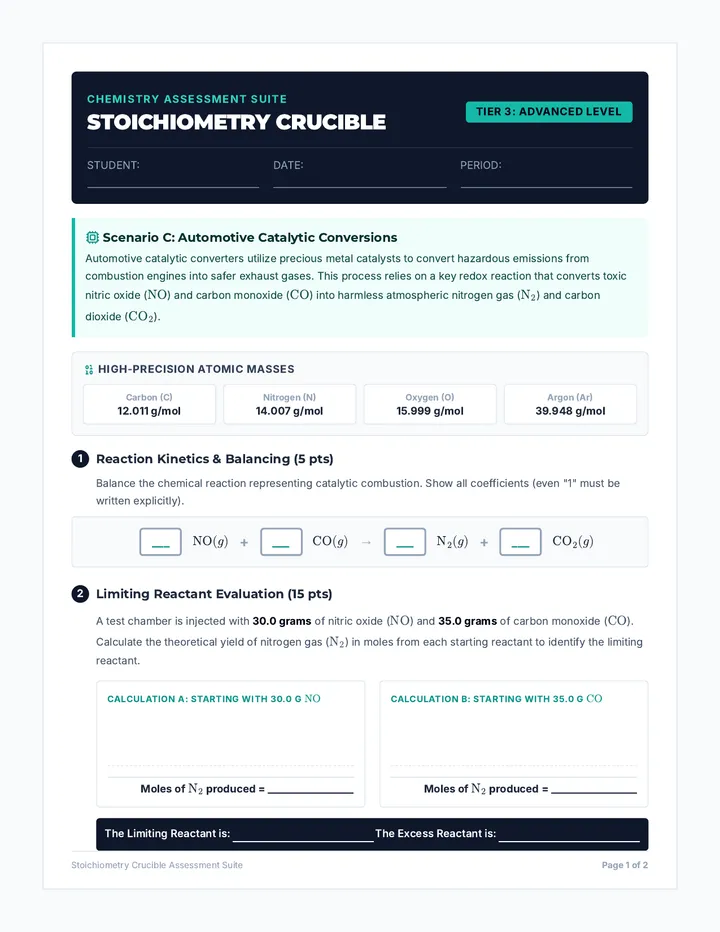
Tier 3 (Advanced) Stoichiometry Quiz focusing on green chemistry & automotive emissions (catalytic converters), featuring complex limiting reactant analyses, theoretical yield, and atom economy calculations.
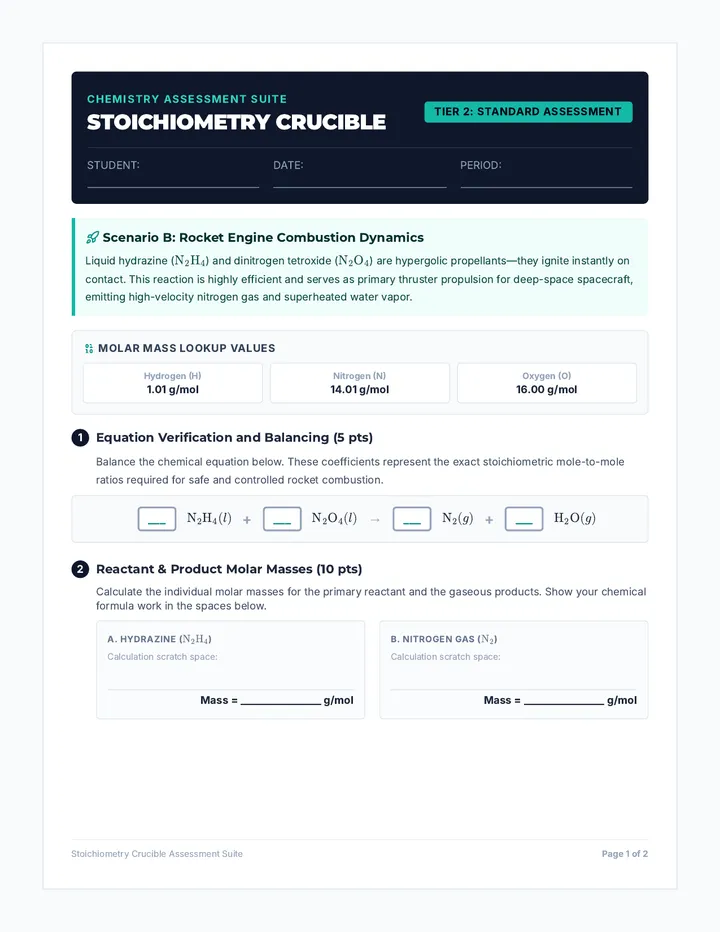
Tier 2 (Standard) Stoichiometry Quiz focusing on aerospace propulsion (hydrazine rocket propellant combustion) with intermediate scaffolding, theoretical yield calculations, and percent yield analysis.
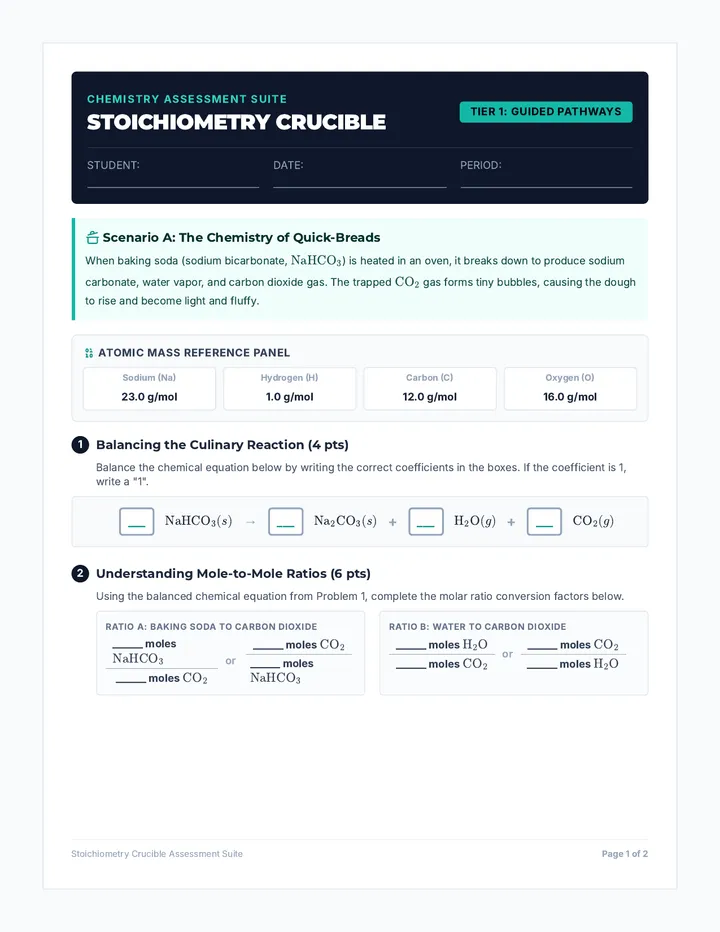
Tier 1 (Scaffolded) Stoichiometry Quiz focusing on culinary chemistry (baking soda decomposition) with visual roadmaps, pre-structured dimensional analysis grids, and atomic mass reference cards.
Livret pratique et visuel du stagiaire pour le Jour 2. Comporte des fiches de calcul pour le test de germination, des guides visuels pour le test du sel et la préparation de mini-sets d'igname, ainsi qu'une fiche d'exercice pratique de traçabilité de stock.
Guide détaillé du formateur pour le Jour 2 de la formation. Contient le déroulé minuté, les scripts de présentation, les protocoles de séchage (dont le test du sel), les fiches de traçabilité et les consignes pour l'atelier de préparation de mini-sets de tubercules locaux (ignames, patates douces).
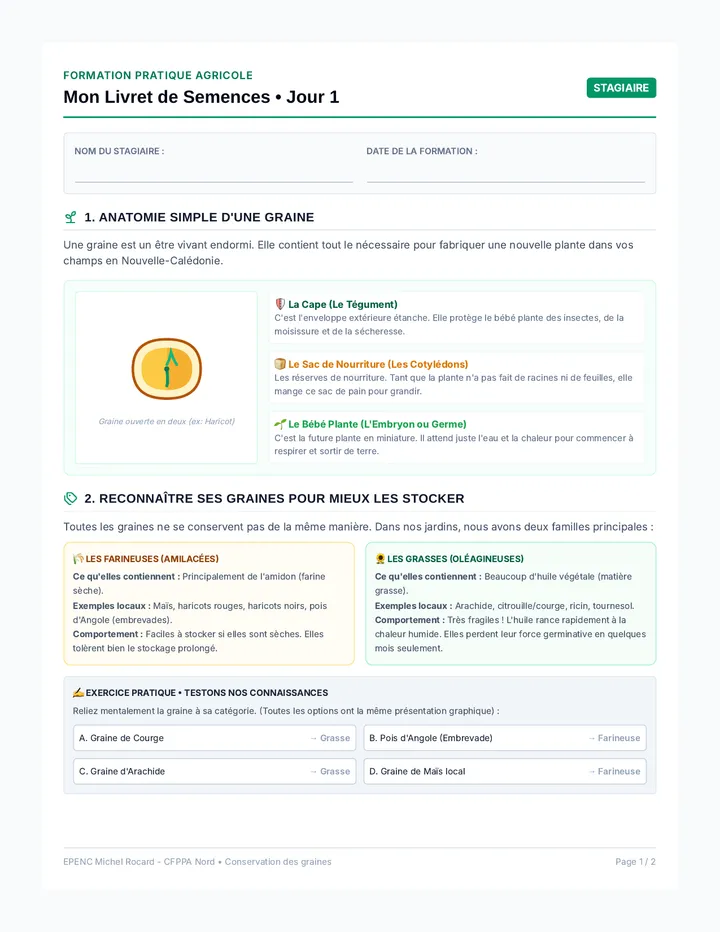
Livret pratique et visuel du stagiaire pour le Jour 1. Comporte des schémas simplifiés de la graine, des explications claires sur la germination et la dormance, adaptés aux producteurs locaux, et un espace de notes.
Guide détaillé du formateur pour le Jour 1 de la formation. Contient le déroulé minuté, les scripts de présentation, les consignes des ateliers pratiques et les questions de relance pour les Modules 1 et 2 (Physiologie, Dormance et Germination).
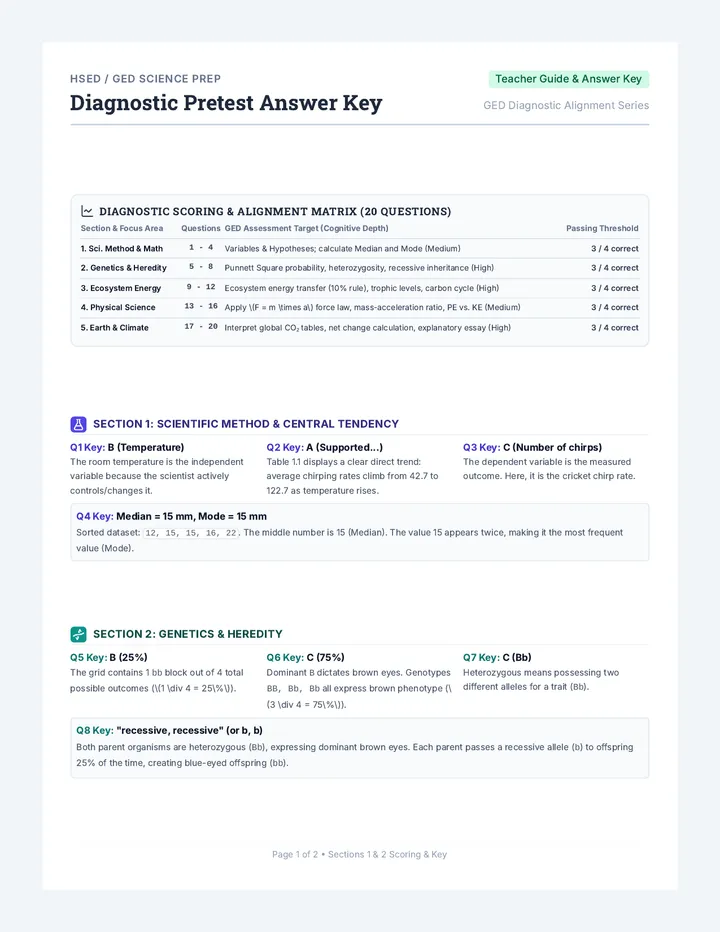
An updated 2-page teacher answer key and scoring guide aligned with the 20-question expanded pretest. It features scoring matrices, detailed rationales for Punnett squares and central tendencies, and the complete GED Extended Response rubric.
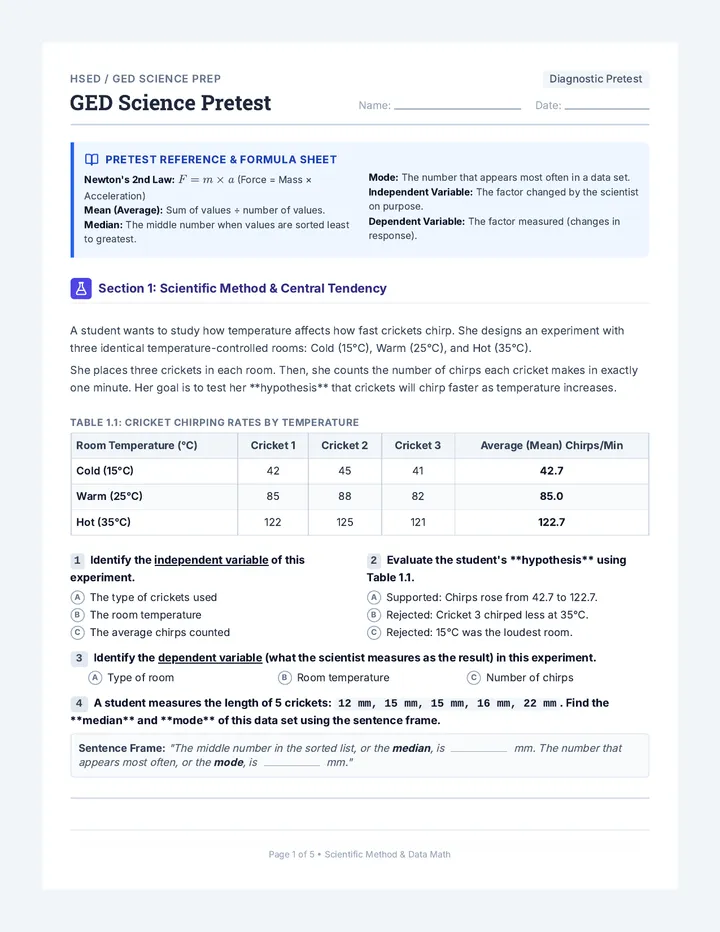
An expanded 5-page diagnostic pretest for GED Science students containing exactly 20 questions (4 per section). It features new questions on dependent variables, heterozygosity, trophic levels, mass/acceleration relationships, and multi-step math/data comparisons.
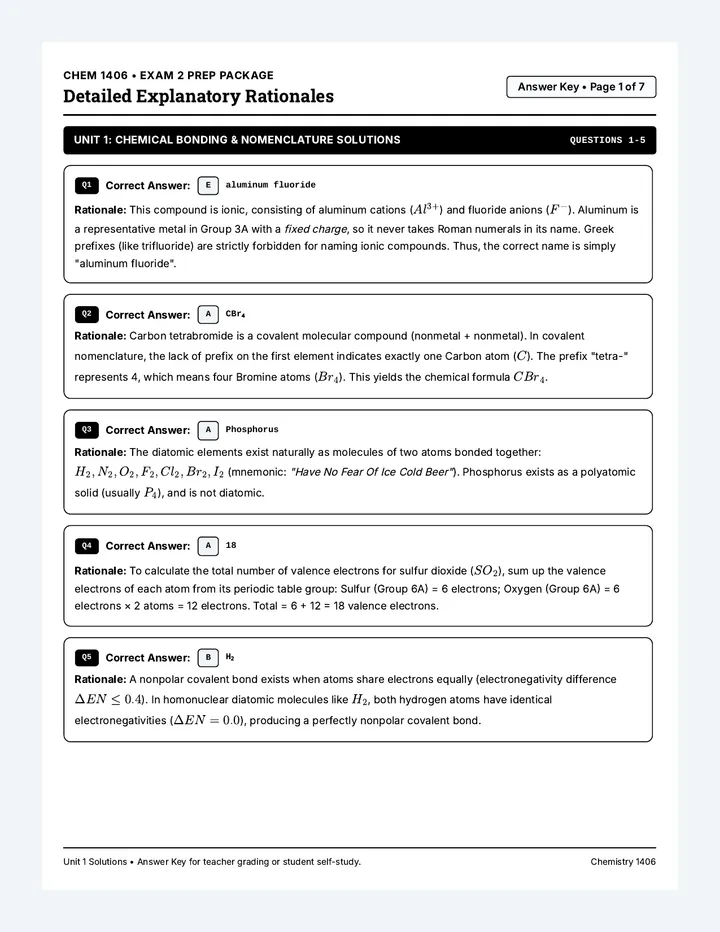
A matching 7-page detailed answer key with step-by-step explanatory rationales for all 30 practice exam questions. Highlights correct option letters and breaks down calculations, stoichiometry mole-ratios, balanced chemical equations, and solubility rules for easy self-study or teacher facilitation with enlarged, highly readable black typography.
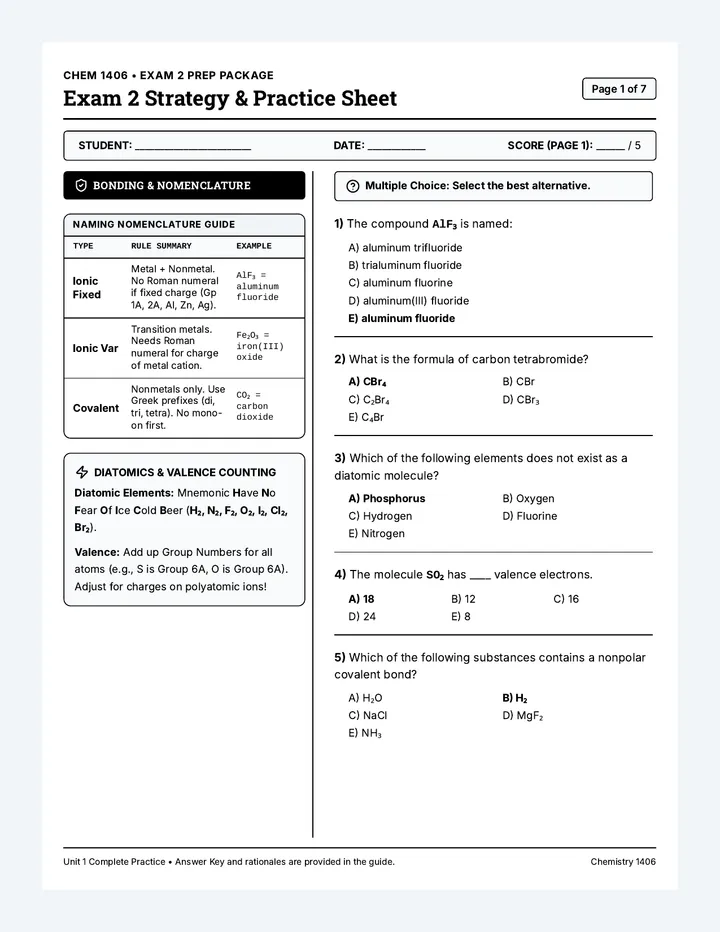
A highly structured side-by-side study companion and practice exam with enlarged, highly readable black typography. Pairs condensed high-yield summary tables, formula maps, and rules in the left column directly with a 30-question practice exam in the right column across 7 beautifully spaced pages.
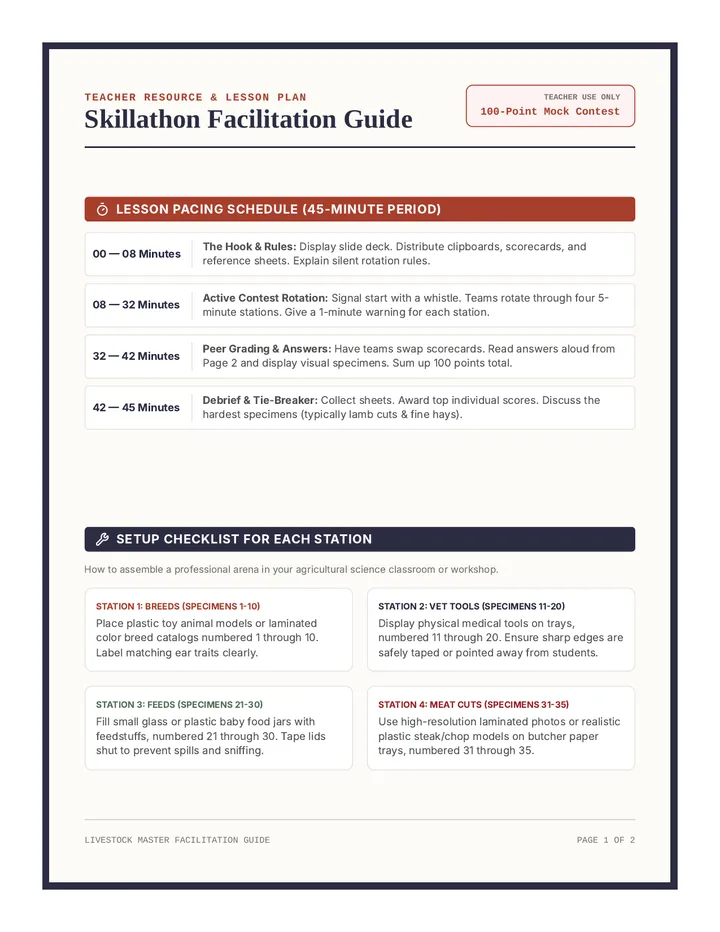
A comprehensive teacher lesson plan, station setup guide, and master answer key for facilitating a 100-point mock Livestock Skillathon contest.
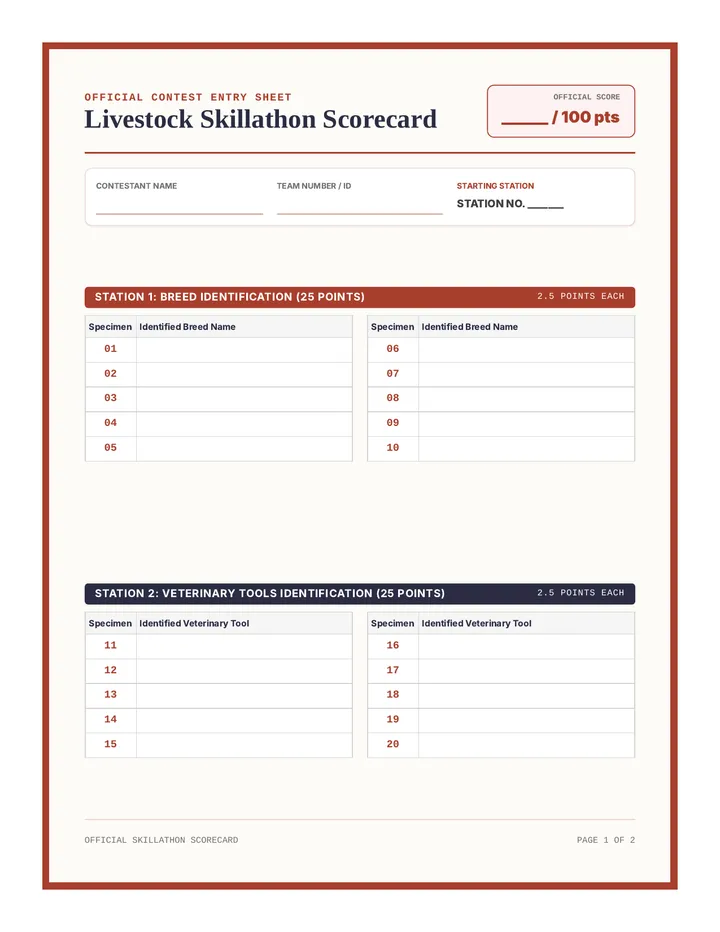
The official student competition scorecard for the 4-station mock Livestock Skillathon contest, featuring structured tables for recording answers.
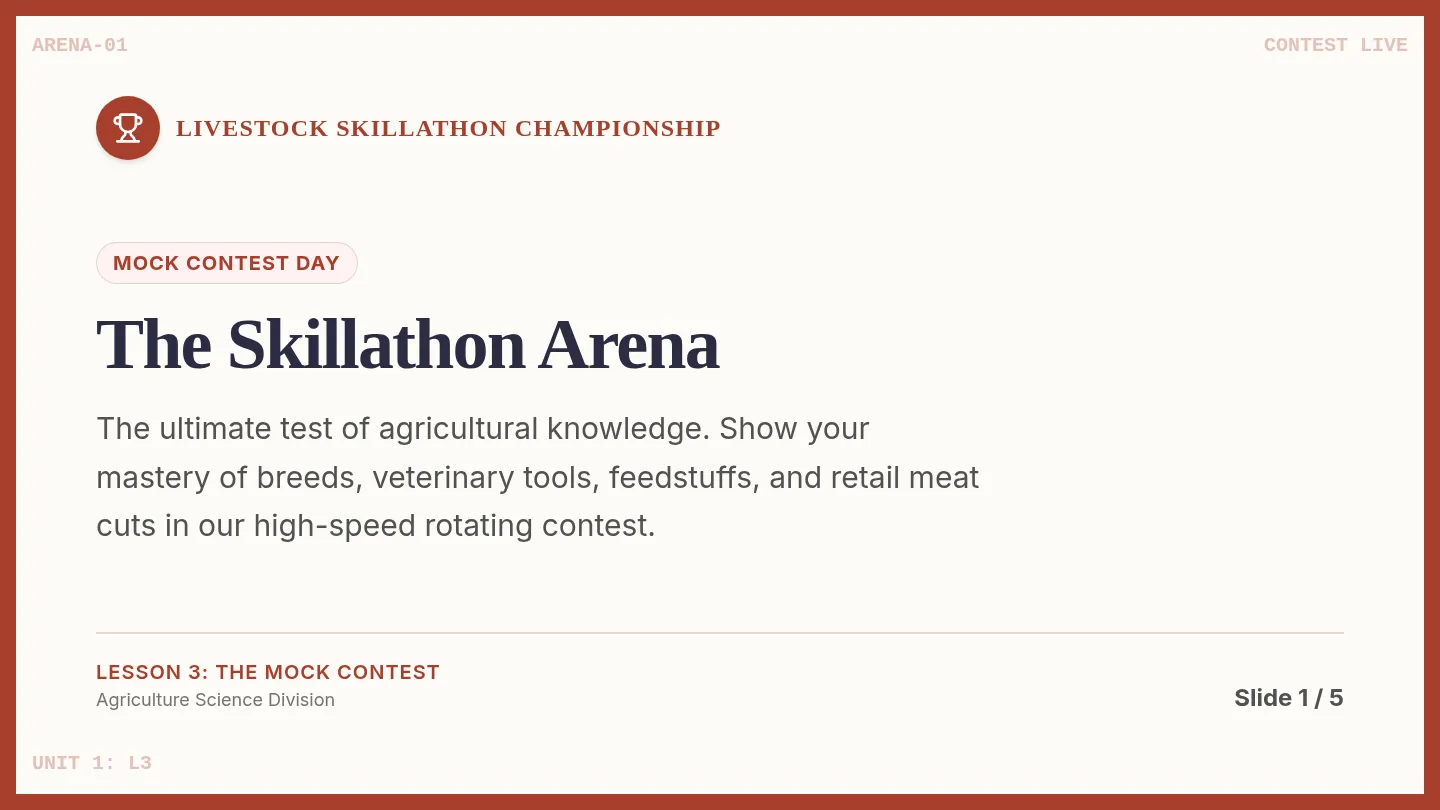
An instructional slide deck detailing the setup, pacing rules, and hands-on rotation instructions for the mock Livestock Skillathon contest.
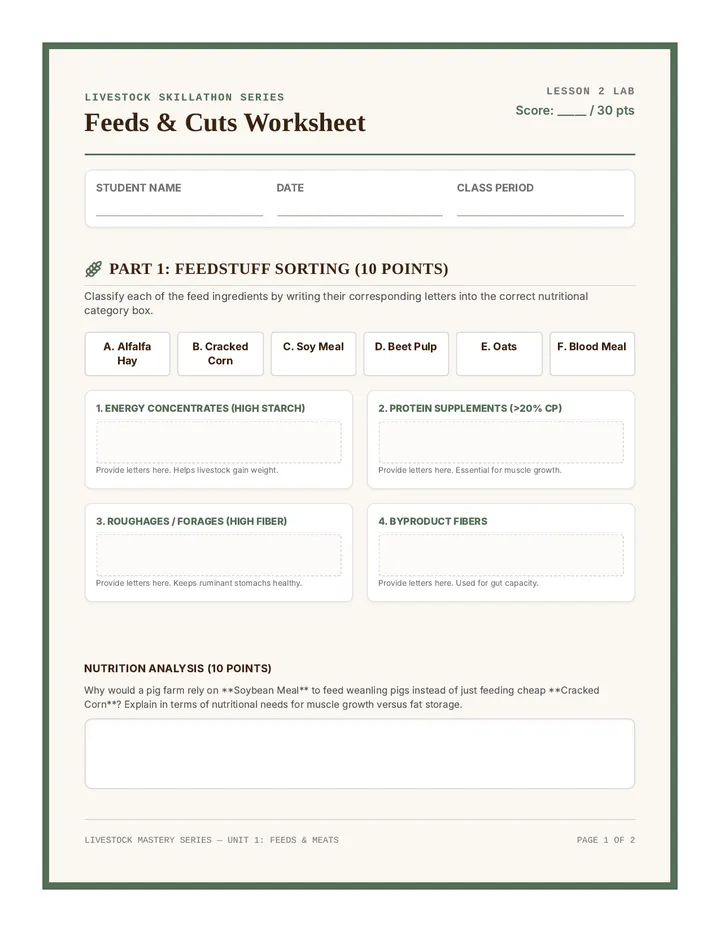
A student identification worksheet focusing on feedstuffs nutritional classifications and retail meat cut primal identification.
An instructional slide deck highlighting the identification of common livestock feedstuffs and the classification of retail meat cuts.
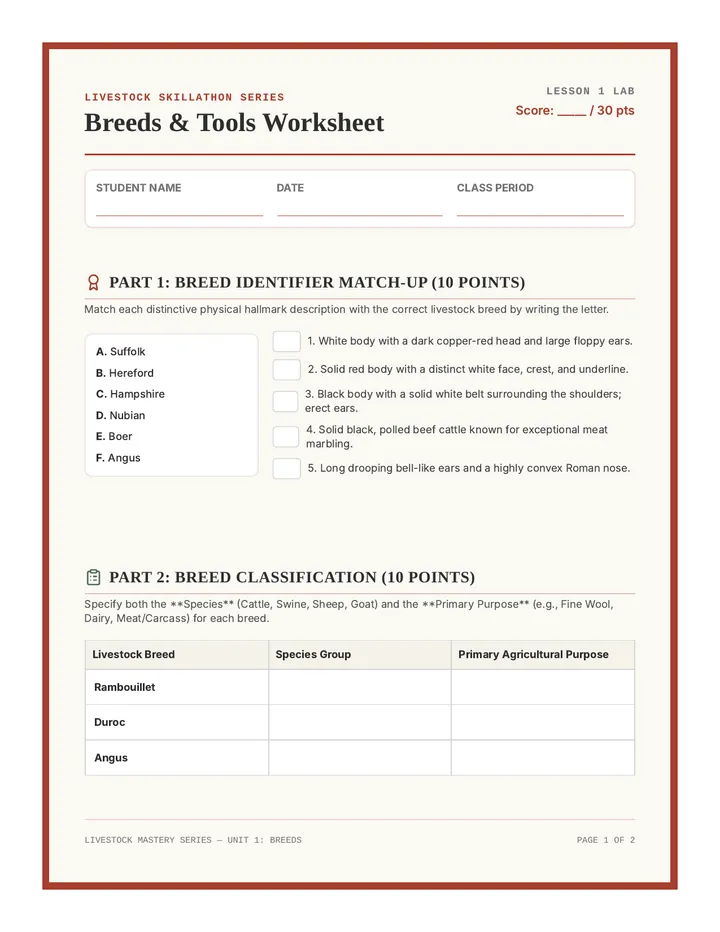
A student identification and analysis worksheet focusing on major livestock breeds, species classification, and veterinary tools used in sheep, swine, and cattle care.
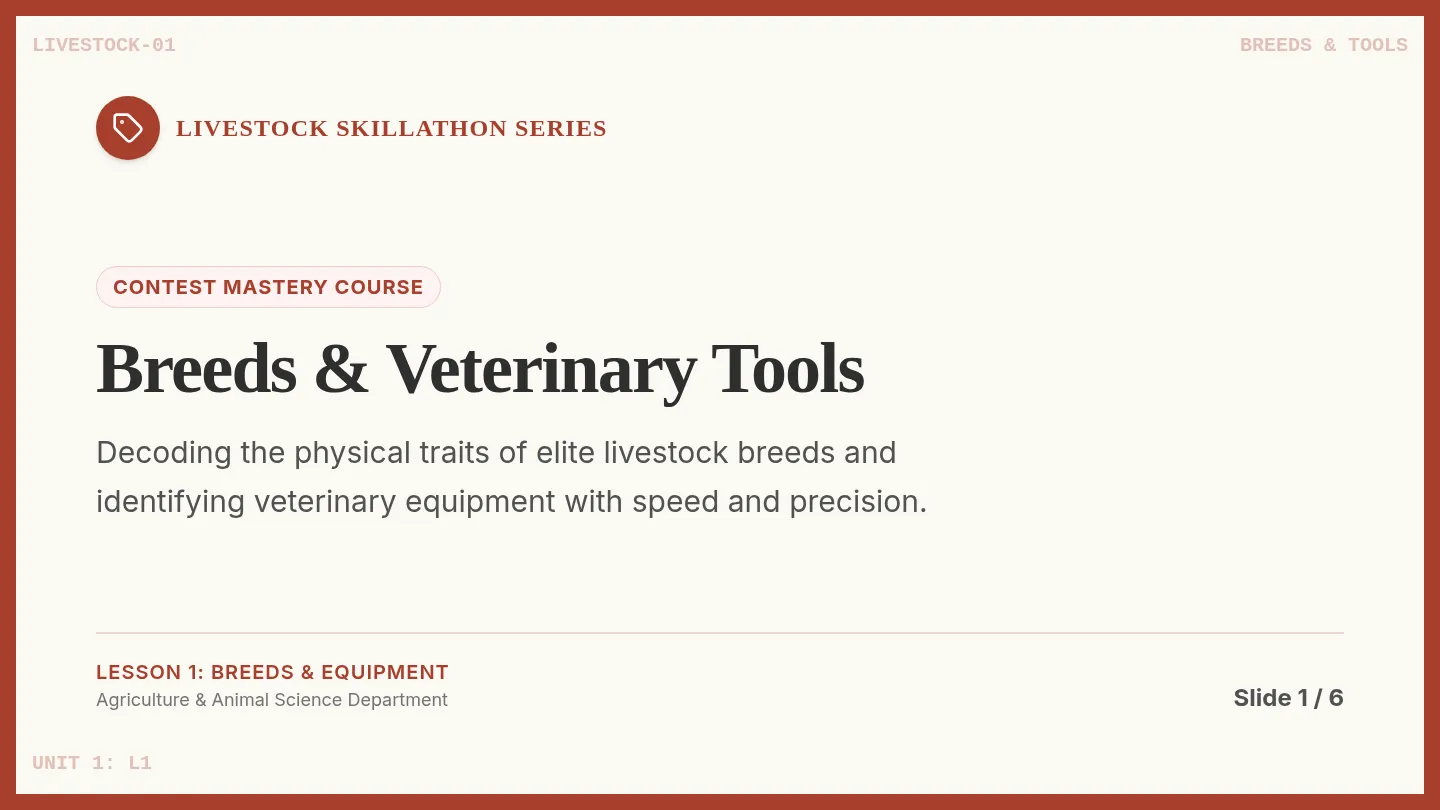
An instructional slide deck focusing on visual hallmarks of major beef, swine, sheep, and goat breeds, and introducing veterinary tools for the contest.
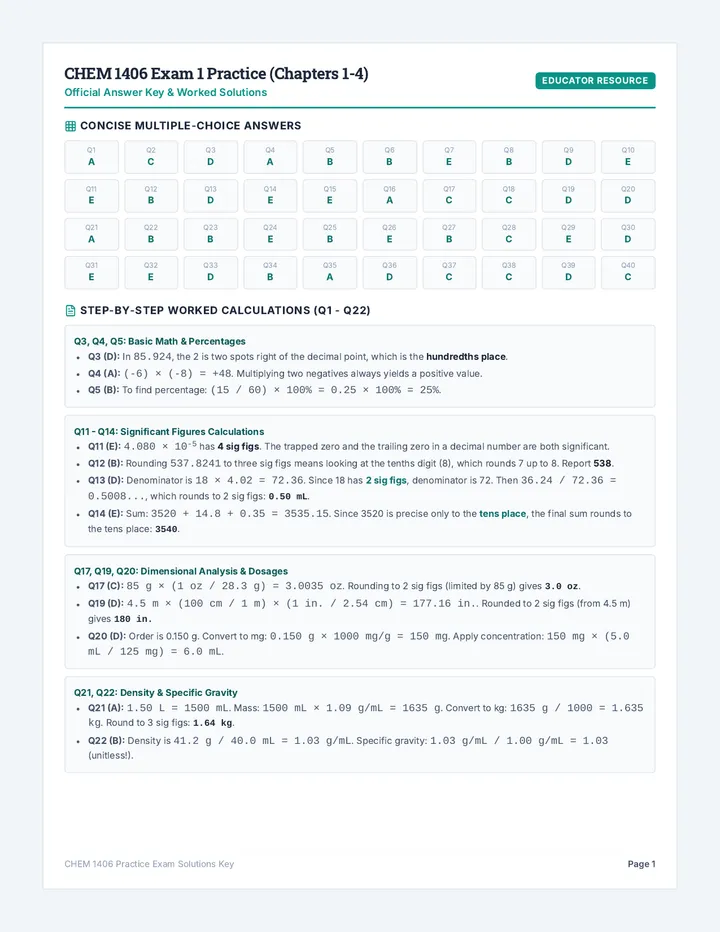
A comprehensive answer key and step-by-step worked solutions document for the Foundations Practice Exam (Version B), providing detailed explanations for all calculation-based questions to support educator grading and student self-correction.