Three classic fables (Big Fox, Lion & Mouse, Tortoise & Hare) retold with increasing complexity for K-2nd grade. Includes comprehension questions focusing on character traits, setting, and the moral of the story.
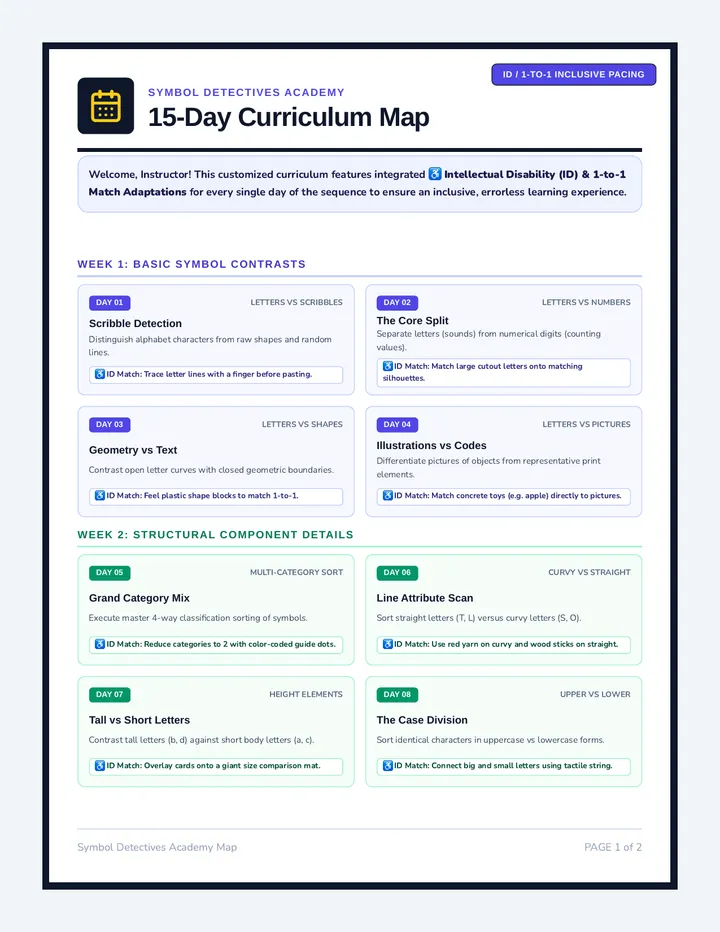
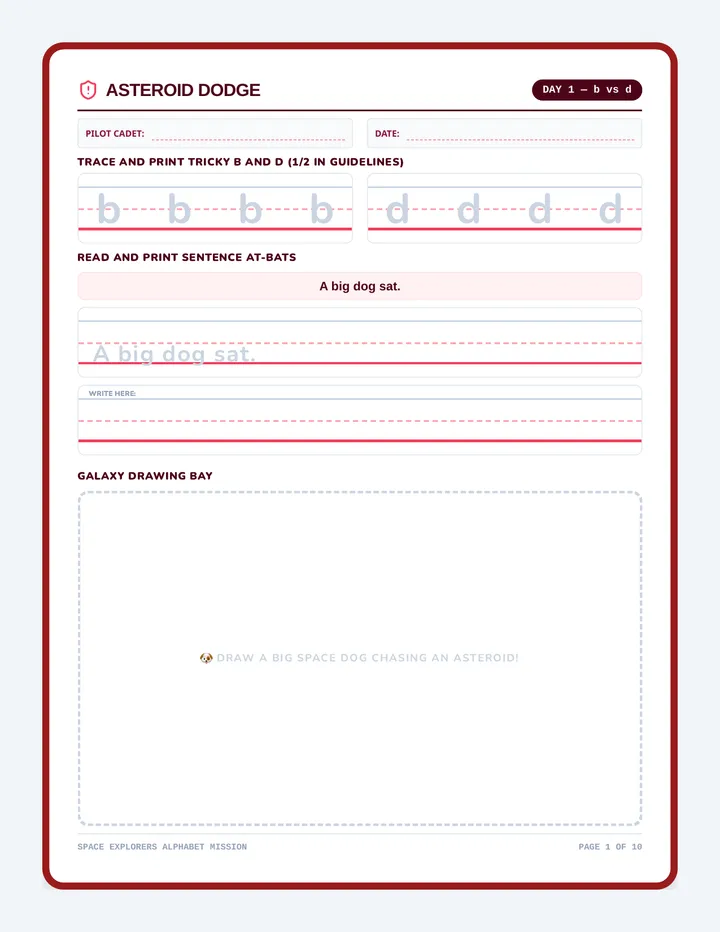
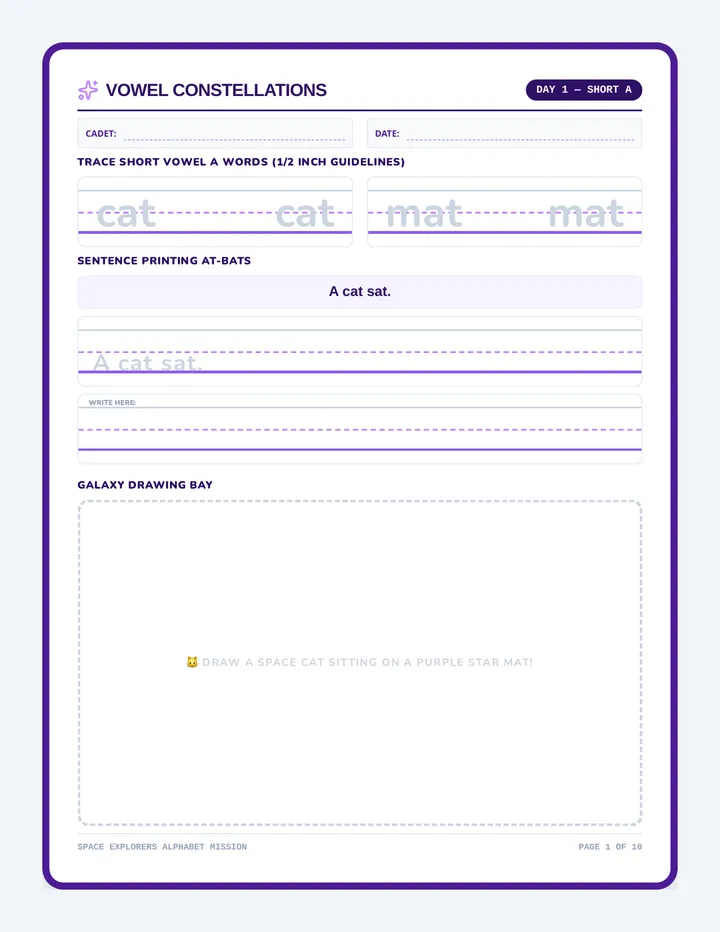
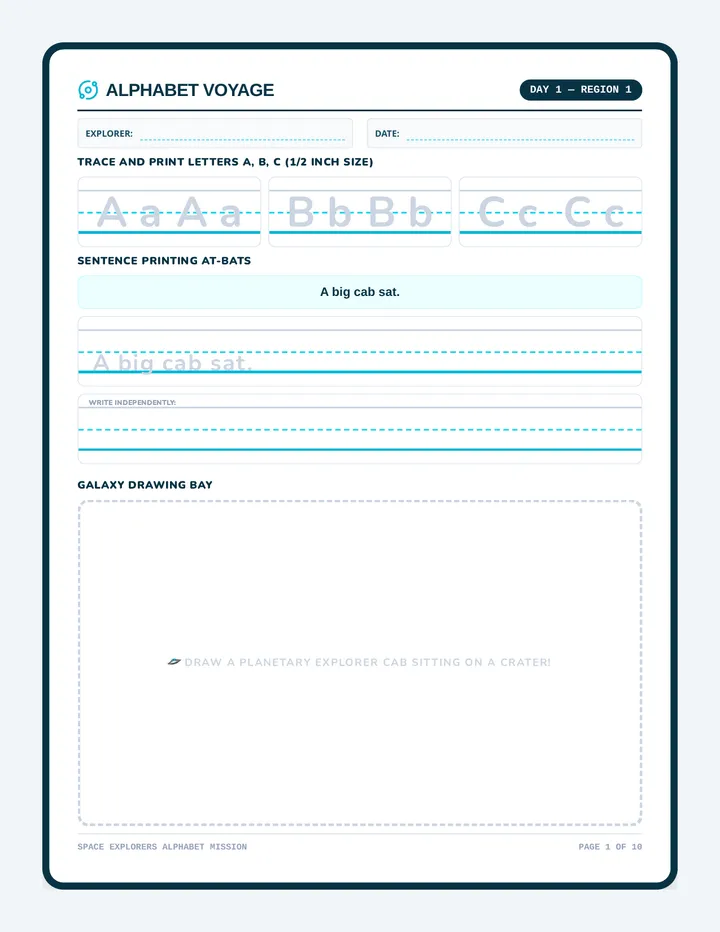
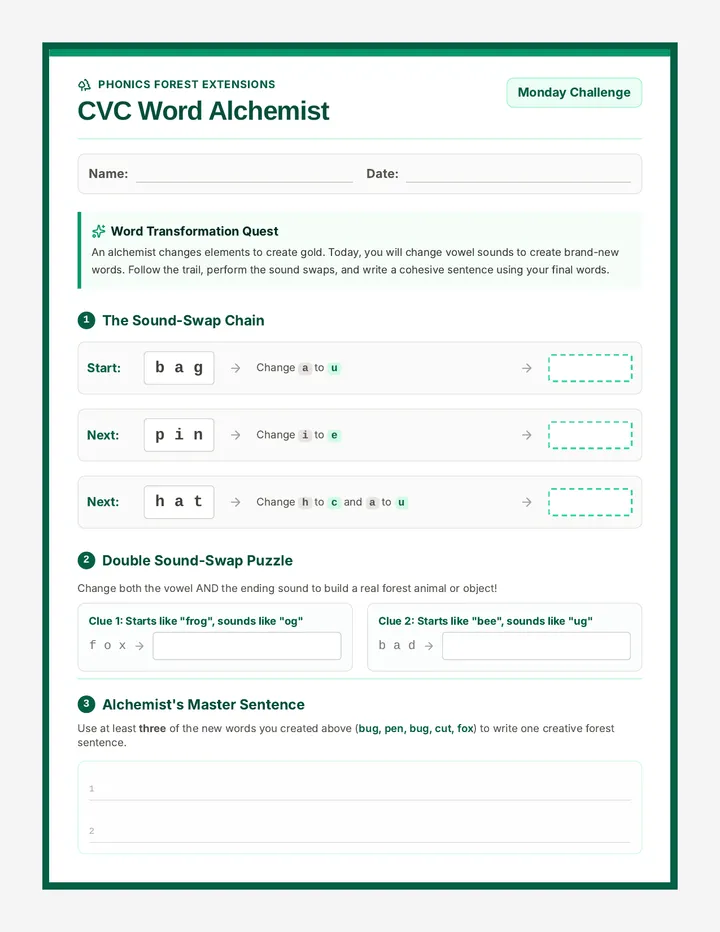
A phonics worksheet where students fill in the missing short vowel for CVC words and practice writing a sentence with sight words.
A phonemic awareness worksheet where students sort pictures into columns based on their middle short vowel sound.
A printable board game for practicing high-frequency sight words (the, is, in, on) in an adventure-themed "Safari" layout.
A visually engaging slide deck introducing the five short vowel sounds using the "Vowel Valley" mouth-shape concept, including example words and high-frequency sight words.
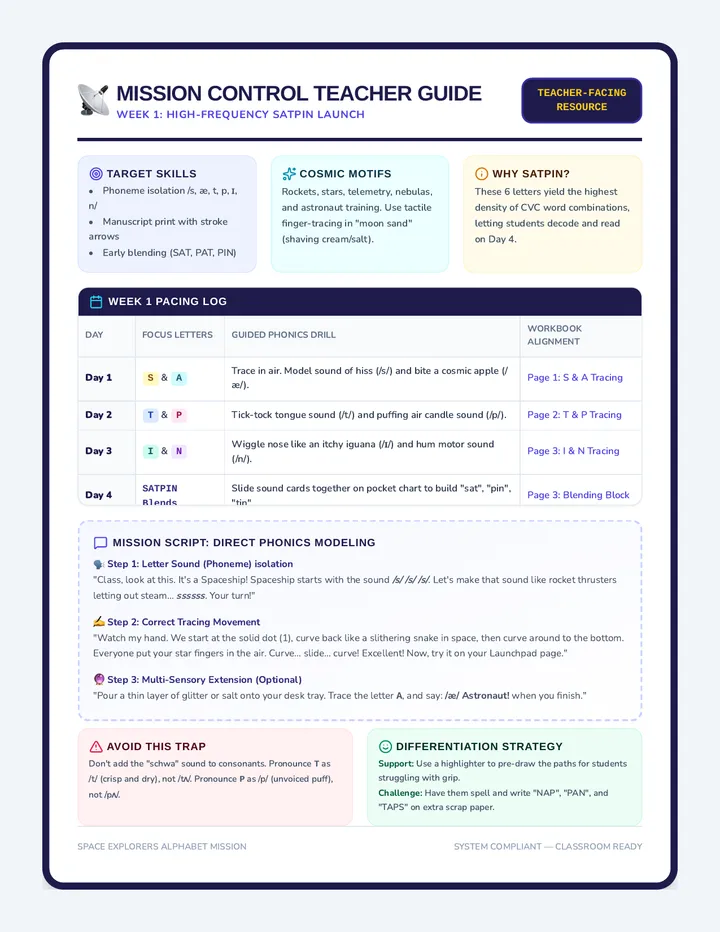
A comprehensive facilitation guide for the Vowel Valley lesson, including instructional steps, discussion prompts, activity overviews, and answer keys.
A teacher guide for the Vowel Valley lesson, providing pacing, objectives, and instructional tips for the phonics and sight word activities.
A set of 4 unique bingo cards and a call list for practicing short vowel CVC words in a fun, group setting.
A sight word practice worksheet with tracing, finding, and identifying common high-frequency words in a 'Sight Word Safari' theme.
A phonics-based worksheet where students identify short vowel sounds in pictures and complete CVC words using a 'Vowel Hunter' nature theme.
A high-energy presentation using a 'Vowel Valley Expedition' theme to introduce short vowel sounds and foundational sight words with clear visuals and phonetic cues.
An answer key for the Vocabulary Map Worksheet, providing suggested synonyms and antonyms for 'tired' and 'hungry'. Features a clean, professional design.
A blank vocabulary map for students to choose their own words and identify synonyms and antonyms. Features a clean, professional layout suitable for any vocabulary lesson.
A basic vocabulary graphic organizer for second graders to identify synonyms and antonyms for 'tired' and 'hungry'. Features a clean layout with simple instructions.
A printable sorting game where students match 'fancy' synonyms to the simple words 'tired', 'hungry', 'excited', 'pretty', 'thirsty', and 'tasty' on themed burrow mats. Includes 18 word cards split across two pages and 6 sorting mats. Designed to be printed on multiple pages to avoid cutoff.
A comprehensive teacher resource containing vocabulary definitions, synonym/antonym banks, and discussion prompts for 'The Wombats Go Wild for Words'. It reflects the story's setting in the Evergreen Forest and the encounter with the duckling. Focuses on Tired and Hungry for the main lesson.
A visually engaging presentation focusing on synonyms and antonyms for 'Tired' and 'Hungry'. It reflects the story's setting in the Evergreen Forest and the encounter with the duckling. Now includes 'Fancy Game Words' and interactive reveal slides.
A comprehensive guide for teachers including the correct narrative sequence, learning objectives, and discussion prompts to deepen student understanding.
A worksheet for students to transcribe their ordered sentences into a cohesive narrative. Includes a reflection question to identify the moral of the story.
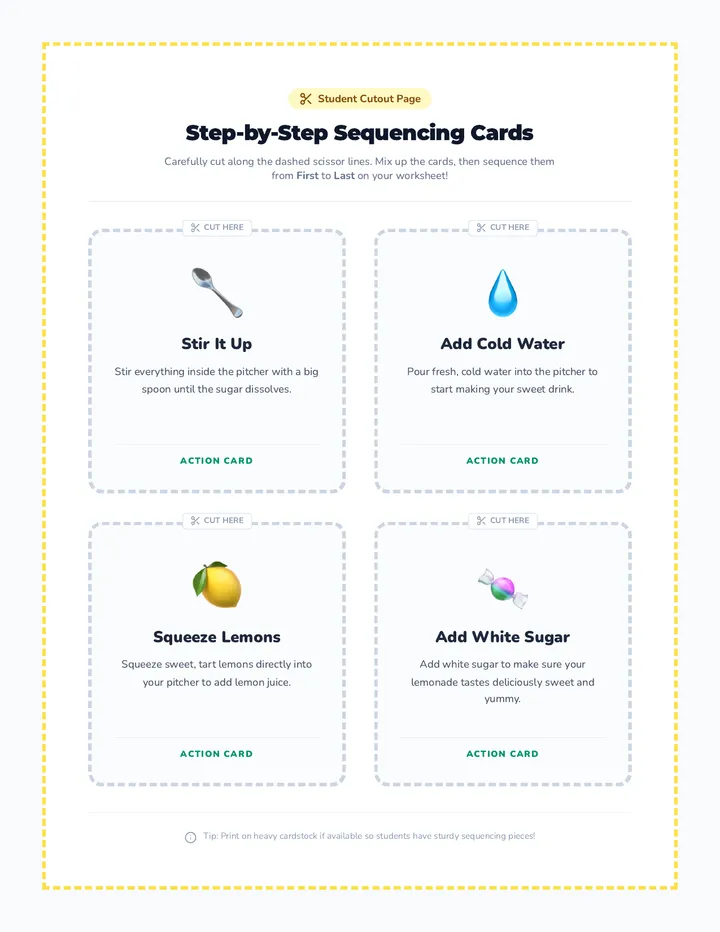
A printable set of sentence strips from the story for students to cut out and manually arrange. Encourages tactile engagement and logical sequencing of the narrative events.
A vibrant slide deck to introduce the story of 'The Shepherd Boy' and guide students through the sequencing activity. Features clear, large text and visual cues to support narrative comprehension.
An answer key and evaluation guide for the 'Story Blueprint' worksheet, providing example sentences and teaching tips for Grade 2 ESL narration.
A short assessment for students to demonstrate their understanding of narrative signal words and basic sentence construction at the end of the 'Story Lab' lesson.
A set of visual vocabulary cards featuring sequential signal words and action verbs to support Grade 2 ESL students in building narrative sentences.
A student worksheet for drafting a narrative sequence about 'Making a Sandwich'. Includes a word bank of action verbs and dedicated spaces for students to draw and write using sequential signal words.
A high-impact slide deck for teaching narration to Grade 2 ESL students, focusing on sequential signal words and academic story structure through visual prompts and collaborative discussion.
A teacher facilitation guide for the 'Story Lab' narration lesson, featuring WIDA-aligned instructional steps, language objectives, and differentiation strategies for Grade 2 ESL students.
A unified answer key for all worksheets and the final assessment in the Lexicon Labs unit.
Revised final assessment: Fixed page break issues splitting sections, changed the dark background of the mastery challenge to a printable light gray/white, and increased the writing space for student responses.
Revised Lesson 2 exit ticket: Fixed the page break that cut off the footer, improved contrast for better legibility on the dark footer background, and added subtle handwriting guides.
Revised Lesson 2 worksheet: Fixed a page break splitting the final question of the first section and added guided handwriting lines to the replacement lab work area.
Revised Session 2 slides: Added explicit component labels to the entry anatomy slide and ensured uniform styling for answer choices on the lab trial slide to avoid telegraphing the correct answer.
Revised Lesson 2 plan: Consolidated the layout to fit on a single page, improved contrast in the header, and integrated the "Common Pitfalls" section into the main body.