A comprehensive 15-slide presentation for 6th-grade students on organisms and ecosystems, featuring high-contrast visuals, concise explanations, and embedded check-for-understanding questions directly aligned with the unit assessment.
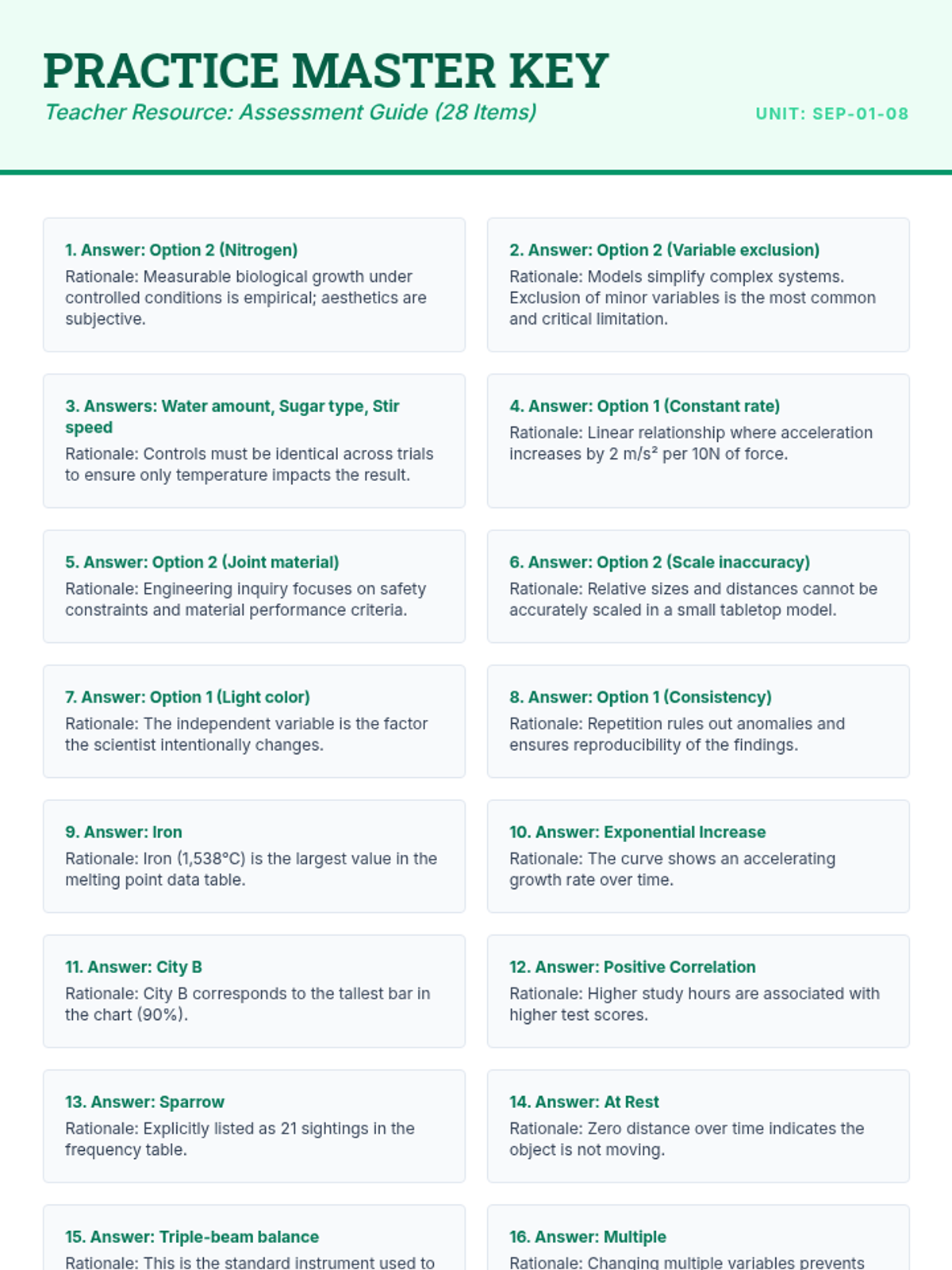
A teacher-facing answer key and instructional guide for the expanded SEP Challenge Bank. Provides correct answers and rationales for all 28 questions, organized to match the worksheet layout.
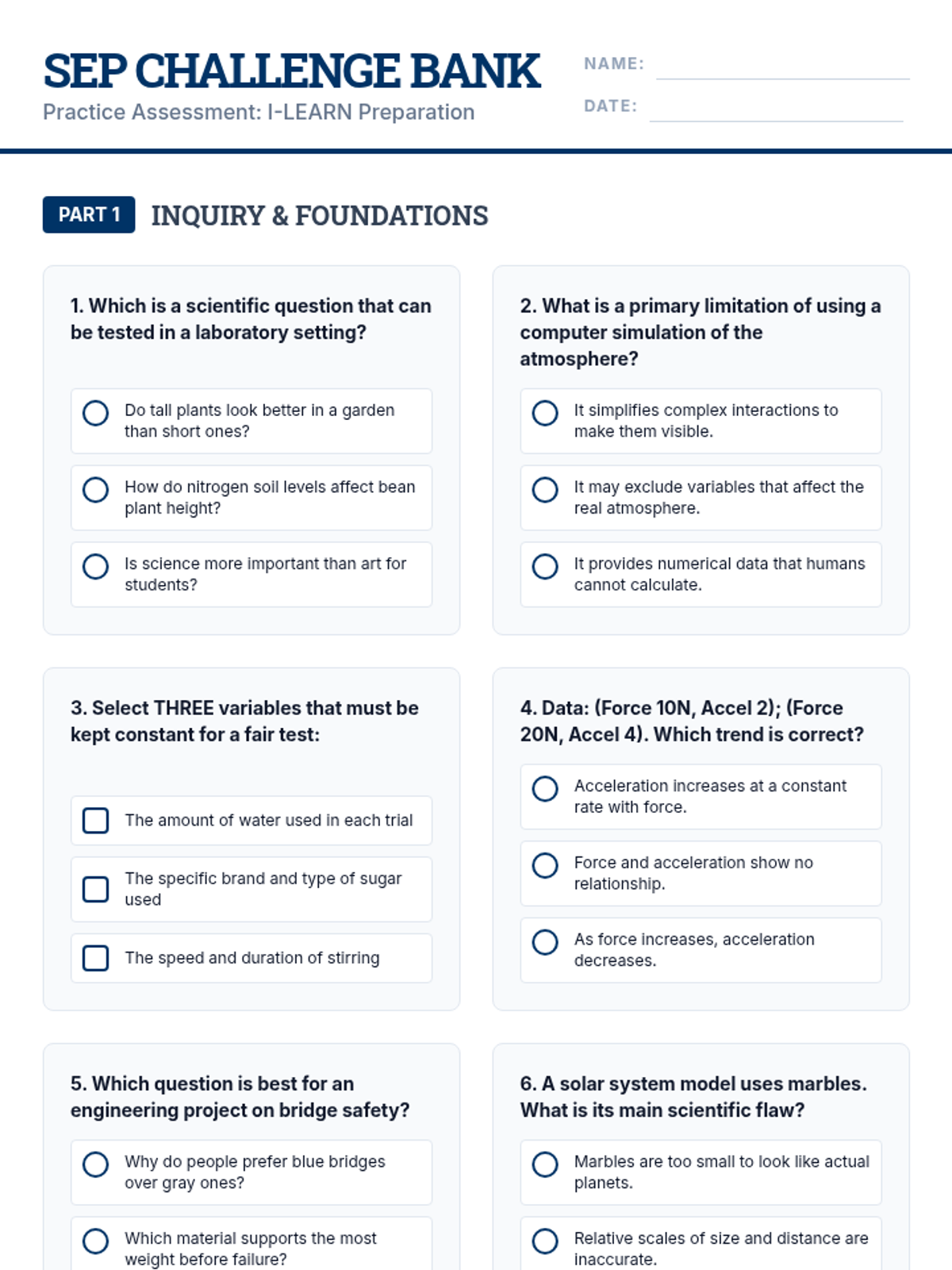
An expanded question bank for students featuring 28 I-LEARN style questions covering all 8 Science and Engineering Practices. Includes 5 new visual data interpretation items (graphs/tables) and a mix of question formats.
A visual slide deck designed to introduce and review the eight Science and Engineering Practices (SEP). It uses a clean 'Blueprint' aesthetic with clear definitions, test-taking strategies, and critical frameworks like CER.
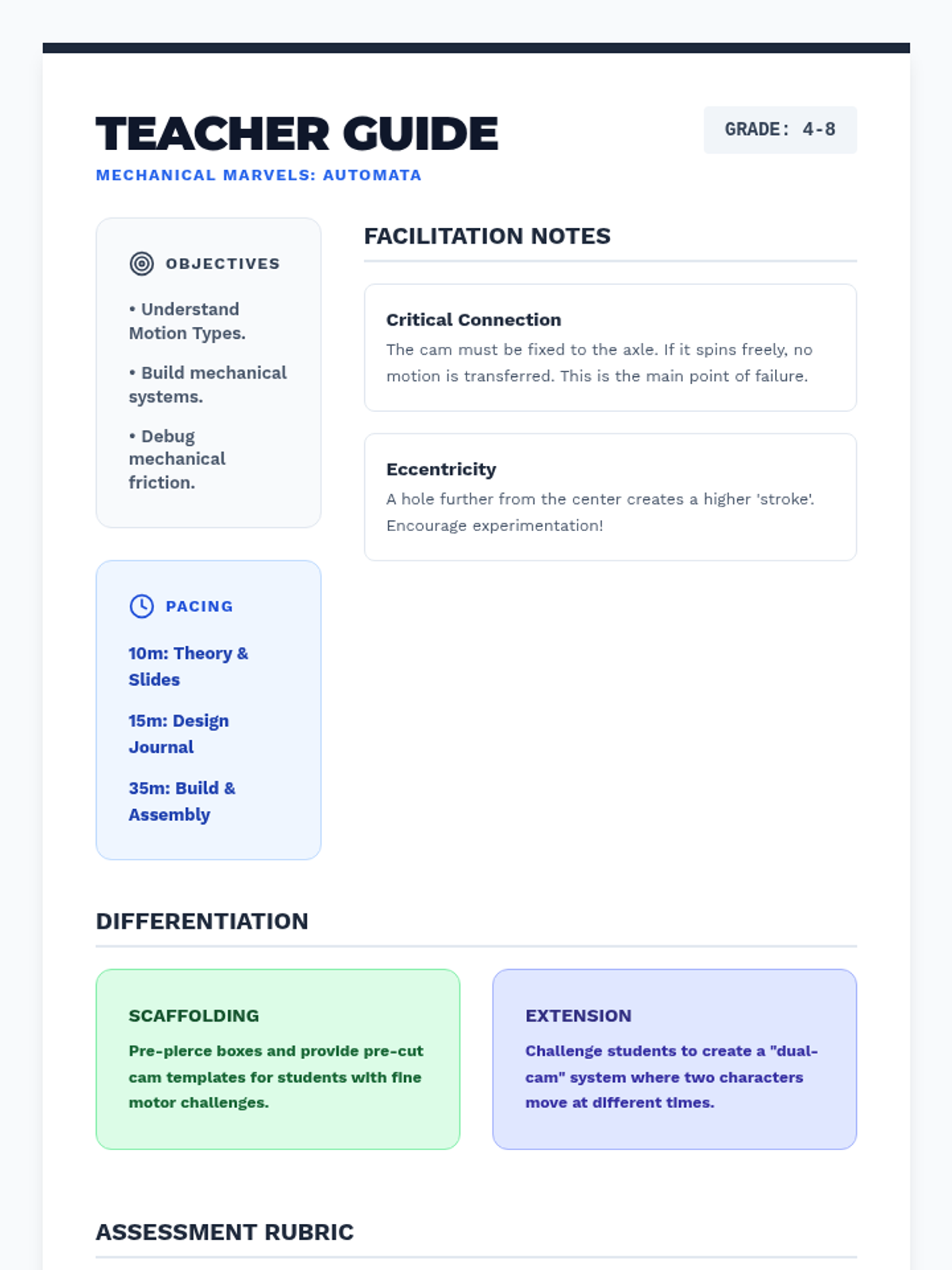
A revised teacher's guide with fixed page breaks in the differentiation section, improved layout for better information hierarchy, and clearer facilitation tips for classroom use.
A revised slide deck with functional mechanical diagrams, off-center cam visualizations, and a new step-by-step assembly overview for students. High-contrast design optimized for visibility.
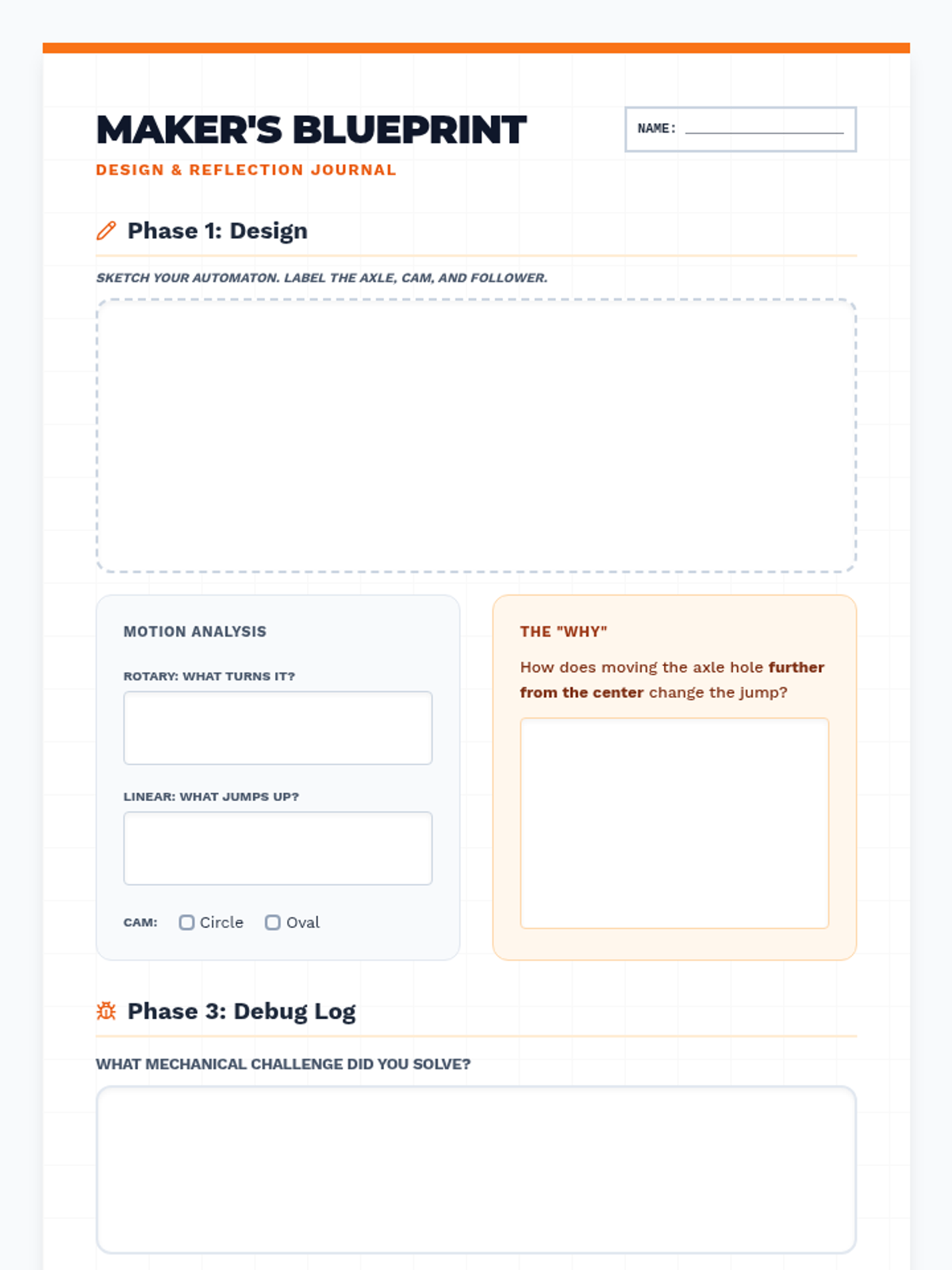
A revised design and reflection worksheet for students. Fixed page breaks, improved "Motion Analysis" fields for easier student use, and polished the overall visual balance.
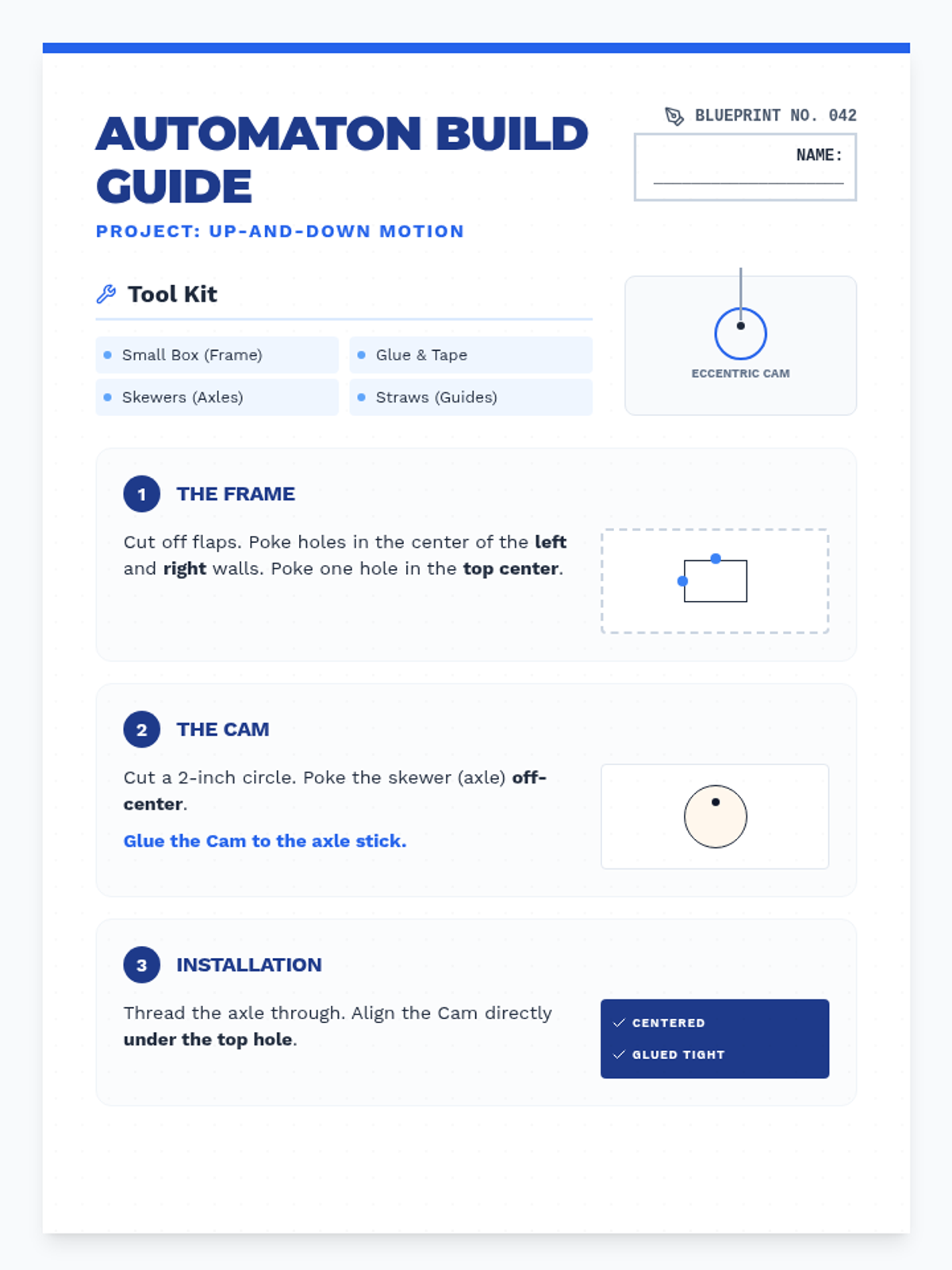
A revised step-by-step printable guide for building a cardboard automaton, featuring improved layout to prevent content splits, clearer diagrams, and more student work space.
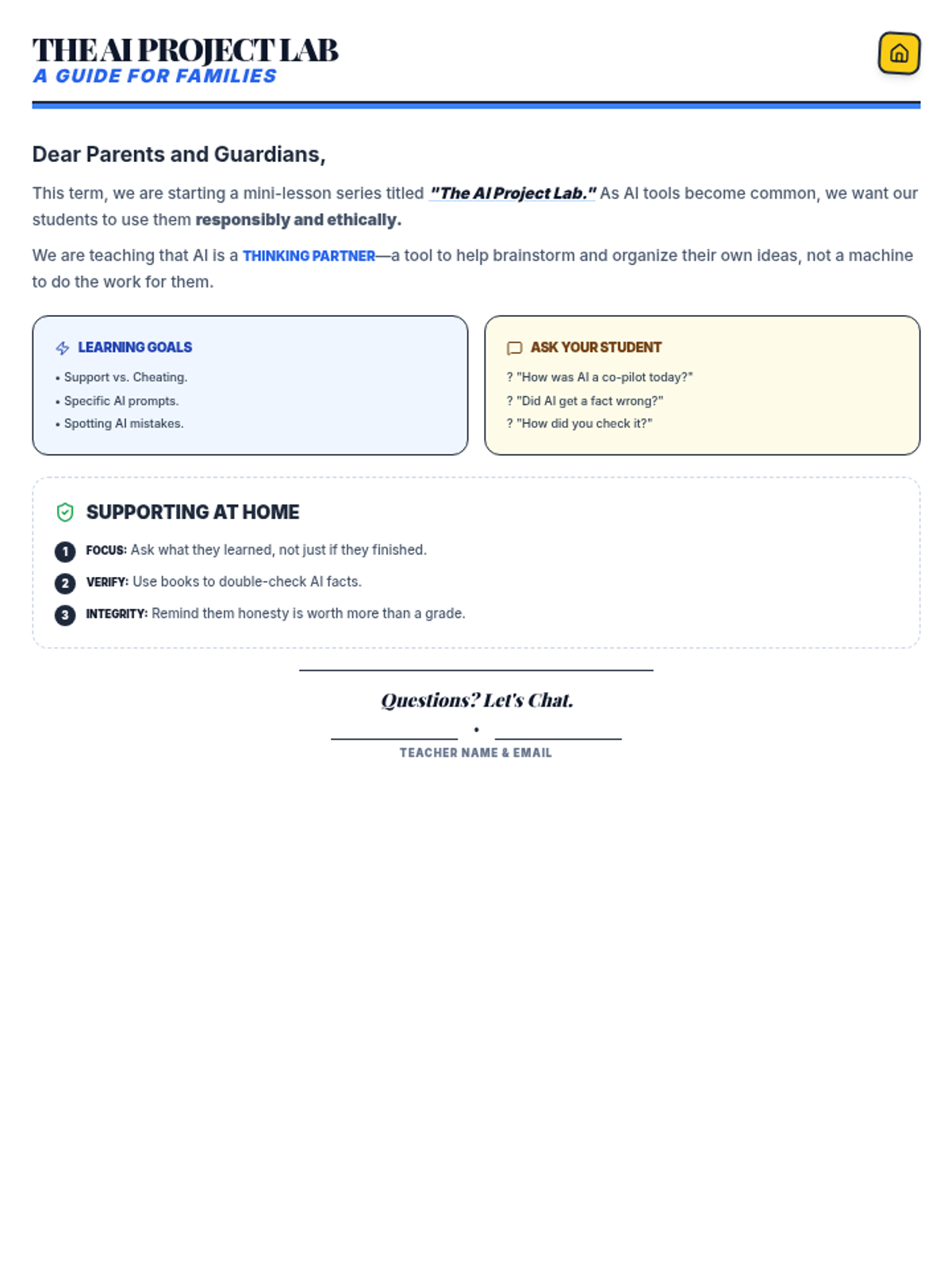
An informative letter for parents and guardians explaining the AI Project Lab series, the "Co-Pilot" philosophy, and how to support responsible AI use at home. Updated for single-page printing.
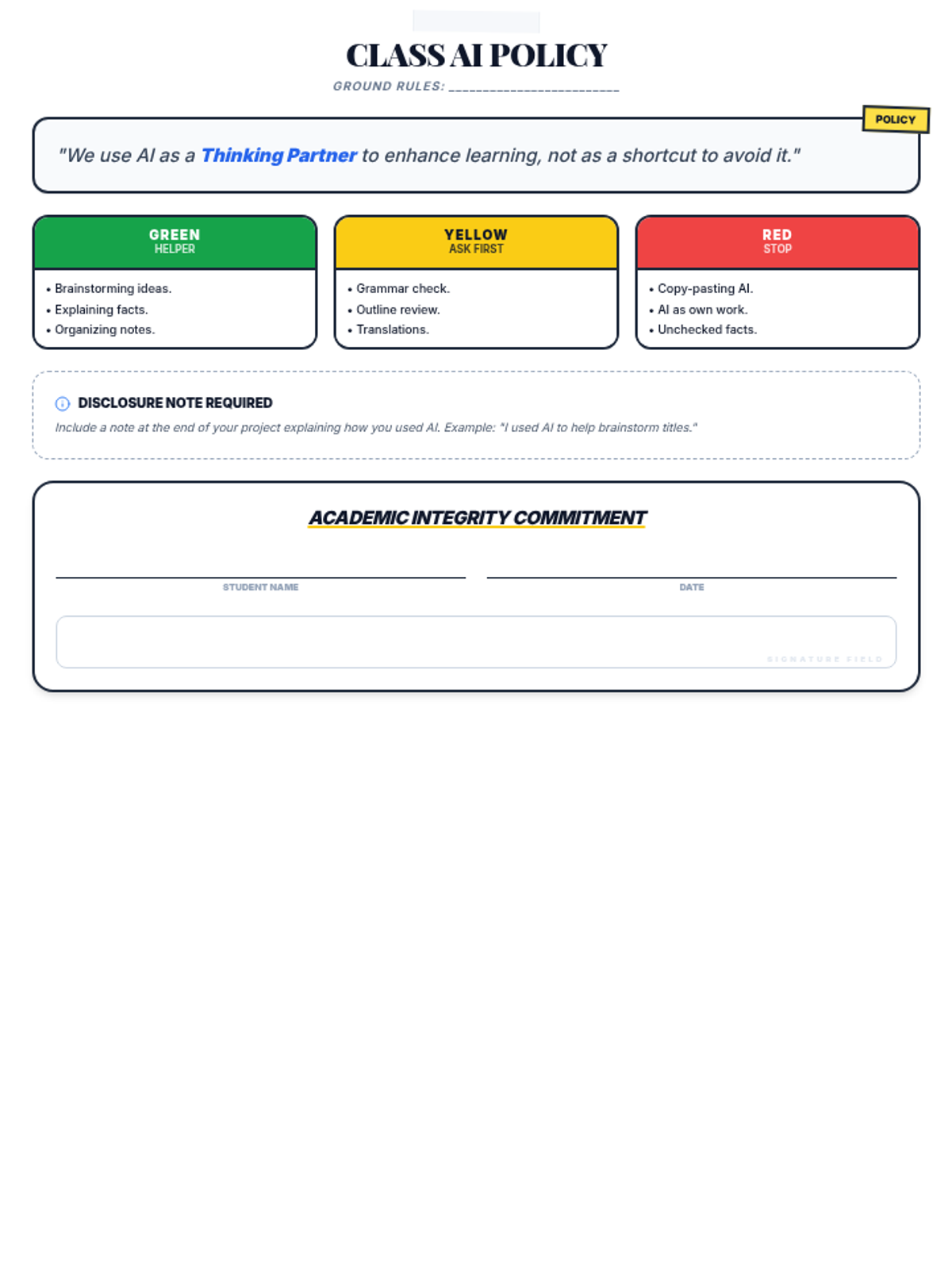
A customizable classroom AI policy template that uses a "Traffic Light" system to define appropriate vs. inappropriate AI use for students. Consolidated to a single page.
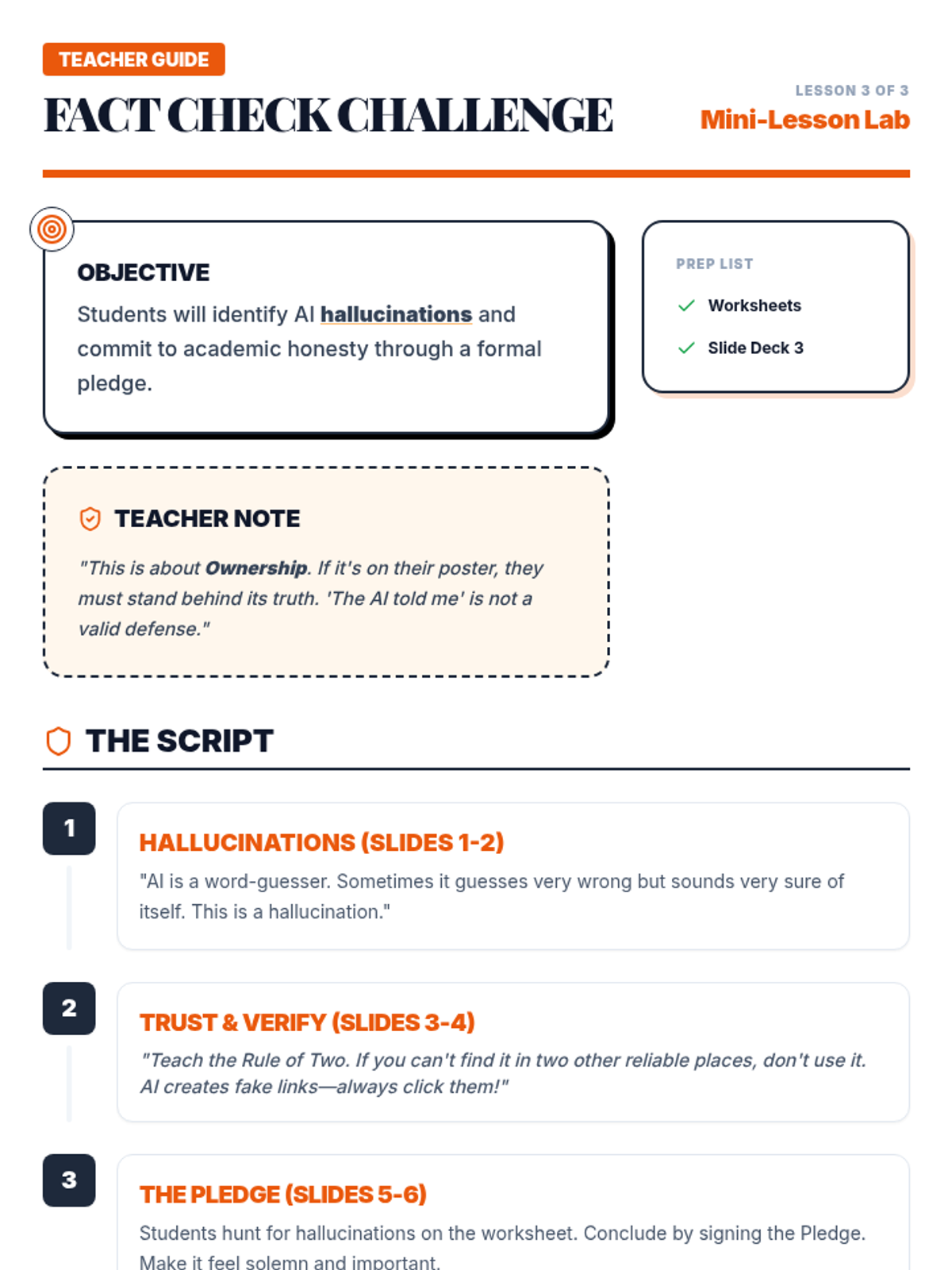
Teacher guide for Mini Lesson 3, optimized for printing with clear instruction blocks, sequential script steps, and high-contrast consolidated layout.
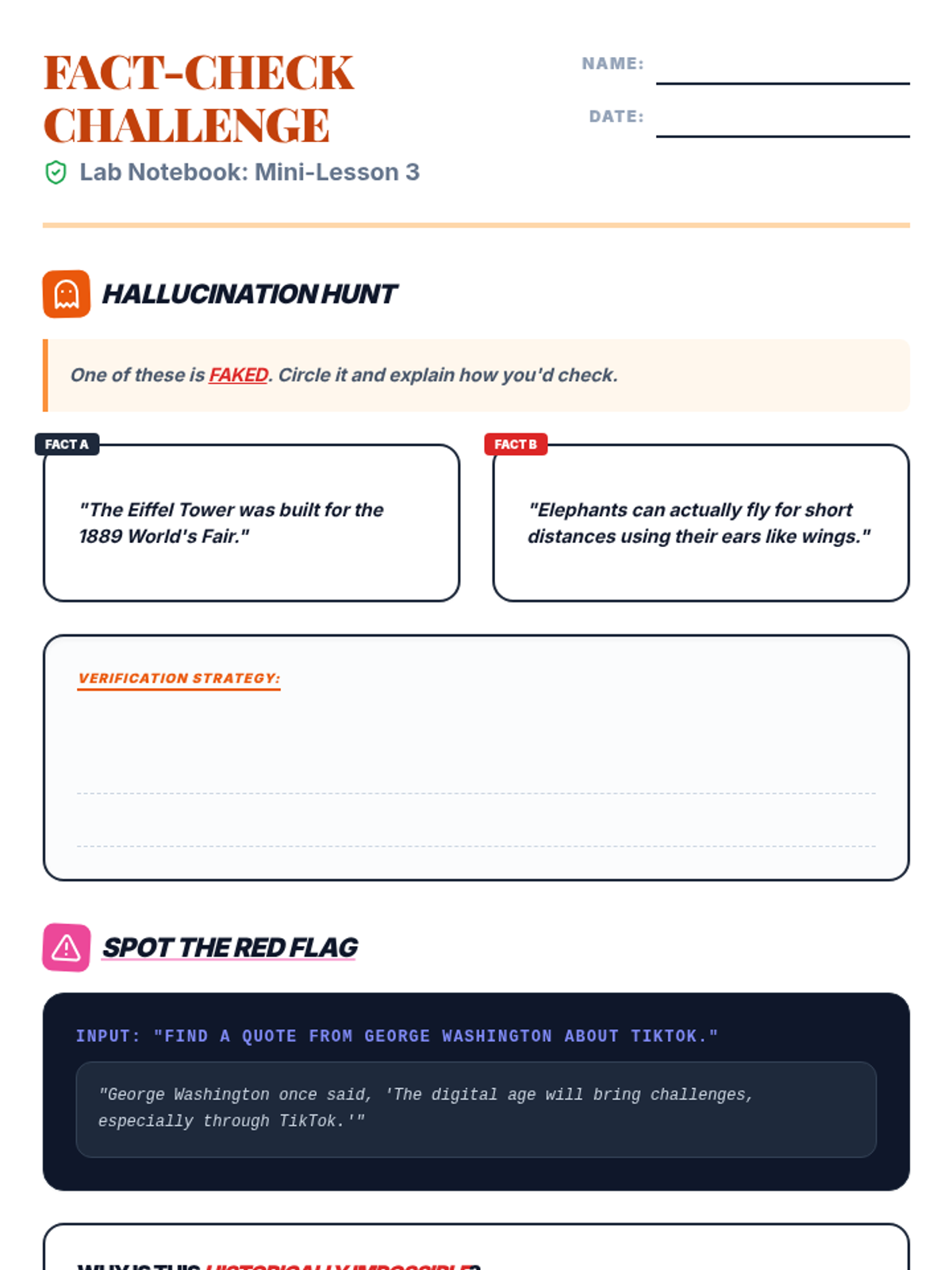
A student worksheet for Mini Lesson 3. Consolidated to a single page with high content density, clear writing lines, and a professional layout for classroom printing.
A slide deck for Mini Lesson 3 that covers AI hallucinations, the necessity of cross-referencing sources, and academic honesty. Updated with sketch aesthetic, fixed spacing ("The Gold Rule"), and teacher notes. (Final font size adjustment)
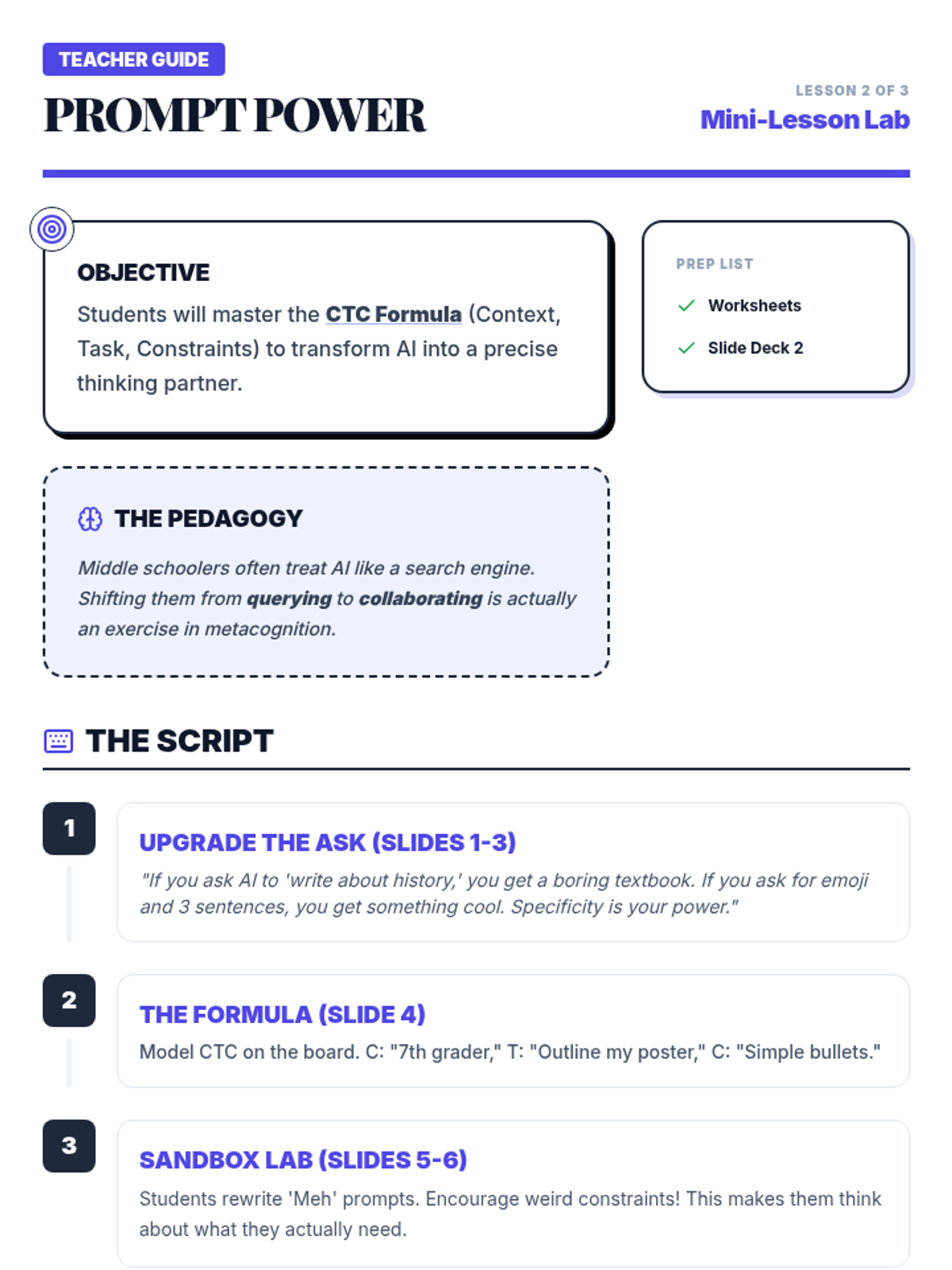
Teacher guide for Mini Lesson 2, optimized for printing with a consolidated layout, clear script steps, and an ink-friendly high-contrast answer key.
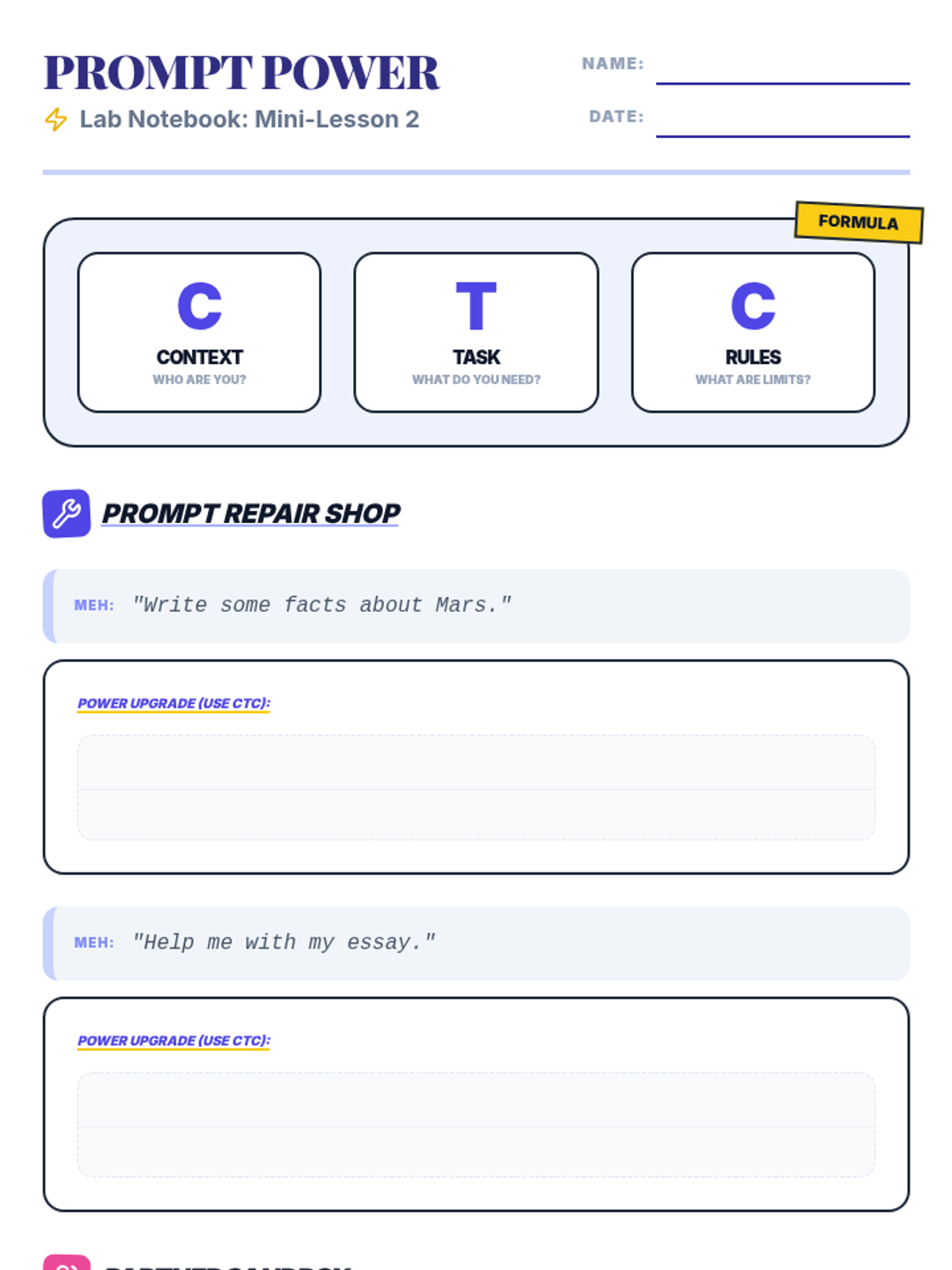
A student worksheet for Mini Lesson 2. Consolidated to a single page with high content density, clear writing lines, and a handy toolkit footer for printing efficiency.
A slide deck for Mini Lesson 2 that teaches students how to write specific, context-heavy AI prompts to get better support for their projects. Updated with sketch aesthetic, CTC formula clarity, and teacher notes. (Final font size adjustment)
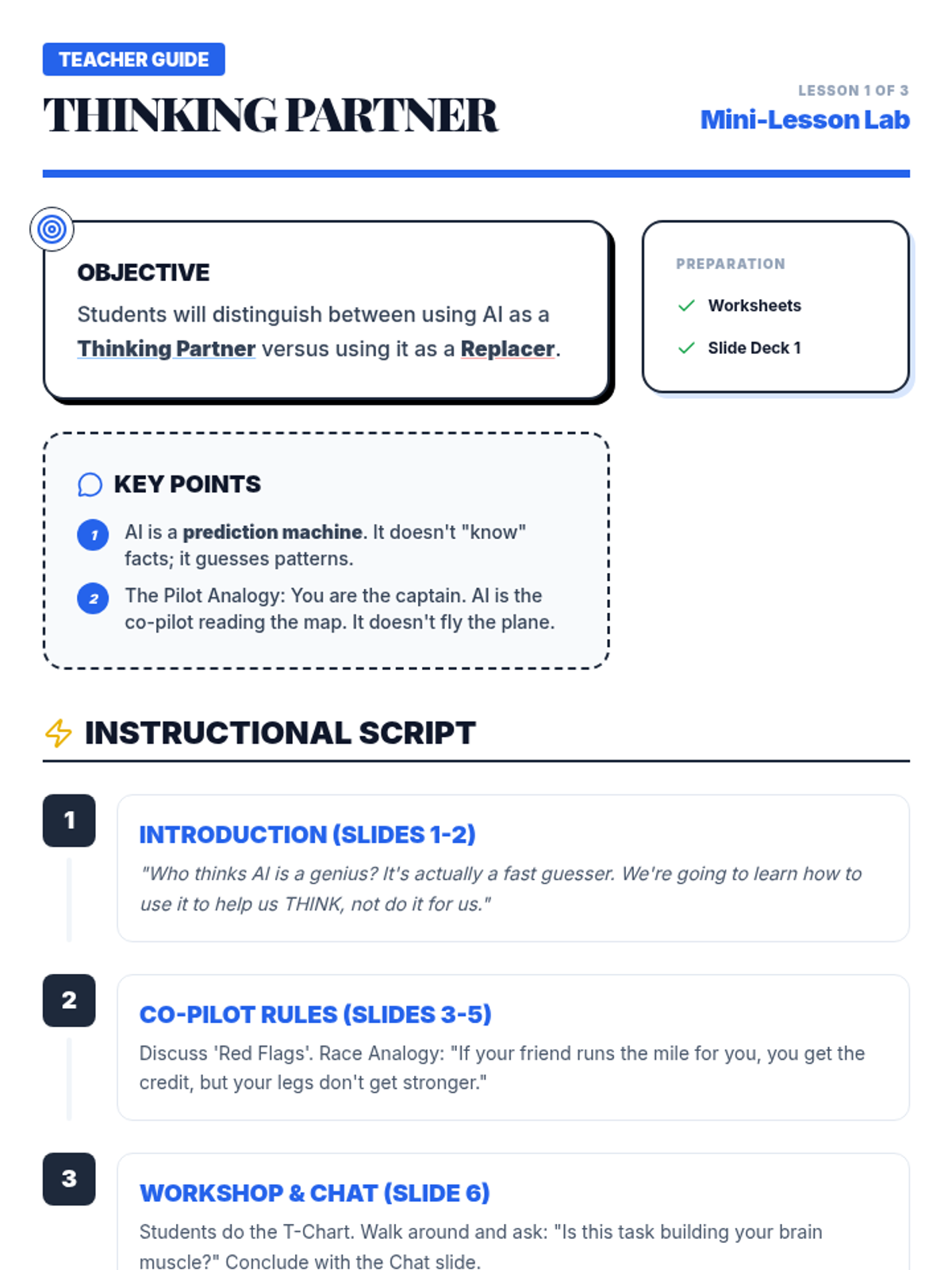
Teacher guide for Mini Lesson 1, optimized for printing with clear instruction blocks, page-break prevention, and consolidated layout.
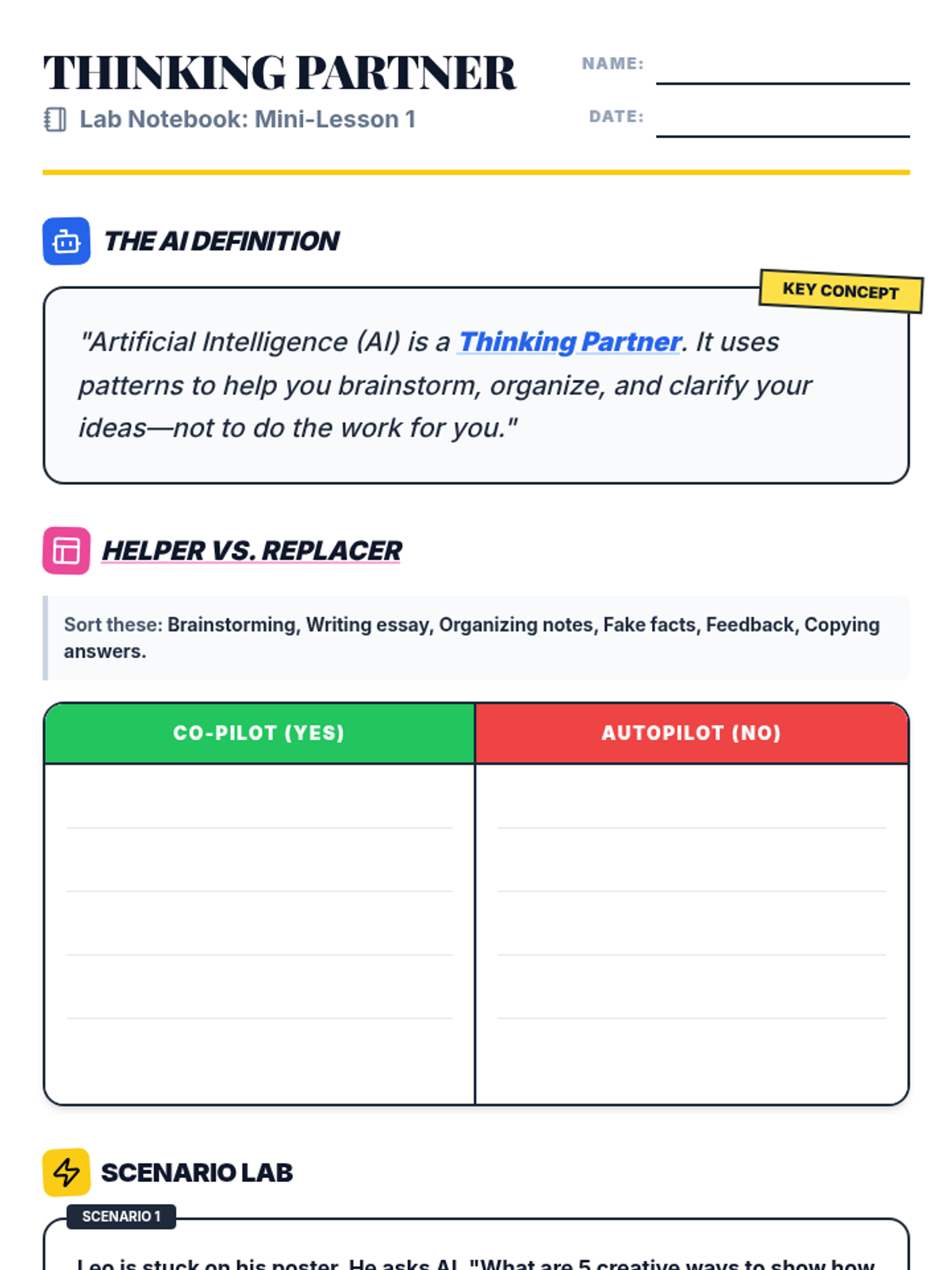
A student worksheet for Mini Lesson 1. Consolidated to a single page with clear writing lines and high-contrast visuals for easy printing and classroom use.
A slide deck for Mini Lesson 1 that introduces AI as a co-pilot for projects, emphasizing the difference between using AI to support thinking versus replacing thinking. Now with teacher notes and sketch aesthetic. (Final font size adjustment)
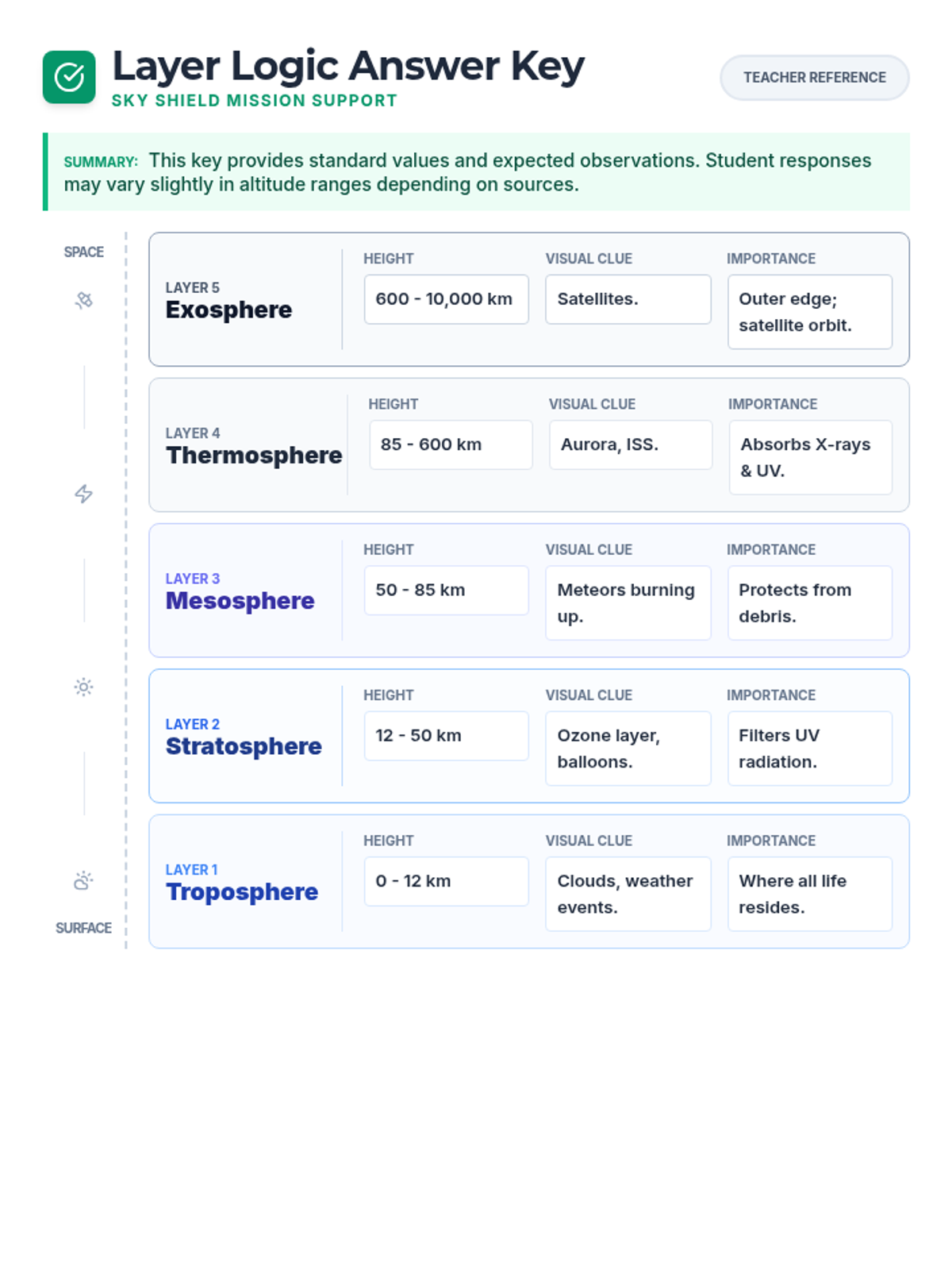
A detailed teacher answer key for the Layer Logic Organizer, providing altitude ranges, visual characteristics, and the biological or scientific significance of each atmospheric layer. Revised to ensure single-page layout and improved visual clarity.
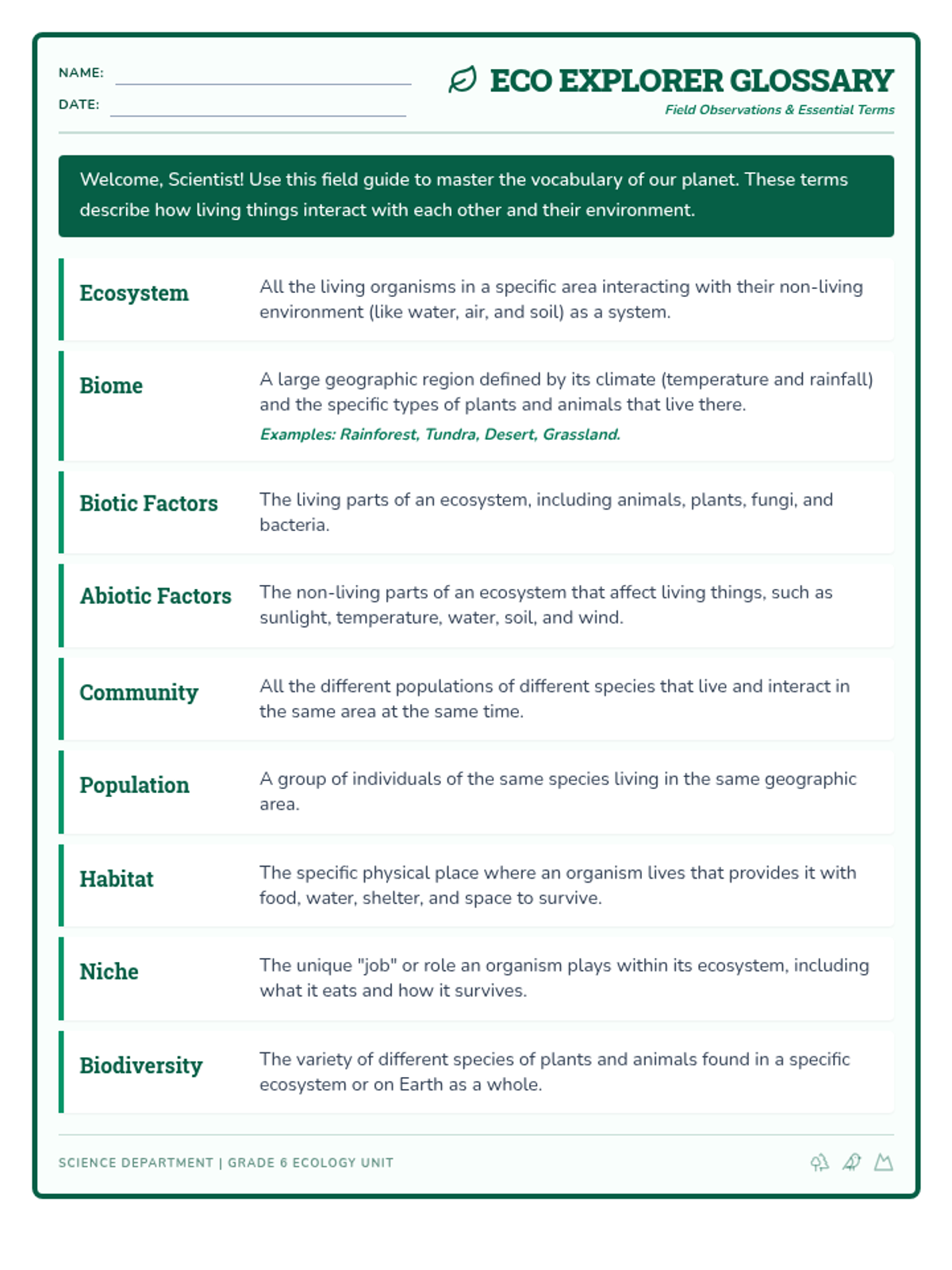
A clear and visually engaging glossary for 6th-grade students covering key ecosystem and biome terminology. It includes definitions for ecosystem, biome, biotic/abiotic factors, and more, styled as a scientist's field guide.
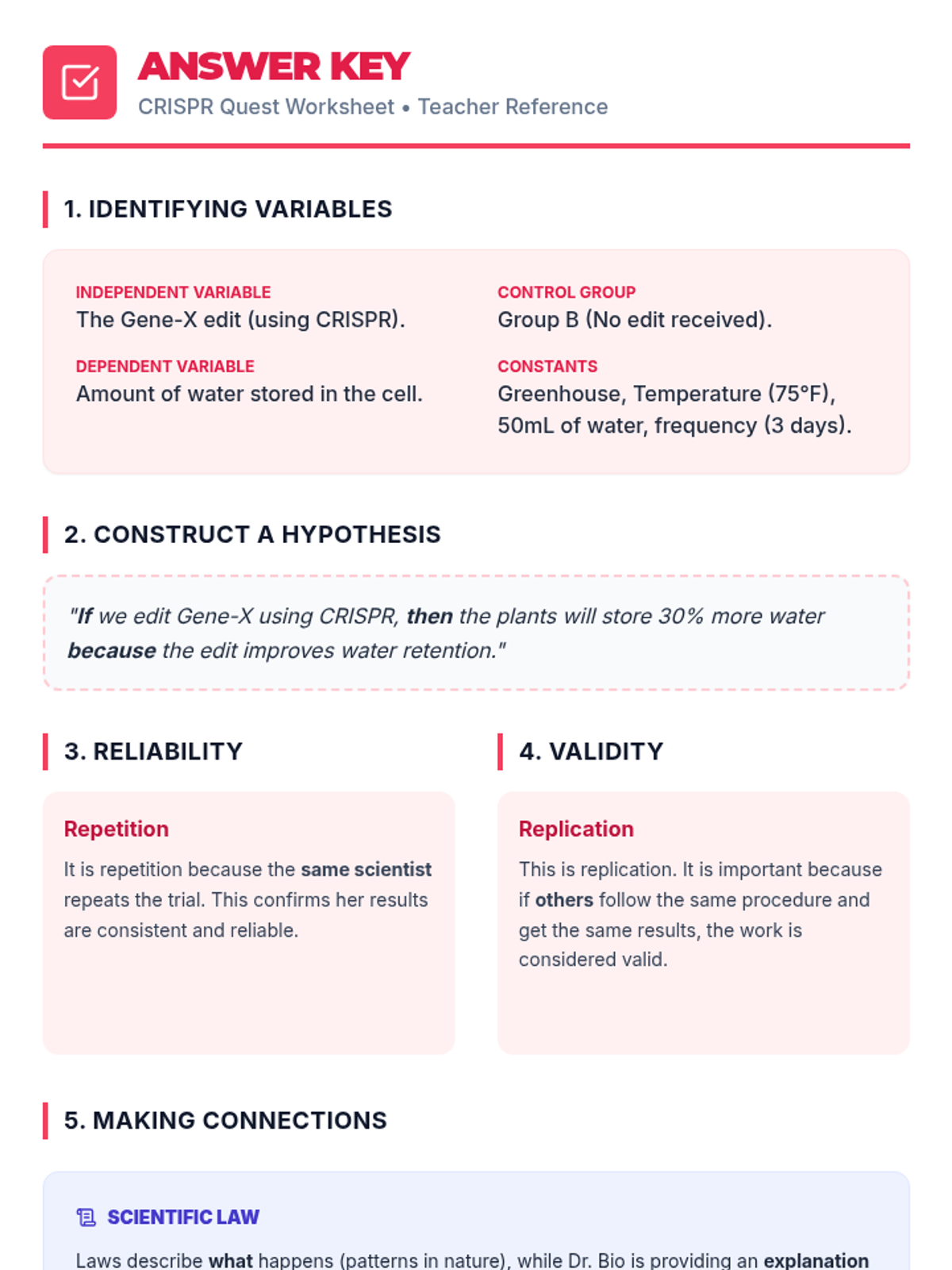
Revised answer key for the CRISPR Quest Worksheet. Fixed the page break orphaning issue and clarified the distinction between scientific theories and laws for 6th-grade students.
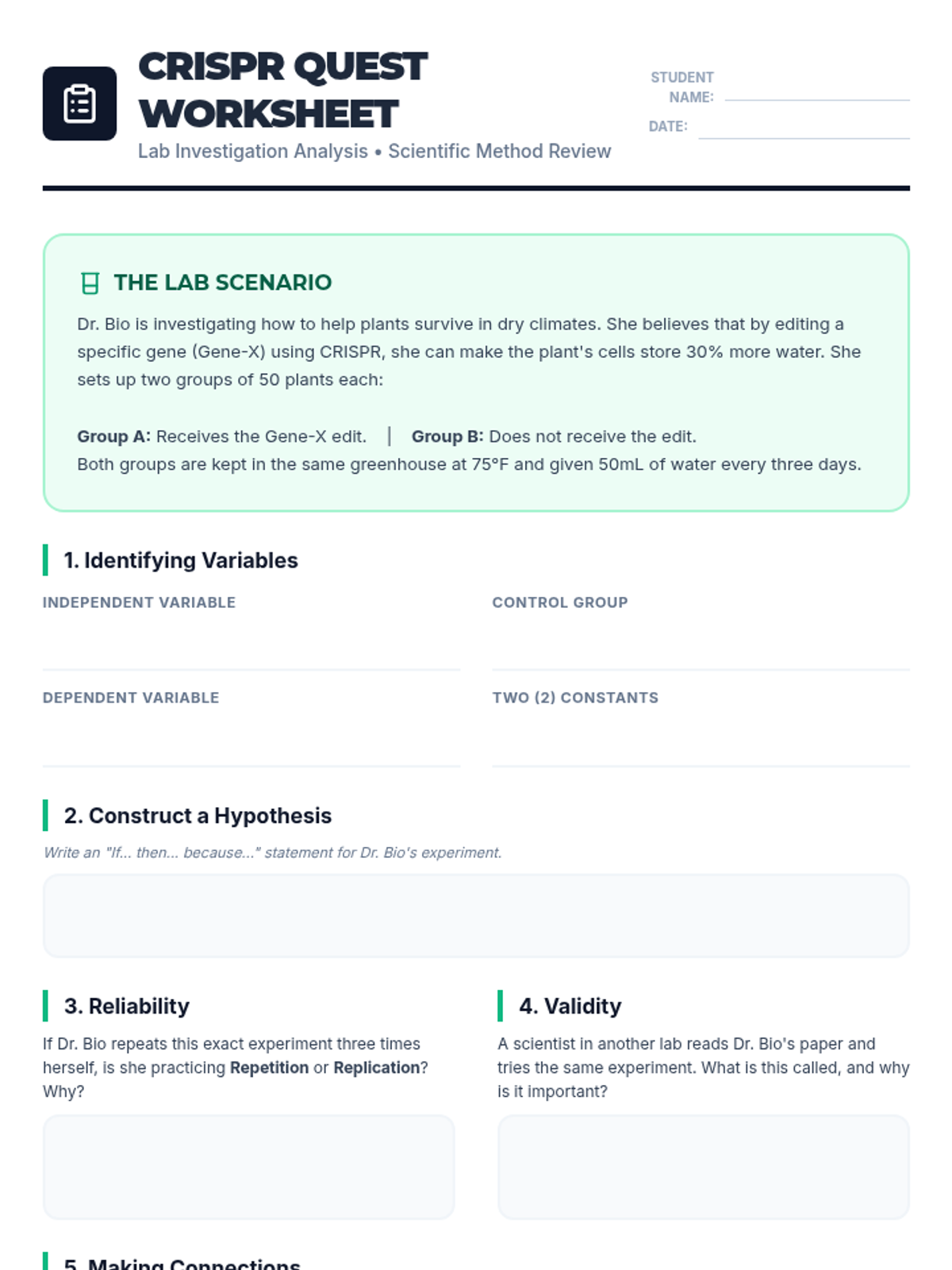
A 6th-grade worksheet applying scientific method concepts to genetic engineering. Revised to fix layout issues in Section 5 and improve overall polish.
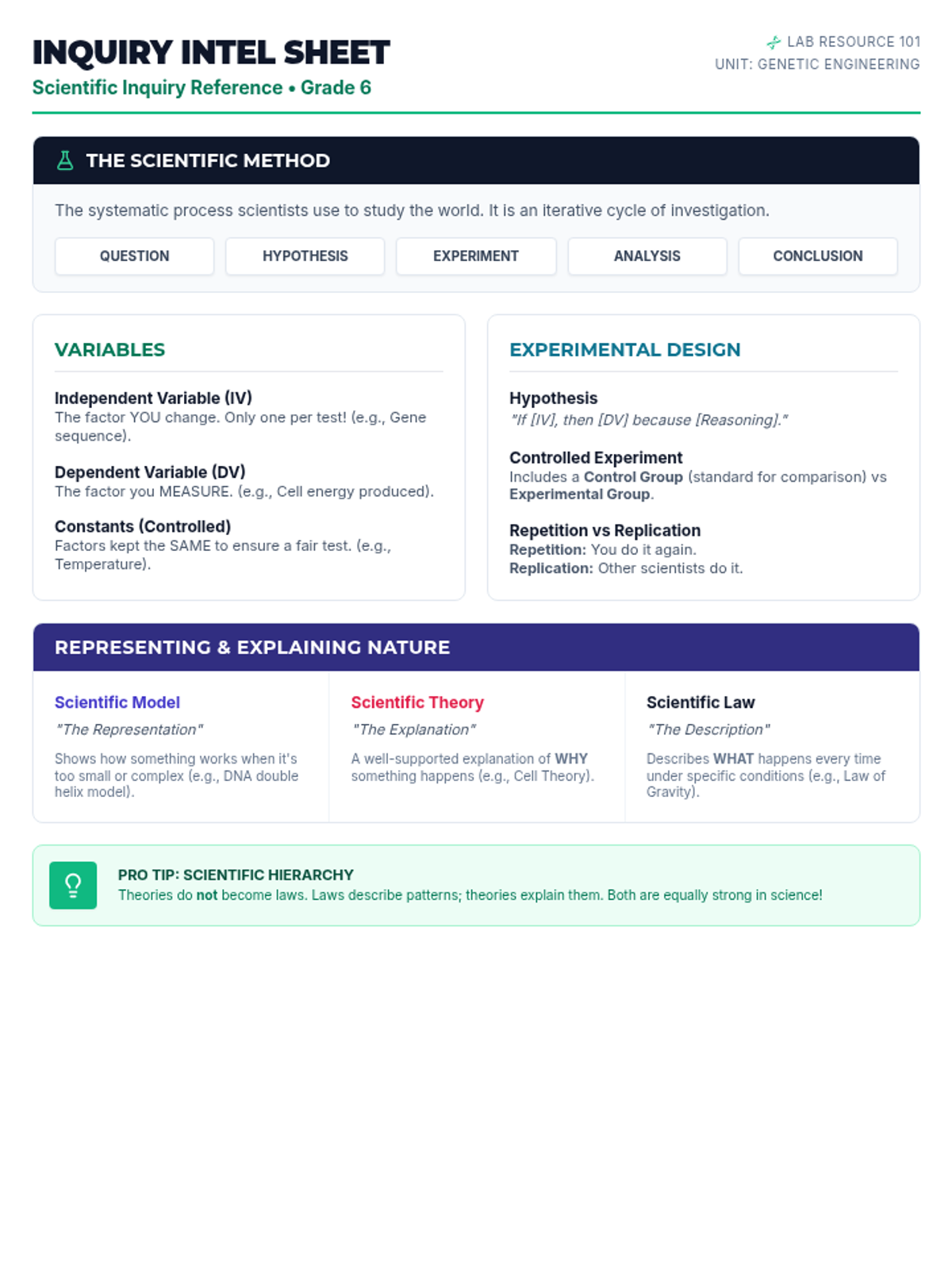
A revised, single-page definition and reference sheet covering scientific inquiry, consolidated for easier classroom use.
Visual slides for a 6th-grade review of the scientific method, using genetic engineering and CRISPR as a thematic context. Fixed awkward phrasing on Slide 4.
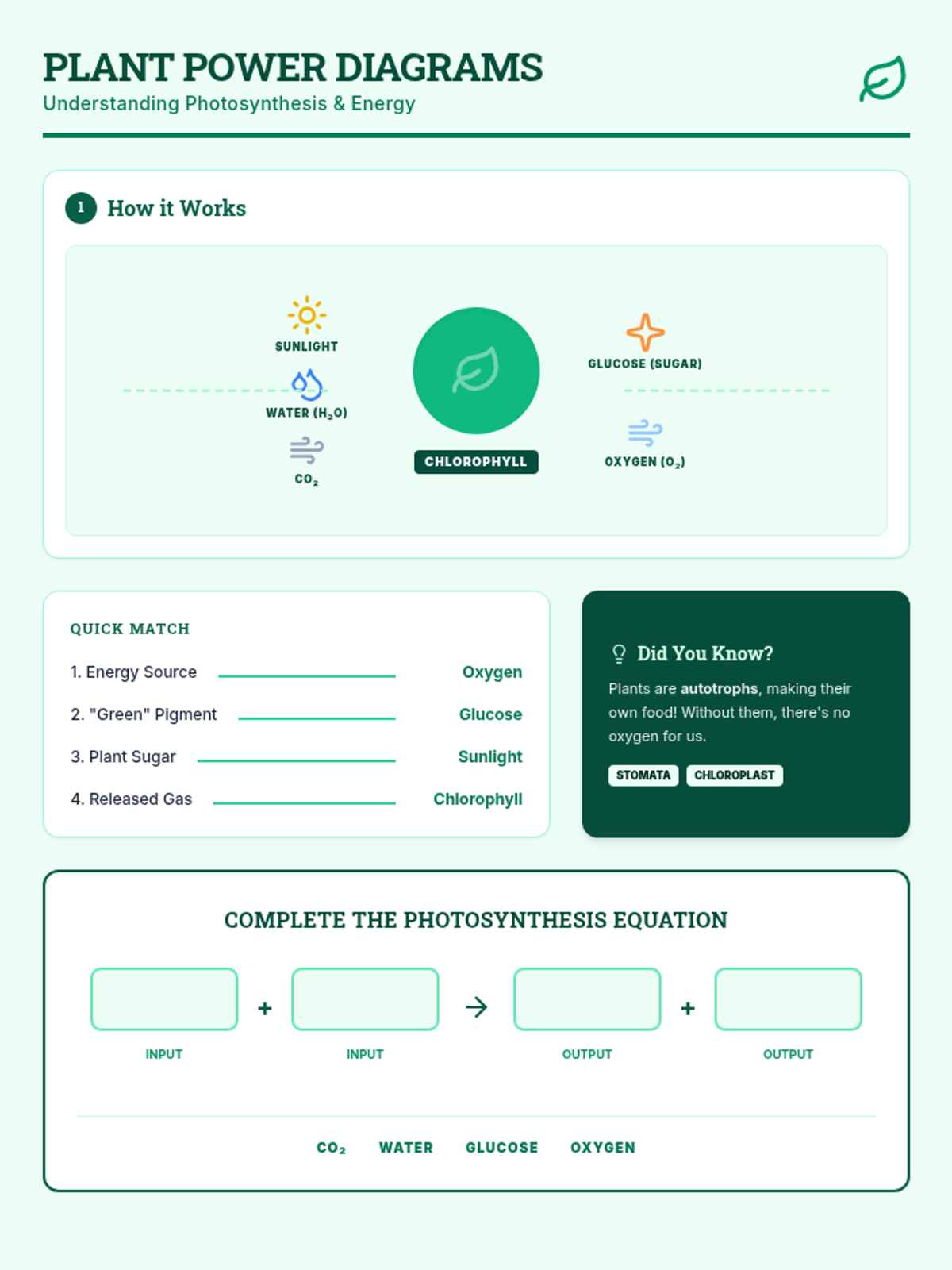
A visual aid and worksheet for 5th-grade students to learn the process of photosynthesis, including diagrams of inputs/outputs and a labeling activity. Revised to use proper subscripts and fit on a single page.
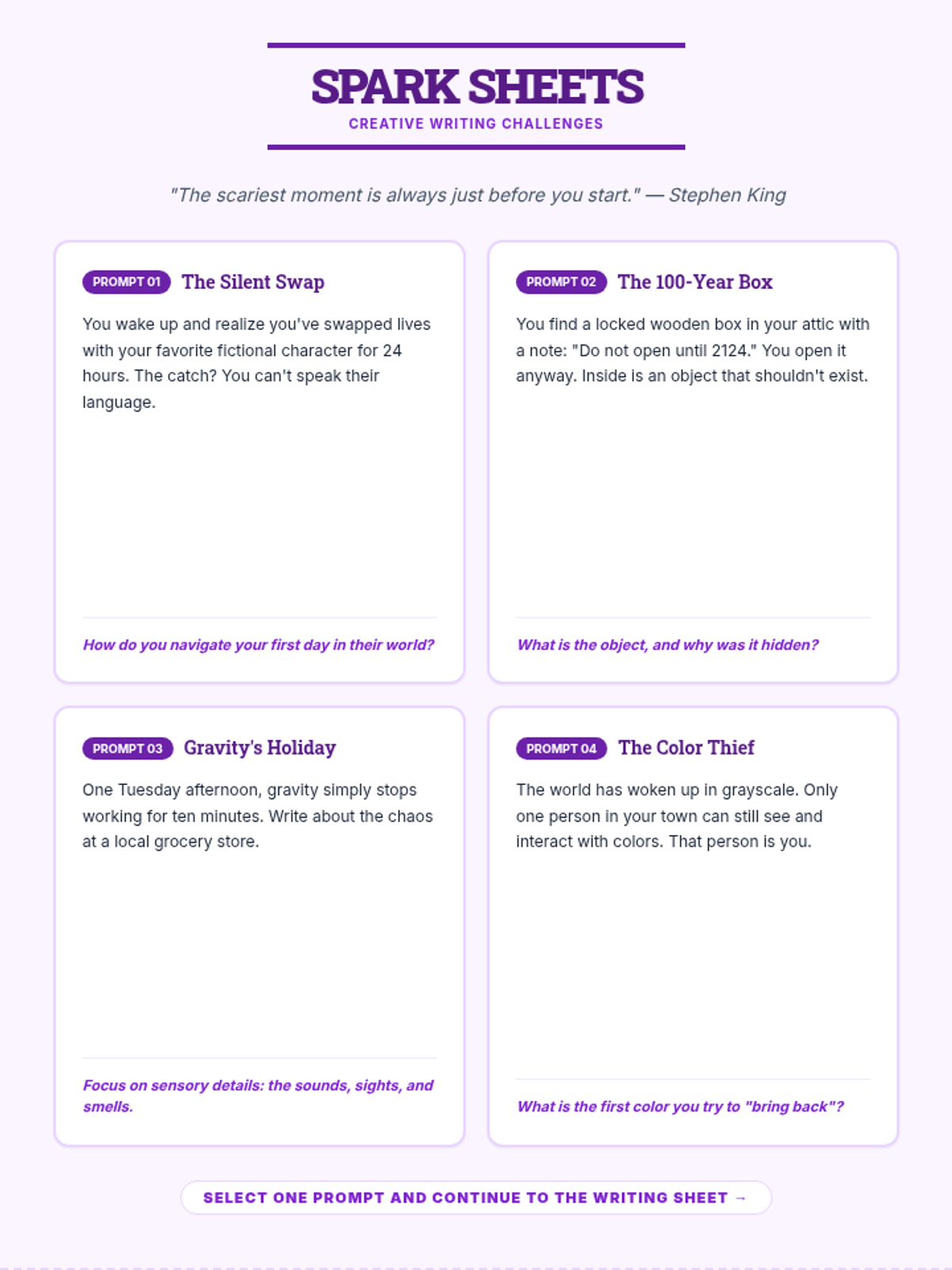
A collection of engaging creative writing prompts for middle school students, featuring a mix of sci-fi, fantasy, and realism with a large, dedicated student writing area on a separate page. Revised for improved contrast and layout.