A decodable reading passage for the 'ea' vowel team lesson, featuring a story about a beach dream. Students identify and circle words with the 'ea' combination while practicing fluent reading.
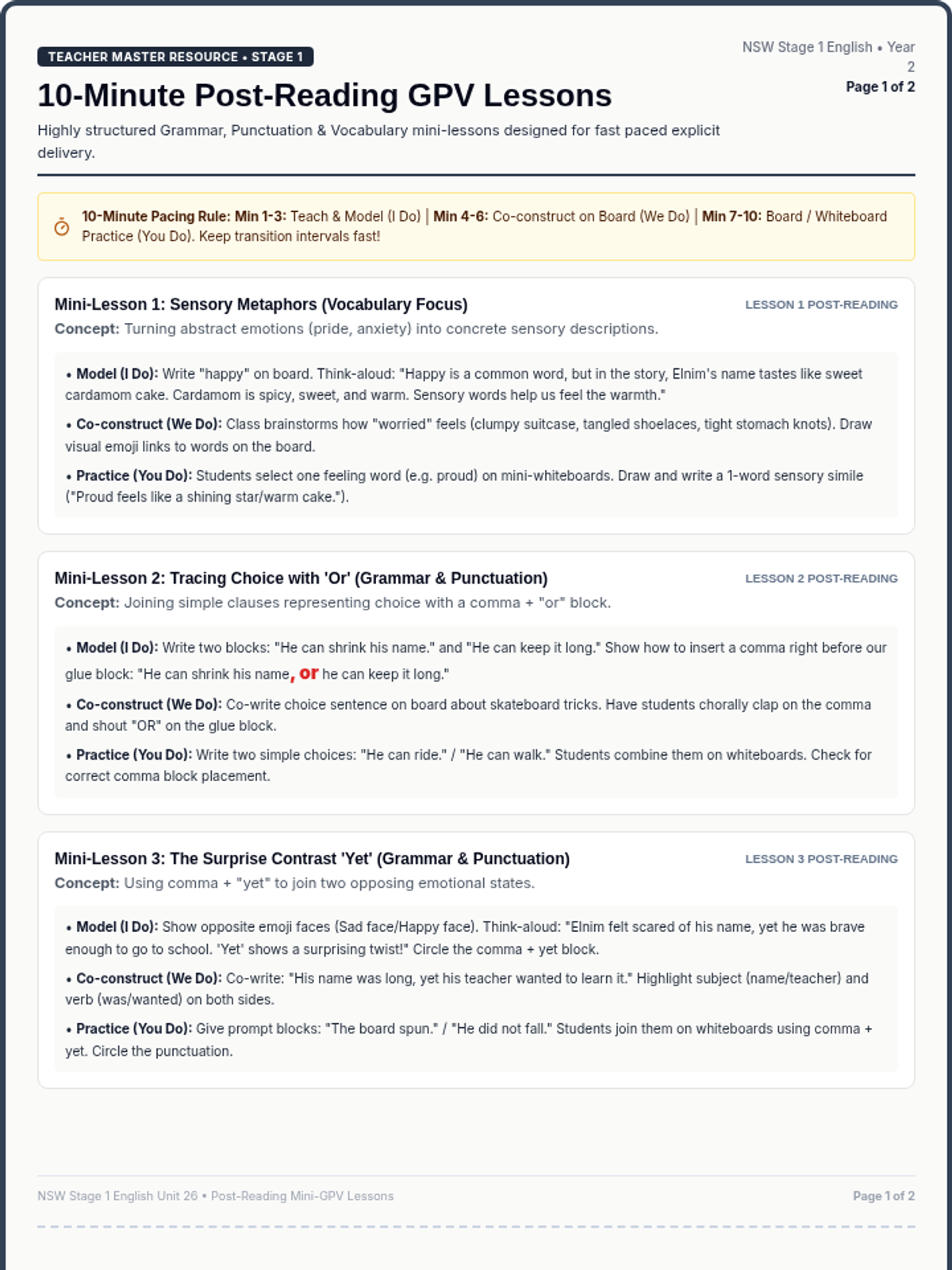
A comprehensive teacher master resource detailing five separate 10-minute post-reading Grammar, Punctuation, and Vocabulary (GPV) mini-lessons aligned with Unit 26 Stage 1 syllabus outcomes.
A single, comprehensive master presentation deck covering all 10 lessons of the Unit 26 Stage 1 curriculum. Highly visual with large typography and symbolic icon supports, perfect for reducing reading fatigue.
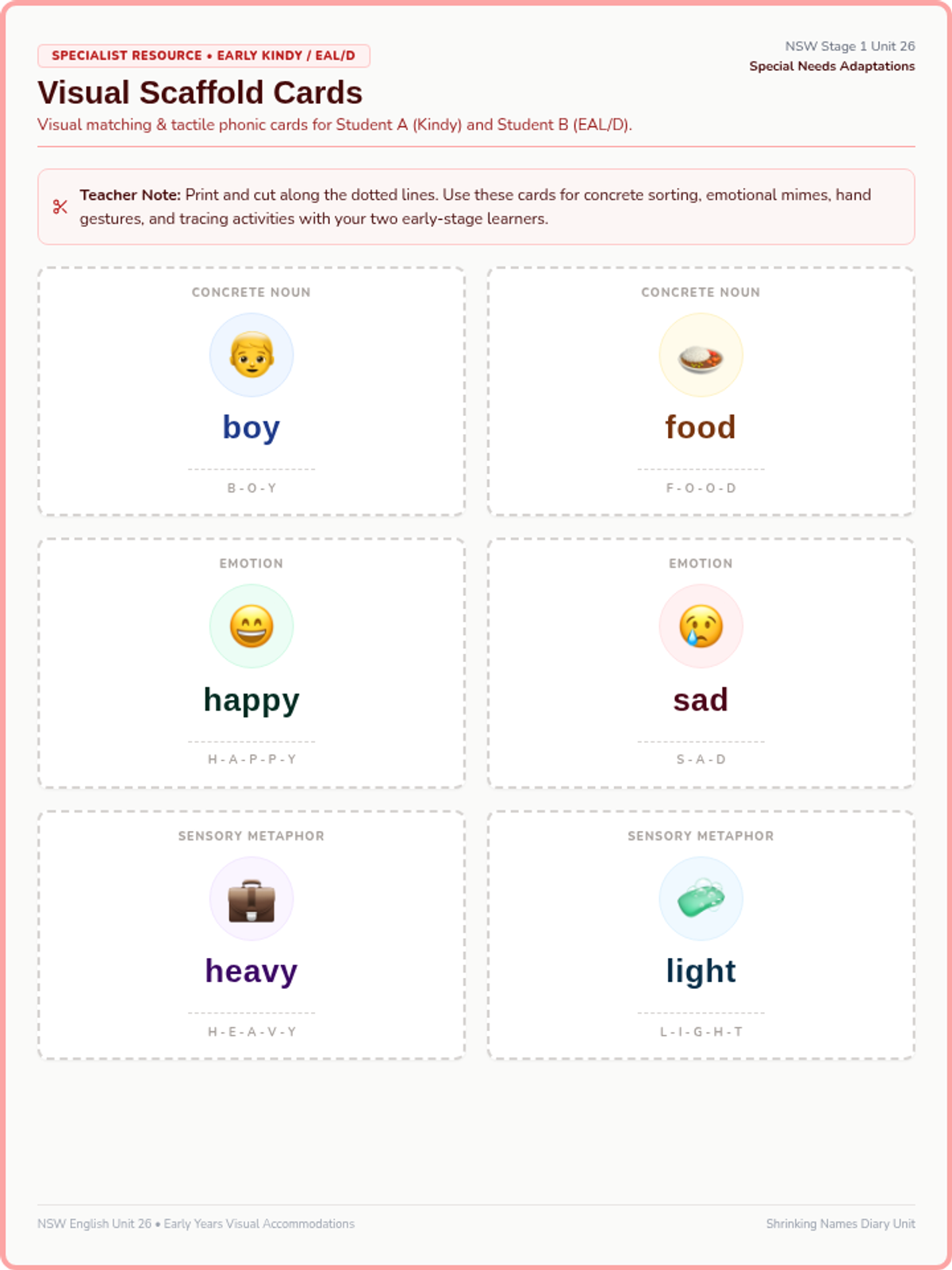
A set of 6 printable highly-visual cards featuring emotions, CVC words, concrete nouns, and metaphors from the text, optimized for early kindergarten learners and EAL/D students.
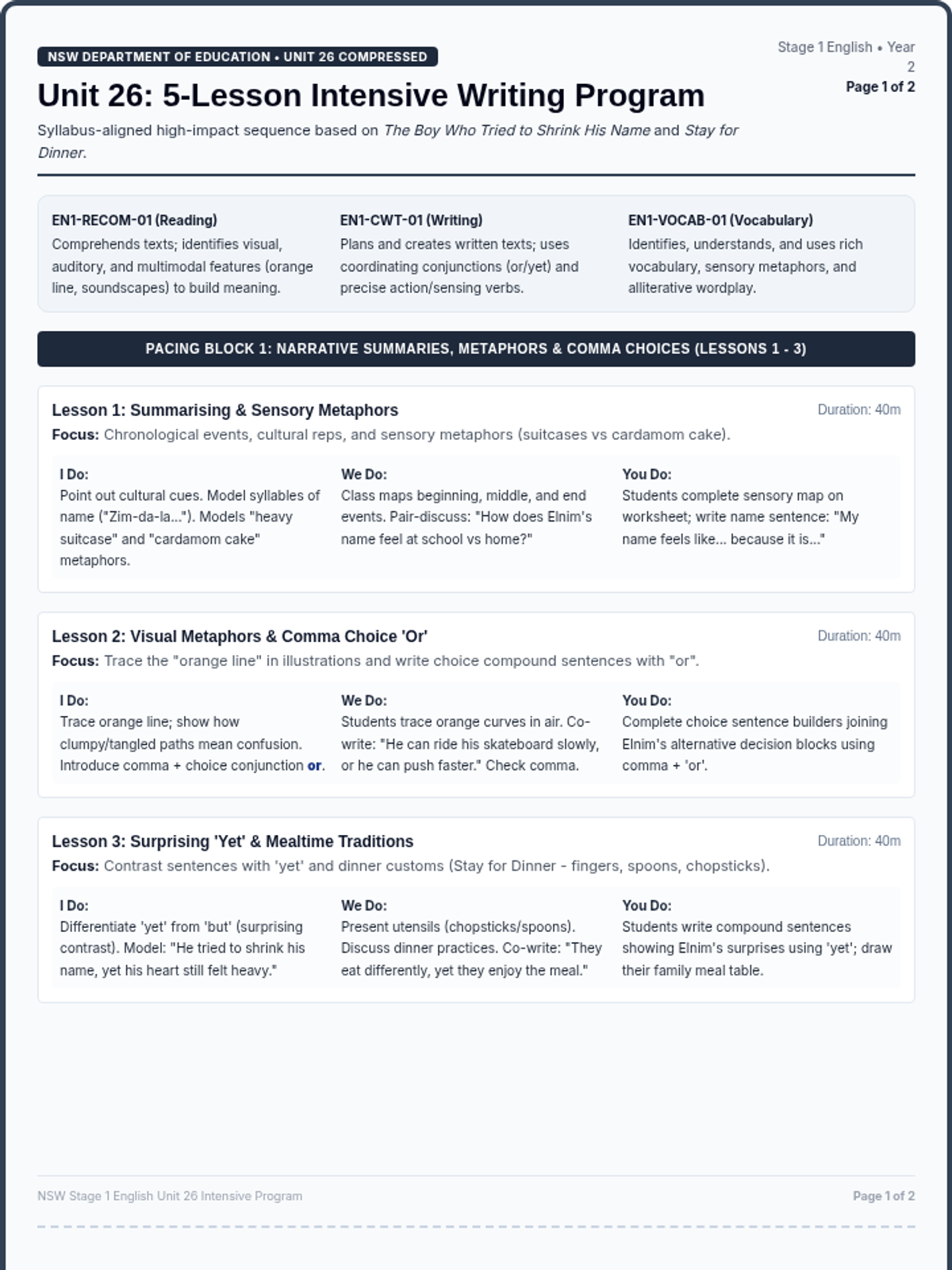
A master curriculum program guide outlining a clear lesson-by-lesson sequence for all 10 lessons of Unit 26. Aligned with NSW Year 2 English syllabus outcomes, it includes explicit modeling prompts, teacher instructions, and differentiated student practices.
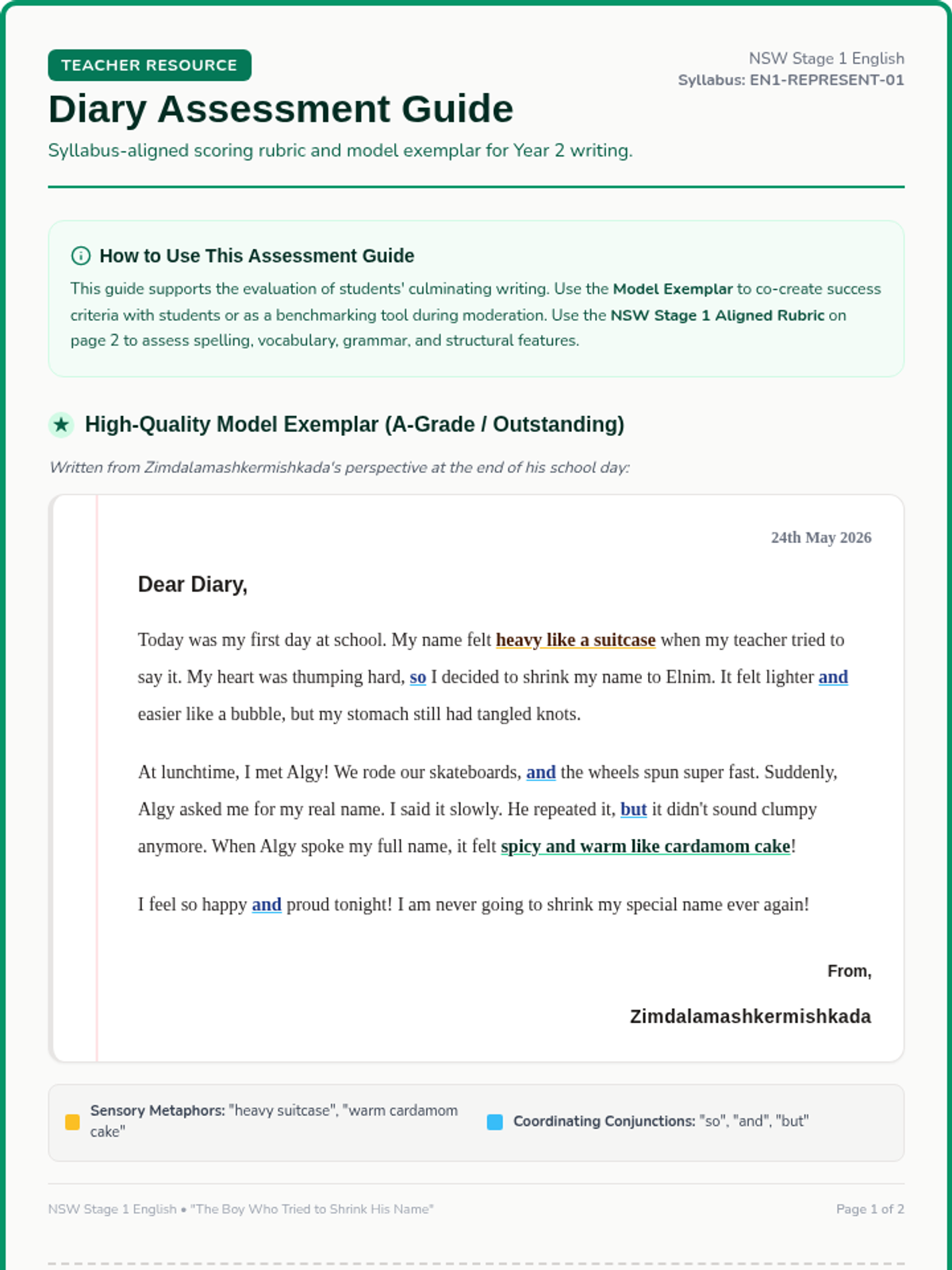
A comprehensive teacher assessment resource featuring a high-quality model exemplar of the diary entry and an NSW Syllabus aligned Stage 1 rubric.
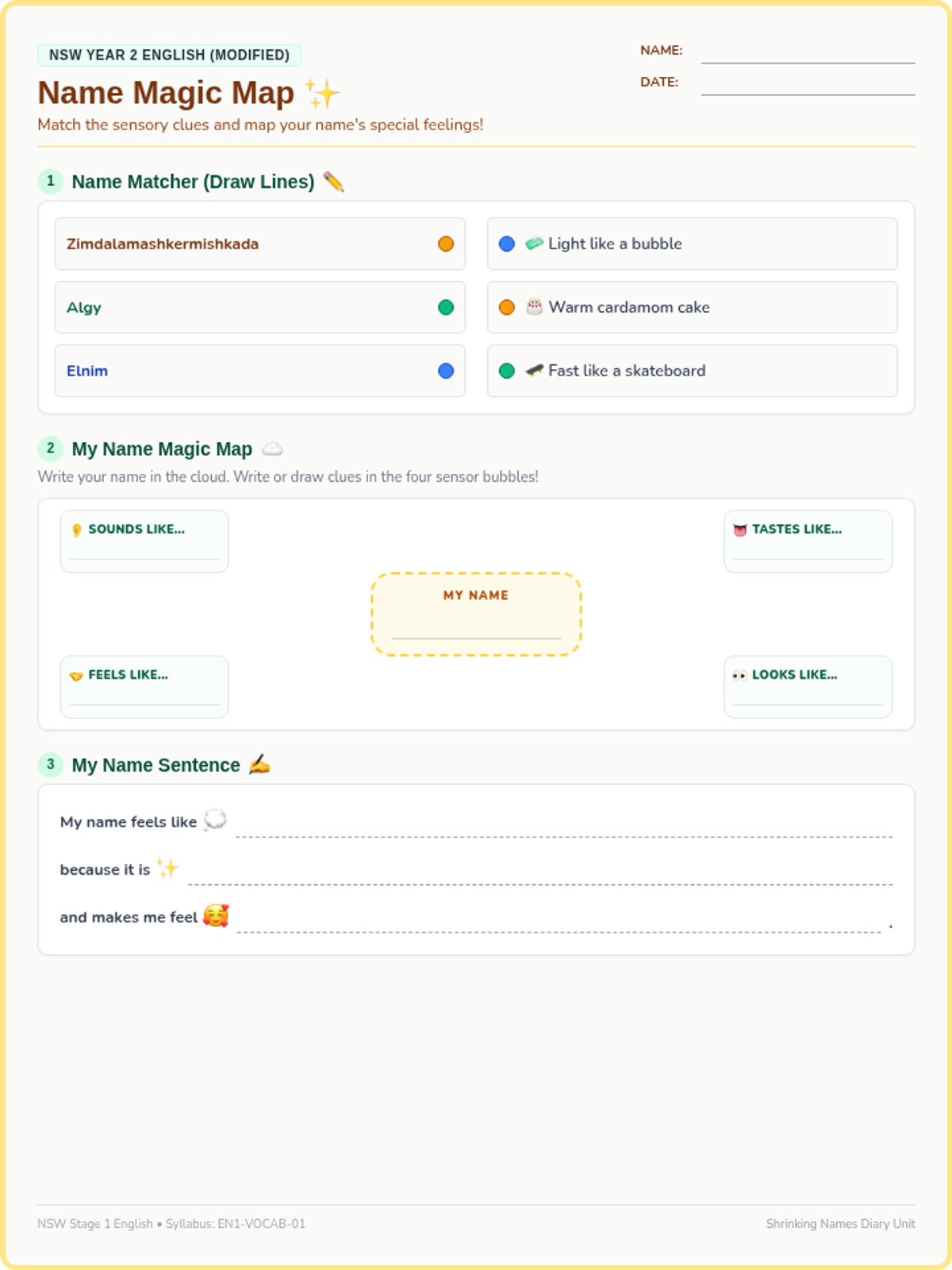
A student-facing worksheet matching vocabulary to character names and helping Stage 1 students create their own sensory 'name map' and name metaphor.
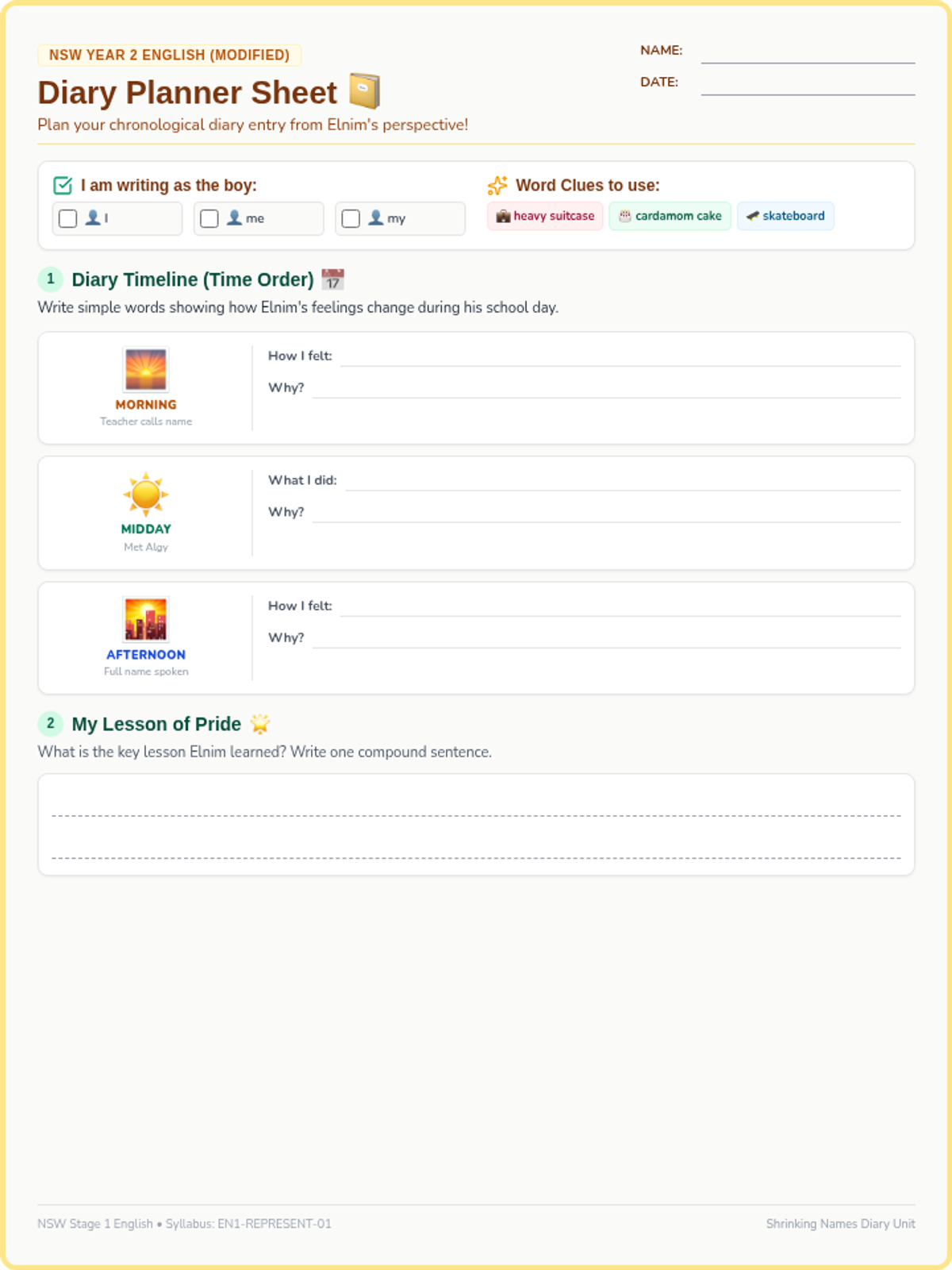
A student-facing graphic organizer helping Stage 1 students organize their thoughts chronologically and incorporate vocabulary/pronouns for their diary entry.
A presentation deck for Lesson 3, introducing the structural features of a reflective diary entry, first-person narrative perspective, and sentence-level punctuation.
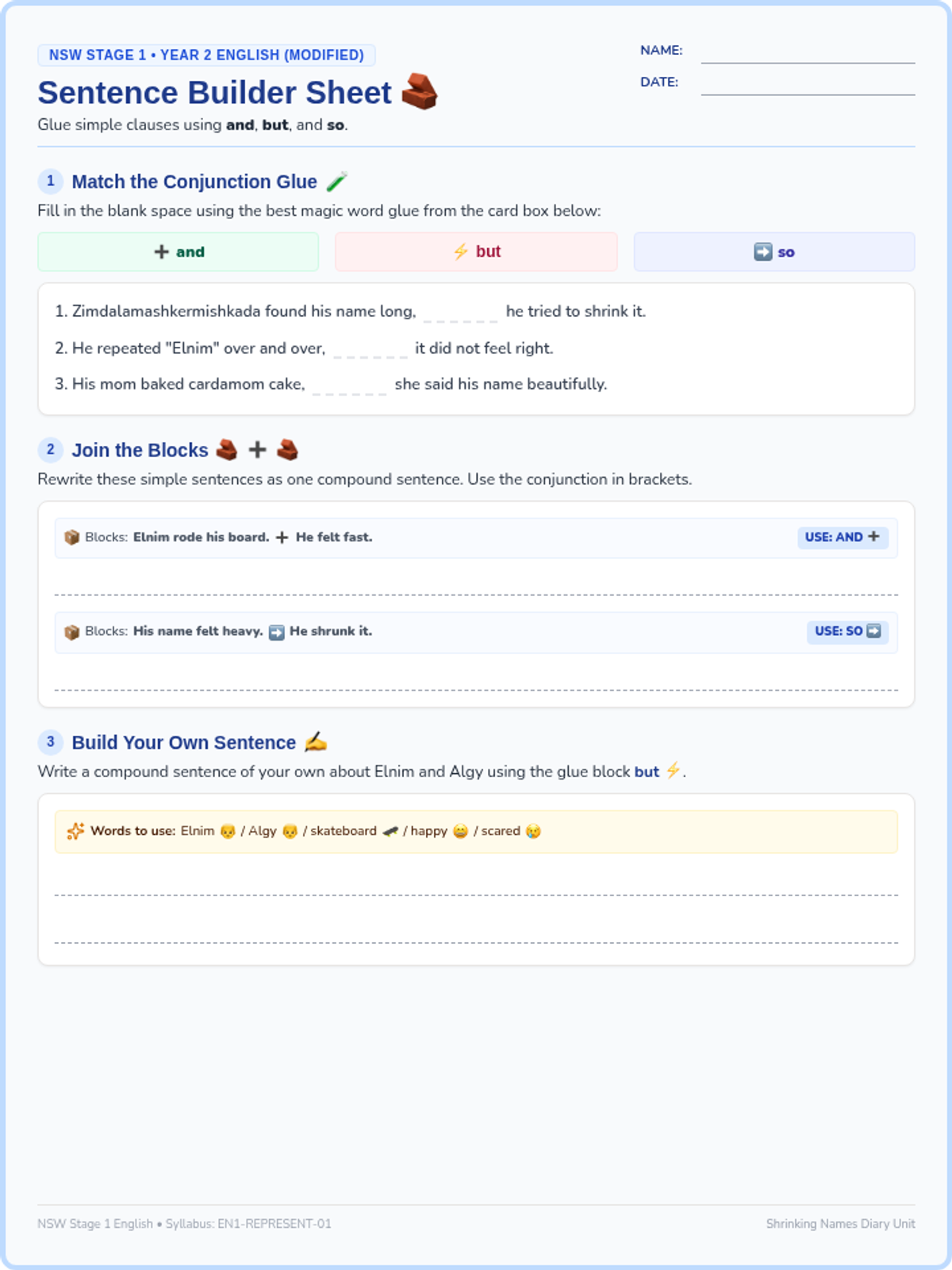
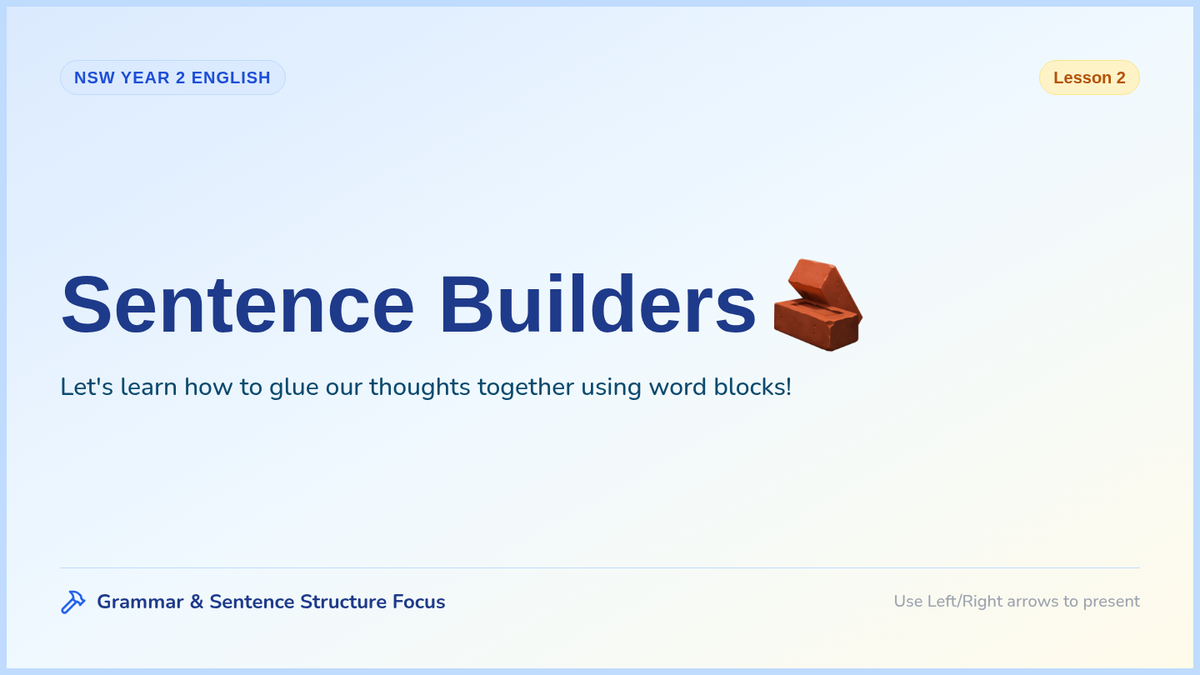
A presentation deck for Lesson 2, delivering explicit instruction on simple and compound sentences, and how to use coordinating conjunctions ('and', 'but', 'so') to describe character feelings.
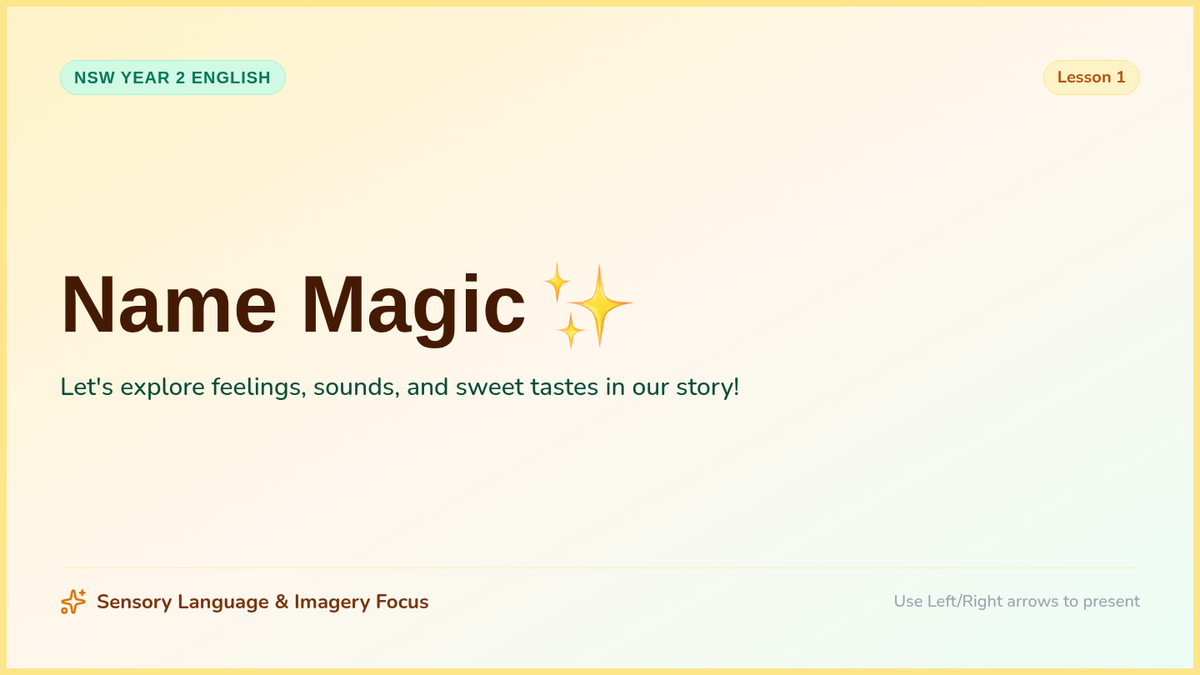
A presentation deck for the first lesson in the NSW Year 2 Unit, introducing sensory imagery, key vocabulary, and vocabulary stretching based on "The Boy Who Tried to Shrink His Name".
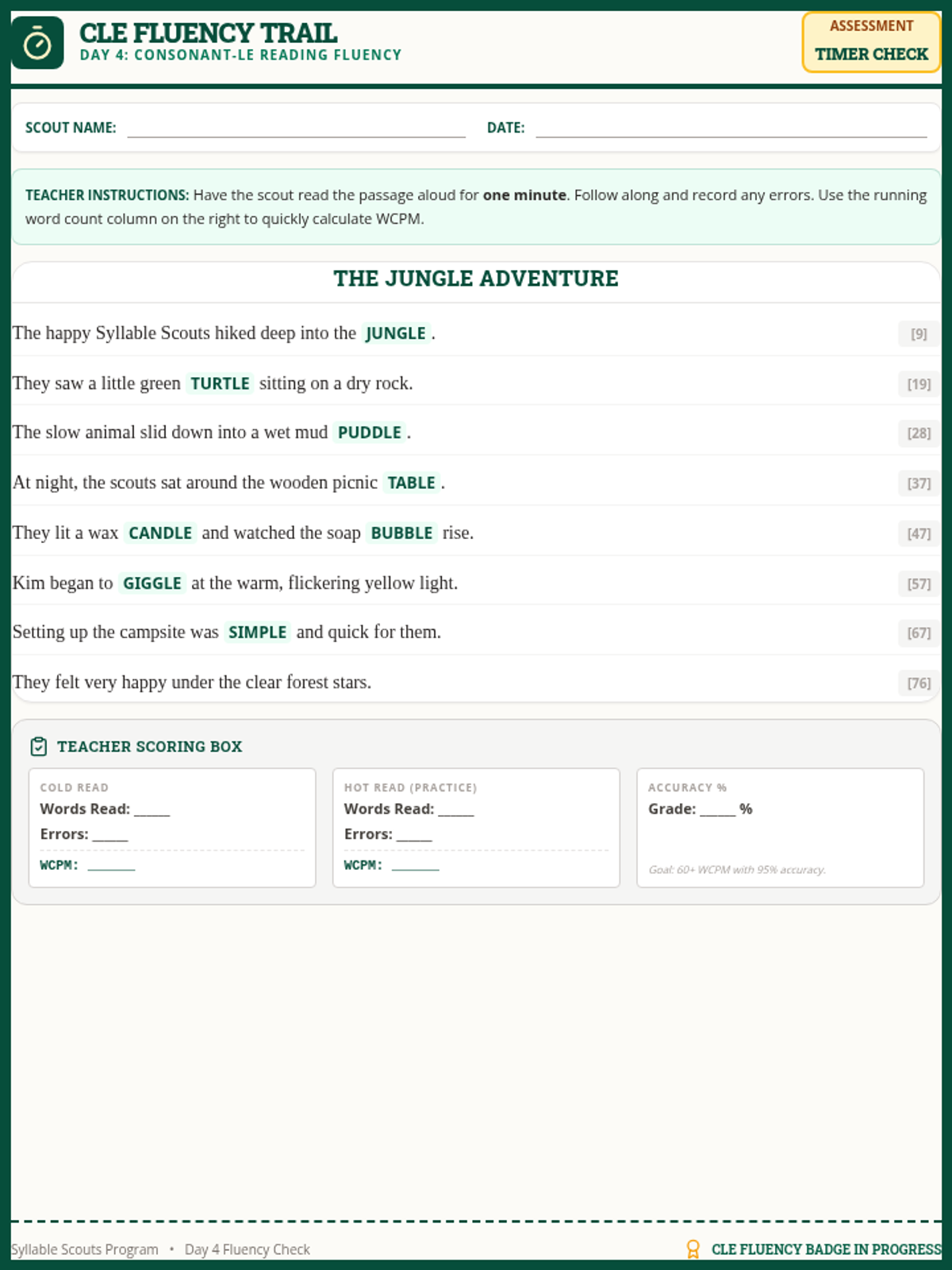
This timed reading fluency passage helps second graders build automaticity with two-syllable CLE words. It contains line-by-line running word counts and a teacher diagnostic assessment tracker at the bottom.
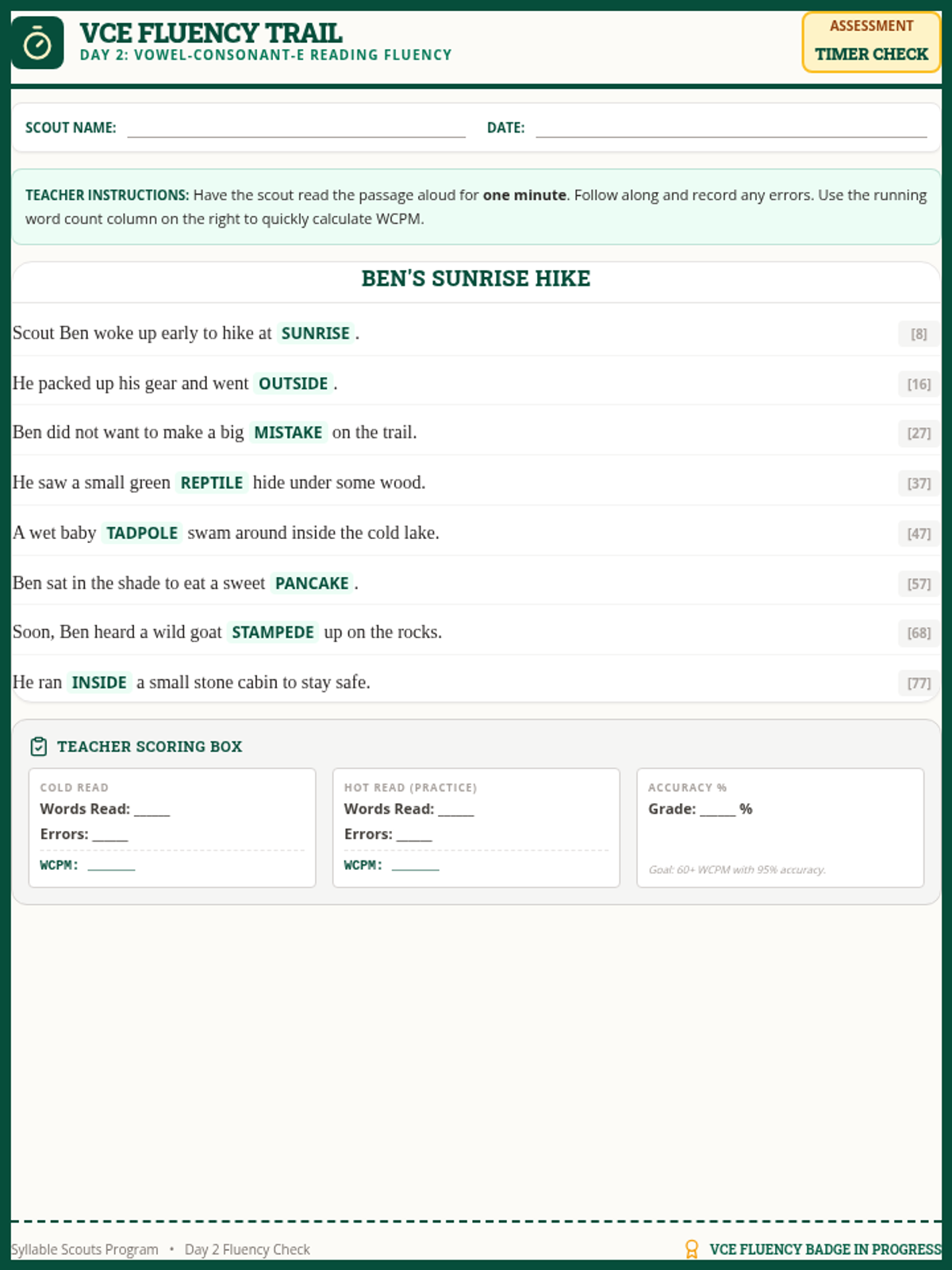
This timed reading fluency passage helps second graders build automaticity with two-syllable VCE words. It contains line-by-line running word counts and a teacher diagnostic assessment tracker at the bottom.
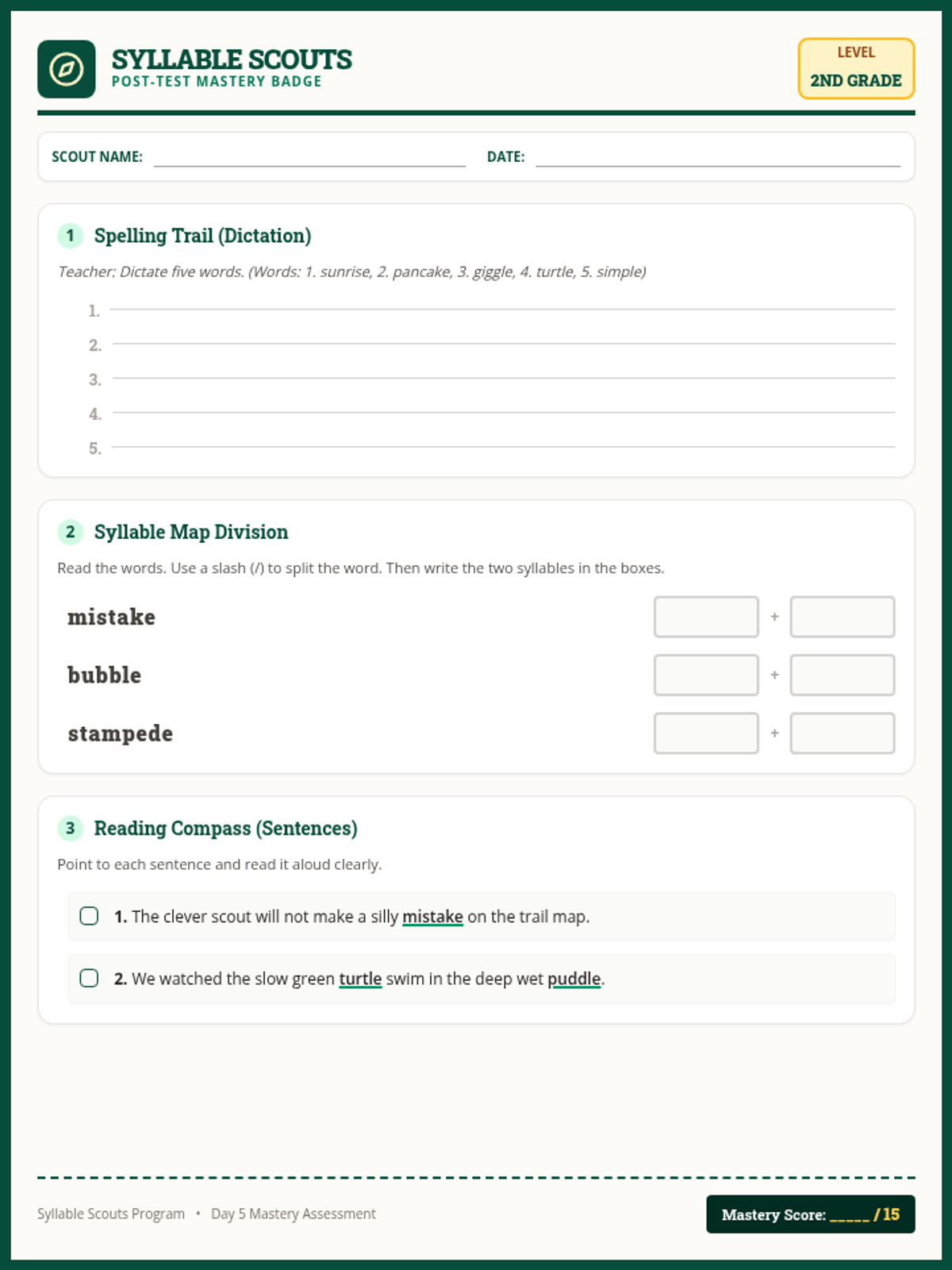
This printable student assessment sheet acts as the final post-test to evaluate mastery of VCE and CLE syllable types in second grade. It contains dictation spelling, syllable division blanks, and teacher-scored reading sentences.
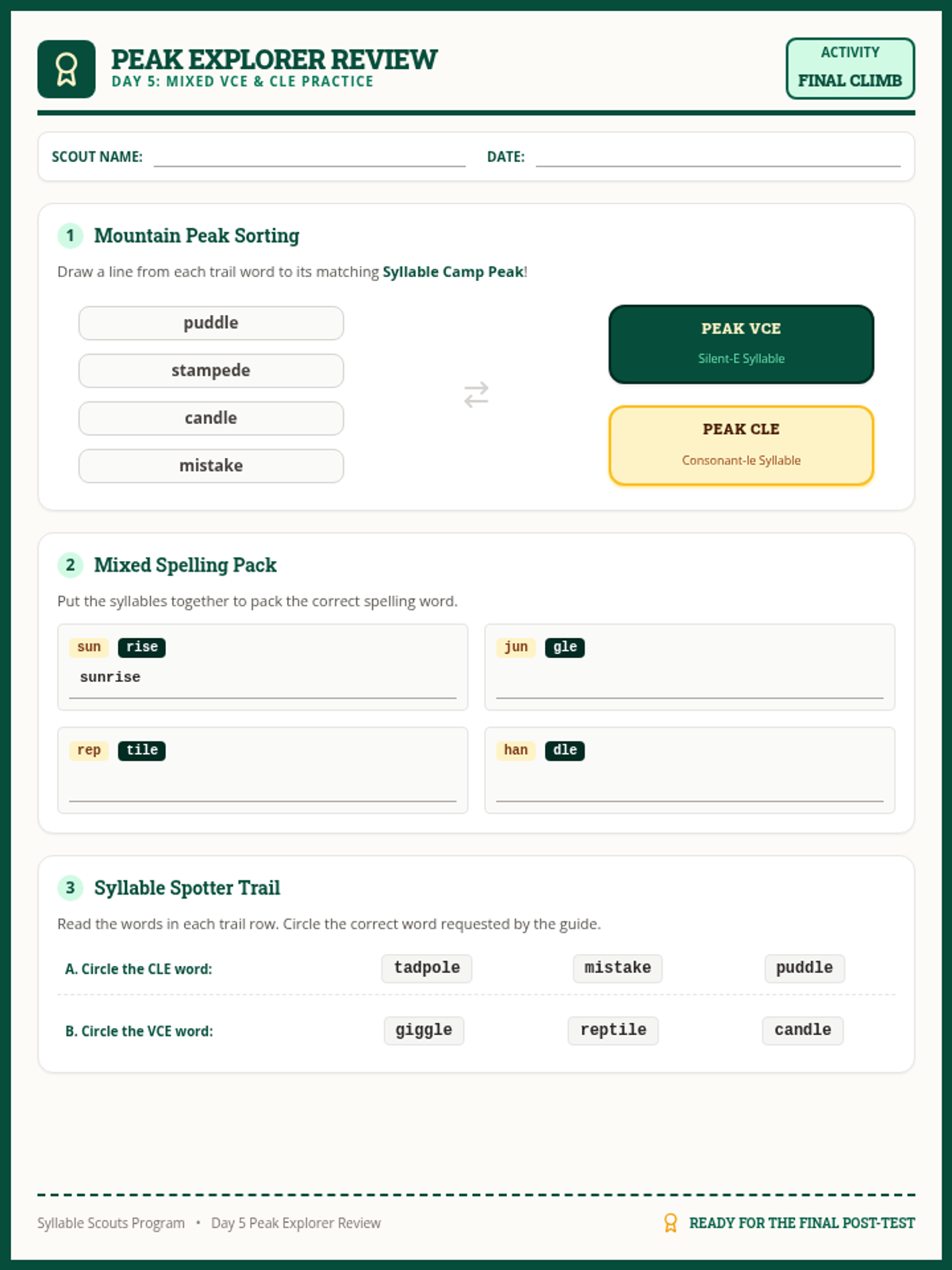
This printable worksheet practices mixed VCE and CLE syllable division, sorting, and recognition of words. It acts as a comprehensive prep page before taking the post-test.
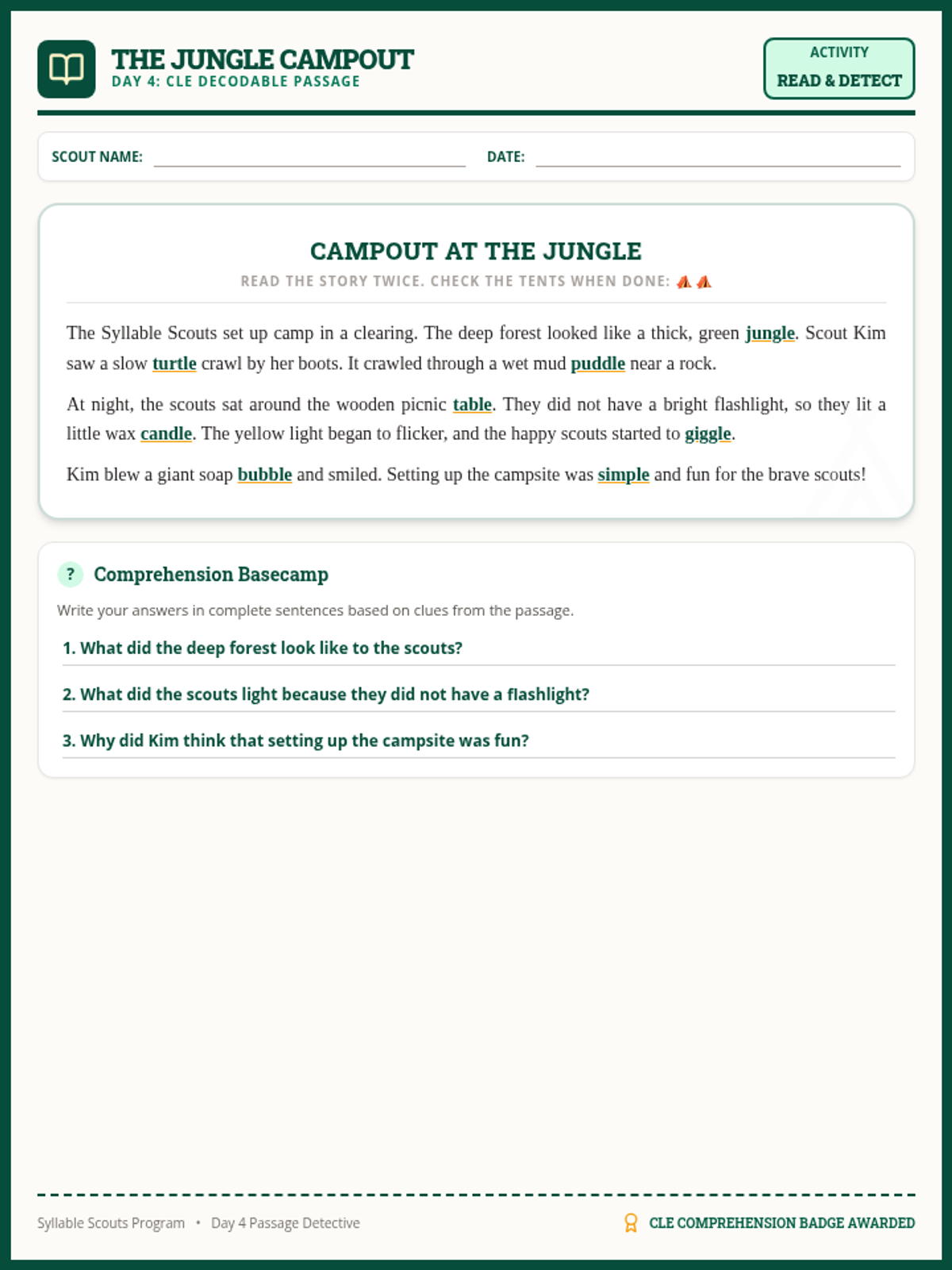
This passage page contains a decodable reading text optimized for second-grade students. It features several two-syllable CLE words, highlighted for identification, and three short-answer text-dependent comprehension questions.
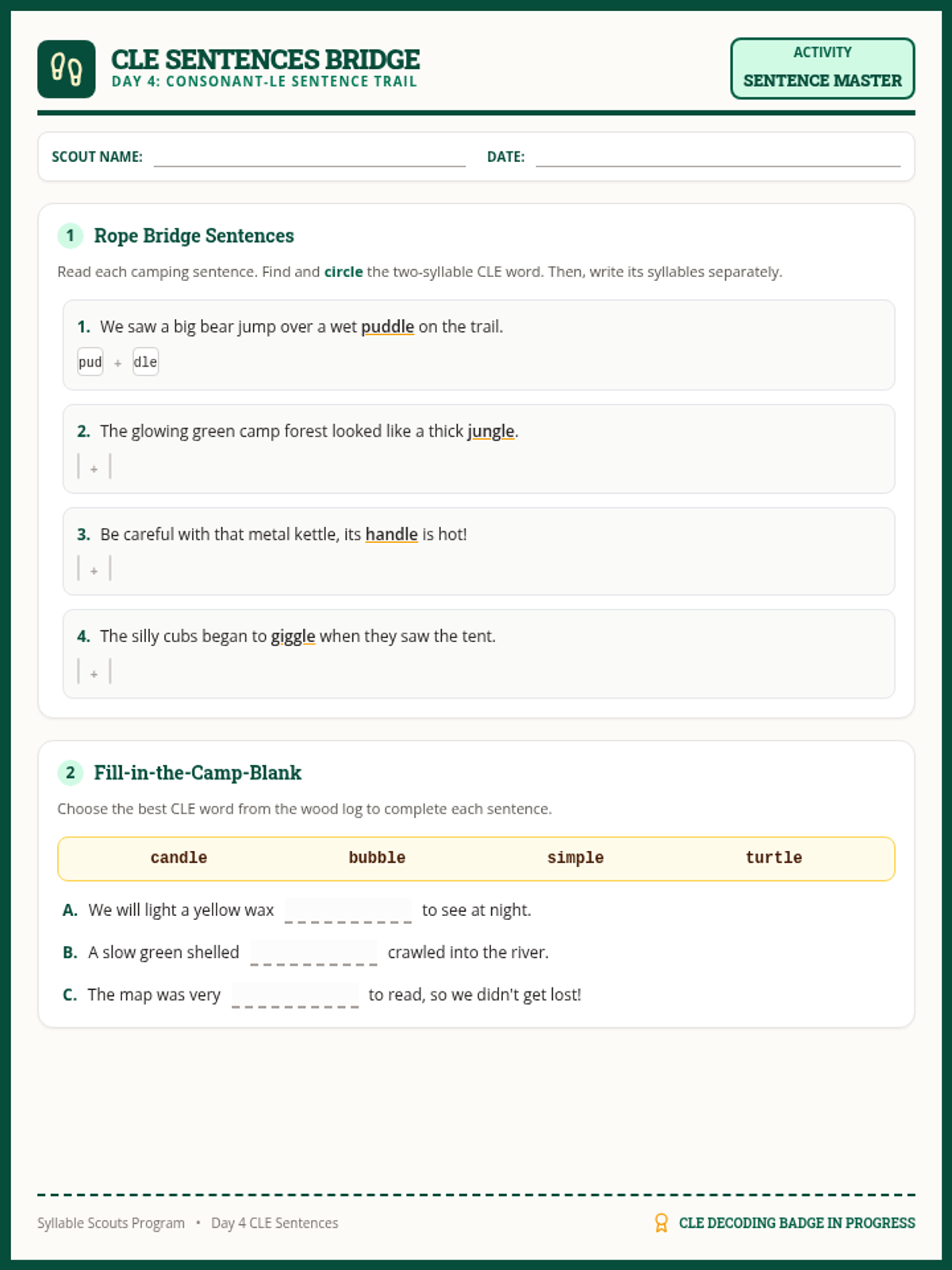
This printable worksheet helps second-grade students identify and read Consonant-le (CLE) words in sentences. It contains syllable breakdown cups and a context-based fill-in-the-blank vocabulary exercise.
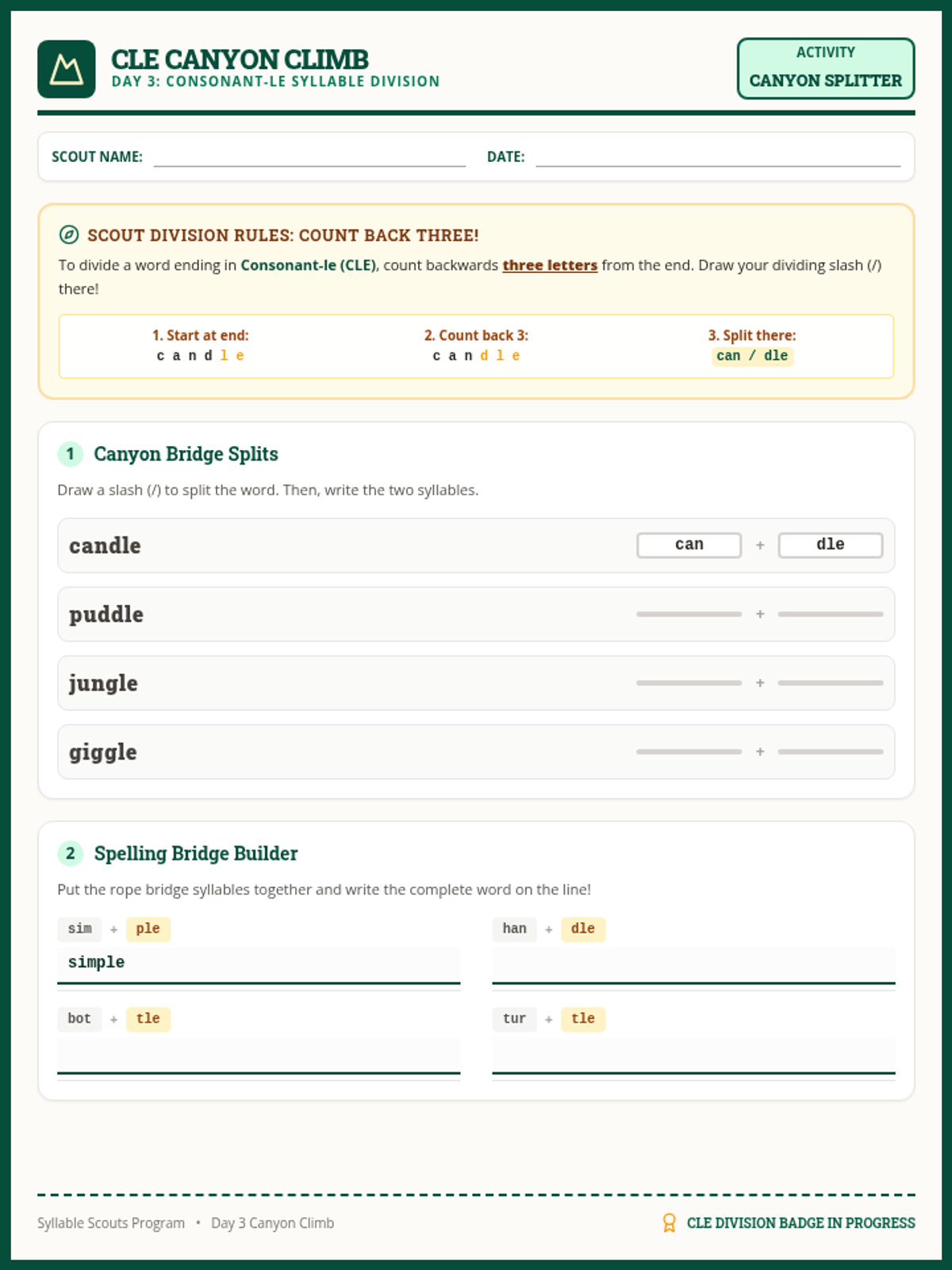
This worksheet introduces second graders to Consonant-le (CLE) syllable structures. It contains spelling and division guides, a division split trail, and a syllable combination activity to spell multi-syllable CLE words.
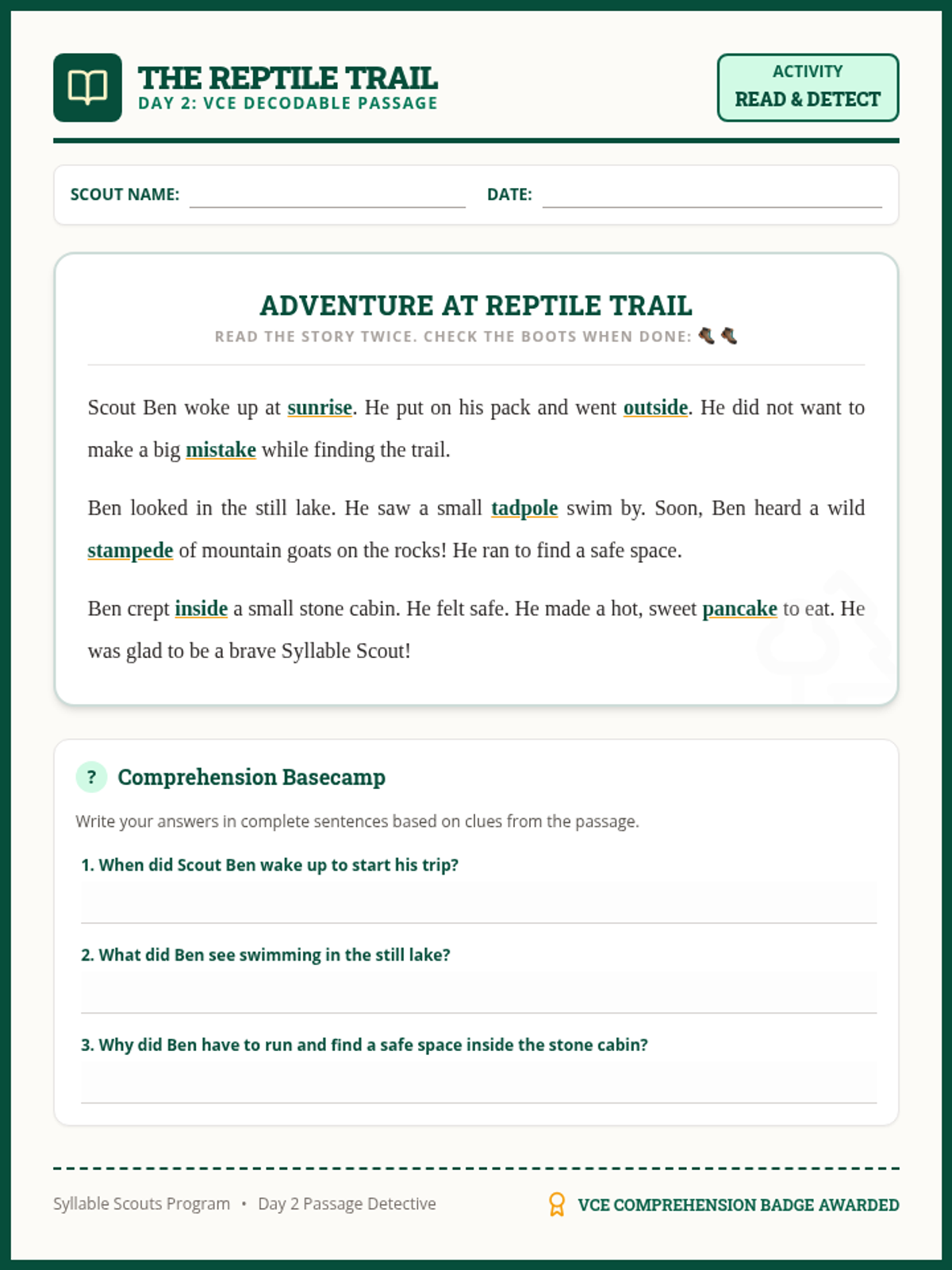
This passage page contains a decodable reading text optimized for second-grade students. It features several two-syllable VCE words, highlighted for identification, and three short-answer text-dependent comprehension questions.
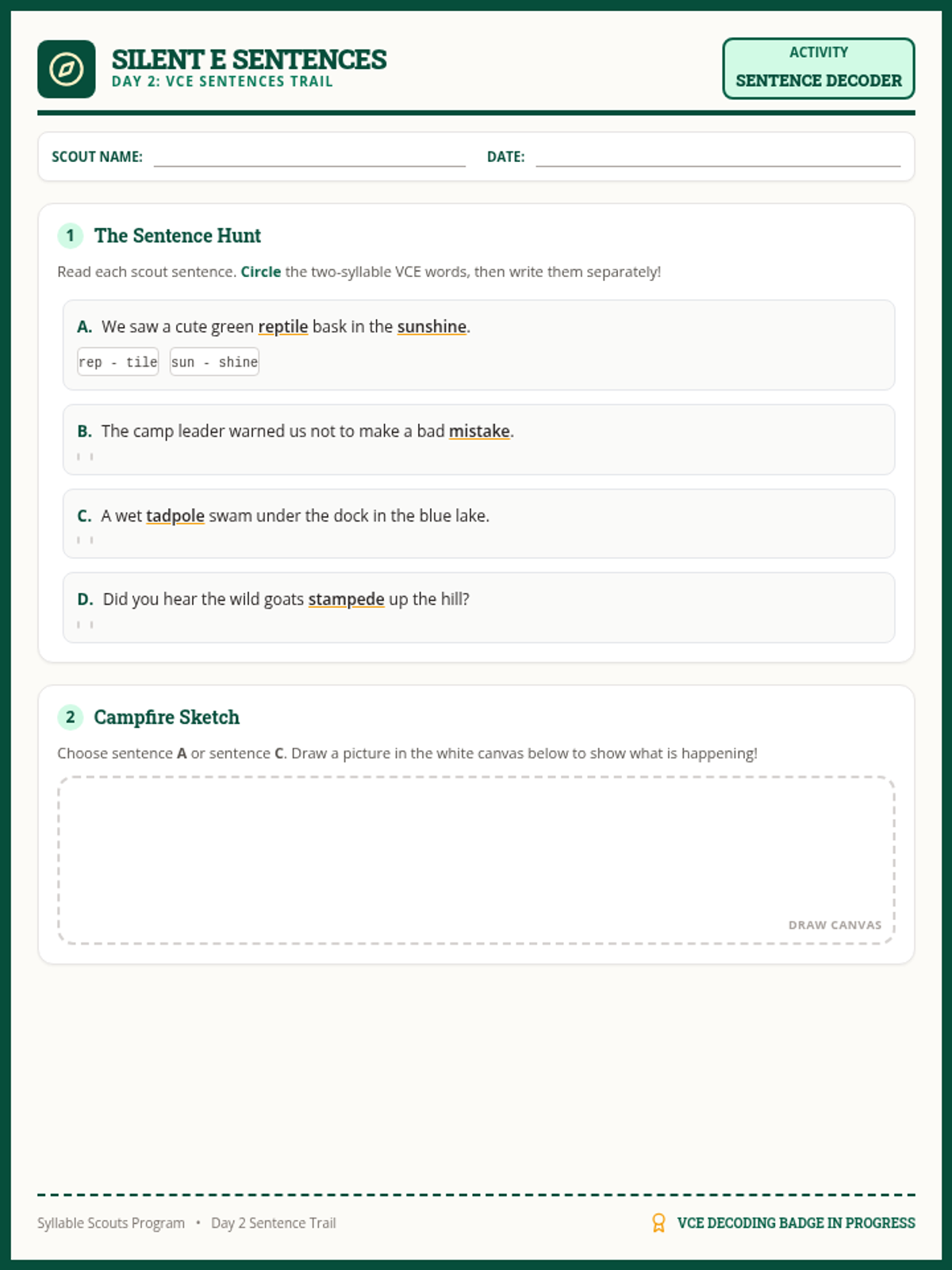
This student worksheet practices finding, writing, and decoding two-syllable VCE words inside simple, second-grade level sentences. It includes structural identification blanks and a student drawing block for comprehension tracking.
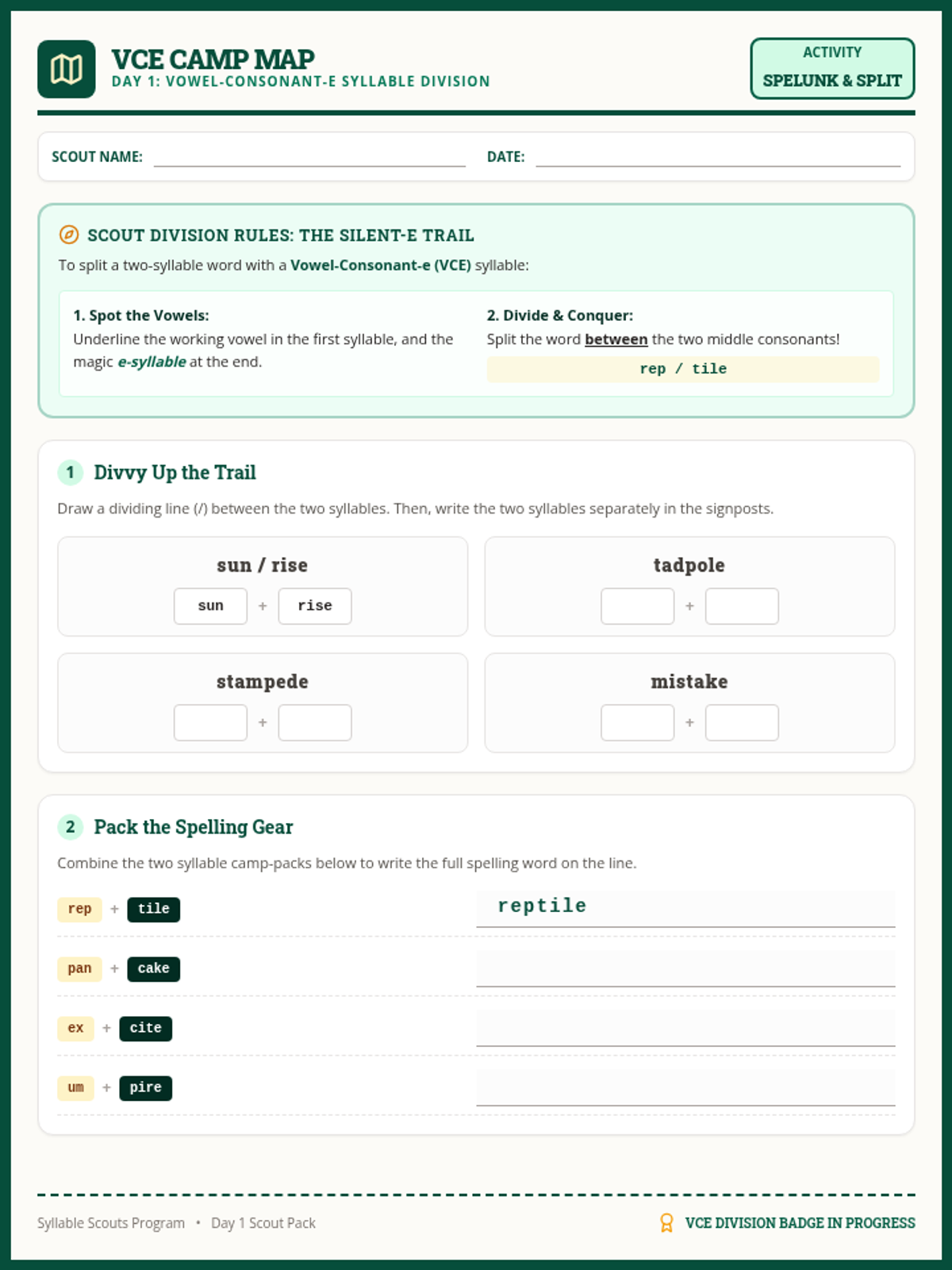
This worksheet introduces second graders to two-syllable Vowel-Consonant-e (VCE) division. It includes structural guidelines, an exercise to split words into constituent syllables, and a spelling segment to combine prefix/base syllable tiles into complete words.