A lesson focused on the 'ea' vowel team making the long 'e' sound (/E/), featuring word chaining, spelling games, and reading practice.
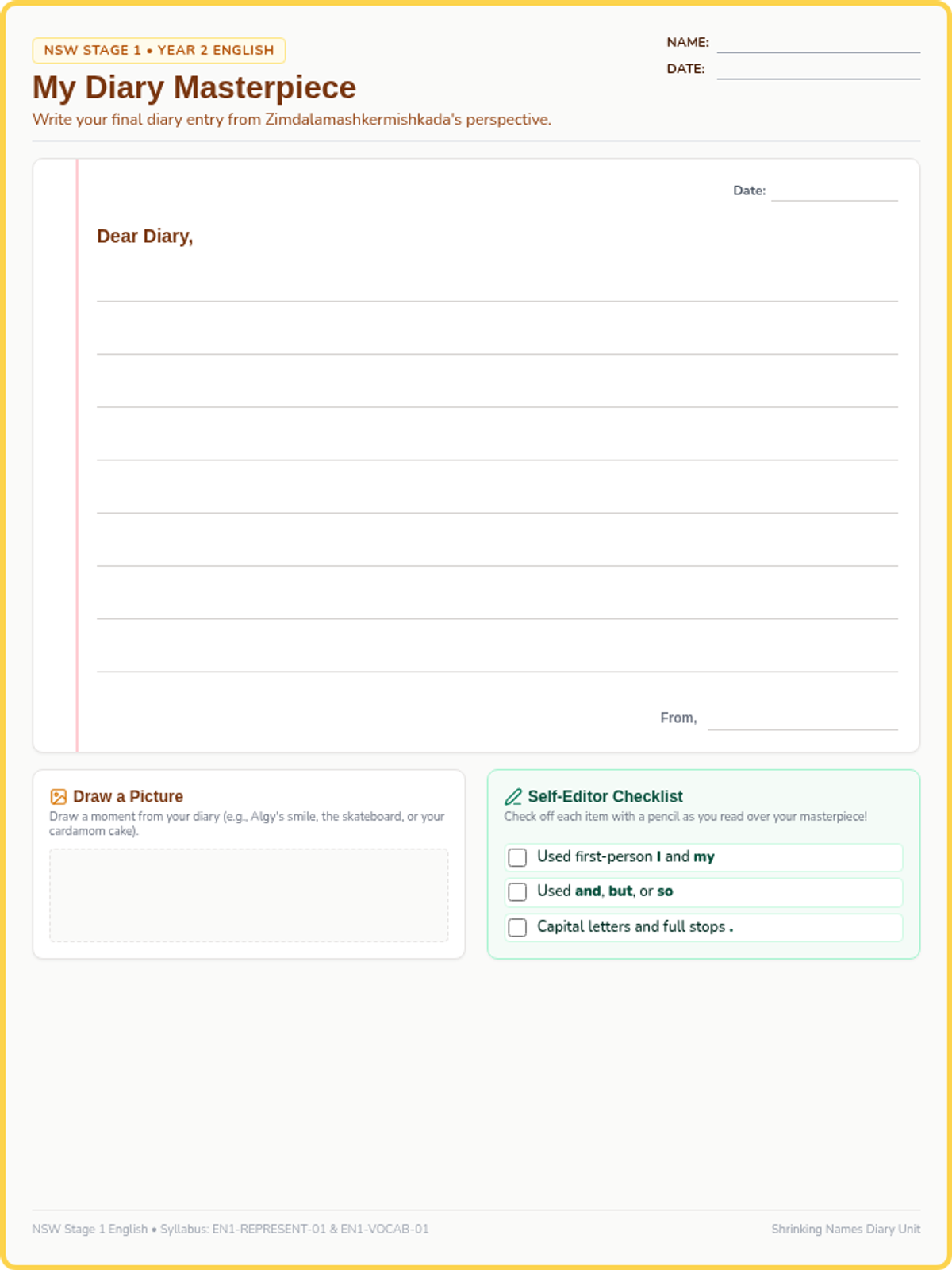
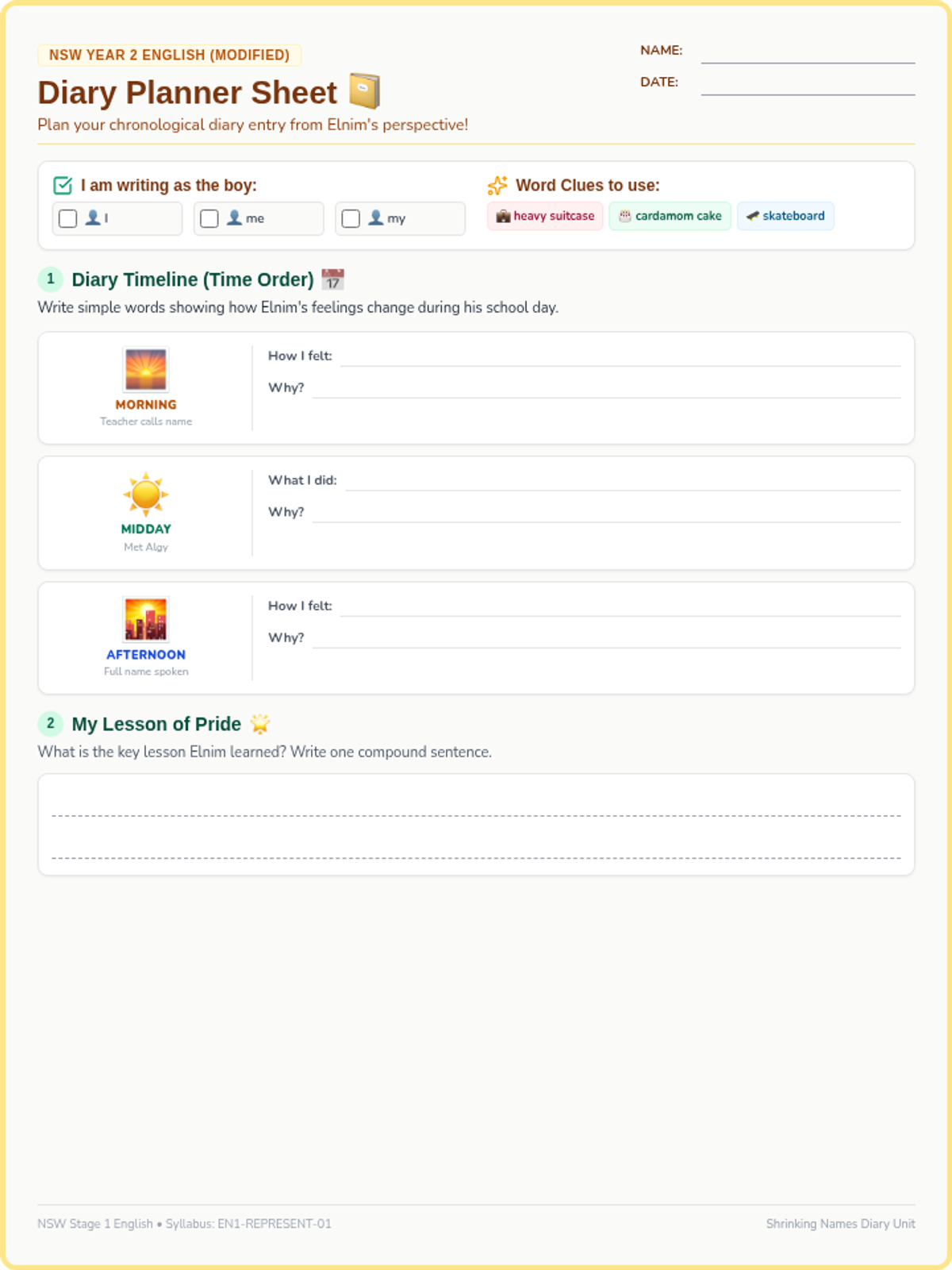
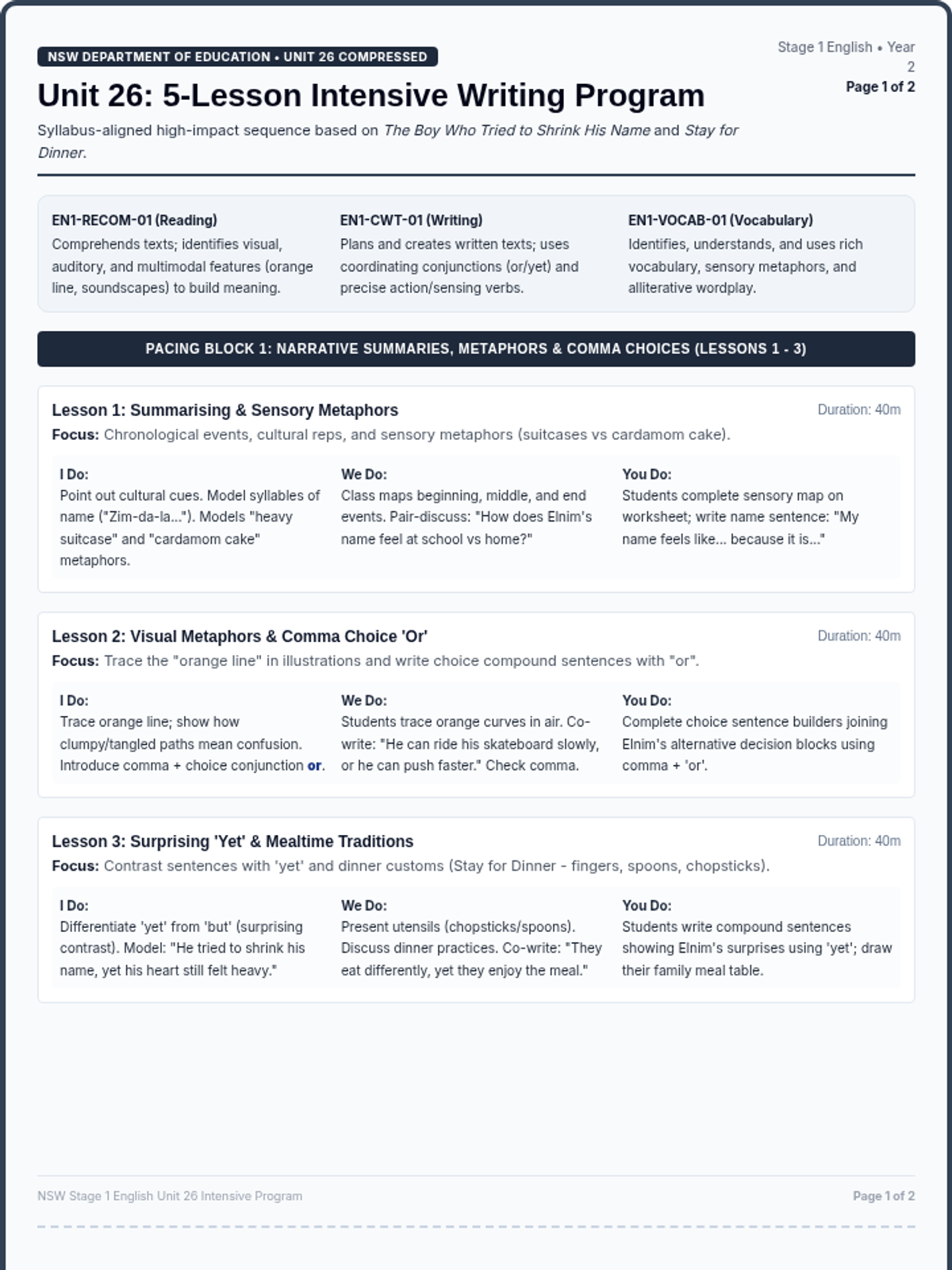
Students identify precise action verbs (stretch, shrink, spin) and compose a final descriptive reflective diary entry about Elnim's journey.
Students identify wordplay (alliteration and onomatopoeia) in "The Boy Who Tried to Shrink His Name" (skateboard spins, name explosions) and analyze non-verbal gestures of friendship.
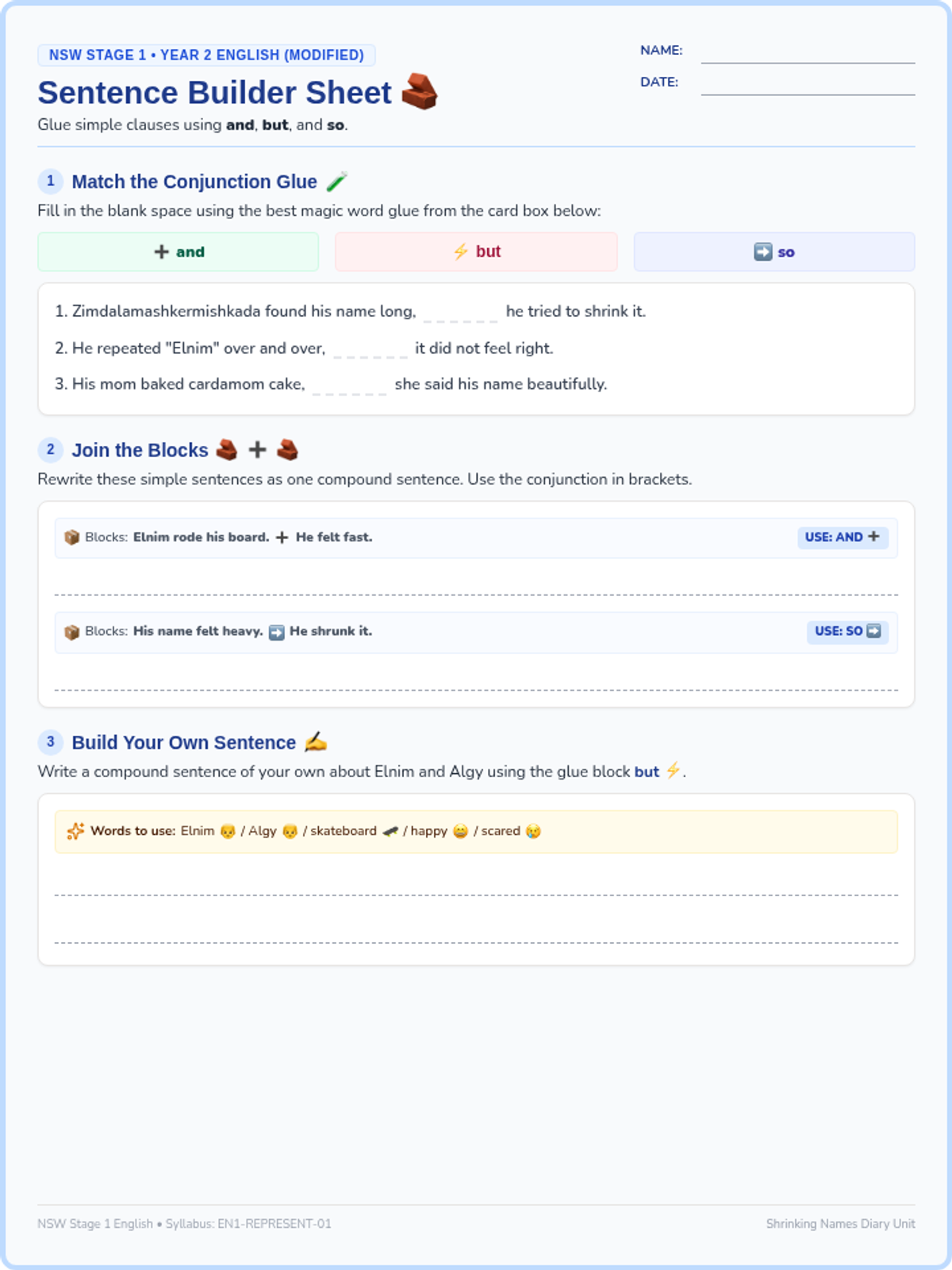
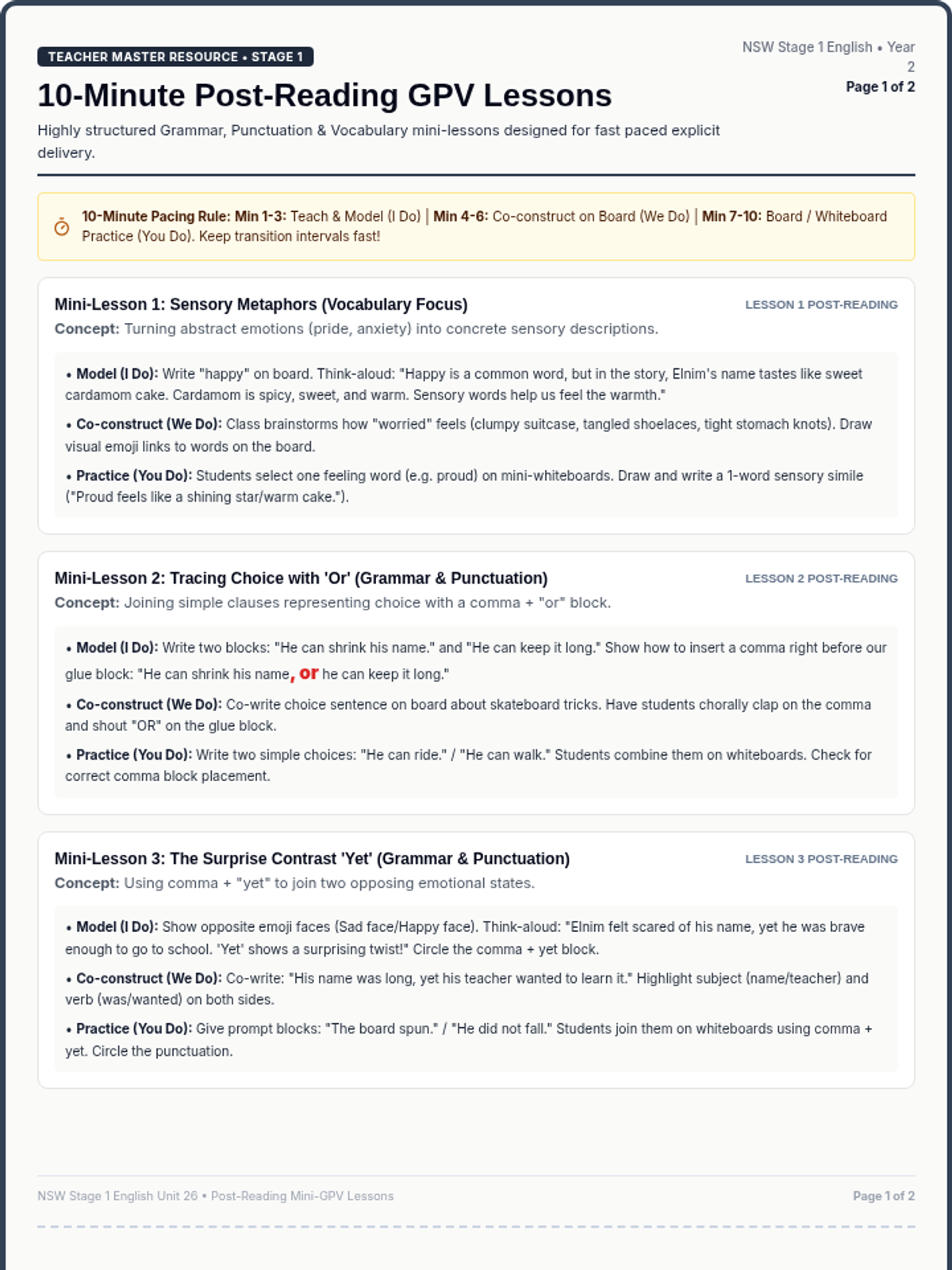
Students write contrast sentences using "yet" and explore Elnim's home customs (swirling curry, wearing a sari, sweet coconut ada).
Students trace the emotional orange line in the drawings and learn how to write choice compound sentences using comma + "or".
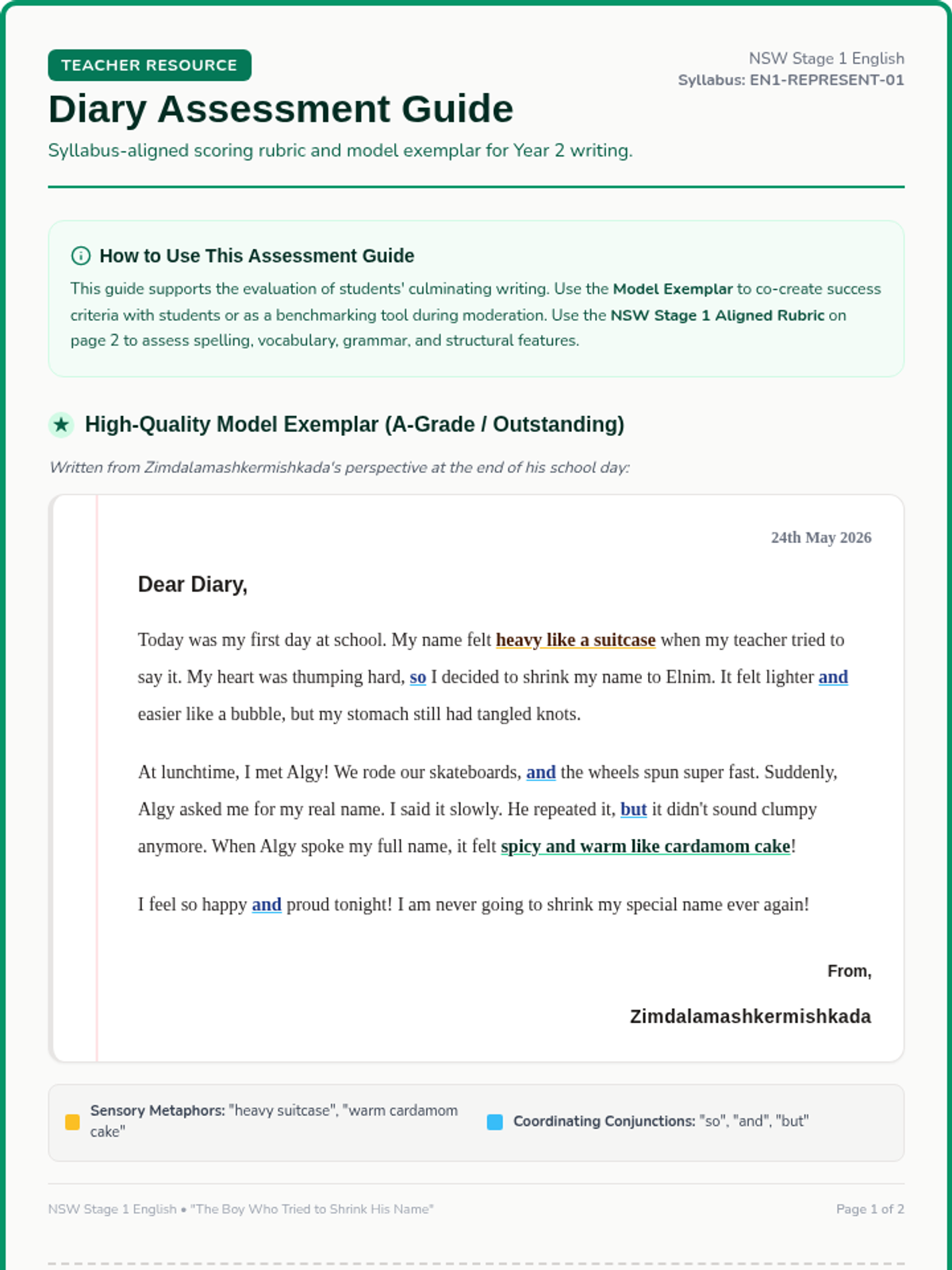
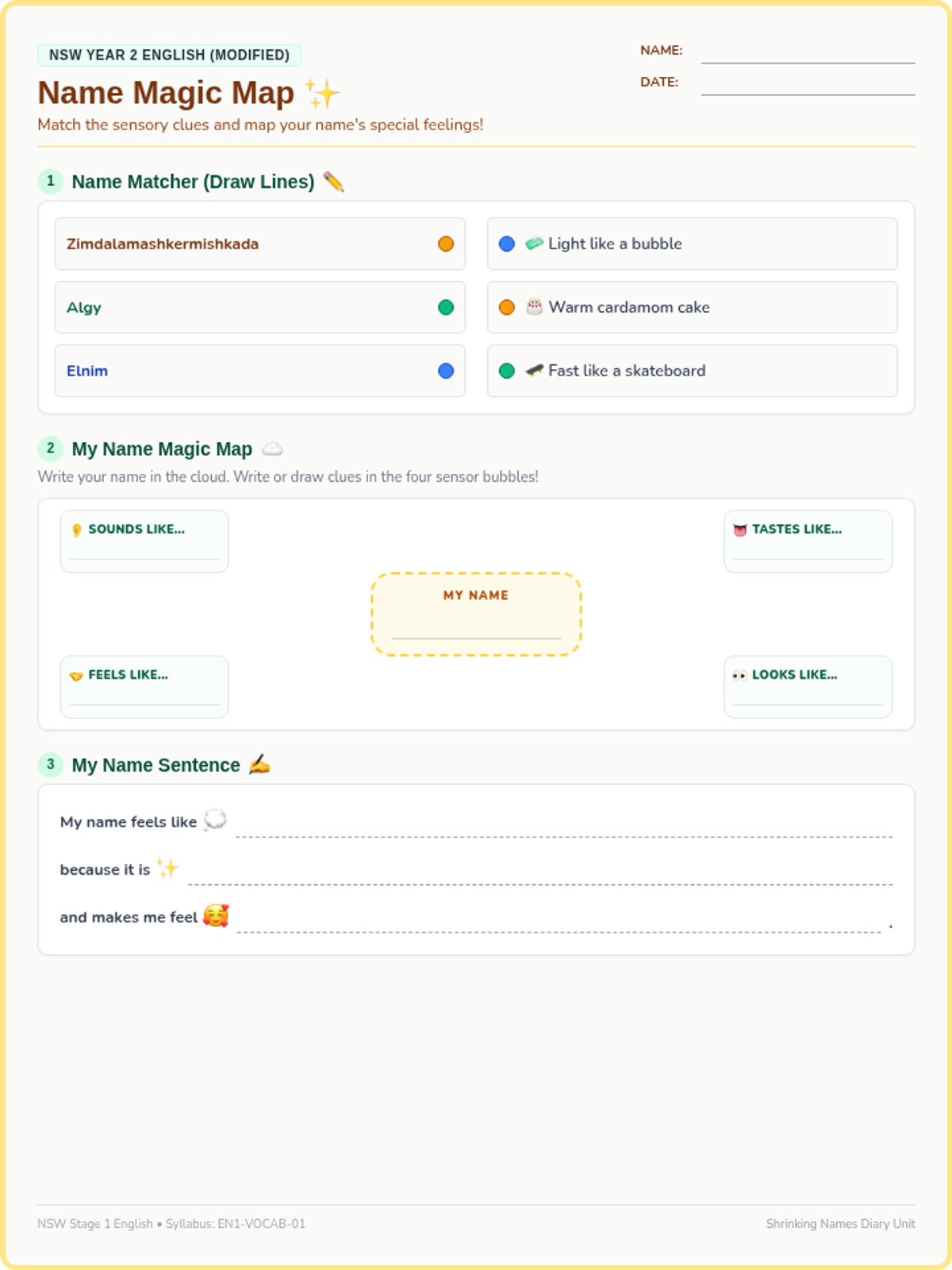
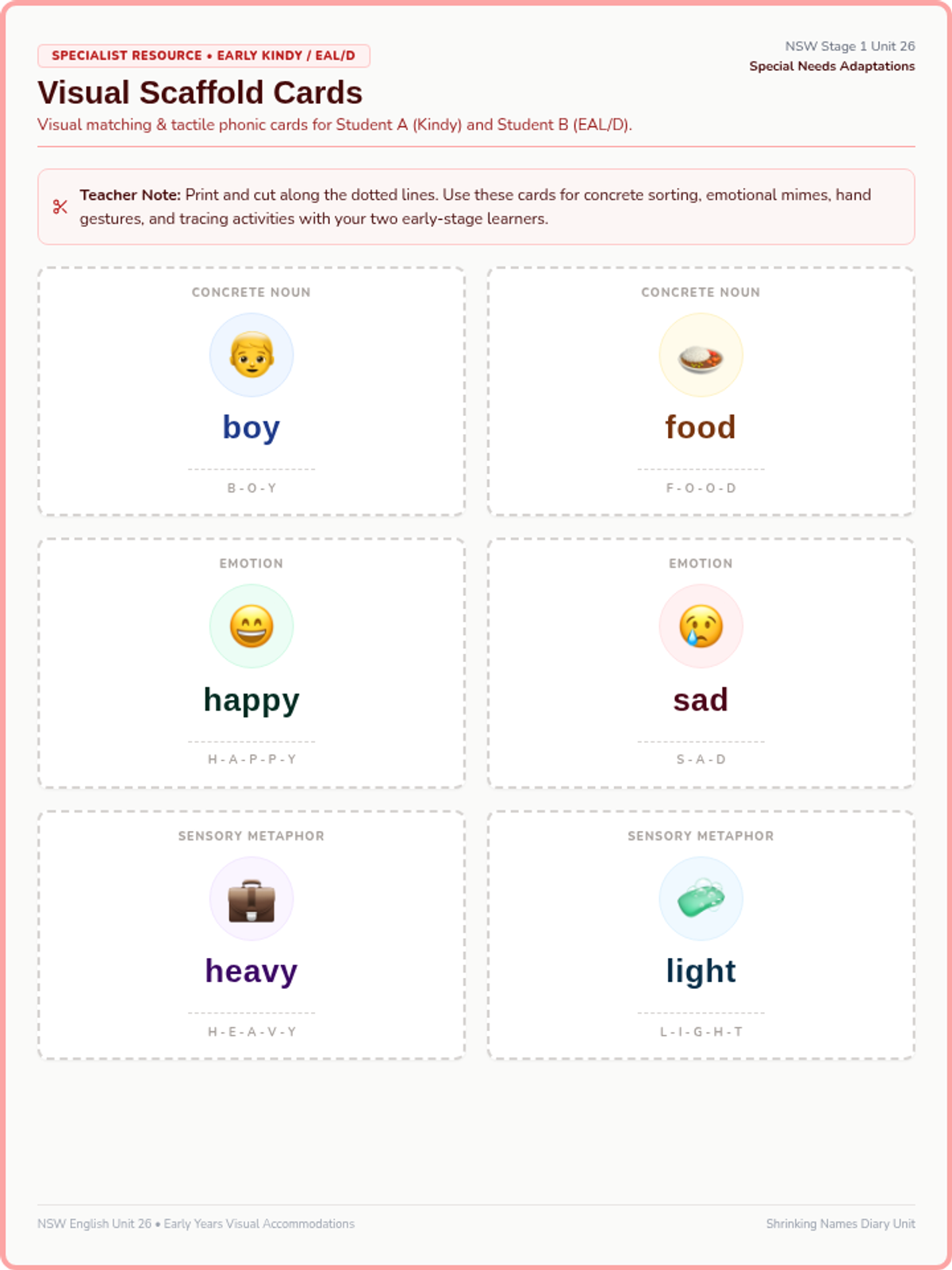
Students summarize Elnim's story and analyze figurative language, learning how names can feel heavy like a suitcase or taste like warm cardamom cake.
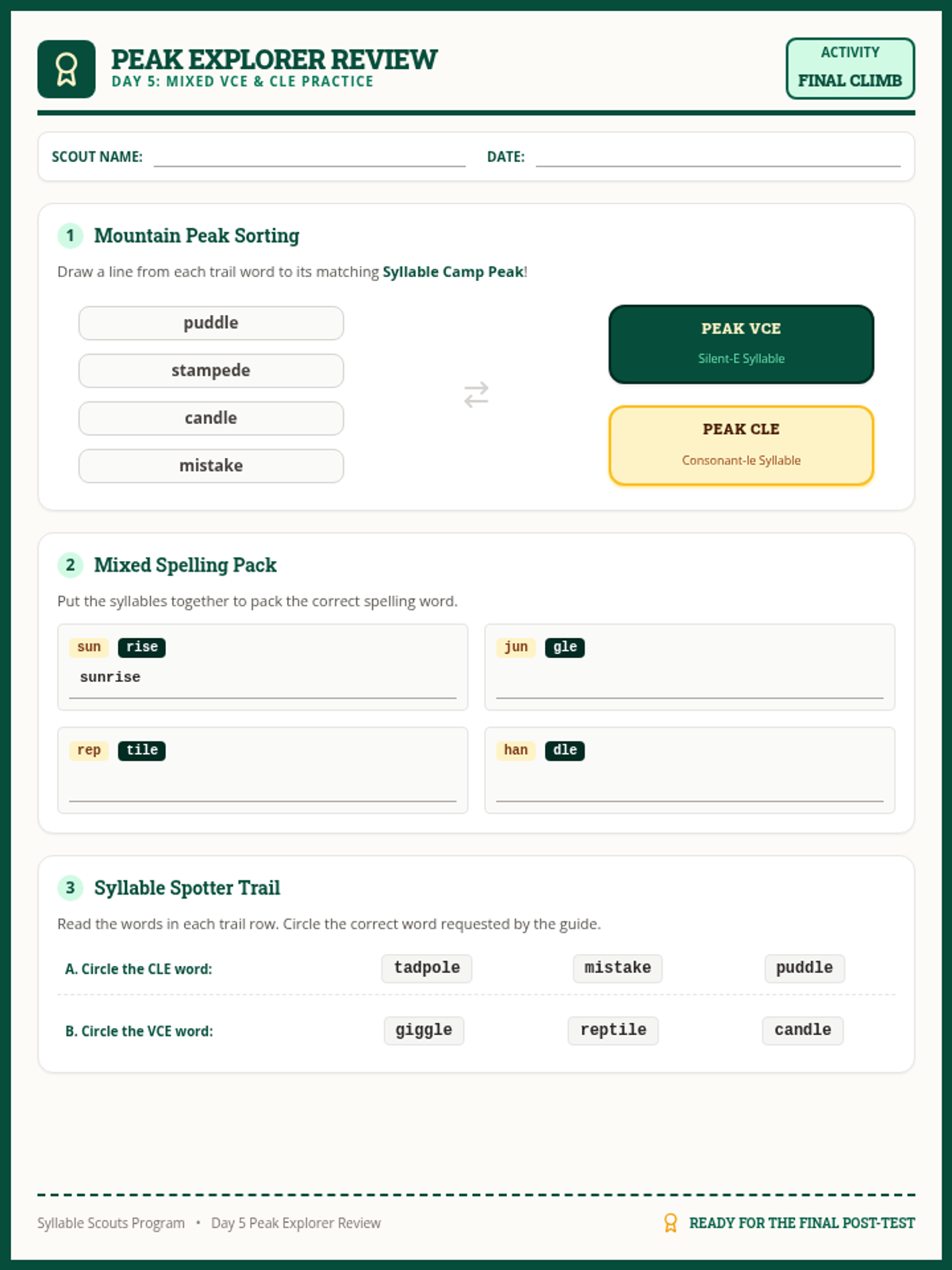
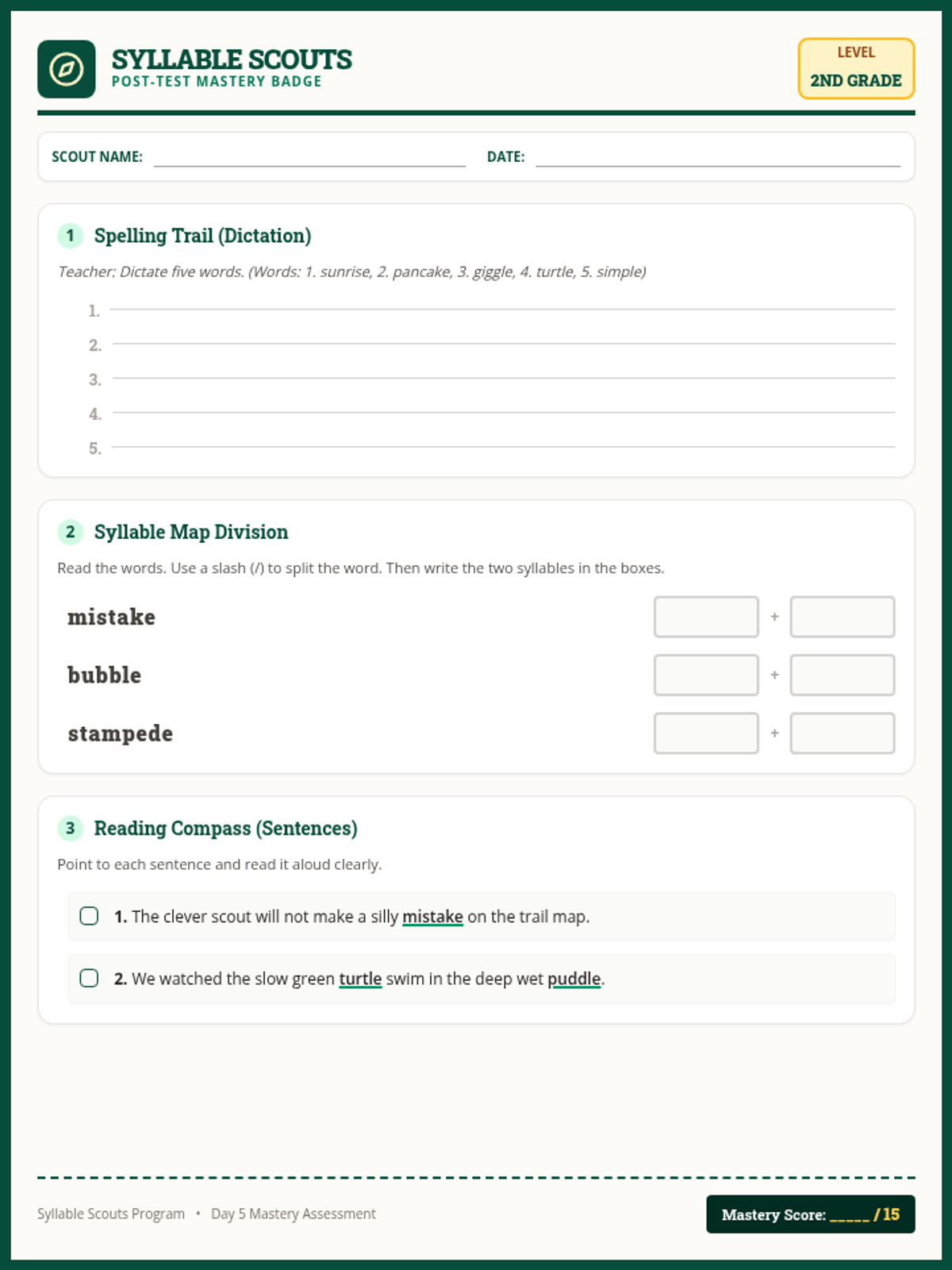
Day 5 of the phonics adventure. Scouts demonstrate mastery by reviewing both VCE and CLE word structures, completing a spelling and reading review, and taking the Syllable Scouts Post-Test.
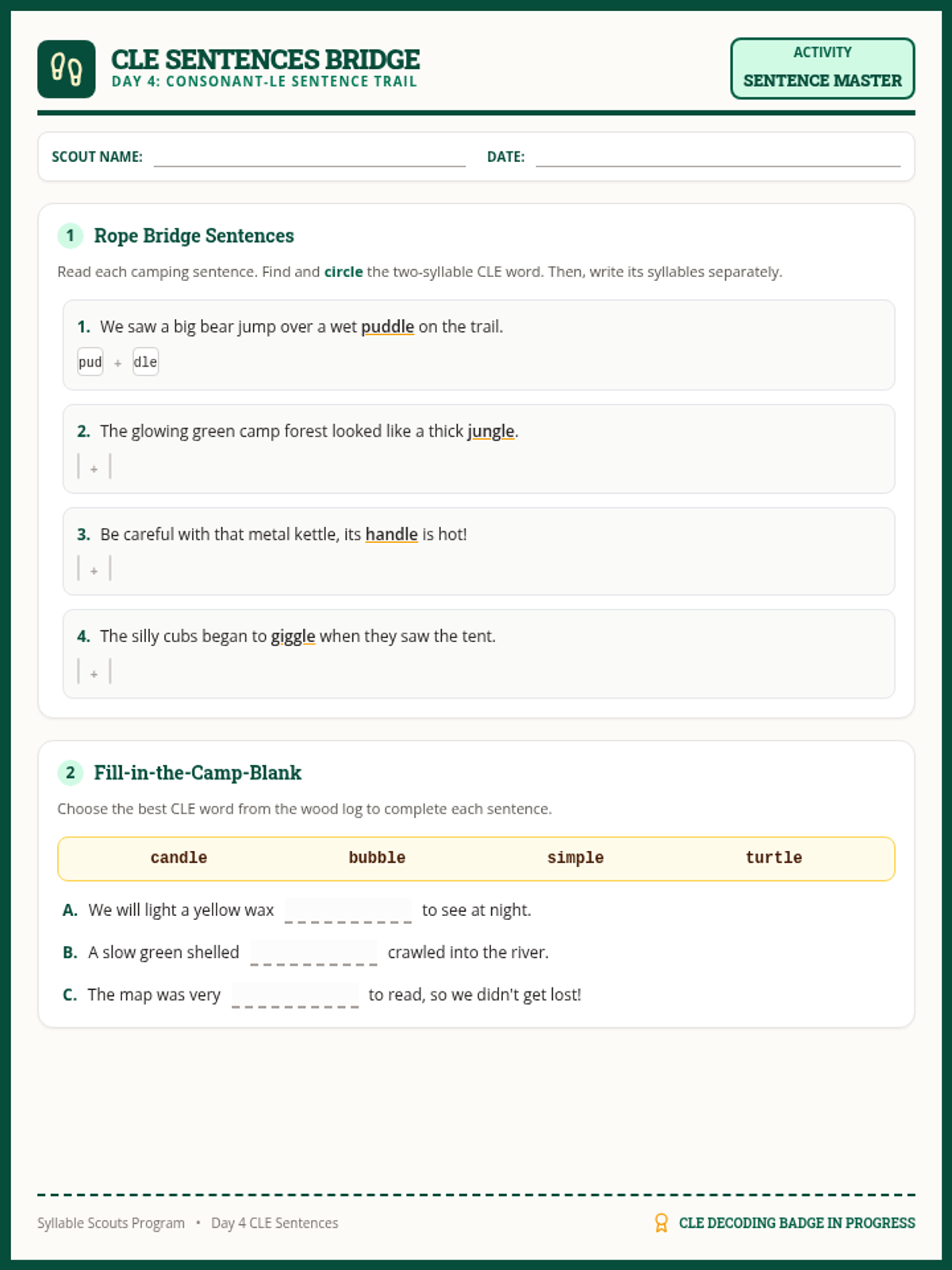
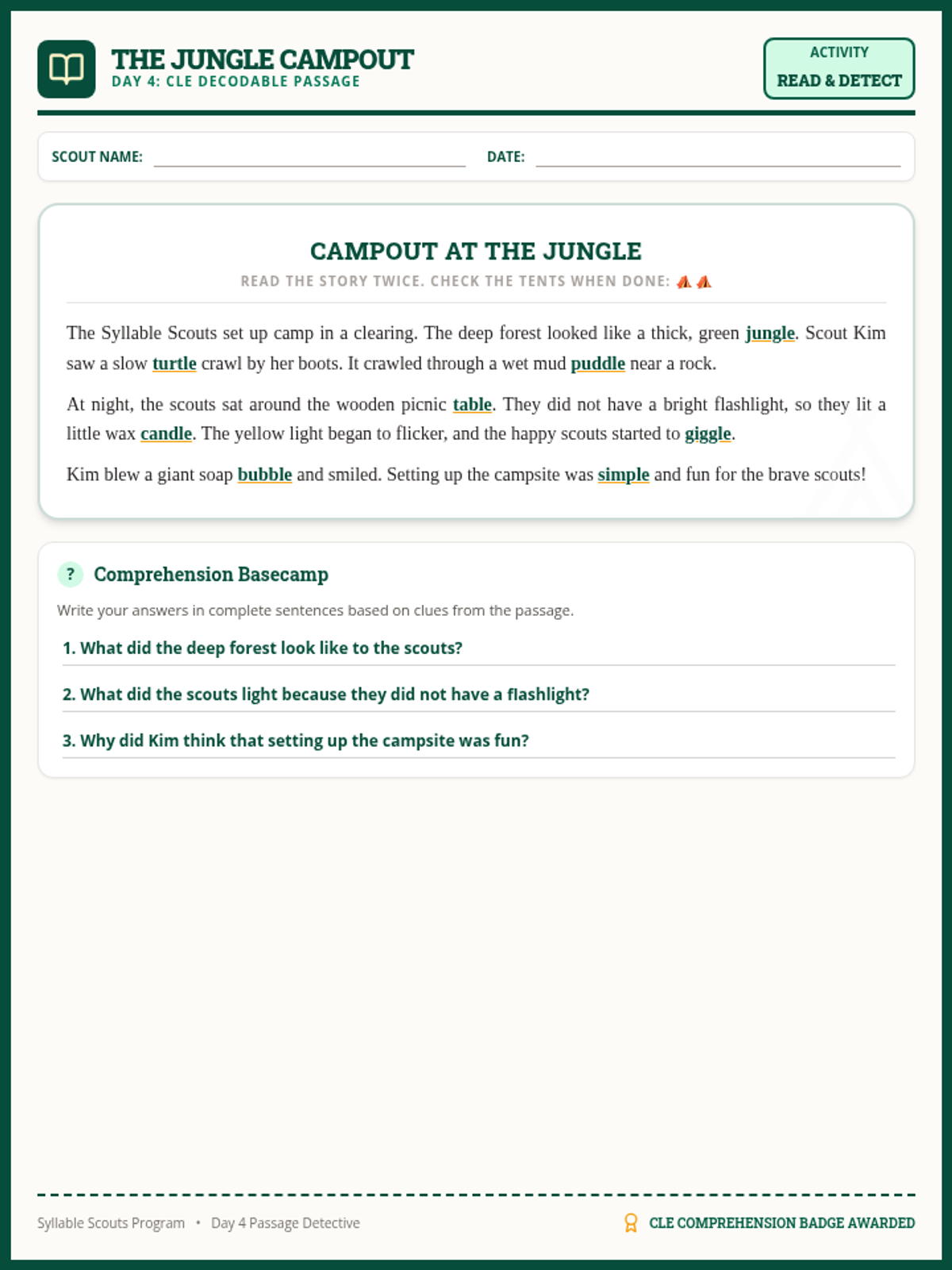
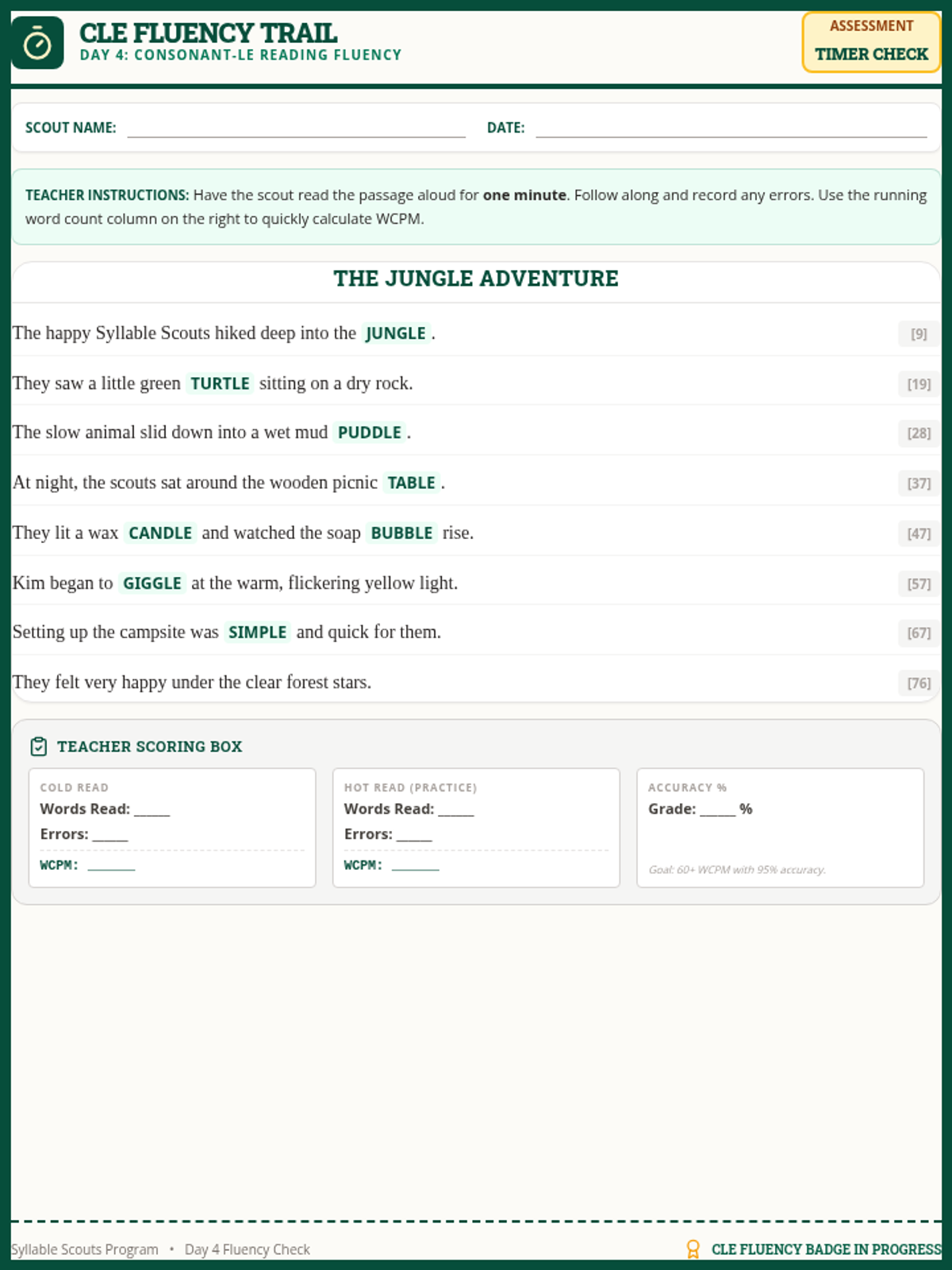
Day 4 of the phonics adventure. Scouts practice reading sentences and a decodable camping passage packed with Consonant-le (CLE) words like 'candle', 'jungle', and 'giggle'.
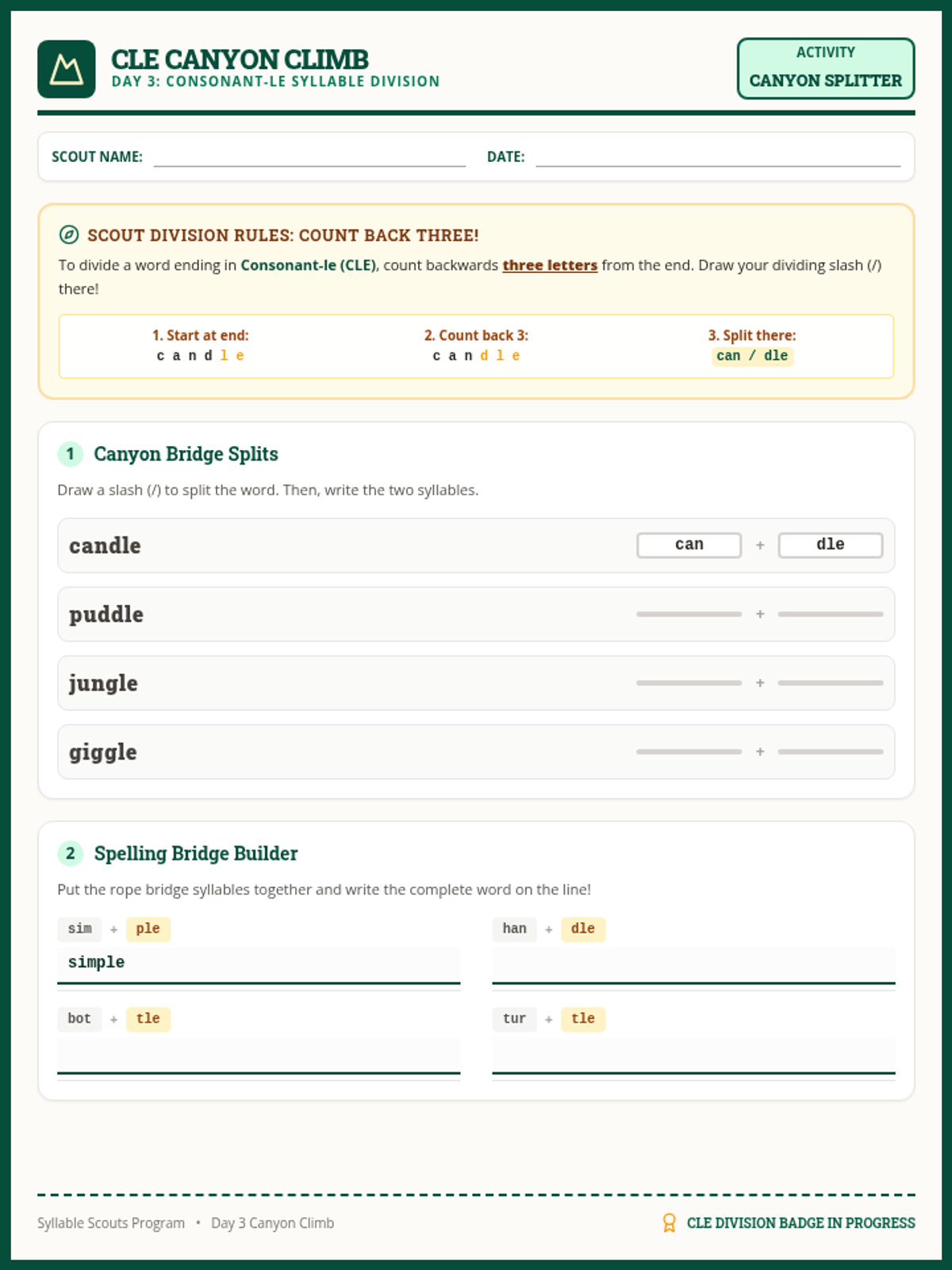
Day 3 of the phonics adventure. Scouts explore Consonant-le (CLE) syllables, understanding how to divide words before the consonant + 'le' (e.g., 'ca-mle' -> 'can-dle', 'pud-dle') and spelling CLE words correctly.
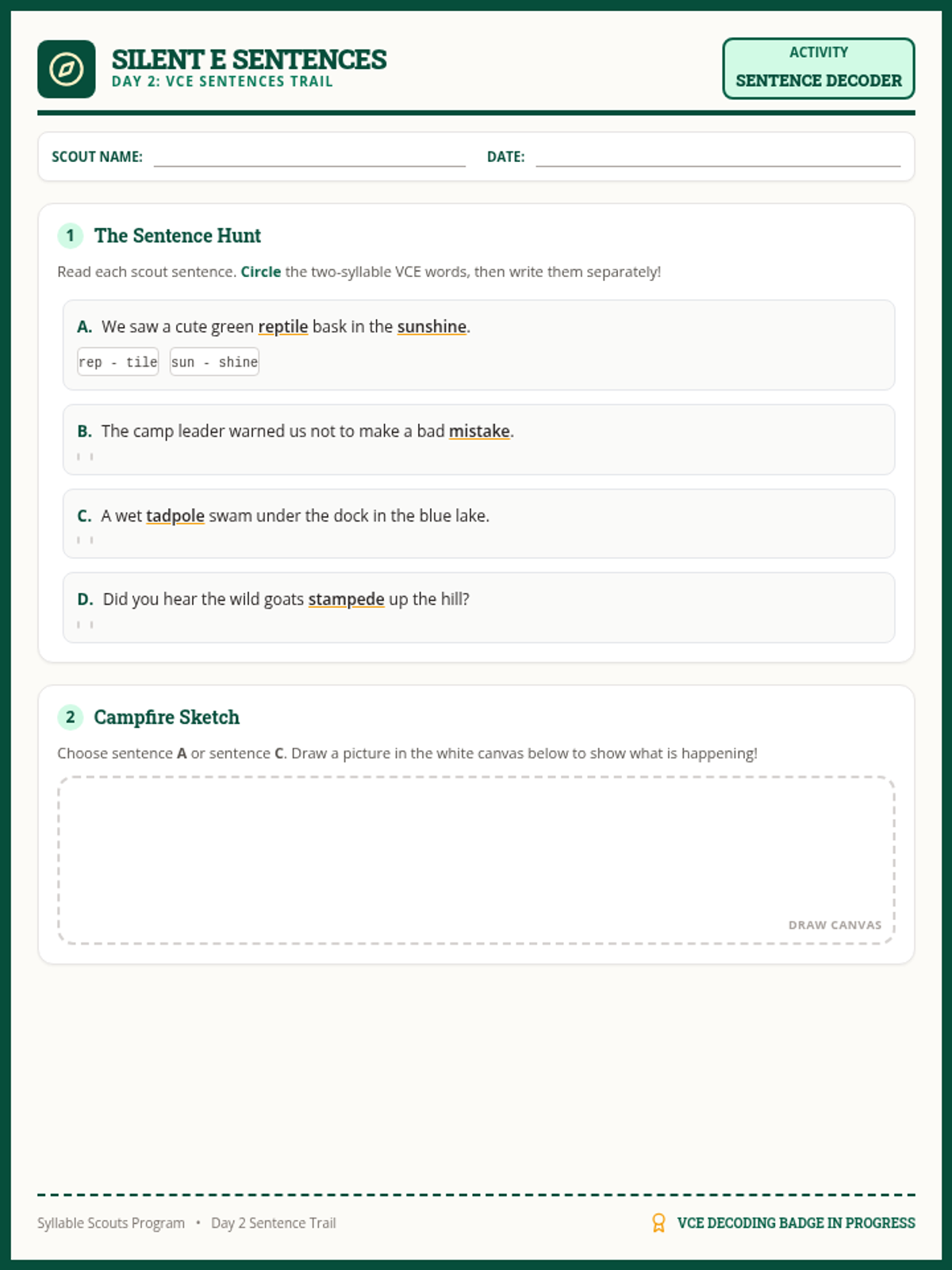
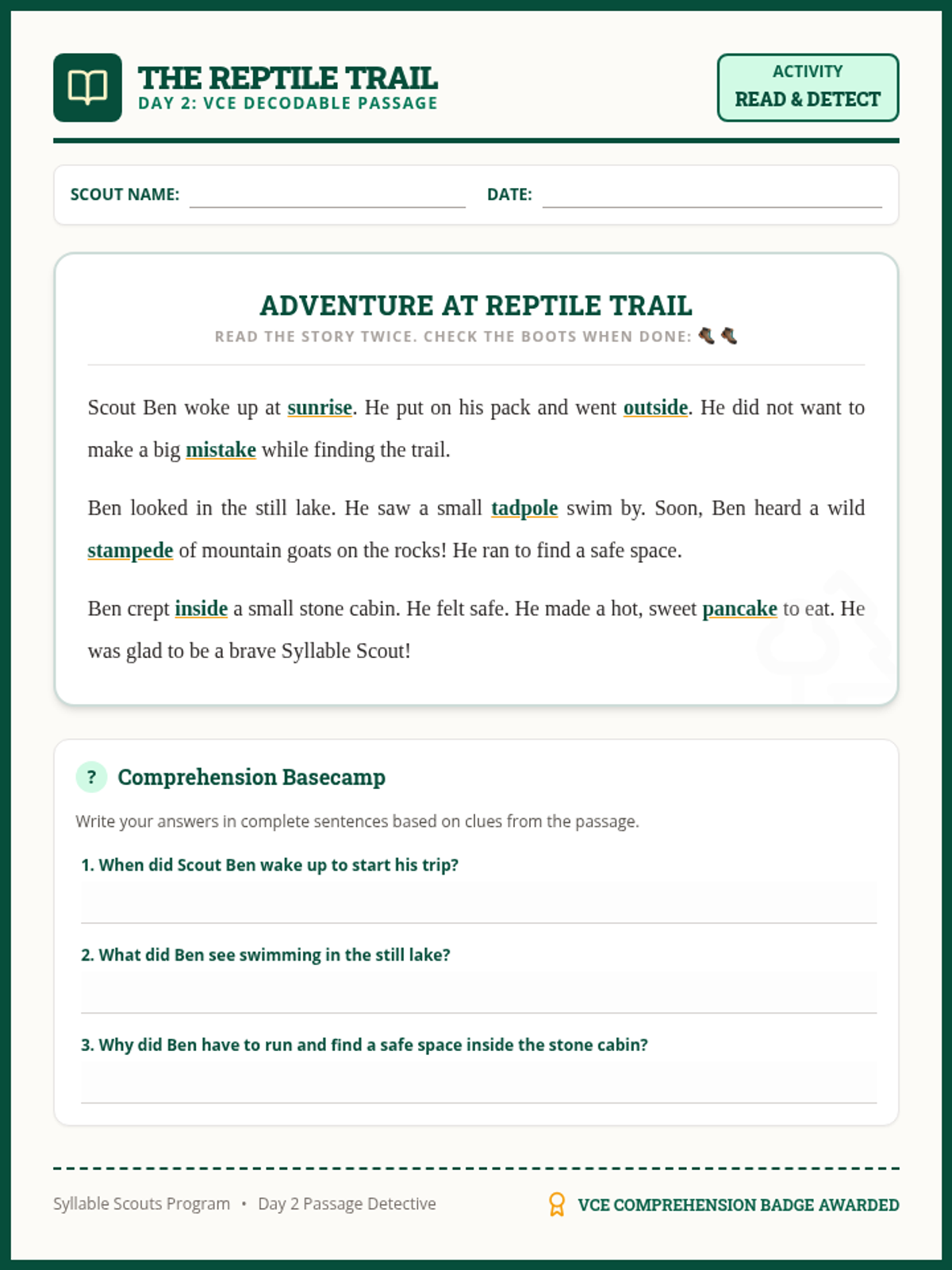
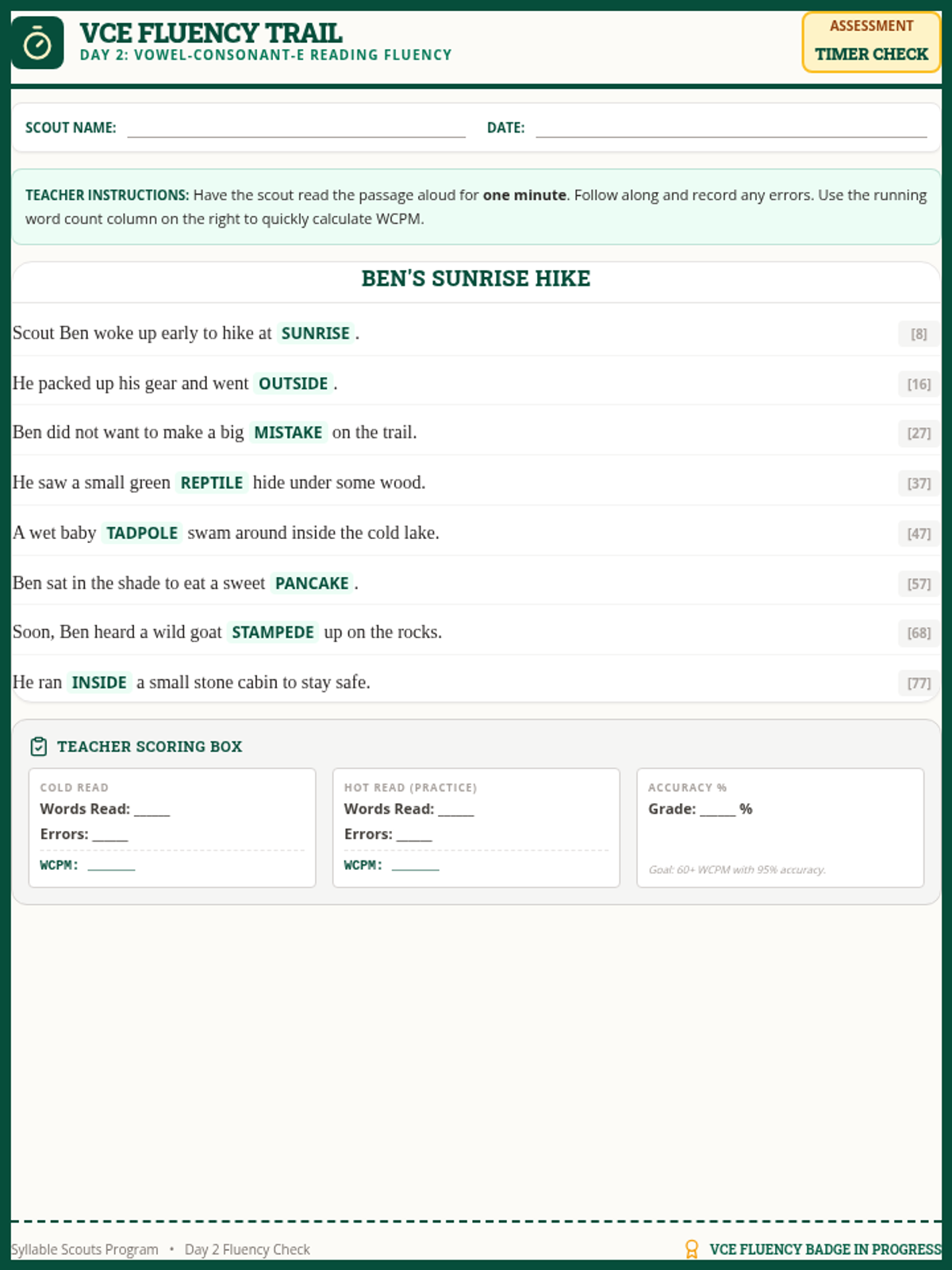
Day 2 of the phonics adventure. Second-grade scouts practice reading and identifying VCE syllables inside sentences and a decodable story, applying text-based evidence to answer comprehension questions.
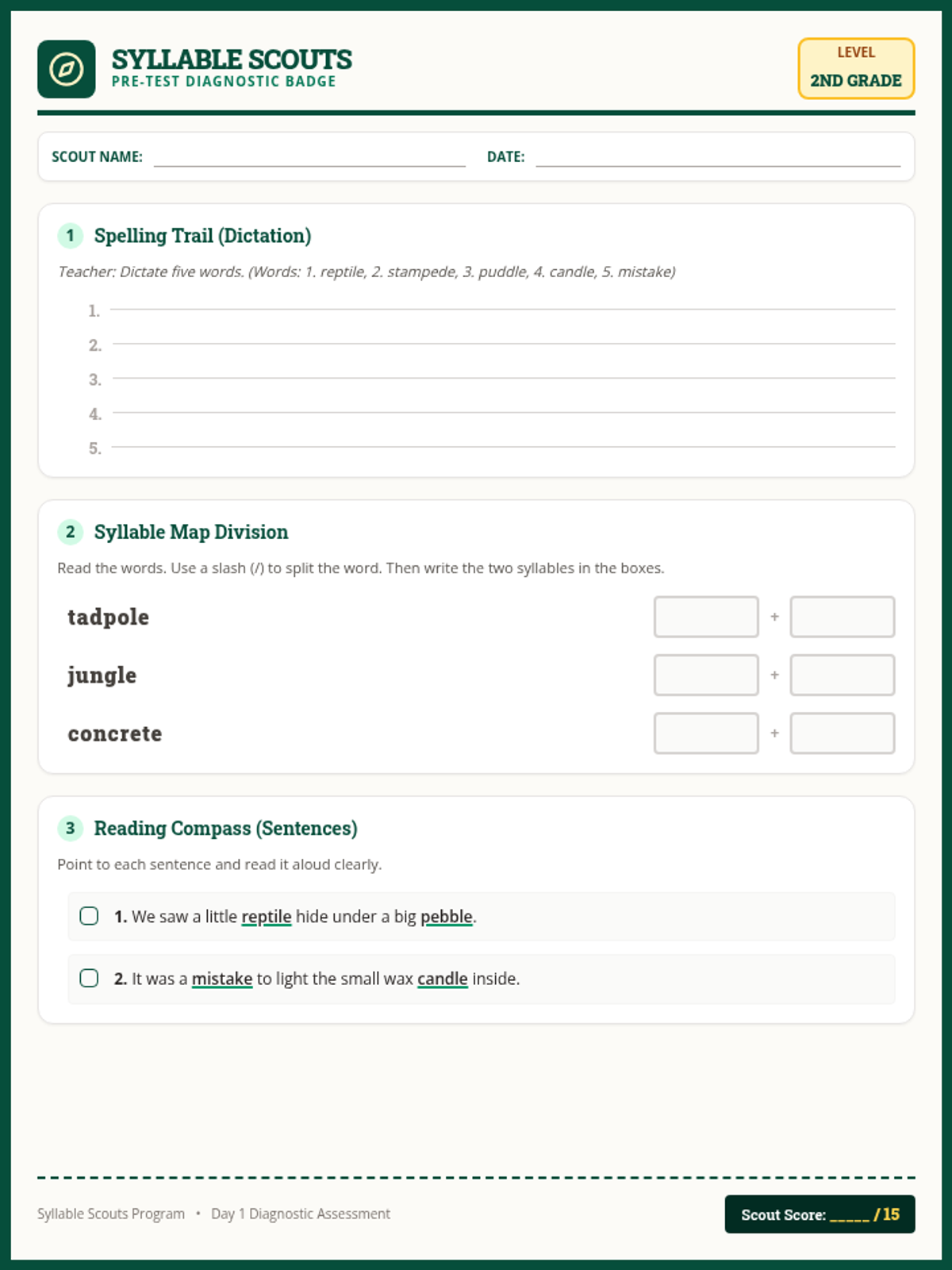
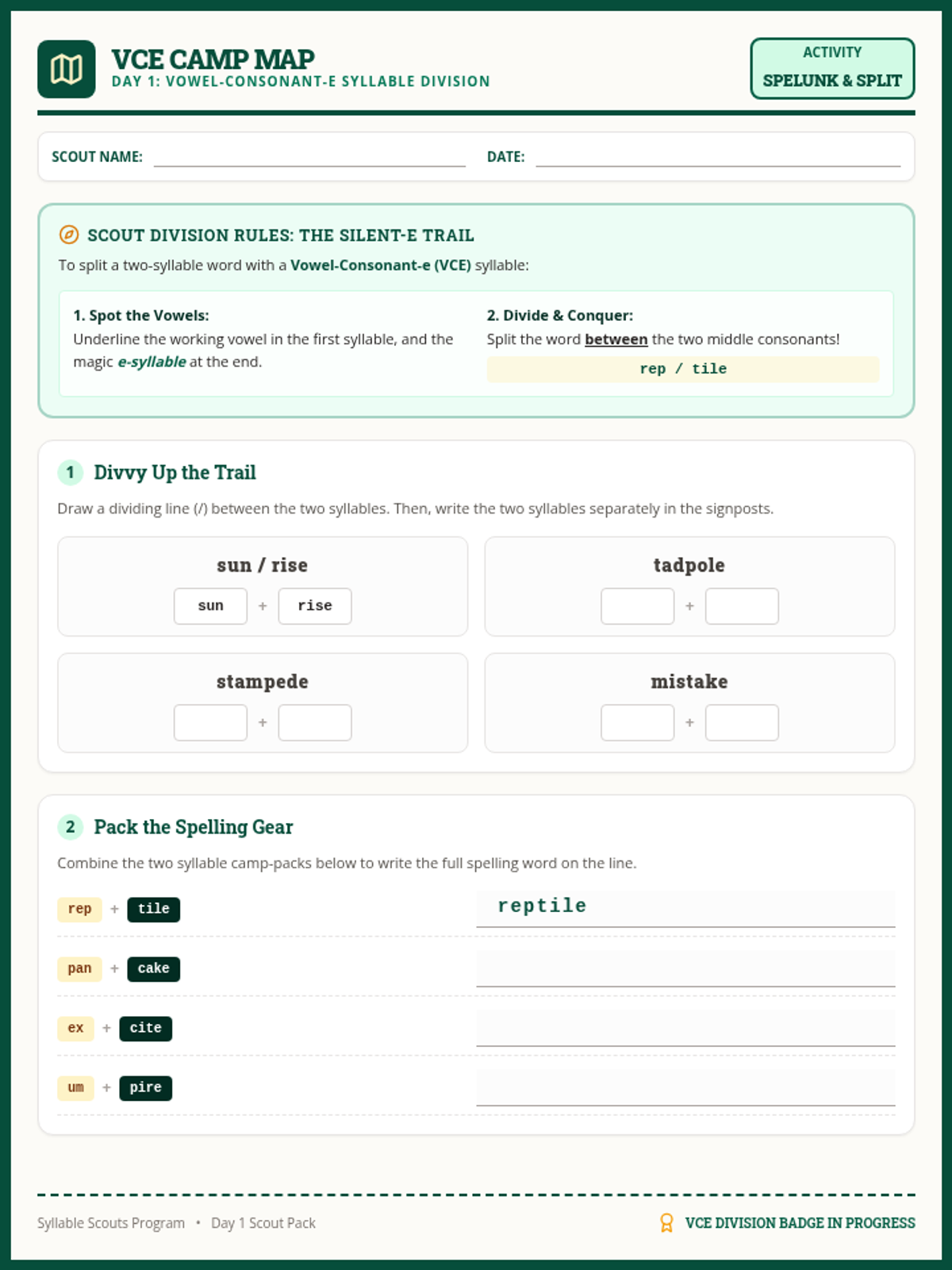
Day 1 of the phonics adventure. Students take the Syllable Scouts Pre-Test to assess baseline spelling and decoding skills, then learn how to divide and spell two-syllable Vowel-Consonant-e (VCE) words like 'reptile' and 'stampede'.
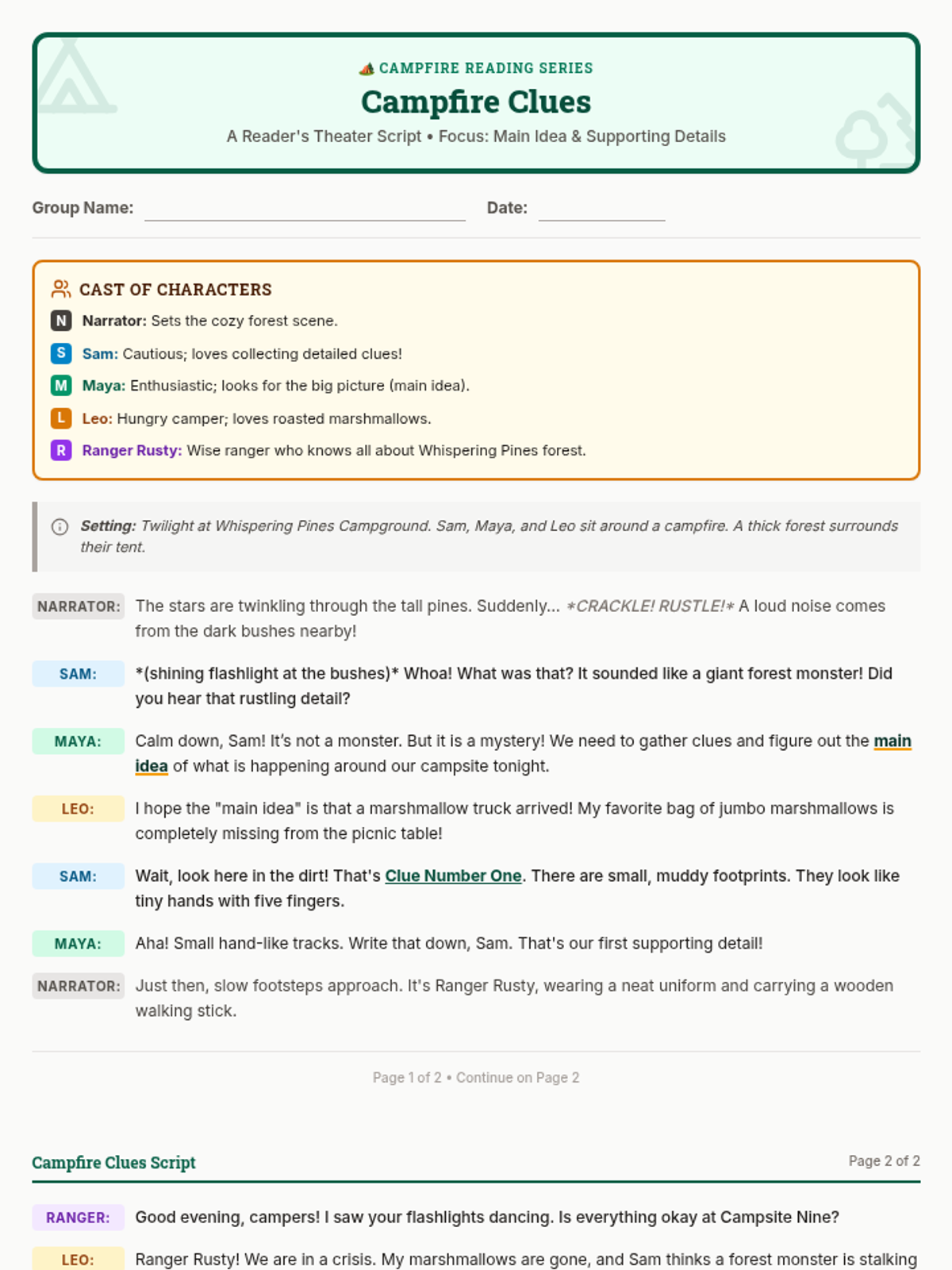
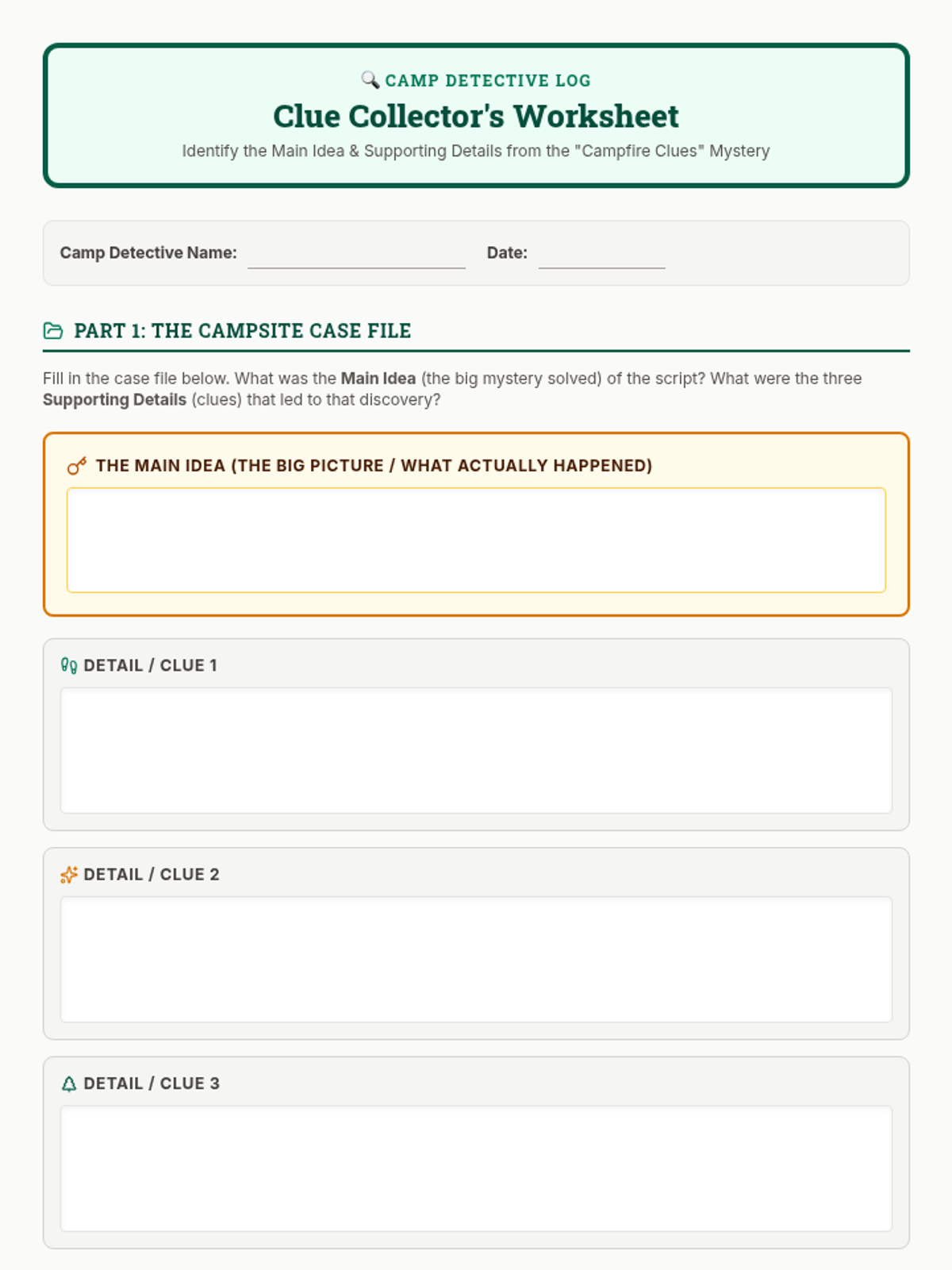
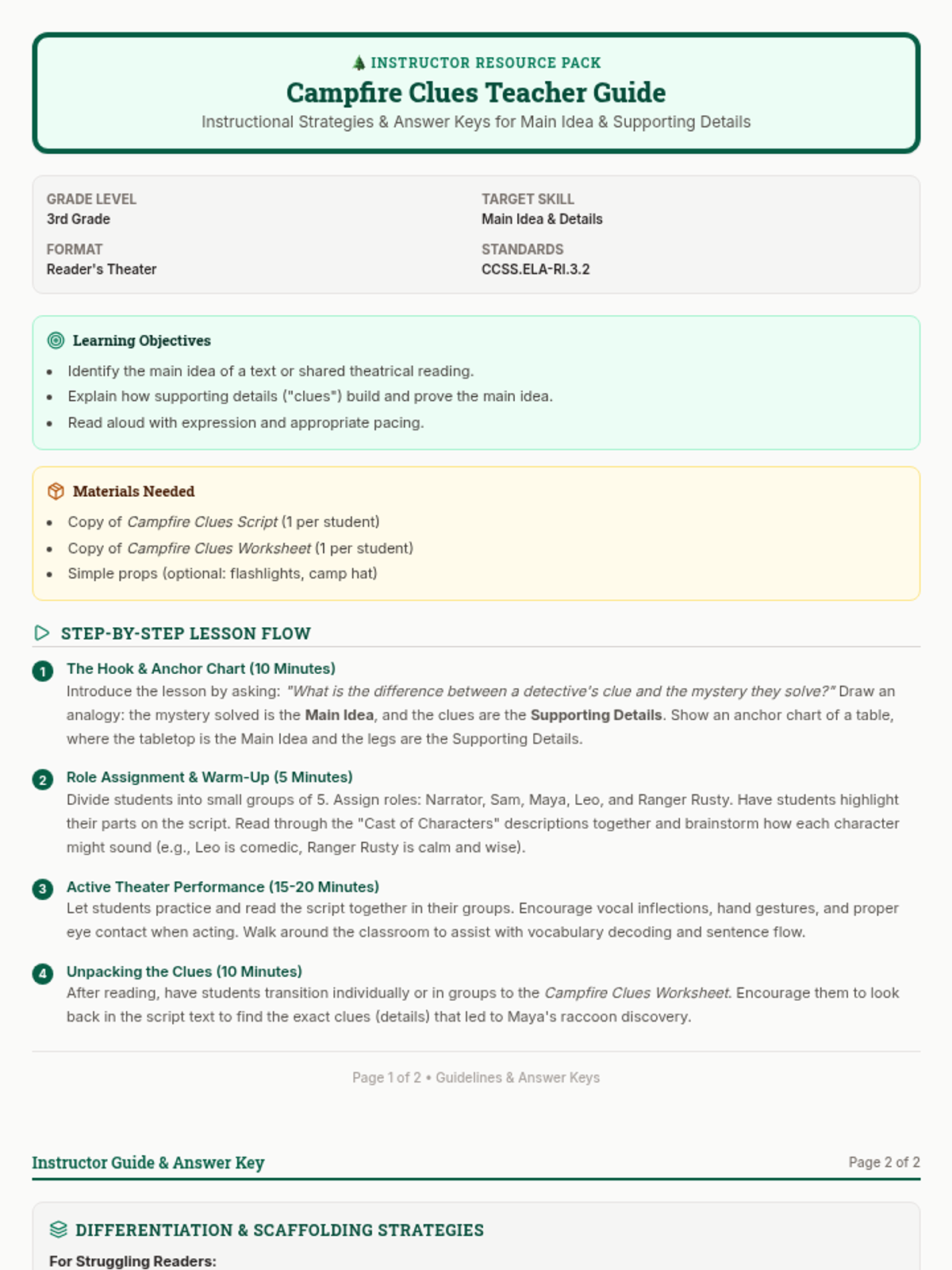
A camping-themed reading comprehension lesson featuring a 3rd-grade Reader's Theater script and activities focused on identifying the main idea and supporting details.
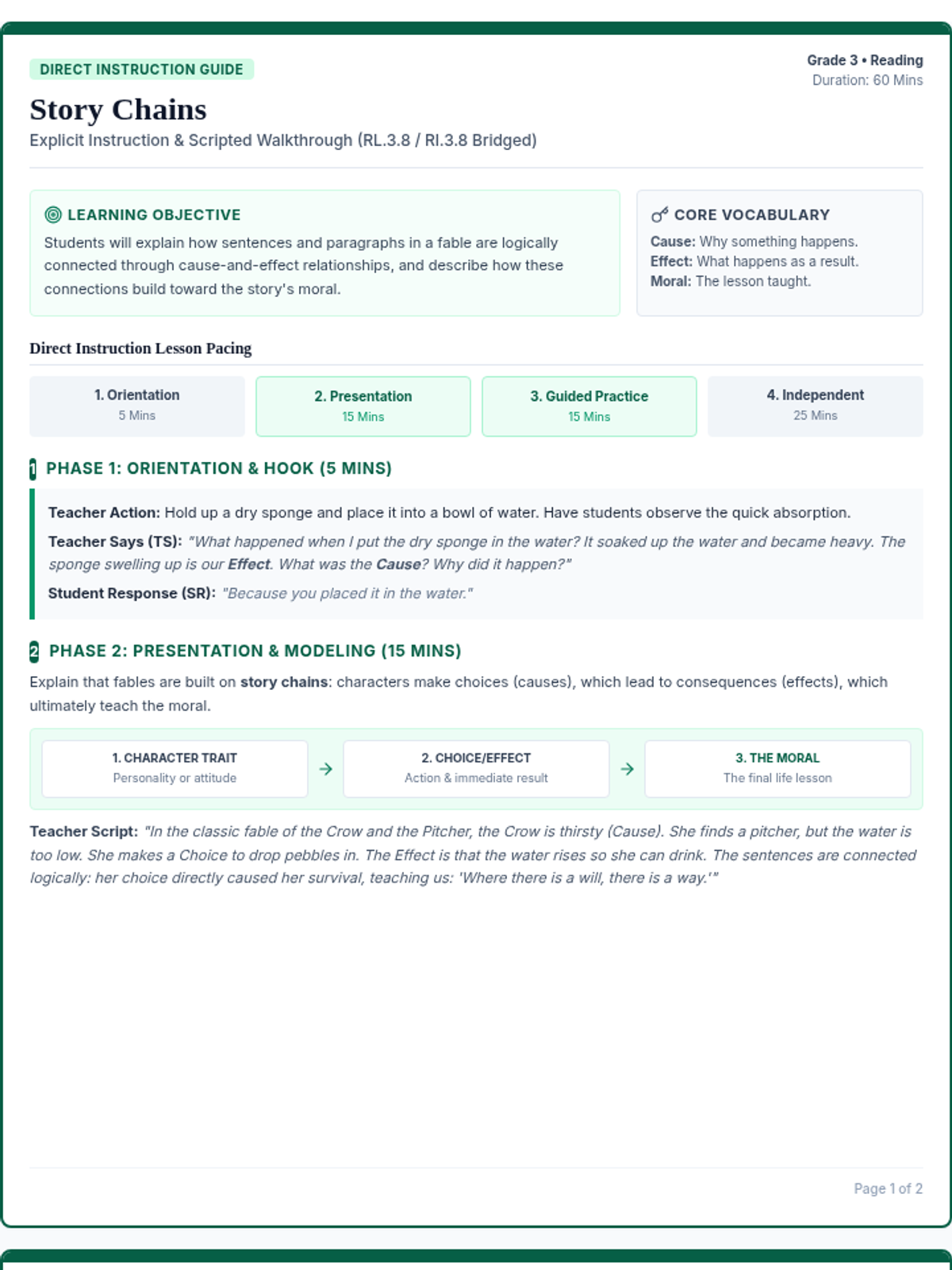
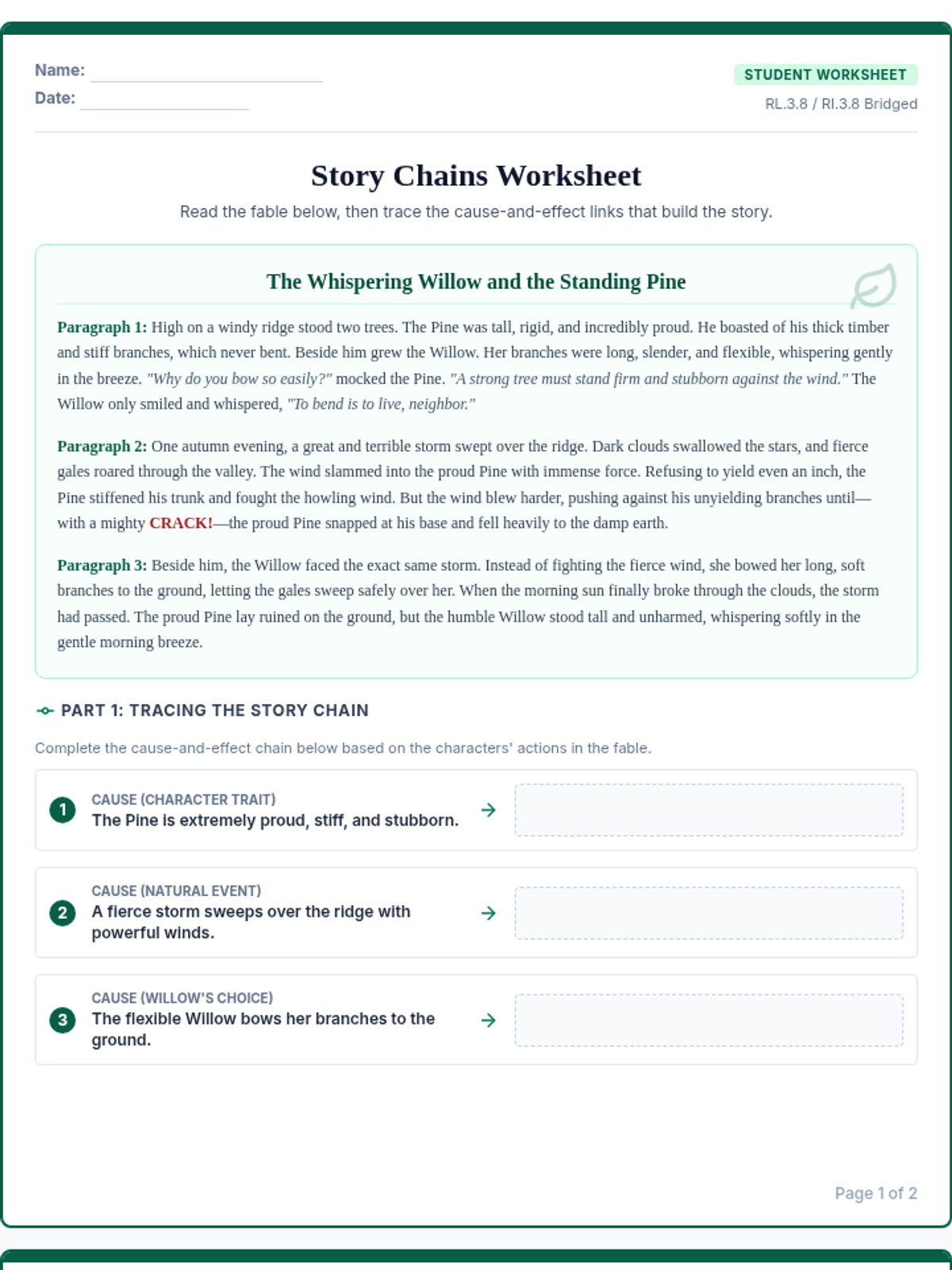
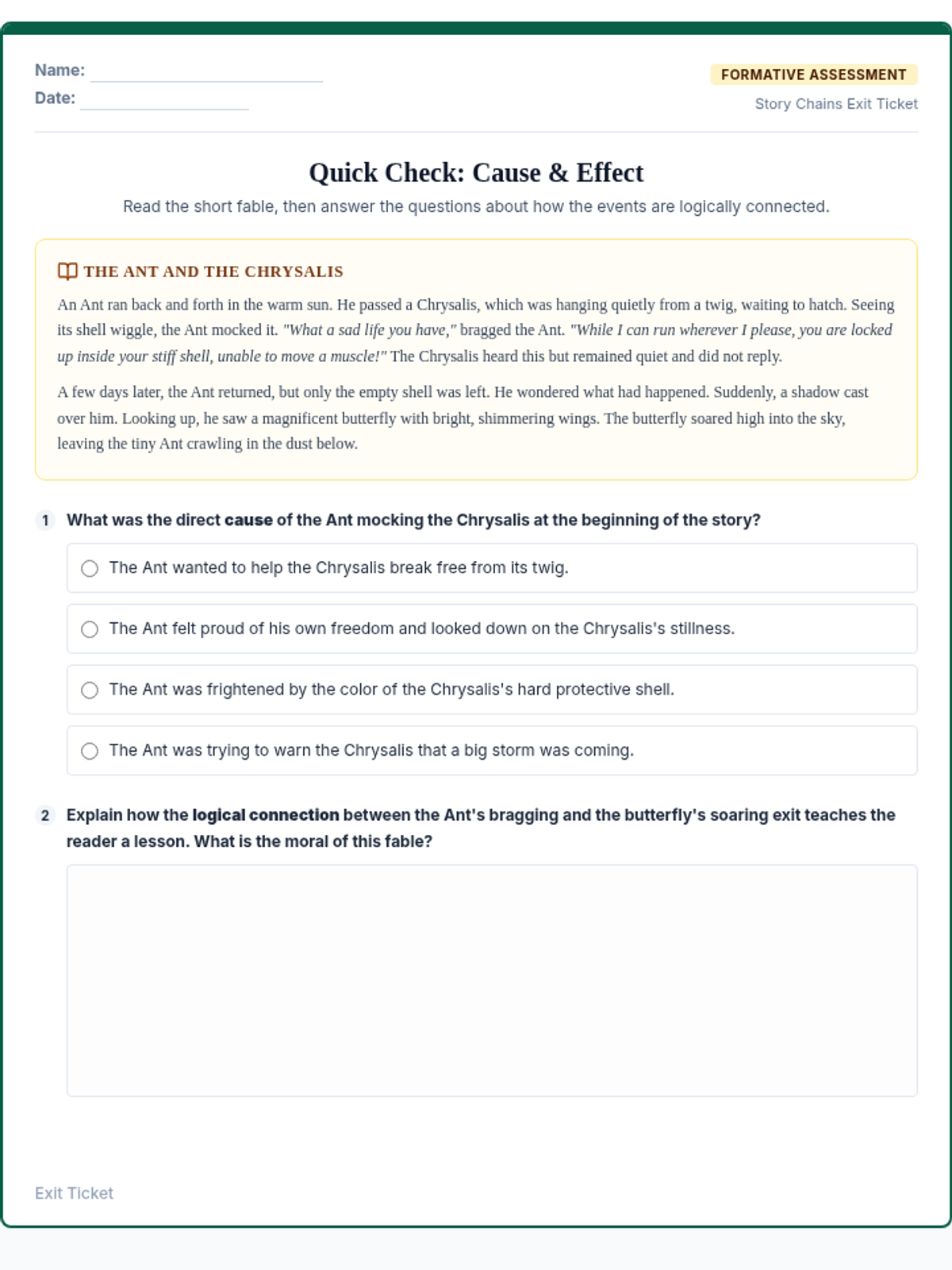
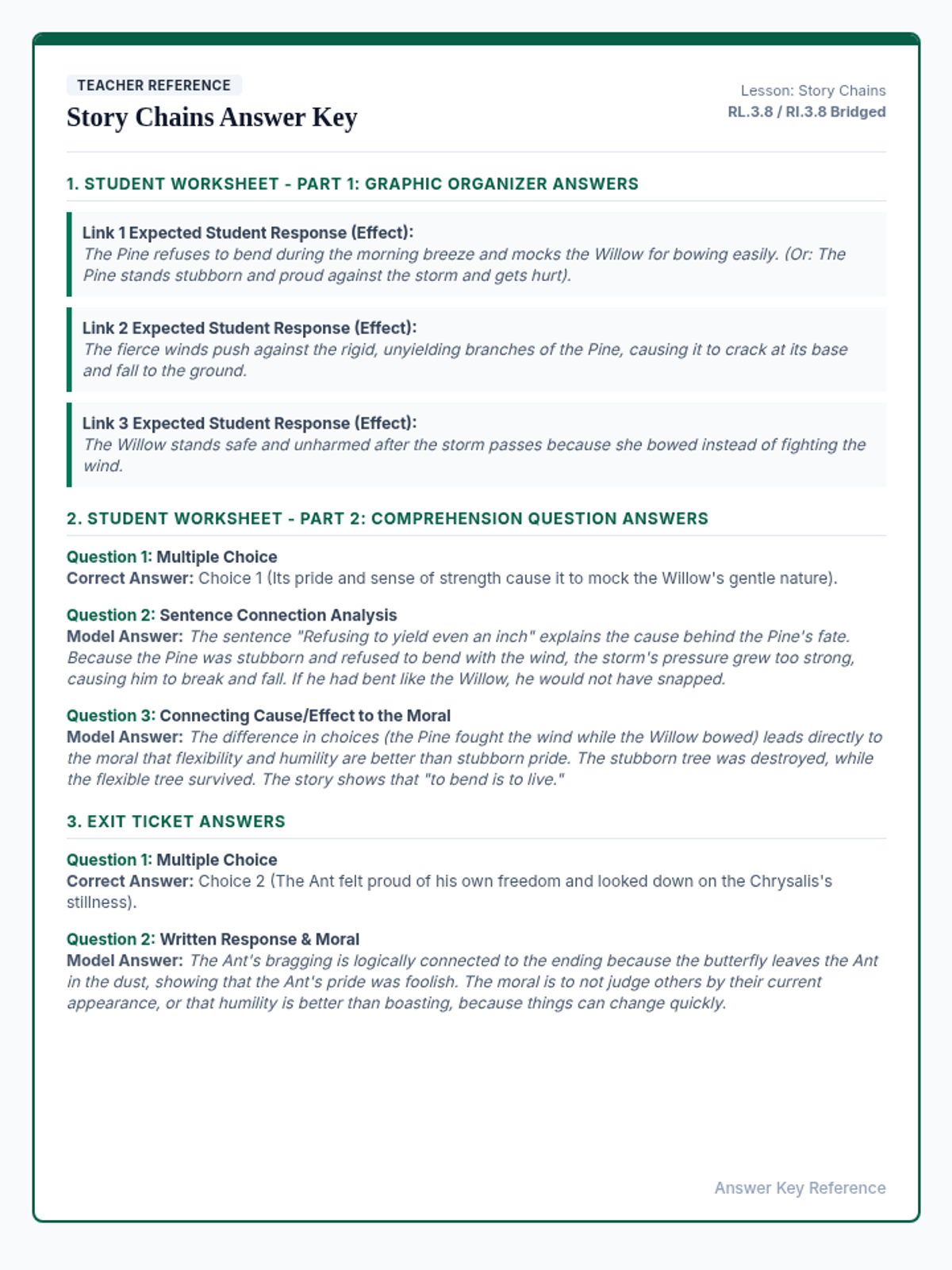
This third-grade lesson guides students in identifying and explaining logical connections, specifically cause-and-effect relationships, between sentences and paragraphs in fables and folktales. Students learn how characters' decisions and natural events lead to consequences that ultimately shape the story's moral.
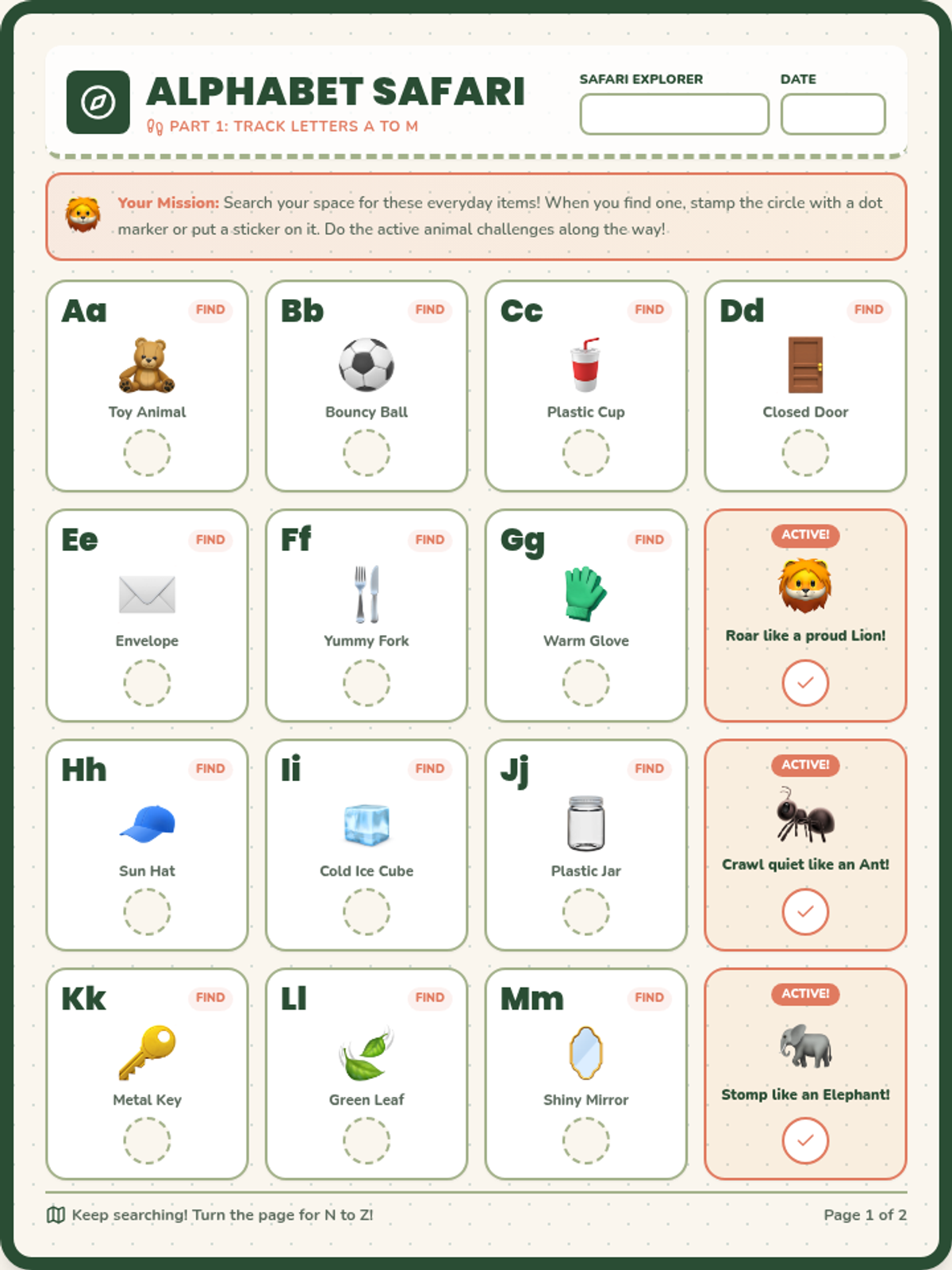
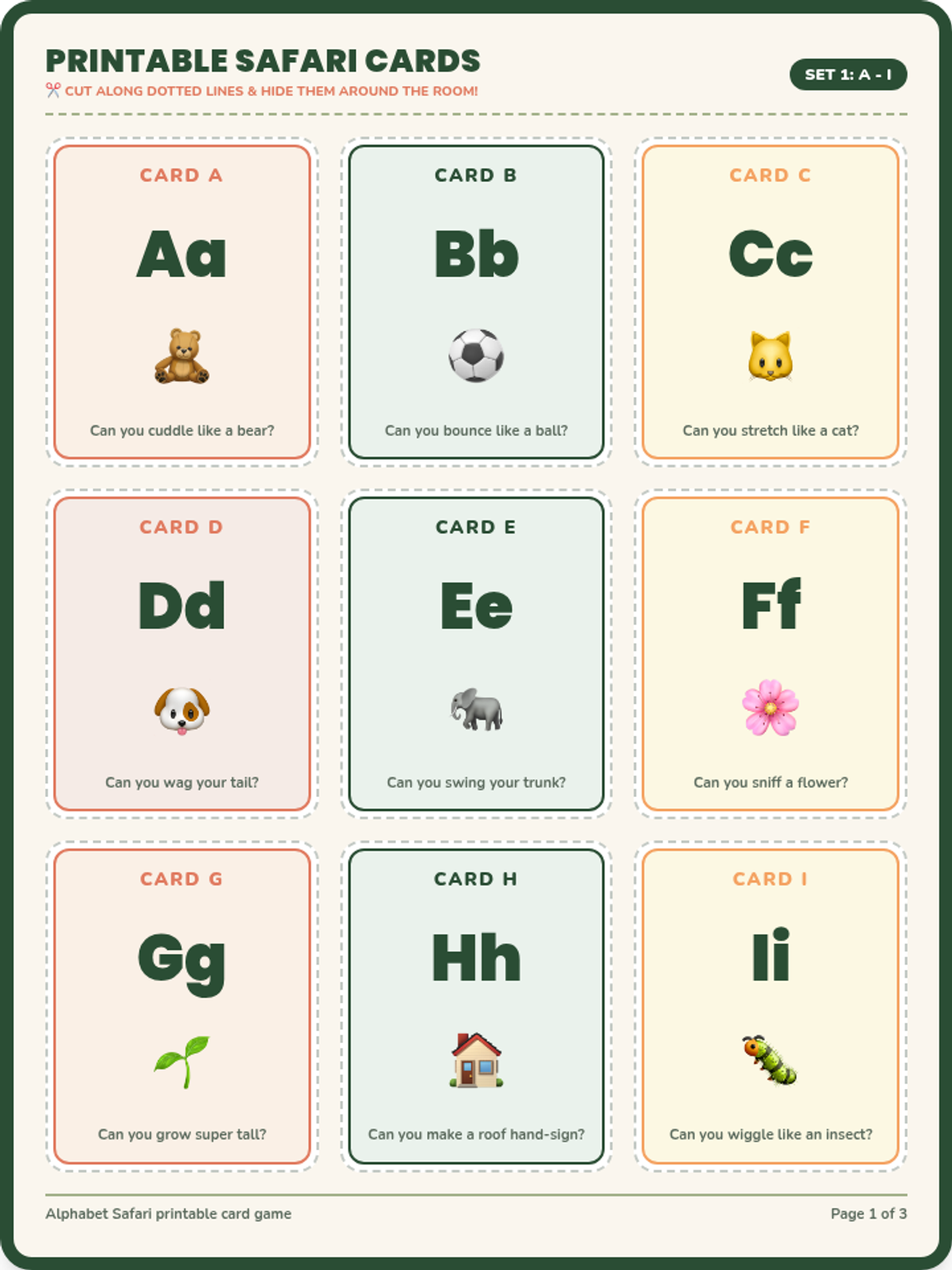
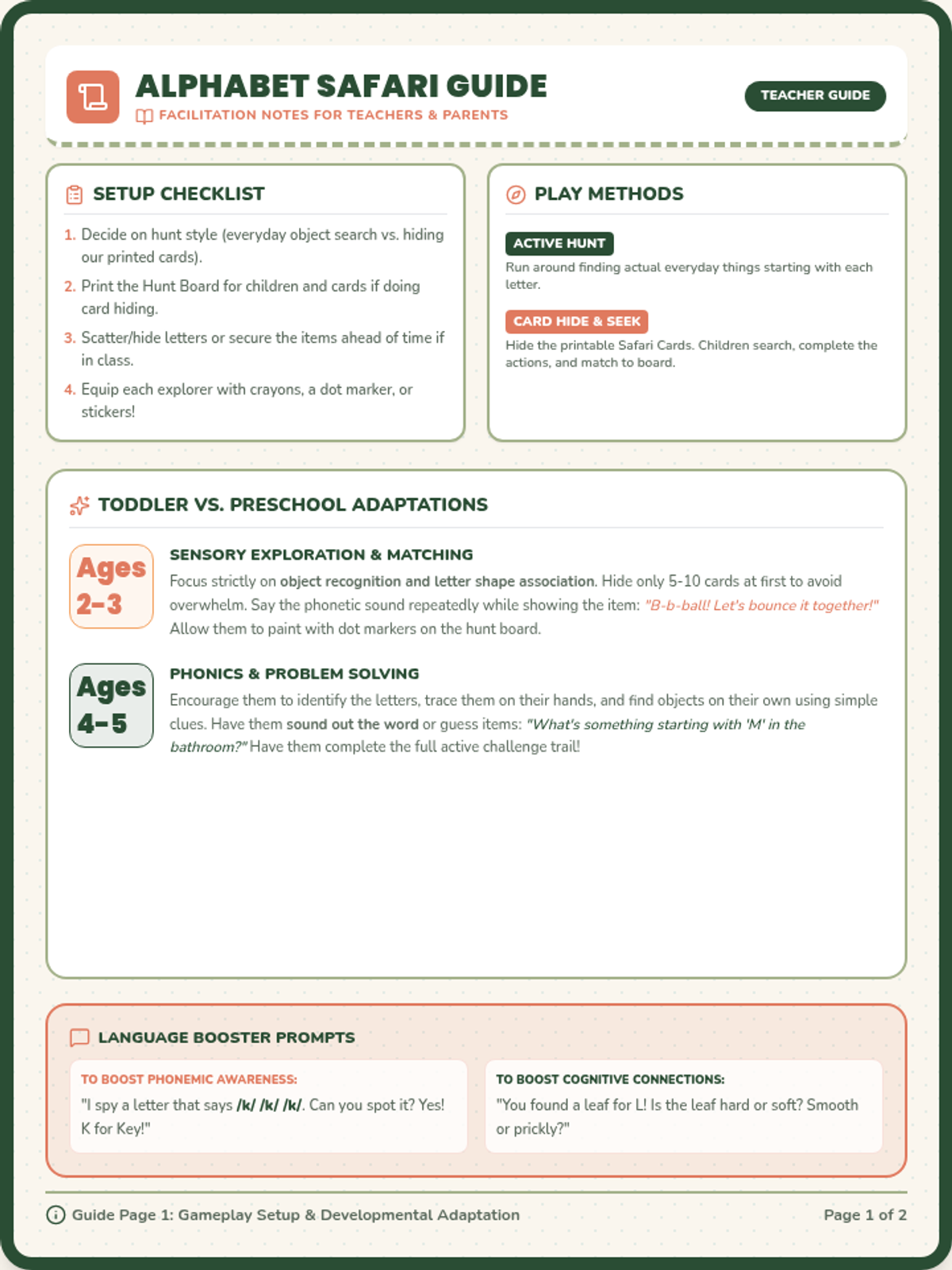
An active, hands-on letter recognition game designed for toddlers and preschoolers to search for letters and corresponding everyday objects. Includes a visual scavenger hunt checklist, printable hidden letter cards, and a comprehensive parent-teacher facilitation guide.
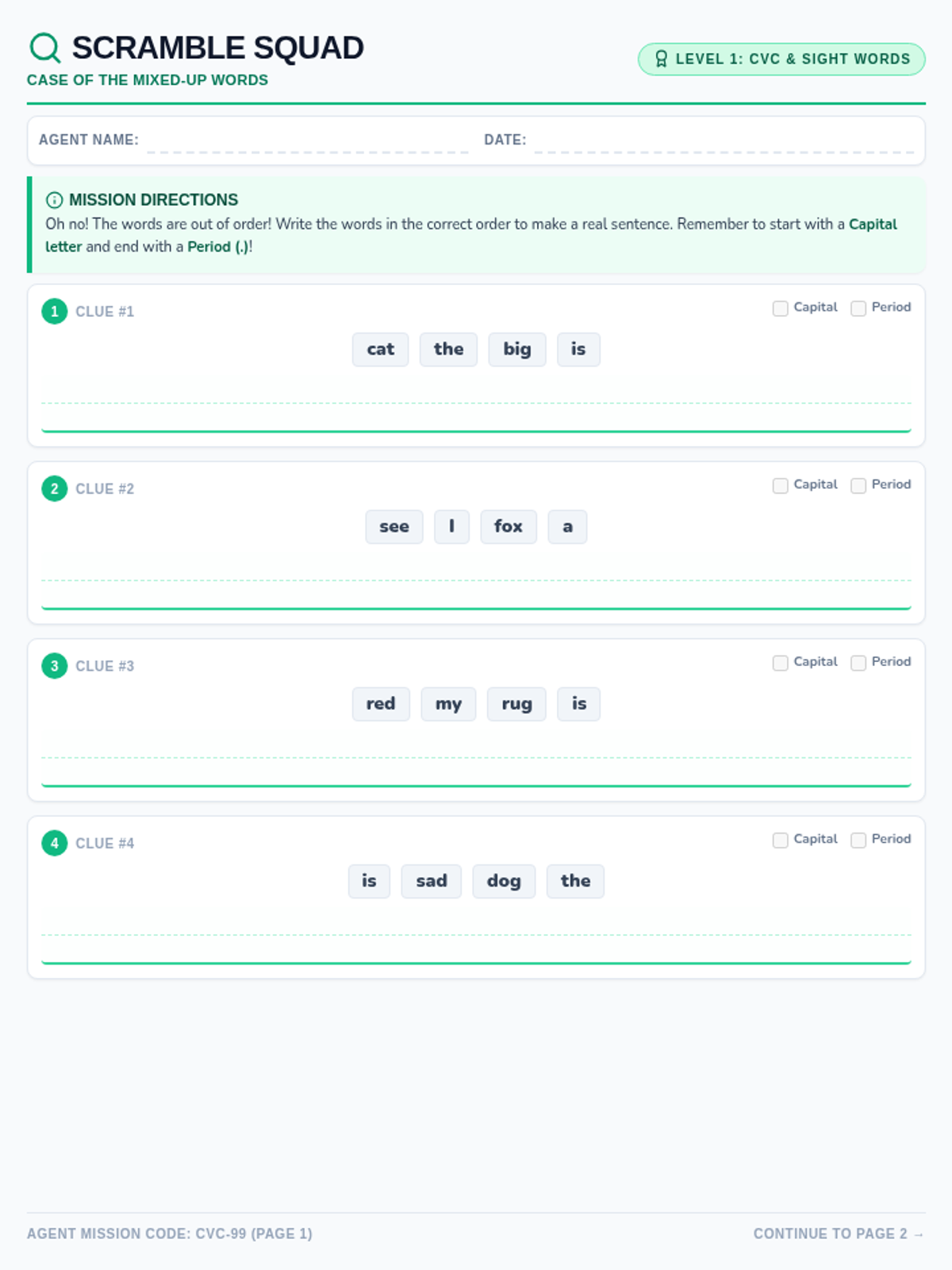
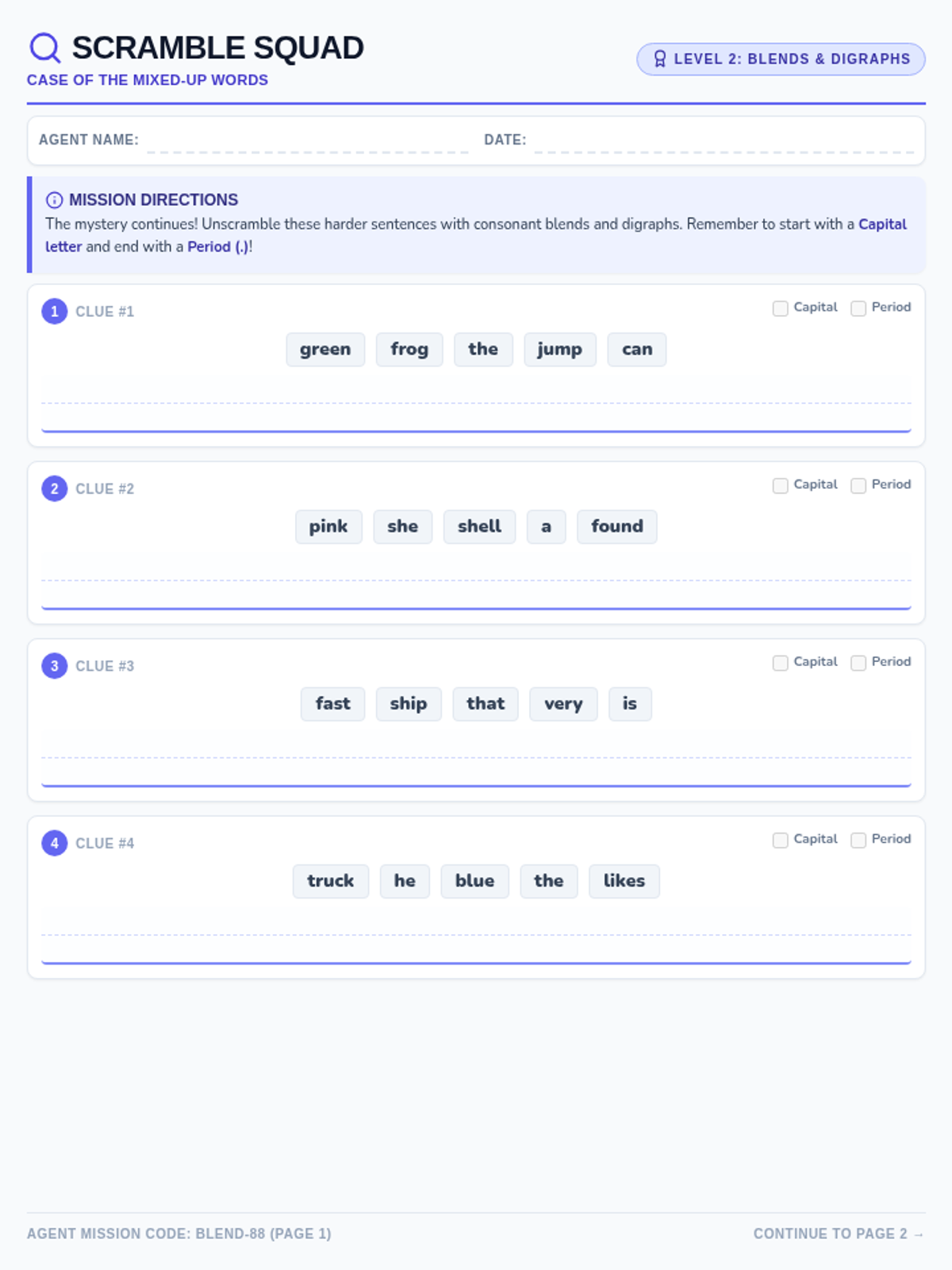
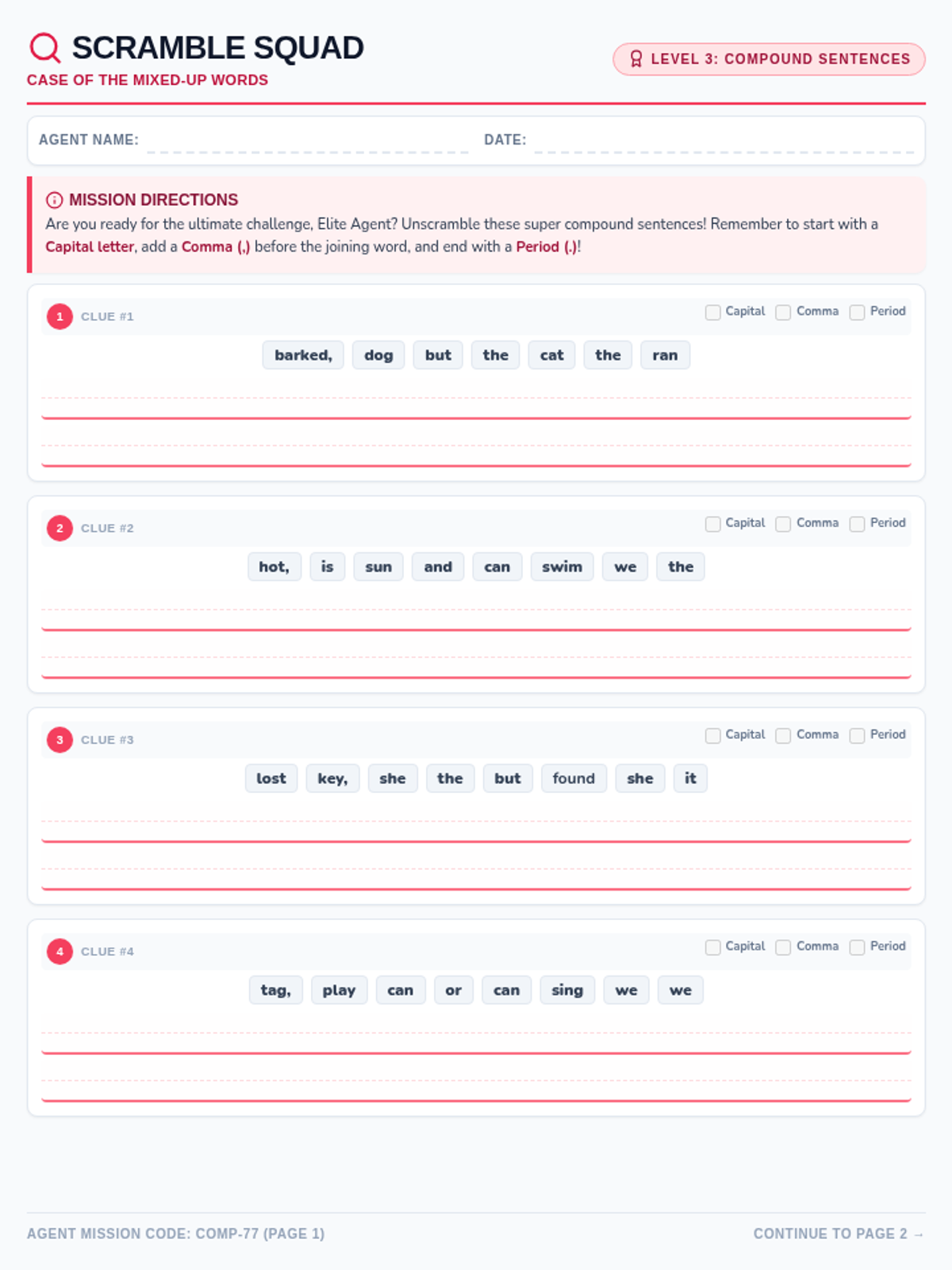
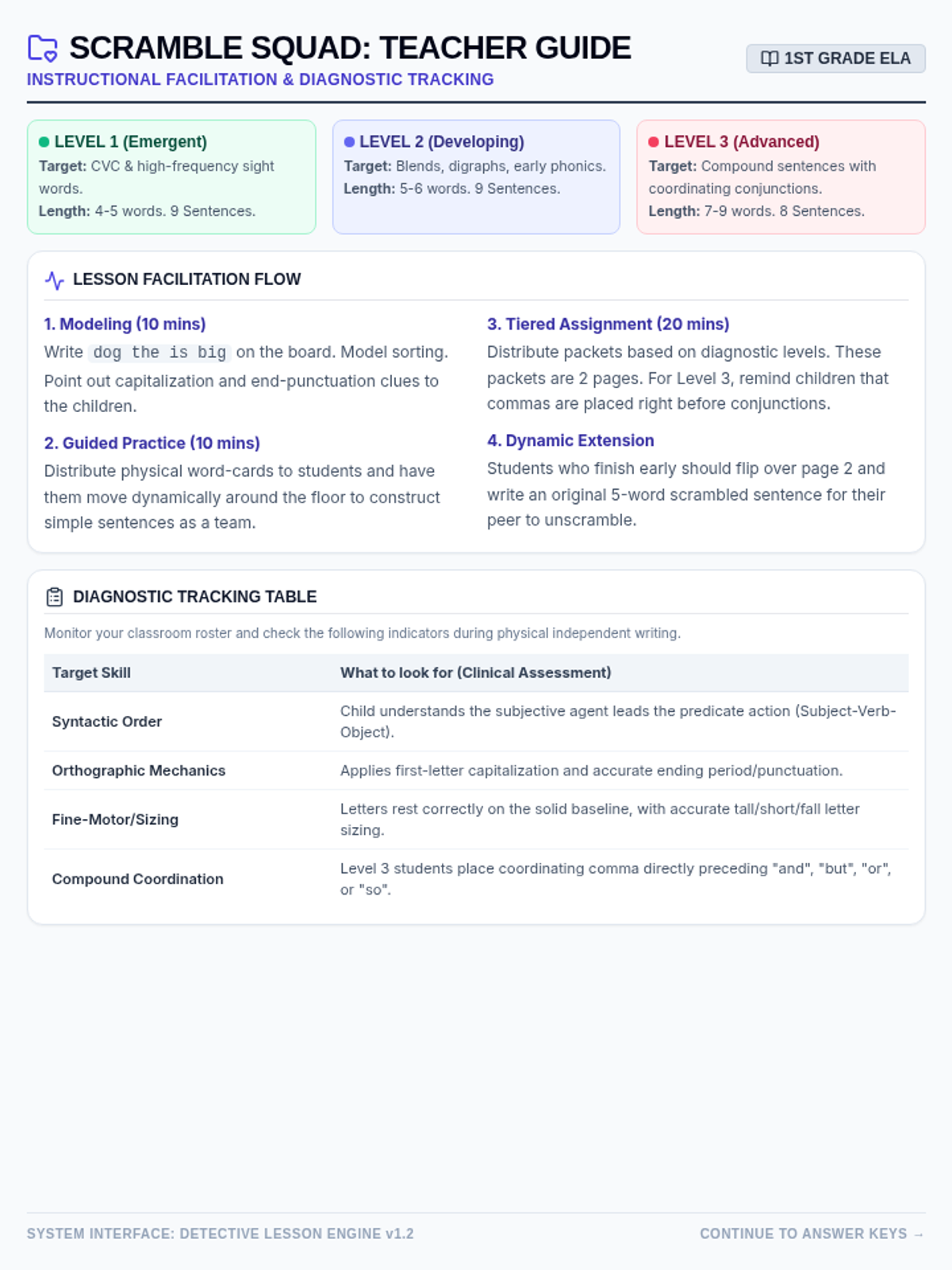
A comprehensive, tiered sentence unscrambling lesson designed for first-grade students. It features three levels of differentiated, print-and-go worksheets (Emergent, Developing, Advanced) alongside an instructional Teacher Guide and Answer Key.
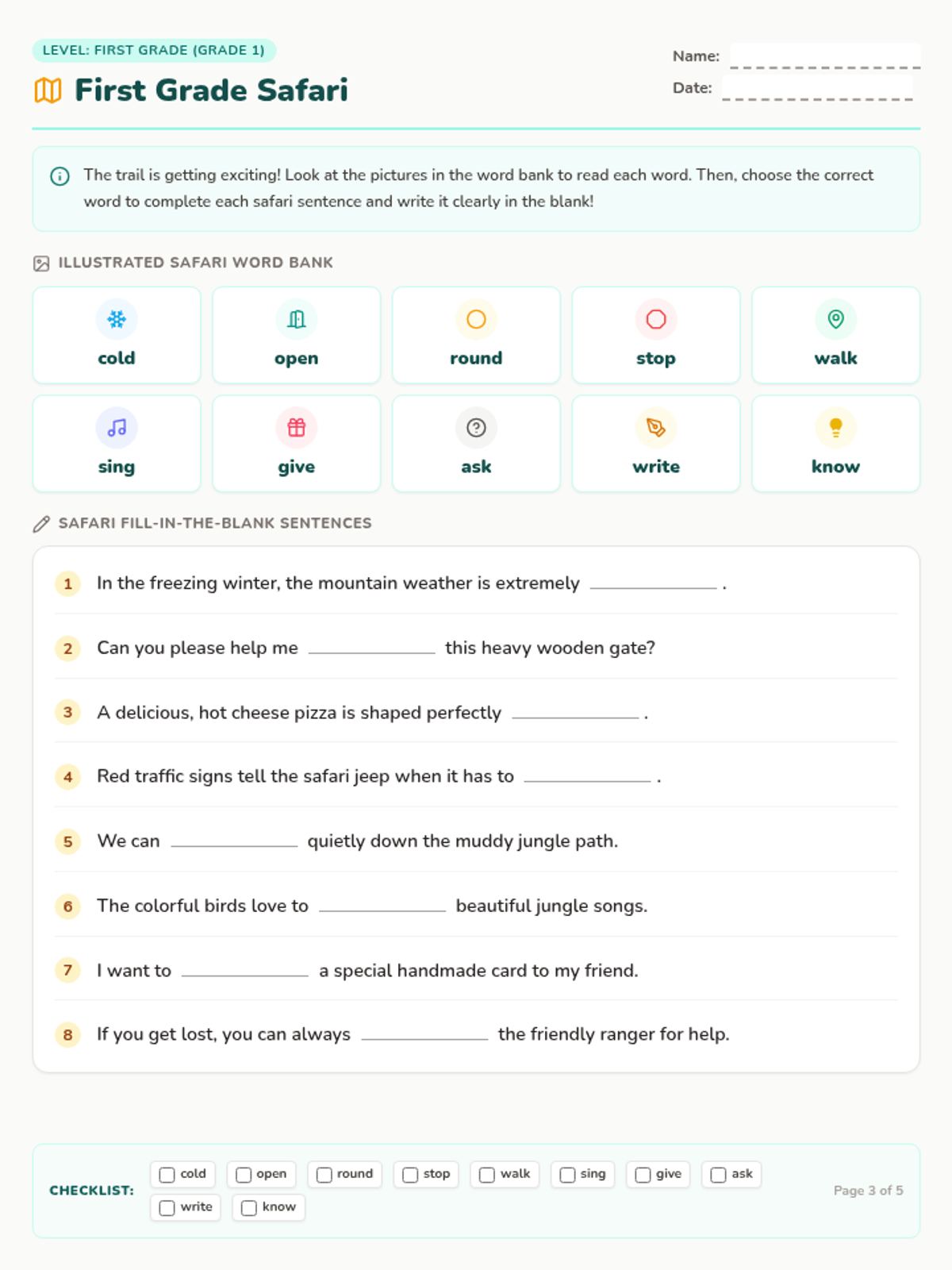
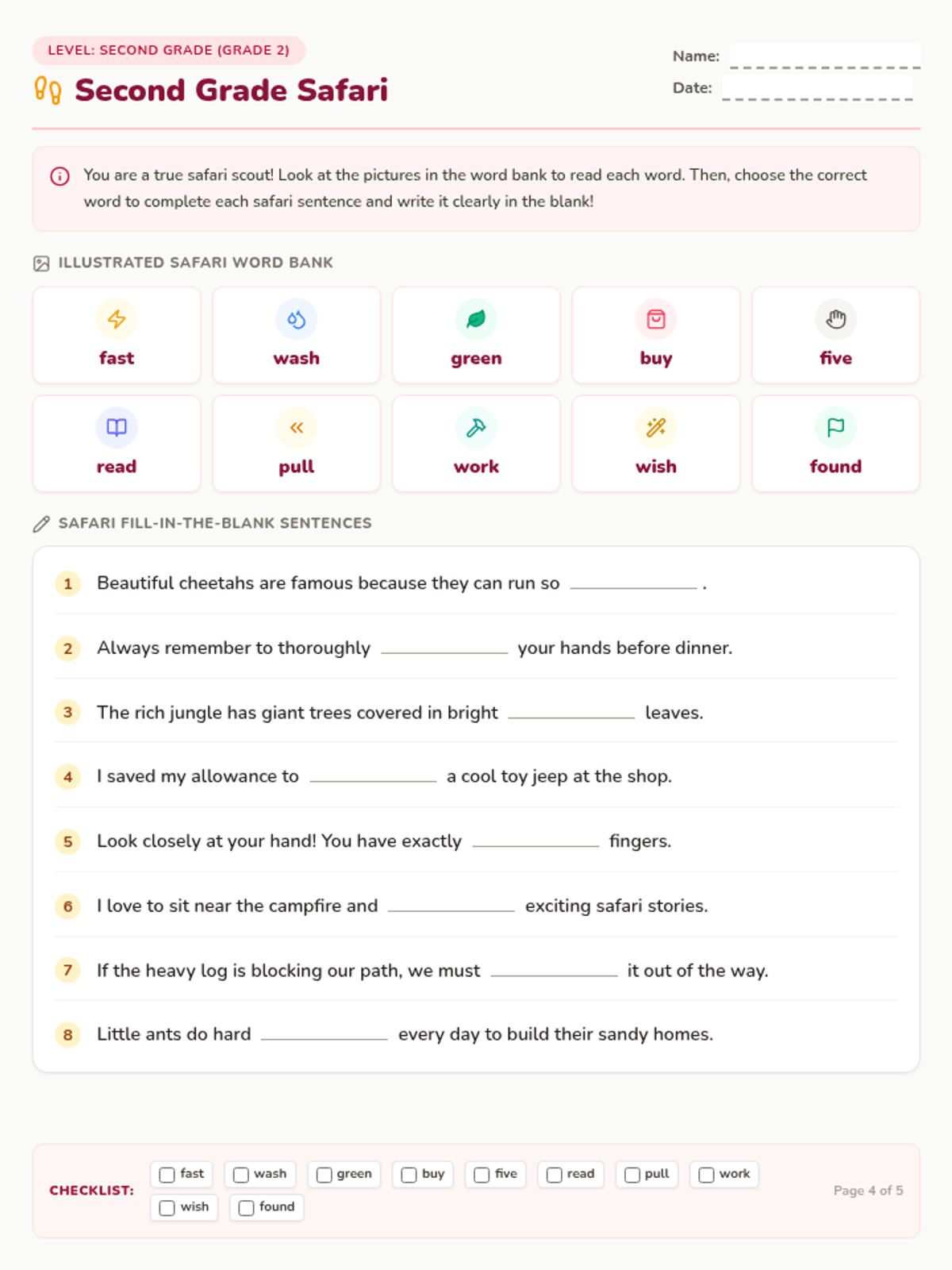
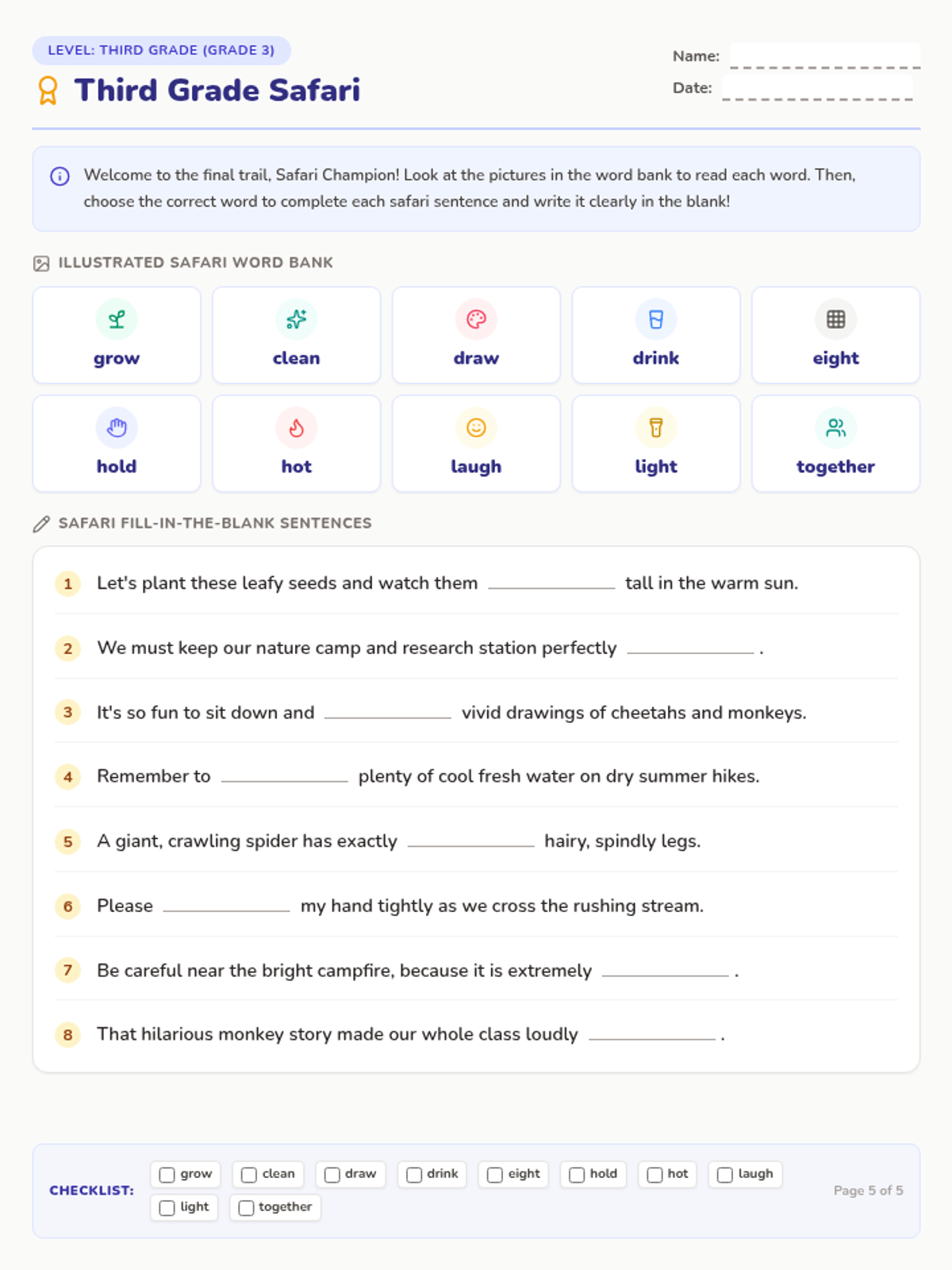
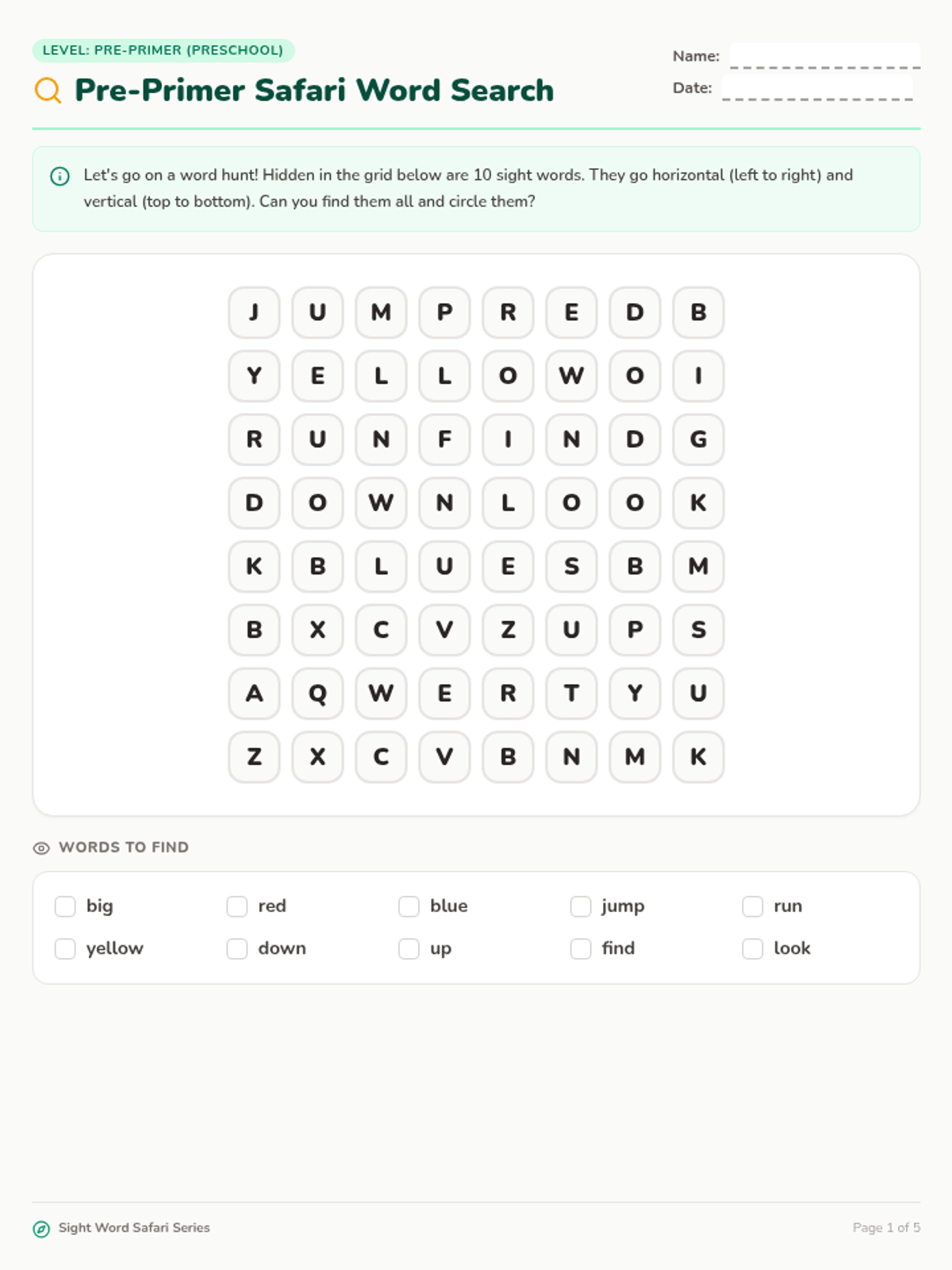
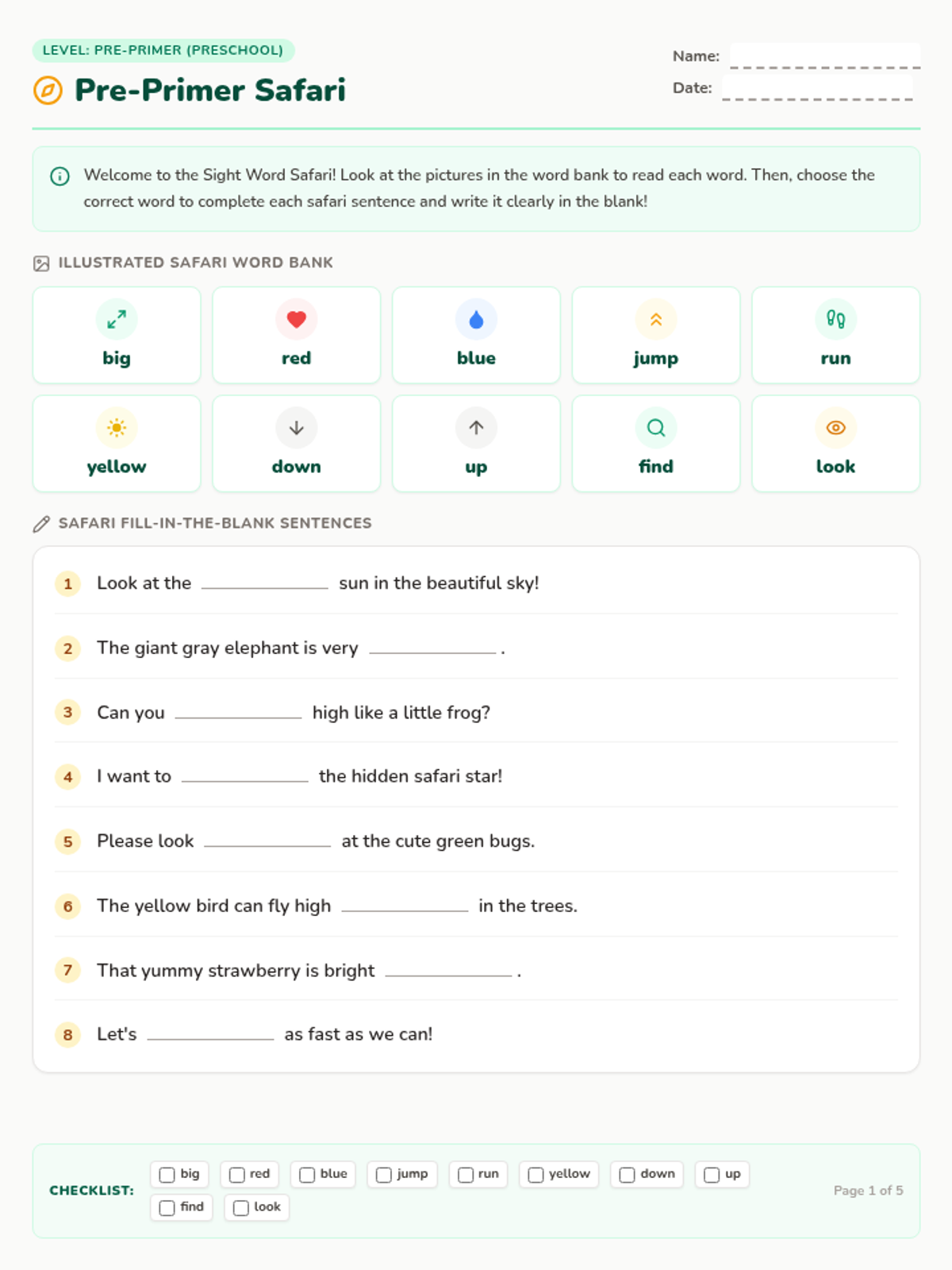
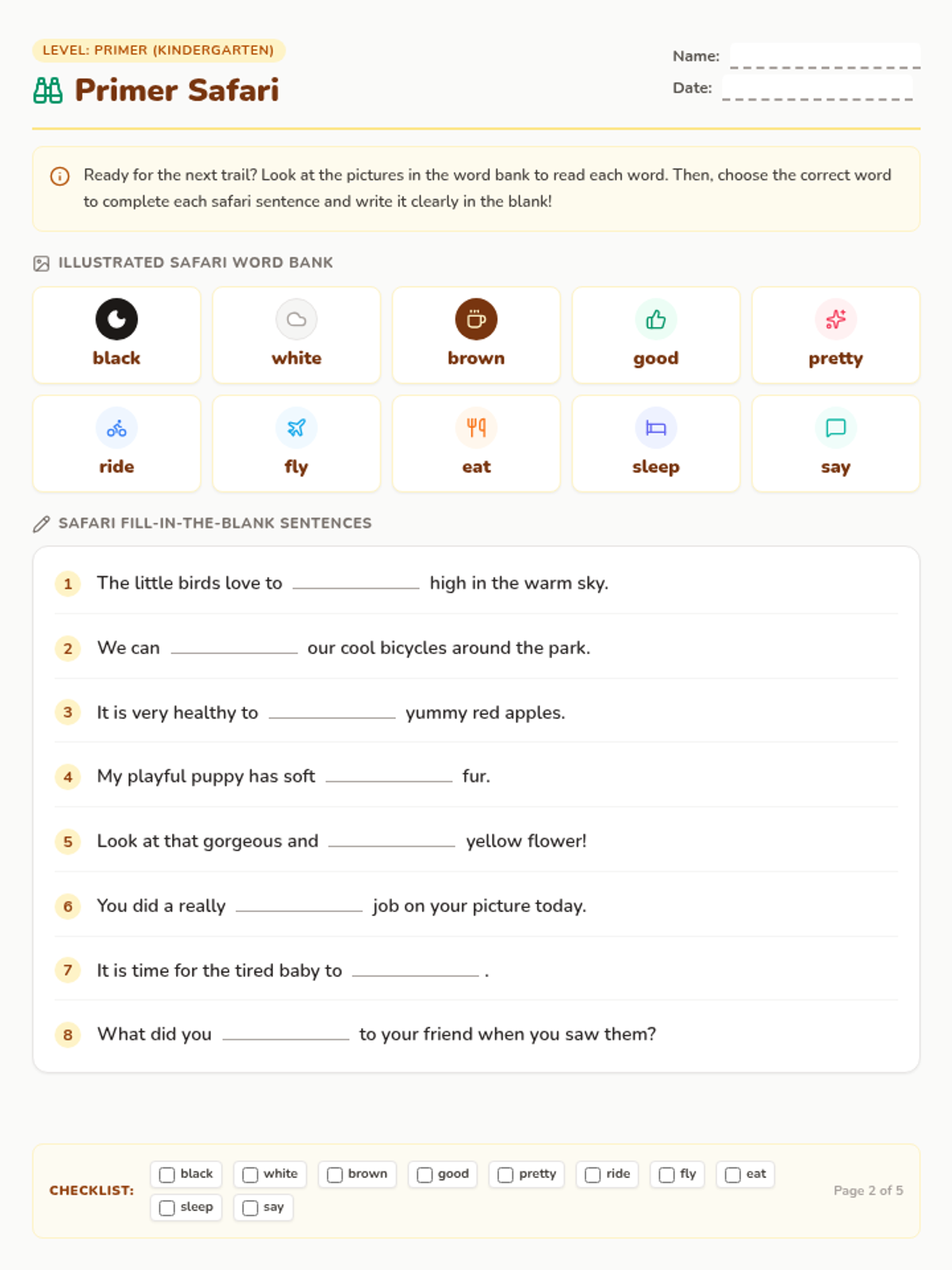
A comprehensive sight word practice lesson covering Dolch lists from Pre-Primer through Grade 3. Students complete contextual fill-in-the-blank sentences supported by illustrated word banks to build reading fluency and word recognition.
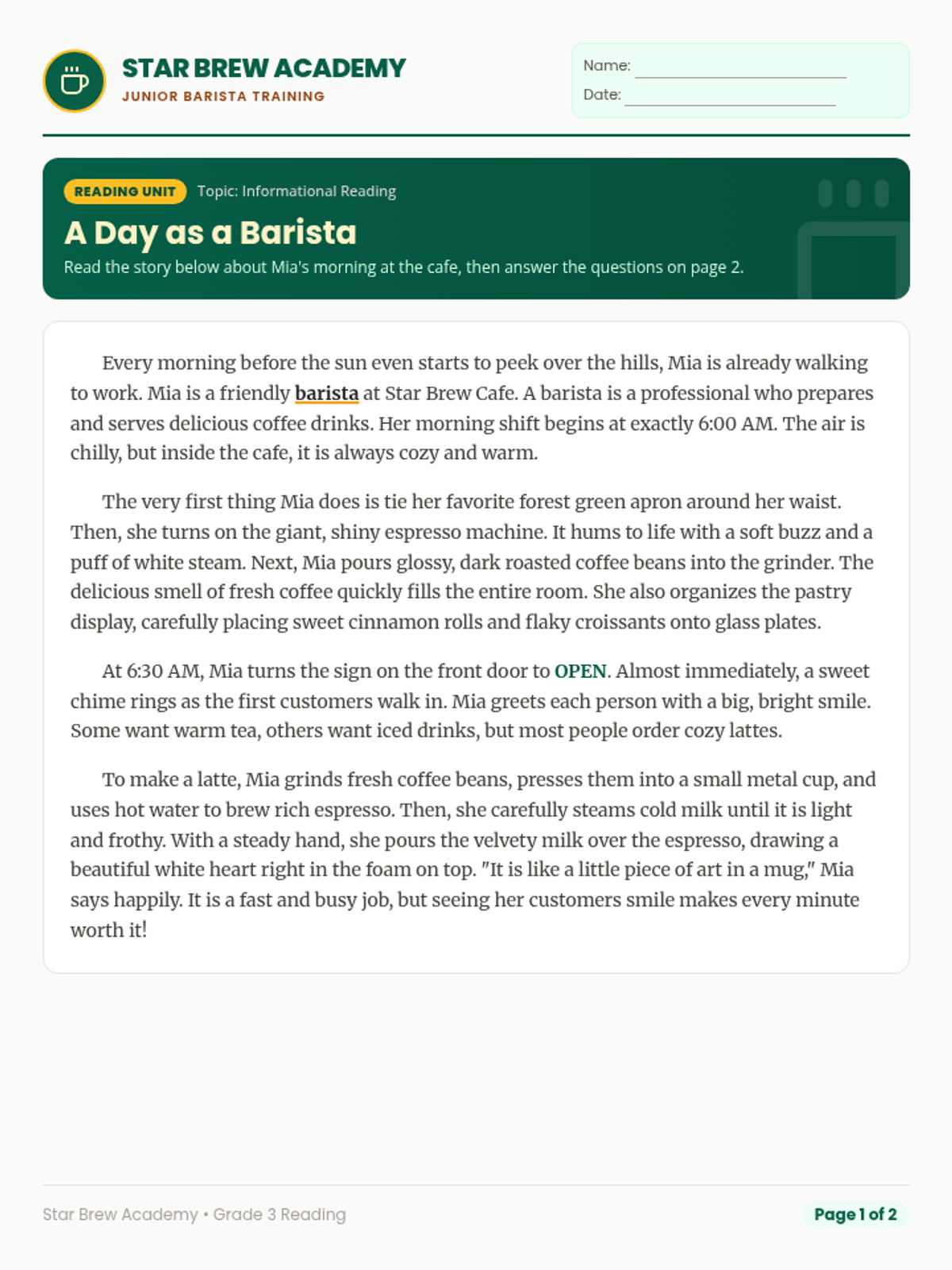
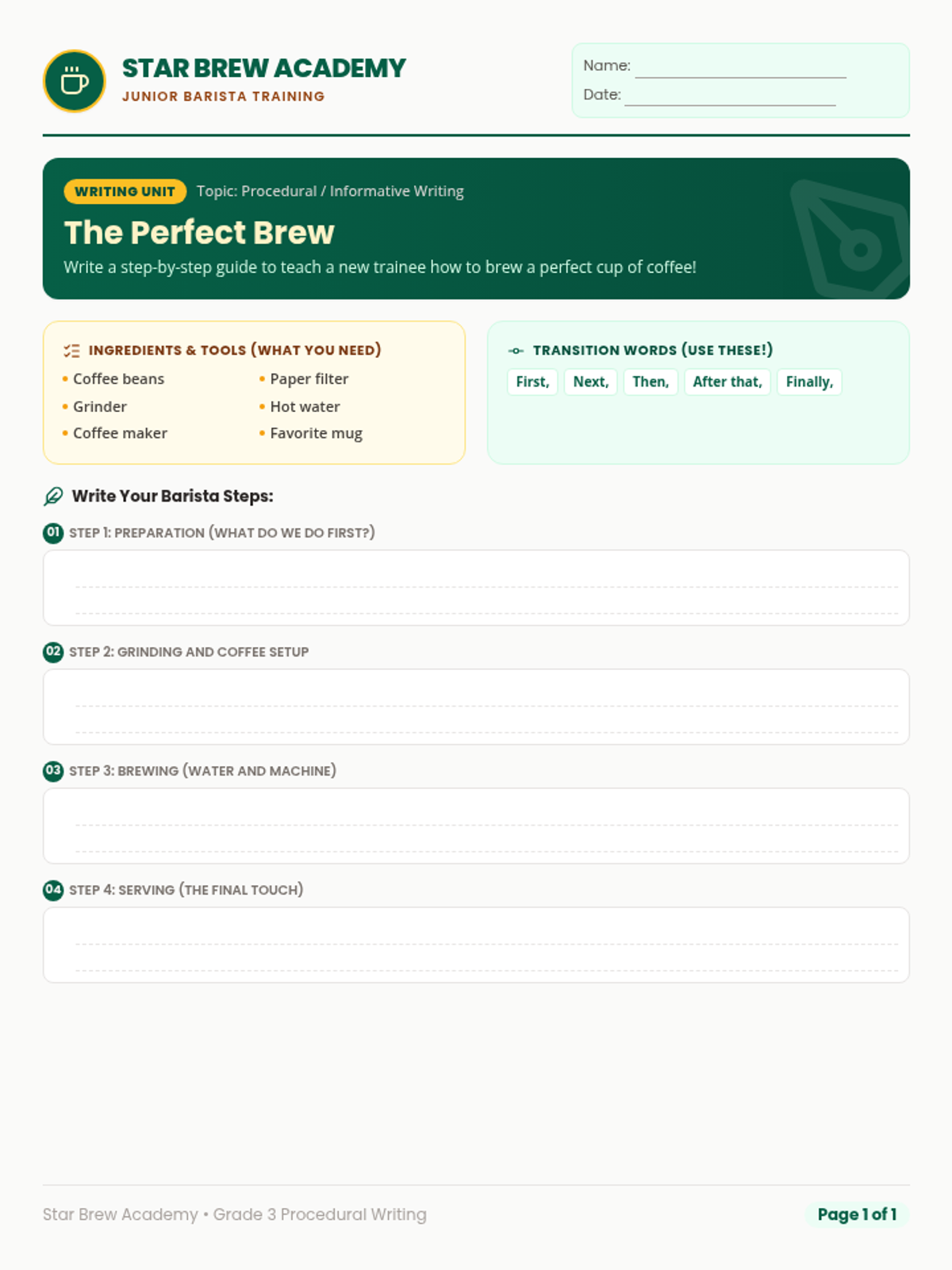
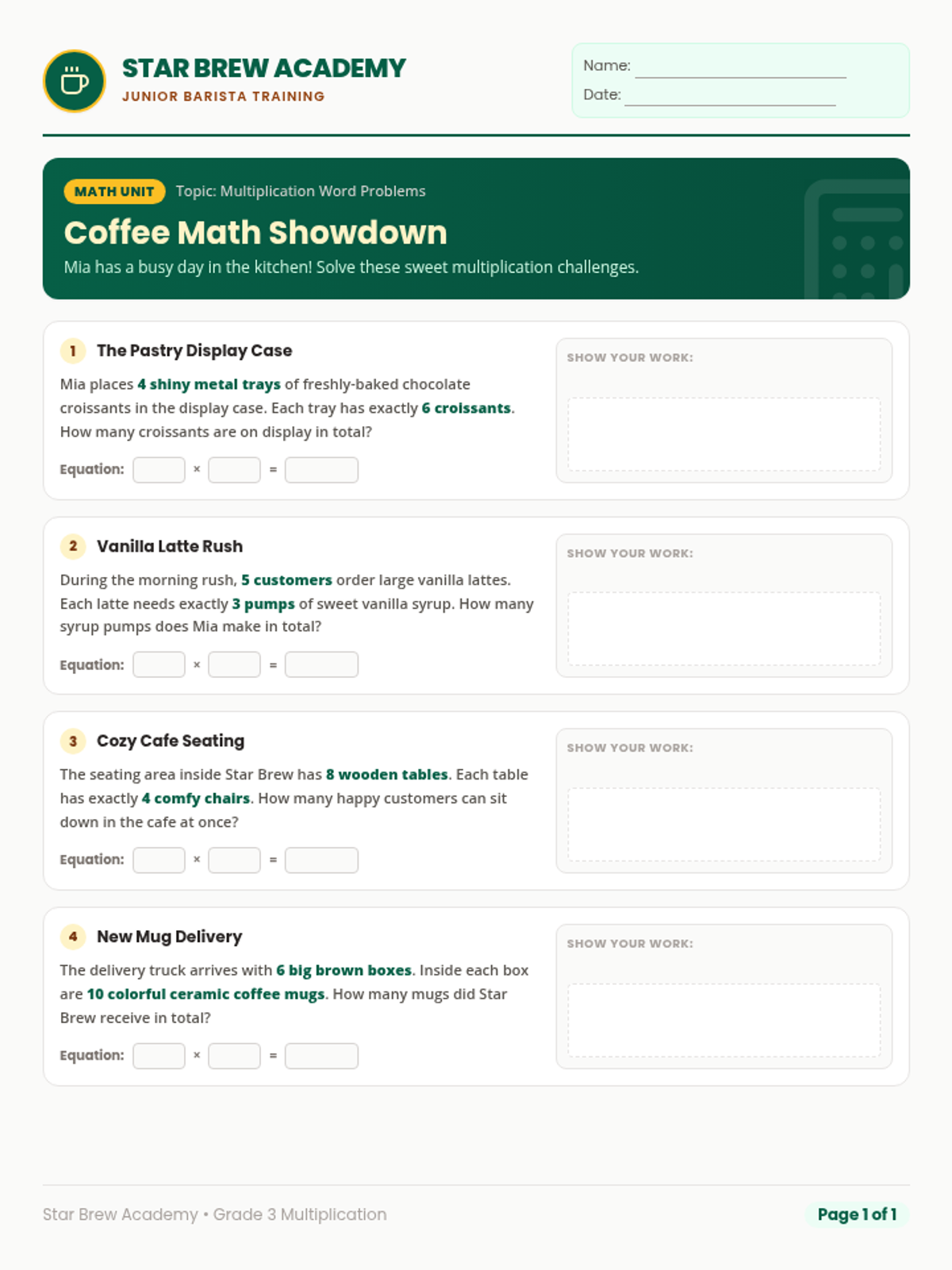
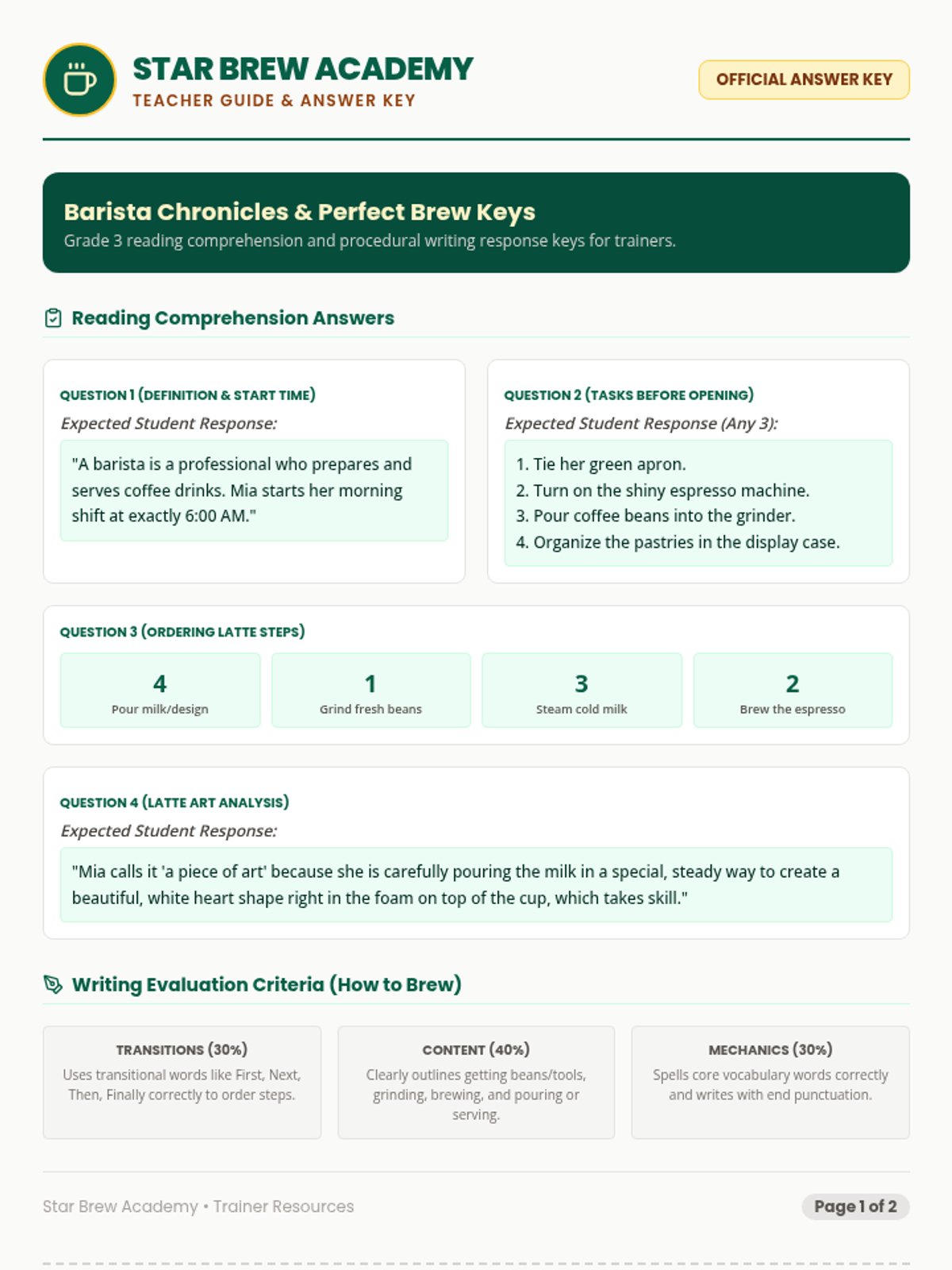
A cozy, coffee-shop-themed learning packet for 3rd graders that seamlessly integrates reading comprehension, procedural writing, and multiplication word problems. Students explore the life of a barista, write step-by-step coffee brewing instructions, and solve cafe-themed math challenges.
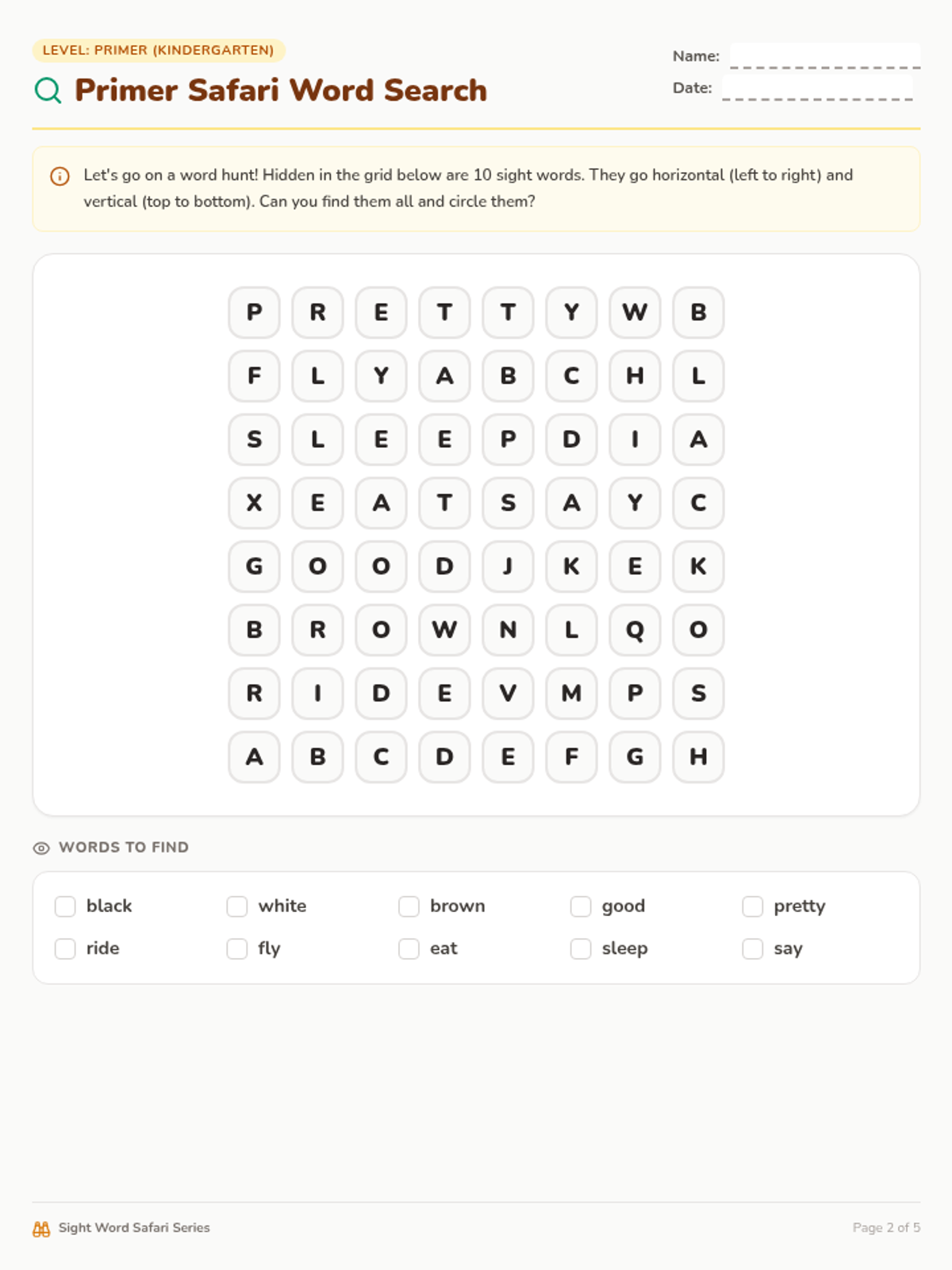
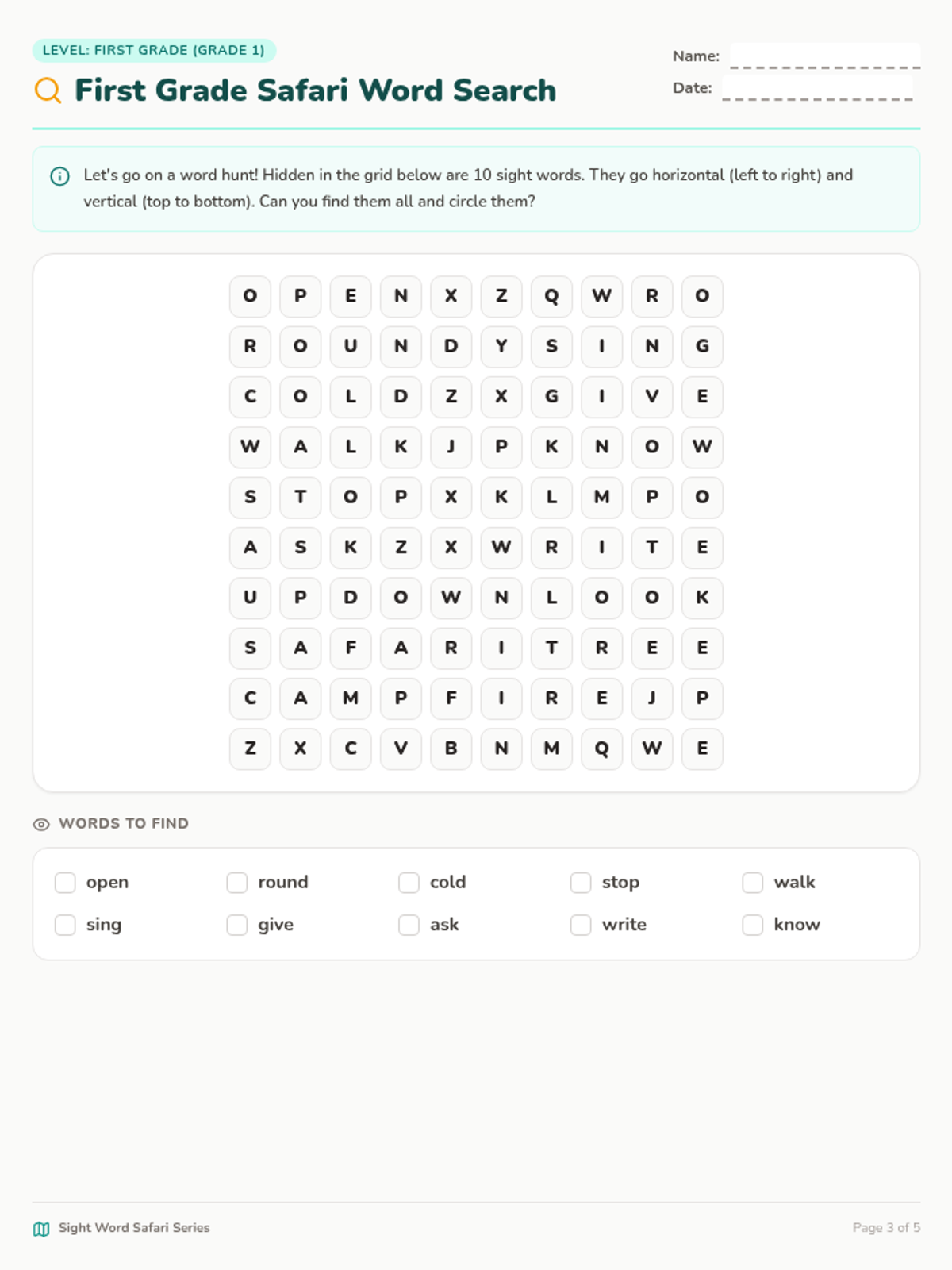
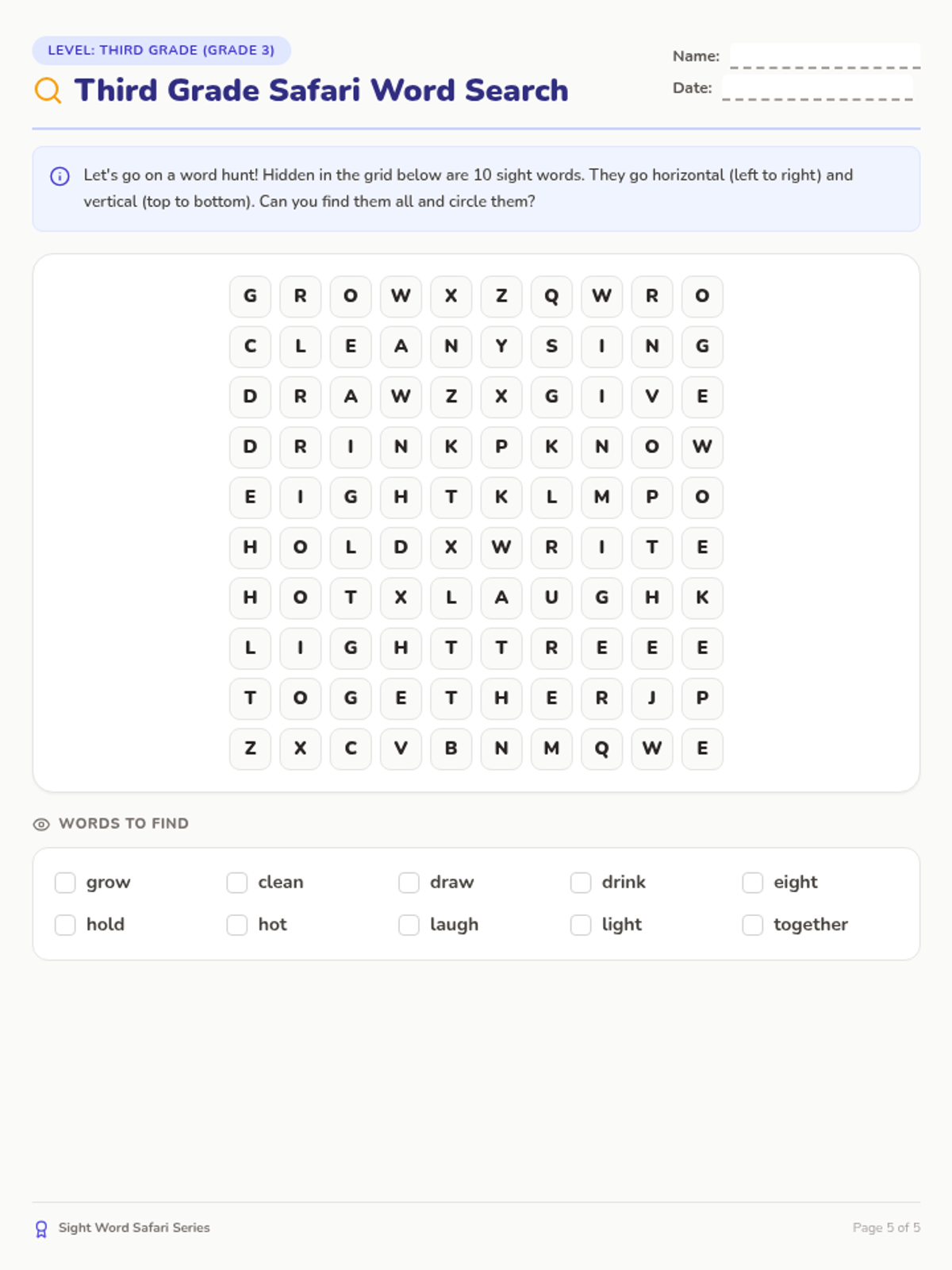
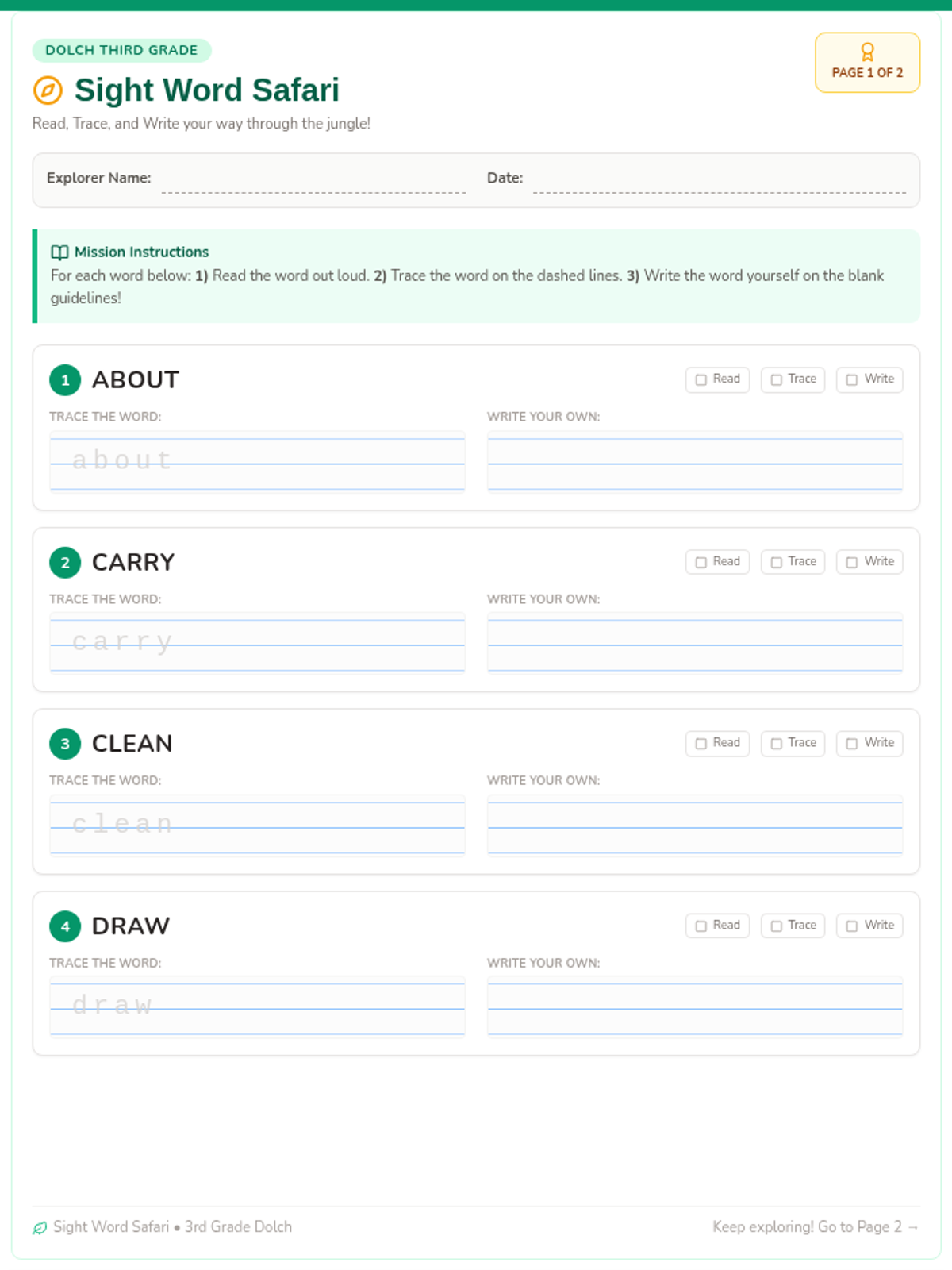
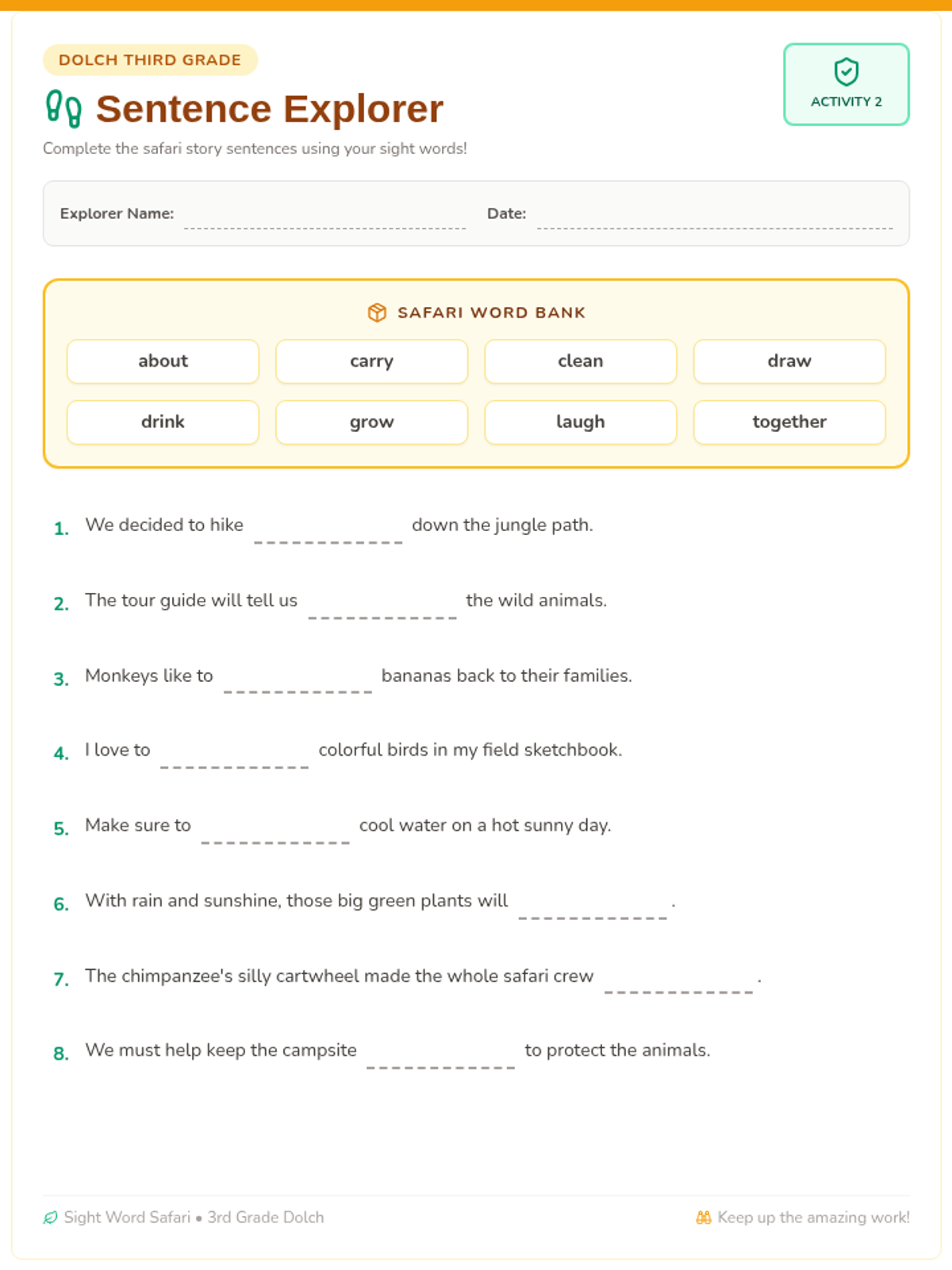
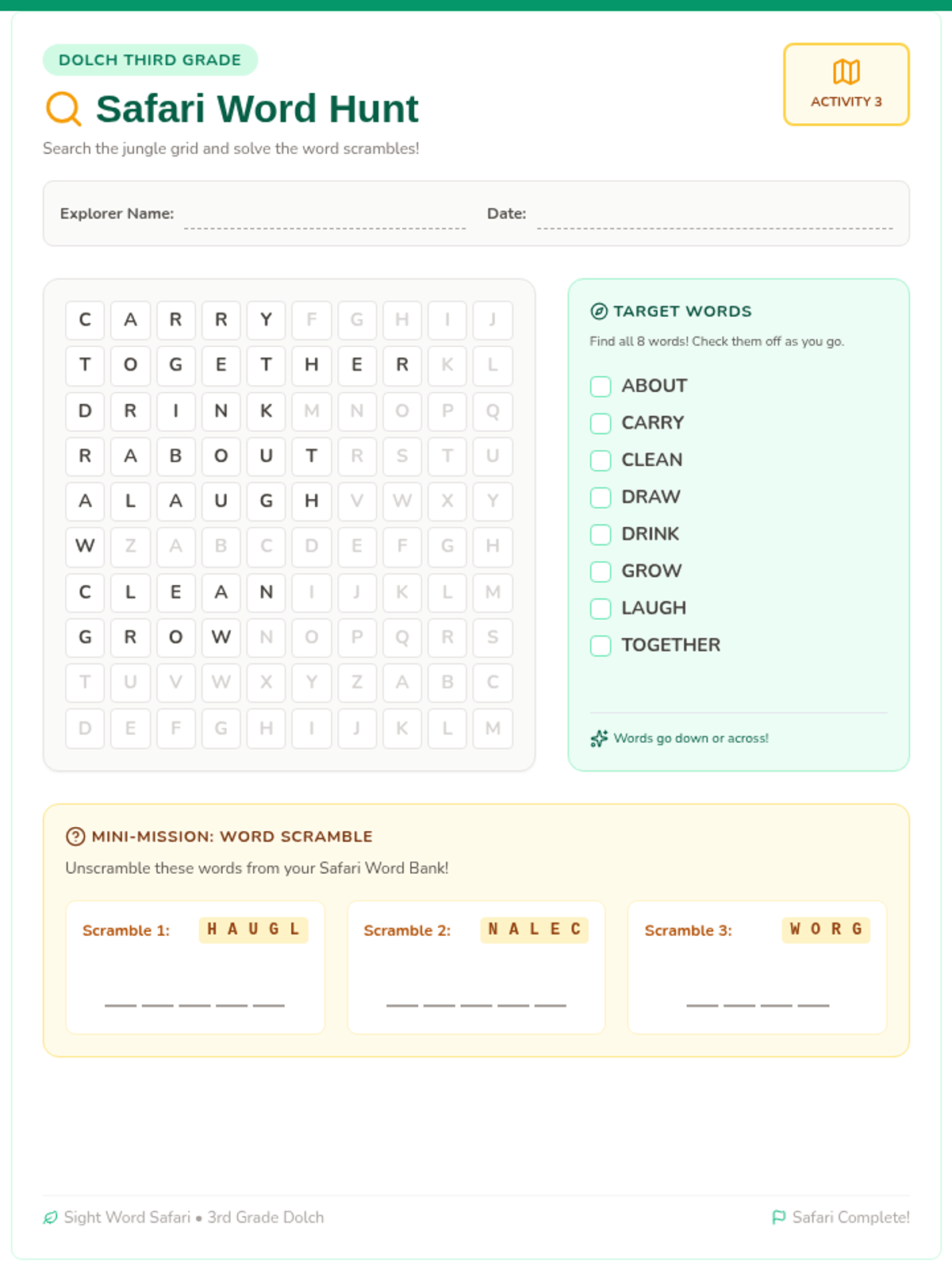
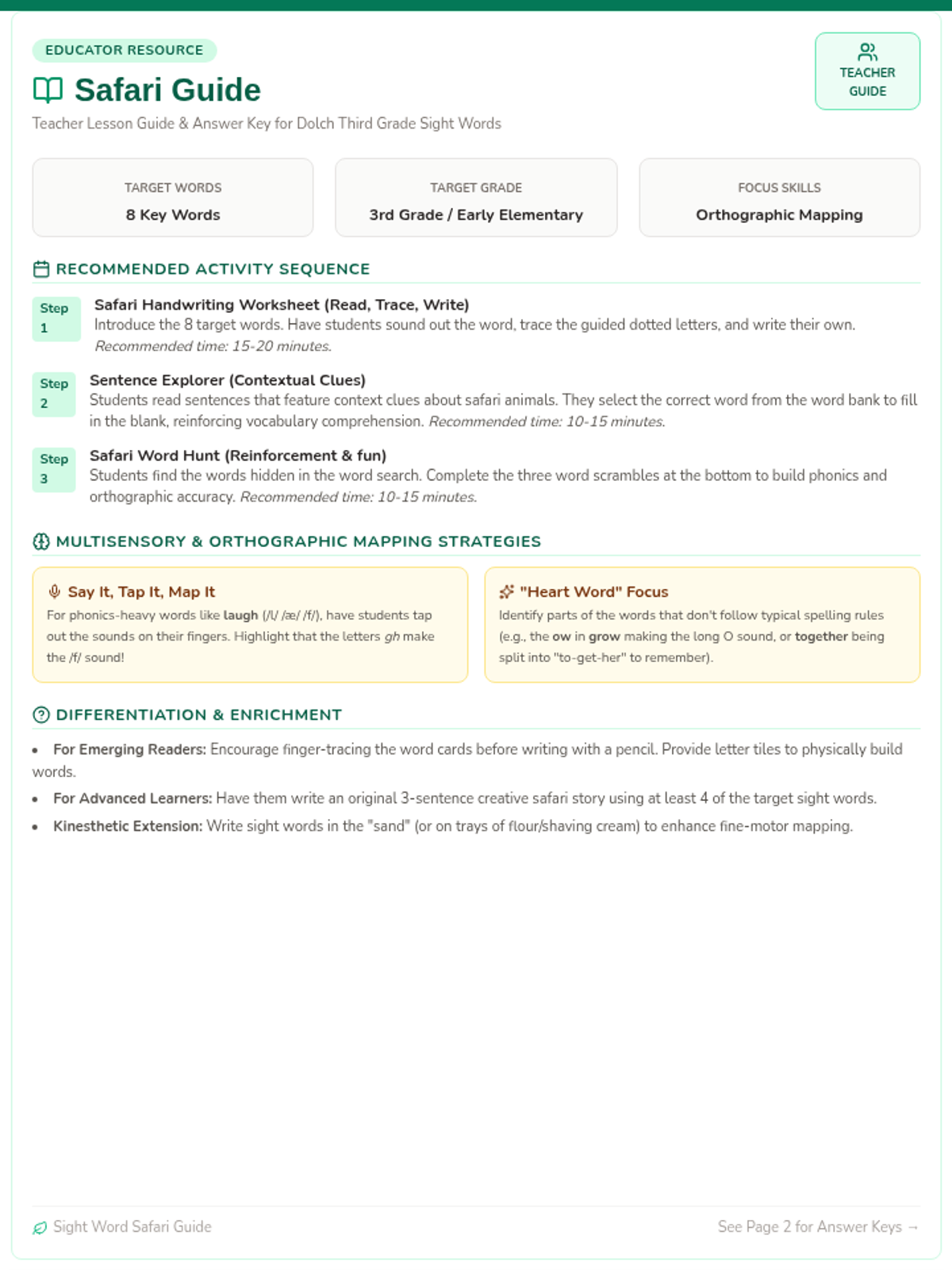
A jungle-themed lesson focusing on 8 key Third Grade Dolch sight words. Includes worksheets for tracing and writing, sentence completion, word search puzzles, and a teacher guide.
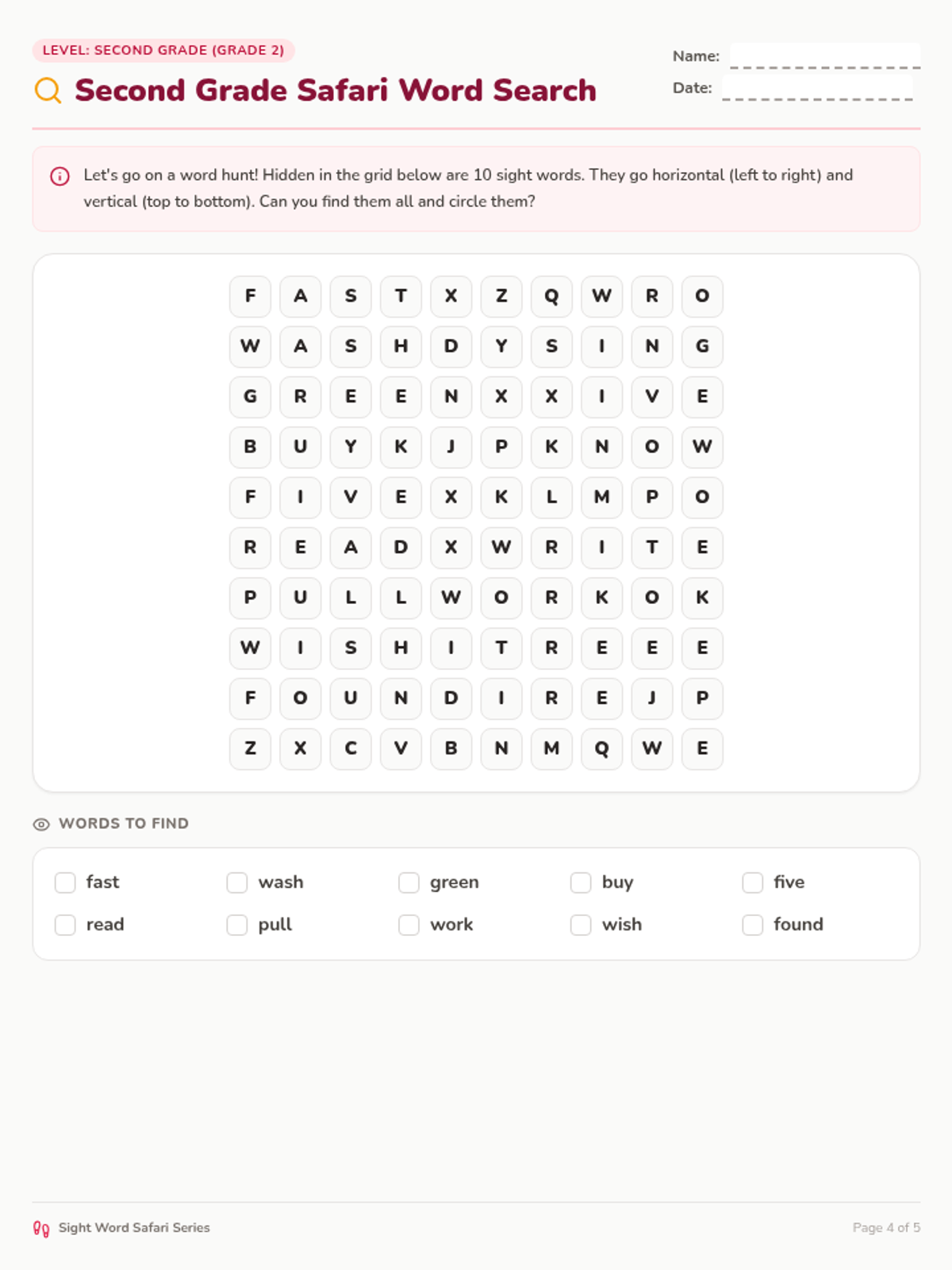
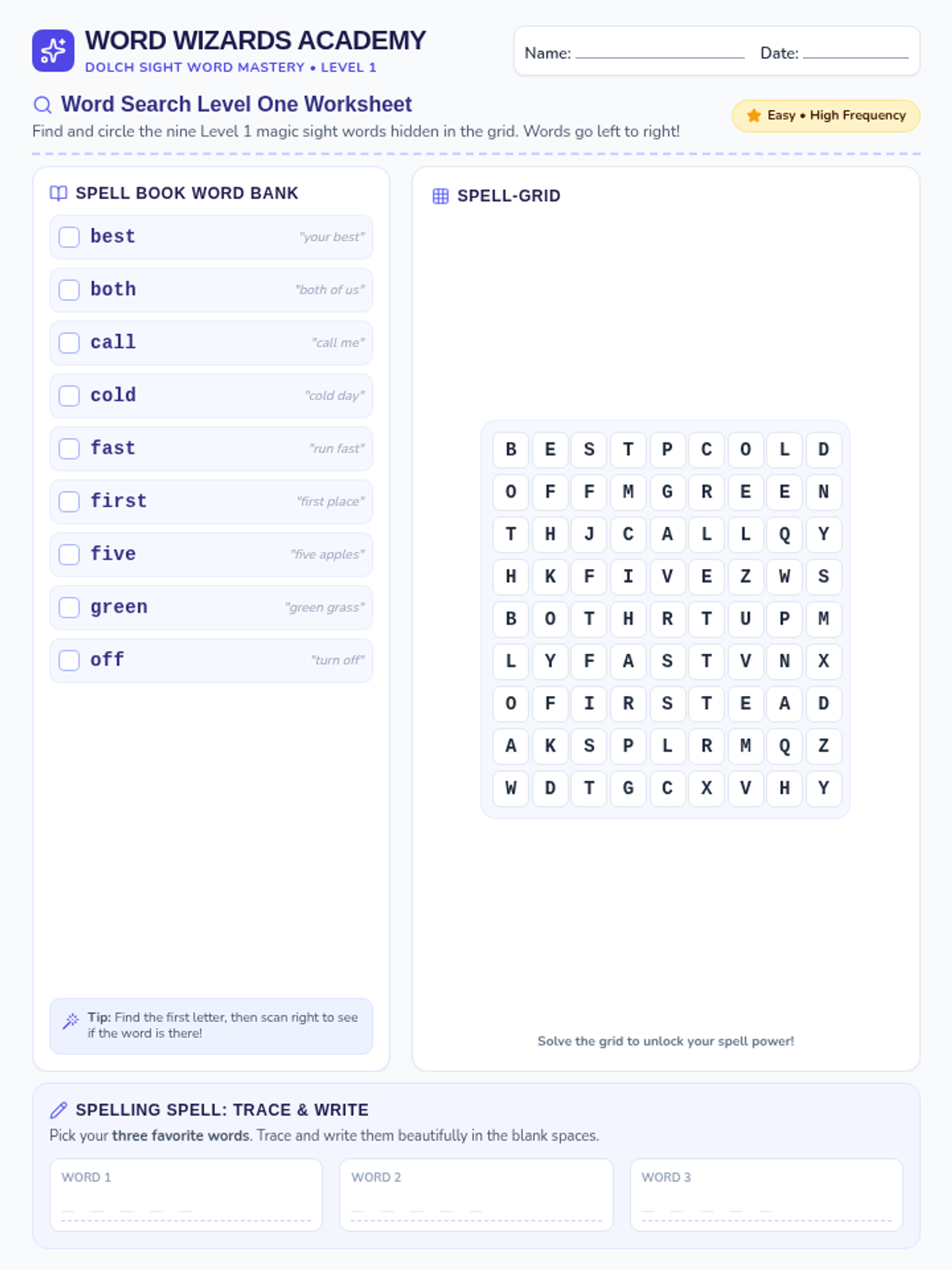
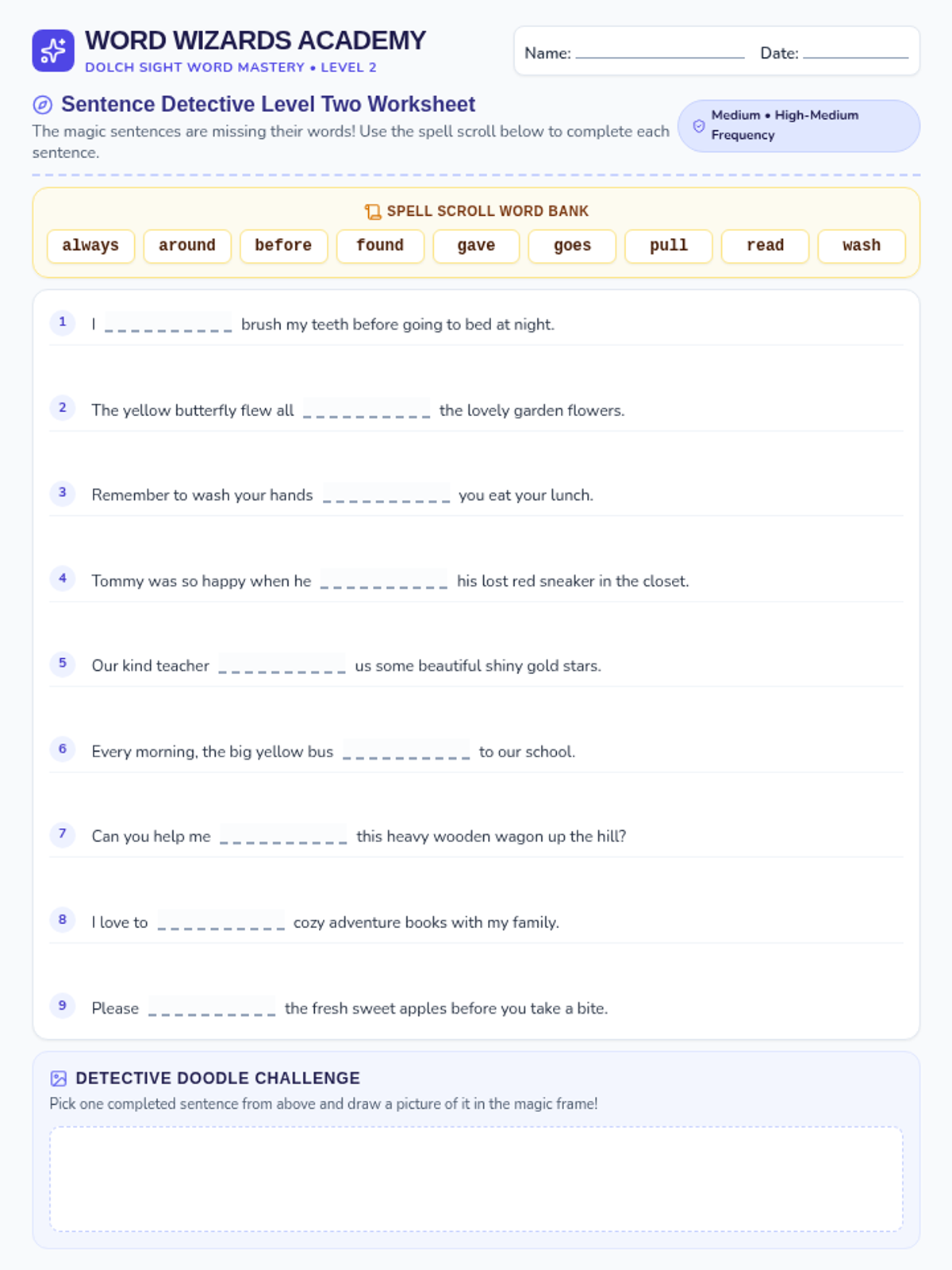
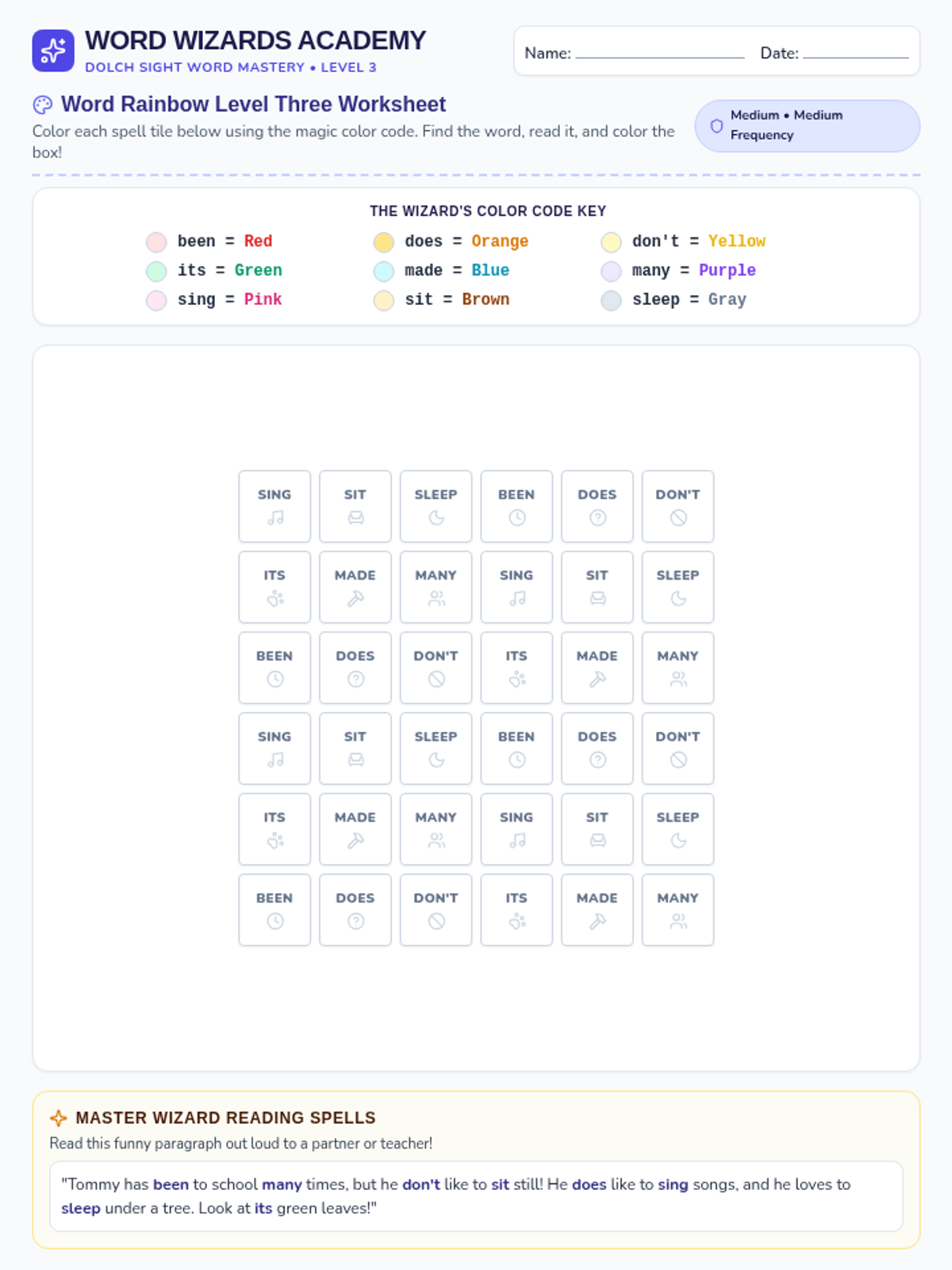
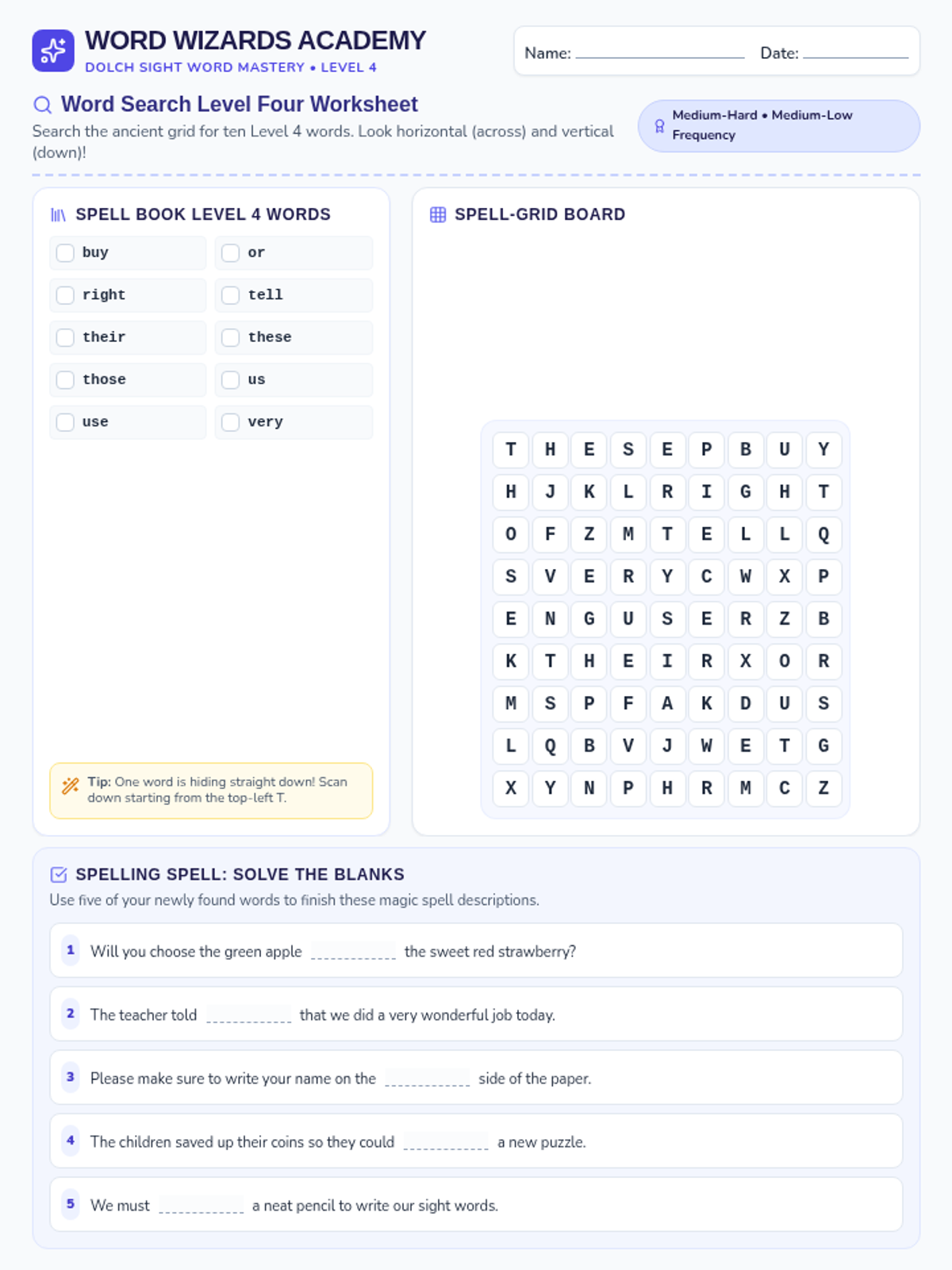
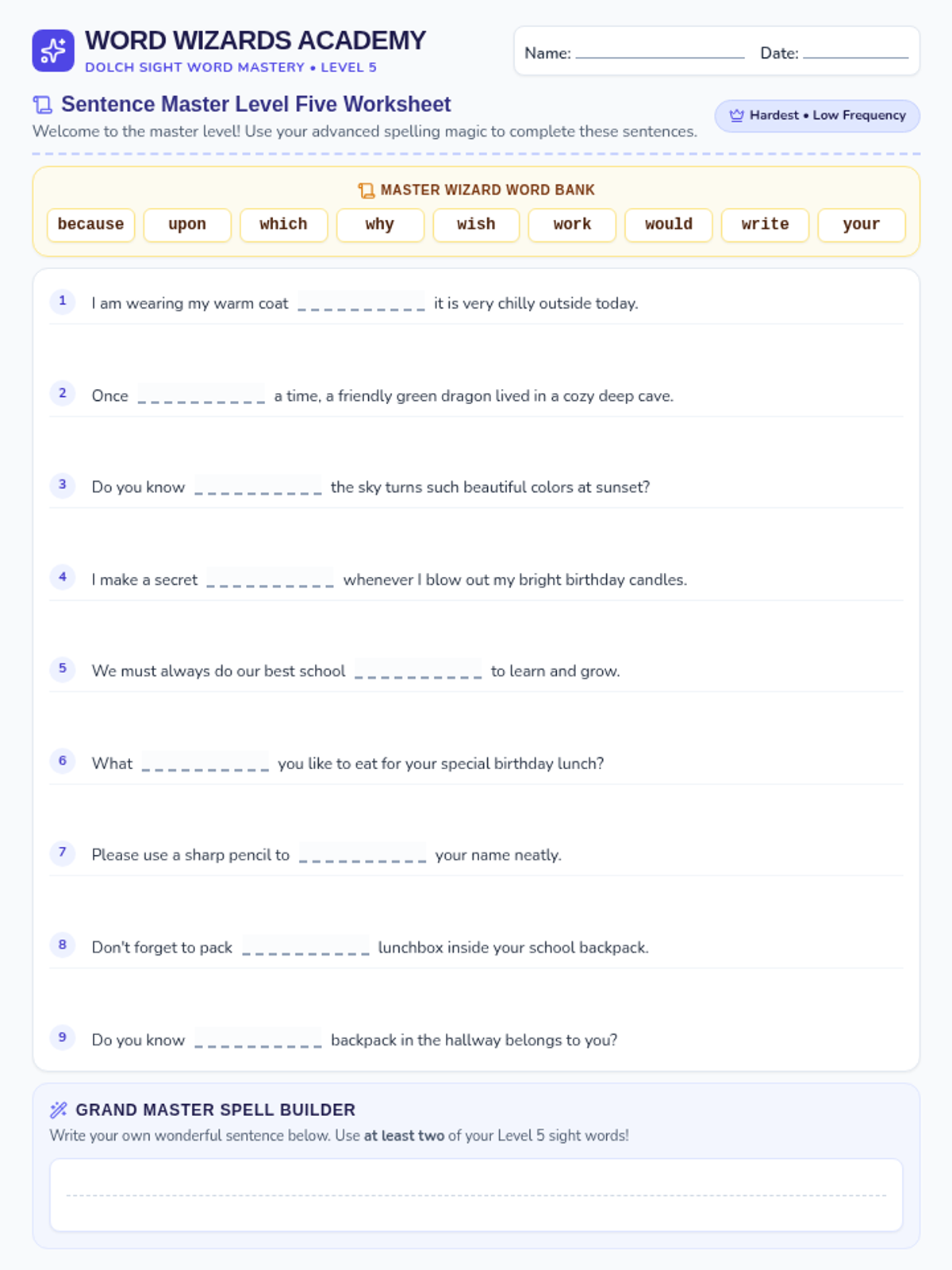
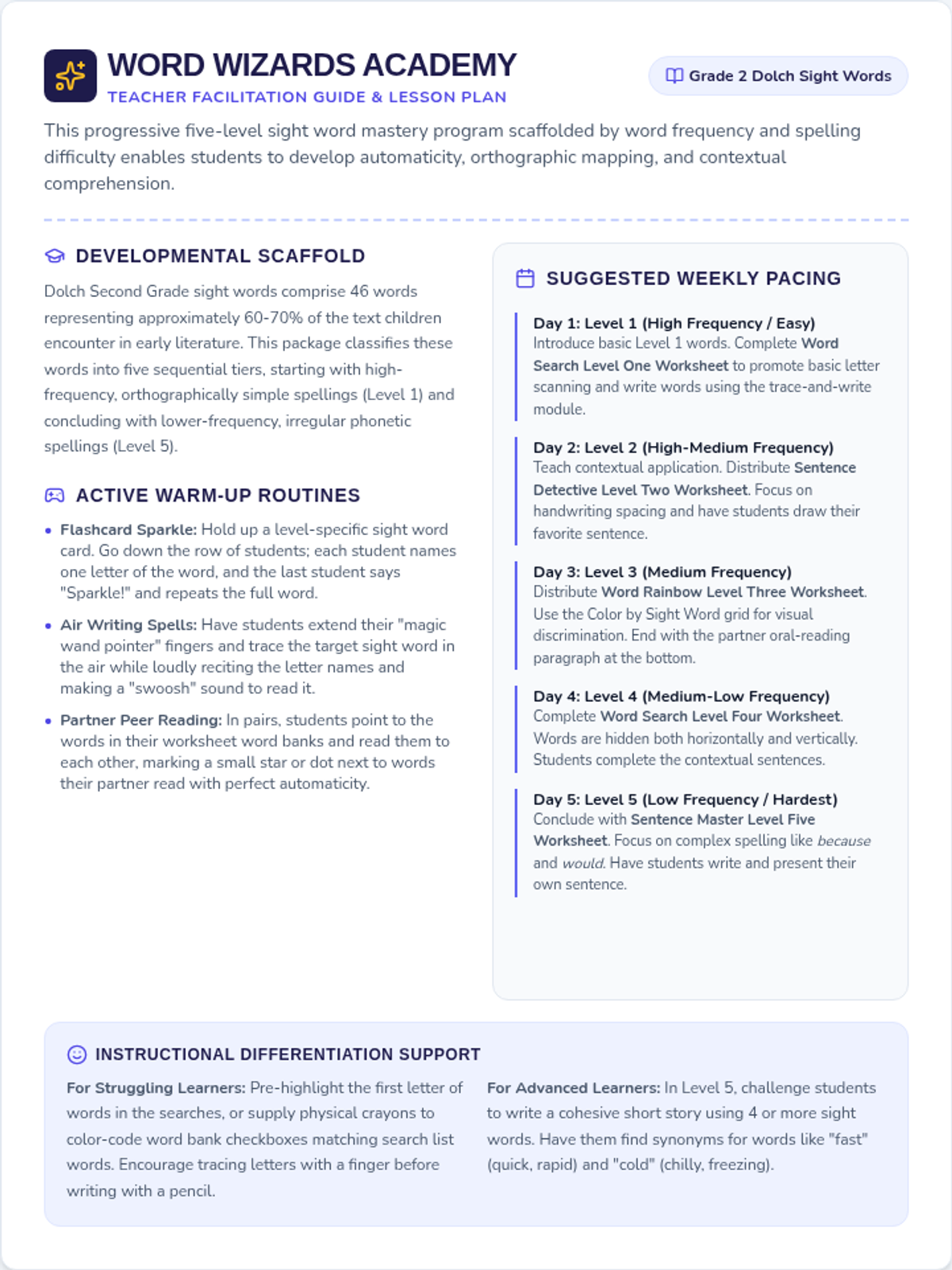
A comprehensive 2nd grade Dolch sight word mastery program containing progressive worksheets categorized by frequency and difficulty, covering word searches, sentence fill-in-the-blanks, and color-by-word grids.
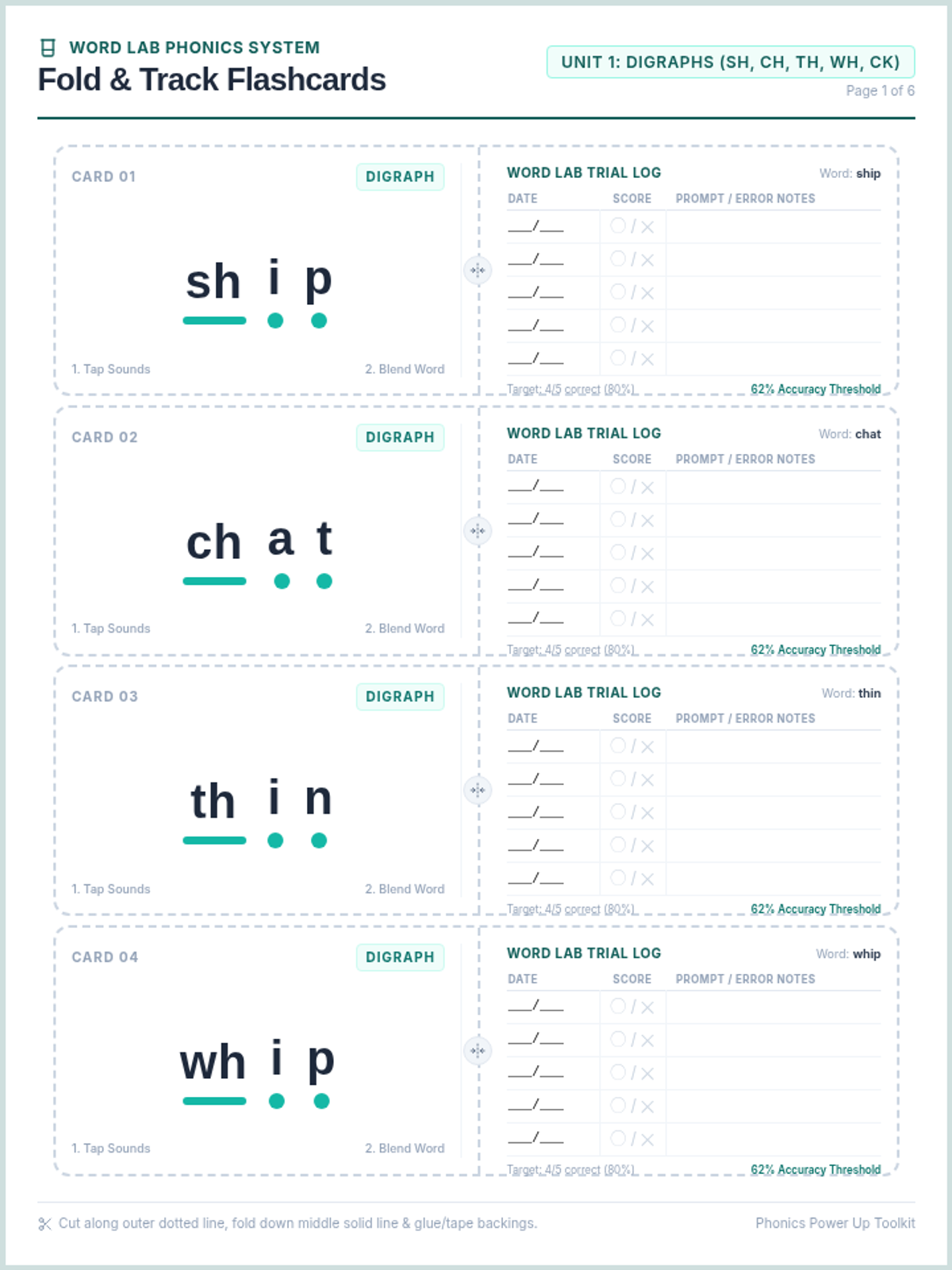
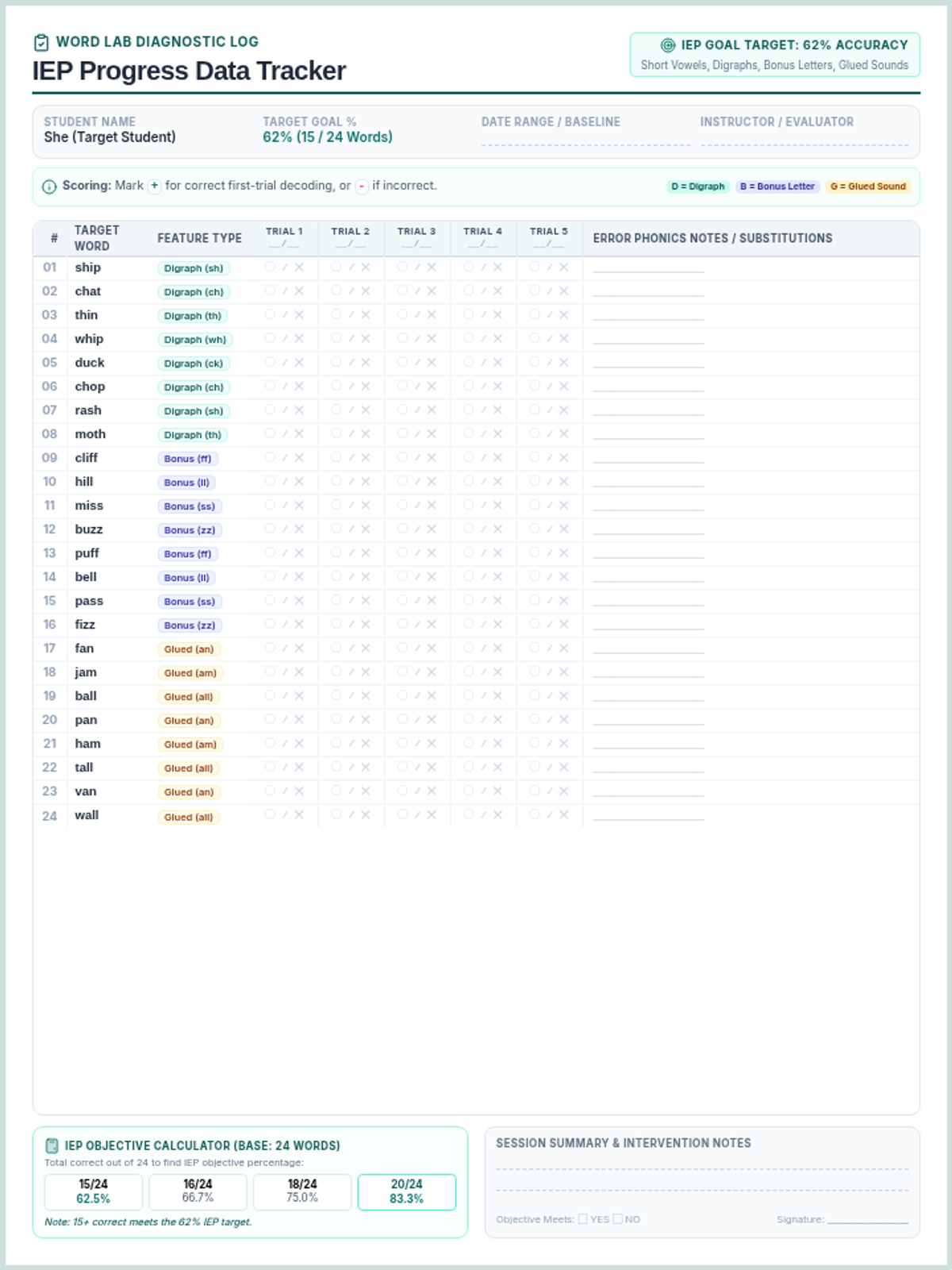
A comprehensive progress monitoring and practice toolkit designed to track and accelerate decoding of one-syllable short vowel words containing digraphs, bonus letters, and glued sounds.
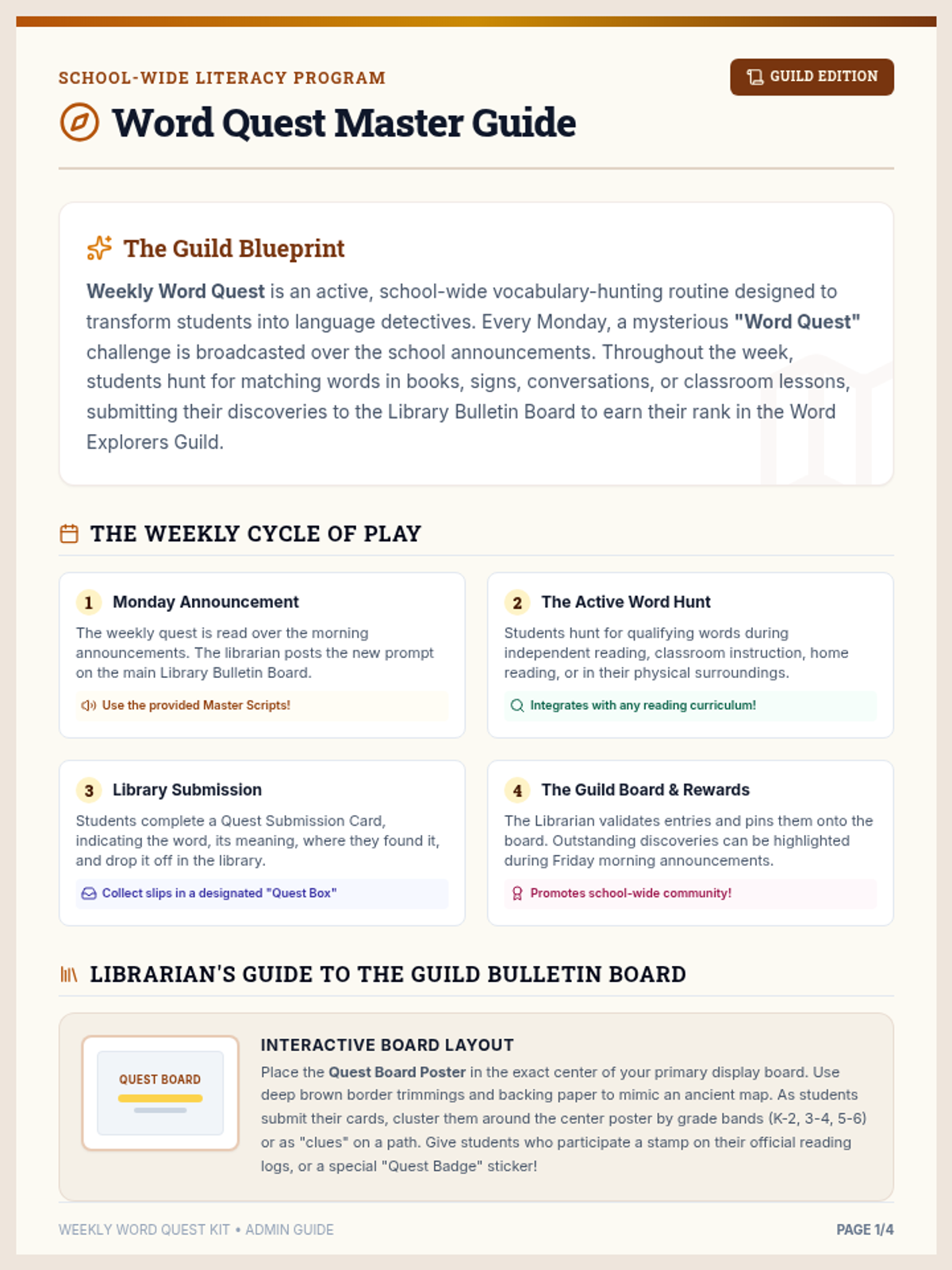
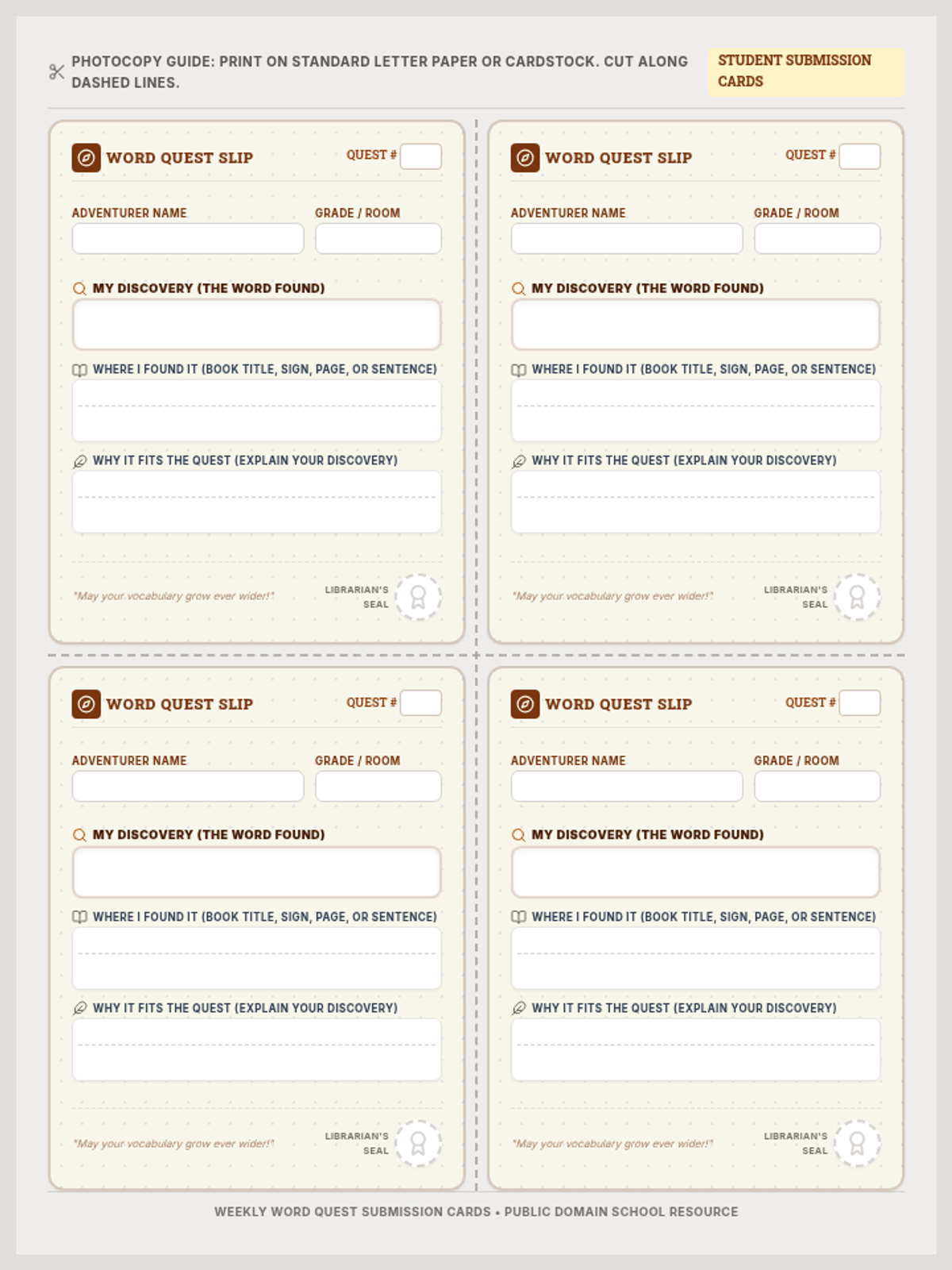
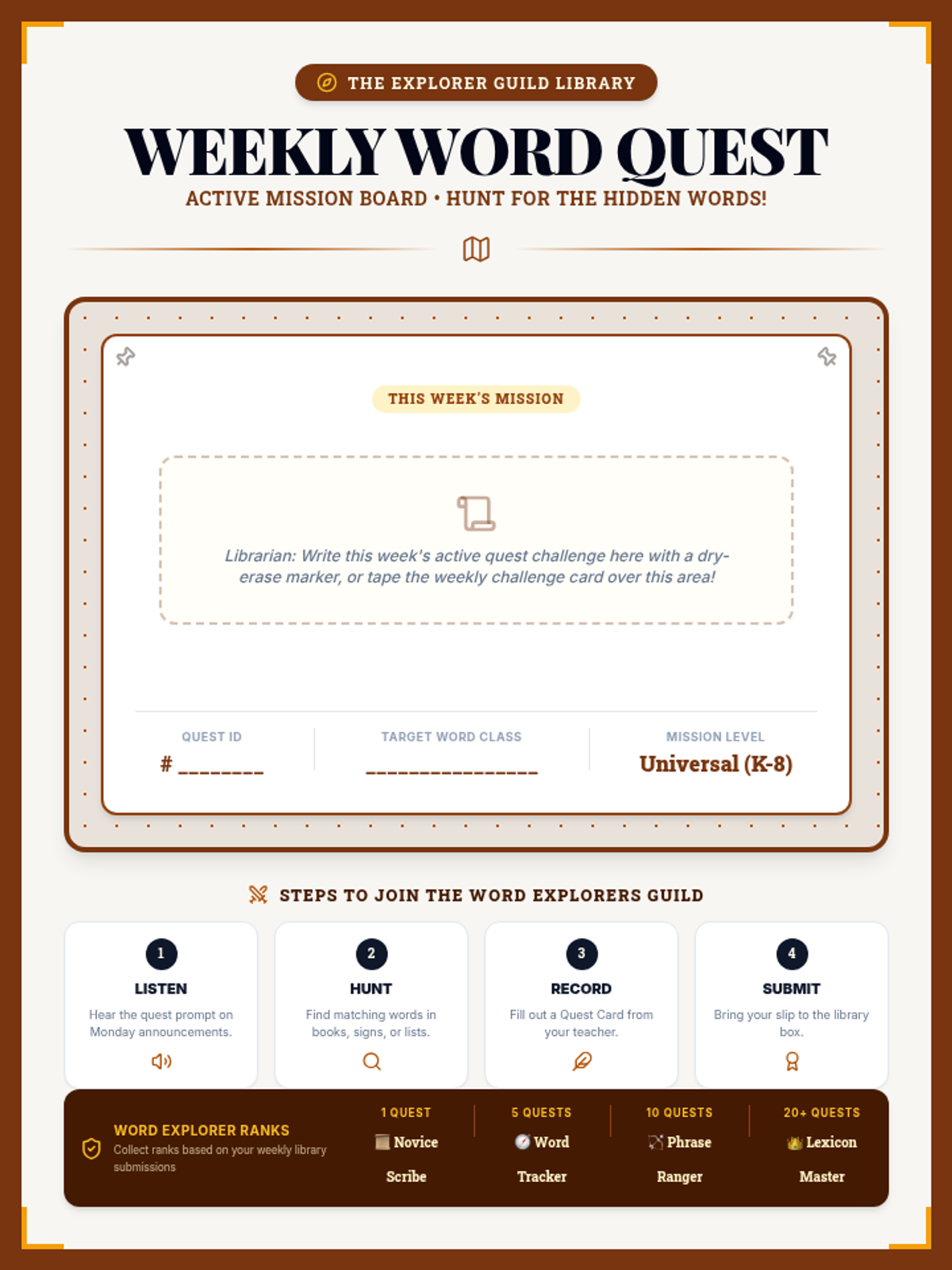
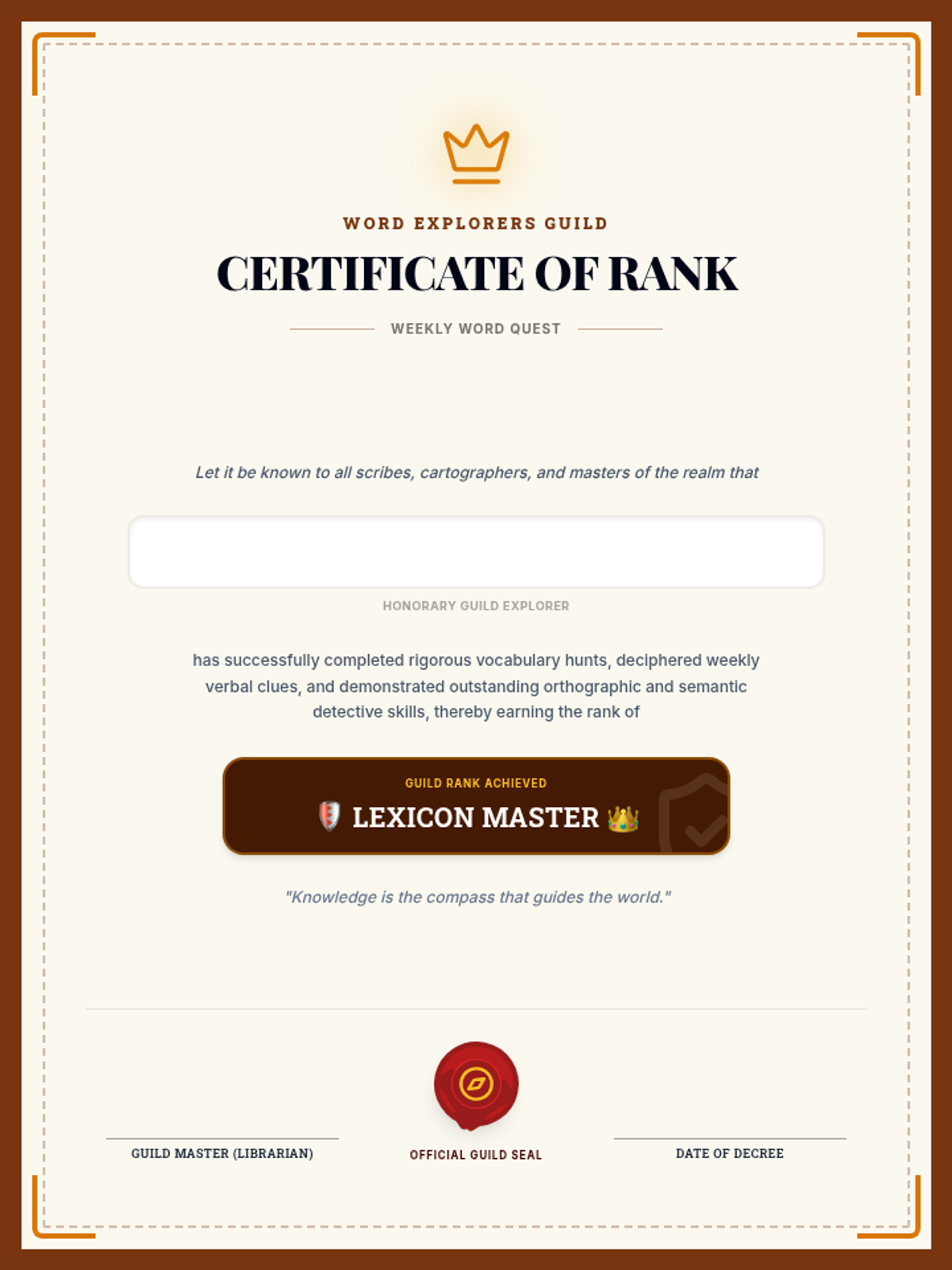
A comprehensive school-wide literacy program and implementation toolkit. Includes a 40-week master quest index, printable student submission slips, and a high-impact library bulletin board poster.
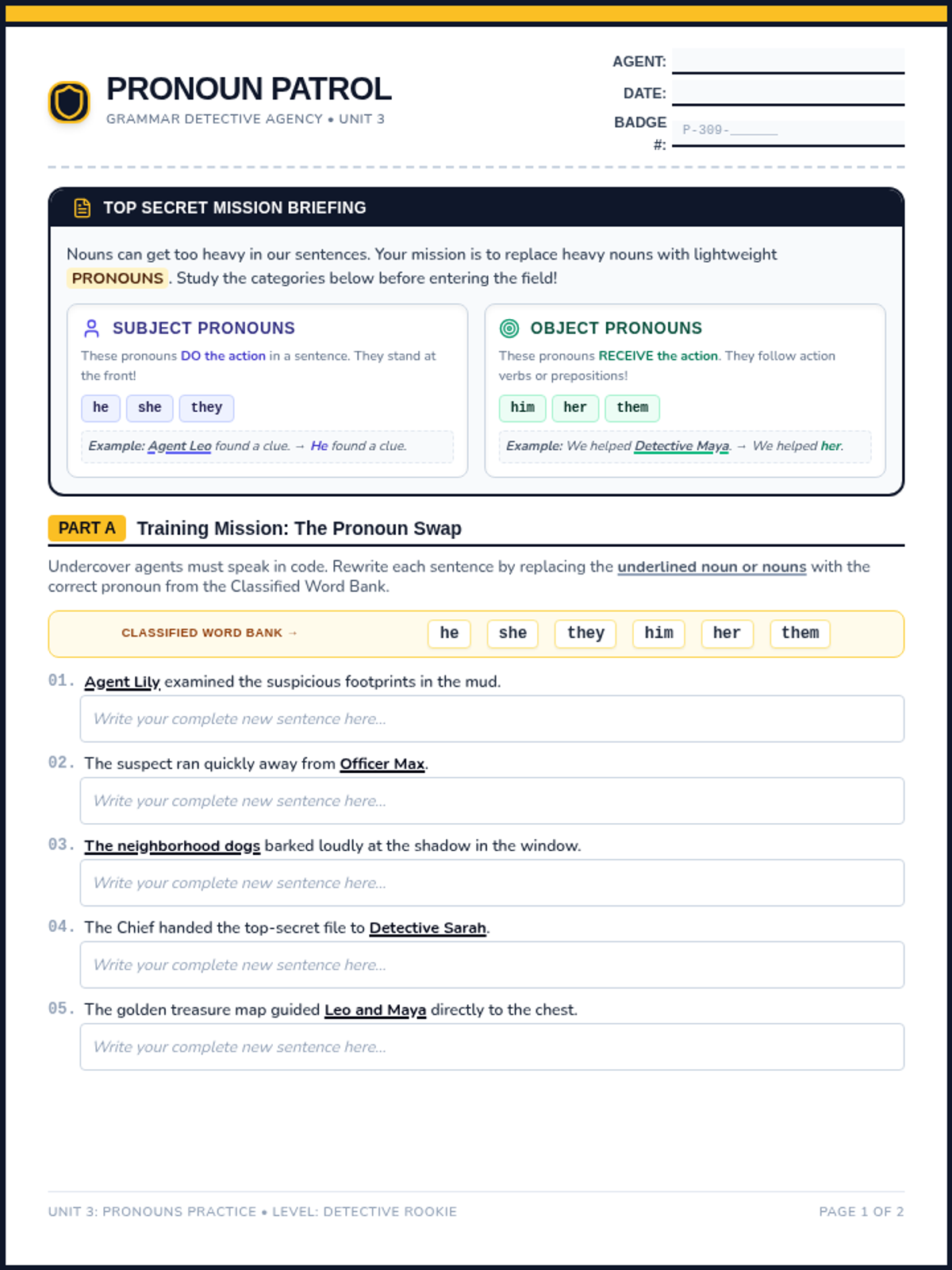
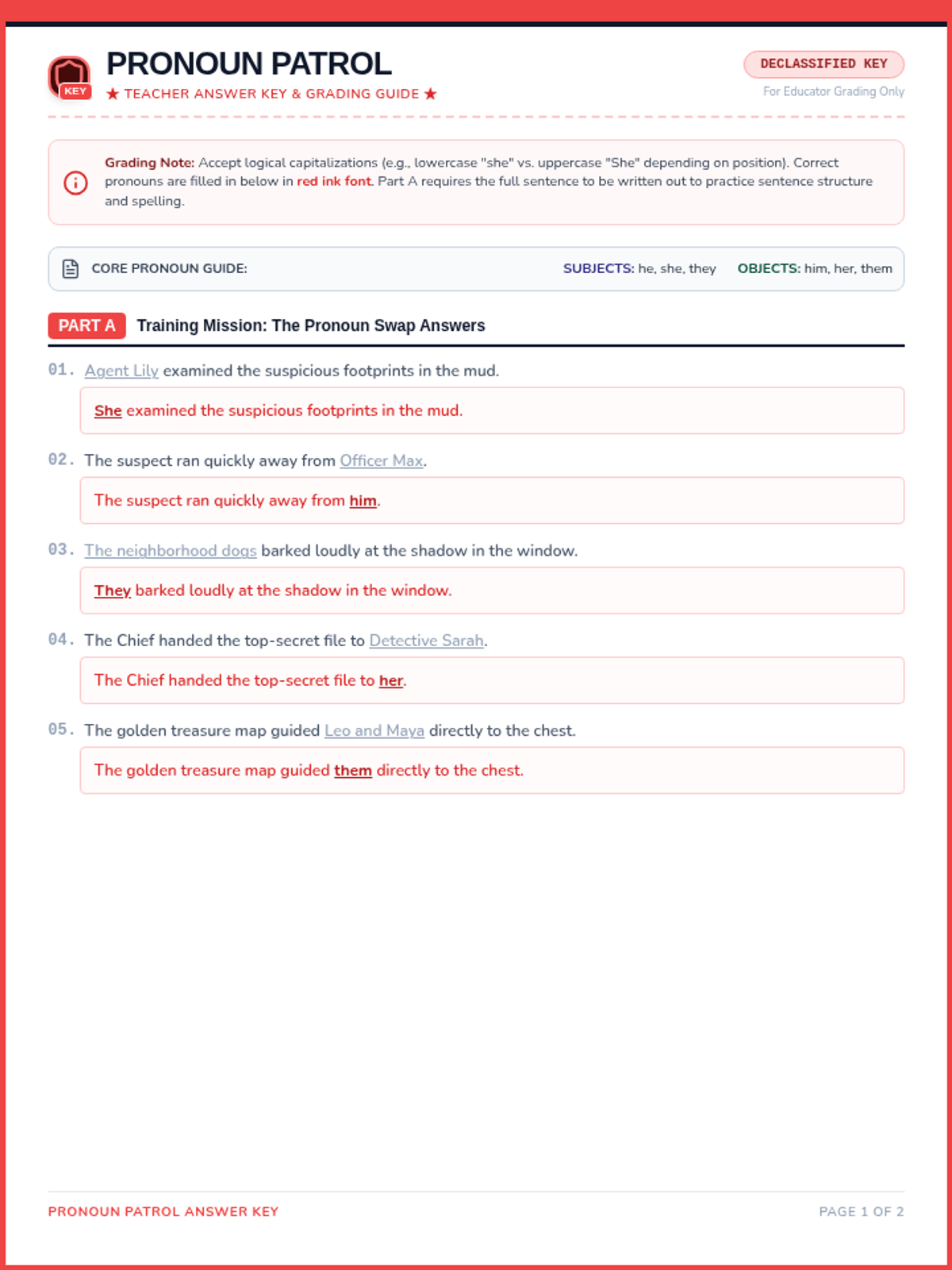
An engaging third-grade grammar lesson focusing on subject and object pronouns (he, she, they, him, her, them). Students join the Pronoun Patrol to solve pronoun mysteries, replacing heavy nouns with lightweight pronouns.
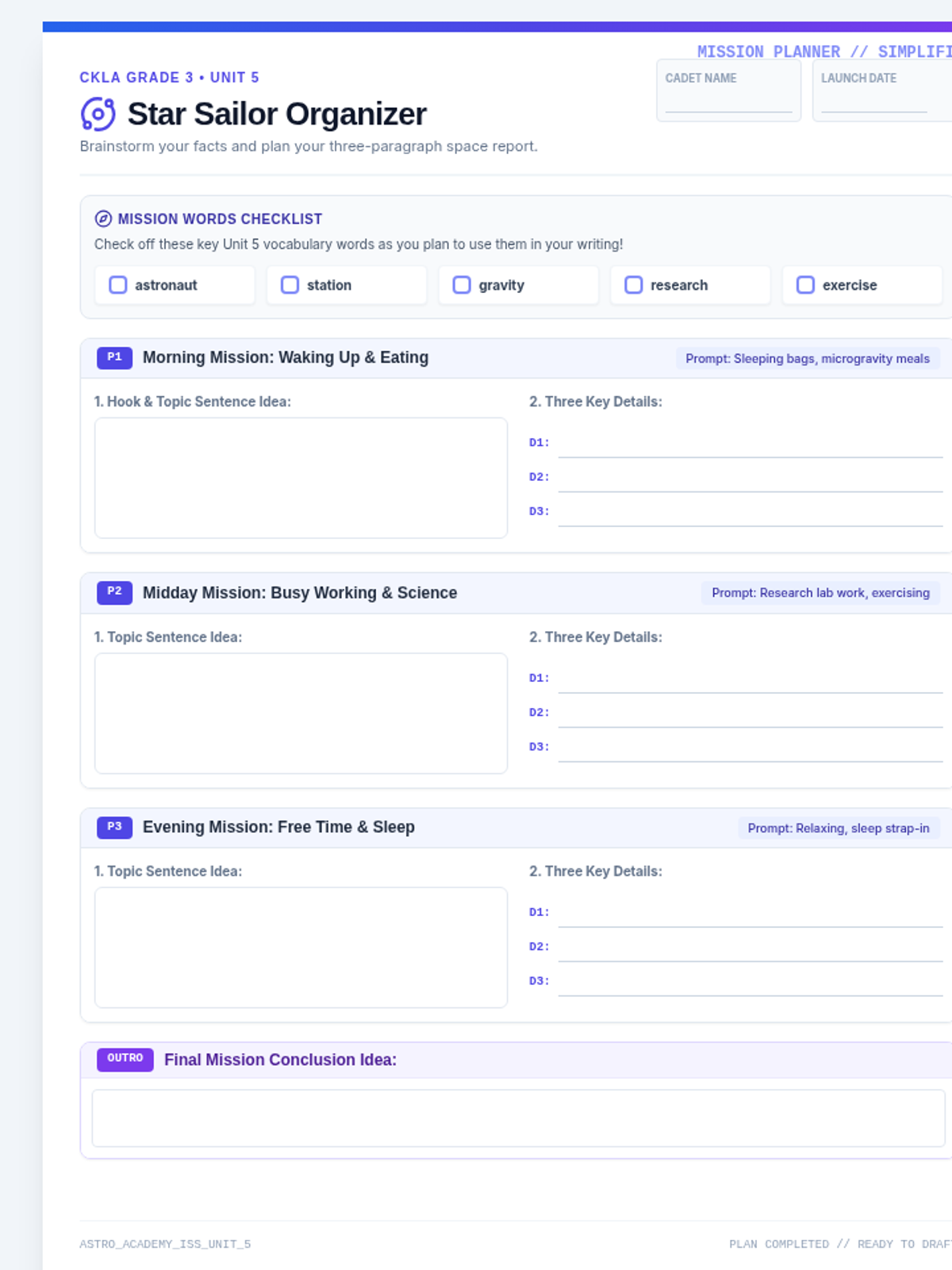
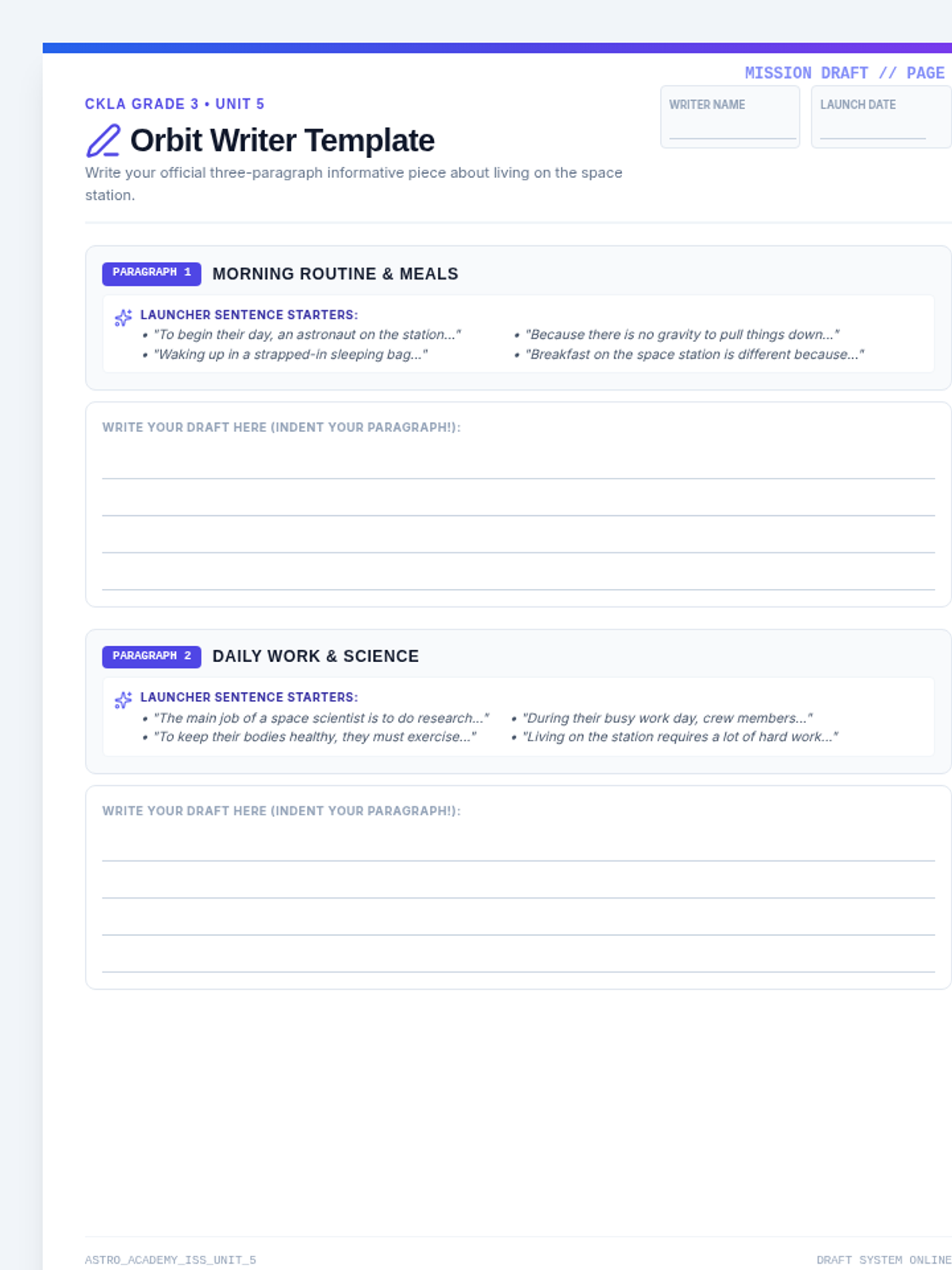
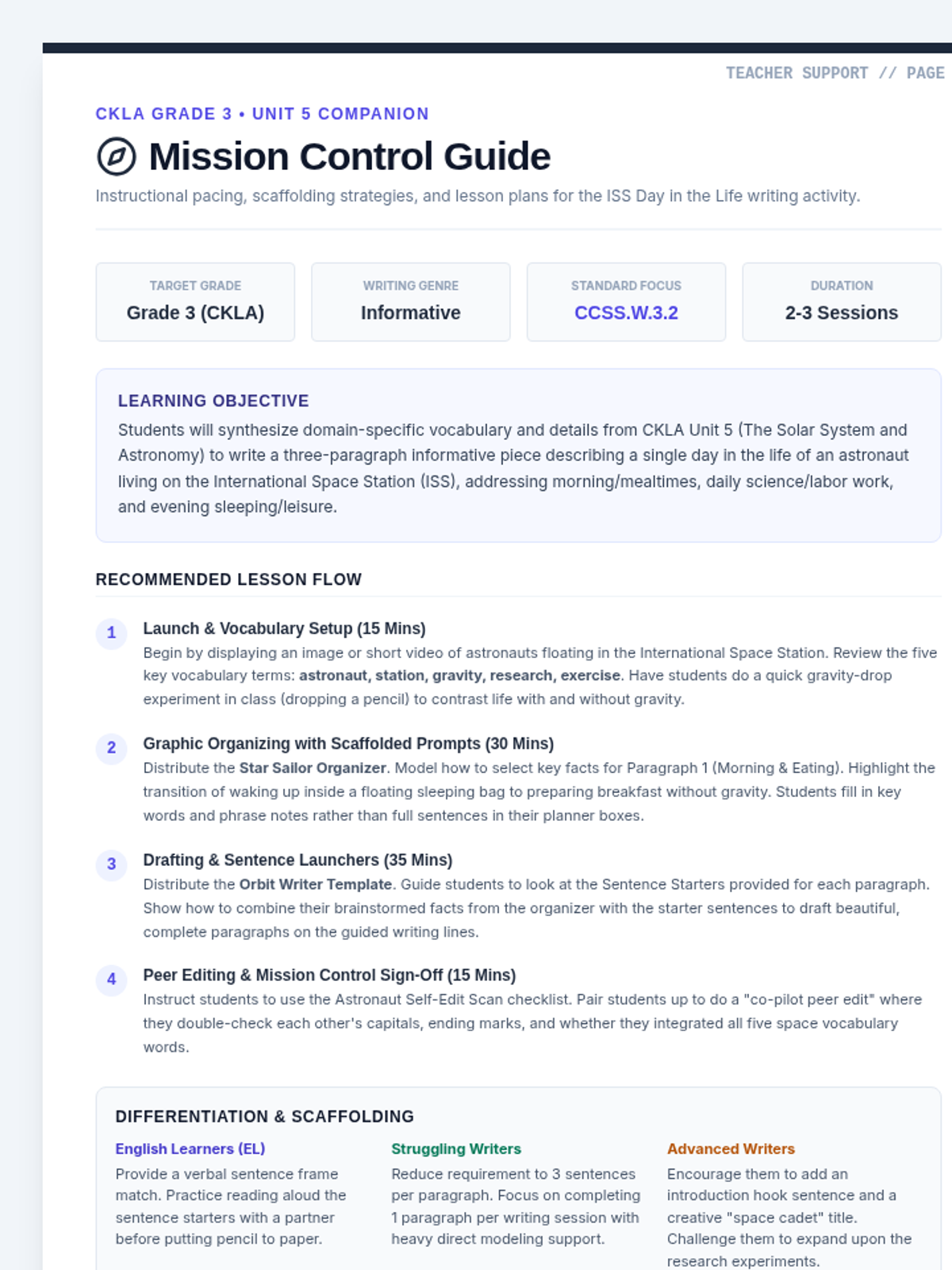
A cohesive, scaffolded writing lesson aligned with CKLA Grade 3 Unit 5 (Solar System and Astronomy). Students use high-interest graphic organizers and sentence starters to write a three-paragraph informative piece about a day in the life of an astronaut on the International Space Station.
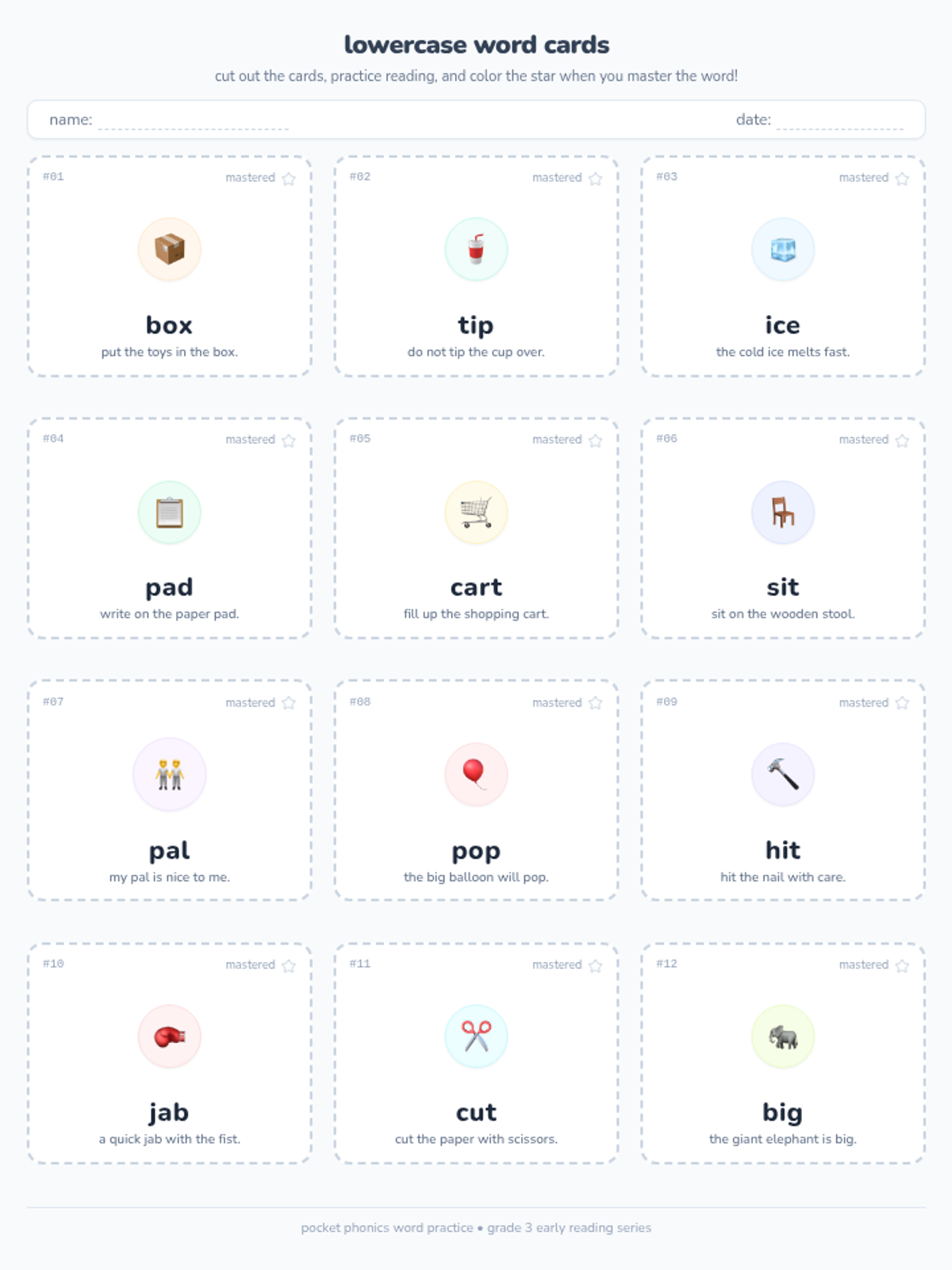
A hands-on spelling and early phonics lesson focused on key vocabulary words. Students practice recognition, tracing, and sentence application of common short vowel words.