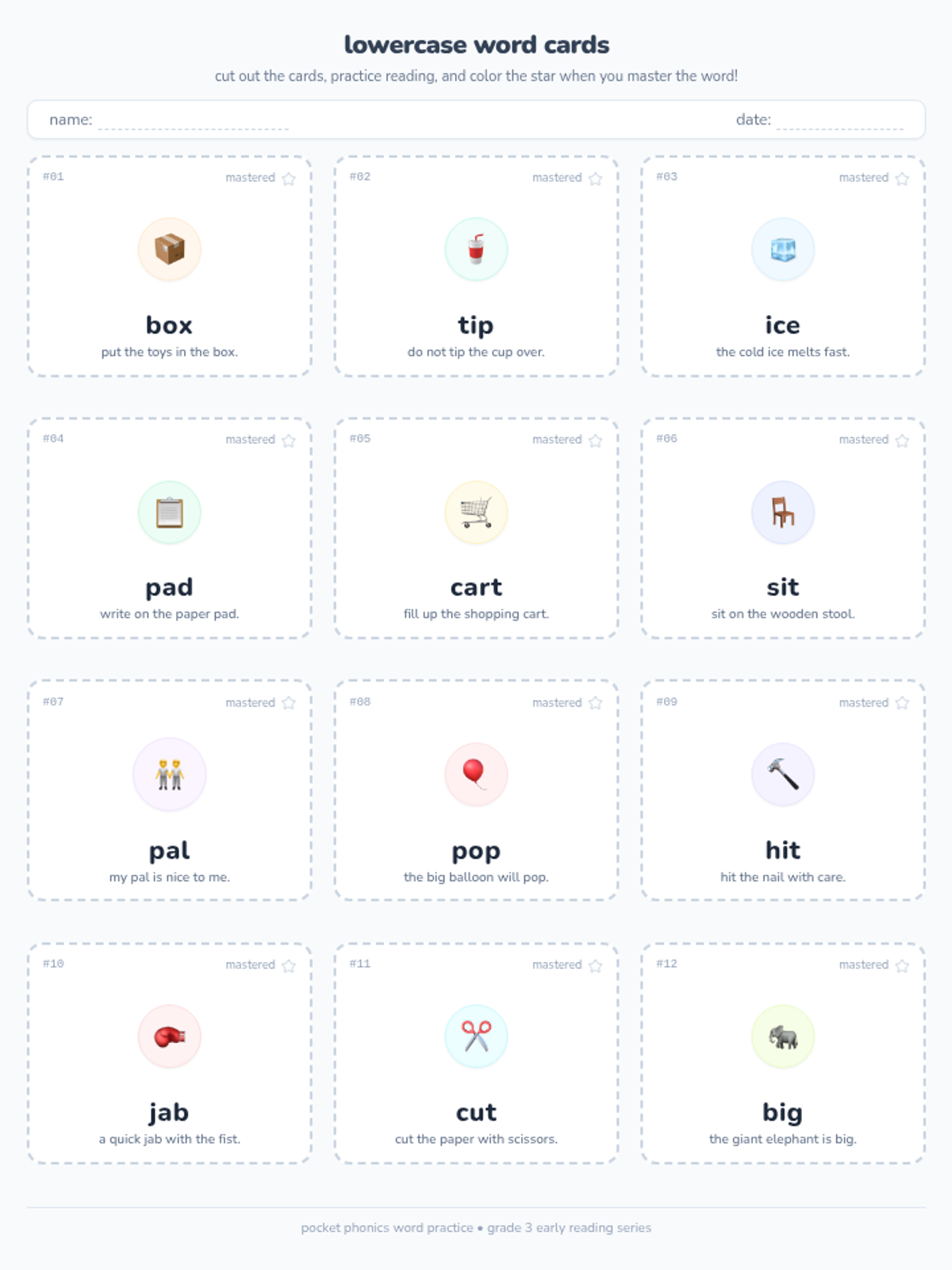
A slide presentation teaching students to distinguish between the hard 'c' (/k/) and soft 'c' (/s/) sounds in one-syllable words through a 'Crunchy vs. Soft' theme.
A comprehensive lesson on distinguishing between facts and opinions using relatable topics like daily routines, sports, and animals. Includes interactive slides, differentiated practice, and formative assessments.
A focused phonics lesson exploring the two sounds of the 'oo' digraph through guided practice and hands-on sorting. Students will distinguish between the short 'oo' (as in book) and the long 'oo' (as in moon).
A tiered reading lesson exploring the signs and science of spring across three grade levels (K, 2, and 4), focusing on main ideas and sequencing.
A comprehensive review of the letter C, focusing on the hard /k/ sound through visual recognition and high-interest vocabulary.
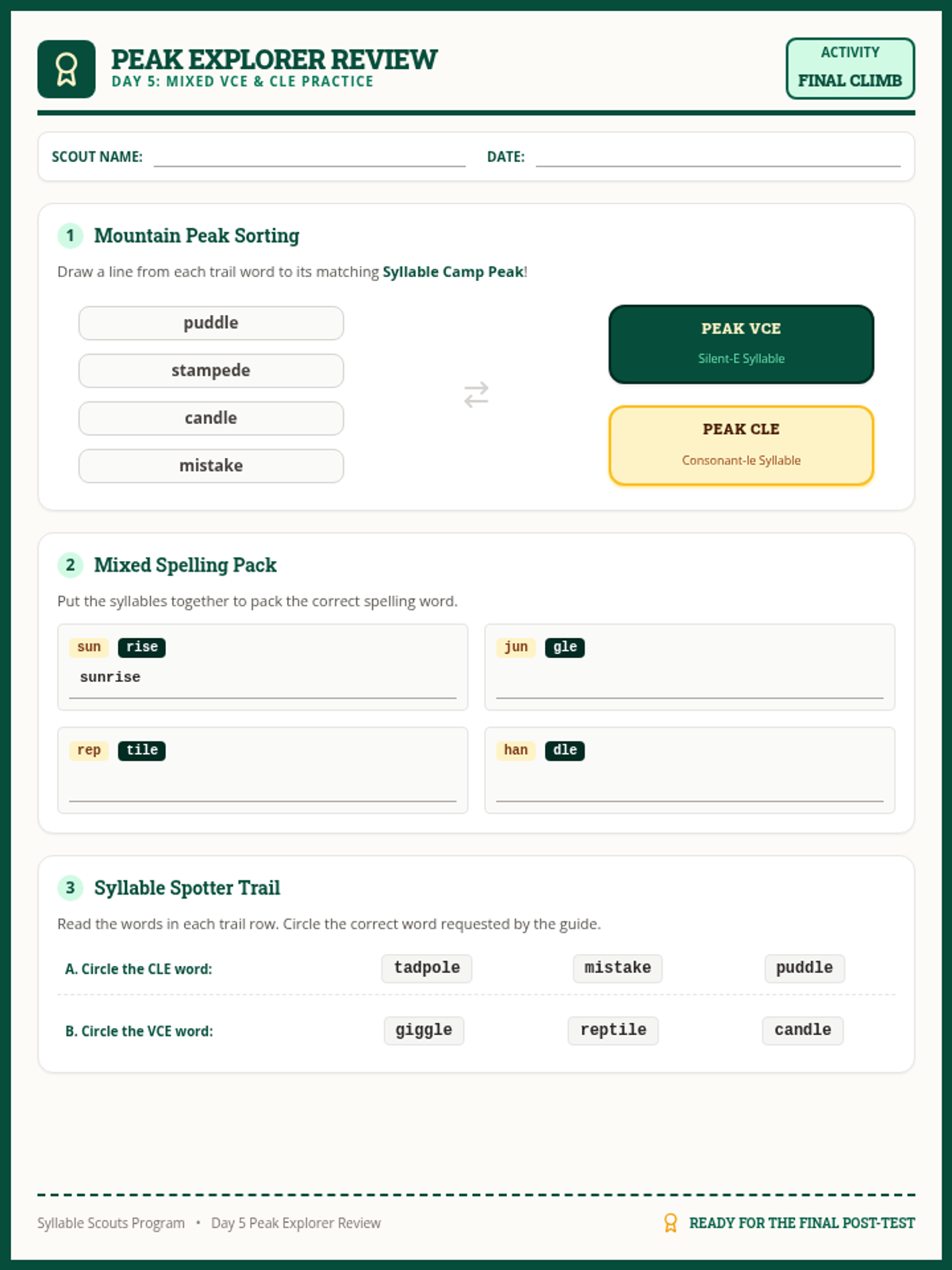
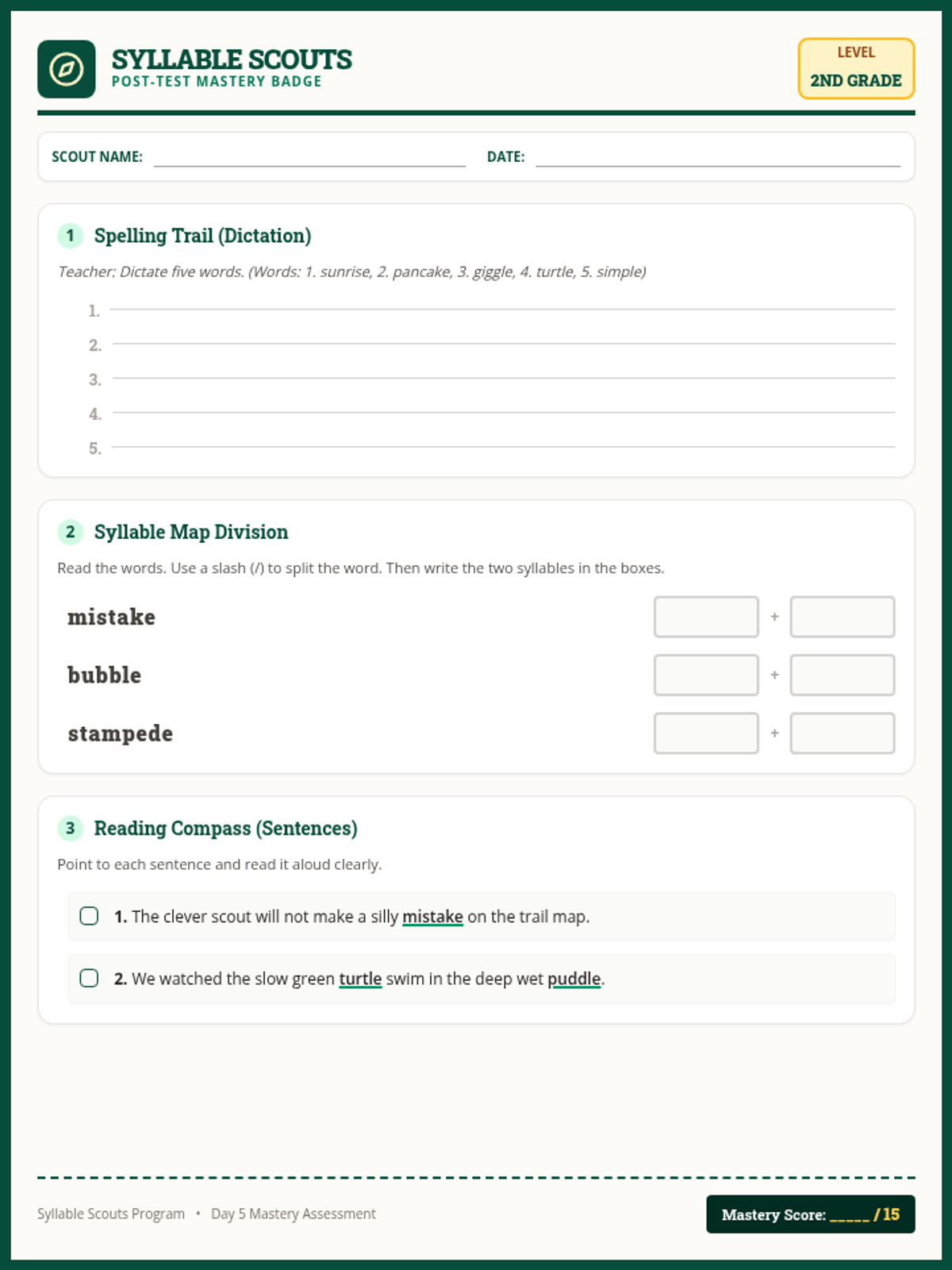
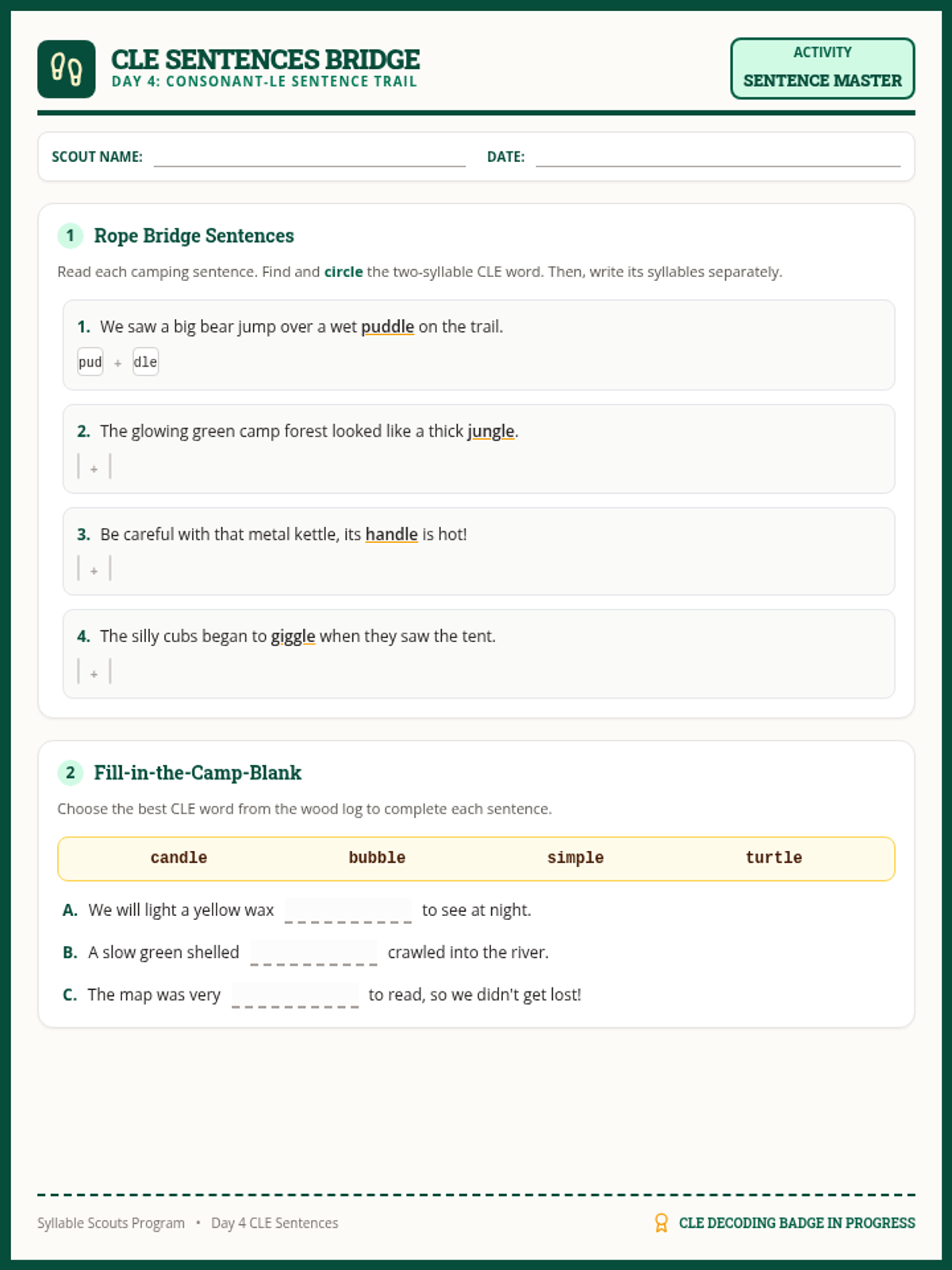
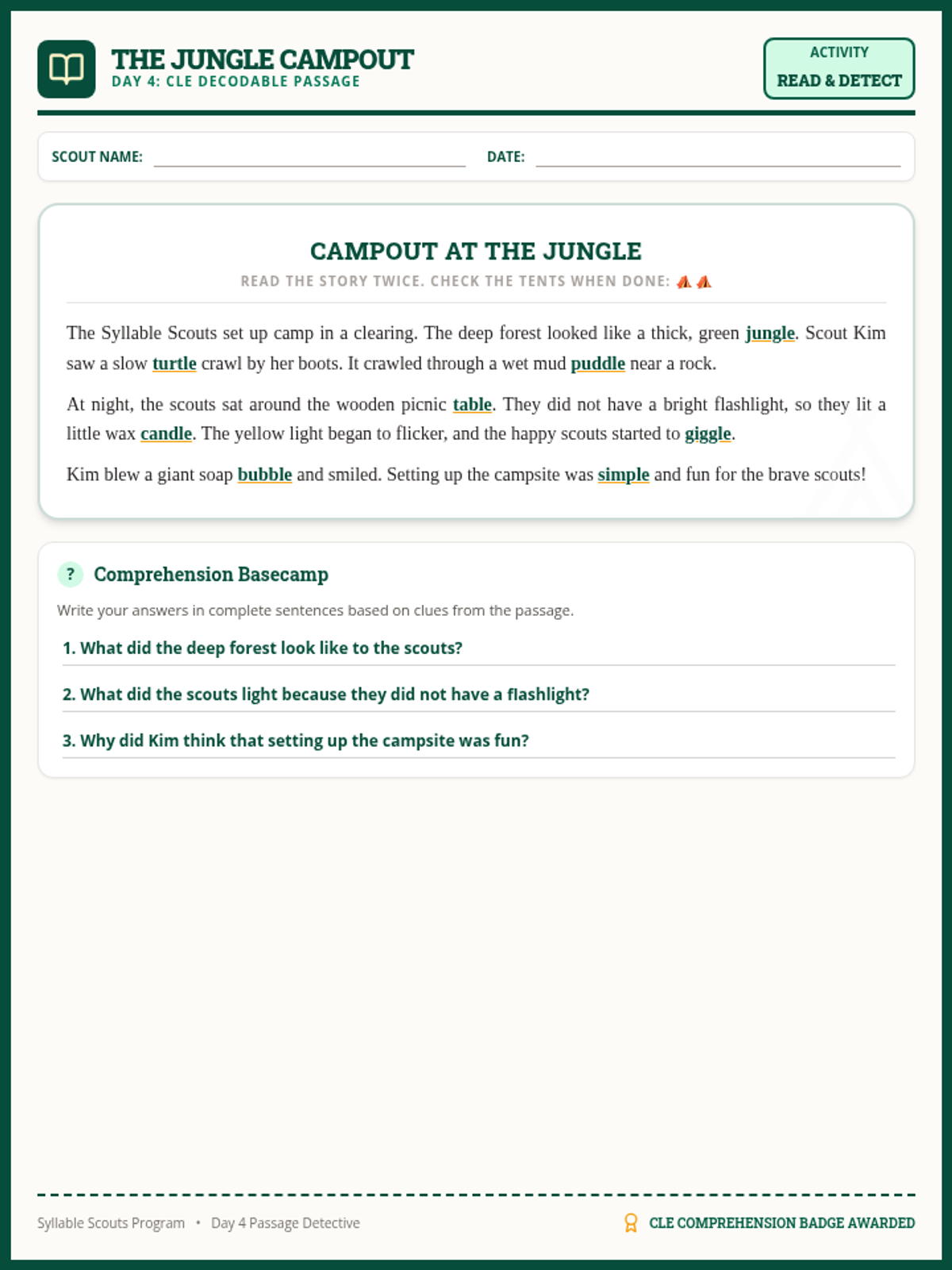
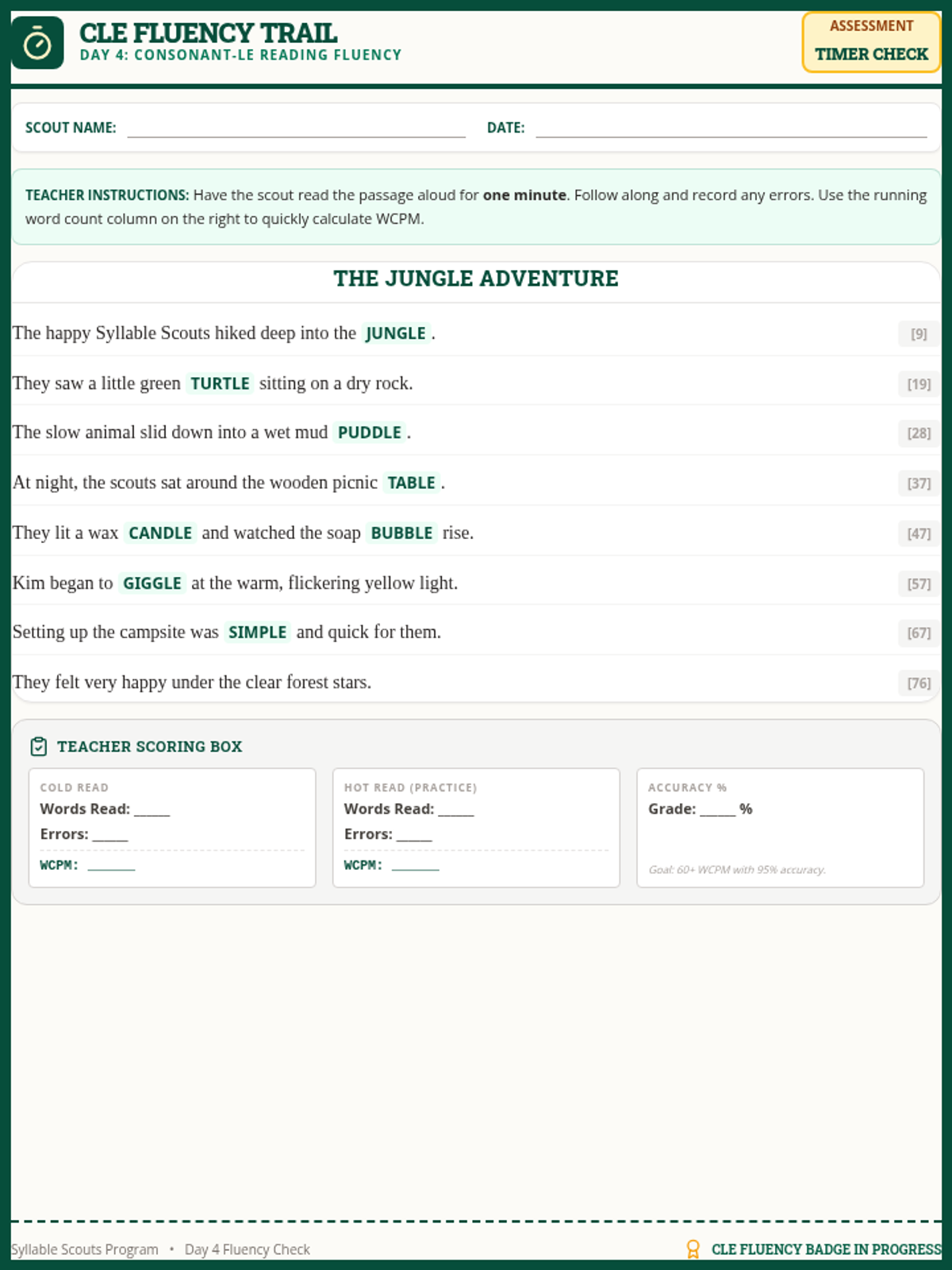
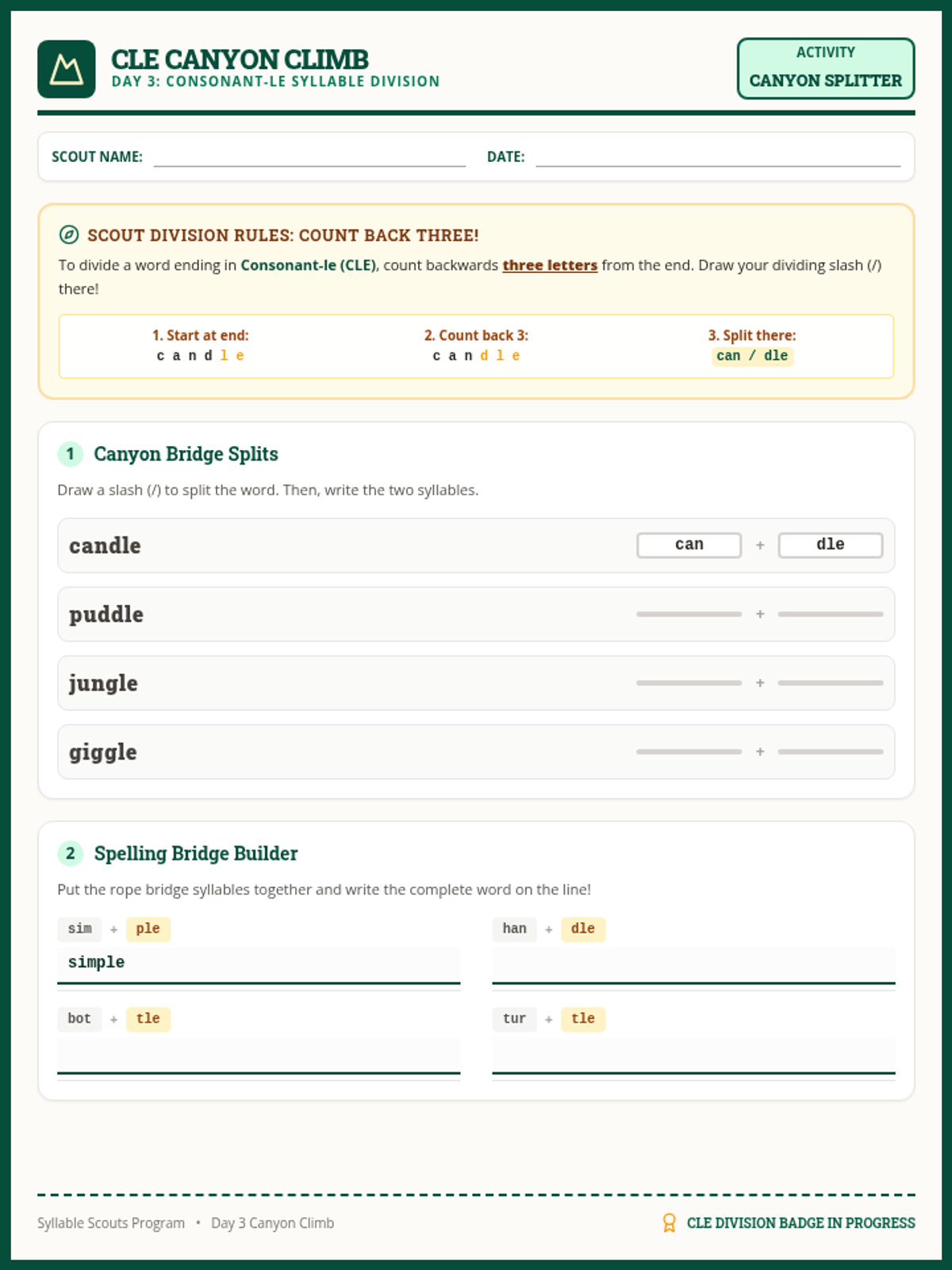
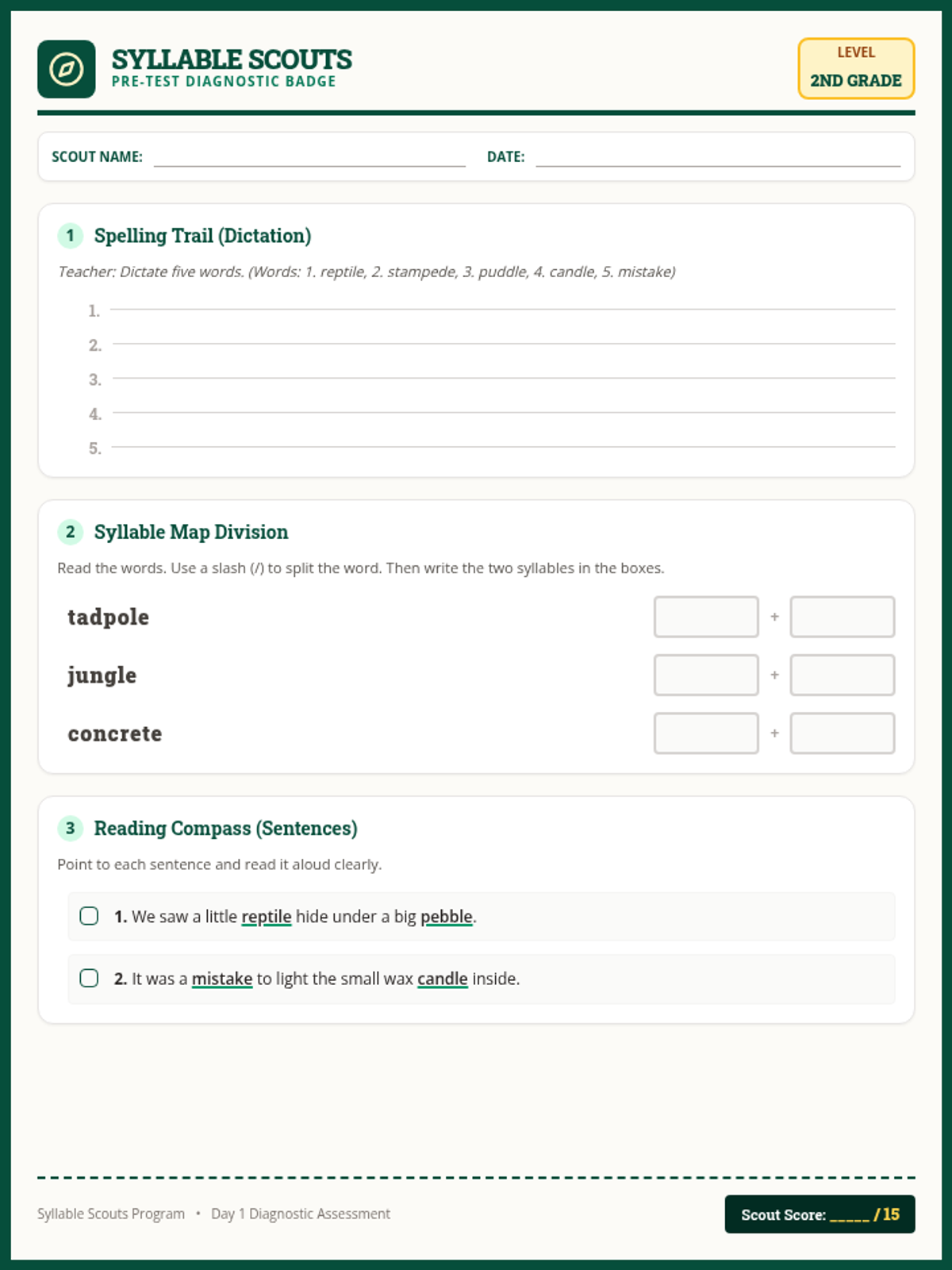
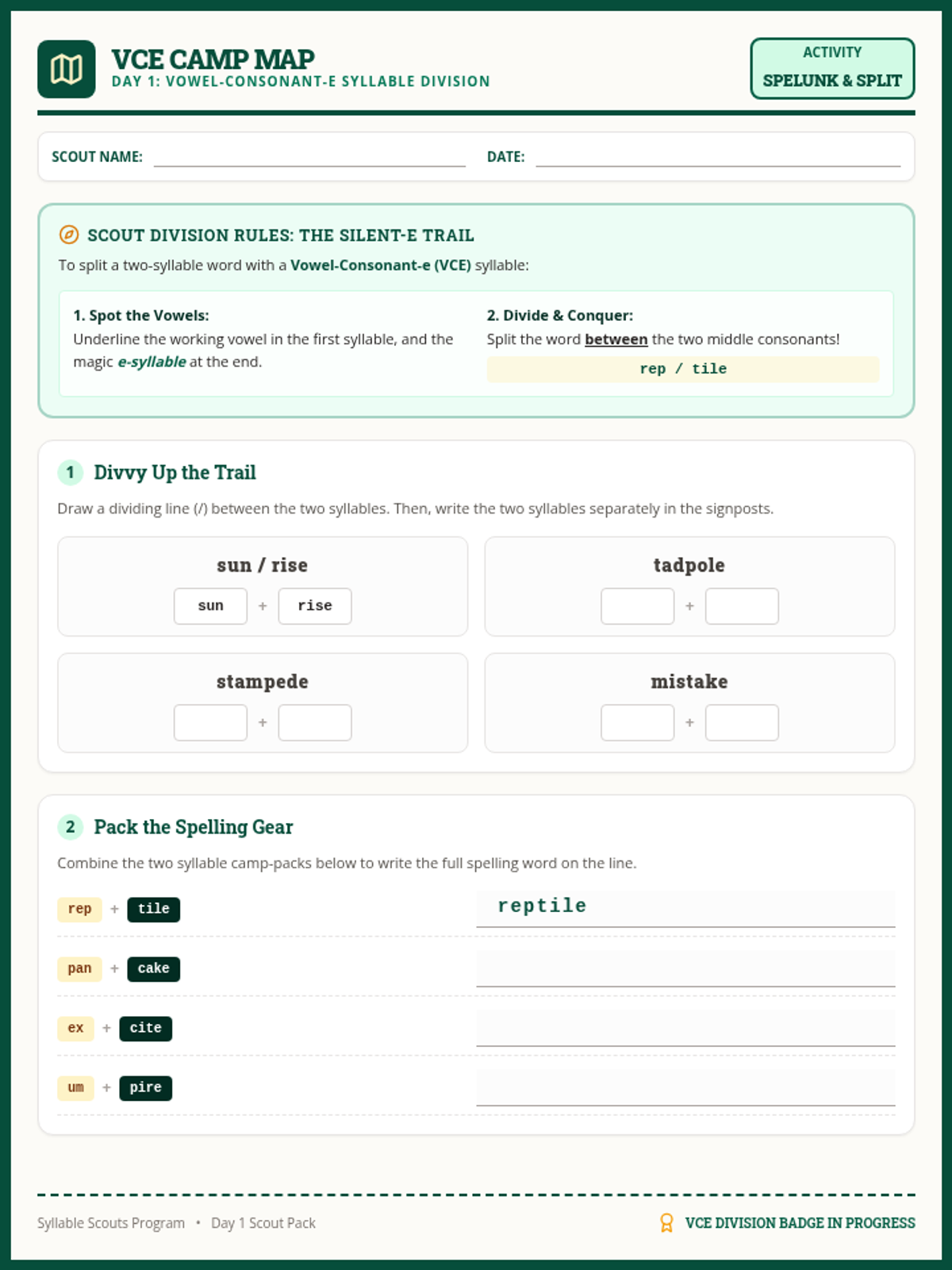
A lesson focusing on consonant-le syllables (Wilson 6.4), including mixed review and the silent-t -stle pattern. Students will practice syllable division and reading fluency.
In this activity, students will evaluate the different ways to handle money—spending, saving, and investing—by matching persuasive arguments with supporting evidence. Students will practice identifying claims and the reasoning that backs them up within a financial literacy context.
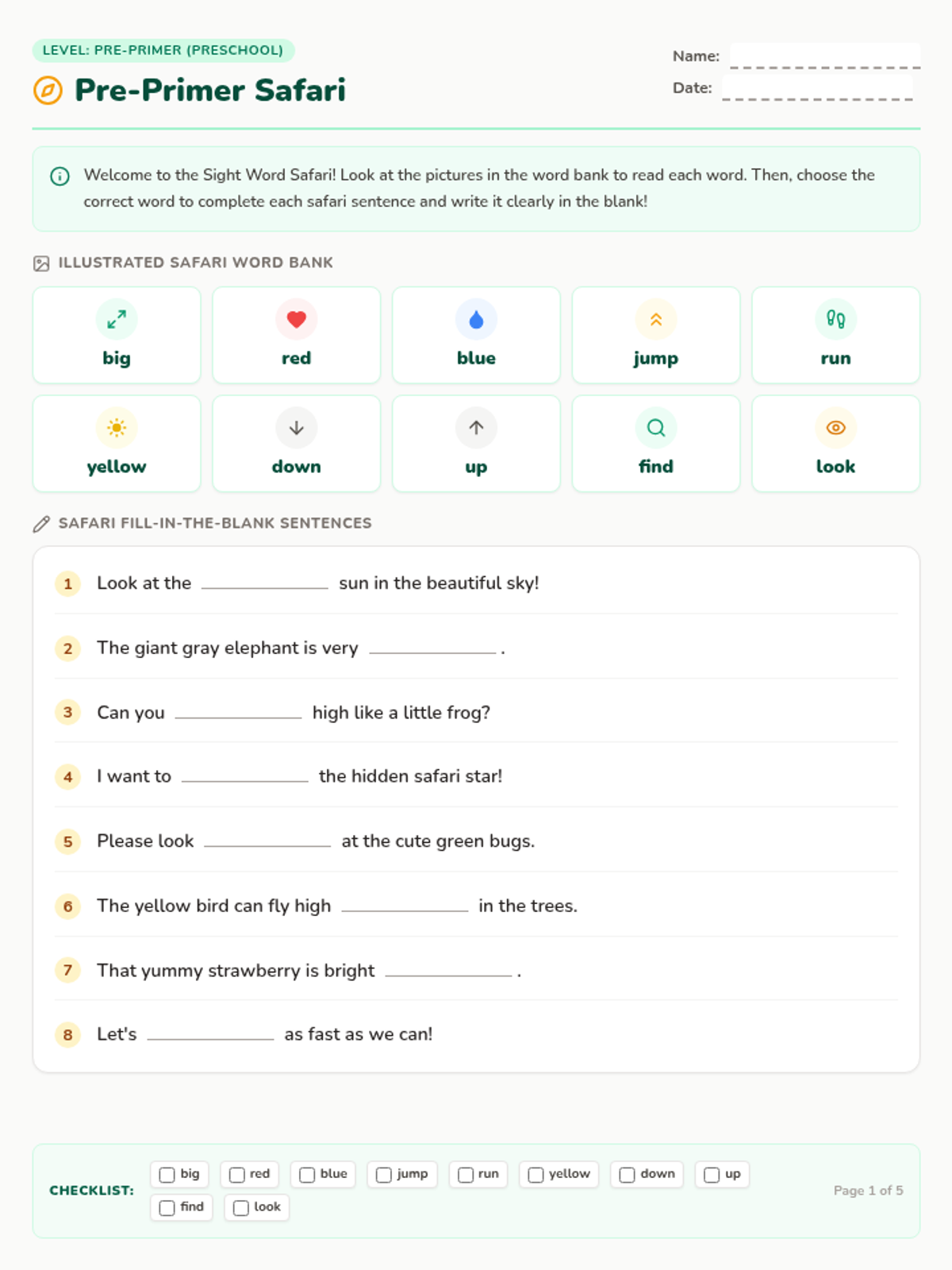
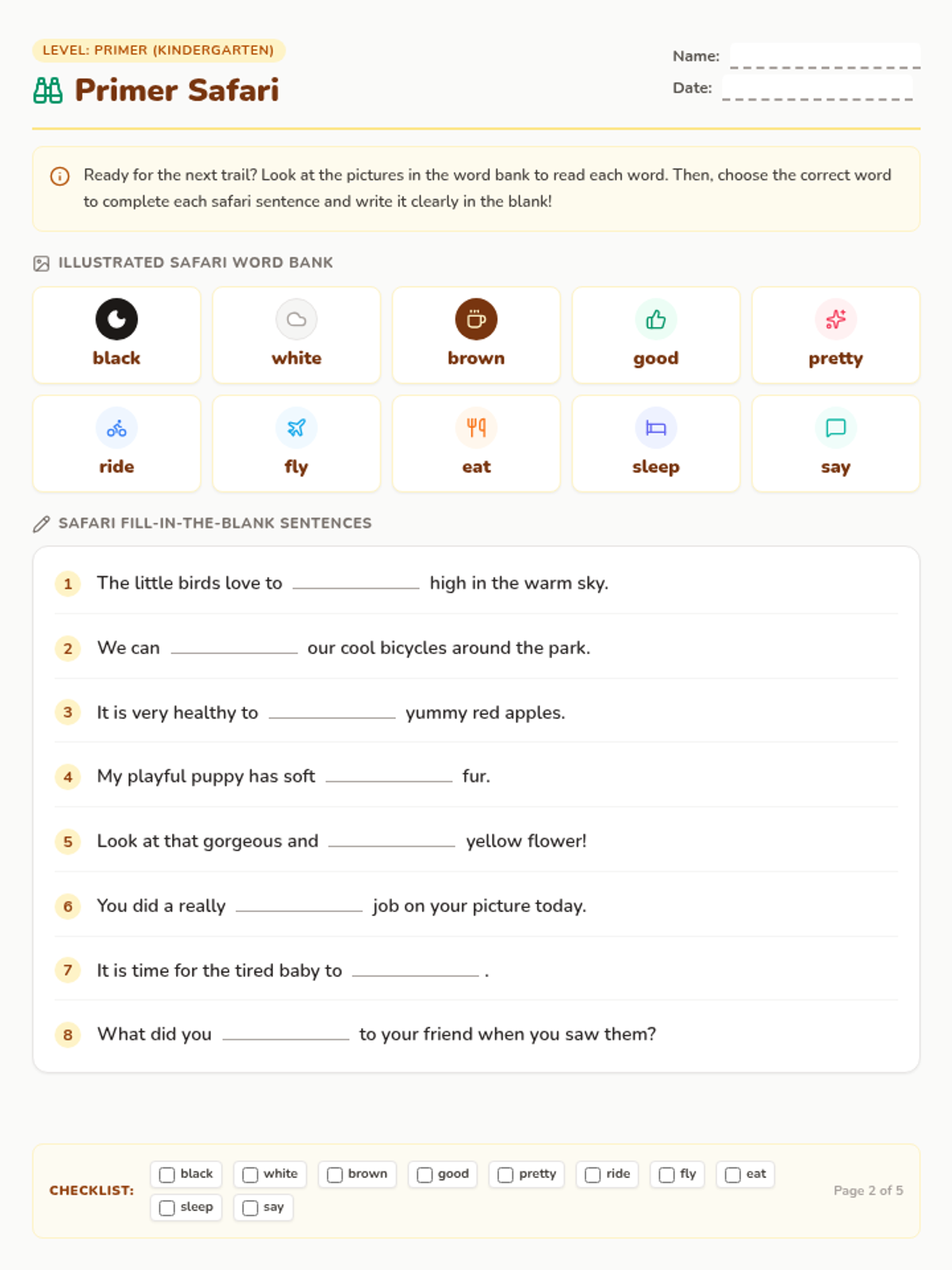
A collection of resources to help 3rd graders craft personal narratives, including a structured graphic organizer, visual writing prompts, and instructional support for teachers.
A collection of 10 engaging reading passages for 3rd-grade students, featuring a mix of fiction and nonfiction topics with comprehension and inferencing questions.
A detective-themed lesson focusing on three tricky homophone pairs: witch/which, led/lead, and break/brake. Students will identify meanings through context and practice using them correctly in sentences.
A lesson exploring the biography of NFL player Dion Lewis, focusing on character traits, resilience, and identifying words with suffixes.
A lesson focused on helping third graders identify the meaning of unknown words using context clues in fictional short stories. Students act as 'Word Detectives' to highlight evidence and define mystery words.
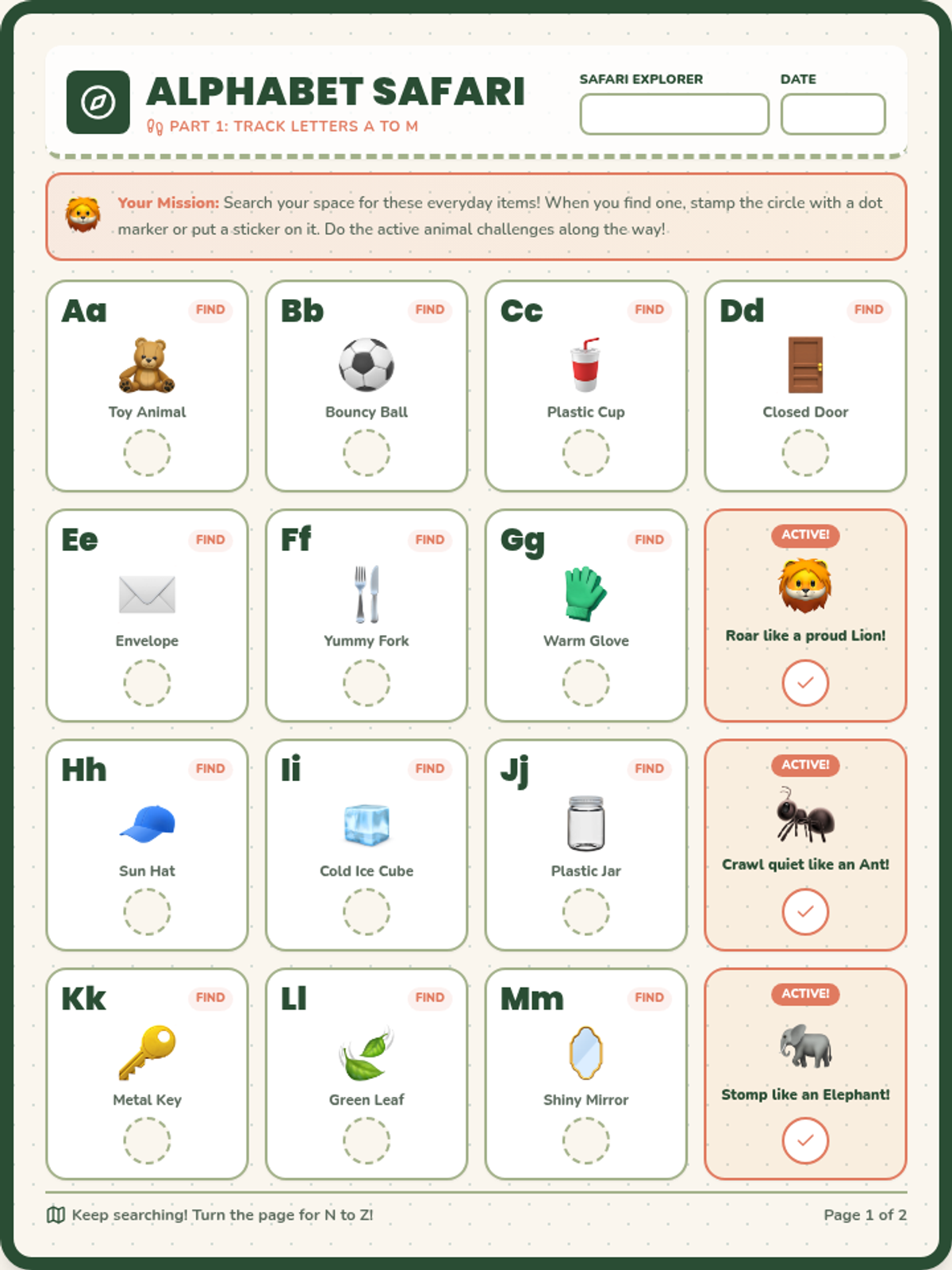
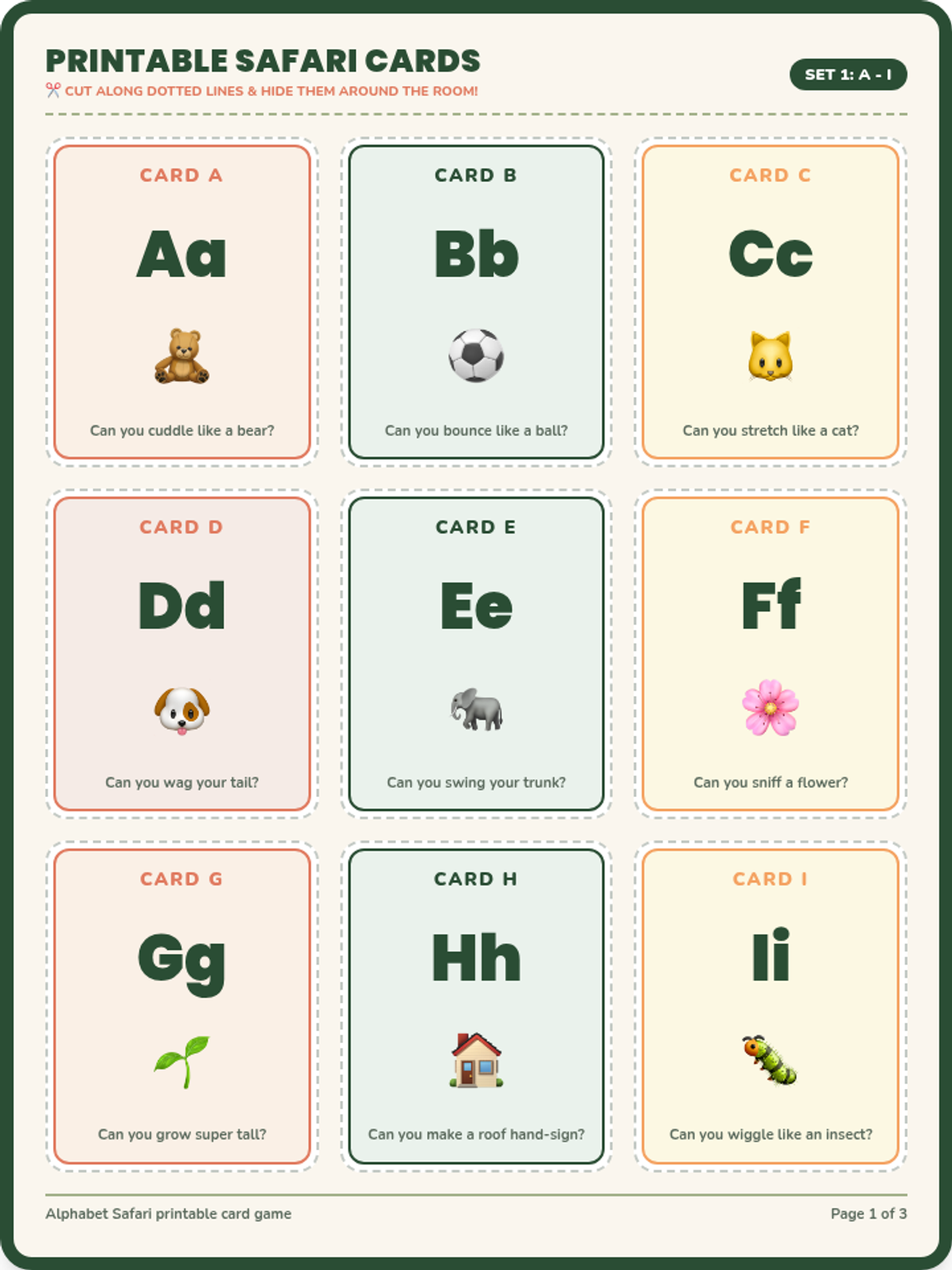
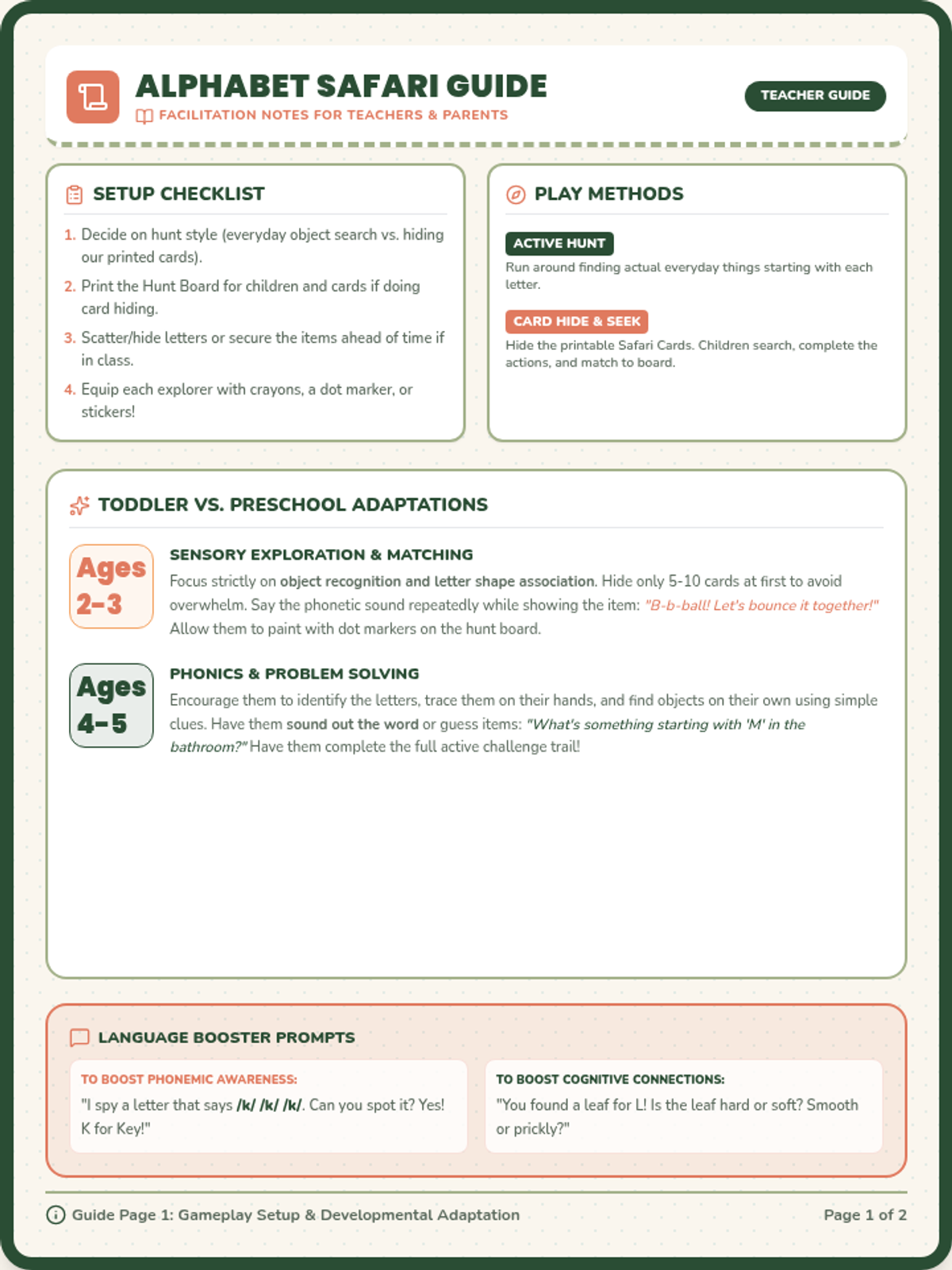
A foundational phonics lesson for Kindergarten students focusing on letter-sound recognition and beginning sounds through a detective-themed exploration.
A cooperative storytelling lesson where students use mystery bags and 'traveler' prompts to build collective narratives, enhancing vocabulary and sequencing skills.
A lesson using a detective analogy to teach students how to analyze evidence. Students learn that clues (evidence) mean nothing without a detective's logic (analysis) to solve the case (argument).
A focused study on multisyllabic words containing the 'oi' and 'oy' vowel teams, focusing on decoding and spelling patterns.
A lesson focused on distinguishing between common homophones and contractions: there/their/they're and its/it's for third-grade students. Includes visual aids and hands-on practice.
A lesson focusing on reading comprehension through a sports recap of a Celtics vs. Timberwolves game, featuring vocabulary building with suffixes and syllable division, and an extension piece on NBA standings and MVP races.
A Tier 2 small group intervention focused on identifying character traits, motivations, and feelings. Students use a 'Because-So' sentence frame to connect character actions to story events, aligned with NC EOG RL.3.3 standards.
A targeted Tier 2 small group intervention focused on identifying and describing logical connections (sequence, cause/effect, and comparison) in informational texts to support Grade 3 RI.3.8 proficiency.
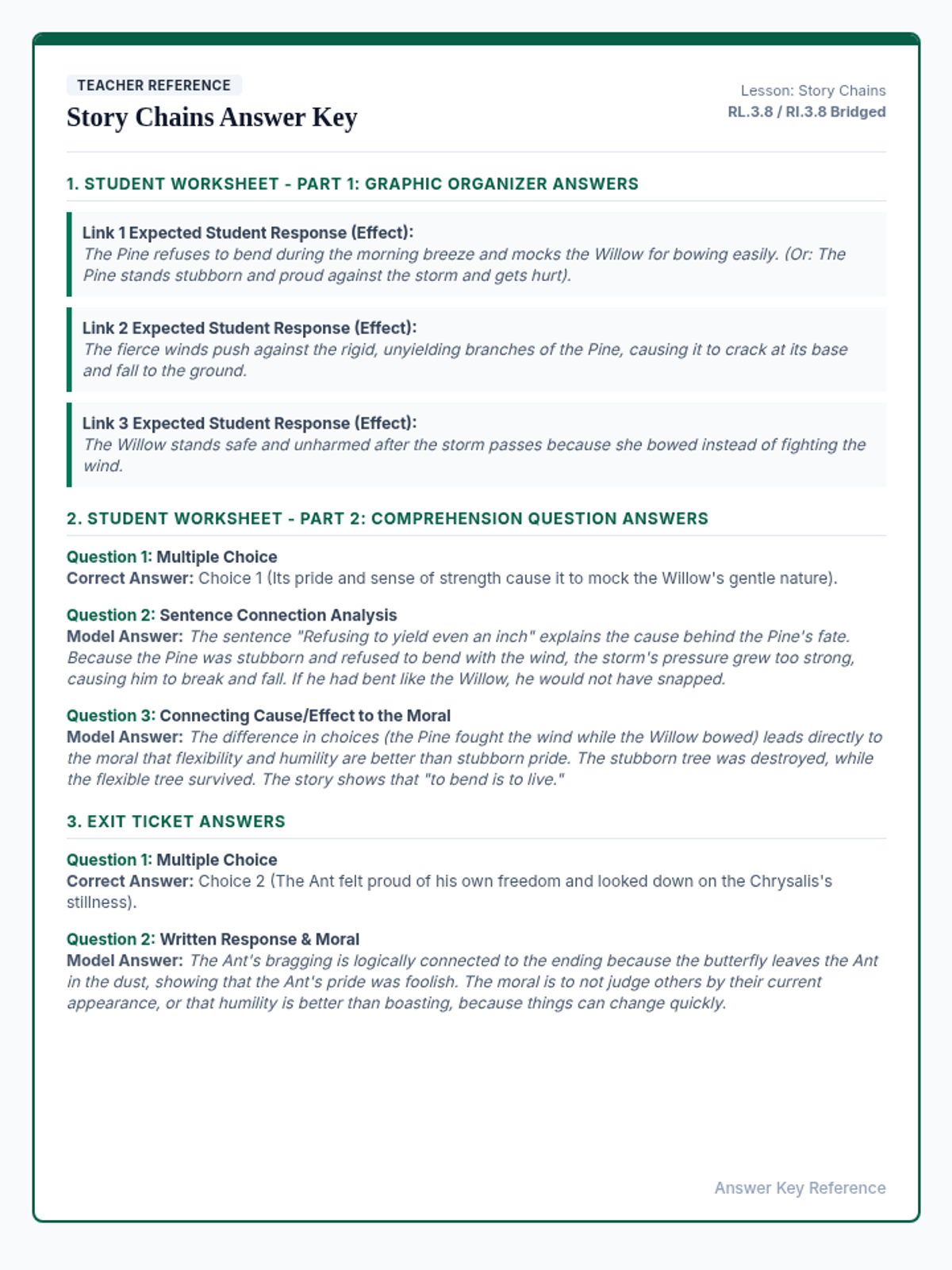
A targeted Tier 2 intervention lesson focusing on RL.3.3, helping students connect character traits and actions to the sequence of events in a story. This lesson uses a 'Character Mechanics' theme to visualize how characters drive the plot forward like engines.
An advanced informational text packet exploring bee biology, pollination, and hive hierarchy.
A foundational literacy packet focused on simple sentences and key details about honeybees.
A reading comprehension packet focused on the roles of bees in a hive and their life cycle.
A comprehensive lesson for 3rd graders exploring Native American culture and spiritual beliefs, focusing on identifying main ideas and supporting details in informational text.
A comprehensive lesson on identifying and sorting CVCe (silent e) words versus CVC (short vowel) words, with a specific focus on long 'a', 'i', and 'o' patterns.
A lesson combining phonics practice with digraphs and reading comprehension focused on the science and stories of hibernation across different grade levels.
Students will synthesize their skills to write a complete summary of the 1969 Moon Landing, identifying the main idea and three key supporting details.
Students will learn to separate interesting but non-essential facts from key details that support the main idea using the history of the Underground Railroad.
Students will use the 5W strategy (Who, What, Where, When, Why) to build concise summaries of the Boston Tea Party.
Students will learn to distinguish between the main idea (the big picture) and supporting details (the proof) using the story of the Wright Brothers' first flight.
A formal assessment featuring multi-select and evidence-based selected response questions to measure student mastery of comparing and contrasting two informational texts.
Students will learn to identify key details in two texts about desert animals and use a graphic organizer to compare and contrast their adaptations for survival.
Students apply comparison skills to texts about Arctic animals, moving toward independent mastery of identifying overlapping and unique key details.
A comprehensive summative assessment covering all three standards through multiple-choice and short-response questions.
Synthesizes knowledge of fables, folktales, and myths by comparing characters and themes across different stories.