A facilitator's guide detailing the pedagogical logic behind independent and paired designs, including common student pitfalls and scenario analysis keys.

Number Gym slides for Day 21. Bonus Round for numbers 0-40.
Number Gym slides for Day 20. Culminating review of the 0-40 circuit.
Number Gym slides for Day 19. Mixed decade review with a focus on consistent digit value understanding.
Number Gym slides for Day 18. Focus on "before" prompts and missing numbers in the middle of a sequence.
Number Gym slides for Day 17. Practice with high 30s and digit position.
Number Gym slides for Day 16. Mixed review of 10s, 20s, and 30s decades.
Number Gym slides for Day 15. Focusing on the transition from the 30s to 40.
Number Gym slides for Day 14. Focus on digit position (3 tens) and missing numbers at the start of sequences.
Number Gym slides for Day 13. Focus on differentiating teen numbers and 30s, and sequential counting in the high 30s.
Number Gym slides for Day 12. Introducing numbers up to 40 with a focus on the 30s decade.
Number Gym slides for Day 11 of the intervention routine. Bonus practice for numbers 0-30.
Number Gym slides for Day 10 of the intervention routine. Final review of the first 10-day circuit.
Number Gym slides for Day 9 of the intervention routine. Focusing on boundaries between 20s and 30.
Number Gym slides for Day 8 of the intervention routine. Focusing on the high 20s and sequence endings.
Number Gym slides for Day 7 of the intervention routine. Focusing on teen numbers and identification.
Number Gym slides for Day 6 of the intervention routine. Focusing on 20s and bridging between decades.
Number Gym slides for Day 5 of the intervention routine. Weekly review focusing on 3-part drill components.
Number Gym slides for Day 4 of the intervention routine. Featuring teen numbers and transitioning between decades.
Number Gym slides for Day 3 of the intervention routine. Focusing on teen numbers and sequence patterns for numbers up to 30.
Number Gym slides for Day 2 of the intervention routine. Featuring visual identification, writing prompts, and sequences for numbers up to 30.
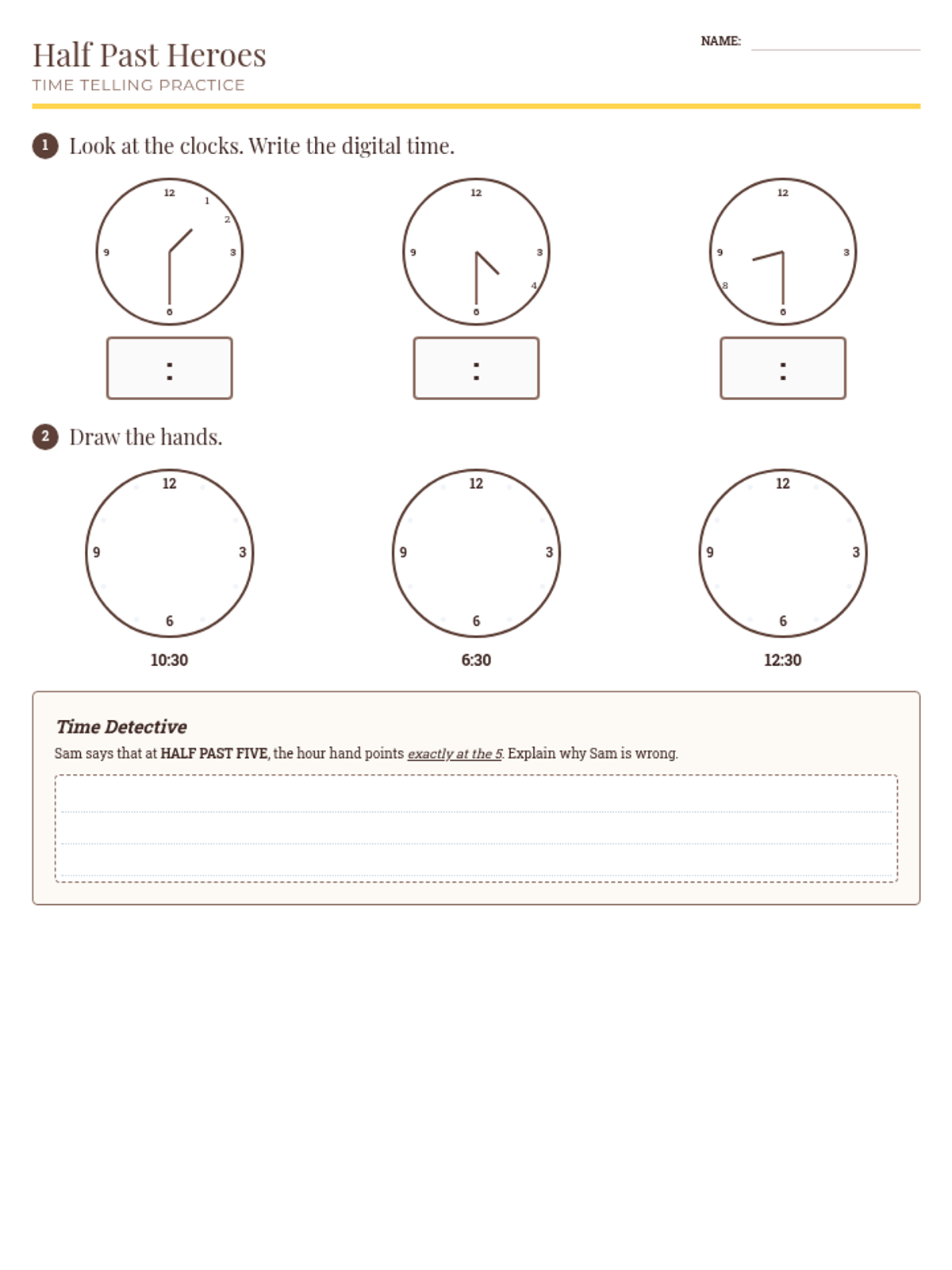
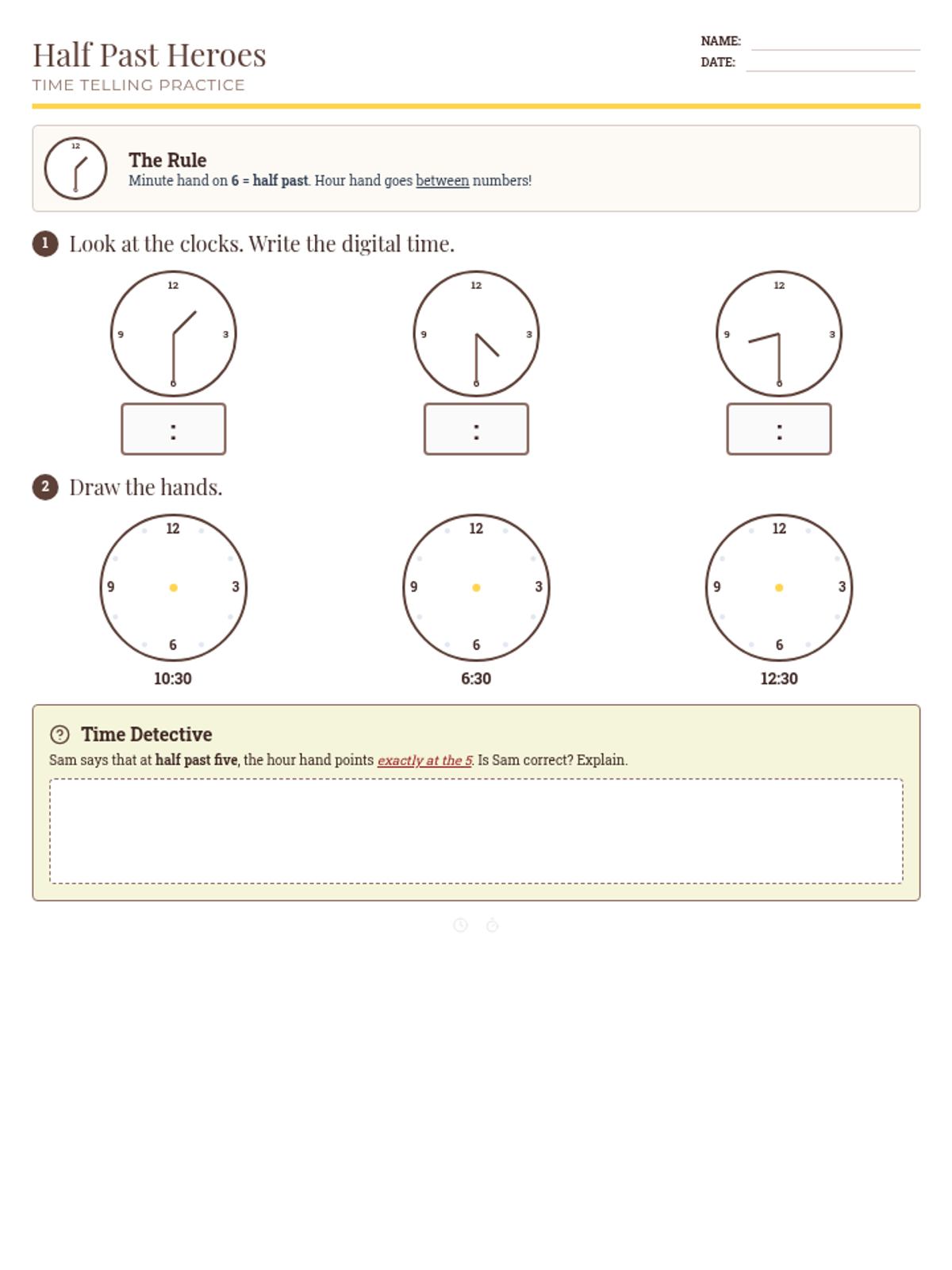
A comprehensive worksheet for students to practice reading and drawing clocks to the half-hour, including digital time conversion and a conceptual reasoning challenge with handwriting support.
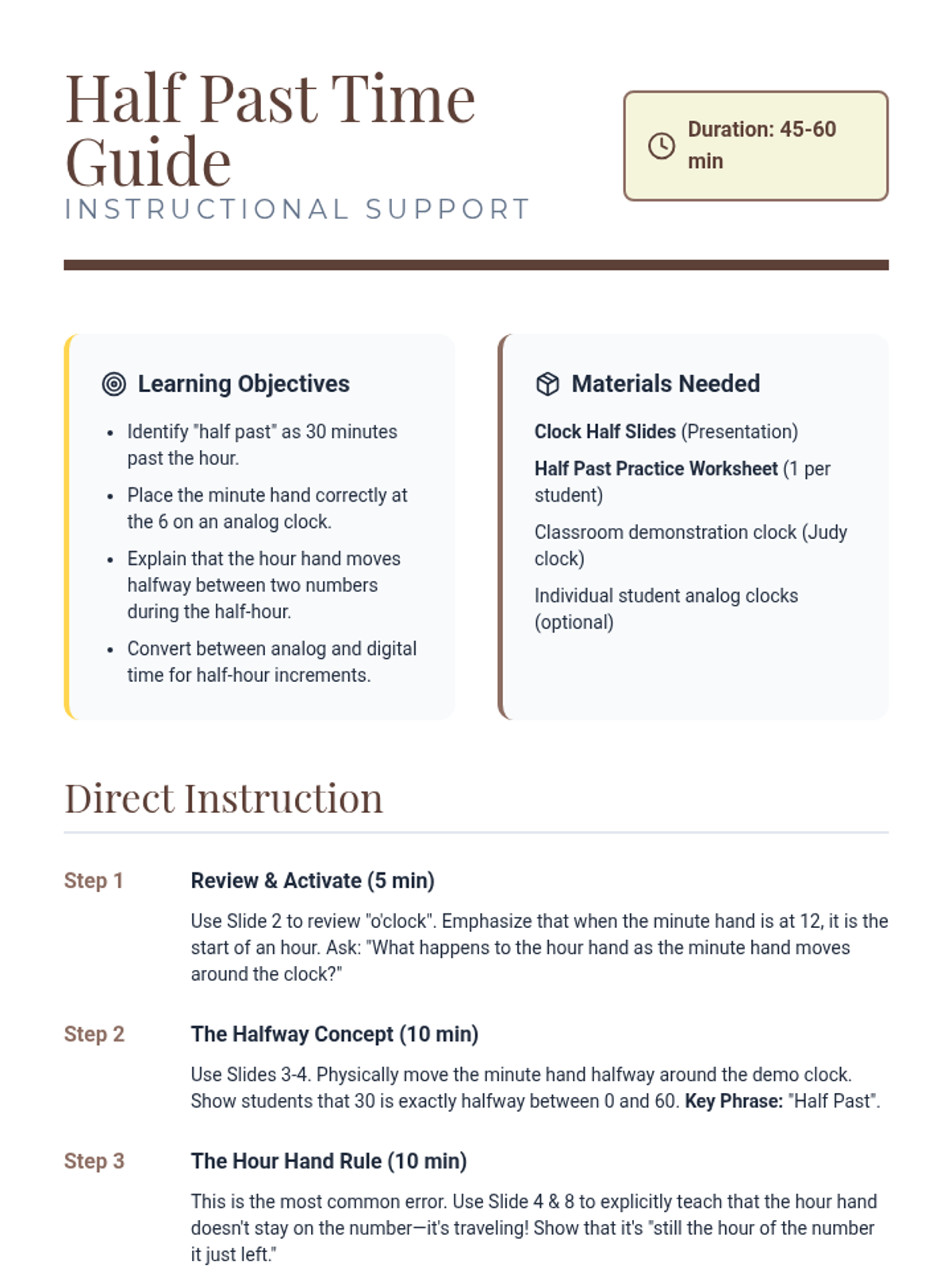
A teacher's facilitation guide containing lesson objectives, step-by-step instructional sequence, common student misconceptions, and a full answer key for the worksheet.
A comprehensive worksheet for students to practice reading and drawing clocks to the half-hour, including digital time conversion and a conceptual reasoning challenge.
A 7-slide visual presentation introducing the concept of half-past time telling, featuring clear analog and digital comparisons, key rules for the hour hand, and interactive practice challenges. Optimized for visual clarity.
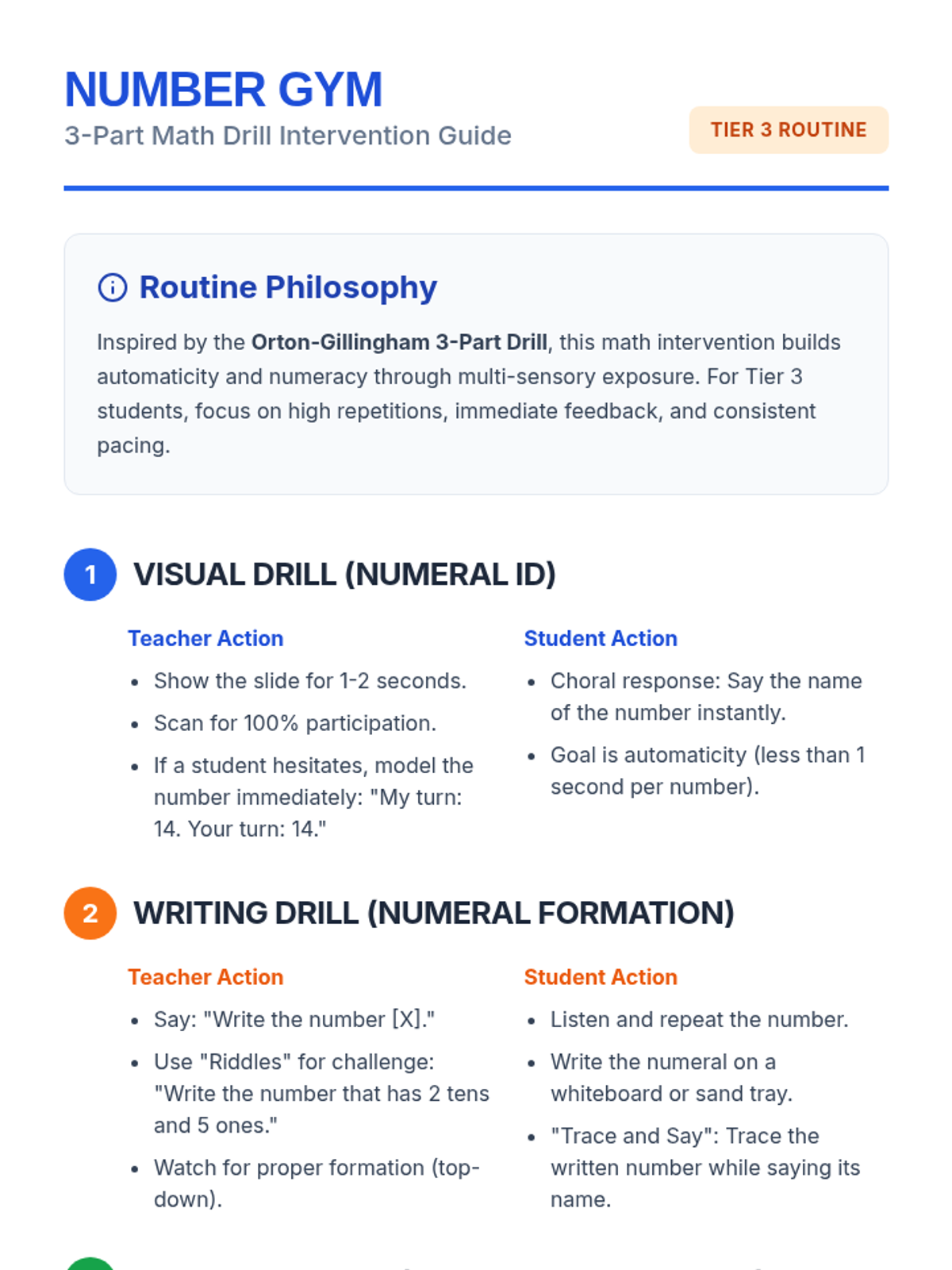
A teacher guide for implementing the 3-part math drill routine for Tier 3 students, providing specific actions for teachers and students across visual, writing, and sequence components.
A high-engagement teacher-led slide deck for daily math intervention. It follows a 3-part drill structure: Visual (numeral ID), Writing (auditory-to-numeral), and Sequence (missing numbers in strings of four) for numbers up to 30.
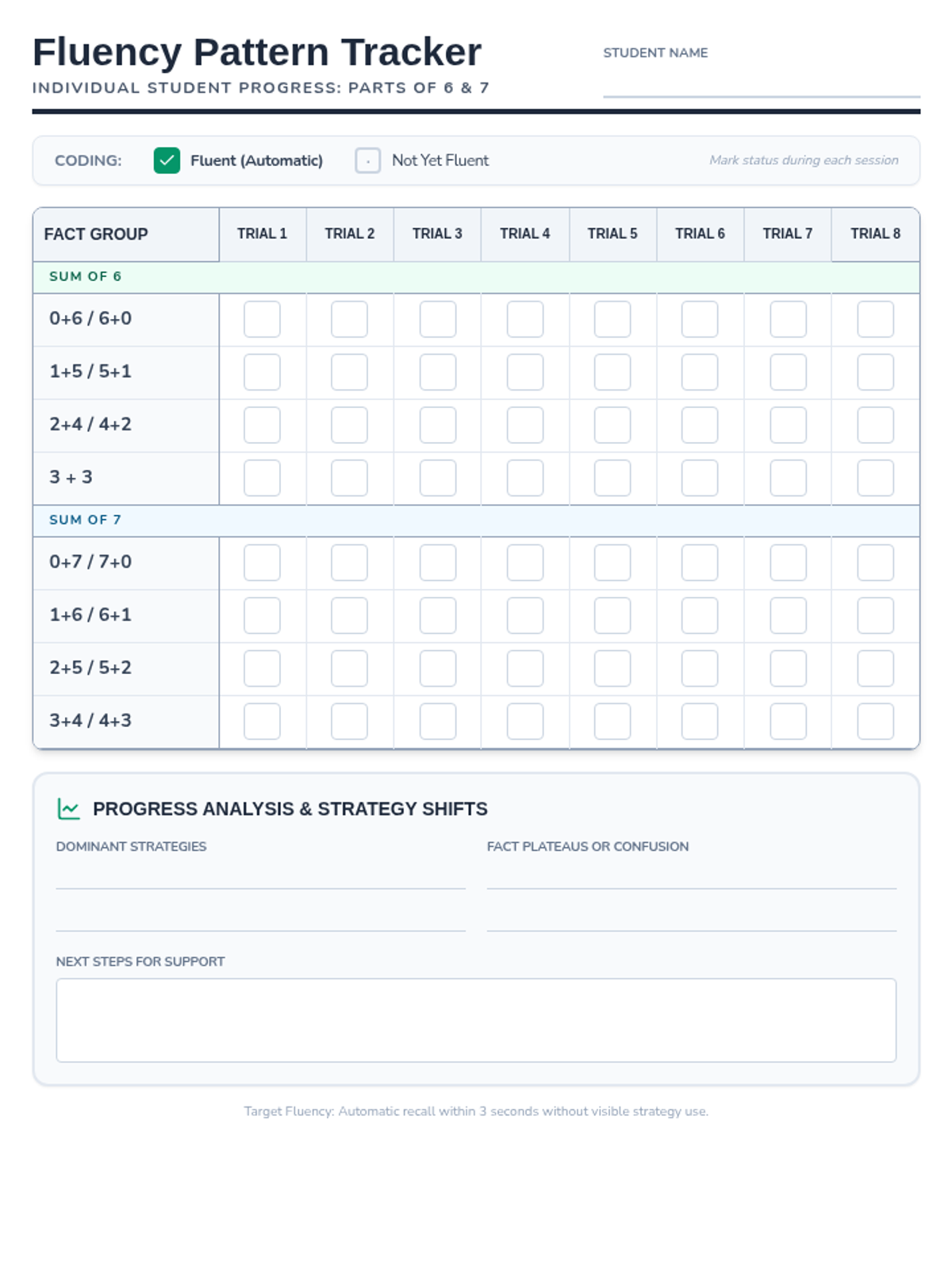
A single-student data tracker for monitoring longitudinal progress in mastering number decompositions for 6 and 7. Allows teachers to track fluency across multiple dates or trials to identify specific patterns and strategy shifts over time.
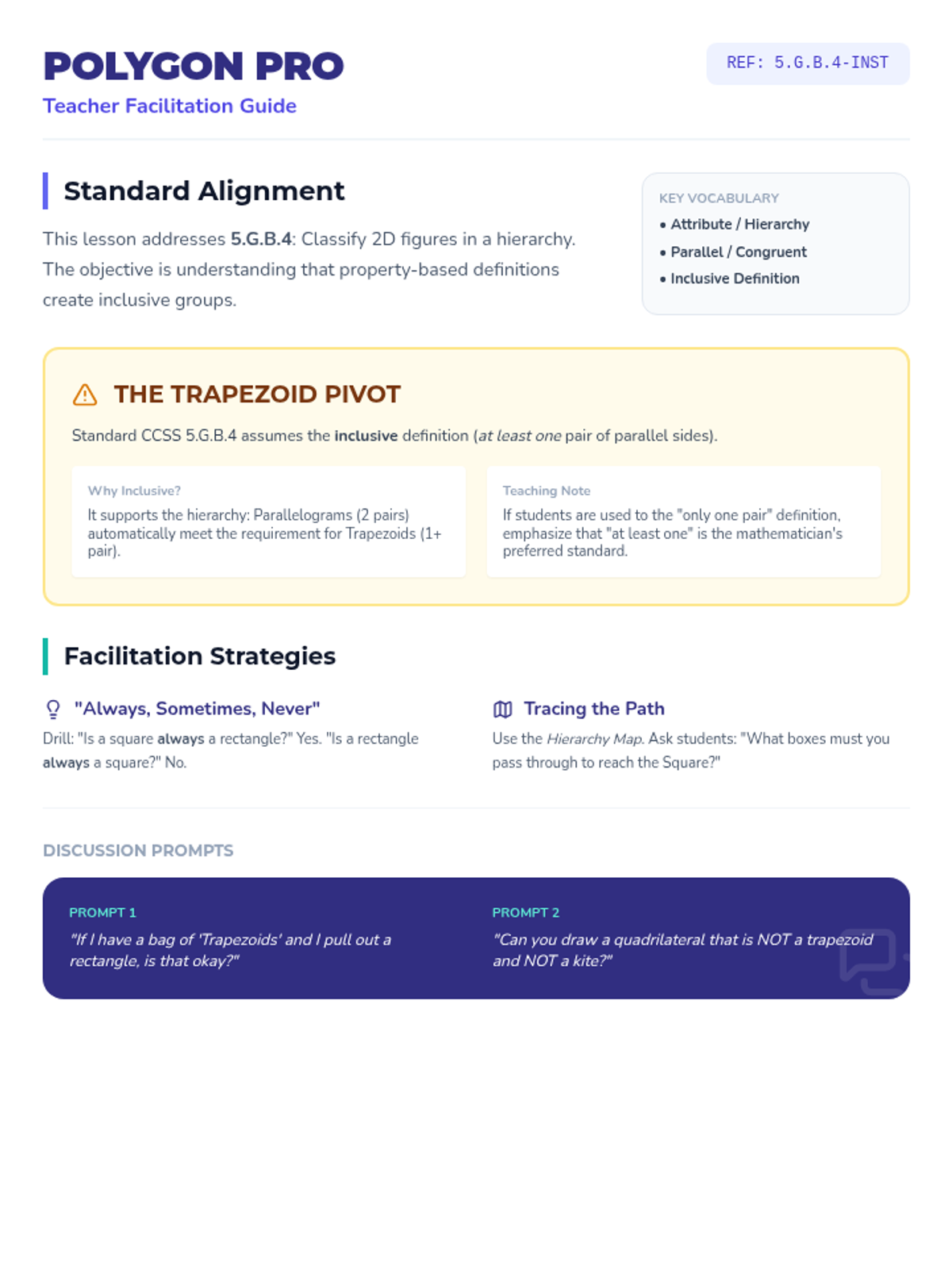
A teacher's guide for facilitating the quadrilateral properties lesson, focusing on instructional strategies, standard alignment, and the inclusive trapezoid definition.
An instructional slide deck that introduces quadrilaterals, focuses on the inclusive definition of trapezoids, and visually explains the shape hierarchy.
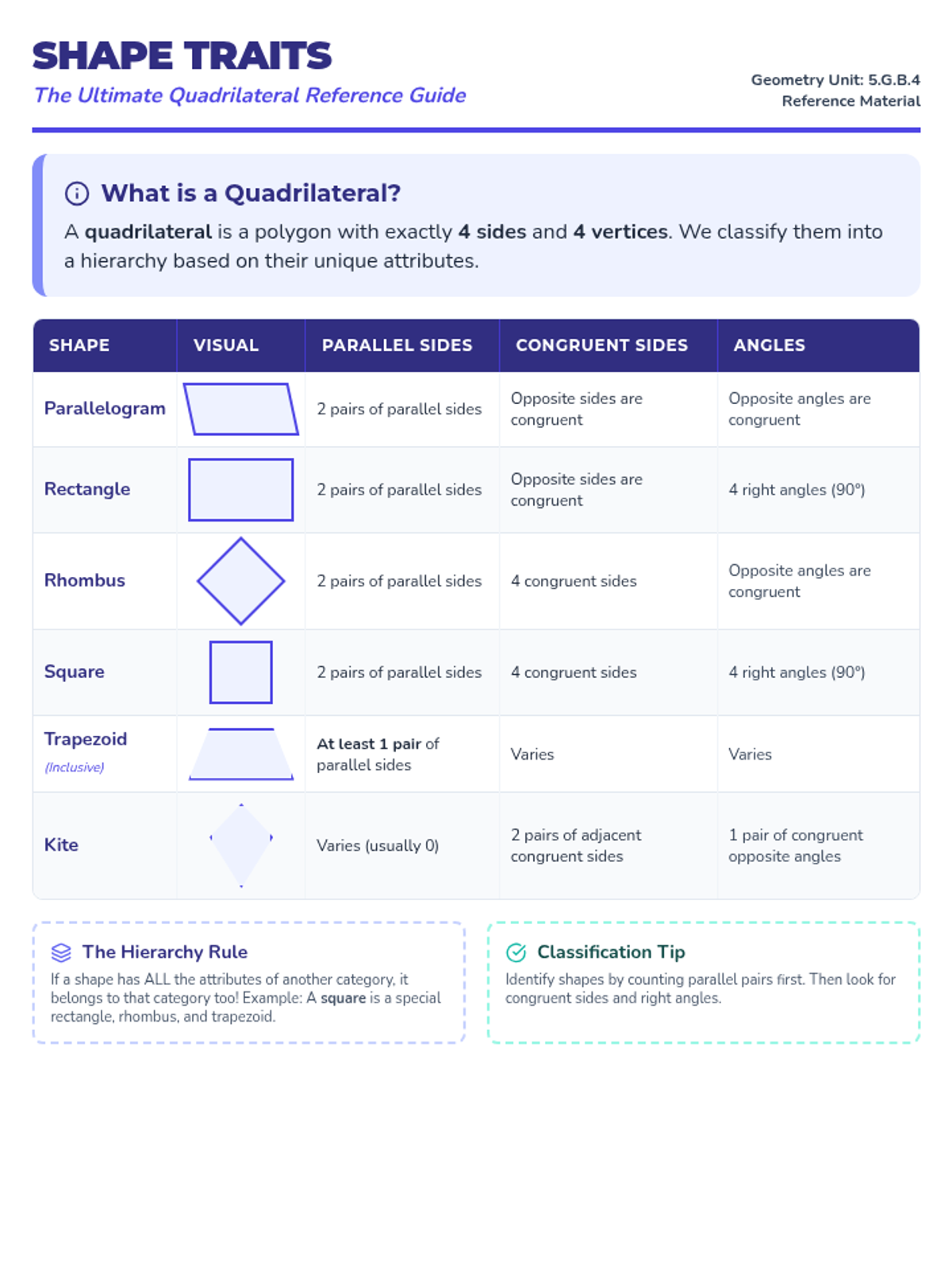
A comprehensive reference chart for 5th-grade students detailing the attributes of various quadrilaterals, including the inclusive definition of trapezoids.
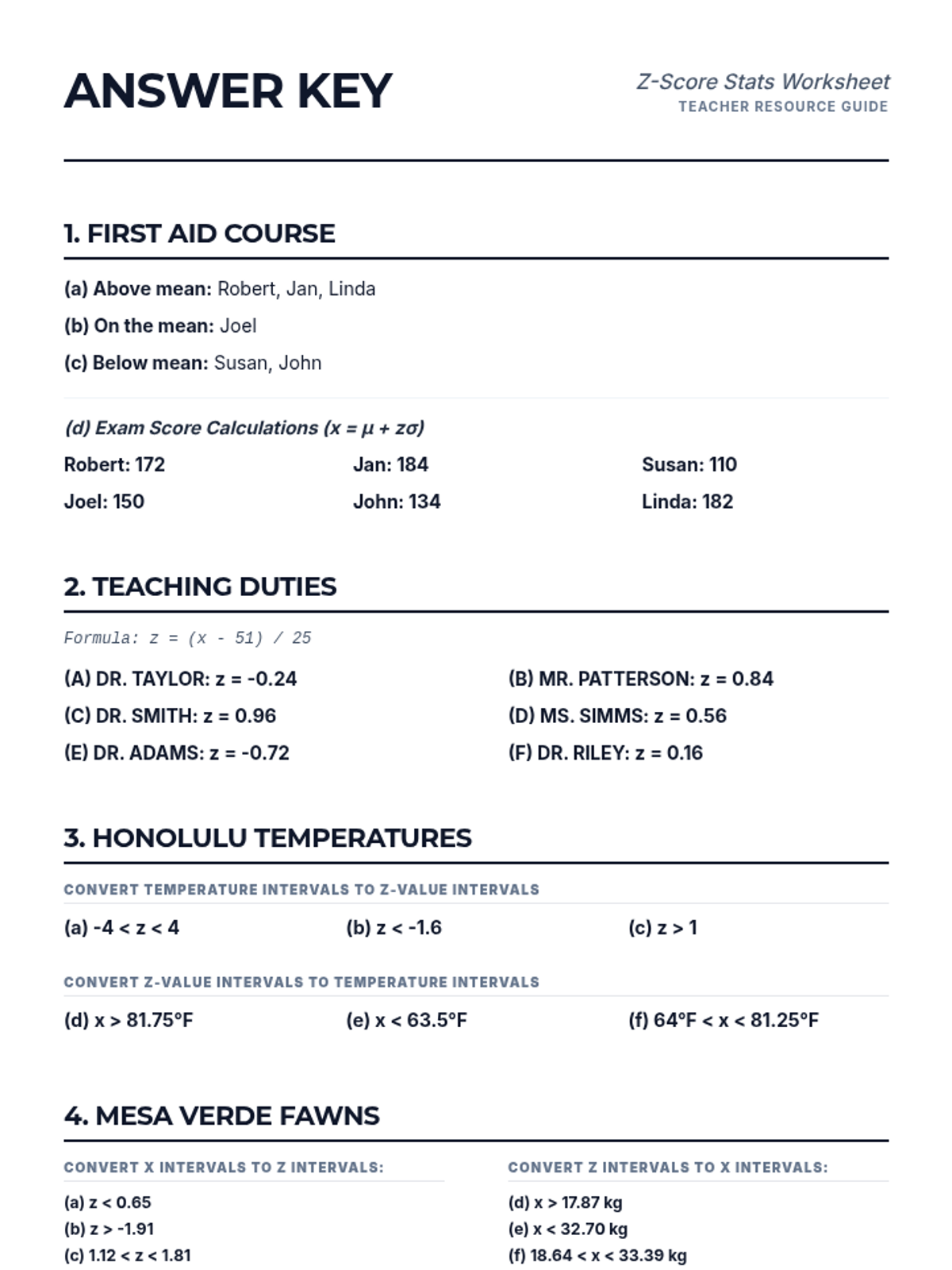
Teacher answer key for the Z-Score Mastery Worksheet, providing solutions and brief explanations for all calculation and conceptual problems.
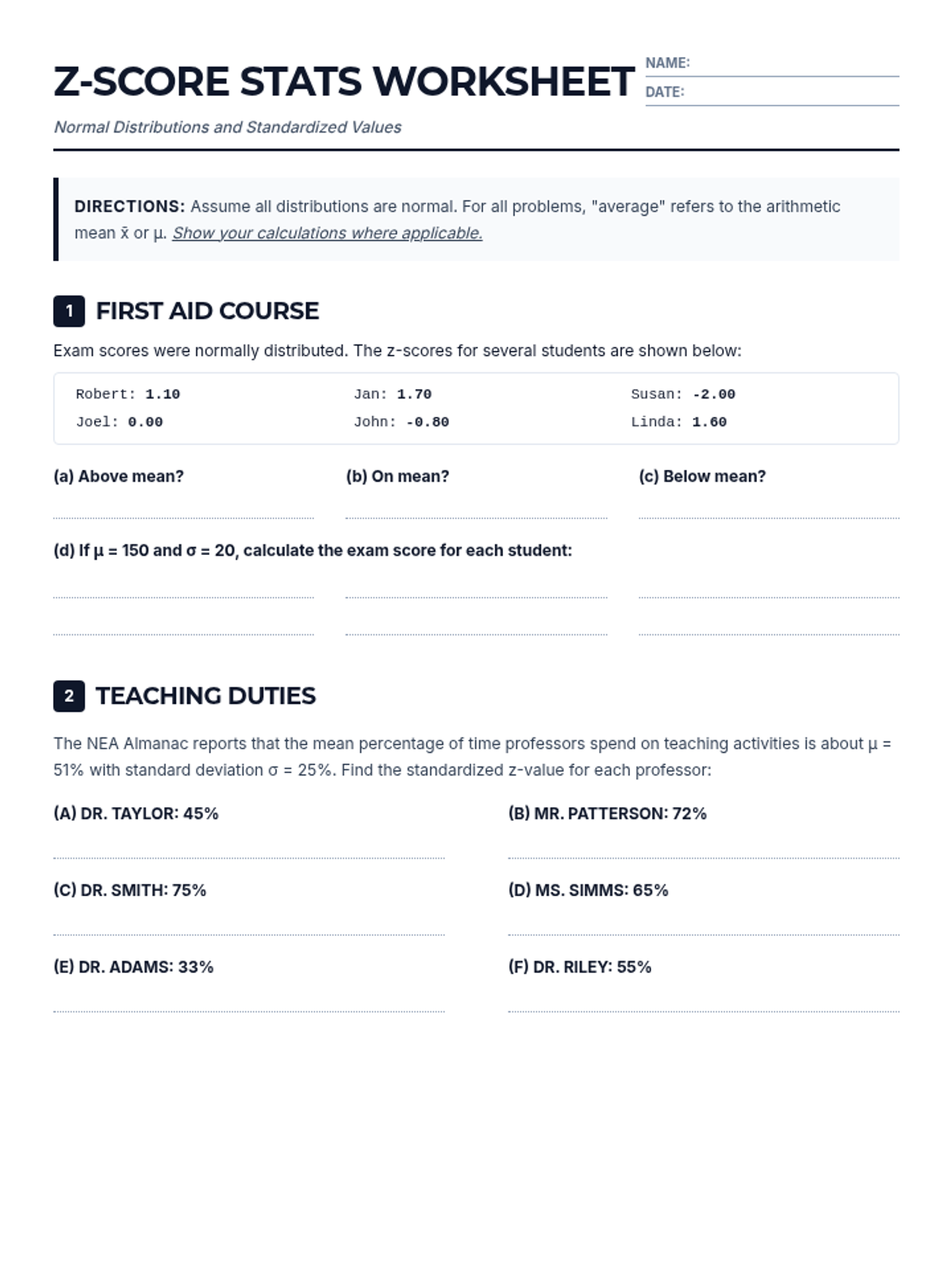
A precise 2-page Z-score worksheet that mirrors the original source material's questions exactly, featuring real-world problems on exam scores, teaching duties, temperatures, and wildlife populations.
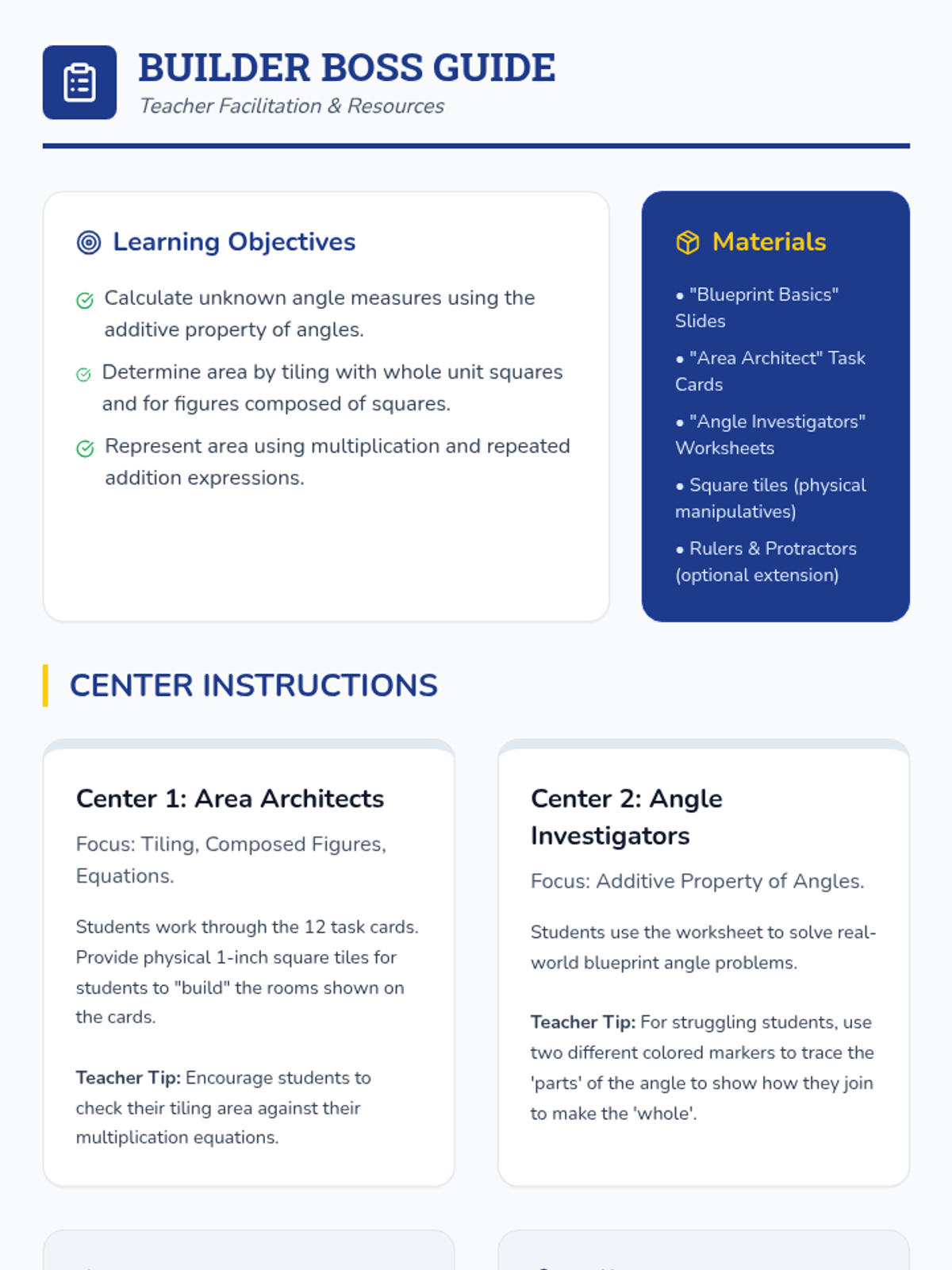
A teacher's facilitation guide for the Blueprint Builders math unit. Includes learning objectives, materials lists, center setup instructions, differentiation strategies, and complete answer keys.
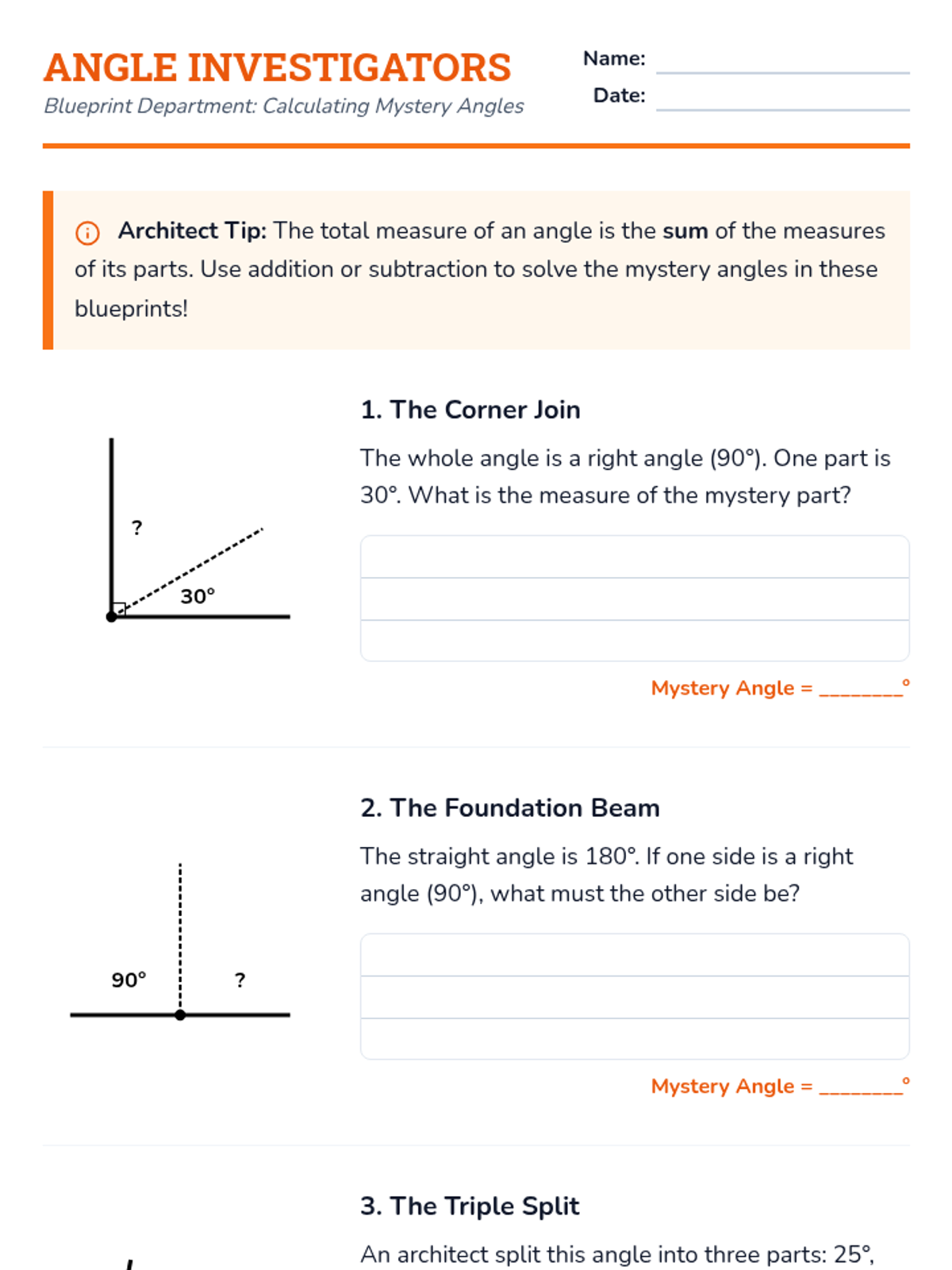
A 3rd-grade math worksheet for investigating unknown angle measures using the additive property. Features visual blueprint-themed problems and "show your work" areas.
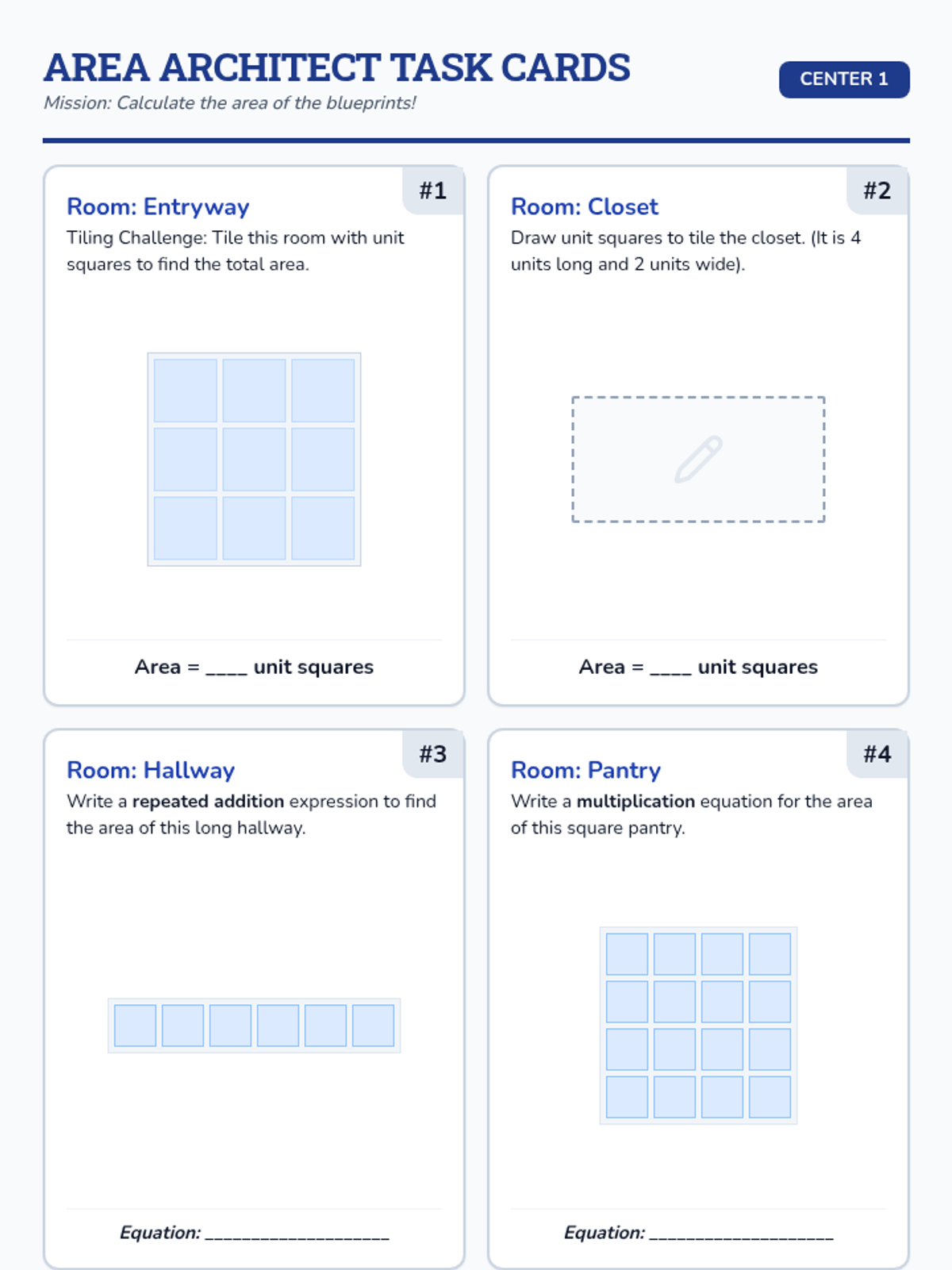
A set of 12 task cards for 3rd-grade math centers focused on determining area. Includes tasks for tiling with unit squares, calculating area of composed figures, and writing multiplication/repeated addition equations.
A visual slide deck introducing 3rd-grade area and angle measurement concepts through a 'Blueprint Builders' construction theme. Includes tiling methods, area equations, composed figures, and the additive property of angles.
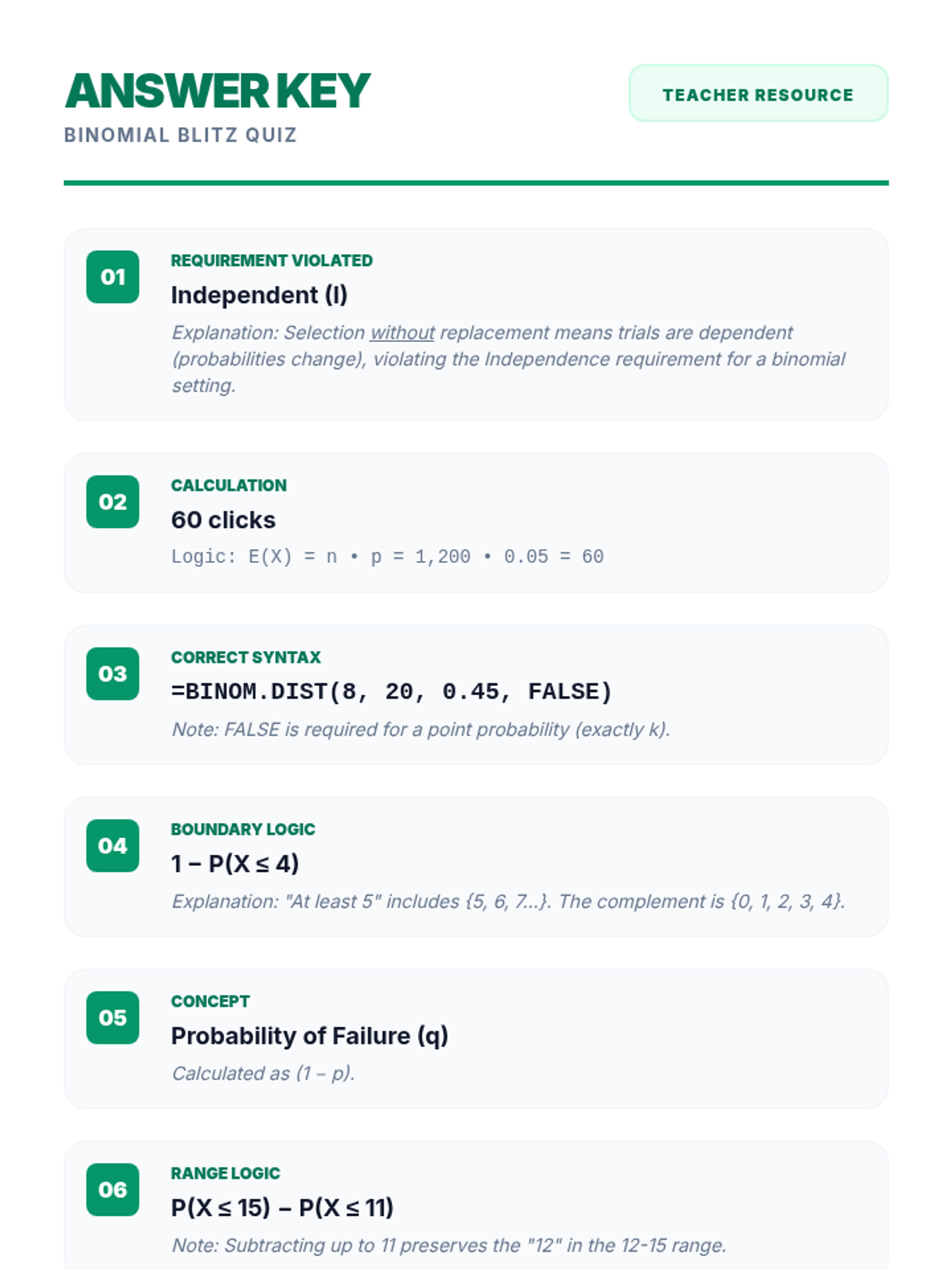
A comprehensive answer key for the Binomial Blitz Quiz, featuring detailed explanations, manual formula rendering, and logic breakthroughs for the assessment questions.
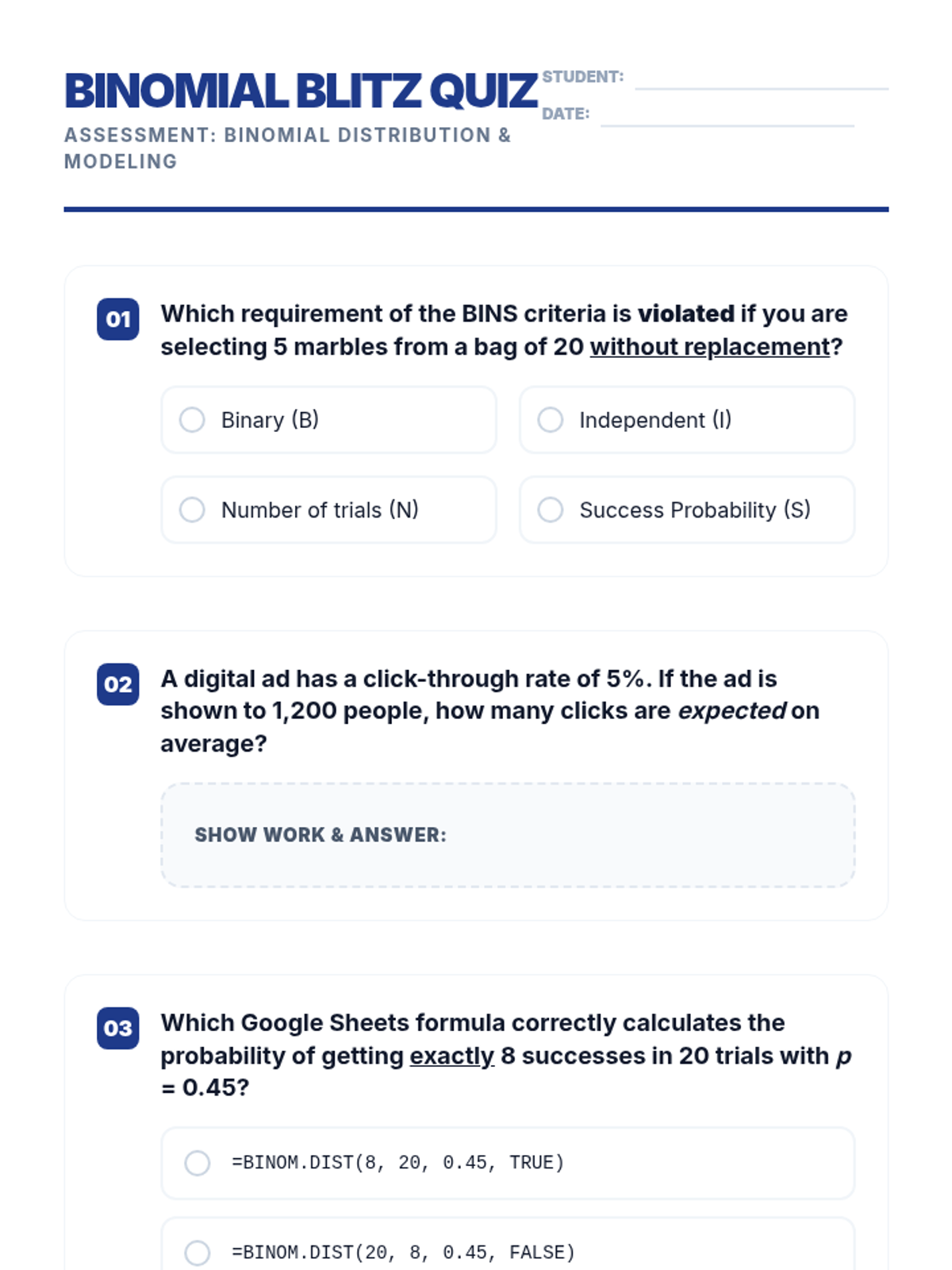
A 10-question assessment covering the BINS criteria, binomial parameters, spreadsheet formula syntax, hand-calculation theory, and expected value. Designed for 12th-grade statistics with high-quality visual formatting and clear student work areas. Updated with fixed math rendering and page break protections.
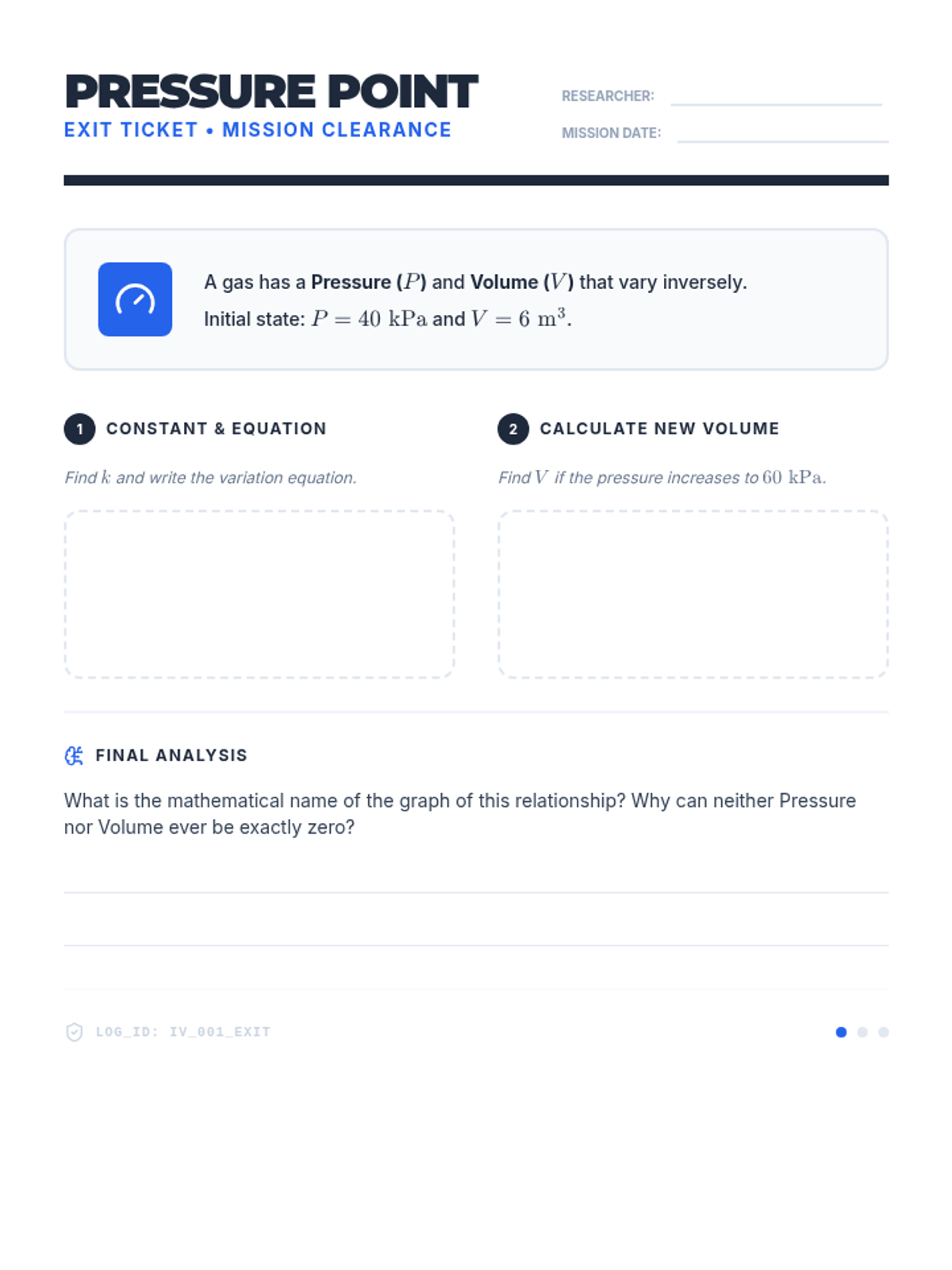
A formal exit ticket for inverse variation. Revised for single-page layout, better math rendering, and balanced work areas.
A sleek, high-contrast slide deck for inverse variation. Revised to fix math rendering, adjust viewport overflow, and correct the hyperbola graphic.
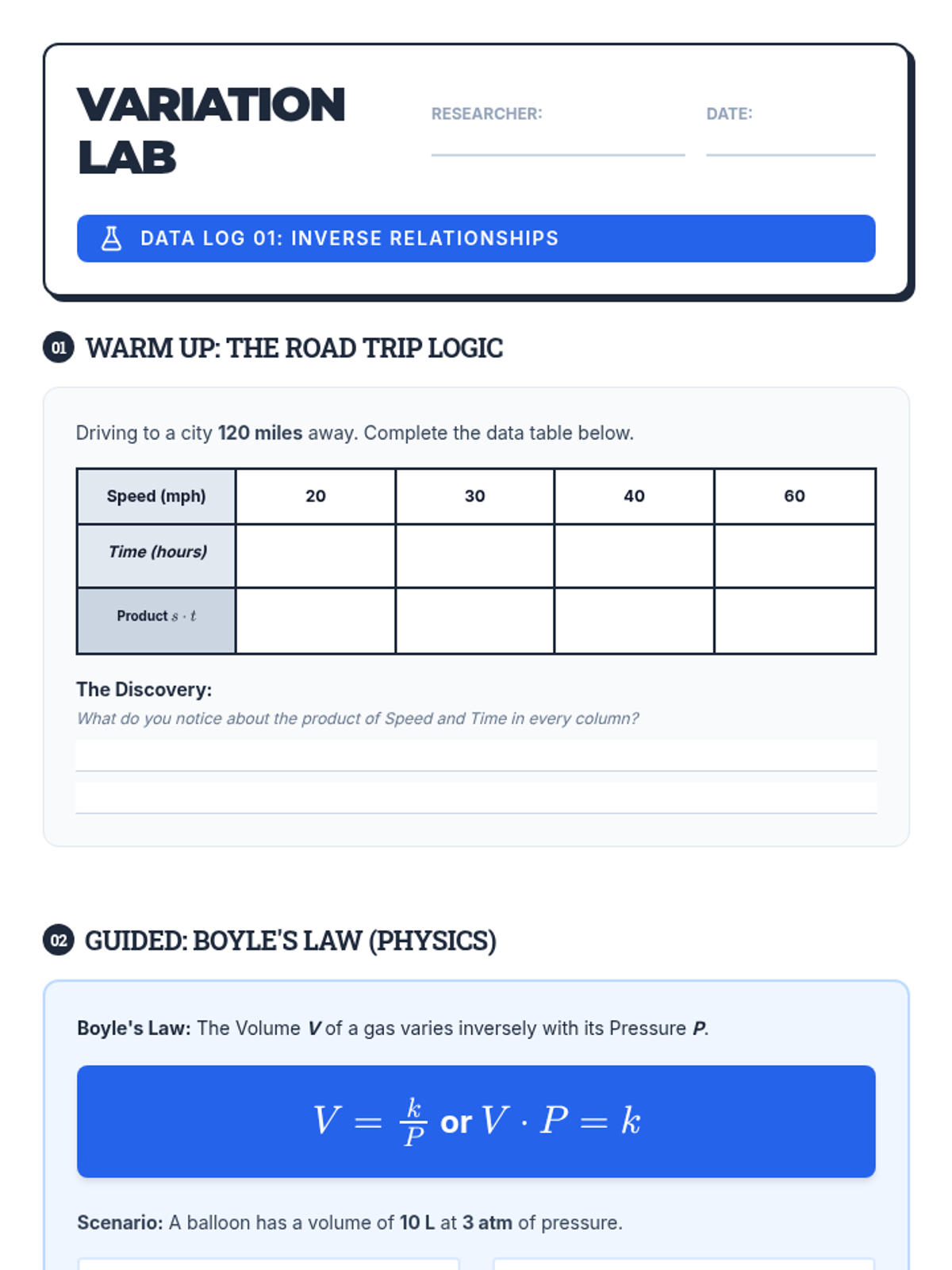
A student-facing handout containing the Warm Up, Guided Instruction, and Independent Practice for inverse variation. Revised for better page breaks, increased contrast, and added pedagogical scaffolding. Fixed math rendering and work areas.
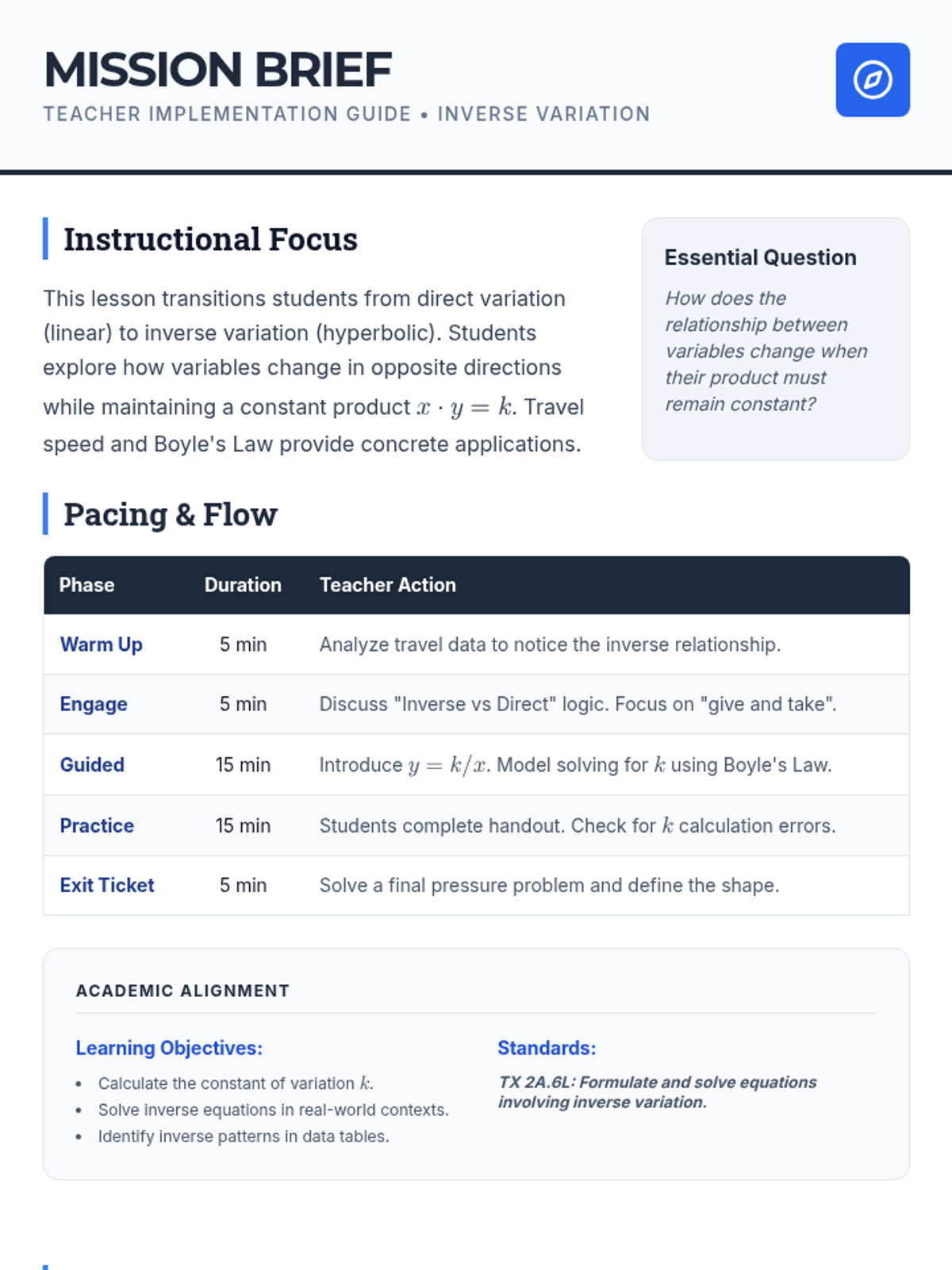
A comprehensive teacher implementation guide for the Inverse Investigators lesson, including pacing, standards alignment, answer keys, and pedagogical tips. Revised for better page breaks and math rendering.
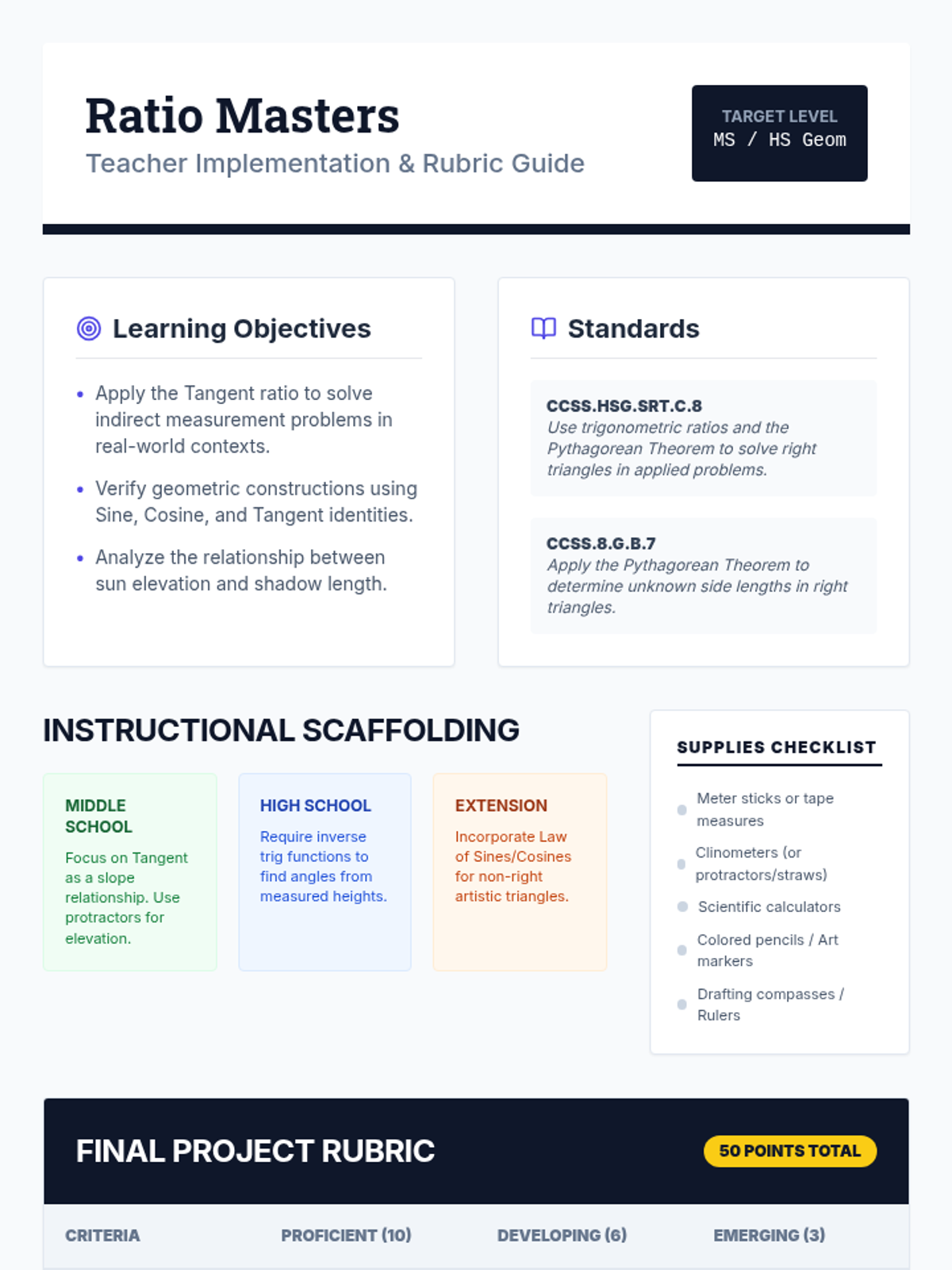
A teacher guide containing learning objectives, standards alignment, differentiation strategies for middle and high school, and a comprehensive grading rubric.
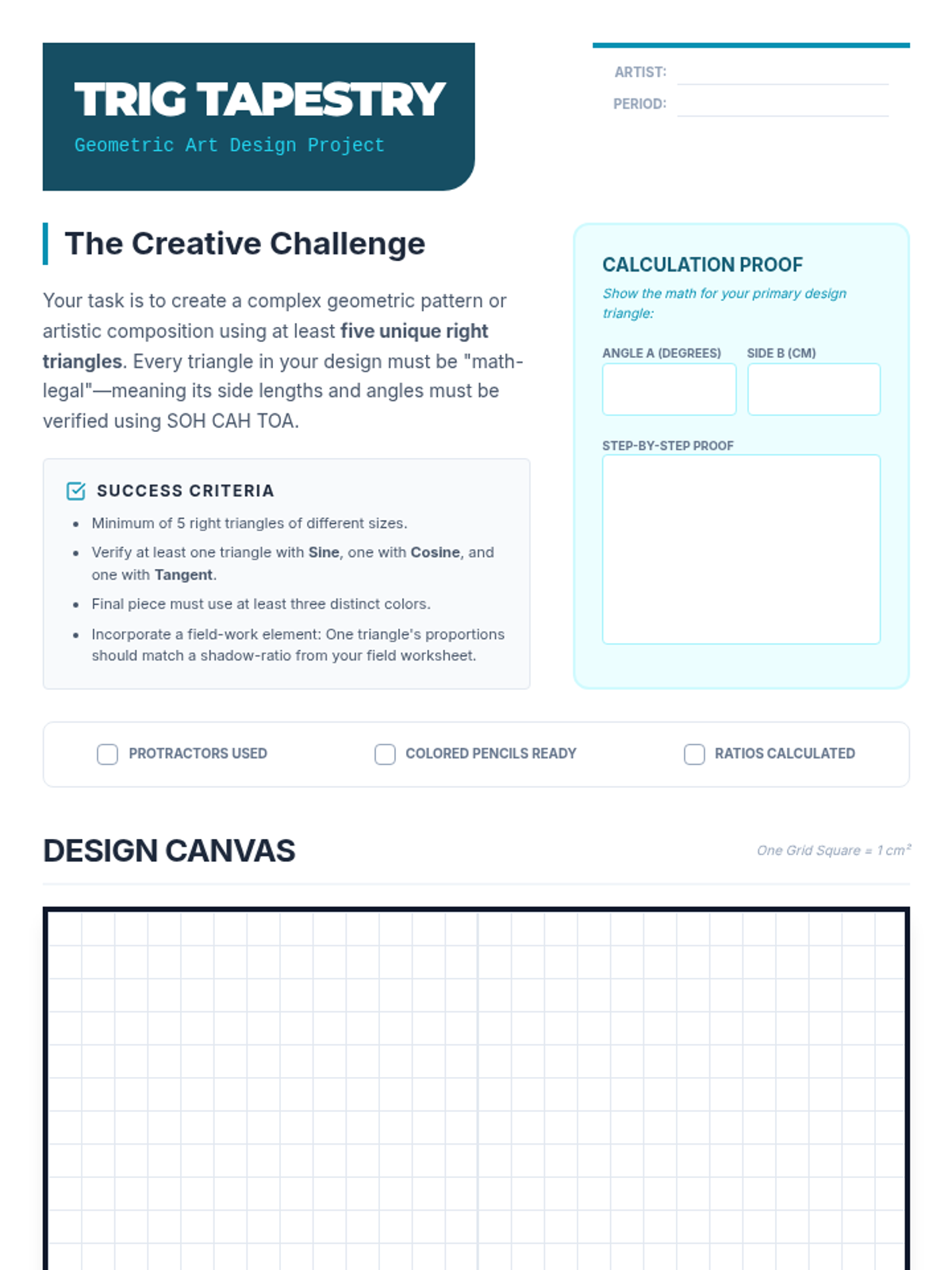
A project guide for the geometric art portion of the lesson. Students design a pattern using right triangles and prove their proportions using trigonometric ratios.