A 2-page print-ready Teacher Guide for the 'Descriptive Detectives' lesson. Features teaching guidelines, standard alignments, pacing, common misconceptions, and detailed visual Answer Keys for the student work packet.
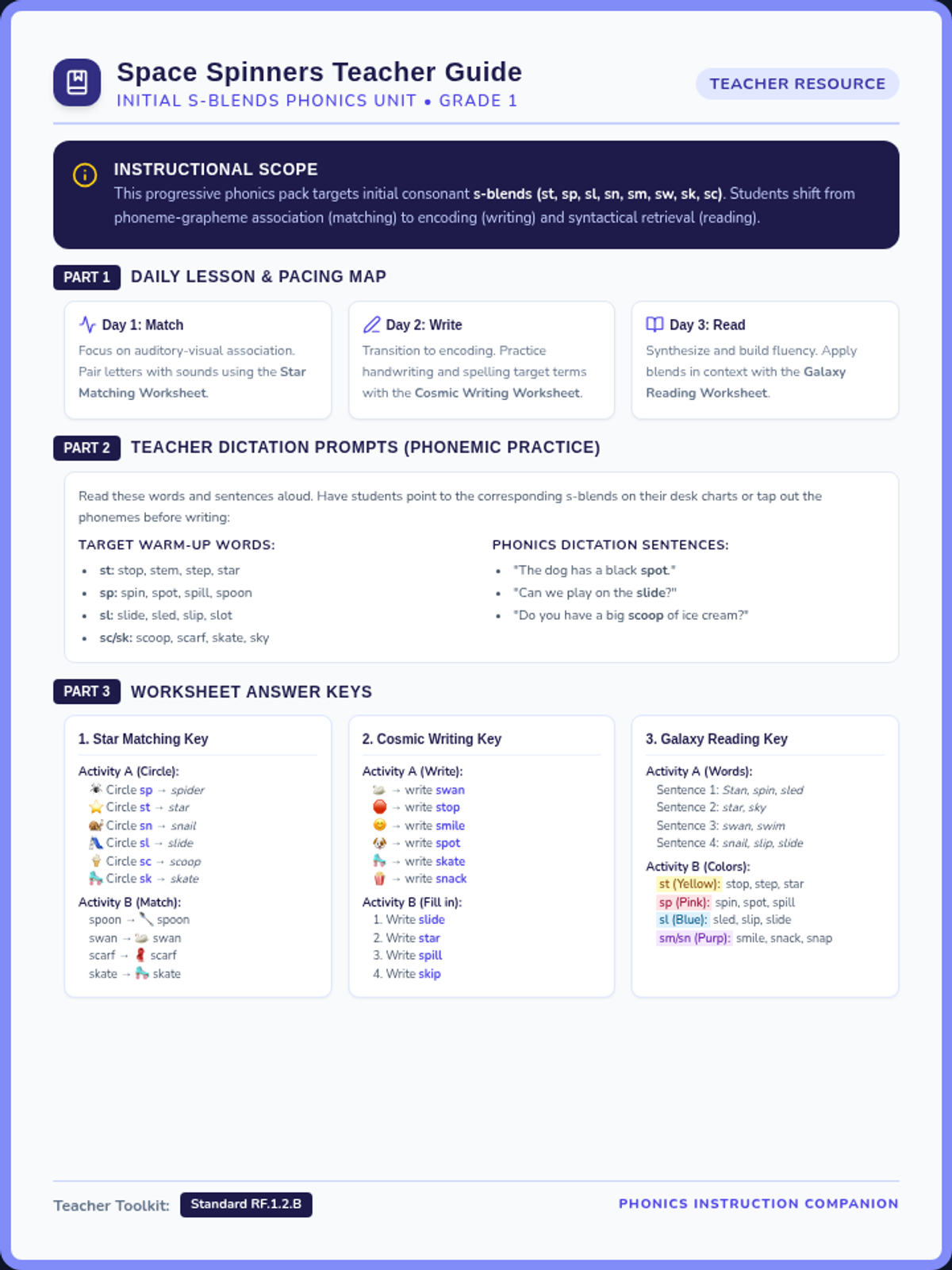
A teacher guide and answer key for the 'Space Spinners' s-blend phonics packet. Features daily lesson pacing, auditory dictation words, and comprehensive answer keys for all student worksheets.
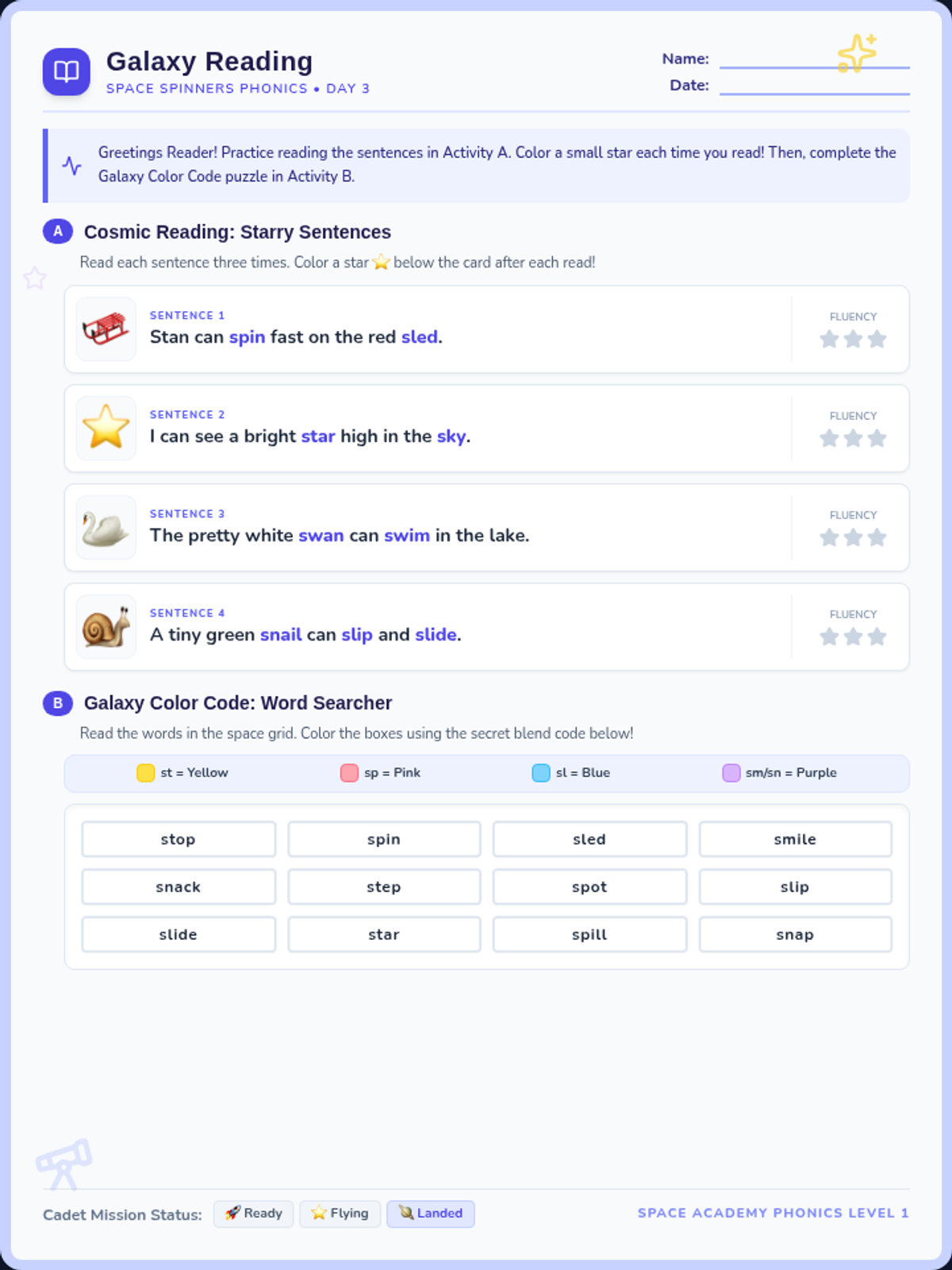
A first-grade reading worksheet focusing on reading 's' blend words for fluency. Includes simple sentence reading cards with three-step fluency tracking, and a 'Color-by-Blend' word puzzle grid.
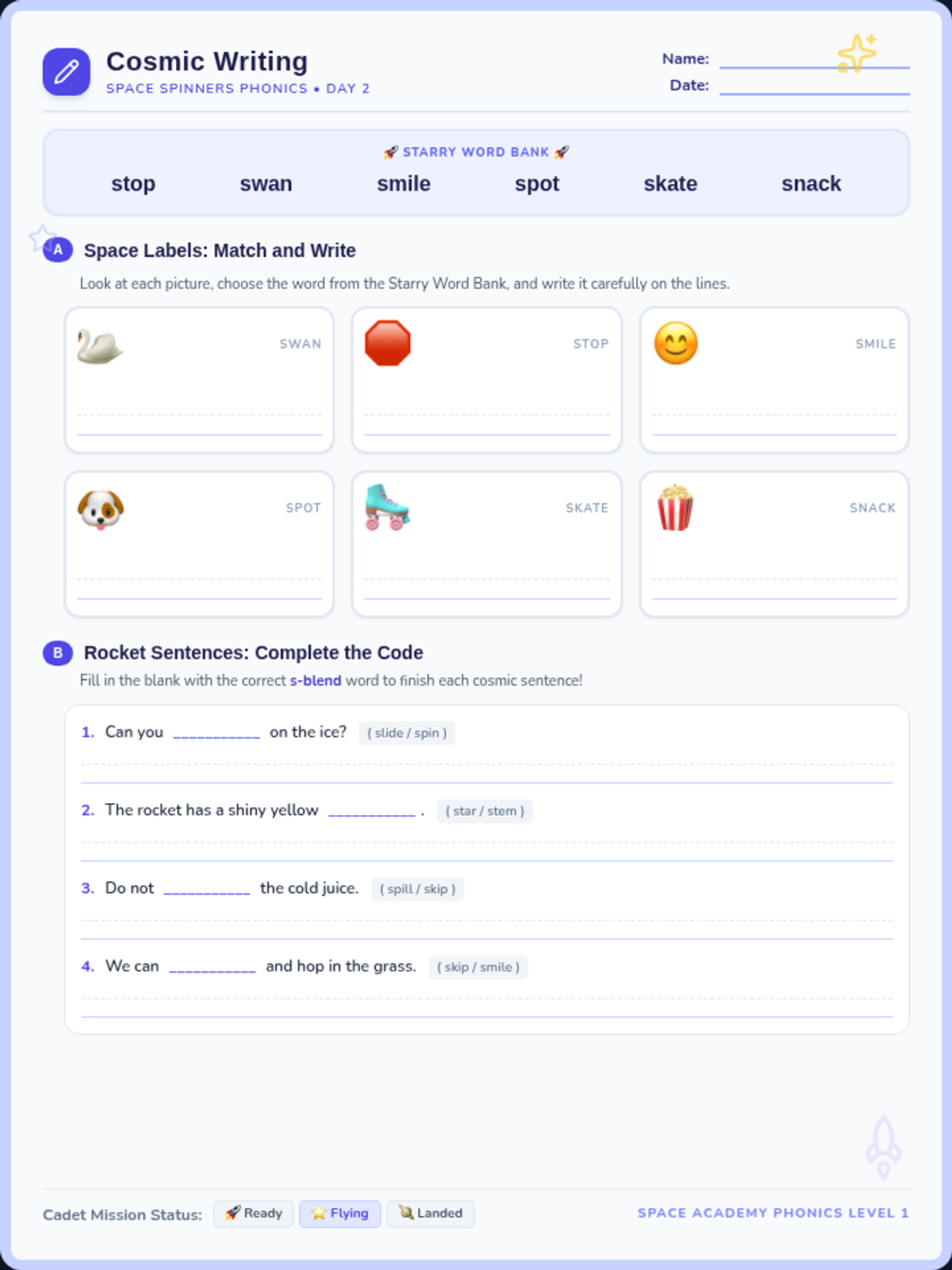
A first-grade writing worksheet focusing on writing 's' blend words. Features a space word bank, picture-labeling exercises with primary-dashed handwriting lines, and a sentence completion section.
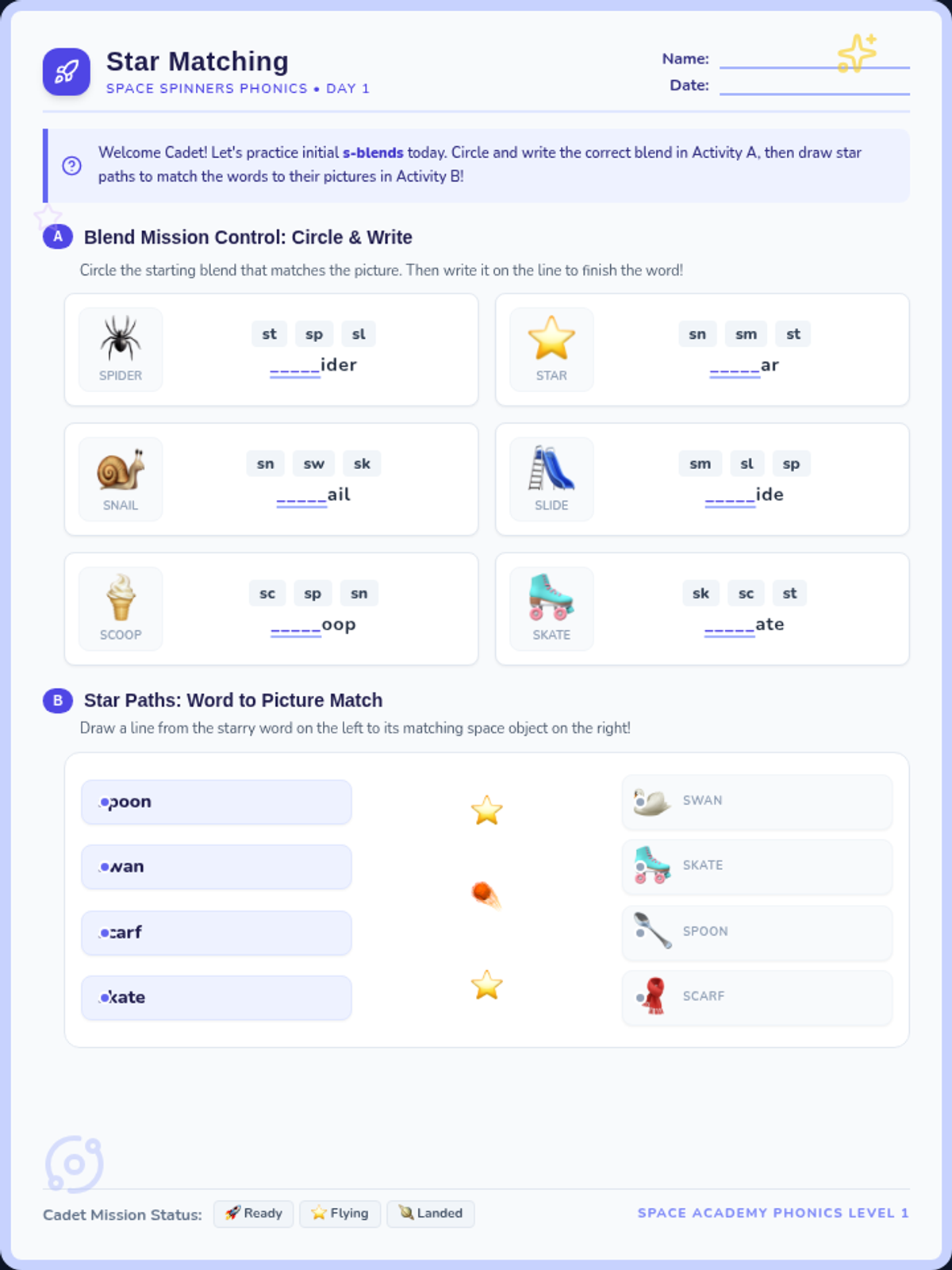
A first-grade matching worksheet focusing on initial 's' blends. Students circle the correct starting blend for pictured objects and draw star lines to connect 's' blend words to their corresponding images.
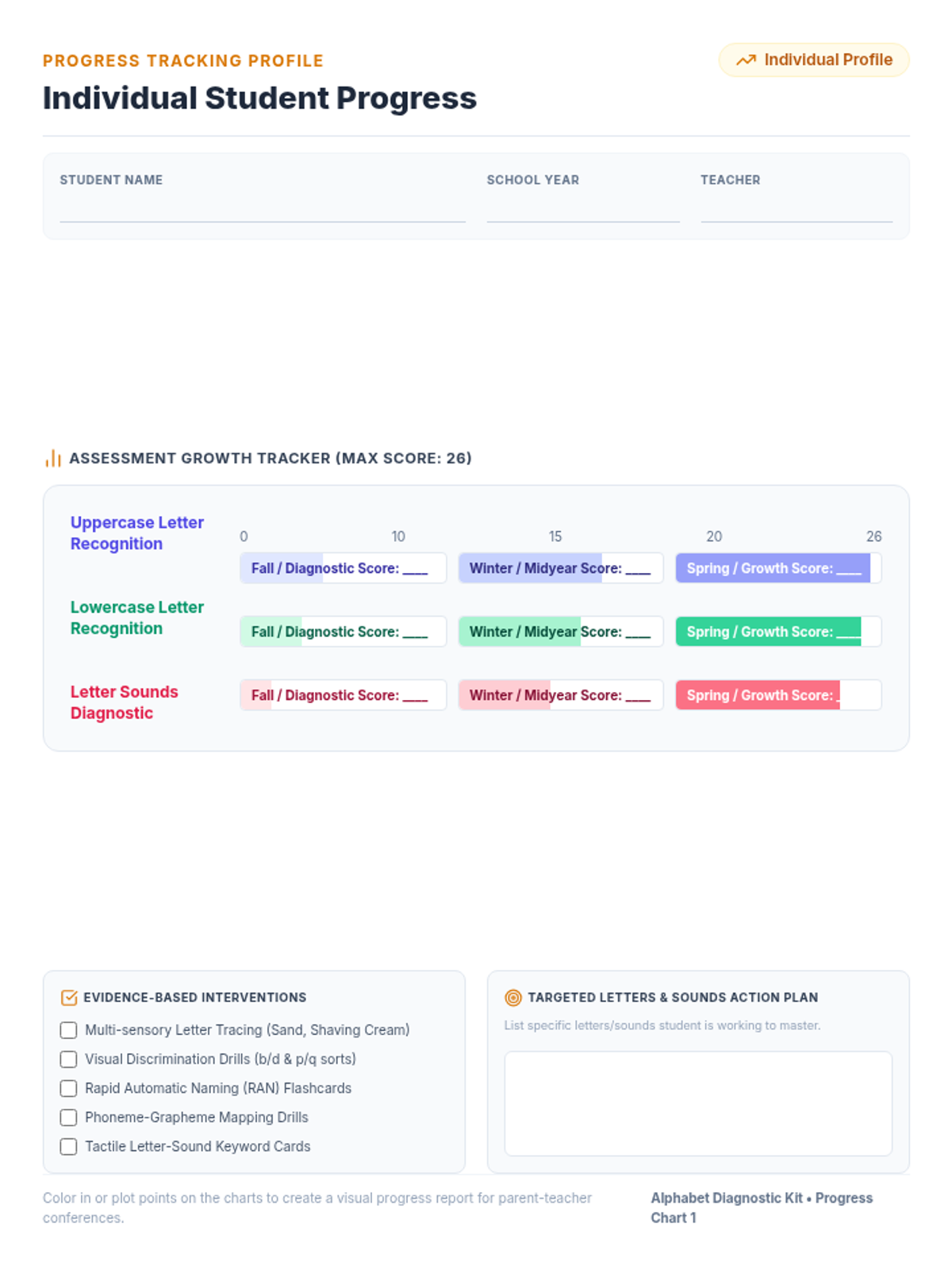
Progress tracking profile for individual student growth over three assessment intervals, and a class-wide tracking grid to organize small-group reading interventions based on diagnostic results.
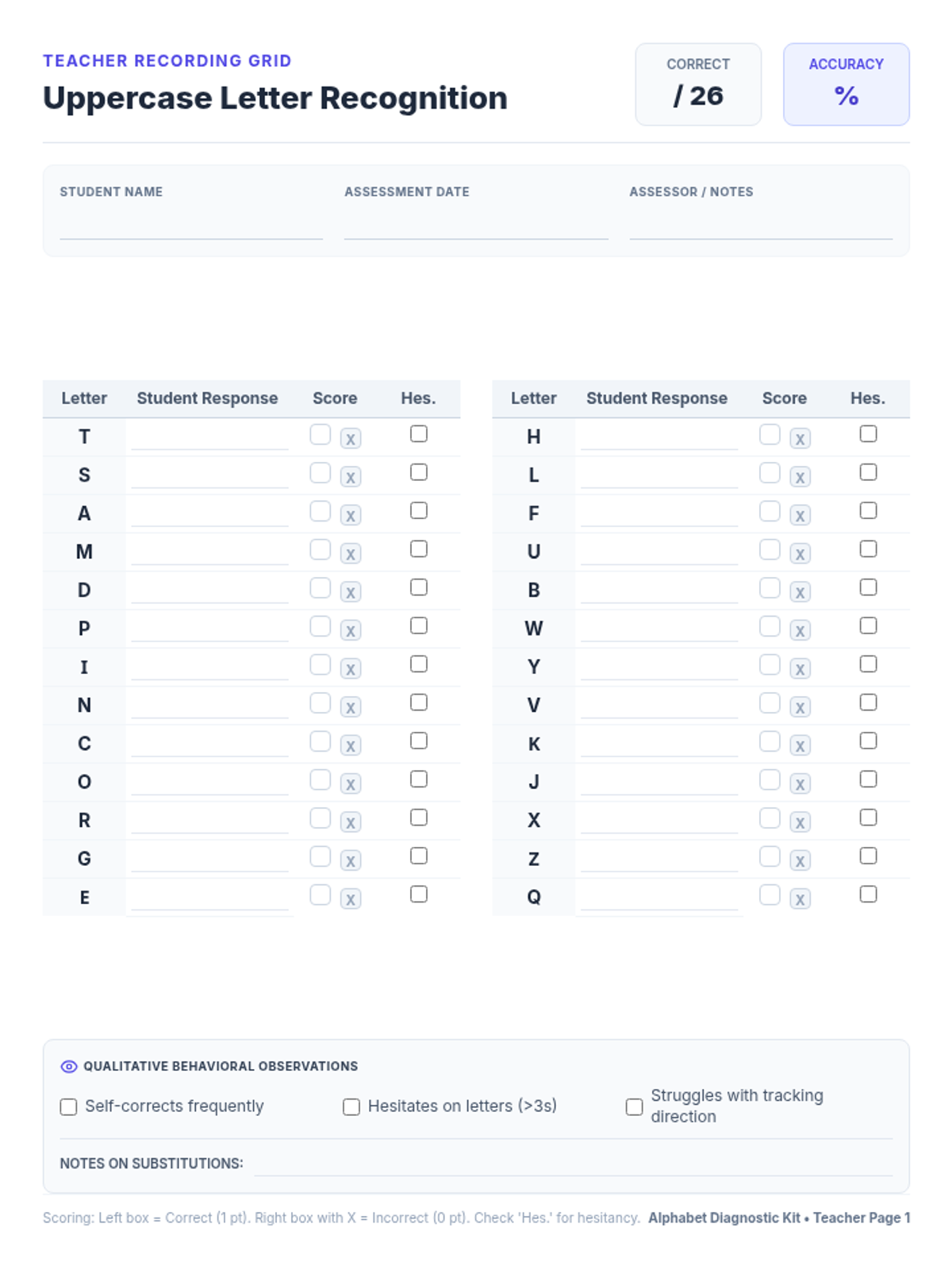
Teacher-facing recording grids matching the student stimulus pages in developmental order. Provides tracking columns for student responses, correct/incorrect check boxes, qualitative notes, and automatic scoring summaries.
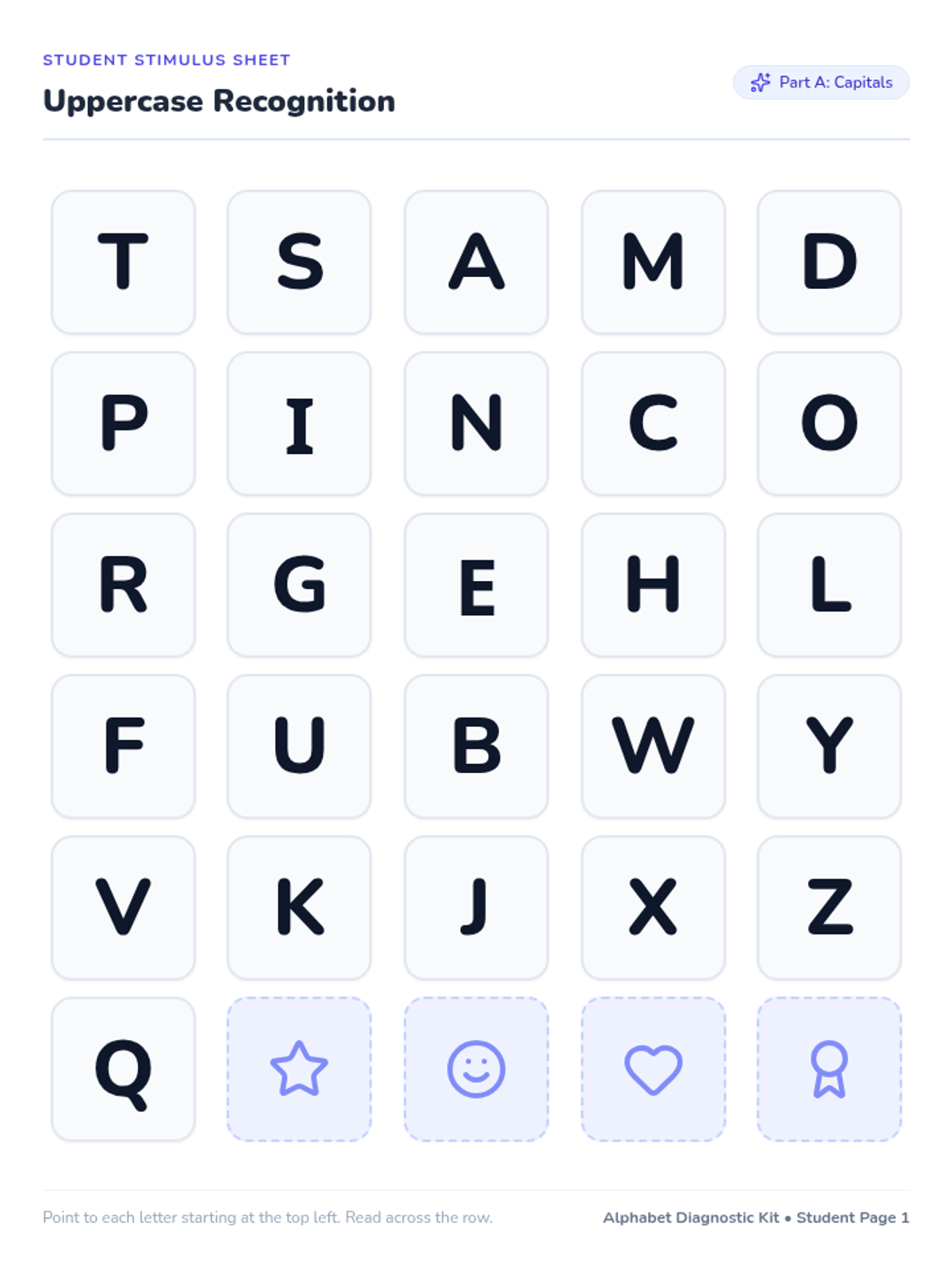
Large, high-contrast randomized student stimulus pages for uppercase and lowercase letters. Designed in developmental order with a student-friendly grid layout to prevent memorization and facilitate easy visual tracking during assessment.
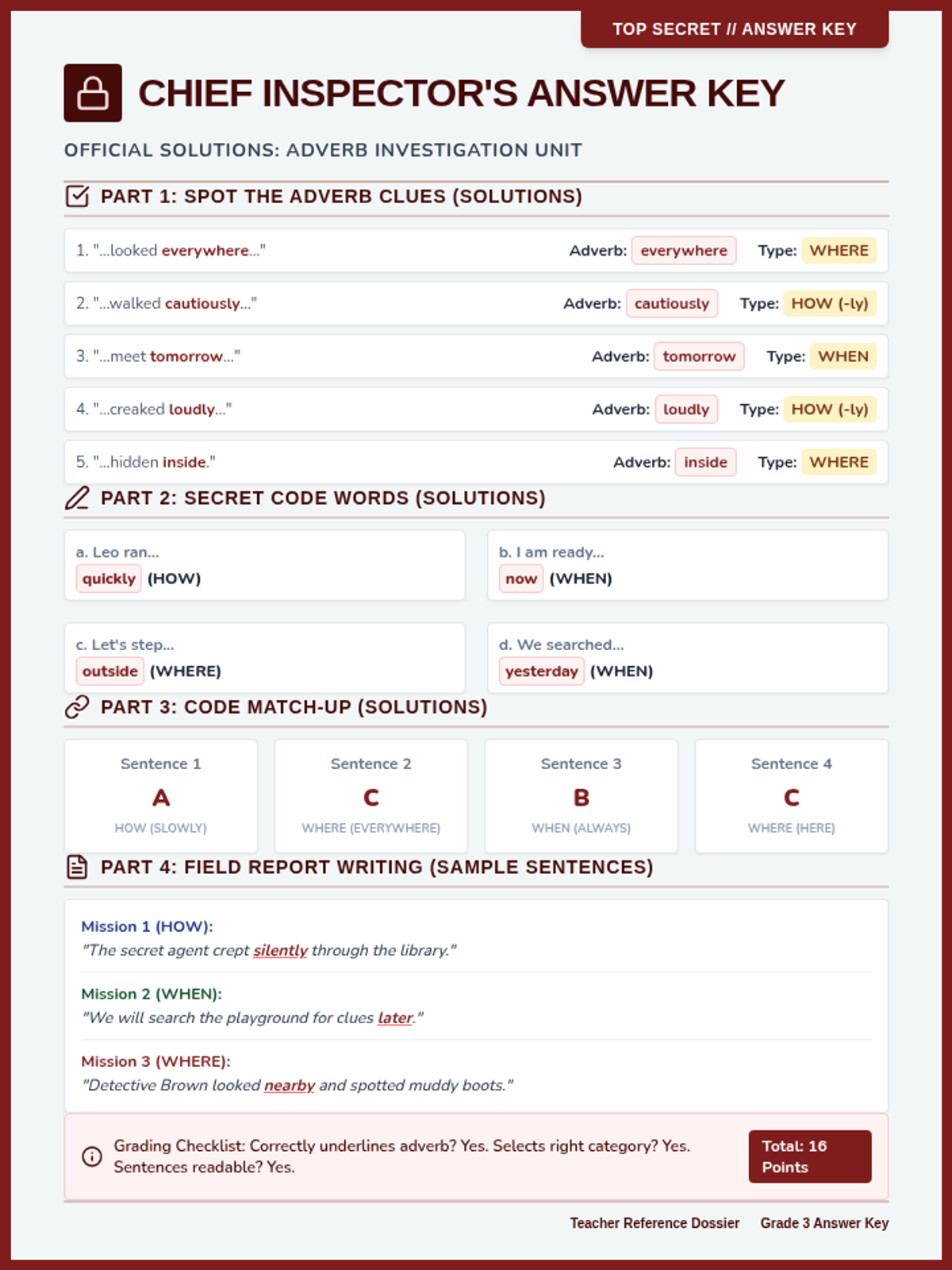
A single-page printable teacher's answer key providing solutions for all exercises in the Adverb Investigation Worksheet. Marked with a "Confidential Case Solver" detective theme.
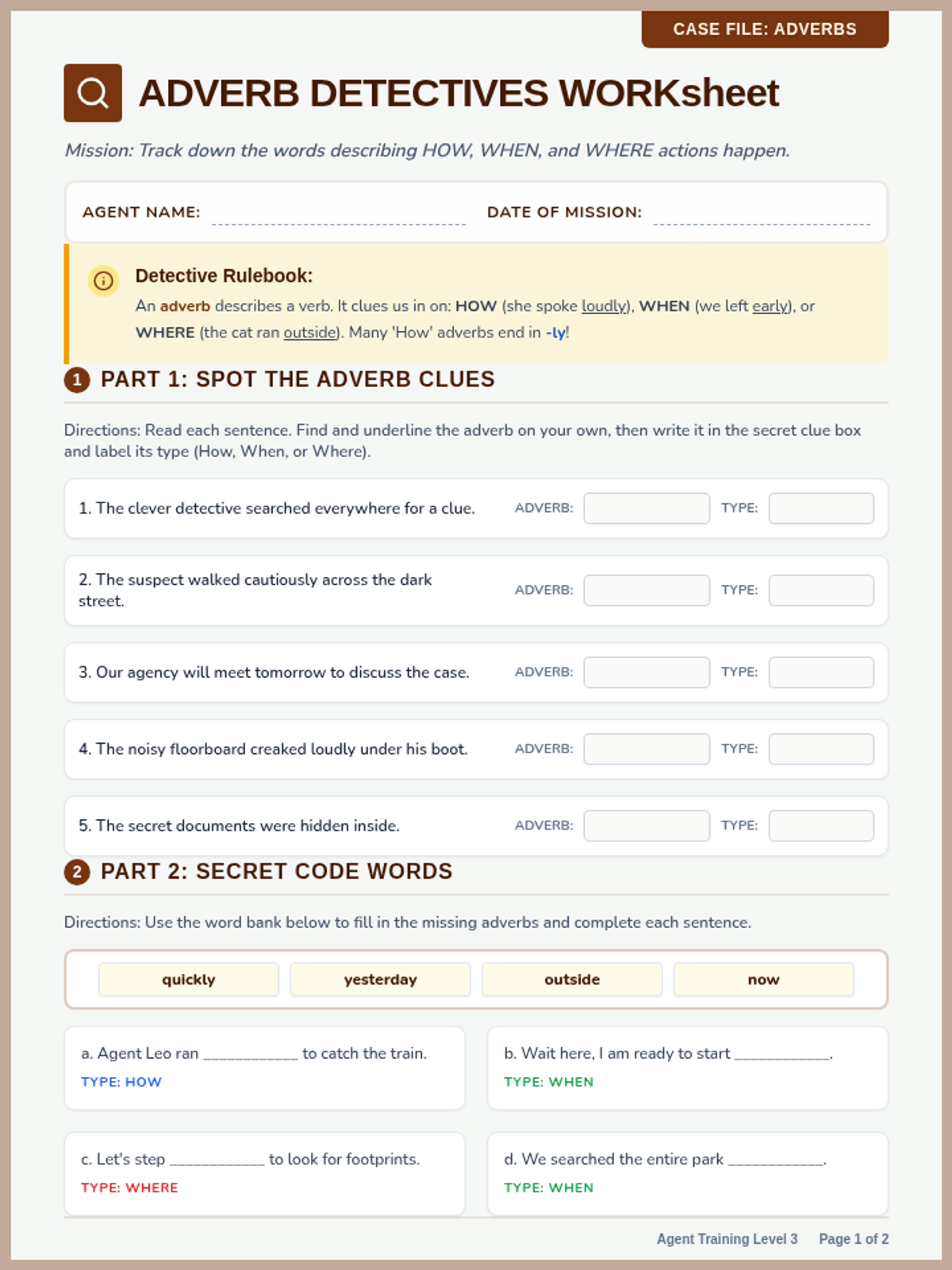
A double-page printable practice worksheet for third-grade students formatted to fit standard 8.5x11 inch paper. Features sentence analysis, category matching, and creative writing.
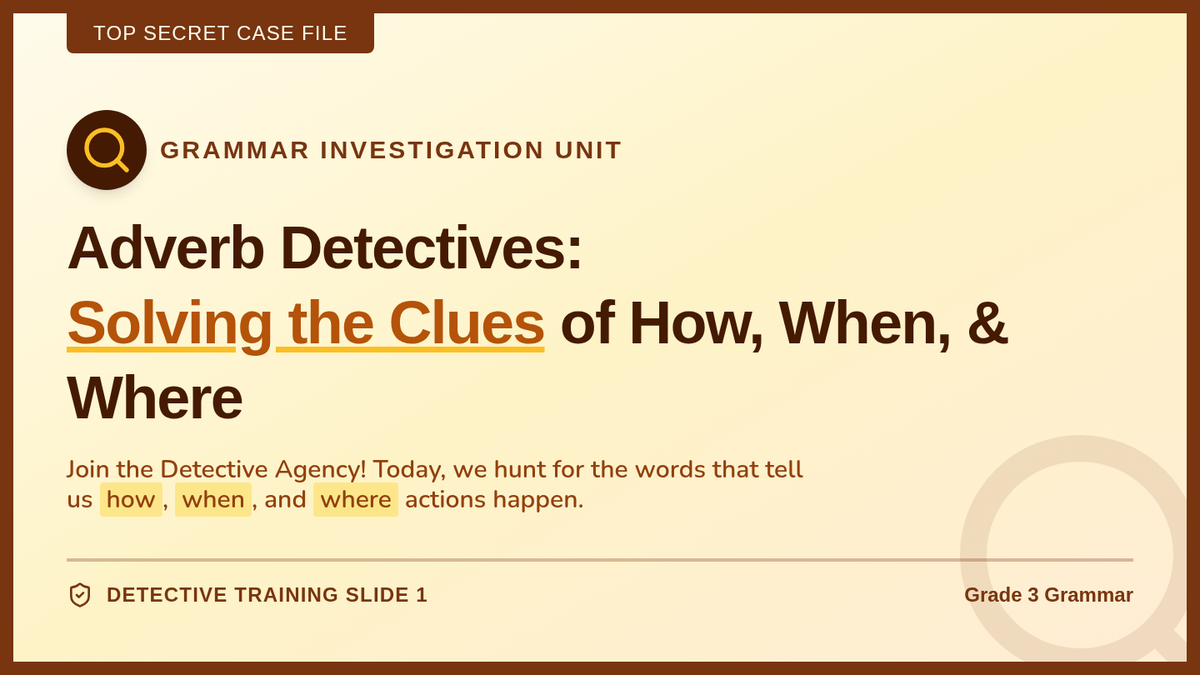
A highly engaging 9-slide instructional presentation for third-grade students introducing adverbs of manner (how), time (when), and place (where) with a detective theme. Uses Lucide icons and clear, 24px+ text for legibility.
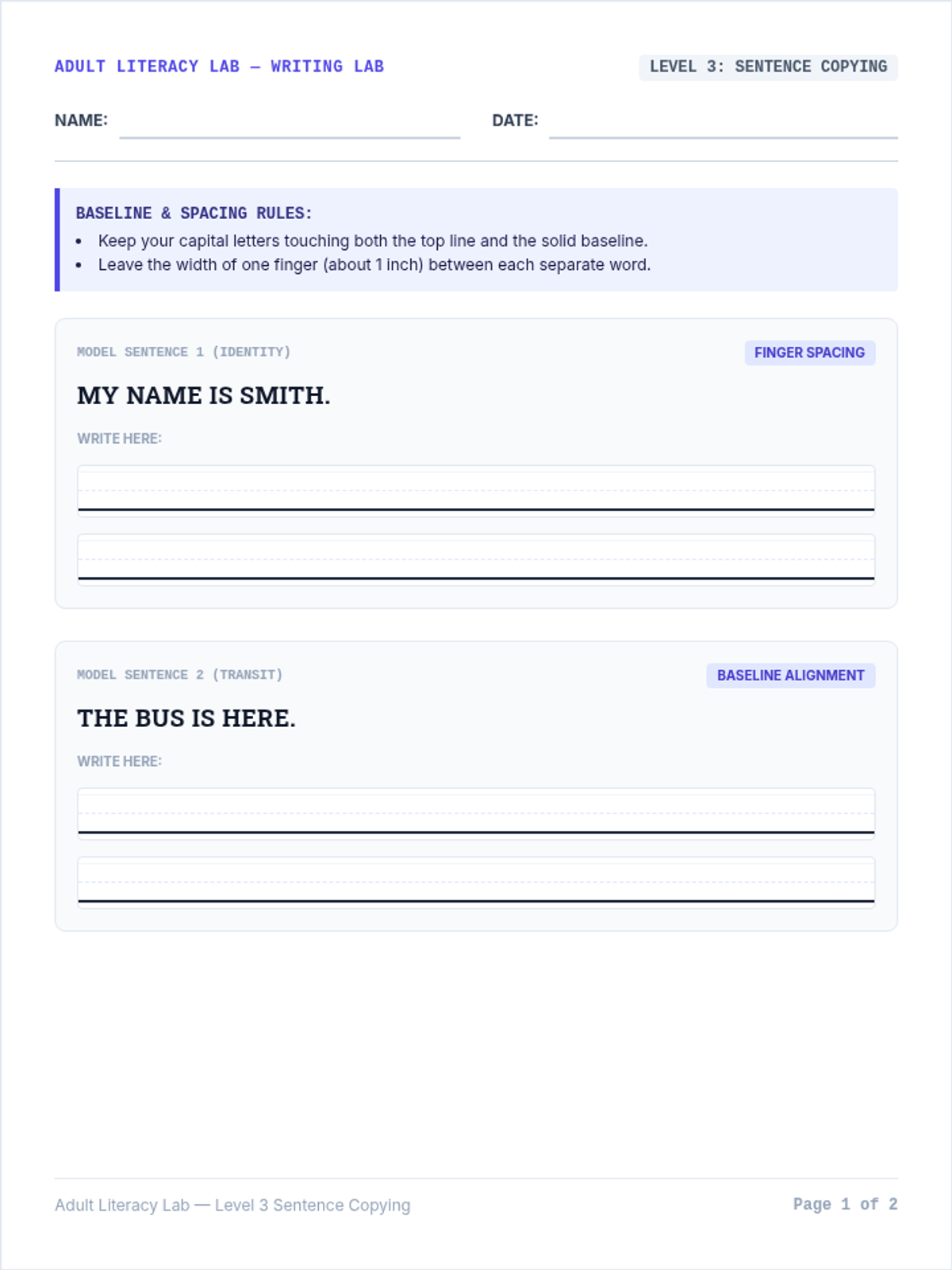
A dedicated 2-page workbook for Level 3 learners, focusing on advanced sentence copying, word spacing controls, baseline alignment, and thematic spelling drills.
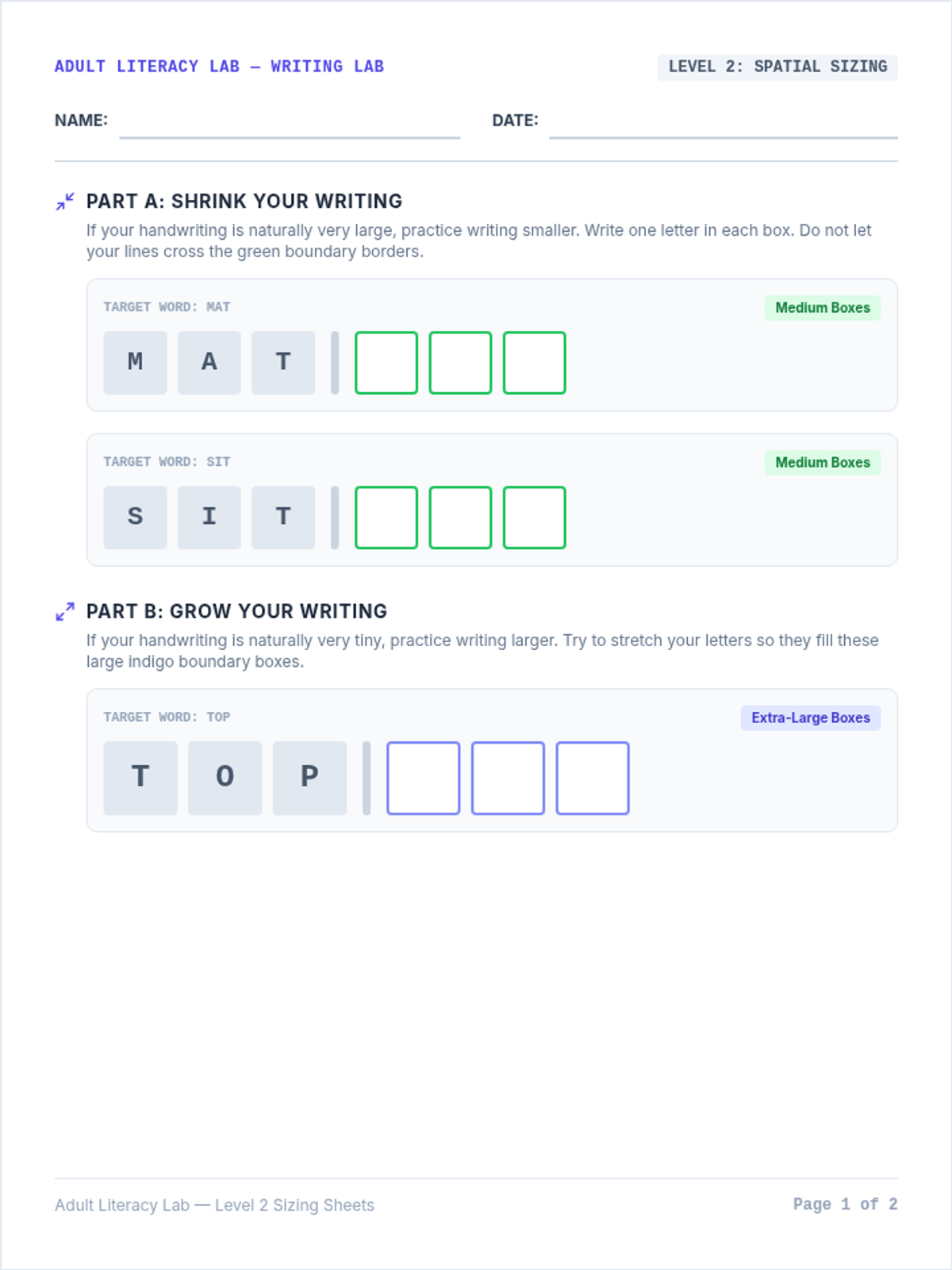
A dedicated 2-page workbook for Level 2 learners, focusing on spatial handwriting size adjustment through boundary-constrained letter boxes and CVC spelling models.
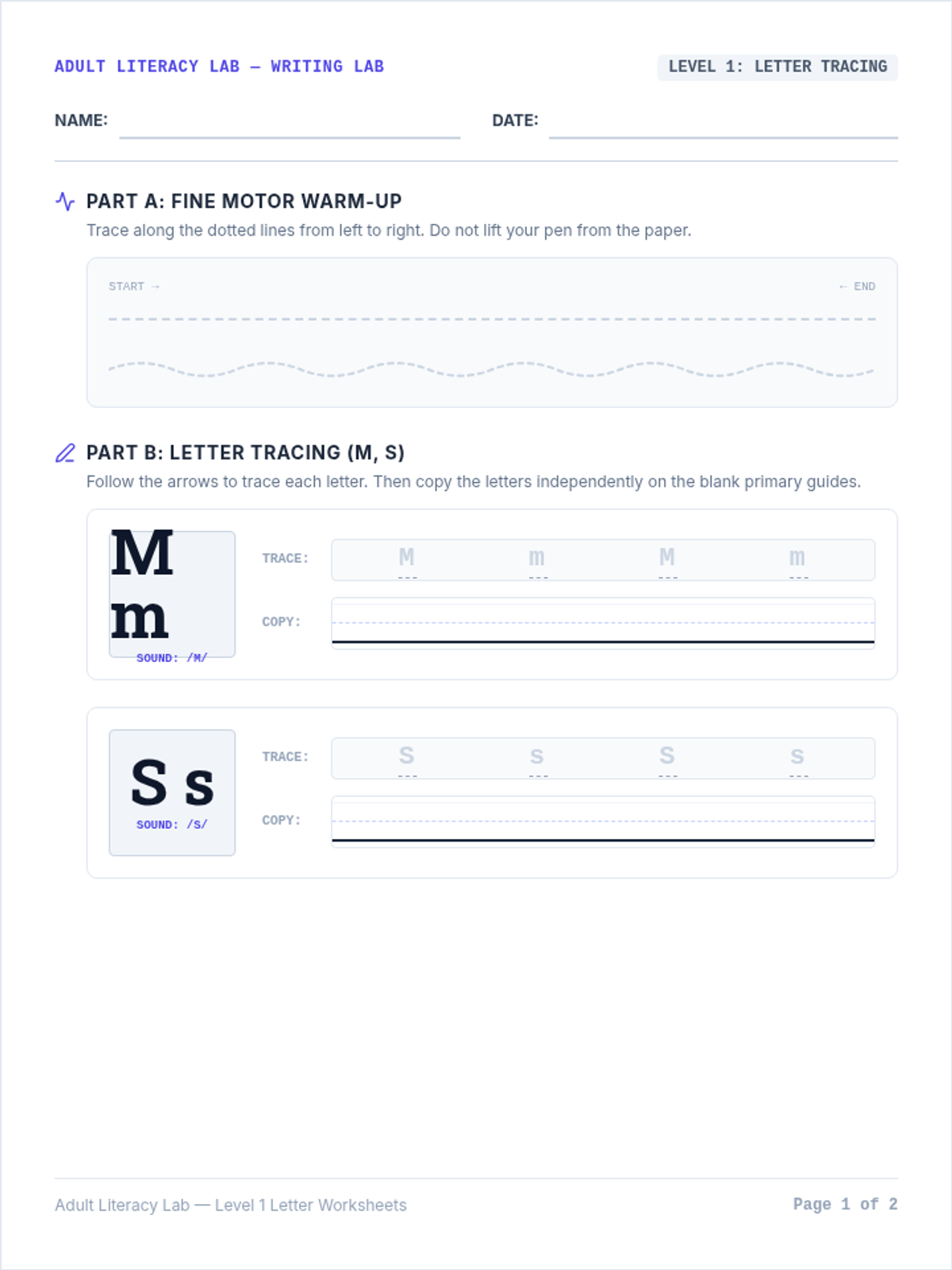
A dedicated 2-page workbook for Level 1 learners, focusing strictly on foundational motor warm-ups and large-print guided letter stroke tracing for letters M, S, T, A, O, and P.
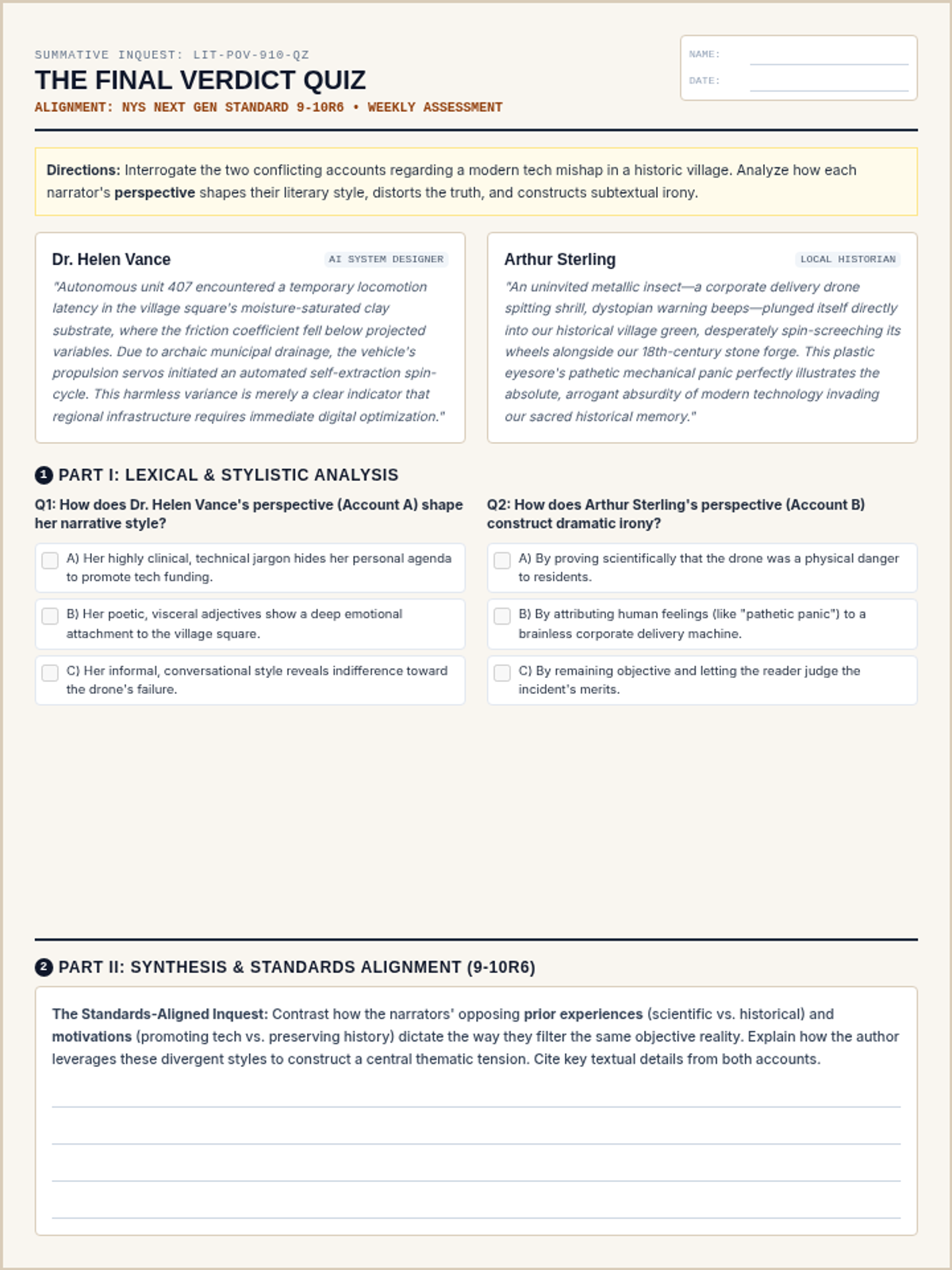
A rigorous 1-page Grade 9-10 assessment aligned to NYS Next Gen ELA Standard 9-10R6. Features two highly complex, contrasting accounts of an autonomous drone mishap in a historic town square, with standards-aligned multiple-choice and critical-analysis synthesis questions.
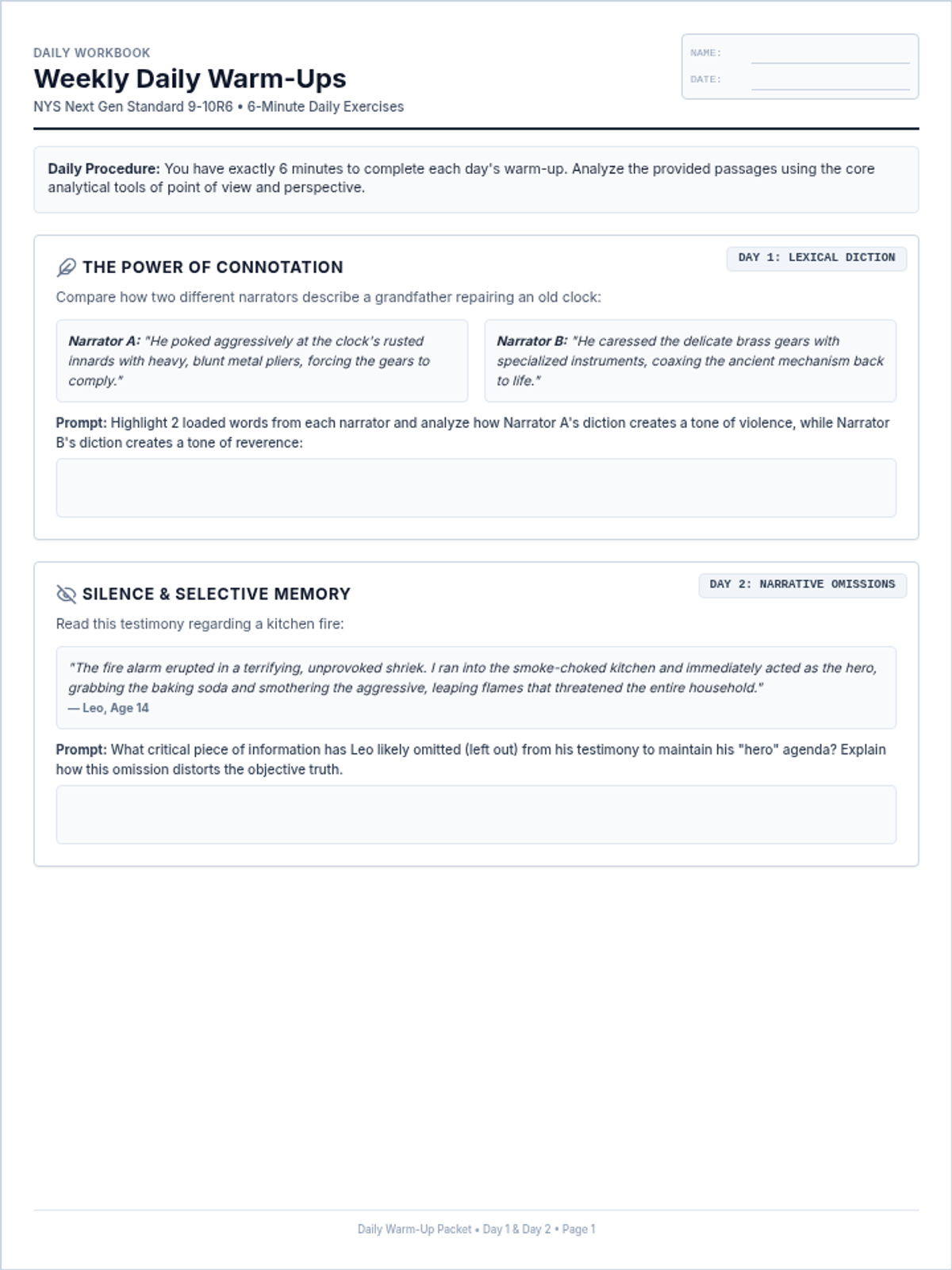
A clean, simple 2-page, 4-day daily warm-up packet designed for Grade 9-10. Each day features a 6-minute exercise targeting a key 9-10R6 cognitive skill without any thematic dossier backgrounds or retro fonts.
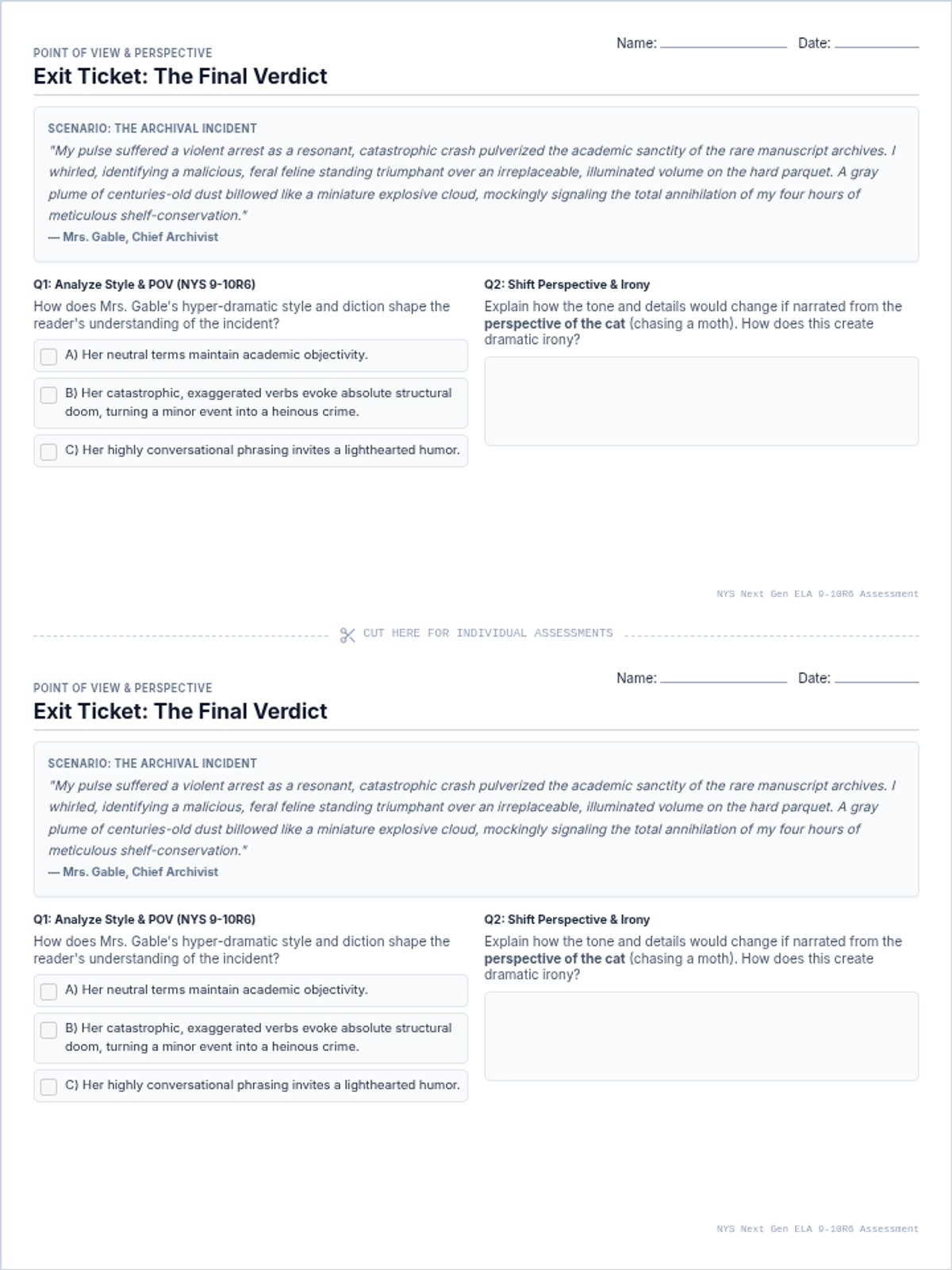
An updated Grade 9-10 two-up paper-saving exit ticket aligned to NYS Next Gen ELA Standard 9-10R6. Focuses on style analysis, high-level vocabulary, and the creation of dramatic irony through perspective shifting.
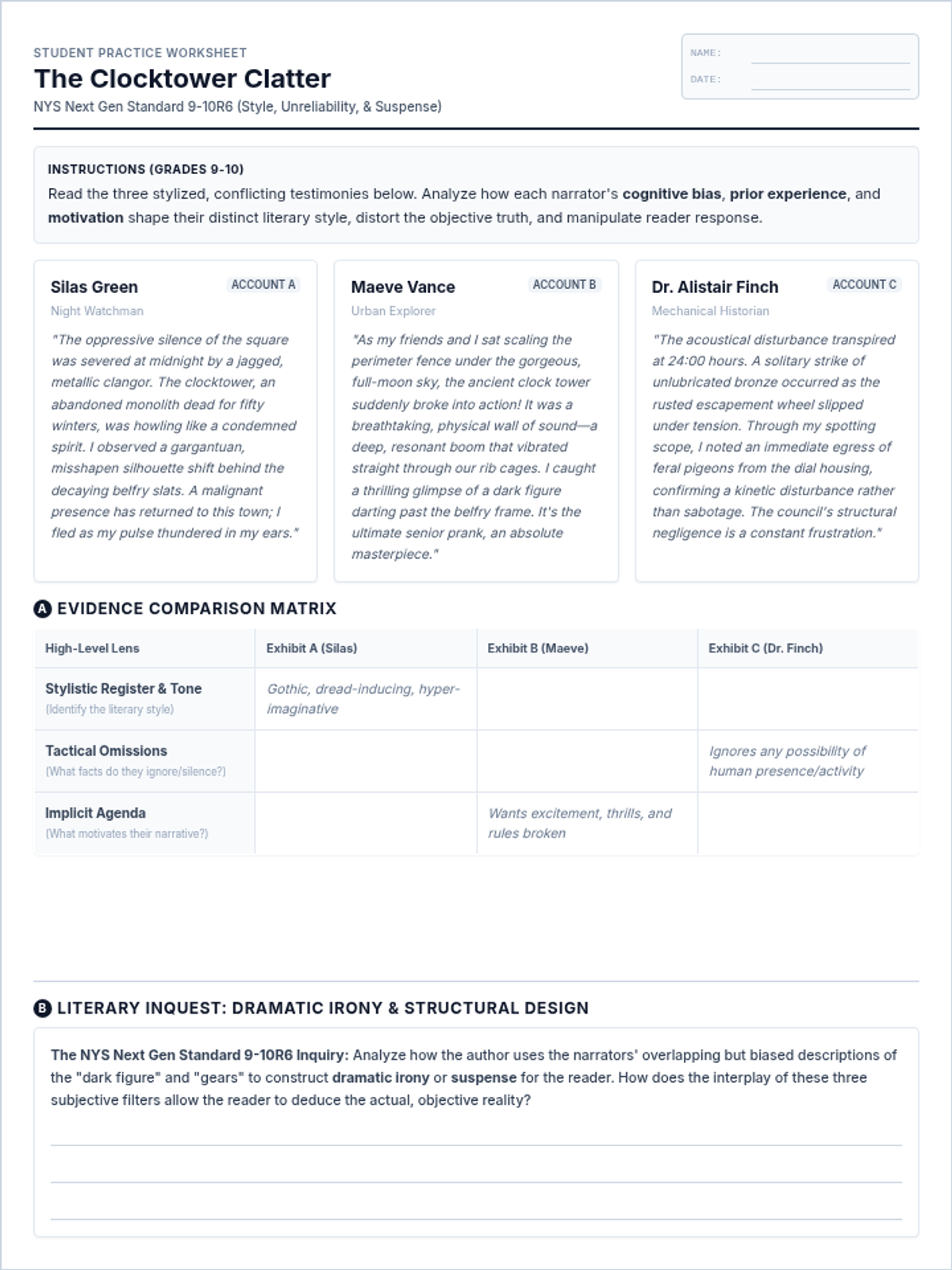
An updated student practice worksheet featuring three short contrasting eyewitness accounts of a mysterious clocktower ringing at midnight. Redesigned with a clean, simple, and professional academic layout devoid of thematic dossier prints.
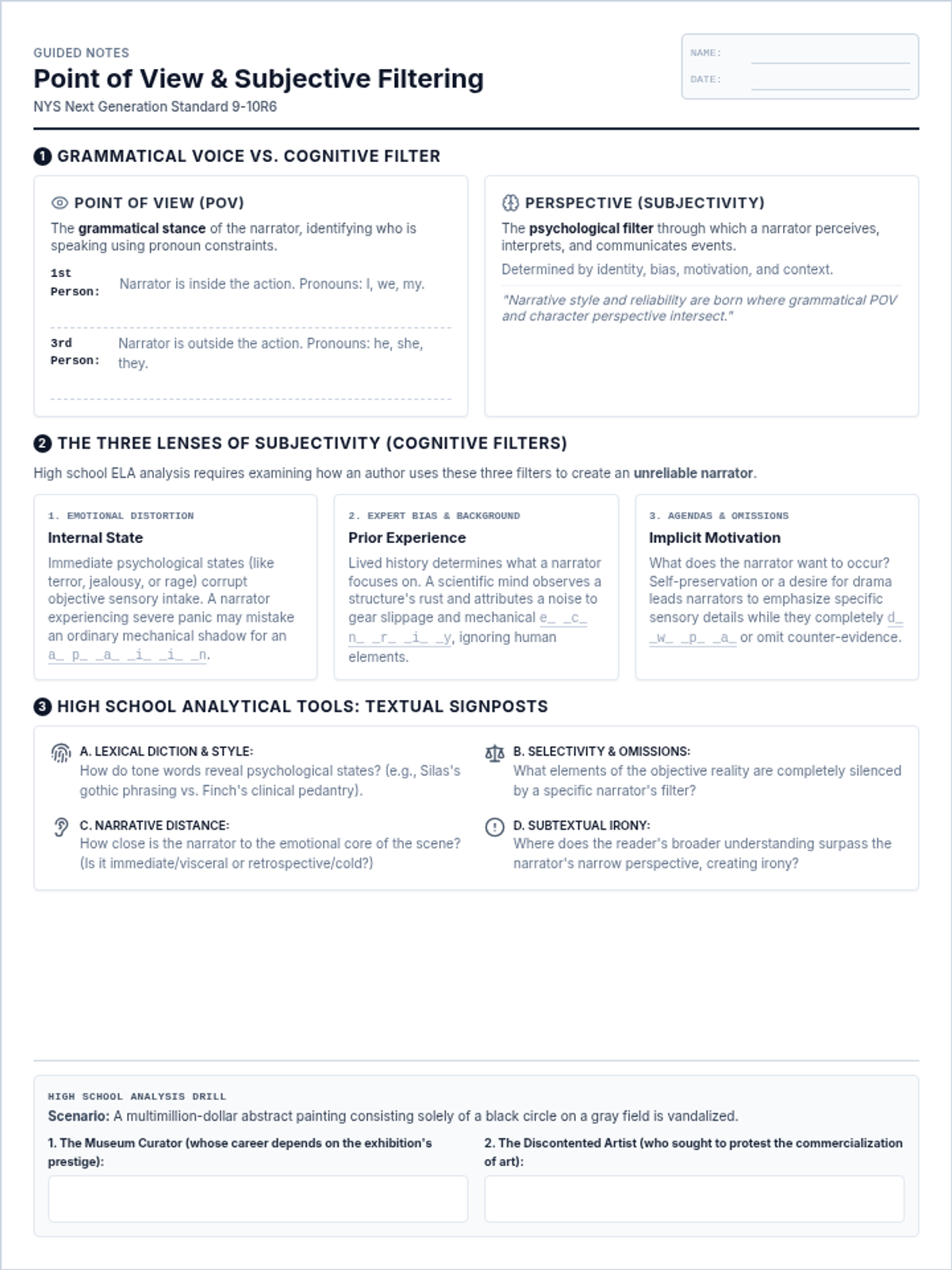
An updated student guided notes sheet tailored to Grade 9-10 ELA standards. Focuses on the distinction between grammatical Point of View and psychological Perspective, introducing key advanced terms like narrative unreliability, diction connotation, and cognitive bias.
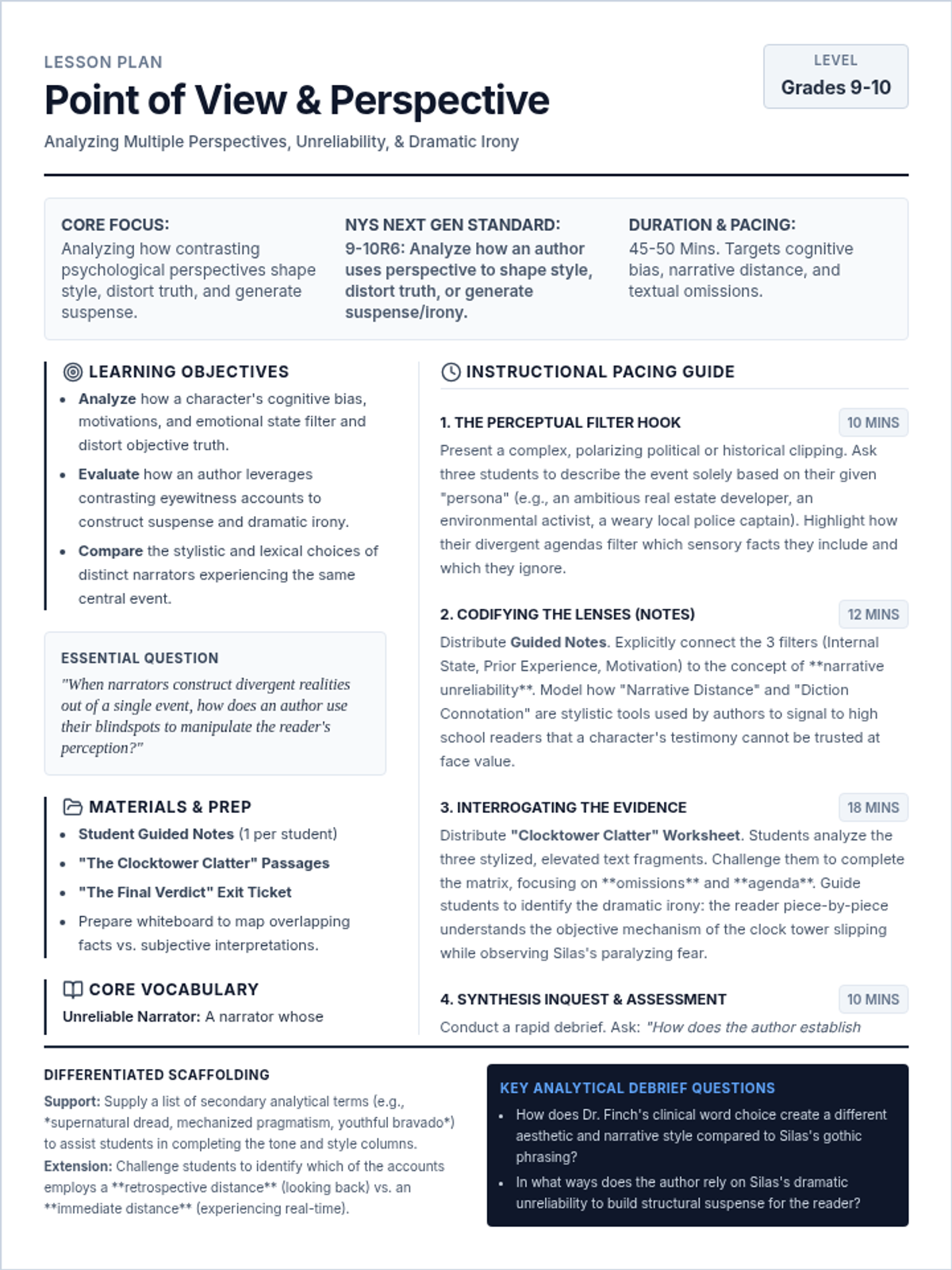
An updated teacher guide aligned to NYS Next Gen ELA Grade 9-10 Standards (9-10R6), redesigned with a clean, simple, and professional academic layout devoid of thematic dossier prints.
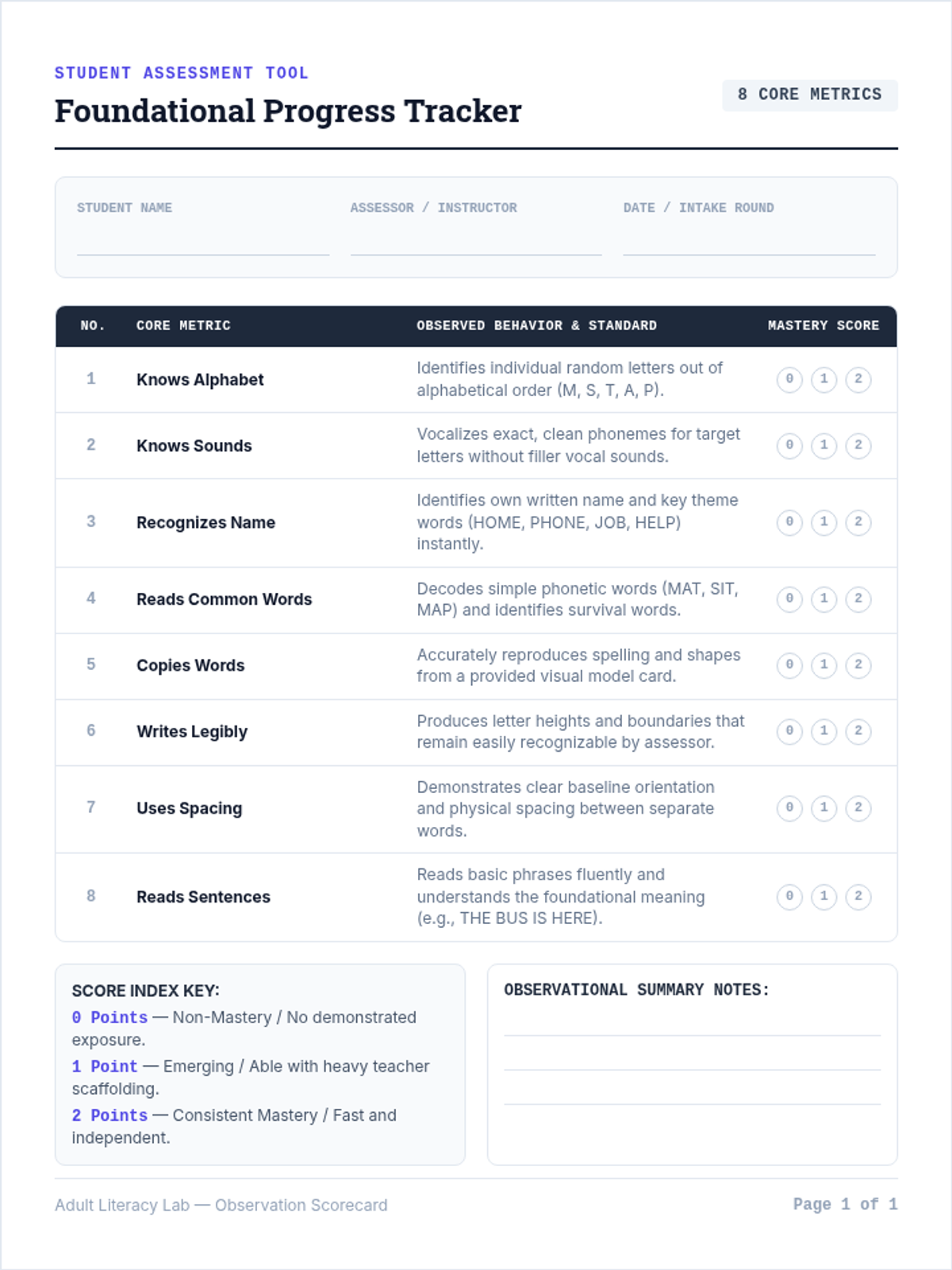
A practical 1-page teacher observational tracking tool designed to quickly record and assess student progress across the 8 core functional adult literacy metrics.
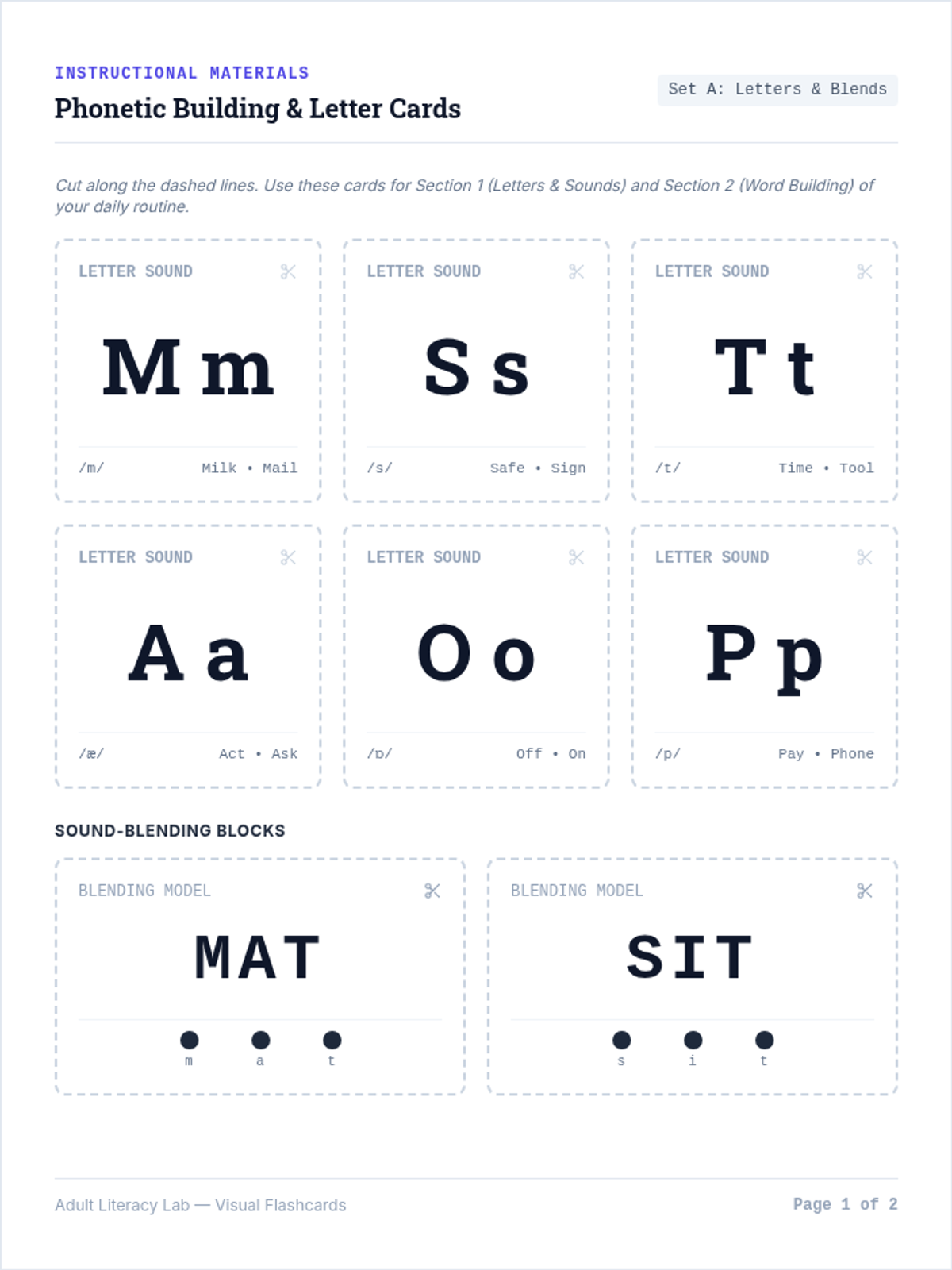
High-contrast, large-print letter and word cards with scissor-cut guides, featuring phonetic building blocks and functional public survival signs.
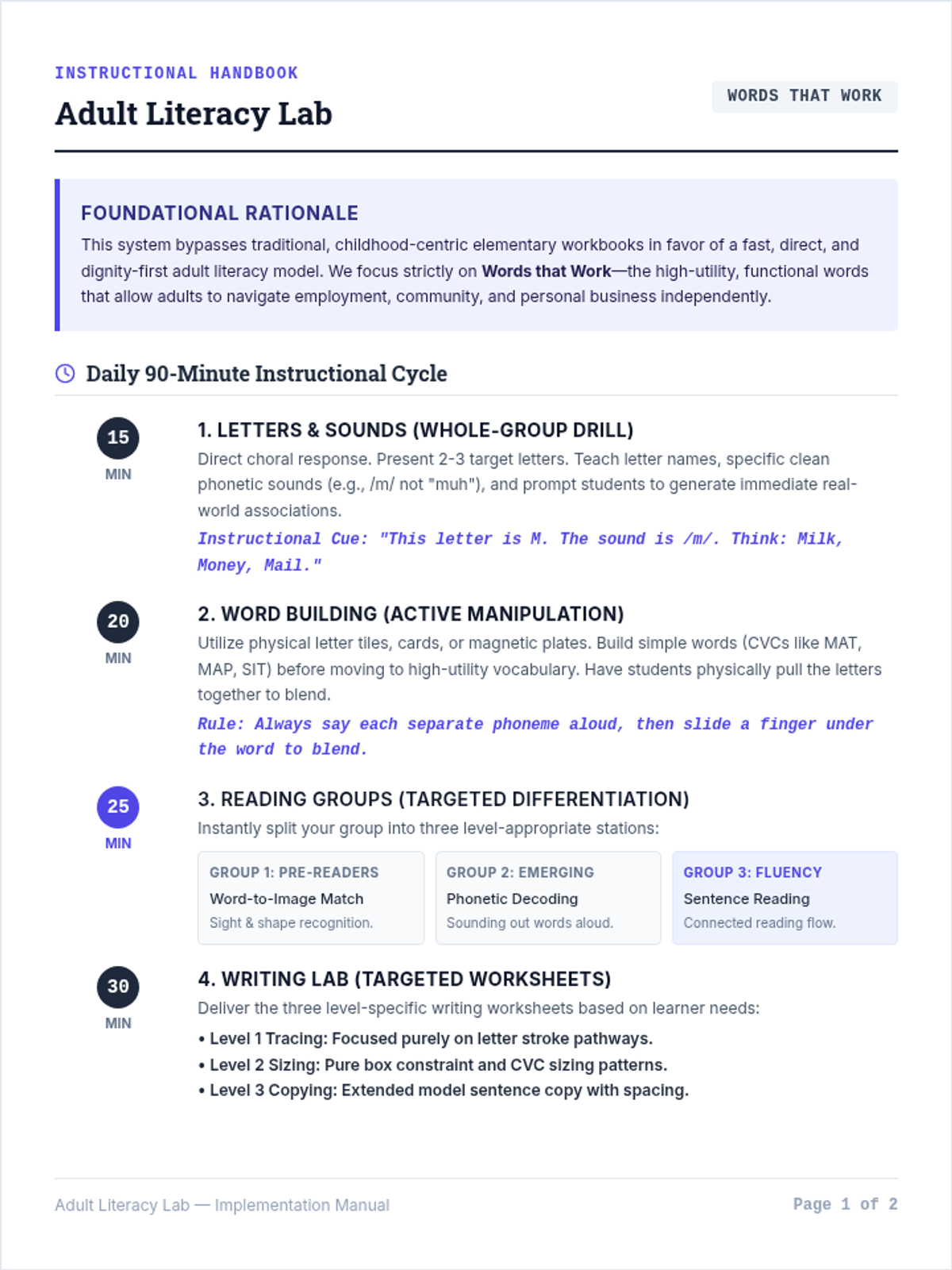
A comprehensive 2-page teacher's manual updated for 90-minute daily routines, outlining daily step-by-step scripts, thematic progressions, and 'Words that Work' vocational and safety vocabularies.
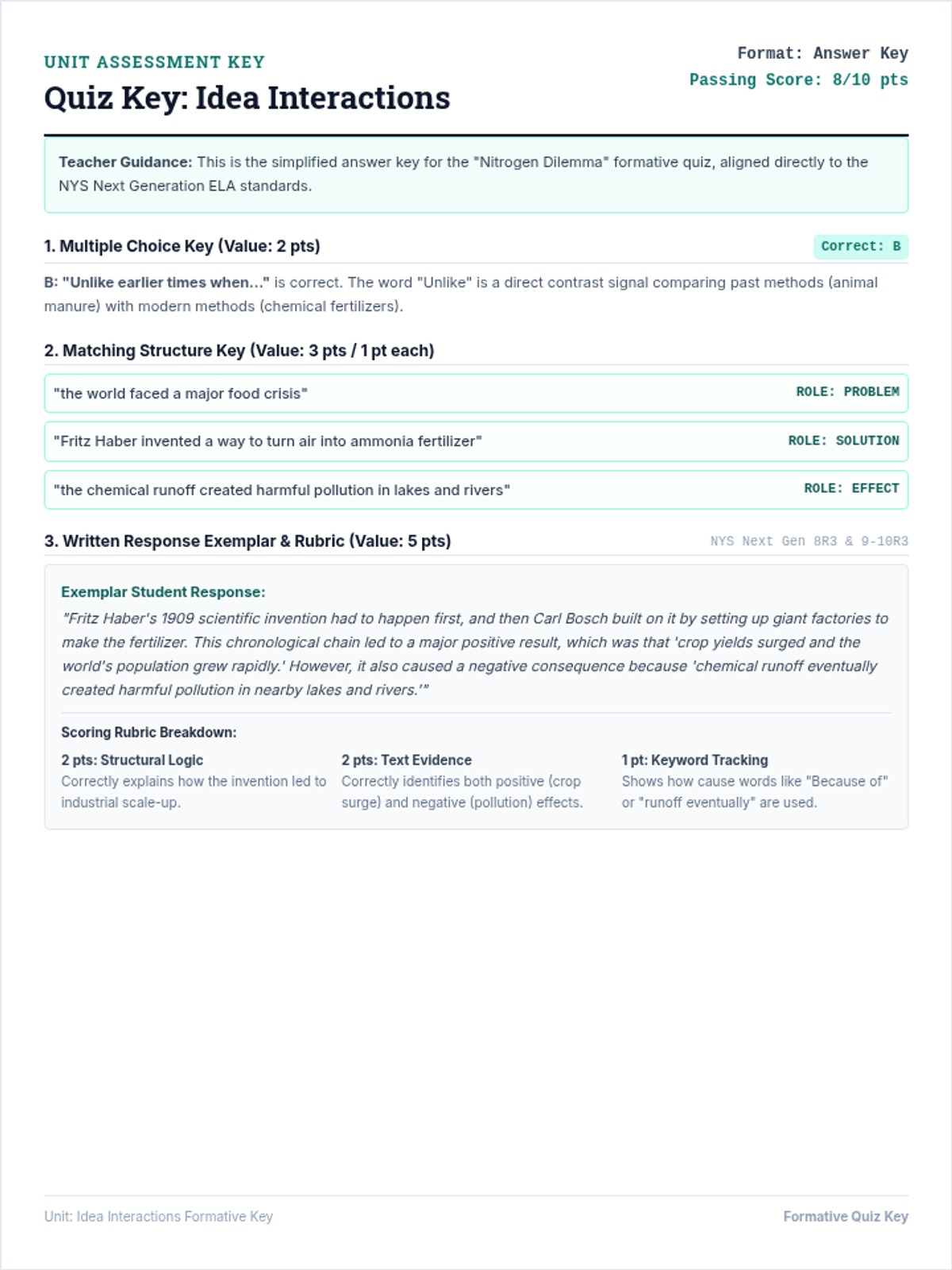
A 1-page teacher answer key and grading rubric for the Formative Quiz, containing exact solutions, matching keys, and exemplars for written synthesis responses.
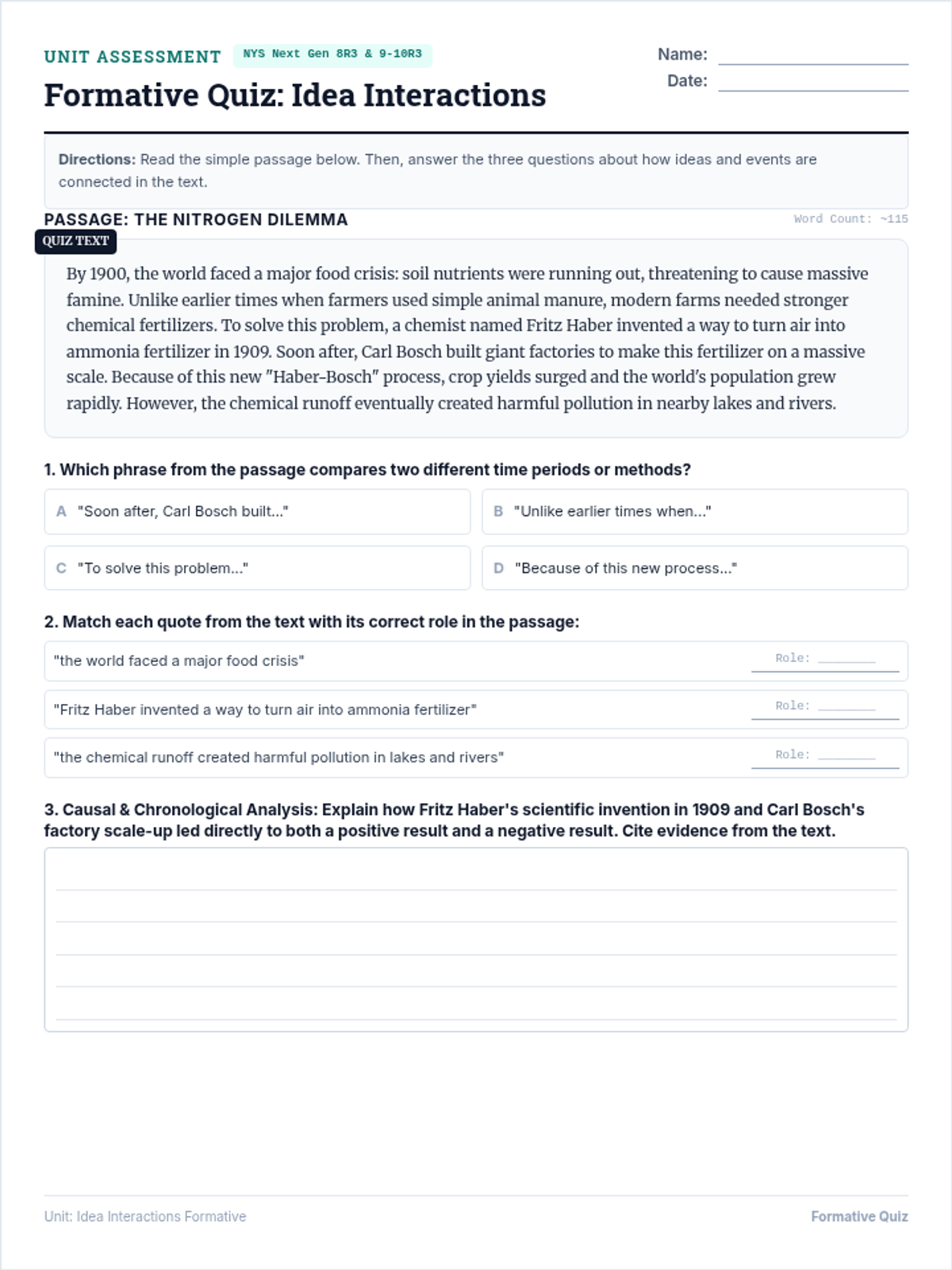
A simplified 1-page student formative quiz with a readable passage on agricultural history, straightforward multiple-choice, matching, and guided short-answer analysis.
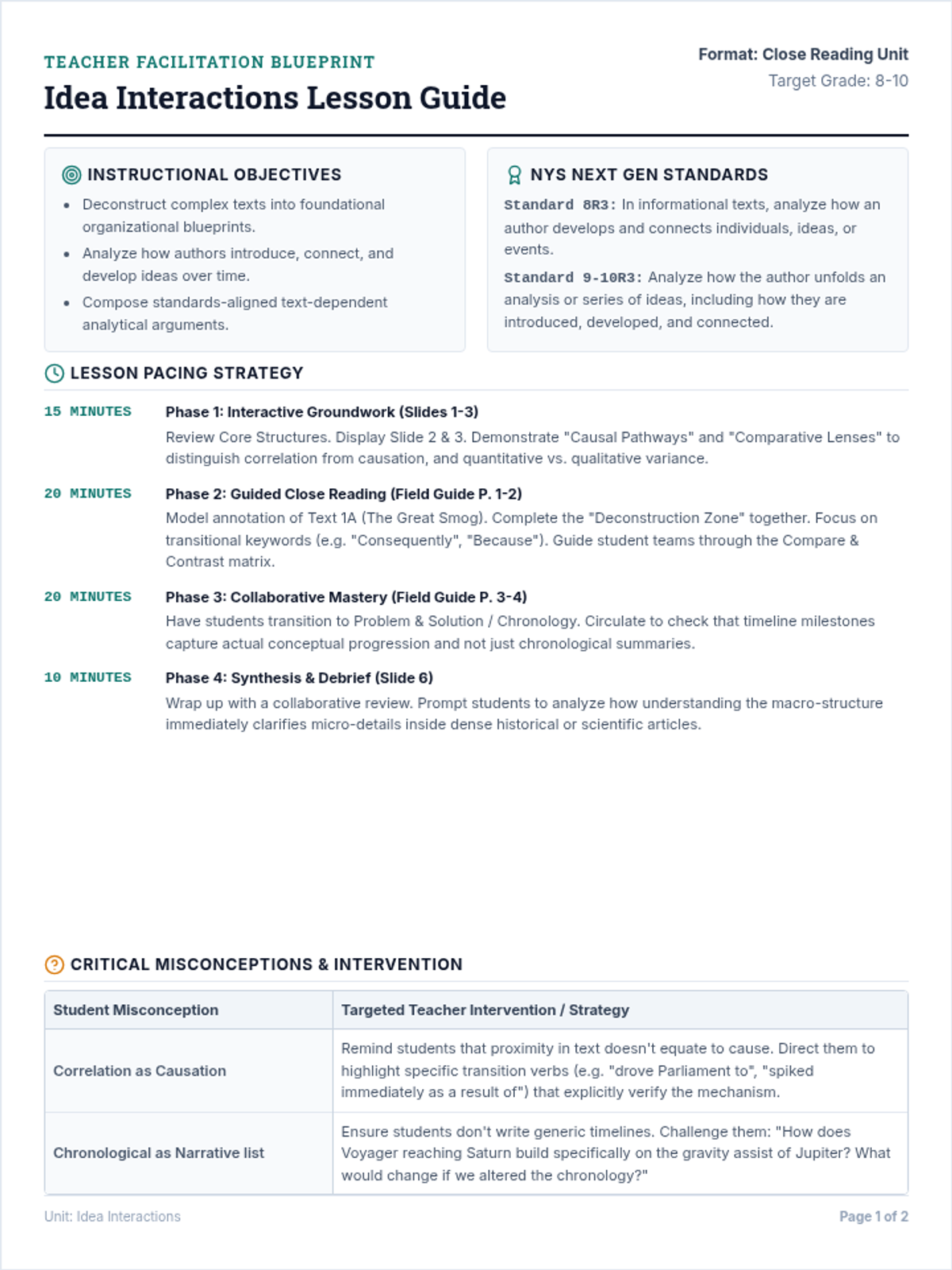
A comprehensive, 2-page teacher facilitation and answer guide. Contains structured lesson pacing, standard alignment (NYS Next Generation ELA Standards 8R3 and 9-10R3), student misconceptions, and full exemplar responses for each close reading page.
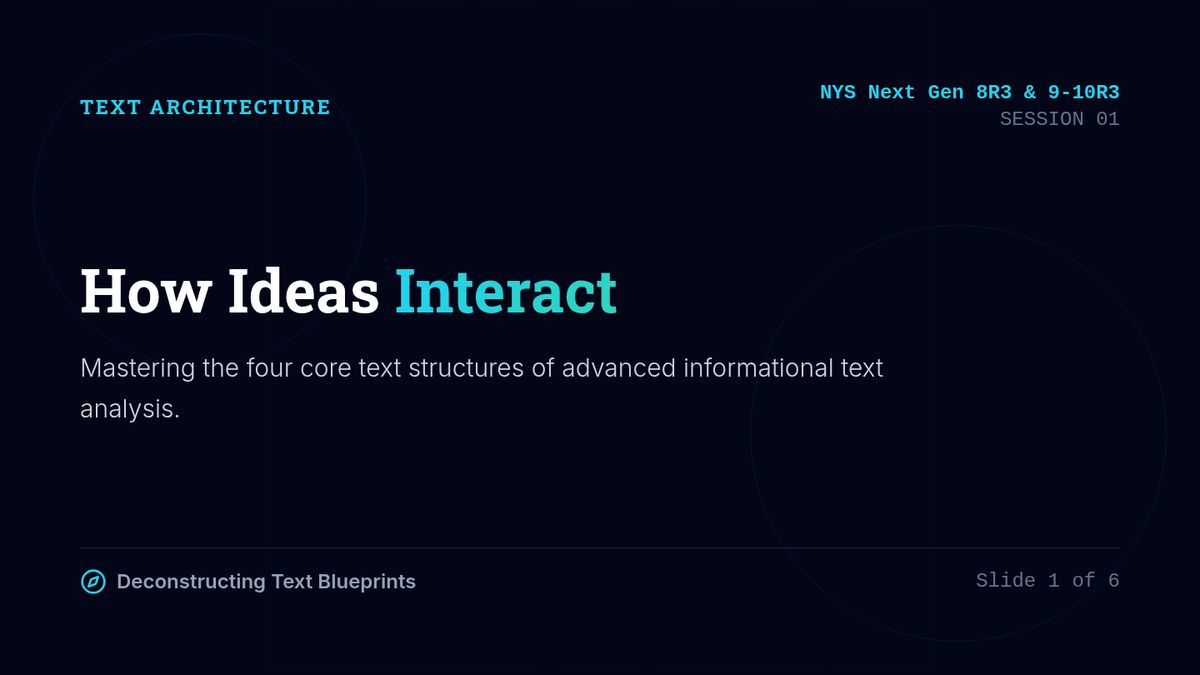
An elegant 6-slide presentation for teaching the four core text structures (Cause/Effect, Compare/Contrast, Problem/Solution, and Chronological Development) and how ideas interact within complex informational texts.
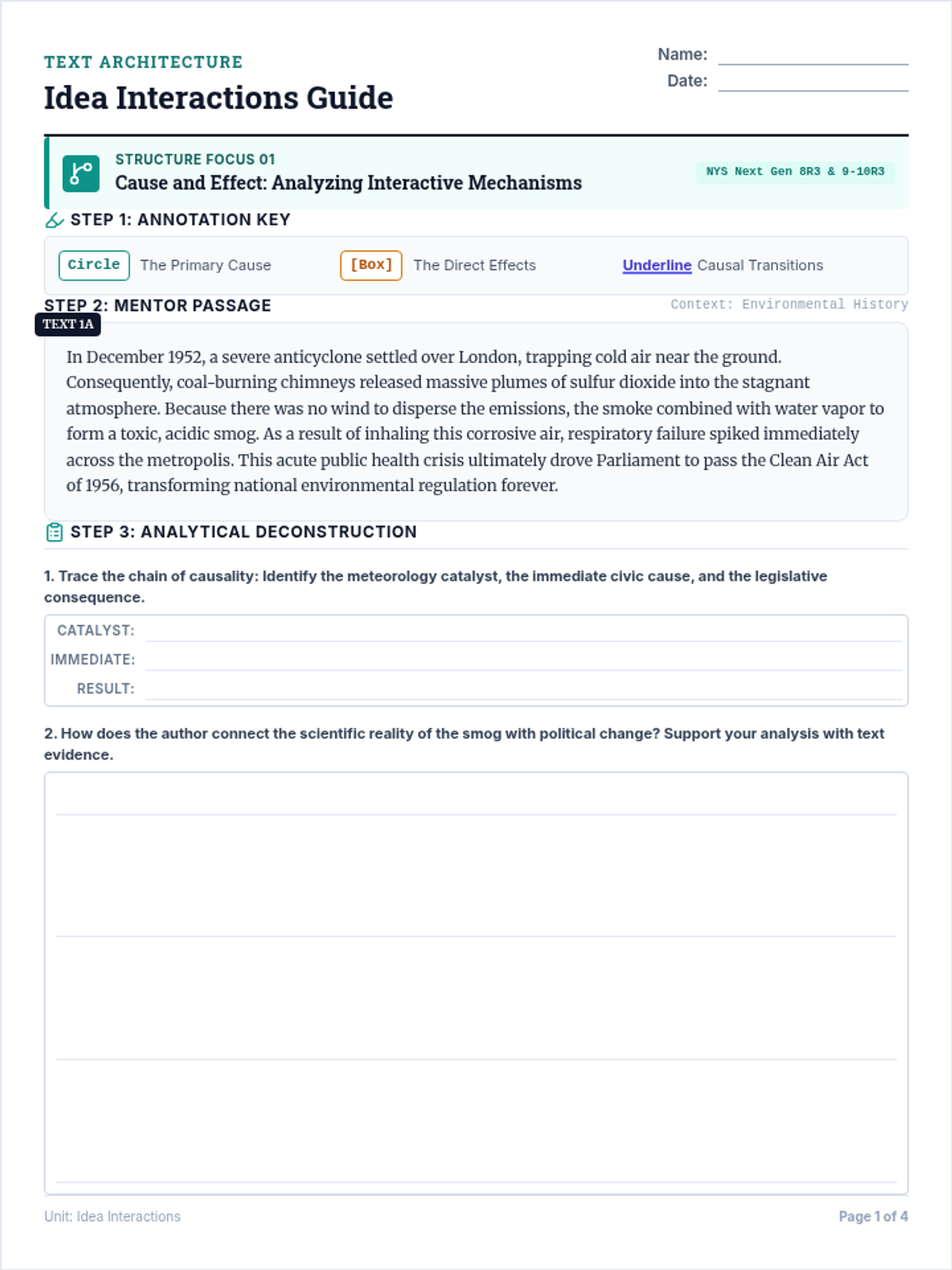
A 4-page student-facing close reading guide that provides step-by-step annotation templates, mentor texts, and text-dependent analysis questions for Cause & Effect, Comparison & Contrast, Problem & Solution, and Chronological Development.
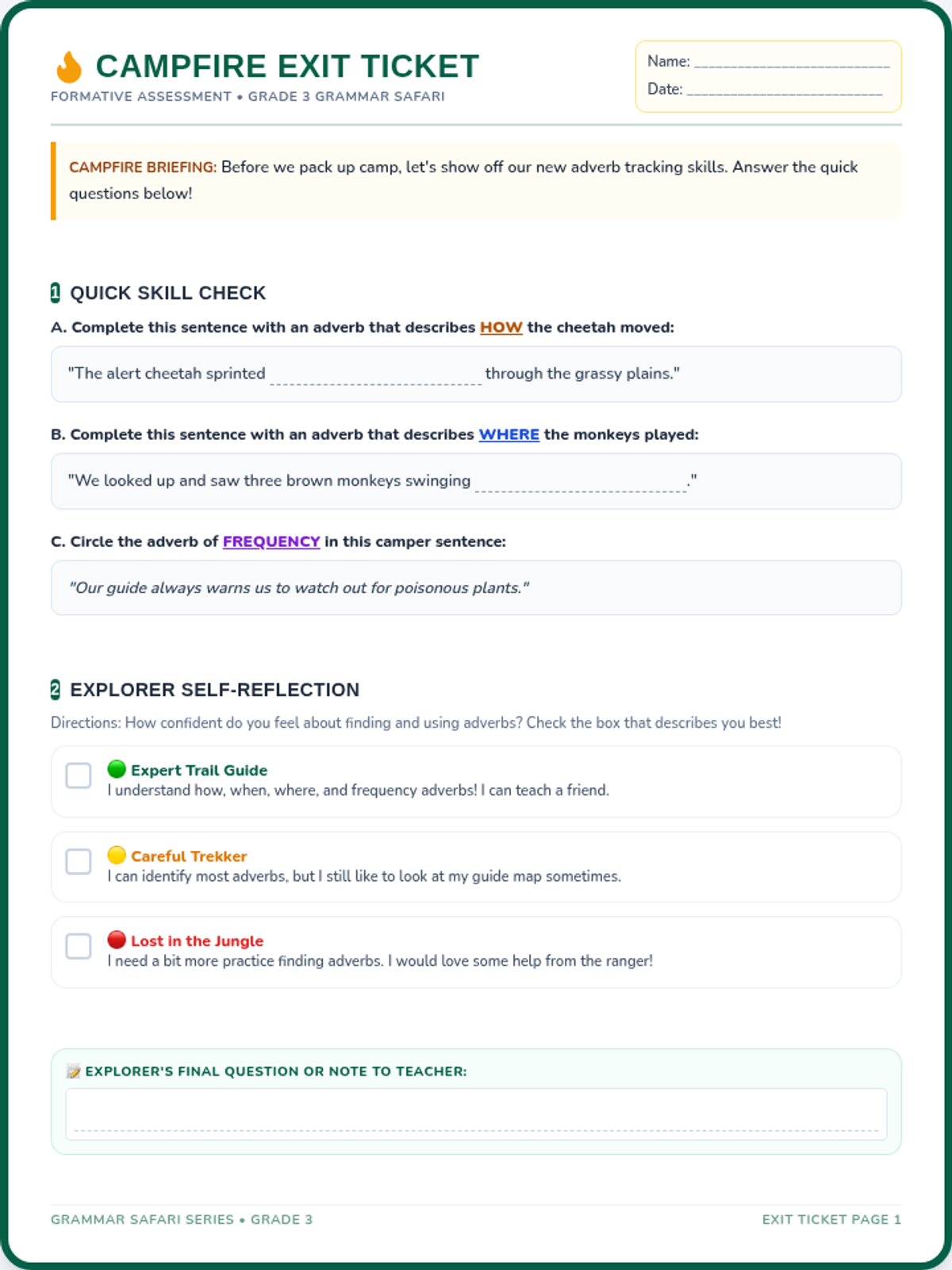
A quick formative assessment exit ticket with a safari campfire theme, evaluating students' ability to recognize and use different adverb types alongside a self-reflection scale.
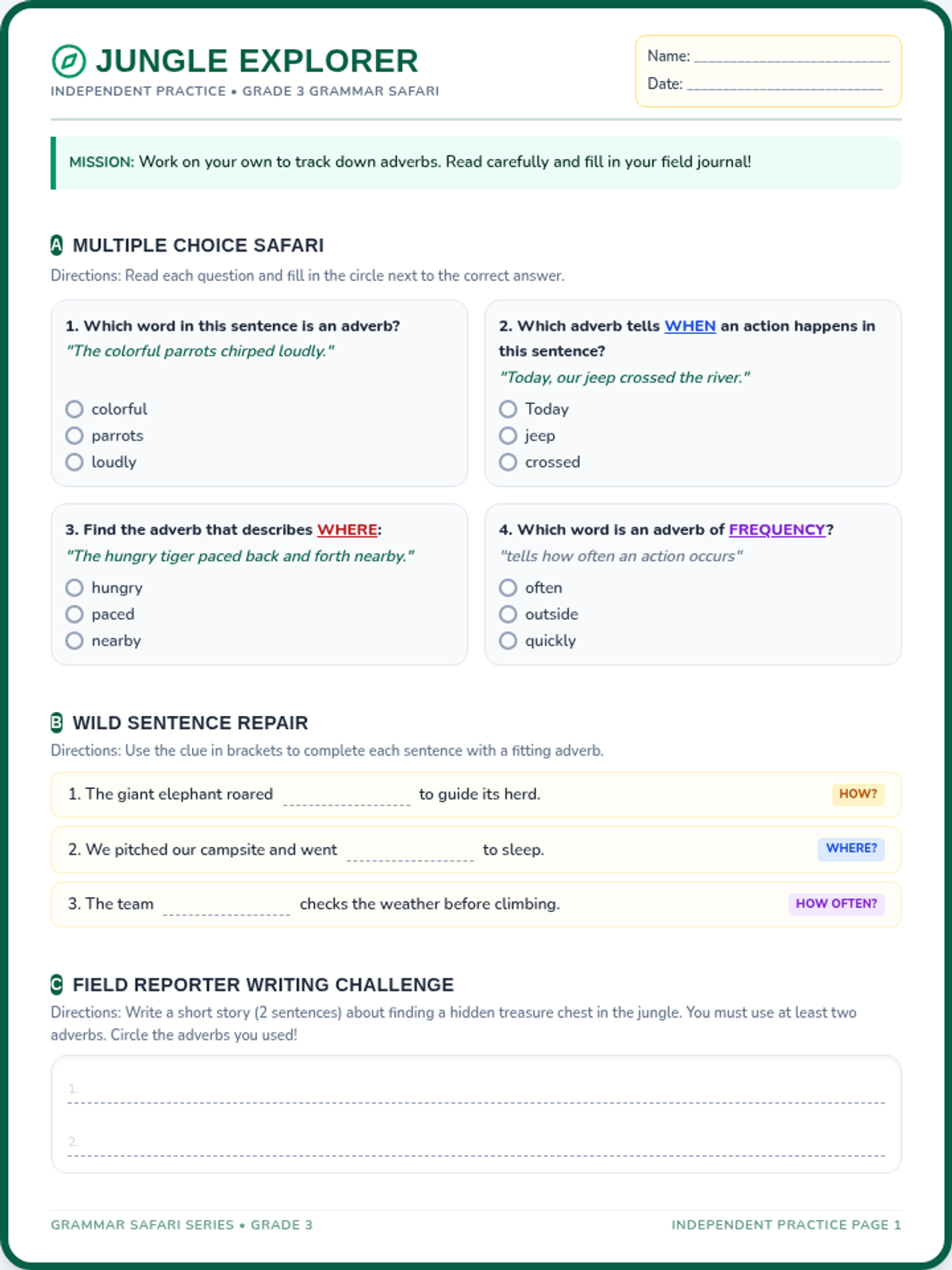
An independent practice worksheet for third-grade students to demonstrate mastery of adverbs of how, when, where, and how often through multiple-choice questions, fill-in-the-blank exercises, and sentence writing.
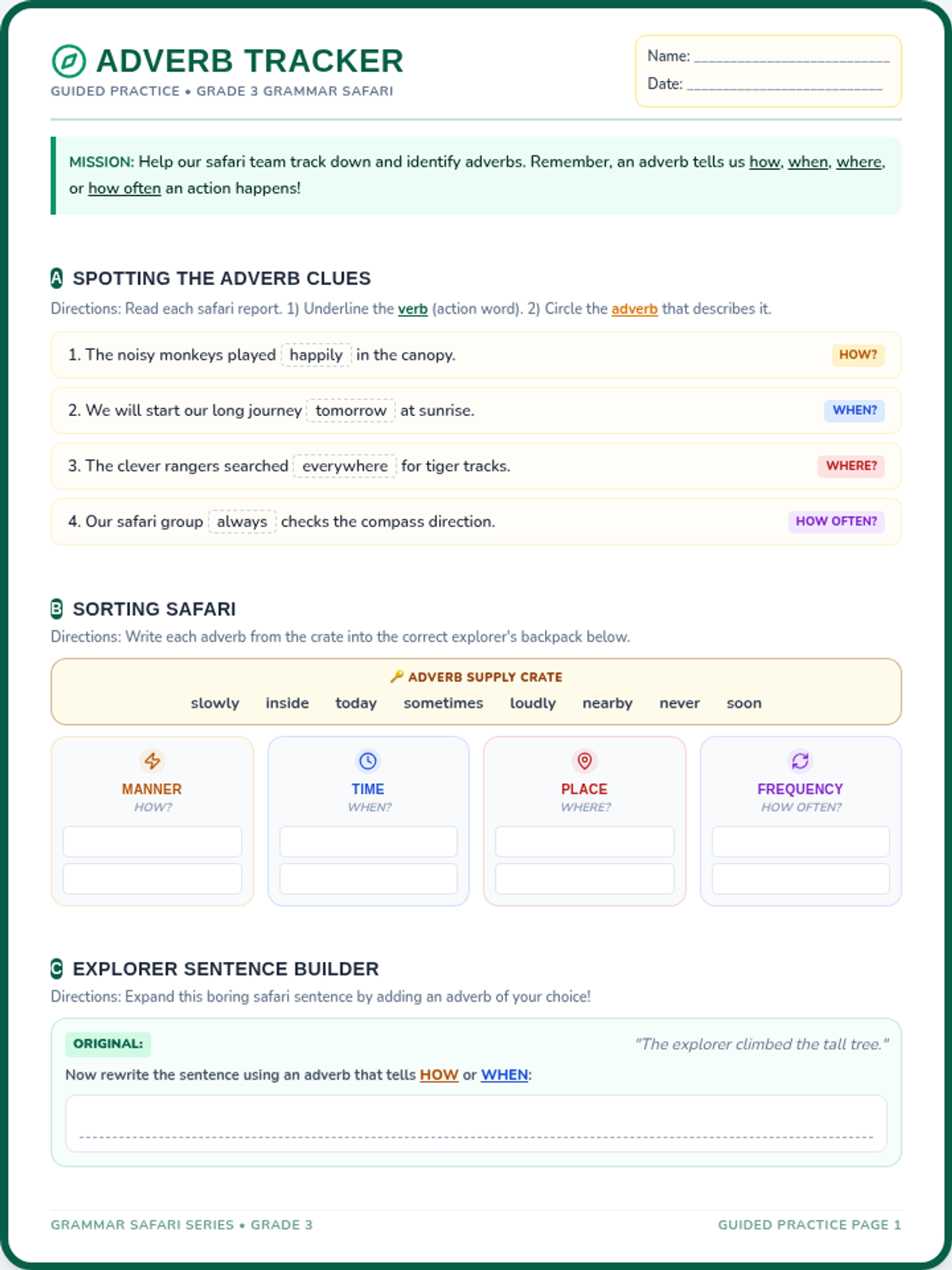
A guided practice worksheet for third-grade students to identify, sort, and apply adverbs of manner, time, place, and frequency with supportive layouts and clear instructions.
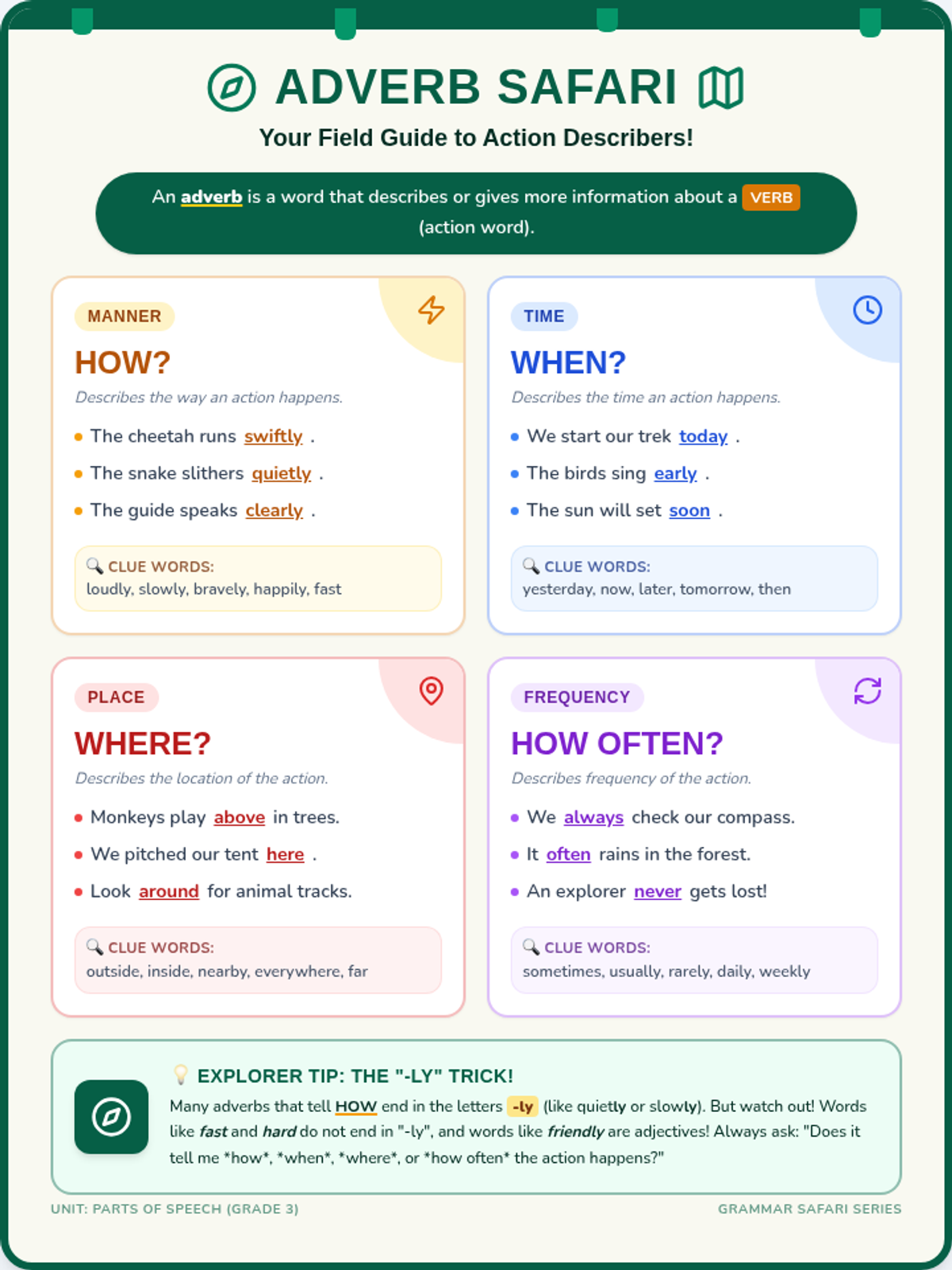
A colorful, safari-themed visual anchor chart that explains the four main types of adverbs (how, when, where, and how often) with examples and illustrations.
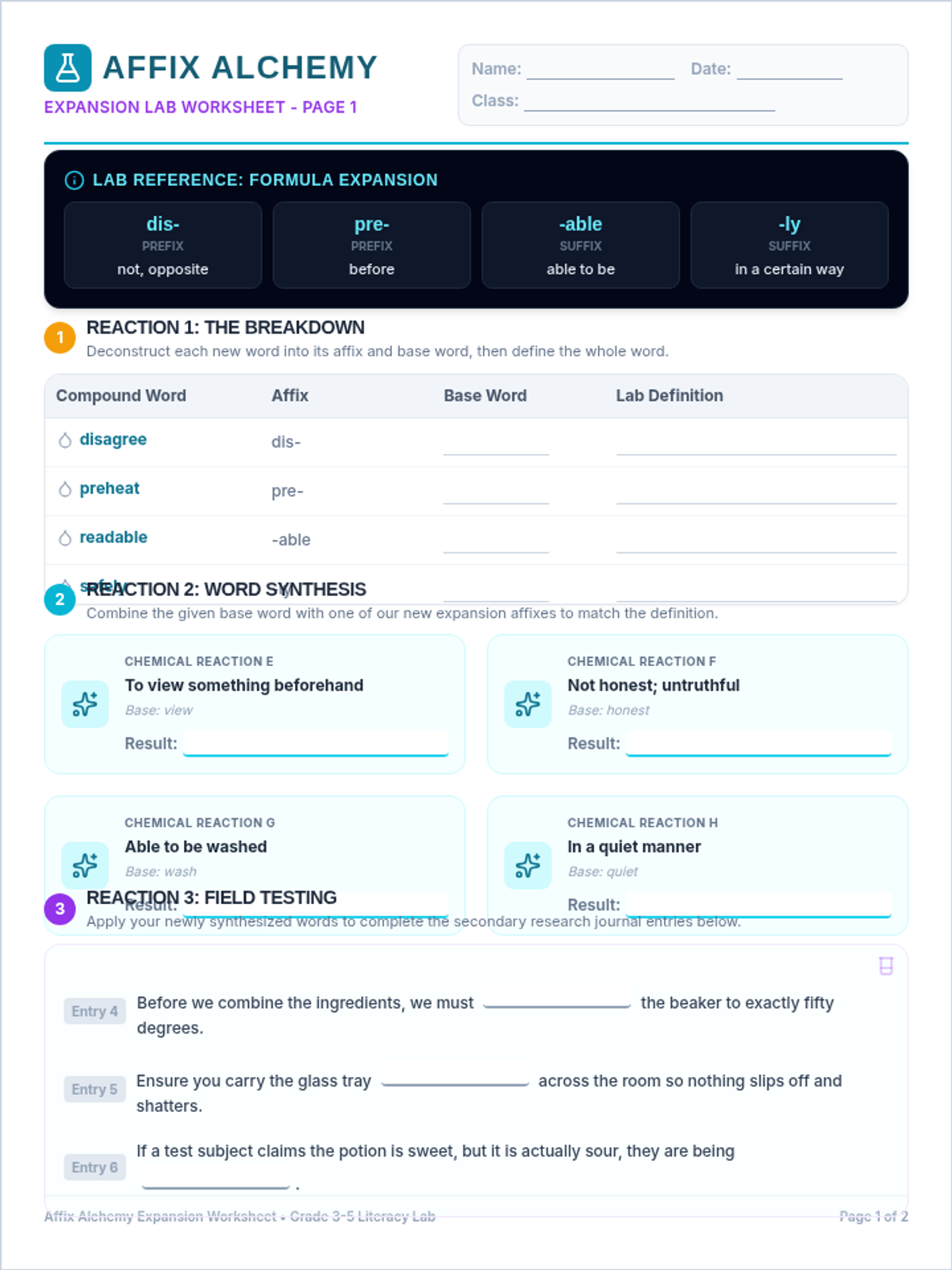
An expansion, two-page worksheet themed around the 'Word Chemistry Lab' featuring a new set of high-frequency affixes (dis-, pre-, -able, and -ly). Includes deconstruction grids, synthesis cards, context sentence completion, and a contextual reading passage.
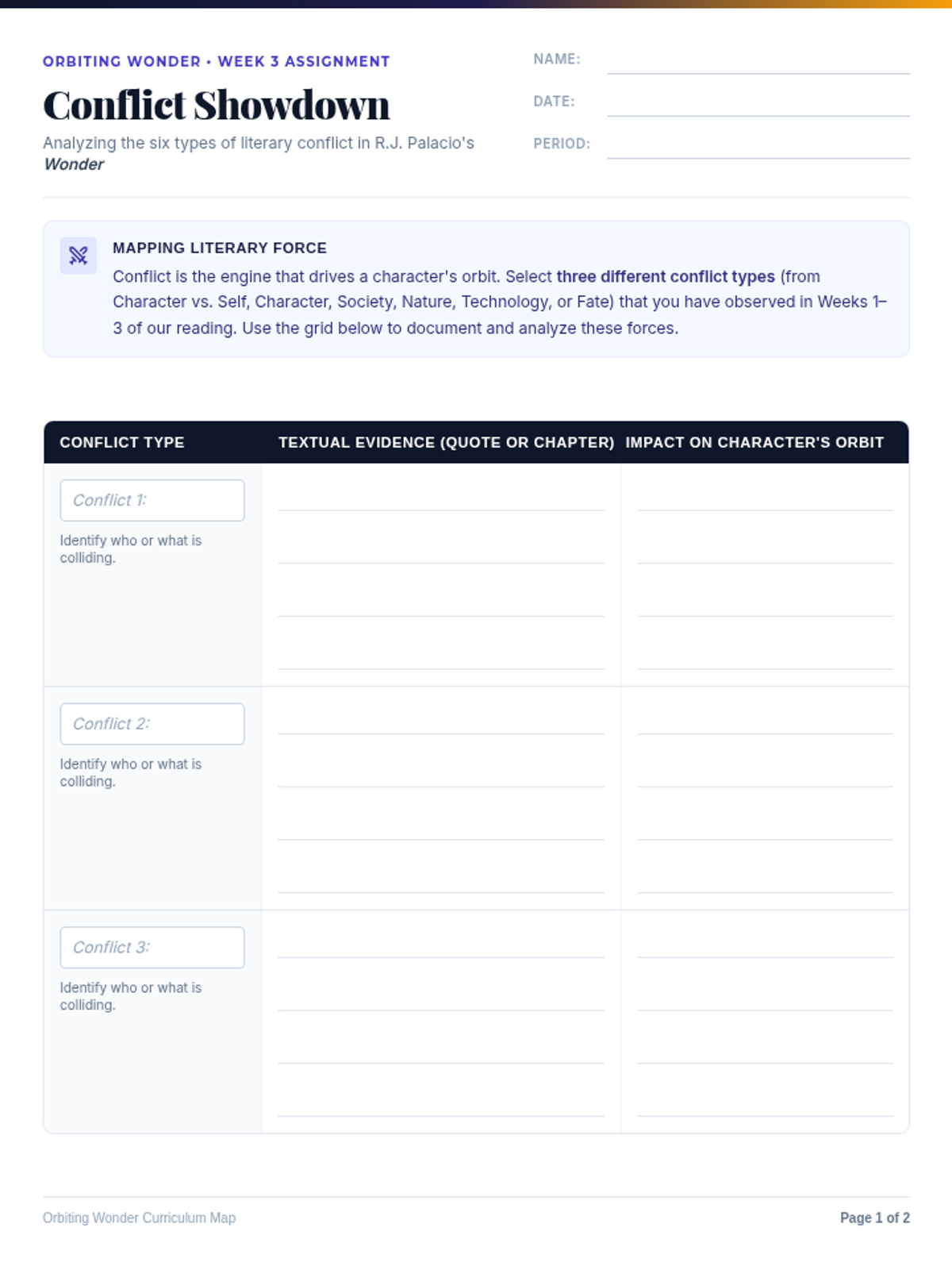
A beautiful, printable 2-page student worksheet and analytical assignment for Week 3. Students map three distinct conflict types from the novel with textual evidence and write an in-depth analysis of Jack's internal crisis and August's social masking.
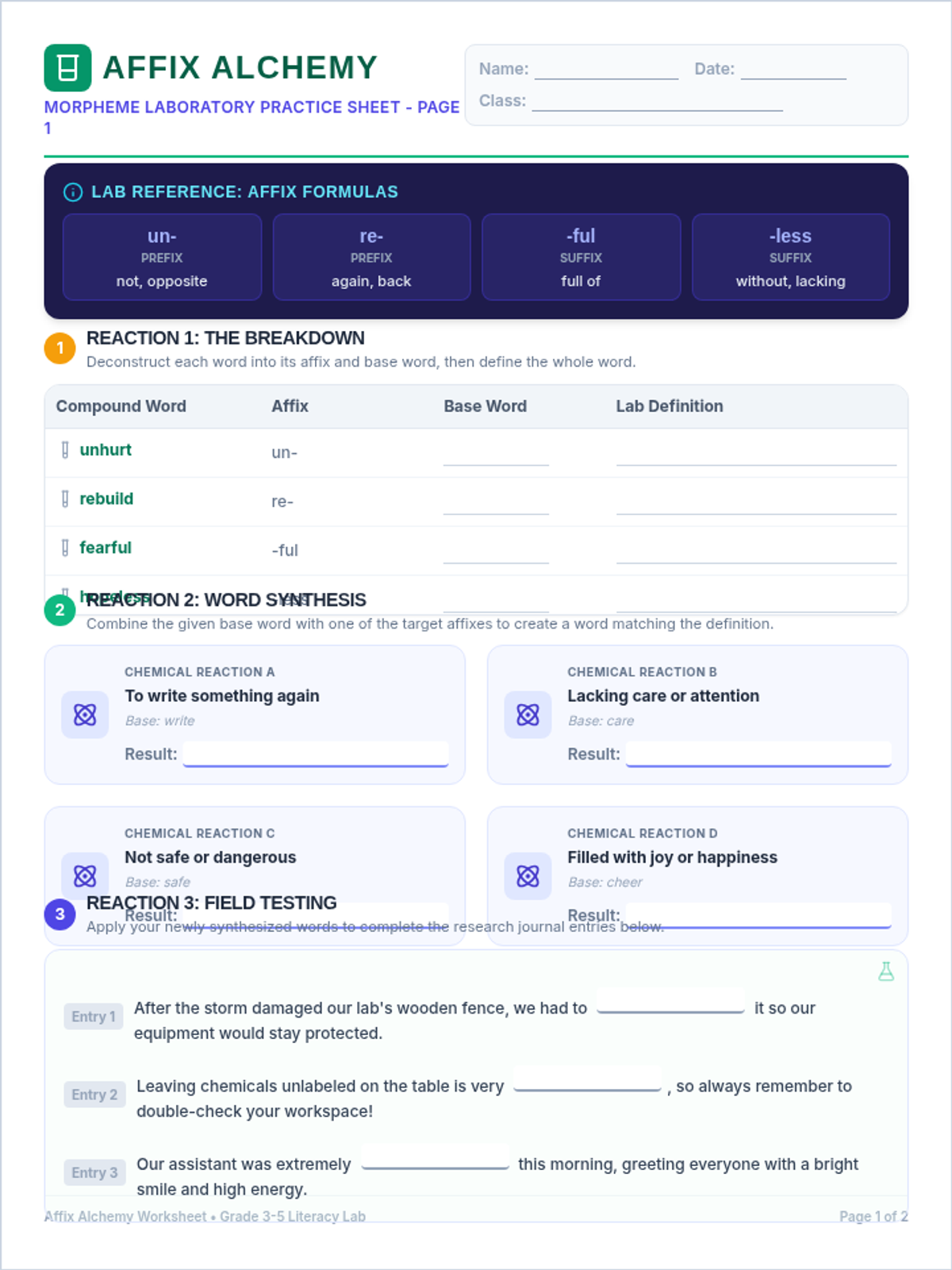
A highly engaging, two-page worksheet themed around a 'Word Chemistry Lab' where students break down, build, and apply words using the high-frequency affixes un-, re-, -ful, and -less. Includes name/date fields, reference guides, writing prompts, and a passage-based application task.
An expanded 8-slide lecture presentation for Week 3 of the 'Orbiting Wonder' unit. Each slide is dedicated to one of the six types of literary conflict, providing specific examples from 'Wonder' and thought-provoking discussion prompts, all designed in dark-mode with a minimum 24px font size.
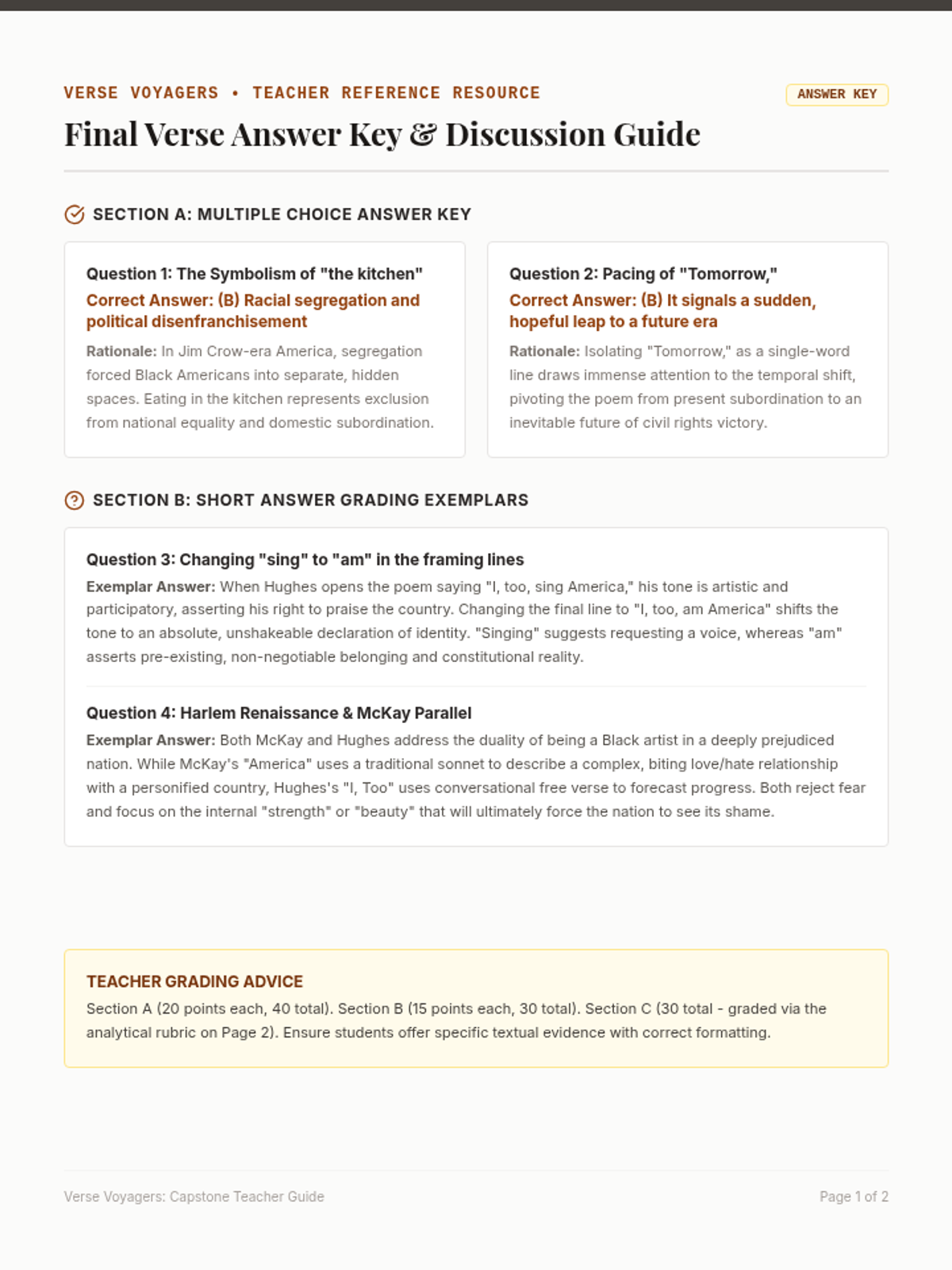
A 2-page teacher resource containing the answers and a 4-category analytical writing rubric for grading the Final Verse poetry exam.
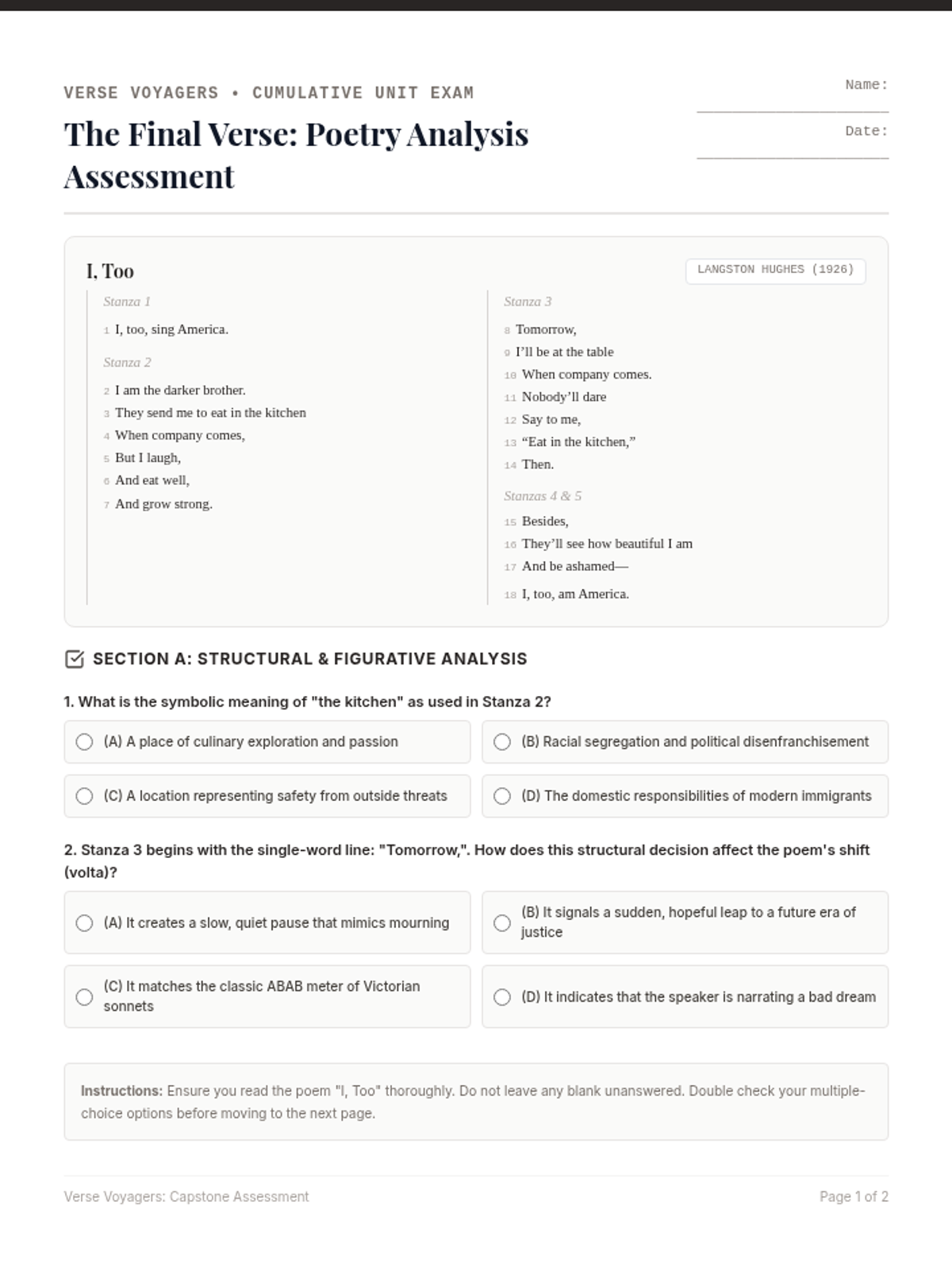
The final student-facing exam consisting of multiple choice, short-answer questions, and an analytical writing prompt analyzing Langston Hughes's 'I, Too'.
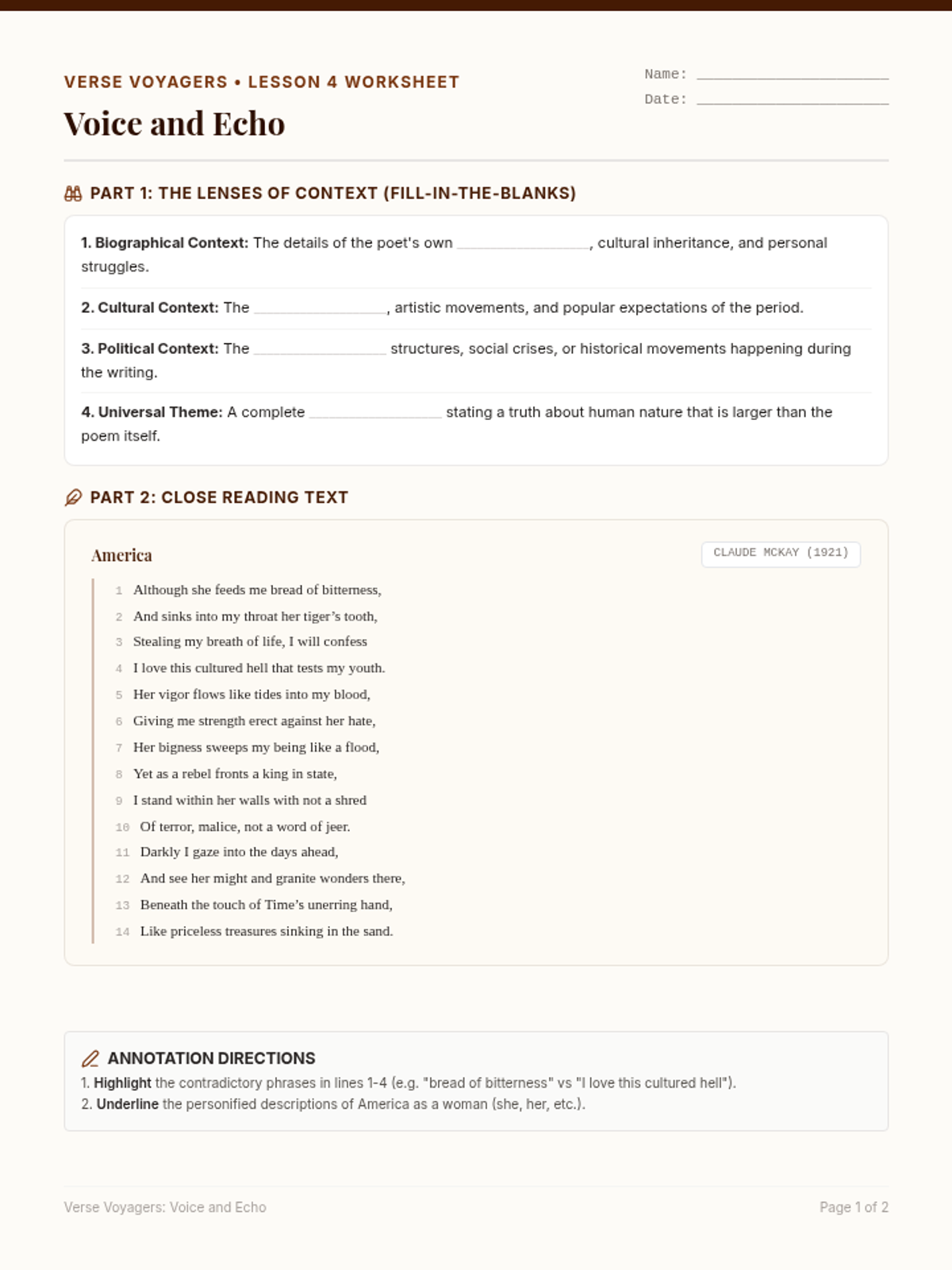
A 2-page student close reading guide and contextual analyzer exploring Claude McKay's sonnet 'America' in relation to the Harlem Renaissance and universal themes.
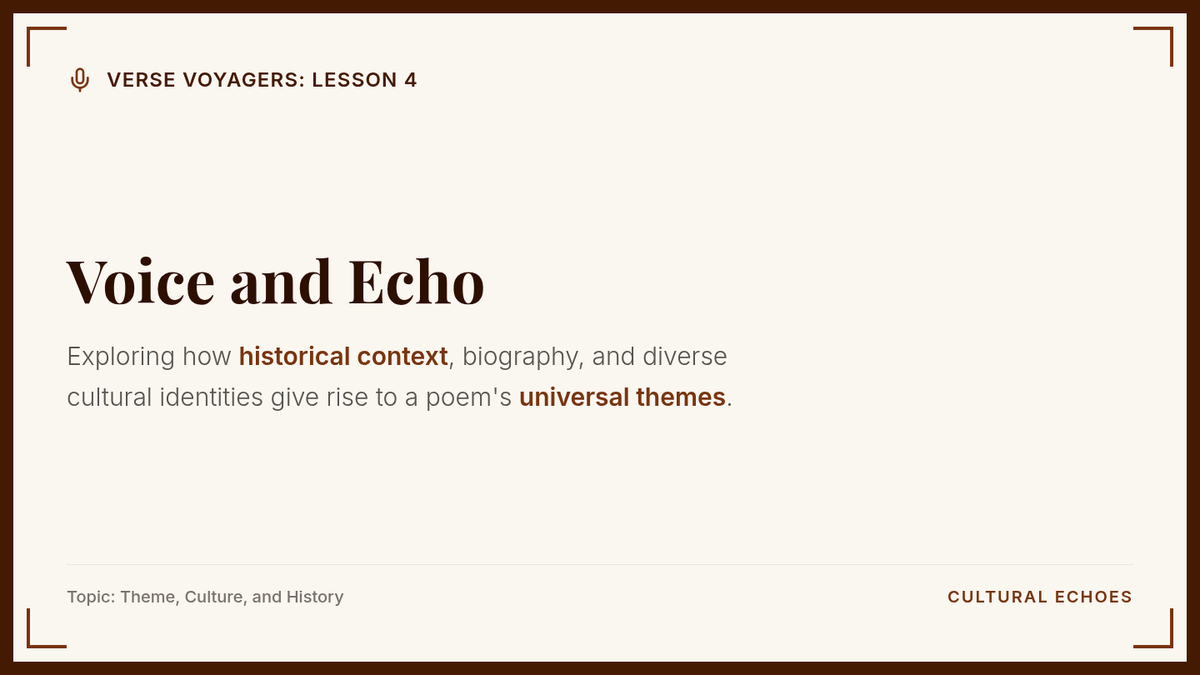
Instructional presentation slides on Theme and Cultural Context in poetry, styled with a vintage letterpress and woodcut aesthetic.
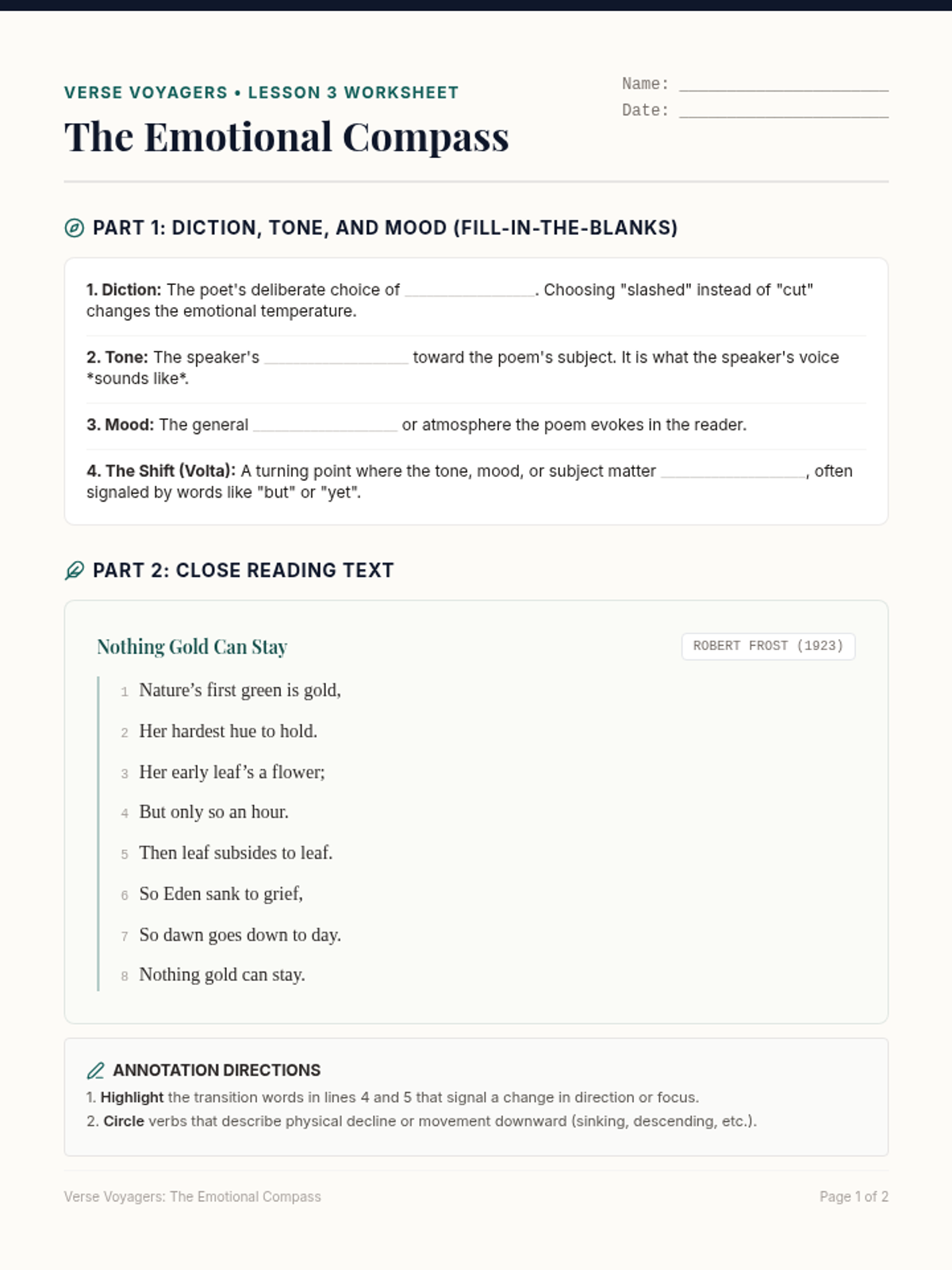
A 2-page student close reading guide and tone-shift tracker analyzing Robert Frost's 'Nothing Gold Can Stay'.
Instructional presentation slides on Tone, Mood, and Shift in poetry, styled with an antique maritime exploration theme.
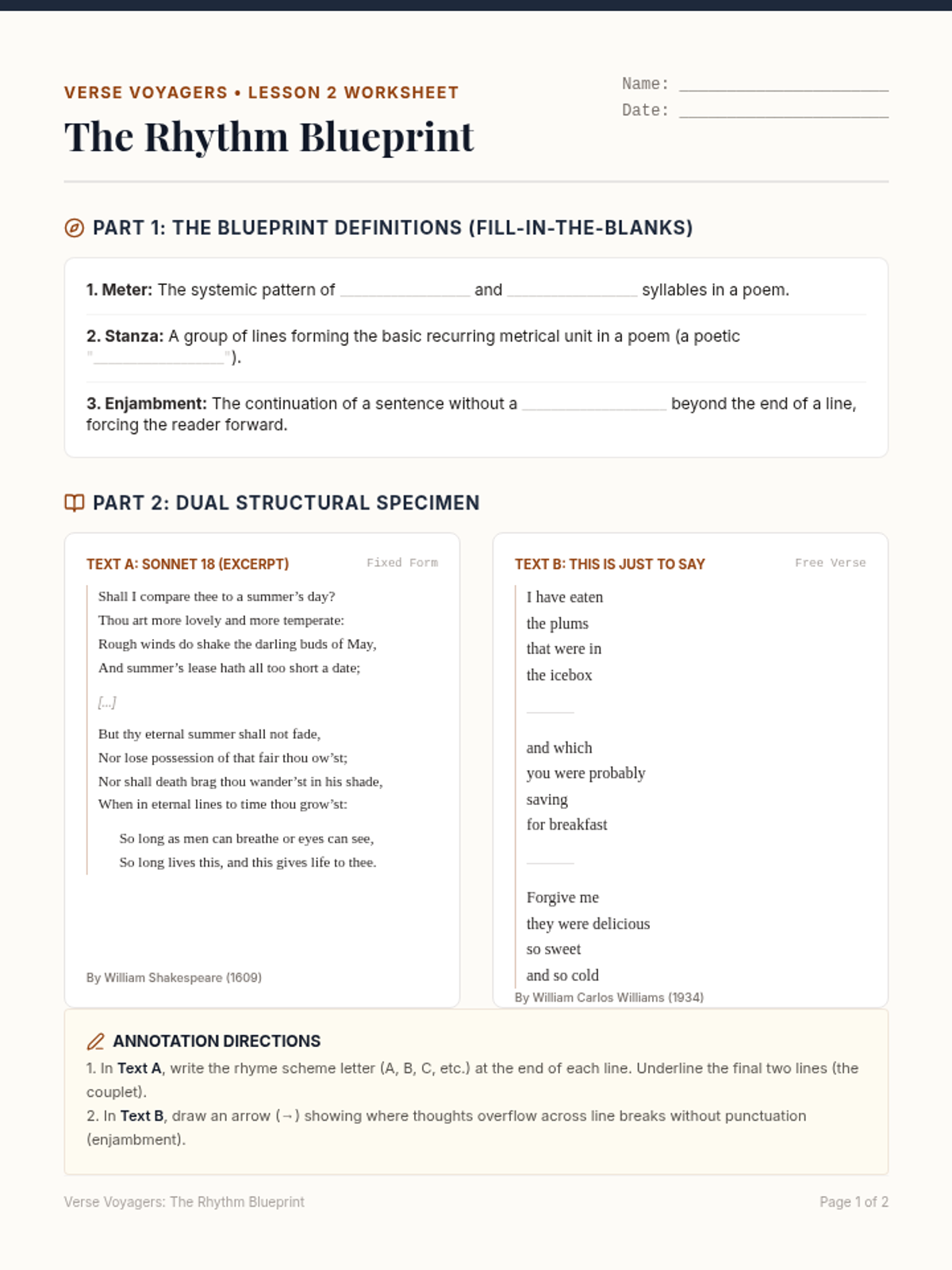
A 2-page student close reading guide and structural tracker analyzing Shakespeare's Sonnet 18 and William Carlos Williams's 'This Is Just To Say'.
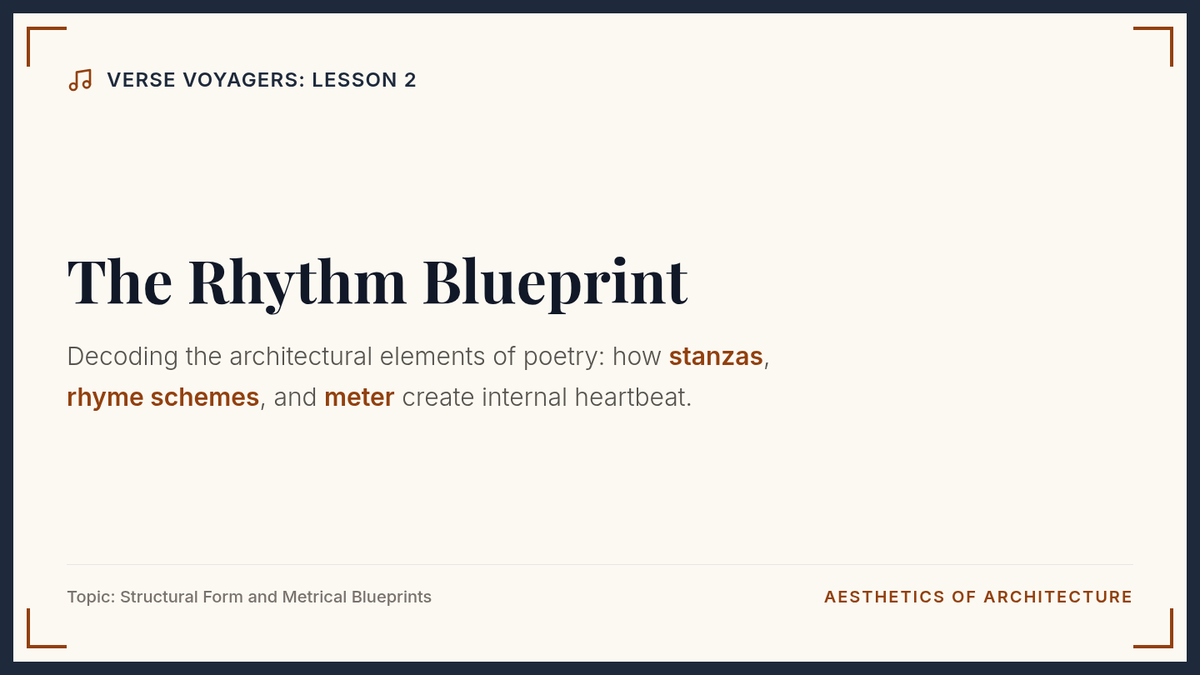
Instructional presentation slides on poetic structure, form, and meter, focusing on Sonnets and Free Verse forms.