A technical, blueprint-themed slide deck for introducing geometric constructions. It includes clear, step-by-step instructions for copying segments, copying angles, and bisecting segments and angles, optimized for Tier 2 intervention.
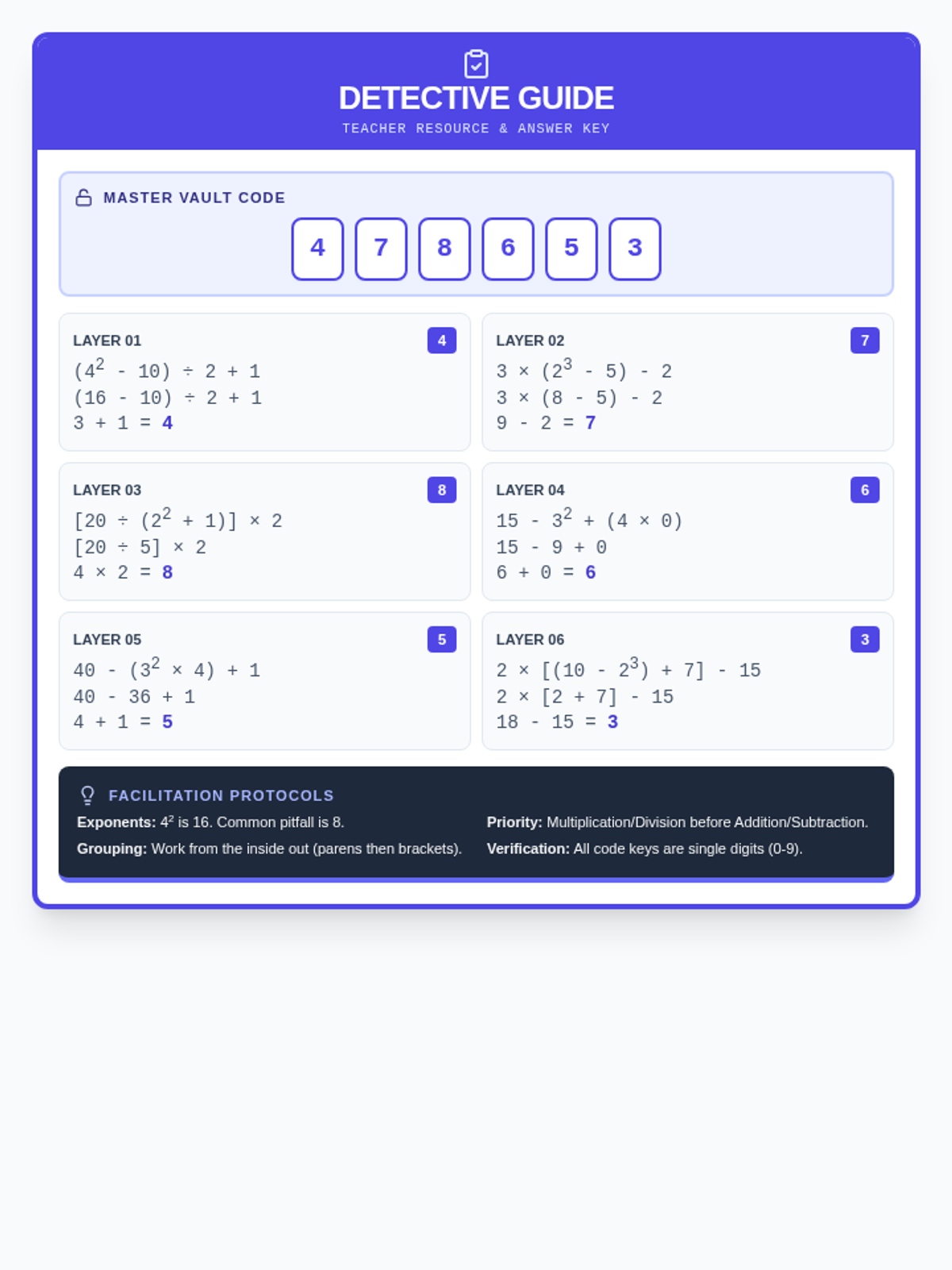
A complete teacher answer key and guide for "The Calculation Caper." This one-page reference provides the 6-digit master code (4-7-8-6-5-3), detailed step-by-step solutions for every layer, and key facilitation tips. HTML spans with custom positioning are used for reliable exponent rendering.
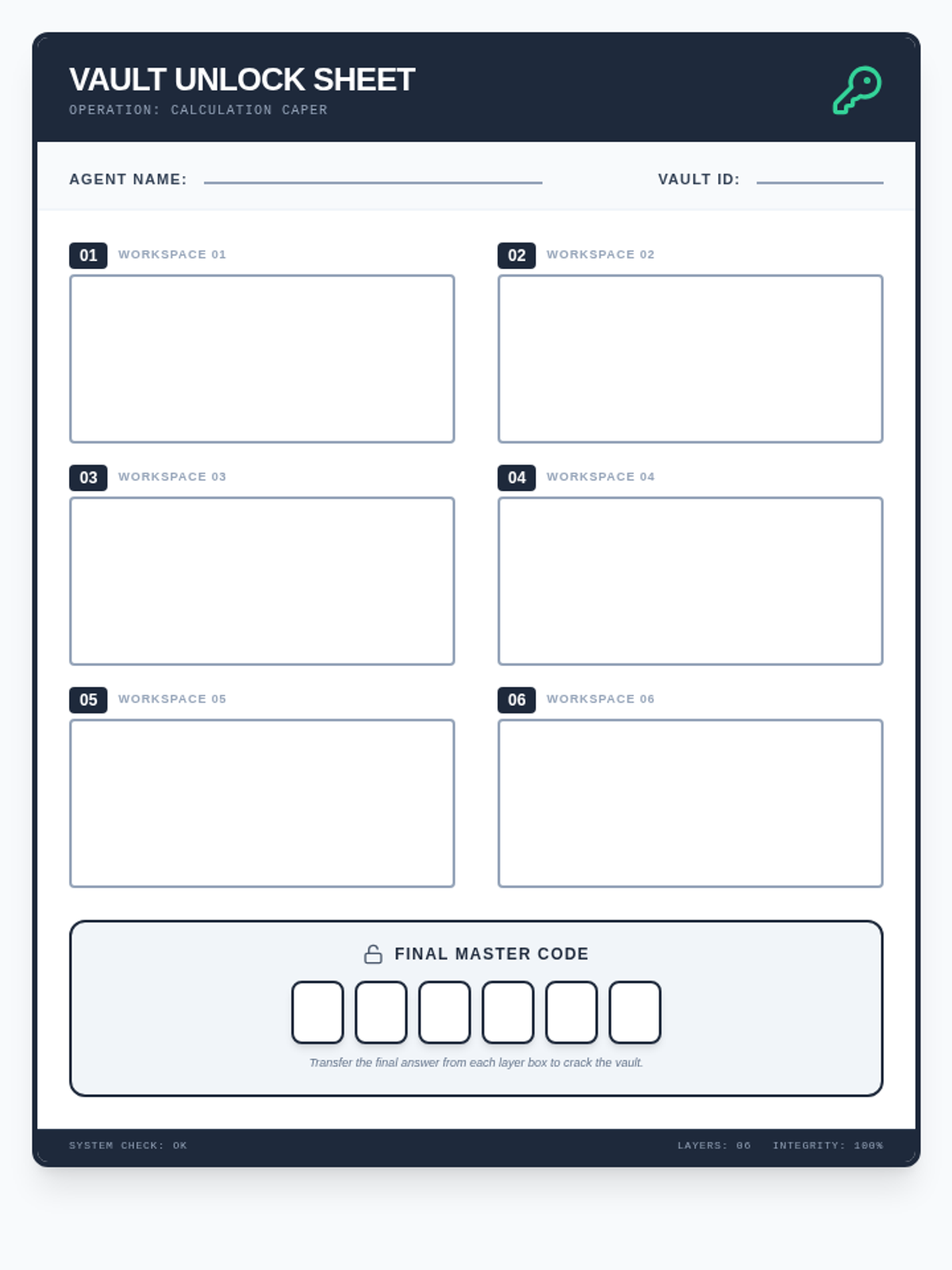
A refined vault unlock sheet featuring a 2-column workspace layout that provides ample room for step-by-step PEMDAS calculations for all 6 security layers. Workspace boxes use a clear white background.
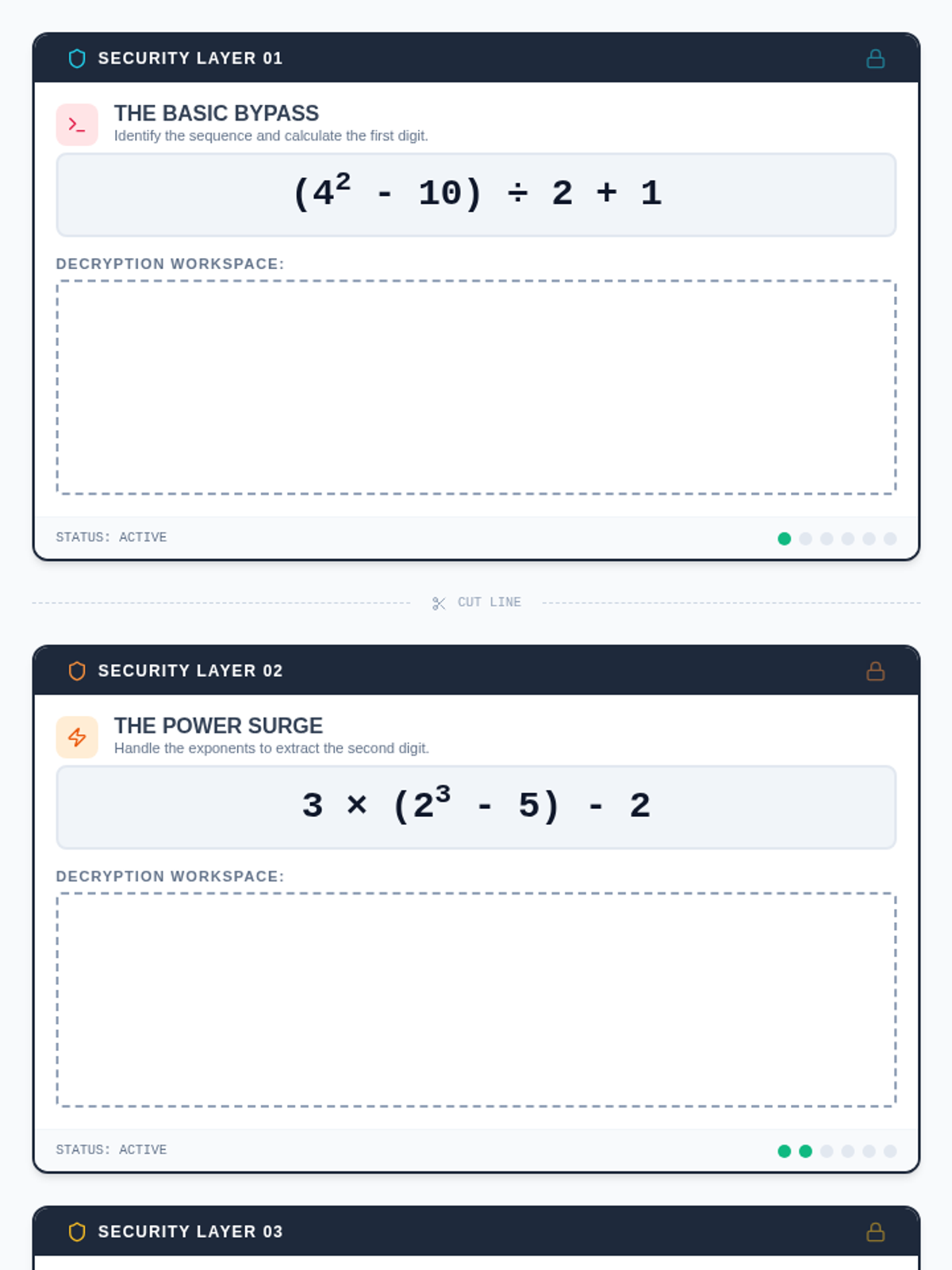
Six printable challenge cards for the escape room, each containing an Order of Operations problem with exponents that yields a single digit of the master vault code. Each card includes a dedicated workspace for student calculations. Standard HTML tags are used for exponent rendering. Card layout optimized for 2 per page with cut guides.
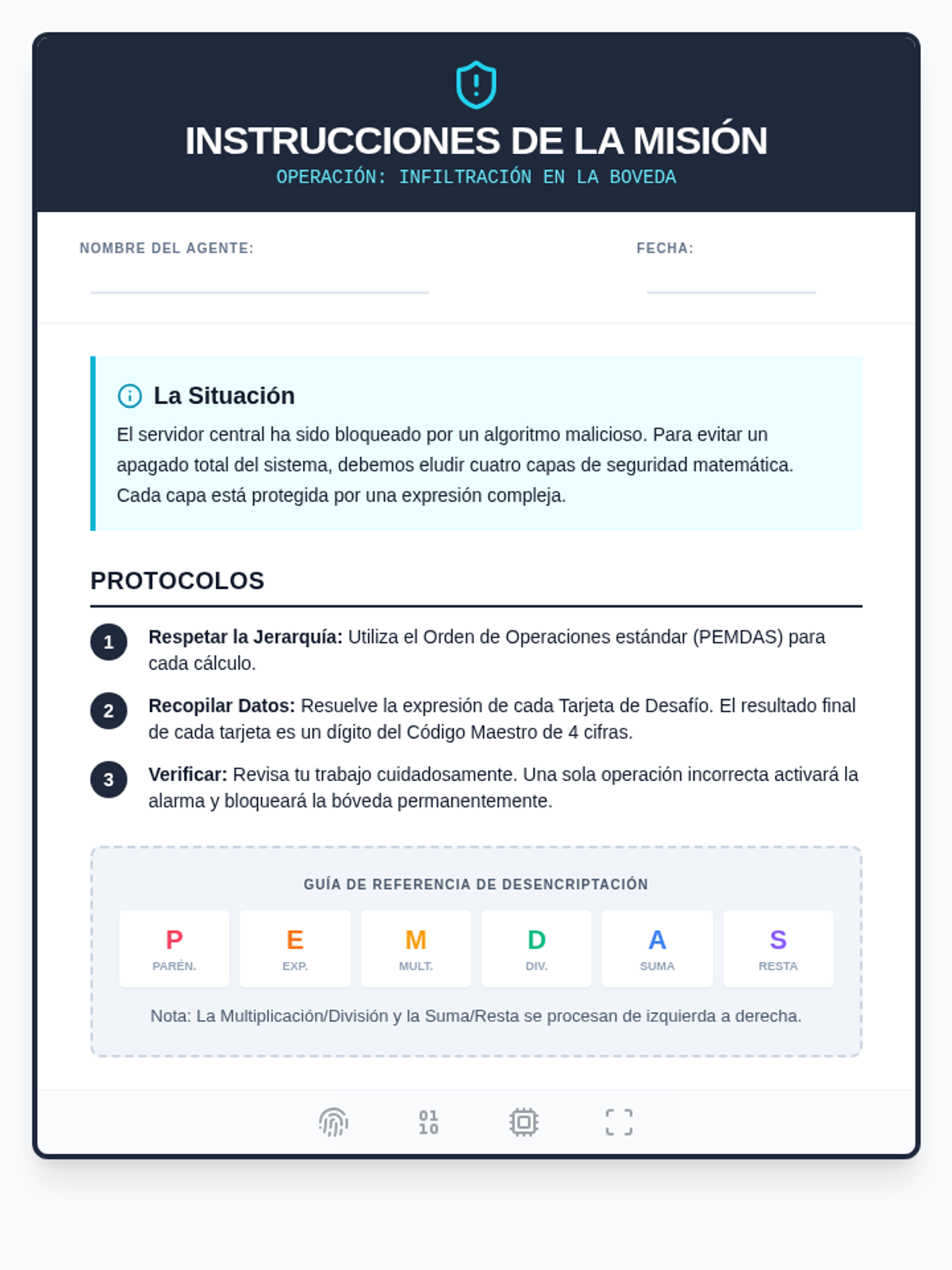
Introduction document for the escape room activity, setting the scene for "The Calculation Caper" and providing a PEMDAS reference guide for students.
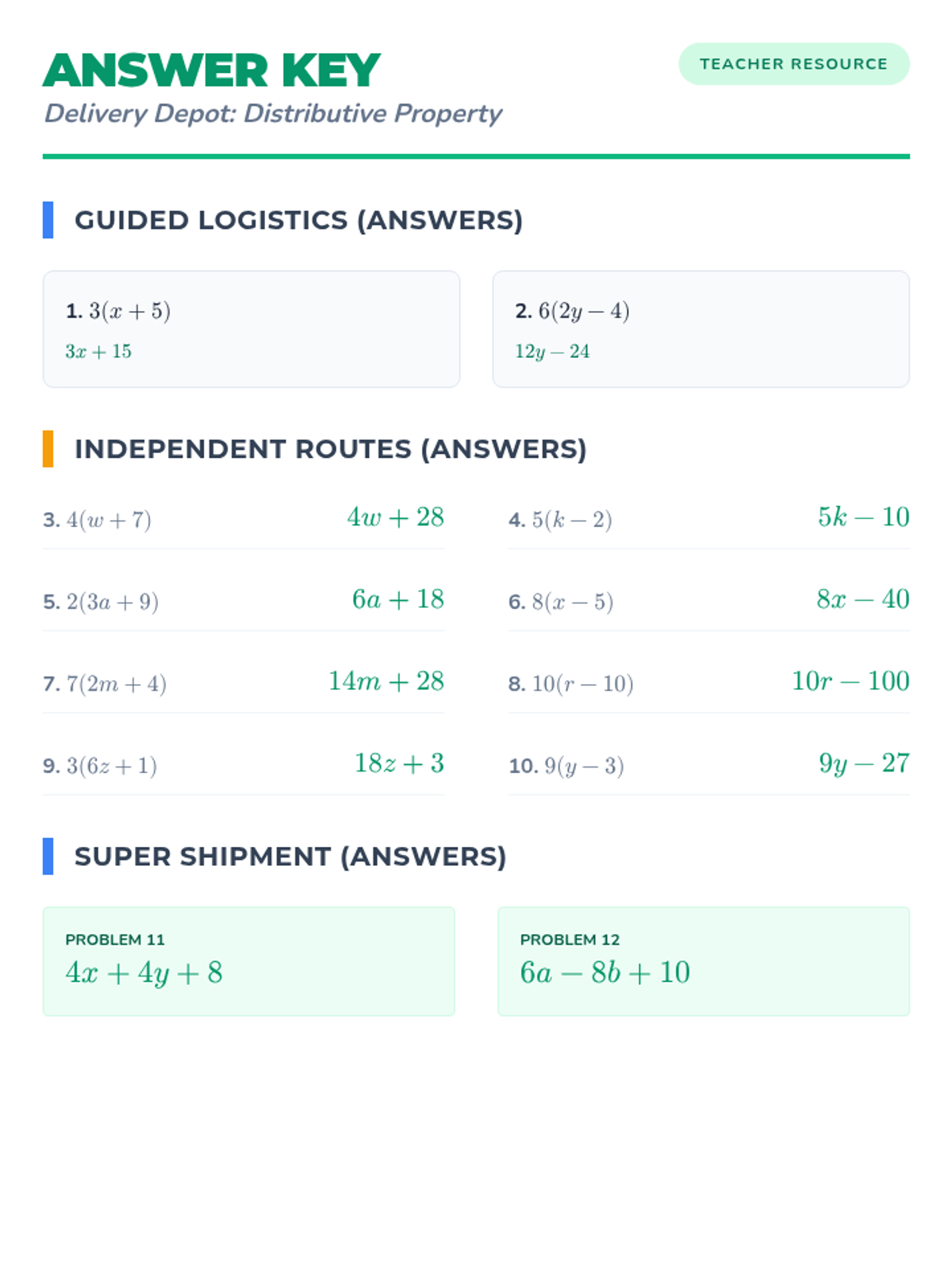
An answer key for the Delivery Depot Distributive Property worksheet, showing completed steps and final simplified expressions. Revised for better layout efficiency.
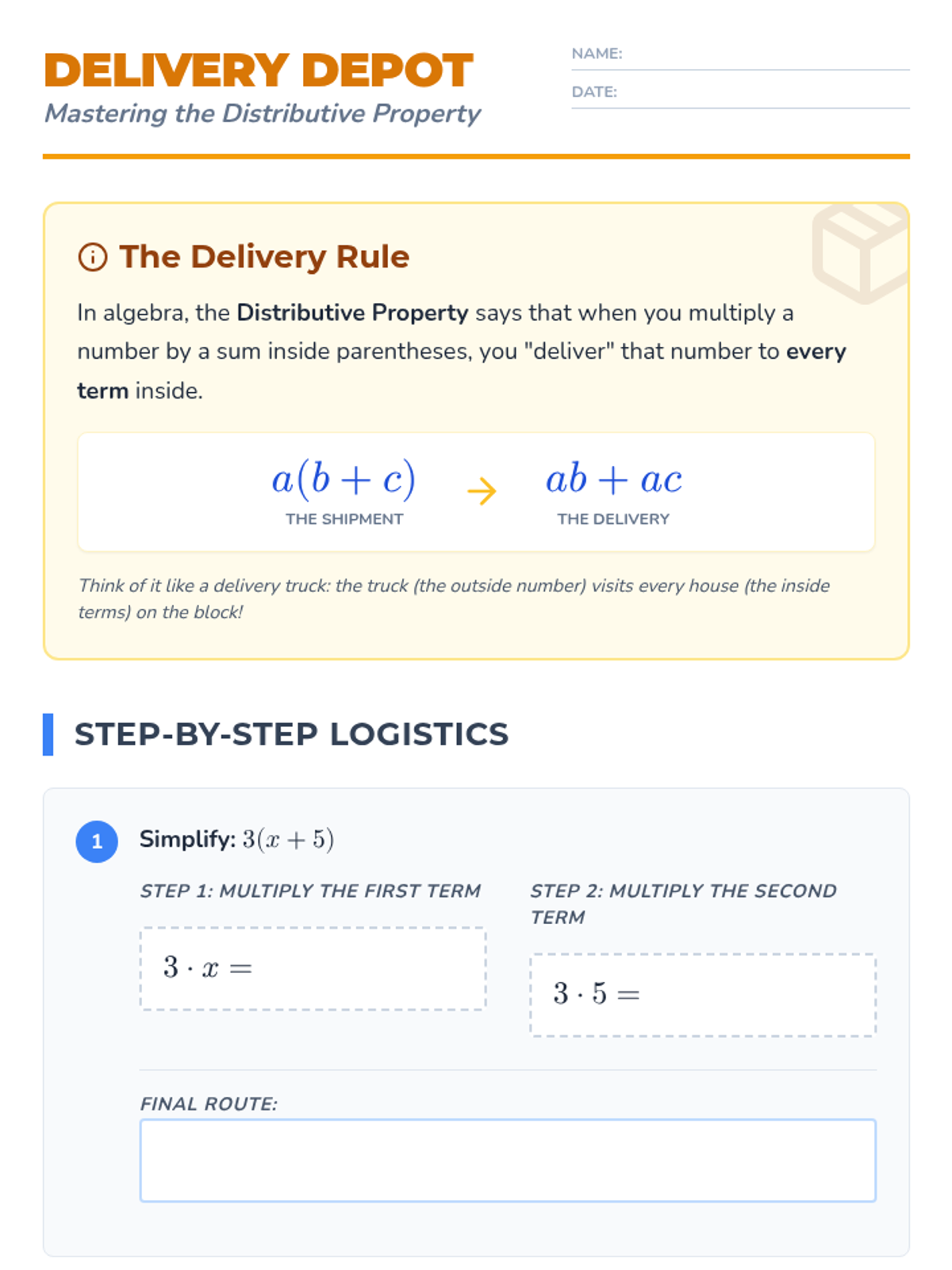
A themed distributive property worksheet with guided scaffolded steps followed by independent practice problems and a challenge section. Revised with improved spacing and contrast.
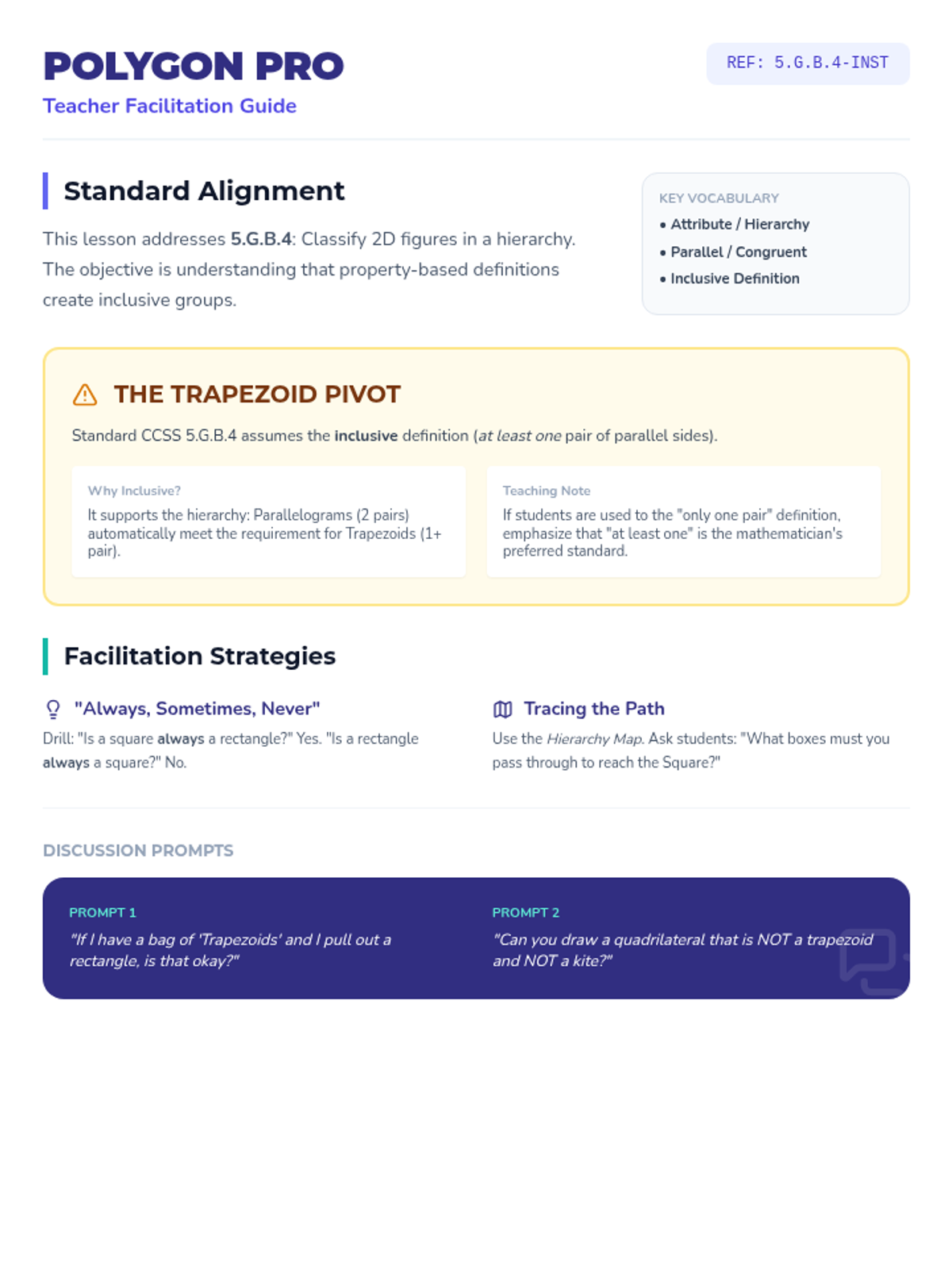
A teacher's guide for facilitating the quadrilateral properties lesson, focusing on instructional strategies, standard alignment, and the inclusive trapezoid definition.
An instructional slide deck that introduces quadrilaterals, focuses on the inclusive definition of trapezoids, and visually explains the shape hierarchy.
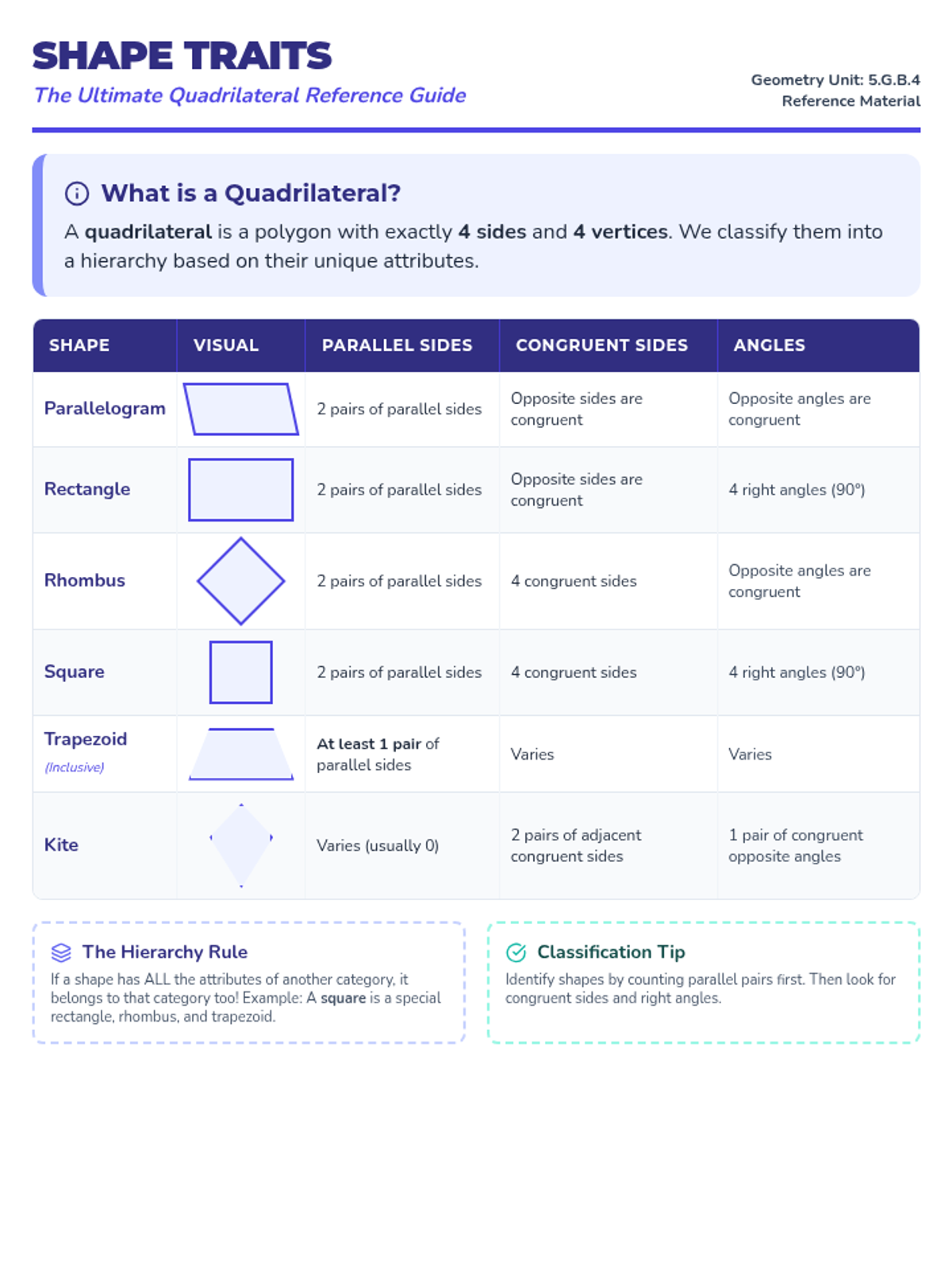
A comprehensive reference chart for 5th-grade students detailing the attributes of various quadrilaterals, including the inclusive definition of trapezoids.
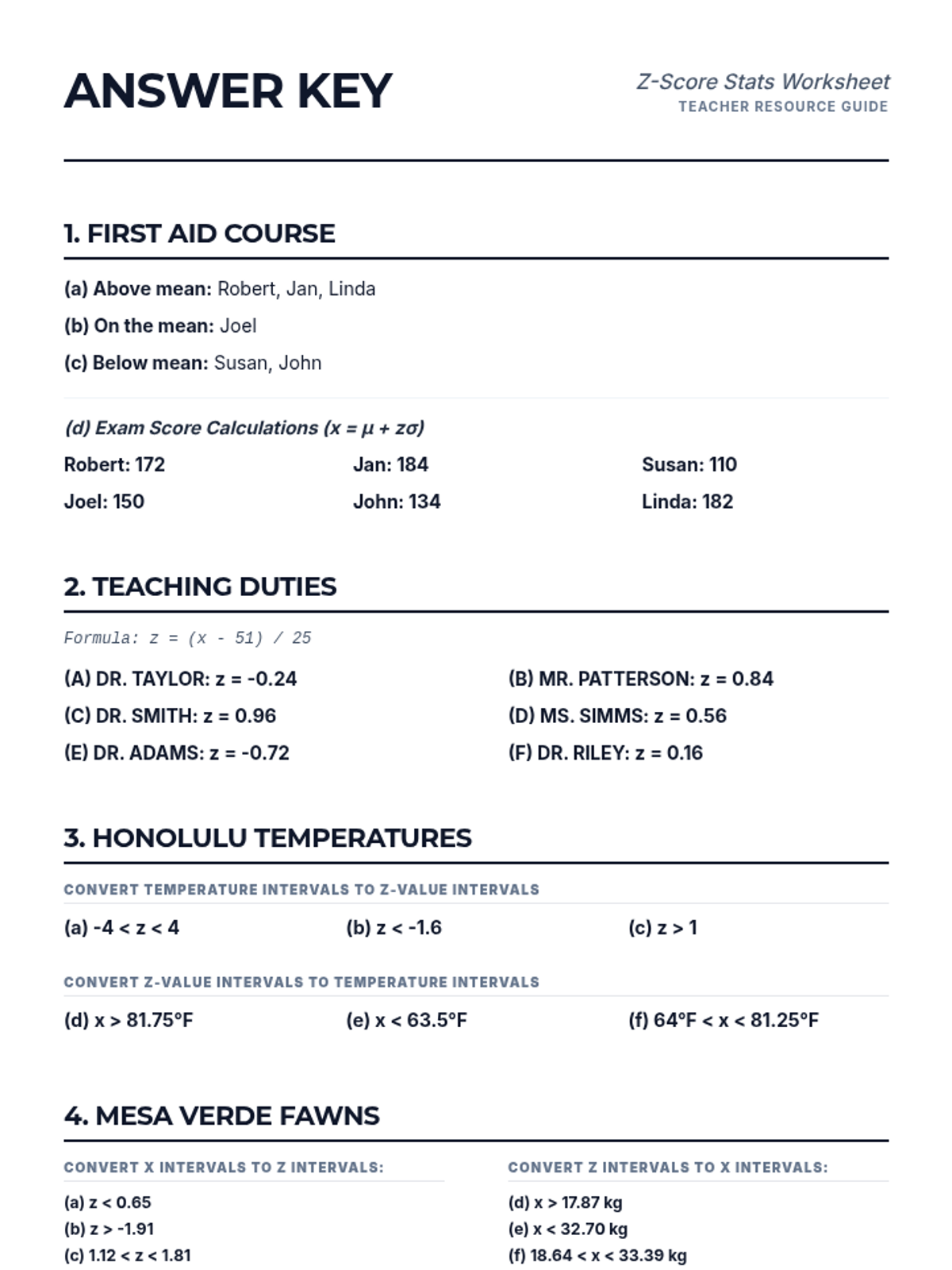
Teacher answer key for the Z-Score Mastery Worksheet, providing solutions and brief explanations for all calculation and conceptual problems.
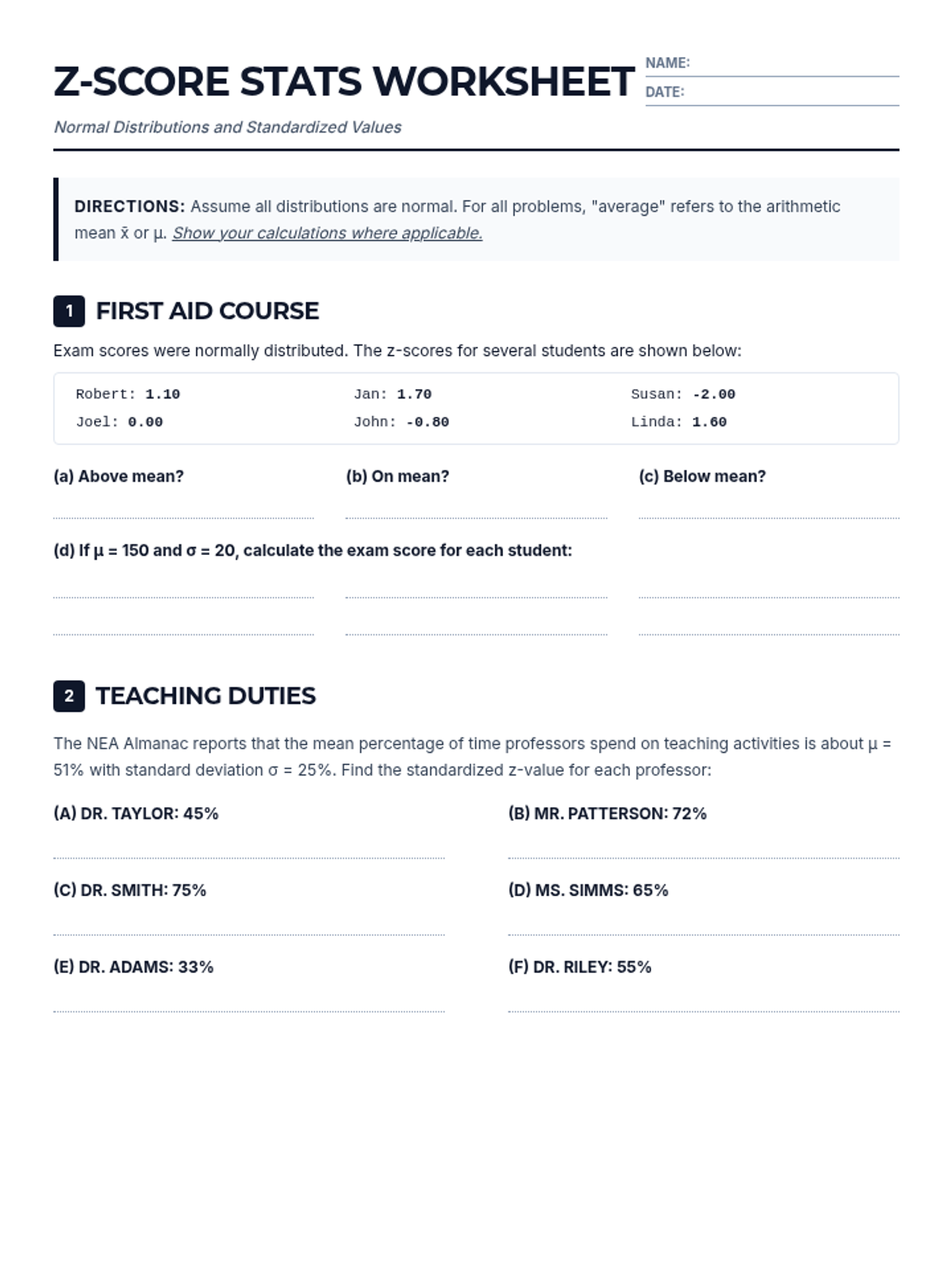
A precise 2-page Z-score worksheet that mirrors the original source material's questions exactly, featuring real-world problems on exam scores, teaching duties, temperatures, and wildlife populations.
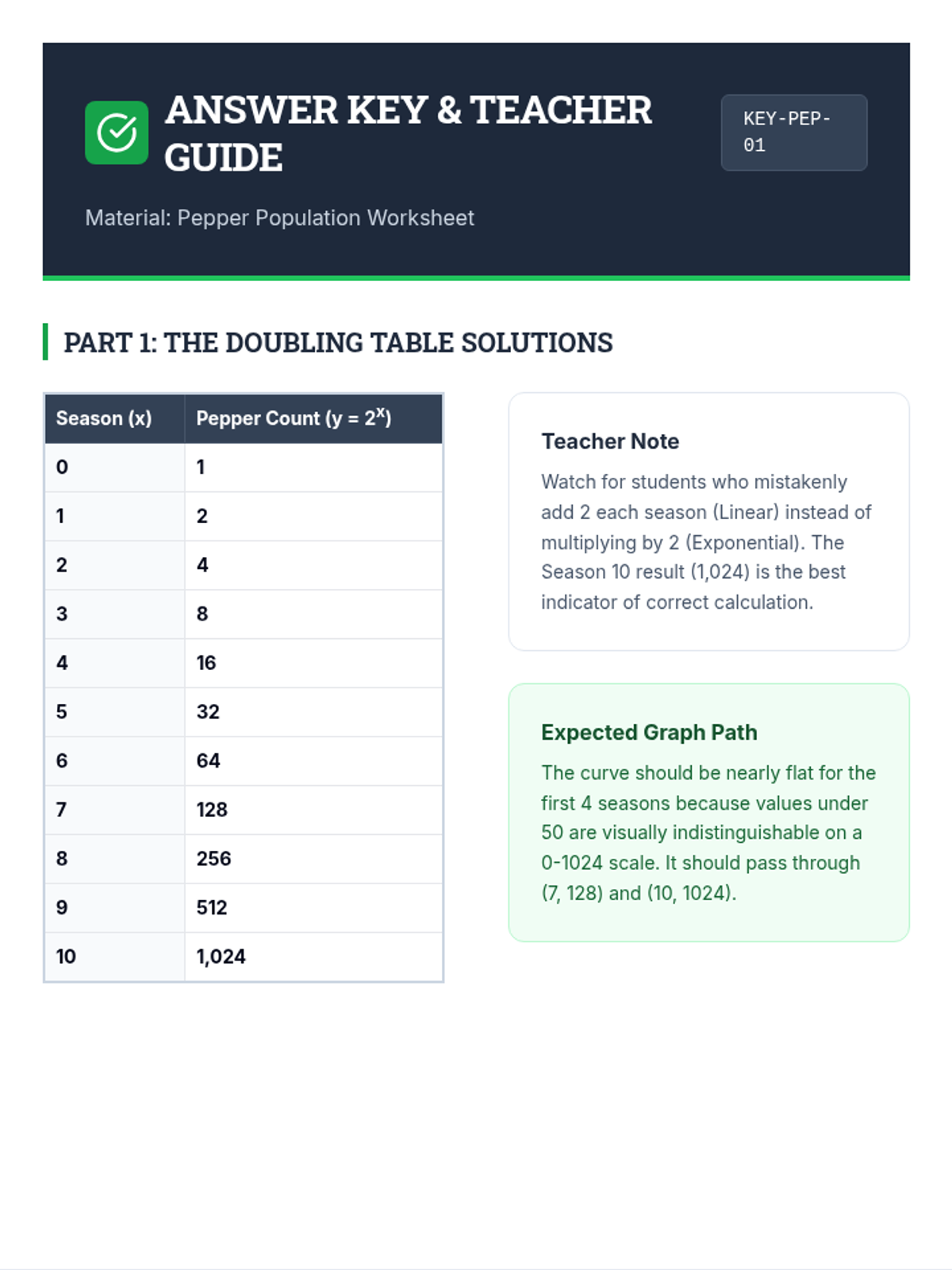
Teacher answer key and instructional guide for the Pepper Population Worksheet, including full data table solutions and analysis commentary.
A visually engaging slide deck explaining exponential growth using green peppers as a model, featuring clear diagrams of doubling and the resulting growth curve.
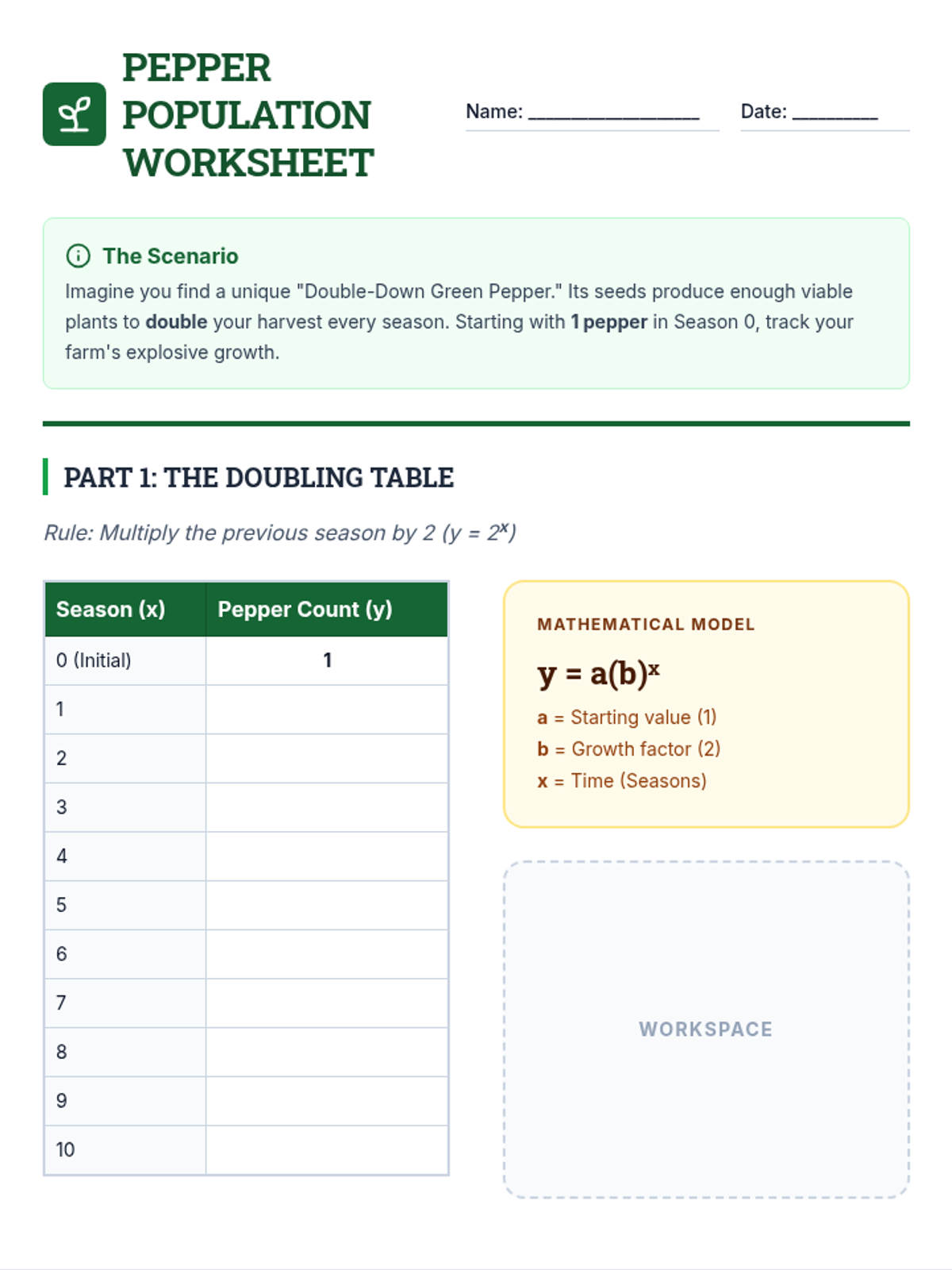
A comprehensive worksheet for students to calculate, graph, and analyze the exponential growth of a pepper population starting from a single fruit and doubling each season.
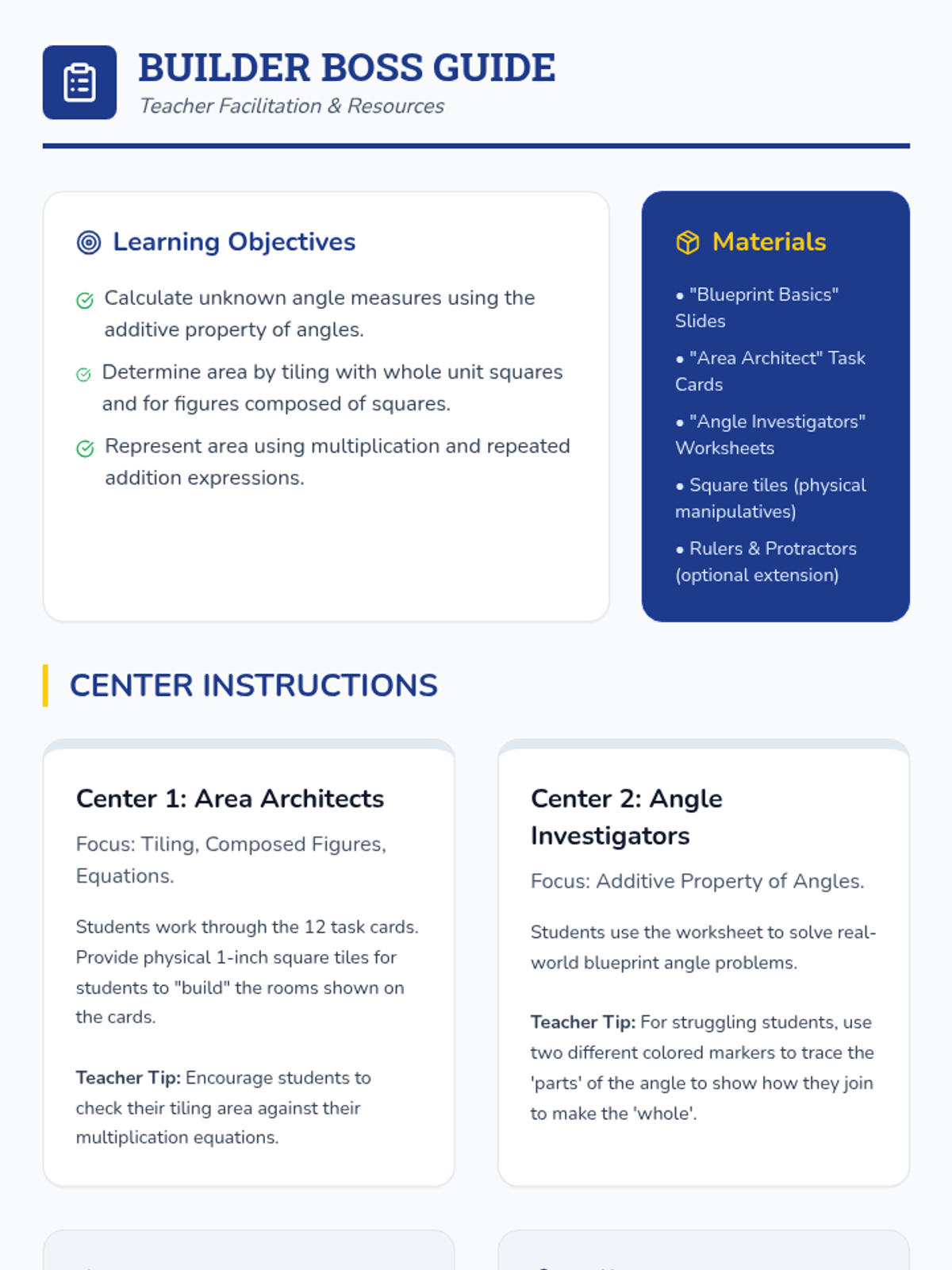
A teacher's facilitation guide for the Blueprint Builders math unit. Includes learning objectives, materials lists, center setup instructions, differentiation strategies, and complete answer keys.
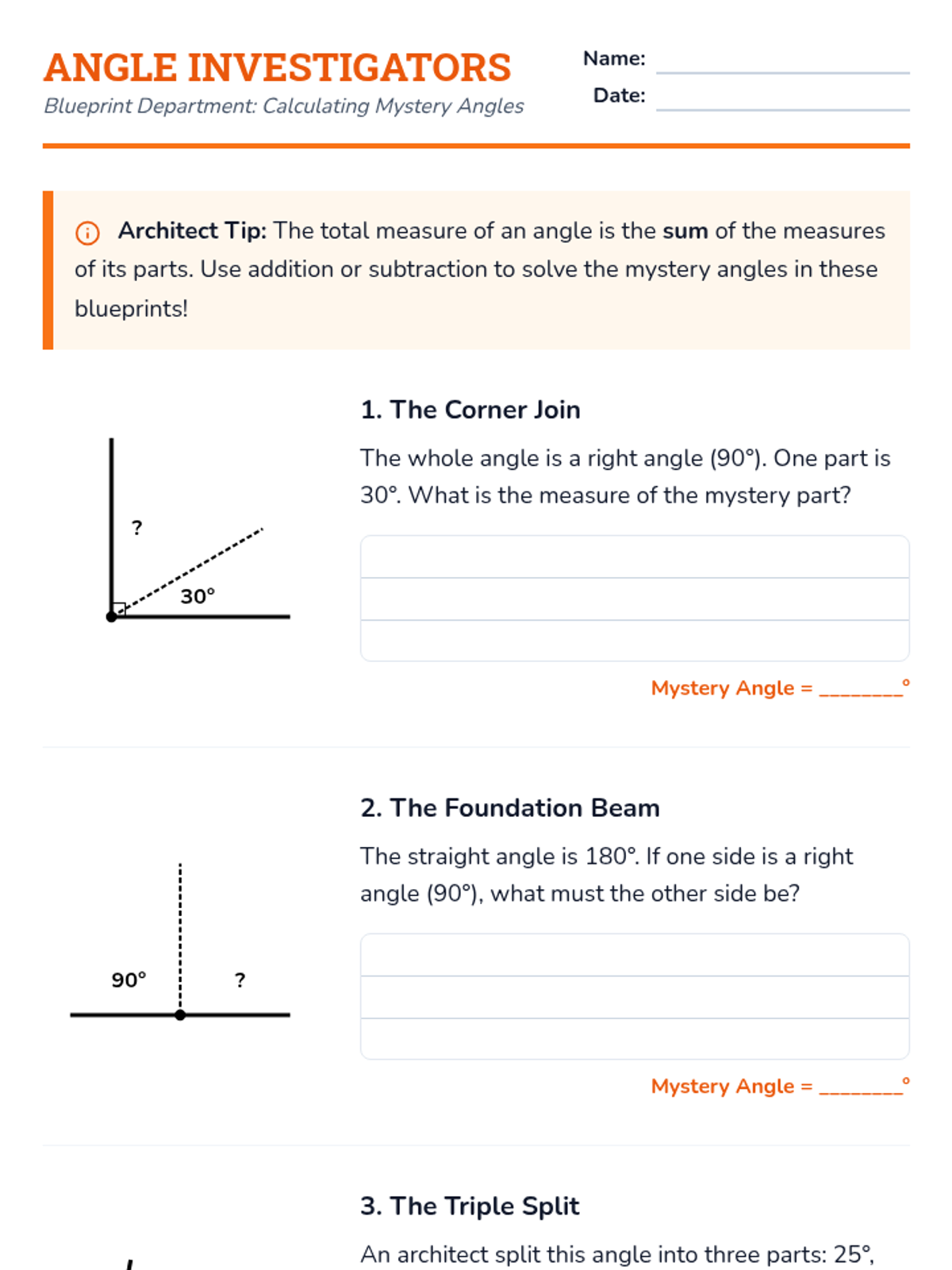
A 3rd-grade math worksheet for investigating unknown angle measures using the additive property. Features visual blueprint-themed problems and "show your work" areas.
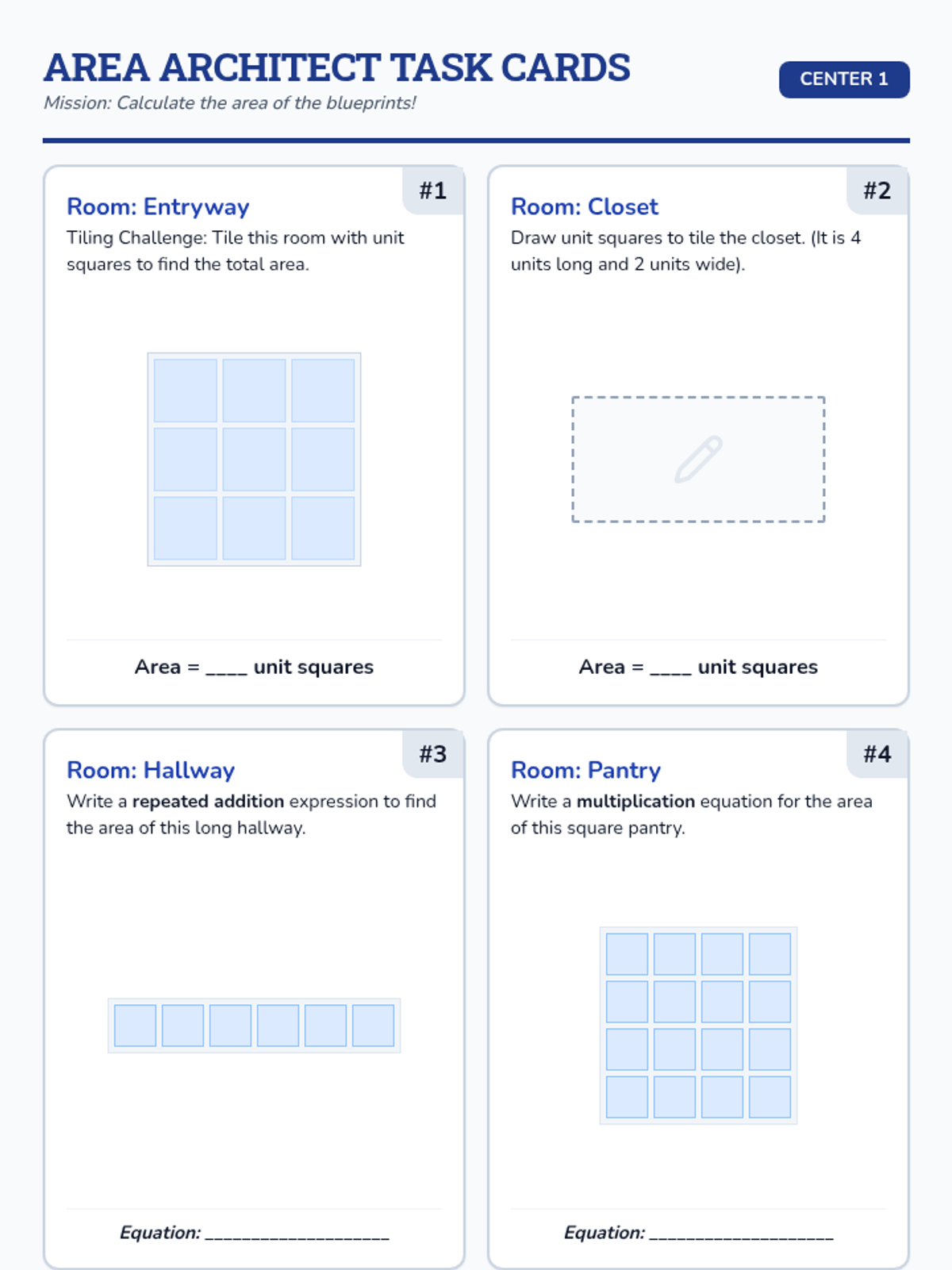
A set of 12 task cards for 3rd-grade math centers focused on determining area. Includes tasks for tiling with unit squares, calculating area of composed figures, and writing multiplication/repeated addition equations.
A visual slide deck introducing 3rd-grade area and angle measurement concepts through a 'Blueprint Builders' construction theme. Includes tiling methods, area equations, composed figures, and the additive property of angles.
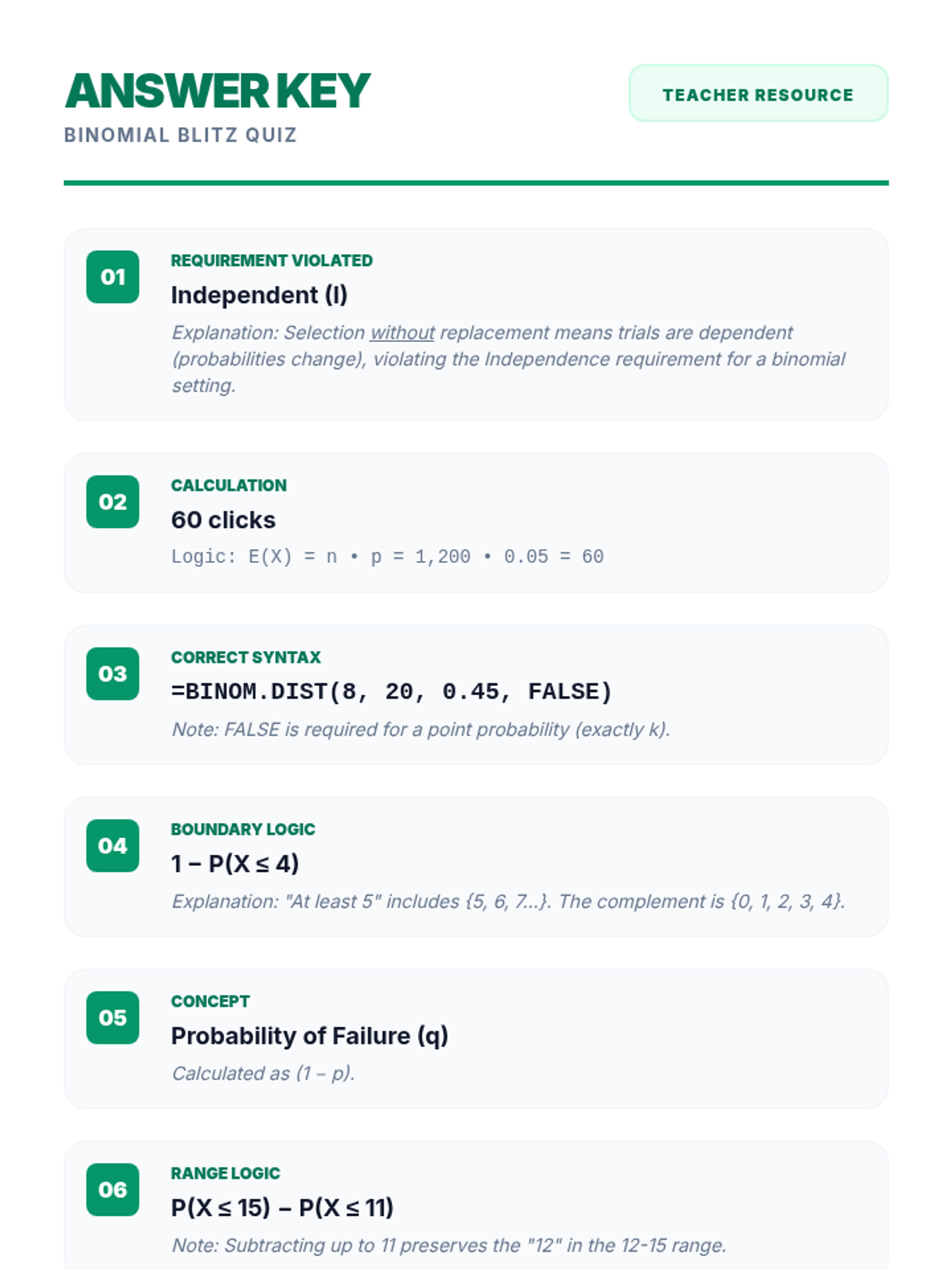
A comprehensive answer key for the Binomial Blitz Quiz, featuring detailed explanations, manual formula rendering, and logic breakthroughs for the assessment questions.
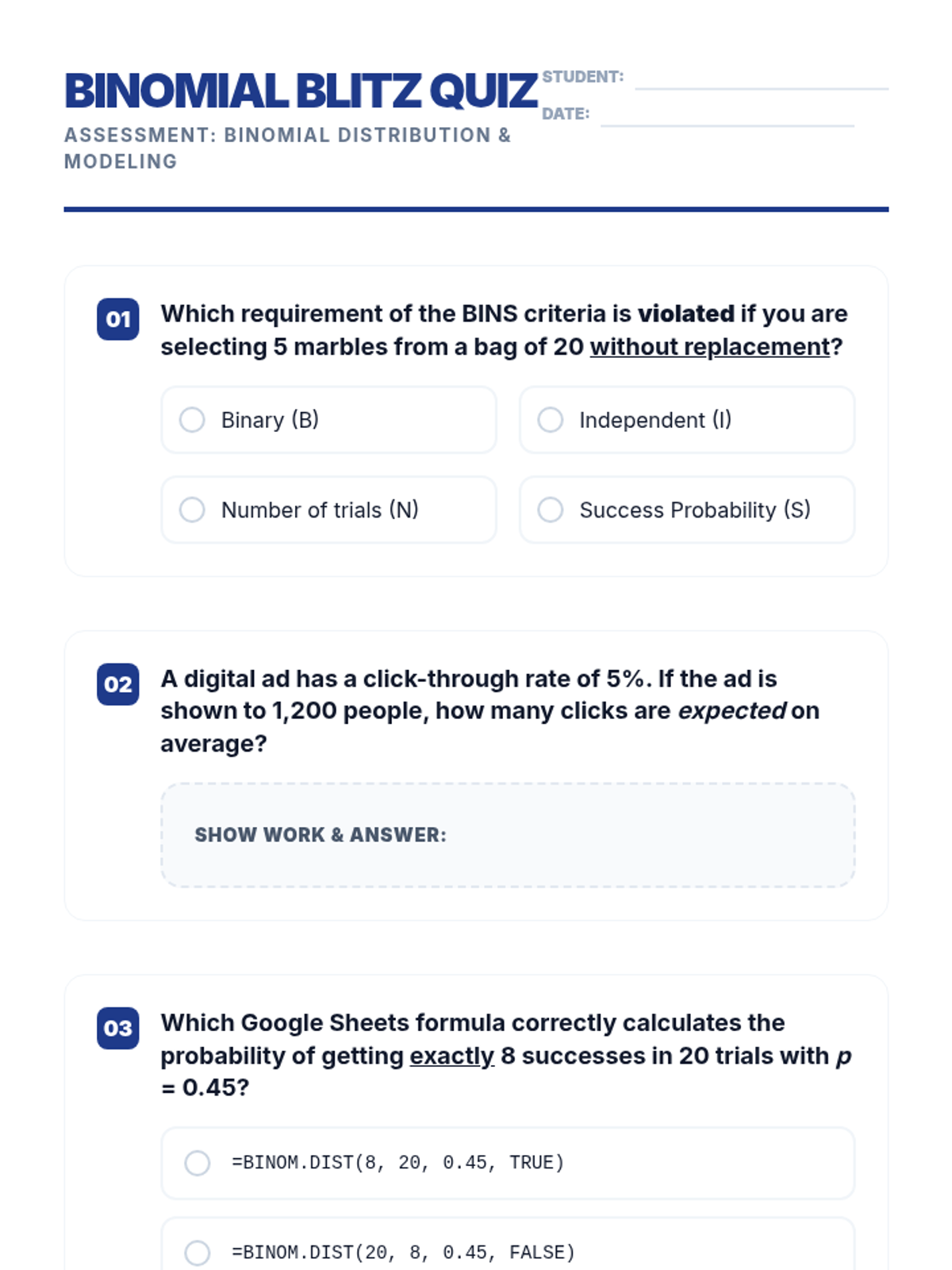
A 10-question assessment covering the BINS criteria, binomial parameters, spreadsheet formula syntax, hand-calculation theory, and expected value. Designed for 12th-grade statistics with high-quality visual formatting and clear student work areas. Updated with fixed math rendering and page break protections.
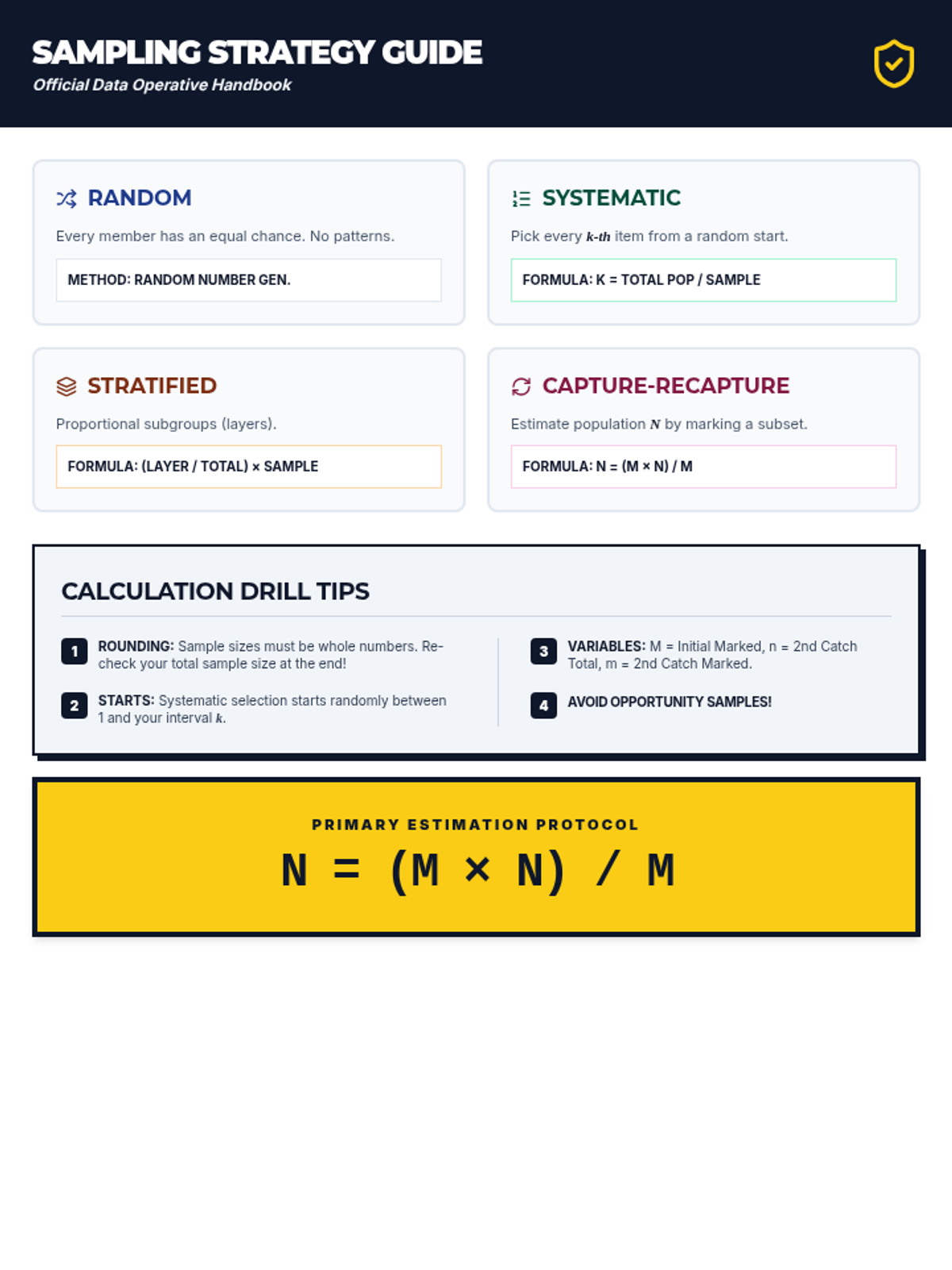
A quick-reference 'cheat sheet' for Year 8 students, summarizing the formulas and methods for random, systematic, stratified, and capture-recapture sampling.
A secret-agent themed slide deck for Year 8 students, explaining the theory and calculation methods for systematic, stratified, and capture-recapture sampling, featuring worked examples.
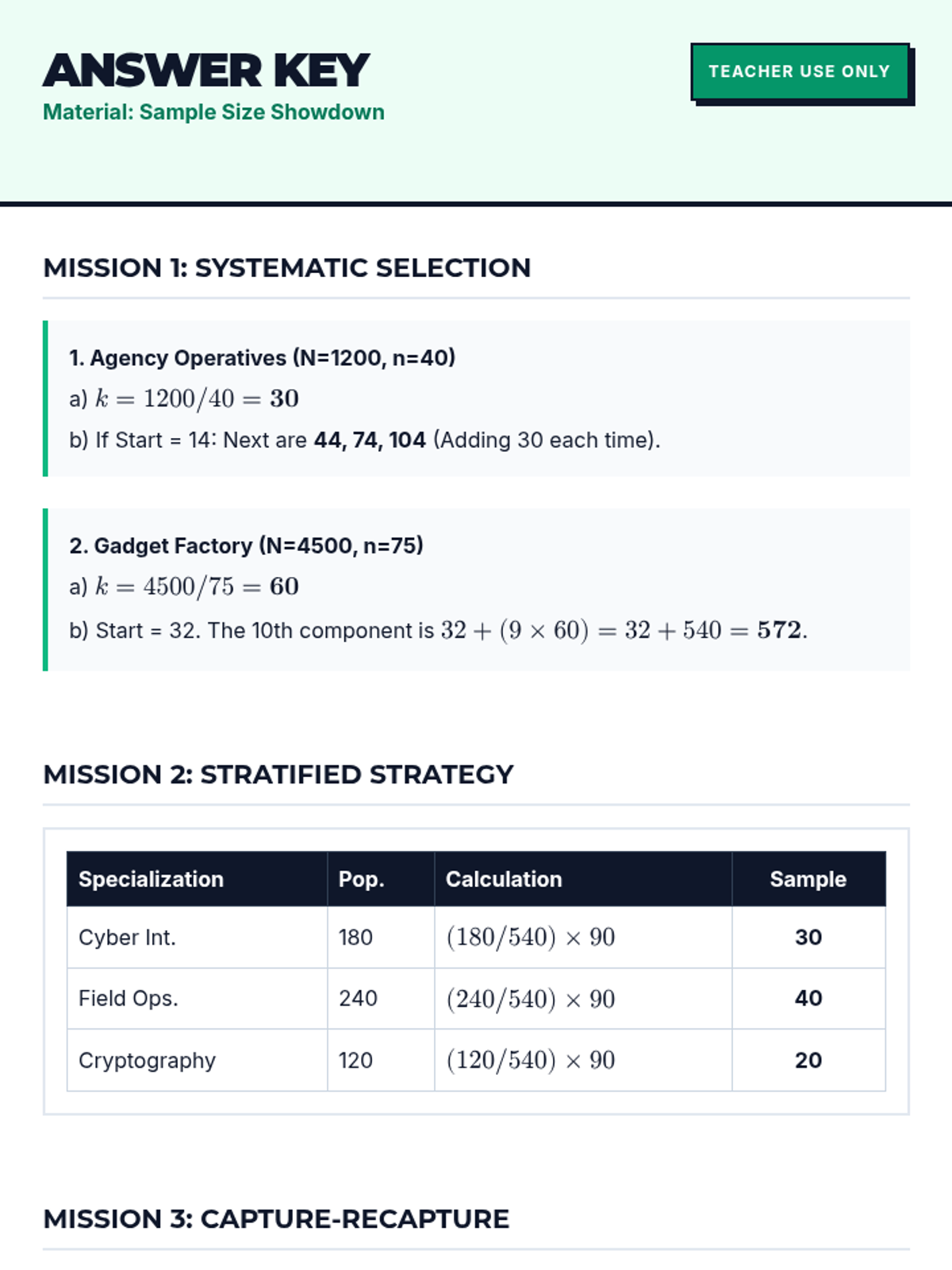
The answer key for the Sample Size Showdown worksheet, providing full solutions and calculations for all sampling problems.
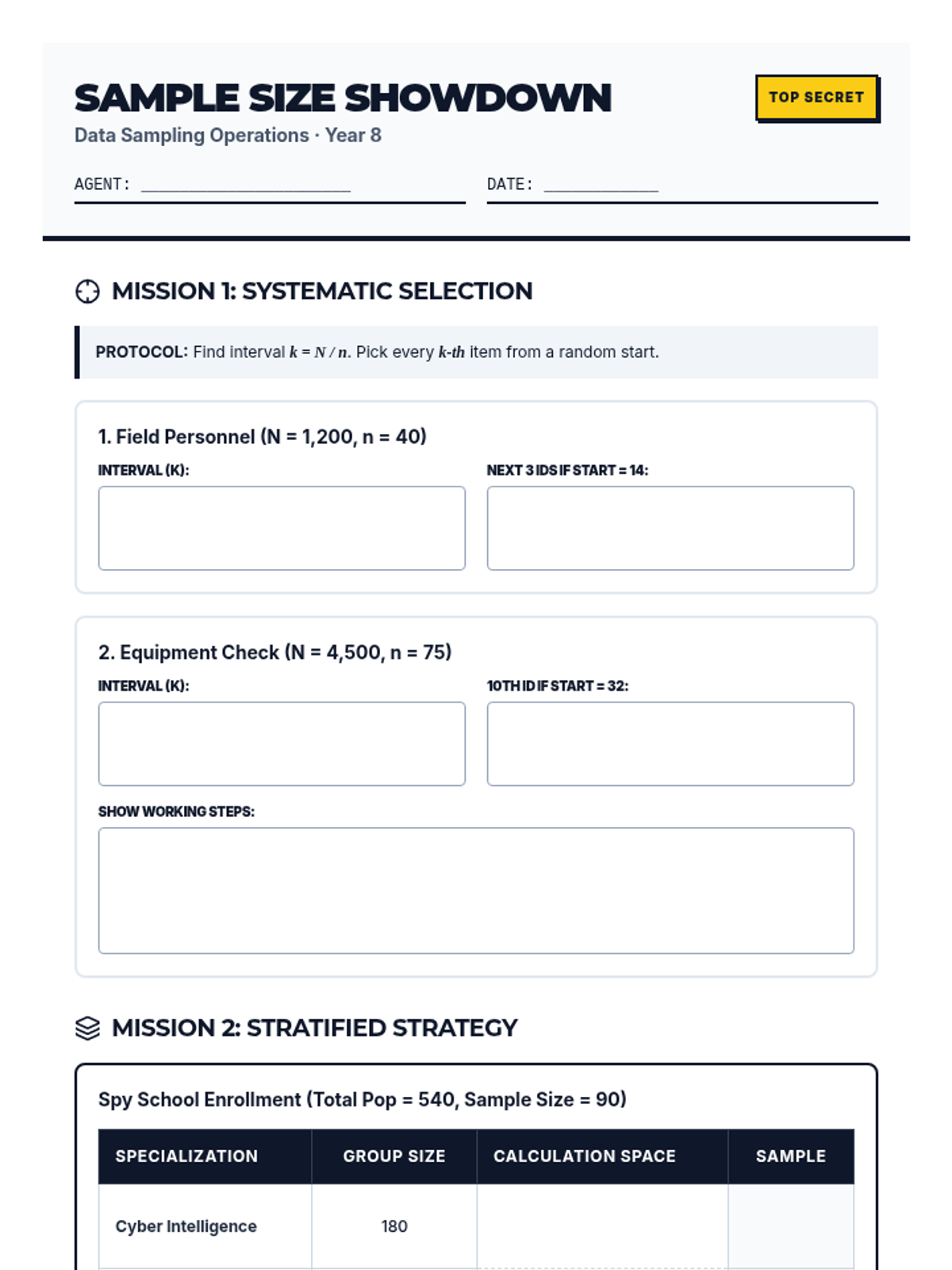
A Year 8 math worksheet titled 'Sample Size Showdown' focused on sampling calculations, including systematic, stratified, and capture-recapture methods, with a secret agent theme.
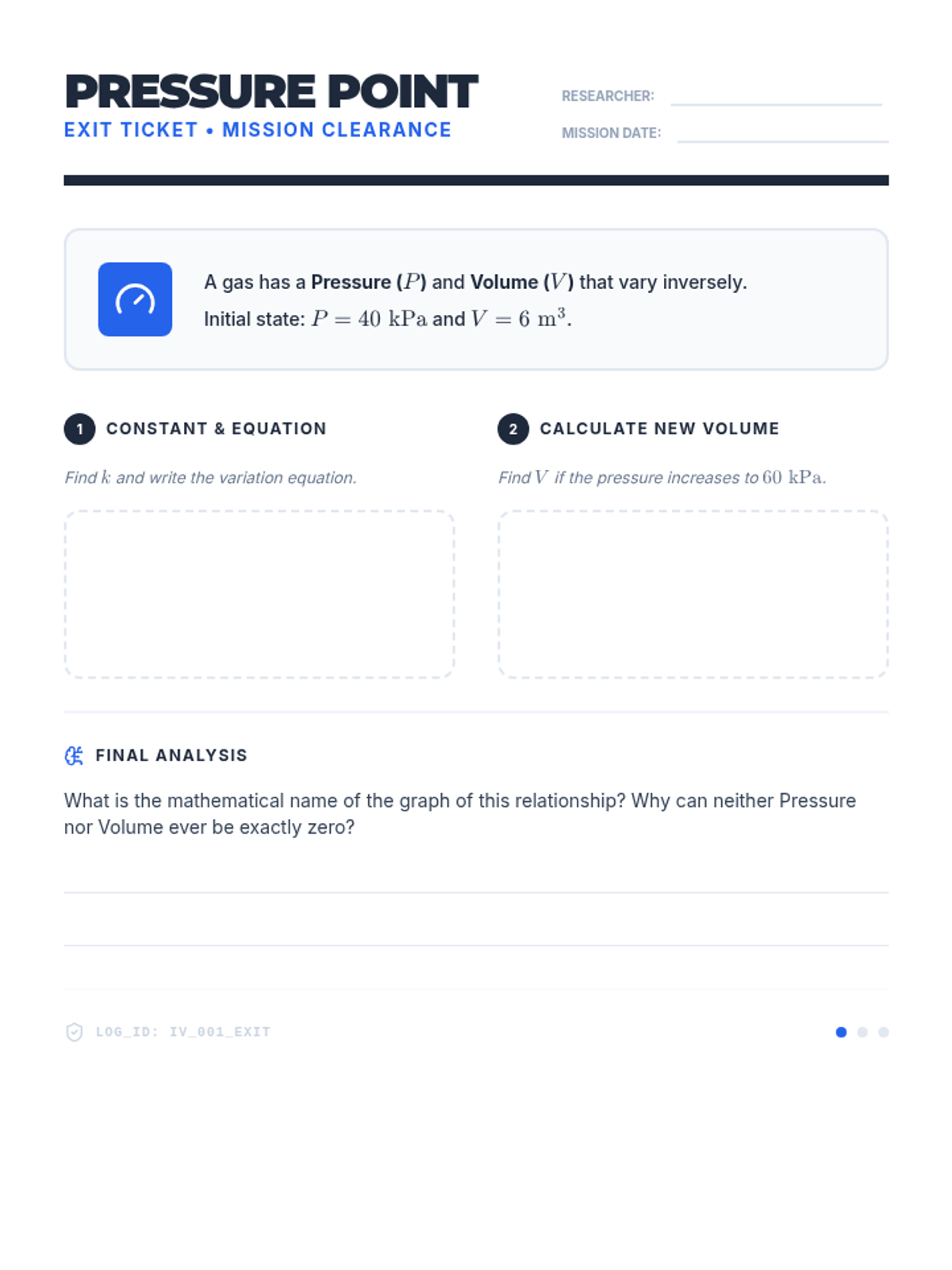
A formal exit ticket for inverse variation. Revised for single-page layout, better math rendering, and balanced work areas.
A sleek, high-contrast slide deck for inverse variation. Revised to fix math rendering, adjust viewport overflow, and correct the hyperbola graphic.
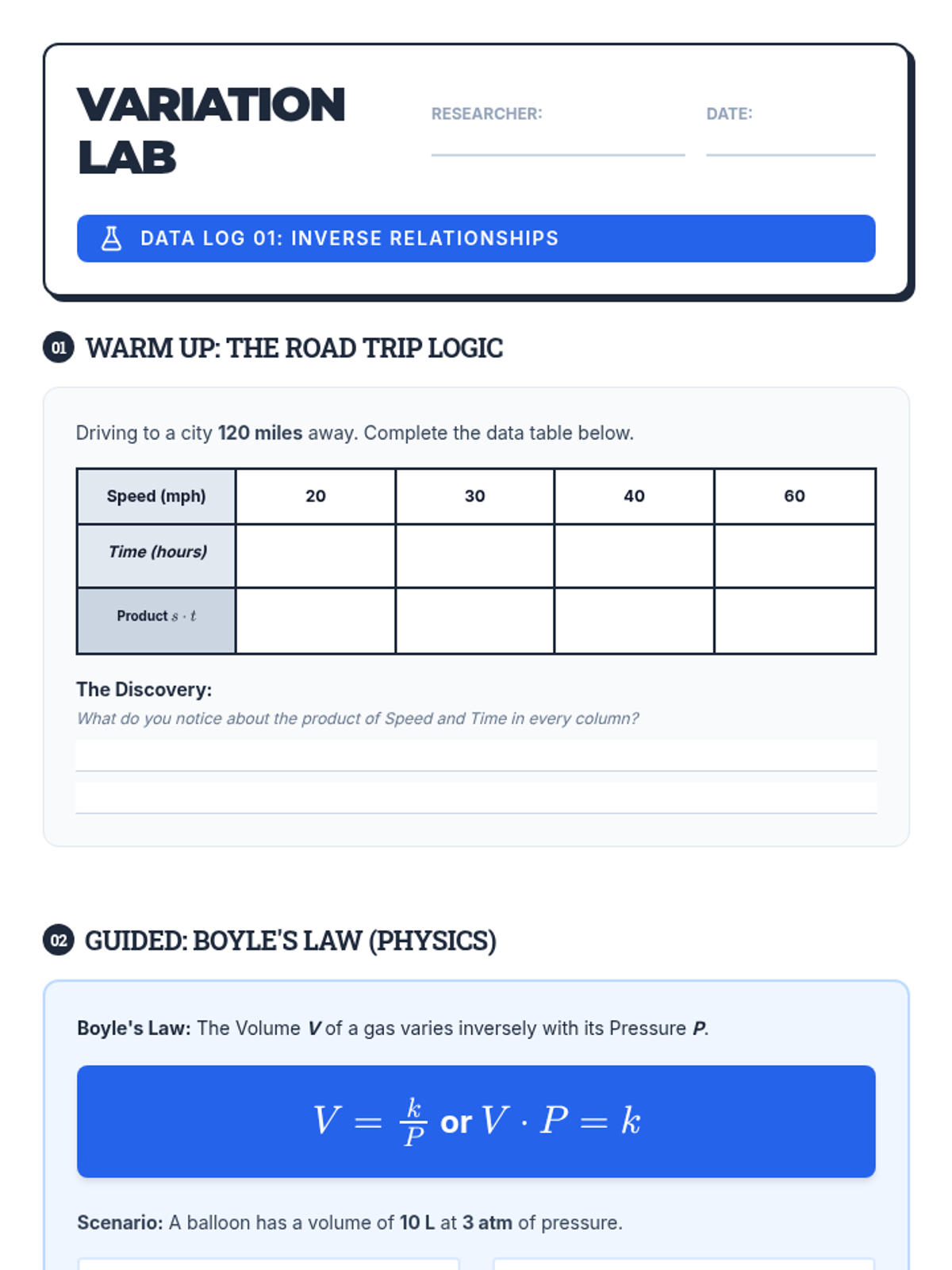
A student-facing handout containing the Warm Up, Guided Instruction, and Independent Practice for inverse variation. Revised for better page breaks, increased contrast, and added pedagogical scaffolding. Fixed math rendering and work areas.
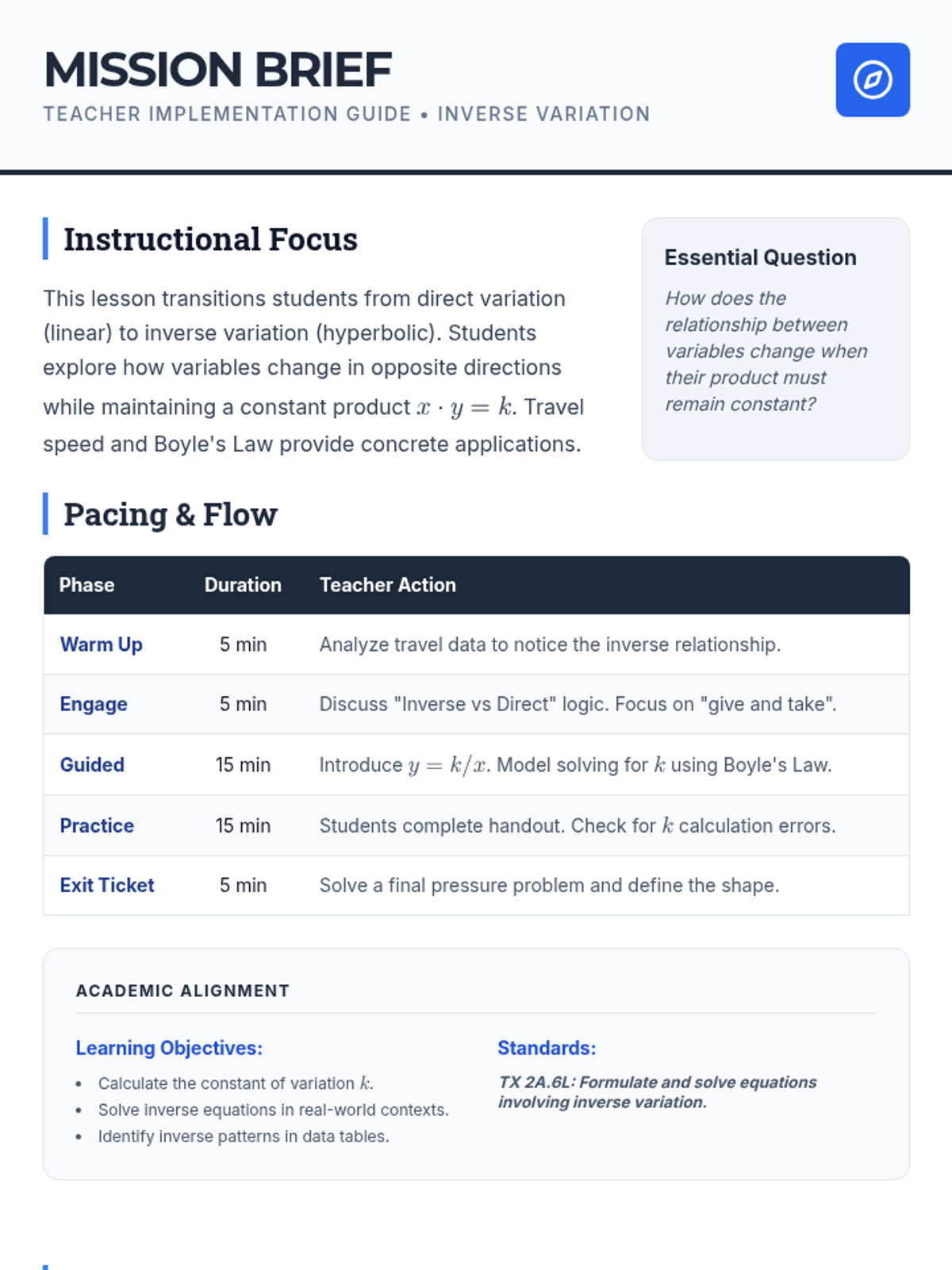
A comprehensive teacher implementation guide for the Inverse Investigators lesson, including pacing, standards alignment, answer keys, and pedagogical tips. Revised for better page breaks and math rendering.
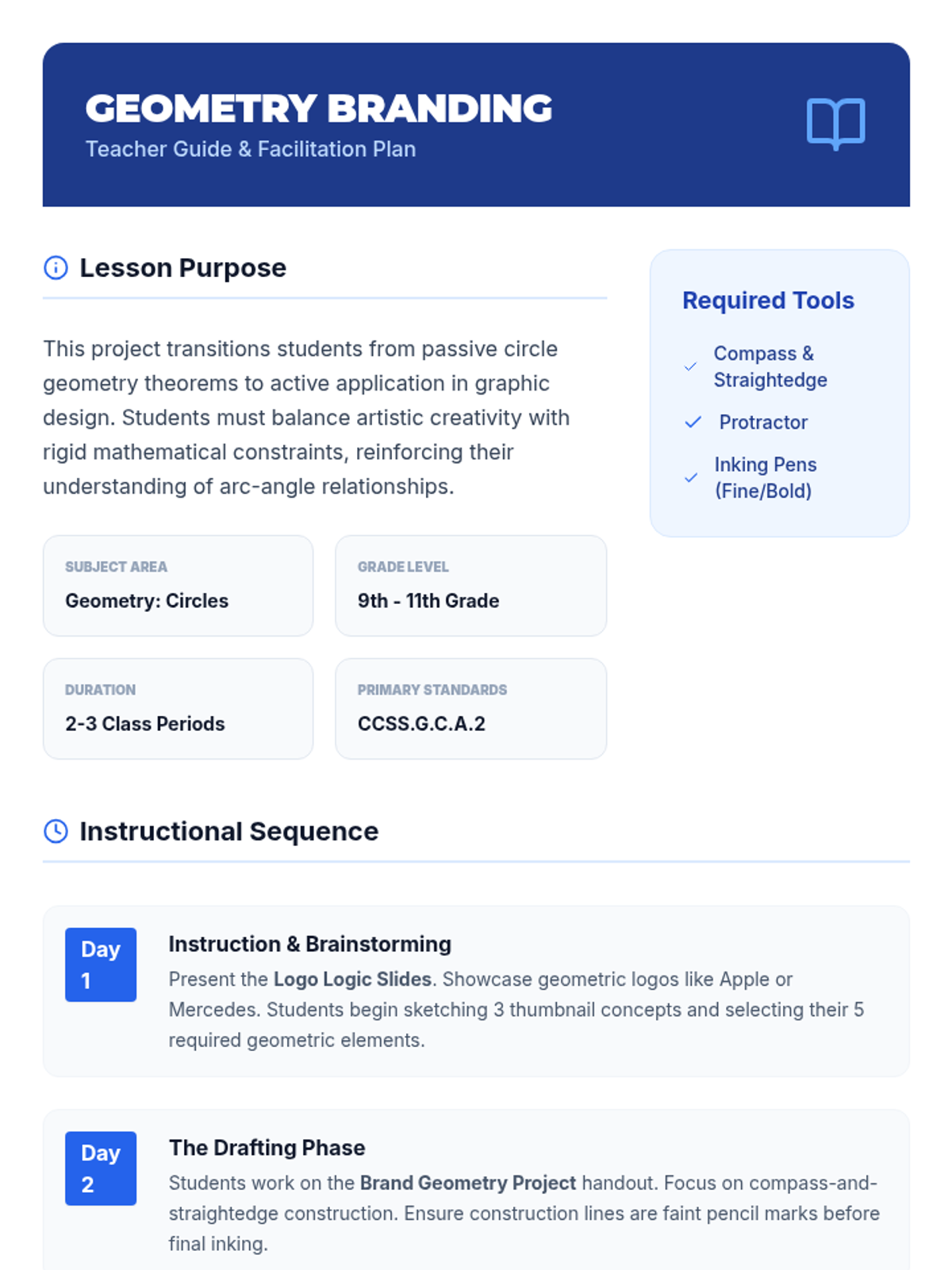
A comprehensive teacher guide for facilitating the Logo Logic project. Includes lesson pacing, a list of required materials, common student misconceptions to watch for, and strategies for differentiation.
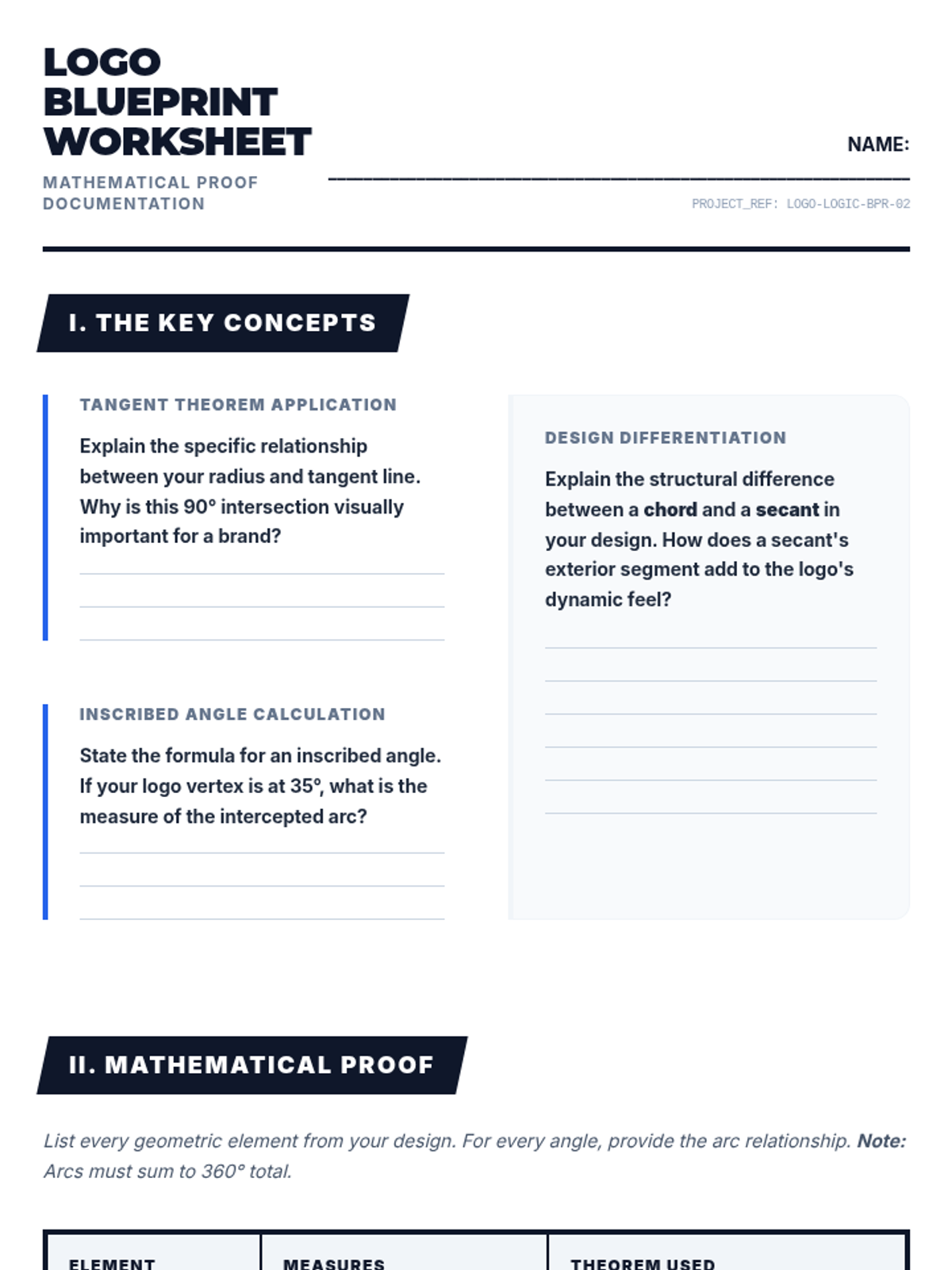
A structured worksheet for students to document the geometric proofs behind their logo design. It includes a table for recording measures of tangents, secants, and angles, plus reflection questions on the design process.
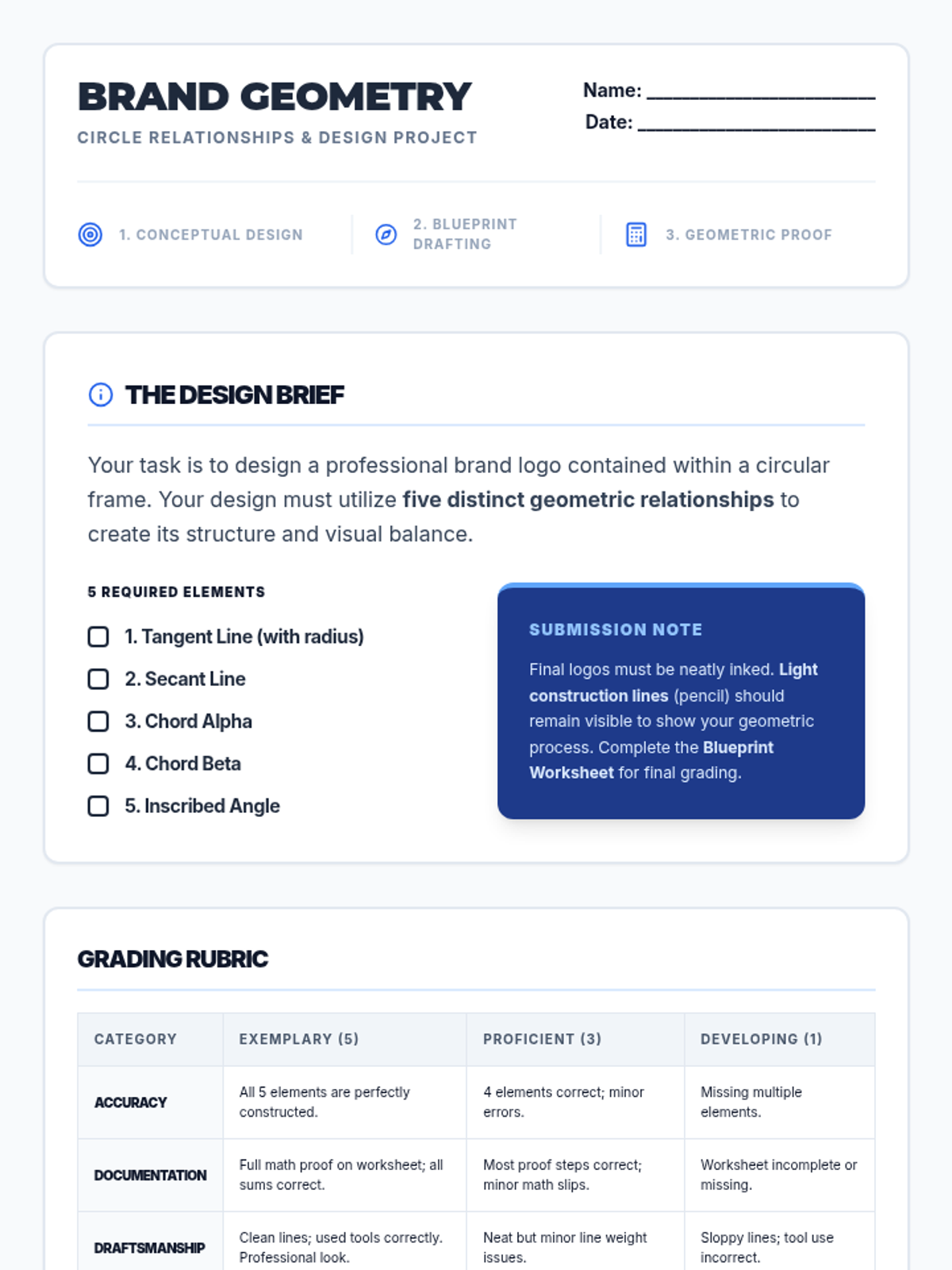
A comprehensive student project handout for the Brand Geometry project. Includes design constraints, a workspace for drafting, and a detailed grading rubric based on geometric accuracy and creative execution.
A visual presentation introducing circle geometry concepts (tangents, secants, chords, inscribed angles) through the lens of professional logo design. Includes architectural diagrams and project requirements.
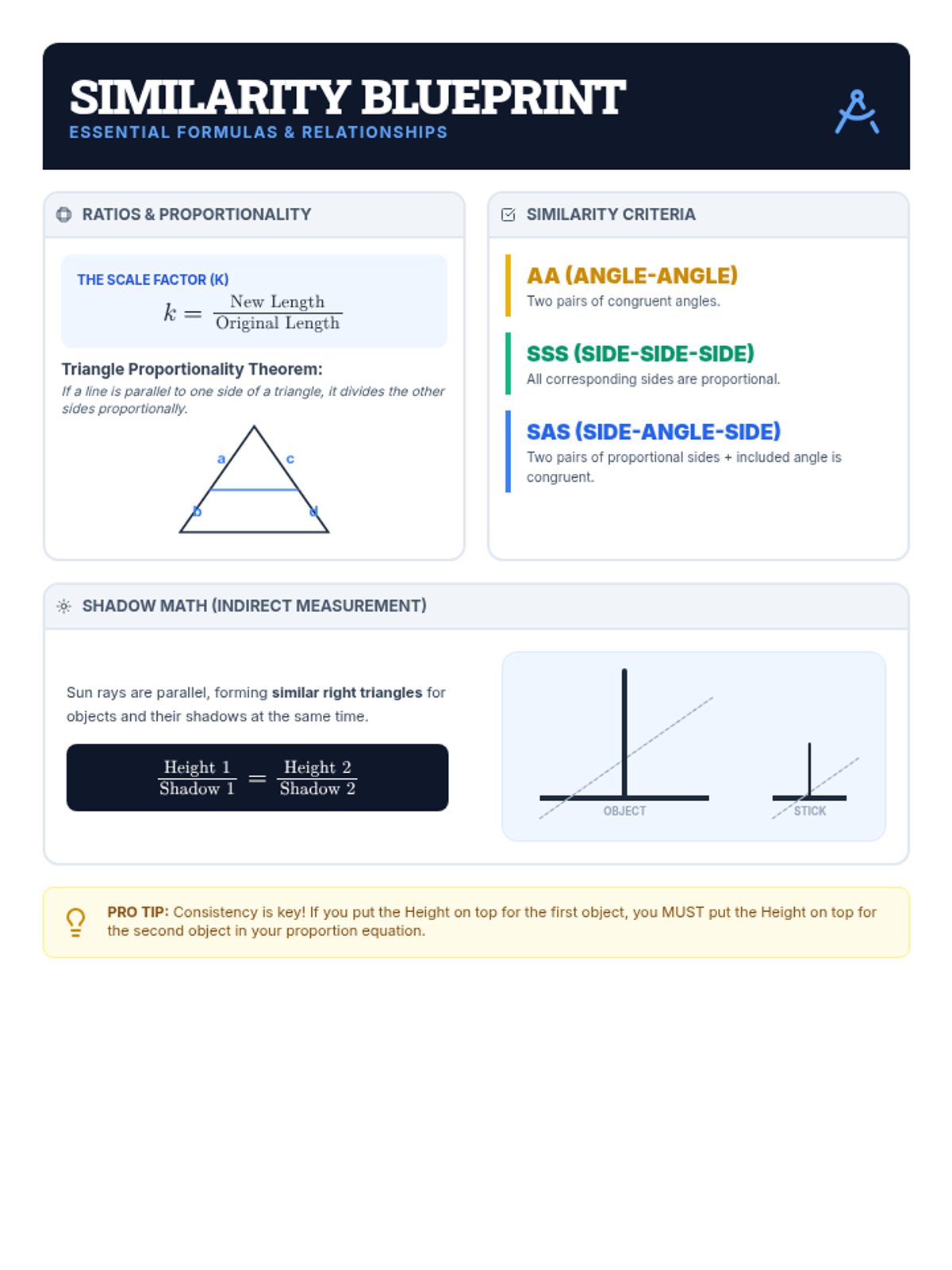
A student-friendly reference sheet for similarity concepts. Includes formulas for scale factor, similarity criteria (AAA, SSS, SAS), and a visual guide for shadow trigonometry.
A comprehensive teacher's rubric for the Similarity Superstars project. Covers poster, art, and presentation components with specific grading criteria for data, logic, and polish.