An expanded teacher guide with detailed instructional notes on linguistic evolution, grammar simplification, scribal changes, and hybrid word formation.
A comprehensive set of lecture slides for AP Economics covering Production Possibilities Curve, Comparative Advantage, Supply and Demand, and Macro Indicators with exam prep tips.
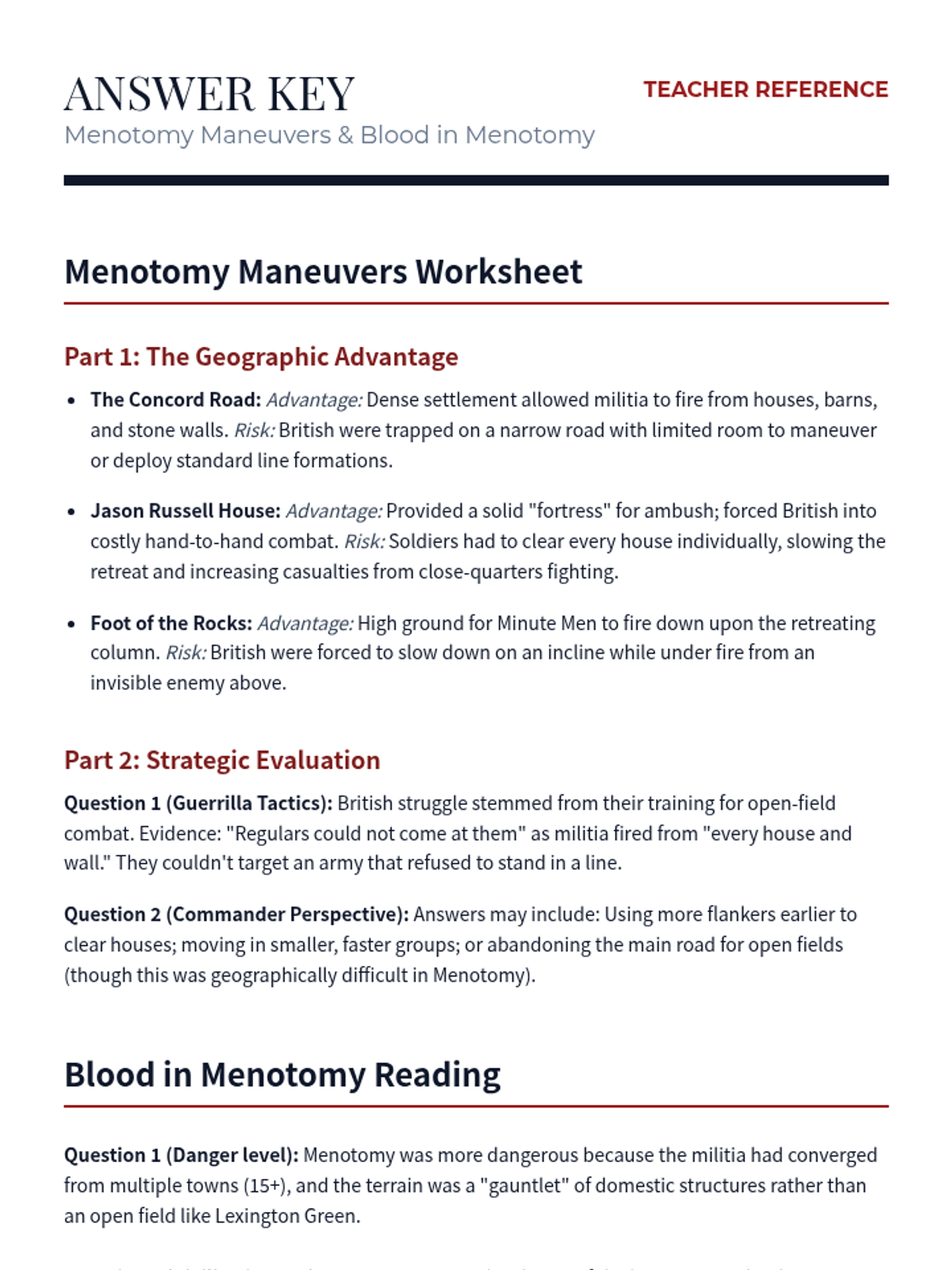
A teacher reference sheet providing sample answers and instructional guidance for the Menotomy Maneuvers worksheet, the Blood in Menotomy reading, and the Silent Witnesses sources.
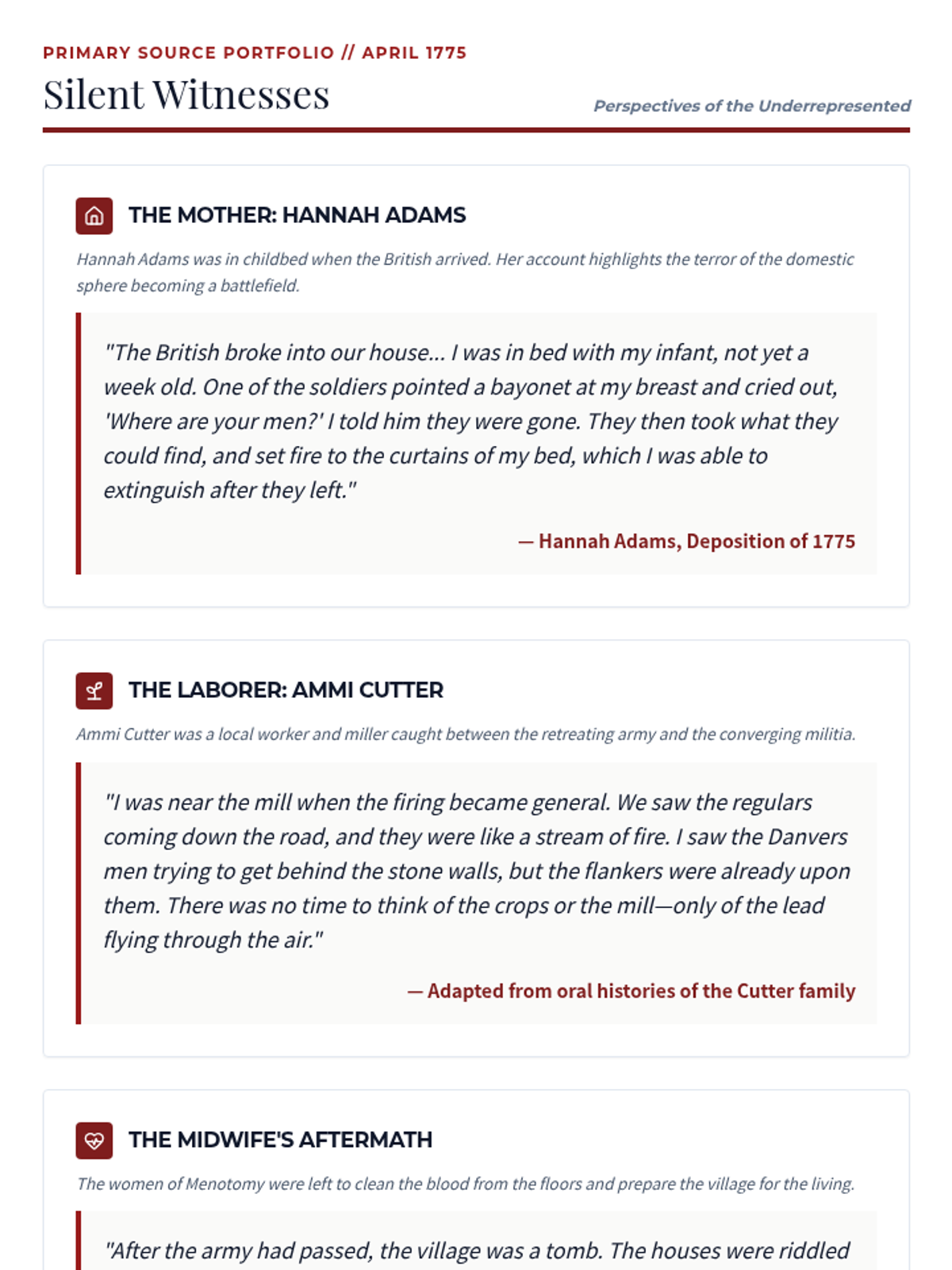
A collection of primary source excerpts focusing on underrepresented voices from the Battle of Menotomy, including housewives, farmworkers, and caretakers. It includes analysis prompts for students to consider the domestic impact of the conflict.
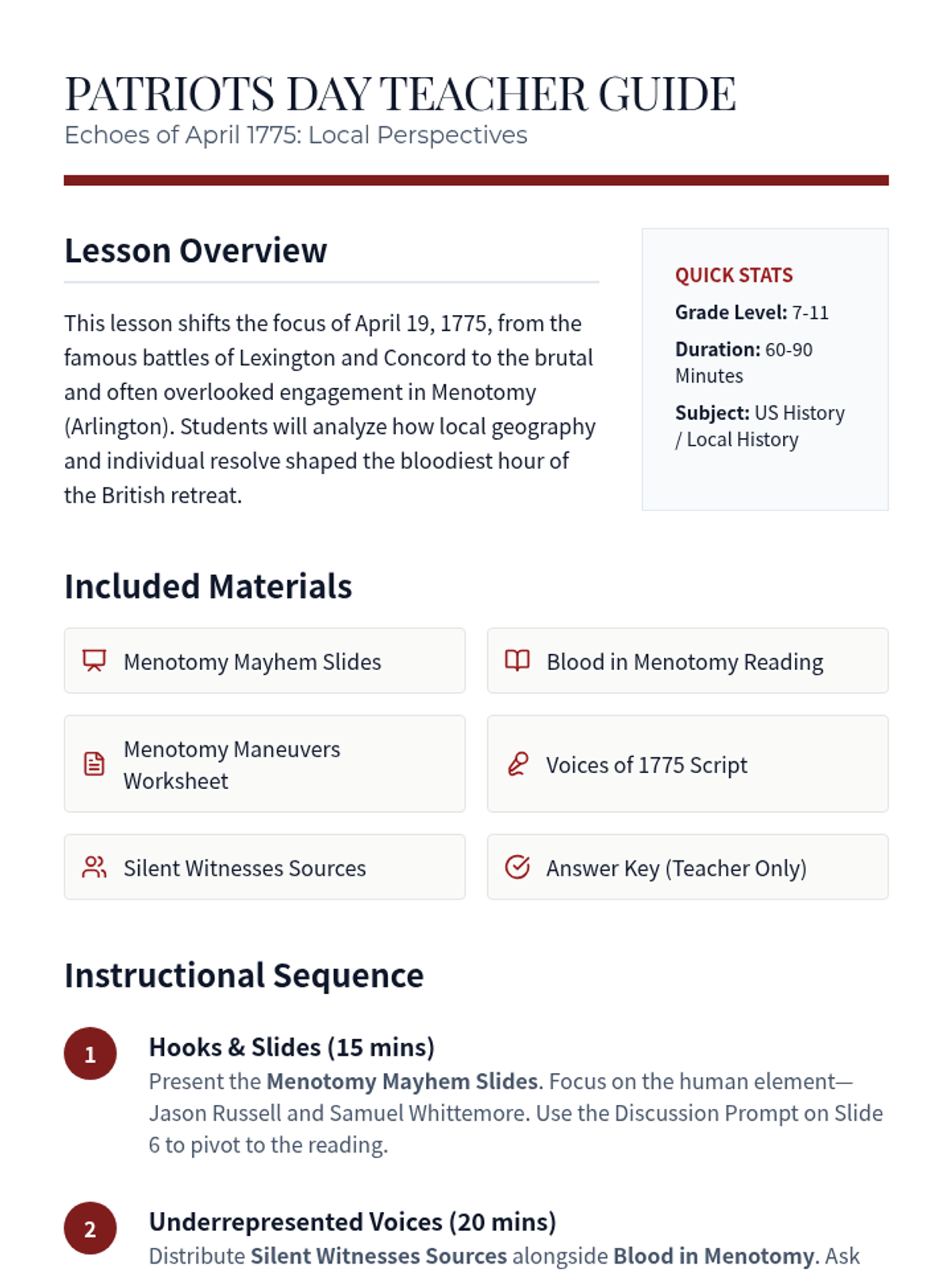
A comprehensive teacher's guide for the "Echoes of April 1775" lesson. It includes an instructional sequence, lesson objectives, and essential questions for debriefing the material.
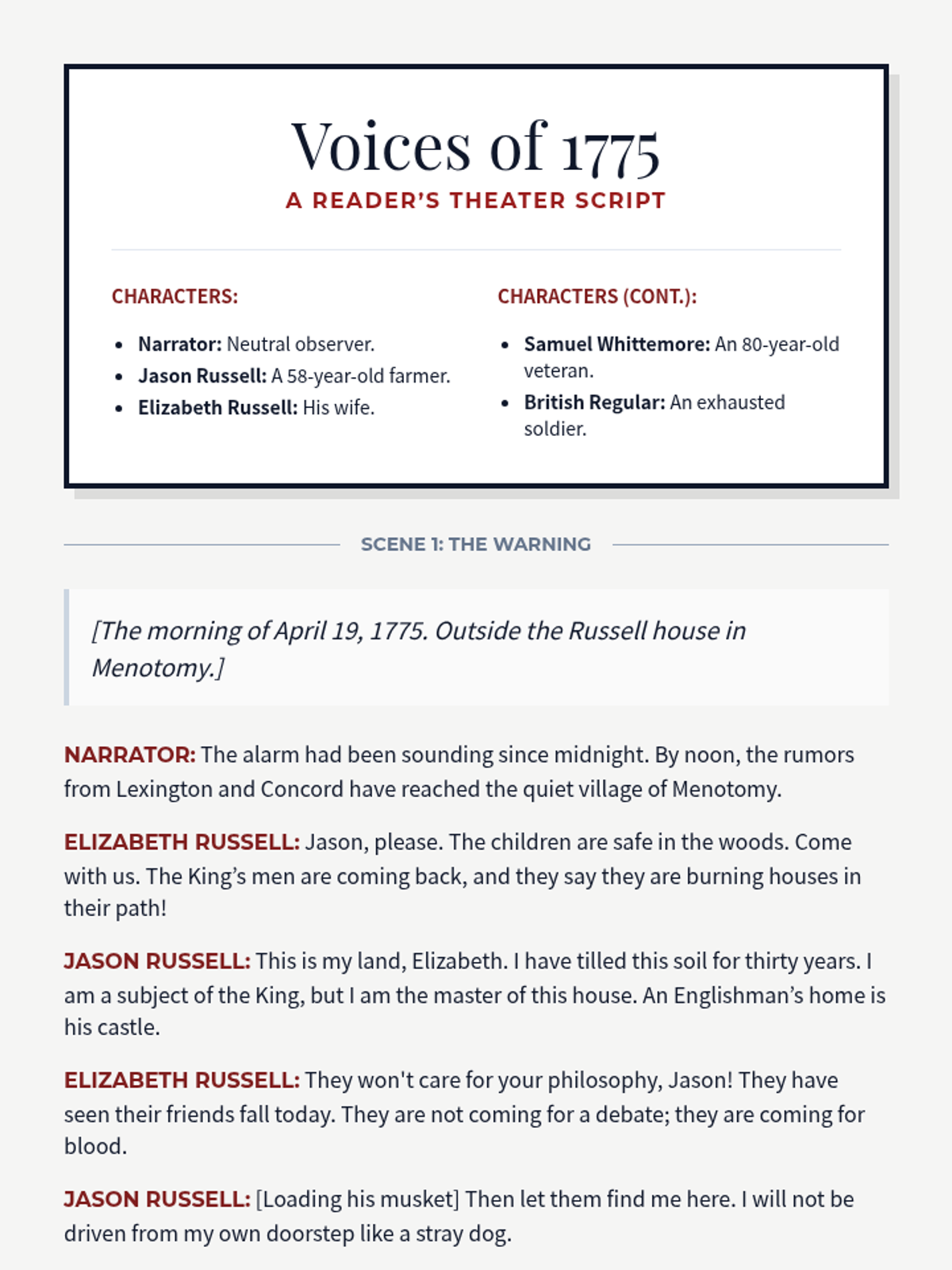
A reader's theater script featuring key figures from the Battle of Menotomy, including Jason Russell and Samuel Whittemore. It provides a dramatic perspective on the personal motivations of local residents during the British retreat.
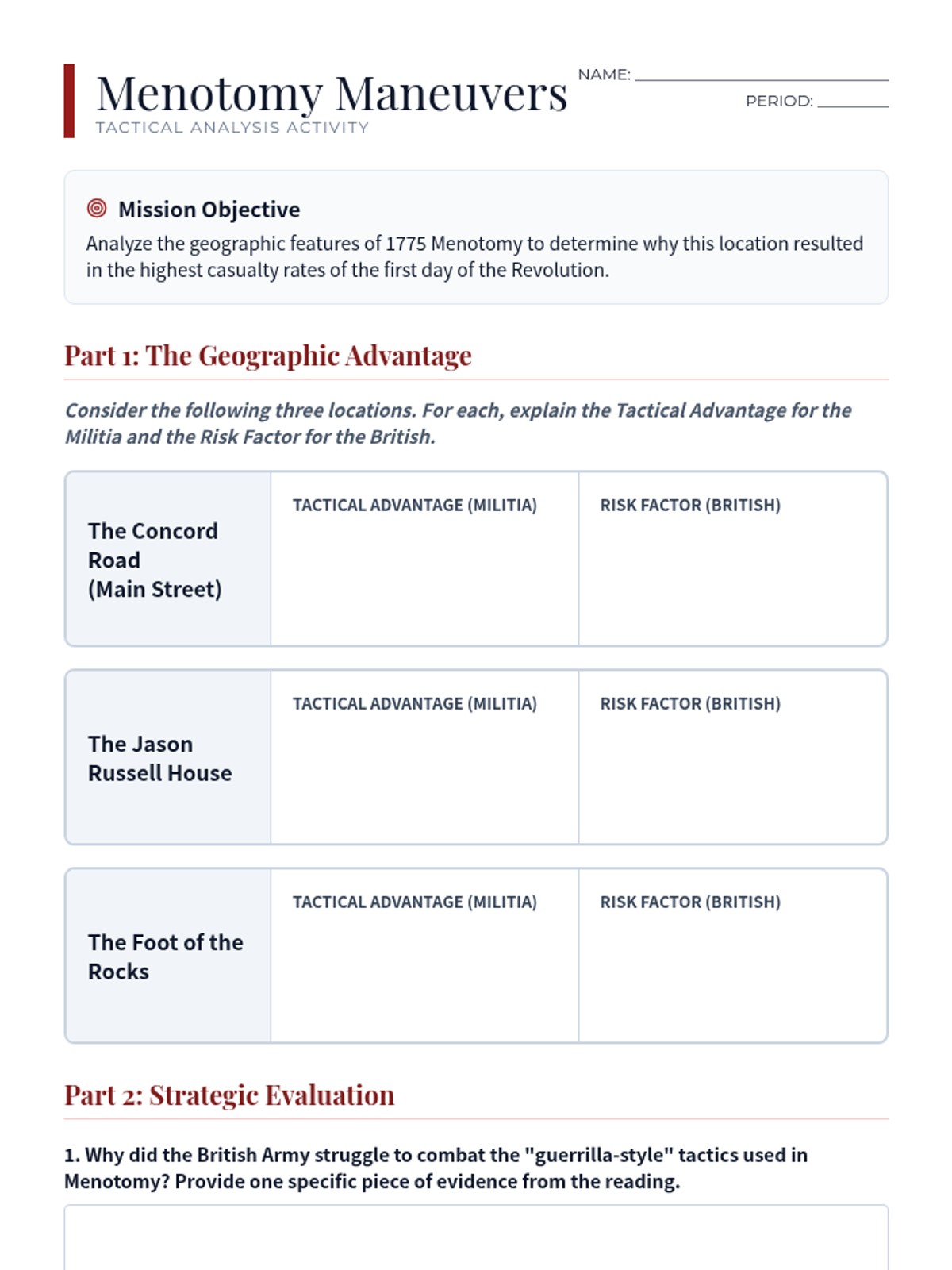
A tactical analysis worksheet for students to evaluate the geography and military strategy of the Battle of Menotomy. It includes a chart for analyzing specific locations and critical thinking questions regarding guerrilla warfare.
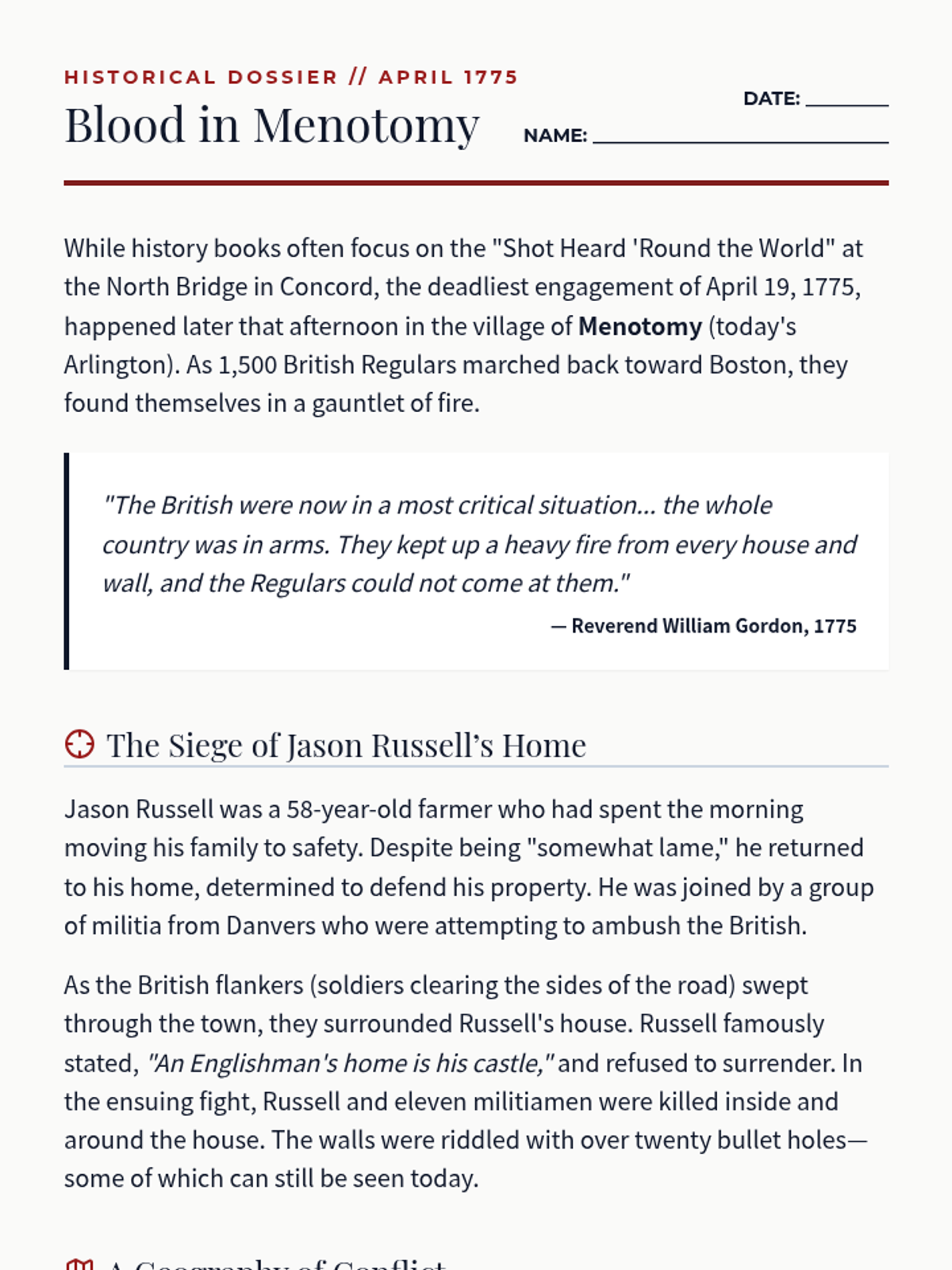
A historical reading passage focusing on the Battle of Menotomy in 1775. It includes primary source excerpts from witnesses and soldiers, a focus on the Jason Russell House, and analysis questions for students.
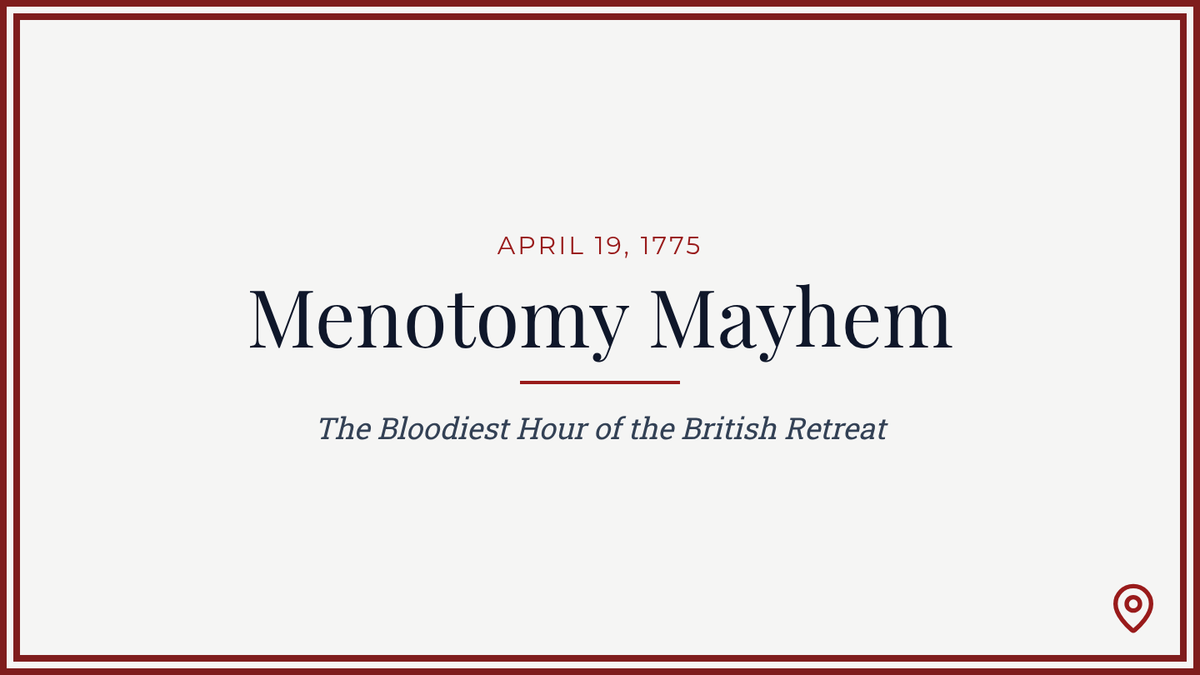
A slide deck for a history lesson on the Battle of Menotomy during the American Revolution. It features a colonial aesthetic, focus on local Arlington landmarks like the Jason Russell House, and discussion prompts.
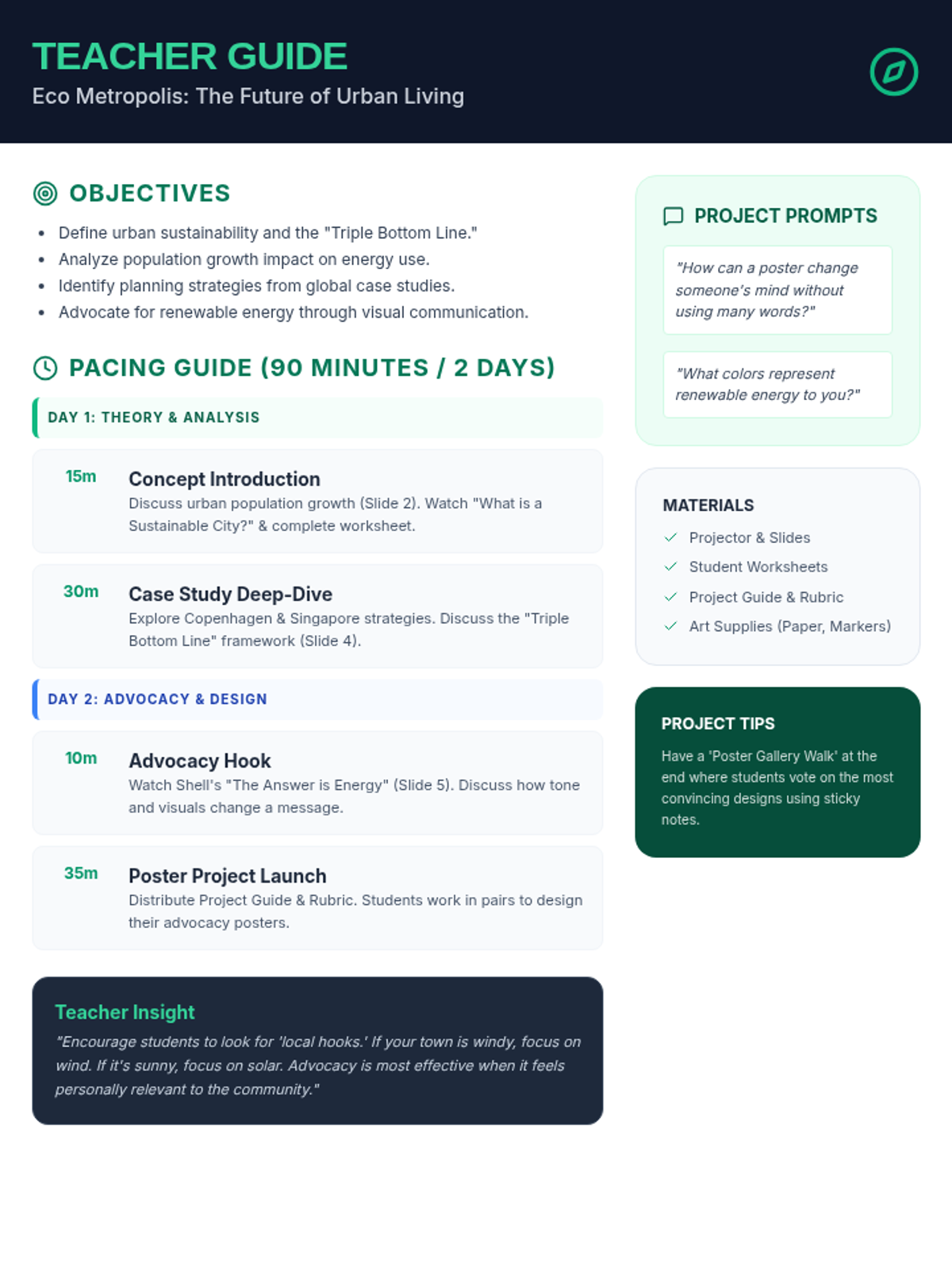
Updated teacher guide incorporating the Renewable Advocates poster project into a two-day lesson plan with revised pacing and materials list.
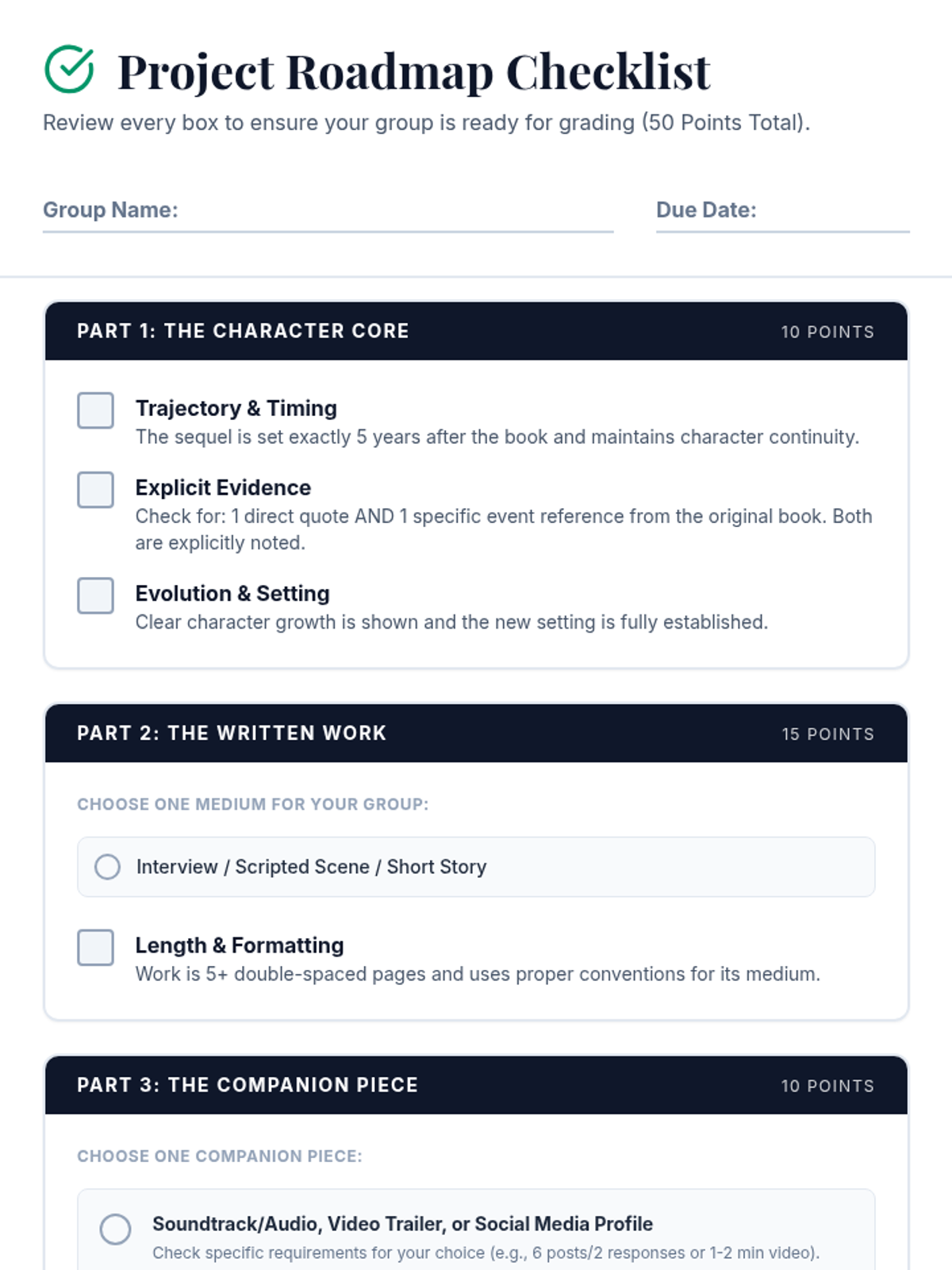
A student-facing checklist to help groups track their progress and ensure all requirements for 'The Sequel' project are met. Updated to include all 50 points and fixed layout issues.
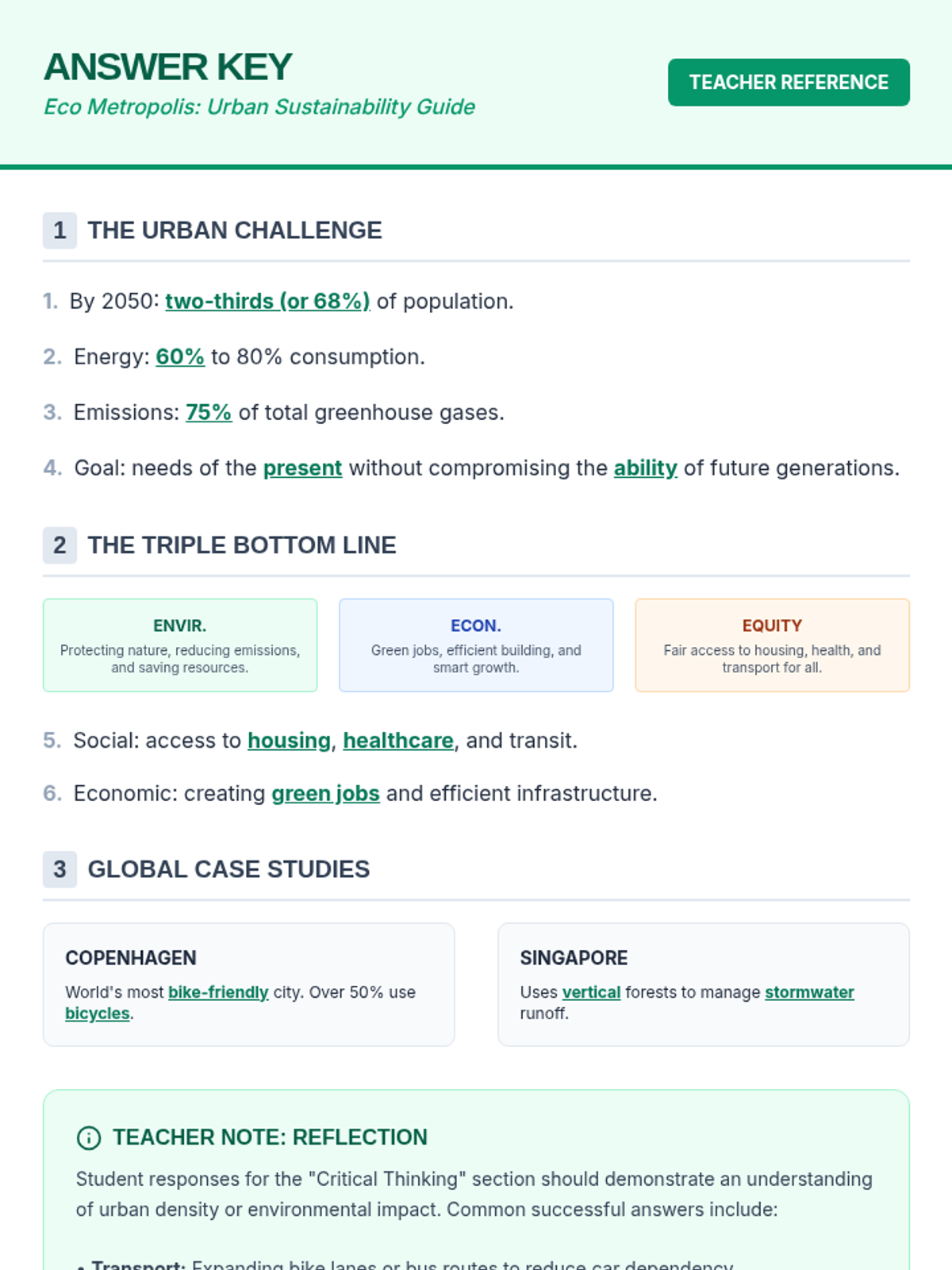
Revised answer key with improved page breaks for the teacher note section and a printer-friendly light theme for instructional tips.
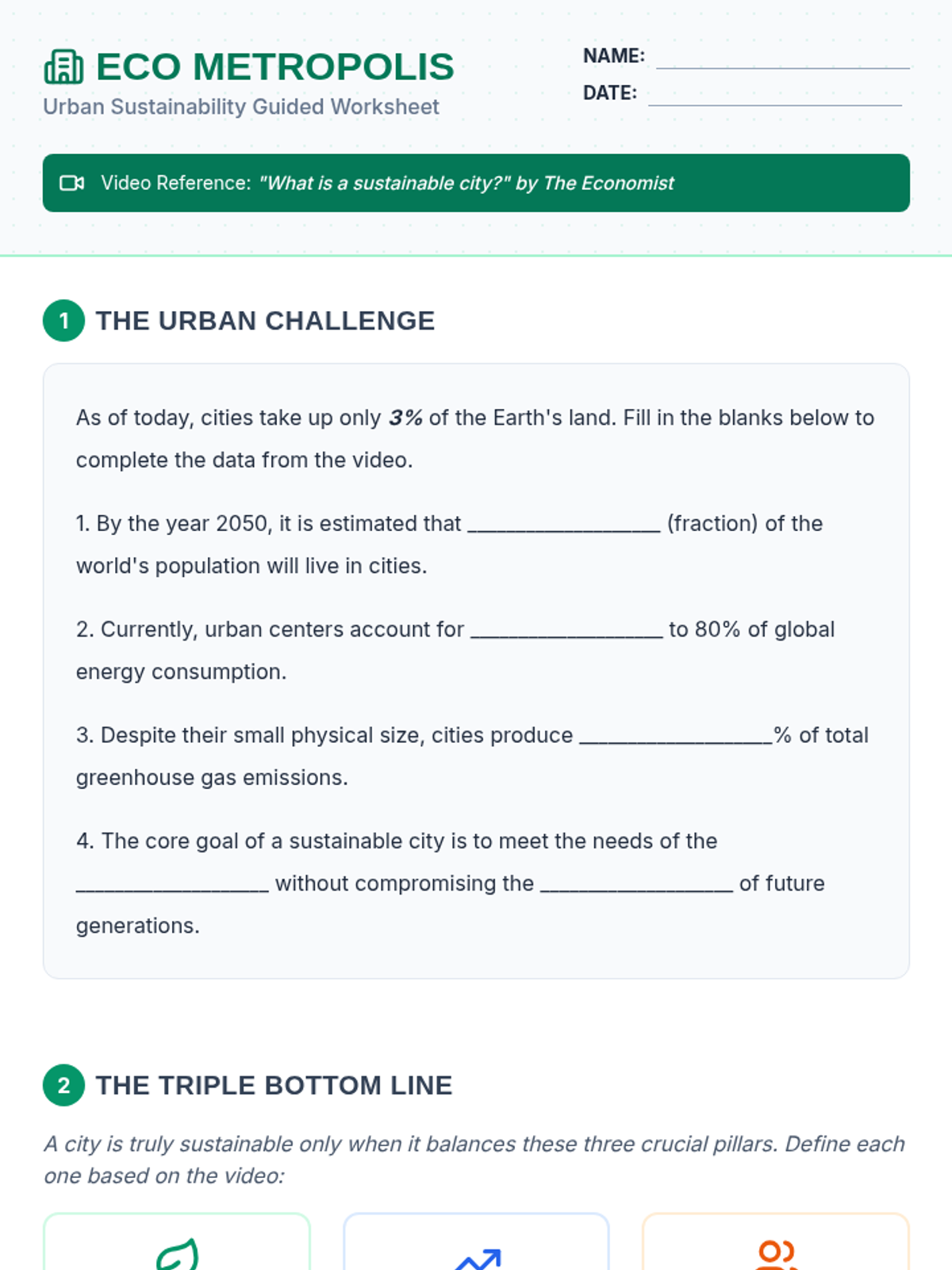
Updated worksheet with improved page breaks, larger student work areas for the Triple Bottom Line definitions, and a expanded reflection section.
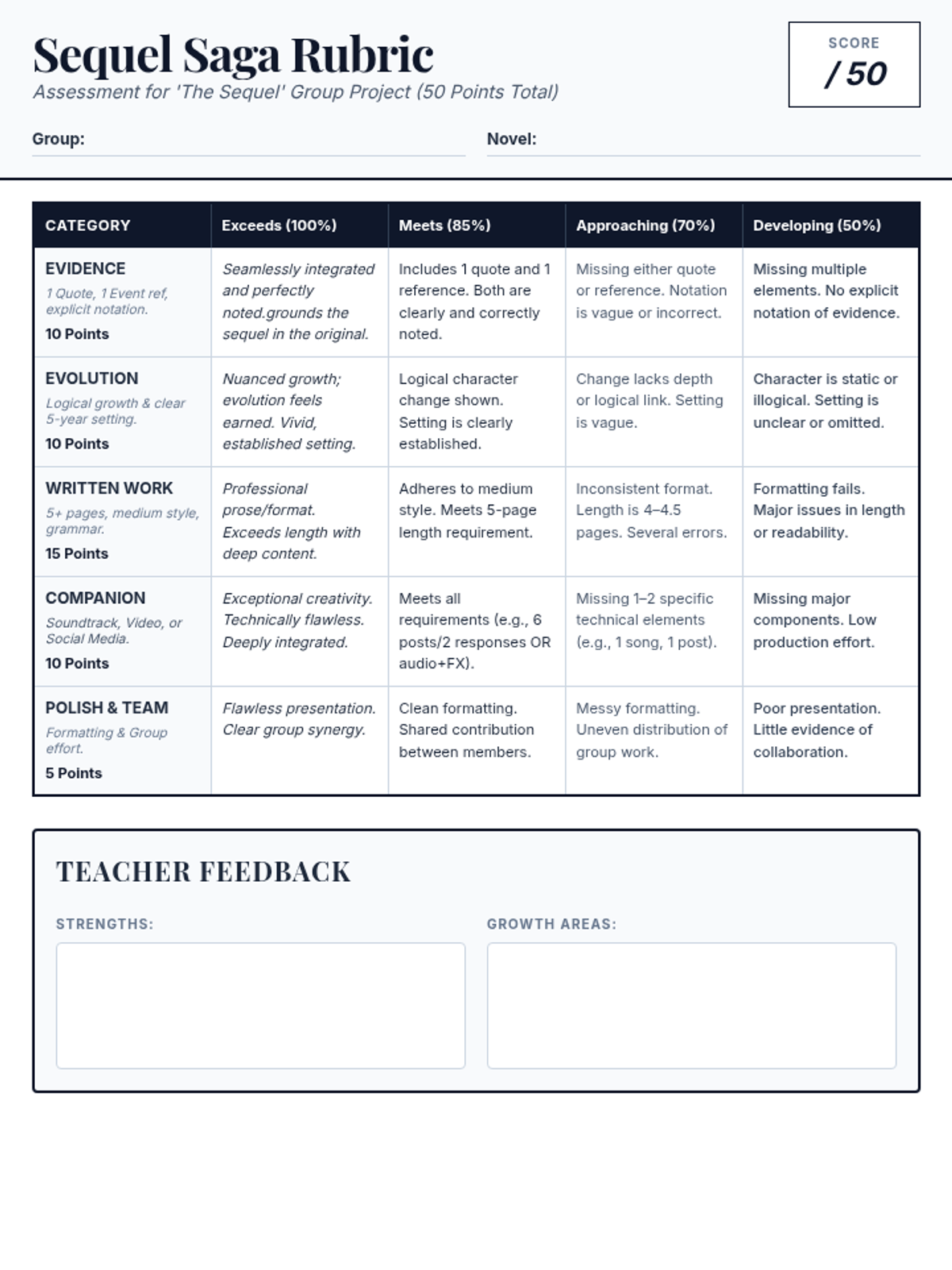
A compact, single-page 50-point rubric for 'The Sequel' project, covering evidence, character growth, written quality, and creative media.
A final corrected slide deck with functional video embeds, improved text contrast on the project launch slide, and clearer instructional cues.
An introductory slide deck explaining the scoring criteria for the 'Sequel' project, detailing evidence requirements, page length, and creative tips. Updated with clarified scoring and a dedicated companion piece slide.
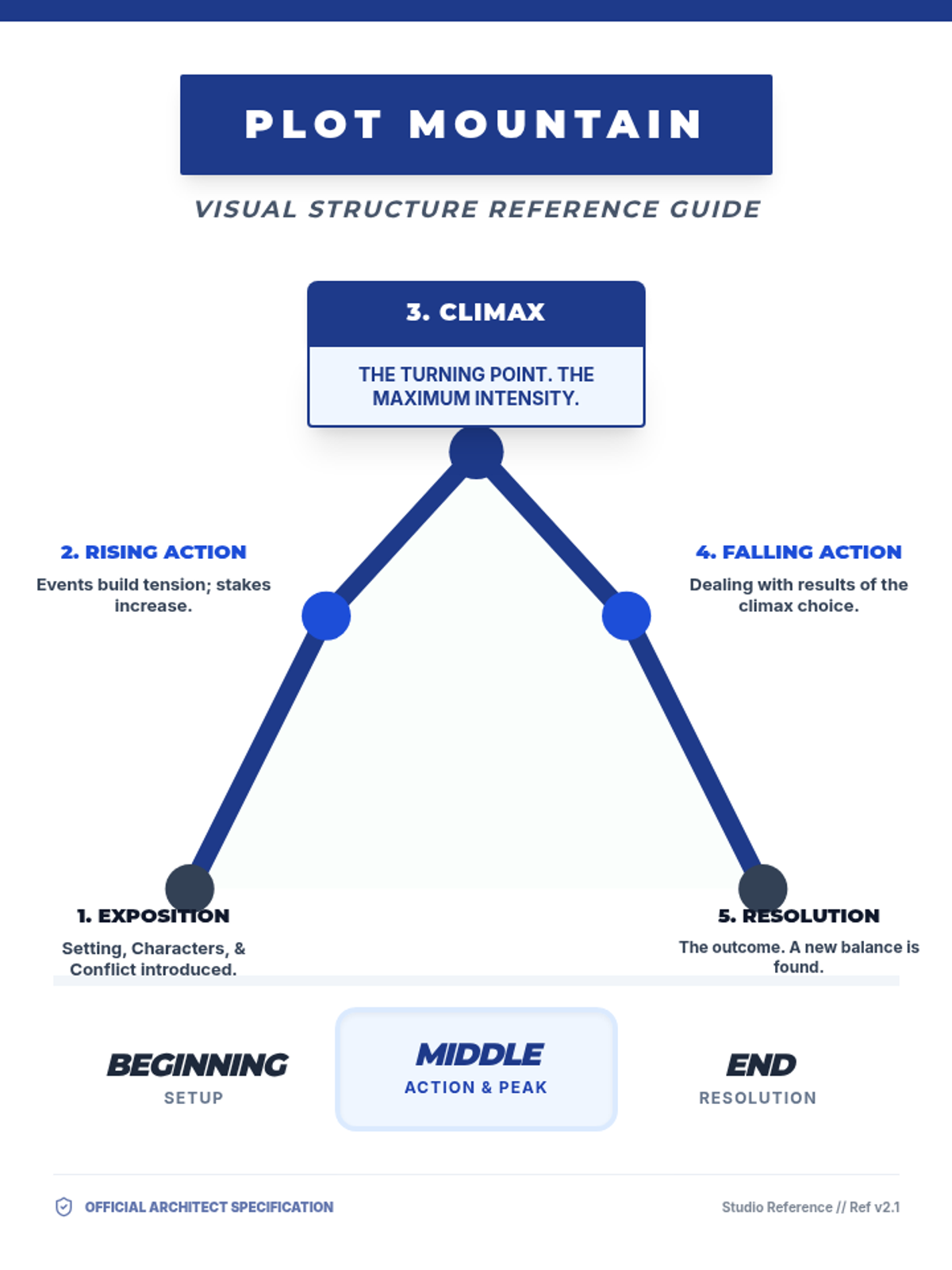
A comprehensive visual reference anchor chart for the classroom, clearly defining the five stages of a plot and how they align with the Beginning, Middle, and End structure.
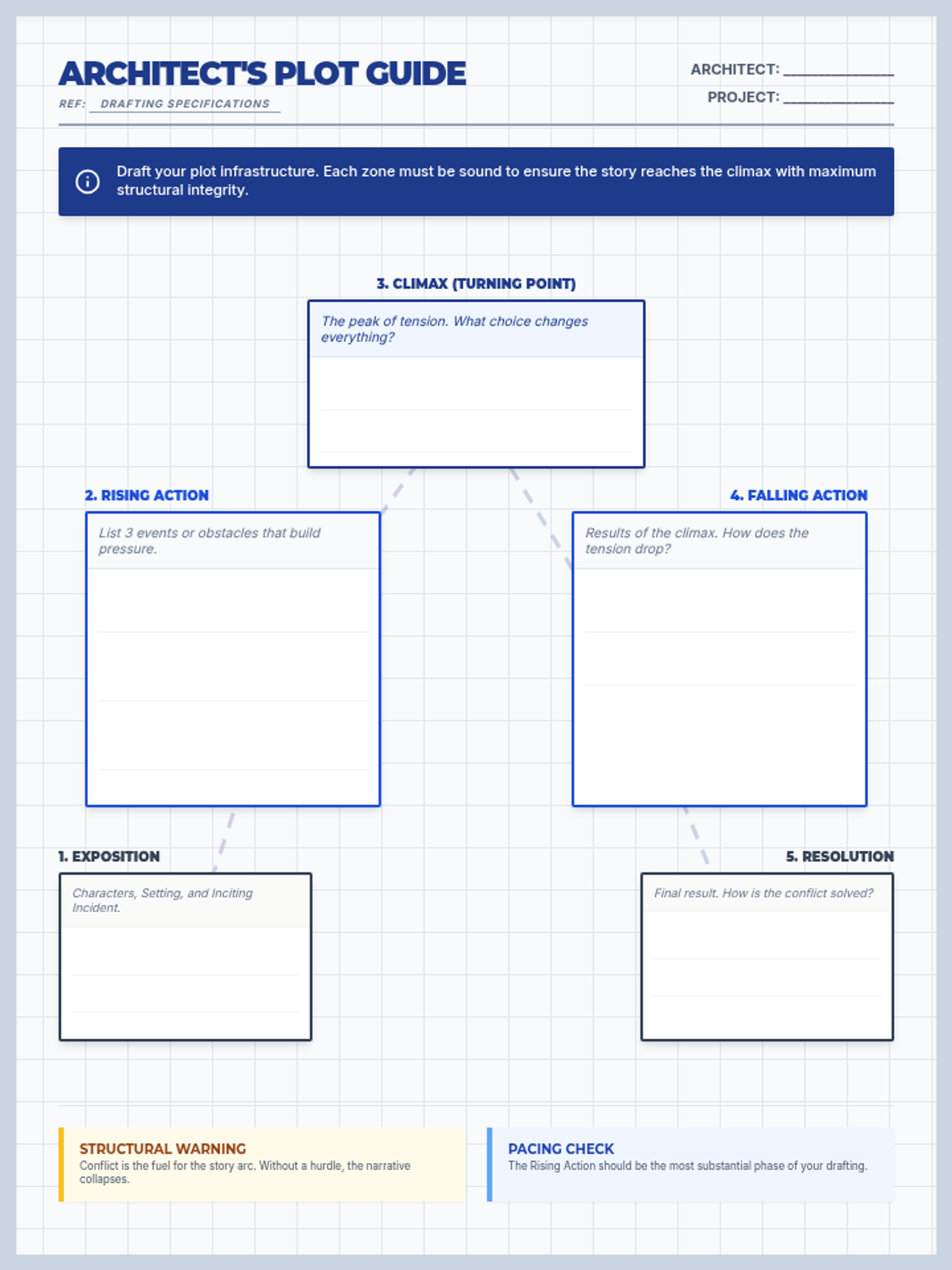
A guided version of the Plot Blueprint Organizer featuring specific prompts and questions for each stage of the plot to assist students in drafting their story structure.
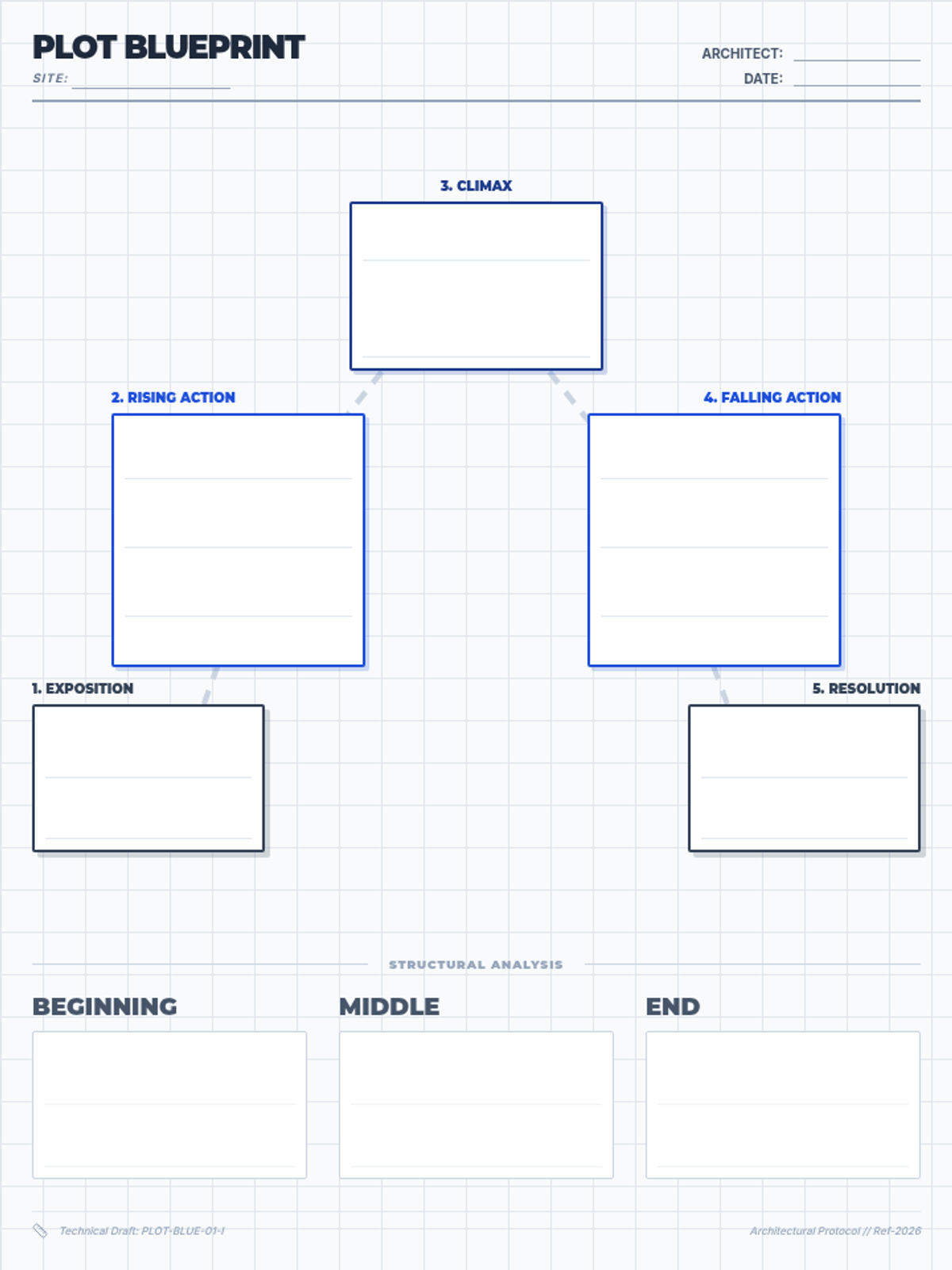
A blank blueprint-themed graphic organizer for students to map out the five stages of a plot (Exposition, Rising Action, Climax, Falling Action, Resolution) along with Beginning, Middle, and End phases.
A 6-slide presentation designed to guide classroom discussion on the characterization of Calypso in Book 5 of the Odyssey, exploring her motivations, divine rebellion, and complexity.
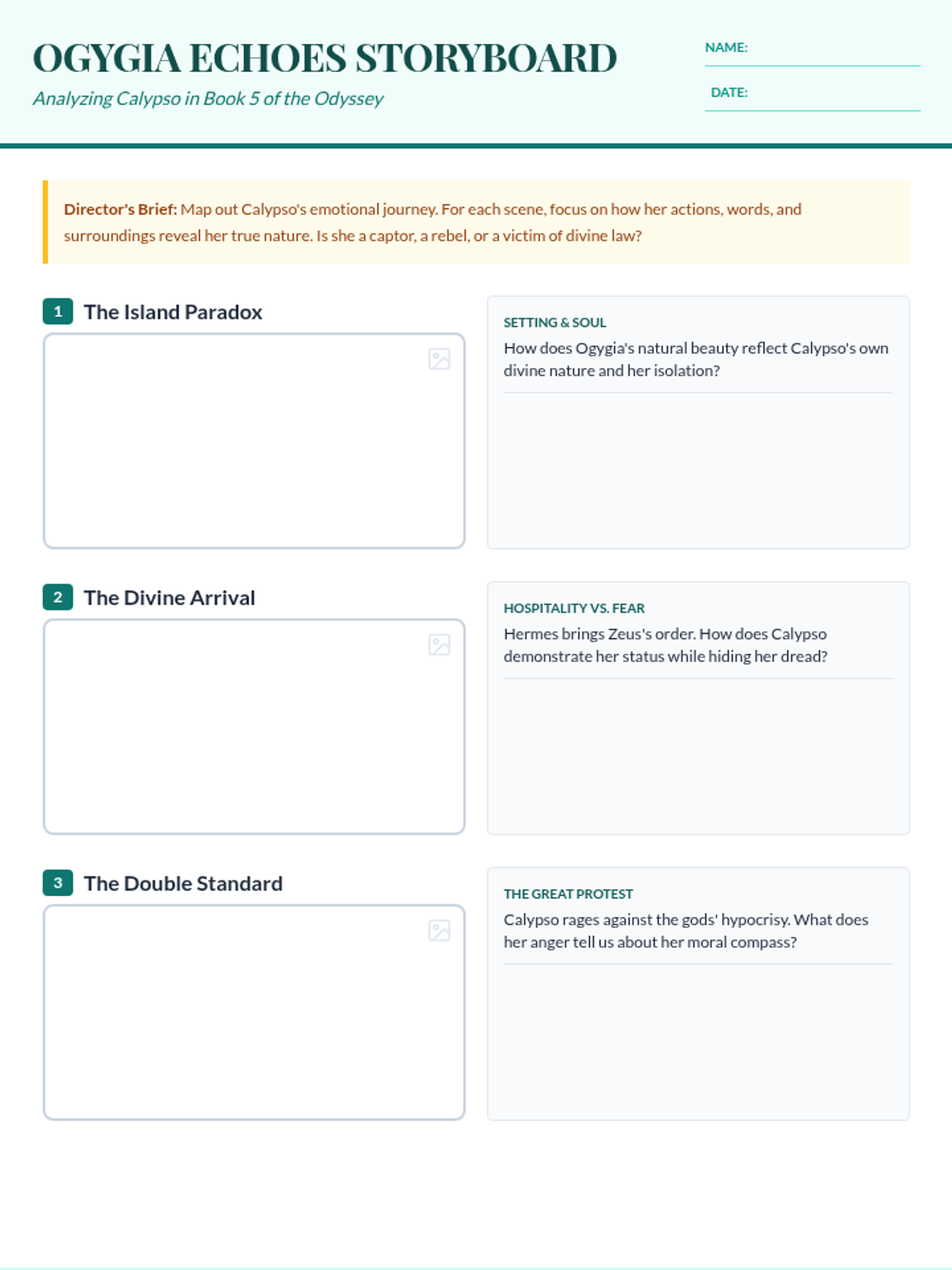
A 2-page graphic storyboard worksheet for students to analyze the characterization of Calypso in Book 5 of the Odyssey through sketching and written reflection.
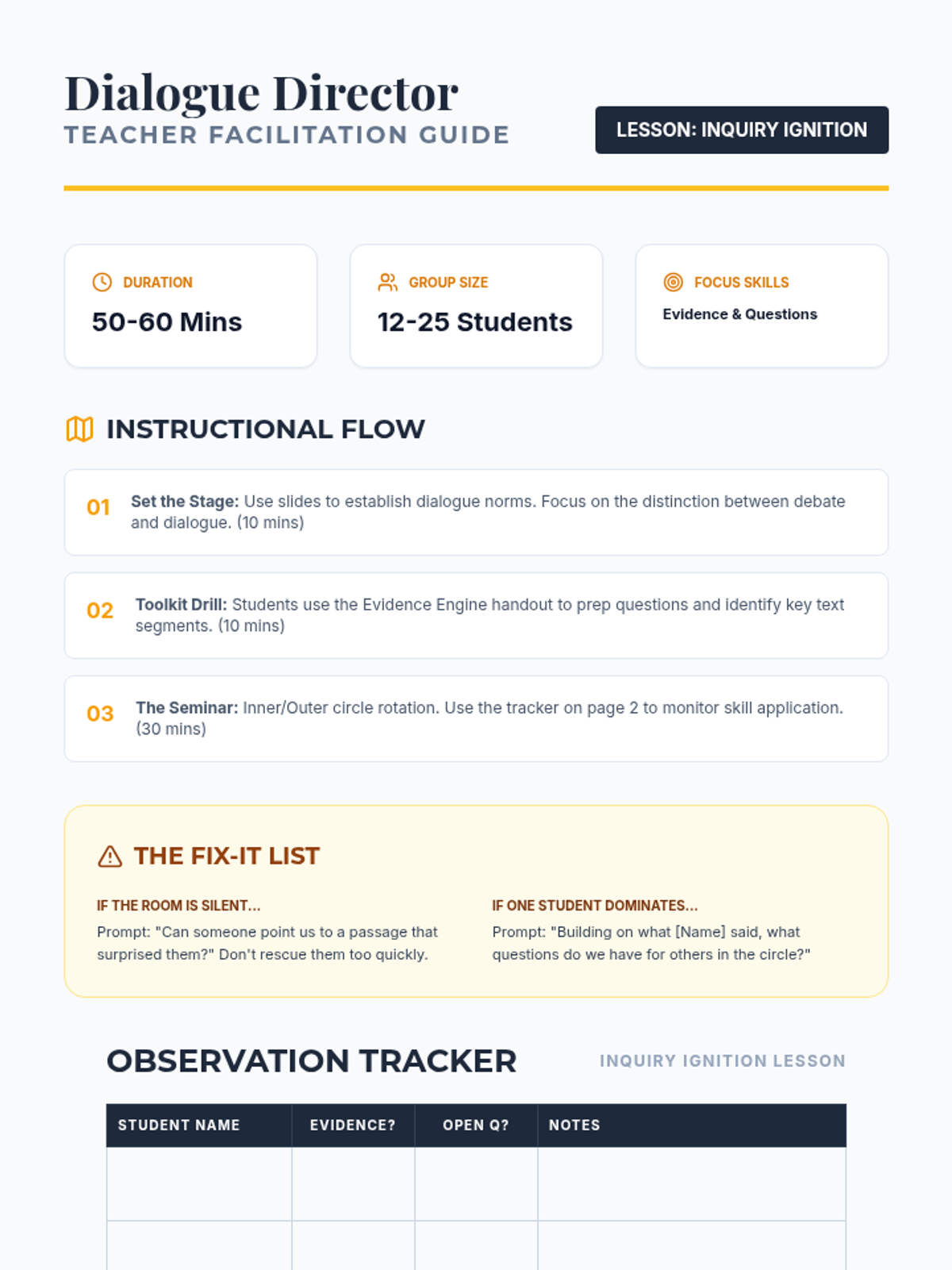
A comprehensive guide for teachers on facilitating the 'Inquiry Ignition' lesson. Includes a suggested instructional flow, troubleshooting tips for common seminar challenges, and an observation tracker to monitor student participation and skill application.
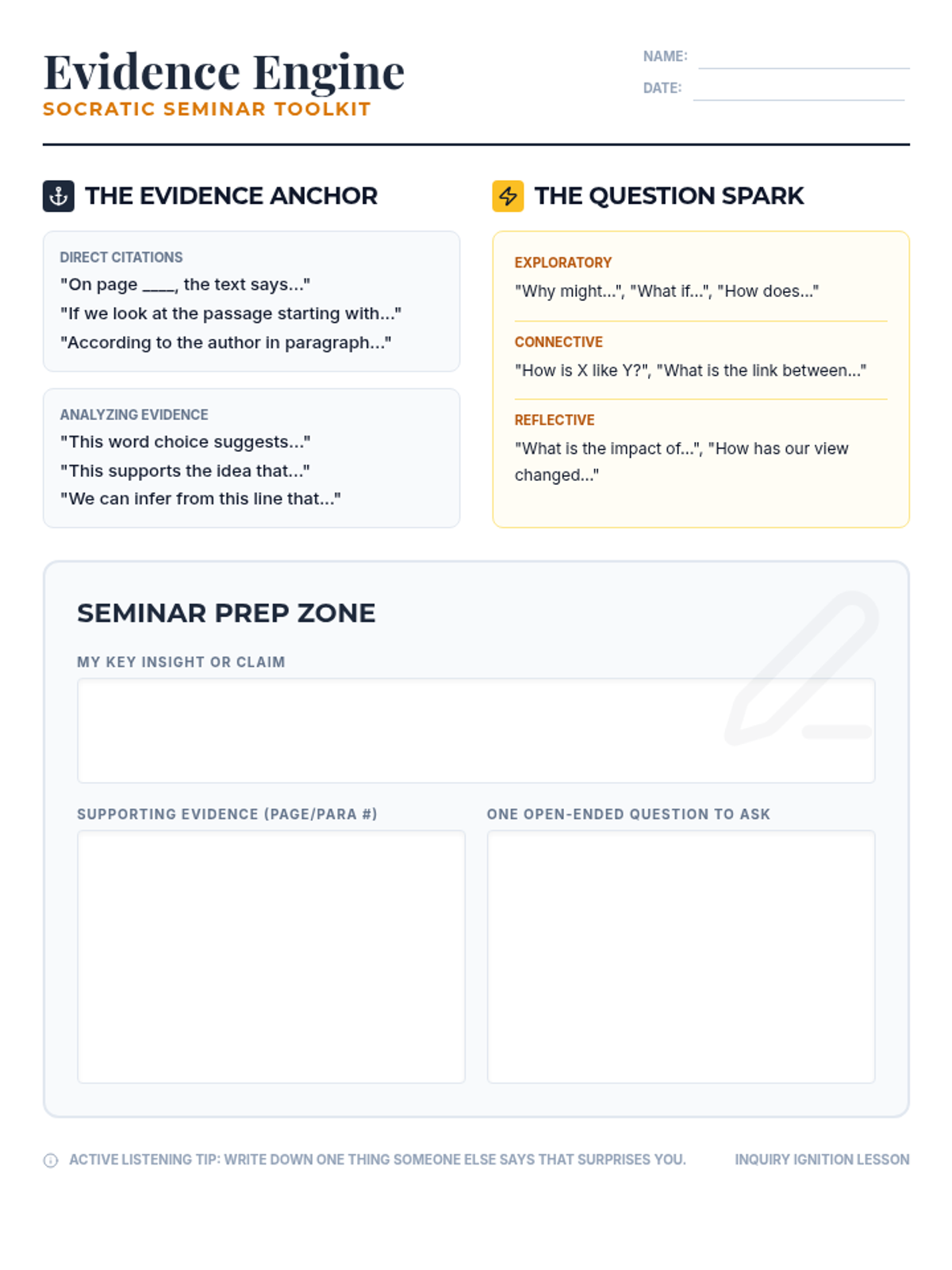
A student handout providing sentence starters for citing textual evidence and stems for crafting open-ended questions. Includes a 'Prep Zone' for students to gather their thoughts before the seminar begins.
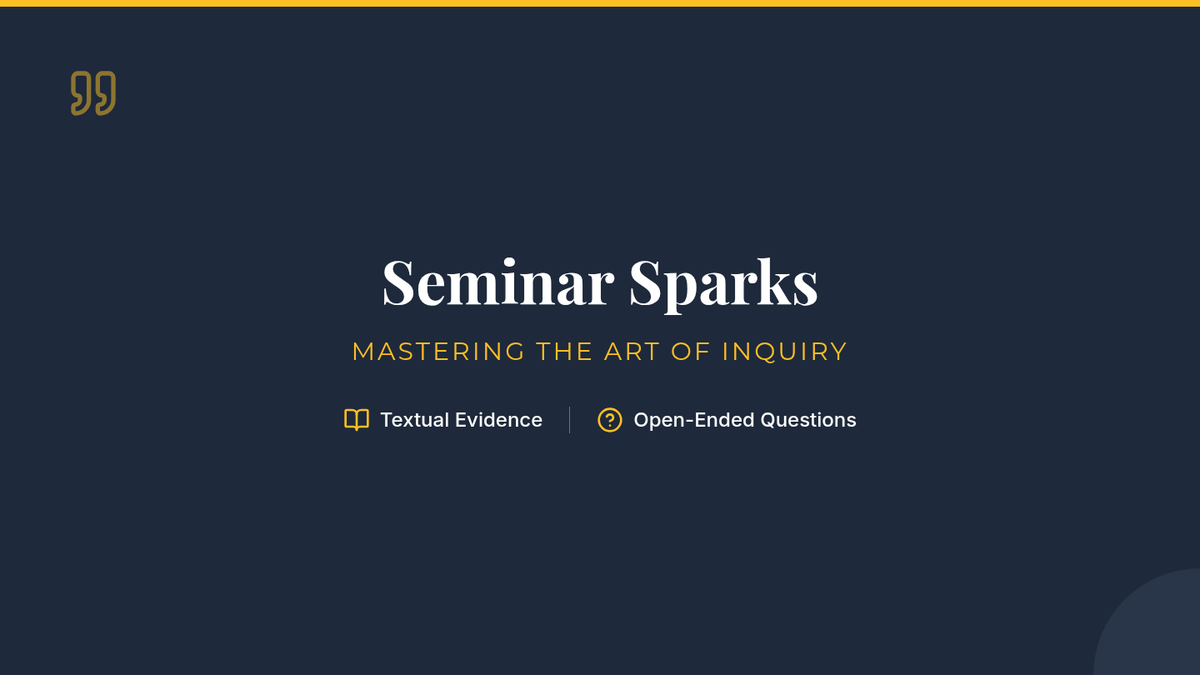
A 7-slide presentation designed to teach students the fundamentals of Socratic Seminars, focusing on the distinction between dialogue and debate, the importance of textual evidence, and the power of open-ended questions.
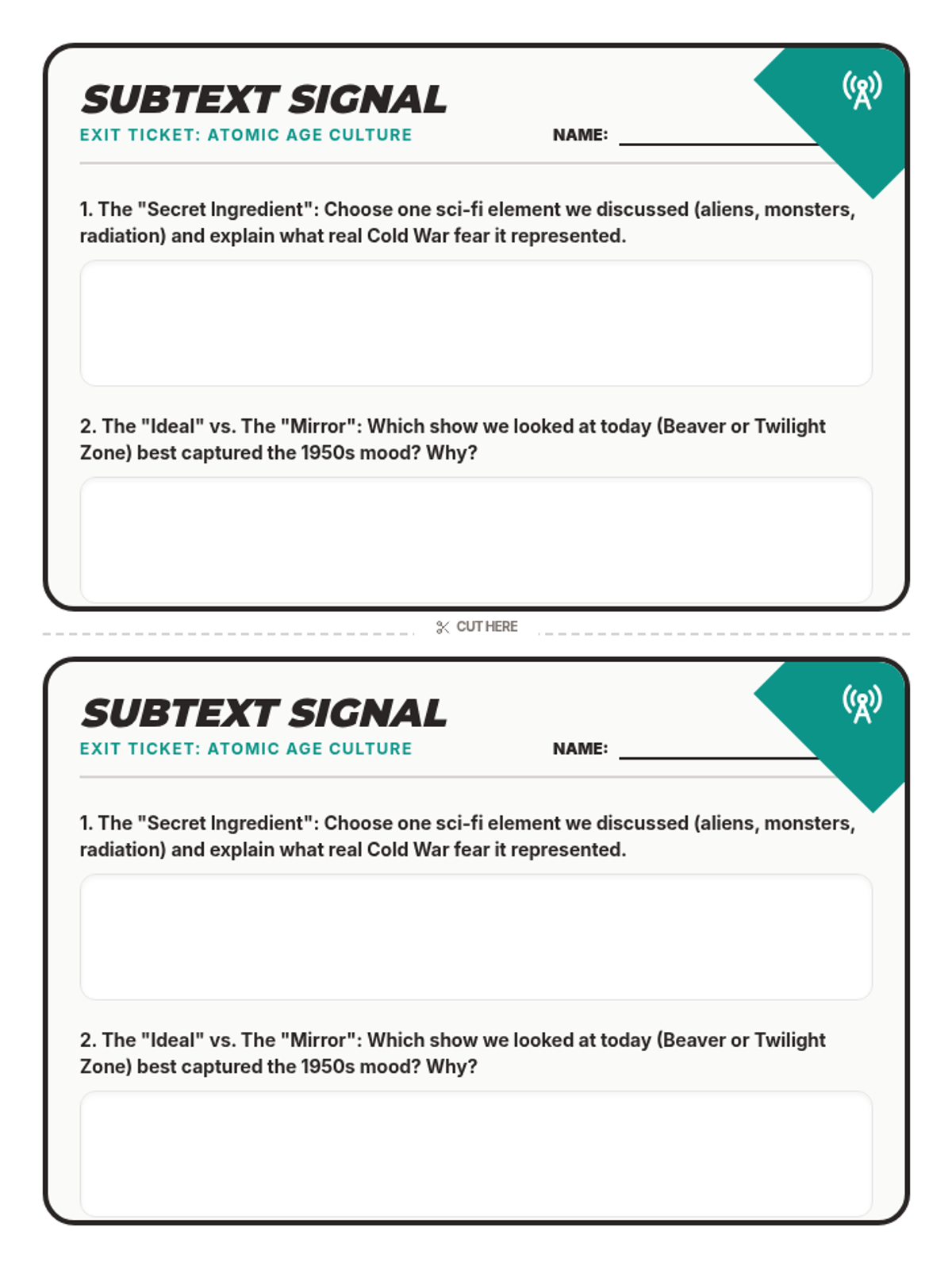
A two-per-page exit ticket for the Atomic Age Culture lesson. It features two short-response questions focusing on sci-fi metaphors and the contrast between the suburban ideal and societal anxieties, designed for quick student reflection. Updated to fix page breaks and increase response area size.
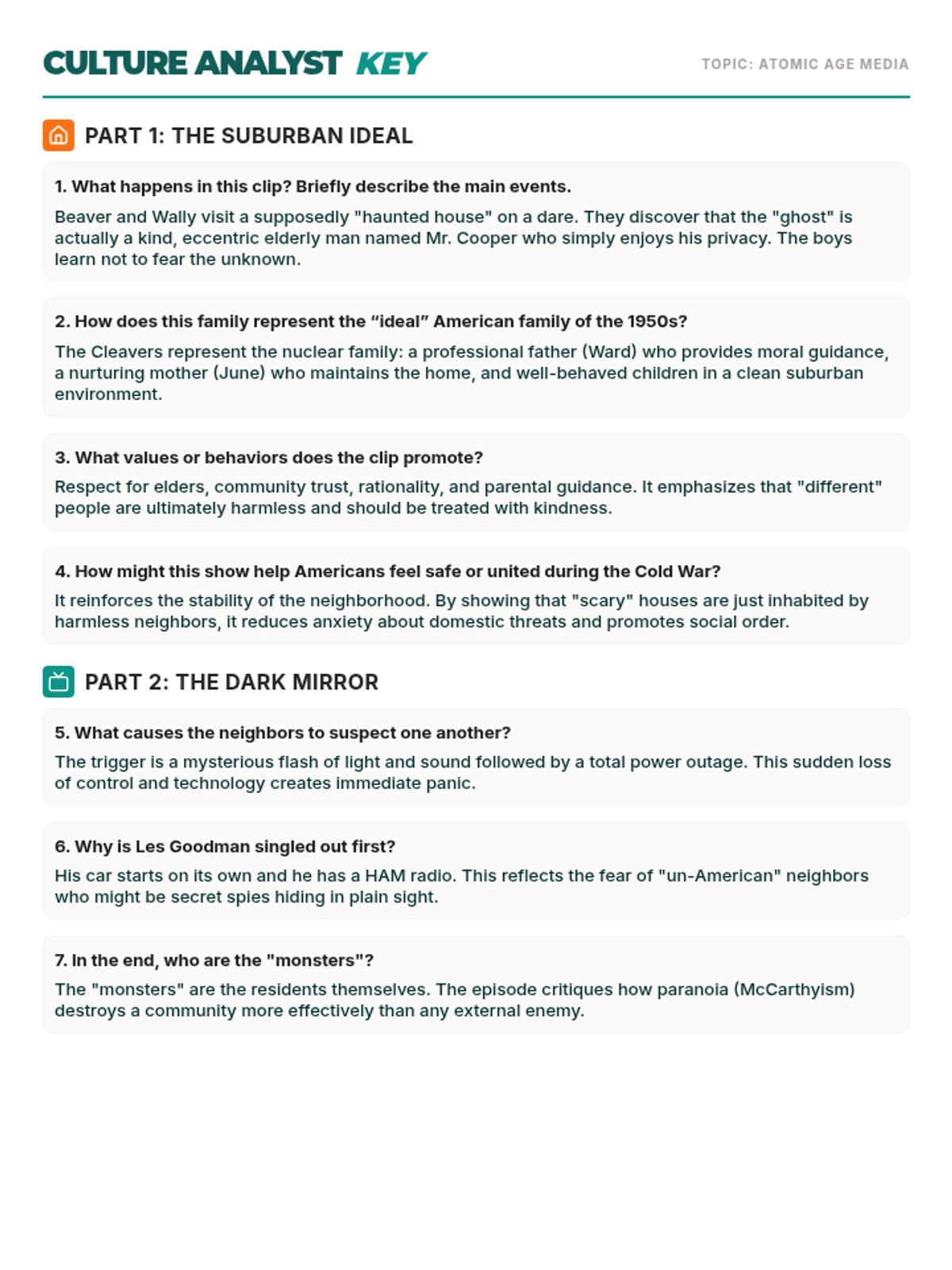
A comprehensive teacher answer key for the Culture Analyst Worksheet. It provides detailed sample responses for the media analysis questions, the correct matches for the metaphor activity, and grading criteria for the final student reflection. Updated to fix page breaks and optimize layout for 2 pages.
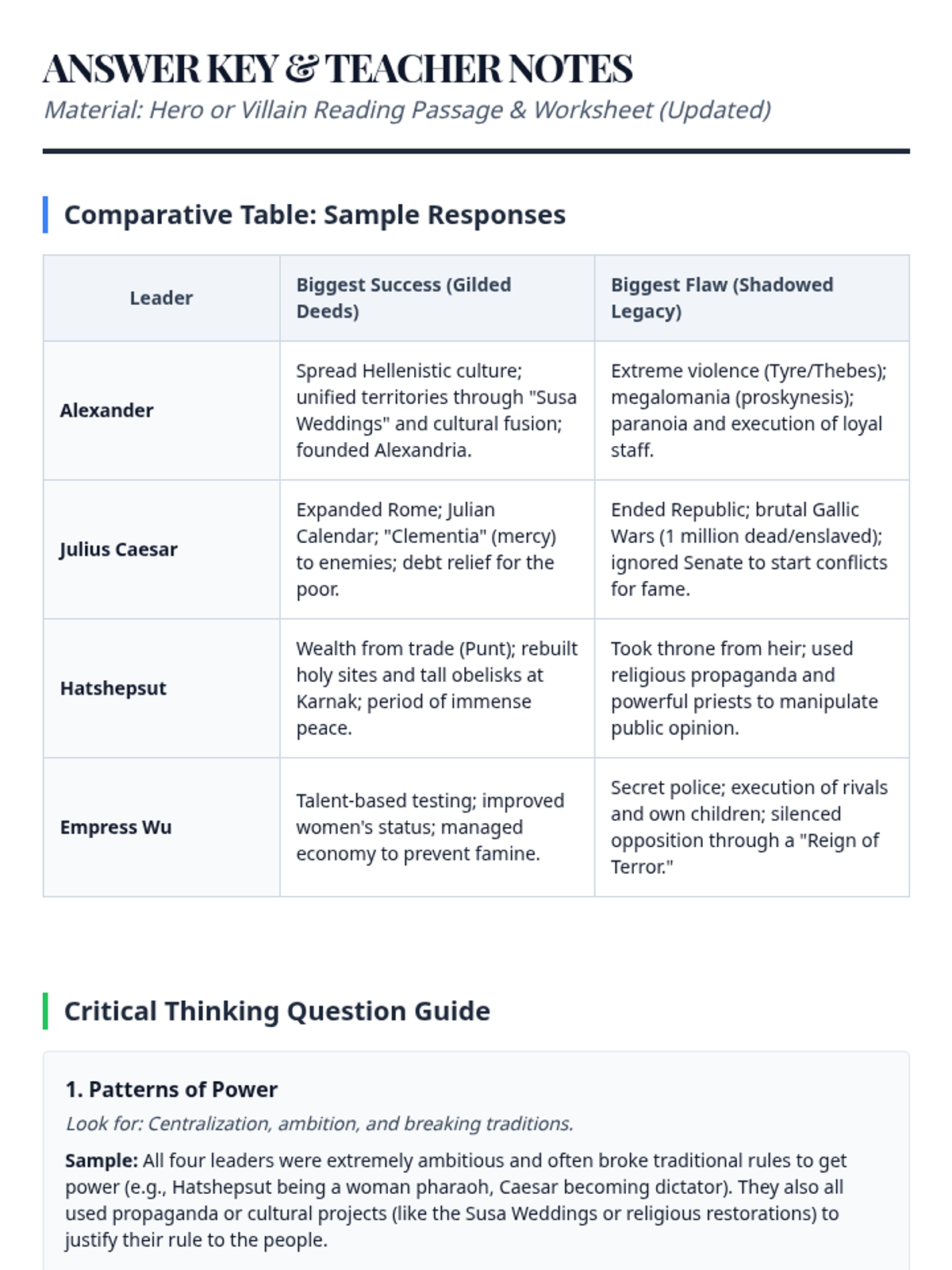
An updated answer key and teacher guide for the "Hero or Villain" worksheet, including sample student responses that incorporate the newly added historical details.
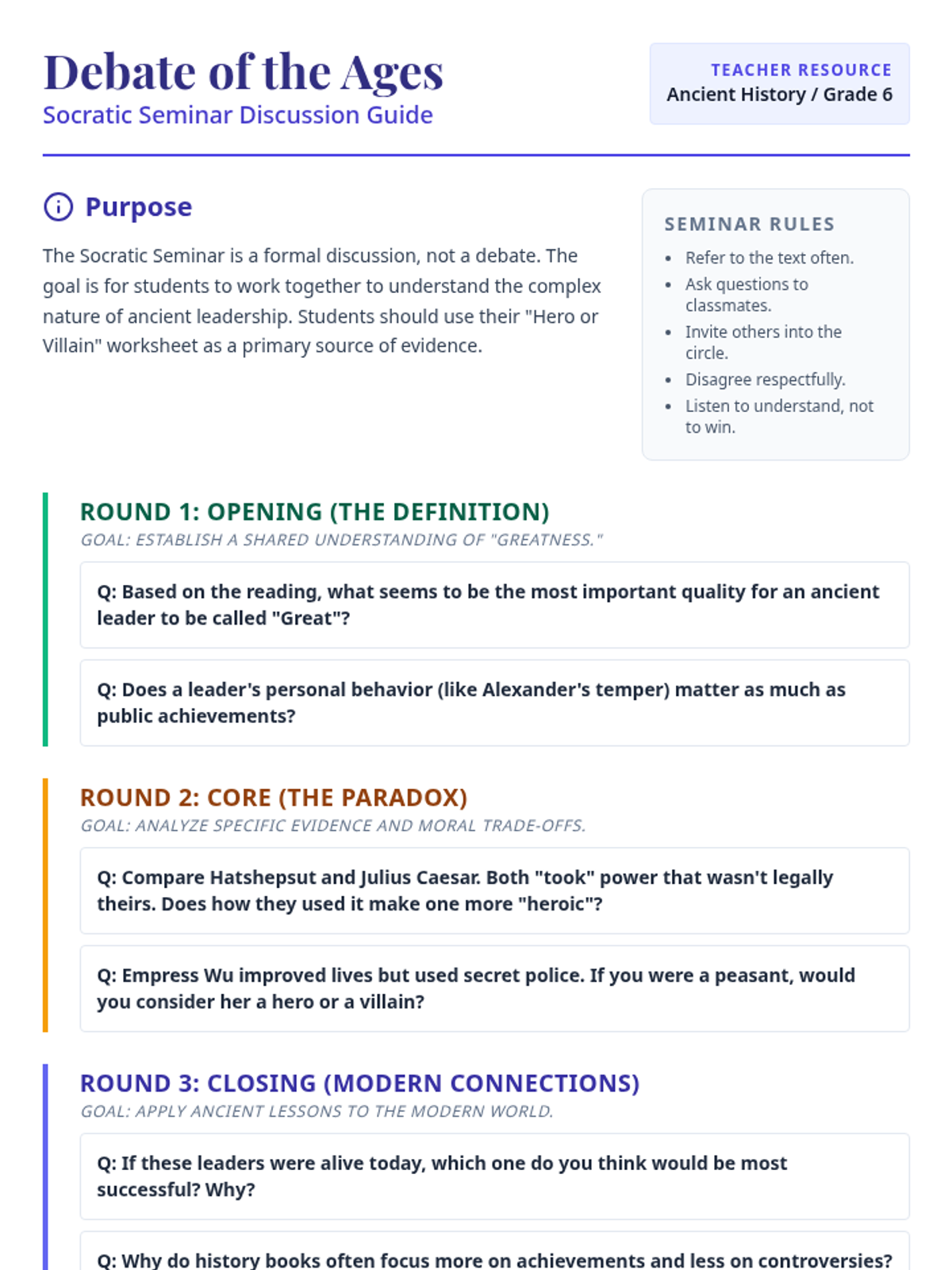
A teacher's guide for a Socratic Seminar about ancient leaders, including discussion questions, seminar rules, and an observation checklist.
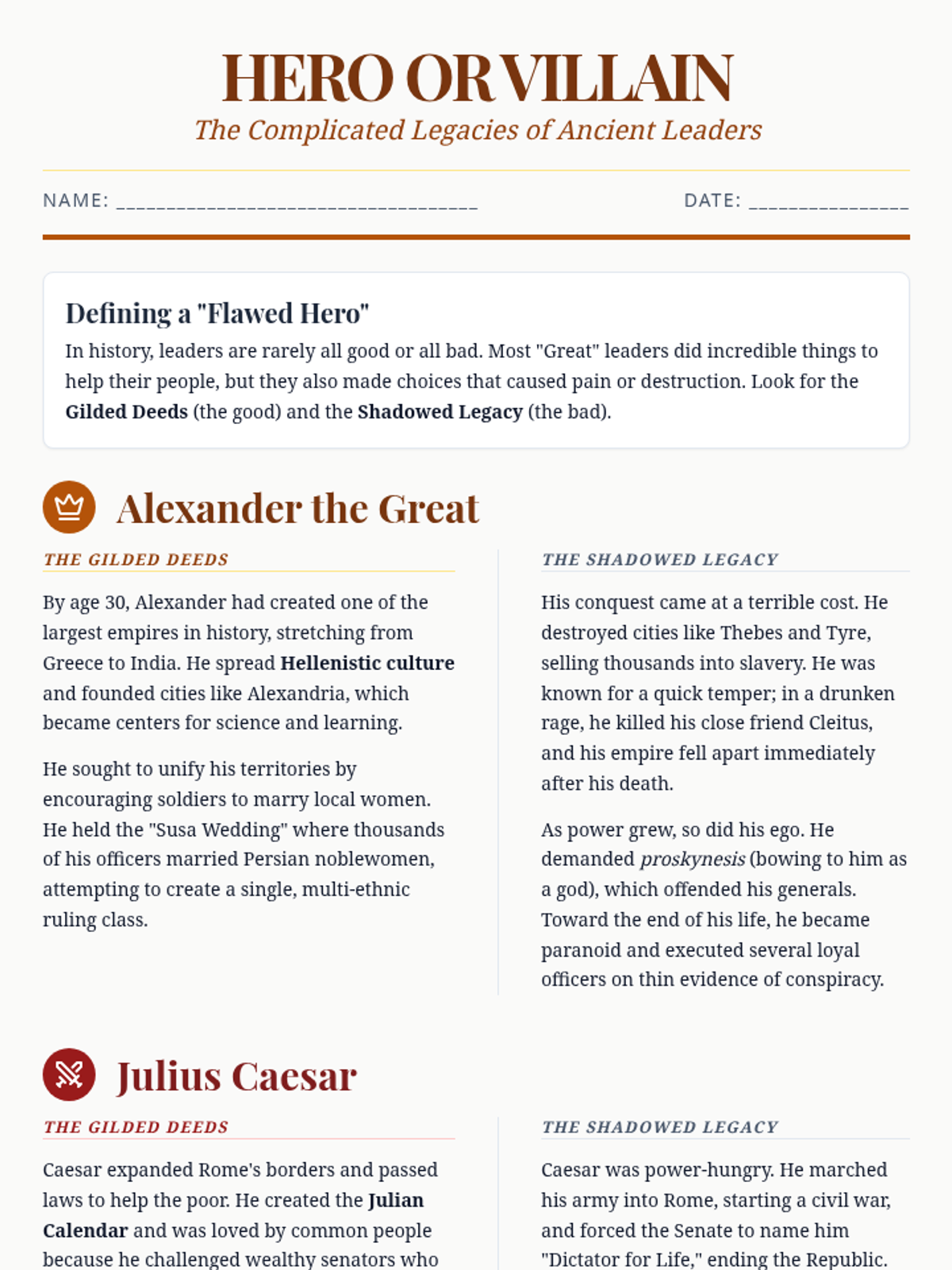
An expanded reading passage and analysis worksheet featuring four ancient leaders: Alexander the Great, Julius Caesar, Hatshepsut, and Empress Wu. It explores their achievements versus their controversial actions with added historical detail.
A visual review presentation for the Latin America unit. Covers physical geography, ancient civilizations, the Columbian Exchange, and modern challenges such as urbanization and the tourism dilemma. Includes knowledge check questions and practice quiz slides.
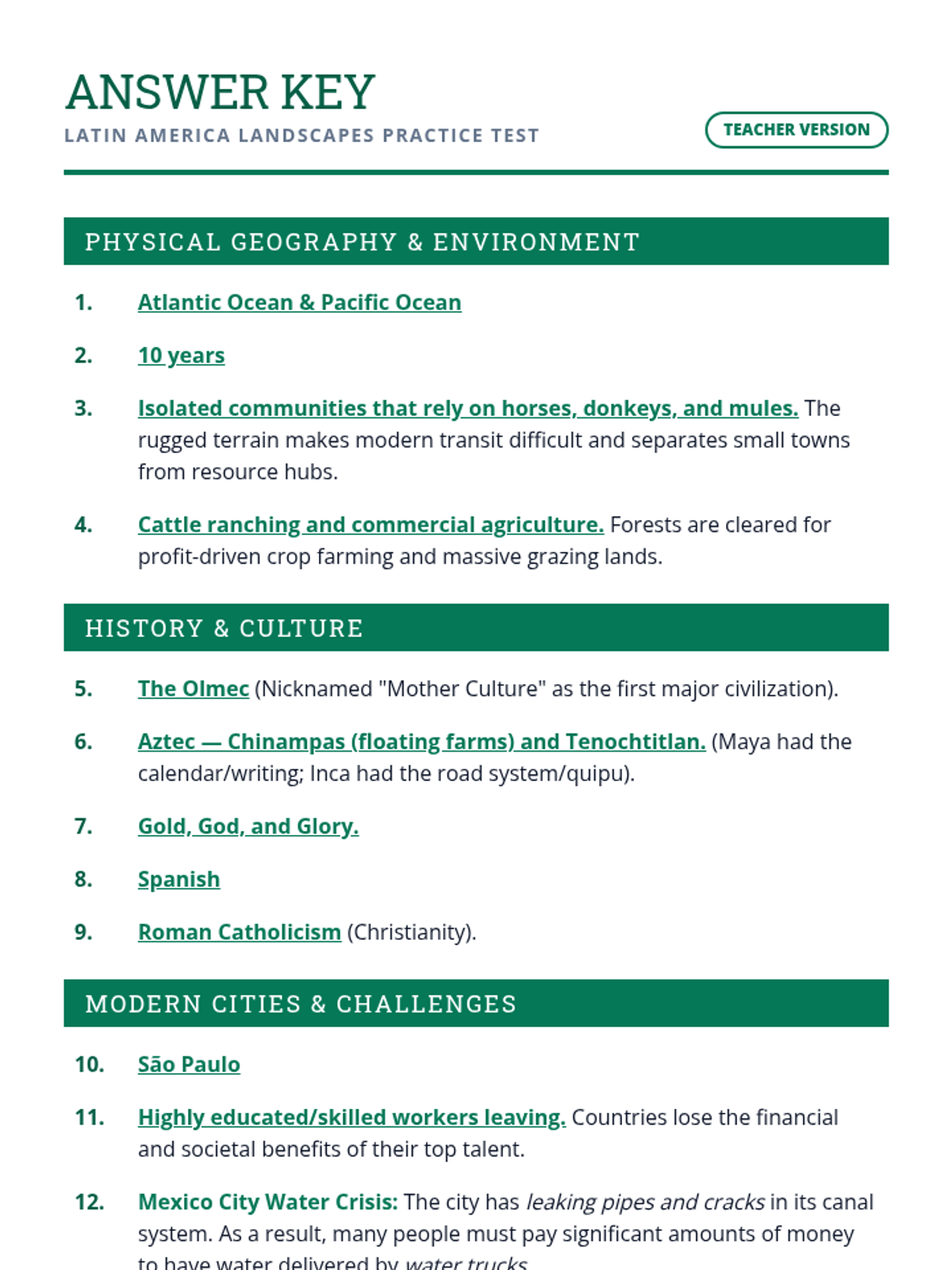
Teacher answer key for the Latin America Landscapes Practice Test. Provides correct answers and key explanatory notes for physical geography, history, and modern challenges.
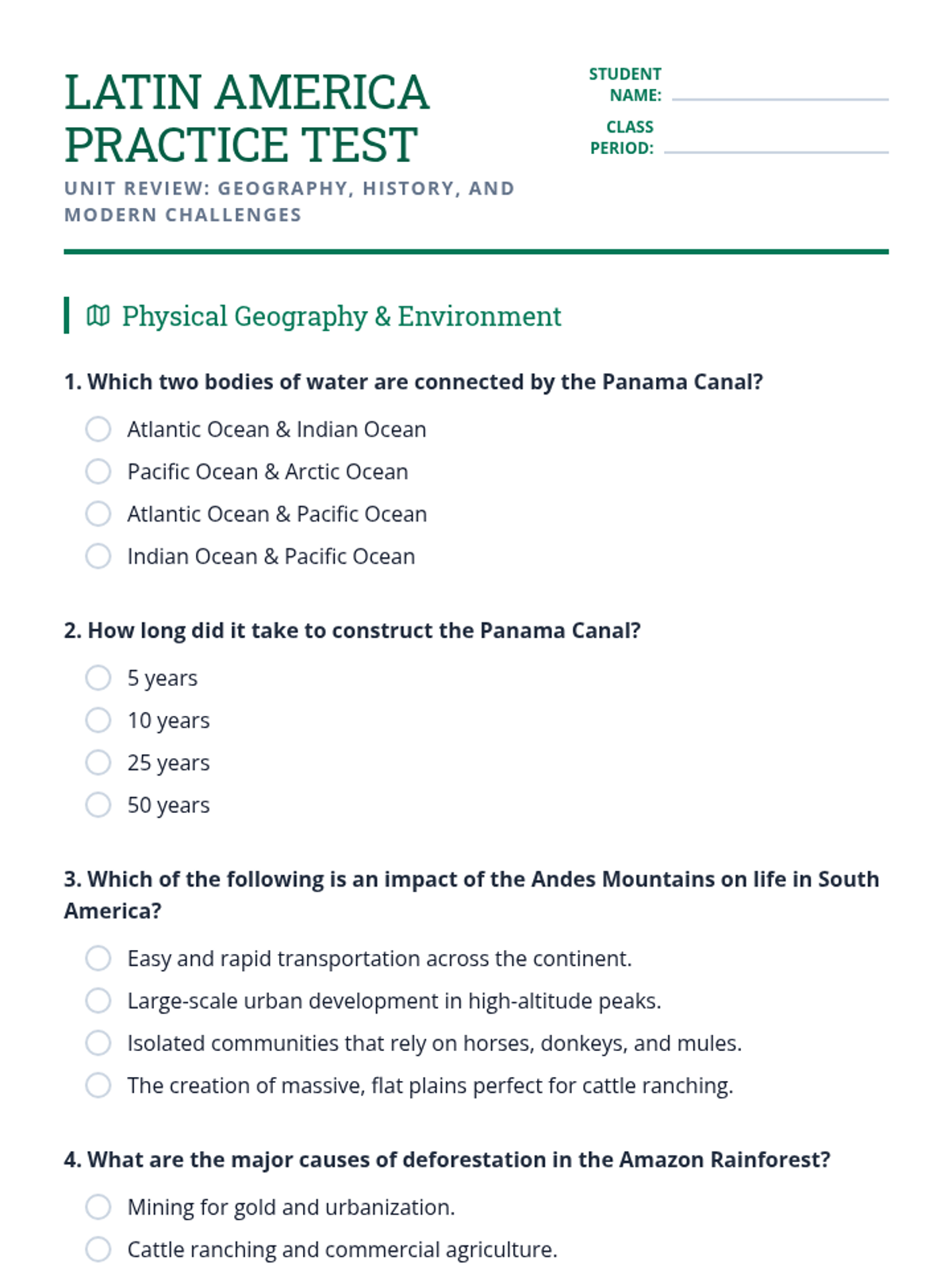
A practice test covering the physical geography, historical civilizations, and modern socioeconomic challenges of Latin America. Includes multiple-choice questions and short-response areas for student work.