Updated worksheet with improved page breaks, larger student work areas for the Triple Bottom Line definitions, and a expanded reflection section.
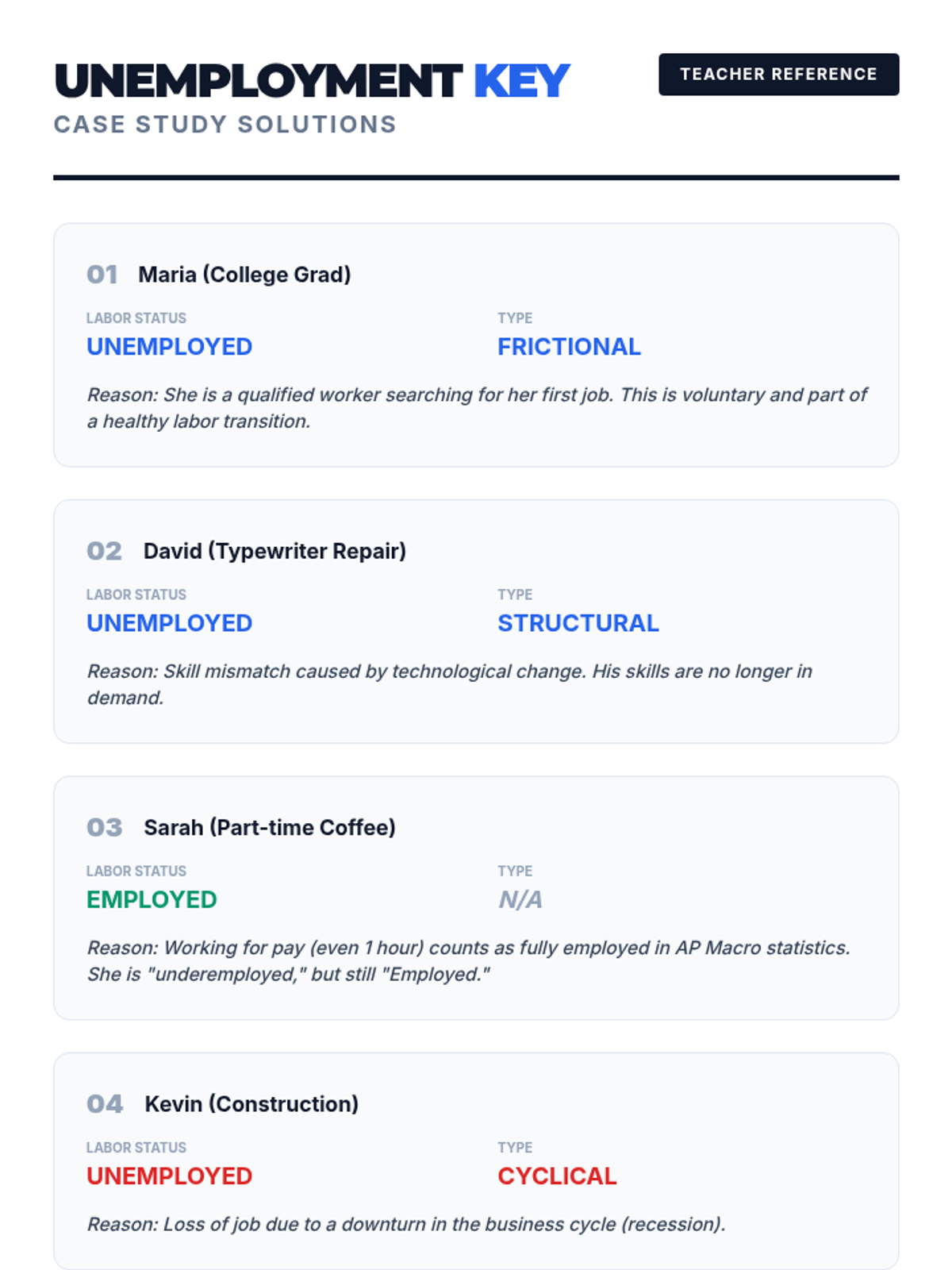
Answer key for the Unemployment Scenarios Worksheet, providing categorized answers and detailed economic reasoning for each case study.
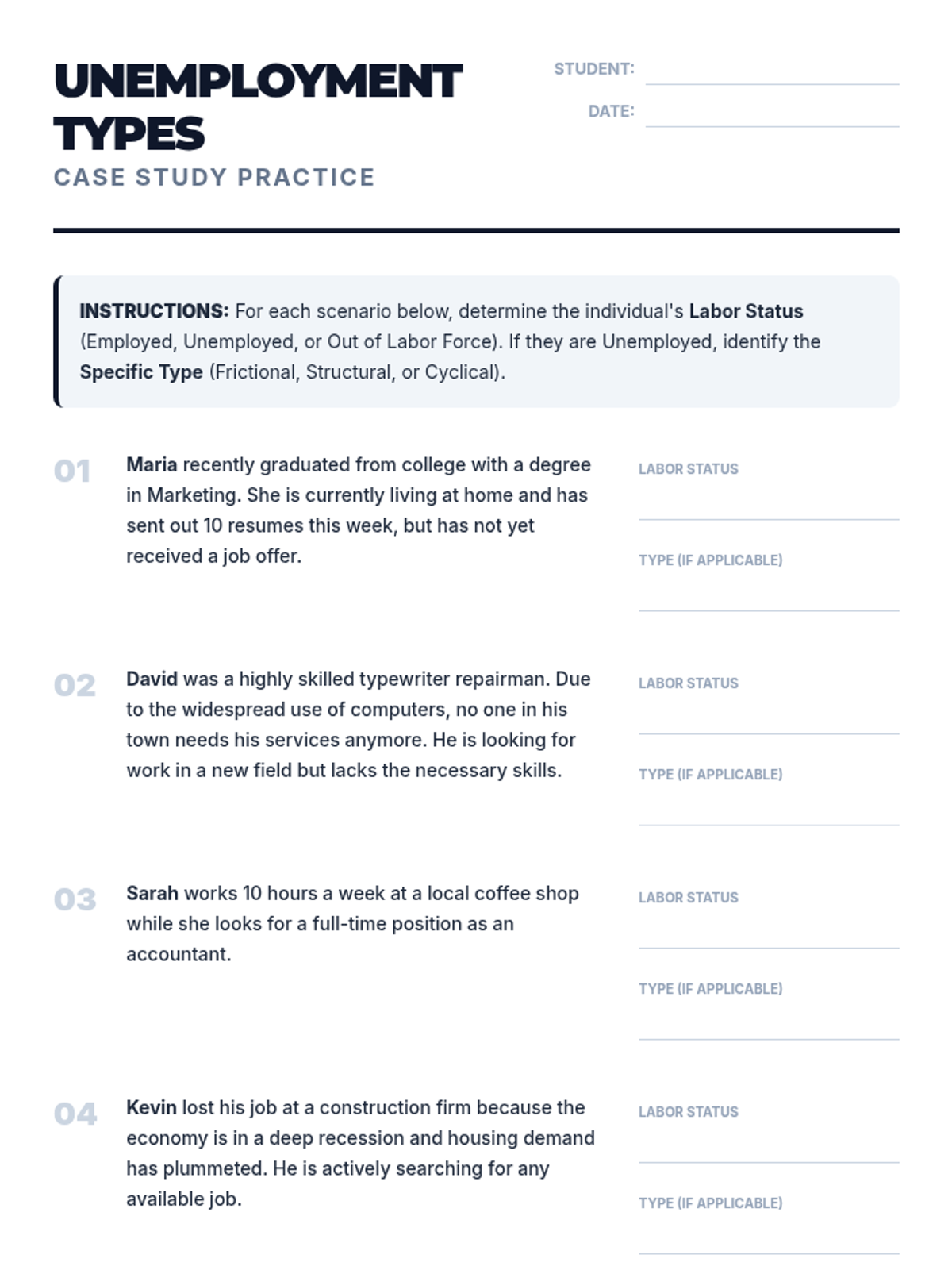
A worksheet containing six real-world scenarios where students must categorize individuals into employment status (Employed, Unemployed, OLF) and identify specific types of unemployment.
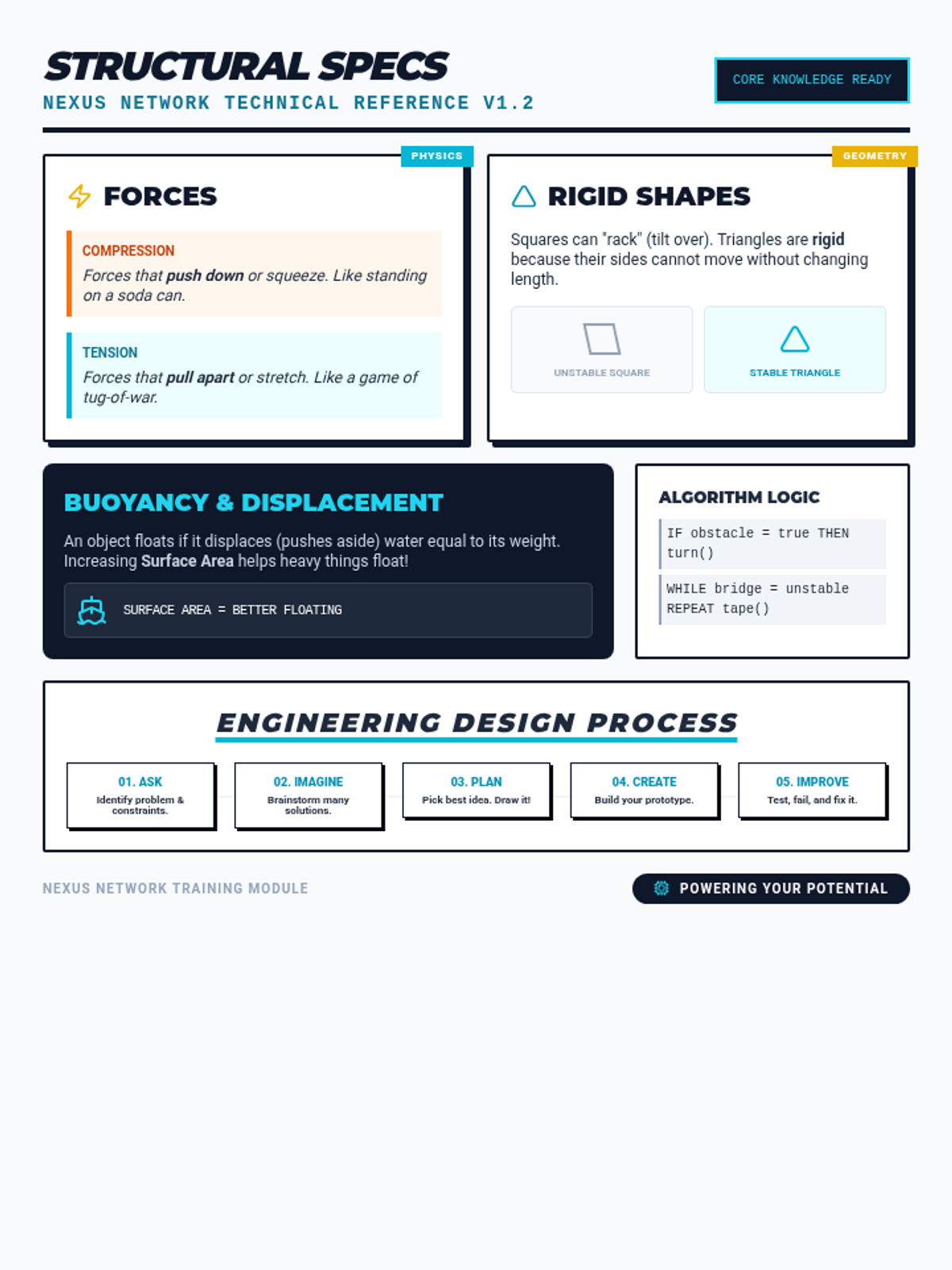
A technical reference sheet for students that explains core STEM concepts like compression, tension, structural shapes (triangles), buoyancy, and algorithms, as well as the Engineering Design Process.
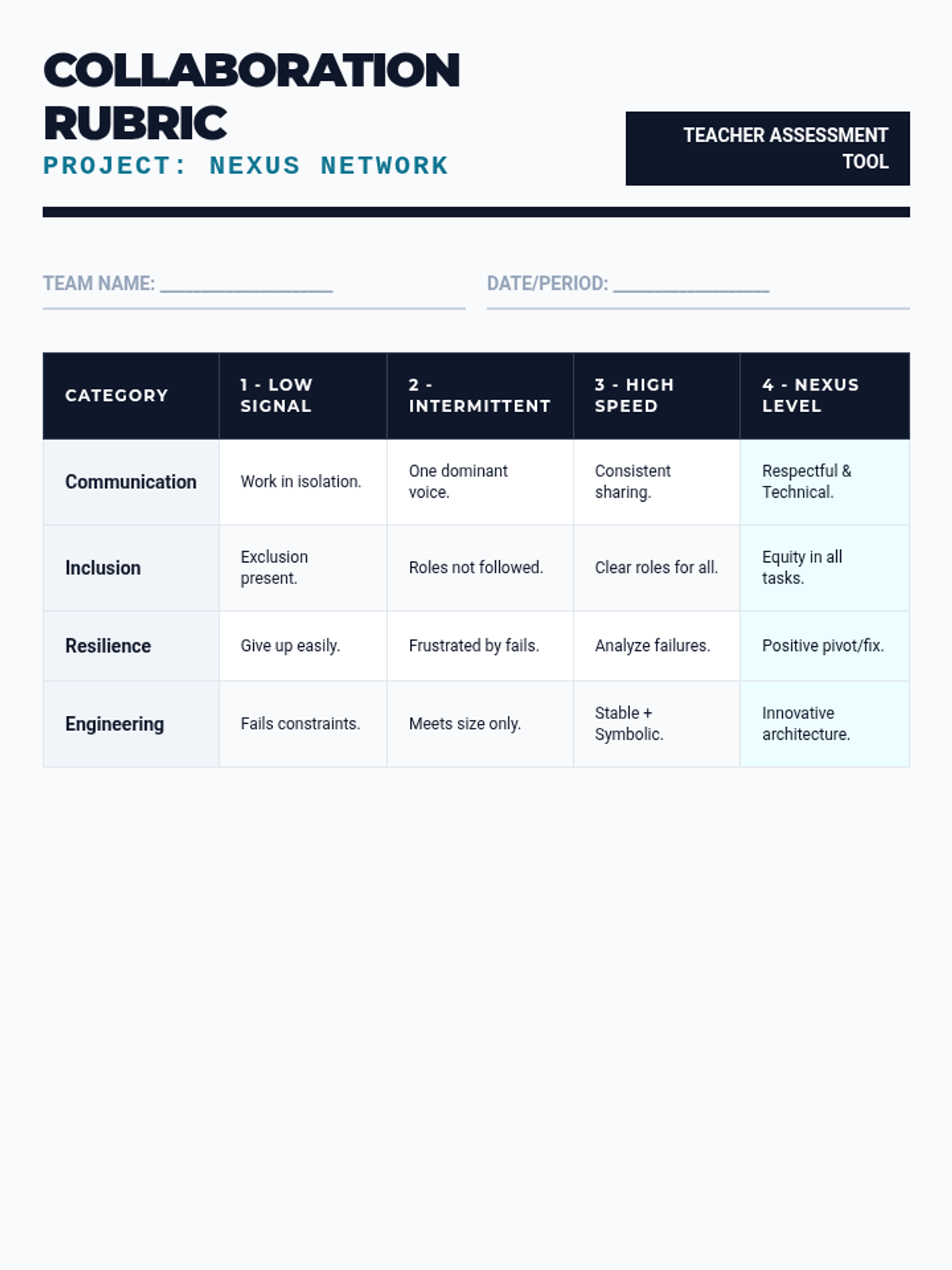
A teacher-facing assessment rubric for the Nexus Network lesson, evaluating teams on communication, inclusion, resilience, and engineering design on a 4-point scale.
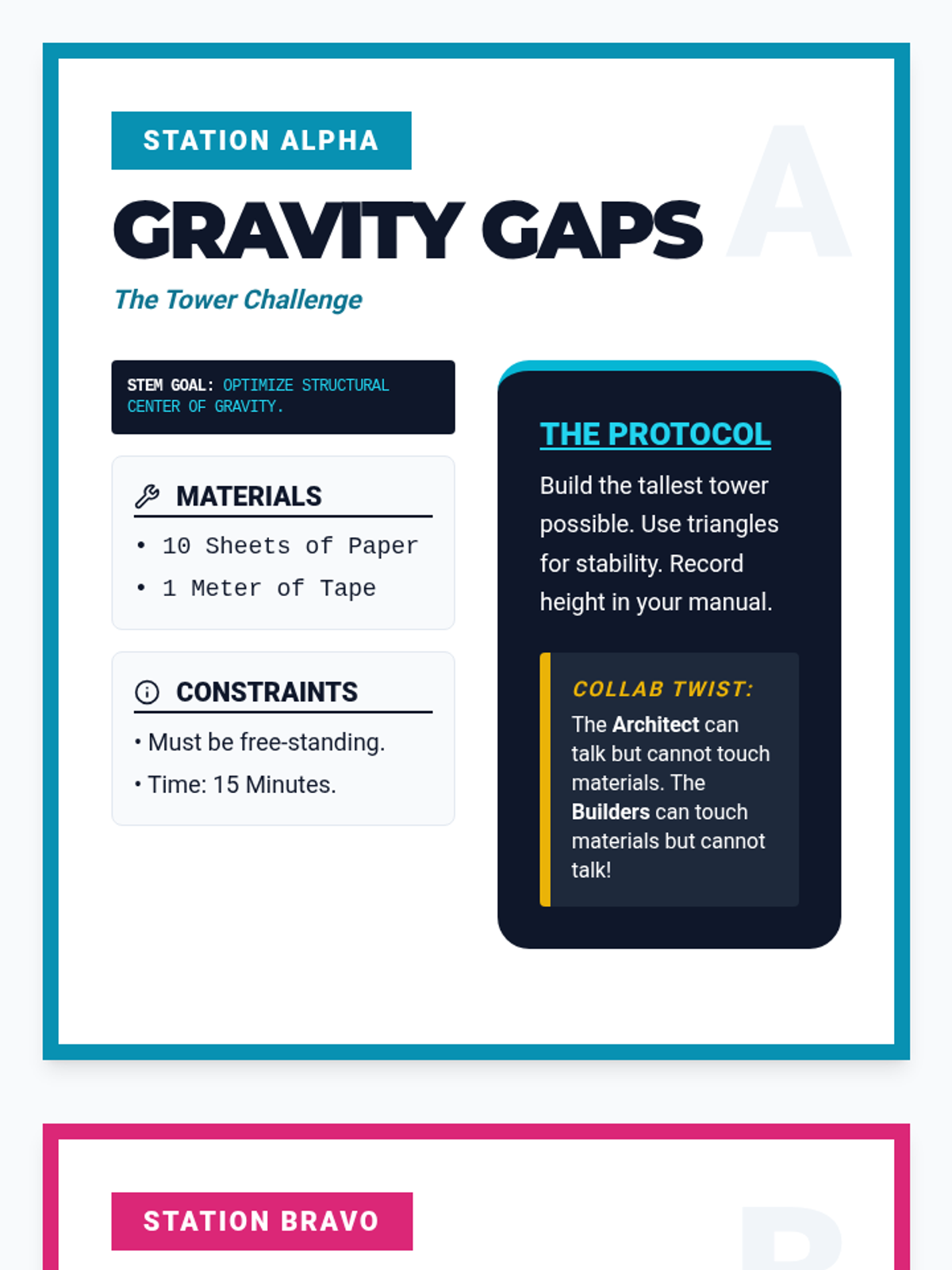
Printable station cards for the Nexus Network lesson, featuring large text and clear instructions for three collaborative STEM challenges with explicit STEM goals.
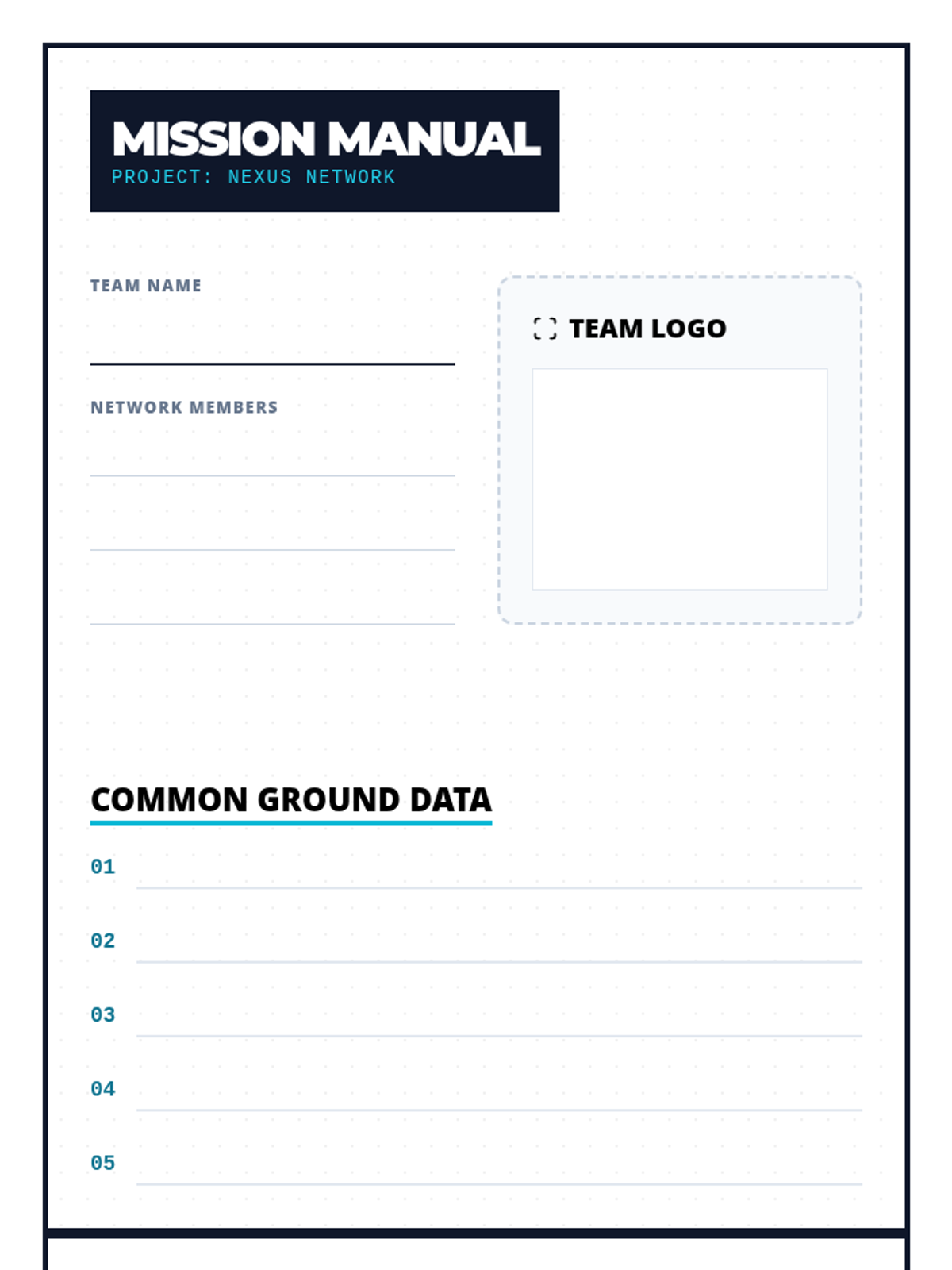
A student activity packet for the Nexus Network lesson, including team intake, station logs with data tables, bridge blueprinting space, a material marketplace for SEL credits, and a final reflection section.
An interactive slide deck for the Nexus Network lesson, featuring big text, clear visual cues, and specific prompts for icebreakers, stations, and the main bridge challenge.
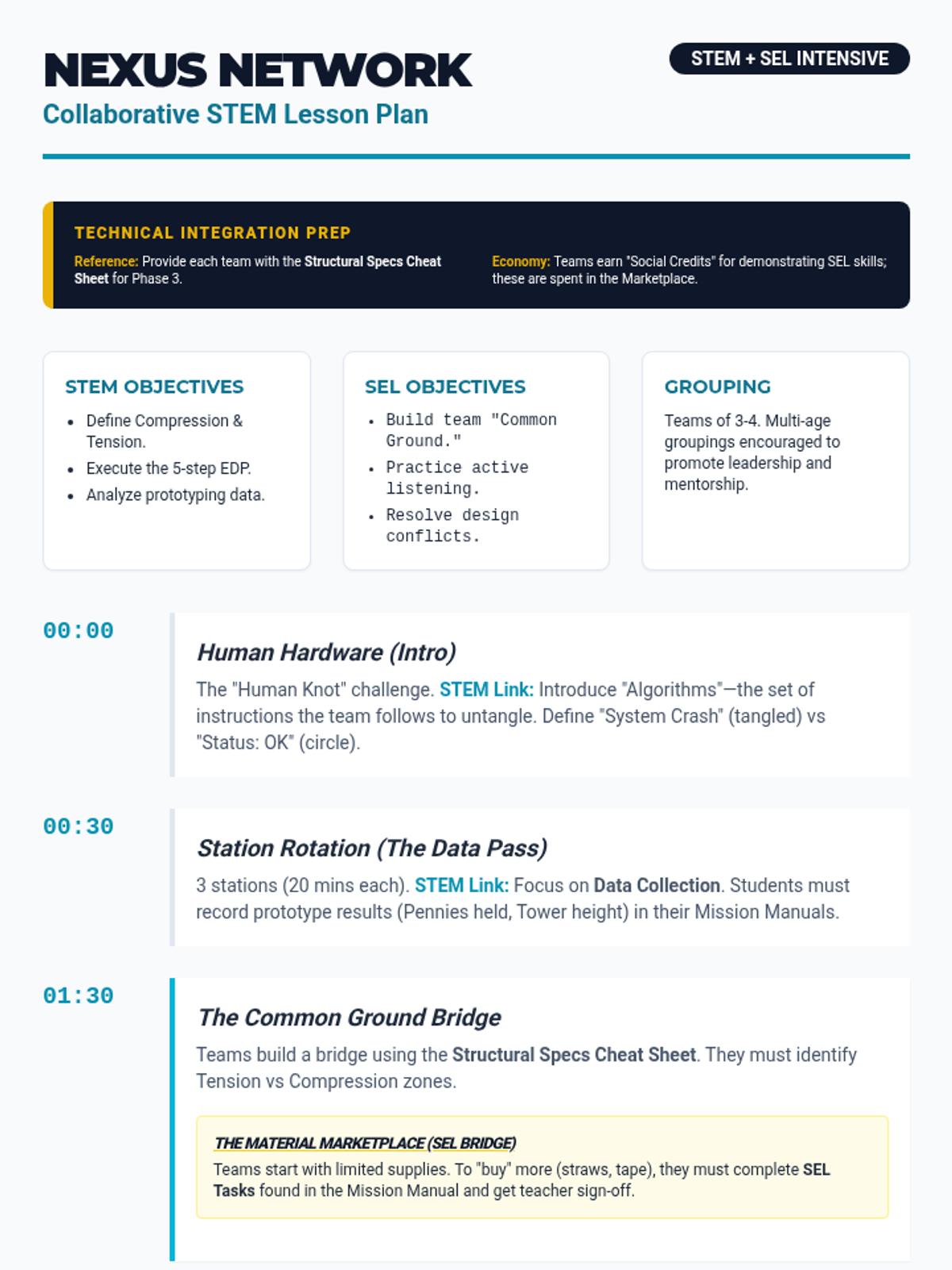
A comprehensive lesson plan for a 3-hour STEM collaboration event, featuring a detailed timeline, differentiation notes for elementary and middle school, and a structured engineering challenge with integrated SEL marketplace concepts.
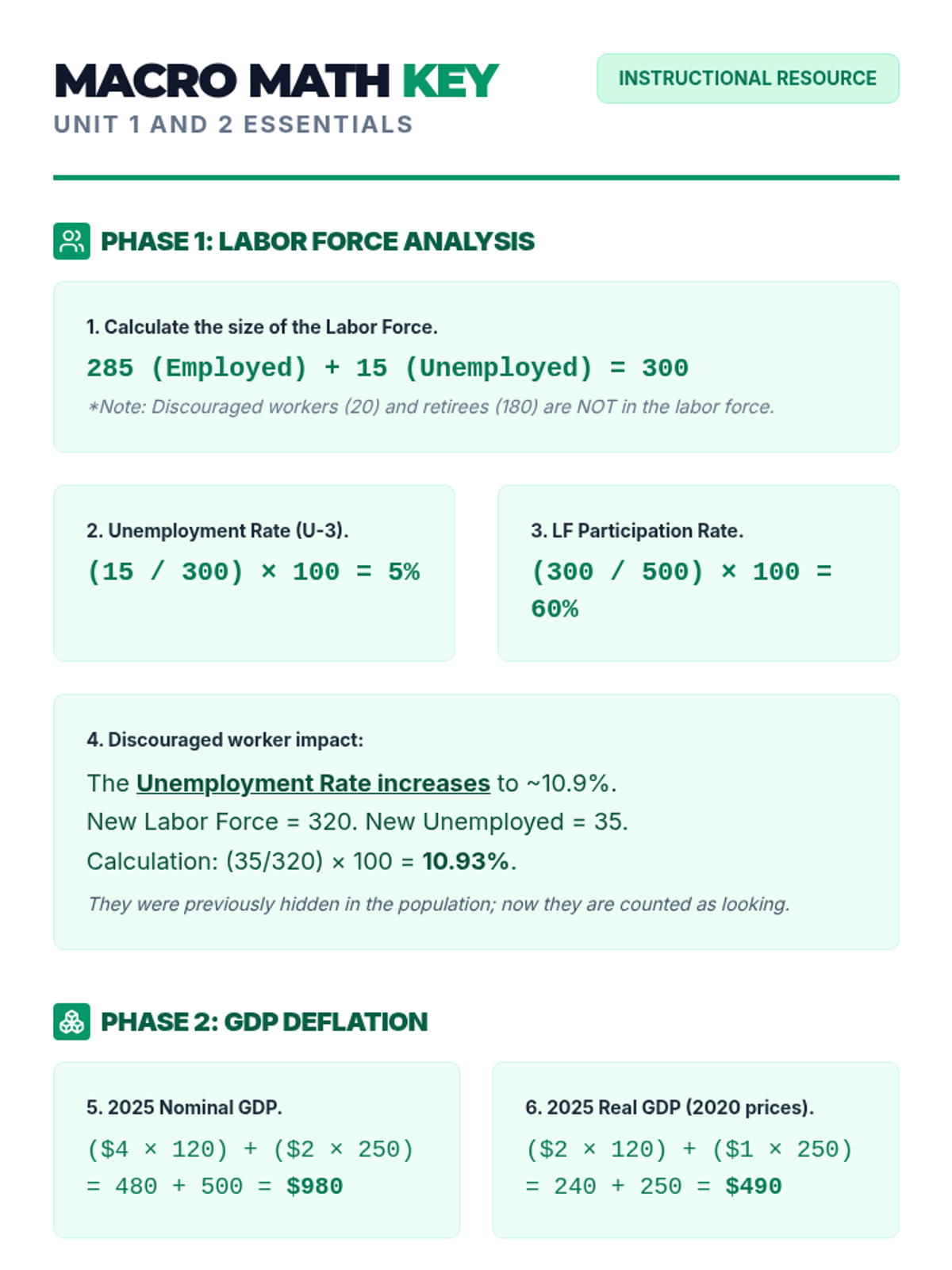
Teacher answer key for the Macro Math Worksheet, providing step-by-step solutions for unemployment, GDP, and CPI calculations.
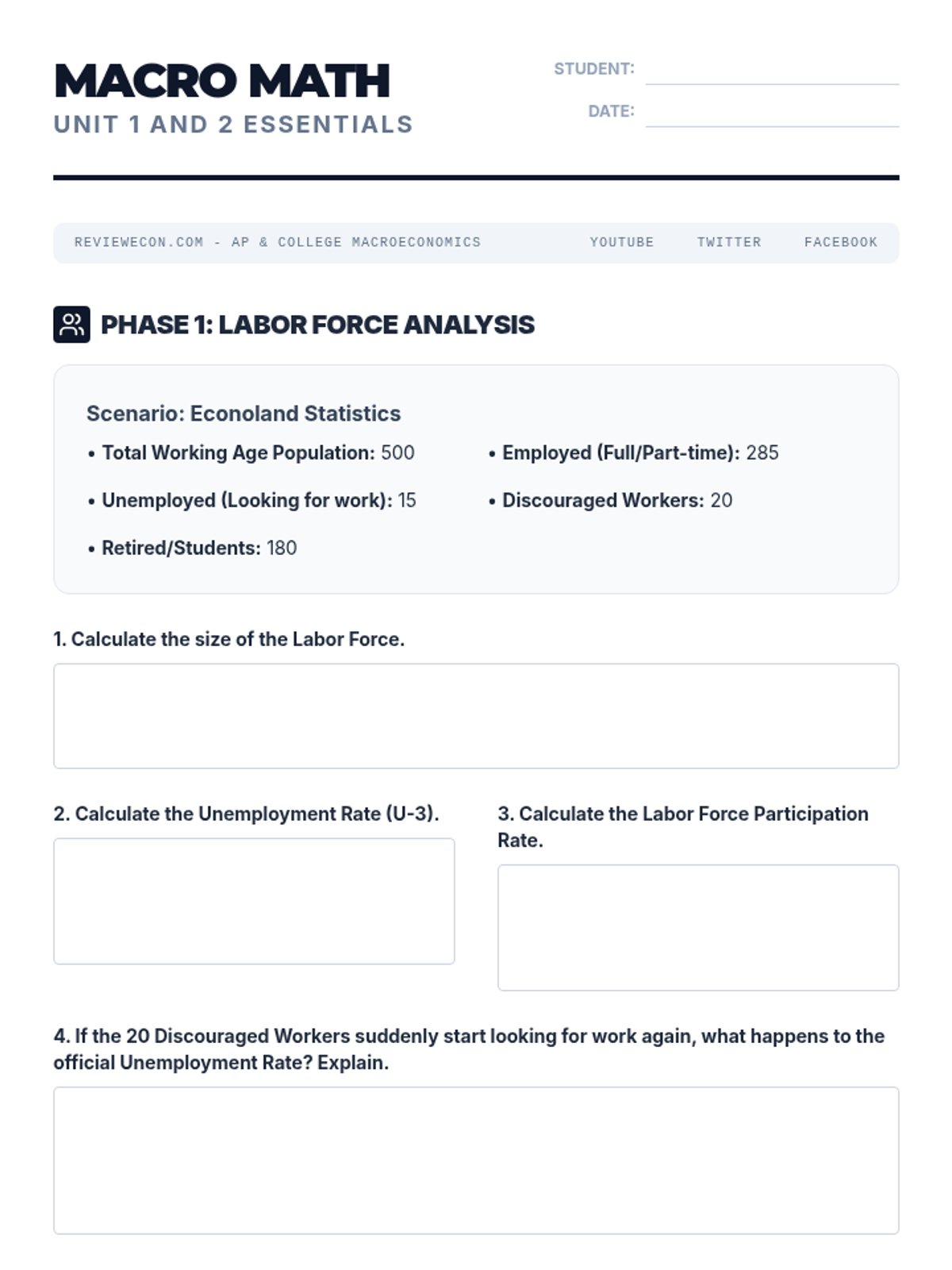
A student practice worksheet focused on key AP Economics calculations: unemployment rate, labor force participation, Nominal/Real GDP with deflators, and CPI/Inflation rates.
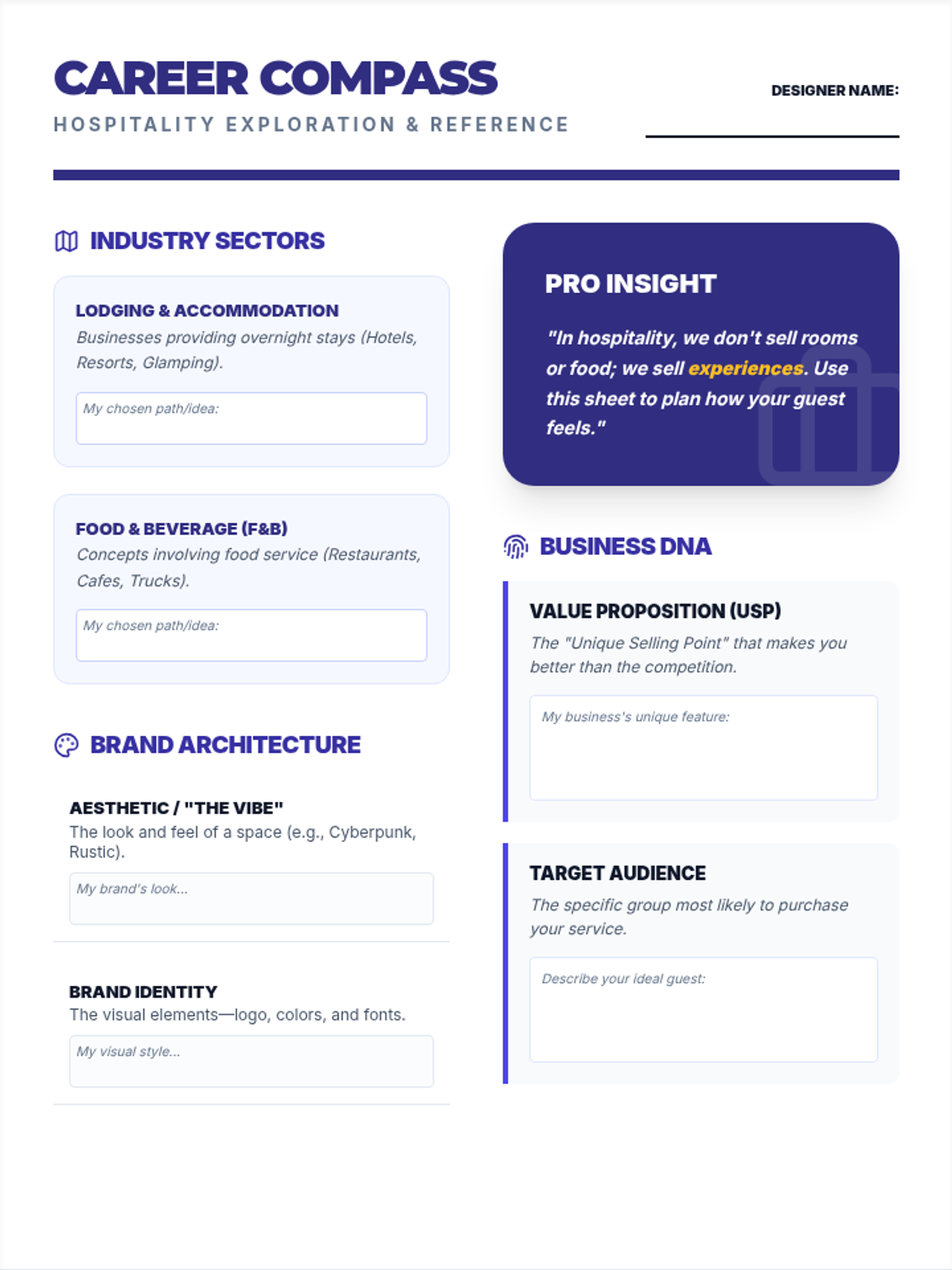
A two-page interactive reference sheet and application organizer for high school hospitality students. It defines key industry sectors, career roles, and operational terminology while providing fillable work areas for students to apply these concepts to their specific project designs.