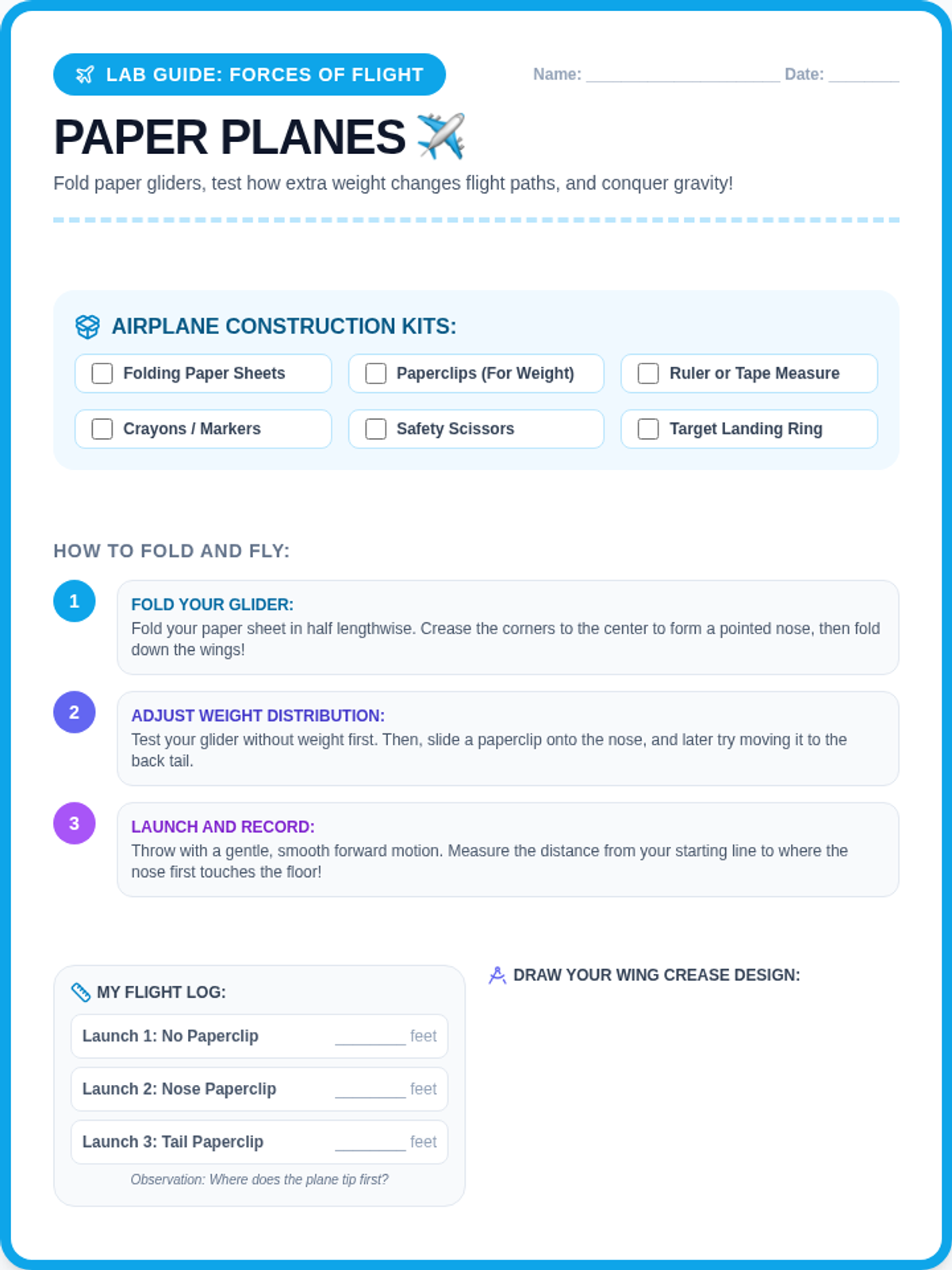
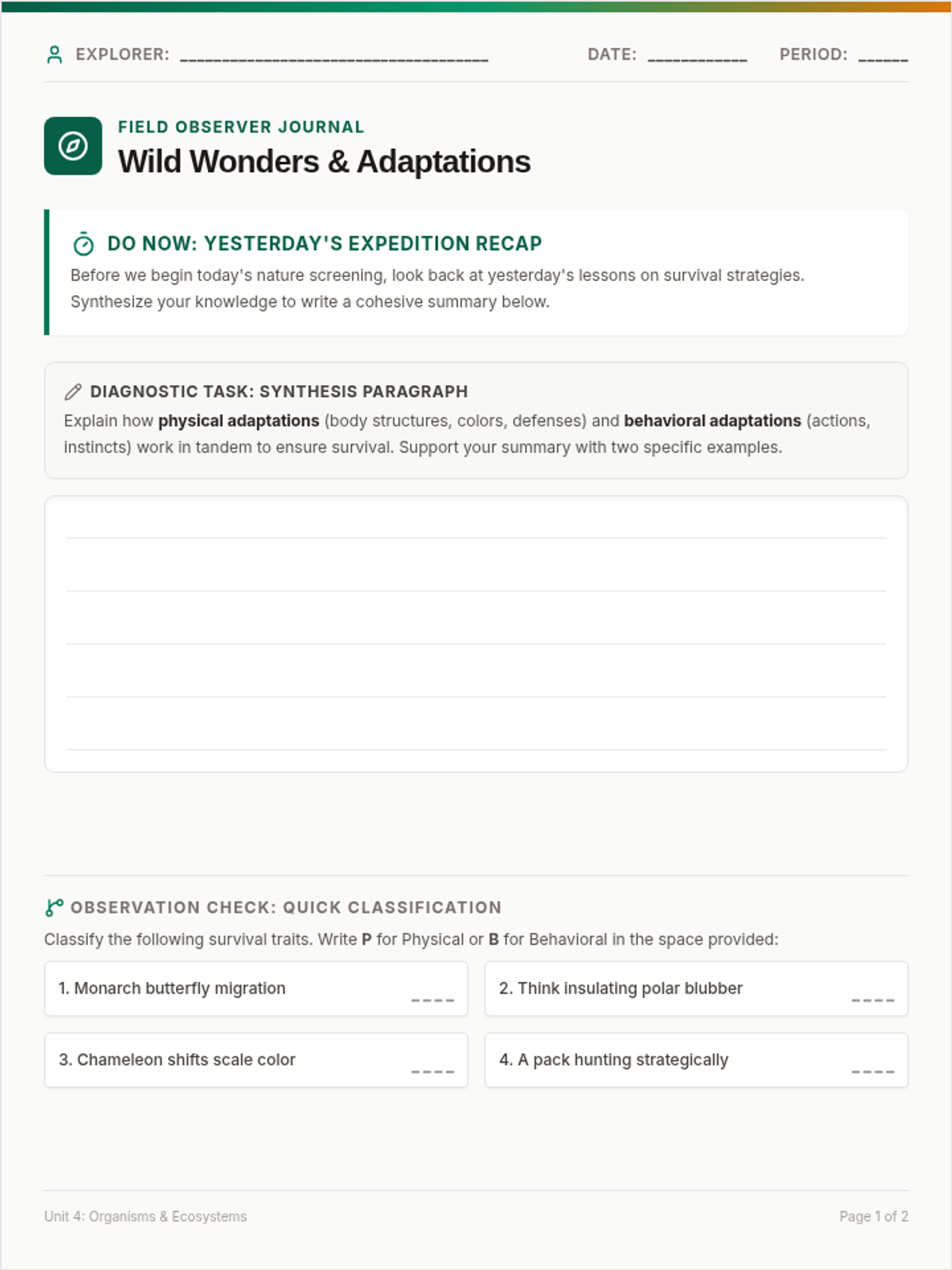
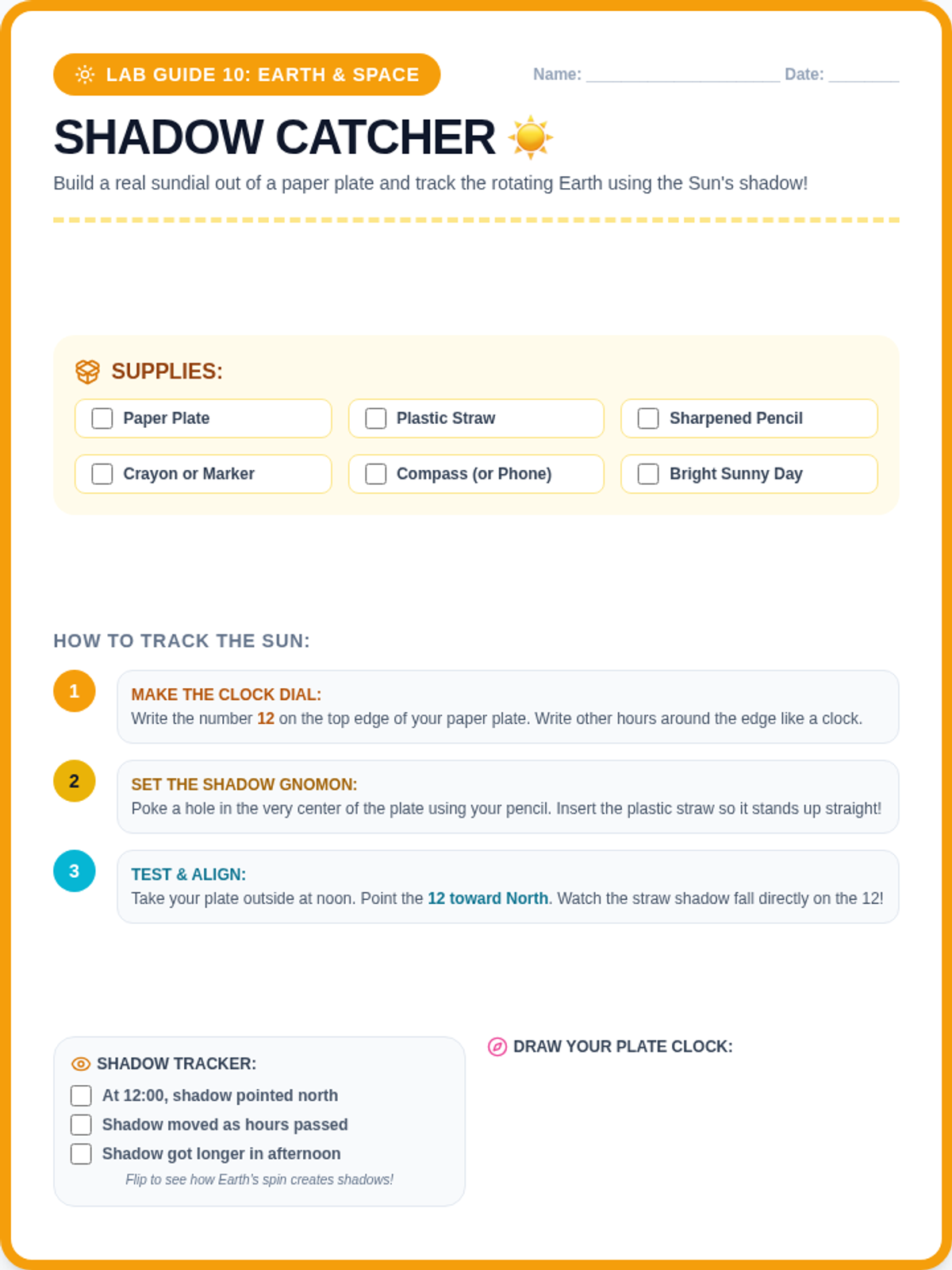
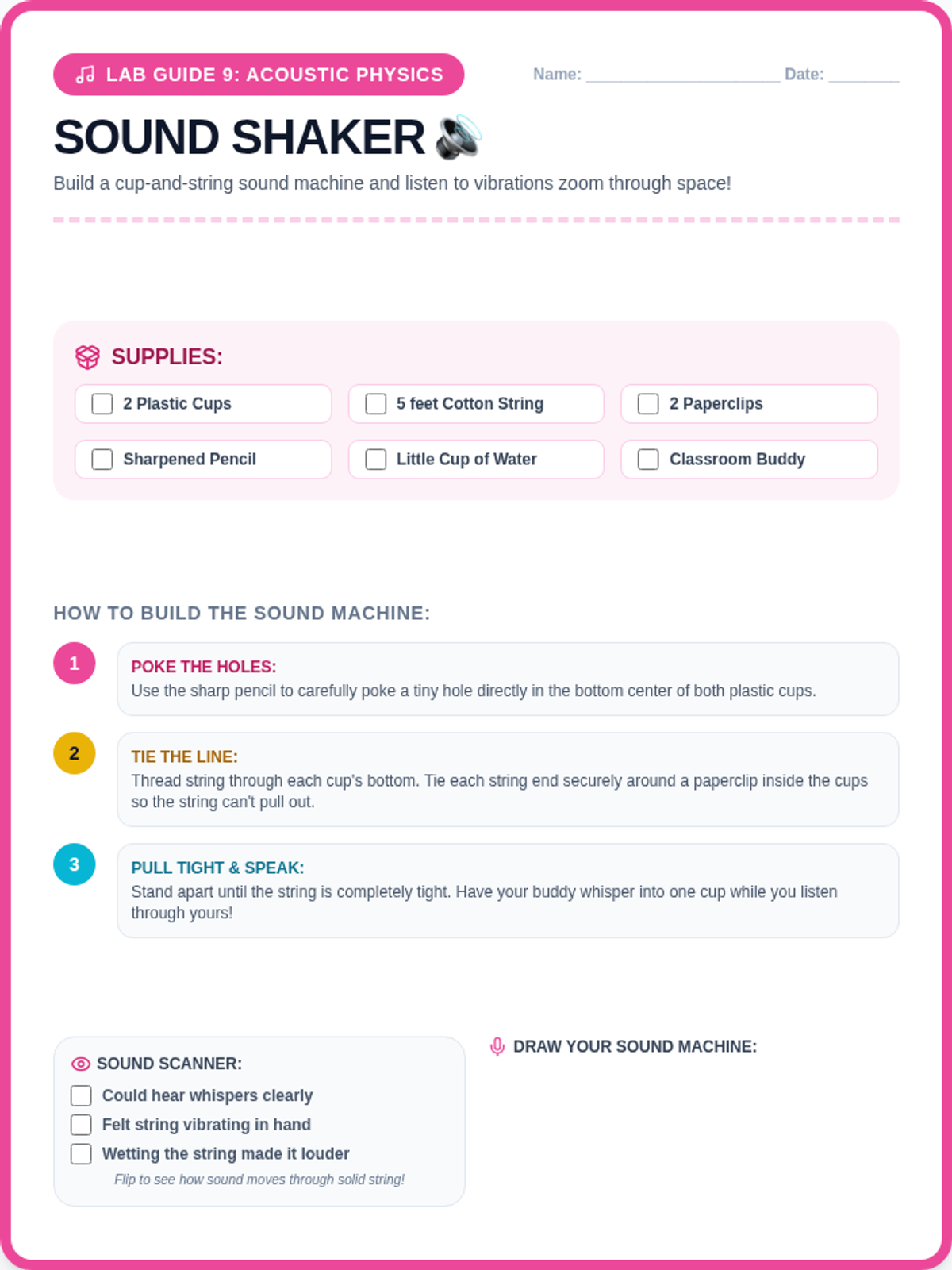
A comprehensive introductory slide deck for 4th graders, covering the definition of cells, parts of animal and plant cells, large vacuoles, and cell division with vibrant visuals and clear text.
A comprehensive teacher professional development guide including essential AI concepts, facilitation strategies, and quick-reference prompt cheat sheets.
A high school activity sheet requiring students to apply the CO-STAR prompt engineering framework, map industry impacts, and draft ethical AI policies.
Advanced slide deck for high school students exploring generative AI paradigms, professional prompt engineering frameworks (CO-STAR), and the future of work.
A middle school activity sheet involving ethical analysis of recommendation engines, labeling neural network structures, and debating facial recognition bias.
A middle school slide deck focused on the technical basics of neural networks and the ethical challenges of recommendation engines and deepfakes.
A grade 3-5 worksheet focusing on analyzing AI bias scenarios and practicing prompt engineering using a structured 'Role + Task + Detail' framework.
Instructional slides for grades 3-5, focusing on 'Pattern Detectives' - understanding data, spotting bias, and learning the basics of effective prompting.
An activity sheet for grades 1-2 focusing on distinguishing between traditional machines and AI, and designing an AI solution for a simple problem.
Instructional slides for grades 1-2 focused on 'Smart Helpers' - identifying AI in the world and understanding simple machine learning patterns.
A comprehensive teacher guide for the 'Robot Brains' lesson, including a script, instructional sequence, and differentiation tips for Kindergarten.
A simple, visual worksheet for Kindergarten students to practice identifying AI and 'training' a robot.
Introductory slide deck for Kindergarten students exploring the difference between human brains and computer 'brains'.
The comprehensive K-12 AI literacy curriculum scope and implementation guidelines for district-wide alignment.
A teacher's answer key for the Energy Transfer Map Graphic Organizer, providing correct categorizations for conduction, convection, and radiation scenarios with brief pedagogical explanations.
A comprehensive, student-friendly 'I Can' checklist for 4th-grade science standards, organized by topic with large checkboxes and clear language across two themed pages.
A student-friendly checklist of science standards rewritten as "I Can" statements for 3rd-grade topics including Motion and Matter, Water and Climate, and Life Science.
A comprehensive teacher guide for the Apex Orcas lesson, including learning objectives, a detailed instructional pacing guide, an answer key for the student worksheet, and discussion prompts.
An interactive worksheet designed to be completed during the orca presentation. It includes cloze notes, sketch-and-label diagrams for anatomy and echolocation, and a comparison table for orca ecotypes.
A 16-slide presentation covering orca biology, ecosystem roles, social structures, and adaptations. It features a professional marine biologist theme with clear, bold visuals and structured informational sections.
A teacher's answer key for the Jane Doe Discovery Worksheet, featuring correct matching pairs, completed fill-in-the-blanks, and sample short answers.
A biology worksheet themed around the 'Forsaken Roblox Jane Doe' character. It features matching body systems, fill-in-the-blank ecosystems with a word bank, and short answer questions about food webs with visual prompts, designed specifically for neurodivergent learners.