A set of 8 beautifully themed printable vocabulary cards (2x4 grid on a single page) featuring key ecological terms and plant adaptations from the texts, with designated spaces for students to sketch or write an example.
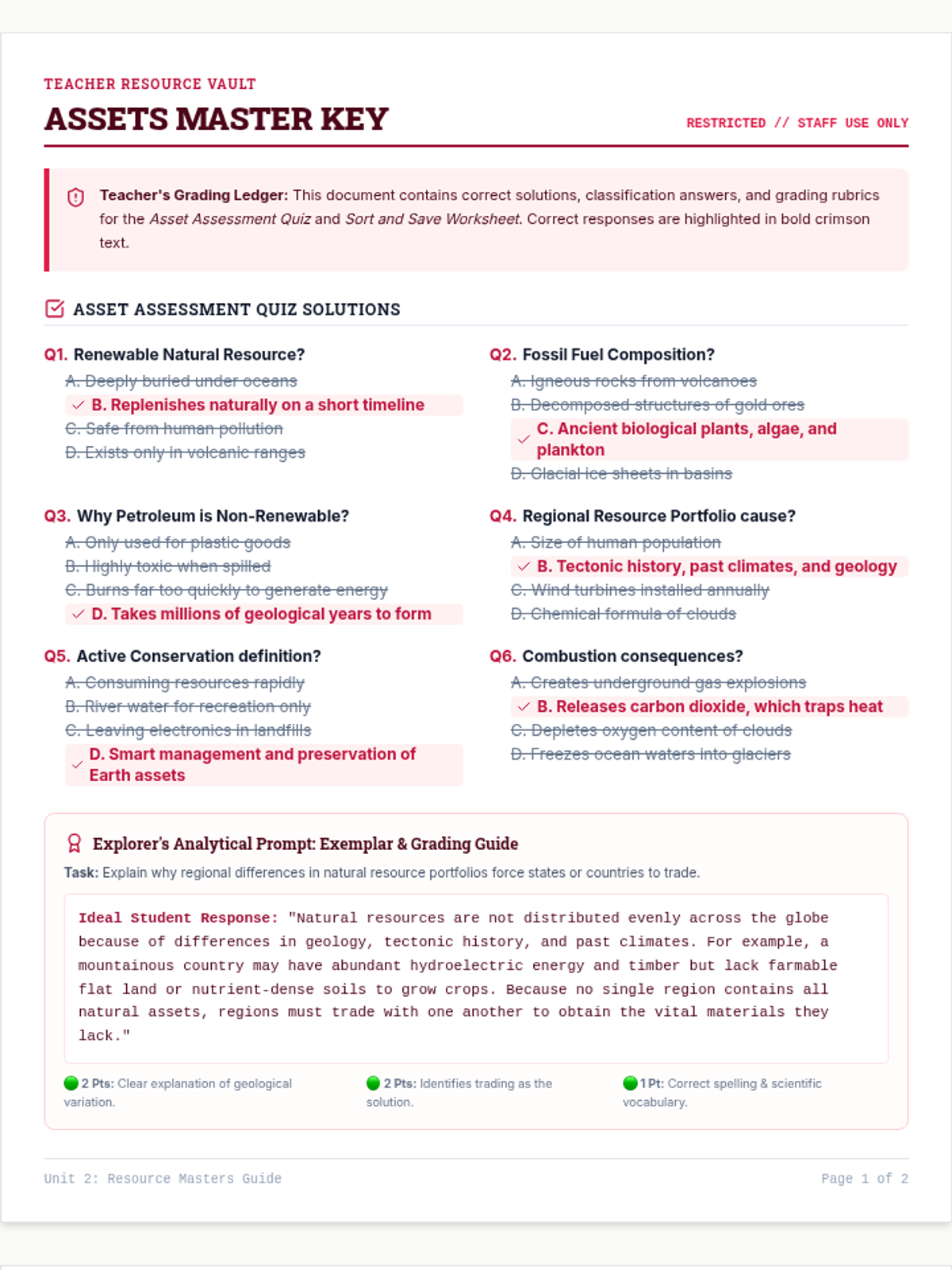
A comprehensive, 2-page teacher answer key matching the unit's quiz and worksheets. It includes answers to all multiple-choice questions, sorting tables, matching layouts, and evaluation rubrics.
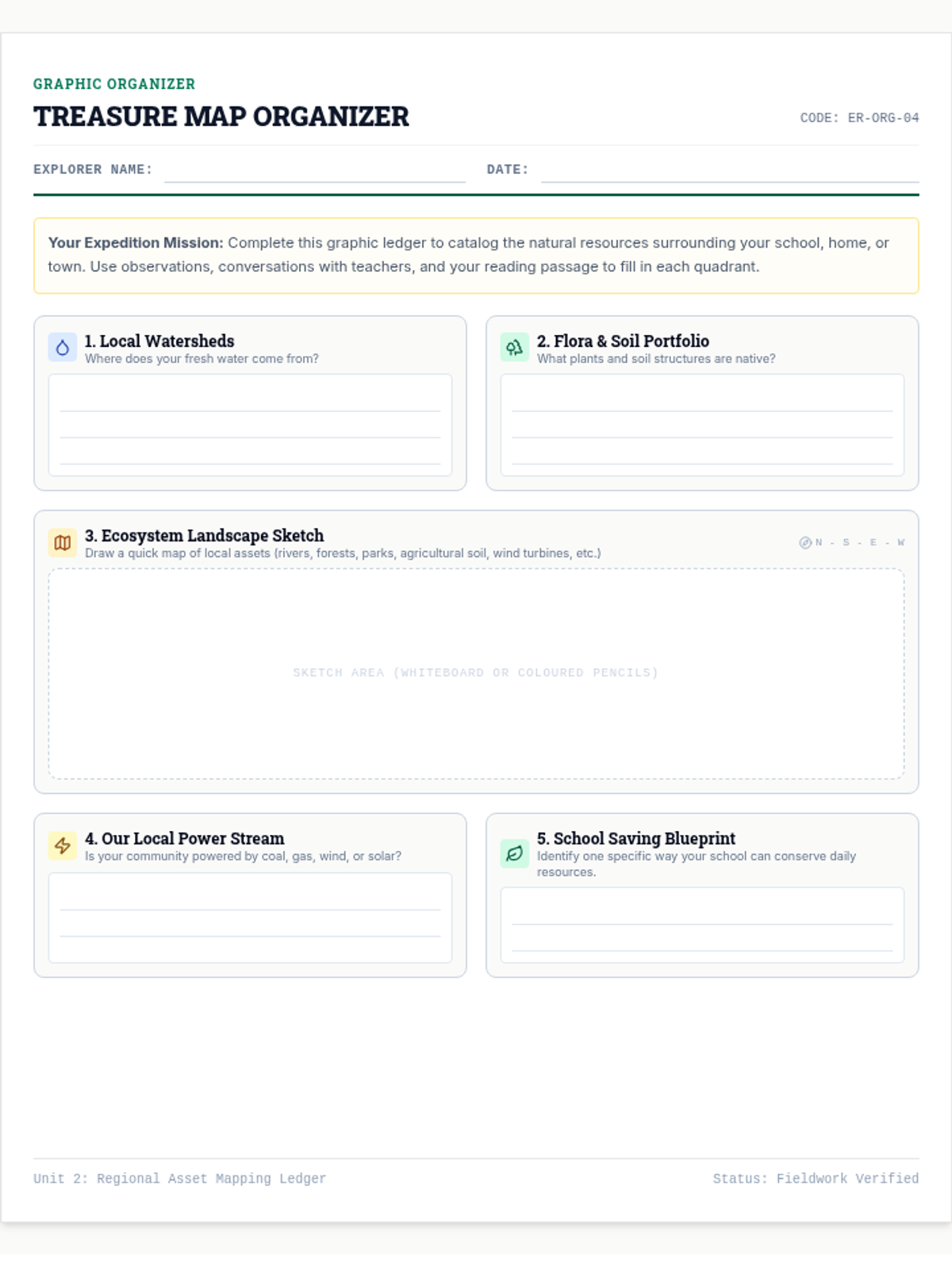
A visually striking graphic organizer that guides students in mapping out local resources, renewable flows, and non-renewable energy deposits.
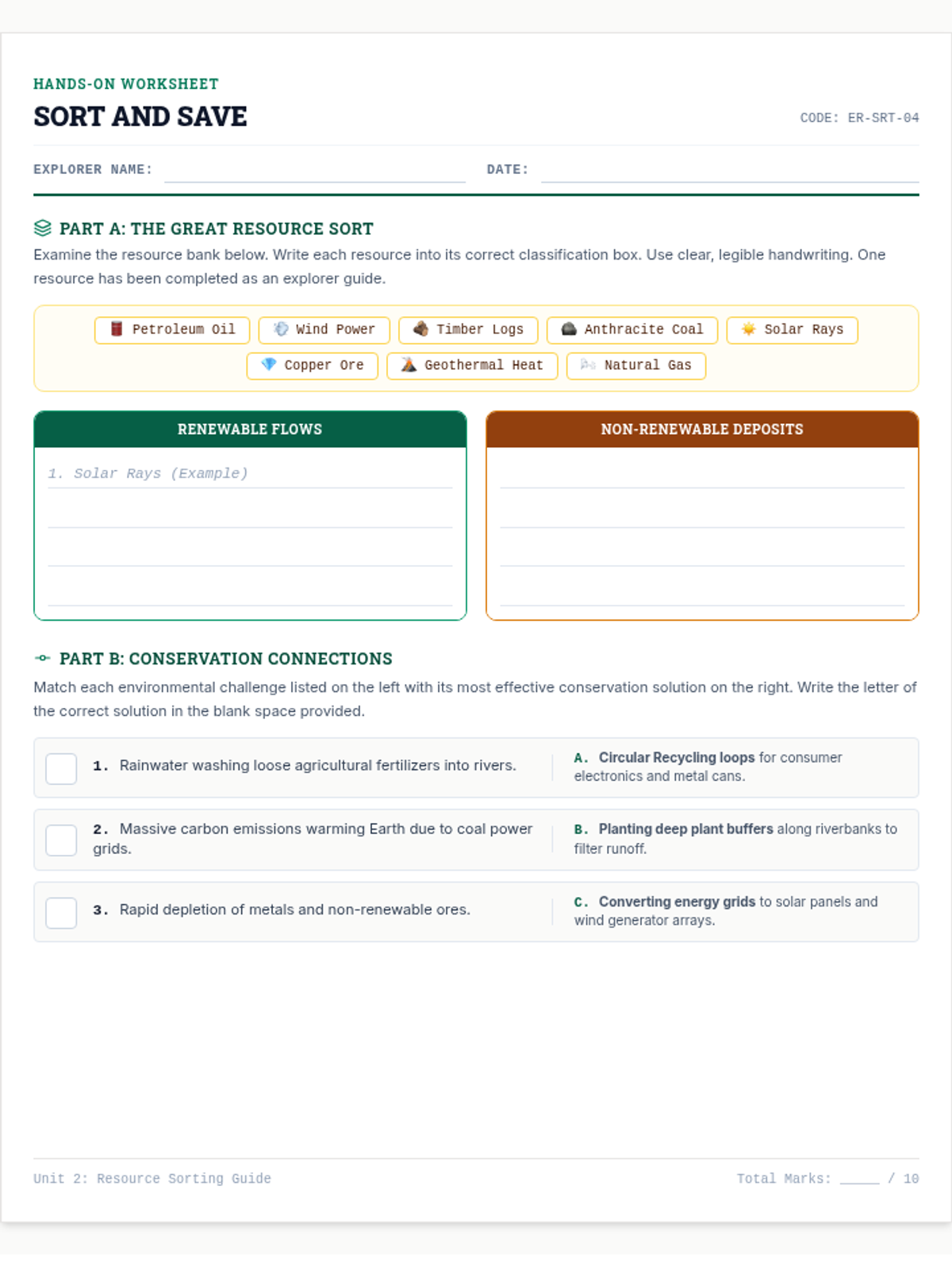
A matching and sorting worksheet where students categorize resources and align conservation actions with ecological benefits.
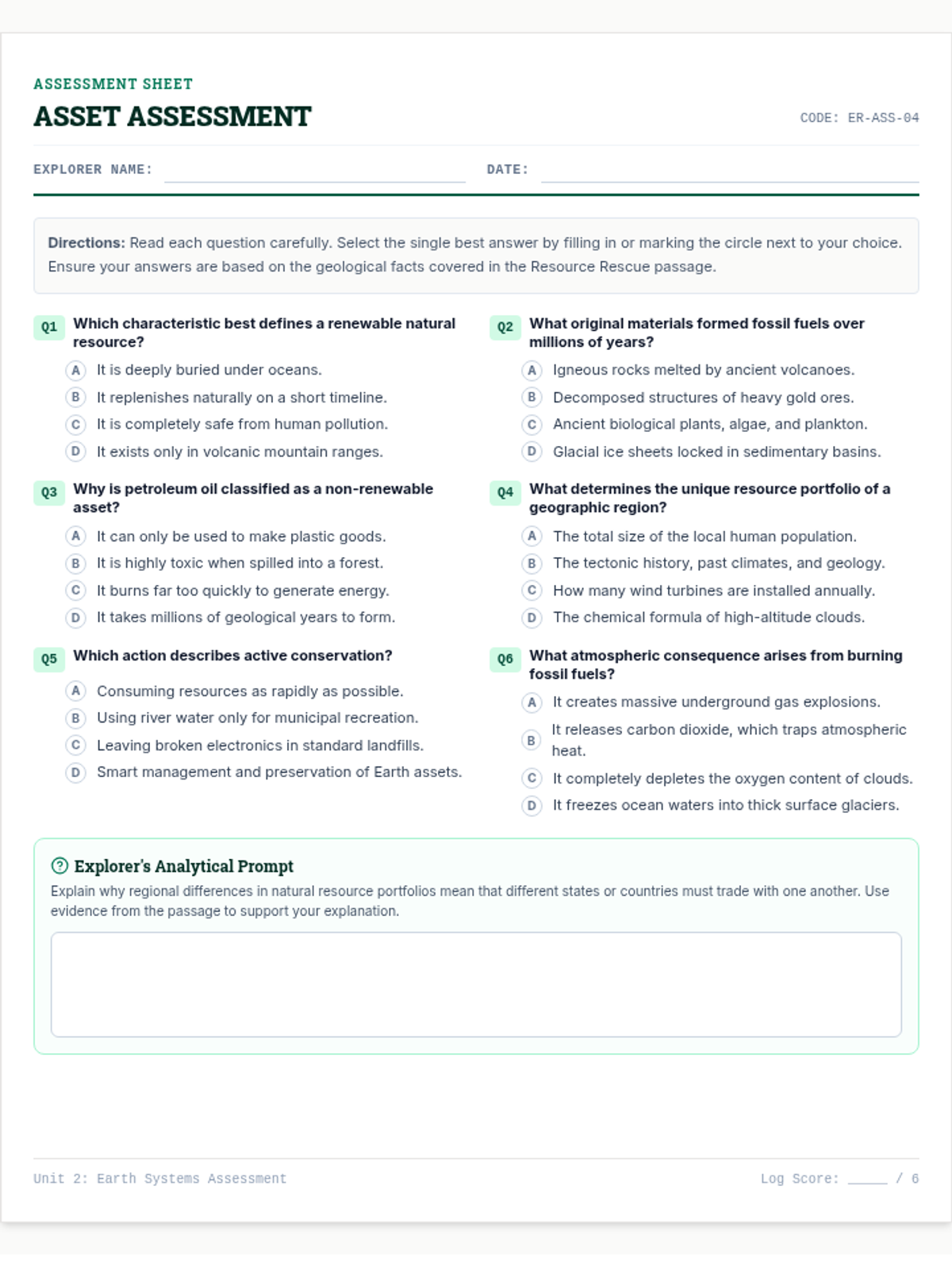
A student-facing quiz sheet containing six carefully aligned multiple-choice questions and one critical thinking short-response prompt on natural resources. All multiple-choice answer elements follow uniform design principles.
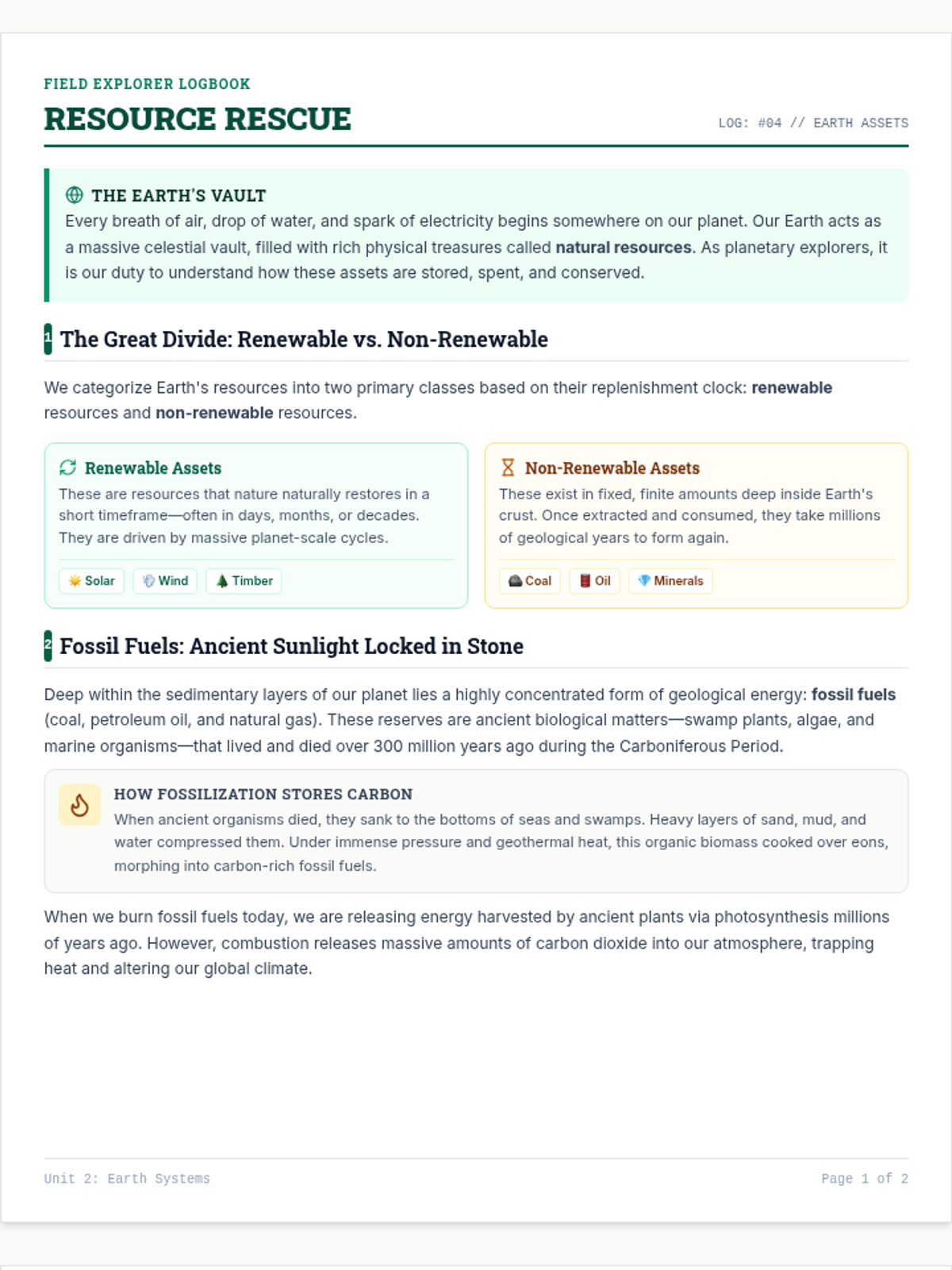
A beautifully formatted, 2-page reading passage styled as an explorer's field journal. It covers renewable vs non-renewable resources, fossil fuel formation, geographic distribution variations, and active conservation frameworks.
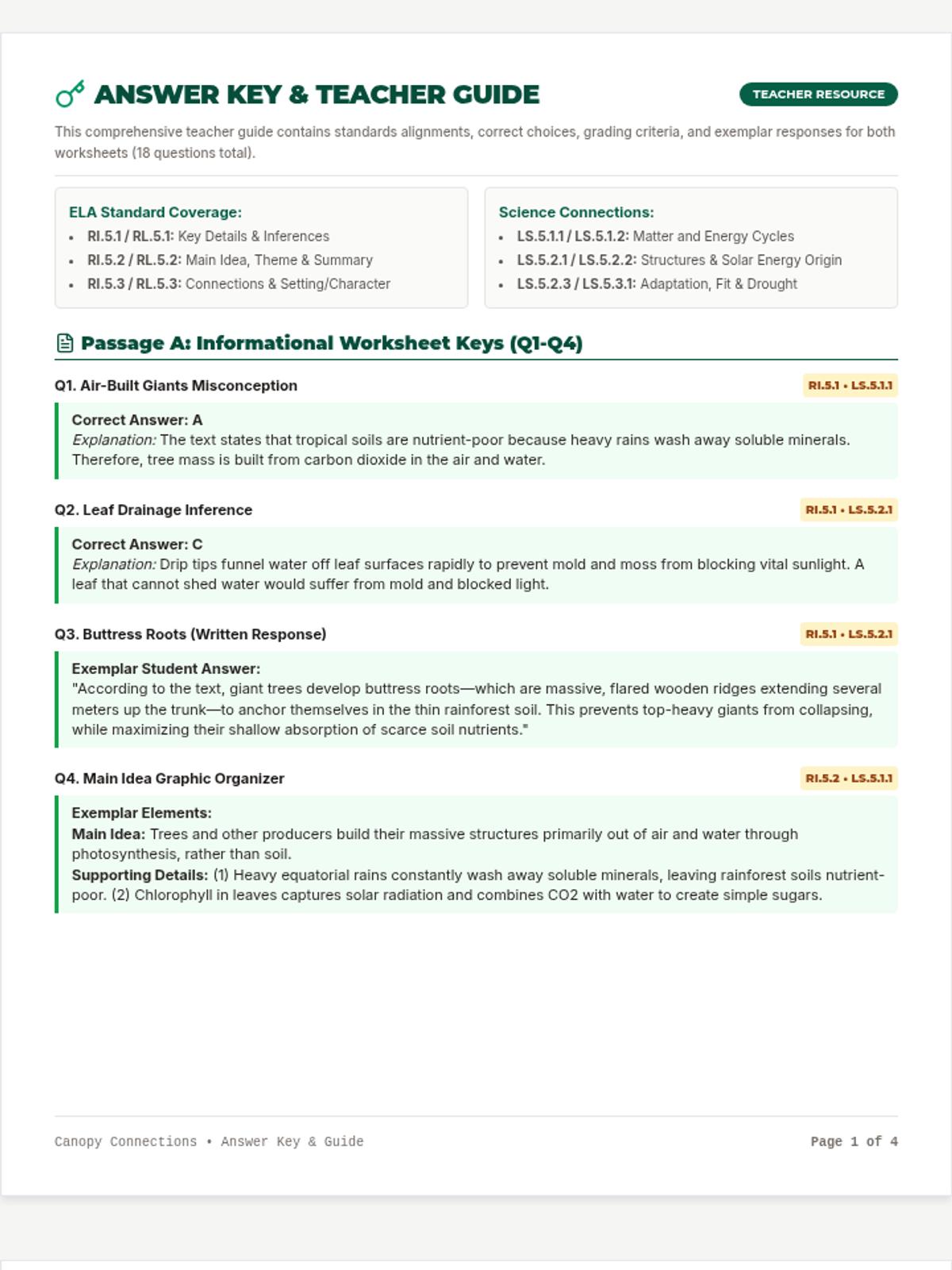
A comprehensive teacher answer key and guide containing detailed standards alignment, grading rubrics, and exemplar answers for both the informational and literature worksheets.
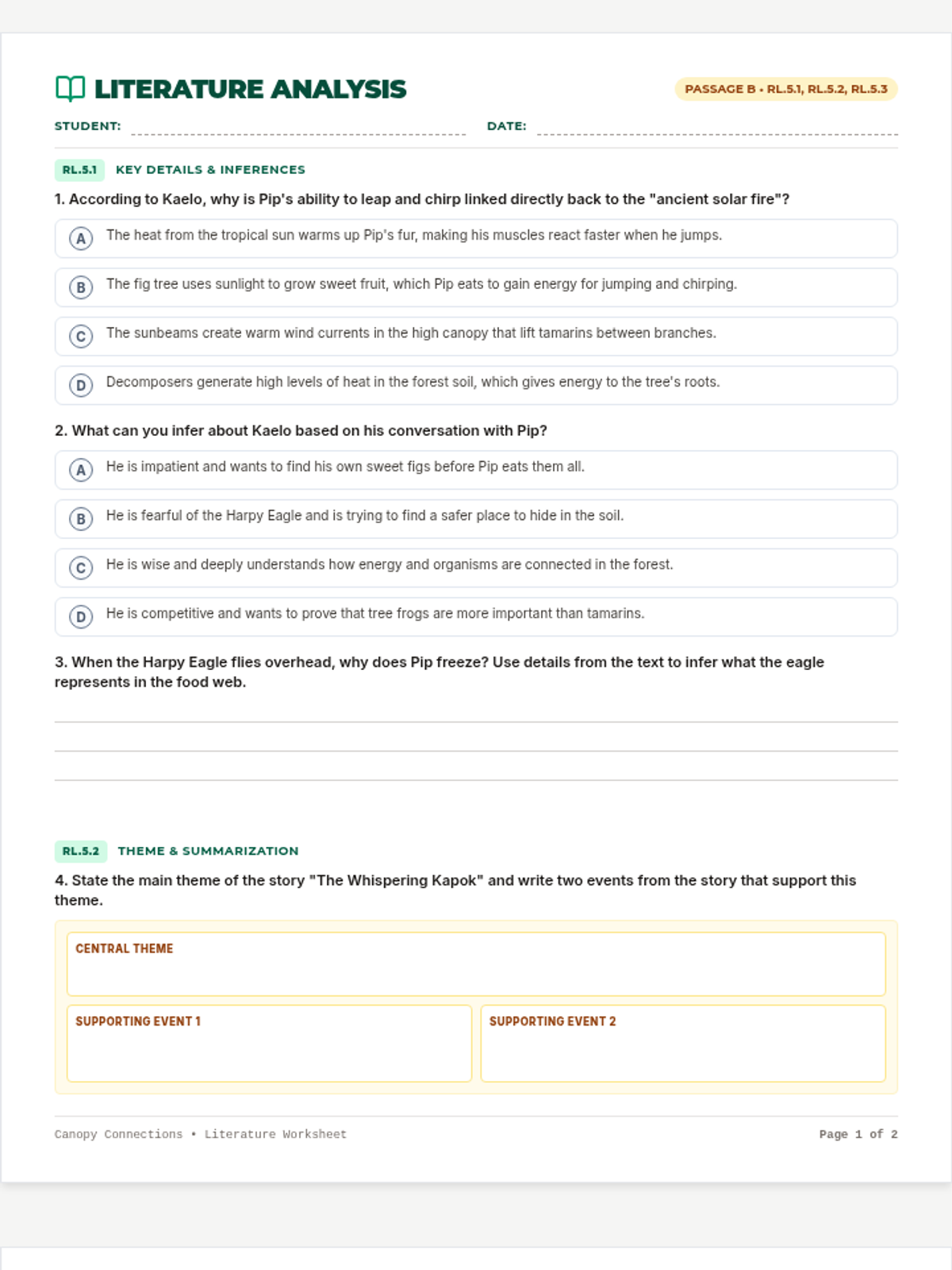
A comprehensive ELA worksheet featuring 9 standards-aligned questions (3 for RL.1, 3 for RL.2, and 3 for RL.3) based on the fictional short story 'The Whispering Kapok'.
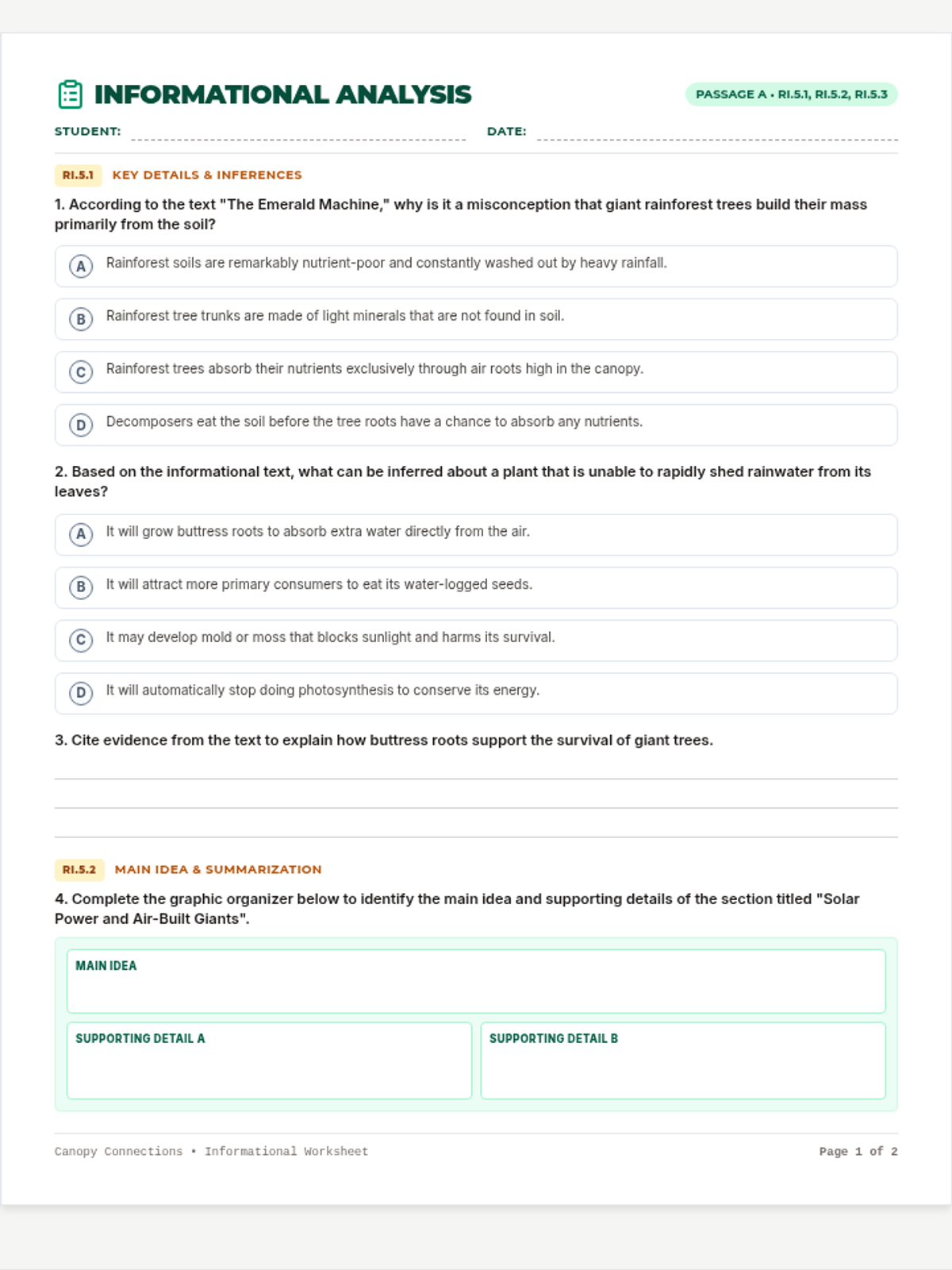
A comprehensive ELA worksheet featuring 9 standards-aligned questions (3 for RI.1, 3 for RI.2, and 3 for RI.3) based on the informational text 'The Emerald Machine'.
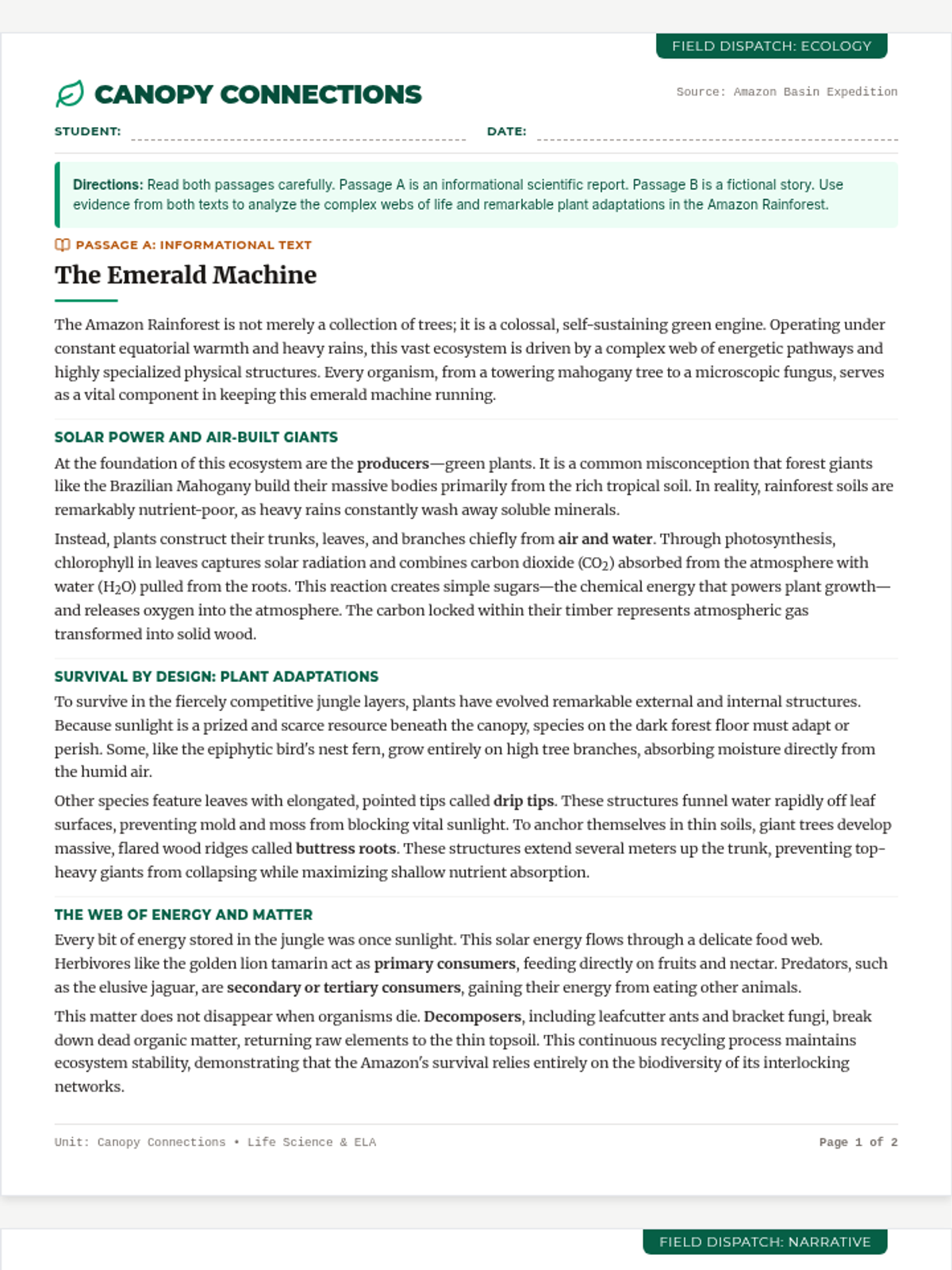
A beautifully designed 2-page paired reading passage for 5th grade. Page 1 contains "The Emerald Machine", an informational text on the Amazon food web and plant structures. Page 2 features "The Whispering Kapok", a narrative passage about Pip the tamarin discovering ecosystem interactions.
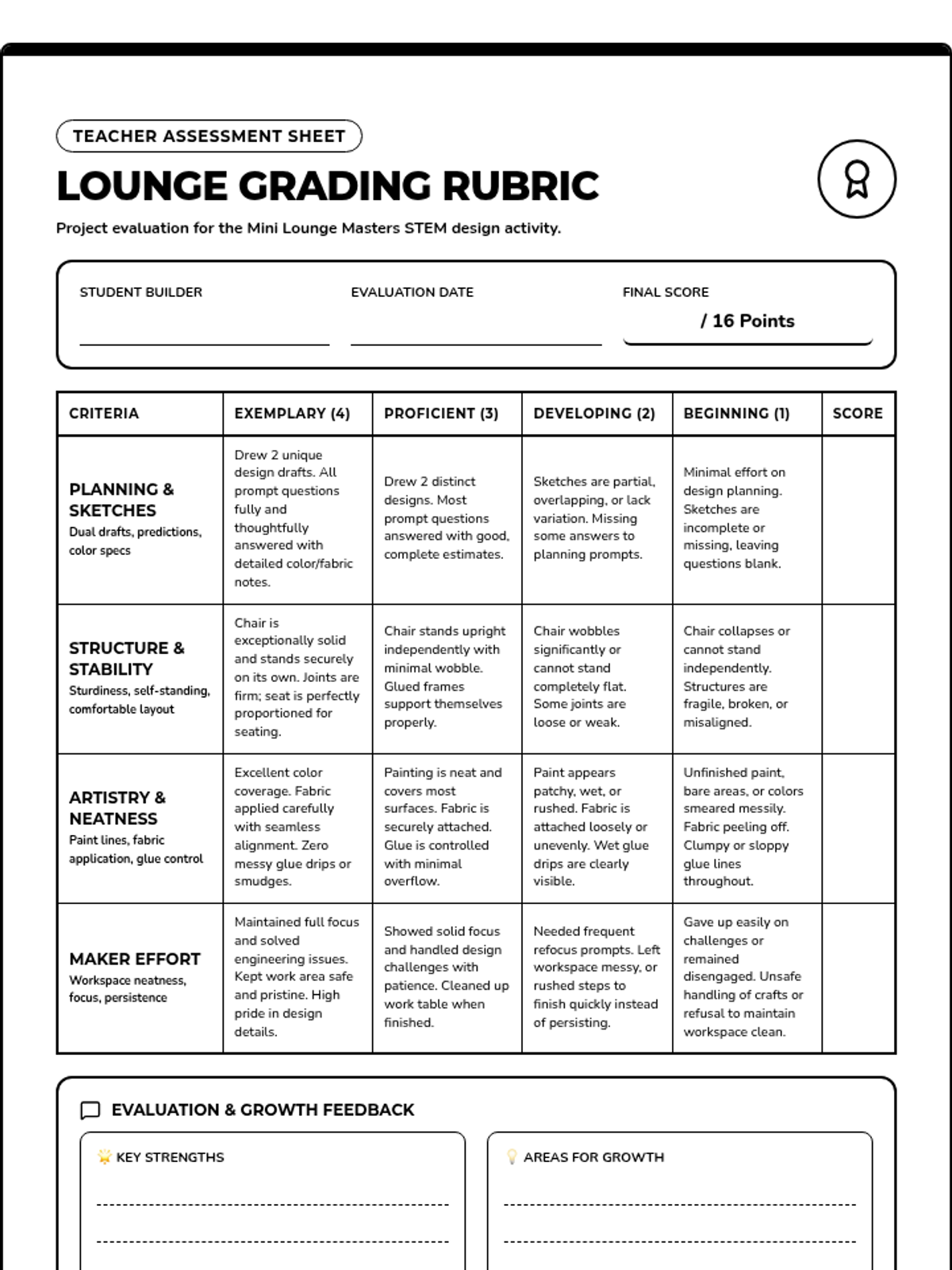
A black and white print-friendly single-page teacher-facing grading rubric containing a 4-tiered criteria grid mapping directly to the student milestones, combined with a manual evaluator profile and structured feedback boxes.
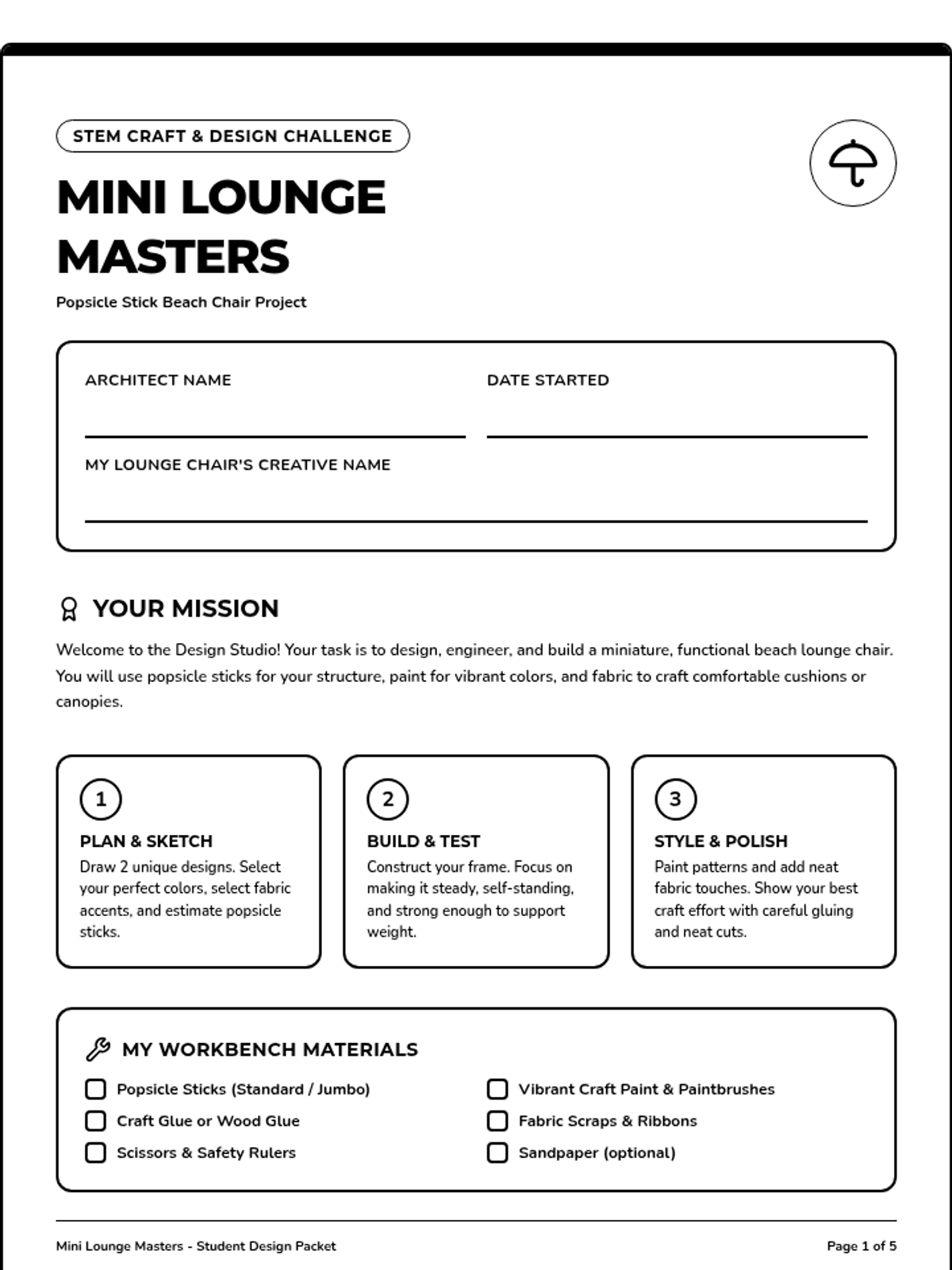
A black and white print-friendly 5-page student design booklet with name lines, materials checklists, drawing studio boxes, milestone timelines, and evaluation prompts.
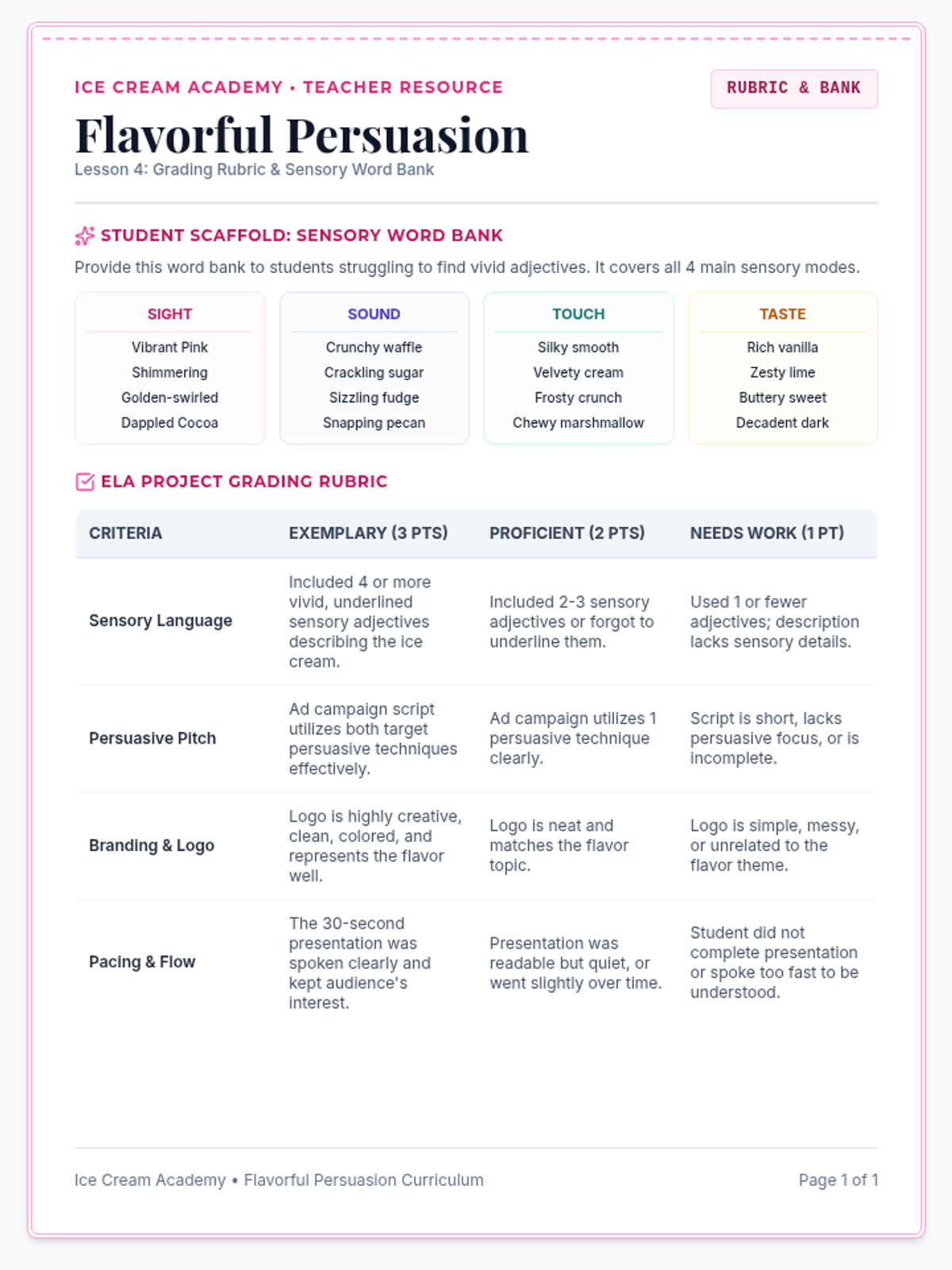
A teacher grading rubric and visual word bank of sensory adjectives supporting Lesson 4's ELA branding and marketing project.
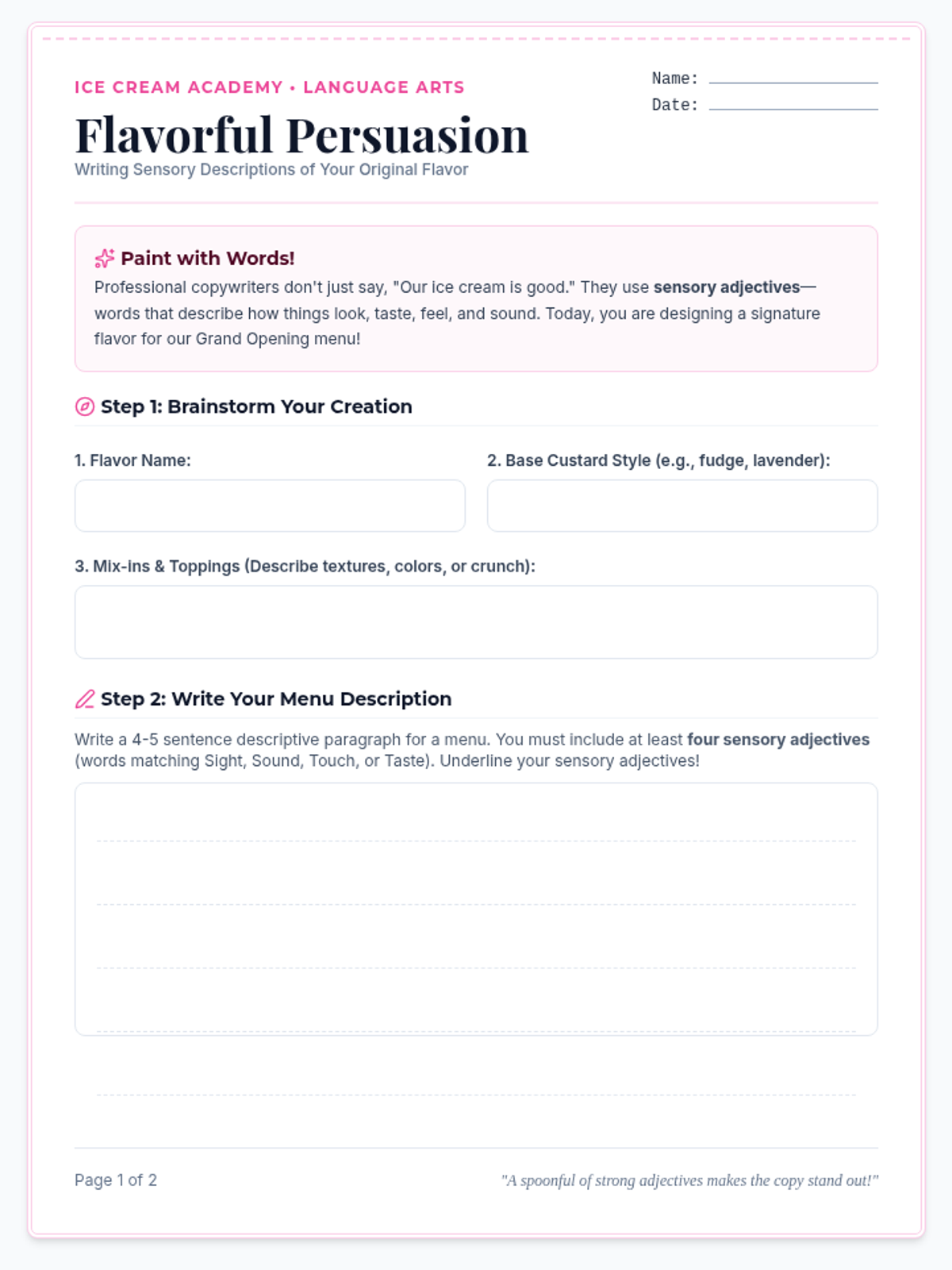
A creative branding & marketing worksheet where students design their own brand name, logo, write a highly descriptive, sensory menu description using adjectives, and draft a 30-second commercial pitch.
A visual, 4-slide presentation deck covering states of matter, freezing-point depression, and heat transfer during the homemade ice cream lab. Slide text complies with a minimum 24px requirement.
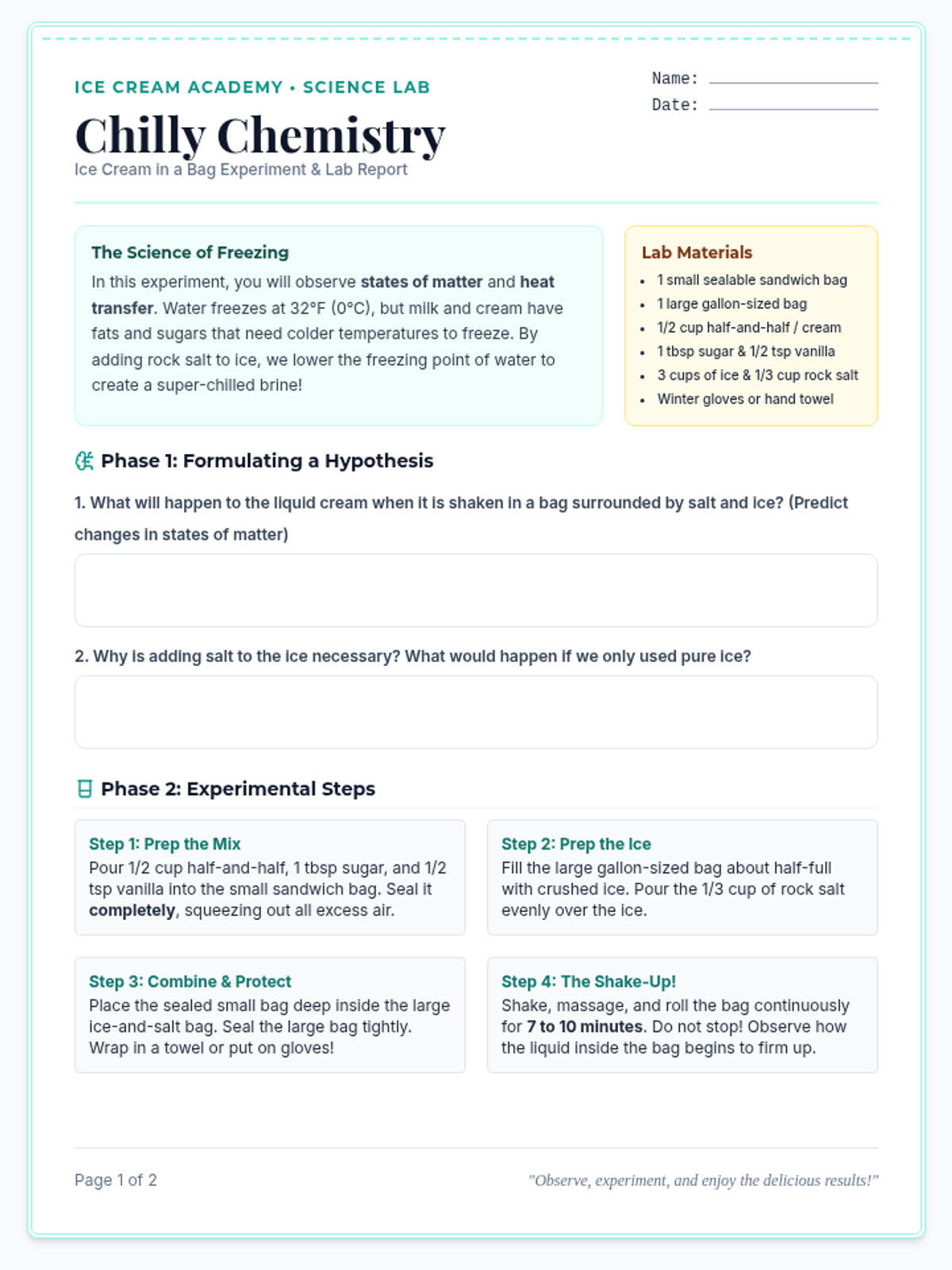
A 2-page science lab report and worksheet guiding students through the scientific method, step-by-step instructions, observations, and conclusions for an "Ice Cream in a Bag" experiment.
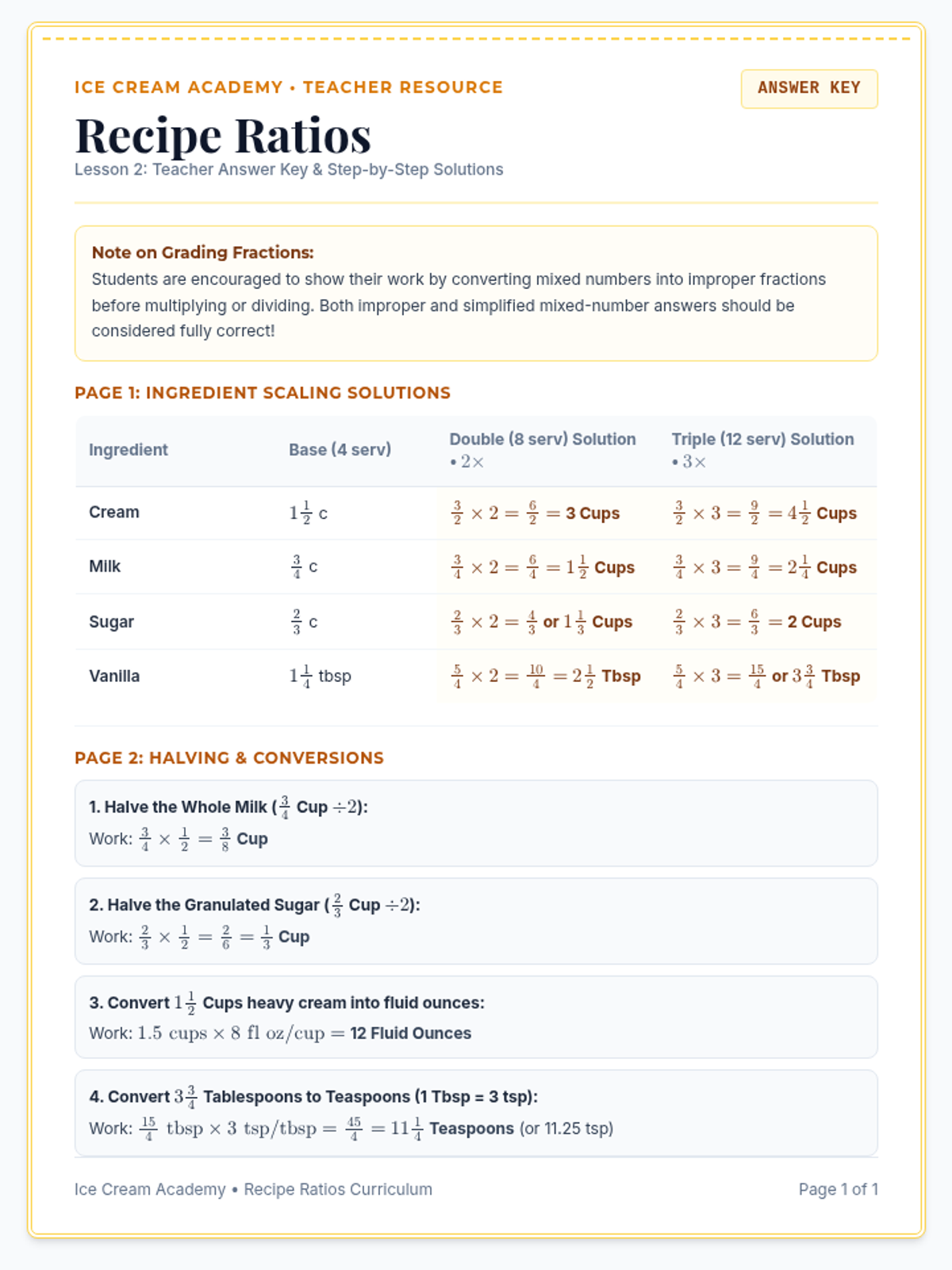
A teacher guide and answer key for Lesson 2 (Recipe Ratios), featuring fully calculated solutions, step-by-step math explanations, and grading tips.
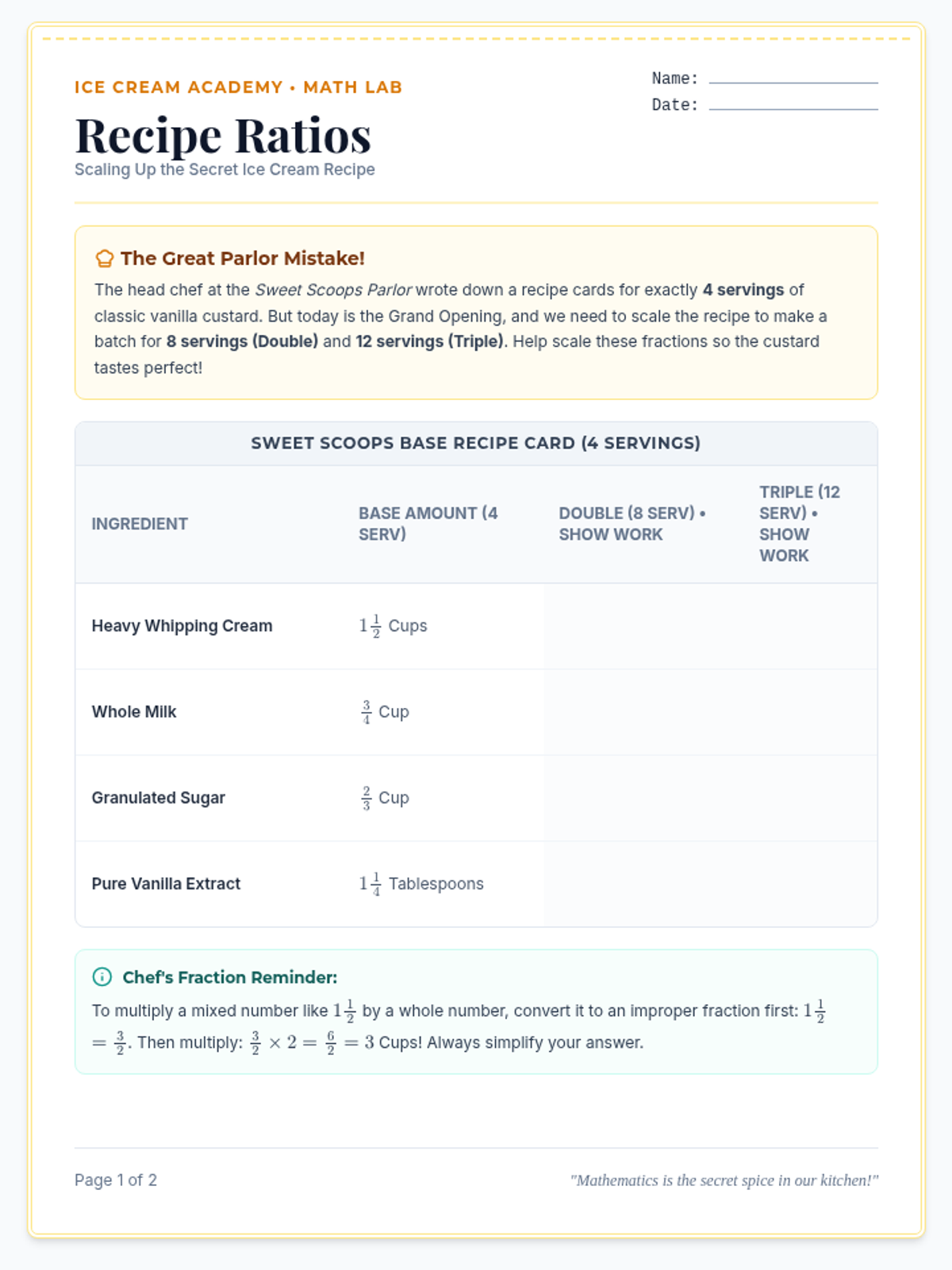
A 2-page math worksheet themed around a vintage ice cream parlor. Covers fraction multiplication and division (scaling recipes up and down) and units conversion (ounces, cups, tablespoons).
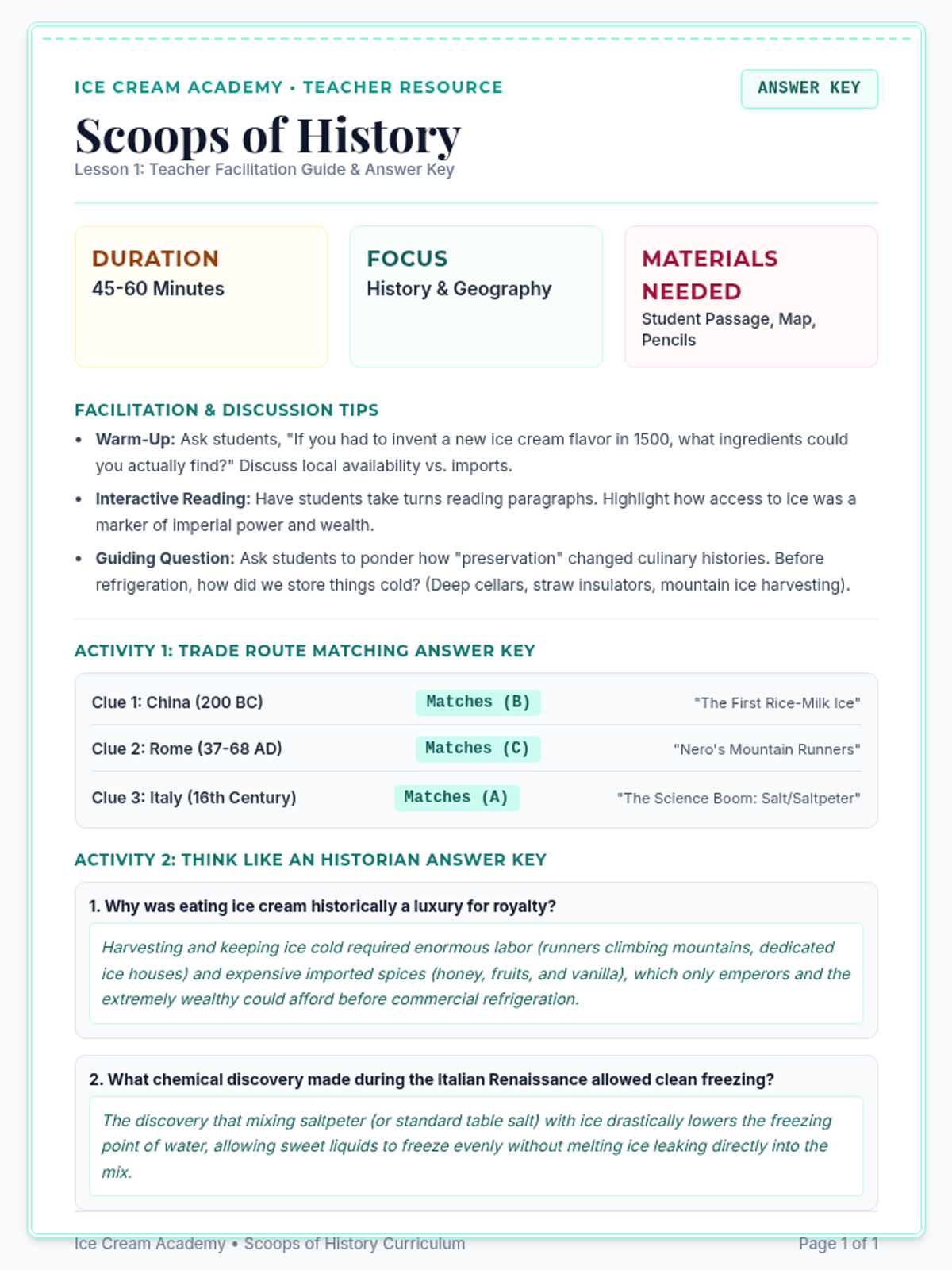
A teacher guide and answer key for Lesson 1 (Scoops of History), featuring facilitation tips, discussion prompts, and complete answers for the historical trade route and reading comprehension activities.
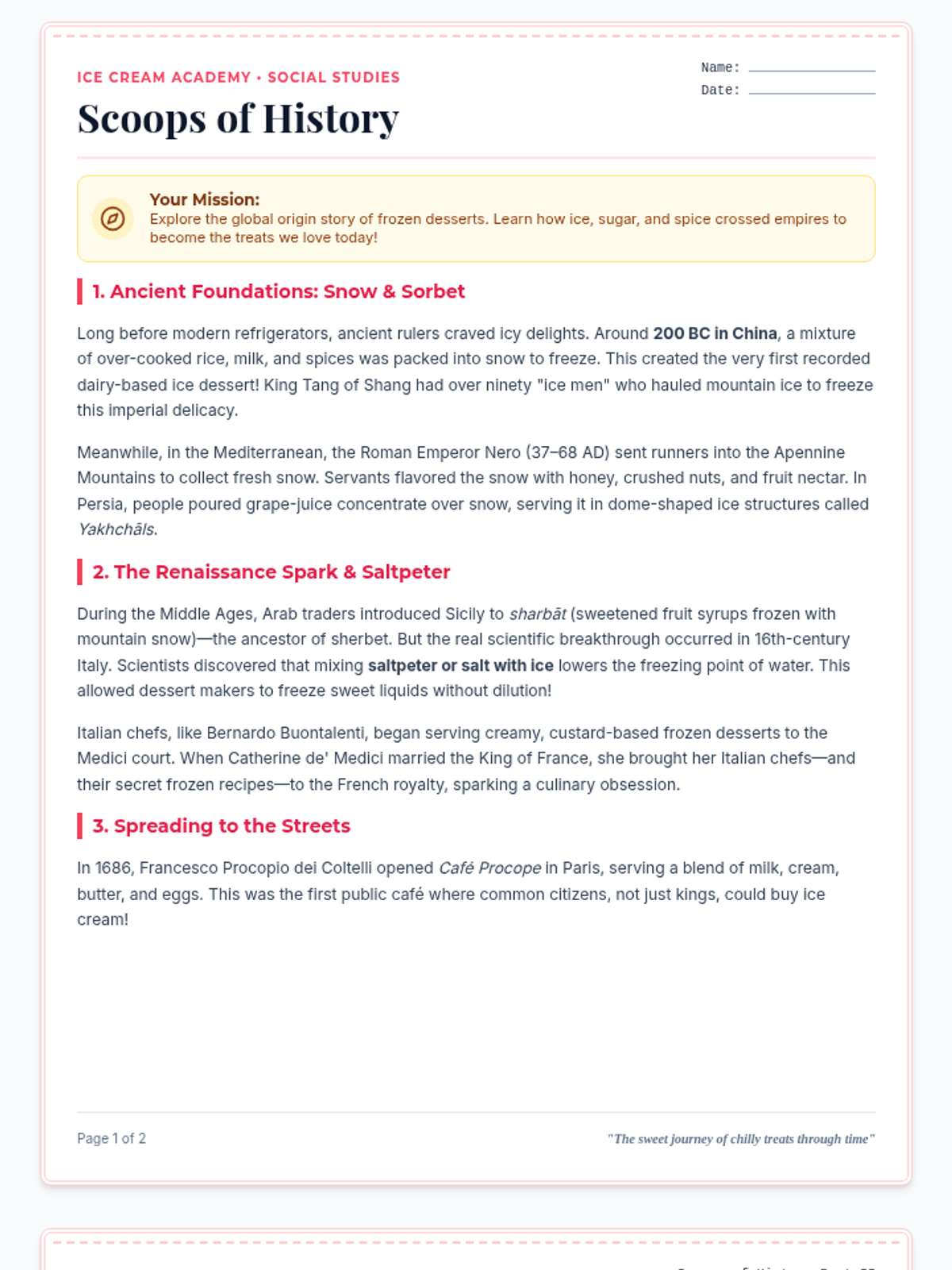
A beautiful 2-page historical reading passage and mapping/comprehension activity sheet about the global origins of ice cream. Designed for summer school students to learn about the history and geography of frozen treats.
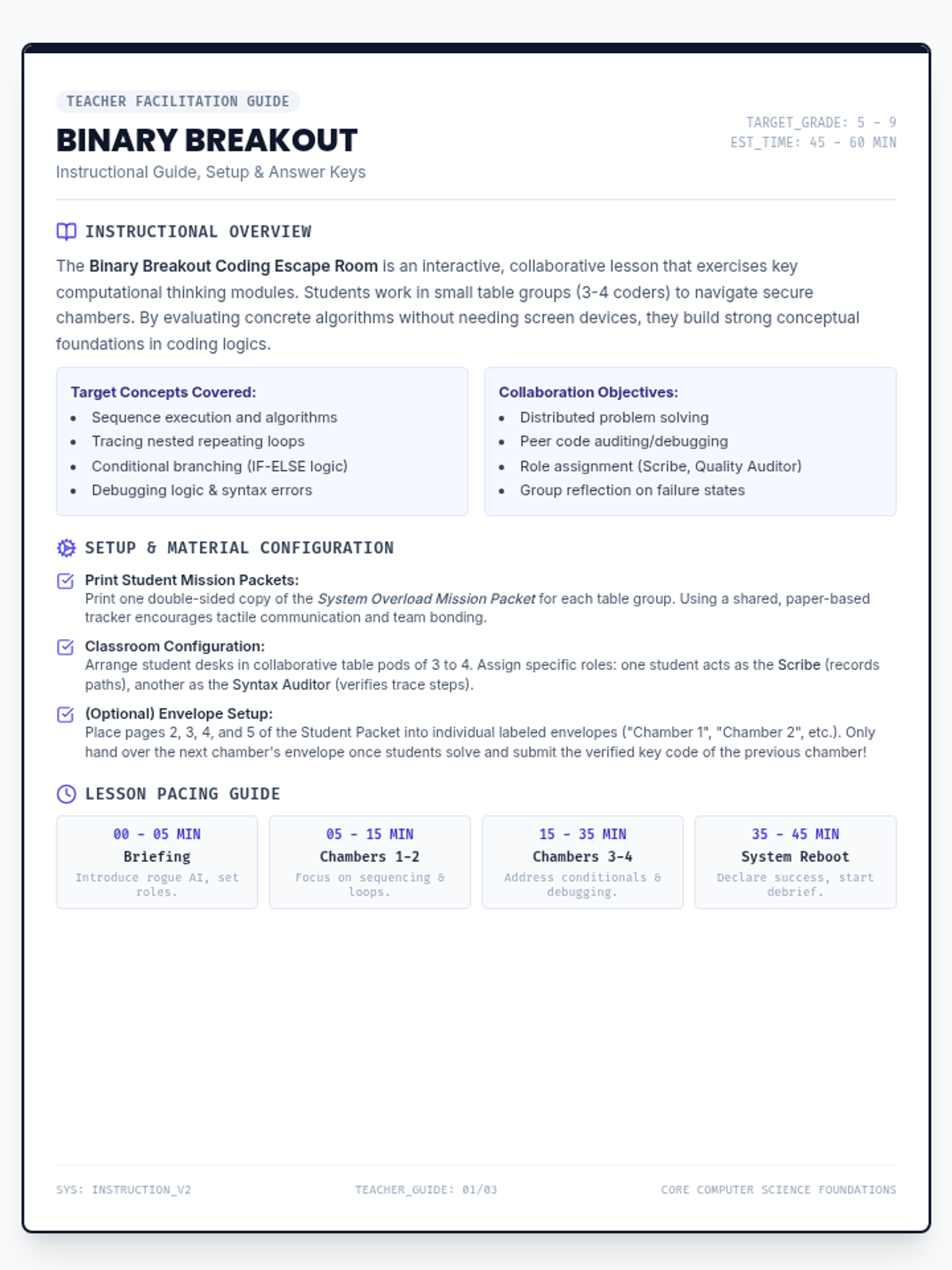
This teacher facilitation guide provides complete setup instructions, recommended pacing guides, step-by-step trace explanations, quick-reference answer keys, and printable scaffolded hint cards for groups who require differentiation.
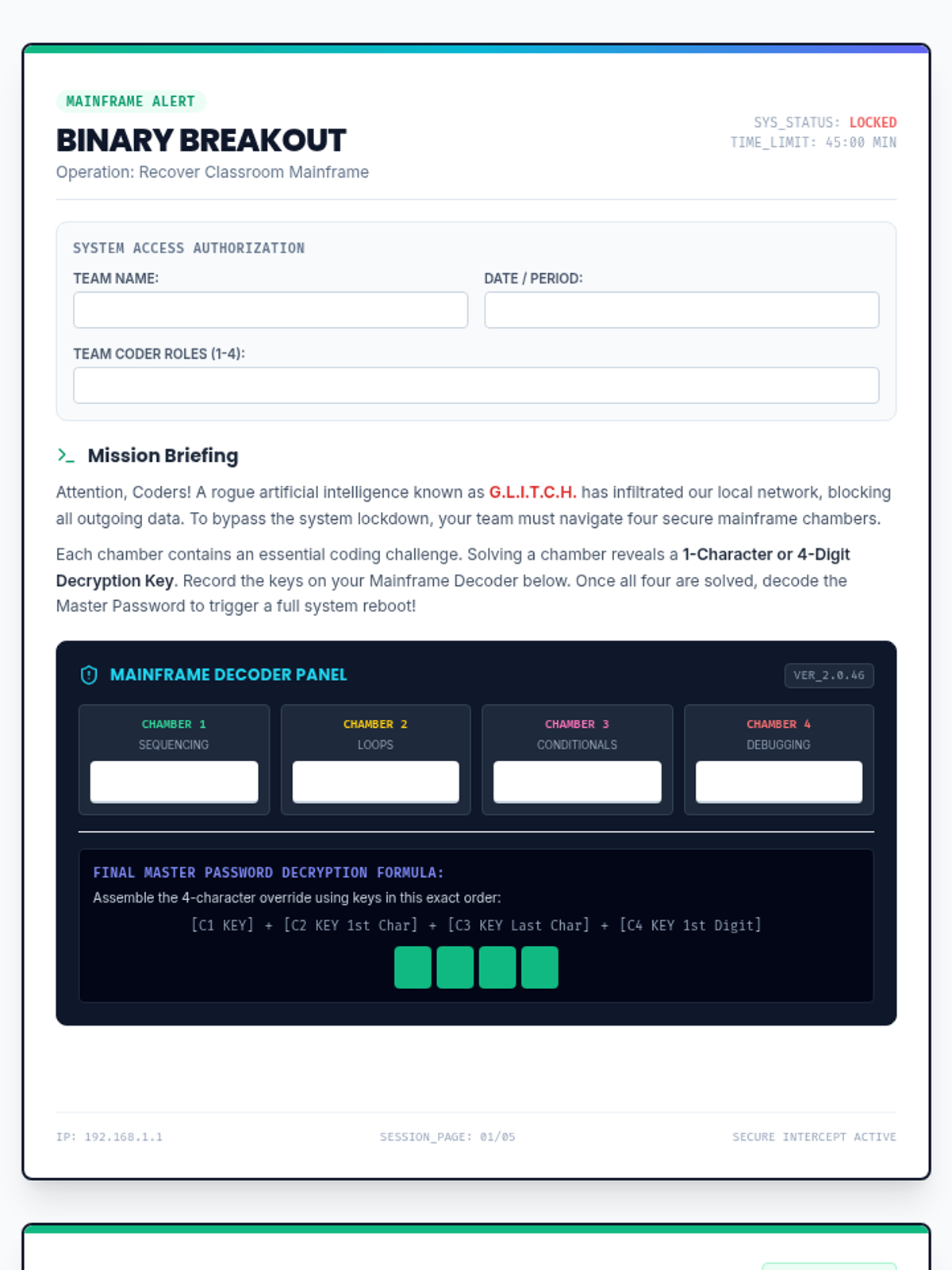
This student-facing printable mission packet contains the core puzzles for the coding escape room. Designed for table groups, it guides students through four conceptual challenges—sequencing, loops, conditionals, and debugging—which reveal decryption keys that are recorded on a central decoder hub to solve the overarching mystery of a locked mainframe.
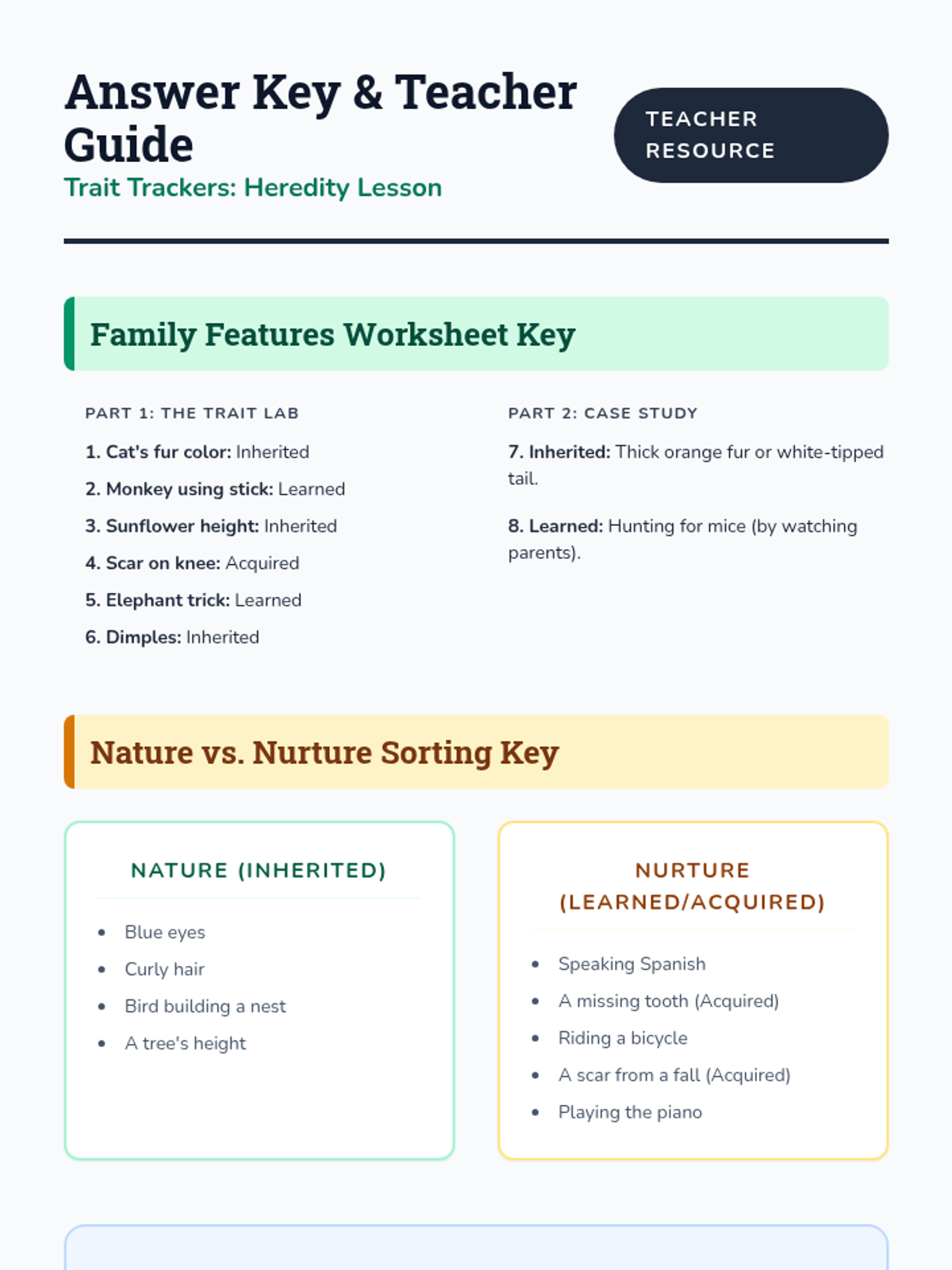
A teacher's answer key and instructional guide for the Heredity lesson, including solutions for all worksheets and tips for addressing common student misconceptions.