A slide deck for Lesson 3 teaching the 'bridge' technique—answering difficult questions briefly and connecting them back to prepared evidence using transition phrases.
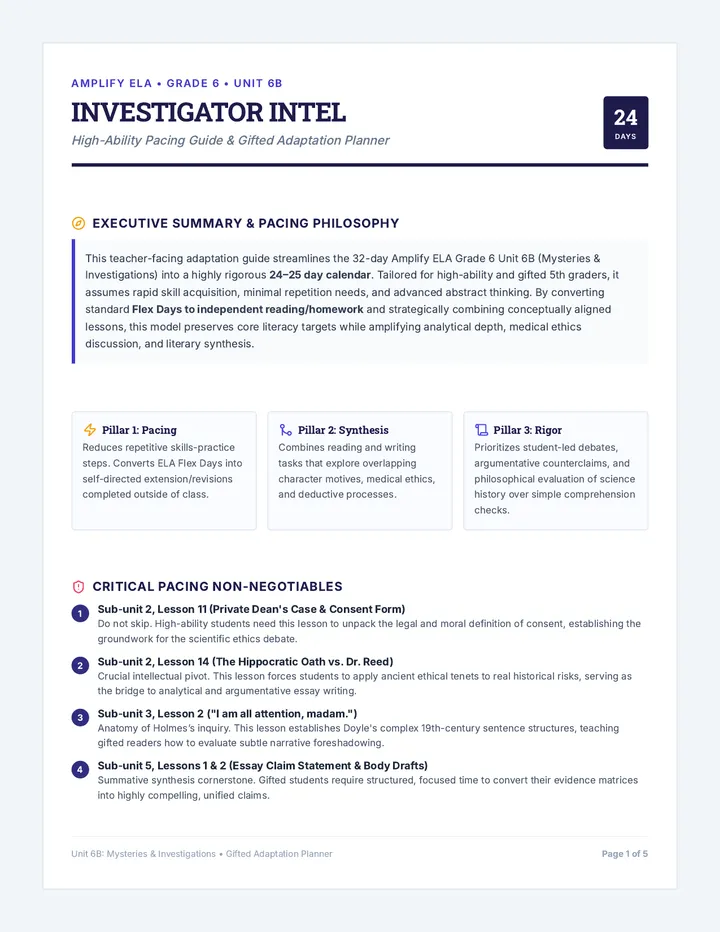
A detailed teacher guide for the 'Court Courage' lesson. Revised to fix page break issues and icon rendering.
A graphic organizer focusing on Maya Miller's character traits and a sequential timeline. Revised for better contrast and white backgrounds for student work.
A comprehension worksheet for the 'Court Courage' story. Revised to ensure all content fits on one page and includes lined areas for prediction.
An engaging reading passage about Maya Miller, a sophomore basketball player who finds her courage during a high-pressure district semifinal game. Revised to ensure a perfect fit on a single page.
A teacher's facilitation guide for the Word Alchemy lesson, including a pacing guide, facilitation tips, common misconceptions, and materials list.
Answer key and grading rubric for the Word Alchemy Quiz, providing clear solutions and sample responses for creative assessment.
A formal assessment for figurative language mastery, including multiple choice, matching, and a creative application section. Features a "Final Alchemy Exam" theme.
Teacher answer key for the Word Alchemy Worksheet, providing correct answers for identification and sample responses for creative prompts.
A practice worksheet for figurative language featuring identification, synthesis, and idiom translation exercises. Styled with a "Word Alchemy Laboratory" theme.

A visually engaging slide deck exploring eight types of figurative language using a "Word Alchemy" inventor theme. Includes definitions, clear examples, and visual cues for each concept.
A teacher reference guide and answer key for the Headline Hunter Worksheet. Revised for better page management and increased text contrast in tip sections.
A student worksheet for practicing the identification and creation of effective news headlines through fill-in-the-blank, multiple choice, and creative writing exercises. Revised for better page flow and spacing.
Educational slides defining what a headline is, its primary functions, and showcasing iconic examples with a vintage newspaper aesthetic.
A visual inferencing activity where students analyze sets of icons (evidence bags) to infer a location, job, or setting. Ideal for students who benefit from visual scaffolding.
A student worksheet containing three short text-based 'case files' where students must identify text clues and use their schema to make a logical inference.
A presentation for the Inference Investigators lesson, introducing the concept of inferencing through visual and text-based case studies using the 'Clues + Schema' formula.
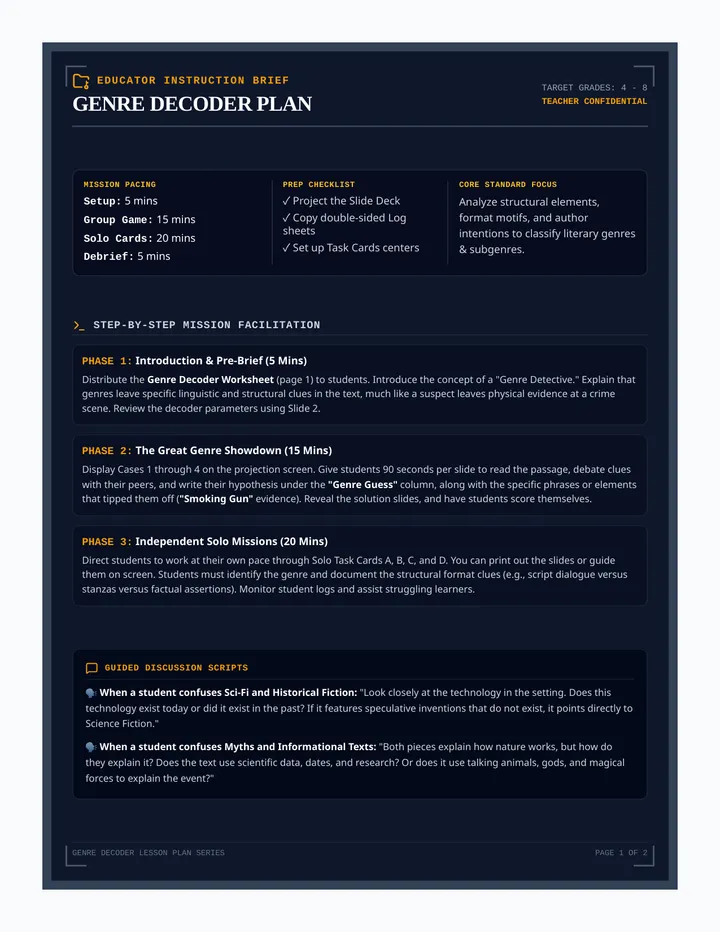
A comprehensive teacher's guide for the Inference Investigators lesson, featuring a detailed lesson plan, instructional sequence, differentiation strategies, and detective-themed engagement tips.
The answer key for the Word Lab Worksheet, featuring categorized word lists and correct fill-in-the-blank responses for teacher use.
A two-page academic vocabulary worksheet for middle schoolers focusing on words with -al, -ous, -cious, -tious, -tial, and -cial suffixes. Includes word sorting, fill-in-the-blank context exercises, and sentence writing.
Instructional slides for the Suffix Lab lesson, introducing complex multisyllabic suffixes like -cious, -tious, -cial, and -tial with visual examples and discussion prompts.
Answer key for the Word Lab Investigation worksheet, highlighting word search locations and correct sentence completions.
A Word Lab Investigation worksheet for upper elementary students featuring a word search and context-based sentence completion using multisyllabic words with complex suffixes.
Answer key for all student materials in the Word Workshop lesson, including the worksheet and the comprehension check. Provides sample responses and word breakdowns.
Comprehension and morphology analysis worksheet for the "Under Construction" passage. Includes structural breakdown cards and meaning analysis for complex words.
A full-page fluency passage for 6th-grade students, rich with target morphology (prefixes and suffixes), followed by comprehension questions. The story follows the reconstruction of a town bridge.
Student worksheet for practicing word assembly and deconstruction. Students build words from prefixes, roots, and suffixes and analyze complex words to understand their meanings.
Teacher guide for the Word Workshop morphology lesson. Includes detailed instructional routines, pacing, modeling strategies, and differentiation tips for struggling readers.
Instructional slides for a morphology lesson, introducing common prefixes and suffixes with a "Word Workshop" theme. Includes visual breakdowns of word construction and strategies for decoding.
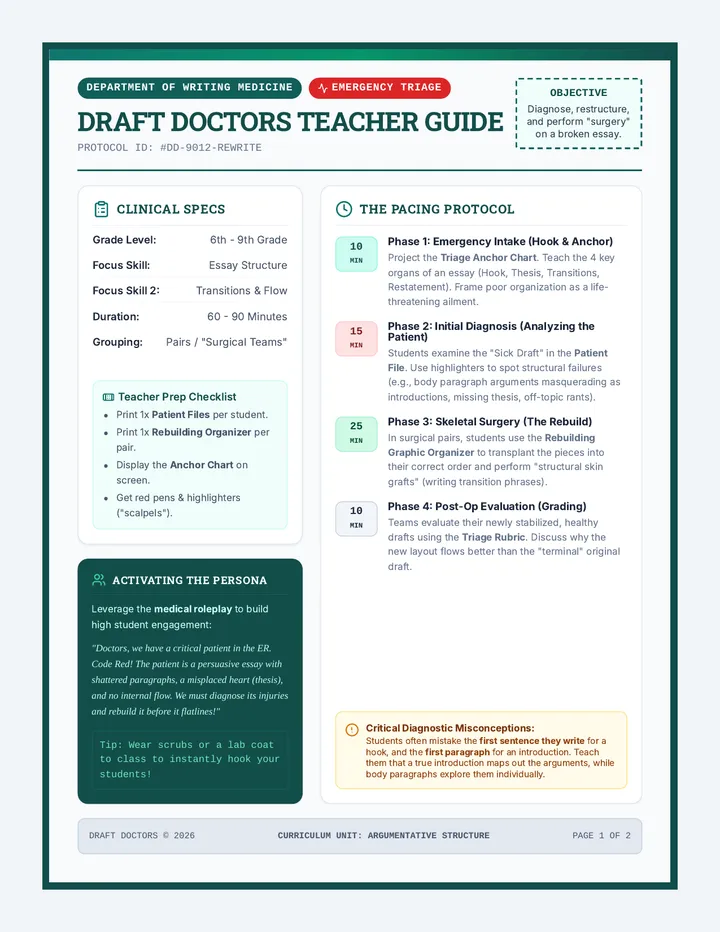
A comprehensive teacher facilitation guide for the Legend Lab project, including a pacing guide, success criteria rubric, and instructional tips. Optimized for single-page printing.
A two-page storyboard and scripting template for students to organize the narration and visual elements of their biography video project. Revised for clean page breaks and improved workspace legibility.
A single-page structured research worksheet for 6th-grade students to identify and provide evidence for three extraordinary traits of their chosen biography subject. Optimized for handwriting and legibility.
A clear, visually engaging project directions document for a 6th-grade biography video project, featuring a laboratory/blueprint theme with step-by-step instructions. Revised to ensure single-page fit.
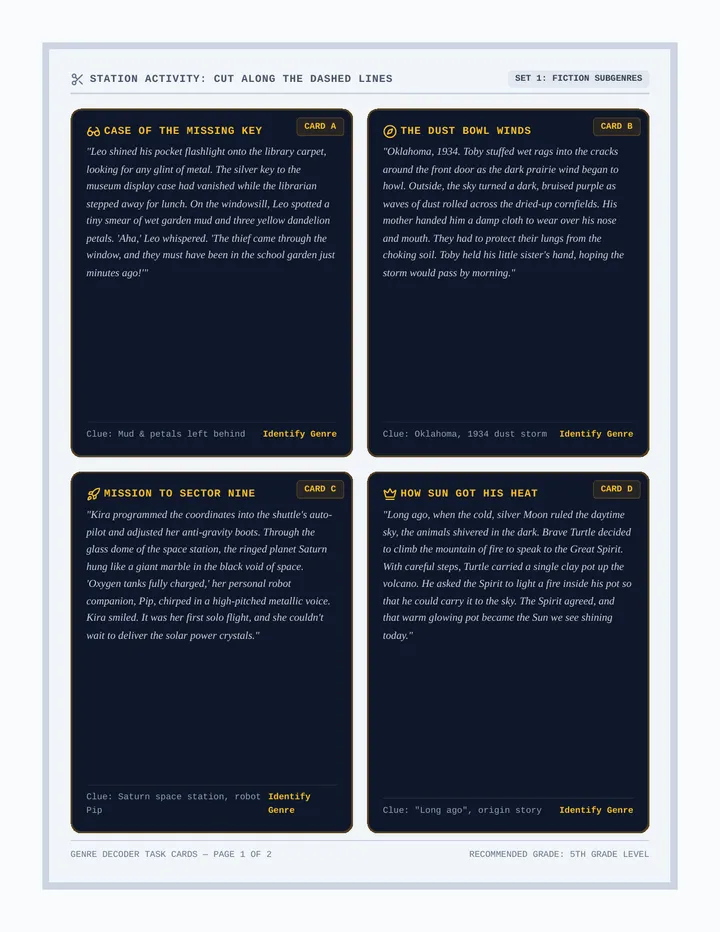
An updated detective-themed slide deck for a 6th-grade inferencing lesson. All specific clues and hints have been removed from the slides to allow students to find evidence independently.
A comprehensive answer key and teacher facilitation guide for the Case Files Worksheet. Includes correct answers, evidence examples, and teaching notes for scaffolding inferencing skills.
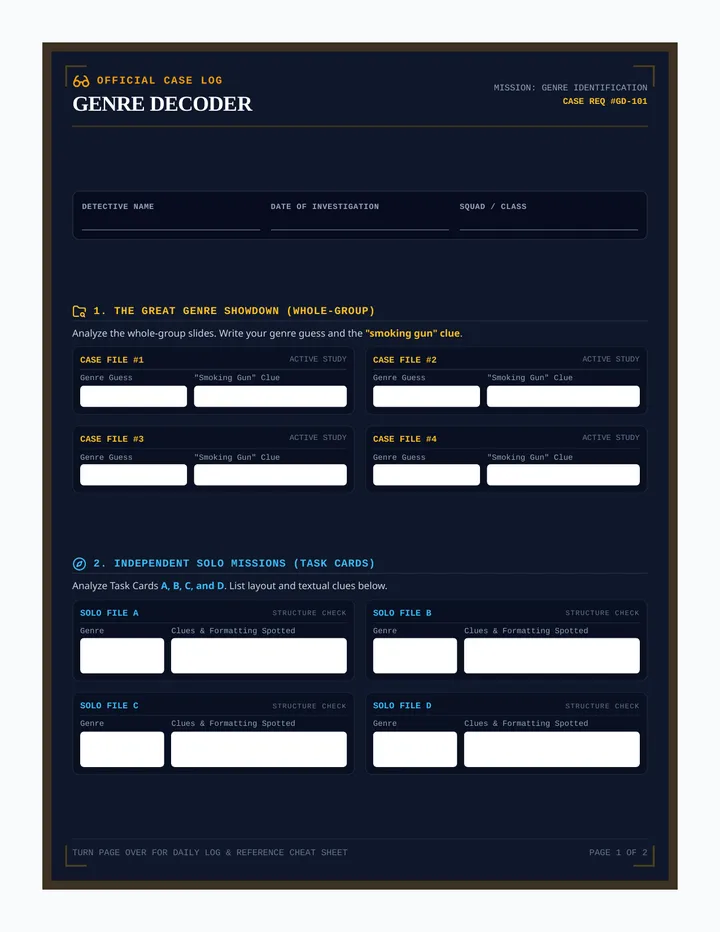
A 6th-grade inferencing worksheet featuring three mystery-themed passages with multiple-choice questions and text evidence tasks. Includes structural scaffolds and lined writing areas to help students connect facts with background knowledge.
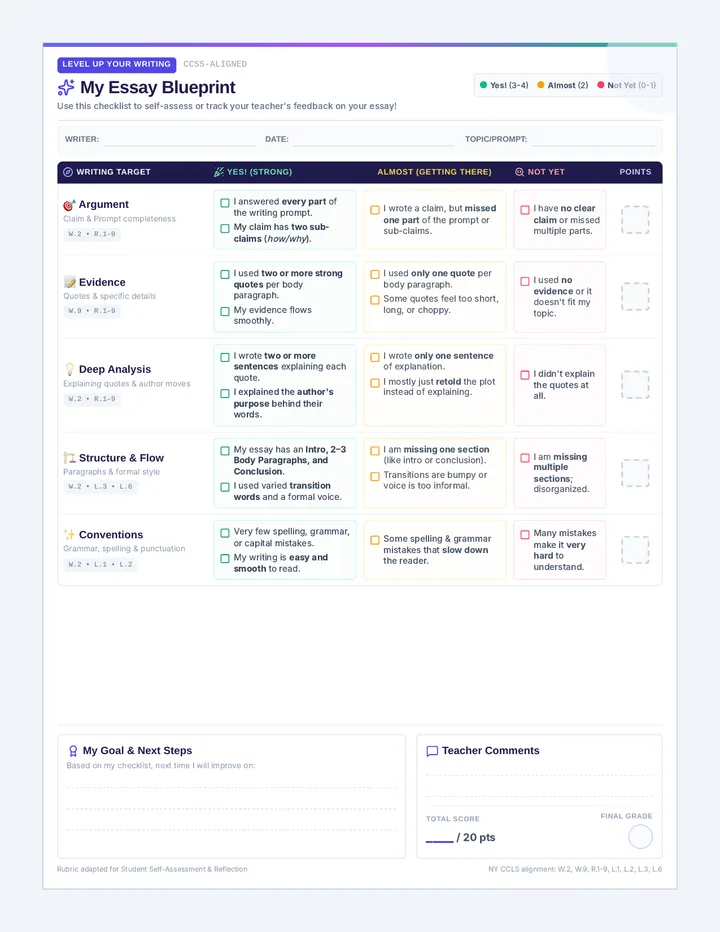
A visual anchor chart explaining the T.E.X.T. strategy (Topic, Evidence, eXplain, Tie it together) for evidence-based writing, styled with the Heroic Havoc comic theme.
An opinion-based writing prompt challenge where students evaluate whether Pulse or Root would be the better leader for a superhero team, supported by textual evidence and the T.E.X.T. strategy.
A facilitation guide for teachers to lead the Paper Trails collaborative writing activity, including pacing, prep, and differentiation strategies.
A visually engaging slide deck to guide students through the three 10-minute rounds of the Paper Trails collaborative writing sprint.
A set of six creative writing prompts categorized by genre to help students jumpstart their collaborative stories.
A three-part collaborative writing worksheet designed for 10-minute sprints, providing significantly expanded space for three different student writers to contribute to a single story.
A comprehensive student workbook for humorous story writing, including a structured graphic organizer (The Gag Reel) and a thematic manuscript area for drafting.
A comprehensive facilitation guide for the Funny Business Workshop, featuring pedagogical strategies for teaching comedy, avoiding offensive humor, and pacing the lesson effectively.
A vibrant and energetic slide deck introducing comedic writing techniques such as the Rule of Three, hyperbole, and character archetypes for middle school students.
A collection of bold-outlined symbols from Tuck Everlasting—including the spring water bottle, toad, wheel, and thank you note—designed for student coloring and creative projects.
A visual one-pager template featuring four distinct 'compartment' frames for students to draw the key symbolic items of Winnie Foster's memory box.
Detailed summaries of poems from 'The Red Pencil' by Andrea Davis Pinkney (Reading Part 2), following the format of Part 1. Each poem features a short summary focused on key plot points and character development for 6th-grade students.
Instructional guidance, implementation tips, and a scoring rubric for the 'Memory Box' final project.