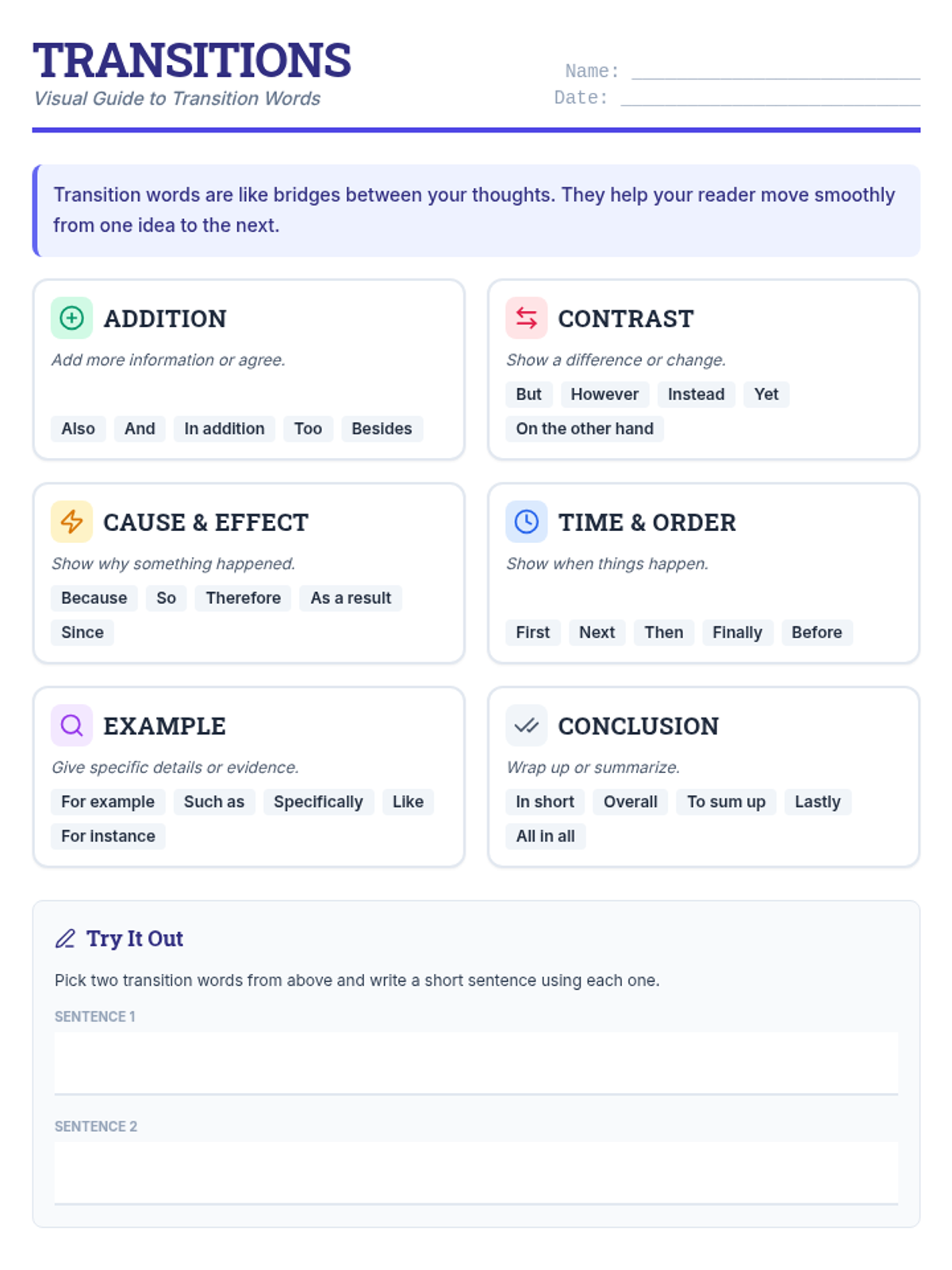
A visual reference sheet for 9th-grade students providing simplified definitions, icons, and categorized lists of transition words. Designed for high student support. Revised to fit one page.
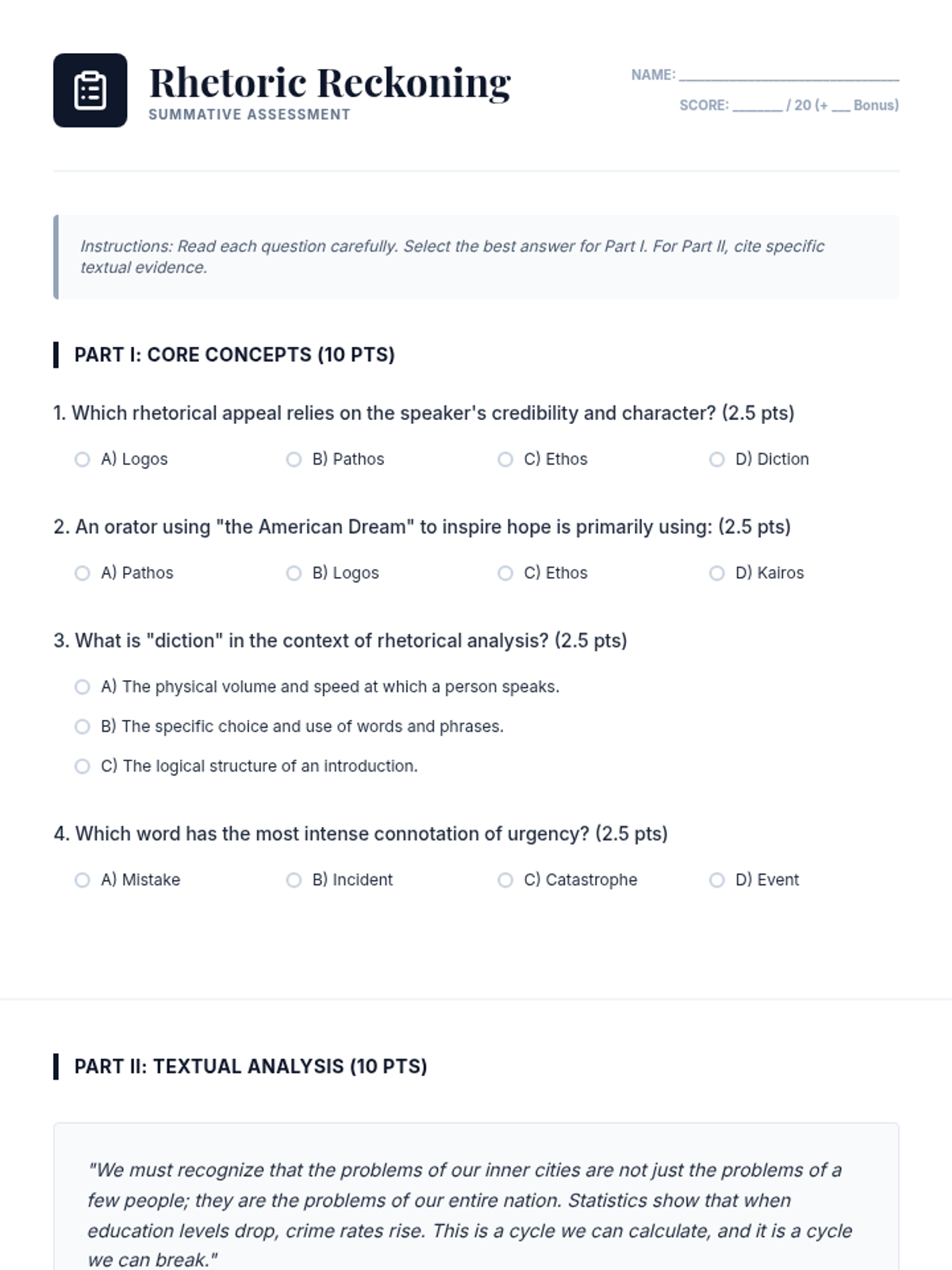
A high school level quiz revised to fix page breaks, correct inconsistent point values, and provide larger student response areas for analysis.
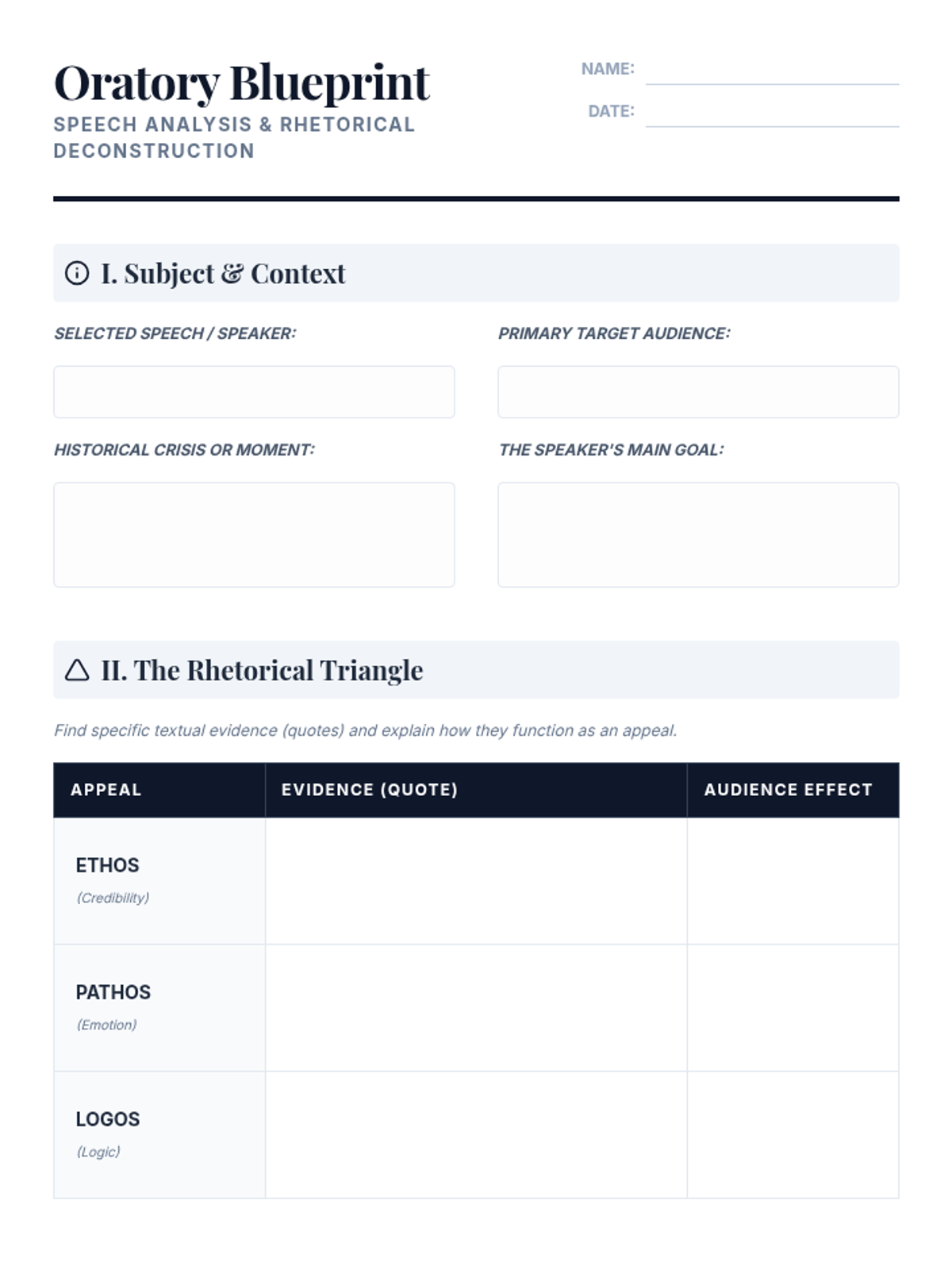
A structured worksheet for high school students to analyze a historical speech. Revised to fix a typo, expand student work areas, and better utilize the layout.
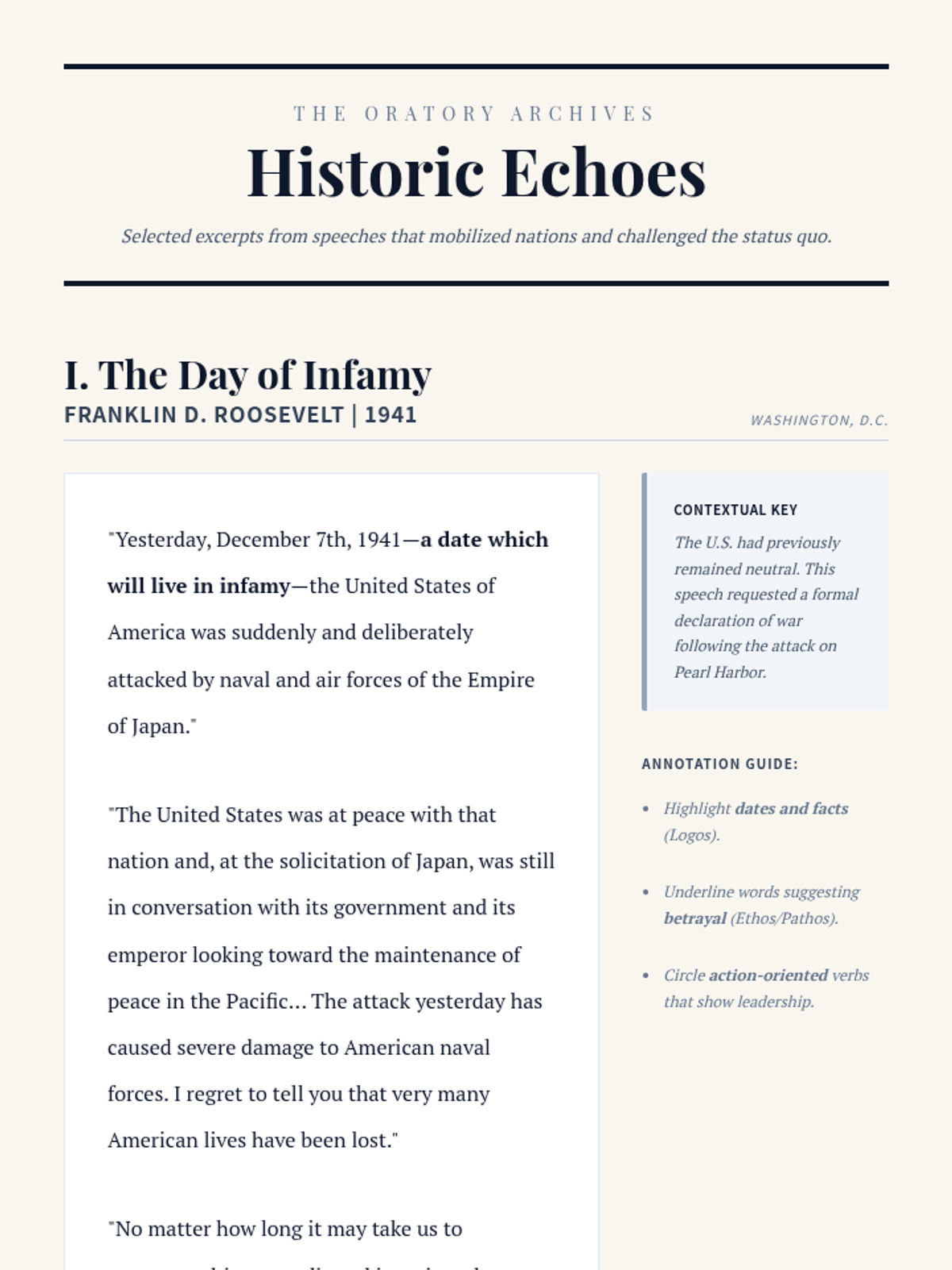
A reading collection featuring excerpts from FDR, Dr. King, and Shirley Chisholm. Revised for consistent page breaks, annotation guides for every speech, and grammatical corrections.
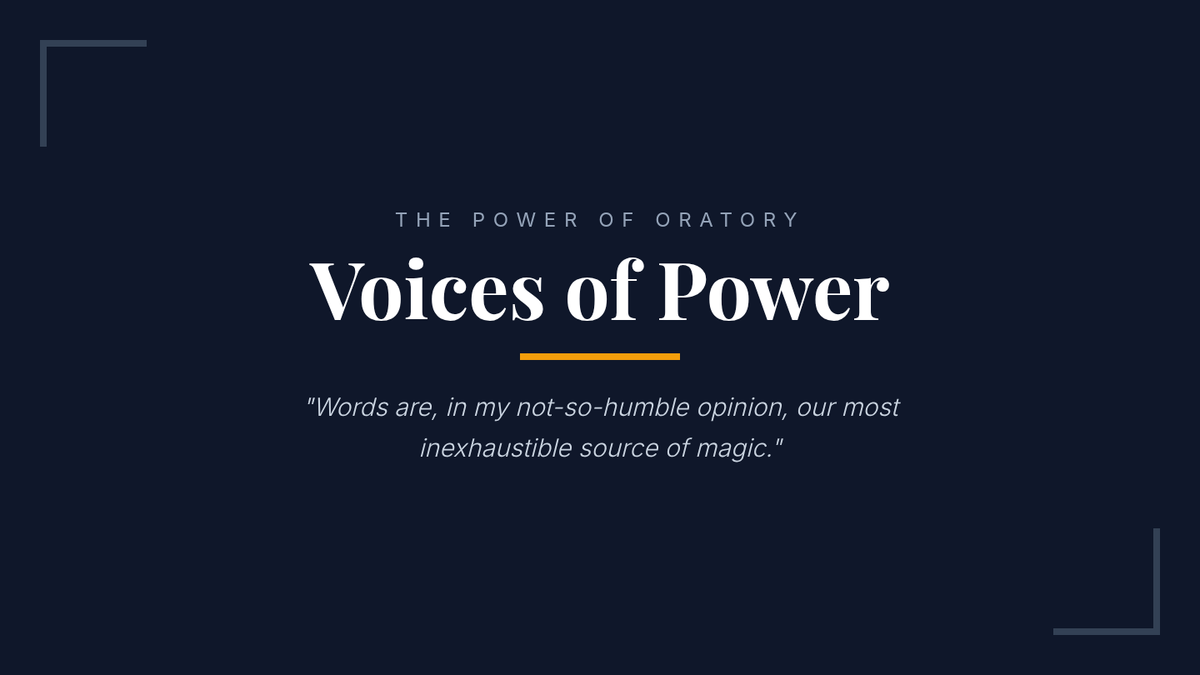
A visually striking slide deck for high school students, introducing the rhetorical triangle (Ethos, Pathos, Logos) and the importance of diction in historical speeches. Includes definitions, historical examples, and discussion prompts.
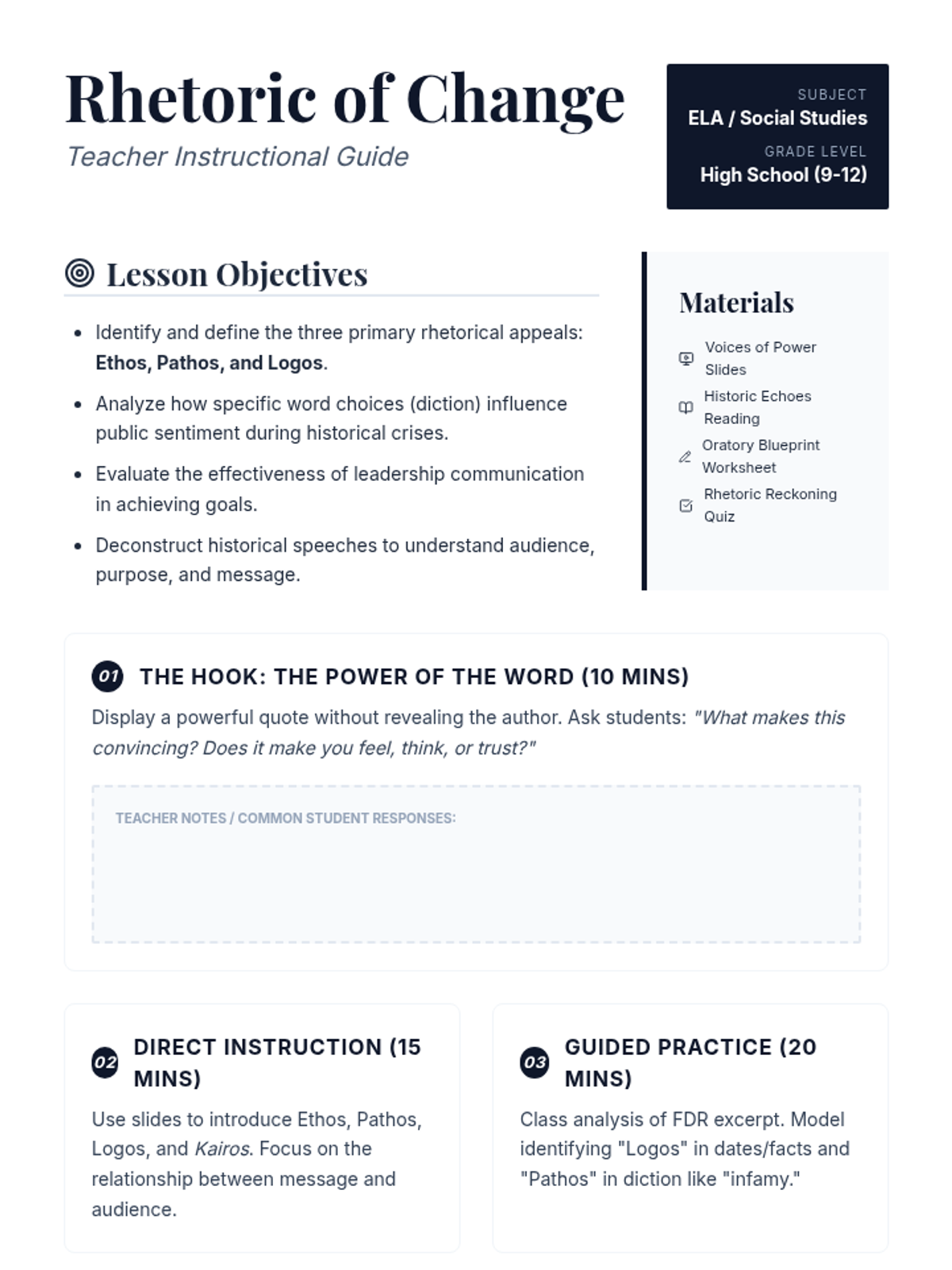
A comprehensive teacher guide for the Rhetoric of Change lesson, including objectives, a detailed instructional sequence, differentiation strategies, and historical context notes. Revised to improve page breaks and teacher workspace.
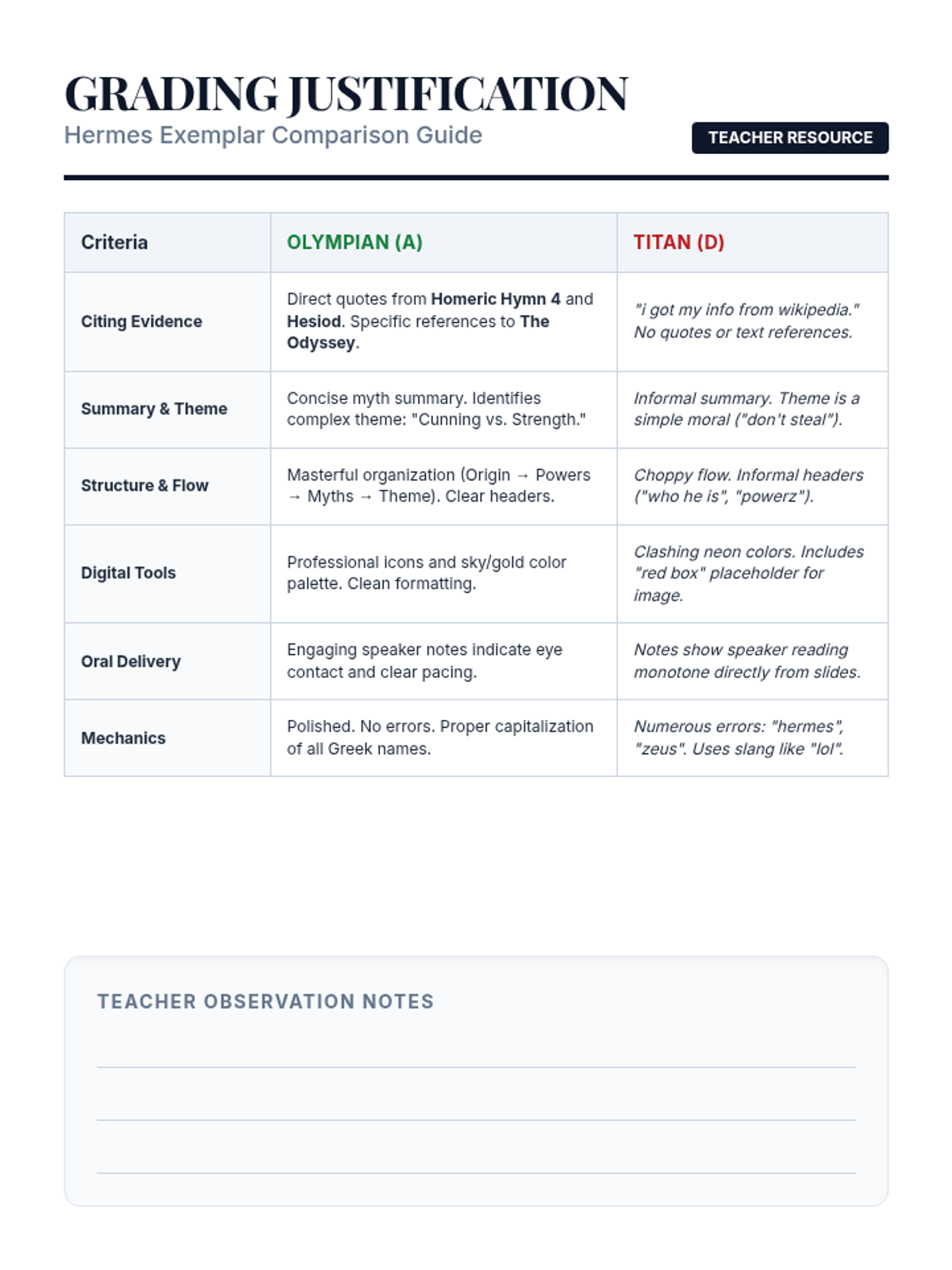
A teacher-facing guide that justifies the grades for the Olympian and Titan exemplars using the provided rubric, complete with discussion prompts for student analysis.
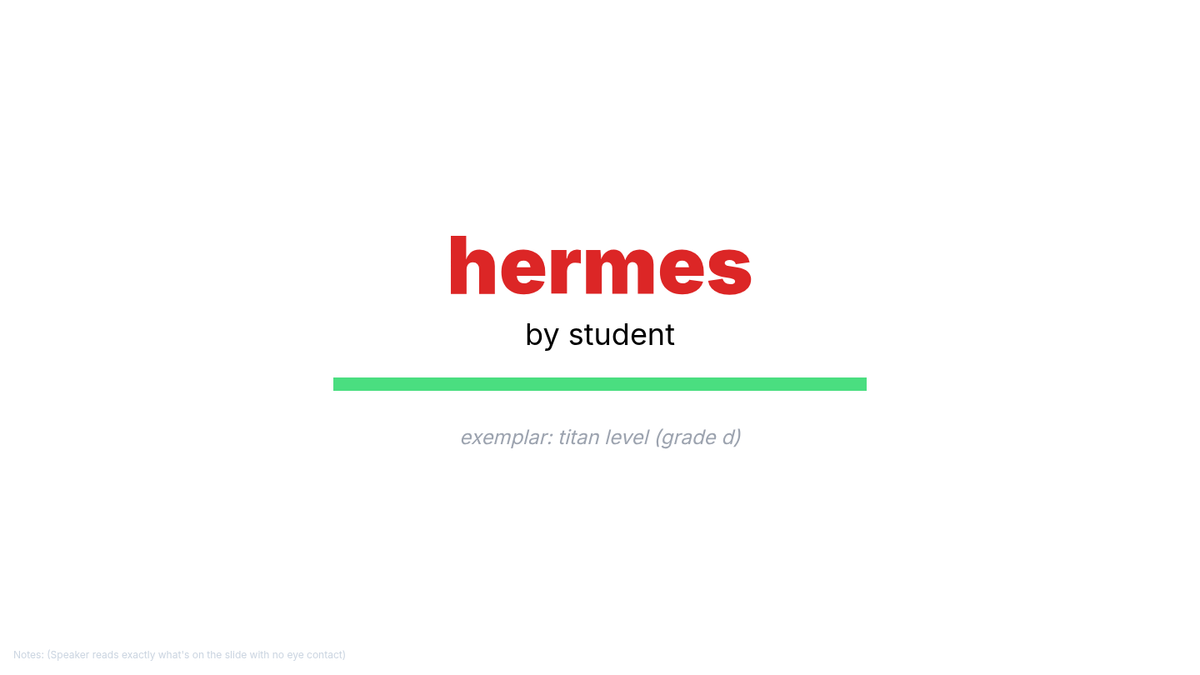
A low-achieving (D) exemplar presentation on the Greek god Hermes, featuring poor organization, lack of evidence, informal language, spelling errors, and minimal effort in design.
An updated high-achieving (A) exemplar presentation on Hermes, now including an embedded multimedia video summary to demonstrate mastery of digital tools.
A copy of the visual transition words reference sheet, titled 'Transitions'. Designed for 9th-grade students with high support needs.
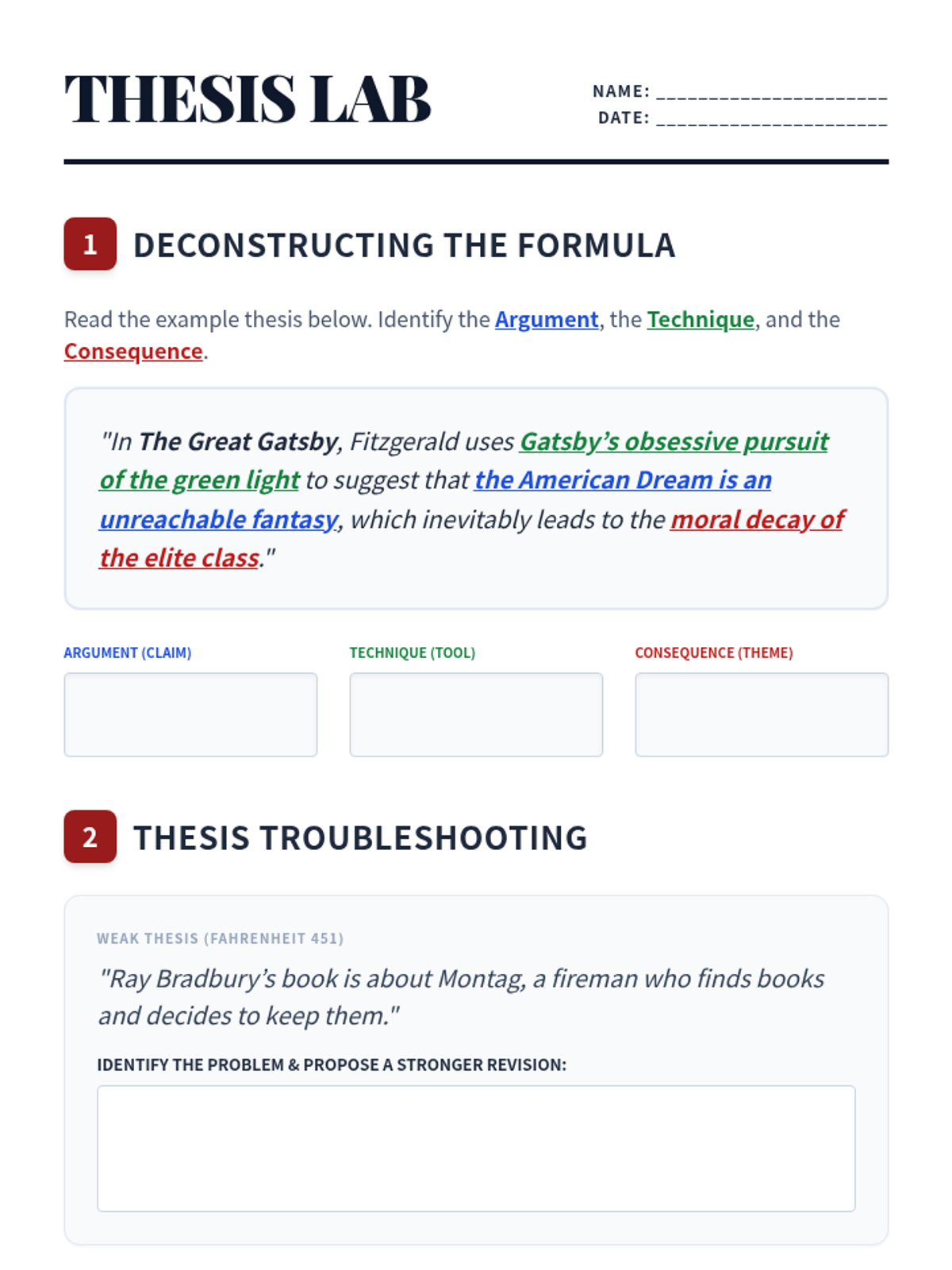
A student-facing worksheet for practicing the identification and drafting of thesis statements. Includes 'troubleshooting' exercises and prompt-based drafting areas.
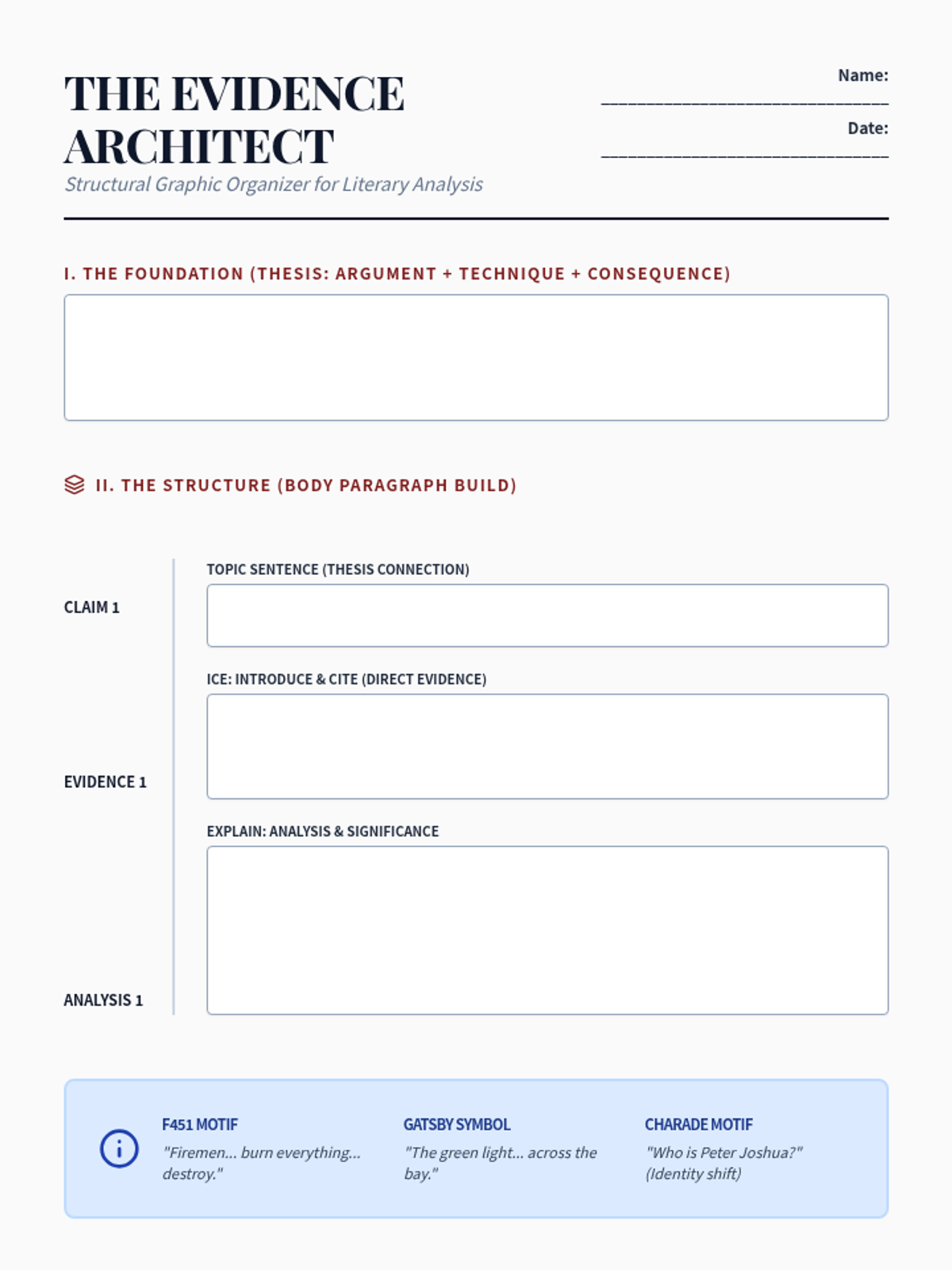
A structured graphic organizer for students to architect their literary analysis essays, providing clear sections for claims, evidence, and analysis using a 'building' metaphor.
Instructional slides for teaching literary analysis, featuring the ATC thesis formula and the ICE method for evidence integration with examples from Fahrenheit 451 and Charade.
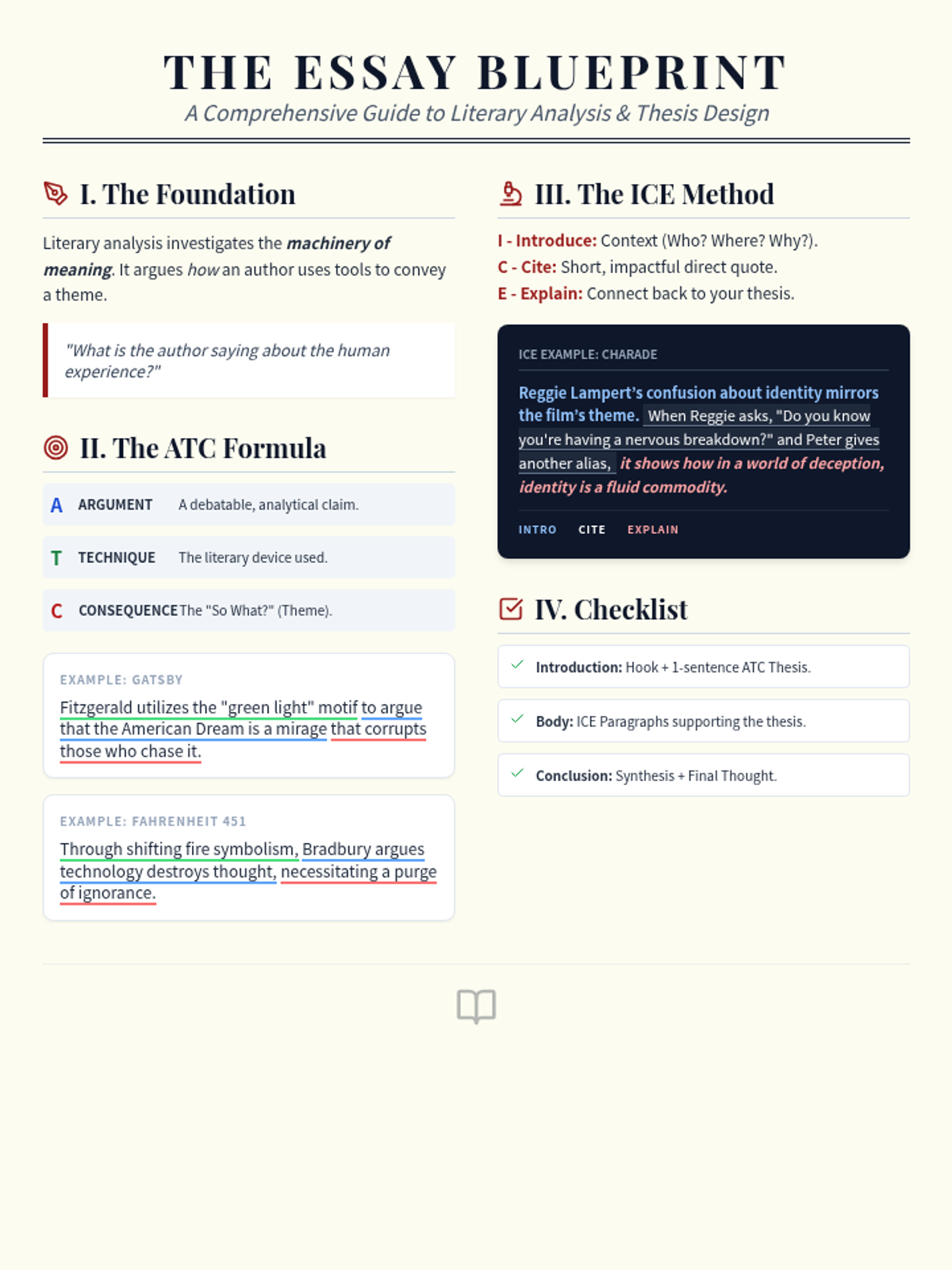
A comprehensive writing guide that breaks down the components of a literary essay, provides the 'ATC' formula for thesis statements, and uses examples from The Great Gatsby, Fahrenheit 451, and Charade.
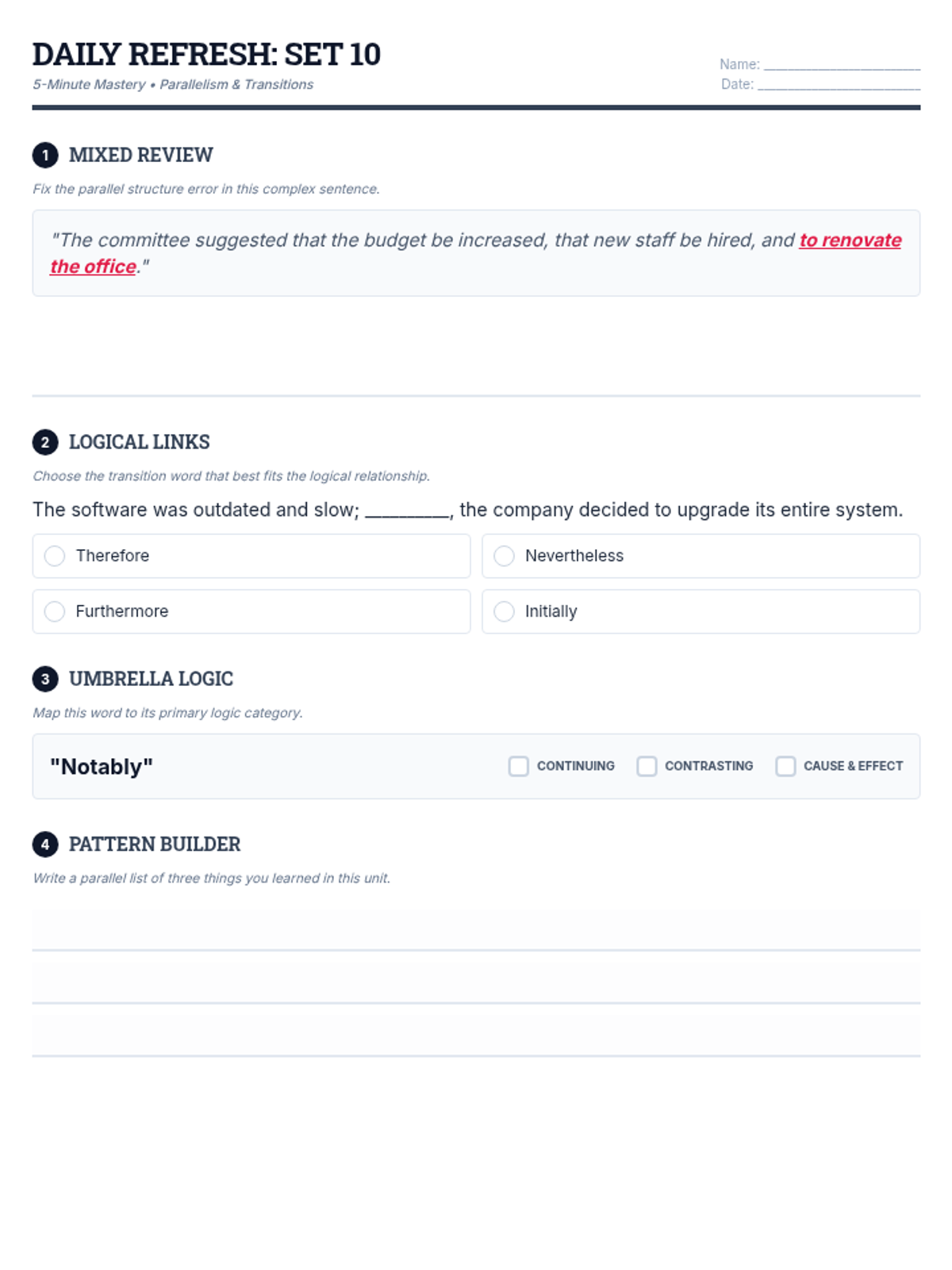
The final in a series of 10 5-minute 'do-now' tasks for students to practice parallel structure and transition words. Includes a mixed review of all skills. Revised for answer choice uniformity and spacing.