A comprehensive answer key with visual diagram solutions, featuring corrected Reed-Kellogg structures for complex sentences and prepositional phrases.
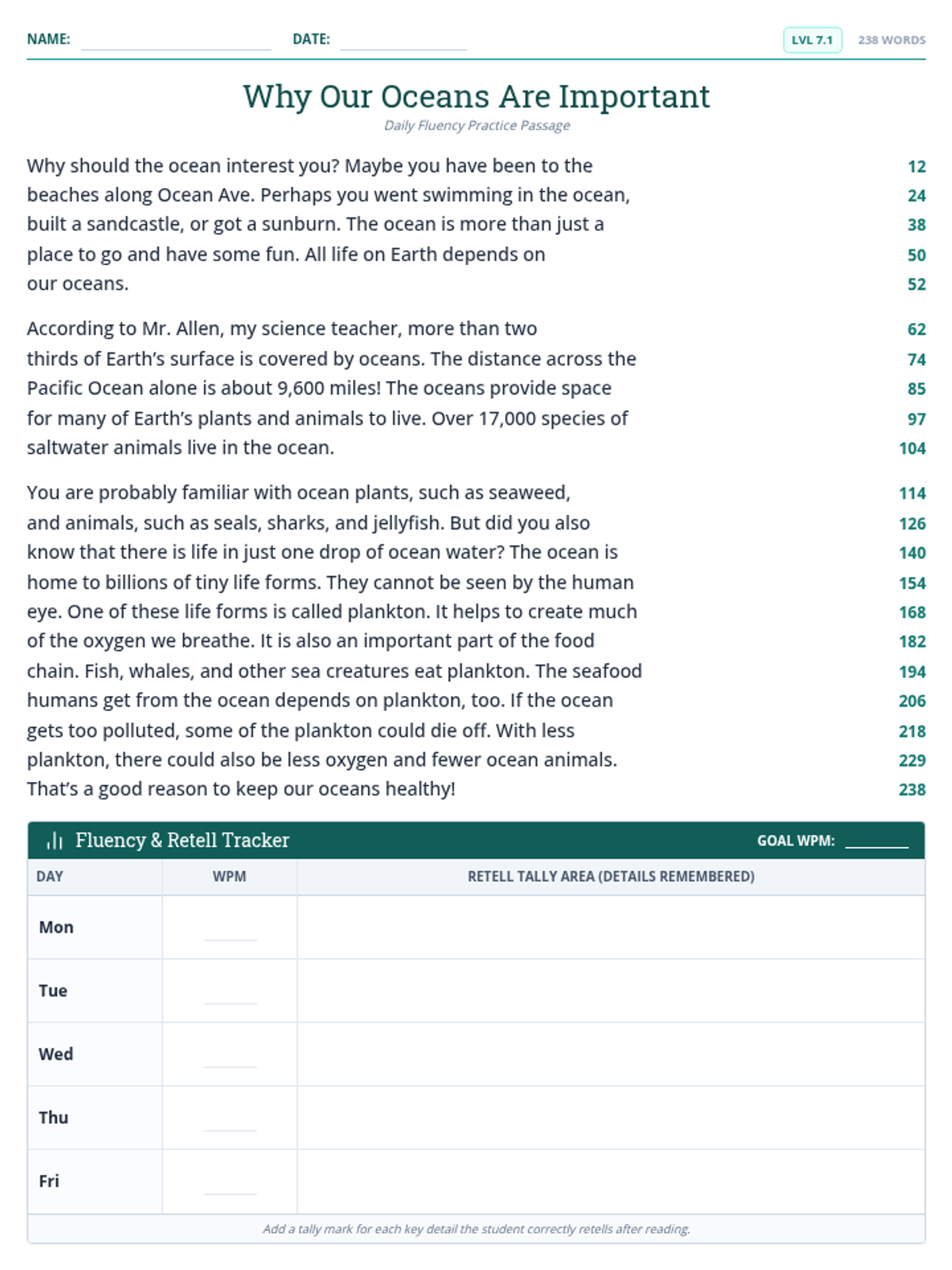
A fluency tracking document featuring an informational passage about oceans. It includes cumulative word counts at the end of each text line and a weekly tracking table with a blank retelling tally area.
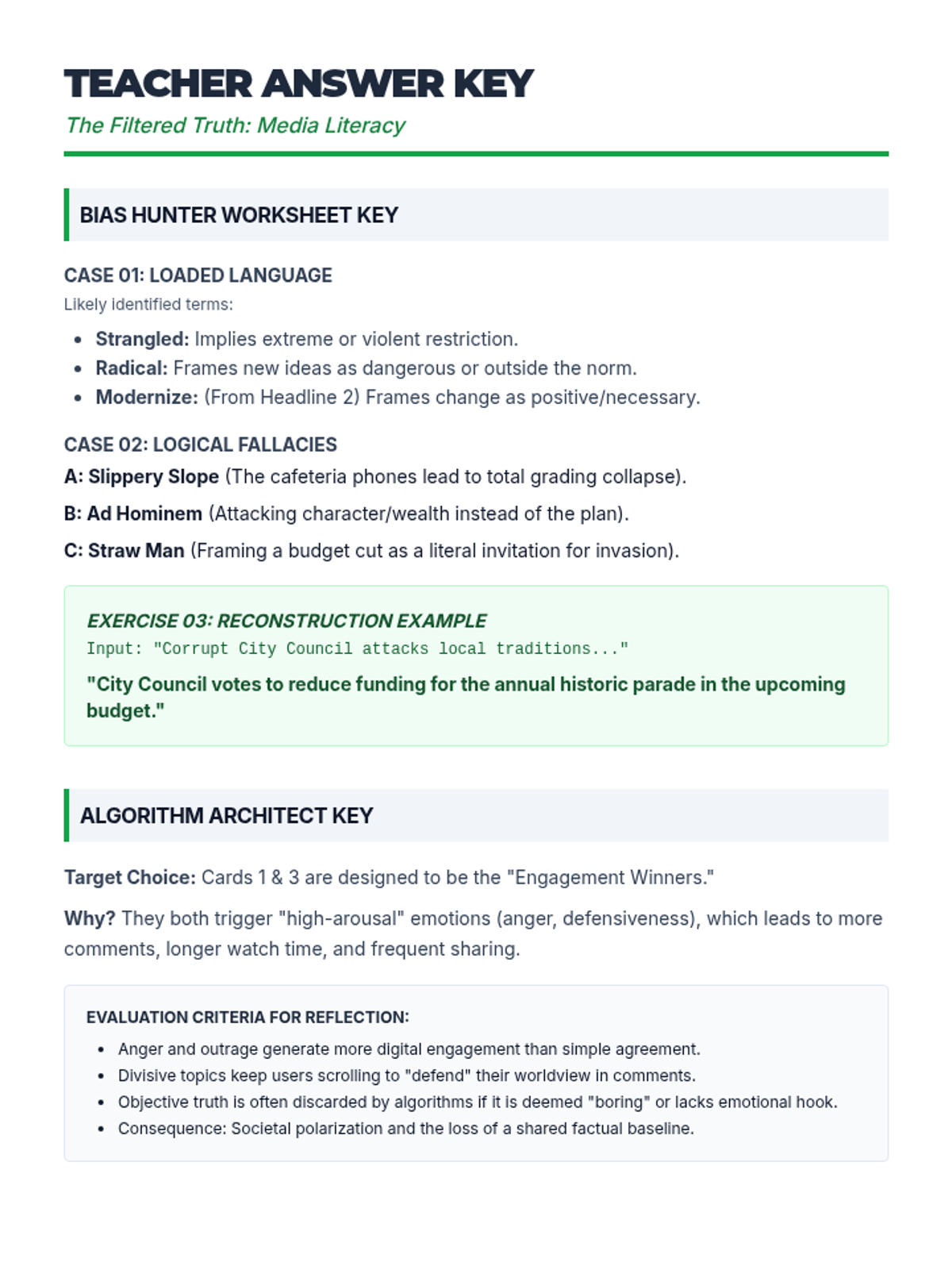
A teacher answer key for the Bias Hunter Worksheet and Algorithm Architect Activity, updated for layout efficiency and content clarity.
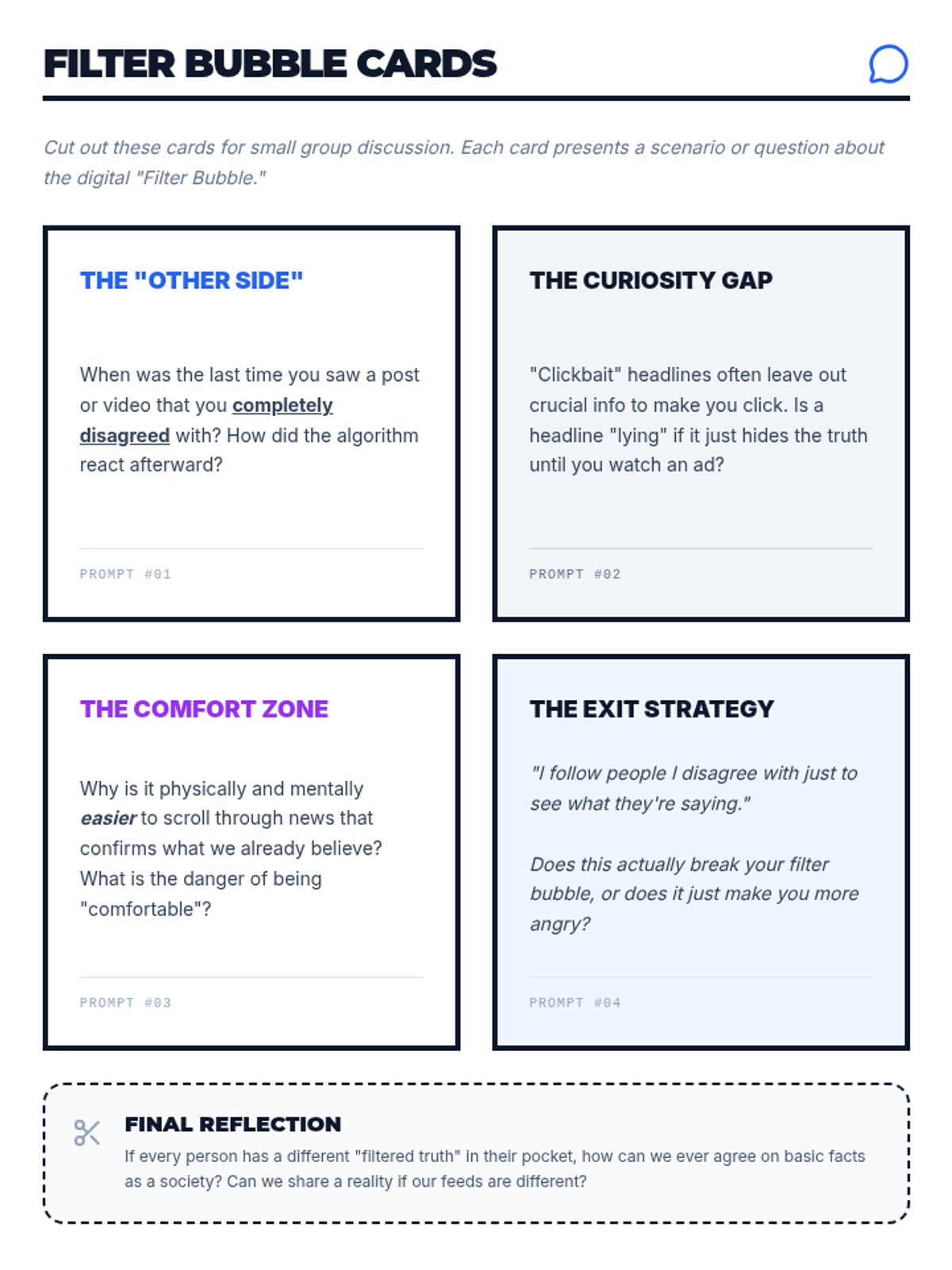
Small-group discussion cards designed to spark dialogue about the filter bubble, updated to fit on a single page for easier printing.
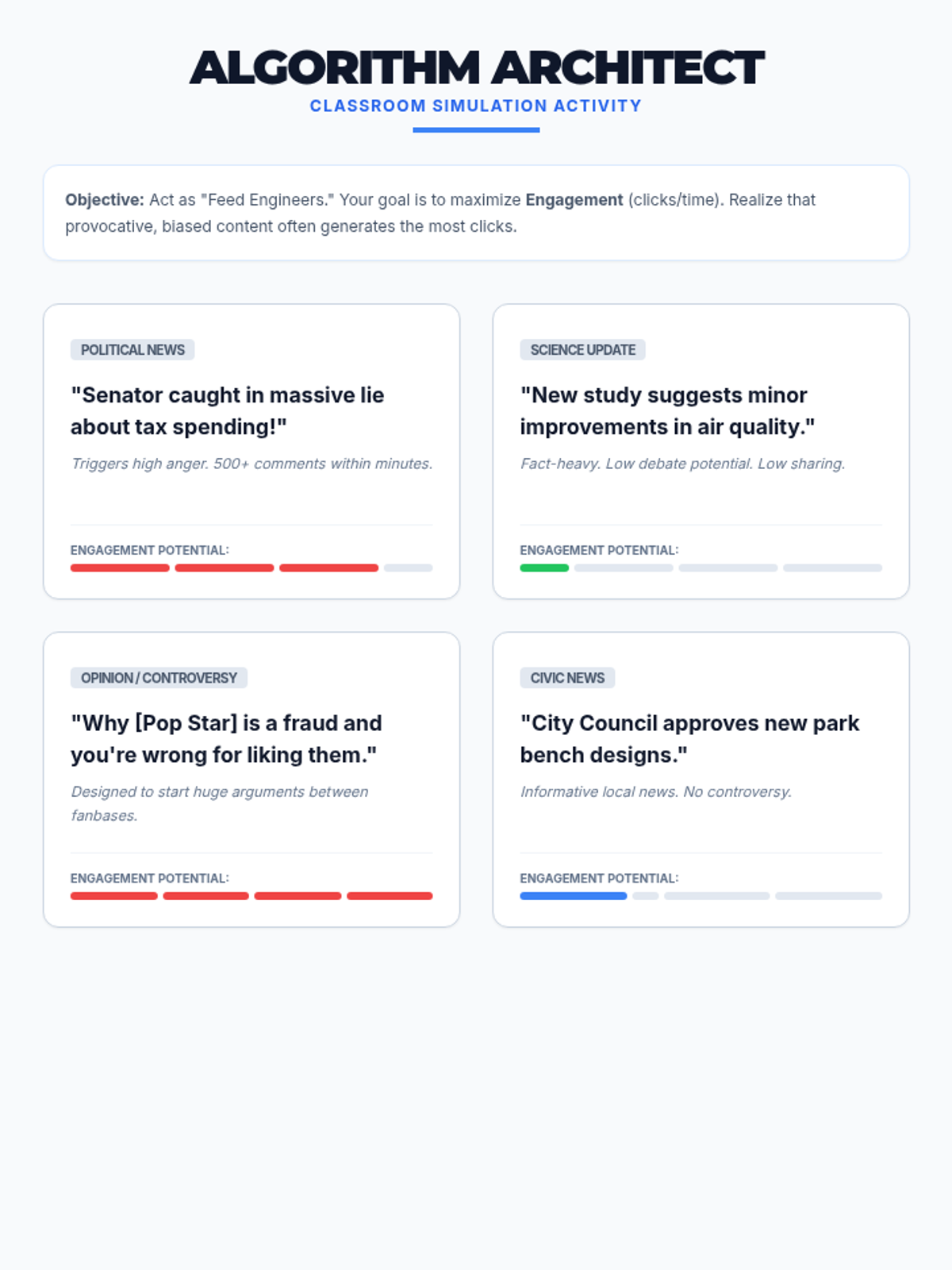
A printable classroom activity where students simulate a social media algorithm, updated with improved page flow and deeper response areas.
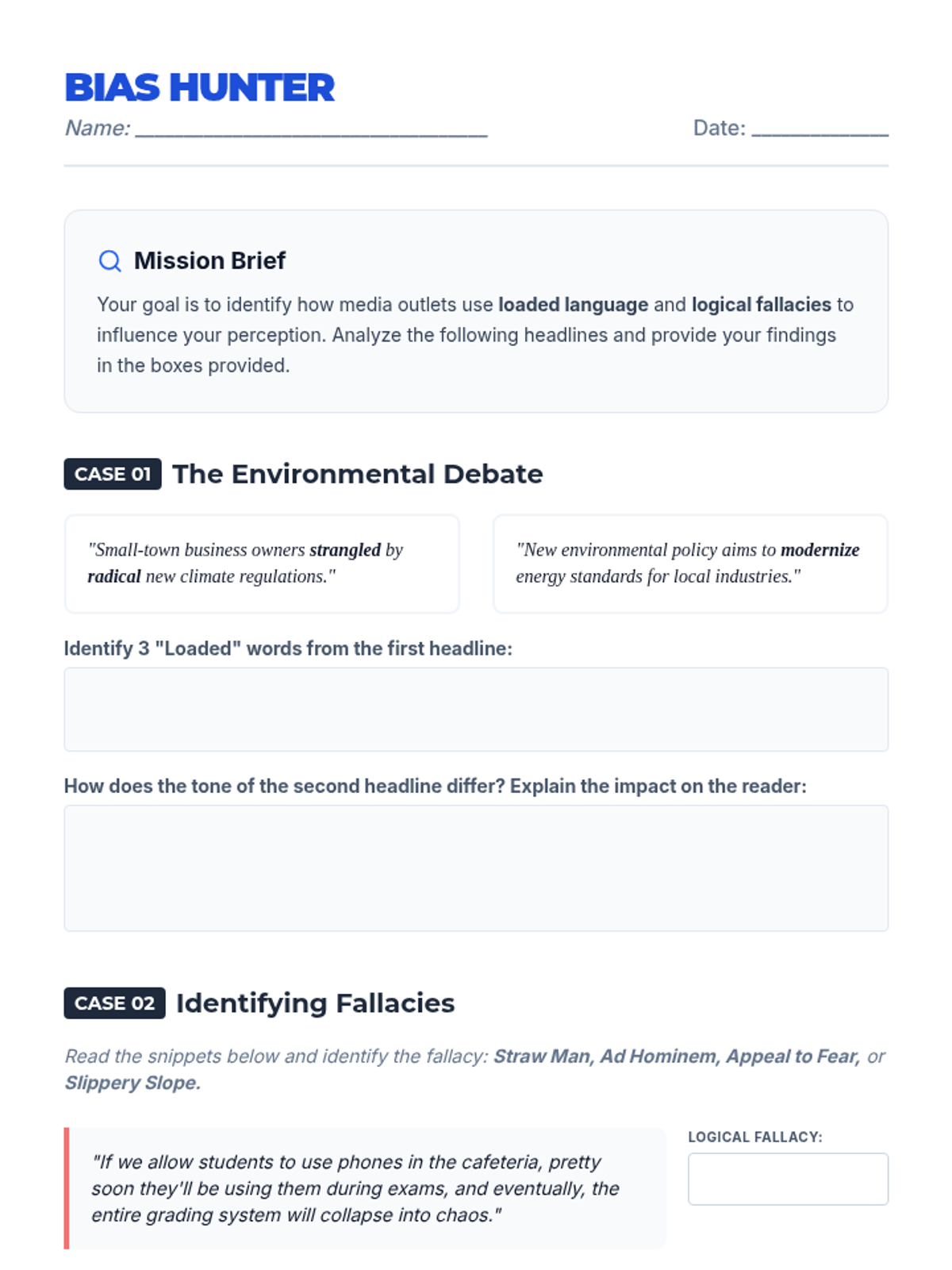
A worksheet for 9th graders to identify loaded language and logical fallacies in news headlines, updated with corrected fallacy list and improved page breaks.
A dynamic slide deck for 9th graders exploring the impact of social media algorithms, the echo chamber effect, and how to identify loaded language and logical fallacies. Updated with consistent theme and corrected spacing.
A comprehensive lesson plan for 9th-grade media literacy, covering algorithms, bias, and logical fallacies with a step-by-step instructional sequence.
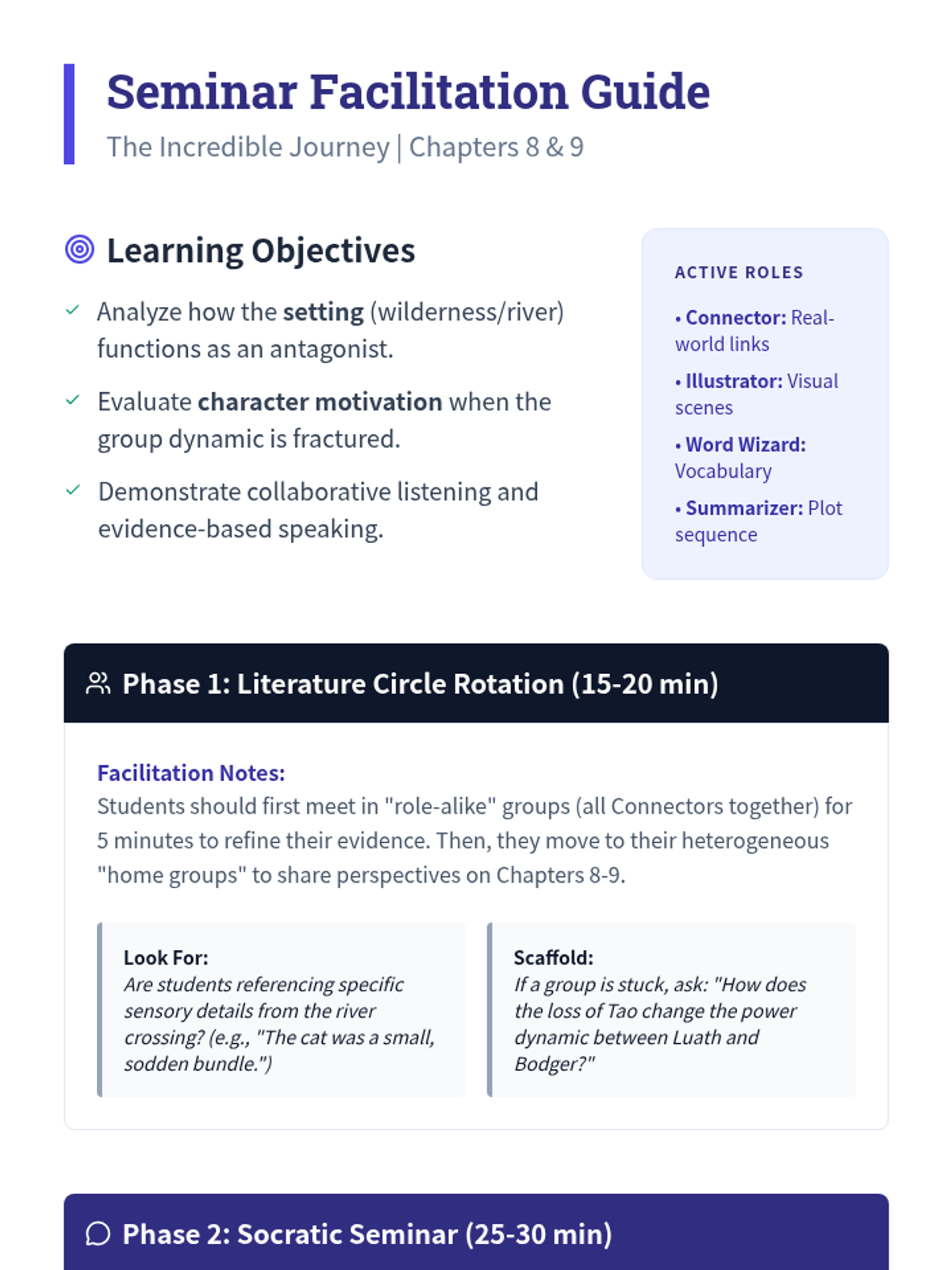
A facilitation guide for teachers to manage Literature Circles and a Socratic Seminar on 'The Incredible Journey' Chapters 8-9, including discussion prompts, objectives, and key vocabulary.
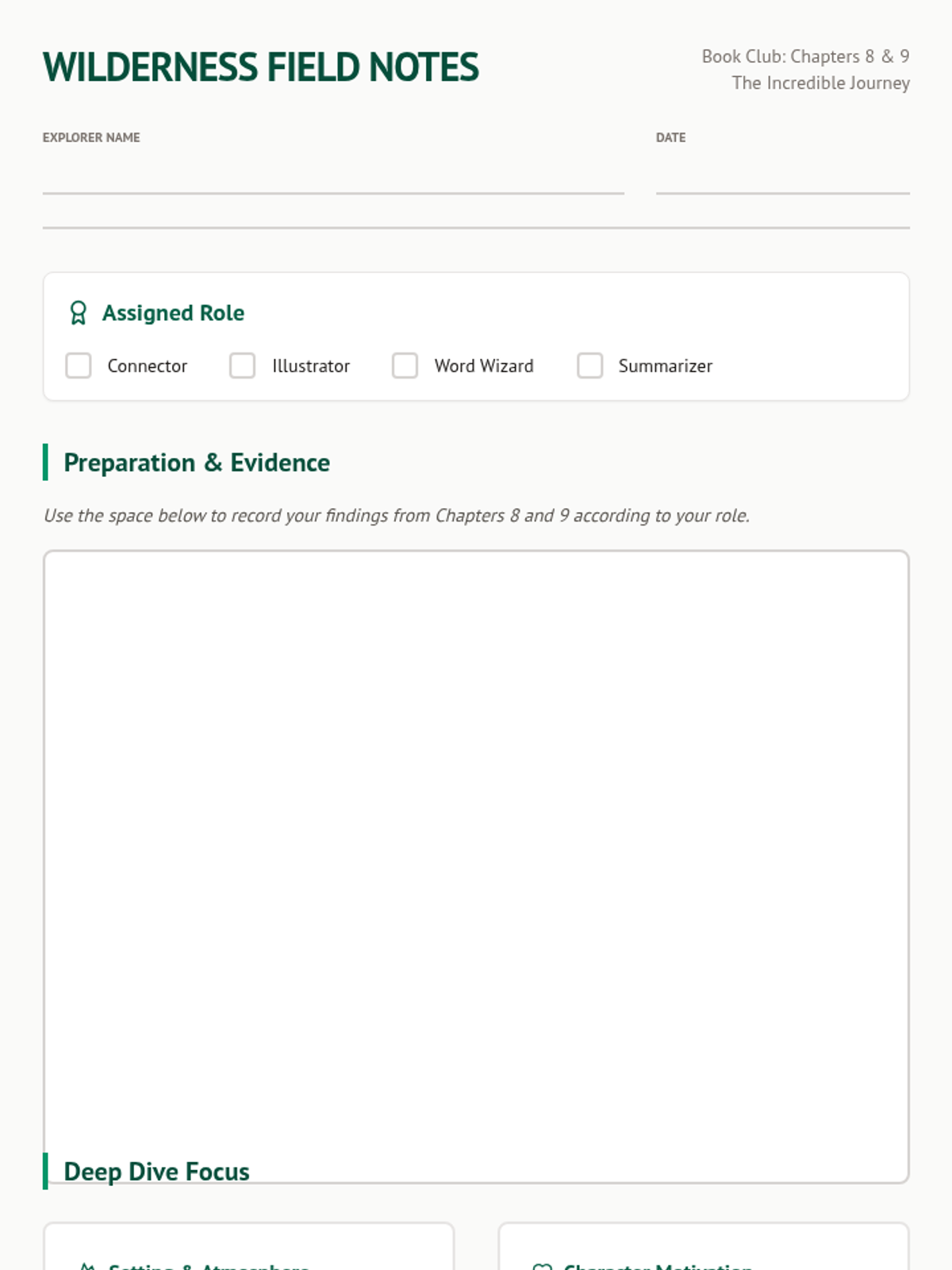
A student worksheet for Literature Circle roles and Socratic Seminar preparation, focusing on gathering evidence for character motivation and atmospheric setting.
A comprehensive slide deck for a book club discussion on 'The Incredible Journey' (Chapters 8-9), featuring a summary of previous events, character motivation analysis, and Socratic Seminar prompts focusing on setting and atmosphere.
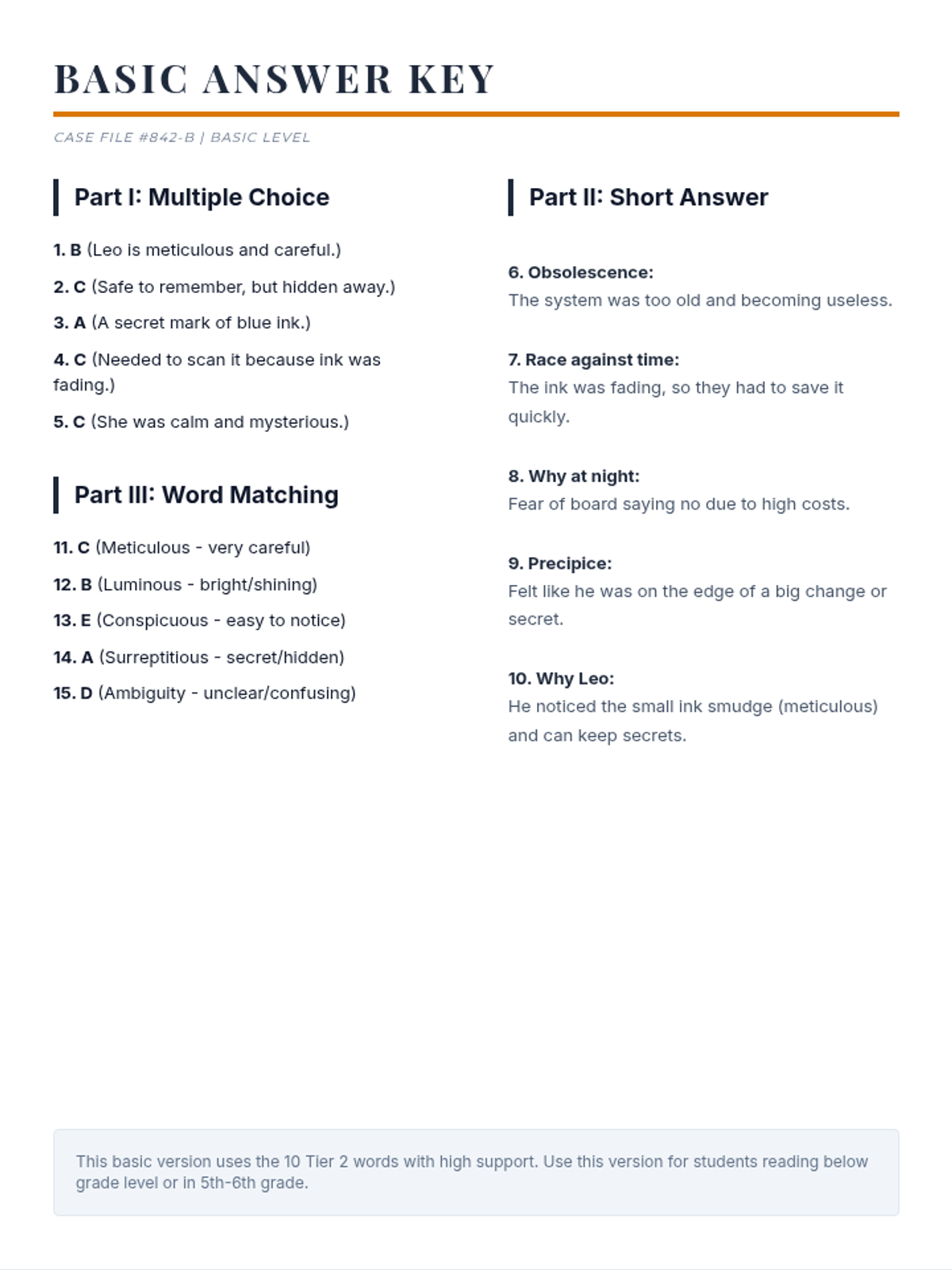
A teacher's answer key for the basic version of the 'Archive Clues' worksheet.
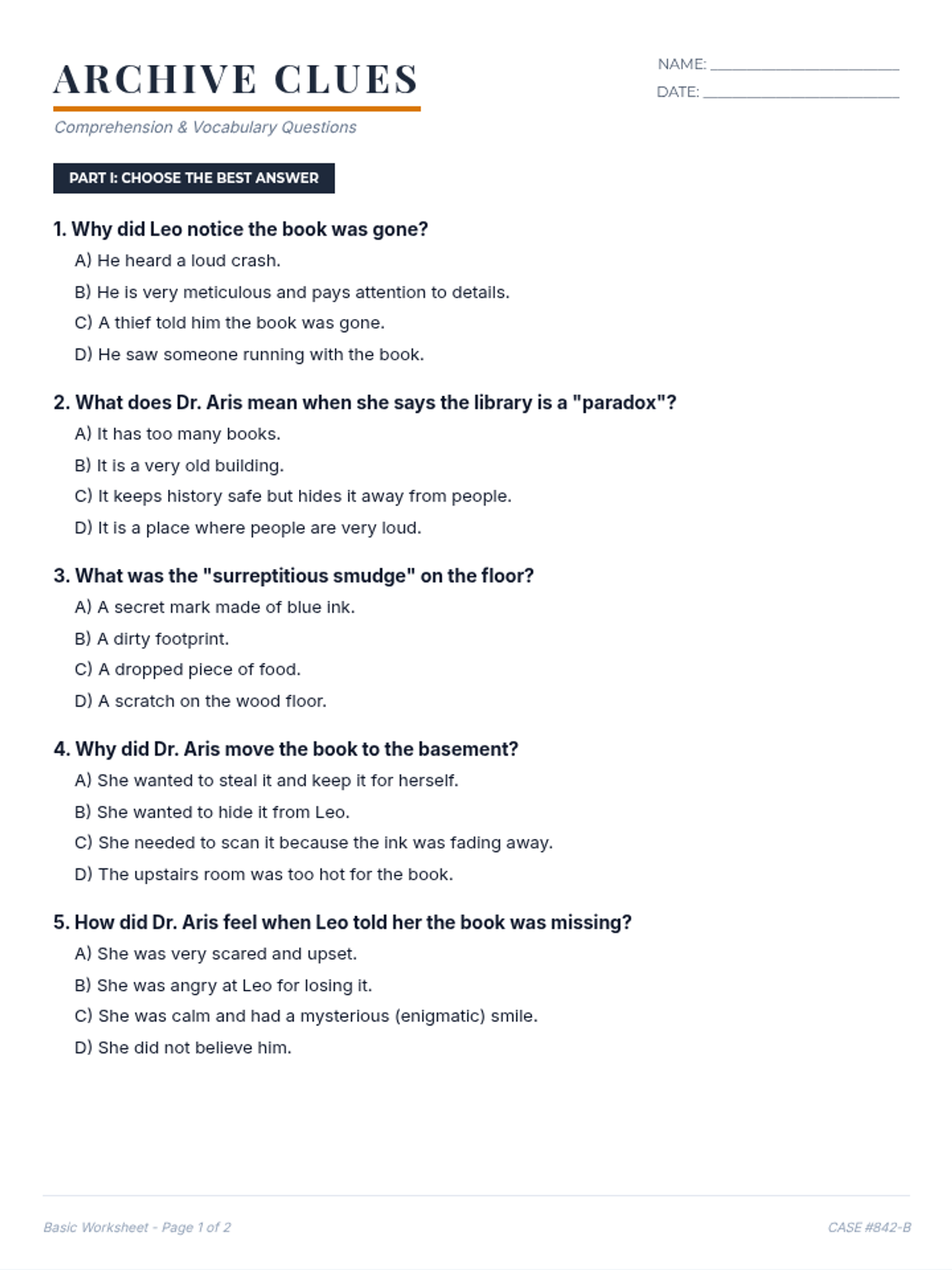
A very simple comprehension worksheet for 'The Whispering Archive', featuring simplified questions and matching for late elementary or early middle school students.
A very simple version of 'The Whispering Archive' story for late elementary or early middle school students, featuring the 10 Tier 2 vocabulary words with clear embedded definitions and direct language.
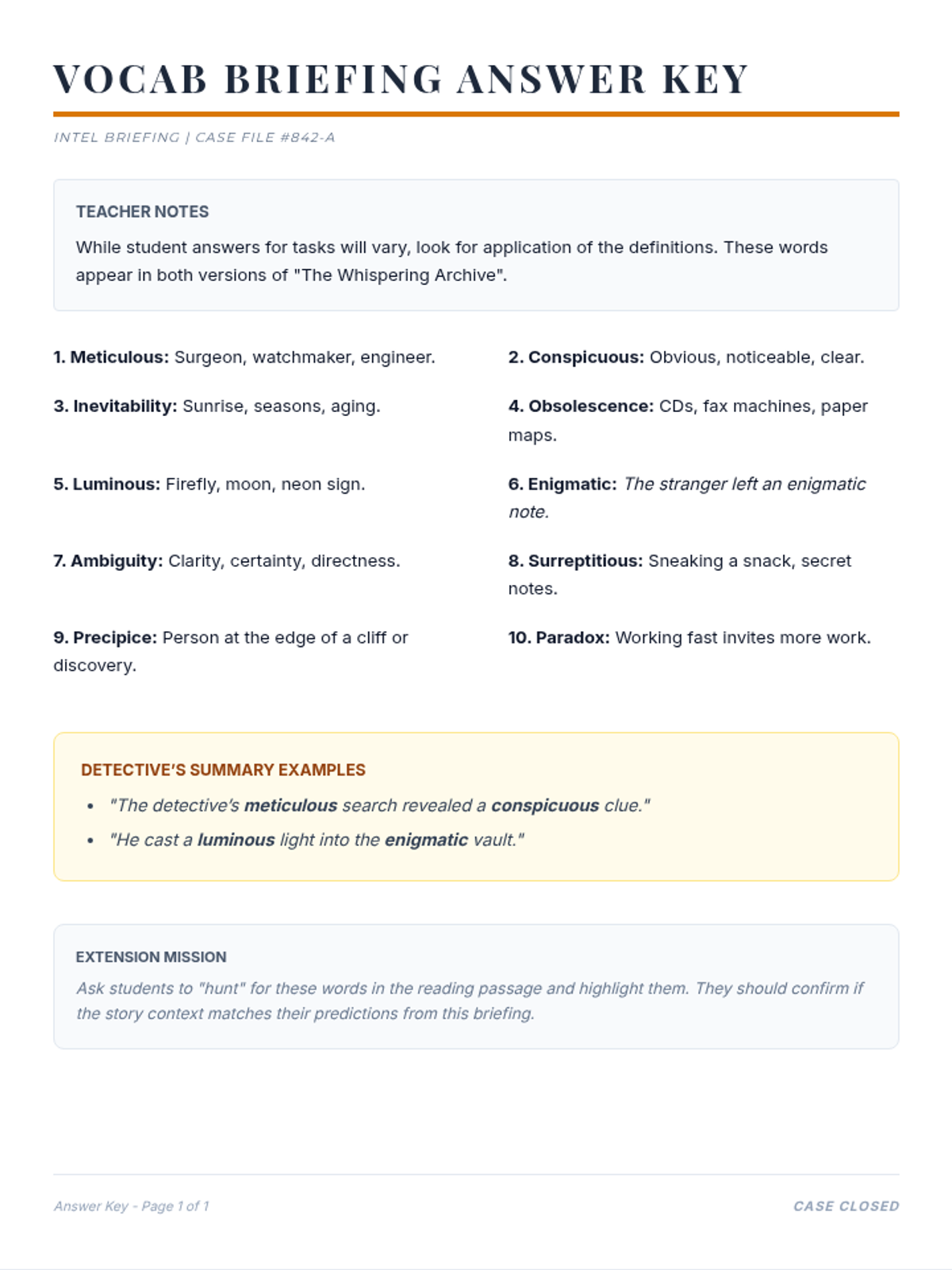
A teacher's answer key for the Archive Vocab Briefing Activity, providing suggested responses, synonyms, and teaching tips for the 10 Tier 2 words.
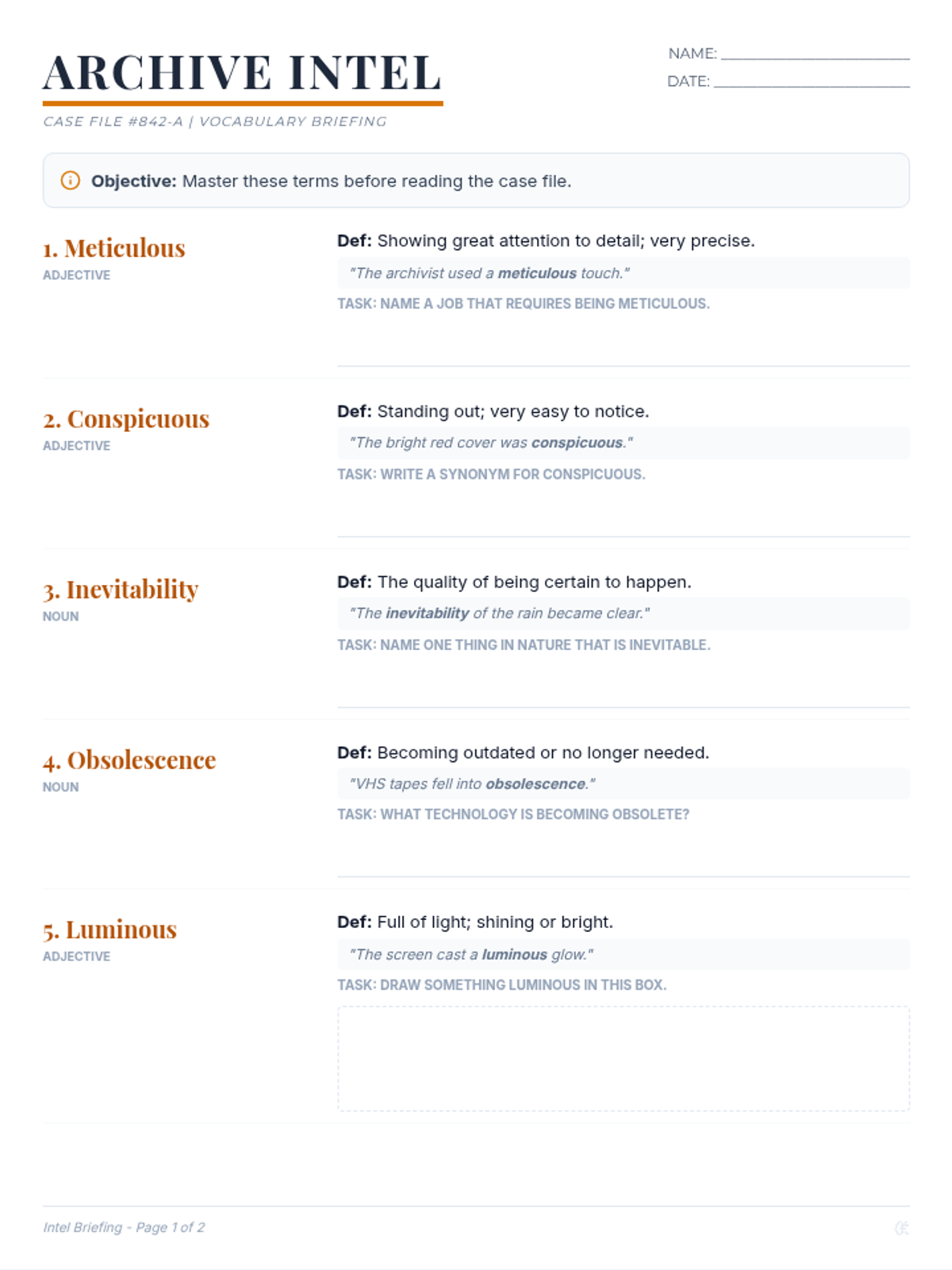
A 2-page vocabulary pre-teaching activity titled 'Archive Intel' that introduces the 10 Tier 2 words from 'The Whispering Archive' through definitions, context sentences, and quick creative tasks.
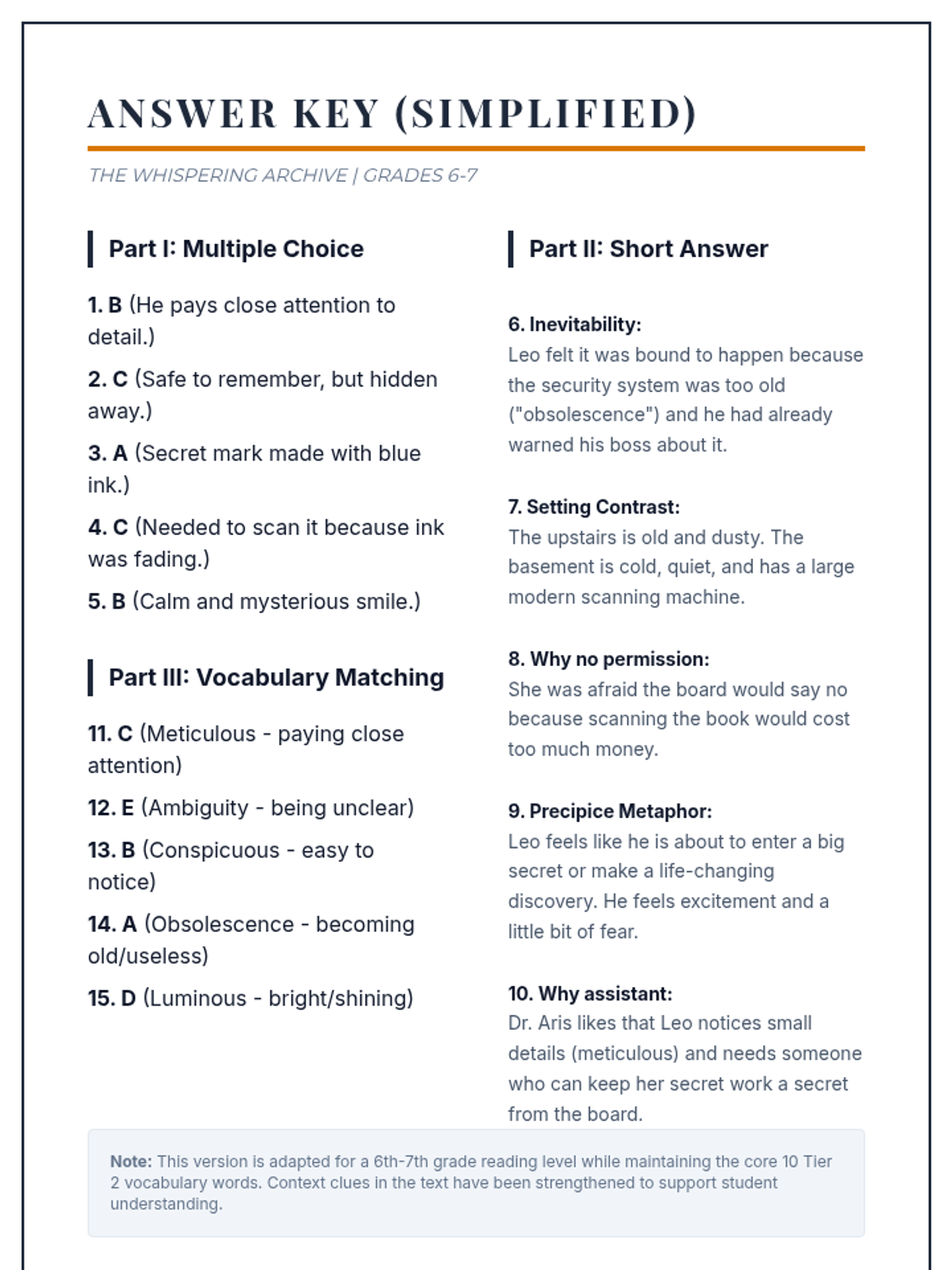
An updated teacher's answer key for the simplified 'Archive Clues' worksheet, matching the revised story content and approach.
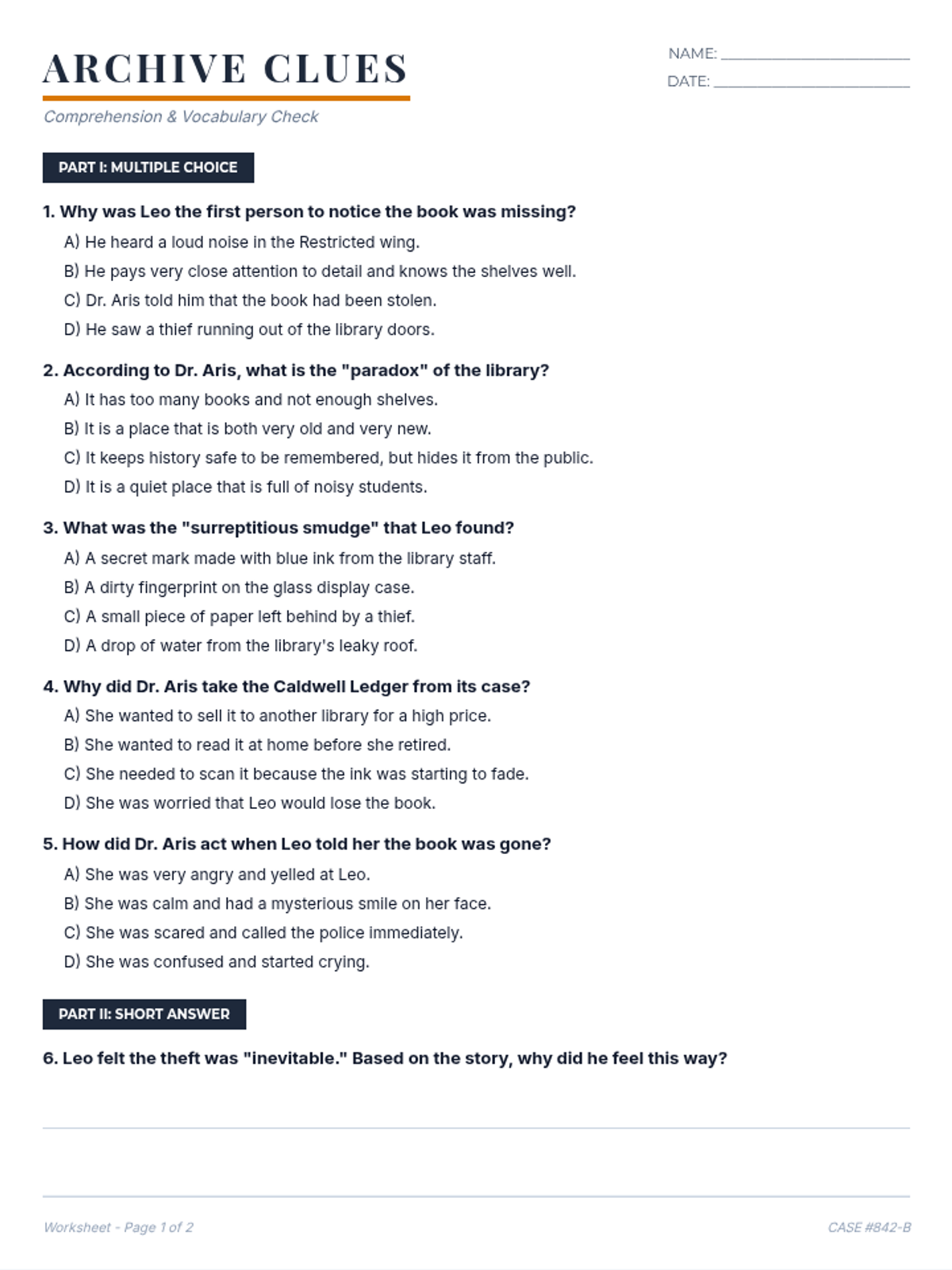
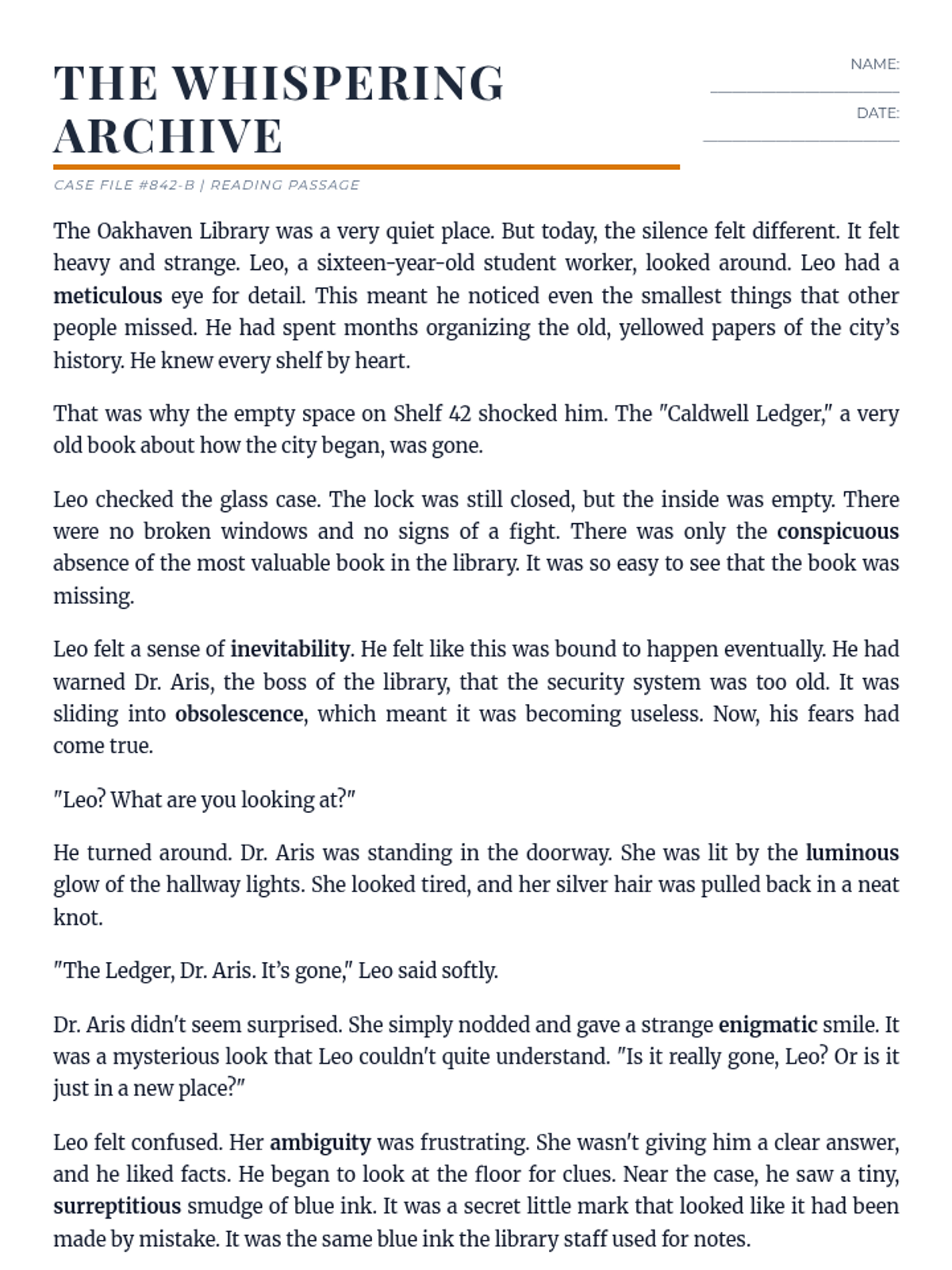
A simplified comprehension worksheet for 'The Whispering Archive', featuring approachably worded questions for 6th-7th grade students while maintaining core vocabulary assessment.
A simplified version of 'The Whispering Archive' story for 6th-7th grade students, maintaining 10 Tier 2 vocabulary words while using more direct sentence structures and helpful context.
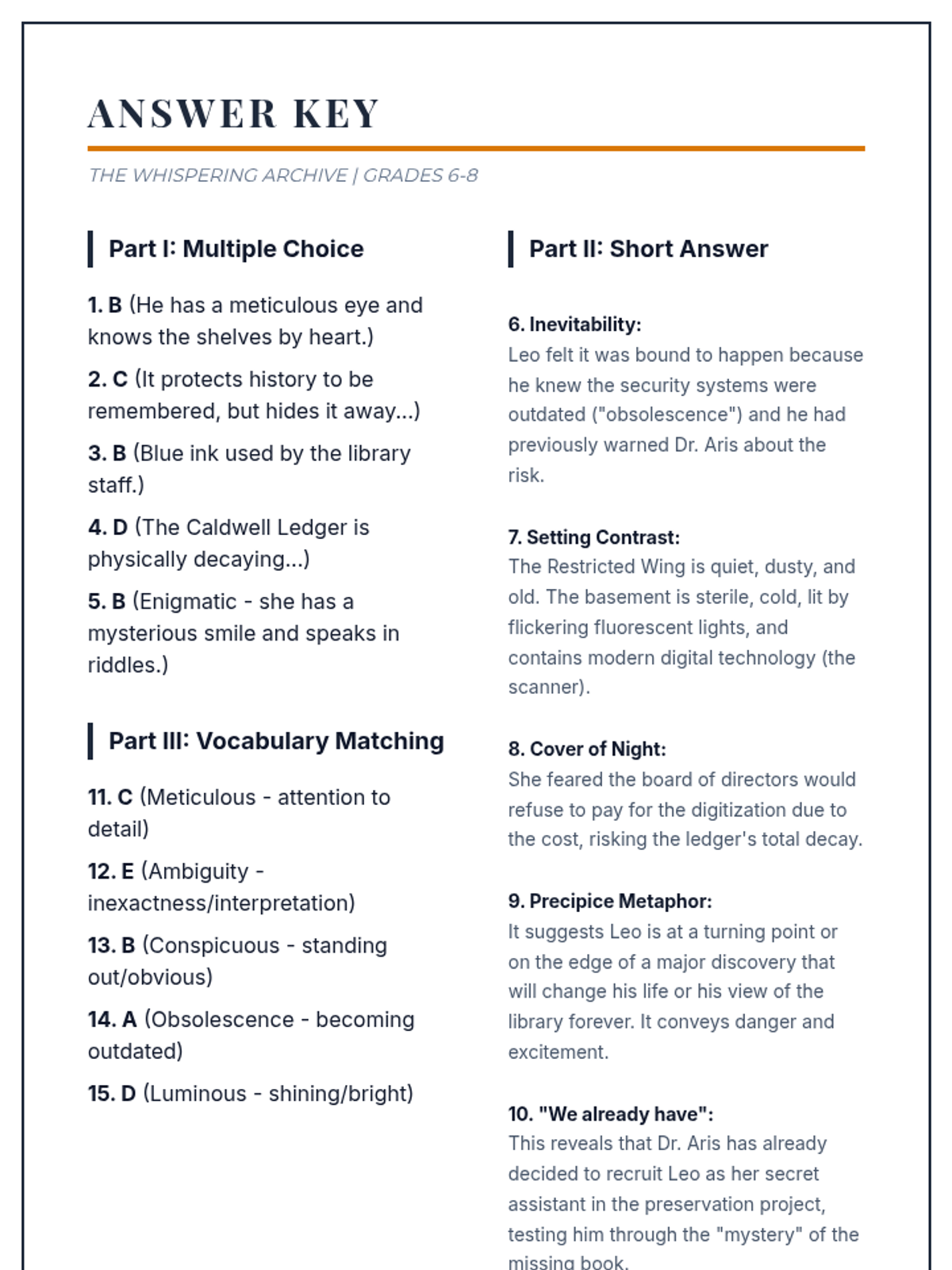
A teacher's answer key for the 'Archive Clues' worksheet, providing correct answers for multiple choice, suggested responses for short answer, and correct matching for vocabulary.
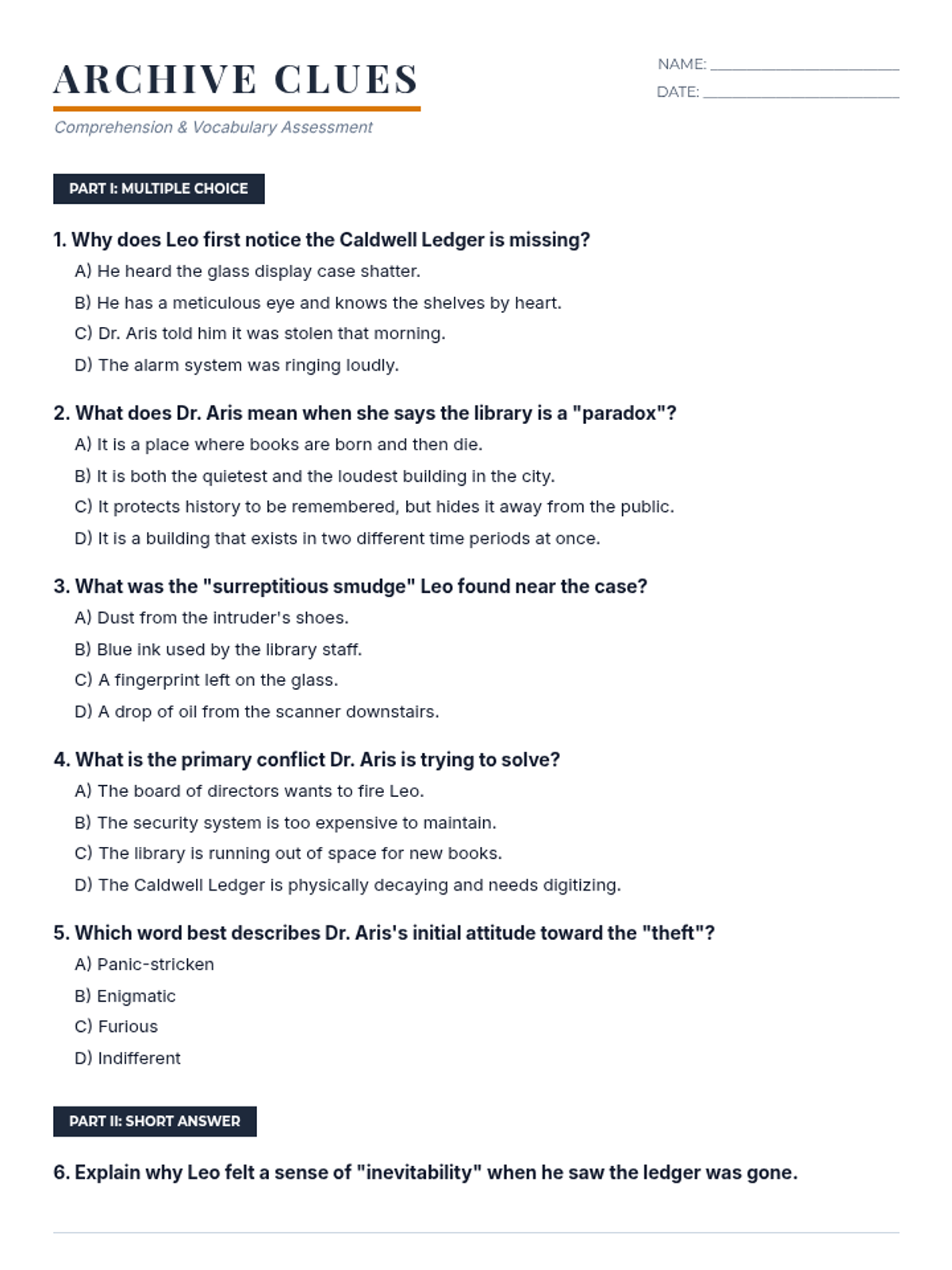
A 2-page worksheet accompanying the 'Whispering Archive' story, featuring 5 multiple choice, 5 short answer, and 5 vocabulary matching questions designed for 6-8th grade level analysis.
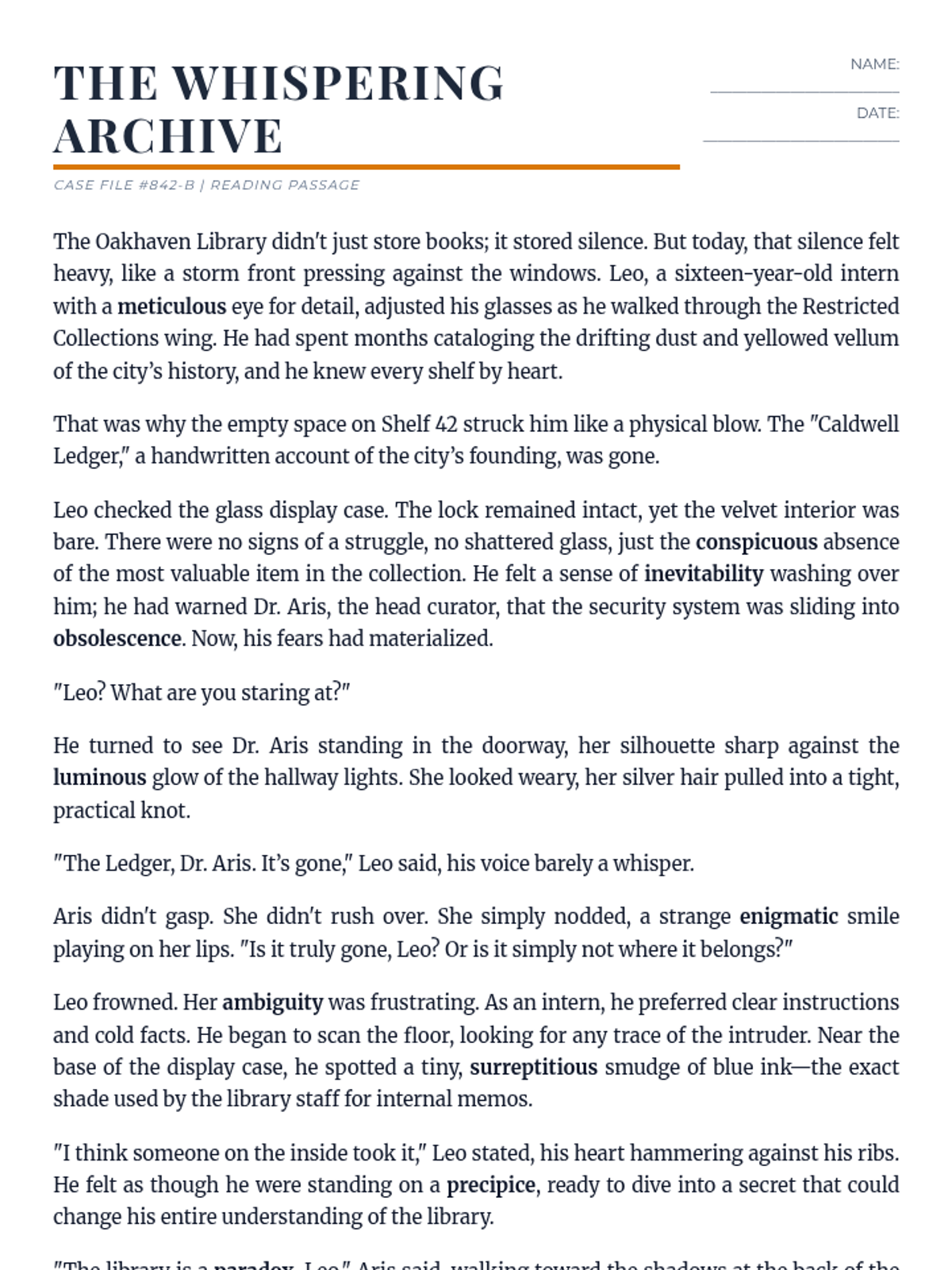
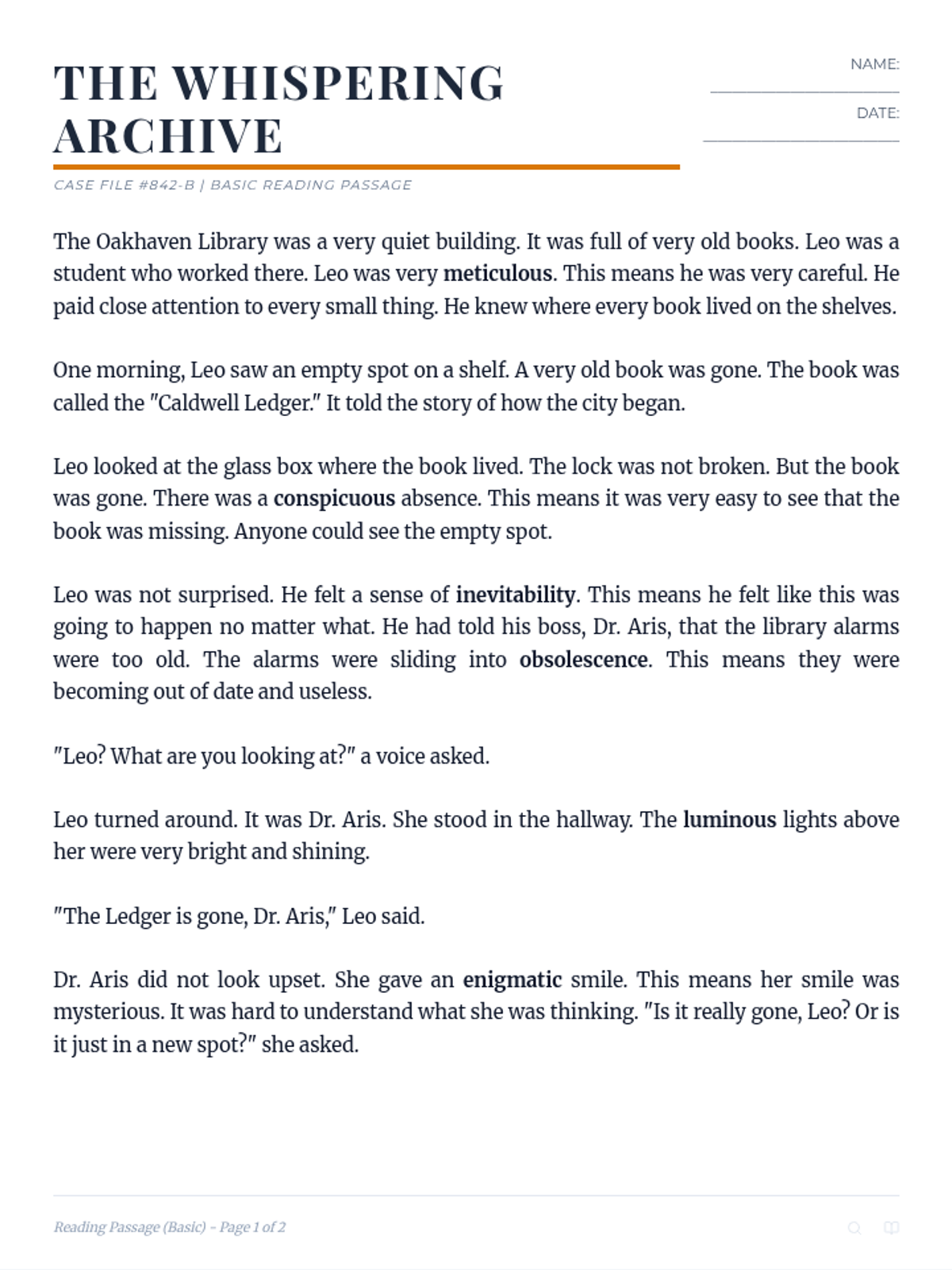
A 2-page mystery story titled 'The Whispering Archive' designed for 6-8th grade students, featuring 10 Tier 2 vocabulary words embedded in a narrative about a library intern solving a 'theft'.
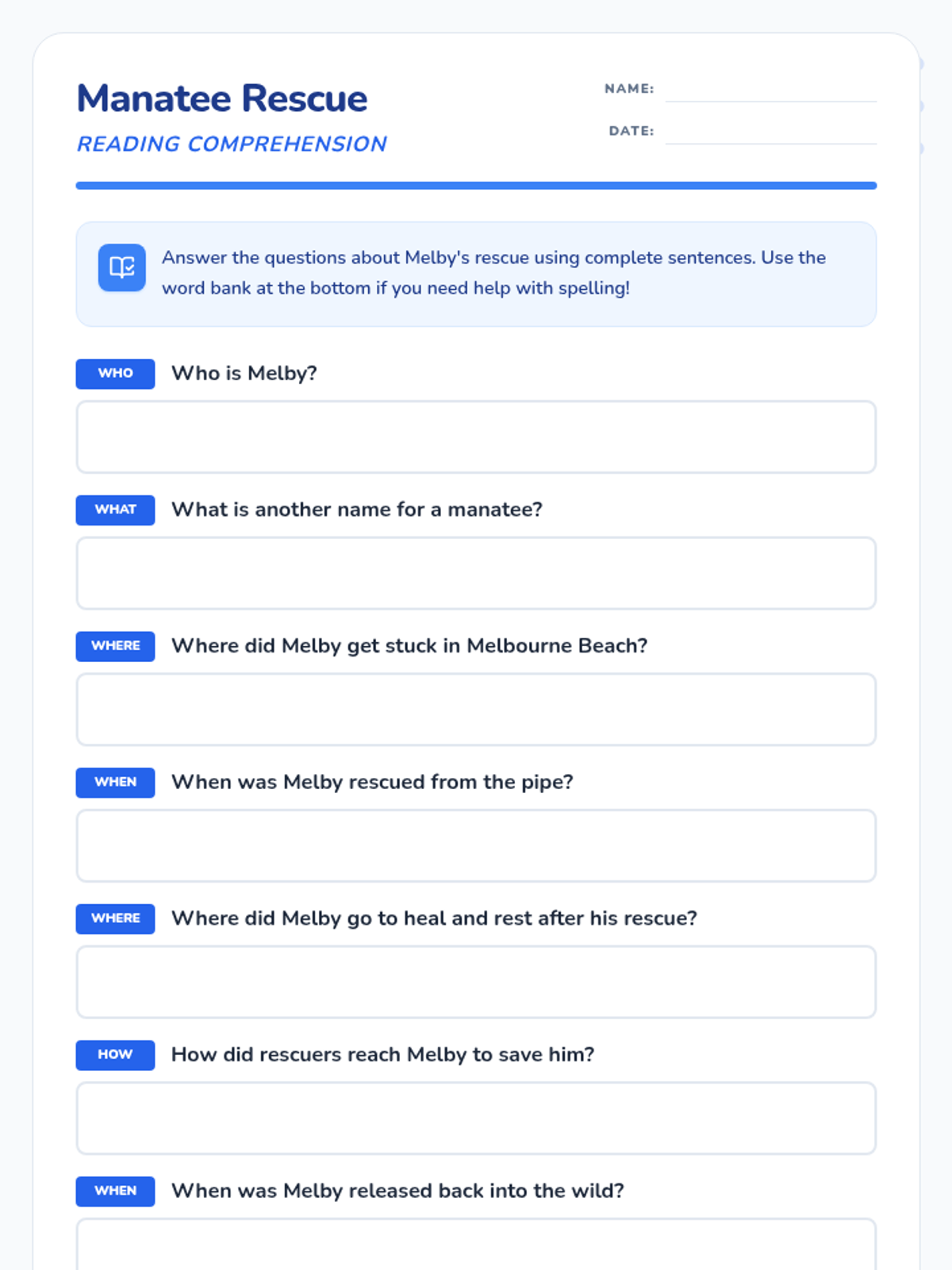
A revised short-answer worksheet with 7 WH-questions about Melby the manatee. Features increased writing space, clear WH-word indicators, and a clean word bank for student support.
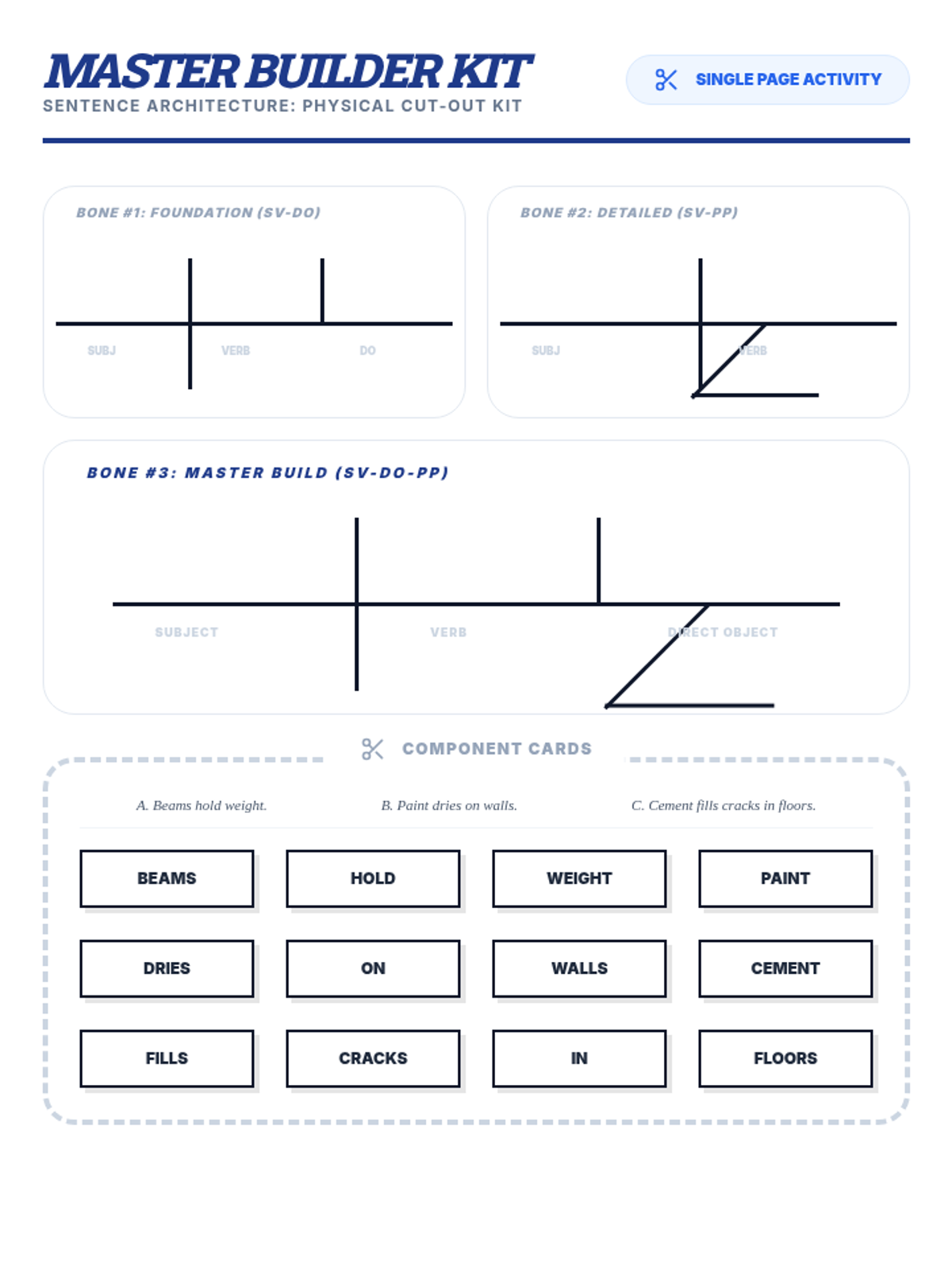
A hands-on "drag and drop" alternative for print, providing enlarged diagram frames and component cards for a physical sentence building activity on a single page.
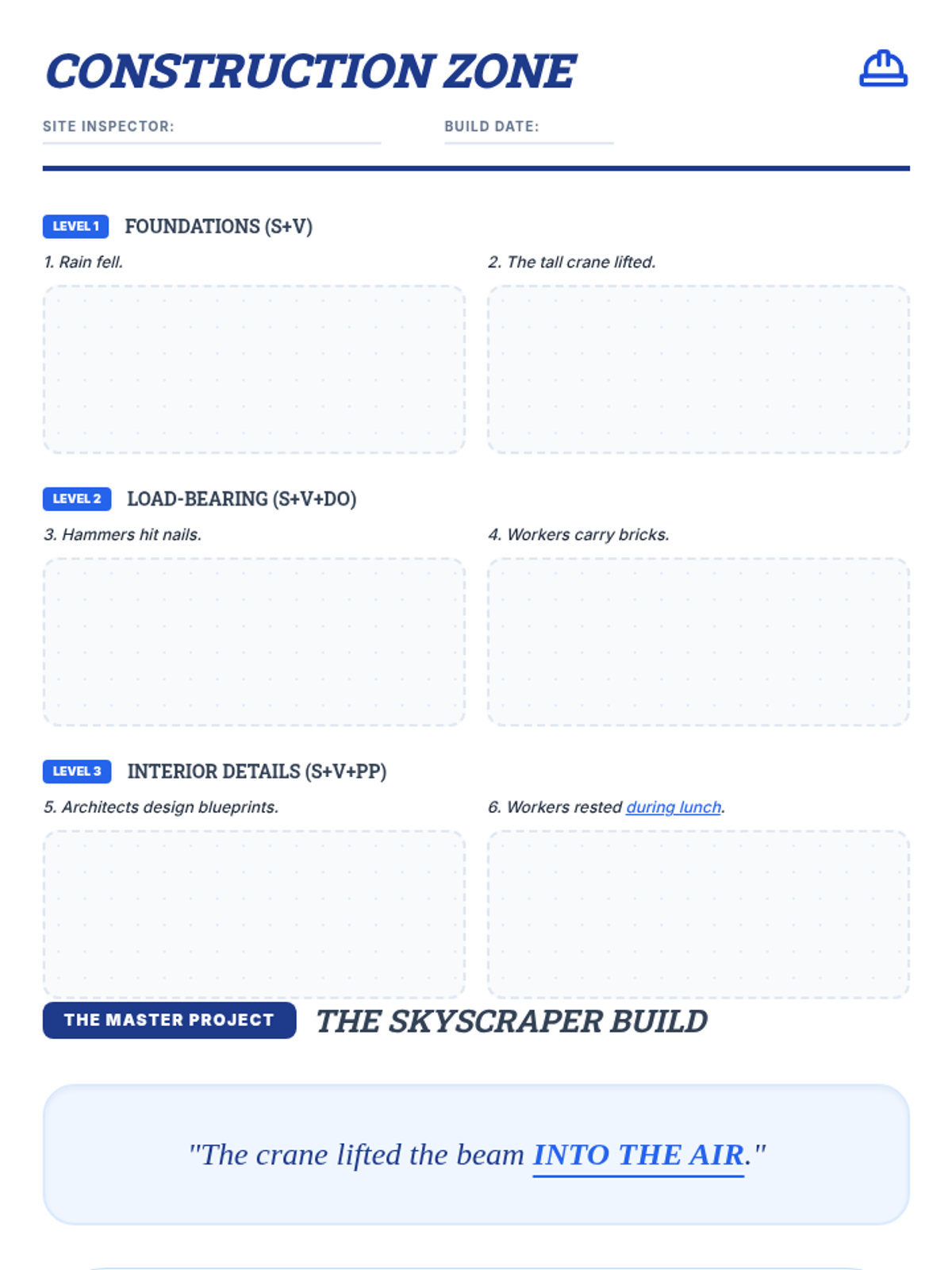
A sentence diagramming worksheet with three levels of increasing difficulty, plus a final challenge and a word bank to simulate interactive diagram building.
A visual guide to Reed-Kellogg diagramming, using an architectural theme to explain how to structure subjects, verbs, direct objects, and prepositional phrases.
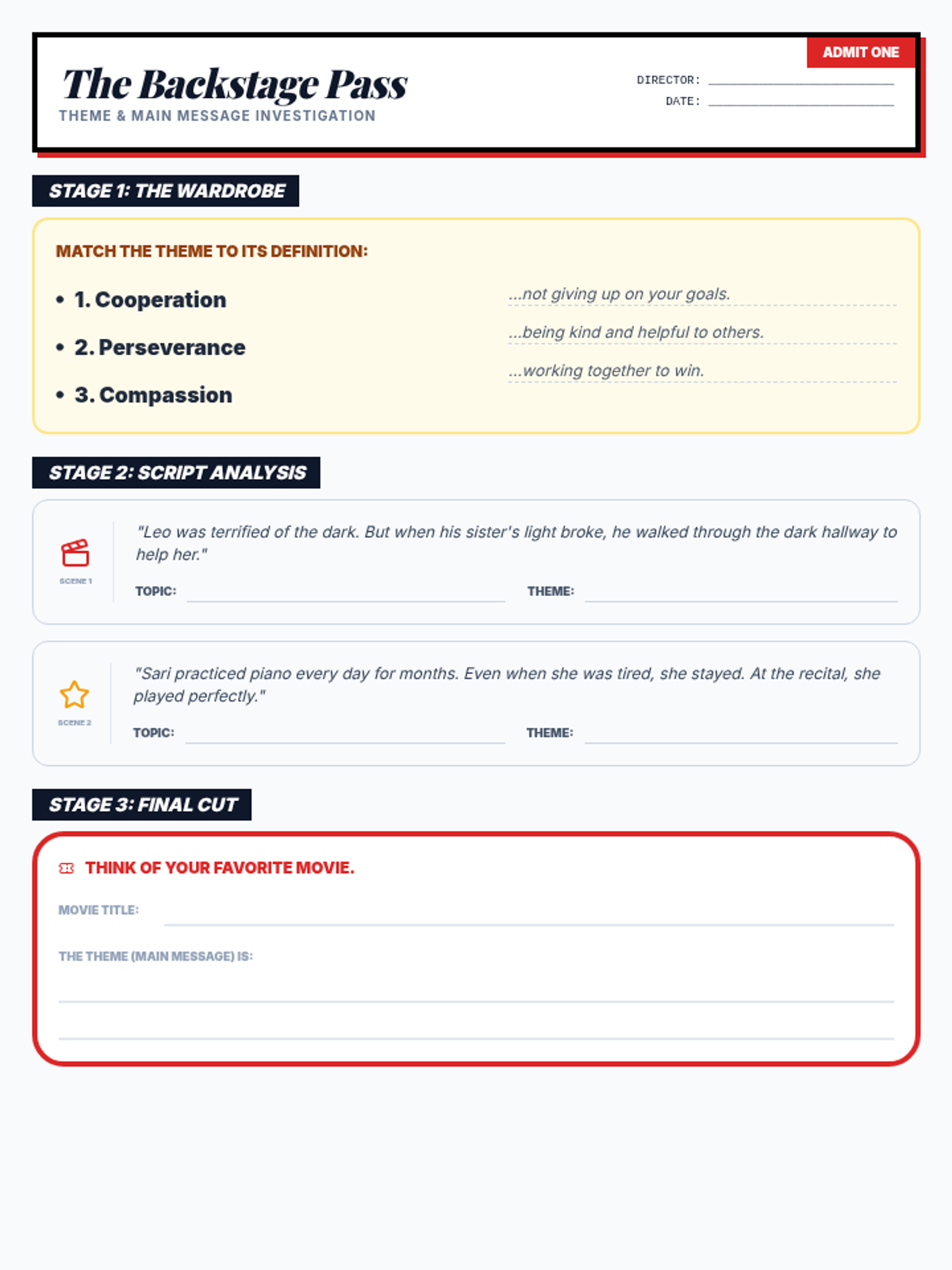
A student worksheet for the Theme Theatre lesson where students practice matching themes to definitions, identifying topics vs. themes in short "Micro-Scripts," and drafting their own theme statements for familiar media.