A comprehensive scoring guide for teachers to assess students' biome box projects and written reports, covering accuracy, creativity, writing, and presentation.
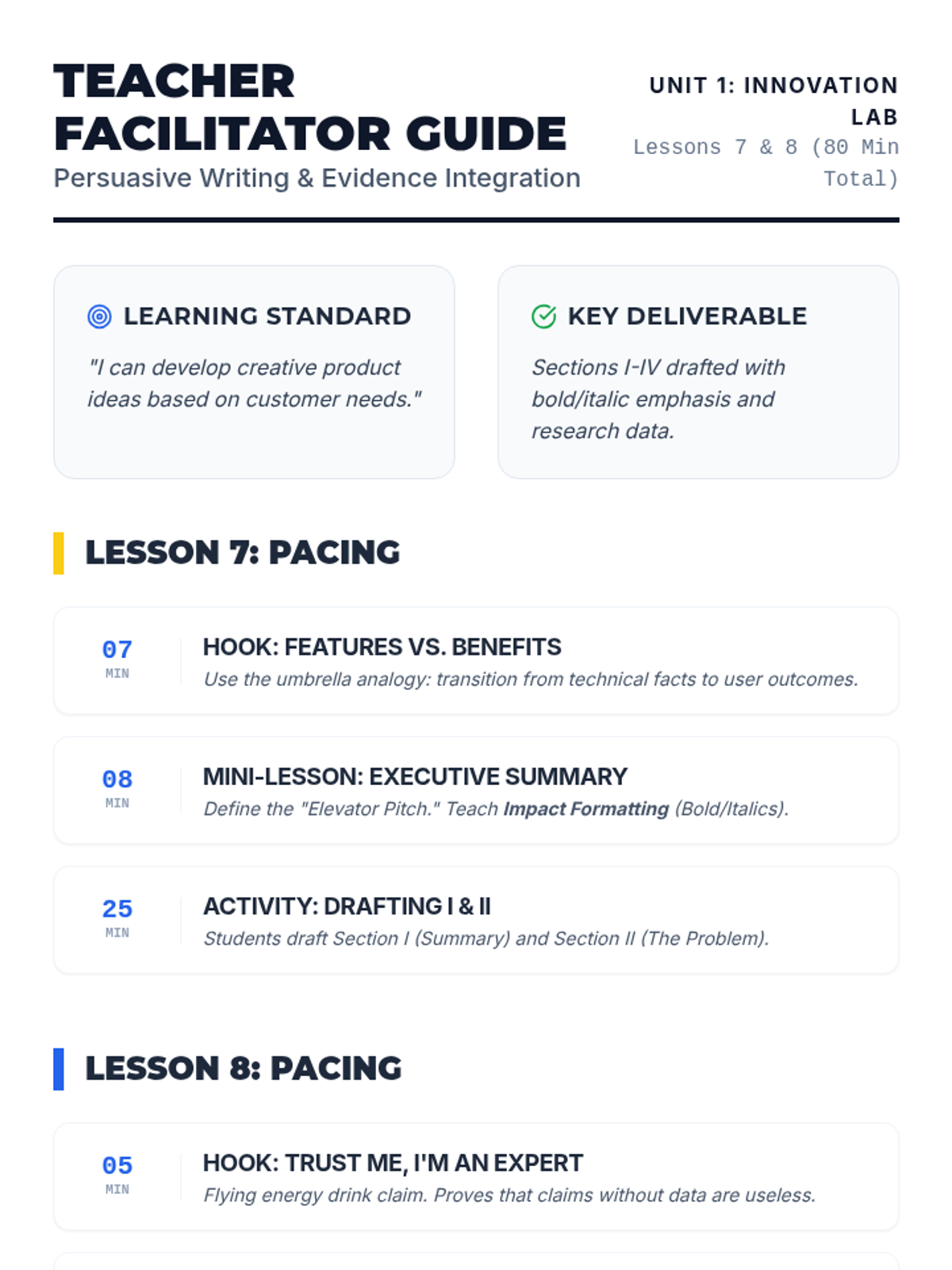
A joint teacher's guide for Lessons 7 and 8, covering persuasive business writing, features vs. benefits, and the integration of research evidence into a formal proposal.
A slide deck focused on using market research as evidence in business writing, featuring technical instruction on integrating quotes, lead-in phrases, and using indentation for block quotes.
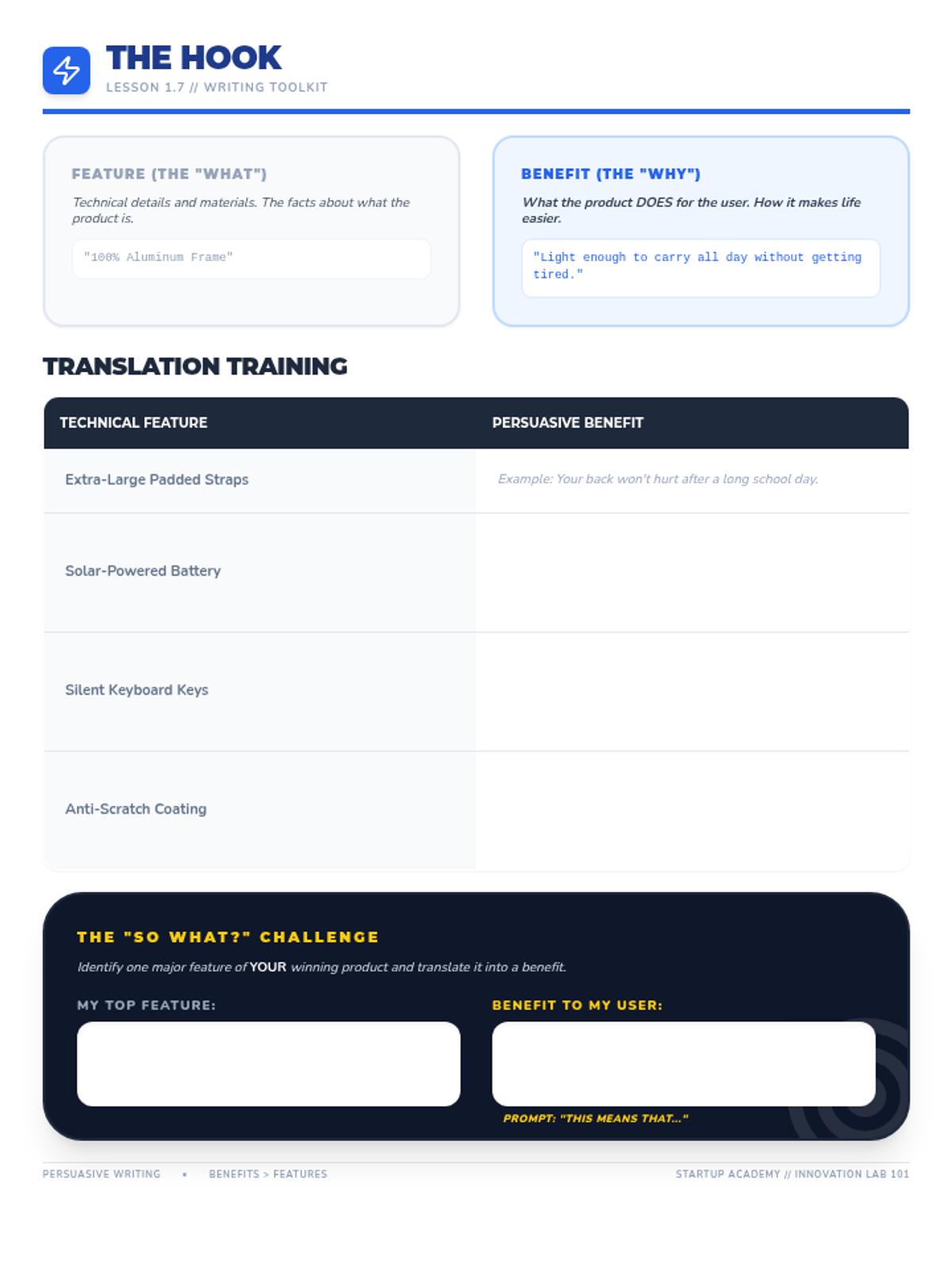
A persuasive writing toolkit for students to practice translating technical product features into customer benefits before drafting their business proposals.
A high-energy slide deck teaching the difference between product features and customer benefits, with technical software instruction on using bold and italics for impact in an Executive Summary.
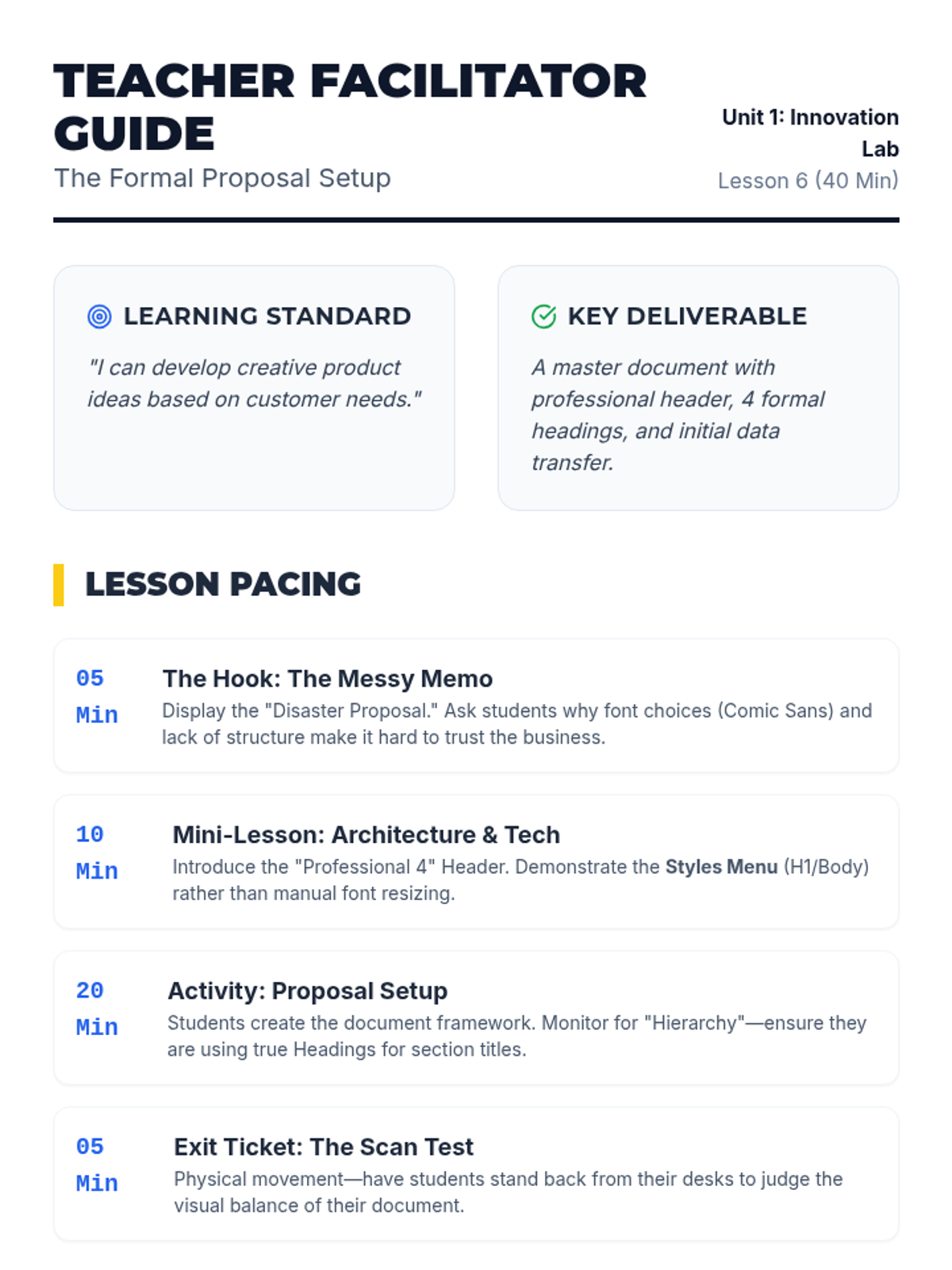
A comprehensive teacher's guide for Lesson 6, providing pacing, discussion prompts, and technical tips for facilitating the formal business proposal setup.
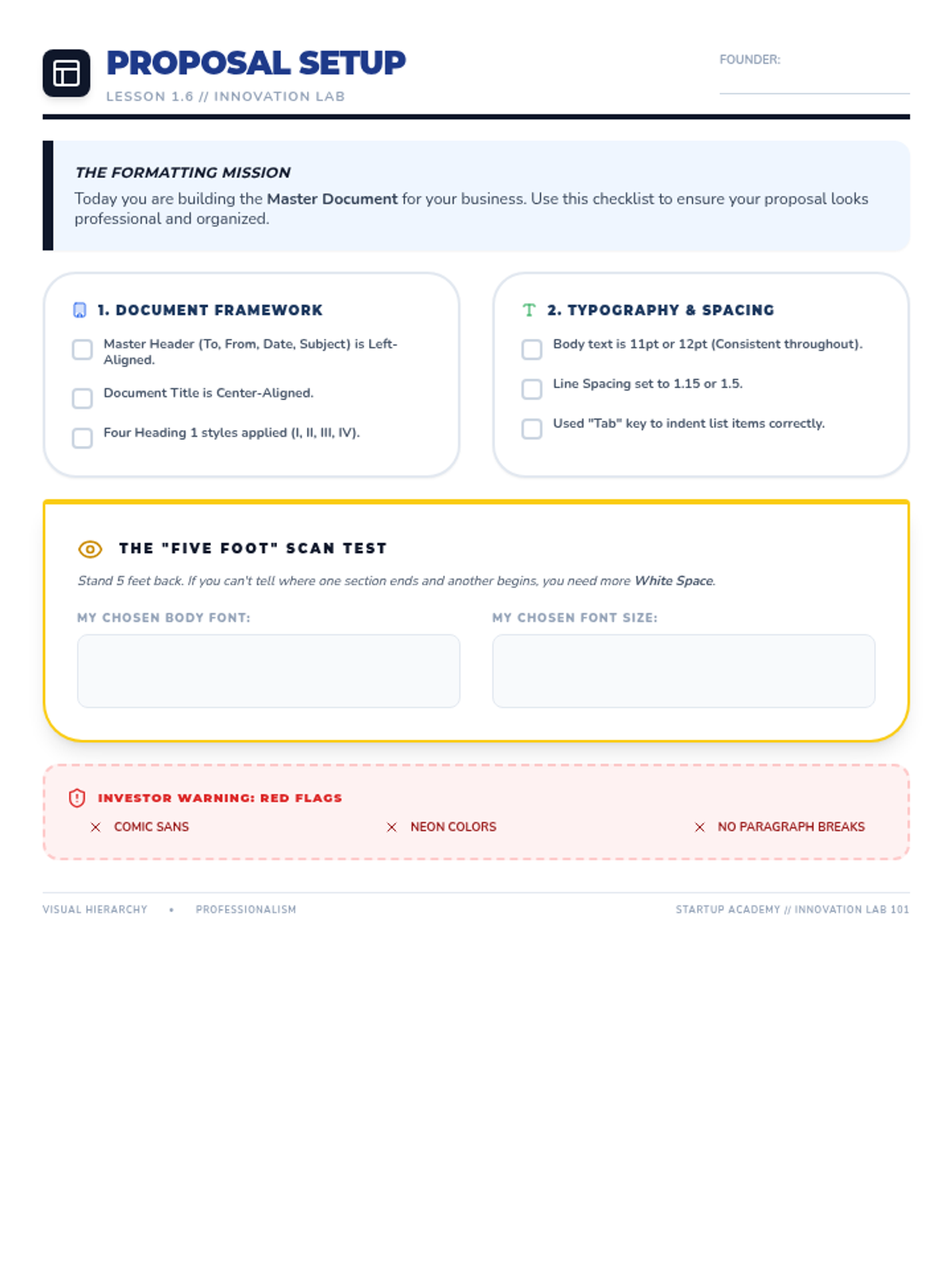
A student-facing formatting checklist and architecture guide for setting up a formal business proposal, featuring technical requirements for alignment, typography, and spacing.
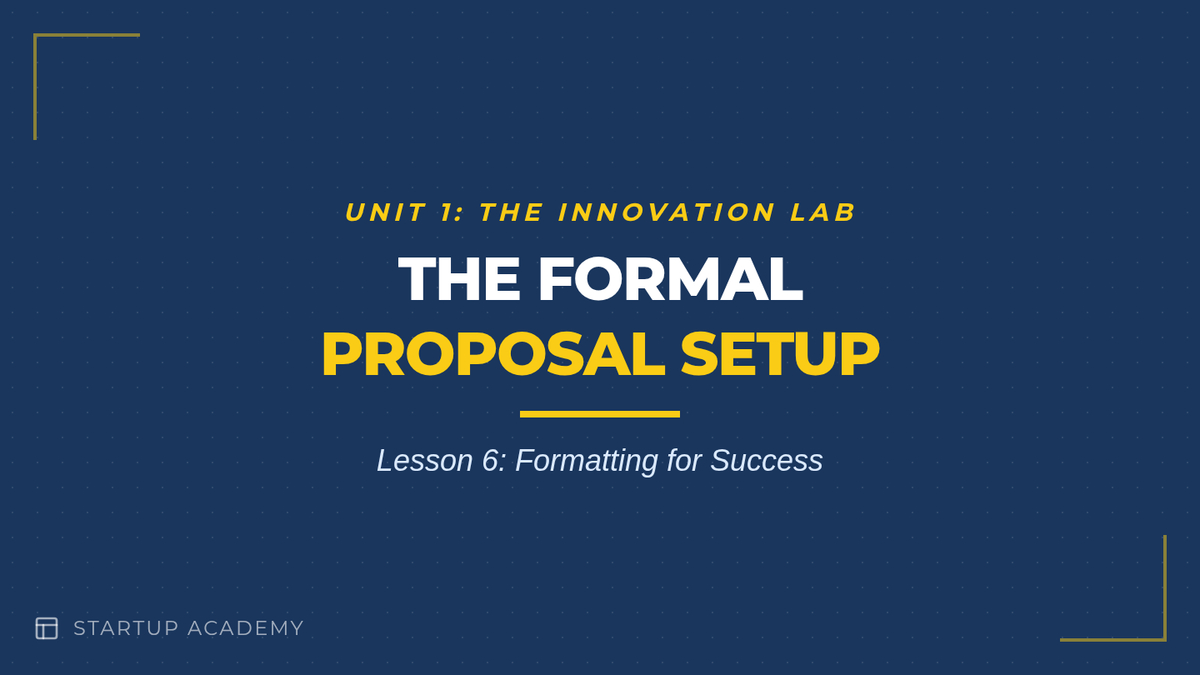
A professional, visually striking slide deck for teaching document architecture and formal business proposal formatting, featuring blueprint design elements and technical software skill guides.
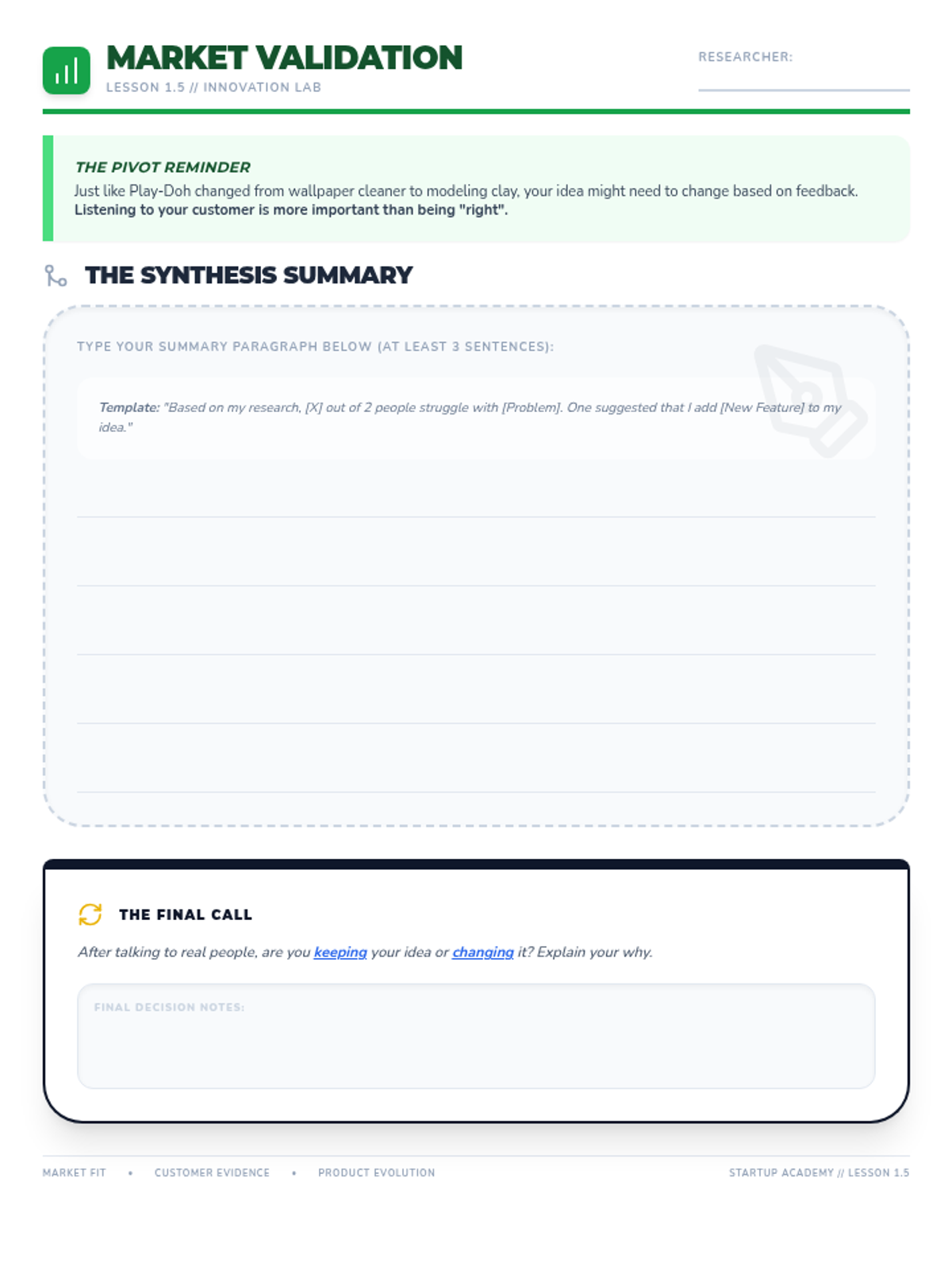
A student synthesis worksheet for Lesson 5, guiding students through the process of writing a summary paragraph based on their market research and deciding whether to pivot their product idea.
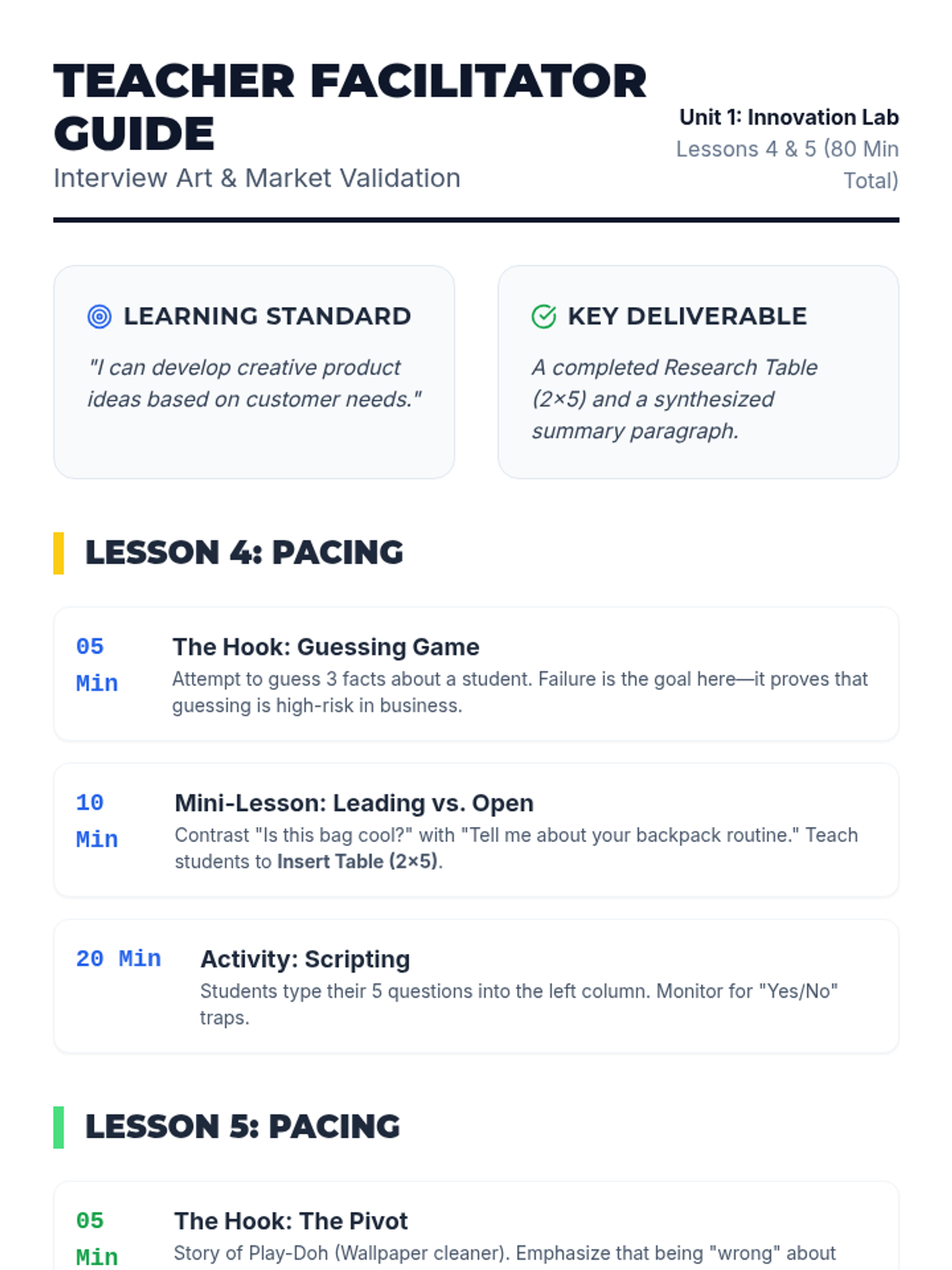
A joint teacher's guide for Lessons 4 and 5, covering interviewing techniques, the concept of the pivot, and facilitating a market research sprint with digital citizenship reminders.
A high-energy slide deck for Lesson 5, focusing on market research, transcribing customer feedback, and the concept of 'pivoting' based on data synthesis.
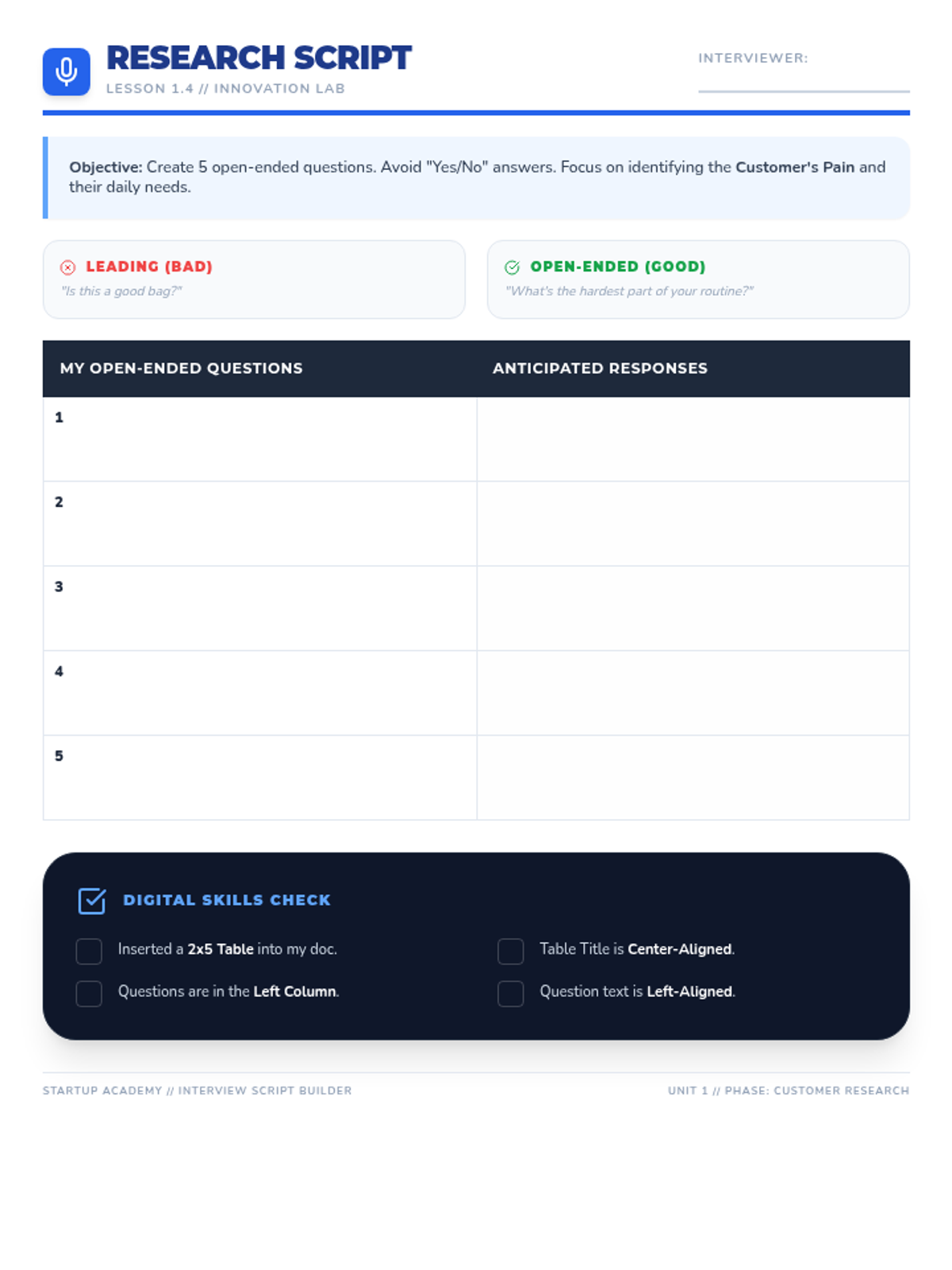
A student worksheet designed to help scaffold the creation of an interview script with open-ended questions, featuring a table layout and a digital skills checklist.
A high-impact slide deck for teaching customer interviewing techniques, focusing on open-ended questions vs. leading questions and introducing the technical skill of creating tables.
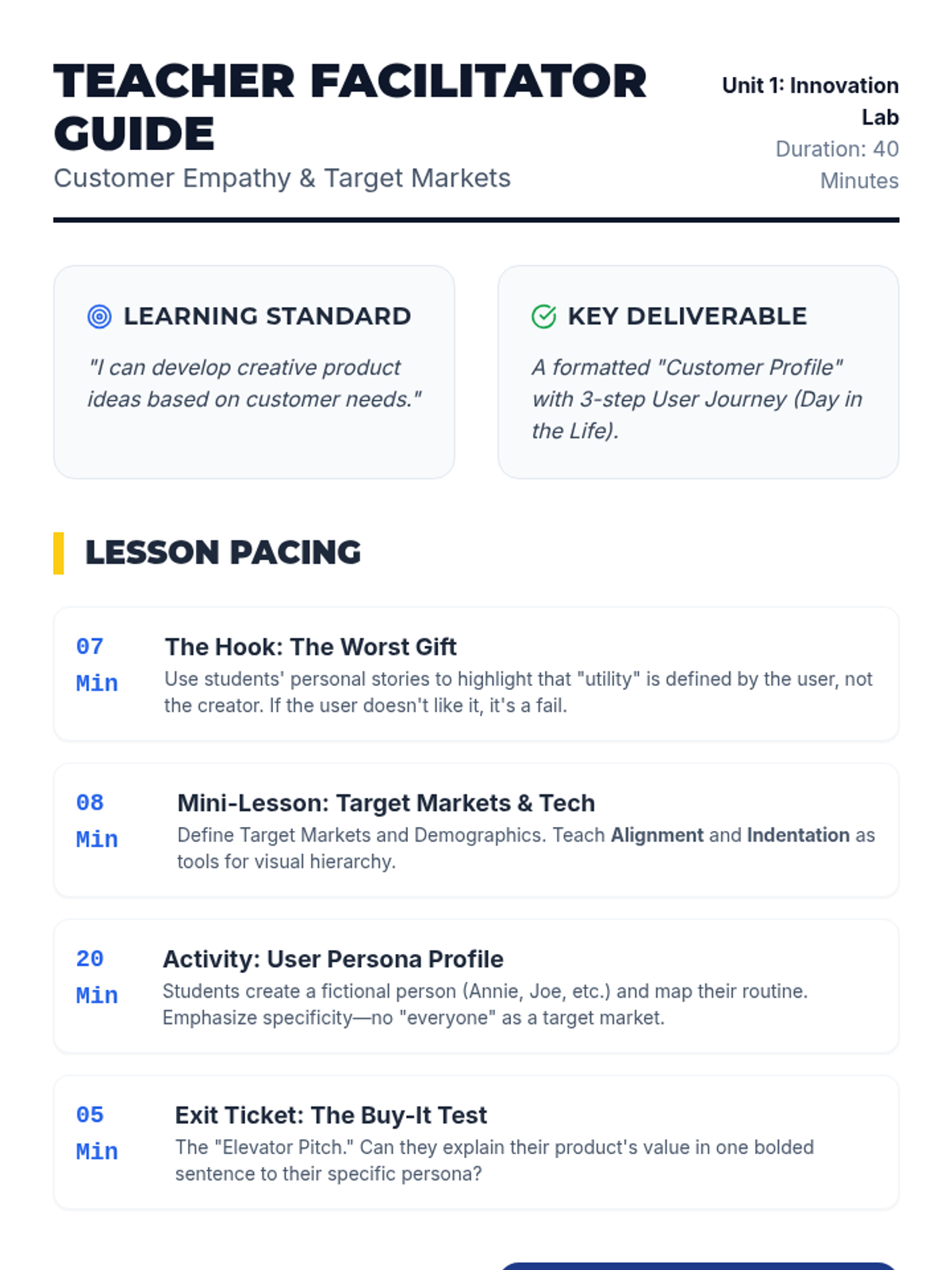
A comprehensive facilitator guide for Lesson 3, covering target market segmentation, customer empathy, and user journey mapping with facilitation tips.
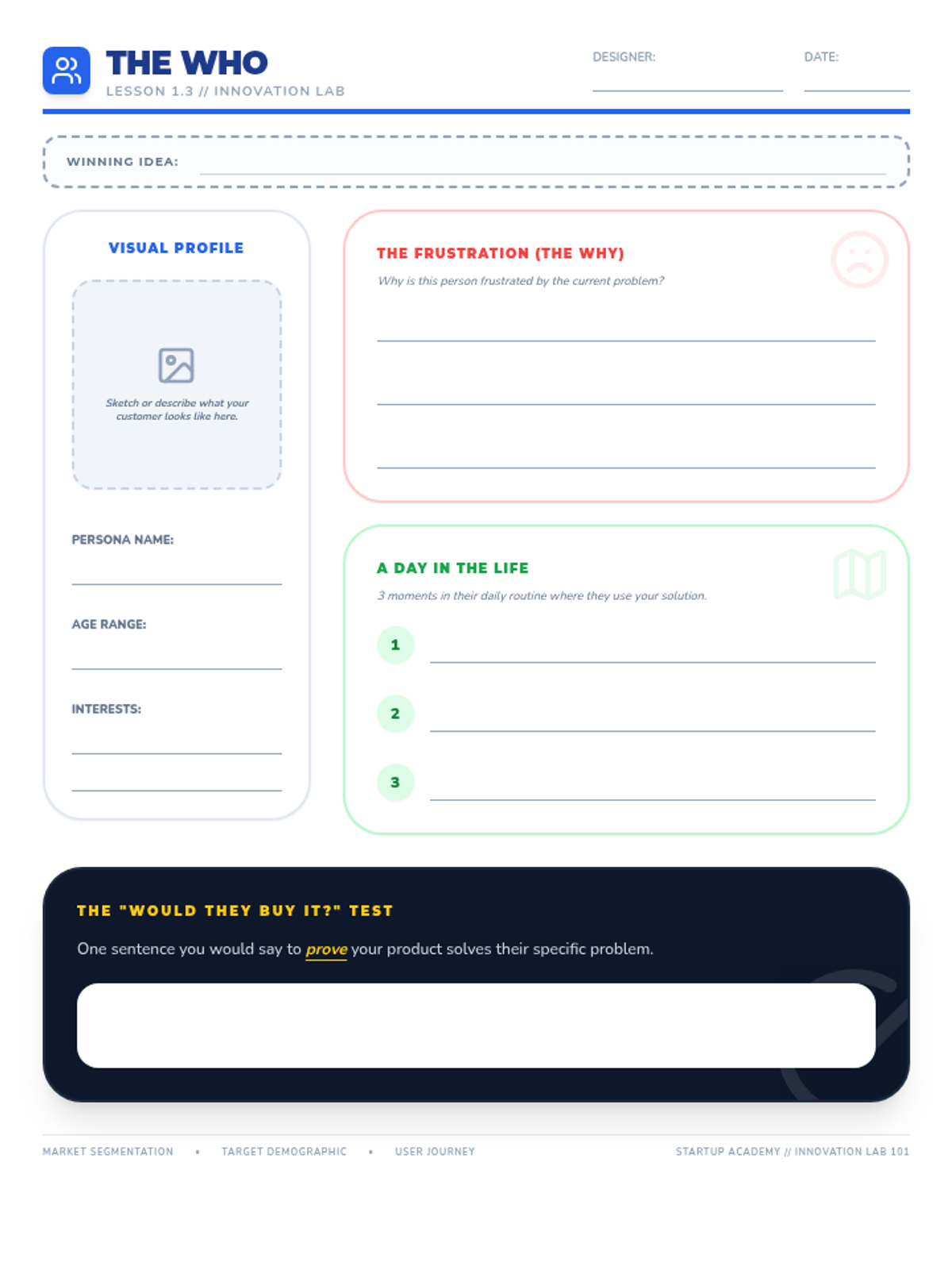
A detailed template for students to create a "User Persona" profile, identifying customer demographics, frustrations, and a "Day in the Life" journey for their product ideas.
A visually engaging slide deck teaching the concepts of target markets and customer empathy, featuring gift-giving analogies, demographic breakdowns, and instructions for creating a User Persona.
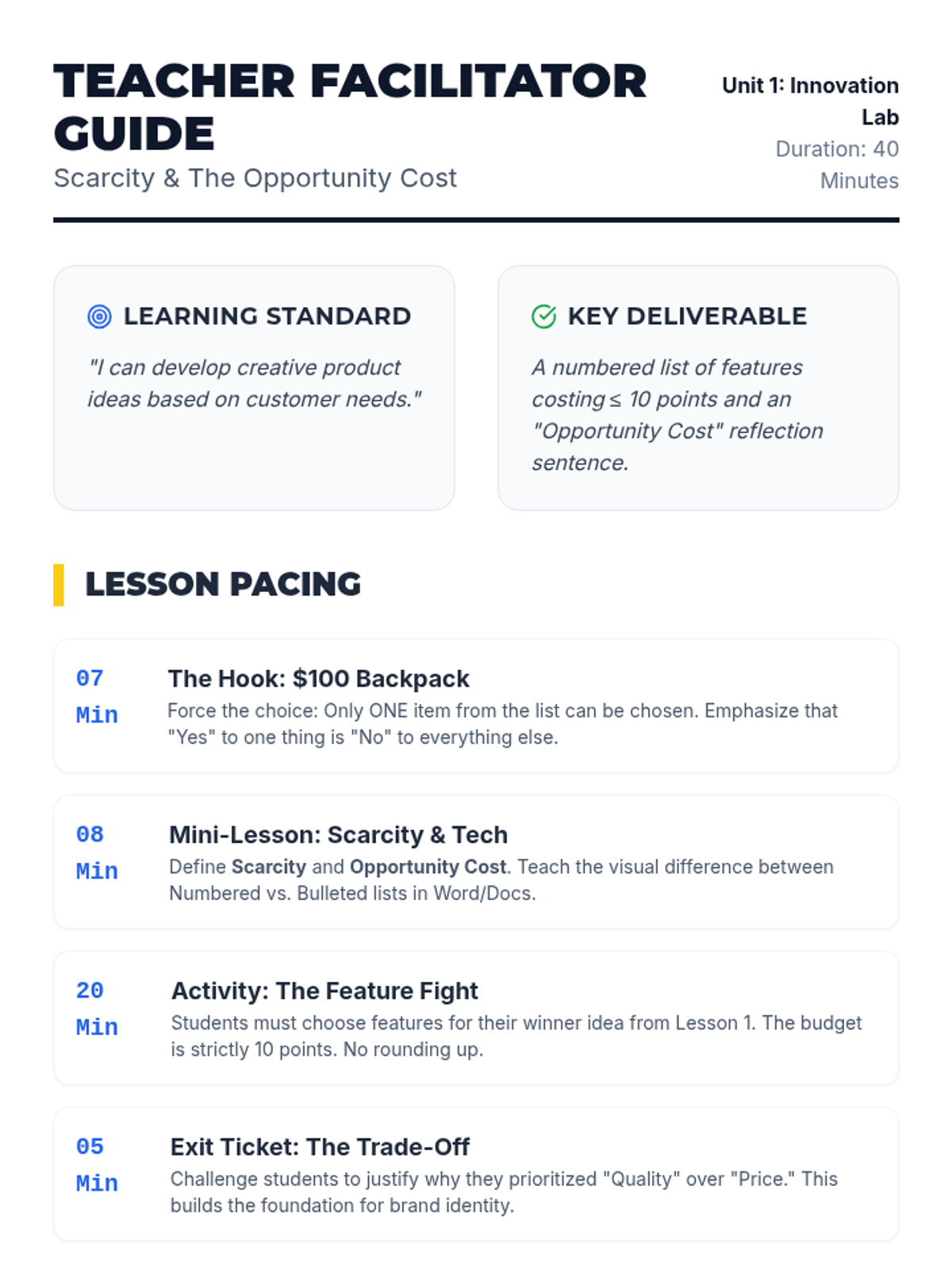
A comprehensive teacher's guide providing pacing instructions, discussion prompts, common misconceptions, and differentiation strategies for facilitating the "Scarcity & Opportunity Cost" lesson.
A visually compelling slide deck using a blueprint-inspired design to teach the concepts of scarcity and opportunity cost, featuring a 'Feature Fight' activity where students must budget resource points for their product ideas.
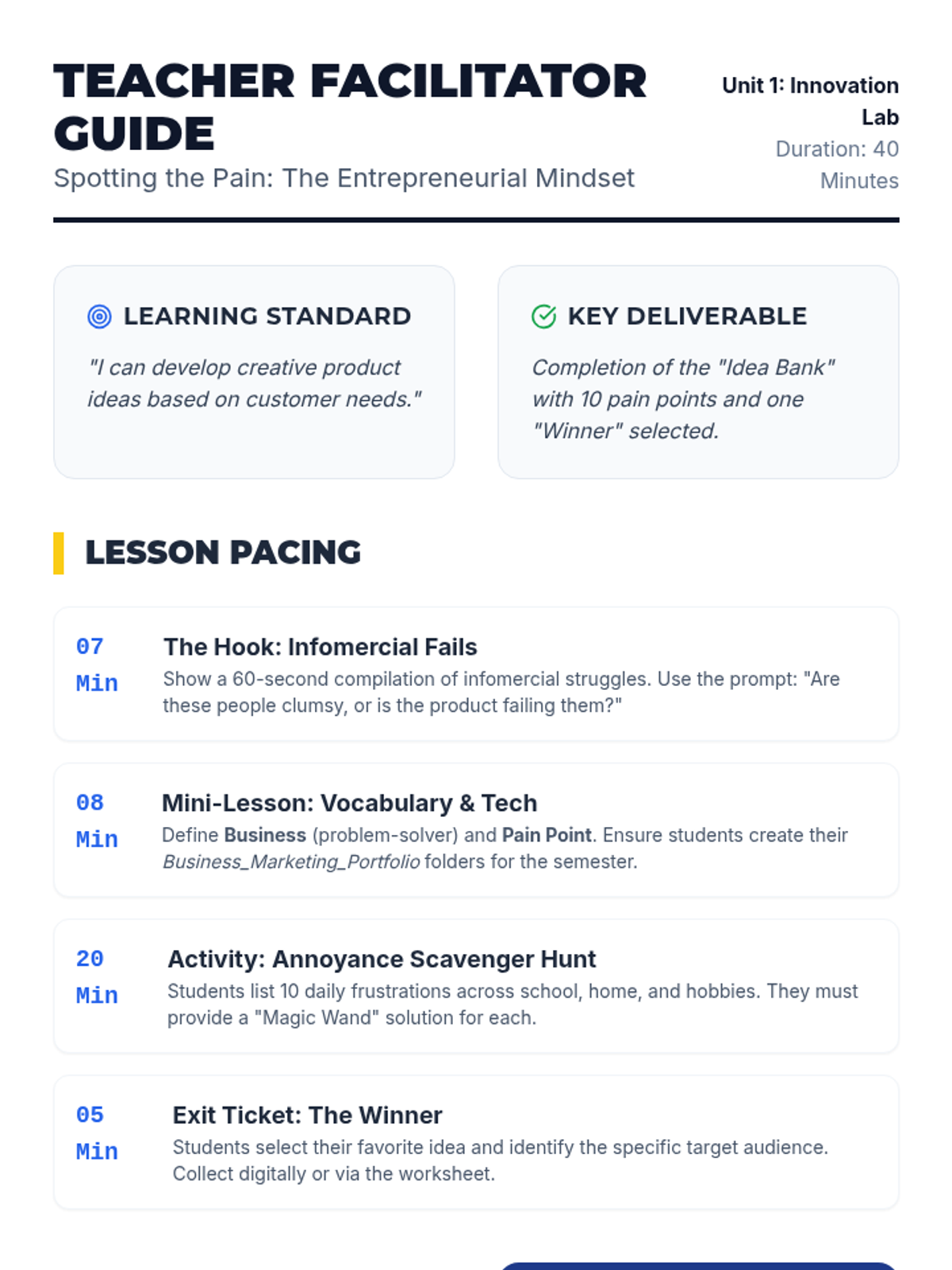
A comprehensive teacher's guide providing pacing instructions, discussion prompts, common misconceptions, and differentiation strategies for facilitating the "Spotting the Pain" lesson.
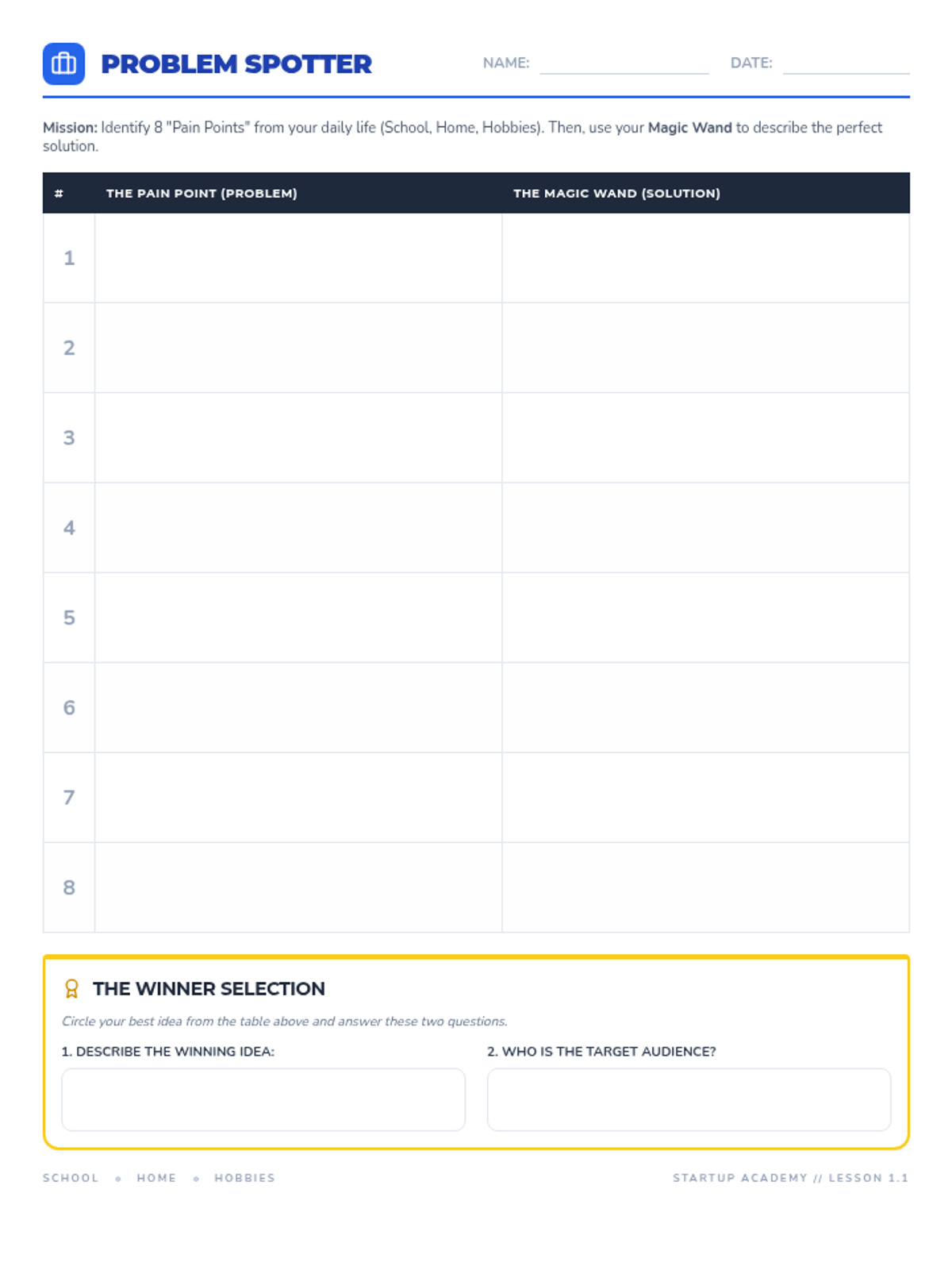
A structured worksheet designed for the "Annoyance Scavenger Hunt" activity, allowing students to document personal pain points and conceptualize their "Magic Wand" solutions with a dedicated exit ticket section.
A high-energy, visually engaging slide deck that introduces students to the entrepreneurial mindset of seeing problems as business opportunities, featuring blueprint-inspired design and interactive activity instructions.
A 12-slide modern and professional presentation for Lesson 1 of 'The Innovation Lab'. It guides students through identifying 'pain points', understanding the entrepreneur's logic, and starting their own 'Idea Bank'.
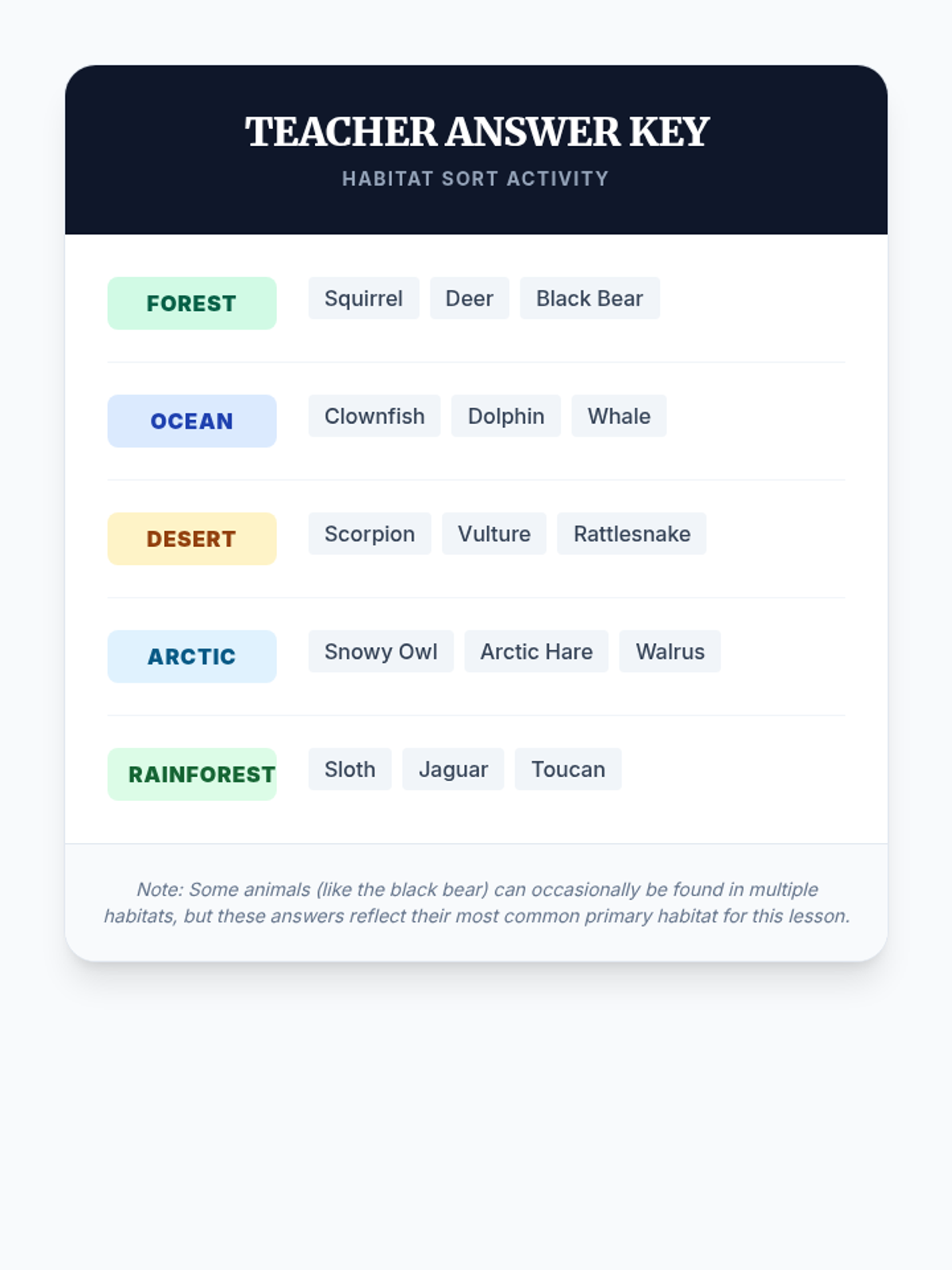
A clear, easy-to-reference answer key for teachers to check student work on the Habitat Sort Activity.
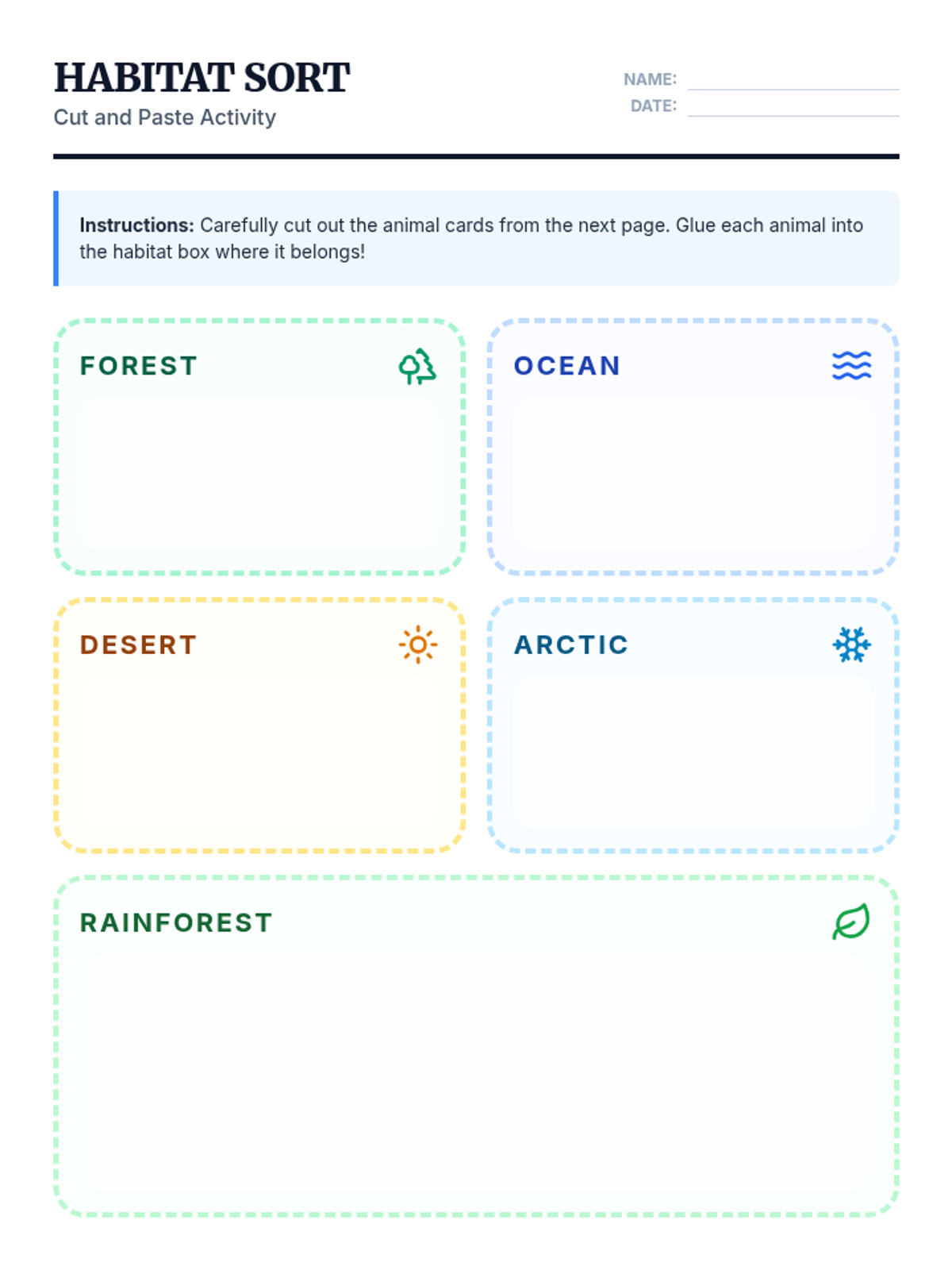
A two-page activity featuring a habitat grid on page one and fifteen animal cutout cards on page two for students to categorize into the correct biomes.
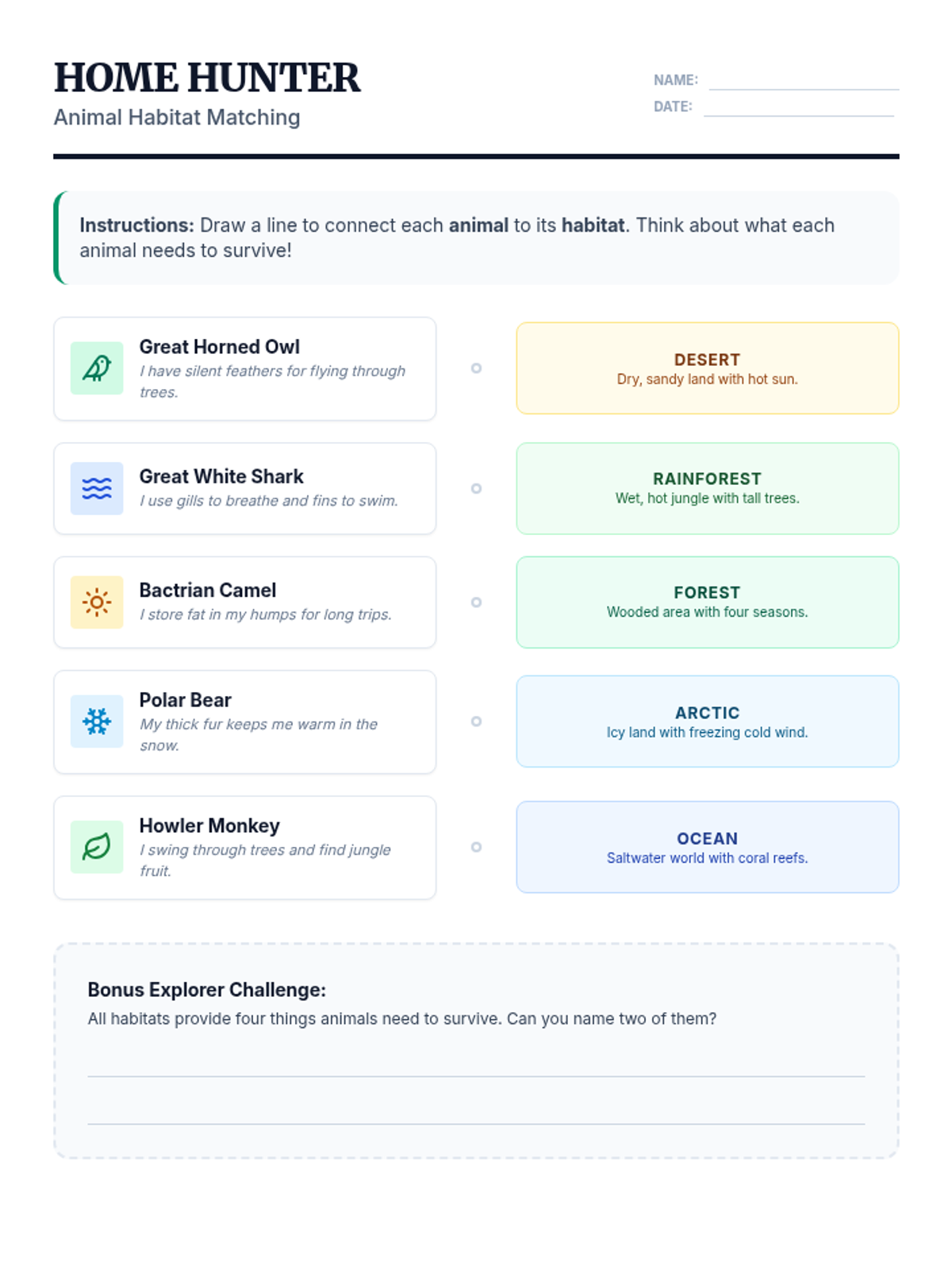
A matching worksheet where students connect five specific animals to their corresponding habitats based on brief descriptions and visual icons.
An engaging visual presentation introducing the five major habitats: Forest, Ocean, Desert, Arctic, and Rainforest, featuring key characteristics and animal examples for each.
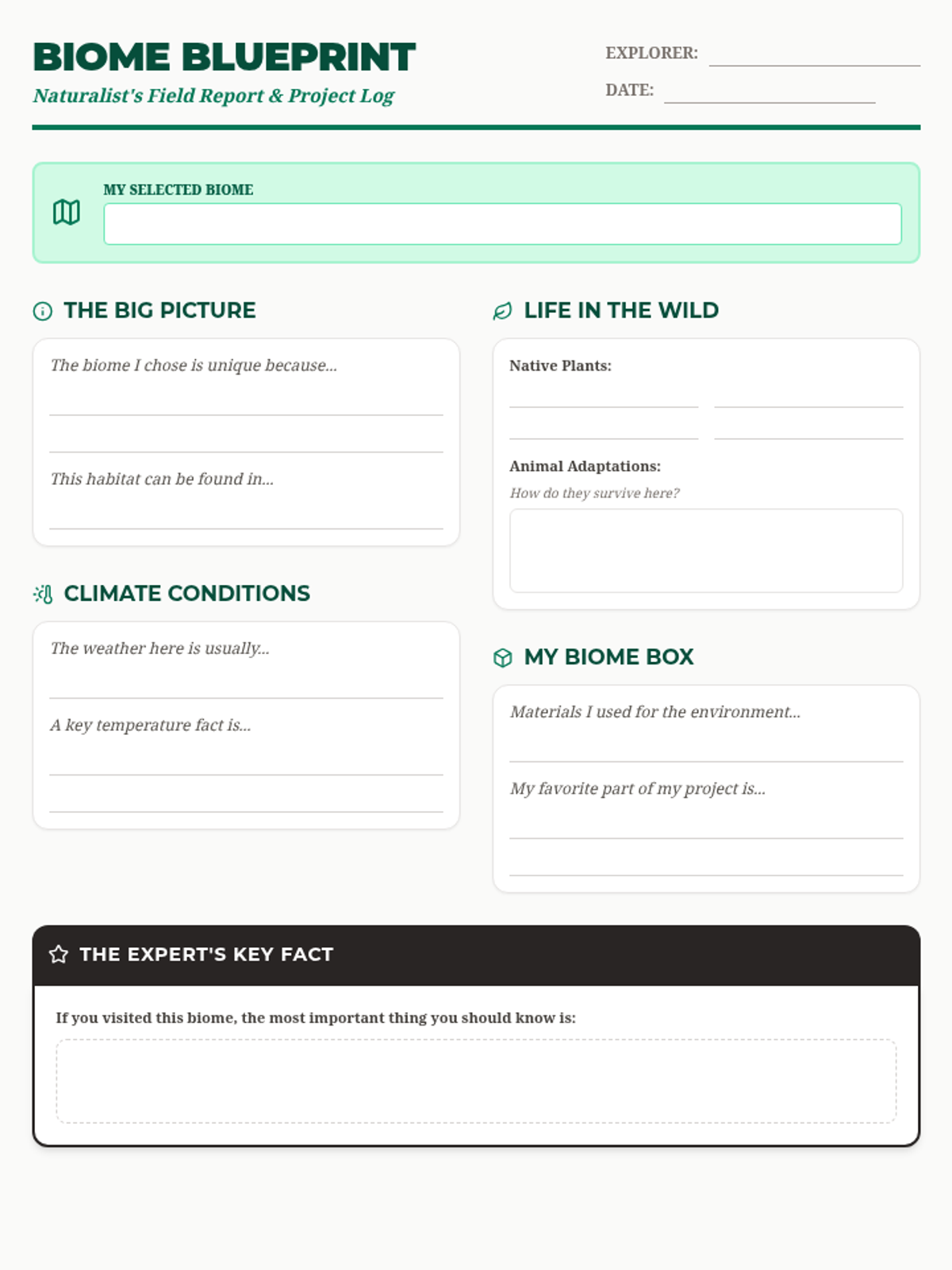
A naturalist-themed worksheet for students to document their biome box project, featuring sentence starters, short response areas, and sections for climate, flora, fauna, and project reflection.