Mandarin version of the 'Biome Blueprints' slide deck. Covers ecosystem components, desert and tundra specifics, food web mechanics, and real-world impacts for 7th-grade students.
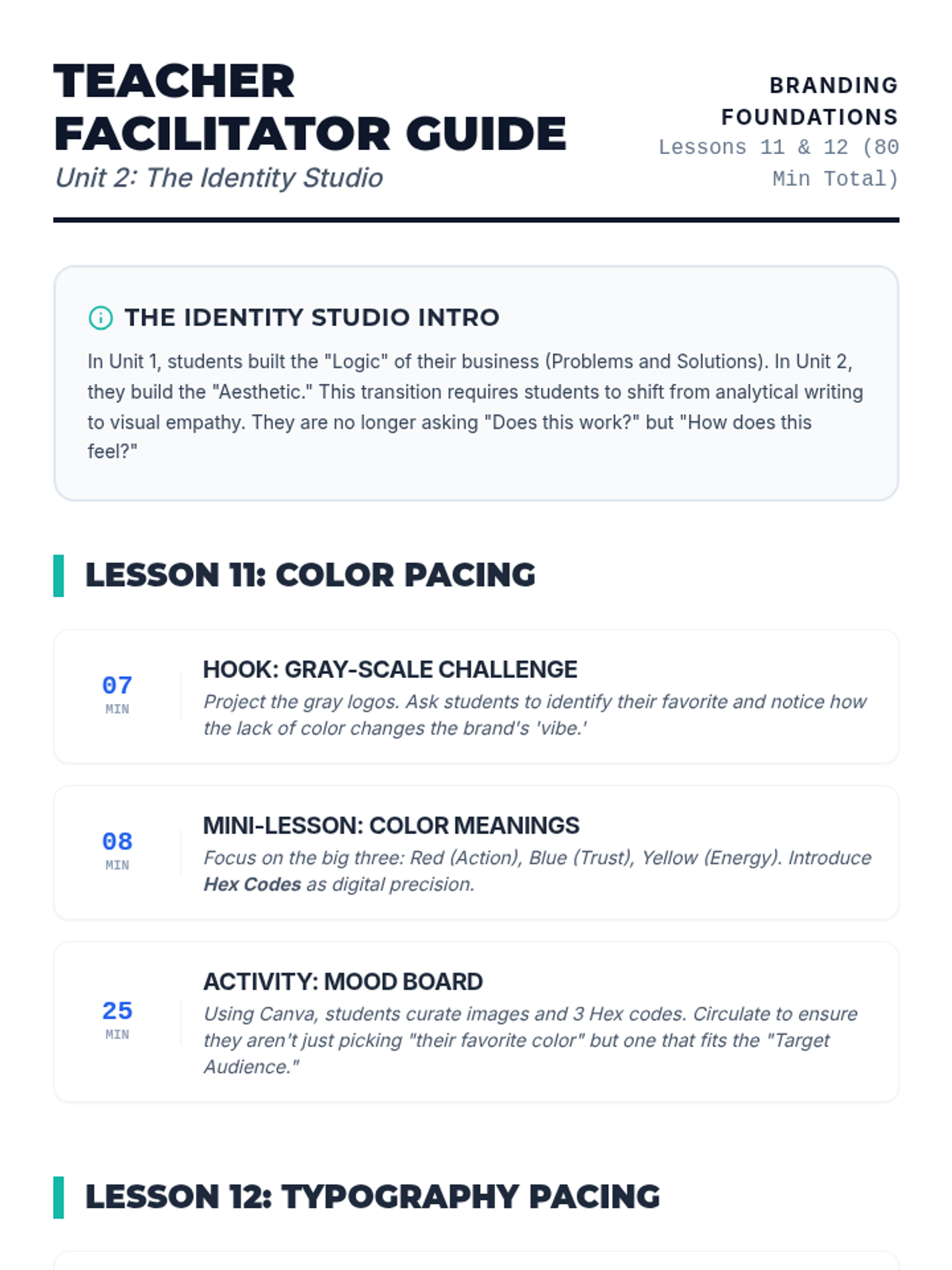
A joint teacher guide for Lessons 11 and 12, providing instructional support for transitioning students from Unit 1's analytical phase to Unit 2's visual branding phase.
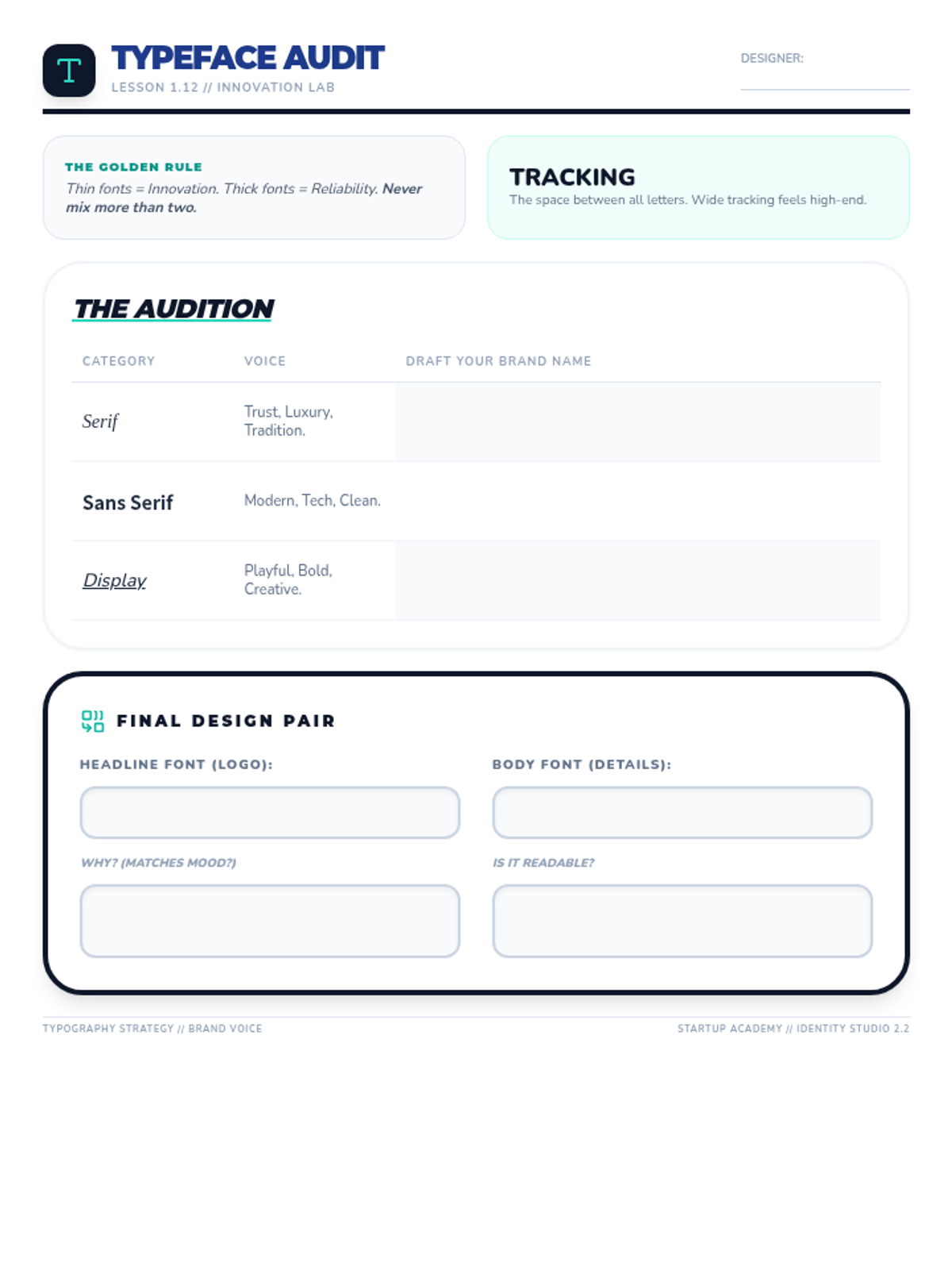
A student typeface analysis sheet for Lesson 12, guiding students through the process of auditing serif, sans serif, and display fonts to find their brand's voice.
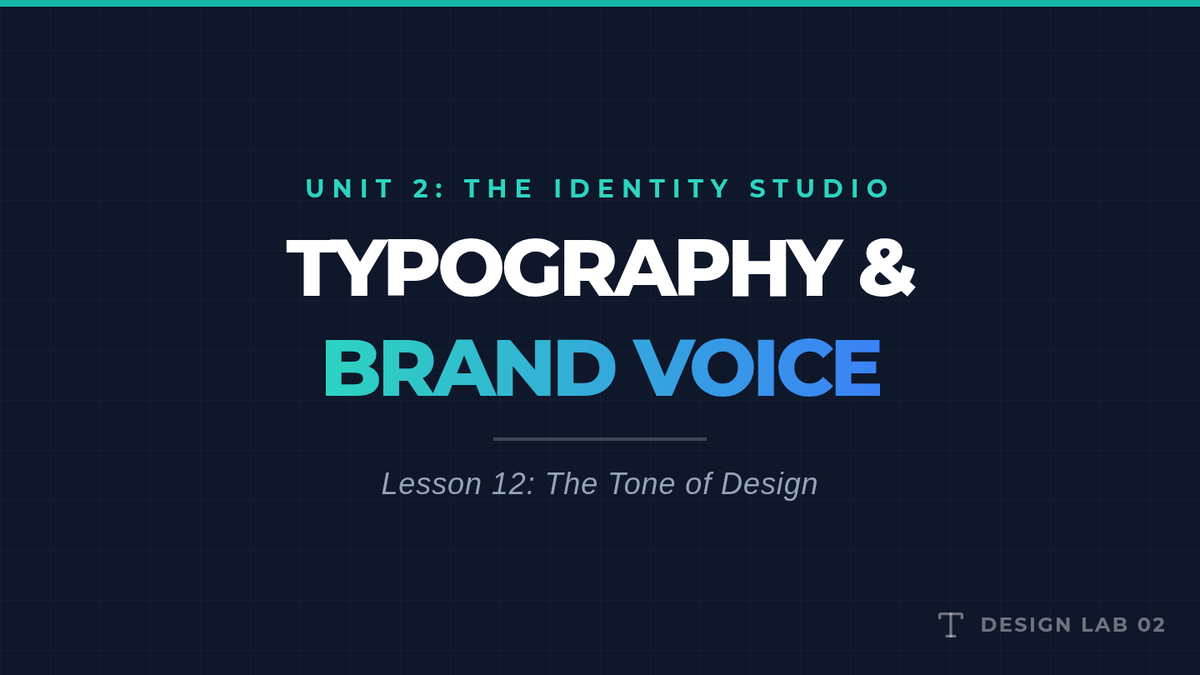
A professional, typography-focused slide deck for Lesson 12, teaching the difference between serif, sans serif, and display fonts, while exploring how letter spacing (tracking) affects brand identity.
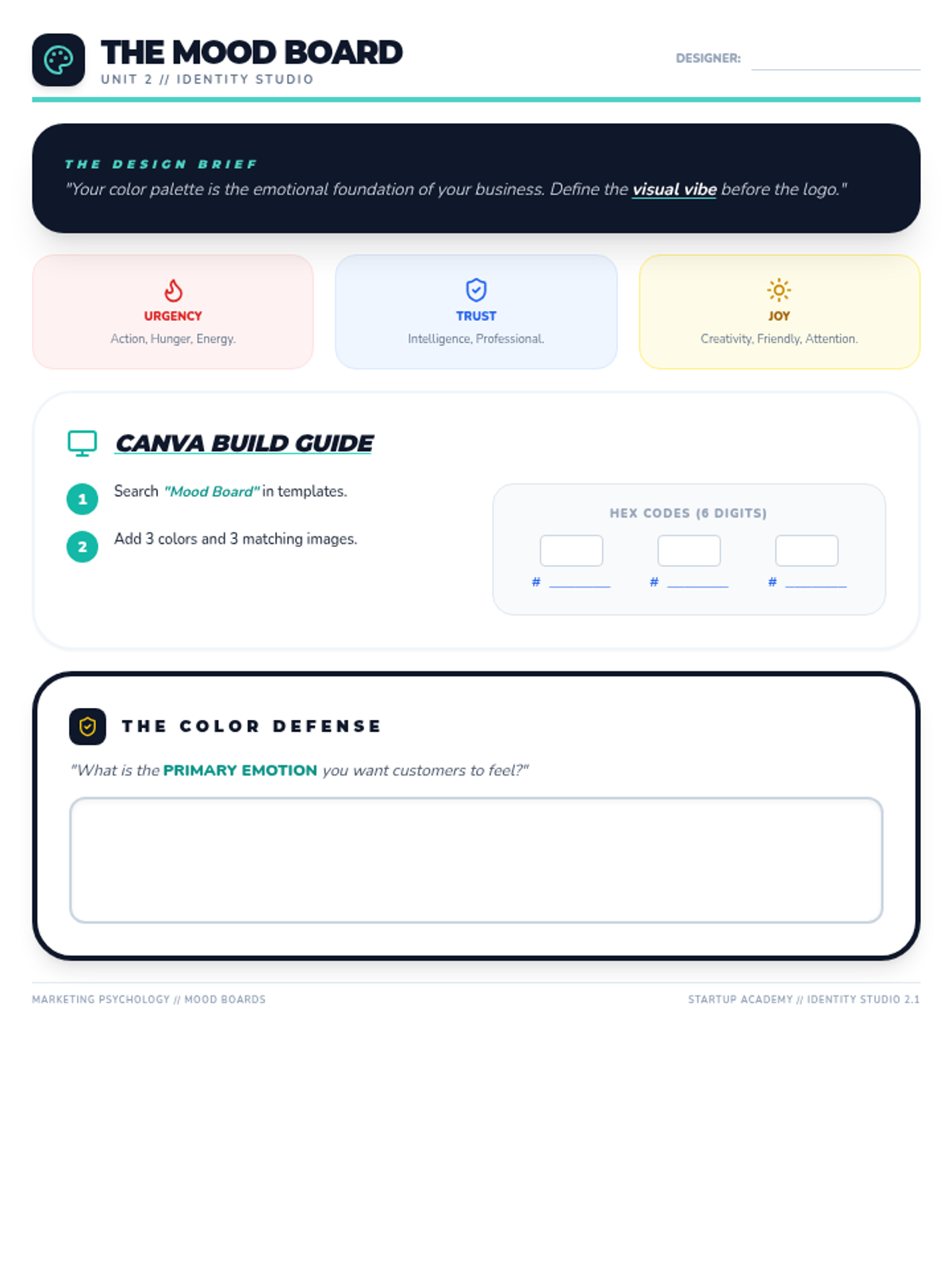
A professional design guide for students building a brand mood board in Canva, featuring color psychology anchors, technical instructions for Hex codes, and an exit ticket drafting area.
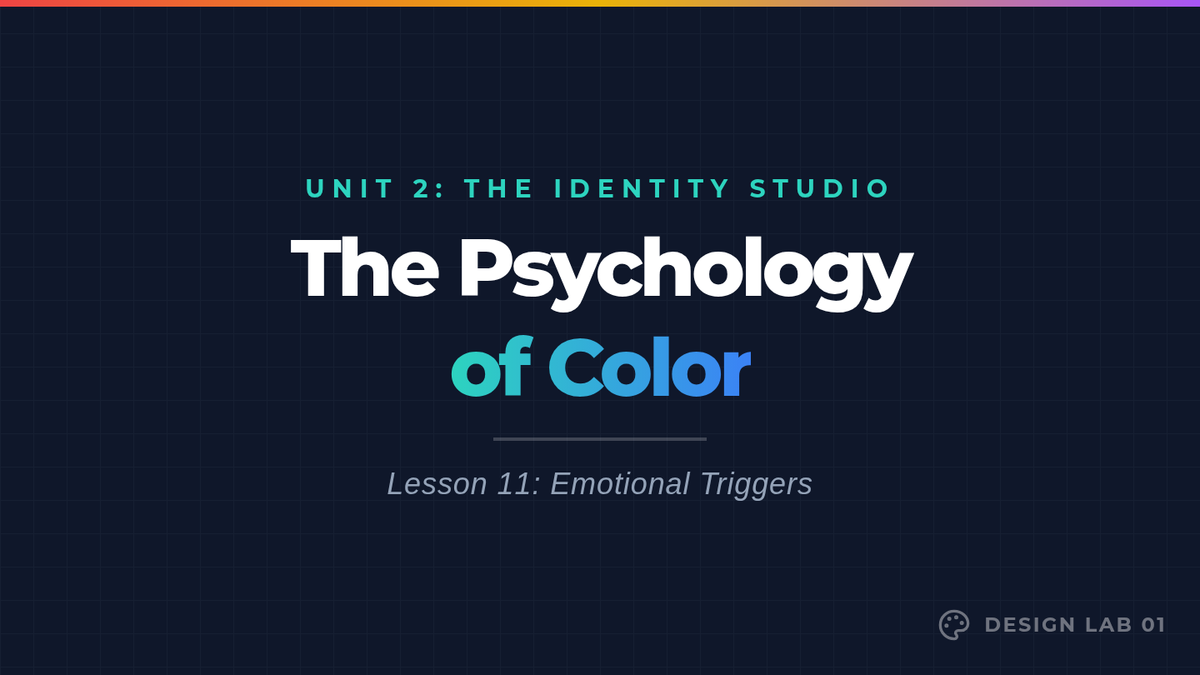
A sleek, visually striking slide deck for Lesson 11, introducing color theory, marketing psychology, and the technical skill of using Hex codes to build brand mood boards.
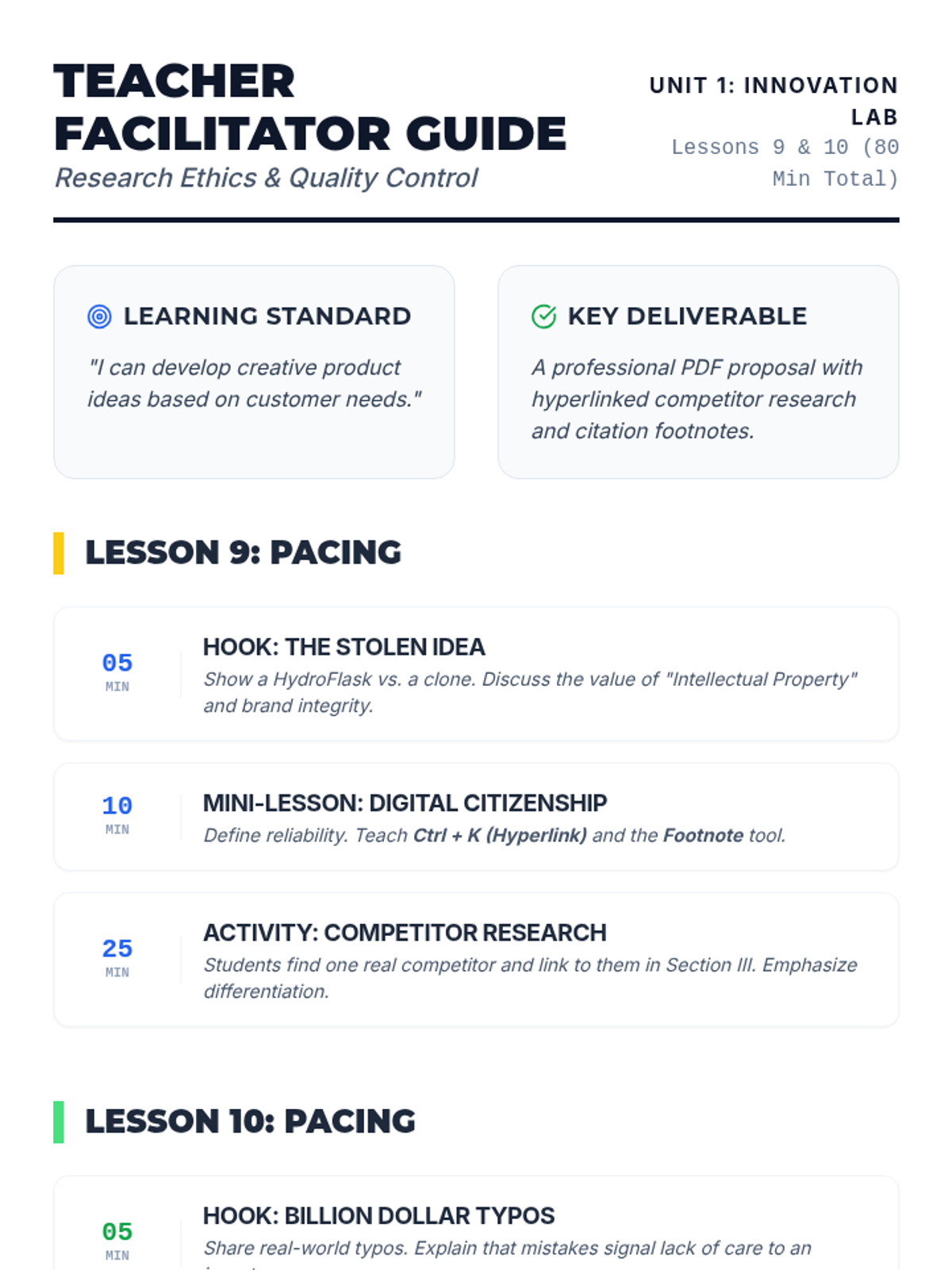
A joint teacher facilitator guide for Lessons 9 and 10, covering intellectual property, source reliability, peer review protocols, and professional quality control.
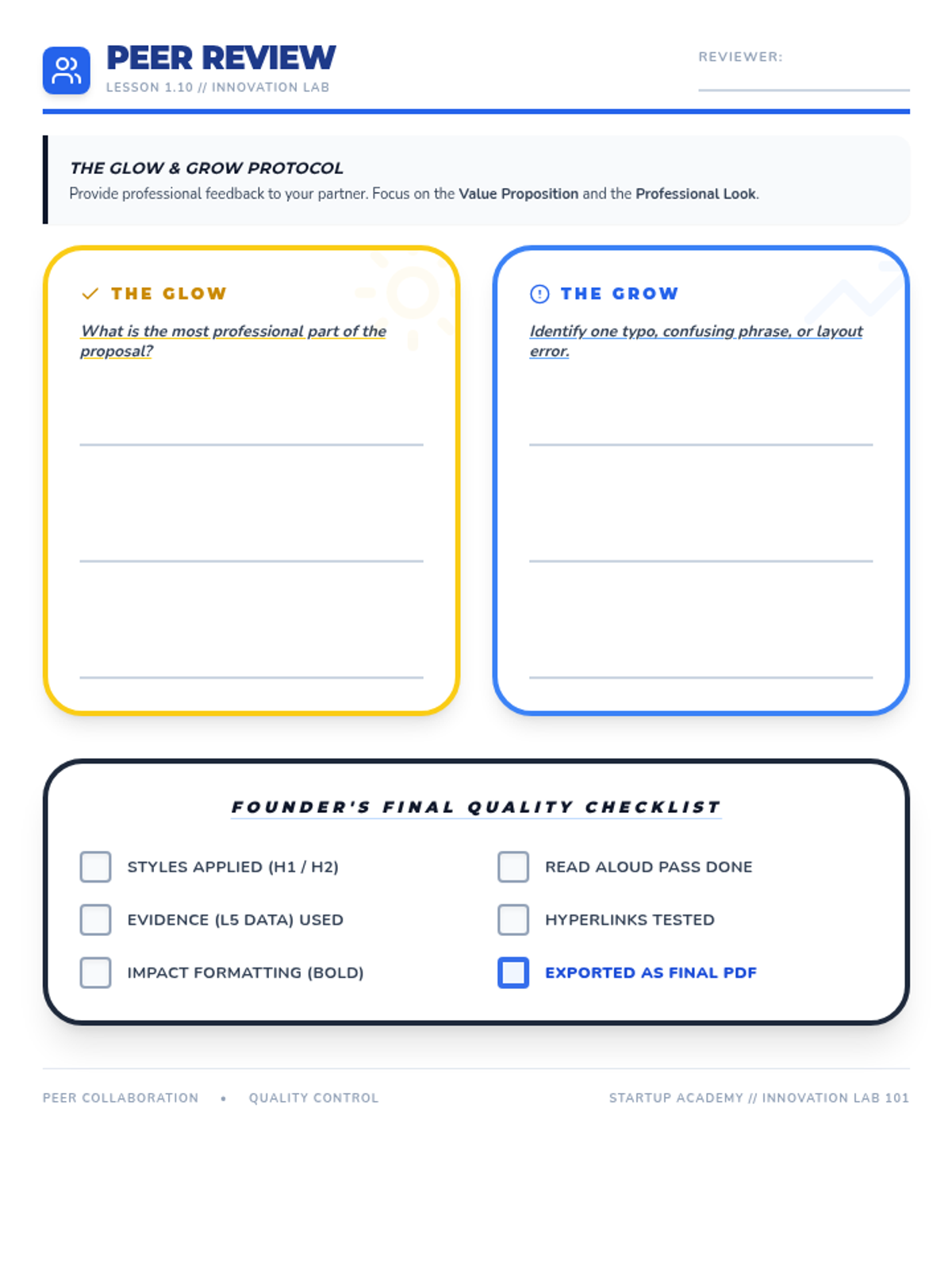
A peer review feedback form and final quality control checklist for Lesson 10, designed to guide students through the 'Glow and Grow' feedback process and professional submission requirements.
A high-energy slide deck for Lesson 10 of the Innovation Lab, focusing on final document editing, peer review feedback, the 'Read Aloud' proofing trick, and professional PDF exportation.
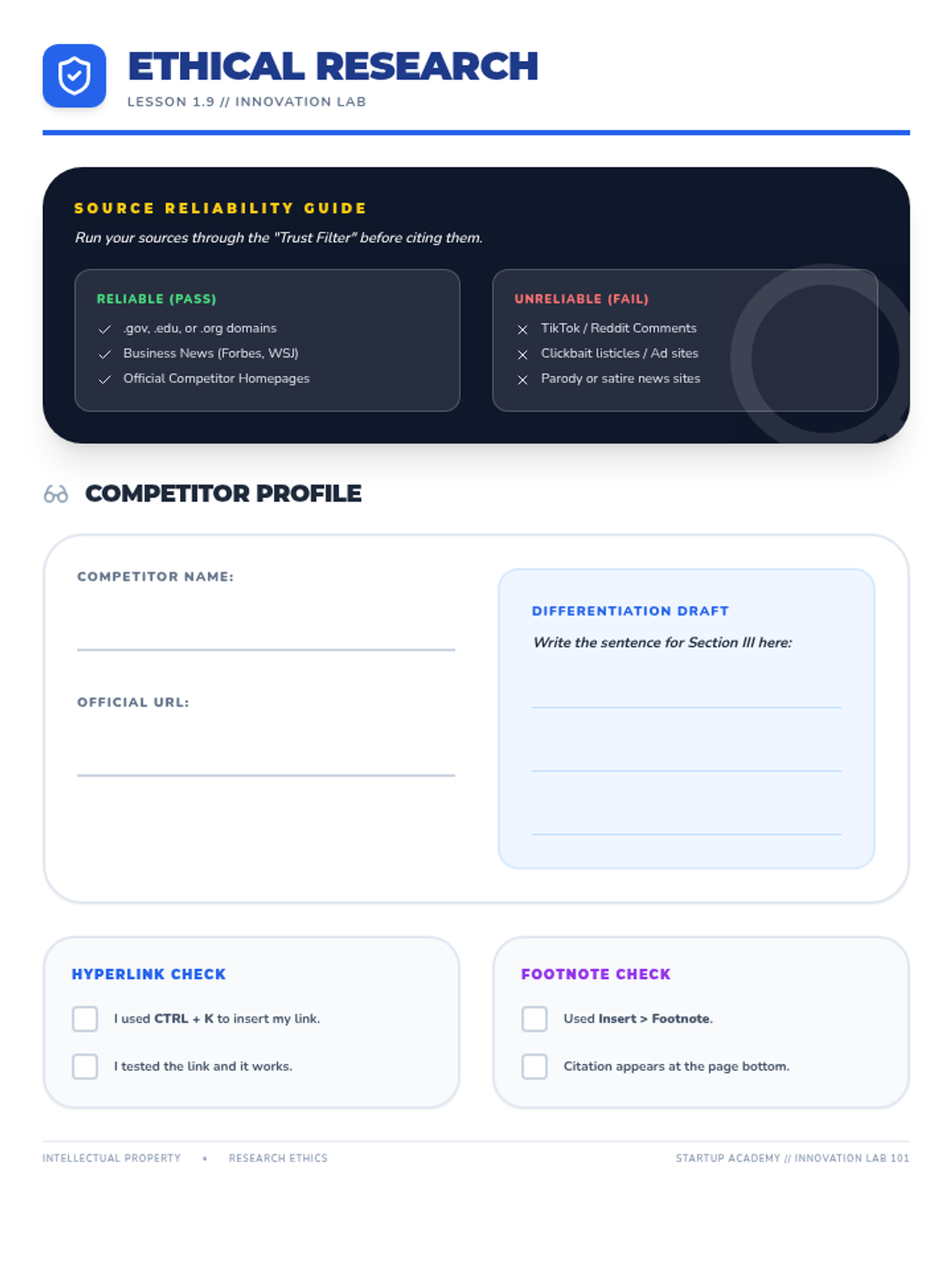
A student research and reliability handout for Lesson 9, featuring a source evaluation guide, competitor analysis template, and a technical software skills checklist for hyperlinking and footnotes.
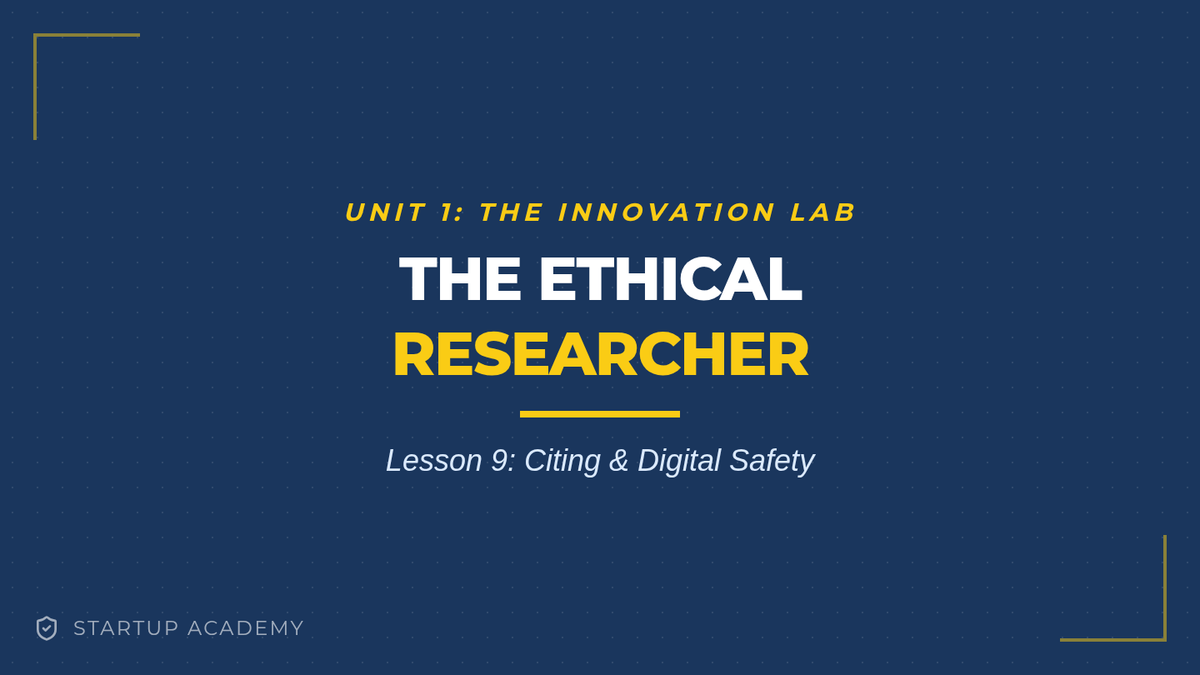
A high-energy slide deck for Lesson 9 of the Innovation Lab, focusing on intellectual property, source reliability, and technical software skills for hyperlinking and footnotes.
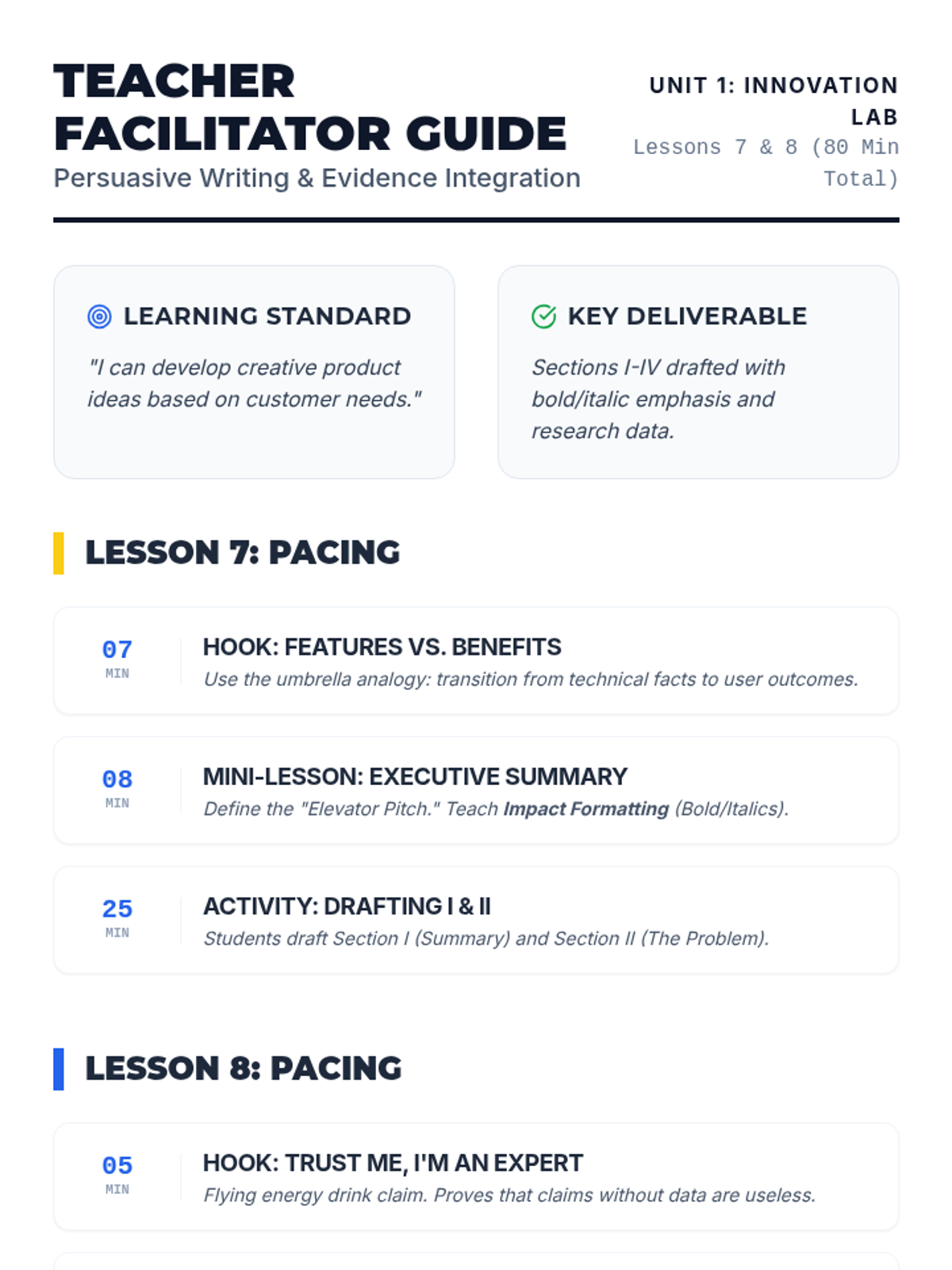
A joint teacher's guide for Lessons 7 and 8, covering persuasive business writing, features vs. benefits, and the integration of research evidence into a formal proposal.
A slide deck focused on using market research as evidence in business writing, featuring technical instruction on integrating quotes, lead-in phrases, and using indentation for block quotes.
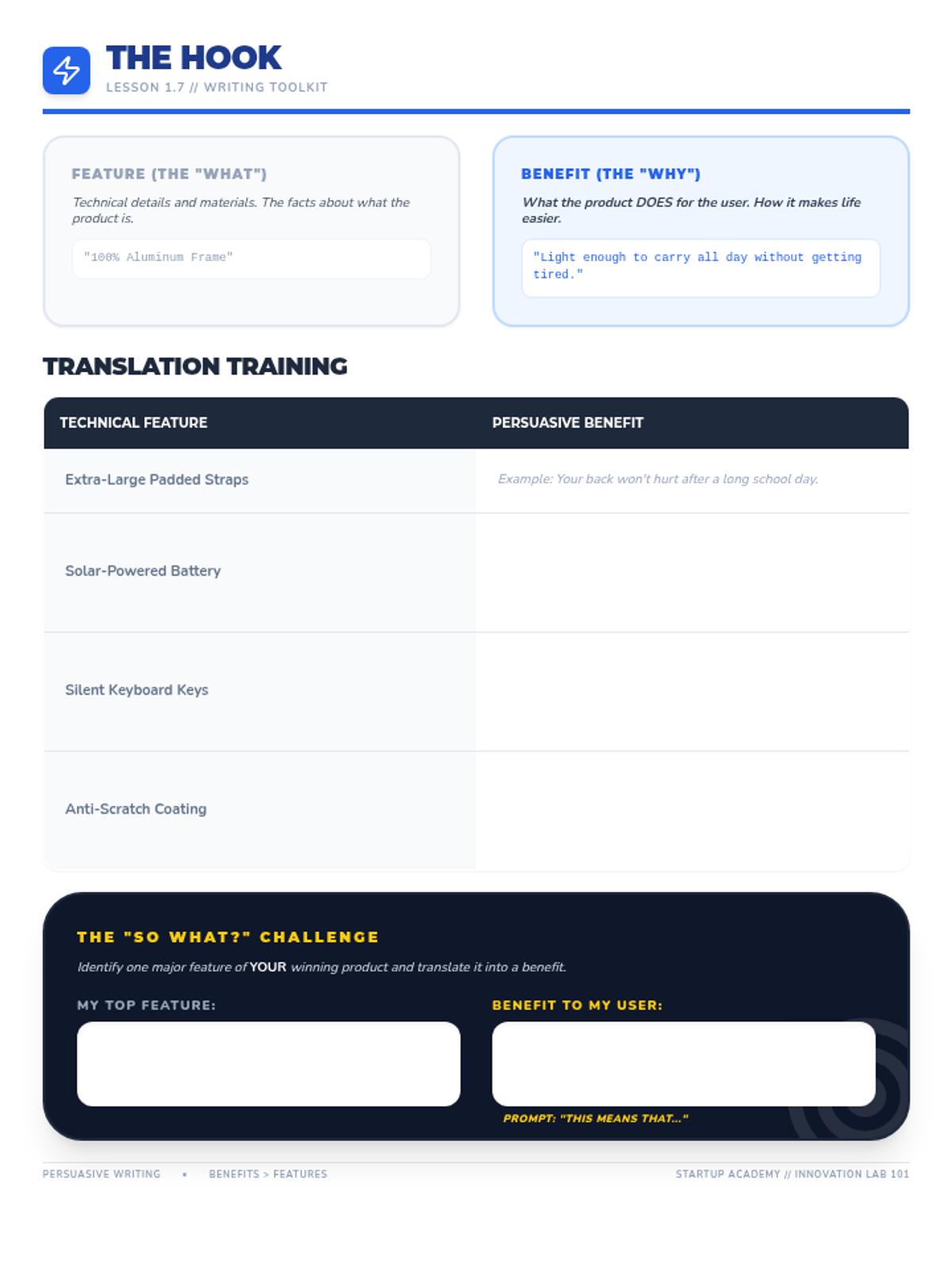
A persuasive writing toolkit for students to practice translating technical product features into customer benefits before drafting their business proposals.
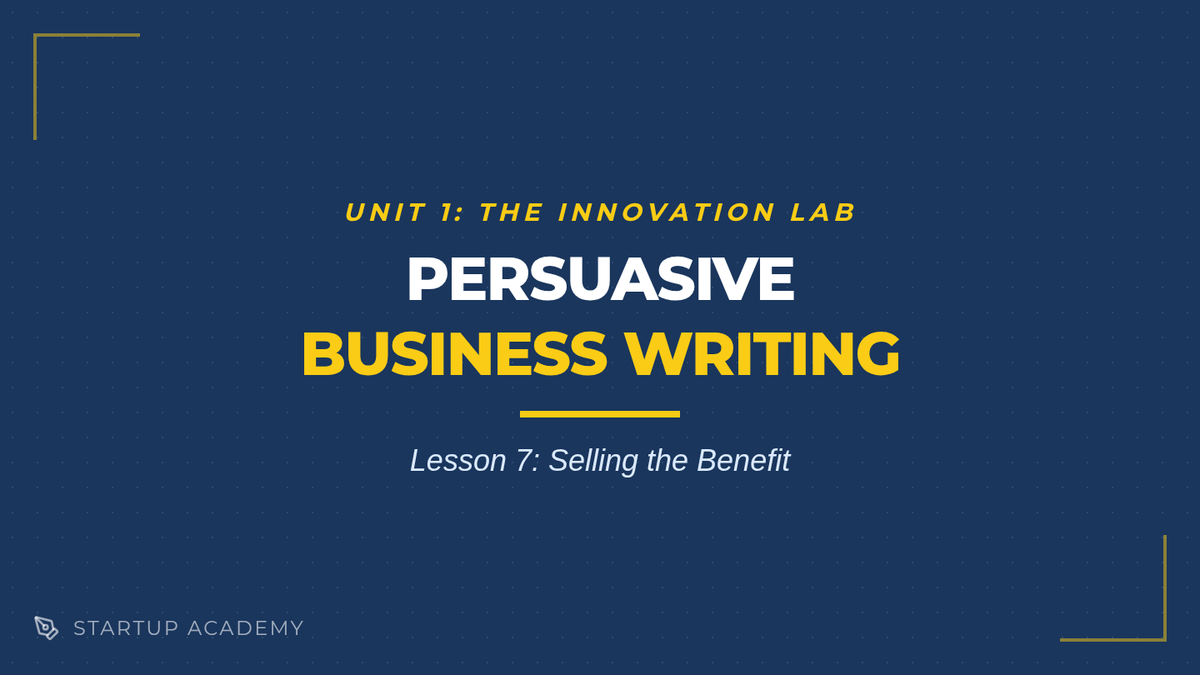
A high-energy slide deck teaching the difference between product features and customer benefits, with technical software instruction on using bold and italics for impact in an Executive Summary.
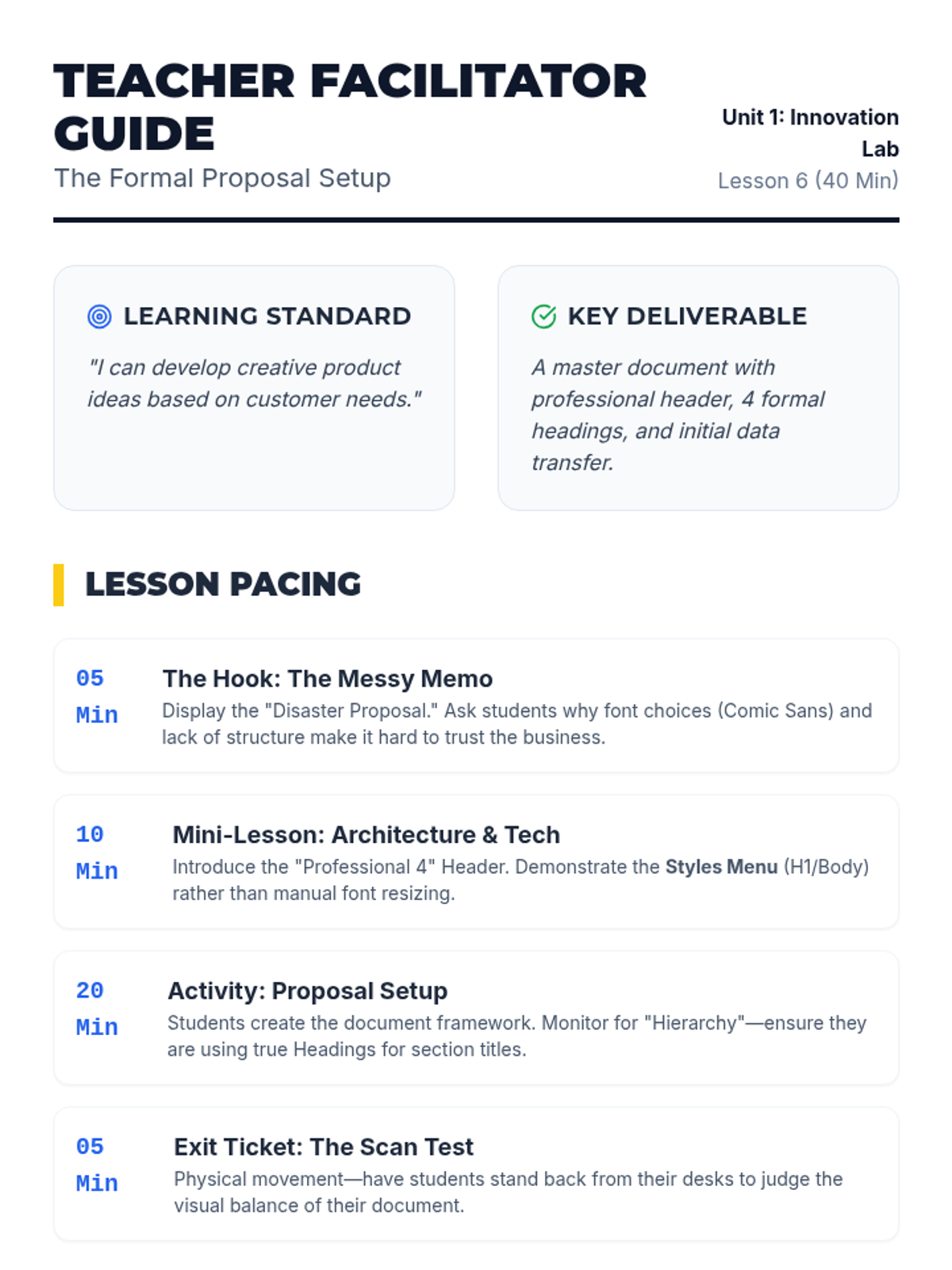
A comprehensive teacher's guide for Lesson 6, providing pacing, discussion prompts, and technical tips for facilitating the formal business proposal setup.
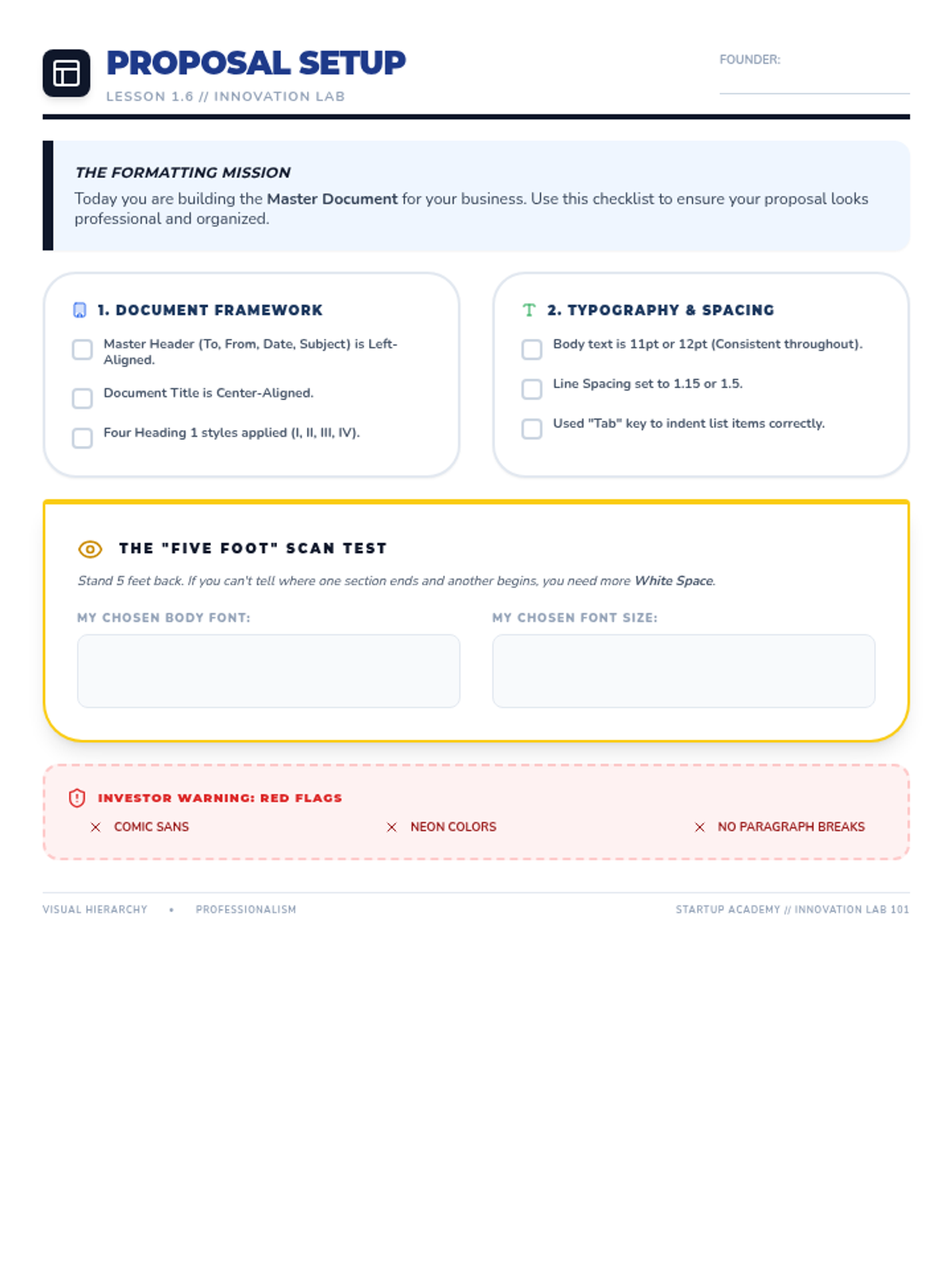
A student-facing formatting checklist and architecture guide for setting up a formal business proposal, featuring technical requirements for alignment, typography, and spacing.
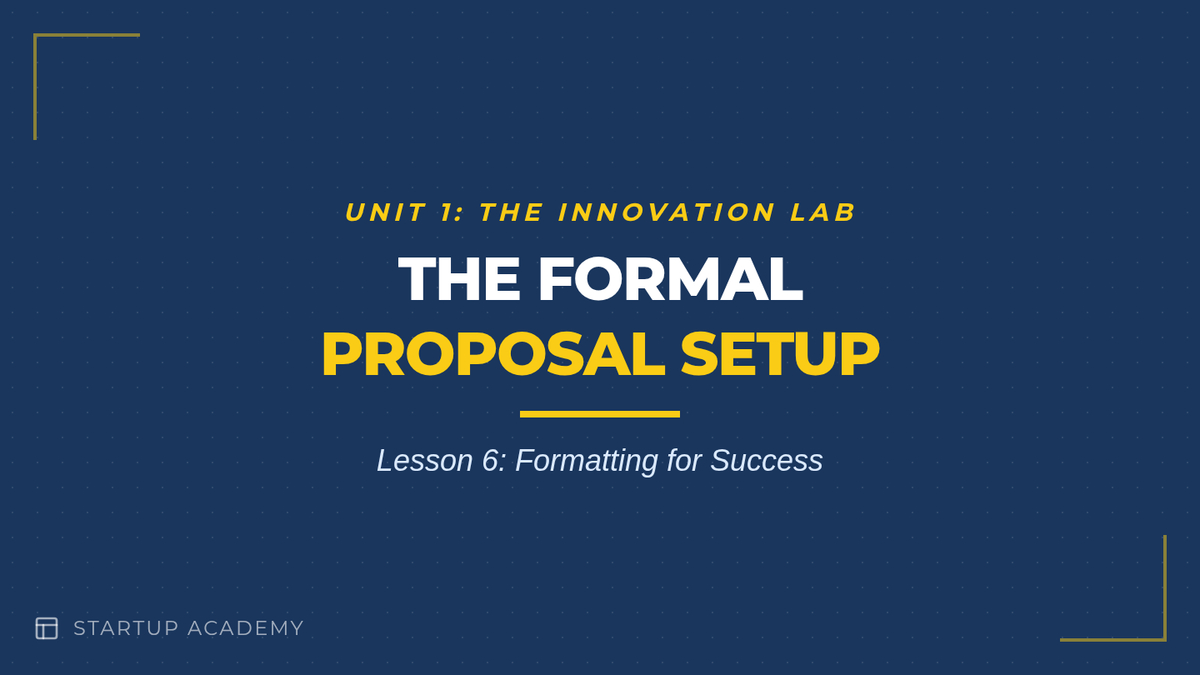
A professional, visually striking slide deck for teaching document architecture and formal business proposal formatting, featuring blueprint design elements and technical software skill guides.
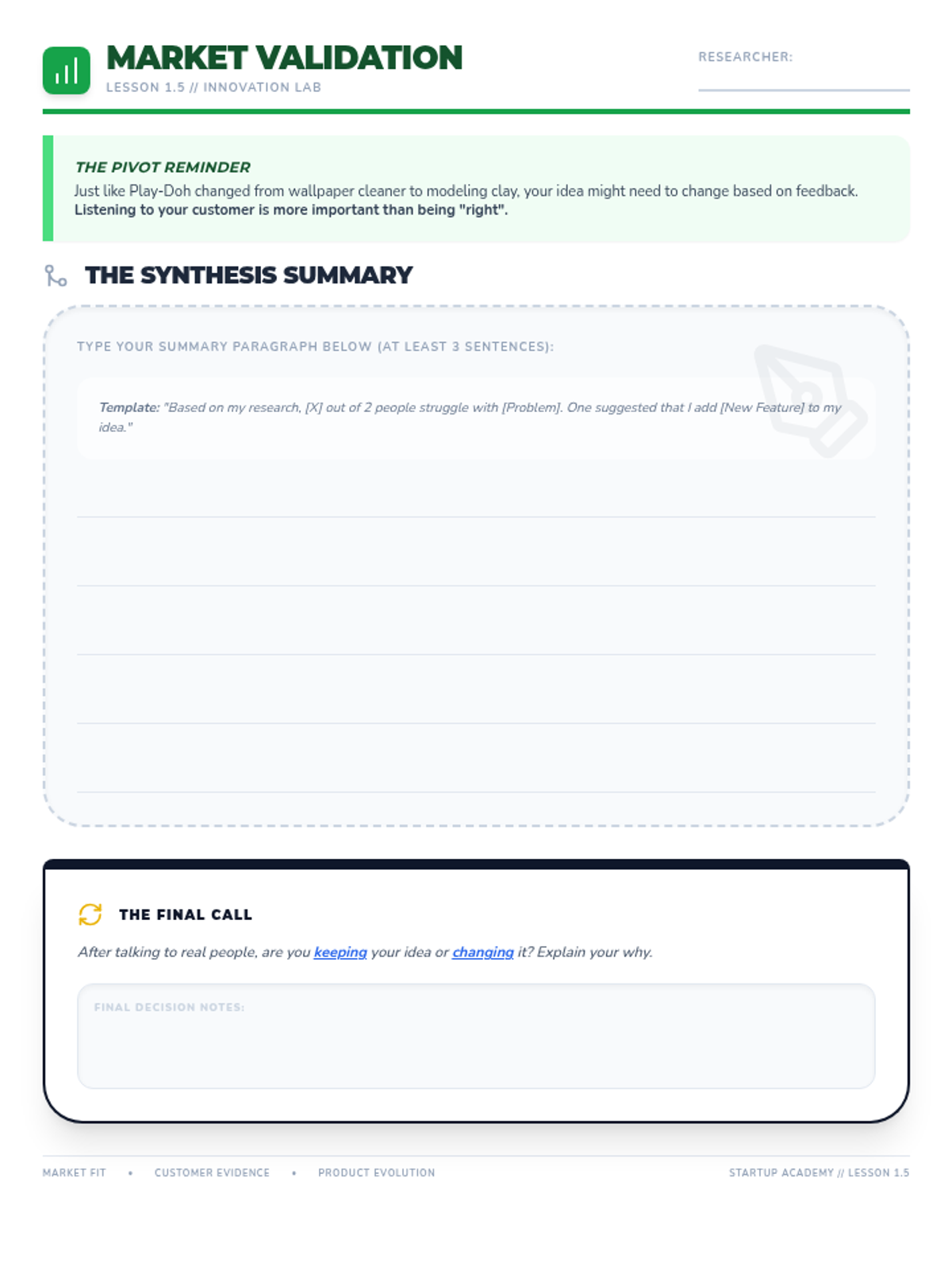
A student synthesis worksheet for Lesson 5, guiding students through the process of writing a summary paragraph based on their market research and deciding whether to pivot their product idea.
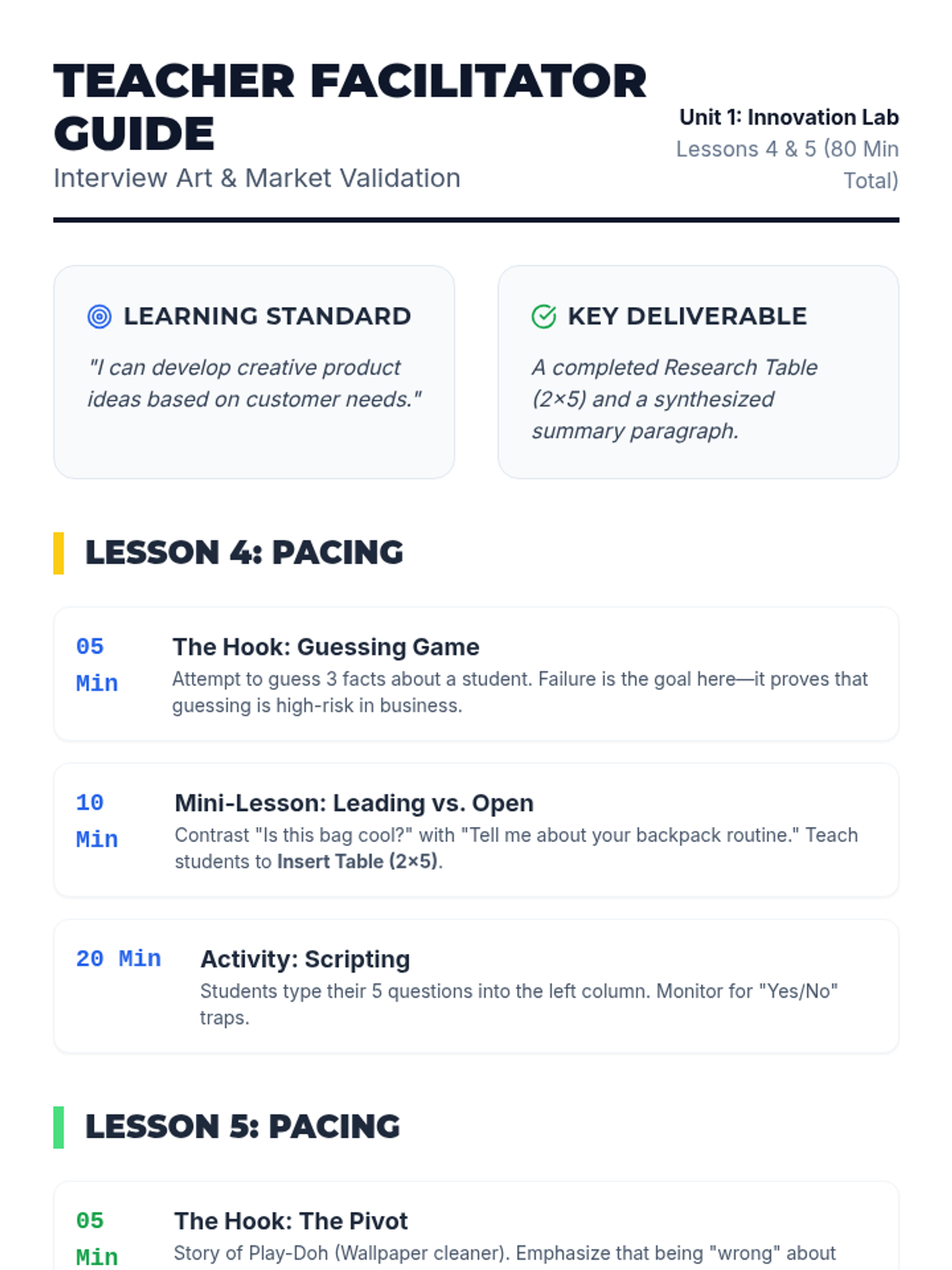
A joint teacher's guide for Lessons 4 and 5, covering interviewing techniques, the concept of the pivot, and facilitating a market research sprint with digital citizenship reminders.
A high-energy slide deck for Lesson 5, focusing on market research, transcribing customer feedback, and the concept of 'pivoting' based on data synthesis.
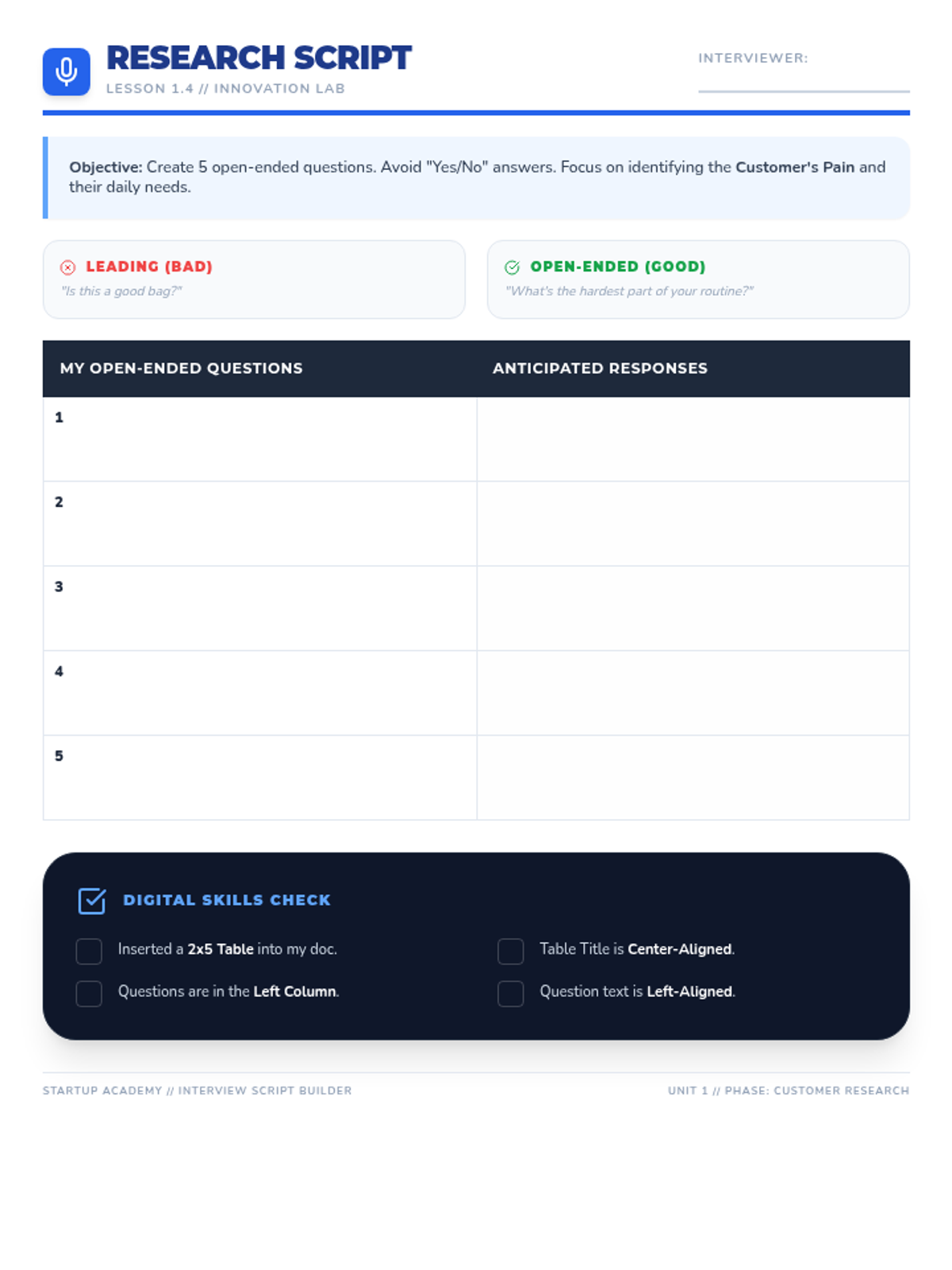
A student worksheet designed to help scaffold the creation of an interview script with open-ended questions, featuring a table layout and a digital skills checklist.
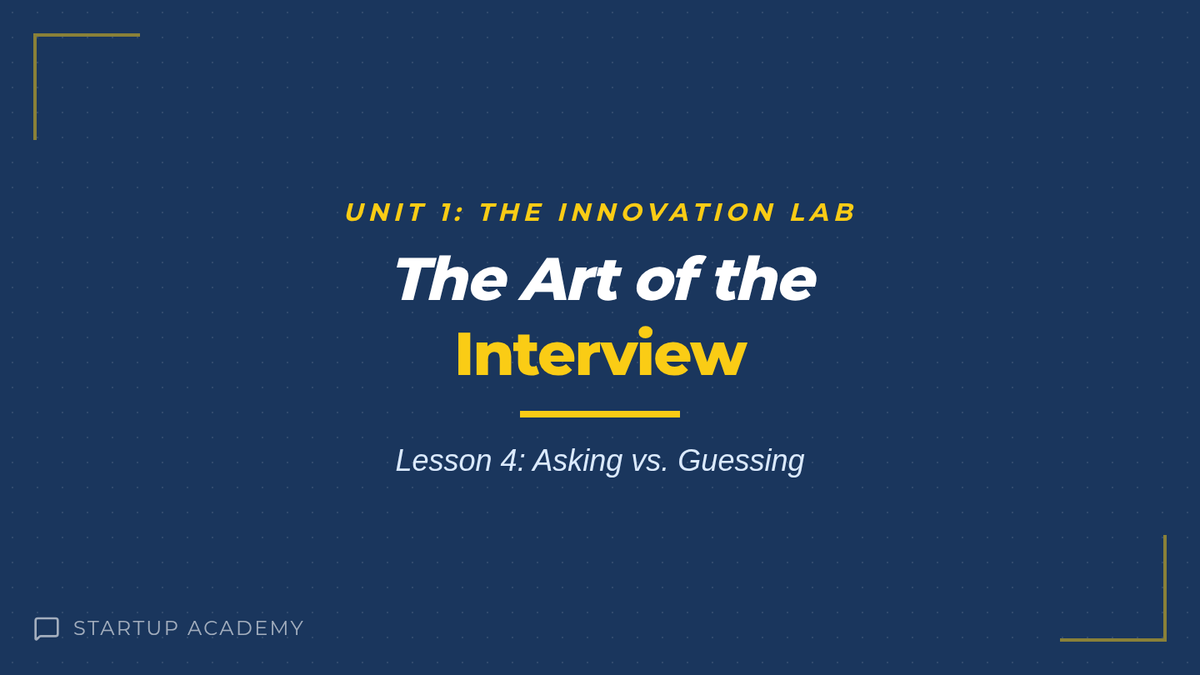
A high-impact slide deck for teaching customer interviewing techniques, focusing on open-ended questions vs. leading questions and introducing the technical skill of creating tables.
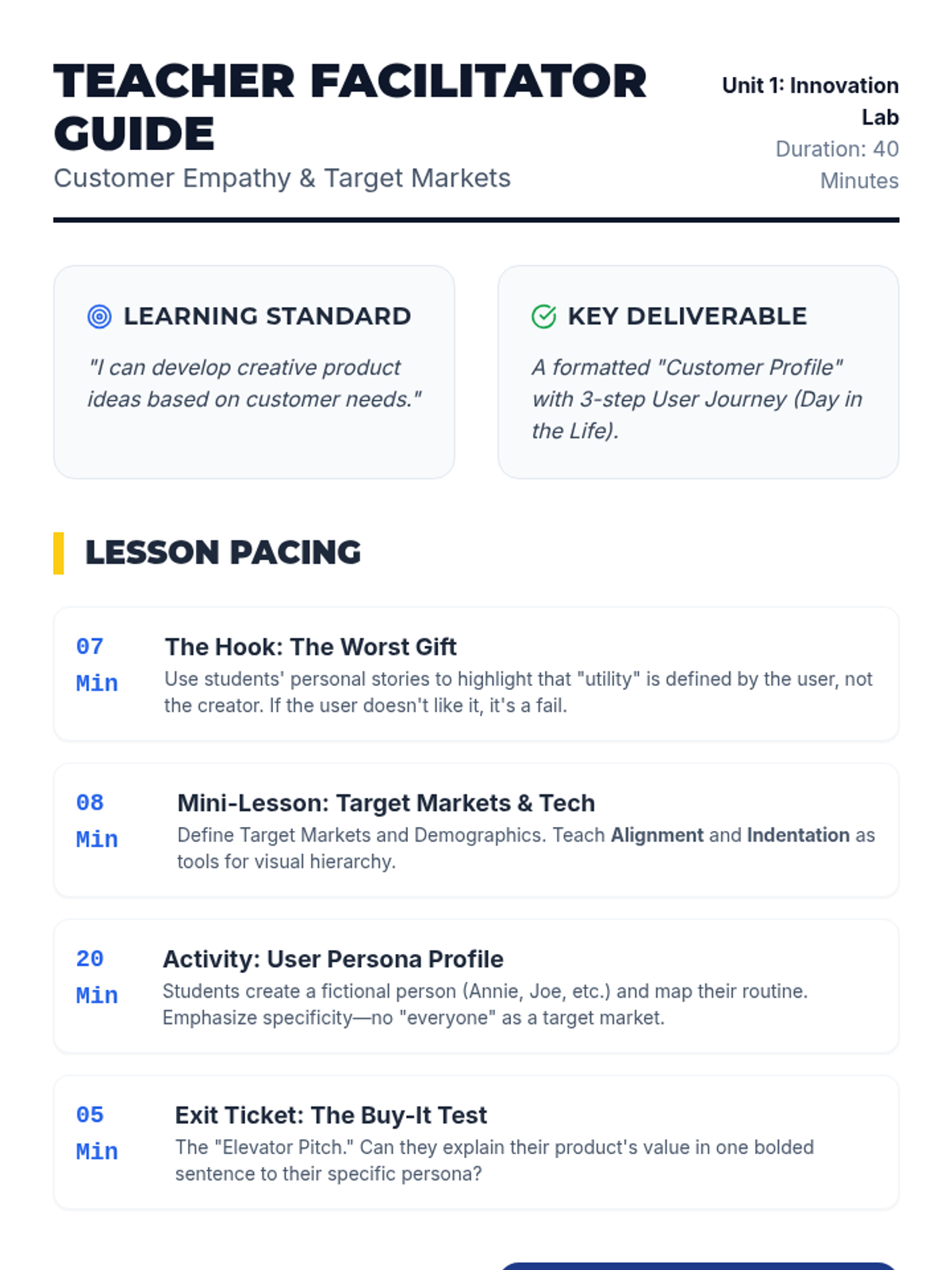
A comprehensive facilitator guide for Lesson 3, covering target market segmentation, customer empathy, and user journey mapping with facilitation tips.
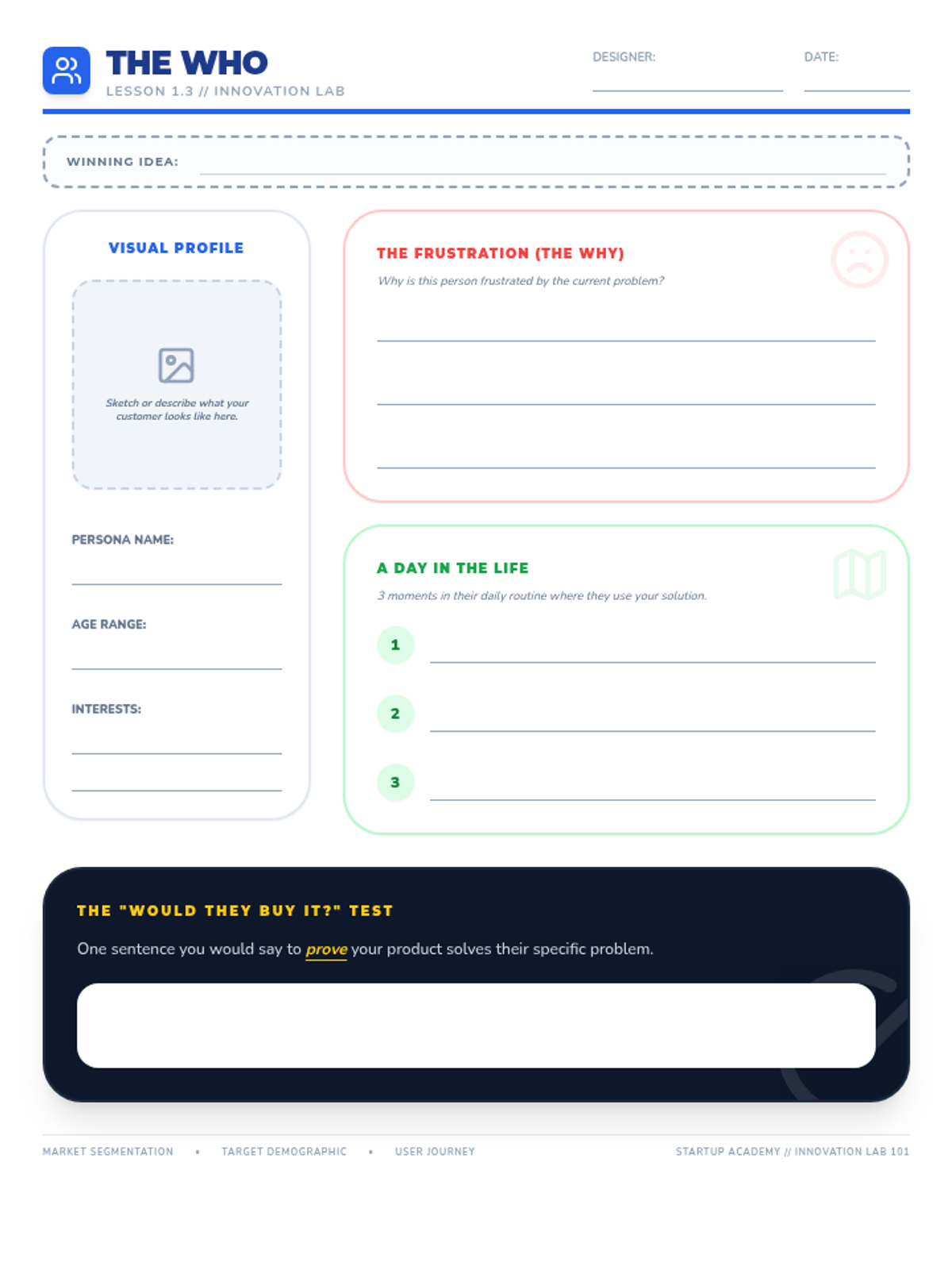
A detailed template for students to create a "User Persona" profile, identifying customer demographics, frustrations, and a "Day in the Life" journey for their product ideas.
A visually engaging slide deck teaching the concepts of target markets and customer empathy, featuring gift-giving analogies, demographic breakdowns, and instructions for creating a User Persona.
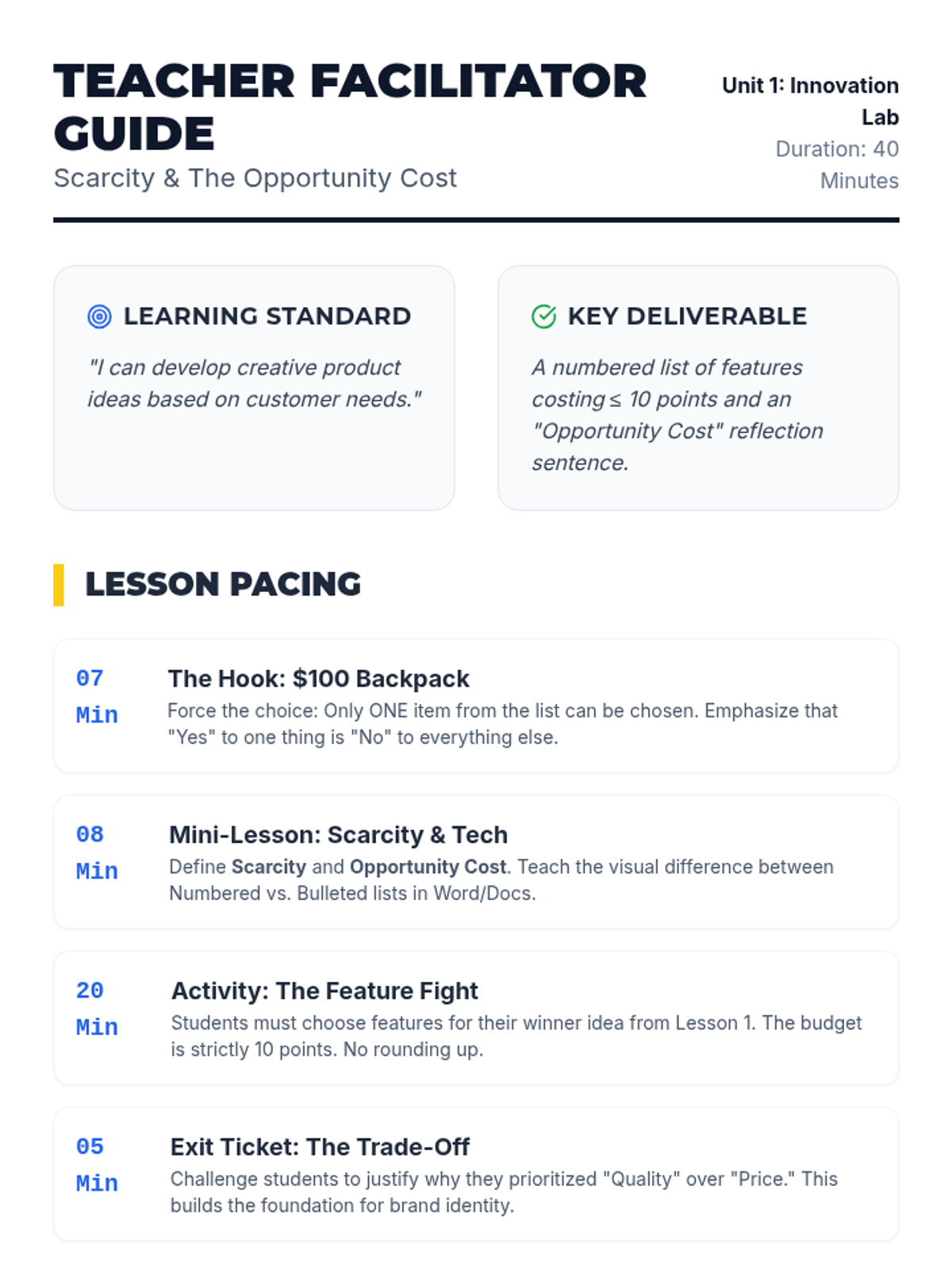
A comprehensive teacher's guide providing pacing instructions, discussion prompts, common misconceptions, and differentiation strategies for facilitating the "Scarcity & Opportunity Cost" lesson.
A visually compelling slide deck using a blueprint-inspired design to teach the concepts of scarcity and opportunity cost, featuring a 'Feature Fight' activity where students must budget resource points for their product ideas.
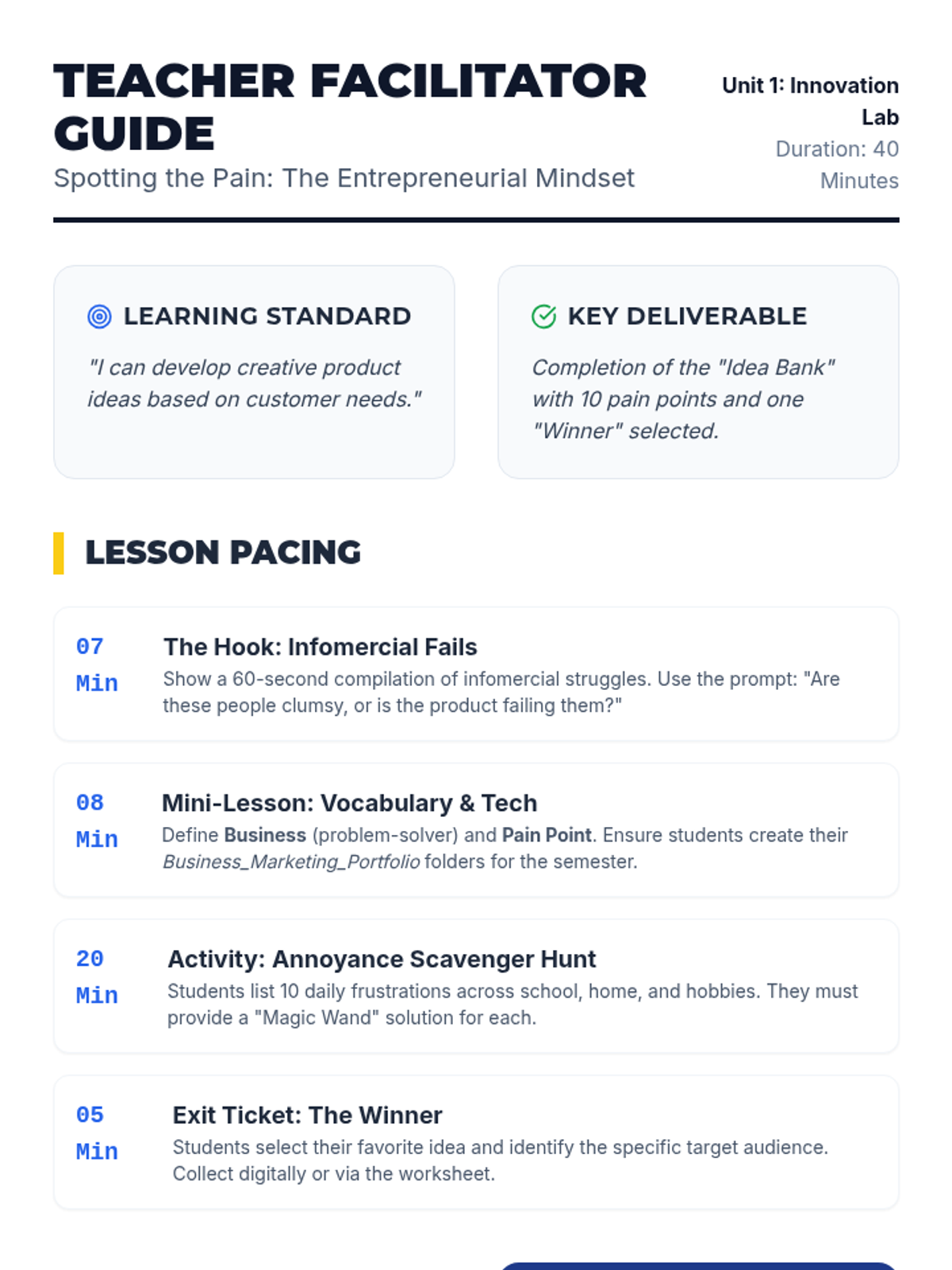
A comprehensive teacher's guide providing pacing instructions, discussion prompts, common misconceptions, and differentiation strategies for facilitating the "Spotting the Pain" lesson.
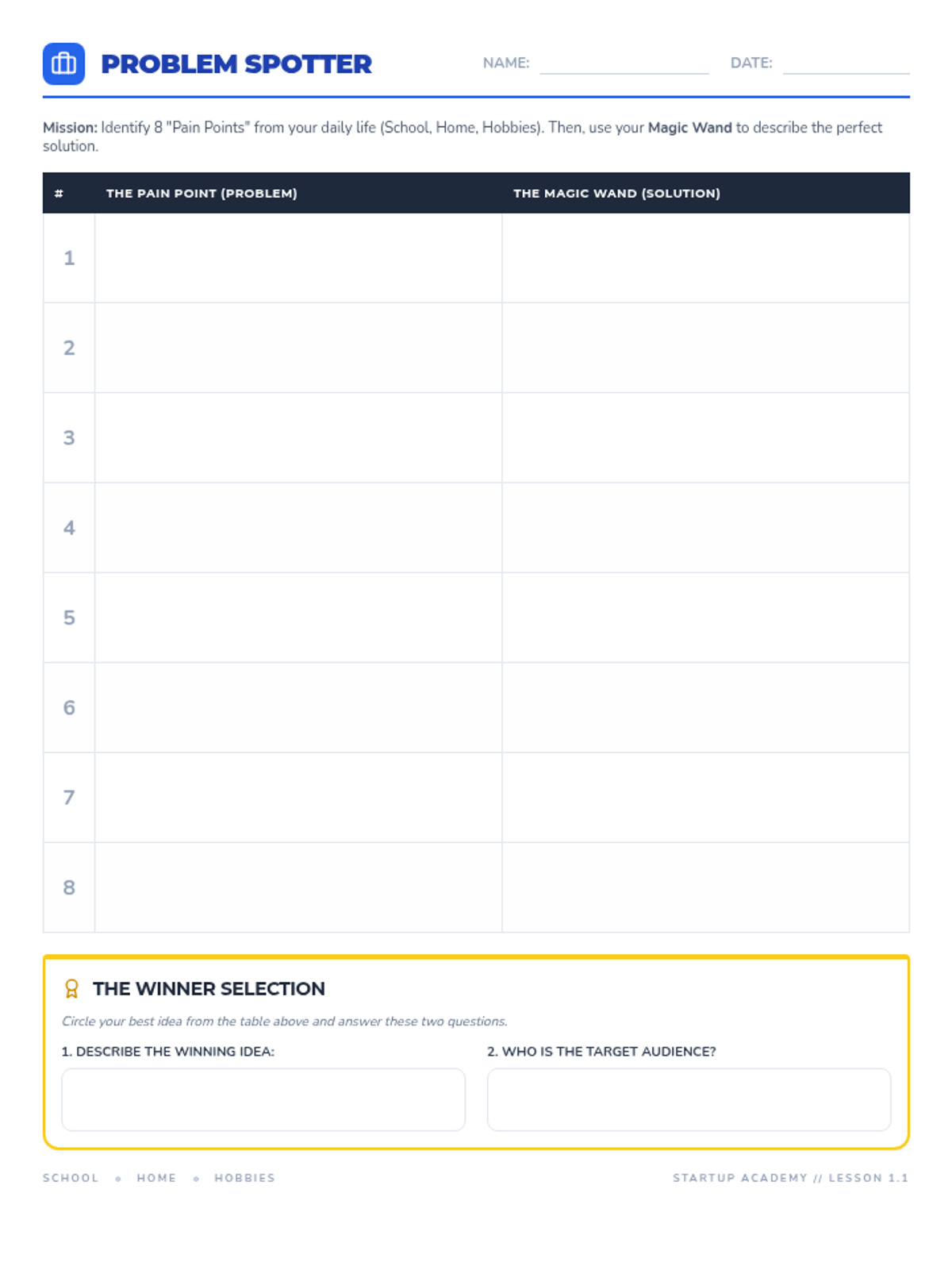
A structured worksheet designed for the "Annoyance Scavenger Hunt" activity, allowing students to document personal pain points and conceptualize their "Magic Wand" solutions with a dedicated exit ticket section.
A high-energy, visually engaging slide deck that introduces students to the entrepreneurial mindset of seeing problems as business opportunities, featuring blueprint-inspired design and interactive activity instructions.
A 12-slide modern and professional presentation for Lesson 1 of 'The Innovation Lab'. It guides students through identifying 'pain points', understanding the entrepreneur's logic, and starting their own 'Idea Bank'.
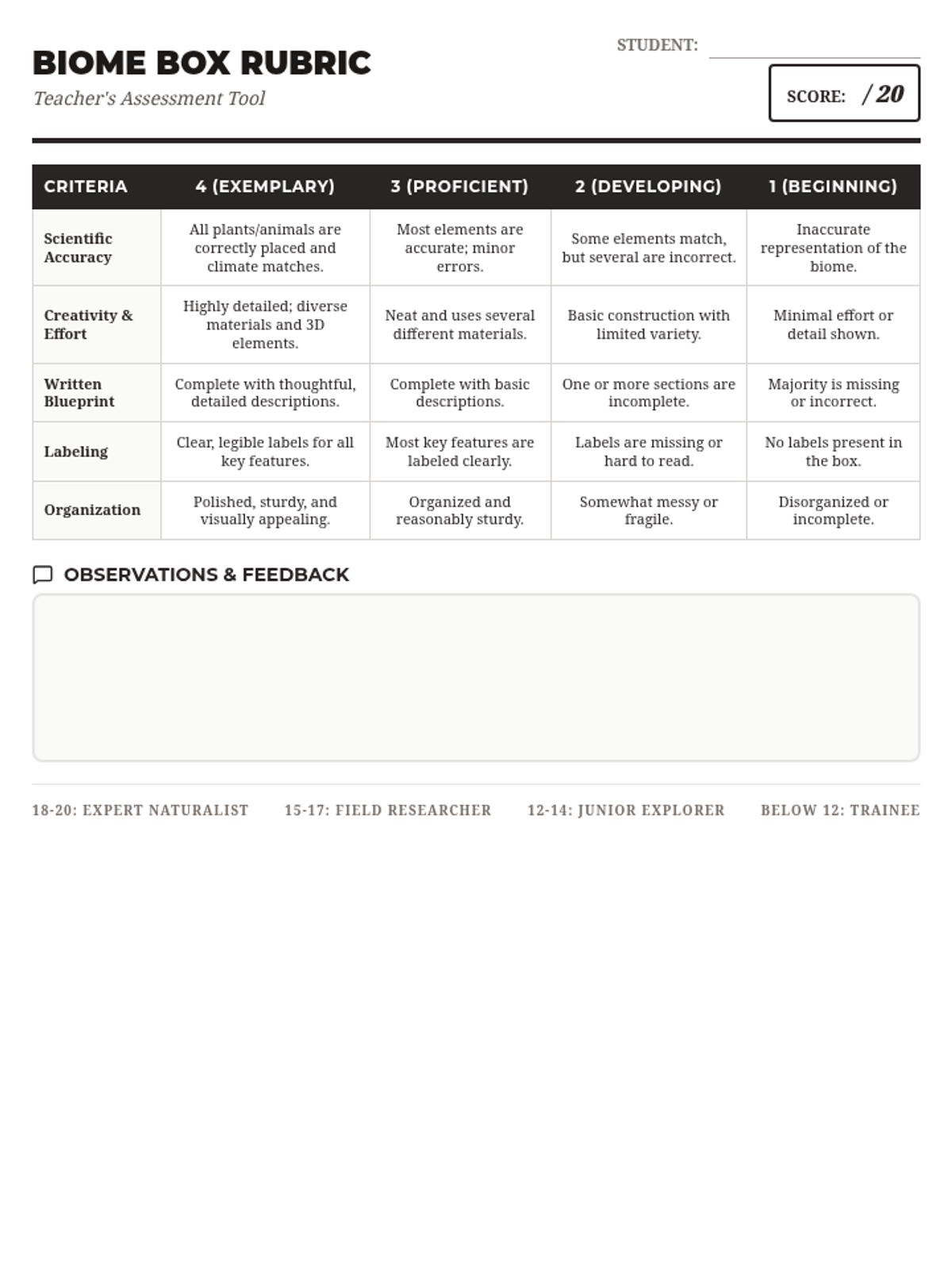
A comprehensive scoring guide for teachers to assess students' biome box projects and written reports, covering accuracy, creativity, writing, and presentation.
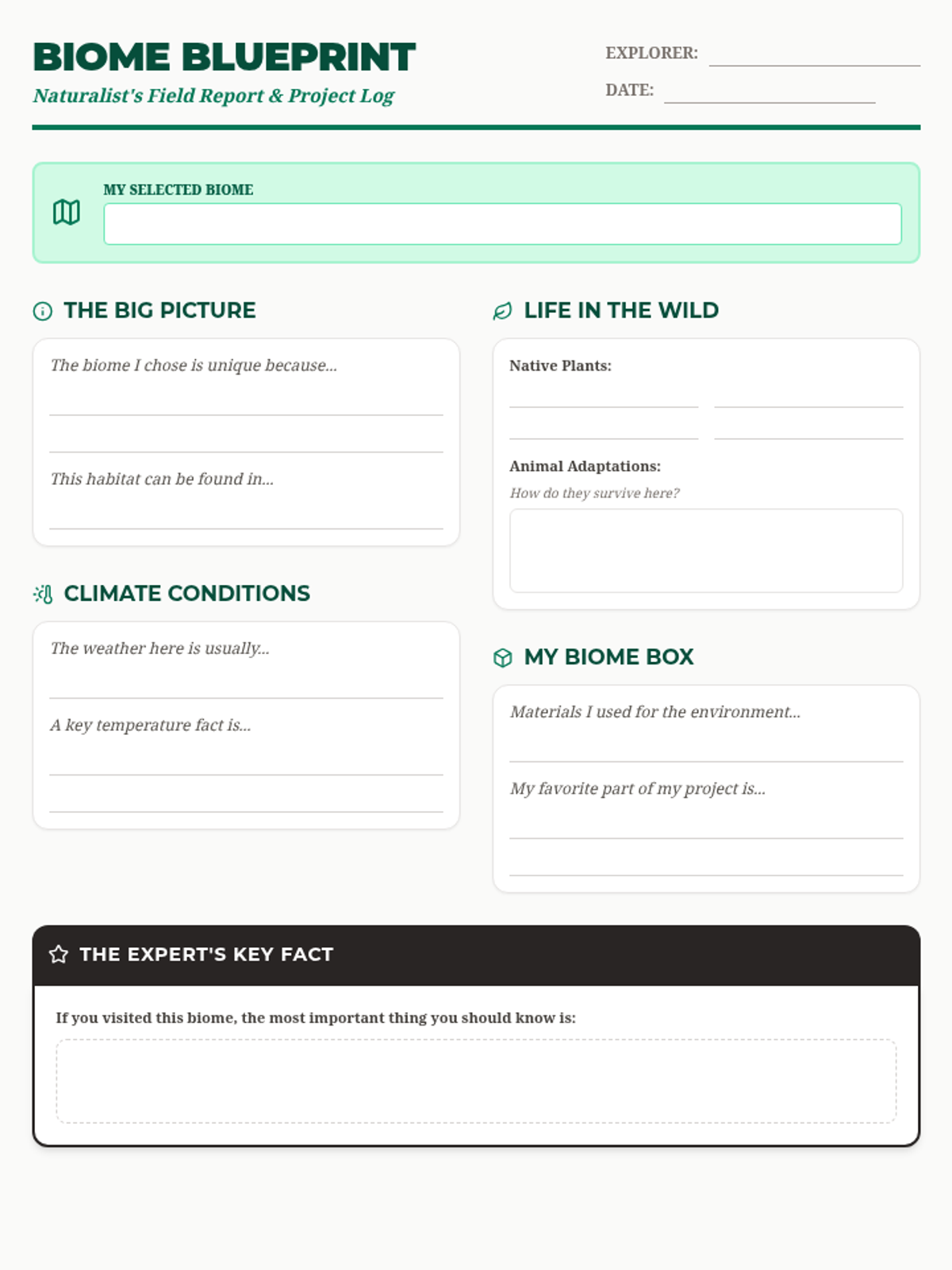
A naturalist-themed worksheet for students to document their biome box project, featuring sentence starters, short response areas, and sections for climate, flora, fauna, and project reflection.
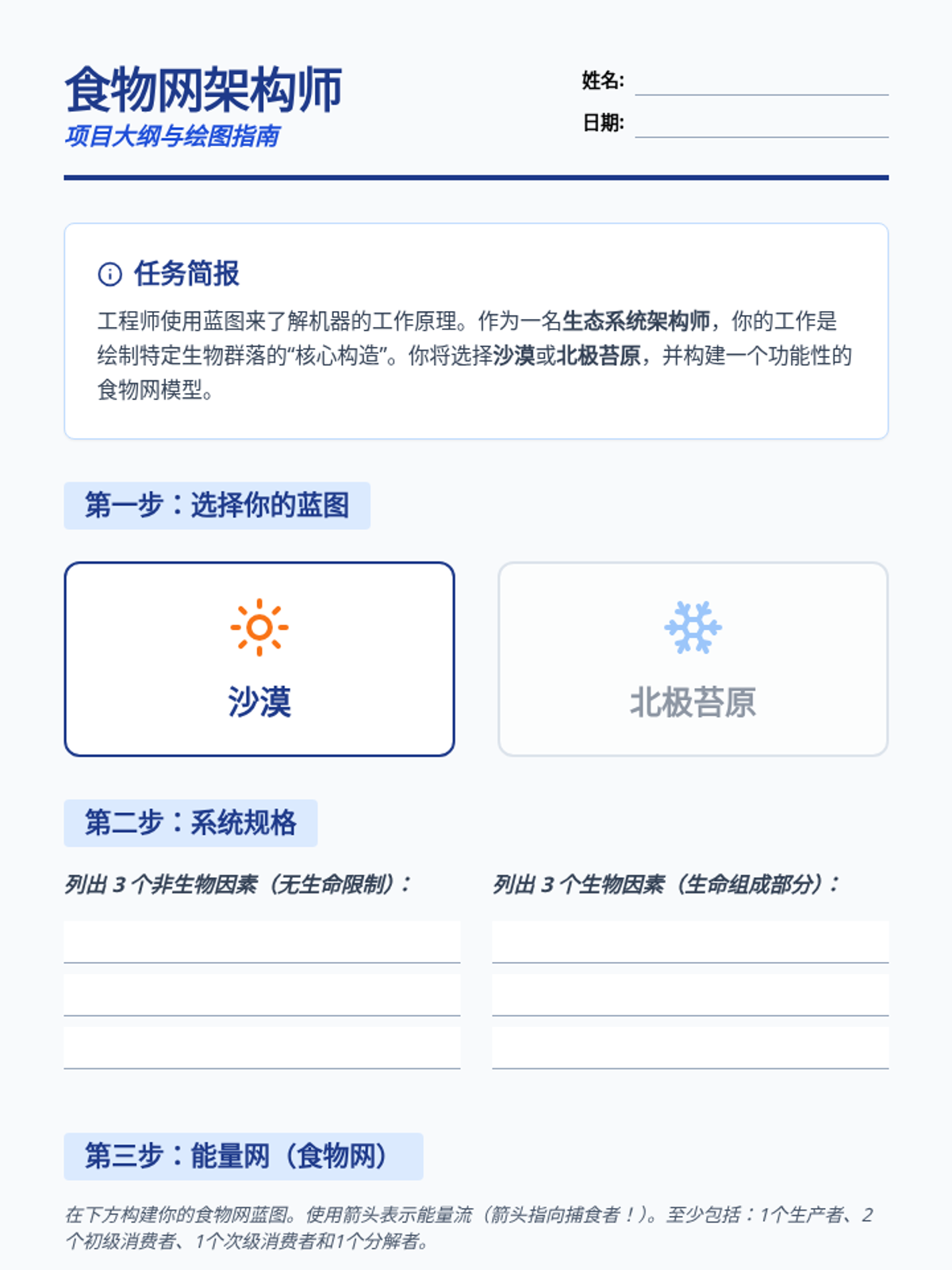
Mandarin version of the 'Food Web Architect' project guide. Leads students through choosing a biome, identifying factors, drawing a food web, and analyzing real-world impacts. Revised for improved page breaks and contrast.