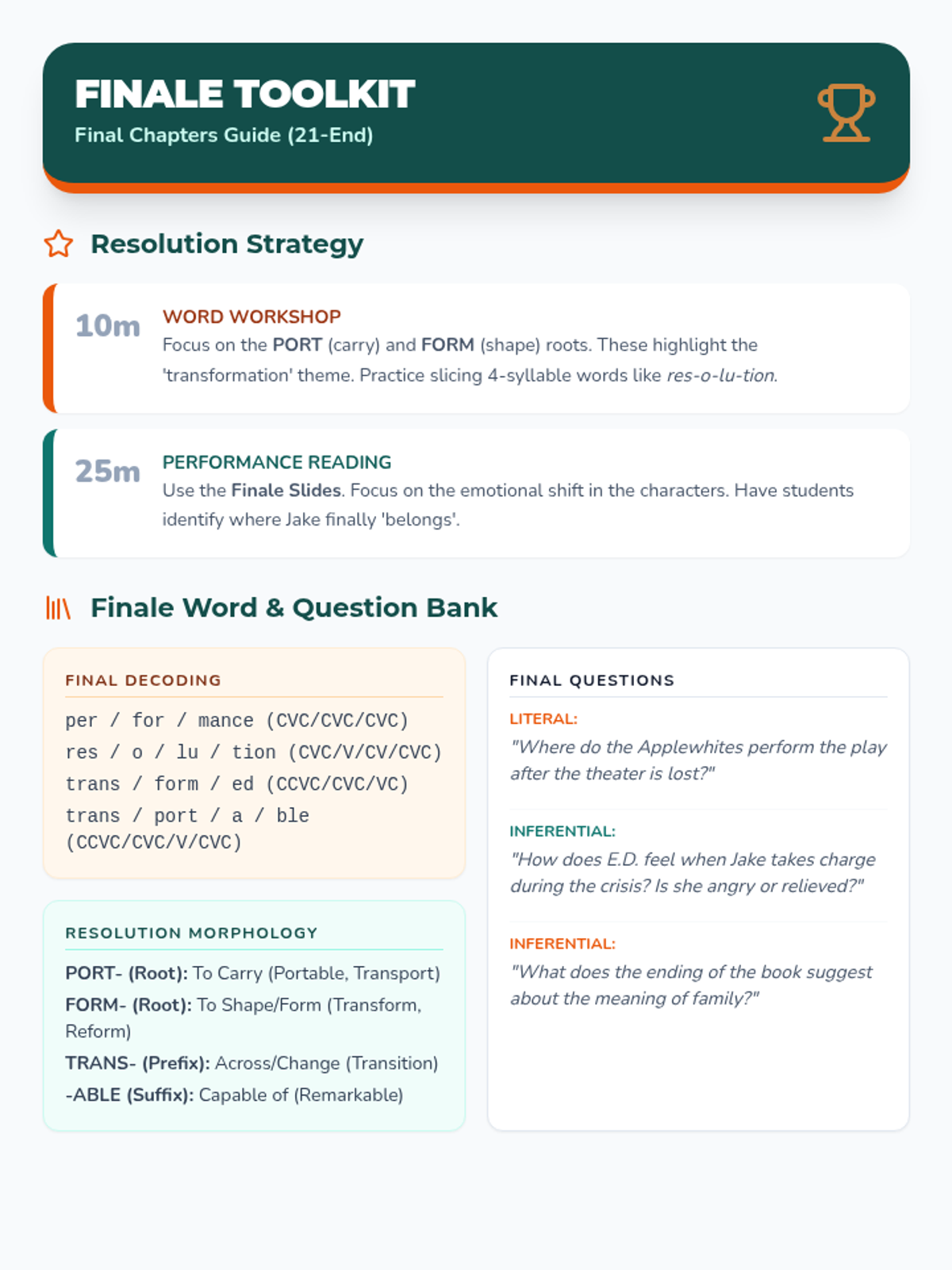
A visual presentation designed to guide a recurring daily routine for the novel 'Surviving the Applewhites,' including segments for word work, reading strategies, and comprehension investigation.
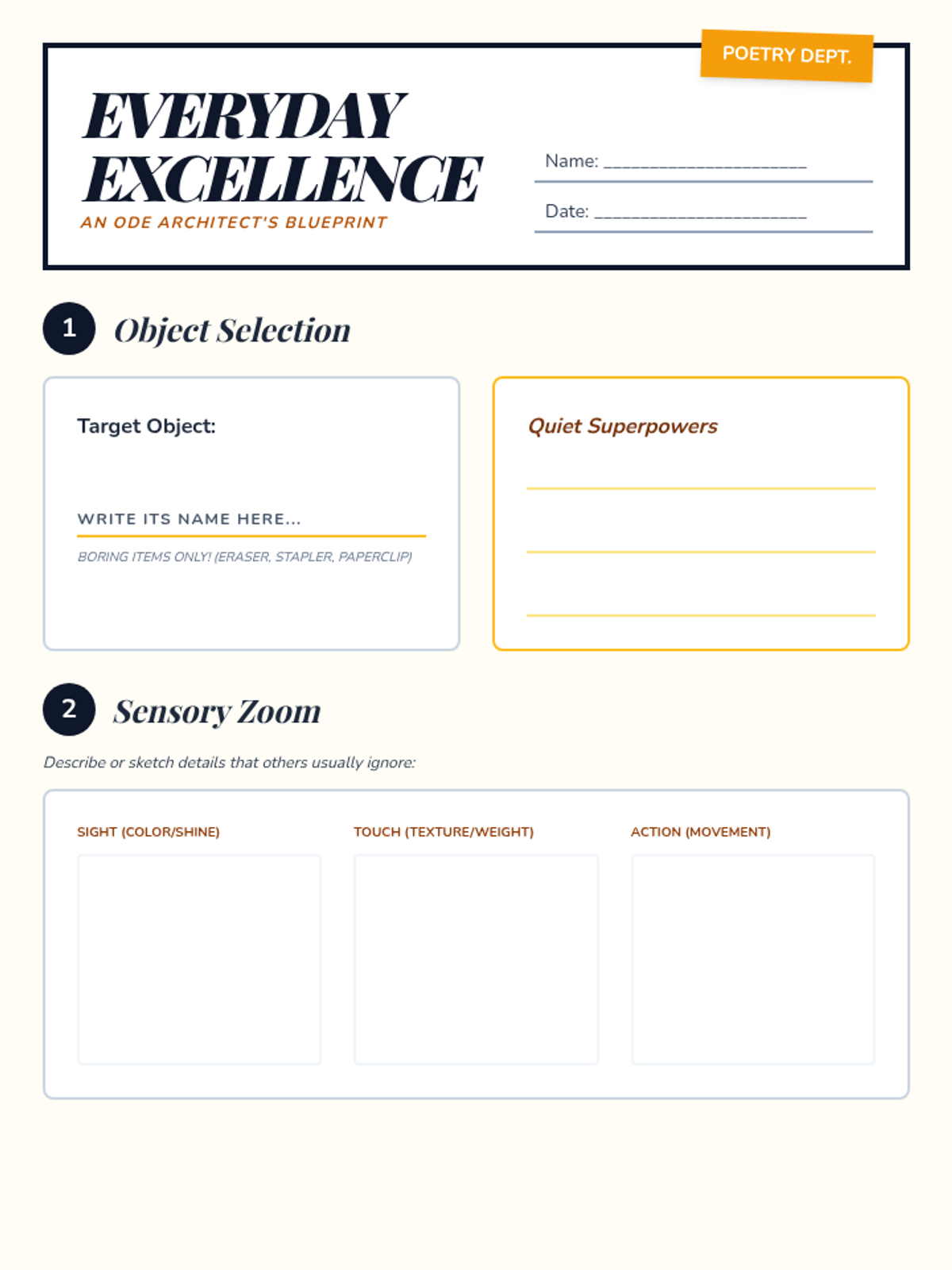
A writing worksheet for 5th graders to brainstorm and draft an ode to an everyday object, featuring structured steps for sensory details and exaggerated praise.
A slide deck for teaching odes, covering definitions, the concept of exaggeration, examples from Neruda, and a prompt for students to write their own.
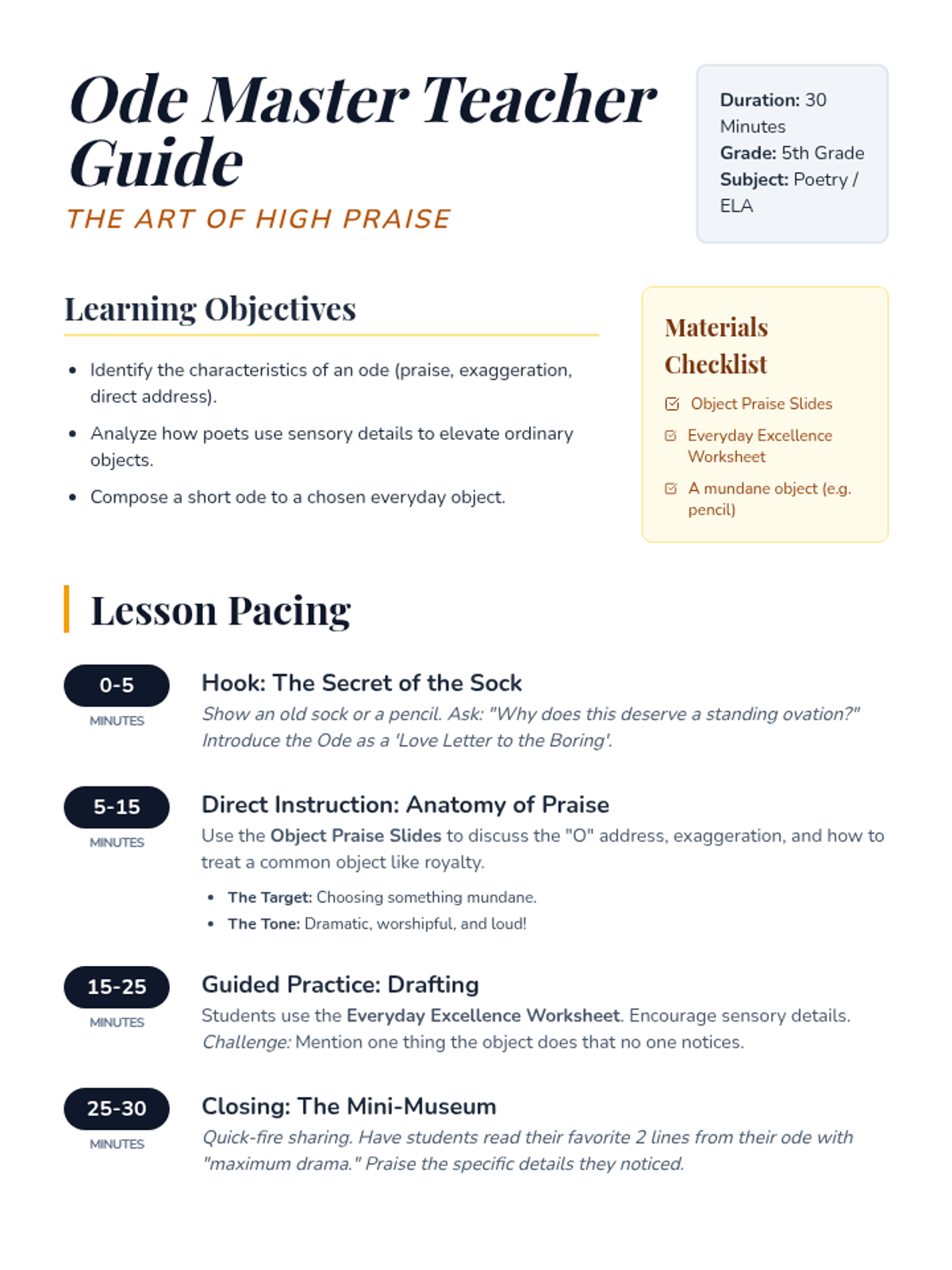
Teacher guide for a 30-minute 5th grade lesson on writing odes to everyday objects, featuring pacing, vocabulary, and differentiation strategies.
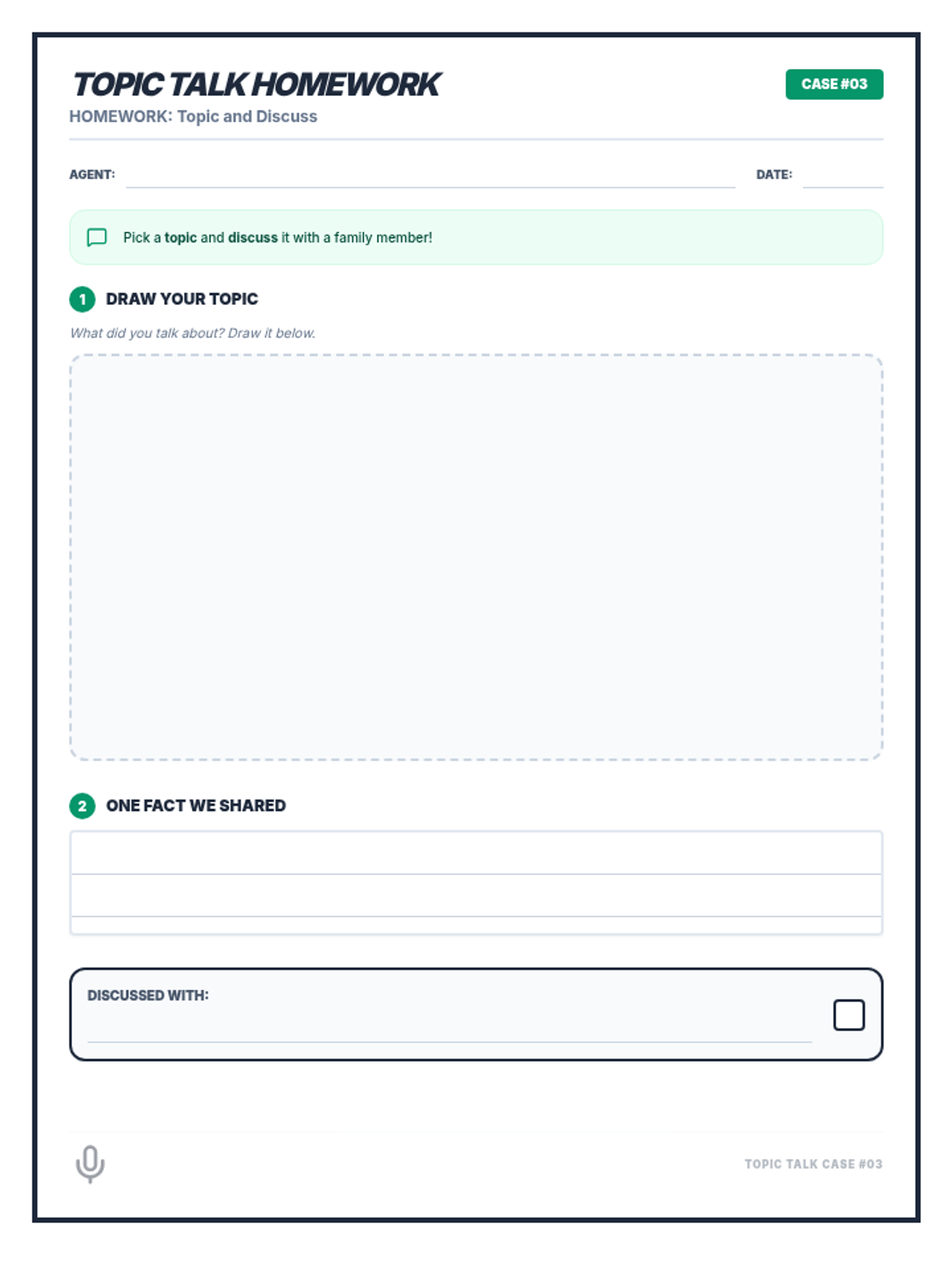
A home discussion log where students pick a topic, discuss it with a family member, and record a fact they shared. Focuses on reinforcing the definitions of 'topic' and 'discuss' in a real-world setting. Revised for 1-page layout and improved contrast.
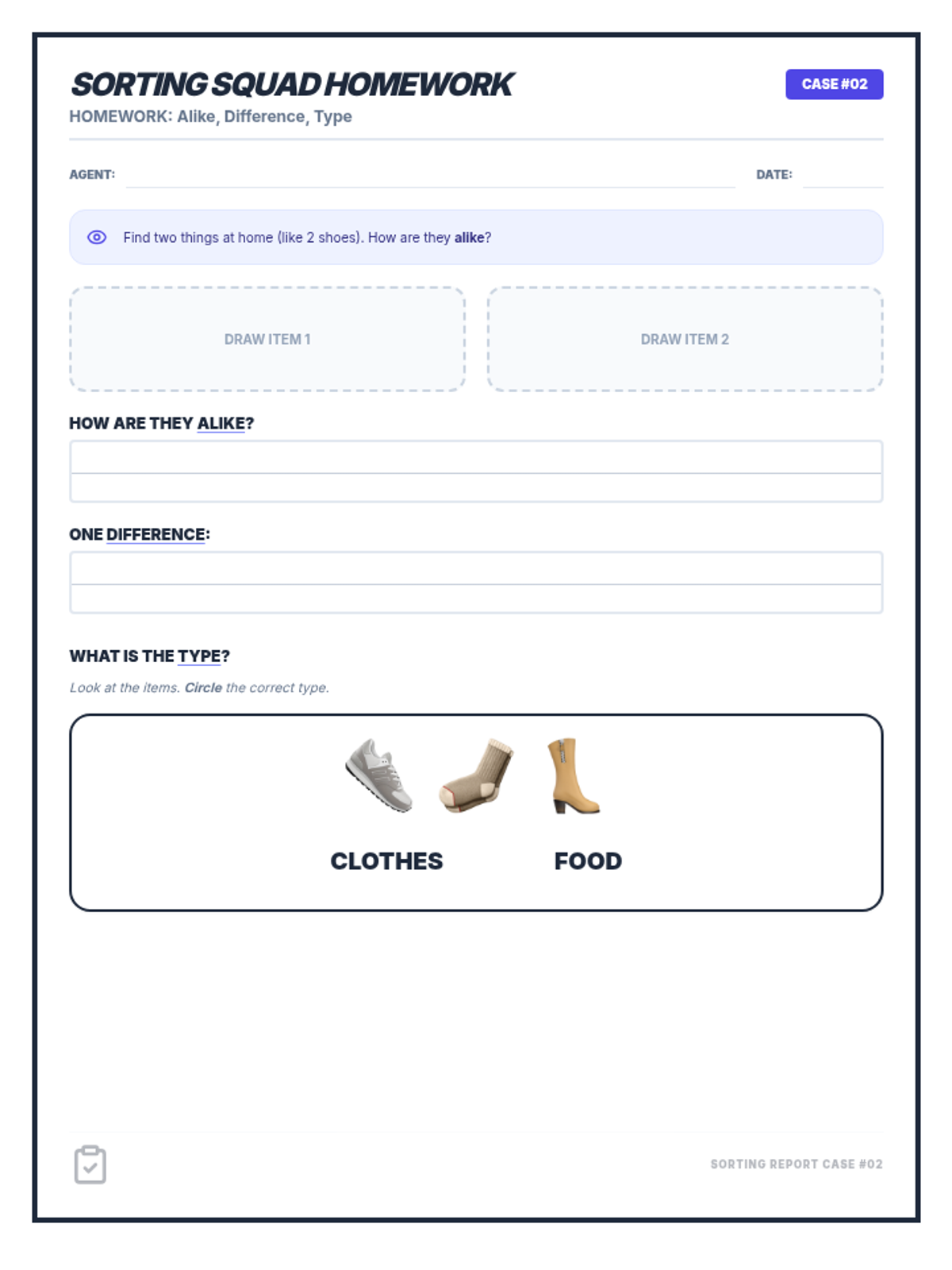
A comparison-focused homework sheet where students find and compare two household items, identifying how they are alike and different, and practicing the concept of 'type' with visual groups. Revised for 1-page layout and improved contrast for handwriting lines.
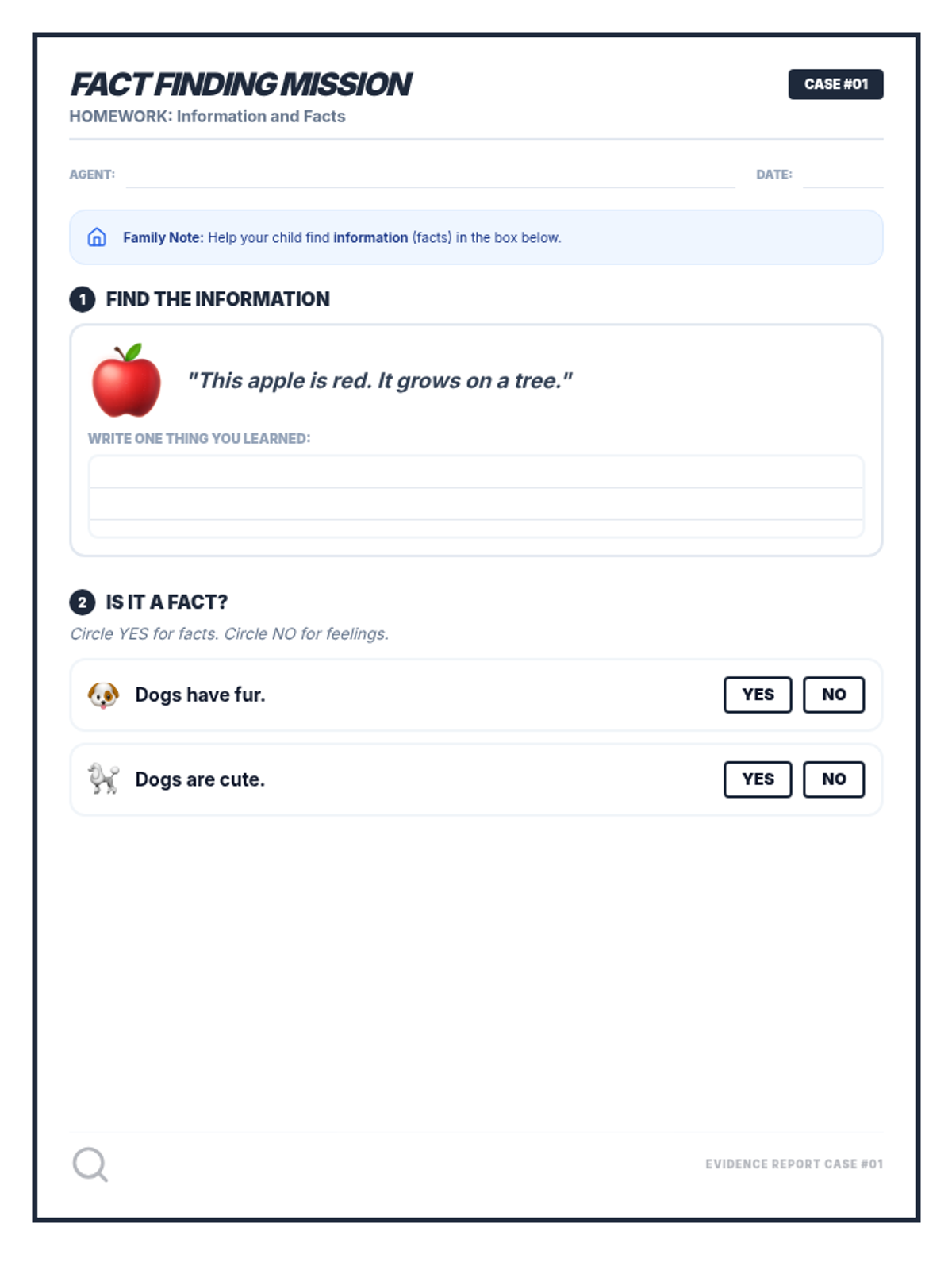
A homework sheet focused on 'information' and 'fact'. Students practice finding information in a simple context and distinguishing between facts and opinions with a family-friendly instruction note. Revised for 1-page layout and improved contrast.
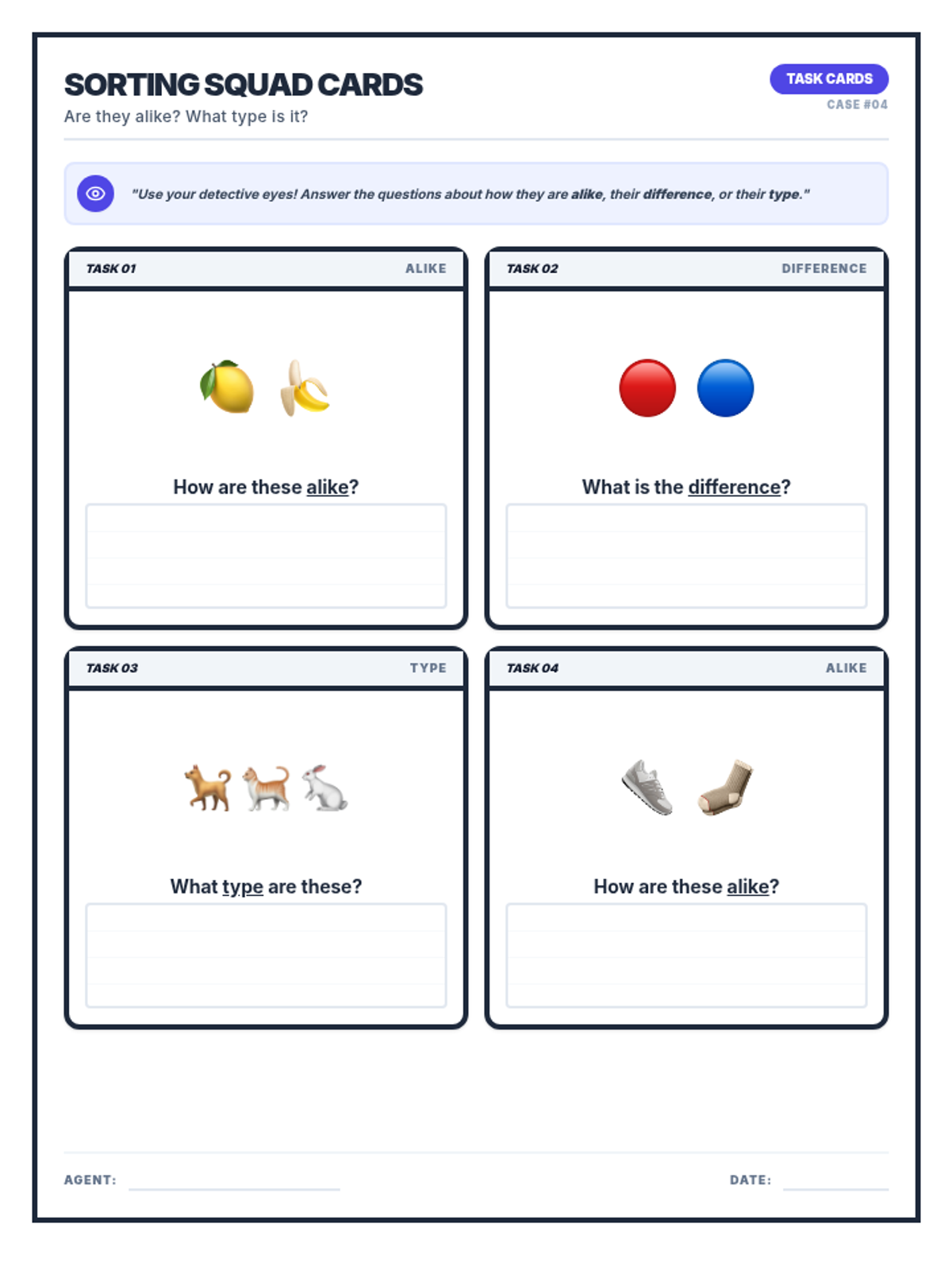
A set of task cards for comparing and categorizing items. Students analyze visual pairs and sets to identify how they are alike, their differences, or their shared 'type'. Revised for single-page layout with larger response areas and white backgrounds for legibility.
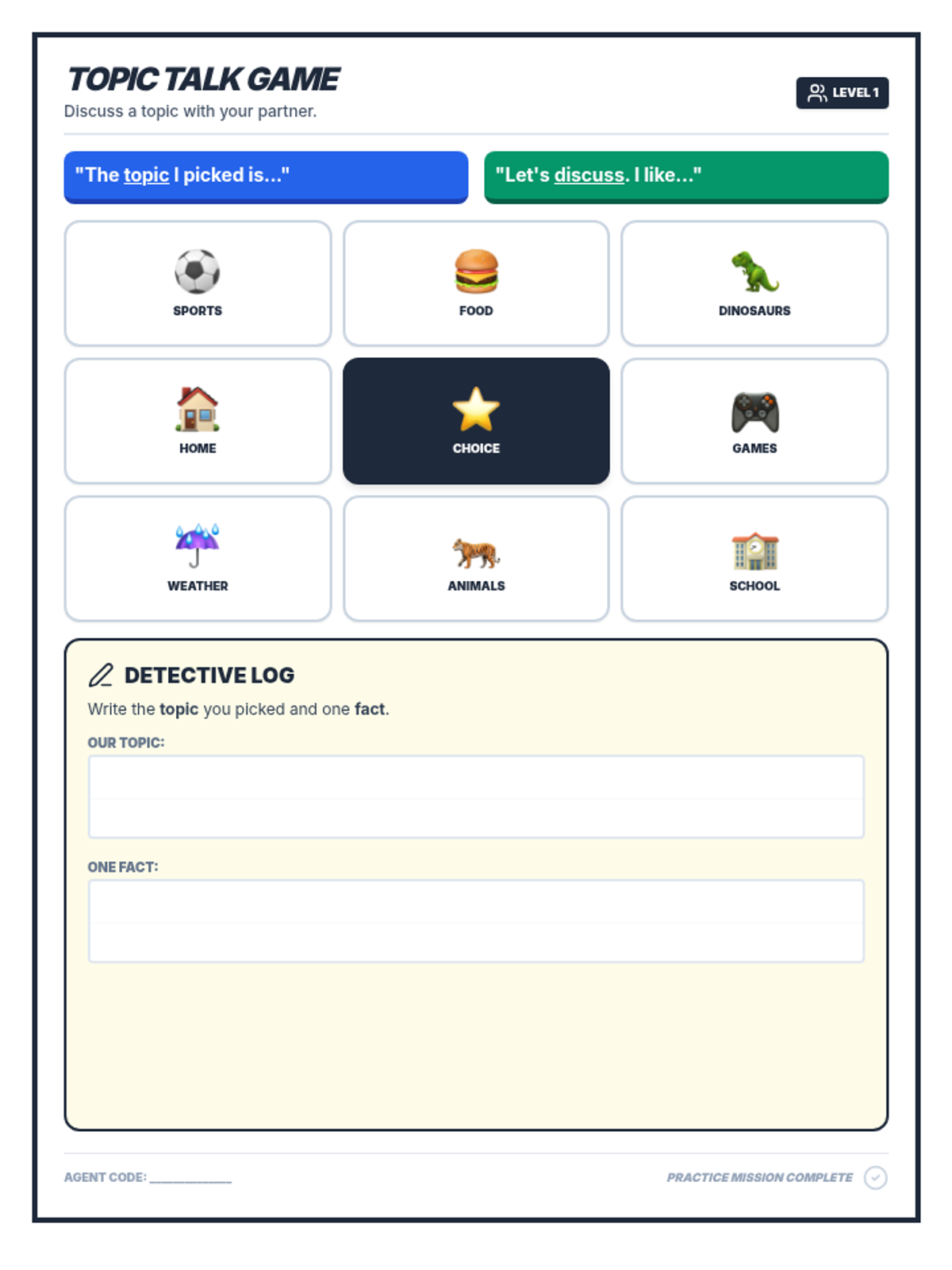
A partner-based discussion game featuring a choice board of visual topics. Students use sentence starters to practice identifying a topic and engaging in discussion with their peers. Revised to fit on a single page with a new 'Detective Log' for written practice. Grid heights and padding optimized for 1-page layout.
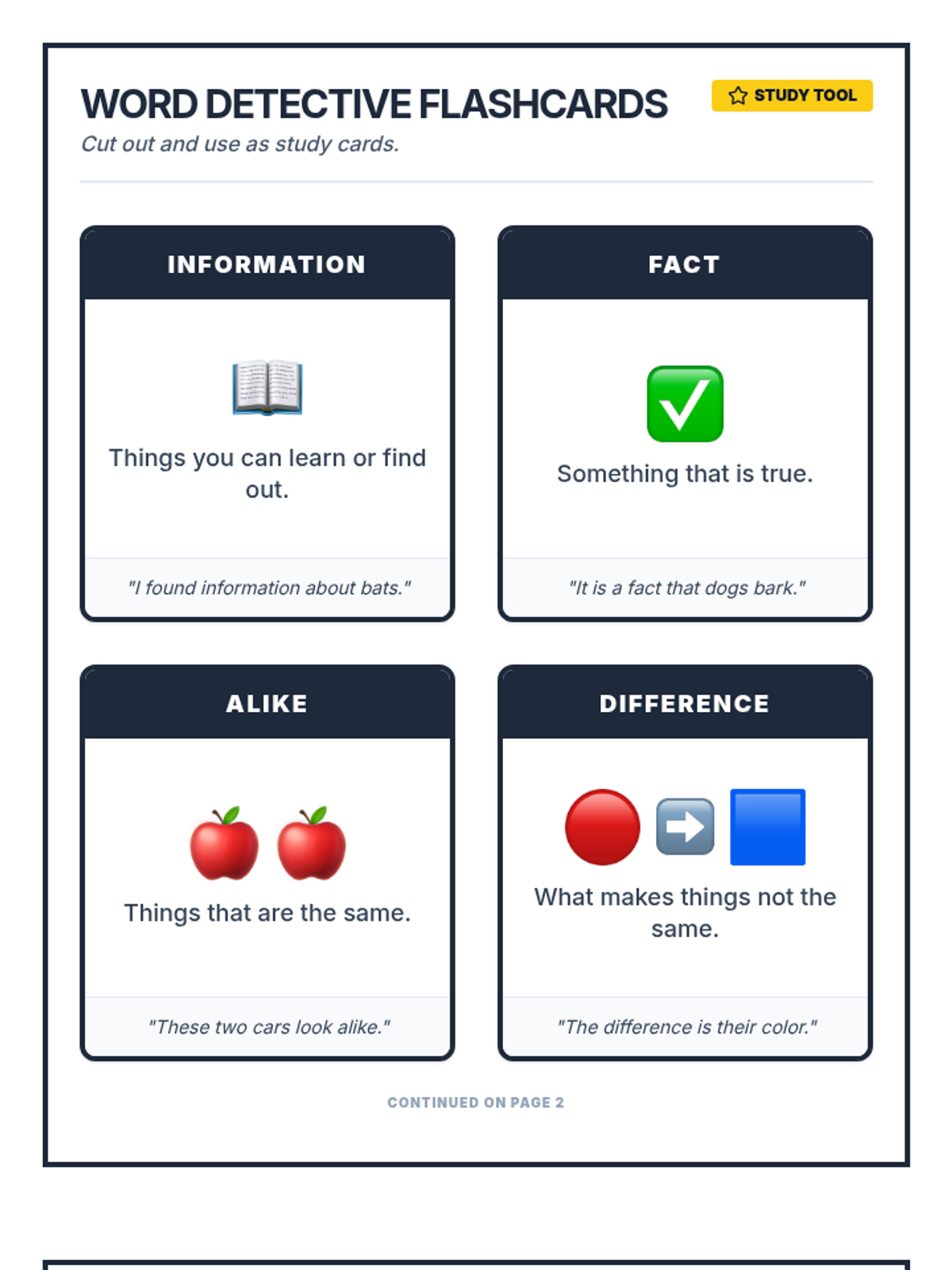
Visual vocabulary flashcards for the seven target academic words, featuring simple definitions, clear icons, and example sentences to support student mastery. Revised for consistent 2-page layout with borders and improved writing space for notes. Example sentences increased for better readability. Corrected arrow rendering and removed placeholder text.
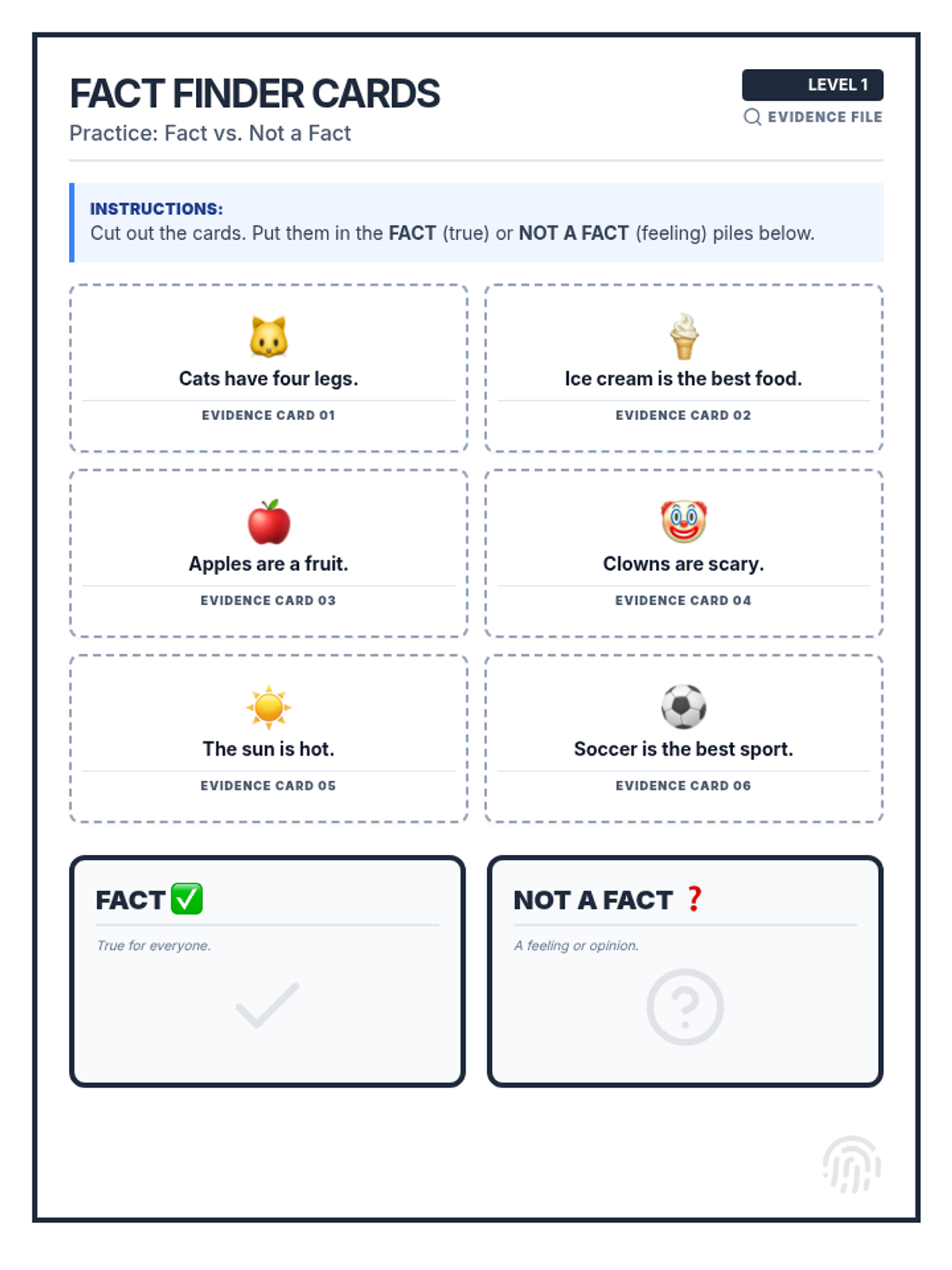
A hands-on sorting activity where students cut out cards and categorize statements as either 'Fact' or 'Not a Fact' to practice the concept of information versus opinion. Revised to fit on a single page with high-contrast text and larger sorting zones.
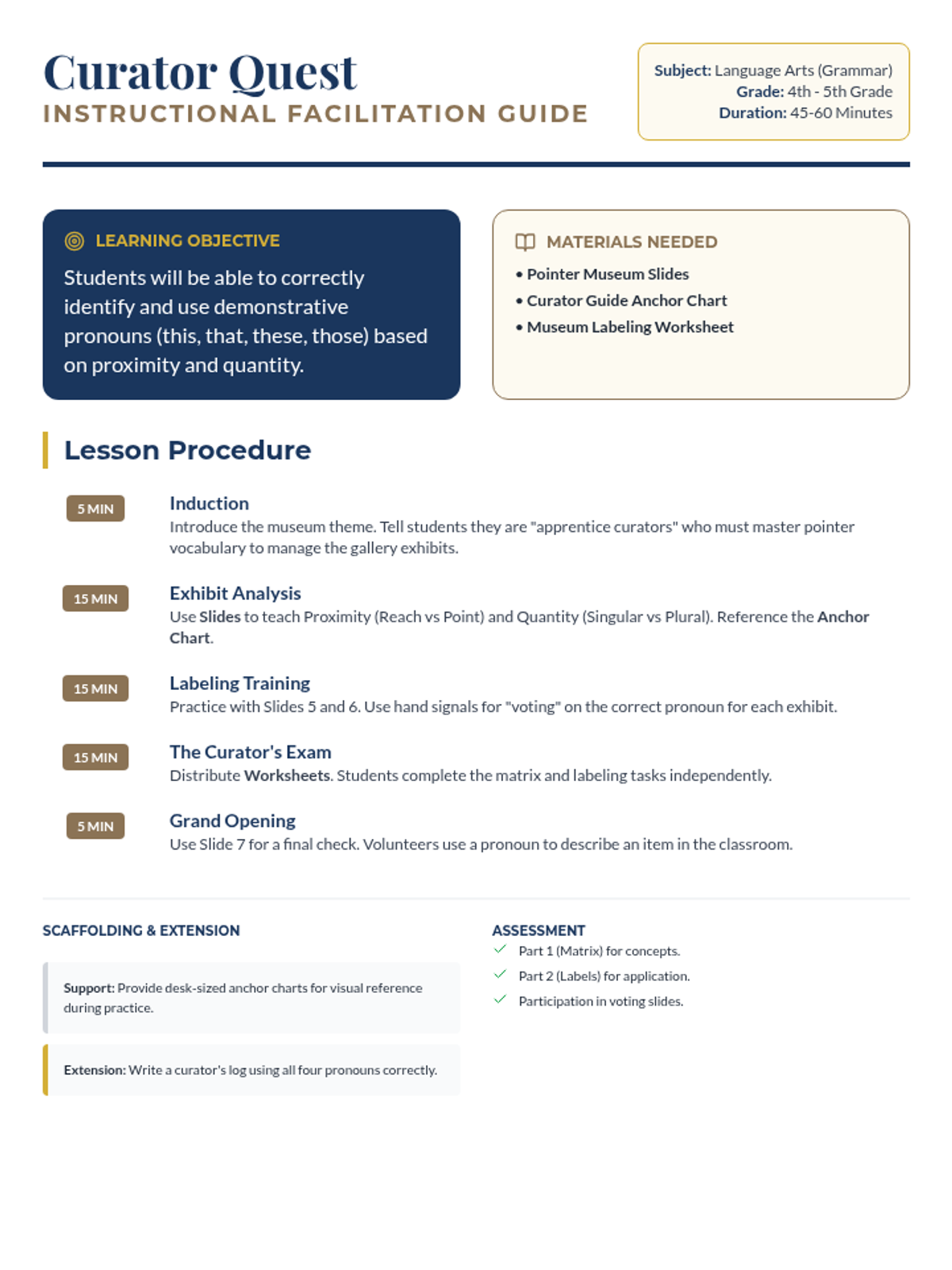
A detailed facilitation guide for teachers to deliver the Curator Quest lesson. It includes timing, step-by-step procedures, scaffolding suggestions, and assessment strategies aligned with the museum-themed materials.
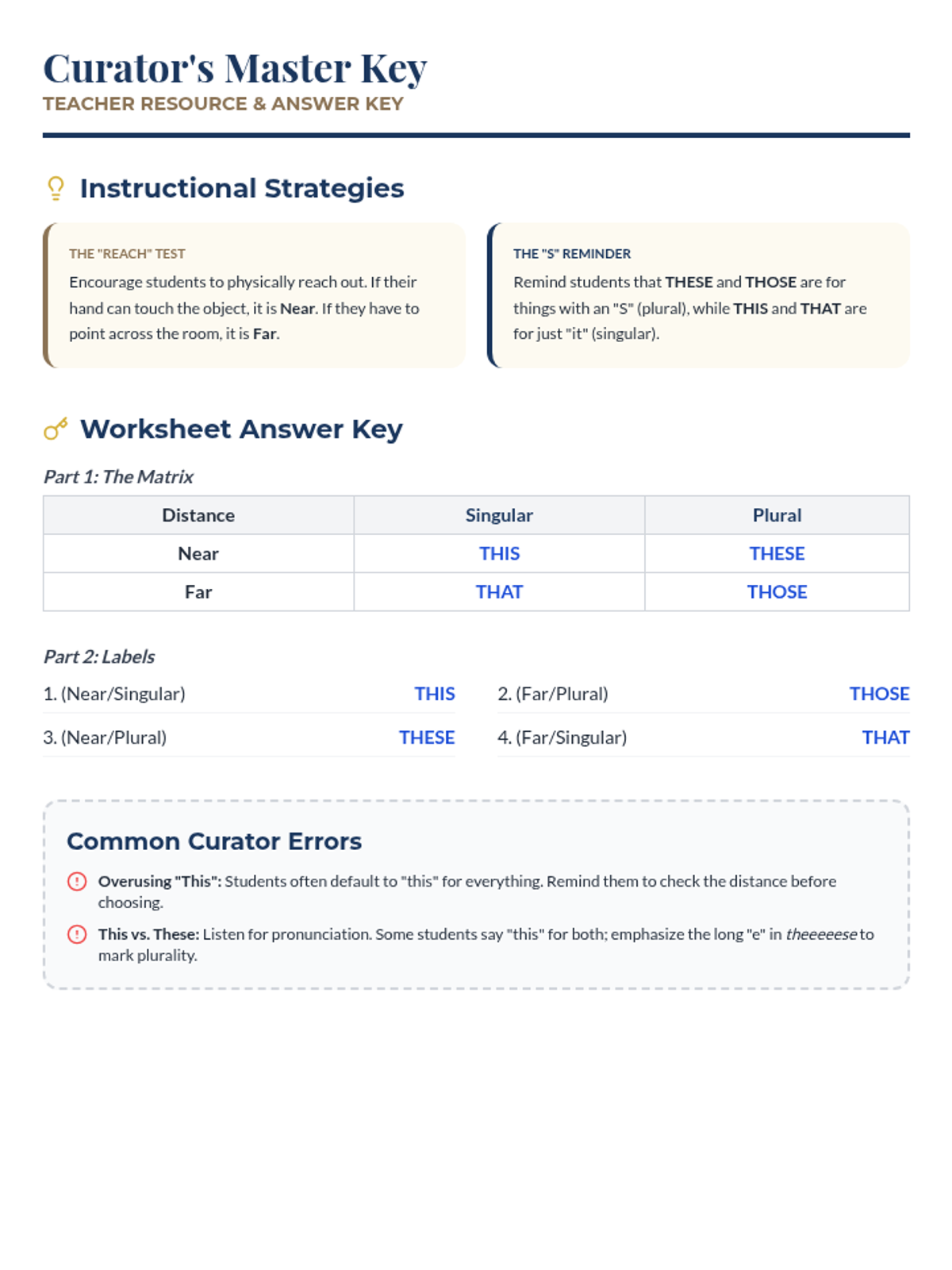
A teacher-facing resource providing the answer key for the museum worksheet along with teaching strategies and common student misconceptions regarding demonstrative pronouns.
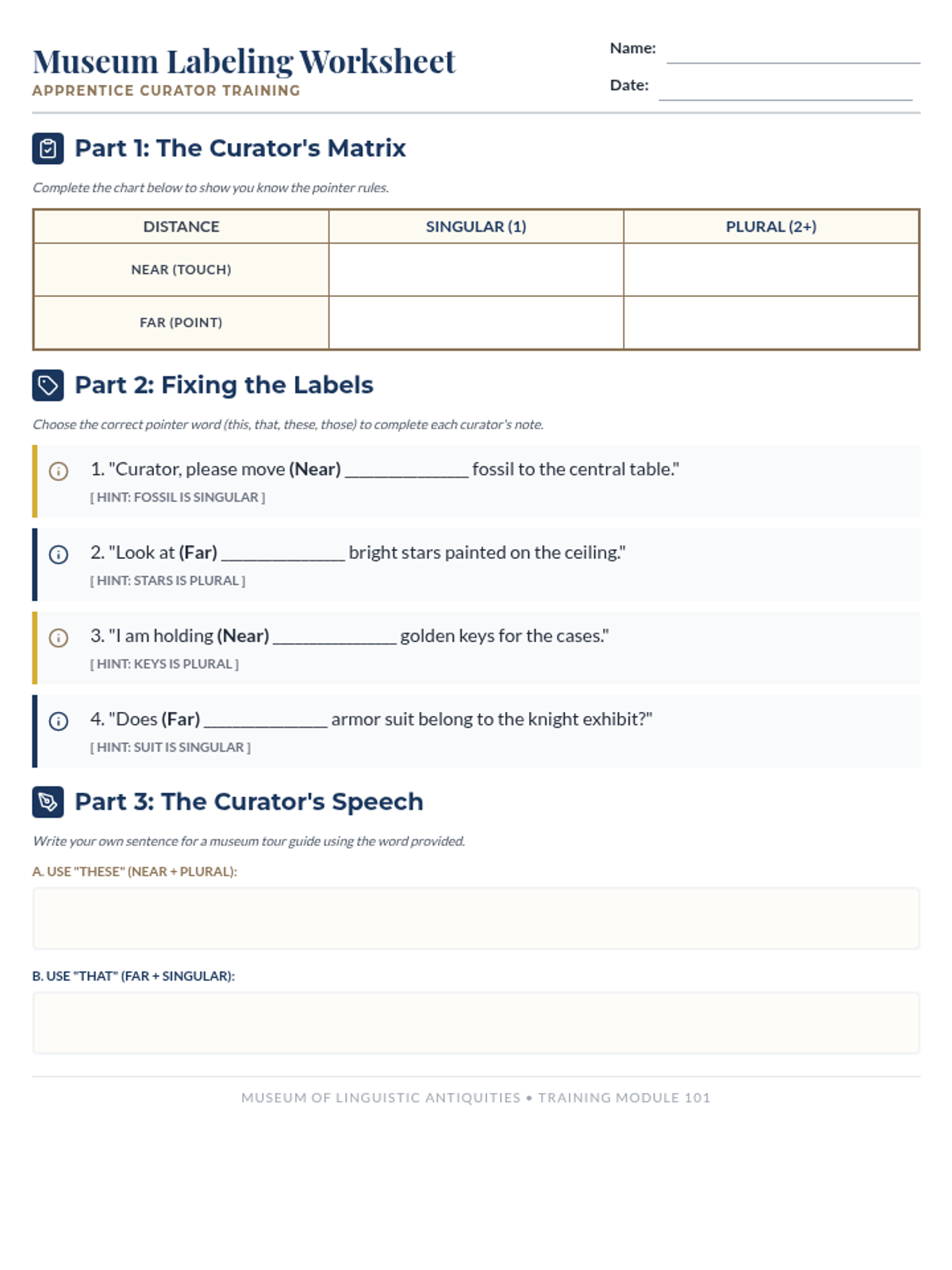
A practice worksheet where students apply their knowledge of pointer words in a museum curator context. It includes a recall chart, fill-in-the-blank sentences with proximity/quantity hints, and a sentence writing section.
A guided slide deck that introduces the concept of pointer words (demonstratives) using a museum curator theme. It breaks down the rules of proximity and quantity with clear visuals and guided practice slides.
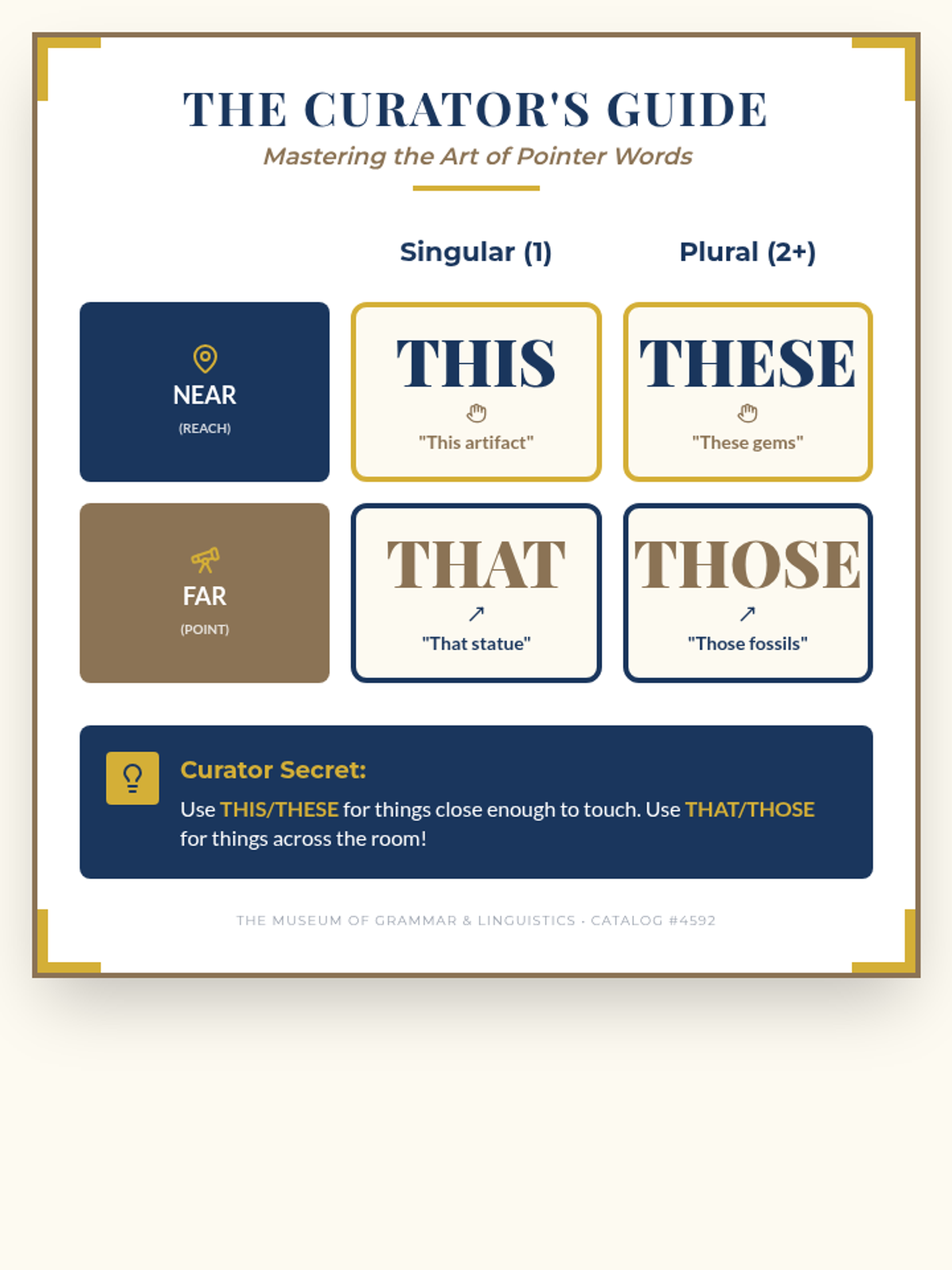
A visually striking anchor chart designed with a museum theme to teach the four demonstrative pronouns (this, that, these, those). It uses a 2x2 grid to clearly differentiate between number (singular/plural) and proximity (near/far).
Teacher toolkit for the final chapters of 'Surviving the Applewhites,' featuring resolution-themed word banks and character transformation questions.