A resource allocation simulation where students manage time and energy "tokens" to balance the competing demands of work, children, and aging parents. Includes reflection questions on role strain and burnout.
A curated guide for teachers and students featuring high-quality primary source visuals, including photographs of the "Big Four" at Versailles, iconic political cartoons, and territorial maps from the Library of Congress and National Archives.
A comprehensive answer key and teacher reference for the Diplomacy Duel lesson. Includes correct answers for the exit ticket, exemplar responses for the primary source analysis, and sample debate arguments for both the Wilsonian and Reservationist perspectives.
A bibliography and research guide for students and teachers, providing names, dates, and direct URLs to the full-text versions of the four primary sources used in the Diplomacy Duel lesson.
A detailed slide-by-slide guide for the Versailles Vision presentation. Includes instructional hooks, key historical points to emphasize, and facilitation tips for the League of Nations classroom debate.
A curated collection of primary source excerpts for the League of Nations debate. Includes the Fourteen Points, Article X of the League Covenant, and speeches from Henry Cabot Lodge and William Borah, annotated for high school students.
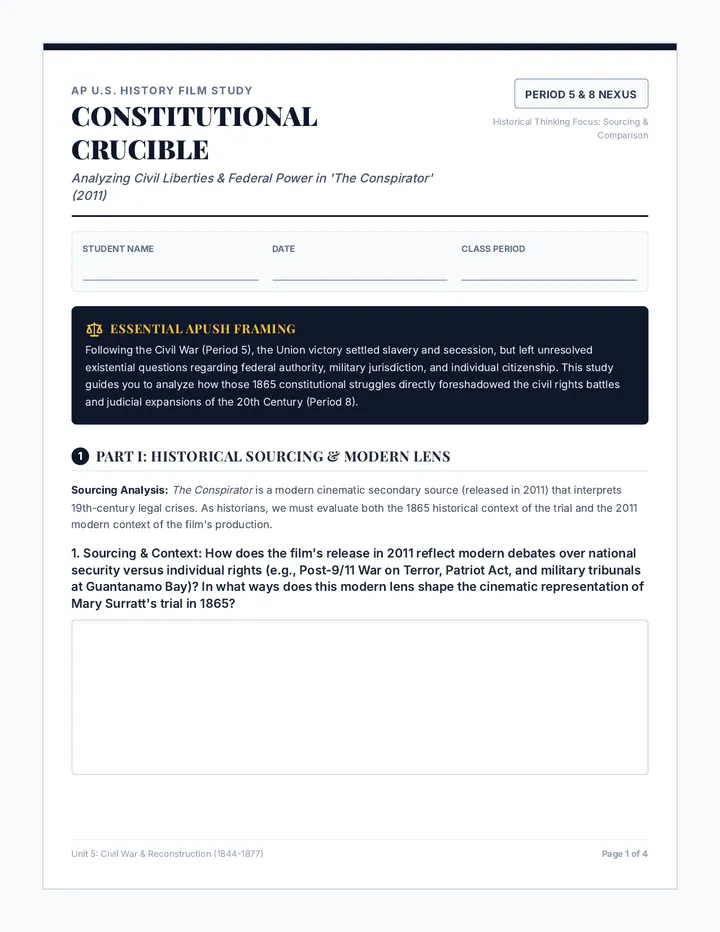
A student-facing brief designed for the live "Diplomacy Duel" classroom debate. It includes primary source excerpts from Wilson and Lodge, and structured sections for students to record their team's opening arguments and rebuttals.
A summative assessment for the end of the Diplomacy Duel lesson. Covers the identification of the League of Nations, the constitutional reasons for its rejection, and its long-term impact on global stability.
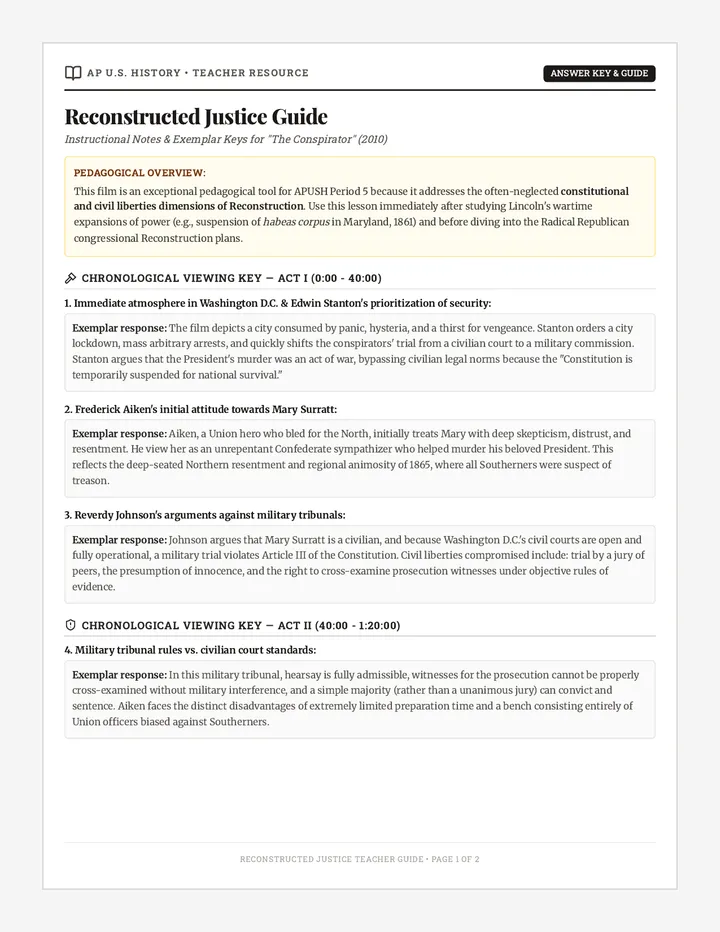
A comprehensive teacher guide for a 45-minute lesson on the Treaty of Versailles and the League of Nations. Includes pacing, debate facilitation strategies, and key discussion prompts.
A visual slide deck presenting Woodrow Wilson's Fourteen Points, the Treaty of Versailles, and the Senate battle over the League of Nations. Includes detailed slides on Article X and the global consequences of U.S. isolationism.
A curated list of high-quality primary source visuals for the WWI Home Front, including recruitment posters, propaganda, and rare archival photographs of social shifts and political dissent. Each entry includes verified links to the Library of Congress or National Archives. Updated for improved layout and contrast.
A comprehensive answer key and instructional guide for the "Clear and Present Danger" DBQ worksheet. Provides detailed evidence-based answers, archival context, and a scoring rubric for the synthesis challenge. Updated for improved layout and page-break handling.
A comprehensive reference sheet for teachers and students listing all primary sources used in the "Duty and Dissent" lesson, including full titles, specific dates, historical context, and verified archival links. Updated for improved readability and layout.
A dedicated speaker notes document for the "Duty and Dissent" presentation. It provides slide-by-slide scripts, key points, and instructional cues for the teacher to use during the lesson.
Updated teacher's guide for the Schenck-focused DBQ lesson. Includes a refined pacing guide, instructional scripts focusing on the legal conflict, and a detailed answer key for the "Clear and Present Danger" analysis.
Refocused primary source analysis worksheet centered on the legal conflict of Schenck v. United States. Updated to ensure all primary source attributions include names and dates.
A comprehensive visual presentation covering Tennessee State Standard US.28. Updated to include names and dates for all primary source quotes.
A curated index of historical primary source visuals, including photographs and maps from the Library of Congress and National Archives, to support instruction for WWI Standard US.27.
A student-facing study key summarizing the impact of the five required elements of Tennessee State Standard US.27: trench warfare, new technology, Pershing, the Harlem Hell Fighters, and Alvin C. York.
A bibliography and source reference document listing the primary source quotes and map data used in the Great War Impacts lesson, including archival links and dates.
A comprehensive speaker notes document providing talking points, instructional guidance, and quote context for each slide in the Great War Impacts presentation.
Teacher's answer key for the Frontline Geography Activity, providing correct nation identifications and strategic alliance groupings.
A geography-focused activity requiring students to identify the Allied and Central Powers on a map of Europe and explain the significance of the Western Front.
A concise, single-page teacher facilitation guide with pacing, discussion prompts, and differentiation strategies for the WWI Great War Impacts lesson featuring the Frontline Geography activity.
A single-page guided reading handout summarizing WWI impacts, featuring attributed historical quotes and a layout optimized for high school history classrooms.
A high-impact slide presentation covering the key technological advancements and figures of World War I, now featuring a dedicated map activity slide and attributed historical quotes.
A graphic organizer for structuring philosophical arguments, featuring dedicated spaces for core claims, supporting evidence, counter-points, and steelmanning.
A logic worksheet exploring the Ship of Theseus through progressive scenarios, ranging from simple part replacement to the complex "Two Ships" paradox.
A teacher's guide for facilitating the Ship of Theseus lesson, featuring pacing suggestions, Socratic questions, and historical context.
Visual presentation for a lesson on the Ship of Theseus paradox, covering the historical legend, the philosophical question, and key logic terms for debate.
A teacher's guide providing instructional strategies, activities, and differentiation tips for using the Nile Rulers vocabulary flashcards in both elementary and high school classrooms.
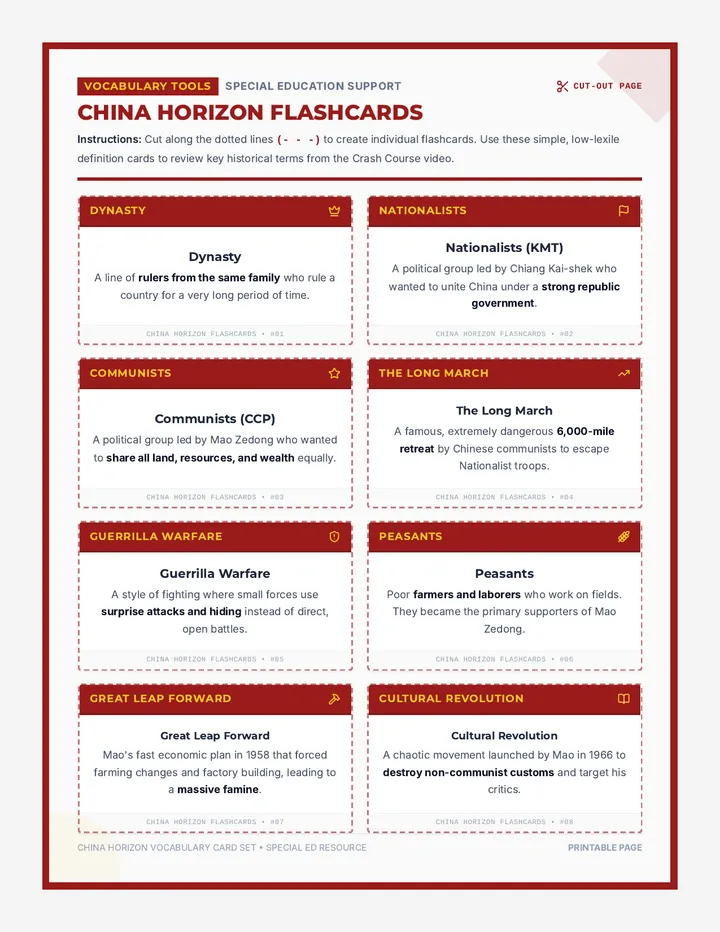
Elementary-level vocabulary flashcards for Ancient Egyptian government, using simple definitions and emojis to explain roles like the Pharaoh, Scribes, and Viziers. Added fold guides and optimized layout.
High school level vocabulary flashcards for Ancient Egyptian government, focusing on complex political and religious concepts like Ma'at, Theocracy, and Bureaucracy. Redesigned layout for improved readability and printing. Added fold guides and optimized layout.
An updated one-page printable reference sheet with a more detailed geographically accurate map and chronological timeline of the 13 American colonies.
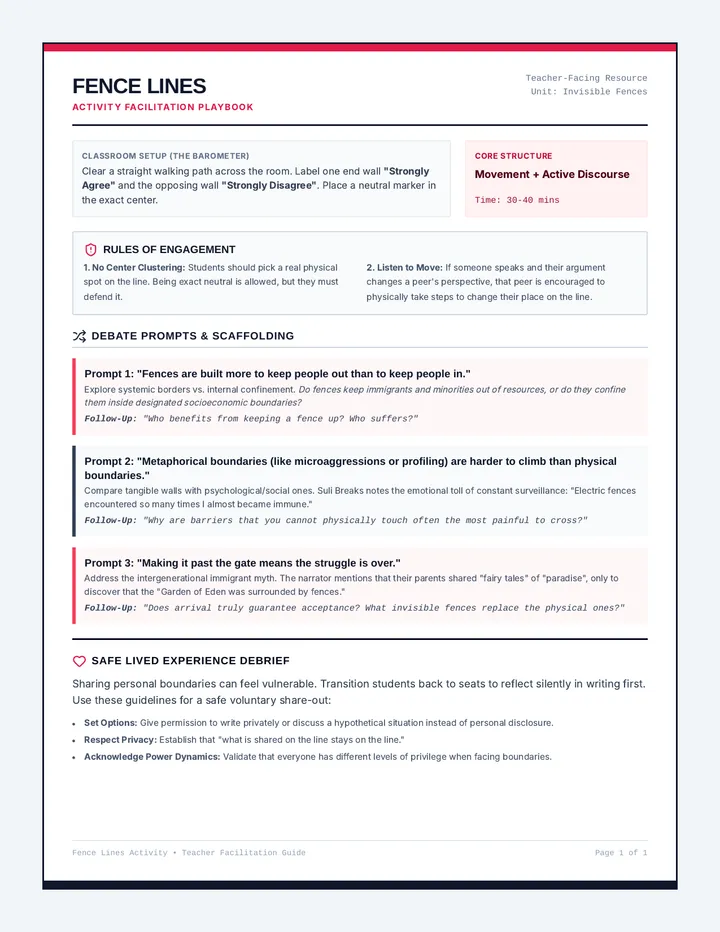
A teacher resource with lesson objectives, pacing guides, discussion prompts, and background information to facilitate a complex historical investigation into the atomic bombings. Now includes clearer source summaries and improved layout.
A structured worksheet for students to categorize arguments from primary sources, evaluate historical perspectives, and write a justified conclusion on the morality of using the atomic bomb. Now includes lined work areas for better structure.
A curated collection of primary and secondary sources including presidential addresses, scientific petitions, survivor testimonies, and historical analysis to provide a balanced look at the atomic bombings. Revised for improved page flow and content organization. Now includes more specific source summaries and improved layout.
An introductory slide presentation covering the historical context, the Manhattan Project, the details of the bombings, and the central ethical question of the lesson. Now includes specific quotes and a strategic map diagram.
A high-visibility classroom anchor chart highlighting five major turning points of the American Civil War. Designed with large, readable text and historical motifs for middle school classroom display.
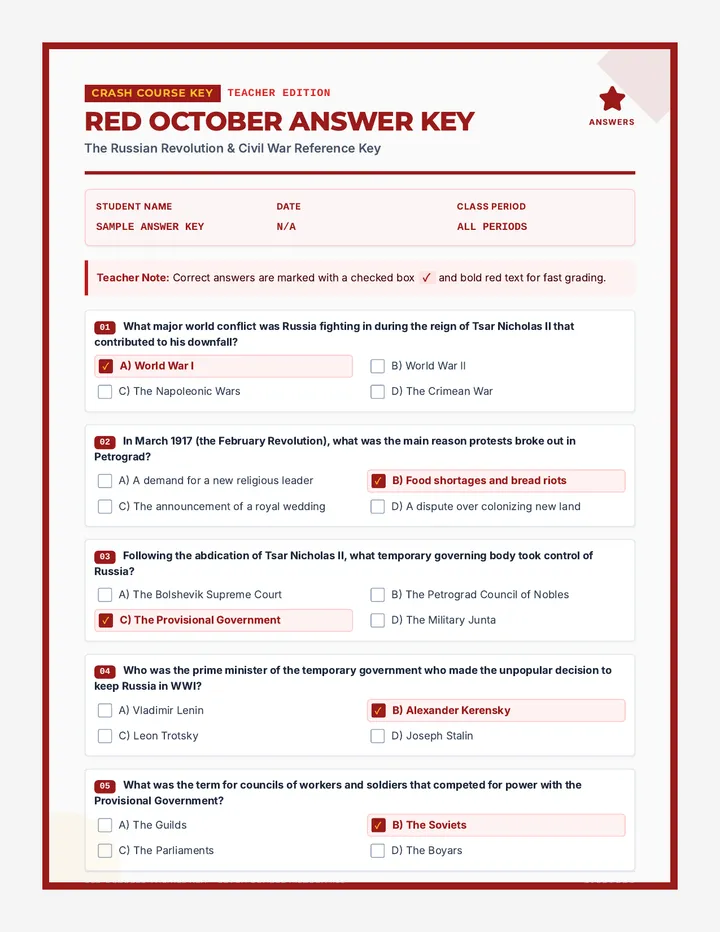
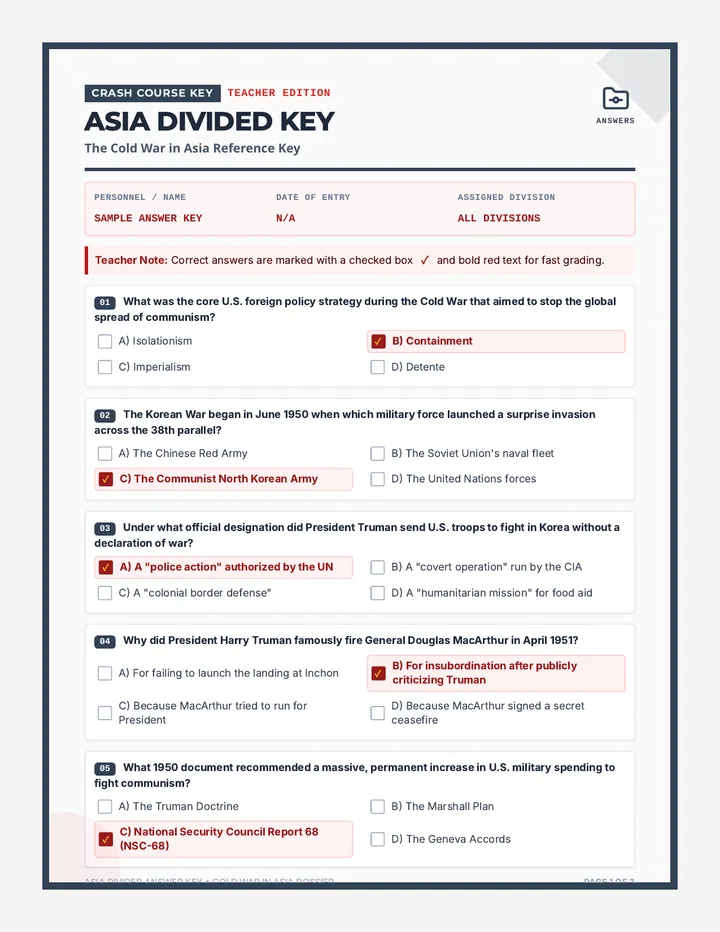
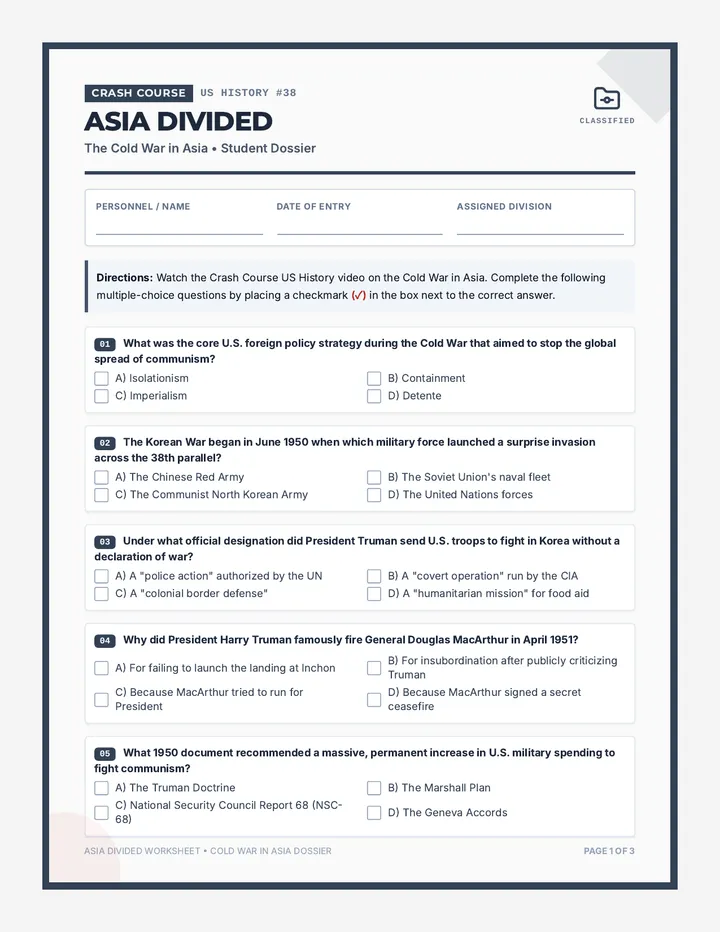
Answer key for the Desert Kings Challenge Sheet, providing correct answers for all 10 challenges including true/false, multiple choice, sequencing, and sample short responses.
A teacher guide for facilitating the slow-reveal graph lesson, including historical context, discussion prompts, and an answer key for comparing US and German unemployment.
A presentation featuring a slow-reveal graph that progressively unveils the comparison of unemployment rates between Germany and the USA during the Great Depression.
A student worksheet designed to accompany a slow-reveal graph activity, providing structured space for observations and historical analysis of US and German unemployment data.
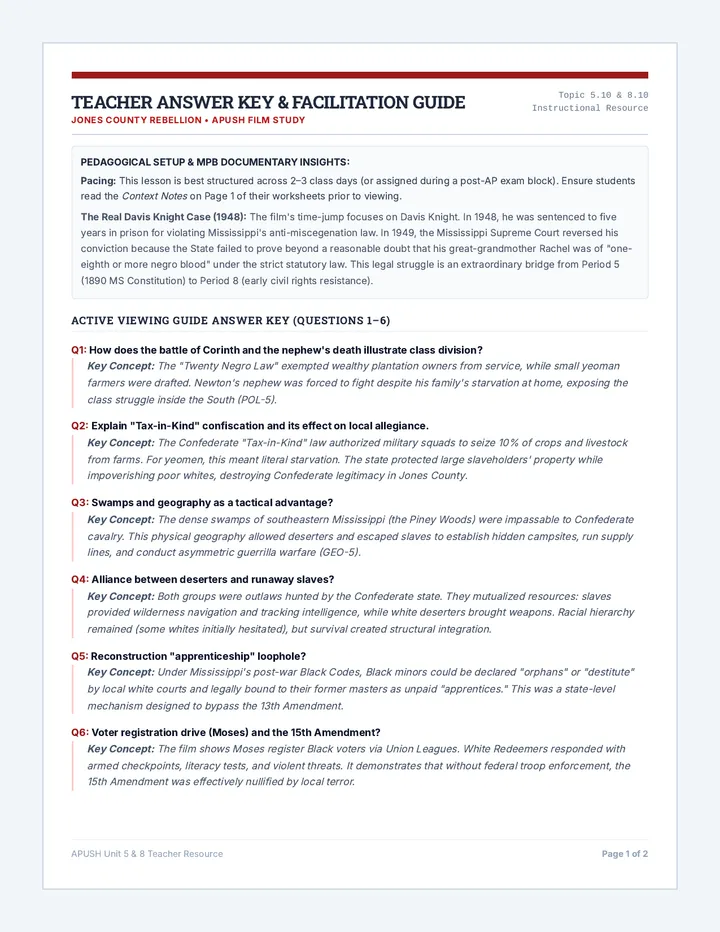
A teacher's guide and answer key for the Thistle and Throne comprehension worksheet. Includes answers for all 10 questions and a summary of skills assessed.
A concise exit ticket assessment for the climate justice lesson. It prompts students to differentiate between equality and justice, identify vulnerable populations, and propose a concrete local action for climate equity.
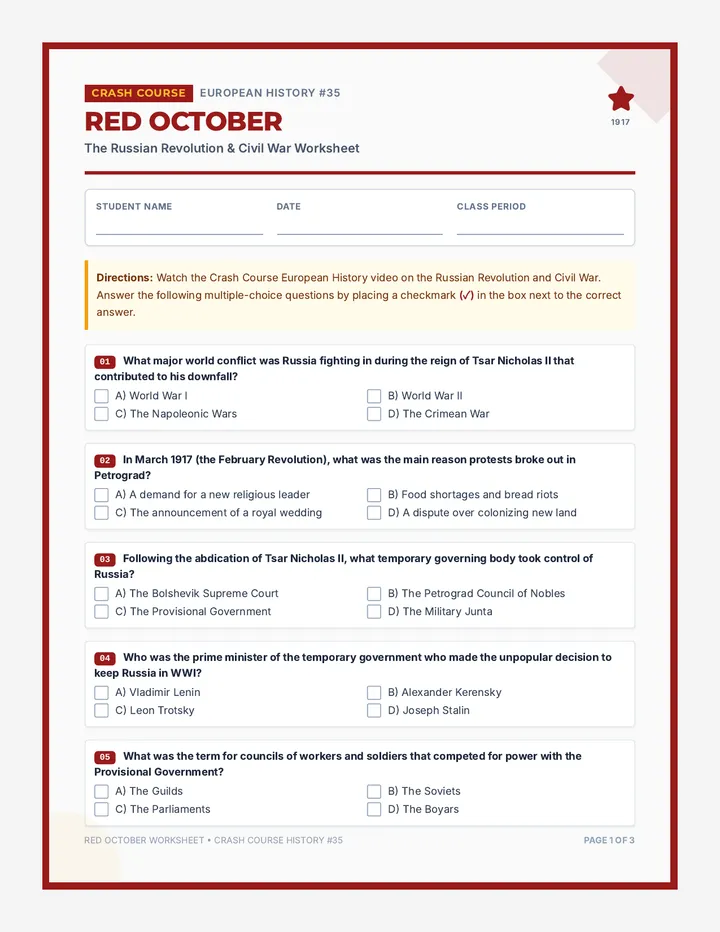
A reading comprehension worksheet covering four key aspects of medieval Scottish life: religion, the Black Death, the Border Reivers, and monarchs. Includes the full reading passage and 10 mixed comprehension questions.
A comprehensive facilitator guide for the "Fairness in Flux" lesson. Includes a 69-minute pacing breakdown, key vocabulary definitions (Equity vs. Equality), common misconceptions, and strategic questioning prompts to deepen student engagement.
A hands-on student worksheet involving data analysis of urban heat islands. Students compare tree canopy coverage and temperature data across different neighborhoods to identify inequities and propose budget-based solutions.
An 7-slide presentation introducing the core concepts of climate justice, including equity, urban heat islands, and vulnerable communities. Designed for 6th-grade visual learners with high-impact graphics and clear definitions.
An interactive slide deck introducing the fundamentals of fiscal policy, exploring the federal budget, national debt, and the mechanics of expansionary vs. contractionary tools. Includes practice activities, scenario matching, and critical thinking prompts for students. All text adheres to the 24px minimum font size requirement.
An advanced reading passage about medieval Scotland at a 1000L Lexile level, utilizing sophisticated vocabulary and complex sentence structures to explore socioeconomic and political history.