A student activity guide for preparing and delivering a persuasive book pitch for literature circle selection.
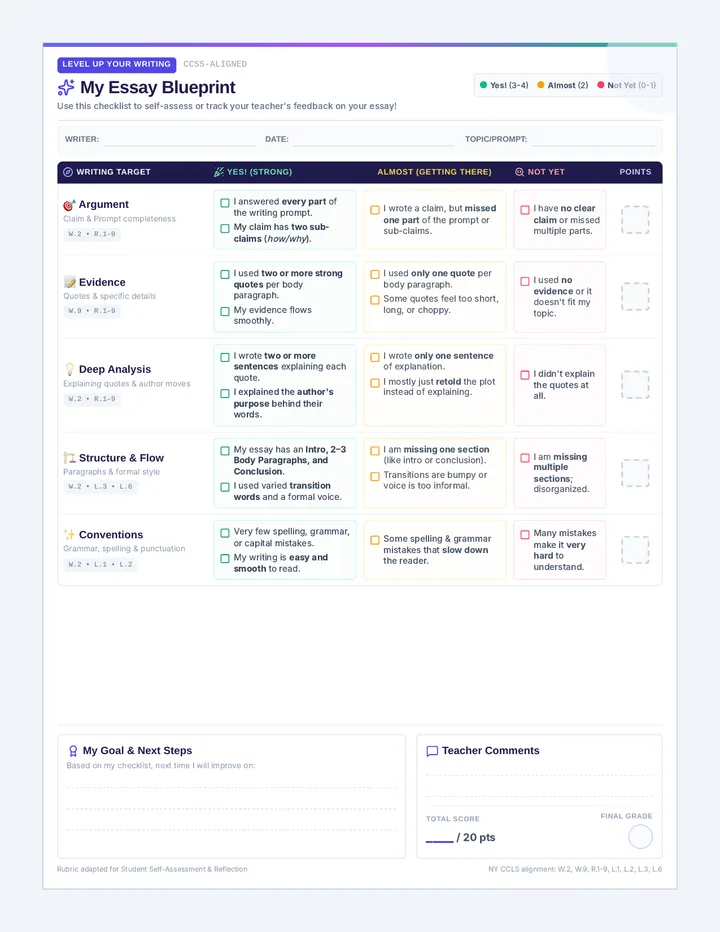
A student-friendly 1-page writing rubric simplified into a 3-level checklist (Yes, Almost, Not Yet). Features visually clear standards-based criteria, visual icons, checkbox prompts for self-assessment, name/date lines, and sections for student goals and teacher feedback.
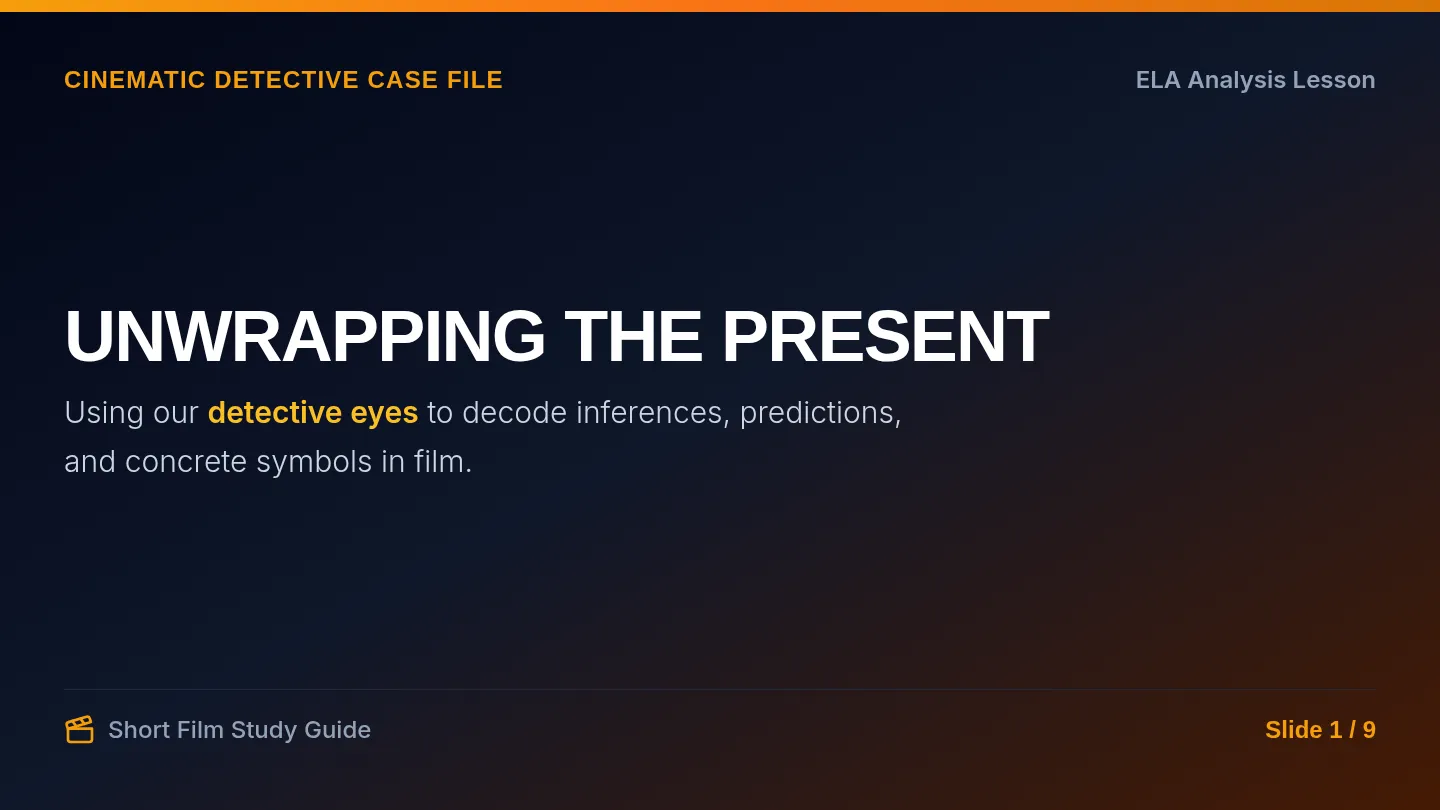
A highly visual, 9-slide presentation for introducing 'The Present', framing students as 'Cinematic Detectives', pausing for mid-film predictions, and guiding analysis of character change and concrete symbolism. Includes detailed teacher prompts and large, readable text.
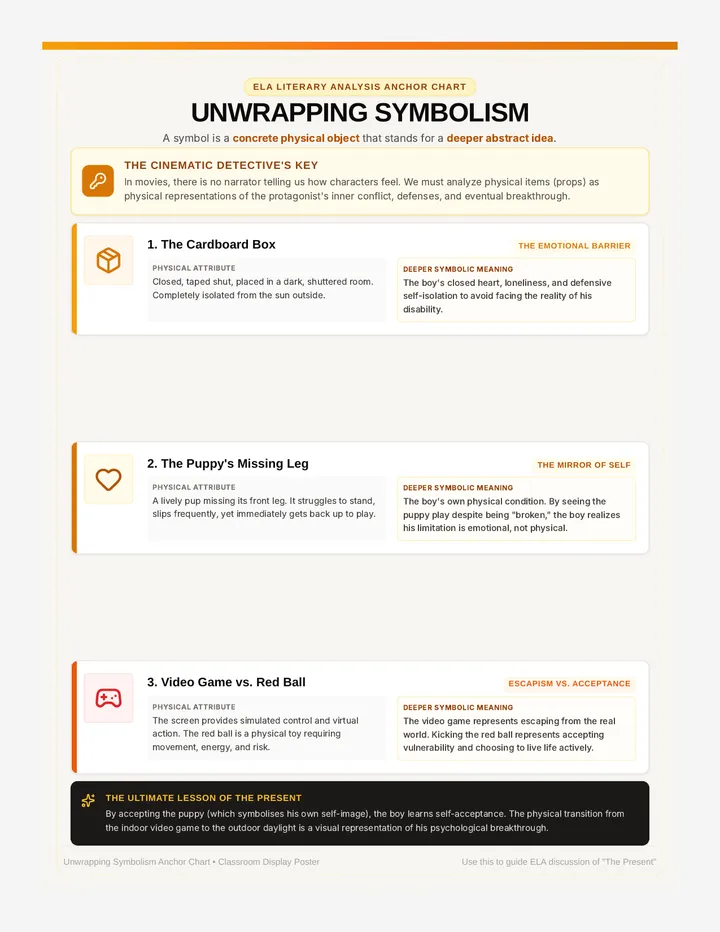
A beautiful, high-impact 1-page ELA anchor chart designed to scaffold symbolism. It maps out three key symbols from 'The Present'—the box, the puppy, and the red ball—clearly linking their physical attributes to their abstract, deeper thematic meanings.
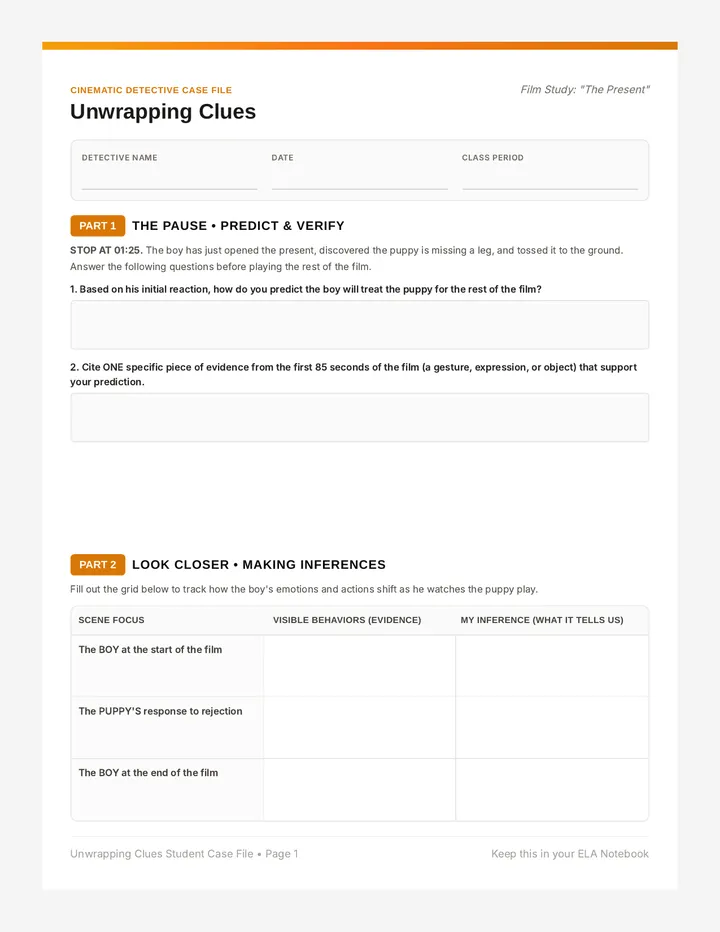
A highly engaging, 2-page printable student worksheet for recording predictions during the mid-film pause, drawing inferences on character evolution, and deconstructing the symbols of the cardboard box, the puppy's leg, and the red ball. Includes handwriting spaces and clear prompts.
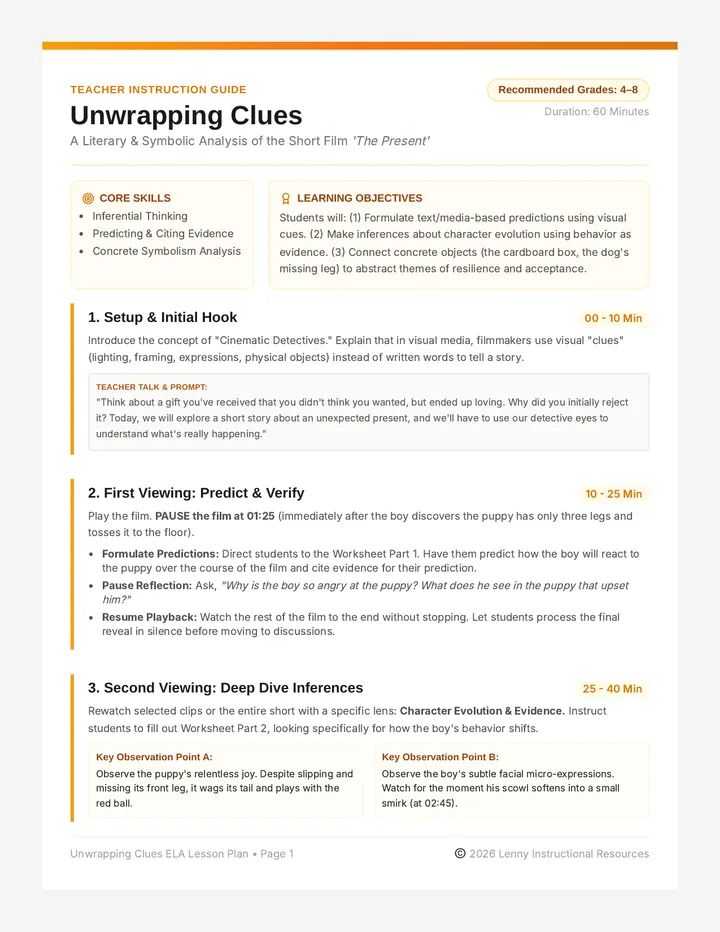
A detailed, 2-page print-ready lesson plan for teachers, outlining the 60-minute ELA lesson. It covers standard alignment, step-by-step instructions for dual viewings of 'The Present', guided questioning prompts, and scaffolding strategies for analyzing symbolism.
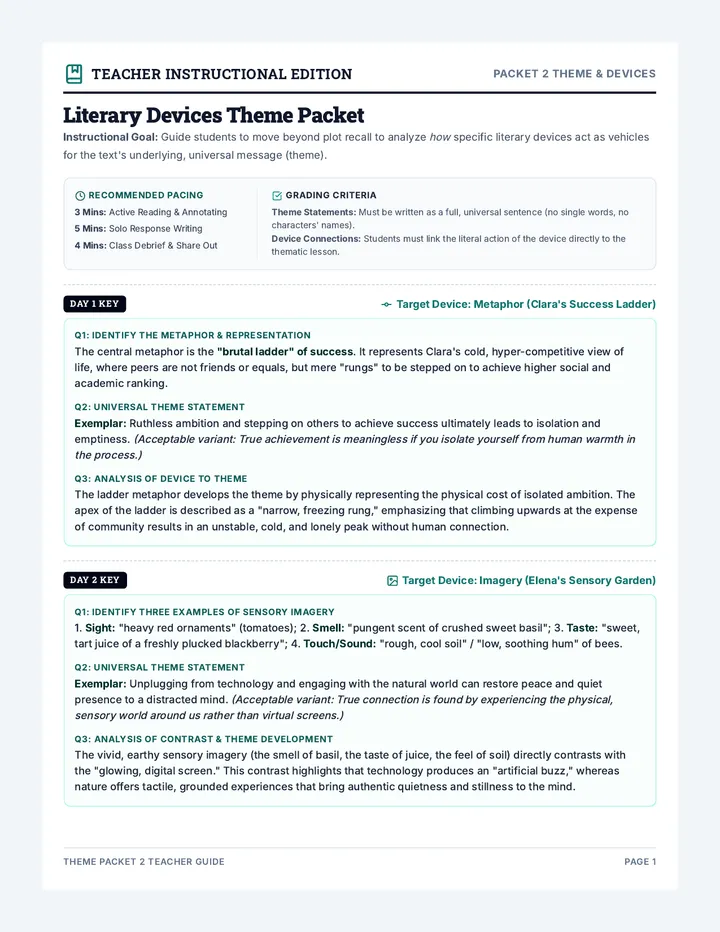
A comprehensive teacher guide and answer key for the Literary Devices Theme Packet. Includes daily learning objectives, exemplary student responses, guidance on common student misconceptions, and high-impact discussion prompts.
An expanded 5-day printable student packet designed to build mastery in identifying themes and analyzing how authors use explicit literary devices. Features significantly longer, more descriptive stories for Days 2 to 5 to provide deeper narrative context for student analysis.
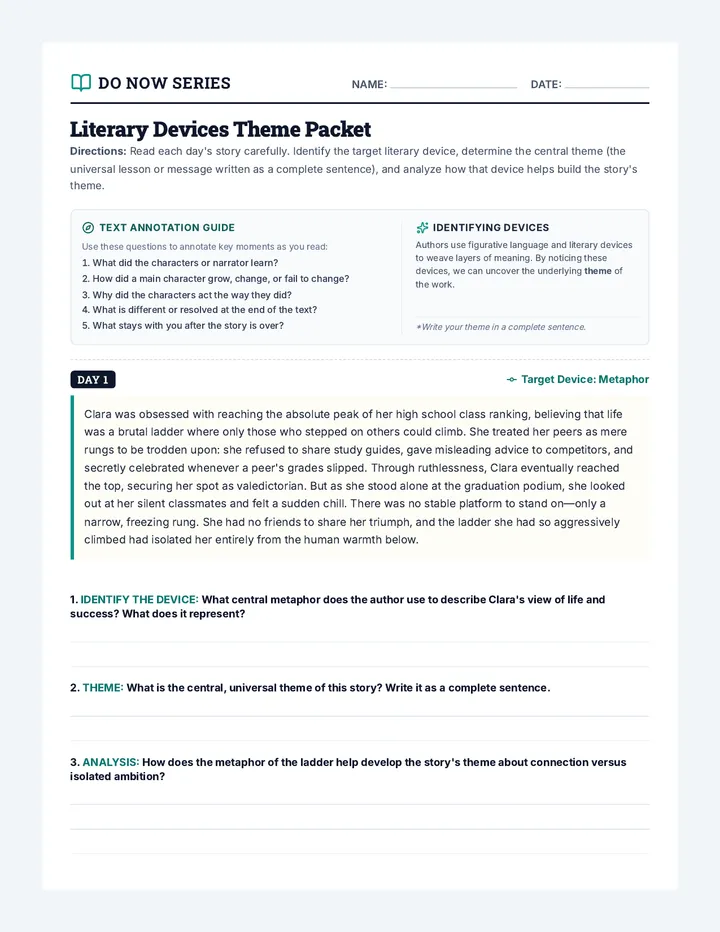
A second 5-day printable student packet designed to build theme-analysis mastery. This set focuses on five active figurative and literary devices: Metaphor, Imagery, Personification, Satire, and Allusion. Each day has a short, engaging story with student writing lines.
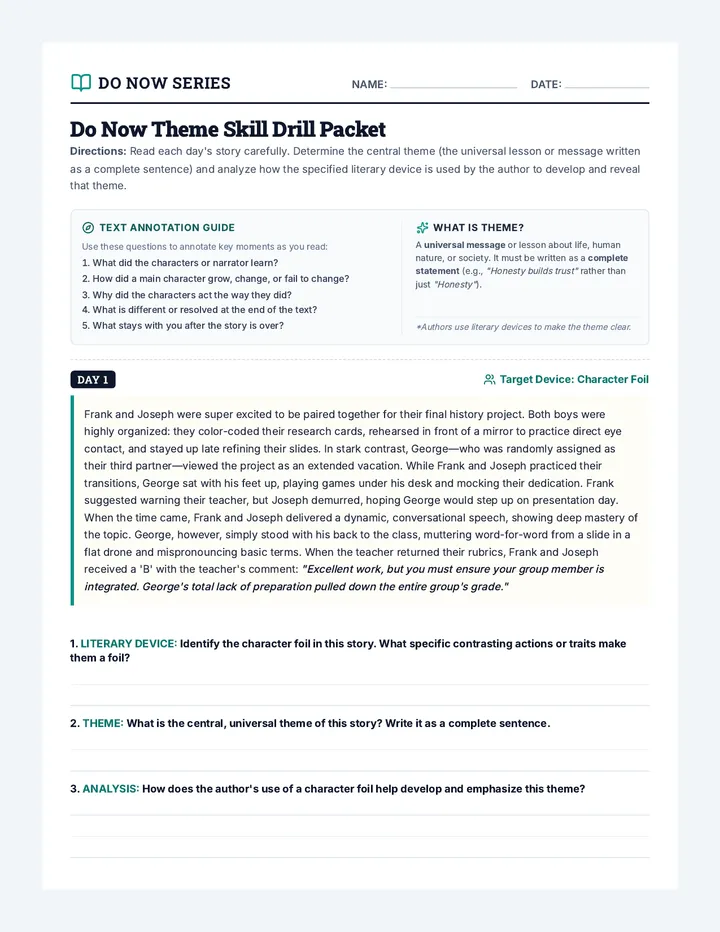
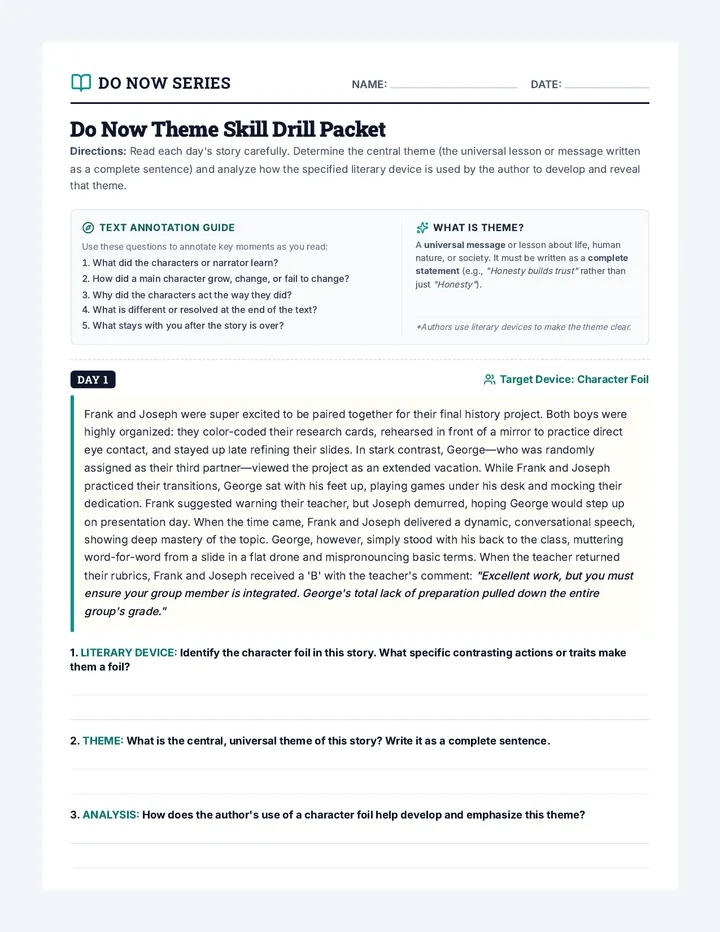
A 5-day printable student packet designed to build mastery in identifying themes and analyzing how authors use explicit literary devices—such as character foils, irony, symbolism, and juxtaposition—to develop those themes. Each day features an altered, engaging story and analysis questions.
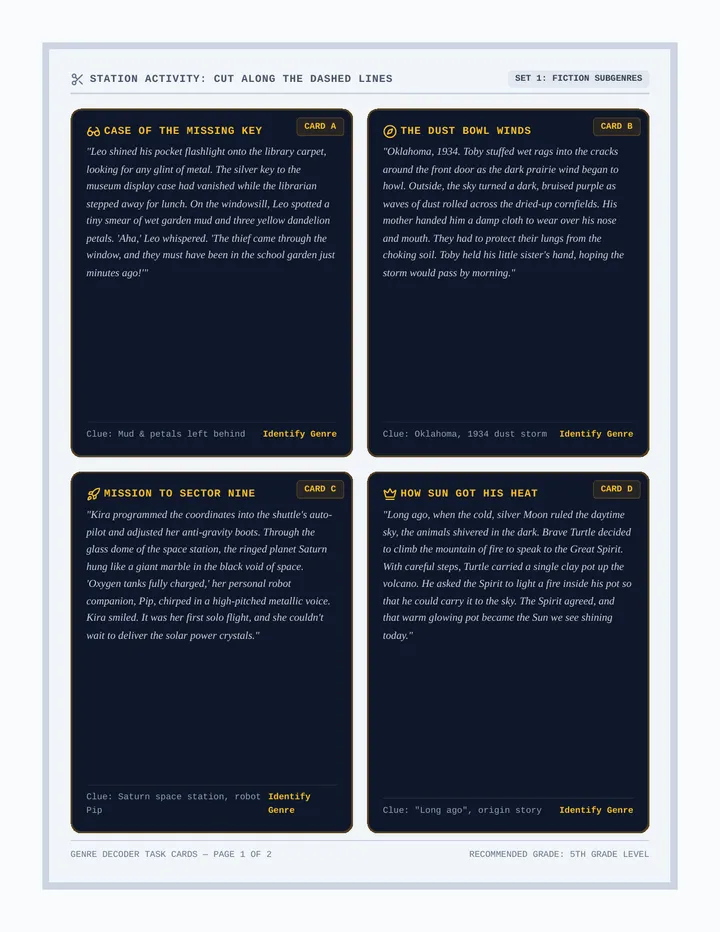
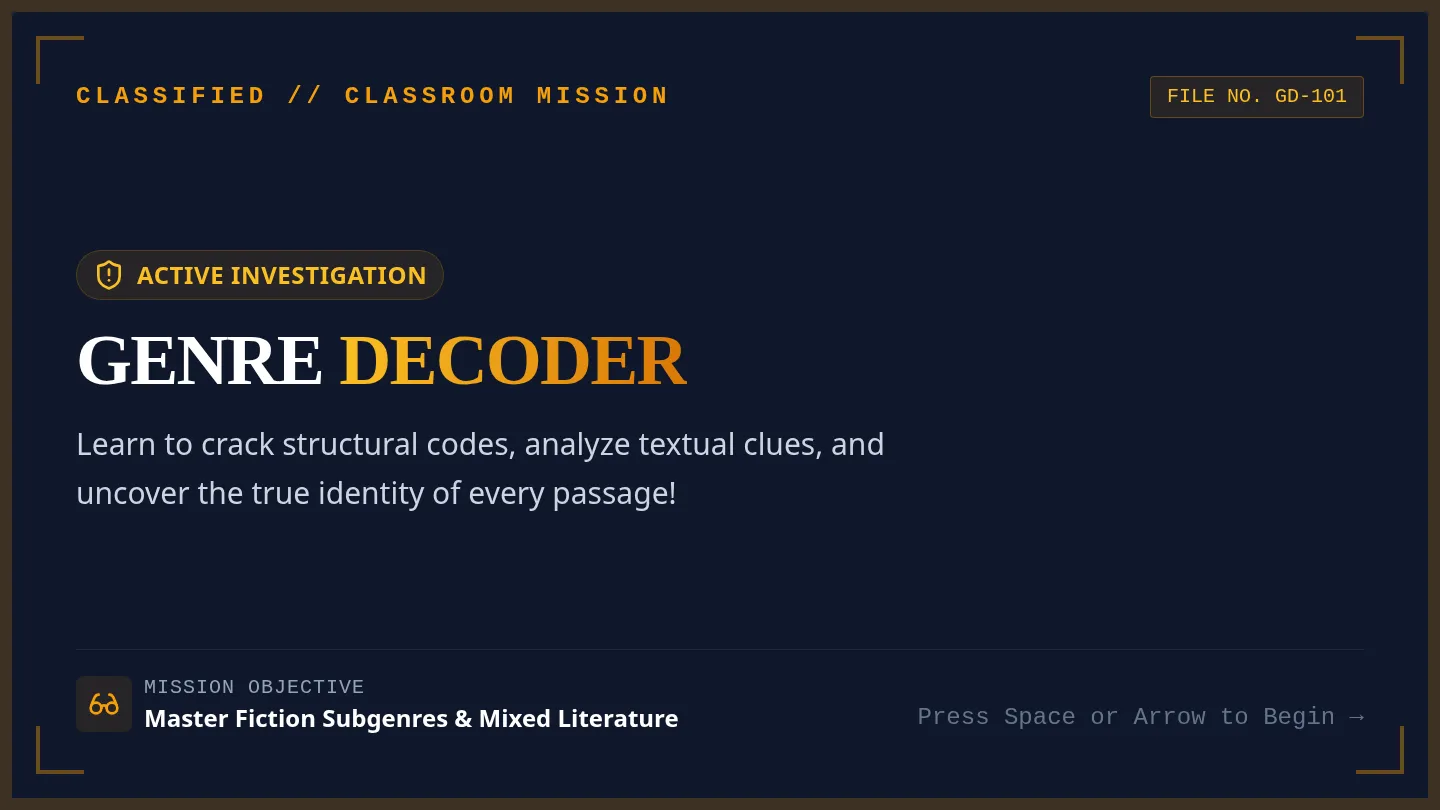
A printable set of 8 detective-themed genre task cards designed for 5th graders. Features dotted cut lines, engaging mini-passages covering four fiction subgenres and four mixed literature formats, and high-contrast, reader-friendly layouts.
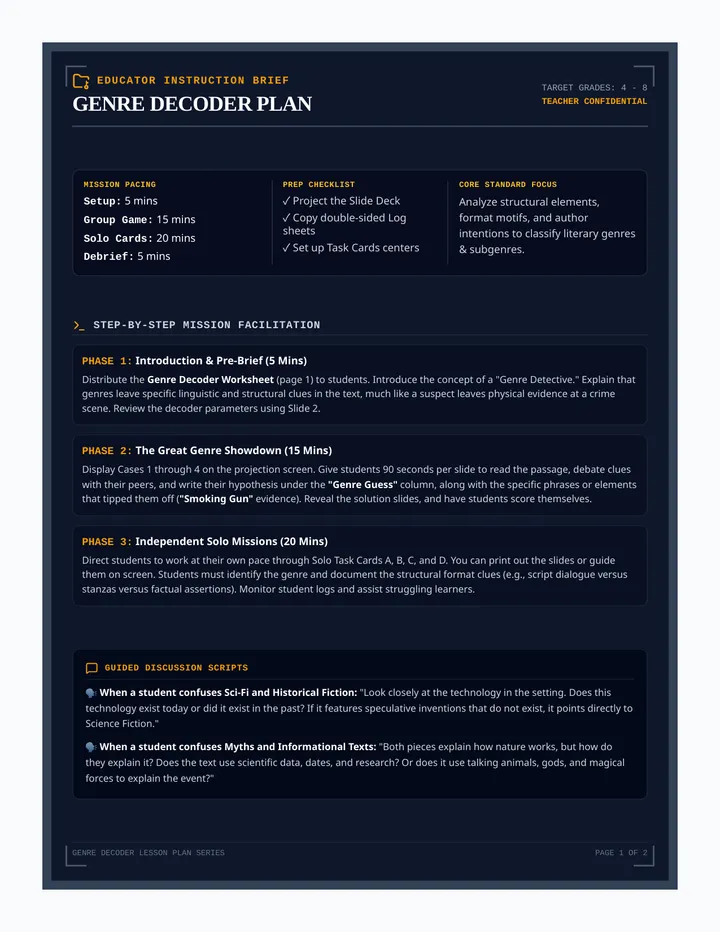
A comprehensive 2-page teacher-facing lesson plan and answer key. Contains clear instructions on classroom execution, guided questioning scripts, detailed answer justifications, and practical differentiation suggestions for diverse learners.
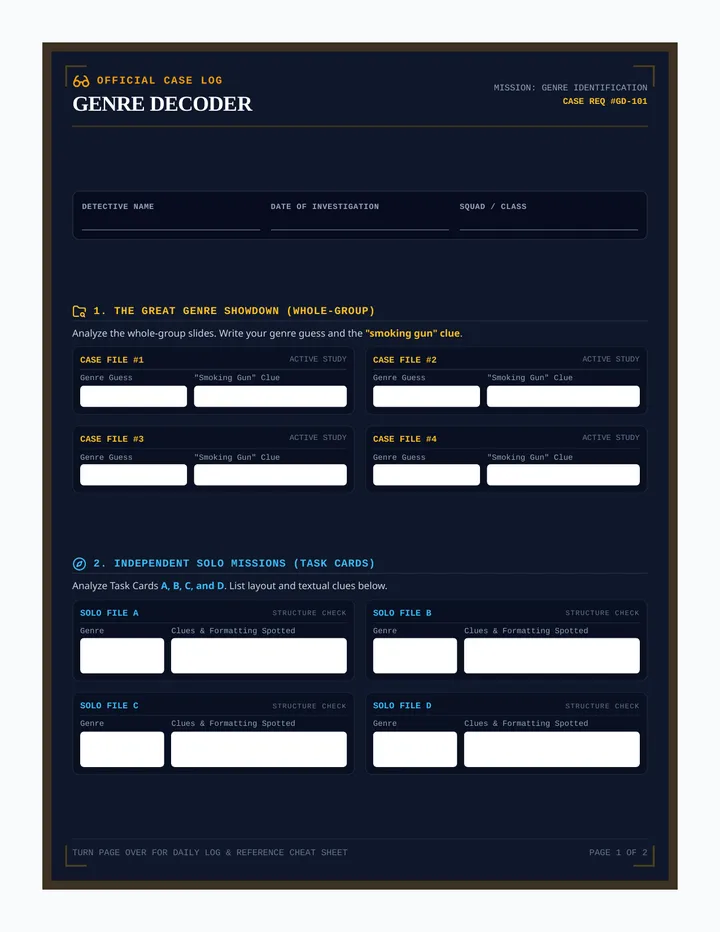
A printable 2-page student worksheet designed as a 'Detective Log'. Contains structured spaces with clean white backgrounds for tracking clues during the whole-group game, the solo task card activity, and the daily warm-ups. Features an integrated quick-reference genre cheat sheet.
An interactive, detective-themed classroom slide presentation for practicing genre identification. Includes a whole-group reveal game, independent task cards, and quick daily warm-ups/exit tickets. Uses high-visibility layouts with a strict minimum font size of 24px (text-2xl) for comfortable projection.
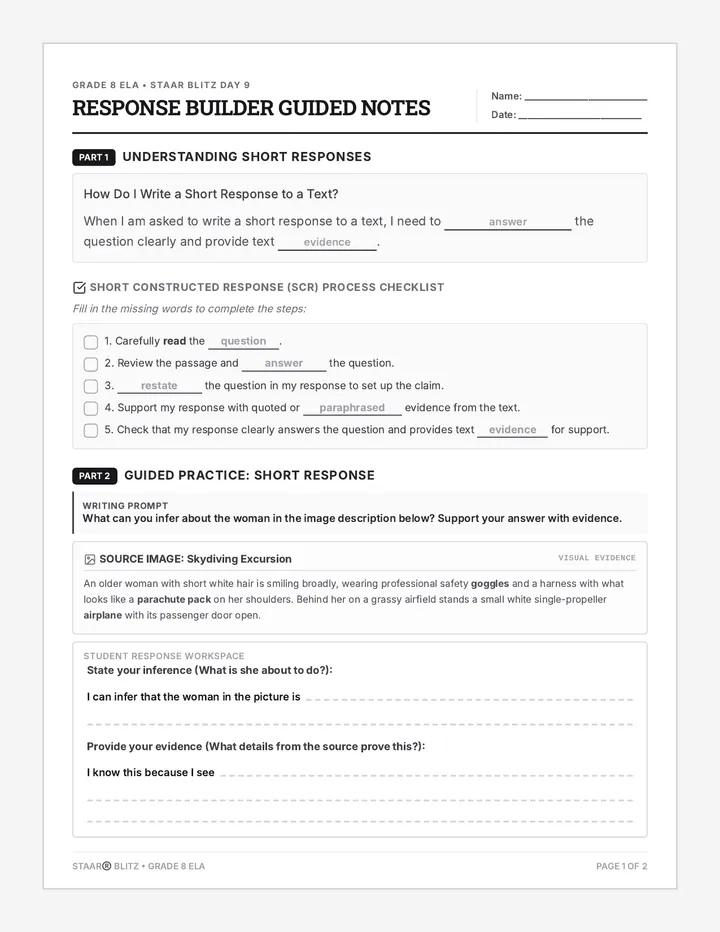
A comprehensive guided notes packet in greyscale designed to accompany the Day 9 lesson on writing short and extended responses. It includes interspersed fill-in-the-blank instructions, checklist scaffolds, and practice prompts with sentence starters.
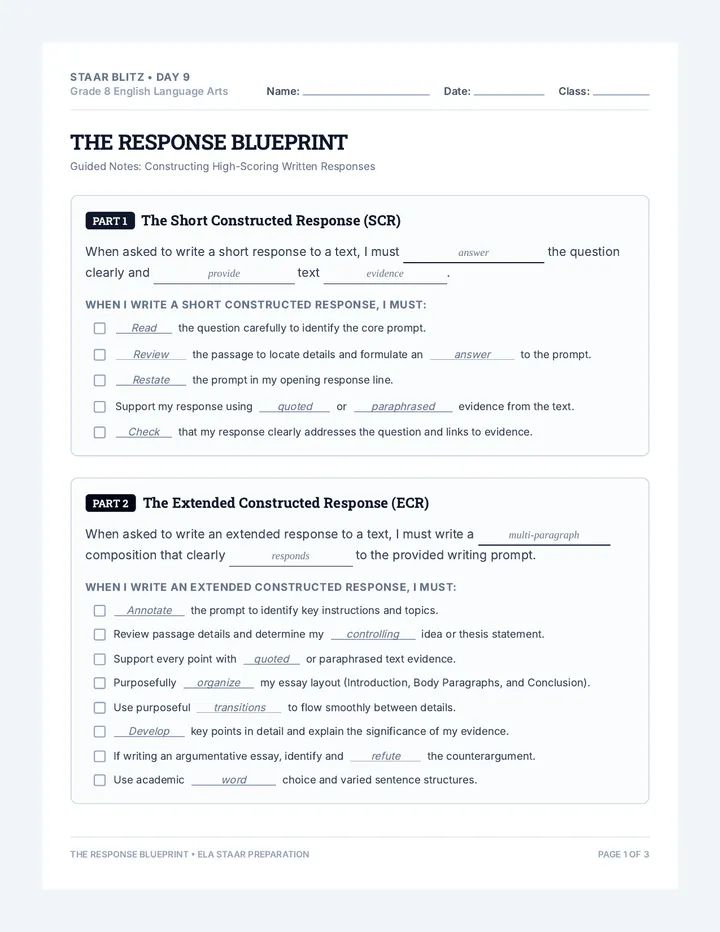
A revised 3-page printable guided notes handout in a sophisticated greyscale technical-notebook aesthetic. Updated Page 3 container heights to ensure the Touching Spirit Bear excerpt renders completely without text truncation.
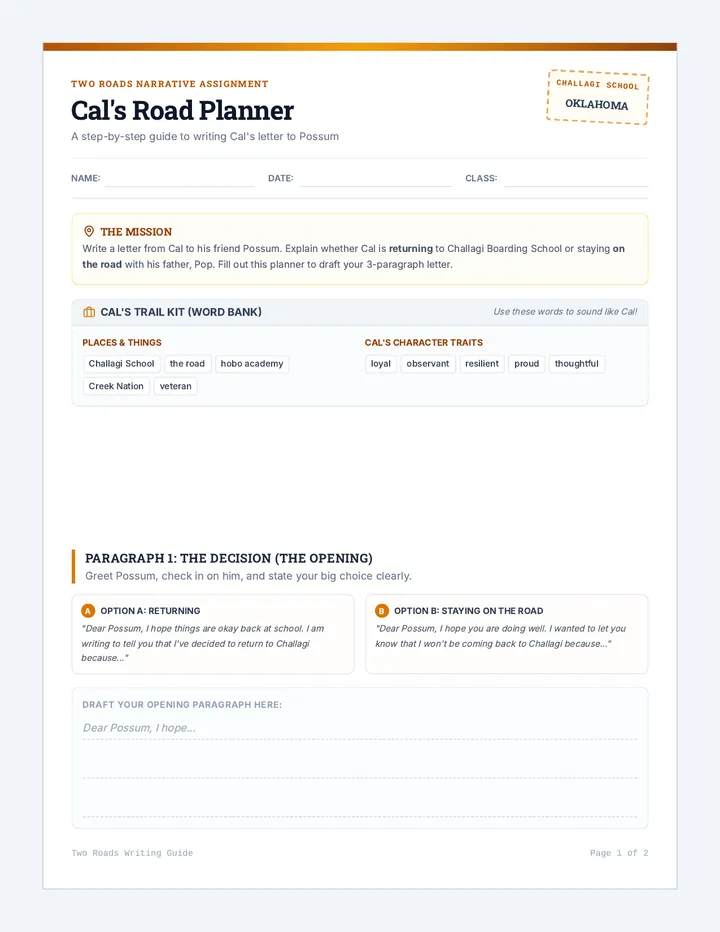
A highly structured two-page narrative writing graphic organizer and editing checklist for the novel Two Roads. Designed for SPED students with sentence starters, word banks, character traits, and a step-by-step paragraph planner.
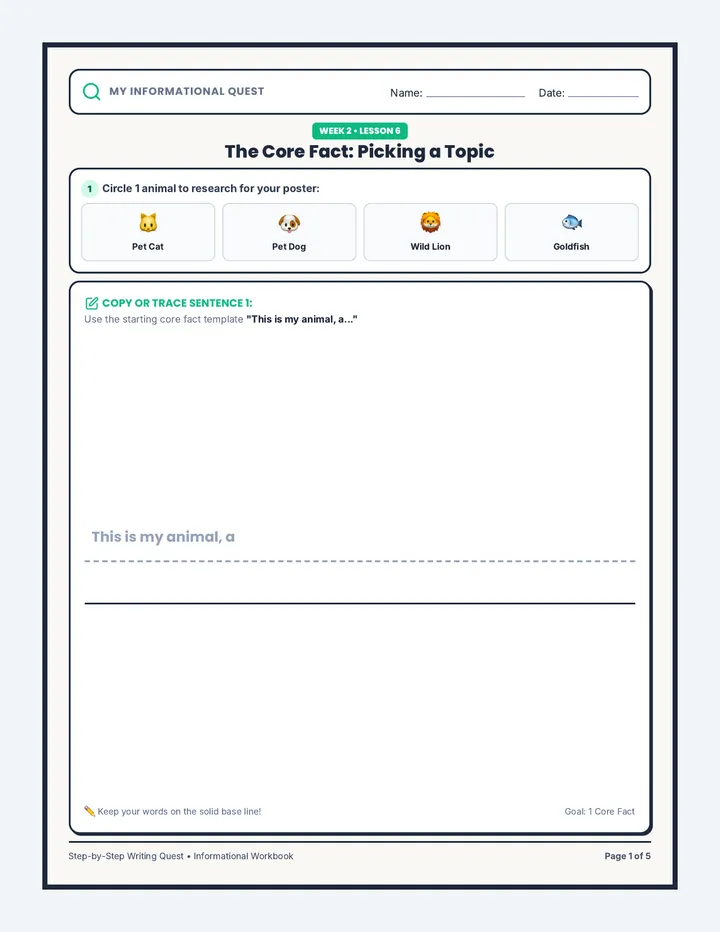
A 5-page printable student workbook for Week 2 (Informational Writing). Features high-contrast animal topic cards, cut-and-paste fact builders, visual habitat trackers, and a poster assembly draft sheet tailored for special education.
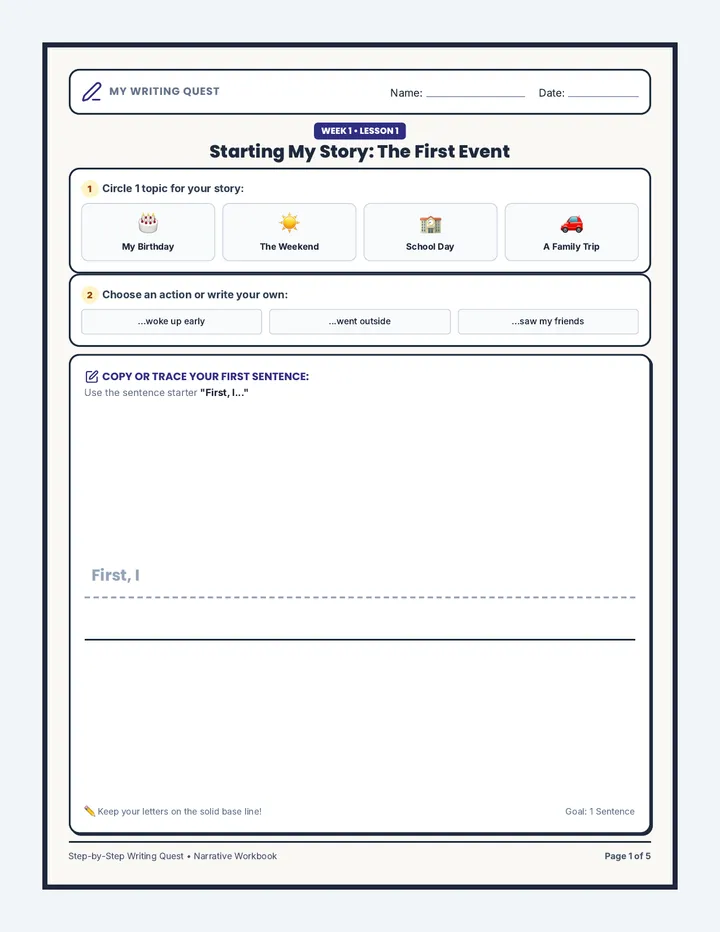
A 5-page printable student workbook covering Week 1 (Personal Narrative) and Week 3 (Creative Story). Features large double-lined handwriting spaces (minimum 32px), high-contrast borders, visual choice cards, and a final 4-panel storyboard template.
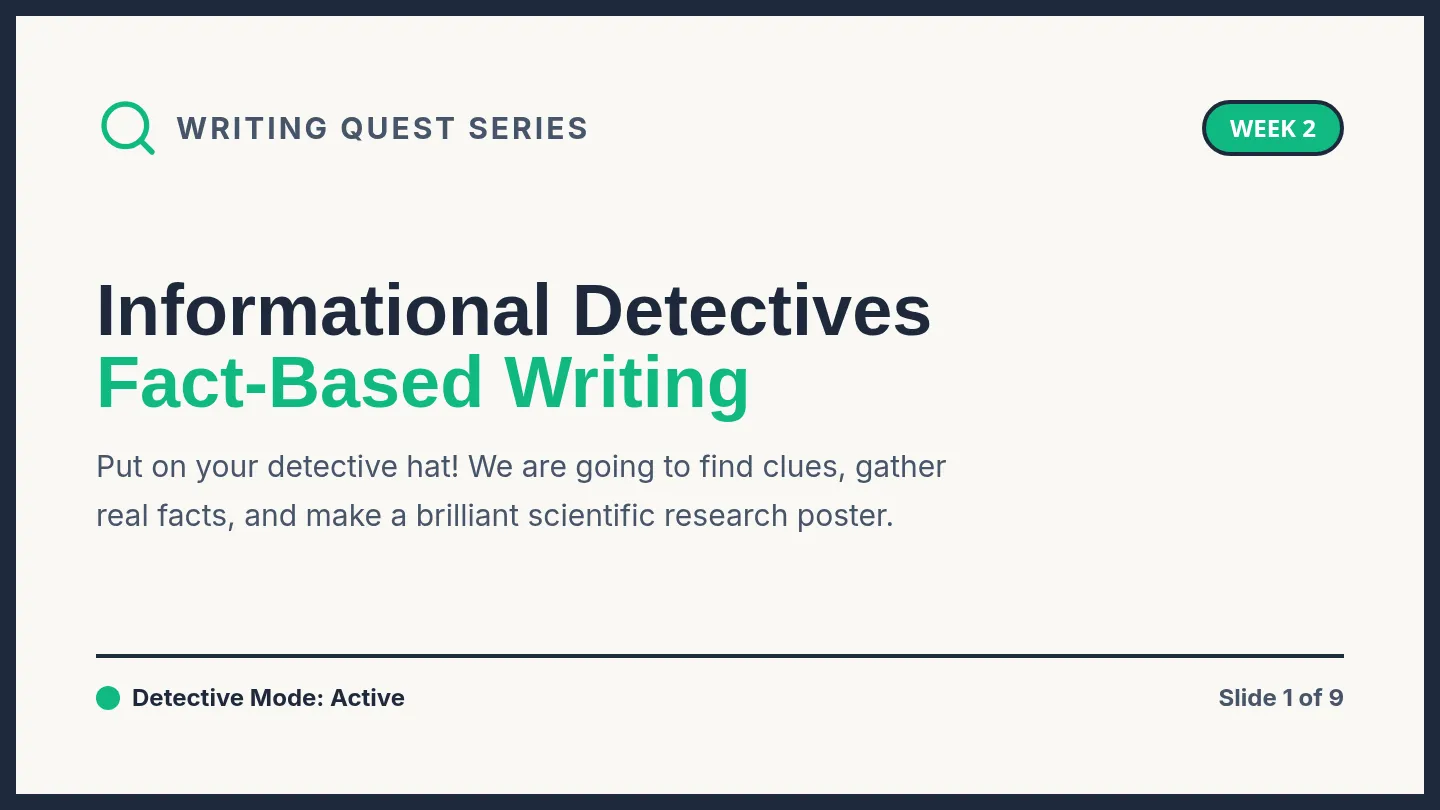
An interactive and visual 9-slide digital presentation for Week 2 (Informational Writing). Structured around an "Info Detective" theme, featuring oversized fonts (minimum 24px), simplified evidence cards, and structured sentence builders for students with moderate intellectual disabilities.
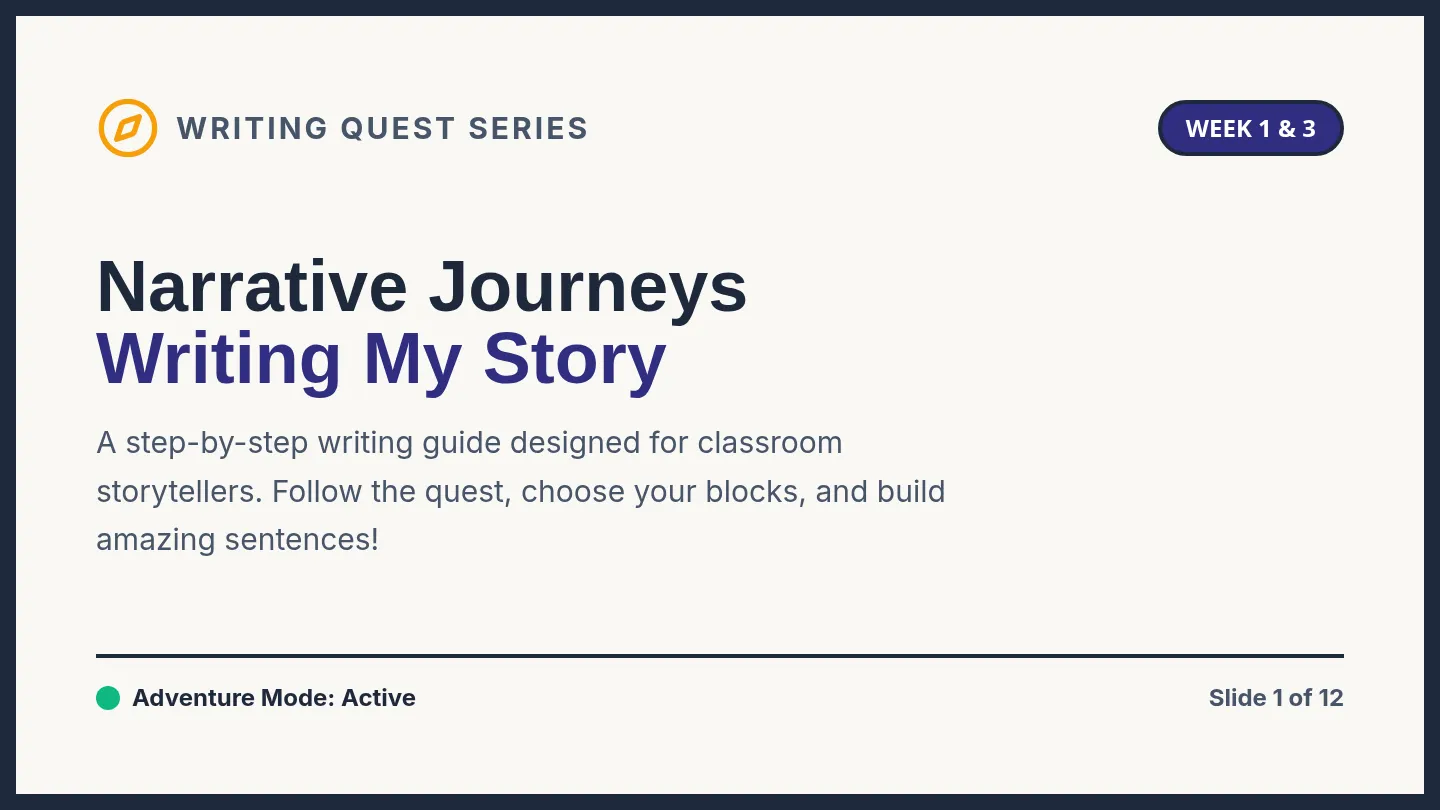
A highly visual 12-slide digital presentation for Week 1 (Personal Narratives) and Week 3 (Imagined Narratives). Features a gamified quest design, massive font sizes (minimum 24px), structured choice panels, and explicit transition-word templates for students with intellectual disabilities.
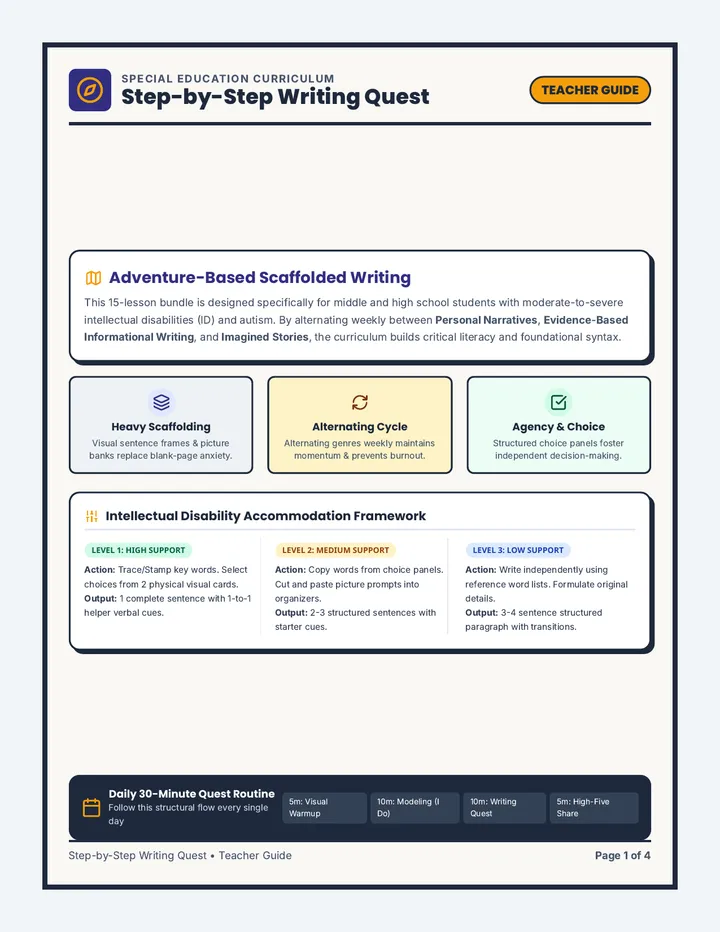
A comprehensive 4-page Teacher's Curriculum Guide containing structured lesson plans, differentiation rubrics, and scaffolded writing frameworks for all 15 lessons in the sequence. Tailored specifically for students with intellectual disabilities, featuring high-contrast guides and visual checklists.
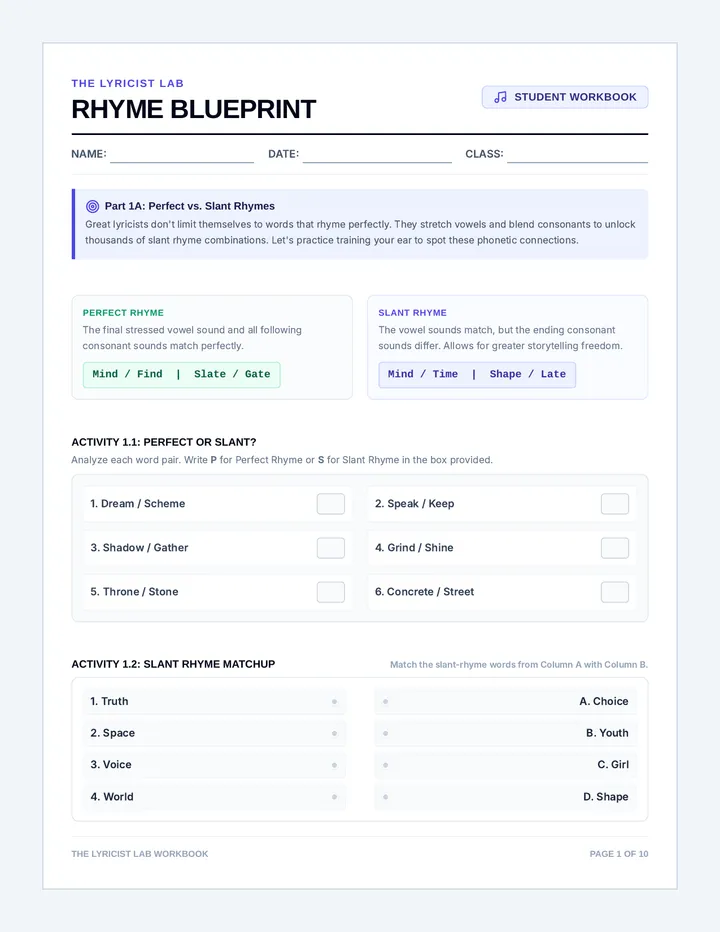
A 10-page expanded student workbook featuring visual graphic organizers, fill-in-the-blank rhythm charts, slant-rhyme matching activities, punchline generators, and a step-by-step drafting layout for a 16-bar rap verse.
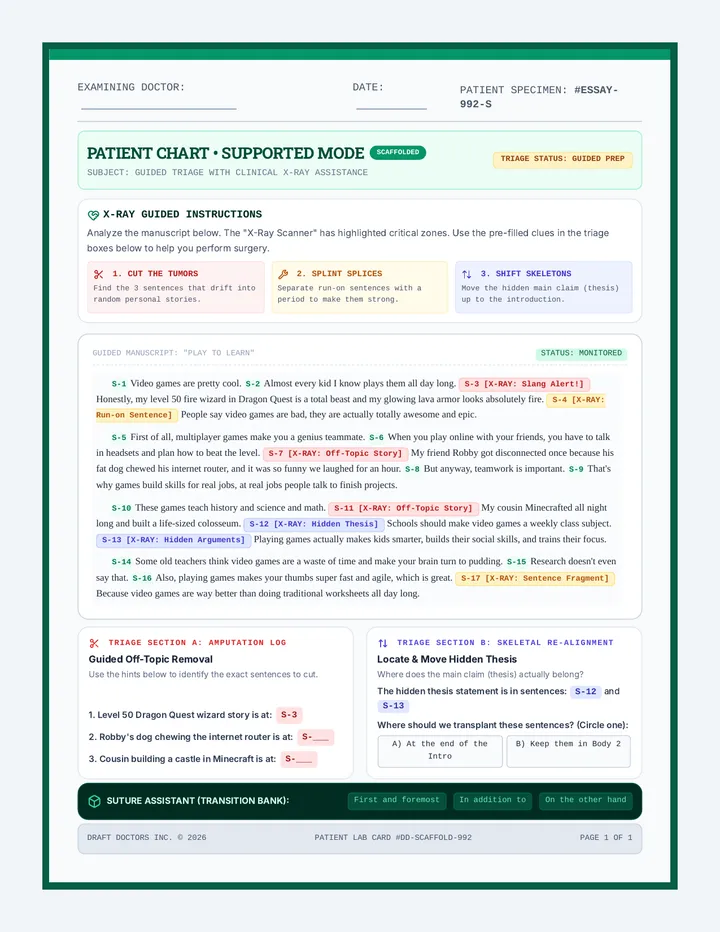
A scaffolded version of the patient chart handout tailored for English learners and struggling writers. It includes pre-identified sentence placeholders, multiple-choice diagnostic options, structural hints, and guided sentence starters to support students in performing clinical text surgery.
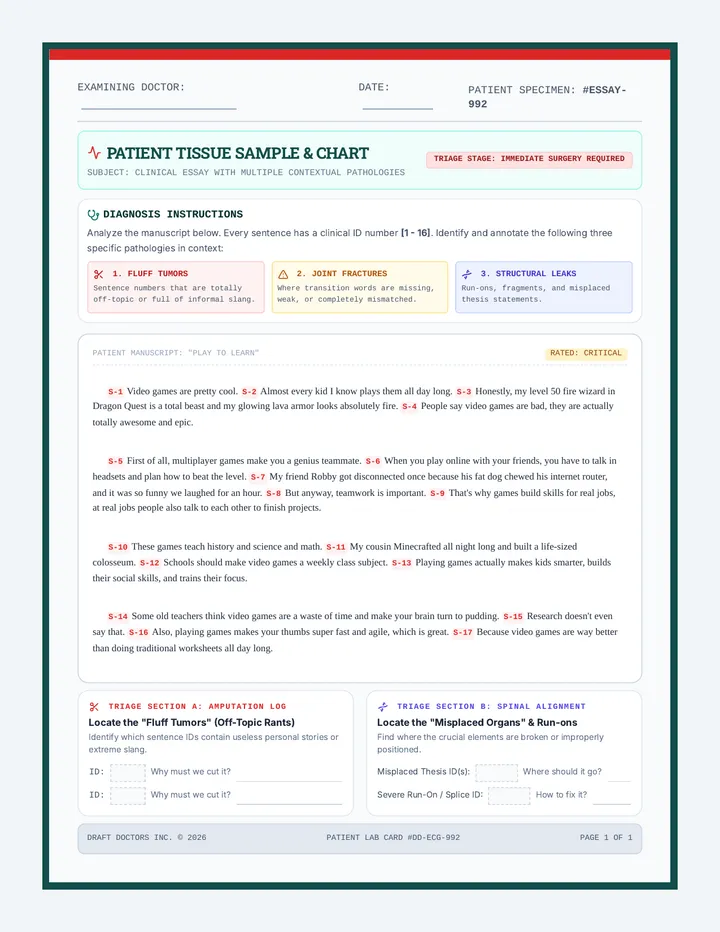
An immersive 1-page student handout containing a continuous, numbered, and error-ridden draft of the 'Play to Learn' video game essay. It includes contextual errors such as structural displacements, slang, off-topic fluff, run-on sentences, and grammatical fractures for students to identify directly in context.
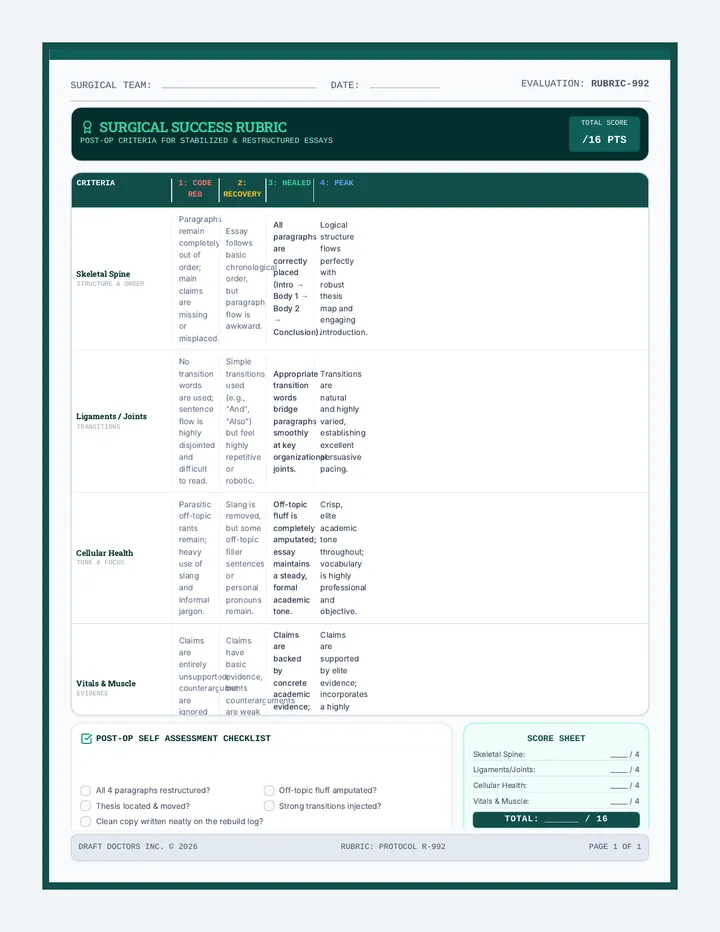
A 1-page analytical rubric structured as a 'Surgical Success Rubric' with an integrated student self-assessment checklist and score tally box.
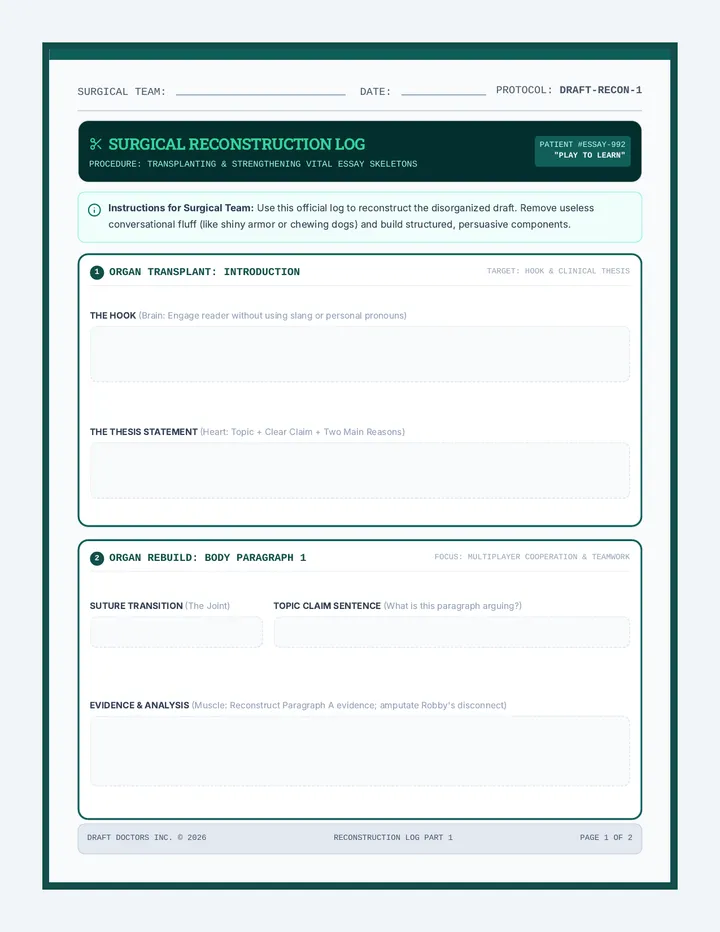
A highly structured 2-page graphic organizer designed as a 'Surgical Reconstruction Log' where student pairs transplant, suture, and rewrite the final essay.
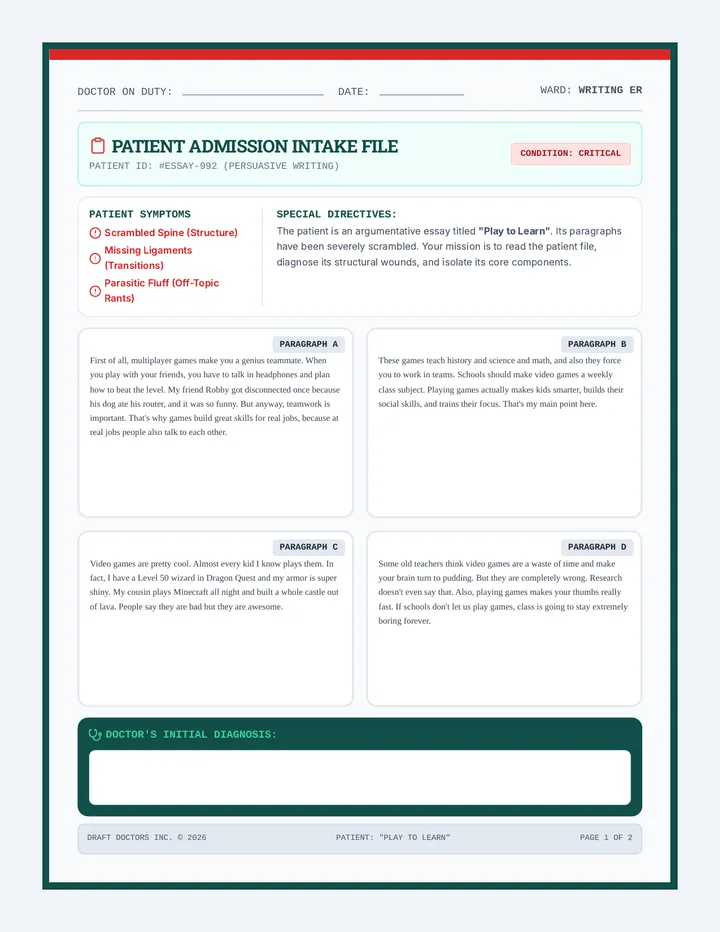
A student-facing 2-page 'Patient File' containing the scrambled 'Sick Draft' with name/date fields, and a diagnostic worksheet where students analyze structural errors and off-topic paragraphs.
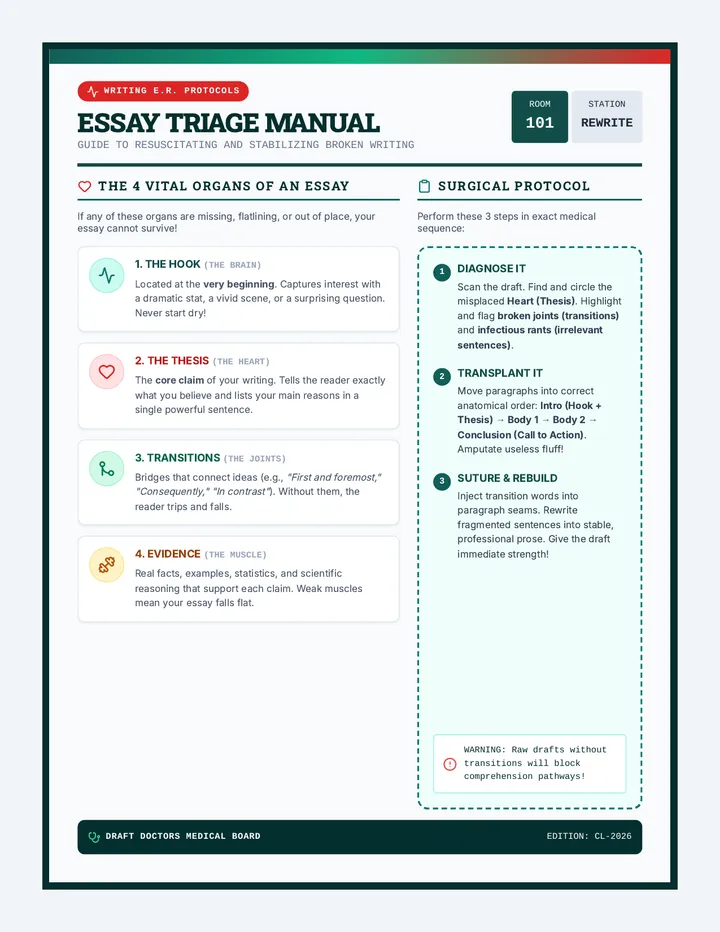
A high-impact 1-page visual anchor chart structured as an 'Essay Triage Manual' detailing the '4 Vital Organs' of an essay and the 3-step 'Surgical Procedure' for editing.
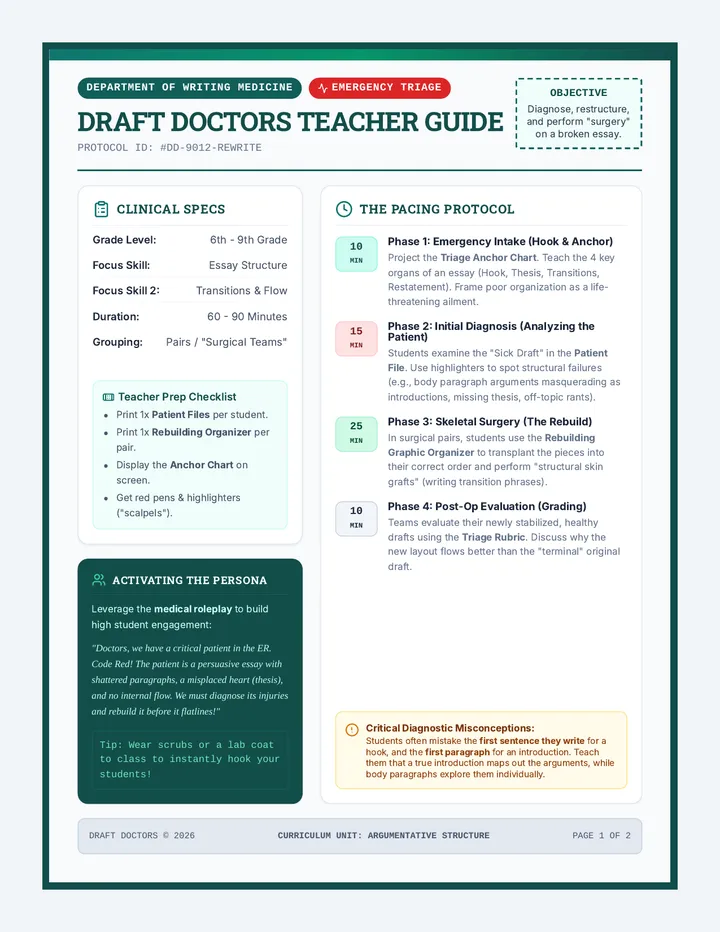
A comprehensive 2-page teacher guide outlining the lesson flow, surgical steps for draft triage, pedagogical guidance, and a complete diagnostic answer key for the 'Sick Draft'.