Updated one-page lesson plan for the Milwaukee Hole Hawg, now focusing on manual keyed chuck operation and safety. Agenda and objectives have been condensed to fit properly within their layout containers.
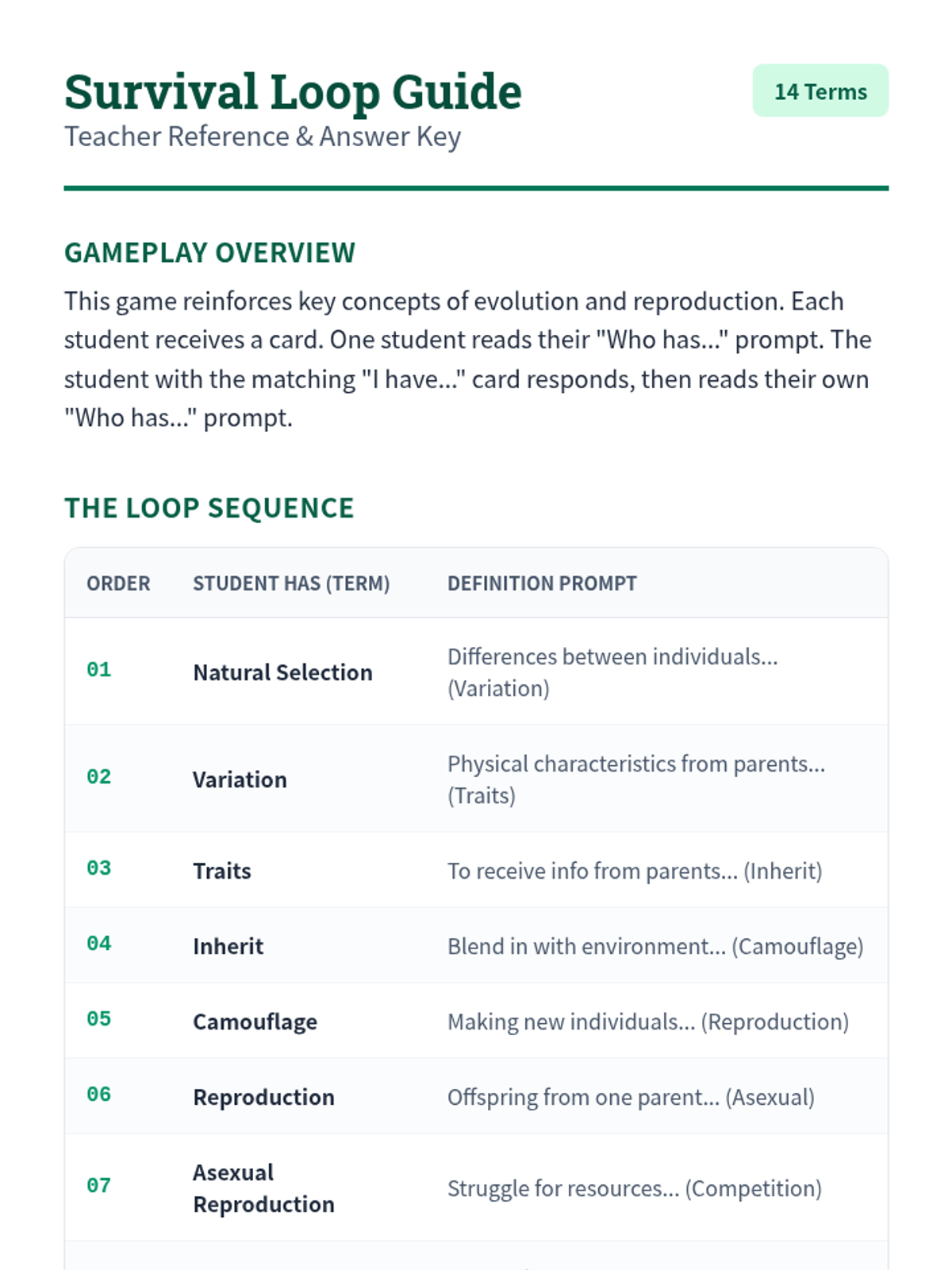
A teacher guide and answer key for the 'Survival Loop' game, featuring the full card sequence, gameplay tips, and classroom variations.
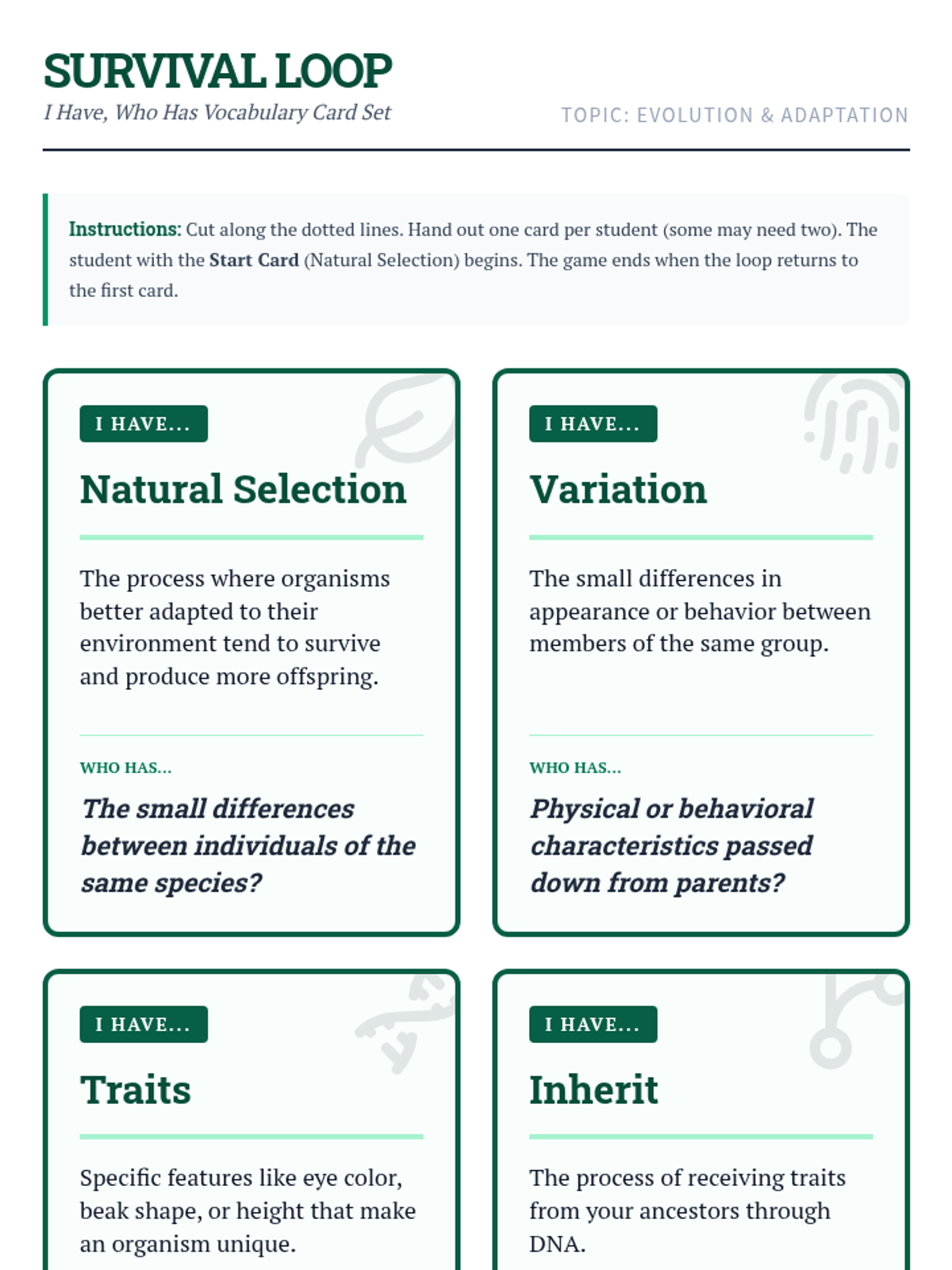
A complete 'I Have, Who Has' printable card set featuring 14 key evolution and reproduction vocabulary terms with clear definitions and visual icons.
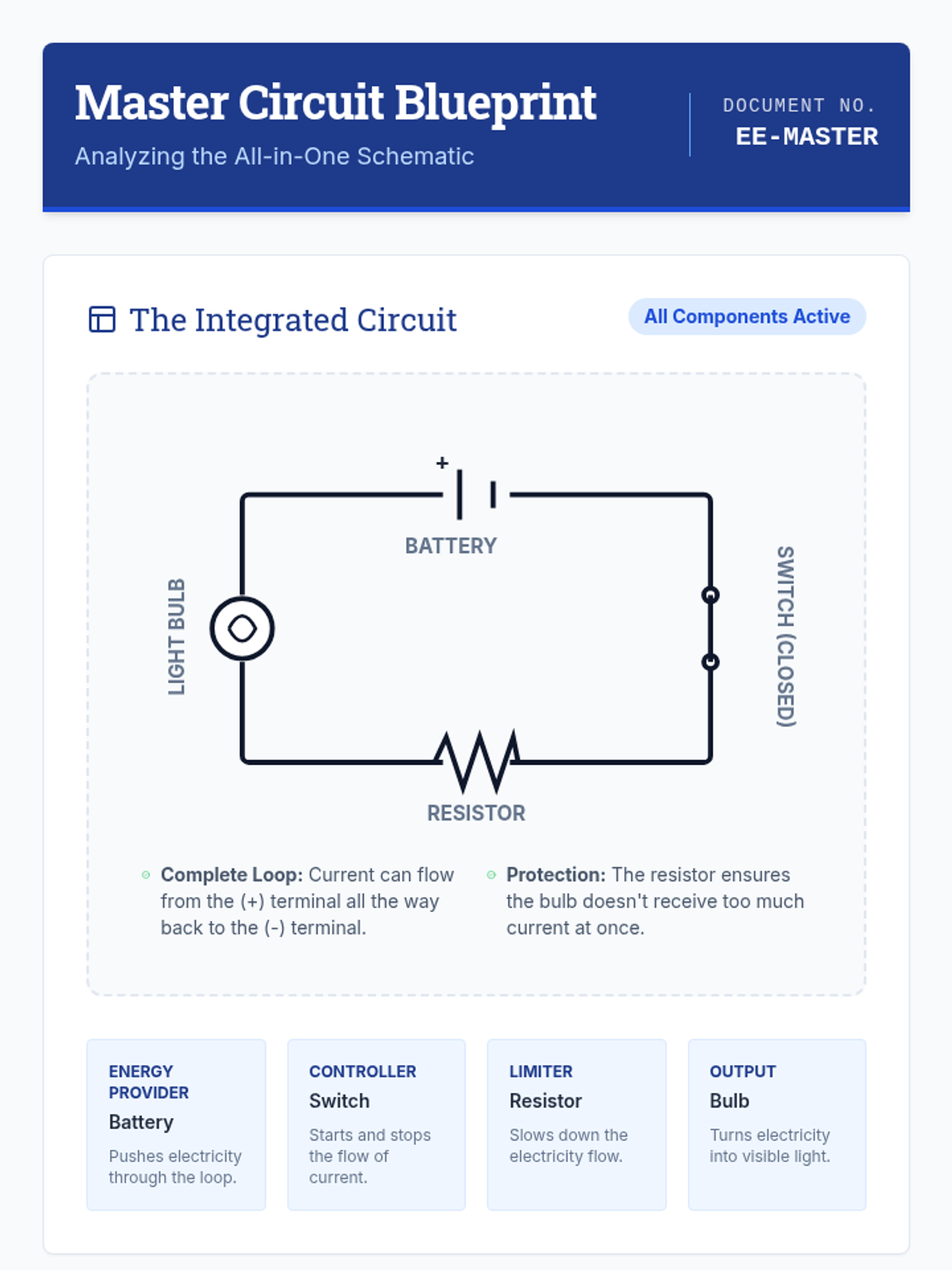
A comprehensive master schematic diagram showing all basic components (battery, switch, resistor, and bulb) in a single functional circuit with detailed labels and behavior scenarios.
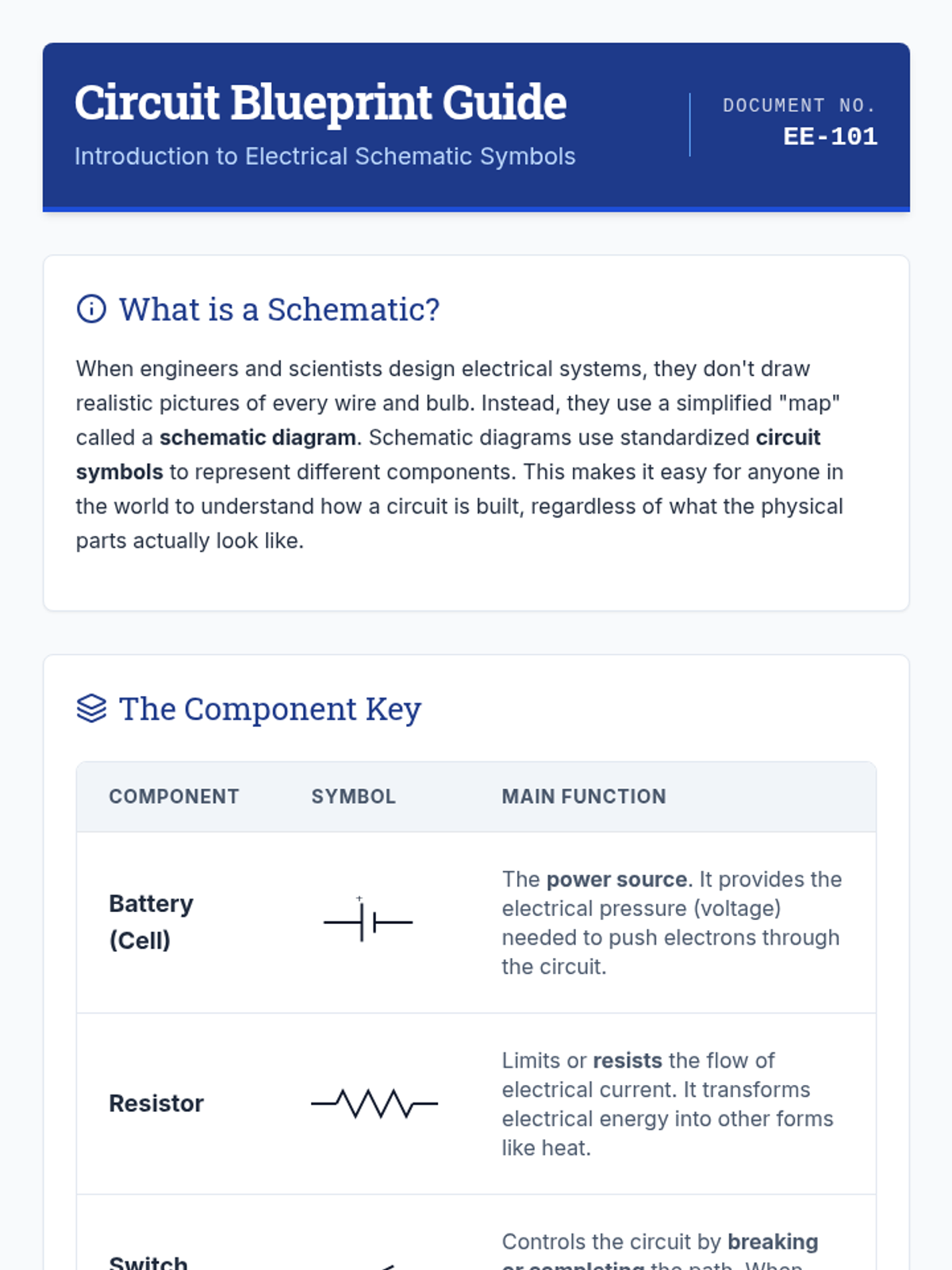
Updated 1-page introductory reading guide for students that explains schematic diagrams and provides a visual symbol key plus two labeled example circuit drawings.
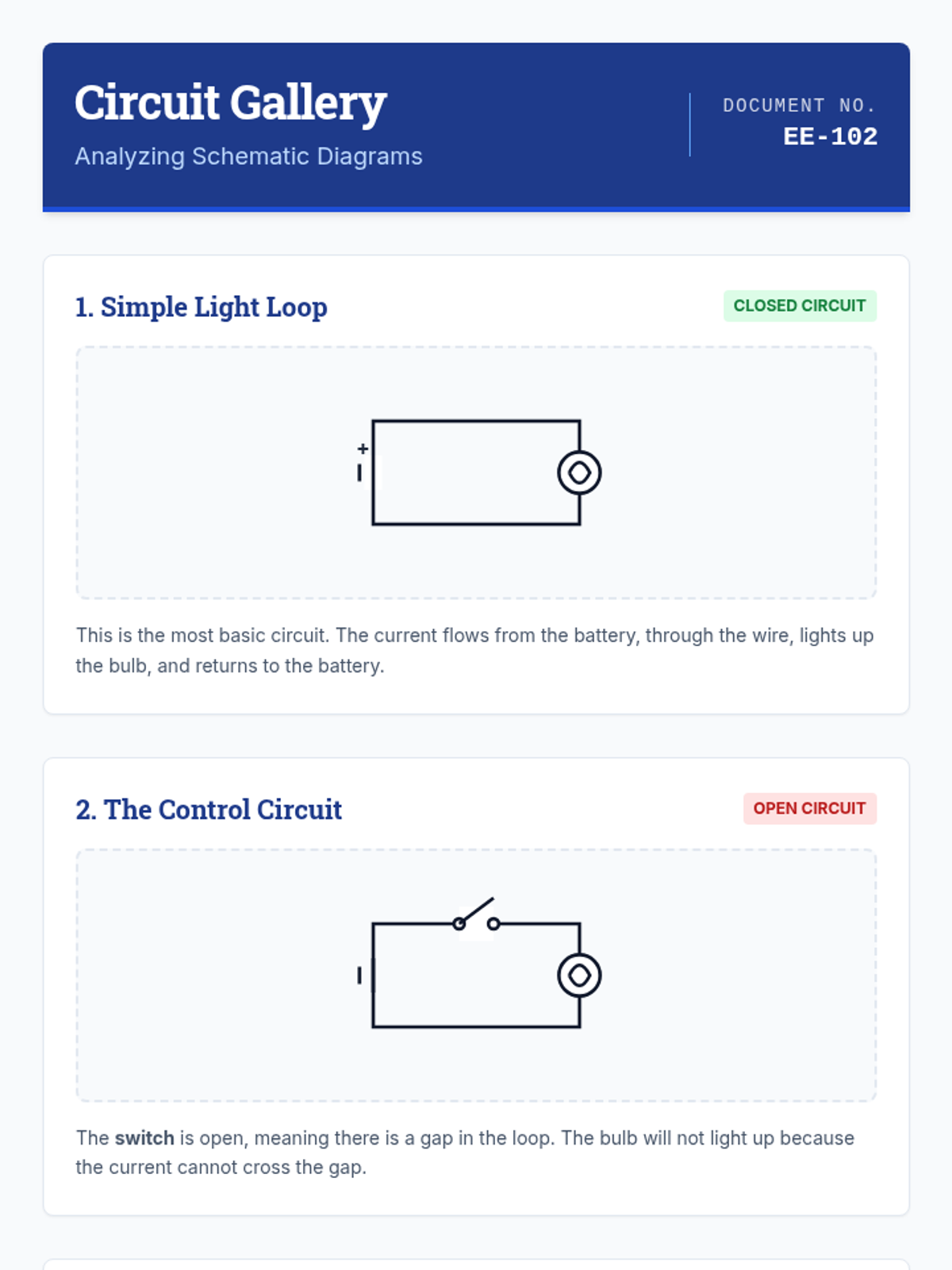
A visual reference sheet featuring four distinct schematic diagrams (simple loop, switched circuit, resistance circuit, and series circuit) with explanations of how current flows in each.
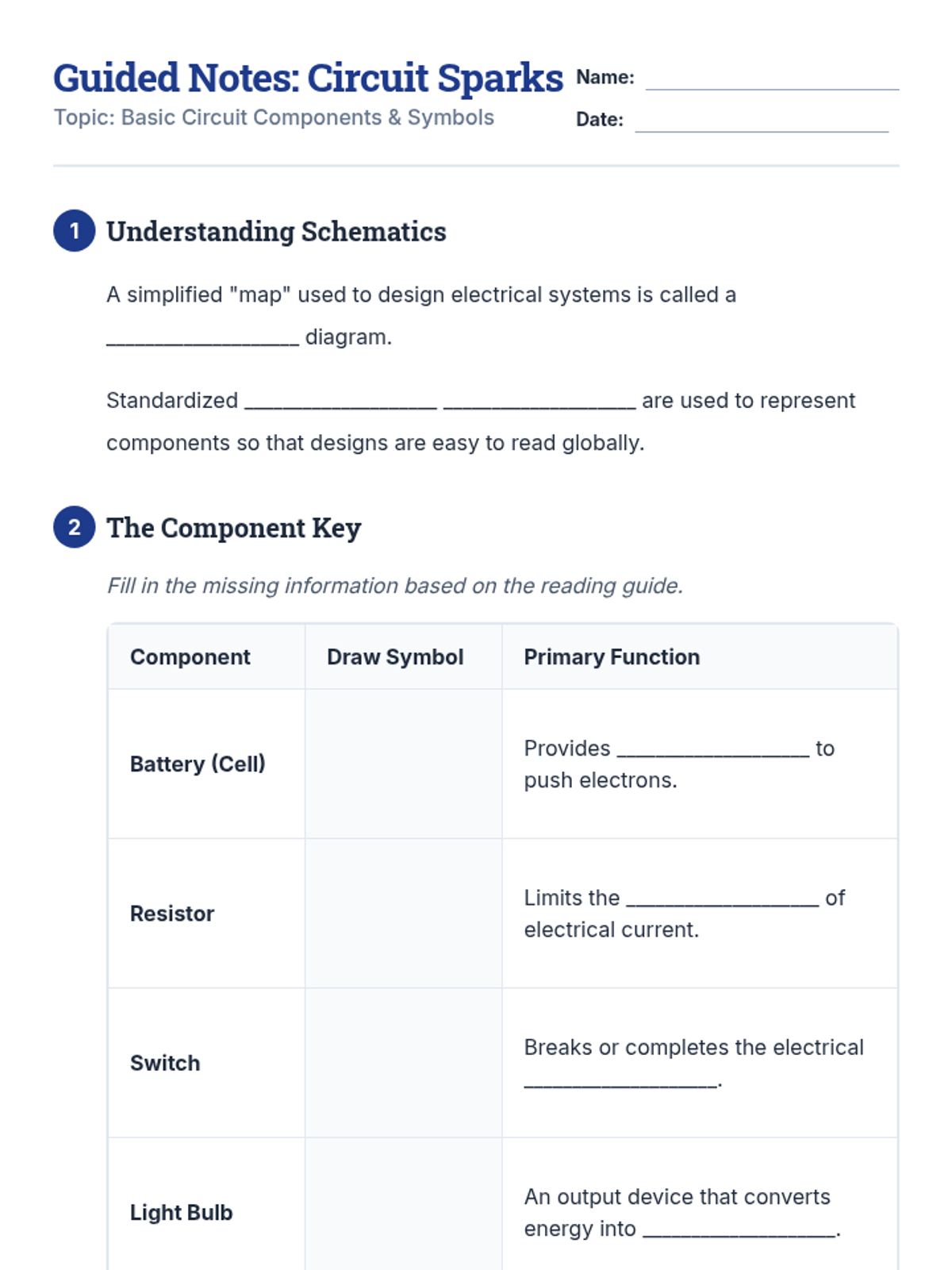
Guided notes for students to complete while reading the Circuit Symbols Guide. Includes fill-in-the-blank definitions, drawing practice for symbols, and a sketching area for a simple circuit.
A visual slide deck teaching the process of photosynthesis, the chemical equation, cellular respiration, and the continuous energy cycle between the two.
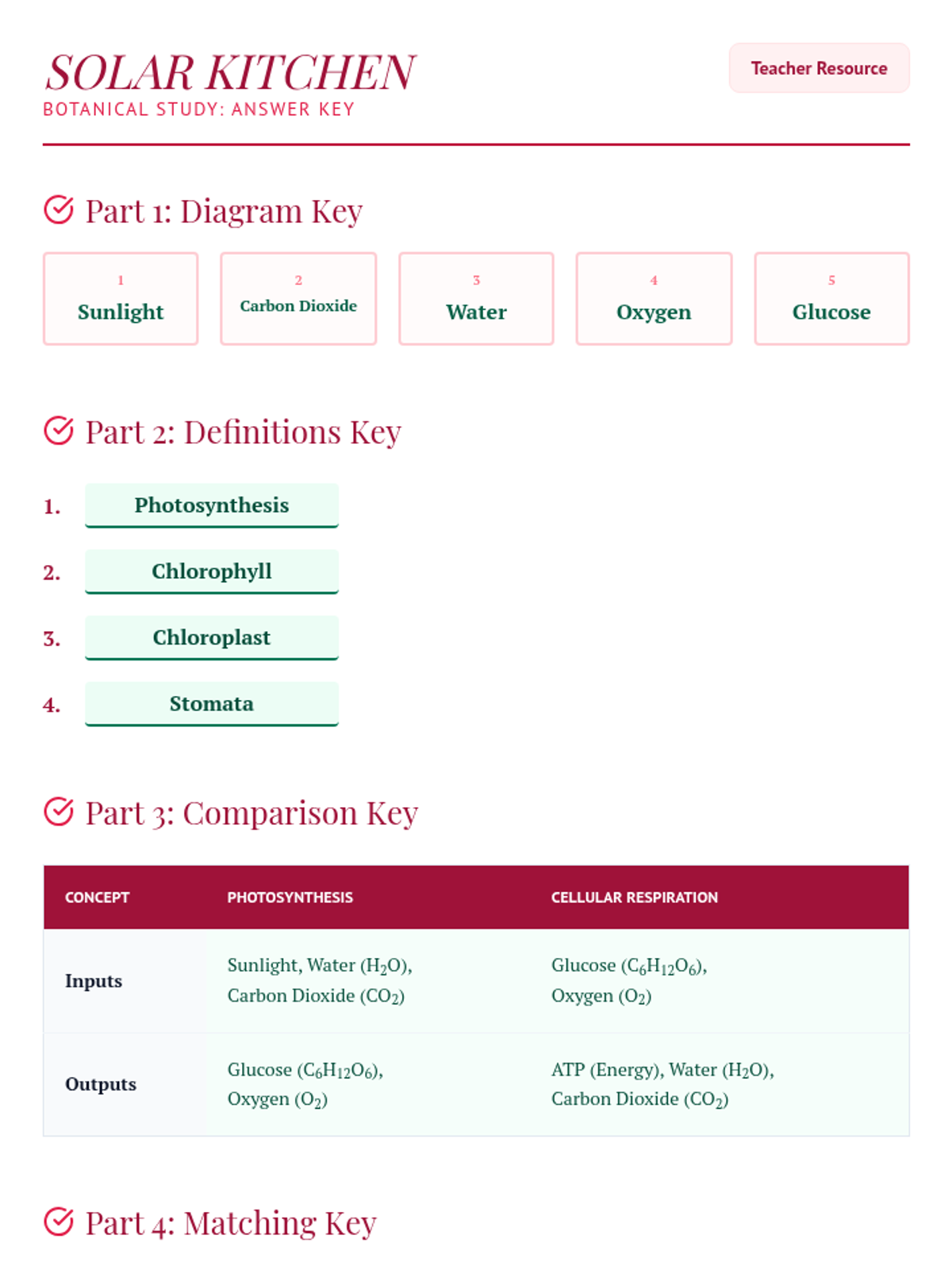
An answer key for the Solar Kitchen Worksheet, providing correct labels, definitions, comparison table entries, and matching solutions.
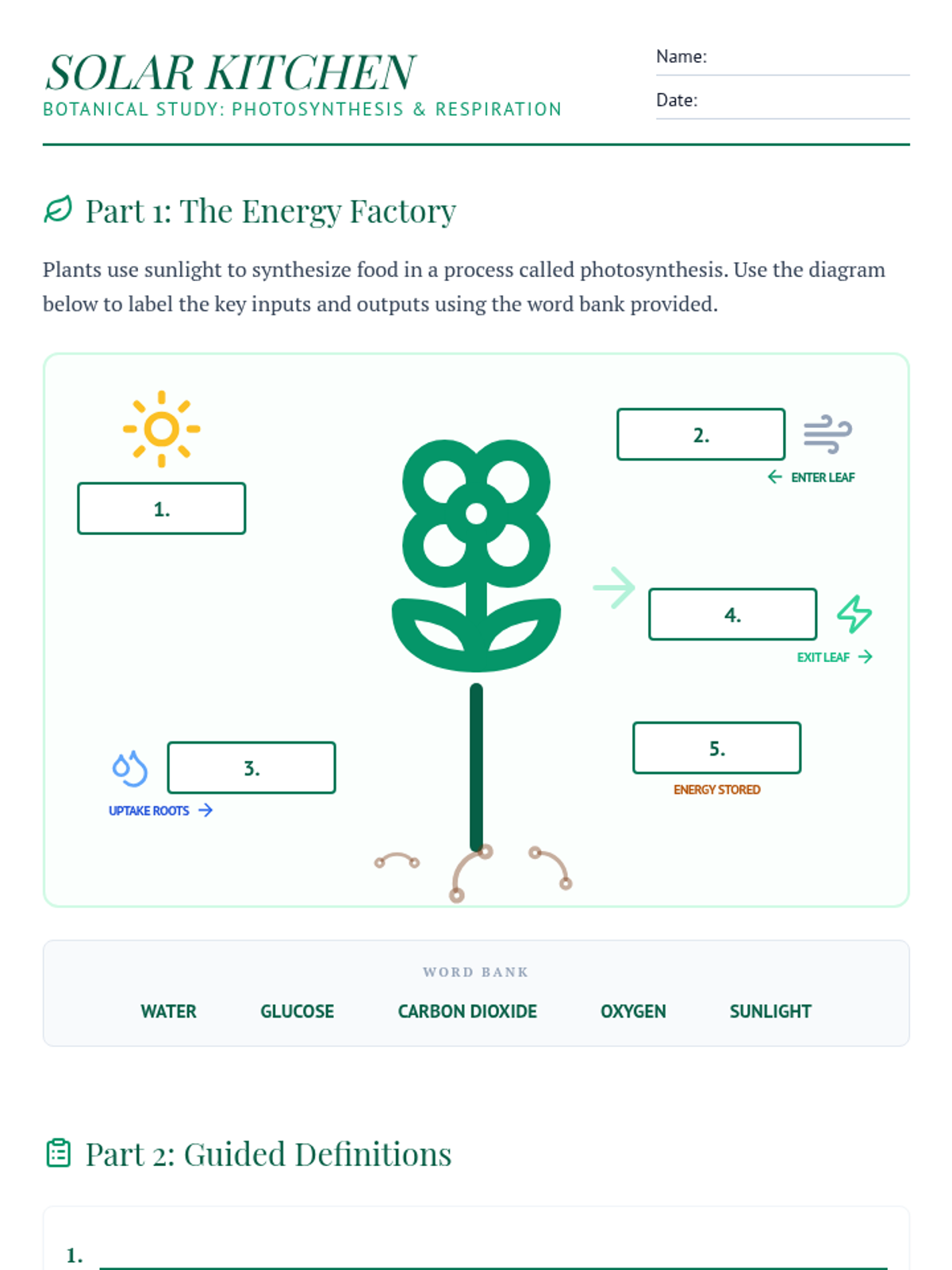
A comprehensive photosynthesis worksheet featuring a plant diagram for labeling, key term definitions, a comparison table with cellular respiration, and a chemical formula matching section.
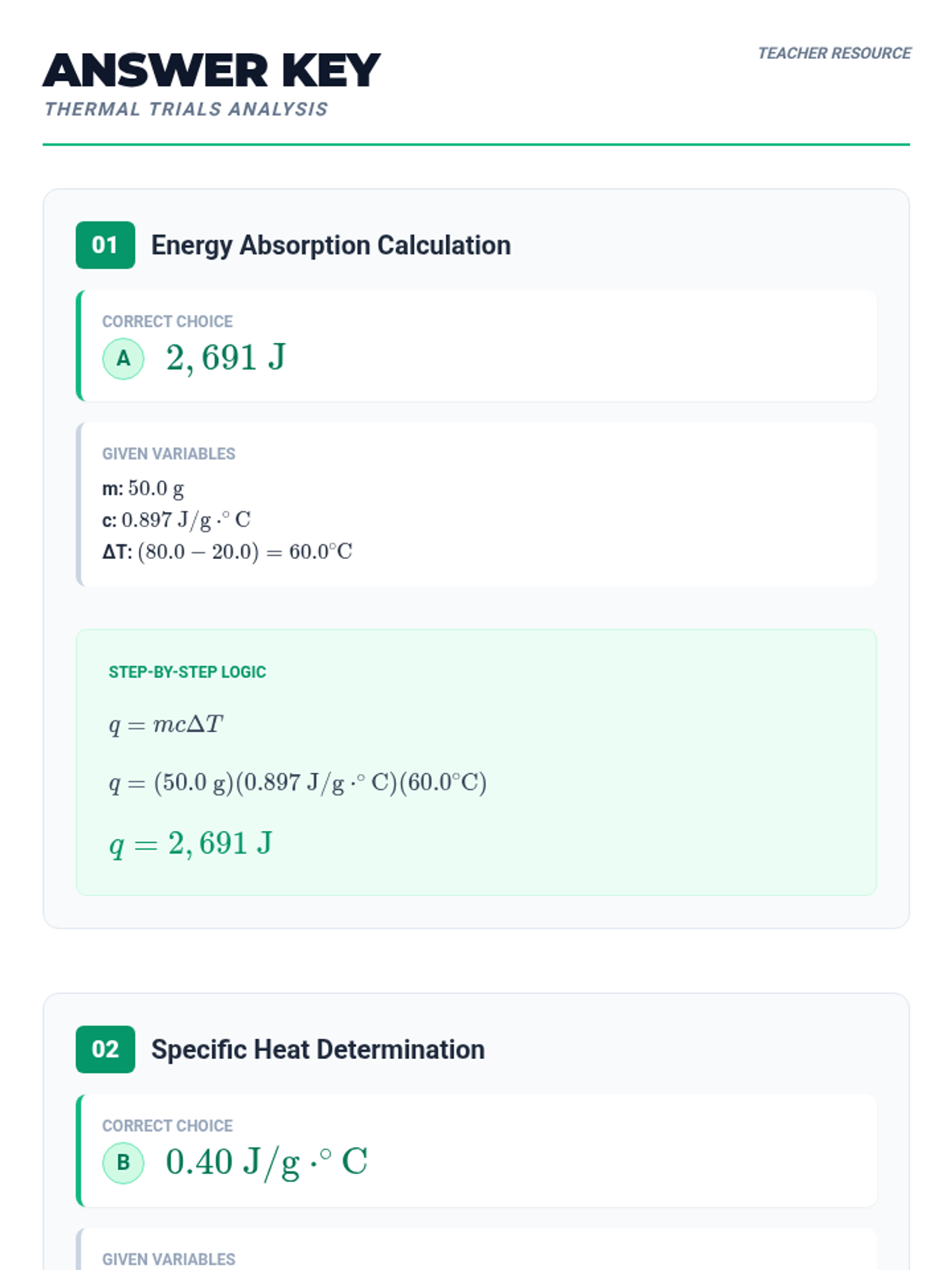
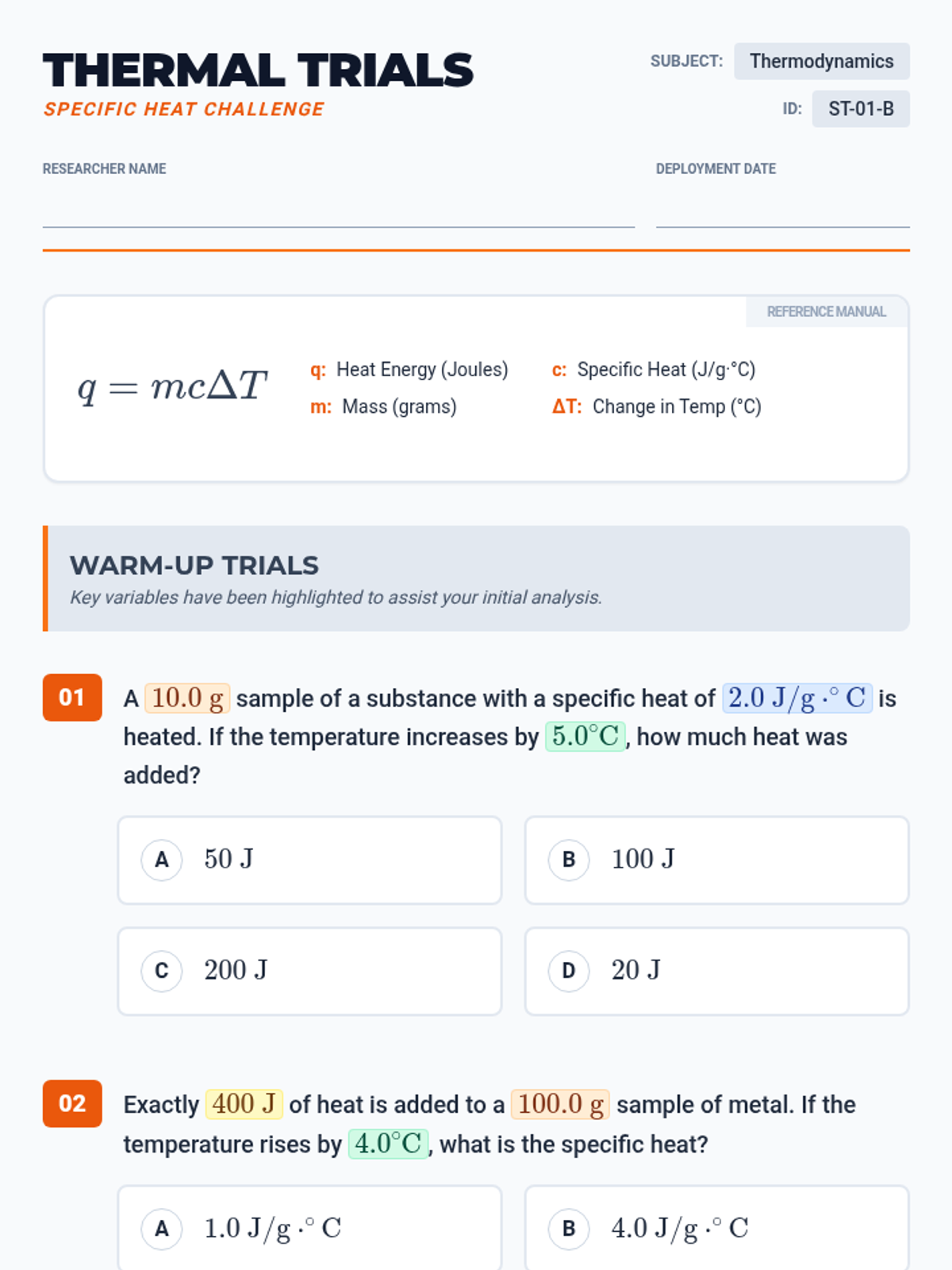
An updated answer key reflecting the new problem order, with the easiest problems solved first followed by more advanced analysis solutions.
An updated worksheet where the easier problems (formerly 3 and 4) are now presented first as "Warm-up Trials," with the harder problems moved to the second page.
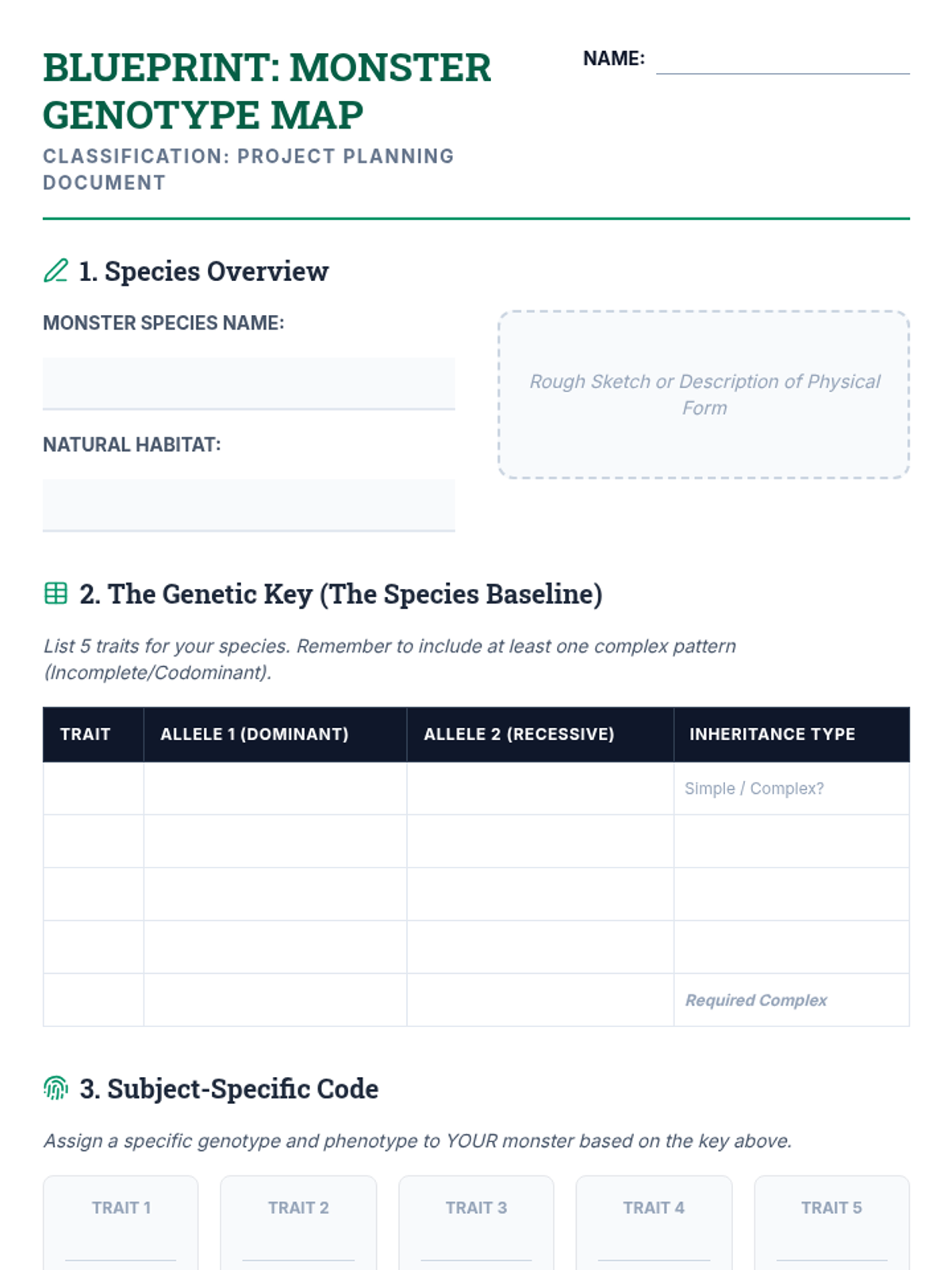
A graphic organizer for students to map out their monster's genotypes and phenotypes, plan their project traits, and run a genetic cross simulation.
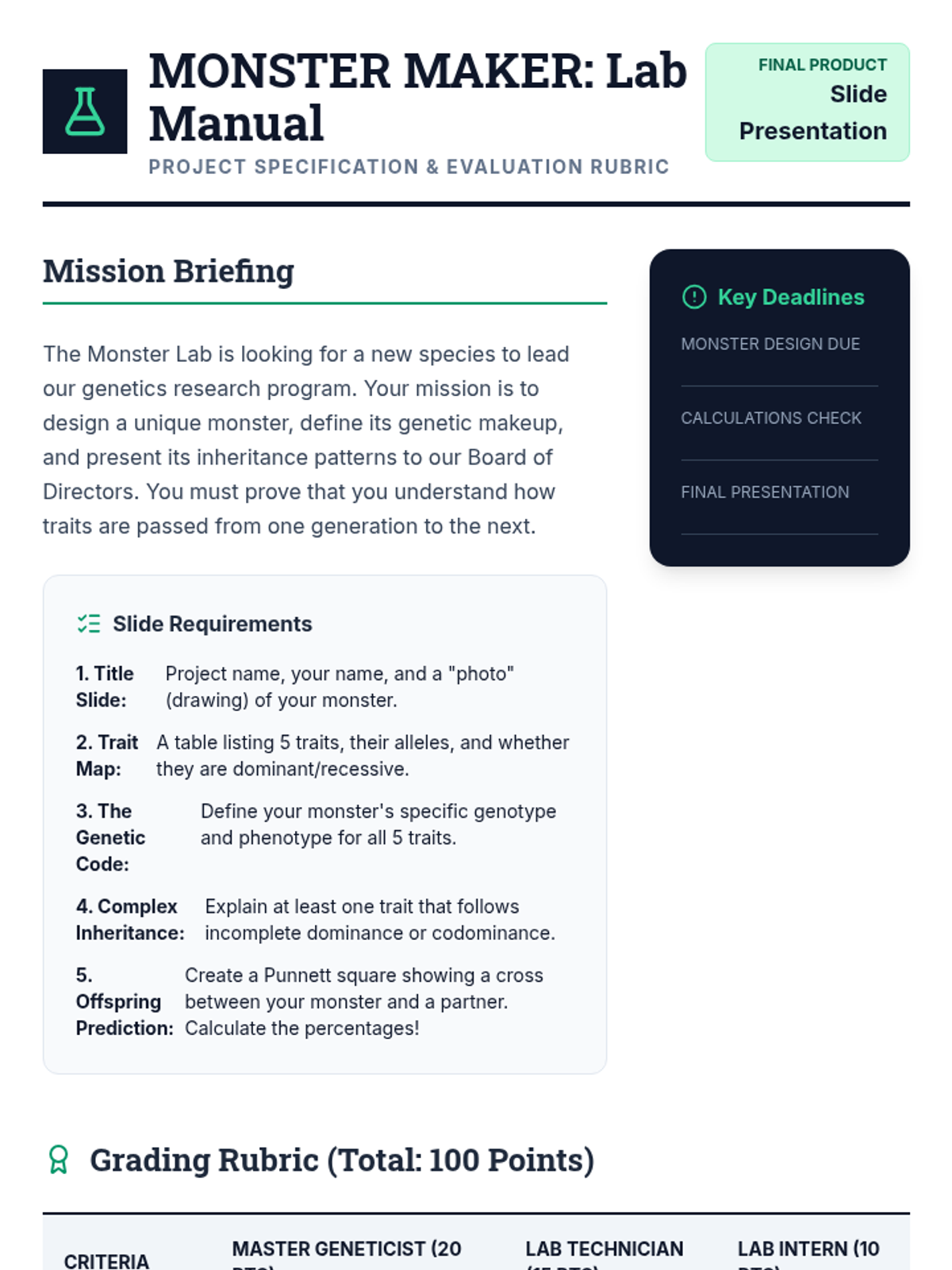
A comprehensive project guide and rubric for the Monster Maker final project, outlining requirements for a slide presentation on monster genetics.
A slide deck for Lesson 3 explaining complex inheritance patterns like incomplete dominance and codominance, designed to help students add unique features to their monster projects.
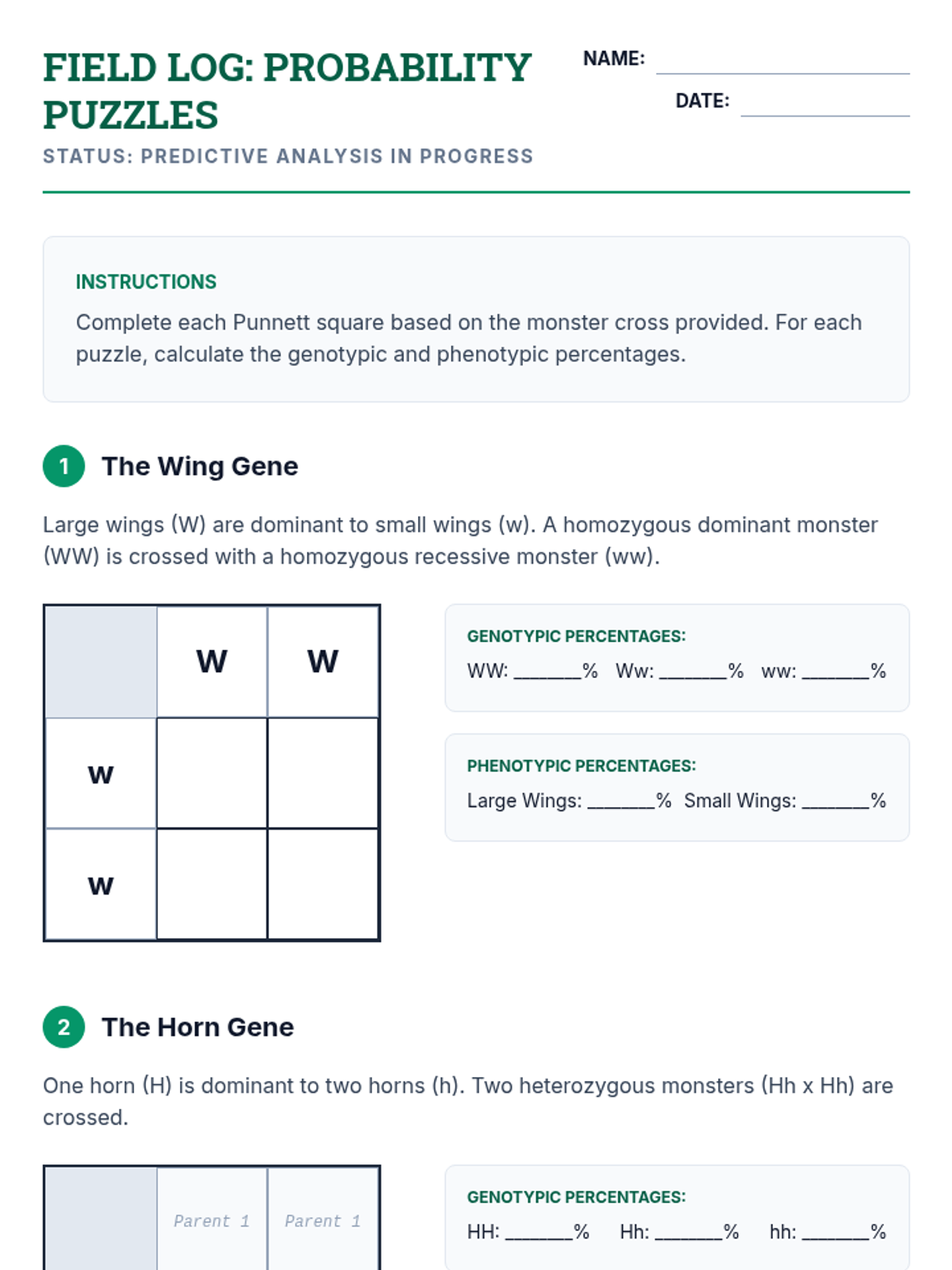
A practice worksheet for Punnett squares where students calculate probabilities for various monster traits, including a challenge problem about determining parent genotypes.
A slide presentation explaining how to use Punnett squares to predict genetic probabilities, including a step-by-step guide and calculations for the Monster Maker unit.
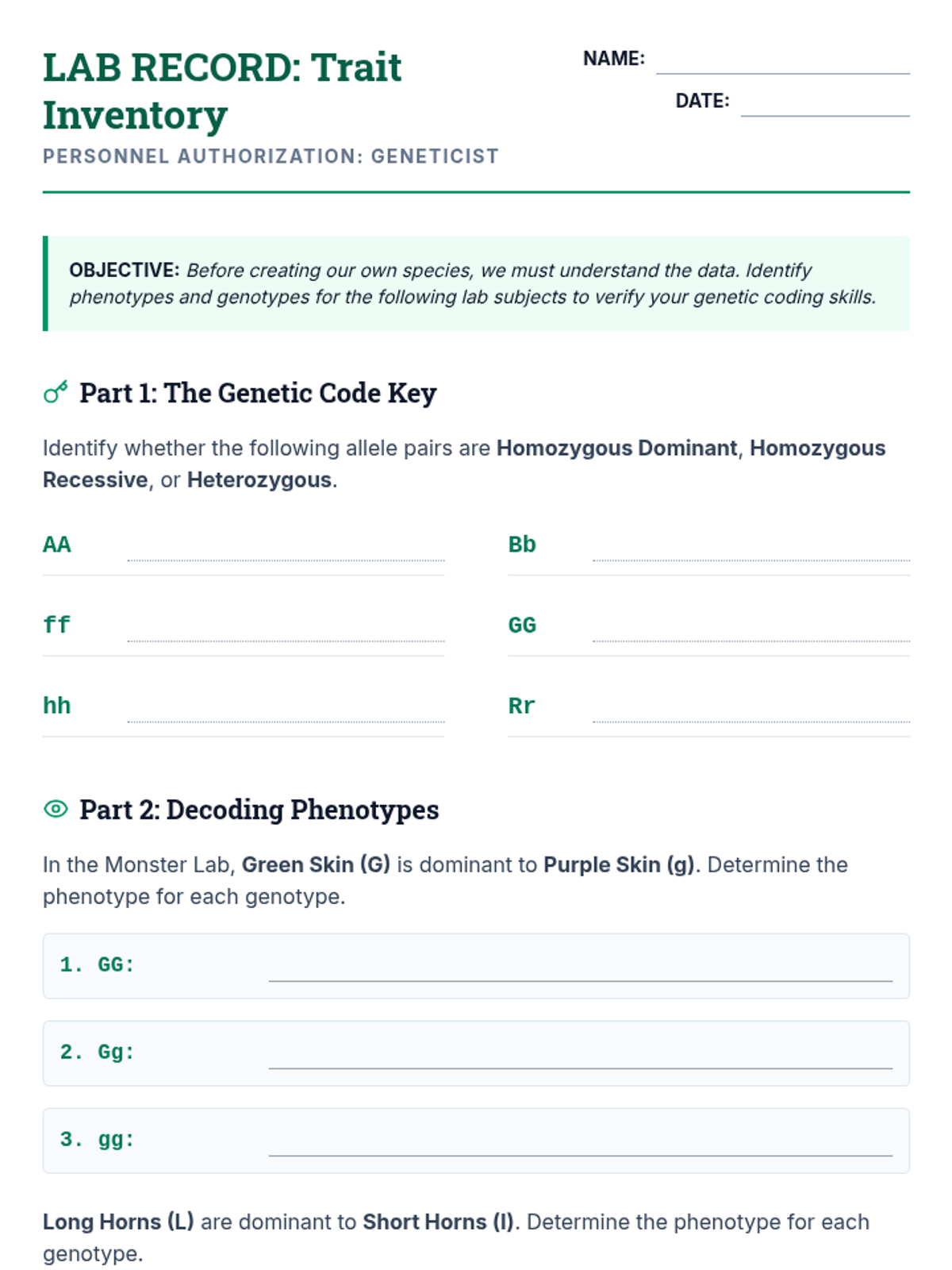
A practice worksheet for Lesson 1 of the Monster Maker unit, requiring students to identify genotypes, phenotypes, and homozygous/heterozygous allele pairs in a lab-themed context.
An introductory slide presentation for the Monster Maker unit, covering fundamental genetics concepts like alleles, genotype, phenotype, and dominance within a lab-themed project context.
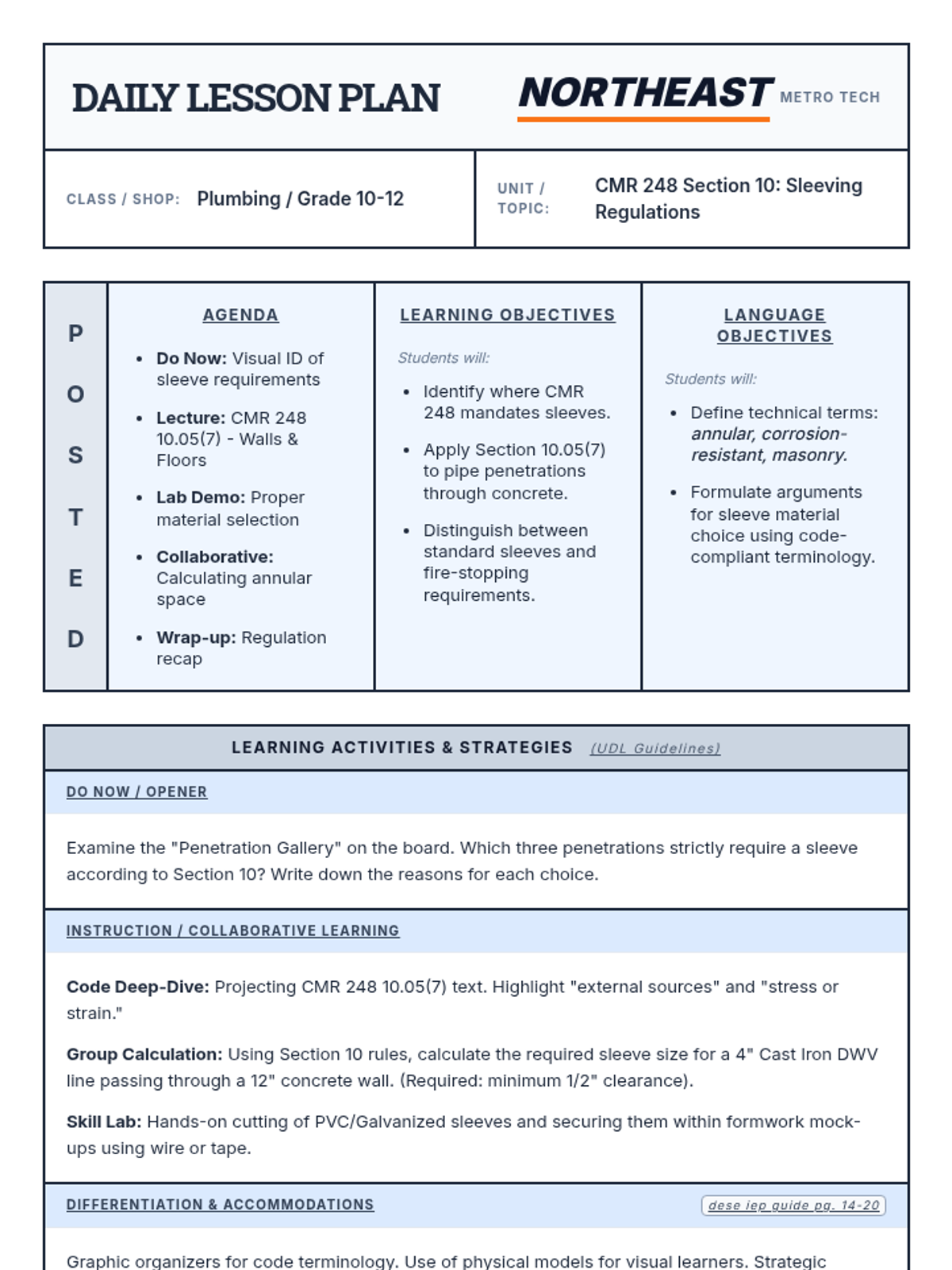
A one-page daily lesson plan agenda based on CMR 248 Section 10, specifically focusing on the regulations for sleeving plumbing pipes. Features a cleaned-up header with name and date removed.
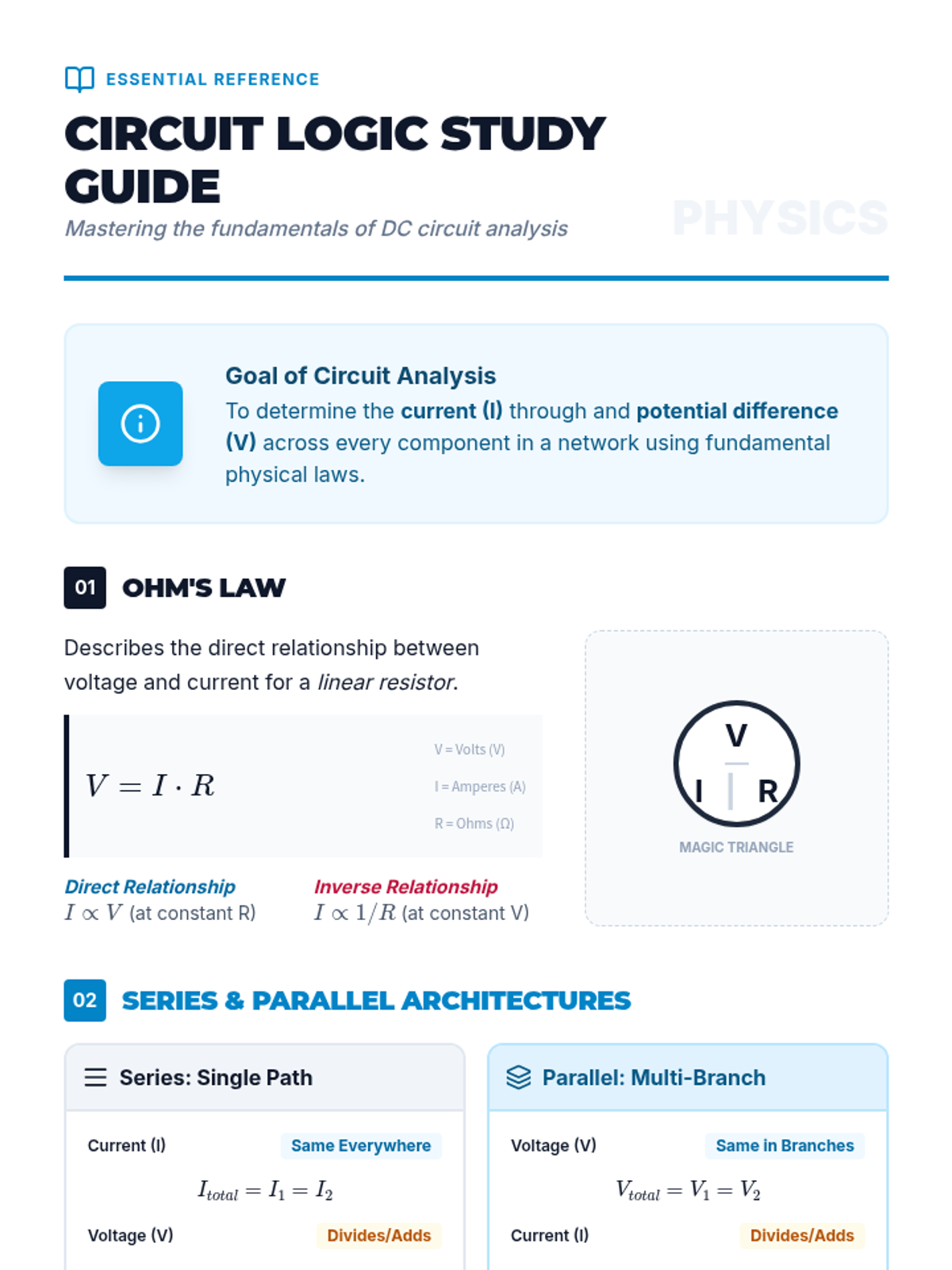
An updated 2-page study guide that now includes a dedicated "Series & Parallel Architectures" section. This section compares current, voltage, and resistance calculation rules for both circuit types, alongside existing sections on Ohm's Law, Kirchhoff's Rules, Superposition, and Electric Potential.
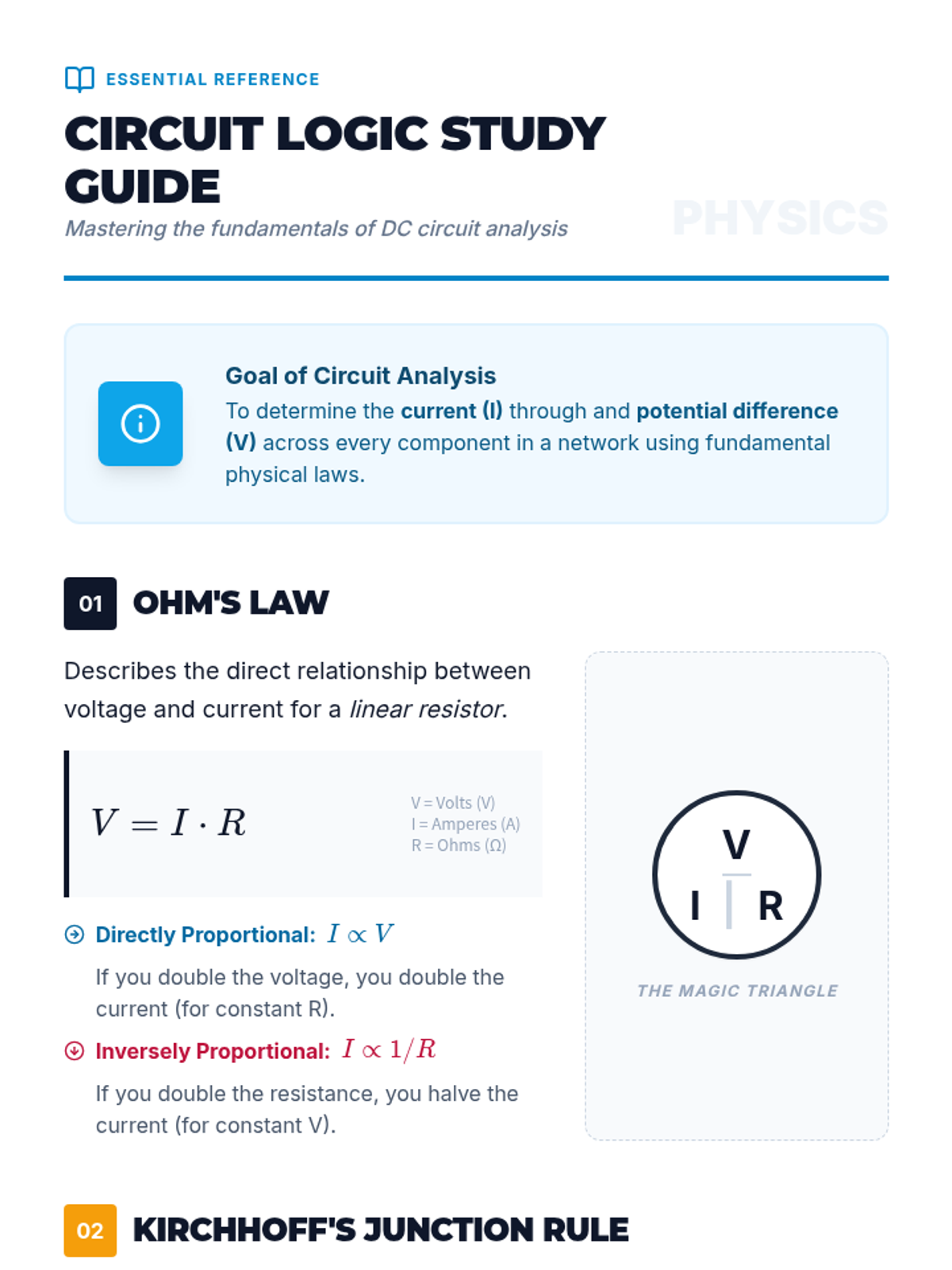
A comprehensive 2-page student study guide summarizing Ohm's Law, Kirchhoff's Junction and Loop Rules, the Principle of Superposition, and Electric Potential. Features visual analogies, simplified formulas, and step-by-step analysis procedures.
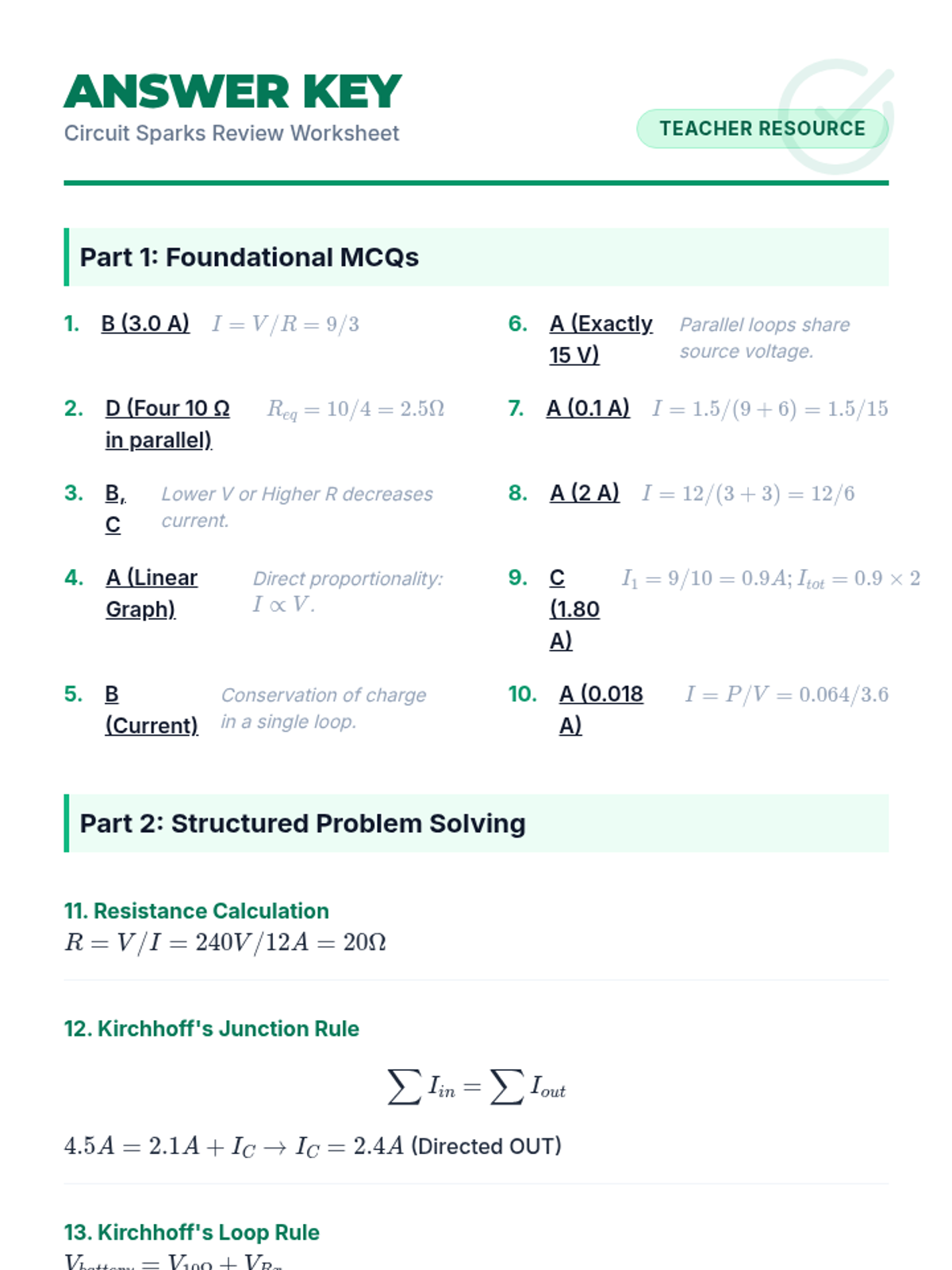
A comprehensive answer key for the Circuit Logic Review Worksheet, providing final answers, formula derivations, and brief explanations for both multiple-choice and structured questions.
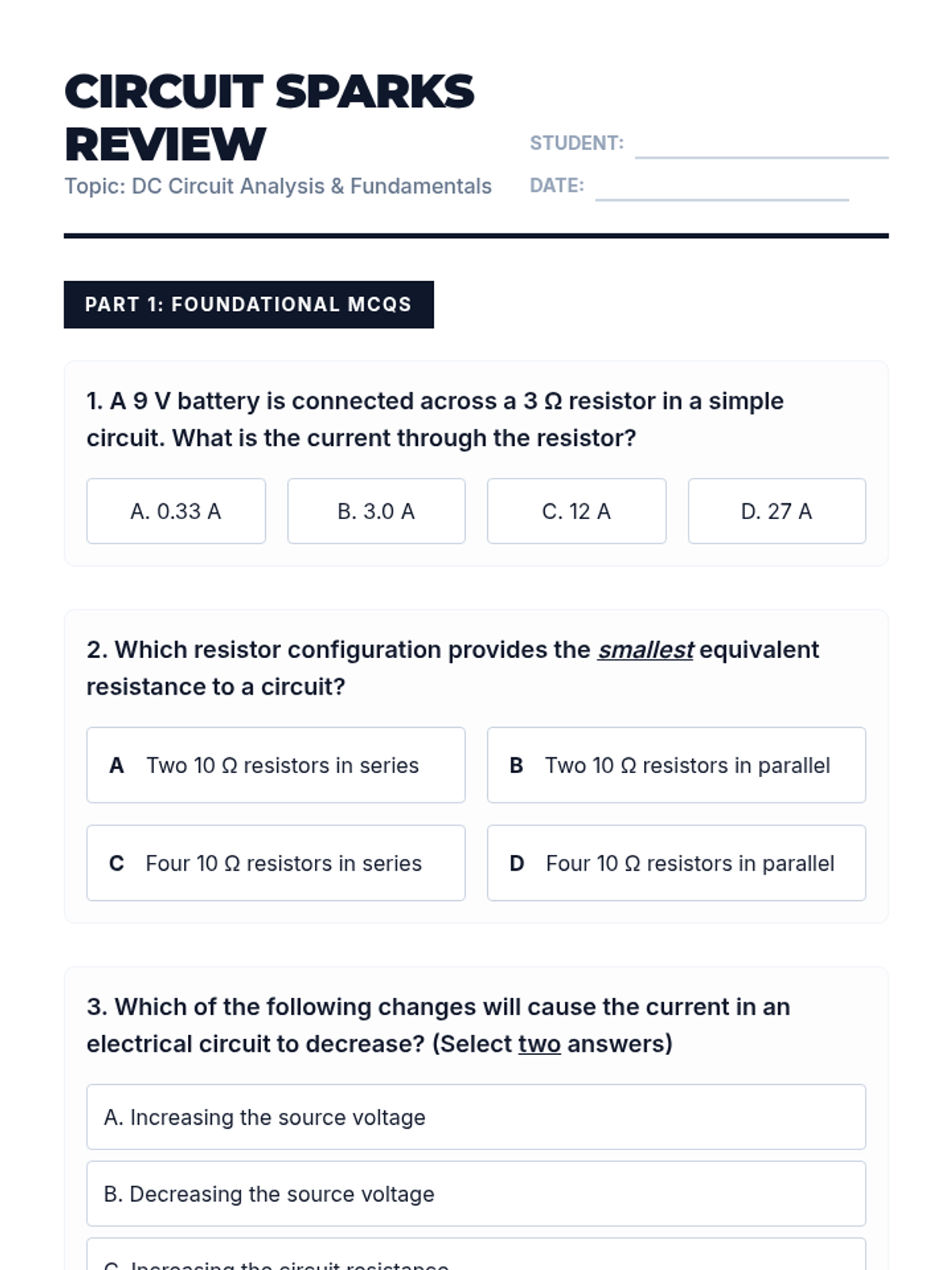
A 20-question review worksheet featuring 10 original multiple-choice questions and 10 new structured problems focusing on Ohm's Law, Kirchhoff's Rules, Superposition, and Electric Potential. Includes ample work space for calculations and visual diagrams for circuit analysis.
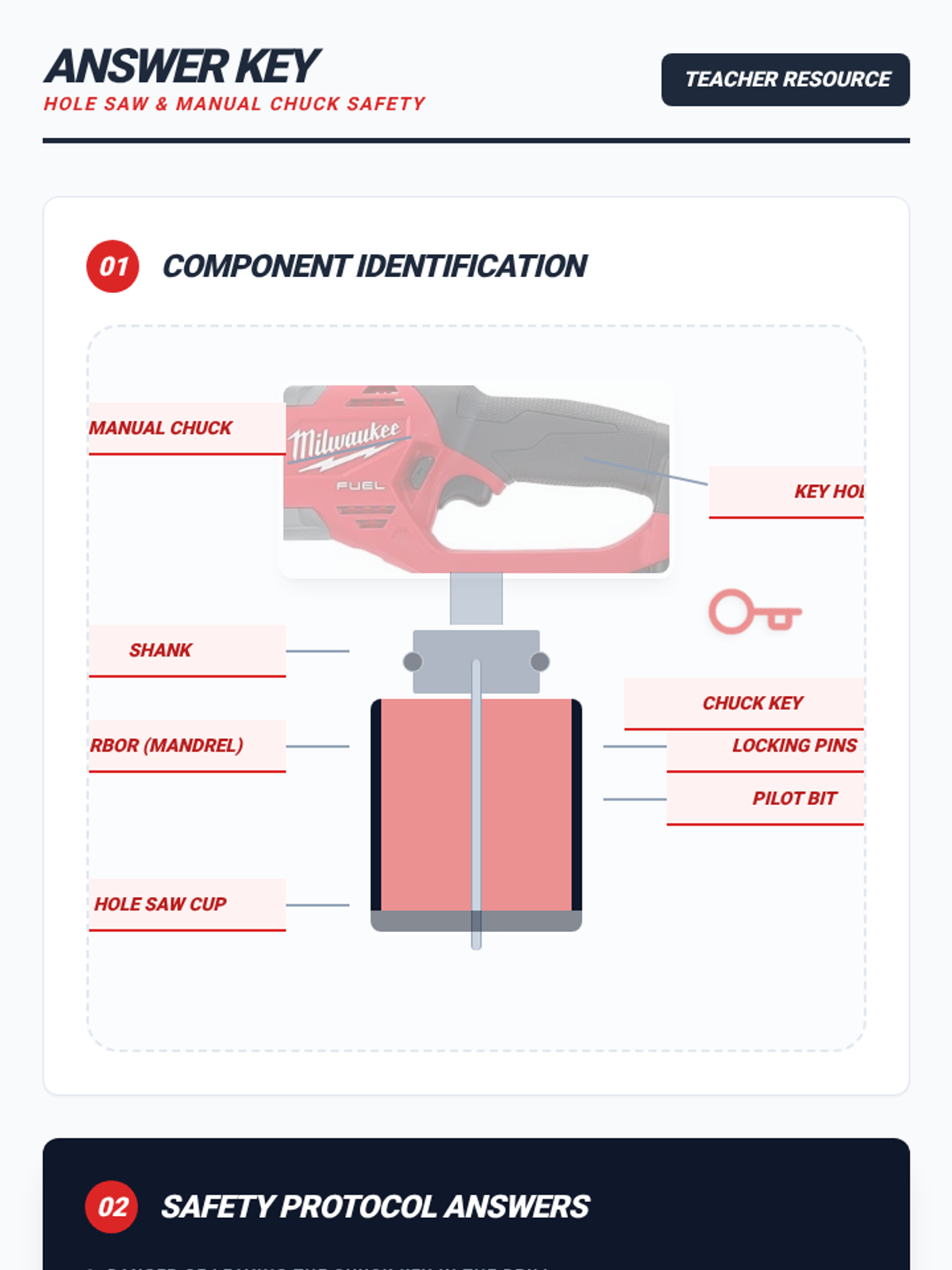
The teacher answer key for the Hole Saw Components Worksheet, featuring correct labeling and detailed safety explanations. Component labels match the worksheet layout to ensure no visual details are obscured.