A visual slide deck teaching the process of photosynthesis, the chemical equation, cellular respiration, and the continuous energy cycle between the two.
A visually engaging slide deck for 6th-8th graders introducing vocabulary like momentum and cushioning, and explaining Newton's First Law and the life of Sir Isaac Newton.
A comprehensive answer key for the Motion Master Quiz, providing correct vocabulary matches and formal scientific explanations for Newton's First Law.
A vocabulary and conceptual quiz for 6th-8th grade students covering key motion terms and Newton's First Law. Features a professional lab-manual style layout.
Teacher answer key for the Rock Density Virtual Lab. Provides the expected mass, volume, and density values for Granite and Basalt, along with model answers for the analysis questions regarding crustal composition.
A modified rock density lab worksheet for absent students. It features virtual measurement stations with visual representations of digital scales, graduated cylinders, and the rock samples themselves (Granite and Basalt) to allow students to gather data without physical materials.
A strictly 2-page reading guide optimized for print. Page 1 contains the detailed symbol key. Page 2 features the integrated circuit with a fixed, closed switch and updated text describing a functional closed circuit.
A 2-page student design workshop activity where students create high-impact, particle-level word wall cards for Dalton's Law concepts. Includes a planning 'blueprint' phase and a large-format 'Design Canvas' for the final concept card.
A comprehensive 2-page reading guide. Page 1 features a detailed Master Key with symbols and deep-dive explanations. Page 2 features a large Integrated Circuit schematic with extended reading on current flow and the "Golden Rule" of closed loops.
Guided notes for students to complete while reading the Circuit Symbols Guide. Includes fill-in-the-blank definitions, drawing practice for symbols, and an integrated circuit sketching area. Optimized for 1-page fit.
A teacher guide and answer key for the 'Survival Loop' game, featuring the full card sequence, gameplay tips, and classroom variations.
A complete 'I Have, Who Has' printable card set featuring 14 key evolution and reproduction vocabulary terms with clear definitions and visual icons.
Optimized 1-page introductory reading guide for students that explains schematic diagrams and provides a visual symbol key plus a large labeled integrated circuit example containing all four components. Designed to fit perfectly on a single page.
An answer key for the Solar Kitchen Worksheet, providing correct labels, definitions, comparison table entries, and matching solutions.
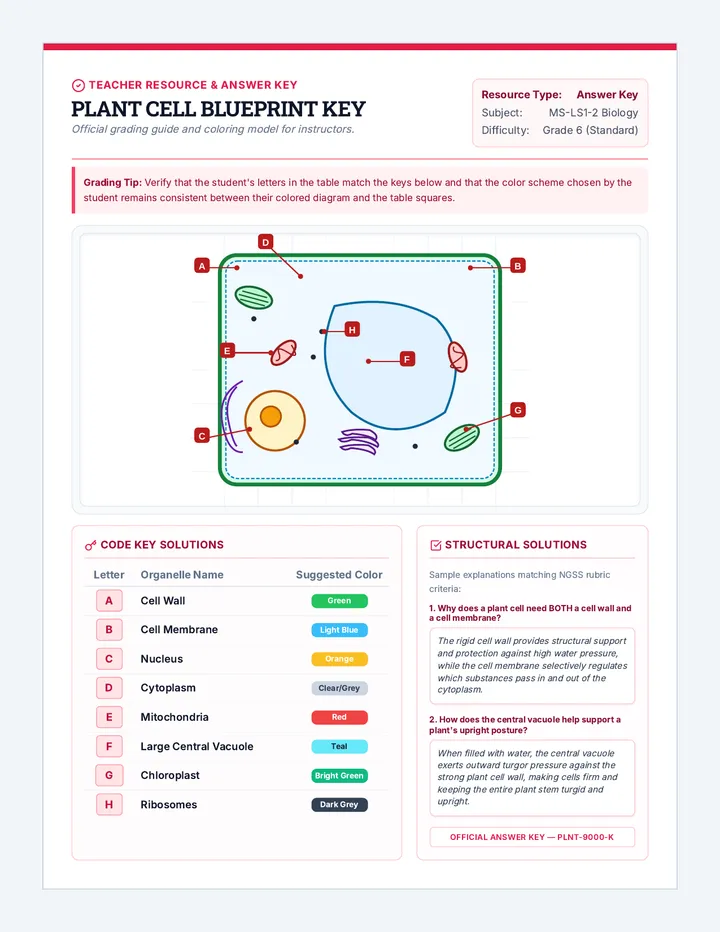
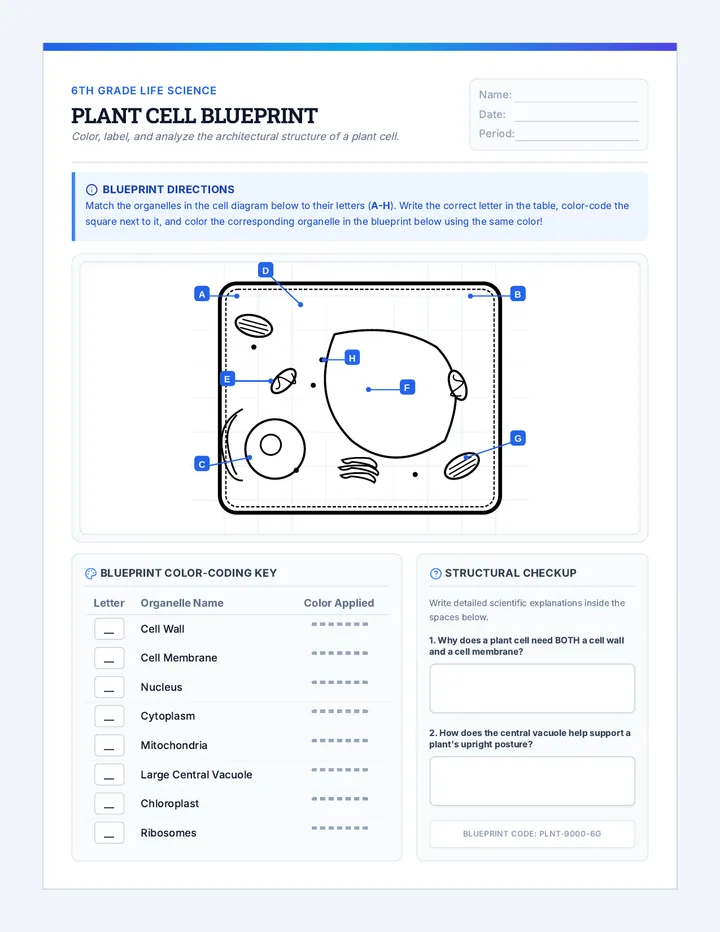
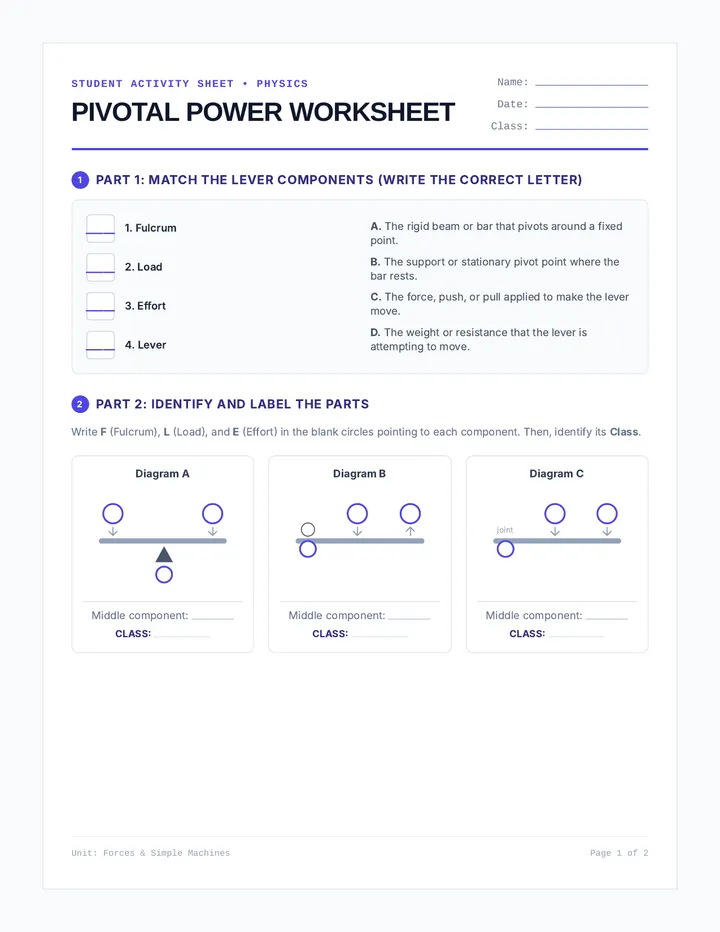
A comprehensive photosynthesis worksheet featuring a plant diagram for labeling, key term definitions, a comparison table with cellular respiration, and a chemical formula matching section.
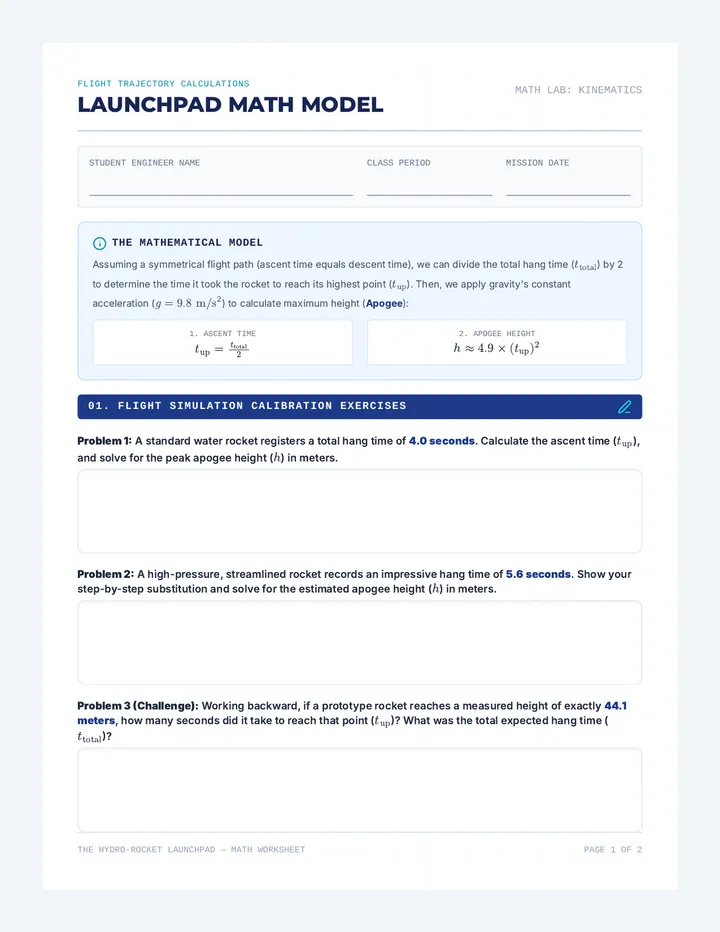
An updated answer key reflecting the new problem order, with the easiest problems solved first followed by more advanced analysis solutions.
An updated worksheet where the easier problems (formerly 3 and 4) are now presented first as "Warm-up Trials," with the harder problems moved to the second page.
A graphic organizer for students to map out their monster's genotypes and phenotypes, plan their project traits, and run a genetic cross simulation.
A comprehensive project guide and rubric for the Monster Maker final project, outlining requirements for a slide presentation on monster genetics.
A slide deck for Lesson 3 explaining complex inheritance patterns like incomplete dominance and codominance, designed to help students add unique features to their monster projects.
A practice worksheet for Punnett squares where students calculate probabilities for various monster traits, including a challenge problem about determining parent genotypes.
A slide presentation explaining how to use Punnett squares to predict genetic probabilities, including a step-by-step guide and calculations for the Monster Maker unit.
A practice worksheet for Lesson 1 of the Monster Maker unit, requiring students to identify genotypes, phenotypes, and homozygous/heterozygous allele pairs in a lab-themed context.