A reading comprehension lesson focused on identifying plot problems, character encounters, and making predictions within a high-interest zombie apocalypse narrative.
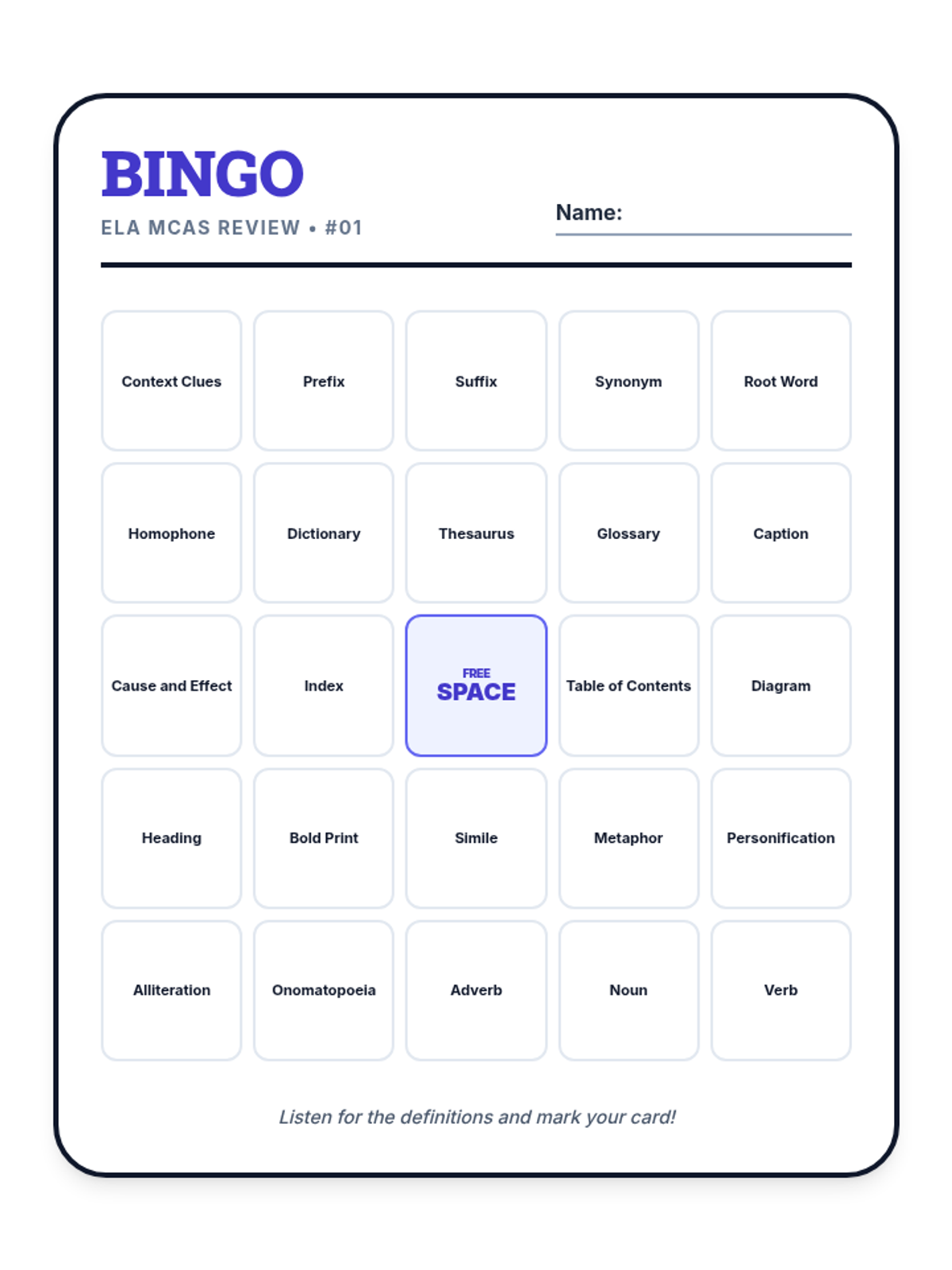
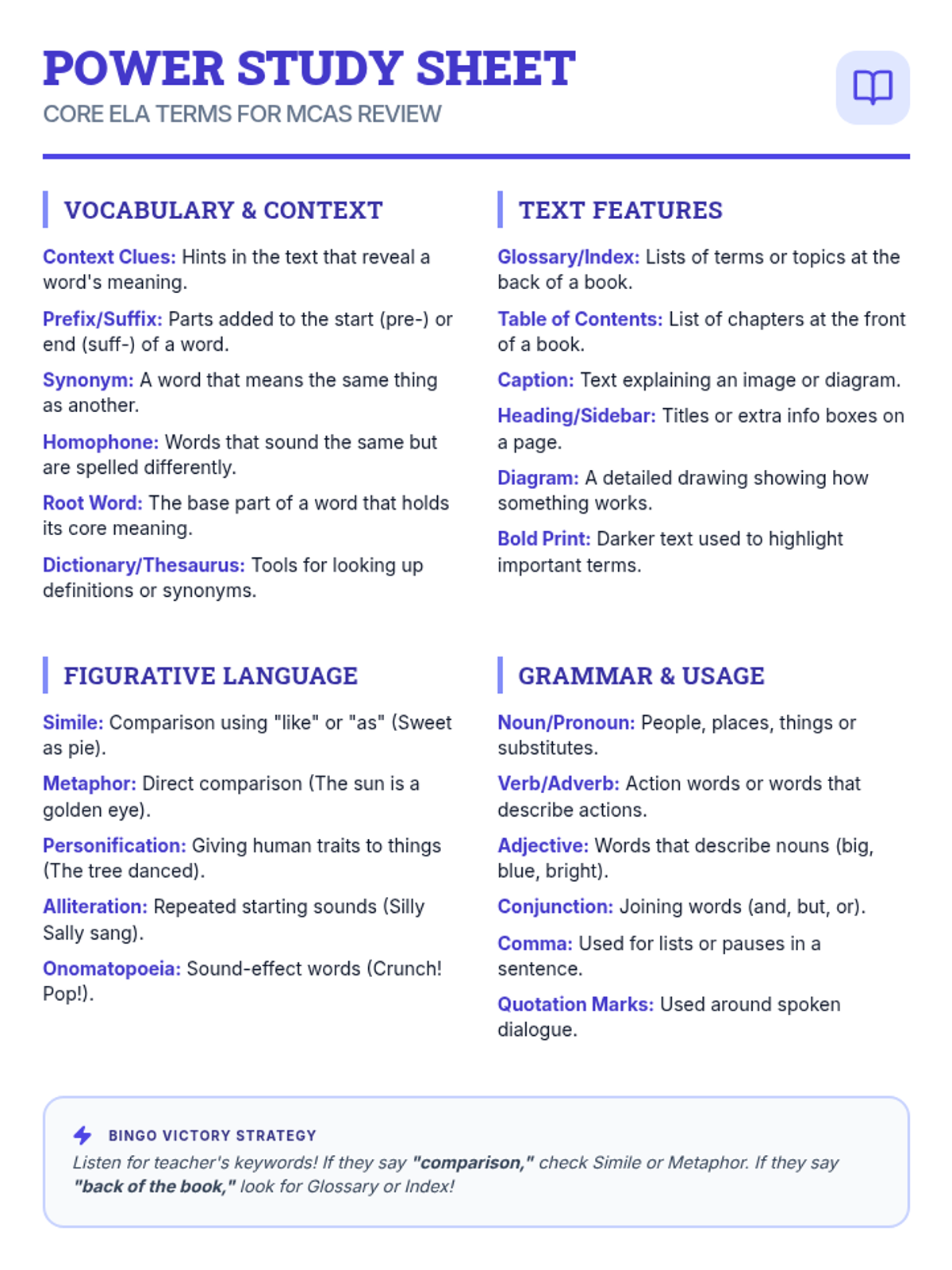
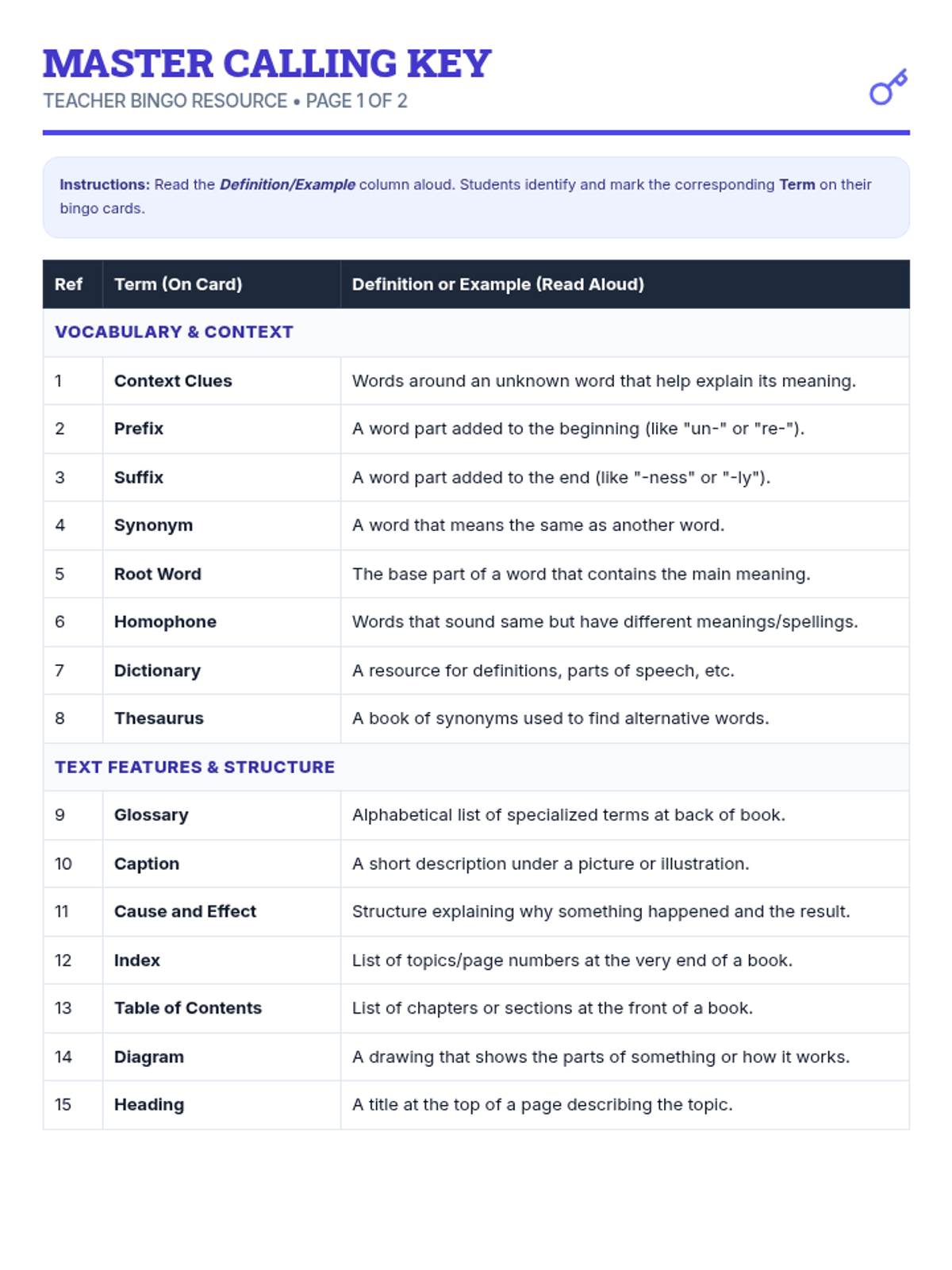
A comprehensive ELA review game designed to help students master MCAS standards through a competitive and engaging bingo format. The lesson covers vocabulary, literary elements, text structures, and grammar.
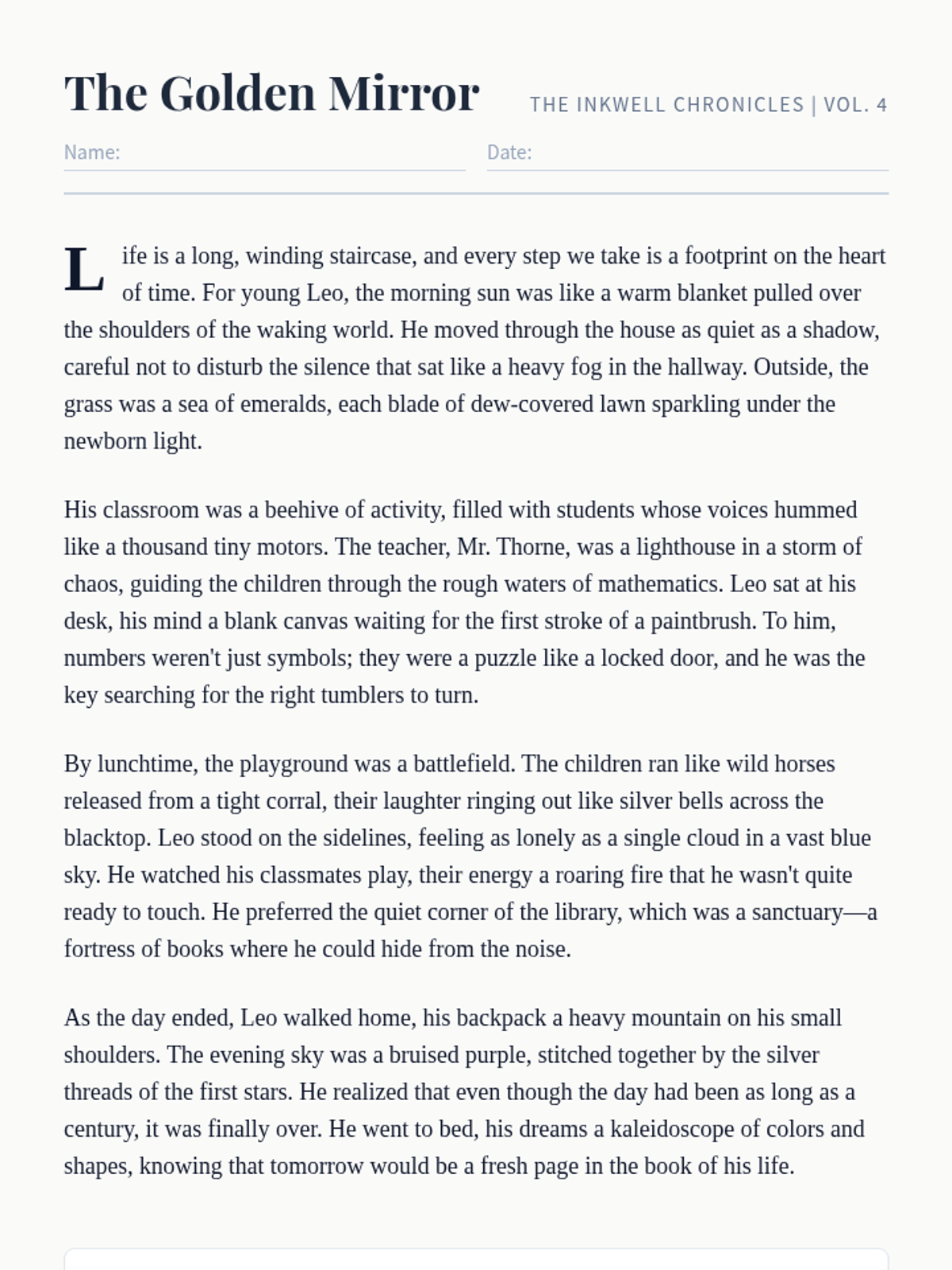
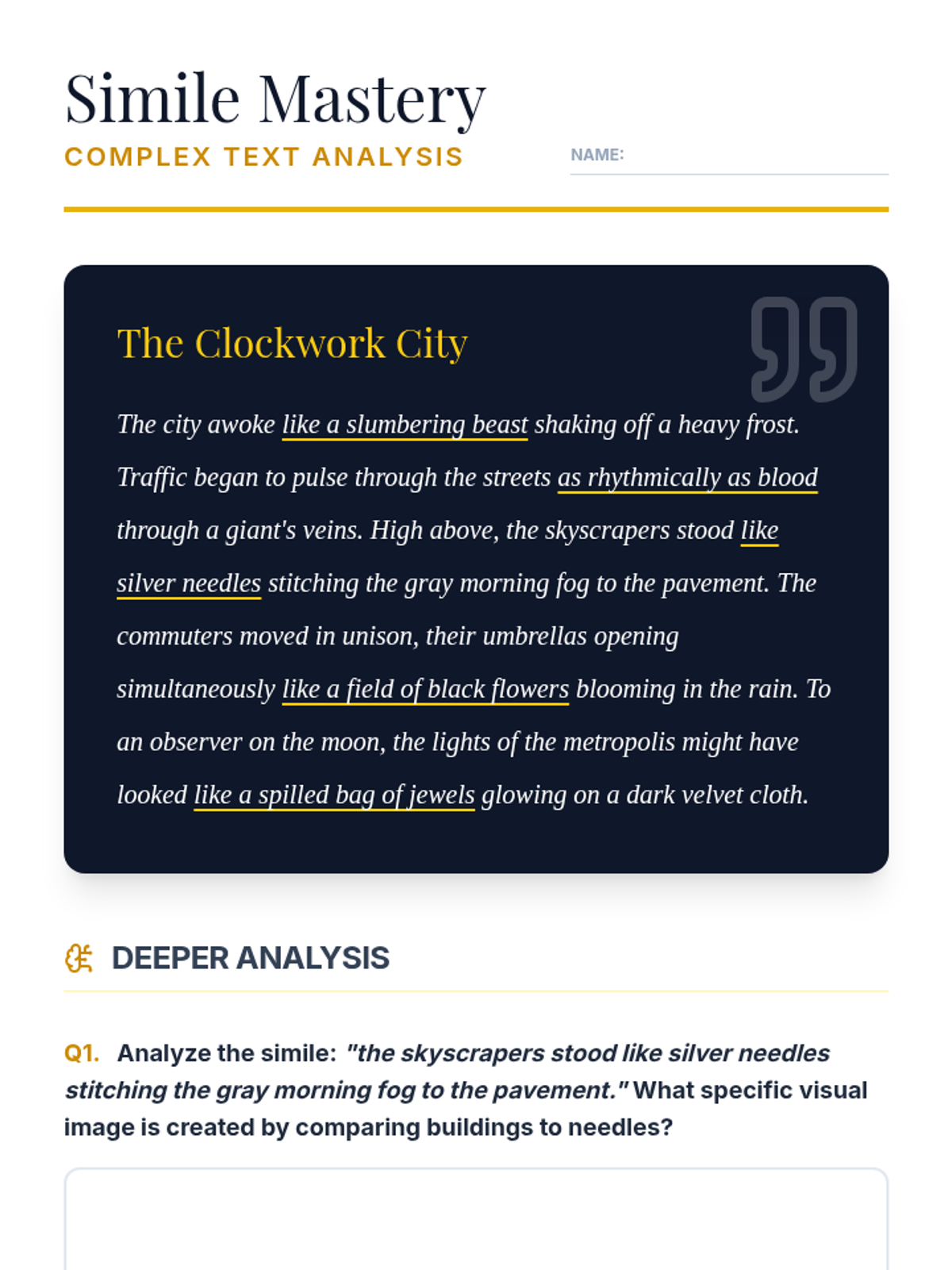
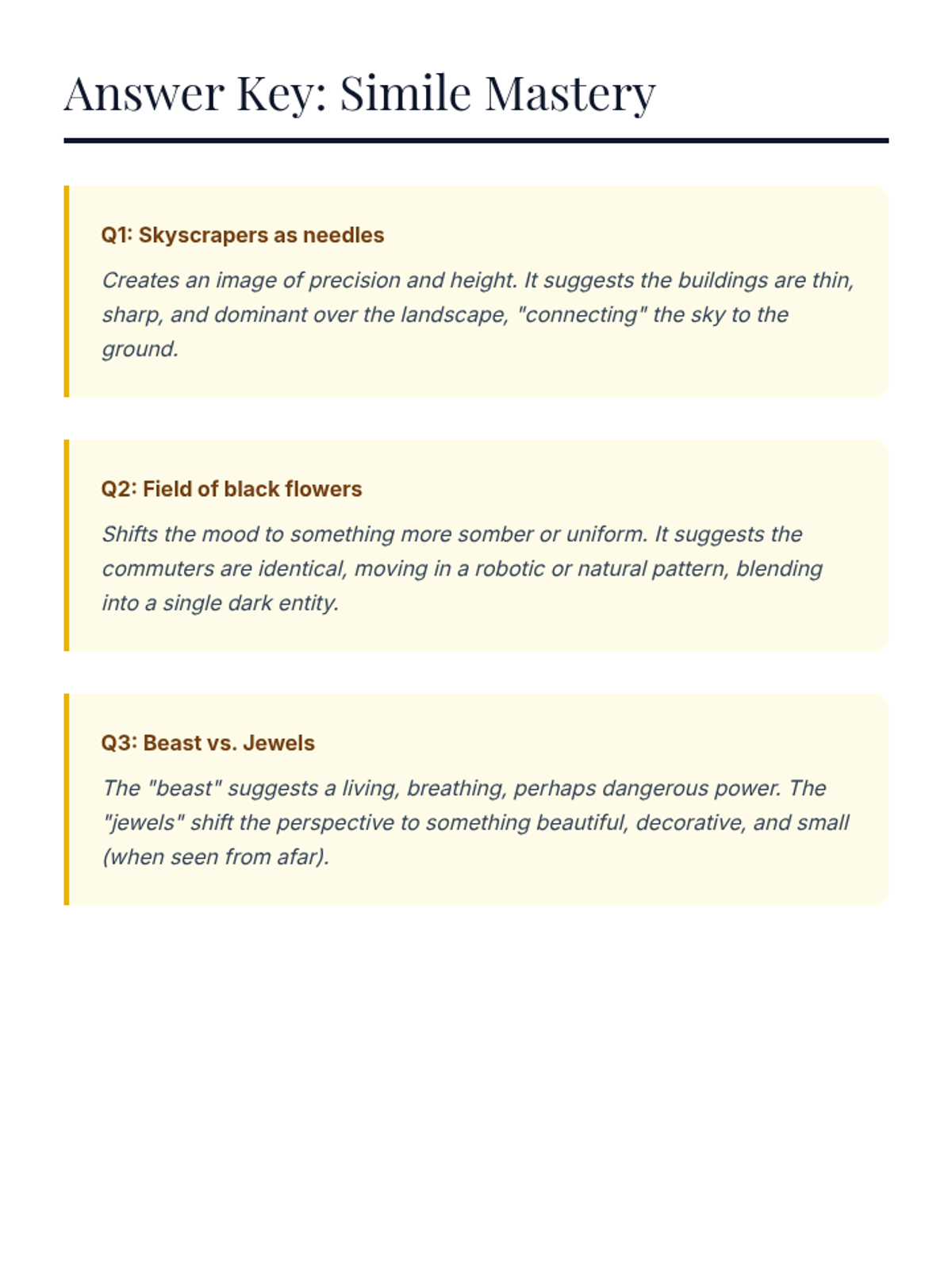
Analyze direct and indirect comparisons to understand how they deepen meaning in creative writing.
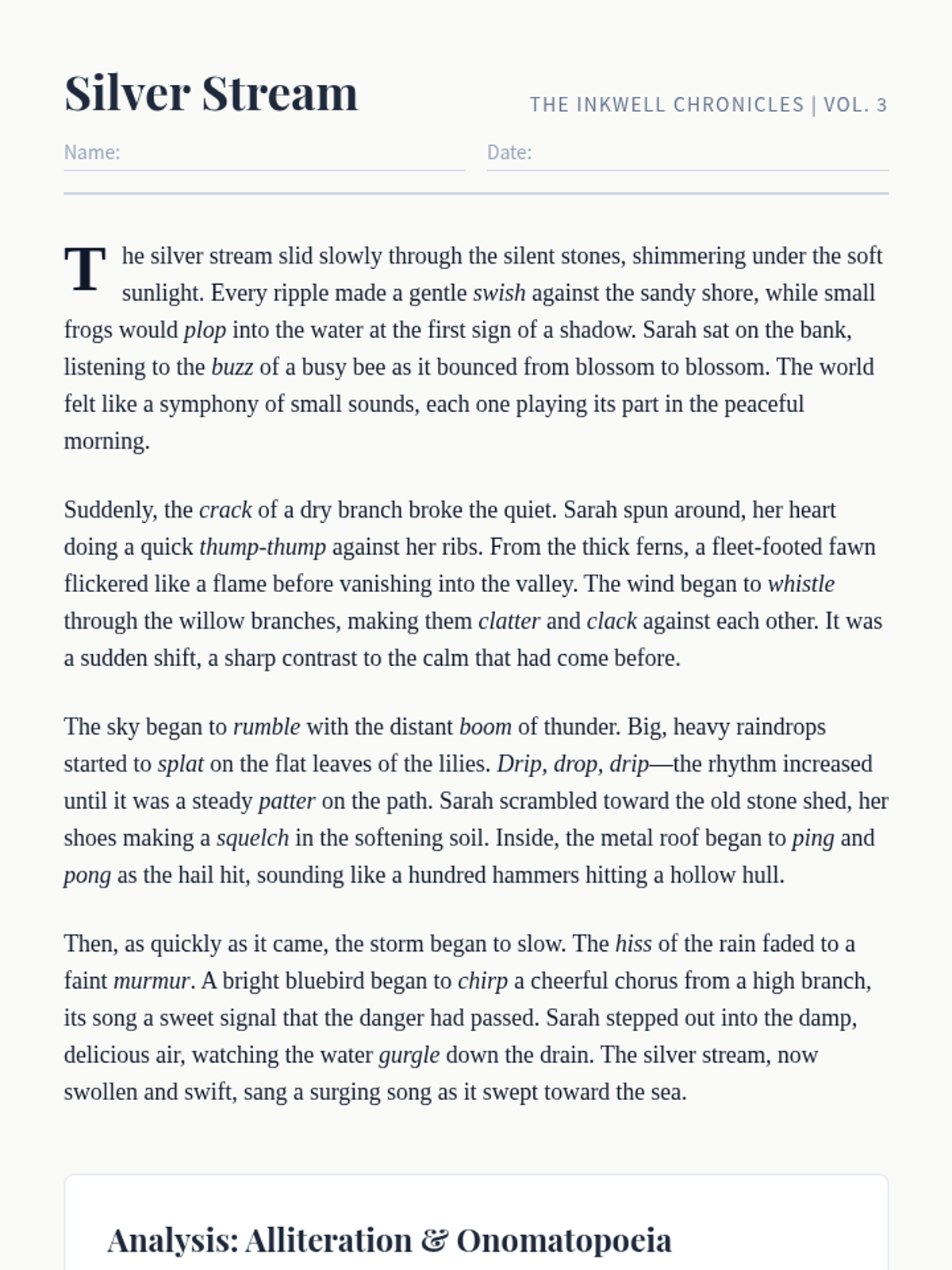
Focus on the sounds of language through alliteration and onomatopoeia in descriptive storytelling.
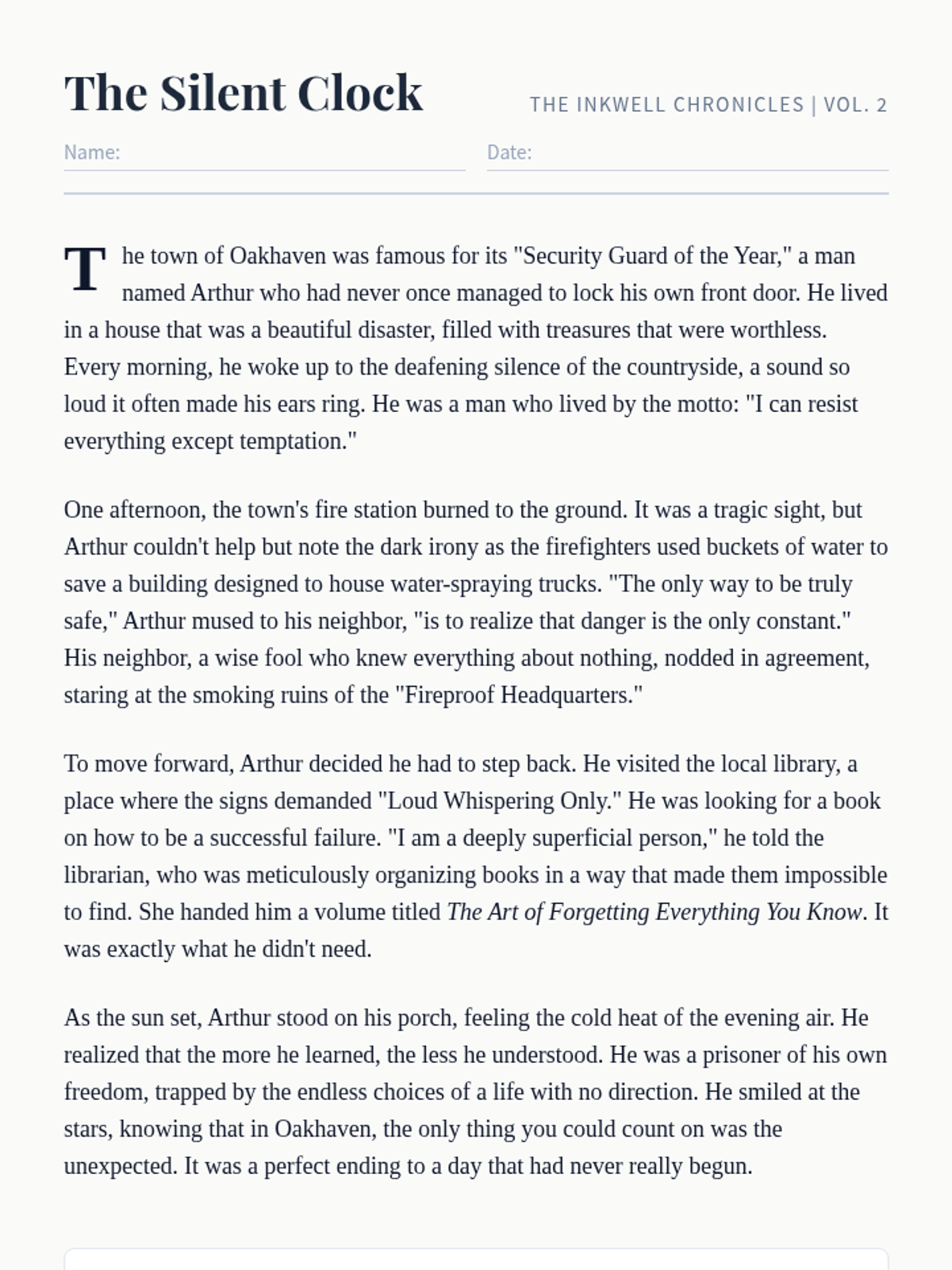
Delve into the world of contradictions and unexpected outcomes with passages featuring irony and paradox.
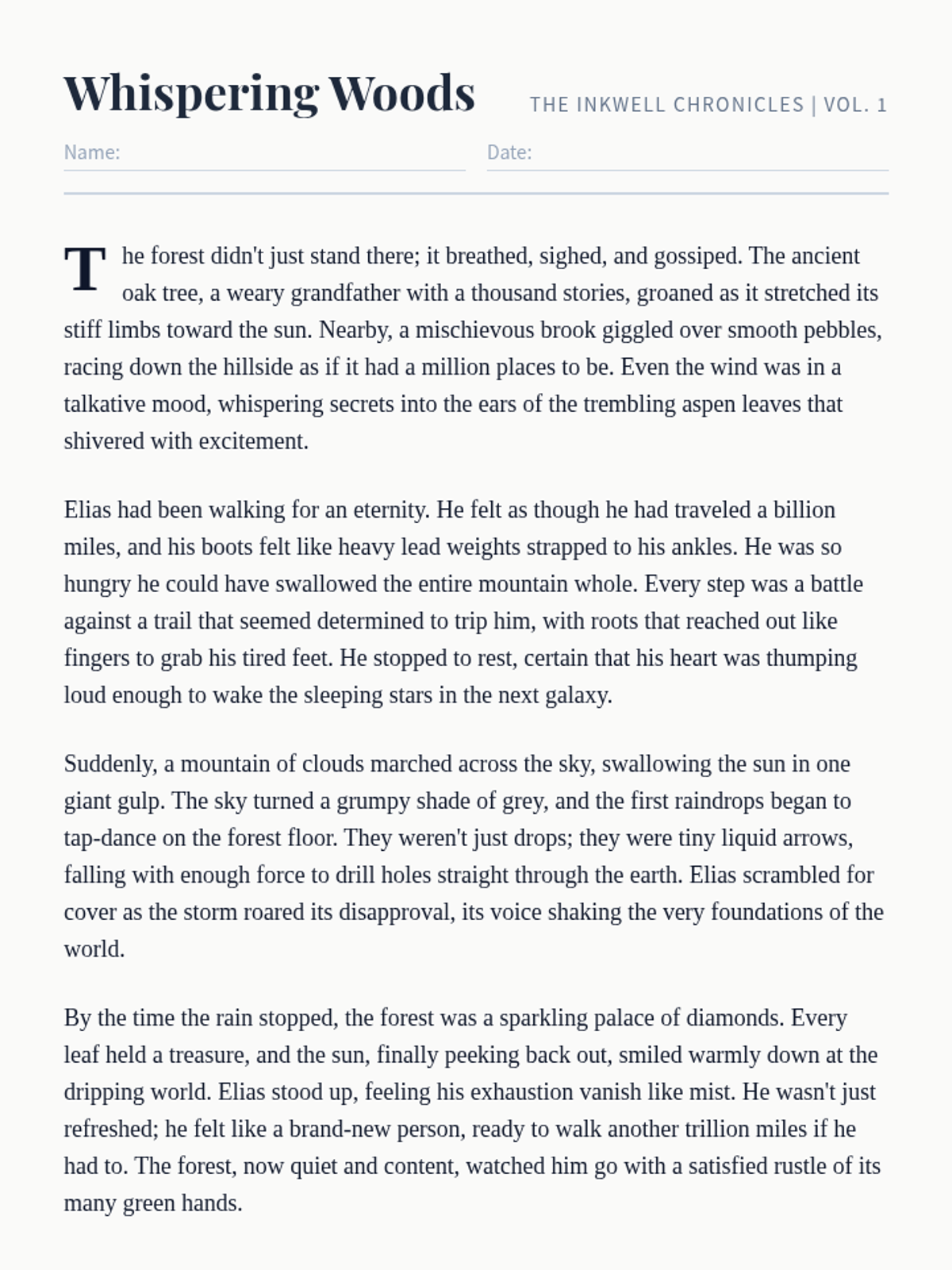
Explore how authors use exaggeration and human traits to bring stories to life through reading and analysis.
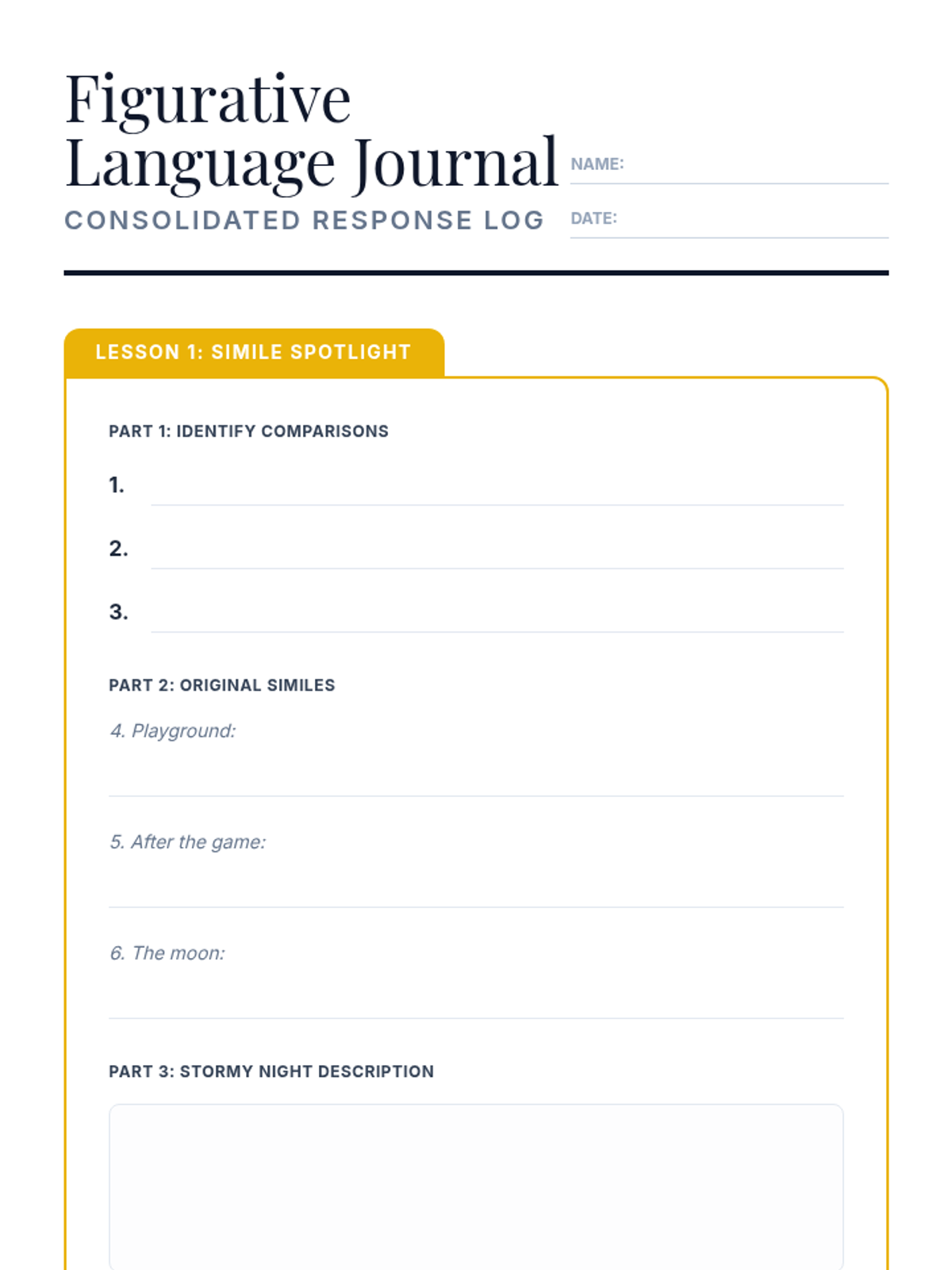
A comprehensive recording sheet for students to document their practice and creative work from all figurative language lessons in one central location.
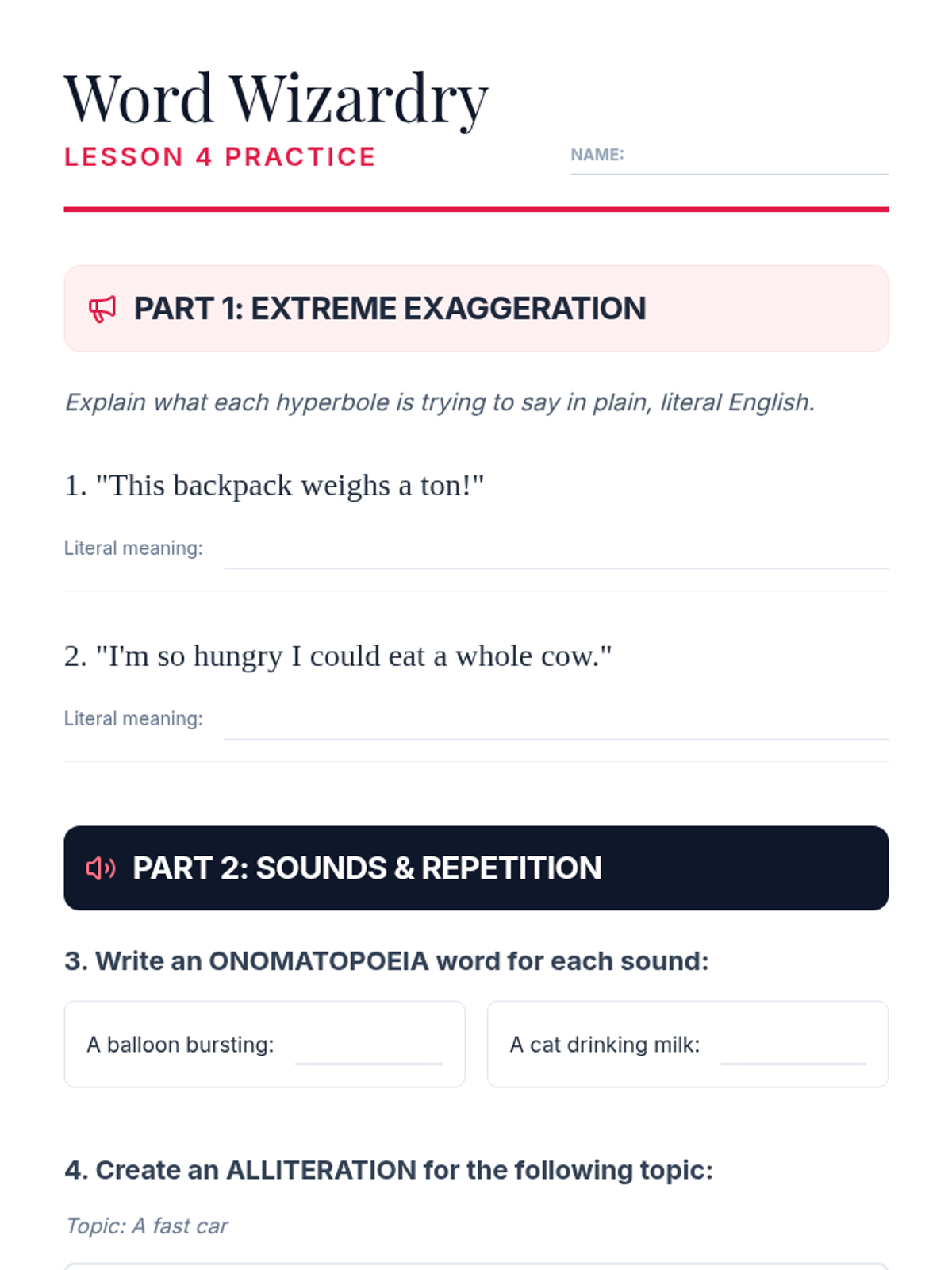
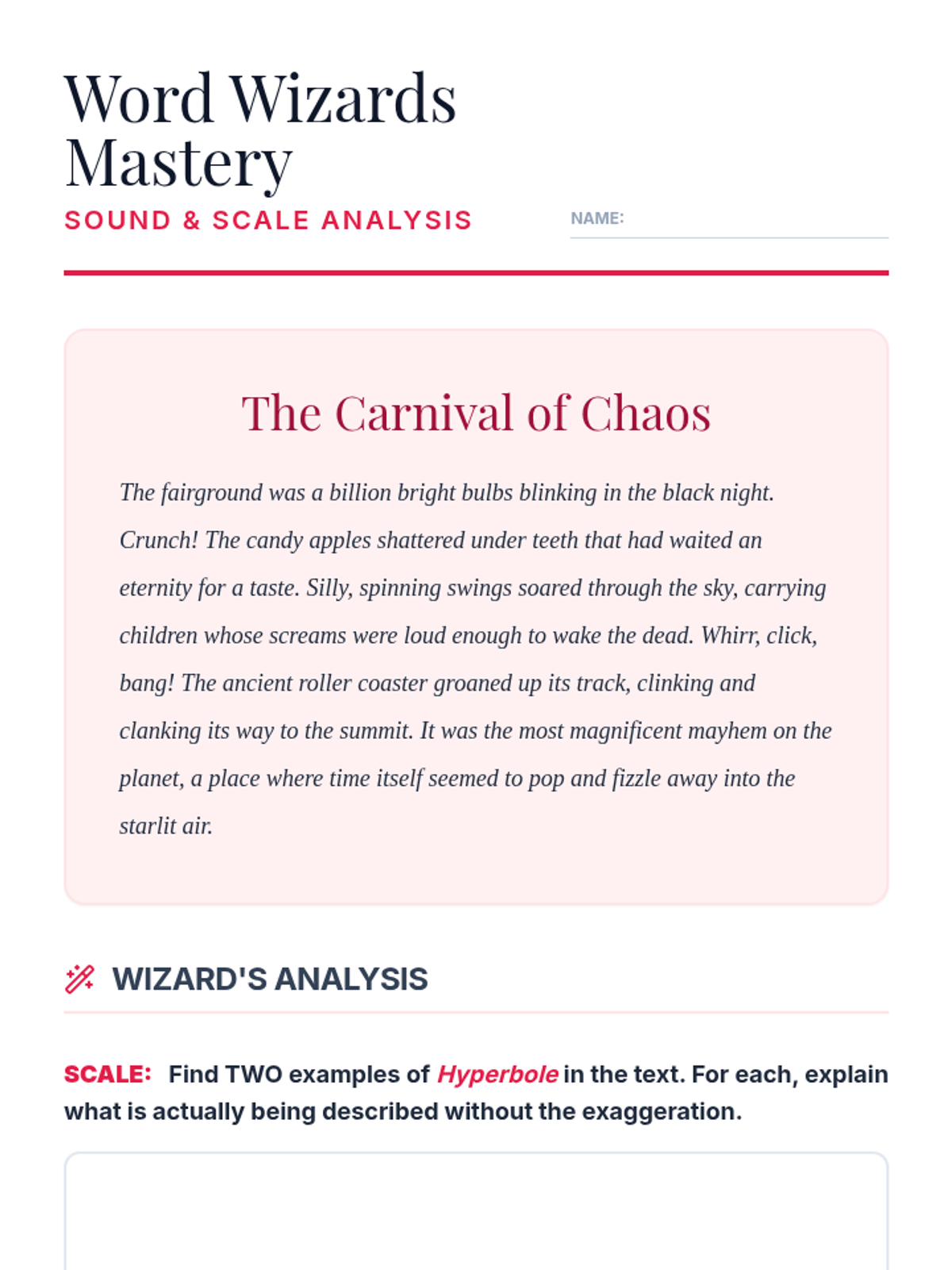
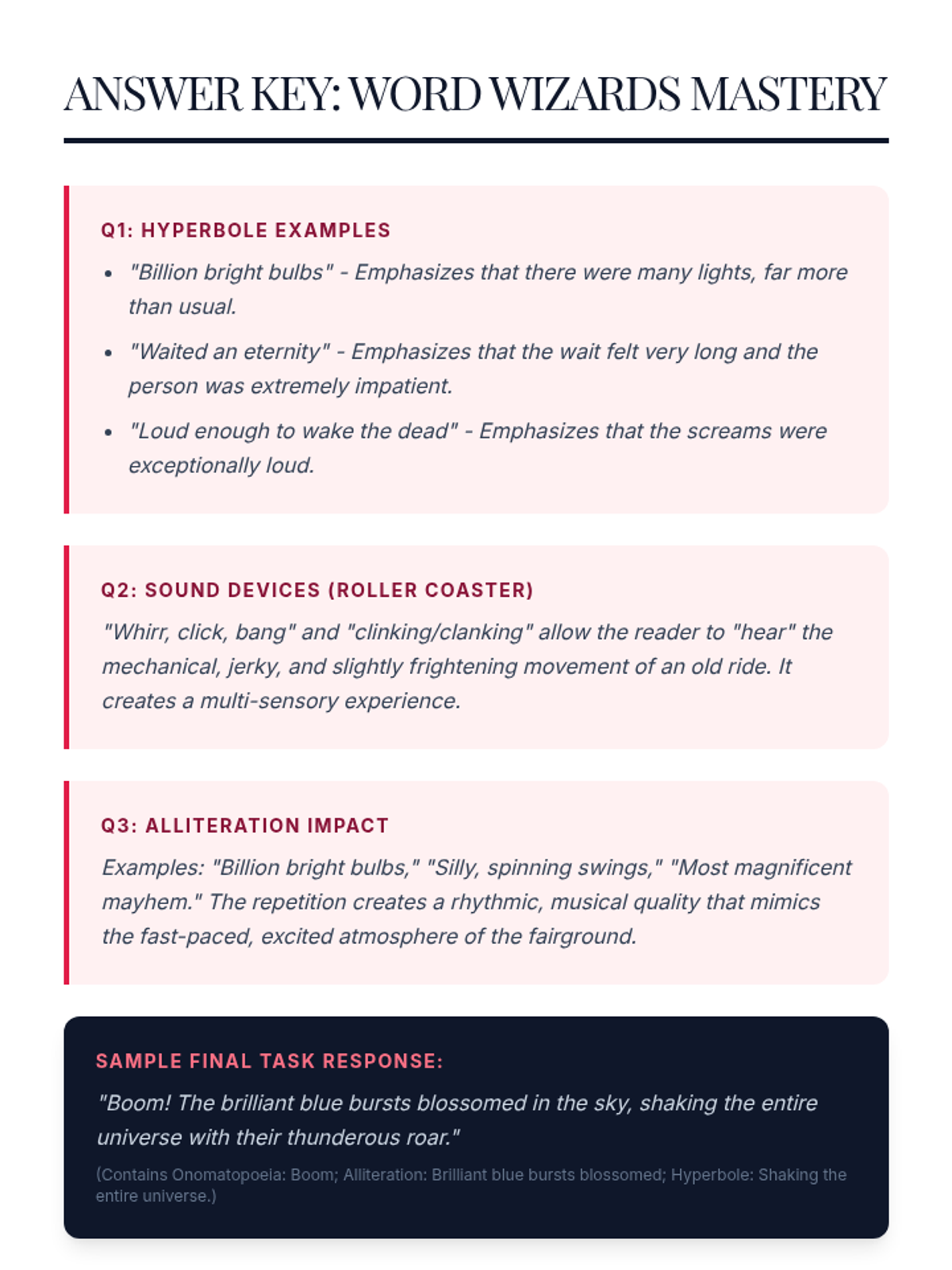
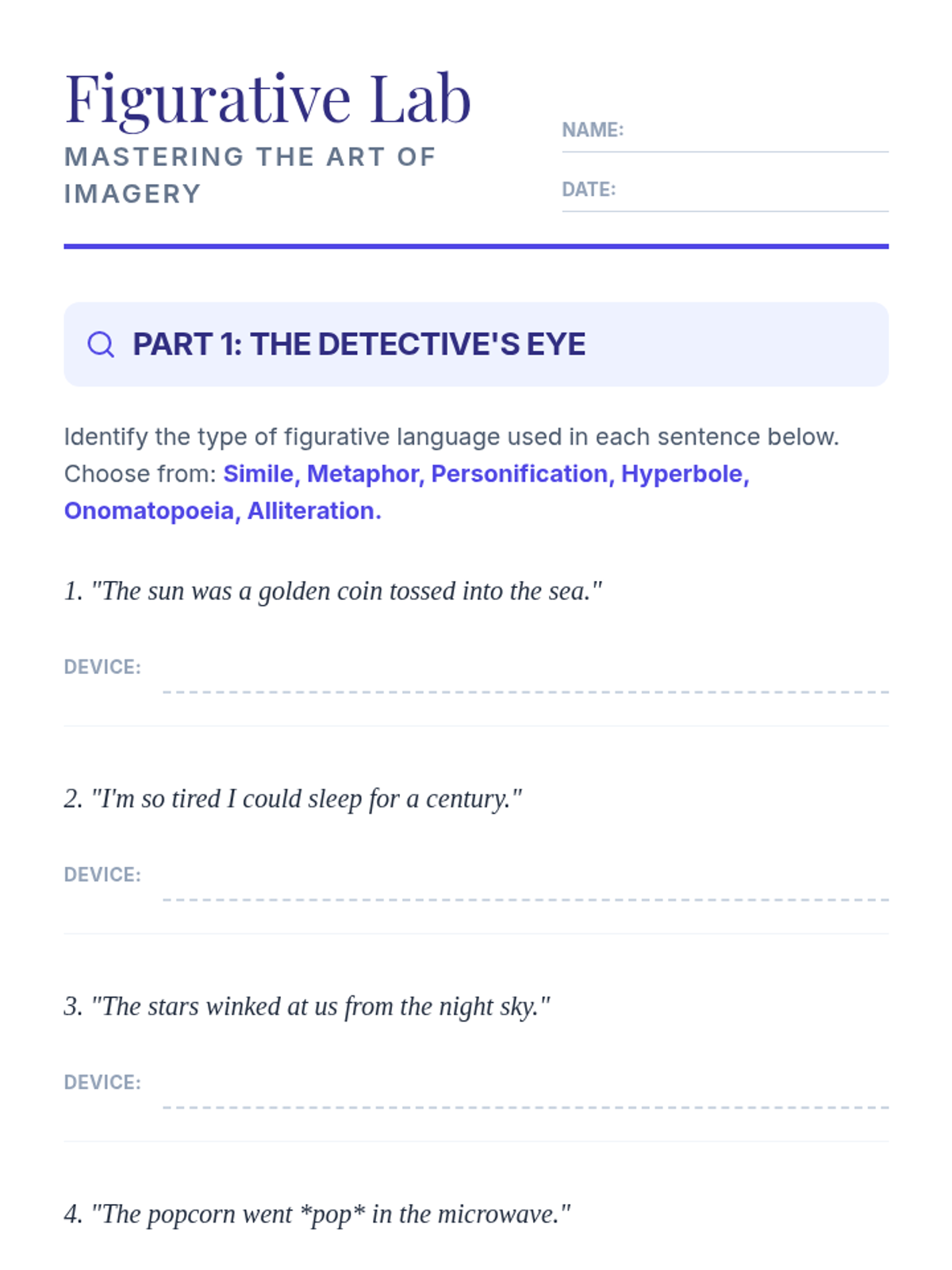
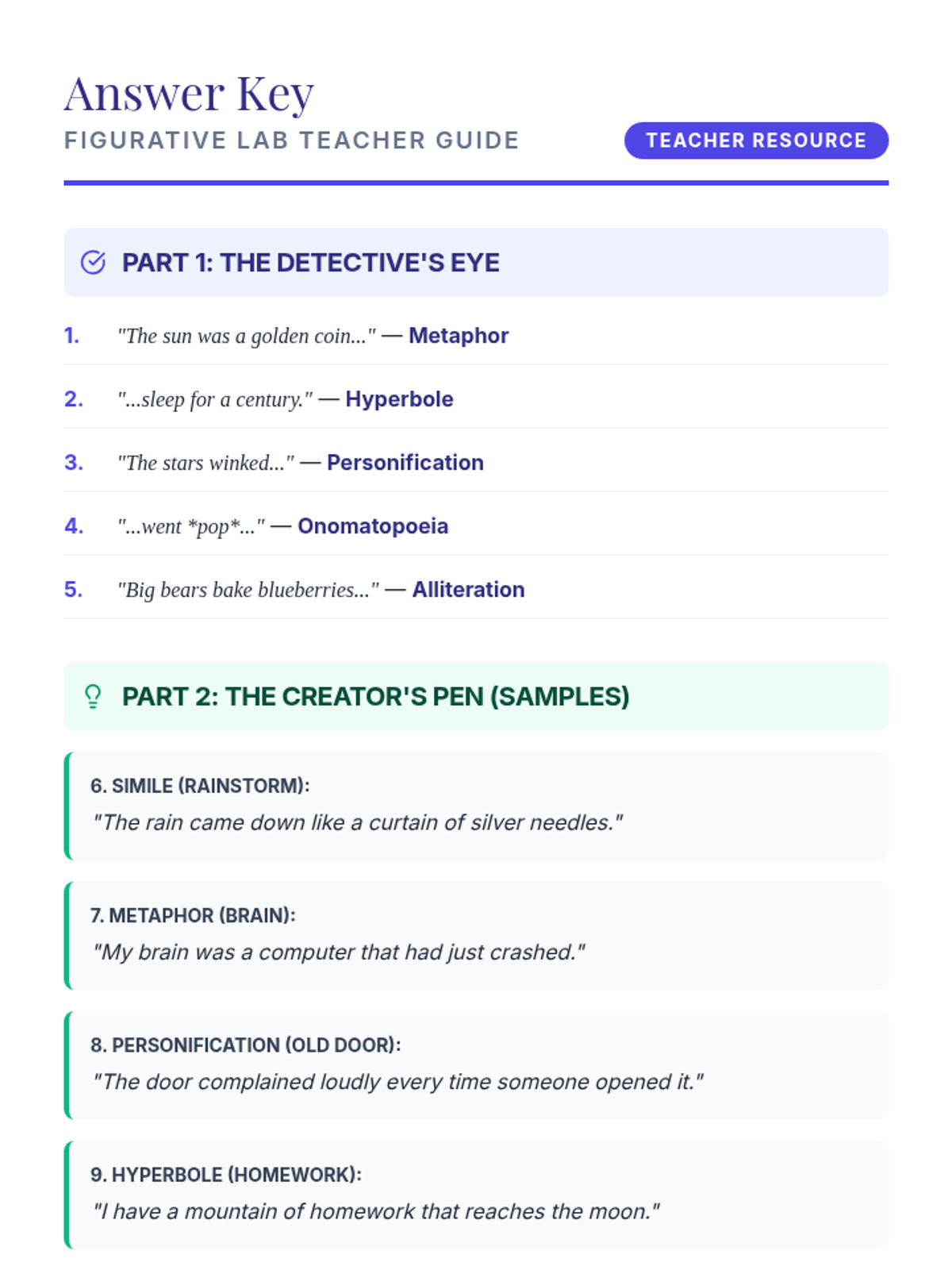
Focusing on hyperbole and sound devices like onomatopoeia and alliteration. Includes introductory slides and a practice worksheet.
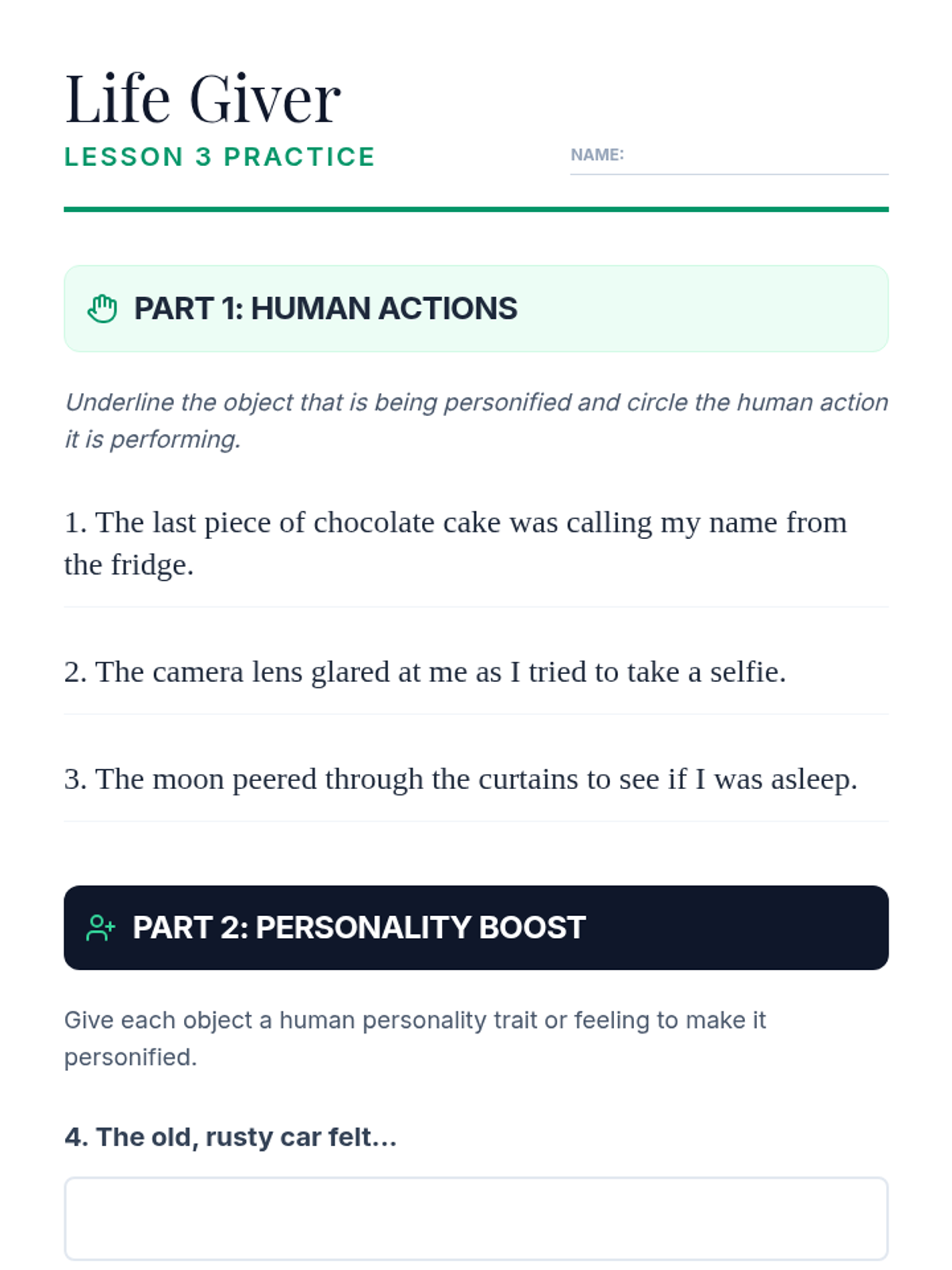
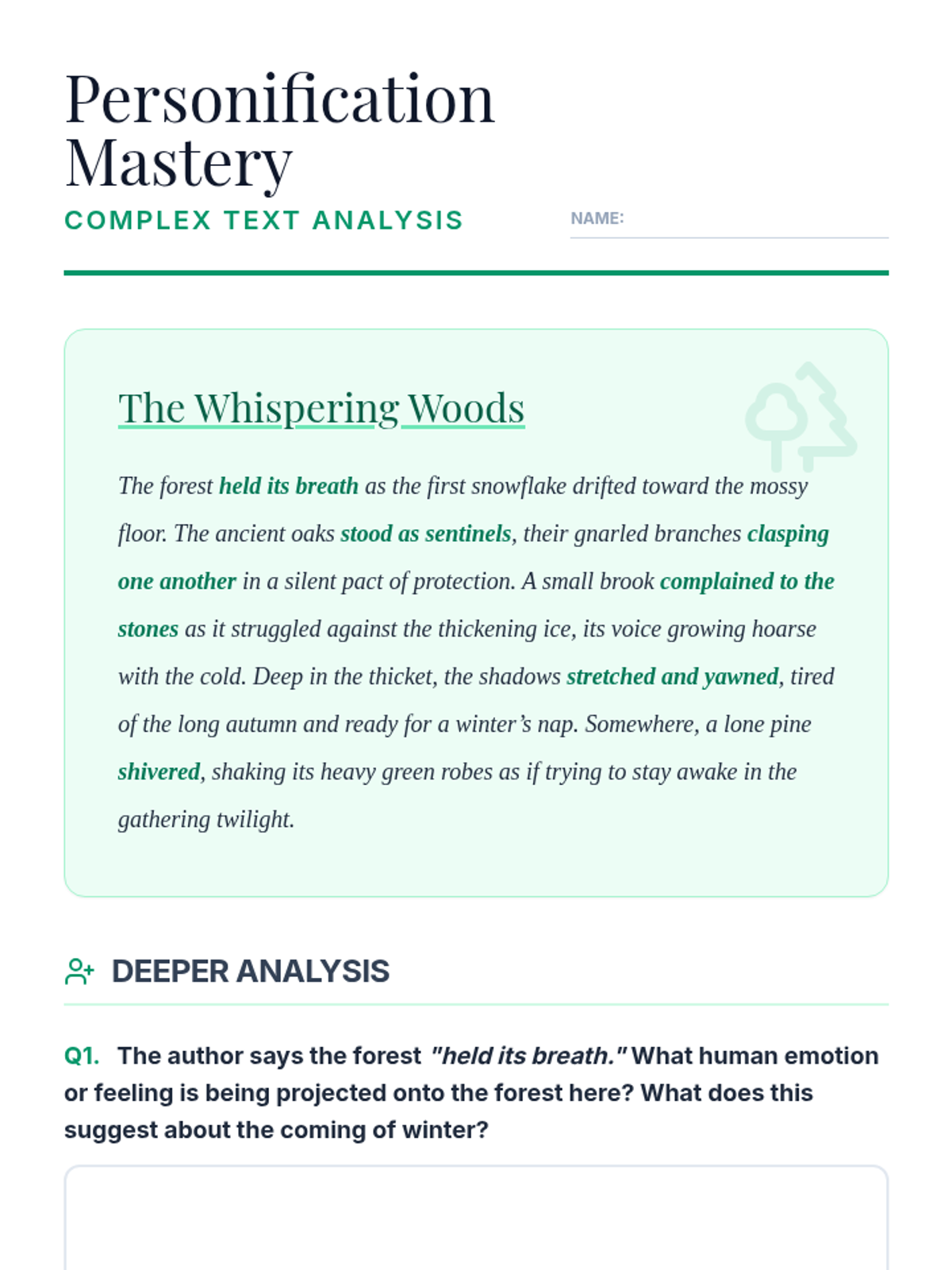
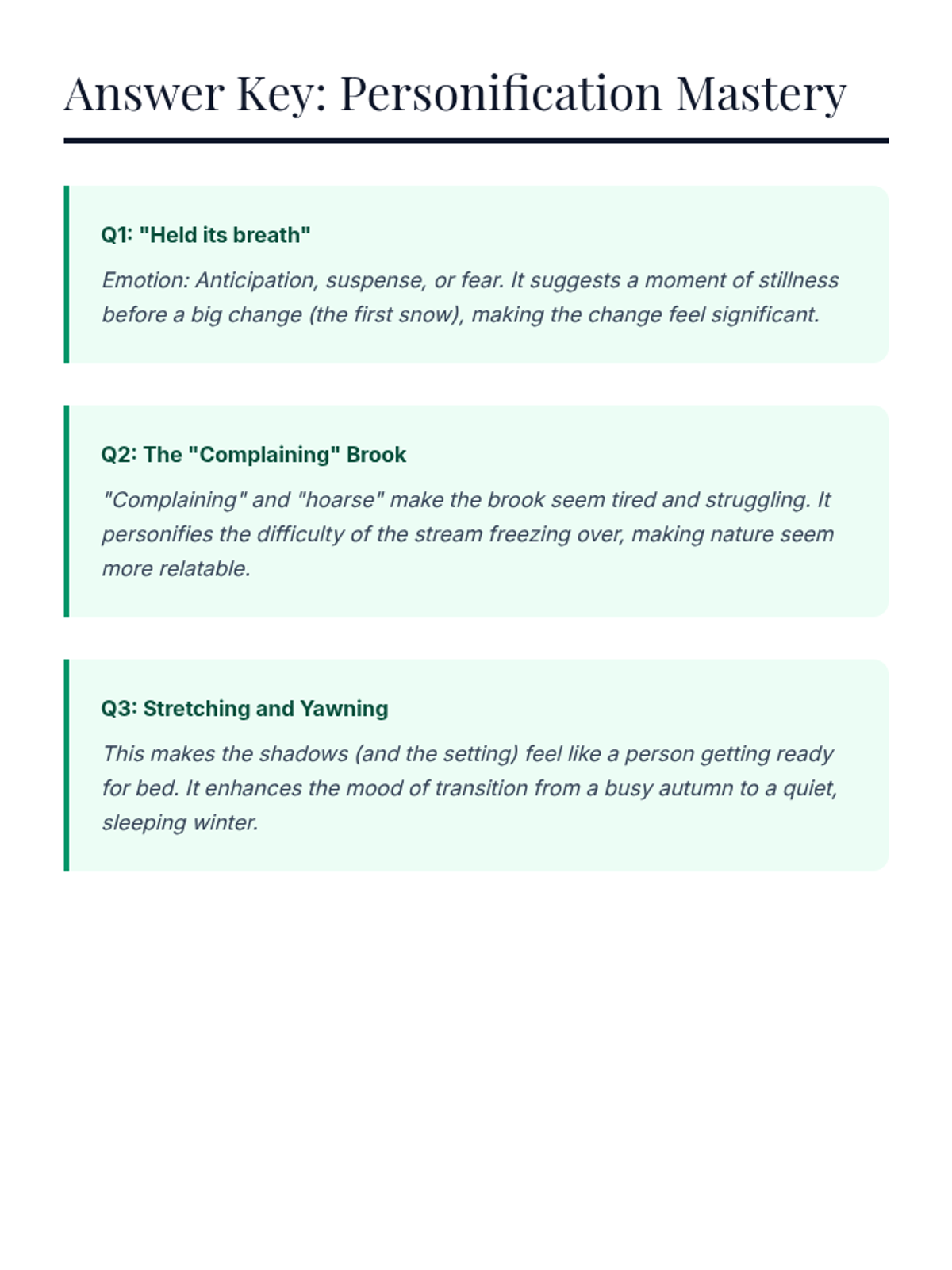
Focusing on personification: giving human traits to non-human things. Includes introductory slides and a practice worksheet.
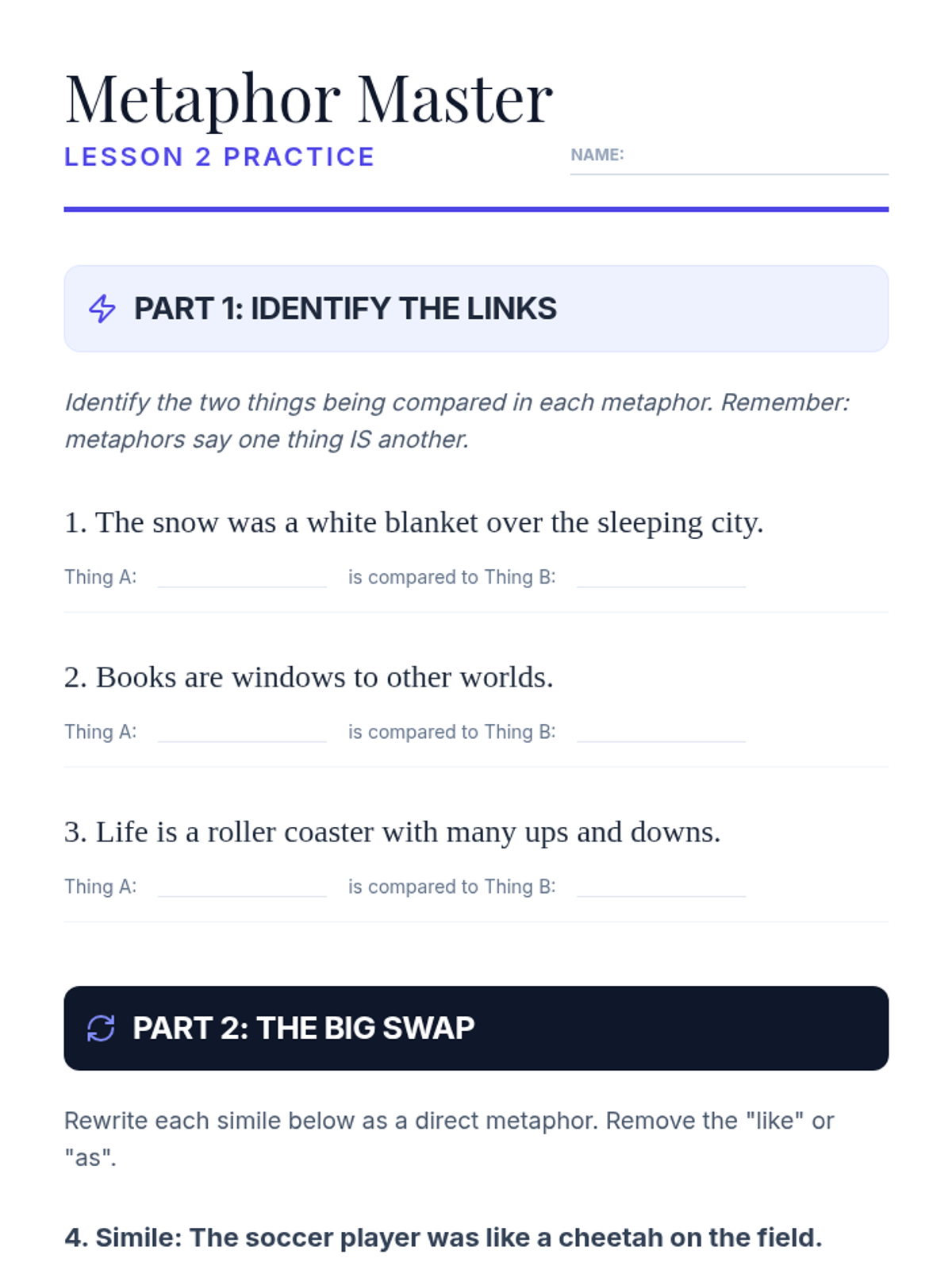
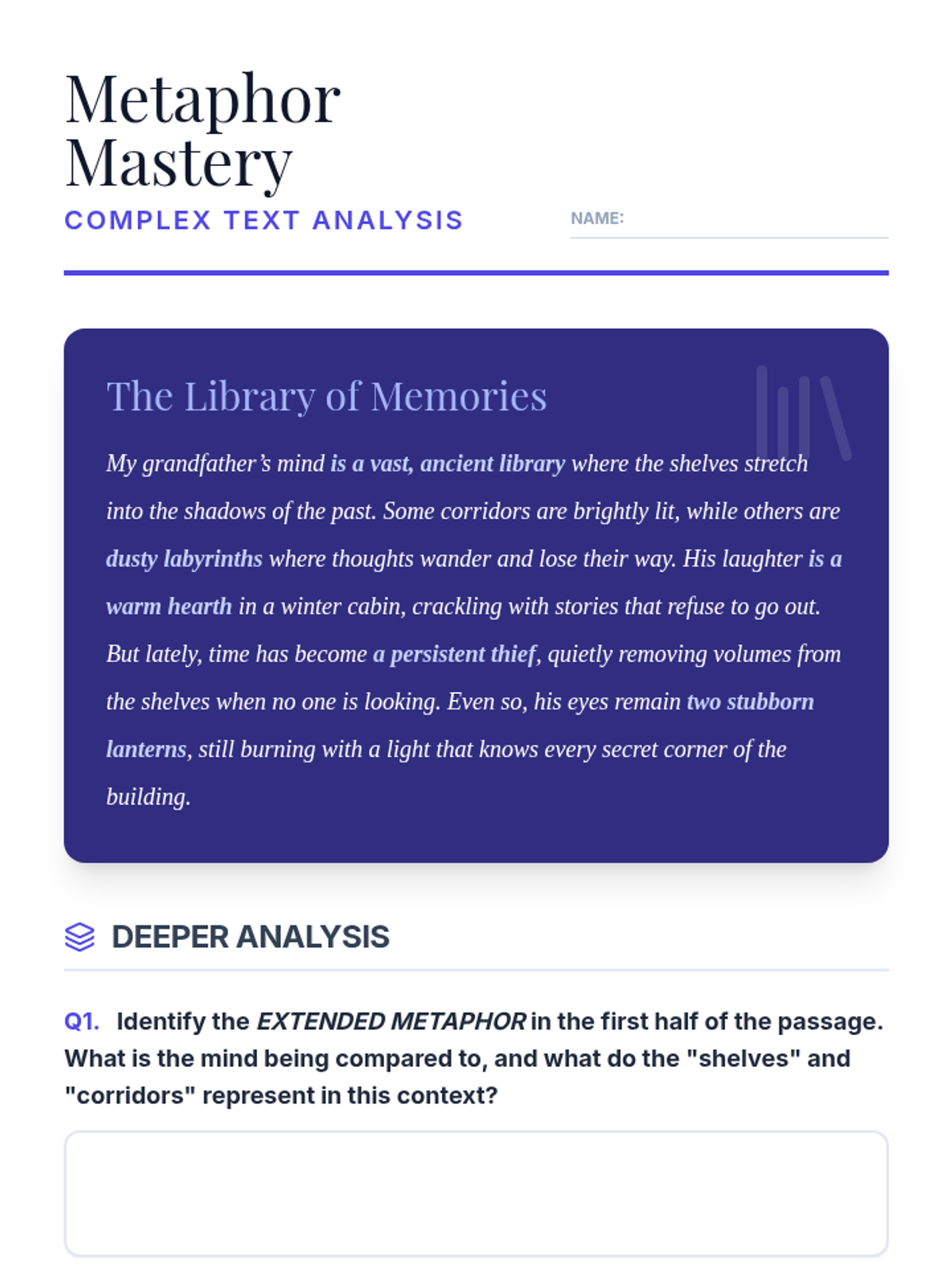
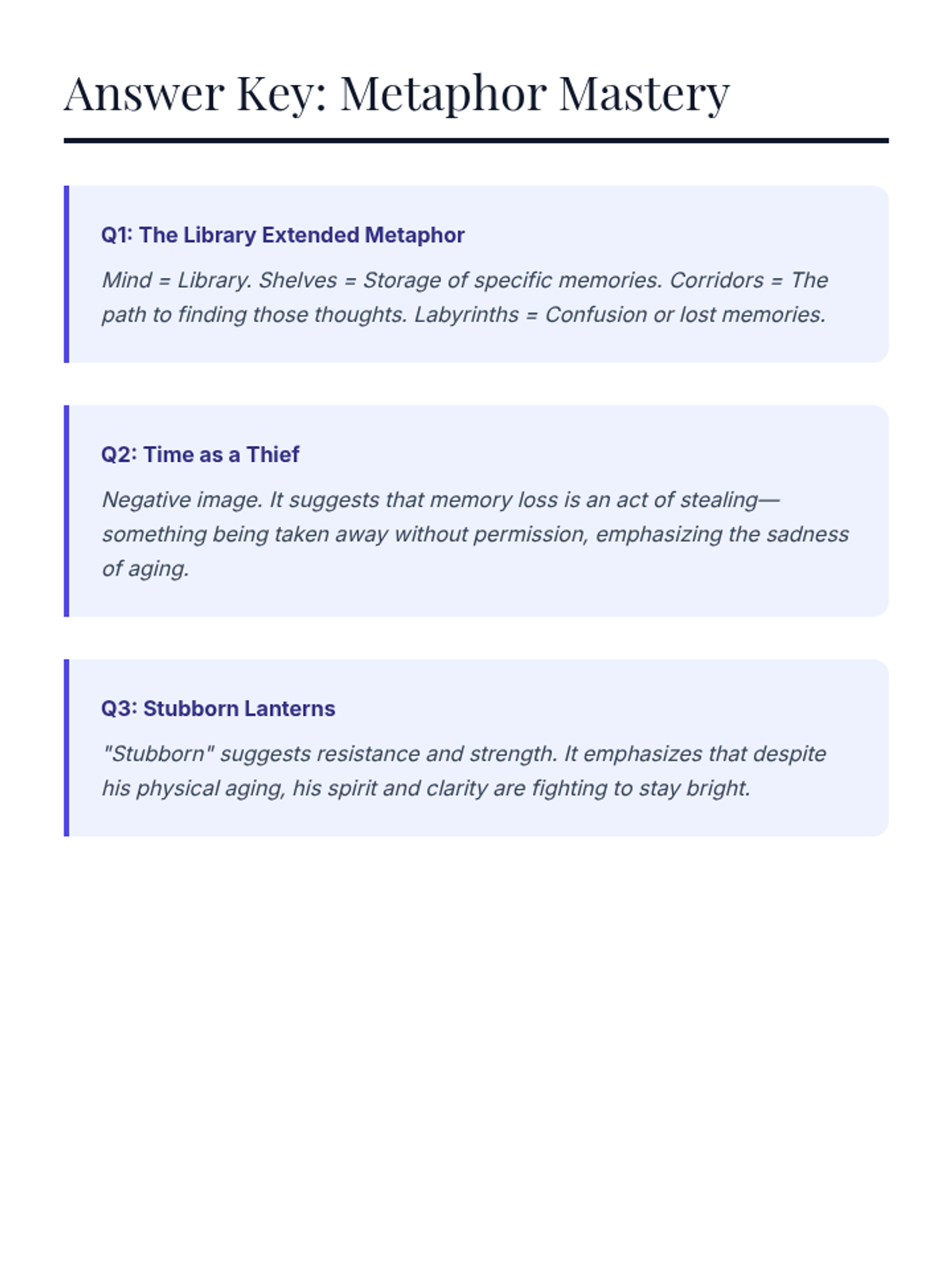
Focusing on metaphors: direct comparisons. Includes introductory slides and a practice worksheet.
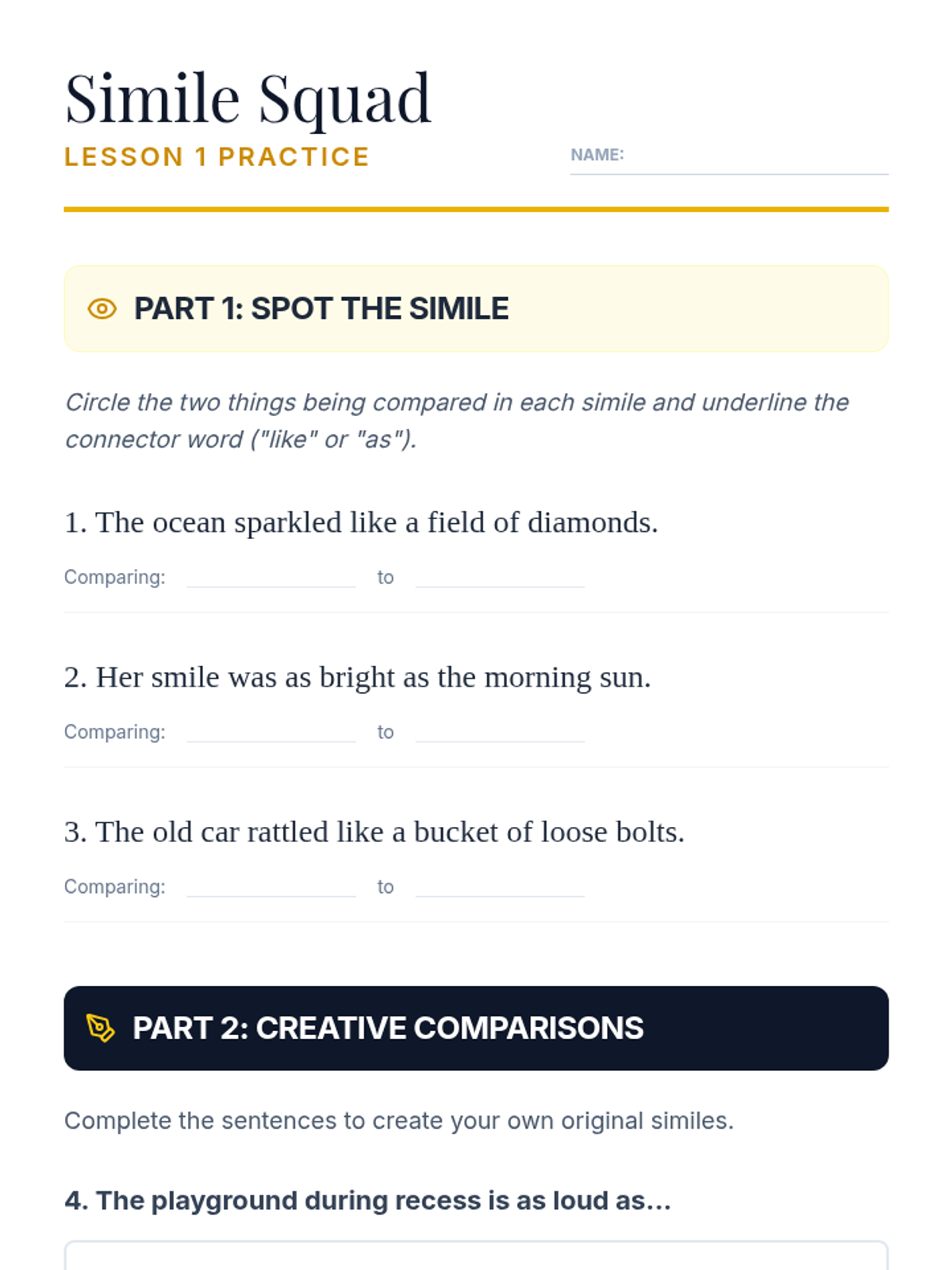
Focusing on similes: comparisons using 'like' or 'as'. Includes introductory slides and a practice worksheet.
An introductory lesson covering the primary types of figurative language with integrated reading passages and creative writing exercises.
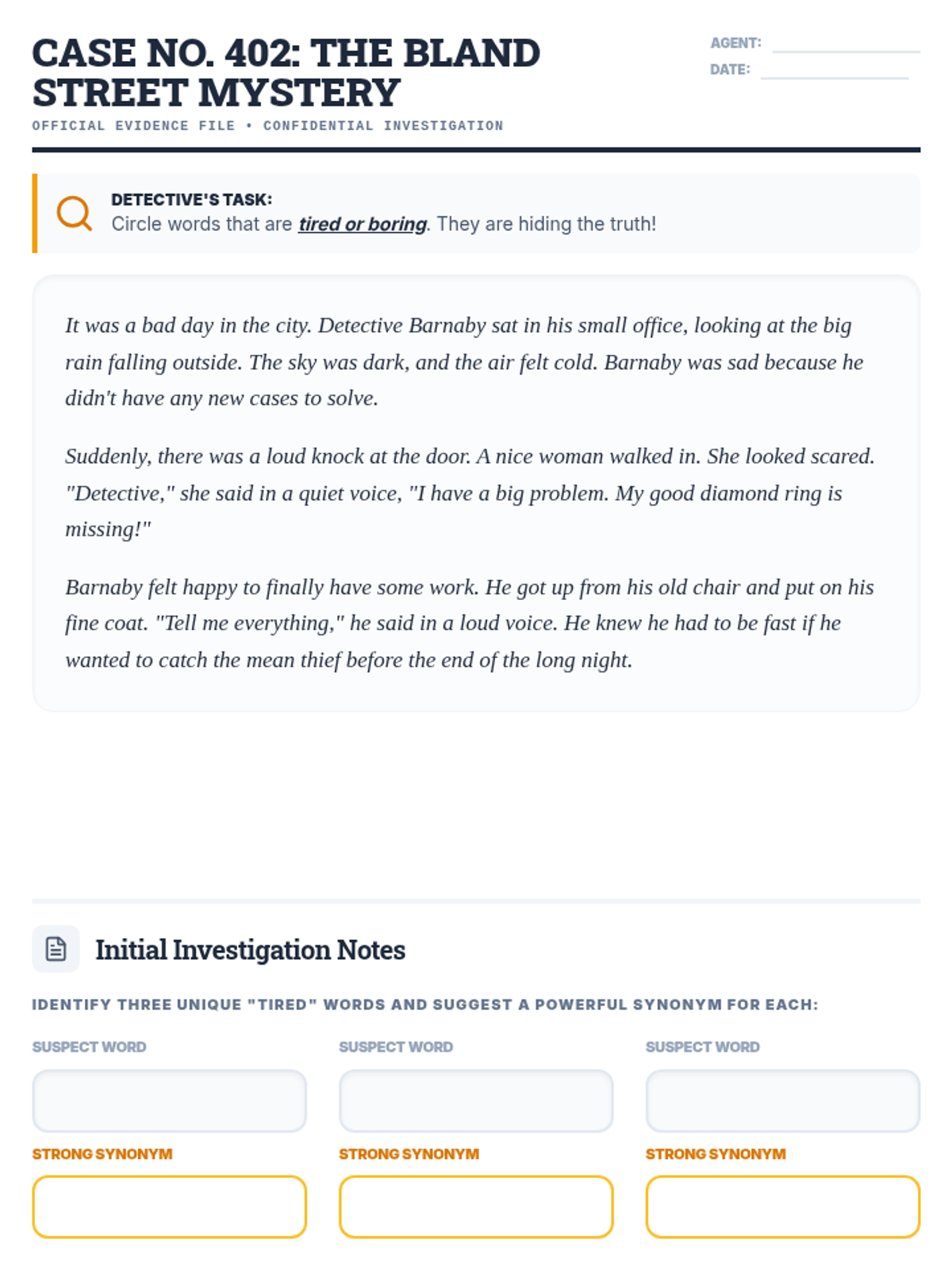
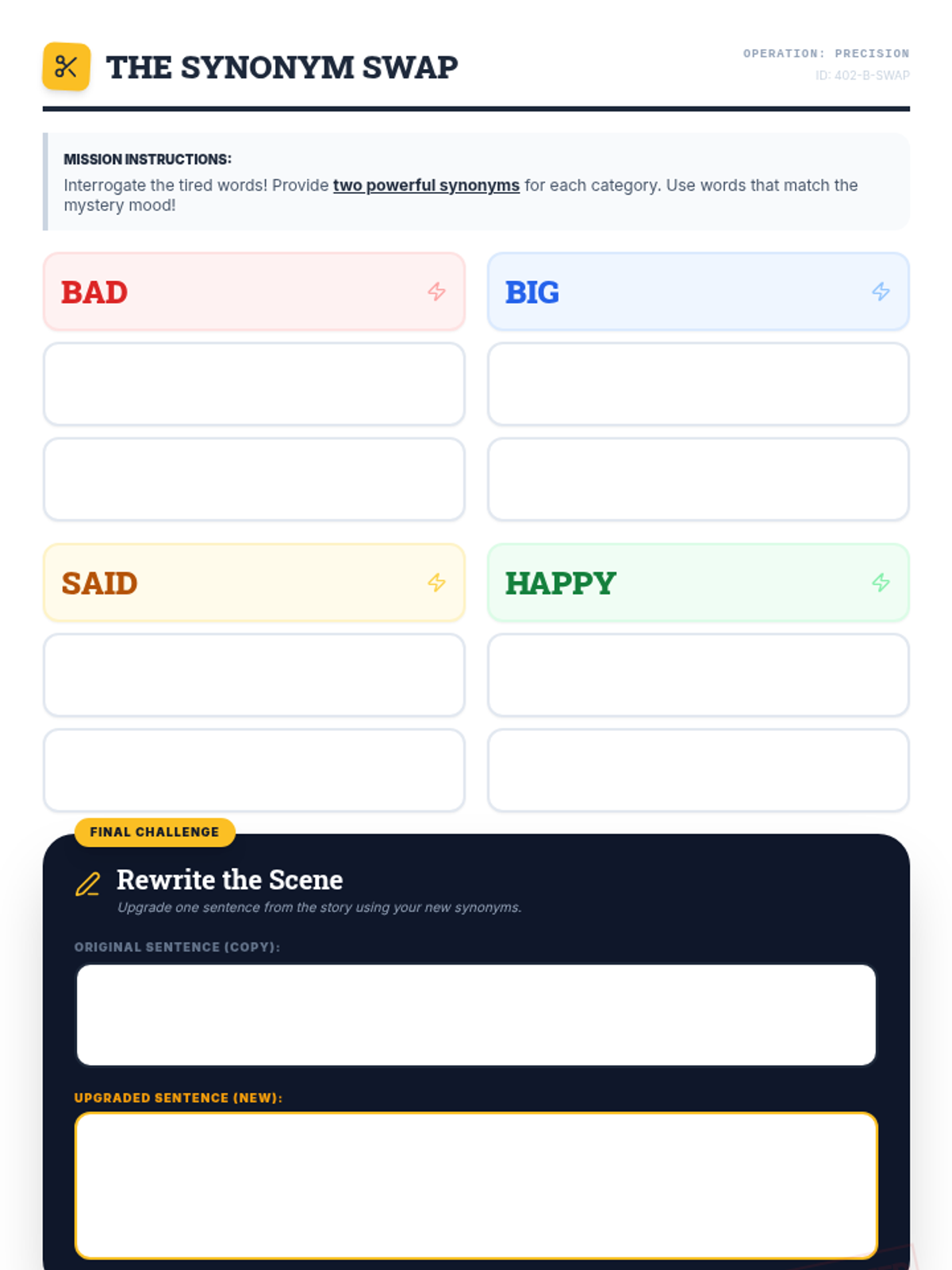
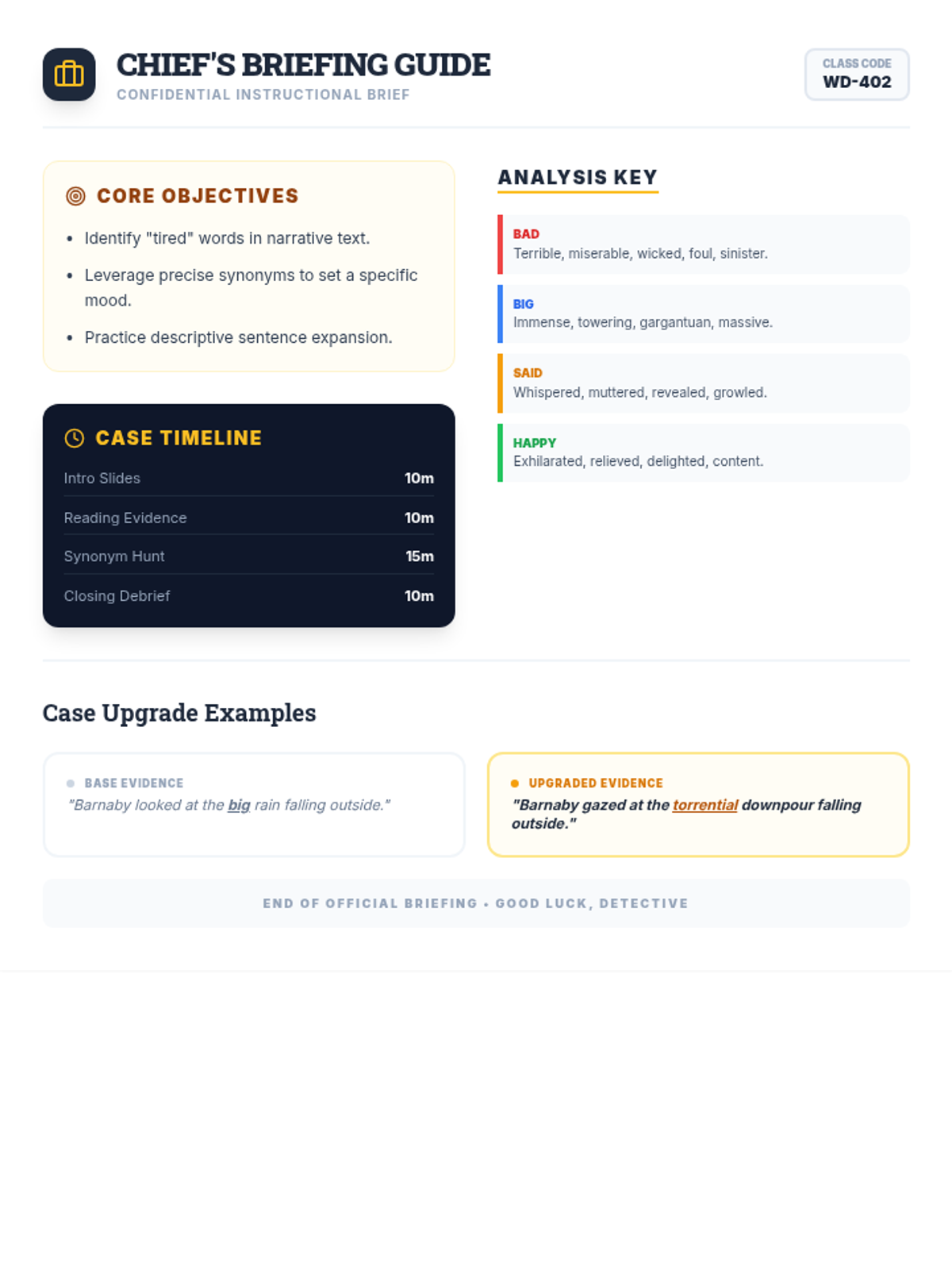
Students will identify overused, 'tired' words in a narrative passage and learn how to replace them with precise synonyms to improve descriptive writing through a detective-themed investigation.
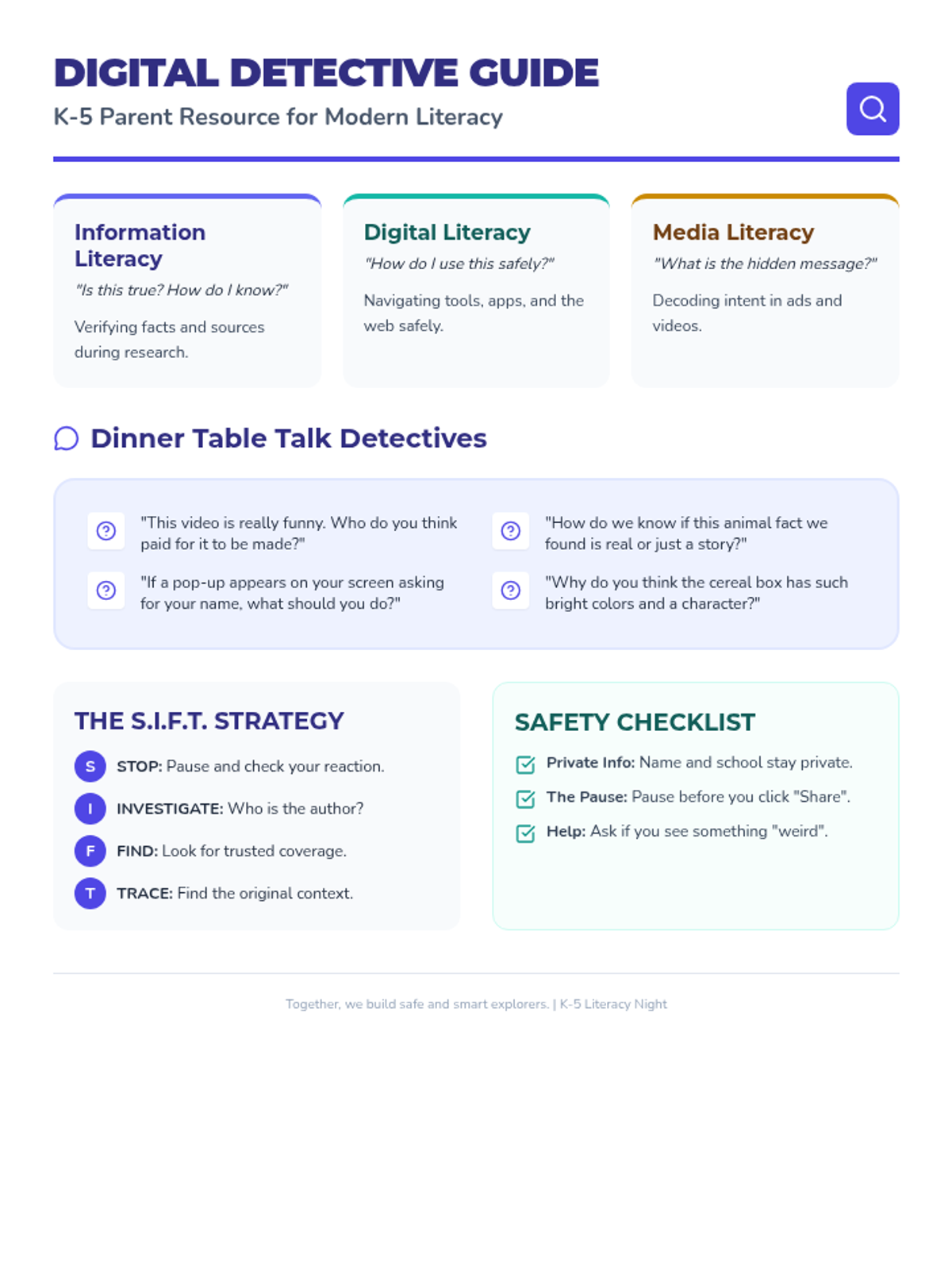
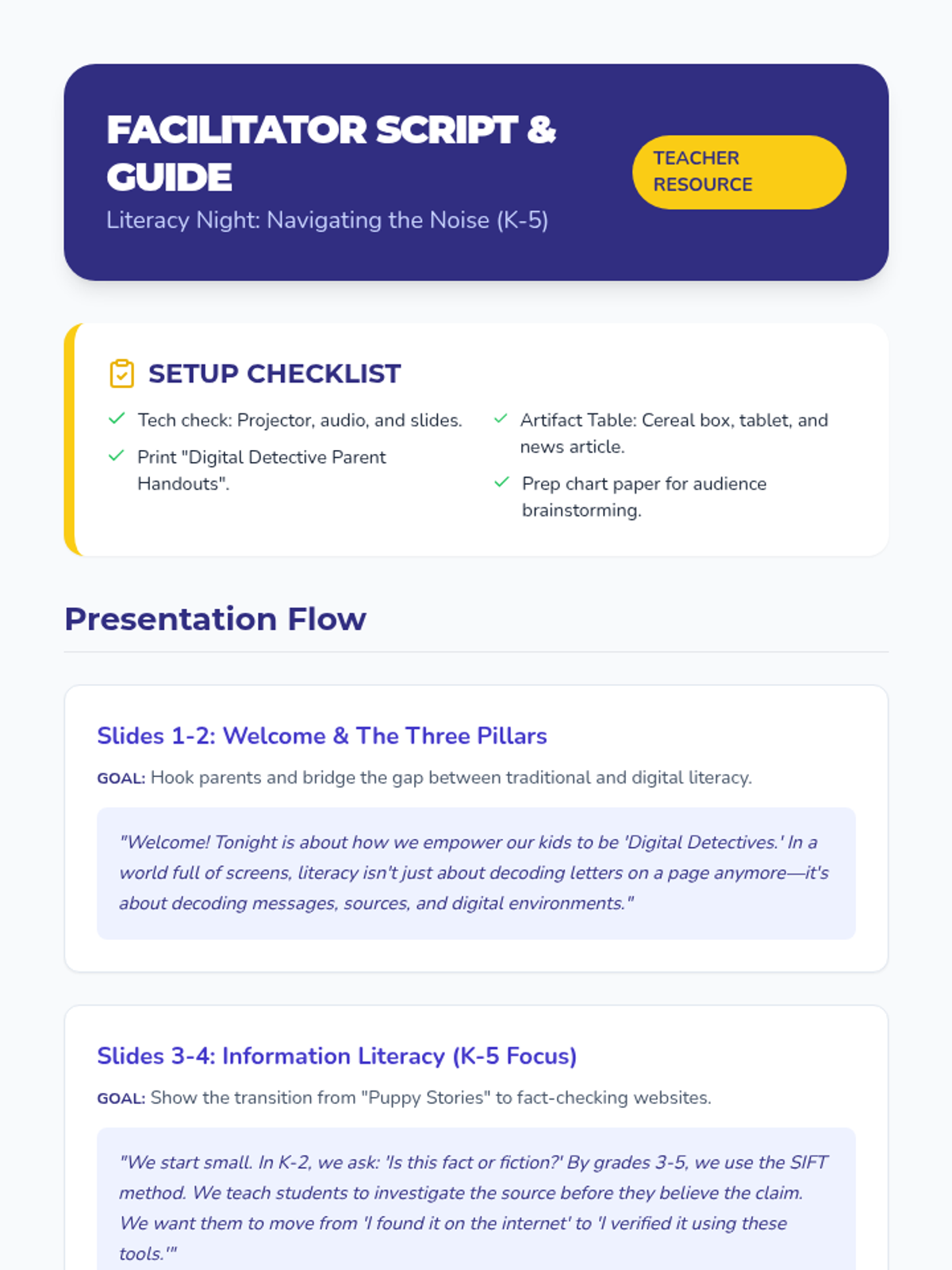
A comprehensive presentation and resource set for a K-5 Literacy Night focused on media, digital, and information literacy. Parents will learn how these skills are integrated into the classroom and how to support their children at home.
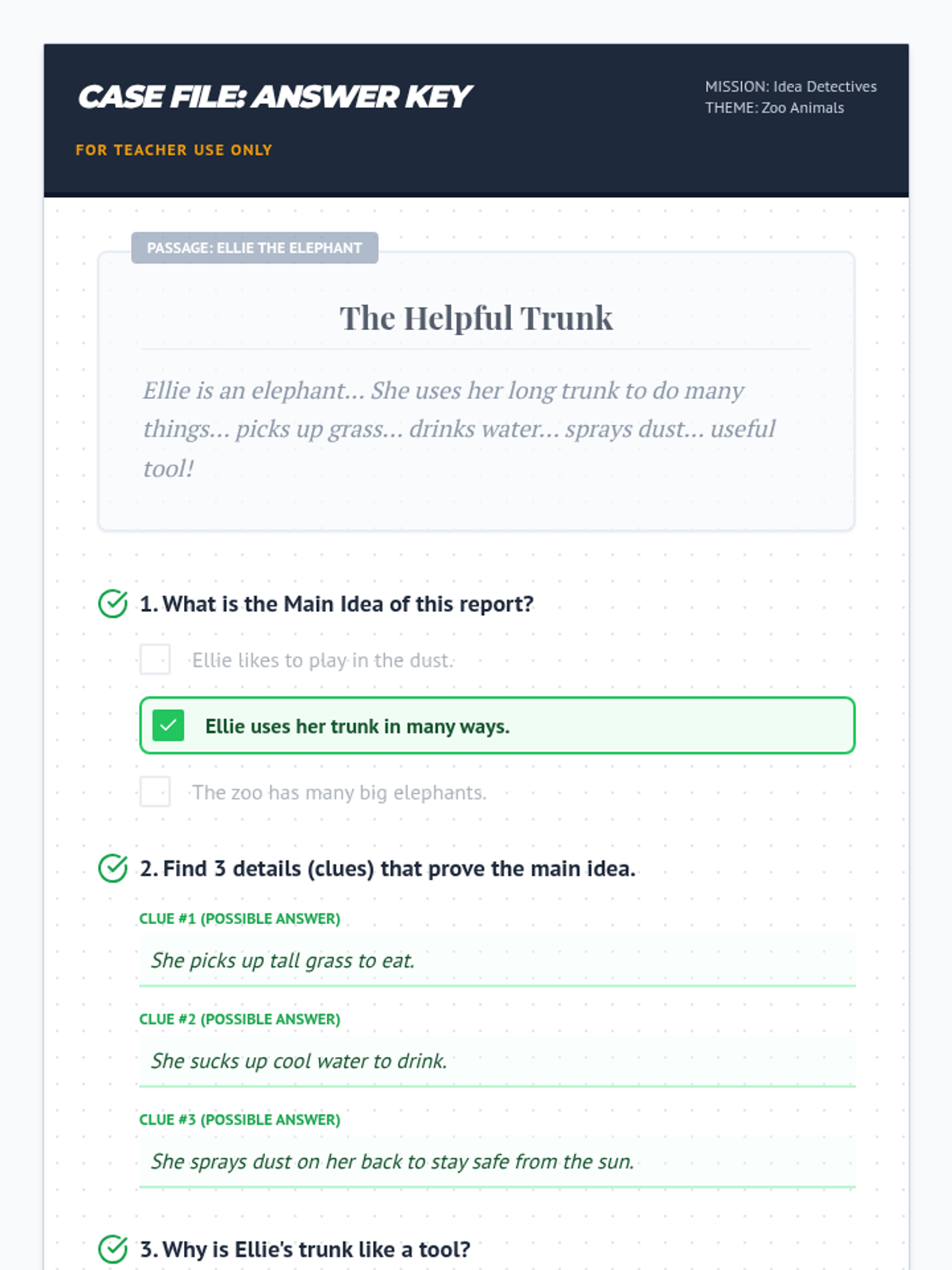
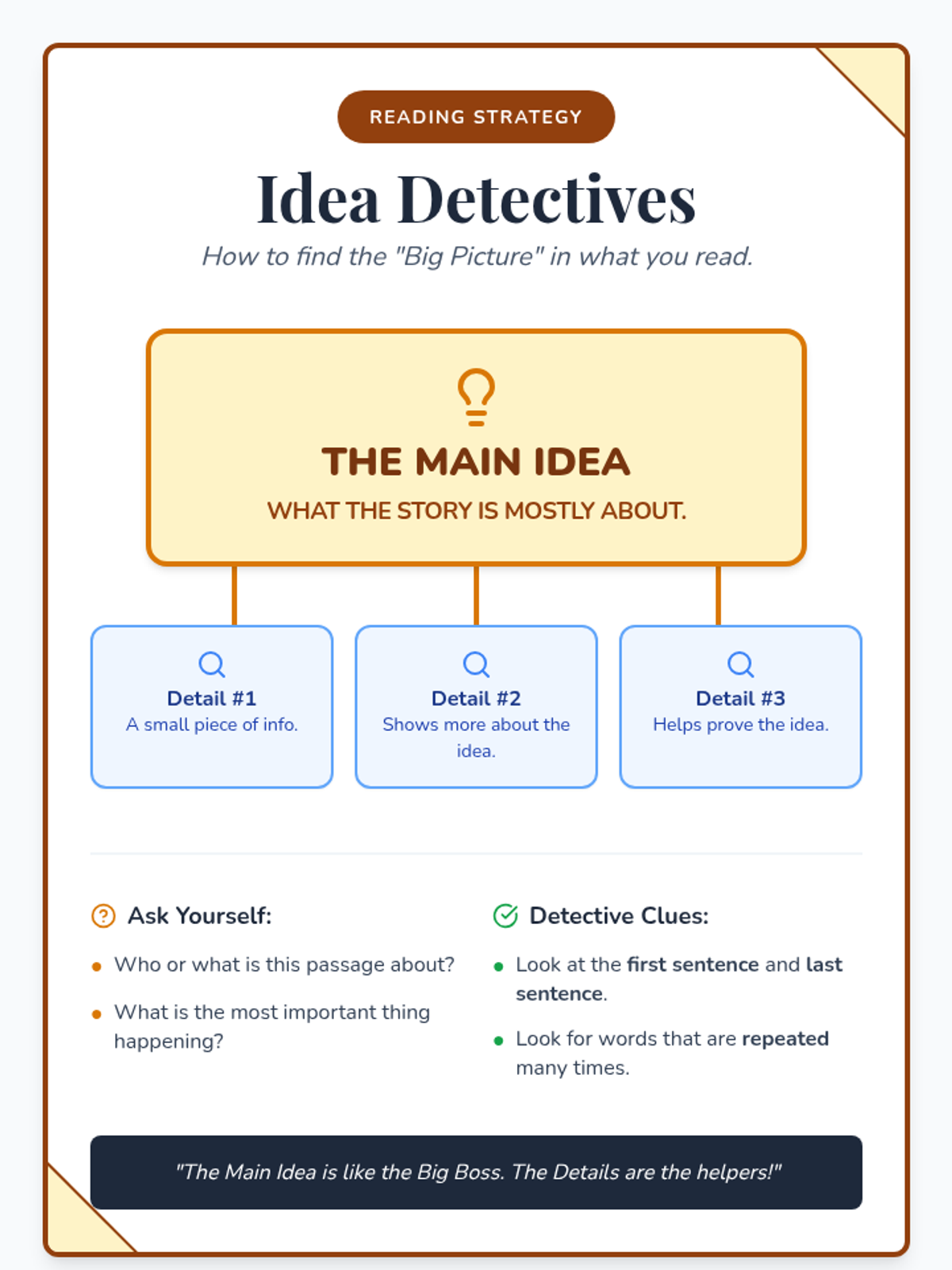
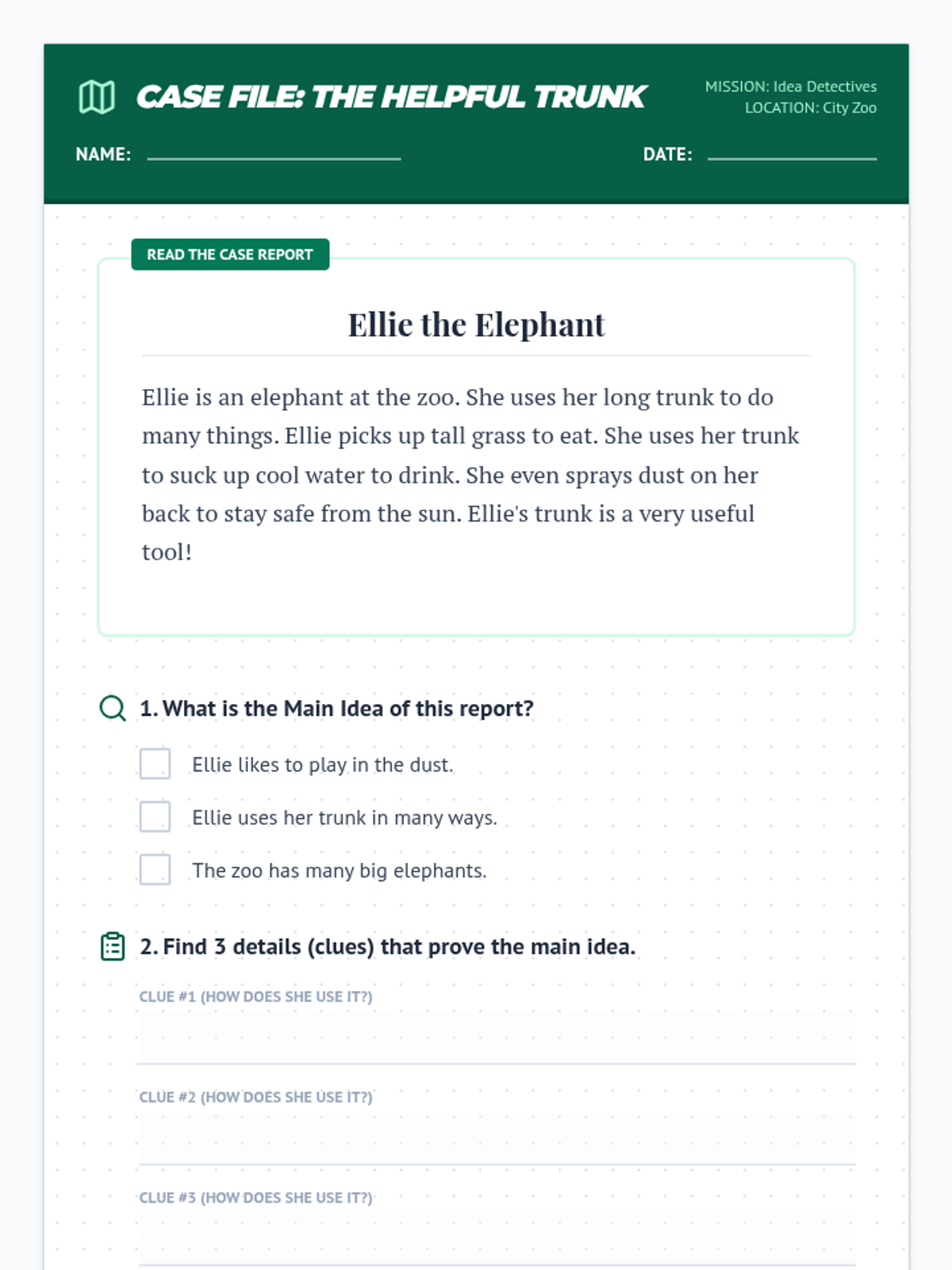
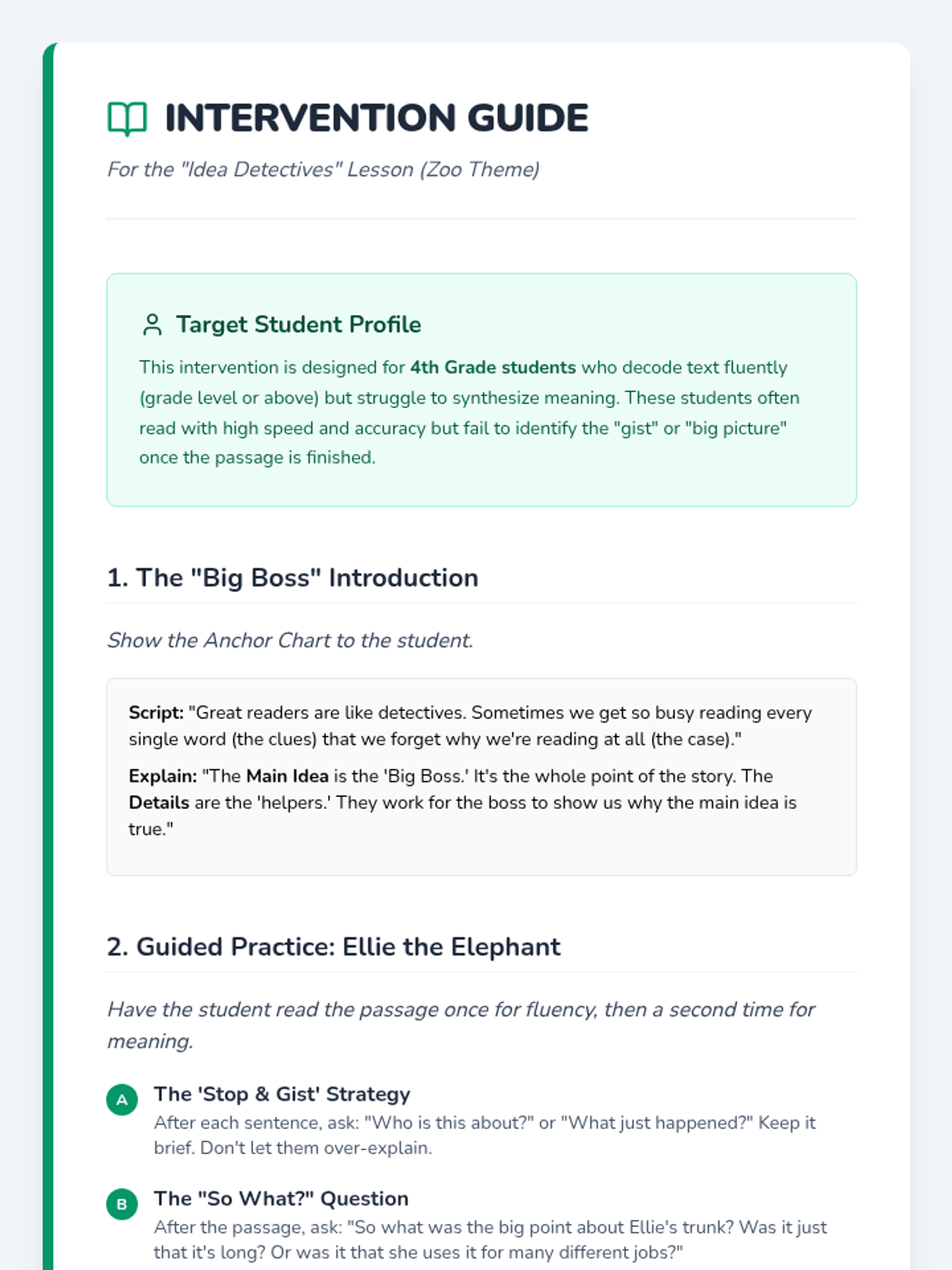
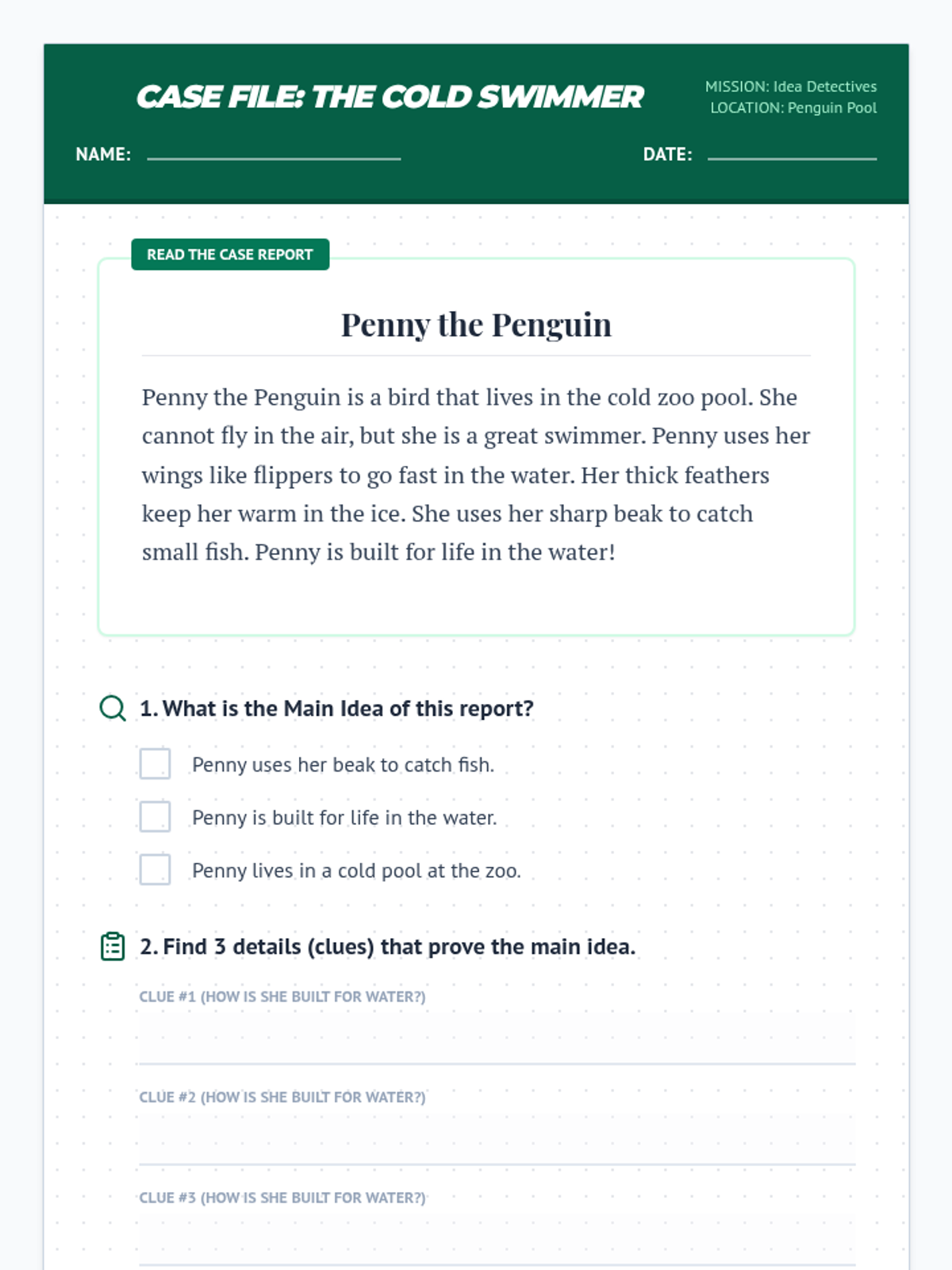
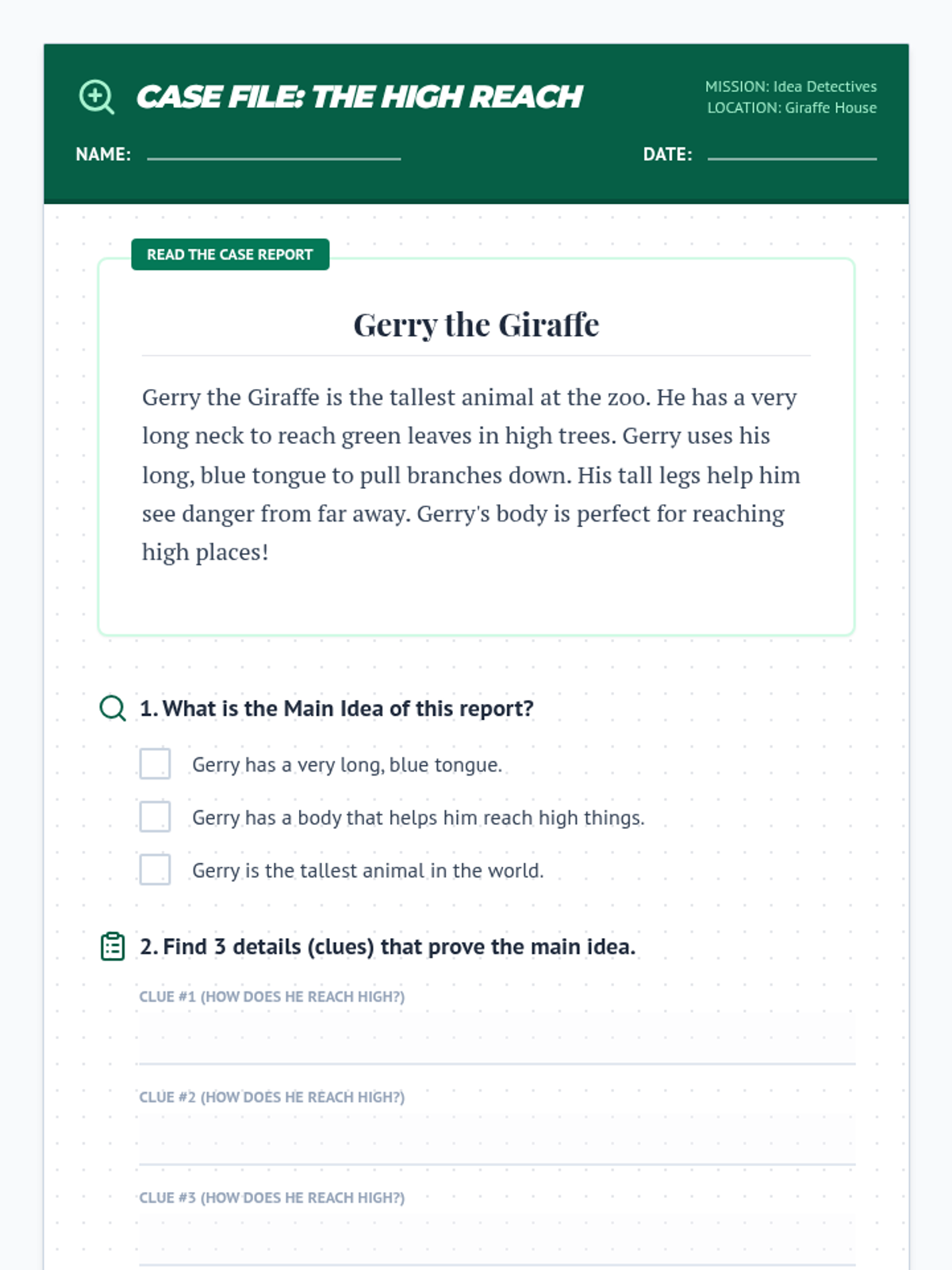
A targeted reading intervention lesson focused on identifying the main idea and supporting details using high-interest, low-readability texts. Designed for students who decode well but struggle with comprehension.
Cumulative review of all consonant-le patterns through mixed word lists, sentence reading, and a final fluency passage.
Practice decoding and encoding consonant-le words that include r-controlled or magic e syllables, such as 'purple' and 'beetle'.
Explore how the first syllable (open or closed) determines the vowel sound in consonant-le words, contrasting pairs like 'apple' and 'maple'.
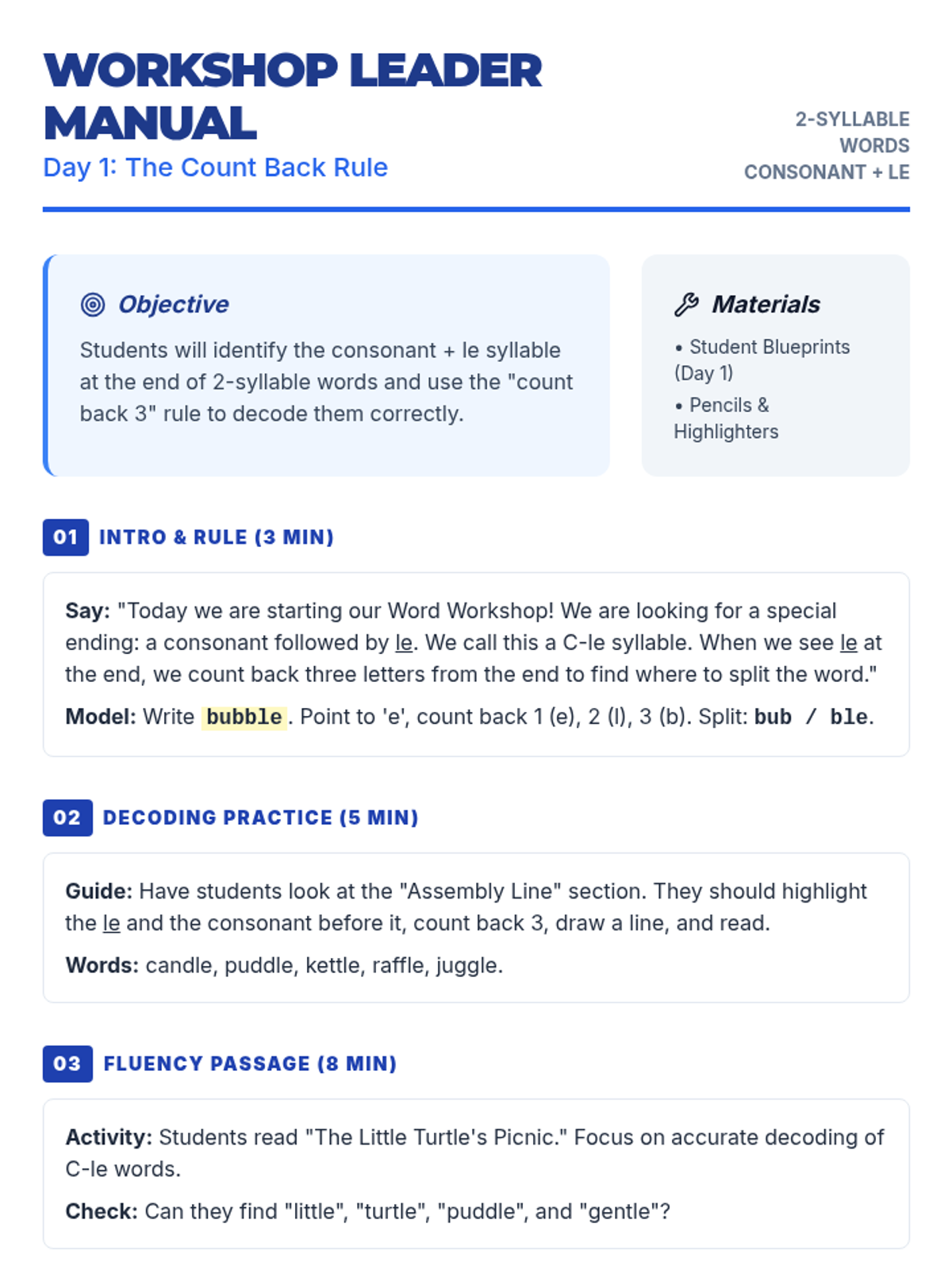
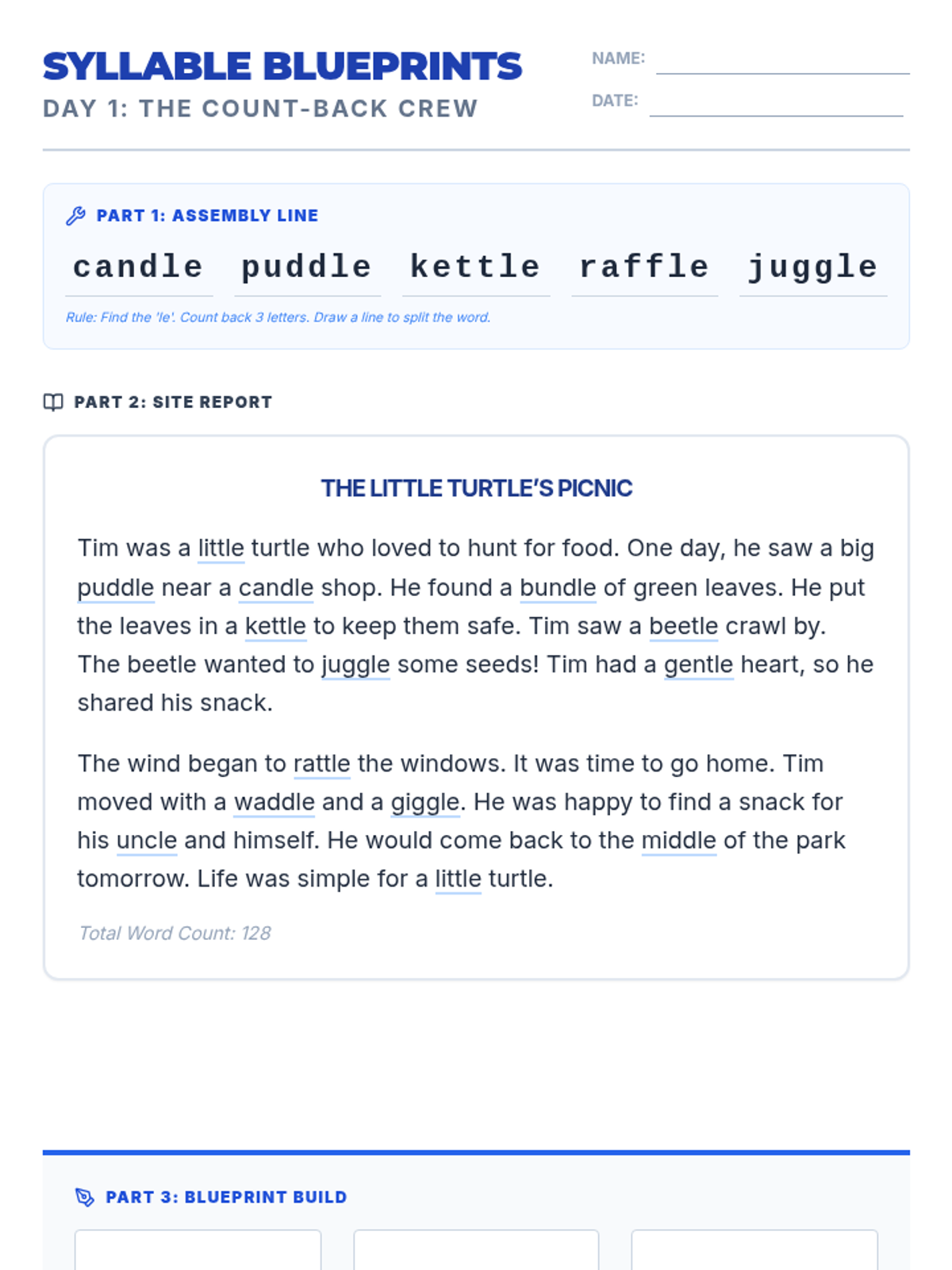
Introduce the consonant-le syllable type and the 'count back 3' rule for dividing words. Focus on words with closed first syllables like 'bubble' and 'candle'.
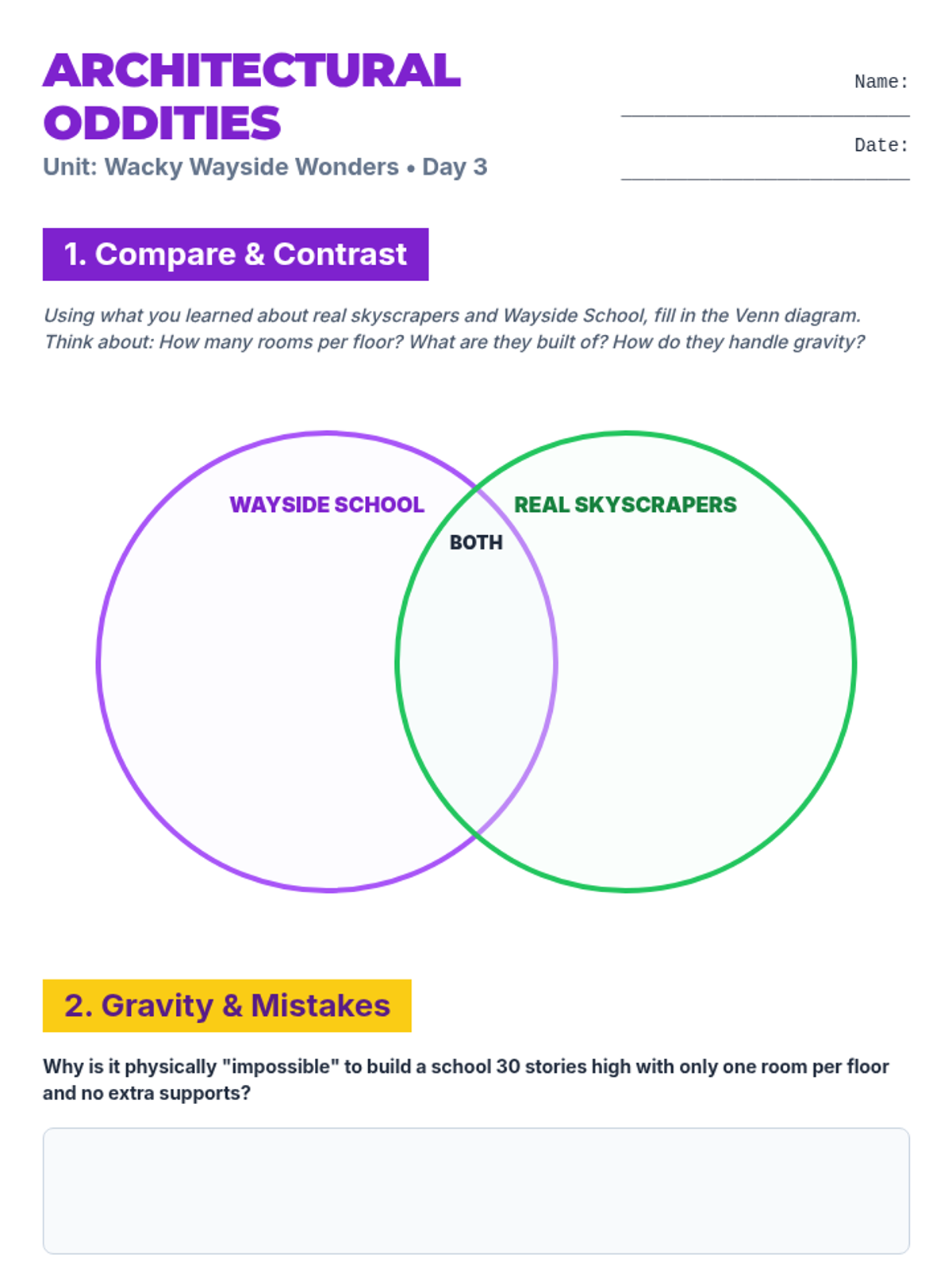
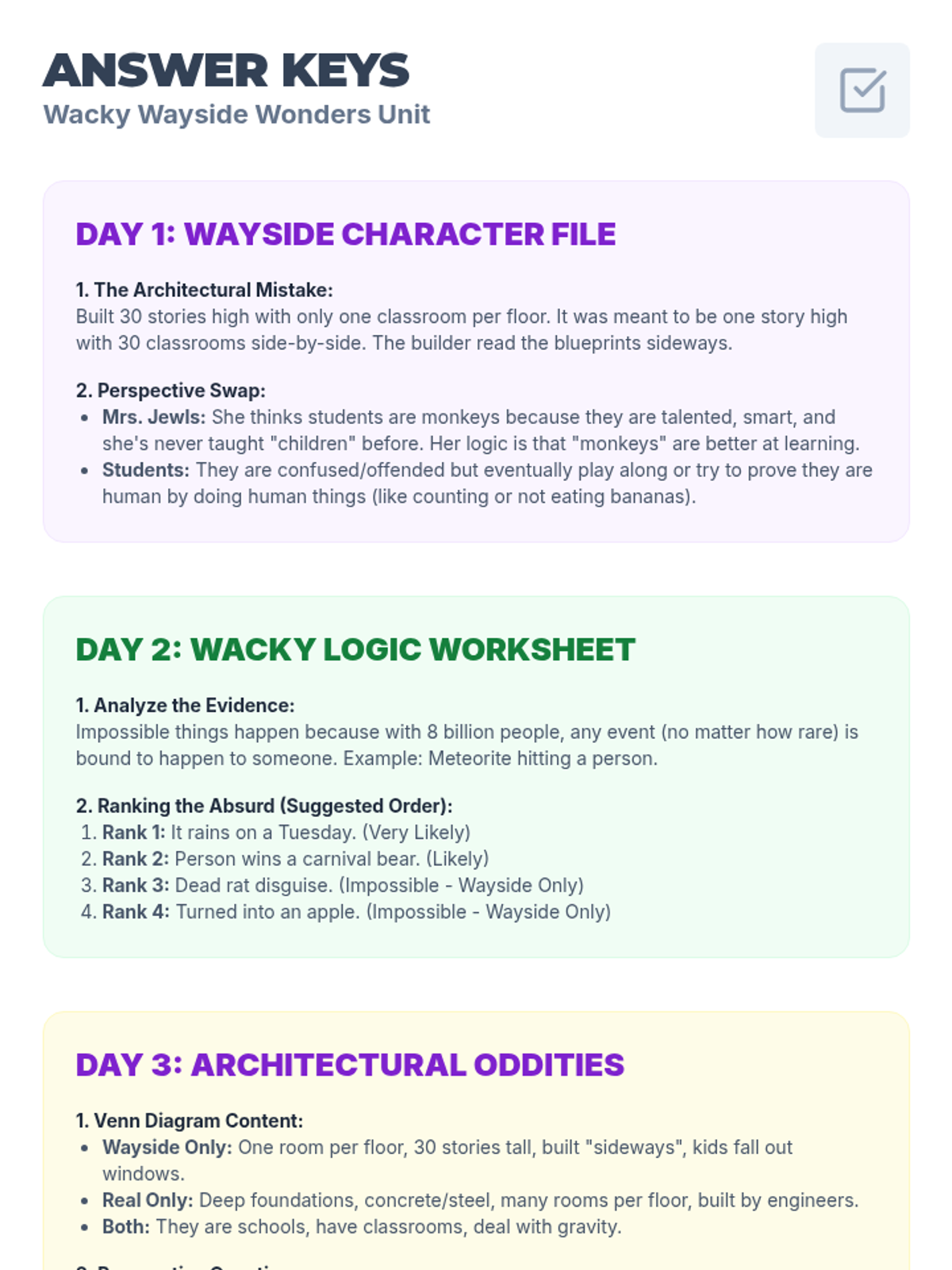
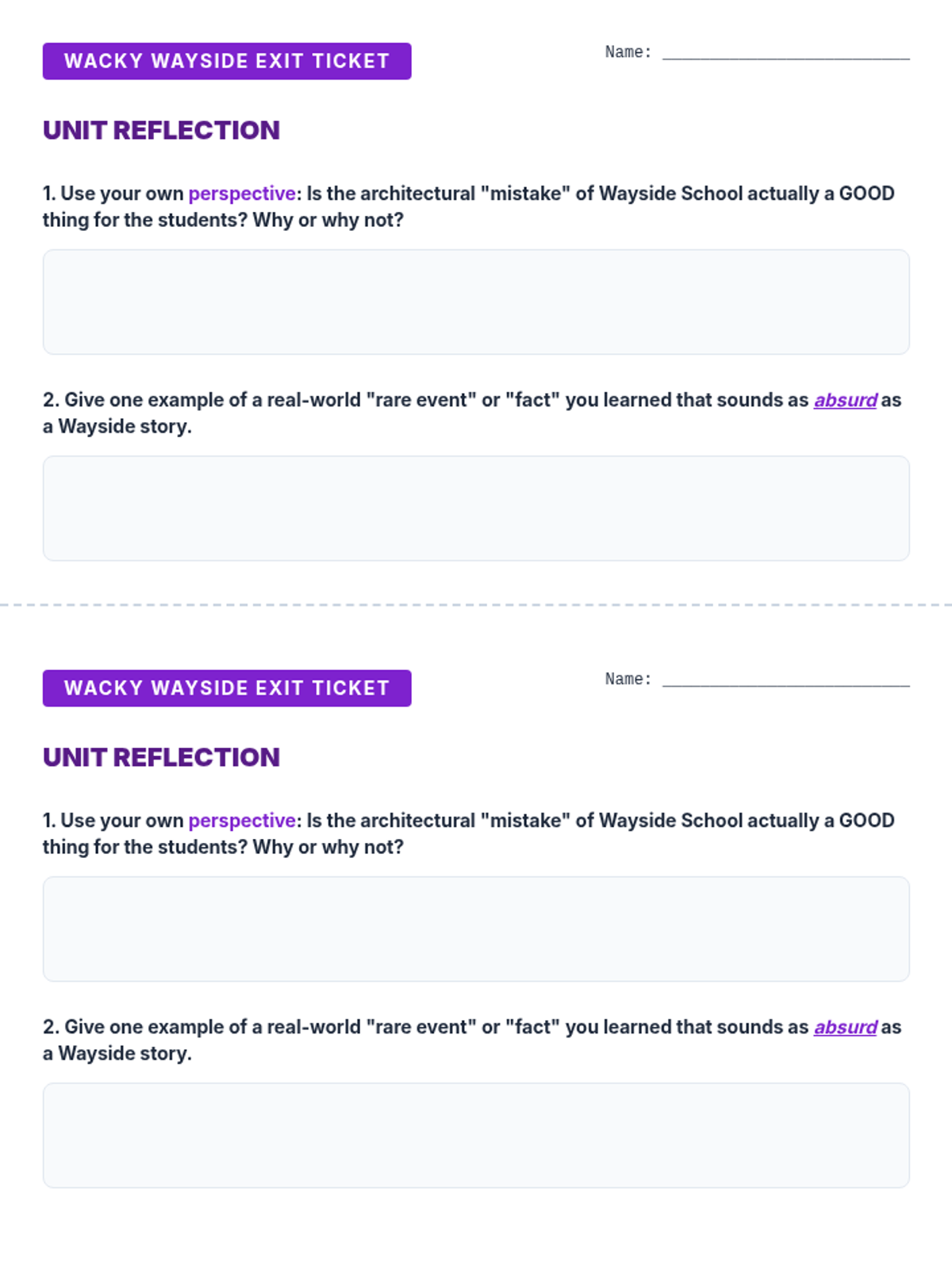
Synthesizes fiction and non-fiction by comparing the architectural impossibility of a 30-story sideways school with real skyscraper engineering and the laws of gravity.
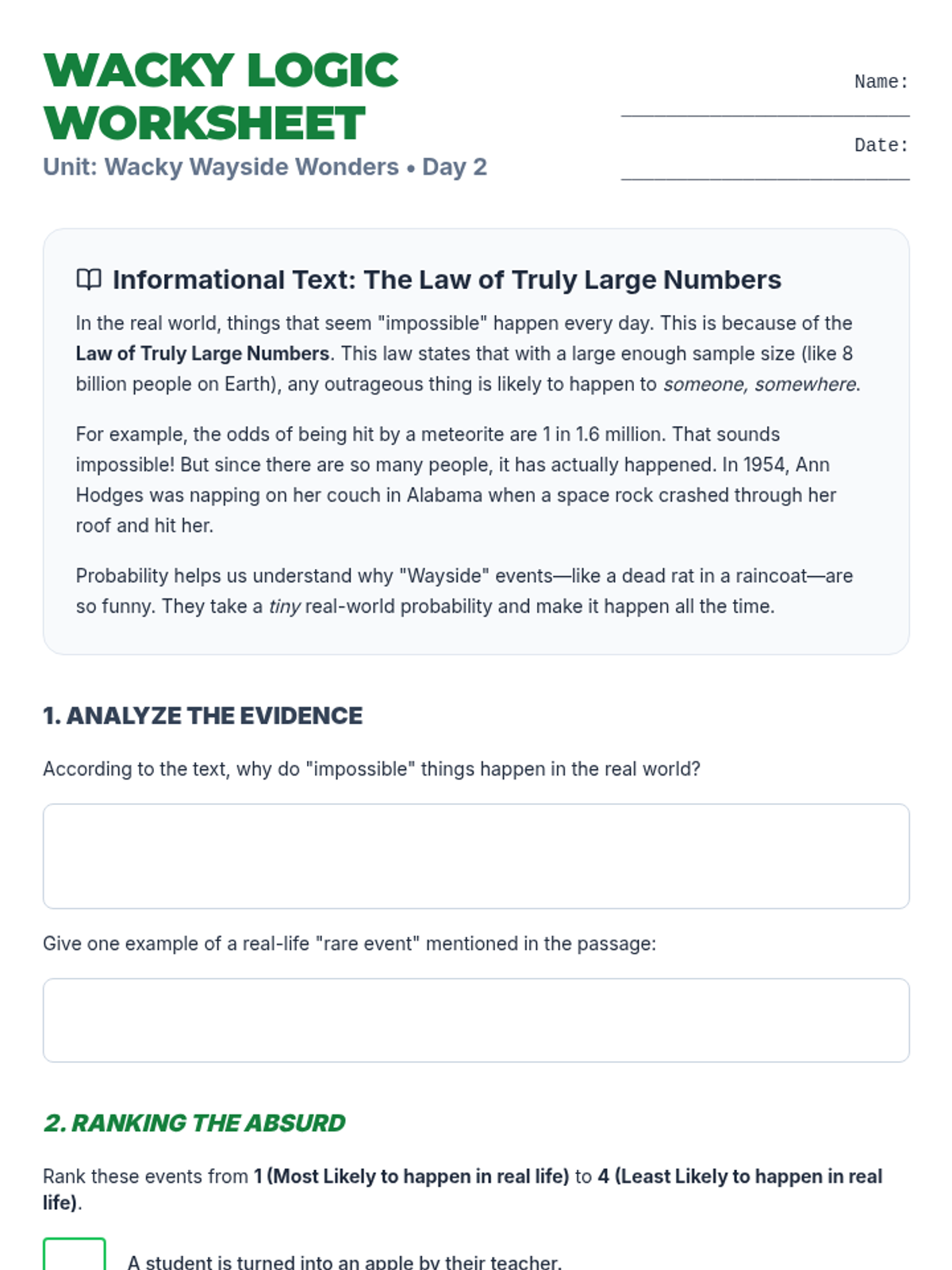
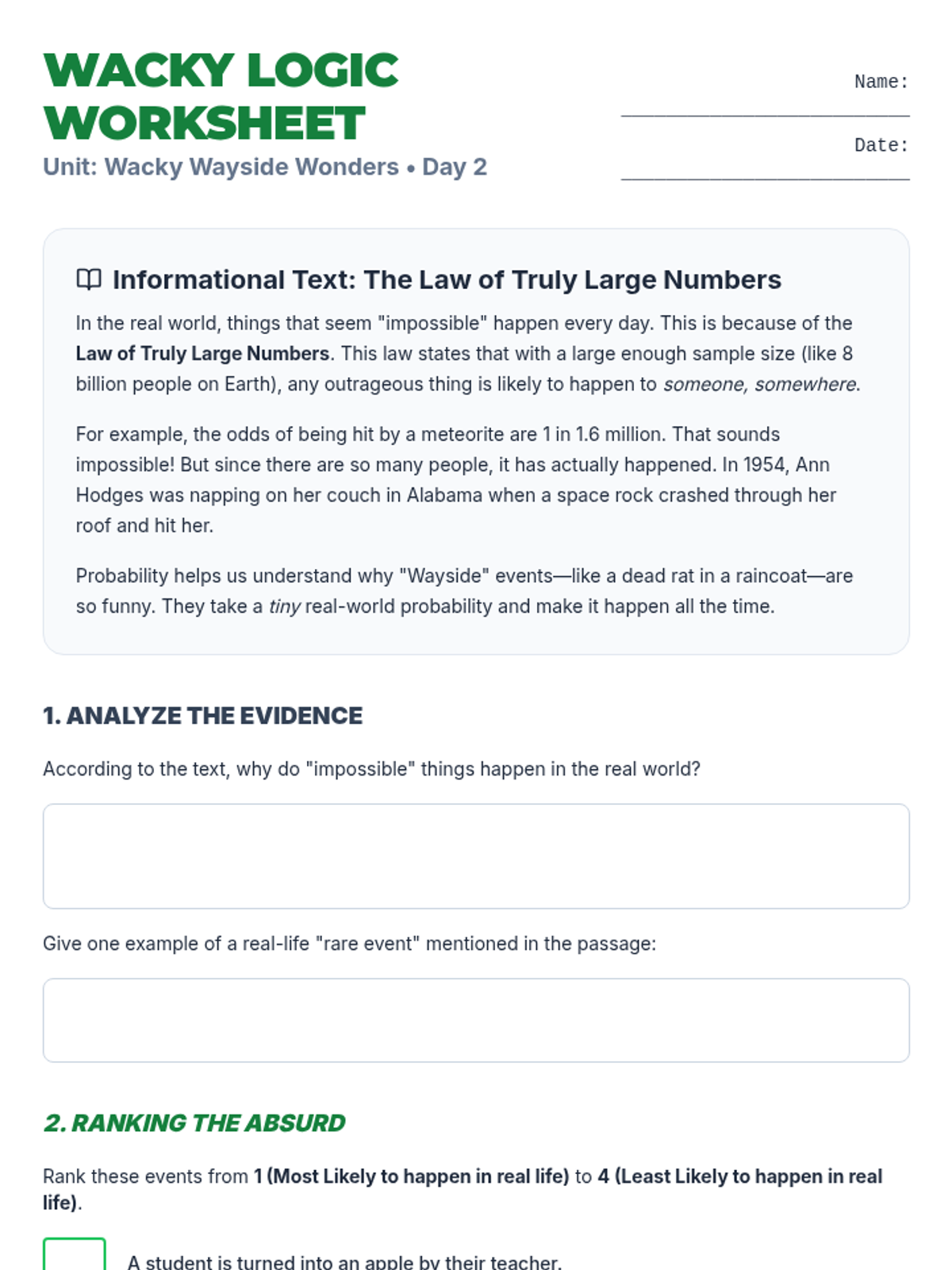
Connects the absurdity of Wayside School to real-world concepts of probability and logic through informational texts about unusual events and 'impossible' occurrences.